
energy Crossword Puzzles
Science Terms 2021-05-27

Across
- energy in a mechanical form
- the mechanical energy that a body has by virtue of motion
- a change directly from the solid to the gaseous state
- process of changing from a gas to a liquid or solid state
- state of matter distinguished from solid and liquid states
- forceful exertion
- that which has mass and occupies space
- potential energy that is stored when a body is deformed
- mechanical energy that a body has by virtue of its position
- not soft or yielding to pressure
Down
- a movement up and down or back and forth
- the temperature below which a liquid turns into a solid
- the temperature at which a solid turns into a liquid
- that part of the energy in a substance that can be released by a chemical reaction
- fluid matter having no fixed shape but a fixed volume
- the energy released by a nuclear reaction
- the temperature at which a liquid boils
- the process of becoming a suspension of particles in the air
- energy that is transmitted in the form of radiation
- a rate at which something happens
20 Clues: forceful exertion • energy in a mechanical form • not soft or yielding to pressure • a rate at which something happens • that which has mass and occupies space • the temperature at which a liquid boils • a movement up and down or back and forth • the energy released by a nuclear reaction • energy that is transmitted in the form of radiation • ...
Biology EOC Review 2021-05-17

Across
- change in genetic code; most have no effect
- double-stranded nucleic acid; never leaves the nucleus
- process by which energy from the sun is stored in glucose; opposite cellular respiration
- movement of water across a membrane
- cell transport system; may be rough or smooth
- glycolysis is ______ because no oxygen is required
- biomolecule made up of amino acids
- can cause mutations; radiation and chemicals are examples
- type of cell with defined nucleus and organelles
- movement of molecules from high to low concentrations
- cell division that results in genetic variation
Down
- organelle that captures solar energy for photosynthesis
- cell division that results in identical cells
- biomolecule used for long-term energy; fats & oils
- type of cell with no nuclear membrane
- respiration process by which energy from glucose is released; opposite reaction of photosynthesis
- biomolecule used as a quick energy source
- type of transport that requires energy since movement is against the concentration gradient
- organelle that transforms energy through respiration; powerhouse
- speeds up chemical reactions by lowering activation energy
20 Clues: biomolecule made up of amino acids • movement of water across a membrane • type of cell with no nuclear membrane • biomolecule used as a quick energy source • change in genetic code; most have no effect • cell division that results in identical cells • cell transport system; may be rough or smooth • cell division that results in genetic variation • ...
Science (Light) 2023-03-09

Across
- Move towards one another
- ______ Energy is the energy that is stored for later use
- To "throw back" heat, light, or sound without absorbing it
- Take in
- E in E=mc^2
- Resistance that something has when trying to move
- Electromagnetic radiation (ie: a lamp emits it)
- Forced away
- This is caused when skin is exposed to harmful light
- Potential energy to kinetic energy
- They are very similar to light but with different frequency
- M=v*d
Down
- This light type causes skin cancer
- This affects the pitch of a sound wave
- This affects the volume of a sound wave
- _____ Light is light that us humans can see but is not harmful to us
- F=m*a
- The strongest point of each magnet
- The amount of this in your body translates to how much skin protection you have
- ______ Energy is the energy that is used when something changes
- They attract and repel one another
- The unit that is used to measure energy
- For a light to go through an object
23 Clues: F=m*a • M=v*d • Take in • E in E=mc^2 • Forced away • Move towards one another • This light type causes skin cancer • The strongest point of each magnet • They attract and repel one another • Potential energy to kinetic energy • For a light to go through an object • This affects the pitch of a sound wave • This affects the volume of a sound wave • The unit that is used to measure energy • ...
Science 2024-05-16

Across
- a long and severe snow storm
- less precipitation for a period of time
- a stock supply people need and use
- sound radiates from a source in a wave
- movement of tectonic plates
- energy stored in chemical compounds
- a tropic system with wind
- resources that cant be renewed
- a flow of heat
- when energy is lost
- energy related to electric particles
- energy an object has becasue its in motion
Down
- light radiates from a source in a wave
- energy that comes from a source at light speed
- displacement of the highest and lowest point
- a disaster that happens naturally
- energy an object could have
- the movement of mass down a slope
- a wave changing speed through mediums
- the act of conduction
- the length of each wave
- the measure of hot and cold
- transferring heat through air or liquid
- the throwing back by a body of light
- a rapid motion of particle
- the material an object contains
26 Clues: a flow of heat • when energy is lost • the act of conduction • the length of each wave • a tropic system with wind • a rapid motion of particle • energy an object could have • movement of tectonic plates • the measure of hot and cold • a long and severe snow storm • resources that cant be renewed • the material an object contains • a disaster that happens naturally • ...
Machines and Energy Study Guide 2024-10-25

Across
- a fast car has ____ kinetic energy
- energy found in the bonds of certain things
- a car jack is made up of 2 simple machines (screw and _____)
- A compound machine made up of wedges and levers.
- the unit that energy is measured in
- ______ machines are made up of multiple simple machines
- For work to occur you need motion and ____ with the object.
- stored up energy that is not moving
- True/False: machines increase the speed at which work is done
- device with a tapered/sharpened edge
- stored energy in objects that are off of the ground
- used to change the direction of objects by lifting or lowering them using a wheel and cable
Down
- energy an object possesses due to its motion
- point that allows a lever to swivel back and forth
- energy found in items that are stretched, compressed, bent
- allows for heavy objects to move easier by reducing friction
- _______ machines do work with one type of movement
- simple machine with a spiral threaded around a rod
- ______ occurs when motion happens
- source of chemical potential energy
20 Clues: ______ occurs when motion happens • a fast car has ____ kinetic energy • the unit that energy is measured in • stored up energy that is not moving • source of chemical potential energy • device with a tapered/sharpened edge • energy found in the bonds of certain things • energy an object possesses due to its motion • A compound machine made up of wedges and levers. • ...
Intro to Ecology - James Korson 2024-11-19

Across
- make their own food
- species group of similar spicies
- another name for autotrophs
- get energy by breaking down dead organic matter
- get energy by eating both plants and meat
- another name for heterotrophs
- where organisms (ecosystems) are found
- the process of making food by using chemicals (chemical reactions)
- the process of making food by using sunlight
- indicates position an organism occupies in terms of energy flow
- renewable energy source
- model that shows the transfer of energy from one organism to another
- everything on Earth
- the community and other non-living organisms (water, air, etc.)
- the study of organisms
Down
- get energy by eating meat
- consume their food
- groups of populations that live in the same area
- model that shows the relations between trophic levels
- get energy from dead organic material from plants and animals
- a group of organisms that can breed with one another
- get energy by eating plants
- model that shows what organisms eat what and who they get eaten by
23 Clues: consume their food • make their own food • everything on Earth • the study of organisms • renewable energy source • get energy by eating meat • another name for autotrophs • get energy by eating plants • another name for heterotrophs • species group of similar spicies • where organisms (ecosystems) are found • get energy by eating both plants and meat • ...
Phys. Science Exam Crossword 2024-12-16

Across
- distance over time
- energy that is stored
- heat rising and falling
- form of energy transfer used in vacuum of space
- speed + direction
- a push or pull
- form of energy transfer through physical touch
- amount of matter in an energy
- force that slows down electron flow
- circuit with more than one path
- speeding up, slowing down or changing direction
- opposes sliding motions
- rate of energy transformation
- also known as newtons 1st law
- capacity to do work
Down
- simple machine that uses rolling friction
- product of mass x gravity
- affected by mass and distance
- circuit with only one path to follow
- force that makes electrons flow in a circuit
- cleanest burning fossil fuel
- potential energy stored between chemical bonds
- amount of space an object takes up
- force applied over a distance
- name of formula for current
- form of power generation that doesnt involve a turbine
- commonly used conductor of electricity
- sum of potential and kinetic energy in an object
- splitting of atoms
- mass times velocity
30 Clues: a push or pull • speed + direction • distance over time • splitting of atoms • mass times velocity • capacity to do work • energy that is stored • heat rising and falling • opposes sliding motions • product of mass x gravity • name of formula for current • cleanest burning fossil fuel • affected by mass and distance • force applied over a distance • amount of matter in an energy • ...
Arrangement of Electrons in Atoms 2026-01-10

Across
- Number of waves passing a point per second
- indicates the shape of an orbital
- The total mass of an atom, mostly from protons and neutrons.
- Unit of frequency equal to one wave per second
- Model describing electrons in fixed energy levels
- Distance between corresponding points on adjacent waves
- Lowest energy state of an atom
- Emission of electrons from a metal when light hits it
- Process where an atom releases energy
- Numbers describing electron properties
- A packet of light energy
- Element with a famous line-emission spectrum
Down
- Principle stating you cannot know position and momentum exactly
- Higher energy state of an atom
- indicates the main energy level occupied by an electron
- Negatively charged particles that move around the nucleus.
- When your mouth forgets the lesson and starts a mini conversation instead.
- Region of space where an electron is likely found
- The equation that relates energy to frequency
- Process where an atom gains energy
- The number that tells how many protons are in an atom.
21 Clues: A packet of light energy • Higher energy state of an atom • Lowest energy state of an atom • indicates the shape of an orbital • Process where an atom gains energy • Process where an atom releases energy • Numbers describing electron properties • Number of waves passing a point per second • Element with a famous line-emission spectrum • ...
Fiona 2025-01-23

Across
- Transformation the changing of energy
- Energy energy that an object has because of its position
- Energy energy stored in the bonds of atoms and molecules
- Energy is the energy found in the nuclei of atoms.
- Energy the physical energy resulting from electromagnetic radiation, usually observed as it radiates from a source into the surrounding environment.
- substance that does not possess a definite shape
Down
- of Energy principle stating that energy cannot be created or destroyed
- Energy all the energy that an object has because of its motion (
- a machine that transforms rotational energy
- device consisting of a hub fitted with blades
- Energy Sound is energy that we can hear
- Energy moving energy.
- Energy the energy of motion
13 Clues: Energy moving energy. • Energy the energy of motion • Transformation the changing of energy • Energy Sound is energy that we can hear • a machine that transforms rotational energy • device consisting of a hub fitted with blades • substance that does not possess a definite shape • Energy is the energy found in the nuclei of atoms. • ...
Energy 2021-03-17

Across
- the most important star no Earth
- this energy makes House appliances or machines to work with movement
- this energy is used In air conditioning, cooking, baking, refrigerating or boiling
- plantas used sunlight to produce
- this energy is transformed in speakers,phones or radios
Down
- the Main source Of light And heat
- energy generated from solar energy
- this energy is used to light up at night And dark
- plants release ______ Shenyang producing food
9 Clues: the most important star no Earth • plantas used sunlight to produce • the Main source Of light And heat • energy generated from solar energy • plants release ______ Shenyang producing food • this energy is used to light up at night And dark • this energy is transformed in speakers,phones or radios • this energy makes House appliances or machines to work with movement • ...
Energy 2021-03-09

Across
- miles traveled
- momentum
- stored energy
- newtons law
- applied to something
Down
- speed
- Going down a hill
- something to do with acceleration
8 Clues: speed • momentum • newtons law • stored energy • miles traveled • Going down a hill • applied to something • something to do with acceleration
Energy 2021-01-21

Across
- Gravitational potential energy is the energy of an object due to its position above the surface of the _____.
- The symbol k in the equation to calculate spring force (F=-kx) is called spring _____.
- Mechanical energy = _____ energy + Kinetic energy.
- Energy and Work are _____ quantities, not vectors.
Down
- SI unit for Energy.
- Energy cannot be _____ or destroyed.
- Kinetic Energy is influenced by _____ and velocity of the moving object.
- Spring force is _____ to the amount of displacement of the spring from its neutral position.
8 Clues: SI unit for Energy. • Energy cannot be _____ or destroyed. • Mechanical energy = _____ energy + Kinetic energy. • Energy and Work are _____ quantities, not vectors. • Kinetic Energy is influenced by _____ and velocity of the moving object. • The symbol k in the equation to calculate spring force (F=-kx) is called spring _____. • ...
Energy 2021-05-04

Across
- Is energy an object has because of where it is or because of its condition
- is the energy stored in compressed springs
- A buildup of charges on an object
Down
- The energy back and forth
- Colors bounce of objects
- moclues vibrates around no matter solid liquid or gas
- Any matter in motion
- Is the ability to cause changes in matter
8 Clues: Any matter in motion • Colors bounce of objects • The energy back and forth • A buildup of charges on an object • Is the ability to cause changes in matter • is the energy stored in compressed springs • moclues vibrates around no matter solid liquid or gas • Is energy an object has because of where it is or because of its condition
Energy 2021-04-21

Across
- it's never gonna run out
- from one place to another
- it's gonna run out one day
Down
- from one body to another
- is moving from one place to another
- is the ability to do work or cause changes
- is known as hydraulic energy
- is chemical energy and is renewable
8 Clues: from one body to another • it's never gonna run out • from one place to another • it's gonna run out one day • is known as hydraulic energy • is moving from one place to another • is chemical energy and is renewable • is the ability to do work or cause changes
Energy 2020-07-26

Across
- Device to convert kinetic to electrical energy
- Device to convert electrical energy
- A method to release chemical energy
- A common form of waste energy
Down
- The energy type used in some WMD's
- The default energy form for wasted energy
- The formulae relating waste to useful energy
- The initial energy source of many other energies
8 Clues: A common form of waste energy • The energy type used in some WMD's • Device to convert electrical energy • A method to release chemical energy • The default energy form for wasted energy • The formulae relating waste to useful energy • Device to convert kinetic to electrical energy • The initial energy source of many other energies
Energy 2021-10-19

Across
- uses wind. clean energy
- uses the sun for energy
- energy can be used more than once
- energy cannot be used more than once
Down
- uses running water for energy
- uses waste for energy
- heat from inside the earth for energy
- efficient energy that uses less power and is less expensive to operate
8 Clues: uses waste for energy • uses wind. clean energy • uses the sun for energy • uses running water for energy • energy can be used more than once • energy cannot be used more than once • heat from inside the earth for energy • efficient energy that uses less power and is less expensive to operate
Energy 2017-02-09

Across
- object or system due to its motion or position
- energy released during fission or fusion
- possessed by a system or object as a result of its motion.
Down
- energy that comes from heat
- used to move charged particles through a wire
- stored in the bonds
- usually perceived radiant energy
- produced when a force causes an object or substance to vibrate
8 Clues: stored in the bonds • energy that comes from heat • usually perceived radiant energy • energy released during fission or fusion • object or system due to its motion or position • used to move charged particles through a wire • possessed by a system or object as a result of its motion. • produced when a force causes an object or substance to vibrate
Energy 2017-02-15

Across
- energy that is stored in an object position of parts that become kinetic energy
- is the measurement for force
- is the total distance traveled by the total time
- is the measure of the force of gravity acting on an object
Down
- straight line distance between a starting point and ending point
- is a form of energy that results from an object's motion
- is the amount of matter in an object
- force that opposes the motion between two surfaces that are in contact
8 Clues: is the measurement for force • is the amount of matter in an object • is the total distance traveled by the total time • is a form of energy that results from an object's motion • is the measure of the force of gravity acting on an object • straight line distance between a starting point and ending point • ...
Energy 2013-09-05

Across
- Energy stored in a stretched elastic band
- The unit of energy
- Scientific term for movement energy
- Energy that is released in reactions
Down
- The source of a candles chemical energy
- A form of energy that is in lightning
- Term for describing thermal energy
- Energy emitted from the light bulbs
8 Clues: The unit of energy • Term for describing thermal energy • Scientific term for movement energy • Energy emitted from the light bulbs • Energy that is released in reactions • A form of energy that is in lightning • The source of a candles chemical energy • Energy stored in a stretched elastic band
Energy 2015-11-23

Across
- fuels - energy that is created by remains of animals.
- - it's another way of saying this energy will run out one day.
- - Original.
- dioxide - the gas that we breathe out.
Down
- - wood, garbage, crops, alcoholic fuels and landfill gas are all types of ...
- to produce.
- - this energy will run out one day.
- - a way to measure hot and cold.
8 Clues: to produce. • - Original. • - a way to measure hot and cold. • - this energy will run out one day. • dioxide - the gas that we breathe out. • fuels - energy that is created by remains of animals. • - it's another way of saying this energy will run out one day. • - wood, garbage, crops, alcoholic fuels and landfill gas are all types of ...
Energy 2023-11-16

Across
- hot or cold
- movement
- something bright
- sound movement
Down
- heat
- power
- work
- hear
8 Clues: heat • work • hear • power • movement • hot or cold • sound movement • something bright
Energy 2023-11-14

Across
- hot or cold
- something that you can hear
- sound movement
- something bright
Down
- from sun
- heat
- something that moves
- work
8 Clues: heat • work • from sun • hot or cold • sound movement • something bright • something that moves • something that you can hear
Energy 2024-01-24

Across
- During this process the nucleus of an atom is split into two or more nuclei of lighter elements
- A form of energy that enables us to see as well as used by plants to make food.
- Energy produced by vibrations and can be detected by our ears
- Energy that is stored in food, fuels, and inside electric cells and released as other forms of energy during chemical reactions.
- The type of energy stored in objects
Down
- The energy a body possess due to its motion
- A form of energy stored in the nucleus of an atom and are released during nuclear reaction such as nuclear fusion and nuclear fission.
- A form of energy which flows from a region of high temperature to a region of lower temperature
8 Clues: The type of energy stored in objects • The energy a body possess due to its motion • Energy produced by vibrations and can be detected by our ears • A form of energy that enables us to see as well as used by plants to make food. • During this process the nucleus of an atom is split into two or more nuclei of lighter elements • ...
Energy 2022-07-20

Across
- ENERGY USE TO DRIVE WINDMIL
- EXAMPLE: CRUDE OIL, PETROLEUM
- IT IS THE TRANSFER OF ENERGY FROM ONE FOR TO ANOTHER
- ENERGY THAT CAN BE REPLACED ONCE USED
Down
- THE DOWNFALL OR REDUCTION IN ENERGY
- ENERGY OF A CHEMICAL SUBSTANCE
- ENERGY COMING FROM A VIBRATING SOURCE
- ENERGY THAT CANNOT BE REPLACED
8 Clues: ENERGY USE TO DRIVE WINDMIL • EXAMPLE: CRUDE OIL, PETROLEUM • ENERGY OF A CHEMICAL SUBSTANCE • ENERGY THAT CANNOT BE REPLACED • THE DOWNFALL OR REDUCTION IN ENERGY • ENERGY COMING FROM A VIBRATING SOURCE • ENERGY THAT CAN BE REPLACED ONCE USED • IT IS THE TRANSFER OF ENERGY FROM ONE FOR TO ANOTHER
Energy 2024-03-08

Across
- Somewhere you put a cable
- the light of the sun
- electric potential or potential difference expressed in volts
- one in which a filament gives off light when heated to incandescence by an electric current
Down
- the flashing of light produced by a discharge of atmospheric electricity
- a piece of equipment or a mechanism designed to serve a special purpose or perform a special function
- a wire or wire rope by which force is exerted to control or operate a mechanism
- any of various devices for producing light or sometimes heat
8 Clues: the light of the sun • Somewhere you put a cable • any of various devices for producing light or sometimes heat • electric potential or potential difference expressed in volts • the flashing of light produced by a discharge of atmospheric electricity • a wire or wire rope by which force is exerted to control or operate a mechanism • ...
Energy 2024-04-19

Across
- What energy does a dumbell use
- The opposite of heat
- What energy does an elastic band hold
Down
- The energy produced by a turbine.
- What energy does a telephone use
- What is another word for Hydropower
- What energy does cooking an egg use
- What energy does baking use
8 Clues: The opposite of heat • What energy does baking use • What energy does a dumbell use • What energy does a telephone use • The energy produced by a turbine. • What is another word for Hydropower • What energy does cooking an egg use • What energy does an elastic band hold
energy 2024-10-15

Across
- energy a energy that gives us the sun
- resources that you can not use it again
- energy the energy that the water gives us
- a structure that makes energy
- a wall that holds back water
Down
- panels a thing that make energy from the sun
- resources that you can use it again and again
- it helps the turbine move
- a power that give us light
- energy the energy that the sun gives us
10 Clues: it helps the turbine move • a power that give us light • a wall that holds back water • a structure that makes energy • energy a energy that gives us the sun • resources that you can not use it again • energy the energy that the sun gives us • energy the energy that the water gives us • panels a thing that make energy from the sun • ...
Energy 2023-07-06

Across
- it is the unit of energy
- it pulls on object to the earth.
- energy can not be __
- it is needed to change position
- it is used to describe the movement and position of a body
Down
- it can change the potential energy of a body
- Energy due to position
- it is done when force is applied to a body
8 Clues: energy can not be __ • Energy due to position • it is the unit of energy • it is needed to change position • it pulls on object to the earth. • it is done when force is applied to a body • it can change the potential energy of a body • it is used to describe the movement and position of a body
Energy 2023-01-09

Across
- The energy of light and other forms of radiation which travels through space as waves
- Kinetic or potential energy associated with the motion or position of an object
- The potential energy stored in the nucleus of an atom
Down
- The ability to do work or cause change
- A form of potential energy that is stored in chemical bonds between atoms
- The energy an object has because of its position also the internal stored energy of an object such as energy stored in chemical bonding
- The energy of electric charges
- Energy that an object has due to its motion
8 Clues: The energy of electric charges • The ability to do work or cause change • Energy that an object has due to its motion • The potential energy stored in the nucleus of an atom • A form of potential energy that is stored in chemical bonds between atoms • Kinetic or potential energy associated with the motion or position of an object • ...
Energy 2022-11-08

Across
- The ability to make something move or change.
- Energy that moves from warmer objects to cooler objects.
- ____ energy is the energy of motion.
- ___ energy is stored energy.
Down
- ______ energy moves through wires.
- ____ energy allows us to see.
- ____ energy is the total of potential and kinetic energy.
- Energy that travels in waves you can hear.
8 Clues: ___ energy is stored energy. • ____ energy allows us to see. • ______ energy moves through wires. • ____ energy is the energy of motion. • Energy that travels in waves you can hear. • The ability to make something move or change. • Energy that moves from warmer objects to cooler objects. • ____ energy is the total of potential and kinetic energy.
Energy 2022-12-15

Across
- A substance that transfers thermal energy poorly
- Thermal energy that is transferred from one substance to another
- A substance that transfers energy well
- The energy needed to raise 1 gram of water by 1 degree Celsius
Down
- Heat transferred through contact
- energy- the total kinetic energy of all particles in a substance
- Heat transfer through moving liquids and gases
- Heat transfer through light
8 Clues: Heat transfer through light • Heat transferred through contact • A substance that transfers energy well • Heat transfer through moving liquids and gases • A substance that transfers thermal energy poorly • The energy needed to raise 1 gram of water by 1 degree Celsius • energy- the total kinetic energy of all particles in a substance • ...
Energy 2023-02-08

Across
- the transfer of energy as heat through liquids or gas
- material that is bad a transferring heat
- energy transferred from a higher temperature to a lower temperature
Down
- the transfer of energy by electromagnetic waves
- total kinetic energy of all particles
- the transfer of energy from one object to another through direct contact
- material that is good at transferring heat
- equal to the amount of energy needed to raise the temperature of 1g
8 Clues: total kinetic energy of all particles • material that is bad a transferring heat • material that is good at transferring heat • the transfer of energy by electromagnetic waves • the transfer of energy as heat through liquids or gas • equal to the amount of energy needed to raise the temperature of 1g • ...
Energy 2022-09-06

Across
- Operated by a machine or a machinery
- Relating to chemistry, or the interactions of substances as studies in chemistry
- Vibration that travels through the air or another medium and can be heard when they reach a person or animal's ear
- The quality of being hot; high temperature
Down
- Related to movement towards a center of gravity
- Relating to or resulting from motion
- The natural agent that stimulates sights and makes things invisible
- Energy that comes from the sun
8 Clues: Energy that comes from the sun • Operated by a machine or a machinery • Relating to or resulting from motion • The quality of being hot; high temperature • Related to movement towards a center of gravity • The natural agent that stimulates sights and makes things invisible • Relating to chemistry, or the interactions of substances as studies in chemistry • ...
Energy 2023-09-04

Across
- the energy stored in the bonds of chemical compounds
- energy that occurs when an object vibrates
- Energy that is stored
Down
- How fast an object moves
- Energy of motion
- Amount of matter or particles in an object
- energy contained within a system that is responsible for its temperature
- a kind of kinetic energy with the ability to make types of light visible to human eyes
8 Clues: Energy of motion • Energy that is stored • How fast an object moves • Amount of matter or particles in an object • energy that occurs when an object vibrates • the energy stored in the bonds of chemical compounds • energy contained within a system that is responsible for its temperature • ...
Energy 2023-09-29

Across
- The energy of motion
- Energy that comes from the nucleus of an atom.
- The energy used to power devices
- The energy found in a flashlight
Down
- Stored energy based on an object's position.
- Energy from the sun
- The energy produced by vibrating objects that we can hear.
- The ability to do work.
8 Clues: Energy from the sun • The energy of motion • The ability to do work. • The energy used to power devices • The energy found in a flashlight • Stored energy based on an object's position. • Energy that comes from the nucleus of an atom. • The energy produced by vibrating objects that we can hear.
Energy 2023-10-02

Across
- energy of movement
- a word to remember the types of energy
- the ability to do work
Down
- energy used when you plug things in
- the number of different types of energy we have learned about
- heat energy
- energy that comes from the sun
- the type of energy used when singing
8 Clues: heat energy • energy of movement • the ability to do work • energy that comes from the sun • energy used when you plug things in • the type of energy used when singing • a word to remember the types of energy • the number of different types of energy we have learned about
Energy 2024-11-22

Across
- Energy harnessed from the sun.
- Energy created from flowing water.
- Energy produced through splitting atoms.
- A fossil fuel that burns to generate energy.
Down
- Energy generated by moving air.
- Green organisms that can produce energy through biomass.
- A liquid fossil fuel used for energy.
- A black rock burned for energy.
8 Clues: Energy harnessed from the sun. • Energy generated by moving air. • A black rock burned for energy. • Energy created from flowing water. • A liquid fossil fuel used for energy. • Energy produced through splitting atoms. • A fossil fuel that burns to generate energy. • Green organisms that can produce energy through biomass.
Energy 2024-12-29

Across
- "Mechanical" energy of electrons
- Heat transfer from hot objects to cold objects
- Energy of position
- The body's process that turns chemical energy into kinetic
Down
- Sum of potential and kinetic energy
- Two or more objects in contact with each other arrive at the same temperature
- Energy of motion
- Chemical energy is stored in chemical
8 Clues: Energy of motion • Energy of position • "Mechanical" energy of electrons • Sum of potential and kinetic energy • Chemical energy is stored in chemical • Heat transfer from hot objects to cold objects • The body's process that turns chemical energy into kinetic • Two or more objects in contact with each other arrive at the same temperature
Energy 2025-10-14

Across
- what makes things happen or cause change
- what energy is when things move
- what allows heat/energy to travel through easily
Down
- what is stuck in the nucleus of an atom but isnt a neutron
- what energy is applied when an object is squashed/ out of its usual state
- what doesn't allow heat/energy to travel through easily
- what is the only sub atomic particle that can move
- what energy is stored
8 Clues: what energy is stored • what energy is when things move • what makes things happen or cause change • what allows heat/energy to travel through easily • what is the only sub atomic particle that can move • what doesn't allow heat/energy to travel through easily • what is stuck in the nucleus of an atom but isnt a neutron • ...
Energy 2025-10-19

Across
- We can hear this
- Gasoline
- This is an example of electrical energy
- Helps us see
Down
- This is an example of light energy
- This is an example of sound energy
- Electricity
- This is an example of what uses gasoline
8 Clues: Gasoline • Electricity • Helps us see • We can hear this • This is an example of light energy • This is an example of sound energy • This is an example of electrical energy • This is an example of what uses gasoline
Energy 2025-11-17

Across
- The process of being converted or changing form
- The energy an object possesses while it is moving
- A measurement of the distance an object travels over an amount of time
- Movement of energy from one object to another or from one place to another
- A form of energy that comes from a vibrating object
Down
- To become different
- Energy that has the ability to cause change at a later time
- The ability to cause change
8 Clues: To become different • The ability to cause change • The process of being converted or changing form • The energy an object possesses while it is moving • A form of energy that comes from a vibrating object • Energy that has the ability to cause change at a later time • A measurement of the distance an object travels over an amount of time • ...
Science Extra Credit 2024-09-09

Across
- The total weight of an object
- When objects or substances travel from one position to another
- The movement of energy through substances in vibrating waves
- The type of energy that deals with energy stored in an object, or the position of the object
- The type of energy that deals with the movement of electrons
- The type of energy that deals with the nucleus of an atom
- Force which causes an object to move
- The type of energy that deals with the vibration and movement of atoms and molecules in substances
Down
- The type of energy that deals with energy based on the height of the object
- The type of energy that deals with objects in motion
- The type of energy that deals with stretched or compressed objects
- The type of energy that deals with the bonds of atoms and molecules
- The ability to do work or cause change
- The type of energy that deals with electromagnetic energy that travels in transverse waves
- A push or pull
15 Clues: A push or pull • The total weight of an object • Force which causes an object to move • The ability to do work or cause change • The type of energy that deals with objects in motion • The type of energy that deals with the nucleus of an atom • The movement of energy through substances in vibrating waves • The type of energy that deals with the movement of electrons • ...
case's crosswords 2025-01-23

Across
- - a device consisting of a hub fitted with blades that is made to turn rapidly by an engine.
- Energy (PE) - energy stored in the bonds of atoms and molecules. Batteries, biomass,
- - a machine that transforms rotational energy from a fluid that is picked up by a rotor system into usable work or energy.
- of Energy - a principle stating that energy cannot be created or destroyed, but can be altered from one form to another.
- Energy (PE) - the energy that an object has because of its position and is measured in Joules (J).
- - a substance that does not possess a definite shape and easily yields to external pressure. Fluid is any liquid or gas or any material that is unable to withstand a shearing or tangential force, when at rest.
- Energy (KE) - the physical energy resulting from electromagnetic radiation, usually observed as it radiates from a source into the surrounding environment. Radiant energy sources include the entire electromagnetic radiation spectrum, including gamma rays, x-rays, radio frequencies, microwaves, light and heat.
- Energy (PE) - the energy that is needed to move a charge against an electric field.
Down
- Energy (PE) - is the energy found in the nuclei of atoms.
- Energy (KE) - moving energy. It is the movement of tiny particles called electrons and protons. Electrical energy can be seen in nature in a bolt of lightning, which is a large number of electrons flowing through air all at once.
- Energy (KE) - Sound is energy that we can hear. It is a type of kinetic energy that is made from the vibration of matter. Sound moves from the source of its vibration through other matter, like air or water.
- Energy (KE & PE) - all the energy that an object has because of its motion (kinetic energy) and its position (potential energy)
- Energy (KE) - the energy of motion. All moving objects have kinetic energy.
- Energy (KE) - the energy contained within a system that is responsible for its temperature.
- Transformation- the changing of energy from one type to another, e.g. from kinetic energy to electrical energy, or from potential energy to kinetic energy.
15 Clues: Energy (PE) - is the energy found in the nuclei of atoms. • Energy (KE) - the energy of motion. All moving objects have kinetic energy. • Energy (PE) - the energy that is needed to move a charge against an electric field. • Energy (PE) - energy stored in the bonds of atoms and molecules. Batteries, biomass, • ...
Energy crossword puzzle 2024-04-25

Across
- energy, blow up
- energy, heat energy
- energy, Original food has this in it
- object that does not allow heat.
- energy, gravity
- energy, phisycal enenergy
- energy. the power an atom's charged particles have cause action or move an object
Down
- it is very dangerous but it kills very few people in the world.
- when blank transfers
- energy, it moves
- when blank get made
- energy, what enengy makes stuff
- energy, hear it
- energy, makes a room glow
14 Clues: energy, blow up • energy, hear it • energy, gravity • energy, heat energy • when blank get made • when blank transfers • energy, it moves • energy, makes a room glow • energy, phisycal enenergy • object that does not allow heat. • energy, what enengy makes stuff • energy, Original food has this in it • it is very dangerous but it kills very few people in the world. • ...
Energy Transformation Vocab 2026-02-23

Across
- Energy that travels as waves through the air or water and vibrates the eardrum upon contact
- A push or pull that causes an object to move, stop, or change direction
- A meeting or touching of surfaces
- Energy resulting from the flow of electric charge through a conductor
- The movement of energy from one object or material to another, or from one form to another
- To become more
- A change in position or location
Down
- Energy that causes a change in temperature of materials
- Energy that allows us to see
- Energy that is held within a system or object until some change in the system or object releases it
- What is needed to do work or cause change
- How an object moves from one place to another
- The flow of electrical energy through a circuit
- To become less
- A change in nature, form, or units
- Rate of motion
- A forceful impact when energy is transferred from one object to another
- To soak up or take something in
18 Clues: To become less • Rate of motion • To become more • Energy that allows us to see • To soak up or take something in • A change in position or location • A meeting or touching of surfaces • A change in nature, form, or units • What is needed to do work or cause change • How an object moves from one place to another • The flow of electrical energy through a circuit • ...
Chapter 14 puzzle 2024-05-12

Across
- a form of renewable energy that harnesses the power of the wind to generate electricity
- the sum of potential energy resources, energy
- a resource that cannot be replenished (made again) in a short period of time
- heat energy from the earth
- a form of energy that harnesses the power of water in motion—such as water flowing over a waterfall—to generate electricity
- renewable organic material that comes from plants and animals
Down
- energy derived from natural sources that are replenished at a higher rate than they are consumed
- a form of power produced by the natural rise and fall of tides caused by the gravitational interaction between Earth, the sun, and the moon
- the radiation from the Sun capable of producing heat, causing chemical reactions, or generating electricity
- a form of energy released from the nucleus, the core of atoms, made up of protons and neutrons
- The ability to work
- the energy an object has because of its motion
- the stored energy in an object due to its position, properties, and forces acting on it
- a generic term for non-renewable energy sources such as coal, coal products, natural gas, etc
14 Clues: The ability to work • heat energy from the earth • the sum of potential energy resources, energy • the energy an object has because of its motion • renewable organic material that comes from plants and animals • a resource that cannot be replenished (made again) in a short period of time • ...
Rylans football puzzle 2025-01-23

Across
- (KE & PE) - all the energy that an object has because of its motion (kinetic energy) and its position (potential energy)
- (KE) - moving energy. It is the movement of tiny particles called electrons and protons. Electrical energy can be seen in nature in a bolt of lightning, which is a large number of electrons flowing through air all at once.
- (KE) - the energy of motion. All moving objects have kinetic energy.
- (PE) - the energy that an object has because of its position and is measured in Joules (J).
- - a device consisting of a hub fitted with blades that is made to turn rapidly by an engine.
- - a principle stating that energy cannot be created or destroyed, but can be altered from one form to another.
Down
- (PE) - is the energy found in the nuclei of atoms.
- (KE) - Sound is energy that we can hear. It is a type of kinetic energy that is made from the vibration of matter. Sound moves from the source of its vibration through other matter, like air or water.
- (KE) - the physical energy resulting from electromagnetic radiation, usually observed as it radiates from a source into the surrounding environment. Radiant energy sources include the entire electromagnetic radiation spectrum, including gamma rays, x-rays, radio frequencies, microwaves, light and heat.
- the changing of energy from one type to another, e.g. from kinetic energy to electrical energy, or from potential energy to kinetic energy.
- - a machine that transforms rotational energy from a fluid that is picked up by a rotor system into usable work or energy.
- (KE) - the energy contained within a system that is reRadiant Energy its temperature.
- (PE) - energy stored in the bonds of atoms and molecules. Batteries, biomass, petroleum, natural gas, and coal are examples of chemical energy.
- (PE) - the energy that is needed to move a charge against an electric field.
- - a substance that does not possess a definite shape and easily yields to external pressure. Fluid is any liquid or gas or any material that is unable to withstand a shearing or tangential force, when at rest.
15 Clues: (PE) - is the energy found in the nuclei of atoms. • (KE) - the energy of motion. All moving objects have kinetic energy. • (PE) - the energy that is needed to move a charge against an electric field. • (KE) - the energy contained within a system that is reRadiant Energy its temperature. • ...
Unit 8 Key Vocabulary - Energy Flow through Ecosystems 2023-05-25

Across
- Cascade: The indirect effects of predators on lower trophic levels, where changes in the abundance or behavior of top predators can lead to changes in populations of intermediate predators, herbivores, and ultimately plants.
- Organisms, such as bacteria and fungi, that break down dead organic matter and waste materials, returning nutrients to the ecosystem.
- Energy: The energy possessed by an object due to its motion.
- An organism that generates and maintains its body temperature through internal metabolic processes.
- Law of Thermodynamics: The law stating that energy transformations result in an increase in entropy in the universe, meaning that energy becomes less available to do work over time.
- Production: The production of organic compounds and biomass by heterotrophs through the consumption of autotrophs or other heterotrophs.
- Production: The production of organic compounds and biomass by autotrophs in an ecosystem through photosynthesis or chemosynthesis.
- Rate: The rate at which an organism carries out metabolic processes, often expressed as the amount of energy expended per unit of time.
- Pyramid: A graphical representation of the trophic levels in a food chain or food web, showing the energy transfer and biomass accumulation at each level.
- A rule of thumb in ecology stating that only about 10% of the energy available at one trophic level is transferred to the next trophic level, with the rest being lost as heat or used for metabolic processes.
- The process by which certain bacteria and archaea use chemical energy derived from inorganic compounds to produce organic compounds.
- An animal that has a mixed diet and consumes both plant and animal material.
- An organism whose body temperature is primarily regulated by the external environment.
- An animal that primarily feeds on plants or plant material.
- An organism that produces its own organic compounds and biomass through photosynthesis or chemosynthesis, forming the base of the food chain.
- Diversity Index: A measure of species diversity that takes into account both species richness (number of species) and species evenness (relative abundance of each species) in a community or ecosystem.
Down
- The variety and abundance of different species, genetic variation within species, and the variety of ecosystems present in a given area or on Earth.
- Composition: The identity and relative abundance of different species within a community or ecosystem.
- Diversity: The measure of the variety and richness of species in a given area, often taking into account species richness and evenness.
- Chain and Food Web: A food chain represents the linear transfer of energy and nutrients from one organism to another in a specific ecosystem, while a food web depicts a more complex network of interconnected food chains.
- A measure of the disorder or randomness in a system, often associated with the concept of energy transformation and the Second Law of Thermodynamics.
- An animal that primarily feeds on the flesh or other animal tissues.
- An organism that obtains organic compounds and energy by consuming other organisms or their products.
- The process by which autotrophs convert light energy into chemical energy (glucose) using carbon dioxide and water, releasing oxygen as a byproduct.
- Respiration: The metabolic process by which cells convert organic molecules into usable energy (ATP) through the oxidation of glucose or other substrates.
- Law of Thermodynamics: Also known as the law of conservation of energy, it states that energy cannot be created or destroyed, only transformed from one form to another.
- Primary Production: The total amount of energy captured by autotrophs through photosynthesis or chemosynthesis in an ecosystem.
- Energy: The stored energy possessed by an object or system, such as chemical energy or gravitational potential energy.
- Organisms that consume detritus, dead organic matter, and debris, playing a crucial role in decomposition and nutrient cycling.
- Primary Production: The amount of energy or biomass produced by autotrophs after subtracting the energy used for their own respiration (R) from the gross primary production (GPP).
- The sum of all chemical reactions and processes occurring within an organism to maintain life, including energy production, growth, and reproduction.
- The total mass of living organisms (plants, animals, microorganisms) in a given area or ecosystem.
32 Clues: An animal that primarily feeds on plants or plant material. • Energy: The energy possessed by an object due to its motion. • An animal that primarily feeds on the flesh or other animal tissues. • An animal that has a mixed diet and consumes both plant and animal material. • An organism whose body temperature is primarily regulated by the external environment. • ...
ENERGY CROSSWORD PUZZLE 2022-04-11

Across
- The source of all energy on Earth
- The ability to do work
- Winds They are a continuous stream of electrically charged particles that are given off by a magnetic field
- Flares explosive out burst
- outer layer that creates the ‘solar wind’ which can go 800 km/s
- Rays Invisible rays that are part of the energy that comes from the sun. Filtered by ozone layer
- Rain Rain that has a lower than normal pH level because of burning fossil fuels
- Rays- electromagnetic radiation with wavelengths shorter than approximately one tenth of a
- Radiation heat energy from the sun
- Resource Is a natural resource that cannot be re-made or re-grown at a scale comparable to its
- of Conservation of Energy States that energy can change form, but it cannot be created or destroyed.
- the sun.
- Is a relatively soft coal containing a tarlike substance called bitumen. It is of higher quality than lignite coal but of poorer quality than anthracite.
- surface layer responsible for most of visible light
- waves- Electromagnetic radiation spectrum at wavelengths longer than those of visible light,
- Most abundant of nonrenewable resource produces sulfur dioxide
- Fuel Fuel that have been formed from the fossilized remains of prehistoric plants and animals.
Down
- an electromagnetic wave of high energy and very short wavelength, which is able to pass through many
- cooler areas of surface that appear darker
- A soft brownish coal showing traces of plant structure, intermediate between bituminous coal and peat.
- occurs as pockets of air near earth’s surface are heated, become less dense, rise, cool, and sink.
- Oil Known as Petroleum a type of nonrenewable resource that id drilled out of the ground used for
- Waves Have the longest wavelengths in the electromagnetic spectrum, slowest
- Cycle The continuous process by which carbon is exchanged between organisms and the environment.
- opaque to light.
- occurs when heat energy is transferred from earth’s surface air to atmospheric air.
- Transform Energy’s ability to change from one form to another
- Energy Is the energy from the Sun transmitted as electromagnetic wave.
- Hard variety that contains relatively pure carbon and burns with little flame and smoke (cleanest
- Partially decayed plant material, burns dirty lots of pollution
- Energy Energy of motion
- Energy Stored energy or energy of position
32 Clues: the sun. • opaque to light. • The ability to do work • Energy Energy of motion • Flares explosive out burst • The source of all energy on Earth • Radiation heat energy from the sun • cooler areas of surface that appear darker • Energy Stored energy or energy of position • surface layer responsible for most of visible light • ...
science 2022-10-18

Across
- A sample of matter that conforms to the shape of its container and which acquires a defined surface in the presence of gravity.
- A sample of matter that conforms to the shape of its container and which acquires uniform density inside its container, even in the presence of gravity.
- A state of matter that retains its density when not confined.
- The transfer of kinetic energy from one medium object to another.
- energy Stored energy.
- The process by which heat or electricity is difference of temperature.
- The quantity per unit volume, unit area, or unit length.
- Anything that takes up space and can be weighed.
- A minute quantity or fragment.
- Activity involving mental/physical effort.
Down
- A material that is a poor conductor.
- A set of things working together as parts of a mechanism or an interconnecting network.
- energy The energy of motion.
- The degree of hotness or coldness of an object.
- The ability to do work.
- The process by which heat energy is transmitted through collisions between neighboring atoms or molecules.
- Energy that comes from a source and travels through space at the speed of light.
- energy Energy of heat.
- To convey from one person, place, or situation to another.
19 Clues: energy Stored energy. • The ability to do work. • energy Energy of heat. • energy The energy of motion. • A minute quantity or fragment. • A material that is a poor conductor. • Activity involving mental/physical effort. • The degree of hotness or coldness of an object. • Anything that takes up space and can be weighed. • ...
thermal energy and heat vocab 2023-05-02

Across
- material that conducts thermal energy well
- an instrument use to measure changes in thermal energy
- device that reverses the normal flow of thermal energy
- burns fuel outside the engine ex. steam engine
- the amount of heat needed to raise the temperature of a substance by 1 degree celsius
- fluid that vaporizes and condenses inside the tubing of a heat pump
- equal to 0 K; temperature at which all molecular motion stops
- any device that converts thermal energy into work
- increase in volume of a material due to an increase in temperature
Down
- burns fuel inside the engine ex. car
- heats many rooms from one central location
- transfer of thermal energy through a fluid
- transfer of heat when two objects touch with no overall transfer of matter
- transfer of energy by waves moving through space
- a measure of how hot or cold an object is
- a material that conducts thermal energy poorly
- occurs when a fluid circulates in a loop as it alternately heats up and cools down
- study of the conversion between thermal energy and other forms of energy
- transfer of thermal energy from one object to another because of a temperature difference
19 Clues: burns fuel inside the engine ex. car • a measure of how hot or cold an object is • material that conducts thermal energy well • heats many rooms from one central location • transfer of thermal energy through a fluid • a material that conducts thermal energy poorly • burns fuel outside the engine ex. steam engine • transfer of energy by waves moving through space • ...
THERMOCHEMISTRY 2022-06-24

Across
- energy of motion
- energy is absorbed
- energy cannot be gained/lost
- everything outside the system
- energy is released
- study of the energy changes
Down
- measure of average kinetic energy
- the ability to do work
- used to measure the energy gained or lost
- energy transferred between objects at diff temps
- energy lost or gained during a chemical reaction
- particles or components that are being studied
- unit used to describe energy
- quantity of heat to raise 1g by 1*C
14 Clues: energy of motion • energy is absorbed • energy is released • the ability to do work • study of the energy changes • energy cannot be gained/lost • unit used to describe energy • everything outside the system • measure of average kinetic energy • quantity of heat to raise 1g by 1*C • used to measure the energy gained or lost • particles or components that are being studied • ...
Brynn 2022-12-12

Across
- Energy of motion
- Stuff.
- Stored energy
- energy to do with the motion of the nucleus of an atom.
- Interaction between
- energy stored with the bonds between atom of matter.
- a push or a pull.
Down
- Energy that has to so with motion or position.
- Energy energy associated with temperature of an object.
- Basic building block of matter.
- energy carried by charged particles.
- energy carried by sound waves
- Energy carried by sound waves.
- The ability to do work.
14 Clues: Stuff. • Stored energy • Energy of motion • Interaction between • a push or a pull. • The ability to do work. • energy carried by sound waves • Energy carried by sound waves. • Basic building block of matter. • energy carried by charged particles. • Energy that has to so with motion or position. • energy stored with the bonds between atom of matter. • ...
U4 2025-11-19

Across
- it uses the 11%
- energy types that regenerate
- it is a modern type of energy
- type of energy
- it uses 29% of electric energy
- it is the material good insulators have
Down
- it is an ancient type of energy
- sector that uses the most energy
- sector that uses 2% of the energy
- example of bad conductor
- sector that uses 15% of energy
- they allow the easy flow of energy
- they don't allow energy to flow easily
- Some examples are mechanic, potential, solar
14 Clues: type of energy • it uses the 11% • example of bad conductor • energy types that regenerate • it is a modern type of energy • sector that uses 15% of energy • it uses 29% of electric energy • it is an ancient type of energy • sector that uses the most energy • sector that uses 2% of the energy • they allow the easy flow of energy • they don't allow energy to flow easily • ...
Renewable and NonRenewable Resources 2023-01-12

Across
- energy is used for outlets and to plug
- gas is the best use of heat energy and will probably run out of it in the next 50 years
- fuels is oils from the earth and from millions of years ago.
- has 300 years left of use till it runs out.
- energy is energy that is chemically used.
- is the use of nuclear electricity
- is the heat/energy from under the earth.
- energy is energy that never ends or stops from growing.
Down
- energy is energy from the sun.
- energy is energy that requires motion.
- energy is energy that is hot or heated.
- energy obtained from harnessing the wind with windmills or wind turbines.
- is used for transportation.
- resources is sources that will last till a couple of years
- uses the flow of water to use.
- matter used as a fuel, especially in a power station for the generation of electricity.
16 Clues: is used for transportation. • energy is energy from the sun. • uses the flow of water to use. • is the use of nuclear electricity • energy is energy that requires motion. • energy is used for outlets and to plug • energy is energy that is hot or heated. • is the heat/energy from under the earth. • energy is energy that is chemically used. • ...
Energy Unit Review 2023-11-17

Across
- The main energy carrying macromolecule (It's a source of NOW energy!)
- Chlorophyll is a type of this
- Energy cannot be created or destroyed, But it can be ____________
- The universe tends to become more ___________ over time
- Openings in the bottom of a leaf that allow gas exchange
- Defined as "The Ability to do Work"
- The molecule with the following formula -> "C6H12O6"
- This type of plants has to do photosynthesis by day and gas exchange by night
Down
- Some examples of where you may find this type of energy are inside the sun, and inside the A-Bomb
- The process by which plants get carbon dioxide
- The energy of movement
- A process by which some living things make energy from carbon dioxide and water using the energy from sunlight
- The process by which plants get water
- Fire, Stovetops, and dogs all give off this type of energy
- This type of living thing makes it's energy from inorganic ingredients
- This type of living thing gets all the energy it needs from eating other living things
- The correct spelling of Mr. G's last name
17 Clues: The energy of movement • Chlorophyll is a type of this • Defined as "The Ability to do Work" • The process by which plants get water • The correct spelling of Mr. G's last name • The process by which plants get carbon dioxide • The molecule with the following formula -> "C6H12O6" • The universe tends to become more ___________ over time • ...
Cell Energy Crossword 2024-01-09

Across
- photosynthesis occurs in this organelle
- the area on the enzyme that the substrates fits
- the three products of cell respiration are water, ATP, and _____________.
- a process that releases energy by breaking down large molecules
- organisms that must consume other organisms to obtain energy
- a process in which plants convert the energy in sunlight into chemical energy in the form of sugars, such as glucose
- the two products of photosynthesis are oxygen and ____________.
Down
- the specific reactant that an enzyme acts on
- a process in which plants and animals use oxygen to break down organic molecules, such as glucose, to make energy in the form of ATP
- a type of reaction that releases energy
- enzymes can be denatured by changes in pH and ____________.
- cell respiration occurs in this organelle
- a process that requires an input of energy to build larger molecules
- organisms that can make their own food or energy
- usable energy for the cell
- biological catalysts that speed up chemical reactions by lowering the activation energy
- a type of reaction that requires an input of energy
17 Clues: usable energy for the cell • photosynthesis occurs in this organelle • a type of reaction that releases energy • cell respiration occurs in this organelle • the specific reactant that an enzyme acts on • the area on the enzyme that the substrates fits • organisms that can make their own food or energy • a type of reaction that requires an input of energy • ...
Review of Terms (5/13/25) 2025-05-13

Across
- energy stored because of an object’s height above the ground.
- Energy cannot be created or destroyed; it only changes form.
- the ability to do work or cause change
- energy stored in stretchy or compressed objects.
- the unit of power (how fast energy is used or produced).
- the energy of motion
Down
- the total energy of motion (kinetic) and position (potential).
- stored energy due to an object’s position or condition.
- energy stored in the bonds of chemical substances.
- energy from the movement of electric charges.
- the standard unit for measuring energy.
- work/time
- energy from the movement of particles in matter; heat energy.
- the transfer of energy when a force moves an object.
14 Clues: work/time • the energy of motion • the ability to do work or cause change • the standard unit for measuring energy. • energy from the movement of electric charges. • energy stored in stretchy or compressed objects. • energy stored in the bonds of chemical substances. • the transfer of energy when a force moves an object. • ...
Science 2024-05-16

Across
- a long and severe snow storm
- less precipitation for a period of time
- a stock supply people need and use
- sound radiates from a source in a wave
- movement of tectonic plates
- energy stored in chemical compounds
- a tropic system with wind
- resources that cant be renewed
- a flow of heat
- when energy is lost
- energy related to electric particles
- energy an object has becasue its in motion
Down
- light radiates from a source in a wave
- energy that comes from a source at light speed
- displacement of the highest and lowest point
- a disaster that happens naturally
- energy an object could have
- the movement of mass down a slope
- a wave changing speed through mediums
- the act of conduction
- the length of each wave
- the measure of hot and cold
- transferring heat through air or liquid
- the throwing back by a body of light
- a rapid motion of particle
- the material an object contains
26 Clues: a flow of heat • when energy is lost • the act of conduction • the length of each wave • a tropic system with wind • a rapid motion of particle • energy an object could have • movement of tectonic plates • the measure of hot and cold • a long and severe snow storm • resources that cant be renewed • the material an object contains • a disaster that happens naturally • ...
Science Vocabulary Review 2024-05-13

Across
- eat both plants and animals
- the characteristics that enable us to differentiate one material from another
- energy, heat energy
- molecules that are spaced out and move quickly
- conceptual representation of an idea
- an organism that has to eat food to live
- system, system that is responsible for intake of oxygen and releases carbon dioxide
- bottom of a wave
- the middle point of a wave
- tightly packed molecules that retain their shape
- solid, liquid, or a gas
Down
- a device that converts motive power (mechanical energy) or fuel-based power
- molecules that slide past each other
- only eat plants
- top of a wave
- the process by which plants make their own food
- the distance between one crest and another
- energy, energy of moving electrons
- energy due to gravity
- web, many food chains in an ecosystem
- only eat meat
- energy, energy stored as a result of applying a force to compress or stretch an object
- pole, the strongest magnetic field towards the end of a bar magnet
23 Clues: top of a wave • only eat meat • only eat plants • bottom of a wave • energy, heat energy • energy due to gravity • solid, liquid, or a gas • the middle point of a wave • eat both plants and animals • energy, energy of moving electrons • molecules that slide past each other • conceptual representation of an idea • web, many food chains in an ecosystem • ...
Jaden Rodriguez 2022-09-22

Across
- things that worked together to make observations
- energy) the energy generated by the movement of electrons from one point to another.
- A number that is multiplied by another number.
- energy)is Stored energy.
- things that make up the earth and the
- When a number is raised to a power.
- energy) The interactions of substance.
- A thing that is not a whole number.
- A vaule that does not change.
- A number that is not a fraction.
Down
- The total amount of water in the earth.
- Angle) A angle that is 90 degrees.
- angle) More than 90 degrees.
- A process of things being moved or moving.
- energy) When molecules or atoms move faster when temperature rises.
- energy) is Energy of movement.
- a number that consists of a whole and a fractional part.
- angle) less than 90 degrees.
- times width) Equals the formula of the area.
- Having the same size or shape.
20 Clues: energy)is Stored energy. • angle) More than 90 degrees. • angle) less than 90 degrees. • A vaule that does not change. • energy) is Energy of movement. • Having the same size or shape. • A number that is not a fraction. • Angle) A angle that is 90 degrees. • When a number is raised to a power. • A thing that is not a whole number. • things that make up the earth and the • ...
Energy InSites Crossword Level 4 2026-01-23

Across
- Deep Retrofit __________ Initiative Program to enable doing more energy efficiency projects faster
- A technical term for a Building's outer shell improved in retrofits
- A type of renewable energy involving heat pumps and the earth
- Deep upgrade to building for energy savings
- What deep retrofits aim to cut by 50% or more
- Sometimes banks and lenders will provide project _________.
- Long-term goal of deep retrofit accelerators and projects.
- An industry terms for Removing carbon emissions from buildings
- Net-___ building that produces as much energy as it uses
Down
- A flying machine that can inspect buildings from the air
- What the “PV” is solar PV stands for
- Metric decreased through building upgrades
- An alternate name for an Energy assessment, an Energy ______.
- Gases reduced in building upgrades
- A type of imaging that allows us to see heat gain/loss in buildings
- Goal of retrofits to reduce energy consumption
- Sources integrated in accelerator initiatives
- A benefit to the community when retrofit projects happen
- System optimized for lower energy use
- Key material in deep retrofits for thermal efficiency
20 Clues: Gases reduced in building upgrades • What the “PV” is solar PV stands for • System optimized for lower energy use • Metric decreased through building upgrades • Deep upgrade to building for energy savings • Sources integrated in accelerator initiatives • What deep retrofits aim to cut by 50% or more • Goal of retrofits to reduce energy consumption • ...
Revision of Grade 7 Science 2025-01-18

Across
- A black, solid fossil fuel used for energy.
- – Renewable energy generated from flowing water.
- Stored energy due to an object’s position or condition.
- – Renewable energy harnessed from moving air.
- Anything that has mass and takes up space.
- A state of matter with a fixed shape and volume.
- A type of energy that an object has due to its motion.
- The smallest unit of an element.
- – Renewable energy derived from sunlight.
- A state of matter with no fixed shape or volume.
Down
- A state of matter that flows and takes the shape of its container.
- The process of a gas turning into a liquid.
- The process of a liquid turning into a gas.
- A type of energy source that can be replenished naturally.
- Fuels Non-renewable energy sources formed from the remains of plants and animals over millions of years.
- A type of energy source that cannot be easily replaced once used up.
- The ability to do work or cause change.
17 Clues: The smallest unit of an element. • The ability to do work or cause change. • – Renewable energy derived from sunlight. • Anything that has mass and takes up space. • A black, solid fossil fuel used for energy. • The process of a gas turning into a liquid. • The process of a liquid turning into a gas. • – Renewable energy harnessed from moving air. • ...
Types of Energy 2025-10-29

Across
- Energy in currents
- Kinetic energy relies on mass and _______.
- Energy in vibrations
- Energy that is stored due to height and mass
- Gravitational Potential Energy relies on mass and _________.
- Energy in motion
- Energy from heat
Down
- Energy stored in bonds
- Stored energy
- Ability to cause change
- Energy through Electromagnetic waves
- Energy from the Sun
- Waves carry energy, but not _________.
13 Clues: Stored energy • Energy in motion • Energy from heat • Energy in currents • Energy from the Sun • Energy in vibrations • Energy stored in bonds • Ability to cause change • Energy through Electromagnetic waves • Waves carry energy, but not _________. • Kinetic energy relies on mass and _______. • Energy that is stored due to height and mass • ...
Unit 7 Vocabulary 2025-10-17

Across
- material that lets heat or electricity travel through it easily
- Energy-Energy that comes from electrical current
- Energy-The total amount of kinetic energy of the particles in a substance
- Electricity-The buildup of electric charges on an object
- Current-The flow of electric charges along a path
- ability to cause changes in matter.
- Energy-The total potential and kinetic energy of an object
Down
- Energy-Energy that can be released by a chemical reaction
- measure of the average energy of motion of partials of matter, which we feel as hot or cold something is
- energy that moves between objects of different temperatures
- material that does not let hear or electricity move through it easily
- path along which electric charges can flow.
- Energy-The energy an object has because of motion
- Circuit-An electrical circuit that has more than one path for the electric charges to flow
- Energy-Energy that an object has because of its position or its condition
- Circuit-An electrical circuit in which the electrical charges have only one path to flow
16 Clues: ability to cause changes in matter. • path along which electric charges can flow. • Energy-Energy that comes from electrical current • Energy-The energy an object has because of motion • Current-The flow of electric charges along a path • Electricity-The buildup of electric charges on an object • Energy-Energy that can be released by a chemical reaction • ...
Science Vocab Words 2018-11-13

Across
- Energy / is a form of energy related with the vibration of matter.
- Energy / is defined as an electric charge that lets work be accomplished. An example of electrical energy is power from a plug outlet.
- Energy / is energy that travels by waves or particles, particularly electromagnetic radiation such as heat or x-rays.
- Potential / at a location is equal to the work per unit mass that would be needed to move the object from a fixed reference location to the location of the object. It is analogous to the electric potential with mass playing the role of charge.
- Potential Energy / the potential mechanical energy stored in the configuration of a material or physical system as work is performed to distort its volume or shape. Elastic energy occurs when objects are compressed and stretched, or generally deformed in any manner.
- Energy / the energy possessed by a body by virtue of its position relative to others, stresses within itself, electric charge, and other factors.
Down
- / the SI unit of work or energy, equal to the work done by a force of one newton when its point of application moves one meter in the direction of action of the force, equivalent to one 3600th of a watt-hour.
- Energy / is the sum of potential energy and kinetic energy. It is the energy associated with the motion and position of an object.
- / power derived from the utilization of physical or chemical resources, especially to provide light and heat or to work machines.
- / the movement caused within a fluid by the tendency of hotter and therefore less dense material to rise, and colder, denser material to sink under the influence of gravity, which consequently results in transfer of heat.
- Energy / s the internal energy of an object due to the kinetic energy of its atoms and/or molecules. The atoms and/or molecules of a hotter object have greater kinetic energy than those of a colder one, in the form of vibrational, rotational, or, in the case of a gas, translational motion.
- / the emission of energy as electromagnetic waves or as moving subatomic particles, especially high-energy particles that cause ionization.
- / the process by which heat or electricity is directly transmitted through a substance when there is a difference of temperature or of electrical potential between adjoining regions, without movement of the material.
- Energy / is the potential of a chemical substance to undergo a transformation through a chemical reaction to transform other chemical substances.
- / energy that a body possesses by virtue of being in motion.
- Energy / the energy released during nuclear fission or fusion, especially when used to generate electricity.
16 Clues: / energy that a body possesses by virtue of being in motion. • Energy / is a form of energy related with the vibration of matter. • Energy / the energy released during nuclear fission or fusion, especially when used to generate electricity. • ...
Sawyer 7 2022-10-17

Across
- energy is required for movement
- releases energy without using o2
- builds and repairs tissue
- sugar energy from food
- energy is used to go into the cell
- energy is used for molecules to leave the cell
- energy is stored in bonds
Down
- water molecules spread out
- chain of sugar molecules used for energy
- process of making glucose from co2 water, and sunlight
- spreading out
- no energy required for movement
- DNA and RNA stores information for all of c
- resperation releasing energy using o2
- fats,oils,and waxes stores
15 Clues: spreading out • sugar energy from food • builds and repairs tissue • energy is stored in bonds • water molecules spread out • fats,oils,and waxes stores • energy is required for movement • no energy required for movement • releases energy without using o2 • energy is used to go into the cell • resperation releasing energy using o2 • chain of sugar molecules used for energy • ...
Bill Nye 2024-10-30

Across
- Energy in motion
- anything realated to heat
- an object that does not allow energy to pass through it
- Energy that can turn kinetic
- the mesurement of heat
- The transfer of energy through touch
- mass per unit of volume
Down
- The abillity to do work
- when 2 objects are the same temperature
- The amount of heat required to raise the temp by 1
- energy involing tempeture
- waves carrying energy
- an object that allows energy to pass through it
- Heat moving hot to cold due to density
- How energy travels
15 Clues: Energy in motion • How energy travels • waves carrying energy • the mesurement of heat • The abillity to do work • mass per unit of volume • anything realated to heat • energy involing tempeture • Energy that can turn kinetic • The transfer of energy through touch • Heat moving hot to cold due to density • when 2 objects are the same temperature • ...
Science Unit 1 2023-12-06

Across
- energy energy from the sun
- energy energy in motion
- a force that stops motion
- transfer of thermal energy
- ability to do work or cause change
- force that pulls an object toward the earth
Down
- to increase speed
- change of position of an object
- distance traveled per unit of time
- two objects make contact in a forceful way
- amount of matter in an object
- energy energy stored in bonds between atoms
- energy stored energy
- waves of electromagnetic energy
14 Clues: to increase speed • energy stored energy • energy energy in motion • a force that stops motion • energy energy from the sun • transfer of thermal energy • amount of matter in an object • change of position of an object • waves of electromagnetic energy • distance traveled per unit of time • ability to do work or cause change • two objects make contact in a forceful way • ...
Potential and Kinetic Engergy 2024-12-16

Across
- kinetic energy to mechanical energy
- used to find: Gravitational, chemical, elastic, and nuclear
- energy is transferred to or from an object. Parallel to motion
- =mgd
- hp
- hp, 745.7 watts
- Power
- A quantitative property that must be transferred to an object.
- can describe the motion of kinetic and potential energy the best
Down
- more power= less time
- Energy, work, kinetic energy, Mechanical energy, Potential energy
- =1/2mv^2
- energy in motion
- greater force= decrease in distance
- rate energy is transferred
15 Clues: hp • =mgd • Power • =1/2mv^2 • hp, 745.7 watts • energy in motion • more power= less time • rate energy is transferred • kinetic energy to mechanical energy • greater force= decrease in distance • used to find: Gravitational, chemical, elastic, and nuclear • energy is transferred to or from an object. Parallel to motion • A quantitative property that must be transferred to an object. • ...
Vocabulary Review 2023-04-13

Across
- The variable that you manipulate in an experiment
- The kind of energy that holds the nucleus of the atom together
- Characteristic or trait
- A type of electromagnetic energy that our eyes can detect
- The resting position of a wave to the peak
- The kind of energy created by flowing electrons
- Anything that has mass and takes up space
- Causes changes to matter
- Made of two or more atoms bonded together
- The absence of thermal energy
- Building blocks of the universe
- How many atoms are in something
- How something is used in society
- The variables that are held constant to ensure the results are due to only one variable
- The resistance that one surface or object encounters when moving over another
- Negatively charged subatomic particle located in the cloud
- A material that is made through chemical reactions
- The process by which autotrophs convert light energy into chemical energy
- A pattern of energy motion
- A type of change that occurs when the atoms of molecules rearrange to form new molecules
- A kind of energy caused by the random movement of particles
- When a wave passes through a material
Down
- A type of change that does not affect the molecular structure of the substance
- Center on the atom containing the protons and neutrons
- The variable that you are measuring that depends on the independent variable
- A kind of energy caused by the movement of objects
- The distance between peak to peak
- A signal with a continuously changing amplitude
- A measure of the amount of thermal energy
- The kind of energy held in the bonds between atoms
- A kind of sugar produced by photosynthesis
- When a wave transfers its energy to a material
- Neutrally charged subatomic particle located in the nucleus
- When a wave bounces back from a surface it cannot pass through
- When a wave changes direction as it passes through a material due to a change in speed
- A signal composed of 1’s and 0’s
- How quickly a wave is traveling
- A kind of energy created by organized waves of vibrating particles
- Positively charged subatomic particle located in the nucleus
- The energy stored in an object
- The amount of matter in a given volume
- A spectrum of energy differentiated by the wavelength of the wave
- A material that is found naturally in nature
43 Clues: Characteristic or trait • Causes changes to matter • A pattern of energy motion • The absence of thermal energy • The energy stored in an object • Building blocks of the universe • How many atoms are in something • How quickly a wave is traveling • A signal composed of 1’s and 0’s • How something is used in society • The distance between peak to peak • ...
Bio Crossword Puzzle 2026-02-03

Across
- the biological process by which autotrophic organisms—plants, algae, and some bacteria—convert light energy, typically from sunlight, into chemical energy (glucose)
- an organism in a food chain that feeds directly on producers (plants, algae, or bacteria) to obtain energy
- the fundamental metabolic process by which living cells convert biochemical energy from nutrients (primarily glucose) into adenosine triphosphate (ATP) while releasing waste products like carbon dioxide and water
- an organism that produces its own food, forming the foundation of ecosystems by converting inorganic materials into organic energy
- organisms, usually carnivores or omnivores, that occupy the fourth trophic level in a food chain by feeding on secondary consumers
- a linear, hierarchical sequence in ecology that illustrates how energy and nutrients are transferred from one organism to another as one feeds on another
- an organism, typically an animal, that derives its energy and nutrient requirements from a diet consisting mainly or exclusively of animal tissue (meat), whether through hunting or scavenging
- organisms, typically carnivores or omnivores, that occupy the third trophic level in a food chain by feeding on primary consumers (herbivores)
- the study of the feeding relationships, energy transfer, and nutritional nourishment of organisms within an ecosystem
- an organism that cannot produce its own food and must obtain energy and carbon by consuming other organisms
Down
- a 6-carbon structure with the chemical formula C6H12O6
- animals biologically adapted to derive energy and nutrients primarily from plants, algae, and photosynthesizing bacteria
- heterotrophic organisms that obtain nutrients and energy by consuming detritus, which is decomposing organic matter, including dead plant/animal tissues and fecal waste
- a critical byproduct of cellular respiration in animals and aerobic organisms, and a necessary reactant for photosynthesis in plants to produce carbohydrates
- an organism, typically an animal, that habitually consumes both plant and animal matter to meet its nutritional needs
- an organic compound produced by muscles and red blood cells during anaerobic metabolism when oxygen is low
- a graphical model illustrating the flow of energy through different trophic levels in an ecosystem, showing a decrease in available energy from producers to top consumers
- a complex, interconnected network of multiple, overlapping food chains that illustrates the feeding relationships and energy flow among organisms within an ecosystem
- the primary energy carrier molecule in all living cells
- an organism that produces its own food (organic nutrients) from inorganic materials, utilizing sunlight or chemical energy
- organisms—primarily bacteria, fungi, and detritivores like earthworms—that break down dead or decaying organic matter, such as fallen leaves, dead animals, and waste
21 Clues: a 6-carbon structure with the chemical formula C6H12O6 • the primary energy carrier molecule in all living cells • an organism in a food chain that feeds directly on producers (plants, algae, or bacteria) to obtain energy • an organic compound produced by muscles and red blood cells during anaerobic metabolism when oxygen is low • ...
Unit 1 Lesson 2&3 Vocabulary 2023-10-06

Across
- process that uses oxygen to release the energy stored in food molecules
- starting substance in a chemical reaction
- representation of the energy available at each level of a food web
- measure of the rate of conversion of the sun's energy into matter by the producers in an ecosystem
- process in which yeast release energy
- when there isn't enough oxygen available for cellular respiration organisms can release energy from sugars
- pathway that energy and matter can flow through an ecosystem
- cell structures capture light energy from the sun that are found in producers to carry out photosynthesis
Down
- process where water moves continuously through Earth's systems
- when muscles run out of energy this creates an alternative energy source that makes muscles sore
- series of chemical reactions in which the cells of producers use energy from the sun to make carbon-based food molecules
- process where carbon moves continuously through Earth's systems
- process where nitrogen moves continuously through Earth's systems
- process in which atoms are rearranged to produce new substances
- fuels that are produced from plant or animal matter
- interconnected food chains that shows how energy and matter can flow from an ecosystem
- made from decomposed plants and animals that have been buried in the ground for millions of years
- substance formed in a chemical reaction
18 Clues: process in which yeast release energy • substance formed in a chemical reaction • starting substance in a chemical reaction • fuels that are produced from plant or animal matter • pathway that energy and matter can flow through an ecosystem • process where water moves continuously through Earth's systems • ...
Photosynthesis & Cellular Respiration 2020-01-28

Across
- reactants of cellular respiration
- plants get their energy from the __________
- reactants for photosynthesis
- use photosynthesis to create energy
- the source of energy for most all organisms ultimately comes from this
- in cellular respiration uses this to release energy
- muscles may use this process to release energy if oxygen is used up
- products of photosynthesis
Down
- the process that plant cells use to change energy from sunlight into a chemical energy
- products of cellular respiration
- cellular respiration takes place in this organelle
- a major energy source for most cells is stored in this sugar molecule
- use the energy created by cellular respiration
- the organelle where photosynthesis takes place
- animals get their energy from what it _________
- both plants and animals need this to live
16 Clues: products of photosynthesis • reactants for photosynthesis • products of cellular respiration • reactants of cellular respiration • use photosynthesis to create energy • both plants and animals need this to live • plants get their energy from the __________ • use the energy created by cellular respiration • the organelle where photosynthesis takes place • ...
Unit 6 Vocabulary 2023-11-28

Across
- combination of potential and kinetic energy
- the ability to move or cause a change in matter
- stored energy that an object has because of its position or condition
- to bounce light/energy off a surface
- to bend light
- measure of energy of motion in the particles of matter
Down
- energy an object has because of its motion
- energy stored in matter and released during a chemical reaction
- when energy is changed from one form to another
- kind of energy made by objects that vibrate (more quickly back and forth)
- back and forth movement
- what your body feels thermal energy as (hot/cold)
- to take in energy
- relative frequency (high/low) of a sound as perceived by a listener
- form of energy (electromagnetic radiation) that we can see
15 Clues: to bend light • to take in energy • back and forth movement • to bounce light/energy off a surface • energy an object has because of its motion • combination of potential and kinetic energy • when energy is changed from one form to another • the ability to move or cause a change in matter • what your body feels thermal energy as (hot/cold) • ...
TED - Energy & Power 2021-03-23

Across
- This energy is stored in the nucleus of an atom. It is released through fission.
- This energy source comes from things that we can grow ourselves; corn, wood, manure, etc.
- This is the resource used by nuclear energy. It is considered non-renewable.
- This energy source comes from blocking up a running river and releasing the water to spin turbines.
- This is energy from heat.
- This is a radiant type of energy that comes from the sun. It is considered clean because it does not pollute.
- This is energy from light.
- These resources CAN be brought back after a short period of time.
- This type of energy is found in batteries.
Down
- This energy is made available by the flow of electric charge through a conductor. It is a current.
- This type of diagram show the energy that goes into a system, how much is used, and how much is wasted.
- This law states that energy cannot be created or destroyed; it can only be converted from one form to another.
- In this energy type, steam from within the earth spins a turbine which spins a generator.
- These resource cannot be replenished when they run out; they are gone forever.
- This is a renewable energy source that relies on air currents to spin a turbine.
- This energy is stored in the movement of objects.
- These are non-renewable resources that are made from the remains of dead plants and animals. Coal, oil, and natural gas are examples.
17 Clues: This is energy from heat. • This is energy from light. • This type of energy is found in batteries. • This energy is stored in the movement of objects. • These resources CAN be brought back after a short period of time. • This is the resource used by nuclear energy. It is considered non-renewable. • ...
Thermochemistry Vocabs 2013-12-15

Across
- amoutn of heat absored by one mole of a solid substance as it melts to a liquid at a constant temperature
- process that releases heat to its surroundins
- energy energy an object has because of its motion
- energy that transfer from one object to another
- the capacity for doiing work or producing heat
- the amount of heat needed to increase the temperature of 1g of substance
- the quantity of heat needed to raise the temperatureof 1g or pure water
- energy is neither chreated nor destroyed
- change for the chemical equation exactly as it written
Down
- can be converted into other formes of energy
- device used to measure the absoption or release of heat in chemical or physical process
- measurement of average kinetic energy of particles in matter
- the SI unit of energy 4.184= 1 calorie
- amount of heat absored by one mole of a liquid as it vaporizes at a constant temperature
- energy stored in chemical bonds
- heat of reaction for the complete burning of one mole of a substance
- the sturdy of energy changes that occur during chemical reactions and changes in state
- the heat content of a system or constant pressure
- process that absorbes heat from its surroundings
19 Clues: energy stored in chemical bonds • the SI unit of energy 4.184= 1 calorie • energy is neither chreated nor destroyed • can be converted into other formes of energy • process that releases heat to its surroundins • the capacity for doiing work or producing heat • energy that transfer from one object to another • process that absorbes heat from its surroundings • ...
Thermodynamics Heat and Thermal 2024-04-19

Across
- Changes of volume or pressure while the temperature is constant
- The quantity of heat (J) absorbed per unit mass (kg) of the material when its temperature increases 1 K
- Process which volume remains constant and work done is zero
- A matter's form that has existed only at the given temperature as well as pressure.
- Absorbs heat from the surroundings to form the product
- The energy transferred in a process without change of the body's temperature
- State which does not experience any spatial and temporal variations
- Volume of thermal expansion
- Groups that contains more than one atoms
- Process which heat does not involve in
- The branch of physical science that deals with the relations between heat and other forms of energy
- Result of an attractive force between negative and positive molecules
- A closed system in which the amount of energy will stay constant.
- The amount of heat energy required to raise the temperature of a given quantity of matter by one degree Celsius.
- The measure of thermal energy per unit temperature
- The region of space, throughout which all physical properties of a material are essentially uniform
- The energy transferred between systems due to a temperature difference.
- A fluid that can change its volume under pressure
- It measures the energy in thermodynamic system
Down
- The conversion of a state
- A device that measures the intensity of heat
- Can exchange both energy and matter with its surroundings
- Energy that comes from a source and travels through space at the speed of light
- Releases heat to the surrounding
- A kinetic energy caused by motion of molecules and potential energy
- Pressure is constant during the process
- The degree or intensity of heat present in a substance or object
- The process by which heat is transferred by movement of a heated fluid such as air or water.
- The space between molecules or atoms
- Energy that is transferred from one body to another as the result of a difference in temperature.
- The transfer of thermal energy between two objects by direct contact.
- Energy transferred to or from another object by force and displacement
- An isolated system is one that cannot exchange either matter or energy with its surroundings.
- Something found between materials.
- When an object expands and becomes larger due to a change in its temperature.
- The flow of heat due to energy transfers
- A quantity of matter or a region in space that is of interest.
- The energy contained within a system that is responsible for its temperature.
38 Clues: The conversion of a state • Volume of thermal expansion • Releases heat to the surrounding • Something found between materials. • The space between molecules or atoms • Process which heat does not involve in • Pressure is constant during the process • Groups that contains more than one atoms • The flow of heat due to energy transfers • ...
Chapter 4 Vocabulary 2025-12-02

Across
- a complete and circular path around which electrical energy can flow
- the ability to do work or change something
- a form of energy that gives some things the power to work
- a material that slows or stops the flow of energy, such as electricity, heat, or sound
- a wave that transfers energy through vibrating air or other matter
- an incomplete circuit in which electrical energy cannot flow
- a device that produces electrical energy by chemical changes in the materials inside it
Down
- a change in an object’s position
- a material through which energy flows quickly
- energy that is produced from heat
- a movement up and down or back and forth
- the movement of energy from one object to another
- the flow of electrical energy
- a complete circuit in which electrical energy can flow
- a form of energy that lets you see
15 Clues: the flow of electrical energy • a change in an object’s position • energy that is produced from heat • a form of energy that lets you see • a movement up and down or back and forth • the ability to do work or change something • a material through which energy flows quickly • the movement of energy from one object to another • ...
Energy Transfer & Conservation 2022-11-17

Across
- Used by green plants during photosynthesis.
- Energy due to the motion and position of an object.
- Most of the energy we use originally came from the _.
- The ability to do work.
- The Law of _ states that energy cannot be created nor destroyed.
- Heat energy.
- Stored energy related to the position of an object.
Down
- Type of energy stored within chemical bonds.
- Energy flowing through a circuit.
- Potential energy affected by height and mass
- Energy in motion.
- Energy is never lost, only _.
- Energy transferred through electromagnetic waves such as visible light.
- Demonstrates how energy is conserved as it changes forms.
14 Clues: Heat energy. • Energy in motion. • The ability to do work. • Energy is never lost, only _. • Energy flowing through a circuit. • Used by green plants during photosynthesis. • Type of energy stored within chemical bonds. • Potential energy affected by height and mass • Energy due to the motion and position of an object. • Stored energy related to the position of an object. • ...
THERMODYNAMICS 2018-02-12

Across
- U=Q-W
- The measure of disorder in a system.
- Thermal equiilbrium when temperature are the same.
- A form of thermal energy exchange that occurs through collisions between particles of matter.
- Heat required to change 1 kilogram of a substance from one phase to another.
- Energy in the form of heat.
- A state in which a system has a constant temperature and experiences no net transfer of energy.
- The transfer of thermal energy in the form of electromagnetic waves
- A measured quantity that is proportional to the average kinetic energy of the particles in a substance.
- Device that converts thermal energy into work.
Down
- The unit for work.
- Entropy is always increasing.
- A form of thermal energy exchange that is due to the physical movement of material.
- The thermal energy required to change the temperature of a 1 kilogram of a substance by 1 degree Celsius.
- A process whereby the degree of hotness changes.
- The increase in length of an object due to an increase in its temperature.
- A change from one state to another without charge in chemical composition.
- Energy that is possessed by the virtue of being in motion
- The lowest possible temperature.
- Cannot reach absolute zero.
20 Clues: U=Q-W • The unit for work. • Energy in the form of heat. • Cannot reach absolute zero. • Entropy is always increasing. • The lowest possible temperature. • The measure of disorder in a system. • Device that converts thermal energy into work. • A process whereby the degree of hotness changes. • Thermal equiilbrium when temperature are the same. • ...
Science Concepts 2022-05-26

Across
- enasubstncegoesfrom1stateofmatterother
- Energy in motion
- HavetheshortestwavelengthinEMspectrum
- Speed of an object inaspecific direct
- Something Iron, nickel and cobalt are
- Final speed - Initial speed over time
- Uses units called Watts
- The way they measure Resistance
- Requires a medium to travel
- Transfer from hot to cold
- Tendency of an object to resist change
- Produces water and salt
- To make objects moveyoumust applyforce
- Actionshaveanequalandoppositereaction
- force X distance
- Speed of molecules increases
- Can be difracted like light
- A bond where 2 atoms share electrons
- Ability to do work
- mass X acceleration
- Sound is this type of energy
- The speed of the molecules
- Energy insidetheNucleusofan atom
- Measured in Heartz (Hz)
Down
- One light stops, everything does
- Moves perpendicular to energy
- Longest waves in EM spectrum
- speed of molecules decreases
- A bond bewteen a metal and a non metal
- A change from a gas to solid
- A change from a solid to gas
- Light energy
- One light stops everything else works
- the reaction gets warm
- The reaction gets cold
- Energy of moving electrons
- Stored energy
- Is measured in Amperes(A)
- The speed of the molecules
- A disturbance that carries energy
- Isinthebondsofatomsand molecules
41 Clues: Light energy • Stored energy • Energy in motion • force X distance • Ability to do work • mass X acceleration • the reaction gets warm • The reaction gets cold • Uses units called Watts • Produces water and salt • Measured in Heartz (Hz) • Transfer from hot to cold • Is measured in Amperes(A) • Energy of moving electrons • The speed of the molecules • The speed of the molecules • ...
Forms of Energy 2022-01-19

Across
- The form of energy caused by vibrations.
- The heat transfer over space through electromagnetic waves.
- You can see your _______ on the surface of still water because light is bouncing off of it.
- _____ always travels from the hot to cold substance.
- The energy of motion or movement.
- Light ___ when it travels from one substance to another. This causes rainbows and is called refraction.
- Examples of chemical energy are ______ in a remote-controlled car or the food we eat.
- A small bell has a ____ pitch than a larger one.
- Some light can pass through this type of material.
- Form of energy that travels in a straight line and allows us to see.
Down
- What is heat transfer through direct contact?
- Space has no sound because there are no ______ to vibrate there.
- When negatively charged particles called _______ move, electricity happens.
- Energy is the ability to do ___.
- All light can pass through an object that is _____.
- _____ energy is stored energy.
- No light can pass through this type of substance.
- What is the heat transfer through a gas or liquid?
- Slow vibrations make pitches or frequencies that are ___.
- High-pitched sounds vibrate ___ so they have a high frequency.
- The ability to do work or cause a change.
- Energy can't be ____ or destroyed.
22 Clues: _____ energy is stored energy. • Energy is the ability to do ___. • The energy of motion or movement. • Energy can't be ____ or destroyed. • The form of energy caused by vibrations. • The ability to do work or cause a change. • What is heat transfer through direct contact? • A small bell has a ____ pitch than a larger one. • ...
Light Waves 2024-02-14

Across
- the number of waves that pass in a second
- an object that emits light
- the study of the interaction between matter and light
- when electromagnetic waves are taken in and converted to a new form of energy
- Energy
- the maximum height of a wave
- a type of energy made from the vibration of electric and magnetic fields that can travel through empty space
- the shortest wavelength on the electromagnetic spectrum
- the process of plants absorbing energy from light to make food
- a pattern that describes how energy is carried from one place to another
- the distance from one wave to another
- the moving of electromagnetic waves through a material
- a type of wave that carries energy from one place to another, even through empty space
Down
- a range of wavelengths, which includes all of the different types of light
- when electromagnetic waves bounce off of the surface of a material
- movement of energy is back and forth, example sound wave
- movement of energy is up and down, example light wave
- due to the motion of light waves
- the longest wavelength on the electromagnetic spectrum
- the highest point of a wave
- to give off
- the lowest point of a wave
22 Clues: Energy • to give off • an object that emits light • the lowest point of a wave • the highest point of a wave • the maximum height of a wave • due to the motion of light waves • the distance from one wave to another • the number of waves that pass in a second • the study of the interaction between matter and light • movement of energy is up and down, example light wave • ...
Biology Unit 3 Crossword 2020-10-17

Across
- organisms that break down organic matter and return vital nutrients back into the environment
- pigment molecules that give plants their green color
- organisms that obtain their energy from the sun using photosynthesis
- an organelle that converts light energy into chemical energy
- organisms that eat only animals
- total dry mass of all organisms in a given area
- when a process does not require oxygen
- an anaerobic process that is the first step in cellular respiration
- fuels the production of ATP (hint- 2nd step of cellular respiration)
- a measure of the number of different species found within a specific area
- a process that transforms light energy into sugar molecules
- organisms that eat plants and animals
Down
- the levels of nourishment in a food chain
- organisms that eat only plants
- an anaerobic process that removes electrons from NADH molecules
- a process that produces ATP by breaking down carbon-based molecules
- when a process requires oxygen
- a process that uses chemical energy to make sugars from carbon dioxide
- an organelle that supplies energy to the cell, has ribosomes and DNA
- organisms that obtain their energy by eating organisms
- high- energy molecule that contains energy for cells (hint: "tri...")
- where light-dependent reactions take place
22 Clues: organisms that eat only plants • when a process requires oxygen • organisms that eat only animals • organisms that eat plants and animals • when a process does not require oxygen • the levels of nourishment in a food chain • where light-dependent reactions take place • total dry mass of all organisms in a given area • pigment molecules that give plants their green color • ...
CadenceCorraMia 2024-04-16

Across
- a movement of energy outward, away from a source
- distance or height from midpoint
- how many times a wave in a specific time interval
- another term for refraction
- the highest part of a wave
- segment of EM spectrum; low energy
- enhance/more precise pathways for energy
- spectrum showcasing all light levels
- distance from crest to crest or distance from trough to trough or distance crossing three midpoints
- natural pathways of energy
- "stuff"/materials/atoms(and molecules)
- strongest/most dangerous waves on the EM radiation spectrum
- a scale used to classify things or ideas between opposing ends
- energy passes through a material
Down
- midpoint of a wave
- matter that waves travel through
- energy bounces off a material
- weakest level of the EM Radiation Spectrum
- strongest level of visible light (purple)
- barrier a medium a wave encounters
- light
- energy stays within a material
- energy that our eyes can see
- the lowest part of a wave
- the change of direction of any wave deflected in passing from one medium to another, commonly referred to as bending
- energy transmits in a scattered arrangement
- median of the EM Radiation Spectrum
- repeated motion caused by a disturbance
- energy bounces off a material
29 Clues: light • midpoint of a wave • the lowest part of a wave • the highest part of a wave • natural pathways of energy • another term for refraction • energy that our eyes can see • energy bounces off a material • energy bounces off a material • energy stays within a material • matter that waves travel through • distance or height from midpoint • energy passes through a material • ...
science 2023-05-16

Across
- where energy is released
- the energy something has while being in motion
- potential energy an object has in relation to another object
- something that breaks down chemicals
- the rule where the number of atoms will be the same no matter what happens
- a quantity of matter
- animal that eats plants
- a series of organisms that rely on other organisms for food
- a system of interlocking food chains
- a number placed in front of a chemical formula
- plants that make their own food
- the rate at which something moves
- when atoms bond together they create this
- the arrow in between the reactants and products
- where energy is absorbed
Down
- the energy an object has when being still
- process that rearanges atoms
- a community of interacting organisms
- animals that eat other animals and are at the top of the food chain
- natures way of recycling carbon
- a representation of energy being transferred in the shape of a pyramid
- a reaction where energy or heat is released
- a reaction where it absorbs heat
- the rule where mass cannot be created or destroyed
- contains reactants and products
- the measurement from the bottom to the top
26 Clues: a quantity of matter • animal that eats plants • where energy is released • where energy is absorbed • process that rearanges atoms • natures way of recycling carbon • plants that make their own food • contains reactants and products • a reaction where it absorbs heat • the rate at which something moves • a community of interacting organisms • something that breaks down chemicals • ...
Year 8 P2 - Can you guess the topic? 2026-06-09

Across
- The transfer of energy by the movement of gases or liquids.
- A radioactive element that can be used as a fuel in nuclear power stations.
- Substances that can be burnt to release
- Instrument used to measure temperature.
- The electrical and magnetic forces or effects produced by an electric current.
- The transfer of energy as a wave.
- A measure of how hot or cold something is, measured in degrees Celsius.
- The unit of power symbol W.
- A simple machine that reduces the force needed to lift an object by a certain height.
Down
- The unit of energy, symbol J.
- A material that does not conduct electricity or transfer energy well.
- 1 kilojoule = 1000 J symbol kJ.
- A way in which energy is transferred through solids, and to a much lesser extent in liquids and gases.
- A simple machine that multiplies the force.
- Objects are at thermal equilibrium when they are at the same temperature.
- A way of transferring energy that does not involve heating.
- Energy resources whose supply will not run
- Associated with changes in temperature or with work.
- 1 kilowatt = 1000 W symbol kW.
- A material that conducts charge or energy well, such as a metal or graphite.
20 Clues: The unit of power symbol W. • The unit of energy, symbol J. • 1 kilowatt = 1000 W symbol kW. • 1 kilojoule = 1000 J symbol kJ. • The transfer of energy as a wave. • Substances that can be burnt to release • Instrument used to measure temperature. • Energy resources whose supply will not run • A simple machine that multiplies the force. • ...
3Energy Unit 2022-03-05

Across
- comes from releasing energy from the nucleus of an atom; used in nuclear power plants.
- the ability to cause change
- energy stored in objects being compressed or stretched
- The total amount of kinetic and potential energy in a system
- comes from outlets and power plants; used to power electrical devices.
- comes in a variety of sources; used most often for communication.
- Heat that comes from fire, sun, etc.; used to heat objects.
- Light that comes from the sun and light bulbs; used to see as a power source. Also known as solar energy or light energy.
Down
- energy can never be created or destroyed, it can only transfer forms.
- energy stored in objects that are above earth's surface.
- Music from a guitar goes from kinetic energy to this energy
- energy stored in chemical bonds of compounds.
- form of energy that is reflected or emitted in the form of electrical and magnetic waves that can travel through space.
- stored energy
- energy in motion
15 Clues: stored energy • energy in motion • the ability to cause change • energy stored in chemical bonds of compounds. • energy stored in objects being compressed or stretched • energy stored in objects that are above earth's surface. • Music from a guitar goes from kinetic energy to this energy • Heat that comes from fire, sun, etc.; used to heat objects. • ...
Topic 3 Vocabulary Crossword 2024-10-22

Across
- The ability to cause change
- Energy of motion
- Make a complete change in the form or appearance of something
- The material through which a wave travels
- Energy due to the position of an object or its shape
- Energy an object has due to its position relative to Earth’s surface
- A disturbance that transfers energy from one place to another
- A wave in which particles move perpendicular to the direction of energy transfer
Down
- Energy a material stores due to a change in shape
- A wave in which particles move in the same direction of energy transfer
- A law of physics that states that energy cannot be created or destroyed but can be transferred or transformed from one form to another
- Energy stored in the bonds of atoms and molecules
- The sum of an object’s energy in motion (kinetic energy) and its stored energy (potential energy)
- The distortion of a shape
- Move something from one place to another
15 Clues: Energy of motion • The distortion of a shape • The ability to cause change • Move something from one place to another • The material through which a wave travels • Energy a material stores due to a change in shape • Energy stored in the bonds of atoms and molecules • Energy due to the position of an object or its shape • ...
Electrical Terms 2023-11-19
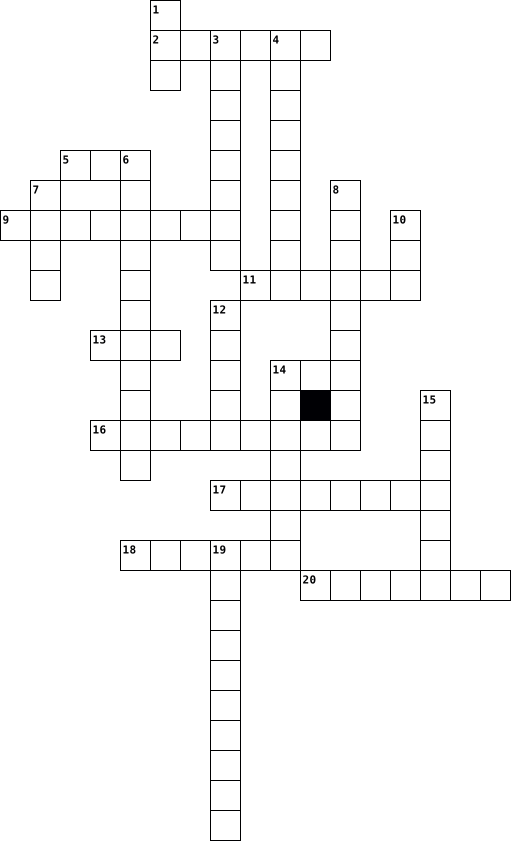
Across
- Controls flow of electrons
- Likes to chase mice
- Large marsupial
- A common connection point
- Man's best friend
- Flying mammal
- Converts mechanical energy to electrical energy
- Has a trunk
- Mass times speed of light squared
- Flow of electrons in a circuit
Down
- Universal Serial Bus
- Stores energy in the form of magnetics
- Wires to transfer electrons
- Transfers AC from one circuit to another
- A unit of electrical power
- Cannot conduct electricity
- Light Emitting Diode
- Converts electrical energy to mechanical
- Portable Power Source
- Electrical Potential
- Opposition to the flow of electrons
21 Clues: Has a trunk • Flying mammal • Large marsupial • Man's best friend • Likes to chase mice • Universal Serial Bus • Light Emitting Diode • Electrical Potential • Portable Power Source • A common connection point • Controls flow of electrons • A unit of electrical power • Cannot conduct electricity • Wires to transfer electrons • Flow of electrons in a circuit • Mass times speed of light squared • ...
Photosynthesis (Garcia, Hilado, Bonghanoy) 2025-01-22

Across
- Energy from sunlight.
- Simple cells, some photosynthetic.
- Green pigment that absorbs light.
- Cycle Light-independent reaction making glucose.
- Aquatic organisms with chlorophyll.
- Simple sugar unit.
- Sugar produced during photosynthesis.
- hairs Absorb water and nutrients from soil.
- Wavelengths of light perceived visually.
- Energy source for photosynthesis.
Down
- Organelle where photosynthesis occurs.
- Leaf pores for gas exchange.
- Site of light-dependent reactions.
- Process of converting light into food.
- Particles that carry energy.
- Organisms that perform photosynthesis.
- Stored energy in molecules.
- Breaks down glucose for energy (ATP).
- Specialized cell structure.
- Light bounced off surfaces.
20 Clues: Simple sugar unit. • Energy from sunlight. • Stored energy in molecules. • Specialized cell structure. • Light bounced off surfaces. • Leaf pores for gas exchange. • Particles that carry energy. • Green pigment that absorbs light. • Energy source for photosynthesis. • Simple cells, some photosynthetic. • Site of light-dependent reactions. • Aquatic organisms with chlorophyll. • ...
Sciencee 2023-03-31

Across
- heat transferred through direct touch
- heat transferred through fluids
- Not A Form of CHEMICAL ENERGY
- electromagnetic waves
- transfer thermal energy very well
- energy of movement
- doesn't transfer thermal energy well
- energy stored energy
Down
- energy that depends on mass and speed
- energy moving from one to another
- energy energy of motion
- energy made when bonds are broken
- energy associated with the sun
- energy that depends on mass and height
- good conductor
- type of energy a guitar has
16 Clues: good conductor • energy of movement • energy stored energy • electromagnetic waves • energy energy of motion • type of energy a guitar has • Not A Form of CHEMICAL ENERGY • energy associated with the sun • heat transferred through fluids • energy moving from one to another • energy made when bonds are broken • transfer thermal energy very well • doesn't transfer thermal energy well • ...
b16 2026-01-03

Across
- Passing traits
- Continued existence
- Cell energy molecule
- Simple sugar
- Genetic molecule
- Fluid cell portion
- Multiple populations together
- Large ecological region
- Helpful survival trait
- Messenger genetic molecule
Down
- Animal energy storage
- Cell storage space
- Differences among individuals
- Creating offspring
- Ability to do work
- Group of same species
- Rigid plant cell layer
- Long-term weather pattern
- Individual life form
- Plant energy storage
20 Clues: Simple sugar • Passing traits • Genetic molecule • Cell storage space • Creating offspring • Ability to do work • Fluid cell portion • Continued existence • Cell energy molecule • Individual life form • Plant energy storage • Animal energy storage • Group of same species • Rigid plant cell layer • Helpful survival trait • Large ecological region • Long-term weather pattern • ...
Light and Energy Review 2023-05-01

Across
- Energy you can see
- Power needed to do work
- Light goes through another medium and bends (why a pencil looks broken in water)
- Heat energy
- Energy that something uses to work
- Type of energy that moves
- Reflects light
- Refracts light
Down
- Reflects the most light
- Light bounces off another surface (i.e. mirror)
- Light ALWAYS travels in a ________ line
- Type of energy that requires a plug or battery
- Absorbs the most light
- Type of energy you can hear
- Light goes into a surface and does not come out the other side
- Energy that something makes
16 Clues: Heat energy • Reflects light • Refracts light • Energy you can see • Absorbs the most light • Reflects the most light • Power needed to do work • Type of energy that moves • Type of energy you can hear • Energy that something makes • Energy that something uses to work • Light ALWAYS travels in a ________ line • Type of energy that requires a plug or battery • ...
Harnessing Human Energy 2023-09-18

Across
- to change from one type to another
- example: a hand crank
- a machine that converts energy from kinetic to electric
- machines that harness energy from the wind
- stored energy
- energy cannot be ________ or destroyed
- the ability to make something move or change
- a set of parts making a complex whole
- energy from the sun
Down
- energy from moving water
- potential energy has the ability to make something move or change in the ______.
- energy an object has when moving
- how your evidence supports your claim
- to move from one place to another
- an answer to a question about the natural world
- information that is used to support or go against a claim
16 Clues: stored energy • energy from the sun • example: a hand crank • energy from moving water • energy an object has when moving • to move from one place to another • to change from one type to another • how your evidence supports your claim • a set of parts making a complex whole • energy cannot be ________ or destroyed • machines that harness energy from the wind • ...
Heat 2021-11-15

Across
- measures the average kinetic energy of the particles in a substance
- used to measure temperature
- substances that conduct thermal energy well
- tranfer of thermal energy through fluids
- transfer of energy through electromagnetic waves
- transfer of thermal energy by direct contact
- when a fluide circulates due to density differences it make a convection_______
- substances that don't conduct thermal energy well
- ________energy is the total kinetic energy of a substance
- the atmosphere acts like windows in a _______
Down
- no particles to move in a ________
- waves that can travel through outer space
- when water is heated it becomes less dense
- unit used to express thermal energy
- energy transferred between objects
- another name for heat waves
16 Clues: used to measure temperature • another name for heat waves • no particles to move in a ________ • energy transferred between objects • unit used to express thermal energy • tranfer of thermal energy through fluids • waves that can travel through outer space • when water is heated it becomes less dense • substances that conduct thermal energy well • ...
Chapter 18 2022-05-17

Across
- The use of less energy to preform the same task
- Water produced energy
- The saving/prevention of wasting energy
- Energy made from resources that won't run out
- A cell producing electrical energy from a chemical reaction
- Use of solar energy to heat a fluid
- Power produced by the surges of ocean water during the rise and fall of tides
Down
- Steam created using the Earth's heat
- The use of the sun for heating
- Panels that convert sunlight to energy
- OTEC
- Land dedicated to windmills and turbines
- Plants used for energy production
- Generation of electricity and other energy
- Main gas in natural gas
- Flammable liquid produced by natural fermentation of sugar
16 Clues: OTEC • Water produced energy • Main gas in natural gas • The use of the sun for heating • Plants used for energy production • Use of solar energy to heat a fluid • Steam created using the Earth's heat • Panels that convert sunlight to energy • The saving/prevention of wasting energy • Land dedicated to windmills and turbines • Generation of electricity and other energy • ...
Word wall crossword by Beckett 2023-10-13

Across
- chemical that captures sunlight
- Water spreading out
- Molecules getting kicked out
- DNA and RNA stores information
- Releases energy using O2
- Energy stored in bonds
- builds and repairs tissue
- Releases energy without using O2
- Type of transport that needs energy
Down
- Type of transport that doesn't need energy
- Fats, waxes, oils
- Molecules getting into the cell
- Spreading out
- Sugar energy from food
- Chain of molecules used for energy
- Process of making glucose from CO2,H2O,and sunlight
16 Clues: Spreading out • Fats, waxes, oils • Water spreading out • Sugar energy from food • Energy stored in bonds • Releases energy using O2 • builds and repairs tissue • Molecules getting kicked out • DNA and RNA stores information • chemical that captures sunlight • Molecules getting into the cell • Releases energy without using O2 • Chain of molecules used for energy • ...
Work, Power, & Energy -2 2026-02-02

Across
- device to lower effort
- apply a force over a distance
- aka heat energy
- _________magnetic
- provides ability to do work
- aka inclined plane
- wheel & ______
Down
- creates sound energy
- energy from center of atom
- push or pull
- energy of position
- wheel with rope
- unit for work
- energy of motion
- unit for power
- work in a period of time
16 Clues: push or pull • unit for work • unit for power • wheel & ______ • wheel with rope • aka heat energy • energy of motion • _________magnetic • energy of position • aka inclined plane • creates sound energy • device to lower effort • work in a period of time • energy from center of atom • provides ability to do work • apply a force over a distance