
environment Crossword Puzzles
Genetics & Ecosystems Living Envioroment terms 2023-06-05

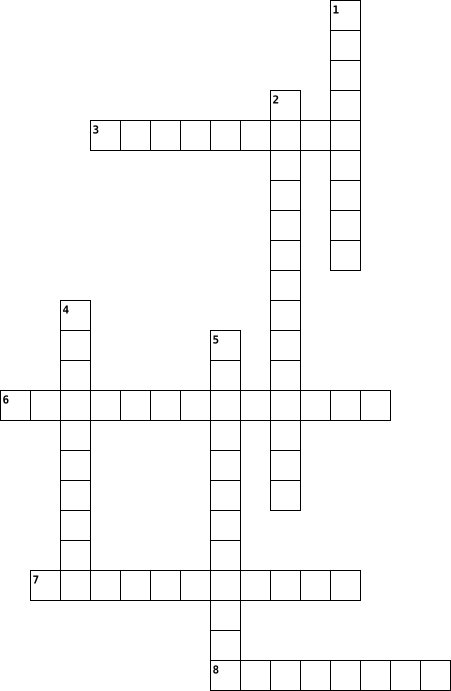
Across
- , A part of DNA on a chromosome that codes for a specific trait
- , Nonliving parts of the environment
- , All the living and non-living things that interact in an area
- , An animal that hunts and kills other animal
- , how traits are passed from one generation to the next
- , a permanent change in the order of DNA bases.
- , All the individuals of a single species that live in a specific area
- , A combination of all the different populations that live and interact in the same environment
- , the passing down of traits from one generation to the next
- , Children
- , Part of the cell that contains DNA
- , An animal that is hunted and killed by predators
Down
- , The living parts of the environment
- , The specific role played by an organism or a population of organisms in the ecosystem
- , The place where a plant or animal lives
- , All of Earth's ecosystems, collectively
- , A quality or characteristic
- , The struggle between organisms for the same limited resources in a particular area
- , the structure that uses RNA to make a protein
- , The study of how living things interact with each other and with their environment
- , single-stranded version of DNA that is used as a messenger outside of the nucleus
- , carries the genetic information which makes up a living thing
- , structures made of DNA molecules that contain genes
23 Clues: , Children • , A quality or characteristic • , Nonliving parts of the environment • , Part of the cell that contains DNA • , The living parts of the environment • , The place where a plant or animal lives • , All of Earth's ecosystems, collectively • , An animal that hunts and kills other animal • ...
RIL WED 2018 2018-05-30

Across
- The country hosting world environment day this year
- The process of converting waste materials into new materials and objects
- Substance which is discarded after primary use, defective and of no use
- Seriously at risk of extinction
- Trash, rubbish, or refuse is waste material that is discarded by humans
- Protect from harm or destruction.
- The production and discharge of something, especially gas or radiation.
- Theme of this year’s The World Environment Day
- Not having erupted in recorded history
- Presence in environment of a substance which has harmful or poisonous effects.
- Water that has percolated through a solid
- A synthetic material made from a wide range of organic polymers
Down
- A phenomena of the physical world collectively, including plants, animals etc
- Unwanted solid materials
- A stock or supply of materials and other assets that can be drawn on by a person
- To make smaller or less in amount, degree, or size
- Materials with dangerous & harmful properties
- Not harmful to the environment
- The action of using something again.
- A small or large social unit who have something in common
- Small solid particles which remain in suspension in water as a colloid
- Seasonal changes over a long period in the atmosphere
- The ability to be maintained at a certain rate or level.
- A site for the disposal of waste materials by burial.
24 Clues: Unwanted solid materials • Not harmful to the environment • Seriously at risk of extinction • Protect from harm or destruction. • The action of using something again. • Not having erupted in recorded history • Water that has percolated through a solid • Materials with dangerous & harmful properties • Theme of this year’s The World Environment Day • ...
Review Puzzle 2023-09-25

Across
- collection of tissues
- living factors of an environment
- community of plants and animals in a certain climate
- a molecule containing a very large number of atoms
- collection of all ecosystems
- new offspring is made by two parents contributing genes
- non-living factors of an environment
- smallest unit of structure in a living organism
- the passing on of traits from parents to their offspring
- new offspring is made by a single parent
- state of steady internal, physical, chemical, and social conditions maintained by living things
- group of similar cells
- smallest and most fundamental unit of matter
- how organisms adjust to new environments or to changes in their current environment
- small structure existing within a cell
- all the living things in an area together with the nonliving things
Down
- individual living entities
- sum of populations living in an area
- study of interactions among organisms and between organisms and their environment
- made up of one cell
- chemical structure consisting of at least two atoms held together by chemical bonds
- made up of many cells
- all the individuals of a species living within a specific area
- biological system consisting of a group of organs that work together
- organisms that can't make their own food
- organisms that can make it's own food
- the chemical reactions in the body's cells that change food into energy
27 Clues: made up of one cell • collection of tissues • made up of many cells • group of similar cells • individual living entities • collection of all ecosystems • living factors of an environment • sum of populations living in an area • non-living factors of an environment • organisms that can make it's own food • small structure existing within a cell • ...
NURSEWORD PUZZLE 2023-11-30

Across
- Introduced the Adaptation Model, focusing on the patient's coping mechanisms.
- Pioneering nurse known for her environmental theory of nursing.
- Prominent in transcultural nursing, emphasizing cultural competence in care.
- Known for her work in psychiatric nursing, emphasizing therapeutic nurse-patient relationships.
- Emphasizes the importance of considering the whole person in the nursing care process.
- Vital for effective nurse-patient relationships and positive healthcare outcomes.
- Focuses on the patient's ability to adapt to changes in health and the environment.
- The external factors that influence a patient's health and well-being.
- Acknowledges and integrates cultural considerations into nursing care.
- Developed the Self-Care Deficit Theory, emphasizing patients' ability to care for themselves.
Down
- The founder of modern nursing, known for her work during the Crimean War.
- Central concept in nursing theories, highlighting the compassionate aspect of patient care.
- Encourages patients to actively participate in maintaining their health.
- A concept discouraged by many nursing theories, emphasizing patient autonomy.
- Created the Systems Model, viewing patients as dynamic systems in interaction with their environment.
- The goal of nursing, aiming to promote overall health and prevent illness.
- Some nursing theories stress the empowerment of patients in their own healthcare.
- Actions taken to provide relief and improve patients' comfort.
- Nurses often serve as advocates, ensuring patient's needs are met.
- Pertains to creating an environment that promotes physical and emotional well-being.
20 Clues: Actions taken to provide relief and improve patients' comfort. • Pioneering nurse known for her environmental theory of nursing. • Nurses often serve as advocates, ensuring patient's needs are met. • The external factors that influence a patient's health and well-being. • Acknowledges and integrates cultural considerations into nursing care. • ...
Terminology Ch 1 & 2 2024-01-23

Across
- a proposed explanation to natural phenomenon
- regulation to maintain stability despite environmental influences
- components of an environment which are living
- all regions on the planet which support and include life
- a group of similar cells which perform a function
- positive particle within the nucleus
- an individual life form
- the associated populations of different species within an environment
- a system of interactions between living and nonliving things within an environment
- the smallest unit of life
- membrane-bound structure which performs specific functions within a cell
- type of molecular bond formed from loosing/gaining electrons
- type of temporary, molecular bond formed due to polarity
Down
- area which electrons are found
- smallest unit of an element
- components of an environment which are non-living
- suggested explanation for which an experiment can be designed
- attraction of one kind of molecule to a different kind of molecule; property of water
- variation of an element which have different numbers of neutral particles
- neutral particle within the nucleus
- attraction of molecules to other molecules of the same kind ; property of water
- expressed as a concise statement and always true
- the study of life
- type of molecular bond formed from electron sharing
- multiple, unique tissues performing a specific function
- the process of gradual adaptations to species which may cause species to diversify
26 Clues: the study of life • an individual life form • the smallest unit of life • smallest unit of an element • area which electrons are found • neutral particle within the nucleus • positive particle within the nucleus • a proposed explanation to natural phenomenon • components of an environment which are living • expressed as a concise statement and always true • ...
Green Schools and Environmental Health Module 20 2025-05-13

Across
- Warming that the Earth supports life.
- Huge specially designed pits where waste materials are dumped and buried.
- A school that is environmentally-friendly in several different ways.
- Rain that is more acidic than normal rain.
- To change items in some way so that they can be used again.
- The saving of resources.
- Oil, coal and natural gas that are used to provide energy.
- Easily broken down in the environment.
- A gas made of three oxygen atoms that occurs naturally and helps protect you from the sun's harmful rays.
Down
- When fossil fuels, such as oil, natural gas, or coal, are used, they cannot be replaced.
- Human made liquid, solids, sludge, or radioactive wastes.
- The upper atmosphere .
- agency of the U.S. government that is responsible for protecting the environment.
- All the living and nonliving things around you.
- Dirty or harmful substances in the environment.
- A product used on crops to kill insects and other pests.
- It consists of human waste, garbage, detergent, and other household wastes washed down drains and toilets.
- A rise in the earth's temperatures.
- Redacting waste before it occurs.
- The water that collects under the earths surface.
- the yellow-brown haze that forms when sunlight reacts with air pollution.
- A branch of the U.S. Department of Labor that protects American workers.
- Unit or harmful for living thing.
23 Clues: The upper atmosphere . • The saving of resources. • Redacting waste before it occurs. • Unit or harmful for living thing. • A rise in the earth's temperatures. • Warming that the Earth supports life. • Easily broken down in the environment. • Rain that is more acidic than normal rain. • All the living and nonliving things around you. • ...
Intro to Environmental Science Crossword 2025-08-14

Across
- A moral relationship that humans may have with the environment
- living in a way that human needs can be met indefinitely
- understanding the natural world through the collection and analysis of evidence
- what will be observed and measured to see if the independent variable made a difference
- impact one has on the environment
- (Of the Commons),when the self-interest of individuals takes priority over the best interest of the entire population
- human-centered, protects and promotes human interests at the expense of all other factors
- describe phenomena but do not explain it
- natural resource that is there for all members of society
- a field of science of the interaction between humans and the natural environment
Down
- proposed testable explanations that can lead to experimentation
- compounds that are dangerous to the environment and human health
- nature centered, protects and promotes ecosystems, regardless of their direct usefulness to humans
- Material that increases the risk of cancer
- tests the hypothesis under controlled conditions
- observations we make about the world
- Harmful particles that may be found in the air or water
- explanation for phenomenon backed by evidence, but can be changed when new information is available
- the new things the scientist is introducing and testing
- loss or near loss of species from overhunting and habitat loss
20 Clues: impact one has on the environment • observations we make about the world • describe phenomena but do not explain it • Material that increases the risk of cancer • tests the hypothesis under controlled conditions • Harmful particles that may be found in the air or water • the new things the scientist is introducing and testing • ...
General Biology Review 2024-05-28

Across
- Segment of DNA that codes for a specific trait
- Membrane Semi-permeable barrier surrounding the cell
- Community of living organisms and their environment
- Study of interactions among organisms and their environment
- Single-stranded nucleic acid involved in protein synthesis
- Deoxyribonucleic acid, carrier of genetic information
- Process by which plants convert light energy into chemical energy
- Specialized structure within a cell with specific function
- Control center of the cell, contains DNA
- Change in DNA sequence
- Trait that increases an organism's fitness in its environment
- Maintenance of internal stability in an organism
- Classification of organisms based on shared characteristics
- The powerhouse of the cell
- Respiration Process of converting glucose into ATP in cells
- Variety of life forms in an ecosystem
Down
- Protein that catalyzes chemical reactions
- Pigment responsible for photosynthesis
- Observable traits of an organism
- Group of organisms capable of interbreeding
- Genetic makeup of an organism
- Process of gradual change in a species over time
- Natural environment where an organism lives
- Specialized structures composed of tissues that perform specific functions
- Chemical messenger that regulates bodily functions
- Chemical processes that occur within a living organism
- Group of individuals of the same species living in a particular area
- Ability to resist infection or disease
- Reticulum Organelle involved in protein synthesis and lipid metabolism
29 Clues: Change in DNA sequence • The powerhouse of the cell • Genetic makeup of an organism • Observable traits of an organism • Variety of life forms in an ecosystem • Pigment responsible for photosynthesis • Ability to resist infection or disease • Control center of the cell, contains DNA • Protein that catalyzes chemical reactions • Group of organisms capable of interbreeding • ...
CROSSWORD 2025-09-22

Across
- Links social problems with environmental problems
- Lovelock’s idea that Earth functions like a living organism
- Carefulness and wise decision-making
- Large-scale cutting of forests
- Contamination of air, water, or land
- Principle of maintaining the state of the environment
- Emphasizes ecosystems and biological communities
- Long-term shifts in temperature and weather patterns
- Thrifty use of resources, avoiding waste
- Belief that order in nature brings beauty and well-being
- Increase in Earth’s average temperature
- Branch of philosophy about humanity’s place in nature
- Fair use of resources across generations
- View that all organisms have inherent value
- Law to protect wildlife species
Down
- International pledges to cut emissions fairly
- Studies moral responsibilities in climate change
- 1997 treaty to reduce greenhouse gas emissions
- Development balancing human needs and environmental care
- Variety of life forms in ecosystems
- Humans are part of nature, not separate from it
- Decline in quality of the environment by human activity
- Focuses on fairness in addressing climate crisis
- 1999 law regulating air pollution in the Philippines
- Moral duty to care for and protect the environment
- Promote wise use and protection of natural resources
- Advocacy to address growing environmental problems
- Belief that humans are the most important species
- Advocate for intrinsic value of all living beings
- Moral relationship between humans and environment
30 Clues: Large-scale cutting of forests • Law to protect wildlife species • Variety of life forms in ecosystems • Carefulness and wise decision-making • Contamination of air, water, or land • Increase in Earth’s average temperature • Thrifty use of resources, avoiding waste • Fair use of resources across generations • View that all organisms have inherent value • ...
Biodiversity _6 2022-08-02

Across
- the layer of gases surrounding Earth
- the surroundings or conditions in which a person, animal, or plant lives or operates.
- An individual living thing
- balance despite the changes in the external environment the body is able to maintain a constant internal environment
- factors All the living organisms that inhabit an environment
- All the water on earth
Down
- Planting seeds or trees to make a forest on land that has not been a forest recently, or which has never been a forest.
- factors Nonliving components of environment.
- a lowland area, such as a marsh or swamp, that is saturated with moisture, especially when regarded as the natural habitat of wildlife.
- a chemical used to kill insects
- The amount of biological or living diversity per unit area. It includes the concepts of species diversity, habitat diversity and genetic diversity.
- Plants use the sun's energy to convert water and carbon dioxide into sugars
12 Clues: All the water on earth • An individual living thing • a chemical used to kill insects • the layer of gases surrounding Earth • factors Nonliving components of environment. • factors All the living organisms that inhabit an environment • Plants use the sun's energy to convert water and carbon dioxide into sugars • ...
Paper or Plastic? 2024-02-14

Across
- more than normal
- break down
- can make more
- a good quality
- breaks easily
Down
- really
- use again
- causing pain
- nature
- good for the environment
- stop
- a bad quality
12 Clues: stop • really • nature • use again • break down • causing pain • a bad quality • can make more • breaks easily • a good quality • more than normal • good for the environment
Nature 2020-05-18

Across
- Forest
- Plants that are living in an environment
- Any type of nature belonging to the environment
- Protection of wildlife and nature
- Plants that are grown by farmers
- Plants that live on dead things
- Persuade people to follow you
Down
- How plants eat
- Force of nature destroying things
- To destroy a group of trees
- The air around the earth
- Animals that are living in the environment
12 Clues: Forest • How plants eat • The air around the earth • To destroy a group of trees • Persuade people to follow you • Plants that live on dead things • Plants that are grown by farmers • Force of nature destroying things • Protection of wildlife and nature • Plants that are living in an environment • Animals that are living in the environment • ...
Rside Science 10 -{[ 3.3. ]}- 2013-05-03
![Rside Science 10 -{[ 3.3. ]}- crossword puzzle](/image/144744.svg?size=30&stroke_width=1)
Across
- A bright yellow weed native to the Daisy family.
- Changes made to the environment that adversely change ecosystem function.
- A species of Myriophyllum that is native to Asia, Europe, and North Africa.
- A species that has disproportionate effects on its environment
- An organism that is not native to the environment, and causes harm to our economy, environment, or health.
- An organism that lives in or on another organism and feeds of off it at the expence of the host.
Down
- A deciduous broom-flower native to western Europe.
- The act of two organisms fighting for the same resource.
- A species that is native to the ecosystem or habitat and was not brought into the ecosystem, but was always there.
- The variety of living organisms in a particular ecosystem or habitat.
- A species that was brought into an ecosystem that is not native to that particular ecosystem.
- A group of living organisms that possess the same types of characteristics or are in the same scientific family. Ex; Canines
- A biological community that consists of abiotic and biotic components.
- The act of one organism hunting and killing another organism to eat it for nutrients.
- Species of rat that belongs in Norway's environment.
15 Clues: A bright yellow weed native to the Daisy family. • A deciduous broom-flower native to western Europe. • Species of rat that belongs in Norway's environment. • The act of two organisms fighting for the same resource. • A species that has disproportionate effects on its environment • The variety of living organisms in a particular ecosystem or habitat. • ...
Invasive Species 2024-05-13

Across
- the natural environment in which a particular species lives
- to slowly change or develop over time into a more complex version of the original form
- the practice of cultivating crops and raising animals for food, fiber, and other products
- the protection and preservation of natural resources and biodiversity
- species that are indigenous to a particular area and have evolved in that ecosystem over time.
- the science and practice of managing forests for timber and other forest products
- the total of all the external conditions that may act upon an organism or community to influence its development or existence.
Down
- a microorganism related to causing disease
- the variety of living organisms in an ecosystem.
- non-native species that have been introduced to a new environment and have the potential to cause harm to the ecosystem, economy, or human health.
- a process in which an organism improves in ways that allow it to survive it environment
- a community of living and nonliving components that interact with one another in a particular environment.
- a plant considered undesirable in a particular situation, growing where it conflicts with human preferences, needs, or goals
- related to water or living in water
- an organism that is considered harmful or unwanted.
15 Clues: related to water or living in water • a microorganism related to causing disease • the variety of living organisms in an ecosystem. • an organism that is considered harmful or unwanted. • the natural environment in which a particular species lives • the protection and preservation of natural resources and biodiversity • ...
Biodiversity _6 crossword 2022-08-24

Across
- factors Nonliving components of environment.
- Plants use the sun's energy to convert water and carbon dioxide into sugars
- the layer of gases surrounding Earth
- balance despite the changes in the external environment the body is able to maintain a constant internal environment
- a lowland area, such as a marsh or swamp, that is saturated with moisture, especially when regarded as the natural habitat of wildlife.
- factors All the living organisms that inhabit an environment
- The amount of biological or living diversity per unit area. It includes the concepts of species diversity, habitat diversity and genetic diversity.
Down
- Planting seeds or trees to make a forest on land that has not been a forest recently, or which has never been a forest.
- the surroundings or conditions in which a person, animal, or plant lives or operates.
- All the water on earth
- a chemical used to kill insects
- An individual living thing
12 Clues: All the water on earth • An individual living thing • a chemical used to kill insects • the layer of gases surrounding Earth • factors Nonliving components of environment. • factors All the living organisms that inhabit an environment • Plants use the sun's energy to convert water and carbon dioxide into sugars • ...
Bronfenbrenner Theory 2015-12-07

Across
- The macrosystem involves your ethnicity and your _______.
- The exosystem is an ______ environment
- The ecological systems are also called ____________.
- Bronfenbrenner had ____ children
- Direct Environment (Family, Friends, Classmates.)
- There are _______ systems.
- Urie Bronfenbrenner went to _____ different universities.
- Urie Bronfenbrenner was married to a woman named _____ Price.
Down
- Indirect changes that happen in a person's lifetime.
- He died at age ____.
- How the ideas and attitudes of your culture affect you.
- The relationship between the
- The indirect environment(settings or events that influence the child's socialization.)
- The Chronosystem may not affect you _______ but later on.
14 Clues: He died at age ____. • There are _______ systems. • The relationship between the • Bronfenbrenner had ____ children • The exosystem is an ______ environment • Direct Environment (Family, Friends, Classmates.) • Indirect changes that happen in a person's lifetime. • The ecological systems are also called ____________. • ...
Ecology 2017-05-23

Across
- Color or patterns for protection from predators
- Feeding relationship of a community
- One organism benefits, one organism is unaffected
- Cannot make its own food
- Highest level of the environment
- Another name for an autotroph
- Gets energy by eating prey
- all these factors contribute to the growth rate
- A large area of the earth that has similar ecosystems and environment
Down
- Both organisms benefit
- One organism gets its energy from another organism, harming it
- Gets its energy from chemicals in food
- A organism that feeds by breaking down dead organisms
- The smallest level of the environment
14 Clues: Both organisms benefit • Cannot make its own food • Gets energy by eating prey • Another name for an autotroph • Highest level of the environment • Feeding relationship of a community • The smallest level of the environment • Gets its energy from chemicals in food • Color or patterns for protection from predators • all these factors contribute to the growth rate • ...
Ecology Lesson 1&2 2026-03-20

Across
- Living things in an ecosystem
- Living thing that makes its own food
- Large area characterized by climate & biotic factors
- the variety of living things
- Single living thing
- All of the living things on earth
- Organism who eats only plants
Down
- Non-living things in an ecosystem
- number of the same species in an environment
- Community made up of the same living and nonliving things
- Organism who eats both plants & animals
- study of the intricate interactions of living organisms with one another and their environment.
- Organism who eats only meat
- All of the different living things in an environment
14 Clues: Single living thing • Organism who eats only meat • the variety of living things • Living things in an ecosystem • Organism who eats only plants • Non-living things in an ecosystem • All of the living things on earth • Living thing that makes its own food • Organism who eats both plants & animals • number of the same species in an environment • ...
Sharing The Planet 2026-06-11

Across
- what the weather usually is
- words written on small parts of a picture
- be able to live
- what humans should do for the environment
- an animal that eats other animals
- change to survive in an environment
Down
- a type of living thing that is not a plant
- a type of living thing that is not an animal
- a picture showing something specific
- a series of animals that can eat each other
- where animals live
- what the witch had as a 'gift' in The Witches
- an animal that is eaten other animals
- what the zoo keepers brought to school
14 Clues: be able to live • where animals live • what the weather usually is • an animal that eats other animals • change to survive in an environment • a picture showing something specific • an animal that is eaten other animals • what the zoo keepers brought to school • words written on small parts of a picture • what humans should do for the environment • ...
UNIT 2 ESS 2024-05-27

Across
- The variety of life in the world or in a particular habitat or ecosystem.
- A trait that helps an organism survive and reproduce.
- The eating of plants by animals.
- Factors Environmental conditions that limit the growth, abundance, or distribution of an organism or a population of organisms in an ecosystem.
- An interaction between organisms or species in which both the organisms or species are harmed.
- The process of breaking down food to release energy.
- The process by which green plants use sunlight to synthesize food from carbon dioxide and water.
- Symbiosis that is beneficial to both organisms involved.
- A large naturally occurring community of flora and fauna occupying a major habitat.
- An association between two organisms in which one benefits and the other derives neither benefit nor harm.
- Efficiency The efficiency with which energy is transferred from one trophic level to the next.
- Level The position an organism occupies in a food chain.
- A community of living organisms and their interactions with their abiotic environment.
- The preying of one animal on others.
- A group of organisms that can interbreed and produce fertile offspring.
- The natural environment in which a species lives.
- Succession The series of community changes which take place on a previously colonized but disturbed or damaged habitat.
- Cycle The series of processes by which carbon compounds are interconverted in the environment.
- Factors Non-living chemical and physical parts of the environment that affect living organisms.
- The total mass of organisms in a given area or volume.
- The process by which different kinds of living organisms are thought to have developed and diversified from earlier forms.
- A group of individuals of the same species living in a specific area.
Down
- Organisms that break down dead or decaying organisms.
- Pyramid A graphical representation showing the number of organisms, biomass, or energy at each trophic level.
- Cycle The series of processes by which nitrogen and its compounds are interconverted in the environment and in living organisms.
- Organisms that produce their own food through photosynthesis or chemosynthesis.
- Succession The series of community changes which occur on an entirely new habitat.
- The role and position a species has in its environment.
- Cycles The flow of chemical elements and compounds between living organisms and the physical environment.
- Species A species on which other species in an ecosystem largely depend.
- Factors Living components of an ecosystem.
- All the populations of different species living and interacting in a particular area.
- A relationship between two organisms where one benefits at the expense of the other.
- Web A system of interlocking and interdependent food chains.
- Capacity The maximum population size of a species that an environment can sustain.
- The state or process of a species, family, or larger group being or becoming extinct.
- Organisms that obtain energy by feeding on other organisms.
- Chain A series of organisms each dependent on the next as a source of food.
- The process by which the structure of a biological community evolves over time.
- Interaction between two different organisms living in close physical association.
- Cycle The cycle of water movement through the atmosphere, ground, and bodies of water.
41 Clues: The eating of plants by animals. • The preying of one animal on others. • Factors Living components of an ecosystem. • The natural environment in which a species lives. • The process of breaking down food to release energy. • Organisms that break down dead or decaying organisms. • A trait that helps an organism survive and reproduce. • ...
2.1 Vocabulary Menu 2012-11-20

Across
- physical area in which an organism lives
- Factor any living factor in an organism’s environment
- symbiotic relationship in which one organism benefits and the other organism is harmed
- competition occurs between members of DIFFERENT species
- act of one organism feeding on another organism
- biological community and all the nonliving factors that affect it
- role, or position, of an organism in its environment
- large group of ecosystems that share the same climate and have similar types of communities
- symbiotic relationship in which both organisms benefit
Down
- symbiotic relationship in which one organism benefits at the expense of another organism
- group of organisms of the same species that occupy the same geographic place at the same time
- community all the interacting populations of different species that live in the same geographic location at the same time
- competition occurs between members of the SAME species
- relatively thin layer of Earth and its atmosphere that supports life
- occurs when more than one organism uses a resource at the same time
- group of organisms that can interbreed and produce fertile offspring
- anything that has or once had all the characteristics of life
- Factor any nonliving factor in and organism’s environment, such as soil, water temperature, and light availability
- scientific study of all the interrelationships between organisms and their environment
- close, mutualistic, parasitic, or commensal association between two or more species that live together
20 Clues: physical area in which an organism lives • act of one organism feeding on another organism • role, or position, of an organism in its environment • Factor any living factor in an organism’s environment • competition occurs between members of the SAME species • symbiotic relationship in which both organisms benefit • ...
Gestalt Therapy 2013-06-13

Across
- Approach that focuses on client's perception of reality
- The stage of integration that clients aware that they have a choice and begin to try out new behavior
- The main developer of Gestalt Therapy
- Turning back onto ourselves what we would like to do to someone else
- The stage of integration that clients acquire a novel view of an old situation
- Uncritically accepting others' beliefs and standards without assimilating them to make them congruent with who we are
- Whole or completion
- An exercise that helps clients to resolve their unfinished business, interpersonal problem and internal polarized elements
- Blurring differentiation between the self and the environment
- Those aspect of individual experience that are often out of awareness
- The stage of integration that clients learn how to influence their environment
- Relationship Therapeutic relationship in Gestalt Therapy
Down
- An exercise that clients are asked to heighten their gesture or movement
- Principle that assumes people must be seen in its environment or context
- Disowning certain aspects of ourselves by assigning them to the environment
- Those aspect of individual experience that are most salient at any moment
- Gestalt therapists see dream as the royal road to _______
- The internal polarized aspect of individual that represents righteous, authoritarian, moralistic, and manipulative
- The internal polarized aspect of individual that represents defensive, helpless, weak, powerlessness, and assuming no responsibility
- The objective of Gestalt Therapy is to gain _______
20 Clues: Whole or completion • The main developer of Gestalt Therapy • The objective of Gestalt Therapy is to gain _______ • Approach that focuses on client's perception of reality • Relationship Therapeutic relationship in Gestalt Therapy • Gestalt therapists see dream as the royal road to _______ • Blurring differentiation between the self and the environment • ...
Ecology terms 2016-05-05

Across
- A group of populations that live in the same area a the same time
- The place where an organism lives out its life
- All strategies and adaptions a species uses in its environment
- eat meat
- A biological community and the nonliving things in the community's environment
- are consumers that hunt and eat other organisms called prey
- type of symbiosis in which both species benefit
- an animal or plant on or in which a parasite or commensurable organism lives.
- is an interaction between organisms or species in which the fitness of one is lowered by the presence of another.
- a group of living organisms consisting of similar individuals capable of exchanging genes or interbreeding.
Down
- Non-living parts of the environment
- Organisms that eat other organisms for energy
- Partiton of the earth that supports living things
- an organism that lives in or on another organism (its host) and benefits by deriving nutrients at the host's expense.
- organisms that take in energy from their surroundings to make their own food
- an association between two organisms in which one benefits and the other derives neither benefit nor harm.
- Living organisms in the environment
- a large naturally occurring community of flora and fauna occupying a major habitat, e.g., forest or tundra.
- eat plants and meats
- An animal that is hunted and killed by another for food
20 Clues: eat meat • eat plants and meats • Non-living parts of the environment • Living organisms in the environment • Organisms that eat other organisms for energy • The place where an organism lives out its life • type of symbiosis in which both species benefit • Partiton of the earth that supports living things • An animal that is hunted and killed by another for food • ...
Sams Ecosystems 2023-12-12

Across
- A sequence of feeding relationships among living organisms
- A statement of an intention to inflict pain, injury, damage
- A degree or intensity of heat present in a substance or object,
- A Organism that eat the food made by producers
- Weather conditions prevailing in an area in general or over a long period.
- A bunch of forms of liquid and solid state of water that falls from the sky
- A community of interacting organisms and their physical environment.
- A individual animal, plant, or single-celled life form.
- A term applied to living things in the environment
Down
- Plants that use energy from the sun to make nutrients they need to survive
- A substance that provides nourishment essential for growth
- A Inherited characteristic that helps an organism survive in its environment
- A warm-blooded vertebrate animal of a class that is distinguished by the possession of hair or fur
- A organism that is caught and eaten by another organism
- A region of land that contains certain types of organisms
- Plants considered collectively, especially those found in a particular area or habitat.
- A relative extent of something, a thing's overall dimensions or magnitude
- A organism that catches and eats other organisms
- A organism that eats food habitually.
- A term applied to non-living things in the environment
20 Clues: A organism that eats food habitually. • A Organism that eat the food made by producers • A organism that catches and eats other organisms • A term applied to living things in the environment • A term applied to non-living things in the environment • A organism that is caught and eaten by another organism • A individual animal, plant, or single-celled life form. • ...
Characteristics of Life 2024-04-22

Across
- several organ systems that work together; a single living thing
- maintenance of a constant internal environment despite external changes
- a change in the DNA of an organism
- the female gamete
- process of capturing light energy to make sugar
- an organism made up of two or more cells
- several organs that work together
- process where individuals with favorable alleles for their environment will be more successful and contribute more offspring to the next generation
- an organism made of only one cell
Down
- cell theory states that all cells come from __ cells
- the process whereby species adapt and change over time
- can make its own food
- the ability to survive and reproduce in a given environment
- the basic unit of life
- the structures within cells that carry out the cells' life functions
- type of reproduction requiring two parents
- needs to consume other organisms for food
- scientific term for children
- producing energy by breaking larger molecules into smaller ones
- using energy to create larger molecules from smaller ones
- several tissues that work together
- the male gamete
- type of reproduction with only one parent
- reproductive cells (sperm or egg)
- a change in the environment that an organism responds to
- without a nucleus
- the sum of all chemical reactions in the organism
- containing a nucleus
28 Clues: the male gamete • the female gamete • without a nucleus • containing a nucleus • can make its own food • the basic unit of life • scientific term for children • reproductive cells (sperm or egg) • several organs that work together • an organism made of only one cell • a change in the DNA of an organism • several tissues that work together • an organism made up of two or more cells • ...
Ecological themes 2025-05-02

Across
- The process by which an organism adapts to its environment
- CAPACITY The maximum population size an environment can sustain
- The gradual change in species composition in an ecosystem over time
- A term for pollutants that accumulate in the food chain
- The study of interactions among organisms and their environment
- SPECIES Species that has a disproportionately large effect on its environment
- CYCLE Process by which nutrients circulate through ecosystems
- Process where plants release water vapor into the atmosphere
- Species that feeds on dead organic matter
- A habitat that provides all necessary resources for a species
- The process where carbon dioxide is absorbed by plants
Down
- The process of converting nitrogen into a form usable by plants
- Term for the variety of life in an ecosystem
- A Symbiotic relationship where both species benefit
- Biological community defined by dominant vegetation
- FACTORS Non-living physical and chemical environment
- Organism that produces its own food via photosynthesis
- Biological community and its physical enviro: Anment
- SPECIES A species that influences the structure of an ecological community
- DEGRADATION The loss of biodiversity due to habitat destruction
- An organism that feeds on multiple levels of a food chain
- WEB The transfer of energy through a food chain
- GROWTH Type of population growth curve that levels off at carrying capacity –
- A species that is at risk of extinction
- Largest terrestrial biome characterized by coniferous forests
25 Clues: A species that is at risk of extinction • Species that feeds on dead organic matter • Term for the variety of life in an ecosystem • WEB The transfer of energy through a food chain • A Symbiotic relationship where both species benefit • Biological community defined by dominant vegetation • FACTORS Non-living physical and chemical environment • ...
Ecosystems - definitions 2026-04-09

Across
- A system made up of living organisms and their physical environment
- A group of organisms of the same species living in the same area
- Living components of an environment such as plants, animals and microorganisms
- A poisonous substance that can harm living organisms
- An animal that eats both plants and animals
- A group of organisms that can reproduce to produce fertile offspring
- A network of interconnected food chains
- An organism that eats producers (usually plants)
- All the different populations of organisms living together in one area
- An organism that makes its own food usually using sunlight
- A process where harmful substances build up in organisms over time
- An organism that hunts and eats other organisms
Down
- The position an organism occupies in a food chain
- Non-living components of an environment such as light, temperature and water
- The role of an organism in an ecosystem including how it feeds, lives and interacts
- A diagram showing a single pathway of energy transfer between organisms
- The process by which plants make glucose using light energy
- An organism that gets energy by eating other organisms
- The main source of energy for most ecosystems
- An organism that is hunted and eaten by another
- Everything surrounding an organism including living and non-living factors
- An animal that eats other animals
- The natural place where an organism lives
23 Clues: An animal that eats other animals • A network of interconnected food chains • The natural place where an organism lives • An animal that eats both plants and animals • The main source of energy for most ecosystems • An organism that is hunted and eaten by another • An organism that hunts and eats other organisms • An organism that eats producers (usually plants) • ...
Unit 2 Lock 1 2026-07-07

Across
- Specialized membrane proteins that allow large amounts of water to diffuse through quickly
- Property of plasma membrane meaning having a hydrophobic and hydrophilic region
- When water moves from low solute concentration to high solute concentration
- Type of transport when vesicles fuse with the membrane to release contents
- Type of passive transport where materials diffuse directly through the plasma membrane
- Solution with a large amount of free water compared to another solution
- Type of molecule requiring a transport protein to cross the plasma membrane
- The theory that states that mitochondria and chloroplasts were once free-living prokaryotes
- Result of an animal cell placed in a hypertonic environment
Down
- Result of a plant cell placed in a hypertonic environment
- Type of passive transport requiring a protein for molecules to pass through
- Type of protein binding to a solute to help transport a molecule across the membrane
- Bulk transport forming a food vacuole
- Result of a plant cell placed in a hypotonic environment
- Result of an animal cell placed in a hypotonic environment
- Bulk transport to bring in extracellular fluid
- Solution with a small amount of free water compared to another solution
- When eukaryotes use organelles to create separate environments for chemical reactions
- Type of molecule that is able to easily pass through the plasma membrane
- Transport with solute moving with its concentration gradient
20 Clues: Bulk transport forming a food vacuole • Bulk transport to bring in extracellular fluid • Result of a plant cell placed in a hypotonic environment • Result of a plant cell placed in a hypertonic environment • Result of an animal cell placed in a hypotonic environment • Result of an animal cell placed in a hypertonic environment • ...
INGLES II BLANCA GOMEZ 2018-03-30

Across
- Collaborative learning Grades environment
- las fechas para la apertura y entrega de la actividad propuesta
- Practice learning environment
- Student´s Management environment
Down
- administration
- Monitoring and evaluation environment
- Pre-knowledge
- Knowledge environment
8 Clues: Pre-knowledge • administration • Knowledge environment • Practice learning environment • Student´s Management environment • Monitoring and evaluation environment • Collaborative learning Grades environment • las fechas para la apertura y entrega de la actividad propuesta
RECONOCIMIENTO INGLES II 2018-03-30

Across
- las fechas para la apertura y entrega de la actividad propuesta
- Monitoring and evaluation environment
- Course administration
- Pre-knowledge
Down
- Student´s Management environment
- Collaborative learning environment
- Practice learning environment
- Knowledge environment
8 Clues: Pre-knowledge • Course administration • Knowledge environment • Practice learning environment • Student´s Management environment • Collaborative learning environment • Monitoring and evaluation environment • las fechas para la apertura y entrega de la actividad propuesta
TFN jecelle buccat 2019-11-18

Across
- body sensation, body image
- adaptation model
- nursing process thoery
- 12 basic human needs
- human-to-human relationshio model
- helping profession
- care, core cure model
- obvious
Down
- 21 nursing problem
- unseen
- the way a person responds as a physical being to stimuli from the environment
- individual, beneficiary of care
- self-consistency, self ideal
- environmental theory
- psychodynamic nursing
- planning for optimum health on local, stateand national
- behavioral system model
17 Clues: unseen • obvious • adaptation model • 21 nursing problem • helping profession • environmental theory • 12 basic human needs • psychodynamic nursing • care, core cure model • nursing process thoery • behavioral system model • body sensation, body image • self-consistency, self ideal • individual, beneficiary of care • human-to-human relationshio model • ...
RECOGNITION TASK ENGLISH 2018-02-13
Across
- the sillabus is in this environment
- environment where the activity guide is
- environment where the course agenda is
- in this environment you find how to navegate in the web page
Down
- the environment where you find de activity dates
- the grades are in this environment
- the homeworks are loaded in this environment for being graded
- Where I know my partners´ profile
8 Clues: Where I know my partners´ profile • the grades are in this environment • the sillabus is in this environment • environment where the course agenda is • environment where the activity guide is • the environment where you find de activity dates • in this environment you find how to navegate in the web page • the homeworks are loaded in this environment for being graded
NURSE WORD PUZZLE 2022-12-17

Across
- emotional & cognitive strategies that allow a person to change to higher levels of potential
- Outcome or produced results of certain stressors and actions of the line of resistance
- is the primary method of data collection used to evaluate the client’s response to the intervention.
- a set of expectations about how a person occupying a position behaves towards a person in another position.
- most immediately confronting the RESIDUAL affects the focal stimulus but the effects are unclear
- patient is a person (indiv/groups) who uses coping skills to deal stressors”
- The ability to share in the person’s experience
- – “the processes and outcome whereby thinking and feeling persons as individuals or groups, USE CONSCIOUS AWARENESS and CHOICE to create HUMAN and ENVIRONMENTAL INTEGRATION”
- primary, secondary and tertiary roles that a person performs in the society.
- “has to do with when, how, what, how much, and under what conditions we eat.”
- coping mechanism from close relationship which results to giving and receiving of love, respect and value.
- Used to attain balance within the continuum of health.
- refers to unity and harmony within the mind, body and sou
- Takes place in the environment that affects the client and involves taking action to modify that environment
- Essential to both carative and curative processes
- “ a reparative process that nature instituted from a want of attention”
- Predominantly described a passive patient but whenever self-care is possible, the nurse should ask about the patient's preference.
- the malignant phase of dispairful “not caring” and apathetic indifference
- or financial concerns
Down
- behaviors concerned with self-defense and self-preservation
- sensitivity to one’s self and to others
- Based on the effect of the changes in the environment on the client’s ability to regain his health at the least expense of energy
- promotes helping behavior that calls for a nurturing response.
- is not observable. A unique experience. Pain is a lonely experience that is difficult to communicate fully to another individual.
- the way a person responds as a physical being to stimuli from the environment
- in nursing conveys physical acts but embraces the mind-body-spirit as it reclaims the embodied spirit as its focus of attention
- any change in the internal and external environment that induces a response in the adaptive system
- behaviors that attempts to control the environment.
- Ask the client what is needed or wanted Observation
- works with other parts of its body and environment
- determination of how best to assist the person in attaining the established goals.
- excretion of waste products
- being unhealthy, but rather explored the human experience of illness
- the desire to gain an end or accomplish a goal combined with some degree of expectation that what is desired or sought is attainable
- The act of utilizing the environment of a patient assist him in his recovery
- set towards stability
- set towards the disorganization of the system
- vary according to culture and gender
- establishes sturctures, values & daily activities
39 Clues: set towards stability • or financial concerns • excretion of waste products • vary according to culture and gender • sensitivity to one’s self and to others • set towards the disorganization of the system • The ability to share in the person’s experience • Essential to both carative and curative processes • establishes sturctures, values & daily activities • ...
Basic Ecological Concepts 2021-06-24

Across
- a species exerting bigger influence on other members of the community
- a natural unit of living and non-living factors interacting to form a stable system
- interaction between a species and environment
- living components of an ecosystem
- interaction between a community and environment
Down
- non-living components of an ecosystem
- a place where an organism lives
- a naturally occurring group of different organisms living and interacting in the same environment
- all populations in a habitat
- relationship between organisms and their environment
- portion of a habitat occupied by an organism or species
11 Clues: all populations in a habitat • a place where an organism lives • living components of an ecosystem • non-living components of an ecosystem • interaction between a species and environment • interaction between a community and environment • relationship between organisms and their environment • portion of a habitat occupied by an organism or species • ...
P4 Crossword 2023-08-22

Across
- large bodies of water
- a city environment
- an imaginary line that divides Earth in half North and south
- an environment close to a city
- The weather studied over a long period of time
- how hot or cold something is
- the conditions outside at a certain time and place
- the study of Earth
- the shapes of Earth’s land
Down
- large bodies of land
- an imaginary line that divides the Earth in half (east and west)
- small towns and farms
- The air, and, water, and life around us
- an area with shared qualities
14 Clues: a city environment • the study of Earth • large bodies of land • large bodies of water • small towns and farms • the shapes of Earth’s land • how hot or cold something is • an area with shared qualities • an environment close to a city • The air, and, water, and life around us • The weather studied over a long period of time • the conditions outside at a certain time and place • ...
The Canine Forensic Challenge 2026-04-29

Across
- Building Block of DNA
- Organelle that holds DNA
- Scientific Family
- Scientist who studied evolution and made many discoveries in the Galapagos
- Organisms with the best __________ for the environment will survive and reproduce
- When two family members in a zoo mate with each other. This is why zoos need to trade their animals
Down
- Organelle that creates energy using sugar and oxygen
- Sire
- A tool/diagram that shows evolutionary relationships
- Differences in living organisms in an environment
- Damsel
- Distant Relative
- Theory of _________ Selection
- A trait that helps an organism survive better in the environment
14 Clues: Sire • Damsel • Distant Relative • Scientific Family • Building Block of DNA • Organelle that holds DNA • Theory of _________ Selection • Differences in living organisms in an environment • Organelle that creates energy using sugar and oxygen • A tool/diagram that shows evolutionary relationships • A trait that helps an organism survive better in the environment • ...
Creating a warm & welcoming environment in an early learning service 2025-08-15

Across
- This is one way to encourage family involvement in the educational program
- What's another point to remember about families when creating a warm environment?
- Interactions with children/families must be ____________ in order to build rapport
- A strategy to give parents input into the educational program
- What's a characteristic of a welcoming environment?
- One of the practice principles of the VEYLDF relevant to creating a warm environment
Down
- What's one point to remember about families when creating a warm environment?
- This is an open communication technique.
- Another practice principle of the VEYLDF relevant to creating a warm environment.
- This is another open communication technique.
- The National _________ Standard details several areas that are relevant to warmth and engagement with families.
11 Clues: This is an open communication technique. • This is another open communication technique. • What's a characteristic of a welcoming environment? • A strategy to give parents input into the educational program • This is one way to encourage family involvement in the educational program • What's one point to remember about families when creating a warm environment? • ...
Emma and Kennedy Crossword 2020-02-19

Across
- study of how organisms interact with their environment and each other
- describes how organisms are arranged in an area
- number of organisms present in a population
- number of individual of a population in an area
- all living things and their physical environment
- nonliving parts of a ecosystem
- describes relitave number organisms of an age in a population
- a group that interbreeds and produces fertile offspring
Down
- all populations in an area
- all parts of earth that host life
- visual tools to show age structure of a population
- specific environment in which an organism lives
- members that live in an area at the same time
- living parts of an ecosystem
- proportion of males to females
- anything an organism needs
16 Clues: all populations in an area • anything an organism needs • living parts of an ecosystem • proportion of males to females • nonliving parts of a ecosystem • all parts of earth that host life • number of organisms present in a population • members that live in an area at the same time • specific environment in which an organism lives • ...
Alex's Life Science Vocabulary 2023-02-07

Across
- an instance of being unlike or distinct in nature, form, or quality
- to remain alive or in existence
- in the process of time
- mutual or reciprocal action or influence
- immediately derived from something original, primary, or basic
- the whole mass of air surrounding the earth
- the capacity of acting or being active
- a subject under consideration
- an animal taken by a predator as food
Down
- something designed or used as a model for making things
- the circumstances,objects,or conditions by which one
- the complex of a community of organisms and its environment functioning as an ecological unit
- to the quality or state of being
- living organisms together with their environment
- first in order of time or development
- surrounded
16 Clues: surrounded • in the process of time • a subject under consideration • to remain alive or in existence • to the quality or state of being • first in order of time or development • an animal taken by a predator as food • the capacity of acting or being active • mutual or reciprocal action or influence • the whole mass of air surrounding the earth • ...
Chapter 1: Changes to the Environment 2026-04-14

Across
- People, plants, and animals are in the ........................................
- erosion Changes how a river looks.
- Park Where did Mr. Soto's class go to on the field trip?
- Rocks can ................................ inside the earth.
- People live on the Earth's ....................................
- The Earth's environment ..........................
- The Earth's environment is always ....................................
Down
- Water erosion changes how the ................................ looks.
- Earth's crust is made of moving ..............................
- Burns trees, grass, and homes.
- ............................... to the environment can happen quickly or slowly.
- and soil What is moved in a river?
- Can happen when the earth's plates move.
- crust What is made of moving plates?
- What was this chapter about?
- Slowly breaks apart the rock in the story.
16 Clues: What was this chapter about? • Burns trees, grass, and homes. • and soil What is moved in a river? • erosion Changes how a river looks. • crust What is made of moving plates? • Can happen when the earth's plates move. • Slowly breaks apart the rock in the story. • The Earth's environment .......................... • ...
ENVIRONMENTAL AWARENESS 2021-11-10

Across
- PLANTS
- SWAMPY LAND
- THE SURROUNDINGS WHERE ANIMALS AND PLANTS LIVE
- WORLDWIDE
- LIQUID PASSING THROUGH A FILTER
Down
- PROTECTION OF THE NATURAL ENVIRONMENT
- WILD ANIMALS COLLECTIVELY
- ANIMALS
- NATURAL ENVIRONMENT OF ANIMALS AND PLANTS
- TO KEEP SOMETHING FROM HARM
10 Clues: PLANTS • ANIMALS • WORLDWIDE • SWAMPY LAND • WILD ANIMALS COLLECTIVELY • TO KEEP SOMETHING FROM HARM • LIQUID PASSING THROUGH A FILTER • PROTECTION OF THE NATURAL ENVIRONMENT • NATURAL ENVIRONMENT OF ANIMALS AND PLANTS • THE SURROUNDINGS WHERE ANIMALS AND PLANTS LIVE
Sustainability by Poppi 2019-06-01

Across
- plants
- keeping our environment going on forever
- power
- being by yourself
Down
- having the power of producing
- animals
- capable of decaying through the action of living organisms
- nature
- helping our environment
- repeat a progress from the beginning
10 Clues: power • plants • nature • animals • being by yourself • helping our environment • having the power of producing • repeat a progress from the beginning • keeping our environment going on forever • capable of decaying through the action of living organisms
Habitats and Interactions 2021-08-24

Across
- Depending on each other for survival
- The place where an organism lives
- factors Non-living factors in an environment
- A system formed by organisms interacting
- All living things
- All the conditions that affect an organism
Down
- an organism that lives on or in a host and harms it to receive nutrients.
- Qualities that help an organism thrive
- Active during the night
- Interaction where both organisms benefit
- An interaction between organisms where one is helped and the other is unaffected
- An organism which is the habitat of a parasite
- factors Living factors in an environment
- The place where all life exists
- Scientists who study environments and organisms
- a scientist who studies the growing of plants
16 Clues: All living things • Active during the night • The place where all life exists • The place where an organism lives • Depending on each other for survival • Qualities that help an organism thrive • Interaction where both organisms benefit • factors Living factors in an environment • A system formed by organisms interacting • All the conditions that affect an organism • ...
Environments Vocabulary 2023-05-26

Across
- an animal that eats both plants and animals
- difference
- the plants and animals in an ecosystem
- an action that helps a plant or animal survive
- the actions of an animal in response to its environment
- an organism that eats other organisms
- a community of organisms interacting with each other and with the nonliving factors of their environment
- inactive or resting
- an organism that breaks down dead plants and animals
Down
- everything that surrounds and influences an organism
- any identifiable part of an organism
- most favorable to growth and development
- an animal that eats only animals
- an animal that eats only plants
- an animal that hunts and catches other animals for food
- an animal eaten by another animal
16 Clues: difference • inactive or resting • an animal that eats only plants • an animal that eats only animals • an animal eaten by another animal • any identifiable part of an organism • an organism that eats other organisms • the plants and animals in an ecosystem • most favorable to growth and development • an animal that eats both plants and animals • ...
Ch 4 Ecosystems 2023-11-02

Across
- any substance that damages the environment
- available supplies for food, water, sunlight, and space in an environment
- the process plants use to make sugar for food
- an organism that makes its own food for energy
- all of the conditions surrounding an organism
- an organism that is eaten by another organism
- the struggle for some limited resources
- the outside layer of cells on the top and bottom of a leaf (2 words)
Down
- new plants and animals that people bring into an ecosystem (2 words)
- the process by which cells break down sugar to release energy ( 2 words)
- an attempt tp preserve or protect an environment from harmful changes
- a consumer that hunts and eats another animal to get energy
- an organism that gets its energy by breaking down waste and dead organisms
- an organism that can not make its own food
14 Clues: the struggle for some limited resources • any substance that damages the environment • an organism that can not make its own food • the process plants use to make sugar for food • all of the conditions surrounding an organism • an organism that is eaten by another organism • an organism that makes its own food for energy • ...
Ecology 2015-04-19

Across
- any living organism in an environment
- web a connection of many food chains
- climatically and geographically defined as contiguous areas with similar climatic conditions on the Earth
- community of living organisms in conjunction with the nonliving components of their environment, interacting as a system.
- association between two organisms in which one benefits and the other derives neither benefit nor harm
- interaction between two different organisms living in close physical association
- death rate
- summation of all the organisms of the same group or species, which live in a particular geographical area, and have the capability of interbreeding
- study of interactions among organisms and their environment
Down
- any non-living organism in an environment
- produced, occurring, or existing within a species or between individuals of a single specie
- symbiosis in which one organism lives as a parasite in or on another organism
- interaction between organisms or species, in which the fitness of one is lowered by the presence of another
- a form of symbiosis where both organisms benefit
- birth rate
15 Clues: birth rate • death rate • web a connection of many food chains • any living organism in an environment • any non-living organism in an environment • a form of symbiosis where both organisms benefit • study of interactions among organisms and their environment • symbiosis in which one organism lives as a parasite in or on another organism • ...
Unit 5: Interdependence of Life Pt.1 2021-04-06

Across
- Different populations that live together in a defined area
- Are the non-living parts of an organism's habitat.
- A group of individuals that belong to the same species and live in the same area
- All the living organisms that inhabit an environment
- A biological community of interacting organisms and their physical environment.
- Movement of individuals out of population
- An organism's particular role in an ecosystem, or how it makes it living.
Down
- A measurement of the number of people per given unit of land
- Any biotic or abiotic factor that restricts the existence,numbers, reproduction, or distribution of organisms.
- The yearly number of births or death per 1,000 people.
- Largest number of individuals of a population that a environment can support
- The natural home or environment of an animal, plant, or other organism.
- Movement of individuals into a population
- A group of similar organisms that can breed and produce fertile offspring.
- The struggle between organisms to survive in a habitat with limited resources
15 Clues: Movement of individuals into a population • Movement of individuals out of population • Are the non-living parts of an organism's habitat. • All the living organisms that inhabit an environment • The yearly number of births or death per 1,000 people. • Different populations that live together in a defined area • ...
Ecology 2024-11-06

Across
- The non-living things in an environment
- Organisms that produce their own food by using energy from the sun
- An organism that obtains nutrients through eating flesh
- An organism that feeds on plants to obtain energy
- Web A network on interconnecting food chains.
- A group of organisms that obtain nutrients by consuming dead matter
Down
- The living things in an environment
- Variety of different species in an ecosystem
- Capacity The largest population that an environments can support at any given time
- The place where an organism naturally lives or grows
- Level The division of species in an ecosystem on the basis of what they eat
- The maintenance of a contant internal state in a changing environment outside
- An orgaism that obtains energy from a variety of sources
- The study of the interactions of living things with one another and with their environment
- A group of organisms that obtain their food by eating other living things
- Chain A sequence of food transfers from producers through several levels of consumers in an ecosystem
16 Clues: The living things in an environment • The non-living things in an environment • Variety of different species in an ecosystem • Web A network on interconnecting food chains. • An organism that feeds on plants to obtain energy • The place where an organism naturally lives or grows • An organism that obtains nutrients through eating flesh • ...
Geography Glossary Crossword 2020-04-06

Across
- key concept in geography: the way things are arranged on the earth’s surface
- removal of trees and other plant life from a forested area, either by cutting down or burning; usually carried out to clear the land for farming
- non-living components of an environment, such as temperature, rainfall, humidity, wind speed and direction, sand, clay and rock
- variety of living organisms (i.e. plants, animals, bacteria and fungi) found in an environment
- complex community made up of living organisms that interact with each other and with their environment; an abbreviation for ‘ecological system’; made up of biotic and abiotic components
- the process by which plants and other things make food. It is an endothermic (takes in heat) chemical process that uses sunlight to turn carbon dioxide into sugars that the cell can use as energy.
- one of the four categories of ecosystem services (also known as cultural services); a sense of wellbeing and spiritual connection offered by the environment (e.g. aesthetic appreciation of certain landscapes
- key concept in geography: a specific place on Earth and all the things, both animate and inanimate, that are there
- one of the four categories of ecosystem services (also known as supporting services); processes that take place in the environment that support life (e.g. Seed dispersal and absorption of carbon dioxide by trees and oceans)
Down
- aquatic organisms, fish, crustaceans, molluscs, plants are farmed
- ability of human beings to access the things they need in order to live happy and healthy lives (e.g. Food, water, education, safety and security)
- measure of the amount of salt present in the soil
- wearing away of the Earth’s surface by wind, water or ice
- the transformation of fertile land into relatively dry desert
- one of the four categories of ecosystem services (also known as provisioning services); these are natural products that can be used or converted by humans for use (e.g. Wood from trees)
- one of the four categories of ecosystem services (also known as regulating services); processes that take place in the natural environment that absorb waste (e.g. Microorganisms in the soil and water breakdown waste from humans and animals)
16 Clues: measure of the amount of salt present in the soil • wearing away of the Earth’s surface by wind, water or ice • the transformation of fertile land into relatively dry desert • aquatic organisms, fish, crustaceans, molluscs, plants are farmed • key concept in geography: the way things are arranged on the earth’s surface • ...
Biospheres 2024-02-13

Across
- fuels a natural fuel such as coal or gas
- the totality of our sorroundings
- cycle the naturally occurring processes in which carbon is exchanged
- warming the gradual rise in average temperatures in the atmosphere
- the variety of all life forms
- the inability to meet the basic needs of living
Down
- the release of any hazardous or potentially hazardous substance into the environment
- the expansion of deserts due to overgrazing, soil erosion etc.
- the accumulation of substances such as pesticides in an organism
- the relationship between living things and their physical environment
- degradation the downgrading of the productive capacity of land due to the activites of people
- the physical environment in which a community of plants and animals lives
- a species of animal or plant that no longer exist
- effect the atmospheric processes that maintain an average surface temperature of 15 degrees
14 Clues: the variety of all life forms • the totality of our sorroundings • fuels a natural fuel such as coal or gas • the inability to meet the basic needs of living • a species of animal or plant that no longer exist • the expansion of deserts due to overgrazing, soil erosion etc. • the accumulation of substances such as pesticides in an organism • ...
Chapter 10 2024-12-10

Across
- The process by which organisms convert energy stored in food into usable energy.
- The natural process by which ecosystems develop and change over time.
- Chain A sequence of organisms through which energy flows in an ecosystem.
- The role and position an organism has in its environment.
- Productivity The rate at which plants produce energy in an ecosystem.
- The variety of life within an ecosystem or the entire Earth.
- Cycle The cycle through which carbon is exchanged between organisms and the environment.
- The environmental sphere that includes all living organisms.
- Cycle The cycle through which nitrogen is converted into forms usable by living organisms.
Down
- Level The position of an organism in the food chain.
- The process by which plants convert sunlight into energy.
- The specific environment where an organism lives.
- Organisms that break down dead material and recycle nutrients.
- A large geographic area characterized by specific plant and animal life.
- A community of organisms interacting with their physical environment.
15 Clues: The specific environment where an organism lives. • Level The position of an organism in the food chain. • The process by which plants convert sunlight into energy. • The role and position an organism has in its environment. • The variety of life within an ecosystem or the entire Earth. • The environmental sphere that includes all living organisms. • ...
PYPX 2025-04-14

Across
- loss When animals lose their homes because of changes in the environment.
- impact The effect people have on the planet’s environment.
- species Animals or plants at risk of disappearing forever.
- change Long-term shifts in weather and temperature around the world.
- When a species no longer exists.
- Cutting down many trees in a forest.
- The journey many animals take from one place to another, often with the seasons.
- conservation Actions taken to protect animals and their natural homes.
Down
- The variety of different plants and animals in one area.
- A change that helps an animal or plant survive in its environment.
- ice caps The process where large areas of ice at the poles are disappearing.
- warming The increase in Earth’s average temperature.
- A community of living things working together with their environment.
- Dirty substances that make our air, water, or land unsafe.
- gases Invisible gases in the air that trap heat and warm the planet.
15 Clues: When a species no longer exists. • Cutting down many trees in a forest. • warming The increase in Earth’s average temperature. • The variety of different plants and animals in one area. • impact The effect people have on the planet’s environment. • species Animals or plants at risk of disappearing forever. • Dirty substances that make our air, water, or land unsafe. • ...
Nature Walk 2026-04-23

Across
- – Any living thing, such as a plant, animal, or microorganism.
- Harmful substances added to the environment that can damage living things.
- – The variety of different living things in an ecosystem.
- – The natural place where an organism lives.
- Protecting natural resources and using them wisely.
- Nonliving parts of an ecosystem, such as sunlight, water, air, soil, and temperature.
- – All living parts of an ecosystem (plants, animals, fungi, bacteria).
Down
- – A community of living organisms and nonliving things that interact in an area.
- Carefully watching and recording information using the senses.
- How living and nonliving things affect each other in an ecosystem.
- Energy from the sun that helps plants grow and warms the environment.
- A trait that helps an organism survive in its environment.
- – Everything that surrounds and affects a living thing.
- The top layer of Earth where plants grow and organisms live.
- chain, A sequence showing how energy is passed from one organism to another.
15 Clues: – The natural place where an organism lives. • Protecting natural resources and using them wisely. • – Everything that surrounds and affects a living thing. • – The variety of different living things in an ecosystem. • A trait that helps an organism survive in its environment. • The top layer of Earth where plants grow and organisms live. • ...
INGLES II BLANCA GOMEZ 2018-03-30

Across
- Monitoring and evaluation environment
- Pre-knowledge
- Knowledge environment
Down
- Collaborative learning Grades environment
- Student´s Management environment
- las fechas para la apertura y entrega de la actividad propuesta
- Practice learning environment
- administration
8 Clues: Pre-knowledge • administration • Knowledge environment • Practice learning environment • Student´s Management environment • Monitoring and evaluation environment • Collaborative learning Grades environment • las fechas para la apertura y entrega de la actividad propuesta
Habitats and Interactions 2021-08-24

Across
- Depending on each other for survival
- The place where an organism lives
- factors Non-living factors in an environment
- A system formed by organisms interacting
- All living things
- All the conditions that affect an organism
Down
- an organism that lives on or in a host and harms it to receive nutrients.
- Qualities that help an organism thrive
- Active during the night
- Interaction where both organisms benefit
- An interaction between organisms where one is helped and the other is unaffected
- An organism which is the habitat of a parasite
- factors Living factors in an environment
- The place where all life exists
- Scientists who study environments and organisms
- a scientist who studies the growing of plants
16 Clues: All living things • Active during the night • The place where all life exists • The place where an organism lives • Depending on each other for survival • Qualities that help an organism thrive • Interaction where both organisms benefit • factors Living factors in an environment • A system formed by organisms interacting • All the conditions that affect an organism • ...
Chapter 12 Ecology 2022-10-21

Across
- organism attached to one place
- not enough resources to support and more individual and the population levels off
- rapid unchecked population growth
- whos short supply restrict the growth of a population
- sharing of a resource by specicalization
- pelagic environment over the shelf
- the living environment
- pelagic waters beyond the shelf break
- deep floor environment subdivided by depth
Down
- deep floor environment subdivided by depth
- deep floor environment subdivided by depth
- organisms that are buried in the bottom
- the study of these interaction and how they affect the abundance and distribution of organisms
- when one species eliminates another by outcompeting it
- largest population size that can be sustained by available resources
- enviroment's physical and the non-living
- each step in the food chain
- the total weight of tissue
18 Clues: the living environment • the total weight of tissue • each step in the food chain • organism attached to one place • rapid unchecked population growth • pelagic environment over the shelf • pelagic waters beyond the shelf break • organisms that are buried in the bottom • enviroment's physical and the non-living • sharing of a resource by specicalization • ...
Nervous and Endocrine Systems 2023-10-12

Across
- Organs which produce chemicals.
- Connects the nervous system to the endocrine system.
- A nervous response that causes increased activity.
- The maintaining of a constant internal environment in an organism.
- The system that carries hormones around the body.
- The part of the nervous system that controls the body's internal environment.
Down
- Also known as the master gland.
- A nervous response that stops a response.
- A type of neuron that sends messages to the central nervous system.
- Chemicals which cause specific tissues to respond.
- A nerve cell.
- The part of the nervous system that monitors the external environment.
- A change that brings on a response.
- Carries messages to effector tissue.
- A part of the central nervous system.
- Changes are detected by this.
16 Clues: A nerve cell. • Changes are detected by this. • Also known as the master gland. • Organs which produce chemicals. • A change that brings on a response. • Carries messages to effector tissue. • A part of the central nervous system. • A nervous response that stops a response. • The system that carries hormones around the body. • ...
Dimensions and features of business environment 2023-06-16

Across
- social practices that have lasted for decades, or even centuries
- business environment which includes various legislations and law acts issued by government authorities
- business environment keeps on changing. Hence it is ________
- investors customers competitors and suppliers are _______ forces in the business environment
- Economic factors that can affect management practices in a business enterprise
- business environment is ____________ in nature
Down
- business environment which includes forces relating to scientific improvements and innovations
- ________ ACT of 2013
- business environment is a ________ concept since it may differ from country to country and even region to region
9 Clues: ________ ACT of 2013 • business environment is ____________ in nature • business environment keeps on changing. Hence it is ________ • social practices that have lasted for decades, or even centuries • Economic factors that can affect management practices in a business enterprise • ...
Evolution Crossword Puzzle 2017-03-25

Across
- A Scottish scientist who recognized that the history of the Earth could be determined by understanding how processes such as erosion and sedimentation work in the present day
- A heritable change in the characteristics within a population from one generation to the next; the development of new types of organisms from preexisting types of organisms over time
- A structure in an organism that is reduced in size and function and that may have been complete and functional in the organism's ancestors
- A scientist who discovered organisms are not passively altered by their environment. Instead, a change in the environment causes changes in the needs of organisms living in that environment, which in turn causes changes in their behavior
- In evolutionary theory, a measure of an individual's hereditary contribution to the next generation
- The inability of members of a population to successfully interbreed with members of another population of the same or related species
- The selective breeding of organisms (by humans) for specific desirable characteristics
- A researcher who believed that the growth of a population will always outrun its ability to feed itself, so eventually, there will not be enough food to feed the population
Down
- An anatomical structure in one species that is similar in function and appearance, but not in evolutionary origin, to another anatomical structure is another species
- An evolutionary pattern in which many species evolve from a single ancestral species
- Anatomical structures in one species that, compared compared to other anatomical structures in another species, originated from a single anatomical structure in a common ancestor of two species
- The process by which individuals that are better adapted to their environment survive and reproduce more successfully than less less adapted individuals do; a theory to explain the mechanism of evolution
- The process of becoming adapted to an environment; an anatomical, physiological, or behavioral trait that improves an organism's ability to survive and reproduce
- The random change in allele frequency in a population
- The physical separation of populations due to geographic barriers that prevents interbreeding
- The process by which unrelated species become more similar as they adapt to the same kind on environment
- A defense in which one organism resembles another that is dangerous or poisonous
- The trace or remains of an organism that lived long ago, most commonly preserved in sedimentary rock
- An English naturalist who proposed the theory of natural selection by studying animals on the Galapagos Islands; he discovered the term "survival of the fittest"
- The ability of an organism to change and blend in with its surrounding environment
20 Clues: The random change in allele frequency in a population • A defense in which one organism resembles another that is dangerous or poisonous • The ability of an organism to change and blend in with its surrounding environment • An evolutionary pattern in which many species evolve from a single ancestral species • ...
LESSON 4 – The Human Person in the Environment 2025-09-22

Across
- Philosophy A branch of philosophy that studies humanity’s relationship with the environment and ethical responsibilities toward it.
- Warming The increase in Earth’s average temperature due to greenhouse gas emissions.
- The decline of the natural environment due to human actions.
- Fair use of resources to ensure availability for future generations.
- advocate for the intrinsic value of all living beings and radical change in human lifestyle
- is the discipline in philosophy that studies the moral relationship of human beings with the environment and its non-human contents.
- Long-term alterations in temperature and weather patterns largely caused by human activities.
- A perspective that values entire ecosystems and communities of life, seeing humans as part of a larger system.
- advocate for wise use and protection of natural resources to ensure their sustainability.
- Philosophy teaches that a goof life means living in harmony with the natural world, not exploiting it without limits.
- Maintaining the natural state and health of ecosystems.
- Careful and wise decision-making in managing actions and resources.
- The view that all living organisms have inherent value and should be protected, not just humans.
- The study of how social problems are interconnected with environmental issues.
- The fair distribution of environmental benefits and burdens, especially addressing inequalities in climate impacts.
Down
- Economic and social progress achieved while preserving the environment for future use.
- A philosophical view that maintaining order in the environment enhances natural beauty and human well-being.
- James Lovelock’s idea that Earth functions like a self-regulating living organism.
- The large-scale cutting of forests, often linked to corporate or economic greed.
- Avoiding waste by using only what is needed and reusing resources when possible.
- Humans are not separate from nature but part of it. Our survival and well-being depend on the environment.
- As rational beings, humans have a moral duty to care for and protect the environment.
- Some philosophies (like deep ecology) say nature has value, while others focus on its value for human life alone.
- A philosophical view that considers humans as the most important beings and nature mainly as a resource for human use.
- Wise use of resources to minimize waste while maximizing benefits.
- A branch of applied ethics that studies moral responsibilities regarding climate change.
- Loss – The reduction of different species in ecosystems, leading to ecological imbalance.
- A movement advocating action to solve environmental problems like pollution and deforestation.
- who quote “No man is an island, entire of itself: every man is a piece of the continent, a part of the main".
- The introduction of harmful substances into air, water, or soil.
30 Clues: Maintaining the natural state and health of ecosystems. • The decline of the natural environment due to human actions. • The introduction of harmful substances into air, water, or soil. • Wise use of resources to minimize waste while maximizing benefits. • Careful and wise decision-making in managing actions and resources. • ...
Unit 1 2025-08-13

Across
- social movement dedicated to protecting earth and its resources.
- resource that can replenish quickly. Like air & water.
- Science Study of how humans impact the environment.
- humans needs are met without destroying the environment or impacting future generations.
- The science that studies how living things and nonliving things interact.
Down
- Things that contaminate the environment that harm us or other living things.
- resources that we can run out of like coal & oil.
- Nutrient cycling, pest control, purification of air & water all examples.
- a type of pollutant that comes from one easily identifiable source.
- Resource material or energy that is essential to us.
- resources that keep humans alive and support our economies.
- the amount of land and water needed to supply an individual or a population.
- a type of pollution that comes from multiple sources that are hard to pinpoint.
- all the different species interacting with their nonliving environment.
14 Clues: resources that we can run out of like coal & oil. • Science Study of how humans impact the environment. • Resource material or energy that is essential to us. • resource that can replenish quickly. Like air & water. • resources that keep humans alive and support our economies. • social movement dedicated to protecting earth and its resources. • ...
11GEO Coast - Anniemay Parker 10D 2015-04-16

Across
- these are plants found in the environment
- These are formed from the environment and processes around them
- The 4 spheres in the system
- these waves push sediment and sand onto shore
- Affect how long beaches are
- This involves all living things in the natural environment
- This landform is formed from constructive waves pulling in more sand creating a beach where there was once a cliff
Down
- these waves shape to the way of the rocks and land
- Energy or matter leaving the system
- a coastal landform with a point of land high up with a large drop and is furthest out to sea
- These are large, solid structures constructed towards the backshore
- The 6 factors that explain certain factors found in life
- This explains the shape of the land
- This is affected by global warming and climate change, this process is rising at a rapid rate
- These are placed in an environment and impact the area
15 Clues: The 4 spheres in the system • Affect how long beaches are • Energy or matter leaving the system • This explains the shape of the land • these are plants found in the environment • these waves push sediment and sand onto shore • these waves shape to the way of the rocks and land • These are placed in an environment and impact the area • ...
Adaptations and Variations 2020-10-26

Across
- A group of ecosystems that share similar climates and typical organisms.
- blending in with its environment.
- A period of inactivity that allows organisms to survive with lowered temperatures and heart rate.
- where the body of the organism is adapted to the environment.
- all the offspring of a set of parents, or all the parents and their siblings.
- Any difference between individual organisms of the same species.
- is based on the instinct or actions of an organism.
Down
- seasonal movement of animals from one region to another.
- English natural scientist who formulated a theory of evolution by natural selection.
- what is passed onto offspring from the parent.
- to stay in an environment making small adjusts to survive.
- the human practice of breeding animals or plants that have certain desired traits
- the abiotic factors in an ecosystem that help an organism survive.
- a process by which favorable traits are based on from one generation to the next.
- to look or appear as a predator species.
15 Clues: blending in with its environment. • to look or appear as a predator species. • what is passed onto offspring from the parent. • is based on the instinct or actions of an organism. • seasonal movement of animals from one region to another. • to stay in an environment making small adjusts to survive. • where the body of the organism is adapted to the environment. • ...
Book 2 - Reduce, Reuse, Recycle! 2021-04-18

Across
- Has a trunk
- You can recycle plastic bottles by placing them in the correct __________ bins.
- Pollution can cause __________ issues among people and other living things like breathing problems.
- Likes to chase mice
- A landfill is used to contain __________.
- We can __________ an empty carton into a pencil holder.
- Without __________, we cannot produce paper.
- Natural resources cannot be __________ by people.
- We should print or write on both sides of __________.
- People’s actions can affect the __________.
Down
- Without trees, the world will be __________.
- Vehicles emit harmful gases into the air, this is a form of air __________.
- When people misuse __________ resources, it will cause pollution.
- Man's best friend
- We should use _________ wisely to protect the environment.
- Without fossil fuels, most __________ will not be able to run.
- Large marsupial
- Everyone has a responsibility to __________ the environment.
- Flying mammal
- Plastic bags can be __________ as a waste bag.
- We should __________ the 3Rs to produce less rubbish.
21 Clues: Has a trunk • Flying mammal • Large marsupial • Man's best friend • Likes to chase mice • A landfill is used to contain __________. • People’s actions can affect the __________. • Without trees, the world will be __________. • Without __________, we cannot produce paper. • Plastic bags can be __________ as a waste bag. • Natural resources cannot be __________ by people. • ...
Unit 3 Ecology part 2 2021-03-24

Across
- has a lower concentration of solutes than another solution
- when its effective osmole concentration is the same as that of another solution
- molecule passes through a cell wall via a concentration gradient
- phosphorus moves through the lithosphere, hydrosphere, and biosphere
- chemical reaction that transfers energy to cells
- 2 hydrogen atoms
- molecules are travelling against a concentration gradient.
- transfers energy from glucose to cells
- nitrogen is inter-converted in the environment and in living organisms
- CO2
- symbol O atomic number 8
Down
- the environment outside of the cell has a higher concentration of solutes than the cell
- spreading something widely
- network of lipids and proteins that forms the boundary between a cell's contents and the outside of the cell
- spontaneous passage or diffusion of water or other solvents through a semipermeable membrane
- phototrophs convert light energy into chemical energy
- path that water follows in different states
- carbon compounds are inter-converted in the environment
- significant changes in global temperature
- simple sugar
20 Clues: CO2 • simple sugar • 2 hydrogen atoms • symbol O atomic number 8 • spreading something widely • transfers energy from glucose to cells • significant changes in global temperature • path that water follows in different states • chemical reaction that transfers energy to cells • phototrophs convert light energy into chemical energy • ...
Biology 2021-03-22
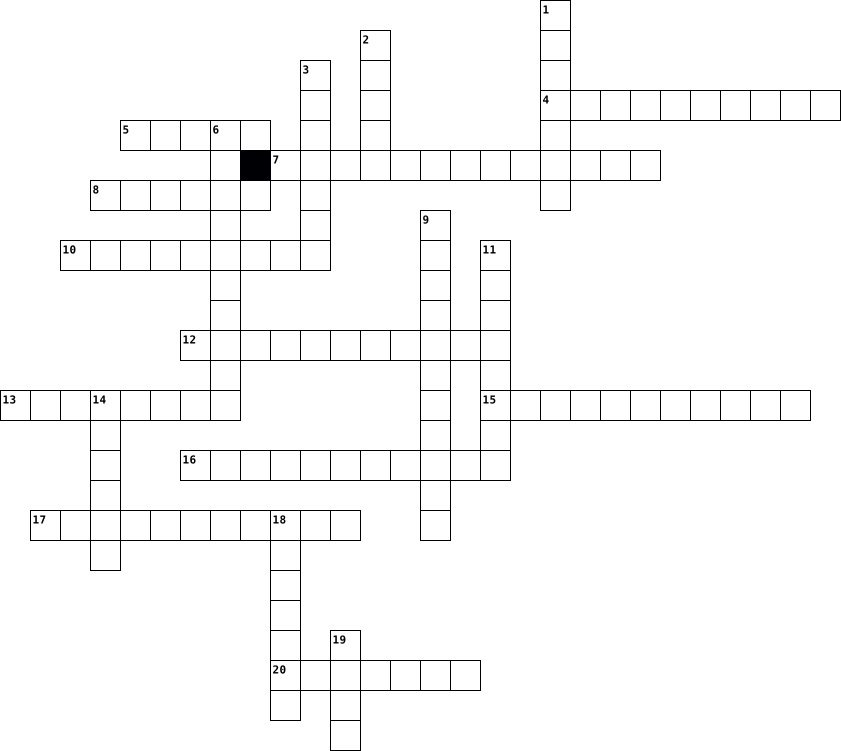
Across
- cells, have a set defined nucleus
- the crust that is formed over a wound
- the range on how traits are sorted
- bacteria that results in multiple diseases
- the ability to remain in an environment
- cells, does not have a set nucleus
- adaptations, the change in the way that an organism moves
- the result of a population being removed
- the evolution of different species
- the process in which someone can receive a new organ
- reproduction, the process when bacteria copy themselves
Down
- drift, a change in alleles that are caused by a sudden incident
- variation, the different colored spots on an animal
- the physical and behavioral effects that can be seen
- adaptations, the change in a way that an organism thinks
- the ability to conform to an environment
- the general population of animals
- reproduction, the process by which humans are made
- selection, when an organism adapts to its environment
- flow, the transfer of genetic material to other populations
20 Clues: cells, have a set defined nucleus • the general population of animals • the range on how traits are sorted • cells, does not have a set nucleus • the evolution of different species • the crust that is formed over a wound • the ability to remain in an environment • the ability to conform to an environment • the result of a population being removed • ...
Chapter 18: Biomes 2023-05-03

Across
- split into two groups based on water flow; lakes are an ex.
- biome with long winters short summers; also called taiga
- all the habitable parts of the world
- four seasons; mild temps; trees lose thier leaves
- in between forests and grasslands; found in much of Africa and S. America
- study of interactions between living and nonliving things
- nonliving things in an environment
- the role an organism plays in an ecosystem
- Mediterranean climate
- habitable regions of atmopshere
- northernmost biome with permafrost; arctic and alpine
Down
- hot and rainy biome; 170 cm- 400 inches each year
- covers about 70% of earth
- biomes that recieve very little water; can be hot or cold
- an organism's natural environment
- small parts of the biosphere with similar climates and organisms
- all the parts of earth with water
- gradual change caused by increasing elevation
- living things in an environment
- a limited area in which living and nonliving things interact.
- also called prairies or plains; found in interiors of continents
21 Clues: Mediterranean climate • covers about 70% of earth • living things in an environment • habitable regions of atmopshere • an organism's natural environment • all the parts of earth with water • nonliving things in an environment • all the habitable parts of the world • the role an organism plays in an ecosystem • gradual change caused by increasing elevation • ...
Ecology Part l 2023-03-17

Across
- any animal that feeds chiefly on grass and other plants
- an organism capable of synthesizing its own food
- an animal or plant that lives in or on a host
- an animal that feeds on both animal and vegetable substances
- involving the entire world
- the variety of life on Earth at all its levels, from genes to ecosystems
- plants
- a terrestrial or aquatic flesh-eating mammal
- organisms interacting with their physical environment
Down
- protecting from threats of the environment/ecosystem
- an organism that feeds on complex organic substances
- when one organism benefits from another without damaging it
- prevention of wasteful use of a resource
- the relation between two organisms that benefit each other
- study of the relations of organisms to their environment
- the area in which something exists or lives
- characteristic of a microorganism, especially a bacterium causing disease or fermentation.
- break down
- relating to or belonging to an organism
- major ecological community with distinct climate and flora
20 Clues: plants • break down • involving the entire world • relating to or belonging to an organism • prevention of wasteful use of a resource • the area in which something exists or lives • a terrestrial or aquatic flesh-eating mammal • an animal or plant that lives in or on a host • an organism capable of synthesizing its own food • ...
Evolution And Natural Selection 2023-03-16

Across
- Reproduction through mitosis.
- Individuals who have more chances to survive in an environment.
- A extended group of prokaryotic cells organisms.
- Reduction of a population, to make a new population.
- When an organism is adjusting to a new environment.
- A disease that cannot be killed by antibiotics.
- A multi-cell that has a nucleus.
- Can provide more about how much something has changed.
Down
- The creation of a different specie.
- A single-cell that doesn't have a nucleus.
- A physical change in something based on the environment.
- Studying the embryo until it is a fetus.
- The lack of something (none left)
- Sequences in a specific part of a DNA gene.
- Another way to call an asexual reproduction.
- When a phenotype is increasing its population, the others are decreasing.
- Infect the cells of a body and cause diseases.
- Reproduction through meiosis.
- Where different species affect each other's development.
- The introduction of species to another population (migration).
20 Clues: Reproduction through mitosis. • Reproduction through meiosis. • A multi-cell that has a nucleus. • The lack of something (none left) • The creation of a different specie. • Studying the embryo until it is a fetus. • A single-cell that doesn't have a nucleus. • Sequences in a specific part of a DNA gene. • Another way to call an asexual reproduction. • ...
Africa Crossword Puzzle 2021-09-10

Across
- The reduction of plant life and topsoil, makes an often sandy place
- Grassland region with scattered trees
- Artificial watering of land, used to assist in crop growth
- Similar culture, religion, language
- 🎵How are places similar?🎵
- The expansion of the Sahara through desertification
- A desert in North Africa that spreads across the Atlantic to the Nile valley.
- A period of dry weather
- 🎵People and Ideas get around!🎵
- 🎵Tells you where it is!🎵
- Ex. Humans putting trash in the water
Down
- 🎵How does the environment affect the people? How do people affect the environment?🎵
- Form of civilization
- The mass clearing of woodland
- Religion of Christians
- Religion of Muslims
- A person from the Middle East or someone who speaks Arabic
- Group of people with a common religion
- Rainforest Area of high annual rainfall and tall and dense trees
- 🎵What is it like when you get there?🎵
20 Clues: Religion of Muslims • Form of civilization • Religion of Christians • A period of dry weather • 🎵Tells you where it is!🎵 • 🎵How are places similar?🎵 • The mass clearing of woodland • 🎵People and Ideas get around!🎵 • Similar culture, religion, language • Grassland region with scattered trees • 🎵What is it like when you get there?🎵 • Ex. Humans putting trash in the water • ...
Group 7 2025-02-15

Across
- cloudy water is a sign that the water is ...
- How to keep the environment clean
- why do we need to keep our body clean?
- we use .. to mop the floor
- what do we use to wash our hands to keep them clean
- to eradicate germs, we use liquid
- What do we call the practice of planting trees to help the environment?
- remove standing water to avoid
- is meant by hypertension?
Down
- what happens if you don't maintain cleanliness
- Vehicle fumes contain a variety of harmful substances Including....
- we have to throw the trash in the.......
- ......... happens because many people throw rubbish carelessly
- what are the benefits of keeping your body clean?
- We need to clean the floor.
- where does aedes aegypti mosquito breed 2
- Burning garbage and waste causes
- What are the main causes of diabetes?
- a healty environment is charaterized by good air conditions and..
- What does the body need for cell regeneration?
- What are the main benefits of exercise?
21 Clues: is meant by hypertension? • We need to clean the floor. • we use .. to mop the floor • remove standing water to avoid • Burning garbage and waste causes • How to keep the environment clean • to eradicate germs, we use liquid • What are the main causes of diabetes? • why do we need to keep our body clean? • What are the main benefits of exercise? • ...
Biodiversity 2025-02-18

Across
- Interaction between different organisms living closely
- Changes in organisms to survive in their environment
- Variety of all forms of life on Earth
- Related to living organisms
- Single-celled microorganisms
- Includes plants, fungi, and animals
- Microscopic life forms such as bacteria
- Access to natural services like water cleansing
- Study of interactions among organisms and their environment
- Remains of ancient organisms
- Most numbered vertebrate animals found on Earth
Down
- Specific geographic areas
- Different environments on the planet, such as deserts and rainforests
- Estimated number of species of plants on Earth
- Species found only in one specific location
- Natural environment of an organism
- Groups of organisms that can reproduce together
- Flowering plants that dominate plant species
- Variety of species in a specific area
- Most numbered invertebrate animals found on Earth
- Provides sources of food, energy, water, and clean air
- Reefs Marine ecosystems made of coral
- Areas with extremely high levels of biodiversity under threat
- Medicines derived from microorganisms
24 Clues: Specific geographic areas • Related to living organisms • Single-celled microorganisms • Remains of ancient organisms • Natural environment of an organism • Includes plants, fungi, and animals • Variety of species in a specific area • Variety of all forms of life on Earth • Reefs Marine ecosystems made of coral • Medicines derived from microorganisms • ...
Chapter 5 Glossary Crossword 2021-08-22

Across
- an organism in or on which parasite lives
- living factrs in the environment
- consumer a consumer that eats a first order consumer
- a part of the stem ,root or leaf that is able to grow into a new plant
- an animal that eats other animals
- an animal that eats both plants and animals
- an animal that eats only plants
- web a number of food chains combined
- an animal that eats another animal
- characteristics that help an organism to survive in it's environment
- an animal that is eaten by a predator
Down
- factors non-living factors in the environment
- cosumer a consumer that eats a first-order cosumer
- the place where an organism lives
- season times of the year when fires are most likely to occur
- all living things
- raised bank built to prevent water reaching building
- depending on each other for survival
- active or hunting at night
- indivials that are exactly the same as each other
20 Clues: all living things • active or hunting at night • an animal that eats only plants • living factrs in the environment • the place where an organism lives • an animal that eats other animals • an animal that eats another animal • depending on each other for survival • an animal that is eaten by a predator • web a number of food chains combined • ...
chapter 11 vocab 2021-05-17

Across
- an environmentthat provides the things a specific organism needs
- environmental factor that causes a population to decrease in size
- the number of individuals in an area of a specific size
- the organism that is killed
- role of organism in its habitat
- any living thing
- the number of one species living in a particular area
- all the different populations living together
- a group of organisms that can reproduce together
- the behaviors and physical characteristics that allow organisms to live successfully
- moving into a population
- leaving a population
- the number of births in a certain time period
Down
- nonliving parts of an organisms habitat
- adapting to a specific environment
- the struggle between organisms to survive
- the number of deaths in a certain time period
- parts of a habitat are living or once were living and interact with the environment
- organisms living in a particular area along with nonliving environment
- the largest population that an area can support
20 Clues: any living thing • leaving a population • moving into a population • the organism that is killed • role of organism in its habitat • adapting to a specific environment • nonliving parts of an organisms habitat • the struggle between organisms to survive • the number of deaths in a certain time period • all the different populations living together • ...
BIG CAST REVIEW PART 2: LIFE SCIENCE 2026-03-09

Across
- Differences in genes between individuals
- Specialized structure inside a cell
- When a species no longer exists
- Study of early development of organisms
- Maximum population environment can support
- Smallest unit of life
- Variety of life in an area
- Earlier species shared by others
- Living part of an ecosystem
- Collection of fossils showing history of life
- Organisms better adapted survive and reproduce
- Group of organisms that reproduce together
- Network of interconnected food chains
- Molecule carrying genetic information
- Characteristic of an organism
- Change in species over time
Down
- Segment of DNA that codes for a trait
- Community of organisms interacting with environment
- Comparing body structures of organisms
- Nonliving part of an ecosystem
- Members of same species in one area
- Passing traits from parents to offspring
- Preserved remains of ancient organisms
- Change in DNA sequence
- Place where an organism lives
- Cell structure containing DNA
- Structure containing DNA
- Trait helping survival in environment
28 Clues: Smallest unit of life • Change in DNA sequence • Structure containing DNA • Variety of life in an area • Living part of an ecosystem • Change in species over time • Place where an organism lives • Cell structure containing DNA • Characteristic of an organism • Nonliving part of an ecosystem • When a species no longer exists • Earlier species shared by others • ...
APES: Chapter 1 Vocabulary Terms 2024-08-22

Across
- any chemical an organism must have to live, grow, or reproduce.
- low to moderate industrialization.
- variety of different species, variability of genes among individuals, a variety of ecosystems, and functions such as energy flow and matter cycling.
- human beliefs about what is right or wrong with how we treat the environment.
- resource that can be replenished rapidly through natural processes as long as it is not used up faster than replenished.
- ability of the earth's various systems, including human culture and economics, to survive and adapt to changing environmental conditions indefinitely.
- natural resources and services that keep us and other species alive and support our economics.
- growth in which some quantity, such as population size or economic output, increases at a constant rate per unit of time.
- the circulation of chemicals necessary for life from the environment through organisms and back to the environment.
- the parts of the earth's air, water, and soil where life is found.
- depletion or destruction of a potentially renewable resources.
- resource that exists in fixed amounts in the earth's crust that take very very long periods of time to form or create.
- biological science that studies relationships between living organisms and their environment.
Down
- highest rate at which a potentially renewable resource can be used indefinitely without reducing available supply.
- all external conditions, factors, matter, and energy, living and nonliving, that affect any living organisms or other specified system.
- a social movement dedicated to protecting the earth's life-supporting systems for us and other species.
- groups of similar organisms.
- amount of biologically productive land and water needed to supply a population with renewable resources and to absorb or dispose of the pollution and wastes from such resource use.
- payment intended to help a business grow and thrive, provided by the government in the form of grants or tax breaks.
- natural services or natural capital that support life on earth and are essential to the quality of human life and the functioning of the world's economies.
- one or more communities of different species interacting with one another and with the chemical and physical factors making up their nonliving environment.
- things like solar energy that can be renewed continuously.
- interdisciplinary study that uses information and ideas from the physical sciences to learn how nature works, how we interact with the environment, and how we can help deal with environmental problems.
- the ability of a productive ecosystem to regenerate renewable resources.
- lands typically owned jointly by the citizens of a country but managed by the government.
- materials such as air, water, and soil and enery in nature that areessential or useful to humans.
- highly industrialized.
- land owned by individuals or businesses.
28 Clues: highly industrialized. • groups of similar organisms. • low to moderate industrialization. • land owned by individuals or businesses. • things like solar energy that can be renewed continuously. • depletion or destruction of a potentially renewable resources. • any chemical an organism must have to live, grow, or reproduce. • ...
Biology Semester 1 Terms 2024-12-19

Across
- an environmental factor that influences the survival and reproduction of organisms within a population
- the controlled application of fire used to restore health to ecosystems
- a small opening which is surrounded by two guard cells and through which moisture and gases pass in and out of the surface of a leaf.
- the weight or total quantity of living organisms
- a biological community of interacting organisms and their physical environment.
- the movement of water across a membrane
- organic compounds of simple sugars that living things use for energy and cell structure.
- the process by which a species becomes fitted to its environment over generations
- a solution that has a high solute concentration and low water concentration
- the most abundant pigment in plants, responsible for their green color.
- the variety of all living organisms on Earth
- the sum of all processes by which water moves from the land surface to the atmosphere
- the process for which organisms that are more adapted to the environment are more likely to survive and reproduce.
- the process of using food and oxygen and turning it into usable energy.
- the interaction between organisms or species where they strive for the same limited resources
- an organism that obtains energy by eating other organisms
- the order of events in an ecosystem, where one living organism eats another organism, and later that organism is consumed by another larger organism
- an organism that has a large effect on its environment
Down
- a non-native organism that can cause harm to the environment
- the movement of any particles from a region of higher concentration to a region of lower concentration
- the maximum number of individuals of a particular species that an environment can sustainably support over time.
- a herbivorous animal that eats grass and herbs
- differences among individuals within the same population
- any abiotic or biotic factor that limits the number or reproduction of species in an ecosystem.
- a model that shows the flow of energy from one trophic, or feeding, level to the next in an ecosystem
- an organism that feeds of dead matter
- living, composed of living things.
- water that exists underground beneath the land surface
- the process by which green plants and some other organisms use sunlight to synthesize foods from carbon dioxide and water.
- spontaneous changes in an organism's genetic material
- a solution that has low solute concentration and high water concentration.
- not living, composed of living things.
- a characteristic that helps an organism survive and reproduce in its environment.
- a prolonged period of abnormally low rainfall, leading to a shortage of water.
- the organelle in a plant cell in which is the process by which photosynthesis occurs
- the ability of living systems to maintain a stable internal environment
- a gas used by plants/trees to make sugars
- the process of passing traits from parents to their offspring
- a gas generated by plants/trees
- an organisms that creates its own energy
40 Clues: a gas generated by plants/trees • living, composed of living things. • an organism that feeds of dead matter • not living, composed of living things. • the movement of water across a membrane • an organisms that creates its own energy • a gas used by plants/trees to make sugars • the variety of all living organisms on Earth • a herbivorous animal that eats grass and herbs • ...
Module 1 - End of Module Vocabulary 2024-09-19

Across
- of large volume
- animal that other animals hunt
- experiment with making, changing, or fixing something
- having imaginative or unusual features
- account of a person's life
- giving off light naturally by certain kinds of insects, fish, or bacteria
- capable of capturing one's intense interest and attention; enchanting; spellbinding
- range of life forms in a stated location
Down
- a specific environment and the living things in the environment
- to watch with care
- bondage; imprisonment
- animal that kills and eats other animals
- to push or drive with force
- a group of living things that are the same in many important ways
- to bring light to or shine light on
- the natural environment of an animal or plant
16 Clues: of large volume • to watch with care • bondage; imprisonment • account of a person's life • to push or drive with force • animal that other animals hunt • to bring light to or shine light on • having imaginative or unusual features • animal that kills and eats other animals • range of life forms in a stated location • the natural environment of an animal or plant • ...
Chapter 18 Crossword Puzzle 2013-02-19

Across
- feeding relationship between organisms
- study of organism with their environment
- second level - group of similar organisms
- consumer that eats animals
- largest population a population can have
- when two or more in ecosystem share resources
- diagram shows ecosystem's loss of energy
- organism that eats another organism
- organism that uses sunlight to make food
- the part of the Earth where life exists
- consumer that eats dead plants and animals
- example of abiotic item
- consumer that eats plants and animals
- example of a biotic item
Down
- a scarce resource that limits population
- organism that breaks down dead organisms
- example of producer
- feeding pattern of a series of organisms
- process of using sunlight to make energy
- consumer that eats only plants
- third level - group of different populations
- all organisms that live together
- fourth level - community and abiotic environ
- part of the environment that is nonliving
- first level of environment
- organism that eats
- organism that is eaten
27 Clues: organism that eats • example of producer • organism that is eaten • example of abiotic item • example of a biotic item • consumer that eats animals • first level of environment • consumer that eats only plants • all organisms that live together • organism that eats another organism • consumer that eats plants and animals • feeding relationship between organisms • ...
Grade 4 Crossword 2013-05-22

Across
- an animal that eats both plants and animals
- an organism that gets energy by feeding on dead materials
- the environment an organism needs
- a resource that nature can produce again in our lifetime
- animal with a backbone
- overlapping food chains that show where animals get their energy in an ecosystem
- fuel derived from organic matter, such as agricultural waste
- another name for a living thing
- materials in the environment that are useful to people
Down
- an animal that only eat other animals
- fuels that are formed from the remains of ancient organisms
- animal without a backbone
- an animal that only eats plants
- using natural resources wisely
- a resource that cannot be reproduced in our lifetime
- living and nonliving things interacting in an environment
- an organism that makes its own food
- characteristics that help organisms survive in their surroundings
- harmful substances damaging the air, soil, or water
- processing certain materials for reuse
- an organism that must get energy from other organisms
21 Clues: animal with a backbone • animal without a backbone • using natural resources wisely • an animal that only eats plants • another name for a living thing • the environment an organism needs • an organism that makes its own food • an animal that only eat other animals • processing certain materials for reuse • an animal that eats both plants and animals • ...
Sharks Saver Crossword 2022-12-13

Across
- nothing could pose them a threat
- events that wiped out more than 70 percent of all species on the planet
- species of sharks and their close relatives
- new ideas to keep sharks out of fishers
- the animals getting resources from their own environment
- not existing anymore
- To get about hurt or a hostile action
- action is needed to protect
- risk of extinction
- Rows of sharp teeth
- communities of organisms interacting with their physical environment
Down
- Change the fishing traps to become better
- something happening from another cause
- very at risk for extinction
- sharks help keep other species in balance
- drop the traps from a boat
- Not existing in their own environment
- Not much worry about
- no defense
- body help make sharks top ocean predators
- where rules limiting their capture
- survivors struggle in the face of intense fishing
- the animals are caught by accident in nets and traps intended for other fish specie
- common threat facing all sharks
- with extinction
25 Clues: no defense • with extinction • risk of extinction • Rows of sharp teeth • Not much worry about • not existing anymore • drop the traps from a boat • very at risk for extinction • action is needed to protect • common threat facing all sharks • nothing could pose them a threat • where rules limiting their capture • Not existing in their own environment • ...
Ecology Vocab Crossword 2017-04-26

Across
- nonliving factors in an organism’s environment
- large group of ecosystems that share same climate
- organisms that obtain energy from the sun
- a thin layer around Earth that supports life
- role or position of an organism in its environment
- any factor that restricts the number of an organism
- a single species that share the same location
- type of succession that takes place after a fire
- one organism benefits and the other is unaffected
- only cycle that does not contain the atmosphere
- type of growth model represented by carrying capacity
- cycle where plants contribute through transpiration
Down
- living factors in an organism’s environment
- a group of interacting populations that share the same area
- one organism benefits at the others expense
- organism that must eat to obtain energy
- species that is changing conditions on earth by its activities
- the variety of life in an area determined by the # of species
- model representing many interconnected food chains
- type of succession that does not have any topsoil
20 Clues: organism that must eat to obtain energy • organisms that obtain energy from the sun • living factors in an organism’s environment • one organism benefits at the others expense • a thin layer around Earth that supports life • a single species that share the same location • nonliving factors in an organism’s environment • only cycle that does not contain the atmosphere • ...
Science Crossword 2023-12-14

Across
- The overall weather that a large area has over many years
- Organisms that eat the food made by producers
- An organism that is caught and eaten by another organism of a different species
- Non living thing in an environment
- Characteristic(s) that help an orgamism survive in it's environment
- An animal that eats plants AND animals
- Plants that use the energy from the sun to make the nutrience they need to suvive
- An orederly arrangement of facts set out for easy reference
- Ex. today's w--th-r is -17 degrees
- Ex. desert,grassland, forest
Down
- Ex. rain, snow, sleet, hail, etc.
- How hot or cold something is
- The location where an organism lives
- An organism that catches and eats other organisms of a different species
- Feeding relationships among living organisms
- The kind of food that a person or animal eats
- Living things in an envoronment
- A group of organisms of the same species
- Interacting parts in an environment
- Any type of living creature
20 Clues: Any type of living creature • How hot or cold something is • Ex. desert,grassland, forest • Living things in an envoronment • Ex. rain, snow, sleet, hail, etc. • Non living thing in an environment • Ex. today's w--th-r is -17 degrees • Interacting parts in an environment • The location where an organism lives • An animal that eats plants AND animals • ...
Planet Pals : Green Guardians Crossword Challenge 2024-09-20

Across
- Used water needing treatment before reuse.
- A grassland ecosystem characterised by scattered trees.
- Products designed to be used once and discarded.
- A young plant just starting to grow from a seed.
- Decomposed organic material used to enrich soil.
- Organic material used as fuel.
- Unwanted materials generated from human activity.
- Products or practices that do not harm the environment.
- PLANT A plant species naturally occurring in a region.
- Harmful substances that contaminate the environment.
Down
- FOREST Trees and vegetation in a city area.
- The surroundings in which organisms live.
- Planting trees in areas where forests have been cut down.
- POWER Energy harnessed from the sun.
- EROSION The wearing away of soil by wind or water.
- Materials that can be processed and reused.
- CHANGE Long-term alteration of temperature and typical weather patterns.
- To break down organic materials naturally.
- The upper layer of a forest formed by tree branches.
- Improperly disposing of waste in public places.
20 Clues: Organic material used as fuel. • POWER Energy harnessed from the sun. • The surroundings in which organisms live. • Used water needing treatment before reuse. • To break down organic materials naturally. • FOREST Trees and vegetation in a city area. • Materials that can be processed and reused. • Improperly disposing of waste in public places. • ...
You can do it! 2024-11-21

Across
- - Requiring immediate action.
- - Able to be used again naturally.
- - To keep something going.
- - The path of something in motion.
- - The impact of human activity on Earth.
- - Exceeding limits or boundaries.
- - Things we use from nature or other sources.
- - The study of living things and their environment.
- - Avoiding excess; staying balanced.
- - Growing faster and faster.
- - Cutting down forests.
- - Fairness or justice.
- - Sickness affecting people.
- - To step in to solve a problem.
- - A limitation or restriction.
- - Being very poor.
- - Protecting and preserving something.
- - Release of harmful substances.
Down
- warming - Earth getting hotter due to pollution.
- - A set of ideas or beliefs.
- - The number of people in an area.
- - An increase in size or amount.
- - Tools and machines used to solve problems.
- - Harmful substances in the environment.
- - The natural world around us.
- - Limited and not replaceable.
- - Meeting today's needs without harming future generations.
- - A sudden failure or breakdown.
- - Using up resources.
- - Progress or improvement.
30 Clues: - Being very poor. • - Using up resources. • - Fairness or justice. • - Cutting down forests. • - To keep something going. • - Progress or improvement. • - A set of ideas or beliefs. • - Growing faster and faster. • - Sickness affecting people. • - Requiring immediate action. • - The natural world around us. • - Limited and not replaceable. • - A limitation or restriction. • ...
anna 2024-11-01

Across
- a result or change
- a specific characteristic
- genes and chromosomes
- a long piece of DNA
- the number of individuals
- a group of organisms of the same kind
- making a protein molecule
- specific environment
- to stay alive
- an organism produced
- organisms adapt and change.
- a group of individuals born and living
- previous generation
- a random change to a gene
- a type of large molecule
Down
- two parents pass gene
- a specific form of a gene
- something in the environment
- any difference in traits
- a characteristic that all members
- living things
- a group of the same type of organism
- values are distributed within a group
- to receive genes from a parent
- a result or change that happens
- an idea about what might happen
- everything (living and nonliving)
- a young insect
- other animal hunt for other animal
- specific environment
- the same as the background
- an animal that is hunted or killed
32 Clues: living things • to stay alive • a young insect • a result or change • a long piece of DNA • previous generation • specific environment • an organism produced • specific environment • two parents pass gene • genes and chromosomes • any difference in traits • a type of large molecule • a specific form of a gene • a specific characteristic • the number of individuals • making a protein molecule • ...
AJ Athumani 2024-11-01

Across
- a group of organisms of the same kind
- a random change to a gene
- a characteristic that all members
- kill other animal for food.
- two parents pass gene
- to stay alive
- a result or change
- a specific characteristic
- a young insect
- genes and chromosomes
- organisms adapt and change.
- making a protein molecule
- a long piece of DNA
- living things
- everything (living and nonliving)
- specific environment
- a specific form of a gene
Down
- the same as the background
- specific environment
- previous generation
- an organism produced
- something in the environment
- Thing that you already know.
- kill other animal's for food
- a result or change that happens
- to receive genes from a parent
- a type of large molecule
- of the number of individuals
- organisms that live in the same place.
- values are distributed within a group
- any difference in traits
- is a group of individuals born and living
32 Clues: to stay alive • living things • a young insect • a result or change • previous generation • a long piece of DNA • specific environment • an organism produced • specific environment • two parents pass gene • genes and chromosomes • a type of large molecule • any difference in traits • a random change to a gene • a specific characteristic • making a protein molecule • a specific form of a gene • ...
General Biology 2025-07-30

Across
- The “Site Of Protein Synthesis”
- All Animals are part of this Kingdom
- An organism that cannot produce its own food and must obtain nutrition by consuming other organisms
- A tissue’s building blocks
- A cell organelle containing Chlorophyll
- An organism whose cells contain a nucleus and other membrane-bound organelles
- The study of interactions between living things and their environment"
- The process of plants making their own food
- The life zone of Earth
- It’s the “Powerhouse of the Cell”
Down
- A cell division resulting in two identical daughter cells
- An organism that can produce its own food, often using sunlight, water, and carbon dioxide
- A single-celled organism lacking a nucleus
- The Brain of the Cell
- The “cellular soup”
- A community of interacting living things and their environment
- The outcome of Natural Selection
- The Study Of Heredity
- Is found in all cells and separates the interior of the cell from the outside environment
- The code of life
20 Clues: The code of life • The “cellular soup” • The Brain of the Cell • The Study Of Heredity • The life zone of Earth • A tissue’s building blocks • The “Site Of Protein Synthesis” • The outcome of Natural Selection • It’s the “Powerhouse of the Cell” • All Animals are part of this Kingdom • A cell organelle containing Chlorophyll • A single-celled organism lacking a nucleus • ...
Biology 2026-04-21

Across
- The study of how organisms interact with their environment.
- A wetland ecosystem with many tree
- A group of the same species in an area
- Most common thing in the amazon
- A community of organisms and their environment.
- Shows how all the parts of an ecosystem are related by what they eat.
- All the different populations living together in an area
- An animal that eats only meat
- An organism that is not native to its environment
- The place where an organism lives.
- An animal that hunts and kills other animals for food.
Down
- An animal that eats both plants and meat
- A carnivore that feeds on the bodies of dead organisms
- The initial source of energy for most ecosystems
- – The process producers use to make food from sunlight
- A single pathway of energy transfer
- An animal that is hunted and killed by another
- A common decomposer found in forests
- A dry ecosystem with very little rain
- An animal that eats only plants
20 Clues: An animal that eats only meat • Most common thing in the amazon • An animal that eats only plants • A wetland ecosystem with many tree • The place where an organism lives. • A single pathway of energy transfer • A common decomposer found in forests • A dry ecosystem with very little rain • A group of the same species in an area • An animal that eats both plants and meat • ...
Natural Selection 2023-06-02

Across
- This term stands for DNA
- Ways that newts protect themselves from predators.
- The term is when you have a trait that doesn’t help you live in the environment.
- When something reproduces
- The ways that you can adapt to the environment
- When a structure of a gene changes and results into possible DNA.
Down
- When one thing is passed down from your parents.
- The amount of an object or living thing in an environment or in an area.
- The term when you have a trait which helps you live in an environment.
- The things which you are surrounded by person, thing, or objects.
10 Clues: This term stands for DNA • When something reproduces • The ways that you can adapt to the environment • When one thing is passed down from your parents. • Ways that newts protect themselves from predators. • The things which you are surrounded by person, thing, or objects. • When a structure of a gene changes and results into possible DNA. • ...
Unit 9 Vocabulary 2023-09-12

Across
- The study of ecosystems and the biotic factors found in them
- An organism who produces energy from the sun or any non-living source
- When there are a vast amount of different biotic factors in an ecosystem/environment
- A non-living factor in an environment
- A living factor in an environment
- An organisms role in an environment
- A connection of food chains
Down
- A living organism changing in order to survive and thrive in an environment
- An organism that consumes other biotic factors in order to get energy
- A manmade structure imitating that of a coral reef
10 Clues: A connection of food chains • A living factor in an environment • An organisms role in an environment • A non-living factor in an environment • A manmade structure imitating that of a coral reef • The study of ecosystems and the biotic factors found in them • An organism that consumes other biotic factors in order to get energy • ...
UNIT 1 CLUSTER 1: TERMS CROSSWORD 2012-06-04

Across
- A scientist who studies the interactions between organisms and their environment
- The interactions between biotic and abiotic things in a specific environment
- The study of the interactions between organisms and their environment
- A relationship where one organism benefits and the other stays neutral
- A relationship between different species that lasts a long time
- An organism that in or on another organism and benefits at the expense of the host
- the place where an organism lives
- Things an organism must have in order to survive
- Resources Materials and products that are found in nature
- A relationship where the host is harmed and the parasite benefits
- The organism that the parasite lives and feeds from
Down
- Footprint The total amount of land and water needed to supply all the materials and energy you use to absorb the waste produced
- Natural resources are being renewed as quickly as they are being used and the waste is completely absorbed
- Something that makes an organisms life more comfortable or enjoyable
- A relationship where both organisms benefit
- A inherited characteristic that helps an organism survive in its environment
16 Clues: the place where an organism lives • A relationship where both organisms benefit • Things an organism must have in order to survive • The organism that the parasite lives and feeds from • Resources Materials and products that are found in nature • A relationship between different species that lasts a long time • ...
ecology 2023-05-01

Across
- - the disappearance of a species from the Earth.
- - the process by which organisms with superior traits are more likely to survive and reproduce.
- - a characteristic of an organism that helps it survive and reproduce in its environment.
- - a group of individuals of the same species living in a particular area.
- - an organism that breaks down dead or decaying organic matter.
Down
- - the variety of living organisms present in a given ecosystem.
- - the seasonal movement of animals from one place to another.
- - the study of interactions between living organisms and their environment.
- - an organism that obtains its food by eating other organisms.
- - an organism that makes its own food through photosynthesis or chemosynthesis.
- - the natural environment in which an organism lives.
- The position of an organism in a food chain or food web.
- - the role an organism plays in its ecosystem.
- - all the populations of different species living in a particular area.
- - a community of living organisms in conjunction with the nonliving components of their environment.
15 Clues: - the role an organism plays in its ecosystem. • - the disappearance of a species from the Earth. • - the natural environment in which an organism lives. • The position of an organism in a food chain or food web. • - the seasonal movement of animals from one place to another. • - an organism that obtains its food by eating other organisms. • ...
Conservation 2023-08-12

Across
- A group of living organisms with shared characteristics that can reproduce.
- Efforts to maintain and protect natural areas and resources in their original state.
- The variety of life forms within a particular ecosystem or area.
- Referring to species that are at risk of becoming extinct.
- The process of repairing or restoring ecosystems to their natural state.
- A community of organisms interacting with their physical environment.
- The natural environment where a specific organism or species lives.
- The introduction of harmful substances into the environment, impacting ecosystems.
Down
- Using resources in a way that doesn't deplete or harm the environment.
- The complete loss of a species, usually due to environmental factors or human activities.
- The protection and management of natural resources and biodiversity.
- Animals and plants that live and grow in their natural environments.
- Excessive fishing that depletes fish populations beyond their ability to recover.
- Efforts to preserve and protect natural resources and biodiversity.
- The removal of trees and vegetation from a forested area.
- Energy sources that can be naturally replenished over time.
16 Clues: The removal of trees and vegetation from a forested area. • Referring to species that are at risk of becoming extinct. • Energy sources that can be naturally replenished over time. • The variety of life forms within a particular ecosystem or area. • Efforts to preserve and protect natural resources and biodiversity. • ...
Environmentalism 2024-05-23

Across
- a type of organism that is threatened by extinction
- a Gov rule that businesses must follow
- to drain from the soil into the water
- study of the relationship between organisms (Plants, insects, animals, humans)
- extremely small pieces of plastic debris in the environment resulting from the disposal and breakdown of consumer products and industrial waste.
- Caused by the burning of fossil fuels
- the removal of trees and natural landscapes and more concrete and asphalt
- is the long-term heating of Earth's surface
Down
- the accumulation of plastic objects and particles in the environment that can harm humans, wildlife, and their habitats
- The permanent removal of trees to make room for something besides a forest
- community of living things interacting with their physical environment
- break or hole in a dam that would allow fish to swim through
- a dangerous product that emits energetic particles by the disintegration of their atomic nuclei
- a waste material that can contaminate the air, soil, or water
- the introduction of harmful materials into the environment
15 Clues: to drain from the soil into the water • Caused by the burning of fossil fuels • a Gov rule that businesses must follow • is the long-term heating of Earth's surface • a type of organism that is threatened by extinction • the introduction of harmful materials into the environment • break or hole in a dam that would allow fish to swim through • ...
UNIT 1 CLUSTER 1: TERMS CROSSWORD 2012-06-04

Across
- A relationship where the host is harmed and the parasite benefits
- The total amount of land and water needed to supply all the materials and energy you use to absorb the waste produced
- Natural resources are being renewed as quickly as they are being used and the waste is completely absorbed
- An organism that in or on another organism and benefits at the expense of the host
- Something that makes an organisms life more comfortable or enjoyable
- A relationship where one organism benefits and the other stays neutral
- Things an organism must have in order to survive
Down
- Materials and products that are found in nature
- the place where an organism lives
- The organism that the parasite lives and feeds from
- A inherited characteristic that helps an organism survive in its environment
- A scientist who studies the interactions between organisms and their environment
- The study of the interactions between organisms and their environment
- A relationship where both organisms benefit
- The interactions between biotic and abiotic things in a specific environment
- A relationship between different species that lasts a long time
16 Clues: the place where an organism lives • A relationship where both organisms benefit • Materials and products that are found in nature • Things an organism must have in order to survive • The organism that the parasite lives and feeds from • A relationship between different species that lasts a long time • A relationship where the host is harmed and the parasite benefits • ...
Ecological Interactions 2025-12-03

Across
- 2 or more organisms strive to get the same limited resources such as food, territory, and others
- living component in an ecosystem such as plants, animals, and microorganisms
- place where a population lives
- organisms that make their own food
- nonliving component of the physical environment which include sunlight, temperature, nutrients, and others
- symbiotic relationship wher one organism benefits while the other is neither helped nor harmed
Down
- feeding relationship where one organism kills and eats another
- linear sequence showing how energy and nutrients are transferred from one organism to another in an ecosystem
- communities that live in and interact with each other and with their environment
- organisms that break down dead or decaying material and returning them to the environment
- symbiotic relationship where one organism benefits while the other is harmed
- interconnected, interlocking food chains
- organisms that get their energy from eating other organisms
- study of interactions of organisms with their environment
- role played by an organism in an ecosystem
- symbiotic relationship where both organisms benefit from each other
16 Clues: place where a population lives • organisms that make their own food • interconnected, interlocking food chains • role played by an organism in an ecosystem • study of interactions of organisms with their environment • organisms that get their energy from eating other organisms • feeding relationship where one organism kills and eats another • ...
Social studies - social environment 2025-09-21

Across
- importance of social environment
- type of social environment
- part of your school environment
- part of community environment
- another example of social environment
Down
- the people around us
- members of social environmental
- example of family member
8 Clues: the people around us • example of family member • type of social environment • part of community environment • members of social environmental • part of your school environment • importance of social environment • another example of social environment
Ecosystems and Energy 2024-09-10

Across
- the natural environment of an organism
- all of the living things in an ecosystem
- an organisms role in their environment
- all the biotic and abiotic factors in an environment that makes up an ecosystem
- factors environmental factors that cause a population to stop growing or decrease in size
Down
- all the organisms of the same species
- all the non-living things in the ecosystem
- a single living thing
- what is an example of a habitat?
- capacity the population that an environment can support
- all the different species in the same area
11 Clues: a single living thing • what is an example of a habitat? • all the organisms of the same species • the natural environment of an organism • an organisms role in their environment • all of the living things in an ecosystem • all the non-living things in the ecosystem • all the different species in the same area • capacity the population that an environment can support • ...
Brando´s crossword 2018-08-31

Across
- First word of the 4 environment of the virtual learning
- Third word of the 5 environment of the virtual learning
- Second word of the 1 environment of the virtual learning
- First word of the 1 environment of the virtual learning
- First word of the 2 environment of the virtual learning
Down
- First word of the 3 environment of the virtual learning
- First word of the 5 environment of the virtual learning
- Second word of the 3 environment of the virtual learning
8 Clues: First word of the 4 environment of the virtual learning • First word of the 3 environment of the virtual learning • First word of the 5 environment of the virtual learning • Third word of the 5 environment of the virtual learning • First word of the 1 environment of the virtual learning • First word of the 2 environment of the virtual learning • ...