
forms of energy Crossword Puzzles
Transformations of Energy 2025-12-02

Across
- (The origin of energy, e.g., sun, fuel, food)
- (Energy from the flow of electric charge)
- (A force that often transforms kinetic energy into thermal energy)
- (Energy stored in bonds, e.g., in batteries, food, fuel)
- (Energy sources that can be replenished)
- (The sequence or route of energy transformations)
Down
- (The Law of Conservation of Energy – energy cannot be created or destroyed)
- (The principle of using resources without compromising the future, linked to renewables)
- (Stored energy, e.g., gravitational, elastic, chemical)
- (A key renewable source, specifically light/heat from the sun)
- (Energy of motion)
- (A measure of useful energy output vs. total input)
- (The core concept of energy changing from one form to another)
- (Radiant energy, e.g., from the sun or a bulb)
- (Heat energy; the common "waste" output)
15 Clues: (Energy of motion) • (Heat energy; the common "waste" output) • (Energy sources that can be replenished) • (Energy from the flow of electric charge) • (The origin of energy, e.g., sun, fuel, food) • (Radiant energy, e.g., from the sun or a bulb) • (The sequence or route of energy transformations) • (A measure of useful energy output vs. total input) • ...
Conservation of Energy 2025-12-10

Across
- The energy transferred to/from an object
- Energy cannot be created or destroyed, only converted from one form to another
- The change in an object's position
- Energy Energy stored
- Energy stored by gravity
Down
- One form to another
- Unit of energy
- Energy Energy of motion
- Energy stored by distorting an object
- The fundamental capacity to do work or cause change
- Power from an engine
- Watt Defined what power was and what horsepower is
- Mechanical Energy Kinetic energy + Potential energy
- The amount of energy transferred or converted per time
- Push or pull
15 Clues: Push or pull • Unit of energy • One form to another • Power from an engine • Energy Energy stored • Energy Energy of motion • Energy stored by gravity • The change in an object's position • Energy stored by distorting an object • The energy transferred to/from an object • The fundamental capacity to do work or cause change • Watt Defined what power was and what horsepower is • ...
Conservation of Energy 2025-12-12

Across
- of universal gravitation every particle attracts every other particle with a force
- rate at which work is done
- amount of work done
- potential when force is applied to stretch, compress, or twist
- of energy energy can not be created or destroyed
- force pulling us down
Down
- Quantity Described by only its magnitude.
- force that opposes relative motion
- energy stored energy
- unit of force equal to force needed to accelerate
- Friction self adjusting force
- both magnitude and direction
- energy energy possessed due to motion
- must be transferred to an object in order to perform work.
- force exists between 2 objects with mass
15 Clues: amount of work done • energy stored energy • force pulling us down • rate at which work is done • both magnitude and direction • Friction self adjusting force • force that opposes relative motion • energy energy possessed due to motion • force exists between 2 objects with mass • Quantity Described by only its magnitude. • of energy energy can not be created or destroyed • ...
Science 2021-02-08

Across
- Temperature at which the solid and liquid forms of a pure substance can exist in balance
- The movement in a gas or liquid in which the warmer parts move up and the cooler parts move down
- A material made up of two or more different substances which are not chemically combined
- The abundance of a constituent divided by the total volume of a mixture
- A substance that is dissolved in a solution
- A molecule that has the ability to dissolve other molecules
- the ability of a solid, liquid, or gaseous chemical substance to dissolve in solvent
- A molecule contains double or triple carbon-carbon bonds
- Refers to a relatively large quantity of substance present in a unit amount of a mixture
- The addition of solvent, which decreases the concentration of the solute in the solution.
Down
- The transfer of heat through matter by communication of kinetic energy from particle to particle
- energy that is released in significant amounts in processes that affect atomic nuclei
- The form of energy that is transferred between systems or objects with different temperatures
- A special type of homogeneous mixture composed of two or more substances
- A mixture is simply any mixture that is not even in composition
- Energy that comes from a source and travels through space at the speed of light
- the point at which a solution of a substance can dissolve no more of that substance
- The point of a substance at which the vapor pressure of a liquid equals the pressure surrounding the liquid and the liquid changes into a vapor
- A mixture in which the composition is even throughout the mixture
- Degree of hotness or coldness measured on a definite scale
20 Clues: A substance that is dissolved in a solution • A molecule contains double or triple carbon-carbon bonds • Degree of hotness or coldness measured on a definite scale • A molecule that has the ability to dissolve other molecules • A mixture is simply any mixture that is not even in composition • A mixture in which the composition is even throughout the mixture • ...
Types of energy 2013-05-30

Across
- you see this in science labs
- energy is measured in what?
- keeps you warm at night
- you can a bomb from this
- the power lines create
- batteries are _________ energy
- this energy can not work without air
- if you jump what type of energy is happening
- when your on your bike you create what?
- sound needs this to travel
Down
- it helps you see at night
- cause particles to vibrate
- you need the sun for this
- this type of energy moves
- a bow and arrow has ___________ energy
15 Clues: the power lines create • keeps you warm at night • you can a bomb from this • it helps you see at night • you need the sun for this • this type of energy moves • cause particles to vibrate • sound needs this to travel • energy is measured in what? • you see this in science labs • batteries are _________ energy • this energy can not work without air • ...
Energy of Life 2024-12-18

Across
- Last step in cell respiration
- Process done by all living things
- _____cycle; second step of photosynthesis
- Green pigment
- Process only done by plants
- Site of cell respiration
Down
- Needed by plants but exhaled by us
- Step 1 of photosynthesis
- Fuel for respiration
- Type of respiration that makes more ATP
- Site of photosynthesis
- Plants absorb it through their roots
- Happens with anaerobic respiration
- Energy currency of cells
- Product in photosynthesis; reactant in respiration
15 Clues: Green pigment • Fuel for respiration • Site of photosynthesis • Step 1 of photosynthesis • Energy currency of cells • Site of cell respiration • Process only done by plants • Last step in cell respiration • Process done by all living things • Needed by plants but exhaled by us • Happens with anaerobic respiration • Plants absorb it through their roots • ...
Conservation of Energy 2024-12-11

Across
- Force exerted by a string, rope, or cable when it is pulled tight
- Force that opposes motion and converts energy to heat
- Stored energy due to position or configuration
- Force applied over a distance
- Energy stored in chemical bonds
- Ratio of useful output to total input energy
- SI unit of energy
Down
- Principle that energy cannot be created or destroyed
- Potential energy due to height
- Energy related to temperature and heat
- Energy of motion
- Product of mass and velocity
- Unit of force in the SI system
- Energy of motion and position combined
- Rate of doing work or transferring energy
15 Clues: Energy of motion • SI unit of energy • Product of mass and velocity • Force applied over a distance • Potential energy due to height • Unit of force in the SI system • Energy stored in chemical bonds • Energy related to temperature and heat • Energy of motion and position combined • Rate of doing work or transferring energy • Ratio of useful output to total input energy • ...
Conservation of Energy 2024-12-12

Across
- Energy released from the nucleus
- Causes an object to change its velocity or position
- Energy in objects position and motion
- Energy transferred
- Energy stored in configuration of material
- Energy stored in gravity
- Energy that is stored in an object
- Moving an object from its starting point
Down
- Energy stored in the bonds of atoms and molecules
- Energy related to electrically charged particles
- Energy that results in making noise
- Energy that is transferred by electromagnetic radiation
- Heat energy
- Energy in motion
- Unit of energy
15 Clues: Heat energy • Unit of energy • Energy in motion • Energy transferred • Energy stored in gravity • Energy released from the nucleus • Energy that is stored in an object • Energy that results in making noise • Energy in objects position and motion • Moving an object from its starting point • Energy stored in configuration of material • ...
Conservation of Energy 2025-12-12

Across
- A result of a force moving an object a certain distance
- Energy stored by objects due to their position above earth's surface
- A force, such as gravity, that preforms work over a distance that is independent of the path taken.
- the amount of work an object can do because of the object's kinetic and potential energies
- The total energy of motion in the particles of a substance
- A force that opposes motion between two surfaces that are in contact
- the energy stored in an object because of its position or composition
Down
- Energy stored in the nucleus of an atom
- The rate at which work is done
- SI unit of energy
- Energy stored by something that can stretch or compress
- movement of energy from one place to another
- A form of potential energy that is stored in chemical bonds between atoms
- A system that can exchange neither energy nor matter with its surroundings
- A measure of how effectively energy is converted from one form to a desired useful form
15 Clues: SI unit of energy • The rate at which work is done • Energy stored in the nucleus of an atom • movement of energy from one place to another • A result of a force moving an object a certain distance • Energy stored by something that can stretch or compress • The total energy of motion in the particles of a substance • ...
Chapter 8 - Introducing Earth 2021-10-25

Across
- the layer of rock that forms Earth's outer skin
- results from a force pressing on an area
- destroy and wear away landmasses through processes like erosion and weathering
- the ability to do work
Down
- forces that construct, or build up, mountains
- produced when earthquakes occur
- a group of parts that work together as a whole
- the relatively thin envelope of gases that forms Earth's outermost layer
8 Clues: the ability to do work • produced when earthquakes occur • results from a force pressing on an area • forces that construct, or build up, mountains • a group of parts that work together as a whole • the layer of rock that forms Earth's outer skin • the relatively thin envelope of gases that forms Earth's outermost layer • ...
Mr Burford's 4eme Chemistry crossword 2015-01-05

Across
- Smoke is made of this element
- This type of process is easy to reverse
- This type of combustion produces a blue flame
- A chemical made of only one type of atom
- A poisonous gas released by incomplete combustion
- The color of a flame releasing more heat
- Oxidation of iron (a chemical process)
- The color of a flame releasing less heat
- A chemical process that uses stomach acid and enzymes
- A chemical made of two or more different types of atoms bonded together
Down
- A physical process using filter paper
- The type of combustion that produces smoke (carbon particles)
- A gas that is used a fuel in the home
- A chemical process that occurs in cells (respiration is an example)
- Energy is always_____from one form to another in chemical reactions
- This type of process that is difficult to reverse
- This is conserved in chemical reactions (remember Lavoisier!)
- A physical process used to separate alcohol from water
- Light, heat, sound, kinetic, electrical, sound are all forms of this
19 Clues: Smoke is made of this element • A physical process using filter paper • A gas that is used a fuel in the home • Oxidation of iron (a chemical process) • This type of process is easy to reverse • A chemical made of only one type of atom • The color of a flame releasing more heat • The color of a flame releasing less heat • This type of combustion produces a blue flame • ...
Control of Hazardous Energy 2015-08-21

Across
- hold energy-isolation devices in a safe or “off” position.
- Energy converted from the combustion of gases, liquids, solid chemicals, and vapors.
- refers to specific practices and procedures to safeguard employees from the unexpected energization or startup of machinery and equipment, or the release of hazardous energy during service or maintenance activities.
- Energy generated through the conversion of other forms such as mechanical, thermal, or chemical energy.
- Stored energy that can be drawn upon to do work. Suspended loads, compressed springs, and pressurized hydraulic systems are examples.
Down
- Energy sources including electrical, mechanical, hydraulic, pneumatic, chemical, thermal or other sources in machines and equipment that can be hazardous to workers.
- The capacity of a substance to do work or produce heat through a change in its composition.
- Energy resulting from moving objects such as released loads and uncoiling springs. When these objects are released, their potential energy is converted to kinetic energy.
- are prominent warning devices that an authorized employee fastens to energy-isolating devices to warn employees not to reenergize the machine while he or she services or maintains it.
- Energy transferred from one body to another as the result of a difference in temperature.
10 Clues: hold energy-isolation devices in a safe or “off” position. • Energy converted from the combustion of gases, liquids, solid chemicals, and vapors. • Energy transferred from one body to another as the result of a difference in temperature. • The capacity of a substance to do work or produce heat through a change in its composition. • ...
Ancient Greece Forms of Government 2022-03-08

Across
- oversaw day-to-day running of the city
- government ruled by a few
- Greek word for city state
- someone who took power illegally
- a selection randomly or by chance
- long poem that tells a story
- belief in only one god
- democracy with people elected to speak
- group sworn to make a decision in court of law
- type of democracy with citizens voting in person
- belief in many gods and goddesses
Down
- a city and its surrounding land own country
- story to explain natural events in the world
- short story to teach a moral lesson
- choice or opinion on a question or candidate
- person loyal to government has rights and duties
- members of the rich upper class
- government with citizens making decisions
- rule by a king
- group of citizens who made decisions
- to select by vote
21 Clues: rule by a king • to select by vote • belief in only one god • government ruled by a few • Greek word for city state • long poem that tells a story • members of the rich upper class • someone who took power illegally • a selection randomly or by chance • belief in many gods and goddesses • short story to teach a moral lesson • group of citizens who made decisions • ...
Food Groups and Nutrition 2019-02-12

Across
- comes in forms of A B C D
- helps your body grow and repair yourself
- there is a lot of this in bananas
- this is in organic foods too much of this clogs blood vessels
- Na - Also known as salt
Down
- they provide energy and in building
- It gives you energy and is found in sugary and startchy food
- helps digest your food
- what are iron , magnesium and calcium
9 Clues: helps digest your food • Na - Also known as salt • comes in forms of A B C D • there is a lot of this in bananas • they provide energy and in building • what are iron , magnesium and calcium • helps your body grow and repair yourself • It gives you energy and is found in sugary and startchy food • this is in organic foods too much of this clogs blood vessels
Exam 1 Crossword (Kseniia Demina) 2024-09-22

Across
- sharing electrons between 2 or more atoms
- make up polymers, held by covalent bonds
- double bonds between carbons (plant and fish fat)
- building blocks (monomers) held by covalent bonds, made by dehydration synthesis
- sugars, carbonyl (C=O) and hydroxyl (-OH) groups
- 22 of them, monomer of polypeptide (protein), have carboxyl (-COOH) amino group (-NH2) carbon (C), hydrogen (H) and differ in R group
- mainly C and H, mix poorly with water
- atom strips away electron completely, forms cation and anion, ex: NaCl, HCl
- it has cohesiveness, ability to monitor temp, expansion when freezing, versality as a solvent
- carbs, proteins, nucleic acids, lipids
- no double bonds between carbons (animal fats)
- partial + hydrogen atom is attracted to electronegative atom (O, N)
- many monosaccharides, energy storage (starch, glycogen) and structure (cellulose, chitin)
- glycerol and fatty acid monomers, energy source
- composed of nitrogen, 5 carbon sugar, 1 or more phosphate groups
- made of polypeptides (polymers made from amino acids), enzyme, structure, defense, muscles, transport, receptor
Down
- electrons shared equally, same element, ex: H2, CH
- electrons not shared equally, different elements, ex:OH
- polymers (polynucleotide) made from monomer (nucleotide), provides instruction for protein primary structure
- 2 monosaccharides held by covalent bond, used for energy, ex: sucrose, maltose, lactose
- monomer of carbs, used for energy, ex: glucose
- carbon skeleton of 4 fused rings (cholesterol important for hormones, estrogen and testosterone)
- polymer made from amino acids, peptide bonding formed by dehydration synthesis
- glycerol, fatty acid, - phosphate group, make cell membranes
- same number of protons, different number of neutrons
25 Clues: mainly C and H, mix poorly with water • carbs, proteins, nucleic acids, lipids • make up polymers, held by covalent bonds • sharing electrons between 2 or more atoms • no double bonds between carbons (animal fats) • monomer of carbs, used for energy, ex: glucose • glycerol and fatty acid monomers, energy source • sugars, carbonyl (C=O) and hydroxyl (-OH) groups • ...
universe 2022-05-16

Across
- center mass gain, nuclear fusion, and gravity compressed matter form
- transformed into quarks of electrons and other pre-atomic particles called matter
- gasses surrounding forming rotating disk; masses gathering material that soon solidify together
- minor planets that are metallic or rocky bodies without an atmosphere
- as time passes and planetesimals collect material matter forms
Down
- body of matter from outer space that enters earth's atmosphere looking like a streak of light
- ball of leftover material from the solar system made of dirt, rocks and ice
- The other fit elements created from transformed energy
- Event that occurred 13.8 billion years ago
- cloud of debris held by gravity stars center mass gain, nuclear fusion, and gravity compressed matter forming
- orbiting gas giants in the solar system with the sun in the middle
- One of the first elements created from transformed energy
12 Clues: Event that occurred 13.8 billion years ago • The other fit elements created from transformed energy • One of the first elements created from transformed energy • as time passes and planetesimals collect material matter forms • orbiting gas giants in the solar system with the sun in the middle • center mass gain, nuclear fusion, and gravity compressed matter form • ...
Earths Systems Vocab 2023-04-05

Across
- water held underground in the sol in deep reservoirs
- when heat, pressure, cooling, melting, and weathering causes rocks to change from one form into another
- occurs when divergant plates separate
- the outer layer of the earth. includes crust and upper mantel
- the supercontinent that existed before continents separated
- no longer in existence
- petroleum, natural gas, coal. made from remains of plants & animals
- where tectonic plates colide
- where one plates subduncts under another and magma underground, is pushed up
- move side to side through solids ONLY. travel slower than p waves.
- where tectonic plates divide
- a solid inorganic material found in nature
- hawaiian islands were formed this way
- still in existence, surviving species
- when a sudden release of energy in the lisophere creates seismic waves
- group of animals that occupy a certain area
Down
- the lower part of the earths mantle hotter and more fluid part of mantle
- the movement cause within a fluid when hotter less dense material rises and and colder denser material sinks
- solid most outer layer part of earth
- a tool that meaures/records details of earthquakes
- compress or squeeze through solids and liquids. faster that s waves
- large pieces of lithosphere that the ocean & continents rest on
- forms when molten rock crystallized and solidifies
- the study of the earth
- where tentonic plates slide past each other
- the innermost part of earth
- forms under extreme heat and pressure. appears twisted
- forms from preexisting rock an fossils appears layered
- the lower part of earths mantle
- the layer that lies between the earths crust and core
- the study of earthquakes and related phenomena
31 Clues: no longer in existence • the study of the earth • the innermost part of earth • where tectonic plates colide • where tectonic plates divide • the lower part of earths mantle • solid most outer layer part of earth • occurs when divergant plates separate • hawaiian islands were formed this way • still in existence, surviving species • where tentonic plates slide past each other • ...
Weather and Climate 2024-10-08

Across
- humid air mass that forms over water
- a band of fast-moving air high in the troposphere blowing across the US from west to east bringing in cooler air from Canada
- type of heat transfer that allows energy from the Sun to reach Earth
- warm, equatorial current that flows north past Florida's east coast depositing heat
- the vertical uplift of air caused when two sea breezes collide
- occurs when positive and negative charges between the atmosphere and objects on the ground connect resulting in an electric discharge
- the atmospheric conditions of an area that changes from day to day
- _______ effect is the warming of a planet's surface by the presence of gases that are able to trap heat
- ______ effect is the curving of wind and ocean currents due to Earth's rotation
- type of heat transfer that occurs as warm air rises and cooler air sinks
- measures wind speed
- the side of the mountain that is cooler, rainy, and breezy
- a very large slow moving rotating storm that forms over large volumes of very warm water
Down
- brings up cooler, nutrient rich bottom water to the surface
- a small scale, short lived violently rotating column of air that forms from supercell thunderstorms and in tropical storms and hurricanes
- circular surface current found in all of the major ocean basins
- a global wind located between 0° and 30° latitude; pushes Atlantic hurricanes towards the US
- the overall weather conditions of a region based on decades of atmospheric data
- this always moves from high to low pressure due to Earth's uneven heating
- this occurs due to low pressure in the atmosphere; the lower the pressure, the more intense these become
- occurs when lightning superheats a very small column of air causing it to expand rapidly
- along with temperature, this factor drives the movement of deep ocean currents
- brings oxygen down to marine life in deeper ocean water
- dry air mass that forms over land
- type of heat transfer responsible for Earth's atmosphere being heated
25 Clues: measures wind speed • dry air mass that forms over land • humid air mass that forms over water • brings oxygen down to marine life in deeper ocean water • the side of the mountain that is cooler, rainy, and breezy • brings up cooler, nutrient rich bottom water to the surface • the vertical uplift of air caused when two sea breezes collide • ...
Flow of Energy & Cycles of Matter Crossword 2024-02-07

Across
- Serves as a food source to another animal.
- It is the reverse action of evaporation.
- The Continuous movement of water.
- Frozen water that forms in the atmosphere and falls back to earth.
- A non-living part of an ecosystem that shapes its environment.
- Transforms light into chemical energy.
Down
- The process by which cells derive energy from glucose.
- Primarily obtains food by killing and consuming other animals.
- A living organism that shapes its enviroment.
- The process that changes liquid water to gaseous water.
10 Clues: The Continuous movement of water. • Transforms light into chemical energy. • It is the reverse action of evaporation. • Serves as a food source to another animal. • A living organism that shapes its enviroment. • The process by which cells derive energy from glucose. • The process that changes liquid water to gaseous water. • ...
Flow of Energy & Cycles of Matter Crossword 2024-02-07

Across
- Serves as a food source to another animal.
- It is the reverse action of evaporation.
- The Continuous movement of water.
- Frozen water that forms in the atmosphere and falls back to earth.
- A non-living part of an ecosystem that shapes its environment.
- Transforms light into chemical energy.
Down
- The process by which cells derive energy from glucose.
- Primarily obtains food by killing and consuming other animals.
- A living organism that shapes its enviroment.
- The process that changes liquid water to gaseous water.
10 Clues: The Continuous movement of water. • Transforms light into chemical energy. • It is the reverse action of evaporation. • Serves as a food source to another animal. • A living organism that shapes its enviroment. • The process by which cells derive energy from glucose. • The process that changes liquid water to gaseous water. • ...
Food Web Crossword Puzzle 2023-01-23

Across
- an individual animal, plant, or single-celled life form
- the flow of energy only directed in one path
- the association between predator and prey
Down
- interlinked food chains where energy flow isn't directed
- An organism that eats another organism
- study of the relationships between different forms of animals and their natural surroundings
- the star that Earth orbits around
- relationship where both organisms benefit from each other
- interdependence dependence on both nature and each other for their survival
- An organism that is consumed by another organism
10 Clues: the star that Earth orbits around • An organism that eats another organism • the association between predator and prey • the flow of energy only directed in one path • An organism that is consumed by another organism • an individual animal, plant, or single-celled life form • interlinked food chains where energy flow isn't directed • ...
Coal 2016-05-15

Across
- another name for petroleum
- what does coal form from
- coal generates this
- A natural resource that humans used to generate energy And it can be renewable or nonrenewable
Down
- nonrenewable energy resource that forms from the remains of organisms
- The energy released when the nuclei of atoms are split or combined
- what type of resource is coal
7 Clues: coal generates this • what does coal form from • another name for petroleum • what type of resource is coal • The energy released when the nuclei of atoms are split or combined • nonrenewable energy resource that forms from the remains of organisms • A natural resource that humans used to generate energy And it can be renewable or nonrenewable
Nutrients 2023-09-08

Across
- 60% of your body is made from _____
- a fatty compounds that perform a variety of functions in your body.
- any of several organic substances that are necessary in small quantities for normal health and growth in higher forms of animal life are called _______
- This is one of the main food groups and you body breaks this down into glucose
- fat This is a type of bad fat
- many fatty compounds that perform a variety of functions in your body.
Down
- Gives you the ability to work
- Sugars found in milk
- the harvested seed of grasses such as wheat, oats, rice, and corn.
- elements on the earth and in foods that our bodies need to develop and function normally are called ______
- This is made up of small compounds called amino acid
- Beef, Pork, chicken, fish
- This is a type of mineral that helps your body build and maintain your bones
- In food this has two forms, heme and non-heme
- The ____ of an animal
- Acid This is the building blocks of protein
16 Clues: Sugars found in milk • The ____ of an animal • Beef, Pork, chicken, fish • Gives you the ability to work • fat This is a type of bad fat • 60% of your body is made from _____ • In food this has two forms, heme and non-heme • Acid This is the building blocks of protein • This is made up of small compounds called amino acid • ...
Magnet/Force Vocabulary 2021-03-08

Across
- an invisible field around a magnet
- the act of moving
- a push or pull
- when you make things move away from you; a force
- to be in a stable position; not moving
- the force produced by a magnetic field
- a consistent and repeating combination of qualities or behaviors
Down
- a force between objects that are touching each other that opposes their motion, slowing them down
- a force that pulls objects toward earth’s center
- when you make things move toward you; a force
- to be in an unstable position
- an object that sticks to iron, nickel, cobalt or steel
- an object that has a slope
- to push away from
- to estimate a future event based on data or experience
- to pull toward
- the ability to make things happen. Energy can take a number of forms, such as heat and light
17 Clues: a push or pull • to pull toward • the act of moving • to push away from • an object that has a slope • to be in an unstable position • an invisible field around a magnet • to be in a stable position; not moving • the force produced by a magnetic field • when you make things move toward you; a force • a force that pulls objects toward earth’s center • ...
Ecology Part B 2024-03-13

Across
- A chemical process in which oxygen is used to make energy from carbohydrates (sugars).
- The continuous movement of water within the Earth and atmosphere.
- A biogeochemical process through which nitrogen is converted into many forms, consecutively passing from the atmosphere to the soil to the organism and back into the atmosphere.
- A type of cellular transport in which substances (e.g. ions, glucose, and amino acids).
- The process by which plants use sunlight, water, and carbon dioxide to create oxygen and energy in the form of sugar.
- The process by which cells derive energy from glucose.
- The membrane found in all cells that separates the interior of the cell from the outside environment.
Down
- The biogeochemical cycle that describes the transformation and translocation of phosphorus in soil, water, and living and dead organic material.
- Nature's way of reusing carbon atoms, which travel from the atmosphere into organisms in the Earth and then back into the atmosphere over and over again.
- A type of membrane transport that does not require energy to move substances across cell membranes.
- The type of respiration through which cells can break down sugars to generate energy in the absence of oxygen.
- The movement of matter between the Earth, the atmosphere, and living things.
- A chemical element with an atomic number of 8 (it has eight protons in its nucleus).
- Long-term shifts in temperatures and weather patterns, mainly caused by human activities, especially the burning of fossil fuels.
- The movement of molecules from an area of high concentration of the molecules to an area with a lower concentration.
- A 6-carbon structure with the chemical formula C6H12O6.
- The source of energy for use and storage at the cellular level.
- Any external solution that has the same solute concentration and water concentration compared to body fluids.
- A chemical compound with the chemical formula CO2
- The movement of water molecules from a solution with a high concentration of water molecules to a solution with a lower concentration of water molecules, through a cell's partially permeable membrane.
20 Clues: A chemical compound with the chemical formula CO2 • The process by which cells derive energy from glucose. • A 6-carbon structure with the chemical formula C6H12O6. • The source of energy for use and storage at the cellular level. • The continuous movement of water within the Earth and atmosphere. • ...
Scientific Discoveries 2024-03-26

Across
- Basic building block of the nervous system.
- Electromagnetic radiation used in imaging and treatment in medicine.
- Form of energy resulting from the existence of charged particles.
- Relating to the sun or utilizing its energy.
- Study of genes, heredity, and genetic variation.
- Branch of physics dealing with heat and temperature.
Down
- Branch of physics dealing with subatomic particles and their interactions.
- Molecule carrying genetic instructions for the development, functioning, growth, and reproduction of all known organisms.
- Force that attracts objects toward each other.
- Substances used to kill or inhibit the growth of bacteria.
- Einstein's theories of special and general relativity.
- Well-substantiated explanation of some aspect of the natural world.
- Process of change in all forms of life over generations.
- Basic unit of a chemical element.
- Instrument used to see objects that are too small for the naked eye.
15 Clues: Basic unit of a chemical element. • Basic building block of the nervous system. • Relating to the sun or utilizing its energy. • Force that attracts objects toward each other. • Study of genes, heredity, and genetic variation. • Branch of physics dealing with heat and temperature. • Einstein's theories of special and general relativity. • ...
Science Crossword 2021-02-08

Across
- Temperature at which the solid and liquid forms of a pure substance can exist in balance
- The movement in a gas or liquid in which the warmer parts move up and the cooler parts move down
- A material made up of two or more different substances which are not chemically combined
- The abundance of a constituent divided by the total volume of a mixture
- A substance that is dissolved in a solution
- A molecule that has the ability to dissolve other molecules
- the ability of a solid, liquid, or gaseous chemical substance to dissolve in solvent
- A molecule contains double or triple carbon-carbon bonds
- Refers to a relatively large quantity of substance present in a unit amount of a mixture
- The addition of solvent, which decreases the concentration of the solute in the solution.
Down
- The transfer of heat through matter by communication of kinetic energy from particle to particle
- energy that is released in significant amounts in processes that affect atomic nuclei
- The form of energy that is transferred between systems or objects with different temperatures
- A special type of homogeneous mixture composed of two or more substances
- A mixture is simply any mixture that is not even in composition
- Energy that comes from a source and travels through space at the speed of light
- the point at which a solution of a substance can dissolve no more of that substance
- The point of a substance at which the vapor pressure of a liquid equals the pressure surrounding the liquid and the liquid changes into a vapor
- A mixture in which the composition is even throughout the mixture
- Degree of hotness or coldness measured on a definite scale
20 Clues: A substance that is dissolved in a solution • A molecule contains double or triple carbon-carbon bonds • Degree of hotness or coldness measured on a definite scale • A molecule that has the ability to dissolve other molecules • A mixture is simply any mixture that is not even in composition • A mixture in which the composition is even throughout the mixture • ...
Physical Science 2022-05-18

Across
- the speed of an object is the magnitude of the rate of change.
- kinetic energy of an object is the energy that it possesses due to its motion.
- atom is the smallest unit of ordinary matter that forms a chemical element.
- the movement caused within a fluid by the tendency of hotter and therefore less dense material.
- energy that comes from a source and travels through space and may be able to penetrate various materials.
- element is a pure substance consisting only of atoms that all have the same numbers of protons.
- an electromagnetic wave which travels through the vacuum of outer space
Down
- change Physical changes are changes affecting the form of a chemical substance, but not its chemical composition.
- he process by which heat or electricity is directly transmitted through a substance.
- Newton's first law states that if a body is at rest or moving at a constant speed in a straight line.
- change Chemical changes occur when a substance combines with another to form a new substance.
- matter is any substance that has mass and takes up space by having volume.
- the action or process of moving or being moved.
- stored energy that depends upon the relative position of various parts of a system.
- Mass is the quantity of matter in a physical body.
15 Clues: the action or process of moving or being moved. • Mass is the quantity of matter in a physical body. • the speed of an object is the magnitude of the rate of change. • an electromagnetic wave which travels through the vacuum of outer space • matter is any substance that has mass and takes up space by having volume. • ...
level 4 final 2024-05-01

Across
- openings to the skin from sudoriferous glands
- skin type with rough texture blackheads and enlarged pores
- term for study of muscles
- loosening or separation of the nail
- condition disorder or disease of the nail
- hairpiece worm by men for baldness
- the largest organ
- basic units of living matter
- function of the melanocyte is to produce
- point two or more bones are joined together
- layer of skin with no blood vessels
- another term for nerve cell
- sac like glands attached to hair follicles
- largest bone of the facial skeleton
- cuticle in tact and facing the same direction
- bone that forms in back of the skull above the nape
- part of nail with lymph nerves and blood vessels
Down
- tissue that overlies the sides of the nail plate
- eliminates water and waste products
- energy released within a cell for specific functions
- hairpiece with a base that covers the crown occipital and nape
- the malar that forms the upper cheek and bottom of the eye socket
- body system made up of skin and layers
- cell groups of the same kind
- control center of cell activities
- long bones are found
- study of organs and systems of the body
- protien found in nails and hair
28 Clues: the largest organ • long bones are found • term for study of muscles • another term for nerve cell • basic units of living matter • cell groups of the same kind • protien found in nails and hair • control center of cell activities • hairpiece worm by men for baldness • eliminates water and waste products • loosening or separation of the nail • layer of skin with no blood vessels • ...
Types of reactions 2025-04-27

Across
- : Adjusting coefficients to conserve mass in a chemical equation
- : Reaction where a single compound breaks into simpler substances
- : Reaction where two or more substances combine to form a product
- : Reaction involving both oxidation and reduction
- : Process where a substance gains oxygen
- : Charged particles formed by gain or loss of electrons
- : Reaction that forms an insoluble solid from two solutions
- : Slow destruction of metals by chemical reaction with environment
- : Substance that speeds up a chemical reaction without being consumed
Down
- : Reaction that absorbs heat energy
- : Solid formed in a solution during a chemical reaction
- : Reaction where one element replaces another in a compound
- : Reaction where two compounds exchange ions to form two new compounds
- : A representation of a chemical reaction using symbols
- : Reaction that releases heat energy
- : Solution where water is the solvent
16 Clues: : Reaction that absorbs heat energy • : Reaction that releases heat energy • : Solution where water is the solvent • : Process where a substance gains oxygen • : Reaction involving both oxidation and reduction • : Solid formed in a solution during a chemical reaction • : A representation of a chemical reaction using symbols • ...
Photosynthesis & Respiration 2022-10-21

Across
- the process a plant goes through when making its food.
- the power, energy, or other results supplied by a device or system.
- the 'powerhouse" of a cell
- what is put in, taken in, or operated on by any process or system.
- where photosynthesis takes place.
- Metabolism of an individual cell, tissue, or organism that results in the release of chemical energy derived from organic nutrients.
- plants give it out and animals take it in.
- a colorless, transparent, odorless liquid that forms the seas, lakes, rivers, and rain and is the basis of the fluids of living organisms.
Down
- light from the sun
- the result of an action or process.
- The major carbohydrate in starch and fruit sugar.
- Adenosine triphosphate (ATP) is the source of energy for use and storage at the cellular level.
- dioxide, plants take it In and animals give it out.
- a substance that takes part in and undergoes change during a reaction.
14 Clues: light from the sun • the 'powerhouse" of a cell • where photosynthesis takes place. • the result of an action or process. • plants give it out and animals take it in. • The major carbohydrate in starch and fruit sugar. • dioxide, plants take it In and animals give it out. • the process a plant goes through when making its food. • ...
Photosynthesis & Respiration 2022-10-21

Across
- the process a plant goes through when making its food.
- the power, energy, or other results supplied by a device or system.
- the 'powerhouse" of a cell
- what is put in, taken in, or operated on by any process or system.
- where photosynthesis takes place.
- Metabolism of an individual cell, tissue, or organism that results in the release of chemical energy derived from organic nutrients.
- plants give it out and animals take it in.
- a colorless, transparent, odorless liquid that forms the seas, lakes, rivers, and rain and is the basis of the fluids of living organisms.
Down
- light from the sun
- the result of an action or process.
- The major carbohydrate in starch and fruit sugar.
- Adenosine triphosphate (ATP) is the source of energy for use and storage at the cellular level.
- dioxide, plants take it In and animals give it out.
- a substance that takes part in and undergoes change during a reaction.
14 Clues: light from the sun • the 'powerhouse" of a cell • where photosynthesis takes place. • the result of an action or process. • plants give it out and animals take it in. • The major carbohydrate in starch and fruit sugar. • dioxide, plants take it In and animals give it out. • the process a plant goes through when making its food. • ...
Photosynthesis & Respiration 2022-10-21

Across
- the process a plant goes through when making its food.
- the power, energy, or other results supplied by a device or system.
- the 'powerhouse" of a cell
- what is put in, taken in, or operated on by any process or system.
- where photosynthesis takes place.
- Metabolism of an individual cell, tissue, or organism that results in the release of chemical energy derived from organic nutrients.
- plants give it out and animals take it in.
- a colorless, transparent, odorless liquid that forms the seas, lakes, rivers, and rain and is the basis of the fluids of living organisms.
Down
- light from the sun
- the result of an action or process.
- The major carbohydrate in starch and fruit sugar.
- Adenosine triphosphate (ATP) is the source of energy for use and storage at the cellular level.
- dioxide, plants take it In and animals give it out.
- a substance that takes part in and undergoes change during a reaction.
14 Clues: light from the sun • the 'powerhouse" of a cell • where photosynthesis takes place. • the result of an action or process. • plants give it out and animals take it in. • The major carbohydrate in starch and fruit sugar. • dioxide, plants take it In and animals give it out. • the process a plant goes through when making its food. • ...
3 2024-08-17

Across
- - The type of bond where atoms share electrons.
- - The study of fossils and ancient life forms.
- - The outermost layer of the Earth’s atmosphere.
- - The change of a substance from a liquid to a solid.
- - The process by which plants release water vapor into the atmosphere.
- - The principle stating that energy cannot be created or destroyed, only transformed.
- - The branch of science that studies earthquakes and their effects.
- - The system of classification of living organisms.
Down
- - The process by which living organisms produce offspring.
- - The process by which liquid water turns into vapor.
- - The basic unit of heredity in living organisms.
- - The branch of science concerned with the physical properties of matter and energy.
- - The unit of measure for the amount of substance in chemistry.
- - The branch of biology that deals with the structure and function of tissues.
- - The scientific study of celestial bodies and the universe.
15 Clues: - The study of fossils and ancient life forms. • - The type of bond where atoms share electrons. • - The outermost layer of the Earth’s atmosphere. • - The basic unit of heredity in living organisms. • - The system of classification of living organisms. • - The process by which liquid water turns into vapor. • - The change of a substance from a liquid to a solid. • ...
PEDU 005 CROSSWORD PUZZLE 2020-10-28

Across
- contraction against a constant resistance
- a hemoglobin like compound in muscle helps bind oxygen
- see elastic recall
- a low blood sugar (glucose)
- Swedish term meaning speed play
- pack of blood to specific area like heart muscle
- contraction against resistance that is varied to maintain high tension
- nerve that transmits impulse to muscle fibers
- mall branch of airway; sometimes undergoes spasm
- solution of ions (sodium, potassium) that conducts electric current
- tiny organelles within cells; site of all oxidative energy production
- pertaining to the heart
- adaptation to an environmental condition such as heat or altitude
- diminished work capacity, usually short of true physiological limits
- product of force and distance
- in the absence of oxygen; non-oxidation metabolism
- energy production and utilization processes, often mediated by enzymatic pathways
- storage form of glucose, found in liver and muscles
- muscle firmness in absence of a voluntary contraction
- smallest blood vessels where oxygen, foods, and hormones are delivered to tissues
- a nerve cell that conducts impulse: the basic unit of the nervous system
- wave that travels down the artery after each contraction of the heart
- fatty substance formed in nerves and other tissues
- loss of essential body fluids
Down
- constructive threads of muscle composed of the proteins actin and myosin
- pancreatic hormone responsible for getting blood sugar into cells
- muscle protein that works with actin to produce movement
- tiny air sacs in the lungs where O2 and CO2 exchange takes place
- excessive body fat (over 20% for men, over 30% for women)
- the minimal level required to clicit a response
- iron containing compound in red blood cell that forms loose association with oxygen
- energy source transported in blood, essential energy source for brain and nerves tissue
- intake of oxygen from atmosphere into lungs then via the blood to the tissues
- ability to change direction quickly while maintaining control of the body
- development tension by muscle: concentric- muscle shortens
- of size of muscle when muscle isn’t used, it doesn’t turn to fat
- a greater load than normally experienced, used to soak a training effort from the body
- organic compound formed from amino acids; forms muscle tissue, hormones, and enzymes
- against immovable object (static contraction)
- , complex food stuff used for energy
- sometimes applied specifically to calisthenics
- range of motion through which the limbs or body parts are able to move
- in the presence of oxygen: aerobic metabolism utilizes oxygen
- important energy source; stored for future use when excess fat, carbohydrate, or protein is indigested
- opposite if excitation in the nervous system
- tough connective tissue that connects muscle to bone
- a fat consisting of three fatty acids and glycerol
- muscle protein that works with the protein myosin to produce movement
- a male hormone
- the rate of doing work (force x distance/time)
50 Clues: a male hormone • see elastic recall • pertaining to the heart • a low blood sugar (glucose) • product of force and distance • loss of essential body fluids • Swedish term meaning speed play • , complex food stuff used for energy • contraction against a constant resistance • opposite if excitation in the nervous system • against immovable object (static contraction) • ...
(8) Introducing Earth CW 1 2023-10-02

Across
- type of force that destroys and wear away landmasses through processes like erosion and weather
- a rock that is usually a light color and has coarse grains and makes up most of the continental crust
- a type of weathering in which the surface of a rock is scratched and physically worn away.
- the process of moving things from one place to another.
- All the living things on Earth. It comes from the word “Bio” which means “life.”
- a rock made from cemented sand grains.
- type of force that shapes the land’s surface by building up mountains and other landmasses.
- The area subject to flooding during a given number of years according to historical trends.
- the ability to do work
- layer of earth that is made mostly of the metals iron and nickel, and consists of two parts
- transfer of thermal energy between materials because of collisions between particles
- the amount of space that matter occupies
- this layer is formed with the crust and rigid upper mantle, and is above the asthenosphere
- a rate of inclination; a slope
- chemical weathering of minerals into clay.
- All the gases surrounding the earth. It comes from the word “Atmos” which means “air.”
- the rigid layer of the lower-mantle and extends down to Earth’s core
- a process in which rocks are transformed and worn away by chemical reactions.
- a hard rock made of interlocking crystals of quartz, feldspar, mica, and other minerals.
- a dense sphere of solid metal
- All the oceans, rivers, lakes and water on Earth. It comes from the word “Hydro” which means “water.”
- the movement of a fluid, caused by differences in temperature, that transfers heat from one part of the fluid to another
- vibrations that travel through Earth carrying the energy released during an earthquake
- a process of mechanical weathering in which water seeps into cracks and freezes.
Down
- crust that lies beneath the ocean
- transfer of thermal energy from one material to another by electromagnetic waves
- the soft layer of the upper-mantle on which the lithosphere floats
- Movement caused by warm fluids rising and cooler fluids sinking.
- the amount of matter in an object
- a rock that forms from compacted mud and silt.
- A description of surface features of land.
- a process in which rocks are physically worn away without changing their chemical composition.
- layer of molten metal surrounding the inner core
- the crust that forms the continents
- a type of chemical weathering in which iron reacts with oxygen to produce iron oxide, or rust.
- the layer of rock that forms Earth’s outer surface, which includes both dry land and the ocean floor
- the measurement of how much mass of a substance is contained in a given volume
- process of breaking down of rocks and land due to forces such as gravity, wind, water and ice
- the layer of hot, solid material between Earth’s crust and core
- Process in which sediment is laid down in new locations
- All the rock, soil and sediments that makeup Earth’s land. It comes from the word “Geo” which means “Earth.”
- dark, fine-grained rock that makes up most of the oceanic crust
- the physical force exerted on an object
- a process in which a solid becomes a part of a liquid to form a solution
44 Clues: the ability to do work • a dense sphere of solid metal • a rate of inclination; a slope • crust that lies beneath the ocean • the amount of matter in an object • the crust that forms the continents • a rock made from cemented sand grains. • the physical force exerted on an object • the amount of space that matter occupies • A description of surface features of land. • ...
Electricity 2023-06-29

Across
- A device that transfers electrical energy between circuits through electromagnetic induction, commonly used in power distribution.
- A path or loop through which electric current can flow, typically consisting of wires and various components.
- A machine that converts mechanical energy into electrical energy, often used to generate electricity in power plants.
- The ability of a material to conduct electric current, often determined by the presence of free electrons in the material.
- bulb An electric device that produces light when an electric current passes through a filament, commonly used for illumination.
- The ability to do work or cause changes, often transformed into different forms such as heat, light, or motion.
- The rate at which work is done or energy is transferred, often associated with the ability to operate electrical devices.
Down
- The flow of electric charge through conductors, which powers various devices and provides light and heat.
- A device that stores chemical energy and converts it into electrical energy, commonly used in portable electronic devices.
- A device installed in walls or power cords that provides a point of connection for electrical devices to access power.
- A device used to control the flow of electricity by opening or closing a circuit, enabling the operation of electrical devices.
- The flow of electric charge in a circuit, measured in amperes (A), which determines the amount of electricity being delivered.
- breaker A safety device that automatically interrupts the flow of electric current in a circuit when an overload or short circuit occurs.
- The property of a material or component that opposes the flow of electric current, often measured in ohms (Ω).
- A thin, flexible strand or rod made of metal, usually copper or aluminum, that conducts electricity within a circuit.
- A device with metal pins or prongs that is inserted into an outlet to establish an electrical connection for a device.
16 Clues: The flow of electric charge through conductors, which powers various devices and provides light and heat. • A path or loop through which electric current can flow, typically consisting of wires and various components. • The property of a material or component that opposes the flow of electric current, often measured in ohms (Ω). • ...
Energy Crossword 2025-07-28

Across
- A stone rolling down a hill is an example of this kind of energy
- A law which states that energy cannot be created or destroyed, but only changed from one form into another or transferred
- Designed to protect workers from hazardous energy during maintenance or servicing of machinery and equipment
Down
- Equipment used to harvest the sun’s energy
- Energy stored in radioactive substance
- Type of potential energy in a moving object
- The capacity to do work or cause change, existing in various forms like kinetic, potential, thermal, and electrical
7 Clues: Energy stored in radioactive substance • Equipment used to harvest the sun’s energy • Type of potential energy in a moving object • A stone rolling down a hill is an example of this kind of energy • Designed to protect workers from hazardous energy during maintenance or servicing of machinery and equipment • ...
Forms of Energy, Electricity, and Circuits 2022-12-05

Across
- a low area between higher areas of elevation
- the breakdown of rocks into very small particles by gravity, water, wind, and ice
- the removal and movement of sediment from one place to another by gravity, water, wind, or ice
Down
- a hill formed by wind blowing and depositing sand
- the buildup of land by the settlement of sediment and soil in a new location
- a feature on the surface of Earth such as a mountain, hill, dune, ocean, or river
- a deep ravine between cliffs that is most often carved from the landscape by a river
- a triangular landform where a river empties into another body of water
8 Clues: a low area between higher areas of elevation • a hill formed by wind blowing and depositing sand • a triangular landform where a river empties into another body of water • the buildup of land by the settlement of sediment and soil in a new location • a feature on the surface of Earth such as a mountain, hill, dune, ocean, or river • ...
Physics Module 14 Test 2026-04-02

Across
- Common term for the tympanic membrane
- Sound waves reflected off hard objects create a(n) ___.
- Sound waves are ____.
- Pressure oscillation that is transmitted through matter
- Sound ___ transform sound energy into other forms of energy.
- Blend of frequencies produced by musical instruments
- Sound waves travel most quickly through ___.
Down
- All sound detectors contain a(n) ___ that vibrates as the result of a sound wave.
- Fluid-filled space lined with tiny hair cells that detect sound frequencies
- Intensity of sound as perceived and interpreted by the brain
- Reflected sound waves used to locate objects
- ___ effect is the change in frequency caused by movement of the sound source and/or sound detector.
- Highness or lowness of a sound that is determined by frequency
- Disorganized sound waves
14 Clues: Sound waves are ____. • Disorganized sound waves • Common term for the tympanic membrane • Reflected sound waves used to locate objects • Sound waves travel most quickly through ___. • Blend of frequencies produced by musical instruments • Sound waves reflected off hard objects create a(n) ___. • Pressure oscillation that is transmitted through matter • ...
States of Matter 2022-11-10

Across
- the ___ of a crystal reflects the arrangement of the particles in the solid
- most solids are classified as ___, having an orderly internal pattern
- as temperature increases, vapor pressure ___.
- name of the slime that we made in class yesterday!
- same substance that exists as multiple forms
- what must be added to a substance to change from a solid to liquid, or liquid to gas
- The energy an object has while in motion
- at the freezing/melting point the solid and liquid phases are in ___.
- that temperature/point at which a solid becomes a liquid
Down
- solids that lack an orderly internal structure
- a measure of the force exerted by a gas above a liquid
- diamond and graphite are both forms of ___.
- gases take the shape and ___ of their container
- name of the science class you are in
- A state of matter in which the particles are tightly packed
- gases and liquids can take the ___ of the container they are in.
- state of matter where molecules are most disorderly
- an example of an amorphous solid that is a fusion of inorganic molecules all with different melting points
- when vaporization occurs at the surface of a liquid that is not boiling
- solids, liquids and gases are different states of ___.
- state of matter where particles take the shape of their container and flow
21 Clues: name of the science class you are in • The energy an object has while in motion • diamond and graphite are both forms of ___. • same substance that exists as multiple forms • as temperature increases, vapor pressure ___. • solids that lack an orderly internal structure • gases take the shape and ___ of their container • ...
7th Grade Science Review 2023-05-19

Across
- a type of graph that shows a comparison using a series of columns to display data
- numerical data which can be measured such as length, time, temperature, etc.
- a variable that does not depend on changes in other variable
- the mass of a substance divided by its volume
- an interpretation of an observation based upon evidence and prior knowledge
- the basic unit of all life forms
- a form of reproduction that involves only one parent
- organelles found in plant cells that contain chlorophyll
- body system that breaks down food to provide energy and nutrients to the cells of the body
- a type of cell in which the DNA is enclosed in the nucleus
Down
- the genetic makeup of an individual
- a trait which helps an organism or species survive
- different forms of the same gene
- molten rock in the earth's crust
- a theory that explains scientific observations
- body system that functions to transport nutrients and oxygen to all cells in the body and carry away wastes
- a quantity whose value depends on another quantity
- groups of different types of tissues organized together to carry out a particular set of functions
- genotype consisting of two dominant alleles of a gene for a particular trait (AA)"
- process during which sperm and egg unite
20 Clues: different forms of the same gene • molten rock in the earth's crust • the basic unit of all life forms • the genetic makeup of an individual • process during which sperm and egg unite • the mass of a substance divided by its volume • a theory that explains scientific observations • a trait which helps an organism or species survive • ...
Cells Ivy 2013-09-17

Across
- conducts photosynthesis
- pores allows transport of materials between the cytoplasm and the nucleus
- produces hydrogen peroxide
- controls movement of substances in and out the cells
- breaks down waste material
- assembles proteins of the cell
- transports protein and calcium
Down
- maintain the integrity of genes
- provides internal structural skeleton to support the cell's shape
- a part of cell division
- forms the shape of the cell
- converts energy into power which the cell can use
- storage rooms for the cell
- organizes substances inside the cell
- transcribes ribosomal RNA and makes ribosomes
- holds cell and its organelles in place
- substance that fills the cell
17 Clues: conducts photosynthesis • a part of cell division • produces hydrogen peroxide • breaks down waste material • storage rooms for the cell • forms the shape of the cell • substance that fills the cell • assembles proteins of the cell • transports protein and calcium • maintain the integrity of genes • organizes substances inside the cell • holds cell and its organelles in place • ...
Flow of Energy & Cycles of Matter Crossword 2024-02-07

Across
- Serves as a food source to another animal.
- It is the reverse action of evaporation.
- The Continuous movement of water.
- Frozen water that forms in the atmosphere and falls back to earth.
- A non-living part of an ecosystem that shapes its environment.
- Transforms light into chemical energy.
Down
- The process by which cells derive energy from glucose.
- Primarily obtains food by killing and consuming other animals.
- A living organism that shapes its enviroment.
- The process that changes liquid water to gaseous water.
10 Clues: The Continuous movement of water. • Transforms light into chemical energy. • It is the reverse action of evaporation. • Serves as a food source to another animal. • A living organism that shapes its enviroment. • The process by which cells derive energy from glucose. • The process that changes liquid water to gaseous water. • ...
Food Web Crossword Puzzle 2023-01-23

Across
- an individual animal, plant, or single-celled life form
- the flow of energy only directed in one path
- the association between predator and prey
Down
- interlinked food chains where energy flow isn't directed
- An organism that eats another organism
- study of the relationships between different forms of animals and their natural surroundings
- the star that Earth orbits around
- relationship where both organisms benefit from each other
- interdependence dependence on both nature and each other for their survival
- An organism that is consumed by another organism
10 Clues: the star that Earth orbits around • An organism that eats another organism • the association between predator and prey • the flow of energy only directed in one path • An organism that is consumed by another organism • an individual animal, plant, or single-celled life form • interlinked food chains where energy flow isn't directed • ...
The lungs and digestion system 2025-11-11

Across
- how many parts of the respitary system are there
- what food group slowly releases energy
- how many forms of digestion are there
- what is one disease/virus from smoking
- what is the scientific word for windpipe
Down
- what food group rebuilds and repairs muscle tissue
- what is one example of a carb
- what comes first, bronchi or bronchioles
- does the alveoli allow oxygen into our bloodstream and remove carbon dioxide
- what food group stores energy and maintains body temperature
10 Clues: what is one example of a carb • how many forms of digestion are there • what food group slowly releases energy • what is one disease/virus from smoking • what comes first, bronchi or bronchioles • what is the scientific word for windpipe • how many parts of the respitary system are there • what food group rebuilds and repairs muscle tissue • ...
Earths Systems Vocab 2023-04-05

Across
- water held underground in the sol in deep reservoirs
- when heat, pressure, cooling, melting, and weathering causes rocks to change from one form into another
- occurs when divergant plates separate
- the outer layer of the earth. includes crust and upper mantel
- the supercontinent that existed before continents separated
- no longer in existence
- petroleum, natural gas, coal. made from remains of plants & animals
- where tectonic plates colide
- where one plates subduncts under another and magma underground, is pushed up
- move side to side through solids ONLY. travel slower than p waves.
- where tectonic plates divide
- a solid inorganic material found in nature
- hawaiian islands were formed this way
- still in existence, surviving species
- when a sudden release of energy in the lisophere creates seismic waves
- group of animals that occupy a certain area
Down
- the lower part of the earths mantle hotter and more fluid part of mantle
- the movement cause within a fluid when hotter less dense material rises and and colder denser material sinks
- solid most outer layer part of earth
- a tool that meaures/records details of earthquakes
- compress or squeeze through solids and liquids. faster that s waves
- large pieces of lithosphere that the ocean & continents rest on
- forms when molten rock crystallized and solidifies
- the study of the earth
- where tentonic plates slide past each other
- the innermost part of earth
- forms under extreme heat and pressure. appears twisted
- forms from preexisting rock an fossils appears layered
- the lower part of earths mantle
- the layer that lies between the earths crust and core
- the study of earthquakes and related phenomena
31 Clues: no longer in existence • the study of the earth • the innermost part of earth • where tectonic plates colide • where tectonic plates divide • the lower part of earths mantle • solid most outer layer part of earth • occurs when divergant plates separate • hawaiian islands were formed this way • still in existence, surviving species • where tentonic plates slide past each other • ...
B1.1 and B1.2 2026-04-09

Across
- A common monosaccharide used in respiration
- Protein structure involving alpha helices and beta sheets
- Lipid that forms cell membranes
- Lipid used for long-term energy storage
- Formed when two monosaccharides join
- Enzyme that breaks down proteins
- Region of enzyme where substrate binds
- Group of biomolecules including fats and oils
- Building blocks of proteins
- Element found in proteins but not carbohydrates or fats
- Breaking down molecules using water
Down
- Bond formed between monosaccharides
- Protein structure determined by amino acid sequence
- Storage carbohydrate in animals
- Glucose storage molecule in plants
- Biological catalysts
- Functional three-dimensional shape of a protein
- Reaction that joins monomers to form polymers
- Large carbohydrate made of many monosaccharides
- Property of proteins affected by denaturation
20 Clues: Biological catalysts • Building blocks of proteins • Lipid that forms cell membranes • Storage carbohydrate in animals • Enzyme that breaks down proteins • Glucose storage molecule in plants • Bond formed between monosaccharides • Breaking down molecules using water • Formed when two monosaccharides join • Region of enzyme where substrate binds • ...
Breanna Reynosa Cell Structure 2023-10-23

Across
- in eukaryotic cells, all cellular contents outside the nucleus; in prokaryotic cells, all of the cells' contents
- cell organelle consisting of RNA and protein found throughout the cytoplasm in a cell; the site of protein synthesis
- property of biological membranes that allows some substances to pass across it while others cannot; also called semipermeable membrane
- fundamental concept of biology that states that all living things are composed of cells; that cells are the basic units of structure and function in living things; and that new cells are produced from existing cells
- specialized structure that performs important cellular functions within a cell
- cell organelle that converts the chemical energy stored in food into compounds that are more convenient for the cell to use
- unicellular organism that lacks a nucleus
- organelle found in cells of plants and some other organisms that captures the energy from sunlight and converts it into chemical energy
- thin, flexible barrier that surrounds all cells; regulates what enters and leaves the cell
- cell organelle that stores materials such as water, salts, proteins, and carbohydrates
Down
- cell organelle that breaks down lipids, carbohydrates, and proteins into small molecules that can be used by the rest of the cell
- flexible double-layered sheet that makes ups the cell and forms a barrier between the cell and its surroundings
- the center of an atom, which contains the protons and neutrons; in cells, the structure that contains the cell's genetic material in the form of DNA
- basic unit of all forms of life
- organism whose cells contain a nucleus
- internal membrane system found in eukaryote cells; place where lipid components of the cell membrane are assembled
- network of protein filaments in a eukaryotic cell that gives the cell its shape and internal organization and is involved in movement
- organelle in cells that modifies, sorts, and packages proteins and other material from the endoplasmic reticulum for storage in the cell or release outside the cell
- strong, supporting layer around the cell membrane in some cells
19 Clues: basic unit of all forms of life • organism whose cells contain a nucleus • unicellular organism that lacks a nucleus • strong, supporting layer around the cell membrane in some cells • specialized structure that performs important cellular functions within a cell • cell organelle that stores materials such as water, salts, proteins, and carbohydrates • ...
A Closer Look at Nutrition: Carbohydrates 2021-09-24

Across
- is the process through which plants use sunlight to create energy sources
- two monosaccharides linked together
- organic compounds which provide the body with energy
- simplest form of carbohydrates; single units of sugar
- the cell wall of plants
- is the process that breaks down disaccharides and polysaccharides; a
- large molecules often made up of hundreds or thousands of
Down
- linked together
- synthesis is the process through which disaccharides and polysaccharides are formed; a compound forms a water molecule which is then extracted
- medical condition caused by blood glucose levels not being regulated properly by the body
- organic compounds with the same chemical formula but different atomic structures
- carbohydrates low in sugar and fat, but rich in fiber and other nutrients should make up the majority of the carbohydrates in a diet
- simple sugar with the chemical formula C6H12O6
- molecule is added to a compound to break the bond and form separate molecules
- a hormone released by the pancreas which helps regulate blood glucose levels
- carbohydrates sources for quick fixes of energy, including many monosaccharides and disaccharides
- the pigment responsible for giving plants a green color
17 Clues: linked together • the cell wall of plants • two monosaccharides linked together • simple sugar with the chemical formula C6H12O6 • organic compounds which provide the body with energy • simplest form of carbohydrates; single units of sugar • the pigment responsible for giving plants a green color • large molecules often made up of hundreds or thousands of • ...
ecology crossword puzzle 2023-05-04

Across
- the study of relationships between different forms of animals and their natural surroundings
- when living things depend on each other for survival
- a biological community of interacting organisms and their physical environment
Down
- an animal that only eats meat
- an animal that eats both plants and meat
- eats prey
- eaten by predators
- an animal that only eats plants
- a graphical representation of the energy found within the trophic levels of an ecosystem
- a relationship where both organisms benefit from their interaction with each other
- illustrate the interactions between several different chains in the ecosystem
11 Clues: eats prey • eaten by predators • an animal that only eats meat • an animal that only eats plants • an animal that eats both plants and meat • when living things depend on each other for survival • illustrate the interactions between several different chains in the ecosystem • a biological community of interacting organisms and their physical environment • ...
Big Bang Theory 2021-10-08

Across
- static airwaves
- a proton and a electron forms
- particles were created at the begging of the BigBang
Down
- the entire distribution of electromagnetic radiation according to frequency or wavelength
- is a theory that suggests that our universe is always expanding
- is made up of all matter and space that exists.
- sprawling systems of dust, gas, dark matter, and anywhere from a million to a trillion stars that are held together by gravity.
- two electrons, and two protons, two neutrons in the nucleus forms
- the emission of energy as electromagnetic waves or as moving subatomic particles
- become or make larger or more extensive
10 Clues: static airwaves • a proton and a electron forms • become or make larger or more extensive • is made up of all matter and space that exists. • particles were created at the begging of the BigBang • is a theory that suggests that our universe is always expanding • two electrons, and two protons, two neutrons in the nucleus forms • ...
Big Bang Theory 2021-10-08

Across
- become or make larger or more extensive
- static airwaves
- the entire distribution of electromagnetic radiation according to frequency or wavelength
Down
- a proton and a electron forms
- two electrons, and two protons, two neutrons in the nucleus forms
- particles were created at the begging of the BigBang
- the emission of energy as electromagnetic waves or as moving subatomic particles
- is a theory that suggests that our universe is always expanding
- sprawling systems of dust, gas, dark matter, and anywhere from a million to a trillion stars that are held together by gravity.
- is made up of all matter and space that exists.
10 Clues: static airwaves • a proton and a electron forms • become or make larger or more extensive • is made up of all matter and space that exists. • particles were created at the begging of the BigBang • is a theory that suggests that our universe is always expanding • two electrons, and two protons, two neutrons in the nucleus forms • ...
Energy 2024-01-24

Across
- During this process the nucleus of an atom is split into two or more nuclei of lighter elements
- A form of energy that enables us to see as well as used by plants to make food.
- Energy produced by vibrations and can be detected by our ears
- Energy that is stored in food, fuels, and inside electric cells and released as other forms of energy during chemical reactions.
- The type of energy stored in objects
Down
- The energy a body possess due to its motion
- A form of energy stored in the nucleus of an atom and are released during nuclear reaction such as nuclear fusion and nuclear fission.
- A form of energy which flows from a region of high temperature to a region of lower temperature
8 Clues: The type of energy stored in objects • The energy a body possess due to its motion • Energy produced by vibrations and can be detected by our ears • A form of energy that enables us to see as well as used by plants to make food. • During this process the nucleus of an atom is split into two or more nuclei of lighter elements • ...
Forces that Shape the Earth 2022-02-03

Across
- A type of strain that creates a permanent change in the shape of a rock
- Devices that measure and record ground motion
- An area of many fractured pieces of crust along a large fault
- Spread of oceanic crust allowing hot magma to rise
- Curved line of volcanoes that forms parallel to plate boundaries
- Point beneath Earth’s surface where rock under stress breaks
- The exact area where two plates interact
- Compression waves that travel through solids and liquids
- Vibrations in the ground that result from movement along faults
- Waves that produce severe ground movement with a wavelike motion
- Only travel through solids and temporarily change the shape
- A change in the shape of a rock caused by stress
- String of islands created by volcanoes near boundaries
- A volcano that is not active, but may become active again
- A type of volcanic eruption that happens with incredible force
Down
- Caused by continental plates colliding
- A volcano that is unlikely to erupt again
- A fault that forms when tension pulls rocks apart
- Area where material from deep within the mantle rises then melts
- Major volcanic belt that borders the Pacific Ocean
- Spread of continental crust causing splits in the crust
- A type of volcanic eruption that bubbles out slowly
- A type of strain that causes a change in rock that is NOT permanent
- Squeezes rock until it folds or breaks
- A fault that forms when shearing forces grind rocks against each other
- Point on the surface directly above the focus
- Molten mixture of rock, gases, and water
- The type of wave that carries energy of an earthquake
- A fault that forms when compression pushes rocks at each other
- Caused by one oceanic plate subducting under another
- Pulls on the crust, stretching rock so it becomes thinner in the middle
- Pushes a mass of rock in two opposite directions
- Force that acts on rock to change it's shape or volume
- Weak spot in earth’s crust where magma comes to the surface
34 Clues: Caused by continental plates colliding • Squeezes rock until it folds or breaks • The exact area where two plates interact • Molten mixture of rock, gases, and water • A volcano that is unlikely to erupt again • Devices that measure and record ground motion • Point on the surface directly above the focus • Pushes a mass of rock in two opposite directions • ...
transformation of energy 2020-08-26
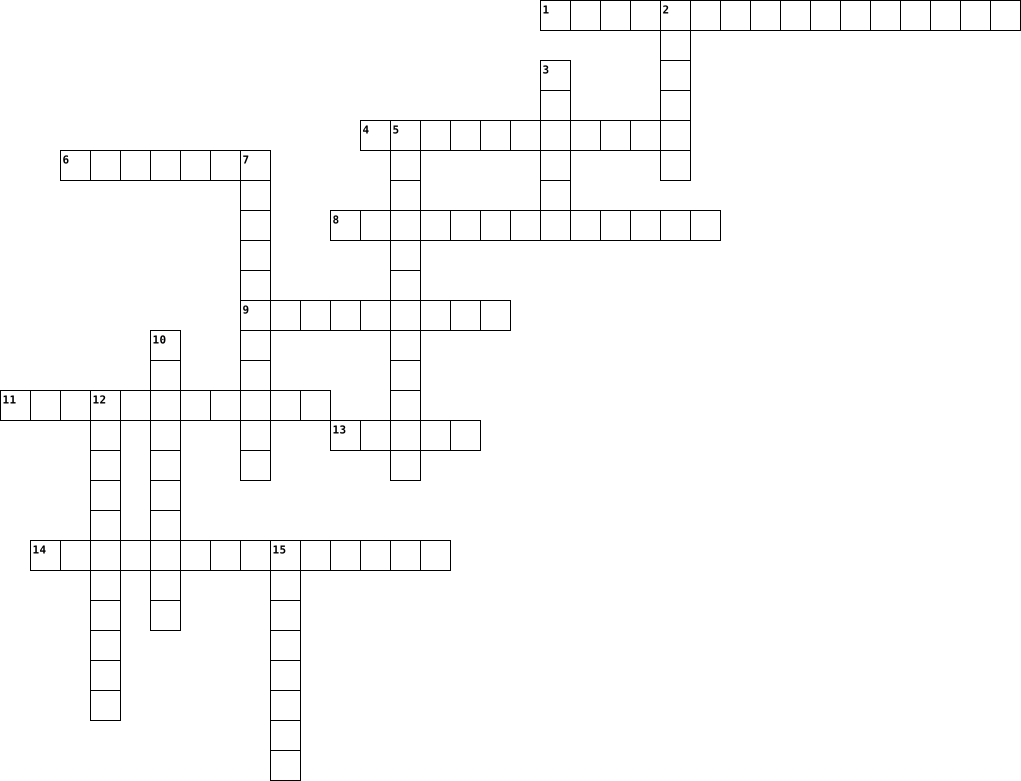
Across
- electrical into chemical
- heat into mechanical
- chemical into electrical
- chemical into heat
- light into electrical
- solar into heat energy
- electrical into light
- light into chemical
Down
- electrical into heat
- mechanical into electrical
- heat into electrical energy
- electrical into sound energy
- sound into electrical
- chemical into mechanical
- electrical into mechanical
15 Clues: chemical into heat • light into chemical • electrical into heat • heat into mechanical • light into electrical • sound into electrical • electrical into light • solar into heat energy • electrical into chemical • chemical into electrical • chemical into mechanical • mechanical into electrical • electrical into mechanical • heat into electrical energy • electrical into sound energy
TRANSFER OF ENERGY 2020-08-27
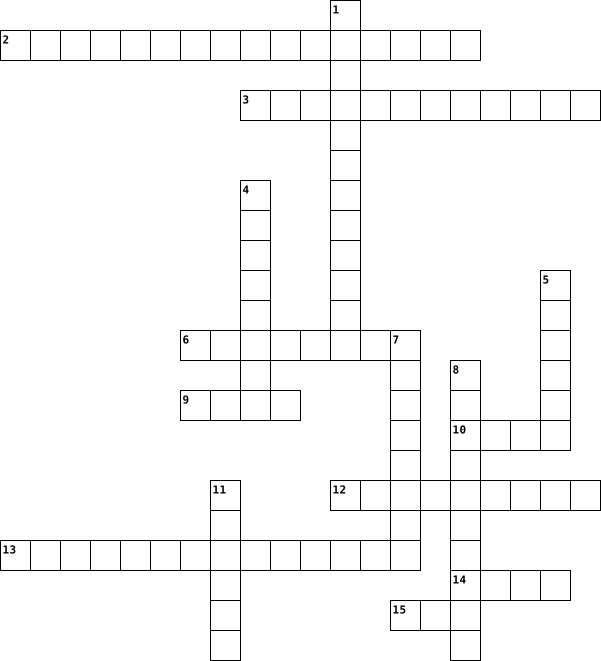
Across
- electrical energy to chemical energy
- solar energy to heat
- electrical energy to sound energy
- electrical energy to light energy
- chemical energy to heat energy
- light energy to electrical energy
- light energy to chemical energy
- electrical energy to heat energy
- electrical energy to mechanical energy
Down
- heat energy to mechanical energy
- chemical energy to electrical energy
- chemical energy to mechanical energy
- heat energy to light energy
- sound energy to electrical energy
- mechanical energy to electrical energy
15 Clues: solar energy to heat • heat energy to light energy • chemical energy to heat energy • light energy to chemical energy • heat energy to mechanical energy • electrical energy to heat energy • electrical energy to sound energy • sound energy to electrical energy • electrical energy to light energy • light energy to electrical energy • electrical energy to chemical energy • ...
Types of Energy 2023-04-14

Across
- Energy in food, gas, batteries, and burning wood
- The ability to do work
- Energy in motion
- Heat energy in an object
- When a force moves an object
- The Law of _____ of Energy
- Energy in moving electrical charges
- Energy of moving parts
- Energy in atomic bombs, stars, and the sun
Down
- Energy in light, x-rays, and radio waves
- Energy of a high position or place
- Energy cannot be created or ______
- Energy stored in objects that are stretched or compressed
- Stored energy
- A push or pull
15 Clues: Stored energy • A push or pull • Energy in motion • The ability to do work • Energy of moving parts • Heat energy in an object • The Law of _____ of Energy • When a force moves an object • Energy of a high position or place • Energy cannot be created or ______ • Energy in moving electrical charges • Energy in light, x-rays, and radio waves • Energy in atomic bombs, stars, and the sun • ...
Types Of Energy 2020-12-13

Across
- the natural movement of the air in currents
- the total mass of organisms in a given area
- energy in which something is in motion
- produced by the internal heat of the earth
- bright or shining light
- relating to heat
- relating to chemistry and chemicals
- when something has the potential to move
- related to or determined by the sun's rays
Down
- flowing water used to create electricity
- working or produced by machines
- dark liquid from petroleum
- a form of energy resulting from charging
- relating to the nucleus of an atom
- a black rock found underground
15 Clues: relating to heat • bright or shining light • dark liquid from petroleum • a black rock found underground • working or produced by machines • relating to the nucleus of an atom • relating to chemistry and chemicals • energy in which something is in motion • flowing water used to create electricity • a form of energy resulting from charging • ...
Types of Energy 2021-08-10

Across
- The energy produced by vibrating sound waves.
- An renewable energy taken from the Earth's core.
- Energy which our sense of sight can detect.
- An energy form of moving charge carriers
- The energy an object has because of the movement of its molecules.
- Wind used to generate electricity.
- Energy stored in the bonds of chemical compounds.
- An energy that comes from the sun then transforms into thermal energy.
- An energy that can make an object move or go into action.
Down
- Energy that is stored above Earth.
- The form to deform an elastic object.
- A moving energy of an object due to its motion and position.
- Form of energy that an object or a particle has by reason of its motion.
- The transport and capture of energy by ocean surface waves
- The energy collected after a nuclear fusion.
15 Clues: Energy that is stored above Earth. • Wind used to generate electricity. • The form to deform an elastic object. • An energy form of moving charge carriers • Energy which our sense of sight can detect. • The energy collected after a nuclear fusion. • The energy produced by vibrating sound waves. • An renewable energy taken from the Earth's core. • ...
Conservation of Energy 2019-09-13

Across
- Results from a temperature difference due to the transfer of thermal energy
- Energy a substance or system has because of its motion
- The rest of the universe that interacts with the system
- The ability to do work
- A system that freely exchanges energy and matter with its surroundings
- The part of the universe being studied
- Energy is neither created nor _____________________.
Down
- Energy carried by moving electrons in an electric conductor
- Energy held by an object in a gravitational field
- Energy a substance or system has related to its temperature
- Energy stored in the bonds of chemical compounds
- A system that does not exchange energy or matter with its surroundings
- A system that exchanges only energy with its surroundings, not matter
- Energy that is trapped inside each atom
- Energy is ____________ from one form to another.
15 Clues: The ability to do work • The part of the universe being studied • Energy that is trapped inside each atom • Energy stored in the bonds of chemical compounds • Energy is ____________ from one form to another. • Energy held by an object in a gravitational field • Energy is neither created nor _____________________. • Energy a substance or system has because of its motion • ...
Types of Energy 2023-12-19

Across
- Energy Energy produced by vibrations that travel through a medium, such as air or water, creating sound waves.
- Energy Energy derived from the sun's radiation, harnessed through solar panels to generate electricity and heat.
- Energy Energy associated with the flow of electric charge, used to power various devices and appliances.
- Energy Energy produced from the movement of water, typically harnessed in dams or flowing rivers to generate electricity.
- Energy Energy obtained from the Earth's internal heat, utilized for heating buildings and generating electricity.
- Energy Energy associated with the attraction or repulsion of magnetic fields, commonly found in magnets and magnetic materials.
- Energy Energy generated by the movement of air, captured by wind turbines to produce electricity.
Down
- Energy Energy derived from organic materials, such as wood, agricultural crops, and waste, through combustion or conversion.
- Energy Energy associated with the temperature of an object, often used for heating or cooling applications.
- Energy Energy associated with the motion of an object, such as a moving car or a person running.
- Energy Energy stored in the bonds of chemical compounds, released during chemical reactions, such as burning fuel.
- Energy Energy released during nuclear reactions, such as fission or fusion, used to generate electricity in nuclear power plants.
- Energy Energy associated with an object's position in a gravitational field, influencing its potential to fall or move.
- Energy Energy stored in objects when they are compressed or stretched, like a compressed spring or a stretched rubber band.
- Energy Energy stored in an object based on its position or condition, such as a raised weight or a stretched spring.
15 Clues: Energy Energy associated with the motion of an object, such as a moving car or a person running. • Energy Energy generated by the movement of air, captured by wind turbines to produce electricity. • Energy Energy associated with the flow of electric charge, used to power various devices and appliances. • ...
Types of Energy 2023-12-08

Across
- type of energy produced by vibrations of materials
- example of electrical energy in the sky during storms
- type of energy that is bright and travels in waves
- tiny parts that make up a material
- example of sound energy when played with drum sticks
- energy of motion
- example of light energy in the night sky
- type of internal energy due to heating of particles
Down
- example of chemcial energy when you eat it
- type of energy that is stored, not motion
- type of energy with movement of charged particles
- example of thermal energy used to cook
- type of energy that is released when links between particles are broken or created
- releasing energy due to nuclear reactions and causes daylight
- type of energy when links of particles are broken with nuclear reactions
15 Clues: energy of motion • tiny parts that make up a material • example of thermal energy used to cook • example of light energy in the night sky • type of energy that is stored, not motion • example of chemcial energy when you eat it • type of energy with movement of charged particles • type of energy produced by vibrations of materials • ...
Types of Energy 2024-06-25

Across
- In a closed system, energy cannot be created or destroyed, only transformed
- Matter cannot be created or destroyed, only transformed
- When the nuclei of at least two atoms are combined to form a new, larger nucleus
- This is a potential energy. The more you pull something, the more of this energy it has.
- A type of kinetic energy of moving matter that results in increases in temperature
- This energy is both potential and kinetic. When a musical instrument is being played, it has this kinetic energy, but it has this potential energy when it is not being used.
- This energy is both potential and kinetic.It is potential when the electrons are stored in the atom, but kinetic when the electrons are flowing
- A type of potential energy that is stored in the nucleus of an atom. It is released during reactions such as fission or fusion.
Down
- Energy that is being stored and has not been used yet. There are many different types of this energy.
- The energy of motion. There are many different types of this energy.
- This energy is both potential and kinetic. Its is potential when an object is a position for movement and kinetic when an object is moving
- A type of kinetic energy that produces light
- When the nucleus of an atom is split, releasing a larger amount of energy
- The energy required to move a 1 kg object 1 meter
- A type of potential energy that is stored within chemical bonds and released during reactions
15 Clues: A type of kinetic energy that produces light • The energy required to move a 1 kg object 1 meter • Matter cannot be created or destroyed, only transformed • The energy of motion. There are many different types of this energy. • When the nucleus of an atom is split, releasing a larger amount of energy • ...
Conservation of Energy 2024-12-13

Across
- Application of force
- If an object had __, it has kinetic energy
- Power an engine produces
- KE+PE
- Work is only done if force is ____
Down
- Measurement of force
- Energy in use
- Any action to alter motion
- Pull towards Earth
- Unit of energy
- Stored energy
- Unit for power
- The ability to do work
- Pull from a rope or string
- Amount of energy transferred over time
15 Clues: KE+PE • Energy in use • Stored energy • Unit of energy • Unit for power • Pull towards Earth • Measurement of force • Application of force • The ability to do work • Power an engine produces • Any action to alter motion • Pull from a rope or string • Work is only done if force is ____ • Amount of energy transferred over time • If an object had __, it has kinetic energy
Conservation of energy 2024-12-13

Across
- transfer of energy between objects
- force is measured
- English physicist and mathematician
- amount of energy
- Scottish inventor
- impermanetly compressed
- equation for work
- enegy neither created or destroyed
Down
- what is a Watt equal to
- energy in motion
- unit of energy
- formula of power
- units of power
- power engine forces
- the stuff you need to do stuff
15 Clues: unit of energy • units of power • energy in motion • formula of power • amount of energy • force is measured • Scottish inventor • equation for work • power engine forces • what is a Watt equal to • impermanetly compressed • the stuff you need to do stuff • transfer of energy between objects • enegy neither created or destroyed • English physicist and mathematician
renewable and nonrenewable energy 2024-05-10

Across
- what is the oldest renewable energy source
- What type of energy can be reused or reformed after a brief period time
- fuels what type of energy source has three major forms that are coal, oil, and natural gas
- what type of energy helps us get electricity from water
Down
- what power comes from the sun
- what type of energy can take up to millions of years to form
- what is the heat from the earth called
7 Clues: what power comes from the sun • what is the heat from the earth called • what is the oldest renewable energy source • what type of energy helps us get electricity from water • what type of energy can take up to millions of years to form • What type of energy can be reused or reformed after a brief period time • ...
Chapter 2 Terms 2022-03-21

Across
- the minimum amount of energy needed to get a chemical reaction started
- the process in which substances undergo chemical changes that result in the formation of new substances
- a chemical reaction that breaks down compounds into simpler products
- a substance formed as a result of a chemical reaction
- a system in which no matter is allowed to enter or leave
- a material that decreases the rate of a reaction
- a short and easy way to show a chemical reaction using symbols
- a rapid reaction between oxygen and fuel that results in fire
- a characteristic of a substance that can be observed without changing the substance into another substance
- a solid that forms from a solution during a chemical reaction
- the amount of one material in a certain volume of another material
- a material that releases energy when it burns
- a change that alters the form or appearance of a material but does not make the material into another substance
Down
- a number in front of a chemical formula in an equation that indicates how many molecules or atoms of each reactant and product are involved in a reaction
- a reaction in which one element replaces another in a compound or when two elements in different compounds trade places
- a reaction that releases energy in the form of heat
- anything that has mass and occupies space
- a system in which matter can enter from or escape to the surroundings
- a characteristic of a substance describes its ability to change into different substances
- a substance that enters into a chemical reaction
- the principle stating that matter is not created or destroyed during a chemical reaction
- a chemical reaction in which two or more simple substances combine to form a new more complex substance
- the study of the properties of matter and how matter changes
- a reaction that absorbs energy in the form of heat
- a material that increases the rate of a reaction by lowering the activation energy
- a biological catalyst that lowers the activation energy of reactions in cells
26 Clues: anything that has mass and occupies space • a material that releases energy when it burns • a substance that enters into a chemical reaction • a material that decreases the rate of a reaction • a reaction that absorbs energy in the form of heat • a reaction that releases energy in the form of heat • a substance formed as a result of a chemical reaction • ...
Chapter 2 Key Terms 2022-03-18

Across
- A chemical reaction in which two or more simple substances combine to form a new, more complex substance.
- A reaction in which one element replaces another in a compound or when two elements in different compounds trade places.
- The amount of one material in a certain volume of another material.
- A solid that forms from a solution during a chemical reaction,
- The study of the properties of matter and how matter changes.
- A biological catalyst that lowers the activation energy of reactions in cells.
- The principle stating that matter is not created or destroyed during a chemical reaction.
- A material that releases energy when it burns.
- A material that decreases the rate of a reaction
- A short, easy way to show a chemical reaction, using symbols.
- A substance formed as a result of a chemical reaction
- The minimum amount of energy needed to get a chemical reaction started.
- A change that alters the form or appearance of a material but does not make the material into another substance.
Down
- The process in which substances undergo chemical changes that result in the formation of new substances.
- A characteristic of a substance that can be observed without changing the substance into another substance.
- A characteristic of a substance that describes its ability to change into different substances.
- A system in which no matter is allowed to enter or leave.
- A number in front of a chemical formula in an equation that indicates how many molecules or atoms of each reactant and product are involved in a reaction.
- A material that increases the rate of a reaction by lowering the activation energy.
- A reaction that releases energy in the form of heat.
- Anything that has mass and occupies space.
- A rapid reaction between oxygen and fuel that results in fire.
- A chemical reaction that breaks down compounds into simpler products.
- A system in which matter can enter from or escape to the surroundings.
- A substance that enters into a chemical reaction.
- A reaction that absorbs energy in the form of heat.
26 Clues: Anything that has mass and occupies space. • A material that releases energy when it burns. • A material that decreases the rate of a reaction • A substance that enters into a chemical reaction. • A reaction that absorbs energy in the form of heat. • A reaction that releases energy in the form of heat. • A substance formed as a result of a chemical reaction • ...
environment 2022-05-23

Across
- A gas that causes the greenhouse effect, especially carbon dioxide.
- Pollution in the atmosphere.
- Not now existing.
- An unnecessary or wrong use of money, substances, time, energy, abilities...
- To tell someone that you will do something bad to them if they do not do what you want
- energy that is produced using the sun, wind, etc...
Down
- A measurement of the amount of carbon dioxide that activities produce.
- The air, land, and water where people, animals, and plants live.
- The level of the sea’s surface, used to measure the height of an area of land.
- Fuels, such as gas, coal, and oil, that were formed underground from plant and animal remains millions of years ago.
- A chemical element that is a gas with no smell or colour. It forms a large part of the air on earth, and is needed by animals and plants to live.
- A device that changes energy from the sun into electricity.
- The measured amount of heat in a place or in the body.
13 Clues: Not now existing. • Pollution in the atmosphere. • energy that is produced using the sun, wind, etc... • The measured amount of heat in a place or in the body. • A device that changes energy from the sun into electricity. • The air, land, and water where people, animals, and plants live. • A gas that causes the greenhouse effect, especially carbon dioxide. • ...
Major muscles of the human anatomy 2013-01-19

Across
- A shoulder muscle that forms the rounder part of the shoulder
- abdominis Muscles of the abdomen that provide the ‘six-pack’ definition
- abdominis A muscle that forms part of the abdomen
- Posterior upper back muscle named after its shape
- This muscles ensures that the scapula and vertebrae are connected
- dorsi The broadest muscle on the back
- Forms the lateral aspects of the abdomen
- A muscle that has been damaged in many footballers when running or shooting
- A muscle that forms part of the 'hip flexors'
- A muscle located in the upper arm and name means ‘3 heads’
Down
- spinae Helps maintain the natural position of the spine
- Means to take away from the mid-line
- maximus Forms the ‘buttocks’
- Allows the individual to bring their leg back towards the midline
- A muscle located in the upper arm that consists of ‘2 heads’
- major The main chest muscles
- Assists with elbow flexion
- Large muscle in the posterior lower leg
- A deep muscle of the lower leg that is the powerhouse of ankle Plantarflexion during aerobic activities
- anterior A muscle that is anterior to the tibia in the lower leg
- laterialis A muscle that forms part of the quadriceps and is located on the outside of the leg
21 Clues: Assists with elbow flexion • maximus Forms the ‘buttocks’ • major The main chest muscles • Means to take away from the mid-line • dorsi The broadest muscle on the back • Large muscle in the posterior lower leg • Forms the lateral aspects of the abdomen • A muscle that forms part of the 'hip flexors' • abdominis A muscle that forms part of the abdomen • ...
Chemistry Crossword Puzzle 2021-10-14

Across
- a change that alters the form or appearance of a substance but doe not convert the mater into a new substance
- a combination of symbols that represent the elements in a compound
- the relationship between mass and volume of an object
- a change in matter that forms one or more new substances
- a way to show chemical reactions using element symbols instead of words
- anything that has mass and takes up space
- a substance that consists of two or more pure elements, compounds or both that are in the same place but NOT chemically combined
- the force that holds atoms together
- a substance that cannot be broken down into any other substances by chemical or physical means
- the amount of space that matter occupies
- Reaction occur when chemical bonds are made or broken and new bonds form making new substances
- a particle made of tow or more atoms chemically bonded together
- a type of chemical reaction when one element replaces another in a compound or when two elements in different compounds trade places
- a type of chemical reaction when two or more substances combine to make a more complex substance
- a type of chemical reaction when chemical bonds break compounds into simpler substances
Down
- a type of chemical reaction that absorbs energy from its environment
- the materials or substances at the beginning of a chemical reaction
- a solid that forms from solution during a chemical reaction
- a one or two letter set of characters used to identify an element
- numbers in a chemical formula that show the number of atoms of an element in that molecule or the ratio of elements in a compound
- the law that states that matter cannot be created or destroyed only transformed
- a biological catalyst in cells
- the amount of one material in a given volume of another material
- the minimum amount of energy needed to start a chemical reaction
- the materials or substances that results from a chemical reaction
- the measurement of how much matter in an object
- the number placed in front of a chemical formula in a chemical equation
- a material used to decrease the rate of a chemical reaction
- a type of chemical reaction that releases energy in the form of heat
- the measure of energy in the environment
- the measure of the force of gravity on an object
- a material that increases the rate of a reaction by lowering the activation energy
- the smallest particle of an element
- a substance made of two or more elements chemically combined in a specific ratio or proportion
- a well mixed mixture
- the study of the properties of matter and how the matter changes
36 Clues: a well mixed mixture • a biological catalyst in cells • the force that holds atoms together • the smallest particle of an element • the measure of energy in the environment • the amount of space that matter occupies • anything that has mass and takes up space • the measurement of how much matter in an object • the measure of the force of gravity on an object • ...
Chapter 6 2022-05-05

Across
- subtropical regions; warm air meets with cooler air from middle latitudes
- the process by which air, or other matter, rises or sinks because of difference in temperature
- the fraction of solar radiation which is reflected by a particular surface
- movements of air are influenced by: local conditions; local temperature variations
- gentle winds which extend over distance of less than 100km
- ozone
- layer of gases which surrounds Earth
- the transfer of energy as heat from one substance to another by direct contact
- water surfaces heat up slower than land surfaces
- 0.9% of atmosphere
- ROY G BIV
- increase in pressure causes the mercury level to rise
- at the equator where the Trade Wind systems of northern and southern hemispheres meet
- 21% of atmosphere
- where the thermosphere blends into the almost complete vacuum of space
- narrow bands of high-speed winds which blow in the upper troposphere and lower stratosphere
- occurs when particles and gas molecules in the atmosphere reflect and bend solar rays
Down
- temperature increases as altitude increases
- form because of density differences between cold polar air and warm air (middle latitudes)
- warm air moves upslope
- includes all forms of energy which travel through space as waves
- closest to the Earth’s surface
- sealed metal container with a partial vacuum
- produced when warm air near Earth’s surface bends the light rays
- cool air which descends from the mountain peaks
- the process where the atmosphere, the surface and lower atmosphere warms
- when solar energy reaches Earth’s surface, the surface either: absorbs the energy; reflects the energy
- 78% of atmosphere
- the tendency of a moving object to follow a curved path rather than a straight path because of the Earth’s rotation
- land surfaces heat up faster than water surfaces
- extends to an altitude of 80-km
31 Clues: ozone • ROY G BIV • 78% of atmosphere • 21% of atmosphere • 0.9% of atmosphere • warm air moves upslope • closest to the Earth’s surface • extends to an altitude of 80-km • layer of gases which surrounds Earth • temperature increases as altitude increases • sealed metal container with a partial vacuum • cool air which descends from the mountain peaks • ...
Chapter 6 2022-05-05

Across
- subtropical regions; warm air meets with cooler air from middle latitudes
- the process by which air, or other matter, rises or sinks because of difference in temperature
- the fraction of solar radiation which is reflected by a particular surface
- movements of air are influenced by: local conditions; local temperature variations
- gentle winds which extend over distance of less than 100km
- ozone
- layer of gases which surrounds Earth
- the transfer of energy as heat from one substance to another by direct contact
- water surfaces heat up slower than land surfaces
- 0.9% of atmosphere
- ROY G BIV
- increase in pressure causes the mercury level to rise
- at the equator where the Trade Wind systems of northern and southern hemispheres meet
- 21% of atmosphere
- where the thermosphere blends into the almost complete vacuum of space
- narrow bands of high-speed winds which blow in the upper troposphere and lower stratosphere
- occurs when particles and gas molecules in the atmosphere reflect and bend solar rays
Down
- temperature increases as altitude increases
- form because of density differences between cold polar air and warm air (middle latitudes)
- warm air moves upslope
- includes all forms of energy which travel through space as waves
- closest to the Earth’s surface
- sealed metal container with a partial vacuum
- produced when warm air near Earth’s surface bends the light rays
- cool air which descends from the mountain peaks
- the process where the atmosphere, the surface and lower atmosphere warms
- when solar energy reaches Earth’s surface, the surface either: absorbs the energy; reflects the energy
- 78% of atmosphere
- the tendency of a moving object to follow a curved path rather than a straight path because of the Earth’s rotation
- land surfaces heat up faster than water surfaces
- extends to an altitude of 80-km
31 Clues: ozone • ROY G BIV • 78% of atmosphere • 21% of atmosphere • 0.9% of atmosphere • warm air moves upslope • closest to the Earth’s surface • extends to an altitude of 80-km • layer of gases which surrounds Earth • temperature increases as altitude increases • sealed metal container with a partial vacuum • cool air which descends from the mountain peaks • ...
Synergy Puzzle 11 2022-09-12

Across
- The biggest pipeline that was used to transport natural gas between Russia and Europe via Germany
- A term anointed for a business if the net result of its activities is a decrease in the amount of carbon in the atmosphere
- The state-owned crude oil and natural gas pipelines and trading company in Turkey
- One of the non-conventional energy sources
- A distinguished professor who does interdisciplinary research in the fields of energy, environmental and population change, technical innovation, etc. and an author of numerous books steadily grown in influence
- The environmental disaster which was started with the burning of oil wells during the Gulf War and described as the biggest fire and the most terrible atmospheric pollution ever initiated by the hand of man
- The top producer country of solar energy
- The symbol of one of the rare earth elements that is used in high performance batteries
- A major carbon sink
- A unit that refers to the power an engine produces
Down
- One of the most commonly used forms of energy in the world
- A product of oil refinery that is used in jet engines
- A gas leaking from the stove that could poison people
- An environmental issue that is led by pollutants released from industrial plants
- The abbreviation of European Climate Infrastructure and Environment Executive Agency which manages programmes contributing to decarbonisation and sustainable growth
- A region where more than half of people lack access to electricity
- The abbreviation for liquefied petroleum gas which is used as a fuel in a range of applications including in heating and cooking
- The arrival country where TAP transports natural gas to
- One of the largest international oil giant companies
- A device that carries the heat from the outside to the indoor environment by using electrical energy
20 Clues: A major carbon sink • The top producer country of solar energy • One of the non-conventional energy sources • A unit that refers to the power an engine produces • One of the largest international oil giant companies • A product of oil refinery that is used in jet engines • A gas leaking from the stove that could poison people • ...
Environment : Chapter 2 Vocab Words 2025-11-20

Across
- Combination of two or more different elements.
- Description of what scientists find happening in nature repeatedly in the same way, without known exception.
- Change in the chemical composition of a substance.
- Combination of two or more atoms of the same or different elements held together by chemical bonds.
Down
- The basic building block of matter.
- Process that occurs when an output of matter, energy, or information is fed back into the system as an input and leads to changes in that system.
- Energy generated and measured by heat.
- Factual information collected by scientists.
- Energy associated with motion, such as energy in flowing water, a speeding car, or electricity.
- One of two or more forms of a chemical element that have the same atomic number but different mass numbers.
10 Clues: The basic building block of matter. • Energy generated and measured by heat. • Factual information collected by scientists. • Combination of two or more different elements. • Change in the chemical composition of a substance. • Energy associated with motion, such as energy in flowing water, a speeding car, or electricity. • ...
waves 2022-03-15

Across
- the distance between twp peaks of the wave
- objects in motion will stay in motion and objects at rest will stay at rest unless acted upon by force
- a wave that has changed direction by moving from one material to another material of different density
- a wave of energy consisting of electric and magnetic fields oscillating at right angles to each other
- waves vibrating forms of energy that are made of molecules and look like waves
Down
- the transfer of energy in a motion that is perpendicular to the direction the wave is moving
- force equals mass times acceleration
- when waves bend around small obstacles or spread out after they pass through small openings
- a disturbance that transfers energy from one location to another
- a measure of how big its oscillation is
- a wave that travels through a material, or fluid, or on its surface without causing permanent structural physical change
11 Clues: force equals mass times acceleration • a measure of how big its oscillation is • the distance between twp peaks of the wave • a disturbance that transfers energy from one location to another • waves vibrating forms of energy that are made of molecules and look like waves • when waves bend around small obstacles or spread out after they pass through small openings • ...
Photosynthesis 2017-10-13

Across
- the carbon fixation reaction
- complex organic from simpler, inorganic raw materials
- the main pigment of photosynthesis
- green pigment organelle
- where CO2 reacts with 3 carbons (PEP)
- thylakoid membrane encloses a fluid-filled interior space
- they obtain energy from chemicals
- it is the simplest of the alpha-keto acids
- a process where -NH2 is removed
- it is an instrument that is used to measure the relative abilities of different pigments to absorb different wavelengths of light
- another accessory of chloroplast’s photosynthesis pigment
- this is the second phase of Calvin Cycle
- a six-carbon glucose molecule is converted to two three-carbon molecules of pyruvate
Down
- biological catalysts that increase the speed of a chemical reaction without being consumed by the reaction
- it is a sequence if 13 reactions where carbon fixation occurs
- they obtain energy from the oxidation of reduced inorganic molecules
- it is a process where Calvin Cycle are degraded to CO2 and H2O
- a layer that includes many air spaces and a very high concentration of water vapor
- Synthase reaction is catalyzed by the enzyme ribulose biphosphate carboxylase and oxygenase
- it is converted to energy
- a reaction in which glucose becomes oxidized and oxygen becomes reduced
- this consists of chlorophyll molecules and proteins
- Spectrum it is a graph of the relative effectiveness of different wavelengths of lights
- arranged sacs of thylakoids
- they use light energy to make ATP and NADPH
- third system of membranes that forms an interconnected set of flat, dislike sacs
- Land plants, and algae is an example of
- light splitting
- it is the condition in which all its electrons are in their normal, lowest-energy levels
- it contains most of the enzymes required to produce
30 Clues: light splitting • green pigment organelle • it is converted to energy • arranged sacs of thylakoids • the carbon fixation reaction • a process where -NH2 is removed • they obtain energy from chemicals • the main pigment of photosynthesis • where CO2 reacts with 3 carbons (PEP) • Land plants, and algae is an example of • this is the second phase of Calvin Cycle • ...
Risk Awareness Campaign Puzzle Challenge 2026-01-20

Across
- a renewable resource
- is key for use of customer information at the time of loan or account application
- global sector that uses up 70% of our freshwater sources
- a key principle of good governance
- plastic bottles are the most common......item in Uganda
- open and clear to the public, allowing for scrutiny and participation
- Its affected by lack of transparency in decision-making.
- ability to maintain or support a process continously overtime
- is a features of Good Governance
- I wake only when the grid sleeps
- layer of the atmosphere which contains the ozone layer
- average amount of time a plastic bag is used
- a social injustice
- connected to the overuse of chemicals that harm the environment and living things
- the greenhouse gas that is present in very large amounts
- Does not count as a greenhouse gas
- energy source that is harmful to the environment
- It's part of FINCA Uganda's social agenda
Down
- procedure for planting new trees in deforested areas
- the brand which was the first to turn plastic waste into clothing
- involves using organic materials to produce energy
- forests transformed into non-forest land for human use
- a component of the ESG acronym
- is a type of ESG risk.
- is part of the governance aspect of ESG
- I am not profitable, yet I protect it.
- the most commonly used type of energy source in urban areas of Uganda
- root cause of the ozone layer hole
- Alternative sources of energy
- is used in chemical plants to reduce air pollution
- FINCA Uganda has.......tolerance to sexual and other forms of harassment
31 Clues: a social injustice • a renewable resource • is a type of ESG risk. • Alternative sources of energy • a component of the ESG acronym • is a features of Good Governance • I wake only when the grid sleeps • a key principle of good governance • root cause of the ozone layer hole • Does not count as a greenhouse gas • I am not profitable, yet I protect it. • ...
Pre-AP Biology Fall Semester Crossword 2025-12-11

Across
- An organelle that produces energy in the form of ATP for eukaryotic cells
- Organelle that breaks down old cell parts and invading bacteria
- An organism that must eat other organisms for energy
- This type of transport requires an input of energy because movement is against the concentration gradient
- An organism that has a nucleus and membrane bound organelles
- Large geographic region with specific climate and organisms
- A macromolecule made of amino acids
- The process by which polymers are broken down into smaller monomers using water
- An organelle that makes proteins through the process of translation
- Organelle plants have that use sunlight and carbon dioxide to make glucose
- Variable that the experimenter is testing the effect of
Down
- Type of macromolecule that is the body's main source of energy
- This type of solution has a lower solute concentration than the cell and causes cells to swell
- Community of organisms interacting with nonliving factors
- Water is this because its atoms share electrons unequally, causing partial charges
- A semi-permeable barrier that is present around all cells
- Protein that speeds up chemical reactions
- The type of bond that is between water molecules and gives water unique properties
- Nonliving factor in an ecosystem
- Stable internal conditions within an organism
- The monomer of nucleic acids
- This type of cell is small and simple with no nucleus or membrane bound organelles
- The nutrient cycle characterized by bacteria converting the nutrient into useable forms
- The property of water being attracted to other water molecules
- The type of population growth where the population levels off at carrying capacity
- This type of homeostatic feedback mechanism reduces the intensity of a response to restore stability
26 Clues: The monomer of nucleic acids • Nonliving factor in an ecosystem • A macromolecule made of amino acids • Protein that speeds up chemical reactions • Stable internal conditions within an organism • An organism that must eat other organisms for energy • Variable that the experimenter is testing the effect of • Community of organisms interacting with nonliving factors • ...
Physical Science 2022-05-18

Across
- the speed of an object is the magnitude of the rate of change.
- kinetic energy of an object is the energy that it possesses due to its motion.
- atom is the smallest unit of ordinary matter that forms a chemical element.
- the movement caused within a fluid by the tendency of hotter and therefore less dense material.
- energy that comes from a source and travels through space and may be able to penetrate various materials.
- element is a pure substance consisting only of atoms that all have the same numbers of protons.
- an electromagnetic wave which travels through the vacuum of outer space
Down
- change Physical changes are changes affecting the form of a chemical substance, but not its chemical composition.
- he process by which heat or electricity is directly transmitted through a substance.
- Newton's first law states that if a body is at rest or moving at a constant speed in a straight line.
- change Chemical changes occur when a substance combines with another to form a new substance.
- matter is any substance that has mass and takes up space by having volume.
- the action or process of moving or being moved.
- stored energy that depends upon the relative position of various parts of a system.
- Mass is the quantity of matter in a physical body.
15 Clues: the action or process of moving or being moved. • Mass is the quantity of matter in a physical body. • the speed of an object is the magnitude of the rate of change. • an electromagnetic wave which travels through the vacuum of outer space • matter is any substance that has mass and takes up space by having volume. • ...
9.2 Combination Reactions 2025-02-24

Across
- this planet is covered with hematite
- magnetite was used to make early examples of this
- forms from the combination of a metal oxide and water
- black rust
- a combination reaction has two or more of these
- another word for limonite
- a combination reaction has one of these
- a chemical reaction in which two or more reactants combine to form one product
Down
- limonite forms when a lot of this is present
- red rust
- forms from the combination of two nonmetals
- forms form the combination of a metal and a nonmetal
- magnetite forms when there is a lot of this present
- forms from the combination of a metal and oxygen
- yellow rust
15 Clues: red rust • black rust • yellow rust • another word for limonite • this planet is covered with hematite • a combination reaction has one of these • forms from the combination of two nonmetals • limonite forms when a lot of this is present • a combination reaction has two or more of these • forms from the combination of a metal and oxygen • ...
Thermal energy crossword 2021-12-02

Across
- you do not need to toch it to feel it
- Transfer of energy by the movement of Electromagnetic Waves
- A thermometer measures the average energy of particle motion in an object
- heat transfer caused by the rising of hotter, less dense fluids
Down
- most forms of nature is turned into thermal energy
- Transfer of energy that occurs in solids, liquids, and gasses
- in the day warm air above the sea moves to cooler places in the sea
- as warm air from the ocean moves to the top of the cycle to the cooler places
8 Clues: you do not need to toch it to feel it • most forms of nature is turned into thermal energy • Transfer of energy by the movement of Electromagnetic Waves • Transfer of energy that occurs in solids, liquids, and gasses • heat transfer caused by the rising of hotter, less dense fluids • in the day warm air above the sea moves to cooler places in the sea • ...
Science Crossword Puzzle 2014-10-14

Across
- a herb or other small vegetable growth
- a unit of charge equal to the charge on one electron.
- air.
- forms organic compounds.
- the capacity for vigorous activity.
- highly varied organic molecules constituting a large portion of the mass of every life form and necessary in the diet of all animals
- an organelle in the cytoplasm of cells that functions in energy production.
Down
- a liquid you need to drink frequently in order to live
- the lightest and most stable baryon
- a process that happens to plants that includes carbon dioxide, water, and certain inorganic salts.
- blood sugar.
- any complete round or series of occurrences that repeats or is repeated.
- any basic process of organic functioning or operating.
13 Clues: air. • blood sugar. • forms organic compounds. • the lightest and most stable baryon • the capacity for vigorous activity. • a herb or other small vegetable growth • a unit of charge equal to the charge on one electron. • a liquid you need to drink frequently in order to live • any basic process of organic functioning or operating. • ...
Science 2.0 2022-03-22

Across
- A chemical reaction that breaks down compounds into simpler products.
- The amount of one material in a certain amount of volume of another material.
- A biological catalyst that lowers the activation energy of reactions in cells.
- A reaction in which one element replaces another in a compound or when two elements in different compounds trade places.
- A characteristic of a substance that describes its ability to change into different substances.
- A solid that forms from a solution during a chemical reaction.
- A material that increases the rate of a reaction by lowering the activation energy.
- The process in which substances undergo chemical changes that result in the formation of new substances.
- Anything that has mass and occupies space.
- A reaction that releases energy in the form of heat.
- A substance that enters into a chemical reaction.
- A material that decreases the rate of a reaction.
- A substance formed as a result of a chemical reaction.
- A rapid reaction between oxygen and fuel that results in fire.
- The minimum amount of energy needed to get a chemical reaction started.
- A system in which no matter is allowed to enter or leave.
- The principle stating that matter is not created or destroyed during a chemical reaction.
Down
- A system in which matter can enter or escape to the surroundings.
- A reaction that absorbs energy in the form of heat.
- A material that releases energy when it burns.
- A change that alters the form or appearance of a material but does not make the material into another substance.
- A characteristic of a substance that can be observed without changing the substance into another substance.
- A chemical reaction in which two or more simple substances combine to form a new, more complex substance.
- A short, easy way to show a chemical reaction, using symbols.
- A number in front of a chemical formula in an equation that indicates how many molecules or atoms of each reactant and product are involved in a reaction.
- the study of the properties of matter and how matter changes.
26 Clues: Anything that has mass and occupies space. • A material that releases energy when it burns. • A substance that enters into a chemical reaction. • A material that decreases the rate of a reaction. • A reaction that absorbs energy in the form of heat. • A reaction that releases energy in the form of heat. • A substance formed as a result of a chemical reaction. • ...
Carbon Cycle and Greenhouse Effect 2026-05-04

Across
- A carbon sink that cover’s a large amount of the earth’s surface, with some of the carbon being stored in the shells of crustaceans.
- Carbon ________, the repeating process of carbon changing forms and moving around earth’s spheres
- Source of energy from outside earth’s spheres that enables photosynthesis.
- A product of photosynthesis and essential gas for sustaining life
- Climate _______ can result if the greenhouse effect is too strong, trapping more heat in the atmosphere.
- Water________, a greenhouse gas that is also critical part of the water cycle, leading to the formation of clouds.
- Nitrous _______ , a greenhouse gas containing nitrogen and oxygen. Also a useful painkiller
- Carbon _________, a greenhouse gas containing carbon and oxygen
- A greenhouse gas containing carbon and hydrogen
- The __________ effect is the mode by which energy from the sun is trapped inside earth’s atmosphere.
- Plants with high amounts of green leaves that are necessary for photosynthesis which reduces carbon dioxide in our atmosphere
Down
- A product of photosynthesis containing carbon, hydrogen and oxygen that is the basis of all foods
- The process by which living organisms consume carbohydrates for energy and release carbon dioxide
- The specific set of conditions (temperature, seasons, humidity, rainfall etc) that enable certain plants and animals to survive in a local area.
- A fossil fuel that is typically black or brown and sometimes used in the production of electricity
- A carbon ______ is a substance that stores carbon on earth
- The process by which plants turn carbon dioxide, water and sunlight into sugars and oxygen
- The process of burning fossil fuels in the presence of oxygen to release energy and carbon dioxide
- Alternate sources of energy (solar, wind, tidal) that do not rely on the combustion of carbon based fuels. About 50% of WA’s electricity comes from these sources.
- A fossil fuel that is typically used in car engines
- _______ fuels contain carbon which when combusted release energy and carbon dioxide
- A fossil fuel that is typically used in heavy vehicles - trucks, buses, farming equipment etc
22 Clues: A greenhouse gas containing carbon and hydrogen • A fossil fuel that is typically used in car engines • A carbon ______ is a substance that stores carbon on earth • Carbon _________, a greenhouse gas containing carbon and oxygen • A product of photosynthesis and essential gas for sustaining life • ...
Carbon Cycle and Greenhouse Effect 2026-05-04

Across
- A carbon sink that cover’s a large amount of the earth’s surface, with some of the carbon being stored in the shells of crustaceans.
- Carbon ________, the repeating process of carbon changing forms and moving around earth’s spheres
- Source of energy from outside earth’s spheres that enables photosynthesis.
- A product of photosynthesis and essential gas for sustaining life
- Climate _______ change can result if the greenhouse effect is too strong, trapping more heat in the atmosphere.
- Water________, a greenhouse gas that is also critical part of the water cycle, leading to the formation of clouds.
- Nitrous _______ , a greenhouse gas containing nitrogen and oxygen. Also a useful painkiller
- Carbon _________, a greenhouse gas containing carbon and oxygen
- A greenhouse gas containing carbon and hydrogen
- The __________ effect is the mode by which energy from the sun is trapped inside earth’s atmosphere.
- Plants with high amounts of green leaves that a necessary for photosynthesis which reduces carbon dioxide in our atmosphere
Down
- A product of photosynthesis containing carbon, hydrogen and oxygen that is the basis of all foods
- The process by which living organisms consume carbohydrates for energy and release carbon dioxide
- The specific set of conditions (temperature, seasons, humidity, rainfall etc) that enable certain plants and animals to survive in a local area.
- A fossil fuel that is typically black or brown and sometimes used in the production of electricity
- A carbon ______ is a substance that stores carbon on earth
- The process by which plants turn carbon dioxide, water and sunlight into sugars and oxygen
- The process of burning fossil fuels in the presence of oxygen to release energy and carbon dioxide
- Alternate sources of energy (solar, wind, tidal) that do not rely on the combustion of carbon based fuels. About 50% of WA’s electricity
- A fossil fuel that is typically used in car engines
- _______ fuels contain carbon which when combusted release energy and carbon dioxide
- A fossil fuel that is typically used in heavy vehicles - trucks, buses, farming equipment etc
22 Clues: A greenhouse gas containing carbon and hydrogen • A fossil fuel that is typically used in car engines • A carbon ______ is a substance that stores carbon on earth • Carbon _________, a greenhouse gas containing carbon and oxygen • A product of photosynthesis and essential gas for sustaining life • ...
Science crossword 6B 2024-04-11

Across
- usable power or the resources (e.g,oil) used to produce usable power
- the flow of an electric charge
- along with protons, found at the centre or nucleus of an atom
- a Filament a fine wire, usually found in an incandescent light bulbs that is made to glow by the passage of an electric current
- when an electrical circuit travels from the power source through a wire and back to the power source without meeting any resistance
- a machine that converts other forms of energy into mechanical energy which then creates motion
- a light emitting diode is a device that emits light when an electric current is passed through
Down
- charges produced or caused by static electricity
- a form of energy that is caused by the movement of some of the tiny particles that make up atoms
- a machine that produces electricity
- contact on an electronic device such as a battery at which electric current enters or leaves
- a measurement of how well a material is able or conduct electricity
12 Clues: the flow of an electric charge • a machine that produces electricity • charges produced or caused by static electricity • along with protons, found at the centre or nucleus of an atom • a measurement of how well a material is able or conduct electricity • usable power or the resources (e.g,oil) used to produce usable power • ...
7th Grade Science 2021-05-24

Across
- plate boundary that forms mountains
- dominant and recessive alleles are present
- variable that remains the same in the experiment
- the visible light spectrum
- variable I measure in an experiment
- variable I change in an experiment
- found only in a plant cell
- one parent, two identical daughter cells
- transfers energy
Down
- system that exchanges O2 & CO2 in the body
- light and water waves
- sound waves
- crust and mantle of the Earth
- two parents, four unique cells
- explains how and why
- balance between inside and outside of a cell
- moves from hot to cold
- males are squares, females are circles
- describes what happens
19 Clues: sound waves • transfers energy • explains how and why • light and water waves • moves from hot to cold • describes what happens • the visible light spectrum • found only in a plant cell • crust and mantle of the Earth • two parents, four unique cells • variable I change in an experiment • plate boundary that forms mountains • variable I measure in an experiment • ...
environment 2022-05-23

Across
- A gas that causes the greenhouse effect, especially carbon dioxide.
- Pollution in the atmosphere.
- Not now existing.
- An unnecessary or wrong use of money, substances, time, energy, abilities...
- To tell someone that you will do something bad to them if they do not do what you want
- energy that is produced using the sun, wind, etc...
Down
- A measurement of the amount of carbon dioxide that activities produce.
- The air, land, and water where people, animals, and plants live.
- The level of the sea’s surface, used to measure the height of an area of land.
- Fuels, such as gas, coal, and oil, that were formed underground from plant and animal remains millions of years ago.
- A chemical element that is a gas with no smell or colour. It forms a large part of the air on earth, and is needed by animals and plants to live.
- A device that changes energy from the sun into electricity.
- The measured amount of heat in a place or in the body.
13 Clues: Not now existing. • Pollution in the atmosphere. • energy that is produced using the sun, wind, etc... • The measured amount of heat in a place or in the body. • A device that changes energy from the sun into electricity. • The air, land, and water where people, animals, and plants live. • A gas that causes the greenhouse effect, especially carbon dioxide. • ...
Ecology part II 2023-03-03

Across
- the process in which carbon atoms continually travel from the atmosphere to the Earth and then back into the atmosphere.
- the rapid increase in Earth's average surface temperature over the past century primarily due to the greenhouse gasses released by people burning fossil fuels.
- the cycle of the continuous movement of water within the Earth and atmosphere.
- powers nearly all forms of cellular work.
- the Earth’s surface heat getting trapped in the atmosphere from greenhouse gasses.
- that have less solute present.
- when particles move from high concentration to low concentration.
- significant changes in global temperature, precipitation, wind patterns and other measures of climate that occur over several decades or longer.
- when organisms take in sunlight as a form of energy and convert it into sugars.
- the biogeochemical cycle that describes the transformation and translocation of phosphorus in soil, water, and living and dead organic material.
- the membrane found in all cells that separates the interior of the cell from the outside environment.
- that have equal concentrations of substances.
- that have more solute present.
- a cycle where nitrogen goes through the atmosphere then cycles through to the ground into the roots of plants.
- a process which takes place in the absence of oxygen gas.
Down
- when organisms take in food and use the chemical energy they obtain from sugars.
- a chemical process in which oxygen is used to make energy from carbohydrates.
- movement of materials through a membrane against concentration gradient and requires energy from the cell.
- the part of a system in which some portion of the system's output is used as input for future operations.
- occurs when a cell uses no energy to move particles across a membrane.
- the total amount of greenhouse gasses produced to directly and indirectly support human activity.
- the main type of sugar in the blood and is the major source of energy for the body's cells.
- a gas absorbed from the air by plants in photosynthesis and exhaled by humans.
- the diffusion of water across a selectively permeable membrane.
- a gas inhaled by humans and put out by plants through cellular respiration.
25 Clues: that have less solute present. • that have more solute present. • powers nearly all forms of cellular work. • that have equal concentrations of substances. • a process which takes place in the absence of oxygen gas. • the diffusion of water across a selectively permeable membrane. • when particles move from high concentration to low concentration. • ...
Periodic Puzzle 2024-11-13

Across
- Noble gas, has 10 protons
- Boron group/metal, biggest atomic radius in 3p, found in soda cans
- Noble Gas/nonmetal, atomic radius is bigger than Neon, smaller than chlorine
- smallest ionic radius out of 2p
- larger Ionic radius than Nitrogen, creates diamonds
- Oxygen group/nonmetal, atomic radius is bigger than oxygen, smaller than phosphorus
- Nitrogen group/nonmetal, atomic radius is smaller than silicon, forms the backbone of DNA and RNA
- Highest ionizaton energy 2 protons, 2 electrons , and 2 neutrons (fills up balloons)
- Halogen/nonmetal, atomic radius is smaller than sulfur, used to clean pools, diatomic
- has a moderate to high ionization, protons-12, electrons-12 neutrons-12
Down
- low ionization energy 11-protons, 11,electrons, 12 neutrons (helps make salt)
- has the highest electronegativity
- 2 valence electrons, least amount of electrons for alkaline earth metals
- Anion, makes up more than half of the atmosphere’s gas
- 1 valence electron, positive charge, in the second main energy level
- Carbon group/metalloid, atomic radius is bigger than Carbon
- has 6 valence electrons, we breathe this in
- 1 valence electron, 2 atoms that make up water
18 Clues: Noble gas, has 10 protons • smallest ionic radius out of 2p • has the highest electronegativity • has 6 valence electrons, we breathe this in • 1 valence electron, 2 atoms that make up water • larger Ionic radius than Nitrogen, creates diamonds • Anion, makes up more than half of the atmosphere’s gas • Carbon group/metalloid, atomic radius is bigger than Carbon • ...
mega and micro 2024-05-16

Across
- Tiny wafer
- Large funnel shaped device for amplifying the voice
- Film containing micro photographs
- Person for entertainment
- Instrument for converting sound waves into electric energy
- Unit of data
- Obsession with the exercise of power
- Microorganism
- So small as to be only visible with a microscope
- Iterated circuit that contains all the functions of a central processing unit
- Unit of information equal to one million bytes
Down
- Unit of multiplier that represents one million hertz
- Branch of science that deals with microorganism
- Unit of power equal to one million watts
- Very large amount of money
- Optical instrument used for viewing small objects
- Electromagnetic wave
- Large stone that forms a prehistoric monument
18 Clues: Tiny wafer • Unit of data • Microorganism • Electromagnetic wave • Person for entertainment • Very large amount of money • Film containing micro photographs • Obsession with the exercise of power • Unit of power equal to one million watts • Large stone that forms a prehistoric monument • Unit of information equal to one million bytes • ...
Animal Terms 2024-05-06

Across
- Organism that obtains food by consuming other organisms
- Animal that is hunted and eaten by other animals
- Organism that produces its own food
- Animal that eats both plants and animals
- Animal that hunts and eats other animals
- Organisms that obtain energy by consuming other organisms
- Process by which plants make food using sunlight
- chain: Sequence of who eats whom in an ecosystem
- Organism that eats other organisms
- Organism that makes its own food
Down
- Variety of life forms in a given area
- Organism that breaks down dead organisms
- Community of living organisms and their environment
- Permanent change in the DNA sequence of an organism
- Trait that helps an organism survive and reproduce in its environment
- Animal that only eats plants
- Animal that primarily eats other animals
- Process of gradual change in species over time
- level: Position an organism occupies in a food chain
- Study of heredity and variation in organisms
- selection: Process by which organisms with favorable traits are more likely to survive and reproduce
- Organisms that convert energy into food
22 Clues: Animal that only eats plants • Organism that makes its own food • Organism that eats other organisms • Organism that produces its own food • Variety of life forms in a given area • Organisms that convert energy into food • Organism that breaks down dead organisms • Animal that primarily eats other animals • Animal that eats both plants and animals • ...
Crossword Puzzle 2013-11-21

Across
- rock/igneous rock that forms when magma hardens under the earths surface
- rock/sedimentary rock that forms when rock fragments are squeezed together under high pressure
- reef/a structure of calcite skeletons built up by coral animals in warm, shallow ocean water
- used to describe metamorphic rocks whose grains are arranged
- particle of a mineral or other rock
- rock/a type of rock that forms when particulars form
- process when dissolved minerals are crystallized
- rock/sedimentary rock that forms where remains of an organism
- look and feel of a rocks surface
Down
- destructive process in which water or wind loosen and carry away fragments of rocks
- rock/a type of rock that forms from an existing rock
- ring-shaped coral island found far from land
- solid pieces of material that comes from rocks or organisms
- process in which sediment settles out of the water or wind that is carrying it
- rock/a type of rock that forms from cooling magma
- process in which sediments are pressed together under their own weight
- rock/igneous rock forms from lava on the surface
- cycle/a series of processes on the surface and inside the Earth that slowly change rocks from one kind to another
18 Clues: look and feel of a rocks surface • particle of a mineral or other rock • ring-shaped coral island found far from land • process when dissolved minerals are crystallized • rock/igneous rock forms from lava on the surface • rock/a type of rock that forms from cooling magma • rock/a type of rock that forms from an existing rock • ...
Vitamins and Minerals 2015-11-11

Across
- important for normal brain and nerve function
- turns carbohydrates into energy and produces red blood cells, helps with vision
- keeps your immune system strong and helps heal wounds
- helps the body keep a balance of water in blood and body tissue
- helps the body turn food into energy and maintain healthy skin
- forms collagen
- Strengthens bones by helping the body absorb Calcium
- necessary for the heart and muscles to work properly
Down
- Prevents eye problems
- is important for nerve cell function
- an antioxidant that helps individual cells live longer and protects cells from damage.
- a part of every cell in the body and helps cells function normally
- helps red blood cells carry oxygen to all parts of the body.
- helps muscles and nerves functions
- helps clot blood
- Helps the body make red blood cells
- is found in milk and other dairy products.
17 Clues: forms collagen • helps clot blood • Prevents eye problems • helps muscles and nerves functions • Helps the body make red blood cells • is important for nerve cell function • is found in milk and other dairy products. • important for normal brain and nerve function • Strengthens bones by helping the body absorb Calcium • necessary for the heart and muscles to work properly • ...
Carbon Cycle and Greenhouse Effect 2026-05-04

Across
- A carbon sink that cover’s a large amount of the earth’s surface, with some of the carbon being stored in the shells of crustaceans.
- Carbon ________, the repeating process of carbon changing forms and moving around earth’s spheres
- Source of energy from outside earth’s spheres that enables photosynthesis.
- A product of photosynthesis and essential gas for sustaining life
- Climate _______ change can result if the greenhouse effect is too strong, trapping more heat in the atmosphere.
- Water________, a greenhouse gas that is also critical part of the water cycle, leading to the formation of clouds.
- Nitrous _______ , a greenhouse gas containing nitrogen and oxygen. Also a useful painkiller
- Carbon _________, a greenhouse gas containing carbon and oxygen
- A greenhouse gas containing carbon and hydrogen
- The __________ effect is the mode by which energy from the sun is trapped inside earth’s atmosphere.
- Plants with high amounts of green leaves that are necessary for photosynthesis which reduces carbon dioxide in our atmosphere
Down
- A product of photosynthesis containing carbon, hydrogen and oxygen that is the basis of all foods
- The process by which living organisms consume carbohydrates for energy and release carbon dioxide
- The specific set of conditions (temperature, seasons, humidity, rainfall etc) that enable certain plants and animals to survive in a local area.
- A fossil fuel that is typically black or brown and sometimes used in the production of electricity
- A carbon ______ is a substance that stores carbon on earth
- The process by which plants turn carbon dioxide, water and sunlight into sugars and oxygen
- The process of burning fossil fuels in the presence of oxygen to release energy and carbon dioxide
- Alternate sources of energy (solar, wind, tidal) that do not rely on the combustion of carbon based fuels. About 50% of WA’s electricity
- A fossil fuel that is typically used in car engines
- _______ fuels contain carbon which when combusted release energy and carbon dioxide
- A fossil fuel that is typically used in heavy vehicles - trucks, buses, farming equipment etc
22 Clues: A greenhouse gas containing carbon and hydrogen • A fossil fuel that is typically used in car engines • A carbon ______ is a substance that stores carbon on earth • Carbon _________, a greenhouse gas containing carbon and oxygen • A product of photosynthesis and essential gas for sustaining life • ...
Pollution crossward 2015-01-06

Across
- In which river almost 80% of urban waste is dumped?
- Who is one of the biggest waste producer and water consumer?
- What color is bin where we put paper?
- Energy that comes from a source and travels through some material or through space?
- City with the worst air pollution?
- Which lake is the most radioactive and polluted lake in the World?
- What kind of energy wind farms use?
Down
- What four letter word that is a combination of smoke and fog is used to describe many forms of air pollution?
- Which type of pollution is the most neglected?
- The cleanest place in the world?
- What ships pollute?
- The most polluted country?
- Where we put trash?
- Where Air pollution and resulting deaths are increasung fastest?
14 Clues: What ships pollute? • Where we put trash? • The most polluted country? • The cleanest place in the world? • City with the worst air pollution? • What kind of energy wind farms use? • What color is bin where we put paper? • Which type of pollution is the most neglected? • In which river almost 80% of urban waste is dumped? • ...
Water Cycle -- Foote 2015-09-28

Across
- liquid water releasing energy and becoming solid
- water moving from high ground to lower ground like rivers and oceans
- water in various forms falling to the ground
- water vapor releasing energy and becoming solid without becoming liquid first (frost)
- solid water absorbing energy and becoming liquid
- water changing directly from solid to gas
- the movement of water on the earth and earth's atmosphere
Down
- water moving into the earth from the surface
- water vapor molecules releasing heat and joining together
- liquid water absorbing heat and becoming vapor (gas)
10 Clues: water changing directly from solid to gas • water moving into the earth from the surface • water in various forms falling to the ground • liquid water releasing energy and becoming solid • solid water absorbing energy and becoming liquid • liquid water absorbing heat and becoming vapor (gas) • water vapor molecules releasing heat and joining together • ...
Macromolecules 2023-10-25

Across
- A covalent chemical bond formed between two amino acid molecules.
- Proteins have four structures: primary, secondary, tertiary and quaternary structure.
- A covalent bond formed between a carbohydrate molecule and another molecule.
- Or fruit sugar, is a simple monosaccharide found in many plants.
- Are simple sugars, the number of carbon atoms usually ranges from three to seven.
- The most abundant natural biopolymer on Earth because it is the main component in plant cell walls.
- Also known as roughage or bulk, refers to the indigestible carbohydrates found in plant-based foods.
- Adenosine triphosphate is a molecule which acts as a universal energy currency for living cells.
- Sugars capable of acting as a reducing agent because it has a free aldehyde group or a free ketone group.
- Have the same chemical formula but have slightly different structures.
- These reactions create building blocks for and help synthesize energy.
- Consist of an amino group and a carboxyl group connected by an alpha carbon. The R group, also known as side chain, differs with each.
Down
- A disaccharide consisting of the monomers glucose and galactose.
- The process by which animals convert food into a type of energy usable by their cells
- The building blocks of life, are synthesized in all forms of living cells.
- Consist of two sugar molecules.
- A type of sugar with the chemical formula C6H12O6, in humans, an important source of energy.
- molecules built from sugars.
- Protein make up more than 50% of the dry mass of most cells.
- Long chain of monosaccharides linked by glycosidic bonds
- The stored form of sugars in plants. It is made up of a mixture of amylose and amylopectin, both polymers of glucose.
21 Clues: molecules built from sugars. • Consist of two sugar molecules. • Long chain of monosaccharides linked by glycosidic bonds • Protein make up more than 50% of the dry mass of most cells. • A disaccharide consisting of the monomers glucose and galactose. • Or fruit sugar, is a simple monosaccharide found in many plants. • ...