
greek mythology Crossword Puzzles
All about Greek mythology figures 2026-06-09

Across
- ugliest olympian
- killed 6 of his kids
- lives in the underworld
- provides food
- kidnapped in daylight
Down
- defeated the kraken
- gifted in music
- addicted to blood
- Loveliest goddess
- multiple kids
10 Clues: multiple kids • provides food • gifted in music • ugliest olympian • addicted to blood • Loveliest goddess • defeated the kraken • killed 6 of his kids • kidnapped in daylight • lives in the underworld
Ancient Greek Pericles and Contributions 2017-11-07

Across
- a Greek philosopher who taught Plato
- an ancient Greek epic poet
- an ancient Greek scientist and mathematician
- a Greek philosopher and mathematician who lived from 570 to 495 B.C. and is best known for developing the Pythagorean Theorem, or (a2 + b2 = c2)
- Odyssey poem about the Trojan War written by Homer
- an ancient Greek mathematician
- an ancient Greek historian who is known as the first writer to collect materials and arrange them in a narrative
Down
- an ancient Greek tragedian known as the “Father of Tragedy.”
- a tragedy written by Sophocles
- an ancient Greek physician known for organizing the field of medicine
- a tragedy written by Aeschylus
- a famous 5th century sculptor and painter
- a Greek philosopher and mathematician
- a historian and author from ancient Greece who attempted to compile factual information about history without the mention of divine intervention or his opinion.
- a leader in Athens from 461 B.C. through 429 B.C.
15 Clues: an ancient Greek epic poet • a tragedy written by Sophocles • a tragedy written by Aeschylus • an ancient Greek mathematician • a Greek philosopher who taught Plato • a Greek philosopher and mathematician • a famous 5th century sculptor and painter • an ancient Greek scientist and mathematician • a leader in Athens from 461 B.C. through 429 B.C. • ...
Greek Myths 2022-03-15

Across
- God of War
- King Of the gods
- Ruler of the underworld
- Greek City-State; named for Athena
- where souls go after death
- the underworlds place for those who lived an exceptionally great life
- leader of Greek armies,
- Greek City-State; warlike; where Helen was from
- Trojan prince that got dragged behind Achilles’s chariot
- God of the sea
Down
- the underworlds place for those who angered the gods
- Weaving Goddess; penchant for spiders
- the greatest Greek warrior
- Ten year long war waged over Helen of Sparta
- insanely cunning Greek tactician
- Queen of the gods; Zeus’s wife
- brother of Agamemnon,
- Goddess of Love
18 Clues: God of War • God of the sea • Goddess of Love • King Of the gods • brother of Agamemnon, • Ruler of the underworld • leader of Greek armies, • the greatest Greek warrior • where souls go after death • Queen of the gods; Zeus’s wife • insanely cunning Greek tactician • Greek City-State; named for Athena • Weaving Goddess; penchant for spiders • ...
6D: W3 Greek Mythology Vocab 2024-09-23

Across
- To look up to someone; to show honor
- One way of looking at things
- Lasting forever
- To look at and think about something from different points of view
- Companion; Soldier
Down
- Feeling excited/anxious about something
- Publicly supports or recommends a cause/person
- Glasses that help someone see better
- A person who watches something, such as a sporting event
- Group
10 Clues: Group • Lasting forever • Companion; Soldier • One way of looking at things • To look up to someone; to show honor • Glasses that help someone see better • Feeling excited/anxious about something • Publicly supports or recommends a cause/person • A person who watches something, such as a sporting event • To look at and think about something from different points of view
Moir Post Crossword 2021-06-01

Across
- This planet is known for its rings
- A long awaited reunion that has elevated most of us onto cloud nine.
- Most endangered species
- nicknamed "The Beautiful Game." is an adrenaline-pumping activity that connects communities from all walks of life.
- A villain in Batman who has two sides of a face
- A time traveler that teleports one back in time to the heritage of this world.
- The two main types of clouds are stratus and _ _ _ _ _ _ _ _ clouds
- This can make you travel back in time, guffaw, bawl your eyes out and ressurect the dead.
Down
- Lord of the Greek gods
- a feeling we yearn for amidst the hustle and bustle of our quotidian lives.
- A country in Scandinavia famous for pigs and pork
- This king is said to be the son of a Lion
- A new Marvel movie coming out this year
- A play by Shakespeare about a Moor who died for love
- The trickster god in Norse mythology
- This word refers to the dead body of a person or an animal that has not decayed due to specific natural or artificial conditions.
16 Clues: Lord of the Greek gods • Most endangered species • This planet is known for its rings • The trickster god in Norse mythology • A new Marvel movie coming out this year • This king is said to be the son of a Lion • A villain in Batman who has two sides of a face • A country in Scandinavia famous for pigs and pork • A play by Shakespeare about a Moor who died for love • ...
CXV - Learning & Recruitment 2024-02-09

Across
- The eighth and farthest known planet from the Sun in our Solar System
- The king of the gods in Greek mythology
- The process by which green plants use sunlight to convert carbon dioxide and water into energy in the form of glucose
- A powerful explosion that occurs when a star ceases to burn and collapses
- Ancient Egyptian queen known for her beauty and intelligence
- Hosted the 2020 Summer Olympics
- Pioneering electrical engineer known for his work with alternating current
- An ancient Mesoamerican civilization known for its advancements in astronomy, mathematics, and architecture
Down
- A German composer and pianist, widely regarded as one of the greatest composers of all time
- Alexander Graham Bell is credited with inventing this device for long-distance communication
- An antibiotic drug discovered by Alexander Fleming, used to treat bacterial infections
- Holmes A fictional private detective created by the author Sir Arthur Conan Doyle
- Known for his abstract paintings, including Guernica
- A private space company founded by Elon Musk
- A known swedish actor, that appeared in a Telenor commercial
- Large marsupial
16 Clues: Large marsupial • Hosted the 2020 Summer Olympics • The king of the gods in Greek mythology • A private space company founded by Elon Musk • Known for his abstract paintings, including Guernica • A known swedish actor, that appeared in a Telenor commercial • Ancient Egyptian queen known for her beauty and intelligence • ...
Greek Terms :) 2023-10-31

Across
- A seasoned older member of a Greek-letter organization
- term used by NPHC or culturally-based Greek-letter organizations to refer to the initiation of members into the organization
- (has a / between two words) commonly used to refer to other members who have crossed in other orgs or chapters at the same semester
- A chartered undergraduate national fraternity or sorority
- (acronym) An umbrella organization for international women's fraternities and sororities
- A full-fledged chapter
- (full word) A new member of a Greek-letter organization
- (acronym) An umbrella council for a coalition of multicultural organizations
- Someone whose family member is an initiated member of the same Greek-letter organization
Down
- (has a / between two words)Terms used to refer to the members who crossed the same year and semester within the same organization and chapter
- Initial status of a newly chartered chapter prior to installation
- a group in the first stages of colonizing a chapter of a Greek-letter organization on their campus
- a line dance; usually performed by NPHC or culturally-based Greek-letter orgs
- (acronym) Federation of men's national and international fraternities
- (acronym) An umbrella organization for APIDA Greek-letter organizations
- (has a / between two words) an activity where the members of a Greek org visit the chapter of another Greek org for a social event
- a form of dancing, usually a routine, popularized by NPHC orgs; includes elaborate synchronized movements and sounds with footsteps
- (acronym) A coordinating body for the nine historically African American fraternities and sororities
- A formal introduction of a new member line/class to the public; usually performed by members of a NPHC or culturally based Greek-letter organization
- a type of vocal recognition for a particular organization; usually practiced by NPHC or culturally-based organizations
20 Clues: A full-fledged chapter • A seasoned older member of a Greek-letter organization • (full word) A new member of a Greek-letter organization • A chartered undergraduate national fraternity or sorority • Initial status of a newly chartered chapter prior to installation • (acronym) Federation of men's national and international fraternities • ...
Mythology Final Review 1 2021-12-15

Across
- Knight who achieved the Quest of the Holy Grail, sat in the “Siege Perilous”
- Greek Goddess of Wisdom
- Greek Queen of the Gods
- Greek God of the Underworld
- Roman dictator who relinquished power
- Trojan hero who led the survivors to a new home
- Enchanted Island, final home of King Arthur
- He guards Bifrost
- Most beautiful of the Norse gods, Loki caused his death
- Home of the Odin and Thor
- Messenger of the Greek Gods
- King who ruled at Camelot
- Cup used by Christ at the Last Supper, sought by knights of the Round Table
- Greek God of the Sun, Music, and Medicine
- Most important goddess in Egypt, helped raise her husband from the dead
- Scholar who sold his soul to the devil for magical power
- Group of nine Gods worshipped in Egypt
- Monster who attacked the hall Herot
- Rainbow bridge between Midgard and Asgard
Down
- Norse Goddess of the Underworld
- One of the three wise men, he was a king of Arabia who brought myrrh
- Knight of the Round Table who had an adventure to find the Green Knight
- Most beautiful woman, cause of the Trojan War
- Strongest of the Greek heroes, son of Zeus
- Monkey general who is a devoted servant of Rama
- Queen of King Arthur
- Giant wolf who fights Odin at the end of the world
- Hindu God of Creation
- Greatest warrior in Greece
- Son of Osiris and Isis, god of kingship, enemy of Set
- Greek Goddess of Love
- Greek God of Wine and the Theater
- Vampire from Transylvania whose attempt to move to England was thwarted
- Japanese Sun Goddess, founder of the Imperial Line
- Greek God of War
35 Clues: Greek God of War • He guards Bifrost • Queen of King Arthur • Hindu God of Creation • Greek Goddess of Love • Greek Goddess of Wisdom • Greek Queen of the Gods • Home of the Odin and Thor • King who ruled at Camelot • Greatest warrior in Greece • Greek God of the Underworld • Messenger of the Greek Gods • Norse Goddess of the Underworld • Greek God of Wine and the Theater • ...
Ancient Greece REview 2022-11-08

Across
- soldiers on horseback
- Sparta had a strong ____
- Period after Alexander the Great in which Greek Culture spread
- Greeks established colonies because they needed more ____.
- The ____ League was a group of Greek city-states that joined together to defeat the Persians
- The Greek poet that wrote the Iliad
- Boys in ____ were brought up without food and warm clothes to help them prepare for tough military life
- Hippocrates made important contributions in the area of _____.
- Greek architecture included sculptures and ____.
- After _____ the Great died, the Hellenistic Age began.
- Money and the Greek _____ helped the development of Greek civilization.
- travel through Greece was very ________
- Greece produced and traded ____ oil and wine
- The three types of government, according to Aristotle, are democracy, monarchy, and _____.
Down
- Herodotus wrote about the past, so he was called the "Father of _____".
- Ancient Athens was responsible for developing a direct ____________
- The ____ Age was known for prosperity, culture, and achievement.
- Alexander the Great built many new _____
- Aristotle, Socrates, and Plato
- All ___ were considered citizens
- Males in ______ studied arithmetic, geometry, and public speaking
- water on three sides
- Zoroastrianism was a Persian religion with the belief in ____ god
- plays that included comedies and tragedies
- Shipping and _____ helped the development of Greek civilization.
- The Minoan civilization began on the island of ___.
- Athens had a strong _____
- fortified area on top of the polis hill
- The ____ was a greek city-state
- Alexander the Great spread ___ language & ideas
- After the Peloponnesian War, Athens and Sparta were left divded and _____.
- gathering place or marketplace
- story that teaches a lesson to the reader
- Athens and Sparta were both ___-states
- In a direct democracy, citizens vote on _____
35 Clues: water on three sides • soldiers on horseback • Sparta had a strong ____ • Athens had a strong _____ • Aristotle, Socrates, and Plato • gathering place or marketplace • The ____ was a greek city-state • All ___ were considered citizens • The Greek poet that wrote the Iliad • Athens and Sparta were both ___-states • fortified area on top of the polis hill • ...
Mythology 2015-11-12

Across
- to grow out of
- time without end
- to link together
- to ask in a sincere way
Down
- a person trained to compete in sports
- affect another person or thing
- existing at this time
- the state of being respected
- to order someone to do something
- to go after to catch
10 Clues: to grow out of • time without end • to link together • to go after to catch • existing at this time • to ask in a sincere way • the state of being respected • affect another person or thing • to order someone to do something • a person trained to compete in sports
Mythology 2023-05-11

Across
- stole fire from hephestos
- raped by posiden in athena's temple
- inlove with ariadne
- killed medusa
Down
- helped slay medusa
- the father of all gods and man kind
- god of the underworld
- minos enslaved daedalus
- half bull half human
- three headed dog
10 Clues: killed medusa • three headed dog • helped slay medusa • inlove with ariadne • half bull half human • god of the underworld • minos enslaved daedalus • stole fire from hephestos • the father of all gods and man kind • raped by posiden in athena's temple
Jordan- Greek Theater Review 2020-12-02

Across
- The intro to the main character and the background to the play
- Greek term for tragic flaw
- Married to Hera
- The final rsolution
- One of the best known tragedians
- Greek term for emotional purging
- The staging of the play
- Greek term for pride
- Greek term for fate
Down
- Dialogue between characters and chorus
- Greek term for discovery
- The god of wine
- Greek term for change in fortune
- The expression of the words
- They buy the props and assemble the chorus
15 Clues: The god of wine • Married to Hera • The final rsolution • Greek term for fate • Greek term for pride • The staging of the play • Greek term for discovery • Greek term for tragic flaw • The expression of the words • Greek term for change in fortune • One of the best known tragedians • Greek term for emotional purging • Dialogue between characters and chorus • ...
Proctor-Greek Theatre Review 2020-12-02

Across
- Greek definition of a tragic flaw
- famous tragedian
- what comes after an episode
- Greek definition of a change in fortune
- Greek definition of discovery
- dialogue between characters and chorus
- takes place off stage
Down
- Greek definition of pride
- Greek definition of emotional purging
- the entrance song of the chorus
- the seeing place, also where the word theatre originated from
- the main character
- Greek definition of fate
- the introduction to the main character and background of the play
- the expression of words
15 Clues: famous tragedian • the main character • takes place off stage • the expression of words • Greek definition of fate • Greek definition of pride • what comes after an episode • Greek definition of discovery • the entrance song of the chorus • Greek definition of a tragic flaw • Greek definition of emotional purging • dialogue between characters and chorus • ...
Mythology from around the world 2022-04-29

Across
- greek god of the sky
- Thor's hammer
- hindu god Indra's mount
- greek god of sleep
- japanese fox goddess
- personification of death in greek myths
Down
- Aztec god of sun and wind
- the snake god who help Ra (Egyptian)
- Hindu god Shiva's mount
- Hindu god of dance and destruction
- greek personification of pain
- Aphrodite's sacred animal
- greek father of monsters
- 3rd child of loki in norse myths
- titan that holds the sky in greek myths
15 Clues: Thor's hammer • greek god of sleep • greek god of the sky • japanese fox goddess • Hindu god Shiva's mount • hindu god Indra's mount • greek father of monsters • Aztec god of sun and wind • Aphrodite's sacred animal • greek personification of pain • 3rd child of loki in norse myths • Hindu god of dance and destruction • the snake god who help Ra (Egyptian) • ...
Norse Mythology 2021-10-26

Across
- god of justice,public judgement, meditation, reconciliation
- destruction of the world
- goddess of Nature
- god of mischief
- home of the Vanir gods/goddesses
- The Old English for “Thursday” originally translates to “____’s Day”
- home of the Aesir gods/goddesses
- god of light and purity
Down
- identical to the Aesir goddess Frigg
- where humans live
- goddess of fertility, queen of Asgard
- brother of Odin and Hoenir
- King of Aesir
- world tree, center of the nine realms
- god of silence and spirituality
- god of vengeance
- god of war and heroism
17 Clues: King of Aesir • god of mischief • god of vengeance • where humans live • goddess of Nature • god of war and heroism • god of light and purity • destruction of the world • brother of Odin and Hoenir • god of silence and spirituality • home of the Vanir gods/goddesses • home of the Aesir gods/goddesses • identical to the Aesir goddess Frigg • goddess of fertility, queen of Asgard • ...
Viking Mythology 2022-03-16

Across
- Has the hall of Valhalla.
- God of peace, harvest and fertility
- Home of the Rock Giants.
- Home of the Light Elves.
- Home of the Frost Giants
- God of thunder and storms
- goddess of death
- Home to the gods who battled the gods of Asgard
Down
- Goddess of marriage and motherhood
- God of wisdom, light and wisdom
- king of the gods.
- The underworld
- Goddess of love and beauty
- Home of the Fire Giants.
- The human world.
- Home of the Dark Elves
- A shape-changing trickster god
17 Clues: The underworld • The human world. • goddess of death • king of the gods. • Home of the Dark Elves • Home of the Fire Giants. • Home of the Rock Giants. • Home of the Light Elves. • Home of the Frost Giants • Has the hall of Valhalla. • God of thunder and storms • Goddess of love and beauty • A shape-changing trickster god • God of wisdom, light and wisdom • ...
Roman Mythology 2023-08-28

Across
- Flew too close to the sun after trying to escape the Labyrinth with his father
- God of music, poetry, art, and the sun
- God of war
- Completed the Twelve Labors as a punishment for killing his family
- Goddess of agriculture and fertility
- Goddess of love
- Demeter's daughter who was kidnapped by Hades to live in the Underworld
Down
- Goddess of the Hunt
- King of the Underworld, god of wealth
- The name of the King who turned everything he touched to gold, including his daughter
- Queen of the Gods, goddess of marriage
- Was turned into a spider after a weaving competition with Athena
- Goddess of wisdom, justice, and law
- God of messengers and thieves
- God of forges and blacksmiths
- King of the Gods, God of the sky
- God of the sea
17 Clues: God of war • God of the sea • Goddess of love • Goddess of the Hunt • God of messengers and thieves • God of forges and blacksmiths • King of the Gods, God of the sky • Goddess of wisdom, justice, and law • Goddess of agriculture and fertility • King of the Underworld, god of wealth • Queen of the Gods, goddess of marriage • God of music, poetry, art, and the sun • ...
Norse Mythology 2022-05-10

Across
- collection of myths, especially one belonging to a particular religious or cultural tradition
- female beings who create and control fate
- of or relating to ancient Scandinavia or the language of its inhabitants/relating to medieval Norway or Scandinavia, or their inhabitants or language
- the hall of slain warriors, who live there blissfully under the leadership of the god Odin
- the Queen of Asgard and the highest of the goddesses
- trickster god
- a huge role in most of the rituals that are known about today, and communal feasting on the meat of sacrificed animals, together with the consumption of beer or mead, played a large role in the calendar feasts
- a superhuman being or spirit worshiped as having power over nature or human fortunes; a deity
Down
- The god of thunder and lightning
- The goddess of joy and peace. She is the wife of baldr. She dies of a broken heart after baldr is killed.
- the goddess of the dead. She is the daughter of the god loki. Shortly after her birth she was cast out of asgard the land of the gods by odin.
- the god of light and purity. The second son of odin. The husband of the goddess nanna.
- the dwelling place of the gods, comparable to the Greek Mount Olympus
- he is one of norse gods of vengeance. He is the son of the god odin and the giantess Rindr. He was born for the sole purpose of avenging balder.
- Thor's father, also known as the god of both war and death
- usually meant “pirate” or “raider.” It was in use from the 12th to the 14th century, and it was likely derived from an earlier Old Scandinavian word contemporary to the Vikings themselves.
- The goddess of grain and fertility. Her hair is made of gold. She is the wife of thor.
17 Clues: trickster god • The god of thunder and lightning • female beings who create and control fate • the Queen of Asgard and the highest of the goddesses • Thor's father, also known as the god of both war and death • the dwelling place of the gods, comparable to the Greek Mount Olympus • ...
Chinese Mythology 2026-05-04

Across
- This animal came in last (12th place) in the Great Race
- Faceless creature with four wings and six legs
- A powerful, wise creature associated with water, weather, and good fortune
- What real creature does a Suan Ni look like?
- English name for Sun Wukong
- This animal came in first in the Great Race
- A gentle, deer-like creature that appears during times of peace and prosperity
- Chang'e, Yi the Archer's wife, is considered the _____ goddess.
Down
- Represents the ancient Chinese philosophy of interconnected, opposing forces (represented by Dragon and Phoenix)
- The Three Teachings in Ancient China were Confucianism, Taoism, and _______.
- The Jade Emperor is the powerful ruler of _______
- This animal missed the Great Race because it was sleeping.
- Giant creature born from a black egg full of chaos
- A statement that teaches a useful lesson
- Chinese name Fenghuang, symbolizes harmony and virtue
- This creature is known to transform into a beautiful woman to seduce men
- Powerful Goddess known for creating humanity out of clay
17 Clues: English name for Sun Wukong • A statement that teaches a useful lesson • This animal came in first in the Great Race • What real creature does a Suan Ni look like? • Faceless creature with four wings and six legs • The Jade Emperor is the powerful ruler of _______ • Giant creature born from a black egg full of chaos • ...
Ancient Greece Crossword 2025-04-14

Across
- the greek goddess of the moon and the hunt
- a type of government ruled by a dictator
- where a country keeps its money
- to physically block travel in and out of the country
- a ban on trade
- a type of government ruled by a king or a queen
- an agreement between two countries to defend and protect each other
- the greek goddess of love and beauty
- to fight back or rebel
- greek goddess of wisdom
- a greek colony conquered by Cyrus the Great
- the rival empire to the greek city-states
- the city of warfare and combat
- covered with mountains
- a city that acts as its own country
- to be alone or separated from others
- the greek god of the sun
- greek god of war
- the way a civilization runs itself; its politics
- greek god of the sky and king of the gods
- The peninsula home to Sparta
Down
- the first king of the Persian Empire
- a god or goddess
- an ancient story that explains something about the world and includes gods and goddesses
- a marketplace where people meet and shop
- a type of government ruled by all citizens
- the kingdom that would conquer the greek city-states
- the city-state embargoed by Athens before the Peloponnesian War
- the goddess of marriage and the queen of the gods
- a type of government ruled by a few
- the 3rd king of the Persian Empire who reunited it after Cambyses
- a wealthy powerful noble
- the greek god of the ocean
- where Spartan boys were trained to be soldiers
- a weaver whom Athena turned into the first spider
- to take over or defeat
- the city state of democracy and trade
37 Clues: a ban on trade • a god or goddess • greek god of war • to fight back or rebel • to take over or defeat • covered with mountains • greek goddess of wisdom • a wealthy powerful noble • the greek god of the sun • the greek god of the ocean • The peninsula home to Sparta • the city of warfare and combat • where a country keeps its money • a type of government ruled by a few • ...
The Traits of an Epic 2022-01-24

Across
- The speaker of the poem asks the Muse for inspiration.
- A long, drawn-out comparison is sometimes called this.
- (2 words)a larger-than-life person who embodies traits that a culture values
- A long narrative poem that relates important events in the history or folklore of the culture that produced
- Odysseus tells his story to King Alcinous in the form of a ____.
- A fixed rhythmic pattern
Down
- The style in which The Odysseys is written is sometimes called this.
- The Odyssey uses this storytelling technique by starting ____, or in the middle of things, rather than telling the adventure in chronological order
- In ancient Greece, the notion of hospitality is called this.
- A nickname or phrase of description to identify a character
- person given credit for writing both The Iliad and The Odyssey
- Excessive pride, or ____, sometimes gets mortals in trouble in Greek mythology.
12 Clues: A fixed rhythmic pattern • The speaker of the poem asks the Muse for inspiration. • A long, drawn-out comparison is sometimes called this. • A nickname or phrase of description to identify a character • In ancient Greece, the notion of hospitality is called this. • person given credit for writing both The Iliad and The Odyssey • ...
religions crossword 2022-10-13

Across
- is a collection of traditional stories that express the beliefs or values of a group of people
- a religious teaching by Buddha and his followers, which declares that by destroying greed and hatred, which are the causes of all suffering, man can attain perfect enlightenment
- originated in India and can be viewed as both monotheistic and polytheistic; religious beliefs and cultural practices are characterized by a belief in reincarnation and a supreme being of many forms and nature
- specific fundamental set of beliefs and practices generally agreed upon by a number of persons.
- is the belief in one God (Judaism, Christianity and Islam)
- is a folktale that tries to explain the way the world is or how things came to be; usually involving a god or goddess, hero, and/or human
- The way of life propagated by a Chinese philosopher named K'ung Fu-tzu or Confucius, the Westernized version, believed that a society could become perfect, if the people who lived in it exhibited "beautiful conduct." High value given to learning and to devotion to family (including ancestors)
Down
- the Christian religion, based on the life and teachings of Jesus and on the Christian holy book, the Bible.
- The religion of the Israelites of the Bible and of the Jews of today, based on the teachings of the Torah. Judaism involves the belief in one God, whose Chosen People are the Jews. Abraham is considered the founder of Judaism, although Moses, who delivered the laws of God to the Israelites, is also an important figure. It is the world’s oldest monotheistic religion.
- a religion based on the messages that Muhammad is believed to have received from God. In Arabic, the word Islam means “to submit to God
- is the belief in many gods (Mesopotamia, Egypt, Greek Mythology, Roman Mythology, and Ancient Americas
11 Clues: is the belief in one God (Judaism, Christianity and Islam) • is a collection of traditional stories that express the beliefs or values of a group of people • specific fundamental set of beliefs and practices generally agreed upon by a number of persons. • is the belief in many gods (Mesopotamia, Egypt, Greek Mythology, Roman Mythology, and Ancient Americas • ...
Ancient Greece 2022-01-13

Across
- 480 B.C.E. The battle that effectively ended the Persian war. The Greek fleet, although vastly outnumbered, defeated the Persian fleet. This helped end the Persian war, freeing Greece.
- A fortified hilltop in an ancient Greek city
- Formed from the surrounding city-states near Sparta. It was formed to defeat democracy in Athens.
- an alliance headed by Athens that says that all Greek city-states will come together and help fight the Persians
- When a runner ran 26.1 Miles to deliver the message of victory of Greece over Persia in a great battle that SAVED ATHENS
- foreigner in a Greek city-state, often a merchant or artisan
- foot-long Macedonian pike (spear).
- A form of government in which citizens rule directly and not through representatives
- A person with certain rights and responsibilities in his or her country or community
- A city-state in ancient Greece.
- A body of stories about gods and heroes that try to explain how the world works
- Of or influenced by the Greek Empire. A type of culture typically referred to after the conquests of Alexander the Great.
- A government in which power is in the hands of a hereditary ruling class or nobility
- Farmer who works land owned by another and pays rent either in cash or crops
- and educated guess
- military housing
- Wars fought between Athens and Sparta and their respective allies; came in two stages, the first from c. 460-446 BCE and the second and more significant war from 431-404 BCE. With battles occurring at home and abroad, the long and complex conflict was damaging to both sides but Sparta, with financial help from Persia, finally won the conflict by destroying the Athenian fleet at Aegospotami in 405 BCE.
Down
- way of teaching developed by Socrates that used a question-and-answer format to force students to use their reason to see things for themselves
- a set of promises about patient care that new doctors make when they start practicing medicine
- A political system in which the supreme power lies in a body of citizens who can elect people to represent them
- a form of democracy in which citizens elect officials to govern on their behalf
- Cruel and oppressive government or rule
- A government ruled by a few powerful people
- in ancient Greece, an athletic competition held every four years in honor of Zeus
- Spartan Slave
- society organized for the purpose of waging war
- Method of maintaining, managing, and gaining control of government (who gets what, when, and how)
- an advanced state of development in human society, marked by progress in the arts and sciences, the extensive use of record-keeping, including writing, and the appearance of complex political and social institutions
- A military formation of foot soldiers armed with spears and shields
- a high-ranked government official in Sparta who was elected by the council of elders
30 Clues: Spartan Slave • military housing • and educated guess • A city-state in ancient Greece. • foot-long Macedonian pike (spear). • Cruel and oppressive government or rule • A government ruled by a few powerful people • A fortified hilltop in an ancient Greek city • society organized for the purpose of waging war • foreigner in a Greek city-state, often a merchant or artisan • ...
Advanced Puzzle 1 2021-02-25

Across
- An inflammation that is white and when popped, white fluid comes out of these.
- A disorder name; abbr.
- A section of a store that has different varieties of bread.
- A number puzzle.
- 3rd and last Greek "P".
- Greek "R".
- "The Kount ____."
- A nickname for fairway people.
Down
- A type of dog that lives in Australia.
- A person or object that has gotten soaked.
- The process of where the group of people live at?
- 1st Greek "P".
- Greek "O".
- "Pea ___," A vegetable in a green crescent.
- An elevator brand.
- A type of seasoning.
- A person that is at the highest point of a mountains' peak.
- 2nd Greek "P".
- Chinese Wrestling.
19 Clues: Greek "O". • Greek "R". • 1st Greek "P". • 2nd Greek "P". • A number puzzle. • "The Kount ____." • An elevator brand. • Chinese Wrestling. • A type of seasoning. • A disorder name; abbr. • 3rd and last Greek "P". • A nickname for fairway people. • A type of dog that lives in Australia. • A person or object that has gotten soaked. • "Pea ___," A vegetable in a green crescent. • ...
Mythology 2014-05-19

Across
- Born from Zeus head
- Juno sent snakes to kill him and he tied them up
- Only man to oppose Achilles in the Trojan War
- Goddess of love and beauty
Down
- Goddess of marrige
- beautiful she gets to choose her gifts
- Son of Danae and Zeus
- Born shriveled and ugly
- Pulls a sword from a sword
- God of the sun
10 Clues: God of the sun • Goddess of marrige • Born from Zeus head • Son of Danae and Zeus • Born shriveled and ugly • Pulls a sword from a sword • Goddess of love and beauty • beautiful she gets to choose her gifts • Only man to oppose Achilles in the Trojan War • Juno sent snakes to kill him and he tied them up
Mythology 2015-09-25

Across
- Not to be awake or aware.
- Delicious food or drink.
- this is a type of insult.
- A belt in the sky.
- Fancy or grand.
Down
- A materiel that con not catch on fire.
- Being surprised.
- A maze.
- A fortune like person.
- A loud noise.
10 Clues: A maze. • A loud noise. • Fancy or grand. • Being surprised. • A belt in the sky. • A fortune like person. • Delicious food or drink. • Not to be awake or aware. • this is a type of insult. • A materiel that con not catch on fire.
Mythology 2015-11-12

Across
- to grow out of
- time without end
- to link together
- to ask in a sincere way
Down
- a person trained to compete in sports
- affect another person or thing
- existing at this time
- the state of being respected
- to order someone to do something
- to go after to catch
10 Clues: to grow out of • time without end • to link together • to go after to catch • existing at this time • to ask in a sincere way • the state of being respected • affect another person or thing • to order someone to do something • a person trained to compete in sports
Mythology 2023-11-14

Across
- Who is Athena's father?
- Who is Poseidon's son?
- Who makes Odysseus' journey home longer after the Trojan War?
- Who is the monster that sucks up and spits out the water surrounding it?
- Who does Odysseus stay with for 7 years?
- Who is the writer of the epic poem?
Down
- Who is with Odysseus on his journey?
- Who sends the message to help Odysseus escape from Caylpso's island?
- Who is the six headed monster that eats 6 of Odysseus' men?
- Who's cattle does Odysseus' crew eat?
10 Clues: Who is Poseidon's son? • Who is Athena's father? • Who is the writer of the epic poem? • Who is with Odysseus on his journey? • Who's cattle does Odysseus' crew eat? • Who does Odysseus stay with for 7 years? • Who is the six headed monster that eats 6 of Odysseus' men? • Who makes Odysseus' journey home longer after the Trojan War? • ...
Mythology 2023-05-26

Across
- She was made out of sea foam
- Demeter's daughter
- The god of the hunt
- The queen of the gods
Down
- tells the gods everything
- The god of the sea
- Goddess of wisdom
- The king of gods
- The goddess of Fire
- the god of war
10 Clues: the god of war • The king of gods • Goddess of wisdom • The god of the sea • Demeter's daughter • The goddess of Fire • The god of the hunt • The queen of the gods • tells the gods everything • She was made out of sea foam
Mythology 2021-11-30

Across
- loves pranks
- a titan; Father of Maia
- a giant hunter
- King of the gods
- a sea nymph
Down
- daughter of atlas and Pleione
- the group of stars
- messenger of the gods
- Loki of Norse legend
- the sun god
10 Clues: the sun god • a sea nymph • loves pranks • a giant hunter • King of the gods • the group of stars • Loki of Norse legend • messenger of the gods • a titan; Father of Maia • daughter of atlas and Pleione
Mythology 2025-02-03

Across
- Motif describes character’s rise from poverty to wealth, emphasizing personal growth and transformative power of hard work. Journey involves overcoming obstacles and challenges.
- Reflects more than just appearances, reveal truths and secrets. Their power, both beneficial and harmful, teaches lessons about vanity, self-awareness, and obsession.
- Characters in this motif are antagonistic, embodying jealousy and cruelty. They serve as obstacles, highlighting themes of envy and harsh familial relationships.
- Motif features vulnerable woman needing rescue. She embodies innocence, highlighting themes of bravery, sacrifice, and good vs. evil.
- The motif explores the desire to remain young and free from aging and mortality. Characters seeking this often face moral dilemmas and consequences, highlighting themes of vanity, the natural cycle of life, and acceptance of aging.
- Objects imbued with dark magic, bring misfortune and drive narratives. Characters must overcome challenges or break the object.
Down
- Found in various cultures, use cunning and humor to challenge authority.
- Motif symbolizes completeness, harmony, and balance. Appears in folklore, fairy tales, and myths with groups of three.
- The motif represents wisdom, experience, and time. She can be a mentor, caretaker, or magical figure, embodying qualities like kindness, resilience, and enigma.
- A narrative motif involving a protagonist’s journey towards a significant goal, symbolizing personal growth and self-discovery. It embodies themes of adventure, purpose, and the pursuit of goals in life.
10 Clues: Found in various cultures, use cunning and humor to challenge authority. • Motif symbolizes completeness, harmony, and balance. Appears in folklore, fairy tales, and myths with groups of three. • Objects imbued with dark magic, bring misfortune and drive narratives. Characters must overcome challenges or break the object. • ...
Ch. 8-9 Crossword 2024-04-03
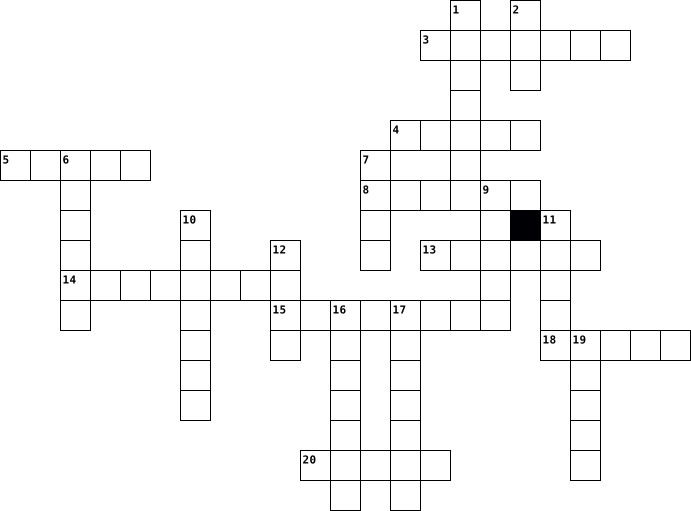
Across
- "Septimum" in English
- To make into one
- "Tris" in English
- "Senex" or "senis" English meaning
- "First" in Latin Ordinal numbers
- In good faith (2 words)
- 347 in Roman numerals
- Greek Cardinal number 9
- Greek word meaning "city, state"
Down
- "Third" in Latin Ordinal numbers
- "Oligoi" English meaning
- "-cratia" and "-archia" English meaning (2 words)
- "Codex" or "codicis" English meaning
- Elsewhere, at another time
- by fact (2 words)
- "Judex" or "judicis" English meaning
- Greek Cardinal number 10
- Greek Cardinal number 1,000
- in Roman Numerals
- "Nonum" (Latin Ordinal) in English
20 Clues: To make into one • "Tris" in English • by fact (2 words) • in Roman Numerals • "Septimum" in English • 347 in Roman numerals • In good faith (2 words) • Greek Cardinal number 9 • "Oligoi" English meaning • Greek Cardinal number 10 • Elsewhere, at another time • Greek Cardinal number 1,000 • "Third" in Latin Ordinal numbers • "First" in Latin Ordinal numbers • ...
Iliad crossword (by Kei'Mar Payne) 2025-02-27

Across
- King of Troy
- City of the Trojans
- The protagonistic force of the story
- Another name for Troy
- Killed by Hector; Cause of Achilles’ rage
- Queen of Troy
- Father of Menelaus and Agamemnon
- Goddess chosen by Paris
- Another name for the Greeks
- Trojan _____; Gift from the Greeks to the Trojans
- Hector's son
Down
- Greek Prophet
- Brother of Hector; Killed Achilles
- Mother of Achilles
- Strongest Trojan warrior
- The antagonistic force of the story
- Brother of Agamemnon; Helen's Husband
- Second greatest Greek hero
- Woman stolen by Paris
- King of Greek forces
- Strongest Greek soldier
21 Clues: King of Troy • Hector's son • Greek Prophet • Queen of Troy • Mother of Achilles • City of the Trojans • King of Greek forces • Another name for Troy • Woman stolen by Paris • Goddess chosen by Paris • Strongest Greek soldier • Strongest Trojan warrior • Second greatest Greek hero • Another name for the Greeks • Father of Menelaus and Agamemnon • Brother of Hector; Killed Achilles • ...
The Odyssey Chapters 17-24 Crossword 2017-01-13

Across
- Irus thinking he can easily beat up Odysseus in disguise shows he exhibits this Greek cultural concept.
- The soothsayer who Odysseus kills during his rampage.
- The "wise old woman" who serves as the nurse of Odysseus and Penelope.
- The bard who was forced to sing for the suitors and was spared by Odysseus.
- Athena making Odysseus look strong before his fight with Irus displays this Greek cultural concept.
- The father of Odyseeus
- The birthplace and home of Odysseus
- The "godlike survivor" describes this hero.
- Odysseus slaughtering all the suitors for courting his wife displays this Greek cultural concept.
Down
- The suitors treating Odysseus in disguise with respect and generosity even though they don't actually know him displays this Greek cultural concept.
- The "Grey-eyed One" describes this Greek goddess.
- Calm and circumspect describes this wife of a hero.
- The second suitor killed by Odysseus during his rampage against the suitors.
- The goatherd who assists the suitors in their battle against Odysseus and later gets punished by Odysseus.
- Odysseus hiding all of the weapons from the suitors before his assault on them shows he possesses this Greek cultural concept.
- "Coolheaded" describes this son of a hero.
- The maidservent who insults Odysseus in disguise and slept with Eurymachus.
- The "son of Eupeithes" describes this suitor
- Penelope crying when seeing Telemachus after returning from his voyage displays this Greek cultural concept.
- "The best of the Achaeans" describes this deceased Greek hero.
20 Clues: The father of Odyseeus • The birthplace and home of Odysseus • "Coolheaded" describes this son of a hero. • The "godlike survivor" describes this hero. • The "son of Eupeithes" describes this suitor • The "Grey-eyed One" describes this Greek goddess. • Calm and circumspect describes this wife of a hero. • The soothsayer who Odysseus kills during his rampage. • ...
Greek Myth 2022-11-02

Across
- Half man half horse
- A celebration in honor of Zeus
- A fiction book detailing greek myths
- Explains Greek gods' family tree
- God of Death and Underworld
- Sister and Wife of Zeus
- Where Zeus was born
- Greek Afterlife
- Place where gods like
- Personification of Earth
- a horse with wings
Down
- King of gods
- The Greek Place of Worship
- A fiction book detailing greek myths
- What there was before the universe
- Mother of Zeus
- Goddes of Wisdom
- Guarder of the underworld
- Leader of Titans
- Year Christianity becomes the official religion of Rome
- A half god
21 Clues: A half god • King of gods • Mother of Zeus • Greek Afterlife • Goddes of Wisdom • Leader of Titans • a horse with wings • Half man half horse • Where Zeus was born • Place where gods like • Sister and Wife of Zeus • Personification of Earth • Guarder of the underworld • The Greek Place of Worship • God of Death and Underworld • A celebration in honor of Zeus • Explains Greek gods' family tree • ...
Greek Myth 2022-11-02

Across
- Half man half horse
- A celebration in honor of Zeus
- A fiction book detailing greek myths
- Explains Greek gods' family tree
- God of Death and Underworld
- Sister and Wife of Zeus
- Where Zeus was born
- Greek Afterlife
- Place where gods like
- Personification of Earth
- a horse with wings
Down
- King of gods
- The Greek Place of Worship
- A fiction book detailing greek myths
- What there was before the universe
- Mother of Zeus
- Goddes of Wisdom
- Guarder of the underworld
- Leader of Titans
- Year Christianity becomes the official religion of Rome
- A half god
21 Clues: A half god • King of gods • Mother of Zeus • Greek Afterlife • Goddes of Wisdom • Leader of Titans • a horse with wings • Half man half horse • Where Zeus was born • Place where gods like • Sister and Wife of Zeus • Personification of Earth • Guarder of the underworld • The Greek Place of Worship • God of Death and Underworld • A celebration in honor of Zeus • Explains Greek gods' family tree • ...
Yr 7 History 2023-11-30

Across
- Comes from 'Qin'
- A hail of...
- An old historian
- Good for carrying bush tucker
- Not primary
- Tasty protein that flies
- Spartan government
- A greek traitor
- Woven sticks
- On the South Coast
- Relative dating
- A cosmopolitan Greek city
- Wandering people
Down
- Persia's best
- Greek for 'hot springs'
- Dating by matching
- Furry warmth
- Close to Rock Flat Creek
- First
- Earthy red
- Never worn by a Spartan woman
- Of a bone
- Adolescent Spartan exercise clothing
- Fragile warriors
- Not Hogan
- Greek revolt
- Soldiers pants
27 Clues: First • Of a bone • Not Hogan • Earthy red • Not primary • A hail of... • Furry warmth • Woven sticks • Greek revolt • Persia's best • Soldiers pants • A greek traitor • Relative dating • Comes from 'Qin' • An old historian • Fragile warriors • Wandering people • Dating by matching • Spartan government • On the South Coast • Greek for 'hot springs' • Close to Rock Flat Creek • Tasty protein that flies • ...
Norway Trivia 2017-07-28

Across
- long, deep, narrow bodies of water that reach far inland.
- The name of the current Norwegian king.
- A type of painting common in Norway.
- Norway is the third largest exporter of this.
- Norway is part of this with Sweden and Denmark.
- In 1905 Norway became independent from this country.
- Norwegian waffle cookie.
- Norway borders this many countries.
- Capital city of Norway.
- Goddess of love in Norse mythology
Down
- Norway is the birthplace of this Olympic sport
- This city hosted the 1994 Winter Olympics
- Raiders that hail from Norway.
- Spirits that protect the family farm.
- The traditional clothing of Norway.
- The trickster god in Norse mythology
- Indigenous people of Norway.
- Disney movie about two sisters that takes place in Norway.
- This many Nobel Prize winners came from Norway
- Norwegian currency.
20 Clues: Norwegian currency. • Capital city of Norway. • Norwegian waffle cookie. • Indigenous people of Norway. • Raiders that hail from Norway. • Goddess of love in Norse mythology • The traditional clothing of Norway. • Norway borders this many countries. • The trickster god in Norse mythology • A type of painting common in Norway. • Spirits that protect the family farm. • ...
religions crossword 2022-10-13

Across
- is a collection of traditional stories that express the beliefs or values of a group of people
- a religious teaching by Buddha and his followers, which declares that by destroying greed and hatred, which are the causes of all suffering, man can attain perfect enlightenment
- originated in India and can be viewed as both monotheistic and polytheistic; religious beliefs and cultural practices are characterized by a belief in reincarnation and a supreme being of many forms and nature
- specific fundamental set of beliefs and practices generally agreed upon by a number of persons.
- is the belief in one God (Judaism, Christianity and Islam)
- is a folktale that tries to explain the way the world is or how things came to be; usually involving a god or goddess, hero, and/or human
- The way of life propagated by a Chinese philosopher named K'ung Fu-tzu or Confucius, the Westernized version, believed that a society could become perfect, if the people who lived in it exhibited "beautiful conduct." High value given to learning and to devotion to family (including ancestors)
Down
- the Christian religion, based on the life and teachings of Jesus and on the Christian holy book, the Bible.
- The religion of the Israelites of the Bible and of the Jews of today, based on the teachings of the Torah. Judaism involves the belief in one God, whose Chosen People are the Jews. Abraham is considered the founder of Judaism, although Moses, who delivered the laws of God to the Israelites, is also an important figure. It is the world’s oldest monotheistic religion.
- a religion based on the messages that Muhammad is believed to have received from God. In Arabic, the word Islam means “to submit to God
- is the belief in many gods (Mesopotamia, Egypt, Greek Mythology, Roman Mythology, and Ancient Americas
11 Clues: is the belief in one God (Judaism, Christianity and Islam) • is a collection of traditional stories that express the beliefs or values of a group of people • specific fundamental set of beliefs and practices generally agreed upon by a number of persons. • is the belief in many gods (Mesopotamia, Egypt, Greek Mythology, Roman Mythology, and Ancient Americas • ...
Room 1 Fun Puzzle :) 2021-03-18

Across
- N, Our hot tub is powered by _____ energy to conserve electricity.
- N, An instrument on a vehicle’s dashboard indicating it's speed.
- N, antonym for autobiography
- n, synonym for manager, director, mentor
- N, synonym for learning of the past
- Adj, We saw the _____ fireworks on the 4th of July.
- N, a system for transmitting messages from a distance along a wire
- N, a system or device used to communicate or transmit voices over wire or radio.
- N, the study of branches of mathematics concerned with the shape of individual objects.
- adj, antonym for quiet, soundless, inaudible, silent
- N, Since we were V.I.P members of the new release of J.K. Rowling’s new book, we were the first ones in line for an ____.
- adj,using both sight and sound
- N, antonym for disrespect, rude, not nice
- N, Singers, performers and speakers use a _____ to project their voice.
- V, To carry, move or convey from one place to another.
- N, using the greek root “scope” meaning an instrument for seeing
- N, Using the greek root “bio” meaning life
- n, antonym for backstage,fitting/changing room
- N, Dad brings his ____ to work to keep his coffee warm all day.
- V, synonym for transport
- N, synonym for looking glass
Down
- N, Using the greek root “tele” meaning far off
- N, antonym for phone
- adj,Chameleons use camouflage to become _______ to predators.
- V, To declare or tell in advance;foretell
- N, The ____ enjoyed mom’s famous yellow cake for dessert.
- N, Using the latin root “phon” meaning sound
- n,using latin root "dict” meaning say or pronounce solemnly
- N, antonym for type, messy handwriting
- n, using the latin root “vis,” meaning see; watch; look
- N, antonym for cool, cold, light
- Adj, synonym for comics, visual; symbolic
- Adj, synonym for Unforeseeable
- V, synonym for change; alter; modify
- N, It is very _____ that you brush your teeth 2 times a day to avoid cavities.
- N, using the latin root "spect” meaning view, watch or observe
- N, a person who reports
- N, synonym for Orchestra
- V, antonym for destroy, brake undo
- N, using the latin root “form” which means made or created.
40 Clues: N, antonym for phone • N, a person who reports • N, synonym for Orchestra • V, synonym for transport • N, antonym for autobiography • N, synonym for looking glass • Adj, synonym for Unforeseeable • adj,using both sight and sound • N, antonym for cool, cold, light • V, antonym for destroy, brake undo • N, synonym for learning of the past • V, synonym for change; alter; modify • ...
Books 11&12 Crossword 2016-12-16

Across
- "outward grace and wisdom" (11,377) is an example of this Greek cultural concept
- "a dread god who hears and sees all" (12,331) describes this god who has cattle
- "Zeus' glorious son" (11,596) identifies this character
- "my heart yearned to listen" (12,201)is an example of this Greek cultural concept
- "From the Underworld, put on her finest clothes and came to see us" is an example of this Greek cultural concept
- "around them are piled the bones of shriveled and moldering bodies" (12,47) describes this group of people
- "Son of Atreus, king of men, most glorious" describes this fallen hero
- "Eurylochus was giving bad advice" (12,350) is a poor example of this Greek cultural concept
- "still lay in Circe's hall, unmourned, unburied" (11,49) descirbes this fallen warrior who's ghost was seen by Odysseus
- "Bad luck and too much wine undid me" (11,56) is a example of this Greek cultural concept
- "the dread, beautiful goddess" (12,467) this describes the goddess who took care and loved Odysseus
- "son of Laertes, master of wiles" (11,89) describes this clever leader
Down
- "a hard man, Odysseus, stronger than other men, and you never wear out" is an example of this Greek cultural concept
- "vengeance will be yours" (11,117) employs this Greek cultural concept
- "the Guide" (12,401) identifies this Greek god
- "twelve dangly legs and six very long necks, and on each neck is perched a bloodcurdling head" (12,92) describes this evil monster
- "shedding warm tears" (12,12)identifies this Greek cultural concept
- "who said she was born of flawless Salmoneus" (11,238) is an example of this Greek Cultural concept
- "people shrouded in mist" (11,15) identifies these people
- "most renowned of men" (11,365) identifies this lord
- "swift-footed" (11,564) describes this fallen warrior
- "only one ship has ever passed through" (12,71) identifies this famous ship
- "until the sun went down we sat feasting" (12,30)identifies this Greek cultural concept
23 Clues: "the Guide" (12,401) identifies this Greek god • "most renowned of men" (11,365) identifies this lord • "swift-footed" (11,564) describes this fallen warrior • "Zeus' glorious son" (11,596) identifies this character • "people shrouded in mist" (11,15) identifies these people • "shedding warm tears" (12,12)identifies this Greek cultural concept • ...
Ancient History & Geography Crossword 2018-08-29

Across
- Each of the 4 earliest ancient major civilizations (Mesopotamia, Egypt, India, China) settled near _____
- Ancient Mesopotamian civilizations (Sumer, Babylon, Persia) all controlled major cities near the Tigris and ____ rivers
- The Emperor who unified ancient China and founded the Qin dynasty
- Greek word for excessive pride
- Type of religion that worships more than one god (ex Greek Pantheon)
- Sea located between Egypt and Greece
- King of Babylon who is remembered for creating the first written code of laws
- Greek philosopher famous for writing about ethics and happiness
- Person credited for the epic poems The Iliad and The Odyssey
- Ancient Egyptian symbol of a cross with a loop on top that represents life
- Sea located to the east of Greece
- Greek philosopher credited with being the wisest because he admitted to knowing nothing
- the river valley where Egyptian civilization began
Down
- Greek city-state famous for having 2 kings and a professional warrior class
- Greek word for city
- Greek word for the lasting happiness that is produced by leading a life of virtue
- one of the earliest writing systems invented by the Sumerians
- the founders of the first monotheistic religion
- Type of religion that worships one god (ex Judaism)
- the river valley where Harappan Indian civilization began
- Macedonian general who conquered most of the ancient world: Greece, Egypt, Mesopotamia, and parts of India
- Greek city-state famous for invention of democracy
- Greek philosopher famous for writing about an ideal government ruled by Philosopher Kings
- the river valley where Chinese civilization began
- Egyptian pharaoh who the Greeks called Ozymandias famous for his military conquests and his many monuments to himself
25 Clues: Greek word for city • Greek word for excessive pride • Sea located to the east of Greece • Sea located between Egypt and Greece • the founders of the first monotheistic religion • the river valley where Chinese civilization began • Greek city-state famous for invention of democracy • the river valley where Egyptian civilization began • ...
Ageless Aegean 2023-05-11

Across
- Home to Agamemnon
- From Greek love of wisdom
- Medusa was one
- High point of Greek culture
- Land outside each city-state
- God of the sea
- Greek alliance
- Place of a Greek's identity
- Frescoes, bull jumping, and the Minotaur
- The last river to cross
- Greek soldier
- Greek for citizens/people
- That part of Greece that is almost an island
- Athen's greatest military strength
- Famous sea victory for Greeks
- King of the gods
- unelected bossy leaders
- Home of democracy
- Wife of Zeus
- Conquered Persia and beyond
- What the Minoans called themselves
- Member of the wealthy ruling elite
- Half man and half goat
- Let's conquer Greece...oops
- Half bull
Down
- Spartan slaves
- The Greek meet up place
- ...age that Homer wrote about
- The Bronze Age...
- The gathering of the lawmakers
- A place of safety
- Goddess of the earth
- Two places one name
- rule by the few
- Famous Greek land victory and race
- King of Sparta
- Greek hoplite weapon
- Hercules was one
- He sought to avenge his Father
- ...and the Argonauts
- Symbol of Athens
- Greek formation
- Three tiered ship
- We blew up
- Golden burial...
- Aided by Athens in Ionian revolt
- A bank and temple
- In the hands of a goddess
- King to the North
- Home of Lysander
- Way to vote someone off the island
- God of the underworld
- material of choice in the classical period
- Period after bronze age collapse: dark ...
- Precursors to the Olympians
- Half can't vote
56 Clues: Half bull • We blew up • Wife of Zeus • Greek soldier • Spartan slaves • Medusa was one • King of Sparta • God of the sea • Greek alliance • rule by the few • Greek formation • Half can't vote • Hercules was one • Symbol of Athens • Golden burial... • King of the gods • Home of Lysander • Home to Agamemnon • The Bronze Age... • A place of safety • Three tiered ship • A bank and temple • King to the North • ...
Golden Calf 2024-01-17

Across
- the side representing judgement/gevurah
- a teacher who likes kabbalah and kung fu
- the god of this is usually the ruler of the gods in mythology
- Jewish mysticism
- the place the Jews wanted to go
- represents the sun in mythology
- the word for the 10 divine attributes
- he made the golden calf
Down
- the place the Hebrews/Abraham came from
- a baby cow
- he saw the divine chariot
- one of the oldest religious representations
- the place where the Jews would need a guide
13 Clues: a baby cow • Jewish mysticism • he made the golden calf • he saw the divine chariot • the place the Jews wanted to go • represents the sun in mythology • the word for the 10 divine attributes • the place the Hebrews/Abraham came from • the side representing judgement/gevurah • a teacher who likes kabbalah and kung fu • one of the oldest religious representations • ...
Etymology crossword 5 2017-09-02

Across
- suffix meaning "study of"
- Latin meaning "to know"
- high blood pressure
- Greek word meaning house
- above space
- responsible tourists that conserve the enviroment
- Greek meaning "to write"
Down
- overly active
- beautiful of artistic writing
- the study of nerves
- Greek Titan "he who looks from above"
- prefix meaning light
- damaging proprerty to promote the enviroment
- Greek meaning over/above
- light writing
- prefix meaning beautiful
- prefix meaning nerves
- prefix meaning earth
18 Clues: above space • overly active • light writing • the study of nerves • high blood pressure • prefix meaning light • prefix meaning earth • prefix meaning nerves • Latin meaning "to know" • Greek word meaning house • Greek meaning over/above • prefix meaning beautiful • Greek meaning "to write" • suffix meaning "study of" • beautiful of artistic writing • Greek Titan "he who looks from above" • ...
Alexander VOCAB 2025-03-14

Across
- network- trading with others
- a brilliant king who had a powerful empire
- VII- the last patole metric ruler of egypt
- kingdom- a period of time dominated by a fusion of greek languages and customs with the culture of the east
- a greek city state that rebelld when philip died
- a group of soldiers that stoof d together with long spears
- of alexandria- a museum that contains 1,800 artifacts
- ruler of egypt and the ptolemaic kingdom
- caesar- a rome general
- a greek geographer
- what he named many cities that he took over
- kingdom- a kingdom bigger than macedonia
- where a greek war took place
- the second general to seize part of the empire
- a leader of egypt
Down
- a greek culture with many greek ideas
- where another greek war took place
- at alexandria- a center for translation and copying world's documents
- the capital of the seleucid kingdom
- Household management
- anthony- assisted julius cesar
- a knot
- gold coins
- King of macedonia
- one of the best known hellenistic historians
- macedonia greek royal house
- a person inheriting a legacy
- a city state led by alexander the great that took over all the land at that time
- the leading poet and dramatist of the age
- the place where they turned around to leave because they were to tired
- capital and largest city of italy
- a city state taken over by the macienians
- a person that descends from offspring
- Kingdom- Greek and egyptian culture
- no individual rights under the government
35 Clues: a knot • gold coins • King of macedonia • a leader of egypt • a greek geographer • Household management • caesar- a rome general • macedonia greek royal house • network- trading with others • a person inheriting a legacy • where a greek war took place • anthony- assisted julius cesar • capital and largest city of italy • where another greek war took place • ...
Greece 2022-01-12

Across
- a set of promises about patient care that new doctors make when they start practicing medicine
- a political system in which the supreme power lies in a body of citizens who can elect people to represent them
- a military formation of foot soldiers armed with spears and shields
- military housing
- a form of democracy in which citizens elect officials to govern on their behalf
- farmer who works land owned by another and pays rent either in cash or crops
- in ancient Greece,an athletic competition held every four years in honor of Zeus
- a government in which power is in the hands of a hereditary ruling class or nobility
- an advanced state of development in human society, marked by progress in the arts and sciences, the extensive use of record-keeping, including writing, and the appearance of complex political and social institutions
- 18 foot-long Macedonian pike(spear)
- an educated guess
- way of teaching developed by Socrates that used a question-and-answer format to force students to use their reason to see things for themselves
- a form of government in which citizens rule directly and not through representatives
Down
- wars fought between Athens and Sparta and their respective allies came in two stages the first from c 460-446 BCE and the second and more signifigant war from 431-404 BCE. With battles occurring at home and abroad the long and complex conflict was damaging to both sides but Sparta with financial help from Persia finally won the conflict by destroying the Athenian fleet at Aegospotami in 405 BCE.
- a high-ranked government official in Sparta who was elected by the council of elders
- foreigner in a Greek city-state often a merchant or artisan
- an alliance headed by Athens that says that all Greek city-states will come together and help fight the Persians
- when a runner ran 26.1 miles to deliver the messace of victory of Greece over Persia in a great battle that saved Athens
- society organized for the purpose of waging war
- of or influenced by the Greek Empire. A type of culture typically referred to after the conquests of Alexander the Great.
- formed from the surrounding city-states near Sparta. It was formed to defeat democracy in Athens
- 480 B.C.E. the battle that effectively ended the Persian war the Greek fleet although vastly outnumbered defeated the Persian fleet this helped end the Persian war freeing Greece
- Spartan slave
- cruel and oppressive government or rule
- a city-state in ancient Greece
- method of maintaining,managing, and gaining control of government (who gets what, when, and how)
- a government ruled by a few powerful people
- a person with certain rights and responsibilities in his or her country or community
- a fortified hilltop in an ancient Greek city
- a body of stories about gods and heroes that try to explain how the world works
30 Clues: Spartan slave • military housing • an educated guess • a city-state in ancient Greece • 18 foot-long Macedonian pike(spear) • cruel and oppressive government or rule • a government ruled by a few powerful people • a fortified hilltop in an ancient Greek city • society organized for the purpose of waging war • foreigner in a Greek city-state often a merchant or artisan • ...
Social Hierarchies of Ancient Greece 2021-10-19

Across
- The way that society is organized
- The most powerful god in Greek mythology
Down
- Had the least amount of power in ancient greece
- the word used to describe a very old country or civilization
4 Clues: The way that society is organized • The most powerful god in Greek mythology • Had the least amount of power in ancient greece • the word used to describe a very old country or civilization
Vocab #4 2022-12-15

Across
- Upper ruling class
- Absolute ruler
- Upper part of Greece
- Greek culture
- Military alliance led by Athens
- Land with water on three sides
- Government where the people rule
- Government by one person
Down
- Military alliance led by Sparta
- People trade for goods
- A thinker
- People buy goods
- Greek city state with democracy
- Country that conquered Greece
- War where part of a country tries to break off
- Temple in Athens
- Government where a few people rule
- Period of prosperity
- Greek word for city
- Greek military tactic where soldiers bunch up
20 Clues: A thinker • Greek culture • Absolute ruler • People buy goods • Temple in Athens • Upper ruling class • Greek word for city • Upper part of Greece • Period of prosperity • People trade for goods • Government by one person • Country that conquered Greece • Land with water on three sides • Military alliance led by Sparta • Greek city state with democracy • Military alliance led by Athens • ...
Reference 44 No.3 2020-04-16

Across
- from Greek for a lip
- native orchid society of south australia
- from Greek meaning wool
- covid19
- hours members contribute to NOSSA
- Diuris species for revegitation of mine site
- small white Sun Orchid
- Mr Gordon Ninnes
- latin for fringe
- species of the sun orchids
- pollinator of Leporella fimbriata
- sun ordchids
- Greek word for flower
- Adelaide Hills Banded greenhood Bunochilius_
- WOW
- species propagated in NOSSA Lab
Down
- global social biodiversity platform
- website for NOSSA
- thick lipped spider
- Mr Les Nesbit
- from Greek words for wool and lip
- spider orchids
- Hills common midge orchids
23 Clues: WOW • covid19 • sun ordchids • Mr Les Nesbit • spider orchids • Mr Gordon Ninnes • latin for fringe • website for NOSSA • thick lipped spider • from Greek for a lip • Greek word for flower • small white Sun Orchid • from Greek meaning wool • species of the sun orchids • Hills common midge orchids • species propagated in NOSSA Lab • hours members contribute to NOSSA • ...
Key Concepts - Physics Prefixes 2021-10-05

Across
- wander, go astray
- layer
- true meaning
- Flow
- 𝛃 (greek letter)
- Staying, Standing
- within, inside
- millionth
- heat
- billion
- thousand
- Loosen, Free
- inside
- color
- vision
- between
- light
- outside
- The smallest discrete quantity of a physical property.
- Beyond
Down
- hundredth
- ƛ (greek letter)
- Power
- To lead
- Image
- pressure
- 𝝲 (greek letter)
- Whirl
- across, over or beyond
- billionth
- circle
- trillionth
- Below
- To carry
- universe
- thousandth
- half, partly
- trillion
- million
- 𝞪 (greek letter)
40 Clues: Flow • heat • Power • layer • Image • Whirl • Below • color • light • circle • inside • vision • Beyond • To lead • billion • between • million • outside • pressure • thousand • To carry • universe • trillion • hundredth • billionth • millionth • trillionth • thousandth • true meaning • Loosen, Free • half, partly • within, inside • ƛ (greek letter) • 𝛃 (greek letter) • 𝝲 (greek letter) • 𝞪 (greek letter) • wander, go astray • Staying, Standing • ...
Ch. 8-9 Crossword (Abigail Million P4/5) 2024-04-03
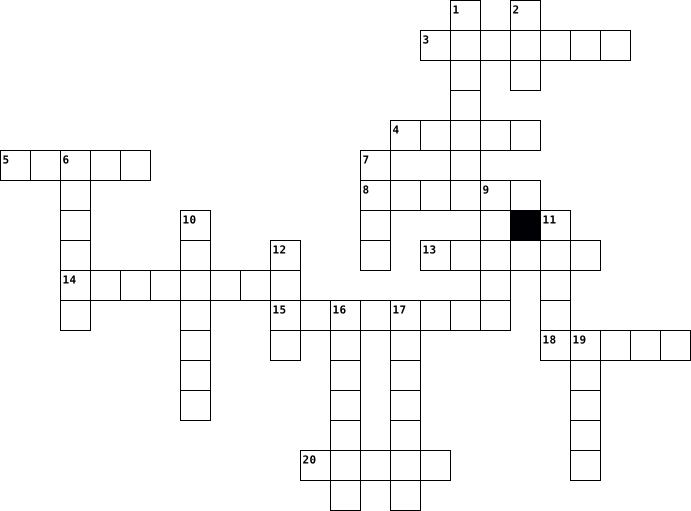
Across
- "Septimum" in English
- To make into one
- "Tris" in English
- "Senex" or "senis" English meaning
- "First" in Latin Ordinal numbers
- In good faith (2 words)
- 347 in Roman numerals
- Greek Cardinal number 9
- Greek word meaning "city, state"
Down
- "Third" in Latin Ordinal numbers
- "Oligoi" English meaning
- "-cratia" and "-archia" English meaning (2 words)
- "Codex" or "codicis" English meaning
- Elsewhere, at another time
- by fact (2 words)
- "Judex" or "judicis" English meaning
- Greek Cardinal number 10
- Greek Cardinal number 1,000
- in Roman Numerals
- "Nonum" (Latin Ordinal) in English
20 Clues: To make into one • "Tris" in English • by fact (2 words) • in Roman Numerals • "Septimum" in English • 347 in Roman numerals • In good faith (2 words) • Greek Cardinal number 9 • "Oligoi" English meaning • Greek Cardinal number 10 • Elsewhere, at another time • Greek Cardinal number 1,000 • "Third" in Latin Ordinal numbers • "First" in Latin Ordinal numbers • ...
Roman & Greek Exam Terms 2023-09-26

Across
- Greek organized citizens
- Arrogance
- "Father of the Family"
- Rich land owners in Rome
- Belief in one god/goddess
- Wealthy Roman businessmen
- Big Greek Games, very popular
Down
- Greek/Roman war ship
- Belief in multiple gods/goddesses
- "First one" Title used by Augustus
- Someone in the government who looked out for common people
- Military Organization
- Big open area in Rome for meetings
- Greek tactical army formation
- Highest elected official in Rome
- Subject matter of Roman theater
- Harsh Persian ruler
- The common people in Rome
- Language the Romans spoke
- Governing assembly of people
20 Clues: Arrogance • Harsh Persian ruler • Greek/Roman war ship • Military Organization • "Father of the Family" • Greek organized citizens • Rich land owners in Rome • The common people in Rome • Belief in one god/goddess • Language the Romans spoke • Wealthy Roman businessmen • Governing assembly of people • Greek tactical army formation • Big Greek Games, very popular • ...
Greek 2016-11-16

Across
- _______ταυτης της ημερας (From this day (onward))
- ο στρατηγος του πολεμου αρχει και ου νικην αλλα συμφορας _______(The general begins the war and we do not have victory but misfortunes)΅
- τω _______παρα των φεων δωρα εστιν (There are gifts from the gods for the just man)
- ου πολεμον λεγομεν αλλα _______ (We speak not of war, but of flight)
- τους μεν ________ τους δ αγουσιν (They kill some and carry off others)
- τον δικααστην _________ βουλομεθα δωρα γαρ λαυβανει (We want to drive out the judges, for he is taking bribes)
- ________ μενειν (They are willing to stay)
- και συν ____ (Even with teachers)
- νομοις και ______ (Of laws and votes)
- _____παιδειαν (With respect to training)
Down
- ο στρατιωτης τον ιππον ______ (The soldier is leading his horse)
- προς το __________τας ιππους (With regard to driving the mares)
- λυετε την __________(You (pl) dissolve the democracy)
- το αρχειω πονον φερει (To rule brings toil)
- δια τας ________ (Through the event)
- δια τας εταιρας (By the courtesan)
- _______ εστε (You are hallowed)
17 Clues: _______ εστε (You are hallowed) • δια τας εταιρας (By the courtesan) • και συν ____ (Even with teachers) • δια τας ________ (Through the event) • νομοις και ______ (Of laws and votes) • _____παιδειαν (With respect to training) • ________ μενειν (They are willing to stay) • το αρχειω πονον φερει (To rule brings toil) • _______ταυτης της ημερας (From this day (onward)) • ...
Mythology 2021-11-30

Across
- is the bride of Orpheus; killed on her wedding
- is the kind of the underworld.
- is the young wife of Hades and queen of the
- are delirious, drunken female followers of
- is Dionysus's mortal mother.
Down
- is the god of wine and ecstasy.
- is a renowned musician, the son of Calliope and
- is the king of Thebes.
- is Zeus's wife; goddess of women and marriage.
- is king of the gods.
10 Clues: is king of the gods. • is the king of Thebes. • is Dionysus's mortal mother. • is the kind of the underworld. • is the god of wine and ecstasy. • are delirious, drunken female followers of • is the young wife of Hades and queen of the • is the bride of Orpheus; killed on her wedding • is Zeus's wife; goddess of women and marriage. • ...
Mythology 2015-09-22

Across
- what did the letter tell the king to do to the messenger
- exiled citizen of Corinth
- the chimera's middle
- king of Tiryns
- the chimera's tail
Down
- fire breathing monster related to the hydra
- the chimera's front
- came from the blood of Medusa
- king of Lycia
- what did the king give Bellerphon
10 Clues: king of Lycia • king of Tiryns • the chimera's tail • the chimera's front • the chimera's middle • exiled citizen of Corinth • came from the blood of Medusa • what did the king give Bellerphon • fire breathing monster related to the hydra • what did the letter tell the king to do to the messenger
MYTHOLOGY 2024-09-09

Across
- - Queen of the Greek gods
- - Gorgon with snakes for hair
- - Norse god associated with wisdom
- - Greek god of the sea
- - Norse god of thunder
- - King of the Greek gods
Down
- - Greek god of music and prophecy
- - Greek goddess of wisdom
- - Greek god of the underworld
- - Creature with the body of a man and the head of a bull
10 Clues: - Greek god of the sea • - Norse god of thunder • - King of the Greek gods • - Queen of the Greek gods • - Greek goddess of wisdom • - Greek god of the underworld • - Gorgon with snakes for hair • - Greek god of music and prophecy • - Norse god associated with wisdom • - Creature with the body of a man and the head of a bull
Norse Mythology 2018-12-19

Across
- Norsemen's home
- The all father of Asgard
- Loki's child who was slithery and evil. He was sent to the bottom of the sea.
- Loki stole this from Freya's while she slept
- Thor's wife
- The trickster god always getting into trouble.
- God's home.
- The way to get from Asgard to Midgard
- Thiassi was this type of bird. He lifted Loki up to the sky.
Down
- Thor's Mjolnir was this
- The past, present and future sat at the base of Yggdrasil
- Yggdrasil, the world tree was this type of tree.
- Idun picked these each day for the gods.
- The women dressed in armour who brought Norsemen to Valhalla
- Guardian of the Rainbow Bridge
- The Giants home
- Sif's prized possession
17 Clues: Thor's wife • God's home. • Norsemen's home • The Giants home • Thor's Mjolnir was this • Sif's prized possession • The all father of Asgard • Guardian of the Rainbow Bridge • The way to get from Asgard to Midgard • Idun picked these each day for the gods. • Loki stole this from Freya's while she slept • The trickster god always getting into trouble. • ...
Mythology Crossword 2016-10-04

Across
- goddess of the hunt
- god of blacksmiths
- goddess of wisdom
- goddess of marriage
- fell in love with Narcissus
- gave humans fire
- home to the gods
- king of gods
Down
- has snakes on her head, like hair
- god of war
- one eyed monsters
- goddess of love
- god of the sun
- god of underworld
- three headed dog who guards the entrance to the underworld
- god of the sea
- constant companion of venus
17 Clues: god of war • king of gods • god of the sun • god of the sea • goddess of love • gave humans fire • home to the gods • one eyed monsters • god of underworld • goddess of wisdom • god of blacksmiths • goddess of the hunt • goddess of marriage • fell in love with Narcissus • constant companion of venus • has snakes on her head, like hair • three headed dog who guards the entrance to the underworld
Egyptian Mythology 2025-10-01

Across
- local god of Thebes who became head of the Egyptian pantheon after the major center of government moved south / massive temple complex of Karnak was the principal religious center of this god / always portrayed as a man
- goddess of war, destruction, and pestilence / portrayed with the head of a lion on a woman's body / also associated with cats, who were valued for their role as protectors and for their association with this goddess
- took several forms - all related to a cow / identified with beauty and music with many temples built in her honor
- another word for flooding - "the annual ________ of the Nile"
- resurrected her slain brother and husband Osiris / was believed to help the dead enter the afterlife as she had helped Osiris, and she was considered the divine mother of the pharaoh, who was likened to her son Horus
- honored as the god of the necropolis (cemetery) and embalming / in charge of preparing bodies for burial / had the head of a doglike animal called a jackal
- southern portion of Egypt / consists of the entire Nile River valley from Cairo south to Lake Nasser
- northernmost region of Egypt, which consists of the fertile Nile Delta between Upper Egypt and the Mediterranean Sea / began to advance as a civilization after 3600 BC
Down
- all the gods of a people or religion collectively
- patron deity of Upper Egypt / jealous brother of Osiris who cut up his body and scattered the parts throughout Egypt / a god of deserts, storms, disorder, violence, and foreigners
- a deity who at one time may have been a local ruler in the Nile River's delta / originally associated with the city of Busiris in the Delta and is an example of a regional god who gained countrywide acceptance / lord of the underworld / represented as a mummified king
- scribe of the gods who was believed to have invented writing / possessed wonderful magic and was also associated with the moon and time
- ascribing human form or attributes to a being or thing not human, especially to a deity
- patron deity of Lower Egypt / falcon-headed son of Isis and Osiris / served many functions, most notably as the god of kingship, healing, protection, the sun, and the sky / had many battles with Set, not only to avenge his father but to choose the rightful ruler of Egypt
- wife of Amun / portrayed as a woman wearing a vulture headdress, but can also have a lion's head or be represented as a vulture
- one of the most popular amulets in Ancient Egypt that represents the healed eye of Horus that was restored by Thoth / depicts a combination of a human and a falcon eye / its ancient Egyptian name means "the one that is sound" / sometimes represented as a baboon or as a man with a baboon's head
- a god or goddess
17 Clues: a god or goddess • all the gods of a people or religion collectively • another word for flooding - "the annual ________ of the Nile" • ascribing human form or attributes to a being or thing not human, especially to a deity • southern portion of Egypt / consists of the entire Nile River valley from Cairo south to Lake Nasser • ...
im awesome!! 2012-04-27

Across
- filled; satisfied
- A light and humorous drama with a happy ending.
- A company of actors who comment (by speaking or singing in unison) on the action in a classical Greek play.
- The first actor who spoke alone.
- A great Greek philosopher and teacher who wrote "The Poetics", a critical essay on Greek tragedy.
- An ancient Greek writer of comedies. He wrote "The Curmudgeon", the only surviving example of new comedy.
- The god of wine and fertility.
- Drama in which the protagonist is overcome by some superior force or circumstance; excites or pity.
- the daughter of King Oedipus who disobeyed her father and was condemned to .
- trite and moralizing
- bold, arrogant strut
Down
- flexible and graceful
- The tragic king of Thebes who unknowingly killed his father Laius and married his mother Jocasta; the subject of the drama `Oedipus Rex' by Sophocles.
- A stage building that served as dressing rooms during Greek dramatic productions.
- The large circular acting area located at the foot of the hillside in a Greek theater.
- An ankle-length or knee-length garment worn by Greek actors.
- Poetics A critical essay written by Aristotle on tragedy.
- A wealthy patron who had to pay for the costs of producing a play.
- including all of the relevant details.
- Ancient Greek writer of comedies.
- mentally impaired, especially as the result of old age
- A play intended for performance by actors on a stage. The word means "to do".
- Actors
- driving back; repelling
- bold disrespect.
- Play A special type of play that made fun of Greek Legends. We get our word satire from this.
26 Clues: Actors • bold disrespect. • filled; satisfied • trite and moralizing • bold, arrogant strut • flexible and graceful • driving back; repelling • The god of wine and fertility. • The first actor who spoke alone. • Ancient Greek writer of comedies. • including all of the relevant details. • A light and humorous drama with a happy ending. • ...
Classical Greece Crossword 2026-06-25

Across
- Study of numbers, quantities, and shapes.
- Fast Greek warship with three rows of oars.
- Greek scientist and mathematician who studied physics and engineering.
- Battle where Spartans famously resisted a larger Persian army.
- Greek physician known as the "Father of Medicine."
- Greek goddess of wisdom and the patron goddess of Athens.
- Branch of mathematics dealing with lines, angles, and shapes.
- Study of ideas about knowledge, truth, and existence.
- Naval battle in which the Greek fleet defeated Persia.
- Government ruled by wealthy or noble families.
- Macedonian ruler who conquered Greece, Persia, and beyond.
- Greek city-state known for democracy, learning, and culture.
- Government in which citizens participate in decision-making and voting.
- Referring to the spread of Greek culture after Alexander's conquests.
- Athenian leader who strengthened democracy and supported the arts.
Down
- The status of having rights and responsibilities in a government.
- Ancient civilization made up of independent city-states in southeastern Europe.
- Government controlled by a small group of people.
- Battle in which the Greeks defeated the Persians in 490 BCE.
- Alliance of Greek city-states led by Athens after the Persian Wars.
- Government ruled by a king or queen.
- Athenian reformer who helped lay the foundation for democracy.
- Government ruled by a leader who gains power outside normal laws.
- Greek city-state known for its military strength and discipline.
- Series of conflicts between Greece and the Persian Empire.
- Famous temple in Athens dedicated to Athena.
- Fortified hilltop in Athens containing important temples.
- Athenian lawmaker who created Athens' first written laws.
- Powerful ancient empire located in present-day Iran.
- War fought between Athens and Sparta.
30 Clues: Government ruled by a king or queen. • War fought between Athens and Sparta. • Study of numbers, quantities, and shapes. • Fast Greek warship with three rows of oars. • Famous temple in Athens dedicated to Athena. • Government ruled by wealthy or noble families. • Government controlled by a small group of people. • Greek physician known as the "Father of Medicine." • ...
Ancient Greece Crossword 2026-03-16

Across
- Comes from Greek words that mean “to measure land.”
- In Greek this word means “far off voice.”
- This word comes from the first two letters in Greek.
- A science developed by the Ancient Greeks about living things.
- In Greek this means “I have found it!”
- The first person to suggest the Earth moves around the sun.
Down
- A Greek word that means “five contests.”
- From a Greek word that means “a viewing place.”
- The first of this sports competition was held in 776 B.C.E.
- The study of the earth, that began in Greece.
- Known as the father of history.
- Known as the father of medicine.
- A form of government that began in Greece.
- The Greek word for “star.”
- Comes from a Greek word that means “master builder.”
15 Clues: The Greek word for “star.” • Known as the father of history. • Known as the father of medicine. • In Greek this means “I have found it!” • A Greek word that means “five contests.” • In Greek this word means “far off voice.” • A form of government that began in Greece. • The study of the earth, that began in Greece. • From a Greek word that means “a viewing place.” • ...
Radio Gunk Lingo 2020-04-30

Across
- Greek mythology reference
Down
- movie reference
- tits for tat
3 Clues: tits for tat • movie reference • Greek mythology reference
Greece Crossword 2025-09-19

Across
- - Sophocles was probably the most popular playwright during Greek times.
- - Greek god of archery, music, light, and prophecy.
- - The last of the great Greek tragedy writers
- Student of Socrates. He wrote many dialogues using Socrates as a major character. He also founded the Academy in Athens.
- the Great - Often called the greatest military commander in history,
- Student of Plato. Aristotle was a philosopher and scientist. He was interested in the physical world. He was also teacher to Alexander the Great
- - Leader of the Olympians and god of the sky and lightning.
- - Greek goddess of wisdom, defense, and war
- - God of commerce and thieves.
- A Greek playwright, he is considered the father of the tragedy.
- - Goddess of agriculture and the seasons.
- - Lord of wine and celebrations.
- - A historian who chronicled the Persian Wars, Herodotus is often called the Father of History.
Down
- - Goddess of love and beauty.
- People in ancient Greece
- First of the great Greek Philosophers
- - A Greek playwright who wrote comedies, he is considered the father of the comedy.
- - God of fire.
- - A great Greek historian who was known for the exact science of his research, he wrote about the war between Athens and Sparta.
- - God of war.
- - Queen of the gods and married to Zeus.
- - God of the ocean, earthquakes, and horses. His symbol is the trident. He is Zeus' and Hades brother.
- - Goddess of the hunt, archery, and animals.
- - God of the Underworld.
24 Clues: - God of war. • - God of fire. • People in ancient Greece • - God of the Underworld. • - Goddess of love and beauty. • - God of commerce and thieves. • - Lord of wine and celebrations. • First of the great Greek Philosophers • - Queen of the gods and married to Zeus. • - Goddess of agriculture and the seasons. • - Greek goddess of wisdom, defense, and war • ...
Greek 2016-11-16

Across
- νομοις και ______ (Of laws and votes)
- δια τας ________ (Through the event)
- τον δικααστην _________ βουλομεθα δωρα γαρ λαυβανει (We want to drive out the judges, for he is taking bribes)
- _______ταυτης της ημερας (From this day (onward))
- δια τας εταιρας (By the courtesan)
- τους μεν ________ τους δ αγουσιν (They kill some and carry off others)
- προς το __________τας ιππους (With regard to driving the mares)
- ου πολεμον λεγομεν αλλα _______ (We speak not of war, but of flight)
- ο στρατιωτης τον ιππον ______ (The soldier is leading his horse)
Down
- λυετε την __________(You (pl) dissolve the democracy)
- _____παιδειαν (With respect to training)
- ________ μενειν (They are willing to stay)
- το αρχειω πονον φερει (To rule brings toil)
- και συν ____ (Even with teachers)
- ο στρατηγος του πολεμου αρχει και ου νικην αλλα συμφορας _______(The general begins the war and we do not have victory but misfortunes)΅
- τω _______παρα των φεων δωρα εστιν (There are gifts from the gods for the just man)
- _______ εστε (You are hallowed)
17 Clues: _______ εστε (You are hallowed) • και συν ____ (Even with teachers) • δια τας εταιρας (By the courtesan) • δια τας ________ (Through the event) • νομοις και ______ (Of laws and votes) • _____παιδειαν (With respect to training) • ________ μενειν (They are willing to stay) • το αρχειω πονον φερει (To rule brings toil) • _______ταυτης της ημερας (From this day (onward)) • ...
Ancient Greece 2026-03-09

Across
- Mountain home of the Greek gods
- philosopher that wrote books about government
- devoted himself to the study of science
- ancient historian that recorded the Peloponnesian War
- 1st of the great philosophers, taught others to question everything
- fanciful stories told about Greek gods
- ultimate example of Greek architecture
- powerful city-state, known for warrior culture
- earliest Greek civilization known for trade, lived on the island of Crete
- league of Athenian allies
- the father of Geometry
- hill that overlooks Athens, center of city life
- powerful city-state, home to the 1st democracy
- independent societies through out Greece
- broken pottery used to vote
Down
- the father of medicine
- tried to explain life through human wisdom
- The Great, Emperor of the Greek Empire, taught by Aristotle
- the central marketplace in Athens
- someone who rules with absolute authority
- great orator and leader of Athenian democracy
- wrote epics
- grand stories based upon history
- advanced the use of mechanical machines
- short story with speaking animals and a moral
- developed important theorem about triangles
- wrote fables
- southern portion of the Greek peninsula
- governmental rule by rich nobles
- early Greek civilization that focused on military strength, live on the Peloponnese
- where Athenians met to make laws
31 Clues: wrote epics • wrote fables • the father of medicine • the father of Geometry • league of Athenian allies • broken pottery used to vote • Mountain home of the Greek gods • grand stories based upon history • governmental rule by rich nobles • where Athenians met to make laws • the central marketplace in Athens • fanciful stories told about Greek gods • ...
SCS Canada Crossword Puzzle 2021-11-24

Across
- Quebec gave the rest of Canada (and the world) this dish of french fries and cheese curds that is topped with a brown gravy
- The last province to join Canada was _______
- The capital city of the Canadian territory of Nunavut is ______
- The last team from Canada to win the Stanley Cup was the _____
- The official summer sport of Canada is ___
- Canadian Olympian Clara Hughes won medals for speed skating in the winter Olympics and ___ in the Summer Olympics
Down
- The ____ Classic is a series of outdoor NHL games that are played exclusively between Canadian teams
- The capital city of Canada is _____
- This CFL (Canadian Football League) team gets is name from Greek Mythology
- The early settlers of New Brunswick & Nova Scotia who spoke French were called ____
- The official national tree of Canada is the ___ Tree
11 Clues: The capital city of Canada is _____ • The official summer sport of Canada is ___ • The last province to join Canada was _______ • The official national tree of Canada is the ___ Tree • The last team from Canada to win the Stanley Cup was the _____ • The capital city of the Canadian territory of Nunavut is ______ • ...
Greek 2012-12-10

Across
- Father of History who wrote books and traveled
- cultural capital of the world located in Egypt
- temple dedicated to goddess Athena
- Hellenistic scientist who applied principles of physics to make practical inventions
- humorous plays mocking people or customs
- famous Athenian playwright
- Greek physician who studied the causes of illnesses and looked for cures
- Greek poet who wrote epics
- Athenian leader during Persian war
Down
- plays that told stories of human suffering usually ending in disaster
- Athenian statesman after Persian war
- ruler who conquered most of the known world
- Socrates' student who set up a school and emphasized the importance of reason
- Plato's most famous student who developed his own ideas about government and also set up a school
- mathmetician who derived a formula to calculate the relationship between the sides of a right triangle
- people who questioned accepted ideas
- Athenian stonemason and philosopher who asked people to challenge their beliefs
17 Clues: famous Athenian playwright • Greek poet who wrote epics • temple dedicated to goddess Athena • Athenian leader during Persian war • Athenian statesman after Persian war • people who questioned accepted ideas • humorous plays mocking people or customs • ruler who conquered most of the known world • Father of History who wrote books and traveled • ...
Belle 2023-07-25

Across
- Greek goddess
- Greek warrior
- The great
- Ross
- flower
- cold
- shy
- chicken
- favorite character
- OG golden
- Greek goddess
- writer
- chocolate
- complete disorder
- Egypt
- luxury brand movie
Down
- burning wood
- flower
- English cream
- Soldier
- witch
- Greek god
- dumb dumb
- Dolly Parton
- sparkle
- spice
- Norse goddess
- Newsies
- nut
- tree
- snore
31 Clues: shy • nut • Ross • cold • tree • witch • spice • Egypt • snore • flower • flower • writer • Soldier • chicken • sparkle • Newsies • The great • Greek god • dumb dumb • OG golden • chocolate • burning wood • Dolly Parton • Greek goddess • Greek warrior • English cream • Greek goddess • Norse goddess • complete disorder • favorite character • luxury brand movie
B-1 2021-07-29

Across
- A many-headed monster, killed by Hercules
- A giant with a single eye in the forehead
- A three-headed monster; one of lion, one of a snake, one of a goat
- A serpent living at the Delphic oracle, killed by Apollo
- The serpent biting its own tail
- A white, winged horse
- Creatures with the top half of a man, bottom half of a goat
- Creature with head and wings of an eagle and body, hind legs and tail of a lion
- a nymph changed into a monster by Circe
Down
- A Child eating monster; had an affair with Zeus
- Strongest monster with a tremendous voice
- a winged female monster with a woman's head and a lion's body; kills anyone unable to answer its riddle
- Three-headed dog that guards the entrance to Hades
- A creature with the head and tail of a bull and the body of a man; dwelt in the center of the labyrinth
- A bird that rises from its ashes
- snake-haired sisters who turn the beholder to stone
- Creatures with the top half of a woman, wings, and talons of a bird
- a hundred-eyed monster of Greek mythology, killed by Hermes
18 Clues: A white, winged horse • The serpent biting its own tail • A bird that rises from its ashes • a nymph changed into a monster by Circe • Strongest monster with a tremendous voice • A many-headed monster, killed by Hercules • A giant with a single eye in the forehead • A Child eating monster; had an affair with Zeus • Three-headed dog that guards the entrance to Hades • ...
God's and Goddesses of Ancient Greece 2023-04-25

Across
- Greek god of thunder, lightning, rain, and winds; king of gods
- Greek goddess of wisdom and strategic warfare
- Greek god of marriage
- Greek goddess of beauty, passion, and love
- Greek goddess of magic and necromancy
- Greek god of wealth, trade, thieves, travelers; Messenger of the gods
- Greek god of sea and waters
Down
- Greek goddess of agriculture
- Greek goddess of hunting, wild animals, and the wilderness
- Greek god of the Underworld
- Greek god of medicine
- Greek god of wine, viticulture ritual madness and religious ecstasy
12 Clues: Greek god of marriage • Greek god of medicine • Greek god of the Underworld • Greek god of sea and waters • Greek goddess of agriculture • Greek goddess of magic and necromancy • Greek goddess of beauty, passion, and love • Greek goddess of wisdom and strategic warfare • Greek goddess of hunting, wild animals, and the wilderness • ...
Sparta & Greek Mythology Crossword Puzzle 2013-04-18

Across
- Common occupation for Spartan males
- Symbol of the supreme lord of the gods
- Nickname for Persian leader Xerxes
- Symbol of the depths of the Underworld
Down
- In the beginning, there was _______.
- Roman name for the god of the sea
- Beast faced by Theseus in the Crete maze
- King of the 300 Spartans who fought against the Persians
- King of the island of Crete
- Came from the "light" which "ended" chaos
10 Clues: King of the island of Crete • Roman name for the god of the sea • Nickname for Persian leader Xerxes • Common occupation for Spartan males • In the beginning, there was _______. • Symbol of the supreme lord of the gods • Symbol of the depths of the Underworld • Beast faced by Theseus in the Crete maze • Came from the "light" which "ended" chaos • ...
luca's Greek mythology Zeus crossword 2025-06-10

Across
- the god that Zeus tortured
- Zeus's son
- what is Zeus's symbol
- what is Zeus's Greek name
Down
- Zeus's father
- the god of all gods
- Zeus's first wife
- how many wives did Zeus have
- Zeus's mother
- how many kids that were gods did Zeus have
10 Clues: Zeus's son • Zeus's father • Zeus's mother • Zeus's first wife • the god of all gods • what is Zeus's symbol • what is Zeus's Greek name • the god that Zeus tortured • how many wives did Zeus have • how many kids that were gods did Zeus have
6D: W3 Greek Mythology Vocab 2024-09-30

Across
- Frowning
- A word thrown into a sentence or conversation; to interrupt
- Described
- Effect
- Gather
Down
- To throw oneself under someone else's rule
- Was amazed by
- To throw out
- To throw something out because it's defective and can't be used again
- A shot; the "throwing" of medicine into the body by a needle
10 Clues: Effect • Gather • Frowning • Described • To throw out • Was amazed by • To throw oneself under someone else's rule • A word thrown into a sentence or conversation; to interrupt • A shot; the "throwing" of medicine into the body by a needle • To throw something out because it's defective and can't be used again
6D: W1 GREEK MYTHOLOGY VOCAB 2024-09-18

Across
- by accept or act in accordance with.
- a handwritten or typed piece of writing, such as a book.
- to make by hand or by a machine; to change raw material into a new product.
- a person who has the upper hand; a person who is in charge of someone or something.
Down
- without limit.
- a treatment for hands and nails.
- to hurt, annoy, or offend someone.
- burn or scorch the surface of something with a sudden, intense heat.
- openly resist or refuse to obey.
- a handbook; a book of directions.
10 Clues: without limit. • a treatment for hands and nails. • openly resist or refuse to obey. • a handbook; a book of directions. • to hurt, annoy, or offend someone. • by accept or act in accordance with. • a handwritten or typed piece of writing, such as a book. • burn or scorch the surface of something with a sudden, intense heat. • ...
Greek Theater 2022-01-31

Across
- Greek god who was honored in festivals and mas major reason for competitions in festivals
- Known as the greek stage
- Was used to lift the gods
- The place characters would get ready for the next act
- Greek playwright who was responsible for writing the tragedy plays such as Oesipus Rex
- THese were used to rotate and change scenes during performances
- A spot typically used by actors who were playing gods
- Greek playwright who was responsible for writing tragedies such as The Suppliants
- Heard to be the first actor and was named the first winner of the contest at Dionysian festival
- The spot where the chorus would stand
Down
- Greek playwright who wrote comedies such as The Birds
- Greek playwright who was responsible for writing Medea.
- The area where actors were to perform
- An actor
- Theatre Machines- Kept inside the scene and was used during performances
- Ex Machina- An alternate way to resolve a play but was considered very poor way to do it
- The alternative to dead bodies or murders and suicides
- This is where the audience would sit
- Upper and Lower level of the Koilon
- Paths actors could use to enter the play if they were coming from outside
20 Clues: An actor • Known as the greek stage • Was used to lift the gods • Upper and Lower level of the Koilon • This is where the audience would sit • The area where actors were to perform • The spot where the chorus would stand • Greek playwright who wrote comedies such as The Birds • The place characters would get ready for the next act • ...
Ancient Greece Exam Review 2023-12-13

Across
- Short stories that teach a lesson
- The main gathering place and religious center in ancient Greece
- Long poem that tells of a hero's deeds
- Rule by a king or monarch
- A group of people who settled on the main Greek peninsula around 2000 B.C.; leading city called Mycenae which could withstand any attack.
- Government ruled by small group of (elite) people
- The 12 Greek gods that lived on the top of Mt. Olympus
- large empire, conquered Persia, Greece, and other lands.
- Blend of Greek culture with the lands Alexander conquered-- Persia, Syria, Egypt, India
- a person thought to be a source of wisdom or prophecy
Down
- Greek city-state, won the Peloponnesian War. Militaristic.
- Earliest Greek civilization that had developed on the island of Crete by 2000 B.C.
- Ruled by someone who illegally took control; sometimes asked to by the people
- A piece of land that is surrounded by water on three sides.
- A Greek island in the Mediterranean Sea, southeast of Greece
- A citizen-soldier of the Ancient Greek City-states.
- Rule by the people
- A term referring to any city-state in ancient Greece.
- the marketplace in ancient Greece
- Ruled Athens during the Golden Age
20 Clues: Rule by the people • Rule by a king or monarch • Short stories that teach a lesson • the marketplace in ancient Greece • Ruled Athens during the Golden Age • Long poem that tells of a hero's deeds • Government ruled by small group of (elite) people • A citizen-soldier of the Ancient Greek City-states. • A term referring to any city-state in ancient Greece. • ...
Ancient Greece 2025-11-06

Across
- Island where the treasury of the Delian League was kept.
- A settlement established by a distant mother city.
- Government ruled by the people.
- Belief in many gods.
- Government ruled by a small group of powerful people.
- Greek city-state known for its military discipline.
- A set of letters or symbols representing sounds.
- Government ruled by nobles or upper class.
- A ruler who seized power by force.
- Government ruled by a single king or queen.
- Fortified hilltop in a Greek city, often with temples.
- Ancient people whose alphabet influenced the Greek one.
- Large peninsula in southern Greece, home to Sparta.
Down
- Alliance of Greek city-states led by Athens.
- Athenian leader during the city’s Golden Age.
- Site of a famous Athenian victory over Persia in 490 BCE.
- Mountain pass where 300 Spartans made their stand.
- Athletic games held every four years in ancient Greece.
- Marketplace and public meeting area in a Greek city-state.
- Traditional story explaining natural or cultural phenomena.
- Naval battle where Greeks defeated the Persians.
- Practice of banishing citizens from Athens for 10 years.
- Greek city-state known for democracy and culture.
- Spartan system of military and physical training.
- Mountain believed to be the home of the gods.
- King of the Greek gods.
26 Clues: Belief in many gods. • King of the Greek gods. • Government ruled by the people. • A ruler who seized power by force. • Government ruled by nobles or upper class. • Government ruled by a single king or queen. • Alliance of Greek city-states led by Athens. • Athenian leader during the city’s Golden Age. • Mountain believed to be the home of the gods. • ...
Mythology 2023-07-21

Across
- Ancient stories and beliefs about gods, heroes, and creatures.
- Traditional stories based on historical events and heroes.
- Sacred stories that explain natural phenomena and beliefs.
- Frightening and mythical creatures, often with extraordinary powers.
Down
- Powerful and ancient deities preceding the Olympian gods.
- Powerful beings believed to have control over the world.
- Female gods with special powers and roles in mythology.
- Beautiful female spirits connected to nature in mythology.
- Brave and admired characters known for their great deeds.
9 Clues: Female gods with special powers and roles in mythology. • Powerful beings believed to have control over the world. • Powerful and ancient deities preceding the Olympian gods. • Brave and admired characters known for their great deeds. • Traditional stories based on historical events and heroes. • Beautiful female spirits connected to nature in mythology. • ...
Ancient Greece 2022-01-06

Across
- tutored Alexander the Great
- how the Greek city-states were arranged because of geography
- Ruler of Athens during is Golden Age
- war between Athens and Sparta
- Prince Paris kidnapping Queen Helen started this war
- Historian who wrote about Greece and the Persian wars
- Period after the Death of Alexander the Great
- Greek military formation
- city-state where the fist democracy was created
- Persian King who lost at Salamis
Down
- Goddess of Beauty
- Built a large Greek empire
- lover and student of wisdom
- the poet who wrote the Iliad and the Odyssey
- the philosopher who taught through questioning
- the Parthenon was dedicated to this Goddess
- Father of the Greek Gods
- Greek City-State
- King of Sparta
- Minoans lived on this island
- a form of government where the citizens have the most power
21 Clues: King of Sparta • Greek City-State • Goddess of Beauty • Father of the Greek Gods • Greek military formation • Built a large Greek empire • tutored Alexander the Great • lover and student of wisdom • Minoans lived on this island • war between Athens and Sparta • Persian King who lost at Salamis • Ruler of Athens during is Golden Age • the Parthenon was dedicated to this Goddess • ...
B-1 2021-07-29

Across
- Creatures with the top half of a woman, wings, and talons of a bird
- A bird that rises from its ashes
- Creatures with the top half of a man, bottom half of a goat
- A creature with the head and tail of a bull and the body of a man; dwelt in the center of the labyrinth
- a winged female monster with a woman's head and a lion's body; kills anyone unable to answer its riddle
- a nymph changed into a monster by Circe
- snake-haired sisters who turn the beholder to stone
- A three-headed monster; one of lion, one of a snake, one of a goat
- Strongest monster with a tremendous voice
Down
- A Child eating monster; had an affair with Zeus
- A giant with a single eye in the forehead
- The serpent biting its own tail
- A white, winged horse
- A serpent living at the Delphic oracle, killed by Apollo
- a hundred-eyed monster of Greek mythology, killed by Hermes
- Three-headed dog that guards the entrance to Hades
- Creature with head and wings of an eagle and body, hind legs and tail of a lion
- A many-headed monster, killed by Hercules
18 Clues: A white, winged horse • The serpent biting its own tail • A bird that rises from its ashes • a nymph changed into a monster by Circe • A giant with a single eye in the forehead • A many-headed monster, killed by Hercules • Strongest monster with a tremendous voice • A Child eating monster; had an affair with Zeus • Three-headed dog that guards the entrance to Hades • ...
Yussha's Graduation Party 2024-05-30

Across
- This singer went through a rebrand resulting in a stage name 14 letters shorter than before; also Yussha's first concert
- The direction Yussha is moving, as well as the name of the company she works for
- It's not a minor accomplishment, it's a major one.
- You're all gonna watch her disappear into the sun, especially because this is the alias she goes by
- Now a Boba Loca, previously where Yussha was employed
- Disney character Yussha would be
- Thankfully we can change Snapchat users now because this one had to go
- Yussha's favorite Webkinz original, also a feature of a cat
Down
- Not very tall, this perfume is sweet(en)er than the original
- Everything Yussha learned about Greek Mythology was from this game, originally on CoolMathGames.Com
- Plague Yussha's Instagram reels
- 8th grade Halloween costume
- Name of restaurant operated by Yussha at her Dora Kitchen Set
- Common speech impediment in children, which Yussha was also afflicted by
- This infant inherited Yussha's green eyes and love of eidi
- Color of Yussha's preschool graduation gown
- Yussha might feel some karma once this celebrity (re)discovers her fan account
- Name of Yussha's Webkinz polar bear
18 Clues: 8th grade Halloween costume • Plague Yussha's Instagram reels • Disney character Yussha would be • Name of Yussha's Webkinz polar bear • Color of Yussha's preschool graduation gown • It's not a minor accomplishment, it's a major one. • Now a Boba Loca, previously where Yussha was employed • This infant inherited Yussha's green eyes and love of eidi • ...
Καιρός και εποχές 2017-05-22

Across
- Greek for winter
- Greek for heat
- Greek for snow
- Greek for storm
- Greek for spring
- Greek for cloud
Down
- Greek for rain
- Greek for summer
- Greek for sunshine
- Greek for autumn
- Greek for cold
11 Clues: Greek for rain • Greek for heat • Greek for snow • Greek for cold • Greek for storm • Greek for cloud • Greek for summer • Greek for winter • Greek for autumn • Greek for spring • Greek for sunshine
Ancient Greece & Rome Vocabulary 2024-01-10

Across
- a self-governing state consisting of a city and surrounding territory
- the ancient citadel at Athens, containing the Parthenon and other notable buildings.
- the myths dealing with the gods, demigods, and legendary heroes of a particular people
- a group of people gathered together to make laws or decisions for the country or empire
- a serious disagreement or argument, typically a protracted one.
- fear and hatred of strangers or foreigners or of anything that is strange or foreign
Down
- the act or process of expanding, particularly territory
- a citadel or fortified part of an ancient Greek city, typically built on a hill.
- a major political unit having a territory of great extent or a number of territories or peoples under a single sovereign authority
- public open space used for assemblies and markets
- exempt from death; the immortal gods
11 Clues: exempt from death; the immortal gods • public open space used for assemblies and markets • the act or process of expanding, particularly territory • a serious disagreement or argument, typically a protracted one. • a self-governing state consisting of a city and surrounding territory • ...
Greece vs Rome 2021-02-18

Across
- Greek Clothing Most of their clothing was made at home.
- Daily Life Of course, ancient Greeks did not have smart phones, computers, televisions, or electricity.
- Education The Greeks loved to learn!
- Roman Republic lasted for almost 500 years from 509 B.C.E. until 46 B.C.E.
- Punic War was the last and shortest of the three wars.
- Customs girls would marry as young as 12 or 13 years of age.
- History Humans have lived in the area known as Rome for at least the last 6,000 years.
- Roman Barbarians The word barbarian is somewhat misleading in historical terms.
- of Rome However, some historians believe that the Roman Empire did not fall in 476 AD.
Down
- Pets loved their pets
- Toys They played with rattles.
- to Empire In ancient Rome, their republic lasted for 500 years
- Food Finding a great meal in ancient Greece would have been very easy.
- Greek Games Apparently Greek parents viewed games as a good way for their children to develop certain skills
- Home The houses were generally small with walled gardens or courtyards in the center.
- Punic War took place between 218 B.C.E. through 201 B.C.E.
- Romans in Britain for more than 400 years, the Roman Empire was instrumental in ruling Britain.
- of Ancient Rome Ancient Rome played an essential part in the legacy of world history
- Punic War lasted 23 years, ending in 241 B.C.E The war was fought on land and at sea
19 Clues: Pets loved their pets • Toys They played with rattles. • Education The Greeks loved to learn! • Punic War was the last and shortest of the three wars. • Greek Clothing Most of their clothing was made at home. • Punic War took place between 218 B.C.E. through 201 B.C.E. • Customs girls would marry as young as 12 or 13 years of age. • ...
B-1 2021-07-29

Across
- A many-headed monster, killed by Hercules
- Creature with head and wings of an eagle and body, hind legs and tail of a lion
- a winged female monster with a woman's head and a lion's body; kills anyone unable to answer its riddle
- A white, winged horse
- A giant with a single eye in the forehead
- A creature with the head and tail of a bull and the body of a man; dwelt in the center of the labyrinth
- The serpent biting its own tail
- Three-headed dog that guards the entrance to Hades
- Creatures with the top half of a woman, wings, and talons of a bird
- A Child eating monster; had an affair with Zeus
Down
- snake-haired sisters who turn the beholder to stone
- Strongest monster with a tremendous voice
- a hundred-eyed monster of Greek mythology, killed by Hermes
- A bird that rises from its ashes
- Creatures with the top half of a man, bottom half of a goat
- A three-headed monster; one of lion, one of a snake, one of a goat
- A serpent living at the Delphic oracle, killed by Apollo
- a nymph changed into a monster by Circe
18 Clues: A white, winged horse • The serpent biting its own tail • A bird that rises from its ashes • a nymph changed into a monster by Circe • Strongest monster with a tremendous voice • A many-headed monster, killed by Hercules • A giant with a single eye in the forehead • A Child eating monster; had an affair with Zeus • Three-headed dog that guards the entrance to Hades • ...
B-1 2021-07-29

Across
- Creatures with the top half of a man, bottom half of a goat
- A creature with the head and tail of a bull and the body of a man; dwelt in the center of the labyrinth
- A many-headed monster, killed by Hercules
- Three-headed dog that guards the entrance to Hades
- A serpent living at the Delphic oracle, killed by Apollo
- snake-haired sisters who turn the beholder to stone
- a hundred-eyed monster of Greek mythology, killed by Hermes
- A giant with a single eye in the forehead
- a winged female monster with a woman's head and a lion's body; kills anyone unable to answer its riddle
- A Child eating monster; had an affair with Zeus
Down
- Creature with head and wings of an eagle and body, hind legs and tail of a lion
- A three-headed monster; one of lion, one of a snake, one of a goat
- Strongest monster with a tremendous voice
- The serpent biting its own tail
- Creatures with the top half of a woman, wings, and talons of a bird
- A bird that rises from its ashes
- A white, winged horse
- a nymph changed into a monster by Circe
18 Clues: A white, winged horse • The serpent biting its own tail • A bird that rises from its ashes • a nymph changed into a monster by Circe • Strongest monster with a tremendous voice • A many-headed monster, killed by Hercules • A giant with a single eye in the forehead • A Child eating monster; had an affair with Zeus • Three-headed dog that guards the entrance to Hades • ...
Keith Crossword 2020-10-12

Across
- Jaiden hated______ because he couldn’t get his feet of the ground when he was on the trampoline
- this has to with when you are splitting something equally in half
- each of two or more words having the same spelling or pronunciation but different meanings and origins.
- fictitious name, especially one used by an author
- having a meaning that is mysterious or obscure
- a colorless fluid containing white blood cells, which bathes the tissues.
- made by chemical synthesis, especially to imitate a natural product.
- It is a______ sunny day here in home town Alabama
- the______ was located on the east side of Egypt
Down
- the thing that makes the plants green
- speeds up a chemical reaction
- a study all about Greek and roman myths
- feeling, showing, or expressing sympathy.
- a word or phrase that means exactly or nearly the same as another word or phrase in the same language
- When you feel bad for someone
- expressing the writer's emotions in an imaginative and beautiful way.
- the branch of science concerned with the nature and properties of matter and energy.
- The______ was used to trace a circle
18 Clues: speeds up a chemical reaction • When you feel bad for someone • The______ was used to trace a circle • the thing that makes the plants green • a study all about Greek and roman myths • feeling, showing, or expressing sympathy. • having a meaning that is mysterious or obscure • the______ was located on the east side of Egypt • ...
Crossword about Greek Gods and Goddess 2022-08-05

Across
- who is the greek god of the sun
- who is the greek goddess of grain
- who is the greek goddess of love
- who is the greek goddess of wisdom
- who is the greek god of travellers
- who is the greek god of the sky
- who is the greek god of wine
Down
- who is the greek goddess of marriage
- who is the greek god of blacksmiths
- who is the greek god of the sea
- who is the greek god of war
- who is the greek goddess of the hunt
12 Clues: who is the greek god of war • who is the greek god of wine • who is the greek god of the sun • who is the greek god of the sea • who is the greek god of the sky • who is the greek goddess of love • who is the greek goddess of grain • who is the greek goddess of wisdom • who is the greek god of travellers • who is the greek god of blacksmiths • ...
Ancient Greece! 2022-03-09

Across
- citizens take part directly here
- temple dedicated to Apollo, oracle lived here
- early greek people, lost city of Atlantis?
- giant statue of Helios in Port of Rhodes
- greek city-state that valued the military
- ancient greek poet
- "rule by the people", citizens may vote
- written by Homer, story of the Trojan War
- citizens elect others
Down
- a system were power is held by a few
- important temple in Athens dedicated to Athena
- greek city-state; world's first democracy
- a greek city state
- the lower city or market place
- the upper city; temples and public buildings
- a formation of soldiers who moved together
- "rule by the best people"
- Homer'sstory of Odysseus
18 Clues: a greek city state • ancient greek poet • citizens elect others • Homer'sstory of Odysseus • "rule by the best people" • the lower city or market place • citizens take part directly here • a system were power is held by a few • "rule by the people", citizens may vote • giant statue of Helios in Port of Rhodes • greek city-state; world's first democracy • ...
CRNS Connections Valentine's Day 2022 2022-01-24

Across
- This country set a kissing world record on Valentine's Day in 2009.
- Rom-Com featuring Will Smith.
- What activity can increase a person's pulse to 110 bpm?
- Where are wooden love spoons carved and given as gifts on Valentine’s Day?
- Cupid has what name in Greek mythology?
- Cupid is described as having which ailment, according to Shakespeare's "A Midsummer Night's Dream"?
- In 2001, a movie was released titled 'Valentine'. What genre was the film?
- Valentine's Day is referred to as ______ Day in Finland.
Down
- What brain chemical is known as the “cuddle” or “love hormone?”
- What insanely popular website debuted on Valentine’s Day in 2005
- What do yellow roses symbolize?
- Every year, thousands of Valentine's cards are addressed to Juliet. Which city are they sent to?
- The O in XOXOXOX symbolizes _____.
- _____ is a Saskatchewan village located in the province's north.
- What Valentine’s Day candy was first created on equipment made for lozenges?
- What fruit was once known as a “love apple” for its alleged aphrodisiac properties?
- ______ was the first company to create heart-shaped boxes containing Valentine's Day chocolates.
- Saint Valentine is the patron saint of _____.
18 Clues: Rom-Com featuring Will Smith. • What do yellow roses symbolize? • The O in XOXOXOX symbolizes _____. • Cupid has what name in Greek mythology? • Saint Valentine is the patron saint of _____. • What activity can increase a person's pulse to 110 bpm? • Valentine's Day is referred to as ______ Day in Finland. • ...
Ancient Greece 2024-03-18

Across
- One of the most powerful Greek city states
- A fortified citadel in a larger city, located on top of a hill
- A Greek philosopher who is considered the founder of western philosophy
- a form of government where citizens have a say in deciding the laws
- A powerful Greek city-state know for its military
- the form of government Sparta used
- a ruler of a Greek city-state that was like a king
- a region that was home to Alexander the Great
- The Greek name for city-state
Down
- League a group of Greek city-states who joined together to fight against the Persian empire
- A Greek Philosopher who founded the Academy in Athens
- The Great A ruler of Ancient Greece who conquered most of Persia
- A Greek epic poet who wrote Iliad and the Odyssey
- - a large penisula located in Southern Greece
- an athletic event by the Ancient Greeks every four years
- A leader of Athens during its Golden Age
16 Clues: The Greek name for city-state • the form of government Sparta used • A leader of Athens during its Golden Age • One of the most powerful Greek city states • - a large penisula located in Southern Greece • a region that was home to Alexander the Great • A Greek epic poet who wrote Iliad and the Odyssey • A powerful Greek city-state know for its military • ...
Ancient Greece 2016-08-24

Across
- The blind story teller of Ancient Greece whose stories were written down in the Iliad and the Odyssey.
- The term used to describe the Greek "lovers of wisdom."
- This form of government war birthed in the city-state of Athens.
- The center of knowledge and learning in Ancient Greece.
- The 30 year war fought between Athens and Sparta.
- This Ancient Greek philosopher was accused of "corrupting the youth of Athens."
- The war fought between the various Greek city-states and the undefeated Persian Empire.
- The Greek fighting tactic of creating a wall of shields.
- The word the Greeks used for "city."
Down
- This alliance of Greek city-states formed after the Persian War.
- The war fought between the Mycenaean Greeks and the city of Troy.
- The Greeks learned how to write again from these people after the Greek Dark Ages.
- This Ancient Greek philosopher is famous for his ideas about government found in his book called "The Republic."
- The Greek city-state that spent all of its resources on war.
- This Ancient Greek philosopher developed the ideas behind the Scientific Method.
- The leader of Athens during its "Golden Age" of building and strengthening the city-state.
- The Greeks relied heavily on this skill to navigate the seas in order to expand their civilization.
17 Clues: The word the Greeks used for "city." • The 30 year war fought between Athens and Sparta. • The term used to describe the Greek "lovers of wisdom." • The center of knowledge and learning in Ancient Greece. • The Greek fighting tactic of creating a wall of shields. • The Greek city-state that spent all of its resources on war. • ...
Greek Terms 1,983 2021-02-01

Across
- greek statesman
- small group of people who have control
- anciant stories
- a anciant mytholohical creature from anciant greek fables
- a citadel or fortified part of an ancient Greek city, typically built on a hill.
- relating to ancient Greece
Down
- member of aristocracy
- anciant greek poet
- town in greece
- a member of a society
- cruel leader
- greek storyteller
- a greek author of the illaid
- Voting Booth
14 Clues: cruel leader • Voting Booth • town in greece • greek statesman • anciant stories • greek storyteller • anciant greek poet • member of aristocracy • a member of a society • relating to ancient Greece • a greek author of the illaid • small group of people who have control • a anciant mytholohical creature from anciant greek fables • ...
Greece vs. Rome 2022-04-12

Across
- The Greek houses were mostly made out of _______.
- In Rome if a girl got a ring from her boyfriend she would put it on her ____ finger on her left hand because they believed that that one finger connects to their heart.
- ______ were very popular for pets in Rome and Greece.
- In Rome the _____ danced for entertainment.
- Romans had belts on their dresses while the Greeks had a _____ on their wedding dress.
- Both Rome and Greece loved ______.
- Rome was a Republic while Greece was a _______.
- Roman and Greek children were all taught ______.
- The rich Romans lived in houses called ______.
- Alexander the Great was very popular in Greece but in Rome ____________ was very popular.
- The Greeks and Romans loved playing with ______.
Down
- Rome and Greece both believe in their own _______.
- Greek women wore Tunics but they also wore ______.
- The Greek woman slept in a ______ then men did.
- Some Greek ball games were Passe-boule, Aprrhaxis, and __________.
- In Greek both girls and boys did _______ but in Rome the slaves did.
- While the Romans loved meat, the Greek ______ ate meat.
- The Greeks were better at _____ then the Roman were.
- Greece and Rome could have been made ______ out of barely or grapes or even both.
- Children in Rome loved playing _______.
20 Clues: Both Rome and Greece loved ______. • Children in Rome loved playing _______. • In Rome the _____ danced for entertainment. • The rich Romans lived in houses called ______. • The Greek woman slept in a ______ then men did. • Rome was a Republic while Greece was a _______. • Roman and Greek children were all taught ______. • ...
Grade 6 World History: Ancient Greece 2025-11-06

Across
- Island where the treasury of the Delian League was kept.
- A settlement established by a distant mother city.
- Government ruled by the people.
- Belief in many gods.
- Government ruled by a small group of powerful people.
- Greek city-state known for its military discipline.
- A set of letters or symbols representing sounds.
- Government ruled by nobles or upper class.
- A ruler who seized power by force.
- Government ruled by a single king or queen.
- Fortified hilltop in a Greek city, often with temples.
- Ancient people whose alphabet influenced the Greek one.
- Large peninsula in southern Greece, home to Sparta.
Down
- Alliance of Greek city-states led by Athens.
- Athenian leader during the city’s Golden Age.
- Site of a famous Athenian victory over Persia in 490 BCE.
- Mountain pass where 300 Spartans made their stand.
- Athletic games held every four years in ancient Greece.
- Marketplace and public meeting area in a Greek city-state.
- Traditional story explaining natural or cultural phenomena.
- Naval battle where Greeks defeated the Persians.
- Practice of banishing citizens from Athens for 10 years.
- Greek city-state known for democracy and culture.
- Spartan system of military and physical training.
- Mountain believed to be the home of the gods.
- King of the Greek gods.
26 Clues: Belief in many gods. • King of the Greek gods. • Government ruled by the people. • A ruler who seized power by force. • Government ruled by nobles or upper class. • Government ruled by a single king or queen. • Alliance of Greek city-states led by Athens. • Athenian leader during the city’s Golden Age. • Mountain believed to be the home of the gods. • ...
Ancient Greece 2025-04-07

Across
- the chief god of the Greek pantheon of gods and goddesses
- the city where democracy comes from
- the study of ways of thinking and making rational arguments
- a word describing the mixing of Greek culture with others
- often a fortified portion of the city on a hill
- the son of Phillip, who conquered the Persians and expanded Greek culture
- the wife of Zeus and goddess of marriage, family, and women
- festivals and athletic games to celebrate the god Zeus
- the skill of using words effectively in speaking and writing
- a powerful empire that tried to conquer Greece
- a person with legal rights and responsibilities to their city-state
- the goddess of wisdom and war
Down
- the Greek god of the sea
- the peninsula that is connected to the mainland of Greece
- a body of land surrounded mostly by water
- a group of islands like Hawaii
- a group of soldiers who work in formation with each other
- the word for a Greek city-state
- a philosopher who taught Alexander the Great
- a form of government in which the people choose their leaders
- an ancient Greek soldier
- the "author" of the Iliad and Odyssey and fables
- a Greek city-state with a militaristic based society
23 Clues: the Greek god of the sea • an ancient Greek soldier • the goddess of wisdom and war • a group of islands like Hawaii • the word for a Greek city-state • the city where democracy comes from • a body of land surrounded mostly by water • a philosopher who taught Alexander the Great • a powerful empire that tried to conquer Greece • ...
Greek 2019-10-25

Across
- - An athletic event held by the Ancient Greeks every four years.
- - A power Greek city-state and rival to Athens, _____ culture was based around warfare and preparing for battle.
- - A type of government where the power is held by a few people.
- - The ____ were the first Greek gods. They were overthrown by their children, the Olympians.
- - An _______ is a fortified citadel within a larger city. It is usually located on top of a hill and at the center of the city. The most famous ______ is the Acropolis of Athens.
- - One of the most powerful Greek city-states, _____ was the birthplace of democracy.
- - A form of government where citizens have a say in how they are ruled including choosing their leaders and deciding on laws.
Down
- - The ______ were five leaders in Sparta who were chosen to oversee the Spartan kings. They were elected annually.
- - The ruler of a Greek city-state, a ______ was like a king. Today the word tyrant is used to describe a ruler who rules unfairly or unjustly.
- - A _____ consisted of a large city and the surrounding areas. Ancient Greece consisted of a number of independent _____ such as Athens, Thebes, and Sparta.
- Period - The historical period of Ancient Greece from 800 BC to 480 BC. During this time the city-states of Athens and Sparta began to form. Greek philosophy and theatre began to develop as well.
- - A leader of Athens during its golden age, _______ promoted the arts and literature in the city. He also had many of the major structures built including the Parthenon.
- Period - The historical period of Ancient Greece from 480 BC to 323 BC. During this time Athens was ruled by democracy. Also, Sparta and Athens fought the Peloponnesian War. It ended with the rise of Alexander the Great.
- - The _______ were the citizen-soldiers of the Greek city-states.
- - A Greek philosopher who introduced the idea of observing and recording nature. He also tutored Alexander the Great and began his own school in Athens.
- the Great - A ruler of Ancient Greece who conquered much of the civilized world from Greece to India including Egypt.
- - A Greek epic poet who wrote the Iliad and the Odyssey.
17 Clues: - A Greek epic poet who wrote the Iliad and the Odyssey. • - A type of government where the power is held by a few people. • - An athletic event held by the Ancient Greeks every four years. • - The _______ were the citizen-soldiers of the Greek city-states. • - One of the most powerful Greek city-states, _____ was the birthplace of democracy. • ...
Ancient Greece 2026-03-09

Across
- Greek word meaning city-state
- Natural barriers that made travel in Greece difficult
- Wrote fables with a moral at the end
- Government ruled by a king
- Mountain where the Greek gods were believed to live
- Epic poem about Odysseus’ journey home
- Period after Alexander the Great’s death
- Warrior city-state known for its army
- Famous Greek poet who wrote epic poems
Down
- Government ruled by the people
- Greek city-state famous for democracy
- Festival held every four years in honor of Zeus
- King of the Greek gods
- Goddess of beauty and love
- Stories about the gods
- Legendary king of Crete
- Epic poem about the Trojan War
- Landform surrounded by water on three sides
- Famous temple dedicated to Athena in Athens
- Island where Europe’s earliest civilization began
20 Clues: King of the Greek gods • Stories about the gods • Legendary king of Crete • Goddess of beauty and love • Government ruled by a king • Greek word meaning city-state • Government ruled by the people • Epic poem about the Trojan War • Wrote fables with a moral at the end • Greek city-state famous for democracy • Warrior city-state known for its army • ...