
greys anatomy Crossword Puzzles
Anatomy of Yoga 2024-09-25

Across
- The outer layer of a cell that regulates what enters and exits.
- The force that must be reconciled in the practice of yoga and life.
- A yogic term referring to the life force or energy that nourishes living beings.
- The processes of taking air into.
- The part of the cell that contains genetic material and controls cell activities.
- The balance necessary for successful functioning in living systems.
- The chemical processes that occur within a cell to maintain life, including energy production.
- The chest area that contains vital organs such as the heart and lungs, opening at the top to the environment.
- Refers to "bad space" or suffering in yogic language.
- The process of inhaling and exhaling air, essential for life and discussed in the context of yoga.
- A yogic concept meaning "good space" or comfort.
- A yogic concept representing stability or firmness.
Down
- The basic unit of life, comprising various components that perform essential functions.
- The jelly-like substance within a cell, where various organelles are suspended.
- The ability of the cell membrane to allow substances to pass through.
- A complementary yogic term referring to the elimination of waste and the action of expulsion.
- The lower cavity housing digestive organs, which also plays a role in the mechanics of breathing.
- Substances that provide nourishment essential for growth and maintenance.
- The processes of expelling it from the lungs.
- The systems through which nutrients and waste are transported in the body.
- A muscle that separates the thoracic cavity from the abdominal cavity, playing a crucial role in the mechanics of breathing.
21 Clues: The processes of taking air into. • The processes of expelling it from the lungs. • A yogic concept meaning "good space" or comfort. • A yogic concept representing stability or firmness. • Refers to "bad space" or suffering in yogic language. • The outer layer of a cell that regulates what enters and exits. • ...
Human Anatomy Crossword 2023-02-13

Across
- shoulder blade
- tail bone
- long bones give the body _____________ and shape
- finger/toe bones
- top chambers of the heart
- hand bones
- carry blood to the heart
- tissue made up of neurons
- carry blood away from the heart
- transport blood to cells
- element that is store in the bones
Down
- tissue that has 3 types: smooth, cardiac, skeletal
- movement of blood throughout the body
- tissue that lines kidneys, the respiratory system, and the digestive system
- tissue that includes tendons, ligaments, and blood
- bottom chambers of the heart
- one of the bones that protects the heart
- groups of cells working together to perform a specific function
- knee cap
- bones, muscle, and ligaments produce __________
- collar bone
21 Clues: knee cap • tail bone • hand bones • collar bone • shoulder blade • finger/toe bones • carry blood to the heart • transport blood to cells • top chambers of the heart • tissue made up of neurons • bottom chambers of the heart • carry blood away from the heart • element that is store in the bones • movement of blood throughout the body • one of the bones that protects the heart • ...
Fundamental Anatomy Vocabs 2023-02-01

Across
- Tissue-always lines a space and offers some protection; subsequently classified by shape: squamous, cuboidal or columnar.
- toward the lower portion of the body or below a structure/ organ
- away from the midline or central axis of the body
- Tissue-used for movement; can contract and therefore pull structures closer together, three types: skeletal muscle (also known as voluntary muscle), cardiac muscles, and smooth muscle
- toward the front or in front of a structure/ organ
- toward the back or behind a structure/ organ
- Tissue- connects other tissues or organs; includes cartilage, bone, tendons, ligaments, areolar connective tissue, adipose, dense regular connective tissue, dense irregular connective tissue and blood
- longitudinal plane that is parallel to the sagittal suture of the skull
- the point of attachment in a muscle where more movement occurs
Down
- Plane- longitudinal plane that crosses the sagittal plane at a right angle
- opposite side of the body
- toward the upper portion or located above a structure/ organ
- the surface
- midline of the body or the center axis
- Tissue-made up of neurons and glial cells; conduct impulses to guide and direct almost all activities in the body
- divides the body in half horizontally
- away from the surface
- both sides of the body
- same side of the body
- the site where bone and muscle are attached, but do not move during contraction
20 Clues: the surface • away from the surface • same side of the body • both sides of the body • opposite side of the body • divides the body in half horizontally • midline of the body or the center axis • toward the back or behind a structure/ organ • away from the midline or central axis of the body • toward the front or in front of a structure/ organ • ...
Sailboat Anatomy - Deutsch 2023-05-23

Across
- Function Canopy or sunshade over the cockpit Location Over the cockpit area
- Function Controls the direction of the boat Location Stern (back) of the boat
- Function Device used to secure ropes Location Deck or sides of the boat
- Function Navigation light at the top of the mast Location Top of the mast
- Function Rope used to raise or lower the sails Location Attached to the head of the sail
- Function Controls the angle of the jib sail Location Connected to the jib
- Function Mechanical device for winding ropes Location Deck or cockpit
- Function Rear part of the boat Location Aft section
- Function Front part of the boat Location Forward section
- Function Safety lines along the edges of the boat Location Around the perimeter of the boat
- Function Horizontal pole attached to the bottom of the mast Location Bottom edge of the mainsail
- Function Vertical posts that support the lifelines Location Along the perimeter of the boat
Down
- Function Steering lever used to control the rudder Location Stern (back) of the boat
- Function Propels the boat using wind power Location Attached to the mast and boom
- Function Main body of the boat Location Entire boat
- Function Enclosed area for shelter and storage Location Inside the boat
- Function Support the mast from the sides Location Connected to the mast and spread outwards
- Function Vertical pole that supports the sails Location Center of the boat
- Function Safety rail at the stern Location Rear part of the boat
- Function Surface area of the boat Location Upper part of the boat
- Function Triangular sail at the front of the boat Location Attached to the forestay
- Function Safety rail at the bow Location Front part of the boat
- Function Larger headsail used for downwind sailing Location Attached to the forestay
- Function Prevents the boat from tipping over Location Bottom of the hull
- Function Controls the angle of the mainsail Location Connected to the boom
25 Clues: Function Main body of the boat Location Entire boat • Function Rear part of the boat Location Aft section • Function Front part of the boat Location Forward section • Function Safety rail at the bow Location Front part of the boat • Function Safety rail at the stern Location Rear part of the boat • Function Surface area of the boat Location Upper part of the boat • ...
Anatomy Directional Terms 2023-03-17

Across
- The plane that divides the body or an organ into an anterior (front) portion and a posterior (rear) portion
- Describes the back or direction toward the back of the body
- The term that the frontal plane is also referred to as
- The term that describes when the body is divided in unequal left & right sides
- Describes the middle or direction toward the middle of the body
- Describes a position closer to the surface of the body
- Describes the front or direction toward the front of the body
- Describes a position in a limb that is farther from the point of attachment
- Describes a position in a limb that is nearer to the point of attachment
- Describes a position farther from the surface of the body
- The plane that divides the body or an organ vertically into right and left sides
- Describes a position above or higher than another part of the body
- The plane that divides the body or organ horizontally into upper and lower portions
Down
- Describes a position below or lower than another part of the body
- Another word for superior
- Describes the side or direction toward the side of the body
- Another word for inferior
- Another word for anterior
- Transverse planes produce images referred to as...?
- Another word for posterior
20 Clues: Another word for superior • Another word for inferior • Another word for anterior • Another word for posterior • Transverse planes produce images referred to as...? • The term that the frontal plane is also referred to as • Describes a position closer to the surface of the body • Describes a position farther from the surface of the body • ...
Anatomy Directional Terms 2023-03-17

Across
- Transverse planes produce images referred to as...?
- The cavity of the body that is enclosed by the rib cage
- Describes a position farther from the surface of the body
- Describes the side or direction toward the side of the body
- Describes a position above or higher than another part of the body
- The plane that divides the body or an organ vertically into right and left sides
- Describes a position below or lower than another part of the body
- The plane that divides the body or organ horizontally into upper and lower portions
- Another word for superior
- The term that describes when the body is divided in unequal left & right sides
- The plane that divides the body or an organ into an anterior (front) portion and a posterior (rear) portion
Down
- Describes a position closer to the surface of the body
- Another word for posterior
- Describes a position in a limb that is farther from the point of attachment
- The term that the frontal plane is also referred to as
- The cavity of the body that encloses the spinal cord
- The largest cavity in the body
- Another word for inferior
- Another word for anterior
- Describes the middle or direction toward the middle of the body
- Describes the back or direction toward the back of the body
- The cavity of the body that houses the brain
- Describes a position in a limb that is nearer to the point of attachment
- Describes the front or direction toward the front of the body
24 Clues: Another word for inferior • Another word for anterior • Another word for superior • Another word for posterior • The largest cavity in the body • The cavity of the body that houses the brain • Transverse planes produce images referred to as...? • The cavity of the body that encloses the spinal cord • Describes a position closer to the surface of the body • ...
Anatomy Directional Terms 2023-03-17

Across
- Describes a position below or lower than another part of the body
- Describes the middle or direction toward the middle of the body
- Another word for inferior
- Describes a position in a limb that is farther from the point of attachment
- The term that describes when the body is divided in unequal left & right sides
- Describes a position above or higher than another part of the body
- Describes the side or direction toward the side of the body
- Another word for anterior
- Another word for posterior
- The cavity of the body that encloses the spinal cord
- Describes the back or direction toward the back of the body
- Another word for serous membrane
- The plane that divides the body or an organ into an anterior (front) portion and a posterior (rear) portion
Down
- The cavity of the body that houses the brain
- Describes a position closer to the surface of the body
- Describes a position in a limb that is nearer to the point of attachment
- The term that the frontal plane is also referred to as
- Transverse planes produce images referred to as...?
- Describes a position farther from the surface of the body
- The plane that divides the body or an organ vertically into right and left sides
- The cavity of the body that is enclosed by the rib cage
- Another word for superior
- Thin membrane that covers the walls & organs in the thoracic & abdominopelvic cavities
- Describes the front or direction toward the front of the body
- The plane that divides the body or organ horizontally into upper and lower portions
- The largest cavity in the body
26 Clues: Another word for superior • Another word for inferior • Another word for anterior • Another word for posterior • The largest cavity in the body • Another word for serous membrane • The cavity of the body that houses the brain • Transverse planes produce images referred to as...? • The cavity of the body that encloses the spinal cord • ...
Anatomy: Circulatory System 2023-03-28

Across
- a fibrous sac that surrounds the heart
- receives deoxygenated blood from veins
- is located on the posterior side of the heart
- receives oxygenated blood from lungs
- narrow end of the heart
- transports oxygen-depleted blood from upper extremities
- middle and last name of KhanhVan
- covers the outer surface of the heart
- a valve composed of three cusps or flaps
- covers the inner surface of the heart
Down
- drains blood from anterior ventricles
- what cardiac myocytes are joined end to end by
- what the heart is located under
- receives blood from the right atrium
- bands on myofibrils
- a sequence of events that occur in the heart with each beat
- thick middle layer of the heart wall
- what make up the myocardium portion of the heart wall
- broad end of the heart
- large elastic artery
- a valve composed of two cusps or flaps
21 Clues: bands on myofibrils • large elastic artery • broad end of the heart • narrow end of the heart • what the heart is located under • middle and last name of KhanhVan • receives blood from the right atrium • receives oxygenated blood from lungs • thick middle layer of the heart wall • drains blood from anterior ventricles • covers the outer surface of the heart • ...
Anatomy and Physiology 2025-05-20

Across
- the middle part of the muscle
- part of the muscle that does not move
- also known as shoulder blade
- elimination of feces from the body
- inner and larger bone of the forearm
- also known as wrist
- when muscles rotate
- moves food along the digestive tract
- also known as chest
- also known as phalanges
- a connection between 2 or more bones
Down
- main organ of the respiratory system
- basic unit of living things
- oval, bony case that protects the brain
- cells dividing into 2 new identical cells
- structures composed of specialized tissues
- 12 pairs of bones forming the wall of the thorax
- when muscles straighten
- back of neck
- smaller bone in the forearm
- process of inhaling and exhaling
- also known as breastbone
22 Clues: back of neck • also known as wrist • when muscles rotate • also known as chest • when muscles straighten • also known as phalanges • also known as breastbone • basic unit of living things • smaller bone in the forearm • also known as shoulder blade • the middle part of the muscle • process of inhaling and exhaling • elimination of feces from the body • ...
anatomy 2º FISIO 2025-06-02

Across
- armpit
- shin
- brachialis
- calf
- eyelid
- latissimusdorsi
- buttock
- ulna
- psoas
- teresmajor
- rhomboids
- calcaneus
- ischium
Down
- serratus
- navel
- groin
- waist
- triceps
- heel
- thigh
- earlobe
- sacrum
- scapula
- fibula
- torso
- hamstrings
- cheek
- biceps
- patella
- jaw
30 Clues: jaw • shin • heel • calf • ulna • navel • groin • waist • thigh • torso • cheek • psoas • armpit • eyelid • sacrum • fibula • biceps • triceps • earlobe • scapula • buttock • patella • ischium • serratus • rhomboids • calcaneus • brachialis • hamstrings • teresmajor • latissimusdorsi
Simple Anatomy Crossword 2025-07-22

Across
- is the overall chemical functioning of the body. When put into water, some substances release ions, which are either positively or negatively charged particles.
- -system exchanges oxygen and carbon dioxide between the blood and air and regulates blood pH. It consists of the lungs and respiratory passages.
- cavity-is surrounded by the ribs and muscles in the chest
- system -removes foreign substances from the blood and lymph, combats disease, maintains tissue flue balance, and absorbs fats from the digestive tract. Consists of the lymphatic vessels, lymph nodes, and other lymphatic organs.
- tissue- the most abundant tissue in the body
- placed at the beginning of a word to modify or change its meaning.
- - – only in reproductive cells
- is the study of what matter is made of and how it changes
- -system produces body movements, maintains posture, and produces body heat. Consists of muscles attached to the skeleton by tendons.
- system- serves as a sense organ for the body, provides protection, regulates temperature, prevents water loss, and produces vitamin D precursors. Consists of skin, hair, nails and sweat glands.
- of atoms that bond together.
- -system performs the mechanical and chemical processes of digestion, absorption of nutrients, and elimination of wastes. It consists of the mouth, esophagus, stomach, intestines, and accessory organs.
- - system provides protection and support, allows body movements, produces blood cells and stores minerals and fat. Consists of bones, associated cartilages, ligaments, and joints.
Down
- study of the function of each of these structures. If organs or organ systems are not functioning properly, then the patient is described as having a disease.
- - cavity – thoracic cavity, abdominal cavities, pelvic cavity.
- vowel- form: placed between root and suffix to ease pronunciation.
- plane-divides the body into superior and inferior portions.transverse plane
- plane: divides the body into anterior and posterior portions
- living unit of the body
- simplest unit of all matter
- body heat. Consists of muscles attached to the skeleton by tendons.
21 Clues: living unit of the body • of atoms that bond together. • simplest unit of all matter • - – only in reproductive cells • tissue- the most abundant tissue in the body • cavity-is surrounded by the ribs and muscles in the chest • is the study of what matter is made of and how it changes • plane: divides the body into anterior and posterior portions • ...
Anatomy Crossword Puzzle 2023-01-04

Across
- head bone that is lateral to the eyes
- the back provides support for the body
- your heel bone
- a joint that allows rotation only EX: allows the read to rotate
- a part of the arm that connects to the pinky
- the front of your forehead
- anatomical name for fingers
- Bone resorption outpaces bone deposit causing brittle bones.
- has 3 parts in one bone
- Signals parathyroid to release PTH
- your cheekbone
- a joint that has a round head of 1 bone rests in the cup of the other EX: how the Femur fits into the Hip
- Protects lungs
- the non weight bearing bone in the leg
- This is maintained by calcitonin and parathyroid hormone which control storage, absorption, and excretion of calcium
- your thumb
- your jaw
Down
- the smallest bone in your hand
- An abnormal curvature in the spine
- the most weight bearing bone
- An abnormal growth on the bottom of your heel
- function that helps the production of red and white blood cells
- function that holds vitamins and other nutrients in the liver
- looks like a upside down boat in your foot
- trigger thyroid to release calcitonin
- a joint with angular movements in a singular plane EX: Knee or elbow
- Inflammatory diseases of joints from chronic degenerative from wear and tear, in older individuals
- function that provides stability and safety for the body
- the hip region
- the biggest bone in the body
- a part of the arm that connects to the thumb
- your tailbone
- your big toe
33 Clues: your jaw • your thumb • your big toe • your tailbone • your heel bone • the hip region • your cheekbone • Protects lungs • has 3 parts in one bone • the front of your forehead • anatomical name for fingers • the most weight bearing bone • the biggest bone in the body • the smallest bone in your hand • An abnormal curvature in the spine • Signals parathyroid to release PTH • ...
Heart Anatomy Crossword 2023-01-07

Across
- valve set separating ventricles and arteries
- allow ions to flow between adjacent cardiac muscle fibers
- valve set separating atria and ventricles
- deliver blood to the myocardium
- SL valve on right side of heart
- receiving chambers
- squishy CT skeleton of the myocardium
- contractile tissue of the heart
- SL valve on left side of heart
- fibers that spilt to surround each ventricle
- AV valve on left side of heart
- prevent backflow
- type of cells called "pacemaker cells"
- AV valve on right side of heart
- remove blood from the myocardium
- fibers in the superior interventricular septum
- create a tight bond between adjacent cardiac muscle fibers
- muscles in atrial myocardium
Down
- attach AV valves to heart wall in ventricles
- name for thin fibers that innervate the ventricular myocardium
- ligament connecting aorta and pulmonary artery in adults
- hole connecting aorta and pulmonary artery in babies
- serous membrane surrounding heart
- simple squamous lining of heart chambers
- depression in adults between atria
- stingy CT connecting valve flaps to papillary muscles
- node embedded between atria and ventricles
- hole in babies between atria
- connect adjacent cardiac muscle fibers
- distributing chambers
- node embedded in right atrium
31 Clues: prevent backflow • receiving chambers • distributing chambers • hole in babies between atria • muscles in atrial myocardium • node embedded in right atrium • SL valve on left side of heart • AV valve on left side of heart • deliver blood to the myocardium • SL valve on right side of heart • contractile tissue of the heart • AV valve on right side of heart • ...
Anatomy Final Terms 2023-05-17

Across
- Type of joint found between the C1 and C2 vertebrae that allow for rotation of the head
- Type of joint found within the tarsals
- Membrane that covers individual muscle fibers
- Organelle that stores calcium in muscle cells
- Main artery leading away from the heart that takes oxygenated blood to the rest of the body
- On an ECG, what does R to R measure?
- On an ECG, T to Q measures ventricular __________.
- Actin and myosin are both considered this
- Abduction and Adduction are both actions that occur within the ______ plane.
- Formed elements of blood that are used for fighting infection
- Type of joint found in the elbow
- During Phase 0 of a cardiac potential, sodium and calcium influx into the cell via _____ junctions, causing the cell to become positive very quickly
- When both equal charges are entering and leaving a cardiac cell, Phase 2 of a cardiac potential occurs, which is called the _______
Down
- On an ECG, Q to T measures ventricular __________.
- The ion channel that is not a part of a pacemaker potential is a voltage-gated ______ channel
- Type of joint found within the carpals
- Type of joint found in the shoulder
- Last phase of both a pacemaker and cardiac potential
- During a pacemaker potential, this sodium channel only stays open for brief periods of time, opening and closing very quickly
- Formed elements of blood that carry oxygen
- Phase 1 of a pacemaker potential is know as _______ depolarization
- Separates one sarcomere from another
- Phase 0 of a cardiac potential is known as _____ depolarization
- Protein within red blood cells that transports oxygen
- Flexion and extension are both actions that occur within the ______ plane
- Type of joint found where the bones of the thumb articulate with the bones of the wrist
- Deoxygenated blood leaving the tissues and entering the heart must go through either the superior or inferior _________.
27 Clues: Type of joint found in the elbow • Type of joint found in the shoulder • Separates one sarcomere from another • On an ECG, what does R to R measure? • Type of joint found within the carpals • Type of joint found within the tarsals • Actin and myosin are both considered this • Formed elements of blood that carry oxygen • Membrane that covers individual muscle fibers • ...
Anatomy Final 2024 2024-12-08

Across
- Color of type I fibers
- Deepest rotator cuff muscle
- Calcium binds to
- Cell spends most time here
- Myosin picks up another ATP
- Neurotransmitter starts muscle contractions
- Motion decreases angle
- Connect bone to bone
- Phospholipid heads
- Transcription end product
Down
- Cell shrivels in this type of solution
- Ridge on brain surface
- Type II fiber speed
- Muscle disuse leads to
- Skin layer is avascular
- Type I fiber speed
- Pain that originates vs pain perceived
- Deepest skin layer
- Blue skin color
- Muscle length remains the same
20 Clues: Blue skin color • Calcium binds to • Type I fiber speed • Deepest skin layer • Phospholipid heads • Type II fiber speed • Connect bone to bone • Ridge on brain surface • Muscle disuse leads to • Color of type I fibers • Motion decreases angle • Skin layer is avascular • Transcription end product • Cell spends most time here • Deepest rotator cuff muscle • Myosin picks up another ATP • ...
Anatomy module 1 2025-09-22

Across
- turning soles of feet outward
- position erect position, shoulder width, arms at sides
- moving towards the midline of the body
- away from the midline of the body
- upward movement of your foot or toes
- closer to the surface of the body.
- a vertical plane that divides the body into front (anterior) and back (posterior) sections
- farther from the surface of the body.
- a plane that divides an object or the body at an angle
- rotation that decreases a joint angle
- Study of the structure of the body
- a horizontal plane that divides the body into superior and inferior
- closer to the point of attachment to the body
Down
- toward the midline of the body
- study of the function of the body
- when palm is rotated downwards
- a vertical anatomical plane that divides the body equally into left and right sections
- turning soles of feel inward
- movement of pointing your foot or toes downward
- moving away from the body
- function reflects structure
- motion that increases a joint angle
- skeleton that is central by which entire body moves
- when palm is up
- turning about the axis of the body
- farther from the point of attachment to the body
26 Clues: when palm is up • moving away from the body • function reflects structure • turning soles of feel inward • turning soles of feet outward • toward the midline of the body • when palm is rotated downwards • study of the function of the body • away from the midline of the body • closer to the surface of the body. • turning about the axis of the body • ...
Anatomy Region Terminology 2025-09-25

Across
- area behind the knee
- bottom of foot
- the thigh
- the cheek
- the abdomen
- the mouth
- the neck
- the leg
- middle of the thorax, anteriorly
- the forearm
- the finger or toe
- the back
- region between the thorax and the pelvis
- the lower posterior region of the head
- the head
- anterior chest
- bony socket of the eye
- the heel
- the breast
- the palm of the hand
- spinal column
Down
- the navel
- external reproductive organs
- region of the lower back between the ribs and the pelvis
- the arm
- the pelvis
- the nose
- the space in front of the elbow
- back of calf
- the foot
- the ankle
- the ribs
- the chin
- the point of the shoulder
- the wrist
- front of the knee
- the forehead
- posterior region between the hip bones
- the buttocks
- depressed area of the abdominal wall near the thigh
- the hip
- the elbow
- the armpit
43 Clues: the arm • the leg • the hip • the nose • the foot • the ribs • the chin • the neck • the back • the head • the heel • the navel • the thigh • the cheek • the ankle • the mouth • the wrist • the elbow • the pelvis • the breast • the armpit • the abdomen • the forearm • back of calf • the forehead • the buttocks • spinal column • bottom of foot • anterior chest • front of the knee • the finger or toe • area behind the knee • ...
Anatomy and Physiology 2025-09-28

Across
- Type of immune cell (5)
- Protein in blood plasma that helps regulate blood pressure (8)
- Condition where the lymphatic system is impaired (10)
- Disorder characterized by low red blood cell count (6)
- Condition where blood clots excessively (9)
- Condition where blood vessels become narrowed or blocked (9)
- Organ that exchanges oxygen and carbon dioxide (6)
- Organ that filters lymph fluid (6)
- Type of respiratory cell (5)
- pressure measurement (4)
Down
- Lymphatic vessel that transports lymph fluid (7)
- Component of blood that carries oxygen (5)
- Smallest blood vessels in the body (6)
- Blood type system (3)
- Blood vessel disorder characterized by inflammation (10)
- Type of white blood cell (4)
- Type of blood vessel that exchanges oxygen and nutrients (7)
- Systemic blood vessel that carries deoxygenated blood back to the heart (8)
- Blood vessel that carries oxygenated blood away from the heart (7)
- Largest artery in the body (5)
20 Clues: Blood type system (3) • Type of immune cell (5) • pressure measurement (4) • Type of white blood cell (4) • Type of respiratory cell (5) • Largest artery in the body (5) • Organ that filters lymph fluid (6) • Smallest blood vessels in the body (6) • Component of blood that carries oxygen (5) • Condition where blood clots excessively (9) • ...
Anatomy and Physiology 2025-09-28

Across
- Type of immune cell (5)
- Protein in blood plasma that helps regulate blood pressure (8)
- Condition where the lymphatic system is impaired (10)
- Disorder characterized by low red blood cell count (6)
- Condition where blood clots excessively (9)
- Condition where blood vessels become narrowed or blocked (9)
- Organ that exchanges oxygen and carbon dioxide (6)
- Organ that filters lymph fluid (6)
- Type of respiratory cell (5)
- pressure measurement (4)
Down
- Lymphatic vessel that transports lymph fluid (7)
- Component of blood that carries oxygen (5)
- Smallest blood vessels in the body (6)
- Blood type system (3)
- Blood vessel disorder characterized by inflammation (10)
- Type of white blood cell (4)
- Type of blood vessel that exchanges oxygen and nutrients (7)
- Systemic blood vessel that carries deoxygenated blood back to the heart (8)
- Blood vessel that carries oxygenated blood away from the heart (7)
- Largest artery in the body (5)
20 Clues: Blood type system (3) • Type of immune cell (5) • pressure measurement (4) • Type of white blood cell (4) • Type of respiratory cell (5) • Largest artery in the body (5) • Organ that filters lymph fluid (6) • Smallest blood vessels in the body (6) • Component of blood that carries oxygen (5) • Condition where blood clots excessively (9) • ...
Basic Anatomy Vocabulary 2025-09-24

Across
- of a Muscle The fixed attachment point of a muscle, usually closer to the center of the body.
- Bending a joint to decrease the angle between two bones (ex: bending the elbow).
- Movement of a limb toward the midline of the body (ex: bringing the arm back down).
- The place where two or more bones meet, allowing movement and providing support.
- Farther away from the midline of the body (ex: the arms are lateral to the chest).
- A tough band of tissue that connects one bone to another, providing joint stability.
- Smooth, flexible tissue that covers the ends of bones at joints to reduce friction and absorb shock.
- An injury to a muscle or tendon, usually from overstretching or overuse.
- The study of how the body parts work and carry out their functions.
- An injury to a ligament, often caused by overstretching or tearing.
Down
- Closer to the midline of the body (ex: the nose is medial to the ears).
- of a Muscle The movable attachment point of a muscle, usually farther from the center of the body.
- A position toward the back of the body (ex: the spine is posterior to the sternum).
- The study of the structure of the human body and its parts.
- Movement of a limb away from the midline of the body (ex: lifting the arm out to the side).
- A position toward the front of the body (ex: the chest is anterior to the spine).
- Straightening a joint to increase the angle between two bones (ex: straightening the knee).
- A small fluid-filled sac that reduces friction between moving tissues like tendons and bones.
- Crescent-shaped cartilage in the knee joint that cushions and stabilizes movement
- A strong cord of tissue that connects muscle to bone.
20 Clues: A strong cord of tissue that connects muscle to bone. • The study of the structure of the human body and its parts. • The study of how the body parts work and carry out their functions. • An injury to a ligament, often caused by overstretching or tearing. • Closer to the midline of the body (ex: the nose is medial to the ears). • ...
Chapter 2 - Anatomy 2026-01-23

Across
- cells dividing into two new identical cells (daughter cells); the normal process of cell reproduction of human tissues
- one of the organs which supports the excretory system by eliminating water and waste products
- breakdown of food by mechanical and chemical means
- colorless, jellylike substance in cells; contains nutrients such as protein, fats, carbohydrates, mineral salts, and water
- a group of complex proteins produced by living cells that act as catalysts in specific chemical reactions in the body such as digestion
- lower jawbone; largest and strongest bone of the face
- fluid part of the blood and lymph that carries food and secretions to the cells and carbon dioxide from the cells
- system that controls the steady circulation of the blood through the body by means of the heart and blood vessels
- study of the functions or activities performed by the body's structures
- tiny, thin walled blood vessels that connect the smaller arteries to the veins
- collection of similar cells that perform a particular function
Down
- the study of human body structure, how the body parts are organized, and the science of the structure of organisms or of their body parts
- thick-walled muscular, flexible tubes that carry oxygenated blood from the heart to the capillaries throughout the body
- part of the muscle that does not move; it is attached to the skeleton and is usually part of a skeletal muscle
- groups of body organs acting together to perform one or more functions
- basic unit of all living things
- protective covering on body surfaces, such as the skin, mucous membranes, and the lining of the heart; digestive and respiratory organs; and glands
- the study of the structure and composition of tissue
- small structures or miniature organs within a cell that have their own function
- sensory nerve endings located close to the surface of the skin
- body system that covers, shapes, and supports the skeletal tissue;contracts and moves various parts of the body
- point where the skeletal muscle is attached to a bone or other more movable body part
22 Clues: basic unit of all living things • breakdown of food by mechanical and chemical means • the study of the structure and composition of tissue • lower jawbone; largest and strongest bone of the face • sensory nerve endings located close to the surface of the skin • collection of similar cells that perform a particular function • ...
Anatomy Crossword Puzzle 2026-01-24

Across
- Ulna
- Sunscreen
- Reflex
- Sarcomere
- Adrenaline
- Cuticle
- Hyaline
- Pectoral
- Lamellae
- Strain
- Patella
Down
- Tibia
- Agonist
- Melanin
- Contraction
- Dermis
- Keratin
- Dendrite
- Motor
- Synapse
20 Clues: Ulna • Tibia • Motor • Reflex • Dermis • Strain • Agonist • Melanin • Keratin • Cuticle • Hyaline • Patella • Synapse • Dendrite • Pectoral • Lamellae • Sunscreen • Sarcomere • Adrenaline • Contraction
Anatomy I Review 2025-08-22

Across
- The study of body structures you can see with the unaided eye:______________.
- Prone means laying______________.
- Ends of long bones.
- The Appendix is here
- Name for the upper jaw bone.
- Physiology is the study of ______________.
- Bones on the superior and lateral sides of the skull.
- Degree of burn that affects epidermis and dermis.
- Type of cartilage that covers the ends of long bones
- Movement describing the straightening the arm and increasing the angle.
- Cells that are flat and oval.
- Holes on the sides of cervical vertebrae.
- Compound is used for quick energy.
- Top layer of the epidermis.
- Another name for an oil gland.
Down
- The skin is part of the ______________ system.
- Another name for shoulder blade.
- Skeleton type making up arms and legs.
- Name for a slightly movable joint.
- Name of ankle bones.
- Medial bone of the lower leg.
- Cells that break down bones.
- Name of upper arm bone.
- Structure made of two or more tissues.
- Attaches the muscle to bone
- Name of the second neck vertebrae.
- Anterior refers to ______________.
- Superior refers to ______________.
- Ribs indirectly connected to the sternum.
- Tissue that covers the surface.
- Word meaning one layer of cells.
- Main organ of the Respiratory System
32 Clues: Ends of long bones. • The Appendix is here • Name of ankle bones. • Name of upper arm bone. • Attaches the muscle to bone • Top layer of the epidermis. • Name for the upper jaw bone. • Cells that break down bones. • Medial bone of the lower leg. • Cells that are flat and oval. • Another name for an oil gland. • Tissue that covers the surface. • Another name for shoulder blade. • ...
Elk Anatomy & Behavior 2026-01-30

Across
- First tine growing from the main beam
- Bony base where antlers grow from the skull
- Organ pumping blood through the body
- Shoulder bone that can deflect a poorly placed shot
- Thick outer skin providing protection
- Thickness used to judge bull maturity
- Tissue responsible for movement and power
- Individual bone in the spinal column
- Primary antler structure extending from the pedicle
- Hardened foot structure aiding movement
Down
- Tissue connecting muscle to bone
- Muscle separating chest and abdomen
- Critical organs targeted for ethical harvest
- Tissue connecting bone to bone
- Remaining body after field dressing
- Vertebral column running along the back
- Respiratory organs behind the shoulder
- Bone structure protecting heart and lungs
- Airway leading from throat to lungs
- Upper leg bone supporting body weight
20 Clues: Tissue connecting bone to bone • Tissue connecting muscle to bone • Muscle separating chest and abdomen • Remaining body after field dressing • Airway leading from throat to lungs • Organ pumping blood through the body • Individual bone in the spinal column • First tine growing from the main beam • Thick outer skin providing protection • Thickness used to judge bull maturity • ...
Anatomy & Physiology crossword 2025-10-24

Across
- POSITION - Standard body stance used for reference when describing direction or location.
- TISSUE - Allows the body to move by contracting and relaxing.
- TISSUE - Carries information through electrical signals to control body actions.
- - Directional term meaning below or toward the feet.
- TISSUE - Tissue that covers surfaces and lines internal organs and cavities.
- - Strong protein that gives strength to skin, hair, and nails.
- - Smooth, rubbery tissue found in joints and the nose and ears.
- - Directs cell activities and holds hereditary material.
- - Mature bone cell that monitors and maintains bone health.
- - Tough, fibrous band connecting bones at joints.
- - The body's method of keeping a stable internal balance despite outside changes.
Down
- TISSUE - Tissue that provides structural support and connects body parts.
- - Produces cellular energy through chemical reactions involving oxygen.
- - Specialized structure within a cell that performs a specific job.
- FEEDBACK - A response that reverses a change to return the body to its normal range.
- FEEDBACK - A control process that strengthens or increases a change instead of stopping it.
- - Directional term meaning above or toward the head.
- BONE - Dense bone tissue providing strength and structure.
- - Thick layer of skin beneath the epidermis that contains glands and hair follicles.
- GLAND - Skin gland that secretes oil to keep skin and hair soft.
- GLAND - Produces perspiration to help regulate body temperature.
- - The thin outermost layer of skin that protects from germs and damage.
- - Pigment that protects skin from UV rays and gives it color.
- - A mechanism that helps regulate body processes to keep internal balance.
- BONE - Porous bone with air spaces that contain marrow.
25 Clues: - Tough, fibrous band connecting bones at joints. • - Directional term meaning above or toward the head. • - Directional term meaning below or toward the feet. • BONE - Porous bone with air spaces that contain marrow. • - Directs cell activities and holds hereditary material. • BONE - Dense bone tissue providing strength and structure. • ...
Anatomy and Phis 2025-11-05

Across
- An organ or cell able to respond to light, heat, or other external stimulus and transmit a signal to a sensory nerve
- The main control center of the nervous system, includes brain and spinal cordcerebellum
- Nerves that carry information to the central nervous system
- The main relay center of the brain
- A region of the forebrain below the thalamus which coordinates both the autonomic nervous system and the activity of the pituitary, controlling body temperature,
- A body guard that separates the circulation blood from the brain and extra cellular fluid in the brain
- A network of nerves extending from the brain and spinal cord that connects the central nervous system to the rest of the body
- Motor nerves that carry signals from the central nervous system (brain and spinal cord) to the muscles, glands, and other organs in the body
- An electrically excitable cell in the nervous system that transmits signals via electrical and chemical impulses
- Non-neuronal cells in the nervous system that provide support, nourishment, and protection for neurons
- A ridge or fold between two clefts on the cerebral surface in the brain.
- Somthing that sends signals to other parts of the body
- A web like layer of the meninges
- Ependymal cells.
- The junction in the nervous system where a neuron transmits a signal to another neuron or a target cell
- A part of the brainstem, a translation service, a medical device, or a company, depending on the context
- Transmit impulses from the central nervous system to effector organs like muscles and glands
- A fatty, insulating layer that surrounds and protects the axons of neurons in the central and peripheral nervous systems
- 12 paired nerves from the brain that help with senses, facial expressions, and movement
- The part of the brain that connects the cerebrum to the spinal cord
- A part of the sympathetic nervous system (SNS), also known as the "fight or flight" system, which is responsible for subconsciously preparing the body for stressful situations
- Any factor that triggers a response in an organism or body system
- The part of the nervous system that take care of involuntary functions
Down
- The largest part of the brain
- A major part of the brain located at the back of the skull that controls coordination, balance, and posture
- A network of nerves, blood vessels, or lymphatic vessels that intertwine and branch out to innervate specific areas of the body
- A star shaped glial cell in the central nervous system that give support to neurons
- matter A tough, fibrous membrane that covers and protects the brain and spinal cord.
- Transmit sensory information from the body's internal and external environment to the central nervous system (brain and spinal cord)
- Glial cells, a type of support cell in the central nervous system
- nerves that connect the spinal cord to the rest of the body
- fluid A clear, colorless fluid that surrounds and cushions the brain and spinal cord.
- The supportive tissue that provides a framework for an organ, distinct from its functional or "parenchymal" cells
- A groove or furrow, especially one on the surface of the brain
- Canals in the brain that have cerebralspinal fluid
- Chemical messengers that transmit signals between neurons and other cells in the nervous system.
- Part of the autonomic nervous system, which controls involuntary bodily functions.
- It originates in the lower back (lumbar spine) and runs down the back of each leg
- The immune cells of the central nervous system that act as the brain's primary defenders and "janitors"
- A bundle of fibers in the body that transmit signals
- cortex The outer layer of the brain, responsible for complex functions like thought, memory, and language
- The part of a neuron that constraints the nucleus and other organelles
- The lower part of the brainstem that connects the brain to the spinal cord. It controls functions like breathing, heart rate, and blood pressure
- A long thin starnd of a nerve cell or neuron
- Nerve The 10th cranial nerve branches to the larynx, trachea, bronchi, lungs, aorta, esophagus, and stomach
- The functional tissue of an organ is distinguished from the connective and supporting tissue.
- Short branched extension of a nerve cell
- The three membranes (the dura mater, arachnoid, and pia mater) that line the skull and vertebral canal enclose the brain and spinal cord
- A type of glial cell that line the fluid-filled spaces of the brain and spinal cord, including the ventricles and central canal
- A bundle of verve roots that extend from the spinal cord at the L1 and L2 vertebrae and run down the vertebral canal
- mater The innermost and most delicate of the three meninges, which are the protective layers surrounding the brain and spinal cord
51 Clues: Ependymal cells. • The largest part of the brain • A web like layer of the meninges • The main relay center of the brain • Short branched extension of a nerve cell • A long thin starnd of a nerve cell or neuron • Canals in the brain that have cerebralspinal fluid • A bundle of fibers in the body that transmit signals • ...
Anatomy of Hearing 2026-04-01

Across
- Created inside the cochlea when the ear bones vibrate against it.
- A message of energy that travels through air particles away from a vibrating source.
- A tiny piece of matter in the air that is pushed by a vibration to form a wave.
- The visible, funnel-shaped part of the ear that collects sound waves from the environment.
- The bundle of nerve fibers that carries electrical impulses from the ear to the brain.
- The thin, sensitive membrane that vibrates when hit by sound waves.
- The long part of the neuron that allows the sound signal to travel toward the brain.
- The smallest bone in the human body; it vibrates against the entrance of the inner ear.
- The number of vibrations an object makes per second, determining the pitch of the sound.
Down
- The rapid back-and-forth motion of an object, like a guitar string, that starts a sound.
- The snail-shaped, fluid-filled organ that contains specialized hearing receptors.
- The deepest part of the ear where vibrations are converted into electrical signals.
- The awareness of a sound once the signal finally reaches the brain.
- The section of the ear containing three tiny bones that amplify vibrations.
- The formal scientific term for the sense of hearing.
- The central organ that receives and interprets impulses to identify what you are hearing.
- The form of energy that the brain can interpret as a sensation of sound.
- A specialized cell in the cochlea that converts physical motion into a nerve signal.
- One of the three tiny bones in the middle ear that vibrates against the eardrum.
- The middle bone of the three tiny ear bones that passes vibrations to the stirrup.
20 Clues: The formal scientific term for the sense of hearing. • Created inside the cochlea when the ear bones vibrate against it. • The awareness of a sound once the signal finally reaches the brain. • The thin, sensitive membrane that vibrates when hit by sound waves. • The form of energy that the brain can interpret as a sensation of sound. • ...
Digestive/urinary anatomy 2026-04-11

Across
- first region of small intestine
- organ that produces bile
- layer that contains Peyer's patches
- process that involves water moving out of capillaries
- region that contains renal pyramids
- part of colon that comes after the ascending colon
- inner layer of Bowman's capsule attached to blood capillaries
- area where blood vessels enter and exit the kidney
- area of urinary bladder that the tubes enter and exit
- tube organ with stratified squamous epithelium
- artery that comes after interlobar artery
- type of epithelium in distal convoluted tubule
- largest salivary gland
- small functional units in kidney
- type of numerous lingual papillae with taste buds
- small liver lobe towards the back of the liver
- membrane holding the intestines
- capillary bed surrounded by Bowman's capsule
- type of epithelium in urinary bladder
- movement of molecules and ions into the body fluids
- muscle tissue type in external urethral sphincter
Down
- organ that produces large amounts of enzymes
- upper region of stomach
- chemical breakdown of large molecules
- type of cell that secretes mucus
- outer region of kidney
- capillaries found in the liver
- name of muscle in urinary bladder
- folds in stomach
- directional flow of blood in liver lobule
- movement of food through digestive tract
- location of pancreas and kidneys in abdominal cavity
- structure containing an artery, vein and bile duct in the liver
- inner layer of digestive tract containing the lamina propria
- material just beneath the tooth's enamel
- liver ligament that attaches to the anterior wall
- extrinsic tongue muscle
- tube connecting kidney to urinary bladder
- wave-like contractions
- functional organ of urinary system
40 Clues: folds in stomach • outer region of kidney • largest salivary gland • wave-like contractions • upper region of stomach • extrinsic tongue muscle • organ that produces bile • capillaries found in the liver • first region of small intestine • membrane holding the intestines • type of cell that secretes mucus • small functional units in kidney • name of muscle in urinary bladder • ...
Anatomy and Morphology 2026-04-17

Across
- A conspicuous elevation on the occlusal surface of a tooth forming a conical or rounded surface.
- A bulge or protrusion of enamel found on the cervical third of the lingual surface of an anterior tooth.
- where the enamel of the crown and cementum of the root meet. This junction forms the cervical line around the tooth
- an imaginary line which divides a structure in right and left halves
- rounded or fork-like prominences on the incisal ridge of a newly erupted incisor,.
- "Maxillary Molars" - A relatively wide" deep angular valley in the central portion of the occlusal surface of a maxillary molar.
- a division into three roots
- the surface is slightly rough with small, pitted-like depressions
- to break through; in dentistry, when the tooth emerges through gingival tissues into the oral cavity
- the division of a tooth root into two parts or branches
- an extra number of teeth ABNORMAL.
- a groove formed by the union of two lobes during development of the crown.
Down
- the curved plane formed by the incisal and occlusal surfaces of the teeth
- the edge of the gingiva closest to the incisal or occlusal surface of the tooth
- bulges in the pulp chamber that correspond to the cusps
- an area where the root divides and begins to form two or more roots
- the process during which bone structure is broken down or resorbed.
- the portion of the tooth near the junction of the crown and root
- to join two or more parts together
- to close
- inflammation of the pulp.
- Shallow pyramid shaped depression on the occlusal surfaces of posterior teeth located just within the area of the mesial and/or distal marginal ridges.
- A wide shallow depression on the lingual surface of an incisor or canine.
23 Clues: to close • inflammation of the pulp. • a division into three roots • to join two or more parts together • an extra number of teeth ABNORMAL. • bulges in the pulp chamber that correspond to the cusps • the division of a tooth root into two parts or branches • the portion of the tooth near the junction of the crown and root • ...
Anatomy and physiology 2026-05-07

Across
- – Outer layer of the brain
- – Long bone in the leg
- – Where two bones meet
- – Organ where food is digested
- – Largest artery in the body
- – Relating to the backbone
- – Sensory organ for sight
- Clues:
- – Tissue that contracts
- – Type of blood cell that carries oxygen
- – Filters waste from blood
- – Essential gas for respiration
Down
- – Gland that regulates metabolism
- Clues:
- – Lower part of the trunk, supports weight
- – Heart’s pumping chamber
- – Windpipe, a passage for air
- – Tissue responsible for movement
- – Blood vessel that carries oxygenated blood
- – Organs involved in breathing
- – Nerve cell
- – Detoxifies chemicals in the body
22 Clues: Clues: • Clues: • – Nerve cell • – Long bone in the leg • – Where two bones meet • – Tissue that contracts • – Heart’s pumping chamber • – Sensory organ for sight • – Outer layer of the brain • – Relating to the backbone • – Filters waste from blood • – Largest artery in the body • – Windpipe, a passage for air • – Organ where food is digested • – Organs involved in breathing • ...
Anatomy Quiz Review 2026-05-10

Across
- The main organ in the cardiovascular system
- A classification of blood based on the presence/absence of antigens
- This is the cell body of a neuron
- Gland of the body that regulates stress/trauma response
- Lobe of the brain that processes what the eyes see
- The part of a neuron that receives information
- The main large artery of the heart
- Part of the nervous system that is involuntary
- Lobe of the brain that helps with decision making
- Gland of the body that regulates blood sugar levels
- System of the body that deals with processing information
- Part of the nervous system that includes nerves throughout the body
- This part of the neuron helps aid in fast transfers of information (insulation)
- Chemical messengers of the body
- System of the body that releases hormones to signal bodily function
- Organ of the body where blood receives oxygen
- Proteins in the blood that act as identification markers
- Gland in the neck region that helps to regulate other processes
Down
- Small part of the brain that includes motor learning
- Part of the nervous system that includes the brain and spinal cord
- The main organ of the nervous system
- Most apparent part of a human’s life where hormones change the body
- Modified cells that make up the nervous system
- Gland that helps with sexual health in female-sexed bodies
- Lobe of the brain that includes spatial awareness and body orientation
- System of the body that includes the heart and blood vessels
- The part of a neuron that transmits information through the cell
- Main large veins of the heart
- Lobe of the brain that process what the ears hear
- Small part of the brain that controls involuntary functions
- Gland that helps with sexual health in male-sexed bodies
- Gland of the body the stores and matures T-Cells
- Two chambers of the superior region of the heart
- Gland of the body in the brain that helps to regulate sleep
- Two chambers of the inferior region of the heart
- Proteins in the blood that mark foreign proteins for the immune system
- Gland of the body in the brain that sends the first hormones to other parts of the body
37 Clues: Main large veins of the heart • Chemical messengers of the body • This is the cell body of a neuron • The main large artery of the heart • The main organ of the nervous system • The main organ in the cardiovascular system • Organ of the body where blood receives oxygen • Modified cells that make up the nervous system • The part of a neuron that receives information • ...
Anatomy- Lower limb 2026-06-02

Across
- that runs through the femoral triangle; supplies anterior thigh (7)
- connecting the calf muscle to the calcaneus (8)
- socket — the acetabulum is part of this bone (5)
- femoral triangle's medial boundary (6)
- on the medial side of the knee (7)
- artery of the thigh; continuation of external iliac (7)
- between the femur and tibia (4)
- rotators of the hip; mnemonic ""POGO"" refers to them (9)"
- passing through the adductor canal (9)
- group on the posterior thigh; flexes the knee (10)
- heel bone (9)
Down
- nerve in the body; exits through greater sciatic foramen (7)
- responsible for dorsiflexion of the foot; damaged in foot drop (7)
- triad"" involves this ligament — ACL, MCL, and ___ meniscus (6)"
- that abducts the hip; used in Trendelenburg test (9)
- compartment muscle that adducts the thigh; ""tailor's muscle"" (8)"
- tarsal bone that sits on the calcaneus (5)
- muscle that crosses both hip and knee joints (13)
- bone of the leg (5)
- and strongest bone in the body (5)
- muscle forming the buttock; largest gluteal muscle (6)
- performing plantarflexion; two-headed calf muscle (15)
- ""kneecap"" — a sesamoid bone (7)"
- bone articulating between calcaneus and metatarsals (6)
- on the medial side of the foot; articulates with talus (9)
- of tarsal bones (5 — spell it)
- malleolus is part of this bone (6)
27 Clues: heel bone (9) • bone of the leg (5) • of tarsal bones (5 — spell it) • between the femur and tibia (4) • and strongest bone in the body (5) • on the medial side of the knee (7) • ""kneecap"" — a sesamoid bone (7)" • malleolus is part of this bone (6) • femoral triangle's medial boundary (6) • passing through the adductor canal (9) • tarsal bone that sits on the calcaneus (5) • ...
Whipple's Disease 2021-12-13

Across
- chronic symptom
- name of intestinal infection
- symptom related to the eyes
- vitamin that treats Whipple's
Down
- anatomy of Whipple's Disease
- length of time of IV antibiotic treatments
- kind of infection
- iron deficiency
8 Clues: chronic symptom • iron deficiency • kind of infection • symptom related to the eyes • anatomy of Whipple's Disease • name of intestinal infection • vitamin that treats Whipple's • length of time of IV antibiotic treatments
37 2025-12-01

Across
- – GMA host and ex-NFL star
- – CNN anchor
- – Creator of “Grey’s Anatomy”
Down
- – McDreamy actor
- – Meredith Grey actress
- – Veteran news anchor
- – PBS journalist
7 Clues: – CNN anchor • – McDreamy actor • – PBS journalist • – Veteran news anchor • – Meredith Grey actress • – GMA host and ex-NFL star • – Creator of “Grey’s Anatomy”
health project 2021-09-24

Across
- caused by versinia pestis bacteria
- fatal disease caused by a parasite
- killed 1/3 of the population
- derived from the latin word "recipe"meaning takes
Down
- pox contagious and disfiguring disease
- a person who understands anatomy
- invented the first stethoscope
- Egyptian paper like material
- Chinese theory of balance
- bacterial infection
- caused by bacteria called mycobacteria
11 Clues: bacterial infection • Chinese theory of balance • Egyptian paper like material • killed 1/3 of the population • invented the first stethoscope • a person who understands anatomy • caused by versinia pestis bacteria • fatal disease caused by a parasite • pox contagious and disfiguring disease • caused by bacteria called mycobacteria • ...
Intro to Anatomy 2022-12-20

Across
- Tissue is made up of
- Study of bodily structures
- removal of metabolic wastes
- Most abundant chemical in the body
- Provides water with needed nutrients
- movement within bodily fluids
- reaction to internal or external change
- changing nutrients into chemically different forms
Down
- Study of bodily functions
- new organisms or new cells
- Opposite of basic
- breakdown of food into simpler forms
- Stability of the internal environment
- the structure determines the
- increase in size without a change in shape
- movement of substances through membranes into fluids
16 Clues: Opposite of basic • Tissue is made up of • Study of bodily functions • Study of bodily structures • new organisms or new cells • removal of metabolic wastes • the structure determines the • movement within bodily fluids • Most abundant chemical in the body • Provides water with needed nutrients • breakdown of food into simpler forms • Stability of the internal environment • ...
introduction to human anatomy and physiology 2021-12-22

Across
- the acquisition and use of energy
- _____ line the abdominopelvic cavity
- groups of organs that function together
- cells are organized into ____
- pericardial membranes surround the _____
- line the thoracic cavities
- contains the cranial cavity
Down
- atoms join to form _____
- contains the upper and lower limbs
- structures composed of groups of macromolecules
- the basic units of structure and function
- the form and organization of body parts
- the functions of body parts
- matter is made up of ____
- tissues are organized into _____
- the maintenance of a stable internal environment
16 Clues: atoms join to form _____ • matter is made up of ____ • line the thoracic cavities • the functions of body parts • contains the cranial cavity • cells are organized into ____ • tissues are organized into _____ • the acquisition and use of energy • contains the upper and lower limbs • _____ line the abdominopelvic cavity • the form and organization of body parts • ...
Anatomy and Physiology 2013-01-07

Across
- a slitlike indent in the bone
- Away from the midline
- The study of the structure of the body.
- A type of connective tissue with a solid elastic matrix.
- Back
- A neurotransmitter
- solid, rigid, ossified connective tissue
- cartilage that connects the ribs to the sternum
- the movement of a body part towards the axis
- Close to the surface
- The movement of a body part away from its axis
- front
- toward the head
- toward the middle
Down
- lower to
- The most freely moveable joint
- Mouth
- abdomine
- a joint that lacks a joint cavity, permitting little movement between the bones held together by cartilage.
- Cell digestion
- The first layer of skin
- arm
- Powerhouse of the cell
- It is a binding and supportive tissue with abundant matrix.
- Threadlike structures in the cell nucleus consisting primarily of DNA and protein
- cell organelle that tansports materials
- naval
- Protein sythesizers
- connective tissue sheath that surrounds each skeletal muscle fiber, separating the muscle cells from one another.
- a depression in the bone
- The second, or deep, layer of skin beneath the epidermis
- Wrist
32 Clues: arm • Back • Mouth • naval • front • Wrist • lower to • abdomine • Cell digestion • toward the head • toward the middle • A neurotransmitter • Protein sythesizers • Close to the surface • Away from the midline • Powerhouse of the cell • The first layer of skin • a depression in the bone • a slitlike indent in the bone • The most freely moveable joint • The study of the structure of the body. • ...
Anatomy Crossword Maye 2013-12-01

Across
- Muscle tissue that’s fast is ___________ (just like a race car)
- The disordered physiological process associated with disease or injury
- Rapid reproduction of a cell part, or organism
- Identify differences between; To produce specialized cells
- Vascular tissue visible during clotting _____
- One of multiple proteins capable of inducing necrosis (death) of tumor cells (abbr.)
- _________ System: Sends impulses throughout the body
- Physical condition in which part of the body becomes swollen, hot or reddened
- Kleenex
- Connective tissue people sometimes get pierced in their ear and nose
- ________ syndrome: An autoimmune disorder in which the glands that produce tears and saliva are destroyed
- A toxin or other foreign substance that induces an immune response in the body
- Dense connective tissue that attaches skeletal muscle to bone
- Loose connective tissue like cobwebs
- Type of connective tissue found only in umbilical cord
Down
- System that connects spleen, bone marrow and lymph nodes ______
- Hard connective tissue used to protect and support the body
- A cell in connective tissue that produces collagen and other fibers
- Compatibility between the tissues of different individuals, so that one accepts a graft from the other without having an immune reaction _________
- A thin membrane in synovial joints that lines the joint capsule and secretes synovial fluid
- Body tissue “The Rock” has a lot of _______
- Muscular _________: Weakness of limb and neck muscles and much pain and swelling ________
- __________ tissue: Binds body tissues together
- Fat
- Dense connective tissue that attach bone to bone at the joints
- A large phagocytic cell found in stationary form in the tissues or as a mobile white blood cell
- __________ muscle tissue is found in the uterus and blood vessels
- Localized death and decomposition of body tissue resulting from either obstructed circulation or bacterial infection
- Condition in which the body does not have enough healthy red blood cells
29 Clues: Fat • Kleenex • Loose connective tissue like cobwebs • Body tissue “The Rock” has a lot of _______ • Rapid reproduction of a cell part, or organism • Vascular tissue visible during clotting _____ • __________ tissue: Binds body tissues together • _________ System: Sends impulses throughout the body • Type of connective tissue found only in umbilical cord • ...
Anatomy Bone Recap 2013-12-02

Across
- The muscles that bend the arm
- The name of the lower jaw bone
- The bone located at the forehead
- The bones on top of the hand
- The muscles that straigten the arm
- The bone in the eye socket
- Found at the lower back of the skull
- A bone found inside at the back of the nose
- The collar bone is otherwise known as
- A bone in the lower arm on the little finger side
- A bone that forms the nose
Down
- Found at the top and back of the skull
- The bone located at the temples
- The bones on top of the foot
- The name of the cheekbones are called
- The bones in the fingers and toes
- Bone in the upper arm
- A bone in the lower arm on the thumb side
- Wrist bones
- Ankle bones
20 Clues: Wrist bones • Ankle bones • Bone in the upper arm • The bone in the eye socket • A bone that forms the nose • The bones on top of the foot • The bones on top of the hand • The muscles that bend the arm • The name of the lower jaw bone • The bone located at the temples • The bone located at the forehead • The bones in the fingers and toes • The muscles that straigten the arm • ...
Anatomy Unit 1 2013-12-11

Across
- group of similar cells combine to perform a specific function
- closer to the point of attachment to the trunk
- laying on your stomach
- toward the front
- building blocks of the body
- top and bottom
- study of how the body works
- farther from the midline
- toward the bottom
- on the midline
- up
- farther from the surface
Down
- toward the top
- toward the midline
- toward the back
- anterior and posterior
- to cut
- right and left
- closer to the surface
- laying on your back
- farther from the point of attachment to the trunk
21 Clues: up • to cut • toward the top • top and bottom • right and left • on the midline • toward the back • toward the front • toward the bottom • toward the midline • laying on your back • closer to the surface • laying on your stomach • anterior and posterior • farther from the midline • farther from the surface • building blocks of the body • study of how the body works • ...
Animal Phyla & Anatomy 2014-10-06

Across
- prefix: "inner"
- -mouth
- Partial mesoderm
- Octopi, oysters, and escargot -- oh my!
- Coelomate worms - we've got 5 hearts!
- Solid body with no cavity
- Has left and right sides
- Phylum known for stinging cells
- omnipotent cells
- first-
- Phylum with no tissues or symmetry
- the layer in between
- Must be: multicellular, eat other organisms, & move
Down
- These deuterostomes move with tube feet
- stays on the outside
- second-
- each cell's fate is sealed from the start
- Flatworms we be, with eye spots we see
- "cavity"
- no symmetry at all
- Notochords, gills slits, and a tail - sound familiar?
- Complete mesoderm
- No front or back
- Psuedocoelomate worms!
- Phylum with the most species on Earth
- skin
26 Clues: skin • -mouth • first- • second- • "cavity" • prefix: "inner" • Partial mesoderm • No front or back • omnipotent cells • Complete mesoderm • no symmetry at all • stays on the outside • the layer in between • Psuedocoelomate worms! • Has left and right sides • Solid body with no cavity • Phylum known for stinging cells • Phylum with no tissues or symmetry • Coelomate worms - we've got 5 hearts! • ...
Anatomy Lecture 6 2014-08-27

Across
- Motor speech area
- This pathway is responsible for carrying pain and temperature sensation
- Large opening in the anterior spinal cord
- Term used to describe grooves in cortex
- Term used to describe the opposite side of the body
- This connects gray matter between left and right sides of cord
- Final synapse location of a 3rd order neuron
- This area functions in speech interpretation
- Type of paralysis found in lower motor neuron lesion
- Term used to describe 'cross over'
- This sulcus separates the primary motor and primary sensory areas of the cortex
- How information travels up and down in the cord
Down
- This sulcus separates temporal from parietal lobe
- This tract is responsible for carrying proprioceptive information
- The dorsal root of a spinal nerve carries this information
- This lobe of the brain contains brodmann's area 4
- Location of primary visual cortex
- This fasciculus carries sensory information from upper body and arms
- Number of neurons in the dorsal column pathway
- The anterior horn of the spinal cord carries this type of information
20 Clues: Motor speech area • Location of primary visual cortex • Term used to describe 'cross over' • Term used to describe grooves in cortex • Large opening in the anterior spinal cord • Final synapse location of a 3rd order neuron • This area functions in speech interpretation • Number of neurons in the dorsal column pathway • How information travels up and down in the cord • ...
Anatomy Lecture 8 2014-09-03

Across
- This muscle helps you tighten the skin of the neck
- This nerve innervates the muscles of mastication
- This muscle forms the bulk of the tongue
- This muscle elevates the mandible for chewing
- Movement that occurs in the sagittal plane
- Term used to describe forward movement in the transverse plane
- Movement of a body part away from the midline
- The sternocleidomastoid muscle inserts at this process
- This attachment is usually more proximal and less mobile
- This muscle originates on the zygomatic arch
Down
- The pterygoid muscles attach to this bone
- This nerve innervates the muscles of facial expression
- This term is used to describe how muscles attach to each other
- Term used to describe rotation of the forearm
- This muscle inserts on the angle of the mouth
- This muscle keeps food inside the mouth
- This muscle helps you pout
- The fibre arrangement of orbicularis auris
- This orbicularis muscle helps to close the eye
- How muscles attach to bone
20 Clues: This muscle helps you pout • How muscles attach to bone • This muscle keeps food inside the mouth • This muscle forms the bulk of the tongue • The pterygoid muscles attach to this bone • Movement that occurs in the sagittal plane • The fibre arrangement of orbicularis auris • This muscle originates on the zygomatic arch • Term used to describe rotation of the forearm • ...
Anatomy Crossword Puzzle 2015-05-14

Across
- Synonym for jaw.
- Sesamoid bone inferior to the pelvis and superior to the tarsals.
- Number of phalanges in each hand.
- This joint is more shallow than the ball and socket in the pelvis.
- Number of sesamoid bones in the foot.
- Muscle that helps with flexion of the arm.
- The strongest bone in the body.
- The sensitive part of a baby's head.
- Stronger bone of the lower leg medial to the Fibula.
- The ligament within the anterior aspect of the knee.
- Helps prevent hyperextension of the fingers.
- The largest artery in the arm.
- Most commonly injured ligament in the arm.
- Largest Tarsal bone.
- C1 of the vertebral column.
- Synonym for hip.
- Connects bone to bone.
- Carpal bone most commonly fractured.
- Connects bone to muscle.
Down
- Synonym for collarbone.
- Above the condyle.
- Carpal Bone most commonly dislocated.
- Total number of bones in both hands.
- Joint that makes up the creases between the fingers.
- A protruding bone in the arm at the distal end of the ulna.
- Total Number of vertebrae.
- Synonym for tailbone.
- Largest lobe in head.
- Medial Epicondyle in the arm.
- Muscle that helps with extension of the arm.
- The ligament within the medial aspect of the knee.
31 Clues: Synonym for jaw. • Synonym for hip. • Above the condyle. • Largest Tarsal bone. • Synonym for tailbone. • Largest lobe in head. • Connects bone to bone. • Synonym for collarbone. • Connects bone to muscle. • Total Number of vertebrae. • C1 of the vertebral column. • Medial Epicondyle in the arm. • The largest artery in the arm. • The strongest bone in the body. • ...
Anatomy Crossword Puzzle 2015-05-15

Across
- Connects bone to bone.
- Sesamoid bone inferior to the pelvis and superior to the tarsals.
- Largest lobe in head.
- Joint that makes up the creases between the fingers.
- The ligament within the medial aspect of the knee.
- Helps prevent hyperextension of the fingers.
- Carpal bone most commonly fractured.
- Total Number of vertebrae.
- Medial Epicondyle in the arm.
- Number of phalanges in each hand.
- Synonym for jaw.
- Above the condyle.
- Muscle that helps with extension of the arm.
- Synonym for collarbone.
- Number of sesamoid bones in the foot.
- The sensitive part of a baby's head.
- Carpal Bone most commonly dislocated.
Down
- This joint is more shallow than the ball and socket in the pelvis.
- C1 of the vertebral column.
- The strongest bone in the body.
- Most commonly injured ligament in the arm.
- The largest artery in the arm.
- A protruding bone in the arm at the distal end of the ulna.
- Stronger bone of the lower leg medial to the Fibula.
- Synonym for hip.
- Muscle that helps with flexion of the arm.
- The ligament within the anterior aspect of the knee.
- Largest Tarsal bone.
- Total number of bones in both hands.
- Synonym for tailbone.
- Connects bone to muscle.
31 Clues: Synonym for hip. • Synonym for jaw. • Above the condyle. • Largest Tarsal bone. • Largest lobe in head. • Synonym for tailbone. • Connects bone to bone. • Synonym for collarbone. • Connects bone to muscle. • Total Number of vertebrae. • C1 of the vertebral column. • Medial Epicondyle in the arm. • The largest artery in the arm. • The strongest bone in the body. • ...
Anatomy I Crossword 2016-01-18

Across
- A science that studies the structure of the body
- Combination of elements
- The study of the first 8 weeks of development
- Closest to the head
- Part of the body that is farther from the midline
- Energy stored my matter
- Component of many vitamins and proteins
- The Cohesion of water molecules
- The energy needed to break chemical bonds
Down
- Nearer to or at front of the body
- Furthest from the head
- Spaces that enclose internal organs
- Compound of all protiens
- An imaginary line that separates the body into two sections
- The study of kidney functions
- Consists of a skull and face
- Nearer to or at the back of the bod
- Energy in motion
- Closest to the midline
- Between two structures
20 Clues: Energy in motion • Closest to the head • Furthest from the head • Closest to the midline • Between two structures • Combination of elements • Energy stored my matter • Compound of all protiens • Consists of a skull and face • The study of kidney functions • The Cohesion of water molecules • Nearer to or at front of the body • Spaces that enclose internal organs • ...
Anatomy, Ch. 1 2016-02-10

Across
- the inner framework made up of all the bones of the body
- a body tissue that carries electrical messages back and forth between the brain and other parts of the body
- a muscle that is attached to the bones of the skeleton and provides the force that moves the bones of the body
- the reaction of a person's body to potentially threatening, challenging, or disturbing events
- any change or signal in the environment that can make an organism react in some way
- a body tissue that provides support for the body and connects all its parts
- a group of organs that work together and perform major functions
- the process by which nutrient molecules pass through the wall of the digestive system into the blood
- a place in the body where two bones come together
- a large oval organelle that contains the cell's genetic material in the form of DNA and controls many of the cell's activities
- an organ that produces and releases chemicals either through ducts or into the bloodstream
- substances in food that provide the raw materials and energy needed for an organism to carry out its essential processes
Down
- a chemical that affects growth and development
- a body tissue that covers the interior and exterior surfaces of the body
- a group of similar cells that perform the same function
- a body tissue that contracts--or shortens-- making body parts move
- the outside border of a cell
- the basic unit of structure
- a body structure that is composed of different kinds of tissues that work together
- the condition in which an organism's internal environment is kept stable in spite of the changes in the external environment
- clear/jellylike substance that contains many cell structures
- an action or change in behavior that occurs as a result of a stimulus
22 Clues: the basic unit of structure • the outside border of a cell • a chemical that affects growth and development • a place in the body where two bones come together • a group of similar cells that perform the same function • the inner framework made up of all the bones of the body • clear/jellylike substance that contains many cell structures • ...
Fetal Pig Anatomy 2016-06-04

Across
- small sac at end of bronchiole
- passageway for food to the stomach
- digests and breaks down food
- separates abdominal from thoracic cavity
- controls metabolic use of energy
- stores and releases bike to small intestine
- at end of trachea, branches for air to enter lungs
- finishes digestion and absorbs nutrients
- pumps blood through body
- carry blood away from heart
Down
- remove metabolic wastes from blood
- carry blood to heart
- supplies and drains heart
- helps close trachea during swallowing
- windpipe
- passageway for digestive/respiratory system
- contains vocal chords
- organs used for breathing
- enzyme producer, makes hormones
- protein synthesis, detoxification
20 Clues: windpipe • carry blood to heart • contains vocal chords • pumps blood through body • supplies and drains heart • organs used for breathing • carry blood away from heart • digests and breaks down food • small sac at end of bronchiole • enzyme producer, makes hormones • controls metabolic use of energy • protein synthesis, detoxification • remove metabolic wastes from blood • ...
Brain Anatomy Crossword 2018-02-27

Across
- stem where the spinal cord connects to the brain
- system part of the brain that regulates emotion, is responsible for memory formation and storage and sexual arousals
- Callosum part of the brain that connects the right and left hemispheres of the brain and allows information to pass between them
- the process by which neurotransmitters molecules detach from a postsynaptic neuron and are reabsorbed by a presynaptic neuron so they can be recycled and used again
- part of the brain that regulates breathing and taste
- multiple short fibers that extend from the neuron's cell body and receive information from other neurons or other sensory receptors
- part of the nervous system responsible for bodily functions not consciously directed such as breathing, and digestion
- lobe part of the brain responsible for executive functions(ie: decision making and problem solving)
- lobe the part of the brain that is associated with vision
- lobe part of the brain responsible for learning and memory, understanding language and perception
- a regulatory substance produced in an organism and transported in tissue fluids such as blood or sap to stimulate specific cells or tissues into action.
- a neurotransmitter r that causes muscle contraction and is involved in memory function
- regulates pain reception
- a roughly almond-shaped mass of gray matter inside each cerebral hemisphere, involved with the experiencing of emotions. Also the part of the brain that initiates the fight or flight response
- cells support cells that assist neurons by providing structural support, nutrition and removal of cell wastes
- the nervous system which comprises the Brain and the spinal cord
- are endocrine glands that release adrenaline and cortisol
- part of the autonomic nervous system that is responsible for slowing heart rate, and reverses the fight or flight response
- highly specialized cell that communicates information in electrical and chemical form\
- potential a brief electrical impulse by which information is transmitted along the axon of a neuron
- threshold the minimum level of stimulation required to activate a particular neuron
Down
- body processes nutrients and provides energy for the neuron to function
- neurotransmitter that usually communicates an inhibitory message
- (in the body) a whitish fiber or bundle of fibers that transmits impulses of sensation to the brain or spinal cord, and impulses from these to the muscles and organs.
- sheath a white,fatty covering wrapped around the axon of some neurons that increases their communication speed
- the gland that is located at the base of the brain and releases hormones
- Cord the cylindrical bundle of nerve fibers and associated tissue that is enclosed in the spine and connects nearly all parts of the body to the brain, with which it forms the central nervous system
- lobe either of the paired lobes of the brain at the top of the head, including areas concerned with the reception and correlation of sensory information
- part of the brain whose associated functions are early memory storage, and spatial navigation
- part of the brain that is responsible for language comprehension
- Part of the brain that relays motor and sensory motor information, contributes to perception and cognition.
- region of the brain that is important for language development. Located on the left side of the brain and responsible for language comprehension
- chemical messages manufactured by a neuron
- the long fluid filled tube that carries the neurons messages to other body areas
- part of the brain that regulates motor behavior
- the system responsible for bodily communications utilizing chemical signals
- the nervous system outside the brain and spinal cord.
- neurotransmitter involved in learning and memory; also a hormone manufactured by adrenal glands
- the study of the brain
- the point of communication between neurons
- Ganglia part of the brain whose associated functions include: movement regulation, skill learning, habit formation, and reward systems
- a region of the forebrain below the thalamus that coordinates both the autonomic nervous system and the activity of the pituitary, controlling body temperature, thirst, hunger, and other homeostatic systems, and involved in sleep and emotional activity
- a neurotransmitter involved in the regulation of bodily movement, thought process and rewarding sensations
- an organ that produces gametes; a testis or ovary
- potential a state in which a neuron is prepared to activate and communicate its message if it receives sufficient stimulation
- neurotransmitter involved in sleep and emotions
46 Clues: the study of the brain • regulates pain reception • chemical messages manufactured by a neuron • the point of communication between neurons • part of the brain that regulates motor behavior • neurotransmitter involved in sleep and emotions • stem where the spinal cord connects to the brain • an organ that produces gametes; a testis or ovary • ...
Plant Anatomy Review 2021-02-08

Across
- name for a flower’s stem
- with only female parts
- leaf-like structures that attract pollinators
- act as an anchor so the plant stays in the _____
- part of the flower
- root system that has no dominant primary root but has many primary and secondary roots. Is thicker and more compact.
- name for root hairs. Reduces water loss
- tissue that moves food (sugar) that is produced by the leaves to the rest of the plant
- non-cellular layer found on top of the leaf. It prevents water from escaping
- roots are white and smell fresh
- layer of cells found on both the top and bottom surface of the leaf
- tissue that carries water and minerals throughout the plant
- root system composed of one main primary root and many secondary roots. Examples are carrot
- leaf-like structures that support the petals and protect the flower before it opens
- the leaves and moves water, minerals and manufactured foods throughout the plant
Down
- that has both male and female parts in one flower
- store _____ that has been made through photosynthesis
- is attached to the stem at the ______
- leaf blade to the rest of the plant’s stem
- bulk of photosynthesis takes place here. Contains the xylem tissue
- part of the flower
- food producing organ in plants
- bud found on the stem
- that is responsible for the production of new xylem and phloem
- with only male parts
- absorb water and _____ that plants need to live
26 Clues: part of the flower • part of the flower • with only male parts • bud found on the stem • with only female parts • name for a flower’s stem • food producing organ in plants • roots are white and smell fresh • is attached to the stem at the ______ • name for root hairs. Reduces water loss • leaf blade to the rest of the plant’s stem • leaf-like structures that attract pollinators • ...
Horse External Anatomy 2021-01-08

Across
- J
- Z
- E
- N
- R
- M
- O
- I
- G
- S
- P
- U
- W
Down
- A
- T
- Y
- F
- D
- Q
- L
- K
- V
- C
- B
- AA
- H
- X
27 Clues: A • T • J • Y • F • D • Z • Q • E • L • K • V • N • C • R • B • M • O • I • G • H • S • P • X • U • W • AA
Anatomy Final Review 2020-12-10
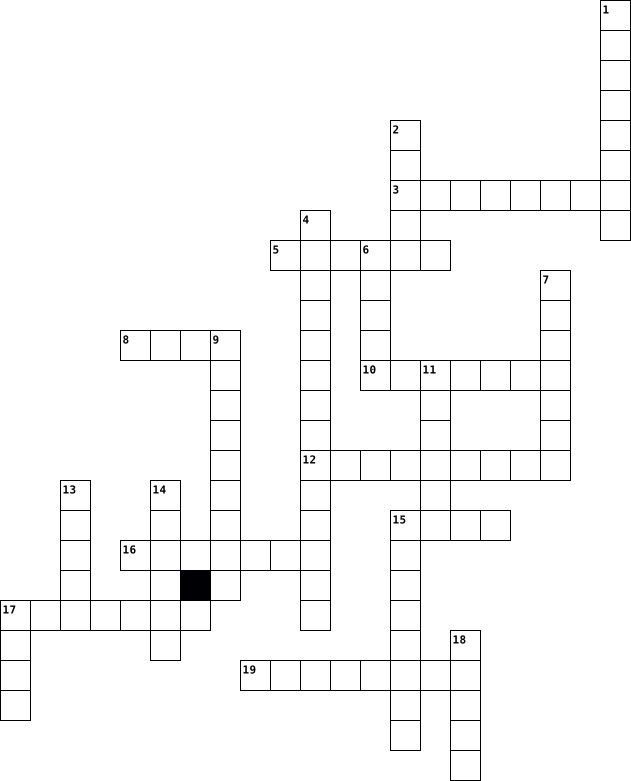
Across
- Muscle attached to bone and skin
- Pertaining to the ankle
- The hardest of the connective tissues
- Most common type of sudoriferous gland
- Oil gland that surrounds hair follicle
- Process that sends information to other neurons
- Forehead bone
- The most abundant connective tissue type
- Process that receives signals from other neurons
Down
- Lower jaw bone
- "Shallow depression" bone marking
- System that transports via blood
- Pointed process for articulation on bones
- Largest bone in arm
- System that controls hormones
- Fused vertebrae
- Ribs that do not directly attach to sternum
- Pertaining to the back
- Pertaining to the highest point of the shoulder
- Cervical vertebrae 2 (C2)
- Largest bone in leg
21 Clues: Forehead bone • Lower jaw bone • Fused vertebrae • Largest bone in arm • Largest bone in leg • Pertaining to the back • Pertaining to the ankle • Cervical vertebrae 2 (C2) • System that controls hormones • Muscle attached to bone and skin • System that transports via blood • "Shallow depression" bone marking • The hardest of the connective tissues • ...
Face Anatomy Crossword 2017-05-01

Across
- Bones of the mouth
- First of three bones in middle ear
- Pops out, goes back in
- Colored part of eye
- A collection of blood in the anterior chamber of the eye
- Part of outer ear
- Second of three bones in middle ear
- Swimmer's ear
- Passageway for sound in outer ear
- Outermost layer of eye
- Opening of eye, permits passage of light
- Eardrum
- Window of the eye
- Nose bleed
- Damage to cartilage in outer ear
- Teeth not coming together normally
- Infection of eyelash follicle or sebaceous gland
Down
- Third of three bones in middle ear
- Joint that connects the mandible to the skull
- Back portion of roof of mouth
- Bone of upper jaw
- Snail shaped structure in ear
- Pops out, stays out
- Bone of lower jaw
- Pinkeye
- Front portion of roof of mouth
- White of eye
- Scratch or small cut on outer layer of eye
- Cartilage that divides nostrils in two
- Fracture to the bones of the eyesocket
30 Clues: Pinkeye • Eardrum • Nose bleed • White of eye • Swimmer's ear • Bone of upper jaw • Bone of lower jaw • Part of outer ear • Window of the eye • Bones of the mouth • Pops out, stays out • Colored part of eye • Pops out, goes back in • Outermost layer of eye • Back portion of roof of mouth • Snail shaped structure in ear • Front portion of roof of mouth • Damage to cartilage in outer ear • ...
Anatomy and Physiology 2017-08-15

Across
- Secretion from the liver used to break down fats
- Outer most layer of the skin
- Part of brainstem vital to life
- Minimize the number of microorganisms or prevent their transmission
- Halt the spread of microorganisms
- Infection originating from the hospital
- Fish-shaped glandular accessory organ for the Digestive system
- Production of red and white blood cells and platelets
- Fatty layer of skin
- Tissue that supports, binds, and connects other tissues
- Word derived from "fasting intestine" and is about 8 feet long
- Heat transferred by direct contact
- Giving off infrared heat rays
- Joint involving an oval-shaped head of one bone moving within the elliptical cavity
Down
- The smallest arteries
- Division of the ANS producing a response that prepares individuals for an emergency
- Most effective of all procedures in prevention of spread of infection
- Render and keep objects and areas free from microorganisms
- Joint that allows movements that can be shifted in several directions (ankle and base of thumb)
- Wave if contractions of smooth muscles assisting with passing food through the GI tract
- Lobe of brain responsible for skin, taste, and muscle sensations; speech center
- Horseshoe shaped, 1 in in diameter consisting of 16 rings
- Also known as "True skin"
- Innermost layer of the heart
- The smallest veins
- Meaning "covering"
- Tissue that covers and protects body surfaces and cavities
- Connects bone to bone
- Node known as the pacemaker of the heart
- Connects muscle to bone
- Organ that assists with regulation of blood pressure and fluid volume which produces urine
- Muscle tissue found only in the heart
32 Clues: The smallest veins • Meaning "covering" • Fatty layer of skin • The smallest arteries • Connects bone to bone • Connects muscle to bone • Also known as "True skin" • Outer most layer of the skin • Innermost layer of the heart • Giving off infrared heat rays • Part of brainstem vital to life • Halt the spread of microorganisms • Heat transferred by direct contact • ...
Anatomy and Physiology 2017-08-15

Across
- Joint that allows movements that can be shifted in several directions (ankle and base of thumb)
- Secretion from the liver used to break down fats
- Lobe of brain responsible for skin, taste, and muscle sensations; speech center
- Halt the spread of microorganisms
- Wave if contractions of smooth muscles assisting with passing food through the GI tract
- Innermost layer of the heart
- Muscle tissue found only in the heart
- Production of red and white blood cells and platelets
- Tissue that covers and protects body surfaces and cavities
- Infection originating from the hospital
- Horseshoe shaped, 1 in in diameter consisting of 16 rings
- Organ that assists with regulation of blood pressure and fluid volume which produces urine
- Fatty layer of skin
- Connects muscle to bone
- Render and keep objects and areas free from microorganisms
- Word derived from "fasting intestine" and is about 8 feet long
Down
- Part of brainstem vital to life
- Heat transferred by direct contact
- Outer most layer of the skin
- Joint involving an oval-shaped head of one bone moving within the elliptical cavity
- Connects bone to bone
- Division of the ANS producing a response that prepares individuals for an emergency
- Node known as the pacemaker of the heart
- Minimize the number of microorganisms or prevent their transmission
- Fish-shaped glandular accessory organ for the Digestive system
- Most effective of all procedures in prevention of spread of infection
- The smallest arteries
- Giving off infrared heat rays
- Also known as "True skin"
- Meaning "covering"
- Tissue that supports, binds, and connects other tissues
- The smallest veins
32 Clues: Meaning "covering" • The smallest veins • Fatty layer of skin • Connects bone to bone • The smallest arteries • Connects muscle to bone • Also known as "True skin" • Outer most layer of the skin • Innermost layer of the heart • Giving off infrared heat rays • Part of brainstem vital to life • Halt the spread of microorganisms • Heat transferred by direct contact • ...
Anatomy Chapter 2 2017-09-28

Across
- a positively or negatively charged atom
- stored energy
- the splitting of complex molecules by hte addition of a water molecule
- forms the shiny covering on plant leaves
- solid at room temperature, found on meat
- the hereditary material found in cells
- formed when two or more atoms unite by sharing or transferring electrons
- complex substances are broken dowqn
- outer covering of cells
- type of organic compound need for energy
- fruit sugar
- body responds to reverse the direction of change
- single strand that is important in forming protein
- atoms that occur in several in several different forms due to varying numbers of neutrons
- a subatomic particle that has no electric charge
- the base unit of all carbohydrates
- carb that is found in plant foods
- energy of motion
- the negatively charged particle of an atom
- on the pH scale ranges from 0-6
Down
- a lipid that is found in hormones
- the effort by the body to maintain a constant internal enviroment
- type of bond that is the sharing of electrons
- important for making energy, hormones, insulation, and covering of cells
- are composed of chains of smaller molecules or amino acids
- twisted double strand that serves as the blueprint for protein synthesis
- sucrose or table sugar
- reverse the change
- type of bond that is the giving and taking of electrons
- milk sugar
- carries oxygen to the cells
- carbs that are stored in the body
- the basic unit of structure of all matter
- a symbol for the value of hydrogen ion concentration of a solution
- the number of positively charged particles in the nucleus of the atom
- two or more substances combine to produce a new substance
- liquid at room temperature
- has a radioactive isotope
- elements chemically inactive due to complete outer shell
- on the pH scale ranges from 8-14
- the desired value of a variable
41 Clues: milk sugar • fruit sugar • stored energy • energy of motion • reverse the change • sucrose or table sugar • outer covering of cells • has a radioactive isotope • liquid at room temperature • carries oxygen to the cells • the desired value of a variable • on the pH scale ranges from 0-6 • on the pH scale ranges from 8-14 • a lipid that is found in hormones • ...
Intro to Anatomy 2017-09-18

Across
- Sole of the foot
- Towards the bottom
- The powerhouse of the cell
- Chest region of an organism
- Transport of materials in and out of the cell
- Genital region
- Separates the body into equal right and left sections
- The study of the functions of organisms
- Flat "pancakes" that serve as packaging center for materials leaving the cell
- Referring to the fingers and toes
- Small, finger-like protrusions on the outside of the cell
- Aka "transverse", separates into superior and inferior
- Armpit area
- Protein "factories"
- Control center of the cell
- Diffusion of water across a selectively permeable membrane
- Movement of particles from high to low concentration
- Aka "coronal", separates the body into anterior and posterior
- Outer layer of the cell, transport and communication
- The arm
- The spinal or back side of an organism
- Hereditary material (DNA) found inside nucleus
- The thigh
Down
- The underside or "belly side" of an organism
- Posterior knee area, "knee pit"
- Helps with cell division
- Where the thigh meets the hips
- Constant random movement of solutes in a solution
- Closer to where the limb attaches to the body
- Separates body into right and left portions
- The back of an organism
- Navel area
- Towards the top; above
- A solution with a greater amount of water
- Stomach area
- Gel-like substance that suspends organelles in the cell
- A solution with a lower amount of water
- The front of an organism
- Further away from where the limb attaches to the body
- Around the eyes
- Substance dissolved in a solvent
- Digests and breaks down proteins and lipids
- The study of the structure of organisms
43 Clues: The arm • The thigh • Navel area • Armpit area • Stomach area • Genital region • Around the eyes • Sole of the foot • Towards the bottom • Protein "factories" • Towards the top; above • The back of an organism • Helps with cell division • The front of an organism • The powerhouse of the cell • Control center of the cell • Chest region of an organism • Where the thigh meets the hips • ...
Intro to Anatomy 2017-09-18

Across
- Diffusion of water across a selectively permeable membrane
- Transport of materials in and out of the cell
- Outer layer of the cell, transport and communication
- Hereditary material (DNA) found inside nucleus
- Helps with cell division
- Chest region of an organism
- Protein "factories"
- Navel area
- The arm
- Where the thigh meets the hips
- Movement of particles from high to low concentration
- Around the eyes
- Separates body into right and left portions
- Separates the body into equal right and left sections
- Substance dissolved in a solvent
- The powerhouse of the cell
- Armpit area
- Genital region
- Flat "pancakes" that serve as packaging center for materials leaving the cell
- The spinal or back side of an organism
- A solution with a greater amount of water
- Closer to where the limb attaches to the body
- Aka "coronal", separates the body into anterior and posterior
Down
- Towards the top; above
- The thigh
- Towards the bottom
- A solution with a lower amount of water
- Stomach area
- The front of an organism
- Control center of the cell
- Small, finger-like protrusions on the outside of the cell
- Sole of the foot
- The underside or "belly side" of an organism
- Referring to the fingers and toes
- Constant random movement of solutes in a solution
- Further away from where the limb attaches to the body
- The back of an organism
- The study of the structure of organisms
- Digests and breaks down proteins and lipids
- The study of the functions of organisms
- Posterior knee area, "knee pit"
- Aka "transverse", separates into superior and inferior
- Gel-like substance that suspends organelles in the cell
43 Clues: The arm • The thigh • Navel area • Armpit area • Stomach area • Genital region • Around the eyes • Sole of the foot • Towards the bottom • Protein "factories" • Towards the top; above • The back of an organism • Helps with cell division • The front of an organism • Control center of the cell • The powerhouse of the cell • Chest region of an organism • Where the thigh meets the hips • ...
Intro to Anatomy 2017-09-18

Across
- Diffusion of water across a selectively permeable membrane
- Towards the top; above
- Sole of the foot
- Separates body into right and left portions
- The spinal or back side of an organism
- Posterior knee area, "knee pit"
- Flat "pancakes" that serve as packaging center for materials leaving the cell
- A solution with a lower amount of water
- Gel-like substance that suspends organelles in the cell
- The underside or "belly side" of an organism
- Movement of particles from high to low concentration
- The arm
- The back of an organism
- The thigh
- Armpit area
- The powerhouse of the cell
- Helps with cell division
- Chest region of an organism
- Closer to where the limb attaches to the body
- The study of the functions of organisms
- Around the eyes
- Hereditary material (DNA) found inside nucleus
- Outer layer of the cell, transport and communication
Down
- Genital region
- Transport of materials in and out of the cell
- Where the thigh meets the hips
- Substance dissolved in a solvent
- Control center of the cell
- The study of the structure of organisms
- Aka "transverse", separates into superior and inferior
- The front of an organism
- Constant random movement of solutes in a solution
- Navel area
- Small, finger-like protrusions on the outside of the cell
- Stomach area
- A solution with a greater amount of water
- Digests and breaks down proteins and lipids
- Separates the body into equal right and left sections
- Referring to the fingers and toes
- Towards the bottom
- Further away from where the limb attaches to the body
- Aka "coronal", separates the body into anterior and posterior
- Protein "factories"
43 Clues: The arm • The thigh • Navel area • Armpit area • Stomach area • Genital region • Around the eyes • Sole of the foot • Towards the bottom • Protein "factories" • Towards the top; above • The back of an organism • The front of an organism • Helps with cell division • Control center of the cell • The powerhouse of the cell • Chest region of an organism • Where the thigh meets the hips • ...
Unit 2 Anatomy 2020-10-02

Across
- Comprised of fat cells, have large vacuoles, insulates body
- Collagen fibers are arranged in one direction, provides tensile strength like a rope, found in tendons and ligaments
- Lots of collagen, parallel running (cartilage)
- Often two layers of cuboidal cells, rare, found in salivary and mammary glands
- Contracts voluntarily, striated, controlled by somatic nervous system, connected to bones of skeleton (Muscle Tissue)
- Osteoblasts create this, bone tissue
- single layer of tall closely packed cells, secrete mucus for protection and absorption of substances, lining of digestive tract
- Made by hematopoietic cells, makes blood
- Contracts Involuntarily- non striated- found in walls of stomach, uterus, etc. (Muscle Tissue)
- flat layer of cells that is thin and permeable, rapid diffusion of materials, blood vessels and lung tissues.
- Provides flexible cushioning, found between vertebrae and in arteries
- Collagen fibers are arranged in many directions, provides strength, found in capsules around organs
- Columnar cells on the free surface, rare, larynx and male urethra.
Down
- Contains reticular fibers, which create a stiff framework that supports other cells
- Thick layer provides protection for underlying layers, epidermal layer of skin
- free surface cells vary on appearance, based on stretching of tissue. Urinary bladder
- Glassy, firm ground substance with lacuna (cartilage)
- Produces cartilage, produced by chondroblast
- Produced by fibroblasts, connective tissue proper
- Cell nuclei are found at different levels, so it appears stratified, though it is not. Secretion and absorption, upper respiratory tract
- single layer of cube shaped cells, secretion and absorption of substances, found in kidney
- Osteocytes secrete ground substances, fibers, collagen, and fluids, spongy or compact (tissue)
- Contracts involuntarily, striated, found in heart, activate by brain or hormones (Muscle Tissue)
23 Clues: Osteoblasts create this, bone tissue • Made by hematopoietic cells, makes blood • Produces cartilage, produced by chondroblast • Lots of collagen, parallel running (cartilage) • Produced by fibroblasts, connective tissue proper • Glassy, firm ground substance with lacuna (cartilage) • Comprised of fat cells, have large vacuoles, insulates body • ...
Intro to Anatomy 2020-10-04

Across
- divides the body into superior and inferior parts
- the process in which ribosomes in the cytoplasm or endoplasmic reticulum synthesize proteins after the process transcription of DNA to RNA in the cell's nucleus.
- chemistry, cells, tissue, organs, organ systems, body
- the field of embryology concerned with the changes that cells, tissues, organs, and the body as a whole undergo from a germ cell of each parent to the resulting offspring.
- on the surface or shallow. As opposed to deep.
- the study of the structure of organisms and their parts.
- relies on the use of microscopes to examine the smallest structures of the body; tissues, cells, and molecules.
- the cavity that contains the spinal cord within the vertebral column, formed by the vertebrae through which the spinal cord passes.
- a movement of ions and other atomic or molecular substances across cell membranes without need of energy input.
- (coronal) any vertical plane that divides the body into ventral and dorsal (belly and back) sections.
- form the covering of all body surfaces, line body cavities and hollow organs, and are the major tissue in glands.
- a body cavity that is bounded by the bones of the pelvis.
- the small, dense region consisting of protons and neutrons at the center of an atom,
- a chemical messenger system comprising feedback loops of the hormones released by internal glands of an organism directly into the circulatory system, regulating distant target organs.
- Anatomy the study of the external features of the body.
- the space within the skull.
- the process of spontaneous passive transport of molecules or ions across a biological membrane via specific transmembrane integral proteins
- an organ system consisting of skeletal, smooth and cardiac muscles.
- the tissue of a serous membrane.
- studies the prenatal development of gametes, fertilization, and development of embryos and fetuses.
- the structure formed by double-stranded molecules of nucleic acids such as DNA
- three membranes (the dura mater, arachnoid, and pia mater) that line the skull and vertebral canal and enclose the brain and spinal cord.
- Cranial) toward the head end of the body; upper
- study of functions and mechanisms in a living system.
- a semi autonomous double-membrane-bound organelle found in most eukaryotic organisms
- the study of the structures that make up a discrete body system—that is, a group of structures that work together to perform a unique body function.
- the body is upright, directly facing the observer, feet flat and directed forward. The upper limbs are at the body's sides with the palms facing forward
- the network of organs and tissues that help you breathe.
- (Caudal) away from the head; lower
- the first of several steps of DNA based gene expression in which a particular segment of DNA is copied into RNA by the enzyme RNA polymerase.
- a smooth tissue membrane consisting of two layers of mesothelium, which secrete serous fluid.
- the structure of organs and tissues that are visible to the naked eye.
- the internal framework of the human body.
- a branch of anatomy dealing with regions of the body especially with reference to diagnosis and treatment of disease or injury.
- an organelle in the cytoplasm of eukaryotic cells containing degradative enzymes enclosed in a membrane.
- dorsal - back
- enclosed by the ribs, the vertebral column, and the sternum, or breastbone, and is separated from the abdominal cavity
- a passive biological system that removes excess, unnecessary materials from the body fluids of an organism, so as to help maintain internal chemical homeostasis and prevent damage to the body.
Down
- an organism, also known as the genital system, is the biological system made up of all the anatomical organs involved in sexual reproduction.
- the net movement of anything from a region of higher concentration to a region of lower concentration.
- a type of organelle made up of two subunits – rough endoplasmic reticulum, and smooth endoplasmic reticulum.
- contains the urinary bladder and internal reproductive organs.
- comprises the skin and its appendages acting to protect the body from various kinds of damage, such as loss of water or damages from outside.
- (ventral) ventral - front
- toward the middle or center. It is the opposite of lateral.
- a membrane-bound organelle which is present in plant and fungal cells and some protist, animal and bacterial cells
- The part of the membrane that lines the cavity walls.
- consists of the gastrointestinal tract plus the accessory organs of digestion. Digestion involves the breakdown of food into smaller and smaller components, until they can be absorbed and assimilated into the body.
- a large cavity found in the torso of mammals between the thoracic cavity, which it is separated from by the thoracic diaphragm, and the pelvic cavity.
- (dorsal) dorsal - back
- (midsagittal) (Midline) used to describe the sagittal plane as it bisects the body vertically through the midline marked by the navel, dividing the body exactly in left and right side.
- carries oxygen, nutrients, and hormones to cells, and removes waste products, like carbon dioxide.
- any of various body fluids resembling serum, that are typically pale yellow and transparent and of a benign nature.
- is made up of the thoracic cavity, and the abdominopelvic cavity.
- a special type of cell division in sexually-reproducing organisms used to produce the gametes, such as sperm or egg cells.
- the side of the body or a body part that is farther from the middle or center of the body.
- a part of the cell cycle when replicated chromosomes are separated into two new nuclei.
- functions by contracting, thereby applying forces to different parts of the body.
- a cylindrical organelle composed mainly of a protein called tubulin.
- Tissue that supports, protects, and gives structure to other tissues and organs in the body.
- an organelle found in most eukaryotic cells.
- found in the brain, spinal cord, and nerves. It is responsible for coordinating and controlling many body activities.
- a DNA molecule with part or all of the genetic material of an organism.
- a fluid filled space which surrounds the brain and spinal cord of vertebrates
- the movement of molecules across a cell membrane from a region of lower concentration to a region of higher concentration—against the concentration gradient
- an organ system in vertebrates that is part of the circulatory system and the immune system.
- the nervous system is a highly complex part of an animal that coordinates its actions and sensory information by transmitting signals to and from different parts of its body.
- the basic building blocks of living things.
- nearer to the center (trunk of the body) or to the point of attachment to the body.
- the material or protoplasm within a living cell, excluding the nucleus.
- situated far from the point of attachment to the body.
71 Clues: dorsal - back • (dorsal) dorsal - back • (ventral) ventral - front • the space within the skull. • the tissue of a serous membrane. • (Caudal) away from the head; lower • the internal framework of the human body. • the basic building blocks of living things. • an organelle found in most eukaryotic cells. • on the surface or shallow. As opposed to deep. • ...
Anatomy Chapter 5 2020-09-19

Across
- determined by stapes speed
- response at low intensities
- moves greatly at apex
- depolarization,toward kinocilium
- membrane moves down in cochlea
- primary mechanism of frequency
- basal BM makes for fast conduction
- responses at high intensities
- after this point, TW damped
- vital for cochlear amp. function
- shearing of stereocilia
Down
- minimal to maximal from base to apex
- on apical BM, slows traveling wave
- stapes footplate in, inhibition
- motor protein
- cochlear amplifier
- originates from spiral ganglion
- moves in opposite direction of HC
- pressure waves move rapidly here
- spiral ligament, uptakes the K+
- basic difference in voltage
21 Clues: motor protein • cochlear amplifier • moves greatly at apex • shearing of stereocilia • determined by stapes speed • response at low intensities • basic difference in voltage • after this point, TW damped • responses at high intensities • membrane moves down in cochlea • primary mechanism of frequency • stapes footplate in, inhibition • originates from spiral ganglion • ...
Anatomy and pathology 2018-04-03

Across
- Name the pendulous attachment of tissue that hangs in the back of the throat.
- Narrow band of tissue that connects two structures
- Muscle/ This muscle raises and wrinkles the skin of the chin and pushes up the lower lip.
- How many bones are in the face?
- The largest of the salivary glands is
- existing restorations are charted in
- Name the bone that comprises the cheek.
- Which cranial bone forms the forehead, frontal sinuses, and upper orbits of the eye?
- Crown/ The portion of the tooth covered with enamel is known as the
- The salivary glands that lie on the floor of the mouth are the
- Muscle/ The muscle that compresses the cheeks against the teeth and retracts the angle of the mouth is known as the
- Muscle/ The strongest muscle of the jaw used for chewing is known as the
- There are ____ bones in the cranium.
Down
- The surface of the posterior teeth that touches the cheek is referred to as which surface?
- Duct/The duct that comes off the parotid gland is called
- The sharp, biting edge of the anterior teeth is referred to as
- Bone that is more dense and forms the outer shell of bony structures is called
- Restorative work that needs to be done is?
- Artery/ In the dental field, the most common area where the pulse is taken on adults is the
- Duct/ The duct that comes off of the sublingual gland is called
- Bone/ Spongy bone is also known as
- Oris/ The muscle that closes and puckers the lips is known as the
- The substance that covers the root of the tooth is called
- The single bone that forms the inferior portion of the nasal septum is referred to as
- The _____ surface refers to the surface that is toward the midline.
25 Clues: How many bones are in the face? • Bone/ Spongy bone is also known as • existing restorations are charted in • There are ____ bones in the cranium. • The largest of the salivary glands is • Name the bone that comprises the cheek. • Restorative work that needs to be done is? • Narrow band of tissue that connects two structures • ...
Anatomy & Physiology Terminlogy 2021-08-19

Across
- The Skeletal muscles form the muscular system
- If cut down the median plane and the right & left parts are equal in size
- Area of back between ribs and hips, the loin
- Consists of bones, cartilages, ligaments, and joints
- The study of how the body and its parts work or function
- Divides body into right and left parts
- Away from the head end or towards the lower part of a structure or the body
- Buttock
Down
- Toward the head end or upper part of a structure or the body
- system The external covering of the body, or the skin
- Heel of foot
- Is cut lengthwise to divide the body into anterior and posterior parts
- The smallest units of all living things
- Toward or at the front of the body
- The body's fast acting control system
- Anterior body trunk inferior to ribs
- The study of the structure and shape of the body and its parts and their relationships to one another
- Head
- Anterior surface of elbow
- Point of shoulder
- Forearm
21 Clues: Head • Forearm • Buttock • Heel of foot • Point of shoulder • Anterior surface of elbow • Toward or at the front of the body • Anterior body trunk inferior to ribs • The body's fast acting control system • Divides body into right and left parts • The smallest units of all living things • Area of back between ribs and hips, the loin • The Skeletal muscles form the muscular system • ...
Fun Frog Anatomy!! 2024-06-03

Across
- transparent cover that protects the eye
- first part of the small intestine
- blood vessels that carry blood away from the heart
- moves digested food out of the body
- carries eggs in female frogs
- teeth that catch prey
- stores bile
- stores solid waste, eggs, and sperm
- All waste is collected
- first site of digestion in a frog
Down
- filters blood and makes urine
- organ that produces, stores, and eliminates blood cells
- masses of fat needed to hibernate and match
- Two upper chambers of the heart
- Lower chamber of the heart
- largest digestive gland in the frog
- membrane that holds coils of the small intestine
- stores urine
- Responsible for the uptake of sugar in the digestion system
- blood vessels that carry blood to the heart
- opening to exchange air gasses
- delivers oxygen to the body
22 Clues: stores bile • stores urine • teeth that catch prey • All waste is collected • Lower chamber of the heart • delivers oxygen to the body • carries eggs in female frogs • filters blood and makes urine • opening to exchange air gasses • Two upper chambers of the heart • first part of the small intestine • first site of digestion in a frog • moves digested food out of the body • ...
Head & Neck--Anatomy+ 2023-09-23

Across
- A __________ hemorrhage appears more spread out on a CT
- Which gland is posterior to the masseter muscle?
- Dysfunction of the flocculonodular lobe of the cerebellum can manifest as vertigo or
- How many layers does the SCALP have?
- Which gland develops at the base of the tongue?
- The PCA supplies which lobe of the brain?
- Having a patient clench their jaw while we palpate these these muscles is testing which CN?
- The jugular vein runs through the _______ foramen along with CN IX, X, & XI.
- In Bell Palsy, if there is upper and lower facial muscle involvement we can suspect the _____ motor neuron is to blame
- The circle of willis is a common site for a berry ________.
- Central body coordination is a function of which part of the cerebellum?
- Which muscle of the neck is appears "webbed" when frowning?
- Which muscle of the neck is short and tightened with torticollis?
- The cavernous sinus is susceptible for infection because it lacks ______ and has bidirectional flow.
- Having a patient shrug their shoulders and turn their head against resistance is testing which CN?
- _______ sign is bruising of the mastoid that typically apears after head trauma to the petrous portion of the temporal bone.
- Which area on the skull is very thin and therefore easier to fracture?
- The _____ plexus produces CSF in the cerebral ventricles.
- CN III, VI, & XII leave the CNS laterally or medially?
- The corticospinal and corticobulbar tracts are motor pathways that decussate at the medullary ______.
- The basilar artery is anterior to which portion of the brainstem?
Down
- The lateral _______ muscle is the only muscle of mastication that opens the jaw.
- The _______ plate is the small, anterior, porous area on the skull that CN I runs through.
- Which duct runs from the submandibular gland to the sublingual caruncle?
- Which nerve runs anterior to the anterior scalene muscle? (not a CN)
- MC site for Giant cell arteritis is the superficial _____ artery.
- What kind of hemorrhage appears smaller and rounder on CT?
- The carotid __________ is a common site for atherosclerotic plaques.
- The Middle Meningeal Artery runs through the foramen ______.
- Which fissure divides the brain into 2 hemispheres?
- The sella turcica is a part of which bone of the skull?
- Which ganglion is located in the infratemporal fossa?
- The ________ gyrus is the motor cortex.
- Which CN runs in the carotid sheath?
- In Bell Palsy, if there is only lower facial muscles involved we can suspect the ______ motor neuron is to blame.
- The _________ gyrus is the sensory cortex.
- The mandibular branch nerve (V3) of CN V trigeminal supplies the muscles of ________. (action)
- During the neuro exam, to test the recurrent laryngeal nerve, a branch of CN X vagus, what would you test?
- A ring-enhancing lesion seen on imaging is pathognomonic for:
39 Clues: How many layers does the SCALP have? • Which CN runs in the carotid sheath? • The ________ gyrus is the motor cortex. • The PCA supplies which lobe of the brain? • The _________ gyrus is the sensory cortex. • Which gland develops at the base of the tongue? • Which gland is posterior to the masseter muscle? • Which fissure divides the brain into 2 hemispheres? • ...
Anatomy Final Review 2024-05-10

Across
- The process of muscles contracting and relaxing to move food down the esophagus
- Cranial nerve that has to do with sense of smell
- This circuit carries blood from the heart to the lungs and back
- In your upper digestive tract where food turns into chyme
- Oral portion of the pharynx
- This part of the brain's main function is to help keep the body in homeostasis
- This carries blood away from the heart
- The main component in blood
- This membrane holds the coils of the small intestine together
Down
- The outermost layer of the meninges
- The triangular slit that opens and closes during talking
- This structure prevents bolus from entering the trachea
- An elevation on the surface of the cerebral cortex
- Relaxation of the heart filling with blood is called _______
- The neurons that carry nerve impulses from the peripheral body parts to the brain or spinal cord
- Thick layer of the heart that provides muscle contractions
- This blood type can be donated to any type
- Where gas exchange occurs in the respiratory system
- Three ridges found in the nasal cavity
- This organ produces enzymes that help digest food, specifically proteins
- The first portion of small intestine coming off the stomach is called _____
- Connects the pharynx to the trachea
22 Clues: Oral portion of the pharynx • The main component in blood • The outermost layer of the meninges • Connects the pharynx to the trachea • Three ridges found in the nasal cavity • This carries blood away from the heart • This blood type can be donated to any type • Cranial nerve that has to do with sense of smell • An elevation on the surface of the cerebral cortex • ...
Anatomy Crossword Puzzle 2024-05-14

Across
- The single tube that drains the contents of the bladder outside
- The external parts of the ears
- Directional terminology used to represent 'towards the midline of the animal'
- The superficial layer of the skin
- Outer covering on a reptiles skin
- Directional terminology used to represent 'towards the tail end of the animal
- This body system provides a protective layer to the body
- Reptiles and birds have a digestive system which ends in this
- Term used to describe the chest of a dog or cat
- These vessels carry blood away from the heart
- Protein-rich fluid in blood is called
- Produce milk to feed their young
Down
- Fleshy growths below the beak and neck of a chicken
- The shortened facial structure of a dog
- Species in this group are only found in Australia
- The sternum in birds is called this
- The clear outer covering of the eyeball
- Have a pouch where their young develop
- The first vertebrae that connects directly to the skull
- Birds do not have this in their respiratory system
- Airway running down the neck into the thoratic cavity
- Type of muscle found solely in the heart
22 Clues: The external parts of the ears • Produce milk to feed their young • The superficial layer of the skin • Outer covering on a reptiles skin • The sternum in birds is called this • Protein-rich fluid in blood is called • Have a pouch where their young develop • The shortened facial structure of a dog • The clear outer covering of the eyeball • ...
Plant Anatomy Crossword 2024-02-23

Across
- a shoot or stem that originates from the roots
- have two cotyledons
- The space between nodes
- leaf that surrounds the reproductive parts of the flower
- the growing point of the stem and can be leaf or flower buds
- contains all four floral parts
- slender stalk that connects the stigma to the ovary
- Thin stalk that holds up the anther
- missing one of the four floral parts
- immature plant
- matures into the fruit after fertilization
- develops into seeds after fertilization
Down
- food reserves
- where the leaves develop
- when there are many flowers clustered together on one stem
- coat protective coating
- the tissue that transports water and nutrients from the roots to the stems and leaves
- the tissue that transports from the leaves to the roots
- breathing pores found on stems
- the transfer of the pollen onto the stigma
- produces roots and leaves at the nodes
- have one cotyledon
22 Clues: food reserves • immature plant • have one cotyledon • have two cotyledons • The space between nodes • where the leaves develop • coat protective coating • breathing pores found on stems • contains all four floral parts • Thin stalk that holds up the anther • missing one of the four floral parts • produces roots and leaves at the nodes • develops into seeds after fertilization • ...
grey's anatomy characters 2024-08-06

Across
- He owns the bar next to the hospital
- He threw himself in front of a bus
- She was held hostage in Iraq for years
- She was doing research on orgasms
- He left and said goodbye in a letter
- She lost her shoe
- She got early-on-set Alzheimers and died
- She has spinabifida
- She was eaten by the wolves
- Her best friend died in the second tower
- He got shot and died
- She got skin cancer that metastasised
- She is named after a battleship
- He got hit by a truck
- He is a paramedic whose fiancée got away during their wedding
Down
- She almost died in a car accident
- He left his fiancée at the altar and then gifted her an entire hospital
- She was shot in the head
- Her ex-husband was abusive
- He strangled his girlfriend due to PTSD from the war
- His mom married the chief
- Her father never even knew she existed before he died
- She's the brain surgeon whose son was born without a brain
- She slept with her husband's best friend
- The show is named after her
- He thought the love of her life was dead
- He died trying to save someone from human traffic
- His mom gave him birth in the middle of a power outage
- She is a famous urologist
- She was the most feared resident
- She had a son whose bones were breaking in the womb
- He died after the love of his life was eaten by wolves
- He had an affair with someone's mother
33 Clues: She lost her shoe • She has spinabifida • He got shot and died • He got hit by a truck • She was shot in the head • His mom married the chief • She is a famous urologist • Her ex-husband was abusive • The show is named after her • She was eaten by the wolves • She is named after a battleship • She was the most feared resident • She almost died in a car accident • ...
very cool anatomy 2023-02-13

Across
- rusto
- virtsaputki
- alaleuanluu
- sappirakko
- sääriluu
- kudos
- hengitys
- umpilisäke
Down
- lapaluu
- valtimo
- päänahka
- jänne
- haima
- kammio
- perna
- lantio
- pallea
- solisluu
- jalkapohja
- ulostaminen
- nivus
- väliliha
22 Clues: jänne • rusto • haima • perna • nivus • kudos • kammio • lantio • pallea • lapaluu • valtimo • päänahka • solisluu • sääriluu • hengitys • väliliha • jalkapohja • sappirakko • umpilisäke • virtsaputki • alaleuanluu • ulostaminen
Anatomy study guide 2023-02-10

Across
- layer of the skin that makes fingerprints
- the outermost layer of the skin
- hair follicle that produces tightly curled hair
- the largest artery in the body
- two words. Another name for histology
- the study of normal organ function and systems of the body
- provides framework for the body
- the immovable part of the muscle
- another term for red blood cells
Down
- prevents backflow of blood during circulation
- the largest organ of the body
- long narrow flat plate that forms the center of the front of the chest
- term that means “in front of”
- triangle shaped muscle that lifts the arms
- technical name for the study of skin
- the midsection of the muscle
- connects bones to muscles
- located at the tip of the chin
- the moveable part of the muscle
- the study of structure, friction and diseases of the muscle
- small bone on the thumb side of lower arm or forearm
- area where eccrine glands are most abundant
22 Clues: connects bones to muscles • the midsection of the muscle • the largest organ of the body • term that means “in front of” • located at the tip of the chin • the largest artery in the body • the outermost layer of the skin • the moveable part of the muscle • provides framework for the body • the immovable part of the muscle • another term for red blood cells • ...
Anatomy Midterm Review 2023-03-07

Across
- a protein that catalyzes a reaction
- the only bone in humans that does not articulate with any other bone
- moving the leg back towards the midline
- raised the corner of your mouth
- muscle extends the knee (2 words)
- type of bone that is mostly spongy bone
- the bone above the teeth
- DNA makes a copy of itself
- term for the backside or "back" in the anatomical position
- anterior in humans
- the growth plate of the bone
- causes the hair to stand up when you get "goose bumps" (2 words)
- inflammation of the stomach
- The skin synthesizes this (2 words)
- the regional term for the groin
- connect muscle to bone
- the regional term used for armpit
Down
- causes grinding teeth movement
- cell part makes energy
- Muscle that stabilizes the origin of the prime mover
- the muscle that sucks in the cheeks
- the connective tissue that fuses myoblast together to form a muscle fiber
- the molecule calcium moves out of the way for the muscle to contract
- PASSIVE transport of material across the membrane
- pigment gives the skin the brown or black color
- The Skin is _______ to the skeletal bones
- the shape of the muscle that tapers at both ends. An example is the bicep
- the regional term for behind the knee
- body plane that cuts body into right and left regions
- surface marking is round knuckle-like articular protuberance
- kind of fracture when bone is broken into many fragments.
- the alternating contractions that case wave-like movements that push the contents of the canal forward
- the layer of the epidermis occurs only in thick skin to prevent damage is the stratum ________
- the regional term in front of the knee
34 Clues: anterior in humans • cell part makes energy • connect muscle to bone • the bone above the teeth • DNA makes a copy of itself • inflammation of the stomach • the growth plate of the bone • causes grinding teeth movement • raised the corner of your mouth • the regional term for the groin • muscle extends the knee (2 words) • the regional term used for armpit • ...
Anatomy Crossword Puzzle 2023-04-25

Across
- A network of blood vessels and tissue that is made up of closely spaced cells and helps keep harmful substances from reaching the brain.
- connects the right and left hemispheres
- controls speech
- Produces cerebrospinal fluid
- top of the spinal column. Includes the medulla, pons, and midbrain. Connects the brain and spinal cord
- highest area on the brain stem that relays auditory info
- Lowest part of the brainstem that controls autonomic fxns (breathing, heart rate,& vomiting, etc)
- Top lobes of the brain, processes touch, temperature, and pain.
- Side Lobes of the brain, for hearing, language & smell
- small gland near the thalamus that secretes melatonin, to regulate sleep.
Down
- Area of the forebrain, below the Thalamus that regulates body temp, hunger, thirst and maintaining homeostasis
- Front part of the brain, controls emotional behaviors, decisions, planning, speech and muscles
- lines the ventricles (hollow spaces) in the brain.
- Pea-sized gland that regulates growth hormone and other glands.
- acts as a primary relay and processing center for sensory information and autonomic control.
- tough layer of tissue surrounding the brain that holds it in place, inside the skull
- Lower/back part of the brain that coordinates balance & movement
- the part of the brain that controls muscle functions, speech, and thought
- Back lobe of the brain processes visual information
- Middle Part of the brainstem. Involved in autonomic fxns (sleep regulation)
- Controls Voluntary contractions of muscles
21 Clues: controls speech • Produces cerebrospinal fluid • connects the right and left hemispheres • Controls Voluntary contractions of muscles • lines the ventricles (hollow spaces) in the brain. • Back lobe of the brain processes visual information • Side Lobes of the brain, for hearing, language & smell • highest area on the brain stem that relays auditory info • ...
Learning Fish Anatomy 2023-05-10

Across
- Eats plants, specialized mouth for different food types
- Specialized for a variety of feeding mechanisms
- Tail that is crescent shaped like the moon
- The classic torpedo shaped fish body
- The set of mid-body or back fins
- Eel-like or extended fish body form
- Similar to a birds, a sharp mouth adaptation for tough prey
- Common tail shape that is not flattened or split
- The covering of the gills
- Extra sensory organs that help detect prey hiding in sediment
- hard body coverings on fish that protect from harm
- Vertically flattened fish body
- A set or sensory canals that feel movement from surroundings
- The study of fishes
Down
- the class that contains all bony, lobe finned fishes
- The set of side fins on a fish
- Rounded or spherical fish body
- Eats other animals, can be determined by body form or mouth shape
- The farthest set of fins, seen only on some fishes
- the class that contains all bony, ray finned fishes
- Tail that is clearly split into two lobes
- Fish stay on the sea floor and grab prey swimming above
- Horizontally squished or thin fish body
- mouth shape of bottom dwelling ambush predators
- Top set of fins or the ‘back’ of the fish
- Visual organ that can perceive color and movement
- The tail fin that provides movement for many fish
27 Clues: The study of fishes • The covering of the gills • The set of side fins on a fish • Rounded or spherical fish body • Vertically flattened fish body • The set of mid-body or back fins • Eel-like or extended fish body form • The classic torpedo shaped fish body • Horizontally squished or thin fish body • Tail that is clearly split into two lobes • ...
Anatomy: Respiratory System 2023-05-05

Across
- the ends of bronchioles
- incredible small airsacs
- chemicals that cause cancer
- more commonly known as the throat
- muscle used for breathing
- smoking tobacco leads to this class of diseases
- respiratory center of brain
- the respiratory system works closely with this system.
- a larger air-filled space above and behind nose.
- organs in the chest that supplies the body with oxygen, and removes carbon dioxide from the body.
- allows food and liquids to enter digestive track.
Down
- oxygen is attracted tp this, which is found on our red blood cells.
- the air is mostly
- voice box
- adams apple
- blood vessels which lead to arteries or viens.
- group of tissues and organs that enable you to breathe in order to deliver oxygen from the atmosphere.
- windpipe
- spongy bone
- use it to smell
20 Clues: windpipe • voice box • adams apple • spongy bone • use it to smell • the air is mostly • the ends of bronchioles • incredible small airsacs • muscle used for breathing • chemicals that cause cancer • respiratory center of brain • more commonly known as the throat • blood vessels which lead to arteries or viens. • smoking tobacco leads to this class of diseases • ...
PIG ANATOMY VOCAB 2023-05-11

Across
- muscular wall that divides the chest from the abdomen
- carry urine from the kidney
- carries blood rich in oxygen from mother to fetus
- a membrane surrounding the heart
- separates the oral cavity from the nasal cavity
- stores bile
- stores food
- produces enzymes to digest cellulose
- holds the spleen in place
- vein carries oxygenated blood from the lungs to the heart
- continuation of art on the dorsal side
- collects blood low in oxygen
- remove excess waste
Down
- connects intestines to the dorsal abdominal wall
- behind the pulmonary trunk leads to blood to the lower body
- food tube
- secrete watery fluids
- opening between the vocal cords
- stores extra blood cells in both colors for emergency
- produces hormones which regulate metabolic rate
- collects blood from lungs and pumps to the left ventricle
- produce eggs in females
- voice box of the pig
- help put oxygen into the bloodstream and carbon out of the bloodstream
- allow the pig to taste
25 Clues: food tube • stores bile • stores food • remove excess waste • voice box of the pig • secrete watery fluids • allow the pig to taste • produce eggs in females • holds the spleen in place • carry urine from the kidney • collects blood low in oxygen • opening between the vocal cords • a membrane surrounding the heart • produces enzymes to digest cellulose • ...
Anatomy and Physiology 2023-05-15

Across
- pulsation of the heart
- your body's chemical messengers
- the stopping of the flow of blood
- motion of limb away from midline
- bundle of fibers that receives and sends messages
- the skull
- a very small vein
- transparent layer forming the front of eye
- lets light into your eye
- the bone that forms the back and base of skull
- fibrous connective tissue that connects muscle to bone
- blood cell production
- muscular tissue of the heart
- a condition with lower then normal bone mass
- tiny branch of air tubes in the lungs
- the contractile protein that forms the thick filaments
Down
- finger like cells present on the end of a neuron
- movement of limbs toward median plane of the body
- decreasing a joint angle
- cell on your tongue that allows you to perceive taste
- secretes hormones through ducts
- a rod like organelle of a muscle cell
- another name for platelet
- largest part of the brain
- transmit and focus light onto the retina
- the bone that forms the front part of skull upper part of eye sockets
- a broken bone
- red liquid that circulates in arteries and veins
- glands that secrete hormones without ducts
- the smallest type of blood vessels
- colored tissue at the front of the eye
- first activity of the digestive system
- the colorless fluid part of the blood
- electrical impulses from the neuron that travel to other neurons
- murky semifluid mass or paste
35 Clues: the skull • a broken bone • a very small vein • blood cell production • pulsation of the heart • decreasing a joint angle • lets light into your eye • another name for platelet • largest part of the brain • muscular tissue of the heart • murky semifluid mass or paste • your body's chemical messengers • secretes hormones through ducts • motion of limb away from midline • ...
Anatomy Final Review 2023-05-25

Across
- houses vocal cords
- fingers compared to wrist
- infection of sebaceous gland
- longest muscle in the body
- tympanic membrane
- red blood cells
- fluid portion of blood
- produced during cellular respiration
- rapid predictable response
- connects muscle to bone
- flow away from the heart
- fracture associated with children
- connects bone to bone
Down
- ears compared to eyes
- chin
- white blood cells
- color of the eye
- insertion point for soleus and gastroc
- gland that produces tears
- insulation and protection
- articulates with acetabulum and tibia
- end of the muscle attached to the movable bone
22 Clues: chin • red blood cells • color of the eye • white blood cells • tympanic membrane • houses vocal cords • ears compared to eyes • connects bone to bone • fluid portion of blood • connects muscle to bone • flow away from the heart • fingers compared to wrist • gland that produces tears • insulation and protection • longest muscle in the body • rapid predictable response • ...
Anatomy and Physiology 2021-10-04

Across
- makes up the thickness of the heart
- joint above hock
- helps produce new individuals of the same species
- long hairs growing near the mouth
- transports nutrients, waste, and oxygen
- from limb
- reproductive organ that produces the female gamete
- to protect vital body organs and give form and shape to the body
- heat period
- process of giving birth
- bones include the skull, vertebrae, ribs, and sternum
- fleshy side of the face
- filters blood and removes waste
- uses grit and gravel to grind and crush feed in birds
- thin cover over myocardium
Down
- breaks down food into smaller pieces to be used by the body
- coordinates body activities, regulates other systems, and controls memory and learning
- oxygen is taken up by the nose, passed to the lungs, and goes into the blood
- fleshy part of the side between ribs and rump
- tarsal joint halfway up the hind limb
- provides movement, posture, support, and heat
- transparent layer covering eyes
- rear legs and pelvic bone
- thin layer inside myocardium
- term used to describe rabbits eating undigested feces
25 Clues: from limb • heat period • joint above hock • process of giving birth • fleshy side of the face • rear legs and pelvic bone • thin cover over myocardium • thin layer inside myocardium • transparent layer covering eyes • filters blood and removes waste • long hairs growing near the mouth • makes up the thickness of the heart • tarsal joint halfway up the hind limb • ...
Anatomy Crossword -KG 2021-09-24

Across
- the frequency where energy is the most compliant
- this is a properties ability to move
- this person won the nobel prize in 1961 and conducted a study on elephant cochlea.
- this membrane isn't tonotopic
- this often happens in the internal auditory canal and causes permanent sensorineural hearing loss.
- this is the hinge for movement of the basilar membrane
- when tip links deflect towards the kinocilia
- this can result in sensorineural hearing loss and reduces chemical and mechanical cochlear function.
- this is a motor protein that is not present in the inner hair cells
- this genetic mutation can result in hearing loss due to the disruption in the gap junctions and the prevention of K+ cycling through.
Down
- these move in the opposite direction of hair cell bodies
- this type of tumor comes from the jugular bulb and can erode into the middle ear space
- this begins when the stapes rocks in the oval window and it moves in a whip like motion
- this decreased blood supply can lead to multiple degrees of hearing loss as well as vestibular problems.
- this is when the hair cells go more negative
- this pathology creates abnormal neural activity and can cause facial nerve dysfunction
- when potassium begins to leave the cell and glutamate is released from the inner hair cells.
- this is when the tip links deflect away from kinocilia
- the opposite of impedance where energy is let in
- insertion plaques can move up and down in stereocilia via this.
20 Clues: this membrane isn't tonotopic • this is a properties ability to move • this is when the hair cells go more negative • when tip links deflect towards the kinocilia • the frequency where energy is the most compliant • the opposite of impedance where energy is let in • this is when the tip links deflect away from kinocilia • ...
Human Anatomy Bones 2021-11-22

Across
- located at the upper back area in the skull
- bone that forms your upper jaw
- bones that connect to wrist and phalanges
- cranial bone through which the spinal cord passes
- also known as the shin
- diamond-shaped bone below and lateral to eye orbit
- forms the forehead (Mrs. Marques voice)
- stationary bone
- connect your ankle to phalanges
- bone that carries majority of body weight
- most inferior vertebrae
- otherwise known as the "kneecap"
- located between your elbow and your shoulder
Down
- largest bone in the human skull
- moveable bone in lower arm
- longest bone in the human body
- fingertips
- heel of the foot
- bone lateral side of tibia
- vertebrae that lines up with the ribs
- bones that form the ankle
- short bones of your hand
22 Clues: fingertips • stationary bone • heel of the foot • also known as the shin • most inferior vertebrae • short bones of your hand • bones that form the ankle • moveable bone in lower arm • bone lateral side of tibia • longest bone in the human body • bone that forms your upper jaw • largest bone in the human skull • connect your ankle to phalanges • otherwise known as the "kneecap" • ...
Normal Radiography Anatomy 2021-11-17

Across
- Radiopaque trianular prominence on the ramus
- V-shaped at base of nasal septum
- radiolucent bony cavity of eye sockets
- attaches the tooth to the lamina dura
- Appears on opposite side (right side of mandible is ghost. images in left side of image)
- aka cheek bone; wide radiopacity at the distal edge of the molar image
- Radiopaque hook-like structures that serves as a muscle attachment usually only observed on the most posterior intramural images
- Hard cortical bone that lines the alveolus (tooth socket)
- Radiopacity observed between occluding anterior teeth
- Recorded superior to roots of first and second molars
- A radiolucent area above the mental ridge
- Radiolucent opening bone, inferior to border of orbit
Down
- "doughnut" at midline below apices of mandibular central incisors
- Radiopaque rounded head and neck extension of ramus
- At lower corners of radiograph, inferior to mandible
- Horizontal radiopaque line superimposed over anterior teeth
- Spongy bone, forms the bulk of the inner bone
- Bilateral concavity of bone on superior border of ramus
- Thick radiopaque band superior to maxillary teeth
- Separates the maxillary sinus
- Radiolucency between the maxillary lateral incisor and the maxillary canine
21 Clues: Separates the maxillary sinus • V-shaped at base of nasal septum • attaches the tooth to the lamina dura • radiolucent bony cavity of eye sockets • A radiolucent area above the mental ridge • Radiopaque trianular prominence on the ramus • Spongy bone, forms the bulk of the inner bone • Thick radiopaque band superior to maxillary teeth • ...
Normal Radiography Anatomy 2021-11-17

Across
- Radiopaque trianular prominence on the ramus
- V-shaped at base of nasal septum
- radiolucent bony cavity of eye sockets
- attaches the tooth to the lamina dura
- Appears on opposite side (right side of mandible is ghost. images in left side of image)
- aka cheek bone; wide radiopacity at the distal edge of the molar image
- Radiopaque hook-like structures that serves as a muscle attachment usually only observed on the most posterior intramural images
- Hard cortical bone that lines the alveolus (tooth socket)
- Radiopacity observed between occluding anterior teeth
- Recorded superior to roots of first and second molars
- A radiolucent area above the mental ridge
- Radiolucent opening bone, inferior to border of orbit
Down
- "doughnut" at midline below apices of mandibular central incisors
- Radiopaque rounded head and neck extension of ramus
- At lower corners of radiograph, inferior to mandible
- Horizontal radiopaque line superimposed over anterior teeth
- Spongy bone, forms the bulk of the inner bone
- Bilateral concavity of bone on superior border of ramus
- Thick radiopaque band superior to maxillary teeth
- Separates the maxillary sinus
- Radiolucency between the maxillary lateral incisor and the maxillary canine
21 Clues: Separates the maxillary sinus • V-shaped at base of nasal septum • attaches the tooth to the lamina dura • radiolucent bony cavity of eye sockets • A radiolucent area above the mental ridge • Radiopaque trianular prominence on the ramus • Spongy bone, forms the bulk of the inner bone • Thick radiopaque band superior to maxillary teeth • ...
Anatomy Crossword puzzle 2021-12-13

Across
- Lip
- passage/channel
- thin plate
- ligament
- skin
- horn
- Grease
- Stretched
- a net
- Passage
- between
- Dark pigment produced by certain cells
- of one’s free will
- white
- something inserted
- upon
- Pit
- crest
- something written
- Joint socket
- skin
Down
- together
- bag/purse
- Sweat
- channel
- hidden
- bundle
- small bag
- entire/whole
- ring
- muscle
- flesh
- sewing
- rind or peel
- knob
- muscular
- joint
- joint socket
- wrist
- sieve
- inside
- egglike
- axis
- bar
- Work
45 Clues: Lip • Pit • bar • ring • skin • horn • knob • upon • axis • skin • Work • Sweat • flesh • a net • joint • white • wrist • sieve • crest • hidden • bundle • muscle • sewing • Grease • inside • channel • Passage • between • egglike • together • ligament • muscular • bag/purse • small bag • Stretched • thin plate • entire/whole • rind or peel • joint socket • Joint socket • passage/channel • something written • of one’s free will • something inserted • ...
Anatomy final project 2021-12-08

Across
- laid on, covering
- move
- cartilage
- pertaining to
- fat
- tissue
- bend
- bone
- red
- inflammation of
- white
- purselike sac
Down
- pores in the bone
- within, inner
- towards
- wrist
- cell
- process
- joint
- the study of
- ankle
- outer, outside
- around
- straightening
- abnormal condition
25 Clues: fat • red • move • cell • bend • bone • wrist • joint • ankle • white • tissue • around • towards • process • cartilage • the study of • within, inner • pertaining to • straightening • purselike sac • outer, outside • inflammation of • laid on, covering • pores in the bone • abnormal condition
Articulation Unit-Anatomy 2022-04-03

Across
- contraction of this muscle flattens the tongue by pulling it downward
- muscle that depresses the mandible when the hyoid is fixed
- muscle that narrows the tongue
- the circular muscle that goes around the mouth and closes the oral open and pushes the lips together when contracted
- this bone is a complex skull bone that contains a corpus, sphenoid sinuses, and three paired processes
- bilateral contraction of this muscle results in the moving the tongue tip forward
- muscle that quickly pulls the entire mandible down when contracted
- lateral folds of tissue on the hard palate
Down
- cavity (space) between your teeth and cheeks
- contraction of this muscle elevates the mandible, closing the jaw
- bilateral contraction of this muscle pulls the tongue tip downward
- primary elevator of the velum
- muscle that retracts and elevates the tongue in a posterior/superior direction
- muscle that assists the hyoglossus in depressing the tongue
- depresses the velum when the tongue is fixed
- where the mandible attaches to the temporal bone
- muscle that pulls the corners of the mouth back and makes dimples
- this set of bones is the smallest bone of your facial bones
- midline of the hard palate; connection between your two maxilla and palatine bones
- this set of bones contributes to the formation of the nasal, oral, and orbital cavities
20 Clues: primary elevator of the velum • muscle that narrows the tongue • lateral folds of tissue on the hard palate • cavity (space) between your teeth and cheeks • depresses the velum when the tongue is fixed • where the mandible attaches to the temporal bone • muscle that depresses the mandible when the hyoid is fixed • ...
Anatomy Chapter 6 2022-02-24

Across
- Rounded passageway for blood vessels and/or nerves
- a shallow depression
- A meshwork of supporting bundles of fibers, oriented along stress lines and is crossed braced.
- Curved joint surfaces
- Bone is 2/3_____phosphate
- Region of a long bone between the end and the shaft
- The head of a long bone (Articulation, have joint surfaces)
- A cell that produces the fibers and matrix of the bone
- Part of a bone that forms an angle with the rest of the structure
- Bone marrow that stores fats as an energy reserve
- Large with a rough projection
- Projection or bump
- Bone marrow that forms red blood cells.
- The shaft of the long bone
Down
- Dense bone that contains parallel osteon
- Bones that are box-like in appearance, ex. Carpal bones and Tarsal bones
- A cell that dissolves the fibers and matrix of the bone.
- Mature bone cells.
- The breakdown of the mineral matrix of bone
- Microscopic passageways between cells, permits diffusion of nutrients and wastes
- Bone that is small, round and flat, found near joints of the knee and feet.
- a narrow groove
- Bones that are small, flat, irregular shaped, in between the flat bones of the skull
- Bone that consists of an open network of struts and plates
- Bones that are long and slender have a shaft with two ends that are wider than the shaft, ex. humerus
25 Clues: a narrow groove • Mature bone cells. • Projection or bump • a shallow depression • Curved joint surfaces • Bone is 2/3_____phosphate • The shaft of the long bone • Large with a rough projection • Bone marrow that forms red blood cells. • Dense bone that contains parallel osteon • The breakdown of the mineral matrix of bone • Bone marrow that stores fats as an energy reserve • ...
Anatomy Heart Vessels 2022-02-17

Across
- Как называется жидкое межклеточное вещество крови
- складки эндотелия, препятствуют обратному току крови
- Как называется процесс перехода углекислого газа из межклеточного пространства на эритроциты крови, и переход кислорода с эритроцитов крови в межклеточное пространство?
- Сколько камер сердца у человека?
- сосуды микроциркуляторного русла, через стенку которых происходит обмен веществ между кровью и тканями организма
- самая большая артерия организма человека
- Сосуды, по которым кровь течет от сердца
- сосуды, по которым кровь течет к сердцу
- В какую фазу работы сердца кровь из предсердий попадает в желудочки?
- наружная серозная оболочка
- - соединительнотканная оболочка аорты
Down
- разветвления артерий и вен, могут соединяться и образовывать анастомозу
- эндотелий и подэндотелиальный слой аорты
- Как называется плазма крови без белка фибриногена
- какое общее название клеток крови, выполняющих иммунную функцию
- Какие форменные элементы крови обеспечивают образование тромба при нарушении целостности сосуда
- сосуды, обеспечивающие окольный отток крови в обход основному
- Какая клетка крови выполняет функцию транспорта газов по организму
- полый мышечный орган
- гладкомышечные клетки и 40-70 окончатых эластических мембран аорты
- средняя оболочка, имеет проводящую систему, которая регулирует сокращение предсердий и желудочков
21 Clues: полый мышечный орган • наружная серозная оболочка • Сколько камер сердца у человека? • - соединительнотканная оболочка аорты • сосуды, по которым кровь течет к сердцу • эндотелий и подэндотелиальный слой аорты • самая большая артерия организма человека • Сосуды, по которым кровь течет от сердца • Как называется жидкое межклеточное вещество крови • ...
Anatomy For Dancers 2024-10-02

Across
- lower region of spine
- tailbone
- toes and fingers
- collar bone
- small muscles on the outside of the calf
- shoulder muscle
- forearm bone larger at the wrist
- large muscle in the back of the thigh
- thigh bone
- hip bone
- muscle that helps us put things down
- calf muscle
- "side abs"
Down
- larger/middle region of spine
- protects heart and lungs
- shin bone
- upper arm bone
- chest muscle
- jawbone
- groups of muscles that work together
- helps a ballet dancer achieve their turnout
- large muscle in front of the thigh
- knee bone
- protects the brain
- ankle bones
- bones of the wrist
- neck region of spine
- triangular shaped bones of the shoulder blade
- muscle that helps us pick things up
29 Clues: jawbone • tailbone • hip bone • shin bone • knee bone • thigh bone • "side abs" • collar bone • ankle bones • calf muscle • chest muscle • upper arm bone • shoulder muscle • toes and fingers • protects the brain • bones of the wrist • neck region of spine • lower region of spine • protects heart and lungs • larger/middle region of spine • forearm bone larger at the wrist • large muscle in front of the thigh • ...
Bird Anatomy Review 2025-02-13

Across
- 3
- 6
- 13
- 8
- 18
- 16
- 2
- 1
- 20
- 10
Down
- 19
- 5
- 12
- 11
- 9
- 15
- 14
- 7
- 4
- 17
20 Clues: 3 • 5 • 6 • 8 • 9 • 2 • 1 • 7 • 4 • 19 • 12 • 13 • 11 • 18 • 16 • 15 • 14 • 20 • 10 • 17
Anatomy-Anatomía-Anatomia 2025-02-13

Across
- A hinge joint connecting the upper arm to the forearm
- The complex joint connecting the hand to the forearm
- The bony structure forming the head and protecting the brain
- The longest bone in the human body, located in the thigh
- A blood vessel that returns deoxygenated blood to the heart
- A curved bone that forms part of the thoracic cage
- A blood vessel that carries oxygenated blood from the heart
- The central organ of the nervous system that controls bodily functions
- The point where two or more bones meet, allowing movement
- The contractile tissue that enables movement and stability
- A respiratory organ responsible for gas exchange
- A firm, flexible connective tissue found in joints and other areas
- The hard, dense connective tissue forming the skeleton
- A fibrous tissue connecting bones to stabilize joints
Down
- A vital organ that detoxifies chemicals and metabolizes substances
- The internal framework of bones that supports and protects the body
- An organ that filters blood and produces urine
- A bundle of fibers that transmits electrical impulses throughout the body
- The lower jawbone essential for chewing and speech
- A collection of similar cells working together to perform a common task
- A muscular organ that pumps blood through the circulatory system
- A cord-like structure that connects muscle to bone
- The column of vertebrae that supports the body and protects the spinal cord
- A structure composed of different tissues that performs a specific function
- The basic structural and functional unit of life
25 Clues: An organ that filters blood and produces urine • A respiratory organ responsible for gas exchange • The basic structural and functional unit of life • The lower jawbone essential for chewing and speech • A curved bone that forms part of the thoracic cage • A cord-like structure that connects muscle to bone • The complex joint connecting the hand to the forearm • ...
Anatomy and Physiology 2024-12-10

Across
- Urine is excreted through this tube
- Outer layer of skin and consists of several sublayers
- Region that is the area above the stomach
- AKA windpipe
- Relating to the head
- Organ that filters foreign material from the blood
- Site of gas exchange
- Carry blood away from the heart
- Vertebrae of the neck
- Between ribs
- Passageway for food and is part of the digestive system
- System consists of the heart and blood vessels
- Stores bile until it is needed for digestion
- Lying on one's stomach
- System that consists of skin and the accessory structures
- Cells of the bones
- Moving toward or adding something to the body
- Protective layer of the heart
- Soft tissue in bone
- Part of small intestine where chyme mixes with bile
- Prevents food from going into the larynx
- Lies above the cerebellum
Down
- Muscle of the mandible
- Process of chewing food
- Layer between dermis and body's inner organs
- Above another structure
- Small hairs located in the nasal cavity
- Portion of colon that is S shaped
- Organ that breaks down food into substances for nourishment
- Type of tissue that carries messages from body to brain
- Bending
- Branching extensions of the neuron cell body
- To the side
- Contains the appendix
- Contraction of muscles to move food along the canal
- Three layers of membranes that cover the brain and spinal cord
- Cavity on the back side of body
- Blood cell that does not contain a nucleus
- Carry blood to the heart
- Five bones of the palm that radiate to the finger bones
- Points where bones connect
- System that consists of lungs and the airways
- Basic element of the nervous system
- Organ that maintains water and salt balance in blood
44 Clues: Bending • To the side • AKA windpipe • Between ribs • Cells of the bones • Soft tissue in bone • Relating to the head • Site of gas exchange • Vertebrae of the neck • Contains the appendix • Muscle of the mandible • Lying on one's stomach • Process of chewing food • Above another structure • Carry blood to the heart • Lies above the cerebellum • Points where bones connect • ...
Anatomy Crossword Puzzle 2024-01-04

Across
- The lung with 3 lobes
- A hit film from 1977 in which a boat sinks
- Largest part of the brain
- Commonly known as body fat
- Many axons bundled together
- Most important digestive enzyme
- A group of cells with a similar structure working together
- Helps prevent and stop bleeding
- The lung with 2 lobes
- Clumps of lymphatic tissue that line the pharynx
Down
- The hearts entryways for blood
- Also known as the throat
- Paste after the food has been broken down
- Protects tissue and carries absorption
- The first heart tone
- Carries blood away from the heart
- Dense bundle of nerves in the vertebral column
- Gastroesophageal reflux disease
- Located below the cerebrum and it's responsible for balance
- Located in the thorax between the lungs and it is roughly the size of your fist
- The second heart tone
21 Clues: The first heart tone • The lung with 3 lobes • The second heart tone • The lung with 2 lobes • Also known as the throat • Largest part of the brain • Commonly known as body fat • Many axons bundled together • The hearts entryways for blood • Gastroesophageal reflux disease • Most important digestive enzyme • Helps prevent and stop bleeding • Carries blood away from the heart • ...
Frequency Anatomy CN 2023-10-29

Across
- the CN is highly responsive to what kind of tones?
- In the DCN, these structures help sharpen the edges of tuning curves so there is sharper tuning at lower intensities than higher intensities
- these fibers leave along the ventral acoustic stria
- neurotransmitters in CN that are inhibitory
- these fibers exit via the intermediate acoustic stria
- these output fibers course along the dorsal stria
- The dorsal, intermediate, and ventral stria are the 3 primary routes of ___ _____
- these AN fibers project to the lateral regions of the ____ _____
- this is a crude hearing screening that tests what your response is when you hear a very loud sound. It has a latency of 10-15 msec. AN and CN are main players in this reflex
Down
- neurotransmitter in CN that is inhibitory and excitatory depending on location
- these type of AN fibers project to the lateral portions of the DCN and PVCN
- this structure is thought to contribute to the generation of wave 3 in ABR
- neurotransmitters in the CN that are excitatory
- the CN is ________ organized, just like the cochlea
- high frequency AN fibers project to the ____ and ____ regions of the AVCN
- as intensity increases, there is what kind of increase in the firing rate of most cells within the CN?
- tuning curves of the CN vary by __ ____
- In the CN, there is a dynamic range of _____ for most fibers (some up to 90 dB)
- after processing is completed in the CN, neural impulses travel to other nuclei along the auditory pathway on both sides of the brainstem. This is known as the first level of _____ in the CANS
- low frequency AN fibers project to the ____ and _____ portions of the AVCN
20 Clues: tuning curves of the CN vary by __ ____ • neurotransmitters in CN that are inhibitory • neurotransmitters in the CN that are excitatory • these output fibers course along the dorsal stria • the CN is highly responsive to what kind of tones? • these fibers leave along the ventral acoustic stria • the CN is ________ organized, just like the cochlea • ...
Anatomy Blood Vocabulary 2024-02-01

Across
- Platelets
- White Blood Cells without grains
- Attack parasites
- Active phagocytes neutralize
- Immunoprotien that circulates the body PROTECTION
- Process of blood changing to a solid
- White Blood Cells with a grainy cytoplasm
- Nametag on the cell surface, SELF
- White Blood Cell
Down
- Hormone that increases the production of red blood cells
- % of blood to plasma
- Agranulocyte that eats dead cells
- Donates to ALL and receives from NONE
- Blow up= inflammatory response
- Donates to AB and receives from ALL
- Donates to A, AB and receives from A, O
- Red Blood Cell
- Factor Positive
- Donates to B, AB and receives from B, O
- Clumping of particles
- Eat dead cells
21 Clues: Platelets • Red Blood Cell • Eat dead cells • Factor Positive • Attack parasites • White Blood Cell • % of blood to plasma • Clumping of particles • Active phagocytes neutralize • Blow up= inflammatory response • White Blood Cells without grains • Agranulocyte that eats dead cells • Nametag on the cell surface, SELF • Donates to AB and receives from ALL • ...
Anatomy Directional Terms 2024-09-11

Across
- Describes a position in a limb that is farther from the point of attachment
- The term that describes when the body is divided in unequal left & right sides
- Describes the back or direction toward the back of the body
- Describes the front or direction toward the front of the body
- Transverse planes produce images referred to as...?
- The cavity of the body that houses the brain
- Another word for inferior
- The largest cavity in the body
- The term that the frontal plane is also referred to as
- Describes a position closer to the surface of the body
- Thin membrane that covers the walls & organs in the thoracic & abdominopelvic cavities
- Another word for posterior
Down
- Describes a position in a limb that is nearer to the point of attachment
- The plane that divides the body or an organ into an anterior (front) portion and a posterior (rear) portion
- Describes a position above or higher than another part of the body
- Describes a position farther from the surface of the body
- Describes the side or direction toward the side of the body
- Describes a position below or lower than another part of the body
- The cavity of the body that is enclosed by the rib cage
- Another word for anterior
- Describes the middle or direction toward the middle of the body
- The plane that divides the body or an organ vertically into right and left sides
- The cavity of the body that encloses the spinal cord
- The plane that divides the body or organ horizontally into upper and lower portions
- Another word for superior
25 Clues: Another word for anterior • Another word for inferior • Another word for superior • Another word for posterior • The largest cavity in the body • The cavity of the body that houses the brain • Transverse planes produce images referred to as...? • The cavity of the body that encloses the spinal cord • The term that the frontal plane is also referred to as • ...
Language of Anatomy 2024-09-16

Across
- Lying on the back
- Arm
- The body is standing upright with feet and palms facing forward
- A cut in right and left halves
- Discoloration
- Connects bone to bone
- Divides the body or its parts into superior and inferior portions
- Connects muscle to bone
- Front or in front of
- Away from the midline of the body
- A cut into anterior and posterior portions
- Toward the side of the body or away from the midline
- Chest
- Injury to muscle or tendon
- Toward the midline of the body
- Toward the head
- Cheek
- The study of the function of the human body
Down
- Armpit
- Toward the feet
- Elbow
- Bruise
- Farther away from the body surface
- Away from or farthest from the trunk
- Nearer the surface
- Forearm
- Lying face down
- The study of structure of the human body
- Injury to ligament
- Inflammation of a tendon
- Ringing in the ears
- Leg
- Double vision
- Neck
- Back of lower skull
- Ankle
- Wrist
- Nosebleed
- Toward or nearest the trunk of the body
- Back or in back of
40 Clues: Arm • Leg • Neck • Elbow • Chest • Ankle • Wrist • Cheek • Armpit • Bruise • Forearm • Nosebleed • Discoloration • Double vision • Toward the feet • Lying face down • Toward the head • Lying on the back • Nearer the surface • Injury to ligament • Back or in back of • Ringing in the ears • Back of lower skull • Front or in front of • Connects bone to bone • Connects muscle to bone • Inflammation of a tendon • ...
ANATOMY OF HEART 2024-09-29

Across
- This connects the umbilical vein to the inferior vena cava in the fetus.
- Vessel that supplies blood to the heart muscle itself.
- Node that generates electrical impulses to regulate heart rate.
- Part of the septum between the ventricles.
- Inner lining of the heart chambers.
- Vein that carries blood from the lungs to the heart.
- The nervous system responsible for modifying the heart rate.
- Specialized muscle fibers that conduct electrical impulses in the heart.
- Chamber that receives oxygenated blood from the lungs.
- They are two of these valves: aortic or pulmonary.
- Opening between the pulmonary artery and aorta found only in the fetal heart.
Down
- These are referred to as 'heart strings' and help to keep the AV valve closed.
- Phase of the heartbeat when the heart muscle contracts.
- Layer of the heart wall responsible for contractions.
- Each heartbeat is called this.
- Main artery that carries blood from the heart to the rest of the body.
- Valve between the left atrium and left ventricle.
- Valve between the left ventricle and the aorta.
- Network of veins that return blood from the heart muscle to the right atrium.
- Structure preventing backflow into the right atrium.
20 Clues: Each heartbeat is called this. • Inner lining of the heart chambers. • Part of the septum between the ventricles. • Valve between the left ventricle and the aorta. • Valve between the left atrium and left ventricle. • They are two of these valves: aortic or pulmonary. • Vein that carries blood from the lungs to the heart. • ...