
heart Crossword Puzzles
Circulatory system 2024-04-26

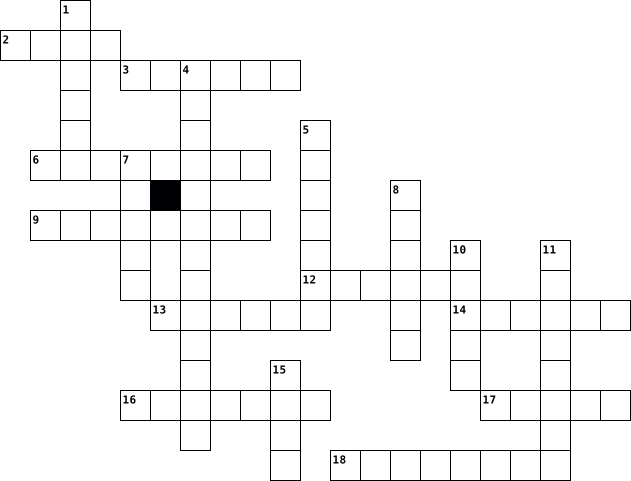
Across
- Transporting oxygen and nutrients to the lungs and tissues
- Receives oxygen-poor blood from the body and pumps it to the right ventricle
- a red protein in blood that transports oxygen
- Takes nutrients hormones and proteins
- Receive blood from the hearts upper chambers (atria)and pumps it to these of the body
- Prevent the back wand flow of blood
- Sends blood through out the body carrying oxygen to every cell
Down
- transport blood nutrients and oxygen to cells in your organs body systems
- Send electrical pulses to help your heart beat at a normal rate and rhythm
- Carry blood away from the heart
- Take waste products away from your tissues
- Carry oxygen rich blood from your heart to your body
- Prevent and stop bleeding
- Carry’s deoxygenated blood from the body to the heart
- Carries blood from the heart to the circulatory system
15 Clues: Prevent and stop bleeding • Carry blood away from the heart • Prevent the back wand flow of blood • Takes nutrients hormones and proteins • Take waste products away from your tissues • a red protein in blood that transports oxygen • Carry oxygen rich blood from your heart to your body • Carry’s deoxygenated blood from the body to the heart • ...
Circulatory System for kids 2021-02-07

Across
- carries oxygen to the all body parts and carbon dioxide to the lungs
- carries blood to the lungs
- stretches over 160 000 km
- side of the heart that pumps blood to the lungs
- which blood cells fight infection
- carries blood to the right atrium
- carries blood away from the heart
- helps your blood to thicken, or clot
Down
- more then half our blood is a clear liquid
- side of the heart that pumps blood to all parts of the body except the lungs
- the size of an adults fist
- blood in the lungs releases this
- carries blood to the heart
- which blood cells carry oxygen
- takes blood from the left ventricle
15 Clues: stretches over 160 000 km • the size of an adults fist • carries blood to the lungs • carries blood to the heart • which blood cells carry oxygen • blood in the lungs releases this • which blood cells fight infection • carries blood to the right atrium • carries blood away from the heart • takes blood from the left ventricle • helps your blood to thicken, or clot • ...
Lizzy Crossword 2023-11-17

Across
- small vein
- Instrument to measure blood pressure
- pertaining to the atrium
- Double-layered membrane surrounding the heart.
- Small artery.
- Contraction phase of the heartbeat
- Beat of the heart as felt through the walls of the arteries.
Down
- Muscular middle layer of the heart
- Gas that enters the blood through the lungs and travels to the heart to be pumped via arteries to all body cells
- pertaining to the veins
- One of two lower chambers of the heart.
- Partition or wall dividing a cavity
- pertaining to the arm
- Smallest type of blood vessel. Materials pass to and from the bloodstream through the thin capillary walls.
- Largest artery in the body
15 Clues: small vein • Small artery. • pertaining to the arm • pertaining to the veins • pertaining to the atrium • Largest artery in the body • Muscular middle layer of the heart • Contraction phase of the heartbeat • Partition or wall dividing a cavity • Instrument to measure blood pressure • One of two lower chambers of the heart. • Double-layered membrane surrounding the heart. • ...
NURC2324 CROSSWORD 2025-06-25

Across
- – Autoimmune form of diabetes mellitus.
- – Medical term for difficulty breathing.
- – Abnormal heart sound due to turbulent blood flow.
- – Chronic lung condition often caused by smoking.
- – Syndrome caused by excess cortisol production.
- – Test that records the electrical activity of the heart.
- – Hormone that raises blood glucose when it drops too low.
- – Protein elevated during a heart attack.
- – Tiny lung structures where gas exchange occurs.
Down
- – Hormone that lowers blood glucose levels.
- – Medication that reduces heart rate and blood pressure.
- – Condition caused by excessive thyroid hormone.
- – Infection that causes inflammation and fluid in the lungs.
- – Gland that regulates metabolism, located in the neck.
- – Chest pain caused by reduced blood flow to the heart.
15 Clues: – Autoimmune form of diabetes mellitus. • – Medical term for difficulty breathing. • – Protein elevated during a heart attack. • – Hormone that lowers blood glucose levels. • – Condition caused by excessive thyroid hormone. • – Syndrome caused by excess cortisol production. • – Chronic lung condition often caused by smoking. • ...
CPR Review 2024-02-08

Across
- First step of CPR
- The amount of cycles completed when giving CPR
- This medicine you can give if someone is experiencing a heart attack
- A device used when not wanting to touch mouth to mouth when performing CPR.
- 1 day old to 1 year
- This is a plumbing issue within the heart.
- Puberty and Higher.
- CPR allows this type of blood to reach vital organs.
Down
- This is an electrical issue of the heart.
- The D in AED stands for?
- What does CP in CPR stand for?
- The word for abnormal breathing is called?
- One of the vita organs the blood needs to travel to.
- The amount of compressions given when performing CPR.
- 1 year old- onset of puberty
- The amount of breaths given when performing CPR.
- This type of device sends a shock to the heart to help gain normal rhythm.
- The part of the hand used when performing CPR on a child.
18 Clues: First step of CPR • 1 day old to 1 year • Puberty and Higher. • The D in AED stands for? • 1 year old- onset of puberty • What does CP in CPR stand for? • This is an electrical issue of the heart. • The word for abnormal breathing is called? • This is a plumbing issue within the heart. • The amount of cycles completed when giving CPR • ...
Unit 5 Activity 2 2024-01-12

Across
- cardiac care unit
- part of the body that delivers blood to the tissues of the body
- this word root means artery
- atrial fibrilation
- an instrument used to measure blood pressure
- a medical word that is used in the medical field that means pulmonary
- do not resuscitate
- the smallest blood vessel that exchanges materials between the blood and tissue cells
- this is an x-ray photograph of blood or lymph vessels
- a test that uses an ultrasound to look at someones heart and vessels
Down
- proteins that your heart releases when it sustains damage
- this organ pumps blood throughout the body
- this word root means vein
- also known as an electrocardiograph
- an ultrasound to look at the blood flow through your blood vessels
- the part of the body that returns blood the heart
- a disease that causes the sac around the heart to be inflammed
- twisted or enlarged veins
18 Clues: cardiac care unit • atrial fibrilation • do not resuscitate • this word root means vein • twisted or enlarged veins • this word root means artery • also known as an electrocardiograph • this organ pumps blood throughout the body • an instrument used to measure blood pressure • the part of the body that returns blood the heart • ...
Health - Exercise pg. 1 & 2 2023-07-13
Across
- Getting exercise each day feels this way.
- Your heart is one of these and most important.
- People who exercise don't have as many health ____.
- The more you use a muscle it gets this.
- Exercise is about being physically this.
- Some benefits of exercise are physical and some are this.
- You may have a heart this, if you heart is weak.
- You need 60 minutes of exercise to get the most this.
- A strong heart won't have to pump as this.
- This means using a lot of strength, effort or energy.
Down
- Old people should ask this person before starting an exercise.
- You should do this type of exercise for muscles and bones.
- The best exercise for a person may depend upon this condition.
- Your heart's job is to pump this.
- This type of yard work can be exercise.
- Older people with theses problems should exercise too.
- People who exercise have this disease less.
- People who exercise don't get this as much.
18 Clues: Your heart's job is to pump this. • This type of yard work can be exercise. • The more you use a muscle it gets this. • Exercise is about being physically this. • Getting exercise each day feels this way. • A strong heart won't have to pump as this. • People who exercise have this disease less. • People who exercise don't get this as much. • ...
Circulation 2025-01-31

Across
- – Tiny blood vessels where gas exchange occurs.
- – Carries blood towards the heart.
- – Carries blood away from the heart.
- – The gas that red blood cells transport to tissues.
- – The movement of blood around the body.
Down
- – The protein in red blood cells that carries oxygen.
- – Structures in the heart and veins that prevent backflow of blood.
- – The rhythmic throbbing caused by blood being pumped through arteries.
- – The lower chambers of the heart.
- – The muscular organ that pumps blood around the body.
- – The arteries that supply blood to the heart muscle.
- – The upper chambers of the heart.
12 Clues: – Carries blood towards the heart. • – The lower chambers of the heart. • – The upper chambers of the heart. • – Carries blood away from the heart. • – The movement of blood around the body. • – Tiny blood vessels where gas exchange occurs. • – The gas that red blood cells transport to tissues. • – The protein in red blood cells that carries oxygen. • ...
CARDIOVASCULAR 2011-11-28

Across
- THE CARDIAC SYSTEM RESPONSIBLE FOR CONDUCTION OF A HEART RATE
- GENERALLY CARRIES OXYGEN POOR BLOOD TOWARDS THE HEART
- OUTPOUCHING OF THE ARTERIAL VESSEL WALL, CAUSING IT TO WEAKEN AND POTENTIALLY RUPTURE
- THE SIDE OF HEART FAILURE CAUSED BY INCREASED PULMONARY VASCULAR RESISTANCE; ALSO KNOWN AS COR PULMONALE
- TYPICALLY CAUSED BY INFECTION AND RESULTS IN INFLAMMATION OF THE INNERMOST AREA OF THE HEART; MAY CAUSE VALVULAR DAMAGE
- (2 WORDS)REPRESENTED AS A PERCENTAGE OF SV OVER EDV
- (2 WORDS)VOLUME OF BLOOD CIRCULATING MEASURED IN L/MIN
- THICKENING AND HARDENING OF THE ARTERIAL VESSELS WITH FAT AND FIBRIN
- MORE LIKELY TO OCCUR IN THE VENUS SYSTEM, THIS CLOT OBSTRUCTS BLOOD FLOW
- A HYPOTENSIVE CRISIS THAT OCCURS DURING A POSITION CHANGE; COMMONLY CAUSED BY BP MEDICATIONS
- TYPICALLY CAUSED BY INFECTION AND RESULTS IN INFLAMMATION OF THE SAC SURROUNDING THE HEART
- EITHER PRIMARY OR SECONDARY RESULTING IN INCREASED CARDIAC OUTPUT AND PERIPHERAL RESISTANCE
- A REFLECTION OF BOTH VOLUME AND PRESSURE IN THE VENTRICLE AT THE END OF DIASTOLE
- GENERALLY CARRIES OXYGEN RICH BLOOD AWAY FROM THE HEART
- ABBREVIATION FOR THE FAILURE OF 2 OR MORE ORGAN SYSTEMS; THE MOST COMMONLY CAUSED BY SHOCK OR SEPSIS
Down
- COMPRISED OF LEAFLETS, THESE STRUCTURES CONTROL THE FLOW OF BLOOD BETWEEN CHAMBERS OF THE HEART AND GREAT VESSELS
- PROLONGED ABSENCE OF OF FLOW AND PERFUSION TO TISSUE, RESULTING IN CELLULAR DEATH
- THICKENING AND HARDENING OF THE ARTERIAL VESSELS WITH COLLAGEN
- THE SIDE OF HEART FAILURE CAUSED BY AN INCREASE IN EDV AND PRELOAD; ALSO KNOWN AS CHF
- WHEN STABLE, THIS OCCURS DURING EXERTION AND IS RELIEVED BY REST AND NTG
- A MEDICAL EMERGENCY WHERE PRESSURE CAUSES CARDIAC COMPRESSION, IMPAIRING THE ABILITY OF THE HEART CHAMBERS TO FILL
- HAS MANY ETIOLOGIES, BUT SHARES THE SIMILAR CONCEPT OF FAILURE OF THE CARDIOVASCULAR SYSTEM TO ADEQUATELY PERFUSE THE TISSUES
- RESISTANCE OF BLOOD EJECTION FROM THE LEFT VENTRICLE
- AN ELEVATED LESION CONSISTING OF SMOOTH MUSCLE CELLS SURROUNDED BY LIPIDS, COLLAGEN, ELASTIC FIBERS, AND A MUCOPROTEIN MATRIX
- DELIVERY OF OXYGEN RICH BLOOD TO TISSUES VIA THE CIRCULATORY SYSTEM
- FLUID ACCUMULATION SECONDARY TO PERICARDITIS
- LIMITED BLOOD FLOW AND PERFUSION TO TISSUE; REVERSIBLE PROCESS
27 Clues: FLUID ACCUMULATION SECONDARY TO PERICARDITIS • (2 WORDS)REPRESENTED AS A PERCENTAGE OF SV OVER EDV • RESISTANCE OF BLOOD EJECTION FROM THE LEFT VENTRICLE • GENERALLY CARRIES OXYGEN POOR BLOOD TOWARDS THE HEART • (2 WORDS)VOLUME OF BLOOD CIRCULATING MEASURED IN L/MIN • GENERALLY CARRIES OXYGEN RICH BLOOD AWAY FROM THE HEART • ...
Cardiovascular Crossword 2023-04-17

Across
- small vessesl that carry blood between arterioles and venules
- any of the small terminal twigs of an artery that ends in capillarie
- a chamber of the heart that receives blood from the veins and forces it into a ventricle or ventricles
- The blood vessels that return the blood to the heart
- a small blood vessel in the microcirculation that allows deoxygenated blood to return from capillary beds to larger blood vessels called veins
- the major blood vessel that carries blood away from the heart to the rest of the body
- clear fluid that fills the spaces around the body cell
- Condition that is present at birth
- the measure of the amount of force that the blood places on the wall of blood vessels, particularly large artertes as it is pumped through the body
- a disease in which plaque builds up inside your arteries
- a body part that exercises a particular function
- delivers oxygen, hormones and nutrients to the cells and carries away the waste the cells produce
- cells that prevent the bodys loss of blood
- A type of disease that affects the heart or blood vessels. Usual caused by smoking and bad eating habits
Down
- Condition in which the ability of the blood to carry oxygen is reduced
- A type of blood cell that is made in the bone marrow and found in the blood and lymph tissue
- specialized white blood cells that provide the body with immunity and protects the body from pathogens
- opens and closes to ensure that blood flows in the correct direction
- the circulation of blood between the heart and lungs
- either of two large veins discharging blood into the right atrium of the heart
- the circuit of vessels supplying oxygenated blood to and returning deoxygenated blood from the tissues of the body
- the pump that makes the cardiovascular system work. The most important muscle in the body
- the number of times the heart beats within a certain time period, usually a minute
- used to transport blood. Three main types
- Group of diseases that include hypertension and stroke
- the fluid in which other parts of the blood are suspended
- colorless odorless gas
- the blood vessels that carry blood away from the heart
- the oxygen-carrying protein in blood
29 Clues: colorless odorless gas • Condition that is present at birth • the oxygen-carrying protein in blood • used to transport blood. Three main types • cells that prevent the bodys loss of blood • a body part that exercises a particular function • the circulation of blood between the heart and lungs • The blood vessels that return the blood to the heart • ...
Cardiovascular System NPB101 2024-05-26

Across
- Small terminal fibers of the pacemaker cells in the heart that extend from the Bundle of His
- These blood vessels have the smallest diameter; there are approximately 10 billion of them in our body
- This term describes the size of the blood vessel, where the friction between blood and the inner surface of the vessel is inversely proportional to this term.
- This factor changes the solute concentration to adapt to the local metabolic changes
- These are large blood vessels that form by multiple venules, bringing oxygen-poor blood back to the blood
- This term describes the bulk flow to and from the tissue, which occurs when the net pressure is positive
- This can be seen in EKG; this component represents the electrical depolarization of the atria
- During exercise, 88% of the blood flow to this tissue
- This fluid can be found in the space outside of blood vessels that helps bring nutrients and oxygen to the blood
- This term describes the bulk flow to and from the capillaries, which occurs when the net pressure is negative
- This is a thin membrane outside of the heart protects the heart with pericardial fluid
- One of the two mechanisms that capillary exchanges materials, where substances in the blood move independently down the concentration gradient
- When this system is activated, the permeability of K+ increases
Down
- This neurotransmitter helps mediate the parasympathetic system
- These are large blood vessels that carry oxygen-rich blood from the heart to the organs & body cells
- This value is determined by heart rate and stroke volume
- This effect in blood caused by heart damage can lead to heart failure
- When this system is activated, the heart rate slows down
- This mechanoreceptor relays information about blood pressure; they are sensitive to changes in blood pressure to help regulate it
- When the blood pressure is high, above 140/90 mmHg
- One of the two mechanisms that capillary exchanges materials, where plasma flows in and out through the pores in the capillary wall
- This neurotransmitter helps mediate the sympathetic system
- This is an abnormal heart sound due to defective valve function
- The number of heartbeats per unit of time, it is often measured in beats per minute
- The innermost layer of lining in the interior of the heart's chamber
25 Clues: When the blood pressure is high, above 140/90 mmHg • During exercise, 88% of the blood flow to this tissue • This value is determined by heart rate and stroke volume • When this system is activated, the heart rate slows down • This neurotransmitter helps mediate the sympathetic system • This neurotransmitter helps mediate the parasympathetic system • ...
The Circulatory Story - Vocabulary 1 2022-09-11

Across
- to carry from one place to another
- someone who specializes in the heart
- having the form of a circle
- a protective sac that encloses the heart
Down
- exercise that raises one's heart rate
- the downstairs 'rooms' of the heart
- the left side of the heart receives blood from the ______
- the heart has two of these, a right and left
- having to do with the heart
- the upstairs 'rooms' of the heart are called the
- a protein found in red blood cells that carries oxygen
11 Clues: having to do with the heart • having the form of a circle • to carry from one place to another • the downstairs 'rooms' of the heart • someone who specializes in the heart • exercise that raises one's heart rate • a protective sac that encloses the heart • the heart has two of these, a right and left • the upstairs 'rooms' of the heart are called the • ...
The Circulatory System 2023-03-06

Across
- The sinus node that allows your heart to beat
- The low-pressure part of the heart
- carries blood to the heart
- A thick wall of tissue that separates the heart into two sides
- A large vein that carries blood to the heart
- The high-pressure part of the heart
Down
- carries blood away from the heart
- Only found in the heart
- The smallest type of blood vessel
- Lets blood into the ventricle from the atrium
- The largest blood vessel in the body
11 Clues: Only found in the heart • carries blood to the heart • carries blood away from the heart • The smallest type of blood vessel • The low-pressure part of the heart • The high-pressure part of the heart • The largest blood vessel in the body • A large vein that carries blood to the heart • The sinus node that allows your heart to beat • ...
Blood Vessels 2022-04-27

Across
- Liver to body
- Body to kidney
- From small intestine to the liver
- Lungs to heart
- Thick muscular wall to withstand high pressure
Down
- Heart to body
- Heart to liver
- Thin wall, one cell thick to speed up diffusion
- Body to heart
- Heart to lungs
- Kidney to body
- Has valves to control the flow of blood
12 Clues: Heart to body • Liver to body • Body to heart • Heart to liver • Body to kidney • Heart to lungs • Kidney to body • Lungs to heart • From small intestine to the liver • Has valves to control the flow of blood • Thick muscular wall to withstand high pressure • Thin wall, one cell thick to speed up diffusion
circulatory-system-unit-crossword-puzzle 2022-11-15

Across
- A blood vessel that carries blood from the heart to parts of the body
- A chamber of the heart that receives blood with a thin wall and the heart has two of them.
- Is the smallest type of blood vessel and transports blood nutrient and oxygen to cells.
- Meaning without/lacking blood (hemoglobin or RBC). Effect o2 delivery due to iron deficiency, excess bleeding, lack of red blood cell production and more. Causes tirenss,weakness dizziness and more.
- A network of tubes throught out the body that picks up excess fluids that leak into the tissues and empties it back into the heart where it goes into circulation again.
- A blood vessel that carries blood away from the heart from parts of the body
- Meaning white blood cell and it is found in blood and lymph tissue where it is part of the body’s immune system. Its main function is to protect the body from infection and disease.
- (BPM) is the number of times the heart beats within a certain time.
- a blood clot that formed inside vein or arteries (blood vessel)
Down
- Is the buildup of fat (cholesterol, plaque and other substance) in the arteries or artery walls. Can cause heart attack and high blood pressure.
- Abnormal bulge in the wall of the arteries that weakens the walls as time goes on, can be caused by injury, infection and high blood pressure.
- Meaning red blood cell and contain a protein called hemoglobin, it is produced in bone marrow and transport oxygen (O2)
- One of major types of blood cell. It looks like a disc shaped that is made in the bone marrow and is important for slowing or stopping blood clots by having thromboplastin in them.
- A chamber of the heart that delivers blood with a thick wall and has two of them in the heart.
- A thick muscular wall that separates the heart left and right.
- volume is the amount of blood pumped out of the heart with each heartbeat.
16 Clues: A thick muscular wall that separates the heart left and right. • a blood clot that formed inside vein or arteries (blood vessel) • (BPM) is the number of times the heart beats within a certain time. • A blood vessel that carries blood from the heart to parts of the body • volume is the amount of blood pumped out of the heart with each heartbeat. • ...
Cardiovascular and Respiratory System Crossword 2016-05-05

Across
- The force that blood exerts on the walls of the arteries
- The upper chambers of the heart
- Blood vessels that carry blood to the heart
- A collection of organs that transports blood throughout the body
- A collection of organs whose primary function is to take in oxygen and expel carbon dioxide
- The exchange of oxygen and carbon dioxide between living cells and their environment, which includes breathing and cellular respiration
Down
- The circulation of blood between your heart and lungs
- When oxygen is used by cells to release energy stored in molecules of the sugar glucose
- A tiny blood vessel that allows an exchange between blood and cells in tissue
- Blood vessels that carry blood away from the heart
- The circulation of blood between your heart and the rest of your body
- Flaplike structures that open and close to prevent blood from flowing backward
- An organ that pumps blood throughout the body
- The fluid that carries gases, nutrients, and waste through the body and it is made up of platelets, white blood cells, red blood cells, and plasma
- The lower chambers of the heart
15 Clues: The upper chambers of the heart • The lower chambers of the heart • Blood vessels that carry blood to the heart • An organ that pumps blood throughout the body • Blood vessels that carry blood away from the heart • The circulation of blood between your heart and lungs • The force that blood exerts on the walls of the arteries • ...
CIRCULATORY SYSTEM 2024-08-13

Across
- Vessels that carry deoxygenated blood from the body back to the heart.
- Helps blood clot which seals cuts and prevents excess to blood loss.
- Vessels that carry oxygenated blood away from the heart to other parts of the body.
- Tiny tubes that carry blood from the arteries to the cells, and back to the veins.
- It is an artery that carries carbon dioxide-rich blood.
- another term for circulatory system, the transport system of body.
- movement of blood from the heart to the lungs and back to the heart.
- movement of blood through tissues of heart
- these are similar to highways and streets where the blood cells will pick up or deliver.
- Partition between the atria
Down
- movement of blood from the heart to the rest of the body, excluding the lungs.
- Partition between the ventricles
- what do you call the part of circulatory system that serves as the traffic enforcer that directs the flow of blood cells.
- they pick up oxygen, nutrients and hormones and deliver to the cells.
- It is the largest artery.
15 Clues: It is the largest artery. • Partition between the atria • Partition between the ventricles • movement of blood through tissues of heart • It is an artery that carries carbon dioxide-rich blood. • another term for circulatory system, the transport system of body. • Helps blood clot which seals cuts and prevents excess to blood loss. • ...
Cardio: Heart disease 2025-03-17

Across
- _______ heart failure: the end state of heart failure
- Dirofilaria immitis
- Patients with end-stage heart failure exhibiting clinical signs that are refractory to standard therapy
- cardiomyopathy that causes ascites, anorexia and weight loss, syncope, and symptoms associated with poor perfusion.
- heart ______ is any clinical finding in the cardiac system that falls outside normal limits
Down
- type of heart disease that consists of 75-80% of all canine heart disease. Most common cause is endocardiosis
- (type of cardiomyopathy) most common cause of heart disease in cats. Abnormal thickening of the left ventricle. Can be genetic
- Patient is high risk for heart disease, no current disorder
- Patient has structural heart disease but no clinical signs: 1 contains no symptoms and no radiographic or ultrasound evidence. 2 contains no symptoms and radiographic or ultrasound evidence is present
- heart ________ is the inability of the heart to deliver enough blood to the tissues to meet metabolic demands.
- Patient with past or current clinical signs of heart failure associated with structural heart disease
11 Clues: Dirofilaria immitis • _______ heart failure: the end state of heart failure • Patient is high risk for heart disease, no current disorder • heart ______ is any clinical finding in the cardiac system that falls outside normal limits • Patient with past or current clinical signs of heart failure associated with structural heart disease • ...
CV Responses 2022-11-28

Across
- ________ receptors are located in the carotid sinus and the aortic arch
- restoration of proteins could take several _____ following hemorrhage
- ______-sided failure -> systemic edema & pleural effusion
- ________ and intergrins signaling -> important role in inflammation; myocarditis
- restoration of RBCs could take several _______
- in severe bleeding, abdominal veins and spleen are _______ to help increase volume.
- produced by adrenal medulla, heart, lungs and kidneys; vasodilator and natriuretic action
- increased _________: pulmonic or aortic stenosis; pulmonary hypertension
- reduced renal blood perfusion due to heart failure stimulates _______
Down
- fast response to a drop in blood pressure
- supraventricular tachycardia, atrial fibrillation, complete heart block
- volume _________: dilated cardiomyopathy, valvular insufficiency
- the baroreflex will activate _______ cardiovascular control centers and generate a sympathetic response
- the arterial baroreflex and atrial volume receptor reflex take place in ________ (time)
- receptors involved in increased sympathetic tone to the heart due to low blood pressure
- ______-sided failure -> pulmonary edema
- heart failure compensation: tissue ischemia to non-vital organs->the rise in TPR _______ stroke volume
- decreased _________: pericardial effusion, AV valve stenosis, hypertrophic cardiomyopathy
18 Clues: ______-sided failure -> pulmonary edema • fast response to a drop in blood pressure • restoration of RBCs could take several _______ • ______-sided failure -> systemic edema & pleural effusion • volume _________: dilated cardiomyopathy, valvular insufficiency • restoration of proteins could take several _____ following hemorrhage • ...
E7 Review Set 1 Part 1 2014-11-20

Across
- very easy to see, noticeable
- to dishearten
- a guide to the ideas of a book, gets to the heart of the topic
- speaking two languages
- agreement, reaching one heart
- an insect with many legs
- a conversation between two or more people.
- a period of 100 years
Down
- lack of agreement or harmony
- happening once every 200 years, celebrating 200 years
- a muscle with two origins
- having two centers of vision
- double-dealing, trickery, not being honest, acting 2 different ways to different people or groups, two-faced
- quality of having a brave heart
- the Ten Commandments
- a ten footed creature, such as a crab or shrimp
- music for two performers
- combat between two people or armies
- with heart-felt warmth
19 Clues: to dishearten • the Ten Commandments • a period of 100 years • speaking two languages • with heart-felt warmth • an insect with many legs • music for two performers • a muscle with two origins • lack of agreement or harmony • very easy to see, noticeable • having two centers of vision • agreement, reaching one heart • quality of having a brave heart • combat between two people or armies • ...
Kelley Ch 8 Cardiac MT 2026-01-22

Across
- fainting
- (abbreviation) automated external defibrillator
- elevated blood pressure
- emergency treatment to restart the heart with an electrical current
- Procedure recording the spread of electrical excitation of different parts of the heart using small metal electrodes
- (med word) muscle
- (abbreviation) coronary artery bypass graft
- (abbreviation) coronary artery disease
Down
- endovascular procedure that reopens narrowed blood vessels to restore blood flow
- (med word) blood vessel
- (abbreviation) automatic implantable cardioverter-defibrillator
- excessive amounts of lipids in the blood
- (med word) chest pain
- Ultrasound test that produces moving images of blood passing through the heart, valves, and chambers (assesses cardiac output)
- irregularity in the rate/rhythm of the heart
- (abbreviation) atrioventricular
- (abbreviation) abdominal aortic aneurysm
- (med word) embolus (plug)
- (med word) blood clot
19 Clues: fainting • (med word) muscle • (med word) chest pain • (med word) blood clot • (med word) blood vessel • elevated blood pressure • (med word) embolus (plug) • (abbreviation) atrioventricular • (abbreviation) coronary artery disease • excessive amounts of lipids in the blood • (abbreviation) abdominal aortic aneurysm • (abbreviation) coronary artery bypass graft • ...
Human body review 2023-01-10

Across
- Passage that directs air into the lungs
- Finger shaped structures that absorb food
- Helps create scabs
- Transports oxygen through the blood
- Smallest blood vessels
- Upper chamber of the heart
- Carries blood back to the heart
- Lower chamber of the heart
Down
- Fights Diseases
- Transports oxygen,waste,nutrients
- Exchanges oxygen with carbon dioxide
- Breaks down food into smaller pieces
- Liquid part of blood
- Carries blood away from the heart
- Filters blood inside the kidney
15 Clues: Fights Diseases • Helps create scabs • Liquid part of blood • Smallest blood vessels • Upper chamber of the heart • Lower chamber of the heart • Filters blood inside the kidney • Carries blood back to the heart • Transports oxygen,waste,nutrients • Carries blood away from the heart • Transports oxygen through the blood • Exchanges oxygen with carbon dioxide • ...
Ava's cross word puzzle 2024-05-15

Across
- A process that plants go through
- The upper Chambers of the heart
- Small veins
- Carry blood away from the heart
- Regulate temperature
- Small fragments of cells
- Hip bone
Down
- Carry blood back to the heart
- The protein in red blood cells that carries oxygen
- Longest bone in your arm
- The liquid part of the blood
- Blood is apart of the ___________ system
- ____ & Socket joint
- Lower chambers of the heart
- On the top of your knee
15 Clues: Hip bone • Small veins • ____ & Socket joint • Regulate temperature • On the top of your knee • Longest bone in your arm • Small fragments of cells • Lower chambers of the heart • The liquid part of the blood • Carry blood back to the heart • The upper Chambers of the heart • Carry blood away from the heart • A process that plants go through • Blood is apart of the ___________ system • ...
parts of the heart 2025-03-11

Across
- makes blood flow in one direction
- supply blood to heart
- carries blood through the body
- oxygenates blood from left side
- recieves oxygen from right side
- prevents backflow of blood
Down
- carries unoxygenated blood to heart
- controls blood flow to heart
- carry oxygenated blood to heart
- carries unoxygenated blood to heart
- oxygenates blood from right side
- transports oxygenated blood to the rest of body
- transports unoxygenated blood to abdomin
- separates oxygen and c02 heavy blood
- recieves oxygen from left side
- regulates blood flow
16 Clues: regulates blood flow • supply blood to heart • prevents backflow of blood • controls blood flow to heart • carries blood through the body • carry oxygenated blood to heart • recieves oxygen from left side • oxygenates blood from left side • recieves oxygen from right side • oxygenates blood from right side • makes blood flow in one direction • carries unoxygenated blood to heart • ...
Cardiovascular System Crossword 2025-05-08

Across
- A large vein that carries blood to the heart from other areas of the body
- A platelet
- Upper chambers of the heart
- A white blood cell
- Blood vessels that carry oxygen-poor
- Blood vessels that carry oxygen-rich blood
- A red blood cell
- Thin, smooth tissue
Down
- Lower chambers of the heart
- Largest blood vessel
- Second type of vessel
- Smallest blood vessel
- Cardiac muscle
- Vessels in your body
- Keeps heart in a stable location
15 Clues: A platelet • Cardiac muscle • A red blood cell • A white blood cell • Thin, smooth tissue • Largest blood vessel • Vessels in your body • Second type of vessel • Smallest blood vessel • Lower chambers of the heart • Upper chambers of the heart • Keeps heart in a stable location • Blood vessels that carry oxygen-poor • Blood vessels that carry oxygen-rich blood • ...
Cardiovascular terms 2023-03-27

Across
- irregular sounds of the heart
- fast heart rate
- is a problem with the rate or rhythm of your heartbeat
- carry oxygenated blood away from the heart
- a small device used to treat some arrhythmia
Down
- procedure involving repeated compressions of a patients chest
- heart muscles relax and allow the chambers to fill with blood
- cycle a series of pressure changes within the heart
- blood vessels located throughout the body
- heart muscle contracts and pumps blood from the chambers into the arteries
- a condition that develops when your heart doesn't pump enough blood
11 Clues: fast heart rate • irregular sounds of the heart • blood vessels located throughout the body • carry oxygenated blood away from the heart • a small device used to treat some arrhythmia • cycle a series of pressure changes within the heart • is a problem with the rate or rhythm of your heartbeat • procedure involving repeated compressions of a patients chest • ...
Circulatory system 2024-11-21

Across
- pump blood
- a blood vessel that carries blood away from the heart
- a blood vessels where the gas fluid and gas exchange happen
- a valve with 3 flaps
- a pathway that delivers blood to the upper and lower parts of the body
- a type of blood pressure that is measured when the heart relaxes
- stop the blood flow from flowing back
- carry blood toward the heart
Down
- the roadway for the blood to travel
- the largest artery in the body
- separate the atria and ventricle
- 2 flaps values (also known as Mitral valve)
- the amount of blood pumped by each beat of the heart
- vein that delivers deoxygenated blood from all over the body to the heart
14 Clues: pump blood • a valve with 3 flaps • carry blood toward the heart • the largest artery in the body • separate the atria and ventricle • the roadway for the blood to travel • stop the blood flow from flowing back • 2 flaps values (also known as Mitral valve) • the amount of blood pumped by each beat of the heart • a blood vessel that carries blood away from the heart • ...
Physiology Terms 2023-02-08

Across
- Heart chamber that receives blood into the heart and drivesit into a ventricle, or chamber, for pumping blood away from the heart
- the membrane enclosing the heart
- A blood vessel that carries blood to the heart from tissues and organs in the body
- blood vessels that distribute oxygen-rich blood to your entire body
- rupture of red blood cells (destruction)
- delicate blood vessels that exist throughout your body
- any of the many tiny air sacs of the lungs which allow for rapid gaseous exchange
- Cava A large vein that carries blood to the heart from other areas of the body
Down
- the pressure of the blood in the circulatory system
- toxin or other foreign substance which induces an immune response in the body, production of antibodies
- the airway that leads from the larynx to the bronchi
- a hollow part or cavity in an organ
- the number of times the heart beats within a certain time period
- A tiny branch of air tubes in the lungs
- large airway that leads from the trachea (windpipe) to a lung
15 Clues: the membrane enclosing the heart • a hollow part or cavity in an organ • A tiny branch of air tubes in the lungs • rupture of red blood cells (destruction) • the pressure of the blood in the circulatory system • the airway that leads from the larynx to the bronchi • delicate blood vessels that exist throughout your body • ...
CPR/AED Review 2013-03-08

Across
- The heart works as a mechanical____ to circulate blood through the body.
- These should always be worn when dealing with a casualty.
- Number of back blows and chest thrusts to be peformed on a conscious choking infant.
- Caused by a lack of oxygenated blood to the brain. Lasts no more than 24 hours.
- An abrupt, complete loss of heart function that results in loss of blood circulation with in the body (3 words).
- When part of the heart muscle dies due to a blood clot (2 words).
- The number of minutes before brain damage occurs when it is deprived of oxygen.
Down
- The AED can only be used on a casualty who is _____ and not breathing.
- The heart works in 2 parts, one part is an _____ conduction system.
- A non-shockable heart rthythm also known as flatline.
- A shockable heart rhythm.
- Caused by lack of oxygenated blood to the heart. No permanent damage. Can be aided by rest and medication.
- A first aid treatment that will allow the heart to reset itself to a more coordinated rhythm for a casualty in Sudden Cardiac Arrest.
- Number of compressions to be performed prior to delivering breaths in CPR sequence.
- A blood clot or a ruptured blood vessel in the brain causing permanent damage.
15 Clues: A shockable heart rhythm. • A non-shockable heart rthythm also known as flatline. • These should always be worn when dealing with a casualty. • When part of the heart muscle dies due to a blood clot (2 words). • The heart works in 2 parts, one part is an _____ conduction system. • The AED can only be used on a casualty who is _____ and not breathing. • ...
Ch. 7 Crossword puzzle 2025-04-11

Across
- A substance that is involved in the clotting of blood is _______.
- A fatty substance called ______ is found in meats, dairy products, and egg yolks.
- Blood is carried from the heart to other parts of the body by ______.
- Supplying oxygen to and eliminating carbon dioxide from the bloodstream is the job of the _______ system.
- Blood is carried to the heart from other parts of the body by _____.
- High-density lipoproteins appear to help prevent ______.
- Exercising steadily enough for the heart to supply oxygen needed by the muscles is _____ activity.
Down
- Excess cholesterol is carried out of the bloodstream by _____ lipoproteins and eliminated.
- Cholesterol is carried through the bloodstream by particles called _______.
- Moving oxygen and nutrients to body cells and removing cell wastes is the job of the _______ system.
- The heart of a fit person beats 9.5 million times ______ each year than that of an average person.
- Cholesterol that will probably stay in the bloodstream is carried by ________ lipoproteins.
- The number of times the heart beats per minute when a person is inactive is the ____ heart rate.
- Exercising in short, fast bursts is _____ activity.
- Your _____ is the number of times your heart beats per minute to pump blood through the body.
15 Clues: Exercising in short, fast bursts is _____ activity. • High-density lipoproteins appear to help prevent ______. • A substance that is involved in the clotting of blood is _______. • Blood is carried to the heart from other parts of the body by _____. • Blood is carried from the heart to other parts of the body by ______. • ...
Cardiovascular System Crossword Puzzle 2025-05-06

Across
- any of the tubes forming part of the blood circulation system of the body, carrying in most cases oxygen-depleted blood toward the heart
- keeps the heart in a stable location in the mediastinum, facilitates its movements, and separates it from the lungs and other mediastinal structures
- unique veins that carry oxygenated blood from the lungs back to the heart, specifically the left atrium
- the middle layer of the heart's wall, composed of cardiac muscle tissue
- each of the two upper cavities of the heart from which blood is passed to the ventricles
- a hollow part or cavity in an organ
- the body's largest artery, responsible for carrying oxygen-rich blood from the heart to the rest of the body
- the Platelets
Down
- the thin, smooth membrane which lines the inside of the chambers of the heart and forms the surface of the valves
- The white blood cells
- A large vein that carries blood to the heart from other areas of the body
- blood vessels that carry oxygen-poor blood from the right side of your heart to your lungs
- the Red blood cells
- any of the muscular-walled tubes forming part of the circulation system
- any of the fine branching blood vessels that form a network between the arterioles and venules
15 Clues: the Platelets • the Red blood cells • The white blood cells • a hollow part or cavity in an organ • the middle layer of the heart's wall, composed of cardiac muscle tissue • any of the muscular-walled tubes forming part of the circulation system • A large vein that carries blood to the heart from other areas of the body • ...
Circulatory System 2023-01-17

Across
- a small blood cell that helps the blood to clot
- a tiny blood vessel
- the artery that carries blood from the right ventricle to the lungs
- a blood cell that fights infection by destroying microscopic, disease-causing organisms
- a blood cell that carries oxygen throughout the body
- structures that open and close to control blood flow through the heart
- a waste product in the blood that comes from the
- a blood vessel that carries blood to the heart
Down
- system the body system that includes the heart,blood vessels, and blood
- of proteins
- a tube in the body through which blood flows
- either of the two lower chambers of the heart that pumps blood through arteries
- the vein that carries blood from the lungs to the left atrium
- the muscular organ that pumps blood throughout the body
- a blood vessel that carries blood away from the heart
15 Clues: of proteins • a tiny blood vessel • a tube in the body through which blood flows • a blood vessel that carries blood to the heart • a small blood cell that helps the blood to clot • a waste product in the blood that comes from the • a blood cell that carries oxygen throughout the body • a blood vessel that carries blood away from the heart • ...
Medical and social aspect of AID ,STI,CARDIOVASCULAR DISEASE. 2025-03-10

Across
- A law that protects people with HIV from discrimination
- A key method in preventing STDs, involving education and awareness
- An emergency medication taken after potential exposure to HIV.
- A fatty substance that can block arteries, leading to heart disease.
- A treatment that helps people with HIV live longer, healthier lives.
- A major risk factor for heart disease, associated with excess weight.
- A medical test to detect HIV infection.
Down
- A major cause of heart attacks, involving reduced blood flow to the heart.
- A lifestyle change that helps prevent cardiovascular diseases.
- A common symptom of HIV/AIDS due to immune system failure.
- A type of cardiovascular event caused by blocked blood flow to the heart.
- A disease that weakens the immune system and increases infection
- A program that provides free condoms to reduce STD transmission.
- condition characterized by high blood sugar, increasing heart disease risk.
- A global health organization combating STDs and AIDS (abbr.).
15 Clues: A medical test to detect HIV infection. • A law that protects people with HIV from discrimination • A common symptom of HIV/AIDS due to immune system failure. • A global health organization combating STDs and AIDS (abbr.). • A lifestyle change that helps prevent cardiovascular diseases. • An emergency medication taken after potential exposure to HIV. • ...
Complications of hypertention 2026-04-02

Across
- Unexpected death from heart problems caused by high blood pressure
- Fluid accumulation in the lungs due to high blood pressure
- Loss of kidney function due to long-term high blood pressure
- Narrowing of heart arteries due to hypertension
- Thickening of the heart’s left pumping chamber
- Tear in the wall of the main artery from the heart
- Ballooning of a weakened blood vessel wall
Down
- Reduced blood flow to limbs due to artery damage
- Death of heart muscle due to lack of blood flow
- Bleeding inside the brain caused by high blood pressure
- Damage to the retina caused by high blood pressure
- Sudden blockage of blood supply to the brain
- Chest pain caused by reduced blood flow to the heart
- Complete or partial loss of eyesight from damaged blood vessels in the eyes
- Condition where the heart cannot pump blood effectively
15 Clues: Ballooning of a weakened blood vessel wall • Sudden blockage of blood supply to the brain • Thickening of the heart’s left pumping chamber • Death of heart muscle due to lack of blood flow • Narrowing of heart arteries due to hypertension • Reduced blood flow to limbs due to artery damage • Damage to the retina caused by high blood pressure • ...
cardiovascular system 2018-10-02

Across
- the name of the muscle that splits the heart in half
- the name given when your heart rate is below 60 beats per minute
- the blood vessel that takes deoxygenated blood out of the heart to the lungs
- the volume of blood ejected from the left ventricle per beat
- the valve found on the left side of the heart
Down
- the bloodvessel that brings oxygenated blood into the heart from the lungs
- this times stroke volume gets you your cardiac output
- the blood vessel that carries oxygenated blood out of the heart to the rest of the body
- volume of blood ejected from the left ventricle per minute
- the name given to the vena cava at the top of the heart
- what heart rate is measured in
- the side of the heart with a bigger muscular wall
12 Clues: what heart rate is measured in • the valve found on the left side of the heart • the side of the heart with a bigger muscular wall • the name of the muscle that splits the heart in half • this times stroke volume gets you your cardiac output • the name given to the vena cava at the top of the heart • volume of blood ejected from the left ventricle per minute • ...
L6 Heart Failure: Therapeutic Classes and Uses 2024-09-19

Across
- Inhibitors Used to decrease hospitalization and mortality in heart failure regardless of diabetes status.
- Inhibitors Class I recommended treatment for HFrEF patients.
- Diuretics First-line diuretic for fluid retention in heart failure.
- Receptor Antagonist Used in combination with ACE inhibitors or ARBs in heart failure.
- Device therapy for patients with LVEF ≤ 35% and QRS ≥ 150 ms.
- Used to lower heart rate in patients who are still symptomatic on beta-blockers.
Down
- Vasodilator used in combination with nitrates in heart failure treatment.
- Dinitrate Used with hydralazine to reduce preload and treat heart failure.
- Blockers Class I drug for reducing heart rate and improving survival in heart failure.
- Angiotensin receptor-neprilysin inhibitor, used to reduce mortality in HFrEF.
- Implantable cardioverter-defibrillator, used for preventing sudden cardiac death.
- Stimulates soluble guanylate cyclase, reducing heart failure symptoms.
12 Clues: Inhibitors Class I recommended treatment for HFrEF patients. • Device therapy for patients with LVEF ≤ 35% and QRS ≥ 150 ms. • Diuretics First-line diuretic for fluid retention in heart failure. • Stimulates soluble guanylate cyclase, reducing heart failure symptoms. • Vasodilator used in combination with nitrates in heart failure treatment. • ...
Anatomical Terms of heart 2025-05-19

Across
- The two lower chambers of the heart, pumping blood out to the lungs and body.
- The lower right chamber, pumping deoxygenated blood to the lungs through the pulmonary artery.
- The upper left chamber, receiving oxygenated blood from the lungs through the pulmonary veins.
- The upper right chamber, receiving deoxygenated blood from the body through the superior and inferior vena cava
- The wall separating the right and left ventricles.
- The inner layer of the heart wall, lining the heart chambers and valves.
- The two upper chambers of the heart, receiving blood from the body and lungs.
- The valve between the left ventricle and the aorta, preventing backflow of blood.
- The valve between the right ventricle and the pulmonary artery, preventing backflow of blood.
Down
- The outer layer of the heart wall, also known as the visceral pericardium, fused to the heart.
- The lower left chamber, pumping oxygenated blood to the body through the aorta.
- The thick, muscular middle layer of the heart wall, responsible for pumping blood.
- The valve between the right atrium and right ventricle, preventing backflow of blood.
- The sac that surrounds the heart, protecting it and providing lubrication. It consists of a fibrous outer layer and a serous inner layer.
- The valve between the left atrium and left ventricle, also known as the bicuspid valve.
15 Clues: The wall separating the right and left ventricles. • The inner layer of the heart wall, lining the heart chambers and valves. • The two lower chambers of the heart, pumping blood out to the lungs and body. • The two upper chambers of the heart, receiving blood from the body and lungs. • ...
CV and Respiratory system 2023-07-17

Across
- muscle that allows the lungs to expand and relax
- carry blood away from the heart
- when the heart relaxes and fills with blood
- air volume left in the lungs
- bottom chamber in the heart
- carry deoxygenated blood
Down
- where gaseous exchange happens at the muscle tissue
- two tubes in the airway that lead to the lungs
- protein in red blood cells
- air volume taking in a breath
- air sacs where gaseous exchange happens
- largest blood vessel in the body
- when the heart contracts and pumps blood out
- top chamber in the heart
14 Clues: top chamber in the heart • carry deoxygenated blood • protein in red blood cells • bottom chamber in the heart • air volume left in the lungs • air volume taking in a breath • carry blood away from the heart • largest blood vessel in the body • air sacs where gaseous exchange happens • when the heart relaxes and fills with blood • when the heart contracts and pumps blood out • ...
Science 2023-10-31

Across
- lower chamber of heart
- where digestion begins
- brings blood away from heart
- organ that exchanges O2 to CO2
- large muscular sack
- allows air to pass through and from the lungs
- Building block of life
Down
- - Liquid part of blood
- that connects mouth to stomach
- upper chamber of heart
- direct passage of air into the lungs
- brings blood back to heart
- intestine absorbs water
- intestine absorbs nutrients
14 Clues: large muscular sack • - Liquid part of blood • lower chamber of heart • upper chamber of heart • where digestion begins • Building block of life • intestine absorbs water • brings blood back to heart • intestine absorbs nutrients • brings blood away from heart • that connects mouth to stomach • organ that exchanges O2 to CO2 • direct passage of air into the lungs • ...
NHA Domain 3 2024-04-22

Across
- do use this method for irregular rhythms
- time it takes for SA node fires
- being generated at the AV junction and electrical activity to the atria flows backward
- downward presentation waveform
- quick, simple, and works in any situation
- absence of any electrical activity in the heart
- rapid wave-like contractions
Down
- waves rises above the isoelectric line
- represents time between the end of atrial contraction and beginning
- infarction ischemia leading to death of heart muscle tissue also known as a heart attack
- represents atrial depolarization and begins when sinoatrial node fires
- bradycardia heart rate less than 60
- best method for fast rhythm
- represents ventricular depolarization
- tend to be urgent and life-threatening if medical intervention is not initiated
- the number of pacemakers of the heart
16 Clues: best method for fast rhythm • rapid wave-like contractions • downward presentation waveform • time it takes for SA node fires • bradycardia heart rate less than 60 • represents ventricular depolarization • the number of pacemakers of the heart • waves rises above the isoelectric line • do use this method for irregular rhythms • quick, simple, and works in any situation • ...
10.7 Crossword Puzzle Challenge 2023-11-02

Across
- blood cells are blood cells that help the body fight off infections and diseases.
- is one of the two lower chambers of the heart that pumps blood to the lungs and the rest of the body.
- A blood vessel that carries blood back to the heart from different parts of the body.
- is the force of blood pushing against the walls of the arteries.
- are small cell fragments in the blood that help in the blood-clotting process.
- Tiny blood vessels that connect arteries and veins and help deliver oxygen and nutrients to cells.
- The beat you feel in your wrist or neck shows how fast your heart is pumping.
- is one of the two upper chambers of the heart that receives blood from the veins.
Down
- is a type of fat that is important for your body, but too much of it can be bad for your heart.
- blood cells are blood cells that carry oxygen from the lungs to the rest of the body.
- is the main artery that carries oxygen-rich blood from the heart to the rest of the body.
- is the organ in your body that pumps blood and keeps it flowing
- a blood vessel that carries blood away from the heart to different parts of the body.
- is the red liquid that flows in your body and carries important things like oxygen and nutrients.
- refers to the heart and blood vessels.
15 Clues: refers to the heart and blood vessels. • is the organ in your body that pumps blood and keeps it flowing • is the force of blood pushing against the walls of the arteries. • The beat you feel in your wrist or neck shows how fast your heart is pumping. • are small cell fragments in the blood that help in the blood-clotting process. • ...
The Circulatory System 2023-04-20

Across
- Also known as red blood cells. Transports oxygen and they are filled with hemoglobin.
- These valves prevent backflow into the ventricles from the pulmonary trunk and aorta.
- These valves prevent backflow of blood from the ventricles to the atria.
- The pressure in your arteries when your heart rests between beats.
- Strong walls, the inner layer is very smooth so that the blood can flow easily.
- They are irregularly shaped, have colorless bodies that are present in blood. It’s function is to clot blood.
- Food and oxygen released to the the body cells. Carbon dioxide and other waste products returned to the bloodstream.
- In this circuit, blood flows to and from the lungs.
- The cells that make up 45% of the blood volume.
- Thick-walled, pumping chambers separated from atria by AV valves.
- These cells make up 99% of the cells in the atria and ventricles. They also do the pumping.
- Have strong, muscular walls. The inner layer is very smooth so that the blood can flow easily.
- The largest vein.
- The amount of blood pumped by the left ventricle of the heart in one contraction.
- The thin outer layer of the heart wall.
- The pressure in your arteries when your heart beats.
- Divides the heart
- This system is divided into two parts: Pulmonary Circuit and the Systemic Circuit.
Down
- The force of circulating blood on the walls of the arteries.
- The heart muscle itself.
- Also known as white blood cells. Attacks foreign substances and they use phagocytosis to engulf bacteria.
- Smooth, thin membrane lining the heart’s inner surface.
- The period between the start of the one heartbeat and the beginning of the next.
- The fluid that makes up 55% of the blood volume.
- This fluid helps protect the heart and maintain position.
- In this circuit, blood flows to and from the rest of the body.
- Listening to the heart sound through the stethoscope.
- The measurement that indicates the number of heartbeats per minute.
- Valves are located inside the veins. The valves only allow blood to move in one direction.
- These cells are responsible for the electrical impulse which triggers the heart to pump blood.
- The amount of blood pumped by each ventricle in one minute.
31 Clues: The largest vein. • Divides the heart • The heart muscle itself. • The thin outer layer of the heart wall. • The cells that make up 45% of the blood volume. • The fluid that makes up 55% of the blood volume. • In this circuit, blood flows to and from the lungs. • The pressure in your arteries when your heart beats. • Listening to the heart sound through the stethoscope. • ...
M2 Core Science Midterm Review 2025 2025-07-08

Across
- The tiny filtering unit inside each kidney.
- The valve found on the right side of the heart, between the atrium and ventricle.
- The gas your body gets rid of when you breathe out.
- When blood flow to a part of the brain is stopped or blocked.
- Blood vessels that carry blood BACK to the heart.
- The valve found on the left side of the heart, between the atrium and ventricle (also called Mitral).
- Tiny air sacs in the lungs where oxygen goes into the blood.
- The main organ of the circulatory system that pumps blood.
- The body system that removes liquid waste from your blood.
- The gas your body needs from the air to live.
- The body's largest artery; it carries oxygen-rich blood from the heart to the body.
- The type of blood cells that receive and deliver oxygen.
- What the bladder wall does when it squeezes to push out urine.
Down
- The main tube (also called windpipe) that air travels down to reach your lungs.
- Smaller tubes inside the lungs that branch off from the bronchi.
- The tube that carries urine from each kidney down to the bladder.
- The body system that moves blood, oxygen, and nutrients around your body.
- The organ that stores urine until your body is ready to release it.
- Short name for Coronary Artery Disease.
- The small, tangled ball of tiny vessels that first filters blood inside the nephron.
- The liquid waste removed from your blood by the kidneys.
- A large vein that brings oxygen-poor blood from the body back to the heart.
- The body system that helps you breathe in and out.
- Two bean-shaped organs that filter your blood and make urine.
- A part inside the heart that stops blood from flowing backward.
- The two large tubes that split from the trachea and go into each lung.
- The main organs of the respiratory system inside your chest.
- Blood vessels that carry oxygen-rich blood AWAY from the heart.
- The total number of main chambers (rooms) in the human heart.
- A respiratory disease that makes it hard to breathe out.
30 Clues: Short name for Coronary Artery Disease. • The tiny filtering unit inside each kidney. • The gas your body needs from the air to live. • Blood vessels that carry blood BACK to the heart. • The body system that helps you breathe in and out. • The gas your body gets rid of when you breathe out. • The liquid waste removed from your blood by the kidneys. • ...
Anatomy of the Heart! 2026-03-06

Across
- Lower right chamber that pumps deoxygenated blood through the pulmonary valve to the lungs.
- the membrane enclosing the heart, consisting of an outer fibrous layer and an inner double layer of serous membrane.
- Another name for the Atrioventricular bundle
- Upper left chamber that receives oxygenated blood from the lungs and pumps it into the left ventricle.
- Valve between the right atrium and right ventricle that prevents backflow.
- Valve located between the right ventricle and the pulmonary artery.
- Valve located between the left ventricle and the aorta.
- is a small, battery-operated, implantable medical device that monitors and regulates the heart's rhythm
- Thick-walled lower left chamber that pumps oxygenated blood through the aortic valve to the rest of the body.
- Specialized fibers that receive impulses from the bundle branches and cause the ventricles to contract
- the main artery of the body, supplying oxygenated blood to the circulatory system. In humans it passes over the heart from the left ventricle and runs down in front of the backbone.
Down
- a sudden, sometimes temporary, cessation of function of the heart.
- the muscular tissue of the heart.
- a wide venous channel about 2.25 centimeters in length that receives blood from the coronary veins and empties into the right atrium of the heart.
- A node that receives impulses from the SA node and slows them before passing them to the ventricles.
- Valve between the left atrium and left ventricle with two flaps, ensuring one-way blood flow.
- the thin, smooth membrane which lines the inside of the chambers of the heart and forms the surface of the valves.
- The heart's natural pacemaker located in the right atrium that initiates electrical impulses.
- the major blood vessel that carries deoxygenated (oxygen-poor) blood from the right ventricle of the heart to the lungs for oxygenation
- a partition separating two chambers, such as that between the nostrils or the chambers of the heart.
- Upper right chamber that receives deoxygenated blood from the body and pumps it into the right ventricle.
- Fibers that transmit electrical impulses from the AV node to the bundle branches.
- a large vein carrying deoxygenated blood into the heart.
23 Clues: the muscular tissue of the heart. • Another name for the Atrioventricular bundle • Valve located between the left ventricle and the aorta. • a large vein carrying deoxygenated blood into the heart. • a sudden, sometimes temporary, cessation of function of the heart. • Valve located between the right ventricle and the pulmonary artery. • ...
Cardiovascular System 2026-04-29

Across
- The innermost layer of the heart.
- Oxygen ___ water.
- The left and right pulmonary arteries receive blood from the ___ ___.
- Don't have valves.
- CSF is produced in the ___ plexus.
- The ___ is the first organ to receive blood.
- Term for contraction of the heart.
- People with sickle cell anemia can't get this disease.
- These arteries supply blood to the myocardium of the heart.
- The term for blood clotting.
- Most O2 is carried bound to ___. Very little is dissolved in plasma.
- End-___ Volume is the amount of blood left behind after systole.
- This type of blood cell is used to clot blood
- The amount of ___ volume depends on how much blood is available.
- A form of resistance to blood flow following atherosclerosis,
- The aortic sinus is the anatomic dilation of the ___ aorta.
- A(n) ___ carries blood back to the heart.
- All blood cells are made in ___ ___ ___.
- A(n) ___ carries blood away from the heart.
- Which blood cells protect against pathogens?
- The left ventricle has a thicker ___ because it is a high pressure circuit.
- Your cardiac control center is the ___ ___.
- This type of white blood cell releases histamine.
Down
- Erythropoietin is released by the kidneys in response to ___.
- Failing kidneys don't release enough ___, which can cause anemia.
- When you hold your breath, your ___ ___ slows down,
- The ___ that occurs when VG Ca2+ Channels open during a myocardial potential prevents tetanus.
- CO2 is carried in blood in three ways: dissolved in plasma, as ___ (Hb-CO2), and most as HCO3-.
- There is no ___ potential in a heart beat.
- One hemoglobin can carry ___ oxygen.
- Allow for one way flow
- The P-Wave in an EKG corresponds to contraction/depolarization of the ___.
- Where does sodium move during depolarization?
- Hemophilia is a lack of ___ ___.
- Heart rate is measured in ___/min.
- Your ___ potential determines your resting heart rate.
- The ___ corresponds to repolarization of ventricles on an EKG.
- Fatty plaque from high cholesterol.
- Blood flows from the left atrium, through the ___ ___, to the left ventricle.
- What has low permeability during resting potential?
- End-___ Volume is the amount of blood available to be pumped out.
- Fibrinogen is a type of ___ protein.
42 Clues: Oxygen ___ water. • Don't have valves. • Allow for one way flow • The term for blood clotting. • Hemophilia is a lack of ___ ___. • The innermost layer of the heart. • CSF is produced in the ___ plexus. • Term for contraction of the heart. • Heart rate is measured in ___/min. • Fatty plaque from high cholesterol. • One hemoglobin can carry ___ oxygen. • ...
Circulatory System 2021-05-27

Across
- These vessels bring blood to the heart
- This is the largest artery
- These blood cells transport gases and nutrients
- The liquid portion of blood
- This side of the heart has blood that lacks oxygen
- These blood cells fight infections
- These vessels take blood away from the heart
Down
- This is the largest vein
- These vessels are where gases are exchanged
- The force blood exerts on your vessels
- These are in your blood and clot
- Blood travels to the lungs to pick up this
- The lower chambers of the heart
- The upper chambers of the heart
14 Clues: This is the largest vein • This is the largest artery • The liquid portion of blood • The lower chambers of the heart • The upper chambers of the heart • These are in your blood and clot • These blood cells fight infections • These vessels bring blood to the heart • The force blood exerts on your vessels • Blood travels to the lungs to pick up this • ...
Cardiovascular System Terminology 2023-06-23

Across
- abnormally fast heartbeat
- medical term for a heart attack
- fatty deposit that builds up within an artery
- relaxation phase of the heartbeat
- condition characterized by the hardening and narrowing of arteries
- test that records the electrical activity of the heart
- medical term for high blood pressure
- irregular heart rhythm
Down
- organ responsible for pumping blood
- medical term for inflammation of a vein
- bluish discoloration of the skin due to inadequate oxygenation
- attack condition resulting from the blockage of blood flow to the heart muscle
- medical term for the contraction phase of the heartbeat
- medical term for the enlargement of the heart
- inadequate oxygen supply to tissues
15 Clues: irregular heart rhythm • abnormally fast heartbeat • medical term for a heart attack • relaxation phase of the heartbeat • organ responsible for pumping blood • inadequate oxygen supply to tissues • medical term for high blood pressure • medical term for inflammation of a vein • fatty deposit that builds up within an artery • medical term for the enlargement of the heart • ...
Human circulatory system 2024-06-03

Across
- fats deposited in the coronary artery which may caused coronary heart disease
- the red blood cells transport this to the whole body
- separates the oxygenated blood from the deoxygenated blood in the heart
- only one cell thick where exchange of nutrients and wastes take place
- blood vessels which pump blood to all parts of body
- the circulatory system in which the blood is pumped 'twice' to the heart
- produces antibodies to fight against diseases
- ventricles more thicker and more muscular because need to pump blood to all parts of the body
- a network of threads that forms across the wound
Down
- prevent the backflow of blood
- red blood cells don't have this therefore, more haemoglobin can be picked up
- carry blood under high pressure
- the liquid part of the blood which carries many dissolved substances
- responsible for the process of "phagocytosis"
- responsible for clotting of blood
- one factor which may cause coronary heart disease
- pumps blood to whole body
- has valves
18 Clues: has valves • pumps blood to whole body • prevent the backflow of blood • carry blood under high pressure • responsible for clotting of blood • responsible for the process of "phagocytosis" • produces antibodies to fight against diseases • a network of threads that forms across the wound • one factor which may cause coronary heart disease • ...
Cardiovascular crossword 2023-03-07

Across
- the smallest of the blood vessels
- a phase of the heartbeat when it is in relaxation mode
- it drains blood from the upper portion of the body
- the middle, muscular part of the heart
- the beat of the heart through artery walls
Down
- this vein is the only vein in the body to carry oxygen-rich blood to the heart
- the artery that supplies blood to the head and neck
- the artery that is in your arm that is measured when your blood pressure is taken
- an electrical apparatus implanted in the chest to stimulate the heart that is weak
- the main artery that carries blood away from your heart to the rest of the body
- the name of a pressure cuff that measures your blood pressure
- the lower tip of the heart
- (fill in the blank) an___________is a procedure that uses xray imaging to see your heart's vessels
- a smooth layer of endothelial cells which lines the inside of the heart and valves
- these prevent the backflow of blood and keep the blood moving in one direction
15 Clues: the lower tip of the heart • the smallest of the blood vessels • the middle, muscular part of the heart • the beat of the heart through artery walls • it drains blood from the upper portion of the body • the artery that supplies blood to the head and neck • a phase of the heartbeat when it is in relaxation mode • ...
to 2025-10-13

Across
- 13
- 2
- 5
- 14
- failure
- near body tissue
- NEAR YOUR NERVES
- 8
Down
- near artires
- working out
- 16
- close to your chest
- 12
- 11
- near your heart
- 10
- 4
- 15
- 9
19 Clues: 2 • 5 • 4 • 8 • 9 • 13 • 16 • 12 • 11 • 14 • 10 • 15 • failure • working out • near artires • near your heart • near body tissue • NEAR YOUR NERVES • close to your chest
human body 2019-12-12

Across
- a vessel that carries blood away from the heart
- the smallest blood vessel
- absorbs water
- liquid part of the blood
- muscular sac that continues digestion
- lower chamber of the heart
- the building blocks of life
Down
- where digestion begins
- stores urine
- carries oxygen through the body
- a small finger like structure that cover the inner surface of the small intestine
- upper chamber of heart
- absorbs nutrients
- allows air to pass through
- a vessel that carries blood back to the heart
15 Clues: stores urine • absorbs water • absorbs nutrients • where digestion begins • upper chamber of heart • liquid part of the blood • the smallest blood vessel • allows air to pass through • lower chamber of the heart • the building blocks of life • carries oxygen through the body • muscular sac that continues digestion • a vessel that carries blood back to the heart • ...
Human Body Crossword 2021-12-09

Across
- Tiny sacs of lung tissue
- Cell fragment that helps form scabs.
- Stores urine
- Upper part of the heart
- Filters waste from your blood
- flat muscle that helps with breathing
- carries blood back in the heart
- carries blood away from the heart
Down
- Liquid part of your blood
- blood vessel that connects
- Finger-like structure that cover the the small intestine.
- intestine absorbes water
- Directs air into the lungs
- Inside the kidney, filter that blood goes through
- Lower part of the heart
15 Clues: Stores urine • Upper part of the heart • Lower part of the heart • Tiny sacs of lung tissue • Liquid part of your blood • intestine absorbes water • blood vessel that connects • Directs air into the lungs • Filters waste from your blood • carries blood back in the heart • carries blood away from the heart • Cell fragment that helps form scabs. • flat muscle that helps with breathing • ...
Human Body System Crossword Puzzle 2021-12-10

Across
- blood away from heart
- tube that connects food to the stomach
- sac that has chemical,mechanical digestion
- transports oxygen to the body cells
- covers surface of small intestine
- filters waste from blood,like urea
- upper chamber of heart
- take blood into heart
Down
- important part in creating scabs
- passage that directs air into the lungs
- fights disease and virus for your body
- where digestion begins
- liquid part of blood
- connects arteries and veins
- lower chamber of heart
15 Clues: liquid part of blood • blood away from heart • take blood into heart • where digestion begins • lower chamber of heart • upper chamber of heart • connects arteries and veins • important part in creating scabs • covers surface of small intestine • filters waste from blood,like urea • transports oxygen to the body cells • fights disease and virus for your body • ...
wellness review 2024-01-31

Across
- connective tissue found at end of bones
- Carries blood away from the heart
- Decrease in muscle strength from low usage
- Bones in your limbs
- Process where bones are repaired or formed
- Carries blood to the heart
- Makes up most of your blood
Down
- Muscle type found at the heart
- Air sac in the lungs
- Rupture to blood vessel
- the shortening or flexing of a muscle
- Curvature of spine
- Attaches muscle to bone
- Top chamber of the heart
- Center/Core Bones
15 Clues: Center/Core Bones • Curvature of spine • Bones in your limbs • Air sac in the lungs • Rupture to blood vessel • Attaches muscle to bone • Top chamber of the heart • Carries blood to the heart • Makes up most of your blood • Muscle type found at the heart • Carries blood away from the heart • the shortening or flexing of a muscle • connective tissue found at end of bones • ...
Health crossword 2024-04-21

Across
- Pushups require
- M in SMART goal
- highest your heart rate should go
- Meaning with oxygen
- S in SMART goal
- electric smoking device
- A in SMART goal
- T in SMART goal
- meaning short periods of time when you give it your all
- R in SMART goal
Down
- having good posture means you have good
- multiple repetitions of an exercise
- smoking device
- rate Where you want you’re heart rate to be
- Doing A bridge Requires
15 Clues: smoking device • Pushups require • M in SMART goal • S in SMART goal • A in SMART goal • T in SMART goal • R in SMART goal • Meaning with oxygen • Doing A bridge Requires • electric smoking device • highest your heart rate should go • multiple repetitions of an exercise • having good posture means you have good • rate Where you want you’re heart rate to be • ...
human body 2023-01-10

Across
- blood cell that carries oxygen
- carries blood away from heart
- upper chamber of heart
- found in kidneys,filters blood.
- carries blood back to heart
- blood cell that fights disease
- filters waste from blood.
- tube that connects the mouth and stomach
Down
- liquid part of blood
- absorbs mainly water
- where most nutrient absorption takes place
- referred to as 'windpipe'
- small blood vessel that connects veins and arteries
- lower chamber in heart.
- plays important role in forming scabs
15 Clues: liquid part of blood • absorbs mainly water • upper chamber of heart • lower chamber in heart. • referred to as 'windpipe' • filters waste from blood. • carries blood back to heart • carries blood away from heart • blood cell that carries oxygen • blood cell that fights disease • found in kidneys,filters blood. • plays important role in forming scabs • ...
Jobs 2025-10-14

Across
- Stumped
- Attitude
- Maintain
- Prospective
- Distraction
- Blunders
- Fiddling
- Inappropriate
- Result
- Nerve-racking
- Up
- Loud
- Wrong
- Heart
Down
- Opportunity
- Inability
- End
- Bizarre
- Current
- Inexcusable
- Sip
- Colleagues
- Employers
- Research
- Point
- Terms
- Stand
27 Clues: Up • End • Sip • Loud • Point • Terms • Stand • Wrong • Heart • Result • Stumped • Bizarre • Current • Attitude • Maintain • Blunders • Fiddling • Research • Inability • Employers • Colleagues • Opportunity • Inexcusable • Prospective • Distraction • Inappropriate • Nerve-racking
Congestive Heart Failure 2025-02-28

Across
- depends on the heart rate and stroke volume.
- ACE inhibitors, ARBs, and aldosterone blockers reduced preload and
- decreases the oxygen-carrying capacity of the blood.
- In this type of failure, the heart increases its output, but the body's metabolic needs are still not met.
- results in disruption of the normal myocardial extracellular structure and causes progressive myocyte contractile dysfunction over time
- -sided heart failure is defined as the inability to provide adequate blood flow into the pulmonary circulation at normal central venous pressure.
- The overall goals in the management of chronic left heart failure are based on current guidelines, severity, and to Reduce preload and afterload.
- Heart failure with reduced EF
Down
- This clinical manifestation occurs due to pulmonary congestion and reduced oxygen exchange.
- The most common primary cause of decreased contractility.
- Treatment with this class of medicines reduces preload
- Heart failure with preserved EF
- is estimated by measuring the EF and is influenced by three major determinants: (1) contractility, (2) preload, and (3) afterload.
- -sided heart failure is defined as the inability of the heart to generate an adequate cardiac output to perfuse vital tissues.
14 Clues: Heart failure with reduced EF • Heart failure with preserved EF • depends on the heart rate and stroke volume. • decreases the oxygen-carrying capacity of the blood. • Treatment with this class of medicines reduces preload • The most common primary cause of decreased contractility. • ACE inhibitors, ARBs, and aldosterone blockers reduced preload and • ...
The circulatory system 2020-03-25

Across
- A lifestyle factor increasing the risk of CHD
- The space inside a blood vessel
- The blood vessel bringing deoxygenated blood into the heart
- Measure blood pressure
- this structure separates the oxygenated from deoxygenated blood
- Return blood to the heart
- This word refers to the heart
Down
- A blood vessel which is only one cell thick
- A drug which reduces the risk of developing a blood clot
- When the muscles in the heart relax
- These prevent the backflow of blood
- A mesh tube which keeps an artery open
- Carry blood away from the heart
- Drugs which lower blood pressure
- A tiny balloon inflated with water to push the artery open
15 Clues: Measure blood pressure • Return blood to the heart • This word refers to the heart • The space inside a blood vessel • Carry blood away from the heart • Drugs which lower blood pressure • When the muscles in the heart relax • These prevent the backflow of blood • A mesh tube which keeps an artery open • A blood vessel which is only one cell thick • ...
CARDIO CHAOS - A Crossword Challenge 2026-03-26

Across
- the organ that pumps blood
- the only artery that carries deoxygenated blood
- cardiovascular problems often present as pain in the _________ region
- heart rate that exceeds 100 bpm
- irregular rhythm of the heart is known as _________.
- persistantly elevated blood pressure results in what disease?
- the largest artery in the body.
Down
- the smallest blood vessel
- which nerve causes the classic left arm referred pain in heart attacks?
- the waves in an ECG
- the heart’s natural pacemaker is the ________ node.
- Ion responsible for cardiac muscle contraction
- specialised fibres responsible for impulse conduction in the ventricle walls.
- crushing chest pain
- the structure that separates the two halves of the heart
15 Clues: the waves in an ECG • crushing chest pain • the smallest blood vessel • the organ that pumps blood • heart rate that exceeds 100 bpm • the largest artery in the body. • Ion responsible for cardiac muscle contraction • the only artery that carries deoxygenated blood • the heart’s natural pacemaker is the ________ node. • irregular rhythm of the heart is known as _________. • ...
Biology - Janco 2025-05-20

Across
- Delivers oxygen
- Main artery in the human body
- Artery with low oxygen blood
- The process of movement of molecules under a concentration gradient
- Helps the heart pump blood efficiently by preventing it from flowing back into the heart chambers
- Has no oxygen
- Helps stop bleeding and forms clots
- Large vein that returns deoxygenated blood from the body to the heart
Down
- A channel that carries blood throughout the body
- Receives oxygen-poor blood from the body and pumps it to the right ventricle
- Vessel that goes away from the heart
- Fights sickness
- Delicate blood vessel that deliver nutrients and oxygen to cells throughout your body
- Carries platelets
- Vessel that goes towards the heart
15 Clues: Has no oxygen • Delivers oxygen • Fights sickness • Carries platelets • Artery with low oxygen blood • Main artery in the human body • Vessel that goes towards the heart • Helps stop bleeding and forms clots • Vessel that goes away from the heart • A channel that carries blood throughout the body • The process of movement of molecules under a concentration gradient • ...
Circulatory System 2020-12-16

Across
- also known as thrombocytes. Contribute to the blood clotting process which stops bleeding.
- also known as the circulatory system
- common _____ arteries: main blood supply to the head, face, and neck located on each side of the neck and divided into internal and external branches
- Flexible tubes that carry oxygenated blood away from the heart
- The fluid part of the blood and lymph that carries secretions and food to the cells and carbon dioxide from the cells.
- nutritive fluid that circulated through the circulatory system
- _______ and _________ jugular veins that run parallel to the carotid arteries when blood returns to the heart from the head, face, and neck
- small vessels that collect blood from capillaries then drains it into the veins
Down
- Small arteries that deliver blood to the capillaries
- _____ blood cells perform the function of destroying disease-causing microorganisms
- Tube like structures that transport blood to and from the heart
- _________ circulation carries the blood from the heart to the lungs to be oxygenated
- controls the steady circulation of the blood through the body by means of the heart and blood vessels
- ___ blood cells carry oxygen from the lungs to the body cells and transport carbon dioxide from the cells back to the lungs.
- tiny & thin-walled blood vessels that connect smaller arteries to venules
- ________ circulation carries the oxygenated blood from the heart throughout the body and back to the heart again
- thin-walled blood vessels containing cup like valves that keeps blood flowing to the heart in one direction never backwards
17 Clues: also known as the circulatory system • Small arteries that deliver blood to the capillaries • Flexible tubes that carry oxygenated blood away from the heart • nutritive fluid that circulated through the circulatory system • Tube like structures that transport blood to and from the heart • tiny & thin-walled blood vessels that connect smaller arteries to venules • ...
circulatory-system-unit-crossword-puzzle 2022-11-15

Across
- Meaning without/lacking blood (hemoglobin or RBC). Effect o2 delivery due to iron deficiency, excess bleeding, lack of red blood cell production and more. Causes tirenss,weakness dizzness and more.
- One of major types of blood cell. It looks like a disc shaped that is made in the bone marrow and is important for slowing or stopping blood clots by having thromboplastin in them.
- a blood clot that formed inside vein or arteries (blood vessel)
- Meaning red blood cell and contain a protein called hemoglobin, it is produced in bone marrow and transport oxygen (O2)
- Is the buildup of fat (cholestero, plaque and other substance) in the arteries or artery walls. Can cause heart attack and high blood presure.
- A blood vessel that carries blood from the heart to parts of the body
- Abnormal bulge in the wall of the arteries that weakens the walls as time goes on, can be caused by injury, infection and high blood pressure.
- Meaning white blood cell and it is found in blood and lymph tissue where it is part of the body’s immune system. Its main function is to protect the body from infecttion and disease.
Down
- system A network of tubes throught out the body that picks up excess fluids tjat leak into the tissues and empties it backinto the heart where it goes into circulation again.
- volume is the amount of blood pumped out of the heart with each heartbeat.
- A chamber of the heart that dekuveers blood with a thick wall and has two of them in the heart.
- (BPM) is the number of times the heart beats within a certain time.
- A blood vessel that carries blood away from the heart from parts of the body
- Is the smallest type of blood vessel and transports blood nutrient and oxygen to cells.
- A chamber of the heart that receives blood with a thin wall and the heart has two of them.
- A thick muscular wall that separates the heart left and right.
16 Clues: A thick muscular wall that separates the heart left and right. • a blood clot that formed inside vein or arteries (blood vessel) • (BPM) is the number of times the heart beats within a certain time. • A blood vessel that carries blood from the heart to parts of the body • volume is the amount of blood pumped out of the heart with each heartbeat. • ...
Circulatory System 2023-10-12

Across
- Takes blood away from the heart.
- Help blood clot.
- Cells in the blood that transport oxygen.
- treatment for cardiac arrest
- Where the blood enters the heart.
- Botton chambers are called __________.
- Liquid of the blood .
- Genetics, smoking, and age are all _______ _______.
Down
- hardening of the arteries
- Cells in the blood that help fight infection.
- Blockage in the coronary artery.
- Takes blood to the heart.
- High pressure of blood in the arteries.
- Top chambers are called _________.
- Disease that causes there to be less red blood cells in the blood.
- When the heart stops completely
16 Clues: Help blood clot. • Liquid of the blood . • hardening of the arteries • Takes blood to the heart. • treatment for cardiac arrest • When the heart stops completely • Takes blood away from the heart. • Blockage in the coronary artery. • Where the blood enters the heart. • Top chambers are called _________. • Botton chambers are called __________. • ...
cardiac and electrophysiology 2020-11-28

Across
- when the heart can not be stimulated to depolarize
- propagate the electrical impulse
- ventricular repolarization
- 60-100bpm normal pacemaker
- outermost protective sac of the heart
- determined by preload, contractility, and afterload
- 2nd and contraction phase ventricular emptying
Down
- tropy, strength of cardiac muscle contraction
- tropy, rate of nervous impulse contraction
- 1st and relaxation phase allows for ventricular filling
- positive deflection representing atrial depolarization
- complex, represents ventricular depolarization
- 40-60bpm
- the more the myocardial muscle is stretched the greater the contraction
- tropy, increases or decreases heart rate.
- heart sound of the atrioventricular valves closing
16 Clues: 40-60bpm • ventricular repolarization • 60-100bpm normal pacemaker • propagate the electrical impulse • outermost protective sac of the heart • tropy, increases or decreases heart rate. • tropy, rate of nervous impulse contraction • tropy, strength of cardiac muscle contraction • complex, represents ventricular depolarization • 2nd and contraction phase ventricular emptying • ...
Foods That Support Menopause Healt 2025-01-18

Across
- A nut high in omega-3 fatty acids and antioxidants.
- A fruit high in healthy fats that support skin and heart health.
- A fatty fish high in omega-3s for heart and brain health.
- Seeds rich in fiber and omega-3 fatty acids.
- A soy-based product rich in protein and phytoestrogens.
- A spice with anti-inflammatory properties.
- A cruciferous vegetable that supports hormone metabolism.
- A seed rich in lignans and omega-3s for hormone balance.
Down
- A high-protein food with essential vitamins like D and B12.
- A whole grain that’s a complete protein and rich in fiber.
- A plant-based protein that supports heart health.
- A natural food that supports heart health and reduces inflammation.
- A dairy product rich in calcium and probiotics.
- A leafy green packed with calcium and magnesium.
- A whole grain high in fiber, great for heart and gut health.
- Fruits packed with antioxidants to reduce inflammation.
- A drink rich in antioxidants that may reduce hot flashes.
- A plant-based food rich in isoflavones, which mimic estrogen.
- A nut high in healthy fats and vitamin E.
19 Clues: A nut high in healthy fats and vitamin E. • A spice with anti-inflammatory properties. • Seeds rich in fiber and omega-3 fatty acids. • A dairy product rich in calcium and probiotics. • A leafy green packed with calcium and magnesium. • A plant-based protein that supports heart health. • A nut high in omega-3 fatty acids and antioxidants. • ...
A and P revision 2026-02-10

Across
- rise in heart rate prior to exercise
- muscle fibres that have high myoglobin and high capillary denisty
- the breakdown of glucose
- is needed for energy
- the maximum volume of oxygen that can be utilised per minute
- increase in the amount of capillaries due to long term effects of exercise
- which lung volume is lower during exercise than at rest?
- detects a rise in CO2 in the blood and decrease in PH levels
- the proportion of blood leaving the heart
- where the impulse is fired again before it relaxes meaning a greater force of contraction
- ........... nervous system that speeds up heart rate
Down
- oxyhaemoglobin dissociation curve moves to the right
- the pacemaker of the heart
- the last stage of the aerobic energy system
- occurs in the blood vessels going towards the muscles during exercise
- process of gases moving from high concentration to low concentration
- a method of measuring energy expenditure by taking blood samples
- spindle, proprioceptor that detects tension in the muscle
- the amount of blood coming back to the heart
19 Clues: is needed for energy • the breakdown of glucose • the pacemaker of the heart • rise in heart rate prior to exercise • the proportion of blood leaving the heart • the last stage of the aerobic energy system • the amount of blood coming back to the heart • oxyhaemoglobin dissociation curve moves to the right • ........... nervous system that speeds up heart rate • ...
Medical Terms 2021-01-03

Across
- Slow heart rate
- Life threatening reaction to infection
- Low blood sugar
- A disease in which there is permanent enlargement of parts of the airways of the lung.
- Fast heart rate
- Blood in the urine
- High potassium levels
- Winter vomiting bug
- Blue skin and lips
- Collapsed lung
- Food poisoning
Down
- Skin and whites of the eyes appear yellow
- Causes swelling in the body’s tissues
- Putting on PPE
- High temperature
- Device observations are recorded on
- Abnormal heart rhythm
- Largest artery in the body
- Removing PPE
- High blood pressure
- High blood glucose levels
21 Clues: Removing PPE • Putting on PPE • Collapsed lung • Food poisoning • Slow heart rate • Low blood sugar • Fast heart rate • High temperature • Blood in the urine • Blue skin and lips • High blood pressure • Winter vomiting bug • Abnormal heart rhythm • High potassium levels • High blood glucose levels • Largest artery in the body • Device observations are recorded on • ...
body systems 2022-09-29

Across
- sends messages to the whole body
- the basic unit of life
- a group of cells
- skin
- bones
- protects heart and lungs
- funny bone
- a group of tissues
- helps you move
- a group of organs
- breaks down food
- keeps the body alive
- balanced,unchanging
- pumps blood
Down
- carry's blood to the heart
- helps you breathe
- insulin
- largest organ
- produces hormones
- a group of organ systems
- nose,lungs
- longest bone
- controller of the organism
- removes waste
- protects the brain
- digest food
26 Clues: skin • bones • insulin • funny bone • nose,lungs • digest food • pumps blood • longest bone • largest organ • removes waste • helps you move • a group of cells • breaks down food • helps you breathe • produces hormones • a group of organs • a group of tissues • protects the brain • balanced,unchanging • keeps the body alive • the basic unit of life • a group of organ systems • protects heart and lungs • ...
Body Systems & Homeostasis 2024-03-11

Across
- includes skeletal and cardiac muscles
- different in women and men
- breaks down nutrients
- influence behavior and mood
- makes one or more substances
- pushes system past set point
- maintaining internal stability
- carries blood towards heart
- carries blood away from heart
- produces movement of body parts
- includes the brain and the spinal cord
- removes excess materials
- involves the breakdown of food
Down
- organs that make hormones
- mechanical breakdown of food
- contains 270 bones
- smallest blood vessel
- helps you breathe
- includes the heart and blood vessels
- returns system to set point
20 Clues: helps you breathe • contains 270 bones • breaks down nutrients • smallest blood vessel • removes excess materials • organs that make hormones • different in women and men • influence behavior and mood • returns system to set point • carries blood towards heart • mechanical breakdown of food • makes one or more substances • pushes system past set point • carries blood away from heart • ...
Test 2023-04-18

Across
- narrowed airways
- released when a person exhales
- infection fighting cells
- removes waste from body
- nutrients are absorbed here
- pump in the your body
- fluid leaked from Lymphatic System
- carries blood back to the heart
- germs in the body
- vessel in your brain pops
Down
- obtaining O2 and releasing CO2
- organ that stores urine
- soupy mixture
- muscular bag that crushes food
- enzymes break down food
- takes blood away from the heart
- swelling in the node
- where digestion begins
- high blood pressure
- organs that filter waste from the blood
20 Clues: soupy mixture • narrowed airways • germs in the body • high blood pressure • swelling in the node • pump in the your body • where digestion begins • organ that stores urine • enzymes break down food • removes waste from body • infection fighting cells • vessel in your brain pops • nutrients are absorbed here • obtaining O2 and releasing CO2 • muscular bag that crushes food • ...
cant wait for that free 100 Jaclyn Garcia 2024-11-18

Across
- heart under strain
- traveling block
- people get this pierced in their nose
- arterial force
- gore
- persistent hard force
- sheet that is in the middle
- mean, ,and mode
- gradual imbalance in flow
- most valued player
- blood to heart
- inflamed state
Down
- heart's reflection
- force within
- Shaq
- higher bedroom of the vascular organ
- passage
- malfunction in the heart
- pressure rise
- mortal kombat character
- surgical suite
- vessel map
- in the past
- long-term record
- 02 and CO2 exchange from here
25 Clues: Shaq • gore • passage • vessel map • in the past • force within • pressure rise • arterial force • surgical suite • blood to heart • inflamed state • traveling block • long-term record • heart under strain • heart's reflection • mean, ,and mode • most valued player • persistent hard force • mortal kombat character • malfunction in the heart • gradual imbalance in flow • sheet that is in the middle • ...
Cardiovascular Disease Crossword 2023-12-15

Across
- is hardened deposits of fat and other materials in the walls of arteries throughout the body.
- tobacco products causes an increase in heart rate and blood pressure, which results in wear and tear on the heart and blood vessels.
- is a type of fat from dairy products, solid vegetable fat, and meat and poultry.
- a heart condition in which the heart may beat very slowly or very fast for no obvious reason
- a term used to describe hardening and thickening of the arteries
- drugs that lower hypertension or high blood pressure.
Down
- a weakened area of a blood vessel
- chest pains that results from narrowed coronary arteries
- a condition caused by a blocked or broken blood vessel in the brain
- a device that is implanted in the heart to stimulate normal heart contractions.
- an autoimmune action in the heart that can cause fever, weakness, and damage to the valves in the heart
- a blood pressure range that places people at higher risk for heart disease and stroke.
- a fat-like substancemade by the body and found in certain foods.
13 Clues: a weakened area of a blood vessel • drugs that lower hypertension or high blood pressure. • chest pains that results from narrowed coronary arteries • a fat-like substancemade by the body and found in certain foods. • a term used to describe hardening and thickening of the arteries • a condition caused by a blocked or broken blood vessel in the brain • ...
PSL 310 Cardiac II 2013-05-31

Across
- these fibers depolarize the right and left ventricles
- this segment of the EKG represents an AV nodal delay
- the P-wave represents the depolarization of the ______
- a thin outer layer of epithelial cells in the heart
- these types of cells are modified cardiac muscle fibers that have lost their contractile machinery; make up nodes
- this segment of the EKG represents the ventricles contracting and emptying
- cardiac ________ fibers do the mechanical work of generating blood pressure
- decreasing end diastolic volume will ________ cardiac output
- the T-wave represents ventricular _________.
- if an unstable fibrous plaque breaks free from the coronary wall it can become a ________
- cardiac muscle cells are joined end to end by __________
- used to auscultate heart sounds
- a condition in which an artery wall thickens as a result of the accumulation of fatty materials such as cholesterol and triglycerides.
- this ion is responsible for the plateau phase of the cardiac action potential
- originates at AV node and travels in region of heart near 4 corners of the chambers and into IV septum
- this pathology is often depicted on an EKG that shows no association between the P wave and QRS complex
- this type of heart beat arises when one location, other than the SA node, becomes abnormally excitable and initiates heartbeats before the SA node
- thick middle layer of striated cardiac muscle cells, coronary blood vessels, and ANS fibers
- these are the "spot weld" of adjacent plasma membranes, allowing for mechanical coupling
Down
- number of valves closed during isovolumetric ventricular contraction
- a decrease in permeability of this ion is responsible for the slow depolarization phase of autorhythmic cells
- an increase in sympathetic stimulation would shift the frank-starling curve in this direction
- a typical cardiac muscle action potential lasts ________ while a neuronal action potential lasts approximately 1-3msec.
- an embolus in a coronary artery has the potential to cause this sudden and acute pathology.
- an increase in heart rate can be achieved by the removal of this input
- vessel ________ can result in fatty streak formation
- these allow ions to be exchanged quickly between neighboring cells
- During systole, the normal heart pumps all of the blood returned to it during diastole, describes what law of the heart?
- heart wall layer that contains a thin layer of endothelial cells in direct contact with blood in heart chamber
- first part of the cardiac conduction system, normally sets the heart rate
- the QRS complex represents the depolarization of the ________
- the term for an abnormally slow heart rate
- stroke volume is equal to cardiac output divided by __________
- this pressure is higher than left ventricular pressure during diastole
- during the rapid downstroke phase of the pacemaker action potential, there is a rapid ________ in potassium permeability.
- EDV-ESV=?
36 Clues: EDV-ESV=? • used to auscultate heart sounds • the term for an abnormally slow heart rate • the T-wave represents ventricular _________. • a thin outer layer of epithelial cells in the heart • this segment of the EKG represents an AV nodal delay • vessel ________ can result in fatty streak formation • these fibers depolarize the right and left ventricles • ...
Circulatory System Crossword 2014-10-24

Across
- ______ vessels carry blood to and from all parts of the body, except the lungs.
- ______ are cell fragments that help to clot blood.
- The left _____ pushes blood into the into the left ventricle.
- The cellular part of the blood is produced in cells located in the red bone ____.
- The circulatory or ______ system consists of the heart and all the blood carrying vessels leading to and from it.
- ______ blood pressure is the most common cardiovascular condition.
- The right ventricle contracts, forcing blood through ____ to the lungs.
- When the ventricles contract (______), blood pressure increases and blood is forced out the aorta and pulmonary arteries.
- Veins are connected to capillaries via small veins called ___________.
- Exchange between blood plasma and intestinal fluid occurs by _____ across capillary walls.
- Arteries carry blood away from the heart, veins carry blood towards the heart, and capillaries are the narrow ______ vessels in between.
- Diffusion is driven by ______ gradients between plasma and interstitial fluid, and occurs along the length of the capillary.
- _____ flows from the lungs through the pulmonary vein into the left atrium of the heart.
- Mammals have two transport systems: the blood circulatory system and the _____ system.
- Blood plasma is a fluid composed of ______, products of digestion, waste products, a number of mineral ions and water.
- Veins and venules are ____-walled vessels that contain internal valves which direct blood coming from capillaries back to the heart.
- Oxygenated blood is pumped by the left ventricle through the body via the _____.
Down
- Movement of blood from the left ventricle through the body and back to the right atrium is called _____ circulation.
- The right atrium takes in blood from the body, contracts and forces it into the right ______.
- __________ or white blood cells are fewer in number and neutralise and destroy any foreign protein in the body.
- Arteries and arterioles are relatively thick-walled, ____ vessels that transport blood under high pressure away from the heart.
- _______ are microscopically small vessels that receive blood rich in nutrients from arterioles and distribute it to body cells.
- The heart is a _____ chambered, muscular pump.
- Erythrocytes or red blood cells transport oxygen as _________ from the lungs to body tissues, and carbon dioxide from body tissues to the lungs.
- The _______ arteries supply blood to the heart itself.
- Valves are located in the heart and _____.
- Movement of blood from the right atrium to the lungs and back to the left atrium is called _____ circulation.
- Blood movement through venules and veins is assisted by muscular body movements and _____.
- Small arteries are called __________.
- Blood enters the heart through veins during ______, when ventricles relax and the pressure reduces.
- The negative pressure in the chest during _______ draws air into the lungs, and also tends to draw blood into the veins near the heart.
- The prime function of values is to control the _____ of blood.
- The blood circulatory system is a ____, transport system.
- Blood is composed of cells, cell fragments, and a fluid called _______.
34 Clues: Small arteries are called __________. • Valves are located in the heart and _____. • The heart is a _____ chambered, muscular pump. • ______ are cell fragments that help to clot blood. • The _______ arteries supply blood to the heart itself. • The blood circulatory system is a ____, transport system. • The left _____ pushes blood into the into the left ventricle. • ...
Circulatory System Crossword 2014-10-24

Across
- Blood is composed of cells, cell fragments, and a fluid called _______.
- The prime function of values is to control the _____ of blood.
- Movement of blood from the right atrium to the lungs and back to the left atrium is called _____ circulation.
- Blood plasma is a fluid composed of ______, products of digestion, waste products, a number of mineral ions and water.
- The cellular part of the blood is produced in cells located in the red bone ____.
- The circulatory or ______ system consists of the heart and all the blood carrying vessels leading to and from it.
- Arteries and arterioles are relatively thick-walled, ____ vessels that transport blood under high pressure away from the heart.
- Exchange between blood plasma and intestinal fluid occurs by _____ across capillary walls.
- Arteries carry blood away from the heart, veins carry blood towards the heart, and capillaries are the narrow ______ vessels in between.
- The right ventricle contracts, forcing blood through ____ to the lungs.
- Oxygenated blood is pumped by the left ventricle through the body via the _____.
- The negative pressure in the chest during _______ draws air into the lungs, and also tends to draw blood into the veins near the heart.
- The right atrium takes in blood from the body, contracts and forces it into the right ______.
- ______ vessels carry blood to and from all parts of the body, except the lungs.
- Valves are located in the heart and _____.
Down
- __________ or white blood cells are fewer in number and neutralise and destroy any foreign protein in the body.
- The heart is a _____ chambered, muscular pump.
- Erythrocytes or red blood cells transport oxygen as _________ from the lungs to body tissues, and carbon dioxide from body tissues to the lungs.
- _______ are microscopically small vessels that receive blood rich in nutrients from arterioles and distribute it to body cells.
- The _______ arteries supply blood to the heart itself.
- Mammals have two transport systems: the blood circulatory system and the _____ system.
- _____ flows from the lungs through the pulmonary vein into the left atrium of the heart.
- Small arteries are called __________.
- Diffusion is driven by ______ gradients between plasma and interstitial fluid, and occurs along the length of the capillary.
- Blood movement through venules and veins is assisted by muscular body movements and _____.
- Blood enters the heart through veins during ______, when ventricles relax and the pressure reduces.
- ______ blood pressure is the most common cardiovascular condition.
- The left _____ pushes blood into the into the left ventricle.
- ______ are cell fragments that help to clot blood.
- Veins are connected to capillaries via small veins called ___________.
- When the ventricles contract (______), blood pressure increases and blood is forced out the aorta and pulmonary arteries.
- The blood circulatory system is a ____, transport system.
- Veins and venules are ____-walled vessels that contain internal valves which direct blood coming from capillaries back to the heart.
33 Clues: Small arteries are called __________. • Valves are located in the heart and _____. • The heart is a _____ chambered, muscular pump. • ______ are cell fragments that help to clot blood. • The _______ arteries supply blood to the heart itself. • The blood circulatory system is a ____, transport system. • The left _____ pushes blood into the into the left ventricle. • ...
Circulatory System Crossword 2014-10-24

Across
- Movement of blood from the right atrium to the lungs and back to the left atrium is called _____ circulation.
- The blood circulatory system is a ____, transport system.
- When the ventricles contract (______), blood pressure increases and blood is forced out the aorta and pulmonary arteries.
- The heart is a _____ chambered, muscular pump.
- Movement of blood from the left ventricle through the body and back to the right atrium is called _____ circulation.
- __________ or white blood cells are fewer in number and neutralise and destroy any foreign protein in the body.
- Blood movement through venules and veins is assisted by muscular body movements and _____.
- The left ventricle contracts with great force (the source of blood pressure and pulse) and pushes blood through all the arteries, ______, and capillaries of the body.
- ______ are cell fragments that help to clot blood.
- The circulatory or ______ system consists of the heart and all the blood carrying vessels leading to and from it.
- The negative pressure in the chest during _______ draws air into the lungs, and also tends to draw blood into the veins near the heart.
- The _______ arteries supply blood to the heart itself.
- Veins are connected to capillaries via small veins called ___________.
- Arteries and arterioles are relatively thick-walled, ____ vessels that transport blood under high pressure away from the heart.
- Blood plasma is a fluid composed of ______, products of digestion, waste products, a number of mineral ions and water.
- Veins and venules are ____-walled vessels that contain internal valves which direct blood coming from capillaries back to the heart.
Down
- Small arteries are called __________.
- Blood is composed of cells, cell fragments, and a fluid called _______.
- Blood enters the heart through veins during ______, when ventricles relax and the pressure reduces.
- The prime function of values is to control the _____ of blood.
- The right atrium takes in blood from the body, contracts and forces it into the right ______.
- The cellular part of the blood is produced in cells located in the red bone ____.
- Exchange between blood plasma and intestinal fluid occurs by _____ across capillary walls.
- Erythrocytes or red blood cells transport oxygen as _________ from the lungs to body tissues, and carbon dioxide from body tissues to the lungs.
- Diffusion is driven by ______ gradients between plasma and interstitial fluid, and occurs along the length of the capillary.
- Mammals have two transport systems: the blood circulatory system and the _____ system.
- The left _____ pushes blood into the into the left ventricle.
- Arteries carry blood away from the heart, veins carry blood towards the heart, and capillaries are the narrow ______ vessels in between.
- The right ventricle contracts, forcing blood through ____ to the lungs.
- ______ blood pressure is the most common cardiovascular condition.
- _______ are microscopically small vessels that receive blood rich in nutrients from arterioles and distribute it to body cells.
- Valves are located in the heart and _____.
- _____ flows from the lungs through the pulmonary vein into the left atrium of the heart.
- ______ vessels carry blood to and from all parts of the body, except the lungs.
- Oxygenated blood is pumped by the left ventricle through the body via the _____.
35 Clues: Small arteries are called __________. • Valves are located in the heart and _____. • The heart is a _____ chambered, muscular pump. • ______ are cell fragments that help to clot blood. • The _______ arteries supply blood to the heart itself. • The blood circulatory system is a ____, transport system. • The left _____ pushes blood into the into the left ventricle. • ...
Circulatory System Crossword Puzzle 2021-02-08

Across
- a blood cell that carries oxygen throughout the body.
- either of the two upper chambers of the heart that receives blood from veins.
- the body system that includes the heart, blood vessels, and blood. The circulatory system transports oxygen, nutrients, and other materials to cells. The circulatory system removes carbon dioxide, urea, and other wastes from cells.
- the muscular organ that pumps blood throughout the body. The human heart contains four chambers: the right atrium, the right ventricle, the left atrium, and the left ventricle.
- a blood vessel that carries blood to the heart. Except for the pulmonary vein, all veins transport oxygen-poor blood.
- a small blood cell that helps the blood to clot.
Down
- structures that open and close to control blood flow through the heart. Heart valves only allow blood to flow in one direction. There are four valves in the heart.
- a tiny blood vessel. Capillaries exchange oxygen, glucose, and other materials with body cells.
- the artery that carries blood from the right ventricle to the lungs.
- a blood vessel that carries blood away from the heart. Except for the pulmonary artery, all arteries transport oxygen-rich blood.
- a tube in the body through which blood flows. Adult humans have over 40 billion blood vessels. Stretched end to end, they would circle the Earth four times!
- the vein that carries blood from the lungs to the left atrium.
- a blood cell that fights infection by destroying microscopic, disease-causing organisms.
- a waste product in the blood that comes from the breakdown of proteins.
- either of the two lower chambers of the heart that pumps blood through arteries.
15 Clues: a small blood cell that helps the blood to clot. • a blood cell that carries oxygen throughout the body. • the vein that carries blood from the lungs to the left atrium. • the artery that carries blood from the right ventricle to the lungs. • a waste product in the blood that comes from the breakdown of proteins. • ...
The Watch That Ends The Night 2014-04-25

Across
- tailors son
- praise jesus
- navritl
- hoffman
- john snow
- helps
- the rats
- stengel
- secret heart
- rushes
Down
- high class
- food served onboard
- save us
- cold
- promenade
- a popular third class ethnic group
- the ship
- heart jamilas feelings
- abelseth
- king feed
20 Clues: cold • helps • rushes • save us • navritl • hoffman • stengel • the ship • the rats • abelseth • promenade • john snow • king feed • high class • tailors son • praise jesus • secret heart • food served onboard • heart jamilas feelings • a popular third class ethnic group
Nature 2022-06-27
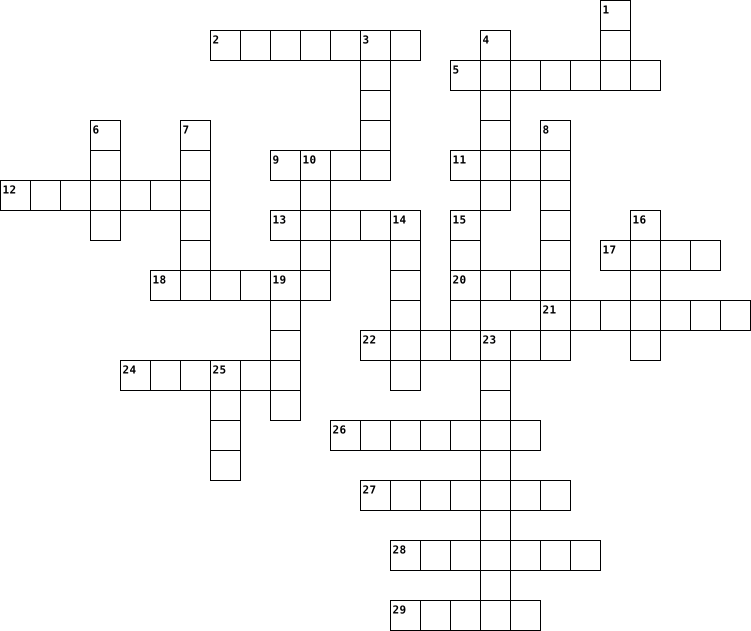
Across
- Manhunt
- Burning
- What
- Bear
- Icicles
- Earth
- Good
- Priest
- Wool
- Ecstasy
- Repress
- Prince
- Trapped
- Pulling
- Funeral
- White
Down
- Own
- Night
- Puppet
- Back
- Master
- Crumbles
- Heart
- Heaven
- Tower
- Forth
- Sweet
- Experiment
- Next
29 Clues: Own • Back • What • Bear • Good • Wool • Next • Night • Heart • Earth • Tower • Forth • Sweet • White • Puppet • Master • Heaven • Priest • Prince • Manhunt • Burning • Icicles • Ecstasy • Repress • Trapped • Pulling • Funeral • Crumbles • Experiment
Lora's Grands 2022-07-17

Across
- Loving Heart
- red
- Mr. Personality
- purple
- Survivor
- Gray
- Karate Kid
- Great Hugger
- Beauty
- Hall of Famer
- Heart of Gold
- blue
Down
- Brilliant
- Creative Storyteller
- Sunflower Artist
- Angel
- Avid Angler
- Gamer Extraordinaire
- Star of the Band
- green
- Creative
- Funny
22 Clues: red • Gray • blue • Angel • green • Funny • purple • Beauty • Survivor • Creative • Brilliant • Karate Kid • Avid Angler • Loving Heart • Great Hugger • Hall of Famer • Heart of Gold • Mr. Personality • Sunflower Artist • Star of the Band • Creative Storyteller • Gamer Extraordinaire
EkG and Diagnostic Imaging chap 49 2016-12-15

Across
- 3leads that conduct electrical activity on the ECG
- exchange of materials between circulation and cells
- improper beating of the heart
- instrument to measure blood pressure
- relation phase of the heart
Down
- the contraction of the chambers of the heart
- rapid, strong, irregular heartbeat
- slow heart beat that is less that 60BPM
- carry oxygenated blood to the heart
- pacemaker of the heart
- carry oxygenated blood from the heart
11 Clues: pacemaker of the heart • relation phase of the heart • improper beating of the heart • rapid, strong, irregular heartbeat • carry oxygenated blood to the heart • instrument to measure blood pressure • carry oxygenated blood from the heart • slow heart beat that is less that 60BPM • the contraction of the chambers of the heart • ...
HEART ANATOMY (cringe and corny edition) 2025-03-31

Across
- smaller chambers of the heart
- cardiac muscle (that hurts when you leave ♥)
- The biggest artery, as though size mattered
- red blood flows through it the same way you glide on the dance floor
- Divides the right atrium from the right ventricle (but not us)
- it hugs the heart like I wish you did me ♥
- region where you live because you make my heart beat (it is full of pacemaker cells)
Down
- it gives rythm to your heart and can be artificial (unlike our relationship)
- Where all the ribs meet
- despite the name, they carry oxygen-rich blood
- they are the bigger chambers of the heart
- Allows blood to pass to the left ventricle to the right ventricle
- Red blood is full of it
- mine boils when you're sad :(
- the heart has four of them, it can be full of secrets
15 Clues: Where all the ribs meet • Red blood is full of it • smaller chambers of the heart • mine boils when you're sad :( • they are the bigger chambers of the heart • it hugs the heart like I wish you did me ♥ • The biggest artery, as though size mattered • cardiac muscle (that hurts when you leave ♥) • despite the name, they carry oxygen-rich blood • ...
Mass Transport keywords 2021-08-16

Across
- chamber of heart with very thick muscular walls to pump blood to the lungs/to the rest of the body
- valves that prevent the backflow of blood from the ventricles to the atria when ventricular pressure exceeds atrial pressure
- blood vessels that carry blood from capillaries back to the heart
- hollow tubes through which water is transported in a plant
- blood vessels that carry blood away from the heart and into arterioles
- relaxation of the heart
- major blood vessels connected to the left ventricle that carries oxygenated blood to the entire body (except the lungs)
- protein molecules with a quaternary structure adapted to efficiently load and unload oxygen in certain conditions
Down
- contraction of the heart muscle
- major blood vessels connected to the right atrium and brings deoxygenated blood back from the tissues of the body
- arteries that supplies the heart muscle with oxygenated blood
- word to describe the major blood vessels that carry blood to and from the lungs
- watery liquid like blood plasma that supplies substances, such as glucose, oxygen and amino acids, to tissues
- the evaporation of water off the surface of leaves
- thin-walled, elastic chamber of the heart that stretches as it collects blood
- the central cavity of blood vessels through which blood flows
- graph of the relationship between the saturation of haemoglobin with oxygen and the partial pressure of oxygen, different for every animal
- plant tissue that transports the products of photosynthesis from leaves to the rest of the plant
18 Clues: relaxation of the heart • contraction of the heart muscle • the evaporation of water off the surface of leaves • hollow tubes through which water is transported in a plant • arteries that supplies the heart muscle with oxygenated blood • the central cavity of blood vessels through which blood flows • blood vessels that carry blood from capillaries back to the heart • ...
Circulatory and Respiratory System 2023-01-23

Across
- carry blood away from the heart
- moves blood from the heart to the lungs and back to the heart
- A flap of tissue that prevents the backflow of blood
- supplies nutrients to all the tissues of the body except for heart and lungs
- the smallest blood vessels where the exchange of oxygen occurs in the lungs
- Branches into 2 tubes. The esophagus goes to the stomach and the trachea to the lungs.
- Two large sponge-like organs that contain bronchi, bronchioles, and alveoli.
- Two tubes that branch from the trachea. One goes to the left and one to the right lung.
- Passage for air from the larynx to the lungs
Down
- Smaller branches from the bronchi that lead to tiny sacks called alveoli
- Dome-Shaped muscle under the lungs. Contracts and relaxes when you inhale and exhale.
- Our_____ has four chambers it consists of two _______ and two __________, and is divided into right and left sides.
- the main function is to supply oxygen and nutrients to tissue and remove waste products like carbon dioxide
- movement of blood from through the tissues of the heart
- carry blood toward the heart
- Contains vocal chords that vibrate to make sound. The epiglottis guards the entrance to the lungs.
- Main passageway for oxygen to enter and exit the body
- At the end of bronchioles by capillaries. Where the exchange of oxygen and carbon dioxide takes place.
18 Clues: carry blood toward the heart • carry blood away from the heart • Passage for air from the larynx to the lungs • A flap of tissue that prevents the backflow of blood • Main passageway for oxygen to enter and exit the body • movement of blood from through the tissues of the heart • moves blood from the heart to the lungs and back to the heart • ...
The heart and cardiovascular disease treatments 2021-12-05

Across
- the higher chambers of the heart
- the lower chambers of the heart
- controls the blood flow in the heart and prevents it from going backwards
- medicines that lower cholesterol levels
Down
- largest artery in the body that carries blood to the rest of the body
- type of surgery when a heart from a donor who has recently died is used to replace a damaged or failing heart
- controls the heart rate
- word meaning to do with the heart
- cava, largest vein in the body that carried blood back to the heart from the body
- pressure, if this is high it can damage the arteries around the heart
- A type of surgery where a vein is transplanted divert blood around the blockage.
- A mechanical device used to widen the partially blocked coronary artery and increase blood flow.
12 Clues: controls the heart rate • the lower chambers of the heart • the higher chambers of the heart • word meaning to do with the heart • medicines that lower cholesterol levels • largest artery in the body that carries blood to the rest of the body • pressure, if this is high it can damage the arteries around the heart • ...
Respiratory and Circulatory System 2017-04-10

Across
- Your body removes this during respiration
- After air passes through your larynx, it enters this part of your body
- Returns blood TO the heart
- Occurs when blood flow is interrupted to the brain (clot in blood vessel)
- Heart is not strong enough to pump blood to the rest of the body.
- After the blood enters the vena cava, it enters this part of the heart
- This is the muscle under your ribs that forces air into and out of your lungs
- This allows blood to move in and out between the chambers
- Blood goes here to pick up oxygen
- Bottom two chambers
Down
- The bronchi are broken down into smaller passageways
- Tiny sacs at the end of bronchioles
- Provides nutrients and oxygen through blood
- Tiny vessels that connects arteries to veins
- Top two chambers
- The trachea splits into two tubes called this
- Carries oxygen AWAY from the heart
- After the blood enters the right atrium, it flows into this part of the heart
- During respiration, this gas is brought to all parts of the body via cells to help you live
19 Clues: Top two chambers • Bottom two chambers • Returns blood TO the heart • Blood goes here to pick up oxygen • Carries oxygen AWAY from the heart • Tiny sacs at the end of bronchioles • Your body removes this during respiration • Provides nutrients and oxygen through blood • Tiny vessels that connects arteries to veins • The trachea splits into two tubes called this • ...
Arman Patteril: The Circulatory System 2021-05-03

Across
- pumps blood to body
- carries blood from heart to lungs
- fights bacteria and viruses
- chamber that collects blood
- pumps blood to lungs
- exchanges gas, nutrients, wastes
- help blood clots, seal wounds, stop bleeding
- chamber that receives blood
- carries blood to the body
Down
- muscle separates right left ventricles
- red water
- transports oxygen and carbon dioxide
- bean
- the heart cant pump enough blood
- carries blood towards
- a result of coronary artery disease
- carries blood from lungs to heart
- carries blood away
- liquid part of the body
- need air
20 Clues: bean • need air • red water • carries blood away • pumps blood to body • pumps blood to lungs • carries blood towards • liquid part of the body • carries blood to the body • fights bacteria and viruses • chamber that collects blood • chamber that receives blood • the heart cant pump enough blood • exchanges gas, nutrients, wastes • carries blood from heart to lungs • ...
Ariyan Medical Terminology CrossWord 2020-08-27

Across
- Surgical Removal of Uterus
- The study of stomach and Intestines
- Like a Heart
- The Condition of the Skin
- Involuntary Contraction of the Eyelid
- Involuntary contraction in Intestines
- Study of the Heart
- Destruction of Vessels;Blood Cells
- Specialist of the Skin
- Pain in the Muscle
- Pain in Joints
- Cut into Skull
- Study of the Stomach
Down
- Condition of Blueness
- Enlargement of the Liver
- Observe Inside Body
- Inflammation of the Liver
- Softening of the Heart
- Lack of Development
- Brain Tumor
- Inflammation of the Gums
- Surgical Removal of the Glands
22 Clues: Brain Tumor • Like a Heart • Pain in Joints • Cut into Skull • Study of the Heart • Pain in the Muscle • Observe Inside Body • Lack of Development • Study of the Stomach • Condition of Blueness • Softening of the Heart • Specialist of the Skin • Enlargement of the Liver • Inflammation of the Gums • The Condition of the Skin • Inflammation of the Liver • Surgical Removal of Uterus • ...
Body crossword 2020-10-27

Across
- in your head
- attached to your shoulder
- between the right ventricle and the pulmonary artery
- it looks like a sponge
- you eat
- carry’s messages
- carry blood from the heart
- go through the whole body
- attached by cord like tendons
Down
- structure of your body
- made of fibers
- center of the circulatory system
- is found in the heart
- center of the nervous system
- it’s extremely strong
- you breath
- center of the respiratory System
- food goes to the stomach
- separates the left atrium from the left ventricle
- contains information
20 Clues: you eat • you breath • in your head • made of fibers • carry’s messages • contains information • is found in the heart • it’s extremely strong • structure of your body • it looks like a sponge • food goes to the stomach • attached to your shoulder • go through the whole body • carry blood from the heart • center of the nervous system • attached by cord like tendons • ...
Crosswordd puzzle 2024-01-16

Across
- lack of adequate blood supply to the heart
- blood cell formation
- Blood away from the heart
- abnormally shaped hemoglobin
- atria contact
- consists of 45%,RBC, WBC,platelets
- closing of AV valves
- contraction of ventricles
- Valves prevent blood backflow
- high blood pressure
- decrease in oxygen-carrying ability of blood
Down
- ventricles relaxed
- distributes the impulse out to the ventricles
- graphic record of heart activity
- transports o2 in blood
- Walls 1-cell thick
- iron-containing protein, binds to o2
- defend body against infections and tumors
- when sound begins to appear
- the SA node is
20 Clues: atria contact • the SA node is • ventricles relaxed • Walls 1-cell thick • high blood pressure • blood cell formation • closing of AV valves • transports o2 in blood • Blood away from the heart • contraction of ventricles • when sound begins to appear • abnormally shaped hemoglobin • Valves prevent blood backflow • graphic record of heart activity • consists of 45%,RBC, WBC,platelets • ...
Mía Rivera 2024-03-22

Across
- Slow heartbeat
- vein inflammatory
- takes action
- sonography measured using a ultrasound technology
- flow from the heart
- speedy heartbeat
- slow
- monitor records cardiac rhythms
- inflammation pericardium
- disrupt the ventricular rhythm
- small
- flow is insufficient to return
Down
- causing a quivering movement
- to measure pressure
- decreased blood flow
- resulting insufficient blood supply
- diseased heart muscle
- high blood pressure
- device that implanted in chest or abdomen
- resulting from an obstructed artery
- substance that promotes
- plauge build up
- pertaining to tone
- test heart pumps blood
- scan diagnosing scar tissue
25 Clues: slow • small • takes action • Slow heartbeat • plauge build up • speedy heartbeat • vein inflammatory • pertaining to tone • to measure pressure • high blood pressure • flow from the heart • decreased blood flow • diseased heart muscle • test heart pumps blood • substance that promotes • inflammation pericardium • scan diagnosing scar tissue • causing a quivering movement • ...
El cuerpo humano y la salud 2022-12-20

Across
- protects the brain
- Helps you breathe
- carry blood away from the heart
- protects inner organs
- where sound goes in
- allows you to hear
- holds the food
- Needed to bite into foods
- Filters blood coming out of the stomach
- Comes from the heart
- Filters out toxins and tranforms them to urin
Down
- sends messages through the body
- Used to articulate words
- carry blood back to the heart
- holds the teeth in place
- controls the body
- used for kissing
- helps you chew
- Pumps blood
- creates structure of the body
20 Clues: Pumps blood • holds the food • helps you chew • used for kissing • Helps you breathe • controls the body • protects the brain • allows you to hear • where sound goes in • Comes from the heart • protects inner organs • Used to articulate words • holds the teeth in place • Needed to bite into foods • carry blood back to the heart • creates structure of the body • sends messages through the body • ...
Chapter 8 Medical Terminology 2022-09-13

Across
- word for tumor in the blood vessel
- combining form for fatty plaque
- combining form for electricity
- combining form for narrowing or stricture
- word for rupture of an artery
- combining form for blood clot
- prefix for within
- combining form for valve
- suffix for heart condition
- word for pertaining to the heart
- combining form for muscle
Down
- combining form for hardening
- word for removal of an embolus
- prefix for across
- prefix for around
- prefix for outside
- combining form for vein
- combining form for aorta
- word for resembling a pulsel
- combining form for heart
20 Clues: prefix for across • prefix for around • prefix for within • prefix for outside • combining form for vein • combining form for aorta • combining form for heart • combining form for valve • combining form for muscle • suffix for heart condition • combining form for hardening • word for resembling a pulsel • word for rupture of an artery • combining form for blood clot • ...
DIABETES PREVENTION 2023-08-12

Across
- Inflammation of the pancreas
- Sluggishness or not functioning
- Fuzzy
- Agents that infect living organisms
- Chemical processes necessary life
- Related to the heart
- Open skin lesions or wounds
- Twitching or prickling
- Deficit in moisture, parched
- Physical weariness
Down
- State of body with no feeling
- Measure of heaviness
- Mellitis or Insipidus
- Weighing more than is normal
- Tubes carrying blood away from heart
- Strong desire or need for food
- Peptide or steroid made by a tissue
- Process of voiding urine
- Plasma, cell, & platelet circulated by heart
- Hereditary unit consisting of DNA
20 Clues: Fuzzy • Physical weariness • Measure of heaviness • Related to the heart • Mellitis or Insipidus • Twitching or prickling • Process of voiding urine • Open skin lesions or wounds • Inflammation of the pancreas • Weighing more than is normal • Deficit in moisture, parched • State of body with no feeling • Strong desire or need for food • Sluggishness or not functioning • ...
UNIT 5 ACTIVITY 2 2024-11-07

Across
- Aorta
- Vessel
- Blood flow decrease of stops
- Impairment in the heart
- Beats per minute
- Pumps blood
- Yellowish
- Atrium
- Vessels that return blood to the heart
- Atherosclerotic Plaque
- Networks of small vessels that perfuse tissues
- One dimensional
Down
- Preformed before and after exercise
- Most common film taken in medicine
- Heartbeat irregularities
- Brain
- Coronary artery bypass grafting
- The hearts electrical activity
- Done when exercising
- Extracted from a vein in arm
- Vessels that deliver blood to tissues
- Artery
- Blood pressure
- Coronary artery disease
24 Clues: Aorta • Brain • Vessel • Atrium • Artery • Yellowish • Pumps blood • Blood pressure • One dimensional • Beats per minute • Done when exercising • Atherosclerotic Plaque • Impairment in the heart • Coronary artery disease • Heartbeat irregularities • Blood flow decrease of stops • Extracted from a vein in arm • The hearts electrical activity • Coronary artery bypass grafting • ...
csb 2025-06-17

Across
- – Difficulty passing stool
- – Elevated body temperature
- – Shivering due to fever or cold
- – Swelling caused by fluid buildup
- – Frequent loose stools
- – Sudden loss of brain function
- – Bluish skin from lack of oxygen
- – Medical term for heart attack
- – High blood pressure
- – Abnormally slow heart rate
Down
- – Abnormally fast heart rate
- – Yellowing of skin or eyes
- – Extreme tiredness or lack of energy
- – Unusual paleness of the skin
- – Forcible expulsion of stomach contents
- – Low red blood cell count
- – Low blood pressure
- – Body’s life-threatening response to infection
- – Feeling of wanting to vomit
- – Difficulty breathing
20 Clues: – Low blood pressure • – High blood pressure • – Difficulty breathing • – Frequent loose stools • – Difficulty passing stool • – Low red blood cell count • – Yellowing of skin or eyes • – Elevated body temperature • – Abnormally fast heart rate • – Abnormally slow heart rate • – Feeling of wanting to vomit • – Unusual paleness of the skin • – Sudden loss of brain function • ...
revision 2025-12-17

Across
- (Short Clues)
- — Thinking process
- — Main artery
- — Repeated learning
- — Lengthening contraction
- — Short, spaced sessions
- PRESSURE — Force of blood flow
- — Learned action
- — Lower heart chamber
- — Rule enforcers
- — How groups are shown
- — Christmas gift holder
- — Performance level
- — Ready and aware
- — Snow figure
Down
- — Combined method
- — Ability to adapt/change
- — Changing‑environment skill
- — SA node role
- — Red‑nosed character
- — Entire skill at once
- — Same‑environment skill
- — Repeated accuracy
- — Learning norms/values
- — Repetition learning
- — Heart muscle
- — Santa’s animals
- — Blood‑pumping organ
- — How easy a skill breaks down
29 Clues: (Short Clues) • — Main artery • — Snow figure • — SA node role • — Heart muscle • — Learned action • — Rule enforcers • — Combined method • — Santa’s animals • — Ready and aware • — Thinking process • — Repeated accuracy • — Repeated learning • — Performance level • — Red‑nosed character • — Repetition learning • — Lower heart chamber • — Blood‑pumping organ • — Entire skill at once • ...
Vitals 2024-12-03

Across
- Pulse The pulse felt on the neck.
- Rapid breathing.
- The rhythmic expansion of arteries caused by the beating of the heart.
- The process of evaluating or measuring a patient’s condition.
- Slow breathing.
- A faster-than-normal heart rate (above 100 bpm in adults).
Down
- A slower-than-normal heart rate (below 60 bpm in adults).
- The key measurements used to assess a person's overall health
- Difficulty breathing.
- Rate The number of times the heart beats per minute (bpm).
- The normal or initial measurement used for comparison.
- Rate The number of breaths taken per minute.
- Normal breathing.
- Temporary cessation of breathing.
- Pulse The pulse felt on the wrist.
15 Clues: Slow breathing. • Rapid breathing. • Normal breathing. • Difficulty breathing. • Pulse The pulse felt on the neck. • Temporary cessation of breathing. • Pulse The pulse felt on the wrist. • Rate The number of breaths taken per minute. • The normal or initial measurement used for comparison. • A slower-than-normal heart rate (below 60 bpm in adults). • ...
circulatory/respiratory menu project 2023-01-24

Across
- main function is to supply the body with oxygen and remove carbon dioxide
- where oxygen and carbon dioxide exchange
- also known as cardiovascular system
- carry blood away from the heart
- pumps blood to the body
- blood circulation within the heart
Down
- passageway from the larynx to the lungs
- carries blood back to the heart from the lungs
- where blood enters the heart
- two tubes that branch from trachea
- the big artery that takes blood to the entire body
- dome-shaped muscle under lungs
- delivers blood to the ventricles
- vocal cords that vibrate to make sound
- when blood to the brain is blocked (caused by blood clot or blood vessel burst)
15 Clues: pumps blood to the body • where blood enters the heart • dome-shaped muscle under lungs • carry blood away from the heart • delivers blood to the ventricles • two tubes that branch from trachea • blood circulation within the heart • also known as cardiovascular system • vocal cords that vibrate to make sound • passageway from the larynx to the lungs • ...