
irregular verbs Crossword Puzzles
Irregular verbs 2020-04-11

Across
- wear
- bring
- fight
- spend
- drink
Down
- write
- build
- taken
- grow
- pay
10 Clues: pay • wear • grow • write • bring • build • taken • fight • spend • drink
IRREGULAR VERBS 2021-01-31

Across
- THE PRETERIT OF 'METTRE'
- THE PRETERIT OF 'ALLER'
- THE PRETERIT OF 'SING'
- THE PRETERIT OF 'DEVENIR'
- THE PRETERIT OF 'ACHETER'
- THE PAST PARTICIPLE OF 'DRINK'
Down
- WHAT'S THE ENGLISH FOR 'PENSER'
- THE PAST PARTICIPLE OF 'SWIM'
- THE PAST PARTICIPLE OF 'GROW'
- WHAT'S THE ENGLISH FOR 'COUPER'
10 Clues: THE PRETERIT OF 'SING' • THE PRETERIT OF 'ALLER' • THE PRETERIT OF 'METTRE' • THE PRETERIT OF 'DEVENIR' • THE PRETERIT OF 'ACHETER' • THE PAST PARTICIPLE OF 'SWIM' • THE PAST PARTICIPLE OF 'GROW' • THE PAST PARTICIPLE OF 'DRINK' • WHAT'S THE ENGLISH FOR 'PENSER' • WHAT'S THE ENGLISH FOR 'COUPER'
irregular verbs 2020-07-22

Across
- Separate one thing from everything it was attached to.
- Nail a person or animal in a food.
- Increase the size of a living organism
- Take or execute an action
- Make a material work.
Down
- Bringing a liquid body into the solid state
- Exposing an amount of money or a membership to take part in a game, so that an amount of money is received.
- excuse another for an action considered an offense
- Discharge air through the mouth
- Acquiring a thing in exchange for money
10 Clues: Make a material work. • Take or execute an action • Discharge air through the mouth • Nail a person or animal in a food. • Increase the size of a living organism • Acquiring a thing in exchange for money • Bringing a liquid body into the solid state • excuse another for an action considered an offense • Separate one thing from everything it was attached to. • ...
Irregular verbs 2020-07-02

Across
- past simple of keep
- past simple of light
- past simple of forbid
- past simple of say
Down
- past simple of get
- past simple of go
- past simple of lied
- past simple of sell
- past simple of be
- past simple of pay
10 Clues: past simple of go • past simple of be • past simple of get • past simple of pay • past simple of say • past simple of keep • past simple of lied • past simple of sell • past simple of light • past simple of forbid
Irregular verbs 2020-07-02

Across
- past simple of pay
- past simple of sell
- past simple of be
- past simple of lied
- past simple of keep
- past simple of get
Down
- past simple of say
- past simple of forbid
- past simple of light
- past simple of go
10 Clues: past simple of be • past simple of go • past simple of say • past simple of pay • past simple of get • past simple of sell • past simple of lied • past simple of keep • past simple of light • past simple of forbid
IRREGULAR VERBS 2017-01-11

Across
- BUILT
- DRANK
- BECAME
- BIT
- COST
Down
- CUT
- DROVE
- BEGAN
- CAUGHT
- BOUGHT
10 Clues: CUT • BIT • COST • BUILT • DROVE • DRANK • BEGAN • BECAME • CAUGHT • BOUGHT
Irregular verbs 2017-09-08

Across
- are
- come
- find
- hear
- go
Down
- eat
- drink
- make
- forget
- fall
10 Clues: go • eat • are • come • make • find • hear • fall • drink • forget
Irregular verbs 2017-09-04

Across
- ate
- chose
- began
- drank
Down
- came
- fell
- bought
- broke
- was
- did
10 Clues: ate • was • did • came • fell • chose • began • broke • drank • bought
Irregular verbs! 2020-11-15

Across
- drinken
- worden
- kopen
- brengen
Down
- doen
- komen
- vliegen
- vangen
- kosten
- bijten
10 Clues: doen • komen • kopen • worden • vangen • kosten • bijten • drinken • vliegen • brengen
Irregular verbs 2020-09-16

Across
- said
- read
- wore
- brought
- begun
Down
- thought
- met
- felt
- lost
- forgot
10 Clues: met • said • read • wore • felt • lost • begun • forgot • thought • brought
Irregular verbs 2020-11-05

Across
- četl
- koupil
- zpíval
- pil
Down
- vzal
- jedl
- běžel
- dělal
- dostal
- přišel
10 Clues: pil • vzal • jedl • četl • běžel • dělal • koupil • dostal • přišel • zpíval
irregular verbs 2021-04-07

Across
- stát se
- rozbít
- být
- chytit
- koupit
Down
- vybrat
- začít
- přinést
- moci, umět
- stavět
10 Clues: být • začít • vybrat • rozbít • chytit • koupit • stavět • stát se • přinést • moci, umět
Irregular verbs 2024-06-25

Across
- the amount of money needed to buy, do, or make something
- to break open or apart suddenly, or to make something do this
- to decide what you want from two or more things or possibilities
- to make something by putting bricks or other materials together
- separate suddenly or violently into two or more pieces
Down
- to take hold of something, especially something that is moving through the air
- to be hurt, damaged, or destroyed by fire or extreme heat
- to move or travel towards the speaker or with the speaker
- to send out a programme on television or radio
- to get something by paying money for it
10 Clues: to get something by paying money for it • to send out a programme on television or radio • separate suddenly or violently into two or more pieces • the amount of money needed to buy, do, or make something • to be hurt, damaged, or destroyed by fire or extreme heat • to move or travel towards the speaker or with the speaker • ...
Irregular Verbs 2023-10-03

Across
- bring
- bite
- bet
- awake
- begin
- blow
Down
- burn
- build
- break
- become
10 Clues: bet • burn • bite • blow • bring • build • break • awake • begin • become
irregular verbs 2024-07-31

Across
- the past tense of say
- the past tense of drink
- the past tense of sleep
- the past tense of fight
- the past tense of lose
- the past tense of shake
Down
- the past tense of make
- the past tense of bring
- the past tense of speak
- the past tense of think
10 Clues: the past tense of say • the past tense of make • the past tense of lose • the past tense of bring • the past tense of drink • the past tense of sleep • the past tense of speak • the past tense of fight • the past tense of think • the past tense of shake
Irregular Verbs 2023-02-07

Across
- tomber participe passé
- rêver participe passé
- feed traduction
- trouver base verbale
- dessiner base verbale
Down
- ressentir prétérit
- manger prétérit
- drive traduction
- boire prétérit
- combattre prétérit
10 Clues: boire prétérit • manger prétérit • feed traduction • drive traduction • ressentir prétérit • combattre prétérit • trouver base verbale • rêver participe passé • dessiner base verbale • tomber participe passé
Irregular verbs 2023-06-22

Across
- see
- meet
- leave
- eat
- go
- buy
Down
- spend
- fly
- take
- have
10 Clues: go • see • fly • eat • buy • meet • take • have • spend • leave
irregular verbs 2023-07-16

Across
- drink
- lend
- put
- lose
- let
Down
- send
- sit
- feel
- keep
- slept
10 Clues: sit • put • let • send • feel • keep • lend • lose • drink • slept
Irregular verbs 2023-02-22

Across
- pistää, laittaa
- seisoa
- sanoa
- kirjoittaa
- laulaa
Down
- panna, asettaa
- ajaa
- ampua, laukaista
- nousta
- varastaa
10 Clues: ajaa • sanoa • seisoa • nousta • laulaa • varastaa • kirjoittaa • panna, asettaa • pistää, laittaa • ampua, laukaista
irregular :verbs 2023-02-16

Across
- bled
- drank
- ;did
- learnt
- held
Down
- kept
- fell
- drove
- knew
- ate
10 Clues: ate • kept • fell • bled • knew • ;did • held • drank • drove • learnt
irregular verbs 2023-03-20

Across
- Past simple win
- Past simple OVERCAME
- Past participle told
- Base form hide
Down
- Past participle understood
- Past participe forget
- Base form kwew
- Past participle
- Past participle ate
- Base form lost
10 Clues: Base form kwew • Base form lost • Base form hide • Past simple win • Past participle • Past participle ate • Past simple OVERCAME • Past participle told • Past participe forget • Past participle understood
Irregular verbs 2023-05-17

Across
- pay
- wear
- swim
- eat
- lend
Down
- do
- speak
- buy
- set
- make
10 Clues: do • pay • buy • set • eat • wear • swim • make • lend • speak
Irregular verbs 2021-10-19

Across
- read
- get
- come
- lose
- go
Down
- do
- bring
- feel
- take
- eat
10 Clues: do • go • get • eat • read • feel • take • come • lose • bring
irregular verbs 2021-11-15

Across
- choose - past tense
- seek - past tense
- write - has ...
- learn - past tense
Down
- forgive - past tense
- bend - past tense
- show - has ...
- write - past tense
- swing - has ...
- put - has ...
10 Clues: put - has ... • show - has ... • swing - has ... • write - has ... • bend - past tense • seek - past tense • write - past tense • learn - past tense • choose - past tense • forgive - past tense
Irregular Verbs 2021-05-10

Across
- laugh
- say
- visit
- marry
- listen
- cry
Down
- open
- smile
- rub
- close
10 Clues: say • rub • cry • open • laugh • smile • visit • marry • close • listen
Irregular verbs 2022-04-12

Across
- BrE spill preferred past tense form
- AmE quit past participle form
- BrE wake part participle form
- BrE wet past form
- AmE fit past tense form
Down
- BrE spit past form
- AmE burn past form
- BrE spell preferred past participle form
- AmE wake past form
- BrE kneel preferred past participle form
10 Clues: BrE wet past form • BrE spit past form • AmE burn past form • AmE wake past form • AmE fit past tense form • AmE quit past participle form • BrE wake part participle form • BrE spill preferred past tense form • BrE spell preferred past participle form • BrE kneel preferred past participle form
Irregular Verbs 2022-04-05

Across
- It is the simple past of BRING
- It is the simple past of VISIT
- It´s the simple past of GROW
- It is the simple past of PLAY
Down
- It is the simple past of STUDY
- It is the simple past of BLOW
- It is the simple past of HAVE
- It is the simple past of SING
- It is the simple past of ARE
- It is the simple past of SEE
10 Clues: It´s the simple past of GROW • It is the simple past of ARE • It is the simple past of SEE • It is the simple past of BLOW • It is the simple past of HAVE • It is the simple past of SING • It is the simple past of PLAY • It is the simple past of STUDY • It is the simple past of BRING • It is the simple past of VISIT
IRREGULAR VERBS 2022-02-27

Across
- become
- go
- begin
- teach
Down
- meet
- make
- leave
- come
- win
- grow up
10 Clues: go • win • meet • make • come • leave • begin • teach • become • grow up
IRREGULAR VERBS 2022-05-29

Across
- CAME
- ATE
- WROTE
- SANG
- SAT
Down
- WENT
- MADE
- TOOK
- DRANK
- SWAM
10 Clues: ATE • SAT • WENT • CAME • MADE • TOOK • SANG • SWAM • DRANK • WROTE
Irregular Verbs 2025-01-21

Across
- simple past of draw
- simple past of read
- simple past of keep
- simple past of speak
- simple past of put
Down
- simple past of eat
- simple past of drink
- simple past of write
- simple past of sell
- simple past of teach
10 Clues: simple past of eat • simple past of put • simple past of draw • simple past of read • simple past of sell • simple past of keep • simple past of drink • simple past of write • simple past of teach • simple past of speak
Irregular Verbs 2024-09-22

Across
- past tense of keep
- past tense of find
- past tense of shake
- past tense of buy
- past tense of catch
- past tense of teach
Down
- past tense of bring
- past tense of think
- past tense of fight
- past tense of speak
10 Clues: past tense of buy • past tense of keep • past tense of find • past tense of bring • past tense of think • past tense of fight • past tense of shake • past tense of speak • past tense of catch • past tense of teach
IRREGULAR VERBS 2025-03-02

Across
- the past participle form of the verb "abandonar"
- the past form of the verb "sangrar"
- the past form of the verb "pagar"
- the base form of the verb "colgar"
- the base form of the verb "perder"
- the base form of the verb "sentir"
Down
- the past form of the verb "vender"
- the past participle form of the verb "morder"
- the past participle form of the verb "sostener"
- the past form of the verb "gastar"
10 Clues: the past form of the verb "pagar" • the past form of the verb "vender" • the past form of the verb "gastar" • the base form of the verb "colgar" • the base form of the verb "perder" • the base form of the verb "sentir" • the past form of the verb "sangrar" • the past participle form of the verb "morder" • the past participle form of the verb "sostener" • ...
irregular verbs 2023-12-28

Across
- see
- buy
- wear
- hear
- learn
- eat
Down
- write
- think
- make
- go
10 Clues: go • see • buy • eat • make • wear • hear • write • think • learn
Irregular verbs 2023-10-18

Across
- lie
- bear
- lay
- forget
- shine
Down
- blow
- beat
- dig
- freeze
- shoot
10 Clues: lie • lay • dig • blow • bear • beat • shine • shoot • forget • freeze
Irregular verbs 2024-10-08

Across
- Watch
- Begin
- Eat
- Read
- Go
Down
- Speak
- Make
- Study
- Take
- Write
10 Clues: Go • Eat • Make • Take • Read • Speak • Study • Watch • Begin • Write
Irregular Verbs 2024-10-23

Across
- My brother ________ (feel) excited when he got his dictation yesterday.
- past tense form of 'make'
- Once upon a time, there ______ (be) a king living in the castle far away.
- past tense form of 'go'
- past tense form of 'try'
Down
- My mom ___________ (buy) me a pair of trainers yesterday.
- I ________ (drink) two cans of coke last night.
- My aunt's parrot _______(fly) away when the cage was not locked.
- Last night, I _____ (eat) two big packets of chips.
- past tense form of 'try'
- My parents ________ (take) me to Ocean Park last month.
11 Clues: past tense form of 'go' • past tense form of 'try' • past tense form of 'try' • past tense form of 'make' • I ________ (drink) two cans of coke last night. • Last night, I _____ (eat) two big packets of chips. • My parents ________ (take) me to Ocean Park last month. • My mom ___________ (buy) me a pair of trainers yesterday. • ...
irregular verbs 2024-12-02

Across
- tell
- sit
- eat
- go
- write
Down
- buy
- know
- come
- see
- take
10 Clues: go • buy • sit • see • eat • tell • know • come • take • write
irregular verbs 2024-11-10

Across
- past simple for "forgive"
- past simple for "sleep"
- past simple for "grow"
- past participle for "bring"
- past simple for "come"
Down
- past simple for "hear"
- past participle for "fall"
- past participle for "write"
- past participle for "swim"
- past participle for "win"
10 Clues: past simple for "hear" • past simple for "grow" • past simple for "come" • past simple for "sleep" • past simple for "forgive" • past participle for "win" • past participle for "fall" • past participle for "swim" • past participle for "write" • past participle for "bring"
irregular verbs 2025-04-11

Across
- I make/do
- I close
- I sleep
- I play
- I go
- I give
Down
- I know a person
- I say
- I understand
- I am
10 Clues: I am • I go • I say • I play • I give • I close • I sleep • I make/do • I understand • I know a person
irregular verbs 2025-04-03

Across
- become
- catch
- cost
- be
Down
- break
- begin
- buy
- come
- bring
- choose
10 Clues: be • buy • come • cost • break • begin • bring • catch • become • choose
Irregular verbs 2025-04-25

Across
- Have
- Draw
- Write
- See
- Go
Down
- Buy
- Do
- Send
- Be
- Be
- Eat
11 Clues: Do • Be • Be • Go • Buy • See • Eat • Have • Send • Draw • Write
irregular verbs 2024-03-27

Across
- think
- read
- stand
- make
- wear
Down
- have
- go
- say
- come
- see
10 Clues: go • say • see • have • read • come • make • wear • think • stand
Irregular Verbs 2021-08-29

Across
- BURN
- BECOME
- BITE
- BEAT
- BEGIN
Down
- BREAK
- BE
- BE
- BUILD
- BRING
- BLOW
11 Clues: BE • BE • BURN • BITE • BEAT • BLOW • BREAK • BUILD • BRING • BEGIN • BECOME
Irregular Verbs 2021-08-29

Across
- FLY
- FIGHT
- GIVE
- EAT
Down
- FALL
- FORGET
- GO
- FIND
- FEEL
- GET
10 Clues: GO • FLY • GET • EAT • FALL • FIND • FEEL • GIVE • FIGHT • FORGET
Irregular Verbs 2021-06-01

Across
- BUY
- FORGET
- RIDE
- SPEAK
Down
- LEAVE
- BEGIN
- BITE
- SELL
- DRIVE
- SWIM
10 Clues: BUY • BITE • SELL • RIDE • SWIM • LEAVE • BEGIN • DRIVE • SPEAK • FORGET
IRREGULAR VERBS 2022-02-03

Across
- PAST TENSE OF BE
- PAST TENSE OF BECOME
- PAST TENSE OF BREAK
- PAST TENSE OF CUT
- PAST TENSE OF BUILD
- PAST TENSE OF BREAK
Down
- PAST TENSE OF COME
- PAST TENSE OF CHOOSE
- PAST TENSE OF BUY
- PAST TENSE OF BE
- PAST TENSE OF BEGIN
- PAST TENSE OF BET
12 Clues: PAST TENSE OF BE • PAST TENSE OF BE • PAST TENSE OF BUY • PAST TENSE OF CUT • PAST TENSE OF BET • PAST TENSE OF COME • PAST TENSE OF BREAK • PAST TENSE OF BEGIN • PAST TENSE OF BUILD • PAST TENSE OF BREAK • PAST TENSE OF BECOME • PAST TENSE OF CHOOSE
irregular verbs 2022-03-22

Across
- The second form of the "visszateker" verb.
- The second form of the "elhullat" verb.
- The third form of the "elhagyni" verb.
- The third form of the "visszavon, bevon" verb.
Down
- The third form of the "lefekszik" verb.
- The third form of the "felülír" verb.
- The third form of the "felrobbant, felver" verb.
- The second form of the "megköt, kötöz" verb.
- The second form of the "lefektet, letesz" verb.
- The second form of the "jár, sétál" verb.
10 Clues: The third form of the "felülír" verb. • The third form of the "elhagyni" verb. • The third form of the "lefekszik" verb. • The second form of the "elhullat" verb. • The second form of the "jár, sétál" verb. • The second form of the "visszateker" verb. • The second form of the "megköt, kötöz" verb. • The third form of the "visszavon, bevon" verb. • ...
irregular verbs 2025-06-02

Across
- Fly
- Fight
- Forgive
- Fall
Down
- Feed
- Forget
- Get
- Feel
- Give
- Find
10 Clues: Fly • Get • Feed • Feel • Give • Fall • Find • Fight • Forget • Forgive
IRREGULAR VERBS 2025-07-23

Across
- PRESENT SIMPLE OF FLEW
- PAST SIMPLE OF GROW
- PAST PARTICIPLE OF FORGET
- PAST PARTICIPLE OF FEEL
- PRESENT SIMPLE OF FED
- PAST PARTICIPLE OF GO
Down
- PAST SIMPLE OF FIGHT
- PAST SIMPLE OF GIVE
- PAST PARTICIPLE OF GET
- PAST SIMPLE OF FIND
10 Clues: PAST SIMPLE OF GROW • PAST SIMPLE OF GIVE • PAST SIMPLE OF FIND • PAST SIMPLE OF FIGHT • PRESENT SIMPLE OF FED • PAST PARTICIPLE OF GO • PRESENT SIMPLE OF FLEW • PAST PARTICIPLE OF GET • PAST PARTICIPLE OF FEEL • PAST PARTICIPLE OF FORGET
IRREGULAR VERBS 2025-08-10

Across
- 8. Do, did
- 10. Dream, dreamt
- 1. Buy, bought
- 7. Cut, cut
- 5. Come, came
- 9. Draw, drew
Down
- 6. Cost, cost
- 3. Catch, caught
- 4. Choose, chose
- 2. Can
10 Clues: 2. Can • 8. Do, did • 7. Cut, cut • 6. Cost, cost • 5. Come, came • 9. Draw, drew • 1. Buy, bought • 3. Catch, caught • 4. Choose, chose • 10. Dream, dreamt
IRREGULAR VERBS 2022-10-18

Across
- Translation of verb blow in catalan
- A verb that has the same form in infinitive, past simple and participle
- Participle of drive
- Past simple of begin
Down
- Past simple and Participle of catch
- Translation of verb burn in catalan
- Participle of bite
- Participle of verb to be
- A verb that has no participle form
- Past simple of draw
10 Clues: Participle of bite • Participle of drive • Past simple of draw • Past simple of begin • Participle of verb to be • A verb that has no participle form • Past simple and Participle of catch • Translation of verb burn in catalan • Translation of verb blow in catalan • A verb that has the same form in infinitive, past simple and participle
Irregular verbs 2022-11-02

Across
- What is the present tense of built?
- What is the past participle of threw?
- What is the past participle of go?
- What is the past tense of come?
- What is the present tense of took?
Down
- What is the past tense of do?
- What is the present tense of fought?
- What is the past participle of fly?
- What is the past tense of break?
- What is the present tense of got?
10 Clues: What is the past tense of do? • What is the past tense of come? • What is the past tense of break? • What is the present tense of got? • What is the past participle of go? • What is the present tense of took? • What is the past participle of fly? • What is the present tense of built? • What is the present tense of fought? • What is the past participle of threw?
Irregular Verbs 2022-11-04

Across
- druga forma z tabelki dla czasownika blow
- druga forma z tabelki dla czasownika begin
- druga forma z tabelki dla czasownika be
- druga forma z tabelki dla czasownika burn
- druga forma z tabelki dla czasownika beat
- druga forma z tabelki dla czasownika bite
Down
- druga forma z tabelki dla czasownika break
- druga forma z tabelki dla czasownika become
- druga forma z tabelki dla czasownika bring
- druga forma z tabelki dla czasownika build
10 Clues: druga forma z tabelki dla czasownika be • druga forma z tabelki dla czasownika blow • druga forma z tabelki dla czasownika burn • druga forma z tabelki dla czasownika beat • druga forma z tabelki dla czasownika bite • druga forma z tabelki dla czasownika break • druga forma z tabelki dla czasownika begin • druga forma z tabelki dla czasownika bring • ...
Irregular verbs 2022-01-06

Across
- mācīja
- paņēma
- pamodās
- meta
Down
- domāja
- stāstīt
- vilka(nēsāja)
- rakstīja
- mēģināt
- uzvarēt
10 Clues: meta • domāja • mācīja • paņēma • stāstīt • pamodās • mēģināt • uzvarēt • rakstīja • vilka(nēsāja)
Irregular Verbs 2022-04-26

Across
- Cacher
- Conduire
- Couper
- Commencer
- Construire
- S'asseoir
Down
- Avoir
- Ressentir
- Venir
- Acheter
10 Clues: Avoir • Venir • Cacher • Couper • Acheter • Conduire • Ressentir • Commencer • S'asseoir • Construire
irregular verbs 2022-07-16

Across
- prendere
- dire
- scegliere
- sognare
- incontrare
Down
- comprare
- venire
- fare
- nuotare
- rompere
10 Clues: dire • fare • venire • nuotare • rompere • sognare • comprare • prendere • scegliere • incontrare
IRREGULAR VERBS 2022-09-12

Across
- hear
- teach
- feel
- see
- pay
Down
- leave
- bring
- fly
- become
- sell
10 Clues: fly • see • pay • hear • feel • sell • leave • bring • teach • become
Irregular verbs 2022-09-29

Across
- HAVE
- BRING
- HEAR
- GO
- DRINK
Down
- THINK
- WRITE
- EAT
- DO
- BE
10 Clues: DO • GO • BE • EAT • HAVE • HEAR • THINK • WRITE • BRING • DRINK
Irregular Verbs 2022-09-12

Across
- Captain America _____ Thor to put down his hammer, so Thor threw it at him! (tell)
- Thor _____ the lightning bolt at Zeus. (throw)
- When nobody was watching, Arsen snook into the kitchen and _____ all of the frosties. (eat)
- Helena _____ Thor's hammer after he threw it at her. (break)
- Arsen played Mike at maths bingo and _____ (win).
Down
- During the vicious battle of the lego machines, Mike's robot _____ its head after Arsen's robot knocked it off. (lose)
- After his fitness class, Arsen was very thirsty and _____ 95 bottles of water. (drink)
- Arsen _____ across the swimming pool to find his lost lego piece. (swim)
- Arsen _____ Amelia coming, so he quickly hid under his bed. (hear)
- Arsen and Mike were late, so they _____ to the cinema. (run)
10 Clues: Thor _____ the lightning bolt at Zeus. (throw) • Arsen played Mike at maths bingo and _____ (win). • Helena _____ Thor's hammer after he threw it at her. (break) • Arsen and Mike were late, so they _____ to the cinema. (run) • Arsen _____ Amelia coming, so he quickly hid under his bed. (hear) • ...
irregular verbs 2025-06-16

Across
- hang
- keep
- hear
- hit
- have
Down
- go
- hold
- hurt
- grow
- hide
10 Clues: go • hit • hold • hang • hurt • grow • keep • hear • hide • have
IRREGULAR VERBS 2025-06-18

Across
- PAST SIMPLE OF BLOW
- PAST PARTICIPLE OF CATCH
- PRESENT SIMPLE OF BENT
- PAST PARTICIPLE OF BITE
Down
- PAST PARTICIPLE OF BEGIN
- PAST SIMPLE OF BUILD
- PAST SIMPLE OF COME
- PAST PARTICIPLE OF CHOOSE
- PAST PARTICIPLE OF BEAT
- PRESENT SIMPLE OF BROKE
10 Clues: PAST SIMPLE OF BLOW • PAST SIMPLE OF COME • PAST SIMPLE OF BUILD • PRESENT SIMPLE OF BENT • PAST PARTICIPLE OF BEAT • PAST PARTICIPLE OF BITE • PRESENT SIMPLE OF BROKE • PAST PARTICIPLE OF BEGIN • PAST PARTICIPLE OF CATCH • PAST PARTICIPLE OF CHOOSE
IRREGULAR VERBS 2025-06-17

Across
- PAST PARTICIPLE OF BLOW
- PAST PARTICIPLE OF BRING
- PAST SIMPLE OF BUY
- PAST PARTICIPLE OF CHOOSE
- PRESENT SIMPLE OF CREPT
Down
- PAST SIMPLE OF BUILD
- PRESENT SIMPLE OF DUG
- PAST PARTICIPLE OF BITE
- PAST SIMPLE OF BECOME
- PAST PARTICIPLE OF CATCH
10 Clues: PAST SIMPLE OF BUY • PAST SIMPLE OF BUILD • PRESENT SIMPLE OF DUG • PAST SIMPLE OF BECOME • PAST PARTICIPLE OF BLOW • PAST PARTICIPLE OF BITE • PRESENT SIMPLE OF CREPT • PAST PARTICIPLE OF BRING • PAST PARTICIPLE OF CATCH • PAST PARTICIPLE OF CHOOSE
Irregular verbs 2025-12-08

Across
- prétérit de "run"
- prétérit de "show"
- participe passé de "mean"
- participe passé de "choose"
- participe passé de "spend"
Down
- participe passé de "lay"
- prétérit de "shut"
- prétérit de "win"
- participe passé de "see"
- prétérit de "rise"
10 Clues: prétérit de "run" • prétérit de "win" • prétérit de "show" • prétérit de "shut" • prétérit de "rise" • participe passé de "lay" • participe passé de "see" • participe passé de "mean" • participe passé de "spend" • participe passé de "choose"
IRREGULAR VERBS 2026-02-04

Across
- I do my homework earlier today before dinner.
- My friend come to my house yesterday afternoon.
- She be very excited last week at the school event.
- The lesson begin earlier today.
Down
- He make a sandwich one week ago for lunch.
- They have a test last year in English class.
- My sister become interested in art in 2020.
- The ticket cost five euros last year.
- We go to the park yesterday after school.
- I buy a new notebook one month ago.
10 Clues: The lesson begin earlier today. • I buy a new notebook one month ago. • The ticket cost five euros last year. • We go to the park yesterday after school. • He make a sandwich one week ago for lunch. • My sister become interested in art in 2020. • They have a test last year in English class. • I do my homework earlier today before dinner. • ...
Irregular verbs 2025-08-21

Across
- FEEL
- FIGHT
- CHOOSE
- SHAKE
- MEET
Down
- HOLD
- THROW
- LEAVE
- GROW
- FALL
10 Clues: HOLD • FEEL • GROW • FALL • MEET • THROW • LEAVE • FIGHT • SHAKE • CHOOSE
irregular verbs 2025-09-18

Across
- take
- make
- give
- wake
- go
Down
- drive
- come
- drink
- write
- eat
10 Clues: go • eat • come • take • make • give • wake • drive • drink • write
Irregular Verbs 2025-09-29

Across
- see
- go
- build
- have
- eat
Down
- make
- write
- buy
- drink
- fly
10 Clues: go • see • buy • fly • eat • make • have • write • build • drink
irregular verbs 2026-03-08

Across
- Past of become
- Past of cut
- Past of do
- Past of break
- Past of go
Down
- Past of eat
- Past of say
- Past of buy
- Past of fly
- Past of draw
10 Clues: Past of do • Past of go • Past of eat • Past of say • Past of buy • Past of fly • Past of cut • Past of draw • Past of break • Past of become
Irregular Verbs 2026-03-23

Across
- win
- feel
- teach
- say
- get
- sit
Down
- bring
- leave
- find
- lose
10 Clues: win • say • get • sit • find • feel • lose • bring • leave • teach
Irregular Verbs 2026-04-15

Across
- DRINK, Past Participle (Third Column)
- GOT, Past Simple (Second Column)
- GIVE, Past Simple (Second Column)
- EAT, Past Simple (Second Column)
- FIND, Past Simple (Second Column)
- DRIVE, Past Simple (Second Column)
Down
- GO, Past Simple (Second column)
- FORGET, Past Participle (Third Column)
- DO, Past Participle (Third Column)
- FALL, Past Simple (Second Column)
10 Clues: GO, Past Simple (Second column) • GOT, Past Simple (Second Column) • EAT, Past Simple (Second Column) • GIVE, Past Simple (Second Column) • FIND, Past Simple (Second Column) • FALL, Past Simple (Second Column) • DO, Past Participle (Third Column) • DRIVE, Past Simple (Second Column) • DRINK, Past Participle (Third Column) • FORGET, Past Participle (Third Column)
Irregular Verbs 2026-04-24

Across
- I ______ pizza for dinner.
- I ______ to school.
- Yesterday, I ___ the keys of my car. (put)
- Last week, I ______ a big dog in the park.
Down
- I ___ a cake. (make)
- I ___ my book on the table. (put)
- Last week, I ______ very happy at the party.
- I ___ a great day. (have)
- I ___ a photo. (take)
- Last night, I ______ a story before bed.
10 Clues: I ______ to school. • I ___ a cake. (make) • I ___ a photo. (take) • I ___ a great day. (have) • I ______ pizza for dinner. • I ___ my book on the table. (put) • Last night, I ______ a story before bed. • Yesterday, I ___ the keys of my car. (put) • Last week, I ______ a big dog in the park. • Last week, I ______ very happy at the party.
Irregular Verbs 2026-04-24

Across
- I ______ pizza for dinner.
- I ______ to school.
- Yesterday, I ___ the keys of my car. (put)
- Last week, I ______ a big dog in the park.
Down
- I ___ a cake. (make)
- I ___ my book on the table. (put)
- Last week, I ______ very happy at the party.
- I ___ a great day. (have)
- I ___ a photo. (take)
- Last night, I ______ a story before bed.
10 Clues: I ______ to school. • I ___ a cake. (make) • I ___ a photo. (take) • I ___ a great day. (have) • I ______ pizza for dinner. • I ___ my book on the table. (put) • Last night, I ______ a story before bed. • Yesterday, I ___ the keys of my car. (put) • Last week, I ______ a big dog in the park. • Last week, I ______ very happy at the party.
Irregular Verbs 2026-04-24

Across
- I ______ pizza for dinner.
- I ______ to school.
- Yesterday, I ___ the keys of my car. (put)
- Last week, I ______ a big dog in the park.
Down
- I ___ a cake. (make)
- I ___ my book on the table. (put)
- Last week, I ______ very happy at the party.
- I ___ a great day. (have)
- I ___ a photo. (take)
- Last night, I ______ a story before bed.
10 Clues: I ______ to school. • I ___ a cake. (make) • I ___ a photo. (take) • I ___ a great day. (have) • I ______ pizza for dinner. • I ___ my book on the table. (put) • Last night, I ______ a story before bed. • Yesterday, I ___ the keys of my car. (put) • Last week, I ______ a big dog in the park. • Last week, I ______ very happy at the party.
irregular verbs 2026-04-16

Across
- consume water. they _____ too much alcohol
- when we you are loosing blood. i _____ last night.
- became bigger taller. my garden _____ up a lot.
- give money for something. i _____ new sofa for us one day ago.
- make a picture with a pencil. she _____ tree.
Down
- consume food. you _____ more than me
- became very cold and it turn into ice. lake _____
- take something somewhere. i _____ chips to party.
- make a hole to the ground. he _____ to dirt.
- take something without asking. thief _____ giant diamont
10 Clues: consume food. you _____ more than me • consume water. they _____ too much alcohol • make a hole to the ground. he _____ to dirt. • make a picture with a pencil. she _____ tree. • became bigger taller. my garden _____ up a lot. • became very cold and it turn into ice. lake _____ • take something somewhere. i _____ chips to party. • ...
Irregular Verbs 2026-05-20

Across
- Went
- Fought
- Forgave
- Froze
Down
- Got
- Gave
- Forgot
- Found
- Felt
- Flew
10 Clues: Got • Went • Gave • Felt • Flew • Found • Froze • Forgot • Fought • Forgave
IRREGULAR VERBS 2026-06-05

Across
- Irregular past of "to have"
- Irregular past of "to make"
- Irregular past of "to go"
- Irregular past of "to get"
- Irregular past of "to speak"
Down
- Irregular past of "to do"
- Irregular past of "to eat"
- Irregular past of "to write"
- Irregular past of "to take"
- Irregular past of "to be"
10 Clues: Irregular past of "to do" • Irregular past of "to go" • Irregular past of "to be" • Irregular past of "to eat" • Irregular past of "to get" • Irregular past of "to have" • Irregular past of "to make" • Irregular past of "to take" • Irregular past of "to write" • Irregular past of "to speak"
Language Lessons 2021-08-31

Across
- the present participle of the word help
- a part of a sentence that tells something about the subject
- a past form of burst
- is a two or more verbs usually connected by and.
- a part of a sentence that tells who or what the sentence in about
- an example of a state of being verb
Down
- a kind of verb which we do not add d or ed to change its past form
- a word that shows action
- a group of words that expresses a complete thought
9 Clues: a past form of burst • a word that shows action • an example of a state of being verb • the present participle of the word help • is a two or more verbs usually connected by and. • a group of words that expresses a complete thought • a part of a sentence that tells something about the subject • a part of a sentence that tells who or what the sentence in about • ...
Mandatos Informales 2022-11-09

Across
- (irregular - no tener)
- don't eat
- do the homework (irregular)
- don't sing
- turn around
- don't stop
- don't drive
- don't read
- study
- don't pass/don't go
- continue
- don't dance
Down
- eat
- don't write
- dance
- wait
- cross
- drive
- sing
- turn
- read
- Leave me
- (irregular - tener)
- don't turn
- stop
- pass
- write
- be careful! (irregular - tener)
28 Clues: eat • wait • sing • turn • read • stop • pass • dance • cross • drive • study • write • Leave me • continue • don't eat • don't sing • don't turn • don't stop • don't read • don't write • turn around • don't drive • don't dance • (irregular - tener) • don't pass/don't go • (irregular - no tener) • do the homework (irregular) • be careful! (irregular - tener)
Past simple 2021-06-23
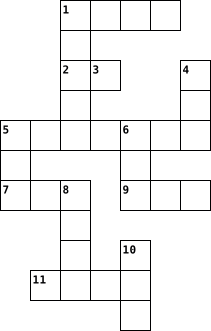
Across
- the past of say
- we add at the end of most of the verbs
- the past of the watch
- the past of see
- the past of do
- the past of go
Down
- the past of sleep
- we add at the end of the verbs ending in E
- we add at the end of verbs ending with y
- the past of be
- the past of have
- up the past of wake up
- the past of eat
13 Clues: the past of be • the past of do • the past of go • the past of say • the past of see • the past of eat • the past of have • the past of sleep • the past of the watch • up the past of wake up • we add at the end of most of the verbs • we add at the end of verbs ending with y • we add at the end of the verbs ending in E
Latin Grammar I 2025-10-04

Across
- What is the genitive singular ending for first-declension nouns?
- What kind of word takes the place of a noun?
- Which principal part gives the 1st person singular present active form of a verb?
- What kind of word expresses sudden emotion or feeling?
- To which conjugation do verbs with infinitives ending in -ēre belong?
- What is the infinitive ending of first-conjugation verbs?
- How many conjugations are there in Latin verbs?
- What kind of word shows the relationship between a noun (or pronoun) and another word?
Down
- What kind of word describes a noun’s quality or characteristic?
- What kind of word connects words or clauses?
- To which conjugation do verbs with infinitives ending in -āre belong?
- What kind of word modifies a verb, adjective, or another adverb?
- What is the system for classifying Latin verbs by their endings and stems?
- What kind of word names a person, place, thing, or idea?
- What is the system for classifying Latin nouns and adjectives by their case endings?
- From which principal part do you find the present stem of a Latin verb?
- What is the dative or ablative plural ending for first-declension nouns?
- What is the genitive plural ending for first-declension nouns?
- Which principal part gives the 1st person singular perfect active form of a verb?
- What kind of word shows action or being?
20 Clues: What kind of word shows action or being? • What kind of word connects words or clauses? • What kind of word takes the place of a noun? • How many conjugations are there in Latin verbs? • What kind of word expresses sudden emotion or feeling? • What kind of word names a person, place, thing, or idea? • What is the infinitive ending of first-conjugation verbs? • ...
engkish 2026-02-10

Across
- Reasoning opinion supported by logical reasons
- The Audience purpose to persuade the readers
- Exposition Text text that persuades readers to do or not do something
- The Reader ability to influence readers’ opinion
- And Effect relationship between reason and result
- Of Modal Verbs language feature using modal verbs
- Argument Recommendation generic structure consisting of thesis arguments and recommendation
- Must Have To modal verbs such as should must have to
- Text type of text focusing on arguments
- suggestion given at the end of the text
Down
- expression showing duty or responsibility
- Present Tense tense commonly used in hortatory exposition
- Suggestion expression showing strong advice
- Text type of text that gives arguments and recommendations
- part of text that states the writer’s opinion
- Influence Readers social function of hortatory exposition text
- Opinion power to affect someone’s decision
- Issue topic commonly discussed in hortatory exposition
- To Action sentence that encourages readers to take action
- Action something that must be done
20 Clues: Action something that must be done • Text type of text focusing on arguments • suggestion given at the end of the text • expression showing duty or responsibility • Opinion power to affect someone’s decision • Suggestion expression showing strong advice • The Audience purpose to persuade the readers • part of text that states the writer’s opinion • ...
Learning a New Language 2022-04-06

Across
- A _____ is a diary.
- Most students ____ that it is difficult to learn a new language.
- Keep a diary and write your language learning achievements. This will give you ________.
- You need to feel very ______ about learning English. You need to say that you can do it!
- Keep a _____ of your language learning in your diary.
- pronoun for male
- It is _______ to make errors when a person learns a new language.
- English _____ many irregular verbs.
- Your _____ are the other students in your class.
Down
- It is very important to _____ English every day.
- It takes a long time to _____ a new language.
- When you study English be ____ because learning a language takes time.
- Class begins at 9:00. If you join after 9:00, you are _____.
- Your _______ will help you feel more comfortable.
- You ____ learn English! Trust yourself.
- Is learning English easy? ___, it isn't.
- Slowly; after a long time
- We always make _____ when we learn new things.
18 Clues: pronoun for male • A _____ is a diary. • Slowly; after a long time • English _____ many irregular verbs. • You ____ learn English! Trust yourself. • Is learning English easy? ___, it isn't. • It takes a long time to _____ a new language. • We always make _____ when we learn new things. • It is very important to _____ English every day. • ...
Verbs 2024-05-14

Across
- Present tense of 'need'.
- ____________ is most often a noun that receives that action of the verb.
- Smell, taste, and look are examples of _______ words.
- _______________ is a noun or pronoun that comes between the verb and the direct object.
- Every verb has this many basic forms.
- The helping verb ________ is the first principal part to make future-tense verbs.
- We _________ a long way since this morning. (travel; present perfect)
- 'Have listened' is an example of ________ perfect tense.
- Was, is, and were are examples of _________ verbs.
Down
- A predicate ____________ describes the subject.
- Past plural tense of 'is'.
- These tenses express actions that are completed or perfected.
- Past tense of 'build'.
- Another word for a verb.
- Past tense of 'teach'.
- Drive, write, and play are examples of __________ verbs.
- Expresses an action completed before some past time or event.
- Prepositional phrases _____________ contain an important sentence part.
- A predicate ____________ renames the subject.
19 Clues: Past tense of 'build'. • Past tense of 'teach'. • Present tense of 'need'. • Another word for a verb. • Past plural tense of 'is'. • Every verb has this many basic forms. • A predicate ____________ renames the subject. • A predicate ____________ describes the subject. • Was, is, and were are examples of _________ verbs. • Smell, taste, and look are examples of _______ words. • ...
Persuasive language 2026-05-11

Across
- persuasive technique that appeals to logic
- persuasive technique that appeals to emotions
- words that take the place of names
- words that describe nouns
- punctuation mark used to emphasise urgency or shock
- language designed to appeal to people's emotions
- language that describes one thing as another, e.g., "He's a beast."
- the Ancient Greek philosopher who identified the three rhetorical appeals
- when a writer speaks to a person, this is ...address
Down
- words that sound like what they are describing
- verbs like should, must, will are ... verbs
- the technique in which words are repeated
- describing a non-living thing as having living qualities
- persuasive technique that establishes trust
- another technique is the power of ...
- words that describe verbs
- a short story that supports a point
- language that describes one thing as like another
- a question that doesn't require an answer
19 Clues: words that describe nouns • words that describe verbs • words that take the place of names • a short story that supports a point • another technique is the power of ... • the technique in which words are repeated • a question that doesn't require an answer • persuasive technique that appeals to logic • verbs like should, must, will are ... verbs • ...
Name: _______________ Language Arts 2026-05-28

Across
- Cause & effect is an example of a text _____ .
- Put a _____ between the name of a city & a state.
- Nouns, verbs, & adverbs are some parts of ______ .
- Before saying, "I'm done!" make sure you _____ .
- Words that mean the same. Ex: small and tiny
- Put a _____ at the end of a declarative sentence.
- A word that describes a noun.
- "Re-" is one example of a ___________ .
- The trees waved to me. Ex. of _______ .
- "I like my idea." This is first ____ point-of-view.
Down
- A short retelling of what you read is a _____ .
- Dave, Trenton, & Legos are examples of ____ nouns.
- This is a _____ sentence: Al runs, but he stops.
- An informational piece of writing is an ____ .
- A book title should be underlined & _____ .
- Another name for a story.
- In a story, form a new _____ if time goes by.
- Examples of _____ verbs: am, are, were, may, can
- Examples of ____ verbs: think, try, imagine, go
19 Clues: Another name for a story. • A word that describes a noun. • "Re-" is one example of a ___________ . • The trees waved to me. Ex. of _______ . • A book title should be underlined & _____ . • Words that mean the same. Ex: small and tiny • In a story, form a new _____ if time goes by. • Cause & effect is an example of a text _____ . • ...
The language of argument analysis 2025-04-19

Across
- contention
- forms
- features
- impact
- logos
- purpose
- alliteration
- ethos
- image
- why
- sentences
- verbs
- argument
- analysis
- cartoon
- visual
- effect
- article
- rhyme
- quote
- persuasion
- how
- introduction
- positioning
- details
- rhetoric
Down
- pun
- language
- conclusion
- topic
- memorable
- ideas
- phrase
- pathos
- tone
- appeals
- issue
- annotate
- aristotle
- support
- what
- headline
- synthesis
- kairos
- author
- allusion
- intention
- techniques
- evidence
- audience
- text
51 Clues: pun • why • how • tone • what • text • topic • forms • ideas • logos • ethos • image • issue • verbs • rhyme • quote • impact • phrase • pathos • kairos • author • visual • effect • purpose • appeals • support • cartoon • article • details • language • features • annotate • argument • headline • analysis • allusion • evidence • audience • rhetoric • memorable • sentences • aristotle • synthesis • intention • conclusion • contention • techniques • persuasion • positioning • alliteration • ...
Repaso de la Unidad 4 2026-02-11

Across
- I brought (irregular preterite)
- La comida con mucho aceite y mucha crema es muy...
- Herví los frijoles y después __(dop) comí.
- El pescado y el salmón son considerados...
- Cuando pones la comida en el refrigerador.
- Yo piqué las cebollas con un ...
- Yo __(tener) miedo porque vi una película de horror.
- I wanted (irregular preterite)
- To blend
Down
- Mis hermanos __ (oír) un ruido extraño y corrieron.
- you were able to(irregular preterite)
- Yo puse sal y __ a mi espagueti.
- S/he put (irregular preterite)
- Ingrediente principal para hacer guacamole.
- Cuando la comida tiene muchos chiles es...
- hacer (ellos - pretérito)
- Yo hice galletas y __ (dop) en el horno.
- I put (irregular preterite)
- she did/made (irregular preterite)
- La comida __(estar) deliciosa.
- Licué la salsa y __ (dop)puse en un tazón.
21 Clues: To blend • hacer (ellos - pretérito) • I put (irregular preterite) • S/he put (irregular preterite) • La comida __(estar) deliciosa. • I wanted (irregular preterite) • I brought (irregular preterite) • Yo puse sal y __ a mi espagueti. • Yo piqué las cebollas con un ... • she did/made (irregular preterite) • you were able to(irregular preterite) • ...
Irregular Verbs Conjugations 2012-06-01

Across
- Ir(Nosotros)
- Dar(Yo)
- Oir(Tú)
- Jugar(Tú)
- Ver(Ellos,Ellas,Ustedes)
- Tener(Tú)
- Conocer(Yo)
Down
- Hacer(Yo)
- Decir(El,Ella,Usted)
- Poner(Yo)
- Poder(Ellos,Ellas,Ustedes)
- Salir(Tú)
- Querer(Yo)
- Venir(El,Ella,Usted)
- Ser(Yo)
15 Clues: Dar(Yo) • Oir(Tú) • Ser(Yo) • Hacer(Yo) • Poner(Yo) • Jugar(Tú) • Salir(Tú) • Tener(Tú) • Querer(Yo) • Conocer(Yo) • Ir(Nosotros) • Decir(El,Ella,Usted) • Venir(El,Ella,Usted) • Ver(Ellos,Ellas,Ustedes) • Poder(Ellos,Ellas,Ustedes)
Past Irregular Verbs 2013-04-12

Across
- Give
- Cut
- Make
- Fight
- Bite
- Choose
- Do
- Throw
Down
- Fly
- Get
- Leave
- Catch
- Become
- Say
- Light
15 Clues: Do • Fly • Get • Cut • Say • Give • Make • Bite • Leave • Catch • Fight • Light • Throw • Become • Choose
Irregular verbs II 2023-03-05

Across
- to leave-left-...
- to run-ran-...
- to ride-rode-...
- to know-knew-...
- to go-went-...
- to meet-met-...
- to fly-flew-...
Down
- to make-made-...
- to quit-quit-...
- to lie-lay-...
- to forget-forgot-...
- to hide-hid-...
- to hang-hung-...
- to give-gave-...
- to keep-kept-...
15 Clues: to lie-lay-... • to run-ran-... • to go-went-... • to hide-hid-... • to meet-met-... • to fly-flew-... • to make-made-... • to quit-quit-... • to hang-hung-... • to give-gave-... • to ride-rode-... • to know-knew-... • to keep-kept-... • to leave-left-... • to forget-forgot-...
preterit / irregular verbs 2020-04-06

Across
- see
- leave
- say
- drive
- begin
- keep
- have
- go
Down
- learn
- forget
- eat
- drink
- keep
- buy
- break
- do
16 Clues: do • go • see • say • eat • buy • keep • keep • have • learn • leave • drink • drive • begin • break • forget
IRREGULAR VERBS / PRETERITE 2021-03-20

Across
- PRETERITE FORM OF : FRAPPER
- TRANSLATION OF : SENTIR (ODORAT)
- PAST PARTICIPLE OF : VENDRE
- AUXILIARY USED IN A QUESTION IN THE SIMPLE PAST
- PRETERITE FORM OF : BLESSER
- TRANSLATION OF : FIXER
- ENDING OF THE VERB WHEN WE USE THE PAST CONTINUOUS
Down
- AUXILIARY USED IN A NEGATIVE SENTENCE IN THE PAST CONTINUOUS
- TRANSLATION OF : ENSEIGNER
- PAST PARTICIPLE OF : COMPRENDRE
- TRANSLATION OF : EPROUVER
- TRANSLATION OF : COURBER
- PRETERITE FORM OF : REVER
- PRETERITE FORM OF : PENSER
- TRANSLATION OF : DEPENSER
15 Clues: TRANSLATION OF : FIXER • TRANSLATION OF : COURBER • TRANSLATION OF : EPROUVER • PRETERITE FORM OF : REVER • TRANSLATION OF : DEPENSER • TRANSLATION OF : ENSEIGNER • PRETERITE FORM OF : PENSER • PRETERITE FORM OF : FRAPPER • PAST PARTICIPLE OF : VENDRE • PRETERITE FORM OF : BLESSER • PAST PARTICIPLE OF : COMPRENDRE • TRANSLATION OF : SENTIR (ODORAT) • ...
Irregular Preterit Verbs 2021-10-14

Across
- conducir/yo
- morir/tú
- hacer,él
- poder/yo
- traer/ellos
- saber/vos
- ir/yo
- suponer/nos
- venir/yo
Down
- andar/vos
- jugar/yo
- traducir/tú
- preferir/ella
- poner/tú
- querer/él
15 Clues: ir/yo • jugar/yo • morir/tú • hacer,él • poder/yo • poner/tú • venir/yo • andar/vos • querer/él • saber/vos • conducir/yo • traducir/tú • traer/ellos • suponer/nos • preferir/ella
Some irregular verbs 2021-10-20

Across
- Read
- Drink
- Fight
- Wear
- Speak
- see
- sit
- Catch
Down
- Do
- Run
- Write
- Drive
- Think
- Go
- Swim
15 Clues: Do • Go • Run • see • sit • Read • Wear • Swim • Write • Drive • Drink • Fight • Think • Speak • Catch
Irregular Verbs Practice 2022-05-31

Across
- nadar
- robar
- lanzar
- hablar
- enseñar
- entender
Down
- despertar
- dormir
- tomar, llevar, agarrar
- llevar puesto
- escribir
- gastar
- decir/contar
- ganar
- pensar
15 Clues: nadar • robar • ganar • dormir • lanzar • hablar • gastar • pensar • enseñar • escribir • entender • despertar • decir/contar • llevar puesto • tomar, llevar, agarrar
IRREGULAR VERBS - QUIZ 2022-05-18

Across
- PASADO PARTICIPIO DEL VERBO SER O ESTAR
- PASADO DEL VERBO DECIR (NARRAR)
- PASADO DEL VERBO HABLAR
- PASADO PARTICIPIO DEL VERBO ESCRIBIR
- PASADO DEL VERBO TOMAR/LLEVAR
- PASADO DEL VERBO HACER(CREAR)
- PASADO DEL VERBO VENIR
Down
- PASADO PARTICIPIO DEL VERBO LEER
- PASADO DEL VERBO ROMPER
- PASADO DEL VERBO OLVIDAR
- PASADO DEL VERBO IR
- PASADO DEL VERBO GOLPEAR
- PASADO DEL VERBO SER O ESTAR
- PASADO PARTICIPIO DEL VERBO HACER (REALIZAR)
- PASADO DEL VERBO COMER
15 Clues: PASADO DEL VERBO IR • PASADO DEL VERBO COMER • PASADO DEL VERBO VENIR • PASADO DEL VERBO ROMPER • PASADO DEL VERBO HABLAR • PASADO DEL VERBO OLVIDAR • PASADO DEL VERBO GOLPEAR • PASADO DEL VERBO SER O ESTAR • PASADO DEL VERBO TOMAR/LLEVAR • PASADO DEL VERBO HACER(CREAR) • PASADO DEL VERBO DECIR (NARRAR) • PASADO PARTICIPIO DEL VERBO LEER • PASADO PARTICIPIO DEL VERBO ESCRIBIR • ...
IRREGULAR VERBS - QUIZ 2022-05-18

Across
- PASADO DEL VERBO SER O ESTAR
- PASADO DEL VERBO OLVIDAR
- PASADO PARTICIPIO DEL VERBO ESCRIBIR
- PASADO PARTICIPIO DEL VERBO LEER
- PASADO DEL VERBO IR
- PASADO DEL VERBO HACER(CREAR)
- PASADO PARTICIPIO DEL VERBO HACER (REALIZAR)
Down
- PASADO DEL VERBO HABLAR
- PASADO DEL VERBO GOLPEAR
- PASADO DEL VERBO ROMPER
- PASADO DEL VERBO DECIR (NARRAR)
- PASADO DEL VERBO COMER
- PASADO DEL VERBO VENIR
- PASADO DEL VERBO TOMAR/LLEVAR
- PASADO PARTICIPIO DEL VERBO SER O ESTAR
15 Clues: PASADO DEL VERBO IR • PASADO DEL VERBO COMER • PASADO DEL VERBO VENIR • PASADO DEL VERBO HABLAR • PASADO DEL VERBO ROMPER • PASADO DEL VERBO GOLPEAR • PASADO DEL VERBO OLVIDAR • PASADO DEL VERBO SER O ESTAR • PASADO DEL VERBO TOMAR/LLEVAR • PASADO DEL VERBO HACER(CREAR) • PASADO DEL VERBO DECIR (NARRAR) • PASADO PARTICIPIO DEL VERBO LEER • PASADO PARTICIPIO DEL VERBO ESCRIBIR • ...
IRREGULAR VERBS CROSSWORD 2019-10-13

Across
- - She __________ (lead) many slaves to free states in the North.
- - She ____________ (sleep) outdoors many times.
- - She _______ (hide) at night.
- AWAY - She _____________ (run away)in the middle of the night.
- - She ______________ (become) a 'conductor' on the Underground Railroad in the 1850s.
- - She ___________ (meet) many people.
- - She ___________ (fight) slave owners.
- - She ____________(go )to Philadelphia to be free.
- - She ______________(spend) her whole life helping others.
Down
- - She never _________ (lose) a passenger.
- - She ____________ (learn) how to protect herself.
- - She ___________ (know) where to go to be safe.
- - She ___________ (dream)of a better future.
- UP - She never ______________(give up).
- - She ________ (be) determined to put an end to slavery.
15 Clues: - She _______ (hide) at night. • - She ___________ (meet) many people. • - She ___________ (fight) slave owners. • UP - She never ______________(give up). • - She never _________ (lose) a passenger. • - She ___________ (dream)of a better future. • - She ____________ (sleep) outdoors many times. • - She ___________ (know) where to go to be safe. • ...
Irregular verbs 4 2019-11-27

Across
- ………… put put
- lie lay …………
- ……… said said
- lend lent ………
- meet …………… met
- mean meant …………
- read read ………
- run ………… run
Down
- lose lost ………
- …………… paid paid
- ride rode …………
- ………… let let
- leave ……… left
- …………… made made
- ring rang …………
15 Clues: ………… put put • lie lay ………… • ………… let let • run ………… run • lose lost ……… • ……… said said • lend lent ……… • read read ……… • ride rode ………… • leave ……… left • meet …………… met • ring rang ………… • …………… paid paid • …………… made made • mean meant …………
W17 - Irregular verbs 2024-01-17

Across
- Past simple of bring
- Past simple of think
- Past participle of know
- Past participle of drive
- Past participle of eat
- Past participle of choose
Down
- Past participle of forget
- Past participle of catch
- Past participle of Write
- Past participle of fall
- Past simple of Being
- Past participle of speak
- Past simple of keep
- Past participle of drink
- Past simple of hide
15 Clues: Past simple of keep • Past simple of hide • Past simple of bring • Past simple of Being • Past simple of think • Past participle of eat • Past participle of fall • Past participle of know • Past participle of catch • Past participle of Write • Past participle of speak • Past participle of drive • Past participle of drink • Past participle of forget • Past participle of choose