
mesopotamia Crossword Puzzles
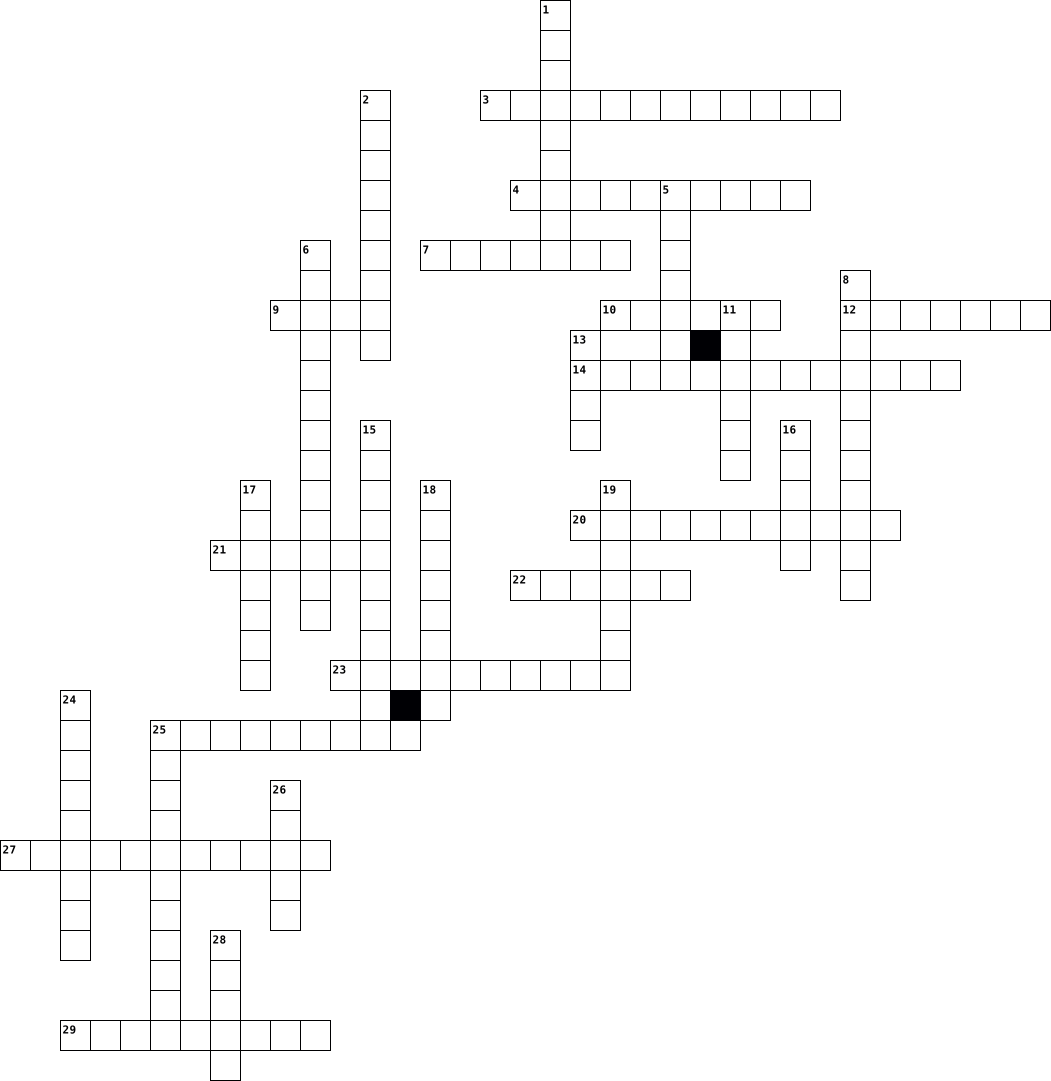
ACTS OF THE APOSTLES 2023-06-10

Across
- IN THE PORTION, THIS IS WHERE PAUL CULMINATED HIS MISSIONARY JOURNEY.
- IT WAS IN THIS PLACE THAT PAUL AND BARNABAS WERE CONSIDERED AS gods.
- HE WAS JOINED BY 400 MEN. WHO IS HE?
- WHOM DID PAUL TURN BLIND?
- WHO PROPHESIED THAT THERE WAS GOING TO BE A GREAT FAMINE ALL OVER THE WORLD.
- AT WHICH PLACE DID PAUL REASON WITH THE JEWS FOR 3 SABBATHS?
- TWO MEN HAVING SAME NAME. ONE WAS A FORMER FISHERMAN, THE OTHER A TANNER.
- WHO COMMANDED ALL THE JEWS TO LEAVE ROME?
- WHERE WAS ABRAHAM BEFORE HE DWELT IN HARAN?
Down
- WHO SAID,'IF ITS OF GOD, YOU CANNOT OVERTHROW IT'?
- WHICH PLACE WAS THE MAN WHO WAS BEDRIDDEN FOR 8 YEARS?
- AT WHICH PLACE DID JOHN (who is called) MARK DEPART PAUL AND BARNABAS?
- IT WAS IN HIS HOUSE THAT THE HOLY SPIRIT FIRST FELL UPON THE GENTILES THAT IS RECORDED.
- WHO FEEL ASLEEP WHILE PAUL WAS GIVING SERMON
- A WOMAN WHO BELIEVED THE MESSAGE AT ATHENS
- WHICH TRIBE WAS BARNABAS?
- PAUL SENT HIM TO MACEDONIA WHILE HE STAYED IN ASIA
- IT WAS IN THIS PLACE THAT PAUL AND BARNABAS SHOOK OFF THE DUST FROM THEIR FEET.
- HE WAS ONE OF THE SEVEN MEN OF GOOD REPUTATION FROM ANTIOCH.
- WHO SAID TO PAUL THAT HE WAS MAD?
20 Clues: WHICH TRIBE WAS BARNABAS? • WHOM DID PAUL TURN BLIND? • WHO SAID TO PAUL THAT HE WAS MAD? • HE WAS JOINED BY 400 MEN. WHO IS HE? • WHO COMMANDED ALL THE JEWS TO LEAVE ROME? • A WOMAN WHO BELIEVED THE MESSAGE AT ATHENS • WHERE WAS ABRAHAM BEFORE HE DWELT IN HARAN? • WHO FEEL ASLEEP WHILE PAUL WAS GIVING SERMON • WHO SAID,'IF ITS OF GOD, YOU CANNOT OVERTHROW IT'? • ...
Vocabulary quiz unit 2.1-2 2023-05-24

Across
- A government controlled by religious leaders
- a city that with its surrounding territory forms an independent state.
- A form of writing developed by the Sumerians using a wedge shaped stylus and clay tablets.
- pharaoh for 66 years; great warrior; responsible for much development of Egypt
- The spread of ideas, customs, and technologies from one people to another
- This ruler who united Upper and Lower Egyptian kingdoms
- A geographical area of fertile land in the Middle East stretching in a semicircle from the Nile to the Tigris and Euphrates
- A ruler of ancient Egypt
- the preservation of dead bodies by embalming and wrapping them in cloth
Down
- Egyptian writing that involved using pictures to represent words.
- A series of rulers from the same family
- A group of states or territories controlled by one ruler
- a huge, triangular shaped burial tomb of Egyptian pharaohs
- A region between the Tigris and Euphrates rivers that developed the first urban societies
- A chart of days and months in a year
- A legendary Sumerian king who was the hero of an epic collection of mythic stories
- Belief in many gods
- He designed a legal code in early Babylon that gave punishment based on crime and social status.
- A landform made of sediment that is deposited where a river flows into an ocean or lake
- A long-lasting, paper-like material made from reeds
20 Clues: Belief in many gods • A ruler of ancient Egypt • A chart of days and months in a year • A series of rulers from the same family • A government controlled by religious leaders • A long-lasting, paper-like material made from reeds • This ruler who united Upper and Lower Egyptian kingdoms • A group of states or territories controlled by one ruler • ...
Geography of the Bible 2021-12-23

Across
- Waters that formed natural border
- Sisera was defeated here
- mountain in Arabia
- revelation was received there
- City built on the brow of a mountain
- The captured ark was brought to this city
- one of two cities where a golden calf was set up
- home country of Naaman
- land between Tigres & Euphrates rivers
- one of the capitals of ancient egypt
- Paul traveled there by boat from Troas
- Samuel's sons officiated as judges
- Jesus' home in Judea
- City of the Chaldeans
- Territory east of the Jordan
- Isreal's first encampment after crossing the Jordan
- Jeremiah hide a belt near here
- Archelaus inherited rulership of this district
Down
- First area in Europe visited by Paul
- City of bloodshed
- home of the arch of Titus
- Called "Merchant" of Tyre by Ezekiel
- setting for vision of goat given to Daniel
- Town of the Grand King
- Darius was made king over this kingdom
- Jonah tried to escape to there
- Paul wrote his letters to the Romans from here
- Isreal was ruled by this nation for 18 years
- Ancient military power
- earlier name was Ephrathah
- Home of the Leviathan
- "land of streams of water"
- City where Paul & Barnabas were sent
- Isrealite spies entered the promise land through here
34 Clues: City of bloodshed • mountain in Arabia • Jesus' home in Judea • Home of the Leviathan • City of the Chaldeans • Town of the Grand King • home country of Naaman • Ancient military power • Sisera was defeated here • home of the arch of Titus • earlier name was Ephrathah • "land of streams of water" • Territory east of the Jordan • revelation was received there • ...
Esperto di VETRO 2024-04-12

Across
- nome del fiume presso le cui rive avvenne la creazione del vetro.
- è la tecnica per fare le bottiglie e oggetti cavi (FORMATURA)
- serve per eliminare eventuali crepe nel prodottofinito
- aumenta la resistenza agli URTI
- è la finitura con cui si smussano gli spigoli di una lastra
- è la tecnica che serve per ottenere vetro opaco
- si utilizzano grazie alla raccolta differenziata
- è il vetro perfetto e spesso antiriflesso
- è il vetro TERMOISOLANTE
- serve per colorare il vetro di blu
- principale proprietà chimico fisica
- è un vetro in fiocco che serve da isolante
- rende il vetro lucido
- non è trasparente
- è la tecnica usata per fare i piatti di vetro (stampaggio)
- serve per colorare il vetro di rosso
Down
- serve per colorare il vetro di verde
- è caratterizzato dalla presenza del PIOMBO
- è l'isoletta su cui si produce vetro artigianale.
- è la roccia da cui si ricava la silice.
- luogo in cui fu scoperto nel 3500a.c.
- è la principale materia prima del VETRO.
- non avendo una struttura ordinata il vetro è un materiale
- è composto quasi esclusivamente da SILICE
- è il vetro riflettente
- serve per colorare il vetro di giallo
- bassa resistenza
- è il vetro in lastre
- vetro in cui si può cucinare
- è l'azienda in cui si produce il VETRO.
30 Clues: bassa resistenza • non è trasparente • è il vetro in lastre • rende il vetro lucido • è il vetro riflettente • è il vetro TERMOISOLANTE • vetro in cui si può cucinare • aumenta la resistenza agli URTI • serve per colorare il vetro di blu • principale proprietà chimico fisica • serve per colorare il vetro di verde • serve per colorare il vetro di rosso • ...
Chapter 9 - Southwest Asia and North Africa 2024-11-12

Across
- located on a busy trade route path in the Middle East
- ethnic group that made up the Ottoman’s
- created the first wheeled vehicles
- where ancient Mesopotamia existed
- flooding of Tigris and Euphrates made this area flourish
- formed different plateaus in the Middle East
- last and most important prophet for the Muslim people
- holy city for all major monotheistic religions
- where many people in the Middle East live due to climate and resources
- Christ founder of Christianity
- founder of Judaism
- Arab traders spread this religion
- oldest written language known to humans
Down
- has provided fresh water and resources to the area for thousands of years
- allowed people to stay in one place and civilizations thrived because of this
- climate of the Sahara Desert today
- seasonal rains dramatically changed the climate of this region
- land turning into desert
- material used in ancient Egypt as paper
- connects Judaism and Christianity
- helped to spread Christianity
- allows ships to pass through the Mediterranean to the Red Sea
- the spreading of Jewish people across the globe
- Islam, Christianity and Judaism consider Jerusalem the _______.
- Muslim people follow this daily
- writing system used by ancient Egyptians
- Where Jewish people worship
- Where Christian people worship
- resource that is plentiful on the Saudi Arabian Peninsula
- founder of Islam
- Babylonian King who created a code of laws
- this manmade ditch increased trade between Europe and Asia
32 Clues: founder of Islam • founder of Judaism • land turning into desert • Where Jewish people worship • helped to spread Christianity • Where Christian people worship • Christ founder of Christianity • Muslim people follow this daily • connects Judaism and Christianity • where ancient Mesopotamia existed • Arab traders spread this religion • climate of the Sahara Desert today • ...
Acient Greece - Sonsoles and Patricia Adam 2022-01-11

Across
- Slaves who had obtained their freedom
- A person born or coming from a country other than one's own
- A group of people having control of a country, organization or city-state
- A pole with a flat blade, used to row a boat through the water
- Members of the Ancient Phoenicia
- A person related to someone from an earlier generation
- A sea between Europe and Asia, borders with Greece, Turkey, Russia...
- The ancient colonial cities and settlements of Greece in Italy
- A independent city with its own political system and territory
- Large island in the Mediterranean Sea, which now belong to Italy
Down
- An Ancient Greek independent city-state
- The polis from which a group of emigrants came from
- Silver coin of Ancient Greece (Money)
- A person that leaves their own country to settle permanently in another
- People who could pay their debts and prisoners of war, or descendants of these.
- Very old
- A ancient city-state in the North of Africa
- A store or small settlement established for trading, usually in a remote place
- One of the First civilisations, located in Asia between the Tigris and Euphrates rivers
- The action or process of settling among and establishing control over the people of an area
- A member of the Aristocracy, a nobel
- A ship equipped with weapons and designed to take part in warfare at sea
22 Clues: Very old • Members of the Ancient Phoenicia • A member of the Aristocracy, a nobel • Silver coin of Ancient Greece (Money) • Slaves who had obtained their freedom • An Ancient Greek independent city-state • A ancient city-state in the North of Africa • The polis from which a group of emigrants came from • A person related to someone from an earlier generation • ...
2nd Quarter - Araling Panlipunan 2022-02-11

Across
- pagkuha ng asawang lalaki ng iba pang babae maliban sa kanyang orihinal na asawa.
- Ang diyosa ng pag-ibig, digmaan at lupa.
- Striktong pagsunod sa batas.
- itinatag niya ang imperyong Chaldean matapos pangunahan ang pag-aalsa laban sa Assyria.
- Ang paa ay pinapaliit hanggang tatlong pulgada gamit ang pagbabalot ng bakal na sapatos.
- instrumentong nagtatala ng lindol.
- ito ang paggawa ng mapa.
- Ang diyosa ng tubig.
- kinilala bilang “cradle of civilization’ dahil dito umusbong ang unang sibilisadong lipunan ng tao.
Down
- nagsilbing tahanan at templo ng patron ng isang lungsod.
- ang anyo sa muling pagkabuhay ay batay sa kabutihan o kasamaang ginawa sa dating buhay.
- isang koleksyon ng mga dalit na pandigma, matalinong pahayag, mga kanta at kwento.
- nagtatag ng isang malakas na militar na nagsimula ng imperyong Hittite.
- ito ang kauna-unahang sistematikong paraan ng pagsulat sa buong daigdig na ang ibig sabihin ay hugis-sinsel.
- ang kinikilalang tagapagtatag ng Hinduismo.
- isang mananalakay buhat sa Akkad ay nagtatag ng lungsod-estado para magkaisa ang mga
- ang tawag sa aklat na kung saan ay nasusulat ang mga ilan sa kasabihan at kataga ni Kong Zi sa kaniyang mga estudyante.
- ito ay pinag-aralan sa mga paaralan at piling-pili lamang ang pangkat ng mga kabataang lalaki nakapasok dito.
- huling hari ng Lydia.
- Gumamit ng salapi sa pakikipagkalakalan.
- paniniwala sa maraming diyos.
21 Clues: Ang diyosa ng tubig. • huling hari ng Lydia. • ito ang paggawa ng mapa. • Striktong pagsunod sa batas. • paniniwala sa maraming diyos. • instrumentong nagtatala ng lindol. • Ang diyosa ng pag-ibig, digmaan at lupa. • Gumamit ng salapi sa pakikipagkalakalan. • ang kinikilalang tagapagtatag ng Hinduismo. • nagsilbing tahanan at templo ng patron ng isang lungsod. • ...
AP7 Q2 2022-02-11

Across
- ipinagbawal sa mga kababaihan ayon sa probisyon ng Kodigo ni Hammurabi.
- Ipinalagip niya ang rehiyon islam.
- Kinikilala bilang unang tagapagtatag ng Janaismo.
- Tawag sa paniniwala at pagsamba sa maraming diyos.
- Ito ay isang salin sa pangalan ni Zoroaster.
- Siya ang pilosopong nagtatag ng legalismo.
- Ang pagmamahal at pagpapahalaga sa kapwa para sa payapang pagsasama.
- Naglalahad ang epikong ito ng kabayanihan at pakikipagsapalaran ng bayaning si.
- Pagkakaroon ng Castle System na nagdulot ng diskriminasyon sa lipunan.
- tinawag na cradle of civilization dahil lundayan ng mga sinaunang kabihasnan.
Down
- tawag sa pamumuhay na nakagawian at pinauunlad ng maraming pangkat ng tao.
- Isa sa mga paniniwala ng mga hindu na kung saan sinasabi na ang bawat aksyon ay may kaakibat na parusa o gantimpala.
- Sistema ng pagsusulat na nabuo sa kabihasnang sumer.
- tagapagtatag ng Confucianismo.
- Nagdala ng Hinduismo sa India.
- isang makasaysayang lungsod-estado na naging imperyo sa Gitnang Silangang Asya Isa itong lungsod sa sinaunang Mesopotamya.
- Ang nabuong sistema ng pag sulat sa kabihasnang indus.
- ang diyos ng araw ng mga Hapon
- tawag sa pandarayuhan o paglipat ng lugar o tirahan.
- ay isang Indian relihiyon o pilosopiya batay sa sunud-sunod na orihinal na mga turo na iniugnay sa Gautama Buddha.
- ang tawag sa Paniniwala ng mga Hapones tungkol sa Diyosa ng araw at iba pang Diyosa ng kalikasan.
21 Clues: tagapagtatag ng Confucianismo. • Nagdala ng Hinduismo sa India. • ang diyos ng araw ng mga Hapon • Ipinalagip niya ang rehiyon islam. • Siya ang pilosopong nagtatag ng legalismo. • Ito ay isang salin sa pangalan ni Zoroaster. • Kinikilala bilang unang tagapagtatag ng Janaismo. • Tawag sa paniniwala at pagsamba sa maraming diyos. • ...
IKALAWANG MARKAHAN-PUZZLE 2022-02-10

Across
- ang kaniyang pangalan ay isang taguri na ang ibig sabihin ay Matanda o Matandang Guro.
- , Ang diyosa ng tubig
- . Sinasalamin ng ilang probisyon nito ang mababang pagturing sa mga kababaihan.
- , Ang diyosa ng pag-ibig, digmaan at lupa (mother of earth).
- ay nagmula sa salitang-ugat na bihasa na
- para maging magkakaugnay ang kabuuan nito.”
- eksperto o magaling.
- ay nangangahulugang “daan” o kaparaanan ng diyos.
- na nangangahulugang “to bind” o “buuin ang mga
- paniniwala sa maraming diyos
- – ang anyo sa muling pagkabuhay ay batay sa kabutihan o kasamaang ginawa sa dating buhay
- o kawalang karahasan - pagrespeto sa lahat ng uri ng nilalang, mula sa mga tao hanggang sa insekto.
- Isa na rito ang pagsusuot ng belo o
Down
- o pagkuha ng asawang lalaki ng iba pang babae maliban sa kanyang orihinal na asawa.
- paniniwala sa iisang Diyos.
- (pananamapalataya; pagpapahayag ng Shahadah o “Walang Diyos kundi si Allah at si Muhammad ang kaniyang propeta.
- Sargon isang mananalakay buhat sa Akkad ay nagtatag ng lungsod-estado para magkaisa ang mga mamamayan.
- Ang diyosa ng araw.
- pagpapalaganap ng mga batas.
- ang tawag sa aklat na kung saan ay nasusulat ang mga ilan sa kasabihan at kataga ni Kong Zi sa kaniyang mga estudyante
- Ang ang kinilala bilang “cradle of civilization’ dahil dito umusbong ang unang sibilisadong lipunan ng tao.
21 Clues: Ang diyosa ng araw. • eksperto o magaling. • , Ang diyosa ng tubig • paniniwala sa iisang Diyos. • pagpapalaganap ng mga batas. • paniniwala sa maraming diyos • Isa na rito ang pagsusuot ng belo o • ay nagmula sa salitang-ugat na bihasa na • para maging magkakaugnay ang kabuuan nito.” • na nangangahulugang “to bind” o “buuin ang mga • ...
Ancient History Vocab 2022-08-15

Across
- A society in an advanced state of development including, complex social institutions, writing, and large populations(2)
- Oldest large-scale monotheistic faith(7)
- The pictographic writing system used by Egyptians The people who settled the Nile River Valley(8)
- The people who follow first monotheistic faith(7)
- Chinese belief that rulers have their position because the gods want them to(10)
- Title of the Egyptian God-King(8)
- Belief in multiple deities organized into a pantheon(4)
- The belief and worship of a superhuman controlling power(4)
- lowest free social class, usually involved in food production (8)
- The land between the Tigris and Euphrates Rivers and considered the location of the oldest civilization in the world. (7)
Down
- First written law code in history(7)
- Location of the Indus Valley (Harrapan) civilization(9)
- A male dominated culture (7)
- The Rule of one man with total power in a polity.(3)
- the customary beliefs, social forms, and material traits of a group (2)
- A government type run by a religious figure(8)
- The type of writing used by the Sumerians(7)
- Jewish Holy Book(7)
- a polity that consists of a city and its dependent areas(3)
- Belief in only one god(4)
- a group of nations or peoples ruled over by a single powerful ruler.(3)
21 Clues: Jewish Holy Book(7) • Belief in only one god(4) • A male dominated culture (7) • Title of the Egyptian God-King(8) • First written law code in history(7) • Oldest large-scale monotheistic faith(7) • The type of writing used by the Sumerians(7) • A government type run by a religious figure(8) • The people who follow first monotheistic faith(7) • ...
TTS Inggris Lanjut 2025-09-11

Across
- A slow pace of running, often for exercise.
- To propel something through the air with the hand.
- A flat paper covering used to enclose a letter or document.
- The chemical symbol for iron.
- An atom or molecule with an electrical charge due to loss or gain of electrons.
- A cover for a container, box, or pot.
- An ancient Sumerian city in Mesopotamia, one of the earliest known civilizations.
- The star at the center of our solar system that provides light and heat to Earth.
- Something that is uncommon, unusual, or hard to find.
- A magic spell or curse.
Down
- A place where animals are kept and displayed to the public.
- Past tense of glow; to shine with a steady light or radiance.
- Informal word for food; also a breed of dog (Chow Chow).
- The act of joining or being joined; an organization formed by uniting people or groups for a common purpose.
- French word meaning "good"; also used in English phrases (e.g., bon voyage = have a good trip).
- Amphibians similar to frogs, usually with dry, bumpy skin.
- The third-person singular form of get, meaning to obtain, receive, or become.
- A large, flightless bird native to Australia.
- Something true, existing, or authentic.
- The third-person singular or plural form of untie, meaning to loosen or release something that was tied or fastened.
20 Clues: A magic spell or curse. • The chemical symbol for iron. • A cover for a container, box, or pot. • Something true, existing, or authentic. • A slow pace of running, often for exercise. • A large, flightless bird native to Australia. • To propel something through the air with the hand. • Something that is uncommon, unusual, or hard to find. • ...
kelompok 1 xii.8 2025-09-25

Across
- prinsip apa yang membagi aktivitas perusahaan dalam waktu tertentu untuk pelaporan adala prinsip
- semua aset yang di peroleh perusahaan dicatat berdasarkan harga perolehnya kewajiban dan modal
- sistem akutansi amerika yang diterapkan di indonesia setelah tahun 1960 adalah
Down
- metode dan standar akuntansi yang digunakan harus di terapkan secara konsisten dari satu periode ke periode berikutnya
- peradaban kuno tempat akutansi pertama kali dimulai dengan pencatatan transaksi keuangan sederhana adalah
5 Clues: sistem akutansi amerika yang diterapkan di indonesia setelah tahun 1960 adalah • semua aset yang di peroleh perusahaan dicatat berdasarkan harga perolehnya kewajiban dan modal • prinsip apa yang membagi aktivitas perusahaan dalam waktu tertentu untuk pelaporan adala prinsip • ...
I SUMERI 2016-01-14

Across
- MATERIALE USATO PER COSTRUIRE LA RUOTA
- ANIMALI ALLEVATI PER RICAVARE LATTE, CARNE, LANA
Down
- REGIONE ABITATA DAI SUMERI
3 Clues: REGIONE ABITATA DAI SUMERI • MATERIALE USATO PER COSTRUIRE LA RUOTA • ANIMALI ALLEVATI PER RICAVARE LATTE, CARNE, LANA
World History Benchmark Review 2 2015-11-16

Across
- Cyrus the Great was known for practicing _______ which united the people and made Cyrus more powerfu.
- World's first monotheistic religion.
- Ancient civilization that encompassed 40% of the world, including Mesopotamia and parts of Egypt and Asia.
- Ancient Chinese Dynasty.
- Turtle shells used by ancient Chinese to communicate with their ancestors.
- Belief in Hinduism that the soul is born again in a new body after death.
- Dispersal of the Jews due to anti-semitism.
- Religion that has a belief in two opposing features, good and evil, throughout the universe.
- Path to nirvana in Buddhism.
- Ancient Hindu texts that contain central religious ideas.
- Rules for moral and religious conduct in Judaism.
- In Hinduism and Buddhism, a person's actions that will decide one's future fate.
- Contains Judaism's sacred texts.
Down
- In Buddhism this is insight and leads to nirvana.
- Belief in many gods.
- Belief in one god.
- Civilization known for ship building, trading purple dye, and developing the first alphabet.
- Ancient Chinese leaders claimed they had the _____ to rule.
- Sacred city of the Jews.
- Founder of Buddhism.
- The world's first paved road, built by Darius the Great.
- Religion that began in India and spread to Asia through trade and missionaries.
- Ancient Hindu texts which contain Hindu literature and scripture.
- Founder of Judaism.
24 Clues: Belief in one god. • Founder of Judaism. • Belief in many gods. • Founder of Buddhism. • Sacred city of the Jews. • Ancient Chinese Dynasty. • Path to nirvana in Buddhism. • Contains Judaism's sacred texts. • World's first monotheistic religion. • Dispersal of the Jews due to anti-semitism. • In Buddhism this is insight and leads to nirvana. • ...
World Civ Midterm 2015-12-10

Across
- uncovered plot to kill Caesar
- code that knights lived by
- where Jewish civilization originated
- birthplace of Muhammad, home of the Ka'bah
- brought clean water to Rome
- Mediterranean was at peace for 200 years
- Rome "conquered" it during Claudius' reign, Hadrian built a wall there
- a form of government in which leaders are elected to represent people
- office court historian
- gave Christians freedom to practice their religion
- capital of the Ummayed Dynasty
- collection of Jewish writing/commentary that interprets the laws and teaching of Hebrew Bible
- one of the 7 sacraments, confession of sins to a priest in order to receive God's forgiveness (now called reconciliation)
- natural border that separates Italy from the rest of Europe
Down
- land grants given to the lords from the Kings
- trade hub of the Mediterranean, Carthage and Rome fought over it in Punic Wars
- founded by Constantine, became capital of Byzantine Empire
- father of the Jewish people
- Christian belief that God can save people from sin and grant everlasting life
- Fought against Shi'ah, caused Muslims to split into two religions
- temple to Roman gods
- one of the Five Pillars of Islam, occurs during month of Ramadan
- gained power when Rome expanded, had great wealth and political influence over middle class
- slave that led a revolt in 73 B.C.E.
24 Clues: temple to Roman gods • office court historian • code that knights lived by • father of the Jewish people • brought clean water to Rome • uncovered plot to kill Caesar • capital of the Ummayed Dynasty • where Jewish civilization originated • slave that led a revolt in 73 B.C.E. • Mediterranean was at peace for 200 years • birthplace of Muhammad, home of the Ka'bah • ...
Social studies by kenny 2017-12-15

Across
- A trading system that is a trading system in witch people exchange
- The largest ziggurats were seven stories tall
- diffusion The spreading of cultral traits from region to another
- The idea that all members of a society - even the rich and powerful-must obey.
- A set of laws that govern the life in babylonia
- Is the money used as medium exchange ussaly bills and coins
- A system of writing that uses triangalar shaped symbels to stand for ideas or things.
- A wide, flat plain in present day iraq
- Good or service within a country that is produce within a another country
- a independent state that includes a city and their surroundings
- The art of steering a ship am ship from place to place
- A small set of words and symbels
- A good or service prouduced within a country outside the country’s border
Down
- Carved stone slab or pillar.
- trait An idea or way that of doing things
- The belief in more than a god
- A perment army of soldiers
- Supply water to their crops.
- A region of the middle east that stretches in a large, crescent- shaped curve from Persian Gulf to the Mediterranean sea
- Soldiers who fight while riding horses.
- A state contianing several countries and territories
- Payment made to show loyalty to stronger
- An independent state that works with other states
23 Clues: A perment army of soldiers • Carved stone slab or pillar. • Supply water to their crops. • The belief in more than a god • A small set of words and symbels • A wide, flat plain in present day iraq • Soldiers who fight while riding horses. • Payment made to show loyalty to stronger • trait An idea or way that of doing things • The largest ziggurats were seven stories tall • ...
IKALAWANG MARKAHAN-PUZZLE Samantha Louisse L. Tamayo(G20) C. Velasquez 2022-02-20

Across
- ito ang nabuong sistema ng pagsulat sa kabihasnang indus
- Isang pilosopiya na nakatuon sa pakikiayon at pakikipag-isa ng tao sa kalikasan.
- Sa Hinduismo, bilang patunay ng pagmamahal sa asawang lalaki, ang asawang babae ay inaasahang tumalon sa funeral pyre o apoy na sumusunog sa labi ng kaniyang asawa.
- Ito ang tawag sa relihiyong may iisang diyos na pinaniniwalaan
- saan matatagpuan ang kabihasnang shang
- Ito ang kaugalian na nangangahulugang belo sa salitang Persian.
- siya ang kaunaunahang dayuhan na namuno sa dinastiyang yuan
- Ito ang Subkontinenteng pinagmulan ng Hinduismo.
- Ito ang tawag sa pag lipat ng lugar o tirahan
- Isang tanyag na pilosopiyang umusbong sa panahon ng Zhou at si Lao Zi ang kinikilalang tagapagtatag.
- ito ang dami o bilang ng tao sa isang lugar
- ito ang pinakamataas sa sistemang caste
Down
- Tinawag na kambal na ilog na dumadaloy sa hangganan ng Mesopotamia.
- Ito ang relihiyong tinatag ni Lao Tzu o Lao Zi
- Ito ang relihiyong naniniwala sa reinkarnasyon.
- Ang pangalan nito ay hango mula sa masa ng lupang hugis buwan.
- “Ang aming pangkat ang nagdala ng Hinduismo sa India”.
- pinaniniwalaang dyosa ng tubig
- “Ako ang kinikilala bilang unang tagapagtatag ng Jainismo”.
- dito umusbong ang kabihasnang sumer
- Ito angbansa sa Silangang Asya na nagsagawang footbinding sa mga kababaihan.
- ito ang bilang ng populasyon ng marunong sumulat at bumasa
22 Clues: pinaniniwalaang dyosa ng tubig • dito umusbong ang kabihasnang sumer • saan matatagpuan ang kabihasnang shang • ito ang pinakamataas sa sistemang caste • ito ang dami o bilang ng tao sa isang lugar • Ito ang tawag sa pag lipat ng lugar o tirahan • Ito ang relihiyong tinatag ni Lao Tzu o Lao Zi • Ito ang relihiyong naniniwala sa reinkarnasyon. • ...
2ND QUARTER - ARALING PANLIPUNAN ( SINAUNANG KABIHASNAN ) 2022-02-15

Across
- Tinawag na cradle of civilization dahil nagsilbing lundayan ng mga sinaunang kabihasnan.
- paniniwala sa maraming diyos
- kilala rin sa tawag na Master Kung (Kong)
- ang kinikilalang tagapagtatag ng Hinduismo
- Haring namuno sa imperyo ng Akkadian na nagtayo ng mga lungsod-estado para magkaisa ang mga mamamayan.
- pagkuha ng asawang lalaking iba pang babae maliban sa kanyang orihinal na asawa.
- Ang naging pundasyon ng imperyong ito ay bibliya.
- ang tawag sa aklat na kung saan ay nasusulat ang mga ilan sa kasabihan at kataga ni Kong zisa kaniyang mga estudyante
- Ito ang imperyo na nagpasimula ng paggamit ng barya.
Down
- Tawag sa tagasulat ng mga Sumerian
- Imperyong bumagsak dahil hindi napagtuunan ang pagpapatatag ng pamahalaan at sandatahang lakas.
- ang kaniyang pangalan ay isang taguri na ang ibig sabihin ay Matanda o Matandang guro.
- ito ang anyo sa muling pagkabuhay ay batay sa kabutihan o kasamaang ginawa sa dating buhay
- mula sa salitang Latin na religare na ang ibig sabihin ay “to bind” o “buuin ang mga bahagi para maging magkakaugnay ang kabuuan nito.
- Isa sa pinakapino at hinahangaang wika sa buong daigdig.
- may kapalit ang bawat ginagawa. Ang mabuti ay magdudulot ng kabutihan, gayon din naman sa kasamaan.
- ito ang orihinal na pangalan ni buddha
- Sistema ng pagsusulat na nabuo sa kabihasnang Sumer.
- ito ang tawag sa paggawa ng mapa
- Imperyo na nakabatay ang batas sa retributive justice.
20 Clues: paniniwala sa maraming diyos • ito ang tawag sa paggawa ng mapa • Tawag sa tagasulat ng mga Sumerian • ito ang orihinal na pangalan ni buddha • kilala rin sa tawag na Master Kung (Kong) • ang kinikilalang tagapagtatag ng Hinduismo • Ang naging pundasyon ng imperyong ito ay bibliya. • Sistema ng pagsusulat na nabuo sa kabihasnang Sumer. • ...
2ND QUARTER - ARALING PANLIPUNAN ( SINAUNANG KABIHASNAN ) 2022-02-15

Across
- Tinawag na cradle of civilization dahil nagsilbing lundayan ng mga sinaunang kabihasnan.
- Imperyo na nakabatay ang batas sa retributive justice.
- mula sa salitang Latin na religare na ang ibig sabihin ay “to bind” o “buuin ang mga bahagi para maging magkakaugnay ang kabuuan nito.
- Tawag sa tagasulat ng mga Sumerian
- ito ang orihinal na pangalan ni buddha
- Ang naging pundasyon ng imperyong ito ay bibliya.
- Haring namuno sa imperyo ng Akkadian na nagtayo ng mga lungsod-estado para magkaisa ang mga mamamayan.
- paniniwala sa maraming diyos
- may kapalit ang bawat ginagawa. Ang mabuti ay magdudulot ng kabutihan, gayon din naman sa kasamaan.
Down
- Imperyong bumagsak dahil hindi napagtuunan ang pagpapatatag ng pamahalaan at sandatahang lakas.
- ang tawag sa aklat na kung saan ay nasusulat ang mga ilan sa kasabihan at kataga ni Kong zisa kaniyang mga estudyante
- Isa sa pinakapino at hinahangaang wika sa buong daigdig.
- pagkuha ng asawang lalaking iba pang babae maliban sa kanyang orihinal na asawa.
- Ito ang imperyo na nagpasimula ng paggamit ng barya.
- ito ang anyo sa muling pagkabuhay ay batay sa kabutihan o kasamaang ginawa sa dating buhay
- ang kinikilalang tagapagtatag ng Hinduismo
- kilala rin sa tawag na Master Kung (Kong)
- Sistema ng pagsusulat na nabuo sa kabihasnang Sumer.
- ito ang tawag sa paggawa ng mapa
- ang kaniyang pangalan ay isang taguri na ang ibig sabihin ay Matanda o Matandang guro.
20 Clues: paniniwala sa maraming diyos • ito ang tawag sa paggawa ng mapa • Tawag sa tagasulat ng mga Sumerian • ito ang orihinal na pangalan ni buddha • kilala rin sa tawag na Master Kung (Kong) • ang kinikilalang tagapagtatag ng Hinduismo • Ang naging pundasyon ng imperyong ito ay bibliya. • Ito ang imperyo na nagpasimula ng paggamit ng barya. • ...
Second Quarter Araling Panlipunan - Puzzle 2022-02-16

Across
- paniniwala sa maraming diyos
- Isa sa pinakapino at hinahangaang wika sa buong daigdig.
- sistema ng pagsulat sa kabihasnang Sumer
- nagmula sa salitang-ugat na bihasa nangangahulugang eksperto o magaling.
- ibig sabihin ay naliwanagan.
- isang mananalakay buhat sa Akkad ay nagtatag ng lungsod-estado para magkaisa ang mga mamamayan.
- isang koleksyon ng mga dalit na pandigma, matalinong pahayag, mga kanta at kwento.
- 5 aklat ni Moises (Lumang Tipan)
- isang arko ng matabang lupa na naging tagpuan ng ibat ibang grupo ng tao mula sa Persian Gulf hanggang sa dalampasigan ng Mediterranean Sea.
- ito ang paggawa ng mapa
Down
- kinilala bilang “cradle of civilization’
- nagsilbing tahanan at templo ng patron ng isang lungsod
- Ito ay isang teknolohiyang ginamit upang mapabilis ang paggawa ng kopya ng anumang sulatin na nagbigay-daan upang maabot nila ang "ginintuang panahon ng literatura at sining."
- ang Diyos ng Araw
- Ang diyosa ng pag-ibig, digmaan at lupa (mother of earth).
- isang mahalagang konseptong paggamot na hango sa salitang ayu o buhay at veda o agham.
- isang sistema sa larangan ng medisina na ang isang manggagamot ay gumagamit ng karayom upang itusok sa balat ng tao.
- ang anyo sa muling pagkabuhay ay batay sa kabutihan o kasamaang ginawa sa dating buhay
- mula sa salitang Latin na religare na nangangahulugang “to bind” o “buuin ang mga bahagi para maging magkakaugnay ang kabuuan nito.”
- huling hari ng Lydia
20 Clues: ang Diyos ng Araw • huling hari ng Lydia • ito ang paggawa ng mapa • paniniwala sa maraming diyos • ibig sabihin ay naliwanagan. • 5 aklat ni Moises (Lumang Tipan) • kinilala bilang “cradle of civilization’ • sistema ng pagsulat sa kabihasnang Sumer • nagsilbing tahanan at templo ng patron ng isang lungsod • Isa sa pinakapino at hinahangaang wika sa buong daigdig. • ...
Infographic Guide to the Globe 2021-04-25

Across
- This planet is the furthest from the sun.
- About 14.7 million people visit this city each year.
- This is the heaviest land mammal in South America.
- An estimated 47% of this country's population don't have clean drinking water in their home.
- This is one of the oldest civilizations in the world.
- A baby is born approximately every ___ seconds.
- york This city has the most subway stations in the world.
- Most of the tallest buildings in the world are in this country.
- This city in Bangladesh is the most densely populated in the world with about 150,800 people per square mile.
- Kingdom This country has the largest percentage of people who have internet access
Down
- How many more years *on average* do people in United States go to school than people in India?
- Of the top five largest countries in the world (land area), how many are in the American continents?
- What is the majority religion in Nigeria?
- This village is the the wettest place on Earth with an 467 in of rain per year.
- This youngest country in the world declared independence in 2011.
- Which continent has the most number of countries?
- Which ocean has the greatest volume of water?
- Even though this city has the largest population, it's not the most densely populated.
- This is the most densely populated country in the world.
- Means "hello" in Russian.
20 Clues: Means "hello" in Russian. • This planet is the furthest from the sun. • What is the majority religion in Nigeria? • Which ocean has the greatest volume of water? • A baby is born approximately every ___ seconds. • Which continent has the most number of countries? • This is the heaviest land mammal in South America. • About 14.7 million people visit this city each year. • ...
tts ayuk 2 2023-11-18

Across
- yang bertugas membantu pemerintah dalam menyelenggarakan penelitian dan pengembangan
- ucapan yang dari dalam pikiran dan dikatakan
- aliran pengetahuan terjadi semata mata karena rasio manusia
- disebut juga berita atau kabar
- bapak teknologi Indonesia
- Singkatan dari kata ilmu pengetahuan dan teknologi
- obat-obatan yang membantu para petani untuk membasmi hama
- alat teknologi pemantau
- berita palsu yang menyebar
- arti dari seni, keterampilan, meraih sesuatu
- akses yang bisa dijangkau untuk mendapat informasi dan komunikasi
- gerakan untuk mendapatkan kedaulatan dan memisahkan suatu wilayah
- pengalaman
- ciri khas Indonesia (jenis pakaian)
- teknologi yang menerima atau mengulang sinyal
- serat yang mengantarkan sinyal data elektronik adalah serqt...
- gabungan dari ilmu dan teknologi untuk pemanfaatan makhluk hidup
Down
- aliran ilmu pengetahuan yang benar harus bersumber pada pengalaman
- segala sesuatu yang diketahui
- jenis komputer digunakan untuk bisnis dan rumah tangga di tahun 1981
- perilaku tercela dengan menindas orang lain
- perubahan yang berlangsung secara cepat dan menyangkut dasar atau pokok-pokok kehidupan
- perusahaan yang menghasilkan komputer macintosh
- perahu yang membuktikan perkembangan teknologi pelayaran di indonesia
- generasi pertama komputer yang dibuat tahun 1946
- wilayah yang mulai mengembangkan pertanian sebelum abad 20
- sistem yang digunakan untuk irigasi di sawah
- mesin yang diciptakan sekitar tahun 1440 untuk membuat buku secara massal
- interaksi yang dilakukan makhluk sosial
- salah satu inovasi abad ke 20 yang melahirkan era digital
30 Clues: pengalaman • alat teknologi pemantau • bapak teknologi Indonesia • berita palsu yang menyebar • segala sesuatu yang diketahui • disebut juga berita atau kabar • ciri khas Indonesia (jenis pakaian) • interaksi yang dilakukan makhluk sosial • perilaku tercela dengan menindas orang lain • ucapan yang dari dalam pikiran dan dikatakan • sistem yang digunakan untuk irigasi di sawah • ...
Soil Science 212 Midterm Exam 2023-10-04

Across
- a by-product of photosynthesis
- movement that does not exert energy
- the deficiency can be found in older leaves
- inherent capacity of plants
- the destruction of soil rendering it unproductive
- Created the equation for nutrient movement from higher to lower gradient of concentration
- a condition of soil the limits nutrient availability
- the movement from higher concentration to lower concentration
- a condition of soil the limits nutrient availability
- natural substance added to soil to improve structure
- visual symptoms of these are found in the younger leaves
- negatively charged soil nutrients
- the inherent capacity of soil to support plant growth
Down
- electrical charge of soil micelle
- external factors that help plant growth
- Controls soil distribution due to differences in elevation
- condition where oxygen is not necessary
- well-developed soil found in alluvial terraces in the Phils.
- living component of soil that helps in plant growth and production
- the place where earliest recording of soil fertility was noted
- the ability of soil to turn out the quantity of plants
- a by-product of photosynthesis
- water is necessary for nutrient uptake to take place
- provides the energy needed for nutrients to move
- condition where the presence of oxygen is necessary
- help carry metal ions during nutrient intake
- nutrient uptake that takes effort
- Controls soil distribution due to presence/absence of plants
- positively charged soil nutrients
- chemical substance added to soil to help plant growth
30 Clues: inherent capacity of plants • a by-product of photosynthesis • a by-product of photosynthesis • electrical charge of soil micelle • nutrient uptake that takes effort • positively charged soil nutrients • negatively charged soil nutrients • movement that does not exert energy • external factors that help plant growth • condition where oxygen is not necessary • ...
Historia de la escultura 2019-03-19

Across
- Material apreciado por sus propiedades físicas
- Herramienta importante para fabricar una escultura
- es el arte plástico
- Roca metamórfica dura, con gran fino y compacto
- es uno de los dos tipos de escultura
- ¿En qué parte del cuerpo está la medida fundamental del canon florentino?
- En esta época se imitan las obras clásicas de escultura
- Metal precioso utilizado algunas veces en escultura
- función principal que se le ha dado a la escultura durante toda la historia del hombre
- al bulto redondo también se le dice
- Persona que hace esculturas
- Conjunto de las medidas proporcionales que se observan en la figura humana
Down
- uno de los primero materiales en ser utilizados para hacer esculturas en la Antigüedad
- se le dice a la escultura realizada sobre un muro
- Piedra que con el tiempo se hace más dura
- Durante el gótico se procuraba que las expresiones de las esculturas reflejasen
- es uno de los dos tipos de escultura
- ¿Qué narraban en sus esculturas las civilizaciones como Grecia, Roma, Mesopotamia, Egipto y Asia?
- La escuela románica fue una reacción frente al
- función de la escultura que data des de Egipto
- Durante el Barroco la escultura se caracteriza por ser
- Procedimiento clásico de los escultores
- Material más duradero pero difícil de trabajar
- ¿En qué siglo aparecen el cubismo, constructivismo y surrealismo?
- Nombre del barro cocido
- Ejemplo de madera noble
26 Clues: es el arte plástico • Nombre del barro cocido • Ejemplo de madera noble • Persona que hace esculturas • al bulto redondo también se le dice • es uno de los dos tipos de escultura • es uno de los dos tipos de escultura • Procedimiento clásico de los escultores • Piedra que con el tiempo se hace más dura • Material apreciado por sus propiedades físicas • ...
Waffle Cone Master Class 2024-08-13

Across
- St. Louis-based company granted Fair concessions for "soft drinks"
- Single serve, multi use ice cream popular in London
- Key ingredient in our home made waffle batter
- This event is hosted by the MHS _____ Society
- First pictorial evidence of an ice cream cone was in this kind of establishment
- Last name of the "Fancy Ices" cookbook author
- Tool to mold shape of warm waffles
- One of the two major rivers in the Fertile Crescent of Mesopotamia
- Last name of waffle cone patent owner in NYC
- classic name for an establishment selling ice cream
- Gourmet waffle cone company based in Brooklyn
- Largest manufacturer of waffle cones in the US
- Town where the Clementine dairy cows live
- Country farthest East Alexander the Great conquered
- Most popular ice cream flavor worldwide
Down
- Number of Clementine's parlor locations
- Best selling Clementine's ice cream flavor
- Sryian "zalabia" vendor
- Mile-long amusement and food center of the World's Fair
- Official name of the 1904 World's Fair
- Extra ice cream ingredient included in French recipes
- Classification of the Clementine's ice cream production standards
- Neighborhood of first Clementine's location
- First historically confirmed Chinese Dynasty
- Key ingredient for modern ice cream sourced from the New World
- Persian word for "ice pit"
- Technical term for percentage of air churned into ice cream
27 Clues: Sryian "zalabia" vendor • Persian word for "ice pit" • Tool to mold shape of warm waffles • Official name of the 1904 World's Fair • Number of Clementine's parlor locations • Most popular ice cream flavor worldwide • Town where the Clementine dairy cows live • Best selling Clementine's ice cream flavor • Neighborhood of first Clementine's location • ...
Book of Judges 2024-06-10

Across
- - Israelite general who, with Deborah, defeated the Canaanite army.
- - Judge and prophetess who led Israel in battle against the Canaanites.
- - Sheep's wool used by Gideon to test God's will.
- - The act of saving or delivering, often seen in the judges' actions.
- - Member of the tribe of Levi, often serving in religious capacities.
- - Place of sacrifice and worship, often associated with the tabernacle.
- - Indigenous people of the land of Canaan whom Israel fought against.
- - Judge who killed six hundred Philistines with an ox goad.
- - Twelve divisions of the Israelite people, each with its territory.
- - Leaders raised by God to deliver and govern Israel.
Down
- - Judge who defeated the Midianites with a small army.
- - A person consecrated to God from birth, such as Samson.
- - Son of Gideon who proclaimed himself king and later died in battle.
- - Woman who killed Sisera, the captain of the Canaanite army, with a tent peg.
- - Worship of idols or false gods, often condemned in the book of Judges.
- - Nomadic tribe who oppressed the Israelites during the time of the judges.
- - Ancient enemies of Israel who often clashed with the Israelites.
- - The first judge of Israel, who delivered them from the king of Mesopotamia.
- - Strong judge known for his long hair and great strength.
- - Left-handed judge who assassinated Eglon, the Moabite king.
20 Clues: - Sheep's wool used by Gideon to test God's will. • - Leaders raised by God to deliver and govern Israel. • - Judge who defeated the Midianites with a small army. • - A person consecrated to God from birth, such as Samson. • - Strong judge known for his long hair and great strength. • - Judge who killed six hundred Philistines with an ox goad. • ...
Geography 2023-04-28
Across
- The best country in the world
- The natural disaster the East Coast has
- One of the axis powers -Hilter was in charge
- The group of people wiped out during the Holocaust
- the largest lake in europe
- Water located underground- starts with a
- Rebirth in new bodies or form of life
- Land between the rivers
- Pattern of ocean currents and water temperatures in the Mid- Pacific Region aquifer
- Capital of Texas
- great river
- the world’s biggest island
- Drift The idea that the continents were once joined together
- the town where a nuclear accident occurred in 1986
Down
- Land almost completely surrounded by water, but still attached to a portion of land
- the idea based on public ownership and communal control
- sea the world’s largest inland body of water
- old egyptian form of writing
- raising of livestock
- Second longest river in the world
- Really dry
- When water is cycled back up into the clouds
- One of the resources from the Americas in the Triangular Slave Trade
- Between the US and Soviet Union after WW2
- How many European countries were at the Berlin Conference
- The state of the atmosphere right now
- a large mass of snow and ice that slide down a mountain
- Water that lies underground
- where the renaissance began
- diamond Another name for a conflict diamond
30 Clues: Really dry • great river • Capital of Texas • raising of livestock • Land between the rivers • the largest lake in europe • the world’s biggest island • Water that lies underground • where the renaissance began • old egyptian form of writing • The best country in the world • Second longest river in the world • Rebirth in new bodies or form of life • The state of the atmosphere right now • ...
CRUCIVERBA 2023-07-20

Across
- Le ha rigide l'aereo
- Verdura principale nella parmigiana
- Il nome del cantante Morandi
- Gli inglesi lo bevono alle 5 del pomeriggio
- Quella di Pisa è storta
- Il fiume che passa da Ferrara
- Il nome del teatro del festival di Sanremo
- La chiami quando non ti senti bene
- Gli abitanti di Roma
- Ci sono quelli di interesse
- Può fare i fiori e i frutti
- Il punto più alto del monte
- Serve per lavarsi le mani
- E'il nome di un fiore ma anche di una pizza
- Ne ha bisogno chi lavora a maglia
- Si vede quando piove con il sole
- Artigiano che lavora il legno
Down
- La capitale della Francia
- Ne va ghiotto il cane
- Animale dal collo molto lungo
- Canta "Amore disperato"
- Se ne possono prendere due con una fava
- Regione storica tra il tigri e l'eufrate (terra di mezzo)
- Un dolce che ha come ingredienti i savoiardi e il caffè
- Il naso dell'elefante
- La parolina degli sposi
- Erba intoccabile
- 500 fogli di carta
- Il pesce che risale i fiumi per deporre le uova
- Ci vai per fare la messa in piega
- In stazione c'è quella d'aspetto
- Sono presenti durante il temporale e fanno rumore
- Si usa in spiaggia per ripararsi dal sole
- Anfiteatro romano al centro di Verona
- Mosto cotto usato come condimento
35 Clues: Erba intoccabile • 500 fogli di carta • Le ha rigide l'aereo • Gli abitanti di Roma • Ne va ghiotto il cane • Il naso dell'elefante • Canta "Amore disperato" • La parolina degli sposi • Quella di Pisa è storta • La capitale della Francia • Serve per lavarsi le mani • Ci sono quelli di interesse • Può fare i fiori e i frutti • Il punto più alto del monte • Il nome del cantante Morandi • ...
COUNTRY 2025-05-16

Across
- – Eastern European country bordered by Russia and known for its forests.
- – Densely populated country known for the Ganges Delta and textile industry.
- – Middle Eastern country home to Petra, one of the new Seven Wonders.
- – Landlocked country in Central Europe known for castles and mountains.
- – Wealthy city-state in Southeast Asia with strict laws and modern skyline.
- – Adriatic coastal country known for beaches and medieval cities like Dubrovnik.
- – Northern European country famous for saunas and thousands of lakes.
- – Middle Eastern country, home to ancient Mesopotamia.
- – Country famous for its canal connecting the Atlantic and Pacific Oceans.
Down
- – Balkan country with a rich history and the Danube River.
- – Central European nation known for Prague and historic castles.
- – Country at the southern tip of Africa, known for its diverse culture and Nelson Mandela.
- – Caribbean island known for cigars, salsa music, and vintage cars.
- – Country at the crossroads of Europe and Asia, known for wine and mountains.
- – Middle Eastern country known for its cuisine and ancient ruins like Baalbek.
- – European country known for classical music, Alps, and Vienna.
- – Largest country in Africa by area, mostly covered by the Sahara Desert.
- – Small European country with mountains, lakes, and beautiful capital Ljubljana.
- – Island nation known for green landscapes, pubs, and Celtic heritage.
- – Small but wealthy Gulf country, host of the 2022 FIFA World Cup.
20 Clues: – Middle Eastern country, home to ancient Mesopotamia. • – Balkan country with a rich history and the Danube River. • – European country known for classical music, Alps, and Vienna. • – Central European nation known for Prague and historic castles. • – Small but wealthy Gulf country, host of the 2022 FIFA World Cup. • ...
Teka Teki Silang Sejarah Peminatan Kelas XII IPS 2020-09-01

Across
- / satelit amerika serikat yang berhasil diluncurkan tahun 1958
- / teknologi sebagai keahlian yang disistematisasi dan diorganisasi menjadi pengetahuan yang berguna adalah pengertian teknologi menurut . .
- / proyek kerjasama amerika dan inggris pada tahun 1942 - 1946
- / jenis drone milik amerika serikat
- / presiden amerika yang menggagas strategi "perang bintang"
- / perubahan besar yang terjadi di Inggris pada abad ke 18 adalah revolusi .....
- / lembaga antariksa milik amerika serikat
- dingin / konflik ideologi antara dua negara adidaya yang merembet ke persaingan teknologi
- / senjata amerika yang digunakan untuk melumpuhkan pengayaan uranium milik iran
- / entitas, benda ataupun bukan benda yang diciptakan secara terpadu melalui perbuatan dan pemikiran untuk mencapai nilai
- mexico / lokasi uji coba pertama bom atom
- / stasiun luar angkasa internasional
Down
- / ledakan pembangkit listrik tenaga nuklir paling parah tahun 1986 terjadi di daerah . .
- / salah satu pesawat ulang alik milik amerika serikat
- / salah satu bom atom yang dijatuhkan di jepang
- / nama belakang dari orang yang pertama kali berhasil mengorbit bumi selama beberapa jam
- / globalisasi sebagai keseluruhan proses ketika penduduk dunia terinkorporasi dalam masyarakat dunia yang tunggal, masyarakat global. hal itu asalah pengertian globalisasi menurut
- / ketergantungan antarmasyarakat didunia dalam hal budaya, ekonomi dan interaksi tanpa dihalangi batas geografis
- / terjadinya revolusi neolitik di mesopotamia menyebabkan beralihnya masyarakat meramu menjadi .....
- / perubahan yang terjadi dalam tempo waktu yang cepat
- / wahana antariksa yang pertama kali sampai di Bulan
21 Clues: / jenis drone milik amerika serikat • / stasiun luar angkasa internasional • / lembaga antariksa milik amerika serikat • mexico / lokasi uji coba pertama bom atom • / salah satu bom atom yang dijatuhkan di jepang • / wahana antariksa yang pertama kali sampai di Bulan • / salah satu pesawat ulang alik milik amerika serikat • ...
Chapter 9 Southwest Asia and North Africa 2024-11-13

Across
- located on a busy trade route path in the Middle East
- ethnic group that made up the Ottoman’s
- created the first wheeled vehicles
- where ancient Mesopotamia existed
- flooding of Tigris and Euphrates made this area flourish
- formed different plateaus in the Middle East
- last and most important prophet for the Muslim people
- holy city for all major monotheistic religions
- where many people in the Middle East live due to climate and resources
- Christ founder of Christianity
- founder of Judaism
- Arab traders spread this religion
- oldest written language known to humans
Down
- has provided fresh water and resources to the area for thousands of years
- allowed people to stay in one place and civilizations thrived because of this
- climate of the Sahara Desert today
- seasonal rains dramatically changed the climate of this region
- land turning into desert
- material used in ancient Egypt as paper
- connects Judaism and Christianity
- helped to spread Christianity
- allows ships to pass through the Mediterranean to the Red Sea
- the spreading of Jewish people across the globe
- Islam, Christianity and Judaism consider Jerusalem the _______.
- Muslim people follow this daily
- writing system used by ancient Egyptians
- Where Jewish people worship
- Where Christian people worship
- resource that is plentiful on the Saudi Arabian Peninsula
- founder of Islam
- Babylonian King who created a code of laws
- this manmade ditch increased trade between Europe and Asia
32 Clues: founder of Islam • founder of Judaism • land turning into desert • Where Jewish people worship • helped to spread Christianity • Where Christian people worship • Christ founder of Christianity • Muslim people follow this daily • connects Judaism and Christianity • where ancient Mesopotamia existed • Arab traders spread this religion • climate of the Sahara Desert today • ...
Early Man 2025-09-30

Across
- and burn, the practice of clearing land by burning the land and allowing the ashes to
- a skilled worker, such as a weaver or a potter, who makes goods by hand
- land between rivers
- Human made objects, such as tools and jewelry.
- Age, Old Stone Age used tools made of stone
- A long-lasting pattern of organization in a community such as education,
- one of the the first agricultural villages in the world
- Age, New Stone Age people learned to polish stone tools, make pottery, grow crops
- religious temple mountain of god
- raise animals
- creation the 5 complex culture traits
- system of writing developed by the Sumerians/Egyptians
Down
- The taming of animals for human use.
- able to be maintained at a certain rate or level:
- the development of skills in a specific work
- A city and the surrounding areas. It is an independent political unit. Found in
- the soil
- One of the professional record keepers in early civilizations
- a way of trading goods and services without money
- group of people who wander from place to place in search of food and water
- Revolution, the beginnings of farming people shifted from food gathering to food pro
- one of the earliest cities in Sumer
- a people's unique way of life shown by its tools, customs and ideas
- The ways in which people apply knowledge, tools and inventions to meet their
24 Clues: the soil • raise animals • land between rivers • religious temple mountain of god • one of the earliest cities in Sumer • The taming of animals for human use. • creation the 5 complex culture traits • the development of skills in a specific work • Age, Old Stone Age used tools made of stone • Human made objects, such as tools and jewelry. • ...
Crucigrama 2025-08-13

Across
- Antepasado directo del ser humano actual
- La división del trabajo en las aldeas generó una sociedad.....
- Modo de vida durante el Neolítico
- Los primeros habitantes de América llegaron a través del estrecho de.....
- La producción de sobrantes dió lugar al...
- Los primeros seres humanos desarrollaron una economía de.....
- Región asiática comprendida entre los ríos Tigris y Éufrates
- Descripción de la Tierra
- Distancia que existe entre un punto de la superficie terrestre y el paralelo del ecuador
- Explosión que hace 14000 millones de años, generó los elementos que dieron origen a las estrellas, los planetas y las galaxias
Down
- Grandes bloques de corteza terrestre, que están en movimiento lento pero continuo
- Modo de vida de los primeros seres humanos
- Período de la Edad de Piedra con agricultura
- Gobierno que se caracteriza por el ejercicio del poder entre funcionarios civiles y religiosos
- Área en que el agua de una zona fluye hacia un río principal
- Tipo de escritura e la que los escribas hacían dibujos para representar objetos
- Estudio de los acontecimientos de la humanidad a través del tiempo
- Pueblo semita que se estableció gradualmente a partir de 2400 a.C
- Lugar del que provenían los primeros habitantes de América
- Período mas antiguo de la Edad de Piedra
- Representaciones del espacio geográfico
- Pequeños grupos en los que se movían los humanos del paleolítico
22 Clues: Descripción de la Tierra • Modo de vida durante el Neolítico • Representaciones del espacio geográfico • Antepasado directo del ser humano actual • Período mas antiguo de la Edad de Piedra • Modo de vida de los primeros seres humanos • La producción de sobrantes dió lugar al... • Período de la Edad de Piedra con agricultura • ...
mum 2025-10-20

Across
- Apple didnt fall far from the tree
- First UK artist to reach digital sales of one million in the US and fellow Taurus
- Mums magic makes it ever changing but forever yummy
- A show which finished filming the year Hannah was born but would bond over years to come
- Beautiful, strong, thoughtful, loving
- once on this court men should prepare themselves for a face full of floor
- can't beat it, orginally named Highland Milk
- "You will never find peace of mind until you listen to your heart"
- Periodic symbol for what your heart is made of
- How mum is recharged
- The constallation representing being dependable, persistent and loyal
Down
- sad association for some but for me its mum association
- biggest marmelade lover known in the world
- name meaning 'free woman'
- Number One Song in the UK May 1972
- one of the oldest games in the world, with a history that can be traced back about 5,000 years, possibly originating in ancient Mesopotamia
- Where hot chocolates are extreme, kings surf and cutest dogs are discovered
- 80s duo behind a wake-up call?
- The songwriter who conects us kids to mum no matter where we are
- regular at the van
- The british icons celebrity couple also married in the summer 1999
- May find attached to your ankles during tantrums in 2000s
22 Clues: regular at the van • How mum is recharged • name meaning 'free woman' • 80s duo behind a wake-up call? • Apple didnt fall far from the tree • Number One Song in the UK May 1972 • Beautiful, strong, thoughtful, loving • biggest marmelade lover known in the world • can't beat it, orginally named Highland Milk • Periodic symbol for what your heart is made of • ...
Natale enigmistico 2025-12-15

Across
- Voce del cane (non proprio discreta)
- Di Costantinopoli; anche cavilloso
- Misura i secondi
- Indicazione di tempo, né troppo né poco
- Stile stringato: poche parole, zero fronzoli
- Uguaglianza con incognite
- Meccanica e calcolo: un nome che pesa
- “Collegamento” obbligato tra cane e umano (in città)
- stelle e strisce
- Iscrizione su pietra o su tomba
- Posto comodo, ben pagato e senza grane
- Continente bianco, senza stati
- Montagna in sigla, molto meno “facile” dell’Everest
- Patrimonio genetico
- Scienza e arte delle mappe
- Lavora per il capitano (in gruppo)
- Conica; anche esagerazione retorica
- Indovino etrusco: leggeva i visceri
- Ti riporta a casa
- Pittore del Trecento, “padre” del naturalismo
Down
- Nome antico dell’Irlanda
- Finale a tutta birra
- Esteta impeccabile, un po’ snob
- Percorso pianificato, tappa dopo tappa
- Arte di ricordare con sistemi e immagini
- Geometria “di continuità”, senza misure
- "Tetto del mondo”
- Auto della squadra che “comanda” la corsa
- Curva “a otto”: simbolo dell’infinito
- Passione competente per i cani
- “Principe” della matematica, tedesco
- Penisola russa di vulcani e gelo
- Matematico svizzero: ovunque in formule e grafi
- Torre a gradoni della Mesopotamia
- Nome “di penna”
- Casa del cane, versione “base”
- Figura retorica: un nome al posto di un altro
- Riscritto: prima pergamena, poi anche la TV
- Scoperta felice trovata “per caso”
- Nazioni in assemblea
40 Clues: Nome “di penna” • Misura i secondi • stelle e strisce • "Tetto del mondo” • Ti riporta a casa • Patrimonio genetico • Finale a tutta birra • Nazioni in assemblea • Nome antico dell’Irlanda • Uguaglianza con incognite • Scienza e arte delle mappe • Passione competente per i cani • Casa del cane, versione “base” • Continente bianco, senza stati • Esteta impeccabile, un po’ snob • ...
Lesson 11 choice board 2026-03-03

Across
- a society along the Nile River, south of Egypt, from about 2000 B.C.E. to 350 C.E.
- the land between rivers
- the longest river in the world, flowing through eastern Africa to a delta in northeastern Egypt
- a river in southwestern Asia that flows from the Lebanon Mountains, south through the Sea of Galilee, into the Dead Sea
- a group of people or elements with obvious differences between one another
- one part of something
- the power to have an important effect on someone or something
- a nation in Northeast Africa, first settled around 3100 B.C.E.
- the shape and elevation of surface features, such as mountains or deserts, of a place or region
- the plants of a place or region
- a land northeast of Egypt, settled by the ancient Israelites, from about 1800 to 70 C.E.
Down
- people from the ancient land of Kush a powerful kingdom located south of Egypt in Nubia
- member of the ancient Hebrew nation
- Large, flat spaces gave farmers room to plant crops
- the fusion of gametes to give rise to a zygote and initiate its development into a new individual organism or offspring
- Seaa body of water north of Africa
- the natural features on the surface of Earth
- a person born or living in Egypt
- something that influences or causes a result
- long, narrow, and incredibly salty inlet of the Indian Ocean
20 Clues: one part of something • the land between rivers • the plants of a place or region • a person born or living in Egypt • Seaa body of water north of Africa • member of the ancient Hebrew nation • the natural features on the surface of Earth • something that influences or causes a result • Large, flat spaces gave farmers room to plant crops • ...
Language History 2026-04-02

Across
- - Beautiful or artistic handwriting.
- - A set of letters used to write a language.
- - The language of ancient Rome.
- - A system of writing using pictures and symbols, often associated with ancient Egypt.
- - An ancient language of India.
- - A mark or character that represents an idea or object.
- - Writing carved or engraved on a surface.
- -family of languages derived from Vulgar Latin, spoken by over 1.2 billion people globally.
- - An ancient system of writing that used wedge-shaped marks on clay tablets, used in Mesopotamia.
- - To figure out the meaning of something that is difficult to understand, like an ancient script.
- - A handwritten document or book.
- - A room in a monastery for copying and preserving manuscripts.
Down
- - A material made from reeds used for writing in ancient Egypt.
- - Very old, from a long time ago.
- - Changing text from one language to another.
- -relating to or denoting the branch of the Indo-European language family that includes English, German, Dutch, Frisian, the Scandinavian languages, and Gothic.
- - A person who writes or records information in ancient times.
- - A symbolic figure or character.
- - A simple picture or symbol that represents an object or concept.
- - Relating to the sounds of spoken language.
- - A system of writing used for a specific language.
- Stone - An ancient artifact with inscriptions in three scripts that helped decode Egyptian hieroglyphics.
22 Clues: - The language of ancient Rome. • - An ancient language of India. • - Very old, from a long time ago. • - A symbolic figure or character. • - A handwritten document or book. • - Beautiful or artistic handwriting. • - Writing carved or engraved on a surface. • - A set of letters used to write a language. • - Relating to the sounds of spoken language. • ...
KERJA SAMA INTERNASIONAL 2026-04-07

Across
- KERJA SAMA EKONOMI NEGARA ANGGOTA ASEAN
- CONTOH ORGANISASI REGIONAL YANG DIBENTUK TANGGAL 8 AGUSTUS 1967
- FORUM DIALOG MENTERI KEUANGAN UNI EROPA DAN NEGARA ASIA
- PANDANGAN HIDUP BAHWA KESENENGAN DUNIAWI MENJADI TUJUAN UTAMA
- SALAH SATU TOKOH PENJELAJAH PADA ERA EKSPLORASI
- KERJA SAMA UNTUK MENGINTEGRASIKAN EKONOMI EROPA
- NEGARA ASIA TENGGARA YANG TERAKHIR BERGABUNG KEANGGOTAAN ASEAN
- KERJA SAMA INTERNASIONAL ANTARNEGARA DALAM SATU KAWASAN
- WARNA PADA LAMBANG ASEAN YANG BERARTI PERDAMAIAN DAN DINAMIS
- PERADABAN YANG BERPUSAT DI SUNGAI EUFRAT DAN SUNGAI TIGRIS
- KERJA SAMA NEGARA PENGEKSPOR MINYAK DI SELURUH DUNIA
- NAMA DAERAH YANG MENJADI PENDIRIAN PABRIK PUPUK UREA PERTAMA DI ASEAN
Down
- MENTERI LUAR NEGERI YANG MEWAKILI SINGAPURA DALAM BANGKOK DECLARATION
- ORGANISASI NAUNGAN PBB YANG BERGERAK PADA BIDANG PENINGKATAN HUMAN DEVELOPMENT INDEX
- KEBIJAKAN KERJA SAMA INTERNASIONAL BERDASARKAN POSISI GEOGRAFIS SUATU NEGARA
- TEMPAT PELAKSANAAN KTT PERTAMA ASEAN TAHUN 1976
- JALUR PERDAGANGAN YANG MENGHUBUNGKAN TIGA BENUA BESAR YAITU EROPA, ASIA, DAN AFRIKA
- ORGANISASI YANG MENGATUR PERDAGANGAN SELURUH DUNIA
- SEBUTAN / NAMA LAIN BAGI NEGARA MAJU
- WARNA DALAM LAMBANG ASEAN YANG ARTINYA DINAMISME DAN BERANI
- TERUSAN YANG MENGHUBUNGKAN PERDAGANGAN BENUA ASIA DAN BENUA AFRIKA
- SERIKAT EKONOMI DAN POLITIK 3 NEGARA EROPA BARAT (BELANDA, LUXEMBURG, DAN BELGIA)
- KERJA SAMA ANTAR DUA NEGARA
- BENTUK KERJA SAMA MENTERI PENDIDIKAN NEGARA ASEAN UNTUK MENINGKATKAN KUALITAS PENDIDIKAN
- PUSAT PERADABAN MESIR KUNO
25 Clues: PUSAT PERADABAN MESIR KUNO • KERJA SAMA ANTAR DUA NEGARA • SEBUTAN / NAMA LAIN BAGI NEGARA MAJU • KERJA SAMA EKONOMI NEGARA ANGGOTA ASEAN • TEMPAT PELAKSANAAN KTT PERTAMA ASEAN TAHUN 1976 • SALAH SATU TOKOH PENJELAJAH PADA ERA EKSPLORASI • KERJA SAMA UNTUK MENGINTEGRASIKAN EKONOMI EROPA • ORGANISASI YANG MENGATUR PERDAGANGAN SELURUH DUNIA • ...
Ikalawang Markahan - Araling Panlipunan 2022-02-08

Across
- isang mahalagang konseptong paggamot na hango sa salitang ayu o buhay at veda o agham.
- Sistema ng pagsulat ng mga taga-Indus.
- Siya ang dyosa ng Araw.
- Ito ang tulang hapones na binubuo ng tatlong linyang may 5,7,5 pantig.
- Ang pangalan na ito ay isang taguri na ang ibig sabihin ay Matanda o Matandang Guro.
- Siya ang nagtatagng imperyong Chaldean matapos pangunahan ang pag-alsa laban sa Assyria.
- Dito itinatag ang pilosopiyang Confucianismo.
- Mongol na nagtatag ng dinastiyang Yuan.
- Ang relihiyong ito ay nangangahulugang "daan" o kaparaanan ng diyos.
- Ang naging wika ng mga Indo-Aryan sa loob ng 100 taon na dala ng Indo-Aryan.
- Pagkuha ng asawang lalaki ng iba pang babae maliban sa kanyang orihinal na asawa.
Down
- Ang ibig sabihin nito ay "naliwanagan" na nagsimula sa relihiyong Budismo.
- Ito ang tawag sa sistema ng pagsulat ng mga Tsino na naging importanteng bahagi ng kanilang kultura.
- Pinalawak nya ang kanyang kaharian na umabot sa Golpo ng Persia.
- isinu-suot ng mga kababaihan sa Islam.
- Ang ilog na ito ay matatagpuan sa Mesopotamia, kasabay ng Ilog ng Tigris.
- Ang paa ay pinapaliit hanggang tatlong pulgada gamit ang pagbabalot ng bakal na sapatos.
- Ang kinikilalang tagapagtatag ng Hinduismo.
- Ayon sa Limang Haligi sa Islam, ito ay ang pagdarasal ng limang beses sa isang araw.
- Huwag mong gawin sa iba ang ayaw mong gawin sa iyo.
20 Clues: Siya ang dyosa ng Araw. • Sistema ng pagsulat ng mga taga-Indus. • isinu-suot ng mga kababaihan sa Islam. • Mongol na nagtatag ng dinastiyang Yuan. • Ang kinikilalang tagapagtatag ng Hinduismo. • Dito itinatag ang pilosopiyang Confucianismo. • Huwag mong gawin sa iba ang ayaw mong gawin sa iyo. • Pinalawak nya ang kanyang kaharian na umabot sa Golpo ng Persia. • ...
AP7 Q2 2022-02-11

Across
- Siya ang pilosopong nagtatag ng legalismo.
- tawag sa pandarayuhan o paglipat ng lugar o tirahan.
- tinawag na cradle of civilization dahil lundayan ng mga sinaunang kabihasnan.
- Nagdala ng Hinduismo sa India.
- Isa sa mga paniniwala ng mga hindu na kung saan sinasabi na ang bawat aksyon ay may kaakibat na parusa o gantimpala.
- Kinikilala bilang unang tagapagtatag ng Janaismo.
- Sistema ng pagsusulat na nabuo sa kabihasnang sumer.
- Ang nabuong sistema ng pag sulat sa kabihasnang indus.
- ang tawag sa Paniniwala ng mga Hapones tungkol sa Diyosa ng araw at iba pang Diyosa ng kalikasan.
- Naglalahad ang epikong ito ng kabayanihan at pakikipagsapalaran ng bayaning si.
- Pagkakaroon ng Castle System na nagdulot ng diskriminasyon sa lipunan.
Down
- tagapagtatag ng Confucianismo.
- isang makasaysayang lungsod-estado na naging imperyo sa Gitnang Silangang Asya Isa itong lungsod sa sinaunang Mesopotamya.
- tawag sa pamumuhay na nakagawian at pinauunlad ng maraming pangkat ng tao.
- ipinagbawal sa mga kababaihan ayon sa probisyon ng Kodigo ni Hammurabi.
- Ito ay isang salin sa pangalan ni Zoroaster.
- ay isang Indian relihiyon o pilosopiya batay sa sunud-sunod na orihinal na mga turo na iniugnay sa Gautama Buddha.
- ang diyos ng araw ng mga Hapon
- Ipinalagip niya ang rehiyon islam.
- Ang pagmamahal at pagpapahalaga sa kapwa para sa payapang pagsasama.
- Tawag sa paniniwala at pagsamba sa maraming diyos.
21 Clues: tagapagtatag ng Confucianismo. • ang diyos ng araw ng mga Hapon • Nagdala ng Hinduismo sa India. • Ipinalagip niya ang rehiyon islam. • Siya ang pilosopong nagtatag ng legalismo. • Ito ay isang salin sa pangalan ni Zoroaster. • Kinikilala bilang unang tagapagtatag ng Janaismo. • Tawag sa paniniwala at pagsamba sa maraming diyos. • ...
ARALING PANLIPUNAN IKALAWANG MARKAHAN 2022-02-19

Across
- Ang mahigpit na pagsunod sa batas para sa mas maayos na pamamahala.
- Ito ay nagresulta sa pagkakaroon ng paggalang sa kalikasan.
- ang tagapagtatag ng confucianismo.
- ito ay patungkol sa buhay ni Rama,kanyang asawa na si sita at kapatid na si Lakshmana.
- ang bansang pinagmulan ng hinduismo.
- ang nagsilbing tahanan at templo ng patron sa isang lungsod.
- Imperyo na nakabatay ang batas sa retributive justice.
- Tawag sa tagasulat ng mga sumerian.
- ito ang kauna-unahang sistematikong paraan ng pagsulat sa buong daigdig na ang ibig sabihin ay hugis-sinsel.
- Isa sa pinakapino at hinahangaang wika sa buong daigdig.
- Tinawag na cradle of civilization dahil nagsilbing lundayan ng mga sinaunang kabihasnan.
- ito ay pinag-aralan sa mga paaralan at piling-pili lamang ang pangkat ng mga kabataang lalaki nakapasok dito.
- Ito ang imperyo na nagpasimula ng paggamit ng barya.
Down
- instrumentong nagtatala ng lindol.
- ito ay tinaguriang river of sorrows.
- ang tawag sa sistema ng pagsusulat sa kabihasnang indus.
- Sinasalamin din ang mababang antas ng babae sa tradisyon.
- ito ay binubuo ng isandaang libong taludtod at naglalaman ng kaisipang Hindu at itinuturing na pinakadakilang tulang pilosopikal sa daigdig.
- isang mahalagang konseptong paggamot na hango sa salitang ayu o buhay at veda o agham.
- ito ang paggawa ng mapa.
- ang tawag sa naunang literatura Rig-Veda (awit ng Karunungan)Pinakamahalagang Vedas na pamumuri ng diyos.
21 Clues: ito ang paggawa ng mapa. • instrumentong nagtatala ng lindol. • ang tagapagtatag ng confucianismo. • Tawag sa tagasulat ng mga sumerian. • ito ay tinaguriang river of sorrows. • ang bansang pinagmulan ng hinduismo. • Ito ang imperyo na nagpasimula ng paggamit ng barya. • Imperyo na nakabatay ang batas sa retributive justice. • ...
2nd Quarter- Araling Panlipunan (Sinaunang Kabihasnan) 2022-02-15

Across
- Tinawag na cradle of civilization dahil nagsilbing lundayan ng mga sinaunang kabihasnan.
- ang tawag sa aklat na kung saan ay nasusulat ang mga ilan sa kasabihan at kataga ni Kong zisa kaniyang mga estudyante (alagad)
- Imperyong bumagsak dahil hindi napagtuunan ang pagpapatatag ng pamahalaan at sandatahang lakas.
- ito ang orihinal na pangalan ni buddha.
- paniniwala sa maraming diyos
- ang kinikilalang tagapagtatag ng Hinduismo
- Sistema ng pagsusulat na nabuo sa kabihasnang Sumer.
- Imperyo na nakabatay ang batas sa retributive justice.
- ang kaniyang pangalan ay isang taguri na ang ibig sabihin ay Matanda o Matandang guro.
- kilala rin sa tawag na Master Kung (Kong)
Down
- ito ang anyo sa muling pagkabuhay ay batay sa kabutihan o kasamaang ginawa sa dating buhay
- mula sa salitang Latin na religare nangangahulugang “to bind” o “buuin ang mga bahagi para maging magkakaugnay ang kabuuan nito.
- pagkuha ng asawang lalaking iba pang babae maliban sa kanyang orihinal na asawa.
- Isa sa pinakapino at hinahangaang wika sa buong daigdig.
- Haring namuno sa imperyo ng Akkadian na nagtayo ng mga lungsod-estado para magkaisa ang mga mamamayan.
- Ang naging pundasyon ng imperyong ito ay bibliya
- ito ang tawag sa paggawa ng mapa
- Tawag sa tagasulat ng mga Sumerian
- may kapalit ang bawat ginagawa. Ang mabuti ay magdudulot ng kabutihan, gayon din naman sa kasamaan.
- Ito ang imperyo na nagpasimula ng paggamit ng barya
20 Clues: paniniwala sa maraming diyos • ito ang tawag sa paggawa ng mapa • Tawag sa tagasulat ng mga Sumerian • ito ang orihinal na pangalan ni buddha. • kilala rin sa tawag na Master Kung (Kong) • ang kinikilalang tagapagtatag ng Hinduismo • Ang naging pundasyon ng imperyong ito ay bibliya • Ito ang imperyo na nagpasimula ng paggamit ng barya • ...
Ancient Civilizations 2016-05-01

Across
- Sumerian system of writing using wedge shaped markings
- An area that has a highly organized social order with systems of religion and government
- Fertile land that spans from the Mediterranean Sea to the Persian Gulf, in the Middle East.
- Time period where people hunted and gathered for food; The Old Stone Age
- To tame an animal for human purposes
- A group of states or territories that were conquered and controlled by one ruler
- a group of merchants traveling together
- Ancient Egyptian writing system using pictures symbols for ideas or sounds
- Leader of Babylon who set strict, harsh codified laws; “Eye for an Eye and tooth for a tooth”
- People who moved from place to place, hunting and gathering their food.
- a record-keeper
Down
- Farming
- Stone temples made out of sun-dried bricks that were used for political and religious purposes
- A major turning point in history, where people began to farm and domesticate animals; the New Stone Age or the Agricultural Revolution
- the act of training for a particular job
- more than what is needed
- “The land between two rivers”; The area between the Tigris and Euphrates Rivers that provided fertile land to civilizations such as Sumer, Babylon, Persia and the Phoenicians.
- King of Egypt who was considered a living God
- fertile soil
- a city that governs itself
20 Clues: Farming • fertile soil • a record-keeper • more than what is needed • a city that governs itself • To tame an animal for human purposes • a group of merchants traveling together • the act of training for a particular job • King of Egypt who was considered a living God • Sumerian system of writing using wedge shaped markings • ...
hWH Vocab #1 ( Use hyphen for two-worded words) 2022-09-12

Across
- a rectangular stepped tower, sometimes surmounted by a temple
- the species to which all modern human beings belong
- a member of a nomadic people who live chiefly by hunting and fishing, and harvesting wild food
- an object made by a human being, typically an item of cultural or historical interest.
- a member of a people having no permanent abode
- tame something and keep it as a pet or for farm produce
- The time period where Humans began to domesticate plants and animals
- denoting or relating to the wedge-shaped characters used in the ancient writing systems of Mesopotamia, Persia, and Ugarit
- arrange (laws or rules) into a systematic code
Down
- a worker in a skilled trade, especially one that involves making things by hand
- the stage of human social and cultural development and organization that is considered most advanced
- a person who copies out documents, especially one employed to do this before printing was invented.
- a prehistoric monument on Salisbury Plain, Wiltshire, England
- the arts and other manifestations of human intellectual achievement regarded collectively
- new stone age
- the period of time before written records
- old stone age
- a roughly crescent-shaped area of relatively fertile land
- the study of human history and prehistory through the excavation of sites and the analysis of artifacts and other physical remains
- a pictorial symbol for a word or phrase
20 Clues: new stone age • old stone age • a pictorial symbol for a word or phrase • the period of time before written records • a member of a people having no permanent abode • arrange (laws or rules) into a systematic code • the species to which all modern human beings belong • tame something and keep it as a pet or for farm produce • ...
Ezekiel 2023-04-07

Across
- the quality of being morally right or justifiable
- the worship of idols or excessive admiration or devotion to someone or something
- a prediction of what will happen in the future
- an act of violent or open resistance to an established government or ruler
- a prophetic revelation or revelation of the end times
- an immoral act considered to be a transgression against divine law
- a state of being barred from one's native country
- of or like God or a god
- thinking about or planning the future with imagination or wisdom
- a feeling of expectation and desire for a certain thing to happen
Down
- of or relating to mystics or religious mysticism
- serving as a symbol or representation of something else
- an ancient city of Mesopotamia, located in present-day Iraq
- the action of returning something to a former owner, place, or condition
- the action of repenting; sincere regret or remorse
- something seen or imagined, especially a supernatural appearance
- of or relating to a prophet or prophecy
- the quality of being faithful or loyal
- deliverance from sin and its consequences, believed by Christians to be brought about by faith in Christ
- high renown or honor won by notable achievements
- the ability to make considered decisions or come to sensible conclusions
- the quality of having experience, knowledge, and good judgment
- compliance with an order, request, or law
23 Clues: of or like God or a god • the quality of being faithful or loyal • of or relating to a prophet or prophecy • compliance with an order, request, or law • a prediction of what will happen in the future • of or relating to mystics or religious mysticism • high renown or honor won by notable achievements • the quality of being morally right or justifiable • ...
operazioni ALICE13 2020-04-24

Across
- - la scienza che studia le piante
- - la parte del fungo posta sul gambo e che gli conferisce il classico aspetto ad ombrello aperto
- - i protisti simili ad animali
- - una parte della pianta che serve per assorbire l'acqua dal terreno
- - il tronco del fungo
- - piccole cellule attraverso le quali si riproducono i fungi
- - sottili lamine disposte a coltello, a raggiera, sotto il cappello dei funghi, congiungenti il margine col gambo
- - organismi unicellulari molto semplici
- - una pianta grassa che cresce nei posti caldi.Era conosciuta ed utilizzata dai popoli della Mesopotamia e dagli Egizi per la cura del corpo
- - uno dei 5 regni, si trovano nei boschi e possono essere commestibili o velenosi
- - organismi formati da una sola cellula
- - organismi che si fabbricano da soli il nutrimento
Down
- - l'ultimo dei cinque regni dove ci sono gli organismi viventi eterotrofi più complessi
- - organismi che si cibano di altri organismi
- - unità morfologica degli organismi viventi
- - organismi composti da più cellule
- - gli organismi che si nutrono di piante morte
- - organismi più antichi formati da una sola cellula
- - organismi pluricellulari e autotrofi
- - la classificazione più conosciuta degli esseri viventi
- - una parte della pianta che le permette di respirare
- - una sostanza composta da tantissimi microscopici funghi che viene utilizzata per produrre formaggi
- - il tronco che sorregge la pianta
23 Clues: - il tronco del fungo • - i protisti simili ad animali • - la scienza che studia le piante • - il tronco che sorregge la pianta • - organismi composti da più cellule • - organismi pluricellulari e autotrofi • - organismi unicellulari molto semplici • - organismi formati da una sola cellula • - unità morfologica degli organismi viventi • ...
North Africa Crossword Puzzle 2021-03-17

Across
- Belief in only one god
- Religion that teaches obedience of God's laws to create a just society
- One of the bodies of landlocked saltwater and is rapidly shrinking
- Old Testament that contains beliefs, laws, and history about Judaism
- Straight lines that serve as political boundaries
- Last prophet of Islam
- A person who travels from place to place
- Religion that is the continuation (or fulfillment) of Judaism
- Contains the Five Pillars of Faith
- An event when military officers led a coup against King Idris and was led by Muammar Gaddafi
- Watershed from rain that led to good farming conditions
Down
- First ethnic group in North Africa
- First cultural hearth
- Provides water for agriculture and power for Egypt
- Located in Egypt and dominated social and cultural life
- Persian language
- Holiest city in Islam
- Ethnic group that are mostly Sunni Muslims located in mountainous areas of Turkey, Iraq, and Iran and are currently stateless
- City in Libya where Islamic militants attacked American Embassy
- Sacred text for Christians
- Artificial waterway that made Egypt a key regional power and center of Arab nationalism
- Ethnic group that used cuneiform system of writing
- Islamic group that won elections in West Bank in 2006
- Ancient Egyptians used this form of writing
- Islamic law that Saudi Arabia follows
25 Clues: Persian language • First cultural hearth • Holiest city in Islam • Last prophet of Islam • Belief in only one god • Sacred text for Christians • First ethnic group in North Africa • Contains the Five Pillars of Faith • Islamic law that Saudi Arabia follows • A person who travels from place to place • Ancient Egyptians used this form of writing • ...
Genesis 24 2021-04-13

Across
- Woman not follow = clear from this
- I must tell this before I eat
- The servant took these and departed.
- which servant Abraham sent to find Isaac's wife
- where the servant put the earring
- Rebecca's father
- The servant told Isaac __ things he had done
- Go here to get a wife for my son
- The woman must be willing to do this to marry Isaac.
- Isaac saw Rebecca when he went to ___.
- Time servant arrived at the well
- Both Isaac and Rebecca lifted up these
- The servant asked for this to find God's appointed.
- Well Isaac dwelt by
- when God answered the servant's prayer.
- Rebecca's first three gifts were made of this.
- Don't take a wife unto my son from these
- Rebecca's family asked for ___ ____ before she went.
Down
- God's appointed wife would volunteer to do this.
- where the servant went
- Rebecca's brother
- Weight of bracelets
- Rebecca's grandfather
- Put your hand here and swear
- By being here, the servant could be led of the LORD.
- Take a wife for my son from these.
- Isaac was ___ after his mother's death.
- Rebecca was a ____.
- The LORD would send this before the servant.
- The servant made the camels do this before he prayed.
- Nahor was Abraham's ______.
- Rebecca's grandmother
- The servant put the bracelets on her _____.
33 Clues: Rebecca's father • Rebecca's brother • Weight of bracelets • Rebecca was a ____. • Well Isaac dwelt by • Rebecca's grandfather • Rebecca's grandmother • where the servant went • Nahor was Abraham's ______. • Put your hand here and swear • I must tell this before I eat • Go here to get a wife for my son • Time servant arrived at the well • where the servant put the earring • ...
Infographic Guide to the Globe 2021-04-25

Across
- This is the most densely populated country in the world.
- This is one of the oldest civilizations in the world.
- A baby is born approximately every ___ seconds.
- This city in Bangladesh is the most densely populated in the world with about 150,800 people per square mile.
- Even though this city has the largest population, it's not the most densely populated.
- This city has the most subway stations in the world.
- What is the majority religion in Nigeria?
- This youngest country in the world declared independence in 2011.
- About 14.7 million people visit this city each year.
- This planet is the furthest from the sun.
Down
- Means "hello" in Russian.
- This country has the largest percentage of people who have internet access
- This is the heaviest land mammal in South America.
- This village is the the wettest place on Earth with an 467 in of rain per year.
- An estimated 47% of this country's population don't have clean drinking water in their home.
- Which continent has the most number of countries?
- Which ocean has the greatest volume of water?
- Most of the tallest buildings in the world are in this country.
- Of the top five largest countries in the world (land area), how many are in the American continents?
- How many more years *on average* do people in United States go to school than people in India?
20 Clues: Means "hello" in Russian. • What is the majority religion in Nigeria? • This planet is the furthest from the sun. • Which ocean has the greatest volume of water? • A baby is born approximately every ___ seconds. • Which continent has the most number of countries? • This is the heaviest land mammal in South America. • This city has the most subway stations in the world. • ...
MENA vocab 2022-05-02

Across
- a rectangular stepped tower surmounted by temples.
- measurement for earthquakes
- grains the seeds that come from grasses.
- delta land form created by sediment
- the process of removing salt from sea water
- a chemical made from crude oil and natural gas
- Mountains span north western Africa
- permeable rock that can transmit ground water
- peninsula is a peninsula of Western Asia
- Organization of the Petroleum Exporting Countries
- a fertile spot in the desert where water is found
- industry a business that does work for a customer
- Diversity the presence of people from a variety of cultural and ethnic backgrounds.
- a form of animal husbandry where animals are released on to land for grazing.
- A region of the Jewish people.
Down
- soil deposit material deposited by rivers
- official language of Iran
- channel that's dry except in rainy season
- Gulf is a Mediterranean sea in western Asia
- a Muslim place for worship.
- religion based on the person and teachings of Jesus of Nazareth.
- Crescent A Crescent shaped region in the Middle East.
- a person regarded as an inspired teacher or proclaimer of the will of God.
- a gently sloping underground channel or tunnel.
- domestic product is the total value of goods and services
- purifying liquid by heating and cooling
- relating to the wedge shaped characters used in ancient writing systems of Mesopotamia.
27 Clues: official language of Iran • measurement for earthquakes • a Muslim place for worship. • A region of the Jewish people. • delta land form created by sediment • Mountains span north western Africa • purifying liquid by heating and cooling • grains the seeds that come from grasses. • peninsula is a peninsula of Western Asia • soil deposit material deposited by rivers • ...
Sharlene Annie 2016-10-23

Across
- whiskey, gin, vodka, or any otherintoxicating liquor containing this liquid.
- People who settled down in small settlement and gathered food in Mesopotamia
- the basic ingredient that makes civilization possible
- where the Indus River is located in
- It spread more easily after people were joint together
- terrorized people from China to Rome
- The country where the Nile River is located
- where the primary crop was Potato
- the Old Stone Age
- The change of it will affect the richness of the soil and the conditions for farming
- First appeared around 7000BC which allowed for the storage and transportation of food
Down
- An important city in Asia Minor
- The payment given to the government by citizens
- where the Yellow River is located in
- people who hunts animals and gather fruits etc.
- Another word for agricultural
- Middle Stone Age between 10,000-8,300 BC
- Settled,hierarchical urban life supported by agriculture
- a nomadic lifestyle supported by herds of animals
- to breed or train (an animal) to need and accept the care of human beings
- One of the Neolithic Settlement which was located in the Levant
- This place is very rich in plant and animal life
- The primary crop in Central America
- people were ranked according to their class
- the primary crop in China
25 Clues: the Old Stone Age • the primary crop in China • Another word for agricultural • An important city in Asia Minor • where the primary crop was Potato • where the Indus River is located in • The primary crop in Central America • where the Yellow River is located in • terrorized people from China to Rome • Middle Stone Age between 10,000-8,300 BC • ...
Sharlene Annie 2016-10-23

Across
- terrorized people from China to Rome
- a nomadic lifestyle supported by herds of animals
- Middle Stone Age between 10,000-8,300 BC
- Another word for agricultural
- whiskey, gin, vodka, or any otherintoxicating liquor containing this liquid
- the primary crop in China
- This place is very rich in plant and animal life
- let humans to drastically change the landscape in a very short time
- The country where the Nile River is located
- where the primary crop was Potato
- where the Yellow River is located in
- The primary crop in Central America
- to breed or train (an animal) to need and accept the care of human beings
- The payment given to the government by citizens
Down
- The change of it will affect the richness of the soil and the conditions for farming
- the Old Stone Age
- people were ranked according to their class
- the basic ingredient that makes civilization possible
- Settled,hierarchical urban life supported by agriculture
- where the Indus River is located in
- An important city in Asia Minor
- It spread more easily after people were joint together
- First appeared around 7000BC which allowed for the storage and transportation of food
- people who hunts animals and gather fruits etc.
- One of the Neolithic Settlement which was located in the Levant
- People who settled down in small settlement and gathered food in Mesopotamia
26 Clues: the Old Stone Age • the primary crop in China • Another word for agricultural • An important city in Asia Minor • where the primary crop was Potato • where the Indus River is located in • The primary crop in Central America • terrorized people from China to Rome • where the Yellow River is located in • Middle Stone Age between 10,000-8,300 BC • ...
Sharlene Annie 2016-10-23

Across
- terrorized people from China to Rome
- a nomadic lifestyle supported by herds of animals
- Middle Stone Age between 10,000-8,300 BC
- Another word for agricultural
- whiskey, gin, vodka, or any otherintoxicating liquor containing this liquid
- the primary crop in China
- This place is very rich in plant and animal life
- let humans to drastically change the landscape in a very short time
- The country where the Nile River is located
- where the primary crop was Potato
- where the Yellow River is located in
- The primary crop in Central America
- to breed or train (an animal) to need and accept the care of human beings
- The payment given to the government by citizens
Down
- The change of it will affect the richness of the soil and the conditions for farming
- the Old Stone Age
- people were ranked according to their class
- the basic ingredient that makes civilization possible
- Settled,hierarchical urban life supported by agriculture
- where the Indus River is located in
- An important city in Asia Minor
- It spread more easily after people were joint together
- First appeared around 7000BC which allowed for the storage and transportation of food
- people who hunts animals and gather fruits etc.
- One of the Neolithic Settlement which was located in the Levant
- People who settled down in small settlement and gathered food in Mesopotamia
26 Clues: the Old Stone Age • the primary crop in China • Another word for agricultural • An important city in Asia Minor • where the primary crop was Potato • where the Indus River is located in • The primary crop in Central America • terrorized people from China to Rome • where the Yellow River is located in • Middle Stone Age between 10,000-8,300 BC • ...
Sharlene & Annie 2016-10-23

Across
- An important city in Asia Minor
- people were ranked according to their class
- Settled,hierarchical urban life supported by agriculture
- This place is very rich in plant and animal life
- where the Yellow River is located in
- whiskey, gin, vodka, or any otherintoxicating liquor containing this liquid
- One of the Neolithic Settlement which was located in the Levant
- let humans to drastically change the landscape in a very short time
- where the Indus River is located in
- a nomadic lifestyle supported by herds of animals
- where the primary crop was Potato
- It spread more easily after people were joint together
Down
- The country where the Nile River is located
- the basic ingredient that makes civilization possible
- Middle Stone Age between 10,000-8,300 BC
- the Old Stone Age
- The payment given to the government by citizens
- The primary crop in Central America
- the primary crop in China
- Another word for agricultural
- people who hunts animals and gather fruits etc.
- terrorized people from China to Rome
- People who settled down in small settlement and gathered food in Mesopotamia
- to breed or train (an animal) to need and accept the care of human beings
- The change of it will affect the richness of the soil and the conditions for farming
- First appeared around 7000BC which allowed for the storage and transportation of food
26 Clues: the Old Stone Age • the primary crop in China • Another word for agricultural • An important city in Asia Minor • where the primary crop was Potato • The primary crop in Central America • where the Indus River is located in • where the Yellow River is located in • terrorized people from China to Rome • Middle Stone Age between 10,000-8,300 BC • ...
Sharlene & Annie 2016-10-23

Across
- First appeared around 7000BC which allowed for the storage and transportation of food
- where the Indus River is located in
- Another word for agricultural
- The country where the Nile River is located
- people who hunts animals and gather fruits etc.
- One of the Neolithic Settlement which was located in the Levant
- the basic ingredient that makes civilization possible
- terrorized people from China to Rome
- the Old Stone Age
- Middle Stone Age between 10,000-8,300 BC
- the primary crop in China
- The payment given to the government by citizens
- a nomadic lifestyle supported by herds of animals
- whiskey, gin, vodka, or any otherintoxicating liquor containing this liquid
- An important city in Asia Minor
- Settled,hierarchical urban life supported by agriculture
- where the Yellow River is located in
Down
- to breed or train (an animal) to need and accept the care of human beings
- people were ranked according to their class
- People who settled down in small settlement and gathered food in Mesopotamia
- It spread more easily after people were joint together
- This place is very rich in plant and animal life
- let humans to drastically change the landscape in a very short time
- where the primary crop was Potato
- The primary crop in Central America
- The change of it will affect the richness of the soil and the conditions for farming
26 Clues: the Old Stone Age • the primary crop in China • Another word for agricultural • An important city in Asia Minor • where the primary crop was Potato • where the Indus River is located in • The primary crop in Central America • terrorized people from China to Rome • where the Yellow River is located in • Middle Stone Age between 10,000-8,300 BC • ...
hisrtoy of art 2017-11-25

Across
- de milo / the most famous Greek sculptures during the last period of ancient Greek art.
- / a tall rectangular monument with a pyramid like point of Egyptians sculpture.
- / Common characteristics of Mesopotamian art are repetition of simple patterns, characters, natural and _________ symbolism.
- / responsible for spreading literacy among Nobles throughout his-reign.
- / Roman artists had a much more _________ outlook and tempered idealistic.
- / Sumerian sculptures appear to be made primarily out of cones and _________.
- / Santorini the most beautiful black igneous rock also known as?
- / wall paintings been uncovered by Archaeologists that have been well preserved by the volcanic ash.
- / one of the world's earliest Egyptian scripts.
- Ages / early Christian Byzantine also known as?
- / Egyptian columns topped with floral decorations.
Down
- / major art forms during early Palaeolithic period.
- / primarily purpose Mesopotamian art was created.
- / one of eight major artistic movements during medieval period.
- kong / the city of Akrotiri on the volcanic island of Theorem.
- / The central place of worship in Mesopotamia.
- / one of the most impressive domes in Rome.
- / An art form that was common in the Roman catacombs.
- / the first Christian Emperor.
- / Minoan Bronze Age settlement on the volcanic Greek island of Santorini.
- / an ancient Greek sculptor in bronze of the 5th century BCE.
- / the largest figures in any painting symbolizing their dominance and power of Egyptian art.
- / Popular materials used to create Mesopotamian arts.
23 Clues: / the first Christian Emperor. • / one of the most impressive domes in Rome. • / The central place of worship in Mesopotamia. • / one of the world's earliest Egyptian scripts. • Ages / early Christian Byzantine also known as? • / primarily purpose Mesopotamian art was created. • / Egyptian columns topped with floral decorations. • ...
GEOGRAPHY KEY TERMS LIST 03 2018-02-09

Across
- Where a stream or river empties into a lake, pond, sea, or river.
- The beginning of a river or stream.
- An area where the current of a river mixes with the tide.
- Area of land drained by a given river and its tributaries
- System of writing using wedge-shaped symbols into clay tablets.
- Process of moving water from where it is to where it is needed.
- Governments by Religious leaders.
- Medium of exchange or money.
- People who move from place to place to gather food.
- Selling good to another country.
- Where two rivers meet.
- Land between the Tigris and Euphrates rivers.
- Name given to the rulers of Ancient Egypt.
Down
- A triangle shaped deposit of soil at the mouth of a river.
- A tax on imported goods.
- The death of every member of a species.
- Process of using money people save to loan to other people to use.
- Language and writing of Ancient India.
- SystemTrade without money.
- Buying goods for another country.
- Farming and domesticating of animals.
- A social system in which social organization is based on the holding of all private property in common or by the state.
- Egyptian writing system using pictures and symbols to represent words and sounds.
- A group of organisms that can produce offspring.
- A stream or river that flows into a larger stream or river.
25 Clues: Where two rivers meet. • A tax on imported goods. • SystemTrade without money. • Medium of exchange or money. • Selling good to another country. • Buying goods for another country. • Governments by Religious leaders. • The beginning of a river or stream. • Farming and domesticating of animals. • Language and writing of Ancient India. • The death of every member of a species. • ...
Povo Hebreu. 2023-11-06

Across
- O líder dos hebreus tinha várias funções como religiosa, militar entre outras.
- Importante mar, liga o Egito a península Arábica, o mesmo se abriu para o povo hebreu passar, guiado pelo seu profeta.
- A Terra Prometida dos hebreus sofreu com uma grande seca, com isso se deslocaram para qual país.
- local sagrado para os judeus (hebreus) localizado em Jerusalém.
- Considerado o primeiro rei dos hebreus.
- Principal fonte de estudo sobre a história hebraica
- Templo religioso dos judeus.
- Os hebreus acreditavam em um único Deus.
- Pessoa (líder) que governava as doze tribos hebraicas em tempo de guerra.
- Povos que perseguiu os hebreus fazendo com que se espalhassem por vários lugares, ocorrendo a Segunda diáspora.
Down
- Retornando para Terra Prometida organizou-se as?
- Região habitada pelos hebreus antes de se deslocarem para a Terra Prometida.
- Nome ao Deus dos hebreus.
- Nome que os hebreus chamavam a Terra Prometida.
- Povo que escravizou os hebreus durante 400 anos.
- lugar de grande importância para a história dos hebreus e cristãos, Moisés recebeu os Doze Mandamentos.
- Rio importante para o desenvolvimento do povo hebreus.
- Povo originário da Ásia que destituiu o faraó, ficando no poder do Egito por aproximadamente 300 anos, possibilitando a ida dos hebreus para essas terras.
- Considerado o primeiro patriarca hebreu.
- Nome da primeira fase da história do povo hebreu.
- Profeta que libertou o povo hebreu da escravidão egípcia.
21 Clues: Nome ao Deus dos hebreus. • Templo religioso dos judeus. • Considerado o primeiro rei dos hebreus. • Considerado o primeiro patriarca hebreu. • Os hebreus acreditavam em um único Deus. • Nome que os hebreus chamavam a Terra Prometida. • Retornando para Terra Prometida organizou-se as? • Povo que escravizou os hebreus durante 400 anos. • ...
Paleolithic vs Neolithic & River Valleys 2024-09-03

Across
- The culture, lifestyle, and society of a particular area or region.
- To tame an animal or cultivate a plant
- A period of time before written records
- A region in the Middle East that is the birthplace of some of the earliest human civilizations.
- A period in time where humans made tools and weapons that were created with stone.
- Someone who has no permanent settlement and migrates, usually based on seasons.
- A rectangular shaped tower/structure built in ancient Mesopotamia.
- The species where modern humans belong.
- A prehistoric megalithic structure located in England
- Someone whose job was to copy documents, especially before printing was invented.
- To arrange laws, rules, and regulations into a system.
Down
- A period in time that resulted in the agricultural revolution.
- The customs, art, literature, etc., within a nation or civilization.
- Paintings or drawings on walls that are used to communicate ideas.
- Someone who gets food through hunting, foraging, fishing, and harvesting.
- An object created by someone that is usually culturally or historically important.
- The study of prehistory through excavating sites and analyzing artifacts.
- A period in time near the late stone age; it is typically marked by the use of polished stone tools.
- Someone, especially a worker, who practices a skilled trade.
- A writing system used in several languages in the ancient Middle East.
20 Clues: To tame an animal or cultivate a plant • A period of time before written records • The species where modern humans belong. • A prehistoric megalithic structure located in England • To arrange laws, rules, and regulations into a system. • Someone, especially a worker, who practices a skilled trade. • A period in time that resulted in the agricultural revolution. • ...
Lolan's Varied Difficulty Crossword 2024-09-25

Across
- a trillionth of a kilometre
- the first civilisation
- a type of semitone
- an animal that doesn't always have one thousand legs
- the act of forming something
- the chemical that makes plants green
- flee from danger
- opposite of primogeniture
- milk sugar
- work with other people
- opposite of hyperglycemia
- (of a place) empty
- the process of changing something
- the best of its kind
- the era of the dinosaurs
- a type of repition
- a type of electromagnetic wave
Down
- we do this on ANZAC Day
- a place where people conduct experiments
- a type of figurative language
- a part of outer space that has no matter
- a homograph
- holiday
- a thousandth of a litre
- a billionth of a tonne
- a structure of something to remind people of a person or an event
- a coffin in ancient civilisations
- what you are wearing
- a bacteria killer
- an unpleasant outcome
- a published work that continues the story of a work that was published earlier
- a country ruled by a few people
- a millionth of a kilometre
- anger
- a detailed examinination of something
- the state of being alone
- white blood cells
- after the antepenultimate
- a trillionth of a quintillion
- a mathematical instruction
40 Clues: anger • holiday • milk sugar • a homograph • flee from danger • a bacteria killer • white blood cells • a type of semitone • (of a place) empty • a type of repition • what you are wearing • the best of its kind • an unpleasant outcome • the first civilisation • a billionth of a tonne • work with other people • we do this on ANZAC Day • a thousandth of a litre • the state of being alone • ...
arte mesopotamca 2024-12-03

Across
- Incisioni con supporto in pietra che rappresentava scene di caccia... .
- 3 piano della ziggurat
- di rappresentanza, 2 piano della Ziggurat
- stato, Città indipendente con un proprio governo autonomo.
- Soggetto rappresentato con un vestito lungo e un'anfora da cui sgorga l'acqua
- Piastra scura difficile da lavorare.
- Materiale con cui erano fatti gli oranti
- reale, 3 piano della Ziggurat.
- di Hammurabi, La raccolta di leggi più importanti
- Tipo di scrittura
- materiale usato per costruire le tavolette
- Statuine in pietra in preghiera
- Elemento necessario per scrittura e commerci.
- Statua posta agli ingressi delle tombe.
- Oggetto con cui si medicavano i Sumeri
- Significato di Ziggurat "...In alto".
- a volta, Innovazione architettonica sumera
- Città Sumera molto importante
Down
- Invenzione utilizzata dai Sumeri per irrigare i campi.
- terra tra 2 fiumi
- Pigmento blu molto costoso.
- Sistema...
- Invetriata, Processo di cottura con cui è stata fatta la porta di Ishtar.
- Utilizzo della ziggurat
- Bandiera con lo stemma.
- Fare un voto.
- Inizio della civiltà sumera
- Magno, colui che metterà fine a tutti questi popoli
- Materiale con cui fabbricavano i mattoni insieme alla paglia.
- Reperto archeologico trasportato a Berlino.
30 Clues: Sistema... • Fare un voto. • terra tra 2 fiumi • Tipo di scrittura • 3 piano della ziggurat • Utilizzo della ziggurat • Bandiera con lo stemma. • Pigmento blu molto costoso. • Inizio della civiltà sumera • Città Sumera molto importante • reale, 3 piano della Ziggurat. • Statuine in pietra in preghiera • Piastra scura difficile da lavorare. • Oggetto con cui si medicavano i Sumeri • ...
6th grade vocabulary Lesson 6 and 7 2025-04-23

Across
- area with limited vegetation such as moss and shrubs due to its climate
- to change the growth plants or behavior of animals in a way that are useful for humans
- to take out or remove
- cook summers and bitterly cold, dry winters
- worship of many gods or deities
- the prehistoric period during which the introduction of agricultures le people to transition from nomadic to settled life
- Russian political group that called for worker control and advocated communism
- to supply water to
- action that attempts to force a country to follow international law OLIGARCHY small group of people who influence the government
- grouping of like people or things
- Revolution the prehistoric period during which th introduction of agriculture le people to transition from nomadic to settled li
Down
- permanently frozen
- to express public disapproval
- region within the Fertile Crescent in present day Iraq And Syria that lie between the Tigris and Euphrates river
- in the ancient middle East, a system of writing that use wedge shaped marks
- a shift of control from individual or company to a group
- to become known
- capable of producing abundant crops
- War period of hostility between the United States and the Soviet Union
- thick forest of coniferous trees
- and independent state consisting of a city and it surrounding territory
21 Clues: to become known • permanently frozen • to supply water to • to take out or remove • to express public disapproval • worship of many gods or deities • thick forest of coniferous trees • grouping of like people or things • capable of producing abundant crops • cook summers and bitterly cold, dry winters • a shift of control from individual or company to a group • ...
River Valley Review 2025-10-09

Across
- seasonal winds that helped traders sail from India to Africa and back
- preservation practice of Egypt
- the "catch phrase" for Hammurabi's code (4 wds)
- activity you engage in to get goods you need but don't have
- the land between two rivers
- the belief in many gods
- reeds of record keeping
- written on clay tablets to keep records
- found by archaeologists and interpreted by anthropologists
- technological solution to invasion in Babylon (2 wds)
- developed for planting and worshiping on the right days
- a series of rulers from the same family
- a government in which the leader is also a religious person
Down
- Sea accessed by Egypt and Meso
- this large hill contains a death zone above 8,000 Meters (2 wds)
- literal and figuratively revolutionary invention in Meso
- laying out of cities in a certain way (2 wds)
- primary source with spells and directions to afterlife (4 wds)
- a male dominated society in which males have power in the government and the family
- the political unit of the Fertile Crescent (2 wds)
- fertile soil left behind after a flood
- founder of the Jewish faith
- this nation discovered the Rosetta Stone
- tomb which revealed what Egyptian kings were buried with (2 wds)
- natural barrier the size of the continental US (2 wds)
- the first monotheistic religion
26 Clues: the belief in many gods • reeds of record keeping • the land between two rivers • founder of the Jewish faith • Sea accessed by Egypt and Meso • preservation practice of Egypt • the first monotheistic religion • fertile soil left behind after a flood • written on clay tablets to keep records • a series of rulers from the same family • this nation discovered the Rosetta Stone • ...
Nome completo 1º MTEC PI SJURÍDICO 2025-09-30

Across
- ainda trazem o encanto no Egito Antigo
- Significa TU ES MARAVILHOSA, refere-se a Lucy
- Vale do Nander
- Estreito por onde passaram as migrações humanas
- antigo nome dado ao período primeiro da Humanidade
- Aconteceram duas grandes no Mundo Contemporâneo
- foram descobertas no mundo moderno
- período em que a Igreja esteve no domínio
- Continente-berço da Humanidade
- Triste acontecimento no século XXI
- profissão que encontrou Lucy
- nome da primeira escrita do Mundo Antigo
- período das grandes navegações
- País onde foi encontrada a Lucy
- Período atual na história da Humanidade
- Aconteceu a abolição em 1888 no Brasil
- são consideradas fontes não-escritas
- são consideradas fontes escritas
- seres a caminho da Humanização
- berço da Medicina e das pirâmides
Down
- Os neandertais já faziam rituais
- Cidade onde estão os ossos da Lucy
- atividades do Mundo Moderno
- são consideradas fontes orais
- fontes que ajudam como Medicina, Psicologia, ETC
- Grande Revolução que inicia o Mundo Contemporâneo
- continente onde se desenvolveu a Idade Média
- eram queimadas em fogueira
- Professor de História
- Rota alternativa de viagem até a América
- a espécie de Lucy NÃO É DE FORMA ALGUMA
- Período de formação dos primeiros Hominídeos
- segundo período da Humanidade
- São as fontes orais, escritas e não-escritas
- terra dos rios Tigre e Eufrates
35 Clues: Vale do Nander • Professor de História • eram queimadas em fogueira • atividades do Mundo Moderno • profissão que encontrou Lucy • são consideradas fontes orais • segundo período da Humanidade • Continente-berço da Humanidade • período das grandes navegações • seres a caminho da Humanização • País onde foi encontrada a Lucy • terra dos rios Tigre e Eufrates • ...
Genesis 6-8 2026-02-10

Across
- (GS) Relationship God established with Noah and his family
- (GS) Destructive event covering the earth in Noah’s day
- (TG) Widespread moral condition of the world before the Flood
- (Index) Ordinance associated with Noah in latter-day revelation
- (TG) Principle Noah demonstrated by doing “all that the Lord commanded”
- (BD) Animals entered the ark by this arrangement
- (BD) Term describing God’s sorrow over humanity’s wickedness
- (JST) Prophet who preached repentance before the Flood
- (JST) Noah’s role as a witness of Christ
- (Bible Chronology) Era when Noah lived
- (BD) Group spared from destruction with Noah
- (BD) Righteous man who built an ark by command of God
Down
- (Bible Maps) Region where early civilization developed
- (GS) God’s feeling toward righteousness
- (GS) God’s favor shown toward Noah
- (TG) Scriptural principle that brought Noah favor with God
- (TG) Condition of the earth described in Genesis 6
- (JST) Warning Noah delivered to the people
- (TG) Action God required of the people in Noah’s day
- (BD) Large vessel built to preserve life during the Flood
- (TG) Gospel law Noah followed exactly
- (Index) Prophet associated with baptism by immersion before Christ
- (GS) God’s promise never to flood the earth again
- (Ref. Guide Bible) Mountain range associated with the ark’s landing
- (BD) Term describing God’s long-suffering patience
- (BD) God’s justice demonstrated through the Flood
- (GS) Covenant sign God gave after the Flood
- (BD) Length of rain during the Flood
- (BD) Structure that preserved Noah’s family
29 Clues: (GS) God’s favor shown toward Noah • (BD) Length of rain during the Flood • (TG) Gospel law Noah followed exactly • (Bible Chronology) Era when Noah lived • (GS) God’s feeling toward righteousness • (JST) Noah’s role as a witness of Christ • (JST) Warning Noah delivered to the people • (GS) Covenant sign God gave after the Flood • ...
TTS PERADABAN SUNGAI INDUS DAN SUNGAI GANGGA 2025-11-18

Across
- Agama besar yang lahir dari wilayah lembah Gangga selain Hindu?
- Kota besar lain selain Mohenjodaro?
- Golongan terendah dalam sistem kasta?
- Bahasa yang digunakan dalam penulisan kitab suci Weda?
- Sungai utama tempat berkembangnya peradaban ini
- Bangunan besar di Mohenjodaro yang diduga digunakan untuk upacara keagamaan atau pemandian umum?
- Penyebab kemunduran peradaban Indus menurut beberapa teori, misalnya perubahan iklim atau serangan bangsa lain?
- Anak laki-laki lebih diutamakan karena bertugas meneruskan garis keturunan dan melakukan upacara dalam sungai gangga adalah?
- Sifat laki-laki dalam peradaban sungai Indus adalah?
- Ibu kota kerajaan Magadha yang menjadi pusat peradaban lembah Gangga?
Down
- Tokoh pendiri agama Buddha?
- Salah satu mata pencaharian utama masyarakat Indus
- Kota utama peradaban Lembah Sungai Indus yang terkenal dengan tata kota teratur?
- Binatang yang sering muncul dalam segel-segel Indus, melambangkan kekuatan
- Kumpulan teks pada lempengan tanah liat dan batu yang di galu di harappa telah berkoordinasi pada tahun 3300-3200 mengandung tanda-tanda berbentuk trisula yang menyerupai?
- Kitab suci agama Hindu yang muncul pada masa ini peradaban sungai gangga adalah?
- ARAB Jalur perdagangan laut penting yang digunakan bangsa Indus menuju Mesopotamia?
- Golongan tertinggi dalam sistem sosial tersebut?
- logam penting yg yg banyak digunakan di masa peradaban gangga awal?
- Istilah untuk masa berkembangnya kebudayaan Weda?
20 Clues: Tokoh pendiri agama Buddha? • Kota besar lain selain Mohenjodaro? • Golongan terendah dalam sistem kasta? • Sungai utama tempat berkembangnya peradaban ini • Golongan tertinggi dalam sistem sosial tersebut? • Istilah untuk masa berkembangnya kebudayaan Weda? • Salah satu mata pencaharian utama masyarakat Indus • Sifat laki-laki dalam peradaban sungai Indus adalah? • ...
The Arabian Peninsula to Central Asia 2026-03-17

Across
- Iran, Iraq, and the countries of the Arabian Peninsula are part of a region sometimes called what?
- What sea lost over 90% of its water?
- What name was given to southern Saudi Arabia due to little life?
- The two main types of Islam religion branch of into Shia and what else?
- Most of the region has what kind of climate?
- Being completely surrounded by land and having no direct access to the ocean is called what?
- The four main landforms in this region include rivers, plains, plateaus and what?
- Water that is not replaced by rainfall is referred to as what?
- What is the main form of transportation for Bedouins?
- The Euphrates flows across a low flat plain in Iraq alongside what other river?
Down
- Which country has only a desert climate?
- What mountains are the highest land in the region?
- What country does the Hindu Kush mountain range stretch through?
- What is a wet, fertile area in a desert called?
- Which country has many mineral deposits?
- What are wells dug into dry stream beds called?
- Water is one of the region's most valuable resources along with what?
- What is the land between two rivers also referred to as?
- What is the largest country in the Arabian Peninsula?
- Nomadic herders who live in outlying dry lands are called what?
20 Clues: What sea lost over 90% of its water? • Which country has only a desert climate? • Which country has many mineral deposits? • Most of the region has what kind of climate? • What is a wet, fertile area in a desert called? • What are wells dug into dry stream beds called? • What mountains are the highest land in the region? • ...
sejarah 2024-12-09

Across
- undang-undang yang terkenal dalam tamadun mesopotamia
- pusat komuniti yang dilindungi oleh kubu
Down
- maksud sejarah menurut kamus dewan
3 Clues: maksud sejarah menurut kamus dewan • pusat komuniti yang dilindungi oleh kubu • undang-undang yang terkenal dalam tamadun mesopotamia
The Innovations of Mesopotamia 2013-02-11

Across
- art of the buildings
- this technique to make a wheel
Down
- earliest known system of writing
- ways of doing things
- farming technique
- Mesopotamians used it to make canals
- who studies the universe
7 Clues: farming technique • ways of doing things • art of the buildings • who studies the universe • this technique to make a wheel • earliest known system of writing • Mesopotamians used it to make canals
Mesopotamia: Sumer part 2 2022-01-19

Across
- A long poem that tells a story of a hero
- A group of people with a high level of culture and order.
- A person who makes a good such as cloth, tools or weapons.
Down
- A tool that is used to cut and turn over soil
- A wall that stops the flow of water
- Something new that is made
- The study of planets, stars and other objects in space.
7 Clues: Something new that is made • A wall that stops the flow of water • A long poem that tells a story of a hero • A tool that is used to cut and turn over soil • The study of planets, stars and other objects in space. • A group of people with a high level of culture and order. • A person who makes a good such as cloth, tools or weapons.
Full year review 2021-04-27

Across
- During the Old Kingdom, the leader of Egypt was buried in one of these structures
- The longest river in the world, it flowed through Ancient Egypt
- A social class system that one is born into (there is no social mobility)
- The way people interact with the entire ecological system is called Human-____interaction
- There are 4 oceans - Atlantic, Arctic, Indian, and ____
- Before civilizations, people lived a ____ lifestyle, to move where the food was (word ends in ic, not s)
- Literally means “half of a sphere”, the earth can be divided into four of these
- The study of the Earth
- The first set of laws was called the code of ____
Down
- Languages and religions are examples of ____ features
- There are 7 continents - North America, South America, Asia, Europe, Antartica, Autralia, and ____
- Ancient India was located on a _____, an area of land set apart by the rest of the cntinent by a landform
- The first written language, originating in Mesopotamia
- A location compared to another location
- A plant used to make paper
- A level of higher education invented in Ancient India
- the leader of Egypt
- The four cardinal directions are north, south, west, and ____
- Before people were farmers, they were hunter-____
- A type of physical feature, or landform, that there were two of in Ancient India
20 Clues: the leader of Egypt • The study of the Earth • A plant used to make paper • A location compared to another location • Before people were farmers, they were hunter-____ • The first set of laws was called the code of ____ • Languages and religions are examples of ____ features • A level of higher education invented in Ancient India • ...
Genesis 24 2021-04-13

Across
- where the servant went
- By being here, the servant could be led of the LORD.
- The woman must be willing to do this to marry Isaac.
- The servant took these and departed.
- The servant put the bracelets on her _____.
- Take a wife for my son from these.
- The servant told Isaac __ things he had done
- when God answered the servant's prayer.
- which servant Abraham sent to find Isaac's wife
- God's appointed wife would volunteer to do this.
- Put your hand here and swear
- where the servant put the earring
- Rebecca's father
Down
- Isaac saw Rebecca when he went to ___.
- Rebecca was a ____.
- Well Isaac dwelt by
- Go here to get a wife for my son
- Isaac was ___ after his mother's death.
- Rebecca's first three gifts were made of this.
- Rebecca's family asked for ___ ____ before she went.
- Rebecca's grandfather
- Weight of bracelets
- I must tell this before I eat
- Rebecca's brother
- The servant asked for this to find God's appointed.
- Don't take a wife unto my son from these
- Rebecca's grandmother
- Nahor was Abraham's ______.
- The servant made the camels do this before he prayed.
- Woman not follow = clear from this
- Both Isaac and Rebecca lifted up these
- The LORD would send this before the servant.
- Time servant arrived at the well
33 Clues: Rebecca's father • Rebecca's brother • Rebecca was a ____. • Well Isaac dwelt by • Weight of bracelets • Rebecca's grandfather • Rebecca's grandmother • where the servant went • Nahor was Abraham's ______. • Put your hand here and swear • I must tell this before I eat • Go here to get a wife for my son • Time servant arrived at the well • where the servant put the earring • ...
Final Exam Crossword 2022-01-28

Across
- formation of Greek soldiers
- you reach nirvana if you have good karma
- new stone age
- most traveled tradeway between Asia and west
- gave the pharaohs of Egypt the right to rule
- citizens participate in the decision making
- murdered by friends because he got too powerful
- writing of the sumerians
- Chinese belief in nature not government
- person who moves from place to place regularly
- first real dynasty in China
- cause of the agricultural revolution
- government in which a small group is in control
- large temple in Sumerian society
- civlization that is between tigris and euphrates rivers
- land surrounded by water on three sides
Down
- peace of Rome
- you reach moksha if you have good karma
- split Rome into two empires
- Chinese kings right to rule
- author or Iliad and Odyssey
- writing of the Egyptians
- citizens elect officials to govern on their behalf
- ancient texts of the Indian civilization
- Chinese philosopher who believed in order in life and government
- highest caste in Indian caste system
- government by the people
- leader of the Egyptians
- sacred animal of the Indian civilization
- old stone age
- absolute ruler
- worship many gods
- rich and ruling class of Rome
- where can you find most cave paintings
- common people of rome
35 Clues: peace of Rome • new stone age • old stone age • absolute ruler • worship many gods • common people of rome • leader of the Egyptians • writing of the Egyptians • government by the people • writing of the sumerians • formation of Greek soldiers • split Rome into two empires • Chinese kings right to rule • author or Iliad and Odyssey • first real dynasty in China • rich and ruling class of Rome • ...
IKALAWANG MARKAHAN-PUZZLE Samantha Louisse L. Tamayo(G20) C. Velasquez 2022-02-20

Across
- Isang tanyag na pilosopiyang umusbong sa panahon ng Zhou at si Lao Zi ang kinikilalang tagapagtatag.
- ito ang nabuong sistema ng pagsulat sa kabihasnang indus
- ito ang dami o bilang ng tao sa isang lugar
- Sa Hinduismo, bilang patunay ng pagmamahal sa asawang lalaki, ang asawang babae ay inaasahang tumalon sa funeral pyre o apoy na sumusunog sa labi ng kaniyang asawa.
- “Ako ang kinikilala bilang unang tagapagtatag ng Jainismo”
- Ito ang relihiyong naniniwala sa reinkarnasyon.
- Ang pangalan nito ay hango mula sa masa ng lupang hugis buwan.
- Isang pilosopiya na nakatuon sa pakikiayon at pakikipag-isa ng tao sa kalikasan.
- Ito ang relihiyong tinatag ni Lao Tzu o Lao Zi
- Ito angbansa sa Silangang Asya na nagsagawang footbinding sa mga kababaihan.
- saan matatagpuan ang kabihasnang shang
- Ito ang tawag sa pag lipat ng lugar o tirahan
- Ito ang kaugalian na nangangahulugang belo sa salitang Persian.
Down
- ito ang pinakamataas sa sistemang caste
- Tinawag na kambal na ilog na dumadaloy sa hangganan ng Mesopotamia.
- siya ang kaunaunahang dayuhan na namuno sa dinastiyang yuan
- Ito ang tawag sa relihiyong may iisang diyos na pinaniniwalaan
- “Ang aming pangkat ang nagdala ng Hinduismo sa India”
- Ito ang Subkontinenteng pinagmulan ng Hinduismo.
- dito umusbong ang kabihasnang sumer
- pinaniniwalaang dyosa ng tubig
- ito ang bilang ng populasyon ng marunong sumulat at bumasa
22 Clues: pinaniniwalaang dyosa ng tubig • dito umusbong ang kabihasnang sumer • saan matatagpuan ang kabihasnang shang • ito ang pinakamataas sa sistemang caste • ito ang dami o bilang ng tao sa isang lugar • Ito ang tawag sa pag lipat ng lugar o tirahan • Ito ang relihiyong tinatag ni Lao Tzu o Lao Zi • Ito ang relihiyong naniniwala sa reinkarnasyon. • ...
Ancient Greek 2022-01-12

Across
- things we use to move a ship
- state: byblos, sidon, tyre what they are.
- a special ship for war
- they traded with the colonies
- they traded with the neighbouring villares and their metrópolises.
- one of the major maritime powers.
- were rich families that owned a lot of farmland and held political power.
- sea: Is blue and her name is one of the colors
- one of the coastal regions of north africa.
- a settlement in a remote area for trade.
- lived on the eastern coast of the mediterranean.
- free people who could not pat their debts and prisioners of war and their ..... became slaves
- in atunes they used s silver coin called…
- people who were the lowest social class
Down
- this is between europe and asia
- independent greek cities which inclued the urban zone and the surrounding coutryside
- her capital is babilonia.
- the political system of sparta, in which power was held by the minority.
- some inhabits emgrated in search of a better life.
- wen polis developed and the greek established colonies along the mediterranean coast.The first olympic games took place.
- person who leaves his country to go live in another
- people that have limited rights.
- slaves that have obtained their freedom.
- graecia: this is on italy
24 Clues: a special ship for war • her capital is babilonia. • things we use to move a ship • graecia: this is on italy • they traded with the colonies • this is between europe and asia • people that have limited rights. • one of the major maritime powers. • people who were the lowest social class • a settlement in a remote area for trade. • slaves that have obtained their freedom. • ...
Chapter 3 vocabulary 2017-09-19

Across
- a city area
- land with different territories and peoples under a single rule
- picture symbols
- a political unit in which each worker specializes in a particular task or job.
- the most famous Chaldean King, rebuilt Babylon, hanging gardens astronomy.
- a way of supplying water to an area of land
- a ruler of a kingdom or empire
- Akkadian empire, first ruler with an permanent army. Rebelled against Sumerian ruler and took over his city and turned Akkad into a military power. Bows+Arrows, ate with soldiers.
- a pyramid shaped temple tower
- a human-made waterway
Down
- Northern Mesopotamia, gained control of Babylon (briefly) conquered fertile crescent, strong army, heavy taxes.
- Crescent an area of rich farmland in southwest Asia where the first civilization began.
- code was a set of 282 laws that dealt with almost every part of daily life.
- the world's first system of writing
- Studied Sumerian language & Gods. Charted positions of the stars, kept track of economy, political, and weather events. Calender+Geometry.
- of labor an arrangement in which each worker specializes in a particular task or job.
- mastered ironwork, used the Chariot, strong kingdom in Asia Minor (todays Turkey) good weapons, captured Babylon.
- one of the Uruk's Kings, became a legendary figure in Sumerian literature.
- a long poem that tells the story of a hero
- a countryside area
20 Clues: a city area • picture symbols • a countryside area • a human-made waterway • a pyramid shaped temple tower • a ruler of a kingdom or empire • the world's first system of writing • a long poem that tells the story of a hero • a way of supplying water to an area of land • land with different territories and peoples under a single rule • ...
Sharlene & Annie 2016-10-23

Across
- Settled,hierarchical urban life supported by agriculture
- people who hunts animals and gather fruits etc.
- the basic ingredient that makes civilization possible
- the primary crop in China
- where the Yellow River is located in
- whiskey, gin, vodka, or any otherintoxicating liquor containing this liquid
- The country where the Nile River is located
- An important city in Asia Minor
- a nomadic lifestyle supported by herds of animals
- First appeared around 7000BC which allowed for the storage and transportation of food
- where the primary crop was Potato
- where the Indus River is located in
- Middle Stone Age between 10,000-8,300 BC
- terrorized people from China to Rome
- The payment given to the government by citizens
Down
- One of the Neolithic Settlement which was located in the Levant
- Another word for agricultural
- to breed or train (an animal) to need and accept the care of human beings
- the Old Stone Age
- It spread more easily after people were joint together
- This place is very rich in plant and animal life
- People who settled down in small settlement and gathered food in Mesopotamia
- The primary crop in Central America
- people were ranked according to their class
- The change of it will affect the richness of the soil and the conditions for farming
25 Clues: the Old Stone Age • the primary crop in China • Another word for agricultural • An important city in Asia Minor • where the primary crop was Potato • The primary crop in Central America • where the Indus River is located in • where the Yellow River is located in • terrorized people from China to Rome • Middle Stone Age between 10,000-8,300 BC • ...
8,000 BCE to 600 CE 2015-04-22

Across
- oldest found human relative
- a type of bridge, water supply system
- the working of metals
- a type of government where the power is held by a few people
- neolithic method of forming by cutting and burning trees farming on the ashes then moving on
- River provided food, transportation, irrigation and fertilized the soil with predictable flooding
- a Greek philosopher who is considered to be the founder of western philosophy
- the belief in more than one god
- a Greek philosopher who introduced the idea of observing and recording nature
- Period lasted from 323 BC when Alexander the Great came to power to 146 BC when Rome conquered Greece
- first emperor of Roman Empire
Down
- continuation of the Roman Empire
- worshiper of one god
- 'Land Between the Rivers'
- the title of the ancient Egyptian kings
- thought to be the oldest inhabited city
- a form of government in which power is held by nobility
- designating or pertaining to a photographic script
- religion founded in India
- of Heaven Asian version of 'divine flights of kings'
- the start of human settlements
- used to move into fields
- a power Greek city-state and rival to Athens
- referred to as the 'Queen of the Nile'
- material harvested from the cocoons of certain worm species, prevalent in China's silk trade
25 Clues: worshiper of one god • the working of metals • used to move into fields • 'Land Between the Rivers' • religion founded in India • oldest found human relative • first emperor of Roman Empire • the start of human settlements • the belief in more than one god • continuation of the Roman Empire • a type of bridge, water supply system • referred to as the 'Queen of the Nile' • ...
Physical Features / Culture of the Middle East p. 407-432 and PPT 2015-03-13

Across
- the dominant ethnicity of the Middle East is ______
- the _____ and the Euphrates River makes up "Mesopotamia," a fertile zone in Iraq
- Islamic house of worship
- this body of water is the life of Egypt
- Islamic shrine in Jerusalem on the site of the Jewish Temple
- Arabic term for stream beds that remain dry until heavy rain
- this dam controls flooding on the Nile River and produces electricity for Egypt
- the holiest object in all of Islam, found in Mecca in Saudi Arabia
- the term for lifestyle dependent upon the herding of goats, camels, sheep (the grazing of livestock)
- this language is the dominant language of the region
- this small ethnic group speaks Hebrew as the national language of Israel
Down
- the number one export of the Middle East
- Islamic/Middle Eastern 'flea market'
- most rainfall in the Middle East occurs along the coast of this great sea in the West
- many in the Middle East are still ____, those who live a migratory lifestyle
- the smallest of the three landlocked "seas" (lakes)in the Middle East (Israel)
- these mountains separate the Middle East from Russia, between the Caspian and Black Seas
- a place in the desert where groundwater surfaces, allows for farming
- this land/country is considered the Holy Land for Christians and Jews
- the vast majority of the Middle East follows this faith
20 Clues: Islamic house of worship • Islamic/Middle Eastern 'flea market' • this body of water is the life of Egypt • the number one export of the Middle East • the dominant ethnicity of the Middle East is ______ • this language is the dominant language of the region • the vast majority of the Middle East follows this faith • ...
Vocabulary 2015-10-29

Across
- to bring water an area for farming purposes
- a religious temple, was the centerpiece of all Mesopotamian city-states
- any skilled manual worker
- location where civilization first began, in modern day Turkey, Syria and Iraq
- person who writes and or copies books and records
- a family where the father is the centerpiece or a male dominated society
- any found in nature used to meet people's needs
- landform that is flat or mostly flat, typically good for farming
- is the belief in many gods
Down
- is another name for a god, or someone with god like powers
- two parallel rivers Turkey, Syria and where civilization first started
- a city that operates like a small independent country complete with a government , religion, language
- an earthen embankment designed to prevent a river from overflowing its banks or a bank of earth used to separate areas of farm land
- also known as the Fertile Crescent; the first powerful human civilization
- another term for farming, controlling the planting and growing of a food sorce
- advanced state of society with a government and social hieracrchy
- exchanging good and services for other goods and services
- the long term pattern of temperature and rainfall in a location
- taming of plants and animals primary as a source of food or to help with labor tasks
- one of the early forms of written text
20 Clues: any skilled manual worker • is the belief in many gods • one of the early forms of written text • to bring water an area for farming purposes • any found in nature used to meet people's needs • person who writes and or copies books and records • exchanging good and services for other goods and services • is another name for a god, or someone with god like powers • ...
Military Empires of the Ancient Near East 2015-09-29

Across
- the Hittites warred with _____ for control of Canaan, weakening it in the face of the Sea Peoples
- these people were located in what is today northern Iraq in Mesopotamia
- this empire was known to be fairly tolerant of its conquered people's culture and religion
- the Assyrians built ____ to help them control their empire
- one of the Seven Wonders of the Ancient World in Babylon
- the Hittites were the first to use this metal...but only for decorative purposes
- the 'dualistic' religion of Persia
- capital city of the Assyrian Empire
- though war was brutal in the ancient world, the Assyrians used ____ to help subdue their enemies
- eastern people who conquer the Babylonians
Down
- also known as the Chaldeans
- modern name for the old land of Persia
- this ancient building in Nineveh allowed historians to translate cuneiform
- also known as the Neo-Babylonians
- king of Babylon who conquered the Hebrews in 586 BC and destroyed Jerusalem
- the great city of the Persian kings
- Iron gave its name to the period following 1200 BC due to its adoption for weaponry
- the attacks of the ____ _____ weakened Egypt and helped collapse the Hittites
- king ____ of Persia unified the Medes and Persians into one Empire
- the Persian kings build the ____ ____ to administer its empire
- located in Asia Minor (now Turkey)
- capital city of the Neo-Babylonian Empire
22 Clues: also known as the Chaldeans • also known as the Neo-Babylonians • located in Asia Minor (now Turkey) • the 'dualistic' religion of Persia • the great city of the Persian kings • capital city of the Assyrian Empire • modern name for the old land of Persia • capital city of the Neo-Babylonian Empire • eastern people who conquer the Babylonians • ...
Our Domain Crossword 2024-03-26

Across
- Southern tip of New Zealand where State Highway 1 ends
- Mesopotamia was the _____ of Civilisation
- Ceremonial, customary practice
- Intense cry, lament
- The rare earth metal that shares its chemical symbol with the acronym of a union that Britain left
- This application releases its yearly ‘Wrapped’
- Shanghainese, African American Vernacular English
- Illogical, dreamlike, unconscious mind
- Colour of an orange
- Characteristically white trees
- The dynasty before the Three Kingdoms
- Matthew Hooton's repeated example describing the shifting media landscape
- 'Grand' F1 race
- Spanish football style
- Busy shipping lane, bordered by Sudan
- Collects a portion of your income
- Can only move diagonally
- Mr McMillan taught at this prestigious college
Down
- _____ 451
- Deep, powerful desire
- Only 3 term president
- Played the 'Father of the Atomic Bomb'
- Taylor Swift has 4 of these
- ______ and Fugue
- The street that’s the polar opposite of Main Street
- Style of Cologne Cathedral and ‘The Raven'
- Silicon, Death
- Table salt
- Wealth of Nations author
- Country, with the capital of Rabat, that is bordered by the largest country in Africa
- Decade of the Soviet Union’s fall and the Gulf War
- Chained to the walls of this man’s ‘cave'
- Company previously run by the current PM
- Where children sell their lemonade
- Sinatra’s ‘Melancholy Mood’ was his ___
35 Clues: _____ 451 • Table salt • Silicon, Death • 'Grand' F1 race • ______ and Fugue • Intense cry, lament • Colour of an orange • Deep, powerful desire • Only 3 term president • Spanish football style • Wealth of Nations author • Can only move diagonally • Taylor Swift has 4 of these • Ceremonial, customary practice • Characteristically white trees • Collects a portion of your income • ...
Mahesa 2024-09-02

Across
- Di mana Yunani Kuno menyelenggarakan Olimpiade pertama kali?
- Apa fungsi piramida di Mesir kuno?
- Siapa dewa matahari dalam kepercayaan Mesir kuno?
- peredaban manakah yang dikenal dengan siolosofi konfussiaanisme dan teoisme yang mempengaruhi budaya dan politik mereka
- peradaban kuno mana yang dikenal dengan patung moai yang terletak di pulau paskah
- Siapa kaisar pertama Romawi?
- Apa karya sastra epik Yunani yang ditulis oleh Homer?
- wujud pemberontakan dari dominasi kaum brahmana di India melahirkan ajaran
- apa nama peradaban kuno di Amerika Selatan yang dikenal membangun kota menu pichu
- peradaban manakah yang dikenal dengan karya seni seperti lukisan gua di lasevak dan patung venus dari wlkendort
Down
- peradaban manakah yang pertama kali mengembangkan sistem penulisan yang dikenal sebagai paku arah aunasromil
- tokoh terkenal di peradaban Mesir kuno
- peradaban manakah yang pertama kali memperkenalkan sistem hukum yang dikenal sebagai hukum Romawi
- apa nama peradaban kuno yang membangun tembok besar untuk melindungi diri dari invasi,yang masih ada hingga sekarang
- Apa nama jalan utama yang dibangun oleh Kekaisaran Romawi untuk menghubungkan kota-kota di seluruh wilayahnya?
- Apa nama perang antara Athena dan Sparta?
- Apa nama sistem tulisan kuno yang digunakan di Mesir?
- bangsa manakah yang dikenal dengan penciptaan kalender yang sangat aurat dan juga dikenal sebagai ahli astronomi
- Kota mana yang menjadi pusat budaya dan pendidikan di Yunani Kuno?
- peradaban kuno manakah yang mengembangkan sistem yang kita gunakan hingga sekarang termasuk konsep nol
20 Clues: Siapa kaisar pertama Romawi? • Apa fungsi piramida di Mesir kuno? • tokoh terkenal di peradaban Mesir kuno • Apa nama perang antara Athena dan Sparta? • Siapa dewa matahari dalam kepercayaan Mesir kuno? • Apa nama sistem tulisan kuno yang digunakan di Mesir? • Apa karya sastra epik Yunani yang ditulis oleh Homer? • ...
Geography 2023-04-28
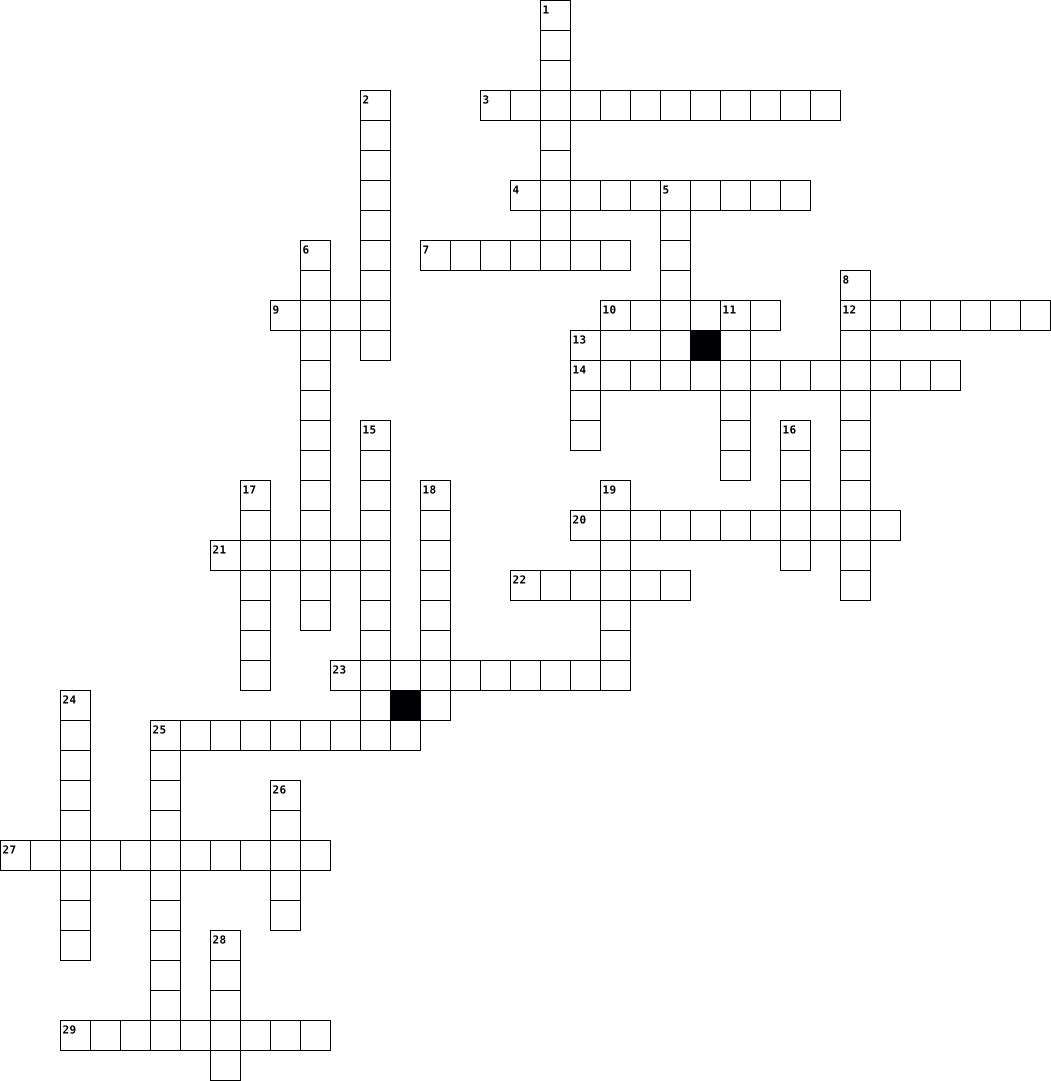
Across
- The best country in the world
- The natural disaster the East Coast has
- One of the axis powers -Hilter was in charge
- The group of people wiped out during the Holocaust
- the largest lake in europe
- Water located underground- starts with a
- Rebirth in new bodies or form of life
- Land between the rivers
- Pattern of ocean currents and water temperatures in the Mid- Pacific Region aquifer
- Capital of Texas
- great river
- the world’s biggest island
- Drift The idea that the continents were once joined together
- the town where a nuclear accident occurred in 1986
Down
- Land almost completely surrounded by water, but still attached to a portion of land
- the idea based on public ownership and communal control
- sea the world’s largest inland body of water
- old egyptian form of writing
- raising of livestock
- Second longest river in the world
- Really dry
- When water is cycled back up into the clouds
- One of the resources from the Americas in the Triangular Slave Trade
- Between the US and Soviet Union after WW2
- How many European countries were at the Berlin Conference
- The state of the atmosphere right now
- a large mass of snow and ice that slide down a mountain
- Water that lies underground
- where the renaissance began
- diamond Another name for a conflict diamond
30 Clues: Really dry • great river • Capital of Texas • raising of livestock • Land between the rivers • the largest lake in europe • the world’s biggest island • Water that lies underground • where the renaissance began • old egyptian form of writing • The best country in the world • Second longest river in the world • Rebirth in new bodies or form of life • The state of the atmosphere right now • ...
Geography 2023-04-28
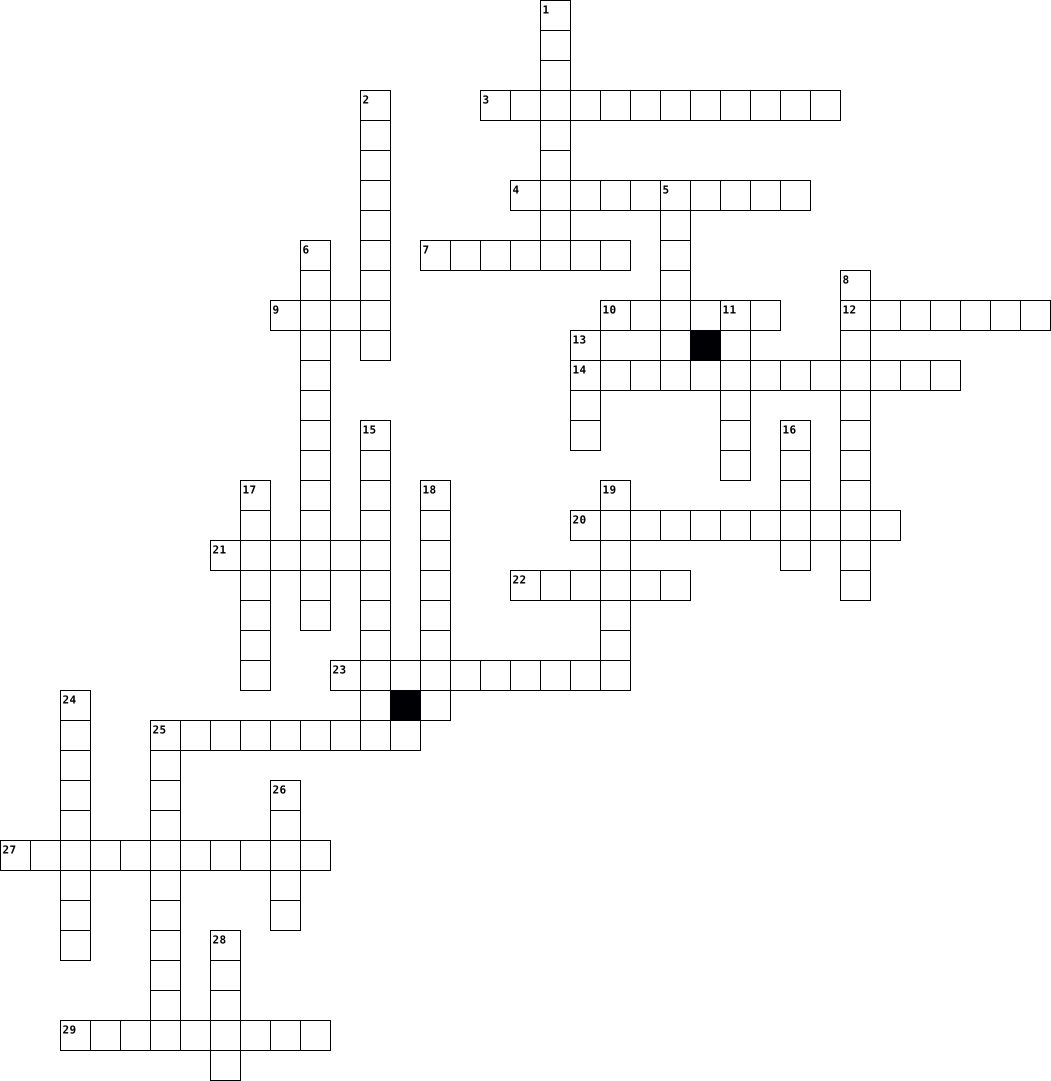
Across
- The best country in the world
- The natural disaster the East Coast has
- One of the axis powers -Hilter was in charge
- The group of people wiped out during the Holocaust
- the largest lake in europe
- Water located underground- starts with a
- Rebirth in new bodies or form of life
- Land between the rivers
- Pattern of ocean currents and water temperatures in the Mid- Pacific Region aquifer
- Capital of Texas
- great river
- the world’s biggest island
- Drift The idea that the continents were once joined together
- the town where a nuclear accident occurred in 1986
Down
- Land almost completely surrounded by water, but still attached to a portion of land
- the idea based on public ownership and communal control
- sea the world’s largest inland body of water
- old egyptian form of writing
- raising of livestock
- Second longest river in the world
- Really dry
- When water is cycled back up into the clouds
- One of the resources from the Americas in the Triangular Slave Trade
- Between the US and Soviet Union after WW2
- How many European countries were at the Berlin Conference
- The state of the atmosphere right now
- a large mass of snow and ice that slide down a mountain
- Water that lies underground
- where the renaissance began
- diamond Another name for a conflict diamond
30 Clues: Really dry • great river • Capital of Texas • raising of livestock • Land between the rivers • the largest lake in europe • the world’s biggest island • Water that lies underground • where the renaissance began • old egyptian form of writing • The best country in the world • Second longest river in the world • Rebirth in new bodies or form of life • The state of the atmosphere right now • ...
Frank Turek Art History 1 Crossword Exam 1 2022-10-04

Across
- curved roof
- _____ bricks were used to make the pyramids
- falcon headed Egyptian god
- pharaoh, started religious revolution
- Egyptian god of the dead
- long pyramid shaped pillar
- tomb of Khufu
- _____ age started in 40,000 BCE
- animal head put on mespotamian harps
- italian who created famous sculptures
- material used to make sculptures like 'David'
- sculpture overflowing with water
- egyptian temple complex
- city of Egyptian pyramids
- Rectangular tower, like a pyramid
- god of Assyrians
- early civilization formed around Euphrates & Tigris rivers
- giant pairs of pillars
- female pharaoh, second confirmed ever
Down
- created 282 laws, king of babylon
- human head, bulls body, 5 legs
- bench in arabic/an Egyptian tomb
- multiple pillars
- the _____ temple is located in Uruk
- vase honoring Inanna
- english stone wonder of the world
- lion with humans head near pyramids
- facial hair added on pharaohs to show power
- Egyptian god of air & sky
- artistic time period 14th-17th century
- method of sculping into a cave
- babylonian gate
- most famous michelangelo sculpture
- nude motherly sculpture, exaggerated
- Great Pyramids of Giza is in _____
- massive Egyptian river
- osiris' wife, goddess of magic
- built to worship gods
- changed name to shamash
- french cave with bull carvings/paintings
- post _____ period is when King Tut ruled
- Egyptian land of gods
42 Clues: curved roof • tomb of Khufu • babylonian gate • multiple pillars • god of Assyrians • vase honoring Inanna • built to worship gods • Egyptian land of gods • massive Egyptian river • giant pairs of pillars • egyptian temple complex • changed name to shamash • Egyptian god of the dead • Egyptian god of air & sky • city of Egyptian pyramids • falcon headed Egyptian god • long pyramid shaped pillar • ...
AP Chapter 3 2023-09-28

Across
- most Mongols associated themselves with Islam and this other Asian religion
- Khubiliai Khan established this, encompassing parts of China and Siberia
- persuaded some fellow Russian princes to submit to the Mongols
- Mongol region from southern Russia
- these are geographical regions marked by prairies and deserts
- a centralized military government in Japan
- a life of continual or seasonal migration
- a teacher in the Tibetan Buddhist tradition
- Mongols made these through arranged marriages
Down
- although this practice lowered administrative costs, but put an unnecessary burden on farmers who went into debt as servitude as a result
- this and other diseases spread through rats who were infested with fleas
- region of southern Vietnam
- Mongol cavalry met their match against these forces as the battle of Ain Jalut
- Chinggis Khan means supreme this
- this European merchant wrote of his adventures on the silk road and his contact with the Mongol Empire
- As a result of Mongols favoring Moscow as a trading center, this city began its decline
- China's northern capital city
- Korean kingdom with Seoul as its capital
- a massive storm which drove away a Mongol invasion of the Japanese islands
- Only Mongol nobles had the right to wear this material which came from China
- Mongol dynasty made up of Iran, Azerbaijan, Mesopotamia, and portions of Armenia
- commanded Chegatai forces and was related to Chinggis Khan by marriage
22 Clues: region of southern Vietnam • China's northern capital city • Chinggis Khan means supreme this • Mongol region from southern Russia • Korean kingdom with Seoul as its capital • a life of continual or seasonal migration • a centralized military government in Japan • a teacher in the Tibetan Buddhist tradition • Mongols made these through arranged marriages • ...
Soil Science 212 Midterm Exam 2023-10-04

Across
- the inherent capacity of soil to support plant growth
- the place where earliest recording of soil fertility was noted
- chemical substance added to soil to help plant growth
- help carry metal ions during nutrient intake
- Controls soil distribution due to presence/absence of plants
- the ability of soil to turn out the quantity of plants
- movement that does not exert energy
- a condition of soil the limits nutrient availability
- Controls soil distribution due to differences in elevation
- well-developed soil found in alluvial terraces in the Phils.
- condition where the presence of oxygen is necessary
- inherent capacity of plants
- condition where oxygen is not necessary
- positively charged soil nutrients
- a by-product of photosynthesis
Down
- the deficiency can be found in older leaves
- external factors that help plant growth
- visual symptoms of these are found in the younger leaves
- provides the energy needed for nutrients to move
- living component of soil that helps in plant growth and production
- electrical charge of soil micelle
- Created the equation for nutrient movement from higher to lower gradient of concentration
- Matter natural substance added to soil to improve structure
- the destruction of soil rendering it unproductive
- the movement from higher concentration to lower concentration
- a by-product of photosynthesis
- a condition of soil the limits nutrient availability
- nutrient uptake that takes effort
- negatively charged soil nutrients
- water is necessary for nutrient uptake to take place
30 Clues: inherent capacity of plants • a by-product of photosynthesis • a by-product of photosynthesis • electrical charge of soil micelle • nutrient uptake that takes effort • negatively charged soil nutrients • positively charged soil nutrients • movement that does not exert energy • external factors that help plant growth • condition where oxygen is not necessary • ...
Soil Science 212 Midterm Exam 2023-10-04

Across
- a by-product of photosynthesis
- movement that does not exert energy
- the deficiency can be found in older leaves
- inherent capacity of plants
- the destruction of soil rendering it unproductive
- Created the equation for nutrient movement from higher to lower gradient of concentration
- a condition of soil the limits nutrient availability
- the movement from higher concentration to lower concentration
- a condition of soil the limits nutrient availability
- natural substance added to soil to improve structure
- visual symptoms of these are found in the younger leaves
- negatively charged soil nutrients
- the inherent capacity of soil to support plant growth
Down
- electrical charge of soil micelle
- external factors that help plant growth
- Controls soil distribution due to differences in elevation
- condition where oxygen is not necessary
- well-developed soil found in alluvial terraces in the Phils.
- living component of soil that helps in plant growth and production
- the place where earliest recording of soil fertility was noted
- the ability of soil to turn out the quantity of plants
- a by-product of photosynthesis
- water is necessary for nutrient uptake to take place
- provides the energy needed for nutrients to move
- condition where the presence of oxygen is necessary
- help carry metal ions during nutrient intake
- nutrient uptake that takes effort
- Controls soil distribution due to presence/absence of plants
- positively charged soil nutrients
- chemical substance added to soil to help plant growth
30 Clues: inherent capacity of plants • a by-product of photosynthesis • a by-product of photosynthesis • electrical charge of soil micelle • nutrient uptake that takes effort • positively charged soil nutrients • negatively charged soil nutrients • movement that does not exert energy • external factors that help plant growth • condition where oxygen is not necessary • ...
Teka Teki Silang IPS 2025-03-08

Across
- Benua yang terletak diempat belahan bumi
- Bahasa dengan penutur terbanyak
- The Group of Twenty dikenal juga dengan
- Umi eropa terbentuk melalui penandatanganan perjanjian
- Benua yang jarang ditinggali karena iklimnya yang dingin
- Agama dengan pemeluk terbanyak saat ini
- Benua terluas
- Bentuk kerjasama yang dilakukan dua negara
- Berapa kawasan dunia yang menjadi mitra kerjasama Indonesia
- Kerjama antara beberapa negara diberbagai kawasan didunia adalah
- Apa yang diukur untuk menentukan kemiskinan
- Contoh kerjasama regional di Asia Pasifik
- Berapa dolar batas pendapatan seseorang dikategorikan miskin
Down
- Unesco adalah badan khusus milik PBB yang menangani pada bidang pendidikan dan
- Sattu satunya negara Asean yang menjadi anggota G20
- Setelah berevolusi dan menyebar di Afrika, manusia modern melakukan ... ke seluruh dunia
- Negara yang memiliki jumlah populasi terbanyak pada tahun 2020
- Apa bentuk kerjasama yang dilakukan oleh beberapa negara di suatu kawasan
- Benua terkecil
- Jalur klasik yang ramai dilewati oleh para bedagang
- Nama badan khusus milik PBB yang menangani masalah kesehatan
- Istilah dalam Bahasa Inggris adalah ... road
- Dengan bangsa mana peradapan di lembah indus berdagang
- Poin ke 5 TPB berisi tentang kesetaraan...
- Negara dengan variasi ragam bahasa urutan ke 3 adalah
- PBB didirikan pada tanggal 24 ... 1945
- Keberagaman masyarakat didunia dapat dilihat dari bahasa, agama, dan
- Dikota mana konferensi Asia Afrika berlangsung
- Association of Southeast Asian Nation memiliki singkatan
- Negara terkecil diwilayah oseania
30 Clues: Benua terluas • Benua terkecil • Bahasa dengan penutur terbanyak • Negara terkecil diwilayah oseania • PBB didirikan pada tanggal 24 ... 1945 • The Group of Twenty dikenal juga dengan • Agama dengan pemeluk terbanyak saat ini • Benua yang terletak diempat belahan bumi • Contoh kerjasama regional di Asia Pasifik • Bentuk kerjasama yang dilakukan dua negara • ...
Practice Test 2025-02-11

Across
- – A gas layer that protects Earth from harmful radiation
- – A long musical composition for an orchestra
- – A three-dimensional form of artistic expression
- – Words that sound alike but have different meanings
- – A device orbiting Earth for communication or research
- – Indian leader known for nonviolent resistance
- – A global network for sharing information
- – A surface used for painting
- – The study of shapes, angles, and spaces
- – A famous English playwright
- – A 14-line poem
- – A detailed technical drawing for construction
- – Traditional stories about gods and heroes
- – A Greek mathematician known for a famous theorem
- – A highly technical form of dance
Down
- – The "cradle of civilization"
- – A period of cultural rebirth in Europe
- – A dramatic musical performance with singing
- – The study of designing and building machines that perform tasks
- – A community of interacting organisms and their environment
- – A part of a whole, represented with a numerator and denominator
- – The process plants use to make food
- – A path for electrical current to flow
- – The smallest unit of matter
- – A famous canal connecting the Mediterranean and Red Sea
- – The force that pulls objects toward Earth
- – A number that never ends
- – The rules that structure a language
- – A branch of mathematics using symbols and letters
- – The first explorer to circumnavigate the globe
30 Clues: – A 14-line poem • – A number that never ends • – The smallest unit of matter • – A surface used for painting • – A famous English playwright • – The "cradle of civilization" • – A highly technical form of dance • – The process plants use to make food • – The rules that structure a language • – A path for electrical current to flow • – A period of cultural rebirth in Europe • ...
Domestication of Plants and Animals 2024-10-07

Across
- The __________ Crescent; ideal area for growing crops
- Fancy word for changing a plant/animal to make it useful to humans
- Type of plant that is used for french fries
- Division of _________; when people specialize at jobs
- Person who plants seeds and harvests crops
- Type of farm animal that lays eggs
- Type of farm animal that is used for meat, dairy, and wool. Starts with G.
- Type of grain that was domesticated in Asia
- First animal to be domesticated
- Fancy word for farming
- Person who moves from place to place in search of food
- A social system that ranks people and separates them into groups
Down
- A word that means an animal is calm and responds to humans
- Area where humans first grew crops; part of Fertile Crescent
- Type of farm animal that is used for meat, dairy, and wool. Starts with S.
- A characteristic of a plant or animal
- An animal that eats only plants
- The agricultural revolution led to a growth of this
- Selecting certain animals to produce more animals
- Something tiny that you plant to grow a crop
- Era in which humans developed surpluses of food
- Type of plant that you grind up to make flour
- The year-round weather conditions
- Type of farm animal that pulls heavy loads. Starts with O.
24 Clues: Fancy word for farming • An animal that eats only plants • First animal to be domesticated • The year-round weather conditions • Type of farm animal that lays eggs • A characteristic of a plant or animal • Person who plants seeds and harvests crops • Type of plant that is used for french fries • Type of grain that was domesticated in Asia • ...
MENA 2025-02-26

Across
- largest exporter of oil
- OPEC (Organization of _________________ Exporting Countries)
- this river provides 75% of fresh water for the country that shares its name
- this type of government usually rules in countries that have large deposits of oil
- important river in Egypt
- control
- low-lying land next to rivers formed by sediment deposited by rivers
- process or redirecting water to crops using channels and ditches
- a water scarcity solution using planes and flares
- One of the most populus countries in Southwest Asia
- these mountains formed along the North Anatolian Fault
- flat area of land next to a river that floods
- North Africa country with the highest rate of urbanization
Down
- the process of removing salt from seawater
- fracture in the Earth’s crust
- fine particles of soil
- one of the main sources of fresh water in MENA
- this crop can grow well on the salt flats of the Persian Gulf Coast
- this empire ruled North Africa in the 1500s
- this group is responsible for things such as advances in mathematics, astronomy, cuneiform
- river valley between the Tigris and Euphrates rivers
- Fertile places in dry areas where water is found
- very dry
- country with an abundance of fresh water
- natural resource that contributes most to the economy in the Middle East
- dependable
26 Clues: control • very dry • dependable • fine particles of soil • largest exporter of oil • important river in Egypt • fracture in the Earth’s crust • country with an abundance of fresh water • the process of removing salt from seawater • this empire ruled North Africa in the 1500s • flat area of land next to a river that floods • one of the main sources of fresh water in MENA • ...
cruciverba religioni ARIANNA-ESTER 2025-05-31

Across
- testo sacro per i cattolici
- luogo di meditazione buddhista
- cibo che non possono mangiare i musulmani
- mantello degli Ebrei
- luogo in cui è nati il Buddha
- cibo ebreo che è simbolo di vita eterna
- casa di riunione degli ebrei
- liberazione dalla schiavitù egizia
- significato "mio signore" in ebraico
- giorno di festa settimanale cattolico
- fondatore della religione ebraica
- fiume sacro induista
- significato del nome Buddha
- stato di felicità raggiunto dai buddhisti dopo la fine delle rinascite
- idea dell'aldilà per i cristiani
- dio ebraico
- strumento musicale caratteristico dei cattolici
- profeta islamico
- parte della chiesa riservata ai preti
Down
- sacerdote induista
- religione con un Dio
- tradizionale copricapo ebraico
- dono dei dieci comandamenti da Dio a Mosè
- scatolina contenente le preghiere degli Ebrei
- maestro di meditazione buddhista
- religione che crede a Cristo
- guida spirituale cattolica
- luogo in cui è nato l'ebraismo
- dio distruttore induista
- maestro di meditazione induista
- ministro del culto ebraico
- personaggio significativo dell'induismo
- significato " mio dio" in ebraico
- dio creatore induista
- tempio induista
- tecnica di meditazione induista
- ministro del culto cristiano cattolico
- candelabro a sette bracci
- Dio dell'Islam
- Battesimale vasca che serve per battezzare le persone cattoliche
- fiore importante per gli induisti
- città in cui Gesù è morto
42 Clues: dio ebraico • Dio dell'Islam • tempio induista • profeta islamico • sacerdote induista • religione con un Dio • mantello degli Ebrei • fiume sacro induista • dio creatore induista • dio distruttore induista • candelabro a sette bracci • città in cui Gesù è morto • guida spirituale cattolica • ministro del culto ebraico • testo sacro per i cattolici • significato del nome Buddha • ...
Vocabulary Ch2-4 G1 2025-08-21

Across
- Special ovens used to bake clay into pottery, later adapted for metal smelting.
- People who study matter and how substances change, especially after the age of alchemy.
- A period of history that happened before the birth of Christ.
- The pointed metal or stone tip of a spear, used for hunting or fighting.
- Rocks that contain useful metals that can be extracted.
- Decorative objects made from metals or stones in early civilizations.
- A material added in smelting to help remove unwanted substances.
- Thinkers who use observation and experiments to understand the natural world.
- Heating ores in a fire or furnace to extract metals.
- A heavy, soft, gray metal known since ancient times.
- Researchers who study ancient cultures by examining objects and ruins.
Down
- Unwanted materials mixed with metals in ores.
- A chemical process where oxygen is removed from an ore to release pure metal.
- An ancient civilization from Mesopotamia (Iraq/Iran), 6000 years ago.
- Something hidden, covered, or mysterious.
- A farming tool with a flat blade used for digging and planting.
- The “New Stone Age” (7000–4000 BC), when farming, pottery, and early metal use began.
- A silvery metal often combined with copper to make bronze.
- The act of removing unwanted material floating on melted metal.
- Rough and twisted in shape, often describing old wood or roots.
20 Clues: Something hidden, covered, or mysterious. • Unwanted materials mixed with metals in ores. • Heating ores in a fire or furnace to extract metals. • A heavy, soft, gray metal known since ancient times. • Rocks that contain useful metals that can be extracted. • A silvery metal often combined with copper to make bronze. • ...
Acts 1-9 2026-03-25

Across
- Philip was told to go to this place in the desert
- She lied to the Holy Spirit
- The Ethiopian Eunuch was baptized when the chariot came to this
- Saul immediately preached in these places after his conversion
- He built the temple
- Peter healed him in Lydda
- A sorcerer who became a Christian
- The men from this synagogue disputed with Stephen
- Moses lived here for forty years
- Peter stayed in Joppa with Simon the _______
- She lived in Joppa and was raised from the dead
- he mount where Jesus ascended to Heaven
- Philip preached here
- Peter said that Jesus had become the chief _______
- God called Abraham from this place
- The gate where Peter healed a lame man
Down
- He baptized Saul
- The high priest who questioned Peter and John
- Number of days Jesus presented Himself alive
- Saul dragged Christians to this place
- Peter quoted this prophet during the first Gospel sermon
- Joseph, called Barsabas was also called this
- God appeared to Moses in the wilderness of this mount
- He warned the Sanhedrin about punishing the Apostles
- Barnabas means Son of ______
- They arrested Peter and John
- Saul traveled to this city to arrest Christians
- He replaced Judas of Iscariot
- Joses was also named ______
- Peter told the crowd on Pentecost to repent and be _________
30 Clues: He baptized Saul • He built the temple • Philip preached here • Peter healed him in Lydda • She lied to the Holy Spirit • Joses was also named ______ • Barnabas means Son of ______ • They arrested Peter and John • He replaced Judas of Iscariot • Moses lived here for forty years • A sorcerer who became a Christian • God called Abraham from this place • ...
UR OF THE CHALDEES 2025-12-21

Across
- The nephew of Abram who traveled with him. (Gen 12:5)
- Abram was _______-five years old when he left Haran. (Gen 12:4)
- The Canaanites were in the land, specifically at this location. (Gen 12:6)
- Because of Sarai, Pharaoh gave Abram sheep and _______. (Gen 12:16)
- The name of Abram's father who died in Haran. (Text)
- The name of Abram’s other brother who married Milcah. (Gen 11:29)
- What Abram built at Shechem to honor the Lord. (Text)
- The moon god worshiped by the citizens of Ur. (Text)
- The specific type of "stepped pyramid" tower found in Ur. (Text)
Down
- God inflicted serious _______ on Pharaoh’s household. (Gen 12:17)
- The British archaeologist who excavated Ur in the 1920s. (Text)
- The specific tree where Abram stopped in Shechem. (Text)
- The city Abram camped near (along with Ai) in the hill country. (Text)
- God first appeared to Abram in this land (Greek name). (Acts 7:2)
- The river that fed the irrigation canals of Ur. (Text)
- Abram told Sarai to say she was his _______. (Gen 12:13)
- The modern country where the ruins of Ur are found today. (Text)
- Sarai was unable to conceive because she was this. (Gen 11:30)
- The trade city in Turkey where Abram stayed until his father died. (Text)
- The desert region Abram journeyed toward in the south. (Text)
20 Clues: The name of Abram's father who died in Haran. (Text) • The moon god worshiped by the citizens of Ur. (Text) • The nephew of Abram who traveled with him. (Gen 12:5) • What Abram built at Shechem to honor the Lord. (Text) • The river that fed the irrigation canals of Ur. (Text) • The specific tree where Abram stopped in Shechem. (Text) • ...
World History Review 1 2025-12-15

Across
- Oldest major world religion from India; based on reincarnation and the caste system
- First monotheistic religion; Hebrew origins; Ten Commandments and the Torah
- Blending of Greek, Egyptian, Persian, and Indian cultures after Alexander the Great
- Roman leader whose assassination triggered the end of the Roman Republic
- Long period of Roman peace and prosperity under Augustus
- Collapse caused by internal weakness and invasions by Germanic tribes
- Religion based on the teachings of Jesus and the Bible
- Chinese dynasty that used the Mandate of Heaven, Confucian exams, and expanded the Silk Road
- Chinese philosophy emphasizing social order, filial piety, and respect
- Civilization with pharaohs, pyramids, hieroglyphics, and an advanced calendar along the Nile River
- Contributions including geometry, philosophy, theater, columns, and democracy
- Government with elected representatives such as senators
- Independent Greek city-states like Athens and Sparta
Down
- Government where citizens vote directly; first practiced in Athens
- Religion founded by Siddhartha Gautama; Four Noble Truths and Eightfold Path
- The world’s first civilization; Hammurabi’s Code; cuneiform writing influenced the Phoenician alphabet
- Contributions including law, engineering, arches, domes, Latin, and Christianity
- Important transition from hunting and gathering to farming; led to the development of civilizations
- Indian empire’s golden age; advances in math including pi, zero, and numerals
- Early tolerant empire that used the Royal Road, coins, and practiced Zoroastrianism
20 Clues: Independent Greek city-states like Athens and Sparta • Religion based on the teachings of Jesus and the Bible • Long period of Roman peace and prosperity under Augustus • Government with elected representatives such as senators • Government where citizens vote directly; first practiced in Athens • ...
Greek Mythology Historical Context Pgs. 472-475 2026-04-07

Across
- Epic poem written by John Milton
- A characterizing phrase that described a
- Famous epic poem in Old English
- The inscription on the golden apple (3 wrds.)
- the part of the epic poem that asks the muse for inspiration
- What present-day Iraq is called
- Where Homer was born
- Means "in the middle of things" (3 wrds.)
- To get revenge for a wrongdoing
- To take something by force
- He wrote the Illiad and the Odyssey
- People who have fled a dangerous place or harmful situation
- Because it is __, The Odyssey reads like an adventure
- Where epic poems were recited
- A larger than life hero (2 wrds.)
Down
- To finish something quickly
- Epic heroes tend to be leaders in __
- A characteristic of an epic hero (2 wrds.)
- Lofty style uses this type of language
- Military procedures
- Spartan queen who was the most beautiful woman in the world
- The Odyssey begins after the __(2 wrds.)
- He wrote The Divine Comedy
- To try something dangerous
- or place
- A long narrative poem that has historical events and fiction (2 wrds.)
- The tone of an epic poem
- How Homer would've composed his poems
- A long comparison that takes up many lines in a poem (2 wrds.)
- A fixed rhythmic pattern
- Epic heroes are born of this (2 wrds.)
31 Clues: or place • Military procedures • Where Homer was born • The tone of an epic poem • A fixed rhythmic pattern • He wrote The Divine Comedy • To try something dangerous • To take something by force • To finish something quickly • Where epic poems were recited • Famous epic poem in Old English • What present-day Iraq is called • To get revenge for a wrongdoing • ...
Characteristics of a Civilization 2022-08-30

Across
- what most early civilizations were created around, offered protection, trade, and water.
- complex _____: belief in one or many gods to explain the universe.
- _____ rulers, where leadership is passed from parent to child.
- civilization that developed around the Huang He River and Yellow River.
- _____ or architecture: things to be enjoyed or creative.
- written _____, such as the Ten Commandments and Code of Hammurabi.
- building projects that help or protect a civilization.
- human made waterways that brings water for agriculture.
- religion where people believe in one single all powerful god.
- small area of land with a lot of people and larger buildings.
- organized _____: a system of rules and leaders to keep society organized.
- social _____: organizing people into different groups for certain reasons.
Down
- record keeping system using letters or pictures to represent sounds.
- religion where people believe in many different gods.
- _____ government, where most political power is in the hands of a few people.
- _____ River Valley civilization that developed around the Indus River, and later Ganges River.
- political _____, which are different ways to organize a country.
- civilization that developed around the Euphrates River and Tigris River
- _____ specialization: different people have different responsibilities.
- agricultural _____ where food is stored for later use.
- _____ tools and weapons made out of bronze and iron.
- civilization that developed around the Nile River.
22 Clues: civilization that developed around the Nile River. • _____ tools and weapons made out of bronze and iron. • religion where people believe in many different gods. • agricultural _____ where food is stored for later use. • building projects that help or protect a civilization. • human made waterways that brings water for agriculture. • ...