
moon phases Crossword Puzzles
space 2023-04-25

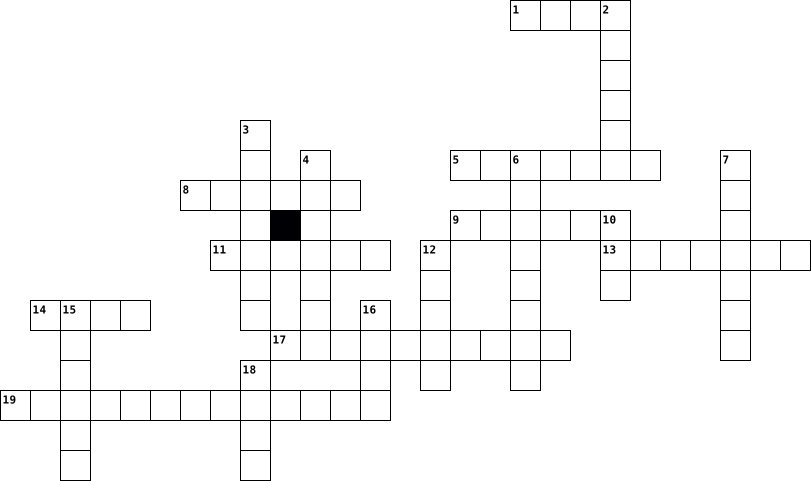
Across
- Largest planet in the solar system
- Which road is there in space.(use a -)
- Another name for space
- Which planet is no longer part of the solar system
- What layer is around our earth?
- Known as the "Red Planet"
- Which typ of stone killed the dinosaurs?
Down
- Closest planet to the sun
- The name of the first rocket in space
- Why are we not floating on earth? (noun)
- Type of a car in space
- A job in space
- The moon goes through 4 moon___ in a month.
- Fist human on the moon?(First Name)
- How many planets are in the solar system.
- The sun isn’t a planet shes a____
16 Clues: A job in space • Type of a car in space • Another name for space • Closest planet to the sun • Known as the "Red Planet" • What layer is around our earth? • The sun isn’t a planet shes a____ • Largest planet in the solar system • Fist human on the moon?(First Name) • The name of the first rocket in space • Which road is there in space.(use a -) • ...
Space 2022-02-08
Across
- the imaginary line that goes from the north to the south pole
- the planet closest to the sun
- the moon goes through ______ that cause it to appear to change
- the planet usually displayed with rings
- the season when shadows are longer
- a time of day when shadows are longer
- the phase of the moon when it is fully lit up
- the movement of the earth around the sun
- a group of stars that make a pattern
Down
- the season when shadows are shorter
- the force of attraction between any objects that have mass
- the planet named for the roman god of the sea
- the spin of the earth on its axis
- the largest planet in the solar system
- the phase of the moon when it is almost fully in shadow
- the second planet in the solar system
- the coldest planet in the solar system
- the time of day when shadows are shortest
- the red planet
19 Clues: the red planet • the planet closest to the sun • the spin of the earth on its axis • the season when shadows are longer • the season when shadows are shorter • a group of stars that make a pattern • the second planet in the solar system • a time of day when shadows are longer • the largest planet in the solar system • the coldest planet in the solar system • ...
Tides 2026-05-14

Across
- Changes in climate during the year caused by Earths tilt and orbit.
- Earth is tilted 23.5 degrees on its axis, which affects sunlight.
- The entire lit side of the Moon faces the Earth
- Ocean water rises to its highest level.
- Higher than normal tides when the Sun, Earth, and Moon are in line ( full moon and new moon).
Down
- Lower than normal tides when the Sun, Earth, and Moon form a right angle (First quarter and 3rd quarter).
- The repeating cycle of Moon phases (about 29.5 days).
- Ocean water falls to its lowest level.
- The Moon is between Earth and the Sun; we see no lit side.
- The rise and fall of ocean water caused by the Moon´s gravity.
10 Clues: Ocean water falls to its lowest level. • Ocean water rises to its highest level. • The entire lit side of the Moon faces the Earth • The repeating cycle of Moon phases (about 29.5 days). • The Moon is between Earth and the Sun; we see no lit side. • The rise and fall of ocean water caused by the Moon´s gravity. • ...
Tides 2023-02-22

Across
- A tide where the moon phases you would see would be first and third quarter.
- A tide where the moon phases you would see would be a full moon and a new moon.
- A territory at the top of the coastline but can still be hit by high tide.
- A zone that is part of the coastline and goes through different points of coverage and exposure.
Down
- A territory in a shallow area and can only be seen at a very low tide.
- The pull of one object toward another.
- The rise and fall of water in a sea or ocean.
7 Clues: The pull of one object toward another. • The rise and fall of water in a sea or ocean. • A territory in a shallow area and can only be seen at a very low tide. • A territory at the top of the coastline but can still be hit by high tide. • A tide where the moon phases you would see would be first and third quarter. • ...
Par - Chapter 1 Lesson 4 Astronomy 2021-11-09

Across
- Different shapes of the moon
- the meaning of lunar
- The light part of the moon's shadow
- An Eclipse that happens when the moon passes Earth and the Sun
Down
- An object in space that come between the sun and a third object
- the meaning of solar
- The dark part of the moon's shadow
- A type of Eclipse at a full moon
8 Clues: the meaning of solar • the meaning of lunar • Different shapes of the moon • A type of Eclipse at a full moon • The dark part of the moon's shadow • The light part of the moon's shadow • An Eclipse that happens when the moon passes Earth and the Sun • An object in space that come between the sun and a third object
Moon vocab 2021-05-06

Across
- little more than half of the moon is lit up on the left side
- objects towards each other
- in the appearance of the moon
- of an object
- invisible line that an object rotates on.
- of the moon phases
Down
- the earth comes between the sun and the moon causing a complete darkness.
- regular,repeating path that one object in space takes around another one.
- caused by the pull of gravity
- of an object
10 Clues: of an object • of an object • of the moon phases • objects towards each other • in the appearance of the moon • caused by the pull of gravity • invisible line that an object rotates on. • little more than half of the moon is lit up on the left side • the earth comes between the sun and the moon causing a complete darkness. • ...
Science pg. 84-85 The Moon 2025-11-13

Across
- eclipse the shadow made on the moon when Earth comes between the moon and the sun
- regular changes in how the moon looks from Earth
- daily changes in the height of water along coasts
- a force that pulls things together'
Down
- an object that orbits a planet
- shadows caused by Earth or the moon
- a push or a pull
- eclipse the shadow made on Earth when the moon comes between Earth and the sun
8 Clues: a push or a pull • an object that orbits a planet • shadows caused by Earth or the moon • a force that pulls things together' • regular changes in how the moon looks from Earth • daily changes in the height of water along coasts • eclipse the shadow made on Earth when the moon comes between Earth and the sun • ...
Our tides 2023-02-24

Across
- It's when first quarter and last quarter of the moon phases, so it's weaker.
- Areas in lower and in a type of zone that may have to do with our types of oceans
- As it might get a little higher coastline and other things too.
- It's when a full moon and new moon of the moon phases, so it's stronger.
Down
- Is a part of our coast line goes though periods of time.
- A pattern in the ocean that we have with a due to fall or a rising.
- The earth (US) and its gravity creates plants by pulling together.
7 Clues: Is a part of our coast line goes though periods of time. • As it might get a little higher coastline and other things too. • The earth (US) and its gravity creates plants by pulling together. • A pattern in the ocean that we have with a due to fall or a rising. • It's when a full moon and new moon of the moon phases, so it's stronger. • ...
life as we knew it crossword 2024-05-08

Across
- another word for something bad
- worth something and green
- another word for revolve
- the author of this story
- bursting out/ blowing up
- planet
- students when they are in school they have to do this before a test
- education for young kids
- a time that is difficult for a lot of people
- something every person has and loves
- something that happens and shakes a lot
Down
- people sometimes have one of these when they losing their mind
- lava eruption
- a synonym for forecast
- always old sometimes new
- a hole you look at the sky through
- rocks that fall from the sky
- something the moon has and has multiple of them
- education where older teens study specific things
- someone comes up with these in a short amount of time
20 Clues: planet • lava eruption • a synonym for forecast • always old sometimes new • another word for revolve • the author of this story • bursting out/ blowing up • education for young kids • worth something and green • rocks that fall from the sky • another word for something bad • a hole you look at the sky through • something every person has and loves • ...
Earth, Sun, and Moon 2023-04-05

Across
- The imaginary line around the horizontal center of the planet
- When the entire moon is visible, we call that phase __________.
- _________occur when the Sun, Earth, and the Moon are all aligned and one body casts a shadow on another body.
- The ________ is the center of our solar system
- In ________ days are longer and weather is warmer
- Orbits are not perfect circles, they are ________.
- When the northern hemisphere is tilted towards the Sun, the southern hemisphere is tilted ______ from the Sun.
- During a __________ the amount of sunlight is at its maximum in one hemisphere and at its minimum in the other.
- The _________ cycle has eight named phases based on the illuminated portion of the Moon visible on Earth
- In _________ days are shorter and weather is cooler
Down
- The force of attraction between or more objects with mass
- When the amount of sunlight is equal on the northern and southern hemispheres
- In this phase the moon is not visible from the Earth
- The motion of one object as it moves around another object
- __________ eclipse happens when the Earth passes between the Sun and moon.
- Force of gravity depends on mass and _______
- The lunar cycle has _______ phases.
- Earth's axis is _________ 23.5 degrees
- ________ eclipse occurs when the moon passes between the Earth and Sun.
- If the Earth's axis were not tilted, we would not experience different ________.
20 Clues: The lunar cycle has _______ phases. • Earth's axis is _________ 23.5 degrees • Force of gravity depends on mass and _______ • The ________ is the center of our solar system • In ________ days are longer and weather is warmer • Orbits are not perfect circles, they are ________. • In _________ days are shorter and weather is cooler • ...
McSpacey Space- Extension Science 2019-08-06

Across
- The part of the moon phases where the moon appears to grow
- There are two of these on Earth with Australia being in the Southern and North America in the Northern
- The planet famously known for it's large red spot
- Natural satellite of the Earth
- The only planet that has been known to have life on it
- The imaginary pole that Earth rotates on
- Groups of stars that are known for forming Zodiac signs
Down
- Largest star in our solar system
- A mass that orbits around a larger mass and can be artificical or natural
- The less dense shadow of an eclipse
- The mottion of Mars that proved the solar system is heliocentric
- The model of our solar system if the Earth was the centre
- The full and dark shadow of an Eclipse
- There is a large belt of these in our solar system after Mars and before Jupiter
- Plutos' moon
- The closest planet to the Sun
16 Clues: Plutos' moon • The closest planet to the Sun • Natural satellite of the Earth • Largest star in our solar system • The less dense shadow of an eclipse • The full and dark shadow of an Eclipse • The imaginary pole that Earth rotates on • The planet famously known for it's large red spot • The only planet that has been known to have life on it • ...
The World Beyond Us 2024-04-17

Across
- How many planets are there within the asteroid belt?
- Who was the first person to use the telescope?
- The _____ is the only planet that supports life
- an egg-shaped path that planets move on
- How many types of solar eclipses are there?
- a word that refers to a group of things that interact
- Is an asteroid a star?
Down
- a word that means 'related to the sun'
- A ____ of fire can be seen during an annular eclipse
- the event where the moon covers the sun
- Apart from asteroids and planets, what else travel around the sun?
- How many phases of the moon are there?
- a solar eclipse happens when the sun is blocked by the _____.
13 Clues: Is an asteroid a star? • a word that means 'related to the sun' • How many phases of the moon are there? • the event where the moon covers the sun • an egg-shaped path that planets move on • How many types of solar eclipses are there? • Who was the first person to use the telescope? • The _____ is the only planet that supports life • ...
Outer Space 2023-04-27

Across
- Known for its rings and moons
- source of solar radiation, gives Earth a day and night cycle
- Planet that is rotating on its east/west axis, instead of North/South
- System Has all of the planets, moon, stars, and the sun
- closest planet to the Sun, has a year of 86 Earth days
- was recently determined to not be a planet
Down
- gas planet, second from the Sun
- also known as the Red Planet
- Largest planet with massive storms, giant red spot
- sources of light and heat energy in the solar system
- orbits the Earth, goes through moon phases
- Blue planet full of methane gas
- only known planet with plate tectonics and organic life
13 Clues: also known as the Red Planet • Known for its rings and moons • gas planet, second from the Sun • Blue planet full of methane gas • orbits the Earth, goes through moon phases • was recently determined to not be a planet • Largest planet with massive storms, giant red spot • sources of light and heat energy in the solar system • ...
Moon vocab 2021-05-06

Across
- of an object
- by the pull of gravity
- objects towards each other
- of an object
- in the appearance of the moon
Down
- regular, repeating path that one object in space takes around another one.
- little more than half of the moon is lit up on the left side
- the earth comes between the sun and the moon causing a complete darkness.
- invisible line that an object rotates on.
- of the moon phases
10 Clues: of an object • of an object • of the moon phases • by the pull of gravity • objects towards each other • in the appearance of the moon • invisible line that an object rotates on. • little more than half of the moon is lit up on the left side • the earth comes between the sun and the moon causing a complete darkness. • ...
OUR EARTH'S NATURAL SATELLITE NICOLE D'SOUZA 5-B 2018-01-10

Across
- BLOCKING OF THE LIGHT OF SUN OR MOON BY THE SHADOW OF ANOTHER HEAVENLY BODY
- REGION BEYOND THE ATMOSTSPHERE
- A SMALL BODY REVOLVING AROUND A PLANET IN SPACE
- IS AN AMERICAN SPACE CRAFT
Down
- IS DIFFERENT SHAPES OF MOON , AS VISIBLE FROM THE EARTH
- IS PERIODIC RISING AND FALLING OF SEA AND OCEAN WATER
- BIG, ROUND AND HOLLOW ON THE MOON
- IS THE BRIGHTEST HEAVENLY BODY IN THE SKY
- IS THE NATURAL SATELLITE OF THE EARTH
9 Clues: IS AN AMERICAN SPACE CRAFT • REGION BEYOND THE ATMOSTSPHERE • BIG, ROUND AND HOLLOW ON THE MOON • IS THE NATURAL SATELLITE OF THE EARTH • IS THE BRIGHTEST HEAVENLY BODY IN THE SKY • A SMALL BODY REVOLVING AROUND A PLANET IN SPACE • IS PERIODIC RISING AND FALLING OF SEA AND OCEAN WATER • IS DIFFERENT SHAPES OF MOON , AS VISIBLE FROM THE EARTH • ...
Phases of the moon 2023-06-02

Across
- Occurs when the Moon appears as a complete circle in the sky.
- Force that pulls objects together.
- Made up of gases or air that surround the Earth.
- The phase when the moon cannot be seen.
- Occurs when the moon appears to be getting larger.
- To go around the Earth.
- Occurs when the moon appears to be getting smaller.
Down
- The phase when the moon looks like it's half.
- Part of the moon that appears in the sky.
- A piece of rock or stone fallen to the ground from space.
- Imaginary line through the moon or Earth from the pole to pole.
- The space program of the United States.
- A natural satellite of the Earth.
13 Clues: To go around the Earth. • A natural satellite of the Earth. • Force that pulls objects together. • The phase when the moon cannot be seen. • The space program of the United States. • Part of the moon that appears in the sky. • The phase when the moon looks like it's half. • Made up of gases or air that surround the Earth. • ...
Revision The Sun and the Moon 2023-11-16

Across
- The Sun provide _______and light
- The people, equipment, or other spacecraft carried to space.
- The Moon has no _____________
- a round hole made by something that has fallen.
- The number of Moons that that fit across the diameter of the Earth.
- the pull that holds things on the Earth.
- The Sun's diameter is 110 times bigger than that of the __________
- The ________is the Earth's closest star.
- The Moon is _____________and made of rock.
- The Sun is the Earth's __________star.
- The _______system is the Sun and all the object's that move around it
- The Moon has no _______________water or proper soil.
- The Sun is made of _____________
- The coldest planet.
Down
- A tall structure that is propelled into space.
- Heat from the Sun is needed to make water ________and start the water cycle which brings freshwater to Earth through rain
- The Sun is a _____________ because it is a ball of very hot gas.
- Other stars do not provide us with heat because they are too ____
- water on planets closer to the Sun __________ because it is too hot.
- Closest object to Earth in space.
- We call rain, hail or snow _____________
- Light from the Sun starts the _________chain.
- The phase of the Moon after full moon.
- The changing pattern of Sunlight on the Moon.
- The pattern of sunlight repeats itself every 29.5 _______
- Without heat from the Sun the Earth would be c_____
- The pathway in which Earth moves around the Sun is called an _____
- The _______is at the centre of the solar system.
28 Clues: The coldest planet. • The Moon has no _____________ • The Sun provide _______and light • The Sun is made of _____________ • Closest object to Earth in space. • The phase of the Moon after full moon. • The Sun is the Earth's __________star. • We call rain, hail or snow _____________ • the pull that holds things on the Earth. • The ________is the Earth's closest star. • ...
Earth, sun and moon 2026-04-16

Across
- When the visible part of the Moon is increasing,
- Another word for “moon-based”,
- Moon phase that is more than half full but not complete,
- Cycles the Moon goes through each month,
- The force that pulls objects toward each other,
Down
- When the visible part of the Moon is decreasing,
- A thin, curved shape of the Moon,
7 Clues: Another word for “moon-based”, • A thin, curved shape of the Moon, • Cycles the Moon goes through each month, • The force that pulls objects toward each other, • When the visible part of the Moon is decreasing, • When the visible part of the Moon is increasing, • Moon phase that is more than half full but not complete,
Earth and Space Crossword 2024-08-04

Across
- The number of moon phases.
- The imaginary line passing from North pole to South pole.
- Process of Earth orbiting the Sun.
- To "decrease in size" or "get smaller".
- Can be natural or artificial.
- 24 of these in one day.
- The 5th planet from the Sun.
- The colour of the moon during a lunar eclipse.
- The imaginary line that separates the Northern and Southern Hemipsheres.
- The furthest planet from the Sun.
- An event that occurs when the moon is positioned between the Sun and Earth, casting a shadow.
- The phase where the moon is at its biggest and brightest.
Down
- The Earth is divided into two of these.
- The name of the phase when the moon is positioned between the Sun and the Earth.
- Region of the shadow where we see a partial eclipse.
- What all planets do around the Sun.
- The number of seasons that occur in one year.
- An event that occurs when the moon is positioned opposite to the Sun, casting a shadow on Earth.
- The phase when three quarters of the Moon is lit up.
- To "increase in size" or "become bigger".
- It increases the closer to the Equator.
- The season that occurs when the Earth is tilted towards the Sun.
- Region of the shadow where we see a total eclipse.
- When there is an extra day in a year.
- The season that occurs when the Earth is tilted away from the Sun.
- Process of Earth spinning on its axis.
26 Clues: 24 of these in one day. • The number of moon phases. • The 5th planet from the Sun. • Can be natural or artificial. • The furthest planet from the Sun. • Process of Earth orbiting the Sun. • What all planets do around the Sun. • When there is an extra day in a year. • Process of Earth spinning on its axis. • The Earth is divided into two of these. • ...
MOON PHASES :D 2021-09-29

Across
- the whole moon can be seen
- Also a a bit more than half a moon but it's left is not visible
- A half moon that is invisible on the right
- A crescent that is getting smaller on it's left side
- a crescent that is getting bigger
Down
- Half of a circle but a big bigger and the right is invisible
- First phase (it's invisible)
- also a half moon but invisible on the left side
- its right side
9 Clues: its right side • the whole moon can be seen • First phase (it's invisible) • a crescent that is getting bigger • A half moon that is invisible on the right • also a half moon but invisible on the left side • A crescent that is getting smaller on it's left side • Half of a circle but a big bigger and the right is invisible • ...
The Moon Phases 2021-10-24

Across
- light on all of the moon
- light on 3/4 of the right side of the moon
- a little light on the right side
- light on 3/4 on the left side of the moon
Down
- half half of the suns light on the left side of the moon
- half half of the light on right side
- the sixth phase
- the first phase
- what the moon orbits around
9 Clues: the sixth phase • the first phase • light on all of the moon • what the moon orbits around • a little light on the right side • half half of the light on right side • light on 3/4 on the left side of the moon • light on 3/4 of the right side of the moon • half half of the suns light on the left side of the moon
Moon Phases 2021-05-20

Across
- light increasing \
- no light
- 75% of light
Down
- 25% of light
- light decreasing
- all light
6 Clues: no light • all light • 25% of light • 75% of light • light decreasing • light increasing \
MOON PHASES 2023-02-13

Across
- starts with a G
- of the moon is what name
- second word in 1 and 2
- name for the ecosystem
Down
- to the earth
- tide is vary high
- tide is vary low
- are the fish in the sea called
8 Clues: to the earth • starts with a G • tide is vary low • tide is vary high • second word in 1 and 2 • name for the ecosystem • of the moon is what name • are the fish in the sea called
Moon phases 2021-12-10

Across
- /when it is in the phase in which its visible surface area is getting smaller.
- /after new moon but before full moon
- /appears at its highest in the sky at sunset
- /after new moon but before full moon
Down
- / full or whole
- /when it is in the phase in which its visible surface area is getting smaller.
- /not long after full moon
- /beginning of the month
8 Clues: / full or whole • /beginning of the month • /not long after full moon • /after new moon but before full moon • /after new moon but before full moon • /appears at its highest in the sky at sunset • /when it is in the phase in which its visible surface area is getting smaller. • /when it is in the phase in which its visible surface area is getting smaller.
Science review 2023-04-23

Across
- when there is no light
- how loud or soft a sound is
- time in the evening when the sun disappears
- how high or low a sound is
- gauge tool that measures how much rain has fallen
- phases changing shapes of the moon.
Down
- tool that measures the temperature
- storm with high winds
- what allows you to see things
- is a dark shape
- time in the morning when the sun appears
11 Clues: is a dark shape • storm with high winds • when there is no light • how high or low a sound is • how loud or soft a sound is • what allows you to see things • tool that measures the temperature • phases changing shapes of the moon. • time in the morning when the sun appears • time in the evening when the sun disappears • gauge tool that measures how much rain has fallen
life as we knew it crossword 2024-05-08

Across
- someone comes up with these in a short amount of time
- another word for something bad
- rocks that fall from the sky
- a hole you look at the sky through
- people sometimes have one of these when they losing their mind
- education where older teens study specific things
- something the moon has and has multiple of them
- always old sometimes new
- lava eruption
Down
- a time that is difficult for a lot of people
- students when they are in school they have to do this before a test
- something that happens and shakes a lot
- worth something and green
- planet
- the author of this story
- something every person has and loves
- another word for revolve
- a synonym for forecast
- bursting out/ blowing up
- education for young kids
20 Clues: planet • lava eruption • a synonym for forecast • the author of this story • another word for revolve • bursting out/ blowing up • education for young kids • always old sometimes new • worth something and green • rocks that fall from the sky • another word for something bad • a hole you look at the sky through • something every person has and loves • ...
Astronomy 2024-04-25

Across
- Why do we have seasons?
- The two days of the year on which neither hemisphere is tilted toward or away from the sun
- A region of complete shadow resulting from total obstruction of light
- The scientific law that states that every object in the universe attracts every other object
- The moon blocks sunlight from Earth, when the new moon passes directly between the sun and Earth.
- A tide with the least difference between low and high tide; occurs when the sun and moon pull at right angles: at the first and third quarter moons.
- The different shapes of the moon you see from Earth.
- The periodic rise and fall of ocean water caused by the gravitational pull of the moon
- An imaginary line that passes through Earth's center and the North and South Poles, about which Earth rotates
- The cause of day and night
- The path of an object as it revolves around another object in space
Down
- A tide with the greatest difference between high and low tide; occurs when the sun and the moon are in a line: at a new moon and a full moon.
- The movement of an object around another object, Earth's = 365 1/4 days
- this planets tilt is 23.5 degrees
- The larger part of the shadow surrounding the darkest part.
- Earth blocks sunlight from reaching the moon
- the two days of the year on which the sun reaches its greatest distance north or south of the equator
- a push or pull exerted on an object
- an object at rest tends to stay at rest, and an object in motion tends to stay in motion
- The spinning motion of a planet on its axis Earths = 24 hours
- The tendency of an object to resist a change in motion
- Earths revolution is 356 and1/4 _______ long
- the study of the universe beyond Earth, including the sun, moon, planets, and stars
23 Clues: Why do we have seasons? • The cause of day and night • this planets tilt is 23.5 degrees • a push or pull exerted on an object • Earth blocks sunlight from reaching the moon • Earths revolution is 356 and1/4 _______ long • The different shapes of the moon you see from Earth. • The tendency of an object to resist a change in motion • ...
Moon Phases and Seasons Crossword 2021-01-16

Across
- month of the summer solstice
- the day on which day and night are nearly equal length.
- the shape of the orbit the earth takes around the sun
- When an object its farthest from the body it orbits
- the latitude line on which the sun is directly overhead on the vernal and autumnal equinoxes
- earth is the ___ planet from the sun
- The tropic at which the sun is directly overhead on the Northern Hemisphere winter solstice
- a shrinking moon
- month of the autumnal equinox
- the spinning of an object on an axis
Down
- When an object is closest to the body it orbits
- month of the winter solstice
- month of the vernal equinox
- a growing moon
- when one object goes around something else
- the latitude line on which the sun is directly overhead on the summer solstice
- the result of earth's tilt on the climate of earth
- the longest or shortest day of the year
18 Clues: a growing moon • a shrinking moon • month of the vernal equinox • month of the summer solstice • month of the winter solstice • month of the autumnal equinox • earth is the ___ planet from the sun • the spinning of an object on an axis • the longest or shortest day of the year • when one object goes around something else • When an object is closest to the body it orbits • ...
Jiana's Moon Phases 2020-12-16

Across
- moon is gradually getting smaller
- moon is gradually getting bigger
- when the moons almost as full as a Fullmoon
- phase when left is bright & right is dark
- the phase of the moon when it's fully dark
Down
- where the left is dark & right is lit up
- Earths only natural satellite that's seen @ night
- name for when the moon is a curved sliver
- phase of the moon when it's fully lit up
9 Clues: moon is gradually getting bigger • moon is gradually getting smaller • where the left is dark & right is lit up • phase of the moon when it's fully lit up • name for when the moon is a curved sliver • phase when left is bright & right is dark • the phase of the moon when it's fully dark • when the moons almost as full as a Fullmoon • ...
MOON PHASES :D 2021-09-29

Across
- the whole moon can be seen
- Also a a bit more than half a moon but it's left is not visible
- A half moon that is invisible on the right
- A crescent that is getting smaller on it's left side
- a crescent that is getting bigger
Down
- Half of a circle but a big bigger and the right is invisible
- First phase (it's invisible)
- also a half moon but invisible on the left side
- its right side
9 Clues: its right side • the whole moon can be seen • First phase (it's invisible) • a crescent that is getting bigger • A half moon that is invisible on the right • also a half moon but invisible on the left side • A crescent that is getting smaller on it's left side • Half of a circle but a big bigger and the right is invisible • ...
MOON PHASES :D 2021-09-29

Across
- the whole moon can be seen
- Also a a bit more than half a moon but it's left is not visible
- A half moon that is invisible on the right
- A crescent that is getting smaller on it's left side
- a crescent that is getting bigger
Down
- Half of a circle but a big bigger and the right is invisible
- First phase (it's invisible)
- also a half moon but invisible on the left side
- its right side
9 Clues: its right side • the whole moon can be seen • First phase (it's invisible) • a crescent that is getting bigger • A half moon that is invisible on the right • also a half moon but invisible on the left side • A crescent that is getting smaller on it's left side • Half of a circle but a big bigger and the right is invisible • ...
Moon phases 2022-03-10

Across
- the last primary phase
- The first moon in the moon phases
- when only a small part of the left side is lit up
Down
- When the moon is shown in full perspective
- the phases between the third quarter and full moon
5 Clues: the last primary phase • The first moon in the moon phases • When the moon is shown in full perspective • when only a small part of the left side is lit up • the phases between the third quarter and full moon
moon 2015-10-18

Across
- 95-percent illuminated moon appears half as bright as a full moon
- – the length of time it takes the moon to pass through one of its nodes
- would take hundreds of thousands of moons to equal the brightness of the sun
- – the length of time it takes the moon to circle the Earth, using the stars as a reference point:
- – the length of time it takes the moon to circle the Earth, using the sun as the reference point
- actually four kinds of lunar months
Down
- the 1950’s the USA considered detonating a nuclear bomb on the Moon
- – the length of time it takes the moon to circle the Earth, measured from one perigee
- Earth, seen from the moon, also goes through phases
- see slightly more than half of the moon from Earth
10 Clues: actually four kinds of lunar months • see slightly more than half of the moon from Earth • Earth, seen from the moon, also goes through phases • 95-percent illuminated moon appears half as bright as a full moon • the 1950’s the USA considered detonating a nuclear bomb on the Moon • – the length of time it takes the moon to pass through one of its nodes • ...
Space Vocab 2023-10-26

Across
- The visible part of the lit side of the moon is getting smaller
- The movement of one object in an orbit around another object
- When the moon moves directly between the sun and earth
- The angle a planet's axis is tilted from vertical
- The visible part of the lit side of the moon is getting bigger
- A period of the year with a certain level of temperature and type of weather
Down
- The force that pulls everything toward the center of the earth
- When Earth is between the moon and the sun and Earth's shadow falls on the moon
- The turning of an object on its axis
- The different shapes the moon seems to have when viewed from Earth
- Measurement equal to the distance from the Earth to the sun
11 Clues: The turning of an object on its axis • The angle a planet's axis is tilted from vertical • When the moon moves directly between the sun and earth • Measurement equal to the distance from the Earth to the sun • The movement of one object in an orbit around another object • The force that pulls everything toward the center of the earth • ...
Tides, eclipses and more 2023-01-25

Across
- it takes earth one year to complete a
- the dark inner region of the shadow
- during a what does the sun and the moon pull on earth from different directions
- the daily changes in the ocean level at shore lines around the world are called what
- occurs when the moon, the sun, and the earth are positioned in a strait line
Down
- it takes earth one day to complete a
- the different shapes of the moon are called the
- occurs when the moon passes between earth and the sun
- is the difference in the water level between hight tide and low tide
- occur when the moon passes through the earth's shadow
- tides cause the ocean to bulge or stick out at the sides of earth facing towards and away from the moon
11 Clues: the dark inner region of the shadow • it takes earth one day to complete a • it takes earth one year to complete a • the different shapes of the moon are called the • occurs when the moon passes between earth and the sun • occur when the moon passes through the earth's shadow • is the difference in the water level between hight tide and low tide • ...
Moon Phases 2023-02-24

Across
- a tide that is lower than a normal tide
- the force that keeps us on the earth
- they deal with dry land and coastline
Down
- the movement of water going up and down
- a tide that is higher than a normal tide
- A zone that the fish have to always evolve to the changing environment
6 Clues: the force that keeps us on the earth • they deal with dry land and coastline • the movement of water going up and down • a tide that is lower than a normal tide • a tide that is higher than a normal tide • A zone that the fish have to always evolve to the changing environment
Moon phases 2024-05-15

Across
- crescent shape and sunlight reflected is decreasing
- this is the third phase
- opposite of a Full moon
Down
- In crescent shape and the first word means increasing
- The other quarter moon phase
- happens every 29 days
6 Clues: happens every 29 days • this is the third phase • opposite of a Full moon • The other quarter moon phase • crescent shape and sunlight reflected is decreasing • In crescent shape and the first word means increasing
Alone Part 2 2024-05-17

Across
- loss of memory; 5 Seconds of Summer song
- outline; shape of something
- something difficult
- story that teaches a lesson
- unable to understand
Down
- no difference
- when you believe in bad luck
- book that has calendars, moon phases, gardening tips
- out of position
- harsh in sound; disagreeing
- temporary stay
- flood of water
12 Clues: no difference • temporary stay • flood of water • out of position • something difficult • unable to understand • outline; shape of something • harsh in sound; disagreeing • story that teaches a lesson • when you believe in bad luck • loss of memory; 5 Seconds of Summer song • book that has calendars, moon phases, gardening tips
Astromonoy 2023-11-20

Across
- the alternate rising and falling of the sea
- The movement of the moon around the earth
- home of humans
- four different times during the year
- orbits the earth
Down
- jacket of gasses that surrounds our planet
- A shift of movement similar to a lean
- the time or date (twice each year) at which the sun crosses the celestial equator
- biggest star
- tides occur twice each lunar month all year long without regard to the season.
- phases The portion of the moon that we can see
11 Clues: biggest star • home of humans • orbits the earth • four different times during the year • A shift of movement similar to a lean • The movement of the moon around the earth • jacket of gasses that surrounds our planet • the alternate rising and falling of the sea • phases The portion of the moon that we can see • ...
Cheat Sheet for the Boys 2021-12-07

Across
- has a conversion with cm
- 3 quarters
- Banana
- Amount of matter
Down
- A pattern of circular movement
- Full Half
- Our 4 phases is part of 4 weeks(almost)
- Floating space rock that orbits Earth
- 25 cents
- mass/volume
10 Clues: Banana • 25 cents • Full Half • 3 quarters • mass/volume • Amount of matter • has a conversion with cm • A pattern of circular movement • Floating space rock that orbits Earth • Our 4 phases is part of 4 weeks(almost)
Tides Crossword 2022-02-01

Across
- Zone, The portion of the coast on that goes through periods of coverage and exposure
- Tide, The tide caused whenever the sun moon and earth are all in a straight line
- Having to do with the ocean
Down
- Pull, The pull on something based on the distance and size of the object
- To deal with dry land
- Moon, The face caused whenever the sun moon and earth are all in the straight line but the moon is outside the earth
- The pattern of ocean water rising and falling
- Tide, The tide caused whenever the sun earth and moon form a 90° angle
- and Last Quarter, The two moon phases that cause Neap Tide
- Moon, The moon phase caused whenever the moon is in between the sun and the earth in a straight line
10 Clues: To deal with dry land • Having to do with the ocean • The pattern of ocean water rising and falling • and Last Quarter, The two moon phases that cause Neap Tide • Tide, The tide caused whenever the sun earth and moon form a 90° angle • Pull, The pull on something based on the distance and size of the object • ...
Science 6 Quarter 3 Part 2 2025-06-06

Across
- US Government agency dedicated to expanding space exploration
- A celestial body or an artificial device that revolves around a planet
- ___ month is the period of time it takes the moon to go through its phases
- Energy ___ is the designation given by the EPA that appliances meet energy efficient standards
- Star patterns
- This type of tide is when water levels begin to drop as the current moves away from the shore
- Energy ___ is using less energy to get the same job done
- Celestial ___ is using the sun, moon, stars, and horizon to calculate a vessel's position
- System of millions or even billions of stars
- Isaac ___ invented the first reflecting telescope
- ___ telescope was first invented by Sir Isaac Newton, and uses mirrors to capture images from space
Down
- First to observe mountains and craters on Earth's moon, rings around Saturn, and four of Jupiter's moons
- Neil ___ was the first human to set foot on the moon
- President John F. ___ committed the USA to landing a man on the moon and returning him safely before the end of the 1960's
- ___ gas is released when organic waste, such as kitchen scraps, break down after being put in the trash
- An unmanned spacecraft that travels through space to collect scientific information
- Non-renewable fossil ___ are coal, natural gas, and petroleum
- Human ability to be clever, original, and inventive
- Science that studies stars, planets, moon, etc
- Sometimes called the North Star, located in the sky above 90 degrees latitude
20 Clues: Star patterns • System of millions or even billions of stars • Science that studies stars, planets, moon, etc • Isaac ___ invented the first reflecting telescope • Human ability to be clever, original, and inventive • Neil ___ was the first human to set foot on the moon • Energy ___ is using less energy to get the same job done • ...
Tides 2025-01-08

Across
- How the ocean rises and falls.
- One of the phases that causes a Neap tide.
- One of the phases that causes a Spring tide.
- The star at the center of our solar system.
- The tide that has the least drastic difference in tide height.
Down
- Where the tides are highest.
- The planet we live on.
- The force that causes tides. A push and pull.
- The object whose gravity causes tides.
- One of the phases that causes a Neap tide.
- One of the phases that causes a Spring tide.
- The tide that has the most drastic difference in tide height.
12 Clues: The planet we live on. • Where the tides are highest. • How the ocean rises and falls. • The object whose gravity causes tides. • One of the phases that causes a Neap tide. • One of the phases that causes a Neap tide. • The star at the center of our solar system. • One of the phases that causes a Spring tide. • One of the phases that causes a Spring tide. • ...
Moon Phases 2021-11-01

Across
- The Moon appears to be more than one-half but not fully illuminated by direct sunlight.
- One half of the Moon appears to be illuminated by direct sunlight.
- It is not visible.
- - The Moon appears to be partly but less than one-half illuminated by direct sunlight.
Down
- The Moon appears to be more than one-half but not fully illuminated by direct sunlight.
- It appears to be partly but less than one-half illuminated by direct sunlight.
- It appears to be completely illuminated by direct sunlight.
- One half of the Moon appears to be illuminated by direct sunlight.
8 Clues: It is not visible. • It appears to be completely illuminated by direct sunlight. • One half of the Moon appears to be illuminated by direct sunlight. • One half of the Moon appears to be illuminated by direct sunlight. • It appears to be partly but less than one-half illuminated by direct sunlight. • ...
moon phases 2023-02-23

Across
- quarter
- crescent
- newmoon
- quarter
Down
- gibbous
- c
- gibbous
- g
- crescent
9 Clues: c • g • gibbous • gibbous • quarter • newmoon • quarter • crescent • crescent
Moon Phases 2023-02-24

Across
- a tide that is lower than a normal tide
- the force that keeps us on the earth
- they deal with dry land and coastline
Down
- the movement of water going up and down
- a tide that is higher than a normal tide
- A zone that the fish have to always evolve to the changing environment
6 Clues: the force that keeps us on the earth • they deal with dry land and coastline • the movement of water going up and down • a tide that is lower than a normal tide • a tide that is higher than a normal tide • A zone that the fish have to always evolve to the changing environment
Shenanigans 2024-09-22

Across
- The moon has four
- A mountain of it created by Enid Blyton
- Pun for a drama without music
- Impugn; difficult task
- This has 12
- Wise Men still mostly charmed
- Perplexes
- A natal celebration
Down
- One can hardly expect to receive it
- Mark (a birthday)
- Race of angry people
- Legerdemain
12 Clues: Perplexes • Legerdemain • This has 12 • Mark (a birthday) • The moon has four • A natal celebration • Race of angry people • Impugn; difficult task • Pun for a drama without music • Wise Men still mostly charmed • One can hardly expect to receive it • A mountain of it created by Enid Blyton
Chapter 1 Crossword 2024-02-08

Across
- The large, dark flat areas on the moon.
- The most common gas in the atmosphere.
- The apparent backward motion of a planet.
- This person discovered three laws concerning how planets move.
- The apparent curving of projectiles due to the earth's rotation.
- The _______ of the earth is 23 1/2 degrees.
- When the moon casts a shadow on the earth.
- The pull of a planet or moon due to its mass.
- Geocentric explanation for why some planets sometimes go backwards.
- This person is known for creating a telescope from the spy glass.
- This person described gravity as the force which holds a planet in orbit.
- When the moon is closest to the earth.
- The earth has this in abundance.
- The second most common gas in the atmosphere.
- The pattern of light and shadow observed on the moon over a period of 28 days.
- The geocentric explanation for why a planet's brightness changes.
Down
- The most common surface feature of the moon.
- The first day of summer and winter.
- The earth is the center of the universe.
- The name of the earth's moon.
- The shift of position of closer stars compared to stars that are further away because we are going around the sun.
- The path of the sun through the sky.
- The name of a scientific device which demonstrates the earth's rotation.
- The person who said the earth is the center of the universe.
- When the earth casts a shadow on the moon.
- The physical force which causes the earth to have a bulge as it rotates.
- When the moon is furthest from the sun.
- The person who discovered that the sky changes.
- The first person to say the sun is in the center.
- The amount of speed an object would need to escape a planet's (or moon's) gravity.
- Channels for flowing lava on the moon.
- The first day of fall and spring.
32 Clues: The name of the earth's moon. • The earth has this in abundance. • The first day of fall and spring. • The first day of summer and winter. • The path of the sun through the sky. • The most common gas in the atmosphere. • When the moon is closest to the earth. • Channels for flowing lava on the moon. • The large, dark flat areas on the moon. • ...
Solar System 2022-10-27

Across
- How many planets are there?
- The smallest and closest to the sun
- Is it or is it not a planet?
- Someone really wanted it (and put rings on it)
- You are in it
- Gas giant
- God of war
Down
- Poseidon
- A goddess
- The biggest star
- Goes through more phases than your average teenager
- Is expanding
- The belt
- Rhymes with ignoramus
- Made of star dust
- Our galaxy and a chocolate bar
16 Clues: Poseidon • The belt • A goddess • Gas giant • God of war • Is expanding • You are in it • The biggest star • Made of star dust • Rhymes with ignoramus • How many planets are there? • Is it or is it not a planet? • Our galaxy and a chocolate bar • The smallest and closest to the sun • Someone really wanted it (and put rings on it) • Goes through more phases than your average teenager
Phases 2024-03-12

Across
- Transfer of energy, high temperature
- The average Kinetic Energy
- The energy of motion
- A different form or state of a substance ex: Solid, liquid, gas
- The transfer of energy from one molecule to another by direct contact
- Pressure is constant, if temperature increases, so does volume, and vice versa
- The process of a substance changing from solid to gas
- A substance that flows freely and has no fixed volume
- The transfer of heat by electromagnetic waves
- The process of a substance changing from liquid to solid
- Volume is constant, if the temperature increases, so does the pressure, and vice versa
- The process of a substance changing from solid to liquid
- Temperature constant, When pressure decreases, volume increases, and vice versa
- The fast process of a substance changing from liquid to gas
- A substance that is rigid in shape
Down
- 2 or more atoms chemically combined
- The process of a substance changing from liquid to gas throughout
- When the substance stays the same, but the phase changes
- The total Kinetic Energy
- When matter changes from one state to another
- When the substance changes, ex: odor, color, etc.
- The process of a substance changing from liquid to gas on the surface
- A state of little to no change
- The process of a substance changing from gas to liquid
- A type of matter with uniform properties
- A substance that flows freely but is of a fixed volume
- The process of a substance changing from gas to solid
- The movement of heat by a fluid
- A substance that flows and has no fixed shape
29 Clues: The energy of motion • The total Kinetic Energy • The average Kinetic Energy • A state of little to no change • The movement of heat by a fluid • A substance that is rigid in shape • 2 or more atoms chemically combined • Transfer of energy, high temperature • A type of matter with uniform properties • When matter changes from one state to another • ...
Phases 2024-03-12

Across
- Transfer of energy, high temperature
- The average Kinetic Energy
- The energy of motion
- A different form or state of a substance ex: Solid, liquid, gas
- The transfer of energy from one molecule to another by direct contact
- Pressure is constant, if temperature increases, so does volume, and vice versa
- The process of a substance changing from solid to gas
- A substance that flows freely and has no fixed volume
- The transfer of heat by electromagnetic waves
- The process of a substance changing from liquid to solid
- Volume is constant, if the temperature increases, so does the pressure, and vice versa
- The process of a substance changing from solid to liquid
- Temperature constant, When pressure decreases, volume increases, and vice versa
- The fast process of a substance changing from liquid to gas
- A substance that is rigid in shape
Down
- 2 or more atoms chemically combined
- The process of a substance changing from liquid to gas throughout
- When the substance stays the same, but the phase changes
- The total Kinetic Energy
- When matter changes from one state to another
- When the substance changes, ex: odor, color, etc.
- The process of a substance changing from liquid to gas on the surface
- A state of little to no change
- The process of a substance changing from gas to liquid
- A type of matter with uniform properties
- A substance that flows freely but is of a fixed volume
- The process of a substance changing from gas to solid
- The movement of heat by a fluid
- A substance that flows and has no fixed shape
29 Clues: The energy of motion • The total Kinetic Energy • The average Kinetic Energy • A state of little to no change • The movement of heat by a fluid • A substance that is rigid in shape • 2 or more atoms chemically combined • Transfer of energy, high temperature • A type of matter with uniform properties • When matter changes from one state to another • ...
Phases 2024-03-12

Across
- Transfer of energy, high temperature
- The average Kinetic Energy
- The energy of motion
- A different form or state of a substance ex: Solid, liquid, gas
- The transfer of energy from one molecule to another by direct contact
- Pressure is constant, if temperature increases, so does volume, and vice versa
- The process of a substance changing from solid to gas
- A substance that flows freely and has no fixed volume
- The transfer of heat by electromagnetic waves
- The process of a substance changing from liquid to solid
- Volume is constant, if the temperature increases, so does the pressure, and vice versa
- The process of a substance changing from solid to liquid
- Temperature constant, When pressure decreases, volume increases, and vice versa
- The fast process of a substance changing from liquid to gas
- A substance that is rigid in shape
Down
- 2 or more atoms chemically combined
- The process of a substance changing from liquid to gas throughout
- When the substance stays the same, but the phase changes
- The total Kinetic Energy
- When matter changes from one state to another
- When the substance changes, ex: odor, color, etc.
- The process of a substance changing from liquid to gas on the surface
- A state of little to no change
- The process of a substance changing from gas to liquid
- A type of matter with uniform properties
- A substance that flows freely but is of a fixed volume
- The process of a substance changing from gas to solid
- The movement of heat by a fluid
- A substance that flows and has no fixed shape
29 Clues: The energy of motion • The total Kinetic Energy • The average Kinetic Energy • A state of little to no change • The movement of heat by a fluid • A substance that is rigid in shape • 2 or more atoms chemically combined • Transfer of energy, high temperature • A type of matter with uniform properties • When matter changes from one state to another • ...
Phases 2024-03-12

Across
- Transfer of energy, high temperature
- The average Kinetic Energy
- The energy of motion
- A different form or state of a substance ex: Solid, liquid, gas
- The transfer of energy from one molecule to another by direct contact
- Pressure is constant, if temperature increases, so does volume, and vice versa
- The process of a substance changing from solid to gas
- A substance that flows freely and has no fixed volume
- The transfer of heat by electromagnetic waves
- The process of a substance changing from liquid to solid
- Volume is constant, if the temperature increases, so does the pressure, and vice versa
- The process of a substance changing from solid to liquid
- Temperature constant, When pressure decreases, volume increases, and vice versa
- The fast process of a substance changing from liquid to gas
- A substance that is rigid in shape
Down
- 2 or more atoms chemically combined
- The process of a substance changing from liquid to gas throughout
- When the substance stays the same, but the phase changes
- The total Kinetic Energy
- When matter changes from one state to another
- When the substance changes, ex: odor, color, etc.
- The process of a substance changing from liquid to gas on the surface
- A state of little to no change
- The process of a substance changing from gas to liquid
- A type of matter with uniform properties
- A substance that flows freely but is of a fixed volume
- The process of a substance changing from gas to solid
- The movement of heat by a fluid
- A substance that flows and has no fixed shape
29 Clues: The energy of motion • The total Kinetic Energy • The average Kinetic Energy • A state of little to no change • The movement of heat by a fluid • A substance that is rigid in shape • 2 or more atoms chemically combined • Transfer of energy, high temperature • A type of matter with uniform properties • When matter changes from one state to another • ...
Phases 2024-03-12

Across
- the energy that shows the heat of a object
- the change of gas to liquid
- the change of liquid to gas
- the change of liquid to gas quickly
- the change of solid to a gas
- no fixed voloume
- the phase that has the most energy
- things that make up matter
- how a object changes molocules
- the law of when volume goes up pressure goes down
Down
- the average kenetic energy of a object
- the change of liquid to solid
- the way molocules stay together
- the phase that flows
- the law when tempreture goes up and volume goes up
- the change of solid to liquid
- something smaller then a molecule
- the phase of a object that has the least energy
- how a object changes appearance
- the space a object takes up
- the law when tempreture goes up pressure goes up
21 Clues: no fixed voloume • the phase that flows • things that make up matter • the change of gas to liquid • the change of liquid to gas • the space a object takes up • the change of solid to a gas • the change of liquid to solid • the change of solid to liquid • how a object changes molocules • the way molocules stay together • how a object changes appearance • ...
Space Crossword 2017-05-17

Across
- Time from sunset to sunrise
- It takes Earth this long to orbit the sun
- The Moon ..... the Earth
- Our planet
- Earth is tilted on it's .....
Down
- When it is Summer in the Northern Hemisphere it is .... in the Southern Hemisphere
- centre of Earth's orbit
- It is 24 hours long
- During a month we see the moon goes through a number of ....
- The sun rises in the ....
10 Clues: Our planet • It is 24 hours long • centre of Earth's orbit • The Moon ..... the Earth • The sun rises in the .... • Time from sunset to sunrise • Earth is tilted on it's ..... • It takes Earth this long to orbit the sun • During a month we see the moon goes through a number of .... • When it is Summer in the Northern Hemisphere it is .... in the Southern Hemisphere
Challenge it! 2022-05-24

Across
- a force that pulls two object
- the path a planet follows when going
- when the moon is in between the sun and Earth
- controlled by gravity
- our planet
- the center of the solar system
Down
- when one this rotates around another
- the thing a planet rotates on
- the change of light reflected on the Earth
- when an object goes around its axis
10 Clues: our planet • controlled by gravity • a force that pulls two object • the thing a planet rotates on • the center of the solar system • when an object goes around its axis • when one this rotates around another • the path a planet follows when going • the change of light reflected on the Earth • when the moon is in between the sun and Earth
Phases 2024-03-14

Across
- Gas to liquid
- From low to high it climbs, a force that binds
- Molecules unite in a force unseen, binding together with a connection serene
- From solid to liquid, then vanish in air,what are they? A mystery, beyond compare.
- Gas or Liquid that can flow
- A molecules ability to flow based on its molecular attraction
- In a container's space, where pressure and volume play, What law says when one goes up, the other's on its opposite way?
- Liquid to gas on a surface
- Average kinetic energy
Down
- Total kinetic energy in every molecule.
- a change in appearance that comes from a change in energy
- Solid to liquid to gas, the. Beyond we pass
- change in molecular makeup
- Transfer of heat through contact
- Solid to gas
- Solid to liquid
- From water to ice they’re sturdy and bold what are they in a state where they hold
- From cold to warm molecules transform
- From one phase to another a change like no other
- liquid to solid
- Evaporation but quicker
- Anything that takes up space has it
- From ice to a pool, they go with a glide,What are they? In a state where they slide.
- From still to a dance, it brings molecules a chance. What's this?
24 Clues: Solid to gas • Gas to liquid • Solid to liquid • liquid to solid • Average kinetic energy • Evaporation but quicker • change in molecular makeup • Liquid to gas on a surface • Gas or Liquid that can flow • Transfer of heat through contact • Anything that takes up space has it • From cold to warm molecules transform • Total kinetic energy in every molecule. • ...
Phases 2024-03-12

Across
- Transfer of energy, high temperature
- The average Kinetic Energy
- The energy of motion
- A different form or state of a substance ex: Solid, liquid, gas
- The transfer of energy from one molecule to another by direct contact
- Pressure is constant, if temperature increases, so does volume, and vice versa
- The process of a substance changing from solid to gas
- A substance that flows freely and has no fixed volume
- The transfer of heat by electromagnetic waves
- The process of a substance changing from liquid to solid
- Volume is constant, if the temperature increases, so does the pressure, and vice versa
- The process of a substance changing from solid to liquid
- Temperature constant, When pressure decreases, volume increases, and vice versa
- The fast process of a substance changing from liquid to gas
- A substance that is rigid in shape
Down
- 2 or more atoms chemically combined
- The process of a substance changing from liquid to gas throughout
- When the substance stays the same, but the phase changes
- The total Kinetic Energy
- When matter changes from one state to another
- When the substance changes, ex: odor, color, etc.
- The process of a substance changing from liquid to gas on the surface
- A state of little to no change
- The process of a substance changing from gas to liquid
- A type of matter with uniform properties
- A substance that flows freely but is of a fixed volume
- The process of a substance changing from gas to solid
- The movement of heat by a fluid
- A substance that flows and has no fixed shape
29 Clues: The energy of motion • The total Kinetic Energy • The average Kinetic Energy • A state of little to no change • The movement of heat by a fluid • A substance that is rigid in shape • 2 or more atoms chemically combined • Transfer of energy, high temperature • A type of matter with uniform properties • When matter changes from one state to another • ...
Phases 2024-03-12

Across
- Transfer of energy, high temperature
- The average Kinetic Energy
- The energy of motion
- A different form or state of a substance ex: Solid, liquid, gas
- The transfer of energy from one molecule to another by direct contact
- Pressure is constant, if temperature increases, so does volume, and vice versa
- The process of a substance changing from solid to gas
- A substance that flows freely and has no fixed volume
- The transfer of heat by electromagnetic waves
- The process of a substance changing from liquid to solid
- Volume is constant, if the temperature increases, so does the pressure, and vice versa
- The process of a substance changing from solid to liquid
- Temperature constant, When pressure decreases, volume increases, and vice versa
- The fast process of a substance changing from liquid to gas
- A substance that is rigid in shape
Down
- 2 or more atoms chemically combined
- The process of a substance changing from liquid to gas throughout
- When the substance stays the same, but the phase changes
- The total Kinetic Energy
- When matter changes from one state to another
- When the substance changes, ex: odor, color, etc.
- The process of a substance changing from liquid to gas on the surface
- A state of little to no change
- The process of a substance changing from gas to liquid
- A type of matter with uniform properties
- A substance that flows freely but is of a fixed volume
- The process of a substance changing from gas to solid
- The movement of heat by a fluid
- A substance that flows and has no fixed shape
29 Clues: The energy of motion • The total Kinetic Energy • The average Kinetic Energy • A state of little to no change • The movement of heat by a fluid • A substance that is rigid in shape • 2 or more atoms chemically combined • Transfer of energy, high temperature • A type of matter with uniform properties • When matter changes from one state to another • ...
Moon phases 2022-03-10

Across
- the last primary phase
- The first moon in the moon phases
- when only a small part of the left side is lit up
Down
- When the moon is shown in full perspective
- the phases between the third quarter and full moon
5 Clues: the last primary phase • The first moon in the moon phases • When the moon is shown in full perspective • when only a small part of the left side is lit up • the phases between the third quarter and full moon
Challenge it! 2022-05-24

Across
- a force that pulls two object
- the path a planet follows when going
- when the moon is in between the sun and Earth
- controlled by gravity
- our planet
- the center of the solar system
Down
- when one this rotates around another
- the thing a planet rotates on
- the change of light reflected on the Earth
- when an object goes around its axis
10 Clues: our planet • controlled by gravity • a force that pulls two object • the thing a planet rotates on • the center of the solar system • when an object goes around its axis • when one this rotates around another • the path a planet follows when going • the change of light reflected on the Earth • when the moon is in between the sun and Earth
The Moon / The Sun 2024-06-27

Across
- The sun gives this so we can see.
- The sun also gives this so we can be warm.
- A group of stars with a name is called a _____.
- _______ make light and heat, but they are so far away from Earth, so we can't feel their heat.
- The moon ______ light from the Sun.
Down
- Changes in the moon.
- The planet you live on.
- The Sun helps _______ make their food and grow.
- The moon looks like this shape when it is partly lit; like a banana shape
- A ball of hot gases; living things on Earth would die without it.
- It takes ________ year for the Earth to travel around the Sun.
- When the whole moon is visible, big, and round.
12 Clues: Changes in the moon. • The planet you live on. • The sun gives this so we can see. • The moon ______ light from the Sun. • The sun also gives this so we can be warm. • The Sun helps _______ make their food and grow. • A group of stars with a name is called a _____. • When the whole moon is visible, big, and round. • ...
space puzzle 2022-02-16

Across
- For _____ hours of the day, our side of the Earth faces the sun. This causes shadows.
- The Earth is spinning on an axis. This is what causes ____ and night.
- The Earth ____ around the sun
- The sun is a _____ sized star. constellations Stars form clusters called ______.
- It takes the Earth ________ hours to do one rotation on its axis.
- The pull of gravity is called your ______.
- When the moon looks like it is getting bigger, it is a ______ moon.
- ______ on the Earth change during the day due to the rotation and tilt of the Earth.
Down
- _____ is a force of attraction between two or more objects.
- Earth’s orbit around the sun is what causes the ____.
- There are _____ moon phases.
- There are _______ seasons.
- When the moon looks like it is getting smaller, it is a ______ moon.
- The Earth is ______ on its axis at an angle of 23.5 degrees. This is what causes the amount of daylight we get during the year.
- Different constellations are visible at different times of the year due to the earth’s _____ path around the sun.
- The Earth rotates on an _____.
- The Earth’s gravity is what keeps us from floating off into _____.
17 Clues: There are _______ seasons. • There are _____ moon phases. • The Earth ____ around the sun • The Earth rotates on an _____. • The pull of gravity is called your ______. • Earth’s orbit around the sun is what causes the ____. • _____ is a force of attraction between two or more objects. • It takes the Earth ________ hours to do one rotation on its axis. • ...
Lunar eclipse puzzle 2026-04-10

Across
- (9 letters) – Frequently used in puzzles to describe a total lunar eclipse.
- (3 letters) – The color the moon turns.
- (8 letters) – The outer part of the shadow.
- (7 letters)What the Earth casts onto the moon during the event
Down
- (4 letters) – The object being obscured.
- (11 letters)The process or state of being hidden or darkened.
- (5 letters) – The central, darkest part of the shadow.
- (6 letters) -Refers to the different stages of the moon; eclipses only happen during the "full" phase.
- (3 letters) -One of the three bodies that must align for an eclipse to occur.
- (5 letters) – The object that passes between the sun and moon.
- (6 letters) – The straight-line alignment of the three celestial bodies.
11 Clues: (3 letters) – The color the moon turns. • (4 letters) – The object being obscured. • (8 letters) – The outer part of the shadow. • (5 letters) – The central, darkest part of the shadow. • (11 letters)The process or state of being hidden or darkened. • (5 letters) – The object that passes between the sun and moon. • ...
The Moon / The Sun 2024-06-27

Across
- The sun gives this so we can see.
- The sun also gives this so we can be warm.
- A group of stars with a name is called a _____.
- _______ make light and heat, but they are so far away from Earth, so we can't feel their heat.
- The moon ______ reflects light from the Sun.
Down
- Changes in the moon.
- The planet you live on.
- The Sun helps _______ make their food and grow.
- The moon looks like this shape when it is partly lit; like a banana shape
- A ball of hot gases; living things on Earth would die without it.
- It takes ________ year for the Earth to travel around the Sun.
- When the whole moon is visible, big, and round.
12 Clues: Changes in the moon. • The planet you live on. • The sun gives this so we can see. • The sun also gives this so we can be warm. • The moon ______ reflects light from the Sun. • The Sun helps _______ make their food and grow. • A group of stars with a name is called a _____. • When the whole moon is visible, big, and round. • ...
Science Chapter 20 vocab 2020-04-27

Across
- The lighter part of a shadow where light is partially blocked
- Eclipse When the moon's shadow appears on Earth's surface
- The portion of the moon or a planet reflecting light as seen from Earth
- The path an object follows as it moves around another object
- Spinning motion
- is a day when Earth's rotation axis is the most toward or away from the Sun
Down
- The large, dark, flat areas on the moon; formed when lava flowed up the Moon's crust and solidified
- The motion of one object around another object
- axis the line on which an object rotates
- Is a day when Earth's rotation axis is leaning along Earth's orbit, neither toward nor away from the sun
- Phases More of the moon's near side is lit each side
- Phases Less of the moon's near side is lit each time
12 Clues: Spinning motion • axis the line on which an object rotates • The motion of one object around another object • Phases More of the moon's near side is lit each side • Phases Less of the moon's near side is lit each time • Eclipse When the moon's shadow appears on Earth's surface • The path an object follows as it moves around another object • ...
Science Chapter 20 vocab 2020-04-27

Across
- The lighter part of a shadow where light is partially blocked
- Eclipse When the moon's shadow appears on Earth's surface
- The portion of the moon or a planet reflecting light as seen from Earth
- The path an object follows as it moves around another object
- Spinning motion
- is a day when Earth's rotation axis is the most toward or away from the Sun
Down
- The large, dark, flat areas on the moon; formed when lava flowed up the Moon's crust and solidified
- The motion of one object around another object
- axis the line on which an object rotates
- Is a day when Earth's rotation axis is leaning along Earth's orbit, neither toward nor away from the sun
- Phases More of the moon's near side is lit each side
- Phases Less of the moon's near side is lit each time
12 Clues: Spinning motion • axis the line on which an object rotates • The motion of one object around another object • Phases More of the moon's near side is lit each side • Phases Less of the moon's near side is lit each time • Eclipse When the moon's shadow appears on Earth's surface • The path an object follows as it moves around another object • ...
Science Chapter 20 vocab 2020-04-27

Across
- The portion of the moon or a planet reflecting light as seen from Earth
- Less of the moon's near side is lit each time
- The motion of one object around another object
- Spinning motion
- The lighter part of a shadow where light is partially blocked
- When the moon's shadow appears on Earth's surface
Down
- is a day when Earth's rotation axis is the most toward or away from the Sun
- More of the moon's near side is lit each side
- The large, dark, flat areas on the moon; formed when lava flowed up the Moon's crust and solidified
- axis the line on which an object rotates
- Is a day when Earth's rotation axis is leaning along Earth's orbit, neither toward nor away from the sun
- The path an object follows as it moves around another object
12 Clues: Spinning motion • axis the line on which an object rotates • More of the moon's near side is lit each side • Less of the moon's near side is lit each time • The motion of one object around another object • When the moon's shadow appears on Earth's surface • The path an object follows as it moves around another object • ...
SCIENCE FIRST 9 WEEKS REVIEW 2012-10-15

Across
- THIS PRECIPITATION HAS BALLS OF ICE
- ICE IS AN EXAMPLE OF THIS TYPE OF MATTER
- TO SAVE OR USE SOMETHING WISELY
- DECYAED PLANT AND ANIMAL MATTER IN THE TOPSOIL
- THE SOIL IN THE MIDDLE THAT CONTAINS NO HUMUS AND IS LIGHTER IN COLOR
- THIS IS THE PRECIPITATION THAT HAPPENS WHEN IT IS WARMER THAT 30 DEGREES F.
- CAN OIL OR OTHER LIQUIDS BESIDES WATER BE EVAPORATED?
- WHEN ROCKS ARE BROKEN DOWN INTO SMALLER PIECES AND INTO SOIL
- HOW MANY MONTHS IN A YEAR?
- THE FACES OF THE MOON SEEN FROM THE EARTH
- ONE OF THE SEASONS WHEN THE EARTH IS TILTED NEITHER TOWARD NOR AWAY FROM THE SUN
- TIDES, DAY AND NIGHT, AND THE PHASES OF THE MOON ARE ALL PART OF A ___________. LIGHTENING STORMS ARE NOT PART OF A ____________.
- TO MAKE A SMART GUESS
- THIS MOON IS TOTALLY BLACK AND YOU CANNOT SEE IT IN THE SKY
- WHEN A TADPOLE GROWS, ITS GILLS CHANGE INTO LUGS. WHAT DOES IT NOW NEED TO SURVIVE?
- IT TAKES 29 DAYS FOR THIS TO REVOLVE AROUND THE EARTH ONE TIME
- THIS IS MOON IS TOTALLY LIT UP AND YOU CAN SEE IT ALL
- WHAT IS ON YOUR SHOWER MIRROR OR WATER BOTTLE AFTER THE WATER WAS HEATED AND COOLED AGAIN
- RAIN, SNOW, SLEET, OR HAIL
- THE LAST LAYER ON THE BOTTOM OF THE SOIL
- WHEN MOST OF THE MOON IS LIT UP BUT NOT YET FULL
- WHEN THE MOON SEEMS TO BE GETTING BIGGER AND MORE YELLOW
Down
- ONE OF THE SEASONS WHEN THE EARTH IS TILTED NEITHER TOWARD NOR AWAY FROM THE SUN
- WHAT DO ALL PLANTS NEED IN ORDER TO GROW?
- THE SOIL ON THE TOP THAT CONTAINS HUMUS AND IS DARK IN COLOR
- THIS PRECIPITATION IS RAIN, SNOW, AND ICE MIXED TOGETHER
- WHEN ONLY A LITTLE PIECE OF THE MOON IS LIT UP
- HOW MANY MONTHS DOES EACH SEASON HAVE?
- THIS IS THE PRECIPITATION THAT HAPPENS AT 30 DEGREES F.
- ROCK, SILT, SAND, CLAY, AND HUMUS MAKE UP THE __________.
- A CHANGE IN BODY FORM
- TO SORT OR GROUP THINGS
- WHEN THE MOON SEEMS TO BE GETTING SMALL ER AND LESS YELLOW
- WHEN WATER GETS HOT, TURNS INTO A GAS AND RISES INTO THE SKY
- THIS IS TOO SALTY AND WE CANNOT DRINK THE WATER FROM IT
- WATER IS AN EXAMPLE OF THIS TYPE OF MATTER
- TO TRAVEL ON A CLOSED PATH
- WHAT DRIVES THE WATER CYCLE AND MAKES IT HAPPEN?
- THIS TAKES THE EARTH 24 HOURS AND CAUSES DAY AND NIGHT
- THE SEASON WHEN THE EARTH IS TILTED AWAY FROM THE SUN
- WHEN WIND OR WATER BLOW OR WASH SOIL OR ROCKS AWAY
- THE SEASON WHEN THE EARTH ISTILTED TOWARDS THE SUN
- WATER VAPOR IS AN EXAMPLE OF THIS TYPE OF MATTER
43 Clues: A CHANGE IN BODY FORM • TO MAKE A SMART GUESS • TO SORT OR GROUP THINGS • HOW MANY MONTHS IN A YEAR? • TO TRAVEL ON A CLOSED PATH • RAIN, SNOW, SLEET, OR HAIL • TO SAVE OR USE SOMETHING WISELY • THIS PRECIPITATION HAS BALLS OF ICE • HOW MANY MONTHS DOES EACH SEASON HAVE? • ICE IS AN EXAMPLE OF THIS TYPE OF MATTER • THE LAST LAYER ON THE BOTTOM OF THE SOIL • ...
01010011 01100011 01101001 01100101 01101110 01100011 01100101 00100000 01101001 01110011 00100000 01100001 01110111 01100101 01110011 01101111 01101101 01100101 2021-10-08

Across
- (of the moon) pertaining to the period during which the visible surface of the moon increases
- (of the moon) pertaining to the period during which the visible surface of the moon decreases
- The partial or total blocking of one object in space by another
- Cycle A sequence of phases of the moon as it revolves around the Earth once every 27.3 days.
- Earth has one at 23.5*
Down
- The spinning motion of a planet on its axis
- a pattern that repeats on a regular basis
- The angle at which the sun hits the Earth
- The movement of an object around another object
- an imaginary line about which a body rotates.
10 Clues: Earth has one at 23.5* • a pattern that repeats on a regular basis • The angle at which the sun hits the Earth • The spinning motion of a planet on its axis • an imaginary line about which a body rotates. • The movement of an object around another object • The partial or total blocking of one object in space by another • ...
5th six weeks menu project crossword 2024-03-08

Across
- when it seems as though the light of the moon is draining on the left side
- when it seems as though the of the moon is growing on the right side
- water that runsoff until it becomes groundwater or surface water
- boundaries that move away from each other
- map that models a mountain or hill in 2D
- a front that brings heat to the land affected
Down
- when a boundary goes under another boundary
- water that is runoff to a body of water
- water that seeps underground
- phases of the moon
- boundaries that move toward each other
- boundaries that move side by side
12 Clues: phases of the moon • water that seeps underground • boundaries that move side by side • boundaries that move toward each other • water that is runoff to a body of water • map that models a mountain or hill in 2D • boundaries that move away from each other • when a boundary goes under another boundary • a front that brings heat to the land affected • ...
unit 2 2021-10-08

Across
- the opposite of the new moon
- the very first moon of the moon phases
- increasing the light side
Down
- orbiting around something
- Decreasing the amount of light showing
- blocking something and causing a shadow
- invisible line that is tilted on
7 Clues: orbiting around something • increasing the light side • the opposite of the new moon • invisible line that is tilted on • Decreasing the amount of light showing • the very first moon of the moon phases • blocking something and causing a shadow
Objects in the Sky 2020-11-08

Across
- you can see this object in both the daytime and nighttime
- an object in the sky that gives off its own light
- as the moon moves the shape changes
- when you see the moon and stars in the sky
- to make something look bigger
- a tool that helps us magnify things in the sky
Down
- used his telescope to observe the sun and planets
- an object that has a round shape
- when you see the sun in the sky
- a large sphere of rock that does not give off its own light
- a dark place made where an object blocks light
- the closest star to Earth
12 Clues: the closest star to Earth • to make something look bigger • when you see the sun in the sky • an object that has a round shape • as the moon moves the shape changes • when you see the moon and stars in the sky • a dark place made where an object blocks light • a tool that helps us magnify things in the sky • used his telescope to observe the sun and planets • ...
Different Types of Moons 2022-04-06

Across
- this word means "the point in a satellite's orbit nearest to the Earth"
- the LRO is helping NASA map the Moon's __________ to find possible landing sites and sources of water
- this type of moon is named for its red glow
- A supermoon looks larger just because it's a bit ________ to Earth
- Reconnaissance means strategic ___________
- "harvest moon" refers to the full, bright Moon that occurs closest to the start of this season.
Down
- The moon looks different every night because of its different ___________ and types
- water is thought to be found in ice form in the Moon's _________________
- a blue moon is actually not blue, but it is the ____________full moon in a calendar month. This usually happens only every two-and-a-half years.
- Latin word meaning "of or related to the moon"
- when a Blood Moon occurs, the Earth's atmosphere scatters this color light
11 Clues: Reconnaissance means strategic ___________ • this type of moon is named for its red glow • Latin word meaning "of or related to the moon" • A supermoon looks larger just because it's a bit ________ to Earth • this word means "the point in a satellite's orbit nearest to the Earth" • water is thought to be found in ice form in the Moon's _________________ • ...
Earth in Space 2014-02-05

Across
- tide This arrangement produces a tide with the least difference between low and high tide.
- In the larger part of the shadow.
- The movement of one object around another object.
- Earth's path as it revolves around the sun.
- eclipse occurs when the moon passes between Earth and the sun,blocking the sunlight from reaching Earth.
- eclipse occurs at a full moon when Earth is directly between the moon and the sun.
Down
- The different shapes of the moon you see form Earth.
- The study of moon,stars and other objects in space.
- Earth's spinning on its acis.
- A measurement of distatne from the equator,expressed in degrees north or south.
10 Clues: Earth's spinning on its acis. • In the larger part of the shadow. • Earth's path as it revolves around the sun. • The movement of one object around another object. • The study of moon,stars and other objects in space. • The different shapes of the moon you see form Earth. • A measurement of distatne from the equator,expressed in degrees north or south. • ...
Semester 2 Vocab 2024-04-18

Across
- A change or adjustment in a living organism or its behavior to better suit its environment
- The process whereby organisms better adapted to their environment tend to survive and produce more offspring
- When the Moon passes between the Sun and Earth, blocking the Sun's light and casting a shadow on Earth.
- One of the alternative versions of a gene that may result in different traits.
- Units of heredity made up of segments of DNA that determine specific traits.
Down
- A moon phase where less than half of the Moon appears to be illuminated, creating a curved shape resembling a banana.
- Thread-like structures made up of DNA and proteins that contain genes.
- When Earth moves between the Sun and the Moon, causing Earth's shadow to fall on the Moon.
- The different appearances of the Moon as viewed from Earth throughout its monthly orbit.
- The blueprint of life found in cells that carries genetic information.
- When more than half but less than a full moon is visible from Earth.
- When the visible portion of the moon is decreasing as it transitions from a full moon to a new moon.
- The gradual process by which different kinds of living organisms have developed and diversified from earlier forms
- A specific characteristic or feature that can be inherited from parents.
- The moon's phases when it is increasing in apparent size as viewed from Earth. During this phase, the illuminated portion of the Moon becomes larger each night.
15 Clues: When more than half but less than a full moon is visible from Earth. • Thread-like structures made up of DNA and proteins that contain genes. • The blueprint of life found in cells that carries genetic information. • A specific characteristic or feature that can be inherited from parents. • ...
Science Crossword 2024-01-24

Across
- When the Moon passes through Earth's shadow.
- When the Earth takes a complete 24 hours to orbit one full circle on its axis.
- A group of stars with names.
- When the water level drops from high to low tides.
- The difference in the water level between high tide and low tide.
- The different shapes of the Moon's appearance.
Down
- When tides cause the oceans to bulge,or stick out,at the sides of the Earth facing towards and away from the Moon.
- When the positions of the Sun,the Moon, and the Earth are aligned, the Sun and Moon pull on Earth in parallel directions.
- When the Moon passes between Earth and the Sun.
- The daily changes in ocean level at shorelines around the world.
- When the Sun and the Moon are at right angles to each other relative to Earth, they pull on Earth in perpendicular directions.
- The dark inner region of one of Earth's shadow.
- When Earth orbits around the sun for one year.
13 Clues: A group of stars with names. • When the Moon passes through Earth's shadow. • When Earth orbits around the sun for one year. • The different shapes of the Moon's appearance. • When the Moon passes between Earth and the Sun. • The dark inner region of one of Earth's shadow. • When the water level drops from high to low tides. • ...
200 Science Review 2017-06-28

Across
- a form of matter that spreads to evenly fill the space its in.
- how much matter is in an object.
- spin very fast.
- a tool used to measure mass.
- the closest star to Earth.
- how an object feels.
- a form of matter that takes the shape of its container.
- different moon shapes we see during a month.
- a tool to measure how long a solid is.
Down
- the fourth planet
- what all things are made of.
- how something looks, feels, smells, tastes, and sounds.
- a ball of rock that move around Earth.
- a very large object that moves around the Sun.
- the largest planet
- the second planet
- objects in the sky that can make their own light.
- a form of matter that has its own shape.
18 Clues: spin very fast. • the fourth planet • the second planet • the largest planet • how an object feels. • the closest star to Earth. • what all things are made of. • a tool used to measure mass. • how much matter is in an object. • a ball of rock that move around Earth. • a tool to measure how long a solid is. • a form of matter that has its own shape. • ...
sun earth and moon 2025-02-19

Across
- why do we only see one side of the moon
- during a solar eclipse we cannot see the
- earth seasons are caused by the
- the outer planets are called blank giants
- what shape is the Earth's orbit around the sun\
- our sun is a huge ball of
- earth is the largest inner planet
- our atmosphere is mostly a mix of what gases
- why do Neptune's years longer than Earth's
- what causes tides
- why are total solar eclipse rare
- why don't we have a solar eclipse every month
Down
- the shortest day of the year
- How long does it take for earth to revolve around the sun
- why do we have moon phases
- during neap tides,tides are
- we have high and low tides everyday because
- the four inner planets are
- the sun's radiation from the blank warms our planet
- why do we have day and night
- the sun rises from the blank because we spin blank
- why do austrila and USA have oppositeseasons
- when the moon is waning it appears to be
- what phase does the moon have to be during a luner eclipse
- all the planets blank around the sun
- the earth is the only planet which blank
- days Which have equal hours of daylight/night
- what has the strongest influence on tides
28 Clues: what causes tides • our sun is a huge ball of • why do we have moon phases • the four inner planets are • during neap tides,tides are • the shortest day of the year • why do we have day and night • earth seasons are caused by the • why are total solar eclipse rare • earth is the largest inner planet • all the planets blank around the sun • why do we only see one side of the moon • ...
Astronomy 1 & 2 2025-05-15

Across
- This man came up with the idea that the solar system was Sun-centered
- This word means growing and light on the right
- An instrument that aids in the observation of remote objects
- The star at the center of our solar system
- Sun-centered solar system
- Moon phase where it is majority illuminated on the left side
- The planet closest to the Sun
- A meteoroid that has entered Earth's atmosphere
- He used a telescope to find that Jupiter had moons and Venus had phases
- These planets are more dense
- This word means shrinking and light on the left
- The largest planet in the solar system
- The seventh planet from the Sun
Down
- Earth-centered solar system
- Moon phase where half is lit on the right
- Found between Mars and Jupiter
- The planet we live on
- Known as Earth's twin
- He wrote the laws of planetary motion
- This consists of the Sun and its planetary system
- The sixth planet from the Sun and the second largest in our solar system
- We find these near Neptune
- The only natural satellite of the Earth
- Moon phase that occurs when the moon is directly between the sun and Earth.
- A dwarf planet that is not longer considered a planet
- The eighth and farthest planet from the Sun
26 Clues: The planet we live on • Known as Earth's twin • Sun-centered solar system • We find these near Neptune • Earth-centered solar system • These planets are more dense • The planet closest to the Sun • Found between Mars and Jupiter • The seventh planet from the Sun • He wrote the laws of planetary motion • The largest planet in the solar system • ...
Aiden crossword 2022-09-29

Across
- the different forms the moon takes in it's appearence from Earth.
- gibbous,deacrising or growing smaller
- quarter, the right half of the moon appears to be lighted and the other half doesnt.
- eclipse, occors when the moon moves into Earths shadow
- crecent, the lighted fraction of the moon.
Down
- crescent, the moon appears to be less than half lit by sunlight.
- quarter, the left half appears to be dark and the other half appears to lighted.
- moon, appears to be complete.
- gibbous, increases or grows.
- moon, is not visible.
10 Clues: moon, is not visible. • gibbous, increases or grows. • moon, appears to be complete. • gibbous,deacrising or growing smaller • crecent, the lighted fraction of the moon. • eclipse, occors when the moon moves into Earths shadow • crescent, the moon appears to be less than half lit by sunlight. • the different forms the moon takes in it's appearence from Earth. • ...
Tides 2025-01-08

Across
- How the ocean rises and falls.
- One of the phases that causes a Neap tide.
- One of the phases that causes a Spring tide.
- The star at the center of our solar system.
- The tide that has the least drastic difference in tide height.
Down
- Where the tides are highest.
- The planet we live on.
- The force that causes tides. A push and pull.
- The object whose gravity causes tides.
- One of the phases that causes a Neap tide.
- One of the phases that causes a Spring tide.
- The tide that has the most drastic difference in tide height.
12 Clues: The planet we live on. • Where the tides are highest. • How the ocean rises and falls. • The object whose gravity causes tides. • One of the phases that causes a Neap tide. • One of the phases that causes a Neap tide. • The star at the center of our solar system. • One of the phases that causes a Spring tide. • One of the phases that causes a Spring tide. • ...
DMS Unit 6 Astronomy 2019 2019-03-14

Across
- A sequence of phases of the moon as it revolves around the Earth once every 29.5 days
- slanted, not straight
- Moon phase that occurs when the Moon is between Earth and the Sun, at which point the Moon cannot be seen because its lighted half is facing the Sun and its dark side faces Earth.
- Time when the Sun is farthest from the equator.
- An imaginary line that passes through Earth's center and the North and South poles, about which Earth rotates
- Occurs when the Moon passes directly between the Sun and Earth and casts a shadow over part of Earth
- The two days of the year on which neither hemisphere is tilted toward or away from the sun
Down
- getting smaller
- the blocking of sunlight to the moon that occurs when Earth is directly between the sun and the moon
- The changing appearances of the Moon as seen from Earth
- an event in which the shadow of one celestial body falls on another
- getting bigger
- The moon orbits the Earth at about a 5 degree tilt in comparison to the Earth's orbit around the sun. This is why we do not always have a solar/lunar eclipse each month.
- travels in a path around the sun
14 Clues: getting bigger • getting smaller • slanted, not straight • travels in a path around the sun • Time when the Sun is farthest from the equator. • The changing appearances of the Moon as seen from Earth • an event in which the shadow of one celestial body falls on another • A sequence of phases of the moon as it revolves around the Earth once every 29.5 days • ...
Lunar Phases 2023-11-20

Across
- the seventh phase in the cycle of moon phases
- the phase between a half moon and full moon
- the area illuminated on the surface of the moon the makes a crescent
- the phase of the moon is invisible from earth
- the phase of the moon is fully illuminated
Down
- the phase between a full moon and a half moon
- the instant approximately one week after a new one when one half of the moon's disk is illuminated by the sun
- the eighth and finale phase of the moon cycle
8 Clues: the phase of the moon is fully illuminated • the phase between a half moon and full moon • the phase between a full moon and a half moon • the eighth and finale phase of the moon cycle • the seventh phase in the cycle of moon phases • the phase of the moon is invisible from earth • the area illuminated on the surface of the moon the makes a crescent • ...
SOCIAL SIENCE 2024-05-14

Across
- We live on this Continent.
- They move around the star.
- The smallest planet is our solar Sysyem.
- They move around a planet.
- They emit light and heat.
- How many ocean in the world?
- Large bodies of salt water on earth.
- It is the last planet of our Solar system.
- The biggest satr in our Solar system.
Down
- How many phases of the Moon are there?
- The biggest planet is our Solar System.
- The Earth moves around the Sun in one...
- A layer ofsurrrounds the earth.
- The red Planet in our solar System.
- We live on this Planet.
- The Earth spins on itself in one...
- They are large extension of land, there are six
- The natural satellite of the Earth.
18 Clues: We live on this Planet. • They emit light and heat. • We live on this Continent. • They move around the star. • They move around a planet. • How many ocean in the world? • A layer ofsurrrounds the earth. • The red Planet in our solar System. • The Earth spins on itself in one... • The natural satellite of the Earth. • Large bodies of salt water on earth. • ...
Sun and Moon Crossword Puzzle 2025-04-17

Across
- The moon has __________ phases.
- When the face of the moon is completely lit up.
- The sun is a really big _______.
- When light is shinning on the right half of the moon, it is in the ________ quarter phase.
- The light from the sun creates a __________ when something is placed in front of it.
Down
- The different shapes of the moon as we see them from Earth.
- The sun creates heat and ________.
- The Earth _________ around the sun.
- The sun follows a 24 _______ pattern.
9 Clues: The moon has __________ phases. • The sun is a really big _______. • The sun creates heat and ________. • The Earth _________ around the sun. • The sun follows a 24 _______ pattern. • When the face of the moon is completely lit up. • The different shapes of the moon as we see them from Earth. • ...
space... 2023-02-12
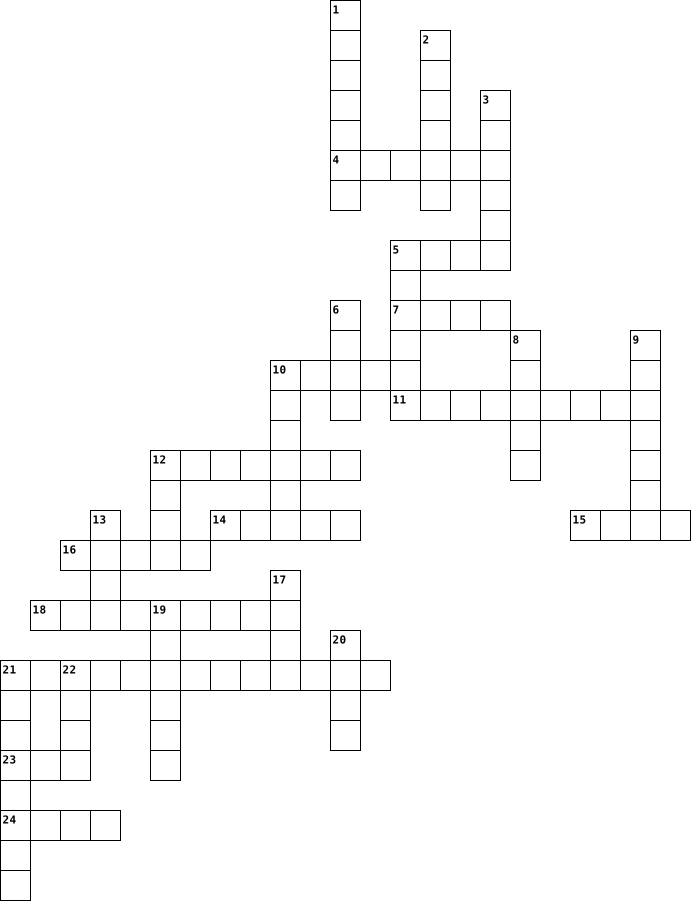
Across
- a GD school color
- extremely hot dense mass of gases
- orbits around earth
- the second GD school color
- stars give off light, heat and
- there is no seasonal change at this place o the earth
- has only one moon
- when the whole surface of the moon is visible to earth
- the moon cycles through phases once a
- when one part of the earth turns away from the sun
- set of stars that make a pattern
- a huge hot ball that gives off heat
- the earth's gravity pulls you
Down
- when one part of the earth faces the sun
- gradually change direction throughout the day based on the sun direction
- gravity is a force that pulls objects to the
- this seasons has the longest days
- the moon rotates on an
- there is no gravity in
- used to determine the time of day before clocks and watches
- the North Pole leans away from the sun in December
- the sun rises in the
- when the sun rises its light cast ______ shadows that point to the west
- the sun sets in the
- the number of hours of sunlight everyday of the year on the equator
- the number of seasons
- What is the Groton dunstable mascot
- shadows become longer as the hour approaches
28 Clues: a GD school color • has only one moon • orbits around earth • the sun sets in the • the sun rises in the • the number of seasons • the moon rotates on an • there is no gravity in • the second GD school color • the earth's gravity pulls you • stars give off light, heat and • set of stars that make a pattern • extremely hot dense mass of gases • this seasons has the longest days • ...
Moon Phases 2021-05-20

Across
- light increasing \
- no light
- 75% of light
Down
- 25% of light
- light decreasing
- all light
6 Clues: no light • all light • 25% of light • 75% of light • light decreasing • light increasing \
Moon Phases 2022-03-30

Across
- Lots of Light or Dark
- Light Shine On
- Sliver of Light or Dark
Down
- Star and Center of our Solar system
- Light Shine Off
- What the moon revolves around
6 Clues: Light Shine On • Light Shine Off • Lots of Light or Dark • Sliver of Light or Dark • What the moon revolves around • Star and Center of our Solar system
Moon Phases 2024-02-16

Across
- Looks like a backwards C
- The moon is a bright circle
- Looks like a backwards D
Down
- Looks like a D
- You cannot see the moon
- Looks like a C
6 Clues: Looks like a D • Looks like a C • You cannot see the moon • Looks like a backwards C • Looks like a backwards D • The moon is a bright circle
Moon Phases 2023-03-03

Across
- moon the moon is not visible
- gibbous The gibbous is getting smaller
- crescent The crescent moon getting bigger
- 3 Quarters of the moon
Down
- 1 Quarter of the moon shows up
- crescent The crescent getting smaller
- gibbous The gibbous is getting bigger
- moon the whole moon shows on only one side
8 Clues: 3 Quarters of the moon • moon the moon is not visible • 1 Quarter of the moon shows up • crescent The crescent getting smaller • gibbous The gibbous is getting bigger • gibbous The gibbous is getting smaller • crescent The crescent moon getting bigger • moon the whole moon shows on only one side
Moon Phases 2023-02-23

Across
- waxing
- crescent
- moon
Down
- quarter
- gibbous
- waning
6 Clues: moon • waxing • waning • quarter • gibbous • crescent
Moon Vocab 2014-09-26

Across
- when there is a small chunk of darkness on the right side of the moon
- when when the whole side of the moon that we can see is lit
- when about three fourths of the side of the moon we can see is lit
- when a small portion of the right side of the moon is lit
- when the left half of the side of the moon we can see lit
Down
- the first moon in a lunar cycle
- when there only a small bit of light on the left side of the moon
- when the right half of the moon that we can see is lit
- the different shapes of the moon that you see from eath
9 Clues: the first moon in a lunar cycle • when the right half of the moon that we can see is lit • the different shapes of the moon that you see from eath • when a small portion of the right side of the moon is lit • when the left half of the side of the moon we can see lit • when when the whole side of the moon that we can see is lit • ...
Savanna's Science Vocab 2012-10-09

Across
- the movement of an object around another object
- the study of moon, stars and other objects in space
- the force of gravity on an object
- a push or a pull on an object
- the 2 days of the year the sun reaches its greatest distance N or S of the equator
- different apparant shapes of the moon as seen from the Earth
- the blocking of sunlight to Earth when moon is directly between sun and Earth
- the tendency of an object to resist change in motion
- a tide with the least difference between low and high tide
- the force that pulls objects towards eachother
- the darkest part of a shadow
- the daily rise and fall of Earth's waters on its coastlines
Down
- the 2 days a year on which neither hempisphere is tilted toward or away from the sun
- the blocking of sunlight to the moon when Earth is directly between sun and moon
- the amount of matter in an object
- the partial or total blocking of one object in space by another
- an imginary line that passes through Earth's center at the North and South poles
- the spinning motion of a planet on its axis
- a tide with the greatest difference between high and low tide
- the part of the shadow surrounding the darkest part
- the path of an object as it revolves around another object
21 Clues: the darkest part of a shadow • a push or a pull on an object • the amount of matter in an object • the force of gravity on an object • the spinning motion of a planet on its axis • the force that pulls objects towards eachother • the movement of an object around another object • the study of moon, stars and other objects in space • ...
Astronomy Puzzle (But Cross.) 2024-05-16

Across
- Has phases like the moon.
- What kind of science is used to study celestial objects?
- What is NASA's old name before the change in the 1950s
- Where is NASA located?
- Galileo Galilei crafted his own ___?
Down
- Who developed astronomy?
- an activity that allows anyone to make a connection with the larger world beyond our planet's atmosphere, just by looking up
- Galileo Galilei also saw that the moon had what?
- What objects orbit the sun?
- occurs when one heavenly body such as a moon or planet moves into the shadow of another heavenly body.
- National Aeronautics and Space Administration.
11 Clues: Where is NASA located? • Who developed astronomy? • Has phases like the moon. • What objects orbit the sun? • Galileo Galilei crafted his own ___? • National Aeronautics and Space Administration. • Galileo Galilei also saw that the moon had what? • What is NASA's old name before the change in the 1950s • What kind of science is used to study celestial objects? • ...
Lunar Vocab Hawboldt 2020-11-30

Across
- when the Moon is completely dark from Earth's perspective
- The _____ cycle predicts the occurrence rate of eclipses (about 18 years)
- the time it takes the Moon to go through all of its phases is called a _____ month
- large lighter areas on the Moon that contain hills and mountains
- when the Moon is losing brightness over successive nights
- (the slightly darker area next tot he umbra
- the fully dark area during an eclipse (Latin for shadow)
- large dark areas on the Moon's surface (Latin for lake)
- the material that is thrown out due to a meteor impact
- this is what it is called when the Moon blocks the light from the Sun from reaching Earth
- the type of month is based on the Moon's position relative to the stars
- directly above an observer
- the point in the orbit of a satellite where it is closest to the Earth
- when the Moon is illuminated between 50% and 100%
- The point in the orbit of a satellite where it is furthest from the Earth
- when the Moon is fully illuminated from Earth's perspective
- when 50% of the Moon is illuminated
- a fissure or narrow channel on the Moon's surface
- plural or mare (Latin word for lake)
- when two celestial objects are close to each other in the sky
Down
- the light that is reflected off of the Earth that illuminates the Moon
- the line that separates the night side from the day side
- this is what it is called when the Earth blocks the light from the Sun from reaching the Moon
- directly below an observer
- long lines scored in the Moon's surface that radiate from impact craters
- when the Moon is gaining brightness over successive nights
- how much light gets reflected by an object
- any object that orbits another object
- when two celestial objects are on opposite sides of the sky from each other
- when the Moon is illuminated between 0% and 50%
30 Clues: directly below an observer • directly above an observer • when 50% of the Moon is illuminated • plural or mare (Latin word for lake) • any object that orbits another object • how much light gets reflected by an object • (the slightly darker area next tot he umbra • when the Moon is illuminated between 0% and 50% • when the Moon is illuminated between 50% and 100% • ...
earth moon sun 2021-10-08

Across
- A sequence of phases of the moon as it revolves around the Earth once every 27.3 days.
- (of the moon) pertaining to the period during which the visible surface of the moon increases
- Occurs at a full moon when Earth is directly between the moon and the sun
- The spinning motion of a planet on its axis
- moon phase when the entire side facing Earth is illuminated.
Down
- The partial or total blocking of one object in space by another
- (of the moon) pertaining to the period during which the visible surface of the moon decreases
- The movement of an object around another object
- A moon that is completely dark because it's unlit side is facing Earth
9 Clues: The spinning motion of a planet on its axis • The movement of an object around another object • moon phase when the entire side facing Earth is illuminated. • The partial or total blocking of one object in space by another • A moon that is completely dark because it's unlit side is facing Earth • ...
Bones 2025-03-02

Across
- – A group of stars that form a pattern in the sky! ✨
- – A vehicle used to travel in outer space! 🚀
- quarter – A phase of the moon when half of it is visible from Earth! 🌗
- – Different levels or parts of something, like the layers of the Earth or clothing! 🏞️
Down
- phases – The different stages the moon goes through as it orbits Earth! 🌑🌕
- – A measure of how hot or cold something is! 🌡️
- quarter – A phase of the moon when the other half is visible, opposite of the first quarter! 🌗
- control – The place where space missions are monitored and managed! 🛰️
- moon – A phase when the entire moon is fully visible! 🌕
- moon – The phase of the moon when it is not visible from Earth! 🌑
10 Clues: – A vehicle used to travel in outer space! 🚀 • – A measure of how hot or cold something is! 🌡️ • – A group of stars that form a pattern in the sky! ✨ • moon – A phase when the entire moon is fully visible! 🌕 • moon – The phase of the moon when it is not visible from Earth! 🌑 • control – The place where space missions are monitored and managed! 🛰️ • ...
Tides Stations Crossword 2022-10-06

Across
- the force that forces water to bulge on the sides closest and farthest from the moon
- the rise and fall of water in the sea or ocean
- place between dry land and water with periods of coverage and exposure
- When the Earth, Moon, and Sun form a straight line
- this phase has the second highest high tides and the second lowest low tides
Down
- related to dry land
- related to water
- the moon phases when a neap tide occurs
- When the Earth, Moon, and Sun form a right angle
- this phase has the highest high tides and lowest low tides
10 Clues: related to water • related to dry land • the moon phases when a neap tide occurs • the rise and fall of water in the sea or ocean • When the Earth, Moon, and Sun form a right angle • When the Earth, Moon, and Sun form a straight line • this phase has the highest high tides and lowest low tides • place between dry land and water with periods of coverage and exposure • ...
Moon phases 2024-05-15

Across
- crescent shape and sunlight reflected is decreasing
- this is the third phase
- opposite of a Full moon
Down
- In crescent shape and the first word means increasing
- The other quarter moon phase
- happens every 29 days
6 Clues: happens every 29 days • this is the third phase • opposite of a Full moon • The other quarter moon phase • crescent shape and sunlight reflected is decreasing • In crescent shape and the first word means increasing