
moon phases Crossword Puzzles
the moon 2022-05-12

Across
- at highest brightness
- moon phase shaped like banana
- second stage of moon phases
- first half of full moon
Down
- moon that appears more than half lighted but less than
- last half of full moon
- first stage of moon phases
- 1st phase of order
8 Clues: 1st phase of order • at highest brightness • last half of full moon • first half of full moon • first stage of moon phases • second stage of moon phases • moon phase shaped like banana • moon that appears more than half lighted but less than
Space Words 2 2013-05-24

Across
- The name for the action of spinning around an axis
- The phases of the moon in which the moon is getting bigger
- The phase of the moon where we can see a quarter of the moon and it looks like a half circle
- The phase of the moon in which it looks like almost a circle
- The phase of the moon in which it looks like a banana
- An object that revolves around a planet. Earth has one.
Down
- The action to spin around an axis
- The name for the action of going around another object
- The phases of the moon in which the moon is getting smaller
- An imagnary line that goes through a planet on which it rotates
- The name of the path an object takes around the sun
- The action to go around another object
12 Clues: The action to spin around an axis • The action to go around another object • The name for the action of spinning around an axis • The name of the path an object takes around the sun • The phase of the moon in which it looks like a banana • The name for the action of going around another object • An object that revolves around a planet. Earth has one. • ...
Moon,Earth,Sun,And Tides Crossword 2019-03-04

Across
- The four natural divisions of the year based on changes in temperature due to the varied amounts of sunlight; caused by the tilt of Earth during revolution (23.5 degrees)
- When the earth and moon are in a direct line - the moon moves into the Earth's shadow. The moon can look red.
- spins
- The moon is between the Sun and Earth. You can't see the lighted half of the Moon.
- The Moon is a quarter of the way around Earth. This is sometimes called a half Moon.
- as the Earth spins, it also _________ around the Sun. At the same time, the Moon is also ____________ around the Earth.
- The lighted side has almost disappeared.
- The regular rise and fall of the ocean's surface influenced by the moon's gravity pulling on earth
- When the tidal range is greatest. (full moon and new moon)
- describes phases following a new moon, as more of the Moon's lighted side becomes visible
Down
- moving around another object in space
- The Moon is three-quarters of the way around Earth.
- A curved path followed by a celestial object as it revolves around another object
- The Moon is now halfway around Earth. You can see all of its lighted side.
- the natural satellite of the earth, visible (chiefly at night) by reflected light from the sun.
- The imaginary line through Earth that extends from the North Pole to the South Pole and is the center of Earth's rotation (23.5 degrees)
- when the moon passes between the earth and sun (an eclipse of the sun occurs.) the moon looks black or you can't see it.
- How many low tides and high tides are in a day
- describes phases that occur after a full moon, as the visible lighted side of the Moon grows smaller
- a less than average tide occurring at the first and third quarters of the moon
- The luminous star around which Earth and other planets revolve; made mainly of hydrogen and helium
- the force that attracts a body toward the center of the earth, or toward any other physical body having mass.
22 Clues: spins • moving around another object in space • The lighted side has almost disappeared. • How many low tides and high tides are in a day • The Moon is three-quarters of the way around Earth. • When the tidal range is greatest. (full moon and new moon) • The Moon is now halfway around Earth. You can see all of its lighted side. • ...
Earth, Moon, Sun Vocabulary Choice Board #1 2024-04-15

Across
- the nearly circular path a smaller object (like the Moon) travels around a larger object like Earth)
- Moon the moon during the phases in which the part illuminated by the sun gets larger (new moon to full moon)
- the amount of time it takes for a planet to complete one orbit around a star or stars
- the shape of the illuminated part of the Moon as it appears from Earth
- to shine light on an object and make it visible
- The moment that the moon orbits directly between the sun and the Earth
- the force by which all things with mass or energy (including planets, stars, galaxies, and light) are brought towards one another
- all of space and its contents (including planets, stars, galaxies, and all other forms of energy and matter)
- the relative size of things
- a collection of gas, dust, stars, and solar systems that are held together by gravity
- a moon phase that looks like more than a half circle from Earth
- a moon phase where the Moon is not visible from the Earth
- a moon phase that looks like half a circle from Earth
- the force that pulls two objects together due to their mass
Down
- the sun, the planets that orbit the sun, and other objects that orbit the sun
- the tendency of an object to remain at rest or unchanged
- the border between light and dark on the Moon
- a moon phase that looks like less than half a circle from Earth
- when the moon is completely dark
- a moon phase that looks like a full circle from Earth
- the four parts of the year where weather, ecology, and number of daylight hours change as a result of Earth’s orbit around the sun
- the moon during the phases in which the part illuminated by the sun gets smaller (full moon to new moon)
- a rocky sphere that travels around a planet
- the circular movement of an object around its center (like a top spinning)
- the star that is the main source of light at the center of our solar system
25 Clues: the relative size of things • when the moon is completely dark • a rocky sphere that travels around a planet • the border between light and dark on the Moon • to shine light on an object and make it visible • a moon phase that looks like a full circle from Earth • a moon phase that looks like half a circle from Earth • ...
moon phases 2020-12-17

Across
- moon see half of the moons day side
- moon any phase of the moon between new moon and full moon
- earths natural satellite
- crescent when the moon is between the earth and the sun
- moon more than half the moon but less than a full
- quarter moon a half moon
Down
- symbol of moon
- moon when moon appears fully illuminated
- crescent slim smile of the moon
- moon occurs between a full moon and new
- cannot see any of the moon
- quarter moon often called a half moon
12 Clues: symbol of moon • earths natural satellite • quarter moon a half moon • cannot see any of the moon • crescent slim smile of the moon • moon see half of the moons day side • quarter moon often called a half moon • moon occurs between a full moon and new • moon when moon appears fully illuminated • moon more than half the moon but less than a full • ...
Moon phases 2021-03-23

Across
- the spinning of an object
- the phase that the left side of the moon is lit up
- the different phases the moon goes through
- Ocean currents caused by the pull of gravity
Down
- the phase that the right side of the moon is lit up
- the phase before the new moon
- the force that pulls objects together
- the phase after the new moon
- the movement of an object around another
- the phase when the moon isn't visible to the eye
10 Clues: the spinning of an object • the phase after the new moon • the phase before the new moon • the force that pulls objects together • the movement of an object around another • the different phases the moon goes through • Ocean currents caused by the pull of gravity • the phase when the moon isn't visible to the eye • the phase that the left side of the moon is lit up • ...
Moon Phases 2024-08-16

Across
- Dark figure cast as one gets intercepted
- moon moves in circles on axis
- become less bright
- Moon moves around
- force that pulls us down
- moves by the moon’s force
Down
- waves that deflecting
- Path one thing takes around another
- change in moon phases
- small disperse of something
10 Clues: Moon moves around • become less bright • waves that deflecting • change in moon phases • force that pulls us down • moves by the moon’s force • small disperse of something • moon moves in circles on axis • Path one thing takes around another • Dark figure cast as one gets intercepted
moon phases 2023-03-09

Across
- force of attraction between objects that is due to their masses
- spin of a body on its axis
- time required for the earth to rotate once on is axis.
- division of the year that is characterized by recurrin weather condition and determined by both earths tilt relativ to the sun anf earths position.
- point at which the sun I an ar north or as far south of the equator as possible.
- moment when the sun appears to cross the celestial equator
Down
- time required for Earth to orbit once around the sun
- event in which the shadow of one celestial body falls on another (360)
- Satellite natural or artificial body that revolves around a celestial body that is greater than mass.
- motion o a body that travels around another body in space;one complete trip along an orbit
10 Clues: spin of a body on its axis • time required for Earth to orbit once around the sun • time required for the earth to rotate once on is axis. • moment when the sun appears to cross the celestial equator • force of attraction between objects that is due to their masses • event in which the shadow of one celestial body falls on another (360) • ...
Moon Phases 2023-03-16

Across
- 8 3rd
- 1 phases
- 5 less
- 2 cycle
- 9 water
- 7 quarter
Down
- 6 more
- axis
- 4 changes
- 3 plants
10 Clues: axis • 8 3rd • 6 more • 5 less • 2 cycle • 9 water • 1 phases • 3 plants • 4 changes • 7 quarter
Moon phases 2023-05-25

Across
- The illuminated, or lit, part of the moon is decreasing.
- Seasons occur because the earth is tilted and Without the tilt, we’d have 1 season.
- One revolution of the Earth around the Sun takes 365 ¼ days, or a year
- More than half but less than the full moon is lit
- Earth rotates on its axis, an imaginary line that passes through Earth’s center and the North and South poles.
Down
- The lighted side of the moon faces the Earth.
- The lighted side of the moon faces away from the Earth.
- The illuminated, or lit, part of the moon is increasing.
- Less than half of the moon is lit
- It takes the moon 27.3 days to revolve around the Earth
10 Clues: Less than half of the moon is lit • The lighted side of the moon faces the Earth. • More than half but less than the full moon is lit • The lighted side of the moon faces away from the Earth. • It takes the moon 27.3 days to revolve around the Earth • The illuminated, or lit, part of the moon is decreasing. • The illuminated, or lit, part of the moon is increasing. • ...
Moon Phases 2021-10-07

Across
- When the side facing the moon is entirely dark.
- A orbit around something.
- Happens when the Moon orbits Earth, the Moon moves between the Sun and Earth.
- A pattern; something that repeats.
Down
- When the side facing the moon is entirely illuminated.
- The phases of the moon.
- Decreasing moon phase.
- Means moon.
- Increasing moon phase.
- Happens when the Moon and the Sun are on exact opposite sides of Earth.
10 Clues: Means moon. • Decreasing moon phase. • Increasing moon phase. • The phases of the moon. • A orbit around something. • A pattern; something that repeats. • When the side facing the moon is entirely dark. • When the side facing the moon is entirely illuminated. • Happens when the Moon and the Sun are on exact opposite sides of Earth. • ...
Moon Phases 2021-11-01

Across
- when the moon is 1/4 around the Earth
- when the moon is between earth and the sun
- the phase that comes after the first quarter and before the full moon
- when theres is little light light visivle on the right side of the moon
- the opposite of a waxing crescent
Down
- when is 3/4 around the Earth
- a body going around another body
- when the moon is half way around the Earth and fully visible
- right after the full moon, when the starts losing light
- for an object to spin on its axis
10 Clues: when is 3/4 around the Earth • a body going around another body • for an object to spin on its axis • the opposite of a waxing crescent • when the moon is 1/4 around the Earth • when the moon is between earth and the sun • right after the full moon, when the starts losing light • when the moon is half way around the Earth and fully visible • ...
moon phases 2024-02-28

Across
- occurs at first and third quarter moon when high tides are lowest and low tides are highest.
- the darkest part of a shadow.
- moon phases that get darker each night.
- can occur during a full moon when the moon is in Earth's shadow.
Down
- can occur during a new moon when part of the Earth is in the moon's shadow.
- the lighter parts at the edge of a shadow.
- the phase that occurs when the moon is between the earth and sun.
- moon phases that get brighter each night
- the phase that occurs when the moon is behind earth
- occurs at full or new moon, when high tides are highest and low tides are lowest.
10 Clues: the darkest part of a shadow. • moon phases that get darker each night. • moon phases that get brighter each night • the lighter parts at the edge of a shadow. • the phase that occurs when the moon is behind earth • can occur during a full moon when the moon is in Earth's shadow. • the phase that occurs when the moon is between the earth and sun. • ...
Moon Phases 2022-10-18

Across
- Decreasing the light shown
- Increasing the light shown
- The right side of the moon is illuminated
- The Moon phases are about to restarting
- Between the first quarter and full moon
- When the moon is fully lit up
Down
- The left side of the moon is illuminated
- First 25% of light is showing
- It's starting to decrease the amount of light on the moon
- The first moon phase
10 Clues: The first moon phase • Decreasing the light shown • Increasing the light shown • First 25% of light is showing • When the moon is fully lit up • The Moon phases are about to restarting • Between the first quarter and full moon • The left side of the moon is illuminated • The right side of the moon is illuminated • It's starting to decrease the amount of light on the moon
Moon Phases 2022-10-21

Across
- when the light on the moon is more than half on the left
- when the light on the moon is half lit on the left
- when the light on the moon is less than half on the left
- when the light is completely full on the moon
Down
- when the light on the moon is more than half on the right
- when the light is on the right
- when the light is on the left
- when the light on the moon is half lit on the right
- when the light on the moon is less than half on the right
- When there is little to no light on the moon
10 Clues: when the light is on the left • when the light is on the right • When there is little to no light on the moon • when the light is completely full on the moon • when the light on the moon is half lit on the left • when the light on the moon is half lit on the right • when the light on the moon is more than half on the left • ...
Moon Phases 2022-10-21

Across
- Means to grow or get bigger
- Half of the moon is lit up on the right side
- Small amount of light is on the right side
- Moon starts to get dark again starting from the right
- When seen from earth it's completely dark or not lit up at
Down
- Almost of the moon is lit up except a small amount on the left side
- Half lit, the light is on the left side
- Almost dark except on the left side
- Means to get smaller or shrink
- The moon is completely lit up
10 Clues: Means to grow or get bigger • The moon is completely lit up • Means to get smaller or shrink • Almost dark except on the left side • Half lit, the light is on the left side • Small amount of light is on the right side • Half of the moon is lit up on the right side • Moon starts to get dark again starting from the right • ...
MOON PHASES 2026-02-18

Across
- Phase where the moon is less than half illuminated.
- The phase (first or third) where the moon is exactly half illuminated.
- Term for when the moon's illumination is growing, from new to full.
- MOON The phase where the entire illuminated portion of the moon is visible.
Down
- The roughly 29.5-day period for all phases to complete
- Term for when the moon's illumination is shrinking, from full to new.
- MOON The phase when the moon is not visible from Earth.
- Relating to the moon.
- The path the moon takes around the Earth.
- Phase where the moon is more than half illuminated.
10 Clues: Relating to the moon. • The path the moon takes around the Earth. • Phase where the moon is less than half illuminated. • Phase where the moon is more than half illuminated. • The roughly 29.5-day period for all phases to complete • MOON The phase when the moon is not visible from Earth. • Term for when the moon's illumination is growing, from new to full. • ...
Tides Crossword Puzzle 2023-01-26

Across
- the moon phase where the right half of the moon is lit
- the moon phases during this tide are first and third quarter.
- the star that planets revolve around.
- having to do with the ocean
- the moon phases during this tide is the new moon and full moon
- zone the portion of the coastline that goes through periods of coverage and exposure due to the changing tides
Down
- a force trying to pull two objects together
- what causes the tides
- pattern of ocean water rising and falling
- dealing with dry land
10 Clues: what causes the tides • dealing with dry land • having to do with the ocean • the star that planets revolve around. • pattern of ocean water rising and falling • a force trying to pull two objects together • the moon phase where the right half of the moon is lit • the moon phases during this tide are first and third quarter. • ...
Out of this World! 2021-09-02

Across
- A lunar eclipse can only occur during which moon phase? ___________________
- A __________ eclipse is when the Sun is blocked out by the Moon as seen from the Earth.
- The Earth _______________ around the Sun in one year.
- It takes the Moon about a ___________ to go through its phases.
- The Earth ____________ on its axis in 24 hours
- ________ means the Moon is seems to be getting smaller in the sky.
Down
- A __________ eclipse is when the Moon goes into the Earth’s shadow.
- When one celestial body is blocked or darkened by another is called a (an) _________________.
- When the Moon is between the Earth and the Sun but not blocking the Sun, it is said to be a ______ ___________.
- Because the _________ is locked in place by Earth’s gravity, we always see the same side as it revolves around us.
- A ___________ tide is characterized by very high highs and very low lows.
- The different appearances of the Moon throughout the month are called its _____________.
- ________ means the Moon seems to be growing in the sky.
- A ____________ tide is characterized by a limited or moderate tidal range.
- We don’t see a lunar eclipse every month because the Moon’s orbit is ____________.
- Any given location on the Earth’s surface will go through ______ sets of high tides and low tides each day.
16 Clues: The Earth ____________ on its axis in 24 hours • The Earth _______________ around the Sun in one year. • ________ means the Moon seems to be growing in the sky. • It takes the Moon about a ___________ to go through its phases. • ________ means the Moon is seems to be getting smaller in the sky. • A __________ eclipse is when the Moon goes into the Earth’s shadow. • ...
THE MOON 2017-11-29

Across
- All Moon rocks are v______
- C___ are found all over the Moon
- A_____ must take their own air, water and food on the Moon
- The Moon rises about f___ minutes later than the Sun each day
- We can n_____ see the back of the Moon from Erath
- The f___ made by the astronauts will still be seen in millions of years
- The Moon is covered in light and d___ areas.
- There is no e____ on the Moon to destroy footprints.
- The Moon is about one ____ as wide as the Earth
Down
- The Moon spins as it o___ the Earth.
- The Moon is the Earth's natural s_______
- The Moon has a w___ gravity
- The Moon is not perfectly s____.
- Neil _____ and Buzz Aldrin were first on the Moon.
- Many craters are t___ to fifty km across.
- The same s____ of the Moon is always seen from Erath.
- There is no atmosphere on the Moon
- In total, t____ astronauts have walked on the Moon
- The change in shape of the Moon is called p____
- The astronauts brought back with them Moon _____
20 Clues: All Moon rocks are v______ • The Moon has a w___ gravity • C___ are found all over the Moon • The Moon is not perfectly s____. • There is no atmosphere on the Moon • The Moon spins as it o___ the Earth. • The Moon is the Earth's natural s_______ • Many craters are t___ to fifty km across. • The Moon is covered in light and d___ areas. • ...
THE MOON 2024-03-12

Across
- All Moon rocks are v______
- C___ are found all over the Moon
- A_____ must take their own air, water and food on the Moon
- The Moon rises about f___ minutes later than the Sun each day
- We can n_____ see the back of the Moon from Erath
- The f___ made by the astronauts will still be seen in millions of years
- The Moon is covered in light and d___ areas.
- There is no e____ on the Moon to destroy footprints.
- The Moon is about one ____ as wide as the Earth
Down
- The Moon spins as it o___ the Earth.
- The Moon is the Earth's natural s_______
- The Moon has a w___ gravity
- The Moon is not perfectly s____.
- Neil _____ and Buzz Aldrin were first on the Moon.
- Many craters are t___ to fifty km across.
- The same s____ of the Moon is always seen from Erath.
- There is no atmosphere on the Moon
- In total, t____ astronauts have walked on the Moon
- The change in shape of the Moon is called p____
- The astronauts brought back with them Moon _____
20 Clues: All Moon rocks are v______ • The Moon has a w___ gravity • C___ are found all over the Moon • The Moon is not perfectly s____. • There is no atmosphere on the Moon • The Moon spins as it o___ the Earth. • The Moon is the Earth's natural s_______ • Many craters are t___ to fifty km across. • The Moon is covered in light and d___ areas. • ...
The Moon 2026-03-22

Across
- Thin shrinking sliver
- Right half lit
- Moon not visible
- After full moon
- When the ocean water is highest
- The changing appearance of the moon
- The moon's path is slightly angled
Down
- Phase after first quarter
- When the moon appears fully lit
- Left half lit
- Thin growing sliver
- Rocky object found in space
- The force that pulls objects toward Earth
- Relating to the moon
14 Clues: Left half lit • Right half lit • After full moon • Moon not visible • Thin growing sliver • Relating to the moon • Thin shrinking sliver • Phase after first quarter • Rocky object found in space • When the moon appears fully lit • When the ocean water is highest • The moon's path is slightly angled • The changing appearance of the moon • The force that pulls objects toward Earth
Lunar Moon Phases 2022-03-08

Across
- an imaginary line
- moving in a circle on a central axis
- The Moon's nearside receives no sunlight (also known as the first moon phase)
- Right side of the moon is laminated
- to make lighter or brighter
- About 1/3 of the left side of the moon is laminated (looks like a smile)
- when one body in space blocks the view of another body in space
- move in a circle around an axis
Down
- Entirety of the moon is laminated
- About 2/3 of the right side of the moon is laminated
- About 2/3 of the left side of the moon is laminated
- the phase of the moon when an light is increasing
- the path followed by an object in space as it goes around another object
- Left side of the moon is laminated
- 1/3 of the right side of moon is laminated
- the phases of the moon when a decreasing amount of the moon's near side is sunlit
16 Clues: an imaginary line • to make lighter or brighter • move in a circle around an axis • Entirety of the moon is laminated • Left side of the moon is laminated • Right side of the moon is laminated • moving in a circle on a central axis • 1/3 of the right side of moon is laminated • the phase of the moon when an light is increasing • ...
Moon Phases and Eclipses 2023-04-03

Across
- The name for the full moon we see during a full lunar eclipse (hint: it is red in color)
- A star, planets, and all the other objects that revolve around that star.
- The portion of the Moon or a planet reflecting light as seen from Earth
- Earth's takes 24 hours
- the lighter part of the moon or Earth's shadow, where light is partially blocked
- the very darkest part of the moon or Earth's shadow
- A solar eclipse during which the Sun and the moon align perfectly and the Sun becomes fully blocked by the disk of the Moon.
- The spiral galaxy that contains our solar system.
- A solar eclipse during which the Sun becomes only partially blocked by the disk of the Moon. The Sun and the moon are not perfectly aligned.
- The phases in which the lit portion of the moon is getting smaller each night- going from full moon to new moon.
- A lunar eclipse during which the Moon becomes partially covered by Earth's umbral shadow and partially covered by Earth's penumbral shadow.
- All of space and everything in it
- The movement of an object around another object
Down
- A name for a phase of the moon with a "swollen" shape
- The spinning of Earth (or the moon) on its axis.
- The blocking of sunlight to the moon that occurs when Earth is directly between the sun and the moon, at the full moon phase.
- A lunar eclipse during which the Moon passes only within Earth's penumbral shadow and does not fall within the umbra.
- The name for something that revolves around something else
- a moon phase that appears black, or like there is no moon in the night sky
- A lunar eclipse in which the Moon becomes fully covered by Earth's umbral shadow. The moon appears red in color.
- A name for something that repeats over and over
- Earth's takes 365 1/4 days
- The imaginary line on which an object rotates.
- The phases in which the lit portion of the moon is getting larger each night- going from new moon to full moon.
- A force that pulls objects toward each other
- A name for a phase of the moon with the "c" shape
26 Clues: Earth's takes 24 hours • Earth's takes 365 1/4 days • All of space and everything in it • A force that pulls objects toward each other • The imaginary line on which an object rotates. • A name for something that repeats over and over • The movement of an object around another object • The spinning of Earth (or the moon) on its axis. • ...
Moon Phases 2020-12-14

Across
- when the moon is lit up, the right side is the on that the light is on
- when the moon is almost fully lit up, and there is a sliver of darkness, or the moon is barely lit up, and there is a sliver lit up
- when the moon isn't lit up at all, and is covered in complete darkness
- when the right side of the moon is lit up
- when the moon is almost all the way lit up, leaving a large section lit up, or the moon is almost covered in darkness, leaving a large section in darkness
Down
- a celestial object that is smaller than the Earth and orbits it, it is the cause for tides
- the phase of the moon when half of the moon is lit
- when the moon is lit up, the left side is the one that the light is on
- when the left side of the moon is lit up
- when the moon is fully lit up
10 Clues: when the moon is fully lit up • when the left side of the moon is lit up • when the right side of the moon is lit up • the phase of the moon when half of the moon is lit • when the moon is lit up, the right side is the on that the light is on • when the moon is lit up, the left side is the one that the light is on • ...
Moon phases 2020-12-14

Across
- its getting bigger.
- a thin curved shape that's thicker in the middle and thinner at the ended.
- the whole moon is dark and there is no light.
- The _____ phase is the new moon.
- a little less than half is light up or just a little isn't light up.
Down
- It circles around the earth.
- you can only see half of the moon.
- its getting smaller.
- 7th phase and you can only see the left side of the moon.
- when the side facing the earth is light up.
10 Clues: its getting bigger. • its getting smaller. • It circles around the earth. • The _____ phase is the new moon. • you can only see half of the moon. • when the side facing the earth is light up. • the whole moon is dark and there is no light. • 7th phase and you can only see the left side of the moon. • a little less than half is light up or just a little isn't light up. • ...
Moon Phases 2022-11-04

Across
- when the moon is completely lit by the sun
- the last phase before the new moon
- when the moon is almost full increasing in visibility
- the moon is half full and decreasing in visibility
- when the moon is between the earth and sun
Down
- light is growing
- the moon is almost full decreasing in visibility
- when the moon is half full and increasing in visibility
- light is shrinking/ leaving
- when the moon is less than half full and increasing in visibility
10 Clues: light is growing • light is shrinking/ leaving • the last phase before the new moon • when the moon is completely lit by the sun • when the moon is between the earth and sun • the moon is almost full decreasing in visibility • the moon is half full and decreasing in visibility • when the moon is almost full increasing in visibility • ...
Moon Phases 2022-09-28

Across
- when the Moon is more than half full
- 50% of the Moons face illuminated from Earth
- when the Moon appears fully illuminated
- Earth's only natural satellite
- to decrease in size, extent, and degree
- the curved path of an object
Down
- less that half the Moon is lit by the sun
- appears fully illuminated from Earths perspective
- a celestial body in orbit around the sun
- Moon gets more sunlight as the days go by
10 Clues: the curved path of an object • Earth's only natural satellite • when the Moon is more than half full • when the Moon appears fully illuminated • to decrease in size, extent, and degree • a celestial body in orbit around the sun • less that half the Moon is lit by the sun • Moon gets more sunlight as the days go by • 50% of the Moons face illuminated from Earth • ...
Moon Phases 2022-11-19

Across
- The period, or section of time, of getting bigger
- Is the movement of an object around another object
- The force that pulls two objects together
- A moon less than half full.
- The rise and fall of sea levels
Down
- A moon more than half full
- Is the spinning of an object.
- The change in the appearance of the Moon when it makes on full revolution around Earth.
- Area of light that gets smaller over time
- Phase of the moon that you can not see
10 Clues: A moon more than half full • A moon less than half full. • Is the spinning of an object. • The rise and fall of sea levels • Phase of the moon that you can not see • Area of light that gets smaller over time • The force that pulls two objects together • The period, or section of time, of getting bigger • Is the movement of an object around another object • ...
Moon Phases 2022-10-18

Across
- It's starting to decrease
- 25% of light is showing
- Increasing the light shown
- The left side of the moon is illuminated
Down
- Moon phase is restarting.
- When the moon is fully lit up
- Decreasing the light shown
- The right side of the moon is illuminated
- The first moon phase
- More than 50% of the moon is being shown
10 Clues: The first moon phase • 25% of light is showing • Moon phase is restarting. • It's starting to decrease • Decreasing the light shown • Increasing the light shown • When the moon is fully lit up • More than 50% of the moon is being shown • The left side of the moon is illuminated • The right side of the moon is illuminated
Moon phases 2022-10-21

Across
- The moon light is less than half but on the left
- The light hits more than half of the moon
- Half of the left side of the moon is lit
- The moon is full of light
Down
- The moon light is less than half but on the right
- The moon light is more than half but one the right
- Half of the right side of the moon is lit
- The light hits less than half of the moon
- The moon light is more half but on the left
- The moon is has no light or full of darkness
10 Clues: The moon is full of light • Half of the left side of the moon is lit • Half of the right side of the moon is lit • The light hits less than half of the moon • The light hits more than half of the moon • The moon light is more half but on the left • The moon is has no light or full of darkness • The moon light is less than half but on the left • ...
Moon Phases 2021-03-11

Across
- moon: complete dark circle
- getting bigger
- movement of an object around another object.
Down
- tide: 90 degree angle
- getting smaller
- object spinning on its axis
- caused by the pull of gravity from the moon.
- cycle: change in the appearance of the moon.
- tide: straight line
- moon: complete white circle
10 Clues: getting bigger • getting smaller • tide: straight line • tide: 90 degree angle • moon: complete dark circle • object spinning on its axis • moon: complete white circle • caused by the pull of gravity from the moon. • cycle: change in the appearance of the moon. • movement of an object around another object.
Moon phases 2021-03-23

Across
- the spinning of an object
- the phase that the left side of the moon is lit up
- the different phases the moon goes through
- Ocean currents caused by the pull of gravity
Down
- the phase that the right side of the moon is lit up
- the phase before the new moon
- the force that pulls objects together
- the phase after the new moon
- the movement of an object around another
- the phase when the moon isn't visible to the eye
10 Clues: the spinning of an object • the phase after the new moon • the phase before the new moon • the force that pulls objects together • the movement of an object around another • the different phases the moon goes through • Ocean currents caused by the pull of gravity • the phase when the moon isn't visible to the eye • the phase that the left side of the moon is lit up • ...
Moon Phases 2021-10-30

Across
- When the moon has a sliver of light Illuminated on the right
- When the moon has half of its body illuminated on the right.
- when the moon is completely invisible to the eyes; in between the sun and earth
- When the entire moon is illuminated
- When most of the moon is illuminated but a sliver of the moon is dark on the left.
- The rise and fall of the oceans levels caused by the gravitational pull of the moon and sun are.
Down
- the movement in which the moon travels around the earth
- When only a sliver of the moon is illuminated on the left.
- When most of the moon is illuminated but a sliver of the moon is dark on the right.
- When half of the moon is illuminated on the left.
10 Clues: When the entire moon is illuminated • When half of the moon is illuminated on the left. • the movement in which the moon travels around the earth • When only a sliver of the moon is illuminated on the left. • When the moon has a sliver of light Illuminated on the right • When the moon has half of its body illuminated on the right. • ...
moon phases 2021-04-23

Across
- it starts to fade
- think fractions
- allmost gone
- the sun and the moon make these
- its whole
Down
- almost gone
- its so close
- a little toenail moon
- we see one forth of the moon
- its not there
10 Clues: its whole • almost gone • its so close • allmost gone • its not there • think fractions • it starts to fade • a little toenail moon • we see one forth of the moon • the sun and the moon make these
moon phases 2024-03-27

Across
- you know what this sky ball is
- this might affect tanning at the beach
- the moon gone missing
- pulling it all together
- what we are talking about
Down
- not rotating
- spinning round and round and...
- it's in the title
- goodbye light
- new light coming
10 Clues: not rotating • goodbye light • new light coming • it's in the title • the moon gone missing • pulling it all together • what we are talking about • you know what this sky ball is • spinning round and round and... • this might affect tanning at the beach
Moon phases 2024-05-20

Across
- Which moon phase is where we can only see the right half of the moon.
- What moon phase is when we can see the whole moon?
- Which moon phase is where we can only see a thin crescent but on the left side.
- How many days does it take for the moon to got from one new moon to the next?
- Which moon phase is when we can see a thin crescent on the right side
Down
- the moon and the Earth are _ _ _ _ _ _ _ _ _ _ _ _ _ to each other.
- Which moon phase is where we can only see the left half of the moon.
- Which moon phase is where we can see everything except for the right crescent of the moon.
- What moon phase is when we cant see the moon at all?
- Which moon phase is where we only cant see the crescent of the moon but on the left side.
10 Clues: What moon phase is when we can see the whole moon? • What moon phase is when we cant see the moon at all? • the moon and the Earth are _ _ _ _ _ _ _ _ _ _ _ _ _ to each other. • Which moon phase is where we can only see the left half of the moon. • Which moon phase is where we can only see the right half of the moon. • ...
Moon Phases 2026-01-15

Across
- Glowing circle.
- right side dark.
- Shining of an axis.
- It takes 29 1/2 to make a complete revolution
- caused by the pull of gravity
Down
- Half way between the new moon.
- First visible moon phases after new moon.
- visible at night.
- Force that pulls two objects towards each other.
- Moon passes between the earth and the sun.
10 Clues: Glowing circle. • right side dark. • visible at night. • Shining of an axis. • caused by the pull of gravity • Half way between the new moon. • First visible moon phases after new moon. • Moon passes between the earth and the sun. • It takes 29 1/2 to make a complete revolution • Force that pulls two objects towards each other.
Moon Phases 2025-01-16

Across
- When the moon is growing
- The phase that begins the lunar month
- This is the phase where more than half of the left side of the moon is lit
- This phase happens right before the waning crescent
- The phase that happens right before the new moon
Down
- This is the phase right before the full moon
- The phase that happens right after the new moon
- When the moon is shrinking
- This phase is when the right half of the moon is visible
- When the moon, Earth, and sun are in a straight line
10 Clues: When the moon is growing • When the moon is shrinking • The phase that begins the lunar month • This is the phase right before the full moon • The phase that happens right after the new moon • The phase that happens right before the new moon • This phase happens right before the waning crescent • When the moon, Earth, and sun are in a straight line • ...
moon phases 2024-08-16

Across
- The Earth's natural satellite, reflecting sunlight and influencing tides.
- The vast, seemingly infinite expanse beyond Earth's atmosphere where stars, planets, and other celestial bodies exist.
- The force that attracts objects with mass towards each other, keeping planets in orbit and objects grounded on Earth.
- The regular rise and fall of sea levels caused by the gravitational pull of the Moon and the Sun on Earth's oceans.
- The star at the center of our solar system, providing light and heat essential for life on Earth.
Down
- The lunar phase when the entire face of the Moon is illuminated by the Sun, making it appear fully round and bright from Earth.
- The curved path that an object, like a planet or satellite, follows around a star, planet, or moon due to gravitational forces.
- The distinct stages in a process or cycle, such as the different appearances of the Moon as it orbits Earth.
- The third planet from the Sun, home to diverse life forms and ecosystems.
- The luminous celestial bodies made of hot gases, primarily hydrogen and helium, that produce light and heat through nuclear fusion.
10 Clues: The Earth's natural satellite, reflecting sunlight and influencing tides. • The third planet from the Sun, home to diverse life forms and ecosystems. • The star at the center of our solar system, providing light and heat essential for life on Earth. • ...
The Sun, the Moon and Stars 2024-03-06

Across
- the outer most layer of the Sun
- dark, flat areas on the Moon formed from lava 3-4 billion years ago
- type of galaxy with no regular shape, contains young stars
- patterns of stars in the night sky
- instrument scientists use to study the range of wavelengths a star emits
- as the Sun dies it will swell to this
- layer of the Sun where photons move to
- a huge group of single stars, systems, clusters, dust and gas bound by gravity
- type of galaxy with bulge in middle and spiral arms
- type of galaxy that is round or flattened and contains only old stars
- type of galaxy that is young and active with a black hole at its center
Down
- the coolest layer of the Sun
- describes phases of the Moon where more of the illuminated side is seen each night
- the type of eclipse when the Moon moves into Earth's shadow
- measure of the amount of light a star gives off
- the type of eclipse when the Moon's shadow appears on Earth's surface
- large, round pits on the Moon caused by impacts of meteoroids
- describes phases of the Moon where less of the illuminated side is seen each night
- oldest, most highly-cratered regions on the Moon
- inner most layer of the Sun that is 15.6 million degrees Celsius, nuclear fusion converts hydrogen into helium
20 Clues: the coolest layer of the Sun • the outer most layer of the Sun • patterns of stars in the night sky • as the Sun dies it will swell to this • layer of the Sun where photons move to • measure of the amount of light a star gives off • oldest, most highly-cratered regions on the Moon • type of galaxy with bulge in middle and spiral arms • ...
The Moon 2020-04-07

Across
- Lunar phase when less than half but at least some of the visible side is illuminated
- Able to be seen, not in shadow, being hit by light rays
- Lunar phases when the moon appears to be shrinking from full moon to new moon
- large, dark, basaltic plains on Earth's Moon, formed by ancient volcanic eruptions
- Lunar phases when the moon appears to be growing from new moon to full moon
- The lunar phase where Earth is directly between the sun and the moon; the moon looks like a circle
- a large, bowl-shaped cavity in the ground or on the surface of a planet or the moon
- closest point in an orbit
Down
- farthest point in an orbit
- Change in direction (redirection) of light rays after hitting an object
- lunar phase where the moon is directly between Earth and the sun; the new moon cannot be seen from Earth
- The lunar phase where the moon, Earth, and the sun form a perpendicular angle; the moon looks like a semicircle with half visible
- Darkness within space from which rays from a source of light are cut off by an blocking object
- Lunar phase when more than half but less than all of the visible side is illuminated
- The appearance of the lit area of the moon as seen from Earth
15 Clues: closest point in an orbit • farthest point in an orbit • Able to be seen, not in shadow, being hit by light rays • The appearance of the lit area of the moon as seen from Earth • Change in direction (redirection) of light rays after hitting an object • Lunar phases when the moon appears to be growing from new moon to full moon • ...
The Moon 2020-04-07

Across
- Able to be seen, not in shadow, being hit by light rays
- closest point in an orbit
- The lunar phase where the moon, Earth, and the sun form a perpendicular angle; the moon looks like a semicircle with half visible
- The appearance of the lit area of the moon as seen from Earth
- Lunar phases when the moon appears to be growing from new moon to full moon
- large, dark, basaltic plains on Earth's Moon, formed by ancient volcanic eruptions
- Lunar phases when the moon appears to be shrinking from full moon to new moon
- The lunar phase where Earth is directly between the sun and the moon; the moon looks like a circle
- Lunar phase when less than half but at least some of the visible side is illuminated
Down
- Change in direction (redirection) of light rays after hitting an object
- a large, bowl-shaped cavity in the ground or on the surface of a planet or the moon
- lunar phase where the moon is directly between Earth and the sun; the new moon cannot be seen from Earth
- Darkness within space from which rays from a source of light are cut off by an blocking object
- farthest point in an orbit
- Lunar phase when more than half but less than all of the visible side is illuminated
15 Clues: closest point in an orbit • farthest point in an orbit • Able to be seen, not in shadow, being hit by light rays • The appearance of the lit area of the moon as seen from Earth • Change in direction (redirection) of light rays after hitting an object • Lunar phases when the moon appears to be growing from new moon to full moon • ...
The Moon 2020-04-07

Across
- Lunar phase when less than half but at least some of the visible side is illuminated
- Able to be seen, not in shadow, being hit by light rays
- Lunar phases when the moon appears to be shrinking from full moon to new moon
- large, dark, basaltic plains on Earth's Moon, formed by ancient volcanic eruptions
- Lunar phases when the moon appears to be growing from new moon to full moon
- The lunar phase where Earth is directly between the sun and the moon; the moon looks like a circle
- a large, bowl-shaped cavity in the ground or on the surface of a planet or the moon
- closest point in an orbit
Down
- farthest point in an orbit
- Change in direction (redirection) of light rays after hitting an object
- lunar phase where the moon is directly between Earth and the sun; the new moon cannot be seen from Earth
- The lunar phase where the moon, Earth, and the sun form a perpendicular angle; the moon looks like a semicircle with half visible
- Darkness within space from which rays from a source of light are cut off by an blocking object
- Lunar phase when more than half but less than all of the visible side is illuminated
- The appearance of the lit area of the moon as seen from Earth
15 Clues: closest point in an orbit • farthest point in an orbit • Able to be seen, not in shadow, being hit by light rays • The appearance of the lit area of the moon as seen from Earth • Change in direction (redirection) of light rays after hitting an object • Lunar phases when the moon appears to be growing from new moon to full moon • ...
Lunar Moon Phases 2022-03-08
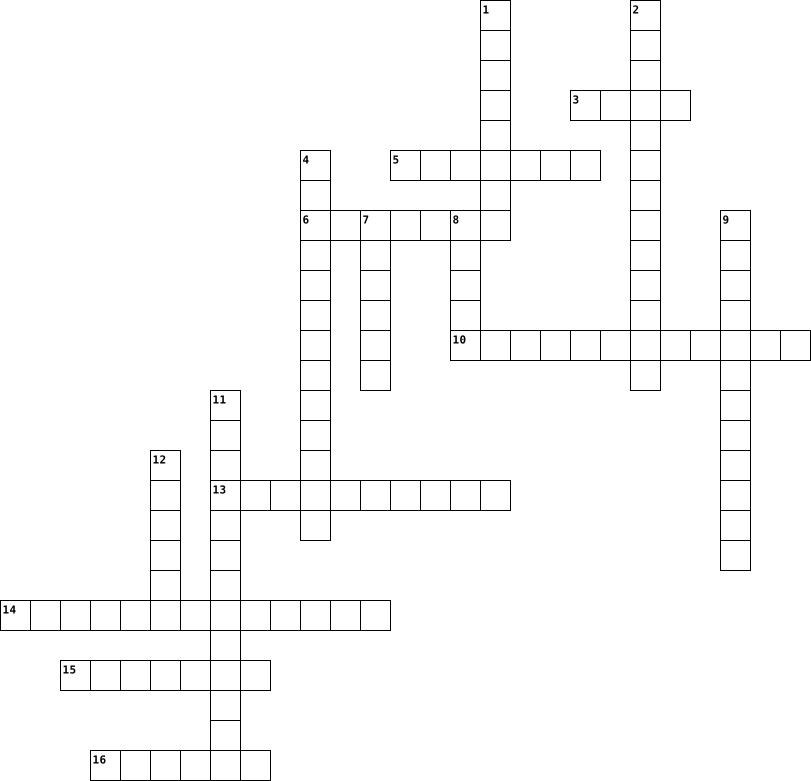
Across
- an imaginary line
- moving in a circle on a central axis
- The Moon's nearside receives no sunlight (also known as the first moon phase)
- Right side of the moon is laminated
- to make lighter or brighter
- About 1/3 of the left side of the moon is laminated (looks like a smile)
- when one body in space blocks the view of another body in space
- move in a circle around an axis
Down
- Entirety of the moon is laminated
- About 2/3 of the right side of the moon is laminated
- About 2/3 of the left side of the moon is laminated
- the phase of the moon when an light is increasing
- the path followed by an object in space as it goes around another object
- Left side of the moon is laminated
- 1/3 of the right side of moon is laminated
- the phases of the moon when a decreasing amount of the moon's near side is sunlit
16 Clues: an imaginary line • to make lighter or brighter • move in a circle around an axis • Entirety of the moon is laminated • Left side of the moon is laminated • Right side of the moon is laminated • moving in a circle on a central axis • 1/3 of the right side of moon is laminated • the phase of the moon when an light is increasing • ...
Moon Phases Crossword 2023-11-05

Across
- The blocking of sunlight to Earth that occurs when the moon is between the sun and Earth
- When half of the moon is visible
- When the light of the moon is decreasing
- The movement of something around a central axis
- The partial or total blocking of one object by another
- Moon phase during which less than half of the moon is illuminated, and is increasing
- When the entire moon is lit up
Down
- one of the different shapes of the moon as seen from Earth
- Moon phase in which exactly half of the moon is illuminated approximately 7-8 days following the New Moon
- Moon phase in which exactly half of the moon is illuminated approximately 7-8 days following the Full Moon
- When more than half of the moon is lit
- Moon phase during which less than half of the moon is illuminated, and is decreasing
- The circular path of one object as it revolves around another object in space
- When the entire moon is dark
- When the light of the moon is increasing
- When less than half of the moon is lit
16 Clues: When the entire moon is dark • When the entire moon is lit up • When half of the moon is visible • When more than half of the moon is lit • When less than half of the moon is lit • When the light of the moon is decreasing • When the light of the moon is increasing • The movement of something around a central axis • The partial or total blocking of one object by another • ...
The moon By:Krishna 2013-03-21

Across
- It takes one __________ to go around the Earth
- The moon __________ like the Earth
- The different shapes of the moon is called ___________
- The moon is four times _________ than Earth
- The moon ___________ around the Earth
- Luna is named after ___________ moon goddess
Down
- The moon is a ______________
- The moon's inner part has a surface,________,mantle and core
- It takes four _______ to fill the Earth
- Half of the moon is ______ and the other half is cold
- The moon has no ________________
- Sometimes hits the moon
- Every year the moon is __________ away from the Earth
- The moon's gravity is ________ times greater
- The moon is made out of a _________ crust
15 Clues: Sometimes hits the moon • The moon is a ______________ • The moon has no ________________ • The moon __________ like the Earth • The moon ___________ around the Earth • It takes four _______ to fill the Earth • The moon is made out of a _________ crust • The moon is four times _________ than Earth • The moon's gravity is ________ times greater • ...
The MOON 2026-04-23

Across
- The phases of the moon are caused by the _______ of sunlight
- The Moon’s atmosphere is also known as an ______
- This Lunar phase is between the Full Moon and the Third/Last Quarter
- Bending of sunlight as it goes past the Earth’s atmosphere
- The name of the zone where the tidal range is where tide pools reside
- Seismic tremors on the moon caused by the stretching of the moon’s interior
- The peak of an eclipse
Down
- The number of times we experience a high tide per day
- The outer, lighter shadow that a celestial body creates
- What the tide is called when the sun and moon are aligned
- Humans used the moon’s phases for this type of time-tracking
- The name of the tide during the first and third quarters of the moon
- A word used to describe the surface of the moon.
- This feature of the moon is a large basalt plain formed by ancient volcanoes
14 Clues: The peak of an eclipse • The Moon’s atmosphere is also known as an ______ • A word used to describe the surface of the moon. • The number of times we experience a high tide per day • The outer, lighter shadow that a celestial body creates • What the tide is called when the sun and moon are aligned • Bending of sunlight as it goes past the Earth’s atmosphere • ...
Moon Phases 2022-03-09

Across
- Moon but you cannot see it
- The last quarter moon phase and the new quarter moon phase
- the seventh phase in the cycle of phases
- between a half moon and full moon
- The entire moon is showing
Down
- Moon looks like backwards c
- The different shapes of the moon that we see at different times of the month
- Between full and last quarter of the moon
- The first half of the moon is showing
- earth's only natural satellite
10 Clues: Moon but you cannot see it • The entire moon is showing • Moon looks like backwards c • earth's only natural satellite • between a half moon and full moon • The first half of the moon is showing • the seventh phase in the cycle of phases • Between full and last quarter of the moon • The last quarter moon phase and the new quarter moon phase • ...
Moon Phases 2021-11-01

Across
- when the moon is 1/4 around the Earth
- when the moon is between earth and the sun
- the phase that comes after the first quarter and before the full moon
- when theres is little light light visivle on the right side of the moon
- the opposite of a waxing crescent
Down
- when is 3/4 around the Earth
- a body going around another body
- when the moon is half way around the Earth and fully visible
- right after the full moon, when the starts losing light
- for an object to spin on its axis
10 Clues: when is 3/4 around the Earth • a body going around another body • for an object to spin on its axis • the opposite of a waxing crescent • when the moon is 1/4 around the Earth • when the moon is between earth and the sun • right after the full moon, when the starts losing light • when the moon is half way around the Earth and fully visible • ...
Moon Phases 2022-12-09

Across
- When the moon gets more light
- The star that is the main source of light in the center of the solar system
- The shape of the illuminated part of the moon, as it appears from earth
- When the moon blocks the sun
- Iraqi sphere that travels around the planet
- When the moon is all lit
Down
- To shine light on an object, and make it visible
- When the earths shadow covers the moon
- When the moon gets less light
- When the moons is half lit
10 Clues: When the moon is all lit • When the moons is half lit • When the moon blocks the sun • When the moon gets more light • When the moon gets less light • When the earths shadow covers the moon • Iraqi sphere that travels around the planet • To shine light on an object, and make it visible • The shape of the illuminated part of the moon, as it appears from earth • ...
Moon phases 2023-02-14

Across
- being pulled around an object due to its gravitational pull
- No light
- You can see all the light on this lunar phase
- bigger object pulls smaller one
- Spinning
Down
- clock-wise how the earth revolves around the sun
- caused by the moon
- going around an object
- cycle phases of the moon
- losing light
10 Clues: No light • Spinning • losing light • caused by the moon • going around an object • cycle phases of the moon • bigger object pulls smaller one • You can see all the light on this lunar phase • clock-wise how the earth revolves around the sun • being pulled around an object due to its gravitational pull
Moon Phases 2021-04-14

Across
- A force that pulls two things together
- this is when the moon is behind earth
- this is the action of orbiting an object
- this is when the moon is between earth and sun
Down
- when the moon moves into the earths shadow
- this is the spinning of an object on its axis
- these happen because of the Moons orbit
- this is when the light getting bigger
- these are caused by the Moons pull on oceans
- this is when the light is getting smaller
10 Clues: this is when the moon is behind earth • this is when the light getting bigger • A force that pulls two things together • these happen because of the Moons orbit • this is the action of orbiting an object • this is when the light is getting smaller • when the moon moves into the earths shadow • these are caused by the Moons pull on oceans • ...
Moon Phases 2022-05-23

Across
- When we see 50% of the moon.
- When something orbits something else.
- The stages that we see the moon in.
- When something spins around its axis.
- The object that orbits the Earth
Down
- The moon causes these with its gravity.
- When we see the whole moon.
- When the moon is getting bigger.
- When we don't see the moon.
- When the moon is getting smaller.
10 Clues: When we see the whole moon. • When we don't see the moon. • When we see 50% of the moon. • When the moon is getting bigger. • The object that orbits the Earth • When the moon is getting smaller. • The stages that we see the moon in. • When something orbits something else. • When something spins around its axis. • The moon causes these with its gravity.
Moon Phases 2022-10-21

Across
- when the light on the moon is more than half on the left
- when the light on the moon is half lit on the left
- when the light on the moon is less than half on the left
- when the light is completely full on the moon
Down
- when the light on the moon is more than half on the right
- when the light is on the right
- when the light is on the left
- when the light on the moon is half lit on the right
- when the light on the moon is less than half on the right
- When there is little to no light on the moon
10 Clues: when the light is on the left • when the light is on the right • When there is little to no light on the moon • when the light is completely full on the moon • when the light on the moon is half lit on the left • when the light on the moon is half lit on the right • when the light on the moon is more than half on the left • ...
Moon phases 2022-10-21

Across
- The moon light is less than half but on the right
- Half of the right side of the moon is lit
- The moon light is more half but on the left
- The moon is full of light
- The light hits less than half of the moon
Down
- The moon light is more than half but one the right
- The light hits more than half of the moon
- The moon is has no light or full of darkness
- The moon light is less than half but on the left
- Half of the left side of the moon is lit
10 Clues: The moon is full of light • Half of the left side of the moon is lit • The light hits more than half of the moon • Half of the right side of the moon is lit • The light hits less than half of the moon • The moon light is more half but on the left • The moon is has no light or full of darkness • The moon light is less than half but on the left • ...
Moon phases 2022-10-21

Across
- The moon light is less than half but on the left
- The light hits more than half of the moon
- Half of the left side of the moon is lit
- The moon is full of light
Down
- The moon light is less than half but on the right
- The moon light is more than half but one the right
- Half of the right side of the moon is lit
- The light hits less than half of the moon
- The moon light is more half but on the left
- The moon is has no light or full of darkness
10 Clues: The moon is full of light • Half of the left side of the moon is lit • Half of the right side of the moon is lit • The light hits less than half of the moon • The light hits more than half of the moon • The moon light is more half but on the left • The moon is has no light or full of darkness • The moon light is less than half but on the left • ...
Moon phases 2022-10-21

Across
- The moon light is less than half but on the left
- When light hits more than half of the moon
- Half of the left side of the moon is lit
- The moon is full of light
Down
- The moon light is less than half but on the right
- The moon light is more than half but one the right
- Half of the right side of the moon is lit
- When light hits less than half of the moon
- The moon light is more half but on the left
- The moon is has no light or full of darkness
10 Clues: The moon is full of light • Half of the left side of the moon is lit • Half of the right side of the moon is lit • When light hits less than half of the moon • When light hits more than half of the moon • The moon light is more half but on the left • The moon is has no light or full of darkness • The moon light is less than half but on the left • ...
Moon Phases 2024-02-15

Across
- more than half full
- the first phase of the moon
- the first fourth of the Moon's period of revolution around the Earth
- having a curved shape that tapers at the ends
Down
- the time when the Moon is fully illuminated
- the periodic rise and fall of the sea level
- turn on or around an axis or a center
- the last fourth of the Moon's period of revolution around the Eartht
- relating to the sun or utilizing the energies of the sun
- a gradual decrease in magnitude or extent
10 Clues: more than half full • the first phase of the moon • turn on or around an axis or a center • a gradual decrease in magnitude or extent • the time when the Moon is fully illuminated • the periodic rise and fall of the sea level • having a curved shape that tapers at the ends • relating to the sun or utilizing the energies of the sun • ...
moon phases 2025-10-13

Across
- resembling the moon
- a shining star
- orbits around earth
- solar ...?...
- one of the moons phases
Down
- the ray from the moon
- my little pony main character
- benson boone
- a tail of gas and particle
- planets ,sun ,moon
10 Clues: benson boone • solar ...?... • a shining star • planets ,sun ,moon • resembling the moon • orbits around earth • the ray from the moon • one of the moons phases • a tail of gas and particle • my little pony main character
Moon Phases/Tides/Seasons 2015-01-14

Across
- to go around something
- when the moon appears larger than ½ but less than full.
- caused by the gravitational pull of the sun and moon.
- the longest or shortest day of the year.
- a tide that occurs when the difference between high and low tide is least.
- describes phases following a new moon, as more of the moon’s lighted side becomes visible.
Down
- the day having an equal amount of day and night.
- when the moon appears smaller than ½
- to spin
- short period of climate change in an area caused by the tilt of earth’s axis as earth revolves
- a tide that occurs when the difference between high and low tide is least.
- describes phases that occur after a full moon, as the visible lighted side of the moon grows smaller
- imaginary vertical line around which earth spins
13 Clues: to spin • to go around something • when the moon appears smaller than ½ • the longest or shortest day of the year. • the day having an equal amount of day and night. • imaginary vertical line around which earth spins • caused by the gravitational pull of the sun and moon. • when the moon appears larger than ½ but less than full. • ...
Moon,Earth,Sun,And Tides Crossword 2019-03-04

Across
- Tide / a less than average tide occurring at the first and third quarters of the moon
- / The four natural divisions of the year based on changes in temperature due to the varied amounts of sunlight; caused by the tilt of Earth during revolution (23.5 degrees)
- / the natural satellite of the earth, visible (chiefly at night) by reflected light from the sun.
- / The regular rise and fall of the ocean's surface influenced by the moon's gravity pulling on earth
- Moon / The lighted side has almost disappeared.
- eclipse / when the moon passes between the earth and sun (an eclipse of the sun occurs.) the moon looks black or you can't see it.
- Tide / When the tidal range is greatest. (full moon and new moon)
- / moving around another object in space
- / describes phases following a new moon, as more of the Moon's lighted side becomes visible
Down
- / The luminous star around which Earth and other planets revolve; made mainly of hydrogen and helium
- Quarter Moon / The Moon is a quarter of the way around Earth. This is sometimes called a half Moon.
- / The imaginary line through Earth that extends from the North Pole to the South Pole and is the center of Earth's rotation (23.5 degrees)
- / How many low tides and high tides are in a day
- eclipse / When the earth and moon are in a direct line - the moon moves into the Earth's shadow. The moon can look red.
- Moon / The moon is between the Sun and Earth. You can't see the lighted half of the Moon.
- / spins
- / as the Earth spins, it also _________ around the Sun. At the same time, the Moon is also ____________ around the Earth.
- / describes phases that occur after a full moon, as the visible lighted side of the Moon grows smaller
- / A curved path followed by a celestial object as it revolves around another object
- / the force that attracts a body toward the center of the earth, or toward any other physical body having mass.
- Moon / The Moon is now halfway around Earth. You can see all of its lighted side.
- Quarter moon / The Moon is three-quarters of the way around Earth.
22 Clues: / spins • / moving around another object in space • / How many low tides and high tides are in a day • Moon / The lighted side has almost disappeared. • Tide / When the tidal range is greatest. (full moon and new moon) • Quarter moon / The Moon is three-quarters of the way around Earth. • ...
The Moon 2012-09-03

Across
- cycle A cycle of phases which depicts shadows on the moon
- To shrink
- Way Galaxy where Earth and the Solar System line
- Changing shadows on the moon
- The planet that Luna orbits
Down
- The source of all light on the moon
- To circle another celestial body
- Name of the Earth's moon
- To Grow
- Changing shadows on the moon
10 Clues: To Grow • To shrink • Name of the Earth's moon • The planet that Luna orbits • Changing shadows on the moon • Changing shadows on the moon • To circle another celestial body • The source of all light on the moon • Way Galaxy where Earth and the Solar System line • cycle A cycle of phases which depicts shadows on the moon
Moon Phases/Tides/Seasons 2015-01-14

Across
- to go around something
- when the moon appears larger than ½ but less than full.
- caused by the gravitational pull of the sun and moon.
- the longest or shortest day of the year.
- a tide that occurs when the difference between high and low tide is least.
- describes phases following a new moon, as more of the moon’s lighted side becomes visible.
Down
- the day having an equal amount of day and night.
- when the moon appears smaller than ½
- to spin
- short period of climate change in an area caused by the tilt of earth’s axis as earth revolves
- a tide that occurs when the difference between high and low tide is least.
- describes phases that occur after a full moon, as the visible lighted side of the moon grows smaller
- imaginary vertical line around which earth spins
13 Clues: to spin • to go around something • when the moon appears smaller than ½ • the longest or shortest day of the year. • the day having an equal amount of day and night. • imaginary vertical line around which earth spins • caused by the gravitational pull of the sun and moon. • when the moon appears larger than ½ but less than full. • ...
Spelling Words 2024-03-15

Across
- - Different stages or periods
- - Conveying thoughts or feelings
- - Choice or conclusion
- - Encircle or enclose
- - Moon shape after the first quarter
- - Factors or elements subject to change
- - Power or control
- - Decreasing in brightness
- - Turning around a central point
- - One fourth of something
Down
- - Link or association
- - Protector or sentinel
- - Moon shape before the first quarter
- - To explain or depict in words
- - To light up or brighten
- - Legendary Native American leader
- - Increasing in brightness (moon)
- - Complete cycle or orbit
18 Clues: - Power or control • - Link or association • - Encircle or enclose • - Choice or conclusion • - Protector or sentinel • - To light up or brighten • - Complete cycle or orbit • - One fourth of something • - Decreasing in brightness • - Different stages or periods • - To explain or depict in words • - Conveying thoughts or feelings • - Turning around a central point • ...
Gravity 2024-02-09

Across
- forth phase in the cycle of phases
- is when the raised at 12:00 every moring
- eighth and final phase in the cycle of phases
- an surface around the moon
- the first lunar face after the new moon
Down
- half way between a full moon and a new moon
- is when you can't see the moon anymore
- is when the moon is hole and the moon is not shaded
- is what hold the plant together
9 Clues: an surface around the moon • is what hold the plant together • forth phase in the cycle of phases • is when you can't see the moon anymore • the first lunar face after the new moon • is when the raised at 12:00 every moring • half way between a full moon and a new moon • eighth and final phase in the cycle of phases • is when the moon is hole and the moon is not shaded
Lunar cycles 2023-03-09

Across
- moon is half-illuminated, and in the waxing phase
- builds light on the moon
- darkest inner part of the moon's shadow
- what the moon does to the earth
- what the moon does to the earth, and the earth does to the sun
- amount of degrees the earth is tilted; causes the seasons
- loses light on the moon
- what does the moon affect on earth due to gravity?
- when the moon is not visible in the night sky
Down
- begging of summer and winter
- moon is half-illuminated, and in the waning phase
- the amount of time in between full moons
- when the moon blocks the Sun's light and casts a shadow on the Earth
- the amount of moon phases
- the force that brings things together
- when the Earth Moon and Sun form a 90-degree angle
- when the moon shows the most light
- formed from the debris left over from an impact between Earth & another celestial body
- spinning in its place
- takes approx 1 month or 27.3 days
20 Clues: spinning in its place • loses light on the moon • builds light on the moon • the amount of moon phases • begging of summer and winter • what the moon does to the earth • takes approx 1 month or 27.3 days • when the moon shows the most light • the force that brings things together • darkest inner part of the moon's shadow • the amount of time in between full moons • ...
Thang Chapter 1 Lesson 4 Astronomy 2021-11-09

Across
- Different kinds of shapes that are replicated from the moon
- Usually appears after 29.5 days
- This certain eclipse is usually caused by the sun's light
- The moon going around the Earth
- A specific side or planets that get affected by the sun's rays.
Down
- The moon's phases depend on this specific star
- The brightest and lit side of the moon caused by the sun
- The sun and the third object casting a shadow
- The darkest part of the moon's shadow
- It casts a shadow usually near the sides of the moon
- This certain eclipse is usually caused by the moon
11 Clues: Usually appears after 29.5 days • The moon going around the Earth • The darkest part of the moon's shadow • The sun and the third object casting a shadow • The moon's phases depend on this specific star • This certain eclipse is usually caused by the moon • It casts a shadow usually near the sides of the moon • The brightest and lit side of the moon caused by the sun • ...
Tides 2025-04-07

Across
- The tide that occurs when the Earth moon, and sun line up. (Moon Phases: 1st and 3rd quarter)
- Having to do with the ocean
- The moon ____s around the Earth
- The pattern of Ocean Water rising and falling due to the pull of the moon and sun.
Down
- The force the makes tides happen
- The Earth ___s around the Sun
- The tide that occurs when the Moon and Sun meet at a 90 degree angle. (Moon Phases: new or full moon)
- Land
- The celestial body that the Earth rotates around
- The celestial body that rotates around the Earth
10 Clues: Land • Having to do with the ocean • The Earth ___s around the Sun • The moon ____s around the Earth • The force the makes tides happen • The celestial body that the Earth rotates around • The celestial body that rotates around the Earth • The pattern of Ocean Water rising and falling due to the pull of the moon and sun. • ...
Semester Review 2 2025-12-04

Across
- Small lit sliver shrinking
- A sliver of the Moon growing larger
- Day when day and night are nearly equal
- More than half lit, still growing
- Entire face of the Moon is lit
- Earth’s 23.5° tilt that creates seasons
- Phase when the Moon is not visible from Earth
- When the Sun, Earth, and Moon line up
- More than half lit, but shrinking
- Half-lit Moon, light on the right
- What happens at an equinox
- Longest day of the year
Down
- First day of fall
- First day of spring
- Shortest day of the year
- Half-lit Moon, light on the left
- Day when the Sun reaches its highest or lowest point
- Nighttime length during an equinox
- About 29.5 days of Moon phases
19 Clues: First day of fall • First day of spring • Longest day of the year • Shortest day of the year • Small lit sliver shrinking • What happens at an equinox • Entire face of the Moon is lit • About 29.5 days of Moon phases • Half-lit Moon, light on the left • More than half lit, still growing • More than half lit, but shrinking • Half-lit Moon, light on the right • ...
Earth's Movement 2023-12-08

Across
- a pattern that takes about 4 weeks to complete
- The imaginary line through Earth that extends from the North Pole to the South Pole and is the center of Earth’s rotation
- none, little, or half illumination
- half, mostly, or full illumination
- the rising and falling of the sea
- half of a sphere; Earth can be divided into 2 hemispheres, western and eastern, or northern and southern
- the pull caused by the gravity of an object
- the spinning of Earth on its axis that causes day and night
- when the moon is becoming “smaller” or less illuminated
Down
- the four natural divisions of the year based on changes in temperature because of how close it is to the sun
- an appearance of the moon varying by how much it is illuminated
- when the tide is at its highest
- the movement of one object around a center or other object
- when the tide is at its lowest
- the slant of Earth’s axis
- biggest difference in tides and during new or full moon phases
- least difference in tides and during first and third quarter moon phases
- when the moon is becoming “larger” or more illuminated
18 Clues: the slant of Earth’s axis • when the tide is at its lowest • when the tide is at its highest • the rising and falling of the sea • none, little, or half illumination • half, mostly, or full illumination • the pull caused by the gravity of an object • a pattern that takes about 4 weeks to complete • when the moon is becoming “larger” or more illuminated • ...
All About the Moon 2015-02-02

Across
- When the moon looks like a sliver
- When day and night are equal length
- Longest and shortest days of the year
- When the Earth passes between Sun and Moon
- The month of the Summer Solstice
- The highest level of water
- When the Moon is blocked by Earth's shadow
- The daily rise and fall of water
- Moon phase during a Lunar Eclipse
- The dark part of a shadow
- The Moon revolving around the Earth
Down
- The path around the Sun
- The month of the Winter Solstice
- When the Moon passes between Sun and Earth
- Light moving away from the Moon
- Light illuminating the Moon
- The line an object rotates on
- An object moving around another object
- The lowest level of water
- The spinning motion of an object
- The outer part of a shadow
- When the sun is blocked by the Moon
- The Moon being more than half Moon
23 Clues: The path around the Sun • The lowest level of water • The dark part of a shadow • The outer part of a shadow • The highest level of water • Light illuminating the Moon • The line an object rotates on • Light moving away from the Moon • The month of the Winter Solstice • The spinning motion of an object • The month of the Summer Solstice • The daily rise and fall of water • ...
Tides 2023-01-13

Across
- having to do with the ocean
- deal with dry land
- the moon phases present during a spring tide
- the high tides that follow the moon as it revolves around earth
- when the sun moon and earth form a right angle
Down
- the pull of gravity on objects
- the moon phases present during a neap tide
- portion of the coastland that goes through periods of coverage and exposure
- when the sun moon and earth form a straight line
- the rises and fall of the ocean
10 Clues: deal with dry land • having to do with the ocean • the pull of gravity on objects • the rises and fall of the ocean • the moon phases present during a neap tide • the moon phases present during a spring tide • when the sun moon and earth form a right angle • when the sun moon and earth form a straight line • the high tides that follow the moon as it revolves around earth • ...
Phases and Tides 2013-02-06

Across
- before full moon
- different moon ______
- happens twice a day
- when you cant see the moon
- last quarter
- when you see all the moon
Down
- you see from earth
- between the full and new
- happens twice a day
- before new
- happens during new & full
- happens during 3rd and 1st
- moons gravity pull earths oceans
13 Clues: before new • last quarter • before full moon • you see from earth • happens twice a day • happens twice a day • different moon ______ • between the full and new • happens during new & full • when you see all the moon • happens during 3rd and 1st • when you cant see the moon • moons gravity pull earths oceans
Moon Phases Crossword 2023-10-23

Across
- A ______ _____ occurs when a small portion of the right side of the moon is visible from Earth
- The ______ __________ moon phase falls between the last quarter and the new moon phases
- Often related with bad luck, a ____ ____ is one of the many different moon phases.
- From Earth's perspective, it looks like the moon isn't lit up from the Sun. This is know as a ___ ____.
- A _____ ____ may sound frightening, but it's all in the name.
- The moon goes through a set of _____ each month, which is why it appears to take on different shapes.
Down
- The moon we see roughly one week after the new moon.
- Native Americans and medieval Europeans supposedly named January's full moon after the howling of hungry wolves lamenting the midwinter paucity of food. Other names for this month's full moon include old moon and ice moon.
- The ______ ________ phase of the lunar cycle is a time to process the changes that took place during the full moon.
- The coming of winter earned December's full moon the name ____ ____. Other names include the long night moon and the oak moon.
- Northern Native Americans call April's full moon the ____ ____ after a species of early blooming wildflower. In other cultures, this moon is called the sprouting grass moon, the egg moon, and the fish moon.
- This moon is also sometimes named the barley moon, and it is often the nearest full moon to the autumnal equinox, earning the title of '________ ____'.
- The typically cold, snowy weather of February in North America earned this full moon its name. Other common names include storm moon and hunger moon.
- A ________ occurs when the moon is full and at the perigee.
- A ____ ____ can mean two things: a moon appears to be the color ____
15 Clues: The moon we see roughly one week after the new moon. • A ________ occurs when the moon is full and at the perigee. • A _____ ____ may sound frightening, but it's all in the name. • A ____ ____ can mean two things: a moon appears to be the color ____ • Often related with bad luck, a ____ ____ is one of the many different moon phases. • ...
Moon 2023-05-09

Across
- The first planet
- The biggest planet
- The coldest planet
- The planet with rings
- The moon has eight of these
- Getting bigger
Down
- The moon does this around Earth
- The seventh planet
- The red planet
- The planet we live on
- Earth has one
- All planets orbit this
- The hottest planet
- Getting smaller
14 Clues: Earth has one • The red planet • Getting bigger • Getting smaller • The first planet • The seventh planet • The hottest planet • The biggest planet • The coldest planet • The planet we live on • The planet with rings • All planets orbit this • The moon has eight of these • The moon does this around Earth
Tides 2023-01-13

Across
- having to do with the ocean
- deal with dry land
- the moon phases present during a spring tide
- the high tides that follow the moon as it revolves around earth
- when the sun moon and earth form a right angle
Down
- the pull of gravity on objects
- the moon phases present during a neap tide
- portion of the coastland that goes through periods of coverage and exposure
- when the sun moon and earth form a straight line
- the rises and fall of the ocean
10 Clues: deal with dry land • having to do with the ocean • the pull of gravity on objects • the rises and fall of the ocean • the moon phases present during a neap tide • the moon phases present during a spring tide • when the sun moon and earth form a right angle • when the sun moon and earth form a straight line • the high tides that follow the moon as it revolves around earth • ...
Tides 2025-10-14

Across
- gravity of the _______ and Sun cause the tides
- during the neap tide, the moon phases are 1st and 3rd ________
- these have adapted to long periods with limited water
- when the beach and environment are exposed (not under water)
- when the beach and environment become flooded
- organisms have adapted to ______ periods of immersion in water
- the moon is closer than the Sun so its _______has a bigger impact on Earth
Down
- during Spring tide, new moon and _______ are the moon phases
- when the Sun, Earth, and moon make a 90 degree angle
- the alternate rise and fall of oceans and seas
- when the Sun, Earth and moon are in a straight line
11 Clues: when the beach and environment become flooded • gravity of the _______ and Sun cause the tides • the alternate rise and fall of oceans and seas • when the Sun, Earth and moon are in a straight line • when the Sun, Earth, and moon make a 90 degree angle • these have adapted to long periods with limited water • ...
Earth & Space Science 2024-06-13

Across
- Moon phase during a lunar eclipse.
- When more than half the moon is visible.
- When half the moon is visible.
- When less than half the moon is visible.
- Moon phase during a solar eclipse.
- Lighter part of a shadow.
- Gives us seasons.
- When a star explodes.
- Planet A planet that does not meet all requirements.
- Planets with a hard rocky surface.
- The force that hold it together!
Down
- Gives us day and night.
- Largest planet in the solar system.
- Longest and shortest days of the year.
- Equal daylight all over the world.
- Another name for an outer planet.
- Eclipse where the moon is covered.
- The number of moon phases there are.
- Eclipse where the sun is covered.
- The name of our galaxy
- Darkest part of a shadow.
21 Clues: Gives us seasons. • When a star explodes. • The name of our galaxy • Gives us day and night. • Lighter part of a shadow. • Darkest part of a shadow. • When half the moon is visible. • The force that hold it together! • Another name for an outer planet. • Eclipse where the sun is covered. • Moon phase during a lunar eclipse. • Equal daylight all over the world. • ...
moon phases 2022-02-23

Across
- moon phases changing
- are the different types of moons
- is getting smaller
- spinning on its axis
Down
- is getting bigger
- what the moon revolves around.
- caused by gravity
- moving around something
- is a force that pulls things together
- revolves around the earth
10 Clues: is getting bigger • caused by gravity • is getting smaller • moon phases changing • spinning on its axis • moving around something • revolves around the earth • what the moon revolves around. • are the different types of moons • is a force that pulls things together
Moon Phases 2022-05-23

Across
- When we see 50% of the moon.
- When something orbits something else.
- The stages that we see the moon in.
- When something spins around its axis.
- The object that orbits the Earth
Down
- The moon causes these with its gravity.
- When we see the whole moon.
- When the moon is getting bigger.
- When we don't see the moon.
- When the moon is getting smaller.
10 Clues: When we see the whole moon. • When we don't see the moon. • When we see 50% of the moon. • When the moon is getting bigger. • The object that orbits the Earth • When the moon is getting smaller. • The stages that we see the moon in. • When something orbits something else. • When something spins around its axis. • The moon causes these with its gravity.
moon phases 2024-03-27

Across
- you know what this sky ball is
- this might affect tanning at the beach
- the moon gone missing
- pulling it all together
- what we are talking about
Down
- not rotating
- spinning round and round and...
- it's in the title
- goodbye light
- new light coming
10 Clues: not rotating • goodbye light • new light coming • it's in the title • the moon gone missing • pulling it all together • what we are talking about • you know what this sky ball is • spinning round and round and... • this might affect tanning at the beach
moon phases 2023-02-23

Across
- the spinning of an object
- can see the whole moon
- a force that tries to pull two objects together.
- cycle the change in the appearance of the moon as it makes one full revolution around the earth
- the ocean are caused by the pull gravity from the moon
Down
- you can see a half of the moon
- you can see a tiny bit of the moon
- you cant see almost half of the moon
- cant see the moon at all
- movement of an object like the earth around another object
10 Clues: can see the whole moon • cant see the moon at all • the spinning of an object • you can see a half of the moon • you can see a tiny bit of the moon • you cant see almost half of the moon • a force that tries to pull two objects together. • the ocean are caused by the pull gravity from the moon • movement of an object like the earth around another object • ...
Phases of the moon and more 2023-12-15

Across
- Phase of the moon that is all dark
- The system of revolution
- Right angle tides
- Makes the earth go around the sun
- it takes to revolve around the sun
- Invisible line in the earth
- Bottom of the earth
Down
- Turns the planet
- Neapand Spring ____
- phase of the moon that shows light
- The coldest month
- Hottest month
- What the Earth revolves around
- The number of days for the moon to change through all phases
- revolves tSolarrth
- Top of the earth
16 Clues: Hottest month • Turns the planet • Top of the earth • The coldest month • Right angle tides • revolves tSolarrth • Neapand Spring ____ • Bottom of the earth • The system of revolution • Invisible line in the earth • What the Earth revolves around • Makes the earth go around the sun • phase of the moon that shows light • Phase of the moon that is all dark • ...
Phases of the moon and more 2023-12-15

Across
- Phase of the moon that is all dark
- The system of revolution
- Right angle tides
- Makes the earth go around the sun
- it takes to revolve around the sun
- Invisible line in the earth
- Bottom of the earth
Down
- Turns the planet
- Neapand Spring ____
- phase of the moon that shows light
- The coldest month
- Hottest month
- What the Earth revolves around
- The number of days for the moon to change through all phases
- revolves tSolarrth
- Top of the earth
16 Clues: Hottest month • Turns the planet • Top of the earth • The coldest month • Right angle tides • revolves tSolarrth • Neapand Spring ____ • Bottom of the earth • The system of revolution • Invisible line in the earth • What the Earth revolves around • Makes the earth go around the sun • phase of the moon that shows light • Phase of the moon that is all dark • ...
The moon puzzle 2021-10-06

Across
- spinning object
- growing
- set of series
- our star
- 80% moon
- Earths space rock
Down
- going around
- different forms
- shrinking
- 20% moon
10 Clues: growing • 20% moon • our star • 80% moon • shrinking • going around • set of series • spinning object • different forms • Earths space rock
MOON 2024-01-20

Across
- - Phase of the moon when its entire face is illuminated.
- - Phase when the moon's illuminated area increases.
- - Depressed area on the moon's surface.
- - Dark, flat areas on the moon's surface.
- - Composition of the moon's surface.
- - Outer layer of the moon's surface.
- - Different illuminated shapes of the moon.
- - Celestial event involving the moon blocking the sun or Earth's shadow on the moon.
- - Force that keeps the moon in orbit around Earth.
- - Person who travels in space, including visits to the moon.
- - Path the moon takes around the Earth.
Down
- - Soft light emitted by the moon.
- - Vast, seemingly infinite expanse where the moon resides.
- - Scientific study of celestial bodies, including the moon.
- - Time when the moon is often visible in the sky.
- - Pockmarks on the moon's surface caused by impacts.
- - Relating to the universe, including the moon.
- - Celestial body that orbits a larger body, like the moon to Earth.
- - Belief in the influence of celestial bodies, including the moon, on human affairs.
- - Adjective relating to the moon.
20 Clues: - Soft light emitted by the moon. • - Adjective relating to the moon. • - Composition of the moon's surface. • - Outer layer of the moon's surface. • - Depressed area on the moon's surface. • - Path the moon takes around the Earth. • - Dark, flat areas on the moon's surface. • - Different illuminated shapes of the moon. • - Relating to the universe, including the moon. • ...
The Moon 2012-09-13

Across
- The light areas of the Moon are known as the _________.
- The Moon doesn't have a global ________ field.
- The Moon is the _____ largest moon in the solar system.
- The Moon's core is made out of ____.
- The moon goes through ______.
- If the Earth has Earthquakes what does the Moon have?
- The only month that can't have a full moon is ________.
- The moon is a ______ size of Earth.
- There is no ___ on the Moon.
- Solar eclipses occur when the Moon is _______ the Sun and Earth.
Down
- The first man to walk on the Moon is Neil _________.
- Only one side of the Moon is _________ from earth at any given time.
- The Moon doesn't have an __________ so there isn't any wind.
- volume of the Moon is equal to the ______ ocean.
- The chances of being bitten by a dog are twice as high during a ____ moon.
- The word 'moon' comes from the Latin word ____.
- A ____ moon is when a full moon occurs twice in one month.
- The Moon has its own ____ zone.
- The moon rotates at ___ miles per hour.
19 Clues: There is no ___ on the Moon. • The moon goes through ______. • The Moon has its own ____ zone. • The moon is a ______ size of Earth. • The Moon's core is made out of ____. • The moon rotates at ___ miles per hour. • The Moon doesn't have a global ________ field. • The word 'moon' comes from the Latin word ____. • volume of the Moon is equal to the ______ ocean. • ...
Earth's Movement 2023-12-08

Across
- a pattern that takes about 4 weeks to complete
- The imaginary line through Earth that extends from the North Pole to the South Pole and is the center of Earth’s rotation
- none, little, or half illumination
- half, mostly, or full illumination
- the rising and falling of the sea
- half of a sphere; Earth can be divided into 2 hemispheres, western and eastern, or northern and southern
- the pull caused by the gravity of an object
- the spinning of Earth on its axis that causes day and night
- when the moon is becoming “smaller” or less illuminated
Down
- the four natural divisions of the year based on changes in temperature because of how close it is to the sun
- an appearance of the moon varying by how much it is illuminated
- when the tide is at its highest
- the movement of one object around a center or other object
- when the tide is at its lowest
- the slant of Earth’s axis
- biggest difference in tides and during new or full moon phases
- least difference in tides and during first and third quarter moon phases
- when the moon is becoming “larger” or more illuminated
18 Clues: the slant of Earth’s axis • when the tide is at its lowest • when the tide is at its highest • the rising and falling of the sea • none, little, or half illumination • half, mostly, or full illumination • the pull caused by the gravity of an object • a pattern that takes about 4 weeks to complete • when the moon is becoming “larger” or more illuminated • ...
Earth's Movement 2023-12-08

Across
- a pattern that takes about 4 weeks to complete
- The imaginary line through Earth that extends from the North Pole to the South Pole and is the center of Earth’s rotation
- none, little, or half illumination
- half, mostly, or full illumination
- the rising and falling of the sea
- half of a sphere; Earth can be divided into 2 hemispheres, western and eastern, or northern and southern
- the pull caused by the gravity of an object
- the spinning of Earth on its axis that causes day and night
- when the moon is becoming “smaller” or less illuminated
Down
- the four natural divisions of the year based on changes in temperature because of how close it is to the sun
- an appearance of the moon varying by how much it is illuminated
- when the tide is at its highest
- the movement of one object around a center or other object
- when the tide is at its lowest
- the slant of Earth’s axis
- biggest difference in tides and during new or full moon phases
- least difference in tides and during first and third quarter moon phases
- when the moon is becoming “larger” or more illuminated
18 Clues: the slant of Earth’s axis • when the tide is at its lowest • when the tide is at its highest • the rising and falling of the sea • none, little, or half illumination • half, mostly, or full illumination • the pull caused by the gravity of an object • a pattern that takes about 4 weeks to complete • when the moon is becoming “larger” or more illuminated • ...
Earth's Movement 2023-12-08

Across
- a pattern that takes about 4 weeks to complete
- The imaginary line through Earth that extends from the North Pole to the South Pole and is the center of Earth’s rotation
- none, little, or half illumination
- half, mostly, or full illumination
- the rising and falling of the sea
- half of a sphere; Earth can be divided into 2 hemispheres, western and eastern, or northern and southern
- the pull caused by the gravity of an object
- the spinning of Earth on its axis that causes day and night
- when the moon is becoming “smaller” or less illuminated
Down
- the four natural divisions of the year based on changes in temperature because of how close it is to the sun
- an appearance of the moon varying by how much it is illuminated
- when the tide is at its highest
- the movement of one object around a center or other object
- when the tide is at its lowest
- the slant of Earth’s axis
- biggest difference in tides and during new or full moon phases
- least difference in tides and during first and third quarter moon phases
- when the moon is becoming “larger” or more illuminated
18 Clues: the slant of Earth’s axis • when the tide is at its lowest • when the tide is at its highest • the rising and falling of the sea • none, little, or half illumination • half, mostly, or full illumination • the pull caused by the gravity of an object • a pattern that takes about 4 weeks to complete • when the moon is becoming “larger” or more illuminated • ...
Earth's Movement 2023-12-08

Across
- a pattern that takes about 4 weeks to complete
- The imaginary line through Earth that extends from the North Pole to the South Pole and is the center of Earth’s rotation
- none, little, or half illumination
- half, mostly, or full illumination
- the rising and falling of the sea
- half of a sphere; Earth can be divided into 2 hemispheres, western and eastern, or northern and southern
- the pull caused by the gravity of an object
- the spinning of Earth on its axis that causes day and night
- when the moon is becoming “smaller” or less illuminated
Down
- the four natural divisions of the year based on changes in temperature because of how close it is to the sun
- an appearance of the moon varying by how much it is illuminated
- when the tide is at its highest
- the movement of one object around a center or other object
- when the tide is at its lowest
- the slant of Earth’s axis
- biggest difference in tides and during new or full moon phases
- least difference in tides and during first and third quarter moon phases
- when the moon is becoming “larger” or more illuminated
18 Clues: the slant of Earth’s axis • when the tide is at its lowest • when the tide is at its highest • the rising and falling of the sea • none, little, or half illumination • half, mostly, or full illumination • the pull caused by the gravity of an object • a pattern that takes about 4 weeks to complete • when the moon is becoming “larger” or more illuminated • ...
Earth's Movement 2023-12-08

Across
- a pattern that takes about 4 weeks to complete
- The imaginary line through Earth that extends from the North Pole to the South Pole and is the center of Earth’s rotation
- none, little, or half illumination
- half, mostly, or full illumination
- the rising and falling of the sea
- half of a sphere; Earth can be divided into 2 hemispheres, western and eastern, or northern and southern
- the pull caused by the gravity of an object
- the spinning of Earth on its axis that causes day and night
- when the moon is becoming “smaller” or less illuminated
Down
- the four natural divisions of the year based on changes in temperature because of how close it is to the sun
- an appearance of the moon varying by how much it is illuminated
- when the tide is at its highest
- the movement of one object around a center or other object
- when the tide is at its lowest
- the slant of Earth’s axis
- biggest difference in tides and during new or full moon phases
- least difference in tides and during first and third quarter moon phases
- when the moon is becoming “larger” or more illuminated
18 Clues: the slant of Earth’s axis • when the tide is at its lowest • when the tide is at its highest • the rising and falling of the sea • none, little, or half illumination • half, mostly, or full illumination • the pull caused by the gravity of an object • a pattern that takes about 4 weeks to complete • when the moon is becoming “larger” or more illuminated • ...
Earth's Movement 2023-12-08

Across
- a pattern that takes about 4 weeks to complete
- The imaginary line through Earth that extends from the North Pole to the South Pole and is the center of Earth’s rotation
- none, little, or half illumination
- half, mostly, or full illumination
- the rising and falling of the sea
- half of a sphere; Earth can be divided into 2 hemispheres, western and eastern, or northern and southern
- the pull caused by the gravity of an object
- the spinning of Earth on its axis that causes day and night
- when the moon is becoming “smaller” or less illuminated
Down
- the four natural divisions of the year based on changes in temperature because of how close it is to the sun
- an appearance of the moon varying by how much it is illuminated
- when the tide is at its highest
- the movement of one object around a center or other object
- when the tide is at its lowest
- the slant of Earth’s axis
- biggest difference in tides and during new or full moon phases
- least difference in tides and during first and third quarter moon phases
- when the moon is becoming “larger” or more illuminated
18 Clues: the slant of Earth’s axis • when the tide is at its lowest • when the tide is at its highest • the rising and falling of the sea • none, little, or half illumination • half, mostly, or full illumination • the pull caused by the gravity of an object • a pattern that takes about 4 weeks to complete • when the moon is becoming “larger” or more illuminated • ...
Moon Unit Crossword 2024-01-23

Across
- This layer of the Moon is actually much thinner on the side that faces the Earth than on the far side.
- This theory of the origin of the Moon states that the Moon and Earth were "twins", forming side by side from a common cloud of gas and dust.
- These objects are long, light streaks of pulverized rock that extend out of craters.
- The large, smooth, dark areas of the Moon's surface are called this, from the Latin word for "seas."
- Lunar scientists have detected only tiny quantities of gas above the Moon's surface. Most of the gas is this element.
- When the Moon is more than half lit, it has this shape.
- This theory of the origin of the Moon states that the Earth initially spun enormously faster than now and formed a bulge that ripped away from the Earth to become the Moon.
- When an eclipse occurs, this happens at the time when the Moon's disk completely covers the Sun.
- The difference in rocky material between the maria and highlands were discovered by samples collected by astronauts of this mission.
- Sometimes an eclipse is _______, with only a portion of the Moon or the Sun ever being covered over.
- These are the large circular pits located in bright areas on the Moon.
- The second reason why the Moon lacks an atmosphere is because the Moon's ________ is too weak to retain gas for long.
- When growing from a new phase, the Moon will next take this shape in its sequence of lunar phases.
- A _____ ________ occurs whenever the Moon passes directly between the Sun and the Earth and blocks our view of the Sun.
- A _____ ________ occurs when the Earth passes between the Sun and the Moon and casts its shadow on the Moon.
Down
- As it orbits, the Moon keeps the same side facing the Earth. The Moon does turn on its axis but with a rotation period exactly equal to its orbital period. This condition is known as ___________ _____________.
- These tides are abnormally large tides that occur during the Moon's new and full phases.
- The bright areas that surround the maria are called _______________. This region differs from maria in brightness because they are composed of different rock types.
- Since the Moon exerts a stronger force on one side of Earth and a weaker force on the other side of Earth, the difference in force overall is called this 3 word term.
- Tides create forces on the Earth and the Moon that slow their rotation. This phenomenon is known as __________ __________________.
- When talking about moon phases, at the beginning of the phases, the Moon grows or ______ from invisibility.
- The Moon lacks this kind of field, suggesting that the core is at most partially molten. This is also due to a small amount of iron in its core.
- This is known as the regular change in the height of the ocean and is caused mainly by the Moon.
- These tides are not as extreme as normal high and low tides and occur during a Moon's first and third quarters.
- The reason why we do not have an eclipse every lunar cycle is because of the ______ of the Moon's orbit, and because it remains fixed over time.
- Sometimes, the Moon is so far away that its shadow does not reach the Earth. This will cause an eclipse where a ring of sunlight is seen as the Sun is setting. This is the name of this eclipse.
- The first reason why the Moon lacks an atmosphere is because its interior is too cool to cause much _______ activity.
- This theory of the origin of the Moon states that the Moon was originally a small planet orbiting the Sun. It approached the Earth and was captured by Earth's gravitational pull.
- This term, meaning blanket of rock, consists of rock chunks and fine powder, the result of successive impacts breaking rock into smaller and smaller pieces.
29 Clues: When the Moon is more than half lit, it has this shape. • These are the large circular pits located in bright areas on the Moon. • These objects are long, light streaks of pulverized rock that extend out of craters. • These tides are abnormally large tides that occur during the Moon's new and full phases. • ...
MOON 2024-03-12

Across
- - Phase of the moon when its entire face is illuminated.
- - Phase when the moon's illuminated area increases.
- - Depressed area on the moon's surface.
- - Dark, flat areas on the moon's surface.
- - Composition of the moon's surface.
- - Outer layer of the moon's surface.
- - Different illuminated shapes of the moon.
- - Celestial event involving the moon blocking the sun or Earth's shadow on the moon.
- - Force that keeps the moon in orbit around Earth.
- - Person who travels in space, including visits to the moon.
- - Path the moon takes around the Earth.
Down
- - Soft light emitted by the moon.
- - Vast, seemingly infinite expanse where the moon resides.
- - Scientific study of celestial bodies, including the moon.
- - Time when the moon is often visible in the sky.
- - Pockmarks on the moon's surface caused by impacts.
- - Relating to the universe, including the moon.
- - Celestial body that orbits a larger body, like the moon to Earth.
- - Belief in the influence of celestial bodies, including the moon, on human affairs.
- - Adjective relating to the moon.
20 Clues: - Soft light emitted by the moon. • - Adjective relating to the moon. • - Composition of the moon's surface. • - Outer layer of the moon's surface. • - Depressed area on the moon's surface. • - Path the moon takes around the Earth. • - Dark, flat areas on the moon's surface. • - Different illuminated shapes of the moon. • - Relating to the universe, including the moon. • ...
Science STAAR Review 2023-04-19

Across
- when an object is NOT moving, the forces are ____
- energy in motion; highest at the bottom of hill or ramp
- the amount of time for a moon phase to go from full moon to 3rd quarter
- same as speed BUT with DIRECTION
- characteristic of metals that makes it easy to pound into sheets
- an atom with 1 or 7 valence electrons
- stored energy; highest at the top of a hill or ramp
- genetic material found in nucleus of cell 46 in humans
- positive subatomic particle found in nucleus
- rows on the periodic table; each row gets a new energy level
- groups or columns on the periodic table; most closely related
Down
- found by M-A=N, mass # minus atomic # equals this
- negatively charged subatomic particle found in the electron cloud; deals with reactivity
- energy source for all living things on Earth
- light is on the left for moon phases, appears smaller each night
- most of the elements on periodic table
- the non-living factors in the environment
- organisms that make their own food
- organelle in cell that makes energy ATP
- light is on the right for moon phases, appears larger each night
20 Clues: same as speed BUT with DIRECTION • organisms that make their own food • an atom with 1 or 7 valence electrons • most of the elements on periodic table • organelle in cell that makes energy ATP • the non-living factors in the environment • energy source for all living things on Earth • positive subatomic particle found in nucleus • ...
Moon Phases 2021-03-01

Across
- illuminating one side of earth and moon
- half of the disk is illuminared
- in between a half-moon and full moon
- When the moon is between the earth and the sun
Down
- right half of moon is not visible
- whole moon is illuminated
- one qaurter of the moon is visablil
- last visible crescent of the waning moon
- you don't see any illuminated side
- less than half of moon is illuminated
10 Clues: whole moon is illuminated • half of the disk is illuminared • right half of moon is not visible • you don't see any illuminated side • one qaurter of the moon is visablil • in between a half-moon and full moon • less than half of moon is illuminated • illuminating one side of earth and moon • last visible crescent of the waning moon • ...
Moon Phases 2021-10-30

Across
- When the moon has a sliver of light Illuminated on the right
- When the moon has half of its body illuminated on the right.
- when the moon is completely invisible to the eyes; in between the sun and earth
- When the entire moon is illuminated
- When most of the moon is illuminated but a sliver of the moon is dark on the left.
- The rise and fall of the oceans levels caused by the gravitational pull of the moon and sun are.
Down
- the movement in which the moon travels around the earth
- When only a sliver of the moon is illuminated on the left.
- When most of the moon is illuminated but a sliver of the moon is dark on the right.
- When half of the moon is illuminated on the left.
10 Clues: When the entire moon is illuminated • When half of the moon is illuminated on the left. • the movement in which the moon travels around the earth • When only a sliver of the moon is illuminated on the left. • When the moon has a sliver of light Illuminated on the right • When the moon has half of its body illuminated on the right. • ...
moon phases 2023-03-13

Across
- force of attraction between objects that is due to their masses
- spin of a body on its axis
- event in which the shadow of one celestial body falls on another (360)
- division of the year that is characterized by recurring weather conditions and determined by both earths tilt relativ to the sun anf earths position.
- motion o a body that travels around another body in space; one complete trip along an orbit
- moment when the sun appears to cross the celestial equator
Down
- natural or artificial body that revolves around a celestial body that is greater than mass.
- time required for earth to rotate once on its axis.
- time required for Earth to orbit once around the sun
- point at which the sun I an ar north or as far south of the equator as possible.
10 Clues: spin of a body on its axis • time required for earth to rotate once on its axis. • time required for Earth to orbit once around the sun • moment when the sun appears to cross the celestial equator • force of attraction between objects that is due to their masses • event in which the shadow of one celestial body falls on another (360) • ...