
moon phases Crossword Puzzles
Moon Phases 2024-02-25

Across
- to light up
- see the right side
- the 1st moon phase
- we can see the whole half of the moon
Down
- see more than 1/2 the moon
- growing moon
- shrinking moon
- see less than 1/2 the moon
- see the left side
- latin word for the moon
10 Clues: to light up • growing moon • shrinking moon • see the left side • see the right side • the 1st moon phase • latin word for the moon • see more than 1/2 the moon • see less than 1/2 the moon • we can see the whole half of the moon
Moon Phases 2022-11-19

Across
- A force that pulls two objects toward each other
- When the whole moon is illuminated
- The change in the appearance of the moon as it makes a full revolution around the earth
- when the light of the left side of the moon is decreasing
- is the spinning of an object, like the earth, on its axis
- caused by the pull of gravity from the moon
Down
- Is the movement of an object, like the earth, around another object
- When the light on the right side of the moon is increasing
- when you can't see the moon from earth
- When you see half of the moon from earth
10 Clues: When the whole moon is illuminated • when you can't see the moon from earth • When you see half of the moon from earth • caused by the pull of gravity from the moon • A force that pulls two objects toward each other • when the light of the left side of the moon is decreasing • is the spinning of an object, like the earth, on its axis • ...
Moon Phases 2022-05-23
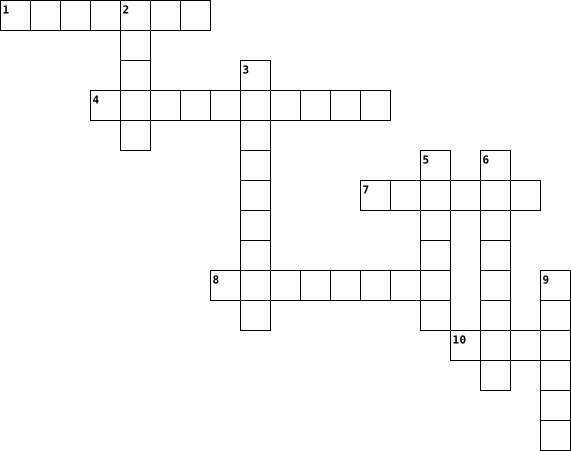
Across
- When we see 50% of the moon.
- When something orbits something else.
- The stages that we see the moon in.
- When something spins around its axis.
- The object that orbits the Earth
Down
- The moon causes these with its gravity.
- When we see the whole moon.
- When the moon is getting bigger.
- When we don't see the moon.
- When the moon is getting smaller.
10 Clues: When we see the whole moon. • When we don't see the moon. • When we see 50% of the moon. • When the moon is getting bigger. • The object that orbits the Earth • When the moon is getting smaller. • The stages that we see the moon in. • When something orbits something else. • When something spins around its axis. • The moon causes these with its gravity.
Moon Phases & Kepler 2023-10-26

Across
- Type of month measured from new moon to new moon
- an apparent or real oscillation of the moon, by which parts near the edge of the disc that are often not visible from the earth sometimes come into view
- the speed at which an object (usually a planet) orbits around the mass of another object; in the case of a planet, the speed at which each planet moves along its ellipse
- the straight line joining a planet and the Sun sweeps out equal areas in space in equal intervals of time
- the path of an object that is in revolution about another object or point
- Fixed point inside an ellipse from which the sum of the distances to any point on the ellipse is constant. The sun is found at one of these
- the square of a planet’s orbital period is directly proportional to the cube of the semimajor axis of its orbit
- The distance from the sun to the earth
- Moon phase where the only the right half of the moon is lit
Down
- Moon phase immediately after a full moon where a crescent of darkness is seen on the moon's right side
- the time it takes an object to travel once around the Sun
- each planet moves around the Sun in an orbit that is an ellipse, with the Sun at one focus of the ellipse
- Type of month measured with respect to the stars
- Moon phases when the moon is between the Earth and Sun and we see the dark backside of the moon
- A flattened circle - also the shape in which planets orbit the sun
15 Clues: The distance from the sun to the earth • Type of month measured from new moon to new moon • Type of month measured with respect to the stars • the time it takes an object to travel once around the Sun • Moon phase where the only the right half of the moon is lit • A flattened circle - also the shape in which planets orbit the sun • ...
Earth's Movement 2023-12-08

Across
- a pattern that takes about 4 weeks to complete
- The imaginary line through Earth that extends from the North Pole to the South Pole and is the center of Earth’s rotation
- none, little, or half illumination
- half, mostly, or full illumination
- the rising and falling of the sea
- half of a sphere; Earth can be divided into 2 hemispheres, western and eastern, or northern and southern
- the pull caused by the gravity of an object
- the spinning of Earth on its axis that causes day and night
- when the moon is becoming “smaller” or less illuminated
Down
- the four natural divisions of the year based on changes in temperature because of how close it is to the sun
- an appearance of the moon varying by how much it is illuminated
- when the tide is at its highest
- the movement of one object around a center or other object
- when the tide is at its lowest
- the slant of Earth’s axis
- biggest difference in tides and during new or full moon phases
- least difference in tides and during first and third quarter moon phases
- when the moon is becoming “larger” or more illuminated
18 Clues: the slant of Earth’s axis • when the tide is at its lowest • when the tide is at its highest • the rising and falling of the sea • none, little, or half illumination • half, mostly, or full illumination • the pull caused by the gravity of an object • a pattern that takes about 4 weeks to complete • when the moon is becoming “larger” or more illuminated • ...
Earth's Movement 2023-12-08

Across
- a pattern that takes about 4 weeks to complete
- The imaginary line through Earth that extends from the North Pole to the South Pole and is the center of Earth’s rotation
- none, little, or half illumination
- half, mostly, or full illumination
- the rising and falling of the sea
- half of a sphere; Earth can be divided into 2 hemispheres, western and eastern, or northern and southern
- the pull caused by the gravity of an object
- the spinning of Earth on its axis that causes day and night
- when the moon is becoming “smaller” or less illuminated
Down
- the four natural divisions of the year based on changes in temperature because of how close it is to the sun
- an appearance of the moon varying by how much it is illuminated
- when the tide is at its highest
- the movement of one object around a center or other object
- when the tide is at its lowest
- the slant of Earth’s axis
- biggest difference in tides and during new or full moon phases
- least difference in tides and during first and third quarter moon phases
- when the moon is becoming “larger” or more illuminated
18 Clues: the slant of Earth’s axis • when the tide is at its lowest • when the tide is at its highest • the rising and falling of the sea • none, little, or half illumination • half, mostly, or full illumination • the pull caused by the gravity of an object • a pattern that takes about 4 weeks to complete • when the moon is becoming “larger” or more illuminated • ...
Earth's Movement 2023-12-08

Across
- a pattern that takes about 4 weeks to complete
- The imaginary line through Earth that extends from the North Pole to the South Pole and is the center of Earth’s rotation
- none, little, or half illumination
- half, mostly, or full illumination
- the rising and falling of the sea
- half of a sphere; Earth can be divided into 2 hemispheres, western and eastern, or northern and southern
- the pull caused by the gravity of an object
- the spinning of Earth on its axis that causes day and night
- when the moon is becoming “smaller” or less illuminated
Down
- the four natural divisions of the year based on changes in temperature because of how close it is to the sun
- an appearance of the moon varying by how much it is illuminated
- when the tide is at its highest
- the movement of one object around a center or other object
- when the tide is at its lowest
- the slant of Earth’s axis
- biggest difference in tides and during new or full moon phases
- least difference in tides and during first and third quarter moon phases
- when the moon is becoming “larger” or more illuminated
18 Clues: the slant of Earth’s axis • when the tide is at its lowest • when the tide is at its highest • the rising and falling of the sea • none, little, or half illumination • half, mostly, or full illumination • the pull caused by the gravity of an object • a pattern that takes about 4 weeks to complete • when the moon is becoming “larger” or more illuminated • ...
Earth's Movement 2023-12-08

Across
- a pattern that takes about 4 weeks to complete
- The imaginary line through Earth that extends from the North Pole to the South Pole and is the center of Earth’s rotation
- none, little, or half illumination
- half, mostly, or full illumination
- the rising and falling of the sea
- half of a sphere; Earth can be divided into 2 hemispheres, western and eastern, or northern and southern
- the pull caused by the gravity of an object
- the spinning of Earth on its axis that causes day and night
- when the moon is becoming “smaller” or less illuminated
Down
- the four natural divisions of the year based on changes in temperature because of how close it is to the sun
- an appearance of the moon varying by how much it is illuminated
- when the tide is at its highest
- the movement of one object around a center or other object
- when the tide is at its lowest
- the slant of Earth’s axis
- biggest difference in tides and during new or full moon phases
- least difference in tides and during first and third quarter moon phases
- when the moon is becoming “larger” or more illuminated
18 Clues: the slant of Earth’s axis • when the tide is at its lowest • when the tide is at its highest • the rising and falling of the sea • none, little, or half illumination • half, mostly, or full illumination • the pull caused by the gravity of an object • a pattern that takes about 4 weeks to complete • when the moon is becoming “larger” or more illuminated • ...
Sun-Earth-Moon Review 2024-04-18

Across
- The Earth's spinning on its axis is called ______.
- It takes about one _____ for Earth to make one revolution around the sun
- Light colored areas on the moon too high for the lava to have reached
- The northern hemisphere of Earth experiences _______ when it is tilted away from the sun
- Gravity from the ________ is the main cause of tides.
- We see the moon because light from the sun ______ off the moon
- Round pits on the moon's surface caused by objects hitting it
- The moon phase as seen in image D below.
- The northern hemisphere of earth experiences _______ when it is tilted towards the sun
- One of the forces that keeps the planets moving around the sun
- The moon phase in which none of the lit side is visible from earth
- One of the forces that keeps the planets moving around the sun
- The NASA program with a series of space missions that landed people on the moon
Down
- During _______ phases of the moon, we see more of the lit part every night
- The moon phase as seen in image A below
- It takes about one ______ for earth to make one complete rotation
- The Earth takes an ______ path around the sun
- The moon phase as seen in image B below
- Large, dark areas on the moon formed from lava flows
- When Earth's axis is tilted the most towards or away from the sun in June or December
- The moon phase as seen in image C below
- When the earth's axis is not tilted towards or away from the sun in March and September
- The earth has ______ because its axis is tilted as it revolves around the sun
- The moon phase where all of the lit side of the moon is visible from Earth
- The path an object follows as it moves around another object
- During _____ phases of the moon, we see less of the lit part every night
- It takes about a ______ for the moon to revolve around the earth one time
- A device used to distant objects by making them appear closer
- The movement of one object around another
29 Clues: The moon phase as seen in image A below • The moon phase as seen in image B below • The moon phase as seen in image C below • The moon phase as seen in image D below. • The movement of one object around another • The Earth takes an ______ path around the sun • The Earth's spinning on its axis is called ______. • Large, dark areas on the moon formed from lava flows • ...
Sun, Earth and Moon 1 2024-04-04

Across
- season that occurs when the Earth's axis is neither pointed towards or away and occurs after summer
- phase of the moon when it is between the Earth and Sun and its we can't see from Earth
- season that occurs when axis is neither pointed towards or away and occurs after winter
- phase of the moon where the moon is almost full or was just full.
- type of eclipse that occurs during a new moon and the Moon blocks part of the sunlight
- tides that occur in new and full moon with highest high tides and lowest low tides
- phases of the moon where the moon is appearing larger each night
- time of the year in fall and spring when daylight and nighttime hours are the same
- type of eclipse that occurs during a full moon and the moon gets blocked by Earth
Down
- phases of the moon where the moon is appearing smaller each night
- phase of moon where we see barely a fourth of the moon happens just before and after new moon
- season that occurs when the axis of the Earth is pointed towards the sun
- time of the year when we have the shortest day and longest days of the year
- tides that occur during 1st and 3rd quarter moon and tides are not has high and not a lo
- season that occurs when the axis of the Earth is pointed away from the sun
- phase of the moon when it is on the side away from the Sun and we see the entire shape lit up
16 Clues: phases of the moon where the moon is appearing larger each night • phases of the moon where the moon is appearing smaller each night • phase of the moon where the moon is almost full or was just full. • season that occurs when the axis of the Earth is pointed towards the sun • season that occurs when the axis of the Earth is pointed away from the sun • ...
BI 5 Unit Review 2 2024-04-08

Across
- season that occurs when the Earth is tilted away from the Sun
- season that occurs after summer and the Earth is not tilted towards or away from the sun
- tides that occur during new and full moon with the highest high tides and lowest low tides
- law that states that all matter has gravity a force of attraction due to mass
- model of the Solar System that correctly placed the Sun at the center
- type of eclipse that occurs during the new moon and the moon is between the Earth and Sun
- model of the Solar System that incorrectly placed Earth at the center
- a meteoroid that survives its passage through the atmosphere and lands on the surface
- celestial object made of ice and dust that orbits the Sun
Down
- spin around on an axis
- motion of an object in orbit where one object moves around another due to gravity
- orbits the sun and is much smaller than a planet
- season that occurs when the Earth is tilted towards the Sun
- occurs in the spring and fall when there are equal hours of daylight and nighttime
- astronomical body that orbits a star
- phases of the moon when the moon appears smaller each night until new moon
- season that occurs after winter and the Earth is not tilted towards or away from the Sun
- small particle orbiting the sun typically from an asteroid or comet
- a meteoroid that burns and vaporizes once entering Earth's atmosphere
- phases of the moon when the moon appears larger each night until full moon
- type of eclipse that occurs during a full moon and the Earth is between the moon and the Sun
- path of an object around a particular point in space
- occurs in summer and winter and gives the longest and shortest days
- tides that occur during 1st and 3rd quarter moon with lowest high tides and highest low tides
24 Clues: spin around on an axis • astronomical body that orbits a star • orbits the sun and is much smaller than a planet • path of an object around a particular point in space • celestial object made of ice and dust that orbits the Sun • season that occurs when the Earth is tilted towards the Sun • season that occurs when the Earth is tilted away from the Sun • ...
Science Q1 Crossword Puzzle 2024-10-25

Across
- When the Moon Phases are increasing
- The law that says the farther down you go the older the rock layers get
- When the Moon turns red because the Earth is blocking the sun
- When a Celestial Object spins on its axis
- When a Celestial Object orbits or circles around another object
- The force of attraction between two objects
Down
- Remains or impressions
- It is usually warm near the places near hear because it is in the middle of the Earth
- Also known as Terrestrial Planets these planets are rocky and dense
- Layers of rock, as you go farther down the rock layers get older
- When you can't see the sun because the Moon is blocking it
- When the Moon Phases are decreasing
- One of the elements that decides the force of gravity between two objects
- This causes the Earth's seasons
- Also known as Jovian Planets these planet are made of gas and ice
15 Clues: Remains or impressions • This causes the Earth's seasons • When the Moon Phases are decreasing • When the Moon Phases are increasing • When a Celestial Object spins on its axis • The force of attraction between two objects • When you can't see the sun because the Moon is blocking it • When the Moon turns red because the Earth is blocking the sun • ...
The moon 2025-09-19

Across
- type of robot that explores planets (the moon)
- opposite to the moon
- the name of the missions
- colour of the moon
- when the moon appears
- where the moon is
Down
- what we have to wear on the moon
- creature on the moon
- name of the fist man on the moon
- the shape of the moon
- something the moon doesn’t have that we require
- the number of phases in the moon
12 Clues: where the moon is • colour of the moon • creature on the moon • opposite to the moon • the shape of the moon • when the moon appears • the name of the missions • what we have to wear on the moon • name of the fist man on the moon • the number of phases in the moon • type of robot that explores planets (the moon) • something the moon doesn’t have that we require
Astronomy Crossword (made by Tyler Kennedy) 2025-02-19

Across
- what has the strongest impact on tides.
- ______ is the reason we are orbiting the sun.
- ______ planets include mercury,Venus,mars,
- sun is a big ball of______.
- the outer planets are called_____giants.
- phases: moon appears to look different.
- the sun rises in the _____.
- the inner planets are_____.
- moon appears to be shrink
- fusion: The sun's radiation from_______warms
Down
- humans breath______.
- the earth_____ the sun.
- during neap tides, tides are_______.
- _____is the biggest planet.
- All of the planets____around the sun.
- solace: shortest day in the year.
- _______ is the biggest rocky planet.
- during a solar eclipse we cant see the_____.
- planet.
19 Clues: planet. • humans breath______. • the earth_____ the sun. • moon appears to be shrink • _____is the biggest planet. • sun is a big ball of______. • the sun rises in the _____. • the inner planets are_____. • solace: shortest day in the year. • during neap tides, tides are_______. • _______ is the biggest rocky planet. • All of the planets____around the sun. • ...
Solar System Review 2026-03-26

Across
- The phase of the moon that is occurring when the moon appears half lit (light is on the right)
- The sun is 110 times the diameter of the Earth and about 4.6 _________ years old
- Early astronomers believed that _________________ was at the center of the solar system
- The season Virginia experiences when the Northern Hemisphere is tilted away from the sun
- The four planets farthest away from the sun
- Earth's protective atmosphere helps to block out damaging rays from the ___________
- The phase of the moon that is occurring when the moon appears half lit (light is on the left)
- The four planets closest to the sun
- Our moon is a small, rocky satellite with extremes of ________________
- The season's on Earth are caused by Earth's _______ on its axis as it revolves around the sun
- It takes Earth one ________ to make one rotation around its axis
- The season Virginia experiences when the Northern Hemisphere is tilted toward the sun
Down
- Largest planet in our solar system, with colored cloud patterns caused by enormous storms in its atmosphere
- The phase of the moon that is occurring when the moon appears completely dark
- Only planet in our system to spin on its side
- The parts of the Earth that are closest and farthest from the moon experience this kind of tide
- The phases of the moon are caused by the reflection of __________ off the moon's surface
- No longer included on the list of planets in our solar system due to its small size and irregular orbit
- The phase of the moon that is occurring when the moon appears fully lit
- It takes Earth one _________ to make one revolution around the sun
- The phases of the moon are responsible for the changes in _____________
- Smallest planet in our solar system
22 Clues: The four planets closest to the sun • Smallest planet in our solar system • The four planets farthest away from the sun • Only planet in our system to spin on its side • It takes Earth one ________ to make one rotation around its axis • It takes Earth one _________ to make one revolution around the sun • ...
Lunar Cycle and Seasons 2021-10-08

Across
- Moon Phases
- Moon is a full circle
- Partial or total blocking of an object
- Spinning object on an axis
- Angle of light hitting Earth
- Visible Moon decreasing
- When day and night are equal length
Down
- Constant repeating pattern
- Movement of an object around another object
- Imaginary line
- Visible Moon increasing
- The sun farthest away from the equator
- Moon isn't visible
13 Clues: Moon Phases • Imaginary line • Moon isn't visible • Moon is a full circle • Visible Moon increasing • Visible Moon decreasing • Constant repeating pattern • Spinning object on an axis • Angle of light hitting Earth • When day and night are equal length • Partial or total blocking of an object • The sun farthest away from the equator • Movement of an object around another object
Moon Crossword Puzzle 2024-09-01

Across
- _______ of the moon (月相 - gessou); The different shapes of the lit portion of the Moon that can be seen from Earth.
- ______ moon (新月 - Shingetsu)
- French word for 'moon'
- Filipino word for 'moon'
- the light we can see shining from the moon (月光 - gekkou)
- formed when rocks or comets from space smashed into the surface of the Moon
- ______ moon (満月- Mangetsu)
- Spanish word for 'moon'
Down
- there are _______ full moons in a year
- ______ moon (三日月-Mikadzuki)
- Best time to see the moon
- Neil ________ is the first person to walk on the Moon
- ______ moon (半月 - Hangetsu)
- Indonesian word for 'moon'
14 Clues: French word for 'moon' • Spanish word for 'moon' • Filipino word for 'moon' • Best time to see the moon • Indonesian word for 'moon' • ______ moon (満月- Mangetsu) • ______ moon (三日月-Mikadzuki) • ______ moon (半月 - Hangetsu) • ______ moon (新月 - Shingetsu) • there are _______ full moons in a year • Neil ________ is the first person to walk on the Moon • ...
Science 2024-03-07

Across
- olosing
- moon seen completely
- slides past each other
- pushes together
- the land on which water flows
- water in the ground
- the phases of the moon
- Invisable moon
Down
- pulls apart
- form from convergent and divergent
- water on the surface
- gainng
12 Clues: gainng • olosing • pulls apart • Invisable moon • pushes together • water in the ground • moon seen completely • water on the surface • slides past each other • the phases of the moon • the land on which water flows • form from convergent and divergent
Tides Crossword 2021-05-20

Across
- Dry or sandy areas. Something to do with Earth-related material.
- One of the moon phases during a neap tide and is one of the first moon phases
- Something to do with the ocean or a body of water.
- The pattern of ocean water rising and falling due to the moon’s gravitational pull and the rotation of the Earth.
- The portion of the coastline that goes through periods of coverage and exposure due to the changing tides.
Down
- Low tides
- One of the moon phases during a spring tide
- High tides
- Organisms that live in this zone must be adapted to long periods of no water.
- The force of attraction from an object. In this case, a moon.
10 Clues: Low tides • High tides • One of the moon phases during a spring tide • Something to do with the ocean or a body of water. • The force of attraction from an object. In this case, a moon. • Dry or sandy areas. Something to do with Earth-related material. • Organisms that live in this zone must be adapted to long periods of no water. • ...
Sun, Earth, Moon Crossword 2022-01-19
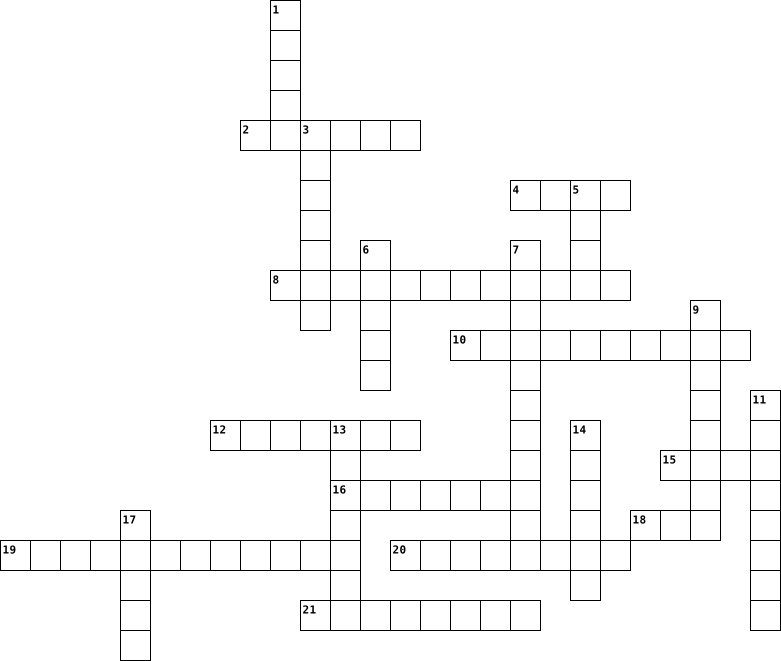
Across
- The moon is slowly becoming less bright
- The sun rises in the _________
- The moon is perfectly aligned between the earth and the sun
- The earth rotates in _______ hrs.
- More than 50% of the moon is lit up.
- Celestial Body that orbits the Earth
- There is a shadow on the earth or the moon
- The Center of our solar system
- the earth is perfectly aligned and between the sun and the moon
- the earth rotates at about a _______ miles per hour
- Less than 50% of the moon is illuminated.
Down
- the darkest part of the shadow
- Start of the moon phases
- The sun _____ in the west.
- Celestial Body that orbits the Sun
- the moons orbit is slanted at by _________
- the earth is between the moon and the sun
- the lighter part of a shadow
- The earth orbits around the sun in ________.
- The moon is bright on the right
- A path that a body follows as it travels around another body
21 Clues: Start of the moon phases • The sun _____ in the west. • the lighter part of a shadow • the darkest part of the shadow • The sun rises in the _________ • The Center of our solar system • The moon is bright on the right • The earth rotates in _______ hrs. • Celestial Body that orbits the Sun • More than 50% of the moon is lit up. • Celestial Body that orbits the Earth • ...
Sun, Earth, Moon Crossword 2024-02-12

Across
- A path that a body follows as it travels around another body
- the moons orbit is slanted at by _________
- The Center of our solar system
- Celestial Body that orbits the Earth
- the darkest part of the shadow
- Start of the moon phases
- The earth rotates in _______ hrs.
- More than 50% of the moon is lit up.
- The moon is perfectly aligned between the earth and the sun
Down
- the earth rotates at about a _______ miles per hour
- Less than 50% of the moon is illuminated.
- the earth is between the moon and the sun
- The sun rises in the _________
- the earth is perfectly aligned and between the sun and the moon
- The moon is slowly becoming less bright
- the lighter part of a shadow
- There is a shadow on the earth or the moon
- The earth orbits around the sun in ________.
- The sun _____ in the west.
- The moon is bright on the right
- Celestial Body that orbits the Sun
21 Clues: Start of the moon phases • The sun _____ in the west. • the lighter part of a shadow • The sun rises in the _________ • The Center of our solar system • the darkest part of the shadow • The moon is bright on the right • The earth rotates in _______ hrs. • Celestial Body that orbits the Sun • Celestial Body that orbits the Earth • More than 50% of the moon is lit up. • ...
Unit 2 Space Crossword 2025-10-30

Across
- the lighter part of an eclipse shadow
- the path that an object takes to revolve around something else
- the imaginary line through an object that it spins around
- when the moon is between the Earth and the sun and blocks the sun's light from reaching parts of the Earth
- when neither hemisphere is pointed toward the sun and there are equal hours of day and night
- the different shapes of the moon we see
Down
- when the Earth is between the moon and the sun and casts a shadow over the moon
- the 4 phases of the moon that are getting smaller
- the darkest part of an eclipse shadow
- the 4 phases of the moon that are getting bigger
- an object spinning on its axis
- one object moving around another object
- when the sun's light hits one hemisphere more than the other and causes either the longest daylight hours or the shortest daylight hours
- the different weather patterns that happen because of Earth's tilted axis
14 Clues: an object spinning on its axis • the darkest part of an eclipse shadow • the lighter part of an eclipse shadow • one object moving around another object • the different shapes of the moon we see • the 4 phases of the moon that are getting bigger • the 4 phases of the moon that are getting smaller • the imaginary line through an object that it spins around • ...
Sc7: pp 302-307 2025-03-11

Across
- the moon takes 27.3 days, or about a _____ to orbit Earth once
- the shadow of Earth falls on the moon
- people who travel to space
- appears to grow each day
- the fourth week
- when half of the near side of th moon is in the sunlight, the moon has completed one-quarter of its cycle
- the second week
- this would take 20 days to cover the distance from Earth to the moon
- cycle monthly
- appears to shrink each day
Down
- the third week
- one object in space casts a shadow onto another object
- a body that orbits a larger body
- the moon passes between the sun and Earth
- the moon is only visible from Earth when it reflects the ______
- orbits earth
- darkest part of the shadow
- spreading cone of lighter shadow
18 Clues: orbits earth • cycle monthly • the third week • the fourth week • the second week • appears to grow each day • people who travel to space • darkest part of the shadow • appears to shrink each day • a body that orbits a larger body • spreading cone of lighter shadow • the shadow of Earth falls on the moon • the moon passes between the sun and Earth • ...
Unit 7 Sun, Earth, Moon Crossword 2025-01-16

Across
- the moons orbit is slanted at by _________
- The moon is perfectly aligned between the earth and the sun
- the earth rotates at about a _______ miles per hour
- Celestial Body that orbits the Earth
- There is a shadow on the earth or the moon
- The sun rises in the _________
- the earth is perfectly aligned and between the sun and the moon
- the darkest part of the shadow
- The moon is bright on the right
- The sun _____ in the west.
Down
- Start of the moon phases
- the earth is between the moon and the sun
- Celestial Body that orbits the Sun
- The earth orbits around the sun in ________.
- The earth rotates in _______ hrs.
- A path that a body follows as it travels around another body
- the lighter part of a shadow
- The Center of our solar system
- The moon is slowly becoming less bright
- Less than 50% of the moon is illuminated.
- More than 50% of the moon is lit up.
21 Clues: Start of the moon phases • The sun _____ in the west. • the lighter part of a shadow • The sun rises in the _________ • The Center of our solar system • the darkest part of the shadow • The moon is bright on the right • The earth rotates in _______ hrs. • Celestial Body that orbits the Sun • Celestial Body that orbits the Earth • More than 50% of the moon is lit up. • ...
Lunar Cycle Project Crossword 2023-03-08

Across
- When the Moon is far away from Earth, it causes _____.
- When the Moon blocks out the Sun.
- When the Moon is close to the Earth, it causes _____.
- The cycle of the Moon phases.
- The Moon was joked to be made of _____ due to the light it reflected.
- When the Moon, Sun, and Earth are in a straight line, it causes _______.
- When the light from the Sun passes through the Earth's atmosphere to reach the Moon.
- The Moon is theorized to have been made when a large stellar object _____ with Earth.
- When the light from the Sun passes through more of the Earth's atmosphere, causing a _______.
- The last Moon phase that is half illuminated.
Down
- The brightest phase of the Moon.
- The first Moon phase that is half illuminated.
- When the Moon is obstructed by dust particles in the atmosphere.
- When the Earth blocks the Sun from the Moon.
- The Earth completes one _______ every 364.5 days.
- The Moon _______ the Earth.
- The stellar object that Earth revolves around.
- The darkest phase of the Moon.
- The Moon reflects the Suns' ______.
- The satellite around Earth.
- When the Moon, Earth, and Sun are at a right angle, it causes _______.
21 Clues: The Moon _______ the Earth. • The satellite around Earth. • The cycle of the Moon phases. • The darkest phase of the Moon. • The brightest phase of the Moon. • When the Moon blocks out the Sun. • The Moon reflects the Suns' ______. • When the Earth blocks the Sun from the Moon. • The last Moon phase that is half illuminated. • The first Moon phase that is half illuminated. • ...
Lunar Cycle Project Crossword 2023-03-08

Across
- When the Moon is far away from Earth, it causes _____.
- When the Moon blocks out the Sun.
- When the Moon is close to the Earth, it causes _____.
- The cycle of the Moon phases.
- The Moon was joked to be made of _____ due to the light it reflected.
- When the Moon, Sun, and Earth are in a straight line, it causes _______.
- When the light from the Sun passes through the Earth's atmosphere to reach the Moon.
- The Moon is theorized to have been made when a large stellar object _____ with Earth.
- When the light from the Sun passes through more of the Earth's atmosphere, causing a _______.
- The last Moon phase that is half illuminated.
Down
- The brightest phase of the Moon.
- The first Moon phase that is half illuminated.
- When the Moon is obstructed by dust particles in the atmosphere.
- When the Earth blocks the Sun from the Moon.
- The Earth completes one _______ every 364.5 days.
- The Moon _______ the Earth.
- The stellar object that Earth revolves around.
- The darkest phase of the Moon.
- The Moon reflects the Suns' ______.
- The satellite around Earth.
- When the Moon, Earth, and Sun are at a right angle, it causes _______.
21 Clues: The Moon _______ the Earth. • The satellite around Earth. • The cycle of the Moon phases. • The darkest phase of the Moon. • The brightest phase of the Moon. • When the Moon blocks out the Sun. • The Moon reflects the Suns' ______. • When the Earth blocks the Sun from the Moon. • The last Moon phase that is half illuminated. • The first Moon phase that is half illuminated. • ...
Lunar Cycle 2023-03-08

Across
- the alternate rising and falling of the sea, usually twice in each lunar day at a particular place, due to the attraction of the moon and sun.
- The moon phase where the moon if fully luminated
- When the moon phases start to lose light
- the force that attracts a body toward the center of the earth, or toward any other physical body having mass.
- When the moon phases start to gail light
- The movment of an object
Down
- The moon phasde where the moon is not luminated
- Orbits the earth
- new Moon, waxing crescent, first quarter, waxing gibbous, full Moon, waning gibbous, third quarter and waning crescent.
- The spinning of an object
10 Clues: Orbits the earth • The movment of an object • The spinning of an object • When the moon phases start to lose light • When the moon phases start to gail light • The moon phasde where the moon is not luminated • The moon phase where the moon if fully luminated • the force that attracts a body toward the center of the earth, or toward any other physical body having mass. • ...
Tides Slideshow 2026-05-14

Across
- Gravity pulls on earths____Making the ocean get pulled.
- when the bulge is closest to the____, It makes high tides.
- When the bulge is facing away from the moon, it makes___tide
- A Higher High Tide
- what moon phases are present during neap tide
- what moon phases are present during the spring tide.
Down
- What force causes the tides
- The smallest tide and the shortest
- Happens during the first quarter and third quarter.
- The tallest and biggest tide
10 Clues: A Higher High Tide • What force causes the tides • The tallest and biggest tide • The smallest tide and the shortest • what moon phases are present during neap tide • Happens during the first quarter and third quarter. • what moon phases are present during the spring tide. • Gravity pulls on earths____Making the ocean get pulled. • ...
phases of the moon 2021-03-08

Across
- moon entire circle
- growing
- going around
- Cheshire cat smile
Down
- more than half
- cycle the phases of the moon
- moon 1st and 3rd quarter
- shrinking
- spinning
- moon no light
10 Clues: growing • spinning • shrinking • going around • moon no light • more than half • moon entire circle • Cheshire cat smile • moon 1st and 3rd quarter • cycle the phases of the moon
Lunar Cycle Project Crossword 2023-03-08

Across
- When the Moon is far away from Earth, it causes _____.
- When the Moon blocks out the Sun.
- When the Moon is close to the Earth, it causes _____.
- The cycle of the Moon phases.
- The Moon was joked to be made of _____ due to the light it reflected.
- When the Moon, Sun, and Earth are in a straight line, it causes _______.
- When the light from the Sun passes through the Earth's atmosphere to reach the Moon.
- The Moon is theorized to have been made when a large stellar object _____ with Earth.
- When the light from the Sun passes through more of the Earth's atmosphere, causing a _______.
- The last Moon phase that is half illuminated.
Down
- The brightest phase of the Moon.
- The first Moon phase that is half illuminated.
- When the Moon is obstructed by dust particles in the atmosphere.
- When the Earth blocks the Sun from the Moon.
- The Earth completes one _______ every 364.5 days.
- The Moon _______ the Earth.
- The stellar object that Earth revolves around.
- The darkest phase of the Moon.
- The Moon reflects the Suns' ______.
- The satellite around Earth.
- When the Moon, Earth, and Sun are at a right angle, it causes _______.
21 Clues: The Moon _______ the Earth. • The satellite around Earth. • The cycle of the Moon phases. • The darkest phase of the Moon. • The brightest phase of the Moon. • When the Moon blocks out the Sun. • The Moon reflects the Suns' ______. • When the Earth blocks the Sun from the Moon. • The last Moon phase that is half illuminated. • The first Moon phase that is half illuminated. • ...
Tides 2025-04-07

Across
- The rise and fall of the earth’s oceans and seas.
- First quarter and __ quarter are the 2 phases that happen during a neap tide
- A __ is when the earth, moon, and sun form a right angle
- The force that pulls objects toward each other
- New moon and __ moon are the 2 phases that happen during a spring tide
Down
- revolves around the earth
- The zone where water and sea connect
- A __ tide is when the earth, moon, and sun are in line
- We live here!
- Earth revolves around this
10 Clues: We live here! • revolves around the earth • Earth revolves around this • The zone where water and sea connect • The force that pulls objects toward each other • The rise and fall of the earth’s oceans and seas. • A __ tide is when the earth, moon, and sun are in line • A __ is when the earth, moon, and sun form a right angle • ...
Lunar cycle crossword 2024-02-02

Across
- A force
- Moon
- Light decreasing
- Controlled by the moons gravity
- An object going around another
- spinning
Down
- Light growing
- 1st quarter moon or 3rd quarter moon
- Full moon or new moon
- Has phases
10 Clues: Moon • A force • spinning • Has phases • Light growing • Light decreasing • Full moon or new moon • An object going around another • Controlled by the moons gravity • 1st quarter moon or 3rd quarter moon
The Moon 2020-04-07

Across
- Lunar phases when the moon appears to be shrinking from full moon to new moon
- Able to be seen, not in shadow, being hit by light rays
- Lunar phases when the moon appears to be growing from new moon to full moon
- Darkness within space from which rays from a source of light are cut off by an blocking object
- The lunar phase where the moon, Earth, and the sun form a perpendicular angle; the moon looks like a semicircle with half visible
- The appearance of the lit area of the moon as seen from Earth
- closest point in an orbit
Down
- Lunar phase when more than half but less than all of the visible side is illuminated
- lunar phase where the moon is directly between Earth and the sun; the new moon cannot be seen from Earth
- farthest point in an orbit
- Lunar phase when less than half but at least some of the visible side is illuminated
- Change in direction (redirection) of light rays after hitting an object
- The lunar phase where Earth is directly between the sun and the moon; the moon looks like a circle
13 Clues: closest point in an orbit • farthest point in an orbit • Able to be seen, not in shadow, being hit by light rays • The appearance of the lit area of the moon as seen from Earth • Change in direction (redirection) of light rays after hitting an object • Lunar phases when the moon appears to be growing from new moon to full moon • ...
Sun-Earth-Moon Review 2024-04-18

Across
- During _______ phases of the moon, we see more of the lit part every night
- The moon phase as seen in image C below
- The path an object follows as it moves around another object
- It takes about a ______ for the moon to revolve around the earth one time
- It takes about one _____ for Earth to make one revolution around the sun
- The northern hemisphere of earth experiences _______ when it is tilted towards the sun
- The Earth's spinning on its axis is called ______.
- When the earth's axis is not tilted towards or away from the sun in March and September
- The moon phase as seen in image D below.
- Large, dark areas on the moon formed from lava flows
- Light colored areas on the moon too high for the lava to have reached
- The movement of one object around another
- The moon phase where all of the lit side of the moon is visible from Earth
- The NASA program with a series of space missions that landed people on the moon
- The earth has ______ because its axis is tilted as it revolves around the sun
- When Earth's axis is tilted the most towards or away from the sun in June or December
Down
- One of the forces that keeps the planets moving around the sun
- The northern hemisphere of Earth experiences _______ when it is tilted away from the sun
- It takes about one ______ for earth to make one complete rotation
- We see the moon because light from the sun ______ off the moon
- Round pits on the moon's surface caused by objects hitting it
- The moon phase as seen in image A below
- One of the forces that keeps the planets moving around the sun
- During _____ phases of the moon, we see less of the lit part every night
- The moon phase in which none of the lit side is visible from earth
- The Earth takes an ______ path around the sun
- A device used to distant objects by making them appear closer
- The moon phase as seen in image B below
28 Clues: The moon phase as seen in image C below • The moon phase as seen in image A below • The moon phase as seen in image B below • The moon phase as seen in image D below. • The movement of one object around another • The Earth takes an ______ path around the sun • The Earth's spinning on its axis is called ______. • Large, dark areas on the moon formed from lava flows • ...
Word Wednesday List 5 2024-11-19

Across
- growing and harvesting
- Test a quick ÷ check
- the answer to a ÷ question
- 3 is __ of 15
- half the planet
- leftover
Down
- northern lights.
- loop
- = daylight and darkness
- no remainder
- AKA aquafarming
- managing trees
- both freshwater and ocean
- taking useful materials
- Phases A cycle of the moon
15 Clues: loop • leftover • no remainder • 3 is __ of 15 • managing trees • AKA aquafarming • half the planet • northern lights. • Test a quick ÷ check • growing and harvesting • = daylight and darkness • taking useful materials • both freshwater and ocean • the answer to a ÷ question • Phases A cycle of the moon
Science Project 2021-01-11

Across
- This orbits around the sun to cause day and night
- as the earth go's around this different seasons happen
- the moon phases do this to themself for 29.5 days
- gravity pulls you in this direction
- Get longer as the day goes on
- large star made of gas
- there are this amount of moon phases
- without this we would float places
Down
- there are something main seasons each year
- Without gravity we would do this
- there are 12 of this for day time and night time
- Half of the earth faces the sun having daytime and the other side is having
- the sun is the reason that this glows
- shadows can help us know what it is
- we see billions of these in the sky at night
- the earth has seasons because this is tilted
16 Clues: large star made of gas • Get longer as the day goes on • Without gravity we would do this • without this we would float places • shadows can help us know what it is • gravity pulls you in this direction • there are this amount of moon phases • the sun is the reason that this glows • there are something main seasons each year • we see billions of these in the sky at night • ...
Ocean tides 2023-03-17

Across
- Spring tides occur during full and new moon ____.
- Neap tides occur during 1st and 3rd ____ moon phases.
- Kind of tide where the moon and sun are in a 90 degree angle.
- What mainly causes tides?
- Spring and Neap tides occur _____ a month each.
Down
- Tides are changes in Earths what?
- Kind of tide where the moon and sun are in a 180 degree angle.
- Star that contributes to tides.
- What is the difference in height between high and low tide?
- Ocean tides are _____ changes in the rise and fall of the sea level.
10 Clues: What mainly causes tides? • Star that contributes to tides. • Tides are changes in Earths what? • Spring and Neap tides occur _____ a month each. • Spring tides occur during full and new moon ____. • Neap tides occur during 1st and 3rd ____ moon phases. • What is the difference in height between high and low tide? • ...
Astronomy 2023-11-20

Across
- a celestial body in a solar system
- Is when things are pulled down onto the surface of the Earth
- When the Earth orbits on the axis
- When The moon is going around the earth
Down
- When the moon gets less and less light
- 12 hours the of day and 12 hours of night
- Are everywhere in space and the sun is one
- A name for the longest and shortest days
- When the moon is getting more and more light
- phases When the moon goes through phases of parts being lighted and darkened
10 Clues: When the Earth orbits on the axis • a celestial body in a solar system • When the moon gets less and less light • When The moon is going around the earth • A name for the longest and shortest days • 12 hours the of day and 12 hours of night • Are everywhere in space and the sun is one • When the moon is getting more and more light • ...
SCIENCE 1ST 9 WEEKS REVIEW-PHYSICS AND MORE 2023-09-27

Across
- PUSH OR PULL
- DISTANCE DIVIDED BY TIME
- TIDES WITH SMALL RANGES WHEN EARTH, SUN AND MOON ARE AT RIGHT ANGLES
- SYNONYM FOR REVOLVES
- DISPLACEMENT DIVIDED BY TIME
- BULGES IN EARTH'S OICEANS CAUSED BY ALIGNMENT
- CHANGE IN POSITION
- NEWTON'S LAW OF FORCE, MASS, AND ACCELERATION
- ENERGY OF MOTIONPOTENTIAL ENERGY OF POSITION OR INTERNAL STRESS
- FORCE TIMES DISTANCE
- SI UNIT OF WORK
- DEVICE THAT MAKES WORK EASIER
- DARKENING MOON PHASES
- END VELOCITY MINUS START VELOCITY DIVIDED BY TIME
- ENERGY IN VIBRATIONAL MOTION
- NEWTON'S LAW OF INERTIA
- LESS THAN A QUARTER OF THE MOON IS LIT
- BRIGHTENING MOON PHASES
- ENERGY THAT DOESN'T NEED MATTER FOR TRANSMISSION
- ENERGY STORED IN BONDS
Down
- NET FORCE THAT ISN'T CANCELLED BY OTHER FORCES
- THE ABILITY TO DO WORK OR CAUSE CHANGE
- EARTH DOES THIS ONCE PER YEAR AROUND THE SUN
- EARTH DOES THIS ONCE PER DAY
- THREE QUARTERS OF THE MOON IS LIT
- NEWTON'S LAW OF ACTION-REACTION
- ENERGY IN CHARGED PARTICLES
- ENERGY STORED IN AN ATOM'S NUCLEUS
- CAUSED BY THE EARTH'S AXIS
- DISTANCE DIVIDED BY SPEED
- TIDES WITH BIG RANGES HIGH HIGHS AND LOW LOWS
- SI UNIT OF FORCE
- LONG NON-CONTACT FORCE BETWEEN OBJECTS OF MASS
- CHANGES MECHANICAL ENERGY INTO HEAT
- ENERGY OF MOTION OF LARGE OBJECTS
35 Clues: PUSH OR PULL • SI UNIT OF WORK • SI UNIT OF FORCE • CHANGE IN POSITION • SYNONYM FOR REVOLVES • FORCE TIMES DISTANCE • DARKENING MOON PHASES • ENERGY STORED IN BONDS • NEWTON'S LAW OF INERTIA • BRIGHTENING MOON PHASES • DISTANCE DIVIDED BY TIME • DISTANCE DIVIDED BY SPEED • ENERGY IN CHARGED PARTICLES • CAUSED BY THE EARTH'S AXIS • EARTH DOES THIS ONCE PER DAY • DISPLACEMENT DIVIDED BY TIME • ...
Patterns in the Sky 2024-10-14

Across
- ___________ is a pattern that happens when the sun seems to rise in the morning.
- The moon moves in a _______ around the Earth.
- When you look at the night sky, you can use a ______________ to make the stars appear larger and closer.
- As Earth spins, one half of Earth faces the _____.
- When the Earth makes one spin every 24 hours it is called ____________.
Down
- The moon takes 29 _______ to go through all its phases.
- The sun shines on the moon and makes the moon __________ at night.
- Sunset is a __________ that happens when the sun seems to set in the evening.
- The changing shapes of the moon are called moon ___________.
- When the moon looks like a whole circle, it is called the _____ moon.
- The sun is high in the sky around _______.
11 Clues: The sun is high in the sky around _______. • The moon moves in a _______ around the Earth. • As Earth spins, one half of Earth faces the _____. • The moon takes 29 _______ to go through all its phases. • The changing shapes of the moon are called moon ___________. • The sun shines on the moon and makes the moon __________ at night. • ...
Lunar Cycle 2021-03-08

Across
- - the pull of "?"
- cycle - moon phases
- - the source of light at night
- -spinning around another object
Down
- getting bigger
- - ocean
- moon - moon completely bright
- we live on "?"
- - getting smaller
- - rotates
10 Clues: - ocean • - rotates • getting bigger • we live on "?" • - the pull of "?" • - getting smaller • cycle - moon phases • moon - moon completely bright • - the source of light at night • -spinning around another object
MoonPhases 2023-03-03

Across
- Term that describes when the Sun is obscured by the Moon from the perspective of Earth.
- Half a moon
- This event occurs when the Full Moon moves through the shadow cast by the Earth as it passes between the Sun and the Moon.
- If the Moon is on the same side of the Earth as the Sun, then the face of the Moon that can be seen from the Earth is no longer illuminated by the Sun's rays — as only the opposing side is facing the Sun. As a result, it is invisible in the Earth's sky.
- A banana shaped moon
Down
- A football shaped moon
- The rising and falling levels of the ocean in comparison with the bodies of land on Earth. Tides are the result of the gravitational forces of the Sun and the Moon acting upon the planet.
- When the moon is visible
- A way to describe the movement of one celestial body as it orbits another. A complete revolution is a complete orbit.
- When applied to the Moon, the phases refer to the different illumination that it undergoes during it's orbit around the Earth and the Sun. The most commonly known phases of the Moon include Full Moon and the Quarter Moon.
10 Clues: Half a moon • A banana shaped moon • A football shaped moon • When the moon is visible • Term that describes when the Sun is obscured by the Moon from the perspective of Earth. • A way to describe the movement of one celestial body as it orbits another. A complete revolution is a complete orbit. • ...
Astronomy 2023-11-20

Across
- a celestial body in a solar system
- Is when things are pulled down onto the surface of the Earth
- When the Earth orbits on the axis
- When The moon is going around the earth
Down
- When the moon gets less and less light
- 12 hours the of day and 12 hours of night
- Are everywhere in space and the sun is one
- A name for the longest and shortest days
- When the moon is getting more and more light
- phases When the moon goes through phases of parts being lighted and darkened
10 Clues: When the Earth orbits on the axis • a celestial body in a solar system • When the moon gets less and less light • When The moon is going around the earth • A name for the longest and shortest days • 12 hours the of day and 12 hours of night • Are everywhere in space and the sun is one • When the moon is getting more and more light • ...
lunar cycle 2021-04-12

Across
- cycle- the cycle of moon phases
- quarter-the last of four primary moon phases
- gibbous-rises afternoon
- gibbous-rises after sunset
- moon- you can only see me during a lunar eclipse
Down
- quarter-rises at noon
- moon- sun and moon are on different sides of the earth.
- crescent-rises before noon
- an object spinning
- crescent-rises after midnight
10 Clues: an object spinning • quarter-rises at noon • gibbous-rises afternoon • crescent-rises before noon • gibbous-rises after sunset • crescent-rises after midnight • cycle- the cycle of moon phases • quarter-the last of four primary moon phases • moon- you can only see me during a lunar eclipse • moon- sun and moon are on different sides of the earth.
here 2022-03-30

Across
- whin the moon cant be seen
- whin the moon is con pletly glowing
- whin you cant see the sun
- srinking
Down
- spin
- go arond
- revolus arond the earth
- moon phases
- whin the moon truns red
- growing
10 Clues: spin • growing • go arond • srinking • moon phases • revolus arond the earth • whin the moon truns red • whin you cant see the sun • whin the moon cant be seen • whin the moon is con pletly glowing
Earth in Space 2017-06-24

Across
- There are four in a year
- Midline of the Earth
- Mostly bright moon
- The tide when it's high
- The Earth does this once a day
- Move or cause to move into a sloping position
- Has 365 days and happens every four years
- The Earth does this once a year
- The tide just after a new moon
- South of the equator
- The tide when it's low
Down
- Most of the moon is dark
- The tide just after the first or third quarter of the moon
- When a planet or moon spins around something
- An imaginary line about which a body rotates
- An eclipse in which the sun is obscured by the moon
- When the Earth is in sunlight
- An eclipse in which the moon is covered by the Earth
- Lunar phases
19 Clues: Lunar phases • Mostly bright moon • Midline of the Earth • South of the equator • The tide when it's low • The tide when it's high • Most of the moon is dark • There are four in a year • When the Earth is in sunlight • The Earth does this once a day • The tide just after a new moon • The Earth does this once a year • Has 365 days and happens every four years • ...
MoonPhases 2023-03-03

Across
- Term that describes when the Sun is obscured by the Moon from the perspective of Earth.
- Half a moon
- This event occurs when the Full Moon moves through the shadow cast by the Earth as it passes between the Sun and the Moon.
- If the Moon is on the same side of the Earth as the Sun, then the face of the Moon that can be seen from the Earth is no longer illuminated by the Sun's rays — as only the opposing side is facing the Sun. As a result, it is invisible in the Earth's sky.
- A banana shaped moon
Down
- A football shaped moon
- The rising and falling levels of the ocean in comparison with the bodies of land on Earth. Tides are the result of the gravitational forces of the Sun and the Moon acting upon the planet.
- When the moon is visible
- A way to describe the movement of one celestial body as it orbits another. A complete revolution is a complete orbit.
- When applied to the Moon, the phases refer to the different illumination that it undergoes during it's orbit around the Earth and the Sun. The most commonly known phases of the Moon include Full Moon and the Quarter Moon.
10 Clues: Half a moon • A banana shaped moon • A football shaped moon • When the moon is visible • Term that describes when the Sun is obscured by the Moon from the perspective of Earth. • A way to describe the movement of one celestial body as it orbits another. A complete revolution is a complete orbit. • ...
Astronomy 2023-11-20

Across
- large body of gases that planets obrbit
- star our solar system orbits
- force that keeps planets in orbit
- movement around something, usally in a circle or ellipse
- space body orbiting earth
- when the earth or moon block the other
- What kind of eclipse occurs when the moon blocks the Earth?
- change in the height of water, caused by the moon
- what we get because of the earths tilt towards the sun
Down
- moon appers to be growing in mass
- longest/shortest day
- phases When the moon appers shaped differnt, 8 of them
- slanted, leaning
- moon is not visable
- moon looks to be getting smaller
15 Clues: slanted, leaning • moon is not visable • longest/shortest day • space body orbiting earth • star our solar system orbits • moon looks to be getting smaller • moon appers to be growing in mass • force that keeps planets in orbit • when the earth or moon block the other • large body of gases that planets obrbit • change in the height of water, caused by the moon • ...
Audrey's 6 weeks learning crossword puzzle about the topics we learned this 6 weeks🤣 2022-02-18

Across
- equal day and night; Occurs March 21-22
- "Dirty Snowballs"
- no visible light reflected off the moon
- rocky object that is the size of
- completely visible light reflected off
- shortest day of year; Occurs Dec. 21-22
- Meteroid that has entered earth's
- than planets
- takes 29.5 days to complete
Down
- equal day and night; Occurs Sep. 22-23
- when moon passes through earth's shadow
- rock shaped object that orbits the sun;
- longest day of year; Occurs June 21-22
- increasing light in the moon phases
- meteor that has landed on earth's
- when moon passes between sun and earth
- moon.
17 Clues: moon. • than planets • "Dirty Snowballs" • takes 29.5 days to complete • rocky object that is the size of • meteor that has landed on earth's • Meteroid that has entered earth's • increasing light in the moon phases • equal day and night; Occurs Sep. 22-23 • longest day of year; Occurs June 21-22 • completely visible light reflected off • when moon passes between sun and earth • ...
seasons, moon phases, space and tides 2025-06-25

Across
- the sun is our one of these
- The International …... Station
- Waxing …...
- Coldest season
- The moons …... phases
- The moon …... around the earth
- Waning ……
- I just got …... shoes
- Earth rotates on its …...
Down
- The ocean has …...
- the planet we live on
- …... Gibbous
- …... moon/ the cup is…...
- opposite of spring tide
- …... Cresent
- The season that comes before summer
- The hottest season
17 Clues: Waning …… • Waxing …... • …... Gibbous • …... Cresent • Coldest season • The ocean has …... • The hottest season • the planet we live on • The moons …... phases • I just got …... shoes • opposite of spring tide • …... moon/ the cup is…... • Earth rotates on its …... • the sun is our one of these • The International …... Station • The moon …... around the earth • ...
The Sun-Earth-Moon System 2024-12-18

Across
- A huge collection of stars, gas, and dust.
- The lighter part of a shadow.
- Phases of the Moon where more of the Moon's near side is lit each night.
- Small, rocky, icy objects that orbits the Sun.
- An event where the Moon moves into Earth's shadow.
- The path an object follows as it moves around another object.
- When Earth's rotation axis is tilted directly toward or away from the Sun.
- An object that orbits the Sun and shares orbital path with objects of similar size.
- A meteoroid that strikes a planet or a moon.
Down
- The lit part of the Moon or planet that can be seen from Earth.
- Phases of the Moon where less of the Moon's near side is lit each night.
- Small, rocky object that orbits the Sun.
- The central, darker part of a shadow where light is totally blocked.
- The spin of an object around its axis.
- A small rocky particle that moves through space.
- When Earth's axis is tilted neither toward or away from the Sun.
- A meteoroid that has entered Earth's atmosphere and produces a streak of light.
- An event where the Moon's shadow appears on Earth's surface.
- An attractive force that exists between all objects of mass.
- The line on which an object rotates.
- The orbit of one object around another object.
21 Clues: The lighter part of a shadow. • The line on which an object rotates. • The spin of an object around its axis. • Small, rocky object that orbits the Sun. • A huge collection of stars, gas, and dust. • A meteoroid that strikes a planet or a moon. • Small, rocky, icy objects that orbits the Sun. • The orbit of one object around another object. • ...
Solar System 2023-11-06
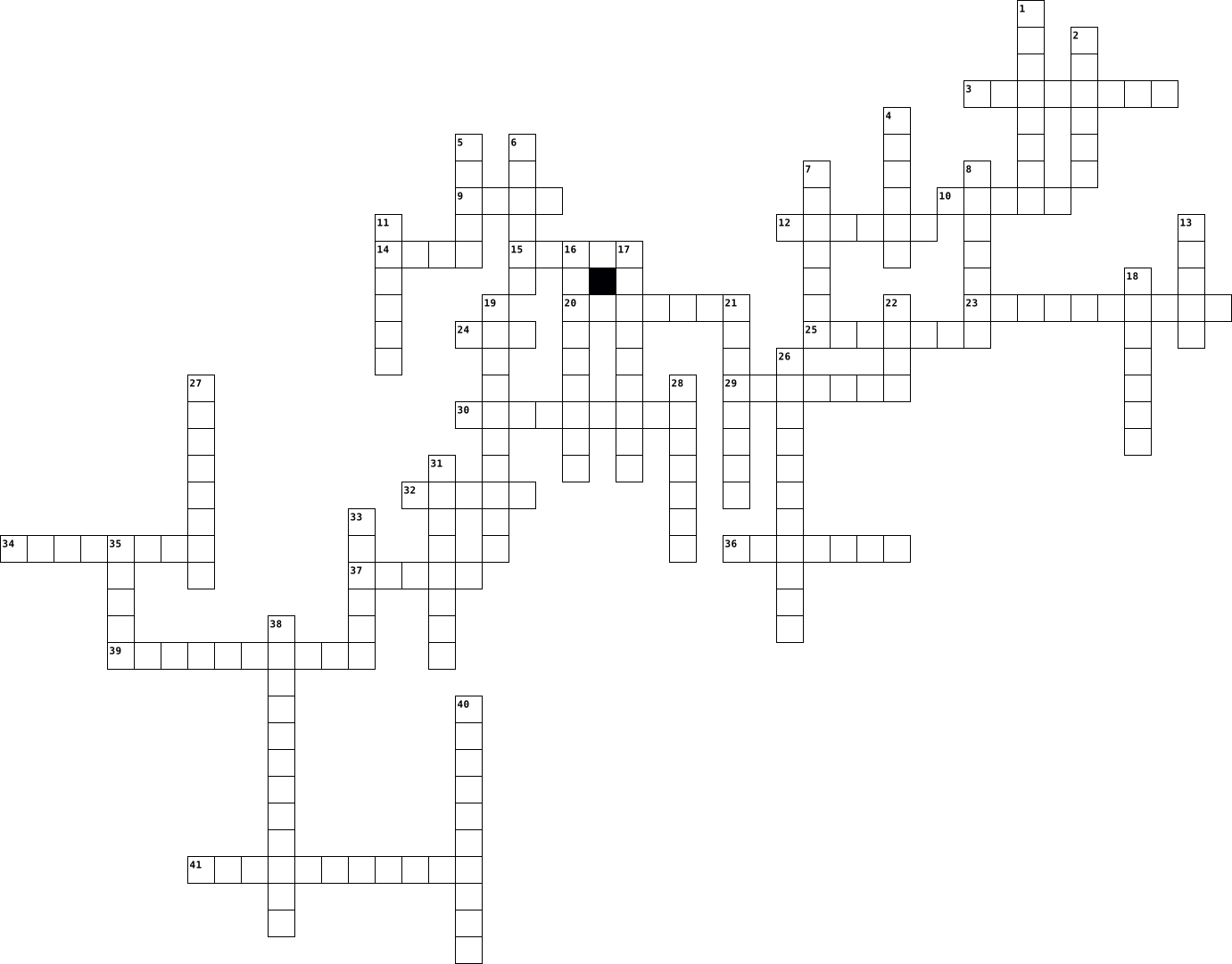
Across
- number of days after new moon you will see a full moon
- tide when Earth, moon & sun are at a 90 degree angle
- eclipse occurs during full moon phase
- tide when Earth, moon & sun are in a line
- imaginary line connecting the poles of a planet
- darker shadow that does not allow light through
- name of the latest mission to the moon
- shape of the orbit of all planets
- object that makes up 99.8% of solar system's mass
- sun is directly over this line during equinox
- Earth's tilted axis gives us these
- a rock that descends through the Earth's atmosphere and lands on Earth
- rock that orbits the sun with a trailing tail of dust & gas
- gas that makes up 80-90% of the sun
- hours of day equal hours of night
- the water planet
- the difference between high & low tide
- classification of Pluto
Down
- the lighter shadow cast during an eclipse; allows some light through
- only planet that would float in water
- phases of the moon with increasing light
- hottest planet with lots of volcanoes
- planet that is tilted on its side; also coldest planet
- the highest winds in the solar system are here
- has the big red spot storm
- phases of the moon with decreasing light
- eclipse occurs during new moon phase
- what is at the center of every galaxy
- rocks that are too small to be considered a planet
- shape of moon right before and after full moon
- outer band of icy rocks that orbit the sun
- the longest & shortest days of the year
- planet with the largest mountain in the solar system
- place with the biggest tidal range
- shape of the moon right before and after new moon
- planet with no atmosphere; most cratered
- the spinning of a object on its axis
- number of Americans that have walked on the moon
- path a planet follows around a star
- type of galaxy the Milky Way is
- the complete cycle of a planet on its orbit
41 Clues: the water planet • classification of Pluto • has the big red spot storm • type of galaxy the Milky Way is • shape of the orbit of all planets • hours of day equal hours of night • place with the biggest tidal range • Earth's tilted axis gives us these • gas that makes up 80-90% of the sun • path a planet follows around a star • eclipse occurs during new moon phase • ...
Earth-Sun-Moon System 2025-01-27

Across
- phase when the moon is completely lit
- the path that a body follows as it travels around another body in space
- the change in the sunlit area of a moon
- type of eclipse where the when the moon is in between Earth and the sun
- phases when the lit part of the moon is getting smaller
Down
- event when the shadow of one celestial body falls on another
- type of eclipse where the shadow of Earth falls on the moon
- the force of attraction pulling between objects in space
- phases when the lit part of the moon is getting larger
- phase when the moon is completely dark
10 Clues: phase when the moon is completely lit • phase when the moon is completely dark • the change in the sunlit area of a moon • phases when the lit part of the moon is getting larger • phases when the lit part of the moon is getting smaller • the force of attraction pulling between objects in space • type of eclipse where the shadow of Earth falls on the moon • ...
Earth Science Astronomy and space science 2024-05-02

Across
- walked on the moon in 1968
- object that revolves around another object in an orbit
- this type of magnitude measures the amount of light received on Earth
- The Milky way is this type of galaxy
- A star system has at least ____ stars
- surface is frozen nitrogen
- a large cloud of contracting gas and dust
- built by 16 nations and has been manned every day since 2000
- most galaxies are moving away from each other, which means the universe is ____.
- known as the red planet
- has at least 60 moons
- Earth is thought to be the center of the solar system in this model
- astronimical units
Down
- during these phases more of the moon's near side is lit each night
- this type of magnitude measures the amount of light a star gives off
- a huge group of stars, systems, clusters, dust and gas
- A path around the sun
- one complete revolution of Earth around the sun takes this long
- A star is ____ when nuclear fusion starts
- dark flat areas on the moon formed from lava 3-5 billion years ago
- when Earth or the moon cast a shadow on the other
- the different forms the moon takes in its appearance from Earth
- at the end of a mission the shuttle can return to Earth and land like a ___.
- when Earth is not leaning toward or away from the sun
- during these phases less of the illuminated half of a moon is visible
- ususually come from comets and astroids
- day and night are causd by Earth's _____ on its axis
- all objets are attracted to each other by the force of ___
- First planet closest to the sun
- the Earth's motion around the sun causes the ____ to change
30 Clues: astronimical units • A path around the sun • has at least 60 moons • known as the red planet • walked on the moon in 1968 • surface is frozen nitrogen • First planet closest to the sun • The Milky way is this type of galaxy • A star system has at least ____ stars • ususually come from comets and astroids • A star is ____ when nuclear fusion starts • ...
Words of September” 2025-09-08

Across
- Earth’s only natural ___
- Bright side we can see
- DAY: Celebrates dads each year
- Dark plain on the Moon
- Season of flowers blooming
- Side that faces away
- Moon causes these on Earth
Down
- Purple climbing flower
- MUSIC: Guitars and twangy songs
- Cold drink with ice cream
- TEA: Scones with jam & cream
- Moon’s changing shapes
- Round marks on surface
- Time Moon orbits Earth
- Moon’s color in eclipse
15 Clues: Side that faces away • Purple climbing flower • Moon’s changing shapes • Bright side we can see • Round marks on surface • Dark plain on the Moon • Time Moon orbits Earth • Moon’s color in eclipse • Earth’s only natural ___ • Cold drink with ice cream • Season of flowers blooming • Moon causes these on Earth • TEA: Scones with jam & cream • DAY: Celebrates dads each year • ...
The Sun-Earth-Moon System 2023-10-13

Across
- to circle around an object
- this object’s shadow covers the Moon during
- the spin of an object around its axis
- shape of Earth’s orbit around the Sun
- daily rising and falling of the oceans
- includes the Sun, planets, and the Moon
- means equal night
Down
- occurs only during a full moon
- an object that revolves around Earth
- visible shapes of the Moon
- the orbit of an object around another object
- occurs during a new moon
- galaxy that includes our solar system
- beginning of summer or winter
- largest object in the solar system
15 Clues: means equal night • occurs during a new moon • to circle around an object • visible shapes of the Moon • beginning of summer or winter • occurs only during a full moon • largest object in the solar system • an object that revolves around Earth • galaxy that includes our solar system • the spin of an object around its axis • shape of Earth’s orbit around the Sun • ...
Waves, Currents, and Tides 2024-01-22

Across
- the monthly tides that happen during the new and full moon phases
- produced by energy movement in the ocean
- the daily rise and fall of Earth's waters
- streams of moving water in the ocean
- the monthly tides that happen during the first and third quarter moon phases
- the lowest point of a wave
- the average precipitation and temperature of an area
Down
- streams of moving water near the top of the ocean
- the highest point of a wave
- this natural satellite has the most effect on the formation of tides
- Earth's rotation causes winds and surface currents to curve
- vertical distance from the trough to the crest
- the force of attraction that creates the tides
- horizontal distance from crest to crest
- streams of moving water formed by differences in density, temperature, and salinity
- these create waves and surface currents
16 Clues: the lowest point of a wave • the highest point of a wave • streams of moving water in the ocean • horizontal distance from crest to crest • these create waves and surface currents • produced by energy movement in the ocean • the daily rise and fall of Earth's waters • vertical distance from the trough to the crest • the force of attraction that creates the tides • ...
Rosales Chapter 1 lesson 4 Astronomy 2021-11-09

Across
- An object in space that come between the sun and a third object
- What causes phases?
- the meaning of solar
- The dark part of the moon's shadow
- Different shapes of the moon
Down
- A type of Eclipse at a full moon
- An Eclipse that happens when the moon passes Earth and the Sun
- the meaning of lunar
- The light part of the moon's shadow
9 Clues: What causes phases? • the meaning of lunar • the meaning of solar • Different shapes of the moon • A type of Eclipse at a full moon • The dark part of the moon's shadow • The light part of the moon's shadow • An Eclipse that happens when the moon passes Earth and the Sun • An object in space that come between the sun and a third object
Tides Crossword Puzzle 2021-04-20

Across
- Having to do with the ocean.
- Dry land.
- Moon: One of the Moon phases that happens for a spring tide.
Down
- Pull: The pull of gravity.
- The rise and fall of water in the sea/ ocean.
- Tide: The tides with the least difference between high and low tides.
- Zone: The part of the coastline that goes through the coverage and exposure of the tides.
- Quarter: One of the Moon phases that happens for a spring tide.One of the Moon phases that happens for a neap tide.
- Tide: The tides with the greatest difference between high and low tides.
9 Clues: Dry land. • Pull: The pull of gravity. • Having to do with the ocean. • The rise and fall of water in the sea/ ocean. • Moon: One of the Moon phases that happens for a spring tide. • Tide: The tides with the least difference between high and low tides. • Tide: The tides with the greatest difference between high and low tides. • ...
STEAM 2025 2025-11-24

Across
- Rocks that hang from the roof of a cave.
- The biggest land mammal in South Africa.
- He invented the lightbulb.
- The ocean on the east coast of South Africa.
- The force that keeps us on the ground.
- The inventors of the aeroplane
- The plant we grew in class.
- Nelson Mandela was the ___ of South Africa
Down
- Scientist who studies fossils.
- A famous leaning building in Italy.
- The flag with a skull and crossbones.
- One of the colours found on the South African flag.
- The shape of the moon during it's phases when it looks like a banana.
- The movement of water around Earth.
- The Number of Phases of the Moon.
- How many provinces does South Africa have?
- A preserved remain of a dinosaur.
- The stage when a bean begins to grow.
- The healthiest foods are found at the ______ of the food pyramid.
- Material used for building walls.
20 Clues: He invented the lightbulb. • The plant we grew in class. • Scientist who studies fossils. • The inventors of the aeroplane • The Number of Phases of the Moon. • A preserved remain of a dinosaur. • Material used for building walls. • A famous leaning building in Italy. • The movement of water around Earth. • The flag with a skull and crossbones. • ...
Solar system 2013-03-29

Across
- 3/4 of the earth is this
- When the moon is getting bigger
- Planets rotate this way
- Rock in athmosphere.
- First Moon Landing
- Bowl like feature made by impact
Down
- Earth's athmosphere is 78% this
- The biggest planet in orbit
- When the moon is completely illuminated
- Meteor in space.
- The middle of the earth, iron.
- The number of phases in the moon
- Bigger than regular meteor.
- Planet next to us
14 Clues: Meteor in space. • Planet next to us • First Moon Landing • Rock in athmosphere. • Planets rotate this way • 3/4 of the earth is this • The biggest planet in orbit • Bigger than regular meteor. • The middle of the earth, iron. • Earth's athmosphere is 78% this • When the moon is getting bigger • The number of phases in the moon • Bowl like feature made by impact • ...
Moon 2020-11-05

Across
- The moon is covered in these
- The moon orbits the earth every 27.3
- Aldrin, one of first men on moon
- gibbous, When more than half of the lip portion of the moon can be seen in the shape decreases in size from one day to the next
- this pulled debris together Forming the moon
- A phase of the moon during which the lit part of the moon become smaller
- The distance from the moon to the earth is 238857
- II, spacecraft that took men to the moon
- Moon, Is the first lunar phase
- spin of an object around its axis
- movement of one SolarSystem object into the shadow of another object
Down
- quarter, Known as the half moon
- the space center Apollo II departed from
- Like earth the moon revolves and rotates on this
- gibbous, Occurs between the first quarter and the full moon
- When we see the entire lit portion of the moon
- crescent, When the moon looks like a crescent And increases in size from one day to the next
- crescent, Looks like a crescent and decreases in size from one day to the next
- The moon is dry airless and made mostly of this
- A phase of the moon during which more of the lip part of the moon is visible
- Armstrong, one of first men on moon
- quarter, This phase is after the waning gibbous phase
- orbits the earth
- The same side of the moon always faces this
- The number of phases of the moon
25 Clues: orbits the earth • The moon is covered in these • Moon, Is the first lunar phase • quarter, Known as the half moon • Aldrin, one of first men on moon • The number of phases of the moon • spin of an object around its axis • Armstrong, one of first men on moon • The moon orbits the earth every 27.3 • the space center Apollo II departed from • ...
Moon 2024-03-12

Across
- The moon is covered in these
- The moon orbits the earth every 27.3
- Aldrin, one of first men on moon
- gibbous, When more than half of the lip portion of the moon can be seen in the shape decreases in size from one day to the next
- this pulled debris together Forming the moon
- A phase of the moon during which the lit part of the moon become smaller
- The distance from the moon to the earth is 238857
- II, spacecraft that took men to the moon
- Moon, Is the first lunar phase
- spin of an object around its axis
- movement of one SolarSystem object into the shadow of another object
Down
- quarter, Known as the half moon
- the space center Apollo II departed from
- Like earth the moon revolves and rotates on this
- gibbous, Occurs between the first quarter and the full moon
- When we see the entire lit portion of the moon
- crescent, When the moon looks like a crescent And increases in size from one day to the next
- crescent, Looks like a crescent and decreases in size from one day to the next
- The moon is dry airless and made mostly of this
- A phase of the moon during which more of the lip part of the moon is visible
- Armstrong, one of first men on moon
- quarter, This phase is after the waning gibbous phase
- orbits the earth
- The same side of the moon always faces this
- The number of phases of the moon
25 Clues: orbits the earth • The moon is covered in these • Moon, Is the first lunar phase • quarter, Known as the half moon • Aldrin, one of first men on moon • The number of phases of the moon • spin of an object around its axis • Armstrong, one of first men on moon • The moon orbits the earth every 27.3 • the space center Apollo II departed from • ...
Hugo Cabret 2012-11-28

Across
- and axle/a tool
- not secure
- plane/used to lower or raise something
- a fastener with thread
- time with art or science
- or angry
- do something carefully
- hook with a sting attached
- phases/new moon, half moon
- space station
- sharp point
Down
- a bar you pull to turn something on or off
- slip or slide like a snake
- bread type
- pattern or design
- condition
- real
- machine that can move by its self
- new device
19 Clues: real • or angry • condition • not secure • bread type • new device • sharp point • space station • and axle/a tool • pattern or design • a fastener with thread • do something carefully • time with art or science • slip or slide like a snake • hook with a sting attached • phases/new moon, half moon • machine that can move by its self • plane/used to lower or raise something • ...
Crossword of the moon 2019-11-27
Across
- What does the moon orbit around?
- Who is the first person to walk on the moon?
- Who was the first female to walk on the moon?
- Who's moon is Europa ?
- How many people walked on the moon?
- What might astronauts bring from the moon?
- What was the first project about the moon?
- How was the moon created? (When an object _______ earth)
Down
- What is the names of mars moons?(Phobos and ______)
- What is the different shapes of the moon called?
- When will be the next solar eclipse in canada?
- Where did the Apollo 11 blast off from? (_______ Space Center)
- Who's moon is titan?
- When does the moon apear mostly?
- Why is the moon dusty?(The moon is dusty because of the impact from the _______)
- Who has the their LiD Project as the moon in the 2019-2020 Grade 6 MACC Program?
16 Clues: Who's moon is titan? • Who's moon is Europa ? • What does the moon orbit around? • When does the moon apear mostly? • How many people walked on the moon? • What might astronauts bring from the moon? • What was the first project about the moon? • Who is the first person to walk on the moon? • Who was the first female to walk on the moon? • ...
Crossword of the moon 2019-11-27

Across
- How was the moon created? (When an object _______ earth)
- Where did the Apollo 11 blast off from? (_______ Space Center)
- Who has the their LiD Project as the moon in the 2019-2020 Grade 6 MACC Program?
- When does the moon apear mostly?
- What is the different shapes of the moon called?
- Who's moon is Europa ?
- How many people walked on the moon?
- Why is the moon dusty?(The moon is dusty because of the impact from the _______)
Down
- What is the names of mars moons?(Phobos and ______)
- Who is the first person to walk on the moon?
- When will be the next solar eclipse in canada?
- What was the first project about the moon?
- What does the moon orbit around?
- Who's moon is titan?
- What might astronauts bring from the moon?
- Who was the first female to walk on the moon?
16 Clues: Who's moon is titan? • Who's moon is Europa ? • What does the moon orbit around? • When does the moon apear mostly? • How many people walked on the moon? • What was the first project about the moon? • What might astronauts bring from the moon? • Who is the first person to walk on the moon? • Who was the first female to walk on the moon? • ...
The Life Of A Witch 2014-01-05

Across
- Our source of heat and light on this planet
- Element of the East
- Element of the North
- The Wiccan _____
- Pagan Easter
- February sabbat
- Autumn equinox
- We follow its phases throughout the year
- May day
- There are 8 of these throughout the year.
Down
- December sabbat
- Element of the West
- Midsummer
- Element of the South
- Ritual to honour the Moon
- October sabbat
- Mother, maiden and crone.
- Harvest festival
- Horned one
19 Clues: May day • Midsummer • Horned one • Pagan Easter • October sabbat • Autumn equinox • December sabbat • February sabbat • The Wiccan _____ • Harvest festival • Element of the West • Element of the East • Element of the South • Element of the North • Ritual to honour the Moon • Mother, maiden and crone. • We follow its phases throughout the year • There are 8 of these throughout the year. • ...
Earth-Sun-Moon System 2022-12-08

Across
- the greater the ___ the greater the pull of gravity
- the direction the position of stars shifts
- a body that orbits a planet
- area of shadow sun is partially blocked
- he revolutionized the science of astronomy
- the measure of the force of gravity on an object
- giant ball of superheated gas
- the sun is in the center of this model
- the force that keeps earth in orbit
- this eclipse occurs during a full moon
- a pattern or group of stars
- tide with most significant difference
- the orbit of each planet is this oval shape
Down
- gravity is affected by the ____ of two objects
- this is tilted at 23.5 degrees
- the tendency of an object to resist change
- discovered moons around jupiter
- type of light during summer
- this planets phases supported heliocentric model
- the different shapes of the moon
- one orbit around the sun
- rise and fall of ocean water every 12.5 hours
- darkest shadow light from sun completely blocked
- earth spinning on its axis
- during a ___ moon the moon is between sun and earth
- earth is in the center of this model
- type of light during winter
- tide during first and third quarter
- a scientist said planets moved in epicycles
29 Clues: one orbit around the sun • earth spinning on its axis • type of light during summer • a body that orbits a planet • type of light during winter • a pattern or group of stars • giant ball of superheated gas • this is tilted at 23.5 degrees • discovered moons around jupiter • the different shapes of the moon • the force that keeps earth in orbit • tide during first and third quarter • ...
Primary Talent Pool 2026-05-15

Across
- Animal uses its big eyes for night vision
- Changing shapes of the moon
- Animal awake/hunts in the day
- Imaginary Line 0 Degrees Latitude
- 7 Land Masses on Earth
- 5 Major Bodies of Water
- When the moon grows
- Animal awake and hunts at night
- The sun is a ________
Down
- Same forward and backward
- Made of Rock or Gas and revolves around the sun
- Continent/Country in Southern Hemisphere(Christmas in the summer)
- Solar________
- Fifth Planet from the Sun
- When the moon shrinks
- Moon that is almost full
- Pluto is a ______ planet
17 Clues: Solar________ • When the moon grows • When the moon shrinks • The sun is a ________ • 7 Land Masses on Earth • 5 Major Bodies of Water • Moon that is almost full • Pluto is a ______ planet • Same forward and backward • Fifth Planet from the Sun • Changing shapes of the moon • Animal awake/hunts in the day • Animal awake and hunts at night • Imaginary Line 0 Degrees Latitude • ...
Lunar Phases 2023-04-04

Across
- part of the phases
- an invisible line that earth spins on
- the force that keeps us on the ground
- the degrees an object is off-center
- an object moving around another object
- water moves closer to shore
Down
- in the sky at night
- how the moon looks different
- part of the phases
- the movement of an object
- the spinning of an object
11 Clues: part of the phases • part of the phases • in the sky at night • the movement of an object • the spinning of an object • water moves closer to shore • how the moon looks different • the degrees an object is off-center • an invisible line that earth spins on • the force that keeps us on the ground • an object moving around another object
Moon Phases Review 2018-03-21

Across
- celestial body. Earth's partner in space
- when the Earth, Sun and Moon line up
- changes in the surface levels of Earth's ocean water
- the time it takes the moon to revolve around the Earth completing its phases
- "swollen" or has a "belly"
- when the moon appears to get bigger and brighter
Down
- time it takes a planet/satellite to orbit once around the sun
- a division of the year
- the only planet in the solar system that we know supports life.
- time it takes a planet/satellite to spin once on its axis
- when the moon appears to be getting smaller and dimmer
- the time it takes Earth to orbit the sun once
- our star.
- the time it takes Earth to spin once on its axis. 24 hours
14 Clues: our star. • a division of the year • "swollen" or has a "belly" • when the Earth, Sun and Moon line up • celestial body. Earth's partner in space • the time it takes Earth to orbit the sun once • when the moon appears to get bigger and brighter • changes in the surface levels of Earth's ocean water • when the moon appears to be getting smaller and dimmer • ...
Waves, Currents, and Tides 2024-01-22

Across
- the monthly tides that happen during the new and full moon phases
- produced by energy movement in the ocean
- the daily rise and fall of Earth's waters
- streams of moving water in the ocean
- the monthly tides that happen during the first and third quarter moon phases
- the lowest point of a wave
- the average precipitation and temperature of an area
Down
- streams of moving water near the top of the ocean
- the highest point of a wave
- this natural satellite has the most effect on the formation of tides
- Earth's rotation causes winds and surface currents to curve
- vertical distance from the trough to the crest
- the force of attraction that creates the tides
- horizontal distance from crest to crest
- streams of moving water formed by differences in density, temperature, and salinity
- these create waves and surface currents
16 Clues: the lowest point of a wave • the highest point of a wave • streams of moving water in the ocean • horizontal distance from crest to crest • these create waves and surface currents • produced by energy movement in the ocean • the daily rise and fall of Earth's waters • vertical distance from the trough to the crest • the force of attraction that creates the tides • ...
Sun-Earth-Moon Vocabulary 2021-08-26

Across
- The lit part of the moon becomes smaller until only the eastern half of the Moon is visible; This is the third quarter phase.
- When the entire western half of the moon is lit; The start of the lunar cycle.
- These are the oldest and most highly-cratered regions of the moon.
- The large, dark, flat areas on the moon.
- This phase is when the Moon's near side is completely lit.
- The portion of the Moon or a planet reflecting light as seen from Earth.
- This phase is when the Moon's near side is completely dark.
- When the Sun and Moon's gravitational effects combine and produce higher high tides and lower low tides.
- When the Sun, Earth, and Moon form a right angle, the Sun's effect on the tides reduces the Moon's effect;When these tides occur, high tides are lower, and low tides are higher.
- An occurrence during which the Moon's shadow appears on Earth's surface.
- Phases of the moon during which less of the Moon's near side is lit each night.
- Phases of the moon during which more of the Moon's near side is lit each night.
Down
- When Earth's rotation axis is tilted neither toward nor away from from the sun.
- Round depressions formed on the surface of a planet, moon, or other space object by impact of a meteorite.
- The orbit of one object around another object.
- The central, darker part of a shadow where light is totally blocked.
- The path an object follows as it moves around another object.
- When Earth's rotation axis is tilted toward or away from the sun.
- The spin of an object around its axis.
- The lighter part of a shadow where light is partially blocked.
- The periodic rise and fall of the ocean's surface caused by the gravitational force between Earth and the Moon, and Earth and the Sun.
- An occurrence during which the Moon moves into Earth's shadow.
- These streaks extend outwards from moon craters.
- The line on which and object rotates.
24 Clues: The line on which and object rotates. • The spin of an object around its axis. • The large, dark, flat areas on the moon. • The orbit of one object around another object. • These streaks extend outwards from moon craters. • This phase is when the Moon's near side is completely lit. • This phase is when the Moon's near side is completely dark. • ...
the topic Lunar Eclipse 2023-12-06

Across
- - Study of celestial events like lunar eclipses.
- - Faint shadow on the moon's surface.
- - Color of the moon during totality.
- - Act of watching the eclipse.
- - The moon goes through these during an eclipse.
- - Time when lunar eclipses are visible.
- - Phase when the moon is entirely in Earth's shadow.
Down
- - Regular pattern of lunar eclipses.
- - Outer part of the Earth's shadow.
- - Type of lunar eclipse with only part of the moon covered.
- - Celestial body involved.
- - Term for a lunar eclipse with a red appearance.
- - Inner, darkest part of the Earth's shadow.
- - Configuration of the sun, Earth, and moon.
- - Casts a shadow on the moon.
15 Clues: - Celestial body involved. • - Casts a shadow on the moon. • - Act of watching the eclipse. • - Outer part of the Earth's shadow. • - Regular pattern of lunar eclipses. • - Color of the moon during totality. • - Faint shadow on the moon's surface. • - Time when lunar eclipses are visible. • - Inner, darkest part of the Earth's shadow. • ...
Tides 2023-11-07

Across
- Neap tides cause high tides to be ________
- Two high and low tides each day of different heights
- Causes daily tide changes
- Tide that changes from low to high tide
- Two high and low tides each day
- Tides that occur during the new and full moon phases.
Down
- How many changes occur a day for the high and low tide
- Spring tides cause normal and low tides to be _____ than normal
- Neap tides cause low tides to be ________
- Has a greater effect on the tides because it closer than the sun
- Spring tides cause high tides to be __________
- Day that is also known as a tidal day.
- Rise and Fall of Sea Levels
- One high and low tide each day
- Tides that occur during the 1st and 3rd moon phases
15 Clues: Causes daily tide changes • Rise and Fall of Sea Levels • One high and low tide each day • Two high and low tides each day • Day that is also known as a tidal day. • Tide that changes from low to high tide • Neap tides cause low tides to be ________ • Neap tides cause high tides to be ________ • Spring tides cause high tides to be __________ • ...
Crossword assignment 2020-12-16

Across
- when we can see half of the moon when its waning
- when the earth can't see the moon
- when the earth can see the whole moon
- when we can see half of the moon when it's waxing
- when the moon phase is over half way
- when the phases of the moon get shorter
Down
- when the moon phase is under half way
- when the phases of the moon get larger
8 Clues: when the earth can't see the moon • when the moon phase is over half way • when the moon phase is under half way • when the earth can see the whole moon • when the phases of the moon get larger • when the phases of the moon get shorter • when we can see half of the moon when its waning • when we can see half of the moon when it's waxing
Lunar Cycle 2021-03-08

Across
- the source of light at night
- getting bigger
- spinning around another object
- the pull of "?"
- moon phases
Down
- 4th moon phase
- getting smaller
- rotates
- ocean waves
- we live on "?"
10 Clues: rotates • ocean waves • moon phases • 4th moon phase • we live on "?" • getting bigger • getting smaller • the pull of "?" • the source of light at night • spinning around another object
Final Exam Vocabulary 2023-05-17

Across
- Moon getting bigger
- change in daylight hours and weather
- Representation of thinking
- longest or shortest day of year
- All living things
- Round impacts
- Measures North and South of Equator
- Distance above sea level
- Rock or metal from space
- Different shapes of the moon
- Gasses surrounding Earth
- Narrow canyons or streams on the Moon
- Moon getting smaller
- Universe
Down
- Consists of crust, mantle and core
- Position relative to other objects
- Collection of interacting parts
- Large dark areas on the Moon
- All water on Earth
- Less than half shape of Moon
- Spinning on an axis
- Distance above ground
- Measures East and West of Prime Meridian
- Imaginary line dividing North and South Hemisphere
- More than half shape of Moon
- Path to go around another object
- Path to go around another object
- System that makes up part of larger system
- Light colored jagged on Moon
- Earth spins on one
- White lines coming out of some craters
- Sun is blocked
32 Clues: Universe • Round impacts • Sun is blocked • All living things • All water on Earth • Earth spins on one • Moon getting bigger • Spinning on an axis • Moon getting smaller • Distance above ground • Distance above sea level • Rock or metal from space • Gasses surrounding Earth • Representation of thinking • Large dark areas on the Moon • Less than half shape of Moon • More than half shape of Moon • ...
Moon Phases 2015-02-05

Across
- The phases are caused by the different ______ of the moon.
- About how many days does it take the moon to complete a cycle around the earth
- when the moons light is on the left its a _______.
- _____ is where the light gets bigger
- If the 7th(saturday) is a gibbous what will the moon phase on valentines day be?
Down
- What phase occurs when the moon is at the farthest point from the sun
- How many phases of the moon are there 3-5-8-10
- The ____moon light gets smaller
- Where does the moon gets its light
- out of solstice and equinox which occurs in spring and fall?
10 Clues: The ____moon light gets smaller • Where does the moon gets its light • _____ is where the light gets bigger • How many phases of the moon are there 3-5-8-10 • when the moons light is on the left its a _______. • The phases are caused by the different ______ of the moon. • out of solstice and equinox which occurs in spring and fall? • ...
moon phases 2020-12-15

Across
- left side is lit
- right side is lit
- has a progressively smaller part of its visible surface illuminated so that it appears to decrease in size
- has a progressively larger part of its visible surface illuminated, increasing its apparent size.
- the whole moon is very bright
Down
- the little sliver of moon you might notice in the sky is called a ________
- the ____ orbits around the earth in 27 days
- the moon is not lit up
- A _______ moon is any moon that appears more than half lighted but less than full
9 Clues: left side is lit • right side is lit • the moon is not lit up • the whole moon is very bright • the ____ orbits around the earth in 27 days • the little sliver of moon you might notice in the sky is called a ________ • A _______ moon is any moon that appears more than half lighted but less than full • ...
Moon Phases 2020-12-14

Across
- The first fourth of the Moon's period of revolution around the Earth.
- A moon in between a half-moon but less than a full moon, or something that protrudes or creates an obvious bulge.
- A thin, curved shape that's thicker in the middle and tapers to thin points at each end, like the little sliver of moon you might notice in the sky.
- Is the disk or crescent of light you see in the night sky. The natural satellite of Earth.
- As the moon starts to move around the earth, the illuminated side becomes more and more visible. From our vantage point it seems to grow and get bigger. This period of getting bigger is called waxing.
Down
- occurs when the other half of the Moon is illuminated compared to the first quarter.
- as fading or becoming less strong or powerful. When the moon goes from a full moon to a crescent moon, this is an example of a time when it is waning.
- Wolves howl on this phase of the moon.
- when the moon is near the sun and invisible.
9 Clues: Wolves howl on this phase of the moon. • when the moon is near the sun and invisible. • The first fourth of the Moon's period of revolution around the Earth. • occurs when the other half of the Moon is illuminated compared to the first quarter. • Is the disk or crescent of light you see in the night sky. The natural satellite of Earth. • ...
Moon Phases 2022-09-28

Across
- to decrease in size, extent, and degree
- Moon, occurs when the Moon appears fully illuminated from Earth's perspective
- when the Moon is more than half full, but not quite fully illuminated
- Moon, when less that half the Moon is lit by the sun
- Moon, When we can see exactly 50% of the Moons face illuminated from Earth
Down
- a Moon that gets more sunlight on it as the days go by
- a celestial body that is in orbit around the sun
- Earth's only natural satellite
- the curved path of an object
9 Clues: the curved path of an object • Earth's only natural satellite • to decrease in size, extent, and degree • a celestial body that is in orbit around the sun • Moon, when less that half the Moon is lit by the sun • a Moon that gets more sunlight on it as the days go by • when the Moon is more than half full, but not quite fully illuminated • ...
The Moon We See 2021-02-17

Across
- getting bigger
- the path the moon takes around the earth
- we are here
- orbits the earth
- when we see the whole of the moon lit up, the earth is between the sun and the moon
- getting smaller
- less the half the moon is visible, like a fingernail
Down
- ...of the moon
- the moon we see is bigger than the dark part
- ...light is why we can see the moon
- when the moon is dark, the moon is between earth and the sun
- the source of reflected light that allows the moon to shine
- month is 29.5 days
13 Clues: we are here • ...of the moon • getting bigger • getting smaller • orbits the earth • month is 29.5 days • ...light is why we can see the moon • the path the moon takes around the earth • the moon we see is bigger than the dark part • less the half the moon is visible, like a fingernail • the source of reflected light that allows the moon to shine • ...
Phases of the Moon 2023-01-22

Across
- the moon doesn't make it's own
- bright side of the moon is getting bigger
- the reason why the moon changes shape
- bright side is getting smaller
- the number of moon phases
Down
- when you see the entire side of the moon
- constantly changing shape
- changing
- the moon is facing the same way as the sun
- the moon reflects light from
- days to orbit the Earth
11 Clues: changing • days to orbit the Earth • constantly changing shape • the number of moon phases • the moon reflects light from • the moon doesn't make it's own • bright side is getting smaller • the reason why the moon changes shape • when you see the entire side of the moon • bright side of the moon is getting bigger • the moon is facing the same way as the sun
Tides 2022-09-30

Across
- the force of attraction between all objects
- the periodic rise and fall of the level of ocean water
- when the beach or environment is exposed
- one of the moon phases during a spring tide
- the tide with the greatest difference between high and low tide
Down
- Spring tides happen when the sun, Earth, and moon form a ____
- the degree of the angle formed by the sun, moon and Earth during a Neap tide
- when the environment becomes flooded
- tide that occurs during the first and third quarter moon phases
- this has the greatest affect on the tides
10 Clues: when the environment becomes flooded • when the beach or environment is exposed • this has the greatest affect on the tides • the force of attraction between all objects • one of the moon phases during a spring tide • the periodic rise and fall of the level of ocean water • Spring tides happen when the sun, Earth, and moon form a ____ • ...
The Moon Review 2023-03-13

Across
- This is the concentrated shadow cast during an eclipse. People in this shadow would view a total eclipse
- The moon doesn't produce its own light, it reflects the light from the _____
- This eclipse occurs when the moon is in between the Earth and the sun. The moon is casting the shadow
- When light is being taking away from the moon, it is in these phases
- We don't have an eclipse every month because the moon's orbit is _______
- This is the last name of the first man on the moon
- This is the name for the indention or impact left on the moon from an asteroid or other large object
Down
- This eclipse occurs when the Earth is casting a shadow onto the moon- also known as a blood moon
- When more light is being added to the moon, it is in these phases
- This is the broader, grey shadow cast during an eclipse. People in this shadow would view a partial eclipse
- How many high tides do we have a day?
- This type of tide occurs at a full or new moon. It has the highest high tides
- This type of tide occurs at a 1st quarter or 3rd quarter moon. It has the lowest high tides
- This is the name for the flat lava planes on the moon. Galileo thought they were oceans!
14 Clues: How many high tides do we have a day? • This is the last name of the first man on the moon • When more light is being added to the moon, it is in these phases • When light is being taking away from the moon, it is in these phases • We don't have an eclipse every month because the moon's orbit is _______ • ...
Space Crossword 2025-10-13

Across
- orbits around the Earth
- Banana shaped moon
- A phase that's more the half
- everything turns black
Down
- changes to the moon
- orbits the sun
- frozen gases that orbit the sun
- Spins around something
- a ray of moon light.
- multiple solar system
- small far but big close
11 Clues: orbits the sun • Banana shaped moon • changes to the moon • a ray of moon light. • multiple solar system • Spins around something • everything turns black • orbits around the Earth • small far but big close • A phase that's more the half • frozen gases that orbit the sun
Moon Phases 2022-12-09

Across
- what moon phase is it when you can't see the moon at all
- how many days does it take for the moon to do a complete cycle of its phases
- what is it called when the light on the moon is getting lesser over time
- what is the angle of the moon's orbit around earth
Down
- how many days does it take the moon to revolve around the earth
- what way does the moon orbit the earth
- what is it called when the moon is in between the sun and the earth
- how are tides made in the ocean on earth
- what is it called when the light on the moon is getting great as time goes on
- about how many moons could fit into the earth
10 Clues: what way does the moon orbit the earth • how are tides made in the ocean on earth • about how many moons could fit into the earth • what is the angle of the moon's orbit around earth • what moon phase is it when you can't see the moon at all • how many days does it take the moon to revolve around the earth • ...
Moon Phases 2020-09-23

Across
- to brighten with light.
- Moon phase in which all of the Moon appears to be illuminated.
- Moon phase in which exactly half of the Moon appears to be illuminated (occurs when the Moon has gone one quarter of the way around Earth).
- decreasing in size.
Down
- Moon phase in which exactly half of the Moon appears to be illuminated (occurs when the Moon has gone three quarters of the way around Earth).
- Moon phase in which none of the Moon appears to be illuminated.
- Moon phase in which less than half of the Moon appears to be illuminated.
- increasing in size.
- Moon phase in which more than half of the Moon appears to be illuminated.
9 Clues: decreasing in size. • increasing in size. • to brighten with light. • Moon phase in which all of the Moon appears to be illuminated. • Moon phase in which none of the Moon appears to be illuminated. • Moon phase in which less than half of the Moon appears to be illuminated. • Moon phase in which more than half of the Moon appears to be illuminated. • ...
Moon Phases 2022-03-11

Across
- The moon is 3/4 lit but is slowly shrinking
- Half of the moon is lit and is still growing
- 3/4 of the moon is lit and is almost fully lit up
- long does it take for the moon to go around the earth
Down
- The moon is 1/2 full and is shrinking
- It looks like a banana and is still growing
- You can see the moon bright and it is all lit up
- None of the moon is lit
- What gives the moon light how
9 Clues: None of the moon is lit • What gives the moon light how • The moon is 1/2 full and is shrinking • The moon is 3/4 lit but is slowly shrinking • It looks like a banana and is still growing • Half of the moon is lit and is still growing • You can see the moon bright and it is all lit up • 3/4 of the moon is lit and is almost fully lit up • ...
Moon phases 2024-05-02

Across
- darkness in the sky
- spinning right round
- dark sky
- moon
Down
- crescent
- made of cheese
- halfway point
- Every month
- in the sky
9 Clues: moon • crescent • dark sky • in the sky • Every month • halfway point • made of cheese • darkness in the sky • spinning right round
Tides 2022-09-30

Across
- when the environment becomes flooded
- the force of attraction between all objects
- when the beach or environment is exposed
- tide that occurs during the first and third quarter moon phases
- one of the moon phases during a spring tide
Down
- the degree of the angle formed by the sun, moon and Earth during a Neap tide
- the tide with the greatest difference between high and low tide
- the periodic rise and fall of the level of ocean water
- this has the greatest affect on the tides
- Spring tides happen when the sun, Earth, and moon form a ____
10 Clues: when the environment becomes flooded • when the beach or environment is exposed • this has the greatest affect on the tides • the force of attraction between all objects • one of the moon phases during a spring tide • the periodic rise and fall of the level of ocean water • Spring tides happen when the sun, Earth, and moon form a ____ • ...
science crossword 2024-11-18

Across
- iwhat we dring
- what every thing is made of
- moon covers the sun
- unbalanced forces
- small elament
- solid object
Down
- metal that can connect
- create heat
- moon and its phases
- summer,winter,spring ect…
- earth angle
- balanced forces
- earth circle
13 Clues: create heat • earth angle • earth circle • solid object • small elament • iwhat we dring • balanced forces • unbalanced forces • moon and its phases • moon covers the sun • metal that can connect • summer,winter,spring ect… • what every thing is made of
Earth Sun & Moon 2022-04-12

Across
- causes the moon or orbit the Earth.
- shadow made on the moon by the earth
- shadow made on the Earth by the moon
- changes in how the moon looks from Earth.
- shadows caused by Earth or the Moon.
- turns in place, spins
- what orbits the Earth.
Down
- Travels around something
- Slanted
- daily change in the height of the water
- revolves in a way that is controlled by gravity.
- an imaginary line through the center of the Earth.
- spring, summer, fall, and winter
13 Clues: Slanted • turns in place, spins • what orbits the Earth. • Travels around something • spring, summer, fall, and winter • causes the moon or orbit the Earth. • shadow made on the moon by the earth • shadow made on the Earth by the moon • shadows caused by Earth or the Moon. • daily change in the height of the water • changes in how the moon looks from Earth. • ...
Moon Phases 2014-09-29

Across
- The moon has ____ during its cycle.
- The phase after a full moon
- Second phase of the moon cycle
- When the sun fully reflects on the moon
Down
- First phase in the moon cycle
- Third moon phase
- The last phase
- The phase before full moon
- The second to the last phase
9 Clues: The last phase • Third moon phase • The phase before full moon • The phase after a full moon • The second to the last phase • First phase in the moon cycle • Second phase of the moon cycle • The moon has ____ during its cycle. • When the sun fully reflects on the moon
MOON PHASES 2023-02-23

Across
- moon A phases of the moon that you can not see it
- moon light decrease
- moon light increase
- It has a spins on its axis.
- a force that pulls two objects together.
- The moon makes the rise and fall of the ocean.
Down
- it move around a object.
- is the change in the appearance of the moon.
- crescent a phase of the moon the is light on the right
- and is a crescent
- crescent a phases of the moon that is light on the light
- and is a crescent moon
12 Clues: and is a crescent • moon light decrease • moon light increase • and is a crescent moon • it move around a object. • It has a spins on its axis. • a force that pulls two objects together. • is the change in the appearance of the moon. • The moon makes the rise and fall of the ocean. • moon A phases of the moon that you can not see it • ...
Moon Phases 2021-09-30

Across
- Means growing
- halfway illuminated to the right side
- Means Shrinking
- Means barely illuminated
- fully illuminated
Down
- Means Changes
- halfway illuminated to the left side
- Means majority illuminated
- nothing is illuminated
9 Clues: Means Changes • Means growing • Means Shrinking • fully illuminated • nothing is illuminated • Means barely illuminated • Means majority illuminated • halfway illuminated to the left side • halfway illuminated to the right side
Moon Phases 2023-09-27

Across
- The lit part of the moon that can be seen from Earth
- The end of the first week of the lunar cycle, the moon's entire ____ side is lit
- When the moon looks more than half lit but is less than fully lit
- When the moon's near side is completely dark
Down
- When only a small arc-shaped section of the moon is visiable
- The quarter when the moon's entire right side is lit
- When more of the moon's near side is lit each night
- When the moon's near side is completely lit
- When less of the moon's near side is lit each night
9 Clues: When the moon's near side is completely lit • When the moon's near side is completely dark • When more of the moon's near side is lit each night • When less of the moon's near side is lit each night • The quarter when the moon's entire right side is lit • The lit part of the moon that can be seen from Earth • ...
Chp. 20 Vocab 2025-01-15

Across
- The lighter part of a shadow where light is partially blocked.
- The portion of the Moon or a planet reflecting light as seen from Earth.
- The spinning of Earth on its axis.
- Phases of the Moon during which less of the Moon’s near side is lit each night.
- The rise and fall of the ocean caused by the moon’s gravity.
- The occurrence during which the Moon’s shadow appears on Earth’s surface.
- Phases of the Moon during which more of the Moon’s near side is lit each night.
- The path an object follows as it moves around another object.
Down
- The central, darker part of a shadow where light is totally blocked.
- When Earth’s rotation axis is tilted directly toward or away from the Sun.
- When Earth’s rotation axis is tilted neither toward nor away from the Sun.
- An occurrence during which the Moon moves into Earth’s shadow.
- Imaginary vertical line around which Earth spins.
- The large, dark, flat regions on the moon.
- The orbit of one object around another object.
15 Clues: The spinning of Earth on its axis. • The large, dark, flat regions on the moon. • The orbit of one object around another object. • Imaginary vertical line around which Earth spins. • The rise and fall of the ocean caused by the moon’s gravity. • The path an object follows as it moves around another object. • ...
Moon 2023-05-17

Across
- the sun is obscured by the moon
- the phases of the moon
- force that tries to pull objects towards each other
- when you can't see the moon
- caused by the pull of gravity from the moon
- the moon is shrinking
Down
- when the moon is full
- movement of another object
- spinning of an object
- the moon is obscured by the sun
- the moon is growing
11 Clues: the moon is growing • when the moon is full • spinning of an object • the moon is shrinking • the phases of the moon • movement of another object • when you can't see the moon • the sun is obscured by the moon • the moon is obscured by the sun • caused by the pull of gravity from the moon • force that tries to pull objects towards each other