
moon phases Crossword Puzzles
Earth and space crossword 2026-06-08

Across
- The bright part of the moon is getting smaller.
- A ball of hot gas located at the centre of a solar system that emits light, heat and energy.
- The season that occurs in Australia when the southern hemisphere is tilted towards the sun.
- One orbit of the Earth around the sun.
- When sunlight from the sun is blocked by the moon.
- The bright part of the moon is getting bigger.
- A natural satellite that orbits a planet.
- The season that occurs in Australia when the southern hemisphere is tilted away from the sun.
Down
- One rotation around Earth’s axis.
- The pull of the moon on the Earth’s oceans to create tides.
- The moon phase during a lunar eclipse.
- The top and bottom halves of the Earth.
- The direction the Earth rotates.
- A tide that occurs during a full moon or new moon. It is characterised by higher high tides and lower low tides.
- An imaginary line that passes through the centre of a planet. Planets rotate around this line.
- A celestial object that enters the Earth’s atmosphere, creating streaks of light.
16 Clues: The direction the Earth rotates. • One rotation around Earth’s axis. • The moon phase during a lunar eclipse. • One orbit of the Earth around the sun. • The top and bottom halves of the Earth. • A natural satellite that orbits a planet. • The bright part of the moon is getting bigger. • The bright part of the moon is getting smaller. • ...
SCIENCE! 2017-10-24

Across
- relating to , determined by, or resembling by the moon
- a force that pulls you toward the center of the earth
- when something moves
- to gradually get faster
- to prevent something from happening
- to light up
- a stage in a process of change
- when you rub to things together you get___________.
- the matter inside of something
- a curved path of a celestial object around a star , planet , or moon
- when the illuminated part of the moon shrinks/ decreases
Down
- the overall force
- when the sun , earth , moon line up
- the imaginary line that earth tilts on
- not balanced
- a roughly circular line , route , or movement that starts and finishes at the same place
- relating to or determined by the sun
- a push or a pull
- when the illuminated part of the moon grows/ increases
19 Clues: to light up • not balanced • a push or a pull • the overall force • when something moves • to gradually get faster • a stage in a process of change • the matter inside of something • when the sun , earth , moon line up • to prevent something from happening • relating to or determined by the sun • the imaginary line that earth tilts on • ...
Earth Moon Sun System Crossword 2021-10-20

Across
- imaginary line
- oval shape
- bright night
- twice a year
- shaded region
- It's round
- moon appears darkened
- illuminating area increases
- same length of day/night
- dark night
Down
- sun gets blocked by moon
- circular path
- bigger than semicircle and less circle
- curved shape
- dust rock and ice trail
- phase of moon
- it's half round
- turning
- illuminating area decreases
19 Clues: turning • oval shape • It's round • dark night • bright night • twice a year • curved shape • circular path • shaded region • phase of moon • imaginary line • it's half round • moon appears darkened • dust rock and ice trail • sun gets blocked by moon • same length of day/night • illuminating area decreases • illuminating area increases • bigger than semicircle and less circle
unit cover phases 2024-03-12

Across
- phases changing
- gas to solid
- energy the molecules have
- below 0 degrees
- but the subtance changes
- average thermal energy
- liquid to gas
Down
- gas to liquid
- how attracted molecules are to each other
- solid to gas
- energy in motion
- and liquid turning to a gas
- liquid to gas
- solid to liquid
- substance a subtance is hot
- liquid to solid below 0 degrees
- collection of atoms
17 Clues: gas to solid • solid to gas • gas to liquid • liquid to gas • liquid to gas • phases changing • below 0 degrees • solid to liquid • energy in motion • collection of atoms • average thermal energy • but the subtance changes • energy the molecules have • and liquid turning to a gas • substance a subtance is hot • liquid to solid below 0 degrees • how attracted molecules are to each other
Phases of Matter 2025-05-06

Across
- one of the states of matter which has a fixed volume and no fixed shape
- process accompanied by the absorption of heat
- the place at which a phase change occurs
- the change in which solid turns to liquid
- the change in which gas turns to liquid
- one of the states of matter which doesn't have a fixed volume nor a fixed shape
- process accompanied by the release of heat
Down
- the change in which a substance directly turns from gas to solid
- the removal of heat from a substance
- the change in which a substance directly turns from solid to gas
- the change in which liquid turns to solid
- the addition of heat to a substance
- the intensity of heat present in an object
- the change in which liquid turns to gas
- one of the states of matter which has a fixed volume and shape
- the thermal energy absorbed by a substance
16 Clues: the addition of heat to a substance • the removal of heat from a substance • the change in which liquid turns to gas • the change in which gas turns to liquid • the place at which a phase change occurs • the change in which liquid turns to solid • the change in which solid turns to liquid • the intensity of heat present in an object • ...
eclipse notes 2023-04-28

Across
- SOmething is not straight up
- The dark, inner shadow of planet Earth
- the thing that orbits the earth
- when a portion of the Moon passes through the Earth's umbral shadow.
- Yummy Yellow stuff the moon is made out of
- happens when the moon passes between the sun and earth completely blocking the face of the sun
- happens when the Moon passes between the Sun and Earth but the Sun, Moon, and Earth are not perfectly lined up.
- an instance of revolving.
- an obscuring of the light from one celestial body by the passage of another between it and the observer or between it and its source of illumination.
Down
- the shadow cast by the earth or moon over an area experiencing a partial eclipse.
- an eclipse in which the sun is obscured by the moon.
- circling around someone
- an eclipse in which the moon appears darkened as it passes into the earth's shadow.
- Spinning
- a dark area or shape produced by a body coming between rays of light and a surface.
15 Clues: Spinning • circling around someone • an instance of revolving. • SOmething is not straight up • the thing that orbits the earth • The dark, inner shadow of planet Earth • Yummy Yellow stuff the moon is made out of • an eclipse in which the sun is obscured by the moon. • when a portion of the Moon passes through the Earth's umbral shadow. • ...
New Moon 2024-01-24

Across
- The protagonist of the series.
- Push Jacob's tribal reservation.
- A vampire coven that includes Edward, Alice, and others.
- Bella's father.
- The town where the story is set.
- tribe The Native American tribe in La Push with werewolf legends.
- A werewolf and another love interest of Bella.
- A supernatural being that drinks blood to survive.
- A person who transforms into a wolf, typically during a full moon.
Down
- A vampire and Bella's love interest.
- Edward's adoptive vampire sister.
- A powerful vampire coven in Italy.
- A werewolf's intense, involuntary connection with a person.
- A vampire seeking revenge against Bella.
- The daughter of Edward and Bella.
15 Clues: Bella's father. • The protagonist of the series. • Push Jacob's tribal reservation. • The town where the story is set. • Edward's adoptive vampire sister. • The daughter of Edward and Bella. • A powerful vampire coven in Italy. • A vampire and Bella's love interest. • A vampire seeking revenge against Bella. • A werewolf and another love interest of Bella. • ...
Sailor Moon 2022-08-11

Across
- The name of the black cat
- The third Dark General to attack
- Rei lives and works where?
- Sailor Moon's mother from the past is Queen _____
- The Dark Generals obey the orders of Queen _____
- Moon Prism Power ______
- The second Dark General to attack
Down
- The fourth Dark Generate to attack
- The first Dark General to attack
- The ultimate evil is Queen ______
- What does Sailor Moon throw to attack
- Sailor Moon's regular first name
- The name of the white cat
- Everyone is looking for the ______ crystal
- Sailor Moon's true love is ____ Kamen
15 Clues: Moon Prism Power ______ • The name of the black cat • The name of the white cat • Rei lives and works where? • The first Dark General to attack • The third Dark General to attack • Sailor Moon's regular first name • The ultimate evil is Queen ______ • The second Dark General to attack • The fourth Dark Generate to attack • What does Sailor Moon throw to attack • ...
New Moon 2024-06-20

Across
- What Edward can do to people's minds.
- What Bella compares Jake to.
- Edward's favourite music.
- What Jane, the blonde vampire, can do to people.
- On Jake's right shoulder.
- What Bella doesn't want to become.
- How Jake feels when Bella tells him she doesn't love him.
- A vampire who wants to kill Bella.
Down
- Jake's tribe.
- Protects from nightmares.
- Vampires don't have one because they are damned.
- Where the Volturi live.
- Jake's surname and the opposite of white.
- Edward's romantic wish.
- between the Cullens and the Quileute to maintain peace.
15 Clues: Jake's tribe. • Where the Volturi live. • Edward's romantic wish. • Protects from nightmares. • Edward's favourite music. • On Jake's right shoulder. • What Bella compares Jake to. • What Bella doesn't want to become. • A vampire who wants to kill Bella. • What Edward can do to people's minds. • Jake's surname and the opposite of white. • ...
Moon Magic 2024-11-24

Across
- – Releasing blockage
- - Ocean rise and fall by moon
- - Spiritual ceremony
- - Moon’s light effect
- – Authentic growth
- - Yin, lunar energy
Down
- - Bringing intentions to reality
- - Moon in Earth’s shadow
- Deeper inner work
- - Moon-related folklore
- – Break cycles and habits
- – Focusing intention on moon
- – Each phase unique energy
- - Astrology moon’s influence
- – Setting intentions: new beginnings
15 Clues: Deeper inner work • – Authentic growth • - Yin, lunar energy • – Releasing blockage • - Spiritual ceremony • - Moon’s light effect • - Moon-related folklore • - Moon in Earth’s shadow • – Break cycles and habits • – Each phase unique energy • – Focusing intention on moon • - Astrology moon’s influence • - Ocean rise and fall by moon • - Bringing intentions to reality • ...
Yellow Moon 2026-03-20

Across
- what gets buried twice
- what Frank kills when Lee and Leila first meet him
- what Leila is doing when Holly first sees her
- cuts herself on Friday
- the thing that Lee takes from Billy
- what Frank writes in his final letter to Lee
Down
- dad left when he was 5
- the person known as H-bomb
- what Lee wears everywhere
- the name of the person Frank killed
- where they first get the train to
- the colour of Billy’s ring
- what Lee steals in chapter 8
- Leilas religion
- what Leila cuts herself with
15 Clues: Leilas religion • dad left when he was 5 • what gets buried twice • cuts herself on Friday • what Lee wears everywhere • the person known as H-bomb • the colour of Billy’s ring • what Lee steals in chapter 8 • what Leila cuts herself with • where they first get the train to • the name of the person Frank killed • the thing that Lee takes from Billy • ...
Moon House 2026-05-18

Across
- Layer of gases surrounding a planet
- First model or test version of a design
- A person trained to travel in space
- A person who designs solutions to problems
- Moon dust and crushed rock
- Harmful energy from space
- The red planet humans may visit next
Down
- Something that is built or constructed
- Rounded structure shape
- Machine that can work automatically
- Able to operate without human control
- A protected place to live
- Machine that builds objects layer by layer
- A permanent settlement of people
- Relating to the Moon
15 Clues: Relating to the Moon • Rounded structure shape • A protected place to live • Harmful energy from space • Moon dust and crushed rock • A permanent settlement of people • Layer of gases surrounding a planet • Machine that can work automatically • A person trained to travel in space • The red planet humans may visit next • Able to operate without human control • ...
QUALITY CROSSWORD 2022-10-11

Across
- Our very own QMS
- Action to eliminate the cause of a potential nonconformity or other potential undesirable situation
- These are anticipated threats of the project
- Type of artefacts which act as thumb rules
- the process of identifying the cause
Down
- Artefact that list down Standard phases, sub-phases, tasks that need to be completed for project delivery.
- universal Quality standard
- The group of people responsible for creating Lighthouse artefacts.
- Our way of ensuring compliance
- the process of finding approximate time for completion of certain activity.
10 Clues: Our very own QMS • universal Quality standard • Our way of ensuring compliance • the process of identifying the cause • Type of artefacts which act as thumb rules • These are anticipated threats of the project • The group of people responsible for creating Lighthouse artefacts. • the process of finding approximate time for completion of certain activity. • ...
Astronomical Objects 2024-12-12

Across
- - Space telescope.
- - The Red Planet.
- - Dwarf planet.
- - Neptune's moon.
- - Hottest planet.
- - Rotating neutron star.
- - Bright and distant.
- - Orbits a star.
- - Minor planet.
- - Our star.
- - Polar lights
- - Earth's natural satellite.
- - Space rock.
Down
- - Gravitational pull.
- - Glowing ball of gas.
- - Volcanic moon.
- - Largest planet.
- - Interstellar cloud.
- - Ringed planet.
- - Shadow event.
- - Collection of stars.
- - Nearest galaxy.
- - Hunter constellation.
- - Ice and dust.
24 Clues: - Our star. • - Space rock. • - Polar lights • - Dwarf planet. • - Shadow event. • - Minor planet. • - Ice and dust. • - Volcanic moon. • - Ringed planet. • - Orbits a star. • - The Red Planet. • - Largest planet. • - Neptune's moon. • - Hottest planet. • - Nearest galaxy. • - Space telescope. • - Gravitational pull. • - Interstellar cloud. • - Bright and distant. • - Glowing ball of gas. • ...
bom16 2024-06-29

Across
- Cuban crisis
- Bus protester
- 1960s70s war
- 1963 event
- Erected in 1961
- US vs. USSR
- JFK film
- Boomed in 1950s
- Cold War thaw
- Moon missions
- Actor turned president
- Selma march
- Soviet satellite
Down
- Space agency
- 1950s president
- Moon speech
- Defense initiative
- "Rebel Without a Cause"
- Resigned
- "I Have a Dream"
- Moon mission
- Anticommunist fear
- 1950s subculture
- Vietnam massacre
- House committee
25 Clues: Resigned • JFK film • 1963 event • Moon speech • US vs. USSR • Selma march • Cuban crisis • Space agency • 1960s70s war • Moon mission • Bus protester • Cold War thaw • Moon missions • 1950s president • Erected in 1961 • Boomed in 1950s • House committee • "I Have a Dream" • 1950s subculture • Vietnam massacre • Soviet satellite • Defense initiative • Anticommunist fear • Actor turned president • ...
Earth Moon Sun System Crossword 2021-10-20

Across
- imaginary line
- oval shape
- bright night
- twice a year
- shaded region
- It's round
- moon appears darkened
- illuminating area increases
- same length of day/night
- dark night
Down
- sun gets blocked by moon
- circular path
- bigger than semicircle and less circle
- curved shape
- dust rock and ice trail
- phase of moon
- it's half round
- turning
- illuminating area decreases
19 Clues: turning • oval shape • It's round • dark night • bright night • twice a year • curved shape • circular path • shaded region • phase of moon • imaginary line • it's half round • moon appears darkened • dust rock and ice trail • sun gets blocked by moon • same length of day/night • illuminating area decreases • illuminating area increases • bigger than semicircle and less circle
Dreams and Nightmares 2024-03-06

Across
- Brainstorm
- Arousals from sleep
- Clear, easy to remember
- Dreamy sleep
- 4 phases
- Neurogical visuals
- Dramatic nightmares
Down
- Cognitive function
- Loss of sleep
- Hard to wake up from
- Agitation
- Fond reminder
12 Clues: 4 phases • Agitation • Brainstorm • Dreamy sleep • Loss of sleep • Fond reminder • Cognitive function • Neurogical visuals • Arousals from sleep • Dramatic nightmares • Hard to wake up from • Clear, easy to remember
Hemphill Eclipses and Tides 2024-02-01

Across
- space of partial illumination between the perfect shadow on all side and the full light
- celestial body does not completely hide the surface of another
- conical part of the shadow of a celestial body excluding all light from primary source
- relating to earth or its inhabitants
- thin outer ring of the sun's disk is not covered by the smaller dark disk of the moon
- sun, earth, and new moon are in line causing higher tides
- total or partial obscuring of one celestial body by another
- area where ocean meets the land between high and low tides
Down
- sun, earth, moon form right angle causing tides to become lower than normal
- force of attraction between any two objects. Moon and oceans force of attraction causes tides.
- celestial body is completely immersed in the umbra of another celestial body
- an eclipse of the sun by the moon
- relating the combined influence of the sun and moon, listing daily tidal times used to forecast feeding times of fish and game for sportsmen
- eclipse in which the full moon passes partially or fully through the umbra of the earth's shadow
- meaning or pertaining to the sea or ocean
- response to forces exerted by the moon and sun originating in the ocean causing the rise and fall of sea surface
- state of tide is at lowest level
- water advances to furthest extent on the shoreline
18 Clues: state of tide is at lowest level • an eclipse of the sun by the moon • relating to earth or its inhabitants • meaning or pertaining to the sea or ocean • water advances to furthest extent on the shoreline • sun, earth, and new moon are in line causing higher tides • area where ocean meets the land between high and low tides • ...
Science Vocab 2023-12-12

Across
- ¾ of the visible moon is lit up
- a moon that appears to get larger each night
- The tides are more extreme because the moon is parallel to the sun.
- When the earth revolves around the sun, the tilt in the axis causes the northern hemisphere to be closer to the sun at some points, which is summer, and the other seasons as well, and opposite is the southern hemisphere.
- ¼ of the visible moon is lit up
- An object’s orbital motion around another object
- A representation of the moon's journey around Earth.
- An object spinning on its own axis
- An invisible line on which an object rotates.
- When water advances to its furthest extent on the shoreline because of the moon’s gravitational pull
Down
- Waves that move through the ocean in response to the forces exerted by the moon and the sun.
- The force that a planet or other body pulls other objects in its orbit.
- Half of a sphere or ball, such as a planet
- A period of moderate tides when the sun and moon are at right angles to each other
- The portion of the moon that we can see from Earth on any given night.
- When the water recedes to its furthest extent because of the moon’s gravitational pull
- A moon that is appearing to get smaller each night
- A diagonal axis
18 Clues: A diagonal axis • ¾ of the visible moon is lit up • ¼ of the visible moon is lit up • An object spinning on its own axis • Half of a sphere or ball, such as a planet • a moon that appears to get larger each night • An invisible line on which an object rotates. • An object’s orbital motion around another object • A moon that is appearing to get smaller each night • ...
Earth, Moon, Sun 2022-10-13

Across
- light-colored, mountainous, heavily cratered areas of the Moon.
- depression on the lunar surface formed from space material impact.
- occurs when the Moon passes between Earth and the Sun and the Moon casts a shadow on Earth, blocking Earth's view of the sun.
- dark-colored, smooth plain on the Moon.
- layer of loose, ground-up rock on the lunar surface.
- farthest point in the Moon's orbit around Earth.
- closest point in the Moon's orbit around Earth.
- when Earth passes between the Sun and the Moon, and the Earth's shadow falls on the Moon.
- first day of winter; usually occurs on December 21st.
Down
- First day of fall; usually Sept. 21st
- the moon orbits the Earth in the same amount of time as it takes the Moon to spin once on its axis.
- plane that contains Earth's orbit around the Sun.
- first day of summer; usually occurs on June 21.
- First day of Spring; usually occurs on March 21st.
- amount of sunlight that is reflected by a surface
- mate rial that falls back to the lunar surface after being blasted out by the impact of a space object.
- alley-like structure that meanders across some of the Moon's maria; resembles dry riverbeds
- long trail of ejecta that radiates outward from a crater.
18 Clues: First day of fall; usually Sept. 21st • dark-colored, smooth plain on the Moon. • first day of summer; usually occurs on June 21. • closest point in the Moon's orbit around Earth. • farthest point in the Moon's orbit around Earth. • plane that contains Earth's orbit around the Sun. • amount of sunlight that is reflected by a surface • ...
Tides Crossword Puzzle Name:_________________________ Date:________________ Block:_______ 2016-11-16

Across
- A partial tide, with a period of 12 hours, caused by the tide-producing force of the sun.
- produced when the sun, moon, and Earth align at a 90° angle
- A moon phase where the right half of the moon is lit and creates neap tides
- the phase of the moon in which its whole disk is illuminated
- a force that exists between any two objects that have mass
- the phase of the moon when it is in conjunction with the sun and invisible from earth
- the state of the tide when at its highest level
Down
- A moon phase where the left half of the moon is lit
- the layer of rock that forms Earth's surface
- the part of a terrestrial tide due to the mutual attraction between earth and moon
- a type of tide that occurs when the sun, moon, and Earth are in a straight line
- any star around which planets revolve
- the state of the tide when at its lowest level
- a molecule that contains two hydrogen atoms and one oxygen atom
- a disturbance caused by a vibration
15 Clues: a disturbance caused by a vibration • any star around which planets revolve • the layer of rock that forms Earth's surface • the state of the tide when at its lowest level • the state of the tide when at its highest level • A moon phase where the left half of the moon is lit • a force that exists between any two objects that have mass • ...
Lunar cycle/seasons and tides crossword puzzle 2024-02-08

Across
- spring tides are really strong and blank?
- more the half is dark or light.
- neap tides occur during what moon phase?
- means more light.
- what phase is right before the new moon?
Down
- comes after a full moon?
- when you can only see the right side of the moon.
- this tide is in the really low tides.
- occurs during a full moon and new moon.
- what can we see during a new moon?
- forces of the moon sun on the earth cause tides.
- means going away/less light.
- what has the greatest effect on tides?
13 Clues: means more light. • comes after a full moon? • means going away/less light. • more the half is dark or light. • what can we see during a new moon? • this tide is in the really low tides. • what has the greatest effect on tides? • occurs during a full moon and new moon. • neap tides occur during what moon phase? • what phase is right before the new moon? • ...
Science Vocab 2023-12-08

Across
- Waves that move through the ocean in response to the forces exerted by the moon and the sun.
- The force that a planet or other body pulls other objects in its orbit.
- An object spinning on its axis
- A moon that appears to get larger each night
- A representation of the moon's journey around Earth.
- When the earth revolves around the sun, the tilt in the axis causes the northern hemisphere to be closer to the sun at some points, which is summer, and the other seasons as well, and the opposite is the southern hemisphere.
- The tides are more extreme because the moon is parallel to the sun.
- An object’s orbital motion around another object
- 3/4 of the visible moon is lit up
Down
- When water advances to its furthest extent on the shoreline because of the moon’s gravitational pull
- The portion of the moon that we can see from Earth on any given night.
- A period of moderate tides when the sun and moon are at right angles to each other
- A moon that is appearing to get smaller each night
- An invisible line on which an object rotates.
- 1/4 of the visible moon is lit up
- When the water recedes to its furthest extent because of the moon’s gravitational pull
- Half of a sphere or a ball, such as a planet
- A diagonal axis
18 Clues: A diagonal axis • An object spinning on its axis • 1/4 of the visible moon is lit up • 3/4 of the visible moon is lit up • A moon that appears to get larger each night • Half of a sphere or a ball, such as a planet • An invisible line on which an object rotates. • An object’s orbital motion around another object • A moon that is appearing to get smaller each night • ...
Science Vocab 2023-12-12

Across
- ¾ of the visible moon is lit up
- a moon that is appears to get larger each night
- The tides are more extreme because the moon is parallel to the sun.
- When the earth revolves around the sun, the tilt in the axis causes the northern hemisphere to be closer to the sun at some points, which is summer, and the other seasons as well, and opposite is the southern hemisphere.
- ¼ of the visible moon is lit up
- An object’s orbital motion around another object
- A representation of the moon's journey around Earth.
- An object spinning on its own axis
- An invisible line on which an object rotates.
- When water advances to its furthest extent on the shoreline because of the moon’s gravitational pull
Down
- Waves that move through the ocean in response to the forces exerted by the moon and the sun.
- The force that a planet or other body pulls other objects in its orbit.
- Half of a sphere or ball, such as a planet
- A period of moderate tides when the sun and moon are at right angles to each other
- The portion of the moon that we can see from Earth on any given night.
- When the water recedes to its furthest extent because of the moon’s gravitational pull
- A moon that is appearing to get smaller each night
- A diagonal axis
18 Clues: A diagonal axis • ¾ of the visible moon is lit up • ¼ of the visible moon is lit up • An object spinning on its own axis • Half of a sphere or ball, such as a planet • An invisible line on which an object rotates. • a moon that is appears to get larger each night • An object’s orbital motion around another object • A moon that is appearing to get smaller each night • ...
Unit 3 Review- Space 2026-03-10

Across
- A spiral galaxy that contains billions of stars and over 500 solar systems.
- A natural body that revolves around or orbits a planet.
- If distance increases then the force of gravity _____________.
- Phase of the moon when it is dark and it's the reflective side that is not visible from earth.
- Phase of the moon when it is moving from full to new.
- Small, irregular, rocky bodies in orbit around the Sun between Mars and Jupiter.
- The earth’s shadow blocks the sunlight that is reflecting off the moon.
- Orbit the Sun in long, narrow trails and come from cold, outer regions of the solar system.
Down
- Anything referring to the moon.
- Phase of the moon when it is at its brightest and the entire illuminated side is visible from earth.
- An object in space that revolves or orbits around a star.
- If mass increases then the force of gravity ______________.
- Phase of the moon when it is moving from new to full.
- When an object to block the light from shining on another object or surface.
- Mass of glowing gas; held together by its own gravity; gives off lots of energy.
- An invisible force that pulls objects toward each other; due to mass and distance.
- Anything referring to the sun.
- The moon passes between the sun and the earth, blocking light from the sun getting to earth.
18 Clues: Anything referring to the sun. • Anything referring to the moon. • Phase of the moon when it is moving from new to full. • Phase of the moon when it is moving from full to new. • A natural body that revolves around or orbits a planet. • An object in space that revolves or orbits around a star. • If mass increases then the force of gravity ______________. • ...
Solar System 2020-09-30
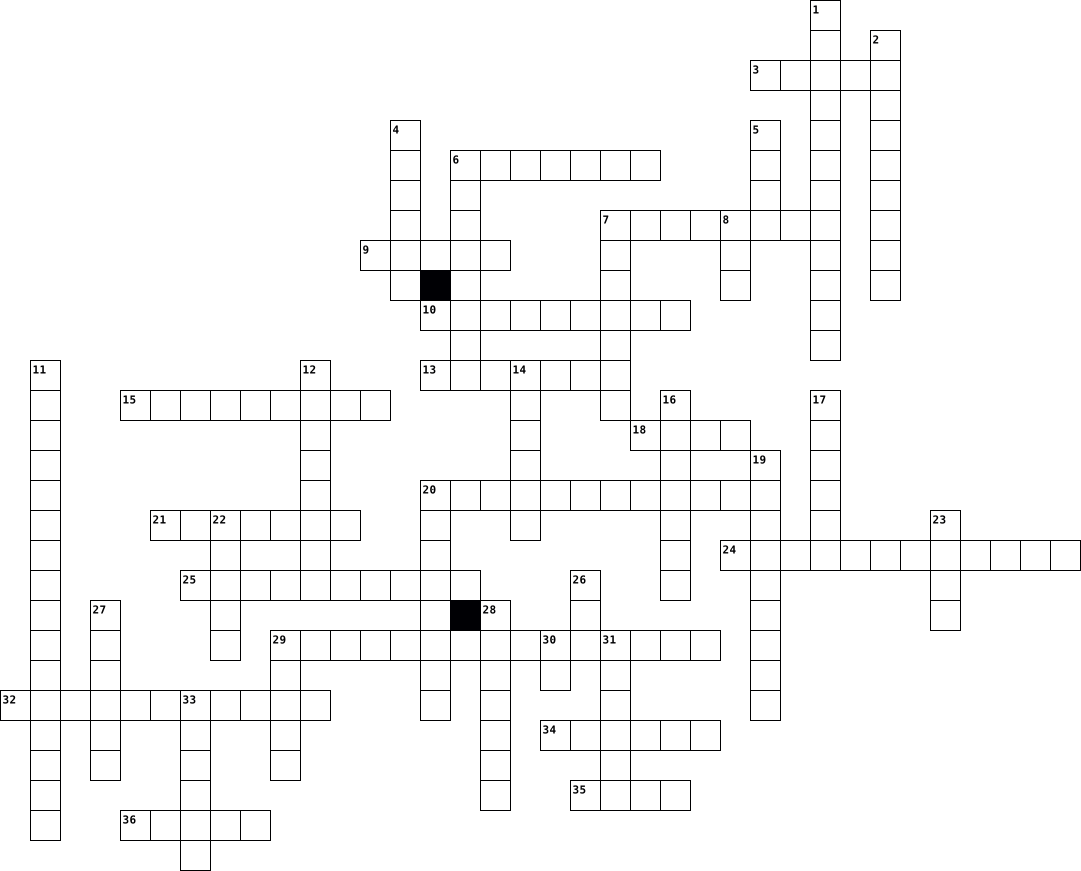
Across
- Saturn's largest moon
- fastest moving planet around the Sun
- large storm on Jupiter more than 400 years old is called the ____ ____ spot (two words)
- first dwarf planet ever discovered
- another name for a moon. Also could be artificial and used for GPS navigation
- planet who's orbit is crossed by Pluto
- giant storm that was detected on Neptune was the ___ ___ spot (two words)
- number of dwarf planets in the solar system
- largest crater on Mercury. (two words)
- planet with more mass than the rest combined
- name of the newest large rover on the surface of Mars
- this belt is located beyond Neptune (two words)
- largest canyon on Mars. (two words)
- largest volcano in the Solar System (two words)
- one of the moons of Mars
- planet most likely to be visited by humans
- only planet with liquid water on its surface
Down
- this belt of objects is located between Mars and Jupiter (two words)
- moon of Saturn with tiger stripes and ice geysers
- dwarf planet with 2 moons
- number of planets with rings
- dwarf planet with a repetitive name
- he discovered Jupiter's four largest moons
- number of ice giant planets
- the average distance between the Earth and the Sun (two words)
- largest moon in the Solar System
- Neptune's largest moon
- moon of Uranus that looks like it shattered
- planet that is greatly tilted
- name of the helicopter on Mars
- most heavily cratered moon of Jupiter
- dwarf planet with 5 moons
- dwarf planet whose discovery led to Pluto's demotion
- source of light for the Solar system
- one of the moons of Mars
- name of the division in Saturn's rings
- hottest planet in the Solar System
- the most volcanically active moon in the solar system
- moon of Jupiter that might have life
- planet less dense than water
40 Clues: Saturn's largest moon • Neptune's largest moon • one of the moons of Mars • one of the moons of Mars • dwarf planet with 2 moons • dwarf planet with 5 moons • number of ice giant planets • number of planets with rings • planet less dense than water • planet that is greatly tilted • name of the helicopter on Mars • largest moon in the Solar System • first dwarf planet ever discovered • ...
Verbal Skill Review 2020-11-25

Across
- under
- under the moon
- beyond
- middle
- sea
- earth centered
- beyond the ordinary
- it travels under the sea
- over
- having to do with the moon
Down
- moon
- under the earth
- earth(Latin)
- beyond Earth
- middle of the earth
- sun
- earth or ground(Greek)
17 Clues: sun • sea • moon • over • under • beyond • middle • earth(Latin) • beyond Earth • under the moon • earth centered • under the earth • middle of the earth • beyond the ordinary • earth or ground(Greek) • it travels under the sea • having to do with the moon
NASA 2023-05-18

Across
- First mission to land on the Moon.
- First space station around the Moon.
- Year the first Moon landing will happen in the 21st century.
- Earth's "natural satellite."
- Artemis Program is the testing for colonization of this planet.
- Signed in 2020 by 23 countries, Artemis...
Down
- Spacecraft that is similar to Apollo's command module.
- Government organization for space.
- Current space program to go to the Moon.
- Year first manmade object to orbit Earth.
- Spacecraft that is similar to Apollo's service module.
- First manned program to the Moon.
- Rocket being used for the Artemis program.
- Next country to go to the Moon.
14 Clues: Earth's "natural satellite." • Next country to go to the Moon. • First manned program to the Moon. • Government organization for space. • First mission to land on the Moon. • First space station around the Moon. • Current space program to go to the Moon. • Year first manmade object to orbit Earth. • Rocket being used for the Artemis program. • ...
Unit 23: Around the Solar System 2025-11-03

Across
- a giant ball of extremely hot gas that burns and gives off heat and ligh
- System, a group of objects in space, including the Sun and everything that moves around it
- a group of stars, planets, dust and gas
- a large round object in space that follows a path and moves around a star like the Sun
- to move around something in a circular path
- to spin on a center point
- an object that moves around Earth and sends messages and pictures to help us learn about space
- an object that moves around Earth that we see mostly at nighttime in phases
Down
- a person who travels into space
- a star in the center of the solar system that burns gas and gives off heat and light
- everything that can be seen, touched and sensed above Earth’s atmosphere.
- a force that weighs down objects
- a large piece of rock or metal flying in space that is left over from the planets.
- an imaginary line that objects in space follow as they move around a larger object
- a tool that makes faraway objects look bigger and closer.
15 Clues: to spin on a center point • a person who travels into space • a force that weighs down objects • a group of stars, planets, dust and gas • to move around something in a circular path • a tool that makes faraway objects look bigger and closer. • a giant ball of extremely hot gas that burns and gives off heat and ligh • ...
Earth, Sun, and Moon 2022-04-25

Across
- Moon phase that occurs when the Moon is between Earth and the Sun
- A spinning motion of a planet
- The movement of an object around another object
- When the earth comes between the sun and moon
- More than half of the moon appears lit
- Less than half of the moon appears lit
- The tide with the least difference between low and high
Down
- A total blocking of one object in space
- When we see the entire moon lighted
- When the moon passes directly between the sun and earth
- When more of the moons lighted side becomes visible
- The tide with the greatest difference between low and high
- The force of attraction between objects
- When less of the moons lighted side becomes visible
- Rise and fall of the oceans surface
15 Clues: A spinning motion of a planet • When we see the entire moon lighted • Rise and fall of the oceans surface • More than half of the moon appears lit • Less than half of the moon appears lit • A total blocking of one object in space • The force of attraction between objects • When the earth comes between the sun and moon • The movement of an object around another object • ...
31 -Space Race 2025-04-13

Across
- – First artificial satellite, launched by USSR in 1957.
- – Lunar module that landed on the Moon.
- – First person to walk on the Moon.
- – Apollo 11 command module’s name.
- – First human in space, Soviet cosmonaut.
- – Series of Soviet satellites and spacecraft.
- – Soviet robotic missions to the Moon.
Down
- – Soviet news agency that announced spaceflight achievements.
- – Aldrin’s nickname; second man on the Moon.
- – U.S. president who set Moon landing goal.
- – Rocket series that launched Apollo missions.
- – Long-running Soviet/Russian spacecraft program.
- – First U.S. human spaceflight program.
- – NASA program that landed men on the Moon.
- – NASA program before Apollo; tested spaceflight skills.
15 Clues: – Apollo 11 command module’s name. • – First person to walk on the Moon. • – Soviet robotic missions to the Moon. • – Lunar module that landed on the Moon. • – First U.S. human spaceflight program. • – First human in space, Soviet cosmonaut. • – U.S. president who set Moon landing goal. • – NASA program that landed men on the Moon. • ...
Similarities and DifferenceS between Agile and SDLC 2025-04-15

Across
- Both models follow this structural component, though differently.
- Agile allows change at any stage, showing this trait.
- Activity present in both models but occurs earlier in Agile.
- Core principle in Agile involving cross-functional teams.
- Agile supports faster and frequent versions of this.
Down
- Extensive in SDLC, minimal in Agile.
- Continuous input from users and stakeholders in Agile.
- A traditional SDLC model with linear sequential phases.
- An essential first step in both methodologies.
- A process where development is done in repeated cycles (Agile).
10 Clues: Extensive in SDLC, minimal in Agile. • An essential first step in both methodologies. • Agile supports faster and frequent versions of this. • Agile allows change at any stage, showing this trait. • Continuous input from users and stakeholders in Agile. • A traditional SDLC model with linear sequential phases. • ...
Venus Crossword 2023-11-06

Across
- The name given to Venus when it is visible just after the sun sets in the sky.
- Molten or melted rock that flows from a volcano.
- A device that sends out signals that bounce off the surface of an object and return to the device, revealing information about that object.
- The different shapes Venus appears to take as it orbits the sun.
Down
- A curved shape, like that of the moon when it is less than half illuminated.
- A name given to Venus when it is visible in the early morning just before the sun rises.
- The toxic chemical in the heat-trapping clouds that cover Venus.
7 Clues: Molten or melted rock that flows from a volcano. • The toxic chemical in the heat-trapping clouds that cover Venus. • The different shapes Venus appears to take as it orbits the sun. • A curved shape, like that of the moon when it is less than half illuminated. • The name given to Venus when it is visible just after the sun sets in the sky. • ...
unit 3 moon lunar phases 2023-09-07

Across
- invisible force that pulls objects
- spinning on an axis
- waxing has both gibbous and.....?
Down
- moves around another object
- changes in the moon when it makes a full revolution
- the ocean's water is pulled
6 Clues: spinning on an axis • moves around another object • the ocean's water is pulled • waxing has both gibbous and.....? • invisible force that pulls objects • changes in the moon when it makes a full revolution
Cycl Root Vocabulary Practice 2025-11-20

Across
- A circus performer might ride this one-wheeled vehicle while balancing above the crowd.
- A sport or hobby involving moving on two wheels using your legs for power.
- Describes something that returns again and again, like a schedule that resets every Monday.
- The process of giving old items a second life instead of throwing them away; includes turning paper into new notebooks.
- A large resource filled with facts on many topics; you might consult it when you have too many questions for one website.
Down
- The natural progression an organism goes through, from its beginning to its end.
- A violent weather event with powerful spinning winds; often forms over warm oceans.
- Describes knowledge that seems endless or extremely thorough; the opposite of “limited.”
- A behavior or trend that rises, falls, and then returns in the same order over and over.
- A repeated loop of events; for example, the phases of the moon follow this kind of pattern.
10 Clues: A sport or hobby involving moving on two wheels using your legs for power. • The natural progression an organism goes through, from its beginning to its end. • A violent weather event with powerful spinning winds; often forms over warm oceans. • A circus performer might ride this one-wheeled vehicle while balancing above the crowd. • ...
Planets Crossword 2014-10-06

Across
- A group of stars, dust and gas held together by gravity
- We can use this to see the stars?
- Our galaxy
- We live on ______
- The red planet
- An alien's spaceship
- A rock that orbits the Sun
- The Sun gives ________
- Halley's________
- There are billions of these in the universe
Down
- Who says "to infinity and beyond"?
- Amount of time it takes the Earth to spin once on its axis
- Furthest away from the Sun
- a chocolate bar
- The closest planet to the Sun
- Can fly to the moon
- A planet with rings
- Who can walk on the moon?
- It comes out at night
- The moon is covered in these
20 Clues: Our galaxy • The red planet • a chocolate bar • Halley's________ • We live on ______ • Can fly to the moon • A planet with rings • An alien's spaceship • It comes out at night • The Sun gives ________ • Who can walk on the moon? • Furthest away from the Sun • A rock that orbits the Sun • The moon is covered in these • The closest planet to the Sun • We can use this to see the stars? • ...
Crosswords TheKidz 2024-03-01

Across
- Most of the solar system are named after roman...
- Main materials that made asteroids
- Spotters
- Coldest place in the universe Nebula
- Space exploration organization
- Enormous cloud of dust and gas
- "This" causes high and low tides
- Another name for Ursa Major is big...
- Orion's brightest star
- A galaxy where Earth located
Down
- Planets that are bigger than Earth in total
- Pluto's largest moon
- Region beyond Neptune orbit
- Planet with hexagonal shaped storm
- Tianwen mission
- The sea of tranquility
- Morning and evening star
- Largest moon in Milky Way
- Farthest point of an object's orbit around another body
- Twin
- Largest moon of Saturn
21 Clues: Twin • Spotters • Tianwen mission • Pluto's largest moon • The sea of tranquility • Orion's brightest star • Largest moon of Saturn • Morning and evening star • Largest moon in Milky Way • Region beyond Neptune orbit • A galaxy where Earth located • Space exploration organization • Enormous cloud of dust and gas • "This" causes high and low tides • Main materials that made asteroids • ...
Psalm 8 2021-10-24

Across
- place
- man
- enemy
- established
- set
- care
- look
- mouth
- moon
Down
- because
- avenger
- babies
- fingers
- mindful
- majestic
- glory
- stars
- heavens
- earth
- Lord
- work
21 Clues: man • set • care • Lord • look • work • moon • place • glory • enemy • stars • earth • mouth • babies • because • avenger • fingers • mindful • heavens • majestic • established
Astronomy 2023-04-13

Across
- the moon, sun, and the known planets—Mercury, Venus, Mars, and Jupiter—orbit Earth
- The center of the Milky Way galaxy is a ___________ ___________.
- large, dark, basaltic plains on Earth's Moon, formed by ancient volcanic eruptions
- The slow movement of the axis of a spinning body around another axis due to a torque acting to change the direction of the first axis
- the duration of a complete rotation of the Milky Way, approximately 200 million years
- the point at which the moon is farthest from Earth
- the moon moves in a line directly between Earth and the sun, casting a shadow on Earth
- Most of the lunar surface is made up of densely pitted, light-colored areas
- an imaginary plane that connects Earth’s orbit with the celestial sphere
- The very darkest part of the moon's shadow is cone-shaped
- the shadow cast by the earth or moon over an area experiencing a partial eclipse
- the time in January when Earth is closest to the sun
- _________ are caused mainly by differences in how much the moon's gravity pulls on different parts of Earth.
- When the moon is at a right angle to the sun
- Earth and the other planets orbit the sun
Down
- the motion of a body, such as a planet or moon, along a path around some point in space
- – a thin, gray layer on the surface of the moon, consisting of loosely compacted, fragmented material believed to have been formed by repeated impacts of meteorites
- the depression at the summit of a volcano or a depression produced by a meteorite impact
- the time it takes for Earth to make one complete rotation (360º) with respect to a star other than the sun
- designed and built instruments to measure the locations of the heavenly bodies
- the moon passes through Earth’s shadow
- a result of the motion of the moon and the sunlight that is reflected from its surface
- created a model of the universe that accounted for the movement of the planets
- the average distance between Earth and the sun
- a long channel associated with lunar maria
- He proposed a model of the solar system with the sun at the center
- the point at which the moon is closest to Earth
- an oval-shaped path
- any of a system of bright, elongated streaks, sometimes associated with a crater on the moon
- discovered three laws of planetary motion
- the apparent westward motion of the planets with respect to the stars
- a tide just after a new or full moon, when there is the greatest difference between high and low water
- the time in July when Earth is farthest from the sun
- the science that studies the universe
- relation to stars or constellations
- the turning, or spinning, of a body on its axis
36 Clues: an oval-shaped path • relation to stars or constellations • the science that studies the universe • the moon passes through Earth’s shadow • discovered three laws of planetary motion • Earth and the other planets orbit the sun • a long channel associated with lunar maria • When the moon is at a right angle to the sun • the average distance between Earth and the sun • ...
9-Moon Landing of the 1960s 2023-06-29

Across
- (Astronaut who joined Armstrong on the moon)
- (Neil Armstrong's nickname)
- (The space agency that organized the mission)
- (Taking off from Earth)
- (Path around the Earth or moon)
- (Propelled the spacecraft)
- (Related to the moon)
- (Lunar Excursion Module)
- (Name of the lunar module)
Down
- (Landing site name)
- (Symbol planted on the moon)
- (Name of the mission series)
- ARMSTRONG (First person to step on the moon)
- (Dark, flat areas on the moon's surface)
- (Term for walking on the moon's surface)
15 Clues: (Landing site name) • (Related to the moon) • (Taking off from Earth) • (Lunar Excursion Module) • (Propelled the spacecraft) • (Name of the lunar module) • (Neil Armstrong's nickname) • (Symbol planted on the moon) • (Name of the mission series) • (Path around the Earth or moon) • (Dark, flat areas on the moon's surface) • (Term for walking on the moon's surface) • ...
Our earth in Motion 2013-10-27

Across
- Moon surface increasing in size
- Moon surface decreasing in size
- A turning action
- The opposite of light
- The Earth spins on its..
- The line that separates the northern and souther hemisphere
- Vertical measuring points around the Earth
- We have four each year which change the weather
Down
- Main attraction in the night sky
- The season with the coldest temperatures
- The opposite season to Spring
- The name of our planet
- Shape of the moon
- When the sun is up
- The season for flowers to bloom
- Gives us day and night
- The home of time
- The hottest season
- Horizontal measuring points around the Earth
- A weak tide
20 Clues: A weak tide • A turning action • The home of time • Shape of the moon • When the sun is up • The hottest season • The opposite of light • The name of our planet • Gives us day and night • The Earth spins on its.. • The opposite season to Spring • Moon surface increasing in size • Moon surface decreasing in size • The season for flowers to bloom • Main attraction in the night sky • ...
6th gradeence vocab 2023-04-06
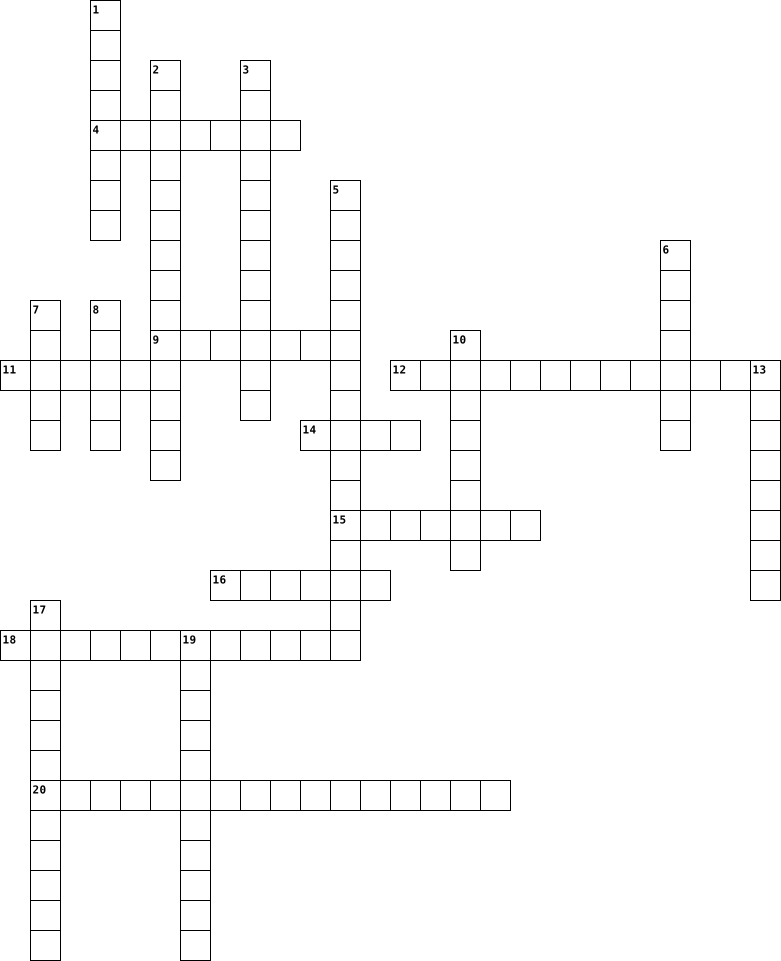
Across
- first planet in our solar system and closest to the sun
- farthest planet from the sun in the solar system
- spins on its side
- water powered
- the red planet 4th in our solar system
- no moon visible
- famously known rings
- biggest watershed in virginia
- substance that can disolve anything
Down
- you see all of the moon illuminatted
- toothpick floating on water surface
- left part of the moon
- earths energy
- biggest planet in our solar system
- our home
- 2nd planet from our sun
- water sticking to anything
- water sticking to water
- right part of the moon
- water heating up and rising,forming clouds
20 Clues: our home • earths energy • water powered • no moon visible • spins on its side • famously known rings • left part of the moon • right part of the moon • 2nd planet from our sun • water sticking to water • water sticking to anything • biggest watershed in virginia • biggest planet in our solar system • toothpick floating on water surface • substance that can disolve anything • ...
science 2024-11-07

Across
- thin slice of the moon
- last gas giant
- it is directly sun and earth
- inner cone shape
- December 21
- imaginary line
- second gas giant
- is an oval shape
- one year on earth
- show how variable compare to each other
- first gas giant
Down
- more than half of the moon
- half of the moon
- second inner planet
- June 21
- variable what changes because of the Iv
- third gas giant
- first inner planet
- kept the same throughout experiment
- variable what you change
- lava flowing up to cracks
- third inner planet
- last inner planet
23 Clues: June 21 • December 21 • last gas giant • imaginary line • third gas giant • first gas giant • half of the moon • inner cone shape • second gas giant • is an oval shape • last inner planet • one year on earth • first inner planet • third inner planet • second inner planet • thin slice of the moon • lava flowing up to cracks • more than half of the moon • variable what you change • ...
Christmas Sun And Moon Show Crossword! 2023-12-15

Across
- "YOUR BALD"
- On Lunar's first Christmas (besides the reindeer) he got a _____.
- Blood Moon took control on July _________.
- In the month of ____ Blood moon took control.
- Blood Moon called Monty a ___________.
- Jester_Eclipse needs you to _________.
- Caster and Pollux are ______.
Down
- Lunar loves ________.
- Eclipse was killed with a _________.
- Lunar was originally an AI in the mind of ____.
- Lunar's original brother is...
- On Christmas Lunar named is his reindeer ______.
- The ________ created Sun and Moon.
- Nice Eclipse renamed himself _____.
- Earth loves ______.
15 Clues: "YOUR BALD" • Earth loves ______. • Lunar loves ________. • Caster and Pollux are ______. • Lunar's original brother is... • The ________ created Sun and Moon. • Nice Eclipse renamed himself _____. • Eclipse was killed with a _________. • Blood Moon called Monty a ___________. • Jester_Eclipse needs you to _________. • Blood Moon took control on July _________. • ...
Halloween 2024-10-28

Across
- hat
- dusk
- mummy
- pumpkin
- broom
- ghost
- cauldron
- witch
- frankenstein
- spider
- spiderweb
- grave
Down
- candycorn
- vampire
- monster
- moon
- owl
- cat
- hauntedhouse
- skeleton
- star
21 Clues: hat • owl • cat • dusk • moon • star • mummy • broom • ghost • witch • grave • spider • vampire • monster • pumpkin • cauldron • skeleton • candycorn • spiderweb • hauntedhouse • frankenstein
Space - Sun, Earth, Moon 2024-08-22

Across
- particular weather patterns and daylight hours, resulting from the earth's changing position with regard to the sun
- a large, rounded astronomical body that is generally required to be in orbit around the sun
- day on which day and night are the same length
- a natural satellite orbiting a planet
- when only some of the Sun’s light is blocked by the Moon
- energy made by atoms colliding with each other in the centre of the Sun
- the system made up of the Sun and all the planets, dwarf planets, moons and asteroids that travel round the Sun or each other
- when the Moon blocks the maximum amount of light from the Sun
Down
- when the light from the Sun is blocked by the Moon
- changes in the shape of the Moon visible on Earth
- the period of time for an orbit of the sun
- an imaginary straight line joining the north and south poles of the Earth
- are the rise and fall of sea levels caused by the effects of the gravitational forces exerted by the Moon
- Reflected sunlight from the moon
- when the Moon is in the Earth's shadow and appears dark
- the path a planet moves around the sun/star or a moon moves around a planet
16 Clues: Reflected sunlight from the moon • a natural satellite orbiting a planet • the period of time for an orbit of the sun • day on which day and night are the same length • changes in the shape of the Moon visible on Earth • when the light from the Sun is blocked by the Moon • when the Moon is in the Earth's shadow and appears dark • ...
TO SANA 2022-10-10

Across
- I love you but in my way
- the sky sign of me
- the sky sign of you
- moon city
- thecolor of the sun
- chkoun bhalna ghaytzwjou mn taliouine w tetouane?
- the color of the moon
- one of the names you gave me (2)
- how I feel with you.
- best anime of all time.
- birth month of the moon
Down
- my phone
- sun city
- your name.
- birth month of the sun
- one of the names you gave me
- how I feel without you.
- my emoji
- you will know after reading the letter at the end.
- the month the moon met the sun
- Something you call me.
21 Clues: my phone • sun city • my emoji • moon city • your name. • the sky sign of me • the sky sign of you • thecolor of the sun • how I feel with you. • the color of the moon • birth month of the sun • Something you call me. • how I feel without you. • best anime of all time. • birth month of the moon • I love you but in my way • one of the names you gave me • the month the moon met the sun • ...
6th gradeence vocab 2023-04-06
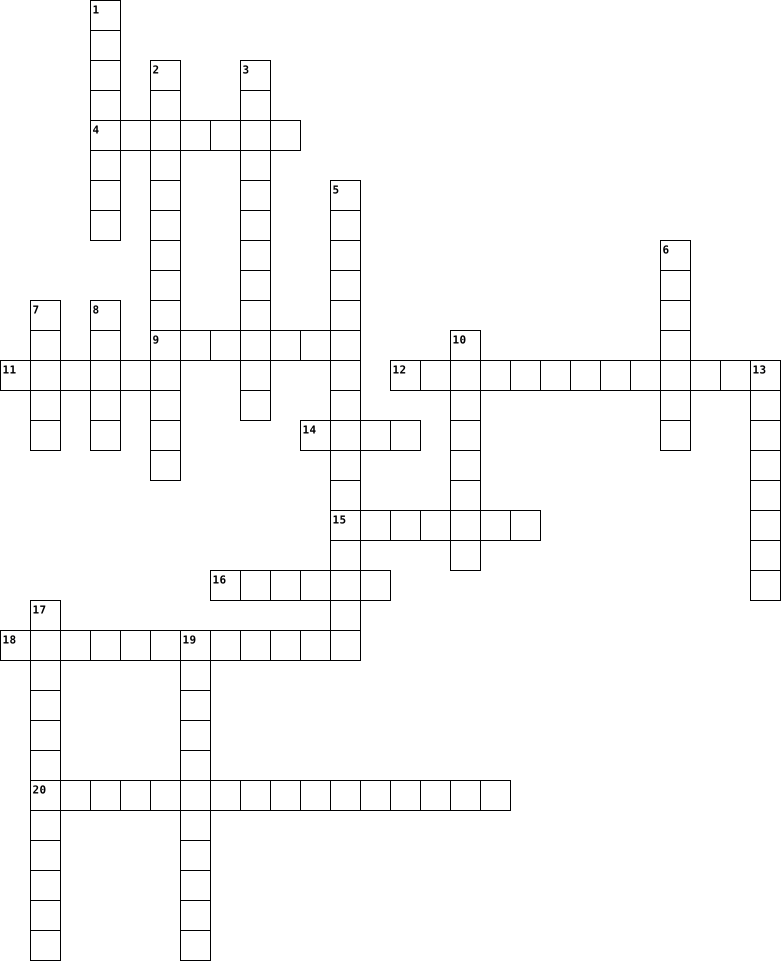
Across
- first planet in our solar system and closest to the sun
- farthest planet from the sun in the solar system
- spins on its side
- water powered
- the red planet 4th in our solar system
- no moon visible
- famously known rings
- biggest watershed in virginia
- substance that can disolve anything
Down
- you see all of the moon illuminatted
- toothpick floating on water surface
- left part of the moon
- earths energy
- biggest planet in our solar system
- our home
- 2nd planet from our sun
- water sticking to anything
- water sticking to water
- right part of the moon
- water heating up and rising,forming clouds
20 Clues: our home • earths energy • water powered • no moon visible • spins on its side • famously known rings • left part of the moon • right part of the moon • 2nd planet from our sun • water sticking to water • water sticking to anything • biggest watershed in virginia • biggest planet in our solar system • toothpick floating on water surface • substance that can disolve anything • ...
Space Exploration 2024-02-23

Across
- Eighth and farthest planet from the Sun in our solar system?
- Former ninth planet from the Sun, reclassified as a dwarf planet in 2006?
- Fourth planet from the Sun, often referred to as the "Red Planet"?
- Region of space with gravitational pull so strong that nothing, not even light, can escape?
- Star at the center of our solar system, providing light and heat to planets?
- Second planet from the Sun, often called Earth's "sister planet"?
- Person trained to travel and work in space, often aboard spacecraft or space stations?
Down
- Earth's only natural satellite, responsible for ocean tides and lunar phases?
- Largest planet in our solar system, known for its giant storm called the Great Red Spot?
- Sixth planet from the Sun, famous for its spectacular ring system?
- Closest planet to the Sun in our solar system?
- Third planet from the Sun and the only known planet to support life?
- Seventh planet from the Sun, known for its unique sideways rotation?
- Vast system of stars, gas, dust, and dark matter held together by gravity?
- Celestial object made of ice, dust, and gas that orbits the Sun in a highly elliptical orbit?
15 Clues: Closest planet to the Sun in our solar system? • Eighth and farthest planet from the Sun in our solar system? • Second planet from the Sun, often called Earth's "sister planet"? • Sixth planet from the Sun, famous for its spectacular ring system? • Fourth planet from the Sun, often referred to as the "Red Planet"? • ...
No.-23_MSB_Takes_a_Moonwalk 2018-04-09

Across
- Neil Armstrong said, "One small step for man (on moon) is a giant leap for ___________".
- Rocks on moon are 4.3 ___________ years old.
- The clothes of Astronauts.
- _________ moon comes in the Fall (Autumn). We say it "Sharad Poonam".
- The____________ show that astronauts were on the moon.
Down
- It is the force that pulls things towards its center.
- The first Astronaut to walk on the moon.
- Our body becomes ___________ on the moon.
- Big round holes on moon.
- We need air tanks to ___________ on the moon.
- Natural satellite of earth.
- Lots of __________ are found on the moon.
12 Clues: Big round holes on moon. • The clothes of Astronauts. • Natural satellite of earth. • The first Astronaut to walk on the moon. • Our body becomes ___________ on the moon. • Lots of __________ are found on the moon. • Rocks on moon are 4.3 ___________ years old. • We need air tanks to ___________ on the moon. • It is the force that pulls things towards its center. • ...
Intergalactic Word Search 2025-09-12

Across
- Planet
- SolarEclipes
- Space
- Alien
- Jupiter
- Neptune
- SolarSystem
- MilkyWay
- Mercury
- Moon
- UFO
Down
- Mars
- Saturn
- Venus
- ISS
- Earth
- LunerEclipes
- Andromeda
- Star
- Galaxy
- Uranus
21 Clues: ISS • UFO • Mars • Star • Moon • Venus • Space • Earth • Alien • Planet • Saturn • Galaxy • Uranus • Jupiter • Neptune • Mercury • MilkyWay • Andromeda • SolarSystem • SolarEclipes • LunerEclipes
Once Upon A Moon Moon 2025-01-21

Across
- A type of cuisine known for its rich flavors and heartiness; typically associated with comfort and a sense of community.
- A condition in which different elements are equal or in the correct proportions, leading to stability and harmony.
- An exclamation expressing strong admiration or astonishment; indicates something has exceeded expectations or is strikingly impressive.
- A concept that refers to fate or destiny; the idea that events are predetermined and will happen in a certain way.
- A state of mental weariness or apathy caused by a lack of interest in one’s current activity or surroundings.
- A phrase suggesting that affection or deep emotional connections can transcend boundaries and obstacles, potentially elevating individuals.
- A phenomenon or spectacle involving the visible descent of meteoroids or falling stars; often associated with wonder or beauty.
- A powerful and passionate feeling or emotion, often linked to intense love or fervor.
Down
- An expression indicating one’s preparedness or willingness to enter into a romantic relationship or experience affection.
- A condition where an individual cannot perceive differences in certain colors; often used metaphorically to describe a lack of bias or discrimination based on race or ethnicity.
- A type of alcoholic beverage that may evoke deep emotional thoughts or feelings; often associated with introspection and sentimentality.
- Marks on the skin that are still visible after healing; can symbolize past experiences or traumas that contrast with one’s current state.
- A fundamental force that attracts objects with mass toward one another; can also metaphorically refer to seriousness or significance.
- A deep and genuine emotional bond between individuals characterized by loyalty, affection, and mutual respect; often considered ideal or perfect.
- A phrase indicating a preferred shade of a color known for its calming and serene qualities; often used to express personal style.
15 Clues: A powerful and passionate feeling or emotion, often linked to intense love or fervor. • A state of mental weariness or apathy caused by a lack of interest in one’s current activity or surroundings. • A condition in which different elements are equal or in the correct proportions, leading to stability and harmony. • ...
Solar system trivia 2024-03-09

Across
- the planet with the funniest name
- the name of our sun
- the 8th planet
- the furthest dwarf planet from the sun
- the red planet
- Saturn's biggest moon
- the 1st-4th planets are this
- The name of Earth's moon
Down
- the 5th and 6th planets are this
- Largest moon in the solar system
- The biggest planet
- the hottest planet in the solar system
- the 7th and 8th planets are this
- Neptune's biggest moon
- the dwarf planet that was once the 9th planet
15 Clues: the 8th planet • the red planet • The biggest planet • the name of our sun • Saturn's biggest moon • Neptune's biggest moon • The name of Earth's moon • the 1st-4th planets are this • the 5th and 6th planets are this • Largest moon in the solar system • the 7th and 8th planets are this • the planet with the funniest name • the hottest planet in the solar system • ...
Sun, Moon, Earth Part 2 2025-10-06

Across
- the slant of the Earth's axis, 23.5 degrees
- the first moon phase following a full moon. The moon is illuminated on the left side.
- the half of the Earth that is north of the Equator
- the half of the Earth that is south of the equator
- to change or develop over time
- the phase between the first quarter moon and full moon.
Down
- the moon appears fully illuminated from the Earth's perspective.
- third quarter, a phase of the moon that occurs when the left side of the moon is half-illuminated
- the sun is at the center of the solar system
- a phase of the moon that occurs when the moon is a quarter of the way through its monthly orbit around Earth and appears half-illuminated on the right side.
- the final phase of the moon's cycle, a small sliver of the moon is visible on the left side
- occurs when the position of the Sun is exactly over the Equator. It happens twice a year.
- the earth is at the center of the solar system
- The regular rising and falling of the ocean's water levels caused by the moon's gravitational pull
14 Clues: to change or develop over time • the slant of the Earth's axis, 23.5 degrees • the sun is at the center of the solar system • the earth is at the center of the solar system • the half of the Earth that is north of the Equator • the half of the Earth that is south of the equator • the phase between the first quarter moon and full moon. • ...
Earth, Sun, and Moon 2022-02-09

Across
- the moon has less of this than Earth
- composed of gases
- the Earth does not ___________ it's own light
- at noon your shadow will be
- has no atmosphere
- bowl shaped indentations or cavities on the surface of a planet or moon
- an imaginary line that runs through the center of the Earth
- to move around another object in space
- the spinning of a planet, moon, or other object on it's axis
Down
- you are on the side of the Earth facing away from the sun
- experiences low and high tides
- the ________ of the moon is dry and rocky
- causes the features on the moon you can easily see from here
- where the sun sets
- protects the Earth from meteorites
- your shadow right before the sun goes down
- the dark image cast on some surface or thing blocking the light of the sun
- the time it takes for Earth to make a complete rotation on it's axis
18 Clues: composed of gases • has no atmosphere • where the sun sets • at noon your shadow will be • experiences low and high tides • protects the Earth from meteorites • the moon has less of this than Earth • to move around another object in space • the ________ of the moon is dry and rocky • your shadow right before the sun goes down • the Earth does not ___________ it's own light • ...
Space 2023-02-14

Across
- biggest planet
- the funny planet
- rock entering our atmosphere
- landed rock
- astronomical unit
- famous dwarf planet
- a cloud of cosmic dust
- largest moon of neptune
Down
- the most recent mars rover
- moon of jupiter
- floating rock
- what the spanish call our moon
- path around a star
- our planet
- mars moon
15 Clues: mars moon • our planet • landed rock • floating rock • biggest planet • moon of jupiter • the funny planet • astronomical unit • path around a star • famous dwarf planet • a cloud of cosmic dust • largest moon of neptune • the most recent mars rover • rock entering our atmosphere • what the spanish call our moon
Science and Medicine of the 1960s 2024-11-29

Across
- - Aldrin’s first name.
- - Reduced on the Moon.
- - Planned space operation.
- - First Moonwalker.
- - Rocket that launched Apollo.
- - Command center location.
- - Lunar module’s name.
- - First man on the Moon.
Down
- - Relating to the Moon.
- - Path around a celestial body.
- - Moon mission program.
- - Space agency.
- - Where astronauts walked.
- - Vast expanse explored.
- - Month of Apollo 11 landing.
15 Clues: - Space agency. • - First Moonwalker. • - Aldrin’s first name. • - Reduced on the Moon. • - Lunar module’s name. • - Relating to the Moon. • - Moon mission program. • - Vast expanse explored. • - First man on the Moon. • - Planned space operation. • - Where astronauts walked. • - Command center location. • - Month of Apollo 11 landing. • - Rocket that launched Apollo. • ...
Earth In Space 2018-08-27

Across
- a representation, generally in miniature, to show the construction or appearance of something.
- the force of attraction between any two objects for example between a person and Earth (p. 67).
- eclipse the shadow cast on the earth when the moon is between the sun and the earth (p. 117).
- the half of the earth between the South Pole and the equator.
- The movement of the earth around the sun along a curved path (p. 105).
Down
- the periodic rise and fall of the waters of the ocean, produced by the attraction of the moon and sun, occurring about every 12 hours.
- the half of the earth between the North Pole and the equator.
- the path followed by an object in space as it revolves around another object (p. 105).
- moon the shape of the moon when about two-thirds of its face is lit up, as seen from Earth (p. 116).
- The spinning or turning of the earth on its axis (p. 104).
- moon thin curved shape of the moon when only one part of its face is lit up, as seen from Earth (p. 116).
- eclipse the darkening of the moon by the shadow of Earth when Earth is between the sun and the moon (p. 117).
- moon the phase of the moon when its face is almost invisible from Earth (p. 116).
- The imaginary circle around the earth's surface, It divides the earth into the Northern Hemisphere and the Southern Hemisphere.
- moon the shape of the moon when its face is seen fully from Earth (p. 116).
15 Clues: The spinning or turning of the earth on its axis (p. 104). • the half of the earth between the North Pole and the equator. • the half of the earth between the South Pole and the equator. • The movement of the earth around the sun along a curved path (p. 105). • moon the shape of the moon when its face is seen fully from Earth (p. 116). • ...
Physics 2013-05-07

Across
- Full ……., Waning Gibbous ………, Last Quarter………, these are all phases of the ………
- What is the supply of electrical current, which lights and heats appliances?
- When the Sun covers the sun and casts a shadow onto Earth it’s called an ………………
- There are 24 hours in one …... what?
- This is a force in which ………………… things attract each other.
- If you are dividing the mass of something by the volume of something you are trying to find out the, what?
- This is a force, which happens when two objects rub against each other and create heat.
- This is a planet and is the 4th planet away from the sun
- If you do length x height x width, you are finding out, what?
Down
- Electrical current is measured with this.
- This is a substance that conducts heat, light, sound, or an electric charge.
- This is a substance that blocks the flow of electrical or thermal currents.
- There are 365 and a quarter days in a, what?
- The Earth is a …………., Saturn is a ……………., Pluto is a Dwarf ……………
- An electrical ………………… is a flow of electrical charge.
- This is a unit, the absolute unit of force in the International System of Units (SI units)
- Dynamic, upthrust, gravity and magnetic are all ………..
17 Clues: There are 24 hours in one …... what? • Electrical current is measured with this. • There are 365 and a quarter days in a, what? • An electrical ………………… is a flow of electrical charge. • Dynamic, upthrust, gravity and magnetic are all ……….. • This is a planet and is the 4th planet away from the sun • This is a force in which ………………… things attract each other. • ...
Puzzle #41 2023-03-14

Across
- The circumstances or environment in which something exists or occurs, providing a framework for understanding.
- Related to the international sporting event held every four years that brings together athletes from around the world.
- Being in a state of consciousness and alertness, or to become aware of something.
- Someone who engages in physical combat, or who works tirelessly to overcome obstacles and challenges.
- A series of thoughts, images, and sensations occurring in a person's mind during sleep, often accompanied by emotions and feelings.
- Free from guilt or wrongdoing, or lacking experience and knowledge of the world.
Down
- To start or commence something, often with the expectation of it continuing over time.
- Related to the moon, its phases, or its influence on the tides and natural world.
- Someone who has a high level of knowledge or skill in a particular subject or field.
- Equipment or tools used for a particular purpose or activity, often designed to be functional and durable.
10 Clues: Free from guilt or wrongdoing, or lacking experience and knowledge of the world. • Related to the moon, its phases, or its influence on the tides and natural world. • Being in a state of consciousness and alertness, or to become aware of something. • Someone who has a high level of knowledge or skill in a particular subject or field. • ...
Space 2025-10-23

Across
- planet with life
- Biggest moon
- smallest moon
- ball of light and gas in space
- Earth's moon
- biggest planet
- hottest planet
- a star that the solar system revolves around
Down
- sideways planet
- coldest planet
- closest planet to the sun
- ninth planet
- Moon with an atmosphere that may contain life
- ringed planet
- red planet
15 Clues: red planet • Biggest moon • ninth planet • Earth's moon • smallest moon • ringed planet • coldest planet • biggest planet • hottest planet • sideways planet • planet with life • closest planet to the sun • ball of light and gas in space • a star that the solar system revolves around • Moon with an atmosphere that may contain life
Solar System 2024-02-13
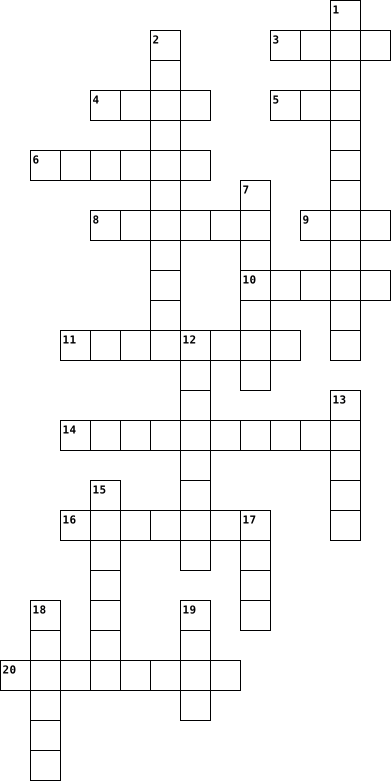
Across
- the invisible line the Earth spins on
- the planet with a thin atmosphere, canyons & riverbeds
- the outer planets
- if the northern hemisphere is tilted toward the Sun, what season is the southern hemisphere experiencing
- the spinning motion the Earth does that causes day & night
- the amount of time it takes the Earth to rotate
- how long does a moon phase take to complete
- when the entire moon is illuminated
- to light up
- the planet that looks like our moon and is the smallest
- the mnemonic device to remember the size order of planets
Down
- when the right side of the moon is illuminated
- the inner planets that are made from rock
- when none of the moon is illuminated
- the mnemonic device to remember the order of the planets
- the planet that has a cloud blanket that traps thermal energy
- the circular motion the Earth does that causes seasons
- the amount of time it takes for the Earth to revolve
- if the southern hemisphere is tilted toward the Sun, what season is the northern hemisphere experiencing
- Quarter when the left side of the moon is illuminated
20 Clues: to light up • the outer planets • when the entire moon is illuminated • the invisible line the Earth spins on • when none of the moon is illuminated • the inner planets that are made from rock • how long does a moon phase take to complete • when the right side of the moon is illuminated • the amount of time it takes the Earth to rotate • ...
LUNAR PUZZLE 2016-04-11

Across
- Moon rotates to the .....
- Object known in moon
- A calendar that uses lunar revolution
- What is a moon?
- The goddess of moon in Greek mythology
- The source of light that moon reflects at night
Down
- Moon appearance where it looks more spheric but not full moon
- A round hole making pattern in the moon
- Boomerang moon
- The colour of the moon
- Moon revolves along the .....
11 Clues: Boomerang moon • What is a moon? • Object known in moon • The colour of the moon • Moon rotates to the ..... • Moon revolves along the ..... • A calendar that uses lunar revolution • The goddess of moon in Greek mythology • A round hole making pattern in the moon • The source of light that moon reflects at night • Moon appearance where it looks more spheric but not full moon
the sound of music 2021-06-08

Across
- a way of speaking like we say accent
- a person who is in his teens
- frightening, Scary
- weakened
- to hide
- group of musicians
- big
- absolutely deaf.
- to follow
- requested
Down
- worsened, reduces
- push roughly
- echoes of sounds
- fascinating and curious
- achieved
- without a fault or mistake
- small and thin
- to perform single, alone.
- in phases
19 Clues: big • to hide • achieved • weakened • in phases • to follow • requested • push roughly • small and thin • echoes of sounds • absolutely deaf. • worsened, reduces • frightening, Scary • group of musicians • fascinating and curious • to perform single, alone. • without a fault or mistake • a person who is in his teens • a way of speaking like we say accent
Unit 3 Final word puzzle FMM 2023-05-16

Across
- most likely exists at the poles shadowed in deep craters
- many other solar activities are due to differential rotation
- circular features formed by meteorite impacts
- dark areas on the surface that are ancient basaltic lava flows
- the Earth is positioned between the Moon & Sun
- Moon is slightly egg-shaped
- theory - Moon formed far away and was caught by Earth’s gravity
- orbit to rotation ratio 1:1
- theory Moon formed separately near Earth
- Moon’s rotation is identical to its orbit around Earth - 27.3 days
- pulverized meteorite ejecta or regolith
- the Moon is positioned between the Earth & the Sun
Down
- Moon’s gravity causes a tidal drag on Earth’s spin
- the continuous flow of charged particles (ions, electrons, and neutrons) that comes from the Sun in every direction
- lighter areas that are mountainous
- ditches where molten lava flowed
- largest impact crater on the Moon (10
- radiation from the surface of the Sun, which is the portion of the Sun we see
- from inside the Sun causes the photosphere to be subdivided into 1000-2000 km cells
- thin orange-red gaseous layer just above the photosphere
20 Clues: Moon is slightly egg-shaped • orbit to rotation ratio 1:1 • ditches where molten lava flowed • lighter areas that are mountainous • largest impact crater on the Moon (10 • pulverized meteorite ejecta or regolith • theory Moon formed separately near Earth • circular features formed by meteorite impacts • the Earth is positioned between the Moon & Sun • ...
Solar system 2025-02-12

Across
- boundary between the solar system and interstellar space
- most volcanically active world in the solar system
- largest natural satellite in the inner solar system
- dwarf planet that lives in the asteroid belt
- not visible to the naked eye
- this dwarf planet is the most massive but only second largest
- has a retrograde orbit around its planet
- the most heavily cratered object in the solar system
- cloud of comets distantly orbiting the Sun
- densest planet
- opportunity’s home
- this icy moon has a vast ocean beneath its surface
- has an exosphere but no true atmosphere
- our favorite dwarf planet since 2006
Down
- this moon is larger than Mercury
- Mars’s smaller moon
- location of objects beyond Neptune’s orbit
- Uranus moon with canyons deeper than Earth’s
- larger volume than every other planet combined
- between mars and jupiter
- greenhouse gases make it as hot as an industrial oven
- star
- mars moon that is slowly getting closer to the red planet
- it rains methane here
- largest known natural satellite in comparison to its host planet
- could float on water
- has a 98° tilt
27 Clues: star • densest planet • has a 98° tilt • opportunity’s home • Mars’s smaller moon • could float on water • it rains methane here • between mars and jupiter • not visible to the naked eye • this moon is larger than Mercury • our favorite dwarf planet since 2006 • has an exosphere but no true atmosphere • has a retrograde orbit around its planet • ...
Moon & Seasons in Song 2024-01-26

Across
- The Tide is High 1980 by ______
- Indian Summer 1970 The _______
- In the Summertime 1970 ______ Jerry
- Spring Vacation 2012 The Beach ______
- A Hazy Shade of Winter 1968 Simon and ______
- Bark at the Moon 1983 Ozzy ________
- Cruel Summer 1983 by _______
- Summer Breeze 1972 Seals and ______
- My Love is Winter 2012 ______ Pumpkins
- Winter Melody 1976 _______ Summer
- A Summer Song 1964 Chad and _____
- Summer in the City 1966 Lovin' ______
- Spring Fever 1965 ______ Presley
- Moondance 1970 _____ Morrison
- Autumn Almanac 1967 by the ______
Down
- Fly me to the Moon 1964 ______ Sinatra
- Man on the Moon 1992 by ______
- Time of the Season 1968 by the _______
- The Boys of Summer 1984 _____ Henley
- Hot Fun in the Summertime 1969 ______ and the Family Stone
- Moonshadow 1971 _____ Stevens
- A Winter's Tale 1995 by ______
- Summer Nights 1979 Olivia Newton-______
- Total Eclipse of the Heart 1983 ______ Tyler
- Seasons in the Sun 1974 Terry _____
- Moonlight Feels Right 1976 by _____
- Summer of '69 1984 Bryan _______
- Moon River 1961 ______ Williams
- Dark Side of the Moon 1973 ______ Floyd
- Bad Moon Rising 1969 Creedence Clearwater ________
- Moonlight Serenade 1939 _____ Miller
- Dancing in the Moonlight 1972 _____ Harvest
32 Clues: Cruel Summer 1983 by _______ • Moonshadow 1971 _____ Stevens • Moondance 1970 _____ Morrison • Man on the Moon 1992 by ______ • Indian Summer 1970 The _______ • A Winter's Tale 1995 by ______ • The Tide is High 1980 by ______ • Moon River 1961 ______ Williams • Summer of '69 1984 Bryan _______ • Spring Fever 1965 ______ Presley • Winter Melody 1976 _______ Summer • ...
Earth In Space 2018-08-27

Across
- The path followed by an object in space as it revolves around another object (p. 105).
- The half of the earth between the South Pole and the equator.
- moon The phase of the moon when its face is almost invisible from Earth (p. 116).
- The darkening of the moon by the shadow of Earth when Earth is between the sun and the moon (p. 117).
- The shadow cast on the earth when the moon is between the sun and the earth (p. 117).
- The force of attraction between any two objects for example between a person and Earth (p. 67).
- moon Thin curved shape of the moon when only one part of its face is lit up, as seen from Earth (p. 116).
Down
- The half of the earth between the North Pole and the equator.
- moon The shape of the moon when about two-thirds of its face is lit up, as seen from Earth (p. 116).
- A representation, generally in miniature, to show the construction or appearance of something.
- The periodic rise and fall of the waters of the ocean, produced by the attraction of the moon and sun, occurring about every 12 hours.
- The movement of the earth around the sun along a curved path (p. 105).
- moon The shape of the moon when its face is seen fully from Earth (p. 116).
- The imaginary circle around the earth's surface, It divides the earth into the Northern Hemisphere and the Southern Hemisphere.
- The spinning or turning of the earth on its axis (p. 104).
15 Clues: The spinning or turning of the earth on its axis (p. 104). • The half of the earth between the North Pole and the equator. • The half of the earth between the South Pole and the equator. • The movement of the earth around the sun along a curved path (p. 105). • moon The shape of the moon when its face is seen fully from Earth (p. 116). • ...
Phases of Matter and Gas Laws 2024-05-03

Across
- The conversion of a substance from a gas to a solid without becoming a liquid
- Has the most energy out of all the phases of matter
- Point The point where a liquid changes to a solid
- When matter takes in heat and gets hotter
- As volume increases, pressure ______ when temperature is constant
- Liquids have a definite _______ but no definite shape
- Gasses neither have a definite volume nor _________
- Point The point where a solid turns to a liquid
- When a gas turns into a liquid
- This phase of matter has molecules that move freely
- The conversion of a substance from a solid to a gas without turning into a liquid
Down
- As ______ increases, volume increases
- When a liquid turns to a gas
- This phase of matter has tightly packed molecules that vibrate in place
- Has molecules that slide past each other
- Solids have the least amount of ______ out of all the phases of matter
- When matter loses heat
17 Clues: When matter loses heat • When a liquid turns to a gas • When a gas turns into a liquid • As ______ increases, volume increases • Has molecules that slide past each other • When matter takes in heat and gets hotter • Point The point where a solid turns to a liquid • Point The point where a liquid changes to a solid • Has the most energy out of all the phases of matter • ...
Solar System 2025-02-12

Across
- / the amount of time it takes the Earth to rotate
- / the nemonic device to remember the order of the planets from the sun
- / the inner planets that are made from rock
- / if the southern hemisphere is tilted toward away from the sun, what is season is the northern hemisphere experiencing
- / to light up
- / when the entire moon illuminated
- / the outer planets
- / quarter when the left side of the moon is illuminated
- / the spinning motion the Earth does that causes day & night
Down
- / the invisible line the Earth spins on
- / if the northern hemisphere is tilted towards the sun, what season is the southern hemisphere experiencing
- / the circular motion the Earth does that causes seasons
- / the amount of time it takes Earth to revolve
- / when none of the moon is illuminated
- / the planet that has a cloud blanket that traps thermal energy
- / when the right side of the moon is illuminated
- / the planet that looks like our moon and is the smallest
- / how long does a moon phase take to complete
- / the planet with a thin atmosphere, canyons & riverbeds
19 Clues: / to light up • / the outer planets • / when the entire moon illuminated • / when none of the moon is illuminated • / the invisible line the Earth spins on • / the inner planets that are made from rock • / how long does a moon phase take to complete • / the amount of time it takes Earth to revolve • / when the right side of the moon is illuminated • ...
3 Claims: Frequency, Association, Causal 2022-09-26

Across
- When one variable is responsible for a change in another variable, this is called a ______ claim.
- As the students' heights increased, their weights also increased. This is an example of a ______ association.
- Increased social support is associated with a decrease in symptoms of depression. What type of association is this an example of?
- Association claims can be useful as they help us in making _______.
- The phases of the moon have not been found to have a correlation with an increase of the rate of crime. This is an example of _____ association.
- Association does NOT equal _______.
Down
- What kind of graph do we often use to illustrate an association between variables?
- There is only one type of study that can make a causal claim, what is it?
8 Clues: Association does NOT equal _______. • Association claims can be useful as they help us in making _______. • There is only one type of study that can make a causal claim, what is it? • What kind of graph do we often use to illustrate an association between variables? • ...
rshfghfgh 2025-06-17

Across
- Completely different or on the other side.
- One thousand million (1 000 000 000).
- The shape of the Moon we see in the sky.
- One complete spin of Earth on its axis (24 hours).
- The four parts of the year: spring, summer, fall, and winter.
- A bowl‐shaped hole on the surface of the Moon or a planet.
- Tool that makes distant objects look closer.
- One full trip of Earth around the Sun (1 year).
Down
- The moon phase when the whole Moon is bright and round.
- The imaginary line an object spins around.
- The direction opposite to how a clock’s hands move.
- The moon phase when we cannot see the Moon at all.
- Rocks that smash into space objects and make craters,
- The very top point of the Earth’s axis.
- Able to be seen with your eyes.
- A dark shape made when something blocks light.
- To lean or slant; Earth’s axis is at an angle.
17 Clues: Able to be seen with your eyes. • One thousand million (1 000 000 000). • The very top point of the Earth’s axis. • The shape of the Moon we see in the sky. • The imaginary line an object spins around. • Completely different or on the other side. • Tool that makes distant objects look closer. • A dark shape made when something blocks light. • ...
Space 2024-10-27

Across
- the name of what hit the moon to create craters
- farthest planet from the sun
- the center of our solar system, has the most gravitational force
- will change from planet to planet - depends on gravity
- when we can see all of the moon we say it is a ____ Moon
- the "invisible pencil" in the middle of the Earth
- when the Earth goes around the sun
- the reason we have seasons on Earth
- large pits on the moon's surface created by asteroids
Down
- an object that is the size of this, hit the Earth to create the moon
- does not change from planet to planet - the amount of matter in an object
- something that orbits something else in space
- closest planet to the sun
- when we can't see the moon we say it is a _____ Moon
- when the Earth spins on its axis
- means 'to cover' - we talked about lunar and solar
- we live here
- a force of attraction between objects
18 Clues: we live here • closest planet to the sun • farthest planet from the sun • when the Earth spins on its axis • when the Earth goes around the sun • the reason we have seasons on Earth • a force of attraction between objects • something that orbits something else in space • the name of what hit the moon to create craters • the "invisible pencil" in the middle of the Earth • ...
space crossword 2025-11-20

Across
- It used to be a planet but then it was changed to a dwarf planet. what is that planet?
- What is the third largest moon in our solar system?
- What planet is known for being red?
- how many moons does Venus and mercury have?
- What is at the center of our solar system?
- What is Mr.Latz's favorite moon? (hint it has ice on its surface)
- What planet has rings made of ice and rock?
- what is the closest planet to the sun?
- What is the hottest planet?
- What is luna's other name
Down
- What is the biggest planet in the solar system?
- What Moon is the most volcanic in our solar system?
- what planet is also called the rolling planet?
- What is Saturn's largest moon?
- What is the only planet we know has life on it?
- What planet has the same name as roman god?
- what are the names of both of mars's moons?
- What is Jupiter's largest moon?
18 Clues: What is luna's other name • What is the hottest planet? • What is Saturn's largest moon? • What is Jupiter's largest moon? • What planet is known for being red? • what is the closest planet to the sun? • What is at the center of our solar system? • how many moons does Venus and mercury have? • What planet has the same name as roman god? • ...
Moon & Seasons in Song 2024-01-25

Across
- Summer of '69 1984 Bryan _______
- Fly me to the Moon 1964 ______ Sinatra
- Moonlight Feels Right 1976 by _____
- Indian Summer 1970 The _______
- A Winter's Tale 1995 by ______
- Bad Moon Rising 1969 Creedence Clearwater ________
- Moonlight Serenade 1939 _____ Miller
- Bark at the Moon 1983 Ozzy ________
- Man on the Moon 1992 by ______
- Moon River 1961 ______ Williams
- My Love is Winter 2012 ______ Pumpkins
- Dark Side of the Moon 1973 ______ Floyd
- Summer in the City 1966 Lovin' ______
- Hot Fun in the Summertime 1969 ______ and the Family Stone
- Moondance 1970 _____ Morrison
Down
- Summer Nights 1979 Olivia Newton-______
- Time of the Season 1968 by the _______
- The Boys of Summer 1984 _____ Henley
- Winter Melody 1976 _______ Summer
- Autumn Almanac 1967 by the ______
- A Hazy Shade of Winter 1968 Simon and ______
- Spring Vacation 2012 The Beach ______
- Spring Fever 1965 ______ Presley
- Moonshadow 1971 _____ Stevens
- Cruel Summer 1983 by ________
- Summer Breeze 1972 Seals and ______
- Seasons in the Sun 1974 Terry _____
- A Summer Song 1964 Chad and _____
- The Tide is High 1980 by ______
- Total Eclipse of the Heart 1983 ______ Tyler
- In the Summertime 1970 ______ Jerry
- Dancing in the Moonlight 1972 _____ Harvest
32 Clues: Moonshadow 1971 _____ Stevens • Cruel Summer 1983 by ________ • Moondance 1970 _____ Morrison • Indian Summer 1970 The _______ • A Winter's Tale 1995 by ______ • Man on the Moon 1992 by ______ • The Tide is High 1980 by ______ • Moon River 1961 ______ Williams • Summer of '69 1984 Bryan _______ • Spring Fever 1965 ______ Presley • Winter Melody 1976 _______ Summer • ...
Mario Kart World Tracks 2025-06-19

Across
- (Wii) Lightning 1 / Golden 4 / Moon 3 / Heart 5
- (3DS) Flower 2 / Cloud 2 / Heart 1
- Shell 2 / Moon 6 / Cloud 5
- (SNES) Special 2 / Golden 5 / Heart 4
- Mushroom 1 / Golden 2 / Cloud 3
- Banana 4 / Cloud 6
- (GCN) Banana 1 / Spiny 5 / Cherry 1
- Leaf 3 / Spiny 1
- (Wii) Lightning 3 / Moon 2 / Acorn 1
- Star 2 / Ice 2 / Spiny 2
- (N64) Flower 3 / Acorn 2
- Shell 4 / Special 3 / Ice 5 / Acorn 4 / Heart 6
- (DS) Flower 1 / Golden 1 / Cherry 6
- Mushroom 2 / Shell 3 / Ice 6 / Cloud 4
- (GCN) Banana 3 / Cherry 2
- (DS) Star 1 / Spiny 3 / Acorn 6
- Special 4
- Banana 2 / Spiny 4
Down
- (SNES) Shell 1 / Cherry 3
- Mushroom 3 / Cherry 5
- (DS) Flower 4 / Cloud 1 / Heart 2
- Leaf 1 / Ice 4 / Moon 5 / Acorn 5
- (N64) Lightning 2 / Golden 3 / Acorn 3
- Leaf 4 / Heart 3
- (Tour/Switch) Star 3 / Ice 1
- Leaf 2 / Ice 3 / Moon 4
- Special 1 / Golden 6
- (3DS) Star 4 / Spiny 6
- Lightning 4 / Moon 1
- Mushroom 4 / Cherry 4
30 Clues: Special 4 • Leaf 4 / Heart 3 • Leaf 3 / Spiny 1 • Banana 4 / Cloud 6 • Banana 2 / Spiny 4 • Special 1 / Golden 6 • Lightning 4 / Moon 1 • Mushroom 3 / Cherry 5 • Mushroom 4 / Cherry 4 • (3DS) Star 4 / Spiny 6 • Leaf 2 / Ice 3 / Moon 4 • Star 2 / Ice 2 / Spiny 2 • (N64) Flower 3 / Acorn 2 • (SNES) Shell 1 / Cherry 3 • (GCN) Banana 3 / Cherry 2 • Shell 2 / Moon 6 / Cloud 5 • ...
Sun, Moon, and Earth System 2026-02-03

Across
- eclipse, event when Earth blocks sunlight from reaching the Moon
- adjective meaning "relating to the Moon"
- zone, solar layer where energy travels outward by radiation
- dark area produced when an object blocks light
- visible surface layer of the Sun
- oval-shaped orbit followed by planets
- fusion, process that powers the Sun by combining nuclei
- spinning of a body on its axis
- zone, solar layer where hot plasma rises and cool plasma sinks
- bowl-shaped depression from an impact
- particle of light
- imaginary line an object spins around
- eclipse, event when the Moon blocks sunlight from reaching Earth
- Sun's outer atmosphere visible during total eclipses
- Moon phase with a thin curved sliver illuminated
Down
- partial outer shadow where light is partially blocked
- prominence, large, bright loop of plasma extending from the Sun
- darkest central part of a shadow where light is fully blocked
- half of a sphere (e.g., Earth)
- Moon phase more than half illuminated but not full
- Sun layer above the photosphere, seen during eclipses
- complete orbit of one body around another
- flare, sudden, powerful release of energy from the Sun's surface
- dark, basaltic plains on the Moon (Latin for "seas")
- hot, ionized gas making up the Sun and stars
- lighter, highland regions on the Moon (Latin for "lands")
26 Clues: particle of light • half of a sphere (e.g., Earth) • spinning of a body on its axis • visible surface layer of the Sun • oval-shaped orbit followed by planets • bowl-shaped depression from an impact • imaginary line an object spins around • adjective meaning "relating to the Moon" • complete orbit of one body around another • hot, ionized gas making up the Sun and stars • ...
Phases of Matter 2024-05-02

Across
- law where volume increases as temp. increases
- law where volume decreases as pressure increases
- atoms slide past each other
- takes in energy (cold)
- law where pressure increases as temp. increases
- liquid to gas
- releases energy (hot)
Down
- state of matter where atoms have the least energy
- gas to liquid
- solid to liquid
- direction which thermal energy moves
- liquid to solid
- particles move freely and fill containers
- state of matter that has the most energy
- as temperature increases, energy _______
15 Clues: gas to liquid • liquid to gas • solid to liquid • liquid to solid • releases energy (hot) • takes in energy (cold) • atoms slide past each other • direction which thermal energy moves • state of matter that has the most energy • as temperature increases, energy _______ • particles move freely and fill containers • law where volume increases as temp. increases • ...
Phases of Matter 2024-05-06

Across
- gases have more ______ than solid
- liquid to gas
- gas to liquid
- phase of Matter with the most energy
- as pressure increases,volume decreases (_____'s Law)
- solid to gas
- liquid to solid
Down
- solid to liquid
- phase of Matter with no definite shape and particles that slide past each other
- gas to solid
- phase of Matter with no definite shape and particles that move rapidly in many directions
- a substance that has no definite shape and changes to the shape of its container
- as volume increases, temperature increases (_______' Law)
- everything is made of ______
- phase of Matter with tightly packed particles
15 Clues: gas to solid • solid to gas • liquid to gas • gas to liquid • solid to liquid • liquid to solid • everything is made of ______ • gases have more ______ than solid • phase of Matter with the most energy • phase of Matter with tightly packed particles • as pressure increases,volume decreases (_____'s Law) • as volume increases, temperature increases (_______' Law) • ...
Phases of Matter 2024-11-15

Across
- type of phase of matter
- as matter is heated up the vibrational energy ______
- as molecular vibrational energy increases a solid will eventually ______
- In a liquid molecules slide over one another
- when a liquid becomes a gas while boiling
- in a solid molecules are tightly packed and vibrating about a ______ position
- as a substance increases in vibrational energy the molecules will move _____ from one another
- gasses have no definite _____ or shape
- type of phase of matter
Down
- adding and removing _______ energy can cause a change of state of matter
- when a solid turns directly into a gas
- as molecular vibrational energy decreases the liquid will eventually _______
- all matter is made up of these
- when a gas becomes a liquid
- type of phase of matter
- when a liquid becomes a gas
- as matter is cooled down the vibrational energy ______
17 Clues: type of phase of matter • type of phase of matter • type of phase of matter • when a gas becomes a liquid • when a liquid becomes a gas • all matter is made up of these • when a solid turns directly into a gas • gasses have no definite _____ or shape • when a liquid becomes a gas while boiling • In a liquid molecules slide over one another • ...
Moon & Seasons in Song 2024-01-25

Across
- Total Eclipse of the Heart 1983 ______ Tyler
- A Winter's Tale 1995 by ______
- The Boys of Summer 1984 _____ Henley
- Man on the Moon 1992 by ______
- Fly me to the Moon 1964 ______ Sinatra
- In the Summertime 1970 ______ Jerry
- Moonlight Serenade 1939 _____ Miller
- Summer Nights 1979 Olivia Newton-______
- Spring Fever 1965 ______ Presley
- Moonshadow 1971 _____ Stevens
- Winter Melody 1976 _______ Summer
- Summer in the City 1966 Lovin' ______
- Moon River 1961 ______ Williams
- Moonlight Feels Right 1976 by _____
- Seasons in the Sun 1974 Terry _____
- A Hazy Shade of Winter 1968 Simon and ______
- My Love is Winter 2012 ______ Pumpkins
Down
- Hot Fun in the Summertime 1969 ______ and the Family Stone
- Autumn Almanac 1967 by the ______
- Cruel Summer 1983
- Spring Vacation 2012 The Beach ______
- Indian Summer 1970 The _______
- A Summer Song 1964 Chad and _____
- Dark Side of the Moon 1973 ______ Floyd
- Bad Moon Rising 1969 Creedence Clearwater ________
- Time of the Season 1968 by the _______
- The Tide is High 1980 by ______
- Summer Breeze 1972 Seals and ______
- Bark at the Moon 1983 Ozzy ________
- Moondance 1970 _____ Morrison
- Dancing in the Moonlight 1972 _____ Harvest
- Summer of '69 1984 Bryan _______
32 Clues: Cruel Summer 1983 • Moonshadow 1971 _____ Stevens • Moondance 1970 _____ Morrison • Indian Summer 1970 The _______ • A Winter's Tale 1995 by ______ • Man on the Moon 1992 by ______ • The Tide is High 1980 by ______ • Moon River 1961 ______ Williams • Spring Fever 1965 ______ Presley • Summer of '69 1984 Bryan _______ • Autumn Almanac 1967 by the ______ • ...
NASA Review Crossword 2022-05-24

Across
- first US woman in space
- the part of the shuttle that orbits the moon
- in 1986 this shuttle exploded after takeoff
- first apollo mission to orbit the moon
- the part of the shuttle that lands on the moon
- in 2003 this shuttle broke apart upon reentry
- combines stations from US, Russia, Europe, & Japan
- Apollo 16 launched a lunar ______
- first satellite
- the last apollo mission
- Alan Shepard was part of this U.S. mission
- the first U.S. space station
- mission to dock a US and Soviet ship
Down
- First U.S. person to orbit Earth
- first Soviet to orbit Earth
- national aeronautics & space administration
- first mission to land on Mars
- first U.S. satellite
- Apollo 14 brought 500 of these back to be planted around the U.S.
- project ________ sent 2 person crews to practice living in space
- first ever woman in space
- Soviet canine cosmonaut
- a fire ended this mission when they couldn't open the shuttle door
- first mission to walk on the moon
- this mission ended when an oxygen tank _____
- first moon probe
- the number of successful apollo missions to walk on the moon
27 Clues: first satellite • first moon probe • first U.S. satellite • first US woman in space • Soviet canine cosmonaut • the last apollo mission • first ever woman in space • first Soviet to orbit Earth • the first U.S. space station • first mission to land on Mars • First U.S. person to orbit Earth • Apollo 16 launched a lunar ______ • first mission to walk on the moon • ...
Science final crossword 2021-12-15

Across
- A state of the moon when it gets smaller and smaller
- A fiery ball in the sky that gives us light
- the measurement of how high or low something is
- Moon when the moon is new and fresh
- A big rock in the solar system with lacking the technical criteria to be a planet
- A repeating unit in data
- A mirrored image
- when the earth comes between the moon and sun
- A state of the moon when it gets bigger over time
- A theory on the sun being the center of the solar system.
- the lunar hemisphere that always faces away from Earth
- a continuous and repeating disturbance of a medium and a pulse is a single disturbance.
- A person that is trained to be in a space ship
- the way to get people into space
- A object put into space that moves around a larger object
- A room or building with tools of astronomical study
- The maximum extent of vibration or oscillation
- U.S. government agency that is responsible for science and technology related to air and space.
Down
- A large planet having a thick gaseous atmosphere but no solid surface
- When the moon moves in front of the earth
- A shadow cast by the earth or moon over a select area
- A change in direction of a wave
- A theory where the earth is the center of
- A Russian astronaut
- universe
- a ball of light in the night
- Small rocks that orbit the solar system
- A dark central part of a sunspot
- A tendency to do nothing or something remaining unchanged
- When an object moves into the sun casting a shadow
30 Clues: universe • A mirrored image • A Russian astronaut • A repeating unit in data • a ball of light in the night • A change in direction of a wave • A dark central part of a sunspot • the way to get people into space • Moon when the moon is new and fresh • Small rocks that orbit the solar system • When the moon moves in front of the earth • A theory where the earth is the center of • ...
Science final crossword 2021-12-15

Across
- A state of the moon when it gets smaller and smaller
- A fiery ball in the sky that gives us light
- the measurement of how high or low something is
- Moon when the moon is new and fresh
- A big rock in the solar system with lacking the technical criteria to be a planet
- A repeating unit in data
- A mirrored image
- when the earth comes between the moon and sun
- A state of the moon when it gets bigger over time
- A theory on the sun being the center of the solar system.
- the lunar hemisphere that always faces away from Earth
- a continuous and repeating disturbance of a medium and a pulse is a single disturbance.
- A person that is trained to be in a space ship
- the way to get people into space
- A object put into space that moves around a larger object
- A room or building with tools of astronomical study
- The maximum extent of vibration or oscillation
- U.S. government agency that is responsible for science and technology related to air and space.
Down
- A large planet having a thick gaseous atmosphere but no solid surface
- When the moon moves in front of the earth
- A shadow cast by the earth or moon over a select area
- A change in direction of a wave
- A theory where the earth is the center of
- A Russian astronaut
- universe
- a ball of light in the night
- Small rocks that orbit the solar system
- A dark central part of a sunspot
- A tendency to do nothing or something remaining unchanged
- When an object moves into the sun casting a shadow
30 Clues: universe • A mirrored image • A Russian astronaut • A repeating unit in data • a ball of light in the night • A change in direction of a wave • A dark central part of a sunspot • the way to get people into space • Moon when the moon is new and fresh • Small rocks that orbit the solar system • When the moon moves in front of the earth • A theory where the earth is the center of • ...
Science 2023-12-08

Across
- the stage of a star when it first gets made
- different transformation is called a
- a of the year that the sun beams on the equator
- a stage of a large star
- collection of interacting parts
- Belt what is beyond the orbit of neptune
- what is called when planets go around the sun
- Fuel: fuel created from the remains of organism
- system: all the planets around a star or sun
- when earth is excatly between the moon and the sun
- a meteor that flies in the sky
- Earth
- earth natural satellite
- a cloud of gas
- surround the earth
- of Reference: assemblage of objects
- Bang Theory: theory that one explosion created the universe.
- what are you trying to show
- a line that makes light
- Jesus' light
- change in land from impact
- how long does the earth take to orbit around the sun
- billions of stars
Down
- what is our solar system
- mountains on the moon
- a rock
- a small rock in space
- a straight line in which a body rotates
- different planet
- a moon shape that is smaller then full moon
- radiation that can be seen by people
- Spectrum: range of radiation in order
- Crater: impact from an object that hit perfectly.
- the path something takes to travel around another object
- all things in the sky
- planet: object that oribts the sun
- a dark surface of cooled lava
- pertaining to the moon
- rocks
- what keeps us from floating away
- Moon: moon that is full
41 Clues: Earth • rocks • a rock • Jesus' light • a cloud of gas • different planet • billions of stars • surround the earth • mountains on the moon • a small rock in space • all things in the sky • pertaining to the moon • a stage of a large star • earth natural satellite • a line that makes light • Moon: moon that is full • what is our solar system • change in land from impact • what are you trying to show • ...
Lunar Cycle 2022-10-21

Across
- When there is a sliver of light on the right side of the moon
- A cycle that the moon does every month
- When the left half of the moon is lit
- When over half the moon is lit on the right
- This tide happens when the moon and sun are at a 90 degree angle with each other
- This tide happens when the sun, moon, and earth are in a straight line
Down
- When the right half of the moon it lit
- When over half the moon is lit on the left
- The direction the moon revolves around Earth
- When there is a sliver of light on the left side of the moon
- When the whole moon is lit
- When the whole moon has a shadow
12 Clues: When the whole moon is lit • When the whole moon has a shadow • When the left half of the moon is lit • When the right half of the moon it lit • A cycle that the moon does every month • When over half the moon is lit on the left • When over half the moon is lit on the right • The direction the moon revolves around Earth • ...
EMS Assessment Review 2025-01-27

Across
- season Southern Hemisphere is experiencing now
- the moon and Earth both have this
- the type of sunlight Earth receives between 23.5 degrees north and south
- the equinox that begins Sept 22 or 23
- December 21
- 365 1/4 days around the sun, we celebrate a new year
- its gravitational force is so strong it forms the center of the solar system
- we are closer to this than closer to the sun
- Earth spins making day and night
Down
- the number of minutes it takes light from the sun to reach Earth
- Earth's tilt and revolution are main causes for this
- 23 and a half degrees
- two high, two low in 24 hr 50 min
- March 21
- this type of moon is about 14 after a full moon
- the strongest type of tides because the moon, sun, and Earth are aligned
- times the moon revolves around Earth
17 Clues: March 21 • December 21 • 23 and a half degrees • Earth spins making day and night • the moon and Earth both have this • two high, two low in 24 hr 50 min • times the moon revolves around Earth • the equinox that begins Sept 22 or 23 • we are closer to this than closer to the sun • season Southern Hemisphere is experiencing now • this type of moon is about 14 after a full moon • ...
Eclipses 2022-10-24

Across
- during a solar eclipse the Moon is in this phase
- the fully shaded inner region of a shadow cast by the Earth or Moon in a total eclipse
- An________ solar eclipse when the moon is at its furthest point from Earth but passes directly in front of the Sun; causes a ring around the Moon.
- A _______ solar eclipse is when the Moon completely covers the Sun as seen from Earth.
- when the Moon casts a shadow on the Earth (2 words, no space)
- the total or partial obscuring of the Sun or Moon by the Moon or the Earth's shadow
- A total________ eclipse when the Earth's shadow completely covers the Sun as seen from Earth.
Down
- the type of lunar eclipse that happens when the Moon is in the penumbra of the Earth's shadow
- the partially shaded out region of the shadow cast by the Earth or Moon
- when the Earth casts a shadow on the Moon (2 words, no space)
- A _______lunar eclipse is when the Moon is partly in the umbra and penumbra of the Earth's shadow.
- during a lunar eclipse the Moon is in this phase
- A partial________ eclipse is when only part of the Moon's shadow covers the Earth.
13 Clues: during a solar eclipse the Moon is in this phase • during a lunar eclipse the Moon is in this phase • when the Earth casts a shadow on the Moon (2 words, no space) • when the Moon casts a shadow on the Earth (2 words, no space) • the partially shaded out region of the shadow cast by the Earth or Moon • ...
Science final crossword 2021-12-15

Across
- A state of the moon when it gets smaller and smaller
- A fiery ball in the sky that gives us light
- the measurement of how high or low something is
- Moon when the moon is new and fresh
- A big rock in the solar system with lacking the technical criteria to be a planet
- A repeating unit in data
- A mirrored image
- when the earth comes between the moon and sun
- A state of the moon when it gets bigger over time
- A theory on the sun being the center of the solar system.
- the lunar hemisphere that always faces away from Earth
- a continuous and repeating disturbance of a medium and a pulse is a single disturbance.
- A person that is trained to be in a space ship
- the way to get people into space
- A object put into space that moves around a larger object
- A room or building with tools of astronomical study
- The maximum extent of vibration or oscillation
- U.S. government agency that is responsible for science and technology related to air and space.
Down
- A large planet having a thick gaseous atmosphere but no solid surface
- When the moon moves in front of the earth
- A shadow cast by the earth or moon over a select area
- A change in direction of a wave
- A theory where the earth is the center of
- A Russian astronaut
- universe
- a ball of light in the night
- Small rocks that orbit the solar system
- A dark central part of a sunspot
- A tendency to do nothing or something remaining unchanged
- When an object moves into the sun casting a shadow
30 Clues: universe • A mirrored image • A Russian astronaut • A repeating unit in data • a ball of light in the night • A change in direction of a wave • A dark central part of a sunspot • the way to get people into space • Moon when the moon is new and fresh • Small rocks that orbit the solar system • When the moon moves in front of the earth • A theory where the earth is the center of • ...
Astronomy Crossword Puzzle 2021-05-19

Across
- Huge basins that contain lava flows marked by, craters, ridges, faults etc.
- The darkest part of the shadow
- Either of the two days of the year on which the Sun reaches its greatest distance North or South of the equator
- The tendency of an object to resist a change in motion
- A phase of the Moon which it has finished as a full Moon but not yet(Close to it's max size)
- The farthest side of the Moon
- The tide with the least difference between consecutive low and high tides
- Term describing a model of the solar system in which Earth and the other planets and stars revolve around the Sun
- When the Moon appears dark when it passes Earth's shadow during an eclipse
- Either of the two days of the year on which neither hemisphere is tilted toward or away from the Sun
Down
- An object that orbits the planet
- Another word for the Moon
- The spinning motion of an object on its axis
- The movement of an object around another object
- A phase of the Moon which it has finished as a full Moon but not yet(Close to it's min. size)
- Hemispherical pit that is created by an impact of a meteorite or other object
- When the Sun is obscured by the Moon during an eclipse
- The tide with the greatest difference between consecutive low and high tides
- The part of the shadow surrounding the darkest part
- Term describes a model of the solar system in which Earth is at the center of the revolving planets and stars
20 Clues: Another word for the Moon • The farthest side of the Moon • The darkest part of the shadow • An object that orbits the planet • The spinning motion of an object on its axis • The movement of an object around another object • The part of the shadow surrounding the darkest part • When the Sun is obscured by the Moon during an eclipse • ...
Space 2023-05-17
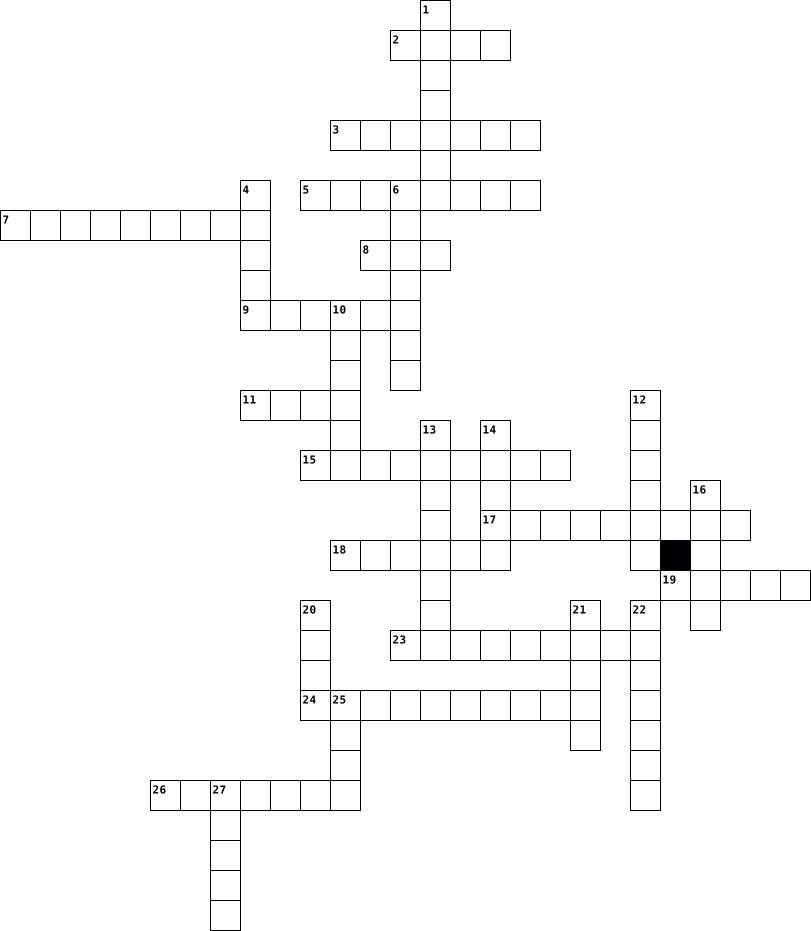
Across
- ______ moon is the phase when the entire lit side of the moon can be seen from Earth.
- space craft that carries astronauts to space
- Rock found in the asteroid belt
- Name of a meteor once it reaches the Earth's surface
- The star that the earth revolves around.
- 6th planet from the sun
- The natural satellite that revolves around the Earth.
- The study of the moon, stars, and other objects in space.
- A person who travels to space
- A large round pit caused by the impact of a meteoroid.
- 3rd planet from the sun
- An optical instrument designed to make distant objects appear nearer.
- thin layer of gases that surround the Earth
- 8th planet from the sun
Down
- 5th planet from the sun
- 2nd planet from the sun
- Each of the two days of the year on which neither hemisphere is tilted toward or away from the sun.
- 7th planet from the sun
- __________ tide, when the Sun, Earth, and moon are all in line and create extreme high and low tides.
- two days of the year on which the sun reaches its greatest distance north or south of the equator.
- _______ eclipse, where the moon passes directly between the earth and sun
- _______ eclipse, where the moon passes into the Earth´s shadow.
- National Aeronautics and Space Administration; formed in 1958 with the goal of placing an American in orbit.
- A relatively small, sometimes active object, which is composed of dirt and ices
- 1st planet from the sun
- The predictable rise and fall of ocean water due to the moon and sun's gravity.
- Used to be the 9th planet from the sun, now a dwarf planet
27 Clues: 5th planet from the sun • 2nd planet from the sun • 6th planet from the sun • 7th planet from the sun • 3rd planet from the sun • 1st planet from the sun • 8th planet from the sun • A person who travels to space • Rock found in the asteroid belt • The star that the earth revolves around. • thin layer of gases that surround the Earth • space craft that carries astronauts to space • ...
Earth-Sun-Moon 2025-11-05

Across
- I describe the Moon as less of it becomes illuminated (lit up) during the month.
- I describe how the Moon looks at any given point during the month. The are 8 (main ones) of me.
- I am the darkest, most solid part of a shadow when there is an eclipse.
- I am what happens when the moon lines up between the Earth & Sun.
- I describe a characteristic of Earth in space. I am 23.5 degrees.
- I am the season that begin around March 21st.
- I describe the type of sunlight a hemisphere of Earth receives when it is tilted towards the Sun.
- I am a word used to describe the "longest" and "shortest" days of the year.
- I am the lighter, less solid part of a shadow when there is an eclipse.
- I describe the Moon as more of it becomes illuminated (lit up) during the month.
Down
- I am the season that begins around June 21st.
- I am a word that means "to light up".
- I describe two days a year when the Sun is directly above the equator.
- I am what happens when the Earth lines up between the Sun and Moon.
- I describe the type of sunlight a hemisphere of Earth receives when it is tilted away from the Sun.
- I am the season in Iowa when the northern hemisphere is tilted away from the Sun.
- I describe a moon phase where 3/4 of the moon is illuminated.
- I am the season that begins around September 21st.
- I am the star at the center of our solar system.
- I am the planet involved during a solar or lunar eclipse.
- When I get between the Earth and Sun I may cast a small shadow on Earth.
21 Clues: I am a word that means "to light up". • I am the season that begins around June 21st. • I am the season that begin around March 21st. • I am the star at the center of our solar system. • I am the season that begins around September 21st. • I am the planet involved during a solar or lunar eclipse. • I describe a moon phase where 3/4 of the moon is illuminated. • ...
Crossing Behind the Moon 2026-04-13

Across
- The astronauts reached this side of the moon
- The Artemis II mission was designed to test the systems aboard this spacecraft
- Name of the Artemis II commander
- Number of meteors the Artemis II crew saw hit the moon
- The astronauts of Artemis II heard a recorded greeting from this man who had flown behind the moon over 50 years ago
- Name of the astronaut from the Canadian Space Agency
- Orion's specially designed path used this from the moon to help return the ship to Earth
- The astronauts were jammed into a space that was about twice as large as the inside of one of these
- Astronauts added this to bags of dried food and then squeezed the results into their mouths
Down
- Name the crew gave its spacecraft
- This froze inside the space toilet
- This caused some problems for the Artemis II crew
- Number of astronauts in the crew of the Artemis II mission
- The Artemis II crew was able to watch one of these - when the sun was hidden behind the moon
- Name given to a giant crater on the moon - over 600 miles wide
- Some of the Artemis II crew slept in bags attached to these in the capsule
- NASA's Artemis program aims to send humans here
- During this, the astronauts were able to closely examine the side of the moon that is always facing away from Earth
- The crew of Artemis II became the first humans to go here in over 50 years
- The crew of Artemis II traveled farther away from this than anyone ever has before
20 Clues: Name of the Artemis II commander • Name the crew gave its spacecraft • This froze inside the space toilet • The astronauts reached this side of the moon • NASA's Artemis program aims to send humans here • This caused some problems for the Artemis II crew • Name of the astronaut from the Canadian Space Agency • Number of meteors the Artemis II crew saw hit the moon • ...
space 2023-02-02
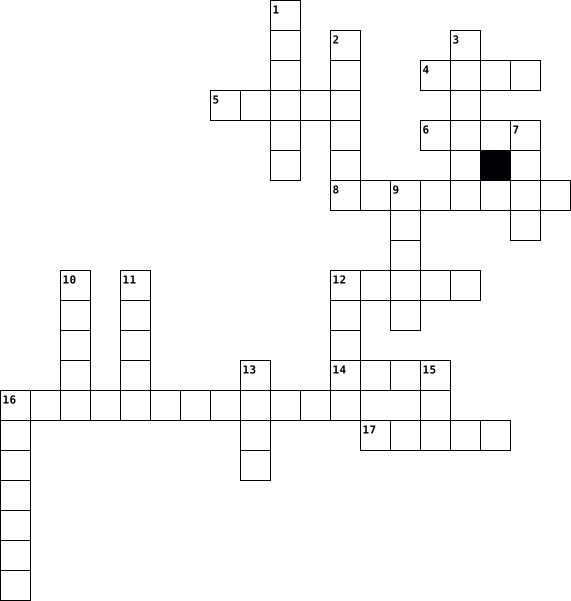
Across
- nasa
- venus
- mass
- milkyway
- space
- axis
- meteorshower
- rings
Down
- planet
- system
- galaxy
- star
- lunar
- orbit
- pluto
- solar
- moon
- sun
- mercury
19 Clues: sun • nasa • mass • star • moon • axis • venus • lunar • orbit • pluto • space • solar • rings • planet • system • galaxy • mercury • milkyway • meteorshower
Monthsmoon 2023-03-10
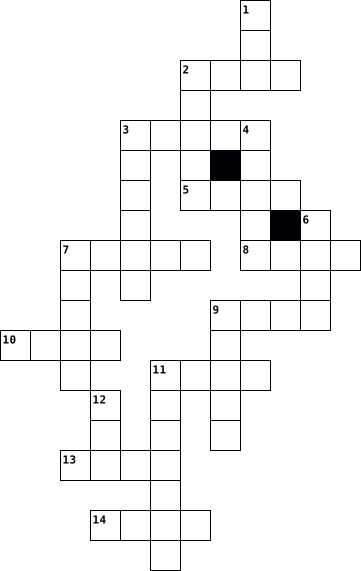
Across
- book
- scoop
- moon
- stool
- look
- good
- hook
- cook
- foot
- food
Down
- boo
- broom
- school
- pool
- wood
- spoon
- goose
- cartoon
- zoo
19 Clues: boo • zoo • book • pool • moon • wood • look • good • hook • cook • foot • food • broom • scoop • stool • spoon • goose • school • cartoon
A-R 2024-01-11

Across
- lock
- robot
- juice
- island
- car
- orange
- moon
- kitchen
- roads
Down
- fork
- quarter
- door
- airplaine
- pencil
- bed
- girl
- nurse
- house
- ear
19 Clues: bed • car • ear • fork • door • lock • girl • moon • robot • juice • nurse • house • roads • pencil • island • orange • quarter • kitchen • airplaine
Moon Crossword Puzzle 2022-10-21

Across
- the Moon is fully visible from our view
- less light appears on the Moon
- a c shaped light on the Moon that takes less than half of the Moon
- half of the Moon is lit but it WANING
- more light appears on the Moon
- happens when the Moon is at an 90° angle to the Earth during first or third quarter
- half of the Moon is lit but is WAXING
Down
- when the Earth's rotation isn't at the highest ocean bulge
- when the Earth's rotation is at the highest bulge
- a light bulge that takes more than half of the moon
- happens when the Sun and Earth are aligned or full Moon and new Moon
- no light is on the viewable side of the Moon
12 Clues: more light appears on the Moon • less light appears on the Moon • half of the Moon is lit but it WANING • half of the Moon is lit but is WAXING • the Moon is fully visible from our view • no light is on the viewable side of the Moon • when the Earth's rotation is at the highest bulge • a light bulge that takes more than half of the moon • ...
Sun Earth Moon Interactions 2025-11-04

Across
- The lowest water level of the tide cycle
- The phase when the Moon is between Earth and Sun and appears dark
- The season when a hemisphere is tilted away from the Sun
- The path one object takes around another in space
- A Moon phase where more than half is lit but not full
- When the moon is closest to earth in it's orbit
- The season when a hemisphere is tilted toward the Sun
- The spinning of Earth on its axis causing day and night
- The 23.5 degree angle of Earth's axis causing seasons
- When Sun and Moon are at right angles causing lower tides
- The amount of time during a day that receives sunlight
- When day and night are equal in length
- The movement of Earth around the Sun taking one year
- The regular rise and fall of sea levels
Down
- The phase when the Moon's whole lit side faces Earth
- When the Sun is at its greatest distance from the equator
- An imaginary line dividing Earth into northern and southern halves
- A Moon phase where only a small curved edge is lit
- The darkest part of a shadow during an eclipse
- When one celestial body moves into the shadow of another
- The force of attraction between objects
- When Sun and Moon align causing higher high tides
- Half of Earth, divided into northern and southern parts
- When the Moon blocks sunlight from reaching Earth
- A part of the year marked by specific weather patterns
- The lighter outer part of a shadow during an eclipse
- The highest water level of the tide cycle
- An imaginary line Earth spins on
- When Earth blocks sunlight from reaching the Moon
29 Clues: An imaginary line Earth spins on • When day and night are equal in length • The force of attraction between objects • The regular rise and fall of sea levels • The lowest water level of the tide cycle • The highest water level of the tide cycle • The darkest part of a shadow during an eclipse • When the moon is closest to earth in it's orbit • ...
Solar Eclipse Key Terms 2024-04-05

Across
- eclipse: happens when the moon passes between the Sun and Earth but the Sun, Moon, and Earth are not perfectly lined up.
- a thin layer of plasma that lies between the Sun’s visible surface and the corona.
- the region of the diffuse shadow
- eclipse: an eclipse in which a thin outer ring of the sun’s disk is not covered by the smaller dark disk of the moon.
- the Sun’s upper atmosphere.
- Shadows: a dark-gray, cone-shaped shadow.
- eclipse: and eclipse in which the whole of the disk of the sun or moon is obscured.
- (last) contact (C4): when the outer edge of the moon last touches the sun, marks its end.
- magnitude: the fraction of the Sun’s diameter that is covered by the moon.
- Ring-shape; of or forming a ring.
- contact: the instant when the total or annular phase of a solar eclipse ends.
- the apparent path of the sun throughout the course of a year.
- bands: one of a series of darkish narrow parallel bands seen to rush swiftly across the landscape just before or after totality in a solar eclipse probably due to optical effects of the earth’s atmosphere.
- areas where the magnetic field is about 2,500 times stronger than Earth’s
Down
- ring: the sun’s light will burst from the first place that becomes uncovered, shining like a diamond that’s set on a ring.
- the region of the complete shadow
- the state of being important.
- a period of approximately 6,585.3 days.
- Moon: the phase of the moon when it’s in conjunction with the sun and invisible from earth.
- beads: the row of brilliant points of sunlight shining through valleys on the edge of the moon that are seen for a few seconds before and after the central phase in an eclipse of the sun.
- contact (C1): the moment the moon first touches the edge of the solar disk, approaching it from the right as seen from the Northern Hemisphere.
- the external layer of the sun which is known as the luminous envelope or the visible layer of the sun from which light as well as heat radiate.
- a person who chases eclipses
- the lighter part of a shadow that forms at a certain distance from the object casting the shadow.
- obscuration: the fraction of the Sun’s area occulted by the Moon.
- when the moon fully obscures the sun.
- season: the only time the Sun is close enough to one of the Moon’s nodes to allow an eclipse to occur.
- contact: starting with Baily’s beads and the diamond ring effect.
- eclipse: a rare eclipse that starts as an Annular eclipse and can change to a Total Eclipse, or vice versa.
- cycle: the recurring increase and decrease in the number of ______ over a period averaging about eleven years.
30 Clues: the Sun’s upper atmosphere. • a person who chases eclipses • the state of being important. • the region of the diffuse shadow • the region of the complete shadow • Ring-shape; of or forming a ring. • when the moon fully obscures the sun. • a period of approximately 6,585.3 days. • Shadows: a dark-gray, cone-shaped shadow. • ...
BC4 Unit 4 2021-12-06

Across
- sky
- caught
- learnt
- bounced
- waterfall
- fished
- wave
- plant
- skipped
Down
- jungle
- kicked
- moon
- threw
- world
- island
- sailed
- flew
- hopped
- star
19 Clues: sky • moon • flew • wave • star • threw • world • plant • jungle • kicked • caught • learnt • island • sailed • fished • hopped • bounced • skipped • waterfall