
photosynthesis Crossword Puzzles
Pop/Res WB A pages 2025-02-14

Across
- food source for the Moon Jellies CH2
- how algae get their food CH5
- some zooplankton grow into these (two words) CH4
- an animals that eats kelp CH9
- reactant of photosynthesis (two words) CH9
- food source for the zooplankton CH4
- food source for the leatherback turtle CH6
- color of the walleye pollock CH3
- name of a group or family of orcas CH6
Down
- type of jellies the article is about CH2
- a product of photosynthesis CH5
- only predator of the orca CH6
- nickname of the orca (two words) CH7
- moon jellies move by doing what to their bodies CH2
- food source for the sea urchin CH8
- number of teeth a sea urchin has CH8
- very large type of algae (two words) CH5
- an example of the Arctic system is the Gulf of ? CH1
- where leatherback turtles lay their eggs CH6
- a predator of the leatherback turtle CH6
20 Clues: how algae get their food CH5 • only predator of the orca CH6 • an animals that eats kelp CH9 • a product of photosynthesis CH5 • color of the walleye pollock CH3 • food source for the sea urchin CH8 • food source for the zooplankton CH4 • food source for the Moon Jellies CH2 • nickname of the orca (two words) CH7 • number of teeth a sea urchin has CH8 • ...
Kelp Crossord 2025-11-04

Across
- – Substance extracted from kelp used in food and cosmetics.
- – Efforts to rebuild damaged kelp forests.
- – Stem-like structure that supports the blades.
- – Kelp forests provide this for marine life.
- – Kingdom classification of kelp.
- – Type of environment where kelp is found.
- – Kelp is this in the food chain.
- – Kelp forests form this complex biological community.
- – Preferred temperature condition for kelp growth.
- – Gas-filled bladder that helps kelp float.
- – Process kelp uses to make food from sunlight.
Down
- - The group of algae including kelp.
- – Kelp forests support high levels of this.
- – Surface kelp attaches to, usually rocky.
- – Anchors kelp to the ocean floor.
- – Marine mammal that lives in kelp forests.
- – Kelp forests help reduce this along coastlines.
- – Essential for kelp’s photosynthesis.
- – Leaf-like structure of kelp where photosynthesis occurs.
- – Kelp absorbs these from the water.
20 Clues: – Kingdom classification of kelp. • – Kelp is this in the food chain. • – Anchors kelp to the ocean floor. • - The group of algae including kelp. • – Kelp absorbs these from the water. • – Essential for kelp’s photosynthesis. • – Surface kelp attaches to, usually rocky. • – Efforts to rebuild damaged kelp forests. • – Type of environment where kelp is found. • ...
Literacy activity 2022-02-15

Across
- radiation
- troposphere
- photosynthesis
- biosphere
- atmosphere
- mesosphere
- hydrosphere
Down
- thermosphere
- greenhouse
- stratosphere
- lithosphere
11 Clues: radiation • biosphere • greenhouse • atmosphere • mesosphere • lithosphere • troposphere • hydrosphere • thermosphere • stratosphere • photosynthesis
Puzzle A: Core Metabolism 2026-01-28

Across
- Three-carbon sugar phosphate produced in photosynthesis
- Enzyme that fixes CO₂ in the Calvin cycle
- Series of enzyme-controlled reactions
- Gas fixed to form organic molecules
- Primary carbon product of the Calvin cycle
- Energy required to start a reaction
Down
- Process that breaks down sugars to release energy
- Molecule acted upon by an enzyme
- First stage of cellular respiration
- Organelle where photosynthesis occurs
- Organelle where most ATP is produced
- Proteins that speed up metabolic reactions
- Light-driven reactions occur in these membranes
- Cycle that fixes carbon dioxide in photosynthesis
- Energy carrier produced in the light reactions
- Main energy currency of cells
16 Clues: Main energy currency of cells • Molecule acted upon by an enzyme • First stage of cellular respiration • Gas fixed to form organic molecules • Energy required to start a reaction • Organelle where most ATP is produced • Organelle where photosynthesis occurs • Series of enzyme-controlled reactions • Enzyme that fixes CO₂ in the Calvin cycle • ...
Plant Nutrient Crossword 2022-04-05

Across
- secondary; essential for protein synthesis
- micro; Cl
- trace elements
- micro; B
- macronutrient; purpling deficiency
- needed in large amount
- micro; Cu
- non-mineral; get from oxygen
- non-mineral; get from the air
- micro; Fe
- secondary; essential for photosynthesis
Down
- secondary; essential for cell division
- micro; Zn
- mineral needed less than macro
- macronutrient; yellowing center deficiency
- micro; Mn
- non-mineral; get from water
- used in photosynthesis equation
- micro; Mo
- macronutrient; yellowing edges deficiency
20 Clues: micro; B • micro; Zn • micro; Cl • micro; Mn • micro; Cu • micro; Mo • micro; Fe • trace elements • needed in large amount • non-mineral; get from water • non-mineral; get from oxygen • non-mineral; get from the air • mineral needed less than macro • used in photosynthesis equation • macronutrient; purpling deficiency • secondary; essential for cell division • ...
BIO101 2026-03-26

Across
- Prokaryotic organisms
- Protein maker
- Built by ribosomes
- Non-living pathogen
- Internal balance
- The messenger
- DNA backbone part
- Plant energy process
- Darwin's theory
- Basic unit of life
Down
- Powerhouse of the cell
- Genetic code
- Gamete production
- Where photosynthesis occurs
- Variant of a gene
- Ecological area
- Diffusion of water
- Cell division
- Unit of heredity
- The cell's brain
- Cell structure
- Specific group
- Energy currency
- Fertilized egg
- Biological catalyst
- Below Kingdom
26 Clues: Genetic code • Protein maker • Cell division • The messenger • Below Kingdom • Cell structure • Specific group • Fertilized egg • Ecological area • Energy currency • Darwin's theory • Unit of heredity • The cell's brain • Internal balance • Gamete production • Variant of a gene • DNA backbone part • Built by ribosomes • Diffusion of water • Basic unit of life • Non-living pathogen • Biological catalyst • ...
Photosynthesis & Respiration 2022-10-21

Across
- the process a plant goes through when making its food.
- the power, energy, or other results supplied by a device or system.
- the 'powerhouse" of a cell
- what is put in, taken in, or operated on by any process or system.
- where photosynthesis takes place.
- Metabolism of an individual cell, tissue, or organism that results in the release of chemical energy derived from organic nutrients.
- plants give it out and animals take it in.
- a colorless, transparent, odorless liquid that forms the seas, lakes, rivers, and rain and is the basis of the fluids of living organisms.
Down
- light from the sun
- the result of an action or process.
- The major carbohydrate in starch and fruit sugar.
- Adenosine triphosphate (ATP) is the source of energy for use and storage at the cellular level.
- dioxide, plants take it In and animals give it out.
- a substance that takes part in and undergoes change during a reaction.
14 Clues: light from the sun • the 'powerhouse" of a cell • where photosynthesis takes place. • the result of an action or process. • plants give it out and animals take it in. • The major carbohydrate in starch and fruit sugar. • dioxide, plants take it In and animals give it out. • the process a plant goes through when making its food. • ...
Photosynthesis & Respiration 2022-10-21

Across
- the process a plant goes through when making its food.
- the power, energy, or other results supplied by a device or system.
- the 'powerhouse" of a cell
- what is put in, taken in, or operated on by any process or system.
- where photosynthesis takes place.
- Metabolism of an individual cell, tissue, or organism that results in the release of chemical energy derived from organic nutrients.
- plants give it out and animals take it in.
- a colorless, transparent, odorless liquid that forms the seas, lakes, rivers, and rain and is the basis of the fluids of living organisms.
Down
- light from the sun
- the result of an action or process.
- The major carbohydrate in starch and fruit sugar.
- Adenosine triphosphate (ATP) is the source of energy for use and storage at the cellular level.
- dioxide, plants take it In and animals give it out.
- a substance that takes part in and undergoes change during a reaction.
14 Clues: light from the sun • the 'powerhouse" of a cell • where photosynthesis takes place. • the result of an action or process. • plants give it out and animals take it in. • The major carbohydrate in starch and fruit sugar. • dioxide, plants take it In and animals give it out. • the process a plant goes through when making its food. • ...
Photosynthesis Review 2021-10-05

Across
- Sunlight, water, and carbon dioxide are the _______ in photosynthesis.
- Tiny molecules in the chloroplast that absorb sunlight and give leaves their green color.
- Energy from sunlight is absorbed by chlorophyll and converted into stored chemical energy in the form of _____ and NADPH.
- Photosynthesis begins with the absorption of _______ and water in a process known as the light-dependent reaction.
- The process that plants use to make their own food.
- NADP+ and _____ are energy-carrying molecules that return to the light-dependent reactions to obtain more energized electrons.
Down
- Glucose is the ________ of the Calvin cycle.
- The gas that is released as a product of photosynthesis.
- The part of the plant cell that uses sunlight to make food for the plant.
- One of the products of photosynthesis.
- The gas that is absorbed by the stomata during the light-independent reaction.
- Area of the chloroplast where the light-dependent reactions take place.
- Where the light-independent reaction (Calvin cycle) takes place.
- The part of the plant where carbon dioxide enters through the stomata.
14 Clues: One of the products of photosynthesis. • Glucose is the ________ of the Calvin cycle. • The process that plants use to make their own food. • The gas that is released as a product of photosynthesis. • Where the light-independent reaction (Calvin cycle) takes place. • Sunlight, water, and carbon dioxide are the _______ in photosynthesis. • ...
Photosynthesis lol 2021-02-25

Across
- a soft tissue inside the leaf
- to prevent water-loss
- a cell that provides water
- a waste product
- a tiny holes in the underside of leaves
- a the internal ground tissue located between the two epidermal cell layers of the leaf
Down
- a process which plant produce their own foods
- a way to take carbon dioxide from atmosphere
- a process of translocation sugar form source to the sink
- a green pigment found in chloroplast
- where chlorophyll are mostly at
- a thick solution that fills each cell and is enclosed by the cell membrane
- what plants produce by photosynthesis
- cell a cell that controls the gas exchange
- the vascular tissue in plants that conducts sugars
15 Clues: a waste product • to prevent water-loss • a cell that provides water • a soft tissue inside the leaf • where chlorophyll are mostly at • a green pigment found in chloroplast • what plants produce by photosynthesis • a tiny holes in the underside of leaves • cell a cell that controls the gas exchange • a way to take carbon dioxide from atmosphere • ...
photosynthesis crossword 2023-01-19

Across
- the basic liquid of fluids in living organisms
- the most basic form of energy that plants use
- a plastid that contains chlorophyll
- a gas in 0.03 percent of all air
- something that most living organisms need to survive
- a color that most plants are known to be
- the natural coloring matter of animal or plant tissue
Down
- the basic unit of all plants
- a simple sugar that serves as an energy source in living organisms
- a green pigment present in all green plants
- the process plants go through to make oxygen and glucose
- a gaseous substance that surrounds the earth
- the life-supporting component in the air
- the part of a plant that attaches to the ground
14 Clues: the basic unit of all plants • a gas in 0.03 percent of all air • a plastid that contains chlorophyll • the life-supporting component in the air • a color that most plants are known to be • a green pigment present in all green plants • a gaseous substance that surrounds the earth • the most basic form of energy that plants use • ...
Photosynthesis Terms 2013-12-07

Across
- chloroplasts inner membrane I closes this thick fluid
- clusters of pigment molecules within a thylakoids membrane
- makes sugar from atoms in carbon dioxide, plus hydrogen and the high -energy electrons carried by NADPH
- the range of different types of electromagnetic energy
- stacks of Thylakoids
- organelle is which photosynthesis occurs
Down
- the process by which carbon moves inorganic compounds to organic compounds and back
- a laboratory test used to separate and analyze the different pigments in a leaf
- carbon dioxide traps heat in the atmosphere that would otherwise escape to space, keeping the world climate warm enough for living things
- chemical compound the causes a substances color
- convert the energy in sunlight to chemical energy
- give the chloroplast it's green color
- many disc shaped sacs suspended in the stroma
- the distance between two waves
14 Clues: stacks of Thylakoids • the distance between two waves • give the chloroplast it's green color • organelle is which photosynthesis occurs • many disc shaped sacs suspended in the stroma • chemical compound the causes a substances color • convert the energy in sunlight to chemical energy • chloroplasts inner membrane I closes this thick fluid • ...
Photosynthesis & Respiration 2025-12-22

Across
- The green pigment in plants that absorbs sunlight
- The part of a plant cell where photosynthesis happens
- An organism that makes its own food
- The process plants use to make food using light, carbon dioxide, and water
- A substance used up in a chemical reaction
- A substance that gives color and absorbs light
- A substance plants store extra glucose as
Down
- A nutrient that provides energy, such as sugars and starch
- Tiny openings in leaves that allow gas exchange
- A nutrient needed for growth and repair
- The process by which living things release energy from food
- An organism that gets energy by eating other organisms
- A substance made in a chemical reaction
- A sugar made during photosynthesis
14 Clues: A sugar made during photosynthesis • An organism that makes its own food • A nutrient needed for growth and repair • A substance made in a chemical reaction • A substance plants store extra glucose as • A substance used up in a chemical reaction • A substance that gives color and absorbs light • Tiny openings in leaves that allow gas exchange • ...
Biology Photosynthesis 2025-05-03

Across
- major role in photosynthesis, gives plants green pigment
- transports water and minerals around the plant
- evaporation of water in leaves
- part of the plant containing chlorophyll
- a nutrient and a mineral
- absorbs energy, typically in the form of heat
- let it GROW let it GROW! Like it did so long ago!!??
Down
- found in the tips of the roots.
- a complex, organic polymer
- when liquid turns into gas
- tissue responsible for transporting sugars around the plant
- It is a plant tissue at the tips of roots
- found in the epidermis of leaves and stems
- composed of nitrogen and oxygen
14 Clues: a nutrient and a mineral • a complex, organic polymer • when liquid turns into gas • evaporation of water in leaves • found in the tips of the roots. • composed of nitrogen and oxygen • part of the plant containing chlorophyll • It is a plant tissue at the tips of roots • found in the epidermis of leaves and stems • absorbs energy, typically in the form of heat • ...
Photosynthesis definitions 2025-09-17

Across
- the thing that gives a plants its green pigment
- cells-special cells that control to opening and closing of stomach
- an organism that makes its own food
- small openings in leaves thar gases move in and out
- a waxy layer on the leaf surface that reduces water loss
- dioxide-a gas that plants take in for Photosynthesis
- plant tissue that transport glucose from the leaves to the rest of the plant
Down
- the organelles where Photosynthesis happens
- a disc shaped structure inside chloroplast where light enters
- the other layer of cells on a leaf that protects inner tissues
- sugar made by plants during Photosynthesis
- a process where plants make their own food
- a gas that plants release
- plant tissues that carries water and minerals from roots to leaves
14 Clues: a gas that plants release • an organism that makes its own food • sugar made by plants during Photosynthesis • the organelles where Photosynthesis happens • a process where plants make their own food • the thing that gives a plants its green pigment • small openings in leaves thar gases move in and out • dioxide-a gas that plants take in for Photosynthesis • ...
photosynthesis n cellular respiration 2023-11-10

Across
- Site in Plant where photosynthesis takes place
- organelle in which photosynthesis takes place
- hydration
- energy
- Organisms that make their own food
- co2
Down
- whats inside cells
- Cellular respiration converts oxygen and glucose into water and carbon dioxide.
- thousands are in you body
- what converts carbon dioxide and water into oxygen and glucose.
- sugar
- the green chemical
12 Clues: co2 • sugar • energy • hydration • whats inside cells • the green chemical • thousands are in you body • Organisms that make their own food • organelle in which photosynthesis takes place • Site in Plant where photosynthesis takes place • what converts carbon dioxide and water into oxygen and glucose. • ...
Photosynthesis and Cellular Respiration 2023-01-30

Across
- the site of photosynthesis
- the gas that is used during cellular respiration
- the process that uses sunlight to make glucose
- the process that uses oxygen and glucose to make ATP
- the gas that is released (breathed out) after cellular respiration
Down
- the sugar produced by photosynthesis
- the type of energy that is a product of photosynthesis
- the energy source made during cellular respiration
- the energy source for photosynthesis
- the site of cellular respiration
10 Clues: the site of photosynthesis • the site of cellular respiration • the sugar produced by photosynthesis • the energy source for photosynthesis • the process that uses sunlight to make glucose • the gas that is used during cellular respiration • the energy source made during cellular respiration • the process that uses oxygen and glucose to make ATP • ...
vocab chapter 9 2022-12-14

Across
- organism that gets its nutrients from other organisms
- set of reactions in photosynthesis that do not require light
- fluid portion in the chloroplast outside the thylakoids
- carrier molecule that transfers high-energy molecules
- cluster of proteins that span the thykaloid membrane and allow hydrogen ions pass through it
- process of using light for food
- organism that makes its own food
- set of reactions in photosynthesis that use energy from light to produce ATP and NADPH
- a compound that looks almost like ATP, except that it has two phosphate groups instead of three.
- light independent reactions of photosynthesis in which energy from atp and nadph is used to build high-energy compounds like sugar
Down
- light absorbing molecules used by plants to gather the suns energy
- series of electron carrier proteins that shuttle high energy electrons during atp generating reactions
- "bunch of oars" moving aimlessly
- cluster of chlorophyll and proteins found in thykaloids
- Adenosine triphosphate energy cells use
- singular back oar like a fishes tail
- principal pigment of plants and other photosynthetic organisms
- saclike photosynthetic membranes found in chloroplasts
- Energy stored in the bonds of chemical compounds.
19 Clues: process of using light for food • "bunch of oars" moving aimlessly • organism that makes its own food • singular back oar like a fishes tail • Adenosine triphosphate energy cells use • Energy stored in the bonds of chemical compounds. • organism that gets its nutrients from other organisms • carrier molecule that transfers high-energy molecules • ...
PhotoSYNthesis -- let's get INTO this 2022-10-26

Across
- openings in underside of a leaf
- sugar made in photosynthesis
- released during photosynthesis
- molecule that absorbs wavelengths of light
Down
- the kind of music that mummies like
- water moves to these for photosynthesis
- where water enters a plant
- Monday!
- organelle where photosynthesis takes place
- oxygen and carbon dioxide are examples
10 Clues: Monday! • where water enters a plant • sugar made in photosynthesis • released during photosynthesis • openings in underside of a leaf • the kind of music that mummies like • oxygen and carbon dioxide are examples • water moves to these for photosynthesis • organelle where photosynthesis takes place • molecule that absorbs wavelengths of light
The Relationship Between Plants, Animals, and the Sun 2022-04-05

Across
- Animals breathe out _______. (Use the shortened version.)
- A tiny part in a plant cell that contains chlorophyll and is where photosynthesis occurs.
- Animals breath in _______.
- What eats plants to get energy?
- The process plants use to make sugar using sunlight
- A type of sugar
- Photosynthesis is done by _______ plants.
Down
- The green coloring matter found mainly in the chloroplasts of plants that absorbs energy from sunlight to produce sugar from carbon dioxide and water during photosynthesis.
- ________ create oxygen.
- dioxide CO2
- H2O
- What do plants suck up from the ground and combine with CO2 to make sugar?
- What is another name for "sunlight energy"?
13 Clues: H2O • A type of sugar • dioxide CO2 • ________ create oxygen. • Animals breath in _______. • What eats plants to get energy? • Photosynthesis is done by _______ plants. • What is another name for "sunlight energy"? • The process plants use to make sugar using sunlight • Animals breathe out _______. (Use the shortened version.) • ...
Photosynthesis and Cellular Respiration 2026-04-07

Across
- The main energy source for the plants.
- The set of chemical reactions that maintain life.
- The organelle where photosynthesis occurs.
- The tiny pores that take in carbon dioxide.
- The powerhouse of the cell.
- The process of turning glucose (sugar) into energy.
- The first step of breaking down glucose
- A byproduct of cellular respiration.
Down
- The process of plants turning water and carbon dioxide into oxygen.
- The green pigment that absorbs sunlight.
- A organism that uses photosynthesis to make its own food.
- The product of photosynthesis.
12 Clues: The powerhouse of the cell. • The product of photosynthesis. • A byproduct of cellular respiration. • The main energy source for the plants. • The first step of breaking down glucose • The green pigment that absorbs sunlight. • The organelle where photosynthesis occurs. • The tiny pores that take in carbon dioxide. • The set of chemical reactions that maintain life. • ...
Science Crossword 2013-10-19

Across
- Respiration Organic molecules made into energy to use.
- The study of the flow and transformation of energy.
- Regenerates NAD and makes a bit of ATP.
- Cycle Light-independent reactions of photosynthesis.
- Glucose being broken down in the cytoplasm
- Light absorbing colored molecules.
- A process that doesn't need oxygen.
Down
- Also called the citric acid cycle.
- Light from the sun converted into chemical energy for plants.
- Where the light-independent reactions of phase 2 of photosynthesis happen.
- Stacks of Thykaloids.
- The chemical reactions in a cell.
- The ability to do work.
- Light-dependent reactions take place within these.
- Process that doesn't need oxygen.
- Adenosine Triphosphate.
16 Clues: Stacks of Thykaloids. • The ability to do work. • Adenosine Triphosphate. • The chemical reactions in a cell. • Process that doesn't need oxygen. • Also called the citric acid cycle. • Light absorbing colored molecules. • A process that doesn't need oxygen. • Regenerates NAD and makes a bit of ATP. • Glucose being broken down in the cytoplasm • ...
Tiffany's Crossword Puzzle 2021-12-17

Across
- This obtains energy from consuming other organisms'
- Dioxide Levels In hot and arid climates the stomata may close to conserve water, but this closure limits the entry of what?
- What connects the roots to their leaves helps to transport absorbed water and minerals to different parts of the plant. This part of the plant also helps to transport the products of photosynthesis from the leaves to the rest of the plant.
- What contains the photosynthetic pigment. This area of the light-dependent reactions of photosynthesis with the photosynthetic pigments embedded directly in the membrane.
- What is the colorless fluid surrounding the grana within the chloroplast. This thing helps the light-independent reactions of photosynthesis take place. This area contains enzymes that work with ATP and NADPH to “fix” carbon from carbon dioxide into molecules that can be used to build glucose.
- This is the living tissue in vascular plants that transports the soluble organic compounds made during photosynthesis and known as photosynthates, in particular the sugar sucrose, to parts of the plant where needed.
- In photosynthesis, What controls the transportation of water vapor and the exchange of carbon dioxide and oxygen.
- What is connected to other stacks by simple membranes within the stroma.
- What affects the process of photosynthesis so we have alot of energy.
Down
- This is a tissue that is used mostly for transporting water from roots to stems and leaves but also transports other dissolved compounds.
- This function can occur without oxygen, it captures free energy from chemical compounds.
- What protects the cell and mainly the nucleus?
- This function helps capture free energy from light.
- responsible for absorbing water for the plant.
- This process is capable of producing energy on its own.
- When you have more of this it causes the molecules involved to gain kinetic energy, or even stopping the reaction completely
- Where is chlorophyll contained to absorb light energy.
- What helps to produce food for the plant by photosynthesis. Chlorophyll is in substance that gives plants their characteristic green color, absorbs light energy.
- What is produced from the Calvin cycle. It is used for regenerating the RuBP to continue the cycle, and for molecular synthesis and is used to make fructose diphosphate.
19 Clues: What protects the cell and mainly the nucleus? • responsible for absorbing water for the plant. • This function helps capture free energy from light. • This obtains energy from consuming other organisms' • Where is chlorophyll contained to absorb light energy. • This process is capable of producing energy on its own. • ...
Unit 2 vocab 2023-09-29

Across
- CO2 comes from this
- carbon dioxide
- carb
- O2 comes from this
- adenosine triphosphate
- glucose
- used to create CO2, ATP, NADH
- comes from glycolysis and the Kreb cycle
- nucleic acid and phosphate
- 4 ATP comes from this
- diphosphate
- oxygen
Down
- 2 ATP comes from this
- eats for their energy
- Opposite of photosynthesis
- makes their own energy
- how plants make energy
- comes from glycolysis to create ATP
- Protein and nucleic acid
- water
20 Clues: carb • water • oxygen • glucose • diphosphate • carbon dioxide • O2 comes from this • CO2 comes from this • 2 ATP comes from this • eats for their energy • 4 ATP comes from this • makes their own energy • how plants make energy • adenosine triphosphate • Protein and nucleic acid • Opposite of photosynthesis • nucleic acid and phosphate • used to create CO2, ATP, NADH • ...
Photosynthesis+Celleur Resperation Crossword 2025-01-21

Across
- Processes that do not require oxygen, like anaerobic respiration or fermentation
- synthase: An enzyme that synthesizes ATP from ADP and inorganic phosphate, powered by a proton gradient across the thylakoid membrane.
- membrane: The membrane of the mitochondrion where the electron transport chain and ATP synthase are located.
- The main pigment in plants that absorbs light for photosynthesis
- cycle:A series of reactions in the mitochondrial matrix that produce electron carriers and CO2 from pyruvate.
- The innermost part of the mitochondrion where the Krebs cycle occurs.
- Processes that build complex molecules from simpler ones, requiring energy.
- Processes that require oxygen, like aerobic respiration.
Down
- The final electron acceptor in aerobic respiration and a product of photosynthesis.
- transport chain: In cellular respiration, the chain that transfers electrons from NADH and FADH2 to produce ATP.
- The process by which plants, algae, and some bacteria convert light energy into chemical energy stored in glucose.
- The first stage of cellular respiration, where glucose is broken down into pyruvate.
- respiration: The process of converting biochemical energy from nutrients into ATP, involving glycolysis, the Krebs cycle, and the electron transport chain.
- The product formed when ATP loses a phosphate group, releasing energy.
- Processes that break down molecules to release energy.
- energy: Energy that is released from molecules, often used in cellular functions like movement or synthesis.
- Molecules that absorb light energy, crucial for photosynthesis.
- dioxide: A waste product of cellular respiration and a substrate in photosynthesis.
- energy: Energy that is stored in molecules like glucose.
19 Clues: Processes that break down molecules to release energy. • Processes that require oxygen, like aerobic respiration. • energy: Energy that is stored in molecules like glucose. • Molecules that absorb light energy, crucial for photosynthesis. • The main pigment in plants that absorbs light for photosynthesis • ...
Populations and Resources WB p. A1-A7 2024-03-06

Across
- nickname for Orcas (two words)
- food source for the Green Sea Urchin
- part of kelp that attaches to rocks
- animal that looks like a full moon (two words)
- process of using the Sun’s energy to create sugar
- name of sugar produced from photosynthesis
- largest sea turtle
- shape of bite marks left behind by the Green Sea Urchin
- food source for the leatherback sea turtle
Down
- color of the Walleye Pollock
- where leatherback turtles go to lay eggs (two words)
- predator to the sea urchin
- what a family group of Orcas are called
- the product of photosynthesis
- very small animals that live in the ocean
- animal that feeds on kelp
- the color of many zooplankton
- very large algae (two words)
- where the Green Sea Urchin can detect levels of light brightness
19 Clues: largest sea turtle • animal that feeds on kelp • predator to the sea urchin • color of the Walleye Pollock • very large algae (two words) • the product of photosynthesis • the color of many zooplankton • nickname for Orcas (two words) • part of kelp that attaches to rocks • food source for the Green Sea Urchin • what a family group of Orcas are called • ...
Populations/Resources Lesson 1.2 2023-02-10

Across
- nickname for Orcas (two words)
- food source for the Green Sea Urchin
- part of kelp that attaches to rocks
- animal that looks like a full moon (two words)
- process of using the Sun’s energy to create sugar
- name of sugar produced from photosynthesis
- largest sea turtle
- shape of bite marks left behind by the Green Sea Urchin
- food source for the leatherback sea turtle
Down
- color of the Walleye Pollock
- where leatherback turtles go to lay eggs
- predator to the sea urchin
- what a family group of Orcas are called
- the product of photosynthesis
- very small animals that live in the ocean
- animal that feeds on kelp
- the color of many zooplankton
- very large algae (two words)
- where the Green Sea Urchin can detect levels of light brightness
19 Clues: largest sea turtle • animal that feeds on kelp • predator to the sea urchin • color of the Walleye Pollock • very large algae (two words) • the product of photosynthesis • the color of many zooplankton • nickname for Orcas (two words) • part of kelp that attaches to rocks • food source for the Green Sea Urchin • what a family group of Orcas are called • ...
Chapter 8/9 Carly Kanneman 2020-01-24

Across
- - splitting of glucose
- - makes 2 ATP
- - capture of light energy used for photosynthesis
- - process of making energy of food available in the cell
- - waste product of photosynthesis
- - the pigment that absorbs sunlight
Down
- - photosynthesis takes place inside these plant cells
- - the primary pigment used in photosynthesis
- - produces glucose (sugar)
- - energy that makes a cell
10 Clues: - makes 2 ATP • - splitting of glucose • - produces glucose (sugar) • - energy that makes a cell • - waste product of photosynthesis • - the pigment that absorbs sunlight • - the primary pigment used in photosynthesis • - capture of light energy used for photosynthesis • - photosynthesis takes place inside these plant cells • ...
Plant Nutrient Crossword 2022-04-05

Across
- micro; Mo
- trace elements
- macronutrient; purpling deficiency
- micro; Zn
- non-mineral; get from water
- micro; Mn
- micro; B
- secondary; essential for photosynthesis
- needed in large amount
Down
- micro; Cu
- macronutrient; yellowing edges deficiency
- secondary; essential for protein synthesis
- macronutrient; yellowing center deficiency
- secondary; essential for cell division
- used in photosynthesis equation
- non-mineral; get from oxygen
- micro; Fe
- non-mineral; get from the air
- micro; Cl
19 Clues: micro; B • micro; Cu • micro; Mo • micro; Fe • micro; Zn • micro; Cl • micro; Mn • trace elements • needed in large amount • non-mineral; get from water • non-mineral; get from oxygen • non-mineral; get from the air • used in photosynthesis equation • macronutrient; purpling deficiency • secondary; essential for cell division • secondary; essential for photosynthesis • ...
Plant Metabolism Crossword 2025-02-17

Across
- primary product of photosynthesis; a simple carbohydrate; oxidized during cellular respiration
- metabolic pathways autotrophs use to make their food/glucose
- particle of light absorbed by chlorophyll; provide energy to fuel photosynthesis
- gas molecule that is a reactant in photosynthesis and a product of cellular respiration
- primary product of cellular respiration; unstable molecule that is NOT stored
- photosynthetic pigment that absorbs red and blue light but reflects green light
- organelle that performs photosynthesis
Down
- metabolic pathway used by all aerobic organisms to make ATP
- gas molecule that is a product of photosynthesis and a reactant of cellular respiration
- organelle that performs cellular respiration
10 Clues: organelle that performs photosynthesis • organelle that performs cellular respiration • metabolic pathway used by all aerobic organisms to make ATP • metabolic pathways autotrophs use to make their food/glucose • primary product of cellular respiration; unstable molecule that is NOT stored • ...
Biology Review 2022-11-30

Across
- the monomer of carbohydrates
- what goes into a reaction
- examples of these include sugars
- these are made up of monomers
- respiration with oxygen present
- the building blocks of macromolecules
- when individuals come into an area
- the power house of a cell
Down
- when individuals leave an area
- controls the function of a cell
- a green pigment, present in all green plants and in cyanobacteria, responsible for the absorption of light to provide energy for photosynthesis
- the monomers for these are fatty acid and glycerol
- the monomer of nucleic acids
- respiration without oxygen present
- symbolized by one or two letters and is found on the periodic table
- where the light-dependent reactions of photosynthesis take place, and arranged in stacks
- where the light-independent reactions of photosynthesis take place
- one job of these is to build muscle
- a type of anaerobic respiration
- what comes out of a reaction
20 Clues: what goes into a reaction • the power house of a cell • the monomer of carbohydrates • the monomer of nucleic acids • what comes out of a reaction • these are made up of monomers • when individuals leave an area • controls the function of a cell • respiration with oxygen present • a type of anaerobic respiration • examples of these include sugars • ...
Diner Menu 2020-10-23

Across
- when glucose or carbon are converted into energy
- needs oxygen to take place
- also known as the citric acid cycle
- needed for an aerobic reaction
- energy used and produced in a cell
- does not need oxygen to take place
- uses yeast and sugar to make energy
- the 'uncharged' version of ATP
- the 'uncharged' version of NADPH
- only in plant cells and makes food
- makes food in plants using light energy
Down
- uses energy and carbon dioxide to make food
- uses light to make ADP and NADPH
- the fluid within the chloroplast
- the food needed for cells
- the anaerobic version of cellular respiration
- usually occurs in bacteria and yeast cells
- where the light reaction of photosynthesis takes place
- breaks down ATP to get energy and creates water and carbon dioxide
- the movement of electrons
- part of the energy in photosynthesis
21 Clues: the food needed for cells • the movement of electrons • needs oxygen to take place • needed for an aerobic reaction • the 'uncharged' version of ATP • uses light to make ADP and NADPH • the fluid within the chloroplast • the 'uncharged' version of NADPH • energy used and produced in a cell • does not need oxygen to take place • only in plant cells and makes food • ...
I Was Forced to do This 2021-09-29

Across
- cycle the path that carbon follows throughout the environment
- an organism that eats both plants and animals
- organisms that make their own food
- the path that water follows throughout the environment
- the process used by chloroplast to create energy for the plant
- the envelope of gasses that surround Earth
- an organism that eats dead matter
- what chloroplast absorbs to perform photosynthesis
- organism that gain energy by consuming other organisms
- includes rocks and minerals
- The organelle responsible for photosynthesis
- the process that the mitochondria uses to produce energy
Down
- an organism that only eats plants
- responsible for the green pigment in chloroplast
- The "powerhouse of the cell"
- an organism that breaks down organic matter
- the path that phosphorus follows through the environment
- total amount of water on Earth
- where life exists
- an organism that only eats meat
20 Clues: where life exists • includes rocks and minerals • The "powerhouse of the cell" • total amount of water on Earth • an organism that only eats meat • an organism that only eats plants • an organism that eats dead matter • organisms that make their own food • the envelope of gasses that surround Earth • an organism that breaks down organic matter • ...
The Carbon Cycle 2023-02-25

Across
- a gas that contributes to the greenhouse effect
- the process of burning something
- the breakdown of glucose by enzymes
- when plants make their form of food
- Carbon dioxide the gas form of carbon.
- the process of photosynthesis that does use light
- a natural fuel formed in the ground from the remains of living organisms.
- the acronym for the Electron Transport Chain
- the sphere for life
- molecule Any molecule that contains carbon.
- When plants or animals release CO2 into the atmosphere to make sugars.
Down
- When dead plants or animals get broken down
- the sphere for air
- A cycle that sets up for the Electron Transport Chain
- Where carbon goes into water
- the process of photosynthesis that doesn't use light
- the sphere for rocks
- the sphere for water
- the act of eating for energy
- the process of the earth warming up
20 Clues: the sphere for air • the sphere for life • the sphere for rocks • the sphere for water • Where carbon goes into water • the act of eating for energy • the process of burning something • the breakdown of glucose by enzymes • when plants make their form of food • the process of the earth warming up • Carbon dioxide the gas form of carbon. • ...
ES Midterm Review 2024-01-23

Across
- Humans and bears are examples of this group.
- Organisms that can make their own food.
- The sun provides this type of energy.
- An organism that primarily eats meat.
- Lakes and ponds are this type of water
- An organism that eats plantlike material.
- This atmospheric layers contains weather.
- Lakes and oceans are part of this sphere.
- Oceans are this type of water
- Something that is not living.
- This is the food produced during photosynthesis.
Down
- Organisms that breakdown dead material.
- This prefix means living.
- This prefix means rock/land.
- Gases make up which one of Earth's sphere.
- Chemical process plants are capable of.
- Organisms that gain energy from others.
- This layer absorbs the sun's UV rays.
- This is the gas produced during photosynthesis.
- This ocean is off the coast of NJ.
- Something that is alive or was once living.
21 Clues: This prefix means living. • This prefix means rock/land. • Oceans are this type of water • Something that is not living. • This ocean is off the coast of NJ. • The sun provides this type of energy. • An organism that primarily eats meat. • This layer absorbs the sun's UV rays. • Lakes and ponds are this type of water • Organisms that breakdown dead material. • ...
Process of Photosynthesis 2026-03-03

Across
- Group of photosynthetic pigments in thylakoid membrane
- A negative charged atom of energy
- When an atom or molecule gains electrons
- Series of stronger electron acceptors. Molecules that are accepting and passing electrons
- Product of photosynthesis. Food for the plant
- Flow of hydrogen ions to make energy in the form of ATP
- ADP+Pi=...
- specialized protein that are able to escape the lumen
- Absorbs photons from solar energy and is the being process of photosynthesis
Down
- When an atom or molecule losses electrons
- Where all of Photosynthesis reactions occur
- Pulls H+ ions from the outside of the thylakoid into lumen
- NADPH + ATP creates...
- Individual packet of energy
- That breakdown of water by photons smashing into it
- Light-dependent reactions
- Thylakoids stacked
- Jelly like interior
- The process of turning CO2 into sugar
- Inside part of thylakoid
20 Clues: ADP+Pi=... • Thylakoids stacked • Jelly like interior • NADPH + ATP creates... • Inside part of thylakoid • Light-dependent reactions • Individual packet of energy • A negative charged atom of energy • The process of turning CO2 into sugar • When an atom or molecule gains electrons • When an atom or molecule losses electrons • Where all of Photosynthesis reactions occur • ...
Station 1: 2/24/26 2026-02-24

Across
- carbohydrate produced from the process of photosynthesis
- Body System responsible for gas exchange
- to maintain balance
- A process used yo create mRNA
- a molecule created from DNA for protein synthesis.
- the body system responsible for creating hormones
- nonliving components of an ecosystem
- Molecules created from a process.
- a process used by plants to create carbohydrates
Down
- another way to say different
- the body system responsible for transporting materials, nutrients and blood
- A process used to create ATP.
- The type of energy needed for photosynthesis
- The maximum population an ecosystem can support
- Body system responsible for sending signals throughout the body
- organisms able to produce their own food.
- the hereditary molecules that contains our genetic information
- A protocol used to analyze diagrams images and graphs
- Structure responsible or creating proteins.
- living components of an ecosystem
- Molecules needed for a process
21 Clues: to maintain balance • another way to say different • A process used to create ATP. • A process used yo create mRNA • Molecules needed for a process • living components of an ecosystem • Molecules created from a process. • nonliving components of an ecosystem • Body System responsible for gas exchange • organisms able to produce their own food. • ...
Cell Biology 2022-03-31

Across
- An organelle that makes proteins
- Holds water and juice in plant cells
- The organelle in the cell that holds DNA
- The jellylike materials inside the cell
- The first person to look at cork cells under microscope
- A folded membrane inside the cell with ribosomes on it
- A type of cell that contains a nucleus
- A type of cell without a nucleus
- The flexible boundary around all cells
- The energy source of photosynthesis
- A group of organs working together to perform a function
- Small functional structures inside the cells
- First person to look at small living organisms using a microscope
Down
- Lipid factory of the cell
- Six carbon compounds produced during photosynthesis
- Cell boundary found in plants cells only
- A group of tissues working together to perform a function
- A group of cells working together to perform a function
- Organisms that cannot make their own food
- The only type of sugar cells can use for energy
- A gas produced as a result of photosynthesis
- A pigment used by plants to absorb mostly red and violet wavelengths
- Fats, oils, and waxes
- A gas needed for photosynthesis to occur
- Organelles that with enzyme that destroy cell's garbage
- Organisms that make their own food
26 Clues: Fats, oils, and waxes • Lipid factory of the cell • An organelle that makes proteins • A type of cell without a nucleus • Organisms that make their own food • The energy source of photosynthesis • Holds water and juice in plant cells • A type of cell that contains a nucleus • The flexible boundary around all cells • The jellylike materials inside the cell • ...
NUTRITION IN PLANTS 2025-05-12

Across
- The ultimate and primary source of energy for all living organisms.
- An essential component of photosynthesis taken by the xylem vessels of the plant.
- The process by which green plants synthesize their own food.
- Process of uptake of food and it's utilization by the body.
- The essential byproduct of photosynthesis used by the living organisms for respiration.
- Organisms that depend on other organisms for food.
- Small pores present on the leaf that participate in gas exchange and transpiration.
- The green pigment present in leaves that captures sunlight.
- Components of food required for carrying out different metabolic processes in an organism.
Down
- Organisms growing on dead and decaying matter.
- An essential nutrient replenished in soil with the application of fertilizers.
- Pitcher plant is an ________ plant.
- The carbohydrate synthesized in plants as a result of photosynthesis.
- A parasitic plant with yellow, slender and tubular stem.
- The gas required for the production of food in plants.
- Organisms that can prepare their own food are known as________
- A symbiotic bacteria present in the root nodules of leguminous plants.
- A storage carbohydrate present in plants.
- A symbiotic relationship between an algae and fungi.
- Basic structural and functional unit of a living organism.
20 Clues: Pitcher plant is an ________ plant. • A storage carbohydrate present in plants. • Organisms growing on dead and decaying matter. • Organisms that depend on other organisms for food. • A symbiotic relationship between an algae and fungi. • The gas required for the production of food in plants. • A parasitic plant with yellow, slender and tubular stem. • ...
Photosynthesis Practice 2023-04-05

Across
- Organelle where photosynthesis occurs.
- Final product of phase 1 of photosynthesis
- Flattened saclike membranes where Phase 1 occurs.
- Final product of the Calvin Cycle (used to help the plant grow).
- Formed after the first step in the Calvin Cycle.
- A molecule needed for Light Dependent Reactions.
- The energy needed to start photosynthesis.
Down
- The molecule the breaks apart CO2 in the first step in the Calvin Cycle.
- A molecule needed for the Calvin Cycle.
- Fluid filled space where Calvin Cycle occurs.
- The molecule that is split in Photosystem II.
- Help create the concentration gradient that produces ATP.
- Created with the help of the protein ferredoxin.
- Formed after the second step of the Calvin Cycle.
14 Clues: Organelle where photosynthesis occurs. • A molecule needed for the Calvin Cycle. • Final product of phase 1 of photosynthesis • The energy needed to start photosynthesis. • Fluid filled space where Calvin Cycle occurs. • The molecule that is split in Photosystem II. • Created with the help of the protein ferredoxin. • Formed after the first step in the Calvin Cycle. • ...
Photosynthesis Crossword 2024-10-23

Across
- a subatomic particle with a negative electrical charge
- The spongy,colorless matrix of a cell that functionally supports the cell.
- the process by which green plants and certain other organisms transform light energy into chemical energy.
- addition of carbon dioxide to organic molecules
- microscopic openings in plant tissues that allow gas exchange
- coenzyme that functions as a universal electron carrier, accepting electrons and hydrogen atoms to form NADPH
- on which the light reactions of photosynthesis take place, and arranged in stacks
Down
- Organisms that eat others for food
- cycle of chemical reactions performed by plants to “fix” carbon from CO 2 into three-carbon sugars
- a green pigment that helps plants, algae and cyanobacteria convert light energy into chemical bonds
- the middle layer of leaf tissue that contains chloroplasts for photosynthesis
- a process by which plants consume oxygen and release carbon dioxide during photosynthesis, resulting in a decrease in photosynthetic output
- use light energy to break down water and produce ATP and NADPH
- Organisms that produce their own food
14 Clues: Organisms that eat others for food • Organisms that produce their own food • addition of carbon dioxide to organic molecules • a subatomic particle with a negative electrical charge • microscopic openings in plant tissues that allow gas exchange • use light energy to break down water and produce ATP and NADPH • ...
Photosynthesis & Respiration 2022-10-21

Across
- the process a plant goes through when making its food.
- the power, energy, or other results supplied by a device or system.
- the 'powerhouse" of a cell
- what is put in, taken in, or operated on by any process or system.
- where photosynthesis takes place.
- Metabolism of an individual cell, tissue, or organism that results in the release of chemical energy derived from organic nutrients.
- plants give it out and animals take it in.
- a colorless, transparent, odorless liquid that forms the seas, lakes, rivers, and rain and is the basis of the fluids of living organisms.
Down
- light from the sun
- the result of an action or process.
- The major carbohydrate in starch and fruit sugar.
- Adenosine triphosphate (ATP) is the source of energy for use and storage at the cellular level.
- dioxide, plants take it In and animals give it out.
- a substance that takes part in and undergoes change during a reaction.
14 Clues: light from the sun • the 'powerhouse" of a cell • where photosynthesis takes place. • the result of an action or process. • plants give it out and animals take it in. • The major carbohydrate in starch and fruit sugar. • dioxide, plants take it In and animals give it out. • the process a plant goes through when making its food. • ...
Photosynthesis & Respiration 2022-10-21

Across
- the process a plant goes through when making its food.
- the power, energy, or other results supplied by a device or system.
- the 'powerhouse" of a cell
- what is put in, taken in, or operated on by any process or system.
- where photosynthesis takes place.
- Metabolism of an individual cell, tissue, or organism that results in the release of chemical energy derived from organic nutrients.
- plants give it out and animals take it in.
- a colorless, transparent, odorless liquid that forms the seas, lakes, rivers, and rain and is the basis of the fluids of living organisms.
Down
- light from the sun
- the result of an action or process.
- The major carbohydrate in starch and fruit sugar.
- Adenosine triphosphate (ATP) is the source of energy for use and storage at the cellular level.
- dioxide, plants take it In and animals give it out.
- a substance that takes part in and undergoes change during a reaction.
14 Clues: light from the sun • the 'powerhouse" of a cell • where photosynthesis takes place. • the result of an action or process. • plants give it out and animals take it in. • The major carbohydrate in starch and fruit sugar. • dioxide, plants take it In and animals give it out. • the process a plant goes through when making its food. • ...
Photosynthesis & Respiration 2022-10-21

Across
- the process a plant goes through when making its food.
- the power, energy, or other results supplied by a device or system.
- the 'powerhouse" of a cell
- what is put in, taken in, or operated on by any process or system.
- where photosynthesis takes place.
- Metabolism of an individual cell, tissue, or organism that results in the release of chemical energy derived from organic nutrients.
- plants give it out and animals take it in.
- a colorless, transparent, odorless liquid that forms the seas, lakes, rivers, and rain and is the basis of the fluids of living organisms.
Down
- light from the sun
- the result of an action or process.
- The major carbohydrate in starch and fruit sugar.
- Adenosine triphosphate (ATP) is the source of energy for use and storage at the cellular level.
- dioxide, plants take it In and animals give it out.
- a substance that takes part in and undergoes change during a reaction.
14 Clues: light from the sun • the 'powerhouse" of a cell • where photosynthesis takes place. • the result of an action or process. • plants give it out and animals take it in. • The major carbohydrate in starch and fruit sugar. • dioxide, plants take it In and animals give it out. • the process a plant goes through when making its food. • ...
Respiration + Photosynthesis 2022-12-23

Across
- Organelle which photosynthesis takes place
- Split by sunlight to produce oxygen in plants
- Stage in respiration where carbon dioxide is produced
- second step in photosynthesis
- Produced during fermentation in humans, causes muscle fatigue
- Energy source that powers the light reactions in photosynthesis
- The process of converting energy from food into chemical energy for the body
Down
- Organelle where most cell respiration takes place
- Enters the calvin cycle through stomata
- produced in fermentation in yeast cells
- Energy molecule produced during cell respiration
- Final product of the calvin cycle
- pores in plants that allow for gas exchange
- Accepts H+ in respiration to produce water
14 Clues: second step in photosynthesis • Final product of the calvin cycle • Enters the calvin cycle through stomata • produced in fermentation in yeast cells • Organelle which photosynthesis takes place • Accepts H+ in respiration to produce water • pores in plants that allow for gas exchange • Split by sunlight to produce oxygen in plants • ...
Photosynthesis terminology 2025-09-17

Across
- fluid surrounding the grana
- allow carbon dioxide in and allows water vapour and oxygen out.
- a four-carbon organic acid in mesophyll cells
- made of living cells and is used to transport sugars and food nutrients in translocation
- a flat disk which contains photosynthetic pigments such as chlorophyll
- a product of photosynthesis
Down
- a protective barrier around the leaf to prevent pathogens from entering and harming the leaf
- a metabolic reaction occurring in plants in which light energy converts raw materials into carbohydrates such as glucose
- a stack of thylakoid membranes
- used to transport water through plants from the roots in transpiration
- a green pigment which transfers light energy into chemical energy to make carbohydrates
- contain chlorophyll and it is where photosynthesis takes place
- a clear waxy layer that surrounds the leaf
- hydrogen carrier
14 Clues: hydrogen carrier • fluid surrounding the grana • a product of photosynthesis • a stack of thylakoid membranes • a clear waxy layer that surrounds the leaf • a four-carbon organic acid in mesophyll cells • contain chlorophyll and it is where photosynthesis takes place • allow carbon dioxide in and allows water vapour and oxygen out. • ...
photosynthesis definitions 2025-09-17

Across
- Used to transport water through plants from the roots in transpiration.
- The energy carrier molecule formed in the light phase
- The simple sugar produced during photosynthesis
- Made of living cells used to transfer food.
- The splitting of water molecules using light energy
- Fluid surrounding the grana
Down
- Protein catalyst
- Cells positioned near the top of the leaf
- Clear waxy layer that surrounds the leaf.
- The process in which plants use light energy, carbon dioxide, and water to produce glucose and oxygen.
- Acts as a protective barrier around the leaf
- Serve to prevent damage of the chlorophyll
- This is where the photosynthesis occurs.
- Located on the lower side of the leaf and allow carbon dioxide in by diffusion.
14 Clues: Protein catalyst • Fluid surrounding the grana • This is where the photosynthesis occurs. • Cells positioned near the top of the leaf • Clear waxy layer that surrounds the leaf. • Serve to prevent damage of the chlorophyll • Made of living cells used to transfer food. • Acts as a protective barrier around the leaf • The simple sugar produced during photosynthesis • ...
Unit 3 Crossword 2023-12-11

Across
- photosynthesis produces this by night
- jelly-like substance filling inside cells
- energy cannot be created nor destroyed; in photosynthesis and cellular respiration
- Water becomes what
- living organisms release carbon dioxide during
Down
- glucose becomes this in cellular respiration
- provides structure and protects plant and animal cells
- generates chemical energy
- located in plant cell, not in animal cell
- released by factories
- Carbon dioxide becomes what
- has DNA; in both animal and plant cells
- photosynthesis produces this by day
- photosynthesis takes place here
- provides structure to only plant cell
- Inside chloroplasts; absorbs light energy
- the rate of carbon dioxide does this with activity
17 Clues: Water becomes what • released by factories • generates chemical energy • Carbon dioxide becomes what • photosynthesis takes place here • photosynthesis produces this by day • photosynthesis produces this by night • provides structure to only plant cell • has DNA; in both animal and plant cells • jelly-like substance filling inside cells • ...
Side Dish 2024-12-09

Across
- O2, ATP, and H2O are the ____ of cellular respiration
- Short for the electron transport chain
- Reactants of cellular respiration (Use & symbol to separate)
- Pancake-like stacks of thylakod membrane
- Where does photosynthesis occur
- Where does cellular respiration occur
- Another name for Anaerobic Respiration
Down
- What are the reactants of photosynthesis (Use & symbol to separate)
- Also known as the citric acid cycle
- Produces ATP
- Produces NADPH
- Breaks down into pyruvate and energy
- Also known as the Light independent reaction
- Fluid-like substance that fills the space between grana
- Aerobic Respiration is when ____ is present
15 Clues: Produces ATP • Produces NADPH • Where does photosynthesis occur • Also known as the citric acid cycle • Breaks down into pyruvate and energy • Where does cellular respiration occur • Short for the electron transport chain • Another name for Anaerobic Respiration • Pancake-like stacks of thylakod membrane • Aerobic Respiration is when ____ is present • ...
Bioenergetics - Recap 2022-09-06

Across
- These are pigments found in chloroplasts
- A way to artificially control plant growth
- Plants convert this from glucose
- Photosynthesis is this type of reaction
- This is where photosynthesis takes place
Down
- This is made from glucose to make cell walls
- This is a way that some glucose is stored in plant seeds
- The way plants make their own energy
- This is the second product of photosynthesis after glucose.
- This is produced from photosynthesis
10 Clues: Plants convert this from glucose • The way plants make their own energy • This is produced from photosynthesis • Photosynthesis is this type of reaction • These are pigments found in chloroplasts • This is where photosynthesis takes place • A way to artificially control plant growth • This is made from glucose to make cell walls • ...
Photosynthesis and Energy Relationship 2020-10-17

Across
- The gas which plants release in the atmosphere which humans use for breathing.
- Chlorophyll is located here in a leaf.
- An animal that eats plants or other animals.
- The food (sugar) produced by plants during photosynthesis; a by-product of photosynthesis.
- The tiny pores (holes) found on the underside of a leaf which is used for gas exchange.
- The ability to do work.
- Where plants get the energy that they need to carry out photosynthesis
Down
- The process by which green plants make their food using carbon dioxide and water in the presence of sunlight.
- The green pigment found in plants which give leaves their colour and absorbs sunlight which is used in photosynthesis.
- A plant that makes it own food eg. callaloo
- Photosynthesis mainly take place here in plants.
11 Clues: The ability to do work. • Chlorophyll is located here in a leaf. • A plant that makes it own food eg. callaloo • An animal that eats plants or other animals. • Photosynthesis mainly take place here in plants. • Where plants get the energy that they need to carry out photosynthesis • The gas which plants release in the atmosphere which humans use for breathing. • ...
Fill In 2019-09-11

Across
- Process of manufacturing food among plants
- Absorbed by the roots from the soil
- Green pigment inside the chloroplast
- Flattened sacs inside the chloroplast
Down
- Six carbon sugar
- Gas absorbed from the environment
- Stacks of thylakoids embedded in the stroma of a chloroplast
- Cell structure where photosynthesis takes place
- Energy unit of light particle
- Energy from the sun
- Gelatinous matrix of the chloroplast
- Byproduct of photosynthesis
- An energy molecule within the cell
13 Clues: Six carbon sugar • Energy from the sun • Byproduct of photosynthesis • Energy unit of light particle • Gas absorbed from the environment • An energy molecule within the cell • Absorbed by the roots from the soil • Green pigment inside the chloroplast • Gelatinous matrix of the chloroplast • Flattened sacs inside the chloroplast • Process of manufacturing food among plants • ...
Photosynthesis & Cells 2022-11-10

Across
- provides strength and structure to plant cells
- the process of making useable energy from the sun's given energy
- Makes their own energy
- respiration that does not need oxygen
- Relies on others for energy (eats things)
- stores the genetic information of the cell
Down
- regulates what goes in and out of a cell
- Product of photosynthesis that is not sugar
- Product of photosynthesis that is sugar
- this reaction is also known as the calvin cycle
- respiration that requires oxygen
- the genetic information in the cells nucleus
- Short term energy storage (battery)
- This reaction is dependent on light
14 Clues: Makes their own energy • respiration that requires oxygen • Short term energy storage (battery) • This reaction is dependent on light • respiration that does not need oxygen • Product of photosynthesis that is sugar • regulates what goes in and out of a cell • Relies on others for energy (eats things) • stores the genetic information of the cell • ...
Photosynthesis & Respiration 2022-10-21

Across
- the process a plant goes through when making its food.
- the power, energy, or other results supplied by a device or system.
- the 'powerhouse" of a cell
- what is put in, taken in, or operated on by any process or system.
- where photosynthesis takes place.
- Metabolism of an individual cell, tissue, or organism that results in the release of chemical energy derived from organic nutrients.
- plants give it out and animals take it in.
- a colorless, transparent, odorless liquid that forms the seas, lakes, rivers, and rain and is the basis of the fluids of living organisms.
Down
- light from the sun
- the result of an action or process.
- The major carbohydrate in starch and fruit sugar.
- Adenosine triphosphate (ATP) is the source of energy for use and storage at the cellular level.
- dioxide, plants take it In and animals give it out.
- a substance that takes part in and undergoes change during a reaction.
14 Clues: light from the sun • the 'powerhouse" of a cell • where photosynthesis takes place. • the result of an action or process. • plants give it out and animals take it in. • The major carbohydrate in starch and fruit sugar. • dioxide, plants take it In and animals give it out. • the process a plant goes through when making its food. • ...
Photosynthesis & Respiration 2022-10-21

Across
- the process a plant goes through when making its food.
- the power, energy, or other results supplied by a device or system.
- the 'powerhouse" of a cell
- what is put in, taken in, or operated on by any process or system.
- where photosynthesis takes place.
- Metabolism of an individual cell, tissue, or organism that results in the release of chemical energy derived from organic nutrients.
- plants give it out and animals take it in.
- a colorless, transparent, odorless liquid that forms the seas, lakes, rivers, and rain and is the basis of the fluids of living organisms.
Down
- light from the sun
- the result of an action or process.
- The major carbohydrate in starch and fruit sugar.
- Adenosine triphosphate (ATP) is the source of energy for use and storage at the cellular level.
- dioxide, plants take it In and animals give it out.
- a substance that takes part in and undergoes change during a reaction.
14 Clues: light from the sun • the 'powerhouse" of a cell • where photosynthesis takes place. • the result of an action or process. • plants give it out and animals take it in. • The major carbohydrate in starch and fruit sugar. • dioxide, plants take it In and animals give it out. • the process a plant goes through when making its food. • ...
Photosynthesis Crossword 2023-10-30

Across
- Type of organism that makes its own food.
- The inputs for a chemical equation.
- Most common pigment found in plants.
- Where the LIR takes place.
- Pigments that reflect red, purple, and blue
- The byprodcut of photosynthesis.
- Taken in through plant root cells.
- The organelle in which photosynthesis occurs.
- A particle of light.
Down
- Pigments that reflect yellow and orange.
- The outputs of a chemical equation.
- The "food" that plants make.
- The light absorbing molecule found in chloroplasts.
- LDR takes place in the __________ membrane.
14 Clues: A particle of light. • Where the LIR takes place. • The "food" that plants make. • The byprodcut of photosynthesis. • Taken in through plant root cells. • The outputs of a chemical equation. • The inputs for a chemical equation. • Most common pigment found in plants. • Pigments that reflect yellow and orange. • Type of organism that makes its own food. • ...
Photosynthesis Crossword 2023-08-25

Across
- humans burn these for energy/electricity
- another word for breathing
- element found in all living things
- what humans breathe in
- process of transforming light energy into usable energy
- what plants breathe in
- when water falls to the ground from the sky
Down
- another word for sugar
- gets absorbed through plant roots
- tiny pores on plant leaves
- when the ground has too much water causing it to flow across the surface into rivers
- when water in oceans gets heated and rises into the atmosphere
- small frozen raindrops
- organism that uses sunlight for energy
14 Clues: another word for sugar • what humans breathe in • small frozen raindrops • what plants breathe in • tiny pores on plant leaves • another word for breathing • gets absorbed through plant roots • element found in all living things • organism that uses sunlight for energy • humans burn these for energy/electricity • when water falls to the ground from the sky • ...
Photosynthesis and Cellular Respiration 2021-12-02

Across
- a group of atoms bonded together
- a substance that is part of a reaction
- green stuff needed for photosynthesis
- aka blue-green algae
- where chemical energy is stored
- cycle that is a sequence of reactions in cellular respiration
- photosynthetic aquatic microorganism
Down
- needed to sustain life; 2 hydrogens and 1 oxygen
- living things too small to be seen
- power house where cellular respiration happens
- small holes absorb carbon dioxide
- uses photosynthesis to make its own food
- a substance formed after a reaction occurs
- organelle that contains chlorophyll
- part of a cell with a specific function
- chemical reaction combines CO2, H2O, and sun
16 Clues: aka blue-green algae • where chemical energy is stored • a group of atoms bonded together • small holes absorb carbon dioxide • living things too small to be seen • organelle that contains chlorophyll • photosynthetic aquatic microorganism • green stuff needed for photosynthesis • a substance that is part of a reaction • part of a cell with a specific function • ...
Plant structure 2024-04-03

Across
- Green pigment that absorbs sunlight and air
- Transported through the phloem to other plant structures
- Transports sucrose produced by photosynthesis
- Is the site for photosynthesis
- Used for making amino acids
- Process where plants synthesis carbohydrates using light energy
- Used as energy storage in the plant
Down
- Controls the size of the stoma opening
- Tissue which contains chloroplasts
- A component used for building cell walls
- Transports water and dissolved minerals through the plant
- Used in respiration to provide energy
- Protects the inner cells
- Used to make chlorophyll
- Controls the diffusion of water vapour throughout the leaf
- Stops water from evaporating from the leaf
16 Clues: Protects the inner cells • Used to make chlorophyll • Used for making amino acids • Is the site for photosynthesis • Tissue which contains chloroplasts • Used as energy storage in the plant • Used in respiration to provide energy • Controls the size of the stoma opening • A component used for building cell walls • Stops water from evaporating from the leaf • ...
Photosynthesis & Cellular Respiration 2022-11-01

Across
- Grass,weeds, Fruit
- The process in which plants create oxygen and food for themselves using water,sunlight and carbon dioxide
- the pores of a plant leaf that let necessary gasses in
- The process where animals create carbon dioxide and energy
- where photosynthesis takes place
- who uses respiration to make food for themselves
- Who uses photosynthesis
Down
- 6 carbon 12 Hydrogen 6 oxygen
- 1 hydrogen 2 oxygen
- where respiration takes place
- Cows, Rabbits, Eagles
- the starting ingredients of a chemical process
- An organism that cannot make its own food
- What makes plants green
- respiration's purpose
- What stage of respiration takes place in the cytoplasm
16 Clues: Grass,weeds, Fruit • 1 hydrogen 2 oxygen • Cows, Rabbits, Eagles • respiration's purpose • What makes plants green • Who uses photosynthesis • 6 carbon 12 Hydrogen 6 oxygen • where respiration takes place • where photosynthesis takes place • An organism that cannot make its own food • the starting ingredients of a chemical process • who uses respiration to make food for themselves • ...
plant physiology 2023-10-11

Across
- openings that control the rate of gas exchange
- primary organ for photosynthesis
- yellowing due to lack of chlorophyll
- NH3
- eukaryotes that are photosynthetic
- a symbiotic association between plant roots and fungi
- the enzyme responsible for carbon fixation
- ___ stands for ribulose 1,5-bisphosphate
- actively dividing layer of cells between xylem and phloem
- a plant cell placed in hypotonic solution would be___?
- underground part of plants
- process by which plants use sunlight, water, and carbon dioxide to create oxygen and energy in the form of sugar
- a structural axis that supports the flowers, fruits and leaves of a plant
- ___ anatomy is a specialized structure in C4 Plants where mesophyll cells form a ring-like structure around the bundle-sheath cells
- diffusion of water across selectively permeable barrier
Down
- movement of molecules between cells are facilitated by?
- the light-independent reaction in photosynthesis (no spaces)
- each of a number of flattened sacs inside a chloroplast
- a vascular tissue that transport water and dissolved ions from roots
- spontaneous movement from higher to lower concentration
- mutual attraction between molecules
- a process in plant metabolism where the enzyme RuBisCO oxygenates RuBP, wasting some of the energy produced by photosynthesis
- the organelle that takes up most space in the plant cell and helps maintain water balance
- movement of two molecules in the opposite direction through a protein channel
- green pigment found in plants
- attraction of water to a solid phase
- water channel proteins
- organelle which functions as the site of photosynthesis
- movement of two molecules in the same direction through a protein channe
- fluid-filled internal space of the chloroplasts which encircle the grana and the thylakoids
30 Clues: NH3 • water channel proteins • underground part of plants • green pigment found in plants • primary organ for photosynthesis • eukaryotes that are photosynthetic • mutual attraction between molecules • yellowing due to lack of chlorophyll • attraction of water to a solid phase • ___ stands for ribulose 1,5-bisphosphate • the enzyme responsible for carbon fixation • ...
PSN and Cellular Respiration Review 2023-05-01

Across
- By-product of photosynthesis
- Pigment that captures sunlight for PSN
- alternate respiration pathway when oxygen is not present.
- bonds The place in an ATP molecule where energy is stored.
- site of photosynthesis
- Step of cellular respiration that creates the most ATP
- What do all the carbons in glucose turn into?
- Part of the plant that absorbs sunlight.
- Part of the plant that absorbs water.
- Third step of aerobic cellular respiration.
- Place where the light-dependent reaction occurs.
- Besides oxygen and ATP, what other molecule is produced during cellular respiration?
- respiration The process of converting glucose into ATP.
- Condition when oxygen is present.
- Form of energy created in cellular respiration
- The process of converting light energy into matter (glucose).
- acid What produces fermentation in animals?
Down
- Where the Krebs cycle and ETC takes place.
- Situation when oxygen is not present.
- pyruvate from _____ binds to a coenzyme to become the molecule that Krebs starts with
- Glucose split into what molecule during glycolysis?
- Form of energy used in photosynthesis
- What creates oxidative phosphorylation?
- Additional electron carrier in PLANTS only!
- High energy electron carrier
- What produces fermentation in plants?
- Main type of organisms that make PSN.
- Another name for PSN's light independent reaction
- Organisms that are not capable of creating their own food.
- The color of the visible spectrum is not absorbed by chlorophyll.
- Where the water is initially found in PSN.
- One of the high energy electron carriers.
- Where glycolysis takes place.
- where the light-independent reaction occurs
- Plants produce oxygen when they photosynthesise. Where does the oxygen come from?
- Substance produced in photosynthesis and used in cellular respiration.
36 Clues: site of photosynthesis • By-product of photosynthesis • High energy electron carrier • Where glycolysis takes place. • Condition when oxygen is present. • Situation when oxygen is not present. • Form of energy used in photosynthesis • What produces fermentation in plants? • Main type of organisms that make PSN. • Part of the plant that absorbs water. • ...
Oceanography: Biology Fundamental Review Guide Pt.1 2025-01-13

Across
- known as consumers because they consume producers or other consumers. For example, dogs, birds, fish, and humans
- The formation of autotrophic biomass (algae and plants) by the process of photosynthesis
- Photosynthesis in plants produces oxygen and glucose which animals use for cellular respiration. In exchange, cellular respiration releases carbon dioxide and water that plants use for photosynthesis
- Organelle that has ribosomes that make sectory and membrane proteins
- A molecule made up of amino acids
- Doesn’t have ribosomes and makes Lipids.
- Apart of the cell membranes and help control what goes in and out of cells
- Stores and dispose of waste in a cell. They can store food or other nutrients needed for a cell to survive
- Photosynthesis takes place in the chloroplasts, which contain a green pigment called
- Sugar molecules
- Network that helps transport materials throughout the cell
- the process cells use to turn food (like sugar) into energy
Down
- Occurs in the absence of oxygen
- How plants make food. They use sunlight, water, and carbon dioxide to produce glucose (Which is sugar) and oxygen
- The main energy molecule made during Cellular respiration (adenosine triphosphate) and this powers cell activities
- known as producers because they are able to make their own food from raw materials and energy. Examples include plants, algae, and some types of bacteria
- Occurs in the presence of oxygen
- Big molecules that are made up of smaller building blocks
- The storage and expression of genomic information
- Known as the powerhouse. They produce energy for the cell
- The control center of the cell. It contains DNA that controls cell activities
21 Clues: Sugar molecules • Occurs in the absence of oxygen • Occurs in the presence of oxygen • A molecule made up of amino acids • Doesn’t have ribosomes and makes Lipids. • The storage and expression of genomic information • Big molecules that are made up of smaller building blocks • Known as the powerhouse. They produce energy for the cell • ...
photosynthesis vocab quiz 2025-09-05

Across
- reactant of light dependent reactions
- reaction in photosynthesis that does not require the direct involvement of sunlight
- organism that captures energy from the sun or inorganic substances to make their own food
- the small openings on the leaves through which O2 and CO2 move in and out
- electron donor; drops off an H to be used in carbon fixation
- organelle that captures light energy and converts it to chemical energy
- organism that makes their own food from chemicals
- stacks of thylakoids found in chloroplasts
- reaction in photosynthesis that requires direct involvement of sunlight
- site of light independent reactions of photosynthesis
- a description of how matter is used and reused by living things
Down
- process where atmospheric CO2 is converted to a usable form of C
- organism that makes their own food from light energy
- electron carrier; picks up an H to be used in Calvin Cycle
- the process where a phosphate group is added to a molecule; ADP forms to ATP
- site of light dependent reactions of photosynthesis
- reactant of the light independent reactions; undergoes carbon fixation
- organism that obtains food and energy from consuming living organisms
- main pigment found in plants that cause them to appear green
- main product of light dependent reactions in photosynthesis
- monosaccharide that serves as the primary source of energy
- light independent reaction that produces glucose by using ATP, NADPH, and CO2
- basic energy source used by all cells and contains three phosphate groups
- smaller energy molecule composed of two phosphate groups, an adenine base, and a ribose sugar
- movement of energy through a system; transfer of energy from one form to another
25 Clues: reactant of light dependent reactions • stacks of thylakoids found in chloroplasts • organism that makes their own food from chemicals • site of light dependent reactions of photosynthesis • organism that makes their own food from light energy • site of light independent reactions of photosynthesis • electron carrier; picks up an H to be used in Calvin Cycle • ...
Photosynthesis t.m 2021-02-17

Across
- The process of the guard cell taking in water
- Where photosynthesis take place
- Where the plant get water from
- Green pigment found in plant
- How carbon dioxide spread into the air space
- Cause the stomata to close
- Tiny holes found in the underside of the leave
Down
- What photosynthesis to make sugar
- Where oxygen pass through
- Where the water travel through
- Where sugar pass through
- The process of translocation sugar from source to sink
- Trap the light from the sun
- What plants take from the atmosphere
- The product of photosynthesis in the leaf
15 Clues: Where sugar pass through • Where oxygen pass through • Cause the stomata to close • Trap the light from the sun • Green pigment found in plant • Where the water travel through • Where the plant get water from • Where photosynthesis take place • What photosynthesis to make sugar • What plants take from the atmosphere • The product of photosynthesis in the leaf • ...
Photosynthesis & Respiration 2022-10-21

Across
- the process a plant goes through when making its food.
- the power, energy, or other results supplied by a device or system.
- the 'powerhouse" of a cell
- what is put in, taken in, or operated on by any process or system.
- where photosynthesis takes place.
- Metabolism of an individual cell, tissue, or organism that results in the release of chemical energy derived from organic nutrients.
- plants give it out and animals take it in.
- a colorless, transparent, odorless liquid that forms the seas, lakes, rivers, and rain and is the basis of the fluids of living organisms.
Down
- light from the sun
- the result of an action or process.
- The major carbohydrate in starch and fruit sugar.
- Adenosine triphosphate (ATP) is the source of energy for use and storage at the cellular level.
- dioxide, plants take it In and animals give it out.
- a substance that takes part in and undergoes change during a reaction.
14 Clues: light from the sun • the 'powerhouse" of a cell • where photosynthesis takes place. • the result of an action or process. • plants give it out and animals take it in. • The major carbohydrate in starch and fruit sugar. • dioxide, plants take it In and animals give it out. • the process a plant goes through when making its food. • ...
Photosynthesis Crossword 2024-01-12

Across
- light-dependent reactions - occur inside the thylakoid.
- Calvin Cycle- occurs in the stroma (just outside of the thylakoid)
- microscopic holes in the underside of leaves. allows oxygen to escape, and carbon dioxide to enter.
- membrane
- one billionth of a meter (1/1,000,000,000), used to measure the wavelength of light
- spectrum- the colors of light that the human eye can see.
- Spectrum of pigments
- membranes inside where "the light-reactions" occur with the Electron Transport Chain.
- usually refers to xanthophyll and carotene
Down
- colors that absorb light. Produces energy from the sunlight it absorbs.
- organelle where photosynthesis occurs.
- the process of using water, carbon dioxide (COr), and sunlight to produce glucose and oxygen.
- pigments- absorb sunlight, but do not produce energy directly. Ex. chlorophyll b, xanthophyll and carotene.
- organisms that go through photosynthesis. examples: plants, some protists (like algae or euglena), and some bacteria
- a jelly-like fluid inside surrounding the thylakoids where "The Calvin Cycle" occurs (mostly in Dark).
15 Clues: membrane • Spectrum of pigments • organelle where photosynthesis occurs. • usually refers to xanthophyll and carotene • light-dependent reactions - occur inside the thylakoid. • spectrum- the colors of light that the human eye can see. • Calvin Cycle- occurs in the stroma (just outside of the thylakoid) • ...
Photosynthesis and cellular respiration crossword puzzle 2024 2024-05-27

Across
- Produced from cellular respiration used in photosynthesis.
- A produce of photosynthesis usually related to sugar.
- A produce of photosynthesis that is also used in cellular respiration.
- This organelle is never used in anaerobic respiration but is in aerobic respiration.
- A form of cellular respiration that produces only 2 ATP.
- Something present in both photosynthesis and cellular respiration.
- The first step of cellular respiration that takes place in the cytoplasm.
Down
- Both cellular respiration and photosynthesis produce this.
- A form of cellular respiration that produces 32 ATP.
- A process plants and producers do to earn their energy.
10 Clues: A form of cellular respiration that produces 32 ATP. • A produce of photosynthesis usually related to sugar. • A process plants and producers do to earn their energy. • A form of cellular respiration that produces only 2 ATP. • Both cellular respiration and photosynthesis produce this. • Produced from cellular respiration used in photosynthesis. • ...
Photosynthesis & Cellular Respiration 2023-11-14

Across
- powerhouse of the cell, produces ATP energy
- A gas taken in during cellular respiration and released by plants during photosynthesis
- A gas taken in by plants during photosynthesis and released during cellular respiration
- reactions of photosynthesis that use energy from light to produce ATP
- the first step of cellular respiration the energy of glucose
Down
- set of reactions in photosynthesis that do not require light
- A liquid taken in by plants during photosynthesis
- second stage of cellular respiration
- an organelle in a plant where photosynthesis occurs
- A simple sugar that is an important source of energy
10 Clues: second stage of cellular respiration • powerhouse of the cell, produces ATP energy • A liquid taken in by plants during photosynthesis • an organelle in a plant where photosynthesis occurs • A simple sugar that is an important source of energy • set of reactions in photosynthesis that do not require light • ...
Plant Nutrition 2025-07-18

Across
- Transports sucrose and amino acids produced from the leaves to other parts of the plant.
- anchors the plant firmly in the ground, absorbs water and minerals from the soil
- a gas made of two oxygen and one carbon atom - a limiting factor in photosynthesis
- An outer layer of cells that form a transparent protective layer (against fungi and bacteria). *Chloroplasts are absent.
- adapted to make food for the plant by carrying out photosynthesis
- the organelle in some plant cells which are the site of photosynthesis - contain chlorophyll
- the vascular bundle in a leaf
- Cells are rectangular and stand on their end. They contain a large number of chloroplasts.
Down
- excess glucose is stored in leaves in the form of this polymer
- Pores are present on the lower epidermis. Allows diffusion of gases in and out of the leaf including water vapour.
- Pair of bean-shaped cells that open or close the stoma. Contain chloroplasts.
- the fundamental process by which plants manufacture carbohydrates from raw materials using energy from light
- a mineral required for making chlorophyll (and so essential for photosynthesis) found in the soil as ions
- the most important plant mineral used for making leaves found as soluble nitrate ions
- Waxy substance secreted by upper epidermal cells to reduce water evaporation from leaf surface.
- Transports water and mineral ions from roots to leaves.
- a green chemical found in some plant cells (especially palisade cells) which is able to capture light energy
- the loss of water from leaves through the stomata
- the tissue between the xylem and phloem in a vascular bundle
19 Clues: the vascular bundle in a leaf • the loss of water from leaves through the stomata • Transports water and mineral ions from roots to leaves. • the tissue between the xylem and phloem in a vascular bundle • excess glucose is stored in leaves in the form of this polymer • adapted to make food for the plant by carrying out photosynthesis • ...
Cell Energy 2021-09-30

Across
- gaseous product of photosynthesis
- gaseous reactant of photosynthesis
- source of energy for photosynthesis
- organism that makes its own food
- autotrophs have this organelle
- best high school in the world
Down
- carbohydrate reactant of respiration
- organism that eats other organisms
- vapor produced by respiration
- heterotrophs have this organelle
- dioxide, gaseous product of respiration
- biological molecule of energy
12 Clues: vapor produced by respiration • biological molecule of energy • best high school in the world • autotrophs have this organelle • heterotrophs have this organelle • organism that makes its own food • gaseous product of photosynthesis • organism that eats other organisms • gaseous reactant of photosynthesis • source of energy for photosynthesis • ...
Y8 Plants 2025-09-29

Across
- Specialized cell that increases surface area for absorption.
- Tissue that carries water and minerals upwards.
- Plant organ that anchors and absorbs water and minerals.
- Process where plants make glucose using light, carbon dioxide and water.
- Main plant organ for photosynthesis.
Down
- Tiny pores in leaves that let gases in and out.
- Green pigment in leaves that absorbs light for photosynthesis.
- Sugar made in photosynthesis, used for energy.
- Tissue that carries sugars around the plant.
- Gas released during photosynthesis.
10 Clues: Gas released during photosynthesis. • Main plant organ for photosynthesis. • Tissue that carries sugars around the plant. • Sugar made in photosynthesis, used for energy. • Tiny pores in leaves that let gases in and out. • Tissue that carries water and minerals upwards. • Plant organ that anchors and absorbs water and minerals. • ...
Reactants and Products of Photosynthesis and Cellular Respiration 2025-11-08

Across
- The main energy source living animals use, produced from cellular respiration
- Requires glucose to make energy
- Chemical Formula for Carbon Dioxide
- Products of Photosynthesis
- Gas product of cellular respiration that plants need for photosynthesis
- The energy source plants use to perform photosyntheis
Down
- Only plants do this to produce their own energy
- The gas that is needed for photosynthesis
- The gas that is needed for cellular respiration
- Plant's roots collect this and it is used in photosynthesis
- Product of photosynthesis that is needed for energy in cellular respiration
- Liquid released from cellular respiration
- Chemical formula of C6H12O6
13 Clues: Products of Photosynthesis • Chemical formula of C6H12O6 • Requires glucose to make energy • Chemical Formula for Carbon Dioxide • The gas that is needed for photosynthesis • Liquid released from cellular respiration • Only plants do this to produce their own energy • The gas that is needed for cellular respiration • The energy source plants use to perform photosyntheis • ...
task 3 2022-06-25

Across
- a living organism from which a parasite derives its food
- procees by which plant make their own food
- the last set of teeths
- fnger-like projection presenr in small interstine
- also known as false feet
- process of taking in food
- also known as kitchen of plant
- an essential raw material needed for the process of photosynthesis and isavailable in soil
- a juice secracted by liver
- nutrtion is followed by humans and amobea
Down
- organisms can prepare their own food
- plants that feed on insects
- an essential raw material needed for the process of photosynthesis and isavailable in air
- juice secrated by pancreas
- organisms feeding on dead and decaying matter
- another name for food pipe
- organisms driving food from another organism
- a green color pigment present in leaves
- a paraatic plant
19 Clues: a paraatic plant • the last set of teeths • also known as false feet • process of taking in food • juice secrated by pancreas • another name for food pipe • a juice secracted by liver • plants that feed on insects • also known as kitchen of plant • organisms can prepare their own food • a green color pigment present in leaves • nutrtion is followed by humans and amobea • ...
Devin Schudel Chapter 8/9 2020-01-31

Across
- - splitting of glucose
- - the primary pigment used in photosynthesis
- - photosynthesis takes place inside these plant cells
- - produces glucose (sugar)
- - energy that makes a cell
Down
- - process of making energy of food available in the cell
- - waste product of photosynthesis
- - makes 2 ATP
- - the pigment that absorbs sunlight
- - capture of light energy used for photosynthesis
10 Clues: - makes 2 ATP • - splitting of glucose • - produces glucose (sugar) • - energy that makes a cell • - waste product of photosynthesis • - the pigment that absorbs sunlight • - the primary pigment used in photosynthesis • - capture of light energy used for photosynthesis • - photosynthesis takes place inside these plant cells • ...
Plant Review 2015-01-22

Across
- A reactant in photosynthesis that comes through holes in the leaves called stomata
- plant cells have a _________________ which supports and protects the plants
- Some plants can grow tall because they have a ______________________ to transport water and nutrients
- Plants have cells that have a nucleus, so they are ___________________________
- the place in the cell where cellular respiration occurs
- when water leaves through the openings of the leaves called stomata
- plants that have seeds surrounded by fruits
- is absorbed by the chlorophyll in the chloroplasts
- Plants that have seeds not surrounded by fruits
- where the pollen is made on a flower
Down
- A reactant in photosynthesis that is absorbed by the roots
- the process that released the energy from the glucose so the plant can use it
- one of the most effective ways for pollination to occur
- the female part of the flower
- the product of photosynthesis that leaves from the plant through holes in the leaves called stomata
- Because plants make their own food, we say they are ___________________
- Plants are made of more than one cell, so they are _________________________
- when the days are shorter and colder, plants become ____________________
- the product of photosynthesis that has a large amount of stored energy
- the male part of a flower
20 Clues: the male part of a flower • the female part of the flower • where the pollen is made on a flower • plants that have seeds surrounded by fruits • Plants that have seeds not surrounded by fruits • is absorbed by the chlorophyll in the chloroplasts • one of the most effective ways for pollination to occur • the place in the cell where cellular respiration occurs • ...
Photosynthesis, Cellular Respiration, Fermentation 2023-09-09

Across
- Abbreviation for adenosine triphosphate
- A process that uses oxygen
- Light-absorbing compounds plants need for photosynthesis
- First stage of cellular respiration that is anaerobic and occurs in the cytoplasm
- Green pigment inside a plant's chloroplasts
- A category that includes oils & waxes. They contain 9 calories per gram
- Process releasing energy from food using oxygen
- Reaction in plants converting ADP to ATP, NADP+ to NADPH, and releasing oxygen
- Molecules like NADP+ and NADPH in chlorophyll that transport high-energy electrons during photosynthesis
- A process that doesn't use oxygen
Down
- Made of amino acids & contain 4 Cal/gram
- Sugars & starches & contain 4 Cal/gram
- Reaction in plants using CO2 to make sugars and carbohydrates
- A type of fermentation that anaerobically produces lactic acid & CO2
- The acid produced during glycolysis, in the process of fermentation
- The amount of energy needed to raise the temp. of 1 gram of water 1 degree Celsius
- A process, other than photosynthesis or cellular respiration, releasing energy from food
- The cycle using 6 CO2 molecules to produce a 6-carbon sugar
- Plant process using sunlight to combine CO2 and H2O, creating sugars & starches
- Aerobic 2nd stage of cellular respiration
- A type of fermentation that anaerobically produces alcohol & CO2
21 Clues: A process that uses oxygen • A process that doesn't use oxygen • Sugars & starches & contain 4 Cal/gram • Abbreviation for adenosine triphosphate • Made of amino acids & contain 4 Cal/gram • Aerobic 2nd stage of cellular respiration • Green pigment inside a plant's chloroplasts • Process releasing energy from food using oxygen • ...
NUTRITION IN PLANTS 2025-05-12

Across
- A symbiotic bacteria present in the root nodules of leguminous plants.
- A symbiotic relationship between an algae and fungi.
- Pitcher plant is an ________ plant.
- The carbohydrate synthesized in plants as a result of photosynthesis.
- An essential component of photosynthesis taken by the xylem vessels of the plant.
- Organisms growing on dead and decaying matter.
- The gas required for the production of food in plants.
- Basic structural and functional unit of a living organism.
- An essential nutrient replenished in soil with the application of fertilizers.
- Organisms that can prepare their own food are known as________
- A storage carbohydrate present in plants.
- The process by which green plants synthesize their own food.
Down
- The ultimate and primary source of energy for all living organisms.
- Organisms that depend on other organisms for food.
- A parasitic plant with yellow, slender and tubular stem.
- Process of uptake of food and it's utilization by the body.
- The essential byproduct of photosynthesis used by the living organisms for respiration.
- The green pigment present in leaves that captures sunlight.
- Small pores present on the leaf that participate in gas exchange and transpiration.
- Components of food required for carrying out different metabolic processes in an organism.
20 Clues: Pitcher plant is an ________ plant. • A storage carbohydrate present in plants. • Organisms growing on dead and decaying matter. • Organisms that depend on other organisms for food. • A symbiotic relationship between an algae and fungi. • The gas required for the production of food in plants. • A parasitic plant with yellow, slender and tubular stem. • ...
Chapter 8 - Photosynthesis 2024-10-18

Across
- The electron carrier of photosynthesis
- The structure in the thylakoid membrane that captures sunlight
- The stage of photosynthesis where ATP and NADPH are produced
- The molecule that combines with CO2 during the fixation step of the Calvin cycle
- The location in a chloroplast where photosystems are found
- The part of a photosystem that gives away electrons
- This part of a photosystem captures photons of light
- The primary photosynthetic pigment
- This molecule donates electrons to Photosystem II during the light reactions
- The universal energy carrier
- This protein produces ATP by allowing H+ ions to diffuse through a membrane
Down
- The stage of photosynthesis that produces carbohydrates
- A molecule that absorb visible light
- The diffusion of H+ ions across a membrane
- The process where an a molecule gains an electron
- The biomolecule that is produced by photosynthesis
- The molecule produced by the Calvin cycle that will combine to make glucose
- The membrane-bound structure that creates a concentration gradient of H+ ions
- The organelle that captures sunlight energy
- Stacks of thylakoids in the chloroplast
- The process where a molecule loses an electron
- This is where the Calvin cycle takes place in a chloroplast
- A particle of light that contains energy
23 Clues: The universal energy carrier • The primary photosynthetic pigment • A molecule that absorb visible light • The electron carrier of photosynthesis • Stacks of thylakoids in the chloroplast • A particle of light that contains energy • The diffusion of H+ ions across a membrane • The organelle that captures sunlight energy • The process where a molecule loses an electron • ...
Photosynthesis crossword - Alivia W 2024-10-31

Across
- Adenine, Ribose, and 2 phosphate groups
- What the light-dependant stage produces
- Adenine, Ribose, and 3 phosphate groups
- Produces their own food
- Reactant needed in the Calvin cycle, creates sugar
- A molecule that absorbs certain wavelengths
- animals that eat other living organisms
- the Site of photosynthesis
- Stage of photosynthesis; through a series of reactions carbon dioxide,ATP and NADPH are used to create Sugar
Down
- process by which plants and some other organisms use light energy to convert water and carbon dioxide into oxygen and sugar
- Comes in groups that are broken or added on an ATP or ADP molecule
- Stage of photosynthesis that uses energy from light to break water apart to produce oxygen and produces ATP from ADP and NADPH from NADP+
- Also known as the light-independent stage
- Sac-like membranes in chloroplast
- A stack of thylakoids
- plants, like trees or grass that make their own food
- nicotinamide adenine dinucleotide phosphate
- Can not produce their own food, eat others instead
- A nitrogen-containing compound
- A 5-carbon sugar
- Space outside the thylakoid membrane
- reactant needed in the light-dependant stage, creates oxygen
- light that is needed in the light-dependant stage
23 Clues: A 5-carbon sugar • A stack of thylakoids • Produces their own food • the Site of photosynthesis • A nitrogen-containing compound • Sac-like membranes in chloroplast • Space outside the thylakoid membrane • Adenine, Ribose, and 2 phosphate groups • What the light-dependant stage produces • Adenine, Ribose, and 3 phosphate groups • animals that eat other living organisms • ...
photosynthesis crossword coeby 2024-10-31

Across
- a protein complex within a plant cell that uses sunlight energy to split water molecules,
- needs light
- consumer
- a pigment found in the chloroplasts of cells.
- same as ATP but with one less phosphate
- a protein complex within a plant cell's chloroplasts that uses light energy to transfer electrons during photosynthesis
- air
- Co2
- light-independent reactions
- a simple sugar molecule produced by plants using sunlight, water, and carbon dioxide
- the fluid filling up the inner space of the chloroplasts which encircle the grana and the thylakoids
- compound plants need to grow
- doesn't need light
Down
- chemical compound that living things use to store and relis ease energy
- producer
- the process where plants use sunlight, water, and carbon dioxide to create oxygen and sugar
- a colored molecule, like chlorophyll, found within plants that absorbs specific wavelengths of light energy
- how hot or cold it is
- compound plants need to grow
- the third part of a ADP or ADP
- autotroph
- membrane in the chloroplasts of a plant cell
- heterotroph
- a coin-shaped stack of thylakoids, which are the membrane-like structures found inside the chloroplasts of plant cells.
- is a crucial building block of a molecule called "NADPH"
- where photosynthesis takes place
- molecule that acts as an electron carrier in photosynthesis
27 Clues: air • Co2 • producer • consumer • autotroph • needs light • heterotroph • doesn't need light • how hot or cold it is • light-independent reactions • compound plants need to grow • compound plants need to grow • the third part of a ADP or ADP • where photosynthesis takes place • same as ATP but with one less phosphate • membrane in the chloroplasts of a plant cell • ...
Bioenergetics Crossword 2022-02-03

Across
- A process that doesn’t require oxygen.
- Organisms like animals that get food by consuming it.
- The first stage of cellular respiration; glucose is broken down into 2 molecules of pyruvate. Occurs in the cytoplasm.
- The first stage of photosynthesis where energy from the sun is captured by chlorophyll and stored in molecules. Takes place in the thylakoids and produces oxygen.
- the process that all organisms use to release energy by breaking down glucose. Produces ATP, CO2, and water.
- A process that requires oxygen.
- The discs in the chloroplasts where the light-dependent reaction takes place. Thylakoids store chlorophyll so it can absorb light.
- The area in the chloroplasts that isn’t thylakoid stacks, where the Calvin Cycle (light-independent) takes place.
- The nucleotide that is part of ATP.
- The light-independent reactions where the energy captured from the sun is used to make glucose. Takes place in the stroma in the chloroplast.
- An organism that produces its own food through photosynthesis; plants or algae
- The 5-carbon sugar that is part of ATP.
Down
- The process by which plant cells make food and oxygen from water, carbon dioxide, and sunlight.
- The molecule in chloroplast that makes them green; chlorophyll absorbs the energy from the sun so photosynthesis can occur.
- Adenosine triphosphate, the molecule living things use to store and release energy.
- The simple sugar produced from photosynthesis and broken down in cellular respiration.
- or Grana (pl) The stacks of thylakoids in the chloroplast.
- The process in cellular-respiration completed after glycolysis if oxygen is not present.
- group The parts of the ATP molecule where energy is stored in chemical bonds.
- The organelles known as the "power houses of the cell" where the stored energy of food is made available for use within the cell.
- The process in cellular respiration completed after glycolysis if oxygen is present. Produces CO2 and lots of ATP; occurs in the mitochondria.
- The chlorophyll-containing organelles found in the cytoplasm of plant and algae cells. Chloroplasts capture energy from sunlight and convert it into chemical energy during photosynthesis.
22 Clues: A process that requires oxygen. • The nucleotide that is part of ATP. • A process that doesn’t require oxygen. • The 5-carbon sugar that is part of ATP. • Organisms like animals that get food by consuming it. • or Grana (pl) The stacks of thylakoids in the chloroplast. • group The parts of the ATP molecule where energy is stored in chemical bonds. • ...
Unit 4 Vocab 2024-11-06

Across
- Electron Acceptor: Molecule in chloroplasts that accepts high-energy eletrons
- group of pigments and proteins in chloroplasts that accepts high-energy electrons
- an organism that makes its own food, like plants, through photosynthesis or chemosynthesis
- organelle in plant cells and some algae where photosynthesis takes place
- Reactions: first part of photo synthesis where light energy becomes chemical energy. This occurs in the thlakoid membranes of chloroplasts
- a stack of thylakoid membranes in chloroplast
- Transport Chain: series o molecules found in the mitochondria and chloroplasts that move electron to make energy
- processes that happen without oxygen
- Acid Fermentation: type of fermentation that makes lactic acid, common in muscles
- a molecule that absorbs light, giving color to plants
Down
- Red, orange, or ywlloe pigment that help in photosynthesis
- an organism that gets energy by consuming other organisms for its energy and nutrition
- an anaerobic process that follows glycolysis, making lactic acid or alcohol
- the first stage cellular respiration in which glucose is broken down into pyruvic acid and ATP
- a sac inside chloroplasts where light Reactions occur
- Pathway: an adaption some plants use to store CO2 at night for daytime photosynthesis
- Acid: a 3-cardon molecule formed during glycolysis, important in cellular respiration
- fluid in chloroplast around the grana where the Calvin cycle happens
- respiration: Process where cells break down food to make energy or ATP
- process where cardon is taken from the air by green plants, algae, and some bacteria. it makes glucose from sunlight, water, and cardon, dioxide
- Fixation: Process of converting CO2 into organic compounds, like in photosynthesus
- fermentation: type of fermentation that makes alcohol and CO2 as seen in yeasts and some bateria
- green pigment found in chloroplasts
- tiny openings on leaves that let CO2 in and O2 out
- Respiration: respiration that uses oxygen to produce energy
- Cycle: part of photosynthesis where CO2 is turned into glucose using ATP energy
- Cycle: series of reactions in mitochondria that produce energy and CO2 during aerobic respiration
27 Clues: green pigment found in chloroplasts • processes that happen without oxygen • a stack of thylakoid membranes in chloroplast • tiny openings on leaves that let CO2 in and O2 out • a sac inside chloroplasts where light Reactions occur • a molecule that absorbs light, giving color to plants • Red, orange, or ywlloe pigment that help in photosynthesis • ...
carbon cycle crossword 2022-01-23

Across
- atmoshere
- lithosphere
- respiration
- decomposition
- eruption
- diffusion
Down
- hydrosphere
- carbon cycle
- photosynthesis
- biosphere
- erosion
11 Clues: erosion • eruption • atmoshere • biosphere • diffusion • hydrosphere • lithosphere • respiration • carbon cycle • decomposition • photosynthesis
Plants and Photosynthesis 2023-12-01

Across
- what happens to the enzyme if it is too hot? It ___.
- where does water vapour escape in a leaf?
- how do leaves get their green colour?
- photosynthesis ___ when light levels decrease
- what are the products of photosynthesis
- photosynthesis is an ______ reaction
- which vessel transports water in a plant?
Down
- which mesophyll layer contains many chloroplasts?
- the gas reactant in photosynthesis
- which piece of apparatus measures transpiration?
- open and close stomata
11 Clues: open and close stomata • the gas reactant in photosynthesis • photosynthesis is an ______ reaction • how do leaves get their green colour? • what are the products of photosynthesis • where does water vapour escape in a leaf? • which vessel transports water in a plant? • photosynthesis ___ when light levels decrease • which piece of apparatus measures transpiration? • ...
Cells and Heredity "Unit 2" 2022-01-17

Across
- Organ that allows gas exchange in animals
- System that collects and processes information
- Gives a plant support and transports nutrients
- Similar cells grouped together
- The process by which the inside of the body maintains stable conditions
- System that removes waste from the body
- System that takes in oxygen/releases CO2
- Smallest level of organization
- Plants make sugar during this processes
- Gathers information about an animals environment
Down
- Formed by different tissues functioning together
- A sugar made during photosynthesis
- Tiny openings in a plant's leaves/ allows for gas exchange to take place
- Main site of photosynthesis in a plant
- System that breaks down food
- Animals are born knowing these behaviors
- A living thing
- System that delivers oxygen to all cells
- A group of organs that work together
- Water and nutrients enter the plant here
20 Clues: A living thing • System that breaks down food • Similar cells grouped together • Smallest level of organization • A sugar made during photosynthesis • A group of organs that work together • Main site of photosynthesis in a plant • System that removes waste from the body • Plants make sugar during this processes • Animals are born knowing these behaviors • ...
Unit 4 Crossword Puzzle 2012-12-09

Across
- nucleotide needed in photosynthesis and gycolysis
- in thylakoid and absorb energy from sunlight
- stacks of thylakoids
- converts glucose into pyruvate
- where light reactions take place
- converts energy into usable for cell
- process to convert light energy into chemical energy
- converts comounds into glucose in the stroma
- end product of the anaerobic part of glycolysis
- electron carrier in cellular respiration
- nucleotide with high energy that releases it when broken
- green pigment
Down
- converts ADP to ATP
- converts oxygen into carbon dioxide
- process that does not require oxygen
- creates its own food source
- colorless fluid surrounding grana
- tissue between cells
- first stage of photosynthesis where sunlight energy is stored
- series of biochemical reactions that ocur in stroma
- eats other animals for food
- coenzyme in reactions
- site of light-dependent reactions
- heat required to raise 1g of water by 1 C
- process that requires oxygen
25 Clues: green pigment • converts ADP to ATP • stacks of thylakoids • tissue between cells • coenzyme in reactions • creates its own food source • eats other animals for food • process that requires oxygen • converts glucose into pyruvate • where light reactions take place • colorless fluid surrounding grana • site of light-dependent reactions • converts oxygen into carbon dioxide • ...
recycling and photosynthesis 2023-04-18

Across
- All paper products can be recycled, except
- the clean pulp should be mixed with what may be new paper
- light energy causes water drawn form the soil to split into oxygen and...
- What the most commonly recycled paper product
- A simple sugars are formed from the hydrogen combines with
- The green pigment contained in plants is called
- What is synonym of precious
- What the chief function of leaves
Down
- The following things can be recycled, EXCEPT
- What color plants can occurs photosynthesis
- What is the third step of recycling paper products?
- What the product of photosynthesis
- what can recycle reduce
- What kind of the text
- chlorophyll in small bodies called
- what is synonym of demand
- how many pulpwood trees saved by one ton of recycle paper
- What is synonym of essential
- how many kilograms of paper were produced by the workers
- What is synonym of provides
20 Clues: What kind of the text • what can recycle reduce • what is synonym of demand • What is synonym of precious • What is synonym of provides • What is synonym of essential • What the chief function of leaves • What the product of photosynthesis • chlorophyll in small bodies called • All paper products can be recycled, except • What color plants can occurs photosynthesis • ...
Nutrition in plants 2017-05-20
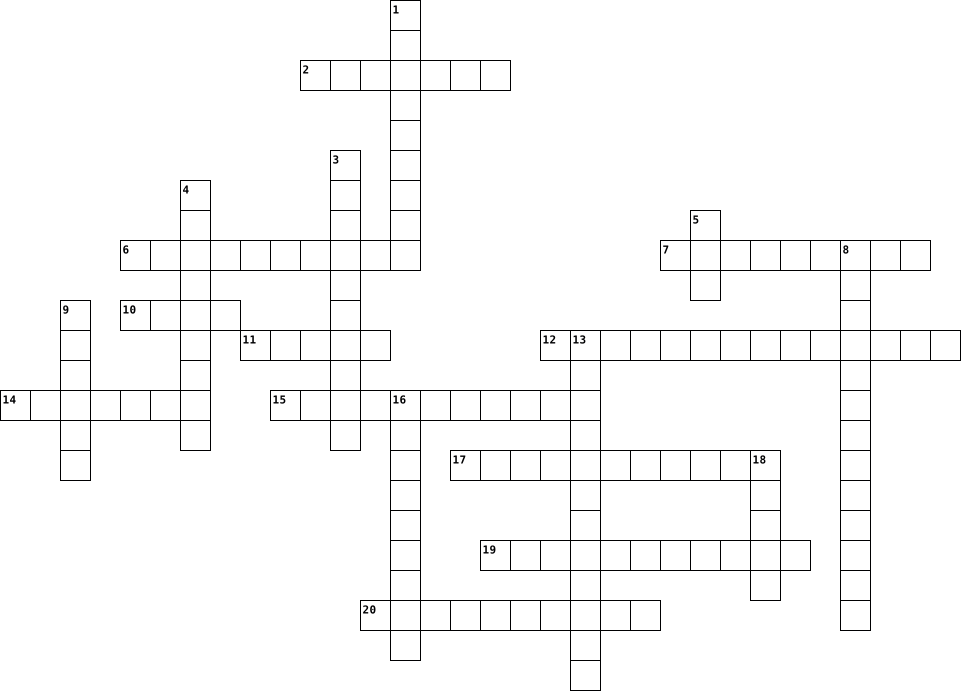
Across
- tiny pores underside of the leaves
- animals that depend on only plants
- taking in food by an organism and its utilization by the body
- plant from which parasite get its food
- vessels that transport water and minerals
- process of making food by the plants
- food synthesized during photosynthesis
- structures in cells that contain chlorophyll
- green pigment in plants
- plants that live on dead and decaying plants and animals
- green plants that prepare their own food
Down
- mutually beneficial relationship between two different kinds of organisms
- cells that control the opening and closing of stomata
- plants that are dependent on other plants for their food
- ultimate source of energy for all living organisms
- plants that consume insects
- increases the fertility of the soil
- animals and non-green plants that cannot prepare their own food
- bacteria that converts atmospheric nitrogen into water soluble compounds
- photo in photosynthesis refers to
20 Clues: plants that consume insects • green pigment in plants • photo in photosynthesis refers to • increases the fertility of the soil • process of making food by the plants • animals that depend on only plants • green plants that prepare their own food • tiny pores underside of the leaves • structures in cells that contain chlorophyll • ...
Energy Flow In Ecosystems 2021-10-21

Across
- Organism that eats other organisms (means "other feed")
- ______ levels in an ecosystem show organisms with similar feeding function
- Shows how food chains are connected
- Breaks down organic material
- Eats dead organisms and waste
- Energy ______ shows levels of feeding relationships
- Organism that eats plans and animals
- Process of making glucose using H2O, CO2, & sunlight
- Energy not stored is lost as _________
- Process of making food from chemical energy
- Anything that has mass and takes up space
- ________ consumer that only eats animals
Down
- Organism that only eats animals
- _______ consumer that eats plants and animals
- Organism that only eats plants
- ________ consumer that only eats plants
- Model showing energy flow in an ecosystem
- % of energy passed on to the next trophic level
- Organisms that eat other organisms
- Organism that uses photosynthesis( means "self feed")
- Main source of energy for life on Earth
- Makes its food through photosynthesis
22 Clues: Breaks down organic material • Eats dead organisms and waste • Organism that only eats plants • Organism that only eats animals • Organisms that eat other organisms • Shows how food chains are connected • Organism that eats plans and animals • Makes its food through photosynthesis • Energy not stored is lost as _________ • ________ consumer that only eats plants • ...
Honors Biology Review 2022-05-17

Across
- molecule that is split to make o2 in photosynthesis
- where genes are located
- many units of something
- process that makes RNA
- capturing light energy
- releases energy for the cell to use
- type of heredity where alleles mix
- process that makes proteins
- transport that requires energy
- a testcross for one allele
- Light independent reactions
Down
- specialized part of a cell
- a cell without a nucleolus
- the process of making somatic cells
- the monomer of DNA
- the main product of photosynthesis
- the process of making gametes
- site of cellular respiration
- uses uracil
- a type of bond where electrons are shared
- Y shaped proteins that attach to pathogens
- anaerobic pathway
- period in the cell cycle where the cell is not dividing
- cellular energy
- passive diffusion of water
- nonliving pathogen
- making DNA from DNA
- cells that remember pathogens
28 Clues: uses uracil • cellular energy • anaerobic pathway • the monomer of DNA • nonliving pathogen • making DNA from DNA • process that makes RNA • capturing light energy • where genes are located • many units of something • specialized part of a cell • a cell without a nucleolus • passive diffusion of water • a testcross for one allele • process that makes proteins • Light independent reactions • ...
Cellular Energy Crossword Puzzle 2017-12-07

Across
- Carbon + water = oxygen and glucose
- Where the light dependent reactions occur during photosynthesis
- Requires oxygen
- A chemical process living things go through in order to maintain their life
- Glycolysis, Kreb's cycle, electron transport chain (etc)
- What does fermentation replenish (in terms of glycolysis)?
- Oxygen and glucose produce ATP
- Metabolic process that consumes glucose when there is no oxygen. Produces gases/alcohol
Down
- Starting molecule for glycolysis
- Light dependent reactions, calvin cycle
- Where the calvin cycle occurs during photosynthesis
- Is glycolysis aerobic or anaerobic?
- One type of fermentation
- Contains the inner membrane, outer membrane, and stroma
- Biotic organism that gets its nutrition from complex, organic substances
- Another type of fermentation
- Biotic organism that gets its nutrients from both organic and inorganic substances
- Set of metabolic pathways that break down molecules
- A series of reactions where less complex molecules are made more complex
- Ending molecule for glycolysis
20 Clues: Requires oxygen • One type of fermentation • Another type of fermentation • Ending molecule for glycolysis • Oxygen and glucose produce ATP • Starting molecule for glycolysis • Carbon + water = oxygen and glucose • Is glycolysis aerobic or anaerobic? • Light dependent reactions, calvin cycle • Where the calvin cycle occurs during photosynthesis • ...
Crossword 2019-11-25

Across
- A breakdown of enzymes releasing energy
- Requiring oxygen
- Energy used to perform processes (Adenosine Triphosphate)
- organic acid (C3H6O3)
- Breakdown of a substance like bacteria or yeast
- Reactions to generate energy through aerobic transport
- Chemical reactions inside a cell.
- Simple sugar
- What plants take in to perform photosynthesis
- reactions transport ions through membrane
- Where Photosynthesis takes place
Down
- Where cellular respiration takes place
- Uses little to no oxygen at the end of the chain
- use light energy to make two molecules
- a chemical compound, simple alcohol
- Plants perform this to make food.
- Green disc that is put into stacks.
- Intake of oxygen to produce other molecules
- What we breathe
- Where the Calvin Cycle takes place
- Referring to light independant reactions
- Used to hydrate and produce glucose
22 Clues: Simple sugar • What we breathe • Requiring oxygen • organic acid (C3H6O3) • Where Photosynthesis takes place • Plants perform this to make food. • Chemical reactions inside a cell. • Where the Calvin Cycle takes place • a chemical compound, simple alcohol • Green disc that is put into stacks. • Used to hydrate and produce glucose • Where cellular respiration takes place • ...
Plants Respiration Photosynthesis Puzzle 2024-11-18

Across
- Water, Carbon Dioxide, Energy in cell respiration
- Process of changing ATP to ADP
- Partially charged battery
- Where cell respiration occurs
- Female parts of a flower
- Occurs in the chloroplast
- Involved in water and mineral transport
- Enzymes function to lower ________ energy
- This cycle makes 2 net ATP
- Water and Carbon Dioxide in photosynthesis
- Stomata are usually _______ at night
Down
- Process of changing ADP to ATP
- Energy for photosynthesis comes from the _____
- Must be present in aerobic respiration
- Male parts of a flower
- The part of a plant that is MOST dependent on its surface area to carry out its function
- Involved with growth and maintenance of new parts of a plant
- Glucose to Pyruvic Acid - makes 2 ATP
- Fully charged battery
- Transport of nutrients and other compounds
- By eating a plant, we obtain this type of molecule used in cell respiration
- Transport chain that makes 32 ATP
22 Clues: Fully charged battery • Male parts of a flower • Female parts of a flower • Partially charged battery • Occurs in the chloroplast • This cycle makes 2 net ATP • Where cell respiration occurs • Process of changing ADP to ATP • Process of changing ATP to ADP • Transport chain that makes 32 ATP • Stomata are usually _______ at night • Glucose to Pyruvic Acid - makes 2 ATP • ...
M3 no book Q1 ORGANISMS AND HABITATS 2025-06-27

Across
- Relationship where both organisms help each other but can live apart.
- Natural homes of organisms.
- One organism benefits, the other is harmed.
- Buildup of harmful substances in food chains.
- is a complex feeding relationships in an ecosystem.
- Linear flow of energy in an ecosystem.
- Green pigment that captures sunlight.
- Meat-eating animals.
- Animals that eat plants and meat.
- Organism feeds on dead matter.
Down
- Plant-eating animals.
- a kind of cycle with continuous movement of water on Earth.
- a kind of cycle that the movement of phosphorus through soil, water, and organisms.
- Gas taken in by plants for photosynthesis.
- Both species benefit.
- Process by which plants make food using sunlight.
- One organism kills and eats another.
- a kind of cycle that flow of carbon through life and Earth systems.
- Group of same species in an area.
- Sugar produced by photosynthesis.
20 Clues: Meat-eating animals. • Plant-eating animals. • Both species benefit. • Natural homes of organisms. • Organism feeds on dead matter. • Group of same species in an area. • Sugar produced by photosynthesis. • Animals that eat plants and meat. • One organism kills and eats another. • Green pigment that captures sunlight. • Linear flow of energy in an ecosystem. • ...
unit 2 biology vocab words 2021-09-21

Across
- Green pigment in plants that absorbs light energy used to carry out photosynthesis, found in the thylakoid of the chloroplast
- Process that releases energy by breaking down glucose and other food molecules in the presence of oxygen, takes place in plants and animals, happens in 3 processes, steps include gylcolosis, krebs cycle and electron transport chain
- organelle that is the site of ATP (energy) production, (converts glucose into ATP)
- a lower-energy molecule that can be converted into ATP by the addition of a phosphate group, made up of adenosine, ribose and 2 phosphates
- A flattened membrane sac inside the chloroplast, used to convert light energy into chemical energy, site of the light reactions
- second stage of cellular respiration, in which pyruvic acid is broken down into carbon dioxide, takes place in the mitochondria, produces ATP and NADH
Down
- the breakdown of glucose by enzymes, releasing energy and pyruvate, 1st step in cellular respiration, takes place in the cytoplasm
- process by which plants and some other organisms use light energy to convert water and carbon dioxide into oxygen and high-energy carbohydrates such as sugars and starches steps include: capture light, light dependent reactions, calvin cycle,
- An organelle found only in plant and algae cell, site of photosynthesis occurs
- Respiration that requires oxygen, steps include glycolysis, krebs cycle, electron transport chain, used by our muscles, high energy yield (34 ATP)
- uses the high-energy electrons from the Krebs cycle to convert ADP into ATP, takes place in the mitochondria, produces the most ATP of any of the processes (34 ATP)
- Respiration that does not require oxygen, used by our muscles, low energy yield (2ATP), includes fermentation
- a cluster composed of hundreds of chlorophyll molecules and accessory pigments used to harvest light molecules for photosynthesis
- stacks of thylakoids
- The fluid of the chloroplast surrounding the thylakoid membrane; involved in the synthesis of organic molecules from carbon dioxide and water (Calvin/Dark reaction)
- reactions reactions of photosynthesis that use energy from light to produce ATP and NADPH, also produces O2
- reactions of photosynthesis in which energy from ATP and NADPH is used to build high-energy compounds such as sugars, also called dark reaction, no light needed, creates NADP+ and ADP, takes place in the stroma
- (adenosine triphosphate) main energy source that cells use for most of their work, made up of adenosine, ribose and 3 phosphates
- electron carrier that provides high-energy electrons for photosynthesis
- one of the carrier molecules that transfers high-energy electrons from chlorophyll to other molecules
20 Clues: stacks of thylakoids • electron carrier that provides high-energy electrons for photosynthesis • An organelle found only in plant and algae cell, site of photosynthesis occurs • organelle that is the site of ATP (energy) production, (converts glucose into ATP) • ...
Plant Nutrition 2026-03-29

Across
- The top transparent layer of the leaf that lets light through
- A mineral needed to make chlorophyll
- A layer of cells with air spaces that allow gases to move through the leaf.
- A mineral needed for plant growth
- Cells that open and close the stomata
- Small holes in leaves that allow gases to move in and out
Down
- A waterproof layer on the leaf that reduces water loss
- A layer of cells packed with chloroplasts where most photosynthesis happens
- The bottom layer of the leaf where most stomata are found
- A green pigment that absorbs light energy
- A substance added to soil to replace missing minerals
- A type of sugar made during photosynthesis that plants use for energy
- The process by which plants use light to make food (glucose) from carbon dioxide and water
- A part of the cell where photosynthesis takes place
- A mineral that helps plants stay healthy
15 Clues: A mineral needed for plant growth • A mineral needed to make chlorophyll • Cells that open and close the stomata • A mineral that helps plants stay healthy • A green pigment that absorbs light energy • A part of the cell where photosynthesis takes place • A substance added to soil to replace missing minerals • A waterproof layer on the leaf that reduces water loss • ...
Fill Me In 2019-09-09

Across
- Six carbon sugar
- Absorbed by the roots from the soil
- Byproduct of photosynthesis
- Process of manufacturing food among plants
- Gelatinous matrix of the chloroplast
- Energy unit of light particle
- Energy from the sun
Down
- Cell structure where photosynthesis takes place
- Stacks of thylakoids embedded in the stroma of a chloroplast
- Gas absorbed from the environment
- Green pigment inside the chloroplast
- Flattened sacs inside the chloroplast
- An energy molecule within the cell
13 Clues: Six carbon sugar • Energy from the sun • Byproduct of photosynthesis • Energy unit of light particle • Gas absorbed from the environment • An energy molecule within the cell • Absorbed by the roots from the soil • Green pigment inside the chloroplast • Gelatinous matrix of the chloroplast • Flattened sacs inside the chloroplast • Process of manufacturing food among plants • ...
photosynthesis crossword 2023-09-27

Across
- stores energy so it can be used for later
- coverts sun rays to chemical energy.
- sugars in foods.
- turns broken down food into energy
- who invented photosynthesis theory.
- absorb pigments of color
Down
- the producer of energy in photosynthesis
- get energy by eating other organisms.
- energy absorbed by the sun
- 6CO2+ 6H2O → C6H12O6 + 6O2
- organisms that makes its own food.
- located in the chloroplast
- a type of sugar
13 Clues: a type of sugar • sugars in foods. • absorb pigments of color • energy absorbed by the sun • 6CO2+ 6H2O → C6H12O6 + 6O2 • located in the chloroplast • organisms that makes its own food. • turns broken down food into energy • who invented photosynthesis theory. • coverts sun rays to chemical energy. • get energy by eating other organisms. • the producer of energy in photosynthesis • ...
Photosynthesis Crossword 2014-02-27

Across
- Part of the plant that gathers light energy
- Photosynthesis uses this form of energy to drive the process
- Waste product of photosynthesis
- Part of a plant cell that contains chlorophyll
Down
- Another compound converted during photosynthesis, one word
- Name the whole process in which a plant produces its own food
- Compound produced by photosynthesis
- Chlorophyll gives plant life this color
- dioxide One of the two compounds converted during photosynthesis, two words
9 Clues: Waste product of photosynthesis • Compound produced by photosynthesis • Chlorophyll gives plant life this color • Part of the plant that gathers light energy • Part of a plant cell that contains chlorophyll • Another compound converted during photosynthesis, one word • Photosynthesis uses this form of energy to drive the process • ...