
photosynthesis Crossword Puzzles
Photosynthesis Crossword Puzzle 2023-05-22

Across
- organelle in the cells of plants and algae, that contains chlorophyll and is the site of photosynthesis.
- outer layer of skin that consists mainly of epithelial cells and lacks nerve endings and blood vessels.
- organic compound that supplies energy to the body, such as sugar and starch.
- transport chain series of electron-transport molecules that pass high-energy electrons from molecule to molecule and capture their energy.
- specialized tissue inside plant leaves where photosynthesis takes place.
- splitting water by light; produces the hydrogen ions and electrons used in light reactions and oxygen atoms.
Down
- second stage of photosynthesis in which carbon atoms from carbon dioxide are combined, using the energy in ATP and NADPH, to make glucose.
- process in which cells use carbon dioxide, water, and light energy to make oxygen and glucose, an energy-storing sugar.
- tiny pore in the leaf of a plant that can open and close to control transpiration (release of water vapor) and gas exchange with the air.
- energy-carrying molecule that cells use to power their metabolic processes; provides the cell with an immediate usable form of energy.
- short-term energy carrier; temporarily stores energy during photosynthesis.
- structure within the cytoplasm of a cell that is enclosed within a membrane and performs a specific job.
12 Clues: specialized tissue inside plant leaves where photosynthesis takes place. • short-term energy carrier; temporarily stores energy during photosynthesis. • organic compound that supplies energy to the body, such as sugar and starch. • outer layer of skin that consists mainly of epithelial cells and lacks nerve endings and blood vessels. • ...
Cell 2025-10-12

Across
- Control center of the cell
- provides support and protection for plant cells
- Storage area
- a cell with no cell wall
- Site of photosynthesis
Down
- Powerhouse of the cell
- WALL Provides support to plant cells
- Cell with a wall and chloroplasts
- green pigment needed for photosynthesis
- Jelly-like filling
- Controls entry and exit
- Make proteins
12 Clues: Storage area • Make proteins • Jelly-like filling • Powerhouse of the cell • Site of photosynthesis • Controls entry and exit • a cell with no cell wall • Control center of the cell • Cell with a wall and chloroplasts • WALL Provides support to plant cells • green pigment needed for photosynthesis • provides support and protection for plant cells
Plants 2019-01-12

Across
- A thin protective layer attached to the epidermis (7)
- The outermost layer in plants (9)
- The movement of sugar around plants using phloem (13)
- A gas absorbed by plants (13)
- A chemical needed to make proteins (7)
- Movement of substances from high to low concentration (9)
- A chemical needed to make chlorophyll (9)
- Where proteins are made in cells (9)
- The movement of water through a plant (13)
- The green pigment in plants (11)
- A gas released by plants (6)
- Allows enzymes to work (6)
- Where respiration takes place in cells (12)
- Holes in the bottom of leaves (5)
- Supports the cell (8)
- A type of transport process that doesn't require energy. Substances are moved from high to low concentration. (7)
- Transpiration is fastest if it is... (hint: humidity) (3)
- Where cell sap is stored (7)
Down
- The type of energy that plants need (5)
- Where genetic material is stored in the cell (7)
- A type of transport process that requires energy. Substances are moved from low to high concentration. (6)
- A liquid absorbed by plants (5)
- The process plants use to make food (14)
- A nutrient for plants with symbol K (9)
- Humans and cats are examples of this (6)
- Equipment used to measure transpiration (9)
- Controls what enters and leaves the cell (12)
- A process that releases energy from glucose (11)
- Where photosynthesis occurs in cells (12)
- Transpiration is fastest if it is ... (hint: air flow) (5)
- The tissue in plants that carries the xylem and phloem tubes (8)
- Where chemical reactions occur in cells (9)
- An organism that does photosynthesis (5)
- Tubes in plants that move glucose around the plant (6)
- Transpiration is fastest if it is... (hint: light intensity) (6)
- Tubes in plants that move water and dissolved ions around the plant (5)
- A sugar made by plants (7)
- A nutrient for plants with symbol PO4 (9)
- Any chemical that plants need to grow (8)
- The organ where photosynthesis occurs (4)
- Transpiration is fastest if it is... (hint: temperature) (3)
- The cell where photosynthesis occurs (8)
- The plant organ used for reproduction (6)
43 Clues: Supports the cell (8) • A sugar made by plants (7) • Allows enzymes to work (6) • A gas released by plants (6) • Where cell sap is stored (7) • A gas absorbed by plants (13) • A liquid absorbed by plants (5) • The green pigment in plants (11) • The outermost layer in plants (9) • Holes in the bottom of leaves (5) • Where proteins are made in cells (9) • ...
Life Science Midterm Crossword 2024-01-11

Across
- An action or condition that provokes a response
- What something does
- Ability of the system to do work
- A chemical reaction in plants that produces oxygen and sugar
- Process of increasing in size
- Only one cell
- Having characteristics that allow specific functions
- Process where organisms produce offspring
- Colorful leaf-like structures
- Process by which a population becomes better suited to its environment
- What a plant or animal does
- Self contained living thing
- An input that enters the body through nose and mouth
- The organ that serves as the primary control center
- Lets objects in and out of the cell
- A collection of similar tissues joined together to create a structure
- A factor that can either be biotic or abiotic
- A sugar produced in plants during photosynthesis
- An input that enters the body through the skin and ears
- A mass of similar cells coming together to perform a function
- An input that enters the body using waves through the eyes
- More than one cell
Down
- Microscopic plants that live in aquatic environments and perform photosynthesis
- A type of receptor that sends signals to the central nervous system when it is stimulated
- A type of cell specialized for transmitting fast electrochemical signals
- Helps plants to absorb energy from the sun as they undergo the process of photosynthesis.
- Part of flower that contains stigma, style, ovary
- Part of flower that contains the pollen
- An organism too small to be seen with the naked eye
- The basic structural and functional unit of living organisms
- A product produced at the end of a chemical reaction
- A self-contained system within a larger system
- Process of fertilizing flowers by transferring pollen
- A structure inside a cell that performs a specialized function
- Reproductive organ that produces the egg
- The organelle where photosynthesis takes place
- The organelle that functions in energy production
- Gives plant cells structure
- Coarse particles that spread flowers and seeds of plants
- A reaction in which one substance changes into a different one
- A substance that undergoes a change in a chemical reaction
- A factor resulting from different alleles carried by an individual
- Part of flower that contains anther and filament
- A group of interacting elements forming a complex whole
- The control center of the cell
45 Clues: Only one cell • More than one cell • What something does • Gives plant cells structure • What a plant or animal does • Self contained living thing • Process of increasing in size • Colorful leaf-like structures • The control center of the cell • Ability of the system to do work • Lets objects in and out of the cell • Part of flower that contains the pollen • ...
B4 Crossword 2024-11-04

Across
- The process of water in clouds becoming heavy and falling as rain, snow or hail
- A form of carbon excavated from the ground and used as a source of energy (two words)
- A relationship where both organisms benefit
- A small animal that shreds dead, organic material into smaller pieces
- A non-living factor
- The process of water moving through gaps in soils and rocks
- An abiotic factor that affects the quality of soil
- All of the living things and physical conditions in an area
- The process by which carbon dioxide is produced from fossil fuels
- The gas taken in from the atmosphere by plants for photosynthesis (two words)
- An abiotic factor that controls the activity of enzymes and photosynthesis
- The total number of organisms of a species
- All the organisms within an ecosystem
- Waste products produced by the body are usually lost through this process
- A key element that is used to make DNA and protein
- A type of bacteria that convert nitrogen from the air into a form that can be used by plants (two words)
Down
- An abiotic factor that affects the success of plant species (two words)
- A relationship between a prey and a predator
- An organism that makes their own food via photosynthesis
- The form of nitrogen that is released from dead plants and animals after decomposition
- A carbohydrate made by plants during photosynthesis
- An organism that must consume other organisms for energy
- The name for each step in a food chain (two words)
- One of the only processes that can take carbon dioxide out of the atmosphere
- A relationship where one organism benefits and one suffers
- A group of consumers that gain their energy from dead or decaying matter
- How different organisms depend on each other within a community
- The mass of living material in an organism
- A type of interaction that takes place between organisms in an area when resources are limited
- The area in which organisms live
- The form of nitrogen that plants take up from the roots to make proteins and DNA
- Undigested material that is usually lost as faeces
- A living factor
33 Clues: A living factor • A non-living factor • The area in which organisms live • All the organisms within an ecosystem • The mass of living material in an organism • The total number of organisms of a species • A relationship where both organisms benefit • A relationship between a prey and a predator • The name for each step in a food chain (two words) • ...
Parts of a tree 2022-05-23

Across
- dioxide anidride carbonica
- polline
- ramo
- fiore
- corteccia
- fotosintesi clorofilliana
- radice
- petali
- chioma
Down
- foglia
- clorofilla
- foglie
- frutto
- tronco
- linfa
- seme
- sepali
- ossigeno
18 Clues: ramo • seme • fiore • linfa • foglia • foglie • frutto • tronco • sepali • radice • petali • chioma • polline • ossigeno • corteccia • clorofilla • fotosintesi clorofilliana • dioxide anidride carbonica
Respiration 2021-04-28

Across
- Product of photosynthesis
- Gas needed for respiration
- Organ used for breathing in humans
- Gas product of respiration
- Taken up by roots by osmosis
- Movement of water in a plant
- Movement of water from high to low concentration
Down
- Process that plants use to make glucose
- organ in plant that absorbs sunlight
- Tiny air sacs in lungs
- Process that releases energy
- Carries water and minerals
- Taken up by roots by active transport
- Carries sugars
14 Clues: Carries sugars • Tiny air sacs in lungs • Product of photosynthesis • Gas needed for respiration • Carries water and minerals • Gas product of respiration • Process that releases energy • Taken up by roots by osmosis • Movement of water in a plant • Organ used for breathing in humans • organ in plant that absorbs sunlight • Taken up by roots by active transport • ...
Biology Crossword 2017-02-15

Across
- Light from the sun
- Adenosine triphosphate
- Where light independent reactions happen
- Process in which plants make energy
- One carbon molecule, two oxygen molecules
- The main storage form of carbohydrate
- Light independent reaction
Down
- cellular fuel and building blocks in synthesis
- The site of photosynthesis
- They make their own food
- They eat other organisms
- that absorb colors
- Two water molecules, one oxygen molecule
- This is transported from to all parts of the plant
14 Clues: Light from the sun • that absorb colors • Adenosine triphosphate • They make their own food • They eat other organisms • The site of photosynthesis • Light independent reaction • Process in which plants make energy • The main storage form of carbohydrate • Where light independent reactions happen • Two water molecules, one oxygen molecule • ...
Medium 2025-09-07

Across
- Movement of water across a membrane
- Specialized structure inside a cell
- Jellylike fluid in cells
- The smallest unit of life
- Division that makes identical cells
- Protein that speeds up reactions
- Division that makes gametes
Down
- Polymer of amino acids
- Site of protein synthesis
- Tiny pores in leaves for gas exchange
- Process plants use to make food
- Movement of molecules from high to low concentration
- Cell’s control center
- Green pigment for photosynthesis
14 Clues: Cell’s control center • Polymer of amino acids • Jellylike fluid in cells • Site of protein synthesis • The smallest unit of life • Division that makes gametes • Process plants use to make food • Green pigment for photosynthesis • Protein that speeds up reactions • Movement of water across a membrane • Specialized structure inside a cell • Division that makes identical cells • ...
History of Life 2020-03-08

Across
- Chapter/history of this
- boiled broth/sealed/no bacteria
- Regular/ nonradioactive carbon
- Swan neck
- Life only comes from life
- Half-life of carbon 14 (spell out numbers)
- Like photosynthesis but no light needed
- Developed carbon dating
- Possibly the first photosynthesis
- Type of dating using radioactive elements
- Margulis theory
Down
- Rate of decay
- Studies ancient life
- Chemical evolution
- Made amino acids in their experiment
- element with highest % in atmosphere/today and early earth
- The first life was probably this
- Movement of large areas of land on the earth
- life from nonliving
- Longest unit of geologic time
- one of the building blocks of life
- Radioactive carbon
- Maggots/meat
23 Clues: Swan neck • Maggots/meat • Rate of decay • Margulis theory • Chemical evolution • Radioactive carbon • life from nonliving • Studies ancient life • Chapter/history of this • Developed carbon dating • Life only comes from life • Longest unit of geologic time • Regular/ nonradioactive carbon • boiled broth/sealed/no bacteria • The first life was probably this • Possibly the first photosynthesis • ...
Micro Cell Morphology and Nutrition 2021-01-26

Across
- organisms that derive nutrients from a host
- groups of four cocci
- photosynthesis that uses bacteriachlorophyll as pigment
- twisted rod shape
- survive totally on inorganic material
- rod shaped bacteria
- arrangement with pairs of cocci
- gently curved shape
- bacilli arranged in chains with hinge-like attachements
Down
- bacteria that derive carbon and energy from organic compounds
- cubical packets of cocci
- photosynthesis that uses chlorophyll as pigment
- bacteria that produce methane gas under anaerobic conditions
- microorganisms that feed on organic detritus
- spherical shaped bacteria
- arrangement with pairs of bacilli
- nutrients that contain elements other than carbon and hydrogen
- Very short and plump shaped
- nutrients that contain carbon and hydrogen
- spring like shape
20 Clues: twisted rod shape • spring like shape • rod shaped bacteria • gently curved shape • groups of four cocci • cubical packets of cocci • spherical shaped bacteria • Very short and plump shaped • arrangement with pairs of cocci • arrangement with pairs of bacilli • survive totally on inorganic material • nutrients that contain carbon and hydrogen • ...
Horticulture Review 2018-06-04

Across
- Transports nutrients/sugar up stem
- Energy formed during cellular respiration
- Space in-between two nodes
- Soil particle that produces the highest yield
- Holds unfertilized eggs
- Makes up 25% of soil
- Cacti have this kid of root
- Soil particle that is tan/yellow
- Soil particle that holds the most water
- Location where flower starts
Down
- Transports water up stem
- As CO2 decreases, what happens to the rate of photosynthesis
- Location where pollen is produced
- Lines that create a sense of warmth
- Lines that create a sense of tension
- Sugar produced during photosynthesis
- New cells are call Diploids
- New cells are called Haploids
- Used to attract pollinators
- Location where leafs form
20 Clues: Makes up 25% of soil • Holds unfertilized eggs • Transports water up stem • Location where leafs form • Space in-between two nodes • New cells are call Diploids • Used to attract pollinators • Cacti have this kid of root • Location where flower starts • New cells are called Haploids • Soil particle that is tan/yellow • Location where pollen is produced • ...
Chapter 4 vocab 2024-10-23

Across
- When water covers the soil
- species Single species
- ability to survive under environmental circumstances
- exclusion principle No two species can occupy the same niche in the same habitat
- zone Sunlit region near the surface in which photosynthesis can occur
- When two species live close together
- Hot or Cold
- When organism lives near the bottom of lakes, streams, and oceans.
- Species both benefit
- When predator feeds on it's prey
- Special kind of wetland
Down
- What and organism does and how it interacts
- Necessity of life
- Involves temperature and precipitation
- Dense, leafy coverings
- effect Trapping heat
- When herbivores feed on plants
- Where the organism lives
- zone Photosynthesis cannot occur
- climates Conditions over small areas
- Boreal forest
21 Clues: Hot or Cold • Boreal forest • Necessity of life • Species both benefit • effect Trapping heat • Dense, leafy coverings • species Single species • Special kind of wetland • Where the organism lives • When water covers the soil • When herbivores feed on plants • When predator feeds on it's prey • zone Photosynthesis cannot occur • When two species live close together • ...
Thanksgiving Break Review 2024-11-22

Across
- site of the Krebs Cycle and ETC
- data points are where they should be
- regulates the return to homeostasis
- gas necessary for aerobic respiration
- main photosynthetic pigment
- data points are clustered together
- constant, stable, internal environment
- usable energy molecule in the cell
- technique used to separate plant pigments
- site of light independent reactions
- basic unit of all matter
Down
- gas necessary for photosynthesis
- system of channels within a cell
- Site of protein synthesis
- what plant cell walls are made of
- control the rate of chemical reactions
- first step of aerobic respiration
- what enzymes act upon
- the sum total of all reactions in a cell
- site of photosynthesis
- where photolysis takes place
21 Clues: what enzymes act upon • site of photosynthesis • basic unit of all matter • Site of protein synthesis • main photosynthetic pigment • where photolysis takes place • site of the Krebs Cycle and ETC • gas necessary for photosynthesis • system of channels within a cell • what plant cell walls are made of • first step of aerobic respiration • data points are clustered together • ...
BIOLOGY II 2026-05-27

Across
- Structure containing DNA
- Organelle where photosynthesis occurs
- Cell division producing gametes
- Maintaining stable internal conditions
- Molecule carrying genetic information
- Green pigment in plants
- Main energy molecule of cells
- Process cells use to release energy
- Making proteins from RNA
- Process plants use to make glucose
Down
- Change in DNA sequence
- Division of the cytoplasm
- Molecule used to make proteins
- Main sugar used for energy
- Cell division producing identical cells
- Diffusion of water across a membrane
- Organelle that makes ATP
- Protein that speeds up reactions
- Making RNA from DNA
- Change in populations over time
- Copying DNA
- Movement from high to low concentration
- Different version of a gene
- Genetic makeup
24 Clues: Copying DNA • Genetic makeup • Making RNA from DNA • Change in DNA sequence • Green pigment in plants • Structure containing DNA • Organelle that makes ATP • Making proteins from RNA • Division of the cytoplasm • Main sugar used for energy • Different version of a gene • Main energy molecule of cells • Molecule used to make proteins • Cell division producing gametes • ...
nutrition in plants 2017-05-10

Across
- ............ is the ultimate source of energy that our body needs
- ........... cells controlling the opening and closing of stomata
- ......... is absorbed from the atmosphere during photosynthesis
- cascutta is a ........... plant
Down
- ........... is produced during photosynthesis
- 'photo' in photosynthesis is reffered to.
- when iodine is added to starch it turns .......... in color
- living organisms that cannot produce their own food
- mushroom is a .............
- the process of taking in and utilizing food by the body
10 Clues: mushroom is a ............. • cascutta is a ........... plant • 'photo' in photosynthesis is reffered to. • ........... is produced during photosynthesis • living organisms that cannot produce their own food • the process of taking in and utilizing food by the body • when iodine is added to starch it turns .......... in color • ...
nutrition in plants 2017-05-10

Across
- cascutta is a ........... plant
- ........... cells controlling the opening and closing of stomata
- living organisms that cannot produce their own food
- the process of taking in and utilizing food by the body
- ........... is produced during photosynthesis
Down
- mushroom is a .............
- 'photo' in photosynthesis is reffered to.
- when iodine is added to starch it turns .......... in color
- ......... is absorbed from the atmosphere during photosynthesis
- ............ is the ultimate source of energy that our body needs
10 Clues: mushroom is a ............. • cascutta is a ........... plant • 'photo' in photosynthesis is reffered to. • ........... is produced during photosynthesis • living organisms that cannot produce their own food • the process of taking in and utilizing food by the body • when iodine is added to starch it turns .......... in color • ...
Photosynthesis and Cellular Respiration 2022-12-13

Across
- The end result from a chemical reaction made by two or more reactants
- Breathing
- A chemical that changes because of chemical reaction
- Natural sugar
- The organelle photosynthesis takes place in
Down
- Process used to turn glucose into energy
- The organelle cellular respiration takes place
- The chemical in plants that produces green pigment
- The tiny holes in leaves that are necessary for photosynthesis
- The process of plants making food for themselves using light
10 Clues: Breathing • Natural sugar • Process used to turn glucose into energy • The organelle photosynthesis takes place in • The organelle cellular respiration takes place • The chemical in plants that produces green pigment • A chemical that changes because of chemical reaction • The process of plants making food for themselves using light • ...
Photosynthesis Vocabulary Puzzle 2025-02-23

Across
- openings in the leaf where gasses come in and out
- the process that plants use to produce their own food
- sugar that plants produce during photosynthesis (C6H12O6)
- organelle that plants use to make their own food
Down
- a reactant of photosynthesis (H2O)
- a product of photosynthesis (O2)
- dioxide, a reactant of photosynthesis (CO2)
7 Clues: a product of photosynthesis (O2) • a reactant of photosynthesis (H2O) • dioxide, a reactant of photosynthesis (CO2) • organelle that plants use to make their own food • openings in the leaf where gasses come in and out • the process that plants use to produce their own food • sugar that plants produce during photosynthesis (C6H12O6)
Charateristics of Life and Principles of Biology 2014-02-04

Across
- an organism produces another organism
- collection of living matter enclosed by a barrier that separates in from its surrounding.
- reproduction/DNA from 2 parents come together to form a new individual
- Theory/all living organisms are composed of cells. The cell is the basic unit of life
- internal conditions stable
- to maintain a constant internal environment in response to environmental changes.
- genetic change in a population that is inherited over several generations.
- that provide the directions to build a living thing (Genetic Code)
- Theory/traits are inherited through gene transmission
Down
- from chemical reactions not derived from photosynthesis
- in structure, as time passes, from immature to mature
- is constant, energy transforms, and some energy is lost during energy transformation
- from consumed food(can be measured back to photosynthesis)
- from food made from photosynthesis
- that a organism responds to
- reproduction/DNA from 1 parent creates a new individual
16 Clues: internal conditions stable • that a organism responds to • from food made from photosynthesis • an organism produces another organism • in structure, as time passes, from immature to mature • Theory/traits are inherited through gene transmission • from chemical reactions not derived from photosynthesis • reproduction/DNA from 1 parent creates a new individual • ...
Photosynthesis And cellular resperation 2025-02-05

Across
- uses 2 ATP molecules to make an unstable modified 6 carbon sugar molecule
- a series of compounds that transfer e- from e- donor substance to e- accepter
- 3- phosholglycerate all abbreviated as 3PGA
- also known as Krebs cycle occurs in cellular respiration
- is a carbon receptor; rubisco
- contains chlorophyll important step in photosynthesis
- chemical process that provides energy in a way that does not require oxygen
- the anaerobic breakdown of sugars to pyruvate and then to either lactic acid or CO2 and alcohol
- takes up electrons and hydrogen ions in light dependent phase to make NADPH
Down
- a green pigment that absorbs energy from sunlight to energize electrons kicking off photosynthesis
- occurs in. The stroma
- the process by which cells break down glucose or other nutrients to produce usable energy ( glucose + oxygen= water + carbon dioxide
- means light and forming ( water + carbon dioxide= glucose + oxygen
- occurs in the thylakoid membrane
- glyceraldehyde 3- phosphate occurs in the light dependent phase Electron
- is used in the Calvin cycle
16 Clues: occurs in. The stroma • is used in the Calvin cycle • is a carbon receptor; rubisco • occurs in the thylakoid membrane • 3- phosholglycerate all abbreviated as 3PGA • contains chlorophyll important step in photosynthesis • also known as Krebs cycle occurs in cellular respiration • means light and forming ( water + carbon dioxide= glucose + oxygen • ...
Cellular Respiration 2026-01-28

Across
- A 3 carbon molecule created during glycolysis.
- An anaerobic process which converts carbohydrates into acids, gases, or alcohol.
- The part of cellular respiration where glucose breaks down into 2 pyruvic acids.
- A reactant in photosynthesis which is also a waste product in cellular respiration.
- The gel like substance inside of the mitochondria.
- Glycolysis takes place in this part of the cell.
- A molecule created from pyruvic acid during the krebs cycle.
- A waste product in photosynthesis which is also a reactant in cellular respiration.
- The energy created from cellular respiration.
Down
- The part of cellular respiration which produces the most amount of ATP.
- A process that uses glucose and oxygen to create water, carbon dioxide, and ATP.
- The organelle in which most of cellular respiration takes place.
- The part of cellular respiration where pyruvic acid breaks down into carbon dioxide.
- A process which uses oxygen.
- A process which does not use oxygen.
- The main product from photosynthesis, also a reactant in cellular respiration.
16 Clues: A process which uses oxygen. • A process which does not use oxygen. • The energy created from cellular respiration. • A 3 carbon molecule created during glycolysis. • Glycolysis takes place in this part of the cell. • The gel like substance inside of the mitochondria. • A molecule created from pyruvic acid during the krebs cycle. • ...
Carbon Cycle 2025-09-25

Across
- cycle
- earth
- ocean
Down
- Atmosphere
- Decomposition
- sedimentation
- Carbon
- photosynthesis
8 Clues: cycle • earth • ocean • Carbon • Atmosphere • Decomposition • sedimentation • photosynthesis
Shawn 2024-01-25

Across
- printable pigments
- clusters of chlorophyll and protein
- high-energy sugar from carbon dioxide
- envelopeenvelpre membranes
- Synthase Thylakoid membranes contain a protein cCyclex
- holds two high electrons
Down
- first reaction in photosynthesis
- Plants use it for energy
- Cylce Light- independent reactions commonly known as
- light absorbing compounds
- fluid portion of chloroplasts
- transport chain electron carrier protein
- compound used by cells
13 Clues: printable pigments • compound used by cells • Plants use it for energy • holds two high electrons • light absorbing compounds • envelopeenvelpre membranes • fluid portion of chloroplasts • first reaction in photosynthesis • clusters of chlorophyll and protein • high-energy sugar from carbon dioxide • transport chain electron carrier protein • ...
Fuel of Life Vocab 2025-02-07

Across
- subunits of proteins (2 words)
- macromolecule used for energy storage and repelling water
- this is the pigment that is used to capture sunlight energy in plants
- this has the formula: glucose + oxygen -> carbon dioxide + water + energy (2 words)
- this organelle is found only in plant cells because it is the main site of photosynthesis
- this has the formula: carbon dioxide + water + sunlight -> glucose + oxygen
- this is where cellular respiration occurs in a cell
- sugar that is used in cellular respiration and produced during photosynthesis
- part of an organic compound. Chemical symbol is H
Down
- composed of c, H, O and is used for energy or structural material
- the building blocks of DNA and RNA (2 words)
- complex carbohydrate used as a structural material in marine organisms
- part of an organic compound. Chemical symbol is C
- the subunits of nucleic acids
- has many functions in organisms including enzymes and making tissues and skeletons
- this type of respiration does not need oxygen
- part of an organic compound. Chemical symbol is O
- this type of organism needs to consume food
- this type of organism makes its own food
19 Clues: the subunits of nucleic acids • subunits of proteins (2 words) • this type of organism makes its own food • this type of organism needs to consume food • the building blocks of DNA and RNA (2 words) • this type of respiration does not need oxygen • part of an organic compound. Chemical symbol is C • part of an organic compound. Chemical symbol is O • ...
Cell Metabolism Vocabulary 2025-02-24

Across
- First stage of cellular respiration. Glucose gets broken down into pyruvate acid.
- adenosine triphosphate - molecule that stores energy (energy is released when ATP changes to ADP)
- An organism that must eat plants or other animals for food
- respiration the process where plants and animals convert the energy in sugar to ATP energy
- the process where plants use the energy of sunlight to change water and carbon dioxide into sugars and oxygen
- The chemicals or energy that is produced by a chemical reaction
- organelle where cellular respiration occurs
- process that does not require oxygen (fermentation is anaerobic)
Down
- the organelle where photosynthesis happens
- the pigment that gives plants their green color
- process used to release energy when there isn't any oxygen
- Process where electrons are being used up and drives the ATP formation.
- The chemicals you put INTO a chemical reaction
- dioxide gas produced during cellular respiration
- An organism that can make its own food.
- another name for sugar (a product in photosynthesis)
- Unicellular organism used in our lab. Can be used to rise bread.
- the source of energy for plants making food
- process that requires oxygen (respiration is aerobic)
19 Clues: An organism that can make its own food. • the organelle where photosynthesis happens • the source of energy for plants making food • organelle where cellular respiration occurs • The chemicals you put INTO a chemical reaction • the pigment that gives plants their green color • dioxide gas produced during cellular respiration • ...
Roots 2021-09-23

Across
- scend
- biblio
- hydr
- nav
- trans
- ology
- aqua
- phon
Down
- sphere
- ject
- vis
- photo
- port
- graph
- voc
- pan
16 Clues: vis • voc • nav • pan • ject • port • hydr • aqua • phon • scend • photo • graph • trans • ology • sphere • biblio
bio crossword 2025-10-17

Across
- 8
- 10
- 1
- 11
- 14
- 13
- 5
Down
- 6
- 4
- 3
- 12
- 15
- 2
- 7
- 9
- 16
16 Clues: 6 • 4 • 3 • 8 • 2 • 1 • 7 • 9 • 5 • 10 • 12 • 15 • 11 • 14 • 13 • 16
Biology Honors: Chapters 9 and 10 Vocabulary List 2025-12-01

Across
- plants: Plants that fix carbon dioxide into a 4-carbon compound (Efficient in warm weather)
- A protective outer layer that limits the loss of water through evaporation
- aerobes: Organisms that can switch between aerobic and anaerobic respiration
- mesophyll layer: Beneath the upper epidermis; contains close packed cells that absorb light that enters the leaf
- factors of photosynthesis: light intensity, carbon dioxide concentration, and temperature are limiting factors of photosynthesis
- An electron carrier that plays a key role in cellular respiration
- 2: The first photosystem that absorbs light and splits water molecules
- acid: An organic acid produced in animals during the breakdown of carbohydrates for energy
- An electron carrier that delivers high-energy electrons
- A: A vital cofactor that acts as a carrier for acyl groups in the synthesis and oxidation of fatty acids and carbohydrates metabolism
- fermentation: A biological process where microorganisms such as yeast convert sugars into ethanol and carbon dioxide
- cycle: A central pathway in the cell that generates energy for the cell; a key part of cellular respiration
- The loss of water through leaves
- acid: The product of glycolysis and breaks down and synthesizes sugars, amino acids, and fatty acids
- An electron carrier used mainly in photosynthesis
- A key 3-carbon sugar in the Calvin cycle and glycolysis
- A metabolic process in plants that uses oxygen and releases carbon dioxide. It competes with photosynthesis
- Fluid-filled space within the chloroplast
- 1: A protein complex that captures light energy for photosynthesis
- A class of proteins that are crucial for electron transfer in cells
Down
- An enzyme that catalyzes the first step in the Calvin Cycle.
- transport system: A series of protein complexes in the mitochondria that helps produce ATP
- Cycle: A series of biochemical reactions where carbon dioxide is converted into glucose
- (Stoma): Small openings in the epidermis that allow carbon dioxide, water, and oxygen to diffuse into and out of the leaf
- The breakdown of glucose into two pyruvate molecules while producing some ATP
- A carrier molecule that involved in photosynthesis that carries high-energy electrons and protons, which forms NADPH
- respiration: Energy production that uses oxygen to produce large amounts of ATP
- Cell: Highly specialized cells that surround the stomata and control their opening and closing
- spectrum: A graph that shows the wavelengths of light that is absorbed by a pigment
- Membrane-bound compartment (sacs) in a chloroplast
- plants: Plants that fix carbon dioxide into a 3-carbon molecule (Efficient in cool weather)
- An organism that cannot produce its own food and instead consumes other organisms for nutrition and energy
- aerobes: Organisms that need oxygen to survive
- A 5-carbon sugar crucial for photosynthesis
- An organism that can produce its own food from simple inorganic materials
- (granum): A stack of thylakoids
- plants: plants/CAM photosynthesis:plants that use a specialized form of photosynthesis called Crassulacean Acid Metabolism
- respiration: Energy production that dosen’t use oxygen but produces little ATP
- Stands for adenosine triphosphate and is a molecule that stores and transfers energy that powers many cellular processes
- mesophyll layer: Beneath the palisade layer; a loose tissue that has many air spaces between its cells
40 Clues: (granum): A stack of thylakoids • The loss of water through leaves • Fluid-filled space within the chloroplast • A 5-carbon sugar crucial for photosynthesis • aerobes: Organisms that need oxygen to survive • An electron carrier used mainly in photosynthesis • Membrane-bound compartment (sacs) in a chloroplast • An electron carrier that delivers high-energy electrons • ...
Plants 2022-05-09
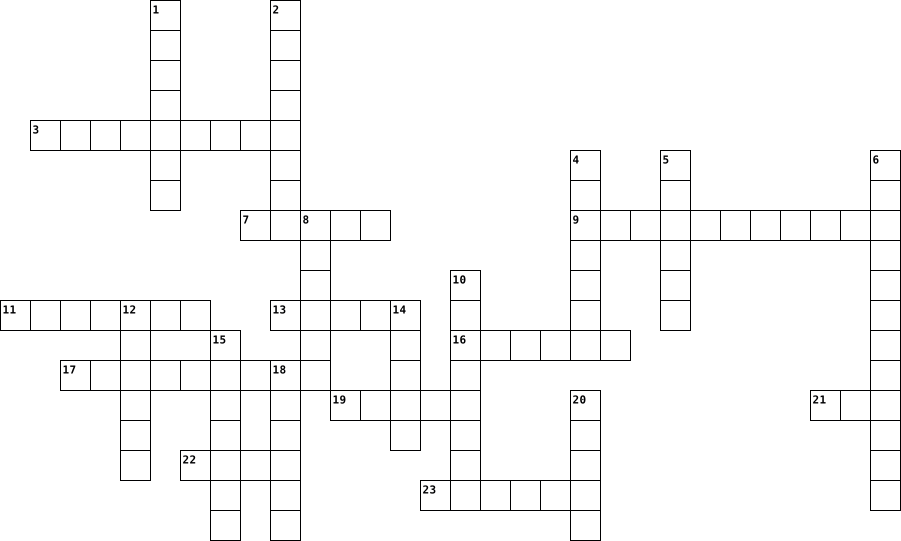
Across
- outermost layer covering the entire plant
- outter most part of the flower; typically green
- contains chlorophyll, preforms photosynthesis
- tiny openings; allow for gas exchange
- provide anchorage;take in water and nutrients
- location of photosynthesis
- where all organelles are located
- transports water; one way flow
- small protuberance that may develope into a flower
- supports leaves; transports water and nutrients
- recieves the pollen
Down
- cell control center
- synthesizes protein
- membrane sac that holds water
- seed bearing part of the plant
- powerhouse
- transports nutrients; two way flow
- slender stalk that holds the anther
- where pollin is produced
- supports the stigms;connects to the ovary
- stores starch and pigment
- male fertilizing organ of the flower
- attracts pollinators
23 Clues: powerhouse • cell control center • synthesizes protein • recieves the pollen • attracts pollinators • where pollin is produced • stores starch and pigment • location of photosynthesis • membrane sac that holds water • seed bearing part of the plant • transports water; one way flow • where all organelles are located • transports nutrients; two way flow • ...
4th Grade Science Chapter 4 Review 2025-10-20

Across
- produces seeds in cones
- gas given off during photosynthesis
- type of flower a sunflower is.
- makes pollen
- can make its own food with sunlight energy.
- tree without branches, annual rings, or bark.
- alive but resting
- organism that breaks down dead things.
- part of the flower that makes seeds
- anchor trees in the ground
Down
- to sprout
- what a mushroom is
- helps the soil
- a living thing
- needed for photosynthesis
- trees whose leaves fall in autumn
- fruit of an oak tree
- living part of a seed
- first root of a new plant
- non-flowering plants that grow in water habitats.
- what ferns and mosses grow from
- stored food
- how a maple seed travels.
23 Clues: to sprout • stored food • makes pollen • helps the soil • a living thing • alive but resting • what a mushroom is • fruit of an oak tree • living part of a seed • produces seeds in cones • needed for photosynthesis • first root of a new plant • how a maple seed travels. • anchor trees in the ground • type of flower a sunflower is. • what ferns and mosses grow from • ...
Biology crossword 2026-05-18

Across
- multicellular organisms that make their own food using sunlight
- the process plants use to make food from sunlight
- single celled organisms with no nucleus that lives in hard environments
- a change in DNA
- stores genetic information
- controls what goes in or out of the cell
- the powerhouse of the cell
- packages protein
Down
- the basic unit of life
- makes protein
- mostly single celled organisms that don't fit into other kingdoms
- removes bad stuff from cell
- organisms that absorb nutrients from other things
- keeping internal conditions stable
- helps repair cell
- stores water and insulates cell
- multicellular organisms that eat other organisms for energy
- photosynthesis
- protects cell
- single celled organism with no nucleus, common bacteria found everywhere
20 Clues: makes protein • protects cell • photosynthesis • a change in DNA • packages protein • helps repair cell • the basic unit of life • stores genetic information • the powerhouse of the cell • removes bad stuff from cell • stores water and insulates cell • keeping internal conditions stable • controls what goes in or out of the cell • organisms that absorb nutrients from other things • ...
Forest Management 2026-05-20

Across
- Organism that breaks down dead matter
- Uncontrolled fire in nature
- Wood prepared for building
- Cutting trees for wood
- Large area covered with trees
- Natural home of an organism
- Protection of natural resources
- Cutting down large areas of forest
- Nonnative species that causes harm
- Top layer of trees in a forest
- Community of living and nonliving things
- Gas trees release during photosynthesis
Down
- Long-term weather patterns
- Process plants use to make food
- Wearing away of soil
- Harmful substances in the environment
- Planting trees to replace lost forests
- Top layer of earth where plants grow
- Variety of living organisms
- Resource that can be replaced naturally
- Group of similar organisms
21 Clues: Wearing away of soil • Cutting trees for wood • Long-term weather patterns • Wood prepared for building • Group of similar organisms • Uncontrolled fire in nature • Natural home of an organism • Variety of living organisms • Large area covered with trees • Top layer of trees in a forest • Process plants use to make food • Protection of natural resources • ...
Biology--Chapter 4 Vocabulary 2014-09-15

Across
- Process that does not require oxygen to occur
- Process that requires oxygen to occur
- Parts of photosynthesis that uses energy absorbed during the light-dependent reactions to synthesize carbohydrates
- Enzyme that catalyzes the reaction and adds a high-energy phosphate group to ADP to form ATP
- Anaerobic process in which glucose is broken down into two molecules of pyruvate and two net ATP are produced
- Membrane-bound structure within chloroplasts that contains chlorophyll and other light-absorbing pigments used in the light-dependent reactions of photosynthesis
- Low energy molecule that can be converted to ATP
- Process by which light energy is converted to chemical energy; produces sugar and oxygen from carbon dioxide and water
- Process by which a photosynthetic organism uses energy to synthesize simple sugars from CO2
Down
- Process by which ATP is synthesized by using chemicals as an energy source instead of light
- Part of photosynthesis that absorbs energy from sunlight and transfers energy to the light-independent reactions
- Product of fermentation in many types of cells, including human muscle cells
- Anaerobic process by which ATP is produced by glycolysis
- Process of producing ATP by breaking down carbon-based molecules when oxygen is present
- Series of light-absorbing pigments and proteins that capture and transfer energy in the thylakoid membrane
- Series of proteins in the thylakoid and mitochondrial membranes that aid in converting ADP to ATP by transferring electrons
- High energy molecule that contains, within its bonds, energy that cells can use
- Light-absorbing pigment molecule in photosynthetic organisms
- Process during cellular respiration that breaks down a carbon molecule to produce molecules that are used in the electron transport chain
19 Clues: Process that requires oxygen to occur • Process that does not require oxygen to occur • Low energy molecule that can be converted to ATP • Anaerobic process by which ATP is produced by glycolysis • Light-absorbing pigment molecule in photosynthetic organisms • Product of fermentation in many types of cells, including human muscle cells • ...
Vocab Bingo 2016-11-03

Across
- process that requires oxygen to occur
- process by which a photosynthetic organism uses energy to synthesize simple sugars from CO2
- part of photosynthesis that absorbs energy from sunlight and transfers energy to the light-independent reactions
- process of producing ATP by breaking down carbon-based molecules when oxygen is present
- enzyme tat catalyzes the reaction that adds a high-energy phosphate group to form ADP
- (ATP) high-energy molecule that contains, within it's bonds, energy that cells can use
- anaerobic process by which ATP is produced by glycosis
- series of light-absorbing pigments and proteins that capture and transfer energy in the thylakoid membrane
- light-absorbing pigment molecule in photosynthetic organism
Down
- process during cellular respiration that breaks down a carbon molecule to produce molecules that are used in the electron transport chain
- (ADP) low-energy molecule that can be converted to ATP
- part of photosynthesis that uses energy absorbed during the light-dependent reactions to synthesize carbohydrates
- series of proteins in the thylakoid and mitochondrial membranes that aid in converting ADP to ATP by transferring electrons
- product of fermentation in many types of cells, including human muscle cells
- membrane-bound structure withing chloroplasts that contains chlorophyll and other light-absorbing pigments used in light-dependent reactions of photosynthesis
- process by which light energy is converted to chemical energy: produces sugar and oxygen from carbon dioxide and water
- anaerobic process in which glucose is broken down into two molecules of pyruvate and two net ATP are produced
- process that does not require oxygen to occur
- process by which ATP is synthesized by using chemicals as an energy source instead of light
19 Clues: process that requires oxygen to occur • process that does not require oxygen to occur • (ADP) low-energy molecule that can be converted to ATP • anaerobic process by which ATP is produced by glycosis • light-absorbing pigment molecule in photosynthetic organism • product of fermentation in many types of cells, including human muscle cells • ...
5th Grade Photosynthesis 2023-09-29

Across
- The organelles in which Photosynthesis takes place Simple plant that lacks true leaves, stems, and roots.
- Tissues that conduct food materials down from the leaves to the rest of the plant.
- The group of living things found in an ecosystem. Invisible gas given off by humans and taken in by plans need for Photosynthesis.
- The green pigment in leaves which collects energy from the sun.
- A large group of ecosystems that have similar features.
- Invisible gas given off by plants is a byproduct of Photosynthesis.
Down
- The tissue that conducts water and minerals from the roots and stems up to the leaves.
- Useable food made by plants during Photosynthesis.
- All the members of the same type of organism that live in an ecosystem.
- Small opening through which gas move in and out of the leaves.
- Plant with specialized tissues and organs for transporting materials.
- The type of weather that occurs in an area over a long period of time.
12 Clues: Useable food made by plants during Photosynthesis. • A large group of ecosystems that have similar features. • Small opening through which gas move in and out of the leaves. • The green pigment in leaves which collects energy from the sun. • Invisible gas given off by plants is a byproduct of Photosynthesis. • ...
Christina's Crossword 2024-01-25

Across
- principal pigment of plants and other photosynthetic organisms
- the light-independent reactions of photosynthesis in which energy from atop and nadph is used to build high-energy compounds such as sugar
- light absorbing molecules used by plants to gather the sun's energy
- saclike photosynthetic membranes found in chloroplasts
- series of electron carrier proteins that shuttle high-energy electrons during atp-generationg reactions
- process used by plants and other autotrophs to capture light energy and use it to power chemical reactions
- cluster of chlorophyll and proteins found in thylakoids
Down
- set of reactions in photosynthesis that do not require light; energy from atp and nadph is used to build high-energy compounds such as sugar; also called the calvin cycle
- set of reactions in photosynthesis that use energy from light to produce atp and nadph
- cluster of proteins that span the thylakoid membrane and allow hydrogen ions to pass through it
- fluid portion of the chloroplast; outside of the thylakoids
- compound used by cells to store and release energy
12 Clues: compound used by cells to store and release energy • saclike photosynthetic membranes found in chloroplasts • cluster of chlorophyll and proteins found in thylakoids • fluid portion of the chloroplast; outside of the thylakoids • principal pigment of plants and other photosynthetic organisms • light absorbing molecules used by plants to gather the sun's energy • ...
Biology 2nd Quarter Review 2020-05-04

Across
- The organelle where cellular respiration happens.
- The "brain of the cell" Controls functions of the cell and contains DNA
- Speeds up chemical reactions.
- Process all organisms perform to break down sugar and use oxygen to create energy (opposite of photosynthesis).
- Organisms that make their own food--producers.
- "Cleaner" of the cell-- Digests bad things in cells.
- Fats, long term energy storage (in fats, oils, waxes, steroids, etc.)
- Primary source of energy (in pasta, cereal, fruits, etc.)
Down
- Process plants perform to make sugar and oxygen.
- Organisms that rely on other organisms to make their food.
- The covering around cells--regulates what comes in and out of cells.
- When cells have a mutation that causes them to divide uncontrollably and create tumors.
- The gel-like substance in cells that holds organelles in place.
- The organelle where photosynthesis happens.
- Provide cell structure, builds up muscle.
- H2O, important for our bodies and is the universal solvent.
16 Clues: Speeds up chemical reactions. • Provide cell structure, builds up muscle. • The organelle where photosynthesis happens. • Organisms that make their own food--producers. • Process plants perform to make sugar and oxygen. • The organelle where cellular respiration happens. • "Cleaner" of the cell-- Digests bad things in cells. • ...
Unit 6 Study Guide Crossword 2018-02-11

Across
- Which level of consumer receives the most energy from producers?
- Level of the energy pyramid with 100% energy available.
- One of the products of photosynthesis.
- Level of the energy pyramid with 1% energy available (type of consumer).
- Energy that is produced by plant leaves absorbing sunlight.
- Dead organisms _________ and release carbon dioxide into the air.
- The process by which water moves through, and evaporates from, a plant.
- Level of the energy pyramid with 0.1% energy available (type of consumer).
- Chemical energy is transformed into _______ energy as an animal eats.
- A type of fuel that contains carbon that has been stored for generations.
Down
- Chemical energy is produced after light enters a leaf int he process of _______.
- The amount of energy available _________ as energy moves up the energy pyramid.
- Green cell organelle responsible for photosynthesis.
- Level of the energy pyramid with 0.01% energy available (type of consumer).
- The starting source of energy for earth's organisms.
- Stored solar energy that can be converted into fuel.
16 Clues: One of the products of photosynthesis. • Green cell organelle responsible for photosynthesis. • The starting source of energy for earth's organisms. • Stored solar energy that can be converted into fuel. • Level of the energy pyramid with 100% energy available. • Energy that is produced by plant leaves absorbing sunlight. • ...
Plants 2019-02-26

Across
- The area where photosynthesis takes place that contains
- Organisms that occur in an area of water usually made up of
- the reproductive organ of an angiosperm plant
- Typically colored segments of a flower.
- The process by which plants release water vapor into the air through stomata.
- The main organs of photosynthesis and transpiration in plants
- When a seed or spore begins to grow.
- a slender or elongated structure that supports a plant
Down
- a sugar found in plant and animal tissue that is essential to the animal diet.
- A process used by plants to convert water, carbon dioxide and sunlight into carbohydrates and oxygen
- to become larger by the process of natural development
- Transfer of pollen from the anther of a stamen to the stigma of a flower.
- plants need to make chlorophyll
- A fine powder/dust that contains sperm necluei from a male plant.
- The usually underground part of a seed plant body
- A fertilized and mature ovule containing a plant embryo
16 Clues: plants need to make chlorophyll • When a seed or spore begins to grow. • Typically colored segments of a flower. • the reproductive organ of an angiosperm plant • The usually underground part of a seed plant body • to become larger by the process of natural development • a slender or elongated structure that supports a plant • ...
Nutrients 2019-03-27

Across
- / A waste gas produced by plants during photosynthesis
- the organ where food is reduced to mush by acid and muscle activity
- A small system that is inside a larger system
- The process of breaking down food into nutrients that can be used by cells
- / A nutrient, such as sugar and starch, that provides energy
- / The nutrient that cells use for energy
- / The basic unit of life
- A collection of interacting parts
Down
- the state of being at rest
- / A process used by plants and algae to make sugar (food) out of light, carbon dioxide, and water
- / A sugar found in food; the sugar broken down in cells to release energy
- / A chemical in food that helps keep an organism alive and active
- No longer of use, excess
- Dioxide / Plants produce this gas during photosynthesis to make food
- / The molecule in plant leaves that turns it green
- The tube connecting the mouth and the stomach
16 Clues: No longer of use, excess • / The basic unit of life • the state of being at rest • A collection of interacting parts • / The nutrient that cells use for energy • The tube connecting the mouth and the stomach • A small system that is inside a larger system • / The molecule in plant leaves that turns it green • / A waste gas produced by plants during photosynthesis • ...
Cellular Chemical Reactions 2026-04-17

Across
- Tiny openings in plant tissue used for gas exchange.
- The organelle where photosynthesis takes place.
- A green pigment that plants use to absorb sunlight energy.
- The process a plant uses to make glucose sugar.
- The path that water flows up a plant stem to the leaves.
- The structures plants use to absorb water.
- The process an animal uses to break down macromolecules into smaller molecules that can be absorbed in the intestine.
- A type of molecule needed for photosynthesis, in addition to carbon dioxide.
Down
- The organelle where cellular respiration takes place.
- The gas molecule taken in by plants and released by animals.
- The process plants and animals use to turn glucose into ATP energy.
- The molecule breathed in by animals.
- The number of CO2, O2, and H2) molecules in each cellular chemical reaction.
- The main molecule used to supply energy.
- A part of a cell.
- The name for the energy carrier molecule produced in cellular respiration.
16 Clues: A part of a cell. • The molecule breathed in by animals. • The main molecule used to supply energy. • The structures plants use to absorb water. • The organelle where photosynthesis takes place. • The process a plant uses to make glucose sugar. • Tiny openings in plant tissue used for gas exchange. • The organelle where cellular respiration takes place. • ...
Ecology Crossword 2013-04-15

Across
- nine
- twelve
- ten
- five
- sixteen
- eighteen
- seventeen
- seven
- fourteen
- two
Down
- twenty
- six
- four
- nineteen
- twenty two
- thirteen
- fifteen
- three
- eight
- twenty one
- eleven
- one
22 Clues: six • ten • two • one • nine • four • five • three • eight • seven • twenty • twelve • eleven • fifteen • sixteen • nineteen • thirteen • eighteen • fourteen • seventeen • twenty two • twenty one
Cellular and Photosynthesis 2023-11-17

Across
- cause change
- end of chemical reaction
- produce
- plastid that conducts photosynthesis
Down
- down,dead
- the process of plants
- sunlight
- sugar
- give
9 Clues: give • sugar • produce • sunlight • down,dead • cause change • the process of plants • end of chemical reaction • plastid that conducts photosynthesis
Parts of tree 2022-05-24

Across
- corteccia
- pianta
- clorofilla
- nettare
- linfa
- tronco
- seme
- ossigeno
Down
- fotosintesi
- fiore
- Radice
- ramo
- polline
- chioma
- sepali
- petalo
16 Clues: ramo • seme • fiore • linfa • Radice • pianta • chioma • sepali • petalo • tronco • polline • nettare • ossigeno • corteccia • clorofilla • fotosintesi
light 2022-10-20

Across
- Promotes stem elongation
- looks green to us, but uses red and blue
- for photosynthesis
- used in photosynthesis
- Stem stretches and gets weaker
- measure of wavelength
Down
- Lowlight symptom that means the
- Promotes branching rather than stem
- A plants response to duration
- Measure of light intensity
- strength of the light made by the sun
- of the stem
12 Clues: of the stem • for photosynthesis • measure of wavelength • used in photosynthesis • Promotes stem elongation • Measure of light intensity • A plants response to duration • Stem stretches and gets weaker • Lowlight symptom that means the • Promotes branching rather than stem • strength of the light made by the sun • looks green to us, but uses red and blue
light 2022-10-20

Across
- Promotes stem elongation
- looks green to us, but uses red and blue
- for photosynthesis
- used in photosynthesis
- Stem stretches and gets weaker
- measure of wavelength
Down
- Lowlight symptom that means the
- Promotes branching rather than stem
- A plants response to duration
- Measure of light intensity
- strength of the light made by the sun
- of the stem
12 Clues: of the stem • for photosynthesis • measure of wavelength • used in photosynthesis • Promotes stem elongation • Measure of light intensity • A plants response to duration • Stem stretches and gets weaker • Lowlight symptom that means the • Promotes branching rather than stem • strength of the light made by the sun • looks green to us, but uses red and blue
Plants 2026-04-13

Across
- Flows sugar down
- product of photosynthesis
- part of the photosynthesis formula reactant
- part of the photosynthesis formula reactant
- plants response to touch
- plants response to light
Down
- product of photosynthesis
- A way organisms can get energy from abiotic sources
- Zips water up
- Plants response to water
- female part of the flower
- uses sunlight to make glucose
- Male part of the flower
- plants response to gravity
14 Clues: Zips water up • Flows sugar down • Male part of the flower • Plants response to water • plants response to touch • plants response to light • product of photosynthesis • product of photosynthesis • female part of the flower • plants response to gravity • uses sunlight to make glucose • part of the photosynthesis formula reactant • part of the photosynthesis formula reactant • ...
Cellular Respiration and Photosynthesis Crossword 2018-01-29

Across
- Another name for Anaerobic respiration.
- This is a reactant of Photosynthesis and a product of Cellular Respiration, it also has a chemical formula of H20.
- A 6-carbon simple sugar that is broken down during Glycolysis.
- This is obtained by the Photosynthesis and Cellular respiration. An intended product of both processes.
- Skeletal muscles produce this when the body cannot supply enough oxygen, such as during periods of strenuous exercise. It can also be the reason your muscles feel fatigued and sore at times (due to buildup of this in muscle cells cause that). This is one of the two main types of fermentation.
- The first-step in Cellular respiration.
- This is where the Electron Transport Chain occurs.
Down
- The 3-carbon compound that is formed when Glucose breaks in two.
- This occurs in yeast and some bacterias, it is one of the two main types of fermentation.
- The final step in the breakdown of glucose, also the point where the most ATP is produced.
- A series of reactions in which pyruvate is broken down into carbon dioxide, also known as the Tricarboxylic (TCA) cycle.
- A double membrane organelle found in large numbers in most cells, in which Cellular respiration occurs. Also known as the powerhouse of the cell.
- Energy that is produced, made from Adenine, Ribose, and a Triphosphate group. also known as ATP.
- The process by which autotrophs use sunlight to synthesize foods from carbon dioxide and water.
- These pathways use the energy from catabolic pathways to build larger molecules from smaller molecules. Photosynthesis is this type of pathway, in which light energy from the sun is converted to chemical energy for use by the cell.
- The final electron acceptor in the electron transport system in cellular respiration.
- An organism that gets their energy from consumed food or other organisms.
- This is a reactant of Photosynthesis and a product of Cellular Respiration, it also has a chemical formula of CO2.
- Respiration This is a set of metabolic reactions and processes that take place in the cells of organisms to convert energy from nutrients (or the energy gotten from something that was consumed) into adenosine triphosphate (ATP), and then release waste products.
- The material or protoplasm within a living cell, excluding the nucleus, this is wear Anaerobic reactions (Glycolysis and Fermentation) occur.
20 Clues: Another name for Anaerobic respiration. • The first-step in Cellular respiration. • This is where the Electron Transport Chain occurs. • A 6-carbon simple sugar that is broken down during Glycolysis. • The 3-carbon compound that is formed when Glucose breaks in two. • An organism that gets their energy from consumed food or other organisms. • ...
Ecosystem processes 2018-02-16

Across
- Organism that makes its own food using photosynthesis.
- The process plants use to make their own food, glucose. In photosynthesis, carbon dioxide and water react together to make glucose and oxygen.
- The build up of toxic chemicals inside organisms in a food chain.
- Chemical containing minerals, normally applied to soil.
- Chemical reaction used by microorganisms to convert glucose into ethanol, carbon dioxide, and energy.
- Holes found on the bottom of the leaf that allow gases to diffuse in and out of the leaf.
- A particular place or role that an organism has in an ecosystem.
Down
- Chemical reaction where glucose reacts with oxygen to release energy, carbon dioxide, and water. __________ respiration.
- The number of plants or animals of the same type that live in the same area.
- The way in which living organisms depend on each other to survive, grow, and reproduce.
- Green pigment that absorbs light for use in photosynthesis.
- Organisms that eat other organisms as food.
- Chemical reaction that takes place without oxygen. Glucose is converted into lactic acid and energy is released. __________ respiration.
13 Clues: Organisms that eat other organisms as food. • Organism that makes its own food using photosynthesis. • Chemical containing minerals, normally applied to soil. • Green pigment that absorbs light for use in photosynthesis. • A particular place or role that an organism has in an ecosystem. • The build up of toxic chemicals inside organisms in a food chain. • ...
Bio mid-year review 2023-01-03

Across
- What is one of the products for photosynthesis?
- Where does photosynthesis take place?
- What is used for storage in the cell, and has one large one in plant cells?
- Cells store energy in a molecule called?
- A process where all cells contain energy from breaking glucose and other food monomers?
Down
- Which process makes energy in the form of sugar?
- Energy is released from ATP for what?
- what is one of the reactants for photosynthesis?
- What part of the cell provides structure and is found in only plant cells?
9 Clues: Energy is released from ATP for what? • Where does photosynthesis take place? • Cells store energy in a molecule called? • What is one of the products for photosynthesis? • Which process makes energy in the form of sugar? • what is one of the reactants for photosynthesis? • What part of the cell provides structure and is found in only plant cells? • ...
Spelling Words 2024-02-02

Across
- pictures
- micro___
- whereyouwatchashowormovie
- chart
- listening
- communicating
- watch,see
- sound
- detector
Down
- stars
- machine
- calling
- plants
- detailed
- picture
- voiceenhancer
16 Clues: stars • chart • sound • plants • machine • calling • picture • pictures • micro___ • detailed • detector • listening • watch,see • communicating • voiceenhancer • whereyouwatchashowormovie
CH.8 Brock Patrick 2020-09-10

Across
- occurs in the Thylakoids
- occurs in the stroma
- energy needed for photosynthesis
- The not used product of the light reactions
- light is absorbed by ________
- The organelle that is the center for photosynthesis
Down
- What is produced from the calvin cycle
- absorb light at different wavelengths
- Takes place in specialized structures inside plant cells called chloroplasts
9 Clues: occurs in the stroma • occurs in the Thylakoids • light is absorbed by ________ • energy needed for photosynthesis • absorb light at different wavelengths • What is produced from the calvin cycle • The not used product of the light reactions • The organelle that is the center for photosynthesis • Takes place in specialized structures inside plant cells called chloroplasts
Nutrition in plants 2017-05-21

Across
- soil contains certain bacteria called -------
- is necessary for photosynthesis
- is known as auto
- the leaf's colour turn blue-black in testing for -------
- is synthesized during photosynthesis
- the process of taking in food by an organism and its utilization by the body is called ____
Down
- ------ is required to grow
- the rate of --------- is affected by light
- is known as feeding
9 Clues: is known as auto • is known as feeding • ------ is required to grow • is necessary for photosynthesis • is synthesized during photosynthesis • the rate of --------- is affected by light • soil contains certain bacteria called ------- • the leaf's colour turn blue-black in testing for ------- • ...
SCIENCE CORSSWORD PUZZLE 2021-08-06

Across
- The ability to do work.
- A double membrane-bound organelle found in most eukaryotic organisms.
- The lens or group of lenses that is closest to the eye in a microscope, telescope, or other optical instrument.
- Light from the sun.
- A chemical reaction that happens in cells.
- The organelle where photosynthesis occurs.
- Any of a number of organised or specialised structures within a living cell.
- A usually round part of most cells that is enclosed in a double membrane.
Down
- A simple sugar which is an important energy source in living organisms and is a component of many carbohydrates.
- An organelle within the cells of plants and certain algae that is the site of photosynthesis.
- A colourless, odourless reactive gas, the chemical element of atomic number 8 and the life-supporting component of the air
- An optical instrument used for viewing very small objects, such as mineral samples or animal or plant cells, typically magnified several hundred times.
- The process used by plants and other organisms to convert light energy into chemical energy.
- wall A boundary or wall that is part of the outer structure of certain cells.
- The thin layer surrounding the cell.
- A space within a cell that is empty of cytoplasm, lined with a membrane, and filled with fluid.
- The flat plate where the slides are placed for observation on a compound microscope.
- A colourless, transparent, odourless liquid that forms the seas, lakes, rivers, and rain and is the basis of the fluids of living organisms.
- A mass of cytoplasm that is bound externally by a cell membrane.
- A colourless, odourless gas produced by burning carbon and organic compounds and by respiration. It is naturally present in air (about 0.03 per cent) and is absorbed by plants in photosynthesis.
20 Clues: Light from the sun. • The ability to do work. • The thin layer surrounding the cell. • A chemical reaction that happens in cells. • The organelle where photosynthesis occurs. • A mass of cytoplasm that is bound externally by a cell membrane. • A double membrane-bound organelle found in most eukaryotic organisms. • ...
Bio Vocab Practice Test 2023-12-05

Across
- organism that is able to capture energy from sunlight or chemicals and use it to produce its own food; also called a producer
- process used by plants and autotrophs to capture light energy and use it to power chemical reactions that convert carbon dioxide -rich carbohydrates such as sugars and water into oxygen
- set of reactions in photosynthesis that use energy from light to produce ATP and NADPH
- Fluid portion of the chloroplast; outside of the thylakoid
- Principal pigment of plants and other photosynthetic organisms
- Saclike photosynthetic membranes found in chloroplasts
- Carrier molecule that transfers high-energy electrons from chlorophyll to other molecules
- organism that obtains food by consuming other living things; also called a consumer
Down
- when a phosphoryl group is transferred from a substrate to ADP or GDP to form ATP or GTP, coupled with the release of free energy
- set of reactions in photosynthesis that do not require light; energy from ATP and NADPH is used to build high-energy compounds such as sugar
- Gain of electrons
- Process in which chemical energy is used to produce carbohydrates
- Cluster of chlorophyll and proteins found in thylakoids
- the light-independent reactions of photosynthesis in which energy from ATP and NADPH is used to build high-energy compounds such as sugar
- Loss of electrons
- light-absorbing molecules used by plants to gather the sun's energy
- Compound used by cells to store and release energy
- series of electron carrier proteins that shuttle high-energy electrons during ATP-generating reactions
- Cluster of proteins that span the thylakoid membrane and allow hydrogen ions (H+) to pass through it
19 Clues: Gain of electrons • Loss of electrons • Compound used by cells to store and release energy • Saclike photosynthetic membranes found in chloroplasts • Cluster of chlorophyll and proteins found in thylakoids • Fluid portion of the chloroplast; outside of the thylakoid • Principal pigment of plants and other photosynthetic organisms • ...
Cells, Photosynthesis & Respiration Revision 2015-09-30

Across
- This is produced during respiration. It is then used when muscle cells contract and when nerve cells send impulses.
- This is needed alongside sunlight and carbon dioxide for photosynthesis.
- This is the basic unit of life in any organism.
- This gas is taken in by plants for photosynthesis.
Down
- This part of the body contains cilliated epithelial cells to remove mucus.
- Plants use the glucose produced in photosynthesis to make this substance, often found in the cell walls.
- How would a plant grown in the dark differ from that grown in the sunlight?
- Name the gas which is given off during photosynthesis.
- The green pigment contained in plants that helps them to absorb sunlight.
- The only organ system which is completely different in males and females.
- A collection of organs working together to complete a function in the body.
11 Clues: This is the basic unit of life in any organism. • This gas is taken in by plants for photosynthesis. • Name the gas which is given off during photosynthesis. • This is needed alongside sunlight and carbon dioxide for photosynthesis. • The green pigment contained in plants that helps them to absorb sunlight. • ...
Vocabulary 5 2025-10-11

Across
- ecosystem
- gobbledygook
- circuit
Down
- evolved
- bioluminescent
- photosynthesis
- botany
- gradual
8 Clues: botany • evolved • gradual • circuit • ecosystem • gobbledygook • bioluminescent • photosynthesis
NUTRITION IN PLANTS 2021-02-13
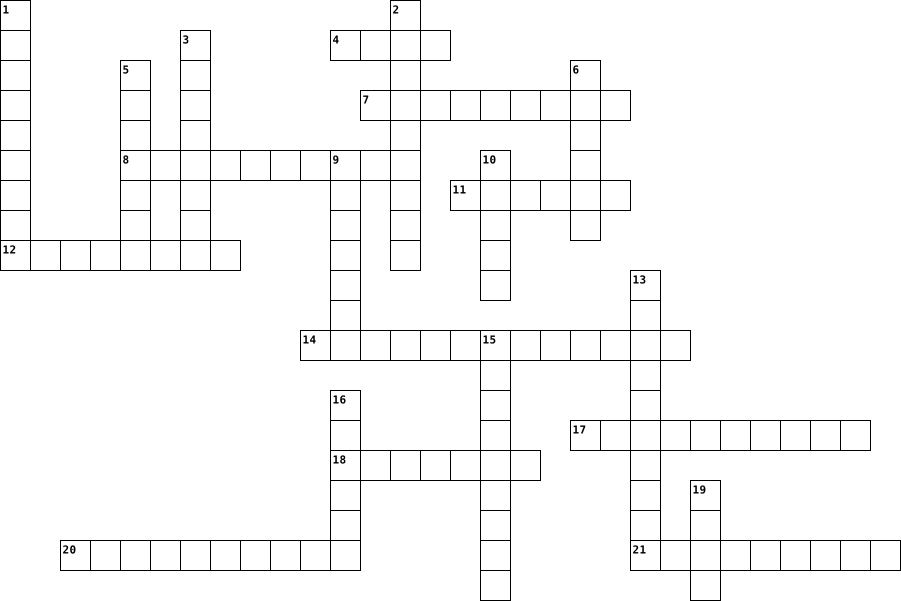
Across
- act as a cofactor in chlorophyll synthesis
- Growing on other plants which are the host
- coenzyme in photosynthesis
- Consists of parenchyma cells
- important in the equilibrium of osmotic pressure
- form root hair cell
- Have suberin/lignin which form Casparian strip
- Carnivorous plant
- Part of the root connected to the base of the plant stem
- light brown or grey spots in between leaf veins
Down
- Do not harm the host
- act as a cofactor for enzyme
- leaves undergo chlorosis
- vitamin B constituents
- breakdown of urea
- Located at the tip of the root
- involve sucrose translocation
- involve in nitrogen fixation
- red spots on leaf surfaces
- involve in nitrogen metabolism and photosynthesis
- synthesis of auxin
21 Clues: breakdown of urea • Carnivorous plant • synthesis of auxin • form root hair cell • Do not harm the host • vitamin B constituents • leaves undergo chlorosis • coenzyme in photosynthesis • red spots on leaf surfaces • act as a cofactor for enzyme • Consists of parenchyma cells • involve in nitrogen fixation • involve sucrose translocation • Located at the tip of the root • ...
Cells and Respiration Crossword 2021-08-10

Across
- where the specimen is placed.
- stores fluid.
- We exhale this.
- is An essential fluid for us to drink, or else we’d die.
- Chemical reaction to break down sugar to obtain energy
- Approximately 30 trillion in the human body.
- Special structures in a cell.
- Stores chlorophyll
- Jelly-like substance between the nucleus and cell membrane.
- Process of plants creating energy and oxygen.
- We inhale this.
Down
- sugar.
- Where cellular respiration occurs.
- magnifies the image that is produced by objective.
- Largest organelle in a cell.
- Produced in photosynthesis and cellular respiration
- Rigid layer surrounding types of cells.
- Separates the interior from the exterior.
- Vitamin D
- to magnify a cell to view it more closely and in more detail.
20 Clues: sugar. • Vitamin D • stores fluid. • We exhale this. • We inhale this. • Stores chlorophyll • Largest organelle in a cell. • where the specimen is placed. • Special structures in a cell. • Where cellular respiration occurs. • Rigid layer surrounding types of cells. • Separates the interior from the exterior. • Approximately 30 trillion in the human body. • ...
test 2024-05-28

Across
- Hot tasting spice
- Animal used for riding
- Bugs which do not allow us to sleep
- A Reptile
- Anil which gives us milk
- Harmful gas for humans and animals
- Tiny, single celled living organisms
- First part in food chain
- Parasitic insects that live on skin of human hair or animals.
- used as antiseptic
- Part of plan that we eat commonly tastes sweet
Down
- We drink daily
- Photosynthesis is done in this part of plant
- A black color bird
- Dried seeds of the legume plants
- Plants use for photosynthesis
- A grain used for food, Eg:wheat maize
- The main trunk of plan
- Spice made from the peeled, dried, and rolled bark of a tree
- Carnivores animal
20 Clues: A Reptile • We drink daily • Hot tasting spice • Carnivores animal • A black color bird • used as antiseptic • Animal used for riding • The main trunk of plan • Anil which gives us milk • First part in food chain • Plants use for photosynthesis • Dried seeds of the legume plants • Harmful gas for humans and animals • Bugs which do not allow us to sleep • ...
Biology Milestones Review CELLS 2024-12-09

Across
- site of cellular respiration in cells
- macromolecule group that stores information
- made of phospholipids, covering on all cells
- cells with no nucleus, bacteria
- organelle that packages and transports
- moving from low to high concentration, requires energy
- products of photosynthesis are oxygen and ______
- site of protein synthesis
- control center of eukaryotic cells, contains DNA
Down
- fats, oils, and waxes
- site of photosynthesis in cells
- made of only one cell
- organelle made of folded membranes, transports proteins
- products of cellular respiration are ATP energy, water, and ________ ______.
- messenger than sends genetic info to ribosome
- contains digestive enzymes
- fluid inside cells
- outer covering found on plant, fungi, and bacteria cells
- balanced solution
- diffusion of water
20 Clues: balanced solution • fluid inside cells • diffusion of water • fats, oils, and waxes • made of only one cell • site of protein synthesis • contains digestive enzymes • site of photosynthesis in cells • cells with no nucleus, bacteria • site of cellular respiration in cells • organelle that packages and transports • macromolecule group that stores information • ...
Chemical Reactions and Photosynthesis 2025-12-16

Across
- enzyme that breaks apart hydrogen peroxide
- the primary source of energy
- a substance at the end of a reaction
- other feeding
- 6 CO2
- a protein that helps speed up chemical reactions
- acid or base that can change the shape of an enzyme
- self-feeding
- when the starting atoms get rearranged into a new substance
Down
- another term for reactant
- C6H12O6
- organelle that performs photosynthesis
- using light to make high energy glucose molecules
- contains both hydrogen and carbon atoms
- the pocket of an enzyme where the substrate fits
- can change the shape of an enzyme
- a substance at the beginning of a reaction
- 6 H2O
- the reaction arrow
- 6 O2
20 Clues: 6 O2 • 6 H2O • 6 CO2 • C6H12O6 • self-feeding • other feeding • the reaction arrow • another term for reactant • the primary source of energy • can change the shape of an enzyme • a substance at the end of a reaction • organelle that performs photosynthesis • contains both hydrogen and carbon atoms • enzyme that breaks apart hydrogen peroxide • a substance at the beginning of a reaction • ...
BioPuzzle 2026-04-16

Across
- Any living thing
- Protein that speeds up reactions
- Jelly-like fluid inside the cell
- Movement from high to low concentration
- Main source of quick energy
- Controls what enters and leaves the cell
- Maintaining stable internal conditions
- Basic unit of life
- Molecules used for structure and function
- Makes proteins & location of transcription
- Controls the cell's activities
Down
- Process plants used to make food
- Section of DNA that codes for traits
- Genetic material that carries instructions
- Produces energy for the cell (ATP)
- Non-living infectious particle
- Living things and their environment interacting
- Fat used for energy storage (Long term energy)
- Single-celled microorganisms
- Organelle where photosynthesis happens
- Movement of water through a membrane
21 Clues: Any living thing • Basic unit of life • Main source of quick energy • Single-celled microorganisms • Non-living infectious particle • Controls the cell's activities • Process plants used to make food • Protein that speeds up reactions • Jelly-like fluid inside the cell • Produces energy for the cell (ATP) • Section of DNA that codes for traits • ...
BIOLOGY II 2026-05-27

Across
- Genetic makeup
- Main sugar used for energy
- Copying DNA
- Change in DNA sequence
- Green pigment in plants
- Cell division producing identical cells
- Main energy molecule of cells
- Process plants use to make glucose
- Molecule carrying genetic information
- Making RNA from DNA
Down
- Movement from high to low concentration
- Different version of a gene
- Division of the cytoplasm
- Organelle where photosynthesis occurs
- Making proteins from RNA
- Cell division producing gametes
- Maintaining stable internal conditions
- Change in populations over time
- Process cells use to release energy
- Diffusion of water across a membrane
- Protein that speeds up reactions
- Structure containing DNA
- Organelle that makes ATP
- Molecule used to make proteins
24 Clues: Copying DNA • Genetic makeup • Making RNA from DNA • Change in DNA sequence • Green pigment in plants • Making proteins from RNA • Structure containing DNA • Organelle that makes ATP • Division of the cytoplasm • Main sugar used for energy • Different version of a gene • Main energy molecule of cells • Molecule used to make proteins • Cell division producing gametes • ...
Science Crossword Puzzles 2021-11-01

Across
- leaf: the factory where photosynthesis takes place
- substances that are formed in chemical reactions
- what is needed for a reaction to take place
- plants make food in the form of sugar and produce oxygen
- organelles where photosynthesis takes place
Down
- distributes water to the plant
- energy: comes from the sun
- carries the glucose to the plant make its own food
- lets gas in and out of the leaf
- a green pigment that allows the plant to absorb sunlight
10 Clues: energy: comes from the sun • distributes water to the plant • lets gas in and out of the leaf • what is needed for a reaction to take place • organelles where photosynthesis takes place • substances that are formed in chemical reactions • leaf: the factory where photosynthesis takes place • carries the glucose to the plant make its own food • ...
photosynthesis and cellular respiration 2024-11-25

Across
- The pigment that absorbs sunlight in plants.
- The cycle that converts carbon dioxide into glucose.
- The organelle where photosynthesis occurs.
- The process by which glucose is broken down to produce energy.
Down
- The basic unit of energy used by cells.
- The initial stage of cellular respiration.
- The final stage of cellular respiration that produces the most ATP.
- The gas released as a byproduct of photosynthesis.
- The main product of photosynthesis.
- Themolecule that carries energy in cells.
10 Clues: The main product of photosynthesis. • The basic unit of energy used by cells. • Themolecule that carries energy in cells. • The initial stage of cellular respiration. • The organelle where photosynthesis occurs. • The pigment that absorbs sunlight in plants. • The gas released as a byproduct of photosynthesis. • The cycle that converts carbon dioxide into glucose. • ...
Bio Project 2023-09-26

Across
- Waste Produced by plants
- how plants drink
- Reason for the leaves' color
- Stack of thylakoids
- Light dependent
Down
- Where photosynthesis takes place
- The liquid surrounding the grana
- Tiny discs inside chlorophyll
- Sugar
- Light independent
10 Clues: Sugar • Light dependent • how plants drink • Light independent • Stack of thylakoids • Waste Produced by plants • Reason for the leaves' color • Tiny discs inside chlorophyll • Where photosynthesis takes place • The liquid surrounding the grana
energy project 2023-01-13

Across
- sunlight, carbon dioxide, and water
- site of photosynthesis.
- sunlight.
- keep a normal temperature
- dioxide respiration in a human body
Down
- energy cell
- All body cell
- turn food into energy.
- energy for the body cell
- respiration
10 Clues: sunlight. • energy cell • respiration • All body cell • turn food into energy. • site of photosynthesis. • energy for the body cell • keep a normal temperature • sunlight, carbon dioxide, and water • dioxide respiration in a human body
Plant Anatomy 2025-10-13

Across
- The primary site for photosynthesis to take place
- Leaf like structures that help protect the developing flower bud
- Brightly colored structures on a flower that attract pollinators
- Tissue that carries water and dissolved minerals up from the roots to the rest of the plant
- The process where a seed begins the sprout
- The part of the stamen that contains the pollen
- Anchors the plant and absorbs water and minerals from the ground
- _____________ is used to produce food during photosynthesis
Down
- __________ contain the embryo and food supply for a new plant
- The female part of a flower
- The male part of a flower
- The transfer of pollen from the anther to the stigma
- Supports the plant and transports water and nutrients to the rest of the plant
- The reproductive structure of a plant
- Tissue that carries sugars and nutrients produced by the leaves during photosynthesis to the rest of the plant
- A mature ovary that protects the seeds
16 Clues: The male part of a flower • The female part of a flower • The reproductive structure of a plant • A mature ovary that protects the seeds • The process where a seed begins the sprout • The part of the stamen that contains the pollen • The primary site for photosynthesis to take place • The transfer of pollen from the anther to the stigma • ...
Plants Vocab 2026-03-26

Across
- Type of cell that controls the opening of stomata
- Part of a flower used to attract pollinators
- Type of vascular tissue that transports food down through the plant
- Response of a plant to the presence of light
- Male organ of a flower; contains the anther
- Openings in the bottom of a leaf that allow water and gases to pass through
- Part of a plant where photosynthesis occurs
- Female organ of a flower; contains the ovary
Down
- Response of a plant to the presence of gravity
- Organelle used by plants for photosynthesis; contains chlorophyll
- Type of vascular tissue that transports water up through the plant
- Process used by plants to make oxygen and sugar
- Part of the plant used to anchor, absorb, and conduct
- Tissue used for the transport of food, minerals, and water
- Part of the plant used for support, to conduct, and to store
- Leaflike part of a flower that protects inner organs
16 Clues: Male organ of a flower; contains the anther • Part of a plant where photosynthesis occurs • Part of a flower used to attract pollinators • Response of a plant to the presence of light • Female organ of a flower; contains the ovary • Response of a plant to the presence of gravity • Process used by plants to make oxygen and sugar • ...
haha 2025-03-17

Across
- – A muscle that helps in the breathing process by contracting and relaxing.
- – The process of breaking down glucose to produce energy, releasing carbon dioxide and water as byproducts.
- – The windpipe that connects the mouth and nose to the lungs, allowing air passage.
- – The organelle in plant cells where photosynthesis occurs.
- – A protein in red blood cells that binds to oxygen and transports it throughout the body.
- – Tiny air sacs in the lungs where oxygen and carbon dioxide are exchanged with the blood.
- – A gas required by animals for cellular respiration and released by plants during photosynthesis.
Down
- – Small openings on plant leaves that allow gas exchange to occur.
- – The process by which plants use sunlight, carbon dioxide, and water to produce oxygen and glucose.
- – Tiny hair-like structures in the respiratory tract that help remove dust and mucus.
- Dioxide – A gas taken in by plants for photosynthesis and released by animals during respiration.
- – The primary respiratory organs in mammals that facilitate the exchange of oxygen and carbon dioxide.
12 Clues: – The organelle in plant cells where photosynthesis occurs. • – Small openings on plant leaves that allow gas exchange to occur. • – A muscle that helps in the breathing process by contracting and relaxing. • – The windpipe that connects the mouth and nose to the lungs, allowing air passage. • ...
N5 Biology Unit 3 2022-03-17

Across
- used to find species which may be within an area of grass, generally only suitable for small crawling invertibrates
- we use this to measure temperature
- eats only animal material
- competition between members of different species
- eats only plant material
- obtains energy by eating another organism
- the role an organism has in its ecosystem
- site of photosynthesis
- we use this to measure soil moisture level
- the place where an organism lives
- all the species living in the habitat along with all non-living factors
- can occur when errors in genetic material arise through the mutation process
- we use arrows to represent this in a food chain
- glucose produced in photosynthesis can be turned into
- competition between members of the same species
- a group f organisms that can interbreed to produce fertile offspring
- name of green pigment that captures light energy
- the name of the first stage of photosynthesis
- we use this to measure light intensity
- the ultimate source of energy for an ecosystem
Down
- the factor that acts on members of a population and results in predatation
- species that indicate the level of pollution
- a group of a single species
- sprayed too kill of pests
- the only form of nitrogen a plant can absorb
- living factors
- type of crop which have genes that allow them to grow bigger, stronger and pest resistant
- all the different species living together
- an organism which makes its own food through photosynthesis
- eats both plant and animal material
- this occurs when animals need the same resource when in short supply
- thick layer that blocks out sunlight from rivers
- non-living factors
- survival of an organisms variation which makes them better adapted to their environment
- the name of the second stage of photosynthesis
- used to find the rough number of plants on a small area of ground
- a random event that cause changes to the genetic information of an organism
- enhance minerals in the soil and improve the growth of the crop
- the term used to describe the formation of two or more species from the original species
39 Clues: living factors • non-living factors • site of photosynthesis • eats only plant material • eats only animal material • sprayed too kill of pests • a group of a single species • the place where an organism lives • we use this to measure temperature • eats both plant and animal material • we use this to measure light intensity • obtains energy by eating another organism • ...
Unit 4 vocab 2023-11-16

Across
- light independent reactions during phase two of photosynthesis in which energy is stored in organic molecules as glucose
- the process of cellular respiration that takes place in the presence of oxygen gas to produce energy from food
- the process by which a cell [plants] captures energy in sunlight and uses it to make food
- light absorbing molecules used by plants to gather the suns energy
- enzyme present in plant chloroplasts involved in fixing atmospheric carbon dioxide during photosynthesis; catalyzes the first step in the calvin cycle
- a thick fluid that fills the inside of a chloroplast; where the calvin cycle takes place
- high energy chemical compound used in the body to transfer energy from nutrients to various life processes; energy currency of the body
- reaction in which light energy breaks down a water molecule during photosynthesis releasing electrons, hydrogen ions, and molecular oxygen
- respiration that occurs in certain fungi and bacteria and in human muscle cells during strenuous activity that provides ATP under lack of oxygen
- the chemical reaction in the body's cells that change food into energy; all of the chemical reactions that occur within an organism
Down
- green pigment present in all green plants and responsible for the absorption of light to provide energy for photosynthesis
- the break down of glucose by enzymes, releasing energy
- a metabolic process that requires oxygen
- process that does not require oxygen
- study of the flow and transformation of energy in the universe
- the cellular process of making ATP without oxygen; the breaking down of sugar molecules into simpler compounds to produce substances that can be used in making chemical energy
- the process by which the cell derives energy from glucose; the process by which plants and animals break down organic molecules to release energy for use by the cell
- the sequence of reactions by which most living cells generate energy during the process of aerobic respiration; it takes place in the mitochondria, consuming oxygen, producing carbon dioxide and water as waste products
- the ability to do work; energy cannot be created or destroyed only transformed
- in chloroplasts, one of the stacked, flattened, pigment containing membranes in which light dependent reactions occur
- one of the pigment containing thylakoids in a plants chloroplast
21 Clues: process that does not require oxygen • a metabolic process that requires oxygen • the break down of glucose by enzymes, releasing energy • study of the flow and transformation of energy in the universe • one of the pigment containing thylakoids in a plants chloroplast • light absorbing molecules used by plants to gather the suns energy • ...
unit 3b-photosynthesis 2023-10-05

Across
- when light strikes PII, water is _____
- ______ goes into the calvin cycle and binds with RuBP to start the calvin cycle
- the ____ reactions occur in the thylakoid membrane
- the ____ cycle occurs in the stroma
- once electrons leave PII, they travel through carriers to get to P ___
Down
- the energy products of the light reactions are NADPH and _____
- electrons from water, travel to P ____ first
- when electrons leave PI and are given to _______
- photosynthesis is a ____ reaction- meaning that small molecules are combined with the use of energy to make a large product
- the products of photosynthesis is sugar and ____
- _____ is needed from the light reactions to run the calvin cycle
- the reactants of photosynthesis is CO2 and _____
- the ultimate product of the calvin cycle is ______
- water is split into hydrogen, oxygen and _____
14 Clues: the ____ cycle occurs in the stroma • when light strikes PII, water is _____ • electrons from water, travel to P ____ first • water is split into hydrogen, oxygen and _____ • when electrons leave PI and are given to _______ • the products of photosynthesis is sugar and ____ • the reactants of photosynthesis is CO2 and _____ • ...
Biology crossword 2024-12-06

Across
- The process cells use to break down macromolecules like carbohydrates in order to create usable energy for cellular processes
- The process many autotrophs go through to convert solar energy into chemical energy
- The pigment that allows plants to absorb sunlight
- The step in photosynthesis and cellular respiration when energy carrying molecules are formed
- A thick solution that fills each cell and is enclosed by the cell membrane
- In the absence of oxygen, _____ will create alcohol, CO2 and 2 ATP
Down
- Processes that require oxygen are
- A product of photosynthesis
- A cycle that creates energy in cells
- Another name for anaerobic respiration
- Where glucose gets broken into pyruvate in the cell
- A byproduct of anaerobic respiration in humans
- Direct source of energy for all cell processes
- Where the most ATP is made during cellular respiration
14 Clues: A product of photosynthesis • Processes that require oxygen are • A cycle that creates energy in cells • Another name for anaerobic respiration • A byproduct of anaerobic respiration in humans • Direct source of energy for all cell processes • The pigment that allows plants to absorb sunlight • Where glucose gets broken into pyruvate in the cell • ...
Vocab for Photosynthesis/cellular respiration 2022-11-01

Across
- C6H12O6
- They're responsible for capturing light
- convert light energy into chemical energy
- the action of breathing
- CO2
- organisms that cannot make there own food.
- H2O
Down
- organisms that cannot make their own food
- substances that are produced at the end
- organisms that make their own food
- the sugar produced by plants
- Also known as reactants or input materials
- one of the products for photosynthesis
- A process in plants that uses sunlight
- organisms that make their own food
15 Clues: CO2 • H2O • C6H12O6 • the action of breathing • the sugar produced by plants • organisms that make their own food • organisms that make their own food • one of the products for photosynthesis • A process in plants that uses sunlight • substances that are produced at the end • They're responsible for capturing light • organisms that cannot make their own food • ...
Bio Vocab Practice Test 2023-12-05

Across
- organism that is able to capture energy from sunlight or chemicals and use it to produce its own food; also called a producer
- process used by plants and autotrophs to capture light energy and use it to power chemical reactions that convert carbon dioxide -rich carbohydrates such as sugars and water into oxygen
- set of reactions in photosynthesis that use energy from light to produce ATP and NADPH
- Fluid portion of the chloroplast; outside of the thylakoid
- Principal pigment of plants and other photosynthetic organisms
- Saclike photosynthetic membranes found in chloroplasts
- Carrier molecule that transfers high-energy electrons from chlorophyll to other molecules
- organism that obtains food by consuming other living things; also called a consumer
Down
- when a phosphoryl group is transferred from a substrate to ADP or GDP to form ATP or GTP, coupled with the release of free energy
- set of reactions in photosynthesis that do not require light; energy from ATP and NADPH is used to build high-energy compounds such as sugar
- Gain of electrons
- Process in which chemical energy is used to produce carbohydrates
- Cluster of chlorophyll and proteins found in thylakoids
- the light-independent reactions of photosynthesis in which energy from ATP and NADPH is used to build high-energy compounds such as sugar
- Loss of electrons
- light-absorbing molecules used by plants to gather the sun's energy
- Compound used by cells to store and release energy
- series of electron carrier proteins that shuttle high-energy electrons during ATP-generating reactions
- Cluster of proteins that span the thylakoid membrane and allow hydrogen ions (H+) to pass through it
19 Clues: Gain of electrons • Loss of electrons • Compound used by cells to store and release energy • Saclike photosynthetic membranes found in chloroplasts • Cluster of chlorophyll and proteins found in thylakoids • Fluid portion of the chloroplast; outside of the thylakoid • Principal pigment of plants and other photosynthetic organisms • ...
Bioenergetics 2025-01-24

Across
- this is the part of a cell which performs cellular respiration
- this is the process that cells use to get energy from food
- Similar to a dead battery, ATP becomes this when the energy in it is used
- The first part of photosynthesis which requires water and sunlight
- the way some creatures make energy without oxygen which also creates alcohol
- the way muscles make energy without oxygen which creates lactic acid
Down
- this gives plants their green color and is needed to capture energy from the sun
- What plants use to make food. It needs sunlight, carbon dioxide, and water to work
- the part of the plant where photosynthesis happens
- Similar to a charged battery, this is the energy needed for a cell to do work
- the second part of photosynthesis which uses carbon dioxide to make glucose (sugar)
11 Clues: the part of the plant where photosynthesis happens • this is the process that cells use to get energy from food • this is the part of a cell which performs cellular respiration • The first part of photosynthesis which requires water and sunlight • the way muscles make energy without oxygen which creates lactic acid • ...
day 6 vocab 2022-06-17

Across
- an organism that is able to form nutritional organic substances from simple inorganic substances such as carbon dioxide.
- the chemical element with the symbol O and atomic number 8.
- an organic compound and hydrotrope that provides energy to drive many processes in living cells,
- a plastid that contains chlorophyll and in which photosynthesis takes place.
- membrane-bound compartments inside chloroplasts and cyanobacteria.
- the process by which plants use sunlight, water, and carbon dioxide to create oxygen and energy in the form of sugar
Down
- an organism deriving its nutritional requirements from complex organic substances.
- the supportive tissue of an epithelial organ, tumor, gonad, etc., consisting of connective tissues and blood vessels.
- light-independent reactions, bio synthetic phase, dark reactions, or photosynthetic carbon reduction cycle of photosynthesis are the chemical reactions that convert carbon dioxide and hydrogen-carrier compounds into glucose
- a green pigment, present in all green plants and in cyanobacteria, responsible for the absorption of light to provide energy for photosynthesis. Its molecule contains a magnesium atom held in a porphyrin ring.
- uses light energy to make two molecules needed for the next stage of photosynthesis: the energy storage molecule ATP and the reduced electron carrier NADPH
- the main sugar found in your blood
12 Clues: the main sugar found in your blood • the chemical element with the symbol O and atomic number 8. • membrane-bound compartments inside chloroplasts and cyanobacteria. • a plastid that contains chlorophyll and in which photosynthesis takes place. • an organism deriving its nutritional requirements from complex organic substances. • ...
Energy Conversions 2021-10-28

Across
- reactant in cellular respiration, product in photosynthesis, used as the air we breathe
- where cellular respiration occurs
- occurs in animal cells, requires glucose as energy
Down
- used as energy in photosynthesis
- occurs in plant cells, requires sunlight as energy
- where photosynthesis occurs
- used as energy in cellular respiration, a product of photosynthesis
7 Clues: where photosynthesis occurs • used as energy in photosynthesis • where cellular respiration occurs • occurs in plant cells, requires sunlight as energy • occurs in animal cells, requires glucose as energy • used as energy in cellular respiration, a product of photosynthesis • reactant in cellular respiration, product in photosynthesis, used as the air we breathe
photosynthesis lab crossword 2022-10-19

Across
- energy comes from sun
- lets gases in and out of a leaf
- leaf factory where photosynthesis takes place
- uses sunlight to synthesize foods from carbon dioxide and water
- carries glucose to plant for its life process
Down
- the organelles where photosynthesis takes place only found in plant cells
- substances formed in chemical reactions
- a green pigment that allows the plant to absorb sunlight
- needed for a reaction to take place
- distributes water to the plant
10 Clues: energy comes from sun • distributes water to the plant • lets gases in and out of a leaf • needed for a reaction to take place • substances formed in chemical reactions • leaf factory where photosynthesis takes place • carries glucose to plant for its life process • a green pigment that allows the plant to absorb sunlight • ...
Photosynthesis and Respiration 2021-08-24

Across
- absorbed from the surrounding air or water
- organelles in a plant cell that carry out photosynthesis
- pores in the surface of a leaf; the site of gas exchange in plants
- a source of energy
- the organelles where respiration happens
Down
- how living organisms produce energy using oxygen
- the green pigment in chloroplasts that enables photosynthesis
- a part of a plant
- how cells make energy
- the chemical reaction, powered by sunlight, that plants use to change carbon dioxide and
10 Clues: a part of a plant • a source of energy • how cells make energy • the organelles where respiration happens • absorbed from the surrounding air or water • how living organisms produce energy using oxygen • organelles in a plant cell that carry out photosynthesis • the green pigment in chloroplasts that enables photosynthesis • ...
Photosynthesis and Cellar Respiration Crossword 2021-11-18

Across
- A simple sugar that is a source of energy.
- An organelle in plants where photosynthesis occurs.
- Process to convert water & CO2 to O2 & glucose.
Down
- Releases energy by breaking down glucose.
- A gas taken in by organisms during cellular respiration.
- A gas taken in by plants during photosynthesis.
- Powerhouse of the cell.
- Adenosine Diphospahte is the removed phosphate from ATP.
- Adenosine Trihosphate is the main energy source in cells.
- A liquid taken in by plants during photosythesis.
10 Clues: Powerhouse of the cell. • Releases energy by breaking down glucose. • A simple sugar that is a source of energy. • A gas taken in by plants during photosynthesis. • Process to convert water & CO2 to O2 & glucose. • A liquid taken in by plants during photosythesis. • An organelle in plants where photosynthesis occurs. • ...
crossword 2024-02-20

Across
- smallest unit of life
- chemical compound is CO2
- photosynthesis takes place in this organelle
- living organisms need to drink it to live
- people and plants need to breathe it in to survive
Down
- found in nearly all of the cells in living organism
- a green pigment that soaks up radiant energy also gives plants their green color
- chemical compound is C6H12O6
- required for photosynthesis to occur
- the process which a plant use sunlight to make their food
10 Clues: smallest unit of life • chemical compound is CO2 • chemical compound is C6H12O6 • required for photosynthesis to occur • living organisms need to drink it to live • photosynthesis takes place in this organelle • people and plants need to breathe it in to survive • found in nearly all of the cells in living organism • ...
photosynthesis and cellular respiration 2024-11-25

Across
- The pigment that absorbs sunlight in plants.
- The cycle that converts carbon dioxide into glucose.
- The organelle where photosynthesis occurs.
- The process by which glucose is broken down to produce energy.
Down
- The basic unit of energy used by cells.
- The initial stage of cellular respiration.
- The final stage of cellular respiration that produces the most ATP.
- The gas released as a byproduct of photosynthesis.
- The main product of photosynthesis.
- Themolecule that carries energy in cells.
10 Clues: The main product of photosynthesis. • The basic unit of energy used by cells. • Themolecule that carries energy in cells. • The initial stage of cellular respiration. • The organelle where photosynthesis occurs. • The pigment that absorbs sunlight in plants. • The gas released as a byproduct of photosynthesis. • The cycle that converts carbon dioxide into glucose. • ...
Cells 2023-11-27

Across
- an organic compound made up of a phosphorous atom surrounded by three oxygen atoms
- a jellylike material in most cells that surrounds the nucleus
- able to allow some fluids and particles to pass through, but not others
- The Basic units of all living things
- round or rod-shaped structures in a cell in which food molecules are broken down to produce energy
- the movement of molecules across a cell membrane without the use of energy by the cell
- organelles within the nucleus where ribosomal RNA is produced
- a series of flattened sacs within a cell where materials are modified and distributed to other parts of the cell
- movement of water across a semipermeable membrane from a high concentration to a low concentration
- second phase of photosynthesis, during which light is not needed
- movement of materials through a cell membrane using energy
- unable to be penetrated
- the process of taking in oxygen and releasing carbon dioxide
- the part of the cell that controls many of the functions of the cell and contains the organism's DNA
- carbohydrates woven together to make up the cell wall in plants, algae, and fungi
Down
- the movement of molecules from an area of higher concentration to an area of lower concentration
- small structures inside the cell that have specialized functions
- the membrane that surrounds the nucleus
- a process in which plants and some other organisms use energy from the sun to convert water and carbon dioxide to food
- a thin, flexible sheet or layer
- Storage chambers in cells that are used to hold nutrients and wastes
- the part of the plant where photosynthesis is carried out
- the stage of photosynthesis that is driven by energy from the sun
- a network of folded membranes within the cell that manufactures and stores many chemicals
- the movement of fluids and nutrients around an organism's body
- a compound found in living cells, that can store and release energy
- tiny structures that make proteins for the cells
- a plant substance, usually green, that absorbs light energy for use in photosynthesis
- able to allow fluids and particles to pass through
- enzyme-containing cell parts that help digest food and break down old cell parts
- a rigid barrier that surrounds the cells of organisms such as plants, algae, and fungi
31 Clues: unable to be penetrated • a thin, flexible sheet or layer • The Basic units of all living things • the membrane that surrounds the nucleus • tiny structures that make proteins for the cells • able to allow fluids and particles to pass through • the part of the plant where photosynthesis is carried out • movement of materials through a cell membrane using energy • ...
Absolute "Jungle is Massive" Crossword 2023-10-20

Across
- The area in which organisms live
- A relationship where one organism benefits and one suffers
- A living factor
- How different organisms depend on each other within a community
- The gas taken in from the atmosphere by plants for photosynthesis (two words)
- A relationship where both organisms benefit
- An abiotic factor that controls the activity of enzymes and photosynthesis
- All the organisms within an ecosystem
- The form of nitrogen that is released from dead plants and animals after decomposition
- The name for each step in a food chain (two words)
- A type of interaction that takes place between organisms in an area when resources are limited
- A key element that is used to make DNA and protein
- One of the only processes that can take carbon dioxide out of the atmosphere
- An organism that makes their own food via photosynthesis
- The process by which carbon dioxide is produced from fossil fuels
- A form of carbon excavated from the ground and used as a source of energy (two words)
- The process of water in clouds becoming heavy and falling as rain, snow or hail
Down
- A non-living factor
- A small animal that shreds dead, organic material into smaller pieces
- The process of water moving through gaps in soils and rocks
- A carbohydrate made by plants during photosynthesis
- The form of nitrogen that plants take up from the roots to make proteins and DNA
- A group of consumers that gain their energy from dead or decaying matter
- An organism that must consume other organisms for energy
- All of the living things and physical conditions in an area
- An abiotic factor that affects the quality of soil
- An abiotic factor that affects the success of plant species (two words)
- A relationship between a prey and a predator
- The total number of organisms of a species
- Waste products produced by the body are usually lost through this process
- The mass of living material in an organism
- A type of bacteria that convert nitrogen from the air into a form that can be used by plants (two words)
- Undigested material that is usually lost as faeces
33 Clues: A living factor • A non-living factor • The area in which organisms live • All the organisms within an ecosystem • The total number of organisms of a species • The mass of living material in an organism • A relationship where both organisms benefit • A relationship between a prey and a predator • An abiotic factor that affects the quality of soil • ...
Science project 2023-04-04

Across
- chemical reaction in photosynthesis
- tissue that transports water
- is CO2
Down
- element of breathing
- where anaerobic respiration
- food factory
- animal stores extra glucose
- organelle where photosynthesis happens
- where cellular respiration happens in
- energy produced from respiration
10 Clues: is CO2 • food factory • element of breathing • where anaerobic respiration • animal stores extra glucose • tissue that transports water • energy produced from respiration • chemical reaction in photosynthesis • where cellular respiration happens in • organelle where photosynthesis happens
Pollination Crossword Puzzle 2022-04-13

Across
- The life cycle of plant that is indefinite is?
- The process of metabolizing (burning) the sugars created during photosynthesis to yield energy for growth
- The female part of the flower?
- The transfer of pollen from the male part of the flower to the female part of the flower is called?
- The use of a plant’s roots, stem, or leaves to produce a whole new plant is called?
- Plants grow through the process of photosynthesis.
- The male part of the plant?
- A plant that completes its lifecycle in growing season.
Down
- What type of preproduction occurs through pollination?
- A plant/flower that only grows for 2 growing seasons
- What is the union of pollen and the ovule called?
- The first element in the three numbers on a fertilizer bag.
- What is the sprouting of seeds called?
- This element promotes root and shoot growth.
- A plant that loses its leaves in the fall, then grows them back.
- This element improves color and flavor of fruits.
- A plant that stays green or will keep its leaves throughout the year.
17 Clues: The male part of the plant? • The female part of the flower? • What is the sprouting of seeds called? • This element promotes root and shoot growth. • The life cycle of plant that is indefinite is? • What is the union of pollen and the ovule called? • This element improves color and flavor of fruits. • Plants grow through the process of photosynthesis. • ...
CH.8 Brock Patrick 2020-09-10

Across
- occurs in the Thylakoids
- occurs in the stroma
- energy needed for photosynthesis
- The not used product of the light reactions
- light is absorbed by ________
- The organelle that is the center for photosynthesis
Down
- What is produced from the calvin cycle
- absorb light at different wavelengths
- Takes place in specialized structures inside plant cells called chloroplasts
9 Clues: occurs in the stroma • occurs in the Thylakoids • light is absorbed by ________ • energy needed for photosynthesis • absorb light at different wavelengths • What is produced from the calvin cycle • The not used product of the light reactions • The organelle that is the center for photosynthesis • Takes place in specialized structures inside plant cells called chloroplasts
Cellular Energy 2023-12-12

Across
- Cellular Energy
- universal solvent
- a gel like substance that fills the cell
- powers photosynthesis
- stage of photosynthesis that does not require sunlight and is powered by energy carriers
- smallest living thing
Down
- stage of photosynthesis that does not require sunlight and is powered by energy carriers
- an organism that is able to form glucose
- types of cells that perform cellular respiration
- gaseous reactant in photosynthesis and product in cellular respiration
10 Clues: Cellular Energy • universal solvent • powers photosynthesis • smallest living thing • an organism that is able to form glucose • a gel like substance that fills the cell • types of cells that perform cellular respiration • gaseous reactant in photosynthesis and product in cellular respiration • ...
Plant Crossword Puzzle 2016-02-13

Across
- process by which cells produce their own food.
- cells where photosynthesis takes place.
- plants that lack transport tissues.
- wall surrounds the cell membrane and helps support and protect the plant cell.
- hairs on the root, help to increase water absorption.
- waxy
Down
- tissue carries water and minerals upward from the roots
- tissue carries sugars (food) made by photosynthesis from the leaves to where they will be stored or used
- evaporation of water from plant leaves.
- plants that have specialized cells that are used to transport substances. Majority of plants.
- small pores that act as doorway to regulate gas exchange with the environment
- cells that regulate the opening of the stomata.
- on the exterior of plants that is excreted by the epidermal cells.
- cells as part of the stem help prevent water loss.
14 Clues: waxy • plants that lack transport tissues. • evaporation of water from plant leaves. • cells where photosynthesis takes place. • process by which cells produce their own food. • cells that regulate the opening of the stomata. • cells as part of the stem help prevent water loss. • tissue carries water and minerals upward from the roots • ...
Photosynthesis and Cellular Respiration Review 2023-04-26

Across
- A chemical reaction that kelp use to make their own food
- What does the C in C6H12O6 stand for?
- A chemical reaction that kelp use to create energy from their food
- The energy needed to power photosynthesis comes from the ____
Down
- The main output of photosynthesis, needed for cellular respiration
- What does H2O stand for?
- On the right side of the --> in a chemical reaction (left or right)
- A gas produced in photosynthesis, and needed for cellular respiration
- What do the atoms do in order to create the energy? (starts with an r)
9 Clues: What does H2O stand for? • What does the C in C6H12O6 stand for? • A chemical reaction that kelp use to make their own food • The energy needed to power photosynthesis comes from the ____ • The main output of photosynthesis, needed for cellular respiration • A chemical reaction that kelp use to create energy from their food • ...
Photosynthesis and Cellular Respiration 2018-01-28

Across
- Food plants made from the sunlight
- photosynthesis and respiration can be thought of as what?
- green pigment inside leaves
- consume glucose
- "putting together with light"
- what the process ends with
- what the process starts with
- main place where cellular respiration occurs
- First source of energy
Down
- respiration makes ATP, a word for what?
- occurs in every cell
- make glucose
- the arrow in a science equation
- tiny green structures insides plant cells
14 Clues: make glucose • consume glucose • occurs in every cell • First source of energy • what the process ends with • green pigment inside leaves • what the process starts with • "putting together with light" • the arrow in a science equation • Food plants made from the sunlight • respiration makes ATP, a word for what? • tiny green structures insides plant cells • ...
Science crossword puzzle 2022-03-25

Across
- Allele
- Genetics
- Genotype
- photosynthesis
Down
- Cell
- Climate
- Science
- Astronomy
8 Clues: Cell • Allele • Climate • Science • Genetics • Genotype • Astronomy • photosynthesis
science 2021-04-06

Across
- / one of the lamellar stacks of chlorophyll containing thylakoids found in plant chloroplasts.
- / an instrument used that can differentiate which wavelengths of light a substance can absorb.
- / is a site of photochemical or light dependent reaction of photosynthesis.
- / is the process that converts solar energy into chemical energy that is used by biological systems (that means us.)
- / shortest wavelength in absorption of light; more energy.
- / is the part of a tissue or organ with a structural or connective role, it contains enzymes necessary for carbon fixation.
Down
- / in photosynthesis, light energy is converted into chemical energy, which photoautotrophs use to build carbohydrate molecules.
- / any organism of microscopic size, e.g. a microscopic organism, especially a bacterium, virus, or fungus.
- / longest wavelength in absorption of light; less energy.
- / it is also known as a sugar.
- / are organelles that conduct photosynthesis, where the photosynthetic pigment chlorophyll captures the energy form the sunlight.
- / is a sheet like membrane, acts as a type of wall at which chloroplasts can be fixed within, achieving the maximum light possible.
12 Clues: / it is also known as a sugar. • / longest wavelength in absorption of light; less energy. • / shortest wavelength in absorption of light; more energy. • / is a site of photochemical or light dependent reaction of photosynthesis. • / one of the lamellar stacks of chlorophyll containing thylakoids found in plant chloroplasts. • ...
Chapter 9, photosynthesis 2022-12-14

Across
- A principal pigment of the plant that makes the plant look green
- Set of the reaction that does not require light and ATP and NADPH is used to build up the high energy compound, also known as Calvin cycle.
- A form of energy that consists of adenine, ribose, and three phosphate group.
- cluster of proteins that span the thylakoid membrane and allow hydrogen ions to pass through.
- A lot like ATP but it has two phosphate group instead of three
- organisms who consumes other organisms in order to gain the energy
- series of electron carrier protein that shuttle high energy electrons during ATP generating reactions
Down
- The first set of the reaction where it requires the light in order to produce ATP and NADPH.
- They contain most of the machinery needed to carry out photosynthesis, including clusters of chlorophyll and proteins
- light absorbing molecule that captures the energy from light.
- Sac- like containing chlorophyll membrane
- The light independent of photosynthesis in which energy from ATP and NADPH is used to build high energy compound
- a carrier molecule that transfers the high- energy electron from chlorophyll to other molecules
- A process that plants and autotrophs use in order to gain energy from the sunlight
- Thylakoid inner connected and arranged in stacks
- fluid part of the chloroplast, outside of thylakoid
16 Clues: Sac- like containing chlorophyll membrane • Thylakoid inner connected and arranged in stacks • fluid part of the chloroplast, outside of thylakoid • light absorbing molecule that captures the energy from light. • A lot like ATP but it has two phosphate group instead of three • A principal pigment of the plant that makes the plant look green • ...
The Calvin Cycle and Alternative Pathways 2023-12-08

Across
- Plant cell pores
- Two phosphate groups
- The enzyme responsible for fixation of carbon
- Biomolecule that provides energy
- The second phase of photosynthesis
- A 3-carbon molecule (PGA/3PG)
- Adenosine triphosphate
Down
- crassulacean acid metabolism
- CO2 joins other organic molecules
- the process used to convert light energy to chemical energy
- Main source of energy for the body's cell
- Combines with CO2 to form 3PG
- nicotinamide adenine dinucleotide phosphate
13 Clues: Plant cell pores • Two phosphate groups • Adenosine triphosphate • crassulacean acid metabolism • Combines with CO2 to form 3PG • A 3-carbon molecule (PGA/3PG) • Biomolecule that provides energy • CO2 joins other organic molecules • The second phase of photosynthesis • Main source of energy for the body's cell • nicotinamide adenine dinucleotide phosphate • ...
Plant Nutrient Crossword 2024-04-18

Across
- absorbed during photosynthesis
- third main component of NPK
- helps with biological membranes
- involved in the synthesis of chlorophyll
- symbol is Ni
- contributes to the building of cell walls
- essential for protein and oil synthesis
- released as a product from photosynthesis
Down
- first component of NPK
- core of chlorophyll molecule in plant tissue
- builds sugar to produce glucose
- second main component of NPK
- an essential micronutrient
13 Clues: symbol is Ni • first component of NPK • an essential micronutrient • third main component of NPK • second main component of NPK • absorbed during photosynthesis • builds sugar to produce glucose • helps with biological membranes • essential for protein and oil synthesis • involved in the synthesis of chlorophyll • contributes to the building of cell walls • ...