
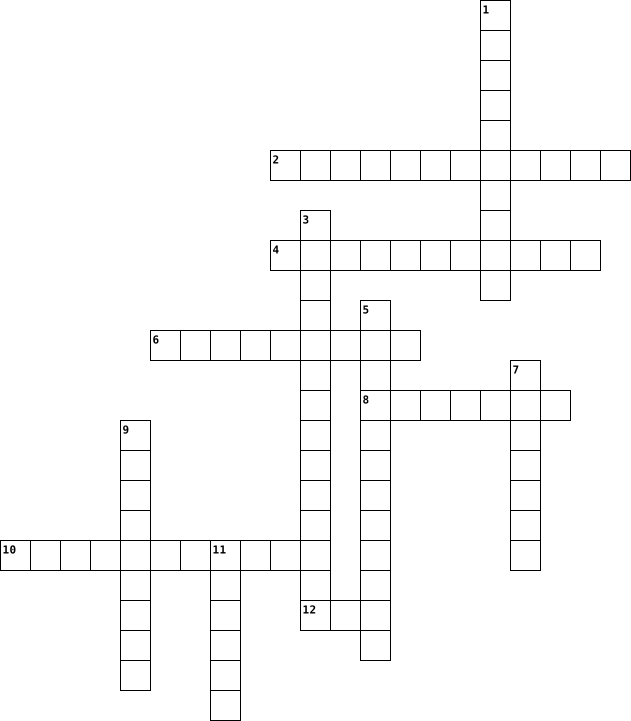
photosynthesis Crossword Puzzles
Biology 2025-11-24

Across
- The process that autotrophs use to turn sunlight into sugar.
- The amount of energy needed to raise the temperature of 1 gram of
- Saclike photosynthetic membranes within the chloroplast.
- The innermost compartment of the Mitochondria.
- reenergizing
- makes food
- An electron carrier molecule used in photosynthesis.
- A reaction that does not require Oxygen to run.
- receives electrons
- Biological machinery located in the thylakoids that carry out
- Do glycolysis in cytoplasm with no oxygen products of glycolysis
- water goes in and out
- The first set of reactions in Cellular Respiration.
- outside of the cell
- 1 degree Celsius.
- The process of releasing energy from food in the absence of oxygen
Down
- Light absorbing molecules
- likes and dislikes
- Organisms that obtain food by consuming other things.
- A plants principal pigment.
- the diffusion out
- Organisms that make their own food.
- A reaction that requires Oxygen to run.
- The fluid portion of the chloroplast.
- water only where
25 Clues: makes food • reenergizing • water only where • the diffusion out • 1 degree Celsius. • likes and dislikes • receives electrons • outside of the cell • water goes in and out • Light absorbing molecules • A plants principal pigment. • Organisms that make their own food. • The fluid portion of the chloroplast. • A reaction that requires Oxygen to run. • ...
ecosystem crossword 2026-03-13

Across
- Organisms that make their own food
- Ecosystem recovery after a disturbance where soil is present
- The ability to do work that flows through ecosystems
- Water that falls from clouds such as rain or snow
- A diagram showing energy flow through trophic levels
- An animal that eats only meat
- The total mass of living matter in an ecosystem
- Water released from plant leaves into the air
- Organisms that produce energy through photosynthesis
- A feeding position in a food chain
Down
- The process plants use to make food using sunlight
- The process where water vapor turns into liquid
- Non-living parts of an environment
- An animal that eats both plants and animals
- The first organisms to grow in a new or disturbed environment
- Organisms that break down dead matter
- Ecosystem development where no soil exists
- Organisms that must eat other organisms to survive
- An animal that eats only plants
- Living and nonliving things interacting in an area
20 Clues: An animal that eats only meat • An animal that eats only plants • Organisms that make their own food • Non-living parts of an environment • A feeding position in a food chain • Organisms that break down dead matter • Ecosystem development where no soil exists • An animal that eats both plants and animals • Water released from plant leaves into the air • ...
chtp. 8 Biology Vocabulary 2022-01-31

Across
- Need this to work properly
- The cells chemical reaction
- This required oxygen to function
- The series of reactions in which pyruvate is converted to carbon dioxide
- The catabolic pathway where orangic molecules are broken down to release energy used for the cell is called
- Light-absorbing colored molecules
- The process of breaking down glucose
- The fulid that fills the space out side the Grana
- The molecules that transport electrons during photosynthesis
- The two main types of ______ are lactic acid ______ and alcohol ____
Down
- One of the Thylakoids
- The study of the flow and transformation of energy
- The flattened disked like membranes
- The molecule that gives chemical energy
- This includes the krebs cycle and the transport of electrons
- The first stage of glycolysis
- The enzyme at the end of the Calvin cycle
- The second phase of photosynthesis
18 Clues: One of the Thylakoids • Need this to work properly • The cells chemical reaction • The first stage of glycolysis • This required oxygen to function • Light-absorbing colored molecules • The second phase of photosynthesis • The flattened disked like membranes • The process of breaking down glucose • The molecule that gives chemical energy • ...
Protista Kingdom 2014-01-20

Across
- A serious disease that is carried by mosquitos
- the indentation on one side of the ciliates
- A form of sexual reproduction were genetic information is exchanged
- This is what Euglenas have instead of cell walls
- The working library of genetic information
- haploid reproductive cells
- half of the earths photosynthesis is done by these
- Protista use this to find sunlight so that photosynthesis is possible
- Parasitic protist that do not mov on their own
Down
- Short hair like projections similar to flagellum
- long thread like colonies
- Stores reserve copies of all the cell’s genes
- This is found in red algae and is good at absorbing blue light
- half of these are heterotrophic and the other half are photosynthetic
- Any eukaryote that is not a plant, animal, or fungus.
- Also known as a “false foot”
- Bottle shaped structures used for defense
- These produce cell walls that are rich with silicon
18 Clues: long thread like colonies • haploid reproductive cells • Also known as a “false foot” • Bottle shaped structures used for defense • The working library of genetic information • the indentation on one side of the ciliates • Stores reserve copies of all the cell’s genes • A serious disease that is carried by mosquitos • Parasitic protist that do not mov on their own • ...
Protista Kingdom 2014-01-20

Across
- Also known as a “false foot”
- These produce cell walls that are rich with silicon
- half of these are heterotrophic and the other half are photosynthetic
- A form of sexual reproduction were genetic information is exchanged
- long thread like colonies
- haploid reproductive cells
- This is what Euglenas have instead of cell walls
- Short hair like projections similar to flagellum
Down
- Protista use this to find sunlight so that photosynthesis is possible
- half of the earths photosynthesis is done by these
- Bottle shaped structures used for defense
- Parasitic protist that do not mov on their own
- A serious disease that is carried by mosquitos
- Stores reserve copies of all the cell’s genes
- The working library of genetic information
- the indentation on one side of the ciliates
- This is found in red algae and is good at absorbing blue light
- Any eukaryote that is not a plant, animal, or fungus.
18 Clues: long thread like colonies • haploid reproductive cells • Also known as a “false foot” • Bottle shaped structures used for defense • The working library of genetic information • the indentation on one side of the ciliates • Stores reserve copies of all the cell’s genes • Parasitic protist that do not mov on their own • A serious disease that is carried by mosquitos • ...
Protista Kingdom 2014-01-20

Across
- Protista use this to find sunlight so that photosynthesis is possible
- Stores reserve copies of all the cell’s genes
- the indentation on one side of the ciliates
- The working library of genetic information
- half of the earths photosynthesis is done by these
- Bottle shaped structures used for defense
- Short hair like projections similar to flagellum
- Any eukaryote that is not a plant, animal, or fungus.
- Parasitic protist that do not mov on their own
- long thread like colonies
Down
- This is what Euglenas have instead of cell walls
- half of these are heterotrophic and the other half are photosynthetic
- haploid reproductive cells
- A form of sexual reproduction were genetic information is exchanged
- A serious disease that is carried by mosquitos
- This is found in red algae and is good at absorbing blue light
- Also known as a “false foot”
- These produce cell walls that are rich with silicon
18 Clues: long thread like colonies • haploid reproductive cells • Also known as a “false foot” • Bottle shaped structures used for defense • The working library of genetic information • the indentation on one side of the ciliates • Stores reserve copies of all the cell’s genes • A serious disease that is carried by mosquitos • Parasitic protist that do not mov on their own • ...
Protista Kingdom 2014-01-20

Across
- long thread like colonies
- half of these are heterotrophic and the other half are photosynthetic
- Also known as a “false foot”
- The working library of genetic information
- Any eukaryote that is not a plant, animal, or fungus.
- A serious disease that is carried by mosquitos
- haploid reproductive cells
- Short hair like projections similar to flagellum
- Bottle shaped structures used for defense
Down
- Stores reserve copies of all the cell’s genes
- half of the earths photosynthesis is done by these
- the indentation on one side of the ciliates
- Protista use this to find sunlight so that photosynthesis is possible
- This is found in red algae and is good at absorbing blue light
- Parasitic protist that do not mov on their own
- A form of sexual reproduction were genetic information is exchanged
- This is what Euglenas have instead of cell walls
- These produce cell walls that are rich with silicon
18 Clues: long thread like colonies • haploid reproductive cells • Also known as a “false foot” • Bottle shaped structures used for defense • The working library of genetic information • the indentation on one side of the ciliates • Stores reserve copies of all the cell’s genes • Parasitic protist that do not mov on their own • A serious disease that is carried by mosquitos • ...
Protista Kingdom 2014-01-20

Across
- haploid reproductive cells
- This is what Euglenas have instead of cell walls
- Stores reserve copies of all the cell’s genes
- long thread like colonies
- The working library of genetic information
- Protista use this to find sunlight so that photosynthesis is possible
- half of the earths photosynthesis is done by these
- Any eukaryote that is not a plant, animal, or fungus.
- These produce cell walls that are rich with silicon
Down
- Also known as a “false foot”
- half of these are heterotrophic and the other half are photosynthetic
- A form of sexual reproduction were genetic information is exchanged
- Parasitic protist that do not mov on their own
- A serious disease that is carried by mosquitos
- This is found in red algae and is good at absorbing blue light
- Bottle shaped structures used for defense
- the indentation on one side of the ciliates
- Short hair like projections similar to flagellum
18 Clues: long thread like colonies • haploid reproductive cells • Also known as a “false foot” • Bottle shaped structures used for defense • The working library of genetic information • the indentation on one side of the ciliates • Stores reserve copies of all the cell’s genes • Parasitic protist that do not mov on their own • A serious disease that is carried by mosquitos • ...
Protista Kingdom 2014-01-20

Across
- Also known as a “false foot”
- Bottle shaped structures used for defense
- half of these are heterotrophic and the other half are photosynthetic
- the indentation on one side of the ciliates
- A form of sexual reproduction were genetic information is exchanged
- Stores reserve copies of all the cell’s genes
- Protista use this to find sunlight so that photosynthesis is possible
- This is found in red algae and is good at absorbing blue light
- A serious disease that is carried by mosquitos
- haploid reproductive cells
- Any eukaryote that is not a plant, animal, or fungus.
Down
- half of the earths photosynthesis is done by these
- This is what Euglenas have instead of cell walls
- The working library of genetic information
- These produce cell walls that are rich with silicon
- Parasitic protist that do not mov on their own
- long thread like colonies
- Short hair like projections similar to flagellum
18 Clues: long thread like colonies • haploid reproductive cells • Also known as a “false foot” • Bottle shaped structures used for defense • The working library of genetic information • the indentation on one side of the ciliates • Stores reserve copies of all the cell’s genes • Parasitic protist that do not mov on their own • A serious disease that is carried by mosquitos • ...
Protista Kingdom 2014-01-20

Across
- Protista use this to find sunlight so that photosynthesis is possible
- These produce cell walls that are rich with silicon
- Stores reserve copies of all the cell’s genes
- half of the earths photosynthesis is done by these
- Parasitic protist that do not mov on their own
- The working library of genetic information
- the indentation on one side of the ciliates
Down
- This is found in red algae and is good at absorbing blue light
- This is what Euglenas have instead of cell walls
- A serious disease that is carried by mosquitos
- half of these are heterotrophic and the other half are photosynthetic
- long thread like colonies
- haploid reproductive cells
- Bottle shaped structures used for defense
- Also known as a “false foot”
- A form of sexual reproduction were genetic information is exchanged
- Any eukaryote that is not a plant, animal, or fungus.
- Short hair like projections similar to flagellum
18 Clues: long thread like colonies • haploid reproductive cells • Also known as a “false foot” • Bottle shaped structures used for defense • The working library of genetic information • the indentation on one side of the ciliates • Stores reserve copies of all the cell’s genes • A serious disease that is carried by mosquitos • Parasitic protist that do not mov on their own • ...
Biology Project 2022-10-02

Across
- the energy source for all living things (adenosine triphosphate)
- used to transport electrons through the cell
- two of these; the steps in the light dependent reactions
- five-carbon sugar
- energy absorbed in the thylakoid
- simple sugar molecule created in photosynthesis
- opening on the backside of a leaf that allows for exchange of gases
- used in light dependent reaction with RuBP to make glucose.
- product of light reaction created by hydrogen ion from water and the NADP
Down
- product of light reactions; used in Calvin cycle
- splits apart during light reactions
- two three-carbon molecules
- the cell where photosynthesis takes place
- fluid-filled space surrounding the grana
- recycles ADP/P and NADH
- electron carrier that is converted to NADPH
- moves across thylakoid and are picked up by NADP
- sac like membranes that contain chlorophyll and pigments
18 Clues: five-carbon sugar • recycles ADP/P and NADH • two three-carbon molecules • energy absorbed in the thylakoid • splits apart during light reactions • fluid-filled space surrounding the grana • the cell where photosynthesis takes place • electron carrier that is converted to NADPH • used to transport electrons through the cell • simple sugar molecule created in photosynthesis • ...
Unit 11 2022-04-27

Across
- Separation of large solids.
- Low productivity.
- Having no specific location of discharge, multiple sources.
- Enough light for photosynthesis.
- Removal of nutrients.
- Soil/rock is not holding full amount of water, there are still air pockets.
- Contain 20% of the world’s available surface water.
Down
- All available spaces are filled with water.
- Along coastlines saltwater can move into aquifers if there are too many wells drawing water from the ground.
- Bottom of ocean.
- Removing ground water faster than it is being replaced can cause the land on top of the aquifer to sink or buckle.
- High productivity.
- Biological treatment.
- Caused by human activities such as fertilizer use and sewage contamination.
- Cover 71% of Earth’s surface.
- An imaginary line dividing the saturated zone from the unsaturated zone.
- Not enough light for photosynthesis.
- Discharge pollution from a specific location.
18 Clues: Bottom of ocean. • Low productivity. • High productivity. • Biological treatment. • Removal of nutrients. • Separation of large solids. • Cover 71% of Earth’s surface. • Enough light for photosynthesis. • Not enough light for photosynthesis. • All available spaces are filled with water. • Discharge pollution from a specific location. • ...
The Carbon Cycle 2017-11-30

Across
- The substances that react to create the product
- The path of oxygen through ecosystems
- Glucose and oxygen gas are the blank of the photosynthesis reaction
- When the carbon in sugar is passed along the food chain and webs by consumers and decomposers before returning to the atmosphere as CO2
- Cellular Respiration and blank are responsible for carbon recycling
- respiration that uses oxygen to release the energy in carbohydrates
- The cycling of carbon through ecosystems
- Forms structural parts of organisms
- Reservoirs that absorb more carbon then release
Down
- The most abundant element in Earth's Crust
- Respiration that takes place without oxygen
- Process when sugar is used to react with carbohydrates instead of oxygen
- Places that store and release carbon slowly
- Compounds that trap heat in the atmosphere
- Used to gain usable energy
- Fuels created from an organism's fossil
- Provides long term storage of energy
- Makes up 78% of atmospheric air
18 Clues: Used to gain usable energy • Makes up 78% of atmospheric air • Forms structural parts of organisms • Provides long term storage of energy • The path of oxygen through ecosystems • Fuels created from an organism's fossil • The cycling of carbon through ecosystems • The most abundant element in Earth's Crust • Compounds that trap heat in the atmosphere • ...
Levels of organizations 2024-09-05

Across
- This carries oxygen around the body.
- Transports substances around the body.
- Protects the body against infections.
- jelly-like substance that fills the cell and where most chemical reactions occur
- contains the pigment chlorophyll, where photosynthesis occurs
- Ciliated cells have tiny threads along one edge, like microscopic hairs.
- Group of different tissues working together to carry out a job.
- Cells' function is to make food by photosynthesis.
Down
- contains cell sap to push the water to the outside of the cell
- Breaks down and then absorbs food molecules.
- respiration reactions occur here to release energy
- collect electrical signals from other nearby nerve cells.
- Replaces oxygen and removes carbon dioxide from blood.
- Red blood cells have no _______
- Produces sperms and eggs
- The unit of a living organism, contains parts carry out life processes.
- Electrical signals can travel along this very quickly.
- Group of cells of one type.
18 Clues: Produces sperms and eggs • Group of cells of one type. • Red blood cells have no _______ • This carries oxygen around the body. • Protects the body against infections. • Transports substances around the body. • Breaks down and then absorbs food molecules. • respiration reactions occur here to release energy • Cells' function is to make food by photosynthesis. • ...
Terms 2021-10-22

Across
- They absorb wavelengths of light different from those absorbed by chlorophyll.
- An electron carrier that provides the high energy electrons needed to make carbon-hydrogen bonds in the third stage of photosynthesis.
- the primary pigment involved in photosynthesis.
- Organisms that use energy from sunlight or from chemical bonds in inorganic substances.
Down
- A metabolic process similar to burning fuel.
- an enzyme-assisted anaerobic process that breaks down one six-carbon molecule of glucose of two three-carbon pyruvate ions.
- the process by which light energy is converted to chemical energy.
- Organisms that must get energy from food instead of directly from sunlight and inorganic substance.
- Absorbs only certain wavelengths and reflex all the others.
- the transfer of carbon dioxide to organic compounds.
10 Clues: A metabolic process similar to burning fuel. • the primary pigment involved in photosynthesis. • the transfer of carbon dioxide to organic compounds. • Absorbs only certain wavelengths and reflex all the others. • the process by which light energy is converted to chemical energy. • They absorb wavelengths of light different from those absorbed by chlorophyll. • ...
Photosynthesis by palo 2021-10-28

Across
- is to convert radiant energy from the sun into chemical energy that can be used for food.
- The smallest particle of a substance that has all of the physical and chemical properties of that substance.
- are the pigment in membranes
Down
- a group of green pigments used by organisms that convert sunlight into energy via photosynthesis.
- Light reactions harness energy from the sun to produce chemical bonds, ATP, and NADPH.
- a plastid that contains chlorophyll and in which photosynthesis takes place.
- enters the leaves of the plant through small pores called Stomata.
- the main type of sugar in the blood
- a process that plants and algae use to turn carbon dioxide from the air into sugar
- the primary carrier of energy in cells.
10 Clues: are the pigment in membranes • the main type of sugar in the blood • the primary carrier of energy in cells. • enters the leaves of the plant through small pores called Stomata. • a plastid that contains chlorophyll and in which photosynthesis takes place. • a process that plants and algae use to turn carbon dioxide from the air into sugar • ...
Makenna Malcolm Week 30 Vocabulary 2023-03-20

Across
- A green pigment that captures light energy for photosynthesis.
- The process by which cells use oxygen to produce energy from food.
- An organism that eats other organisms or organic matter
- The starting materials of cellular respiration are glucose and oxygen.
- The process by which plants, algae, and some bacteria use sunlight, carbon dioxide, and water to make food.
Down
- An organelle found in plant and algae cells where photosynthesis occurs.
- Is where the broken down 3-carbon molecules, energy is captured and stored.
- A sugar that stores chemical energy.
- An organism that gets energy by breaking down the remains of dead organisms or animal wastes and consuming or absorbing the nutrients.
- An organism that can make its own food by using energy from its surroundings
10 Clues: A sugar that stores chemical energy. • An organism that eats other organisms or organic matter • A green pigment that captures light energy for photosynthesis. • The process by which cells use oxygen to produce energy from food. • The starting materials of cellular respiration are glucose and oxygen. • ...
Unit 1.1 crossword 2021-01-16

Across
- dioxide:CO2
- Gas that is made from photosynthesis
- The way that plants make food, using energy from light
- A hole that lets carbon dioxide from the air get into the leaf
Down
- Captures energy from light
- Material that is made of living cells and tissues
- Absorbs water and nutrients from the soil
- tubes for water
- H2O
- Something that comes from food that we eat
10 Clues: H2O • dioxide:CO2 • tubes for water • Captures energy from light • Gas that is made from photosynthesis • Absorbs water and nutrients from the soil • Something that comes from food that we eat • Material that is made of living cells and tissues • The way that plants make food, using energy from light • A hole that lets carbon dioxide from the air get into the leaf
Ecosystems 2020-12-04

Across
- This respiration doesn't require oxygen
- Process of using water, Co2 and sunlight
- Plants take this through their roots
- Aerobic respiration releases lots of this
Down
- Plants release this gas during photosynthesis
- Plants absorb this using the chloroplasts
- We get this from our food + plants make it
- This respiration requires oxygen
- This layer of a leaf has lots of chloroplasts
- This increases when we exercise
10 Clues: This increases when we exercise • This respiration requires oxygen • Plants take this through their roots • This respiration doesn't require oxygen • Process of using water, Co2 and sunlight • Plants absorb this using the chloroplasts • Aerobic respiration releases lots of this • We get this from our food + plants make it • Plants release this gas during photosynthesis • ...
FOOD FOR PLANTS 2020-07-02

Across
- THE PIGMENT THAT TRAPS THE SUNLIGHT
- GAS ABSORBED BY PLANTS DURING PHOTOSYNTHESIS
- PHOTO MEANS______
- THE FOOD MADE BY PLANTS
- THE FOOD FACTORY OF THE PLANT
Down
- PLANTS RELEASE THIS GAS DURING PHOTOSYNTHESIS
- MILLION OF TINY STRUCTURES PRESENT IN LEAVES
- WE USE _____ TO TEST THE PRESENCE OF STARCH
- TINY PORES THROUGH WHICH EXCHANGE OF GASES TAKE PLACE
- THE LEAVES OF THIS PLANT IS SHAPED LIKE A VASE
10 Clues: PHOTO MEANS______ • THE FOOD MADE BY PLANTS • THE FOOD FACTORY OF THE PLANT • THE PIGMENT THAT TRAPS THE SUNLIGHT • WE USE _____ TO TEST THE PRESENCE OF STARCH • MILLION OF TINY STRUCTURES PRESENT IN LEAVES • GAS ABSORBED BY PLANTS DURING PHOTOSYNTHESIS • PLANTS RELEASE THIS GAS DURING PHOTOSYNTHESIS • THE LEAVES OF THIS PLANT IS SHAPED LIKE A VASE • ...
Photosynthesis Crossword Puzzle 2022-02-07

Across
- carries glucose to the plant
- we breath it all of the time
- the factory where photosynthesis happens
- plants absorb this from humans
- Lets gases in and out of the leaf
- Process by which a green plant makes its own food.
Down
- organelle that contains chlorophyll
- pigment which absorbs the sun's energy
- contributes water to the plant
- what is needed for a reaction to take place.
10 Clues: carries glucose to the plant • we breath it all of the time • contributes water to the plant • plants absorb this from humans • Lets gases in and out of the leaf • organelle that contains chlorophyll • pigment which absorbs the sun's energy • the factory where photosynthesis happens • what is needed for a reaction to take place. • ...
Madison Dukeshire-Crossword 8/9 2018-02-04

Across
- Makes 2 ATP and happens in the cytoplasm of a cell
- Makes 2 ATP
- produces glucose sugar
- Primary pigment for photosynthesis
- Where respiration mainly occurs
Down
- Converts the sun’s energy into chemical energy started in sugar
- Process of making energy of food available in the cell
- The product of fermentation
- This light is reflected unlike blue and red light
- The energy that cells make and use
10 Clues: Makes 2 ATP • produces glucose sugar • The product of fermentation • Where respiration mainly occurs • Primary pigment for photosynthesis • The energy that cells make and use • This light is reflected unlike blue and red light • Makes 2 ATP and happens in the cytoplasm of a cell • Process of making energy of food available in the cell • ...
BiologyBreannaSchaub 2018-09-13

Across
- what is the product of fermentation called?
- Where does the Glycolysis occur?
- Process of making energy of food available in the cell.
- Converts energy into chemical energy stored in sugar.
- What is the recycling process called?
Down
- The food plants make is called.
- Capture light energy for photosynthesis.
- Produces glucose.
- How many ATP does Glycolysis make?
- The energy that cells make and use.
10 Clues: Produces glucose. • The food plants make is called. • Where does the Glycolysis occur? • How many ATP does Glycolysis make? • The energy that cells make and use. • What is the recycling process called? • Capture light energy for photosynthesis. • what is the product of fermentation called? • Converts energy into chemical energy stored in sugar. • ...
Calista's Cell Crossword Puzzle 2012-10-23

Across
- Where most photosynthesis takes place
- Cell parts that perform a cells activities
- Where cellular repiration takes place
- The outside structure of the cell membrane
- Stores food, water, minerals, and waste
- The process of making food and oxygen
Down
- The inside of a cell, gelatin like substance
- A flexible like structure that holds the cell together
- smallest organism on the Earth
- Controls most of the cells activities
10 Clues: smallest organism on the Earth • Where most photosynthesis takes place • Where cellular repiration takes place • The process of making food and oxygen • Controls most of the cells activities • Stores food, water, minerals, and waste • Cell parts that perform a cells activities • The outside structure of the cell membrane • The inside of a cell, gelatin like substance • ...
Israel Mendoza's crossword 2024-03-08

Across
- a piece of a plant
- a type of sugar you get from foods you eat, and your body uses it for energy
- creates oxygen
- green pigment
- the process by which green plants and some other organisms use sunlight to synthesize foods from carbon dioxide and water.
Down
- important liquid to survive
- greenhouse gas
- a light that comes from the sun
- contains photosynthesis
- Important for humans
10 Clues: green pigment • greenhouse gas • creates oxygen • a piece of a plant • Important for humans • contains photosynthesis • important liquid to survive • a light that comes from the sun • a type of sugar you get from foods you eat, and your body uses it for energy • ...
science crossword 2024-06-07

Across
- eats plants and animals
- only eats dead things.
- plants make their food using ______________.
- leaves are green because they contain a substance called ____________.
Down
- moss and lichen are types of _______-_______. they break down rocks to make soil.
- moss and fungus break down dead things, they are __________.
- only eats plants
- only eats meat
- makes its food using photosynthesis.
- dandelions are not flowers, they are a ____.
10 Clues: only eats meat • only eats plants • only eats dead things. • eats plants and animals • makes its food using photosynthesis. • dandelions are not flowers, they are a ____. • plants make their food using ______________. • moss and fungus break down dead things, they are __________. • leaves are green because they contain a substance called ____________. • ...
science homework 2 2023-04-24

Across
- energy of movement
- chemical reaction that occurs in the chlorophyll of a plant
- a chemical reaction that release energy
- carries water and minerals through the plant
- the green substance where photosynthesis takes place
Down
- contains plant cell sap
- loops of DNA in a bacteria cell
- contains DNA and controls the cell
- cannot be created or destroyed only stored and transferred
- a chemical reaction that absorbs energy
10 Clues: energy of movement • contains plant cell sap • loops of DNA in a bacteria cell • contains DNA and controls the cell • a chemical reaction that release energy • a chemical reaction that absorbs energy • carries water and minerals through the plant • the green substance where photosynthesis takes place • cannot be created or destroyed only stored and transferred • ...
Activity 4e 2025-02-09

Across
- Organelles where photosynthesis takes place in plants
- Powerhouse of the cell
- Important for energy storage and insulation
- Gas produced as a byproduct of photosynthesis
- Build and repair cells and tissues
Down
- Holds the genetic material (DNA) in a cell
- Quick source of energy for the body
- The process by which cells release energy
- Green pigment found in plants
- Semi-permeable boundary of the cell
10 Clues: Powerhouse of the cell • Green pigment found in plants • Build and repair cells and tissues • Quick source of energy for the body • Semi-permeable boundary of the cell • The process by which cells release energy • Holds the genetic material (DNA) in a cell • Important for energy storage and insulation • Gas produced as a byproduct of photosynthesis • ...
Photosynthesis/Cellular Respiration Crossword 2025-12-08

Across
- A process to create energy in plants
- Releases energy in the form of light or heat
- Fluid filled space in the chloroplast
- Where cellular respiration occurs
- Substances that are made during a chemical reaction
- Energy
Down
- Substances that are changed in a chemical reaction
- A process to create energy in animals
- Absorbs energy in the form of light or heat
- Where photosynthesis occurs
10 Clues: Energy • Where photosynthesis occurs • Where cellular respiration occurs • A process to create energy in plants • A process to create energy in animals • Fluid filled space in the chloroplast • Absorbs energy in the form of light or heat • Releases energy in the form of light or heat • Substances that are changed in a chemical reaction • ...
Part B. Crossword Puzzle 2026-02-02

Across
- Gain of electrons in a reaction
- Loss of electrons in a reaction
- Reaction responsible for browning of cooked food
- Electron-transfer reaction type
- Process by which plants make food using sunlight
Down
- Reaction that uses water to break chemical bonds
- Series of chemical reactions that break down food
- Proteins that speed up digestion reactions
- Process that releases energy from glucose in cells
- Gas released during photosynthesis
10 Clues: Gain of electrons in a reaction • Loss of electrons in a reaction • Electron-transfer reaction type • Gas released during photosynthesis • Proteins that speed up digestion reactions • Reaction that uses water to break chemical bonds • Reaction responsible for browning of cooked food • Process by which plants make food using sunlight • ...
Energy Transfer 2021-04-30

Across
- a substance that takes part in and undergoes change during a reaction
- chemical name is hydrogen, a liquid we need for survival
- a substance produced during a natural, chemical, or manufacturing process
- organisms that decompose other dead organisms and break down chemical substances.
- the star around which the earth orbits
- organisms that eat meat only
- a more complex food chain
- another word for sugar
Down
- organisms, mainly plants that produce their own energy
- energy from the sun
- organisms that eat plants only
- Process in which carbon dioxide gets turned into glucose and oxygen
- one of the chemicals created through photosynthesis
- organisms that can eat both plants and meat
- organisms that need to consume other organisms for energy
15 Clues: energy from the sun • another word for sugar • a more complex food chain • organisms that eat meat only • organisms that eat plants only • the star around which the earth orbits • organisms that can eat both plants and meat • one of the chemicals created through photosynthesis • organisms, mainly plants that produce their own energy • ...
Carbohydrate Crossword 2018-09-25

Across
- must be in a plant for photosynthesis to occur
- forms when a starch is digested
- when 2 monosaccharides chemically combine
- sugar is seldom found naturally in foods. It is in milk and helps create milk sugar
- single units of sugar
- artificial sweeteners and sugar alcohols are
- found in fruits, sugar cane, and sugar beets
Down
- a simple carbohydrate that occurs in fresh fruits and vegetables
- is found in only in milk and milk products
- plants combine single glucose units into more complicated chemical arrangements
- fruits, many vegetables, and honey contain fructose, a highly sweet sugar
- plant materials that cannot be broken down by human enzymes
- your main source of energy
- the chemical process that makes carbohydrates
- another name for simple carbohydrates
15 Clues: single units of sugar • your main source of energy • forms when a starch is digested • another name for simple carbohydrates • when 2 monosaccharides chemically combine • is found in only in milk and milk products • artificial sweeteners and sugar alcohols are • found in fruits, sugar cane, and sugar beets • the chemical process that makes carbohydrates • ...
Photosynth eisi ALex Dylan 2022-03-10

Across
- Folding inner membrane that increases the surface area
- factors that affect the rate of cellular respiration ?
- guard cells in leaves that allow things to enter, like sunlight
- an organism that has to find and consume glucose
- takes water and transports it through the root to the rest of the plant
- the first phase of cellular respiration
- tissue that takes products from photosynthesis away from the leaves
- how many ATP are in cellular respiration ?
Down
- the powerhouse of the cell
- an organism that makes its own food
- a factor that affects photosynthesis
- little coins in chloroplasts
- most efficient ATP production method
- an organism that is an example of anaerobic and starts with "y"
- what is required with aerobic respiration ?
15 Clues: the powerhouse of the cell • little coins in chloroplasts • an organism that makes its own food • a factor that affects photosynthesis • most efficient ATP production method • the first phase of cellular respiration • how many ATP are in cellular respiration ? • what is required with aerobic respiration ? • an organism that has to find and consume glucose • ...
Cellular Energy 2024-10-09

Across
- Reactions use this and energy from the first reactions to produce glucose
- Reactants of Cellular Respiration
- Happens in the mitochondrial
- The light independent reactions happen in here
- When there is no oxygen, organisms can only do glycolysis.
- uses energy from the bonds of glucose to make ATP (power house of the Cell)
- captures light energy
- Reactions use this and H20 to get energy for the next reactions
- This chain happens along the inner membrane and produces ATP
Down
- Products of Cellular Respiration
- Products of Photosynthesis
- Reactants of Photosynthesis
- The light dependent reactions happen in here
- is the energy currency of the cell
- Happens in the cytoplasm and breaks glucose in half into 2 pyruvates
15 Clues: captures light energy • Products of Photosynthesis • Reactants of Photosynthesis • Happens in the mitochondrial • Products of Cellular Respiration • Reactants of Cellular Respiration • is the energy currency of the cell • The light dependent reactions happen in here • The light independent reactions happen in here • When there is no oxygen, organisms can only do glycolysis. • ...
Cellular Energy 2024-10-09

Across
- Reactions use this and energy from the first reactions to produce glucose
- Reactants of Cellular Respiration
- Happens in the mitochondrial
- The light independent reactions happen in here
- When there is no oxygen, organisms can only do glycolysis.
- uses energy from the bonds of glucose to make ATP (power house of the Cell)
- captures light energy
- Reactions use this and H20 to get energy for the next reactions
- This chain happens along the inner membrane and produces ATP
Down
- Products of Cellular Respiration
- Products of Photosynthesis
- Reactants of Photosynthesis
- The light dependent reactions happen in here
- is the energy currency of the cell
- Happens in the cytoplasm and breaks glucose in half into 2 pyruvates
15 Clues: captures light energy • Products of Photosynthesis • Reactants of Photosynthesis • Happens in the mitochondrial • Products of Cellular Respiration • Reactants of Cellular Respiration • is the energy currency of the cell • The light dependent reactions happen in here • The light independent reactions happen in here • When there is no oxygen, organisms can only do glycolysis. • ...
Plant Cell and photosynthesis 2025-05-28

Across
- The powerhouse of a cell.
- A living material inside the cell.
- Part of the plant where reproduction happens.
- dioxide A gas that is needed by plants during photosynthesis.
- Water movement across a semi-permeable membrane.
- The movement of oxygen from the plant to the atmosphere.
- The control center of the cell.
- Part of a plant that supports the plant.
Down
- The part of the plant where osmosis of water happens.
- The movement of molecules from high to low concentration.
- Site of photosynthesis.
- A green pigment, present in all green plants.
- wall A strong protective structure of plant cells.
- A gas that is needed by humans and animals to survive.
- Living organisms that make their food.
15 Clues: Site of photosynthesis. • The powerhouse of a cell. • The control center of the cell. • A living material inside the cell. • Living organisms that make their food. • Part of a plant that supports the plant. • A green pigment, present in all green plants. • Part of the plant where reproduction happens. • Water movement across a semi-permeable membrane. • ...
Energy Vocabulary Crossword Puzzle 2026-02-09

Across
- an inorganic compound with the chemical formula H2O.
- Organism that makes their own food.
- It is the most abundant element for human respiration.
- A chemical reaction consumers use to make energy.
- Opposite of Photosynthesis.
- It is found in all living things.
Down
- CO2.
- The source of energy for use and storage at the cellular level.
- The electromagnetic radiation of the sun that reaches the earth.
- The whole sum of reactions that occurs throughout the body within each cell and that provides the body with energy.
- Organisms take energy from the sun and Turn it into food.
- Opposite of respiration.
- It comes from the sun.
- Organism that need to eat to obtain energy.
- A 6-carbon structure with the chemical formula C6H12O6.
15 Clues: CO2. • It comes from the sun. • Opposite of respiration. • Opposite of Photosynthesis. • It is found in all living things. • Organism that makes their own food. • Organism that need to eat to obtain energy. • A chemical reaction consumers use to make energy. • an inorganic compound with the chemical formula H2O. • It is the most abundant element for human respiration. • ...
Cellular Respiration 2026-02-06

Across
- The process of plants growing
- Where photosynthesis takes place
- The organism that eats food
- An organism that makes its own food from sunlight, water, and carbon dioxide
- An organism that feeds directly on producers to get energy
- The organism who supplies food
- The variable you change or control to see the affect
- Tiny organelles in cells that generate most of cell's energy (ATP)
Down
- Organisms that eat primary consumers to obtain energy
- The process of inhaling oxygen and exhaling carbon dioxide
- The outcome or effect (cause)
- Dioxide what humans breathe out
- The body's main source of energy
- The ability to do work or cause change
- The primary energy carrier molecule in all living cells.
15 Clues: The organism that eats food • The process of plants growing • The outcome or effect (cause) • The organism who supplies food • Dioxide what humans breathe out • Where photosynthesis takes place • The body's main source of energy • The ability to do work or cause change • The variable you change or control to see the affect • ...
Cell Structure 2012-11-28

Across
- a simple type of sugar
- green material that is needed by plants for photosynthesis
- process by which a cell releases energy from food without using oxygen
- food making process in plants and other organisms that uses sunlight
- organelle in plant cells that contains chlorophyll
- organism that cannot make its own food
Down
- tiny opening in the upper or lower surface of a leaf
- containing only one cell
- containing more than one cell
- organism that can make its own food
- fingerlike extension of the cytoplasm
- the ability to do work or cause change
12 Clues: a simple type of sugar • containing only one cell • containing more than one cell • organism that can make its own food • fingerlike extension of the cytoplasm • organism that cannot make its own food • the ability to do work or cause change • organelle in plant cells that contains chlorophyll • tiny opening in the upper or lower surface of a leaf • ...
Bio 1202 Life in the Ocean and Pelagic Communities Plankton 2016-04-08

Across
- drift with the currents.
- below the euphotic zone (and still in the photic zone).
- the organisms spot in the community.
- divided into two zones: neritic zone and oceanic zone.
- organisms that live in the water (while others live on the sea bottom).
Down
- bacteria that live in extreme environments.
- the mass of living tissue.
- the synthesis of organic materials from inorganic substances by photosynthesis.
- swim against the currents.
- where photosynthesis occurs (upper part of the photic zone).
- darkest zone below the photic zone.
- upper most layer of the water.
12 Clues: drift with the currents. • the mass of living tissue. • swim against the currents. • upper most layer of the water. • darkest zone below the photic zone. • the organisms spot in the community. • bacteria that live in extreme environments. • divided into two zones: neritic zone and oceanic zone. • below the euphotic zone (and still in the photic zone). • ...
Crossword Puzzle 2018-10-07

Across
- plants are able to create their own _______
- part of a large group of living things that use sunlight to make their own food
- exact genetic copy
- green pigment used by plants to absorb energy from the sun
- scientific name for seed sprouting
- parts used by plant to absorb sunlight and carbon dioxide
- nutrient needed for plant growth
- / natural colouring matter of plant and animal tissue
Down
- part used by plants to to get water and nutrients
- process of plants creating their own food
- sugar
- gas released by plants during photosynthesis
12 Clues: sugar • exact genetic copy • nutrient needed for plant growth • scientific name for seed sprouting • process of plants creating their own food • plants are able to create their own _______ • gas released by plants during photosynthesis • part used by plants to to get water and nutrients • / natural colouring matter of plant and animal tissue • ...
Photosynthesis and Leaf Structures 2017-03-04

Across
- Transparent protective layer of cells
- Waxy layer preventing water loss
- Green disc containing chlorophyll, found in plant cells
- Cells that contain lot of chloroplasts
- Chemical process that plants use to make their own food
Down
- To take in, for example when water passes from the soil into a root
- Transports water around the plant
- Large air spaces allowing gasses to diffuse
- Green chemical found inside chloroplasts
- Cause the stomata to open and close
- The source of energy for photosynthesis
- Holes that allow gases in and out
12 Clues: Waxy layer preventing water loss • Transports water around the plant • Holes that allow gases in and out • Cause the stomata to open and close • Transparent protective layer of cells • Cells that contain lot of chloroplasts • The source of energy for photosynthesis • Green chemical found inside chloroplasts • Large air spaces allowing gasses to diffuse • ...
Carbohydrates 2018-09-21

Across
- many sugars
- your main source of energy
- sweetening foods while adding little or no calories
- sugars extracted from plants and used to sweeten foods
Down
- plant materials that cant be digested by human enzymes
- the green pigment in plants that is required for photosynthesis
- plants combine single glucose units and polysaccharides to make this
- carbon, hydrogen, and oxygen combine to make this
- sugars are called this because their one- and two- unit structures are chemically simple
- one sugar
- the chemical process that makes carbohydrates
- two sugars
12 Clues: one sugar • two sugars • many sugars • your main source of energy • the chemical process that makes carbohydrates • carbon, hydrogen, and oxygen combine to make this • sweetening foods while adding little or no calories • plant materials that cant be digested by human enzymes • sugars extracted from plants and used to sweeten foods • ...
Nutrition in Plants 2021-06-08
Across
- mode of nutrition in animals
- a pigment that makes leaves green
- the relationship between plants when they live together and provide nutrition and shelter to each other
- an example of a parasite
- fungi use the saprotrophic mode of nutrition and thus called
- the ultimate source of energy for all living organisms
Down
- mode of nutrition in plants
- process used by plants to make their food
- an example of insectivorous plants
- carbon dioxide enters plats through pores called
- a bacteria that provides nitrogen to leguminous plants
- plants release a gas during photosynthesis
12 Clues: an example of a parasite • mode of nutrition in plants • mode of nutrition in animals • a pigment that makes leaves green • an example of insectivorous plants • process used by plants to make their food • plants release a gas during photosynthesis • carbon dioxide enters plats through pores called • a bacteria that provides nitrogen to leguminous plants • ...
GAS EXCHANGE in Plants and Animals 2024-05-03

Across
- Muscle aiding in breathing by expanding and contracting the chest cavity.
- Tiny blood vessels facilitating gas exchange in tissues.
- Process converting light energy into chemical energy.
- Respiratory organs for gas exchange in animals.
- Windpipe, conducting air to and from the lungs.
- Movement of gases from high to low concentration.
Down
- Tiny pores on leaves allowing gas exchange.
- Water loss through plant leaves.
- Process of exchanging gases, often involving oxygen and carbon dioxide.
- Organelles where photosynthesis occurs.
- Tiny air sacs in lungs where gas exchange occurs.
- Cells controlling stomatal opening and closing.
12 Clues: Water loss through plant leaves. • Organelles where photosynthesis occurs. • Tiny pores on leaves allowing gas exchange. • Respiratory organs for gas exchange in animals. • Cells controlling stomatal opening and closing. • Windpipe, conducting air to and from the lungs. • Tiny air sacs in lungs where gas exchange occurs. • ...
CR & P Crossword Puzzle 2022-03-17

Across
- is a conversion of the chemical
- powerhouse of the cell
- is adenosine triphosphate
- organisms that must get energy sunlight or from chemical bonds in inorganic substances to make organic compounds
Down
- a process wher3 plants visible in the light
- is the process of turning organic molecules into acids gas or alcohol
- without air
- organisms that must get energy from food instead of directly from sunlight
- is the main type of sugar in the blood
- light-absorbing substance
- the primary pigment involved in photosynthesis
- from photosynthesis into usable energy
12 Clues: without air • powerhouse of the cell • light-absorbing substance • is adenosine triphosphate • is a conversion of the chemical • is the main type of sugar in the blood • from photosynthesis into usable energy • a process wher3 plants visible in the light • the primary pigment involved in photosynthesis • is the process of turning organic molecules into acids gas or alcohol • ...
Plants & Botany 2025-09-07

Across
- – Process by which plants convert sunlight into energy
- – Colorful part of a flower that attracts pollinators
- – Anchors a plant and absorbs water and nutrients
- – The part of a plant that makes food via photosynthesis
- – Part of a leaf that transports water and nutrients
Down
- – Green pigment in plants that captures sunlight
- – The plant embryo contained in a protective coat
- – Tiny openings on leaves for gas exchange
- – The reproductive part of a plant
- – Fine powder produced by flowers for fertilization
- – Supports the plant and transports nutrients
- – Mature ovary of a plant containing seeds
12 Clues: – The reproductive part of a plant • – Tiny openings on leaves for gas exchange • – Mature ovary of a plant containing seeds • – Supports the plant and transports nutrients • – Green pigment in plants that captures sunlight • – The plant embryo contained in a protective coat • – Anchors a plant and absorbs water and nutrients • ...
CELLS 2025-09-14

Across
- Flexible boundary controlling what goes in and out of the cell.
- Controls what the cell does.
- The smallest unit of life.
- Organelle where respiration releases energy.
- Green pigment used in photosynthesis.
- Jelly-like substance where chemical reactions happen.
- Rigid support structure in plant cells made of cellulose.
Down
- Energy-releasing process that needs oxygen.
- Organelle in plants containing chlorophyll for photosynthesis.
- Plant cell storage area filled with sugar and salts.
- A piece of equipment used to see very small cells.
- Living things, such as animals and plants.
12 Clues: The smallest unit of life. • Controls what the cell does. • Green pigment used in photosynthesis. • Living things, such as animals and plants. • Energy-releasing process that needs oxygen. • Organelle where respiration releases energy. • A piece of equipment used to see very small cells. • Plant cell storage area filled with sugar and salts. • ...
science 2022-07-12

Across
- Photosunthesis
- light-reaction
- chloroplast
- chlorophyll
- Stroma
- Thylakoid-membrane
Down
- Autotroph
- Calvin-cycle
- Heterotroph
- Oxygen
- ATP
- Glucose
12 Clues: ATP • Oxygen • Stroma • Glucose • Autotroph • Heterotroph • chloroplast • chlorophyll • Calvin-cycle • Photosunthesis • light-reaction • Thylakoid-membrane
All About Plants 2021-04-25

Across
- This fruit has only one seed.
- It is a common medicinal plant.
- What gives green colour to plants?
- Potato is the modified form of?
- If a plant is placed in a dark room,it will soon?
- The process by which plants prepare their own food is called?
- Wheat is a ____.
Down
- Which type of plants are harmful to man?
- Part of the plant that develops into a fruit.
- A Plant that require support for it's growth.
- Where do cabbage store food?
- Part of a plant that absorbs water from the soil.
- In addition to sunlight and carbon dioxide,what else is required for photosynthesis?
- Part of a plant that prepares food.
- Plants get carbon dioxide from the ____.
- What does fruit contains?
16 Clues: Wheat is a ____. • What does fruit contains? • Where do cabbage store food? • This fruit has only one seed. • It is a common medicinal plant. • Potato is the modified form of? • What gives green colour to plants? • Part of a plant that prepares food. • Which type of plants are harmful to man? • Plants get carbon dioxide from the ____. • ...
Cellular Respiration and Photosynthesis Cross Word 2022-11-29

Across
- where in the cell does glycolysis take place
- an organism that makes its own food
- c6H12O6
- stack of thylakoid discs
- where does photosynthesis take place
- light dependent reaction takes place in the
- where in the cell does the kreb cycle and the electron transport chain take place
- a process that doesn't directly require oxygen
Down
- photosynthetic pigment found in the chloroplast
- an organism that uses photosynthesis
- an organism that can't make their own food and gets their energy by consuming other organisms
- what happens after glycolysis if no oxygen is available
- a process that requires oxygen
- an organism that uses cellular respiration
- light independent reaction takes place in the
- transport chain what process produces the most amount of energy for the cell
16 Clues: c6H12O6 • stack of thylakoid discs • a process that requires oxygen • an organism that makes its own food • an organism that uses photosynthesis • where does photosynthesis take place • an organism that uses cellular respiration • light dependent reaction takes place in the • where in the cell does glycolysis take place • light independent reaction takes place in the • ...
P.4 Science - Parts of a plant 2023-07-21

Across
- The name given to a cactus plants needle-like leaves
- The roots pf this plant store food
- To spread something over a large area
- The transfer of pollen grains from the anther to the stigma
- Tiny openings on the underside of leaves
- These make food in the form of glucose (sugar) during photosynthesis
- The male part of the flower
Down
- What the fertilisednovary develops into
- The female part of the flower
- To join together
- These help roots absorb more water and nutrients from the soil
- Contains the eggs of a flower for reproduction
- Parts of a flower that attract insects with their bright colours
- These parts of the plant are usually underground
- Plants produce this during photosynthesis
- Contains the 'xylem' and 'phloem' tubes
16 Clues: To join together • The male part of the flower • The female part of the flower • The roots pf this plant store food • To spread something over a large area • What the fertilisednovary develops into • Contains the 'xylem' and 'phloem' tubes • Tiny openings on the underside of leaves • Plants produce this during photosynthesis • Contains the eggs of a flower for reproduction • ...
Energy and Matter Flow 2024-01-15

Across
- the process of water collecting in rivers, lakes, streams, oceans and other bodies of water
- organisms that must eat to get energy
- rain, snow, sleet, or hail that falls to the ground
- organisms that can create their own energy
- living
- all the organisms in an area and their physical surroundings
- species that hold the energy flow of the ecosystem in balance
- longterm storage of carbon
Down
- the conversion of a vapor or gas to a liquid
- parts of a food web
- shows the interactions of an entire ecosystem, made up of multiple chains
- the process of turning from liquid into vapor
- the type of productivity that involves photosynthesis
- nonliving
- use photosynthesis, turn sunlight into chemical energy
- the type of productivity that involves herbivores
16 Clues: living • nonliving • parts of a food web • longterm storage of carbon • organisms that must eat to get energy • organisms that can create their own energy • the conversion of a vapor or gas to a liquid • the process of turning from liquid into vapor • the type of productivity that involves herbivores • rain, snow, sleet, or hail that falls to the ground • ...
NUTRITION IN PLANTS 2016-04-26

Across
- mushroom and fungi are
- plants grow in soil not rich in nutrients
- released in photosynthesis
- tissue that carries glucose
- green plants are called
- plant rarely kills the host plant
Down
- solution is added to test the starch of the plant
- plants prepare their food through a process called
- plants take in carbon dioxide through tiny openings
- soil contains a bacteria called that converts the atmospheric nitrogen
10 Clues: mushroom and fungi are • green plants are called • released in photosynthesis • tissue that carries glucose • plant rarely kills the host plant • plants grow in soil not rich in nutrients • solution is added to test the starch of the plant • plants prepare their food through a process called • plants take in carbon dioxide through tiny openings • ...
Nutrition in Plants Crossword 2021-04-12

Across
- Energy used in cellular respiration
- The organelle where photosynthesis takes place
- A stack of thylakoid membranes
- Plants form glucose and ___ from photosynthesis
- Molecules that absorb light at selected wavelengths
Down
- Lost energy from e- is harnessed to phosphorylate ADP to ATP
- This part of the chloroplast contains rubisco
- The ___ cycle, aka carbon fixation
- C6H12O6
- The reaction in which water is lysed by light energy
10 Clues: C6H12O6 • A stack of thylakoid membranes • The ___ cycle, aka carbon fixation • Energy used in cellular respiration • This part of the chloroplast contains rubisco • The organelle where photosynthesis takes place • Plants form glucose and ___ from photosynthesis • Molecules that absorb light at selected wavelengths • The reaction in which water is lysed by light energy • ...
Structures and Functions of a Plant 2023-05-10

Across
- how a plant makes food
- the part of the plant
- makes the fruit with one or more seeds
- holds up the leaves and transports water from the roots
- the function
Down
- anchors the plant in place and takes in water from the soil
- what the roots do to water
- the structure
- makes food for the plant through photosynthesis
- the job each structure has
10 Clues: the function • the structure • the part of the plant • how a plant makes food • what the roots do to water • the job each structure has • makes the fruit with one or more seeds • makes food for the plant through photosynthesis • holds up the leaves and transports water from the roots • anchors the plant in place and takes in water from the soil
Photosythesis and cellular respiration 2023-03-31

Across
- The kind of energy produced in cellular respiration
- a pigment that makes leaves green
- The openings on the bottom of a leaf
- The energy chloroplasts absorb
- the sugar that photosynthesis produces
- sprinters have (more/less) mitochondria
Down
- The powerhouse of the cell
- The first step in cellular respiration
- the process a plant uses to make food
- something you breath that is used in cellular respiration
10 Clues: The powerhouse of the cell • The energy chloroplasts absorb • a pigment that makes leaves green • The openings on the bottom of a leaf • the process a plant uses to make food • The first step in cellular respiration • the sugar that photosynthesis produces • sprinters have (more/less) mitochondria • The kind of energy produced in cellular respiration • ...
Activity 4f 2025-02-09

Across
- Long-term energy storage
- Protects the cell and controls material movement
- Process by which plants convert light energy into food
- Produce energy for the cell
Down
- Required for all bodily functions
- Provide quick energy
- Contains the cell’s genetic information
- Gas produced by plants during photosynthesis, used by animals for respiration
- Provide structure, function, and regulation in cells
- Organelles that allow plants to convert sunlight into food
10 Clues: Provide quick energy • Long-term energy storage • Produce energy for the cell • Required for all bodily functions • Contains the cell’s genetic information • Protects the cell and controls material movement • Provide structure, function, and regulation in cells • Process by which plants convert light energy into food • ...
Activity 4e 2025-02-09

Across
- Holds the genetic material (DNA) in a cell.
- Organelles where photosynthesis takes place in plants.
- Important for energy storage and insulation.
- Powerhouse of the cell.
- Quick source of energy for the body.
- Gas produced as a byproduct of photosynthesis.
Down
- The process by which cells release energy.
- Semi-permeable boundary of the cell.
- Green pigment found in plants.
- Build and repair cells and tissues.
10 Clues: Powerhouse of the cell. • Green pigment found in plants. • Build and repair cells and tissues. • Semi-permeable boundary of the cell. • Quick source of energy for the body. • The process by which cells release energy. • Holds the genetic material (DNA) in a cell. • Important for energy storage and insulation. • Gas produced as a byproduct of photosynthesis. • ...
Plant Tissue 2022-10-02

Across
- A place for photosynthesis
- Reproduction without mating
- A transport that occurs in the xylem
- Root for dicots plants
- Transports water and nutrients from the plant–soil interface to stems and leaves
Down
- A tissue to protect the underlying tissue
- Respiratory organ in leaves
- The green pigment in plants
- Transports and distribute food substances from photosynthesis
- Has a function as a food reserve storage area
10 Clues: Root for dicots plants • A place for photosynthesis • Respiratory organ in leaves • The green pigment in plants • Reproduction without mating • A transport that occurs in the xylem • A tissue to protect the underlying tissue • Has a function as a food reserve storage area • Transports and distribute food substances from photosynthesis • ...
Natural Resources 2026-02-08

Across
- part of plant cell where photosynthesis takes place
- contains sperm of a plant
- flowering vascular seed plants
- does not have seeds
- male reproductive part of a flower
Down
- process of changing light energy into food energy
- plant: plant without tubes to transport water and nutrients
- female reproductive part of a flower
- nonflowering vascular seed plants
- plant: plant that has tubes for transporting water and nutrients
10 Clues: does not have seeds • contains sperm of a plant • flowering vascular seed plants • nonflowering vascular seed plants • male reproductive part of a flower • female reproductive part of a flower • process of changing light energy into food energy • part of plant cell where photosynthesis takes place • plant: plant without tubes to transport water and nutrients • ...
Chapter 8: Introduction to Plants 2026-02-12

Across
- part of plant cell where photosynthesis takes place
- flowering vascular seed plants
- female reproductive part of a flower
- does not have seeds
- plant without tubes to transport water and nutrients
Down
- process of changing light energy into food energy
- nonflowering vascular seed plants
- contains sperm of a plant
- plant that has tubes for transporting water and nutrients
- male reproductive part of a flower
10 Clues: does not have seeds • contains sperm of a plant • flowering vascular seed plants • nonflowering vascular seed plants • male reproductive part of a flower • female reproductive part of a flower • process of changing light energy into food energy • part of plant cell where photosynthesis takes place • plant without tubes to transport water and nutrients • ...
organs and mitosis review 2022-11-22

Across
- the cell wall is made form this
- tissue that covers human organs
- a group of similar cells working together for a common purpose
- the movement of water occurs by this process
- the plant tissue the provides stem cells
- an animal tissue that produces enzymes and hormones
- this happens to DNA at the start of the cell cycle
- the plant tissue that carries sugar
- this is the scientific term for the engulfing of pathogens
Down
- during cell division, the cytoplasm and what other structure divide
- the site of photosynthesis
- human body cells have 46 of these in their nucleus
- the tissue that covers plant organs
- how minerals are absorbed against the concentration gradient
- these structures are produced to bind to antigens on pathogens
- a tissue that contracts for movement
- the plant tissue that carries water and minerals
- these proteins are produced by white blood cells to neutralise toxins
- a layer of plant cells that are adapted for photosynthesis
- a group of different tissues
20 Clues: the site of photosynthesis • a group of different tissues • the cell wall is made form this • tissue that covers human organs • the tissue that covers plant organs • the plant tissue that carries sugar • a tissue that contracts for movement • the plant tissue the provides stem cells • the movement of water occurs by this process • ...
PLANTS 2023 2023-01-03

Across
- trap light energy to carry out photosynthesis
- first type of (green) plant
- surrounds and protects seeds
- exchanging genetic material (in simple algae)
- hollow tube-like cells with lignin
- Autotrophic eukaryotes with cellulose cell walls
- absorb water and minerals needed
- chemical compound that supports taller plants
- they use chlorophyll to do this
- tissue which makes up the protective outer covering of the plant
- tissue that produces and stores sugars and contributes to suppoert
- male gametophyte
- small nonvascular plants that need to be near water
- angiosperm with a taproot
Down
- tubes that carry water through the plant
- tissue which enables passage of materials through the plant
- tubes that carry carbohydrates and solutions
- angiosperm with one cotyledon
- dry fruit that opens when ripe
- flower bearing seed plants
- another name for bryophytes
- seed leaves
- example of seedless vascular plants
- protects seeds and aid in seed dispersal
- another name for vascular plants
- cone bearing seed plants
26 Clues: seed leaves • male gametophyte • cone bearing seed plants • angiosperm with a taproot • flower bearing seed plants • first type of (green) plant • another name for bryophytes • surrounds and protects seeds • angiosperm with one cotyledon • dry fruit that opens when ripe • they use chlorophyll to do this • absorb water and minerals needed • another name for vascular plants • ...
Plants and Animals 2020-10-12

Across
- process in which plants make their food
- a cell that can grow into a new plant
- make their own food
- arthropod with eight legs
- hydras are in this kingdom
- seeds that grow into flowers and fruit
- trees that shed their leaves
- holds a plant upright
- tubes that carry water to the leaves
- rigid case that protect arthropods
- arthropod with six legs
- first and largest level of classification
- by-product of photosynthesis
- subcategory of kingdom
- 100 legs
- last level of classification
Down
- seeds that are in a cone
- animals that live on land in water
- animal that breaths through gills
- animal with a backbone
- special dust that help plants reproduce
- kingdom that include mushrooms
- trees with leaves year round
- 1000 legs
- provides the plants with energy
- structure that take in water & nutrients
- spiny skin
- allows plants to absorb sunlight
- contain chlorophyll
- capture energy from the sunlight
30 Clues: 100 legs • 1000 legs • spiny skin • make their own food • contain chlorophyll • holds a plant upright • animal with a backbone • subcategory of kingdom • arthropod with six legs • seeds that are in a cone • arthropod with eight legs • hydras are in this kingdom • trees with leaves year round • trees that shed their leaves • by-product of photosynthesis • last level of classification • ...
Crossword 2021-10-01

Across
- located on the right side of the arrow “Pooped Out” of a reaction
- Gas released by heterotrophs that autotrophs need
- The process that transforms glucose into ATP
- Transform glucose into ATP
- Genetic Material changes over time within a species
- Passing DNA through the family tree
- Living things that CANNOT use the sun’s energy directly
- Cell Division
- Gas released by autotrophs that heterotrophs need
- The process that transforms sunlight into glucose
- The endgame of cell respiration
- The high energy form of Adenosine Triphosphate “Charged Battery”
- Gravity forces atomic nuclei to collide producing the origin of energy
Down
- Located on the Left Side of the arrow “Rev Up” reactions
- Produced at the end of photosynthesis
- The smallest unit of Living Things
- Fight or Flight Response
- The used form of Adenosine Triphosphate “Dead Battery”
- Living things that use the sun’s energy directly to make their own food
- Maintaining Balance
- Cell-->Tissue-->Organ-->Organ System-->Organism
- Autotrophs and heterotrophs rely on each other
22 Clues: Cell Division • Maintaining Balance • Fight or Flight Response • Transform glucose into ATP • The endgame of cell respiration • The smallest unit of Living Things • Passing DNA through the family tree • Produced at the end of photosynthesis • The process that transforms glucose into ATP • Autotrophs and heterotrophs rely on each other • ...
Cell and Respiration Crossword 2021-08-10

Across
- A gas which is absorbed in the process of photosynthesis
- The things that make up a cell
- Helps in the process of respiration
- A sugar that is important as an energy source
- Absorbs sunlight.
- Light from the sun which gives vitamin D
- Needed to do activities
Down
- Action of using sunlight to create oxygen as a by-product
- Helps reduce waste products
- A liquid needed for all living things to survive
- Thick solution which fills up the cell
- A protective wall surrounding a plant cell
- To breathe
- Decides which things can go in and out of the full cell
- A part of the microscope to be able to see the magnified specimen
- Controls all activities.
- An object needed to magnify small things like cells
- Building blocks of life
- A gas all living things need to breathe and live
- A part of the microscope used to place specimens on it to be stable
20 Clues: To breathe • Absorbs sunlight. • Building blocks of life • Needed to do activities • Controls all activities. • Helps reduce waste products • The things that make up a cell • Helps in the process of respiration • Thick solution which fills up the cell • Light from the sun which gives vitamin D • A protective wall surrounding a plant cell • ...
Cells and Respiration Crossword 2021-08-10

Across
- A place where the specimen is placed for observation.
- In animal cells, these get rid of waste while in a plant cell they maintain a balance of water
- The air we produce when we breath out
- what is the drink we drink the most?
- The action of breathing
- The smallest unit of life
- A structure within the cell with a special function
- Green plant organelle that converts light energy into chemical energy
- Jelly-like fluid
- The process plants produce oxygen and sugar
- The air we breath
Down
- What is the sugar that plants produce while photosynthesis?
- Generates the most chemical energy for powering the cell
- Where do put your eyes on a microscope?
- the boss of the cell
- The ability to move an object with force.
- Plant cells have an outer protective layer on the cell
- Provides protection and keeps track on what goes in and out of the cell
- Vitamin D
- Something scientists use to make closer observations at specific things
20 Clues: Vitamin D • Jelly-like fluid • The air we breath • the boss of the cell • The action of breathing • The smallest unit of life • what is the drink we drink the most? • The air we produce when we breath out • Where do put your eyes on a microscope? • The ability to move an object with force. • The process plants produce oxygen and sugar • ...
Chapter 8 & 9 Crossword 2021-03-05

Across
- chemical reaction that breaks down glucose into two molecules of pyruvic acid
- light and H2O are taken in and CO2, ATP, and NADPH are produced in this step(3)
- no oxygen is required
- ATP is broken down and this is formed
- process all living things use to break down food molecules to produce energy (2)
- oxygen is required
- ADP+P forms this
- anaerobic respiration begins, known as ___
- this molecule captures light energy
- a stack of these make a granum
- also known as the Calvin Cycle (3)
Down
- this happens after glycolysis if oxygen is present (3)
- the process of taking sunlight, carbon dioxide, and water and making it into energy
- an organelle found in plants, photosynthesis happens here
- this organelle makes ATP
- the process by which organisms maintain a relatively stable internal environment
- the process of splitting water molecules
- a series of special molecules (3)
- the light dependent reaction takes place here
- C6H12O6
20 Clues: C6H12O6 • ADP+P forms this • oxygen is required • no oxygen is required • this organelle makes ATP • a stack of these make a granum • a series of special molecules (3) • also known as the Calvin Cycle (3) • this molecule captures light energy • ATP is broken down and this is formed • the process of splitting water molecules • anaerobic respiration begins, known as ___ • ...
SsBiology Ch 1 2021-08-11

Across
- reproduction with genetic material from two parents
- process of energy transfer, sun-producers-consumers-decomposers
- a plant eater
- organisms that derive energy from dead organisms
- two name classification
- supplier of genetic material to offspring
- a hypothesis with same results under experimentation
- group of similar organisms living in same area
- relationship between populations and their environment
- maintenance of a stable internal environment
- one parent reproduction
Down
- how consumers produce energy from food
- energy of sun captured and used to make sugar
- a meat eater
- surroundings in which an organism lives
- a careful method of testing a hypothesis
- plant or animal eater
- molecule that contains genetic material in living things
- orderly classification of plants and animals
- study of life
- process for organism to extract energy and maintain
- organism that uses photosynthesis to make energy
- organism that uses others for energy source
- one or mor cells grouped together to live
24 Clues: a meat eater • a plant eater • study of life • plant or animal eater • two name classification • one parent reproduction • how consumers produce energy from food • surroundings in which an organism lives • a careful method of testing a hypothesis • supplier of genetic material to offspring • one or mor cells grouped together to live • organism that uses others for energy source • ...
Unit 2 Vocabulary 2021-11-04

Across
- site of photosynthesis; converts sunlight to food
- "Powerhouse of the cell"
- specialized parts of a cell that perform a specific function
- jelly-like substance that fills the cell
- a cell without membrane-bound organelles
- theory that shows evidence that complex eukaryotic cells evolved from simple prokaryotic cells
- exchange of gases
- outer most layer of a plant cell; provides extra structure to the cell
- the sum of all side areas
- the amount of space an object takes up
Down
- outer most layer of an animal cell that provides a protective barrier
- synthesizes proteins
- process in chloroplasts that converts sunlight into glucose
- endoplasmic reticulum without ribosomes attached to the outside; packages waste and nutrients
- a cell with membrane-bound organelles
- endoplasmic reticulum with ribosomes attached to the outside; packages proteins
- respiration that uses oxygen to create ATP
- holds DNA and stores genetic information
- respiration that does not use oxygen to create ATP
- smallest unit of life
20 Clues: exchange of gases • synthesizes proteins • smallest unit of life • "Powerhouse of the cell" • the sum of all side areas • a cell with membrane-bound organelles • the amount of space an object takes up • jelly-like substance that fills the cell • a cell without membrane-bound organelles • holds DNA and stores genetic information • respiration that uses oxygen to create ATP • ...
Maria Benitez 4.01 Crossword 2023-04-18

Across
- this being too high or too low will have bad effects
- what process in plants produces oxygen
- is the tendency of plants to grow toward light
- ____ are located in the ovary
- where do plants lose their water from their leaves because of evaporation
- some ______day plants are African violets and spinach
- the other by-product from photosynthesis
- plants consume oxygen and give off carbon dioxide
- plants are placed into 1 through 8 zones depending on average minimum temperature
- plants first grow from a seed
Down
- the process where plants intake water and nutrients
- when a plant doesn't grow very much
- 90% of the plant is made of mostly _____
- is the response of plants to differing amounts of light
- plants have _______ types like seeds and fruits
- how nutrients and water enter plants through the cell wall
- ____day plants require long nights to flower
- of nutrients being transported elsewhere in the plants body
- asexual and sexual are types of...
- water ______ nutrients throughout the body
20 Clues: ____ are located in the ovary • plants first grow from a seed • asexual and sexual are types of... • when a plant doesn't grow very much • what process in plants produces oxygen • 90% of the plant is made of mostly _____ • the other by-product from photosynthesis • water ______ nutrients throughout the body • ____day plants require long nights to flower • ...
Nutrient cycle 2023-04-24

Across
- this is not found in a free state in nature
- too much CO2 in the atmosphere can be responsible for this
- this type of animals stores carbon
- this bacteria is used to break down ammonia into gaseous nitrogen
- plants go through this process to make sugar
- this is needed to make proteins
- man made phosphorus in water
- plants and animals can’t use all the nitrogen in this
- animal waste decay creates this
Down
- the percentage of nitrogen gas in our atmosphere
- this is the main regulator of CO2 in the atmosphere
- the kind of cycle this chapter is about
- places phosphorus from soil can be washed away
- volcanoes are a natural source of this
- too much phosphorus in water leads to plant…..
- animals use this in the process of respiration
- phosphorus can be contained in this
- along with rocks, phosphorus can be contained in this
- plants go through photosynthesis to make this
- this is essential nutrient for life as it makes up important chemicals
20 Clues: man made phosphorus in water • this is needed to make proteins • animal waste decay creates this • this type of animals stores carbon • phosphorus can be contained in this • volcanoes are a natural source of this • the kind of cycle this chapter is about • this is not found in a free state in nature • plants go through this process to make sugar • ...
bio 2023-06-02

Across
- is the study of how energy flows through living organisms
- second stage of cellular respiration.
- a componet of nucleic acids, energy carrying molecule
- process in cells in which oxygen is used to release stored energy.
- 3 carbon compound
- plants use the suns energy to conert carbon into sugar
- the breakdown of glucose by enzymes rea cileasing energy and pyruvic acid
- a combination of ribose and adenine
- cells release energy in the absense of oxygen
- respiration respiration that does not require oxygen
Down
- light dependent reaction of photosynthesis
- 3rd stage of aerobic respiration
- organelle fo9und in plant and algae cells
- a lower-energy molecule that can be converted into ATP by the addition of a phosphate group
- a simple sugar that is an important source of energy
- five-carbon sugar
- the powerhouse
- a lower energy molecule that can be converted into ATP
- green pigment
- electron carriers that provide energy to the electrons
20 Clues: green pigment • the powerhouse • five-carbon sugar • 3 carbon compound • 3rd stage of aerobic respiration • a combination of ribose and adenine • second stage of cellular respiration. • organelle fo9und in plant and algae cells • light dependent reaction of photosynthesis • cells release energy in the absense of oxygen • a simple sugar that is an important source of energy • ...
Cells/Plants Review (Final Project) 2023-07-03

Across
- Gives plants their green color
- flat sacks located in the stroma
- Cell resembling bacteria/archaea
- Type of cell with no wall and chloroplast
- Scientist who created the word "cell"
- "Brain" of the cell
- Material within the nucleus that contains genes
- Pack/Deliver enzymes
- Energy for cells
- Chemical reactions within a cell
- Moves material in/out of cell
- Organelle that contains digestive enzymes
- Type of cell containing a wall and chloroplast
- Contains genetic information
- Multi cell organism
- Organelle mainly used for photosynthesis
Down
- Process of turning solar energy to energy for organism
- Semifluid type of solution containing organelles
- The power house of the cell
- Material containing DNA,RNA, and proteins
- Likes water
- "cellular bones"
- Removes waste in the cell
- Characteristic of letting certain molecules pass through
- Organism adapting/changing over generations
- Single cell organism
- Proteins that also synthesize other proteins
- Cell with membrane bound organelles
- cell fluid containing a variety of solutes
- Doesn't like water
30 Clues: Likes water • "cellular bones" • Energy for cells • Doesn't like water • "Brain" of the cell • Multi cell organism • Pack/Deliver enzymes • Single cell organism • Removes waste in the cell • The power house of the cell • Contains genetic information • Moves material in/out of cell • Gives plants their green color • flat sacks located in the stroma • Cell resembling bacteria/archaea • ...
The Cells Processes 2013-11-20

Across
- The last stage of the cell cycle.
- The first phase of mitosis.
- The DNA ladder rung that pairs with C.
- Another name for energy in the respiration equation.
- The DNA ladder rung that pairs with T.
- A process a cell uses to make energy without oxygen.
- In the photosynthesis equation, what word is above the arrow?
- Stem cells use __________ to change.
- The DNA ladder rung that pairs with A.
Down
- A stage of the cell cycle that has phases.
- The process in which cells transfer oxygen to energy.
- The DNA ladder rung that pairs with G.
- Cells undergo a sequence of events to split, called the cell _____.
- How do plants obtain food?
- _____ is found in chromatin.
- The third phase of mitosis.
- An animal that cannot make its own food.
- The phase of mitosis where the chromosomes line up at the middle of the cell.
- The stage of the cell cycle where the nuclear membrane dissolves.
- The phase of mitosis where the cell splits.
20 Clues: How do plants obtain food? • The first phase of mitosis. • The third phase of mitosis. • _____ is found in chromatin. • The last stage of the cell cycle. • Stem cells use __________ to change. • The DNA ladder rung that pairs with G. • The DNA ladder rung that pairs with C. • The DNA ladder rung that pairs with T. • The DNA ladder rung that pairs with A. • ...
Ecosystems 2014-08-19

Across
- the populations of various organisms.
- the green coloured chemical in plants that absorbs the light energy used in photosynthesis.
- community of living things that interact with each other
- animal that eats only meat.
- the living and non living things that affect organisms in a particular place.
- small organisms that break down dead and decaying matter.
- organisms like plants that make their own food.
- the place in which a particular organism lives
- all the individual organisms of a given species in one place.
- organism that relies on other organisms for food.
Down
- animal hunted by other animals for food.
- a process of food making by plants.
- animal that only eats plants.
- organisms that can produce its own food.
- animal that hunts other animals for food.
- living things.
- living things fighting for the same resource in an environment.
- a group of animals with many features in common.
- web a number of food chains linked together.
- animal that eats both plants and meat.
20 Clues: living things. • animal that eats only meat. • animal that only eats plants. • a process of food making by plants. • the populations of various organisms. • animal that eats both plants and meat. • animal hunted by other animals for food. • organisms that can produce its own food. • animal that hunts other animals for food. • web a number of food chains linked together. • ...
Chapter 4 2014-10-26

Across
- splits glucose into 2 molecules
- a molecule located in chloroplasts
- a membrane-enclosed compartment that has chlorophyll in its membrane
- where photosynthesis occurs in plants
- this molecule's makeup is C6H12O6
- Where high-energy electrons go after they leave the membrane
- does not need oxygen
- how some organisms use chemical energy in place of light energy
- a way of adding a phosphate group to ADP
- molecules that capture and transfer energy
Down
- formed when a 2-carbon bonds to a 4-carbon
- what you add to turn ADP into ATP
- how plants make energy
- chemical reactions that can't take place without ATP
- releases chemical energy to make ATP when oxygen is present
- named for the scientist who discovered this process which helps with cellular respiration
- What the 'A' stands for in ADP and ATP
- a molecule with less energy than ATP, but can be converted into ATP
- a molecule that transfers energy from food molecule breakdown to processes occurring in the cell
- needs oxygen
20 Clues: needs oxygen • does not need oxygen • how plants make energy • splits glucose into 2 molecules • what you add to turn ADP into ATP • this molecule's makeup is C6H12O6 • a molecule located in chloroplasts • where photosynthesis occurs in plants • What the 'A' stands for in ADP and ATP • a way of adding a phosphate group to ADP • formed when a 2-carbon bonds to a 4-carbon • ...
Cell Theory and Structure 2017-05-02

Across
- clear jelly
- discovered the nucleus
- chemical that makes some plants green
- All __________things are made of cells.
- two or more types of tissue that do a job
- stated that cells come from existing cells
- developed a more powerful microscope and saw live cells
- a group of similar cells with a job
- basic unit of life
- powerhouse of the cell
- group of organs that live together
- skin around around a cell
- All life __________ take place in cells.
- control center
- a living thing
- concluded that all plants are made of cells
Down
- concluded that all animals are made of cells
- small structure that performs a job in a cell
- site of photosynthesis
- uses solar energy to make food
- coined the term "cell"
- process of mitochondrion
- set of 3 main ideas about cells
- cell walls are made of this
- New cells come from __________ cells.
- in plant cells only
26 Clues: clear jelly • control center • a living thing • basic unit of life • in plant cells only • discovered the nucleus • site of photosynthesis • coined the term "cell" • powerhouse of the cell • process of mitochondrion • skin around around a cell • cell walls are made of this • uses solar energy to make food • set of 3 main ideas about cells • group of organs that live together • ...
ALL ABOUT PLANTS 2017-07-23

Across
- Growth of a seed through water and a suitable temperature
- Green pigment present in all green plants
- Sharp structure on plants
- Plant with one seed leaf
- Simple sugar plants make during photosynthesis
- Bright colored plant of a flower
- Part of a plant attached to the ground for support
- Part of the flower that will become the fruit
- Part of the plant that holds up other structures such as the leaves and flowers
Down
- Mixture of minerals in which plants grow in
- Part of the tree which grows out from the trunk
- Protects the flower
- Plants that don't produce flowers are said to be
- The gas plants need to grow
- Process used by plants to convert light energy into chemical energy
- Name given to plant with two seed leaves
- A straight tapering root going vertically downwards
- Reproductive structure found in plants
- The main stem of a tree
- Green, flat part of a plant that grows from the stem
20 Clues: Protects the flower • The main stem of a tree • Plant with one seed leaf • Sharp structure on plants • The gas plants need to grow • Bright colored plant of a flower • Reproductive structure found in plants • Name given to plant with two seed leaves • Green pigment present in all green plants • Mixture of minerals in which plants grow in • ...
Cells Crossword 2018-02-19

Across
- / the actual division into two cells
- / stage when sister chromatids are pulled to opposite sides of the cell
- / type of cellular transport that requires energy
- / organisms that are made of two or more cells
- / a process of cell division that results in two identical cells
- / individual sisters of a chromosome
- / organisms that are made of only one cell
- / mitosis has two main functions: growth and ________
- / the mitochondria is known as this
- / stage just before cytokinesis
- / stage when chromosomes line up at the center of the cell
Down
- / cell organelle that contains genetic information
- / term meaning the cell membranes allows only some substances to pass through the cell
- / "resting" state in the cell cycle
- / process in plant cells that produces glucose and oxygen
- / type of cellular transport that does not require energy
- / location where cellular respiration takes place
- / location that photosynthesis takes place
- / cell organelle that builds proteins
- / stage when chromosomes condense
20 Clues: / stage just before cytokinesis • / stage when chromosomes condense • / "resting" state in the cell cycle • / the actual division into two cells • / individual sisters of a chromosome • / the mitochondria is known as this • / cell organelle that builds proteins • / location that photosynthesis takes place • / organisms that are made of only one cell • ...
Cells Crossword 2018-02-19

Across
- / a process of cell division that results in two identical cells
- / process in plant cells that produces glucose and oxygen
- / organisms that are made of only one cell
- / stage when sister chromatids are pulled to opposite sides of the cell
- / the mitochondria is known as this
- / cell organelle that contains genetic information
- / stage when chromosomes condense
- / stage when chromosomes line up at the center of the cell
- / type of cellular transport that requires energy
Down
- / the actual division into two cells
- / organisms that are made of two or more cells
- / mitosis has two main functions: growth and ________
- / term meaning the cell membranes allows only some substances to pass through the cell
- / location where cellular respiration takes place
- / cell organelle that builds proteins
- / "resting" state in the cell cycle
- / type of cellular transport that does not require energy
- / individual sisters of a chromosome
- / location that photosynthesis takes place
- / stage just before cytokinesis
20 Clues: / stage just before cytokinesis • / stage when chromosomes condense • / "resting" state in the cell cycle • / the actual division into two cells • / individual sisters of a chromosome • / the mitochondria is known as this • / cell organelle that builds proteins • / organisms that are made of only one cell • / location that photosynthesis takes place • ...
Biology Review 2016-08-20

Across
- Packages and exports proteins
- Macromolecule that stores information: _____ acid
- Maintenance of a stable internal environment
- The portion of the endoplasmic reticulum that is free of ribosomes
- Barrier between cells and the environment
- The sequence of amino acids represents this structure of a protein
- Large macromolecule formed from monosaccharides
- The repeating unit of a polymer
- Whip-like tails found in single-celled organisms for movement
Down
- transportMovement of ions etc. across a cell membrane, energy required
- An organelle containing digestive enzymes
- Makes proteins
- C6H12O6
- This jelly-bean shaped organelle breaks down food molecules for energy
- Process that plants use to convert solar energy into chemical
- wall Strengthens the cell and provides shape
- Site of photosynthesis
- Used for stored energy; made of fatty acids
- A living thing, such as a plant or animal
- Movement of molecules from high to low concentrations
- This organelle acts as the cell's 'brain'
- A type of catalyst with a three-dimensional active site
22 Clues: C6H12O6 • Makes proteins • Site of photosynthesis • Packages and exports proteins • The repeating unit of a polymer • An organelle containing digestive enzymes • A living thing, such as a plant or animal • Barrier between cells and the environment • This organelle acts as the cell's 'brain' • Used for stored energy; made of fatty acids • ...
Ecosystems 2022-04-25

Across
- the populations of various organisms.
- the green coloured chemical in plants that absorbs the light energy used in photosynthesis.
- community of living things that interact with each other
- animal that eats only meat.
- the living and non living things that affect organisms in a particular place.
- small organisms that break down dead and decaying matter.
- organisms like plants that make their own food.
- the place in which a particular organism lives
- all the individual organisms of a given species in one place.
- organism that relies on other organisms for food.
Down
- animal hunted by other animals for food.
- a process of food making by plants.
- animal that only eats plants.
- organisms that can produce its own food.
- animal that hunts other animals for food.
- living things.
- living things fighting for the same resource in an environment.
- a group of animals with many features in common.
- web a number of food chains linked together.
- animal that eats both plants and meat.
20 Clues: living things. • animal that eats only meat. • animal that only eats plants. • a process of food making by plants. • the populations of various organisms. • animal that eats both plants and meat. • animal hunted by other animals for food. • organisms that can produce its own food. • animal that hunts other animals for food. • web a number of food chains linked together. • ...
Semester I Review 2023-11-16

Across
- Valid experiments must be:
- An organism that can make its own food
- Which type of microscope we use in class.
- Nuclear division.
- Biology is the study of:
- Which type of cells undergo binary fission?
- What happens to a cell placed in sugar.
- The energy for photosynthesis comes from this.
- The main energy molecule of cells.
- The main difference between a prokaryote and a eukaryote is the absence or presence of a:
- The smallest unit of life
- An organism that eats other organisms
Down
- The organelle where photosynthesis takes place.
- Normal cells spend most of their life in this stage.
- DNA during Mitosis
- Division of cytoplasm.
- Which type of cell undergoes Mitosis?
- Which type of microscope looks at 3-D surface images?
- A possible explanation for a scientific phenomena.
- The molecule that captures energy from the sun.
- What happens to a cell in distilled water.
- DNA during Interphase
22 Clues: Nuclear division. • DNA during Mitosis • DNA during Interphase • Division of cytoplasm. • Biology is the study of: • The smallest unit of life • Valid experiments must be: • The main energy molecule of cells. • Which type of cell undergoes Mitosis? • An organism that eats other organisms • An organism that can make its own food • What happens to a cell placed in sugar. • ...
Cells 2023-10-02
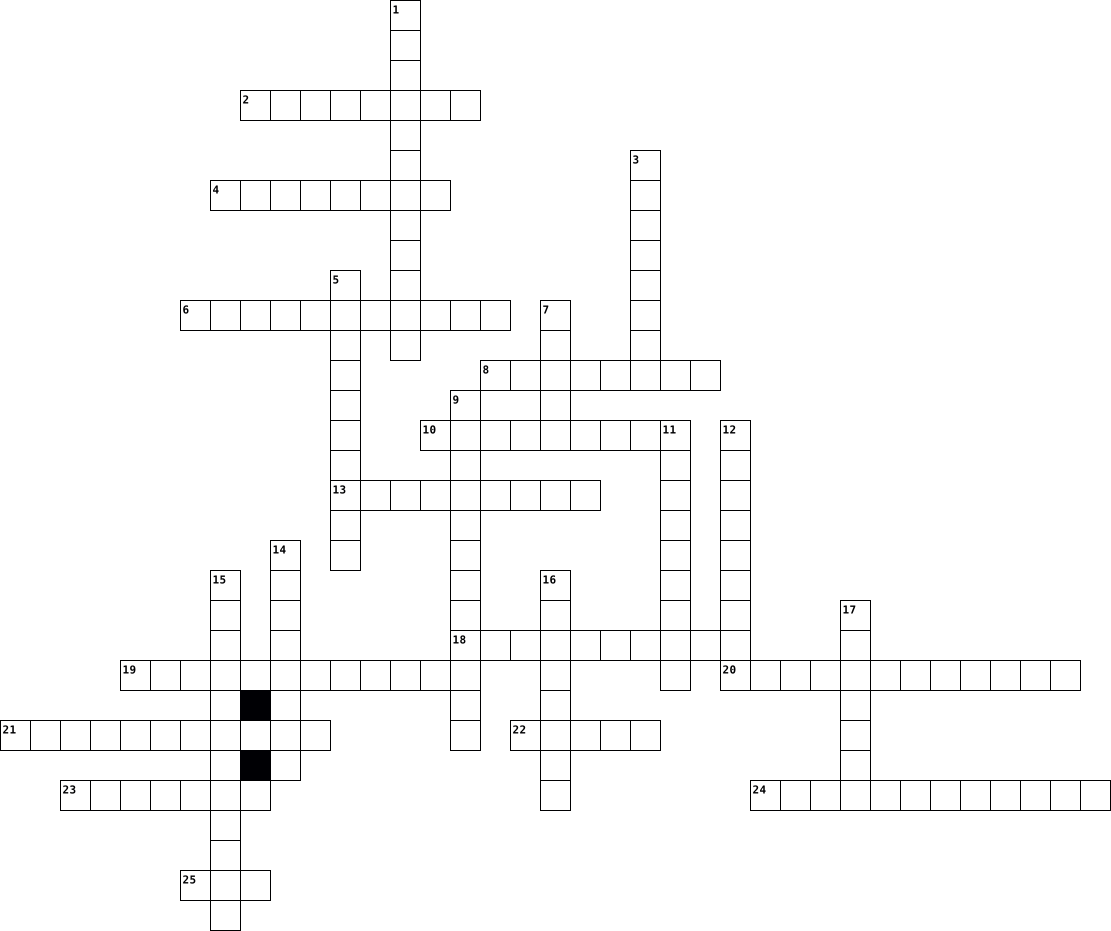
Across
- study of cells
- organelle that stores, and holds food or waste
- have no nucleus or membrane-bound organelles
- only in plant cells, made of cellulose and pectin
- organelle responsible for protein synthesis
- organelle only in animals, breaks down things
- have a nucleus and membrane-bound organelles
- organelle containing pigments used in photosynthesis
- organelle where nutrients are converted to ATP
- molecules that do not dissolve in water
- short, hair-like, helps cells move
- stores and transports substances
- lipid that makes up the cell membrane
- energy
Down
- network of proteins that strengthen the cell
- long, thin, moves cell by whipping back and forth
- units inside cells that perform certain tasks
- basic building blocks of life
- making molecules using absorbed molecules
- the molecule which an enzyme binds to
- jelly-like substance, keeps organelles in place
- solution that has same concentration of solute inside and out of the cell
- plastid that supports photosynthesis
- only in plant cells
- contains a eukaryotic cell's DNA
25 Clues: energy • study of cells • only in plant cells • basic building blocks of life • contains a eukaryotic cell's DNA • stores and transports substances • short, hair-like, helps cells move • plastid that supports photosynthesis • the molecule which an enzyme binds to • lipid that makes up the cell membrane • molecules that do not dissolve in water • ...
Science 2024-05-23

Across
- the genetic makeup of an organism.
- a change in the DNA sequence of an organism.
- the type of cell division that produces gametes.
- the diffusion of water across a selectively permeable membrane.
- organisms that obtain energy by consuming other organisms.
- the site of protein synthesis in a cell.
- proteins that speed up chemical reactions in the body.
- organisms that produce their own food.
- the organelles in plant cells where photosynthesis occurs.
- the physical expression of genetic traits.
- the molecule that carries genetic information.
- a community of living organisms and their physical environment.
Down
- the variety of life in the world or in a particular habitat.
- the process plants use to convert sunlight into energy.
- different forms of a gene.
- the maintenance of a stable internal environment in an organism.
- membrane, the structure that controls what enters and leaves the cell.
- the process by which species change over time.
- the powerhouse of the cell.
- the organelle that contains the cell's genetic material.
20 Clues: different forms of a gene. • the powerhouse of the cell. • the genetic makeup of an organism. • organisms that produce their own food. • the site of protein synthesis in a cell. • the physical expression of genetic traits. • a change in the DNA sequence of an organism. • the process by which species change over time. • the molecule that carries genetic information. • ...
Plants and Photosynthesis Crossword Puzzle 2024-04-24

Across
- Part of flower made from stigma, style and ovaries
- Part of stamen that holds the anther
- A part of flower that protects the pistil & stamen
- Male reproductive cells of a plant
- Plant organ that absorbs nutrients and water
- Female reproductive cells of a plant
- Tubular part of the pistil used for pollination
- a molecule that stores energy
- A part of the flower that protects the bud
- Green pigment used in photosynthesis
Down
- Cellular respiration takes place in this organelle
- Part of the flower that holds pollen for mating
- Plant organ used for photosynthesis
- Reproductive cells of mosses, ferns and fern allies
- The offspring of a fertilized flowering plant
- Vessel that carries water and minerals from roots to the rest of the plant
- Part of the flower that produces pollen
- Part of the pistil that holds up the stigma
- Part of the plant that stores ova
- Vessel that carries food from leaves to the rest of the plant
20 Clues: a molecule that stores energy • Part of the plant that stores ova • Male reproductive cells of a plant • Plant organ used for photosynthesis • Part of stamen that holds the anther • Female reproductive cells of a plant • Green pigment used in photosynthesis • Part of the flower that produces pollen • A part of the flower that protects the bud • ...
Plants and Photosynthesis Crossword Puzzle 2024-04-24

Across
- Part of flower made from stigma, style and ovaries
- Part of stamen that holds the anther
- A part of flower that protects the pistil & stamen
- Male reproductive cells of a plant
- Plant organ that absorbs nutrients and water
- Female reproductive cells of a plant
- Tubular part of the pistil used for pollination
- a molecule that stores energy
- A part of the flower that protects the bud
- Green pigment used in photosynthesis
Down
- Cellular respiration takes place in this organelle
- Part of the flower that holds pollen for mating
- Plant organ used for photosynthesis
- Reproductive cells of mosses, ferns and fern allies
- The offspring of a fertilized flowering plant
- Vessel that carries water and minerals from roots to the rest of the plant
- Part of the flower that produces pollen
- Part of the pistil that holds up the stigma
- Part of the plant that stores ova
- Vessel that carries food from leaves to the rest of the plant
20 Clues: a molecule that stores energy • Part of the plant that stores ova • Male reproductive cells of a plant • Plant organ used for photosynthesis • Part of stamen that holds the anther • Female reproductive cells of a plant • Green pigment used in photosynthesis • Part of the flower that produces pollen • A part of the flower that protects the bud • ...
Ecosystem 2025-02-09

Across
- - A group of the same species living in an area
- - An animal that eats only plants
- - The place where an organism lives
- - The variety of life in an area
- - The movement of energy through an ecosystem
- - The process plants use to make food from sunlight
- - Breaks down dead organisms and returns nutrients to the soil
- - A large region with a specific climate and ecosystem
Down
- - An animal that eats only other animals
- - A condition that restricts population growth
- - An animal at the top of the food chain with no natural predators
- - A level in the food chain
- - A sequence showing how energy moves through an ecosystem
- - A community of living and non-living things interacting together
- - Eats other organisms for energy
- - Living factors in an ecosystem
- - Makes its own food through photosynthesis
- - A network of connected food chains
- - An animal that eats both plants and animals
- - Non-living factors in an ecosystem
20 Clues: - A level in the food chain • - The variety of life in an area • - Living factors in an ecosystem • - An animal that eats only plants • - Eats other organisms for energy • - The place where an organism lives • - A network of connected food chains • - Non-living factors in an ecosystem • - An animal that eats only other animals • - Makes its own food through photosynthesis • ...
Field Trip Days Crossword 2025-04-25

Across
- things that go into a chemical reaction
- tube that connects your mouth to stomach
- moves your bones around
- organelle used for storage
- life comes from _____________
- connects the inside of a building to the outside
- your science teacher
- makes ATP
- pumps your blood
- you wear these on your feet
- largest human organ
- organelle that controls what comes in and out
- organelle that makes proteins
- Mr. Soffer's favorite candy
- most important human organ
- Mr. Soffer's least favorite candy
- type of microscope that we have in our classroom
Down
- married to jay z
- Mr. Soffer's second favorite person
- another name for the large intestine
- carb that gives your body energy that is made by plants
- things that come out of a chemical reaction
- your body part that you have the most control over
- nutrient used primarily for growth and repair
- makes glucose
- organ that detoxes blood and creates bile
- Mr. Soffer's favorite person
- type of life form that does the most photosynthesis
- a living thing
29 Clues: makes ATP • makes glucose • a living thing • married to jay z • pumps your blood • largest human organ • your science teacher • moves your bones around • organelle used for storage • most important human organ • you wear these on your feet • Mr. Soffer's favorite candy • Mr. Soffer's favorite person • life comes from _____________ • organelle that makes proteins • ...
Biology 2025-11-14

Across
- Outer border of a cell
- Controls what enters and exits the cell
- postal service of the cell
- Monomers are glucose, fructose, and sucrose
- The least reactive group in the periodic table
- Releases O2 in exchange for CO2
- Structures that clean up the cell
- Barrier around the nucleus
- Makes up most of the leaf's interior and where photosynthesis occurs
- Uses cellular respiration to make energy
Down
- "Eukie" counterpart
- Links two amino acids together to create peptides and proteins
- Combines carbon from carbon dioxide, uses chemical energy to make glucose
- How plants make their food and energy from the sun
- Just DNA
- Number 6 on the periodic table
- Electromagnetic radiation that allows us to see light and colors
- Just ATP
- A sac like storage
- Process in which water is used to break down amino acids
- Where ribosomes are made
- Our teacher!!!
- 6H20
- Basic unit of all living organisms
- nicknamed "eukie"
25 Clues: 6H20 • Just DNA • Just ATP • Our teacher!!! • nicknamed "eukie" • A sac like storage • "Eukie" counterpart • Outer border of a cell • Where ribosomes are made • postal service of the cell • Barrier around the nucleus • Number 6 on the periodic table • Releases O2 in exchange for CO2 • Structures that clean up the cell • Basic unit of all living organisms • ...
Chapter 3 Review - Science 6 2025-12-12

Across
- membrane Controls what enters and leaves the cell.
- fission Simple cell division where one cell splits into two identical cells.
- Cell division producing genetically different cells.
- The phase where the cell grows and DNA duplicates.
- Movement of water across a membrane.
- transport Transport requiring energy.
- Final pinching of the cytoplasm into two cells.
- Process yeast use to make dough rise.
- respiration Opposite process of photosynthesis.
- Type of asexual reproduction where a small piece grows off the parent.
- Two nuclei form; spindle disappears.
- The two identical halves of a duplicated chromosome.
- Molecules moving from high concentration to low concentration.
- Cell division producing identical cells.
Down
- Structure where chromatids are joined.
- Where proteins are made.
- Organelle known as the “powerhouse.”
- Water-specific diffusion process.
- transport Transport that does NOT require energy.
- diffusion Movement of molecules using protein channels.
- Chromosomes separate during this mitosis stage.
- reproduction Asexual reproduction where plant parts create new plants.
- Chromosomes condense and spindle forms.
- Process using light energy to make glucose.
- Reproductive cells.
25 Clues: Reproductive cells. • Where proteins are made. • Water-specific diffusion process. • Organelle known as the “powerhouse.” • Movement of water across a membrane. • Two nuclei form; spindle disappears. • Process yeast use to make dough rise. • Structure where chromatids are joined. • Chromosomes condense and spindle forms. • Cell division producing identical cells. • ...
Mrs. Bodey's Final Biology Crossword 2025-05-26

Across
- — A community of organisms and their environment
- — The control center of a eukaryotic cell
- — Large molecule made of amino acids
- — A group of similar cells working together
- — An organism that makes its own food
- — Liquid part of blood
- — Green pigment in plants
- — Plant structures that absorb water
- — A segment of DNA that codes for a trait
- — Change in a species over time
- — Main product of photosynthesis
Down
- — Study of heredity
- — A protein that speeds up chemical reactions in cells
- — Tool used to view very small things
- — Kingdom that includes mushrooms
- — Human body system that transports oxygen
- — Movement of molecules from high to low concentration
- — Process of converting glucose into energy
- — The molecule that carries genetic information
- — Organelle where photosynthesis occurs
- — A substance used to stimulate immunity against disease
- — The basic unit of life
- — A living thing
- — Organelle known as the powerhouse of the cell
- — Different forms of a gene
25 Clues: — A living thing • — Study of heredity • — Liquid part of blood • — The basic unit of life • — Green pigment in plants • — Different forms of a gene • — Change in a species over time • — Main product of photosynthesis • — Kingdom that includes mushrooms • — Large molecule made of amino acids • — Plant structures that absorb water • — Tool used to view very small things • ...
Intro to Biology 2026-01-16

Across
- Method Steps used to investigate questions
- A group that can reproduce together
- – Cell structure where photosynthesis happens
- – A tool used to see very small objects
- – The control center of a cell
- An organism that makes its own food
- – The outer covering of a cell
- – The study of living things
- Different populations living together
- – Jelly-like material inside a cell
- A group of the same species in one area
- A testable explanation or prediction
- – Process cells use to release energy
Down
- An organism that eats other organisms
- – Keeping a stable internal environment
- A trait that helps an organism survive
- An organism that breaks down dead matter
- – A living thing
- – The smallest unit of life
- – Genetic material that carries instructions for life
- – The part of the cell that produces energy
- Change in species over time
- – Process plants use to make food using sunlight
- – Living and nonliving things interacting
- The natural home of an organism
25 Clues: – A living thing • – The smallest unit of life • Change in species over time • – The study of living things • – The control center of a cell • – The outer covering of a cell • The natural home of an organism • A group that can reproduce together • An organism that makes its own food • – Jelly-like material inside a cell • A testable explanation or prediction • ...
Cycles in Ecosystems 2024-03-07

Across
- Organelle where cellular respiration takes place
- a biological community of interacting organisms and their physical environment
- living factors
- A set of components working together
- convert light energy from the sun and store it as chemical energy. Provides food for an ecosystem.
- nonliving factors
- A process that converts organic materials into nutrient-rich soil
- flow of energy through living things in an ecosystem
- Matter is _____________ which means that it is not created or destroyed
Down
- these organisms break down matter and return it to an ecosystem
- process of matter moving from one form to another
- Energy is NOT _____________.
- physical substances in the world around us are made up of ___________.
- the mixture of gases that surround the Earth
- Sugar made by a plant during photosynthesis
- eat producers and gain matter and energy
- Organelle where photosynthesis takes place
17 Clues: living factors • nonliving factors • Energy is NOT _____________. • A set of components working together • eat producers and gain matter and energy • Organelle where photosynthesis takes place • Sugar made by a plant during photosynthesis • the mixture of gases that surround the Earth • Organelle where cellular respiration takes place • ...
Ecology Review 2025-03-14

Across
- several populations of living things in a certain area
- the site for photosynthesis
- symbiotic relationship in which both organisms benefit
- a group of the same species living in the same are
- the amount of energy transferred to the next trophic level
- symbiotic relationship of a shark and a remora
- an organism that makes its own food
- main organism in the nitrogen cycle
- glucose and oxygen become carbon dioxide, water, and ATP
- the site for cellular respiration
Down
- two wolves fight for the same female mate
- carbon dioxide and water become glucose and oxygen
- a dog and a tick is an example of this symbiotic relationship
- how carbon starts in respiration
- a cat and mouse is an example of this symbiotic relationship
- fuels burning these release carbon dioxide into the atmosphere
- water evaporates from the stomata
17 Clues: the site for photosynthesis • how carbon starts in respiration • water evaporates from the stomata • the site for cellular respiration • an organism that makes its own food • main organism in the nitrogen cycle • two wolves fight for the same female mate • symbiotic relationship of a shark and a remora • carbon dioxide and water become glucose and oxygen • ...
year 8 revision 2018-02-19

Across
- Substance containing one type of atom only (7)
- Why doesn't photosynthesis work in very cold or very hot conditions? (7)
- Substance containing more than one type of atom which are joined together with a chemical bond (8)
- The smallest unit of an element (4)
- Substance containing more than one atom which are joined together with a chemical bond (8)
- The rate of this is increased at high temperature and low humidity (13)
- The monomer used to make poly(ethene) (6)
- This gas burns with a squeaky pop (8)
- The charge of an ion with more protons than electrons (8)
- A process that occurs inside mitochondria (11)
- The charge of an ion with more electrons than protons (8)
- Holes on the underside of leaves that allow carbon dioxide to diffuse into the leaf (7)
- A type of material used in making pottery (7)
- The type of metal salt produced when a metal reacts with phosphoric acid (9)
- The equipment used to measure the rate of transpiration (9)
- A particle with no charge with a relative mass of 1 (7)
- A food product made by bacteria (7)
- A particle with a tiny mass and a negative charge (8)
- Organisms that must eat other organisms for food (7)
- A polymer used in bullet proof vests (6)
- A tube through which glucose flows in plants (6)
Down
- The sugar produced by photosynthesis (7)
- The organ where photosynthesis occurs in plants (4)
- A tube through which water flows in plants (5)
- This can be added if a plant growth is poor (10)
- This solution turns cloudy if carbon dioxide is bubbled through it (9)
- A particle with a positive charge and a relative mass of 1 (6)
- A common disease caused by a virus (9)
- A process that occurs inside chloroplasts (14)
- NPK Fertilisers are made of nitrogen, phosphorous and …. (9)
- The type of metal salt that can be broken down by heating and fizzes when added to acid (9)
- The type of metal salt produced when a metal reacts with hydrochloric acid (8)
- Dull, brittle, insulator; which type of substance? (8)
- A food product made by fungus (5)
- The type of metal salt produced when a metal reacts with sulphuric acid (8)
- The type of microorganism that causes cholera (8)
- The type of microorganism that causes HIV (5)
- A large molecule made from many smaller monomers (7)
- The type of microorganism that causes athlete's foot (6)
- Organisms that can produce their own food (6)
- A pair of cells that create the stomata (5)
- The type of metal salt produced when a metal reacts with nitric acid (7)
- The gas produced by photosynthesis (6)
- Shiny, strong, ductile, malleable, conductor; which type of substance? (5)
44 Clues: A food product made by fungus (5) • The smallest unit of an element (4) • A food product made by bacteria (7) • This gas burns with a squeaky pop (8) • A common disease caused by a virus (9) • The gas produced by photosynthesis (6) • The sugar produced by photosynthesis (7) • A polymer used in bullet proof vests (6) • The monomer used to make poly(ethene) (6) • ...
science 2021-08-05

Across
- mainly composed of water, salts, and proteins
- plants grow
- a microscope
- provide structure for the body, take in nutrients from food, convert those nutrients into energy
- subcellular structure that has one or more specific jobs performed in the cell.
- It can be tough, flexible, and sometimes rigid
- of a microscope.
- light
- Chemical reaction that happens in all cells
- of photosynthesis
- plants use sunlight, water, and carbon dioxide to create oxygen and energy
- Sugar substitute
Down
- small and help sequester waste products
- an organelle within the cells of plants and certain algae that is the site of photosynthesis
- comes out when you breath out
- found in all cells and separates the interior of the cell from the outside environment.
- a membrane-bound organelle that contains the cell's chromosomes. Pores in the nuclear membrane
- generate most of the chemical energy needed to power the cell's biochemical reactions
- Helps people breath
- scientist
20 Clues: light • scientist • plants grow • a microscope • of a microscope. • Sugar substitute • of photosynthesis • Helps people breath • comes out when you breath out • small and help sequester waste products • Chemical reaction that happens in all cells • mainly composed of water, salts, and proteins • It can be tough, flexible, and sometimes rigid • ...
Cells and Respiration Crossword 2021-08-10

Across
- We inhale it but plants exhale it.
- Is a gel-like fluid inside a cell.
- It is where cellular respiration takes place.
- Dioxide We exhale it but plants inhale it.
- We use it to power things.
- Membrane It protects the cell and is selective, only letting certain things in.
- It is inside of a cell and is responsible for hiding and removing the waste products.
- It is another word for sugar.
- Where the specimen sits so we can raise or lower it.
- There is a lot coming from the sun during the day.
- It is a process which plants use to breathe.
- We use it to see very small things.
Down
- It is the building block of life.
- Where photosynthesis takes place.
- They are like mini organs inside of a cell.
- We drink every day.
- Wall It gives strength to the cell and gives protection stress.
- We look through it to find small things.
- It is a process we use to breathe.
- This controls what happens in a cell, like a prison guard.
20 Clues: We drink every day. • We use it to power things. • It is another word for sugar. • It is the building block of life. • Where photosynthesis takes place. • We inhale it but plants exhale it. • Is a gel-like fluid inside a cell. • It is a process we use to breathe. • We use it to see very small things. • We look through it to find small things. • ...