
photosynthesis Crossword Puzzles
CROSSWORD PUZZLE 2023-01-13

Across
- organisms that make their own food
- organisms that cannot make their own food
- carnivores and omnivores that hunt and eat other animals
- the process by which plants and plant like organisms make food
- eat only producers
Down
- meat-eating consumers
- a structure within a plants cell that contains chlorophyll
- a green molecule that helps with photosynthesis
- organisms that break down, or decompose wastes and the remains of dead organisms
- organisms in the environment that eat dead plants and animals
- consumers that eat both plants and animals
- the animals that predators hunt
12 Clues: eat only producers • meat-eating consumers • the animals that predators hunt • organisms that make their own food • organisms that cannot make their own food • consumers that eat both plants and animals • a green molecule that helps with photosynthesis • carnivores and omnivores that hunt and eat other animals • a structure within a plants cell that contains chlorophyll • ...
Bio 20 Crossword 2021-10-01

Across
- stacks of thylakoids.
- green plants and some other organisms use solar energy.
- a reaction in which an atom or molecule loses electrons.
- sac like membrane in the chloroplasts.
- a membrane bound organelle there carries out photosynthesis.
- series of compounds in a chain transferring electron from one to the other through redox reactions.
- groups of unstacked thylakoids between grana.
- a packet of light.
Down
- process of incorporating CO2 into carbohydrate molecules.
- uses the ATP and NADPH to create G3P.
- synthesizing ATP using the energy of an electrochemical gradient.
- reaction in which an atom or molecule gains electrons.
- protein-rich semiliquid material in the interior of a chloroplast.
- high energy molecule can also be called?
- what is the excited electron removed from?
- the light absorbing green coloured pigment.
- very small particle of matter that has a negative charge of electricity.
- molecule containing three high-energy phosphate bonds.
18 Clues: a packet of light. • stacks of thylakoids. • uses the ATP and NADPH to create G3P. • sac like membrane in the chloroplasts. • high energy molecule can also be called? • what is the excited electron removed from? • the light absorbing green coloured pigment. • groups of unstacked thylakoids between grana. • reaction in which an atom or molecule gains electrons. • ...
Module 4 Test Review 2023-02-15

Across
- get their energy by consuming plants & animals
- source of energy released during cellular respiration that is delivered to tree cells
- eat both plants & animals
- eat only producers (plants)
- Water moves in a _____.
- substance is changed from a liquid to a gas
- water vapor turning into rain droplets
Down
- released by plants during photosynthesis
- living things that make their own food (plants)
- Carbon_____ is taken out of the atmosphere by plants
- flows through ecosystems in one direction
- eat only other animals
- A food ____ shows that animals eat different things.
- gets their energy by eating the remains of dead organisms
- process by which plants convert light energy to chemical energy
- The amount of oxygen on Earth has been _____ for millions of years.
- Atoms, such as _____, Nitrogen, & oxygen cycle through the ecosystem.
- the primary source for all energy, weather, and climate
18 Clues: eat only other animals • Water moves in a _____. • eat both plants & animals • eat only producers (plants) • water vapor turning into rain droplets • released by plants during photosynthesis • flows through ecosystems in one direction • substance is changed from a liquid to a gas • get their energy by consuming plants & animals • ...
What is a Tree? 2014-02-12

Across
- what helps us find the age of the tree.
- attack the tree.
- how to determine the age of a tree.
- supports the branches and transports water and minerals to the leaves.
- damage the tree.
- used to capture maximum sunlight and create food through photosynthesis.
- strikes the tree.
Down
- the dark dense wood in the center of the trunk which holds the tree.
- extend into the soil and anchor the ground.
- the living part of the tree that conducts sap and stores food.
- trees which lose all their leaves at one time during the year.
- burns the tree.
- the growing end of trees.
- trees which produce cones instead of flowers and keep their leaves for two or more years.
- the process by which water and carbon dioxide are turned into sugar and oxygen.
- what a seed grows into.
- must have food, water and sunlight to grow.
- cut down the tree
18 Clues: burns the tree. • attack the tree. • damage the tree. • strikes the tree. • cut down the tree • what a seed grows into. • the growing end of trees. • how to determine the age of a tree. • what helps us find the age of the tree. • extend into the soil and anchor the ground. • must have food, water and sunlight to grow. • ...
Carbohydrates Terms Crossword Puzzle 2018-09-21

Across
- Carbohydrates-sugars formed from simple one-and two-unit structures
- pigment in plants;must be present for photosynthesis to occur
- that is a persons main source of energy; found mostly in plant
- Carbohydrates-carbohydrates with complicated structures;starches
- process by which plants make carbohydrates
- with single-unit chemical structure
- Sugars-sugars extracted from plants and used to sweeten foods
- carbohydrates chemically formed from plants; made of carbon,hydrogen,
- Substitutes-substances used in place of sugar to sweeten foods yet add few or
Down
- when two monosaccharides(single sugars)combine chemically
- chemical arrangements that plants form by combining
- structures
- foods
- calories
- when plants combine single glucose units into more complicated
- Fiber-plant materials that are eaten but can't be digested by human enzymes
- oxygen
- glucose units to build starches
18 Clues: foods • oxygen • calories • structures • glucose units to build starches • with single-unit chemical structure • process by which plants make carbohydrates • chemical arrangements that plants form by combining • when two monosaccharides(single sugars)combine chemically • pigment in plants;must be present for photosynthesis to occur • ...
Plant Nutrients 2024-04-18

Across
- During photosynthesis, plants absorb this nutrient
- activator of several plant enzymes, and a deficiency impacts
- A macronutrient used to make DNA and RNA
- A macronutrient that is the building block of plant protein
- Component of chlorophyll, so extremely important for
- A secondary nutrient that must be present to make new cells
- One of the nutrients plants get from the air
- essential to help plants USE nitrogen
- Involved in the production of chlorophyll and protein
- synthesis
Down
- A macronutrient that is used for starch formation
- required for photosynthesis reactions
- One of the nutrients plants put into the air
- required for the formation of chlorophyll in the cells of the
- An activator for plant enzymes in the growth process
- An important nutrient for protein synthesis
- regulates the metabolism of carbohydrates
- component of urease, which prevents toxic amounts of urea
18 Clues: synthesis • required for photosynthesis reactions • essential to help plants USE nitrogen • A macronutrient used to make DNA and RNA • regulates the metabolism of carbohydrates • An important nutrient for protein synthesis • One of the nutrients plants put into the air • One of the nutrients plants get from the air • A macronutrient that is used for starch formation • ...
Ash sustainability crossword 2020-04-23

Across
- African grassland
- Plains
- Plant process
- Wearing Down
- Flowers
- Lake Habitat
Down
- Animals
- Animals home
- Live Babies
- Jungle
- Bugs
- Mushroom
12 Clues: Bugs • Jungle • Plains • Animals • Flowers • Mushroom • Live Babies • Animals home • Wearing Down • Lake Habitat • Plant process • African grassland
year 8 revision 2018-02-19

Across
- A particle with a positive charge and a relative mass of 1 (6)
- A tube through which glucose flows in plants (6)
- Shiny, strong, ductile, malleable, conductor; which type of substance? (5)
- A particle with a tiny mass and a negative charge (8)
- Holes on the underside of leaves that allow carbon dioxide to diffuse into the leaf (7)
- The type of metal salt produced when a metal reacts with hydrochloric acid (8)
- Substance containing more than one type of atom which are joined together with a chemical bond (8)
- The monomer used to make poly(ethene) (6)
- The charge of an ion with more electrons than protons (8)
- A process that occurs inside mitochondria (11)
- Why doesn't photosynthesis work in very cold or very hot conditions? (7)
- Dull, brittle, insulator; which type of substance? (8)
- The type of microorganism that causes HIV (5)
- The type of metal salt produced when a metal reacts with sulphuric acid (8)
- A process that occurs inside chloroplasts (14)
- The type of metal salt that can be broken down by heating and fizzes when added to acid (9)
- A common disease caused by a virus (9)
- The charge of an ion with more protons than electrons (8)
- The organ where photosynthesis occurs in plants (4)
- The equipment used to measure the rate of transpiration (9)
- The gas produced by photosynthesis (6)
- Organisms that can produce their own food (6)
- The type of microorganism that causes athlete's foot (6)
Down
- This gas burns with a squeaky pop (8)
- A food product made by bacteria (7)
- A polymer used in bullet proof vests (6)
- A tube through which water flows in plants (5)
- A particle with no charge with a relative mass of 1 (7)
- The sugar produced by photosynthesis (7)
- Substance containing more than one atom which are joined together with a chemical bond (8)
- The type of microorganism that causes cholera (8)
- A large molecule made from many smaller monomers (7)
- The rate of this is increased at high temperature and low humidity (13)
- A food product made by fungus (5)
- This can be added if a plant growth is poor (10)
- A type of material used in making pottery (7)
- This solution turns cloudy if carbon dioxide is bubbled through it (9)
- The smallest unit of an element (4)
- The type of metal salt produced when a metal reacts with phosphoric acid (9)
- NPK Fertilisers are made of nitrogen, phosphorous and …. (9)
- Organisms that must eat other organisms for food (7)
- The type of metal salt produced when a metal reacts with nitric acid (7)
- Substance containing one type of atom only (7)
- A pair of cells that create the stomata (5)
44 Clues: A food product made by fungus (5) • A food product made by bacteria (7) • The smallest unit of an element (4) • This gas burns with a squeaky pop (8) • A common disease caused by a virus (9) • The gas produced by photosynthesis (6) • A polymer used in bullet proof vests (6) • The sugar produced by photosynthesis (7) • The monomer used to make poly(ethene) (6) • ...
Cellular Processes and Energy 2013-12-02

Across
- The phase of mitosis where DNA condenses into chromosomes, the nucleus breaks down, and spindle fibers form.
- This process in cells does not release as much energy from food and does not use oxygen.
- The female part of the flower that contains the ovary.
- This contains an undeveloped plant inside a protective coating.
- From the word “thread”, this stage of the cell cycle separates identical copies of DNA into two new nuclei.
- One reason an organism’s cells might divide.
- The phase of mitosis where identical copies of DNA are pulled apart—to opposite sides of the cell.
- The microscopic holes in the bottom of leaves that allow gases to come in and out.
- The process by which plant and some bacteria cells are able to store energy in carbohydrates.
- dioxide This gas when converted into carbohydrates, makes up about 95% of the mass of plants (2 words).
- This part of the plant transports food and water from the leaves to the roots.
- The stage of the cell cycle where the cell grows, makes a copy of its DNA, and prepares to divide.
- One reason an organism’s cells might divide.
- A product of fermentation that is used in producing wines.
- The phase of mitosis where chromosomes attach to spindle fibers and line up in the middle of the cell.
- The product of photosynthesis that stores energy for the plant.
- This gas is a by-product of photosynthesis and is essential for aerobic respiration.
Down
- This allows things to organisms to move, reproduce, and perform life processes.
- A product of fermentation that builds up in muscles during intense exercise (2 words).
- This process in cells allows organisms to process food and release energy from it using oxygen (2 words).
- One reason an organism’s cells might divide.
- The last phase of mitosis, where two new nuclei form at opposite sides of the cell.
- When comparing photosynthesis and cellular respiration you could say they are __________________________ processes.
- The process by which a cell grows, replicates its DNA, and splits into two daughter cells (2 words).
- These types of organisms include plants and photosynthetic bacteria that can store energy in their own food.
- When a cell makes an exact copy of its DNA, this has occurred.
- This green pigment allows plants to capture sunlight.
- The last stage of the cell cycle where two daughter cells are form.
- DNA condenses into these structures.
- These types of organisms depend on other organisms for food.
- This part of the plant anchors it in the ground and allows it to absorb water and nutrients from the soil.
- The substance is split during photosynthesis into hydrogen and oxygen.
- The majority of organisms on Earth get their energy directly or indirectly from this source
- The male part of the flower that holds pollen.
34 Clues: DNA condenses into these structures. • One reason an organism’s cells might divide. • One reason an organism’s cells might divide. • One reason an organism’s cells might divide. • The male part of the flower that holds pollen. • This green pigment allows plants to capture sunlight. • The female part of the flower that contains the ovary. • ...
Unit 2: Matter and Energy in Organisms and Ecosystems 2025-10-30

Across
- Term used for non-living physical factors such as temperature and air
- Organelle in which glycolysis occurs
- Name of the green pigment inside chloroplasts which absorbs light energy
- Name for a close relationship between two species where one or both benefits
- Term which describes the movement of energy from the Sun to the producers and consumers
- Law which states that in chemical reactions, matter cannot be created or destroyed
- The original source of almost all energy in most ecosystems
- Gas which animals exhale that plants use during photosynthesis
- Human activity which increases the amount of carbon dioxide in the atmosphere
- Type of carbohydrate formed of only two sugars are linked together
- Type of organisms which consume other organisms for energy
- Type of respiration in which oxygen is not present
- First trophic level in a food chain
- Process which lets autotrophs convert light energy into chemical energy
- Term used to describe the heavy reliance of all living things on other organisms
- First stage of cellular respiration
- Organelle in which Krebs Cycle and Electron Transport occurs
- Gas released as a waste product of photosynthesis
- Representation of a chemical reaction which shows reactants, products and their quantities
- Organelle in plants which captures light energy for photosynthesis
- Element which mostly makes up organic compounds and is essential to life on Earth
Down
- Type of aerobic respiration which produces lactic acid in muscle cells
- Process in which organisms use to break down food molecules to release energy
- Molecule which is the main source of energy for most cellular processes
- Process which bacteria use to make food using energy from inorganic chemicals instead of sunlight
- Diagram which represents multiple pathways through which energy and matter flow through an ecosystem
- The name of the compound which is mostly made of carbon, oxygen, and hydrogen that functions as an energy source
- Second stage of cellular respiration
- Diagram which represents a single pathway by which energy and matter flow through an ecosystem
- Type of organisms which make their own food using energy from sunlight or chemicals
- Type of reaction in organisms which builds larger molecules from smaller ones
- Type of organism which eats both animals and plants
- Main product of the Calvin Cycle
- Type of carbohydrate that glucose and fructose are examples of
- Term for an individual living thing that may be made up of one or more organ systems
- Type of carbohydrate made up of multiple sugars linked together
- Term used when two organisms fight for the same resource at the same time and place
- Cycle which moves carbon through atmospheres, oceans, and living organisms
- Term which describes each step in a food chain/web
- Stage of photosynthesis when carbon dioxide is fixed into glucose
- Third stage of cellular respiration
41 Clues: Main product of the Calvin Cycle • First trophic level in a food chain • Third stage of cellular respiration • First stage of cellular respiration • Organelle in which glycolysis occurs • Second stage of cellular respiration • Gas released as a waste product of photosynthesis • Term which describes each step in a food chain/web • ...
Plants 2021-09-20

Across
- Made by the process of photosynthesis
- Roots that spread in many ways
- A gas in the air that plants and animals need to live
- A plant that does not produce flowers
- A small cell that grows into a new plant
- The process where plants use energy from the sun
- A plant that produces flowers with seeds
- Tree Leaves fall of in the fall and come back in the spring
- A material needed by living things for energy, growth, and repair
Down
- To make more of the same kind
- To carry pollen to
- To begin to grow
- Roots One large root
- Produces cones
- Dioxide A gas in the air absorbed by plants
- Cycle The stages through which living things passes during its life
16 Clues: Produces cones • To begin to grow • To carry pollen to • Roots One large root • To make more of the same kind • Roots that spread in many ways • Made by the process of photosynthesis • A plant that does not produce flowers • A small cell that grows into a new plant • A plant that produces flowers with seeds • Dioxide A gas in the air absorbed by plants • ...
Plants 2023-01-20

Across
- the chemical process converting sunlight into energy and food for the plant
- support the leaves, flowers, fruit
- hairs many tiny roots that increase the surface area of the root for absorption
- plants that produce seeds not protected by fruit
- root the single main root
- the movement and loss of water through evaporation
- produce food for plant through photosynthesis
- female part of flower
Down
- plants that produce for more than two years or growing seasons
- anchor the plant
- provides a sticky surface to catch pollen
- roots system with many small roots
- plants that complete their life cycle in two growing seasons
- the process of plants using stored energy
- plants that complete their life cycle in one year /season
- male part of flower
16 Clues: anchor the plant • male part of flower • female part of flower • root the single main root • support the leaves, flowers, fruit • roots system with many small roots • provides a sticky surface to catch pollen • the process of plants using stored energy • produce food for plant through photosynthesis • plants that produce seeds not protected by fruit • ...
Characteristics of living thing & Cells Key Words 2023-06-01

Across
- Made of cellulose
- The taking in of materials for energy, growth and development
- The process that makes more of the same organism
- Action done by an organism causing a change of position or place
- Where most chemical reactions happen
- Transports oxygen and carbon dioxide throughout the body
- Removal from organisms of toxic materials and excess substances
Down
- Carries out photosynthesis, contains choloroplasts
- Photosynthesis
- Stores cell sap
- Noticing a change in the environment and reacting to it
- Joins amino acids together to make proteins
- Permanent increase in size caused by increase in cell number of cell size
- Powerhouse of the cell, respiration happens there
- Contains DNA, which controls what the cell does. Stored in chromosomes
- Holds the cell together & controls what goes in and out
16 Clues: Photosynthesis • Stores cell sap • Made of cellulose • Where most chemical reactions happen • Joins amino acids together to make proteins • The process that makes more of the same organism • Powerhouse of the cell, respiration happens there • Carries out photosynthesis, contains choloroplasts • Noticing a change in the environment and reacting to it • ...
Plant Structure and Function 2025-01-28

Across
- Attracts pollinators
- The female reproductive organ of the flower
- The function is to produce seeds for reproduction
- The function is the transfer nutrients and support the plant
- Cells that allow gas exchange in and out of the leaf
- Collects pollen for the flower
- The function is the absorb nutrients and anchor the plant
- The function is to carry out photosynthesis
- This tube carries water up the plant
Down
- Layer of cells on the leaves that protects internal cells
- Waxy coat on leaves that holds in moisture
- This tube carries sugar wherever it is needed
- Layer of cells in the leaf where photosynthesis takes place
- Produces seeds in the flower
- Produces pollen for the flower
- The male reproductive organ of a flower
16 Clues: Attracts pollinators • Produces seeds in the flower • Produces pollen for the flower • Collects pollen for the flower • This tube carries water up the plant • The male reproductive organ of a flower • Waxy coat on leaves that holds in moisture • The female reproductive organ of the flower • The function is to carry out photosynthesis • ...
biology revision 2021-03-04

Across
- biological material
- energy level in a food chain
- uses carbon dioxide and sun energy
- creates food by photosynthesis
Down
- burning releases energy and carbon
- decays dead organic matter
- organism releases carbon and energy
- eats other organisms
8 Clues: biological material • eats other organisms • decays dead organic matter • energy level in a food chain • creates food by photosynthesis • burning releases energy and carbon • uses carbon dioxide and sun energy • organism releases carbon and energy
biology crossword 2022-08-08

Across
- in organelle
- systems
- in plant
- of life
- in somatic
- reactions
- in science
Down
- extinction
- in body
- in jungle
- in world
- of garden
- ecology
13 Clues: in body • systems • of life • ecology • in world • in plant • in jungle • of garden • reactions • extinction • in somatic • in science • in organelle
nutrition in plants 2017-05-13

Across
- dioxide gas needed for photosynthesis
- process which plants make their own food
- obtain nutrition from dead matter
- when plants add bacteria to thier own food
Down
- hole responsible for exchange of gases,light,transpiration
- green pigment in the leaves
- derives half or full nutritional requirements on other things
- kitchen of the leaves
- depend on other things to live
- live in association with other resources
10 Clues: kitchen of the leaves • green pigment in the leaves • depend on other things to live • obtain nutrition from dead matter • dioxide gas needed for photosynthesis • process which plants make their own food • live in association with other resources • when plants add bacteria to thier own food • hole responsible for exchange of gases,light,transpiration • ...
Photosynthesis Crossword Puzzle 2021-11-11

Across
- pigment which absorbs the suns energy
- formed in a chemical reaction
- lets gases in and out of leaf
- the factory where photosynthesis happens
- process by which a green plant makes its own food
- organelle that contains chlorophyll
Down
- distributes water to the plant
- comes from the sun
- carries the glucose to the plant for its life processes
- what is needed for a reaction to take place
10 Clues: comes from the sun • formed in a chemical reaction • lets gases in and out of leaf • distributes water to the plant • organelle that contains chlorophyll • pigment which absorbs the suns energy • the factory where photosynthesis happens • what is needed for a reaction to take place • process by which a green plant makes its own food • ...
yay 2022-04-09

Across
- sugar made from photosynthesis
- the fluids in cells
- a product of respiration that is not water or carbon dioxide
- a product of respiration that is not water
- material for cellular respriation other than glucose
- creates the materials for cellular respiration
Down
- process where you create atp
- the powerhouse of the cell
- process where you break down sugar
- product of respiration that is not carbon dioxide
10 Clues: the fluids in cells • the powerhouse of the cell • process where you create atp • sugar made from photosynthesis • process where you break down sugar • a product of respiration that is not water • creates the materials for cellular respiration • product of respiration that is not carbon dioxide • material for cellular respriation other than glucose • ...
Healthy Plant Growth 2013-10-12

Across
- this is made in the leaf and provides the plant with food
- the green pigment in plants
- produced and released into the air
- In a plant made up of glucose
- What does plant food mean
- added to the soil to help the plants grow
Down
- provides energy
- dioxide absorbed from the air
- Prosses of plants and how they make energy
- Produced in photosynthesis
10 Clues: provides energy • What does plant food mean • Produced in photosynthesis • the green pigment in plants • In a plant made up of glucose • dioxide absorbed from the air • produced and released into the air • added to the soil to help the plants grow • Prosses of plants and how they make energy • this is made in the leaf and provides the plant with food
NUTRITION IN PLANTS 2016-04-26

Across
- plants prepare their food through a process called
- plants take in carbon dioxide through tiny openings
- soil contains a bacteria called that converts the atmospheric nitrogen
- released in photosynthesis
Down
- plant rarely kills the host plant
- green plants are called
- tissue that carries glucose
- plants grow in soil not rich in nutrients
- mushroom and fungi are
- solution is added to test the starch of the plant
10 Clues: mushroom and fungi are • green plants are called • released in photosynthesis • tissue that carries glucose • plant rarely kills the host plant • plants grow in soil not rich in nutrients • solution is added to test the starch of the plant • plants prepare their food through a process called • plants take in carbon dioxide through tiny openings • ...
Ecology 2023-03-28

Across
- makes their own food using photosynthesis
- a process in which producers create “food” from sunlight, carbon dioxide and water
- breaks down organic matter
- organisms that eat nonliving plant and animal remains
Down
- consumes both meat and plants
- another word for producers
- only consumes meat
- a process in which bacteria uses sulfur compounds to produce their own food
- only consumes plants
- organisms that eat other organisms
10 Clues: only consumes meat • only consumes plants • another word for producers • breaks down organic matter • consumes both meat and plants • organisms that eat other organisms • makes their own food using photosynthesis • organisms that eat nonliving plant and animal remains • a process in which bacteria uses sulfur compounds to produce their own food • ...
nutrition in plants-josna-7c 2017-05-10

Across
- photo in photosynthesis
- bacteria that can turn atmospheric nitrogen into plant soluble form
- process of taking in food and utilization of the body
- pigment that traps light energy
- plants that live on dead and decaying material
Down
- name the root like structure used parasites
- gas given out during photosynthesis
- plant that make their own food
- disc like structures in the chloroplast
- symbiosis between alga and fungus
10 Clues: photo in photosynthesis • plant that make their own food • pigment that traps light energy • symbiosis between alga and fungus • gas given out during photosynthesis • disc like structures in the chloroplast • name the root like structure used parasites • plants that live on dead and decaying material • process of taking in food and utilization of the body • ...
Characteristics of Living Things 2021-10-15

Across
- Reproduction involving two parents
- Can make food through photosynthesis
- More than one cell in the organism
- Using energy, sun, water, & carbon dioxide to create food
- Cells with no defined nucleus and are primitive cells
- A way to produce food without sunlight
Down
- A single-celled organism
- Reproduction involving one parent
- Nucleus with DNA and are advanced cells
- Unable to make their own food
10 Clues: A single-celled organism • Unable to make their own food • Reproduction involving one parent • Reproduction involving two parents • More than one cell in the organism • Can make food through photosynthesis • A way to produce food without sunlight • Nucleus with DNA and are advanced cells • Cells with no defined nucleus and are primitive cells • ...
Cell Crossword 2023-12-08

Across
- Part of a cell that helps sequester waste
- Helps a plant carry out photosynthesis
- Helps gives support and shape to organelles
- Organelle that contains digestive enzymes
- Makes proteins for a cell
- The process which a plant makes its own food using sunlight
Down
- Powerhouse of a cell
- Part of the cell that packages proteins
- Control center of a cell
- The smallest unit of life
10 Clues: Powerhouse of a cell • Control center of a cell • The smallest unit of life • Makes proteins for a cell • Helps a plant carry out photosynthesis • Part of the cell that packages proteins • Part of a cell that helps sequester waste • Organelle that contains digestive enzymes • Helps gives support and shape to organelles • ...
Activity 4e 2025-02-09

Across
- Semi-permeable boundary of the cell
- Quick source of energy for the body
- Powerhouse of the cell
- Gas produced as a byproduct of photosynthesis
- Holds the genetic material (DNA) in a cell
Down
- Build and repair cells and tissues
- Green pigment found in plants
- Important for energy storage and insulation
- The process by which cells release energy
- Organelles where photosynthesis takes place in plants
10 Clues: Powerhouse of the cell • Green pigment found in plants • Build and repair cells and tissues • Semi-permeable boundary of the cell • Quick source of energy for the body • The process by which cells release energy • Holds the genetic material (DNA) in a cell • Important for energy storage and insulation • Gas produced as a byproduct of photosynthesis • ...
Activity 4 - Puzzle 14 2025-02-09

Across
- – Gas consumed during respiration.
- – Converts nutrients into energy for the cell.
- – Microorganisms that can be harmful or beneficial
- – Fuel the body with energy.
Down
- – Protects the cell and controls its environment.
- – Organelles in plant cells that help with photosynthesis.
- – Keeps cells hydrated and helps maintain body functions.
- – Build and repair cells and tissues.
- – Provide energy storage.
- – Pigment that helps absorb light for photosynthesis.
10 Clues: – Provide energy storage. • – Fuel the body with energy. • – Gas consumed during respiration. • – Build and repair cells and tissues. • – Converts nutrients into energy for the cell. • – Protects the cell and controls its environment. • – Microorganisms that can be harmful or beneficial • – Pigment that helps absorb light for photosynthesis. • ...
Science Choice Board Chapter 8 - B. Loperbey 02/12 /2026 2026-02-09

Across
- part of plant cell where photosynthesis takes place
- flowering vascular seed plants
- female reproductive part of a flower
- does not have seeds
- plant without tubes to transport water and nutrients
Down
- process of changing light energy into food energy
- nonflowering vascular seed plants
- contains sperm of a plant
- plant that has tubes for transporting water and nutrients
- male reproductive part of a flower
10 Clues: does not have seeds • contains sperm of a plant • flowering vascular seed plants • nonflowering vascular seed plants • male reproductive part of a flower • female reproductive part of a flower • process of changing light energy into food energy • part of plant cell where photosynthesis takes place • plant without tubes to transport water and nutrients • ...
Plant Life 2025-12-05

Across
- dispersal moving seeds from one place to another
- green substance that helps in photosynthesis
- using the energy from sunlight to make food
- moving pollen from a stamen to a pistil
- passing down of traits from parent to offspring
Down
- starts to grow
- the joining of cells for reproduction
- using cones to reproduce
- powdery substance produced by plants
- science study of living things; biology
10 Clues: starts to grow • using cones to reproduce • powdery substance produced by plants • the joining of cells for reproduction • moving pollen from a stamen to a pistil • science study of living things; biology • using the energy from sunlight to make food • green substance that helps in photosynthesis • passing down of traits from parent to offspring • ...
7. Create a crossword puzzle using all 10 words... 2026-02-27

Across
- Sugar, created during photosynthesis.
- Process that creates ATP
- Created as a byproduct of cellular respiration
- Found bonded to another of itself in nature
- Part of a plant cell that permits gas exchange.
- Cellular energy
Down
- The powerhouse of the cell
- Holds chlorophyll
- An atom comprised of one carbon atom bonded to two oxygen atoms.
- Creates a sugar when in the presence of sunlight.
10 Clues: Cellular energy • Holds chlorophyll • Process that creates ATP • The powerhouse of the cell • Sugar, created during photosynthesis. • Found bonded to another of itself in nature • Created as a byproduct of cellular respiration • Part of a plant cell that permits gas exchange. • Creates a sugar when in the presence of sunlight. • ...
Chapter 8: Introduction to Plants 2026-03-12

Across
- part of plant cell where photosynthesis takes place
- contains sperm of a plant
- flowering vascular seed plants
- does not have seeds
- male reproductive part of a flower
Down
- process of changing light energy into food energy
- plant: plant without tubes to transport water and nutrients
- female reproductive part of a flower
- nonflowering vascular seed plants
- plant: plant that has tubes for transporting water and nutrients
10 Clues: does not have seeds • contains sperm of a plant • flowering vascular seed plants • nonflowering vascular seed plants • male reproductive part of a flower • female reproductive part of a flower • process of changing light energy into food energy • part of plant cell where photosynthesis takes place • plant: plant without tubes to transport water and nutrients • ...
Tropisms Review 2024-01-30

Across
- an organelle in plant cells that allow them to preform photosynthesis
- the process in which green plants use sunlight to make their own food
- pressure the pressure exerted on a plant's cell wall by water
- the growth or turning of plants toward or away from a source of water
Down
- the growth of a part of a plant in response to gravity.
- the growth of a plant in response to light
- the turning of a plant in response to touch
- vascular tissue that conducts foods made in the leaves during photosynthesis to all other parts of the plant
- type of vascular tissue responsible for conducting water throughout the plant
- the passage of water molecules across a semi-permeable membrane from a solution with a high concentration to a solution with a lower concentration
- a thing or event that evokes a response
11 Clues: a thing or event that evokes a response • the growth of a plant in response to light • the turning of a plant in response to touch • the growth of a part of a plant in response to gravity. • pressure the pressure exerted on a plant's cell wall by water • an organelle in plant cells that allow them to preform photosynthesis • ...
Capturing Earth's Energy 2025-12-11

Across
- the process of using energy from the sun and matter from the environment to produce sugars that store energy in chemical bonds
- anything that has mass and volume
- the process of using energy from the sun and matter from the environment to produce sugars that store energy in chemical bonds
- energy is stored here
- a green pigment that is important in photosynthesis
Down
- the material that forms the rigid walls and support for plant cells
- the combined mass of the bodies of organisms, which collectively represents stored energy
- material that cannot be replaced
- a material that is made from biomass and releases energy when it is burned
- a cell structure that uses the sun’s energy to make sugar through the process of photosynthesis
10 Clues: energy is stored here • material that cannot be replaced • anything that has mass and volume • a green pigment that is important in photosynthesis • the material that forms the rigid walls and support for plant cells • a material that is made from biomass and releases energy when it is burned • ...
krebs cycle 2021-04-01

Across
- the empty cell battery
- when pyruvic acid is oxidized it's located
- the full electron carrier from aerobic respiration
- what is pyruvic acid made into in the last cycle
- the empty electron carrier only in aerobic respiration
Down
- the broken down form of glucose
- the full electron carrier from photosynthesis
- the full cell battery
- the product of the broken down pyruvate and coenzyme a
- the empty electron carrier that is also in photosynthesis
- what we breathe out
11 Clues: what we breathe out • the full cell battery • the empty cell battery • the broken down form of glucose • when pyruvic acid is oxidized it's located • the full electron carrier from photosynthesis • what is pyruvic acid made into in the last cycle • the full electron carrier from aerobic respiration • the product of the broken down pyruvate and coenzyme a • ...
Plants 2021-01-16

Across
- A green organelle.
- Power for photosynthesis
- The colour of chlorophyll.
- A plant organ that has many chloroplasts.
Down
- Product of photosynthesis.
- Missing from early earth's atmosphere.
- Taken up by plant root hair cells.
- transport Process for minerals
8 Clues: A green organelle. • Power for photosynthesis • Product of photosynthesis. • The colour of chlorophyll. • transport Process for minerals • Taken up by plant root hair cells. • Missing from early earth's atmosphere. • A plant organ that has many chloroplasts.
𝔑𝔢𝔳𝔞𝔢𝔥 𝔚𝔦𝔩𝔩𝔦𝔞𝔪𝔰 𝔚𝔢𝔢𝔨 30 𝔙𝔬𝔠𝔞𝔟𝔲𝔩𝔞𝔯𝔶 2023-03-20

Across
- The process of breaking down food to produce ATP
- An Organelle that is in both plant and animals
- The power of many chemical reactions that enable cells to survive
- The process by which plants, algae, and some bacteria use sunlight, carbon dioxide and water to make food
Down
- An organism that gets energy by breaking down the remains of dead organisms or animal wastes and consuming or absorbing the nutrients
- An organism that eats other organisms or organic matter
- Organelles found only in cells of plants and other organisms that undergo photosynthesis
- An organism that can make its own food by using energy from its surroundings
- Sugar made from carbon dioxide (CO2) and water (H2O)
- A green pigment that captures light energy for photosynthesis
10 Clues: An Organelle that is in both plant and animals • The process of breaking down food to produce ATP • Sugar made from carbon dioxide (CO2) and water (H2O) • An organism that eats other organisms or organic matter • A green pigment that captures light energy for photosynthesis • The power of many chemical reactions that enable cells to survive • ...
General Biology 2024-11-25

Across
- it is the reaction-center chlorophyll
- it is needed in light-dependent reaction to produce ATP and NADPH
- the product of photosynthesis
- it acts as a mobile electron carrier, located in the lumen of the chloroplast thylakoid
- also known as Nicotinamide adenine dinucleotide phosphate hydrogen
- the by-product of photosynthesis
Down
- an electron carrier that plays an essential role in photosynthesis where it is involved in linear and alternative electron flows.
- defined as electron transfer proteins containing one or more active sites consisting of either two or four iron atoms and an equivalent amount of inorganic sulfide bonded to four cysteine sulfhydryl groups.
- necessary for the calvin cyle to occur
- also known as light quantum, is a minute energy packet of electromagnetic radiation
10 Clues: the product of photosynthesis • the by-product of photosynthesis • it is the reaction-center chlorophyll • necessary for the calvin cyle to occur • it is needed in light-dependent reaction to produce ATP and NADPH • also known as Nicotinamide adenine dinucleotide phosphate hydrogen • also known as light quantum, is a minute energy packet of electromagnetic radiation • ...
Cellular Processes and Energy 2013-12-02

Across
- The product of photosynthesis that stores energy for the plant.
- One reason an organism’s cells might divide.
- A product of fermentation that is used in producing wines.
- The microscopic holes in the bottom of leaves that allow gases to come in and out.
- The stage of the cell cycle where the cell grows, makes a copy of its DNA, and prepares to divide.
- DNA condenses into these structures.
- The majority of organisms on Earth get their energy directly or indirectly from this source
- This part of the plant anchors it in the ground and allows it to absorb water and nutrients from the soil.
- This gas is a by-product of photosynthesis and is essential for aerobic respiration.
- dioxide This gas when converted into carbohydrates, makes up about 95% of the mass of plants (2 words).
- When a cell makes an exact copy of its DNA, this has occurred.
- This process in cells allows organisms to process food and release energy from it using oxygen (2 words).
- This allows things to organisms to move, reproduce, and perform life processes.
- The substance is split during photosynthesis into hydrogen and oxygen.
- A product of fermentation that builds up in muscles during intense exercise (2 words).
- This green pigment allows plants to capture sunlight.
- When comparing photosynthesis and cellular respiration you could say they are __________________________ processes.
Down
- This contains an undeveloped plant inside a protective coating.
- The phase of mitosis where DNA condenses into chromosomes, the nucleus breaks down, and spindle fibers form.
- The last stage of the cell cycle where two daughter cells are form.
- The last phase of mitosis, where two new nuclei form at opposite sides of the cell.
- From the word “thread”, this stage of the cell cycle separates identical copies of DNA into two new nuclei.
- The phase of mitosis where chromosomes attach to spindle fibers and line up in the middle of the cell.
- The male part of the flower that holds pollen.
- The process by which plant and some bacteria cells are able to store energy in carbohydrates.
- The process by which a cell grows, replicates its DNA, and splits into two daughter cells (2 words).
- One reason an organism’s cells might divide.
- These types of organisms depend on other organisms for food.
- This process in cells does not release as much energy from food and does not use oxygen.
- The phase of mitosis where identical copies of DNA are pulled apart—to opposite sides of the cell.
- One reason an organism’s cells might divide.
- The female part of the flower that contains the ovary.
- These types of organisms include plants and photosynthetic bacteria that can store energy in their own food.
- This part of the plant transports food and water from the leaves to the roots.
34 Clues: DNA condenses into these structures. • One reason an organism’s cells might divide. • One reason an organism’s cells might divide. • One reason an organism’s cells might divide. • The male part of the flower that holds pollen. • This green pigment allows plants to capture sunlight. • The female part of the flower that contains the ovary. • ...
Transport in Plant Vocabularies 2024-01-10

Across
- A green pigment found in chloroplasts that captures sunlight energy for photosynthesis.
- The outermost layer of cells covering the plant's surface.
- Mesophyl tissue which contain fewer chloroplasts but have larger air spaces between them allowing easier gas exchange in leaf.
- The process by which plants use sunlight, water, and carbon dioxide to make their own food (glucose) and oxygen.
- The mesophyl tissue that are filled with chloroplasts and are the main site of photosynthesis, where sunlight is captured to make sugars for the plant.
- These are tiny pores on the leaves that open and close to control gas exchange.
- A flowering plant with only one seed leaf (cotyledon) in its embryo.
- This is a waxy, waterproof layer that coats the outer surface of leaves and stems.
- A flowering plant with two seed leaves (cotyledons) in its embryo.
- This is the process where water evaporates from the leaves of a plant, mainly through tiny pores called stomata.
- This is the non-living pathway for water and solutes to move through the cell walls and the spaces between cells in a plant.
- thick-walled plant cells that provide rigidity and support to plant structures like seeds and nutshells.
Down
- Tiny secret tunnels that let them share water, food, and messages like friendly apartment neighbors.
- This is the continuous network of cytoplasm connecting the living cells of a plant through tiny pores called plasmodesmata.
- The tissue between the epidermis and the vascular bundles in the stem and root.
- A group of xylem and phloem cells bundled together to transport water, minerals, and sugars throughout the plant.
- Thin-walled plant cells that make up most of the plant's body.
- The innermost layer of the cortex, with specialized cells that control the movement of water and minerals into the vascular tissue.
- A simple sugar molecule that is the main product of photosynthesis and the primary energy source for plants and other living things.
- The watery solution of minerals and nutrients transported by the xylem from the roots to the rest of the plant.
- Tube-shaped cells with thick walls that transport water and dissolved minerals upward from the roots to the rest of the plant.
- A tough carbohydrate that makes up the cell walls of plant cells.
- A tough waterproof substance that strengthens cell walls in xylem and sclerenchyma cells.
- Organelles in plant cells that contain chlorophyll and carry out photosynthesis.
- These are plants that have adapted to live in dry environments.
- Thick-walled plant cells that provide support and flexibility to stems and leaves.
- Elongated cells with thin walls that transport sugars and other organic materials throughout the plant.
- The central vein of a leaf, containing vascular bundles that transport water, minerals, and sugars.
28 Clues: The outermost layer of cells covering the plant's surface. • Thin-walled plant cells that make up most of the plant's body. • These are plants that have adapted to live in dry environments. • A tough carbohydrate that makes up the cell walls of plant cells. • A flowering plant with two seed leaves (cotyledons) in its embryo. • ...
Learning about the Environment 2017-06-12

Across
- Inside the vascular bundle and it transports food.
- All of the water on the Earth's surface
- Organelle where photosynthesis occurs
- Two part naming according to genus and species.
- A series of two-part questions to identify an organism
- All of the land in the world.
- Gases surrounding the Earth/planets
- Series of tubes that conduct water
Down
- What is one use of a plant
- The name of the female part of a plant
- The process of cutting down or burning a forest.
- Leaf veins - begin at petiole or leaf base
- Organisms/plants use sunlight to obtain food.
- The name of the male part of a flower
- Large number of roots, branch out from plant base
15 Clues: What is one use of a plant • All of the land in the world. • Series of tubes that conduct water • Gases surrounding the Earth/planets • Organelle where photosynthesis occurs • The name of the male part of a flower • The name of the female part of a plant • All of the water on the Earth's surface • Leaf veins - begin at petiole or leaf base • ...
Chemical Coordination in Plants 2013-05-22

Across
- A force that effects direction of growth
- a plant growth substance
- Under ........ Song by Queen and David Bowie
- Growth movement of a plant in response to a chemical
- Growth movement of a plant in response to external stimulus
- Needed for photosynthesis, mainly comes from the Sun
- Growth movement of a plant in response to water
- Growth movement of a plant in response to touch or pressure
Down
- If this is too low then seeds cannot germinate
- The roots grow towards it and it is neede for photosynthesis
- Growth towards the stimulus
- Growth movement of a plant towards sunlight
- What do plants respond to?
- Growth away from the stimulus
- Growth movement of a plant in response to gravity
15 Clues: a plant growth substance • What do plants respond to? • Growth towards the stimulus • Growth away from the stimulus • A force that effects direction of growth • Growth movement of a plant towards sunlight • Under ........ Song by Queen and David Bowie • If this is too low then seeds cannot germinate • Growth movement of a plant in response to water • ...
How a tree grows 2022-10-23

Across
- vessels that carry water up from a tree's roots
- energy source for photosynthesis
- a gas used to make a tree's food is __ dioxide.
- where food is made in a tree
- vessels that carry food from leaves to other tree parts
- tiny tubes that absorb water and root__.
- release of water from a tree's leaves
Down
- gas produced when a tree makes its food
- cell layer that makes new xylem and phloem
- type of food a tree makes in its leaves
- a tool used to learn the age of a tree is an increment __
- it gives leaves their green color
- Xylem that is no longer active
- count these to tell a tree's age
- how a tree makes its food
15 Clues: how a tree makes its food • where food is made in a tree • Xylem that is no longer active • energy source for photosynthesis • count these to tell a tree's age • it gives leaves their green color • release of water from a tree's leaves • gas produced when a tree makes its food • type of food a tree makes in its leaves • tiny tubes that absorb water and root__. • ...
Energy and Matter Flow 2024-01-16

Across
- sum of primary and secondary minus what decomposers use
- long term storage of carbon
- total rate of photosynthesis in a given area
- organisms that create their own energy
- promotes stability or reduces the rate at which change is occurring
- amplifies a change or effect (can be very bad)
- NH4+ is converted into nitrites and then nitrates by bacteria
Down
- organisms that must eat to get energy
- dissolving and washing away nutrients
- photosynthesis, basis for most other growth in ecosystem
- water is stored until it evaporates again
- herbivores, creates biomass by eating plants
- N2 is converted into ammonia and ammonium
- bacteria convert some nitrates back into gas and releases it
- ammonia and nitrates are taken up by plants and enter food web
15 Clues: long term storage of carbon • organisms that must eat to get energy • dissolving and washing away nutrients • organisms that create their own energy • water is stored until it evaporates again • N2 is converted into ammonia and ammonium • herbivores, creates biomass by eating plants • total rate of photosynthesis in a given area • ...
energy pyramid 2024-02-12

Across
- form of energy stored in molecules like sugar
- how plants use sunlight to feed themselves
- type of organism that makes its own glucose
- Type of Consumer that eats secondary consumers
- a typical producer is this
- type of Consumer that eats Primary Consumers
- the original source of energy for almost all life on earth
- a typical consumer is this
- Type of Consumer that eats producers
Down
- form of sugar produced during photosynthesis
- type of energy that comes from the sun
- percent of energy that can move up the pyramid as things eat each other
- type of organism that eats other living things
- type of predator that has no predators
- shape of diagram that shows energy loss
15 Clues: a typical producer is this • a typical consumer is this • Type of Consumer that eats producers • type of energy that comes from the sun • type of predator that has no predators • shape of diagram that shows energy loss • how plants use sunlight to feed themselves • type of organism that makes its own glucose • form of sugar produced during photosynthesis • ...
Life Science 2024-03-15

Across
- Shows multiple food chains and how they are connected.
- eats both plants and animals
- Living things that eat other organisms for energy.
- Part of a plant where photosynthesis happens.
- Organisms that break down dead matter.
- Connects roots to leaves and supports the plant.
- Absorbs water and nutrients.
- Needed by all living things to survive.
Down
- The process that plants use to turn water, air, and sunlight into food for growth
- Uses pictures and arrows to represent the flow of energy.
- eat only vegtables
- Things in the soil that make plants more healthy
- Plants that make food using energy from the Sun.
- eat only meat
- A type of sugar that plants use for food and growth
15 Clues: eat only meat • eat only vegtables • eats both plants and animals • Absorbs water and nutrients. • Organisms that break down dead matter. • Needed by all living things to survive. • Part of a plant where photosynthesis happens. • Things in the soil that make plants more healthy • Plants that make food using energy from the Sun. • ...
Cellular Energy 2024-10-09

Across
- Reactions use this and energy from the first reactions to produce glucose
- Reactants of Cellular Respiration
- Happens in the mitochondrial
- The light independent reactions happen in here
- When there is no oxygen, organisms can only do glycolysis.
- uses energy from the bonds of glucose to make ATP (power house of the Cell)
- captures light energy
- Reactions use this and H20 to get energy for the next reactions
- This chain happens along the inner membrane and produces ATP
Down
- Products of Cellular Respiration
- Products of Photosynthesis
- Reactants of Photosynthesis
- The light dependent reactions happen in here
- is the energy currency of the cell
- Happens in the cytoplasm and breaks glucose in half into 2 pyruvates
15 Clues: captures light energy • Products of Photosynthesis • Reactants of Photosynthesis • Happens in the mitochondrial • Products of Cellular Respiration • Reactants of Cellular Respiration • is the energy currency of the cell • The light dependent reactions happen in here • The light independent reactions happen in here • When there is no oxygen, organisms can only do glycolysis. • ...
science 2025-04-30

Across
- - small openings in the epidermis that allow carbon dioxide, water, and oxygen to diffuse into and out of the leaf
- - transports nutrients and carbohydrates produced by photosynthesis
- - spore-producing plant
- - surround and protect seeds
- - flowering plant with two seed leaves
- - water-conducting cell; hollow tubelike cells with thick cell walls
- - specialized ground tissue cells, where photosynthesis occurs
- - transfer of pollen from male reproductive structure to female reproductive structure
Down
- - gamete-producing plant
- - flowering plant with one seed leaf
- - plant embryo and its food supply encased in a protective covering
- - structure containing one or more matured ovaries
- - number of seed leaves in embryos
- - large primary root
- - tissue that carries water upward from the roots to every part of plant
15 Clues: - large primary root • - spore-producing plant • - gamete-producing plant • - surround and protect seeds • - number of seed leaves in embryos • - flowering plant with one seed leaf • - flowering plant with two seed leaves • - structure containing one or more matured ovaries • - specialized ground tissue cells, where photosynthesis occurs • ...
SCIENCE CROSSWORD PUZZLE 2025-06-12

Across
- A chemical reaction that releases heat energy
- The ability of a lens to bend light
- THE OPENING AND CLOSING OF STOMATA IS THE FUNCTION OF____
- DURING PHOTOSYNTHESIS LIGHT ENERGY IS CONVERTED INTO _____
- IN PLANTS FOOD IS STORED IN THE FORM OF________
- A substance that is changed during a chemical reaction
- A substance that is formed during a chemical reaction
Down
- The type of lens that diverges light rays
- A chemical equation must be
- PANCREATIC JUICE CONTAINS____ FOR THE BREAK DOWN OF FAT
- A TYPE OF LENS THAT CONVERGES LIGHT
- The type of image formed by a convex mirror
- The process of adding oxygen to a substance
- ________ IS THE MAIN SITE OF PHOTOSYNTHESIS
- The angle between the incident ray and the normal
15 Clues: A chemical equation must be • A TYPE OF LENS THAT CONVERGES LIGHT • The ability of a lens to bend light • The type of lens that diverges light rays • The type of image formed by a convex mirror • The process of adding oxygen to a substance • ________ IS THE MAIN SITE OF PHOTOSYNTHESIS • A chemical reaction that releases heat energy • ...
P6 Energy in Food 2024-12-11

Across
- transport oxygen and digested food to all parts of the body
- This process takes place in the mouth, stomach and small intestine
- ______ is released by plants in the presence of light.
- This process requires oxygen and digested food
- Excess food stored in plant
- This process takes place in the presence of light
- Carbon dioxide and _______ are needed for photosynthesis.
- We need _______ to carry out life processes.
Down
- Respiration takes place in all _______
- To test for presence of starch, ____ is used.
- This part of the cell makes food for the plant
- all organisms obtain energy directly or _______ from plants.
- This is made in plants
- part of the plant that allows gaseous exchange
- Main source of energy
15 Clues: Main source of energy • This is made in plants • Excess food stored in plant • Respiration takes place in all _______ • We need _______ to carry out life processes. • To test for presence of starch, ____ is used. • This part of the cell makes food for the plant • This process requires oxygen and digested food • part of the plant that allows gaseous exchange • ...
energy vocabulary 2026-02-02

Across
- organisms that take energy from the sun and turn it into sugar
- chemical reaction consumers use to make energy
- where animals use glucose and oxygen and change it into carbon dioxide water and ATP
- oxygen releasing co2,occurs in the mitochondria
- metabolic process that occurs in some cells
- product for energy in photosynthesis
- transport and releases energy into the cell
- release energy breaks off one of the phosphates release energy
Down
- glucose+ oxygen
- NADH & Pyruvate used later to make more energy
- carbon dioxide,water,and 2 ATP
- organisms that Cannot make their own food and must eat other plants or animals for energy
- uses the positive changes of NADH & FADH to make 28-32HP
- found between guard cells
- sunlight
15 Clues: sunlight • glucose+ oxygen • found between guard cells • carbon dioxide,water,and 2 ATP • product for energy in photosynthesis • metabolic process that occurs in some cells • transport and releases energy into the cell • NADH & Pyruvate used later to make more energy • chemical reaction consumers use to make energy • oxygen releasing co2,occurs in the mitochondria • ...
Cellular Respiration Vocabulary 2026-02-04

Across
- The process of plants growing
- An organism that feeds directly on producers to get energy
- Dioxide What humans breathe out
- The bodys main source of energy
- the ability to do work or cause change
- An organism that makes its own food from sunlight, water, and carbon dioxide
- The variable you change or control to see the affect
- organisms that eat primary consumers to obtain energy
Down
- The primary energy carrier molecule in all living cells
- The organism that eats the food
- Where photosynthesis takes place
- The outcome or affect (cause)
- tiny organelles in cells that generate most of the cell's energy (ATP)
- The process of breathing oxygen and exhaling carbon dioxide
- The organism who supplies food
15 Clues: The process of plants growing • The outcome or affect (cause) • The organism who supplies food • The organism that eats the food • Dioxide What humans breathe out • The bodys main source of energy • Where photosynthesis takes place • the ability to do work or cause change • The variable you change or control to see the affect • ...
Characteristics of organisms! :00 2023-05-03

Across
- has more than one cell
- is produced genetically offspring
- when two species sexually make more of the same species
- is a way to produce energy without sunlight
- only has one cell
- has a nuclues
- is unable to produce its own food and must hunt for their food
Down
- is the process that uses the sun with water
- is also known as a heterotroph
- make their own food by process of photosynthesis
- has no nuclues
11 Clues: has a nuclues • has no nuclues • only has one cell • has more than one cell • is also known as a heterotroph • is produced genetically offspring • is the process that uses the sun with water • is a way to produce energy without sunlight • make their own food by process of photosynthesis • when two species sexually make more of the same species • ...
Science Vocabulary 2024-11-05

Across
- Things that cause chemical reactions
- A product of photosynthesis besides oxygen
- Transports water throughout the plant
- Are why leaves turn green
- Contain chlorophyll inside of them
- An organism that can make its own food/energy
Down
- A chemical reaction with plants involving water, carbon dioxide, and light energy
- ___ cells contain chloroplasts
- A type of reaction where atoms are rearranged
- AN organism that relies on other things that make their own energy
- The aftermath of reactants
11 Clues: Are why leaves turn green • The aftermath of reactants • ___ cells contain chloroplasts • Contain chlorophyll inside of them • Things that cause chemical reactions • Transports water throughout the plant • A product of photosynthesis besides oxygen • A type of reaction where atoms are rearranged • An organism that can make its own food/energy • ...
Classification Vocab 2024-02-05

Across
- Photosynthesis
- Level
- Specific
- Unicellular
- Extreme
- Mammal
Down
- Multicellular
- Group
- No Nuclear Membrane
- Eukarya
- Alive
11 Clues: Group • Level • Alive • Mammal • Eukarya • Extreme • Specific • Unicellular • Multicellular • Photosynthesis • No Nuclear Membrane
Photosynthesis and Cellular Respiration 2023-03-16

Across
- of conservation of energy, energy changes forms
- is an organisms that eat other organisms.
- the ability to do work and enables organisms to use matter in life processes.
- captures energy from sunlight
- cycle, the movement of nitrogen between the environment and living things.
- gets energy and nutrients by breaking down the remains of other organisms
- plants use energy from sunlight, carbon dioxide, and water to make sugars
- web, shows the feeding relationship among many different organisms.
- the place where an organism lives within an ecosystem.
- eats both plants and meat.
Down
- uses energy to make food.
- only eats meat.
- respiration, The process of breaking down food and produce
- a community of living organisms and their nonliving environment.
- cycle, carbon moves through organisms and between organisms and the physical environment.
- cycle, the movement of water between the oceans, atmosphere, land, and living things.
- pyramid, is a tool that can be used to trace the flow of energy through an ecosystem.
- is anything that has mass and takes up space.
- chain, the path of energy transfer from producers to consumers.
- eats only plants.
- of conservation of mass, matter moves through the environment in different forms
21 Clues: only eats meat. • eats only plants. • uses energy to make food. • eats both plants and meat. • captures energy from sunlight • is an organisms that eat other organisms. • is anything that has mass and takes up space. • of conservation of energy, energy changes forms • the place where an organism lives within an ecosystem. • ...
Chapter 5 Crossword 2018-11-25

Across
- A green pigment, present in all green plants and in cyanobacteria, responsible for the absorption of light to provide energy for photosynthesis.
- Uses light energy to make two molecules needed for the next stage of photosynthesis: the energy storage molecule ATP and the reduced electron carrier NADPH. In plants, the light reactions take place in the thylakoid membranes of organelles called chloroplasts.
- The set of chemical reactions that take place in chloroplasts during photosynthesis.
Down
- The process by which green plants and some other organisms use sunlight to synthesize foods from carbon dioxide and water.
- A plastid that contains chlorophyll and in which photosynthesis takes place.
- The separation of a mixture by passing it in solution or suspension or as a vapor (as in gas chromatography) through a medium in which the components move at different rates.
- Is present in chloroplasts or photosynthetic bacteria and captures the light energy necessary for photosynthesis.
7 Clues: A plastid that contains chlorophyll and in which photosynthesis takes place. • The set of chemical reactions that take place in chloroplasts during photosynthesis. • Is present in chloroplasts or photosynthetic bacteria and captures the light energy necessary for photosynthesis. • ...
Science crossword 2021-03-02

Across
- process which converts lighht energy to chemical energy.
- taken out by the roots from the soil.
- occurs in the ovule.
- very pretty and is used to attract insects
- helps release the enrgy in glucose.
Down
- reproduction that doesn´t involve fussion of gametes.
- type of sugar.
- production of new living things.
- the selction of animals, plant males and females which will reproduce and have offspring together.
- where most photosynthesis happens, which are found in leaves, packed with chloroplast.
- differences in their genes.
- male part that produces the pollen.
12 Clues: type of sugar. • occurs in the ovule. • differences in their genes. • production of new living things. • male part that produces the pollen. • helps release the enrgy in glucose. • taken out by the roots from the soil. • very pretty and is used to attract insects • reproduction that doesn´t involve fussion of gametes. • ...
Plants 2020-07-25

Across
- Green pigment in plants
- Tissue that carries sugars (food) down
- stage of plant life when the seed begins to grow
- Tissue that carries water and nutrients up
- Plants need water, _______, and carbon dioxide for photosynthesis
- _______ helps to make food for the plant
- Main support of a plant
Down
- Process by which plants use sunlight to make food
- Gas that plants breathe out
- holds the plant in place and grows underground
- Powdery substance in the middle of a flower
- Opening in the leaf that allows gas exchange
12 Clues: Green pigment in plants • Main support of a plant • Gas that plants breathe out • Tissue that carries sugars (food) down • _______ helps to make food for the plant • Tissue that carries water and nutrients up • Powdery substance in the middle of a flower • Opening in the leaf that allows gas exchange • holds the plant in place and grows underground • ...
Plants 2020-07-25

Across
- Green pigment in plants
- Tissue that carries sugars (food) down
- stage of plant life when the seed begins to grow
- Tissue that carries water and nutrients up
- Plants need water, _______, and carbon dioxide for photosynthesis
- _______ helps to make food for the plant
- Main support of a plant
Down
- Process by which plants use sunlight to make food
- Gas that plants breathe out
- holds the plant in place and grows underground
- Powdery substance in the middle of a flower
- Opening in the leaf that allows gas exchange
12 Clues: Green pigment in plants • Main support of a plant • Gas that plants breathe out • Tissue that carries sugars (food) down • _______ helps to make food for the plant • Tissue that carries water and nutrients up • Powdery substance in the middle of a flower • Opening in the leaf that allows gas exchange • holds the plant in place and grows underground • ...
Plants 2020-06-29

Across
- process of plants making food
- green pigment that absorbs sunlight
- substance made after photosynthesis
- a changed form of glucose
- part of plant which anchors the plant and absorbs nutrients in the soil
- carries up the nutrients and water absorbed from the roots to the leaves
- substance that humans and plants need to live(people drink it)
Down
- part of plant which contains chlorophyll
- light that plants need to make glucose
- Contains chlorophyll
- part of plant where oxygen leaves and carbon dioxide enters
- gas that plants need to make glucose
12 Clues: Contains chlorophyll • a changed form of glucose • process of plants making food • green pigment that absorbs sunlight • substance made after photosynthesis • gas that plants need to make glucose • light that plants need to make glucose • part of plant which contains chlorophyll • part of plant where oxygen leaves and carbon dioxide enters • ...
Carbohydrates 2018-09-21

Across
- the green pigment in plants that is required for photosynthesis
- sugars are called this because their one- and two- unit structures are chemically simple
- plants combine single glucose units and polysaccharides to make this
- sugars extracted from plants and used to sweeten foods
- one sugar
- your main source of energy
Down
- many sugars
- plant materials that cant be digested by human enzymes
- sweetening foods while adding little or no calories
- the chemical process that makes carbohydrates
- carbon, hydrogen, and oxygen combine to make this
- two sugars
12 Clues: one sugar • two sugars • many sugars • your main source of energy • the chemical process that makes carbohydrates • carbon, hydrogen, and oxygen combine to make this • sweetening foods while adding little or no calories • plant materials that cant be digested by human enzymes • sugars extracted from plants and used to sweeten foods • ...
Carbohydrates 2018-09-21

Across
- the green pigment in plants that is required for photosynthesis
- sugars extracted from plants and used to sweeten foods
- plants combine single glucose units and polysaccharides to make this
- one sugar
- sweetening foods while adding little or no calories
- your main source of energy
- the chemical process that makes carbohydrates
Down
- many sugars
- sugars are called this because their one- and two- unit structures are chemically simple
- plant materials that cant be digested by human enzymes
- carbon, hydrogen, and oxygen combine to make this
- two sugars
12 Clues: one sugar • two sugars • many sugars • your main source of energy • the chemical process that makes carbohydrates • carbon, hydrogen, and oxygen combine to make this • sweetening foods while adding little or no calories • sugars extracted from plants and used to sweeten foods • plant materials that cant be digested by human enzymes • ...
Energy Transfer 2023-12-05

Across
- an organism deriving its nutritional requirements
- an animal or person who eats food
- Found in large numbers in most cells
- an animal that feeds on plants
- an organism that is able to form nutritional substances
Down
- In green plant cells
- web a system of interlocking food chains
- animals that feed on flesh
- The process that plants get energy from the sunlight.
- chain the series of process that food is grown and produced
- responsible for the absorption of light to provide energy for photosynthesis
- Action of breathing
- Source of energy for use and storage at cellular level
13 Clues: Action of breathing • In green plant cells • animals that feed on flesh • an animal that feeds on plants • an animal or person who eats food • Found in large numbers in most cells • web a system of interlocking food chains • an organism deriving its nutritional requirements • The process that plants get energy from the sunlight. • ...
Bioenergetics 2024-07-17

Across
- The openings in the leaves of plants that allow gases to enter
- The reactions that release energy from glucose
- The green pigment that absorbs light
- A reaction that transfers energy to the environment
- The process by which plants make sugar
- A rection that requires energy from the environment
Down
- Partial breakdown of glucose to release some energy without using oxygen
- Organelles where photosynthesis takes place
- Organelles where respiration takes place
- a factor that limits a rate of reaction
- Using oxygen to release energy from glucose
- Reactions that take place in cells
12 Clues: Reactions that take place in cells • The green pigment that absorbs light • The process by which plants make sugar • a factor that limits a rate of reaction • Organelles where respiration takes place • Organelles where photosynthesis takes place • Using oxygen to release energy from glucose • The reactions that release energy from glucose • ...
Science Choice Board by Dillon Martinez 2023-02-07

Across
- Depends on other organisms to get energy, like a lion eating a deer
- Can produce their own energy (like photosynthesis)
- A tropism that reacts to gravity
- A tropism that responds to light
Down
- The way plants make food (requires the sun)
- Someone who is this only eats meat
- Someone who is this eats both meat and plants
- A tropism that reacts to water
- A tropism that reacts to touch
- Someone who is this only eats plants
- Something that is not alive
- Something is alive or was alive
12 Clues: Something that is not alive • A tropism that reacts to water • A tropism that reacts to touch • Something is alive or was alive • A tropism that reacts to gravity • A tropism that responds to light • Someone who is this only eats meat • Someone who is this only eats plants • The way plants make food (requires the sun) • Someone who is this eats both meat and plants • ...
Science Grade 9/10 2023-08-20

Across
- Controls all the processes and chemical reactions inside a cell
- body of the cell where most chemical reaction takes place
- green pigment which is very important for photosynthesis
- process of plants to turn radiant energy to food
- smallest part of all living organism
Down
- cells without nucleus
- part of the cell which is responsible for the cellular respiration
- cell organelles that can produce food from solar energy
- the outer protection of a cell
- helps to maintain shape of a plant cell
- cells with nucleus
- deoxyribose nucleic acid
12 Clues: cells with nucleus • cells without nucleus • deoxyribose nucleic acid • the outer protection of a cell • smallest part of all living organism • helps to maintain shape of a plant cell • process of plants to turn radiant energy to food • cell organelles that can produce food from solar energy • green pigment which is very important for photosynthesis • ...
Puzzle 37: Plant Biology 2025-09-07

Across
- – Tissue that transports water from roots to leaves
- – Process plants use to convert sunlight into energy
- – Process by which a seed begins to grow
- – Plant organ that anchors and absorbs nutrients
- – Reproductive structure in angiosperms
Down
- – Fusion of male and female gametes in plants
- – Transfer of pollen from anther to stigma
- – Green pigment in plants that absorbs light
- – Tissue that transports sugars throughout the plant
- – Plant structure containing an embryo for reproduction
- – Tiny openings on leaves for gas exchange
- – Primary site of photosynthesis in most plants
12 Clues: – Reproductive structure in angiosperms • – Process by which a seed begins to grow • – Transfer of pollen from anther to stigma • – Tiny openings on leaves for gas exchange • – Green pigment in plants that absorbs light • – Fusion of male and female gametes in plants • – Primary site of photosynthesis in most plants • – Plant organ that anchors and absorbs nutrients • ...
Cells and organisms 2014-12-07

Across
- made of DNA
- A group of cells that do a certain job
- Stores food and water and are larger in plant cells
- Organisms that have one cell
- holds DNA
- holds organelles
- makes food for plant cells
- the food-making process in plants that takes place in chloroplasts within cells
- Gives strength to the cell
Down
- Cell with chloroplast and are square-like shapes
- a natural substance that keeps the cell wall of plants rigid
- the group of organisms, such as mushrooms and moulds, that help to decompose dead or decaying matter
- the chemical reaction that releases energy
- the mixture inside a plant's vacuoles
- Goes around the cell
- the green-coloured chemical in plants that absorbs the light energy used in photosynthesis
- tells cell what to do and helps to make new cells
17 Clues: holds DNA • made of DNA • holds organelles • Goes around the cell • makes food for plant cells • Gives strength to the cell • Organisms that have one cell • the mixture inside a plant's vacuoles • A group of cells that do a certain job • the chemical reaction that releases energy • Cell with chloroplast and are square-like shapes • tells cell what to do and helps to make new cells • ...
Plants 2016-03-07

Across
- Green part in a plant
- part of the mesophyll layer in a leaf cell with lots of air spaces
- Plural of stoma
- process which plants make food
- Inside the spongy layer of a leaf cell structure
- Present inside the mesophyll (in a leaf cell) below the upper epidermis
- Part of a plant which provides a large surface area for the absorption
Down
- gas needed for the photosynthesis reaction
- Where gases enter and leave the leaf
- this anchor the plants in the soil
- Transports water to leaves
- Energy that is given out by the sun
- Source of energy
- This is given off during respiration
- Type of vein in a leaf which carries food
- outer layer of a leaf which has a waxy surface
- plants can store _______ in the roots
17 Clues: Plural of stoma • Source of energy • Green part in a plant • Transports water to leaves • process which plants make food • this anchor the plants in the soil • Energy that is given out by the sun • Where gases enter and leave the leaf • This is given off during respiration • plants can store _______ in the roots • Type of vein in a leaf which carries food • ...
Plant Terms 2023-03-01

Across
- the movement and loss of water through evaporation
- transports water and minerals from the roots
- seeds have one cotyledon therefore the seedlings have oneseed leaf
- plants that produce for more than two years or growing seasons
- means “naked seed” in Greek language
- transports food from the leaves
- plants that complete their life cycle in one year
- seeds have two cotyledons therefore the seedlings have twoseed leaves
Down
- an embryonic leaf which become the seed leaf
- in Greek means “covered seed” or “enclosed seed”
- the process of plants using stored energy
- produce food for the plant through photosynthesis
- reproduce through the production of seeds
- anchor the plant
- support the leaves, flowers, and fruit
- plants that complete their life cycle in two growing seasons
- the chemical process converting sunlight into energy and food for the plant
17 Clues: anchor the plant • transports food from the leaves • means “naked seed” in Greek language • support the leaves, flowers, and fruit • the process of plants using stored energy • reproduce through the production of seeds • an embryonic leaf which become the seed leaf • transports water and minerals from the roots • in Greek means “covered seed” or “enclosed seed” • ...
Plants! 2025-11-30

Across
- Main support of food webs
- Kind of vascular plants with seeds but no flowers or fruits
- Informal term for nonvascular that includes three phyla
- Plant tubes that act like arteries starting with x
- Found in leaves that controls what wavelengths of light the leaves can absorb
- Plants limited in size and lacking steams, roots, or leaves
- Control whether the stomata are open or closed
Down
- Site of photosynthesis
- How nonvascular plants get water
- Plant's anchor
- Plant structure found on the bottom of leaves that gas can travel through
- Plant tubes that transport sugar
- Produced in the leaves during photosynthesis
- Used by plants to build protein and obtained from bugs by some plants
- Plants with xylem and phloem
- Plants require water, carbon dioxide, and what?
- Largest and most diverse group of vascular plants
17 Clues: Plant's anchor • Site of photosynthesis • Main support of food webs • Plants with xylem and phloem • How nonvascular plants get water • Plant tubes that transport sugar • Produced in the leaves during photosynthesis • Control whether the stomata are open or closed • Plants require water, carbon dioxide, and what? • Largest and most diverse group of vascular plants • ...
plant vocabulary cross word 2026-02-26

Across
- the colorful part of a flower that attracts pollinators
- supports incoming flowers
- holds the plant up, transports nutrients and water
- found inside the ovary and becomes a seed
- the process which plants lose water vapor
- main area of photosynthesis
- the part of the flower that holds the flower together
- the female reproductive system
Down
- holds plant in the ground, absorbs nutrients and water
- how plants make their food
- how plants break down food(glucose) to release energy
- the stalk that supports the flower and connects the stem to the plant
- the part of a plant that consists of the reproductive organisms
- the male reproductive systems
- the process which a seed grows into a plant
- type of reproduction with a second flower
- type of reproduction without a second flower
17 Clues: supports incoming flowers • how plants make their food • main area of photosynthesis • the male reproductive systems • the female reproductive system • found inside the ovary and becomes a seed • type of reproduction with a second flower • the process which plants lose water vapor • the process which a seed grows into a plant • type of reproduction without a second flower • ...
Photosynthesis and Cellular Respiration 2025-11-07

Across
- One molecule of glucose reacts with how many molecules of oxygen in cellular respiration
- What is one reactant in photosynthesis
- There are 6 of these reactants in cellular respiration
Down
- What kind of energy is a reactant in photosynthesis
- What product in photosynthesis has the most amount of atoms
- Dioxide Water, energy, and what else are products in cellular respiration
- What is the main energy created in cellular respiration
- What happens when reactants turn into products in cellular respiration
8 Clues: What is one reactant in photosynthesis • What kind of energy is a reactant in photosynthesis • There are 6 of these reactants in cellular respiration • What is the main energy created in cellular respiration • What product in photosynthesis has the most amount of atoms • What happens when reactants turn into products in cellular respiration • ...
~Nutrition In Plants~ 2016-04-27
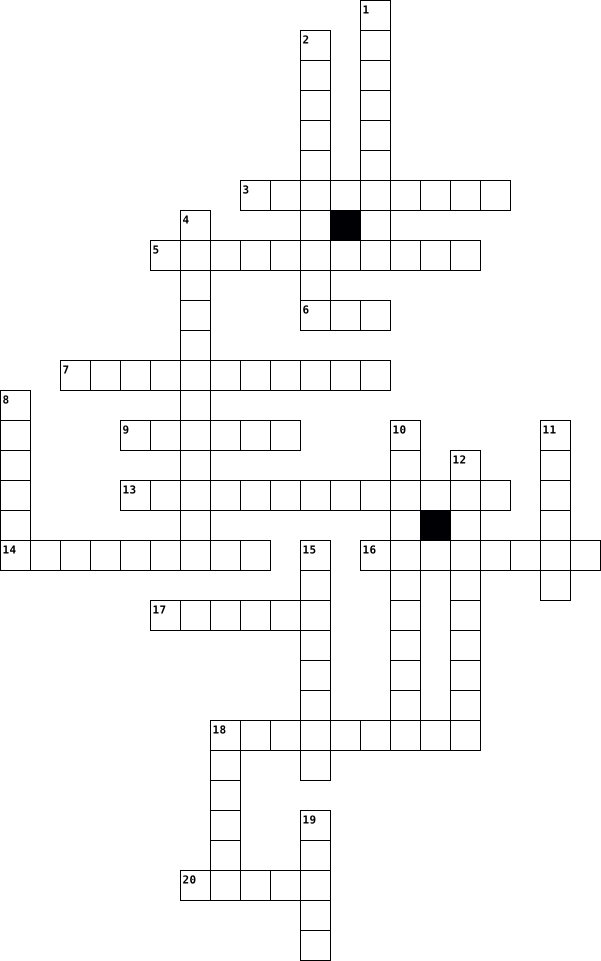
Across
- The only organism which can trap nitrogen.
- The green pigment needed for photosynthesis.
- The ultimate source of energy.
- Organisms that are found near decayed organic matter.
- Vessels which carry the food from the leaves to other parts of the plant.
- Plants that get nutrients by using ingenious methods.
- Lichen is an example of _______.
- Protein is a great source of ______.
- The common name for Cuscuta.
- A combination of components is called ______.
- Oxygen is essential for photosynthesis.True or False?
Down
- Alga is an/a _________.
- The nitrogen-fixing bacteria are found in which type of plants?
- The cells of green leaves and young stems of plants contain numerous green structures called _______.
- Fungi reproduce through ______.
- Farmers add this to improve the growth of the plant.
- The end product of photosynthesis which is given out.
- A stoma is surrounded by _______.
- Plants that borrow nutrients from another plant.
- The aqueous liquid found inside a chloroplast.
- The color of partial parasites are ______.
21 Clues: Alga is an/a _________. • The common name for Cuscuta. • The ultimate source of energy. • Fungi reproduce through ______. • Lichen is an example of _______. • A stoma is surrounded by _______. • Protein is a great source of ______. • The only organism which can trap nitrogen. • The color of partial parasites are ______. • The green pigment needed for photosynthesis. • ...
cellular respiration puzzle 2018-01-29

Across
- series of reactions which pyruvate is briken down into carbon dioxide
- _______ process does not require oxygen
- photosynthesis and cellular respiration are 2 important processes that cells use to obtain this
- oxygen and glucose are ________ of photosynthsis
- organisms obtain energy in ____________ process
- What provides energy for cells to do work
- Anaerobic pathway that follows glycolysis
- Point at which most ATP is procured
- Where the Krebs cycle takes place
- skeletal muscles produce this when body can't supply enough oxygen reason why muscles feel sore at times
- ________ is broken down in cytoplasm through process of glycolysis
Down
- The function of cellular respiration is to harvest electrons form this
- final step in breakdown of glucose
- molecule that is being broken down in krebs cycle
- ___________ are needed fro cellular reaction
- metabolic pathways produce and break down simple _________
- occurs in yeast and some bacteria
- photosynthesis and cellular respiration are ____________ pathways
- Process require oxygen
- Main molecule that is being made durring cellular respiration
20 Clues: Process require oxygen • occurs in yeast and some bacteria • Where the Krebs cycle takes place • final step in breakdown of glucose • Point at which most ATP is procured • _______ process does not require oxygen • What provides energy for cells to do work • Anaerobic pathway that follows glycolysis • ___________ are needed fro cellular reaction • ...
Cellular Respiration Puzzle, By:J. Allen 2018-01-29

Across
- This process does not require oxygen
- In the presence of oxygen, Pyruvate is transported here
- This is the final step in the breakdown of glucose
- the products of photosynthesis are the reactants of this
- Fermentation produced by skeletal muscles
- Alcohol fermentation occurs in these areas
- this is the final acceptor in the electron transport chain
- This is the net product of ATP from glycolysis
- Product of breaking down a glucose molecule
Down
- This is the molecule that is being broken down during glycolysis
- The full name of ATP
- A simple sugar
- Point at which most ATP is produced
- This kind of fermentation occurs in yeast and some bacteria
- ADP + P
- Photosynthesis and Cellular respiration are important processes to obtain this.
- Organism that get energy from the food they consume.
- This many CO2 are made in the Kreb's cycle
- This process requires oxygen
- Organism that use the sun to make food
20 Clues: ADP + P • A simple sugar • The full name of ATP • This process requires oxygen • Point at which most ATP is produced • This process does not require oxygen • Organism that use the sun to make food • Fermentation produced by skeletal muscles • This many CO2 are made in the Kreb's cycle • Alcohol fermentation occurs in these areas • Product of breaking down a glucose molecule • ...
Energy Crossword 2013-08-06

Across
- We use it in everything we do.
- Contains chemical energy which is used by living organisms to live.
- Energy caused by chemical reactions.
- An atom bomb is an example of ____________ energy.
- A light bulb gives us ________.
- Radiant and chemical energy helps the plant to make__________.
- What type of energy is used to turn on a hair dryer?
- Transportable energy, it is used in toys, remote controls, etc.
- An elastic band, gum, catapult
Down
- A form of energy that is transferred by a difference in temperature
- What energy is produced when a skydiver is falling?
- ___________ produce wind energy.
- Energy that is in motion.
- They use sunlight to make photosynthesis.
- It is use in lamps, car light and when you have an idea!
- The ability to do work.
- It is made by the combination of thermal and radiant energy.
- Energy that comes from heat.
- The energy that is made out of atoms.
- A quaking duck makes a _________.
20 Clues: The ability to do work. • Energy that is in motion. • Energy that comes from heat. • We use it in everything we do. • An elastic band, gum, catapult • A light bulb gives us ________. • ___________ produce wind energy. • A quaking duck makes a _________. • Energy caused by chemical reactions. • The energy that is made out of atoms. • They use sunlight to make photosynthesis. • ...
Chapter 4 2014-10-25

Across
- how plants make energy
- this molecule's makeup is C6H12O6
- What the 'A' stands for in ADP and ATP
- formed when a 2-carbon bonds to a 4-carbon
- named for the scientist who discovered this process which helps with cellular respiration
- splits glucose into 2 molecules
- a membrane-enclosed compartment that has chlorophyll in its membrane
- Where high-energy electrons go after they leave the membrane
- molecules that capture and transfer energy
Down
- a molecule with less energy than ATP, but can be converted into ATP
- releases chemical energy to make ATP when oxygen is present
- does not need oxygen
- needs oxygen
- a molecule located in chloroplasts
- where photosynthesis occurs in plants
- what you add to turn ADP into ATP
- how some organisms use chemical energy in place of light energy
- a molecule that transfers energy from food molecule breakdown to processes occurring in the cell
- chemical reactions that can't take place without ATP
- a way of adding a phosphate group to ADP
20 Clues: needs oxygen • does not need oxygen • how plants make energy • splits glucose into 2 molecules • this molecule's makeup is C6H12O6 • what you add to turn ADP into ATP • a molecule located in chloroplasts • where photosynthesis occurs in plants • What the 'A' stands for in ADP and ATP • a way of adding a phosphate group to ADP • formed when a 2-carbon bonds to a 4-carbon • ...
The World of Plants Unit 4 Vocabulary Review 2021-01-30

Across
- the edge of a leaf
- palm-like venation
- process that changes light, water, and carbon dioxide into sugar and oxygen
- three or more leaves grow from one node around a stem
- leaves grow from the bottom of the stem
- the part of the leaf that attaches to the stem
- feather-like venation
- jagged leaf margin
- only one leaf per petiole
- arrangement of a leaf's veins
- red or purple pigment in plants
Down
- cells which open and close the stomata
- smooth leaf margin
- one leaf grows from each node on alternating sides of the stem
- needle-like leaves designed to conserve water
- several leaflets off a single petiole
- two leaves grow on opposite sides of the stem from one node
- deeply indented leaf margin
- yellow pigment in plants
- yellowish-orange pigment in plants
- green substance in chloroplasts that makes photosynthesis possible
- substance that speeds up a chemical reaction
- holes on the underside of a leaf
23 Clues: smooth leaf margin • the edge of a leaf • palm-like venation • jagged leaf margin • feather-like venation • yellow pigment in plants • only one leaf per petiole • deeply indented leaf margin • arrangement of a leaf's veins • red or purple pigment in plants • holes on the underside of a leaf • yellowish-orange pigment in plants • several leaflets off a single petiole • ...
Unit 2 Vocabulary 2021-11-04

Across
- site of photosynthesis; converts sunlight to food
- a cell without membrane-bound organelles
- theory that shows evidence that complex eukaryotic cells evolved from simple prokaryotic cells
- the sum of all side areas
- the amount of space an object takes up
- respiration that does not use oxygen to create ATP
- specialized parts of a cell that perform a specific function
- outer most layer of an animal cell that provides a protective barrier
- jelly-like substance that fills the cell
Down
- "Powerhouse of the cell"
- respiration that uses oxygen to create ATP
- synthesizes proteins
- process in chloroplasts that converts sunlight into glucose
- outer most layer of a plant cell; provides extra structure to the cell
- smallest unit of life
- endoplasmic reticulum without ribosomes attached to the outside; packages waste and nutrients
- holds DNA and stores genetic information
- endoplasmic reticulum with ribosomes attached to the outside; packages proteins
- a cell with membrane-bound organelles
- exchange of gases
20 Clues: exchange of gases • synthesizes proteins • smallest unit of life • "Powerhouse of the cell" • the sum of all side areas • a cell with membrane-bound organelles • the amount of space an object takes up • a cell without membrane-bound organelles • holds DNA and stores genetic information • jelly-like substance that fills the cell • respiration that uses oxygen to create ATP • ...
Element and Compound Facts 2021-12-12

Across
- Common name is gypsum
- OK Thunder used to be this.
- Compound also known as "natural gas"
- Number 1 mineral state
- Metal that is in baking soda
- Most sand and glass is made of oxygen and this other non-metal.
- Mixture of 2 or more metals.
- Metal that is used in the old style light bulbs.
- Important element in artificial joints.
- Element that makes your blood red.
- Compound that is a reactant in photosynthesis
- Metal that is worth 1,500 per ounce
Down
- Common name is epsom salt
- Most abundant element in the earth's crust
- Most abundant element in the universe
- The most abundant metal in the human body.
- Likes to chase mice
- Flying mammal
- Common name for the acid in vinegar.
- compound that is a product of photosynthesis.
- The acid that is in car batteries.
- 9th planet element.
- Element that makes up most electrical wire.
- Man's best friend
24 Clues: Flying mammal • Man's best friend • Likes to chase mice • 9th planet element. • Common name is gypsum • Number 1 mineral state • Common name is epsom salt • OK Thunder used to be this. • Metal that is in baking soda • Mixture of 2 or more metals. • The acid that is in car batteries. • Element that makes your blood red. • Metal that is worth 1,500 per ounce • ...
Cellular Transport, Respiration and Photosynthesis 2022-03-08

Across
- too big cell size
- Gas exchange to make energy
- without oxygen
- sodium
- the second step in aerobic respiration
- anaerobic respiration in muscle cells
- O2
- type of transport that does not need energy
- the first step in respiration
- active transport taking something out
- part of chloroplast light dependent cycle takes place in
- type of transport that needs energy
- light
- can do photosynthesis and respiration
- makes up the bilayer
- moves small particles high to low
- organelle for photosynthesis
Down
- form of energy with two phosphates
- organelle for respiration
- to small small cell size
- with oxygen
- to make
- active transport bringing something in
- receptors on membrane
- C6H12O6
- moves water
- CO2
- makes up the channels in the membrane
- a type of diffusion that uses proteins
- element K
- form of energy with three phosphates
- same amount on either side
- perfect cell size
- can only do respiration
34 Clues: O2 • CO2 • light • sodium • to make • C6H12O6 • element K • with oxygen • moves water • without oxygen • too big cell size • perfect cell size • makes up the bilayer • receptors on membrane • can only do respiration • to small small cell size • organelle for respiration • same amount on either side • Gas exchange to make energy • organelle for photosynthesis • the first step in respiration • ...
Horticulture 101 2022-08-18

Across
- / a root tuber of the Solanaceae family
- / formally known as a renewal prune.
- / a type of prune which invokes the 3D’s.
- / facilitates root growth
- / Lycopersicon esculentum
- / vital to consistently improve crop productivity.
- / the science of plants.
- / cordon or espalier.
- / Helianthus annuus.
- / a scientific name composed of root words from Classical Languages.
Down
- / used to cure chlorosis.
- / Garlic or Onion.
- / the process by which involves the using of sugars produced during photosynthesis plus oxygen to produce energy for plant growth.
- / living only one growing season.
- / completes its life cycle in less than one year or less than six months.
- / the exhalation of water vapour through the stomata.
- / the process by which plants & some other organisms use sunlight to synthesise nutrients from carbon dioxide and water.
- / a type of prune used to train a plant during its formative years.
- / completing a life cycle in two years.
- / having a life cycle lasting more than two years.
20 Clues: / Garlic or Onion. • / Helianthus annuus. • / cordon or espalier. • / the science of plants. • / used to cure chlorosis. • / facilitates root growth • / Lycopersicon esculentum • / living only one growing season. • / formally known as a renewal prune. • / a root tuber of the Solanaceae family • / completing a life cycle in two years. • / a type of prune which invokes the 3D’s. • ...
7th World History Final Exam- MS 2022-10-31

Across
- trees and shrubs that shed their leaves at the end of the growing season
- middle layer of leaf where majority of photosynthesis occurs
- true bacteria
- leaves of ferns
- reduce water loss by slowing evaporation
- dependent on insects as food
- largest group of algae
- includes diatoms
- stalk that attaches leaf to stem
- the alternating patterns in a woody stem consisting of distinct layers of spring wood and summer wood
- study of plants
- multicellular; cellulose cell walls; undergo photosynthesis
- includes pear, apple, cherry, and peach
Down
- the green portion of a leaf
- opening in the leaf
- protects and covers the leaf
- also called legumes
- large, central vein of the leaf
- includes algae that are the sources of carrageenan and agar
- green algae used in biological laboratories
- the study of body function
- the study of animals
- an organism that feeds on a living host
- place where an organism lives
- the study of body structure
- group of trees produces winged fruits
26 Clues: true bacteria • leaves of ferns • study of plants • includes diatoms • opening in the leaf • also called legumes • the study of animals • largest group of algae • the study of body function • the green portion of a leaf • the study of body structure • protects and covers the leaf • dependent on insects as food • place where an organism lives • large, central vein of the leaf • ...
SsBiology Ch 1 2021-08-11

Across
- reproduction with genetic material from two parents
- process of energy transfer, sun-producers-consumers-decomposers
- a plant eater
- organisms that derive energy from dead organisms
- two name classification
- supplier of genetic material to offspring
- a hypothesis with same results under experimentation
- group of similar organisms living in same area
- relationship between populations and their environment
- maintenance of a stable internal environment
- one parent reproduction
Down
- how consumers produce energy from food
- energy of sun captured and used to make sugar
- a meat eater
- surroundings in which an organism lives
- a careful method of testing a hypothesis
- plant or animal eater
- molecule that contains genetic material in living things
- orderly classification of plants and animals
- study of life
- process for organism to extract energy and maintain
- organism that uses photosynthesis to make energy
- organism that uses others for energy source
- one or mor cells grouped together to live
24 Clues: a meat eater • a plant eater • study of life • plant or animal eater • two name classification • one parent reproduction • how consumers produce energy from food • surroundings in which an organism lives • a careful method of testing a hypothesis • supplier of genetic material to offspring • one or mor cells grouped together to live • organism that uses others for energy source • ...
Vocab Puzzle 2023-09-07

Across
- also known as G1 phase
- first stage of mitosis
- first embryonic leaf
- second stage of mitosis
- pores found on the surface of plant structures
- fourth stage of mitosis
- also known as S phase
- functionally supportive framework of a biological cell
- region of DNA typically found in the center of a chromosome
- also known as g2 phase
- first root of the plant
- process by which a cell releases energy
- chemical product of photosynthesis
- process which cells lose water
Down
- movement of dissolved substances
- plant cell which if limp
- process by which a plant grows from a seed
- process of converting light energy into chemical energy
- area in the cell where microtubules are produced
- growth of plants in response to light
- third stage of mitosis
- condition or process of aging
- diffusion of water
- one copy of a duplicated chromosome
- compound formed as a result of glycosis
- contains many genes
- also known as M phase
27 Clues: diffusion of water • contains many genes • first embryonic leaf • also known as S phase • also known as M phase • also known as G1 phase • first stage of mitosis • third stage of mitosis • also known as g2 phase • second stage of mitosis • fourth stage of mitosis • first root of the plant • plant cell which if limp • condition or process of aging • process which cells lose water • ...
Science thingy 2023-10-20

Across
- parts of the Earth that store carbon
- converts light energy into relatively stable chemical energy
- plants use this to eat
- the envelope of gases surrounding the earth
- stuff like coal
- the action of breathing
- anything that absorbs more carbon from the atmosphere than it releases
- non living
- any of the almost spherical concentric regions of matter that make up the earth
- the capacity for doing work
- does not use oxygen to produce energy
- living
Down
- All types of organisms
- responsible for the absorption of light to provide energy for photosynthesis
- plants use this to eat
- when cells in plants and animals convert sugar into energy
- fire explosion from chemical reaction
- all the waters on the earth's surface
- the regions of the surface, atmosphere, and hydrosphere of the earth
- the crust and upper mantle.
- element that is C
- anything that takes up space and can be weighed
- generates most of the chemical energy needed to power the cell's biochemical reactions
23 Clues: living • non living • stuff like coal • element that is C • All types of organisms • plants use this to eat • plants use this to eat • the action of breathing • the crust and upper mantle. • the capacity for doing work • parts of the Earth that store carbon • fire explosion from chemical reaction • all the waters on the earth's surface • does not use oxygen to produce energy • ...
Biosphere 2019-01-23

Across
- a place different from others due to climate and other factors
- eats both meat and plants
- relies on other organisms for food
- an equal exchange
- place made up of abiotic and biotic factors
- mosses and lichens re-building the ecosystem
- entering a new place
- a place where animals live
- cells in plants that allow them to use photosynthesis
- eats dead animals
- the act of breathing
- the amount a biosphere can hold
Down
- only consumes meat
- a place in which different species live together
- exiting a place
- only eats plants
- powerhouse of the cell
- one benefits one isn’t helped nor harmed
- a resource holding back the ecosystem
- plants create glucose using _____
- relationship between 2 organisms
- changes to survive
- Number of animals in an ecosystem
- a certain type of animal
- Symbiosis in which only 1 benefit and the other suffers
- makes its own food
26 Clues: exiting a place • only eats plants • an equal exchange • eats dead animals • only consumes meat • changes to survive • makes its own food • entering a new place • the act of breathing • powerhouse of the cell • a certain type of animal • eats both meat and plants • a place where animals live • the amount a biosphere can hold • relationship between 2 organisms • ...
biology crossword 2024-08-31

Across
- - Structures made of different tissues working together.
- - The global ecological system integrating all living beings and their relationships.
- Connective tissue that stores fat.
- SYSTEM - Group of organs working together for a specific function.
- - Plant tissue responsible for photosynthesis, support, and transport.
- - Level of biological organization that comes after the organ system.
- - Basic unit of life.
- - The lowest level of biological organization.
- - Tissue in plants responsible for storage and photosynthesis.
Down
- - Group of similar cells working together.
- - Meristem responsible for secondary growth in plants.
- - Fundamental plant tissues essential for growth and development.
- - Connective tissue that is flexible and provides support.
- - Another term for epithelial tissue.
- - Type of connective tissue that circulates in the blood vessels.
- - A type of connective tissue providing structural support.
- - Tissue composed of tightly packed cells covering body surfaces.
- - Tissue with three types: skeletal, cardiac, and smooth.
- - Tissue type that includes bone, cartilage, and blood.
- - Tissue type responsible for movement.
20 Clues: - Basic unit of life. • Connective tissue that stores fat. • - Another term for epithelial tissue. • - Tissue type responsible for movement. • - Group of similar cells working together. • - The lowest level of biological organization. • - Meristem responsible for secondary growth in plants. • - Tissue type that includes bone, cartilage, and blood. • ...
Unit 6 2024-04-30

Across
- Multiple populations living together
- An animal that only eats plants
- Performed by the mitochondria
- This type of animal eats other animals only
- Multiple of one organism that live together
- This is energy
- All biotic and abiotic factors in an area
- Herbivores that eat producers
- When both animals benefit from companionship
- Plants perform this to make glucose
- This builds up in your muscles and causes them to cramp
- We breathe this in and plants exhale it
- Performs photosynthesis in plants
Down
- The stuff that makes the chloroplast green
- An animal that eats both plants and animals
- When one organism benefits and the other is harmed
- Non-living factors in an ecosystem
- Organisms that don't need to breathe perform this
- Mainly Omnivores and consume both primary and secondary consumers
- One organism benefits and the other is unaffected
- Organisms that need oxygen perform this
- Living factors in an ecosystem
- Omnivores that eat producers and primary consumers
23 Clues: This is energy • Performed by the mitochondria • Herbivores that eat producers • Living factors in an ecosystem • An animal that only eats plants • Performs photosynthesis in plants • Non-living factors in an ecosystem • Plants perform this to make glucose • Multiple populations living together • Organisms that need oxygen perform this • We breathe this in and plants exhale it • ...
javier's Plants and Photosynthesis Crossword Puzzle 2024-04-24

Across
- Part of flower made from stigma, style and ovaries
- Part of stamen that holds the anther
- A part of flower that protects the pistil & stamen
- Male reproductive cells of a plant
- Plant organ that absorbs nutrients and water
- Female reproductive cells of a plant
- Tubular part of the pistil used for pollination
- a molecule that stores energy
- A part of the flower that protects the bud
- Green pigment used in photosynthesis
Down
- Cellular respiration takes place in this organelle
- Part of the flower that holds pollen for mating
- Plant organ used for photosynthesis
- Reproductive cells of mosses, ferns and fern allies
- The offspring of a fertilized flowering plant
- Vessel that carries water and minerals from roots to the rest of the plant
- Part of the flower that produces pollen
- Part of the pistil that holds up the stigma
- Part of the plant that stores ova
- Vessel that carries food from leaves to the rest of the plant
20 Clues: a molecule that stores energy • Part of the plant that stores ova • Male reproductive cells of a plant • Plant organ used for photosynthesis • Part of stamen that holds the anther • Female reproductive cells of a plant • Green pigment used in photosynthesis • Part of the flower that produces pollen • A part of the flower that protects the bud • ...
Plants and Photosynthesis Crossword Puzzle 2024-04-24

Across
- Part of flower made from stigma, style and ovaries
- Part of stamen that holds the anther
- A part of flower that protects the pistil & stamen
- Male reproductive cells of a plant
- Plant organ that absorbs nutrients and water
- Female reproductive cells of a plant
- Tubular part of the pistil used for pollination
- a molecule that stores energy
- A part of the flower that protects the bud
- Green pigment used in photosynthesis
Down
- Cellular respiration takes place in this organelle
- Part of the flower that holds pollen for mating
- Plant organ used for photosynthesis
- Reproductive cells of mosses, ferns and fern allies
- The offspring of a fertilized flowering plant
- Vessel that carries water and minerals from roots to the rest of the plant
- Part of the flower that produces pollen
- Part of the pistil that holds up the stigma
- Part of the plant that stores ova
- Vessel that carries food from leaves to the rest of the plant
20 Clues: a molecule that stores energy • Part of the plant that stores ova • Male reproductive cells of a plant • Plant organ used for photosynthesis • Part of stamen that holds the anther • Female reproductive cells of a plant • Green pigment used in photosynthesis • Part of the flower that produces pollen • A part of the flower that protects the bud • ...
UNIT 3: ECOLOGY PART B 2024-03-06

Across
- solutions having equal osmotic pressures
- movement of molecules from an area of high concentration to low concentration
- biochemical process that includes photosynthesis, consumption, decomposition, cellular respiration, and combustion
- process that breaks down glucose to produce ATP
- cellular respiration that requires oxygen
- gas reactant in cellular respiration
- spontaneous passage of water/solvents through a semipermeable membrane
- converts light energy to chemical energy
- requires energy to move substances against a gradient
- long-term shifts in temperatures and weather patterns
- solutions having a lower osmotic pressure
Down
- biochemical process that includes weathering and uplifting of rock
- does not require energy as substances move along their gradient
- cellular respiration that does not require oxygen
- separates the interior of the cell form the outside environment
- a simple sugar that is a component of many carbohydrates
- solutions with a high osmotic pressure
- biochemical process that describes the continuous movement of H2O
- gas released from wildfires and volcanic eruptions
- biochemical process that includes denitrification, nitrification, and nitrogen fixation
20 Clues: gas reactant in cellular respiration • solutions with a high osmotic pressure • solutions having equal osmotic pressures • converts light energy to chemical energy • cellular respiration that requires oxygen • solutions having a lower osmotic pressure • process that breaks down glucose to produce ATP • cellular respiration that does not require oxygen • ...
Introduction to Agriculture 2023-05-24

Across
- stationed by he door
- reporters station
- process of a plant to make its own food
- offspring of a cow
- offspring of a goat
- when a sheep gives birth
- plant structure that holds the plant up
- when a seed sprouts and starts to grow
- Vice president's symbol
- intact male bovine/cattle
- baby plant inside of a seed
- meat from a cow
- plant with two seed leaves (cotyledons)
- Official FFA Color
Down
- castrated male cattle
- plant with one seed leaf (cotyledon)
- used to smooth wood down
- mature female goat
- Official FFA Color
- mature female chicken
- stationed at the ear of corn
- group of chickens
- animal that produces pork
- chicken raised for meat
- A mature male sheep
- part of the plant that anchors it and absorbs water
- meat from an animal such as chicken or turkey
- the main site of photosynthesis
- offspring of a pig
- FFA Advisor station
30 Clues: meat from a cow • reporters station • group of chickens • mature female goat • Official FFA Color • offspring of a cow • offspring of a pig • Official FFA Color • offspring of a goat • A mature male sheep • FFA Advisor station • stationed by he door • castrated male cattle • mature female chicken • chicken raised for meat • Vice president's symbol • used to smooth wood down • ...
Science Fake Test 2023-06-07

Across
- used to trace the occurrence of a trait
- a fat molecule
- the shape of a DNA molecule
- a green pigment that captures light energy
- the region that contains all of the fluid and organelles in the cell
- your observable traits
- the process in which plants get food
- the blueprint of life
- the combination of alleles you inherited
- changes in number of bases in a piece of DNA
- an organism that doesn't have a nucleus or membrane-bound organelles
- the duplication of a DNA molecule
Down
- the regions of the atmosphere, hydrosphere, and surface where living organisms are present
- surrounds the cell membrane and is only found in plants
- an organelle where photosynthesis occurs
- an organelle that performs cellular respiration
- the diffusion of water through a semi-permeable membrane
- having two dominant or two recessive alleles
- a molecule that builds and repairs body structures
- the maintenance of a constant eternal state
20 Clues: a fat molecule • the blueprint of life • your observable traits • the shape of a DNA molecule • the duplication of a DNA molecule • the process in which plants get food • used to trace the occurrence of a trait • an organelle where photosynthesis occurs • the combination of alleles you inherited • a green pigment that captures light energy • ...
Plant and Animal Cells 2024-12-17

Across
- Jelly-like substance where chemical reactions occur.
- Site of protein synthesis.
- Helps in cell division (found in animal cells).
- Stores nutrients, water, and waste; large in plant cells, small in animal cells.
- Process in chloroplasts converting light to energy.
- Provides structure and shape to the cell.
- apparatus – Packages and modifies proteins for transport.
- Break down fatty acids and detoxify harmful substances.
- Rigid structure outside the cell membrane (in plant cells).
- (adenosine triphosphate) Energy currency of the cell, produced in mitochondria.
- Contains the cell’s genetic material (DNA).
Down
- Carry genetic information in the nucleus.
- Powerhouse of the cell, produces energy (ATP).
- Breaks down waste (more common in animal cells).
- Cells without a nucleus (contrast with animal/plant cells).
- Controls what enters and exits the cell.
- reticulum (ER) – Transports materials; smooth ER makes lipids, rough ER has ribosomes.
- Another term for the cell membrane.
- Cells with a nucleus (includes animal and plant cells).
- Site of photosynthesis (found in plant cells).
20 Clues: Site of protein synthesis. • Another term for the cell membrane. • Controls what enters and exits the cell. • Carry genetic information in the nucleus. • Provides structure and shape to the cell. • Contains the cell’s genetic material (DNA). • Powerhouse of the cell, produces energy (ATP). • Site of photosynthesis (found in plant cells). • ...
4/22/25 2025-04-11

Across
- Body system responsible for transporting oxygen and nutrients
- Body system responsible for destroying pathogens.
- This term means balance in science.
- Harmful germs responsible for making the body sick
- The variable being changed during the experiment.
- Organisms that consume only plants.
- The maximum population an ecosystem can support
- Nonliving components of an ecosystem
- One of the components needed for photosynthesis
- Cells used to destroy pathogens
Down
- Cellular process used by producers to make glucose
- Organisms that consume only animals.
- The process of moving molecules from high to low concentration
- Having a variety of organisms in an ecosystem
- Means to have a different amount or different versions.
- Process used to create ATP
- A group of the same species in a ecosystem
- The variable being measured during an experiment
- Type of mechanism used to maintain homeostasis in the body
- Diagram used to shows the levels of energy in an ecosystem.
- Living Components of an ecosystem
21 Clues: Process used to create ATP • Cells used to destroy pathogens • Living Components of an ecosystem • This term means balance in science. • Organisms that consume only plants. • Organisms that consume only animals. • Nonliving components of an ecosystem • A group of the same species in a ecosystem • Having a variety of organisms in an ecosystem • ...
Intro to Biology 2026-01-16

Across
- Method Steps used to investigate questions
- A group that can reproduce together
- – Cell structure where photosynthesis happens
- – A tool used to see very small objects
- – The control center of a cell
- An organism that makes its own food
- – The outer covering of a cell
- – The study of living things
- Different populations living together
- – Jelly-like material inside a cell
- A group of the same species in one area
- A testable explanation or prediction
- – Process cells use to release energy
Down
- An organism that eats other organisms
- – Keeping a stable internal environment
- A trait that helps an organism survive
- An organism that breaks down dead matter
- – A living thing
- – The smallest unit of life
- – Genetic material that carries instructions for life
- – The part of the cell that produces energy
- Change in species over time
- – Process plants use to make food using sunlight
- – Living and nonliving things interacting
- The natural home of an organism
25 Clues: – A living thing • – The smallest unit of life • Change in species over time • – The study of living things • – The control center of a cell • – The outer covering of a cell • The natural home of an organism • A group that can reproduce together • An organism that makes its own food • – Jelly-like material inside a cell • A testable explanation or prediction • ...
The Search for Marine Microbes 2025-09-19

Across
- From the Kingdom "Fungi" and symbiotic with algae
- Hair-like appendages; different from flagella
- Protozoa with long, thin extensions of cytoplasm
- Cells that make their own energy; photosynthesis
- Cells that can't make their own energy; "eat food"
- A relationship where both organisms benefit
- An organism that makes energy from chemicals as opposed to sunlight
- Protozoans with spherical glass skeletons and radiating spines
- They have two flagella and an armor plated cell wall
- A huge diversity of simple eukaryotic organisms; generally considered protists
Down
- An organism that undergoes photosynthesis
- A type of unicellular algae that are flagellated and made of calcium carbonate
- "Blue-green algae"
- Unicellular algae w/a star-shaped internal skeleton made of silica
- They infect living cells
- A single-celled organism that lacks a nucleus
- Have beautiful colors and can be found in toothpaste and pool cleaner
- Not all are extremophiles but all extremophiles are this
- "Good" ones can be found in your gut
- Protozoa with lots of hair-like cilia
20 Clues: "Blue-green algae" • They infect living cells • "Good" ones can be found in your gut • Protozoa with lots of hair-like cilia • An organism that undergoes photosynthesis • A relationship where both organisms benefit • Hair-like appendages; different from flagella • A single-celled organism that lacks a nucleus • Protozoa with long, thin extensions of cytoplasm • ...
Bio crossword 2025-11-14

Across
- The first noble gas in the periodic table
- Basic unit of matter
- Controls heredity
- Site of photosynthesis
- A single-celled organism with no nucleus
- Storage and transport vesicle
- Where microtubules are produced
- The study of life
- Fluid that holds the cell organelles
- One cell
- Protects cell from toxic hydrogen peroxide production
- More than one cell
Down
- Part of the cytoskeleton in animal cells
- Organism with a membrane-bound nucleus
- Control center of the cell where DNA is found
- Powerhouse of the cell
- Atomic number of 1
- Pure substance with one atom
- Synthesizes proteins
- The process of chloroplasts making their own food
- Basic unit of life
- Structure that aids in cell division
- A stack of thylakoid membranes (plural)
- Where ribosomes are produced
- Inspects and packages proteins
- Structure that cleans up the cell
- Also known as sugar
- Energy-carrying molecule that powers the Calvin cycle
28 Clues: One cell • Controls heredity • The study of life • Atomic number of 1 • Basic unit of life • More than one cell • Also known as sugar • Basic unit of matter • Synthesizes proteins • Powerhouse of the cell • Site of photosynthesis • Pure substance with one atom • Where ribosomes are produced • Storage and transport vesicle • Inspects and packages proteins • Where microtubules are produced • ...