
photosynthesis Crossword Puzzles
Scientific Terms - Ayah Weitz 2025-10-09

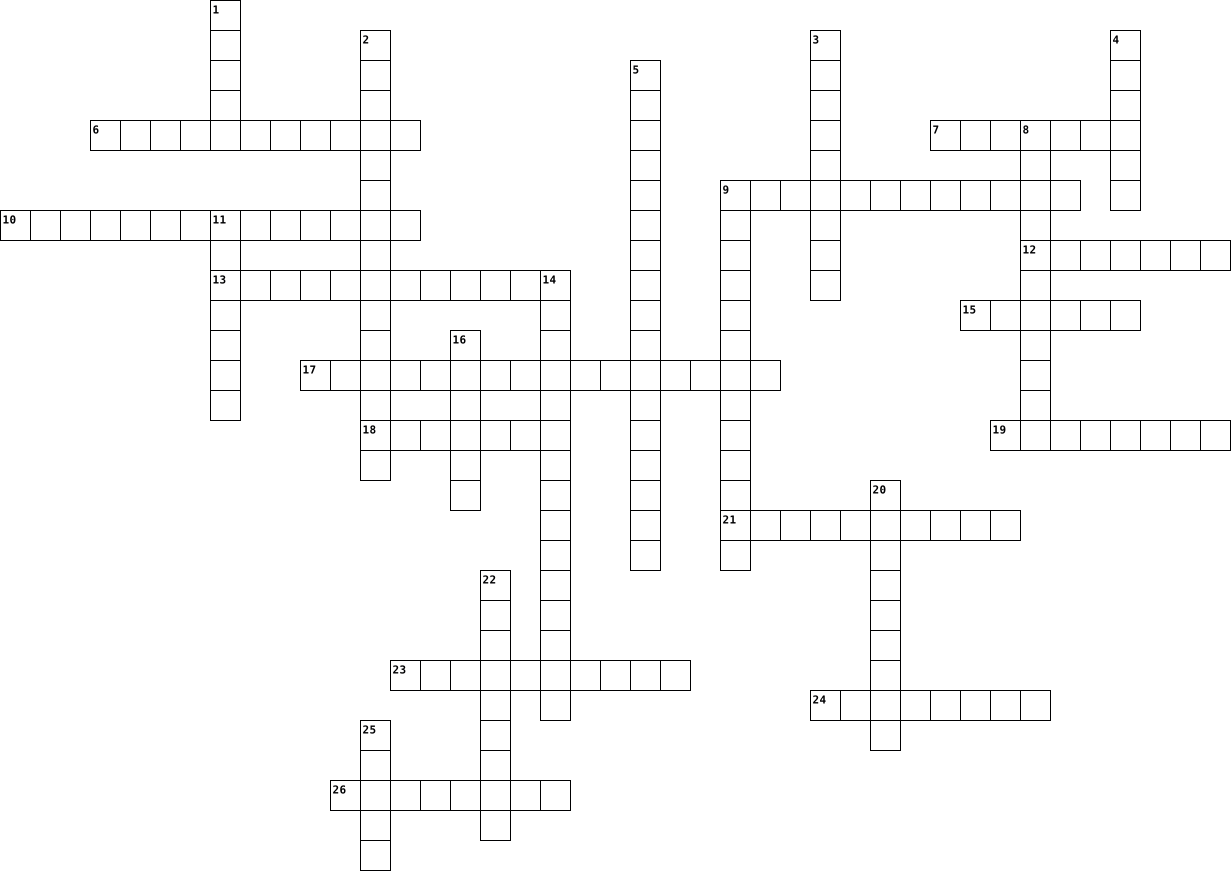
Across
- Part of plant cell that performs photosynthesis
- The powerhouse of the cell
- The brain of the cell
- The process in which living things get energy from food
Down
- The proccess in plant cells in which sunlight becomes food
- a group of atoms that are chemically bonded
- Structure within a cell that performs
- The protective outer layer of a cell
- The most basic unit of life
9 Clues: The brain of the cell • The powerhouse of the cell • The most basic unit of life • The protective outer layer of a cell • Structure within a cell that performs • a group of atoms that are chemically bonded • Part of plant cell that performs photosynthesis • The process in which living things get energy from food • The proccess in plant cells in which sunlight becomes food
Photosynthesis and cellular respiration 2025-10-14

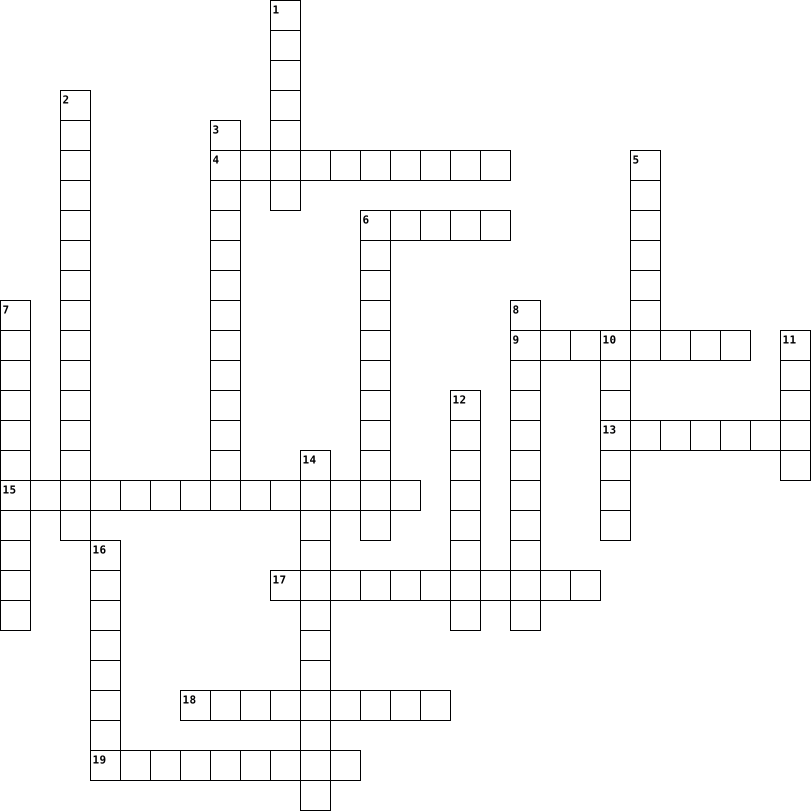
Across
- green pigment in chloroplast
- type of respiration that requires oxygen
- organelle that performs photosynthesis
- process that converts glucose into ATP
Down
- sugar molecule that is a product of photosynthesis
- pore on plant leaves that decides what is let in and out of the plant.
- waste gas product of cellular respiration.
- energy created as a product of cellular respiration
- type of energy that powers photosynethesis
9 Clues: green pigment in chloroplast • organelle that performs photosynthesis • process that converts glucose into ATP • type of respiration that requires oxygen • waste gas product of cellular respiration. • type of energy that powers photosynethesis • sugar molecule that is a product of photosynthesis • energy created as a product of cellular respiration • ...
Cellular Respiration 2025-11-06

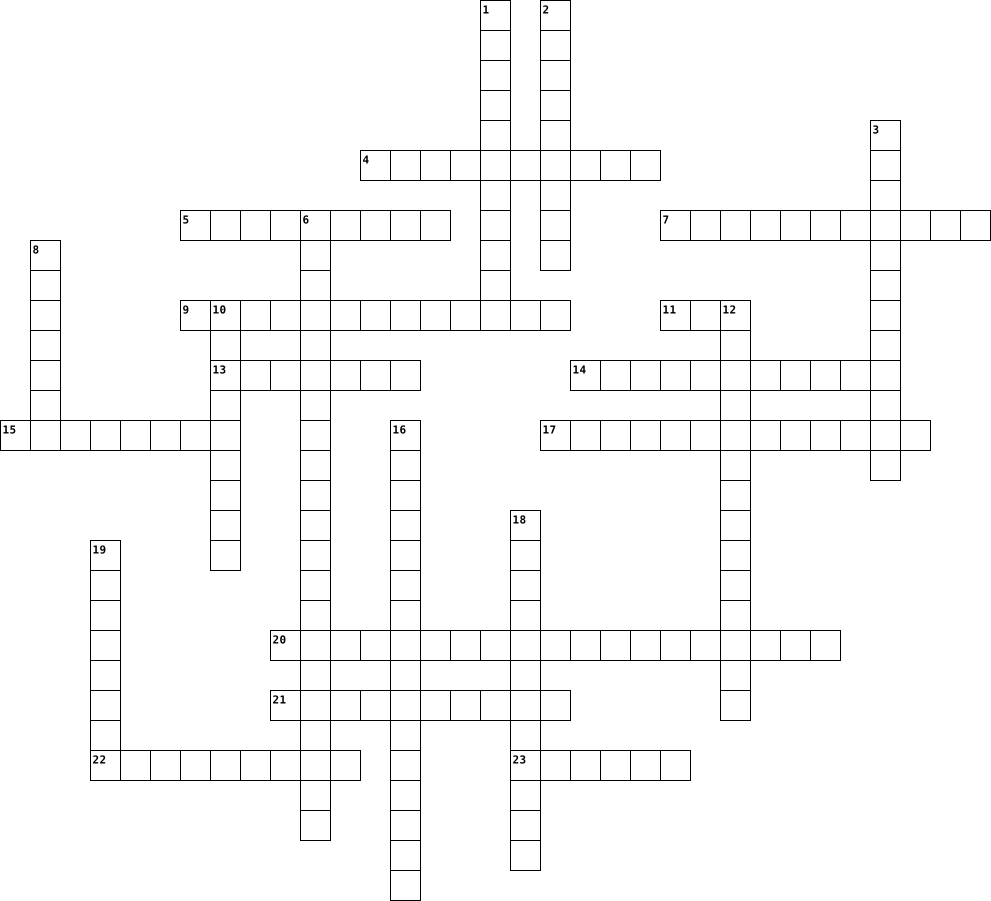
Across
- The type of energy created by photosynthesis
- Sugar found in milk and dairy products
- Organelle responsible for photosynthesis
- Changing one type of energy into another
- A type of cell that doesn't have a proper nucleus
Down
- One of two products made by cell. resp.
- Site of cellular respiration
- A sugar with the chemical formula C6H12O6
- Type of cell that do not contain chloroplasts or cell walls
9 Clues: Site of cellular respiration • Sugar found in milk and dairy products • One of two products made by cell. resp. • Organelle responsible for photosynthesis • Changing one type of energy into another • A sugar with the chemical formula C6H12O6 • The type of energy created by photosynthesis • A type of cell that doesn't have a proper nucleus • ...
light 2022-10-18

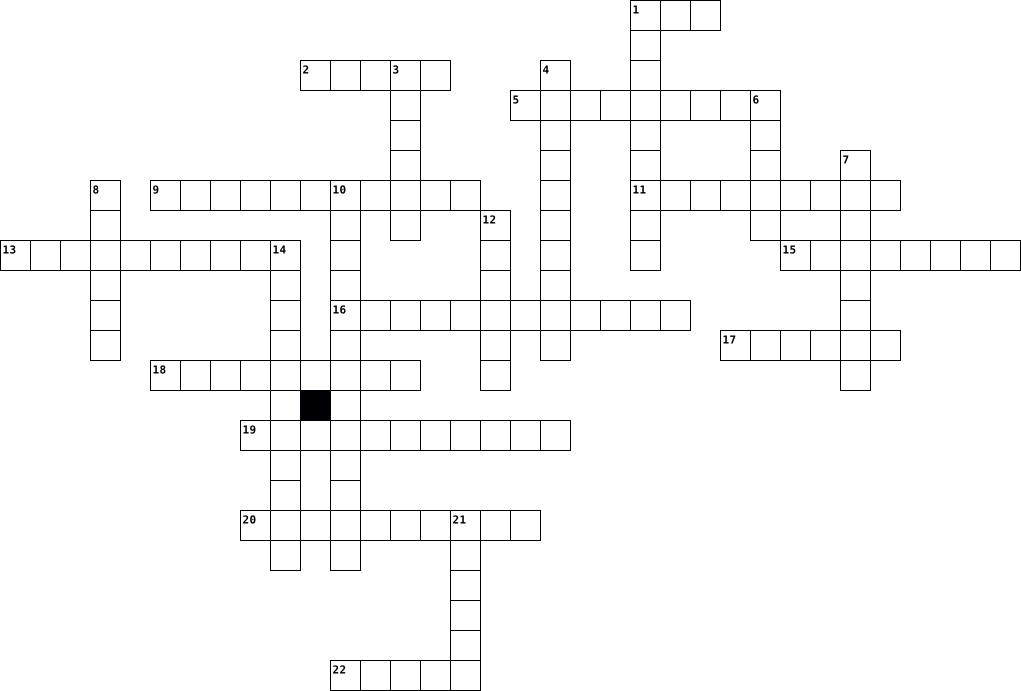
Across
- Branching
- Measure
- Photosynthesis
- Duration
- Amount
- Green
Down
- StemStretch
- Growth
- Lowlight
- Measure
10 Clues: Green • Growth • Amount • Measure • Measure • Lowlight • Duration • Branching • StemStretch • Photosynthesis
monkey 2024-05-14

Across
- fanum
- bye
- rawr
Down
- ohio
- erm
- skibidi
- sigma
- meow
- hi
9 Clues: hi • erm • bye • ohio • meow • rawr • sigma • fanum • skibidi
Flow of Energy 2021-02-18

Across
- - Overlapping food chains with different pathways to show the flow of energy in an ecosystem,
- - An organism that transforms energy from the Sun and uses carbon dioxide and water to make food,
- - the green substance (pigment) contained in the chloroplast of plant leaves that captures the energy in sunlight,
- - A self-contained living thing,
- - the process by which decomposers break down dead material and waste into simpler substances,
- - A collection of organs that work together to perform specialized functions,
- - A single, linear path showing the flow of energy from the Sun to a producer and through different levels of consumers,
- - A collection of similar tissues joined together into a structure that performs specialized functions,
- - A mass of similar cells that perform a specialized function, Transform - make a thorough or dramatic change in the form, appearance, or character of,
- - The basic structural and functional unit of living organisms,
Down
- - A sugar composed of six carbon atoms that is the preferred energy source for most cells; produced by photosynthesis,
- - The position an organism occupies on the food web
- - a structure in a plant cell that contains chlorophyll; site of photosynthesis,
- - Organisms such as bacteria and fungi that break down the remains of dead plants and animals without need for internal digestion,
- pyramid - A diagram that shows the total amount of energy contained within each trophic level,
- - An organism that must consume other organisms for nutrients,
- - A chemical reaction during which plants convert radiant energy from the Sun to chemical energy; the reaction converts carbon dioxide and water into sugar (glucose) and oxygen,
- energy- Energy stored in chemical bonds and released through chemical reactions,
- - Energy from the Sun that reaches Earth as visible light, ultraviolet radiation, and infrared (heat) radiation,
19 Clues: - A self-contained living thing, • - The position an organism occupies on the food web • - An organism that must consume other organisms for nutrients, • - The basic structural and functional unit of living organisms, • - A collection of organs that work together to perform specialized functions, • ...
Cellular Respiration 2023-01-10

Across
- stage of cellular respiration where pyruvic acid is broken down into carbon dioxide
- process that requires oxygen
- process that is carried out by yeast that produces ethyl alcohol and carbon dioxide
- amount of energy needed to raise the temperature of water
- process where cells release energy without oxygen
- process that deposits energy
- process that cells use to produce ATP
- reaction in cellular respiration where a molecule of glucose is broken into two molecules of pyruvic acid
- deepest compartment of the mitochondrion
Down
- process that releases energy, opposite of photosynthesis
- a type of fermentation using a chemical reaction that converts pyruvic acid to lactic acid
- process that does not require oxygen
- can also be known as biomolecules
- British biochemist who introduced the Krebs Cycle in 1937
- electron carrier in glycolysis
- composed of a series of electron carriers located in the inner membrane of the mitochondrion
16 Clues: process that requires oxygen • process that deposits energy • electron carrier in glycolysis • can also be known as biomolecules • process that does not require oxygen • process that cells use to produce ATP • deepest compartment of the mitochondrion • process where cells release energy without oxygen • process that releases energy, opposite of photosynthesis • ...
Plants Project Choice #4 2020-10-02

Across
- purpose is to reproduce through the production of seeds
- plants that compete their life cycle in two growing seasons
- attract insects and birds for pollination
- support the leaves, flowers, and fruit
- plants that produce for more than two years or growing seasons
- anchor the plant,absorb water and minerals, and store manufactured foods
- the chemical process converting sunlight into energy and food for the plant
- a mature(fertilized) ovary containing the seed or seeds
Down
- the movement and loss of water through evaporation
- plants with hardy stems that can survive winter frost
- plants that have soft stems that are killed by frost
- plants that compete their life cycle in one growing season (or one year)
- the process of plants using stored energy
- plants that produce seeds not protected by fruits
- plants that flower and produce seeds protected by fruit or pods
- produce food for the plant through photosynthesis
16 Clues: support the leaves, flowers, and fruit • the process of plants using stored energy • attract insects and birds for pollination • plants that produce seeds not protected by fruits • produce food for the plant through photosynthesis • the movement and loss of water through evaporation • plants that have soft stems that are killed by frost • ...
the cells topic 2019-12-12

Across
- The tiny building blocks of life
- The part of the cell which controls it and contains the DNA
- A green jelly-like substance in cells for chemical reactions to take place in
- a layer around the cell which controls movement in and out of the cell
- The job that something does
- Cell with adaptions to fulfil a certain purpose
- Tiny hairs on the outside of some cells
- the part of the cell which carries out the photosynthesis
- Make something look bigger
Down
- Liquid filled organelle inside a plant cell
- A device used to look at very small objects
- outer layer of plant cells which helps them hold their shape
- the number of times larger an image appears compared to the size of the object
- A living thing that is made up of only one cell
- these perform cellular respiration
- a green substance necessary for Photosynthesis
16 Clues: Make something look bigger • The job that something does • The tiny building blocks of life • these perform cellular respiration • Tiny hairs on the outside of some cells • Liquid filled organelle inside a plant cell • A device used to look at very small objects • a green substance necessary for Photosynthesis • A living thing that is made up of only one cell • ...
Plant Processes and Plant Nutrients 2021-10-19

Across
- This nutrient stimulates the growth of plant roots.
- The organelle in plants where photosynthesis is carried out.
- This nutrient is responsible for vegetative growth
- Tiny pores in the leaves.
- is responsible fro the formation of root tips
- The phenomenon whereby the flowering of plants is regulated by day length
- This nutrient is responsible for the synthesis of chlorophyll
- The process by which green plants make food
- The movement of organic and inorganic substances from one part of the plant to another
Down
- The green pigment found in plants.
- The release of energy from carbohydrates
- This is responsible for the transfer of carbohyrates.
- The evaporation of water from the stomata
- This plant vessel transports water and minerals from the roots up to the leaves.
- This element helps in the formation of proteins
- The process whereby plants grow towards the sunlight
16 Clues: Tiny pores in the leaves. • The green pigment found in plants. • The release of energy from carbohydrates • The evaporation of water from the stomata • The process by which green plants make food • is responsible fro the formation of root tips • This element helps in the formation of proteins • This nutrient is responsible for vegetative growth • ...
Cell Structure and Function 2017-05-02

Across
- the traits of living organisms
- Makes proteins
- The smallest unit of life capable of carrying out life functions
- The rigid outer layer of a plant cell that provides structure and support for the cell
- The process by which plants make food from the sun's radiant energy
- The outer layer of cells that controls what comes into and what goes out of the cell
- Converts oxygen and food into energy-often called the powerhouse of the cell
- The jellylike substance that fills the cells.
Down
- Large storage organelle in plant cells. Stores nutrients and water and helps the plant maintain shape
- Cells that do not contain a nucleus
- Controls all the cells activities
- Organism composed of many cells
- Site of photosynthesis
- Organism composed of only one cell
- Cells that contain a nucleus
- The organelle that stores nutrients and materials for digestion
16 Clues: Makes proteins • Site of photosynthesis • Cells that contain a nucleus • the traits of living organisms • Organism composed of many cells • Controls all the cells activities • Organism composed of only one cell • Cells that do not contain a nucleus • The jellylike substance that fills the cells. • The organelle that stores nutrients and materials for digestion • ...
Cell Structure and Function 2017-05-02

Across
- Cells that do not contain a nucleus
- The rigid outer layer of a plant cell that provides structure and support for the cell
- The organelle that helps with digestion
- The process by which plants make food from the sun's radiant energy
- Large storage organelle in plant cells. Stores nutrients and water and helps the plant maintain shape
- Organism composed of only one cell
- Site of photosynthesis
Down
- Converts oxygen and food into energy-often called the powerhouse of the cell
- The jellylike substance that fills the cells.
- The outer layer of cells that controls what comes into and what goes out of the cell
- Makes proteins
- Cells that contain a nucleus
- Organism composed of many cells
- the traits of living organisms
- Controls all the cells activities
- The smallest unit of life capable of carrying out life functions
16 Clues: Makes proteins • Site of photosynthesis • Cells that contain a nucleus • the traits of living organisms • Organism composed of many cells • Controls all the cells activities • Organism composed of only one cell • Cells that do not contain a nucleus • The organelle that helps with digestion • The jellylike substance that fills the cells. • ...
Plankton 2024-01-17

Across
- Tide bloom of harmful, toxic, phytoplankton, leads to discoloration of water
- planktonic organisms that spend only part their life as plankton
- microscopic organisms that drift or float
- small crustaceans that are common zooplankton
- planktonic organisms that spend their whole life cycle as plankton
- Depth depth in the water where rate of photosynthesis equals rate of respiration
- larger-size plankton, visible under microscope
- unicellular algae that can be both phytoplankton and sometimes bioluminescent
- pertaining to the bottom of a body of water
Down
- photosynthetic organisms that form the base of aquatic food chain
- phytoplankton with silica-based cell wall, shaped like glass shell
- organisms that obtain energy by consuming other organisms
- free-swimming aquatic organisms such as fish and squid
- small animals that feed of phytoplankton or other zooplankton
- rapid increase in population of plankton organisms, causes discoloration of water
- organisms that produce their own food through photosynthesis
16 Clues: microscopic organisms that drift or float • pertaining to the bottom of a body of water • small crustaceans that are common zooplankton • larger-size plankton, visible under microscope • free-swimming aquatic organisms such as fish and squid • organisms that obtain energy by consuming other organisms • organisms that produce their own food through photosynthesis • ...
Carbon Cycle Crossword 2025-11-12

Across
- a key element of life
- the process of breaking down dead organisms to release organic compounds and CO2
- a form of carbon stored in the atmosphere
- a compressed form of carbon that takes millions of years to form
- a chemical process that creates energy for the body and releases carbon dioxide
- carbon dioxide can ______________ in seawater
- plants use this energy to take carbon dioxide from the air
- a place to hold carbon dioxide in the sky
- an organism that does decomposition
Down
- major building blocks in the body
- fungi and bacteria
- an organism that does photosynthesis
- a process that takes millions of years to convert dead organisms into fuel
- the burning of fossil fuels for energy
- plants use this reaction to take in carbon dioxide and convert it into sugars.
- a form of carbon stored in plants and animals
16 Clues: fungi and bacteria • a key element of life • major building blocks in the body • an organism that does decomposition • an organism that does photosynthesis • the burning of fossil fuels for energy • a form of carbon stored in the atmosphere • a place to hold carbon dioxide in the sky • carbon dioxide can ______________ in seawater • ...
Unit 3 Crossword 2025-12-10

Across
- electron carrier found in photosynthesis
- metabolic pathway to store solar energy in glucose
- reaction that absorbs free energy
- product of glycolysis
- metabolic pathway to release energy stored in glucose
- reaction with a negative Gibbs free energy
- process in cellular respiration using a proton gradient to synthesize ATP
Down
- the addition of a phosphate group to a substrate
- pathway involving the building of a complicated molecule from a simpler one
- process in the mitochondrial cristae using high energy electrons to create a proton gradient
- reaction that releases free energy
- enzyme used in synthesis of ATP
- process to regenerate NADH after glycolysis in the absence of oxygen
- process in cellular respiration that completes breakdown of glucose
- law of thermodynamics stating that every reaction increases the entropy of the universe
- law of thermodynamics stating that energy cannot be created or destroyed
16 Clues: product of glycolysis • enzyme used in synthesis of ATP • reaction that absorbs free energy • reaction that releases free energy • electron carrier found in photosynthesis • reaction with a negative Gibbs free energy • the addition of a phosphate group to a substrate • metabolic pathway to store solar energy in glucose • ...
Biology 2019-05-07
Across
- made of multiple organs
- sacs for storage, digestion, and control waste
- produces energy, a powerhouse of the cell
- method used to make food for plants from sunlight
- lives in fresh water, uses photosynthesis and uses flagellum
- surrounds the cell and controls exits and entries
- colony that uses cilia to move
- take in oxygen and breathe out carbon dioxide
- used to find a light on the surface
- living things made of cells
- cells that makes up an animal
- lives in fresh water and eats bacteria
- protects the cell and gives it strength
- pushes and pulls through water
Down
- made of multiple tissues
- digests nutrients and gets rid of unnecessary waste
- false foot
- lives in either water or soil, feeds on bacteria
- flows and pumps blood
- one cell
- two or more cells
- controls every system of cells and also stores DNA
- removes waste
- made of multiple cells
- cells that make up a plant
- different structures within a cell
- hair like structures used to move
27 Clues: one cell • false foot • removes waste • two or more cells • flows and pumps blood • made of multiple cells • made of multiple organs • made of multiple tissues • cells that make up a plant • living things made of cells • cells that makes up an animal • colony that uses cilia to move • pushes and pulls through water • hair like structures used to move • different structures within a cell • ...
Science - class 9 2020-12-29

Across
- power house of cell is called?
- In general, on heating metals can?
- taste of base?
- Soya Bean Oil Is Obtained From Which Part Of The Plant?
- colored part of the eye is called?
- base turns the litmus paper into which colour?
- The food or chemical energy source made by plants through photosynthesis is?
- Taste of Acid?
- magnet can attract which metal?
- element that causes fermentation?
- largest planet in our solar system is?
- The process by which plants make their food is called?
Down
- Total number of planets in our solar system are?
- goiter is caused due to the deficiency of?
- common name of hydrogen dioxide(H2O) is?
- smallest particle of matter is?
- common name of sodium chloride(NaCl)is?
- Morning dew is an example of which portion of the water cycle?
- Animals Which Eat Both Plants And Animals are Called?
- acid turns the litmus paper into which colour?
- the phenomenon that pulls everything to earth?
- The movement of the earth on its axis is called?
22 Clues: taste of base? • Taste of Acid? • power house of cell is called? • smallest particle of matter is? • magnet can attract which metal? • element that causes fermentation? • In general, on heating metals can? • colored part of the eye is called? • largest planet in our solar system is? • common name of sodium chloride(NaCl)is? • common name of hydrogen dioxide(H2O) is? • ...
Astronomy 2021-09-29

Across
- March 21st
- the point closest to the sun
- Responsible for day and night
- one full cycle of moon phases; 29.5 days
- rotation that traces a cone
- it's gravitational pull gives us tides
- the process that provides plants with energy
- lowest point
- occurs during full moon and new moon
- Responsible for seasons
- December 21st
- the point furthest from the sun
- consists of electric and magnetic fields
Down
- June 21st
- The idea that the universe was created when a dense ball of matter exploded
- produced by animals and humans, but used by plants
- water levels are at their highest point
- September 21st
- the "nodding" of the Earth
- center of mass between 2 objects
- 23.5 degree angle
- produced by plants, but used by animals and humans
- dwarf planet
- occurs at 1st quarter moon and 3rd quarter moon
- the moon's motion about the earth
- where photosynthesis occurs
- what Earth rotates on
- water levels are at
28 Clues: June 21st • March 21st • dwarf planet • lowest point • December 21st • September 21st • 23.5 degree angle • water levels are at • what Earth rotates on • Responsible for seasons • the "nodding" of the Earth • rotation that traces a cone • where photosynthesis occurs • the point closest to the sun • Responsible for day and night • the point furthest from the sun • center of mass between 2 objects • ...
Cell structure 2021-10-28

Across
- the process of converting light energy into chemical energy
- this organelle makes proteins needed to carry out cells function
- the organelle that assembles proteins to be distributed throughout a cell
- only ____ cells have a cell wall and chloroplast
- plant cells have a ____ vacuole
- the ____ directs cell activity and controls cell size and reproduction
- this organelle provides energy for cells
- food and water is stored in a cell's ____
- this organelle transports materials in and out of a cell and throughout a cell.
- both plant and animal cells have nucleus, which means they are _____.
- both plant and animal cells have a cell ___
Down
- the _____ transports proteins and materials to organelles in a cell
- ____ digest worn-out cell parts and cell waste
- this organelle is used in photosynthesis
- this organelle make ribosomes and controls how they function
- this organelle provides structure and support for plant cells
- the ____ E.R does not contain ribosomes
- animal cells have many ___ vacuoles
- a jelly like substance inside a cell
- the cell wall gives a plant cell a ____ structure
- animal cells have a ____ shape
21 Clues: animal cells have a ____ shape • plant cells have a ____ vacuole • animal cells have many ___ vacuoles • a jelly like substance inside a cell • the ____ E.R does not contain ribosomes • this organelle is used in photosynthesis • this organelle provides energy for cells • food and water is stored in a cell's ____ • both plant and animal cells have a cell ___ • ...
cells 2012-10-16
Across
- What is the first stage of the cell cycle
- Form the parts of an organism and carry out all of the organisms processes or functions
- An example of oxygen and nitrogen
- The diffusion of water molecules through a selectively permeable membrane
- The process by which a cell captures energy in sunlight
- An organism that cannot make it's own food
- An organism that makes its own food
- The process by which molecules move from higher to lower concentration
Down
- Small opening on the undersides of the leaves where carbon dioxide enters
- A process by which cells change in structure and become capable of carrying out specialized functions
- The organelle in which photosynthesis occurs
- Pairs with adenine during DNA replication
- The final stage of the cell cycle
- What makes a leaf appear green
- The process by which cells obtain energy from glucose
- What is the second stage of the cell cycle
- A place where fermentation occur
- The green color on plants
- The energy releasing process that does not require oxygen
- An example of carbon dioxide
20 Clues: The green color on plants • An example of carbon dioxide • What makes a leaf appear green • A place where fermentation occur • The final stage of the cell cycle • An example of oxygen and nitrogen • An organism that makes its own food • What is the first stage of the cell cycle • Pairs with adenine during DNA replication • What is the second stage of the cell cycle • ...
Extra Credit Biology Crossword 2012-12-09

Across
- having 2N chromosomes
- study of biological inheritance
- the process somatic cells use to make copies
- organelle where photosynthesis occurs
- when DNA copies itself
- the phase of the cell cycle when DNA replicates itself
- type of cells that have no nucleus
- how plants make their own food
- organelle where cellular respiration occurs
- the organelle that contains DNA
- allele denoted by capital letters
- the process to get from RNA to protein
- a piece of DNA that codes for a trait
- RR or rr
- the study of life
- like the whole puzzle
Down
- inherited characteristics
- the physical characteristics of an organism
- the process gametes use to make copies
- like a puzzle piece
- going from DNA to mRNA
- allele denoted by lower case letters
- lowers activation energy
- sugars, and starches made of carbon hydrogen and oxygen
- type of cells that do have a nucleus
- composed of amino acids
- the monomer form of DNA
- Rr
- the genetic makeup of an organism
- fats, oils and cholesterol
30 Clues: Rr • RR or rr • the study of life • like a puzzle piece • having 2N chromosomes • like the whole puzzle • going from DNA to mRNA • when DNA copies itself • composed of amino acids • the monomer form of DNA • lowers activation energy • inherited characteristics • fats, oils and cholesterol • how plants make their own food • study of biological inheritance • the organelle that contains DNA • ...
Chapter 7 key terms 2013-05-29

Across
- in a folded membrane inside the stroma
- organelle that specializes in photosynthesis
- light-trapping part of a pigment. Accesory pigment.
- builds sugars in the stroma
- self-nourishing organisms
- light-driven reaction that attaches
- most common photosynthetic pigment in plants
- 2 molecules of three-carbon PGA
- fixes carbon by attaching Co2 to five carbon RuBP
- organic molecule that slectively absorbs light of specific wavelenghts
- where elctromagnetic energy of light is packaged
- They pass from one molecule of the elctron transfer chain to the next
- transport proteins
- Groups of hundreds of pigments.
Down
- process by which any molecule becomes broken down by light energy
- Use the released energy to make hydrogen ions.
- the distance between the crests of 2 succesive waves of light.
- Coenzyme
- extraction of carbon atoms from an inorganic source.
- visible light
- a way in which organisms can harness the energy of light to built organic molecules from inorganic raw materials.
- two three carbon molecules of PGA
- make sugar from carbon dioxide
- Semifluid matrix that fills the chloroplasts. Contains ribosomes
24 Clues: Coenzyme • visible light • transport proteins • self-nourishing organisms • builds sugars in the stroma • make sugar from carbon dioxide • 2 molecules of three-carbon PGA • Groups of hundreds of pigments. • two three carbon molecules of PGA • light-driven reaction that attaches • in a folded membrane inside the stroma • organelle that specializes in photosynthesis • ...
B2 Understanding Our Environment 2015-05-07

Across
- vertebrate, lays eggs, feathers
- invertebrate animals with a hard, exoskeleton eg spiders, insects, crabs
- organism, does not photosynthesis, reproduces by forming spores
- vertebrate, moist skin, lays eggs in water
- web diagram showing the many food chains connected together
- organism that decays dead things
- position in a food chain [7,5]
- animal with a backbone
- a plant and meat eating organism
- multicellular organism, can photosynthesis, contains chloroplasts
- multicellular organism, feeds on other organisms, no chloroplasts
- organisms that can reproduce together to produce fertile offspring
- vertebrate that can produce milk, usually gives birth to live young
Down
- a plant, at the bottom of the food change
- chain the order of plants and animals that eat each other
- organism produced by 2 different, closely related species
- a meat eating organism
- the dry mass of an organism
- the main groups of organisms: animal, plant, fungi, protoctista, prokaryotes
- a living thing
- vertebrate, absorbs oxygen through gills, scaly skin
- animal without a backbone
- an organism that eats another organism
- a plant eating organism
- classification system to naming living organisms using 2 names
- vertebrate, lays hard shelled eggs, dry scaly skin
26 Clues: a living thing • a meat eating organism • animal with a backbone • a plant eating organism • animal without a backbone • the dry mass of an organism • position in a food chain [7,5] • vertebrate, lays eggs, feathers • organism that decays dead things • a plant and meat eating organism • an organism that eats another organism • a plant, at the bottom of the food change • ...
Energy 2017-01-02
Across
- no oxygen, causes muscles to burn from waste acid produced
- 2 different species living together, both benefit
- responsible planning and management of resources.
- 1st source of energy, bread, potatoes, fruit
- molecule that stores and expends our energy
- fermentation making of ATP energy with oxygen
- organelle where photosynthesis takes place
- respiration process of making ATP
- organelle where cellular respiration takes place, making of ATP
- acid rain, erosion, urban development, hog farms, kudzu
- 2 different organisms living together, host doesn't benefit, parasite does
- 2 different species living together
- cushions organs, insulation, bacon, lard, saturated fats
Down
- population, global warming, fossil fuels, habitat, nonnative species
- chemicals needed for a reaction to take place
- biology that implements method to protect diversity
- No oxygen with yeast, produces alcohol
- sugar molecule to make ATP
- fermentation making of ATP without oxygen
- process of making energy in the form of sugar in plants
- resource depletion, deforestation, pesticide, bioaccumulation
- 2 different species living together, 1 benefits, other not harmed
- energy transport, egg whites, beans, meat
23 Clues: sugar molecule to make ATP • respiration process of making ATP • 2 different species living together • No oxygen with yeast, produces alcohol • fermentation making of ATP without oxygen • energy transport, egg whites, beans, meat • organelle where photosynthesis takes place • molecule that stores and expends our energy • 1st source of energy, bread, potatoes, fruit • ...
Nutrition In Plants 2016-04-27
Across
- The ultimate source of energy.
- Oxygen is essential for photosynthesis.True or False?
- Alga is an/a _________.
- Farmers add this to improve the growth of the plant.
- Lichen is an example of _______.
- A grana is made up of a sack of _________.
- Plants that borrow nutrients from another plant.
- The cells of green leaves and young stems of plants contain numerous green structures called _______.
- The common name for Cuscuta.
- The only organism which can trap nitrogen.
- The green pigment needed for photosynthesis.
- The nitrogen-fixing bacteria are found in which type of plants?
- The color of partial parasites are ______.
Down
- A combination of components is called ______.
- Fungi reproduce through ______.
- A stoma is surrounded by _______.
- Fungi grow during warm and _______ weather.
- Protein is a great source of ______.
- Vessels which carry the food from the leaves to other parts of the plant.
- Plants that get nutrients by using ingenious methods.
- The aqueous liquid found inside a chloroplast.
- Organisms that are found near decayed organic matter.
- The end product of photosynthesis which is given out.
23 Clues: Alga is an/a _________. • The common name for Cuscuta. • The ultimate source of energy. • Fungi reproduce through ______. • Lichen is an example of _______. • A stoma is surrounded by _______. • Protein is a great source of ______. • A grana is made up of a sack of _________. • The only organism which can trap nitrogen. • The color of partial parasites are ______. • ...
1st Year Summer Test Revision Crossword 2017-05-16

Across
- 2 or more elements chemically combined
- Metals can be bent into shape
- An educated guess based on your observations
- The part of the digestive system that produces bile
- The changing of a liquid to a gas
- The substance that dissolves in a solvent
- Metals can be stretched into wires
- A separation technique used to separate 2 liquids with different boiling points
- The chemical used to test for the presence of starch
- The type of energy found in batteries
- Dioxide An example of a greenhouse gas
- An animal without a backbone
- A collection of hundreds of billions of stars
- The ability to do work
Down
- The unit of energy
- The part of the cell where photosynthesis occurs
- An instrument used to measure the length of a curved line
- The release of energy from food
- The process by which plants make their own food
- Needed by the body for the growth and repair of cells
- An enzyme that breaks down starch
- A mixture of metals
22 Clues: The unit of energy • A mixture of metals • The ability to do work • An animal without a backbone • Metals can be bent into shape • The release of energy from food • The changing of a liquid to a gas • An enzyme that breaks down starch • Metals can be stretched into wires • The type of energy found in batteries • 2 or more elements chemically combined • ...
Plants Leaves and Roots (Josh and Cam) 2022-03-04

Across
- Sacs of photosynthetic membranes
- what plants use to make food other than water
- carries water up from the roots
- the process plants perform to make chemical energy
- the uncharged form of NAP+
- Plastid that contains chlorophyll
- Specialized for the transport of important proteins
- the cells of this help perform photosynthesis, food storage, sap secretion, and gas exchange
- Small dense spherical structure in the nucleus
- transports other nutrients through a plant
- Helps transport materials a organism needs to survive
- the uncharged form of ATP
- Central core of an atom
Down
- Cements primary cell walls together
- Enclosed by a membrane and typically carries fluid
- The site where protein synthesis takes place
- regulates passage of molecules in and out of the membrane
- Also known as the powerhouse of the cell
- Regulates the transportation of molecules between nucleus and cytoplasm
- Stores and transfers energy cells
- the separation of molecules through light
- Taxonomy group that includes land plants and green algae
- A rigid layer outside of the plasma membrane
- Gelatin like liquid that fills inside of cell
24 Clues: Central core of an atom • the uncharged form of ATP • the uncharged form of NAP+ • carries water up from the roots • Sacs of photosynthetic membranes • Stores and transfers energy cells • Plastid that contains chlorophyll • Cements primary cell walls together • Also known as the powerhouse of the cell • the separation of molecules through light • ...
Science Crossword 2023-11-14

Across
- a plant that makes it owns food
- "Animal hunted by a predator
- "Hunter in the animal kingdom
- An autotroph/ a plant that makes it owns food
- "Bacterium commonly found in the intestines
- An organism that consumes other plants and animals for energy
- "Symbiotic relationship where both organisms benefit
- "Symbiotic relationship where one organism benefits, and the other is unaffected"
- "Each step in,indicating an organism's position in the food chain
- Meat-eatinganimal
Down
- The process in which energy is taken from the sun to create food for the plants in which excess oxygen and glucose is released into the air.
- "Plant cell organelle responsible for photosynthesis
- An animal that eats both plants and meat
- Diagram illustrating the distribution of organic matter in _____ levels
- an organism that mostly feeds on plants.
- "Antibiotic discovered by Alexander Fleming
- "Organism that eats another in a biological hierarchy
- "Process of exchanging gases for energy production
- "Interconnected system of multiple food chains in an ecosystem
- "Tiny organisms, often invisible to the naked eye
20 Clues: Meat-eatinganimal • "Animal hunted by a predator • "Hunter in the animal kingdom • a plant that makes it owns food • An animal that eats both plants and meat • an organism that mostly feeds on plants. • "Antibiotic discovered by Alexander Fleming • "Bacterium commonly found in the intestines • An autotroph/ a plant that makes it owns food • ...
Ecosystems and Biogeochemical Cycles 2024-02-18

Across
- an animal that eats both meat and plants
- organisms that make their own food
- the synthesis of organic compounds by bacteria using energy derived from reactions involving inorganic chemicals
- an animal that eats meat
- organisms that consume other organisms to get energy
- organisms that makes its own food from inorganic substances
- the process by which green plants and the chloroplasts in them use sunlight to synthesize nutrients from CO2 and water
- organisms that carry out photosynthesis
Down
- and organism that breaks down organic material
- microorganisms that are related to the bacteria but are capable of photosynthesis
- the quantity or weight of organisms in a given area
- an animal that eats the producer
- an organism that obtains energy by the oxidation of electron donors in their environments
- a community of living organisms and their environment
- not associated with living organisms
- organisms that consume other plants or animals for nutrition
- an animal that eats dead organic material
- related to living organisms
- plankton consisting of microscopic plants
- an animal that eats plants
20 Clues: an animal that eats meat • an animal that eats plants • related to living organisms • an animal that eats the producer • organisms that make their own food • not associated with living organisms • organisms that carry out photosynthesis • an animal that eats both meat and plants • an animal that eats dead organic material • plankton consisting of microscopic plants • ...
Energy Flow in an Ecosystem 2023-10-25

Across
- process without oxygen
- ability to do work
- an organism that feeds on other animals/organisms
- an organism that relies on producers for its energy needs
- process of combining and creating new compounds
- organisms that are a vital part of the recycling of molecules in an ecosystem
- main producers in aquatic environments
- requires oxygen to function
- process that produces energy from the sun and makes it available to the ecosystem
Down
- a process that uses glucose to create energy for cellular functions
- water ecosystems
- salt water environments
- what sort of consumer an organism is classified as
- like photosynthesis, but in the absence of sun uses chemical compounds instead
- an organism that creates its own energy from the Sun and available molecules.
- low salinity(salt) water systems
- an organism that relies on other organisms for its energy needs
- an organism that eats other plants or animals for energy and nutrients
- suffix meaning feeder
- main consumer of phytoplankton, along with invertebrates
- an organism that creates its own nutrients with energy from the sun
21 Clues: water ecosystems • ability to do work • suffix meaning feeder • process without oxygen • salt water environments • requires oxygen to function • low salinity(salt) water systems • main producers in aquatic environments • process of combining and creating new compounds • an organism that feeds on other animals/organisms • what sort of consumer an organism is classified as • ...
Yr 7 Ecology 2023-11-01

Across
- the range of variation acceptable for certain organisms
- a natural home or environment for an organism
- relationship ++
- cells use to break up sugars to get energy
- relationship O+
- the role organisms play in an ecosystems
- web a system of interlocking and interdependent food chains
- a community of organisms and their environment
- non living parts of an ecosystem
- meat eater
- plants turning light into food
- biology that deals with relationships of organisms
Down
- obtain nutrients via consuming detritus
- the amount of organisms living in one area
- an organism that can make its own food
- plant eater
- a kind or sort of organism
- an interacting group of species in a common locations
- breakdown dead plants and animals
- an organism that makes its own food from inorganic sources
- living parts of an ecosystems
- eat other organisms for food
- chain a series of organisms dependant on the next as food
- is the best condition within a tolerance range
- Relationship -+
- a living thing that eats other plants and animals
- responsible for absorption of light for photosynthesis
27 Clues: meat eater • plant eater • relationship ++ • relationship O+ • Relationship -+ • a kind or sort of organism • eat other organisms for food • living parts of an ecosystems • plants turning light into food • non living parts of an ecosystem • breakdown dead plants and animals • an organism that can make its own food • obtain nutrients via consuming detritus • ...
Riddle the reef 2025-01-15

Across
- Algae-derived compound used as a stabilizer in ice cream and dairy products.
- Species known for bioluminescence in marine environments.
- Algae-based product used as a vegan alternative to gelatin.
- Algal group widely used as a food source in East Asian cuisine.
- Environmental condition causing algal bloom explosions.
- Marine organisms in symbiosis with corals.
- Calcium carbonate-producing algae contributing to marine carbon cycling.
Down
- Microalgae used as a high-protein food supplement.
- Algal group with two flagella and cellulose plates.
- Eutrophication-triggering factor leading to algal overgrowth.
- Toxin produced by cyanobacteria in eutrophic waters.
- Prokaryotic organisms known for oxygenic photosynthesis and the ability to fix nitrogen.
- Algae-derived product used in to make cosmetics and pharmaceuticals.
- Dinoflagellate genus causing paralytic shellfish poisoning.
- Algae that can be observe under microscope only.
- The process by which algae convert sunlight into energy.
- Algae that produce a chemical used in cloud seeding and climate regulation.
- The green pigment found in all algae.
- The primary pigment in red algae.
- A glass-like cell wall component found in diatoms.
20 Clues: The primary pigment in red algae. • The green pigment found in all algae. • Marine organisms in symbiosis with corals. • Algae that can be observe under microscope only. • Microalgae used as a high-protein food supplement. • A glass-like cell wall component found in diatoms. • Algal group with two flagella and cellulose plates. • ...
Riddle the reef 2025-01-15

Across
- Algae-derived compound used as a stabilizer in ice cream and dairy products.
- Species known for bioluminescence in marine environments.
- Algae-based product used as a vegan alternative to gelatin.
- Algal group widely used as a food source in East Asian cuisine.
- Environmental condition causing algal bloom explosions.
- Marine organisms in symbiosis with corals.
- Calcium carbonate-producing algae contributing to marine carbon cycling.
Down
- Microalgae used as a high-protein food supplement.
- Algal group with two flagella and cellulose plates.
- Eutrophication-triggering factor leading to algal overgrowth.
- Toxin produced by cyanobacteria in eutrophic waters.
- Prokaryotic organisms known for oxygenic photosynthesis and the ability to fix nitrogen.
- Algae-derived product used in to make cosmetics and pharmaceuticals.
- Dinoflagellate genus causing paralytic shellfish poisoning.
- Algae that can be observe under microscope only.
- The process by which algae convert sunlight into energy.
- Algae that produce a chemical used in cloud seeding and climate regulation.
- The green pigment found in all algae.
- The primary pigment in red algae.
- A glass-like cell wall component found in diatoms.
20 Clues: The primary pigment in red algae. • The green pigment found in all algae. • Marine organisms in symbiosis with corals. • Algae that can be observe under microscope only. • Microalgae used as a high-protein food supplement. • A glass-like cell wall component found in diatoms. • Algal group with two flagella and cellulose plates. • ...
AP BIO Chapter 8~12 2025-02-24

Across
- A normal cell converted to a cancerous cell through transformation
- Continuity of life and how it is based on reproduction of cells
- Consume energy to build complex molecules from simpler ones
- Movement of ions through membrane
- A process to make the transduction process faster
- Obtaining organic material from other organisms
- Converts solar energy into chemical energy
- Which process is divided into five phase?
- It is an assembly of spindle microtubles
- Protein that speeds up chemical reactions in living organisms
- The divison of the cytoplasm
Down
- Release energy by breaking down complex molecules
- Eukaryotic cell making energy by consuming organic molecules
- The plants which fix carbon dioxide by cam pathways
- All the DNA in a cell consistutes of this
- Regenerating its starting material after molecules enter and leave the cycle
- These have half as many chromosomes as somatic cells
- The synthesis part of the pohtosynthesis
- The photo part of the photosynthesis
- When a phosphate group from ATP is added to a protein
- DNA molecules in a cell are packaged into this
- Totality of an organism's chemical reactions
22 Clues: The divison of the cytoplasm • Movement of ions through membrane • The photo part of the photosynthesis • The synthesis part of the pohtosynthesis • It is an assembly of spindle microtubles • All the DNA in a cell consistutes of this • Which process is divided into five phase? • Converts solar energy into chemical energy • Totality of an organism's chemical reactions • ...
BOTANY CROSSWORD PUZZLE 2025-02-26

Across
- Vascular tissue that transports water in plants
- Symbiotic association between algae and fungi
- Small pores in bark for gas exchange
- Process by which plants convert light energy into chemical energy
- Pores on leaf surfaces for gas exchange
- Non-living part of the plant body through which water moves
- Chemical inhibition of one plant by another
- Non-flowering seed plant group
- Having single set of chromosomes, as in gametes
- Organelle where photosynthesis occur
- Nutritive tissue in seeds of angiosperms
- Underground stem for vegetative reproduction
Down
- Oxygen-binding protein in nitrogen fixing root nodules
- Plant hormone responsible for fruit ripening
- Pigment responsible for yellow, orange, and red colours in plants
- A plant hormone that promotes stem elongation
- Cytoplasmic connections between plant cells
- Non-vascular plant like mosses
- Plant hormone that promotes cell division
- Flowering plant group
- Pressure exerted by the cell membrane against the cell wall
- Symbiotic association between fungi and plant roots
- Vascular tissues that transports nutrients and sugars
- Membrane-bound compartment inside chloroplast
- Living part of the plant body through which water moves
25 Clues: Flowering plant group • Non-vascular plant like mosses • Non-flowering seed plant group • Small pores in bark for gas exchange • Organelle where photosynthesis occur • Pores on leaf surfaces for gas exchange • Nutritive tissue in seeds of angiosperms • Plant hormone that promotes cell division • Cytoplasmic connections between plant cells • ...
Plant biochemistry 2025-04-21

Across
- The primary role of sucrose
- The primary role of starch
- Links photosystems I and II
- ___________pathway that deals with the unwanted product of photophosphorylation
- Where sucrose is synthesized in plants
- Where starch is synthesized in plants
- The number of CO2 molecules required to make one triose phosphate
- One of the cell types involved in C4 plants
- The electron acceptor in photophosphorylation
- The other cell type involved in C4 plants
- The electron donor in photophosphorylation
- Quench excited chlorophyll molecules to avoid ROS production in intense light conditions\
Down
- A costly side reaction of photosynthesis
- Location of photosynthesis
- How CAM plants separate trapping of CO2 and fixation
- Catalyzes the fixation stage of the Calvin cycle
- The immediate electron donor in the oxygen evolving complex
- The residue whose reversible phosphorylation allows for changes between the appressed and non-appressed state
- The compound that defines C4 plants
- Space enclosed by the inner membrane (analogous to the matrix)
- The amino acid that is tunable for light regulation of specific Calvin cycle intermediates
21 Clues: Location of photosynthesis • The primary role of starch • The primary role of sucrose • Links photosystems I and II • The compound that defines C4 plants • Where starch is synthesized in plants • Where sucrose is synthesized in plants • A costly side reaction of photosynthesis • The other cell type involved in C4 plants • The electron donor in photophosphorylation • ...
Kerva Pierre Pd:5 Criss-cross applesauce crossword puzzle 2015-01-05

Across
- organisms that can make their own food.
- a colorless, odorless reactive gas and is the life-supporting component of the air.
- what cells do to break up sugars into a form that the cell can use as energy, this happens in all living organisms.
- a biochemical mechanism in plants by which chlorophyll absorbs light energy for photosynthesis.
- a colorless, odorless gas produced by burning carbon and organic compounds and by respiration.
- A form of cellular respiration that occurs when oxygen is absent or scarce.
Down
- a green pigment, present in all green plants and in cyanobacteria, responsible for the absorption of light to provide energy for photosynthesis.
- organisms that cannot produce their own food and depend on other organisms to eat.
- the process by which green plants and some other organisms use sunlight to synthesize foods from carbon dioxide and water.
- the sequence of reactions by which most living cells generate energy during the process of aerobic respiration.
- the breakdown of glucose by enzymes, releasing energy and pyruvic acid.
- the process most living things undergo to use food energy.
12 Clues: organisms that can make their own food. • the process most living things undergo to use food energy. • the breakdown of glucose by enzymes, releasing energy and pyruvic acid. • A form of cellular respiration that occurs when oxygen is absent or scarce. • organisms that cannot produce their own food and depend on other organisms to eat. • ...
Photo + Energy Review 2023-03-13

Across
- _________ Dependent reactions of photosynthesis that use energy from light to produce ATP and NADPH
- organism that obtains energy from the foods it consumes; also called a consumer.
- principal pigment of plants and other photosynthetic organisms; captures light energy
- light-absorbing molecules in plants. Typically green.
- organism that can capture energy from sunlight or chemicals and use it to produce its own food from inorganic compounds; also called a producer
- This energy packed molecule releases energy upon the removal of a phosphate group
Down
- organelle found in cells of plants and some other organisms that captures the energy from sunlight and converts it into chemical energy
- sac like photosynthetic membrane found in chloroplasts
- __________ cycle; reactions of photosynthesis in which energy from ATP and NADPH is used to build high-energy compounds such as sugars
- region outside the thylakoid membranes in chloroplasts. The "cytoplasm" of a chloroplast
- light-collecting units of the chloroplast
- process by which plants and some other organisms use light energy to convert water and carbon dioxide into oxygen and high-energy carbohydrates such as sugars and starches
12 Clues: light-collecting units of the chloroplast • light-absorbing molecules in plants. Typically green. • sac like photosynthetic membrane found in chloroplasts • organism that obtains energy from the foods it consumes; also called a consumer. • This energy packed molecule releases energy upon the removal of a phosphate group • ...
Biology Revision - CORMS 2022-06-08

Across
- minimum amount of times you should repeat an experiment
- variable you change
- what does the C stand for in CORMS
- what do you keep the same
- what do you measure in an experiment to find the rate of photosynthesis
- what do you do for more reliable results
Down
- variable you measure
- what does the M stand for
- what do you do to get a more accurate result
- the leaf should be the same in terms of .... in an experiment
- what do you change in an experiment showing how the light intensity affects the rate of photosynthesis
- what does S stand for
12 Clues: variable you change • variable you measure • what does S stand for • what does the M stand for • what do you keep the same • what does the C stand for in CORMS • what do you do for more reliable results • what do you do to get a more accurate result • minimum amount of times you should repeat an experiment • the leaf should be the same in terms of .... in an experiment • ...
Parts of cells 2022-11-22

Across
- Where energy is produced through cellular respiration.
- A tough and supportive outer layer made of cellulose
- One part of the microscope we always hold when carrying it.
- The process that plants use to create energy using sunlight.
- Mostly composed of water. The site of most metabolic reactions in the cell.
- Controls movement into and out of the cell.
Down
- The site of photosynthesis.
- The part of the microscope you look through.
- a fluid-filled sac that keeps the cell firm
- Where DNA is stored.
- The other part of the microscope we always hold when carrying it.
- We use these to keep a microscope slide in place.
12 Clues: Where DNA is stored. • The site of photosynthesis. • a fluid-filled sac that keeps the cell firm • Controls movement into and out of the cell. • The part of the microscope you look through. • We use these to keep a microscope slide in place. • A tough and supportive outer layer made of cellulose • Where energy is produced through cellular respiration. • ...
Plants 2023-09-05

Across
- sprout
- the dust-like grains of a flower needed for the plant to reproduce
- a gas in the air that plants need for photosynthesis
- an inherited difference between two plants of the same kind
- the process that plants use to make food
Down
- the movement of pollen from one part of the flower to another part
- young plant
- a characteristic that is passed down from parents to offspring
- make more of the same kind of organism
- a person who grows plants and cares for plants
- where the green coloring of a plant comes from
- things in nature that help plants and animals live and grow
12 Clues: sprout • young plant • make more of the same kind of organism • the process that plants use to make food • a person who grows plants and cares for plants • where the green coloring of a plant comes from • a gas in the air that plants need for photosynthesis • an inherited difference between two plants of the same kind • ...
Bio Revision 2019-01-16

Across
- how many reactants are needed ?
- what type of light is needed to aid photosynthesis ?
- what type of carbohydrate is built to make cell walls ?
- what can glucose be used to build?
- what type of respiration can the oxygen also be used for ?
- glucose can also be used to build oils and F___
Down
- what comes from the roots up the xylem ?
- how does the carbon dioxide get in via the stomata ?
- what c__________ isn't in the equation but is needed for photosynthesis ?
- what is the name for the chemical formula C6H12O6 ?
- what e_____ can glucose be used for ?
- where is excess oxygen released from ?
12 Clues: how many reactants are needed ? • what can glucose be used to build? • what e_____ can glucose be used for ? • where is excess oxygen released from ? • what comes from the roots up the xylem ? • glucose can also be used to build oils and F___ • what is the name for the chemical formula C6H12O6 ? • how does the carbon dioxide get in via the stomata ? • ...
Crossword on life processes 2024-05-25

Across
- Tiny pores on the surface of leaves
- green pigment in plants that absorbs light energy.
- Initial stage of cellular respiration where glucose is broken down in the cytoplasm.
- Rhythmic contraction of muscles in the digestive tract to move food along.
- organ responsible for filtering blood and producing urine.
- vascular tissue in plants that conducts water.
- organelle where photosynthesis occurs.
Down
- Long tube where most absorption of nutrients occurs.
- breaks down proteins in the stomach.
- Process of synthesizing organic compounds from carbon dioxide and water using sunlight.
- Process of breaking down food to release energy.
- Structure in roots that increases the surface area for water absorption.
12 Clues: Tiny pores on the surface of leaves • breaks down proteins in the stomach. • organelle where photosynthesis occurs. • vascular tissue in plants that conducts water. • Process of breaking down food to release energy. • green pigment in plants that absorbs light energy. • Long tube where most absorption of nutrients occurs. • ...
Biology Crossword Puzzle Activity 2023-04-23

Across
- They survive on rotting plants and animals.
- It helps organisms to maintain themselves and reproduce.
- A close relative to fungi, it grows on rotting organisms and feeds on them.
- When 2 or more organisms depend on each other for survival.
- It feeds on non-living organic matter.
- The substance that turns the plants green.
Down
- These plants create food using photosynthesis.
- Chemicals that are meant to help protect plants.
- The plant that feeds on insects for nutrition.
- An organism that lives on another one for its own survival.
- The pores through which the plant respires
- Plants use this to create food.
12 Clues: Plants use this to create food. • It feeds on non-living organic matter. • The pores through which the plant respires • The substance that turns the plants green. • They survive on rotting plants and animals. • These plants create food using photosynthesis. • The plant that feeds on insects for nutrition. • Chemicals that are meant to help protect plants. • ...
Biology 2025-11-04

Across
- the bit in the cell where all the DNA is kept
- the ability to respond to a change of environment
- the term used for a living organism that contains a nucleus and a membrane bound organelle
- the Sugar made by plants during photosynthesis. (their ‘food’)
- Process by which plants make food using sunlight.
- the term for a part of a cell with a specific function
- the kingdom that humans fall into
Down
- DIAS (a virus)
- site of the cells chemicals reactions
- the site of aerobic respiration in the cell
- image size/actual size =
- the proteins that bacteria release to eat a decaying or dead organism
12 Clues: DIAS (a virus) • image size/actual size = • the kingdom that humans fall into • site of the cells chemicals reactions • the site of aerobic respiration in the cell • the bit in the cell where all the DNA is kept • the ability to respond to a change of environment • Process by which plants make food using sunlight. • the term for a part of a cell with a specific function • ...
Dynamic Earth Puzzle 2022-01-27

Across
- the action or process of precipitating a substance from a solution
- Name of the Supercontinent?
- Which of the following is Earth's densest atmospheric layer?
- the layer of the earth's atmosphere above the troposphere
- the outermost region of a planet's atmosphere.
- the region of the atmosphere above the mesosphere and below the height at which the atmosphere ceases to have the properties of a continuous medium
- a green house gas
- Plate tectonics theory. Who proposed that?
Down
- Which layer is composed of Nickel and iron?
- The gas used up during photosynthesis
- The vibration caused by slippage along the fault is called
- a body of permeable rock which can contain or transmit groundwater
- the tool used to measure the atmospheric pressure.
- the region of the earth's atmosphere above the stratosphere and below the thermosphere
- a green house gas
- the regions of the surface, atmosphere, and hydrosphere of the earth (or analogous parts of other planets) occupied by living organisms.
- the lowest region of the atmosphere
- The gas produced during photosynthesis
- Surface ocean currents are driven by
- a greenhouse gas
20 Clues: a greenhouse gas • a green house gas • a green house gas • Name of the Supercontinent? • the lowest region of the atmosphere • Surface ocean currents are driven by • The gas used up during photosynthesis • The gas produced during photosynthesis • Plate tectonics theory. Who proposed that? • Which layer is composed of Nickel and iron? • ...
Toby's science crossword puzzle 2023-05-26

Across
- The main function of carbohydrates in the body
- The most harmful type of fat for our body
- It donates a phosphate group to ADP to regenerate ATP
- Used in chemical reactions to increase the reaction rate
- The maintenance of a stable internal environment within an organism
- A process that produces lactic acid and ATP
- Made up of carbon, hydrogen, and oxygen
- Another term for fat
- A type of organism that obtains food from other living things
- The site of photosynthesis within a plant cell
Down
- The sum of all chemical reactions within an organism
- A type of organism that can produce its own food
- The simplest form of carbohydrate
- The primary molecule involved in cellular respiration
- The process that produces carbon dioxide and water within cells
- The monomers that make up proteins
- The process by which plants convert light energy into chemical energy
- The unit used to measure the amount of energy in food
18 Clues: Another term for fat • The simplest form of carbohydrate • The monomers that make up proteins • Made up of carbon, hydrogen, and oxygen • The most harmful type of fat for our body • A process that produces lactic acid and ATP • The main function of carbohydrates in the body • The site of photosynthesis within a plant cell • A type of organism that can produce its own food • ...
Unit 2 Plants 2025-09-15

Across
- something that is completely different from another thing
- very tiny living organisms
- having to do with veins or vessels that carry fluid throughout an organism
- thainga that are avalable and ready to be used
- unlike other things
- the science that deals with how things are made up and how they change when they interact with other things
- the act of taking in oxygen
- the gree substance found in almost all plants
- parts of the plant's cells in which photosynthesis takes place
- substance that gives color to plant or animal tissues
Down
- a small amount of matter formed by combining 2 or more atoms
- something related to the make up of substances
- the state of being
- the thing that is necessary for something to be whole or to do its job
- process by which a green plant uses the sun'e energy to make food for the plant
- simple sugar
- the result of putting things together
- something that is absolutely necessary
18 Clues: simple sugar • the state of being • unlike other things • very tiny living organisms • the act of taking in oxygen • the result of putting things together • something that is absolutely necessary • the gree substance found in almost all plants • thainga that are avalable and ready to be used • something related to the make up of substances • ...
EOY8 TEST KEY WORDS 2025-06-09

Across
- provides bulk to food to keep it moving through the digestive system
- organisms that break down dead plant and animal material
- the number of plants or animals of the same type that live in the same area
- green pigment that absorbs light for use in photosynthesis
- a diagram that shows teh transfer of energy between organisms
- extremely overweight
- the organelle where photosynthesis happens
- cutting down or burning of trees in a forest
Down
- happens when there aren't enoough resources available in a habitat
- the process where large molecules are broken down into small molecules
- when animals sleep through winter in order to survive
- organisms that produce their own food
- organelle that contains genetic material and controls the cells activities
- long strand of DNA, contains lots of genes
- the drug found in alocoholic drinks
- organisms that eat other organisms as food
- another word for fats and oils
- organelles where aeorobic respiration happens
18 Clues: extremely overweight • another word for fats and oils • the drug found in alocoholic drinks • organisms that produce their own food • long strand of DNA, contains lots of genes • organisms that eat other organisms as food • the organelle where photosynthesis happens • cutting down or burning of trees in a forest • organelles where aeorobic respiration happens • ...
Biology Unit 1: What Are Cells? 2025-08-05

Across
- Inner space of a mitochondrion (6)
- Organelle containing digestive enzymes (8)
- Organelle with ribosomes that synthesises and modifies proteins (5,12,9)
- Single-celled organisms without a nucleus (11)
- Process that converts light, CO₂ and water into glucose and oxygen (14)
- Fluid surrounding organelles inside a cell (7)
- Total area of all exposed sides of a 3D shape (7,4)
- Organelle that assembles proteins; not membrane-bound (9)
Down
- Organelle without ribosomes that produces lipids (6,12,9)
- Organelle that protects and contains DNA (7)
- Organelle that sorts, packages, and modifies proteins (5,9)
- Organelle used for water and solute storage (7)
- Organelle where photosynthesis occurs (11)
- Organelle where aerobic respiration occurs (13)
- Maintenance of a stable internal environment despite external changes (11)
- Concept that all living things are made of cells, and all cells come from other cells (4,6)
- Rigid structure providing support to plant, fungal, and bacterial cells (4,4)
- Green pigment found in chloroplast thylakoids (11)
18 Clues: Inner space of a mitochondrion (6) • Organelle containing digestive enzymes (8) • Organelle where photosynthesis occurs (11) • Organelle that protects and contains DNA (7) • Single-celled organisms without a nucleus (11) • Fluid surrounding organelles inside a cell (7) • Organelle used for water and solute storage (7) • Organelle where aerobic respiration occurs (13) • ...
Cells Crossword 2024-01-12

Across
- Cells are so small because their large SA/V decreases the time for ______________ of important substances such as glucose and oxygen
- Examples of single celled organisms, known as __________________ organisms, are bacteria, yeast and amoebas
- Cells in ______________ become specialized to perform specific functions
- Both plant and animal cells need __________ to function. It is the main energy source of cells.
- Burning fossil fuels releases _________________ into the atmosphere; causing these levels to rise to unprecedented levels not seen in at least the last 800,000 years!
- Mostly water, the _________ suspends ribosomes and other cell parts
- Some, but not all, plant cells have these (only if they are involved in photosynthesis)
- All cells (plant and animal) need ____________ to ‘burn’ their glucose
- Proteins are made here (the ‘workers’ of the cell)
- Cellular respiration occurs in the ‘mighty’ _________________________
Down
- A cell part that plant cells have but animals don’t need because animals have bones/muscles/ or other organ-level structure for support
- Animal and plant cells are examples of __________________ cells -- they are more complex and have many different organelles including mitochondria, vacuoles and a nucleus
- Both prokaryotic and eukaryotic cells have a cell _________ ; this cell part determines what comes into or leaves the cell.
- While producers and consumers obtain glucose in different ways, they both use the energy releasing reaction of cellular __________ to obtain chemical energy (ATP)
- Bacteria have _________________ cells - they are very simple and have no nucleus
- The ‘brain’ of the cell; it is the largest cell part in both plant and animal cells
- Producers convert solar energy to chemical energy (glucose) through this process
- In photosynthesis, oxygen is a(n) _____________ (aka product) while in cellular respiration oxygen is an input (reactant)
- Oxygen and glucose are the two ___________ (aka reactants) for cellular respiration
19 Clues: Proteins are made here (the ‘workers’ of the cell) • Mostly water, the _________ suspends ribosomes and other cell parts • Cellular respiration occurs in the ‘mighty’ _________________________ • All cells (plant and animal) need ____________ to ‘burn’ their glucose • Cells in ______________ become specialized to perform specific functions • ...
Nutrition In Plants 2016-04-19

Across
- the process in which green plants make their own food
- Organisms who make their own food
- Gas needed for proteins
- Green pigment found in plants
- cells Controls opening and closing of stomata
Down
- Tiny pores In leaves
- Organisms who don't prepare their own food
- Gas which is released after photosynthesis
8 Clues: Tiny pores In leaves • Gas needed for proteins • Green pigment found in plants • Organisms who make their own food • Organisms who don't prepare their own food • Gas which is released after photosynthesis • cells Controls opening and closing of stomata • the process in which green plants make their own food
biology 2023-12-11

Across
- an organism that can produce its own food using light, water, carbon dioxide, or other chemicals
- living organisms involving the production of energy, typically with the intake of oxygen and the release of carbon dioxide
- a green pigment, present in all green plants and in cyanobacteria, responsible for the absorption of light to provide energy for photosynthesis
- an animal or person that only eats food of animal origin
- an animal or person that only eats food of plant origin
- plants and some other organisms use sunlight to synthesize foods from carbon dioxide and water
Down
- an organelle found in large numbers in most cells, in which the biochemical processes of respiration and energy production occur
- an organism that eats other plants or animals for energy and nutrients
- consists of all the food chains in a single ecosystem
- an animal or person that eats food of both plant and animal origin
- a plastid that contains chlorophyll and in which photosynthesis takes place
- group of organisms linked in order of the food they eat, from producers to consumers, and from prey, predators, scavengers, and decomposers
- the source of energy for use and storage at the cellular level
13 Clues: consists of all the food chains in a single ecosystem • an animal or person that only eats food of plant origin • an animal or person that only eats food of animal origin • the source of energy for use and storage at the cellular level • an animal or person that eats food of both plant and animal origin • ...
Respiration in plants 2023-11-08

Across
- Gaseous product of respiration
- Chemical process which break glucose in presence of oxygen.
- Respiration take place both day and night in plants(True/False)
- Pores present in leaves for respiration.
- Opening on the bark of woody stem for respiration.
Down
- Process which help in gas exchange between root hair and air in soil.
- cellular respiration in presence of oxygen.
- Large amount of energy is released during plant respiration.
- Gaseous product of photosynthesis
- Food formed after photosynthesis in plants
10 Clues: Gaseous product of respiration • Gaseous product of photosynthesis • Pores present in leaves for respiration. • Food formed after photosynthesis in plants • cellular respiration in presence of oxygen. • Opening on the bark of woody stem for respiration. • Chemical process which break glucose in presence of oxygen. • ...
food chains and food webs 2022-11-17

Across
- predator
- foodweb
- photosynthesis
- consumer
- energy
Down
- scavenger
- herbivore
- process
- habitat
9 Clues: energy • foodweb • process • habitat • predator • consumer • scavenger • herbivore • photosynthesis
Cells and Organelles 2018-10-23

Across
- Powerhouse
- Coveyor
- Storage
- Reproduction
- Digests
- Protein
Down
- Photosynthesis
- Membranes
- Color
9 Clues: Color • Coveyor • Storage • Digests • Protein • Membranes • Powerhouse • Reproduction • Photosynthesis
Plants 2017-01-17

Across
- is a water-impervious protective layer covering the epidermal cells of leaves and other parts and limiting water loss.
- contains genetic material to make a new plant, and nourishment for the baby plant as it starts growing.
- Is responsible for the absorption of light to provide energy for photosynthesis.
- A non-flowering seed plant, such as a pine tree, redwood or fir tree.
- A vascular plant in which the seeds are not enclosed by a ripened ovary (fruit).
- indicating growth or turning movement of a biological organism in response to an environmental stimulus.
- The vascular tissue that transports water.
- A pore in the epidermis of a leaf or stem that allows gas exchange.
Down
- structure within the cells of plants and green algae that is the site of photosynthesis, the process by which light energy is converted to chemical energy.
- The tissues of a leaf that are located in between the layers of epidermis and carry on photosynthesis.
- The outermost layer of cells. Humans have this layer too, but ours aren’t green.
- is the process where plants absorb water through the roots and then give off water vapor through pores in their leaves.
- is the process by which a plant grows from a seed.
- The vascular tissue that carries sugars and other nutrients throughout the plant.
14 Clues: The vascular tissue that transports water. • is the process by which a plant grows from a seed. • A pore in the epidermis of a leaf or stem that allows gas exchange. • A non-flowering seed plant, such as a pine tree, redwood or fir tree. • The outermost layer of cells. Humans have this layer too, but ours aren’t green. • ...
Chapter 9 Biology Vocab 2022-12-13

Across
- saclike photosynthetic membranes found in chloroplasts
- an enzyme for the synthesis of ATP; consists of a cluster of proteins that spans the cell membrane and allow hydrogen ions (H+) to pass
- dependent reactions set of reactions in photosynthesis that use energy from light to produce ATP and NADPH
- compound used by cells to store and release energy
- fluid portion of the chloroplast, outside of the thylakoids
- light-absorbing molecules used by plants to gather the sun’s energy
- cluster of chlorophyll and proteins found in the thylakoids
Down
- organism that is able to capture energy from sunlight or chemicals and use it to produce its own food from inorganic compounds, also called a producer
- principal pigment of plants and other photosynthetic organisms
- cycle light-independent reactions of photosynthesis in which energy from ATP and NADPH is used to build high energy compounds such as sugar
- organism that obtains food by consuming other living things, also called consumers
- process used by plants and other autotrophs to capture light energy and use it to power chemical reactions that convert carbon dioxide and water into oxygen and energy-rich carbohydrates such as sugars and starches
- carrier molecule that transfers high energy electrons from chlorophyll to other molecules
- synthase an enzyme for the synthesis of ATP; consists of a cluster of proteins that spans the cell membrane and allow hydrogen ions (H+) to pass
- series of electron carrier proteins that shuttle high-energy electrons during ATP-generating reactions
15 Clues: compound used by cells to store and release energy • saclike photosynthetic membranes found in chloroplasts • fluid portion of the chloroplast, outside of the thylakoids • cluster of chlorophyll and proteins found in the thylakoids • principal pigment of plants and other photosynthetic organisms • ...
choice board crossword 2022-12-16

Across
- compound used by cells to store and release energy
- fluid portion of the chloroplast, outside of the thylakoids
- synthase an enzyme for the synthesis of ATP; consists of a cluster of proteins that spans the cell membrane and allow hydrogen ions (H+) to pass
- cluster of chlorophyll and proteins found in the thylakoids
- set of reactions in photosynthesis that use energy from light to produce ATP and NADPH
- process used by plants and other autotrophs to capture light energy and use it to power chemical reactions that convert carbon dioxide and water into oxygen and energy-rich carbohydrates such as sugars and starches
- . principal pigment of plants and other photosynthetic organisms
Down
- saclike photosynthetic membranes found in chloroplasts
- organism that obtains food by consuming other living things, also called consumers
- organelle found in cells of plants and some other organisms that captures energy from sunlight and converts it into chemical energy
- light-independent reactions of photosynthesis in which energy from ATP and NADPH is used to build high energy compounds such as sugar
- light-absorbing molecules used by plants to gather the sun’s energy
- organism that is able to capture energy from sunlight or chemicals and use it to produce its own food from inorganic compounds, also called a producer
- series of electron carrier proteins that shuttle high-energy electrons during ATP-generating reactions
- carrier molecule that transfers high energy electrons from chlorophyll to other molecules
15 Clues: compound used by cells to store and release energy • saclike photosynthetic membranes found in chloroplasts • fluid portion of the chloroplast, outside of the thylakoids • cluster of chlorophyll and proteins found in the thylakoids • . principal pigment of plants and other photosynthetic organisms • ...
b14 2026-01-03

Across
- Cell boundary
- Food breakdown process
- Nature benefits
- Food-making process
- Energy-releasing process
- Movement of blood
Down
- Animal loss
- Ecosystem support
- Cell control center
- Biological catalyst
- Cell interior fluid
- Local extinction
- Waste removal
- Green pigment
14 Clues: Animal loss • Cell boundary • Waste removal • Green pigment • Nature benefits • Local extinction • Ecosystem support • Movement of blood • Cell control center • Biological catalyst • Cell interior fluid • Food-making process • Food breakdown process • Energy-releasing process
b27 2026-01-04

Across
- DNA building block
- Protein transport system
- Energy organelle
- Evolutionary history
- Complete DNA set
- Classification science
- Genetic makeup
Down
- Gene variant
- Protein factory
- Protein packaging organelle
- DNA to RNA process
- Observable traits
- Protein synthesis step
- Photosynthesis organelle
14 Clues: Gene variant • Genetic makeup • Protein factory • Energy organelle • Complete DNA set • Observable traits • DNA to RNA process • DNA building block • Evolutionary history • Protein synthesis step • Classification science • Protein transport system • Photosynthesis organelle • Protein packaging organelle
1B JUSTYCE KENNER 2021-04-20

Across
- buried remains of plants and animals that lived millions of years ago.
- which begins with the increased load of nutrients to estuaries and coastal waters.
- Water vapor condenses to form clouds, which result in precipitation when the conditions are suitable.
- It includes progressive, regressive, coalescent, full and partial
- C O 2
- a product of photosynthesis
- used for hummus, falafel and gram flour
- The water on or surrounding the surface of the globe
Down
- the emission of water vapor from the leaves of plants
- The part of the Earth and its atmosphere capable of supporting life.
- SEMBLANCE
- germs, are microscopic organisms not visible with the naked eye.
12 Clues: C O 2 • SEMBLANCE • a product of photosynthesis • used for hummus, falafel and gram flour • The water on or surrounding the surface of the globe • the emission of water vapor from the leaves of plants • germs, are microscopic organisms not visible with the naked eye. • It includes progressive, regressive, coalescent, full and partial • ...
Plant and Animal Cells 2022-07-26

Across
- The organelle which converts food into energy
- The building block of all organisms
- The process where plants make food out of sunlight
- The organelle on the outside which only a plant cell has
- An organism which eats other organisms
- A part of a cell which has a specific function
Down
- The organelle which stores stuff
- The part of a cell where chemical reactions happen
- An organism which makes its own food
- The organelle in plant cells which does photosynthesis
- The organelle which tells the other organelles what to do
- The organelle which decides what goes in and out of the cell
12 Clues: The organelle which stores stuff • The building block of all organisms • An organism which makes its own food • An organism which eats other organisms • The organelle which converts food into energy • A part of a cell which has a specific function • The part of a cell where chemical reactions happen • The process where plants make food out of sunlight • ...
2.3. Vocab Review 2023-10-18

Across
- The organelle in which Photosynthesis takes place
- Glucose is this type of macromolecule
- The process in which CO2 and H2O is turned into glucose and oxygen
- Where plants get their energy from
- The organelle in which Cellular Respiration takes place
Down
- This shows reactants coming together to make products
- The biotic carbon in the cycle
- The process in which glucose and oxygen is turned into CO2, H2O, and energy
- What you start with in a chemical reaction (they react)
- What you end with in a chemical reaction (they are produced)
- The abiotic carbon in the cycle
- The energy the mitochondria makes
12 Clues: The biotic carbon in the cycle • The abiotic carbon in the cycle • The energy the mitochondria makes • Where plants get their energy from • Glucose is this type of macromolecule • The organelle in which Photosynthesis takes place • This shows reactants coming together to make products • What you start with in a chemical reaction (they react) • ...
4th Six weeks Choice board, crossword puzzle (Collin Ware) 2024-02-07

Across
- Shows the flow of food energy from one organism to another in an ecosystem.
- an organism that eats producers/plants.
- living or once living parts of an ecosystem.
- eats both plants and meat.
- An organism that eats secondary consumers.
Down
- An organism that eats primary consumers.
- an organism that only eats meat.
- A diagram which shows the flow of energy through many organisms of an ecosystem.
- a plastid that contains chlorophyll and in which photosynthesis takes place.
- the process by which green plants and some other organisms use sunlight to synthesize foods from carbon dioxide and water.
- Nonliving parts of an ecosystem.
- an organism that only eats plants
12 Clues: eats both plants and meat. • an organism that only eats meat. • Nonliving parts of an ecosystem. • an organism that only eats plants • an organism that eats producers/plants. • An organism that eats primary consumers. • An organism that eats secondary consumers. • living or once living parts of an ecosystem. • ...
Crossword on life processes 2024-05-25

Across
- Tiny pores on the surface of leaves
- green pigment in plants that absorbs light energy.
- Initial stage of cellular respiration where glucose is broken down in the cytoplasm.
- Rhythmic contraction of muscles in the digestive tract to move food along.
- organ responsible for filtering blood and producing urine.
- vascular tissue in plants that conducts water.
- organelle where photosynthesis occurs.
Down
- Long tube where most absorption of nutrients occurs.
- breaks down proteins in the stomach.
- Process of synthesizing organic compounds from carbon dioxide and water using sunlight.
- Process of breaking down food to release energy.
- Structure in roots that increases the surface area for water absorption.
12 Clues: Tiny pores on the surface of leaves • breaks down proteins in the stomach. • organelle where photosynthesis occurs. • vascular tissue in plants that conducts water. • Process of breaking down food to release energy. • green pigment in plants that absorbs light energy. • Long tube where most absorption of nutrients occurs. • ...
Photosynthesis + Plant Cell Crossword 2023-09-27

Across
- Allows for gas to enter or leave (CO2 or O2) the leaf.
- Series of protein complexes and other molecules that transfer electrons from donors to acceptors (use acronym)
- The second photosystem used in the light reactions (PS?)
- The light independent reaction is also called the...
- epidermis Allow light to pass through leaf and hit chloroplasts.
- The enzyme that helps facilitate the creation of ATP is called..
- The process to create ATP is called...
- G3P is made in this phase of Calvin Cycle
- The light reaction uses this to start...(include + between terms)
- 3PG is made during this phase of Calvin Cycle
Down
- The wax on the outside of the leaf is called...
- RuBP is made during this phase of Calvin Cycle
- The electron transport chain + chemiosmosis together is called...
- The light reaction produces.. (include a + between terms)
- How photosynthetic cells carry out photosynthesis (location in plant)
- A stack of stroma is called....
- The first photosystem used in the light reactions (PS?)
17 Clues: A stack of stroma is called.... • The process to create ATP is called... • G3P is made in this phase of Calvin Cycle • 3PG is made during this phase of Calvin Cycle • RuBP is made during this phase of Calvin Cycle • The wax on the outside of the leaf is called... • The light independent reaction is also called the... • ...
Photosynthesis and Cellular Respiration 2026-02-17

Across
- make their own food
- stuff going into a system
- smallest unit of a chemical element
- simple sugar, a carbohydrate
- food molecules like starch and sugar
- eat other organisms for energy
- variable you change before the experiment
- can do work; ex. light, heat, movement
Down
- set of things working together
- getting energy from sugar molecules
- green structures in a plant, respond to light
- stuff coming out of a system
- carbon dioxide and water into glucose + H20
- organelle converting chemical energy
- more than one atom bonded together
- unit of heat energy in food
- variable that depends on the experiment
17 Clues: make their own food • stuff going into a system • unit of heat energy in food • stuff coming out of a system • simple sugar, a carbohydrate • set of things working together • eat other organisms for energy • more than one atom bonded together • getting energy from sugar molecules • smallest unit of a chemical element • organelle converting chemical energy • ...
Nutrition 2021-08-01

Across
- Coined the term oxygen.
- Rate of photosynthesis is not affected.
Down
- Compound from which oxygen released during photosynthesis.
- Light in which rate of photosynthesis is maximum.
- Connecting link between dark reaction and light reaction.
- Conducted experiment to prove CO2 necessary for sunlight.
6 Clues: Coined the term oxygen. • Rate of photosynthesis is not affected. • Light in which rate of photosynthesis is maximum. • Connecting link between dark reaction and light reaction. • Conducted experiment to prove CO2 necessary for sunlight. • Compound from which oxygen released during photosynthesis.
Science Vocabulary 2.3 2012-10-30

Across
- – the process by which an egg cell and a sperm cell combine
- – one of several leaf-like parts that cover and protect the flower bud
- a gel-like liquid inside the cell membrane that contains the thing that the cell needs
- – a special part of a plant that traps the energy in sunlight for making food.
- the building block of life
- – animals without backbone
- – the control center for the cell
- – in a state of rest
Down
- – a female structure in plants that produce egg cells
- – green material in plants that captures energy from sunlight for photosynthesis
- the process in which plants make their own food
- – a group of closely related living things
- – animals with backbone
- male structure in plants that makes pollen
- – the thick bottom part of the pistil where the egg cells are stored
15 Clues: – in a state of rest • – animals with backbone • the building block of life • – animals without backbone • – the control center for the cell • – a group of closely related living things • male structure in plants that makes pollen • the process in which plants make their own food • – a female structure in plants that produce egg cells • ...
Plants and their tissues 2024-05-13

Across
- the outer casting of some parts of the plant
- plant tissue responsible for the transport and disturbination of sugars produced by photosynthesis
- helps the plant grow
- the plant axis and it contains leaves and a body (the body of the plant)
- the tissue of a plant other than epidermis, periderm, and vascular tissue
- contains phloem, Xytem and nutrients for the plant
- the productive outer layer of the plants skin
- tissue in plants that conduct water and dissolve nutrients
Down
- higher plants that allow uptake of CO2 for photosynthesis
- the nutrients for the plant
- keeps the plant alive
- outgrowths of epidermal cells, specialized cells at the tip of the plant root.
- the inner tissue (parenchyma)of a leaf, containing many chloroplast
- the important underground part of all vascular plants
- soft part of the plant
15 Clues: helps the plant grow • keeps the plant alive • soft part of the plant • the nutrients for the plant • the outer casting of some parts of the plant • the productive outer layer of the plants skin • contains phloem, Xytem and nutrients for the plant • the important underground part of all vascular plants • higher plants that allow uptake of CO2 for photosynthesis • ...
Science Project Crossword 2023-04-23

Across
- method of asexual reproduction like mitosis but for bacteria
- plantlike organism, performs photosynthesis, can move itself
- animal-like organism in the kingdom Protista-doesn't perform photosynthesis
- a type of sexual reproduction to exchange genetic material
- a fungus and an alga that live together and look as though they are one organism
- moving, food obtaining, and reproduce in many ways
- contains most bacteria that decompose and disease-causing organisms
Down
- a close, long term relationship that benefits both species
- microscopic, unicellular, prokaryotic organisms
- a type of asexual reproduction caused by physical disturbances, seen in algae
- includes decomposers, and all have spores
- organisms that float near ocean's surface-key food source
- nonliving structure made by RNA and a protein coat
- long fungal filaments, enzymes for external digestion
- live in extreme environments, is a kingdom
15 Clues: includes decomposers, and all have spores • live in extreme environments, is a kingdom • microscopic, unicellular, prokaryotic organisms • nonliving structure made by RNA and a protein coat • moving, food obtaining, and reproduce in many ways • long fungal filaments, enzymes for external digestion • organisms that float near ocean's surface-key food source • ...
climate change 2023-03-21

Across
- evolved the ability to perform photosynthesis
- thin layer of gases that surrounds the earth.
- involves adjusting our lives and society to the expected future climate
- frozen seawater that floats on the ocean’s surface.
- permanent layers of ice covering a tract of land
Down
- the area between the stratosphere and upper troposphere
- darker areas on the sun’s surface created by intense magnetic fields.
- weakened the greenhouse effect
- main proxy
- was chosen to avoid the influences of large forests or cities
- very dry and less dense layer above the troposphere
- The area of greatest warming has been in the
- contains the air we breathe and every aspect of what we call weather.
- In 1988, the United Nations set up the
- The number of sunspots fluctuates from a maximum to minimum number every
15 Clues: main proxy • weakened the greenhouse effect • In 1988, the United Nations set up the • The area of greatest warming has been in the • evolved the ability to perform photosynthesis • thin layer of gases that surrounds the earth. • permanent layers of ice covering a tract of land • very dry and less dense layer above the troposphere • ...
Unit 3: Matter Vocabulary 2024-10-30

Across
- A process where producers use sunlight, carbon dioxide, and water to make glucose
- Change When matter increases or decreases in energy, resulting in a change of state
- Anything that has mass and takes up space
- The simplest form of matter - made of only one type of atom
- Two or more atoms joined (chemically bonded) together
- Something produced during a chemical reaction
- Number The number of protons in a an atom.
- A change in state of matter from gas to liquid
Down
- A substance that enters into a chemical reaction
- A simple sugar made by producers during photosynthesis
- The smallest unit of a chemical element
- A molecule made of two or more DIFFERENT types of atoms
- Energy associated with motion
- A change in state of matter from liquid to gas
- Energy in the form of heat
15 Clues: Energy in the form of heat • Energy associated with motion • The smallest unit of a chemical element • Anything that has mass and takes up space • Number The number of protons in a an atom. • Something produced during a chemical reaction • A change in state of matter from liquid to gas • A change in state of matter from gas to liquid • ...
Plant crossword 2025-11-24

Across
- Straw like tubes found in Vascular plants that carry food such as sugars and glucose down to the roots
- Flowering fruiting vascular plants
- Ferns
- The sugars that plants make for food is called
- Plants that gain water through osmosis because they lack Xylem and phloem
- Little air vents on the underside of leaves that can be open or closed to allow gases into the leaves.
- Other name for nonvascular plants
Down
- Straw like tubes found in Vascular plants that carry water from the roots to the leaves of the plant.
- Plant adaptations such as potatoes and carrots
- Plants adaptations such as cactus stems or Poinsettia flowers
- Nonflowering non fruiting vascular plants
- Plants that have Xylem and Phloem and true roots
- How plants make food
- Photosynthesis takes place because of
- What carniverous plants eat bugs for
15 Clues: Ferns • How plants make food • Other name for nonvascular plants • Flowering fruiting vascular plants • What carniverous plants eat bugs for • Photosynthesis takes place because of • Nonflowering non fruiting vascular plants • Plant adaptations such as potatoes and carrots • The sugars that plants make for food is called • Plants that have Xylem and Phloem and true roots • ...
Plants! Diversity, Structures and Adaptations Puzzle 2025-11-30

Across
- Found on the bottom of leaves, surrounded by guard cells, and play a role in gas exchange
- The light absorbing pigment inside of chloroplast
- The vessel in a vascular plant that carries water
- Plants need H2O, CO2, and light to complete this necessary process
- ___ plants do not have vessels
- ___ vascular plants include lycophytes and monilophytes
- The process through which nonvascular plants obtain water
- Includes flower and fruit plants, such as monocots and eudicots
Down
- Carnivorous plants digest small animals due to a lack of this supplement in soil
- The elemental output of plants as a result of photosynthesis
- Includes liverworts, hornworts and mosses
- ___ plants do have vessels
- Includes "naked" seeds or cones, such as ginkgos, cycads, gentophytes, and cornifers
- The food source of all plants
- The vessel in a vascular plant that carries its food source
15 Clues: ___ plants do have vessels • The food source of all plants • ___ plants do not have vessels • Includes liverworts, hornworts and mosses • The light absorbing pigment inside of chloroplast • The vessel in a vascular plant that carries water • ___ vascular plants include lycophytes and monilophytes • The process through which nonvascular plants obtain water • ...
Crossword Fun 2013-01-10

Across
- can be used to determine age of plant
- a very large group of microorganisms comprising one of the three domains of living organisms. They are prokaryotic, unicellular, and either free-living in soil or water or parasites of plants or animals
- The process in green plants and certain other organisms by which carbohydrates are synthesized from carbon dioxide and water using light as an energy source. Most forms of photosynthesis release oxygen as a byproduct.
- consist of all make up of life
- he supporting and water-conducting tissue of vascular plants, consisting primarily of tracheids and vessels; woody tissue.
Down
- Required for plants to survive
- a "tail" of a cell
- Biology An organism that grows, feeds, and is sheltered on or in a different organism while contributing nothing to the survival of its host.
- waxy outer protective coating
- released by plants through photosynthesis
- The food-conducting tissue of vascular plants, consisting of sieve tubes, fibers, parenchyma, and sclereids.
11 Clues: a "tail" of a cell • waxy outer protective coating • Required for plants to survive • consist of all make up of life • can be used to determine age of plant • released by plants through photosynthesis • The food-conducting tissue of vascular plants, consisting of sieve tubes, fibers, parenchyma, and sclereids. • ...
Your Clue 2023-12-14

Across
- you cross it
- hot drink
- walk
- place to read
Down
- photosynthesis
- big
- place to ea
- water
- America
- tells time
- kids play here
11 Clues: big • walk • water • America • hot drink • tells time • place to ea • you cross it • place to read • photosynthesis • kids play here
Science Cells Crossword puzzle. 2025-10-01

Across
- Sun-energy
- Substances
- Pigment
- Carries-water
- Needed-to-make-food
- Distributes-water
- Plant
Down
- Process-of-food
- Gases-moving
- Organelle
- Sugar
11 Clues: Sugar • Plant • Pigment • Organelle • Sun-energy • Substances • Gases-moving • Carries-water • Process-of-food • Distributes-water • Needed-to-make-food
biology ch. 8 2013-10-21

Across
- process by which plants and some other organisms use light energy to power chemical reactions that convert water and carbon dioxide into oxygen and high-energy carbohydrates such as sugars and starches
- saclike body in chloroplasts made of photosynthetic membranes that contain photosystems
- large protein that uses energy from H+ions to bind ADP and a phosphate group together to produce ATP
- reactions of photosynthesis in which energy from ATP and NADPH is used to build high-energy compounds such as sugars
- colored molecule
- region outside the thylakoid membranes in chloroplasts
Down
- reactions of photosynthesis that use energy from light to produce ATP and NADPH
- organism that can capture energy from sunlight or chemicals and use it to produce its own food from inorganic compounds; also called a producer
- principal pigment of plants and other photosynthetic organisms; captures light energy
- one of the carrier molecules that transfers high-energy electrons from chlorophyll to other molecules
- triphosphate one of the principal chemical compounds that living things use to store energy
- organism that obtains energy from the foods it consumes; also called a consumer
12 Clues: colored molecule • region outside the thylakoid membranes in chloroplasts • reactions of photosynthesis that use energy from light to produce ATP and NADPH • organism that obtains energy from the foods it consumes; also called a consumer • principal pigment of plants and other photosynthetic organisms; captures light energy • ...
Plant Anatomy 2024-12-04

Across
- Protect seeds and aid in their dispersal through animals, wind, or water.
- Vascular tissue that transports water from the roots to the rest of the plant
- Which structure in a plant cell is responsible for photosynthesis
- The stalk that attaches a leaf to the stem, supporting the leaf and allowing nutrients and water to reach the leaf blade.
- The broad, flat part of a leaf that captures sunlight for photosynthesis
- Absorb water and nutrients from the soil, anchor the plant, and store food and nutrients.
- Small openings on the surface of leaves for gas exchange and transpiration.
- Transport water, nutrients, and sugars within the leaf and provide structural support
- Facilitate reproduction by attracting pollinators, producing seeds, and sometimes developing into fruit.
Down
- Supports the plant, transports water, nutrients, and sugars between roots and leaves, and stores some nutrients.
- A waxy layer that prevents water loss and protects the leaf from damage
- Conduct photosynthesis to produce food for the plant, exchange gases (CO₂ and O₂), and regulate water loss through transpiration.
- The point on a stem where leaves, branches, or flowers originate; essential for growth and development
- Vascular tissue that transports sugars and other metabolic products from the leaves to other parts of the plant.
- the process by which water is lost from the plant through evaporation, primarily from the stomata in leaves.
- Contain the embryo of a new plant and store nutrients necessary for germination and early growth.
16 Clues: Which structure in a plant cell is responsible for photosynthesis • A waxy layer that prevents water loss and protects the leaf from damage • The broad, flat part of a leaf that captures sunlight for photosynthesis • Protect seeds and aid in their dispersal through animals, wind, or water. • ...
Photosynthesis and Cellular Respiration 2021-12-05

Across
- The process by which plants use carbon dioxide + energy from the sun to create sugars and oxgen
- The process that takes place inside all eukaryotic cells (both plants and animals) that breaks down sugars to produce energy in the form of ATP
- Adenosine triphosphate (charged battery). It is the energy that is released when the mitochondrion breaks down the sugars you have eaten.
- Primary light absorbing pigment in autotrophs.
- light reflected by most plants
- An organism that must eat plants or other animals for food
- the two colors that most plants absorb for energy
- An organelle inside a plant cell only where photosynthesis takes place
Down
- the molecules that are produced in a chemical process
- C6H12O6
- H2O
- An organelle inside an animal AND plant cell where cellular respiration takes place
- Adenosine triphosphate(uncharged battery)
- CO2
- Sugars produced by photosynthesis.
- Organism that can capture energy from sunlight or chemicals and use it to produce its own food.
- the molecules that are changed in a chemical process
- O2
18 Clues: O2 • H2O • CO2 • C6H12O6 • light reflected by most plants • Sugars produced by photosynthesis. • Adenosine triphosphate(uncharged battery) • Primary light absorbing pigment in autotrophs. • the two colors that most plants absorb for energy • the molecules that are changed in a chemical process • the molecules that are produced in a chemical process • ...
Beans, Beans, Beans 2020-07-23

Across
- To start to grow
- The part of the seed that develops into a plant and includes the cotelydon and radicle
- A bean named after a body part
- The part of a plant which attaches it to the ground
- The main organs for photosynthesis that grow on the stem
- A mixture of organic material, clay and rock particles
- The study of plants
- Coat the protective outer coat of a seed
- Relating to or coming from living matter
- Beans are healthy and full of _______ for energy
- Prepare and use land for crops
- Plants of the pea family that usually grow in pods
Down
- Hair tiny growths coming out of the root to absorb moisture
- The process by which plants use sunlight to convert air and water to sugars
- A bean name that sounds like a horse color
- The earliest leaves of the plant that grow from the embryo
- The stalk of the plant
- This seed grows in long pods. Common types are Pinto Kidney, Black, and Garbanzo.
- The part of a plant embryo that develops into the root
19 Clues: To start to grow • The study of plants • The stalk of the plant • A bean named after a body part • Prepare and use land for crops • Coat the protective outer coat of a seed • Relating to or coming from living matter • A bean name that sounds like a horse color • Beans are healthy and full of _______ for energy • Plants of the pea family that usually grow in pods • ...
Cellular Energy 2021-12-17

Across
- process sulfate reduction reaction
- power that comes from the us of physical or chemical resources
- the natural coloring of an animal or plant tissue
- respiration a chemical process in which oxygen is used to make sugars
- process catabolism of nutrients to make carbon dioxide, oxygen, and water
- the chemical processes that occur in a living thing
- cycle series of chemical reactions to generate energy
- chemical breakdown of a substance by bacteria, yeasts, or other microorganisms
Down
- stacks of thylakoid embedded in chloroplasts
- the process by which plants use carbon dioxide and water to make energy
- an enzyme present in chloroplasts
- a process where glucose is broken into three-carbon sugar
- branch of science that relates heat with other energy sources
- membrane-bound compartments inside chloroplasts
- triphosphate a compound that provides energy to drive many processes in the cell
- the colorless fluid surrounding the grana
- the cycle of dark reactions occurring during photosynthesis
- an electron carrier
18 Clues: an electron carrier • an enzyme present in chloroplasts • process sulfate reduction reaction • the colorless fluid surrounding the grana • stacks of thylakoid embedded in chloroplasts • membrane-bound compartments inside chloroplasts • the natural coloring of an animal or plant tissue • the chemical processes that occur in a living thing • ...
Cellular Energy 2021-12-17

Across
- process sulfate reduction reaction
- power that comes from the us of physical or chemical resources
- the natural coloring of an animal or plant tissue
- respiration a chemical process in which oxygen is used to make sugars
- process catabolism of nutrients to make carbon dioxide, oxygen, and water
- the chemical processes that occur in a living thing
- cycle series of chemical reactions to generate energy
- chemical breakdown of a substance by bacteria, yeasts, or other microorganisms
Down
- stacks of thylakoid embedded in chloroplasts
- the process by which plants use carbon dioxide and water to make energy
- an enzyme present in chloroplasts
- a process where glucose is broken into three-carbon sugar
- branch of science that relates heat with other energy sources
- membrane-bound compartments inside chloroplasts
- triphosphate a compound that provides energy to drive many processes in the cell
- the colorless fluid surrounding the grana
- the cycle of dark reactions occurring during photosynthesis
- an electron carrier
18 Clues: an electron carrier • an enzyme present in chloroplasts • process sulfate reduction reaction • the colorless fluid surrounding the grana • stacks of thylakoid embedded in chloroplasts • membrane-bound compartments inside chloroplasts • the natural coloring of an animal or plant tissue • the chemical processes that occur in a living thing • ...
Cellular Energy 2021-12-17

Across
- process sulfate reduction reaction
- power that comes from the us of physical or chemical resources
- the natural coloring of an animal or plant tissue
- respiration a chemical process in which oxygen is used to make sugars
- process catabolism of nutrients to make carbon dioxide, oxygen, and water
- the chemical processes that occur in a living thing
- cycle series of chemical reactions to generate energy
- chemical breakdown of a substance by bacteria, yeasts, or other microorganisms
Down
- stacks of thylakoid embedded in chloroplasts
- the process by which plants use carbon dioxide and water to make energy
- an enzyme present in chloroplasts
- a process where glucose is broken into three-carbon sugar
- branch of science that relates heat with other energy sources
- membrane-bound compartments inside chloroplasts
- triphosphate a compound that provides energy to drive many processes in the cell
- the colorless fluid surrounding the grana
- the cycle of dark reactions occurring during photosynthesis
- an electron carrier
18 Clues: an electron carrier • an enzyme present in chloroplasts • process sulfate reduction reaction • the colorless fluid surrounding the grana • stacks of thylakoid embedded in chloroplasts • membrane-bound compartments inside chloroplasts • the natural coloring of an animal or plant tissue • the chemical processes that occur in a living thing • ...
s 2023-09-04

Across
- - The green pigment in plants responsible for photosynthesis.
- - The underground storage organ of a plant.
- Coat - A hard outer covering that protects the seed.
- - The male reproductive part of a flower.
- - The part of a plant responsible for anchoring it to the ground.
- - The colorful part of a flower that attracts pollinators.
- - The tissue that carries water and nutrients within a plant.
- - A type of succulent plant known for its spiky leaves.
- - A woody plant with multiple trunks.
- - This process in plants converts light energy into chemical energy.
- - The outer protective layer of tree bark.
Down
- - Tiny, powdery grains produced by flowers for reproduction.
- - The process of plants taking in carbon dioxide and releasing oxygen.
- - A tall, perennial woody plant with branches and leaves.
- - The main stem of a plant.
- - The process by which plants lose water through their leaves.
- - A type of plant that lives for just one season.
- - The female reproductive part of a flower.
- - A leafy plant often used in salads.
- - A woody, perennial plant smaller than a tree.
20 Clues: - The main stem of a plant. • - A leafy plant often used in salads. • - A woody plant with multiple trunks. • - The male reproductive part of a flower. • - The outer protective layer of tree bark. • - The underground storage organ of a plant. • - The female reproductive part of a flower. • - A woody, perennial plant smaller than a tree. • ...
Gardening Club 2025-09-10

Across
- the process of a seed starting to grow into a plant
- remains its foliage year-round
- plants that produce "naked" seeds not enclosed in a fruit
- vascular tissue that transports water and minerals from roots to leaves
- the process by which plants use sunlight, water, and carbon dioxide to create their own food
- the tiny granules containing the male gametes
- bears cones instead of flowers or fruits
- the process of water vapor being released from plants
- seasonally losing its leaves
- pores on leaves that control the exchange of gases
Down
- flowering plants that produce seeds enclosed in fruits
- plants that last for one growing season
- the green pigment that absorbs sunlight for photosynthesis
- plants that take at least two years to complete their life cycle
- the scientific study of plants
- vascular tissue that transports sugars from leaves to other parts of the plant
- reproductive cells used by plants like ferns to reproduce
- part of the female reproductive organ of a flower
18 Clues: seasonally losing its leaves • remains its foliage year-round • the scientific study of plants • plants that last for one growing season • bears cones instead of flowers or fruits • the tiny granules containing the male gametes • part of the female reproductive organ of a flower • pores on leaves that control the exchange of gases • ...
Cell Structure and Function 2017-05-02

Across
- The rigid outer layer of a plant cell that provides structure and support for the cell
- Site of photosynthesis
- Organism composed of many cells
- Makes proteins
- Cells that contain a nucleus
- The outer layer of cells that controls what comes into and what goes out of the cell
- Converts oxygen and food into energy-often called the powerhouse of the cell
- Large storage organelle in plant cells. Stores nutrients and water and helps the plant maintain shape
- Controls all the cells activities
Down
- The smallest unit of life capable of carrying out life functions
- the traits of living organisms
- The organelle that helps with digestion
- Organism composed of only one cell
- Cells that do not contain a nucleus
- The process by which plants make food from the sun's radiant energy
- The jellylike substance that fills the cells.
16 Clues: Makes proteins • Site of photosynthesis • Cells that contain a nucleus • the traits of living organisms • Organism composed of many cells • Controls all the cells activities • Organism composed of only one cell • Cells that do not contain a nucleus • The organelle that helps with digestion • The jellylike substance that fills the cells. • ...
Cellular Respiration 2023-01-11

Across
- process that needs oxygen
- uses high-energy electrons from the Krebs Cycle and glycolysis to synthesize ATP from ADP
- carried by yeast in which ethyl alcohol and carbon dioxide are produced
- holds electrons until they can be transferred to other molecules
- electron carrier in glycolysis
- production ATP in photosynthesis
- the storage of muscle cells and tissue
- second cellular respiration reaction in which pyruvic acid breaks down into carbon dioxide
Down
- chemical reaction which converts pyruvic acid into lactic acid
- cells release energy with no oxygen
- the quantity of energy needed to raise the temperature of water
- releases energy by breaking down glucose and food molecules with the oxygen around
- inmost compartments in the mitochondrion
- process that deposits energy
- process that doesn't need oxygen
- cellular respiration reaction in which a glucose molecule is broken down into two molecules of pyruvic acid
16 Clues: process that needs oxygen • process that deposits energy • electron carrier in glycolysis • process that doesn't need oxygen • production ATP in photosynthesis • cells release energy with no oxygen • the storage of muscle cells and tissue • inmost compartments in the mitochondrion • chemical reaction which converts pyruvic acid into lactic acid • ...
Buzz Module 5 Review 2021-03-07

Across
- Living things get energy from a process called ____________ __________.
- an individual living
- the "powerhouse" of the cell that produces energy
- the cell at the beginning of cell division
- the process by which a cell copies its DNA and splits into two
- the two identical cells at the end of cell division
- the process of organizing organisms into categories based on similarities
- the process of a plant cell making its own food
Down
- chemical processes that take place in an organism and are necessary for life
- the part of the plant cell where food is produced
- a living thing's genetic material
- life is classified into 3 of three of these categories
- the process of maintaining internal conditions at stable levels in spite of environmental changes
- the type of energy produced in a cell
- a structure that DNA organizes itself into
- the type of sugar produced in photosynthesis and is also used in cellular respiration
16 Clues: an individual living • a living thing's genetic material • the type of energy produced in a cell • the cell at the beginning of cell division • a structure that DNA organizes itself into • the process of a plant cell making its own food • the part of the plant cell where food is produced • the "powerhouse" of the cell that produces energy • ...
Plant's Needs 2022-09-08

Across
- move to search for food, water, Oxygen and shelter
- allow the transportation of plant's food to all other parts of the plant
- anchor the plant in the soil
- small tubes allow transportation in one direction of absorbed water and nutrients from the soil to the leaves
- consists of Roots, Stem and Leaves
- a process done the plants only to make their own food
- basic need for the plant and it's in the form of gas
- gives support to the plants
Down
- group of processes only done by living organisms
- grapes' stem is one of these type of stems
- type of stem that exist in most flowers
- tiny opening allow the air to pass into the leaves
- gives the leaves their green color
- the factory where Photosynthesis process occurs
- type of roots that run along the soil
- have hair like structure to increase the amount of water and nutrients absorbed from the soil
16 Clues: gives support to the plants • anchor the plant in the soil • gives the leaves their green color • consists of Roots, Stem and Leaves • type of roots that run along the soil • type of stem that exist in most flowers • grapes' stem is one of these type of stems • the factory where Photosynthesis process occurs • group of processes only done by living organisms • ...
Unit B Crossword Challenge 2025-06-05

Across
- main process that drives water up a plant's roots
- Growing technique used in dry areas with little rainfall
- contain embryo that will form a new plant (plural)
- process in which water from the soil enters root cells
- Produce food for the plant (plural)
- where photosynthesis takes place (plural)
- female part of a flower
- the amount of useful plant parts per plant
Down
- process that plants use to create their own food
- Other organisms that help in pollination (plural) (ex. bees)
- substances that provide energy and materials to living things (plural)
- small pieces of a plant that is usually part of the stem and a few leaves
- something that is needed to create seeds
- Process that allows substances to move in and out of cells (high to low)
- small, sticky cells. Male part of a flower involved in pollination
- provide a pathway for movement of food and water
16 Clues: female part of a flower • Produce food for the plant (plural) • something that is needed to create seeds • where photosynthesis takes place (plural) • the amount of useful plant parts per plant • process that plants use to create their own food • provide a pathway for movement of food and water • main process that drives water up a plant's roots • ...
16 Essential Plant nutrients 2026-02-27

Across
- New growth is distorted or dies back; essential for cell wall structure.
- Plants may appear purple; important for root and flower development.
- Death of growing points; important for cell division and pollination.
- Yellowing similar to nitrogen deficiency; helps convert nitrogen into usable forms.
- Interveinal chlorosis on older leaves; central atom in chlorophyll.
- Older leaves turn yellow first; promotes leafy green growth.
Down
- Yellowing of younger leaves first; needed to build proteins.
- Twisted young leaves; helps with reproductive growth.
- Leaf edges turn brown or scorched; helps regulate water and stress tolerance.
- Shortened internodes (“rosetting”); important for growth hormones.
- Obtained from the air; backbone of all organic molecules.
- Wilting and chlorosis; involved in photosynthesis and water balance.
- Comes from water; essential for photosynthesis and plant structure.
- Interveinal chlorosis with small brown spots; activates enzymes.
- Interveinal chlorosis on young leaves; required for chlorophyll production.
- Poor seed viability; needed for nitrogen metabolism in very small amounts.
16 Clues: Twisted young leaves; helps with reproductive growth. • Obtained from the air; backbone of all organic molecules. • Yellowing of younger leaves first; needed to build proteins. • Older leaves turn yellow first; promotes leafy green growth. • Interveinal chlorosis with small brown spots; activates enzymes. • ...
Plant and Animals System 2014-11-04

Across
- (of an organism) produce offspring by a sexual or asexual process
- Enables photosynthesis to occur
- the strength and vitality required for sustained physical or mental activity
- the red liquid that circulates in the arteries and veins of humans and other vertebrate animals, carrying oxygen to and carbon dioxide from the tissues of the body
- the system that circulates blood and lymph through the body, consisting of the heart, blood vessels, blood, lymph, and the lymphatic vessels and glands
- Both plants and animals undergo this
Down
- A simple sugar which is an important energy source in living organisms and is a component of many carbohydrates
- The complex reaction which plants use to turn energy from the sun
- The peripheral '.....' consists of the veins and arteries not in the chest or abdomen (i.e. in the arms, hands, legs and feet). The peripheral arteries supply oxygenated blood to the body, and the peripheral veins lead deoxygenated blood from the capillaries in the extremities back to the heart
- Plants use this and phloem to transport things through its body
- a colourless, odourless gas produced by burning carbon and organic compounds and by respiration. It is naturally present in air (about 0.03 per cent) and is absorbed by plants in photosynthesis
- a living organism of the kind exemplified by trees, shrubs, herbs, grasses, ferns, and mosses, typically growing in a permanent site, absorbing water and inorganic substances through its roots, and synthesizing nutrients in its leaves by photosynthesis using the green pigment chlorophyll
- a living organism which feeds on organic matter, typically having specialized sense organs and nervous system and able to respond rapidly to stimuli
13 Clues: Enables photosynthesis to occur • Both plants and animals undergo this • Plants use this and phloem to transport things through its body • The complex reaction which plants use to turn energy from the sun • (of an organism) produce offspring by a sexual or asexual process • the strength and vitality required for sustained physical or mental activity • ...
Physical Properties of Matter 2020-06-11

Across
- relationship where both species benefit
- required along with CO2 for photosynthesis
- produced along with sugar by photosynthesis
- all living things in an ecosystem
- % of energy that typically gets passed along to the next trophic level
- a cycle including evaporation and precipitation
- an organism's roll in an ecosystem
- something that obtains energy by eating other organisms
- _____ level describes an organism's position along a food chain
- layer of gases surrounding Earth
- a food _____ shows one path of energy flow through an ecosystem
- zone around Earth where life can exist
- relationship where organism vie for resources
- James Lovelock's famous hypothesis
- _____ capacity is the maximum sustainable population size
- original source of energy in ecosystems
Down
- tape worms are an example of this
- all of Earth's water
- all the organisms of one species in an ecosystem
- Earth's solid outer layer
- needs to be fixed before most living things can use it
- describes factors that are living things
- describes factors that are non-living
- a cycle is closely linked to climate change
- mass of living organisms in a given area
- green plants for example
26 Clues: all of Earth's water • green plants for example • Earth's solid outer layer • layer of gases surrounding Earth • tape worms are an example of this • all living things in an ecosystem • an organism's roll in an ecosystem • James Lovelock's famous hypothesis • describes factors that are non-living • zone around Earth where life can exist • relationship where both species benefit • ...
Plants in our environment 2020-09-21

Across
- important for moving water and all of the things that are dissolved in it around through narrow tubes
- the production of plant food by access to sunlight and water
- seeds create a ring like shape
- the underground part of the plant that anchors the plant
- lose their leaves or needles in winter
- one leaf at a node
- the female reproductive organ of a flower
- support the leaf’s reproductive structure
- Leaf found where the petiole contacts the stem
- a group of similar cells that perform a particular function
- a plant that has flowers and produces seeds enclosed within a carpel.
- are small, non-vascular plants, such as mosses, liverworts and hornworts.
Down
- seeds are scattered in no particular order
- leaf stem
- pores, mostly on the underside of the leaf
- conducts sugars manufactured in the leaves by photosynthesis
- a simple, nonflowering, and typically aquatic plant
- have branching side roots and a main root to access waters
- have no main stem but many branches
- two leaves per node
- conducts water and minerals
21 Clues: leaf stem • one leaf at a node • two leaves per node • conducts water and minerals • seeds create a ring like shape • have no main stem but many branches • lose their leaves or needles in winter • the female reproductive organ of a flower • support the leaf’s reproductive structure • seeds are scattered in no particular order • pores, mostly on the underside of the leaf • ...
Extended Vocabulary: Populations and Ecosystems 2021-11-19

Across
- living organism
- the levels in an ecosystem that consist of 1st, 2nd, and 3rd levels
- the process of plants using sunlight, water, and carbon dioxide to create energy in the form of sugar
- the product of photosynthesis
- organisms that eat others for energy
- renewable organic material that comes from plants and animals
- the role an organism plays in the community
- a small molecule that is the building block of proteins
- the accumulation of a chemical by an organism from ingesting other plants or animals
- the place where an organism lives & makes its home
- a group of organisms that can naturally reproduce and share common characteristics
Down
- a group of individuals of the same species
- non-living object
- organisms that create their own energy
- what cells do to break up sugars to get energy to use
- a compound such as sugar or starch that stores energy.
- anything that constrains a population from growing too big
- the flashing light produced by atmospheric electricity
- interaction between 3 organisms that live in close physical association
- energy which is possessed by being in motion
20 Clues: living organism • non-living object • the product of photosynthesis • organisms that eat others for energy • organisms that create their own energy • a group of individuals of the same species • the role an organism plays in the community • energy which is possessed by being in motion • the place where an organism lives & makes its home • ...
Chapter 5 Crossword 2013-11-03

Across
- metabolic processes that don’t use oxygen
- metabolic process used to make ATP from food
- process of NADH and pyruvate creating ATP when oxygen is present
- process in which light energy is converted to chemical energy
- the recycling of NAD+ using an organic hydrogen acceptor
- metabolic processes that use oxygen
- disk-shaped structures that pigments are embedded in
- series of molecules excited electrons pass through
- pigments that reflect orange and yellow
- organisms that make their own food
- electron carrier formed when electrons are transferred to FAD
Down
- transfer of carbon dioxide to organic compounds
- cycle that starts when Acetyl-CoA enters a series of chemical reactions
- anaerobic process that breaks down one 6-carbon compound to two 3-carbon compound
- organisms that gain energy by consuming other organisms
- electron carrier formed when hydrogen atoms are transferred to NAD+
- series of enzyme-assisted chemical reactions that produces a 3-carbon sugar
- light-absorbing substances contained in chloroplasts
- electron carrier that provides high-energy electrons
- primary pigment involved in photosynthesis
20 Clues: organisms that make their own food • metabolic processes that use oxygen • pigments that reflect orange and yellow • metabolic processes that don’t use oxygen • primary pigment involved in photosynthesis • metabolic process used to make ATP from food • transfer of carbon dioxide to organic compounds • series of molecules excited electrons pass through • ...
Biology vocab Kaden Hansen 2015-04-13

Across
- one organism benefits and the other is harmed
- when organisms evolve to fulfill different niches
- the non living components of an ecosystem
- uses chemical energy in its photosynthesis
- one organism benefits while the other is unaffected
- the amount of organisms an ecosystem can handle
- competition between members of the same species
- consume animals
- the living components in an environment
- an organism that plays an especially important role in its community
- consume both plants and animals
- uses sunlight in its photosynthesis for energy
- a role of an organism in its ecosystem
Down
- attacks a host to benefit while harming the host
- when a never before colonized area becomes colonized
- competition between different species
- the organism that a parasite calls home
- both organisms benefit
- the science of how living things interact with each other and their environments
- members of one species consume members of another species
- dead leafs, animal feces, other debris
- when a once disturbed area is recolonized
- the final stage of a community in which it holds the maximum number of organisms
- consume plants
24 Clues: consume plants • consume animals • both organisms benefit • consume both plants and animals • competition between different species • dead leafs, animal feces, other debris • a role of an organism in its ecosystem • the organism that a parasite calls home • the living components in an environment • the non living components of an ecosystem • ...