
photosynthesis Crossword Puzzles
Cells 2015-05-04
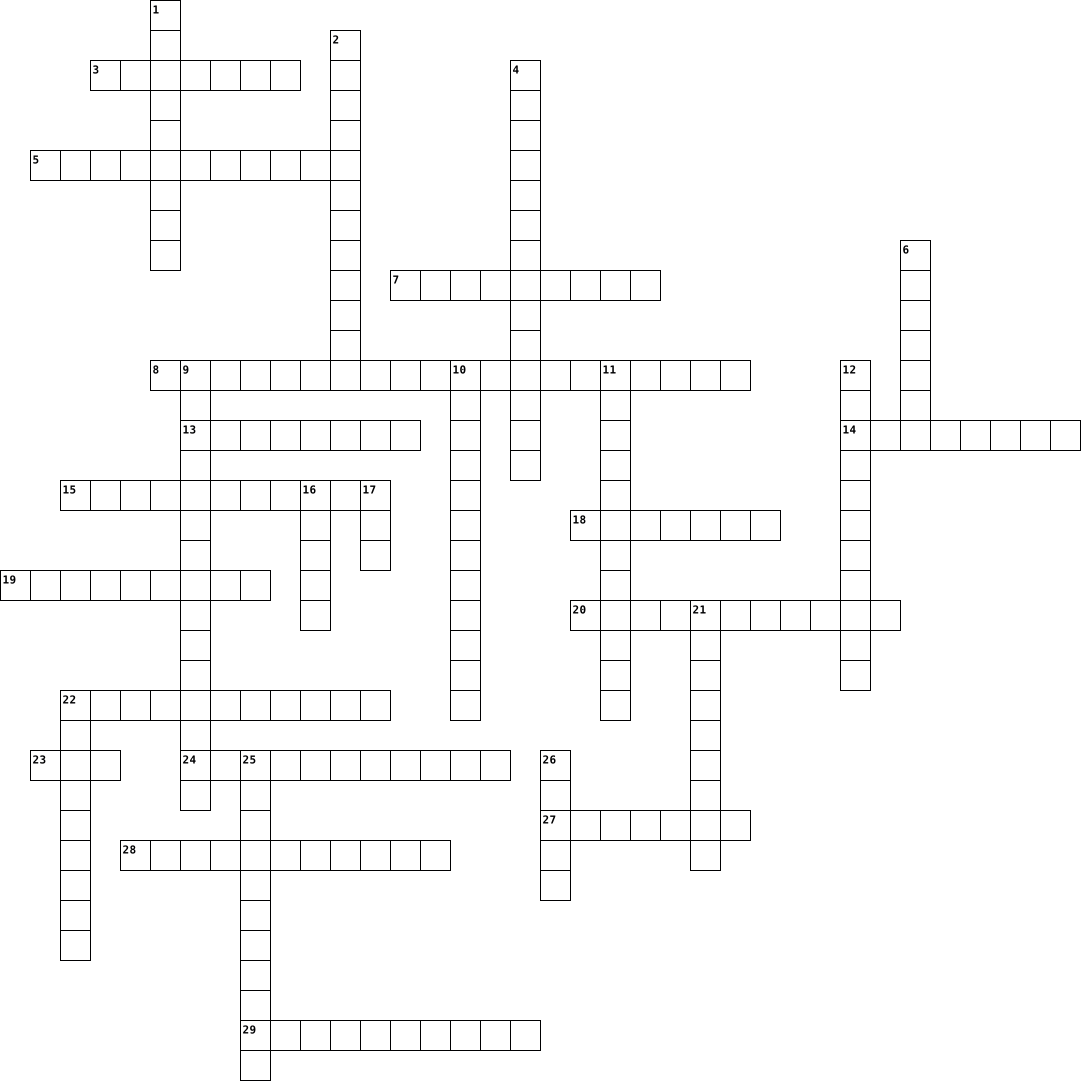
Across
- stores food and water
- fear of water
- any number of organized of specialized structures within a cell
- transports materials in and out
- supports and protects cells
- takes care of waste “cleaner”
- make up nucleotides
- with oxygen
- Proteins
- doesn’t have a membrane and is a single celled organism
- where photosynthesis takes place
- carries energy in the cell and provides fuel for cell activities
- store information
- large molecules that are made of smaller molecules called amino acid
- water loving
- has a cell membrane and is multicellular
Down
- makes ribosomes
- “Powerhouse of the cell”
- process of using sunlight to make food
- directs cell activities and contains genetic material
- surrounds nucleus
- molecules made up of sugars
- outer cell that controls movement in and out of the cell
- package proteins
- the smallest basic unit of life
- makes up genes
- without oxygen
- Jelly like substance and is where all cell activity takes place
- in nucleus and made of DNA
- a fat molecule that have similar properties
30 Clues: Proteins • with oxygen • water loving • fear of water • makes up genes • without oxygen • makes ribosomes • package proteins • surrounds nucleus • store information • make up nucleotides • stores food and water • “Powerhouse of the cell” • in nucleus and made of DNA • molecules made up of sugars • supports and protects cells • takes care of waste “cleaner” • transports materials in and out • ...
climate change 2023-03-20

Across
- underwater current fueled by the mixing of warm and cold salt water.
- 16-19th centuries
- absorb and retain carbon dioxide from the atmosphere.
- used by plants in photosynthesis
- where atmospheric carbon dioxide levels have been taken
- adjusting our lives and society to the expected future climate.
- study of intentionally and artificially changing natural processes of the Earth
- dry, less dense, higher up
- the epa was taking steps for carbon pollution restrictions
- permanent layers of ice on land
Down
- strategies are designed to reduce emissions and stabilize the levels of greenhouse gases already in the atmosphere.
- lasted 950-1250 ce, warmth exceeding current temps
- frozen ice that floats on ocean surface
- Earth’s overall surface temperature is lowered enough that glaciers form at the poles and in mountainous areas.
- this process weakened the greenhouse effect
- lower level of this in the Arctic causes warming to take place even faster,
- darker areas on the sun created by intense magnetic fields
- reflective molecules that would be injected into the stratosphere.
- do not change,nitrogen,oxygen,argon
- contains air we breathe and weather
20 Clues: 16-19th centuries • dry, less dense, higher up • permanent layers of ice on land • used by plants in photosynthesis • do not change,nitrogen,oxygen,argon • contains air we breathe and weather • frozen ice that floats on ocean surface • this process weakened the greenhouse effect • lasted 950-1250 ce, warmth exceeding current temps • ...
Climate Change 2023-03-20

Across
- type of greenhouse gases released by human activity
- type of carbon used by plants in photosynthesis
- volcano that erupted in indonesia causing snow to fall in june in north america
- animal population expected to decline by two-thirds by 2050
- planet with a thin atmosphere and no greenhouse effect
- what will occur from ocean levels rising and intrusion of ocean water?
- process in which plants convert carbon dioxide into oxygen
- darker areas on the suns surface
- main proxy
- the thin layer of gases that surround the earth
- period of time where the earths overall surface temp is lowered enough for glaciers to form
Down
- frozen seawater that floats on the oceans surface
- an underwater current fueled by the mixing of warm and cold salt water
- a very dry and less dense layer above the troposphere
- gas released from volcanic eruptions
- permanent layers of ice covering a tract of land
- indirect measurements
- what is increasing worldwide due to melting ice sheets and thermal expansion?
- land and ocean surface temps have done what since the industrial revolution?
- is climate change real?
20 Clues: main proxy • indirect measurements • is climate change real? • darker areas on the suns surface • gas released from volcanic eruptions • type of carbon used by plants in photosynthesis • the thin layer of gases that surround the earth • permanent layers of ice covering a tract of land • frozen seawater that floats on the oceans surface • ...
Midterm Crossword Bonus 2022-12-09

Across
- MOVEMENT TO OR FROM LIGHT
- THE TERM FOR AN ORGANISM THAT MUST CONSUME FOOD
- THE FORCE INSIDE OF A PLANT THAT ALLOWS IT TO BE RIGID
- THE LEVEL OF ENERGY FLOW THAT RECIEVES THE LEAST ENERGY
- SUGAR THAT IS CREATED IN PHOTOSYNTHESIS
- MOVEMENT TO OR FROM GRAVITY
- THE TWO PARTS OF A SINGLE STEP OF A DICHOTOMOUS KEY ARE CALLED A -
- A PART OF AN ORGANISM THAT HELPS THE ANIMAL SURVIVE IS CALLED A _____ ADAPTATION
- TISSUE IS MADE OF THESE
- THE TYPE OF ORGANISM THAT CAN BE FOUND AT ANY STAGE OF A FOOD CHAIN/WEB
- MOST DIVERSE BIOME
Down
- AN ACTION OF AN ORGANISM THAT HELPS THE ANIMAL SURVIVE IS CALLED A ____ ADAPTATION
- TYPE OF CELL WITHOUT A NUCLEUS
- THE LEVEL OF ENERGY FLOW THAT RECIEVES THE MOST ENERGY
- STATE OF CELL THAT DOES NOT HAVE TURGOR PRESSURE
- ORGANS ARE MADE OF THESE
- THE TERM FOR AN ORGANISM THAT CREATES ITS OWN FOOD
- THE MORE BIODIVERSITY THE MORE ___
- THE ORGANELLE THAT CREATES ATP
- THE BYPRODUCT OF PHOTOSYNTHESIS
- STATE OF CELL THAT DOES HAVE TURGOR PRESSURE
21 Clues: MOST DIVERSE BIOME • TISSUE IS MADE OF THESE • ORGANS ARE MADE OF THESE • MOVEMENT TO OR FROM LIGHT • MOVEMENT TO OR FROM GRAVITY • TYPE OF CELL WITHOUT A NUCLEUS • THE ORGANELLE THAT CREATES ATP • THE BYPRODUCT OF PHOTOSYNTHESIS • THE MORE BIODIVERSITY THE MORE ___ • SUGAR THAT IS CREATED IN PHOTOSYNTHESIS • STATE OF CELL THAT DOES HAVE TURGOR PRESSURE • ...
Vocabulary Review: Cells 2023-01-31

Across
- An organism composed of multiple cells
- Plant-like protist, moves with a tail-like flagella, has an eyespot to detect light for photosynthesis
- Genetic material of a cell
- Tough barrier surrounding cell, maintains support and structute
- Membrane-bound structures in a cell with specific tasks
- A cell with no nucleus
- Energy-producing organelle
- Found in plant cells and plant-like cells, used for photosynthesis
- Control center of eukaryotes, holds genetic material
- Takes in excess water, stores materials
- Animal-like protist, travels with pseudopod, "false foot"
- Eukaryote without chloroplasts and a cell wall
Down
- Breaks down materials in a cell; "cleanup crew"
- Gel-like material in a cell; holds organelles in place
- An organism composed of one cell
- A cell with a nucleus
- Live everywhere, prokaryotic, some are helpful or some harmful
- Animal-like protist, most complex, moves with cilia "little fingers"
- Eukaryote with chloroplasts and cell wall
- Plant-like protist, lives in colonies, photosynthesize
- Semi-permeable layer, lets things enter and exit a cell
21 Clues: A cell with a nucleus • A cell with no nucleus • Genetic material of a cell • Energy-producing organelle • An organism composed of one cell • An organism composed of multiple cells • Takes in excess water, stores materials • Eukaryote with chloroplasts and cell wall • Eukaryote without chloroplasts and a cell wall • Breaks down materials in a cell; "cleanup crew" • ...
Fungi and Plant 2023-04-06

Across
- Which root emerges first from the seed?
- Which is the Primary Organ of Photosynthesis in Plants
- Which root emerges from the primary root?
- and…?
- Small reproductive cells that are dispersed by air currents
- It’s reproductive Structures is the visible part of the….?
- Gymnosperms and angiosperms are the two categories for which plant?
- An example for Tab-roots?
- An example of Nonvascular tissue
- Living cells that distribute sugars throughout the plant
- An example for a fibrous root?
Down
- Which has unprotected seeds in cone like structure?
- The second main group of land plants
- Which has the seeds enclosed inside the fruit?
- The two main functions of Fungal Diversity: absorption of nutrients and?
- The second component of the Vascular system
- Kingdom Plantae are able to Synthesize carbohydrates by…?
- The broad groups of Kingdom Plantae are: aquatic-, nonvascular-, and … Plants
- What is an example for gymnosperms?
- What is the zygote called with Respekt to gymnosperms: Conifer …?
- How do you call the plant part which is above the ground?
21 Clues: and…? • An example for Tab-roots? • An example for a fibrous root? • An example of Nonvascular tissue • What is an example for gymnosperms? • The second main group of land plants • Which root emerges first from the seed? • Which root emerges from the primary root? • The second component of the Vascular system • Which has the seeds enclosed inside the fruit? • ...
All about Plants 2020-10-20

Across
- What develops into a fruit after fertilization
- Long tubes which transport water around the plant
- The ovule grows to form a...
- Contains female gametes
- A substance inside Chloroplast
- Jelly-like substance inside a plant cell.
- The stage after fertilization is...
- One of the reactants of photosynthesis
- The outermost part of a plant cell.
- The most colorful part of the flower
- Part of the stamen that supports the anther
Down
- It is needed so that the plant can make proteins
- Helps maintain water balance of a plant cell
- Sugar is stored in the form of...
- Helps to avoid competition between plants
- Sweet, sugary substance at the base of the petals
- Lets substances move in and out of the cell
- Transfer of pollen from anther to stigma
- Leaves under the flower
- Male parts of the flower
- Another product of photosynthesis, not sugar
- Another name for sugar
- Part of a plant cell that serves as the brain
- Supports the stigma of a flower
- Contains male gametes
25 Clues: Contains male gametes • Another name for sugar • Leaves under the flower • Contains female gametes • Male parts of the flower • The ovule grows to form a... • A substance inside Chloroplast • Supports the stigma of a flower • Sugar is stored in the form of... • The stage after fertilization is... • The outermost part of a plant cell. • The most colorful part of the flower • ...
Year 9 2021-06-17

Across
- the variables you keep the same
- the name of middle block of metal in the Periodic table.
- The name of the tube that connects the mouth to the stomach.
- the rows of the Periodic table
- The wave carries the energy in the same direction as it's movement
- This wave can be used to treat cancer
- The type of cells that protect the organs
- the variable that you change
- The name given to the enzyme found in the stomach
- The organ that makes bile
- the variable that you measure
Down
- The green pigment used to collect sunlight
- the columns of the Periodic table
- The name of Group 1 metals
- The chemical process plants do to make their own food.
- The name given to the enzyme found in saliva
- The type of wave used for communication
- The organ where enzymes are made
- The type of EM wave with the lowest frequency
- the name given to the process which produces energy
- The name of the sugar made in photosynthesis
- The correct name for a plant cell where chloroplasts are found
22 Clues: The organ that makes bile • The name of Group 1 metals • the variable that you change • the variable that you measure • the rows of the Periodic table • the variables you keep the same • The organ where enzymes are made • the columns of the Periodic table • This wave can be used to treat cancer • The type of wave used for communication • ...
Cells 2021-08-04
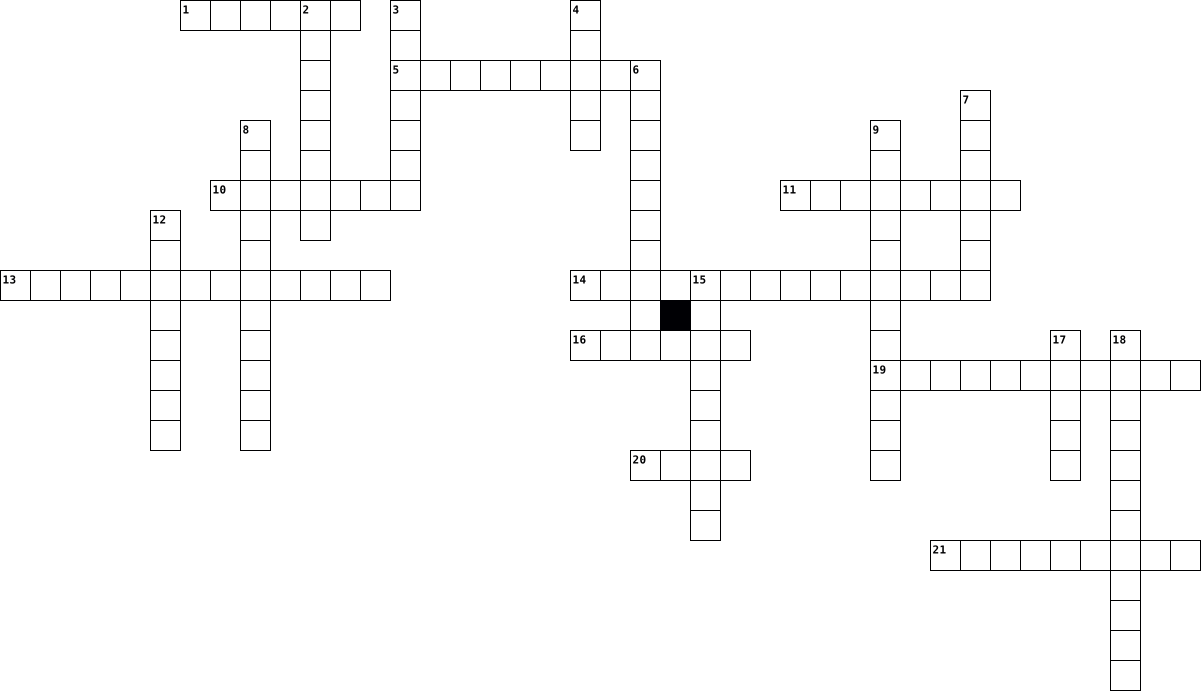
Across
- A waste product of plants
- A jelly like substances which organelles float within
- a simple sugar which is an important energy source
- A support to a cell's membrane
- An element that plants need to live
- the process which plants use sunlight to synthesise nutrients
- strength and vitality required for sustained physical or mental activity
- a process in living organisms involving the production of energy
- Basic building block of all living organisms
- a substance that provides nourishment
Down
- the lens or group of lenses that is closest to the eye in a microscope
- A warehouse of the cell
- The flat plate where the slides are placed for observation on a compound microscope
- A piece of equipment to zoom in on objects
- The 'core' of a cell
- where photosynthesis takes place
- The outside of a cell
- light from the sun
- any of a number of organized or specialized structures within a living cell.
- A compound made of 2 hydrogen atoms and 1 oxygen atom
- The power of a cell
21 Clues: light from the sun • The power of a cell • The 'core' of a cell • The outside of a cell • A warehouse of the cell • A waste product of plants • A support to a cell's membrane • where photosynthesis takes place • An element that plants need to live • a substance that provides nourishment • A piece of equipment to zoom in on objects • Basic building block of all living organisms • ...
Biosphere Crossword 2018-11-20

Across
- needed for a cell process
- makes its own food
- one creature benefits, the other is harmed
- eats plants
- all the things and all the creatures in many species
- the total capacity of an environment
- more creatures join a population
- more creatures leave a population
- process that uses sunlight to make glucose
- the process of generating cell energy
- a building that simulates an environment
- organelles that perform photosynthesis
- both creatures benefit
- produced by a cell process
- the act of hunting animals
- a characteristic an organism has
Down
- a type of organism
- all the creatures in many species
- eats meat
- eats plants and meat
- the first species landing in primary succession
- one creature benefits, the other is unaffected
- eats dead meat
- the powerhouses of cells
- a factor that limits the size of a community in an ecosystem
- how an environment changes over time
- the relationship of two organisms
- has to find food
- all the creatures in one species
29 Clues: eats meat • eats plants • eats dead meat • has to find food • a type of organism • makes its own food • eats plants and meat • both creatures benefit • the powerhouses of cells • needed for a cell process • produced by a cell process • the act of hunting animals • more creatures join a population • all the creatures in one species • a characteristic an organism has • ...
Ecology pt2 2024-03-05

Across
- diffusion of water or another solvent through a semipermeable membrane
- any cycle of matter
- side effect of humans becoming industrialized
- also known as sugar used by plants and animals as fuel
- a form of cellular respiration that does not use oxygen
- how carbon is cycled through an ecosystem
- also known as o2 and is used by most organisms to perform cellular respiration
- also known as co2 and is used by plants
- how nitrogen is cycled through an ecosystem
- how water is used by organisms and cycled through an ecosystem
- higher osmotic pressure than another fluid
Down
- how phosphorous is cycled through an ecosystem
- opposite of photosynthesis
- intermingling of substances by the natural movement of thier particles
- membrane found in all cells that separates it from the outside environment
- having a lower osmotic pressure than a particular fluid
- a form of cellular respiration that uses oxygen
- energy produced through cellular respiration
- a solution having the same osmotic pressure as another solution
- how plants convert co2 into glucose
20 Clues: any cycle of matter • opposite of photosynthesis • how plants convert co2 into glucose • also known as co2 and is used by plants • how carbon is cycled through an ecosystem • higher osmotic pressure than another fluid • how nitrogen is cycled through an ecosystem • energy produced through cellular respiration • side effect of humans becoming industrialized • ...
Plants Crossword 2024-04-13

Across
- - "Shedding leaves seasonally."
- - "Anchor and nutrient-absorbing organ of a plant."
- - "Female reproductive organ of a flower."
- - "Green pigment essential for photosynthesis."
- - "Transfer of pollen from male to female reproductive organs."
- - "Underground storage organ of certain plants."
- - "Male reproductive organ of a flower."
- - "Tissue responsible for transporting nutrients in plants."
- - "Substance added to soil to improve plant growth."
- - "Non-green, spore-producing organisms often associated with plants."
- - "Scientific study of plants."
- - "Plant that completes its life cycle in one year."
- - "Plants with thick, fleshy leaves or stems."
Down
- - "Process of a seed sprouting and growing into a plant."
- - "Process by which plants make food using sunlight."
- - "Plant with a two-year life cycle."
- - "Tissue responsible for transporting water in plants."
- - "Reproductive structure of a plant."
- - "Offspring resulting from the crossbreeding of two different plant varieties."
- - "Retaining leaves throughout the year."
- - "Supporting structure of a plant."
- - "Plant with soft, non-woody stems."
- - "Plant that lives for more than two years."
- - "Photosynthetic organ of a plant."
24 Clues: - "Shedding leaves seasonally." • - "Scientific study of plants." • - "Supporting structure of a plant." • - "Photosynthetic organ of a plant." • - "Plant with a two-year life cycle." • - "Plant with soft, non-woody stems." • - "Reproductive structure of a plant." • - "Male reproductive organ of a flower." • - "Retaining leaves throughout the year." • ...
Science Crossword Puzzle 2024-08-28

Across
- Invisible but ever present, this state of matter fills the air we breathe
- Name of element symbol of Au
- Transforming used materials into new products to minimize waste
- This is produced in yeast during anaerobic respiration
- Name of element symbol of Cu
- A chemical reaction that requires heat
- Discovered the nucleus through gold foil experiment
- The charged particles that result from an atom’s electron exchange
- Negatively charged particle in an atom
- Large ocean wave caused by an earthquake
- Path of planets moving around the sun
- Gradual decomposition of iron, due to oxidation or chemical reaction and usually be seen with red-orange color
Down
- Sugar made by plant during photosynthesis
- A push or pull on an object
- When liquid turns to gas under the sun’s warm embrace
- The measure or rate of change in velocity
- Ice, rock, or a sturdy table- what’s unyielding in its shape?
- Bending of waves due to change in speed
- This apparatus can hold large amounts of liquids, but don’t mistake it for a coffee mug
- Released gas as the product of photosynthesis reaction on plants
20 Clues: A push or pull on an object • Name of element symbol of Au • Name of element symbol of Cu • Path of planets moving around the sun • A chemical reaction that requires heat • Negatively charged particle in an atom • Bending of waves due to change in speed • Large ocean wave caused by an earthquake • Sugar made by plant during photosynthesis • ...
Chapter 3 Review 2024-09-18

Across
- _____trophs are consumers
- hervivores are ______ consumers
- result of too much phosphorus into a pond
- region of our planet where life resides
- producers get their energy from the _____
- an ecosystem's ability to recover from a disturbance
- nonliving factors in an ecosystem
- _____trophs are producers
- water that moves across land into waterways
- evaporation of water from leaves
- waste product in photosynthesis
- transpiration is evaporation from ______
- process that removes CO2 from the atmosphere
Down
- this cycle involves transpiration
- always at the bottom of a food chain
- carbon _____ is a waste product of cellular respiration
- low in oxygen
- complex feeding relationship in an ecosystem is a food _____
- biogeochemical cycle without a gaseous component
- linear sequence of trophic levels is a food _____
- sugar produced by plants and used by the cells of consumers
- transportation of dissolved molecules through the soil via groundwater
- atom that makes up most of fossil fuels
- required by plants
- ______ fixation converts atmospheric N into other compounds
- nitrogen and phosphorus found in this human-made product
- total mass of all living matter in a area
27 Clues: low in oxygen • required by plants • _____trophs are consumers • _____trophs are producers • hervivores are ______ consumers • waste product in photosynthesis • evaporation of water from leaves • this cycle involves transpiration • nonliving factors in an ecosystem • always at the bottom of a food chain • region of our planet where life resides • ...
Unit crossword-Talin Smith 2024-10-31

Across
- Creates its own food
- Energy carrier, converts to ATP
- Process of transporting energy
- A natural light
- A liquid that fuels energy
- The process of plants making energy
- Coloring
- Organelles responsible for photosynthesis
- A invisible gas
- A naturally produced sugar by the body
- Weather/climate affects this which affects the plant
- The process plants use to turn co2 from the air into sugar
- Membrane bound sacs
- A stack inside a chloroplast
- The stage where a organism is dependent on light
Down
- Supporting tissue in organs and a fluid in chloroplasts
- Converts from ADP
- Organisms that produce their own food
- The photosystem that absorbs longer wavelengths
- A molecule used during the light dependent reactions
- Another word for sugar
- Another word for a organism that consumes for energy
- The stage where a organism is independent on light
- The photosystem that absorbs shorter wavelengths
- Serves as the cells primary energy currency
- Green pigment
- Organisms that eat others for energy
- What we breathe everyday
28 Clues: Coloring • Green pigment • A natural light • A invisible gas • Converts from ADP • Membrane bound sacs • Creates its own food • Another word for sugar • What we breathe everyday • A liquid that fuels energy • A stack inside a chloroplast • Process of transporting energy • Energy carrier, converts to ATP • The process of plants making energy • Organisms that eat others for energy • ...
The Martian Movie ~ Physics Focus 2025-01-13

Across
- – The fourth planet from the Sun, known as the "Red Planet."
- – Saving someone from a dangerous situation.
- – A specific task or goal, often used in the context of space exploration.
- – A person trained to travel in space.
- – The path one object takes around another in space.
- – A person who designs, builds, or maintains machines and systems.
- – The force that moves an object forward, such as a rocket.
- – A gas exhaled by humans and used in plants' photosynthesis.
- – Being separated from others, often a challenge in space.
- – A device that produces oxygen.
Down
- – Devices that convert sunlight into energy.
- – The force that pulls objects toward each other.
- – The exchange of information, crucial for teamwork.
- – The act of staying alive, especially in dangerous situations.
- – The force applied to a surface or area.
- – Solving problems with the resources at hand.
- – The process by which plants convert sunlight into energy.
- – A place designed for humans to live in, often in hostile environments.
- – The scientific study of plants.
- – The ability to do work, such as powering equipment or growing food.
20 Clues: – A device that produces oxygen. • – The scientific study of plants. • – A person trained to travel in space. • – The force applied to a surface or area. • – Devices that convert sunlight into energy. • – Saving someone from a dangerous situation. • – Solving problems with the resources at hand. • – The force that pulls objects toward each other. • ...
Gardening 5 2025-02-18

Across
- – A tool used for digging.
- – The green pigment in leaves responsible for photosynthesis.
- – The part of a flower that collects pollen.
- – The green leaf-like parts that protect a flower bud.
- – A tool used for transporting soil, mulch, or plants.
- – A larger tool used for digging and moving soil.
- – A tool for cutting branches and stems.
- – An underground storage organ, like a potato.
- – The part of a stem where leaves or buds grow.
- – A tool used for trimming plants and hedges.
Down
- – A tool used for breaking up soil and weeding.
- Fork – A tool for turning soil and compost.
- – The colorful part of a flower that attracts pollinators.
- – A horizontal underground stem, such as ginger.
- Can – A container used to water plants.
- – A tool used to gather leaves or smooth soil.
- – A small hand tool used for planting and weeding.
- – The underground part of a plant that absorbs nutrients.
- – The part of a plant that performs photosynthesis.
- – The part of a plant that supports leaves and flowers.
20 Clues: – A tool used for digging. • Can – A container used to water plants. • – A tool for cutting branches and stems. • Fork – A tool for turning soil and compost. • – The part of a flower that collects pollen. • – A tool used for trimming plants and hedges. • – A tool used to gather leaves or smooth soil. • – An underground storage organ, like a potato. • ...
Christmas Tree Crossword Puzzle #2 2025-03-29

Across
- Average number of years to get a harvestable Christmas tree
- Structure that regulates temperature and humidity inside to help plants grow
- Placing a seed or seedling in the earth to grow
- Trees produce this for people to breathe
- The state thats the #1 producer of Christmas trees
- A young tree raised from a seed
- Natural environment where organism's live, grow and thrive
- Idea that humans must interact with the environment that ensures there will be enough resources for future generations
- The most fragrant Christmas tree
- The most popular Christmas tree
- Circular decoration made from greenery of a Christmas tree
Down
- Where the seed for a tree comes from
- Process that green plants use sunlight to synthesize foods from CO2 & O2
- Primary source of energy for photosynthesis in green plants
- A woody plant
- The state that's the #2 producer of Christmas trees
- Liquid that is essential for life
- Chemical compound name made from oxygen and carbon
- Process which a seed sprouts and grows
- Upper layer of earth where the tree roots grow
20 Clues: A woody plant • A young tree raised from a seed • The most popular Christmas tree • The most fragrant Christmas tree • Liquid that is essential for life • Where the seed for a tree comes from • Process which a seed sprouts and grows • Trees produce this for people to breathe • Upper layer of earth where the tree roots grow • Placing a seed or seedling in the earth to grow • ...
Crossword project 20 2025-05-15

Across
- The basic structural and functional unit of all living organisms
- A variant form of a gene
- A living Individual
- The process by which organisms produce offspring
- The observable characteristics of an organism
- A group of organs cooperating to perform a major function
- A multicellular organism that conducts photosynthesis
- The process of taking in oxygen and releasing carbon dioxide
- Having the same relative position, structure and evolutionary origin
- symbiosis that is beneficial to both organisms involved
- A multicellular organism that obtains nutrients by feeding on other organisms
- A type of cell division that produces four non-identical daughter cells with half the number of chromosomes
Down
- A change in the DNA sequence
- The process of change in the inherited characteristics of biological populations over successive generations
- A community of living organisms and their abiotic environment
- A non-cellular, infectious agent
- A structure made up of different tissues working together
- A group of similar cells performing a specific function
- The process by which plants convert light energy into chemical energy
- Single-celled microorganisms
20 Clues: A living Individual • A variant form of a gene • A change in the DNA sequence • Single-celled microorganisms • A non-cellular, infectious agent • The observable characteristics of an organism • The process by which organisms produce offspring • A multicellular organism that conducts photosynthesis • A group of similar cells performing a specific function • ...
Biomes! 2025-05-12

Across
- An animal that hunts other animals down for food
- The location that an organism lives
- A species that creates its own food
- A consumer that eats the primary consumers in an ecosystem
- A system of relationships between biotic and abiotic factors
- The organelle that photosynthesis takes place in
- An animal that eats meat only
- An animal that gets hunted by other animals
Down
- The process of breaking down glucose to get energy
- The number of members of a species
- An organism that breaks down organic material
- A non-living thing in an ecosystem
- A consumer that directly eats the producers in an ecosystem
- An animal that eats both plants and meat
- The process that plants use to create glucose
- A species that gets its food by eating other organisms
- A diagram that depicts a line of organisms and how their energy is transferred when they are eaten
- A living thing in an ecosystem
- Interacting species that live in the same location
- The study of ecosystems
- An animal that eats plants only
21 Clues: The study of ecosystems • An animal that eats meat only • A living thing in an ecosystem • An animal that eats plants only • The number of members of a species • A non-living thing in an ecosystem • The location that an organism lives • A species that creates its own food • An animal that eats both plants and meat • An animal that gets hunted by other animals • ...
Duncan Thompson cell review 2025-10-02

Across
- Makes energy, the power plant of the cell.
- The manager, Controls everything
- An open area in a cell that is used like a storage room.
- A tool scientist use to identify organisms.
- Works as a packaging center
- The outer layer of a cell only found in plant cells.
- Organisms with cells that contain a nucleus and organelles.
- When a cell divides into four daughter cells.
- When a cell divides into two identical daughter cells.
- Acts as a recycling center.
Down
- When plants make their own food using the sun.
- They act like conveyor belts
- Build proteins, like an assembly line.
- Genetic code
- The outer barrier of a cell
- gelatinous liquid that fills the inside a cell.
- Single celled prokaryotes similar to bacteria but with unique genetic traits.
- In plant cells and preforms photosynthesis.
- Single celled prokaryotes with cell walls but no nucleus.
- The process when a single cell divides into two or more daughter cells.
- Basic unit of life
21 Clues: Genetic code • Basic unit of life • The outer barrier of a cell • Works as a packaging center • Acts as a recycling center. • They act like conveyor belts • The manager, Controls everything • Build proteins, like an assembly line. • Makes energy, the power plant of the cell. • A tool scientist use to identify organisms. • In plant cells and preforms photosynthesis. • ...
Plant Nutrients! 2026-01-05

Across
- Essential nutrients required only in small quantities
- Symptom of phosphorus deficiency, often seen on stems or leaf undersides
- Nitrogen stimulates this underground growth process
- Portion of a fertilizer representing the nutrients applied
- Symptom of potassium deficiency, especially on older leaves
- Material added to lower soil pH (increase acidity)
- Material used to raise soil pH (increase alkalinity)
- High-energy compound in plant cells requiring phosphorus
- Process aided by potassium, involving energy capture in plants
Down
- Nitrogen is needed for making these building blocks of proteins
- Fertilizer containing nitrogen, phosphorus, and potassium
- Nutrients needed by plants in the largest amounts
- pH range in which most plants grow best (write as 5.5to8)
- Yellowing of green plant parts caused by nitrogen deficiency
- Any material that supplies essential nutrients to plants
- Measure controlling chemical reactions in soil based on hydrogen ions
- Phosphorus is a structural component of these molecules
- Part of fertilizer allowing application but providing no nutrients
- Nitrogen helps plants produce this green pigment for photosynthesis
- Opened and closed with help from potassium
- Procedure used to determine the nutrients present in soil
21 Clues: Opened and closed with help from potassium • Nutrients needed by plants in the largest amounts • Material added to lower soil pH (increase acidity) • Nitrogen stimulates this underground growth process • Material used to raise soil pH (increase alkalinity) • Essential nutrients required only in small quantities • ...
Hon Biology Winter Crossword 2025-12-22

Across
- A chemical equation showing reactants and products
- A molecule that stores genetic information
- A holiday helper of Santa
- A bond formed by the sharing of electrons
- A winter celebration
- The element central to all organic molecules
- A holiday drink often served warm
- A bond formed by the transfer of electrons
- The macromolecule that contains enzymes
- A winter precipitation made of ice crystals
- A large biological molecule such as carbohydrates or proteins
- The basic unit of matter found on the periodic table
- A protein that speeds up chemical reactions
- The cell organelle where cellular respiration occurs
- The macromolecule that provides quick energy
Down
- A winter holiday month
- The process by which cells release energy from glucose
- The process by which plants convert light energy to chemical energy
- A holiday song sung during winter
- The sugar produced during photosynthesis
- A holiday candy shaped like a hook
- A holiday decoration placed at the top of a tree
- A winter holiday figure made of snow
- The process plants use to make glucose using sunlight
- A winter holiday plant with red berries
- The macromolecule that stores long term energy
26 Clues: A winter celebration • A winter holiday month • A holiday helper of Santa • A holiday song sung during winter • A holiday drink often served warm • A holiday candy shaped like a hook • A winter holiday figure made of snow • The macromolecule that contains enzymes • A winter holiday plant with red berries • The sugar produced during photosynthesis • ...
plants 2022-02-08

Across
- plants use to make food during a process called photosynthesis.
- plants food
- big star
- what we give the plants to make food
- 6C02 + H20+sun----> sugar & 02
Down
- name of the process of plant get food
- plants make this as we breath it
- where the chemical reaction takes place
8 Clues: big star • plants food • 6C02 + H20+sun----> sugar & 02 • plants make this as we breath it • what we give the plants to make food • name of the process of plant get food • where the chemical reaction takes place • plants use to make food during a process called photosynthesis.
Chapter 1 – Nutrition in Plants 2021-11-26

Across
- slimy, green patches in ponds or stagnant water bodies
- Organisms who take their food from plant
- Required during photosynthesis
Down
- Green pigment which help plants to make food
- Plants which eat insects are known as ____ plants
- Organisms who prepare their own food
- Example of a parasitic plant
- produced during photosynthesis
8 Clues: Example of a parasitic plant • produced during photosynthesis • Required during photosynthesis • Organisms who prepare their own food • Organisms who take their food from plant • Green pigment which help plants to make food • Plants which eat insects are known as ____ plants • slimy, green patches in ponds or stagnant water bodies
Seeds and Plants 2020-10-10

Across
- Outer covering of the seed, protects the seed.
- Green chemical in leaves.
- Structure of a flowering plant where the seeds are.
- Absorbs sunlight; photosynthesis happens here
- Main part of the seed that provides food.
Down
- Filled with chlorophyll.
- Process of plants making their own food.
- Absorbs water and nutrients for the plant.
8 Clues: Filled with chlorophyll. • Green chemical in leaves. • Process of plants making their own food. • Main part of the seed that provides food. • Absorbs water and nutrients for the plant. • Absorbs sunlight; photosynthesis happens here • Outer covering of the seed, protects the seed. • Structure of a flowering plant where the seeds are.
Photosythesis by bsmiddy 2023-10-19

Across
- Are substances that are formed in a chemical reaction
- Carries the glucose to the plant
- Where photosynthesis occurs
- Distributes water in the plant
Down
- What is needed for a reaction
- Green pigment that allows the plant to absorb sunlight
- Takes in Co2 and releases oxygen
- when plants make their own food
8 Clues: Where photosynthesis occurs • What is needed for a reaction • Distributes water in the plant • when plants make their own food • Takes in Co2 and releases oxygen • Carries the glucose to the plant • Are substances that are formed in a chemical reaction • Green pigment that allows the plant to absorb sunlight
PLANTS 2024-08-23

Across
- Root nodule bacteria of pea plant
- Forms white cottony growth on bread when kept in moisture.
- An insectivorous plant.
- A condition of living together in mutually beneficial relationship.
- Its a product of photosynthesis.
Down
- Producers make food by this process.
- Small aerating pores present in leaf.
- A total stem parasite.
8 Clues: A total stem parasite. • An insectivorous plant. • Its a product of photosynthesis. • Root nodule bacteria of pea plant • Producers make food by this process. • Small aerating pores present in leaf. • Forms white cottony growth on bread when kept in moisture. • A condition of living together in mutually beneficial relationship.
Photosynthesis and Cellular Respiration 2024-10-29

Across
- Formula for cellular Respiration
- Makes the most energy in the cell.
- A Membrane that surrounds the cytoplasm
- A Ridgid outer layer that's found in a plant cell
Down
- Formula for Photosynthesis
- The Process of turning Sunlight into Glucose/Sugar
- Located in plant cells and contains chlorophyll
- Energy
8 Clues: Energy • Formula for Photosynthesis • Formula for cellular Respiration • Makes the most energy in the cell. • A Membrane that surrounds the cytoplasm • Located in plant cells and contains chlorophyll • A Ridgid outer layer that's found in a plant cell • The Process of turning Sunlight into Glucose/Sugar
Vocab 2022-03-09

Across
- process by which a green plant makes its own food
- A green pigment that allows the plant to absorb sunlight
- distributes water to the plant
- needed for a reaction to take place
- lets gases in and out of the leaf
Down
- organelles where photosynthesis takes place
- sugar, what the plant uses for food
- substances formed in a chemical reaction
- when plants make food in the form of sugar and produce oxygen
- carries glucose to the plant
10 Clues: carries glucose to the plant • distributes water to the plant • lets gases in and out of the leaf • sugar, what the plant uses for food • needed for a reaction to take place • substances formed in a chemical reaction • organelles where photosynthesis takes place • process by which a green plant makes its own food • A green pigment that allows the plant to absorb sunlight • ...
bio 2025-01-15

Across
- section of plant cell where photosynthesis occurs
- organism with complex stomach systems
- animal that eats lower sections of grass
- process where plants create energy by splitting oxygen molecules
- a developing approach that identifies multiple species from a mixed sample
Down
- many different organisms in one ecosystem
- the coexistence of multiple competing organisms
- animal that eats top of grasses
- an organisms role in their environment
9 Clues: animal that eats top of grasses • organism with complex stomach systems • an organisms role in their environment • animal that eats lower sections of grass • many different organisms in one ecosystem • the coexistence of multiple competing organisms • section of plant cell where photosynthesis occurs • process where plants create energy by splitting oxygen molecules • ...
Nutrition 2021-08-01

Across
- Coined the term oxygen.
- Rate of photosynthesis is not affected.
Down
- Compound from which oxygen released during photosynthesis.
- Light in which rate of photosynthesis is maximum.
- Connecting link between dark reaction and light reaction.
- Conducted experiment to prove CO2 necessary for sunlight.
6 Clues: Coined the term oxygen. • Rate of photosynthesis is not affected. • Light in which rate of photosynthesis is maximum. • Connecting link between dark reaction and light reaction. • Conducted experiment to prove CO2 necessary for sunlight. • Compound from which oxygen released during photosynthesis.
BIOLOGY 2020-11-04

Across
- brain
- DNA
- habitat
- membrane
- flu
Down
- tissues
- cure
- plants
- cell
9 Clues: DNA • flu • cure • cell • brain • plants • tissues • habitat • membrane
Unit 2 Review Crossword 2022-11-22

Across
- Controls movement into and out of the cell.
- The process that plants use to create energy using sunlight.
- This type of cell is usually regular in shape.
- The part of the microscope you look through.
- This type of cell is usually irregular in shape.
- Where energy is produced through cellular respiration.
Down
- Mostly composed of water. The site of most metabolic reactions in the cell.
- Where DNA is stored.
- The site of photosynthesis.
- The other part of the microscope we always hold when carrying it.
- The process that animal cells rely on create energy
- One part of the microscope we always hold when carrying it.
- A tough and supportive outer layer made of cellulose
- a fluid-filled sac that keeps the cell firm
- We use these to keep a microscope slide in place.
15 Clues: Where DNA is stored. • The site of photosynthesis. • Controls movement into and out of the cell. • a fluid-filled sac that keeps the cell firm • The part of the microscope you look through. • This type of cell is usually regular in shape. • This type of cell is usually irregular in shape. • We use these to keep a microscope slide in place. • ...
Cellular Respiration 2019-02-18

Across
- Krebs Cycle: The Second Stage of Cellular Respiration that occurs in the mitochondria.
- The location of where photosynthesis takes place.
- The source of energy for every living life form on earth.
- The powerhouse of the cell.
- the space between the inner and outer membrane
- A Process where the glucose molecule is split.
- One Word, Breathe.
Down
- The space inside the inner membrane
- A process where light is used and converted to energy.
- Acid: The stuff that makes you feel the burn when working out
- Another word for carbohydrates.
- Occurs when not enough oxygen is present.
- Dioxide: This is what we let out when we "breathe on our plants."
- Transport Chain: The Third Stage of Cellular Respiration that occurs in the inner membrane of the mitochondria.
- If you are thirsty you might want to drink this.
15 Clues: One Word, Breathe. • The powerhouse of the cell. • Another word for carbohydrates. • The space inside the inner membrane • Occurs when not enough oxygen is present. • the space between the inner and outer membrane • A Process where the glucose molecule is split. • If you are thirsty you might want to drink this. • The location of where photosynthesis takes place. • ...
plants 2020-01-28

Across
- the structure that contains the egg cell of a seed plant
- the tip of the pistil
- the long, slender part of the pistil
- the process by which plants use light energy to make food
- the growth of a plant in response to touch
- the rounded base of a pistil
- the growth of a plant in response to light
- the female reproductive structure of a flower
- an organism in its earliest stages of development
Down
- the green pigment in plants that captures light energy for photosynthesis
- the loss of water vapor by plants through stomata
- the leaflife structure that covers and protects the immature flower
- a change in the growth of a plant in response to stimulus
- the growth of a plant in response to gravity
- the male reproductive structure of the flower
15 Clues: the tip of the pistil • the rounded base of a pistil • the long, slender part of the pistil • the growth of a plant in response to touch • the growth of a plant in response to light • the growth of a plant in response to gravity • the male reproductive structure of the flower • the female reproductive structure of a flower • ...
Living Environment - Year Review 2025-03-31

Across
- The cell ______ lets some things in, but keeps other things out.
- This is an action that you WANT to do.
- The powerhouse of the cell, respiration occurs here.
- When your body moves your hand from a hot stove, this is called a ________.
- When cells convert chemical energy to ATP.
- This is the place in a plant cell where photosynthesis occurs.
- this system carries blood around the body.
- this system is made up of your brain and spinal cord.
Down
- This is an animal that eats another animal.
- this system brings food through your body.
- When plant cells convert solar energy to chemical energy.
- Another word for ATP.
- This is an action you do WITHOUT thinking.
- this system is made up of glands.
- This is an animal that is EATEN by another animal.
15 Clues: Another word for ATP. • this system is made up of glands. • This is an action that you WANT to do. • this system brings food through your body. • This is an action you do WITHOUT thinking. • When cells convert chemical energy to ATP. • this system carries blood around the body. • This is an animal that eats another animal. • ...
Plants! Diversity, Structures and Adaptations Puzzle 2025-11-30

Across
- Includes "naked" seeds or cones, such as ginkgos, cycads, gentophytes, and cornifers
- Carnivorous plants digest small animals due to a lack of this supplement in soil
- Found on the bottom of leaves, surrounded by guard cells, and play a role in gas exchange
- Plants need H2O, CO2, and light to complete this necessary process
- The food source of all plants
- Includes liverworts, hornworts and mosses
Down
- The process through which nonvascular plants obtain water
- The light absorbing pigment inside of chloroplast
- The elemental output of plants as a result of photosynthesis
- ___ plants do not have vessels
- Includes flower and fruit plants, such as monocots and eudicots
- The vessel in a vascular plant that carries water
- ___ plants do have vessels
- ___ vascular plants include lycophytes and monilophytes
- The vessel in a vascular plant that carries its food source
15 Clues: ___ plants do have vessels • The food source of all plants • ___ plants do not have vessels • Includes liverworts, hornworts and mosses • The light absorbing pigment inside of chloroplast • The vessel in a vascular plant that carries water • ___ vascular plants include lycophytes and monilophytes • The process through which nonvascular plants obtain water • ...
Matter & Energy in Ecosystems Ch 1 2020-04-04

Across
- an organism that gets energy storage molecules by breaking down dead matter
- all the living and nonliving things interacting in a particular area
- a closed ecosystem made by humans
- an organism that can make its own energy storage molecules
- living things
- an organism that needs to eat in order to get energy storage molecules
- something that is required for a process
- part of a cell where photosynthesis happens
- the ability to make things change or move
- a type of atom that make up energy storage molecules
Down
- a molecule that organisms can use to release the energy needed to survive
- process by which plants and other producers use sunlight to make energy storage molecules
- part of a cell where respiration happens
- matter that makes up the nonliving parts of an ecosystem
- a starting substance in a chemical reaction
- a molecule that organisms can use to release energy
- an ending substance that is made during a chemical reaction
- a set of interacting parts forming a complex whole
18 Clues: living things • a closed ecosystem made by humans • part of a cell where respiration happens • something that is required for a process • the ability to make things change or move • a starting substance in a chemical reaction • part of a cell where photosynthesis happens • a set of interacting parts forming a complex whole • ...
Cells 2021-02-03

Across
- A type of cell without a nucleus e.g. bacteria
- Robert _______ discovered and named the cell
- Small circular DNA strands found in the cytoplasm of bacteria
- This provides the energy for photosynthesis
- Where all the DNA (genetic material) is stored in a cell.
- This is the green pigment found in chloroplasts
- Newton Robert Hooke's greatest rival
- Robert Hooke was looking at this under a microscope when he discovered cells
- A magnifying tool first developed by Galileo Galilei
Down
- A tiny subcellular structure where proteins are synthesised
- These help bacteria move about
- The powerhouse of the cell
- These can be found in the cytoplasm and speed up reactions
- Plant cells carry this out in chloroplasts to make their own food.
- Robert Hooke fed this to insects to stop them running away so he could draw them!
- What are the basic building blocks of all living organisms?
- This type of respiration transforms glucose and oxygen into ENERGY
- All cells have this gel-like substance
18 Clues: The powerhouse of the cell • These help bacteria move about • Newton Robert Hooke's greatest rival • All cells have this gel-like substance • This provides the energy for photosynthesis • Robert _______ discovered and named the cell • A type of cell without a nucleus e.g. bacteria • This is the green pigment found in chloroplasts • ...
Cells and Respiration Crossword 2021-08-04

Across
- Dioxide
- The basic building block of all living things
- any of a number of organized or specialized structures within a living cell
- a colourless, odourless reactive gas
- instrument used for viewing very small objects
- The organelle where photosynthesis occure
- that comes from the sun
- The brain of the cell
- a simple sugar which is an important energy source in living organisms
- Is a chemical reaction that happenes in all living cells
Down
- Where the processes of respiration and energy production occur
- space or vesicle within the cytoplasm of a cell
- Membrane the semipermeable membrane surrounding the cytoplasm of a cell.
- the strength and vitality required for sustained physical or mental activity
- Wall A wall surrounding a cell to give protection
- Is the process by which plants use sunlight
- a raised plate on which a slide or object is placed for examination.
- a colourless, transparent, odourless liquid that forms the seas
- The lens or group of lenses that is closest to the eye in a microscope
- a thick solution that fills each cell and is enclosed by the cell membrane.
20 Clues: Dioxide • The brain of the cell • that comes from the sun • a colourless, odourless reactive gas • The organelle where photosynthesis occure • Is the process by which plants use sunlight • The basic building block of all living things • instrument used for viewing very small objects • space or vesicle within the cytoplasm of a cell • ...
Ecosystem Review 2023-09-10

Across
- needed for all living things to get energy
- a carbohydrate that living things break down to get energy
- process of obtaining the energy living things to grow
- a community of living and nonliving things that work together
- an organism that breaks down dead plant and animal matter and returns the nutrients into the soil
- causes leaves to be green
- a living thing that makes it own food
- the continuing chemical reactions in living things that release and use energy
- the ability to monitor an environment
- an animal that eats organisms that have already died
Down
- the process used by producers to make glucose and oxygen from sunlight, water, and carbon dioxide
- all living and once alive things
- a form of sugar made by plants through the process of photosynthesis
- all living things are made of
- a chemical process done in all living things
- a single living thing
- an organism that gets energy by eating other organisms
- refers to things that have never been alive
18 Clues: a single living thing • causes leaves to be green • all living things are made of • all living and once alive things • a living thing that makes it own food • the ability to monitor an environment • needed for all living things to get energy • refers to things that have never been alive • a chemical process done in all living things • ...
Cells! 2023-11-16

Across
- This is the part of the cell that lets things in or out of the cell.
- This part of the cell does respiration.
- Cell process for movement of things in and out of cells.
- Plant cells use this process to use sunlight to grow.
- Cell division to make egg and sperm cells
- Organism that needs food for energy.
- This part of the cell performs photosynthesis.
Down
- The scientist who came up with the word cells was named Robert ____.
- These are the basic unit of life.
- Cellular ___ is when oxygen and glucose are used to make energy for cells.
- Amoebas, paramecium, and euglena are this type of organism.
- This is the liquid part of the cell.
- This part of the cell is used for storage.
- Cell division for growth and repair.
- This is the control center of the cell.
- An organism that uses sunlight for energy.
- Scientists use this to study cells.
- This provides structure for plant cells and holds them upright.
18 Clues: These are the basic unit of life. • Scientists use this to study cells. • This is the liquid part of the cell. • Cell division for growth and repair. • Organism that needs food for energy. • This is the control center of the cell. • This part of the cell does respiration. • Cell division to make egg and sperm cells • This part of the cell is used for storage. • ...
DNA Crossword 2023-11-13

Across
- organelle in which photosynthesis takes place (gives organism a green color)
- of many cells
- when a mRNA is made from a DNA template of a gene
- the cell juice within which particles and organelles are floating
- membrane a thin skin enclosing the cytoplasm of a cell; controls what goes into and out of the cell
- cells with a nucleus and membrane-bound organelles
- living or once living
- intructions for traits of living things
- particle in a cell that make proteins
- when a mRNA is "read" by a ribosome and a chain of amino acids is created
Down
- cells that do not have membrane-bound organelles or a nucleus
- non-living or never living
- of one cell
- microscopic infectious agent that replicates only inside the living host cells
- organelle that converts pyruvate (broken down glucose) into cellular energy
- protects and stores eukaryotic DNA
- formation of sugar molecules from light energy
- a specialized part or compartment of a cell
18 Clues: of one cell • of many cells • living or once living • non-living or never living • protects and stores eukaryotic DNA • particle in a cell that make proteins • intructions for traits of living things • a specialized part or compartment of a cell • formation of sugar molecules from light energy • when a mRNA is made from a DNA template of a gene • ...
Cellular Energy Crossword Puzzle 2021-12-09

Across
- the anabolic pathway in which light energy is converted to chemical energy
- the anaerobic pathway that follows glycolysis.
- the second important compartment within the chloroplast.
- the catabolic pathway in which organic molecules are broken down to release energy.
- do not require oxygen.
- the series of reactions in which pyruvate is broken down into carbon dioxide.
- the study of the flow and transformation of energy in the universe.
Down
- includes the Krebs cycle and electron transport and is an aerobic process.
- require oxygen.
- flattened, saclike membranes that are arranged in stacks.
- the most important biological molecule that provides chemical energy.
- All of the chemical reactions in a cell.
- an enzyme that converts the remaining ten G3P molecules into 5-carbon molecules called ribulose.
- the process of glucose being broken down in the cytoplasm.
- the electron carrier.
- the ability to do work.
- the stacks of thylakoids.
- the second phase of photosynthesis, which is when energy is stored in organic molecules such as glucose.
18 Clues: require oxygen. • the electron carrier. • do not require oxygen. • the ability to do work. • the stacks of thylakoids. • All of the chemical reactions in a cell. • the anaerobic pathway that follows glycolysis. • the second important compartment within the chloroplast. • flattened, saclike membranes that are arranged in stacks. • ...
CR & P 2022-11-04

Across
- where photosynthesis occurs
- the main type of sugar in the blood and is the major source of energy for the body's cells
- the process by which plants use sunlight, water, and carbon dioxide to create oxygen and energy in the form of sugar.
- an important “energy molecule” found in all life forms.
- membrane-bound cell organelles that generate most of the chemical energy needed to power the cell's biochemical reactions
- A chemical process in which oxygen is used to make energy from carbohydrates
Down
- a process in which one or more substances, also called reactants, are converted to one or more different substances, known as products.
- a group of green pigments used by organisms that convert sunlight into energy via photosynthesis
- a colorless and non-flammable gas at normal temperature and pressure.
- an organism that can produce its own food using light, water, carbon dioxide, or other chemicals.
- an organism that eats other plants or animals for energy and nutrients
- the physical energy resulting from electromagnetic radiation, usually observed as it radiates from a source into the surrounding environment.
- A tiny pore in a plant leaf surrounded by a pair of guard cells that regulate its opening and closure, and serves as the site for gas exchange.
- a substance that is formed as the result of a chemical reaction
- a chemical element with an atomic number of 8
- a substance that enters into and is altered in the course of a chemical reaction.
16 Clues: where photosynthesis occurs • a chemical element with an atomic number of 8 • an important “energy molecule” found in all life forms. • a substance that is formed as the result of a chemical reaction • a colorless and non-flammable gas at normal temperature and pressure. • an organism that eats other plants or animals for energy and nutrients • ...
Forces that Affect Plants 2024-01-30

Across
- The movement of water molecules from a solution with a high concentration of water to a solution with a lower concentration of water
- The water in a cell that helps the structure of a plant, and keeps it growing
- Responsible for the transport and distribution of sugars produced by photosynthesis
Down
- The proccess in which plants use sunlight,water, and carbon dioxide to create food
- The growth or movement response of a plant to light
- Photosynthesis takes place in this part of a plant
- Carries water from the roots to all the other parts of a plant
- Allows gas exchange and regulates water loss
8 Clues: Allows gas exchange and regulates water loss • Photosynthesis takes place in this part of a plant • The growth or movement response of a plant to light • Carries water from the roots to all the other parts of a plant • The water in a cell that helps the structure of a plant, and keeps it growing • ...
cell game 2019-02-17

Across
- small hair-like structure that help the cell move
- package protein and other material from the ER for storage
- small organelle that aid in cell division
- The way cells communicate
- has ribosomes ans make proteins
- a structure that may help a protist sunlight to power photosynthesis
Down
- to determine what enters and leaves
- capture energy from sunlight and convert it into chemical energy in the process of photosynthesis
- the brain of the cell
- help maintain the shape and help with the movement
- used for movement and is a long tail that moves in a circular propeller like motion
- enzymes that synthesize lipids and detoxify drugs
12 Clues: the brain of the cell • The way cells communicate • has ribosomes ans make proteins • to determine what enters and leaves • small organelle that aid in cell division • small hair-like structure that help the cell move • enzymes that synthesize lipids and detoxify drugs • help maintain the shape and help with the movement • ...
Carbohydrates 2017-10-13

Across
- A combination of glucose and another sugar
- The form of carbohydrate that supplies energy to the body
- A carbohydrate with a simple chemical structure
- A carbohydrate with a more complex chemical structure than sugar
- Plant material that cannot be digested
- A sugar made of several monosaccharides
Down
- A substance that tastes sweet but has little or no calories
- A sugar that is extracted from plants
- A sugar with a single chemical unit
- The bodys main source of energy
- The process by which plants use the suns energy to convert carbon dioxide and water into oxygen and glucose
- The green pigment in plants necessary for photosynthesis
12 Clues: The bodys main source of energy • A sugar with a single chemical unit • A sugar that is extracted from plants • Plant material that cannot be digested • A sugar made of several monosaccharides • A combination of glucose and another sugar • A carbohydrate with a simple chemical structure • The green pigment in plants necessary for photosynthesis • ...
Biology Paper 1 - Cells and Cell Structures 2022-05-03

Across
- Cell structure that carries out photosynthesis.
- Contains cell sap and helps to support a plant.
- Made of cellulose and supports the structure of a plant.
- Controls the cell and contains DNA.
- Cell structure that make proteins.
- Ring of DNA found in a bacterium.
Down
- Green pigment in chloroplasts that absorbs light for photosynthesis.
- Where most chemical reactions happen.
- A type of cell that has a nucleus and includes plant and animal cells.
- A type of cell that does not have a nucleus and are usually bacteria.
- Carries out respiration, releasing energy from glucose.
- Controls was goes in and out of a cell.
12 Clues: Ring of DNA found in a bacterium. • Cell structure that make proteins. • Controls the cell and contains DNA. • Where most chemical reactions happen. • Controls was goes in and out of a cell. • Cell structure that carries out photosynthesis. • Contains cell sap and helps to support a plant. • Carries out respiration, releasing energy from glucose. • ...
Cell Functions 2023-05-15

Across
- Molecule that provides energy to organisms
- A small unit with three main parts: the membrane, nucleus, and cytoplasm.
- Organelle where cellular respiration takes place
- A green pigment in plants responsible for capturing light
- Organelle where photosynthesis occurs
Down
- The process by which green plants use sunlight to create food with carbon dioxide and water
- Name of the cycle for light-independent reactions
- Means "breaking of sugar" and is the first stage of cellular respiration
- Fluid-filled space inside the chloroplast
- Light dependent reactions occur here
- Broken down during light-dependent reactions into oxygen, hydrogen, and electrons
- Finger-like projections with a large surface area in the mitochondrion
12 Clues: Light dependent reactions occur here • Organelle where photosynthesis occurs • Fluid-filled space inside the chloroplast • Molecule that provides energy to organisms • Organelle where cellular respiration takes place • Name of the cycle for light-independent reactions • A green pigment in plants responsible for capturing light • ...
Crossword on life processes 2024-05-25

Across
- Tiny pores on the surface of leaves
- green pigment in plants that absorbs light energy.
- Initial stage of cellular respiration where glucose is broken down in the cytoplasm.
- Rhythmic contraction of muscles in the digestive tract to move food along.
- organ responsible for filtering blood and producing urine.
- vascular tissue in plants that conducts water.
- organelle where photosynthesis occurs.
Down
- Long tube where most absorption of nutrients occurs.
- breaks down proteins in the stomach.
- Process of synthesizing organic compounds from carbon dioxide and water using sunlight.
- Process of breaking down food to release energy.
- Structure in roots that increases the surface area for water absorption.
12 Clues: Tiny pores on the surface of leaves • breaks down proteins in the stomach. • organelle where photosynthesis occurs. • vascular tissue in plants that conducts water. • Process of breaking down food to release energy. • green pigment in plants that absorbs light energy. • Long tube where most absorption of nutrients occurs. • ...
Photosynthesis and Cellular respiration 2024-11-21

Across
- cycle Takes place in the stroma and produces glucose from energy carrying molecules
- Saclike membrane containing chlorophyll and is where part of photosynthesis occurs
- Inside the stroma are stacks of thylakoids called
- The process of creating glucose from sunlight, carbon dioxide and water
- Jelly-like fluid in the inner membrane of the mitochondria
- The pigment in photosynthetic organisms that captures sunlight
- Takes place inside the thylakoids and produces energy carrying molecules
Down
- The process of creating ATP from glucose and oxygen
- Double lipid bilayer filled with fluid inside the chloroplast
- Meaning without oxygen
- Meaning with oxygen
- The folds in the inner membrane
12 Clues: Meaning with oxygen • Meaning without oxygen • The folds in the inner membrane • Inside the stroma are stacks of thylakoids called • The process of creating ATP from glucose and oxygen • Jelly-like fluid in the inner membrane of the mitochondria • Double lipid bilayer filled with fluid inside the chloroplast • ...
Photosynthesis and Cellular Respiration 2025-11-06

Across
- Cycle the stage where carbon dioxide is turned into glucose.
- Dioxide A waste product made during cellular respiration.
- The organelle where most of cellular respiration happens.
- The main energy molecule produced by cellular respiration.
- The sugar molecule that cells break down for energy.
Down
- the green pigment in plants that captures sunlight.
- The gas needed to help break down glucose and release energy.
- Energy energy from the sun used to power photosynthesis.
- the cell part (organelle) where photosynthesis happens.
- tiny openings on leaves where gases enter and leave.
- an energy carrier used in making glucose.
- Another product created when glucose is broken down with oxygen.
12 Clues: an energy carrier used in making glucose. • the green pigment in plants that captures sunlight. • tiny openings on leaves where gases enter and leave. • The sugar molecule that cells break down for energy. • the cell part (organelle) where photosynthesis happens. • Energy energy from the sun used to power photosynthesis. • ...
Energy in a cell pt.1 2021-11-15

Across
- A sequence of electron carrier molecules (membrane proteins) that shuttle electrons during the redox reactions that release energy use to make ATP- (aerobic)
- Cycle A series of reactions that take carbon dioxide and turns it into glucose
- The process plants use to trap the sun's energy and build carbohydrates called glucose
- A compound consisting of an adenosine molecule bonded to three phosphate groups, present in all living tissue
- Carrier protein
- Molecules that absorb specific wavelengths of sunlight
- The splitting of water
Down
- A green pigment, present in all green plants, responsible for the absorption of light to provide energy for photosynthesis. Absorbs most wavelengths except for green
- Happens in the stroma and does not require light to occur. Also known as Calvin Cycle
- The series of biochemical reactions in photosynthesis that require energy that is captured by light-absorbing pigments (such as chlorophyll) to be converted into chemical energy in the form of ATP and NADPH.
- Energy Molecule that stores energy for cells in the chemical bonds
11 Clues: Carrier protein • The splitting of water • Molecules that absorb specific wavelengths of sunlight • Energy Molecule that stores energy for cells in the chemical bonds • Cycle A series of reactions that take carbon dioxide and turns it into glucose • Happens in the stroma and does not require light to occur. Also known as Calvin Cycle • ...
Alan Schudel crossword 2021-10-13

Across
- Capture light energy for photosynthesis.
- the separation of a mixture by passing it in solution or suspension through a medium in which the components move at different rates.
- the way living organisms obtain energy.
- Fermentation (makes alcohol)
Down
- makes energy
- get their food from something else (they have to eat it).
- Produces glucose sugar.
- Converts the sun’s energy into chemical energy stored in sugar.
- the pigment that absorbs sunlight.
- the energy that cells make and use available in the cell.
10 Clues: makes energy • Produces glucose sugar. • Fermentation (makes alcohol) • the pigment that absorbs sunlight. • the way living organisms obtain energy. • Capture light energy for photosynthesis. • get their food from something else (they have to eat it). • the energy that cells make and use available in the cell. • ...
Plant puzzle(science ver.) 2022-03-16

Across
- the process of plants getting their energy/food
- the miniature hole CO2, water vapor, or 02 go through
- absorbs other colors of light and reflects green light
- cells that absorb the energy inside of the light
- cells that are inside the stem and transfer energy throughout the plant
Down
- the sugars made from the plant
- the cells on the surface of the leaf
- the cell that keeps most of the chloroplasts
- what we breathe out plants need
- the air by-product from photosynthesis
10 Clues: the sugars made from the plant • what we breathe out plants need • the cells on the surface of the leaf • the air by-product from photosynthesis • the cell that keeps most of the chloroplasts • the process of plants getting their energy/food • cells that absorb the energy inside of the light • the miniature hole CO2, water vapor, or 02 go through • ...
Let's Create 2021-11-25

Across
- the totality of an organism’s chemical reactions
- a multi-step process that requires sunlight, CO2, and H2O
- type of reaction where energy is absorbed
- study of energy transformations that occur in the system
- stage 1 of the reactions of cellular respiration
Down
- study of how energy flows through living organisms
- type of reaction where energy is released
- A cell that reaches the state of equilibrium is __.
- The process of photosynthesis occurs in a middle layer is called __
- is the capacity to cause change
10 Clues: is the capacity to cause change • type of reaction where energy is released • type of reaction where energy is absorbed • the totality of an organism’s chemical reactions • stage 1 of the reactions of cellular respiration • study of how energy flows through living organisms • A cell that reaches the state of equilibrium is __. • ...
Plants 2022-11-03

Across
- The way plants and flowers make more flowers
- An animal that helps a plant make more seeds
- A plant's food is glucose - another word for glucose is
- To make more of something
- The fine, yellow powder made by a flowering plant
Down
- Gas that plants take in for photosynthesis
- This pigment turns a plant green and helps it make food
- Process plants use to make energy from sunlight
- Part of plant that makes food
- Gas plants release into the air
10 Clues: To make more of something • Part of plant that makes food • Gas plants release into the air • Gas that plants take in for photosynthesis • The way plants and flowers make more flowers • An animal that helps a plant make more seeds • Process plants use to make energy from sunlight • The fine, yellow powder made by a flowering plant • ...
Photosynthesis and Cellular Respiration 2023-11-30

Across
- Molecule plants give out and animals take in
- Sugar that animals take in and plants give out
- How animals convert glucose to energy
- How plants create oxygen and glucose
Down
- Organelles found in plants; Converts light energy into energy for the plant
- Clear liquid plants take in and animals give out
- What happens in between plants and animals; energy
- Molecule that plants use to create photosynthesis
- essential for plants to grow; type of energy
- Source of energy for storage in cells
10 Clues: How plants create oxygen and glucose • How animals convert glucose to energy • Source of energy for storage in cells • Molecule plants give out and animals take in • essential for plants to grow; type of energy • Sugar that animals take in and plants give out • Clear liquid plants take in and animals give out • Molecule that plants use to create photosynthesis • ...
CH 1: NUTRITION IN PLANTS 2024-03-08

Across
- bacteria that lives in the roots of legume plants
- Pigment that helps in photosynhtesis.
- Association between algae and fungi
- Mineral that is fulfilled by eating insects by the insectivorous plants
Down
- Association in which two organisms benefit each other and live together.
- Mode of nutrition in which plants feed on dead and decaying matter.
- Gas that is used during photosynthesis.
- Example of parasitic plant
- Gas that is released during the process of photosynthesis.
- Chemical that is used to test the presence of starch in a leaf.
10 Clues: Example of parasitic plant • Association between algae and fungi • Pigment that helps in photosynhtesis. • Gas that is used during photosynthesis. • bacteria that lives in the roots of legume plants • Gas that is released during the process of photosynthesis. • Chemical that is used to test the presence of starch in a leaf. • ...
flow of energy 2023-02-03

Across
- the most accuret way to show the 10% rule
- conversion of sun light to energy
- rule for how much energy goes to the next level
- the levels of an ecosystem
Down
- a way of showing the flow of energy
- organisms that make there on food for energy
- when a plaant consumes enough energy to be fully grown
- best way to show all the relationships in an ecosystem
- the out come of photosynthesis
- organisms that eat other organisms for energy
10 Clues: the levels of an ecosystem • the out come of photosynthesis • conversion of sun light to energy • a way of showing the flow of energy • the most accuret way to show the 10% rule • organisms that make there on food for energy • organisms that eat other organisms for energy • rule for how much energy goes to the next level • ...
Nutrition in Plants 2023-06-21

Across
- Organisms that obtain nutrients by decomposing dead organic matter.
- I am an insectivorous plant.
- A product of photosynthesis.
- A plant that captures and digests insects for nutrients.
Down
- The process by which green plants use sunlight to convert carbon dioxide and water into glucose and oxygen.
- The nucleus is surrounded by a jelly-like substance.
- A green pigment.
- Small openings on the surface of leaves and stems that allow for gas exchange in plants.
- A Win-win situation.
- I am the ultimate source of energy.
10 Clues: A green pigment. • A Win-win situation. • I am an insectivorous plant. • A product of photosynthesis. • I am the ultimate source of energy. • The nucleus is surrounded by a jelly-like substance. • A plant that captures and digests insects for nutrients. • Organisms that obtain nutrients by decomposing dead organic matter. • ...
Crossword Puzzle – Nutrition in Plants and Animals 2025-05-29

Across
- Tiny pores on leaves that allow gas exchange.
- Finger-like projections in the small intestine that absorb nutrients.
- Organisms that feed on dead and decaying matter.
- The process of breaking down food into simpler substances
- The process by which green plants make food using sunlight.
- Proteins that speed up digestion.
Down
- Organisms that depend on other organisms for food.
- Organisms that prepare their own food using sunlight.
- Green pigment in leaves necessary for photosynthesis.
- Cud-chewing animals like cows and buffaloes
10 Clues: Proteins that speed up digestion. • Cud-chewing animals like cows and buffaloes • Tiny pores on leaves that allow gas exchange. • Organisms that feed on dead and decaying matter. • Organisms that depend on other organisms for food. • Organisms that prepare their own food using sunlight. • Green pigment in leaves necessary for photosynthesis. • ...
Emile D, Abby M, Bronte L, Matt S, Sophia S. 2026-03-03

Across
- the biological process that only chlorella uses for energy
- the kind of cell of all three
- what yeast metabolises in the environment for energy
- the cellular structure where chlorella undergoes process of photosynthesis
- the organelle used for paramecium to move around in its environment, through 'whipping'
Down
- the only mobile eukaryote of the three
- the kingdom yeast falls under
- the kingdom both paramecium and chlorella falls under?
- the single cell eukaryote that is also commonly used in baking
- a plant-like algae singular cell eukaryote
10 Clues: the kingdom yeast falls under • the kind of cell of all three • the only mobile eukaryote of the three • a plant-like algae singular cell eukaryote • what yeast metabolises in the environment for energy • the kingdom both paramecium and chlorella falls under? • the biological process that only chlorella uses for energy • ...
MCA prep 1 2021-04-20

Across
- a layer of the earth that has soft rock
- mass divided by volume
- bending of light due to change of medium
- this kind of dating is used when we compare the age of rocks by position
- green plants make this by photosynthesis.
- the green chloroplasts in plants are used to do this process
Down
- bouncing of light
- this kind of cylinder is used to measure the volume of liquid
- this is the remains of plants and animals found under the ground.
- this moon is on between the earth and the sun
- in an experiment, how many variables you can change?
- this is the scale of Mr Moh came up to check what mineral is harder than what mineral
- do plants and animals both respire?
- which core of Earth is liquid, inner or outer?
- rainy day, high pressure or low pressure?
- what kind fluid sink, hot or cold?
16 Clues: bouncing of light • mass divided by volume • what kind fluid sink, hot or cold? • do plants and animals both respire? • a layer of the earth that has soft rock • bending of light due to change of medium • green plants make this by photosynthesis. • rainy day, high pressure or low pressure? • this moon is on between the earth and the sun • ...
Plants Project Choice #4 2020-10-02
Across
- plants that produce for more than two years or growing seasons
- attract insects and birds for pollination
- the process of plants using stored energy
- plants that compete their life cycle in two growing seasons
- produce food for the plant through photosynthesis
- the chemical process converting sunlight into energy and food for the plant
- anchor the plant,absorb water and minerals, and store manufactured foods
- the movement and loss of water through evaporation
- purpose of flowers is to reproduce through the production of seeds
- a mature(fertilized) ovary containing the seed or seeds
Down
- plants that produce seeds not protected by fruits
- plants that compete their life cycle in one growing season (or one year)
- support the leaves, flowers, and fruit
- plants that flower and produce seeds protected by fruit or pods
- plants that have soft stems that are killed by frost
- plants with hardy stems that can survive winter frost
16 Clues: support the leaves, flowers, and fruit • attract insects and birds for pollination • the process of plants using stored energy • plants that produce seeds not protected by fruits • produce food for the plant through photosynthesis • the movement and loss of water through evaporation • plants that have soft stems that are killed by frost • ...
Cell Structures 2020-09-15

Across
- cell part that produces energy from food
- rigid, protective, outer structure around plant, fungi, and some bacterial cells
- a cell that has no nucleus or compartments
- the only living thing that is a prokaryote cell
- organelle in some protists that helps detect light for photosynthesis
- produce proteins
- creates a boundary around all cells; controls what enters and exits
Down
- one or two long hairlike extensions used for movement
- contains DNA in eukaryote cells
- cell part found only in plants and green algae; site of photosynthesis
- organelle in some protists that helps control water balance by expelling excess water
- a cell that has a nucleus and many compartments
- large storage organelle in plants
- extensions of the cell membrane in some protists that contract and relax to propel forward
- small hairlike structures used for movement
- any small membrane bound compartment in a cell
16 Clues: produce proteins • contains DNA in eukaryote cells • large storage organelle in plants • cell part that produces energy from food • a cell that has no nucleus or compartments • small hairlike structures used for movement • any small membrane bound compartment in a cell • a cell that has a nucleus and many compartments • the only living thing that is a prokaryote cell • ...
MR.BURBEL IS COOL 2023-11-17

Across
- Where were the wild fires located?
- If Sydney has five beach balls and has eight oranges what is the ratio of beach balls to oranges?
- A consumer that only eats plants.
- What terrorist group attacked Israel?
- What is the area in Israel where Hamas is located?
- What are the three key words when making a hypothesis?
- How many years did John White leave for?
- What was the first way we learned to make a unit rate?
- What did we use during science to compare the rate of photosynthesis?
Down
- what is the name of the balance that we used during science?
- What type of consumer is an eagle?
- Who made Kryptos?
- Something happening in Israel.
- How many animals should you have on your food web if you want a three?
- What do plants produce during photosynthesis for food?
- What nation attacked Queen Elizabeth?
16 Clues: Who made Kryptos? • Something happening in Israel. • A consumer that only eats plants. • Where were the wild fires located? • What type of consumer is an eagle? • What terrorist group attacked Israel? • What nation attacked Queen Elizabeth? • How many years did John White leave for? • What is the area in Israel where Hamas is located? • ...
C.4 Solar Energy 2023-07-09

Across
- Cell structure which absorbs light in chlorophyll
- Store of solar energy into chemical energy which occurs in chlorophyll
- A mixture of 10% ethanol and 90% gasoline
- Non-acidic component of vegetable oils
- ACIDS Acidic components of vegetable oils
- Hazardous byproducts, such as soot, of the production of methanol from heated wood
- Most common natural pigment
Down
- ___ system of alternating single and double bonds absorbs more visible light
- Cell structure containing chlorophyll which processes absorbed light
- Process of creating cleaner biodiesels from oils by reacting with (m)ethanol
- Much of the sun's useful solar emissions fall into the ___ spectrum
- Energy-storing product of photosynthesis reaction
- The color a substance appears is ___ to the color of the wavelength of light it reflects most abundantly
- Alternative biofuel to ethanol
- Major drawback of organic fuels is the high amount of ___ required in production
- General term for naturally-derived energy source
16 Clues: Most common natural pigment • Alternative biofuel to ethanol • Non-acidic component of vegetable oils • A mixture of 10% ethanol and 90% gasoline • General term for naturally-derived energy source • Cell structure which absorbs light in chlorophyll • Energy-storing product of photosynthesis reaction • ACIDS Acidic components of vegetable oils • ...
Plant Nutrition 2022-05-13

Across
- slimy, green patches in ponds or stagnant water bodies.
- the process by which plants produce food.
- tiny pores present on the surface of leaves for absorption of carbon di oxide.
- green pigment present in leaves.
- organisms that take nutrients from dead and decaying matter.
- product of photosynthesis that is essential for all organisms(hint, its a gas)
- a bacterium that can convert atmospheric nitrogen to usable form.
- components of food necessary for our body.
Down
- organisms that prepare food for themselves from simple substances.
- a plant that is partially autotrophic.
- organisms that take in food prepared by others.
- where are the food factories of plants located.
- ultimate source of energy for all living organisms.
- a relationship where organisms share shelter and food.
- mode of taking food by an organism and its utilization by the body
- a parasitic plant with yellow, slender and branched stem.
16 Clues: green pigment present in leaves. • a plant that is partially autotrophic. • the process by which plants produce food. • components of food necessary for our body. • organisms that take in food prepared by others. • where are the food factories of plants located. • ultimate source of energy for all living organisms. • ...
Carbon Cycle 2022-02-14

Across
- ground
- emits heat
- green
- moves things
- physical 'hit'
- fossil fuels
- co
Down
- plant oxygen
- breathe
- captures co2
10 Clues: co • green • ground • breathe • emits heat • plant oxygen • captures co2 • moves things • fossil fuels • physical 'hit'
Runnymede Ecology 2020-06-11

Across
- relationship where both species benefit
- required along with CO2 for photosynthesis
- produced along with sugar by photosynthesis
- all living things in an ecosystem
- % of energy that typically gets passed along to the next trophic level
- a cycle including evaporation and precipitation
- an organism's roll in an ecosystem
- something that obtains energy by eating other organisms
- _____ level describes an organism's position along a food chain
- layer of gases surrounding Earth
- a food _____ shows one path of energy flow through an ecosystem
- zone around Earth where life can exist
- relationship where organism vie for resources
- James Lovelock's famous hypothesis
- _____ capacity is the maximum sustainable population size
- original source of energy in ecosystems
Down
- tape worms are an example of this
- all of Earth's water
- all the organisms of one species in an ecosystem
- Earth's solid outer layer
- needs to be fixed before most living things can use it
- describes factors that are living things
- describes factors that are non-living
- a cycle is closely linked to climate change
- mass of living organisms in a given area
- green plants for example
26 Clues: all of Earth's water • green plants for example • Earth's solid outer layer • layer of gases surrounding Earth • tape worms are an example of this • all living things in an ecosystem • an organism's roll in an ecosystem • James Lovelock's famous hypothesis • describes factors that are non-living • zone around Earth where life can exist • relationship where both species benefit • ...
Cells and Respiration Crossword 2021-08-10

Across
- The smallest unit of life
- Jelly- like fluid in a cell
- Generates the most chemical energy in a cell
- The air we produce when we breath out
- Vitamin D
- Where do you put your eyes when looking into a microscope?
- A place where the specimen is placed for observations.
- A structure within the cell with a specific function
Down
- The ability to move a object with force
- Something scientists use to make closer observations on specific things
- The process plants produce oxygen and sugar
- Green plant organelle that converts light energy into chemical energy.
- The air we breath
- The boss of the cell
- The action of breathing
- Provides protection and keeps track on what goes in and out of the cell.
- What is the drink we drink the most?
- In animal cells, these get rid of waste while in a plant cell they maintain a water balance
- Plant cells have an outer protective layer on the cell
- What is the sugar that a plant produces while in photosynthesis?
20 Clues: Vitamin D • The air we breath • The boss of the cell • The action of breathing • The smallest unit of life • Jelly- like fluid in a cell • What is the drink we drink the most? • The air we produce when we breath out • The ability to move a object with force • The process plants produce oxygen and sugar • Generates the most chemical energy in a cell • ...
Plants 2022-01-07

Across
- Cells that move water up a plant
- Most common type of plant cell
- These open and close the stomata
- waxy covering on a leaf
- Cells that are found at the root, tip, and stem regions where leaves attach. These cells are undifferentiated and produce new cells.
- Tiny pores in the underside of leaves
- Tendency of water molecules to bond with each other
- Layer of epidermis that contains more stomata Tiny pores in the underside of leaves
- The function of a flower
- Sticky part where pollen sticks to fertilize the flower
- Houses most of the vascular system
- Contain female reproductive cells
Down
- Type of mesophyll cell where photosynthesis occurs
- Contains male reproductive cells
- Plant organ responsible for photosynthesis
- Cells which carry food to all parts of the plant
- Tendency of water molecules to bond with other substances
- Female part of the flower
- Loss of water vapor through leaves
- Male part of the flower
- Anchors the plant to the ground
- Type of mesophyll cell that allows for gas exchange
22 Clues: waxy covering on a leaf • Male part of the flower • The function of a flower • Female part of the flower • Most common type of plant cell • Anchors the plant to the ground • Contains male reproductive cells • Cells that move water up a plant • These open and close the stomata • Contain female reproductive cells • Loss of water vapor through leaves • ...
PLANTS 2022-04-07

Across
- colorful & scent attracts pollenators
- type of stem that runs along the ground
- making food for plants
- roots grow down and stems and leaves grow up
- transports food DOWN from the leaves
- produces pollen
- sticky top where pollen lands
- all male parts of a flower
- stem green and not sturdy
- plants have true roots, stems, and leaves
- plants responding to stimuli
- underground stems
- anchor plant to ground
- tiny holes in leaves used in transpiration
- stem strong & sturdy made of wood
- capture sunlight and does photosynthesis
- one main large root
- several main roots branch off
- transports water up from the roots
Down
- seed with 2 food storage areas
- baby plant
- protects the seed
- when activity of a seed or plants stops
- stalk that holds the anther
- release of water through plant leaves
- all female parts of a flower
- plants no true roots, stems, and leaves
- release of energy from food
- seed with 1 food storage area
- seeds leaves that store food
- stalk down which pollen tube grows
- Contains the ovule
32 Clues: baby plant • produces pollen • protects the seed • underground stems • Contains the ovule • one main large root • making food for plants • anchor plant to ground • stem green and not sturdy • all male parts of a flower • stalk that holds the anther • release of energy from food • all female parts of a flower • seeds leaves that store food • plants responding to stimuli • ...
Infection & immunity & bioenergetics 2018-03-07

Across
- proteins made by white blood cells to destroy pathogens
- when a white blood cell is fused with a cancer cell
- when a disease can be transmitted from one organism to another
- type of barrier for defence that includes bark, waxy cuticle and leaf fall
- how bacteria replicate (two words no space)
- a protein on the surface membrane of a cell that is recognised as self or non self
- a mineral plants need to make chlorophyll
- general term for something that can cause cancer
- type of pathogen that causes measels
- a microorganism that can cause disease
Down
- a test for starch
- useful product of photosynthesis
- a mineral plants need to make proteins
- an apparent link or relationship between two factors
- single celled organism that causes malaria
- something needed for photosynthesis to occur at it's optimum rate (two words no space)
- tumours which are contained in one area and do not invade other tissues
- uncontrolled cell growth
- culture medium used to grow bacteria
- type of pathogen that causes rose black spot
20 Clues: a test for starch • uncontrolled cell growth • useful product of photosynthesis • culture medium used to grow bacteria • type of pathogen that causes measels • a mineral plants need to make proteins • a microorganism that can cause disease • a mineral plants need to make chlorophyll • single celled organism that causes malaria • how bacteria replicate (two words no space) • ...
Crossword Science Competition 2016-08-09

Across
- Turn the screw to see the size with a
- A vesicle within the cytoplasm of a cell
- A type of unit
- Most common type of blood cell
- A plant gets energy
- A cell changes shape when it preexisiting
- A famous Spectacle-maker
- What protects the cell
- A microscope that uses visible light
- A cell that contains sperm
- A science law is called
- The powerhouse of the cell
- What helps you to feel heat
Down
- The act of transporting a cell
- Microscope with two optical systems
- A famous Philosopher
- What's surrounding the cytoplasm of a cell.
- It is in a telescope
- Your blood is made of hundreds of
- When cells are infected with a virus what occurs
- you can put these on your eyes to help you see instead of glasses
- A green cell is a
- Eukaryotes usually contain
- What contain a nucleus and other organelles enclosed within membranes
- It is within the chloroplast
- Apart of a microscope
- Where does photosynthesis take place
- What describes the properties of the cell
28 Clues: A type of unit • A green cell is a • A plant gets energy • A famous Philosopher • It is in a telescope • Apart of a microscope • What protects the cell • A science law is called • A famous Spectacle-maker • Eukaryotes usually contain • A cell that contains sperm • The powerhouse of the cell • What helps you to feel heat • It is within the chloroplast • The act of transporting a cell • ...
Energy Flow Crossword Puzzle 2012-10-31

Across
- an animal that feeds on both animal and vegetable substances
- consumes primary consumers
- the movement of a plant or plant part in response to changes in the temperature
- animals that are hunted and killed
- organisms that make their own food by using photosynthesis
- a linear representation of feeding relationships
- organisms that breaks down and obtains energy from dead organic matter
- mass of a living or dead organic matter without water
Down
- consumes secondary consumers
- the level at which the organism falls in the food chain
- consumes dead organisms
- the increase in fat soluble toxins between trophic levels
- a network of connected food chains that shows all the energy relationships in an ecosystem
- captures energy from the sun and turns it into food
- consumes producers
- a graphical model of energy flow in a community
- the transfer of energy through the levels in a food chain
- the more complex a food web, the more stable it is
- what the energy role is called
- animals that feed on other animals
20 Clues: consumes producers • consumes dead organisms • consumes primary consumers • consumes secondary consumers • what the energy role is called • animals that are hunted and killed • animals that feed on other animals • a graphical model of energy flow in a community • a linear representation of feeding relationships • the more complex a food web, the more stable it is • ...
Vocab Crossword Puzzle 2013-04-19

Across
- Left side of an equation
- Isolation Not mating because of different times of the day/year
- Making New Species
- Structure Similar bones between organisms
- Isolation Not mating because of different courtships
- Holds less energy than ATP
- Change over time
- where photosynthesis happens
- Selection Organism that survives & reproduces the best
- Process of plants making food/sugar
- Selection people choose the organism to breed
- Isolation Not mating because of geographic barriers
- Descent All organisms come from a common ancestor
- Right side of an equation
- ability to survive & reproduce
Down
- Acid Fermentation Muscles way of making a little energy without oxygen
- A pigment inside chloroplast to absorb light
- Makes less energy without oxygen
- Makes ATP with food/glucose & oxygen
- Well supported testable explanation
- Cells making energy without oxygen
- Theory Small prokaryotes living inside bigger cells
- Respiration Mitochondria way to make ATP with oxygen
- Energy all living things use for life
- Fermentation Makes alcohol, carbon dioxide & energy
- Food(biological)
- Inherited trait that helps organisms survive
- Cells making energy with oxygen
28 Clues: Change over time • Food(biological) • Making New Species • Left side of an equation • Right side of an equation • Holds less energy than ATP • where photosynthesis happens • ability to survive & reproduce • Cells making energy with oxygen • Makes less energy without oxygen • Cells making energy without oxygen • Well supported testable explanation • Process of plants making food/sugar • ...
Cells 2015-05-02
Across
- makes up genes
- surrounds nucleus
- package proteins
- supports and protects cells
- large molecules that are made of smaller molecules called amino acid
- process of using sunlight to make food
- outer cell that controls movement in and out of the cell
- doesn’t have a membrane and is a single celled organism
- where photosynthesis takes place
- molecules made up of sugars
- Jelly like substance and is where all cell activity takes place
- “Powerhouse of the cell”
- a fat molecule that have similar properties
- takes care of waste “cleaner”
- has a cell membrane and is multicellular
- makes ribosomes
Down
- acid make up nucleotides
- stores food and water
- transports materials in and out
- store information
- the smallest basic unit of life
- with oxygen
- water loving
- carries energy in the cell and provides fuel for cell activities
- in nucleus and made of DNA
- any number of organized of specialized structures within a cell
- without oxygen
- fear of water
- directs cell activities and contains genetic material
- Proteins
30 Clues: Proteins • with oxygen • water loving • fear of water • makes up genes • without oxygen • makes ribosomes • package proteins • surrounds nucleus • store information • stores food and water • acid make up nucleotides • “Powerhouse of the cell” • in nucleus and made of DNA • supports and protects cells • molecules made up of sugars • takes care of waste “cleaner” • transports materials in and out • ...
Cells CrossWord 2016-10-10

Across
- used for storage of food and waste
- what we measure cells in
- what causes the cell to self destruct
- the magnification object
- jelly like substance
- in a camera or other optical system.
- base of the microscope
- magnifying lenses to examine small objects
- tiny cells that carry oxeygen
- 10x is multiplied by the power of...
- contains chlorophyl,photosynthesis
- a device for varying the effective aperture of the
- exist at or from an earlier time
- a protective barrier around the cell
Down
- reproduction of cells
- found in cells chloroplast
- keeps substance in the cell
- matter by a living cell by invagination of
- 0.000000001 m
- invention of the first optical telescope
- a cell in plants
- a statment about the function of a cell
- lens that is closest to the eye
- invented the microsope
- the glass you see through
- power house of cell
- building block of life
- male reproductive cell
- membrane to form a vacuole.
- control what happens in the cell
- cell send messages to the brain
31 Clues: 0.000000001 m • a cell in plants • power house of cell • jelly like substance • reproduction of cells • base of the microscope • invented the microsope • building block of life • male reproductive cell • what we measure cells in • the magnification object • the glass you see through • found in cells chloroplast • keeps substance in the cell • membrane to form a vacuole. • ...
Grade 9 Biology 2023-11-11

Across
- Thread-like structures in fungus
- A sweet sugary substance produced in flowers
- This become a fruit after fertilisation
- The outside of a bean
- One example of a decomposer
- This solution is used to test for starch
- A place where an organism lives
- Plants store glucose in this form
- Microscopic, floating animals
- The name of a young plant
- Plants can _____ if they don't get enough water
- A plant that grows where people don't want it
Down
- This is formed when the nuclei of two gametes fuse together
- Where pollen is made in a flower
- These always contain seeds
- Where photosynthesis happens in a plant cell
- An animal that eats plants
- A female part of a flower
- An animal that eats other animals
- A mineral salt needed for making proteins in plants
- A mineral salt needed for making chlorophyll
- Where you would find the female gametes in a flower
- Plants make this carbohydrate during photosynthesis
- A plant that germinates, grows and dies in less than a year
- The male parts of a flower
25 Clues: The outside of a bean • A female part of a flower • The name of a young plant • These always contain seeds • An animal that eats plants • The male parts of a flower • One example of a decomposer • Microscopic, floating animals • A place where an organism lives • Where pollen is made in a flower • Thread-like structures in fungus • An animal that eats other animals • ...
Food Nutrition Crossword Puzzle 2023-11-21

Across
- sugar that is extracted from plants and used to sweeten food
- dissolves in water and passes easily into the bloodstream during digestion
- carbohydrate with a simple chemical structure
- green pigment in plants, necessary for photosynthesis
- food that contains nine essential amino acids
- getting enough water to meet all the body's needs
- the body's main source of energy
- form of carbohydrate that supplies energy to the body
- increase LDL cholesterol levels and lower HDL cholesterol levels
- vegetable from the cabbage family
- fat like substance in cells that is needed for many body processes
Down
- plant material that can't be digested
- poisoning from too much of a substance
- process by which plants use the sun's energy to convert carbon dioxide and water into oxygen and gluclose
- fat protein unit
- substance that tastes sweet but has few or no calories
- condition in which the body has too little water
- turns vegetable oils into solids
- basic building block of fat
- substances that protect cells and the immune system from damage by harmful chemicals
20 Clues: fat protein unit • basic building block of fat • the body's main source of energy • turns vegetable oils into solids • vegetable from the cabbage family • plant material that can't be digested • poisoning from too much of a substance • carbohydrate with a simple chemical structure • food that contains nine essential amino acids • ...
Biology Midterm Review: Molecules and Cells 2024-01-10

Across
- G1, S, G2 and M
- The cell cycle produces more cells for repair and ______
- Amino acids or monosaccharides
- Monomer of a lipid
- Proteins that speed up chemical reactions
- Transfers energy from glucose to ATP
- Energy-carrying molecule in a cell
- A product of photosynthesis
- Element that is the backbone of biological molecules
- Stage of the cell cycle when DNA is replicated
- Division of the nucleus and the chromosomes
- Maintenance of stable internal conditions
- Structures in the cell's nucleus made of protein and DNA
Down
- A product of cellular respiration
- ATP releases energy when it loses this
- Source of fast energy
- Converts light energy to chemical energy in glucose
- Molecules that store genetic information
- Uses energy to move materials across the cell membrane
- Examples include osmsosis and diffusion
- Division of the cytoplasm
- Monomer of a protein
- Organelle that produces glucose
- Cell structure that breaks down waste materials
- Hydrophobic biological molecules
- Organelle that performs cellular respiration
- Site of protein synthesis
27 Clues: G1, S, G2 and M • Monomer of a lipid • Monomer of a protein • Source of fast energy • Division of the cytoplasm • Site of protein synthesis • A product of photosynthesis • Amino acids or monosaccharides • Organelle that produces glucose • Hydrophobic biological molecules • A product of cellular respiration • Energy-carrying molecule in a cell • Transfers energy from glucose to ATP • ...
Living Environment 2022-06-13

Across
- alive
- large molecules composed of amino acids
- produces eggs
- fusion of gametes
- cell with 23 chromosomes in humans
- organism that recycles nutrients
- hormone produced by the pancreas, lowers blood sugar levels
- type of cell division that produces genetically unique gametes
- cell with 46 chromosomes in humans
- organ that pumps blood throughout the body
- powerhouse of the cell
- species change over time due to natural selection
- selectively permeable barrier to the cell
- a photosynthetic organism
- movement of molecules across a membrane down a concentration gradient
Down
- a group of cells of the same type, makes up organs
- non-living
- organelle responsible for performing photosynthesis
- organelle that holds DNA
- product of fertilization
- type of cell division that produces identical cells
- cellular energy, produced in the mitochondria
- input for cellular respiration
- site of protein synthesis in the cell
- male gamete
- an organism that obtains nutrients from the environment
- water and carbon dioxide converted to glucose and oxygen, uses sunlight
- organism that feeds on producers
- where the embryo grows and develops
29 Clues: alive • non-living • male gamete • produces eggs • fusion of gametes • powerhouse of the cell • organelle that holds DNA • product of fertilization • a photosynthetic organism • input for cellular respiration • organism that recycles nutrients • organism that feeds on producers • cell with 23 chromosomes in humans • cell with 46 chromosomes in humans • where the embryo grows and develops • ...
Ecology Part 2 2023-03-03

Across
- The tissue that carries sugar from the leaves throughout a tree to its roots.
- Diffusion of WATER across the plasma membrane from high to low concentrations.
- A symbiotic association between plant roots and fungi
- The first trophic level in a food chain.
- Large particles are brought into the cell.
- A product of photosynthesis; the main type of sugar in human blood.
- Water fearing.
- The process by which plants use sunlight, water, and carbon dioxide to create oxygen & glucose (a sugar).
- Movement of SUBSTANCES across the plasma membrane from high to low concentrations.
Down
- An organism that produces its own food.
- Water moves in the cell; the cell bursts.
- A homogeneous mixture of two or more substances.
- A substance that dissolves into the solvent.
- Internal equilibrium.
- Water moves out of the cell; the cell shrinks.
- The tube through which water & minerals move up a tree.
- A substance that other materials dissolve to form a solution.
- Larger particles leave the cell.
- Watering loving.
- Cell maintains equilibrium; no net movement.
20 Clues: Water fearing. • Watering loving. • Internal equilibrium. • Larger particles leave the cell. • An organism that produces its own food. • The first trophic level in a food chain. • Water moves in the cell; the cell bursts. • Large particles are brought into the cell. • A substance that dissolves into the solvent. • Cell maintains equilibrium; no net movement. • ...
Fungi and Plant 2023-04-06

Across
- Which root emerges first from the seed?
- Which is the Primary Organ of Photosynthesis in Plants
- Which root emerges from the primary root?
- and…?
- Small reproductive cells that are dispersed by air currents
- It’s reproductive Structures is the visible part of the….?
- Gymnosperms and angiosperms are the two categories for which plant?
- An example for Tab-roots?
- An example of Nonvascular tissue
- Living cells that distribute sugars throughout the plant
- An example for a fibrous root?
Down
- Which has unprotected seeds in cone like structure?
- The second main group of land plants
- Which has the seeds enclosed inside the fruit?
- The two main functions of Fungal Diversity: absorption of nutrients and?
- The second component of the Vascular system
- Kingdom Plantae are able to Synthesize carbohydrates by…?
- The broad groups of Kingdom Plantae are: aquatic-, nonvascular-, and … Plants
- What is an example for gymnosperms?
- What is the zygote called with Respekt to gymnosperms: Conifer …?
- How do you call the plant part which is above the ground?
21 Clues: and…? • An example for Tab-roots? • An example for a fibrous root? • An example of Nonvascular tissue • What is an example for gymnosperms? • The second main group of land plants • Which root emerges first from the seed? • Which root emerges from the primary root? • The second component of the Vascular system • Which has the seeds enclosed inside the fruit? • ...
Plant Structure and Function 2024-03-22

Across
- supports height of plant and contains conducting tissue
- increases surface area for roots
- Protects the growing tip of the root
- hormone that promotes side bud growth
- live several years and reproduce a lot
- life cycle in one growing season
- promotes seed germination
- movement of nutrients from one part of the plant to another
- plants response to light (auxin)
- seasonal patterns of flowering, growth, and development
- plants response to touch
- primary place for photosynthesis and gas exchange for a plant
- above ground part of plant that keeps leaves and flowers off ground
Down
- plants response to gravity
- increases stem and root width
- releasing water via the stomates
- hormone that promotes cell elongation
- conducts the by-products out of the plant
- conducts the water up the plant via capillary action
- this layer of epidermis that covers the plant
- where photosynthesis happens, storage, support
- life cycle in two growing seasons
- active area of growth in plant concerned with height
- anchors the plant, stores food, conducts raw materials from soil to plant
- promotes fruit ripening (gas)
25 Clues: plants response to touch • promotes seed germination • plants response to gravity • increases stem and root width • promotes fruit ripening (gas) • increases surface area for roots • releasing water via the stomates • life cycle in one growing season • plants response to light (auxin) • life cycle in two growing seasons • Protects the growing tip of the root • ...
Biology Mock exam TRIO 2024-07-04

Across
- Sugar used in respiration.
- Plant cell that transports sucrose.
- Hormone released when blood sugar is high.
- The bottom chambers of the heart.
- Supplies blood to the right atrium.
- Molecule made of a single subunit eg glucose
- Brings the impulse to the effector.
- Travels along neurones.
- Plant cell that transports water.
- Monomer from which proteins are made.
- Part of a cell where DNA is stored.
- Site of aerobic respiration in a cell.
- Speeds up the rate of chemical reactions.
- Turns blue/black in the presence of starch.
Down
- Green pigment that absorbs light energy for photosynthesis.
- Oxygen binding pigment found in red blood cells.
- Molecule that fits into the active site of an enzyme.
- Neurone found in the spinal cord.
- Polymer of glucose found in cells.
- Transmits the impulse from a receptor to the spinal cord.
- Automatic response to a stimulus.
- The release of water vapour from the leaves of a plant.
- Polymer of glucose formed in response to insulin.
- The diffusion of water.
- Gas released by photosynthesis
25 Clues: Travels along neurones. • The diffusion of water. • Sugar used in respiration. • Gas released by photosynthesis • Neurone found in the spinal cord. • The bottom chambers of the heart. • Automatic response to a stimulus. • Plant cell that transports water. • Polymer of glucose found in cells. • Plant cell that transports sucrose. • Supplies blood to the right atrium. • ...
Biology 2024-07-29

Across
- used to help chemical reactions take place
- controls what happens in the cell and stores information in the DNA
- eating too much
- lack of iron
- system different organs working together to perform similar function
- where the chemical reactions take place
- gives body energy
- eating too little
- processes food eaten in the mouth
- process by which plants make their own food
Down
- when substances move from high concentration to low concentration
- cells of the same type carrying out the same function
- controls what enters and leaves the cell
- helps undigested food pass quickly through the gut
- used to help make bones strong and help blood carry oxygen
- contains chlorophyll and site of photosynthesis
- used for growth
- release energy from food by aerobic respiration
- provides support and inflates the cell
- different types of tissue performing similar functions
- dissolves chemicals so that chemical reactions can take place
- gives body energy and can be stored
- gives rigid support to cell and made from cellulose
- lack of vitamin C
24 Clues: lack of iron • eating too much • used for growth • gives body energy • eating too little • lack of vitamin C • processes food eaten in the mouth • gives body energy and can be stored • provides support and inflates the cell • where the chemical reactions take place • controls what enters and leaves the cell • used to help chemical reactions take place • ...
Nutrient Cycles 2023-04-21

Across
- In the Phosphorus Cycle, phosphorus moves between the soil and this
- Higher organisms use nitrogen to make this
- This can directly use nitrogen in our atmosphere
- Phosphorus is contained in these
- This effect is caused by too much CO2 in the atmosphere
- Animals use this in the process of respiration to make more CO2
- Animal waste is returned to this
- A source of phosphorus in water comes from this
- Plants use this in photosynthesis to make sugar and oxygen
- Phosphorus in soils can be washed away into these
- Animals and plants cannot directly use all the nitrogen found in this
Down
- Products rich in nitrogen
- The process plants use to make sugar and oxygen
- Too much phosphorus in water leads to this
- Our atmosphere is 78% of this
- This is not found in the free state of nature
- This is the main regulator of CO2 in the atmosphere because CO2 dissolves easily in it
- An important chemical made up of Phosphorus
- This is a natural source for CO2
- These eat plants containing nitrogen
20 Clues: Products rich in nitrogen • Our atmosphere is 78% of this • Phosphorus is contained in these • This is a natural source for CO2 • Animal waste is returned to this • These eat plants containing nitrogen • Higher organisms use nitrogen to make this • Too much phosphorus in water leads to this • An important chemical made up of Phosphorus • ...
Nutrient Cycles 2023-04-21

Across
- what us the main regulator of CO2 in the atmosphere
- basins some phosphorus in soil is washed away into
- animal waste decay by the action of bacteria creates
- this kind of bacteria in the soil can break down the ammonia in the form of
- huge deposits of of carbon were stored as plants and animals that are what
- gases deposits are burned as fossil fuels which include
- plants use CO2 in the process of what
- What percentage is of the atmosphere is nirtogen gas
- phosphorus in water
- higher organisms use nitrogen to make what
- too much CO2 me all the atmosphere may be responsible for what effect
- plants and animals cannot use nitrogen found directly here
Down
- too much phosphorus in water causes plants too
- humans add this with bad nitrogen in it, hurting the atmosphere
- phosphorus is mostly found in
- natural source for CO2
- it is a essential for life
- animals use this to make more CO2
- plants use what in the process of photosynthesis
- animal waste decay by the action of bacteria, which create ammonia and what
20 Clues: phosphorus in water • natural source for CO2 • it is a essential for life • phosphorus is mostly found in • animals use this to make more CO2 • plants use CO2 in the process of what • higher organisms use nitrogen to make what • too much phosphorus in water causes plants too • plants use what in the process of photosynthesis • ...
Cell Structure 2022-04-29

Across
- These cells have a CELLWALL
- Membrane-bound structure found within cells
- complex factories with various parts that work together.
- Oxygen + Glucose -> CO2 + Water + Energy
- CELLS that do not contain a nucleus, have very few organelles, and are small
- Green pigment found within CHLOROPLASTS
- The VACUOLE within plant cells is __________ and there is only one (as opposed to animal cells)
- Contain genes, which are made from DNA
- contains nearly all DNA in eukaryotic CELLS.
- CELLS that contain a NUCLEUS, many organelles, and are large
- Light + CO2 + Water -> Glucose + Oxygen
Down
- Used to release energy during
- These cells may contain VACUOLES, but they are small and temporary
- Selectively permeable barrier of the CELL
- extensive network of filaments in the CYTOPLASM that act as the CELL's skeleton.
- CELLWALL is made from this carbohydrate
- Specialized structures found within CELLs
- These structures absorb light for PHOTOSYNTHESIS
- Non-living material which gives cells structure
- Jelly-like living substance that makes up a CELL
- Contains DNA
- Plant cells are often this shape
- Genes are used to make these
- PROTEINS used to lower the activation energy of reactions in cells
24 Clues: Contains DNA • These cells have a CELLWALL • Genes are used to make these • Used to release energy during • Plant cells are often this shape • Contain genes, which are made from DNA • CELLWALL is made from this carbohydrate • Green pigment found within CHLOROPLASTS • Light + CO2 + Water -> Glucose + Oxygen • Oxygen + Glucose -> CO2 + Water + Energy • ...
Cells Review 2022-09-30

Across
- short for the size of the area under the microscope
- Made of phospholipids. Lets things in and out of the cell.
- structures that perform the same function
- Jelly that fills up the inside of a cell
- structures that come from the same origin
- What we call a group of living things
- A collection of organs that work together
- Tiny cells with no nucleus. Can make you sick.
- Hold water and nutrients inside a cell
- Have cell walls. Do photosynthesis. Are green.
- The basic unit of living things
Down
- What you think will happen in an experiment.
- A collection of the same kind of cell.
- Part of the cell that holds the DNA
- You use one to magnify small things.
- A collection of tissues that performs a function
- Organelles that make energy for the cell
- Do photosynthesis. Plants have them.
- Are decomposers. Have cell walls. Not plants.
- A single celled organism with a nucleus.
- The molecule that gives instructions to the cell
- Plants cells have one, animal cells don't
22 Clues: The basic unit of living things • Part of the cell that holds the DNA • You use one to magnify small things. • Do photosynthesis. Plants have them. • What we call a group of living things • A collection of the same kind of cell. • Hold water and nutrients inside a cell • Organelles that make energy for the cell • Jelly that fills up the inside of a cell • ...
ecosystems and states of matter 2023-05-16

Across
- conversion of liquid or solid into vapor
- laying down of sediment by wind or water
- cell where photosynthesis occurs
- heat energy being transferred between atoms
- living things that produce their own food
- energy that comes from a source and travels at speed of light
- the energy carrier of living things
- community of interacting organisms
- breaks down dead, organic material
- living things
- substance that can flow and has no fixed shape
- solid immediately going into gas
- how hot or cold something is
Down
- non-living things
- water vapor becoming liquid
- pigment in plants that is used to produce carbohydrates
- sugar that gives energy
- things in chloroplast that absorb light
- the process of plants making their energy
- the mass of a substance
- heat being transferred between something warm
- liquid being changed into gas
- liquid being changed into solid through cold
- feed on plants and other animals for energy
- state of matter that has no fixed shape
- solid being changed into a liquid through heat
26 Clues: living things • non-living things • sugar that gives energy • the mass of a substance • water vapor becoming liquid • how hot or cold something is • liquid being changed into gas • cell where photosynthesis occurs • solid immediately going into gas • community of interacting organisms • breaks down dead, organic material • the energy carrier of living things • ...
Cell's and energy transers 2023-10-03

Across
- makes electricity from wind.
- main function is to produce proteins for the rest of the cell.
- the genetic material of the cell.
- a round cell that exclusively has Centrosomes and lysosomes.
- holds the organelles together.
- made when running or other physical activities.
- small organ like structure found in cells.
- gave off by heat lamps.
- provides structural support for the cell.
- what the sun gives off to earth.
- captures light for the cell.
- mechanical to thermal.
- made when something has the ability to move but isn't.
Down
- directly eaten by secondary consumers.
- electric to sound. (Cleans messes.)
- breaks down worn or excess parts in the cell.
- top of the food chain.
- the prey of tertiary consumers.
- is selective when choosing what particles to let into the cell.
- used to power wires and charge phones.
- required for photosynthesis.
- make their own food using photosynthesis.
- created by moving.
- the power-house of the cell.
- mechanical to chemical.
- a rectangular cell that exclusively has chloroplasts and cell wall.
26 Clues: created by moving. • top of the food chain. • mechanical to thermal. • gave off by heat lamps. • mechanical to chemical. • makes electricity from wind. • required for photosynthesis. • the power-house of the cell. • captures light for the cell. • holds the organelles together. • the prey of tertiary consumers. • what the sun gives off to earth. • the genetic material of the cell. • ...
Cell's and energy transers 2023-10-03

Across
- makes electricity from wind.
- main function is to produce proteins for the rest of the cell.
- the genetic material of the cell.
- a round cell that exclusively has Centrosomes and lysosomes.
- holds the organelles together.
- made when running or other physical activities.
- small organ like structure found in cells.
- gave off by heat lamps.
- provides structural support for the cell.
- what the sun gives off to earth.
- captures light for the cell.
- mechanical to thermal.
- made when something has the ability to move but isn't.
Down
- directly eaten by secondary consumers.
- electric to sound. (Cleans messes.)
- breaks down worn or excess parts in the cell.
- top of the food chain.
- the prey of tertiary consumers.
- is selective when choosing what particles to let into the cell.
- used to power wires and charge phones.
- required for photosynthesis.
- make their own food using photosynthesis.
- created by moving.
- the power-house of the cell.
- mechanical to chemical.
- a rectangular cell that exclusively has chloroplasts and cell wall.
26 Clues: created by moving. • top of the food chain. • mechanical to thermal. • gave off by heat lamps. • mechanical to chemical. • makes electricity from wind. • required for photosynthesis. • the power-house of the cell. • captures light for the cell. • holds the organelles together. • the prey of tertiary consumers. • what the sun gives off to earth. • the genetic material of the cell. • ...
Ecosystem 2025-07-08

Across
- Ocean is to salt as river is to
- Urban is to buildings as tundra is to
- This type of pollution kills fish and aquatic life
- The natural home or environment of an organism
- Rainforest is to equator as taiga is to _____
- Process by which green plants make their own food using sunlight
- Type of ecosystem that helps reduce floods in coastal areas
- Sun is to photosynthesis as decomposer is to _______
- The variety of life in the world or in a particular habitat
- Aquatic is to lake as terrestrial is to _______
Down
- Installing solar panels reduces reliance on which ecosystem-disrupting resource?
- Large, dry, and often hot areas with minimal rainfall
- A community of living organisms and their physical environment
- Soil is to earthworm as air is to _______
- Coral reef is to ocean as _______ is to forest
- Green roofs in cities mimic which natural ecosystem?
- A method farmers use to reduce soil erosion and conserve ecosystems
- Predator is to prey as herbivore is to _______
- Roots are to plants as _______ is to fungi
- Forest is to oxygen as desert is to ____
20 Clues: Ocean is to salt as river is to • Urban is to buildings as tundra is to • Forest is to oxygen as desert is to ____ • Soil is to earthworm as air is to _______ • Roots are to plants as _______ is to fungi • Rainforest is to equator as taiga is to _____ • Coral reef is to ocean as _______ is to forest • The natural home or environment of an organism • ...
Organelles and Organs 2025-09-18

Across
- Genetic material stored in the nucleus.
- electrical signals between brain and body.
- A group of similar cells working together (e.g., muscle tissue).
- The smallest unit of life; the basic building block.
- Group of organs working together to perform major jobs (e.g., circulatory system).
- Jelly-like fluid that fills the cell and helps transport materials.
- Shortens to make the body move.
- Organelle in plant cells that captures sunlight for photosynthesis.
Down
- Process in chloroplasts where plants use sunlight to make food.
- Connects body parts (bone, blood, fat).
- Structure made of different tissues working together (e.g., heart, lungs).
- Covers and protects body surfaces (e.g., skin).
- Maintaining a stable internal environment.
- Tiny structure inside a cell with a specific function.
- A complete living thing that can carry out all life processes.
- Control center of the cell that stores DNA.
- Molecules made by ribosomes, needed for growth and repair.
- “Powerhouse” of the cell; converts food into energy.
- Thin outer layer that controls what enters and exits the cell.
- Small structure that builds proteins for growth and repair.
20 Clues: Shortens to make the body move. • Connects body parts (bone, blood, fat). • Genetic material stored in the nucleus. • Maintaining a stable internal environment. • electrical signals between brain and body. • Control center of the cell that stores DNA. • Covers and protects body surfaces (e.g., skin). • The smallest unit of life; the basic building block. • ...
Previous Page 100 of 100