
plants Crossword Puzzles
ss 2025-03-08

Across
- pillow
- vanity
- curtains
- dresser
- blankets
- painting
- vase
- light
- chair
Down
- plants
- wardrobe
- lamp
- bed
- nightstand
- mirror
- alarmclock
16 Clues: bed • lamp • vase • light • chair • pillow • plants • vanity • mirror • dresser • wardrobe • curtains • blankets • painting • nightstand • alarmclock
DOn d0n 2022-03-16

Across
- eyes
- taxes
- bushes
- buses
- wishes
- pieces
- coaches
Down
- boxes
- glasses
- months
- pages
- stamps
- birds
- inches
- rocks
- plants
16 Clues: eyes • boxes • pages • taxes • buses • birds • rocks • months • bushes • stamps • inches • wishes • pieces • plants • glasses • coaches
Spring 2022-03-31
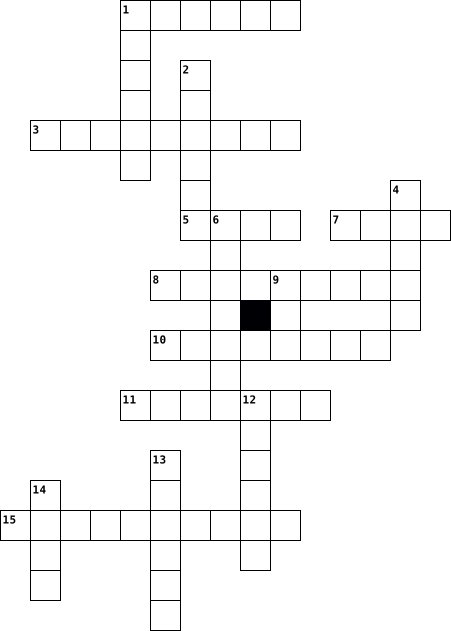
Across
- puddle
- butterfly
- grow
- warm
- rainboots
- umbrella
- flowers
- rainjacket
Down
- plants
- spring
- grass
- rainbow
- bee
- Easter
- season
- rain
16 Clues: bee • grow • warm • rain • grass • puddle • plants • spring • Easter • season • rainbow • flowers • umbrella • butterfly • rainboots • rainjacket
Soil 2023-01-09

Across
- dig
- habitat
- soil
- animals
- minerals
- rocks
- sand
- plants
Down
- clean
- nutrients
- grass
- filter
- water
- leaves
- clay
- deep
16 Clues: dig • soil • clay • sand • deep • clean • grass • water • rocks • filter • leaves • plants • habitat • animals • minerals • nutrients
Classification of Life 2021-10-26

Across
- The kingdom of organisms which consume decaying plants and animals.
- These seeded plants use fruits and seeds to reproduce.
- A living thing.
- The kingdom of ancient bacteria.
- What non-seeded plants use to reproduce.
- The kingdom of organisms that consume other living things to survive.
- The science of living things.
Down
- A common spore producing plant with a stem.
- All living things are sorted into six of these groups.
- Gymnosperms use _________ to reproduce.
- The number of kingdoms.
- The kingdom of typical bacteria.
- The kingdom of single celled plants and animals.
- The kingdom of organisms that photosynthesize to make their own food.
- _________ can be sorted into two groups: seeded and non-seeded.
- Sorting living things into groups.
16 Clues: A living thing. • The number of kingdoms. • The science of living things. • The kingdom of typical bacteria. • The kingdom of ancient bacteria. • Sorting living things into groups. • Gymnosperms use _________ to reproduce. • What non-seeded plants use to reproduce. • A common spore producing plant with a stem. • The kingdom of single celled plants and animals. • ...
Photosynthesis 2023-12-05

Across
- gas taken in and used by plants to make food
- source of energy necessary for plants to make food
- contains chlorophyll
- control the opening and closing of the stomata
- energy from the Sun is converted into a useable form
- pigment that makes leaves green
- gas released by plants
- pores on the leaf which allow gas exchange
Down
- process in which plants produce food
- single-cell, plant like organism
- transports water and nutrients from the roots to the leaves
- food produced by plants
- transports food from the leaves to the rest of the plant
- part of the plant where most of the food-making occur
- form of energy used to begin photosynthesis
15 Clues: contains chlorophyll • gas released by plants • food produced by plants • pigment that makes leaves green • single-cell, plant like organism • process in which plants produce food • pores on the leaf which allow gas exchange • form of energy used to begin photosynthesis • gas taken in and used by plants to make food • control the opening and closing of the stomata • ...
Energy Transfer in Ecosystems 2024-04-18

Across
- What plants are the base of in any ecosystem
- The process by which animals turn oxygen into carbon dioxide
- The process by which plants make their own food
- Animals that consume both plants & meat
- Primary source of energy for most ecosystems
- What animals take in from the air
- What plants take in from the air
- One thing animals require energy for
- What animals obtain from the food they eat
Down
- Animals that only consume meat
- Organism that gains energy from eating other animals
- The part of the plant where photosynthesis takes place
- How food is broken down in a animals body
- Organism that makes its own food
- Animals that only consume plants
15 Clues: Animals that only consume meat • Organism that makes its own food • Animals that only consume plants • What plants take in from the air • What animals take in from the air • One thing animals require energy for • Animals that consume both plants & meat • How food is broken down in a animals body • What animals obtain from the food they eat • ...
Plants! Diversity, Structures, and Adaptations Crossword 2025-11-29

Across
- Flowering plants with seeds enclosed in fruit
- Seedless vascular plants with fronds
- Gymnosperm with cones, like a pine tree
- Green pigment in chloroplasts that captures light
- "Naked seed" plants like conifers
- Leaf pores for gas exchange in photosynthesis
- Plants like mosses that lack true vascular tissue
Down
- Tissue that carries sugars from leaves to the rest of the plant
- Type of plant with xylem and phloem for transport
- Angiosperm with two seed leaves, like roses
- Nonvascular plant group including mosses
- Angiosperm with one seed leaf, like grasses
- Tree with root adaptations for salty, flooded habitats
- Small, moisture-loving bryophytes without true roots
- Tissue that transports water upward in plants
15 Clues: "Naked seed" plants like conifers • Seedless vascular plants with fronds • Gymnosperm with cones, like a pine tree • Nonvascular plant group including mosses • Angiosperm with two seed leaves, like roses • Angiosperm with one seed leaf, like grasses • Flowering plants with seeds enclosed in fruit • Leaf pores for gas exchange in photosynthesis • ...
Plants Around Us 1 2026-05-22

Across
- The earth where plants grow.
- A tall plant with a trunk and branches.
- The green part of a plant that makes food.
- A baby flower before it opens.
- The colorful part that blooms on plants.
- Light from the sun that helps plants make food.
- A desert plant with spines instead of leaves.
- A tiny beginning of a new plant.
Down
- The part under the soil that drinks water.
- One soft colorful piece of a flower.
- The sweet part of a plant we can eat.
- Soft green plants that cover the ground.
- Plants need this liquid to live and grow.
- A plant that climbs or spreads.
- Holds the plant upright.
15 Clues: Holds the plant upright. • The earth where plants grow. • A baby flower before it opens. • A plant that climbs or spreads. • A tiny beginning of a new plant. • One soft colorful piece of a flower. • The sweet part of a plant we can eat. • A tall plant with a trunk and branches. • Soft green plants that cover the ground. • The colorful part that blooms on plants. • ...
Chapter 12: Intro to plants 2021-01-29

Across
- is a plant that lacks specialized conducting tissues.
- plants have ___ stages in their life cycle
- the pigment that makes plants green and captures energy from the sun for photosynthesis
- Seedless plants reproduce by spreading ______.
- a horizontal, underground stem that produces new leaves, roots, and shoots.
- an example of a nonvascular plant that cover the ground and rocks with a mat of tiny green plants
- the tiny granules that contain male gametophytes of seed plants. This is transferred during pollination.
- a woody, vascular plant that does not have seeds enclosed by a fruit
- a rootlike structure that holds a plant upright
Down
- the structure of a plant cell that contains chlorophyll
- the stored food found in a seed
- is a plant that have specialized conducting tissues that move water and nutrients from one part of the plant to another
- a waxy layer that coats most of the surfaces of plants to keep them from drying out
- the name of the process where plants use energy from sunlight to make food from carbon dioxide and water
- a flowering vascular plant
15 Clues: a flowering vascular plant • the stored food found in a seed • plants have ___ stages in their life cycle • Seedless plants reproduce by spreading ______. • a rootlike structure that holds a plant upright • is a plant that lacks specialized conducting tissues. • the structure of a plant cell that contains chlorophyll • ...
Chapter 7 - Getting to Know Plants 2022-01-23

Across
- What are unwanted plants called as ?
- Water comes out of leaves in the form of vapour by a process called ?
- Plants with weak steam, that take support of other plants and climb up are called as ?
- The part of leaf by which it is attached to the stem is called ?
- The innermost part of flower is called the ?
- The process of a plant to prepare its own food using air, water and sunlight is ?
- Plants with tender and short stem, with less branches are called as ?
Down
- The design made by veins in a leaf is called ?
- Plants with hard, thin stem and branches closer to the ground are called as ?
- The prominent line in the middle of the leaf is ?
- These lines on the leaf are called ?
- Plants with weak stems, that do not stand upright and spread on the ground are called as ?
- Plants that are tall, with thick stems and lot of branches at the top are called as ?
- The broad, green part of the leaf is called ?
- The part of the plant that absorbs water and anchors the plant.
15 Clues: What are unwanted plants called as ? • These lines on the leaf are called ? • The innermost part of flower is called the ? • The broad, green part of the leaf is called ? • The design made by veins in a leaf is called ? • The prominent line in the middle of the leaf is ? • The part of the plant that absorbs water and anchors the plant. • ...
PHOTOSYNTHESIS 2021-02-19

Across
- Raw material of photosynthesis
- Sugar transported through phloem
- An organism that makes its own food
- The opposite of photosynthesis
- CO2 is broken apart and used to make this
- Photosynthesis can only be performed during the ____
- Why many plants are green
- Source of energy for photosynthesis
- Two bean-shaped cells surrounding a stoma
Down
- Where cellular respiration take place in the cell
- Product of photosynthesis
- The tiny holes found on the underside of a leaf
- The color of chloroplast
- Where photosynthesis happens
- Glucose is a type of _______
- The process of plants using sunlight to make foods from carbon dioxide and water
- Part of cell that's involved in protection and structure in plants
- Where photosynthesis takes place in plants
- Part of plant that take water and minerals
- Photosynthesis is a ________ change
20 Clues: The color of chloroplast • Product of photosynthesis • Why many plants are green • Where photosynthesis happens • Glucose is a type of _______ • Raw material of photosynthesis • The opposite of photosynthesis • Sugar transported through phloem • An organism that makes its own food • Photosynthesis is a ________ change • Source of energy for photosynthesis • ...
Bio Ecology 2024-05-31

Across
- eats only animals
- we breath out this gas
- a nutrient necessary for plants to grow
- All living beings on Earth
- Biotic and abiotic factors interacting in an area
- relationship in which both benefit
- These are the producers
- Eats plants and animals
- Fertilizer that comes from organic matter
- process in which plants absorb nitrogen
- many organisms of the same species together
Down
- liquid water becomes water vapor
- nitrogen gas is converted to this in nitrogen fixation
- a predator eats a prey
- mostly found in the atmosphere but we do not breath it.
- relationship in which one organism benefits and the other one is not affected
- water vapor becomes droplets in the clouds
- eats only plants
- Type of fertilizer made in a factory
19 Clues: eats only plants • eats only animals • a predator eats a prey • we breath out this gas • These are the producers • Eats plants and animals • All living beings on Earth • liquid water becomes water vapor • relationship in which both benefit • Type of fertilizer made in a factory • a nutrient necessary for plants to grow • process in which plants absorb nitrogen • ...
Plant nutrition 2022-04-01

Across
- Where gas exchange happens in the leaves.
- A mineral used by plants in the production of Chlorophyll
- The process where oxygen is removed from water due to nitrates.
- A mineral used by plants to help with growth.
- the way plants absorb most of their minerals.
- The way plants move oxygen and carbon dioxide in the leaves.
Down
- A gas used in Photosynthesis
- a special cell that becomes flaccid and turgid depending on the amount of water.
- The second thing plants use glucose for.
- one way glucose made in photosynthesis is used for in plants.
- A mineral used by plants for healthy root growth.
- The energy type used by plants
12 Clues: A gas used in Photosynthesis • The energy type used by plants • The second thing plants use glucose for. • Where gas exchange happens in the leaves. • A mineral used by plants to help with growth. • the way plants absorb most of their minerals. • A mineral used by plants for healthy root growth. • A mineral used by plants in the production of Chlorophyll • ...
Gardening Tools 2024-01-21

Across
- used to weed and cultivate plants and to dig trenches
- used to level and pulverize soil and to remove big pieces of stones from the soil
- it is used to water shrubs and small plants
- used for transporting tools and soil around the garden
- used for digging hard top soil and for digging canal or ditches
- used for watering bigger plants
- used fork to pulverize soil around small plants
- used for digging canals along bed soil
Down
- used for cutting big branches of trees
- used to weed and cultivate soil around bigger plants
- available in different designs, sizes, weights
- used to remove nails and to separate two materials from each other
- used for tilling thick soil
- used for cutting small branches of shrubs
- used to cut big leaves from trees
- used for transferring seedlings
- used for rocky and hard soil
17 Clues: used for tilling thick soil • used for rocky and hard soil • used for transferring seedlings • used for watering bigger plants • used to cut big leaves from trees • used for cutting big branches of trees • used for digging canals along bed soil • used for cutting small branches of shrubs • it is used to water shrubs and small plants • ...
Learning About Plants 2026-04-01

Across
- The green pigment in plants that helps them capture sunlight.
- Nutrients from the soil that plants absorb to help them grow.
- The energy source plants use to power photosynthesis.
- A gas released by plants during photosynthesis that animals need to breathe.
- Flat green structures where most photosynthesis happens.
Down
- Underground structures that anchor a plant and absorb water and minerals.
- What plants produce for themselves during photosynthesis.
- The process plants use to make their own food using sunlight.
- Living things that grow in soil, stay in one place, and make their own food.
- dioxide A gas plants take in from the air to help make food.
- The part of a plant that supports it and carries water and nutrients between roots and leaves.
- A liquid plants absorb through their roots and need for photosynthesis.
12 Clues: The energy source plants use to power photosynthesis. • Flat green structures where most photosynthesis happens. • What plants produce for themselves during photosynthesis. • The process plants use to make their own food using sunlight. • The green pigment in plants that helps them capture sunlight. • dioxide A gas plants take in from the air to help make food. • ...
Characteristics of Plants 2022-06-01

Across
- when a plant grows toward the light
- above-ground stems that grow into new plants
- tiny plants on the edges of a plant's leaves
- when a plant grows in response to water
- when a plant grows in response to gravity
- rigid structure around the cell membrane in a plant
Down
- used for containing water in plants
- word for many cells (plants are this)
- how many life cycles do all plants have
- underground stems that grow into new plants
- what kind of cells do plants have
- when a plant grows in response to a stimulus
12 Clues: what kind of cells do plants have • used for containing water in plants • when a plant grows toward the light • word for many cells (plants are this) • how many life cycles do all plants have • when a plant grows in response to water • when a plant grows in response to gravity • underground stems that grow into new plants • above-ground stems that grow into new plants • ...
Vocabulary Unit 9 2024-05-06

Across
- It's a big problem or a really serious situation. Like when something bad happens and we need to fix it fast.
- That's the stuff we breathe out, and plants breathe it in. It's also one of the gases that make the Earth warm.
- They're like mushrooms and stuff. They're not plants or animals, but they still do their own thing in nature.
- It's like a big tube or pipe that carries stuff, like oil or gas, from one place to another.
- It's when two different living things work together and help each other out, like bees and flowers.
- It's a type of bird of prey, like a hawk or an eagle. They're really good at hunting and have sharp eyes.
- A line-up of who eats who in nature. You know, like plants get eaten by bugs, then the bugs get eaten by birds, and so on.
- The chefs of the food chain because they make their own food, usually through photosynthesis, like plants.
- That's anything that eats something else to live. So, like animals that eat plants or other animals.
- It's like a slimy snail without a shell. They're kind of slow, but they help break down dead plants.
- It's a little bug that chirps at night. You can sometimes find them in your backyard.
Down
- Different types of animals or plants. Like dogs and cats are different ...
- They're like wild dogs that live in some parts of North America. They're pretty smart and can howl really loud.
- Those green slimy stuff you see in ponds or the ocean. They're tiny plants that live in water.
- Big community of living things, plus the places where they live, like forests, rivers, or deserts.
- It's an animal that hunts and eats other animals. Like lions or eagles.
- That's when something is toxic and can make you really sick or even hurt you if you eat it or touch it.
- All the different living things in one place, you know? Like how many types of plants, animals, bugs, and stuff are there.
- That's how living things make more of themselves. Like when a plant grows seeds or animals have babies.
- It's like the seed of an oak tree. Squirrels love to eat them, and they can grow into new trees.
20 Clues: It's an animal that hunts and eats other animals. Like lions or eagles. • Different types of animals or plants. Like dogs and cats are different ... • It's a little bug that chirps at night. You can sometimes find them in your backyard. • It's like a big tube or pipe that carries stuff, like oil or gas, from one place to another. • ...
Bio 2026-04-08

Across
- Tissue that transports water in plants
- Programmed cell death
- Animal that eats meat
- chain Sequence showing energy flow between organisms
- Process plants use to make food using sunlight
- Primary source of energy for plants
Down
- Loss of water vapor from plant leaves
- Animal that eats plants
- Living component of an ecosystem
- Tissue that transports food in plants
- Organism that makes its own food
- Organism that breaks down dead matter
- Non-living environmental factor
13 Clues: Programmed cell death • Animal that eats meat • Animal that eats plants • Non-living environmental factor • Living component of an ecosystem • Organism that makes its own food • Primary source of energy for plants • Loss of water vapor from plant leaves • Tissue that transports food in plants • Organism that breaks down dead matter • Tissue that transports water in plants • ...
Exam Review Crossword 2023-03-19

Across
- the place where the sugars are made and enter the phloem
- this hormone promotes growth, stimulates branch elongation in axillary buds
- located on the epidermis and allow transpiration to occur when open
- the adaptation of angiosperms other than flowers
- what porcupines do to trees and it kills the trees.
- carnivorous plants adapted to receive this element through ingesting insects
- this type of meristem is responsible for primary growth in plants
- transports sugars through the vascular system
- this hormone promotes fruit ripening
Down
- the place on a flower that contains the pollen
- containing two complete sets of chromosomes
- the lateral meristem that produces secondary growth
- the bacteria that turns nitrate back into N2 in the atmosphere
- this fungi only has a symbiotic relationship with legumes
- the first group of plants to evolve
- fungi that has a symbiotic relationship with nearly all plants
- transports water and nutrients through the vascular system
- root hairs are part of this tissue system in plants
18 Clues: the first group of plants to evolve • this hormone promotes fruit ripening • containing two complete sets of chromosomes • transports sugars through the vascular system • the place on a flower that contains the pollen • the adaptation of angiosperms other than flowers • the lateral meristem that produces secondary growth • ...
Agriculture 2026-01-31

Across
- A chemical used to kill or control pests that damage crops.
- A cultivated plant grown for food, fibre, or other uses.
- Land covered with grass and other plants used for grazing animals.
- A plant or animal breed produced by combining different varieties for desirable traits.
- The process where a seed begins to grow into a new plant.
- Farming methods that preserve resources for future use.
- Farm animals raised for food, work, or products like wool.
Down
- The gathering of mature crops from the fields.
- Decomposed organic material used as fertiliser for plants.
- The process of supplying water to crops to help them grow.
- Substances added to soil to provide nutrients for plants.
- A structure used to grow plants in controlled environmental conditions.
- The transfer of pollen to enable plants to produce seeds.
- A farming tool used to turn over soil before planting.
- The top layer of the earth where plants grow.
15 Clues: The top layer of the earth where plants grow. • The gathering of mature crops from the fields. • A farming tool used to turn over soil before planting. • Farming methods that preserve resources for future use. • A cultivated plant grown for food, fibre, or other uses. • Substances added to soil to provide nutrients for plants. • ...
Ecosystems and biomes 2024-11-13

Across
- populations that live together in a defined area
- a community and its abiotic surroundings
- very little precipitation
- a consumer that eats plants and animals
- group of organisms of one kind that live in the same area
- individual living thing
- a consumer that only eats animals
- fairly dry with little trees
- very cold dry land
Down
- an organism that eats and breaks down plants or animal matter
- a large region characterized as having a distinct climate and specific types of plants and animal life
- a consumer that only eats plants
- the study of ecosystems and all of their parts
- eats plants or animals to feed itself
- a living organism that produces its own food
15 Clues: very cold dry land • individual living thing • very little precipitation • fairly dry with little trees • a consumer that only eats plants • a consumer that only eats animals • eats plants or animals to feed itself • a consumer that eats plants and animals • a community and its abiotic surroundings • a living organism that produces its own food • ...
PHOTOSYNTHESIS 2026-03-10

Across
- Process plants use to make their own food
- Tube-like tissues that transport water to leaves
- The kitchen of a plant
- Plants store extra glucose in the form of this substance
- Organelle where photosynthesis takes place
- Gas taken in by plants during photosynthesis
- The Calvin cycle is also called the light-_____ reactions.
- Tiny openings in leaves that allow gas exchange
Down
- Organisms that make their own food using photosynthesis are called _____.
- The green pigment that captures light energy
- Water is split during photosynthesis in a process called _____.
- Sugar produced by photosynthesis
- Gas released by plants as a product of photosynthesis
- The main energy source for photosynthesis
- Water enters plants mainly through the ____.
15 Clues: The kitchen of a plant • Sugar produced by photosynthesis • Process plants use to make their own food • The main energy source for photosynthesis • Organelle where photosynthesis takes place • The green pigment that captures light energy • Water enters plants mainly through the ____. • Gas taken in by plants during photosynthesis • ...
Plant Science 2026-02-10

Across
- female part of a flower
- naked seed
- two cotyledon
- the process of plants using stored energy
- one cotyledon
- the movement and loss of water through evaporation
- plants that complete their life cycle in one year
Down
- the chemical process converting sunlight into energy and food for the plant
- plants that complete their life cycle in two growing seasons
- the plant or plant products are used by humans
- humans use the animal and animal products that feed on plants and plant products
- covered seed
- plants that produce for more than two years or growing seasons
- an embryonic leaf which become the seed leaf
- male part of a flower
15 Clues: naked seed • covered seed • two cotyledon • one cotyledon • male part of a flower • female part of a flower • the process of plants using stored energy • an embryonic leaf which become the seed leaf • the plant or plant products are used by humans • plants that complete their life cycle in one year • the movement and loss of water through evaporation • ...
Forest 2023-06-23

Across
- Colorful and fragrant plants that bloom in various shapes and sizes.
- A cascade of water flowing down from a height, often seen in forested areas.
- Tall plants with a trunk, branches, and leaves, often found in forests.
- Animals that live in their natural habitats, such as deer, rabbits, and squirrels.
- The light and heat from the sun that filters through the forest canopy.
- Feathered creatures that can fly and often sing beautiful songs.
- Staying outdoors overnight in a tent or shelter, often in the forest.
- A natural flowing watercourse, often found in or near forests.
Down
- Small, soft, and green plants that grow on rocks, trees, and the forest floor.
- Small, sweet, and colorful fruits that grow on certain plants in the forest.
- The natural world, including plants, animals, and landscapes.
- A large area of land covered with trees, plants, and wildlife.
- The activity of walking or trekking in nature, usually on trails or paths.
- A path or track that leads through the forest, often used for walking or hiking.
- Various types of mushrooms and other fungal organisms found in the forest.
- Animals and plants that live and grow in their natural habitats.
16 Clues: The natural world, including plants, animals, and landscapes. • A large area of land covered with trees, plants, and wildlife. • A natural flowing watercourse, often found in or near forests. • Animals and plants that live and grow in their natural habitats. • Feathered creatures that can fly and often sing beautiful songs. • ...
young01 2022-11-15

Across
- sand
- animals
- cut down
- safe
- protect
- different
- lay
- hunt
Down
- grass
- plants
- warm
- branches
- mud
- ocean
- hatch
- fast
16 Clues: mud • lay • warm • sand • safe • fast • hunt • grass • ocean • hatch • plants • animals • protect • branches • cut down • different
Plants/Propagation Vocabulary 2024-09-05

Across
- study of plants/plants processes
- plants with bark-like stems
- have flowers for reproduction
- process of increasing plants
- reproduction using leaves, roots, stems
- plants with soft stems
Down
- they make their own food
- completes life in two years
- have cones for reproduction
- lives more than two years
- completes life in one year
- “garden culture”
12 Clues: “garden culture” • plants with soft stems • they make their own food • lives more than two years • completes life in one year • plants with bark-like stems • completes life in two years • have cones for reproduction • process of increasing plants • have flowers for reproduction • study of plants/plants processes • reproduction using leaves, roots, stems
Science choice board 2023-09-20

Across
- Gel like fluid in a cell
- Does photosynthesis in plant cells
- Plants respond to light
- A stimulus from outside an organism
Down
- Powerhouse of the cell
- Plants respond to touch
- Plants respond to water
- An organelle that lets thing in and out
- Water pressure in vacuole of plant cells
- A stimulus that comes from inside an organism
- Stores water
- An organelle that contains DNA
- Plant responding to a stimulus
- Plants respond to gravity
- Wall Keeps the structure of a plant cell
15 Clues: Stores water • Powerhouse of the cell • Plants respond to touch • Plants respond to water • Plants respond to light • Gel like fluid in a cell • Plants respond to gravity • An organelle that contains DNA • Plant responding to a stimulus • Does photosynthesis in plant cells • A stimulus from outside an organism • An organelle that lets thing in and out • ...
Bill Nye Food Web Crossword 2020-09-23

Across
- Organisms that make their own food.
- The end product of photosynthesis.
- Most plants on earth live here.
- Organism that lives in the soil.
- Plants need this for energy.
- Organisms that eat dead material.
Down
- All living things are connected through this.
- Process where plants make sugar.
- Decomposer that lives on the forest floor.
- Plants make this gas.
- Producers that live in the water (Spongebob's enemy)
- All living things depend on these.
- Animals make this gas.
13 Clues: Plants make this gas. • Animals make this gas. • Plants need this for energy. • Most plants on earth live here. • Process where plants make sugar. • Organism that lives in the soil. • Organisms that eat dead material. • The end product of photosynthesis. • All living things depend on these. • Organisms that make their own food. • Decomposer that lives on the forest floor. • ...
FOODS Crossword 2018-09-21

Across
- single glucose units
- green pigment in plants
- carbs made from plants"CHO"
- sugars formed from one and two unit structures
- extracted from plants and used to sweeten foods
- plant material that can't be digested by human enzymes
- main source of energy
Down
- starches are classified as this
- sugars with single unit chemical structures
- substitutes used in place of sugar
- how plants make carbs
- 2 monosaccharides
- when plants combine single glucose units into more complicated structures
13 Clues: 2 monosaccharides • single glucose units • how plants make carbs • main source of energy • green pigment in plants • carbs made from plants"CHO" • starches are classified as this • substitutes used in place of sugar • sugars with single unit chemical structures • sugars formed from one and two unit structures • extracted from plants and used to sweeten foods • ...
Biodiversity Vocab Review 2022-10-18

Across
- Organisms that get energy form eating decaying matter such as dead plants or animals.
- A diagram that shows how energy is passed from one organism to another.
- A very small ecosystem.
- Organisms that use light energy from the sun to make their own food. An example of these are plants.
- The ability to do work.
- Many different species of plants and animals living in one space.
- Something that is not alive an has never been alive.
- Animals that eat both plants and meat.
Down
- Animals that eat only plants.
- Organisms that must eat plants or animals to get energy.
- An ecosystem is a community of living and non-living things that work together in the same location.
- Very large ecosystems with millions of living things.
- Animals that eat only meat.
- Something that is alive now or was alive in the past.
- Medium-Sized ecosystems.
15 Clues: A very small ecosystem. • The ability to do work. • Medium-Sized ecosystems. • Animals that eat only meat. • Animals that eat only plants. • Animals that eat both plants and meat. • Something that is not alive an has never been alive. • Very large ecosystems with millions of living things. • Something that is alive now or was alive in the past. • ...
Crosswrod Puzzle 3 2023-08-14

Across
- ______plant has climbing roots
- it is a winter flower
- Process by which leaves loss water
- Process of making food by plants
- _________ is complex for of sugar stored in different plant parts
- Insectivorous plants are also known as ________
Down
- Landforms higher than plains
- it is an example for fixed water plant
- Flat lands are called _______
- women on her wedding
- Natural _________ is made with dry leaves, egg shells etc..
- Men on his wedding
- Plants that grow on their own
- ________ carry water into the roots
- Leaves make food in the form of simple ______
- Plants that adopted in waterbodies
16 Clues: Men on his wedding • women on her wedding • it is a winter flower • Landforms higher than plains • Flat lands are called _______ • Plants that grow on their own • ______plant has climbing roots • Process of making food by plants • Process by which leaves loss water • Plants that adopted in waterbodies • ________ carry water into the roots • it is an example for fixed water plant • ...
Plants/Propagation Vocabulary 2024-09-05

Across
- they make their own food
- plants with bark-like stems
- “garden culture”
- completes life in two years
- completes life in one year
- process of increasing plants
- have flowers for reproduction
Down
- reproduction using leaves, roots, stems
- lives more than two years
- plants with soft stems
- have cones for reproduction
- study of plants/plants processes
12 Clues: “garden culture” • plants with soft stems • they make their own food • lives more than two years • completes life in one year • have cones for reproduction • plants with bark-like stems • completes life in two years • process of increasing plants • have flowers for reproduction • study of plants/plants processes • reproduction using leaves, roots, stems
Living Things around Us 2020-03-10

Across
- Living things can ___________.
- ___________ have feathers, beaks and wings.
- A ________ usually develops into a fruit.
- ___________ have scales as their outer body covering
- ___________ have moist skins.
- Living things ___________ to changes around them.
- Flowering plants reproduce by ________ .
- Non-flowering plants reproduce by ________ .
- ___________ use gills for breathing in the water.
Down
- Living things need air, ___________ and food to survive.
- Examples of non-flowering plants.
- ___________ have 3 body parts, antenna and 6 legs.
- ___________ give birth to their young alive.
- Living things ___________ to ensure their kinds continue to survive.
- They have different shapes, edges and vein patterns.
- Some are edible while some are not.
- ________ of the plants are usually found underground.
- ________ of the plant is usually found above the ground.
18 Clues: ___________ have moist skins. • Living things can ___________. • Examples of non-flowering plants. • Some are edible while some are not. • Flowering plants reproduce by ________ . • A ________ usually develops into a fruit. • ___________ have feathers, beaks and wings. • ___________ give birth to their young alive. • Non-flowering plants reproduce by ________ . • ...
Natural Resources 2 2022-12-26

Across
- rocks
- non-renewable
- sunlight
- fossil fuels
- animals
- soil
- plants
- water
Down
- renewable
- wind
- habitat
- pollution
- minerals
- air
- solar
- save
16 Clues: air • wind • soil • save • rocks • solar • water • plants • habitat • animals • sunlight • minerals • renewable • pollution • fossil fuels • non-renewable
6th Grade Science Vocabulary 2021-02-12

Across
- sensible use of the earth’s resources to avoid harming the environment
- the animal that gets eaten
- all living things in an area and their habitat
- a consumer that eats plants
- the position of an organism in a community of plants and animals
- a group of the same type of organisms living in an area
- chemical process where plants make their own food
- the interaction of all living things in an area
- living things that eat food
Down
- a consumer that eats meat
- made up of single cells that help in the natural recycling process, a decomposer
- made up of complex cells that help in the natural recycling process, a decomposer
- the relationship between plants and animals in an ecosystem
- _____ web, system of food chains
- recycle matter and energy, keeps the community clean by eating the dead organisms
- _____ chain, the cycle of how each organism gets energy
- consumers that eat both plants and animals
- makes own food, gets energy from the Sun
- factors, living components of an ecosystem
- an animal that eats another animal for food
20 Clues: a consumer that eats meat • the animal that gets eaten • a consumer that eats plants • living things that eat food • _____ web, system of food chains • makes own food, gets energy from the Sun • consumers that eat both plants and animals • factors, living components of an ecosystem • an animal that eats another animal for food • all living things in an area and their habitat • ...
Ecosystems Vocabulary Crossword 2026-02-26

Across
- organisms that can’t produce their food and therefore feed on other organisms.
- photosynthetic pigments that can absorb light energy.
- animals that feed on primary consumers.
- the process where plants are able to manufacture their food.
- light harvesting cellular structures.
- organisms that have both plants and animals in their diet.
- food chains that are linked together.
- organisms that feed on dead plants and animal matter.
- animals that feed on both plants and animals.
Down
- organisms that can produce organic matter from inorganic sources.
- organisms that only eat plants.
- organisms that eat other animals.
- organisms that hunt or gather food from other organisms.
- a level or position of a group of organisms in a food chain, food web, or an ecological pyramid.
- a hierarchy in which organisms in an ecosystem are grouped into trophic levels.
- organisms that have the ability to create their own food from abiotic materials.
- the various trophic levels listed from bottom to top.
- organisms that feed on the primary producers.
- decomposers that specifically fragment to consume their food.
19 Clues: organisms that only eat plants. • organisms that eat other animals. • light harvesting cellular structures. • food chains that are linked together. • animals that feed on primary consumers. • organisms that feed on the primary producers. • animals that feed on both plants and animals. • photosynthetic pigments that can absorb light energy. • ...
vocab 2021-09-30

Across
- an essential nutrient for animals/plants
- the envelope of gas surrounding the earth
- break down organic matter
- stack of thylakoids
- site of the Calvin Cycle
- automatically make their own food
- used to harvest light
Down
- where life exists
- eats only meat
- eats only plants
- total amount of water found on the Earth
- energy plant
- adenosine triphosphate
- takes place in the cytoplasm
- obtain energy by eating other organisms
- solar energy plant
- eats dead matter
- includes the rocks and minerals
- site of light dependent reactions
- eats both plants and meat
20 Clues: energy plant • eats only meat • eats only plants • eats dead matter • where life exists • solar energy plant • stack of thylakoids • used to harvest light • adenosine triphosphate • site of the Calvin Cycle • break down organic matter • eats both plants and meat • takes place in the cytoplasm • includes the rocks and minerals • automatically make their own food • ...
Plant reproduction🌿 2021-08-26

Across
- Greek word that means “ vessel or container”
- part of flower that attracts insects
- single cell
- ovary eventually ends up as this
- bump that sepals come out of
- male cones produce
- cone-bearing plants
- Smaller and fuzzier cones
- tiny part on stamen
- male part of flower
- underneath flower and usually green
Down
- flowering plants
- Tiny grains of pollen contain
- inside the ovules
- plants angiosperms are also called this
- skinny “stick” on flower
- reproductive system of gymnosperm
- word for naked in Greek
- after a single cell divides and develops
- contains two female parts
20 Clues: single cell • flowering plants • inside the ovules • male cones produce • cone-bearing plants • tiny part on stamen • male part of flower • word for naked in Greek • skinny “stick” on flower • Smaller and fuzzier cones • contains two female parts • bump that sepals come out of • Tiny grains of pollen contain • ovary eventually ends up as this • reproductive system of gymnosperm • ...
evolution 2024-04-17

Across
- live in water
- the process in witch a creature witch a stronger trait survives
- the roots of fungi
- one of the first kingdom that was made, survives in extreme environments
- fungi
- some are good some are viruses
- diseases
- produce oxygen
- animals
Down
- archea and bacteria
- over 1,000 new speices are discover every year
- remains of once living creatures
- protective wall plants have
- digging up the remains of once living creatures
- are extremely ressilient animals
- leftovers
- decomposers
- the kingdom of humans
- plants
- the study of unborn children
20 Clues: fungi • plants • animals • diseases • leftovers • decomposers • live in water • produce oxygen • the roots of fungi • archea and bacteria • the kingdom of humans • protective wall plants have • the study of unborn children • some are good some are viruses • remains of once living creatures • are extremely ressilient animals • over 1,000 new speices are discover every year • ...
space 2024-11-27

Across
- space tool for looking at stars
- 8th plants from sun
- natural satellites
- protects from space junk
- Has bright rings
- 1 plants from sun
- what plants do around the sun
- a dwarf planet
- there is less of this on the moon
- coldest planet
- a space com.
Down
- Has liquid H2o on surface
- orbit the sun
- rarely on the surface of earth
- hottest planet
- has a tall mountain
- are on the edge
- found in a belt
- can be artificial or natural
- Gas giant
- lots of system
- the star of our system
22 Clues: Gas giant • a space com. • orbit the sun • hottest planet • a dwarf planet • lots of system • coldest planet • are on the edge • found in a belt • Has bright rings • 1 plants from sun • natural satellites • 8th plants from sun • has a tall mountain • the star of our system • protects from space junk • Has liquid H2o on surface • can be artificial or natural • what plants do around the sun • ...
u8 bio 2025-03-27

Across
- eats dead plants and animals
- steps to show producer to consumer
- eats only animals
- group of organisms, interbreed, produce offspring
- step in ecological pyramid
- all ecosystems and biomes
- one organism feeds on another
- breaks down matter
- nonliving factors
Down
- eats only plants
- living factors
- total amount of living tissue in a tropic level
- all organisms that live in an area& their nonliving environment
- one benefits, one ok
- all food chains in an ecosystem
- diagram of trophic levels
- home of organisms
- eats both plants and animals
- one benefits, ones harmed
- both benefit
20 Clues: both benefit • living factors • eats only plants • eats only animals • home of organisms • nonliving factors • breaks down matter • one benefits, one ok • diagram of trophic levels • all ecosystems and biomes • one benefits, ones harmed • step in ecological pyramid • eats dead plants and animals • eats both plants and animals • one organism feeds on another • all food chains in an ecosystem • ...
Biology Grade 8 2017-08-14

Across
- A group of organisms of the same species.
- Animals who only eat plants for energy.
- ...... is a product of photosynthesis.
- Process through which plants create their own food.
- The study of the interaction between organisms and their environment.
- Biotic factors are also known as ..... factors.
- .......is the sugar produced by plants during photosynthesis.
- Herbivores are ........ consumers.
Down
- ........is a product of cellular respiration.
- Food chains show how ...... is passed on.
- Different land- and water ecosystems.
- Soil, air and temperature are examples of ...... factors.
- Plants get their energy from ..........
- Plants can be defined as ........
14 Clues: Plants can be defined as ........ • Herbivores are ........ consumers. • Different land- and water ecosystems. • ...... is a product of photosynthesis. • Animals who only eat plants for energy. • Plants get their energy from .......... • Food chains show how ...... is passed on. • A group of organisms of the same species. • ........is a product of cellular respiration. • ...
Envoirmental System 2022-10-25

Across
- a plants is an
- when you boil water it
- another word for adapting
- is not alive
- the water outside of a cold water bottle
- eats dead thing
- we eat things to make
- is the second consumer
- is alive
- feeds on dead organic matter
Down
- the third consumer is the
- overpopulation destroys the
- a plant is
- eats plants
- is the first consumer
- eats meat
- eats both plants and meat
- makes its own food
- how much organisms are in a given area
- pyramid shows the flow of consumer
20 Clues: is alive • eats meat • a plant is • eats plants • is not alive • a plants is an • eats dead thing • makes its own food • is the first consumer • we eat things to make • when you boil water it • is the second consumer • the third consumer is the • another word for adapting • eats both plants and meat • overpopulation destroys the • feeds on dead organic matter • pyramid shows the flow of consumer • ...
CONTROL AND COORDINATION IN PLANTS 2020-09-04

Across
- non directional movements
- an example of chemotropism
- hormones secreted by plants
- a gaseous plant hormone
- abscisic acid ________ growth
- family of the touch me not plant
- roots show ________ geotropism
- movement due to gravity
- a plant hormone
- *insert pic*
Down
- directional movement
- hormone in plants that promotes cell div.
- hydrotropism refers to movement wrt
- irreversible increase in weight,hieghtetc
- *insert pic*
- promotes stem elongation in plants
- external disturbance which triggers mov.
- Plant part that shows +ve phototopism
- Movements seen in venus fly trap, pitcher
- another name for mimosa pudica
20 Clues: *insert pic* • *insert pic* • a plant hormone • directional movement • a gaseous plant hormone • movement due to gravity • non directional movements • an example of chemotropism • hormones secreted by plants • abscisic acid ________ growth • roots show ________ geotropism • another name for mimosa pudica • family of the touch me not plant • promotes stem elongation in plants • ...
Adaptation of dolphins crossword puzzle 2025-05-07

Across
- for insulation in cold water
- body shape for efficient movement
- sensory system in some fish
- bladder for buoyancy control
- teeth for catching prey
- aids in floating
- beaks for catching fish
- for swimming
- for underwater breathing
Down
- bodies to navigate tight spaces
- anchor aquatic plants
- feet for propulsion
- outer skin for protection bioluminescence for attracting prey
- to hide from predators
- for grasping prey
- sacs in aquatic plants for buoyancy
- process in aquatic plants
- camouflage technique
- line system for sensing vibrations
19 Clues: for swimming • aids in floating • for grasping prey • feet for propulsion • camouflage technique • anchor aquatic plants • to hide from predators • teeth for catching prey • beaks for catching fish • for underwater breathing • process in aquatic plants • sensory system in some fish • for insulation in cold water • bladder for buoyancy control • bodies to navigate tight spaces • ...
Parts of plants 2025-10-16

Across
- Flowers, Seed in fruits
- The Pretty part of the plant
- Instead of spores
- Instead of seeds
- Mostly ferns
- Has Xylem and Phloem
- Produces cones
Down
- One of the main plants in the Bryophytes categories
- Mostly mosses
- No flowers, seed exposed
- Has veins
- Holds plants in place
- One of the main plants in the Pteridophytes categories
- Things that grow from plants you can eat
14 Clues: Has veins • Mostly ferns • Mostly mosses • Produces cones • Instead of seeds • Instead of spores • Has Xylem and Phloem • Holds plants in place • Flowers, Seed in fruits • No flowers, seed exposed • The Pretty part of the plant • Things that grow from plants you can eat • One of the main plants in the Bryophytes categories • One of the main plants in the Pteridophytes categories
6th Grade Book 3 Lesson 4 2026-02-25

Across
- animals that eat only plants
- kept safe and in good condition
- a tool used to cut or shape wood or stone
- animals that eat only meat
- when a kind of animal is gone forever
- a very large animal that lived long ago
- preserved remains of ancient plants or animals
- the ability to wait calmly
- a rock from space that lands on Earth
Down
- animals that eat plants and meat
- air that feels hot and wet
- to change to survive better
- a tool used to do a special job
- periods of ten years
- easy to break or damage
- a scientist who studies fossils
- a hot place with lots of rain and plants
- something a person is very good at
18 Clues: periods of ten years • easy to break or damage • air that feels hot and wet • animals that eat only meat • the ability to wait calmly • to change to survive better • animals that eat only plants • a tool used to do a special job • kept safe and in good condition • a scientist who studies fossils • animals that eat plants and meat • something a person is very good at • ...
Garden Fun 2026-06-07

Across
- abbr. commonly on bags of fertilizer
- plant sperm, basically
- insects that visit blooms
- describes plants that occur in an area naturally
- pollination method common for squash varieties
- old, non-hybrid plant variety
- famously produces new plants of itself through "runners"
- plant family that includes tomatoes, potatoes, eggplants
Down
- tubers in the morning glory family
- tall, pollinator-loving flowers that also pull contaminants from soil
- plants that come back every year
- ideal time of day to water plants
- creating a clone of an existing plant
- herb well-known for its spreading nature
- one of TN's state wildflowers
- kale, broccoli, brussel sprouts
- climate zone of middle Tennessee
- growing beans adds this crucial nutrient to soil
18 Clues: plant sperm, basically • insects that visit blooms • one of TN's state wildflowers • old, non-hybrid plant variety • kale, broccoli, brussel sprouts • plants that come back every year • climate zone of middle Tennessee • ideal time of day to water plants • tubers in the morning glory family • abbr. commonly on bags of fertilizer • creating a clone of an existing plant • ...
Ecology 2024-10-04

Across
- The Atlantic Ocean belongs in this sphere.
- A complex network of multiple food chains.
- The sun gives this to plants to help them grow.
- The process that allows plants to make their own food.
- Another word for all non-living things on earth.
- Something that breaks down plants and animals.
- This is hunted and eaten by predators.
- An example of this is: Grass --> Bunny --> Wolf
- Something that can make it's own food.
Down
- This type of animal only eats meat.
- This type of animal only eats plants.
- Where all living things live.
- This is a mixture of where living and non-living things exist and interact together.
- Another word for all living things on earth.
- 78% of the earth's atmosphere is made of this gas.
- An animal that can't make it's own food.
- This type of animal eats both plants and animals.
17 Clues: Where all living things live. • This type of animal only eats meat. • This type of animal only eats plants. • This is hunted and eaten by predators. • Something that can make it's own food. • An animal that can't make it's own food. • The Atlantic Ocean belongs in this sphere. • A complex network of multiple food chains. • Another word for all living things on earth. • ...
Plant Vocab 2026-02-16

Across
- How nonvascular plants and seedless vascular plants reproduce
- A ripened ovary and other structures that enclose one or more seeds
- A plant that produces unprotected seeds
- How plants make food
- An internal system of tubelike structures through which water and food move inside the plant
- Thin rootlike structures that anchor the moss and absorb water and nutrients from soil
- Plants make their own food
- The vascular tissue through which food moves
- Has a nucleus
Down
- A seedless vascular plant
- Provides support for the plant and transports food and water from the roots and leaves
- Food for plants
- More than one cell
- A nonvascular plant
- A plant that produces seeds that are enclosed in a fruit
- The vascular tissue through which water and nutrients moves
- Anchor the plant to the ground and absorb water and nutrients from the soil
17 Clues: Has a nucleus • Food for plants • More than one cell • A nonvascular plant • How plants make food • A seedless vascular plant • Plants make their own food • A plant that produces unprotected seeds • The vascular tissue through which food moves • A plant that produces seeds that are enclosed in a fruit • The vascular tissue through which water and nutrients moves • ...
Nutrition in Plants 2017-05-11

Across
- which live on dead and decaying plants
- plants which can make their own food
- an organism found in plants
- two organisms working together for the mutual benifit
- plants need this mode of enery
Down
- plants which catch insects for their nurition
- green pigment
- protects the stomata
- plants which cannot make their own food
- plants that live on other living orgnisms
- small pores present in the leaf
11 Clues: green pigment • protects the stomata • an organism found in plants • plants need this mode of enery • small pores present in the leaf • plants which can make their own food • which live on dead and decaying plants • plants which cannot make their own food • plants that live on other living orgnisms • plants which catch insects for their nurition • ...
Kingdoms Plantae and Animalia 2025-02-01

Across
- An example of insectivorous plant
- The diploid phase of plants lifecycle
- Animals store their reserve food as
- Animals do not have this cell component
- The forms of animals that show elaborate sensory and neuromotor mechanism
- The sexual reproduction occurs by this method in animals
Down
- Animals depend on this source directly or indirectly for food
- Number of distint phases in the life cycle of plants
- Insectivorous plants are partially called so
- An example of parasitic plant
- Kingdom that includes Heterotrophic eukaryotic organisms
- Kingdom includes all eukaryotic chlorophyll containing organisms
- Mode of nutrition in animals
- Ploidy of the gametophytic phase of plant lifecycle
- Cell wall component of plants
15 Clues: Mode of nutrition in animals • An example of parasitic plant • Cell wall component of plants • An example of insectivorous plant • Animals store their reserve food as • The diploid phase of plants lifecycle • Animals do not have this cell component • Insectivorous plants are partially called so • Ploidy of the gametophytic phase of plant lifecycle • ...
Plant Anatomy 2023-01-19

Across
- root the single main root
- the source that humans use the animal products
- plants that complete their life cycle in two growing seasons
- means two
- the chemical process of converting sunlight into energy and food for the plant
- plants that complete their life cycle in one year
- plants that have soft stems that are killed by frost
Down
- the movement and loss of water through evaporation
- the process of plants using stored energy
- means ¨naked seed¨ in Greek
- means ¨covered seed¨ in Greek
- means one
- the source of plants used by humans
- the process of land into a new design
- an embryonic leaf that becomes the seed leaf
15 Clues: means one • means two • root the single main root • means ¨naked seed¨ in Greek • means ¨covered seed¨ in Greek • the source of plants used by humans • the process of land into a new design • the process of plants using stored energy • an embryonic leaf that becomes the seed leaf • the source that humans use the animal products • ...
technowords 2022-11-22

Across
- rice
- agriculture
- harvesting
- corn
- philippines
- GrossDomesticProduct
- technologies
- machines
Down
- businessperson
- robots
- planting
- Artificialintelligence
- entrepreneur
- AGRI-STATISTIKA
- plants
- EdithDacuycuy
16 Clues: rice • corn • robots • plants • planting • machines • harvesting • agriculture • philippines • entrepreneur • technologies • EdithDacuycuy • businessperson • AGRI-STATISTIKA • GrossDomesticProduct • Artificialintelligence
Pollinators at Funk ACES Library 2022-06-02

Across
- plants that produce seeds
- plants that produce flowers and fruit
- ecological interaction between species for symbiotic purposes.
- part of a plant containing reproductive organs
- more complex type of reproduction that occurs in animals.
- type of asexual reproduction often occurring in plants.
Down
- sugary fluid secreted by plants
- average number of hummingbird wing movements per second.
- Bees make this from nectar
- an animal that helps plants reproduce.
- largest type of pollinating animal
- fertilizing part of a flower
- producing these are the goals of all living beings on Earth.
- part of a flower that receives pollen during fertilization.
14 Clues: plants that produce seeds • Bees make this from nectar • fertilizing part of a flower • sugary fluid secreted by plants • largest type of pollinating animal • plants that produce flowers and fruit • an animal that helps plants reproduce. • part of a plant containing reproductive organs • type of asexual reproduction often occurring in plants. • ...
S1 Biodiversity 2026-02-04

Across
- the chemical reaction plants do to make their own food
- an animal that only eats other animals
- word for a living thing
- used to sample plants
- factors that are non-living that affect an organism
- used to measure temperature
Down
- trap used to sample invertebrates
- an animal that eats both animals and plants
- the product of photosynthesis the plants use as food
- the variety of life on the Earth
- used to identify organisms
- an animal that only eats plants
- the source of the light energy used in photosynthesis
- factors that are living that affect an organism
14 Clues: used to sample plants • word for a living thing • used to identify organisms • used to measure temperature • an animal that only eats plants • the variety of life on the Earth • trap used to sample invertebrates • an animal that only eats other animals • an animal that eats both animals and plants • factors that are living that affect an organism • ...
Plant Pals 2022-05-09

Across
- Area on a stem where buds are located
- carrots, mustard, radish, turnip
- reproduces plants
- plants that produce flowers
- angiosperms that only last one season
- angiosperms with taproots and net veins
- Part of the plant that protects fruits
- part of a plant that does photosynthesis
- Part of the plant were pollen is produced
Down
- angiosperms with thin leaves and fibrous roots
- gymnosperms that keep their leaves year-round
- The receptive tip of the pistil
- plants that die after two years
- plants that produce cones
- Part of the plant that contains seeds
- supports the leaves, flowers and fruits
16 Clues: reproduces plants • plants that produce cones • plants that produce flowers • The receptive tip of the pistil • plants that die after two years • carrots, mustard, radish, turnip • Area on a stem where buds are located • angiosperms that only last one season • Part of the plant that contains seeds • Part of the plant that protects fruits • ...
Plant kingdom 2025-03-18

Across
- nutrition
- example of angiosperm
- leaves are responsible for the exchange of this
- plants are classified into these 2 groups
- example of gymnosperm
- type of cells
- produce their own organic matter
- example of non-flowering plant
- 1 type of flowering plant
- flowers become this in angiosperms, they contain the seeds
Down
- plants are classified into these 2 groups
- the main photosynthetic organs
- they keep the plant straight
- flowers become this in gymnosperms, they contain the seeds
- 1 type of flowering plant
- non-flowering plants reproduce through this
- they absorb water and minerals from soil
- non-flowering plants don't have these, flowering plants do
18 Clues: nutrition • type of cells • example of angiosperm • example of gymnosperm • 1 type of flowering plant • 1 type of flowering plant • they keep the plant straight • the main photosynthetic organs • example of non-flowering plant • produce their own organic matter • they absorb water and minerals from soil • plants are classified into these 2 groups • ...
Ecology 2025-04-01

Across
- eats both plants and animals
- Make their own food
- factors Non living things
- The place where plants and animals live
- only eats meat
- Plants, animals and the environment working together to support life
- level An organisms level in a food pyramid
- factors Living things
- Don't make their own food
Down
- Any part of Earth that supports life
- An organism that harms it's host
- Don't make their own food
- A group of organisms living together who interbreed
- A living thing
- Only eats plants
- Make their own food
- A group of many species in a habitat
- The study of ecosystems
18 Clues: A living thing • only eats meat • Only eats plants • Make their own food • Make their own food • factors Living things • The study of ecosystems • Don't make their own food • factors Non living things • Don't make their own food • eats both plants and animals • An organism that harms it's host • Any part of Earth that supports life • A group of many species in a habitat • ...
Farm Crossword 2024-11-10

Across
- something we can grow plants in
- a person who grows plants
- a vegetable used in Halloween
- a spice vegetable
- a fruit that comes in a bunch
- a vegetable that rhymes with tomato
- a drink made with lemons
- a vegetable that will make you cry
Down
- something you get when you peel something
- a place where we grow plants
- something rabbits like to eat
- when you ride in the wagon with hay
- something we get from trees
- a car farmers use
- something plants need
- a vegetable with many small pieces
16 Clues: a car farmers use • a spice vegetable • something plants need • a drink made with lemons • a person who grows plants • something we get from trees • a place where we grow plants • something rabbits like to eat • a vegetable used in Halloween • a fruit that comes in a bunch • something we can grow plants in • a vegetable with many small pieces • a vegetable that will make you cry • ...
Plant vocab ELL 2024-03-27

Across
- A plant's main body that holds up leaves, flowers, and fruits.
- Things that help an organism survive in their surroundings.
- Plants also breathe, but they breathe in our waste! They take in carbon dioxide (CO2) and release oxygen (O2) into the air.
- A special green part in plants helps them absorb light to make food.
- This is when a seed starts to grow into a new plant.
- Flat, green parts of a plant where photosynthesis happens.
- is like the plant's drinking straw. It carries water and nutrients from the roots to the rest of the plant.
- are tiny openings on plant leaves that help with breathing. They take in carbon dioxide and let out oxygen and water vapor.
- Ways seeds move away from the main plant to grow in new places.
- The part of a plant below the ground that takes in water and nutrients.
Down
- A plant that makes its seeds without a fruit, often seen in pine trees.
- is like the plant's food delivery system. It moves sugars made in the leaves during photosynthesis to other parts of the plant.
- This is a plant that makes its own food using sunlight and other stuff without needing to eat other things.
- A fancy word for a plant that makes flowers and fruits with seeds inside.
- Plants make seeds when pollen from one part of a plant gets to another part. This helps new plants grow.
- The way plants grow toward light or down toward the ground.
- Stuff plants need to grow and stay healthy.
- Plants absorb water from the ground through their roots. They release extra water as water as vapor through tiny holes in their leaves.
- Plants use sunlight to make their own food. They take in carbon dioxide from the air and water from the ground to create food.
19 Clues: Stuff plants need to grow and stay healthy. • This is when a seed starts to grow into a new plant. • Flat, green parts of a plant where photosynthesis happens. • Things that help an organism survive in their surroundings. • The way plants grow toward light or down toward the ground. • A plant's main body that holds up leaves, flowers, and fruits. • ...
Biology 2: Unit 13 Review 2026-03-12

Across
- This type of tissue system includes the xylem and phloem, and acts like a plumbing system for plants
- This type of tissue system makes up much of the inside of plants. It would include mesophyll, cortex, and pith cells.
- Before plants could thrive on land, they had to be able to transport their sperm without the use of ___.
- Many monocots have a highly branched ___ root system
- This type of vascular tissue has thinner cells that conduct sugars and other nutrients throughout a plant's body.
- A waxy, watertight covering that covers the nonwoody above ground parts of most plants.
- A protective coating on a seed that protects the seed from injury and drying out.
- It is believed that plants evolved from aquatic ___ ___ that could not survive on land.
- Based on biomass, plants are the most ____ group of organisms on land
- Pores that allow gases and water out of a plant.
- A mass of cells that covers and protects the actively growing root tip.
- The structure that encloses the sperm of plants that helps keep them from drying out.
- The space between two nodes on a stem is called a(n) ___.
- This type of vascular tissue is thick-walled cells that conduct water and mineral nutrients from roots to the stems and leaves.
- The stalk that attaches a leaf to a stem
Down
- This type of tissue system in plants covers the outside of a plant's body. In the nonwoody parts of the plant it forms a "skin" called the epidermis.
- Plants that lack a vascular system are called ___.
- Changes in water ___ within the guard cells allow the stomata to open and close
- Slender projections of the cell membrane on a root that increase the surface area and the ability of a root to absorb water and mineral nutrients.
- Leaves with an undivided blade are called ___ leaves.
- These examples of roots grow from above ground stems or leaves. An example would be prop roots of corn.
- The symbiotic relationship between fungi and the roots of plants are called ___.
- Many dicots have a large central roots from which smaller roots branch. This
- This structure on a plant supports the leaves and houses the vascular tissue.
- A leaf blade may be divided into two or more sections called ___, which reduce the surface area of leaves.
- A pair of ___ ___ surround the stoma and help allow it to open and close
- The primary photosynthetic organ on a plant
- This structure anchors plants to a substrate, absorbs water and nutrients, and can even function in the storage of nutrients.
- Leaves are attached to the stem at a point a(n) called ___.
- The embryo in a seed is in a state of suspended ___, which allows seeds to keep from sprouting until conditions are favorable.
- the flattened portion of a leaf
31 Clues: the flattened portion of a leaf • The stalk that attaches a leaf to a stem • The primary photosynthetic organ on a plant • Pores that allow gases and water out of a plant. • Plants that lack a vascular system are called ___. • Many monocots have a highly branched ___ root system • Leaves with an undivided blade are called ___ leaves. • ...
Ecosystem vocab! 2023-03-13

Across
- An organism that breaks down wastes and dead organisms
- A consumer that eats only plants.
- herbivores (eat producers)
- An animal that eats both plants and animals
- Gas animals need to breathe (producers release this)
- (sugar) Sugar producers eat for energy. Created during photosynthesis.
- It is an important chemical element that makes up like every living thing
- A biological community of interacting organisms and their physical environment. (living and nonliving things working together)
- carnivores that eat herbivores
- A consumer that eats only animals.
- eat secondary consumers
- is the ability to do work (living things eat to get energy)
Down
- (C02) Gas plants need to do photosynthesis. Animals breathe this out.
- (living) all the living things in an ecosystem, such as animals, plants, and microorganisms
- (non-living) all the non-living parts of an ecosystem, such as rocks, temperature, sunlight, soil
- inputs carbon dioxide, water, and sunlight
- A consumer that eats only plants.
- outputs glucose (sugar) and oxygen
- top of the food chain
- An organism obtains energy and nutrients by feeding on other organisms or their remains.
- Organisms that make their own food (plants, grass, trees)
- Conversion of light energy from the sun into chemical energy. The process by which plants get food.
22 Clues: top of the food chain • eat secondary consumers • herbivores (eat producers) • carnivores that eat herbivores • A consumer that eats only plants. • A consumer that eats only plants. • outputs glucose (sugar) and oxygen • A consumer that eats only animals. • inputs carbon dioxide, water, and sunlight • An animal that eats both plants and animals • ...
Chapter 5 Science Quiz 2021-08-24

Across
- an animal that eats other animals
- part of the stem, root or leaf that is able to grow into a new plant
- an animal that eats both plants and animals
- a system formed by organisms interacting with each other and with their non-living surroundings in a balanced way
- a consumer that only eats other animals
- the process used by plants to make their own food
- raised bank to prevent water reaching buildings
Down
- organisms that get the energy they need by breaking down dead matter and waste products
- depending on each other for survival
- non-living factors in the environment
- individuals that are exactly the same as each other
- organisms that have the same food source and live in the same habitat
- active or hunting at night
- an animal that eats only plants
- all living things
- the place where all life exists; consists of earth and its atmosphere
- an organism in or on which a parasite lives
- another name for interdependence
- the chemical in plants that traps energy from the sun and gives plants their green colour
19 Clues: all living things • active or hunting at night • an animal that eats only plants • another name for interdependence • an animal that eats other animals • depending on each other for survival • non-living factors in the environment • a consumer that only eats other animals • an animal that eats both plants and animals • an organism in or on which a parasite lives • ...
Chapter 5 Science Quiz 2021-08-24

Across
- organisms that get the energy they need by breaking down dead matter and waste products
- an animal that eats both plants and animals
- a system formed by organisms interacting with each other and with their non-living surroundings in a balanced way
- organisms that have the same food source and live in the same habitat
- part of the stem, root or leaf that is able to grow into a new plant
- depending on each other for survival
- the chemical in plants that traps energy from the sun and gives plants their green colour
- the process used by plants to make their own food
- individuals that are exactly the same as each other
Down
- an animal that eats other animals
- another name for interdependence
- all living things
- the place where all life exists; consists of earth and its atmosphere
- non-living factors in the environment
- an animal that eats only plants
- raised bank to prevent water reaching buildings
- a consumer that only eats other animals
- active or hunting at night
- an organism in or on which a parasite lives
19 Clues: all living things • active or hunting at night • an animal that eats only plants • another name for interdependence • an animal that eats other animals • depending on each other for survival • non-living factors in the environment • a consumer that only eats other animals • an animal that eats both plants and animals • an organism in or on which a parasite lives • ...
1. Water Environments 2024-09-10

Across
- water is needed by ____ living things
- most food chains start with _____
- some plants need to live close to the water's surface because they need the ____ to grow
- water in streams, rivers, lakes, and ponds is:
- there are ____ oceans on Earth
- animals that live attaches to the ocean floor
- caused by differences in water temperature
- the water in oceans is:
- a place where plants and animals live
Down
- tiny living things found on the surfaces of oceans
- the name of the ocean closest to New Jersey
- the way different living things depend on each each other for food
- the element that is found in water which helps many plants and animals grow
- caused by the wind
- part of an animal's body that attaches to rocks or to the bottom of a stream
- one of the best-known warm currents
- like a river moving through the ocean waters. Some are warmer than others.
- all plants and animals are made of small parts called:
- ocean currents affect the ____ of nearby land
19 Clues: caused by the wind • the water in oceans is: • there are ____ oceans on Earth • most food chains start with _____ • one of the best-known warm currents • water is needed by ____ living things • a place where plants and animals live • caused by differences in water temperature • the name of the ocean closest to New Jersey • animals that live attaches to the ocean floor • ...
Word search-Transgenic Plant and Gene Transfer Technique 2025-03-17

Across
- A transgenic trait that allows plants to resist pests.
- A bacterium used for transferring genes into plants.
- The field that applies biological techniques to modify organisms. A modern genome-editing tool used in plant modifications.
- A method used to create identical copies of a gene.
- MARKER A DNA sequence used to identify genetically modified plants.
- A nucleic acid involved in protein synthesis and gene regulation.
- The first commercially grown genetically engineered tomato.
- The organelle responsible for photosynthesis in plants.
- A DNA delivery system used in genetic engineering.
- The process of altering an organism's genes.
- A circular piece of DNA often used in gene transfer.
- A protein that speeds up biochemical reactions.
Down
- The observable characteristics of an organism.
- The complete set of genetic material in an organism.
- The process of introducing new DNA into an organism.
- A biofortified rice variety rich in Vitamin A.
- The molecule that stores genetic information.
- A chemical used to kill weeds, often resisted by GM crops.
- General term for plants grown for food or fiber.
19 Clues: The process of altering an organism's genes. • The molecule that stores genetic information. • The observable characteristics of an organism. • A biofortified rice variety rich in Vitamin A. • A protein that speeds up biochemical reactions. • General term for plants grown for food or fiber. • A DNA delivery system used in genetic engineering. • ...
ag final project by Elena sproul 2022-12-13

Across
- holds the plant in place
- a growing media without using soil, bark moss ect.
- sits on top of the filament
- a growing media for plant(involving water)
- its sticky
- they are bad for plants
- they keep our air clean
- plants need it for photosynthesis
Down
- holds up the anther
- its edible
- female flower part
- they redistribute the plant
- attracts pollinators
- they need to breathe/absorb this
- hold the seeds
- plants need it for making food /drinking
- were photosynthesis occurs
- holds the plant up
- male flower part
- pretty usually bright colors
20 Clues: its edible • its sticky • hold the seeds • male flower part • female flower part • holds the plant up • holds up the anther • attracts pollinators • they are bad for plants • they keep our air clean • holds the plant in place • were photosynthesis occurs • they redistribute the plant • sits on top of the filament • pretty usually bright colors • they need to breathe/absorb this • ...
Ecology vocab 2024-04-05

Across
- eats things
- a number of organisms
- eats stuff
- a living thing
- vultures and stuff
- system of food chains
- parasite is on this
- gets eaten
- a number of populations
- living or once living things
- eats animals
- Similar to food chain
- biology relating to the relation of organisms
- where an organism lives
- eats plants
Down
- makes own food
- never living
- like mushroom ig
- a number of communities
- plants n stuff
- transfer of energy
- eats plants and animals
- all life on earth
- cant make its own food
- something parasitic
25 Clues: eats stuff • gets eaten • eats things • eats plants • never living • eats animals • makes own food • a living thing • plants n stuff • like mushroom ig • all life on earth • vultures and stuff • transfer of energy • parasite is on this • something parasitic • a number of organisms • system of food chains • Similar to food chain • cant make its own food • a number of communities • a number of populations • ...
Test 1 Science chapter 1 2024-06-21

Across
- A form of carbohydrate
- A Process that occurs in Autotrophs
- Tests Presence of Starch
- Makes Plants look Green
- Opens and closes with the help of water
- A parasite
- Insectivorous Plant
- Parasite found in our Body
- Another word for preparing
Down
- Its a Saprophyte
- chlorophyll captures ______
- Takes in Carbon dioxide
- Gas Released during Photosynthesis
- Food prepared by Plants
- A Autotroph
- Fixes Atmospheric nitrogen into the soil
- Components Necessary for our Body
- Ultimate source of energy
- Nitrogen is important to plants to prepare _____
- Parasite lives on it
20 Clues: A parasite • A Autotroph • Its a Saprophyte • Insectivorous Plant • Parasite lives on it • A form of carbohydrate • Takes in Carbon dioxide • Makes Plants look Green • Food prepared by Plants • Tests Presence of Starch • Ultimate source of energy • Parasite found in our Body • Another word for preparing • chlorophyll captures ______ • Components Necessary for our Body • ...
Spring Vocabulary 2026-03-19

Across
- new and clean
- water from clouds
- not inside
- animal with wings and feathers
- to become bigger
- to put seeds in the ground
- a little hot
- a bird’s home
- something a bird lays
- a time of year
- a light wind
Down
- place where plants grow
- colorful part of a plant
- green part of a plant
- tall plant with a trunk
- to give plants water
- green plants on the ground
- small animal like a bee or ant
- light from the sun
- colors in the sky after rain
20 Clues: not inside • a little hot • a light wind • new and clean • a bird’s home • a time of year • to become bigger • water from clouds • light from the sun • to give plants water • green part of a plant • something a bird lays • place where plants grow • tall plant with a trunk • colorful part of a plant • to put seeds in the ground • green plants on the ground • colors in the sky after rain • ...
ch29-31 2021-10-31

Across
- The shared derived character of all true plants, which gives the true plants their namesake.
- one evolutionary advantage of flowers is that they bring the male and female gametes into close proximity, allowing for higher probability of _________, in plants that can self-pollinate
- the group of fungi covered in class that do not produce mushrooms, and which have only a very brief, transient heterokaryotic stage
- This tissue found in plants is responsible for movement of water and sugars throughout the plants; the evolution of which allowed for increased height and the development of roots.
- The dominant “generation” observed in nature of mosses, and other non-vascular plants
- The nutritional mode in which fungi acquire nutrition by killing living cells
- an adaptation of many plants consisting of an embryo (developing sporophyte) packing with stored food, in a protection coat.
- __________ fungi form symbiotic associates with plants, enhancing plant nutrient acquisition. This symbiosis is believed to have facilitated the colonization of land by plants.
- the step of syngamy (fertilization) which involves the fusion of nuclei
- the group of fungi covered in class that do not have a known sexual cycle.
- the name for photosynthetic eukaryotes, other than plants
- The general term for a fungal infection in animals
- A specialized hypha which serves as a site of nutrient acquisition and transfer
- A fungus that acquires nutrition from nonliving organic material, recycling nutrients in the environment, is referred to as a _____________.
- The type of fungal hyphae which includes cross walls to protect the hypha from invasion and damage.
- The nutritional mode in which fungi acquire nutrition from living cells
- fungi are __________, in that they do not produce their own food, but acquire it from external sources
- the genetic complement of the sporophyte generation
- the group of fungi covered in class that produce reproductive structures known as mushrooms, and which can spend much of their life cycle in the heterokaryotic state
- the “female” part of a flower, which is composed of a stigma, style, and ovary
Down
- This stage of a heterosporous life cycle arises from a spore, and is responsible for producing male gametes.
- The theory that explains the plant transition to the sporophyte dominant life cycle by way of transition from alternation of isomorphic generations
- The theory that explains the evolution of true leaves (aka megaphylls, euphylls)
- symbiotic associates between photosynthetic microorganisms and fungi, primarily of the Ascomycetes
- Referring to the condition in which plants produce two different kinds of spores: microspores, and megaspores; which develop into different gametophytes.
- the condition in which fungi harbor two separate haploid nuclei in the same cell, unfused.
- the genetic complement of the gametophyte generation
- The “body” of a fungus, which is composed of a densely branched network of hyphae
- The dominant “generation” observed in nature, of ferns and other vascular plants
- In heterosporous plants, this spore line starts with a sporocyte, and eventually results in production of an egg.
- This stage of a heterosporous life cycle arises from a sporocyte, and develops into an egg producing generation.
- A fungus that interacts with other organisms in such a way that both organisms benefit from the interaction
- The unicellular growth form of fungi, is referred to as _________.
- the “male” part of a flower, which is composed of an anther and filament
- small leaf-like projections of photosynthetic tissue which include extensions of vasculature, but are not true leaves
- Referring to the condition in which plants produce a single kind of spore that typically develops into a bisexual gametophyte
- In heterosporous plants, this spore line starts with a sporocyte, and eventually results in production of sperm.
- The theory that mitochondria and chloroplasts originated as prokaryotic cells engulfed by a host cell.
- The nutritional mode in which fungi acquire nutrition from living cells, and then transition to a stage in which they acquire nutrition by killing living cells.
- The theory that explains the plant transition to the sporophyte dominant life cycle by way of interruption of an existing cycle, by mitosis at the zygote stage.
- signaling molecules produced by fungi to communicate their mating types
41 Clues: The general term for a fungal infection in animals • the genetic complement of the sporophyte generation • the genetic complement of the gametophyte generation • the name for photosynthetic eukaryotes, other than plants • The unicellular growth form of fungi, is referred to as _________. • the step of syngamy (fertilization) which involves the fusion of nuclei • ...
Plant Review 2022-12-06

Across
- where reproduction takes place
- the yellow-orange dust produced by flowers
- underground and not seen, these parts of the plant are important because they help to hold the plant up and bring in food and water
- the process of growing plants in water
- the main body of a plant that holds up the limbs, leaves, and flowers
- celery, potato, carrot
- anchor a plants roots and provides nutrients
Down
- foods and plants that have seeds on the inside
- plants produce ___ for us to live
- A process by which a plant produces its food using energy from the sun, carbon dioxide, air, water, and soil
- humans and plants need this to survive
- plant growth would not begin without a __
- plants that have stems, roots, veins, and leaves are ____ plants
13 Clues: celery, potato, carrot • where reproduction takes place • plants produce ___ for us to live • humans and plants need this to survive • the process of growing plants in water • plant growth would not begin without a __ • the yellow-orange dust produced by flowers • anchor a plants roots and provides nutrients • foods and plants that have seeds on the inside • ...
CRAIG'S ECOSYSTEM CROSSWORD PUZZLE 2022-10-04

Across
- GREEN PIGMENT IN PLANTS
- CHANGES CARBON DIOXIDE AND WATER
- PRESERVING AN ECOSYSTEM
- SYSTEM OF INTERDEPENDENT FOOD CHAINS
- LIVING ORGANISM
- GROUP OF SAME INDIVIDUALS
- SINGLE CELL LIFE FORM
- GETS ENERGY BY BREAKING DOWN WASTE
- ORGANISMS THAT LIVE IN THE SAME PLACE
- EATS MEAT
Down
- PART OF ECOSYSTEM THAT MEETS NEEDS OF ORGANISM
- ROLE AN ANIMAL OR PLANT PLAYS
- FEEDS MOSTLY ON PLANTS
- PREYS ON OTHERS
- CONSUMES ANIMALS, PLANTS AND FUNGI
- GRADUAL CHANGE OF AN ORGANISM
- NON-LIVING
- CANNOT MAKE ITS OWN FOOD
- COMMUNITY OF ORGANISMS AND THEIR ENVIRONMENT
- MAKES ITS OWN FOOD
20 Clues: EATS MEAT • NON-LIVING • PREYS ON OTHERS • LIVING ORGANISM • MAKES ITS OWN FOOD • SINGLE CELL LIFE FORM • FEEDS MOSTLY ON PLANTS • GREEN PIGMENT IN PLANTS • PRESERVING AN ECOSYSTEM • CANNOT MAKE ITS OWN FOOD • GROUP OF SAME INDIVIDUALS • ROLE AN ANIMAL OR PLANT PLAYS • GRADUAL CHANGE OF AN ORGANISM • CHANGES CARBON DIOXIDE AND WATER • CONSUMES ANIMALS, PLANTS AND FUNGI • ...
Unit 9 2022-02-09

Across
- fuel that is hard to recreate
- planing plants in large quantities
- someone who follows
- crops from which flour are made
- upset and not happy
- flat tail and yellow teeth
- helps plants grow
- move from one place to other
Down
- large dog, lives in packs
- short for vegetable
- keep watch on smth
- huge deer looking animal
- young born animal
- animals that get hunted
- poison for insects
- garden plants
- fight
- a person who drives a car
- huge gap between 2 rock walls
- bunch of branches stuch on river
- keep something in balance
21 Clues: fight • garden plants • young born animal • helps plants grow • keep watch on smth • poison for insects • short for vegetable • someone who follows • upset and not happy • animals that get hunted • huge deer looking animal • large dog, lives in packs • a person who drives a car • keep something in balance • flat tail and yellow teeth • move from one place to other • fuel that is hard to recreate • ...
Lucio crossword puzzle 2026-03-11

Across
- Very small living things
- Makes food in plant cells
- Place where an organism lives
- Animals that live in water and land
- Animal that eats plants
- Material inside a cell
- Animal that eats meat
- Controls the cell
- Animal that eats plants and meat
Down
- Hard outer layer of plant cells
- Eats plants
- Mushrooms and molds
- Animals with feathers
- a cell
- Makes its own food
- Breaks down dead things
- Animals with scales
- Living things that make their own food
- Eats other living things
- Animals that give milk
20 Clues: a cell • Eats plants • Controls the cell • Makes its own food • Mushrooms and molds • Animals with scales • Animals with feathers • Animal that eats meat • Material inside a cell • Animals that give milk • Breaks down dead things • Animal that eats plants • Very small living things • Eats other living things • Makes food in plant cells • Place where an organism lives • ...
Energy and Cycles Puzzle 2023-01-19

Across
- eats other organisms to gain energy
- made from decomposing plants and animals, found in the Earth's crust mostly made of carbon
- element with atomic number 6
- evaporation of water from plants occurring at the leaves while their stomata are open for the passage of CO2 and O2 during photosynthesis
- animal that only eats other animals
- atomic number of 7
- plants get their energy from this
- the branch of biology that deals with the relations of organisms to one another and to their physical surroundings
Down
- common example of a producer
- small organism that helps change nitrogen
- linear sequence of organisms through which nutrients and energy pass as one organism eats another
- occurs when water vapor changes state directly from a gas to a solid
- animal that only eats plants
- transition of a substance directly from a solid state to a gas state.
- made up of the parts of Earth where life exists—all ecosystems
- CO2
- H2O
- animal that eats both plants and animals
18 Clues: CO2 • H2O • atomic number of 7 • common example of a producer • animal that only eats plants • element with atomic number 6 • plants get their energy from this • eats other organisms to gain energy • animal that only eats other animals • animal that eats both plants and animals • small organism that helps change nitrogen • ...
Photosynthesis and Organic Compounds 2017-12-06

Across
- A element needed by plants
- The process when plants make food
- A sugar produces by plants
- This is needed by every living thing on Earth
- A element produced by plants
- A compound that has Carbon 1st then it has carbon and hydrogen together
- Energy plants need for photosynthesis
Down
- Energy plants produce
- A compound that does not have carbon 1st
- 2 or more elements together
- They make their own food
- A pure substance
12 Clues: A pure substance • Energy plants produce • They make their own food • A element needed by plants • A sugar produces by plants • 2 or more elements together • A element produced by plants • The process when plants make food • Energy plants need for photosynthesis • A compound that does not have carbon 1st • This is needed by every living thing on Earth • ...
In the Garden 2024-08-21

Across
- A small hand tool used for planting
- Material spread around plants to retain moisture
- A container used to water plants
- The top layer of earth where plants grow
- A tool used for digging
- A tool used for gathering leaves
Down
- The beginning of a plant
- A tool used for trimming plants
- A plant's bloom
- Organic material used to fertilize plants
- A living organism that grows in the soil
- A flexible tube used to water plants
12 Clues: A plant's bloom • A tool used for digging • The beginning of a plant • A tool used for trimming plants • A container used to water plants • A tool used for gathering leaves • A small hand tool used for planting • A flexible tube used to water plants • A living organism that grows in the soil • The top layer of earth where plants grow • Organic material used to fertilize plants • ...
Food chains 2021-02-02

Across
- Gets energy from plants
- The one being hunted
- A more realistic way of plants and animals eating each other.
- Eats animals
- A chain where plants and animals eat each other
- Non living things
- Eats plants and animals
Down
- Eats plants
- Eats dead things
- Animal that hunts other animals
- Living things
- Hunts, gathers, and stores food
12 Clues: Eats plants • Eats animals • Living things • Eats dead things • Non living things • The one being hunted • Gets energy from plants • Eats plants and animals • Animal that hunts other animals • Hunts, gathers, and stores food • A chain where plants and animals eat each other • A more realistic way of plants and animals eating each other.
Energy and plants-LHS 2016-11-14

Across
- something to combine and let plants grow
- loss water
- light and energy for plants
- support a plant
- important to plants
Down
- animals tha eat other plants or other animals
- make their own food
- they take in water and nutrients
- produce food for plants
- ie produce by byproduct
- carries food from the leaves
- carries water and nutrients
12 Clues: loss water • support a plant • make their own food • important to plants • produce food for plants • ie produce by byproduct • light and energy for plants • carries water and nutrients • carries food from the leaves • they take in water and nutrients • something to combine and let plants grow • animals tha eat other plants or other animals
Farm Crossword 2024-11-10

Across
- a place where we grow plants
- a car farmers use
- something rabbits like to eat
- when you ride in the wagon with hay
- a vegetable that rhymes with tomato
- something you get when you peel something
- a drink made with lemons
Down
- something we get from trees
- something plants need
- a vegetable with many small pieces
- a fruit that comes in a bunch
- a vegetable that will make you cry
- a vegetable used in Halloween
- a spice vegetable
- a person who grows plants
- something we can grow plants in
16 Clues: a car farmers use • a spice vegetable • something plants need • a drink made with lemons • a person who grows plants • something we get from trees • a place where we grow plants • a fruit that comes in a bunch • something rabbits like to eat • a vegetable used in Halloween • something we can grow plants in • a vegetable with many small pieces • a vegetable that will make you cry • ...
Energy Flow 2016-11-18

Across
- Photosynthesis takes place here.
- The waste product of photosynthesis.
- A product of photosynthesis.
- a primary consumer is also known as a ___-.
- Energy that is produced by water
- These are pores or openings found under the leaf.
- a caterpillar can be considered as a ____ ___.
- Energy that cannot be exhausted.
- Cold water is pumped using energy from underground and comes out s steam.
- Plants get water through their___
Down
- This is a type of non-renewable energy. (two words)
- Condition necessary for photosynthesis to occur
- Energy that can be exhausted is termed___ energy
- Plants depend on animals for __ gas for the process of photosynthesis to occur.
- An animal that eats both plants and animals.
- Humans can be described as a ___ ___ on a food chain
- use of animal droppings and plants to produce energy
- The green pigment in leaves.
- Organisms that make their own food.
- An animal that eats only meat
20 Clues: A product of photosynthesis. • The green pigment in leaves. • An animal that eats only meat • Photosynthesis takes place here. • Energy that is produced by water • Energy that cannot be exhausted. • Plants get water through their___ • Organisms that make their own food. • The waste product of photosynthesis. • a primary consumer is also known as a ___-. • ...
Study Guide Science 601 2014-11-20

Across
- leaf part containing most chemical regulators
- many glucose units stacked together
- tubes carrying food down to roots
- food storage part of carrots
- solution that turns red in glucose
- what has stopped in yellow plants
- part of root that does the storing
- chemical found in saliva
- the light color reflected off of plants
- chemical produced in growing root tips
- mineral needed for chlorophyll to work
- solution that turns starch blue-black
- layer containing chloroplasts
- plants manufacture this from glucose
Down
- good source of vitamin A
- tube carrying water and minerals
- dead xylem and phloem
- CO2 and O travel through
- plant chemical discovered in fungus
- chemical found in coconut milk
- dies and allows other colors to be seen
- leaf layer containing the most chloroplasts
- contains the xylem and the phloem
- main purpose of roots
- light color most absorbed by plants
25 Clues: dead xylem and phloem • main purpose of roots • good source of vitamin A • CO2 and O travel through • chemical found in saliva • food storage part of carrots • layer containing chloroplasts • chemical found in coconut milk • tube carrying water and minerals • tubes carrying food down to roots • what has stopped in yellow plants • contains the xylem and the phloem • ...
Ecology vocab 2024-04-05

Across
- region of earth that encompasses all living things
- animals that are killed and eaten by other animals
- shapes its environment
- food chains but single ecosystem
- a organism that eats plants and animals
- number of people in a environment
- a group of people with common characteristics
- a animal or plants natural home
- a group of living things
- make their own food
- a organism that feeds on meat/dead animals
- feeds on mainly plants
- harbors another organism inside or near
- consumers mostly decaying things
Down
- any animal that breaks down or eats decaying things
- study of environment/relationships
- non-living part of a ecosystem
- the position in a food chain
- cant produce its own food
- group of organisms linked in by food
- kills and eats other animals
- individual living thing
- organism that eats other plants
23 Clues: make their own food • shapes its environment • feeds on mainly plants • individual living thing • a group of living things • cant produce its own food • the position in a food chain • kills and eats other animals • non-living part of a ecosystem • a animal or plants natural home • organism that eats other plants • food chains but single ecosystem • consumers mostly decaying things • ...
Into To Ecology-Marco 2024-11-19

Across
- Study of how living things interact.
- Large area with similar climate and plants/animals.
- Organism that eats only plants.
- Organism that eats only animals.
- Same species living in one place.
- Group of similar organisms that can mate.
- Web Network of many food chains.
- Making food using chemicals.
- Breaks down dead things into nutrients.
- Organism that eats decaying matter.
Down
- Organism that creates energy.
- Different species living together in an area.
- Organism that eats both plants and animals.
- Organism that eats others for energy.
- Parts of Earth that support life.
- Level Position of an organism in a food chain.
- Organism that makes its own food.
- Chain Simple path of energy from one organism to another.
- Total weight of living things in an area.
- Organism that feeds on other living things.
- Pyramid Diagram showing energy at different levels.
- Living things and their environment working together.
- How plants make food with sunlight.
23 Clues: Making food using chemicals. • Organism that creates energy. • Organism that eats only plants. • Organism that eats only animals. • Parts of Earth that support life. • Organism that makes its own food. • Same species living in one place. • Web Network of many food chains. • How plants make food with sunlight. • Organism that eats decaying matter. • ...
LIFE PROCESSES 2025-06-17

Across
- air sacs in lungs for exchange of gases
- in leaf for gas exchange
- that speed up reactions
- of releasing energy from food
- internal balance in the body
- in food and using it for energy and growth
- in position by the body or its part
- tissue that transports food in plants
- of absorbed food into body tissues
Down
- in mouth that helps digest starch
- excretory organ in humans
- of substances in the body
- that prepares its own food
- down of food into simpler forms
- of water from aerial parts of plants
- of food in plants through phloem
- for gaseous exchange in humans
- of nitrogenous waste
- unicellular organism with pseudopodia
- make their own food by this process
20 Clues: of nitrogenous waste • that speed up reactions • in leaf for gas exchange • excretory organ in humans • of substances in the body • that prepares its own food • internal balance in the body • of releasing energy from food • for gaseous exchange in humans • down of food into simpler forms • of food in plants through phloem • in mouth that helps digest starch • ...
Photosynthesis and Cell Respiration 2025-12-02

Across
- Plant part that transports sugar and water
- Gas used by animals
- Green pigment in plants used in photosynthesis
- reactant in photosynthesis
- Plant parts that are food factories
- Orgamism that must ingest food
- external energy used for photosynthesis
- Sugar type made by plants
- Cell part makes power for cell
- Plant part that takes in water
- Leaf part that exchanges gases
- __________triphosphate
- Cell part in plants to make sugar
- Process of using sugar for energy
Down
- when a substance rearranges atoms to form a new substance
- Process of making sugar
- What goes into a reaction
- Energy made in mitochondria from cell respiration
- What new chemicals made in a reaction
- Formula for glucose sugar
- Gas used by plants
- Organism that makes its own food
- Formula for animals waste gas
- The special coefficient for the reactions
24 Clues: Gas used by plants • Gas used by animals • __________triphosphate • Process of making sugar • What goes into a reaction • Sugar type made by plants • Formula for glucose sugar • reactant in photosynthesis • Formula for animals waste gas • Orgamism that must ingest food • Cell part makes power for cell • Plant part that takes in water • Leaf part that exchanges gases • ...
INTRODUCING BIOLOGY 2026-05-25

Across
- Technique of growing fish
- The use of living cells or microorganisms in industry and technology
- The study of the origin and descent of organisms
- The study of animals
- The study of diseases of plants and animals
- The study of prehistoric forms of life through fossils of plants and animals
- The study of bacteria
- Raising crops and livestock
- The science of naming, grouping and classifying plants and animals
- The study of viruses
- The study of fungi
Down
- The technique of producing silk by raising silkworms
- The study of reptiles
- One of the newest sciences which contemplates to the study life elsewhere in the universe
- The study of the structure and function of animal and plant cells
- The study of fishes
- The study of birds
- The practice of keeping bees for the manufacture of honey and beeswax
- The study of plants
- The study of insects
20 Clues: The study of birds • The study of fungi • The study of fishes • The study of plants • The study of animals • The study of insects • The study of viruses • The study of reptiles • The study of bacteria • Technique of growing fish • Raising crops and livestock • The study of diseases of plants and animals • The study of the origin and descent of organisms • ...
Harvest Day! (A Puzzle for Kalen) 2021-11-22

Across
- This is the name of the student who I made this crossword for!
- This is the color that the Ms. Choi's class used to label their plants.
- The location where our plants were designed.
- The plants from Ms. Parson class had variageted leaves. That means the leaves were green and _______.
- This is the name for the female part of a flower.
- This is the color that Ms. Parson's class used to label their plants.
- We had to leave our plants out to ____ before we could harvest them.
- A characteristic or feature of a living thing. This can be inherited or acquired.
Down
- This is the name for the male part of a flower.
- This is the color of the leaves from Ms. Choi's class.
- Wisconsin Fast Plant flowers are this color.
- Wisconsin Fast Plant seeds are found inside the ________.
- To collect or gather the seeds.
- This is the word Ms. Angela White used to explain how the plants need to be before you can harvest them.
- These plants do not grow slow! They grow very ____.
15 Clues: To collect or gather the seeds. • Wisconsin Fast Plant flowers are this color. • The location where our plants were designed. • This is the name for the male part of a flower. • This is the name for the female part of a flower. • These plants do not grow slow! They grow very ____. • This is the color of the leaves from Ms. Choi's class. • ...
Horticulture 4.00 Review 2022-12-12

Across
- The act of getting plants used to their outside environment before planting.
- If using the sexual reproductive method of growing plants, you would use ____.
- The process by which plant food is manufactured.
- The use of a scion and a rootstock to create a plant with multiple other plants attached to it.
- Plant roots take in water through the process of ____.
- By-product of photosynthesis.
- Plants are broken apart to create multiple plants.
Down
- Plants that are used for leaf cuttings are usually ___.
- Aseptic means that the environment is ___.
- The stage at which plants rest or grow very little.
- Water loss from the leaf surface through evaporation is the plant process called ___.
- The main product of photosynthesis.
- The process of moving synthesized and absorbed food and nutrients within the plant is:
13 Clues: By-product of photosynthesis. • The main product of photosynthesis. • Aseptic means that the environment is ___. • The process by which plant food is manufactured. • Plants are broken apart to create multiple plants. • The stage at which plants rest or grow very little. • Plant roots take in water through the process of ____. • ...
Garden 2023-06-19

Across
- Long-handled tool with teeth for gathering leaves or smoothing soil
- Top layer of Earth's surface where plants grow
- can Container with long spout for pouring water onto plants
- Edible plant parts, often grown and consumed for nutritional value
- Structure with transparent walls and roof for growing plants in controlled environment
- Small hand tool for digging small holes and moving soil
Down
- Arrangement and design of outdoor areas, including plants, pathways, and other features
- Substance added to soil to improve nutrients for plant growth
- Chemicals used to protect plants from pests
- Cutting away dead or overgrown branches and leaves for healthy growth
- Small, embryonic plants in protective outer covering
- Colorful, fragrant parts of plants, used for decoration or attracting pollinators
- Decayed organic material used as natural fertilizer
13 Clues: Chemicals used to protect plants from pests • Top layer of Earth's surface where plants grow • Decayed organic material used as natural fertilizer • Small, embryonic plants in protective outer covering • Small hand tool for digging small holes and moving soil • can Container with long spout for pouring water onto plants • ...
Chapter 5 Science Quiz 2021-08-24

Across
- an animal that eats other animals
- part of the stem, root or leaf that is able to grow into a new plant
- an animal that eats both plants and animals
- a system formed by organisms interacting with each other and with their non-living surroundings in a balanced way
- a consumer that only eats other animals
- the process used by plants to make their own food
- raised bank to prevent water reaching buildings
Down
- organisms that get the energy they need by breaking down dead matter and waste products
- depending on each other for survival
- non-living factors in the environment
- individuals that are exactly the same as each other
- organisms that have the same food source and live in the same habitat
- active or hunting at night
- an animal that eats only plants
- all living things
- the place where all life exists; consists of earth and its atmosphere
- an organism in or on which a parasite lives
- another name for interdependence
- the chemical in plants that traps energy from the sun and gives plants their green colour
19 Clues: all living things • active or hunting at night • an animal that eats only plants • another name for interdependence • an animal that eats other animals • depending on each other for survival • non-living factors in the environment • a consumer that only eats other animals • an animal that eats both plants and animals • an organism in or on which a parasite lives • ...
Chapter 5 Science Quiz 2021-08-24

Across
- an animal that eats other animals
- part of the stem, root or leaf that is able to grow into a new plant
- an animal that eats both plants and animals
- a system formed by organisms interacting with each other and with their non-living surroundings in a balanced way
- a consumer that only eats other animals
- the process used by plants to make their own food
- raised bank to prevent water reaching buildings
Down
- organisms that get the energy they need by breaking down dead matter and waste products
- depending on each other for survival
- non-living factors in the environment
- individuals that are exactly the same as each other
- organisms that have the same food source and live in the same habitat
- active or hunting at night
- an animal that eats only plants
- all living things
- the place where all life exists; consists of earth and its atmosphere
- an organism in or on which a parasite lives
- another name for interdependence
- the chemical in plants that traps energy from the sun and gives plants their green colour
19 Clues: all living things • active or hunting at night • an animal that eats only plants • another name for interdependence • an animal that eats other animals • depending on each other for survival • non-living factors in the environment • a consumer that only eats other animals • an animal that eats both plants and animals • an organism in or on which a parasite lives • ...
Chapter 5 Science Quiz 2021-08-24

Across
- organisms that get the energy they need by breaking down dead matter and waste products
- an animal that eats both plants and animals
- a system formed by organisms interacting with each other and with their non-living surroundings in a balanced way
- organisms that have the same food source and live in the same habitat
- part of the stem, root or leaf that is able to grow into a new plant
- depending on each other for survival
- the chemical in plants that traps energy from the sun and gives plants their green colour
- the process used by plants to make their own food
- individuals that are exactly the same as each other
Down
- an animal that eats other animals
- another name for interdependence
- all living things
- the place where all life exists; consists of earth and its atmosphere
- non-living factors in the environment
- an animal that eats only plants
- raised bank to prevent water reaching buildings
- a consumer that only eats other animals
- active or hunting at night
- an organism in or on which a parasite lives
19 Clues: all living things • active or hunting at night • an animal that eats only plants • another name for interdependence • an animal that eats other animals • depending on each other for survival • non-living factors in the environment • a consumer that only eats other animals • an animal that eats both plants and animals • an organism in or on which a parasite lives • ...
Chapter 1 Floral Careers Crossword 2023-08-28

Across
- people who own businesses
- includes the production and marketing of floral crops.
- deal with every aspect of retail floral production, including delivery service, wire service, and wedding and funeral floral designs
- international nonprofit organization that supports the floriculture industry.
- buy flowers and plants from commercial growers
- only focuses on cut flowers
- produce plants, cut flowers, and foliage that are used in flower shops
Down
- another type of entrepreneur that work for themselves
- "people skills"
- focus on specialty service
- a term used for any business that sells flowers, plants, and related supplies.
- bunches of one type of flower or mixed flowers in a bundle
- Growing new plants
- All retail flower shops need these skilled people.
- highlights your education and accomplishments
- is one of the best methods of proving to prospective employers that you have the necessary knowledge and skills.
- collection of your work to show prospective employers.
- branch of agriculture concerned with cultivating, or growing garden plants
- sell directly to individual customers and make up a large part of the floral design industry
19 Clues: "people skills" • Growing new plants • people who own businesses • focus on specialty service • only focuses on cut flowers • highlights your education and accomplishments • buy flowers and plants from commercial growers • All retail flower shops need these skilled people. • another type of entrepreneur that work for themselves • ...
3.00 Review 2020-08-11

Across
- at the end of each stem
- mean maple
- branch that deals with plants
- lives more than 2 years
- modified leaves
- has both mail and female parts
- means fig
- swollen with moisture
- rests or grows very little
- when fertilized becomes fruit
- takes water and nutrients up plant
Down
- open and close stomates
- large center vein
- leaf tip
- plants are named in this language
- pretty part of flower
- where the pollen is
- branch of science that deals with plants and animals
- first name of a plant
- growing field crops
- lives one year
21 Clues: leaf tip • means fig • mean maple • lives one year • modified leaves • large center vein • where the pollen is • growing field crops • pretty part of flower • first name of a plant • swollen with moisture • open and close stomates • at the end of each stem • lives more than 2 years • rests or grows very little • branch that deals with plants • when fertilized becomes fruit • ...
vocab 2021-09-30

Across
- an essential nutrient for animals/plants
- the envelope of gas surrounding the earth
- break down organic matter
- stack of thylakoids
- site of the Calvin Cycle
- automatically make their own food
- used to harvest light
Down
- where life exists
- eats only meat
- eats only plants
- total amount of water found on the Earth
- energy plant
- adenosine triphosphate
- takes place in the cytoplasm
- obtain energy by eating other organisms
- solar energy plant
- eats dead matter
- includes the rocks and minerals
- site of light dependent reactions
- eats both plants and meat
20 Clues: energy plant • eats only meat • eats only plants • eats dead matter • where life exists • solar energy plant • stack of thylakoids • used to harvest light • adenosine triphosphate • site of the Calvin Cycle • break down organic matter • eats both plants and meat • takes place in the cytoplasm • includes the rocks and minerals • automatically make their own food • ...
Ecosystems 2024-02-15

Across
- living
- the ability to do work
- eats meat
- feeds on plants
- nonliving
- a biological community
- has to search for their food
- eats plants and animals
- gets nutrition from organic substances
Down
- where the organism is on the food chain
- get energy from oxidation of reduced compounds
- make their own food
- eats secondary consumers
- shows flow of energy
- eats plants and provides energy for consumers
- renewable organic material
- eat primary consumers
- break down dead or decaying organisms
- feeds on dead organic materials
- makes food from raw materials
20 Clues: living • eats meat • nonliving • feeds on plants • make their own food • shows flow of energy • eat primary consumers • the ability to do work • a biological community • eats plants and animals • eats secondary consumers • renewable organic material • has to search for their food • makes food from raw materials • feeds on dead organic materials • break down dead or decaying organisms • ...