
plants Crossword Puzzles
Ecology part B 2024-03-07

Across
- Living organisms turn glucose into stored energy
- gas released by plants during photosynthesis
- Sweet energy source that plants make during photosynthesis
- The contrates of a salout are balanced for a cell
- Cycle where a change in one part of the ecosystem triggers a response
- Moving nitrogen between air soil and living things
- Organisms such as plants use sunlight to create food from carbon and water.
- What goes in and out of the cell
- Total amount of greenhouse gasses released into the atmosphere
- Water evaporates from bodies of water rise to the atmosphere to from clods and released stored water
Down
- The movement of molecules across a cell membrane
- Natural balances of substances like oxygen or nutrients
- Earths tempture changing due to daily human activities
- Movement of water across a semi preamble membrane
- Carbon moves from plants animals and soil then repeat
- Earths temperature getting warmer due to human activities
- The powerhouse of the cell
- Gasses in the atmosphere trapping heat form the sun
- The movement of molecules across the cell membrane
- Colorless orderless gas found in the atmosphere absorbed by plants to make food
20 Clues: The powerhouse of the cell • What goes in and out of the cell • gas released by plants during photosynthesis • The movement of molecules across a cell membrane • Living organisms turn glucose into stored energy • Movement of water across a semi preamble membrane • The contrates of a salout are balanced for a cell • Moving nitrogen between air soil and living things • ...
Ecology part B 2024-03-07

Across
- Living organisms turn glucose into stored energy
- gas released by plants during photosynthesis
- Sweet energy source that plants make during photosynthesis
- The contrates of a salout are balanced for a cell
- Cycle where a change in one part of the ecosystem triggers a response
- Moving nitrogen between air soil and living things
- Organisms such as plants use sunlight to create food from carbon and water.
- What goes in and out of the cell
- Total amount of greenhouse gasses released into the atmosphere
- Water evaporates from bodies of water rise to the atmosphere to from clods and released stored water
Down
- The movement of molecules across a cell membrane
- Natural balances of substances like oxygen or nutrients
- Earths tempture changing due to daily human activities
- Movement of water across a semi preamble membrane
- Carbon moves from plants animals and soil then repeat
- Earths temperature getting warmer due to human activities
- The powerhouse of the cell
- Gasses in the atmosphere trapping heat form the sun
- The movement of molecules across the cell membrane
- Colorless orderless gas found in the atmosphere absorbed by plants to make food
20 Clues: The powerhouse of the cell • What goes in and out of the cell • gas released by plants during photosynthesis • The movement of molecules across a cell membrane • Living organisms turn glucose into stored energy • Movement of water across a semi preamble membrane • The contrates of a salout are balanced for a cell • Moving nitrogen between air soil and living things • ...
Cells, Tissues, Organs and Systems 2024-03-26

Across
- A zygote developes into this.
- Gymnosperms produce these inside cones.
- The total number of chromosomes in a human body is 46.
- This gamate is produced in the male gonads.
- The differences in characteristics caused by genetics and environment.
- Non-flowering plants.
- Specialized cells used for reproduction.
- Gamates from two parents combine.
- The female reproductive organ in plants.
- The process where a seed begins to grow.
- Organism with male and female reproductive organs.
- This type of reproduction occurs inside the body.
- A cause of dispersal of seeds.
Down
- Flowering plants.
- Human gamates have 23 chromosomes.
- These organisms reproduce once in their lifetime.
- Male gonads.
- The male reproductive organ in plants.
- The sticky part of the pistil in a plant.
- This organism is an example of a hemaphrodite.
- Plants such as moss reproduce using these
- This gamate is produced in female gonads.
- The process where pollen grains reach the ovule of a plant
- Female gonads.
- The transfer of DNA caused by cell to cell contact.
- Pollen is produced in this part of a plant.
- New cell formed during fertilization
- This type of reproduction occurs outside the body.
28 Clues: Male gonads. • Female gonads. • Flowering plants. • Non-flowering plants. • A zygote developes into this. • A cause of dispersal of seeds. • Gamates from two parents combine. • Human gamates have 23 chromosomes. • New cell formed during fertilization • The male reproductive organ in plants. • Gymnosperms produce these inside cones. • Specialized cells used for reproduction. • ...
Angiosperms and microbiology 2022-11-14

Across
- this type of flower has regular symmetry and many flower parts
- Facilitates more rapid water transport
- Develops simply as food reserve for developing embryo
- Flower almost 1 m in diameter and largest known
- Double fertilisation has been described in this Gymnosperm
- energy and carbon source are organic compounds
- earliest pollinators
- ____mechanism to promote genetic variability
- kingdom that includes bread mold
- Highly resistant differentiated bacterial cell
- cells do this primarily by chemicals that are released or taken up
- anther and filament
Down
- plants rooted on other plants (not parasitising) eg orchids
- rod-shaped
- twining or climbing plant
- Venus Fly Trap, Sundew, Pitcher Plant
- (tree-like) and giant herb monocotyledons eg bananas
- smallest micro organism
- A term for flowering plants
- between class and family
- ovary, stigma, style
- bacteria found in high salt concentrations
- Fruit formed from many carpels of one flower
- bacterial cell wall made of this
- water plants
- this is formed via attachment, colonization, and development
- slimy layer, consisting of polysaccharide and water surrounding many cells
- one classification of eukaryotic microbes
- have flower parts in 3s
- Plants adapted to harsh, dry environments eg cacti
30 Clues: rod-shaped • water plants • anther and filament • ovary, stigma, style • earliest pollinators • smallest micro organism • have flower parts in 3s • between class and family • twining or climbing plant • A term for flowering plants • bacterial cell wall made of this • kingdom that includes bread mold • Facilitates more rapid water transport • one classification of eukaryotic microbes • ...
Y8 Science Crossword - Elements and Photosynthesis topics 2022-04-05

Across
- In a plant cell, the part that contains the chlorophyll
- A substance with very long molecules, which has identical groups of atoms repeated many times
- The product of photosynthesis that plants use for food
- A natural polymer from plants used to make t-shirts
- A reactant of photosynthesis, plants take this up through their roots
- Chemical with chemical symbol of Na
- Surrounds the little pores on the underside of the leaf, closing and opening them
- A group of 2 or more atoms strongly joined together
- The gas that is needed for photosynthesis to take place
- The smallest part of an element
Down
- A natural polymer found on animals like sheep
- Chemical with formula LiCl
- A chemical reaction where green plants make food
- 2 or more substances chemically bonded together
- Chemical with chemical symbol of Hg
- Absorbed by chlorophyll, gives the plant the energy it needs for photosynthesis
- Chemical with chemical symbol of Mg
- The little pores on the underside of the leaf, allows gases to diffuse in and out of the cell
- The polymer that plants store their food as
- A substance that cannot be split into different substances
20 Clues: Chemical with formula LiCl • The smallest part of an element • Chemical with chemical symbol of Hg • Chemical with chemical symbol of Na • Chemical with chemical symbol of Mg • The polymer that plants store their food as • A natural polymer found on animals like sheep • 2 or more substances chemically bonded together • A chemical reaction where green plants make food • ...
Diversity 2025-11-17

Across
- Flowering plants produce flowers when the ______________ are right.
- Materials that do not absorb water at all are _________________.
- ___________ has an outer covering of hair/fur and give birth to its young.
- _______________ of a material is its ability to bend without breaking.
- Fungi grow better in condition with _____________.
- ___________ of the material is its ability to be pulled or pushed without breaking or tearing.
- _______________ can make their own food.
- Living things need air, ________ and water to survive.
- Windows are usually made of ___________ as it allows most light to pass through.
- _____________ have six legs and a pair of feelers.
- _________ have fins to help them swim and have an outer covering of scales.
Down
- _____________ comes from trees and has the ability to float on water.
- Non-flowering plants reproduce from ______________.
- The flowers in the flowering plants develop into ____________.
- ____________ breathe through its moist skin in water and through its lungs on land.
- ____________ can only be seen under a microscope.
- ___________ have beaks and an outer covering of feathers.
- ___________ lay eggs and have dry scaly skin.
- Flowering plants reproduce from ______________.
- Living things ________________ to ensure continuity of its kind.
- Living things cannot ________________ to changes.
- Bread mould is an example of a harmful ___________.
22 Clues: _______________ can make their own food. • ___________ lay eggs and have dry scaly skin. • Flowering plants reproduce from ______________. • ____________ can only be seen under a microscope. • Living things cannot ________________ to changes. • Fungi grow better in condition with _____________. • _____________ have six legs and a pair of feelers. • ...
Soybeans 2026-04-05

Across
- Controlling insects and other pests that damage crops
- Bacteria that live in soybean roots and help fix nitrogen
- A chemical used to control unwanted plants or weeds
- The amount of crop produced per acre
- The distance between rows of planted soybeans
- Managing unwanted plants that compete with crops
- A major crop grown for its protein and oil used in food and feed
- The process plants use to make food using sunlight water and carbon dioxide
- Planting different crops in a sequence to improve soil and reduce pests
Down
- The process of converting nitrogen gas into a usable form for plants
- A specific type of soybean bred for certain traits
- A type of plant that can fix nitrogen through a relationship with bacteria
- The ability of a plant to fight off diseases
- The first leaves that provide nutrients to a young soybean plant
- Structures on roots where nitrogen fixation takes place
- A substance added to seeds to introduce beneficial bacteria
- The process of a seed beginning to grow and sprout
- A major nutrient found in soybeans important for animal feed
- The amount of oil found in soybean seeds
- The process of collecting mature soybean plants
20 Clues: The amount of crop produced per acre • The amount of oil found in soybean seeds • The ability of a plant to fight off diseases • The distance between rows of planted soybeans • The process of collecting mature soybean plants • Managing unwanted plants that compete with crops • A specific type of soybean bred for certain traits • ...
Ecosystems 2026-07-16

Across
- A process used by plants to make food.
- The scientific study of how living things interact with each other and their environment.
- A group of the same species living in one area.
- The place where a particular organism lives.
- The process where fungi and bacteria break down dead organisms.
- Scientists describe ecosystems as this because they are constantly changing.
- A relationship where organisms rely on one another.
- Animals compete for this essential resource.
- The variety of living organisms in an ecosystem.
- A period with very little rainfall.
- The movement of nutrients through an ecosystem.
Down
- A factor that plants need to make food.
- Organisms that make their own food using sunlight
- The relationship where one organism hunts another.
- A community of organisms interacting with the non-living environment.
- Water, air and temperature are examples of these.
- Plants absorb these from the soil.
- A single living thing.
- Organisms that eat plants.
- The layer that provides nutrients for most plants.
- All of the populations living together.
- Organisms that break down dead animals.
- Organisms that eat other animals.
- The non-living parts of an ecosystem.
- A natural event that can rapidly change an ecosystem.
25 Clues: A single living thing. • Organisms that eat plants. • Organisms that eat other animals. • Plants absorb these from the soil. • A period with very little rainfall. • The non-living parts of an ecosystem. • A process used by plants to make food. • A factor that plants need to make food. • All of the populations living together. • Organisms that break down dead animals. • ...
August Crossword 2012-09-05

Across
- where you plant,plants in and can be portable
- the pets that live in your garden
- to seperate your yard from your neighbours
- the new material you can create a veggiegarden in
- the pest of the garden world
- holds water so you can water your plants
- a flower that you can eat the seeds and produce oil from
- is a small tree
Down
- where you store your garden tools
- that cuts the lawn
- where you plant your vegetables
- another name for your lawn
- keeps your plants healthly and gives nutrients
- keeps your plants hydrated
- is the most commonly know flower
- the biggest type of plant
- another name for dirt
17 Clues: is a small tree • that cuts the lawn • another name for dirt • the biggest type of plant • another name for your lawn • keeps your plants hydrated • the pest of the garden world • where you plant your vegetables • is the most commonly know flower • where you store your garden tools • the pets that live in your garden • holds water so you can water your plants • ...
Plant Crossword 2023-03-23

Across
- Store food and water.
- Absorb water and minerals.
- Protects the growing tip of the root.
- "Covered seed"
- The chemical process converting sunlight into energy and food for the plant.
- Plants that complete their life cycle in one year(or one season).
- Provide for the three basic human needs.
- Male part of the flower
Down
- The movement and loss of water through evaporation.
- "Naked seed"
- An embryonic leaf which become the seed leaf.
- The process of plants using stored energy.
- Plants that complete their life cycle in two growing seasons.
- Female part of the flower
- Transports food from the leaves.
- Protective layer of cells.
- Outermost part of a flower
17 Clues: "Naked seed" • "Covered seed" • Store food and water. • Male part of the flower • Female part of the flower • Absorb water and minerals. • Protective layer of cells. • Outermost part of a flower • Transports food from the leaves. • Protects the growing tip of the root. • Provide for the three basic human needs. • The process of plants using stored energy. • ...
Living World Vocabulary 2013-08-11

Across
- Organisms that trap energy from the Sun
- A pattern of eating or being eaten in a community
- Animals feeding on plant material
- An organism’s “job” in a natural community
- Places that animals and plants like to live
- Organisms feed on dead organic matter
- Special structures or behaviours that enable an organism to live in a habitat
- Features that distinguish Living from Non-living
Down
- Chemical process by which plants convert the Sun’s energy into chemical energy
- Process of breaking down food
- All the plants and animals living in a defined area
- Consumers that feed on plants and animals
- Tube through which food reaches the stomach from the mouth
- Required by animals to keep warm and move around
- A complex carbohydrate for storing energy
- Where animals and plants live in their surroundings
16 Clues: Process of breaking down food • Animals feeding on plant material • Organisms feed on dead organic matter • Organisms that trap energy from the Sun • Consumers that feed on plants and animals • A complex carbohydrate for storing energy • An organism’s “job” in a natural community • Places that animals and plants like to live • ...
Unit 5 - Plants - Part 2 2021-12-01

Across
- the season when temperatures get cooler, leaves change color, and begin to fall
- plants that produce flowers for seeds, the largest group of plants
- what causes flowering plants to freeze and not produce fruit
- the most common type of cone bearing plant
- small dark dots on the underside of the leaf, single cell protected by a thick wall that can grown into a plant
- all the living and nonliving things in a place
Down
- plants grow towards this to gather sunlight to produce their food
- plants that reproduce by seeds or spores
- what causes cones to open and seeds to begin to germinate
- the season when all of the leaves fall and the plants appear bar
- plants respond to this by their roots growing downward and their stem growing upward
- when scientists sort or put things into groups
- the season when the leaves are fully grown
- the season when temperatures get warmer and buds appear
14 Clues: plants that reproduce by seeds or spores • the most common type of cone bearing plant • the season when the leaves are fully grown • when scientists sort or put things into groups • all the living and nonliving things in a place • the season when temperatures get warmer and buds appear • what causes cones to open and seeds to begin to germinate • ...
Unit 3 Crossword 2024-01-15

Across
- Slow and irreversible movements related to growth of plant.
- Type of cells that plants are made up of
- Name of plants whose seeds are contained in fruit.
- Newly made carbohydrates mixed with water forms __.
- Plants release a large amount of this gas.
- CO2 is enters through this part of the plant.
- Formed when water and mineral salts are absorbed by root hairs.
- Part of seed that is a nutritive substance surrounding the embryo.
Down
- Organ that supports and keeps the plant upright.
- Plants are __trophic.
- Type of small plant that has tissues but no organs.
- Type of reproduction that occurs in seedless plants like mosses or ferns.
- Category of seed plants that do not produce fruits.
- Above ground stems that grow parallel to ground (strawberries)
14 Clues: Plants are __trophic. • Type of cells that plants are made up of • Plants release a large amount of this gas. • CO2 is enters through this part of the plant. • Organ that supports and keeps the plant upright. • Name of plants whose seeds are contained in fruit. • Type of small plant that has tissues but no organs. • Category of seed plants that do not produce fruits. • ...
Grade 6 Final Ex 2026-05-05

Across
- – Eats other organisms for energy.
- – A living thing that makes its own food using sunlight.
- – An animal with a backbone.
- – Makes its own food (e.g. plants).
- Variation – Differences with clear groups (e.g. blood type).
- – An animal without a backbone.
- - A force that attracts or repels magnets.
- – A force that slows down movement between surfaces.
- – A group of living things that can reproduce together.
Down
- – Eats plants only.
- – Plants with tubes to transport water and food.
- – Plants without transport tubes.
- – The amount of matter in an object.
- – A force from a stretched or compressed spring.
- – Part of a plant that absorbs water and anchors it.
- – Supports the plant and transports water and food.
- – Breaks down dead organisms.
- – Eats animals only.
- Variation – Differences that show a range (e.g. height).
19 Clues: – Eats plants only. • – Eats animals only. • – An animal with a backbone. • – Breaks down dead organisms. • – An animal without a backbone. • – Plants without transport tubes. • – Eats other organisms for energy. • – Makes its own food (e.g. plants). • – The amount of matter in an object. • - A force that attracts or repels magnets. • ...
Ms.M's Crossword Challenge 2025-07-08

Across
- needed to keep plants hydrated
- used to move dirt
- grow into baby plants
- what we are trying to grow
- what we use to water
Down
- our craft today
- gives plants space to grow
- grow off stems and branches
- like to eat our garden too
- holds the plant upright
- helps the plants make chlorophyll
- lets plants absorb and carry nutrients
12 Clues: our craft today • used to move dirt • what we use to water • grow into baby plants • holds the plant upright • gives plants space to grow • like to eat our garden too • what we are trying to grow • grow off stems and branches • needed to keep plants hydrated • helps the plants make chlorophyll • lets plants absorb and carry nutrients
Plant Diversity 2023-05-05

Across
- group of seed plants that bear their seeds within a layer of tissue that protects the seed.
- transfer of pollen from the make reproductive structure to the female reproductive structure
- vascular plants
- group of plants that have specialized reproductive organs but lack vascular tissue.
- plant embryo and its food supply encased in a protective covering.
- structure in plants that produces eggs.
Down
- specialized tissue in plants that carries water and nutrients.
- group of seed plants that bear their seeds directly on the scales of cones.
- male reproductive structure in some plants that produces sperm
- structure in seed cones in which the female gametophytes develop
- vascular tissue that transports solutions of nutrients and carbohydrates produced by photosynthesis through the plant.
- hollow plant cell in xylem that carries water upward from the roots to every part of a plant
- vascular tissue that carries water upward from the roots to every part of a plant.
- spore capsule in which haploid spores are produced
14 Clues: vascular plants • structure in plants that produces eggs. • spore capsule in which haploid spores are produced • specialized tissue in plants that carries water and nutrients. • male reproductive structure in some plants that produces sperm • structure in seed cones in which the female gametophytes develop • ...
Rewilding Crossword 2024-07-12

Across
- Plants and animals that naturally belong to a specific place and have always been there. (Two words)
- Plants or animals that come from somewhere else and can harm the environment. (Two words)
- Being a guardian by valuing and protecting our taonga.
- Many of New Zealand's native birds are _______.
Down
- A community of living organisms (plants, animals, and microbes) and their physical environment (like soil, air, and water) interacting together.
- New Zealand aims to be _____-free by 2050.
- Land that has been prepared to use for farming or growing crops is _______.
- When there are none of a species left.
- Bringing back the natural plants and animals to an area that has been changed by human activities.
- The variety of different plants, animals, and other living things in an area.
- Protecting and taking care of natural resources like plants, animals, and habitats.
- Treasure, anything prized - something considered to be of value.
- The natural home where plants and animals live and find food, water, and shelter.
- Māori word for "bush" or "forest."
14 Clues: Māori word for "bush" or "forest." • When there are none of a species left. • New Zealand aims to be _____-free by 2050. • Many of New Zealand's native birds are _______. • Being a guardian by valuing and protecting our taonga. • Treasure, anything prized - something considered to be of value. • ...
Biosphere crossword 2019-11-25

Across
- Living things inside a ecosystem
- factor: Anything in the habitat that limits the organism from reaching its biotic potential.
- the place where an organism lives.
- A substance that changes during a chemical reaction.
- When one animal preys on others.
- What an organism releases.
- What organisms do to live inside their habitat.
- Where one organism benefits and the doesn’t get affected.
- Breathing
- An animal that eats only meat.
- The process that plants use to make food.
- Specific groups inside a population
- Where communities of plants and animals that live together.
- A place where a lot of animals live
- species: The first species to colonize untouched land.
- All the populations of one area
Down
- Non-living things inside an ecosystem.
- An organism that eats both plants and animals.
- All the biomes reside inside it
- A relationship between two species where they both benefit.
- Capacity: The most of a population that the habitat can handle
- What plants and animals do to help them survive in their habitat.
- All the animals of a species.
- the process of a body of water becoming nutrient-rich.
- An organism that eats other organisms for food.
- When another biome overtakes another
- An organism that makes its own food.
- When one organism benefits and the other is harmed.
- An animal that eats only plants
- An organism that feeds dead plants or animals.
- When both species benefit.
31 Clues: Breathing • What an organism releases. • When both species benefit. • All the animals of a species. • An animal that eats only meat. • All the biomes reside inside it • An animal that eats only plants • All the populations of one area • Living things inside a ecosystem • When one animal preys on others. • the place where an organism lives. • Specific groups inside a population • ...
7th/8th Vocabulary Test: Week 1 2023-09-02

Across
- Plants that live for two years
- A fertilization process that requires two sperm to fuse with two other cells
- Flowers that have either stamens or carpels, but not both
- A fine dust that contains the sperm of seed-producing plants
- A descriptive word, phrase, or clause that is added to the beginning of a sentence
- The transfer of pollen grains from the anther to the carpel in flowering plants
- type of adjective that modifies nouns
- Flowers that have both stamens and carpels
- Takes the place of common and proper nouns
- A system of tube-shaped cells branching throughout a plant that transports materials between roots and shoots
Down
- Plants that live for only one year
- Ends in -self (singular) or -selves (plural) and refers to the subjects of the same sentence
- In alternation of generation, the generation that occupies the largest portion of the life cycle
- An ovule with a protective coating, encasing a mature plant embryo and a nutrient source
- Starts a phrase that shows the relationship between a noun or pronoun and another word in a sentence
- The study of plants
- A life cycle in which there is both a multicellular diploid form and a multicellular haploid form
- Plants that grow year after year
- A mature ovary that contains a seed or seeds
- A “seed leaf” that develops as a part of the seed; it provides nutrients to the developing seedling and eventually becomes the first leaf of the plant
20 Clues: The study of plants • Plants that live for two years • Plants that grow year after year • Plants that live for only one year • type of adjective that modifies nouns • Flowers that have both stamens and carpels • Takes the place of common and proper nouns • A mature ovary that contains a seed or seeds • Flowers that have either stamens or carpels, but not both • ...
Phtosynthesis 2023-10-02

Across
- The substance absorbed by plant roots and used in photosynthesis.
- A molecule that stores and transfers energy within cells.
- The process of capturing carbon dioxide from the air and converting it into glucose.
- The energy source for photosynthesis, usually in the form of sunlight.
- Animals that primarily consume plants for food.
- Small openings on plant leaves that allow for gas exchange.
- A byproduct of photosynthesis released into the atmosphere.
- A type of sugar produced during photosynthesis, serving as a source of energy for plants.
- The light-independent reactions of photosynthesis where glucose is produced.
- Microorganisms that break down dead organisms and return nutrients to the soil.
- The process by which plants convert light energy into chemical energy.
- The site of the light-dependent reactions in the chloroplast.
Down
- Animals that primarily consume other animals for food.
- Gases, including carbon dioxide, that trap heat in the Earth's atmosphere and contribute to global warming.
- A gas taken in by plants during photosynthesis from the atmosphere.
- The process of capturing carbon dioxide from the atmosphere and converting it into glucose.
- Where most photosynthesis occurs.
- Fuels, like ethanol, derived from plant materials through processes related to photosynthesis.
- Organisms that obtain energy by consuming other organisms.
- Organisms like plants that produce their own food through photosynthesis.
- A specialized organelle in plant cells where photosynthesis occurs.
- A molecule used in photosynthesis to carry electrons.
- The ultimate source of energy for plants
23 Clues: Where most photosynthesis occurs. • The ultimate source of energy for plants • Animals that primarily consume plants for food. • A molecule used in photosynthesis to carry electrons. • Animals that primarily consume other animals for food. • A molecule that stores and transfers energy within cells. • Organisms that obtain energy by consuming other organisms. • ...
Nutrient Cycles 2023-04-21

Across
- Another source of phosphorus can come from human interference called man-made __.
- Natural gas, oil, and what deposits are burned as fossil fuels today?
- Plants use CO2 to do this process to make sugar and oxygen.
- This is another natural source of CO2.
- Animals and plants cannot directly use all of the nitrogen found in our ___.
- This bacteria in the soil can break down the ammonia into the gas form of nitrogen which is not available for us by plants or animals.
- Some of the phosphorus in soils can be washed away into what body of water?
- Too much CO2 in the atmosphere leads to this effect.
- What part of earth is the main regulator of CO2?
- Higher organisms use nitrogen to make their what?
Down
- The special type of bacteria able to use nitrogen directly.
- After the plants are eaten by animals, they are put into ___ products as sulfur.
- Found in rocks and minerals.
- Phosphorus moves between the soil and what?
- This organism can eat plants containing nitrogen, which is returned in waste.
- Animals use oxygen to do this process to make more CO2
- 78% of our atmosphere is made of this gas.
- Special bacteria can directly use nitrogen and ___ it so other organisms can benefit from it.
- Phosphorus is essential for life, it also makes up an important chemical called ____.
- Too much phosphorus in the water leads to plant ___, making no room for all other life forms in the water.
20 Clues: Found in rocks and minerals. • This is another natural source of CO2. • 78% of our atmosphere is made of this gas. • Phosphorus moves between the soil and what? • What part of earth is the main regulator of CO2? • Higher organisms use nitrogen to make their what? • Too much CO2 in the atmosphere leads to this effect. • ...
Plants: Structures, Functions & Adaptations 2023-03-23

Across
- The hormone that regulates a plant's response to stress and helps it conserve water.
- A slender part of the stamen that supports the anther.
- The hormone that promotes cell elongation and growth in plants.
- The process by which plants convert nitrates from the soil into amino acids.
- The process by which plants convert light energy intochemical energy in the form of sugars.
- The colored part of a flower which attracts insects.
- The type of plant tissue that produces new cells and helps the plant grow.
- The type of plant tissue that provides structural support and protection.
- Female reproductive organ that holds the ovules.
- The outermost layer of cells in plant roots that absorbs water and minerals from the soil.
- The male reproductive part of a flower.
Down
- The process by which plants convert atmospheric carbon dioxide into organic compounds.
- The type of tissue that transports water and nutrients from the roots to the rest of the plant.
- The specialized cells in plant leaves that contain chlorophyll and carry out photosynthesis.
- The male gametes of a flower.
- The female reproductive part of a flower.
- The process by which plants respond to touch or physical contact.
- The process by which plants lose water vapor through small pores in their leaves.
- Young plant that develops from the zygote of a fertilized egg
- The specialized cells that regulate gas exchange in leaves.
- Protect the flower bud before it opens
21 Clues: The male gametes of a flower. • Protect the flower bud before it opens • The male reproductive part of a flower. • The female reproductive part of a flower. • Female reproductive organ that holds the ovules. • The colored part of a flower which attracts insects. • A slender part of the stamen that supports the anther. • ...
2a- Olayinka Olaosebikan 2021-04-21

Across
- Carbon moves from living things to the atmosphere
- process which water vapor is changed back into liquid water
- this element is part of seawater, atmosphere, coal etc.
- This cycle relies on the sun and gravity to move and through around the earth
- The ammonium salts are absorbed onto clay in the soil and then chemically altered by bacteria into nitrite (NO2-) and then nitrate (NO3- )
- stored under the surface of the earth
- travels between living and non- living things of our plants
- cyanobacteria in the soil or by a bacteria that lives in the roots of certain plants known as
- where most of our nitrogen is
- Carbon moves from the atmosphere to the oceans.
- This gets nitrogen from it's find that contain organic molecules or plants
Down
- occurs because of the heat from the sun
- water that falls from the atmosphere in the form of rain, sleet, snow
- plants use water to help make energy, and they also lose some water to the surrounding air
- Through food chains, the carbon that is in plants moves to the animals that eat them
- its been an unchanging thing in our history
- Carbon dioxide is a greenhouse gas and traps heat in the atmosphere
- Carbon moves from plants and animals to soils.
- Carbon moves from fossil fuels to the atmosphere when fuels are burned.
- determines the type of precipitation that
- supplies the water cycle, can be looked at as the back bone
21 Clues: where most of our nitrogen is • stored under the surface of the earth • occurs because of the heat from the sun • determines the type of precipitation that • its been an unchanging thing in our history • Carbon moves from plants and animals to soils. • Carbon moves from the atmosphere to the oceans. • Carbon moves from living things to the atmosphere • ...
Photosynthesis 2025-01-10

Across
- – An element that cycles through living and nonliving parts of the ecosystem.
- Reaction – The process of breaking down and rearranging molecules to form new ones.
- Wall – The rigid layer that surrounds plant cells.
- – The part of the plant that captures sunlight for photosynthesis.
- Dioxide – A gas absorbed by plants during photosynthesis.
- – An organism that must consume other organisms for energy.
- – The powerhouse of the cell, where energy is released from glucose.
- – Small openings on the underside of leaves that allow gases to enter and exit.
- – Something that cycles through living and nonliving parts of an ecosystem.
- – An organism that produces its own food, like plants.
- – The substances that start a chemical reaction, like water and carbon dioxide.
- – The part of the plant that absorbs water and nutrients from the soil.
- – The main source of energy for photosynthesis.
- – A community of living and nonliving things interacting in an environment.
Down
- – The sugar molecule produced by photosynthesis.
- – The substances formed at the end of a chemical reaction, like glucose and oxygen.
- – A gas released by plants during photosynthesis.
- – The organelle in plant cells where photosynthesis occurs.
- – The pigment in plants that captures light energy.
- – An essential molecule plants absorb through their roots for photosynthesis.
- – The part of a plant cell where photosynthesis happens.
- Energy – The energy from the sun used in photosynthesis.
- – What plants produce and store during photosynthesis.
- – An organism that makes its own food through photosynthesis.
- – The process plants use to convert sunlight into chemical energy.
25 Clues: – The main source of energy for photosynthesis. • – The sugar molecule produced by photosynthesis. • – A gas released by plants during photosynthesis. • – The pigment in plants that captures light energy. • – What plants produce and store during photosynthesis. • – An organism that produces its own food, like plants. • ...
Genesis L. 2024-12-10

Across
- is a simple method of asexual propagation
- a white tissue that forms over wounded areas
- sugar based gel or liquid
- a plant that is identical
- the percentage of seeds that will spout and grow
- engineering grocess of transferring genes
- an undifferentiated mass of cells
- connecting two plants to one
- the lower potion of the graft
- made from root pieces of young plants
- used when a large number of plants are needed
- a leaf,petiole, and a short piece of stem with the lateral bud
- the process of taking small tissue and growing it on agar
- an organism that causes diseases
Down
- a method of growing pieces of plants
- the process of breaking the seed to allow moisture
- the method of cutting the plant up and growing new ones
- a leaf blade
- a propagation method using natural structures
- made from root pieces
- piece of short stem with bud/buds
- reproduction of new plant due to seed
- an artificial medium under sterile conditions
- reproduction of new plants using the stem
- not directly planting on the ground
- a plant that grows by tissue culture
- used with plants that are difficult to plant
- placing seeds in moist soil
- the process of cutting the stem to grow roots
- is similar to grafting but the scion is a single bud
- the process of cooling damaged seedlings
31 Clues: a leaf blade • made from root pieces • sugar based gel or liquid • a plant that is identical • placing seeds in moist soil • connecting two plants to one • the lower potion of the graft • an organism that causes diseases • piece of short stem with bud/buds • an undifferentiated mass of cells • not directly planting on the ground • a method of growing pieces of plants • ...
Photosynthesis II 2022-02-02

Across
- A typical feature of these types of plants is that their stomata are open all night long
- This form of chemical energy is produced by the thylakoids in the light-dependent reactions
- All plants generate oxygen. The oxygen comes from this source.
- Stacks of thylakoids are known as...
- This is where the light-dependent reactions of photosynthesis occur
- This is the enzyme that converts ADP to ATP
- This is a key chemical output (product) of the Calvin Cycle
- ADP and an atom of this element make ATP
- Photosynthesis involves ..., which is literally splitting water for its electrons and hydrogen.
Down
- The clear fluid inside of the chloroplast
- When plants produce excess glucose, it is typically stored here
- Plants require very little care. Most need only light, water, carbon dioxide, and some trace...
- This green-colored chemical helps the plant absorb light energy
- A class of plant hormones that causes growth
- Once NADPH drops off its electrons, it becomes this
- This is the number of hydrogen atoms in one molecule of glucose
- Many types of plants, including the soybean, olive, and peanut plants produce this substance in the Calvin Cycle along with sugar.
- This is produced by the thylakoids and one of its purposes is to carry electrons to the Calvin Cycle
- This is a key chemical input (reactant) of the Calvin Cycle
- This is the number of carbon atoms in one glucose molecule
20 Clues: Stacks of thylakoids are known as... • ADP and an atom of this element make ATP • The clear fluid inside of the chloroplast • This is the enzyme that converts ADP to ATP • A class of plant hormones that causes growth • Once NADPH drops off its electrons, it becomes this • This is the number of carbon atoms in one glucose molecule • ...
Science Chapter 1: Plants 2022-09-20

Across
- brown algae & the largest type of algae
- is the largest family of plants
- the part of a plant above the ground
- tough fibrous material to make cell wall
- tiny packages of chlorophyll
- an environmental response from a plant
- layer of the tree's trunk where it grows
- part of the plant below the ground
- network of cells that make up a fungus
- make the food for plants
- a pair cells that surround each stoma
- is a type of plant that lives many years
- is the most important family of plants
- is a tall plant with a single woody stem
- is tiny hairlike structures of mold
Down
- the process by which plants produce food
- is the second largest family of plants
- is a plant that lives only one year
- holds one or more undeveloped seeds
- is a tree with broad flat leaves
- makes and hold the pollen in a flower
- is a plant that lives for two years
- sideways growing plant produces spores
- the waxy covering that coats a leaf
- is the pigment or coloring in plants
- fungus used to make penicillin & cheese
- is a fungus that grows on wet clothes
- attracts bees to a flower
- is one main root deep in the ground
- is a cone bearing tree
- plant that does not have chlorophyll
- tiny holes/pores in a leaf
32 Clues: is a cone bearing tree • make the food for plants • attracts bees to a flower • tiny holes/pores in a leaf • tiny packages of chlorophyll • is the largest family of plants • is a tree with broad flat leaves • part of the plant below the ground • is a plant that lives only one year • is a plant that lives for two years • the waxy covering that coats a leaf • ...
Horticulture/Greenhouse Crossword 2026-03-31

Across
- Unwanted plants that compete with crops for nutrients, water, and light
- A young plant that has recently sprouted from a seed
- Zone A geographic area defined by climate conditions that affect plant growth and survival
- The amount of moisture in the air, important in greenhouse environments
- A plant that completes its life cycle in one growing season
- Cutting away parts of a plant to improve growth and shape
- A structure made of glass or plastic used to grow plants in a controlled environment
- The process of creating new plants from seeds, cuttings, or other plant parts
- The process by which plants use sunlight, water, and carbon dioxide to make food (sugars)
- A layer of material placed on soil to retain moisture and suppress weeds
Down
- A substance added to soil to provide essential nutrients for plant growth
- The stage when a seed begins to sprout and grow into a plant
- Moving a plant from one location to another
- The ability of soil to allow excess water to flow away
- The artificial application of water to plants
- The transfer of pollen from one flower to another to enable fertilization
- A plant that lives for more than two years and comes back each growing season
- Decomposed organic material used to enrich soil
- pH A measure of how acidic or basic the soil is, affecting nutrient availability
- Growing plants without soil, using nutrient-rich water instead
20 Clues: Moving a plant from one location to another • The artificial application of water to plants • Decomposed organic material used to enrich soil • A young plant that has recently sprouted from a seed • The ability of soil to allow excess water to flow away • Cutting away parts of a plant to improve growth and shape • ...
Plant & Animal Systems 2025-02-13

Across
- The organ in the human body that pumps blood around the body
- The stem structure in plants that carry sugars (glucose) and nutrients down the plant
- The body system that fights disease
- ________ are considered the reproductive organs of plants.
- The type of tropism in which plants grow/respond to touch
- The part of the plant that collects water and nutrients from the soil
- The body system involved in taking in oxygen and removing carbon dioxide
- The type of tropism in which plants grow/respond to gravity
- The body system that creates movement
Down
- The process where plants use sunlight energy to convert carbon dioxide and water into glucose (sugar) and oxygen
- The body system that includes the skin and acts as a barrier to the environment
- The main organ in the nervous system
- The body system that removes wastes from the body
- The stem structure in plants that absorbs and transports water up the plant
- The part of the plant that contains chlorophyll for photosynthesis
- The body system that regulates body activities using hormones
- The body system that supports the structure of the body, gives it shape, and includes the bones
17 Clues: The body system that fights disease • The main organ in the nervous system • The body system that creates movement • The body system that removes wastes from the body • The type of tropism in which plants grow/respond to touch • ________ are considered the reproductive organs of plants. • The type of tropism in which plants grow/respond to gravity • ...
Photosynthesis and Respiration 2021-10-12

Across
- A sugar produced for food by green plants
- A green pigment in all plants responsible for the absorption of sunlight; found inside chloroplasts
- A colorless, odorless gas released during photosynthesis
- substance formed as the result of a chemical reaction; result of a chemical change
- All processes that require oxygen
- A substance that undergoes change; ingredients in a chemical equation
- Processes that do not require oxygen
- Organelle found in cells which produces and stores energy for organisms survival
- In lactic acid fermentation, pyruvate is converted to lactate. – “Burns” in muscles after working out
- A chemical that absorbs certain colors of light
Down
- An organism that cannot make its own food; must obtain energy by eating other organisms
- Process plants and animals use to break down food into energy; used by plants and animals to survive
- The place in a plant cell where photosynthesis happens
- The process by which carbon dioxide, water, and sunlight are converted into glucose and oxygen by green plants.
- An organism which can make its own food through the process of photosynthesis
- A colorless, ordorless gas absorbed by plants during photosynthesis
- the breakdown of carbohydrates by enzymes, bacteria, yeasts, or mold in the absence of oxygen
- Tiny openings or holes in the plant used for the exchange of gases such as carbon dioxide and oxygen
- A chemical that carries energy to the cells of all living things
19 Clues: All processes that require oxygen • Processes that do not require oxygen • A sugar produced for food by green plants • A chemical that absorbs certain colors of light • The place in a plant cell where photosynthesis happens • A colorless, odorless gas released during photosynthesis • A chemical that carries energy to the cells of all living things • ...
Ecosystems 2025-03-24

Across
- An organism, like a plant, that makes its own food using sunlight through photosynthesis.
- A community of interacting biotic and abiotic parts.
- An organism that gets its energy by eating other organisms.
- The nonliving parts of an ecosystem, like water, sunlight, soil, and air.
- The process plants use to make their own food using sunlight, water, and carbon dioxide
- Engaging with another object or organism
- A consumer that eats both plants and animals.
- A model that shows how energy moves from one organism to another in a straight path.
Down
- An individual living thing
- A system of overlapping food chains that shows how energy moves through an ecosystem.
- A group of the same kind of living things (species) living in one place.
- An organism that breaks down dead plants and animals, returning nutrients to the soil.
- A consumer that eats only other animals.
- Continue to live or exist
- A place where an organism lives and can find everything it needs to survive.
- A consumer that eats only plants.
- The living and once-living parts of an ecosystem, like plants, animals, and bacteria.
- Tiny living organisms (microorganisms) that can be found everywhere; some help break down dead things, while others can cause diseases.
- All the different plants and animals that live together in the same area.
19 Clues: Continue to live or exist • An individual living thing • A consumer that eats only plants. • A consumer that eats only other animals. • Engaging with another object or organism • A consumer that eats both plants and animals. • A community of interacting biotic and abiotic parts. • An organism that gets its energy by eating other organisms. • ...
Plant Pests: Viruses 2022-02-02

Across
- Any agent which destroys or prevents the growth of fungi
- fungus which produce a growth on the surface of damp and decaying organic matter
- practice of growing different crops on the same land over a period of several growing seasons
- single-celled organisms including viruses, fungi and bacteria
- small openings on the surface of leaves which allow for gases and water to pass in and out of leaves
- plant pathogens which cause harm to plants
- single celled or non-cellular microorganisms which lack chlorophyll and reproduce by fission
- cause discoloration, wilting and death in plants
- non-living organisms such as weather conditions, air pollution and toxic chemicals
- taxonomic kingdom which includes yeast, molds and smuts
Down
- process of plants drooping or shriveling due to lack of water
- Diseases Diseases in plants caused by bacteria
- smaller stem which attaches a leaf to the main stem
- material used to cover plants
- groups of macromolecules which carry genetic information to control all cell functions; in the form of DNA and various forms of RNA
- organisms such as fungi, bacteria and virus
- small, infectious particles composed of a protein coat and a nucleic acid
- single celled reproductive structure of non-flowering plants, fungi and bacteria which develop into a new individual without fusion
- disease producing agents which cause harm to other organisms
19 Clues: material used to cover plants • plant pathogens which cause harm to plants • organisms such as fungi, bacteria and virus • Diseases Diseases in plants caused by bacteria • cause discoloration, wilting and death in plants • smaller stem which attaches a leaf to the main stem • taxonomic kingdom which includes yeast, molds and smuts • ...
Engineering types 2025-12-10

Across
- quality control systems
- robots
- flight systems
- jet engines
- electric circuits
- manufacturing systems
- offshore oil rigs
- batteries
Down
- farm tools
- cosmetics
- lab equipment
- geothermal energy plants
- systems that turn kinetic energy into electricity
- pipelines
- tunnels
- dams
- oil drills
- nuclear power plants
- buildings
- race cars
20 Clues: dams • robots • tunnels • cosmetics • pipelines • buildings • race cars • batteries • farm tools • oil drills • jet engines • lab equipment • flight systems • electric circuits • offshore oil rigs • nuclear power plants • manufacturing systems • quality control systems • geothermal energy plants • systems that turn kinetic energy into electricity
Living World Vocabulary 2013-08-11

Across
- Where animals and plants live in their surroundings
- Consumers that feed on plants and animals
- Features that distinguish Living from Non-living
- Process of breaking down food
- Chemical process by which plants convert the Sun’s energy into chemical energy
- Organisms feed on dead organic matter
Down
- Animals feeding on plant material
- Required by animals to keep warm and move around
- Special structures or behaviours that enable an organism to live in a habitat
- A pattern of eating or being eaten in a community
- All the plants and animals living in a defined area
- Organisms that trap energy from the Sun
- An organism’s “job” in a natural community
- Places that animals and plants like to live
- A complex carbohydrate for storing energy
- Tube through which food reaches the stomach from the mouth
16 Clues: Process of breaking down food • Animals feeding on plant material • Organisms feed on dead organic matter • Organisms that trap energy from the Sun • Consumers that feed on plants and animals • A complex carbohydrate for storing energy • An organism’s “job” in a natural community • Places that animals and plants like to live • ...
Can you solve it? 2023-05-25

Across
- I give out this gas
- I am a special structure present in the leaves, you can see me better with a pigment
- Green pigment in plants
- The process by which plants produce their own food
- I am the kitchen of plants
- I am the forest that has been restored
- I am the world's tallest and fastest growing grass
- I am the forest man of India. What is my first name?
- I am both a renewable and a non-renewable resource
Down
- I am good for your skin
- I am world's largest river island
- I am the food of plants
- I absorb water from the soil for the plants
- I prevent intestinal worms
- I produce earth's considerable oxygen
- I am the lungs of the earth
16 Clues: I give out this gas • I am good for your skin • I am the food of plants • Green pigment in plants • I prevent intestinal worms • I am the kitchen of plants • I am the lungs of the earth • I am world's largest river island • I produce earth's considerable oxygen • I am the forest that has been restored • I absorb water from the soil for the plants • ...
Science crossword puzzle 2025-09-15

Across
- a part of the earth that contains life
- – First nitrogen compound produced from decaying organic matter
- – Strikes during storms and fixes nitrogen from the atmosphere
- organisms at the end of every food chain
- – Intermediate compound in the nitrogen cycle between ammonia and nitrate
- – Plants that host nitrogen-fixing bacteria in root nodules
- organisms that eat dead plants and animals
- animals in a ecosystem
Down
- different populations living together
- green plants that change the energy of the sun into glucose through photosynthesis
- – A nitrogen compound formed as ammonia is oxidized
- – Microscopic organisms that play a role in the nitrogen cycle
- the study of plants and animals in their environment
- – Natural phenomenon that helps fix nitrogen in the soil
- plants in an ecosystem
- a job of particular organism preforms
16 Clues: plants in an ecosystem • animals in a ecosystem • different populations living together • a job of particular organism preforms • a part of the earth that contains life • organisms at the end of every food chain • organisms that eat dead plants and animals • – A nitrogen compound formed as ammonia is oxidized • the study of plants and animals in their environment • ...
Unit 1 2022-11-10

Across
- sae, ffa, and extension education activities
- production of plants and animals
- science of soil management and crops
- combination of biology and chemistry
- characteristics of elements
- science of plants
- application of science to solve a problem
Down
- food that has been grown without chemical pesticides
- growing and management of living things in water
- refers to commercial firms that have developed in support of agriculture
- space and mass around us
- growing and managing crops
- science of insects
- plants grown for their appearance or beauty
- basic science of plants and animals
15 Clues: science of plants • science of insects • space and mass around us • growing and managing crops • characteristics of elements • production of plants and animals • basic science of plants and animals • science of soil management and crops • combination of biology and chemistry • application of science to solve a problem • plants grown for their appearance or beauty • ...
Sience review unit 1 2020-11-19

Across
- Fungi and Bacteria consume dead plants.
- chain This is the balance of the ecosystem
- living things
- is the total disappearance of a species
- Get energy from other animals
- not alive things
- A place with interacting organisms, and with all the factors.
- Example of omnivores
Down
- Get energy from plants
- A group of animals of the same species.
- different species interacting with each other
- They make their own food
- Get energy from plants and animals
- All animals are ______
- The most obvious example for a producer
15 Clues: living things • not alive things • Example of omnivores • Get energy from plants • All animals are ______ • They make their own food • Get energy from other animals • Get energy from plants and animals • A group of animals of the same species. • Fungi and Bacteria consume dead plants. • is the total disappearance of a species • The most obvious example for a producer • ...
Photosynthesis vocab 2023-08-29

Across
- the vascular tissue in plants that conducts water and dissolved nutrients upward from the root and also helps to form the woody element in the stem.
- the basic unit of life in organisms of the kingdom Plantae.
- the vascular tissue in plants that conducts sugars
- A green pigment in all plants
- a substance that undergoes change during a reaction
- each of a pair of curved cells that surround a stoma, becoming larger or smaller according to the pressure within the cells.
- a plastid that contains chlorophyll
- any of the minute pores in the epidermis of the leaf or stem of a plant
- important asset to the air
Down
- the segment of the electromagnetic spectrum that the human eye can view.
- the process by which green plants and some other organisms use sunlight to synthesize foods
- autotrophic plants because they are reported to contain a green-coloured photosynthetic pigment called chlorophyll, which is found in the chloroplast of plants
- odorless, clear liquid that make up lakes
- the action of breathing
- an article that is refined for sale
- important energy source in many organisms
- Big ball of fire in outer space
17 Clues: the action of breathing • important asset to the air • A green pigment in all plants • Big ball of fire in outer space • an article that is refined for sale • a plastid that contains chlorophyll • odorless, clear liquid that make up lakes • important energy source in many organisms • the vascular tissue in plants that conducts sugars • ...
Soils and Fertilizers 1 2022-11-20

Across
- when plants respond to day length
- leaves are purple when this nutrient is deficient
- one of the secodary nutrients
- Miami County has a lot of this in the soil
- water that is available to plant roots.
- white,crunchy volcanic rock in potting media
- the amount of N P K in a fertilizer.
- plant nutrient necessary fot chlorophyll production
Down
- dead decayed plants and animals in the soil, _______ matter
- another name for the macro nutrients
- movement of air and water through the soil
- brown shredded material, holds on to water, _________ peat moss
- soil that has equal parts sand, silt, clay
- added to soils to reduce acidity
- how a soil feels
- when nitrogen is deficient plants turn this color
- these are a problem in potted plants- soluble _____
- the largest soil particle
- one of the micronutrients
19 Clues: how a soil feels • the largest soil particle • one of the micronutrients • one of the secodary nutrients • added to soils to reduce acidity • when plants respond to day length • another name for the macro nutrients • the amount of N P K in a fertilizer. • water that is available to plant roots. • movement of air and water through the soil • ...
Unit 4 Vocabulary 2025-06-12

Across
- of growing flowers, fruits and vegetables
- for supplying water to crops
- animals raised for food or products
- without synthetic chemicals
- used to kill insects that harm crops
- fish and other water creatures
- plant material used to improve soil
- of natural resources
- Ranger,Person who protects and maintains natural park areas
Down
- and caring for plants
- added to soil to help plants grow
- who treats and cares for animals
- who studies soil and crop production
- who studies plants
- science of growing crops and raising animals for food and other products
- who manages and protects forests
- of living things and their environment
- mature crops from fields
- that creates a special climate for growing plants
19 Clues: who studies plants • of natural resources • and caring for plants • mature crops from fields • without synthetic chemicals • for supplying water to crops • fish and other water creatures • who treats and cares for animals • who manages and protects forests • added to soil to help plants grow • animals raised for food or products • plant material used to improve soil • ...
introducing biology 2026-05-18

Across
- technique of growing fish
- thttps://crosswordlabs.com/embed/2026-05-17-822he study of origin and descent of organisms
- the study of algae
- father of medicine
- practice of keeping bees for the manufacture of honey and beeswax
- the study of plants
- the study of insects
- the study of bacteria
- the study of animals
- the study of viruses
Down
- the technique of growing fish
- raising crops and livestock
- father of biology
- the study of the relationship of an organism to both it's biotic and abiotic environment
- science and art of growing fruits, vegetables, flowers or ornamental plants
- father of biology
- the study of minute structures of the body at tissue level
- The science of naming, grouping and classifying plants and animals
- the study of structure and function of animal and plants cells
- the study of fungi
20 Clues: father of biology • father of biology • the study of algae • father of medicine • the study of fungi • the study of plants • the study of insects • the study of animals • the study of viruses • the study of bacteria • technique of growing fish • raising crops and livestock • the technique of growing fish • the study of minute structures of the body at tissue level • ...
Principles of Horticulture 2023-03-28

Across
- Olericulture encompasses crop establishment, such as selection of seeds, establishment of vegetable crops by see and transplants and....
- The production, distribution and processing of flowers and foliage plants
- The production and cultivation of fruit and nut crops
- Floriculture includes plants such as bedding and garden plants, potted flowering plants, cut flowers, cut cultivated greens and floriculture material and....
- Medicinal horticulture provides synergic medicine, support of official medicine and...
- Large groups of plants used in medicine and veterinary practice for therapeutic or preventative purposes
Down
- The science and art of flowers, fruits, vegetables and ornamental plants
- The production and use of plants to beautify the environment
- Pomology strives to create desired traits such as hardiness, disease resistance and...
- The production of vegetable food crops
- Plant propogation is practiced through methods such as cuttings, tissue culture and...
- A place where plants are grown for the sake of being moved or transplanted later
- Landscape horticulture provides aesthetic enjoyment, sense of enjoyment and....
13 Clues: The production of vegetable food crops • The production and cultivation of fruit and nut crops • The production and use of plants to beautify the environment • The science and art of flowers, fruits, vegetables and ornamental plants • The production, distribution and processing of flowers and foliage plants • ...
Photosynthesis Crossword Puzzle! 2021-05-24

Across
- pigments found in the chloroplast
- reaction that occurs in the thylakoid membrane
- light-independent reaction named after Dr. Melvin Calvin
- the process that changes inorganic CO2 to organic compounds
- the place in which sunlight enters
- a type of respiration that requires oxygen
- output of photosynthesis, used to make ATP
- a reaction in which the reactants absorb heat to produce products
- the process that occurs in plants to create oxygen and energy in the form of sugar
- chemical compound used by plants for photosynthesis
- the color plants absorb the second best
- compartments found in the chloroplast
- a reaction that occurs in all cells
- the process that moves CO2 through the veins and releases oxygen
- the openings through which gases move
- liquid chemical compound used by plants for photosynthesis
- the color plants appear, also the color plants absorb the least
- the usage of energy (glucose) to build molecules
- a type of respiration that doesn't require oxygen
- means "to make"
Down
- gas compound, an output of photosynthesis
- form of energy that is created during the light-dependent reaction to fuel the calvin cycle
- occurs when there's not enough CO2
- light-independent reaction
- the cells in which chloroplasts are found
- the place in which sunlight enters
- an organelle in which cellular respiration occurs in eukaryotes
- a crucial organelle found in all plant cells that converts light energy to usable energy
- CO2 and H20 are eliminated as - in cellular respiration
- a plant that opens its stomata at night
- the degradation of organic compounds
- the color plants absorb the best
- the origin of all energy
- the place through which water moves
- fluid in which the calvin cycle takes place
- the organisms in which photosynthesis occurs
- these organisms use aerobic respiration
- pigment found in thylakoids
- in these organisms, cellular respiration occurs in the cytoplasm
- a form of energy created in the light-dependent reaction
- component used by plants for photosynthesis derived from the origin of all energy
41 Clues: means "to make" • the origin of all energy • light-independent reaction • pigment found in thylakoids • the color plants absorb the best • pigments found in the chloroplast • occurs when there's not enough CO2 • the place in which sunlight enters • the place in which sunlight enters • the place through which water moves • a reaction that occurs in all cells • ...
Greenhouse Management Crossword Puzzle 2022-11-03

Across
- Lower leaves are brown, rotting and drying out
- Changes leaf color to pale green or silver
- Greenhouse that has the most light transmission
- To plant seeds
- Plants that complete their life cycles in two years
- White cottony, sucking insect
- Starting seeds without transplanting
- Compressed peat moss covered in a fine mesh
- Small translucent, sucking insect
- Soil
- Seedlings fall over causing the stem to rot
- Collects/stores sunlight
- Green, soft-bodied, winged or non-wingedm sucking insect
- Larva feed on plant roots and new callused tissue
- Greenhouses that are primarily used for florist crops
- Greenhouses are set on sidewalls
- Brown, hard-shelled, sucking insect
- Several small cell like pots of plastic are molded together
- Plastic tray for planting seeds
- Helps with watering the greenhouse, but not deep watering some plants need.
- At least 6 hours of sun each day
- Greenhouse that has one side of the roof is longer than the other side
Down
- Greenhouse that slopes in only one direction
- Starting seeds and transplanting them
- Plants that live more than two years
- Removal of spent or dead flower
- Provides lighting for plants in cloudy or wintery days
- Provides a fine mist for seeds and cuttings
- Allow fresh air in the greenhouse
- Provides a uniform temperature throughout the greenhouse
- Morning sun and afternoon shade
- Powdery insects with four white wings, sucking insect
- Protection environment for plants
- Tubes with emmitters go to plants to water each, one by one
- Greenhouse that has no sidewalls
- Red body pest with eight legs
- Pots used for peat material
- Slimy brown pests
- Eat plant parts, chewing insects
- Pull hot air from the greenhouse
- Expensive pots made from plants and vegetable pil
- Removal of the top portion of a plant
- A few hours of morning sun, or full shade
- Greenhouse that has curve-shaped roof bars
- Plants that complete their life cycles in one year
- Control temperature
- Chew stems at the soil level
- The roof is equal on both sides of the greenhouse
48 Clues: Soil • To plant seeds • Slimy brown pests • Control temperature • Collects/stores sunlight • Pots used for peat material • Chew stems at the soil level • White cottony, sucking insect • Red body pest with eight legs • Removal of spent or dead flower • Morning sun and afternoon shade • Plastic tray for planting seeds • Greenhouse that has no sidewalls • Eat plant parts, chewing insects • ...
Ecosystem 2026-01-18

Across
- naturally occurring in
- .
- components in ecosystem.
- living components of
- network of several interconnected
- that feed on dead material.
Down
- area.
- eat plants and meat.
- place where organisms live.
- source of energy of plants .
- eat only plants .
- step in a food chain.
- chain.
13 Clues: . • area. • chain. • eat only plants . • eat plants and meat. • living components of • step in a food chain. • naturally occurring in • components in ecosystem. • place where organisms live. • that feed on dead material. • source of energy of plants . • network of several interconnected
Biomes & Food Webs 2025-09-18

Across
- Animals that eat only plants.
- Web A diagram that shows energy flow.
- A community of living organisms interacting with each other and their environment.
- Rainy, warm biome with high biodiversity.
- Animals that eat only meat.
- A large area with similar climate, plants, and animals.
- Biome with tall grasses, few trees.
- Organisms that get energy by eating other organisms.
- Primary consumers eat mostly _____.
Down
- Organisms that break down dead matter.
- Biome with many trees, four seasons.
- ______ consumers eat herbivores.
- Animals that eat both plants and animals.
- Large dry biome with little rainfall..
- Organisms that make their own food.
- Largest biome, covers most of Earth
- Biome with frozen soil called permafrost.
17 Clues: Animals that eat only meat. • Animals that eat only plants. • ______ consumers eat herbivores. • Organisms that make their own food. • Largest biome, covers most of Earth • Biome with tall grasses, few trees. • Primary consumers eat mostly _____. • Biome with many trees, four seasons. • Web A diagram that shows energy flow. • Organisms that break down dead matter. • ...
CFU/Day 2: Vocabulary Crossword Puzzle 2023-09-15

Across
- lions tigers
- create their own food
- can not produce
- Factor animals, plants, fungi
- nutritional requirements
- organism plays in a community
- Web food animals
Down
- plants flowers
- human animals
- Factor non livig
- organic
- dead animals plants
- dead
- Chain Energy organism
- forest grass land
15 Clues: dead • organic • lions tigers • human animals • plants flowers • can not produce • Factor non livig • forest grass land • dead animals plants • Web food animals • create their own food • Chain Energy organism • nutritional requirements • Factor animals, plants, fungi • organism plays in a community
@selefo 2022-06-15

Across
- produced during respiration
- a green pigment that traps light
- produced during photosynthesis and used during respiration
- living cells get energy through....
- an opening that controls water loss
- a waxy layer that prevents water loss
- a site for photosynthesis
- the most important organ in photosynthesis
Down
- the type of energy needed for photosynthesis
- surround the stomata
- plants make their own food through...
- food manufactured by plants
- a vessel that transport nutrients in plants
- a vessel that transport water in plants
- used for testing starch
15 Clues: surround the stomata • used for testing starch • a site for photosynthesis • produced during respiration • food manufactured by plants • a green pigment that traps light • living cells get energy through.... • an opening that controls water loss • plants make their own food through... • a waxy layer that prevents water loss • a vessel that transport water in plants • ...
biomass energy 2025-11-21

Across
- burning
- a type of alcohol fuel made by plants
- heating biomass in the absense of oxygen
- electricity generated from biomass
- can use it more than once
- things from the environment used for fuel
- plants grown especially for their fuel
Down
- things from the earth
- a thermalochemical process the converts biomass into a gas
- a mixture of hydrogen and carbon
- the raw material used in a conversion process
- any organic matter
- where the plants are grown
- a chemical reaction involving water
- where plants are broken down into chemicals
15 Clues: burning • any organic matter • things from the earth • can use it more than once • where the plants are grown • a mixture of hydrogen and carbon • electricity generated from biomass • a chemical reaction involving water • a type of alcohol fuel made by plants • plants grown especially for their fuel • heating biomass in the absense of oxygen • ...
Plants and Photosynthesis 2018-04-23

Across
- The inner tissue of a leaf
- Plant shoots grow towards light due to this property
- A green pigment responsible for the absorption of light for photosynthesis
- The development of a plant from a seed after a period of dormancy
- Multicellular organisms which make their own food through photosynthesis
- A deficiency in this ion in plants leads to yellow leaves
Down
- Tubes in the plant that transport water throughout to cells undergoing photosynthesis
- A type of cell that help absorb mineral ions through active transport
- The process through which carbon dioxide, water, and light are converted into glucose
- A family of hormones that are related to plant growth
- An organelle which caries out photosynthesis
- Tubes in the plant that transport food from the leaf to the rest of the plant
- The minute holes present on the bottom of a leaf, allowing gases to diffuse in and out of the leaf
- An organelle present in plant cells, providing rigidity and structure
- An ion used by plants to make amino acids
15 Clues: The inner tissue of a leaf • An ion used by plants to make amino acids • An organelle which caries out photosynthesis • Plant shoots grow towards light due to this property • A family of hormones that are related to plant growth • A deficiency in this ion in plants leads to yellow leaves • The development of a plant from a seed after a period of dormancy • ...
Plants and animals 2023-03-24

Across
- kass
- kaelkirjak
- kaktus
- puu
- tomat
- kartul
- hobune
- lind
Down
- tiiger
- hamster
- porgand
- päevalill
- maasikas
- koer
- inimene
15 Clues: puu • kass • koer • lind • tomat • tiiger • kaktus • kartul • hobune • hamster • porgand • inimene • maasikas • päevalill • kaelkirjak
Plants and Flowers 2022-09-27

Across
- One of the most oldest plants in the world, but very common in the wild
- A plant that pandas eat
- A flower that has seeds that can be blown away
- Grows on the ground
- Vines that are sometimes considered poisonous
- Used to symbolise love
- A flower that faces the sun
- usually found in deserts
- A tree usually found in beaches
Down
- Two symmetrical petals; brings peace, luck and prosperity
- another word for "flower"
- A type of plant that is used for smoking
- Malaysia's national flower
- A big smelly flower located in Borneo
- The name of a character in the Super Mario Bros franchise
15 Clues: Grows on the ground • Used to symbolise love • A plant that pandas eat • usually found in deserts • another word for "flower" • Malaysia's national flower • A flower that faces the sun • A tree usually found in beaches • A big smelly flower located in Borneo • A type of plant that is used for smoking • Vines that are sometimes considered poisonous • ...
Power Plants Crossword 2021-01-25

Across
- in a typical power plant design, it's what turns the electrical generator
- there are ____ separate water circulation systems in all power plants
- the nuclear accident that occured in the U.S. (three words)
- as the electricity leaves the power plant a step-up transformer boosts the voltage so that less electricity is lost as it travels through the power cables. This is called the ____. (three words)
- in a nuclear power plant, heat is produced by nuclear ____ in the reactor vessel
Down
- what the boiler is designed to produce
- as the magnet spins, it creates a flow of ____ in the wire
- the nuclear accident that occurred in Japan
- the steam passes through a ____ that has cool water circulating inside pipes
- a ____ creates pressure in the circulating water so that it can boil the water inside the steam generator
- keep the nuclear reaction from getting out of control (two words)
- inside the generator are ____ that spin inside loops of coiled copper wire
- the turbine has blades similar to a ____
- the nuclear accident that occurred in Ukraine
- after the steam turns the turbine, it must be cooled and condensed back into ____ water before returning to the boiler
15 Clues: what the boiler is designed to produce • the turbine has blades similar to a ____ • the nuclear accident that occurred in Japan • the nuclear accident that occurred in Ukraine • as the magnet spins, it creates a flow of ____ in the wire • the nuclear accident that occured in the U.S. (three words) • keep the nuclear reaction from getting out of control (two words) • ...
Reproduction of plants 2021-08-31

Across
- Inside the ovules are ____.
- Two of these are in each scale in a female cone.
- This word is Greek for "gymno".
- Also know as flowering plants.
- Was originally called a zygote
- Also known as evergreens.
- Pine tree sperm can't ____.
Down
- Eventually divides and becomes a embryo.
- The male cones produce this.
- Male cones release their cones into the ___.
- Word that comes from Greek and means “vessel or container".
- These are right underneath the flower and usually green.
- The reproductive structure of a gymnosperm. name.
- cone-bearing plants and are mainly conifer trees.
- each tiny grain of pollen contains two _____ cells.
15 Clues: Also known as evergreens. • Inside the ovules are ____. • Pine tree sperm can't ____. • The male cones produce this. • Also know as flowering plants. • Was originally called a zygote • This word is Greek for "gymno". • Eventually divides and becomes a embryo. • Male cones release their cones into the ___. • Two of these are in each scale in a female cone. • ...
Lifecycle of plants 2019-09-16

Across
- what is covered with a sticky substance to allow pollen grains to stick to it?
- what living things do to ensure continuity
- no more living members
- what is the fusing of the male and female parts of the flower
- your favorite teacher
- for germination, a seed needs air, water and _______
Down
- what does the anther carry
- What happens to every living thing
- Female organs of a flowering plant
- when something starts to grow
- what will the ovary develop into
- what will the ovule develop into?
- seed scattered in different directions
- Male organs of a flowering plant
- Which part of the flower contains the egg?
15 Clues: your favorite teacher • no more living members • what does the anther carry • when something starts to grow • what will the ovary develop into • Male organs of a flowering plant • what will the ovule develop into? • What happens to every living thing • Female organs of a flowering plant • seed scattered in different directions • what living things do to ensure continuity • ...
Plants and flowers 2023-06-12

Across
- A small, usually dormant structure produced by plants that can grow into a new plant under suitable conditions.
- The fine powder produced by the male part of a flower, used to fertilize the female part and enable reproduction.
- The underground part of a plant that typically absorbs water and nutrients from the soil and anchors the plant.
- A flowering shrub with prickly stems and typically fragrant flowers, often symbolizing love and beauty.
- A small, undeveloped flower or leaf that has the potential to grow and bloom.
- The mature ovary of a flowering plant, typically containing seeds, and often consumed as food.
- The flattened green part of a plant that grows from a stem and is usually the main site of photosynthesis.
Down
- A climbing or trailing plant that grows along the ground or supports itself by clinging to other structures.
- A tall, yellow-flowered plant that is known for its large, round flower heads and edible seeds.
- A small flower with a yellow center and white petals, known for its simplicity and cheerful appearance.
- A tall, woody perennial plant with a single trunk and branches, often providing shade and producing fruits or flowers.
- An area of land cultivated with plants, often for growing flowers, vegetables, or herbs.
- The colorful, often delicate part of a flower that surrounds the reproductive organs and attracts pollinators.
- The main structural part of a plant that supports leaves, flowers, and fruits, and transports water and nutrients.
- A succulent plant with thick, fleshy stems and spines, typically found in arid regions.
15 Clues: A small, undeveloped flower or leaf that has the potential to grow and bloom. • A succulent plant with thick, fleshy stems and spines, typically found in arid regions. • An area of land cultivated with plants, often for growing flowers, vegetables, or herbs. • The mature ovary of a flowering plant, typically containing seeds, and often consumed as food. • ...
Plants and Water 2023-12-14

Across
- tissue layers on both the top and bottom of the leaf that protect the leaf from physical damage
- the organelle inside a plant cell that allows photosynthesis to happen
- the way plants make glucose and oxygen from carbon dioxide and water, using energy from sunlight
- tissue layer in the leaf that performs the majority of photosynthesis
- what happens to a plant's leaves when they don't get enough water
- the green pigment inside a chloroplast that captures sunlight
- small holes in the epidermis of a leaf that allow gases to diffuse into and out of the leaf
- long hollow tubes through which water moves in a plant
Down
- the gas that diffuses into the stomata
- waxy layer on the top of a leaf that reduces water loss through transpiration
- tissue layer in the leaf with large air spaces to allow gases to diffuse throughout the leaf
- the loss of water vapor from a plants leaves
- one reason in which plants need water: because evaporation takes away heat
- specialized cells that absorb water and mineral ions from the soil
- the gas that diffuses out of the stomata
15 Clues: the gas that diffuses into the stomata • the gas that diffuses out of the stomata • the loss of water vapor from a plants leaves • long hollow tubes through which water moves in a plant • the green pigment inside a chloroplast that captures sunlight • what happens to a plant's leaves when they don't get enough water • ...
Botany and Plants 2024-01-26

Across
- Plant gift
- Bee's job
- Underground
- Plant backbone
- Plant food
- Edible treat
- Green
Down
- Thirsty plant
- Sun + Leaves
- Plant baby
- Flower's dress
- Colorful
- Getting bigger
- Plant scientist
- Earth
15 Clues: Earth • Green • Colorful • Bee's job • Plant baby • Plant gift • Plant food • Underground • Sun + Leaves • Edible treat • Thirsty plant • Flower's dress • Getting bigger • Plant backbone • Plant scientist
ALL ABOUT PLANTS 2024-05-13

Across
- THE PRETTY PLANT WHICH BECOMES A COMMON SYMBOL OF LOVE
- THIS PLANT HAS HEALING QUALITIES
- A TRAILING OR CLIMBING PLANT
- IT CARRIES WATER AND FOOD TO THE REST OF PLANT
- IT IS MADE BY SOME PLANTS THAT CAN BE EATEN
- IT IS USED TO GROW A NEW PLANT
- A TREE WHICH CAN GROW OVER 60 CM IN JUST ONE DAY
- PLANTS NEED SUNLIGHT, AIR AND ____ TO GROW
Down
- IT’S A POWDERY SUBSTANCE IN THE MIDDLE OF A FLOWER
- IT’S THE COLORFUL AND PRETTY PART OF THE PLANT
- ONE OF THE TROPICAL TREES
- IT HOLDS THE PLANT IN THE GROUND
- THE JAPANESE TREE WHICH BLOSSOMS BEAUTIFUL FLOWERS
- IT IS A COMMON GREEN LITTLE SYMBOL OF LUCK
- IT’S KNOWN AS A REFRESHING HERB
15 Clues: ONE OF THE TROPICAL TREES • A TRAILING OR CLIMBING PLANT • IT IS USED TO GROW A NEW PLANT • IT’S KNOWN AS A REFRESHING HERB • THIS PLANT HAS HEALING QUALITIES • IT HOLDS THE PLANT IN THE GROUND • IT IS A COMMON GREEN LITTLE SYMBOL OF LUCK • PLANTS NEED SUNLIGHT, AIR AND ____ TO GROW • IT IS MADE BY SOME PLANTS THAT CAN BE EATEN • ...
plants vs zombies 2024-03-08

Across
- a tower that can pop balloon zombies
- a spherical green seed that is eaten
- abbreviated from plant vs zombies
- has a tiny zombie that it throws.
- a 25% chance of slowing
- a plant that lobs melons
- the boss of the game
- a tiny zombie
Down
- your currency
- a cat tower
- they get energy from sunlight
- the enemy in the game
- a person that helps you
- a nut that helps you
- He commands the army by holding a flag
15 Clues: a cat tower • your currency • a tiny zombie • a nut that helps you • the boss of the game • the enemy in the game • a person that helps you • a 25% chance of slowing • a plant that lobs melons • they get energy from sunlight • abbreviated from plant vs zombies • has a tiny zombie that it throws. • a tower that can pop balloon zombies • a spherical green seed that is eaten • ...
plants vs zombies 2024-03-08

Across
- a tower that can pop balloon zombies
- a spherical green seed that is eaten
- abbreviated from plant vs zombies
- has a tiny zombie that it throws.
- a 25% chance of slowing
- a plant that lobs melons
- the boss of the game
- a tiny zombie
Down
- your currency
- a cat tower
- they get energy from sunlight
- the enemy in the game
- a person that helps you
- a nut that helps you
- He commands the army by holding a flag
15 Clues: a cat tower • your currency • a tiny zombie • a nut that helps you • the boss of the game • the enemy in the game • a person that helps you • a 25% chance of slowing • a plant that lobs melons • they get energy from sunlight • abbreviated from plant vs zombies • has a tiny zombie that it throws. • a tower that can pop balloon zombies • a spherical green seed that is eaten • ...
All About Plants! 2025-12-01

Across
- We're the seal of quality that yes, your plants ARE hard workers, pulling their water into and around themselves instead of instead of hoping diffusion will do it all for them.
- There's a few bloodthirsty plants around here that'll kill to get a piece of me.
- We do the real dirty work around here! Without us, this whole operation would tip right over!
- I like to take it easy. No need to get too big, or go through the effort to suck in water!
- Everyone keeps calling me "sugar", but that's just a nickname.
- When you're too lazy to suck your fluids in yourself, I'll help you out for as long as you need!
- My guards seem a bit overprotective, but I don't mind. I'm the lungs of this operation, after all!
- My seeds have nothing to hide! They'll thrive naked!
- My brother loves his water, but I've got an awful sweet tooth!
Down
- Yeah yeah, the big hunk takes credit for catching all the light around here, but it's because of my affinity for red or blue light that he's able to do so!
- Yeah yeah, the big hunk takes credit for making all the sugar, but it's because of me catching all that light that he's able to do so!
- We make all the sugar in this operation!
- I love my water, but I'd rather leave the dirty work to the others.
- I'm a thief, through and through; I dig into those big trees acting so high and mighty, and steal their food for myself!
- Go outside and count a few plants. Chances are, nine in ten of 'em fall under my jurisdiction.
15 Clues: We make all the sugar in this operation! • My seeds have nothing to hide! They'll thrive naked! • Everyone keeps calling me "sugar", but that's just a nickname. • My brother loves his water, but I've got an awful sweet tooth! • I love my water, but I'd rather leave the dirty work to the others. • ...
Plants vs Zombies 2024-09-02

Across
- hit multiple targets in their lane, twice each coming and going
- Makes suns
- breathes fire
- hurt any zombies that step on them
- hurl cabbages at the enemy
- explode on contact, but they take time to arm
- shoot peas in three lanes
Down
- crippling bout of gastrointestinal distress
- rapidly punch nearby enemies that are ahead or behind them
- Shoots peas at zombies
- bounce back zombies that get too close
- blow up all zombies in an area
- shoots two peas at one time
- Shoots peas forwards and backwards
- Hard shells to protect other plants
15 Clues: Makes suns • breathes fire • Shoots peas at zombies • shoot peas in three lanes • hurl cabbages at the enemy • shoots two peas at one time • blow up all zombies in an area • Shoots peas forwards and backwards • hurt any zombies that step on them • Hard shells to protect other plants • bounce back zombies that get too close • crippling bout of gastrointestinal distress • ...
Water Plants Review 2024-10-04

Across
- climates that have a change in seasons and different temperatures throughout the year
- used in everyday substances to thicken the products we eat
- algae are grouped by
- green matter that helps plants make their own food
- plants that continue to grow year after year
- trees that grow in salt water along the coastline and edges of marshes and rivers
- algae that people can eat (hint: it's a color)
Down
- large perennial water plants that grow in both temperate and tropical areas
- the location of the Great Barrier Reef
- a small water plant that provides food for many ducks and other water birds
- I can grow to be 200 feet long. I'm a large brown algae
- climates that have warm weather year-round
- algae that is often found in a lake and turns it green (hint: it's a color)
- the body of water where kelp growl
- the largest group of underwater organisms that make their own food
15 Clues: algae are grouped by • the body of water where kelp growl • the location of the Great Barrier Reef • climates that have warm weather year-round • plants that continue to grow year after year • algae that people can eat (hint: it's a color) • green matter that helps plants make their own food • I can grow to be 200 feet long. I'm a large brown algae • ...
44. Flowers & Plants 2025-02-05

Across
- A leafy green plant that grows well in shady, damp places.
- A bright orange or yellow flower often planted in gardens.
- A purple plant with a relaxing scent used in perfumes.
- A tall plant with yellow petals that always faces the sun.
- A bright, cup-shaped flower that blooms in spring.
- A large, elegant flower that has a sweet fragrance.
- A fast-growing green plant with tall, hollow stems.
Down
- A delicate and colorful flower that grows in warm places.
- A small purple flower that grows close to the ground.
- A plant with thick, spiky stems that can survive in the desert.
- Tree A tall tree with leaves that turn red, orange, or yellow in autumn.
- Tree A strong tree that grows acorns and has thick branches.
- A small flower with white petals and a yellow center.
- A beautiful flower with soft petals and sharp thorns on its stem.
- A yellow flower that turns into fluffy white seeds that float in the wind.
15 Clues: A bright, cup-shaped flower that blooms in spring. • A large, elegant flower that has a sweet fragrance. • A fast-growing green plant with tall, hollow stems. • A small purple flower that grows close to the ground. • A small flower with white petals and a yellow center. • A purple plant with a relaxing scent used in perfumes. • ...
Sonoran Desert Plants 2025-08-30

Across
- This iconic cactus produces edible fruit and is a native Sonoran Desert plant.
- A native bush that provides a pleasant odor in your Habitat Garden after a rain.
- Beans can be ground into flour for baking.
- A Habitat Garden will include these native plants to feed hummingbirds, butterflies, bees and moths.
- A Habitat Garden will provide this critical need for wildlife.
- Native birds rely on native plants that provide both location and material.
- A spiny, jointed cactus, this plant's segments detach easily and can attach to passersby, menacing "jumping" reputation.
- These are sharp, defensive structures that most cacti use to protect themselves and reduce water loss.
Down
- Name of an edible part of the prickly pear, for both wildlife and humans.
- A water-storing cactus with a cylindrical shape, its barrel-like form helps it survive the desert's extreme temperatures.
- This leguminous shrub is famous for its long, rope-like branches can reach over 20 feet high.
- This type of native tree is named for its distinctive, twisting and curling seed pods.
- Wildlife relies on the fruit of this native prickly pear for food.
- Often called a "tree that thinks it's a shrub," this plant has green branches and a green trunk that allows it to perform photosynthesis even without leaves.
- With large, showy blooms that are open at night, this cactus is pollinated by bats.
15 Clues: Beans can be ground into flour for baking. • A Habitat Garden will provide this critical need for wildlife. • Wildlife relies on the fruit of this native prickly pear for food. • Name of an edible part of the prickly pear, for both wildlife and humans. • Native birds rely on native plants that provide both location and material. • ...
Nutrition in plants 2025-07-05

Across
- : Essential substances that plants and animals need for growth and survival
- : Green pigment that helps in photosynthesis
- : Small openings in leaves through which gas exchange occurs
- : Mode of nutrition where organisms prepare their own food
- : Tissue that transports food from leaves to other parts of the plant
- : Tissue that transports water and minerals in plants
Down
- : Process by which green plants make food using sunlight
- : Mode of nutrition where organisms depend on others for food
- dioxide : Gas taken in by plants for photosynthesis
- fixation : Process where lightning helps convert nitrogen gas into usable forms
- : Absorbed by roots, necessary for photosynthesis
- : The process by which organisms take in and use food
- : Simple sugar formed as a result of photosynthesis
- : Main source of energy for photosynthesis
- : A bacteria that fixes nitrogen in legume root nodules
15 Clues: : Main source of energy for photosynthesis • : Green pigment that helps in photosynthesis • : Absorbed by roots, necessary for photosynthesis • dioxide : Gas taken in by plants for photosynthesis • : Simple sugar formed as a result of photosynthesis • : The process by which organisms take in and use food • : Tissue that transports water and minerals in plants • ...
20. Trees & Plants 2025-07-06

Across
- The colorful, often sweet-smelling part of a plant that makes seeds.
- The tough, outer covering that protects the trunk of a large woody plant.
- A woody arm that grows out from the main trunk of a large woody plant.
- The special way green things make their own food using sunlight, air, and water.
- A tiny package containing a baby plant, usually found in fruits or pods.
- A living thing that grows in the ground, usually with leaves and a stem.
- The main body or stalk of a plant, holding up the leaves and flowers.
Down
- A fine, yellow powder found in blooms that helps new plants grow.
- A flat, green part of a plant that helps it make food using sunlight.
- The part of a plant that holds the seeds and is often sweet and edible.
- The pretty bloom of a plant, especially on a fruit-producing woody plant.
- The part of a plant that grows underground and takes in water and nutrients.
- The soft, colorful parts of a bloom.
- The main woody stem of a large woody plant, holding up the branches.
- A large woody plant with a single trunk and many branches.
15 Clues: The soft, colorful parts of a bloom. • A large woody plant with a single trunk and many branches. • A fine, yellow powder found in blooms that helps new plants grow. • The colorful, often sweet-smelling part of a plant that makes seeds. • The main woody stem of a large woody plant, holding up the branches. • ...
Plants & Animal cells 2025-11-11

Across
- transports products provided by the golgi body
- Produces and processes biomolecules
- Covered in ribosomes Produces and processes biomolecules
- flexible boundary present in all cells; allows passage of certain molecules
- Condensed chromatin in nucleus during cell division
- storage compartments
- sugar producing organelles found in plants and some bacteria
Down
- Seperates nucleus and it's contents from the rest of cell
- unique to animals, digest and recycle old cell parts
- produce proteins
- Produces ribosomes, found within nucleus
- energy-producing organelles
- Enclosed area of the cell that houses DNA and nucleolus
- rigid outer layer of these cells that provide support and protection
- packages and transports biomolecules to other areas of the cell
15 Clues: produce proteins • storage compartments • energy-producing organelles • Produces and processes biomolecules • Produces ribosomes, found within nucleus • transports products provided by the golgi body • Condensed chromatin in nucleus during cell division • unique to animals, digest and recycle old cell parts • Enclosed area of the cell that houses DNA and nucleolus • ...
SC7 Diversity of Life Ch3 pt1 2015-04-27

Across
- -a plant structure in seed plants that produces the female gametophyte; contains an egg cell.
- -a thin, rootlike structure that anchors a moss and absorbs water and nutrients for the plant.
- -the process in sexual reproduction in which an egg cell and a sperm cell join to form a new cell.
- -an organism that is able to capture energy from sunlight or chemicals and use it to produce its own food.
- -a low-growing plant that lacks true vascular tissue for transporting materials.
- -the waxy, waterproof layer that covers the leaves and stem of most plants.
- -a leaflike structure that encloses and protects the bud of a flower.
- -the vascular tissue through which water and minerals move in some plants.
- -the young organism that develops from a zygote.
- -the leaf of a fern plant.
- -a plant that has a true vascular tissue for transporting materials.
Down
- -the reproductive structure os an angiosperm.
- -tiny structures (male gametophyte) produced by seed plants that contain the cell that later becomes a sperm cell.
- -the transfer of pollen from male reproductive structures to female reproductive structures in plants.
- -the vascular tissue through which food moves in some plants.
- -a fertilized egg, produced by the joining of a sperm cell and an egg cell.
- -the process by which plants and other autotrophs capture and use light energy to make food from carbon dioxide.
- -a sac-like organelle that stores water, food, and other materials.
- -a flowering plant that completes its life cycle in two years.
- -a plant with a flowering cycle that is not sensitive to periods of light and dark.
- -a colorful, leaflike structure of some flowers.
- -the internal transporting tissue in some plants that is made up of tubelike structures that carry water, food, and minerals.
- -a plant that flowers when the nights are longer than the plant's critical night length.
- -a plant that flowers when the nights are shorter that the plant's critical night length.
- -the reproductive structure of a gymnosperm.
- -the sprouting of the embryo out of a seed; occurs when the embryo resumes its growth following dormancy.
- -an organelle in the cells of plants and some other organisms that captures energy from sunlight and changes it to an energy for that cells can use in making food.
- -a green photosynthetic pigment found in the chloroplast of plants, algae, and some bacteria.
- -a flowering plant that lives for more than two years.
- - a group of similar cells that perform a specific function.
30 Clues: -the leaf of a fern plant. • -the reproductive structure of a gymnosperm. • -the reproductive structure os an angiosperm. • -a colorful, leaflike structure of some flowers. • -the young organism that develops from a zygote. • -a flowering plant that lives for more than two years. • - a group of similar cells that perform a specific function. • ...
LS 3.1.5 2024-10-16

Across
- The plant tissue that transports food from the leaves to the rest of the plant.
- The opening in a leaf through which gases can pass.
- The outer layer of a woody stem.
- Stems also______materials through he xylem and phloem between the roots and the rest of the plant.
- An enlarged tip of a rhizome that stores food.
- Wood plants grow as their_____ lengthen.
- A leaf that is attached to the plant embryo.
- The small roots branching off of a taproot.
- Plants that produce two seed leaves.
- The very center of a woody stem where water and food are stored in young plants.
- An underground stem that stores food and water and plays a part in asexual reproduction.
- Some stems_____materials such as water or food.
- A slender creeping stem that takes root where its buds touch the ground producing new shoots.
- Most herbaceous stems do this every year.
- The outer layer of xylem that transports water and minerals from the roots to the leaves of woody plants.
- These extend out from the root and increase its surface area so that the root can absorb more water.
- A large root that grows downward through the soil and has smaller roots branching off from it.
- The layer of a woody stem that produces a new layer of wood each year causing the plant to grow in diameter.
- The outer layer of the root, or its skin.
- A blade that is divided into separate parts.
Down
- The inner nonliving xylem layer at the center of a tree.
- These open and close the stomata.
- A mass of small roots that spread themselves out from the stem.
- The shoot system is made up of _____ and leaves.
- Plants that produce one seed leaf.
- At the end of every twig is this, where primary growth takes place.
- Plants that produce seeds in flowers.
- The root system is made up of these.
- Specialized plant tissue that transports water and mineral throughout the plant.
- These plants have soft green stems such as grasses and petunias.
- The plants include tress as well s smaller plants such as roses.
- These are used to make linen cloth.
- A one-piece blade.
- A horizontal underground plant stem.
- One of the three main functions of stems, this helps hold up the leaves so they can absorb sunlight.
- The tops of roots are covered by this which protects the top of the root.
- A slender sensitive structure of many climbing plants.
- The inner cells of leaves
38 Clues: A one-piece blade. • The inner cells of leaves • The outer layer of a woody stem. • These open and close the stomata. • Plants that produce one seed leaf. • These are used to make linen cloth. • The root system is made up of these. • A horizontal underground plant stem. • Plants that produce two seed leaves. • Plants that produce seeds in flowers. • ...
104 Unit 2 Review 2022-10-27

Across
- The type of speciation that results from a geographic barrier.
- When evolutionary forces result in similar structures in distantly related organisms.
- The plant vascular tissue that moves water and minerals.
- A split in a branch of a phylogenetic tree.
- This group of organisms is more closely related to animals than to plants (though we tend to group them with plants more often).
- The waxy covering of plants and arthropods that reduces water loss.
- The molecules that plants use to absorb light.
- ____________ extinct is when the
- Almost all animals have _________ digestion.
- The accidental inclusion of extra chromosomes during meiosis.
- Chordates have various external _________, like tails and limbs.
- Chordates have a dorsal supporting rod, called a _________.
- Humans, our ancestors, and related species.
- The _____________ species concept states that individuals that reproduce only with each other are the same species.
- The male gametophyte that protects sperm and keeps it from drying out.
- The era before recent times, during which there were several periods of glaciation.
- The opposite of extinct.
- is present but no longer performing its function in the ecosystem.
- The product of photosynthesis that fluctuates in the atmosphere over time.
- A shared derived trait.
- The vertebrae and abdominal muscles of humans are examples of this feature of animal body plans.
Down
- The evolutionary history of relationships among organisms.
- The group of animals that have backbones.
- The part of the flowering plants that surrounds the seed and aids in dispersal.
- The group of plants known as the "naked seed" plants.
- The ____________ species concept states that individuals that look alike are the same species.
- The ________ environment of Earth plays a large role in the evolution of life.
- A major advantage that humans have (walking on two legs).
- The type of monkeys that have prehensile tails.
- A major branch of the tree of life, along with archaea and eukarya.
- The __________ extinction is called the "sixth extinction"--the one humans are creating.
- The first hominin to leave Africa.
- ___________ traits are traits that result from convergent evolution.
- The simplest explanation is the likely explanation.
- The name for the clades of eukaryotes that are not plants, animals, or fungi.
- The type of symmetry when the animal can be cut into two equal halves along a single plane.
- The plant vascular tissue that moves the products of photosynthesis.
- The group of plants known as the flowering plants.
- The ______-finned fishes were the first to move onto land.
- The type of speciation that occurs in the absence of a physical barrier.
40 Clues: A shared derived trait. • The opposite of extinct. • ____________ extinct is when the • The first hominin to leave Africa. • The group of animals that have backbones. • A split in a branch of a phylogenetic tree. • Humans, our ancestors, and related species. • Almost all animals have _________ digestion. • The molecules that plants use to absorb light. • ...
Puzzle 72 2025-08-19

Across
- Animal waste used as fertilizer
- Material to help plants grow
- Cutting back plants
- Earth in which plants grow
Down
- Artificial watering of plants
- Growing and tending plants
- Material covering soil
- Removing unwanted plants
- Moving plants to new location
- Decayed organic matter
10 Clues: Cutting back plants • Material covering soil • Decayed organic matter • Removing unwanted plants • Growing and tending plants • Earth in which plants grow • Material to help plants grow • Artificial watering of plants • Moving plants to new location • Animal waste used as fertilizer
Spanish vocab tictactoe 2023-03-23

Across
- nine lives
- represents red
- drinkable
- has wings
- burns
- yellow beak
- has paws
- bottom of plants
- Lebron James
- king of the jungle
Down
- blows
- falls from trees
- contains milk
- hard
- holds wool
- a lot of fur
- spins dangerously
- plants underwater
- lives under water
- loves cheese
20 Clues: hard • blows • burns • has paws • drinkable • has wings • nine lives • holds wool • yellow beak • a lot of fur • loves cheese • Lebron James • contains milk • represents red • falls from trees • bottom of plants • spins dangerously • plants underwater • lives under water • king of the jungle
gard8 2024-06-18

Across
- Reducing plant number
- Linear planting
- Pollinating insect
- Plant trimming
- Woody plants
- Garden pest
- Edible plant
- Blooming plant
- Garden layout
- Pollinator
Down
- Vining plants
- Soil layer
- Plant beginnings
- Garden visitor
- Small hand tool
- Essential light
- Culinary plant area
- Plant support
- Underground storage organs
- Garden area
20 Clues: Soil layer • Pollinator • Garden pest • Garden area • Woody plants • Edible plant • Vining plants • Plant support • Garden layout • Garden visitor • Plant trimming • Blooming plant • Linear planting • Small hand tool • Essential light • Plant beginnings • Pollinating insect • Culinary plant area • Reducing plant number • Underground storage organs
Afternoon Group II 2015-06-25

Across
- bedroom
- dice
- grandfather
- cooking
- clock
- history
- plants
Down
- driver
- townhouse
- children
- colors
- daughter
- Canada
- ranch
- Saturn
15 Clues: dice • ranch • clock • driver • colors • Canada • Saturn • plants • bedroom • cooking • history • children • daughter • townhouse • grandfather
Ecology 2024-09-22

Across
- Non-living factors
- Hunted by predator
- Equipment that measures temperature
- Living factors
- Describes a habitat
- Part of a food chain that shows energy flow
- Animals with a backbone
Down
- Allow organisms to survive in their habitat
- Plants that make their own food
- Preys on other animals
- Animal that eat plants
- Where animals or plants live
- Animal that eats other animals
- What green plants use to make their own food
14 Clues: Living factors • Non-living factors • Hunted by predator • Describes a habitat • Preys on other animals • Animal that eat plants • Animals with a backbone • Where animals or plants live • Animal that eats other animals • Plants that make their own food • Equipment that measures temperature • Allow organisms to survive in their habitat • Part of a food chain that shows energy flow • ...
Photosynthesis Crossword 2015-11-12

Across
- what are the pores in plants called
- dioxide gas plants take in
- part of cell that carries out photosynthesis
- stack of thylakoids
- charged form of energy
- process where water is broken down
- main energy source for a plant
Down
- thing that transports electrons
- part of cell that carries chlorophyll and absorbs light
- color reflected off of plants
- what plants convert their energy into
- accessory pigments that help absorb light (red, orange, or yellow)
- gas given from the plant
- solution surrounding thylakoids
- tiny packets of radiant energy from the sun
15 Clues: stack of thylakoids • charged form of energy • gas given from the plant • dioxide gas plants take in • color reflected off of plants • main energy source for a plant • thing that transports electrons • solution surrounding thylakoids • process where water is broken down • what are the pores in plants called • what plants convert their energy into • ...
Food Web Vocabulary #4 2023-12-11

Across
- single-cell organisms like amoebas
- highest number of species
- plant-eaters
- growth where members drastically change
- network of threads that absorb nutrients and energy from rotting matter
- to shed
- eat both plants and meat
Down
- can trap the sun's energy by photosynthesis
- basic method of making more cells
- produce and release chemicals that rot down bodies
- meat-eaters
- sponges, insects, fish, birds, and mammals
- eats the dead and dying bits of plants and animals
- flows from the sun through plants to animals
- simplest life forms with no nucleus
15 Clues: to shed • meat-eaters • plant-eaters • eat both plants and meat • highest number of species • basic method of making more cells • single-cell organisms like amoebas • simplest life forms with no nucleus • growth where members drastically change • sponges, insects, fish, birds, and mammals • can trap the sun's energy by photosynthesis • flows from the sun through plants to animals • ...
Food Security 2024-12-17

Across
- A place where food is grown.
- Food that is not old or spoiled.
- What farmers do to crops.
- Food like rice, wheat, or corn.
- A place to keep food safe.
- Food that grows on trees or plants.
- Plants grown for food.
Down
- Food that is good to eat.
- Not having enough food to eat.
- Helps plants and crops grow.
- Breakfast, lunch, or dinner.
- Needed to grow plants and crops.
- What we do with food.
- Something we eat to stay alive.
- To make food ready to eat.
15 Clues: What we do with food. • Plants grown for food. • Food that is good to eat. • What farmers do to crops. • A place to keep food safe. • To make food ready to eat. • A place where food is grown. • Helps plants and crops grow. • Breakfast, lunch, or dinner. • Not having enough food to eat. • Food like rice, wheat, or corn. • Something we eat to stay alive. • ...
Introduction to Biology 2025-04-01

Across
- study of form and structure of plants and animals
- science and art of growing fruit and plants
- study of birds
- study of bacteria
- study of fungi
- study of gross structures of an organ in an organism
- study of geographical distribution of plants and animals
Down
- study of reptiles
- study of insects
- transmission of body characteristics from parents to offsprings
- study of algae
- study of viruses
- study of prehistoric forms of life
- naming, grouping and classifying plants and animals
- study of origin and descent of organisms
15 Clues: study of algae • study of birds • study of fungi • study of insects • study of viruses • study of reptiles • study of bacteria • study of prehistoric forms of life • study of origin and descent of organisms • science and art of growing fruit and plants • study of form and structure of plants and animals • naming, grouping and classifying plants and animals • ...
Important Terms Of Biology 2025-04-14

Across
- The Study Of Fishes
- The Study Of Origin And Descent Of Organisms
- The Study Of Metabolism
- The Study Of Plants
- The Study Of Viruses
- The Study Of Formation And Development Of Plants
- The Study Of Fungi
Down
- The Study Of Bacteria
- The Study Of Geographical Distribution Of Plants And Animals
- The Study Of Reptiles
- One Of The Newest Sciences
- The Study Of Survival Problems Of Organisms In Outer Space
- The Study Of Animals
- The Study of Form And Structures Of Plants
- The Verification Of a Person
15 Clues: The Study Of Fungi • The Study Of Fishes • The Study Of Plants • The Study Of Animals • The Study Of Viruses • The Study Of Bacteria • The Study Of Reptiles • The Study Of Metabolism • One Of The Newest Sciences • The Verification Of a Person • The Study of Form And Structures Of Plants • The Study Of Origin And Descent Of Organisms • The Study Of Formation And Development Of Plants • ...
Dining on the sun 2024-10-02

Across
- gives plants their green color
- represents a chemical reaction with symbols
- type of energy stored as glucose
- what is produced by a chemical reaction
- process that makes food from sunlight
- "tiny organs of a cell"
- are producers that gives energy through food and oxygen
Down
- substance required for a chemical reaction
- plants get this from the air
- sugar created from sunlight
- manufacturing center for photosynthesis
- source of energy for all food on earth
- waste product of photosynthesis
- plants absorb this through their roots
- energy from the sun
15 Clues: energy from the sun • "tiny organs of a cell" • sugar created from sunlight • plants get this from the air • gives plants their green color • waste product of photosynthesis • type of energy stored as glucose • process that makes food from sunlight • source of energy for all food on earth • plants absorb this through their roots • manufacturing center for photosynthesis • ...
Chapter 9 Vocabulary Quiz Plants and Fungi 2024-11-12

Across
- Vascular system which transports water in Plants
- Fungal body mostly hidden underground
- Encapsulated male reproductive cells which can be dispersed by wind or animals
- Flowering plants which attract pollinators and produce fruits
- Most common living type of seedless vascular plant
- Microscopic threads that make up the fungal body
- Anchor plants to substrate and store and gather nutrients
Down
- Symbiotic relationship between Fungi and Plants' roots
- Symbiotic relationship between Fungi and Algae that can break down rocks
- Method of dispersal in both Fungi and early Plants
- Diploid generation in early plants which produces spores
- Pores in Plants' leaves which allow gas exchange
12 Clues: Fungal body mostly hidden underground • Vascular system which transports water in Plants • Pores in Plants' leaves which allow gas exchange • Microscopic threads that make up the fungal body • Method of dispersal in both Fungi and early Plants • Most common living type of seedless vascular plant • Symbiotic relationship between Fungi and Plants' roots • ...
Photosynthesis 2020-08-17

Across
- Provides the energy in plants to make food
- Make its own food
- A byproduct of photosynthesis
- Source of carbon dioxide
- Depend on plants for energy
- An ingredient of photosynthesis obtained from the soil
- Can store sugar for later use
Down
- Means light
- To put together
- Absorb energy of sunlight
- A sugar that is food for plants and humans
- Process that occurs in plants
12 Clues: Means light • To put together • Make its own food • Source of carbon dioxide • Absorb energy of sunlight • Depend on plants for energy • Process that occurs in plants • A byproduct of photosynthesis • Can store sugar for later use • Provides the energy in plants to make food • A sugar that is food for plants and humans • An ingredient of photosynthesis obtained from the soil
Ecology 2025-11-05

Across
- The process plants use to make food from sunlight, carbon dioxide, and water.
- The top predator in an ecosystem that no other animal hunts (like a lion or shark).
- An animal that eats primary consumers, such as snakes or frogs.
- An animal that only eats other animals (like wolves or eagles).
- A complex network of connected food chains showing how energy moves through an ecosystem.
- A group of the same species living in the same area (like all the kangaroos in a forest).
- A community of living things (plants, animals, microbes) and their environment, all interacting together.
- Organisms like fungi and bacteria that break down dead plants and animals, returning nutrients to the soil.
- An animal that eats plants (producers), like rabbits or caterpillars.
- An animal that hunts and eats other animals.
Down
- Any animal that eats plants or other animals to get energy.
- A simple diagram showing how energy moves from one living thing to another (e.g., grass → rabbit → fox).
- A top-level animal in a food chain that eats secondary consumers (like big carnivores).
- An animal that only eats plants (like cows or deer).
- A living thing, usually a plant, that makes its own food using sunlight through photosynthesis.
- An animal that eats both plants and animals (like humans or bears).
16 Clues: An animal that hunts and eats other animals. • An animal that only eats plants (like cows or deer). • Any animal that eats plants or other animals to get energy. • An animal that eats primary consumers, such as snakes or frogs. • An animal that only eats other animals (like wolves or eagles). • An animal that eats both plants and animals (like humans or bears). • ...
Living World Vocabulary 2013-08-11

Across
- An organism’s “job” in a natural community
- Required by animals to keep warm and move around
- Chemical process by which plants convert the Sun’s energy into chemical energy
- Consumers that feed on plants and animals
- Organisms that trap energy from the Sun
- All the plants and animals living in a defined area
- Process of breaking down food
- Tube through which food reaches the stomach from the mouth
- A complex carbohydrate for storing energy
Down
- Animals feeding on plant material
- Special structures or behaviours that enable an organism to live in a habitat
- Places that animals and plants like to live
- Features that distinguish Living from Non-living
- A pattern of eating or being eaten in a community
- Organisms feed on dead organic matter
- Where animals and plants live in their surroundings
16 Clues: Process of breaking down food • Animals feeding on plant material • Organisms feed on dead organic matter • Organisms that trap energy from the Sun • Consumers that feed on plants and animals • A complex carbohydrate for storing energy • An organism’s “job” in a natural community • Places that animals and plants like to live • ...
Plant Life 2024-04-25

Across
- the process plants use to make their own food
- a plant part that has colorful petals and makes seeds
- a gas that plants give off and people breathe
- something found in soil and water and is used by living things to grow
- the color that helps plants make their own food
- dioxide a gas plants get from the air and need to make their own food
Down
- a living thing that makes its own food
- the light from the Sun
- a plant part that supports the plant and moves water and nutrients to the rest of the plant
- the flat part of a plant that helps it make food
- dirt with nutrients that plants can grow in
- a clear liquid that all living things need to live
- a plant part that holds the plant in place and takes in water and nutrients from the soil
- the sweet food that plants make and use for energy
- a small plant part made by flowers that can make a new plant
- to get bigger or older
16 Clues: the light from the Sun • to get bigger or older • a living thing that makes its own food • dirt with nutrients that plants can grow in • the process plants use to make their own food • a gas that plants give off and people breathe • the color that helps plants make their own food • the flat part of a plant that helps it make food • ...
Plant Life 2024-04-25

Across
- a living thing that makes its own food
- the light from the Sun
- a plant part that supports the plant and moves water and nutrients to the rest of the plant
- a small plant part made by flowers that can make a new plant
- the flat part of a plant that helps it make food
- to get bigger or older
- the sweet food that plants make and use for energy
- dioxide a gas plants get from the air and need to make their own food
- something found in soil and water and is used by living things to grow
Down
- the process plants use to make their own food
- a gas that plants give off and people breathe
- dirt with nutrients that plants can grow in
- a plant part that has colorful petals and makes seeds
- the color that helps plants make their own food
- a clear liquid that all living things need to live
- a plant part that holds the plant in place and takes in water and nutrients from the soil
16 Clues: the light from the Sun • to get bigger or older • a living thing that makes its own food • dirt with nutrients that plants can grow in • the process plants use to make their own food • a gas that plants give off and people breathe • the color that helps plants make their own food • the flat part of a plant that helps it make food • ...
Agriculture! 2025-08-12

Across
- The process of watering plants
- A name for a baby cow
- The process of growing plants and raising animals
- Farm animal that says "moo"
- Farm animal that lays eggs
- An insect that helps pollinate flowers
- Farm animal that gives us wool
- What you call raising fish for food
- Vegetable that grows underground and is orange
- Tool used to dig in the soil
Down
- The process in which plants make food
- Yellow vegetable that grows on a cob
- A crop used to make bread
- Liquid needed by all plants
- The machine used to plow a field
- Something farmers wear on their feet
- What we plant in the soil to grow crops
- Gas animals and people breathe out
- A fruit that's red or green and grows on trees
19 Clues: A name for a baby cow • A crop used to make bread • Farm animal that lays eggs • Farm animal that says "moo" • Liquid needed by all plants • Tool used to dig in the soil • The process of watering plants • Farm animal that gives us wool • The machine used to plow a field • Gas animals and people breathe out • What you call raising fish for food • ...
Sensitivity Crossword 2024-08-07

Across
- when the roots grow towards moisture.(An example of a plants sensitivity)
- a roughening of the skin caused especially from cold, fear, or a sudden feeling of excitement.
- directional response that allows plants to grow towards, or in some cases away from, a source of light.
- something which causes a response.
- when the roots grow downward in response to gravity, while shoots grow upward.(An example of a plants sensitivity)
- a plant where when we touch them, it acts as a stimulus for the plant and it closes its leaves in return.
- Non-directional responses to stimuli, like the opening and closing of flowers or the rapid movement of the Venus flytrap. (An example of a plants sensitivity)
- is a flowering plant best known for its carnivorous eating habits.
Down
- is a fish that is usually poisonous and can blow up into a ball several times its regular size.
- when the Growth or movement of plants is in response to chemicals, such as pollen tube growth towards ovules.(An example of a plants sensitivity)
- a device that measures temperature
- when the plants respond to touch, such as the coiling of tendrils around a support.(An example of a plants sensitivity)
- is the ability to detect and respond to changes in the environment
- a nonmechanical device that converts sunlight directly into electricity.(Other word of Solar panels)
- change color when they are frightened and in response to temperature and other environmental changes.
- An animal that releases ink when they feels threatened
- a device that discovers and reacts to changes in such things as movement, heat, and light.
17 Clues: a device that measures temperature • something which causes a response. • An animal that releases ink when they feels threatened • is the ability to detect and respond to changes in the environment • is a flowering plant best known for its carnivorous eating habits. • when the roots grow towards moisture.(An example of a plants sensitivity) • ...
Animals 2013-10-10

Across
- have wings
- eats meat
- eats plants
- when an animal changes to suit it's environment
- slimy skin
- 8 legs
- eats dead plants
- an animal that is eaten by another animal
- have gills
- warm-blooded animals
Down
- an animal that eats another animal
- do have backbones
- don't have backbones
- bottom of the food chain
- scaly skined cold blooded
- eats meat and plants
16 Clues: 8 legs • eats meat • have wings • slimy skin • have gills • eats plants • eats dead plants • do have backbones • don't have backbones • eats meat and plants • warm-blooded animals • bottom of the food chain • scaly skined cold blooded • an animal that eats another animal • an animal that is eaten by another animal • when an animal changes to suit it's environment
Science Vocabulary 2022-11-05

Across
- critical for photosynthesis
- The plants give off this and we breath it in
- The food that plants make themselves (sugar)
- The process that plants make food
- Energy The energy in the photosynthesis eqation from the sun
- Plants need this to grow and survive
- What the reactants make in the photosynthesis equation
Down
- What makes the products in the photosynthesis equation
- conducts water up from the root
- the green pigment in leaves of plants only
- Energy The type of energy from the sun
- Leaf this absorbs the suns energy on the plant
- dioxide We give this off when we breath out
- conducts sugars to the leaves
14 Clues: critical for photosynthesis • conducts sugars to the leaves • conducts water up from the root • The process that plants make food • Plants need this to grow and survive • Energy The type of energy from the sun • the green pigment in leaves of plants only • The plants give off this and we breath it in • The food that plants make themselves (sugar) • ...
G5.2.1. How Do plants produce food? xword 2024-02-27

Across
- gas that is absorbed by plants
- pigment in plants that absorb sunlight
- long, thin structures that run through leaves
- process in which water and carbon dioxide are combined to form sugars
- are the food factory of plants
- a plant’s food
Down
- a leaf that is divided into two parts
- organelle in plant cells in which light energy is changed to chemical energy
- the broad flat portion of a leaf
- the sugar formed in plants
- the gas released by plants
- small openings in the underside of a leaf
- outer layer of a leaf
- membranes in plant cells that are arranged in stacks
14 Clues: a plant’s food • outer layer of a leaf • the sugar formed in plants • the gas released by plants • gas that is absorbed by plants • are the food factory of plants • the broad flat portion of a leaf • a leaf that is divided into two parts • pigment in plants that absorb sunlight • small openings in the underside of a leaf • long, thin structures that run through leaves • ...
Science Unit 1 Review 2020-11-19

Across
- is the total disappearance of a species
- Get energy from plants and animals
- Example of omnivores
- They make their own food
- Get energy from plants
- A group of animals of the same species.
- A place with interacting organisms, and with all the factors.
- Get energy from other animals
Down
- living things
- All animals are ______
- different species interacting with each other
- Fungi and Bacteria consume dead plants.
- The most obvious example for a producer
- not alive
- This is the balance of the ecosystem
15 Clues: not alive • living things • Example of omnivores • All animals are ______ • Get energy from plants • They make their own food • Get energy from other animals • Get energy from plants and animals • This is the balance of the ecosystem • is the total disappearance of a species • Fungi and Bacteria consume dead plants. • The most obvious example for a producer • ...
Alpine Biome 2021-10-11

Across
- soil conditions
- Alpines get 40.3 in. of rainfall annually
- most plants are ___ ground cover plants
- snow leopard
- type of goat that lives in the Alpine biome
- example of biome
Down
- only about 200 species of these
- The Alpines lie around 10,000 ft.
- The hare is a ______ in the Alpines
- example of biome
- Alpines are in the highlands climate____
- soil conditions are bad because plants can't_____
- Apline biomes range from 40-60°F
- mountainous regions, where snow starts on mountains
- greig's turnips
- where the Himalayas are located
16 Clues: snow leopard • soil conditions • greig's turnips • example of biome • example of biome • only about 200 species of these • where the Himalayas are located • Apline biomes range from 40-60°F • The Alpines lie around 10,000 ft. • The hare is a ______ in the Alpines • most plants are ___ ground cover plants • Alpines are in the highlands climate____ • ...
Photosynthesis Crossword 2015-11-12
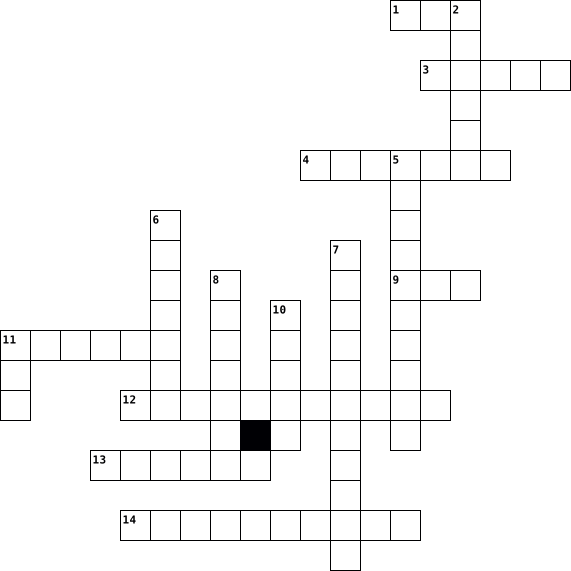
Across
- thing that transports electrons
- stack of thylakoids
- tiny packets of radiant energy from the sun
- charged form of energy
- solution surrounding thylakoids
- accessory pigments that help absorb light (red, orange, or yellow)
- gas given from the plant
- process where water is broken down
Down
- dioxide gas plants take in
- part of cell that carries chlorophyll and absorbs light
- what are the pores in plants called
- part of cell that carries out photosynthesis
- what plants convert their energy into
- color reflected off of plants
- main energy source for a plant
15 Clues: stack of thylakoids • charged form of energy • gas given from the plant • dioxide gas plants take in • color reflected off of plants • main energy source for a plant • thing that transports electrons • solution surrounding thylakoids • process where water is broken down • what are the pores in plants called • what plants convert their energy into • ...
Unit 1 2022-11-10

Across
- sae, ffa, and extension education activities
- production of plants and animals
- science of insects
- growing and managing crops
- growing and management of living things in water
- application of science to solve a problem
- science of soil management and crops
Down
- refers to commercial firms that have developed in support of agriculture
- combination of biology and chemistry
- space and mass around us
- plants grown for their appearance or beauty
- basic science of plants and animals
- characteristics of elements
- food that has been grown without chemical pesticides
- science of plants
15 Clues: science of plants • science of insects • space and mass around us • growing and managing crops • characteristics of elements • production of plants and animals • basic science of plants and animals • combination of biology and chemistry • science of soil management and crops • application of science to solve a problem • plants grown for their appearance or beauty • ...
Flowers 2022-05-05

Across
- plants that grow for many growing seasons
- stalk that holds the anther
- plants that complete growing in one growing season
- absorbs nutrients and anchors plant
- protects flower when in bud form
- stem which supports the flower
- site of fertilization in plants
- plants that have one seed leaf
Down
- carries water and nutrients down the plant
- carries water and nutrients up the plant
- protects reproductive structures and attracts pollinators
- collects sunlight for photosynthesis
- where pollen is produced
- male portion of the flower
- system of roots w/ one primary root
15 Clues: where pollen is produced • male portion of the flower • stalk that holds the anther • stem which supports the flower • plants that have one seed leaf • site of fertilization in plants • protects flower when in bud form • absorbs nutrients and anchors plant • system of roots w/ one primary root • collects sunlight for photosynthesis • carries water and nutrients up the plant • ...