
plants Crossword Puzzles
plant's 2020-06-11

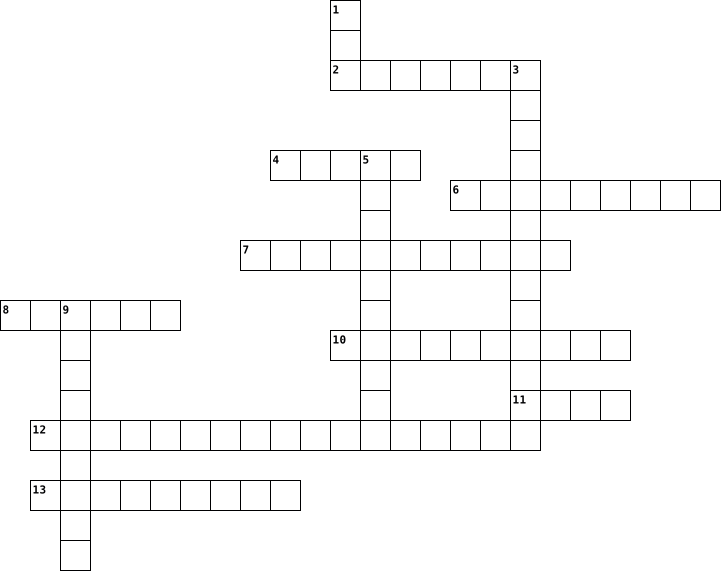
Across
- singing to your plants might help, but it's more to do with the ____ in your voice, not breath.
- Eating lots of onions will make you sleepy, as it acts as a______
- some plants will lean toward the _____ when in a unlit room
- plants ___ at night
- ____are the longest-living organisms on earth.
- Bananas contain a natural chemical which can make people feel ___.
- plants transfer _____ to grow and maintain order
- Oak trees don’t produce acorns until they are ____ years old.
- ____give support to the plant and absorb water and nutrients
Down
- plants are ______ which means they have a multiplex cell and create their own food
- 85% of plant life is found in the ____.
- _____ is the only fruit that bears its seeds on the outside.
- Plants absorb carbon dioxide and release ___ from their leaves
- Apple is 25% ____, that is why it floats on water.
- Cucumber is a _____ and not a vegetable since it has seeds in the centre.
15 Clues: plants ___ at night • 85% of plant life is found in the ____. • ____are the longest-living organisms on earth. • plants transfer _____ to grow and maintain order • Apple is 25% ____, that is why it floats on water. • some plants will lean toward the _____ when in a unlit room • _____ is the only fruit that bears its seeds on the outside. • ...
Plant Response Crossword 2016-05-06

Across
- Detachment of leaves, flowers, and fruits
- Growth towards source of light
- Plant that lives for only two years (grows in first and flowers in 2nd)
- Plant hormone that helps to ripen fruits
- Synthetic compound that breaks down w/ ethylene to create ethylene gas
- Growth in response to gravity
- Movement in response to stimuli but independent of location
- Movement in response to daily light/dark cycle
- A specific requirement of darkness to flower
- Plants that flower when days are long/nights are short
- Used to promote root growth on stem/leaf cuttings
- Plant response to touch
- Rapid elongation of flowering stem
- movement of leaves in response to sun movement
- These are chemicals that are not classified as one of the other five that help to prevent plant growth
Down
- Hormones involved in plant-cell elongation
- A plant hormone that is used to inhibit other hormones such as IAA
- Plant’s response to changes in length of day/night
- Symbiotic relationship w/ plant roots & fungi
- Plant hormones that encourages growth of stems/leaves
- Mixture of 2,4-D and other auxin; used as defoliant in jungles of Vietnam
- Low-temperature stimulation of flowering
- Movement in response to plant touch but not in the direction of the touch
- Chemical messengers affecting plants’ ability to respond
- Plants that will flower regardless of length of time of day or night
- Plants that Flower when days are short/nights are long
- An auxin that influences seed development
- Growth in response to chemicals
- Bluish, light-sensitive pigment that monitors the changes in day length
- Promote cell division in plants
- Undesired plants that crowd out crop/native plants
- Allergic reaction that results in sneezing, runny nose, watery eyes
- Response where plant grows toward/away stimulus
33 Clues: Plant response to touch • Growth in response to gravity • Growth towards source of light • Growth in response to chemicals • Promote cell division in plants • Rapid elongation of flowering stem • Low-temperature stimulation of flowering • Plant hormone that helps to ripen fruits • Detachment of leaves, flowers, and fruits • An auxin that influences seed development • ...
Range Judging Ch 1 & 2 Vocabulary 2024-08-13

Across
- The group of plants best adapted to the physical characteristics of the site. This plant community makes the best use of the available soil nutrients, soil moisture, and energy from the sun under current conditions.
- Refers to relative preference by livestock and wildlife for grazing.
- Have spreading aboveground stems that may root at the nodes and form new plants.
- May kill animals or or reduce animal productivity.
- Make their principle growth during the cool conditions in spring and fall.
- Have net-like veins in the leaves, and the leaves have various shapes.
- Look like grasses but have solid stems
- Have persistent woody stems that remain alive from one year to the next.
- Involves primarily vegetations changes and progresses much more rapidly because soil development is already present (soil remains).
- Have neither rhizomes nor stolons.
- Have been brought in from outside North America.
- Occurs when disturbance of the climax plant community results in degradation of a range site.
- Live only one season.
Down
- Are part of the original vegetation of North America.
- Make their principle growth during the late spring to mid-summer and devlop seed in the lare summer or early fall.
- Have spreading underground stem from which new plants may arise from the parent plants.
- Live two years and flower only during the second growing season
- Initial development of soil parent material (bare rock).
- Live from year to year and produce leaves and stems for more than two years from the same plant.
- Plants with jointed stems
- The final stage in succession when the soil and plant community are somewhat in balance with the climate, topography, animals, and other factors.
- A specific kind of land on which the native vegetation is predominantly grasses, grass-like plants, forbs, or woody plants suitable for grazing or browsing by large herbivores.
- The portion of shrubs that animals may consume.
23 Clues: Live only one season. • Plants with jointed stems • Have neither rhizomes nor stolons. • Look like grasses but have solid stems • The portion of shrubs that animals may consume. • Have been brought in from outside North America. • May kill animals or or reduce animal productivity. • Are part of the original vegetation of North America. • ...
Plant Physiology Crossword 2023-10-15

Across
- A transport protein that when binded with, causes a conformation change.
- A cell transport system that requires ATP.
- This protein facilitates the movement of water across plasma membrane.
- Movement of two molecules in the opposite direction through a protein channel.
- An enzyme that catalyzes both carboxylation and oxygenation reactions.
- A mechanism by which chlorophyll absorbs light for photosynthesis.
- The membrane in which light dependent reaction occurs.
- Mutual attraction between molecules
- Molecule required to fix carbon dioxide, besides ATP
- technique used to join parts from two or more plants to grow into a single plant.
- A type of photosynthesis that separates carbon fixation and carbon assimilation in different cells.
- When lacking this macronutrient, plants experience leaf chlorosis in young and mature leaves.
- A major constituent of the middle lamella of cell walls.
- Where the carbon fixation occurs
- A primary pigment in photosynthesis.
- A reaction that increases in hot condition when stomata closes, which increases levels of O2
Down
- An active transport that involves the coupling of a cotransporter.
- Root hairs increase their surface area as a means of...
- Most abundant macronutrient needed in plants.
- Extracellular space outside of plant cell membranes.
- An common example of the CAM plant.
- Pressure potential of water is generated by this characteristic of cell wall.
- The state in which absorption of light affects the electrons.
- A tissue that forms the outer protective layer in plants.
- This organelle occupies 95% of the total volume of mature plant cell.
- The first step of the Calvin-Benson cycle.
- A condition required for aquaporins to be expressed.
- A transport protein that open and close in response to signal.
- Vascular tissue in plants that conducts water and nutrients from the root.
- An system in which plants get their nutrient assimilation.
- Helps with the movement of molecules between cells in plants.
31 Clues: Where the carbon fixation occurs • An common example of the CAM plant. • Mutual attraction between molecules • A primary pigment in photosynthesis. • A cell transport system that requires ATP. • The first step of the Calvin-Benson cycle. • Most abundant macronutrient needed in plants. • Extracellular space outside of plant cell membranes. • ...
24HRFS5 2024-03-29

Across
- Forest composed of cone-bearing trees like pines, firs, or spruces.
- Ripened ovary of a seed-bearing plant along with accessory parts.
- Layer of living tissue between bark and wood in woody plants, where new bark and wood are formed.
- Hairs Filamentous outgrowths near rootlet tips absorbing water and minerals.
- Structures in tree heartwood essential for radial conduction of water and nutrients.
- Main root of a tree, often with little branching.
- Rings Visible rings in tree crosscut representing growth layers.
- Symbiotic association between fungus mycelium and plant roots.
- Soft, spongy center of stem in flowering plants, also the center of a tree.
- Upper branches of a tree.
- Plant tissue transporting nutrients from leaves to other parts.
- Naturally occurring inorganic crystalline material found in Earth's crust.
- Bark Physiologically active tissue between cambium and outer bark, also known as phloem.
- Deciduous or broadleaf trees.
- Resource Resource capable of being replaced through natural processes, like trees.
- Bark Layer of dead tissue outside the last-formed periderm.
- Plants shedding leaves annually, usually hardwood trees and shrubs.
Down
- Undesirable or harmful organism.
- Small root.
- Land forming a passageway.
- Outer portion of tree wood transporting water and nutrients, lighter in color than heartwood.
- Plant bearing naked seeds in cones, usually needle-leaved trees.
- Flowering plant or fern with a soft stem, not woody.
- Factor Environmental condition constraining population size and growth, like disease or resource availability.
- Energy-yielding oxidation process in living plants and animals.
- Small green nonvascular plants.
- Complex woody tissue in higher plants transporting water, nutrients, and supporting structure, also called sapwood.
- Plants with soft, non-woody stems, including grasses, forbs, weeds, and flowers.
- Inner core of woody stem composed of nonliving cells, darker than sapwood.
- Complex carbohydrate constituting the chief part of plant cell walls.
- Section Sample representing a whole.
- Tough exterior covering of a woody root or stem.
32 Clues: Small root. • Upper branches of a tree. • Land forming a passageway. • Deciduous or broadleaf trees. • Small green nonvascular plants. • Undesirable or harmful organism. • Section Sample representing a whole. • Tough exterior covering of a woody root or stem. • Main root of a tree, often with little branching. • Flowering plant or fern with a soft stem, not woody. • ...
AQA Biology GCSE Plant Structure and Photosynthesis 2026-05-21

Across
- A type of carbohydrate. Plants can turn the glucose produced in photosynthesis into this.
- A green pigment which absorbs light energy for photosynthesis
- When cells loose water from their vacuole and the cytoplasm shrinks from the cell wall
- means 'skin' or 'outermost layer'. In plants the upper is transparent so that light can pass through it and the lower layer contains the stomata.
- the amount of wate vapour in the air.
- A glass building in which plants can be grown to protect them from cold weather.
- In a measuring instrument, it is the smallest change in a quantity that gives a change in the reading that can be seen.
- the best condition or level for growth, reproduction, or success.
- Tiny holes in the bottom of a leaf that control gas exchange by opening and closing and are involved in loss of water from leaves.
- Living entity, e.g. animals, plants or microorganisms.
- Groups of xylem and phloem tissue in a plant. (two words)
- An environmental factor that when it is in short supply it slows down or prevents a reaction or process.
Down
- A chemical process used by plants to make glucose and oxygen from carbon dioxide and water, using light energy.
- Contains the green pigment chlorophyll; the site of photosynthesis.
- Reactions which absorb heat energy from their surroundings
- The vessels that are narrow, hollow, dead tubes with lignin, responsible for the transport of water and minerals in plants.
- Reactions which release heat into their surroundings
- A group of different tissues that work together to carry out a particular function.
- The tissue in plants that transports the products of photosynthesis, including sugars and amino acids.
- an amount produced of an agricultural or industrial product.
- The evaporation of water from the leaves through stomata
- When plant cell vacuoles are full of water they are swollen.
22 Clues: the amount of wate vapour in the air. • Reactions which release heat into their surroundings • Living entity, e.g. animals, plants or microorganisms. • The evaporation of water from the leaves through stomata • Groups of xylem and phloem tissue in a plant. (two words) • Reactions which absorb heat energy from their surroundings • ...
PLANTS 2018-04-22

Across
- artificially watered
- Seeds with only one cotyledon
- Chemicals used for destroying pests
- Outer covering of a seed
Down
- The development of a seed into plant
- Seeds with two cotyledons
6 Clues: artificially watered • Outer covering of a seed • Seeds with two cotyledons • Seeds with only one cotyledon • Chemicals used for destroying pests • The development of a seed into plant
Plants 2018-04-23

Across
- GRAINS USED FOR FOOD SUCH AS WHEAT OATS OR CORN
- CHEMICALS USED FOR DESTROYING HARMFUL INSECTS
- SEEDS WITH ONE SEED LEAF
Down
- DEVELOPMENT OF A SEED INTO A SEEDLING
- THE PROCESS OF SCATTERING OF SEEDS THROUGH AGENTS OF NATURE
- CROPS GROWN FROM NOVEMBER TO APRIL
6 Clues: SEEDS WITH ONE SEED LEAF • CROPS GROWN FROM NOVEMBER TO APRIL • DEVELOPMENT OF A SEED INTO A SEEDLING • CHEMICALS USED FOR DESTROYING HARMFUL INSECTS • GRAINS USED FOR FOOD SUCH AS WHEAT OATS OR CORN • THE PROCESS OF SCATTERING OF SEEDS THROUGH AGENTS OF NATURE
Plants 2018-04-23

Across
- CROPS GROWN FROM NOVEMBER TO APRIL
- THE PROCESS OF SCATTERING OF SEEDS THROUGH AGENTS OF NATURE
- CHEMICALS USED FOR DESTROYING HARMFUL INSECTS
- SEEDS WITH ONE SEED LEAF
Down
- GRAINS USED FOR FOOD SUCH AS WHEAT OATS OR CORN
- DEVELOPMENT OF A SEED INTO A SEEDLING
6 Clues: SEEDS WITH ONE SEED LEAF • CROPS GROWN FROM NOVEMBER TO APRIL • DEVELOPMENT OF A SEED INTO A SEEDLING • CHEMICALS USED FOR DESTROYING HARMFUL INSECTS • GRAINS USED FOR FOOD SUCH AS WHEAT OATS OR CORN • THE PROCESS OF SCATTERING OF SEEDS THROUGH AGENTS OF NATURE
Plants 2022-02-28

Across
- Things that pollinate the plant
- Male part of flower
Down
- Plants need this to grow
- Anchors the plant to the ground
- Female part of flower
- Holds the plant up
6 Clues: Holds the plant up • Male part of flower • Female part of flower • Plants need this to grow • Anchors the plant to the ground • Things that pollinate the plant
Plants 2022-02-09

Across
- we use this to brush our teeth
- we play tug of war with this
- we cook with this
Down
- we wash our hands with this
- a sour yellow fruit
- girls wear this to smell nice
6 Clues: we cook with this • a sour yellow fruit • we wash our hands with this • we play tug of war with this • girls wear this to smell nice • we use this to brush our teeth
Plants. 2014-07-10

Across
- This is the action of water taken in being moved around other parts of the plant.
- Plants take in water through this part of the plant.
Down
- salts Besides water, this is also taken in by the roots.
- Plants need air, sunlight and this to stay alive.
- Plants would gradually turn out this way if they do not have the essentials to stay alive.
- Made up of different parts that are working together to form a function.
6 Clues: Plants need air, sunlight and this to stay alive. • Plants take in water through this part of the plant. • salts Besides water, this is also taken in by the roots. • Made up of different parts that are working together to form a function. • This is the action of water taken in being moved around other parts of the plant. • ...
plants 2016-04-19

Across
- the parasitic plant get thier own food
- the cell of green leaves and young stem of plant contains numerous green structure
- contains cetain bacteria in soil
Down
- living organsms that cannot make thier own food and dependent on other living oraganism
- living organisms that can make thier own food and don't dependent on other living organism
- leaves breathe through tiny pores
6 Clues: contains cetain bacteria in soil • leaves breathe through tiny pores • the parasitic plant get thier own food • the cell of green leaves and young stem of plant contains numerous green structure • living organsms that cannot make thier own food and dependent on other living oraganism • ...
Plants 2016-04-20

Across
- dispersed by animals
- stores food for the baby plant
- Seeds with a single seed leaf
Down
- process of growing a seed into a seedling
- kharif crop
- Protects the seed
6 Clues: kharif crop • Protects the seed • dispersed by animals • Seeds with a single seed leaf • stores food for the baby plant • process of growing a seed into a seedling
Plants 2016-04-22

Across
- process of growing a seed into a seedling
- kharif crops
- protects the seed
Down
- dispersed by animals
- stores food for the plant
- seed with a single seed leaf
6 Clues: kharif crops • protects the seed • dispersed by animals • stores food for the plant • seed with a single seed leaf • process of growing a seed into a seedling
Plants 2016-04-23

Across
- seed which has two seed leaves
- developmentof a seed into a seedling
Down
- seedleaves
- outer covering
- new plants growing from the leaves
- bursts open when they are dry
6 Clues: seedleaves • outer covering • bursts open when they are dry • seed which has two seed leaves • new plants growing from the leaves • developmentof a seed into a seedling
Plants 2016-04-23

Across
- Crops that grow on summer
- A part of a seed that provides food for a baby plant
- Crops that grow on winter
Down
- A development of a seed into a seedling
- The part that covers the seed
- Seed that are dispersed by animals
6 Clues: Crops that grow on summer • Crops that grow on winter • The part that covers the seed • Seed that are dispersed by animals • A development of a seed into a seedling • A part of a seed that provides food for a baby plant
Plants 2016-04-24

Across
- protective cover of seed
- scattering away of seeds
- two seed leaves
Down
- stored food
- chemicals sprayed on crops
- plants grown on winter
6 Clues: stored food • two seed leaves • plants grown on winter • protective cover of seed • scattering away of seeds • chemicals sprayed on crops
Plants 2023-03-14

Across
- How plants get water
- Can make their own food
- Helps them support the parts of the plant on top of it
Down
- inside leaves, makes them green, and helps them make food
- from a flowering plant and it is edible sometimes
- Comes from a fruit and can reproduce
6 Clues: How plants get water • Can make their own food • Comes from a fruit and can reproduce • from a flowering plant and it is edible sometimes • Helps them support the parts of the plant on top of it • inside leaves, makes them green, and helps them make food
PLANTS 2023-03-28

Across
- - kITCHEN OF THE PLANT
- aBSORBS WATER AND MINERALS FROM THE SOIL
- PART OF THE PLANT TRANSFERS WATER AND MINERALS
Down
- Contains seeds
- -Stored food
- - part of plant above the soil
6 Clues: -Stored food • Contains seeds • - kITCHEN OF THE PLANT • - part of plant above the soil • aBSORBS WATER AND MINERALS FROM THE SOIL • PART OF THE PLANT TRANSFERS WATER AND MINERALS
plants 2022-08-27

Across
- use for garnishing food
- woody and strong stem
- thin and green stem
Down
- it creeps on the ground
- use as a medicine
- it is a shrub
6 Clues: it is a shrub • use as a medicine • thin and green stem • woody and strong stem • it creeps on the ground • use for garnishing food
Plants 2022-10-05

Across
- The plant need it from the sun to grow.
- It makes seed
- It holds the plant
- It collect water from the soil and fix the plant
Down
- It makes food for the plant
- THe plant take it from soil to grow.
6 Clues: It makes seed • It holds the plant • It makes food for the plant • THe plant take it from soil to grow. • The plant need it from the sun to grow. • It collect water from the soil and fix the plant
Plants 2023-01-13

Across
- chemical that makes plants green
- I know what
Down
- orange
- a thing that is noobie
- the sky's colour
- thing that makes oranges food
6 Clues: orange • I know what • the sky's colour • a thing that is noobie • thing that makes oranges food • chemical that makes plants green
Plants 2017-06-04

Across
- 6. They are spiky plants
- 1. It makes our house more beautiful
- 4. This fruit is red and it is delicious
Down
- 2. It protects the baby flower
- 3. It gives the green color of the plants
- 5. They make our air better
6 Clues: 6. They are spiky plants • 5. They make our air better • 2. It protects the baby flower • 1. It makes our house more beautiful • 4. This fruit is red and it is delicious • 3. It gives the green color of the plants
Plants 2021-01-21

Across
- Flying mammal
- it is green and is useful for photosynthesis
- Likes to chase mice
Down
- Large marsupial
- Has a trunk
- Man's best friend
6 Clues: Has a trunk • Flying mammal • Large marsupial • Man's best friend • Likes to chase mice • it is green and is useful for photosynthesis
Plants 2020-12-20

Across
- Turns into fruit
- Changes into Seed
- Future plant
Down
- Food factory
- Takes water from the soil
- Support
6 Clues: Support • Food factory • Future plant • Turns into fruit • Changes into Seed • Takes water from the soil
plants 2021-02-21

Across
- are the seeds that have two cotyledons.
- is type of arrangement three or more leaves are arranged in a whorl, encircling the stem at the nodal region
- arrangement of the leaves arising from each node are situated opposite to each other.
Down
- is a fruit formed by the ovary of the flower.
- the arrangement of leaves on the stem or branch is.
- the veins of the leaves help in the conduction of water.
6 Clues: are the seeds that have two cotyledons. • is a fruit formed by the ovary of the flower. • the arrangement of leaves on the stem or branch is. • the veins of the leaves help in the conduction of water. • arrangement of the leaves arising from each node are situated opposite to each other. • ...
Plants 2021-04-22

Across
- si nutre di protozoi e animali
- é un fiore con le spine
Down
- sembra che pianga
- ha tantissime spine e si trova nel deserto
- puó essere velenosa e si attacca alle superfici
- é il tipico albero di natale
6 Clues: sembra che pianga • é un fiore con le spine • é il tipico albero di natale • si nutre di protozoi e animali • ha tantissime spine e si trova nel deserto • puó essere velenosa e si attacca alle superfici
Plants 2021-06-01

Across
- It drops down low to the ground
- Spikes that will hurt
- You walk on it.
Down
- They fall in winter
- A group of leaves
- Smells like candy
6 Clues: You walk on it. • A group of leaves • Smells like candy • They fall in winter • Spikes that will hurt • It drops down low to the ground
Plants 2021-06-01

Across
- It drops down low to the ground
- Spikes that will hurt
- You walk on it.
Down
- They fall in winter
- A group of leaves
- Smells like candy
6 Clues: You walk on it. • A group of leaves • Smells like candy • They fall in winter • Spikes that will hurt • It drops down low to the ground
Plants 2021-06-10

Across
- me a name of a plant which do vegitative propagation through Leaves
- Lily-I am white in colour I grow in water who am I
- a name which meaning is cutting down tree
Down
- of me the leaf is green who am I
- - give a name of a flower which is the longest flower in the world
- grow in desert in my body there is water
6 Clues: of me the leaf is green who am I • grow in desert in my body there is water • a name which meaning is cutting down tree • Lily-I am white in colour I grow in water who am I • - give a name of a flower which is the longest flower in the world • me a name of a plant which do vegitative propagation through Leaves
Plants 2021-08-04

Across
- They need support to climb
- give us oxygen
- beautiful part of the plant
Down
- it has many seeds in it
- food factory of the plant
- holds the plant firmly in the plant
6 Clues: give us oxygen • it has many seeds in it • food factory of the plant • They need support to climb • beautiful part of the plant • holds the plant firmly in the plant
Plants 2022-04-27

Across
- A ______ plant has two cotyledons.
- The type of root that corn plant has is _____.
Down
- Corn plant has ____ vein leaves.
- A ______ plant has one cotyledon.
- The type of root that green bean plant has is _____ root.
- Green bean plant has _______ net-like leaves.
6 Clues: Corn plant has ____ vein leaves. • A ______ plant has one cotyledon. • A ______ plant has two cotyledons. • Green bean plant has _______ net-like leaves. • The type of root that corn plant has is _____. • The type of root that green bean plant has is _____ root.
Plants 2022-11-22

Across
- entry point for male nucleus at fertilization
- to attract insects
- to secrete a sugary solution
Down
- Fertilised ovule develops into a seed, with the zygote forming the embryo
- to deliver the male gamete
- to contain the female gamete
6 Clues: to attract insects • to deliver the male gamete • to contain the female gamete • to secrete a sugary solution • entry point for male nucleus at fertilization • Fertilised ovule develops into a seed, with the zygote forming the embryo
Plants 2019-08-29

Across
- Flying mammal
- Has a trunk
- Likes to chase mice
- Man's best friend
Down
- and animals different types of sources of food.
- Large marsupial
6 Clues: Has a trunk • Flying mammal • Large marsupial • Man's best friend • Likes to chase mice • and animals different types of sources of food.
Plants 2019-08-29

Across
- source of food plant
- Large marsupial
Down
- Has a trunk
- Likes to chase mice
- Flying mammal
- Man's best friend
6 Clues: Has a trunk • Flying mammal • Large marsupial • Man's best friend • Likes to chase mice • source of food plant
Plants 2023-12-03

Across
- Plants need space, water, _______, and sunlight
- Seed plant without flowers
- Plants create their own _________ through photosynthesis
Down
- Seed plant with flowers
- Part of the plant that supports structure and moves water and minerals
- Part of the plant that absorbs water and minerals, stores food, and anchors the plant
6 Clues: Seed plant with flowers • Seed plant without flowers • Plants need space, water, _______, and sunlight • Plants create their own _________ through photosynthesis • Part of the plant that supports structure and moves water and minerals • Part of the plant that absorbs water and minerals, stores food, and anchors the plant
plants 2024-04-16

Across
- h
- b
- n
Down
- j
- l
- m
6 Clues: j • h • l • m • b • n
Plants 2024-10-01

Across
- part of the plant that has the seeds and where insects get pollen.
- green parts of the plant and also makes food using sun light.
Down
- plants give us this to live
- part of the plant that grows in the soil.
- If the plant doesn’t get enough of it it will die.
- Part of the plant that holds the plant up right.
6 Clues: plants give us this to live • part of the plant that grows in the soil. • Part of the plant that holds the plant up right. • If the plant doesn’t get enough of it it will die. • green parts of the plant and also makes food using sun light. • part of the plant that has the seeds and where insects get pollen.
Plants 2024-12-14

Across
- A scary plant.
- Something that makes plants grow.
Down
- Something you grow.
- A plant that snaps its prey.
- something plants do like us.
- Something Poisonous.
6 Clues: A scary plant. • Something you grow. • Something Poisonous. • A plant that snaps its prey. • something plants do like us. • Something that makes plants grow.
Plants 2025-05-29

Across
- Part of a plant that becomes a fruit after pollination
- Movement of pollen to make fruit
- colorful part of the flower
Down
- Structure that contains seeds and develops from a flower
- living thing that helps dispersing seeds by eating or carrying them
- Grows into a new plant
6 Clues: Grows into a new plant • colorful part of the flower • Movement of pollen to make fruit • Part of a plant that becomes a fruit after pollination • Structure that contains seeds and develops from a flower • living thing that helps dispersing seeds by eating or carrying them
PLANTS 2025-08-27

Across
- a plant uses roots to take in
- the leaves of a plant use sunlight to make
- the..... of a plant usually grow in the soil
Down
- the ..... transport water absorbed by the roots to the other parts of plant
- the root ...... the plant firmly to the soil
- the flower of a plant will grow into ....... during reproduction
6 Clues: a plant uses roots to take in • the leaves of a plant use sunlight to make • the root ...... the plant firmly to the soil • the..... of a plant usually grow in the soil • the flower of a plant will grow into ....... during reproduction • the ..... transport water absorbed by the roots to the other parts of plant
BSchmidt Protein 2017-01-23

Across
- Chemical process that turns vegetable oils to solids
- Sugars with single unit chemical structure
- Carbohydrates with complicated structures
- Lipoprotein that takes cholesterol from liver to where needed in the body; can accumulate too much; considered "bad" cholesterol
- Green pigment in plants; must be present for photosynthesis to occur
- Lipoprotein that picks up cholesterol and takes it back to liver for excretion; "good" cholesterol
- Plant proteins that lack at least one essential amino acid
- Chemical building blocks of proteins that link together in many arrangements
- Plant materials that are eaten but can't be digested by human enymes
- Chemical structures that make up fats
Down
- Simple carbs chemically formed from plants
- Chemical process by which plants make carbs
- nutrient that is a person's main source of energy; found mostly in plant foods
- Fat-like substance in all body cells; needed for many essential body processes
- Amino acids that the body needs but cannot provide; obtained from foods
- Protein with globular shape; transports oxygen in blood to all body cells
- Chemical "packages" that transport fatty acids through blood stream
- Sugars extracted from plants and used to sweeten foods
- Formed when plants combine single glucose units into more complicated chemical structures
19 Clues: Chemical structures that make up fats • Carbohydrates with complicated structures • Simple carbs chemically formed from plants • Sugars with single unit chemical structure • Chemical process by which plants make carbs • Chemical process that turns vegetable oils to solids • Sugars extracted from plants and used to sweeten foods • ...
NUTRITION IN PLANTS 2017-05-06
Across
- found in the roots of leguminous plants
- plural of stacks of thylakoid
- mutually benefiting relationship
- green pigment in plants
- aqueous fluid in chloroplast
- cells that guard the stomata
- food factory of plants
- it absorbs carbon dioxide
- a partial parasitic plant
Down
- ultimate source of energy
- narrow tubes that one granum to another
- found in lightning helps plants to grow
- bacteria that helps
13 Clues: bacteria that helps • food factory of plants • green pigment in plants • ultimate source of energy • it absorbs carbon dioxide • a partial parasitic plant • aqueous fluid in chloroplast • cells that guard the stomata • plural of stacks of thylakoid • mutually benefiting relationship • found in the roots of leguminous plants • narrow tubes that one granum to another • ...
Greenhouse Terminology 2017-12-10

Across
- Structure for growing plants that is not heat or minimally heated
- Greenhouse that stands alone
- color of light that plants take up
- Roof slopes in only one direction and are connected along the side posts
- Structure protects plants from the natural environment (wint,rain)
- Structure for growing plants that is artificially heated, is not tall enough to walk in
- Most common framing material because it is strong yet lightweight
- Greenhouse cover that is cheaper than glass yet costs the same to heat and cool
- Greenhouse cover that is the most expensive and doesn't save money on heating or cooling
- Greenhouses that are connected together at the eaves
- Entirely interior with no real sunlight
- Air steam greenhouses, single layer of plastic held up by large, blowing fans
- Structure allows for maximum management of environment (temp, light, fertility)
- Structure for growing plants that have no sides, usually covered with shade cloth to reduce light intensity and provide minimal wind protection
- Structure for growing plants that is unheated, has a single plastic covering and is usually movable and used to extend growing season
Down
- Building associated with the greenhouse that is typically used for storage
- Framing material that must be painted every 5-7 years
- Distance between gutters is wide, cheaper to cool and more expensive to heat
- 2 or more greenhouses in one location
- Two roof slopes with the same pitch and width
- Allows for open production space because there are no posts
- One side of the greenhouse is a solid wall
- Structure for growing plants that is covered with transparent material, tall enough to walk in, artificially heated
- Rafters are of uneven length, makes structure adaptable to a hill
- Distance between gutters is narrow, cheaper to heat and more expensive to cool
25 Clues: Greenhouse that stands alone • color of light that plants take up • 2 or more greenhouses in one location • Entirely interior with no real sunlight • One side of the greenhouse is a solid wall • Two roof slopes with the same pitch and width • Greenhouses that are connected together at the eaves • Framing material that must be painted every 5-7 years • ...
Plant Physiology Crossword Puzzle 2021-12-06

Across
- A fundamental process in plants where CO2 and H2O are combined with the help of sunlight to form Sugar molecules and oxygen gas.
- An organism that can make their own food.
- It is a community of various plants dominated by trees.
- The state where essential substances from the soil is inadequate; limits the growth of plants.
- These are complex sequence of chemical reactions in cells that transforms food into energy.
- Process of water loss because of water evaporation from the leaves of the plant
- An Irreversible increase through cell division and enlargement, It is the process of transforming reserve materials into structural materials.
- is the process where the cell shrinks when it is exposed to a hypertonic solution.
Down
- Its the movement of atoms or molecules from an area of high concentration to lower concentration.
- It is a scale is logarithmic and inversely indicates the concentration of hydrogen ions in the solution.
- __________ is a substance or an enzyme that speeds up chemical reactions.
- __________ is generated when the cell membrane pushes against the cell wall of the plant.
- The sciences that deals with plant function as well as the physical and chemical processes in plants.
- It is the movement of water from an area of high concentration to an area of low concentration through a semi permeable membrane.
- It moves water and nutrients from the soil up and to other parts of its body.
- It moves sugars and other nutrients in a bidirectional movement from the leaves to the storage organs of the plant.
- Plant __________ is the uptake of mineral elements from the soil.
- Organic compounds such as sugars and starch that is used for food storage are classified as __________.
- _______ is the site of gas exchange in plants, it is typically found in epidermis of the leaf.
- It is one of the unique cell structure that uniquely found in plants.
20 Clues: An organism that can make their own food. • It is a community of various plants dominated by trees. • Plant __________ is the uptake of mineral elements from the soil. • It is one of the unique cell structure that uniquely found in plants. • __________ is a substance or an enzyme that speeds up chemical reactions. • ...
Environmental Bio 2022-05-11

Across
- type of peat-accumulating wetland fed by mineral rich ground or surface water
- the deep zone of an inland body of freestanding water, below the range of light penetration
- soil of poor quality that lacks the substance and nutrients plants need
- wetland ecosystem near lakes and rivers with softer, non woody plants
- a substance that is toxic to plants, used to destroy unwanted vegetation
- wetland that is forested and found near lakes and rivers with slow waters and woody plants
- the waste water from domestic, commercial, and industrial sources carried by sewers
- preparing and cultivating land for crops
- substance used to destroy insects or other organisms harmful to cultivated plants or animals
- a chemical or substance which harms water, air, or land quality
- wetland of soft, spongy ground consisting mainly of partially decayed plant matter
- region at the lowest level of a body of water
- areas where water covers/saturates the soil, either permanently or seasonally
Down
- the science of raising plants or animals for food, clothing, or other products
- the cultivation of a singular crop in a given area
- the part of a sea, lake, or river that is close to the shore, with sunlight present at the sediment level
- chemical used on plants to destroy fungus
- the part of the water cycle in which the water flows over the land as surface water
- inhabiting or situated in still fresh water
- area of land that drains water into a specific body of water
- the open water area where light will not penetrate all the way to the bottom
- the supply of water to land or crops that helps growth
- inhabiting or situated in rapidly moving fresh water
- an animal lacking a backbone that is large enough to be seen without a microscope
- loosening and turning soil
25 Clues: loosening and turning soil • preparing and cultivating land for crops • chemical used on plants to destroy fungus • inhabiting or situated in still fresh water • region at the lowest level of a body of water • the cultivation of a singular crop in a given area • inhabiting or situated in rapidly moving fresh water • ...
Plant Physiology Crossword 2023-10-15

Across
- The membrane in which light dependent reaction occurs.
- The state in which absorption of light affects the electrons.
- Helps with the movement of molecules between cells in plants.
- An system in which plants get their nutrient assimilation.
- A major constituent of the middle lamella of cell walls.
- An common example of the CAM plant.
- Extracellular space outside of plant cell membranes.
- A transport protein that when binded with, causes a conformation change.
- This protein facilitates the movement of water across plasma membrane.
- An enzyme that catalyzes both carboxylation and oxygenation reactions.
- Most abundant macronutrient needed in plants.
- Pressure potential of water is generated by this characteristic of cell wall.
- A transport protein that open and close in response to signal.
- Where the carbon fixation occurs
- The first step of the Calvin-Benson cycle.
Down
- A mechanism by which chlorophyll absorbs light for photosynthesis.
- Movement of two molecules in the opposite direction through a protein channel.
- This organelle occupies 95% of the total volume of mature plant cell.
- A reaction that increases in hot condition when stomata closes, which increases levels of O2
- Vascular tissue in plants that conducts water and nutrients from the root.
- When lacking this macronutrient, plants experience leaf chlorosis in young and mature leaves.
- A type of photosynthesis that separates carbon fixation and carbon assimilation in different cells.
- A cell transport system that requires ATP.
- A condition required for aquaporins to be expressed.
- Root hairs increase their surface area as a means of...
- An active transport that involves the coupling of a cotransporter.
- technique used to join parts from two or more plants to grow into a single plant.
- A primary pigment in photosynthesis.
- A tissue that forms the outer protective layer in plants.
- Mutual attraction between molecules
30 Clues: Where the carbon fixation occurs • An common example of the CAM plant. • Mutual attraction between molecules • A primary pigment in photosynthesis. • A cell transport system that requires ATP. • The first step of the Calvin-Benson cycle. • Most abundant macronutrient needed in plants. • Extracellular space outside of plant cell membranes. • ...
Environment & Wildlife Vocabulary (Part 1) 2024-02-19

Across
- When animals sleep deeply for a long time during the winter to save energy.
- The variety of different plants and animals living in a place.
- Species: Animals or plants that are at risk of disappearing forever.
- Big changes in the Earth's weather patterns over a long time, often caused by humans burning fossil fuels and cutting down forests.
- Animals with feathers, wings, and beaks that lay eggs and can fly.
- A scientist who studies how living things interact with each other and their environment.
- Animals that are awake and active during the day.
- Animals that rely on their environment to regulate their body temperature.
- Animals like insects, spiders, and crabs that have hard outer shells and jointed legs.
- Harmful stuff in the air, water, or soil that makes it dirty or unhealthy.
- Animals that have hair or fur, give birth to live babies, and produce milk to feed their young.
- A wet area where plants and animals like frogs and ducks live.
- When animals lose their homes because of things like cutting down trees or building cities.
- Cutting down trees and forests, which can harm the animals and plants living there.
Down
- How endangered or safe a species is.
- Someone who works to protect nature and wildlife.
- Taking care of nature. It's about protecting plants, animals, and the places they live so that they can continue to thrive for a long time.
- The home or living space where animals and plants naturally live.
- Animals like frogs and salamanders that can live both in water and on land.
- Animals that can regulate their own body temperature.
- Animals that are awake and active during the night.
- Animals like snakes and turtles that have scaly skin and lay eggs.
- A community of living things (plants, animals, and other organisms) interacting with each other and the environment they live in.
- Hunting animals illegally.
24 Clues: Hunting animals illegally. • How endangered or safe a species is. • Someone who works to protect nature and wildlife. • Animals that are awake and active during the day. • Animals that are awake and active during the night. • Animals that can regulate their own body temperature. • The variety of different plants and animals living in a place. • ...
Unit 17 - Garden 2025-05-06

Across
- Apples and bananas are...
- The title of Unit 17
- Small things you plant in the soil to grow new plants.
- Unwanted plants that grow where they are not wanted.
- A tool with long teeth used to gather leaves or smooth soil.
- A small white vegetable with a strong smell and small cloves.
- A round container with a handle used to carry water or soil.
- The colorful parts of some plants that smell nice.
- A long green vegetable with lots of water inside.
- A long orange vegetable that is crunchy and a little sweet.
- A brown vegetable that grows underground and is used to make chips.
- A tool with a flat blade used to break or move soil.
- A round vegetable that can make your eyes water when you cut it.
- A container with a handle and spout used to water plants.
- A green leafy vegetable often used in salads.
Down
- A large round root vegetable with yellow inside and sweet taste.
- Short green plants that cover the ground.
- A cart with one wheel and handles used to carry things in the garden.
- Small round green vegetables that grow in pods.
- A tool with a wide blade used for digging.
- Clothing you wear on your hands to protect them while gardening.
- A small red or white vegetable with a sharp taste.
- A dark red round vegetable that is sweet and juicy.
- A round vegetable with many green or purple leaves.
- A big orange vegetable with soft inside and many seeds.
- A red round vegetable (or fruit) that is juicy and often used in salads.
- The dark ground where plants grow.
- Living things that grow in soil and need water and sunlight.
- Long, thin green vegetables that are soft when cooked.
29 Clues: The title of Unit 17 • Apples and bananas are... • The dark ground where plants grow. • Short green plants that cover the ground. • A tool with a wide blade used for digging. • A green leafy vegetable often used in salads. • Small round green vegetables that grow in pods. • A long green vegetable with lots of water inside. • ...
Food Web Crossword 2026-04-15

Across
- An organism that eats dead and decaying matter. Recycles nutrients back into ecosystem.
- The green pigment contained in the chloroplast of plant leaves that captures the energy in sunlight.
- Energy stored in food (glucose).
- An organism on the food chain that depends on autotrophs (producers) or other consumers for food, nutrition, and energy.
- An organism that only eats meat (Other animals)
- Energy from the sun that reaches Earth. Powers photosynthesis.
- An organism that only eats plants.
- What is produced after a chemical reaction. Photosynthesis produces oxygen and glucose.
- A chemical reaction where plants convert radiant energy to chemical energy.
- An organism that creates its own food. (Plants)
- Energy that is transformed from one form to another.
- The pores of a plant that lets in carbon dioxide, and releases oxygen and water vapor
- A community of interacting organisms and their environment. Includes non-living things like soil, and water.
- Heat energy released from organisms.
- The level of an organism is the position it occupies in a food web.
Down
- A linear sequence of organisms where nutrients and energy is transferred from one organism to the other.
- Process where two or more substances combine are chemically changed, producing different substances.
- Plants that make their own food through sunlight, air, and water.
- A Role an organism or population plays within an ecosystem
- A simple carbohydrate (sugar or glucose) produced by photosynthesis. Glucose stores chemical energy.
- Water moving through plants and evaporating from the leaves (stomata)into the air.
- An organism that eats BOTH plants and animals.
- A cell organelle only found in plants. It is responsible for photosynthesis in a plant.
- An organism that needs to eat other organisms for energy.
- Interconnected food chains that show the relationships between organisms in an ecosystem.
- Substances that undergo a chemical change. In photosynthesis, water and CO2 change into glucose and O2.
26 Clues: Energy stored in food (glucose). • An organism that only eats plants. • Heat energy released from organisms. • An organism that eats BOTH plants and animals. • An organism that only eats meat (Other animals) • An organism that creates its own food. (Plants) • Energy that is transformed from one form to another. • ...
Ecosystem Crossword Puzzle 2026-04-10

Across
- A living thing that makes its own food using sunlight (like plants)
- A trait that helps an animal survive in its environment
- A natural behavior an animal is born knowing how to do (like a bird building a nest)
- A community of living things and their environment
- Power that living things need to grow and move
- A behavior or skill an animal develops through experience or practice
- CHAIN, The order in which animals eat each other in nature
- An animal that eats both plants and meat
- A living thing that eats other living things for food
- An animal that is hunted by another animal
Down
- An organism that breaks down dead plants and animals
- The place where an animal or plant lives
- An animal that only eats meat
- Traits passed down from parents to offspring (like eye color)
- An animal that hunts other animals for food
- An animal that only eats plants
- Living parts of an ecosystem (plants, animals, fungi)
- A living thing like a plant or animal
18 Clues: An animal that only eats meat • An animal that only eats plants • A living thing like a plant or animal • The place where an animal or plant lives • An animal that eats both plants and meat • An animal that is hunted by another animal • An animal that hunts other animals for food • Power that living things need to grow and move • ...
Ecology 2018-10-04

Across
- What combines with carbon to make CO2?
- What sphere are clouds in?
- True or false: living organisms are abiotic.
- What is the name for food chains that mix with other food chains?
- What is the system of how living organisms interact with each other and their environment called?
- What are plants called in the carbon cycle?
- Oceans, plants, animals, and insects are all examples of _________.
- A racoon is an example of a ___________.
- _______________ are little bacteria in the water that act like land plants and absorb the sun then turn it into nutrients/sugar.
- Ecosystem diversity, species diversity and _______ diversity are the three branches of biodiversity.
- Forest fires and volcanos are both examples of carbon ______________.
- What do the 3 features ecosystem, species, and genetics make up?
Down
- What sphere is soil in?
- Insects, fungi, and bacteria are all examples of __________.
- What is the name for a species that their ecosystem relies on their existence?
- __________ is when plants and animals release co2 back into the atmosphere.
- What is at the top of the food chain?
- In the carbon story, what was cabbage used as?
- Carbon atoms move into trees, plants, the biosphere and into most food webs via this process.
- True or false: Binomial taxonomy is the classification of living things.
- What is the fist name of binomial taxonomy called? Genus
- What do living organisms gain by eating food?
- What would an animal that eats both meat and plants be called?
- What do we use to type the scientific names for animals?
24 Clues: What sphere is soil in? • What sphere are clouds in? • What is at the top of the food chain? • What combines with carbon to make CO2? • A racoon is an example of a ___________. • What are plants called in the carbon cycle? • True or false: living organisms are abiotic. • What do living organisms gain by eating food? • In the carbon story, what was cabbage used as? • ...
Botany Final Review Crossword 2014-05-27

Across
- type of leaf that has leaflets in a line.
- Permeability describes how _____ flows through the soil.
- you can make gin out of flavors extracted from these plants.
- Plant family for grasses.
- type of venation on leaf that is shaped like your hand.
- form of nitrogen that plants can use.
- root of mangrove that also gathers air.
- male parts of flower.
- the gynoecium or female parts of flower
- photosynthetic pigment.
- will plants grow in green light?
- Plants absorb blue and _____ light.
- most common pollinators.
- when pollinators and floral blooming is in synch.
- angiosperm reproductive structure.
- where plant growth occurs in shoot and root.
- A root _____ protects the growing root.
- Plant family for maples.
- Soil that displays distinct layers.
- Example of plant in the Liliaceae.
- example of a gymnosperm
- these guys produce waste(nitrogen) in an aquaponics tank.
Down
- Plants reflect _____ light.
- movement of pollen to stigma
- Plant family for dandelions.
- process of increasing algae growth in waterways due to high nutrient load.
- Chromontography is a procedure that helps separate plant ______.
- petals
- How much water can the soil hold.
- grasses and plants with parallel veins are examples.
- contains sperm
- flowering plant
- two cotyledons
- necessary plant nutrient
- organelle that photosynthesizes.
- largest reservoir of nitrogen
- How the soil feels.
- sepals
- wall outside the cell membrane and allows leaves to keep shape when wilted.
- reproductive structure of gymnosperms.
- Pollinators of stinky, dark red, hairy flowers.
41 Clues: petals • sepals • contains sperm • two cotyledons • flowering plant • How the soil feels. • male parts of flower. • photosynthetic pigment. • example of a gymnosperm • most common pollinators. • necessary plant nutrient • Plant family for maples. • Plant family for grasses. • Plants reflect _____ light. • movement of pollen to stigma • Plant family for dandelions. • largest reservoir of nitrogen • ...
Alivia Walker - Ecology crossword 2024-11-19

Across
- A graphical representation showing the relationship between different organisms in an ecosystem
- Things that eat both plants/animals.
- Shows how each living thing gets its food. Some animals eat plants and some animals eat other animals.
- A community of living organisms like plants or animals in a particular area.
- An organism, especially a fungus, or invertebrate, that decomposes organic material.
- A group of organisms that can reproduce with one another and produce offspring.
- Organisms that eat other organisms for nutrients, can't produce food by themselves.
- Things that eat plants exclusively
- Things that eat animals exclusively
Down
- A level or a position in a food chain, a food web, or an ecological pyramid.
- Organic material from plants and animals that is used as a source of energy
- A group of individuals that belong in the same species.
- Everything in all/highest level in ecology.
- Like a Heterotroph, it must obtain energy by eating other organisms.
- The process by which food is made by bacteria or other living things using chemicals as an energy source, typically without sunlight.
- The process by which plants use sunlight, water, and carbon dioxide to create oxygen and energy in the form of sugar.
- A group of ecosystems with the same climate and communities.
- A system of interlocking and interdependent food chains.
- Also like an Autotroph, an organism that can create its own food using energy from sunlight.
- Assembly of different populations.
- Organisms that can produce their own food from natural sources.
- The study of how living organisms interact with each other and their environment.
22 Clues: Assembly of different populations. • Things that eat plants exclusively • Things that eat animals exclusively • Things that eat both plants/animals. • Everything in all/highest level in ecology. • A group of individuals that belong in the same species. • A system of interlocking and interdependent food chains. • ...
understanding living beings 2025-09-20

Across
- Small openings on insects’ bodies used for breathing.
- The green substance in leaves that helps plants trap the energy of the sun.
- Liquid in the mouth that helps in digestion.
- A place where animals live and stay safe.
- When animals bring out their babies alive.
- When animals produce young by putting eggs outside their bodies.
- The process by which plants make their own food using sunlight.
- A tool used to see very tiny things that cannot be seen with the naked eye.
- Living things made of many cells like animals and plants.
- The process of breath in oxygen, beath out carbon dioxide.
Down
- Body parts like eyes, ears, and nose that help us feel and respond to changes around us.
- Animals that breathe through lungs, have hair or fur on their bodies, and most of them give birth to live young and feed them with milk.
- A gas that human's breath out and plants take in for photosynthesis.
- Living things made of only one cell like Amoeba.
- Small parts of plants that can grow into new plants.
- The smallest unit of life that makes up all living things.
- Organs in the chest used for breathing in humans and many animals.
- The process by which living things make new offspring.
- A plant that closes its leaves when touched.
- Body parts that fish use to breathe underwater.
- A gas needed by most living things to breathe.
- Tiny openings on leaves that let gases in and out.
22 Clues: A place where animals live and stay safe. • When animals bring out their babies alive. • Liquid in the mouth that helps in digestion. • A plant that closes its leaves when touched. • A gas needed by most living things to breathe. • Body parts that fish use to breathe underwater. • Living things made of only one cell like Amoeba. • ...
BIOLOGY TEST - BIODIVERSITY (PART 1) 2026-03-27

Across
- Photosyntetic eukariotes, whose body is often organized in roots, stem and leaves.
- Green plant organs that collect sunlight and carry out photosynthesis.
- Underground organ that anchors a plant to the ground and absorbs water.
- Very simple sessile invertebrates with no simmetry and no organs, that live by filtering water.
- Unicellular prokariotes that live almost everywhere.
- Eukaryotes that cannot be classified as plants, animals, or fungi.
- Invertebrates like bees, spiders and crabs, with an exoskeleton and jointed appendages.
- Multicellular eukariotic heterotrophic organisms, that are not plants nor fungi.
- Eukaryotes with cell walls made of chitin, commonly known as mushrooms.
Down
- Invertebrates like bees, grasshoppers, ladybugs, butterflies, ants, etc., with six legs and often wings.
- Vascular plants like ferns, that have roots, stems and leaves, but don’t produce seeds.
- Invertebrates like snails, squids and mussels, with a soft body and an internal or external shell.
- Invertebrates like jellyfish and corals, with radial symmetry and tentacles.
- Process that occurs in plants when the embryo begins to grow and pushes out of the seed.
- Small nonvascular plants like mosses, that live in moist areas.
- Invertebrates like sea stars and sea urchins, with radially symmetric body and a water vascular system.
- The reproductive part of an angiosperm plant, usually colored to attract pollinators.
- Invertebrates that can be flat, round or segmented; they always have a soft body and no shell.
- Any plant’s growth toward or away from a stimulus.
- Plant organ that supports the plant, and transports water and other substances.
20 Clues: Any plant’s growth toward or away from a stimulus. • Unicellular prokariotes that live almost everywhere. • Small nonvascular plants like mosses, that live in moist areas. • Eukaryotes that cannot be classified as plants, animals, or fungi. • Green plant organs that collect sunlight and carry out photosynthesis. • ...
habitats and food chains 2026-03-03

Across
- Organisms like fungi and bacteria that break down dead plants and animals.
- Webbed feet help animals move easily in this habitat.
- A consumer that eats only other animals.
- A grassy habitat with few trees, often found in Africa.
- A cold habitat covered with ice and snow near the North or South Pole.
- a group of food chain.
- A rabbit has big ears and strong legs to help it survive in a field. These are examples of _______________.
- Animals and plants get this from the food they eat or make.
- An animal that eats both plants and animals.
- An animal that is hunted and eaten by another animal.
- The place where a plant or animal lives, grows, and reproduces.
- A consumer that eats only plants.
Down
- A thick layer of fur that helps animals stay warm.
- All consumers get their energy by eating other _______________.
- A very dry habitat with little rainfall and hot days.
- A consumer that hunts and eats other animals for energy.
- The flow of energy from the Sun, to a producer, to a consumer.
- When an animal blends into its surroundings to hide.
- The process by which plants make their own food.
- A disease that can spread between animals or plants, like a cold spreads between people.
- The main source of energy for all producers (and almost all life on Earth!)
- The first living thing in a food chain.
- A living thing that makes its own food (energy) from sunlight.
- A habitat with many trees and lots of rainfall.
24 Clues: a group of food chain. • A consumer that eats only plants. • The first living thing in a food chain. • A consumer that eats only other animals. • An animal that eats both plants and animals. • A habitat with many trees and lots of rainfall. • The process by which plants make their own food. • A thick layer of fur that helps animals stay warm. • ...
Classification of Living Things 2024-06-17

Across
- The green stuff in plant leaves that help capture sunlight
- Living things that can make their own food but do not have roots, stems or leaves
- Eats plants and meat
- Cannot move about freely
- Living things that can make their own food and have roots, stems and leaves
- Eats plants
- Eats meat
- Eats other living things
Down
- The process by which plants and algae make their own food
- Extremely small living things that cannot be seen with the naked eye
- Makes their own food
- Living things that can move about freely and get their food from other living things
- Living things that cannot move about freely and cannot make their own food
- Breaks down dead plants and animals for food
- Can move about freely
15 Clues: Eats meat • Eats plants • Makes their own food • Eats plants and meat • Can move about freely • Cannot move about freely • Eats other living things • Breaks down dead plants and animals for food • The process by which plants and algae make their own food • The green stuff in plant leaves that help capture sunlight • ...
Plant Anatomy 2022-11-09

Across
- Microscopic openings on a leaf's surface
- A plant that has its roots in the air
- Compound that makes plants green
- Plants During photosynthesis, plants produce more of this than they need
- A gas in the air required for photosynthesis
- The point at which the leaf joins the stem
- This is where the plant produces its food
Down
- This structure anchors the plant
- This structure holds the plant up
- The loss of water in plants
- Tube-like structure that carries food
- Tube-like structure that carries water
- The movement of water from an area of high concentration to an area of low concentration
- A leaf arrangement where several leaves shoot out from the same point
- The process by which plants produce their own food
15 Clues: The loss of water in plants • This structure anchors the plant • Compound that makes plants green • This structure holds the plant up • A plant that has its roots in the air • Tube-like structure that carries food • Tube-like structure that carries water • Microscopic openings on a leaf's surface • This is where the plant produces its food • ...
Photosynthesis 2025-09-01

Across
- A condition like light, CO₂, or temperature that controls the rate of photosynthesis.
- The form of energy stored in glucose.
- A sugar made by plants during photosynthesis.
- Leaf part packed with chloroplasts for photosynthesis.
- A gas released by plants during photosynthesis.
- The process that uses glucose to release energy.
- Type of energy from the sun used in photosynthesis.
Down
- The strength of light available for photosynthesis.
- The process plants use to make food using light energy.
- A gas taken in by plants from the air.
- The part of the cell where photosynthesis takes place.
- Green pigment in leaves that absorbs sunlight.
- A liquid taken in by roots and used in photosynthesis.
- Affects enzymes that control the rate of photosynthesis.
- A storage form of glucose in plants.
15 Clues: A storage form of glucose in plants. • The form of energy stored in glucose. • A gas taken in by plants from the air. • A sugar made by plants during photosynthesis. • Green pigment in leaves that absorbs sunlight. • A gas released by plants during photosynthesis. • The process that uses glucose to release energy. • The strength of light available for photosynthesis. • ...
C.B Gentics crossword puzzle 2026-04-28

Across
- An organism with two alleles.
- Two plants that had cross-pollinated and created short plants.
- Passing traits to parent to off spring.
- chromosomes are made out of.
- The inheritance you get from you parents.
- Genetic makeup, of an organism.
- when the offspring of two homozygous parents show an intermediate phenotype.
Down
- A tool that was used to predict results in Mendelian genetics.
- An organism that has two different alleles for a trait.
- Different forms of a trait that a gene may have.
- Two plants that had cross-pollinated and created tall plants.
- Gregor Mendel studied these plants to understand heredity.
- The way an organism looks and behaves.
- Receiving different genetic information, or different alleles.
- Genes on chromosomes control an organism's form and function.
15 Clues: chromosomes are made out of. • An organism with two alleles. • Genetic makeup, of an organism. • The way an organism looks and behaves. • Passing traits to parent to off spring. • The inheritance you get from you parents. • Different forms of a trait that a gene may have. • An organism that has two different alleles for a trait. • ...
ANIMALS 2021-03-09

Across
- They have live babies.
- They have hair.
- They have wet skin.
- They eat animals.
- Some are transparent.
- They have exoskeleton.
- They have wings and feathers.
- They have a soft body.
Down
- They have scales and dry skin.
- They eat the remains.
- They eat dead animals and plants.
- They lay eggs.
- The eggs hatch in the mum's womb and then born.
- Some have a shell.
- They eat animals and plants.
- They have scales and fins.
- They eat plants.
17 Clues: They lay eggs. • They have hair. • They eat plants. • They eat animals. • Some have a shell. • They have wet skin. • They eat the remains. • Some are transparent. • They have live babies. • They have exoskeleton. • They have a soft body. • They have scales and fins. • They eat animals and plants. • They have wings and feathers. • They have scales and dry skin. • ...
Dessert:Agriculture 2022-11-29

Across
- enclosed seed
- the use of stored energy
- plants that live for two seasons
- the making of energy
- plants that live longer than two seasons
- to reproduce
- transportation of energy from leaves
- to attract birds and insects for pollination
Down
- the loss of water through evaporation
- plants that live for one season
- absorb water and minerals
- protective cells
- naked seed
- transportation of energy from roots
- male part of flower
- female part of flower
- support for the plant
17 Clues: naked seed • to reproduce • enclosed seed • protective cells • male part of flower • the making of energy • female part of flower • support for the plant • the use of stored energy • absorb water and minerals • plants that live for one season • plants that live for two seasons • transportation of energy from roots • transportation of energy from leaves • ...
Characteristics of Life 2025-09-13

Across
- , organism made of two or more cells
- , all chemical reactions in a body
- , molecule containing genetic material
- , segment of DNA
- , physical area where organism lives
- , eats meat and plants
- , cells making more of themselves
- , specialized structures that sense the environment
Down
- , organism consisting of one cell
- , anything that is alive
- , obtain energy by eating other organisms
- , environment
- , eat dead animals and plants
- , plant eater
- , maintenance of a stable internal environment
- , meat eater
- , process into which plants make energy
17 Clues: , meat eater • , environment • , plant eater • , segment of DNA • , eats meat and plants • , anything that is alive • , eat dead animals and plants • , organism consisting of one cell • , cells making more of themselves • , all chemical reactions in a body • , physical area where organism lives • , organism made of two or more cells • ...
Water 2024-02-08

Across
- visible masses of water
- how plants and animals break down
- top layer of earth surface
- movement of water
- plants release water vapor
- water seeps into the ground
- Large body of salt water
- massive bodies of ice
Down
- soaks by another substance
- process of substances through body
- consuming goods
- oxygen is taken inside the body
- how waste products are removed from body
- long water course
- located beneath the earth surface
- living organism
- living organism in the plant system
- large bodies of water surrounded by land
18 Clues: consuming goods • living organism • long water course • movement of water • massive bodies of ice • visible masses of water • Large body of salt water • soaks by another substance • top layer of earth surface • plants release water vapor • water seeps into the ground • oxygen is taken inside the body • how plants and animals break down • located beneath the earth surface • ...
Plant Functions 2023-10-24

Across
- protects the flower bud
- female part that contains seeds and turns into a fruit
- male part of the flower that contains the anther and filament
- male part of the flower that has the pollen
- where plants get their energy for respiration
- contains the female parts of the flower
- female part that turns into seeds
- where plants get their energy for photosynthesis
- supports the flower, transports water and nutrients
Down
- gas needed for photosynthesis
- allows the plant to turn sunlight into energy, gives plants a green color
- supports the anther
- attract pollinators
- where plants get their nutrients
- waste gas of photosynthesis
- supports the stigma and connects the pistil to the ovary
- Sticky so pollen attaches to it.
17 Clues: supports the anther • attract pollinators • protects the flower bud • waste gas of photosynthesis • gas needed for photosynthesis • where plants get their nutrients • Sticky so pollen attaches to it. • female part that turns into seeds • contains the female parts of the flower • male part of the flower that has the pollen • where plants get their energy for respiration • ...
Kingdom Plantae 2022-04-03

Across
- small stalk attaching blade to stem
- plants that live for two years
- waxy substance
- living tissue that carries sugar and organic substance to the plant
- produces the majority of oxygen
- very tip of the blade
Down
- tissue that does photosynthesis
- plants that grow year after year
- small leaflike growths
- the study of plants
- protective surface layer of cells
- nonliving tissue carries nutrients from roots to leaves
- plants that live for only one year
- primary portion of the leaf
14 Clues: waxy substance • the study of plants • very tip of the blade • small leaflike growths • primary portion of the leaf • plants that live for two years • tissue that does photosynthesis • produces the majority of oxygen • plants that grow year after year • protective surface layer of cells • plants that live for only one year • small stalk attaching blade to stem • ...
Cycles Part ONe 2013-10-22

Across
- mitochondria in cells use sugar and oxygen to make energy by doing this
- the male cells of plants which become seeds
- O2
- body change in animals
- the organelle where respiration happens
- non flowering plants reproduce with these
- the female egg cells of plants
- H2O
- a life cycle with egg, nymph, and adult
Down
- how organisms make offspring
- plants create sugar and oxygen doing this
- CO2
- the organelle where photosynthesis happens
- a life cycle with egg, larva, pupa, and adult
14 Clues: O2 • CO2 • H2O • body change in animals • how organisms make offspring • the female egg cells of plants • the organelle where respiration happens • a life cycle with egg, nymph, and adult • plants create sugar and oxygen doing this • non flowering plants reproduce with these • the organelle where photosynthesis happens • the male cells of plants which become seeds • ...
Plants Crossword Puzzle 2013-01-24

Across
- / A soft tissue used for storage of sugars and starches
- / Another word for non-vascular plants
- / A plant's growth response to light
- / "Naked" seeds
- / Seedless plants
- / Transports minerals throughout the plant
- / Another word for vascular plants
- / A strengthening tissue used for support
- / A plant's growth response to gravity
Down
- / Enclosed seeds
- / Transports water throughout the plant
- / Plants with seeds
- / A plant's growth response to touch
- bundles / The arrangment of the _________ differs between monocots and dicots
14 Clues: / "Naked" seeds • / Enclosed seeds • / Seedless plants • / Plants with seeds • / Another word for vascular plants • / A plant's growth response to light • / A plant's growth response to touch • / Another word for non-vascular plants • / A plant's growth response to gravity • / Transports water throughout the plant • / A strengthening tissue used for support • ...
Ecology 2023-05-02

Across
- all members of the same species living in an area
- a large area that shares similar climate
- animals that eat flesh
- all parts of earth where life exists in water, land, air
- living
- a system where energy and matter are transferred between living orginisms
- all populations
Down
- any kind of green plants
- eats plants and animals
- all living and nonliving
- non-living
- a single living thing
- only eats plants
- to get energy they eat plants or other animals
14 Clues: living • non-living • all populations • only eats plants • a single living thing • animals that eat flesh • eats plants and animals • any kind of green plants • all living and nonliving • a large area that shares similar climate • to get energy they eat plants or other animals • all members of the same species living in an area • ...
Food Web Crossword 2026-02-19

Across
- released during photosynthesis
- the second consumer
- means meat loving - a thing that eats meat
- process of plants creating food
- means plant loving - a thing that eats plants
- herbivore
Down
- the top of the food chain
- areas where living & nonliving things interact
- breaks down the dead animals
- main source of energy on Earth
- disappeared from the Earth
- plants are called this because they make glucose
- where plants and animals live
- chain who eats whom who is eaten by whom?
14 Clues: herbivore • the second consumer • the top of the food chain • disappeared from the Earth • breaks down the dead animals • where plants and animals live • released during photosynthesis • main source of energy on Earth • process of plants creating food • chain who eats whom who is eaten by whom? • means meat loving - a thing that eats meat • ...
chapter 2 2015-03-09

Across
- eats only animals
- a grassland close to the equater
- extremely dry biome
- feeds on dead organisms
- one organism eats another and gets energy
- shows the amount of energy moves level to level
- group of land
- receives very little rainfall per year
- a layer of shorter plants that grow in in the shade
- breaks down waste
Down
- eats plants and animals
- a tree that produces its seeds in cones
- a leafy roof
- an area populated by grassed
- soil thats frozen all year
- overlapping food chains
- making food
- a tree that sheds its leaves
- eats only plants
- obtains energy
20 Clues: making food • a leafy roof • group of land • obtains energy • eats only plants • eats only animals • breaks down waste • extremely dry biome • eats plants and animals • overlapping food chains • feeds on dead organisms • soil thats frozen all year • an area populated by grassed • a tree that sheds its leaves • a grassland close to the equater • receives very little rainfall per year • ...
Living Thin 2021-01-01

Across
- Likes to chase mice
- Man's best friend
- have scales to help them swim through water
- india's national bird
- plant-eating animal
- Has a trunk
- require soil, water, and the sun to survive
- feathers allow these animals to fly
- Large marsupial
- warm-blooded animals that can make their own body heat
- birds that like to dive underwater
- mainly nocturnal bird
Down
- meat-eating animals
- organisms that carry pollen from one flower to another
- live both in water and on land
- plants and animals, flora and
- makes plants green
- Flying mammal
- cold-blooded and covered in scales
- breaths through its skin
20 Clues: Has a trunk • Flying mammal • Large marsupial • Man's best friend • makes plants green • meat-eating animals • Likes to chase mice • plant-eating animal • india's national bird • mainly nocturnal bird • breaths through its skin • plants and animals, flora and • live both in water and on land • cold-blooded and covered in scales • birds that like to dive underwater • ...
24 2024-08-19

Across
- Tool for driving nails
- Compresses soil and grass
- Creates garden edges
- Planting seeds in rows
- Tool for carving wood
- Cuts grass
- Tool to move plants
- Heavy hammer
- Collects leaves for disposal
- Protects plants from pests
Down
- Tool for breaking hard soil
- Removes garden weeds
- Attaches to drill for holes
- Protects plants from sun
- Prevents weed growth
- Holds collected leaves
- Connects two hoses
- Tool for moving materials
- Holds compost materials
- Tool for preparing soil
- Garden wind barrier
- Rolls of fencing
- Sows seeds evenly
- Separates stones from soil
- Turns over soil
25 Clues: Cuts grass • Heavy hammer • Turns over soil • Rolls of fencing • Sows seeds evenly • Connects two hoses • Garden wind barrier • Tool to move plants • Removes garden weeds • Prevents weed growth • Creates garden edges • Tool for carving wood • Tool for driving nails • Holds collected leaves • Planting seeds in rows • Holds compost materials • Tool for preparing soil • Protects plants from sun • ...
PPE 2025-01-31

Across
- is a red fruit grown on plants
- to protect your hands
- to protection your eyes
- a living organism
- printer something in this room we will never use
- green plants everywhere
- to lower the sound
- messaures stuff
Down
- things that protect you and others
- a pink animal
- a name for a small cow
- to protect your head
- small things that plant plants
- a light brown piece of material
- the weather
- a name for a bigger cattle
- works with hammers really well
- works well with nails (not a nailgun)
- makes things smooth
- gives oxegen to the world
20 Clues: the weather • a pink animal • messaures stuff • a living organism • to lower the sound • makes things smooth • to protect your head • to protect your hands • a name for a small cow • to protection your eyes • green plants everywhere • gives oxegen to the world • a name for a bigger cattle • is a red fruit grown on plants • small things that plant plants • works with hammers really well • ...
CRAIG'S ECOSYSTEM CROSSWORD PUZZLE 2022-10-04

Across
- GREEN PIGMENT IN PLANTS
- CHANGES CARBON DIOXIDE AND WATER
- PRESERVING AN ECOSYSTEM
- SYSTEM OF INTERDEPENDENT FOOD CHAINS
- LIVING ORGANISM
- GROUP OF SAME INDIVIDUALS
- SINGLE CELL LIFE FORM
- GETS ENERGY BY BREAKING DOWN WASTE
- ALL THE ORGANISMS THAT LIVE IN THE SAME PLACE
- EATS MEAT
Down
- PART OF ECOSYSTEM THAT MEETS NEEDS OF ORGANISM
- ROLE AN ANIMAL OR PLANT PLAYS
- FEEDS MOSTLY ON PLANTS
- PREYS ON OTHERS
- CONSUMES ANIMALS, PLANTS AND FUNGI
- GRADUAL CHANGE OF AN ORGANISM
- NON-LIVING
- CANNOT MAKE ITS OWN FOOD
- COMMUNITY OF ORGANISMS AND THEIR ENVIRONMENT
- MAKES ITS OWN FOOD
20 Clues: EATS MEAT • NON-LIVING • PREYS ON OTHERS • LIVING ORGANISM • MAKES ITS OWN FOOD • SINGLE CELL LIFE FORM • FEEDS MOSTLY ON PLANTS • GREEN PIGMENT IN PLANTS • PRESERVING AN ECOSYSTEM • CANNOT MAKE ITS OWN FOOD • GROUP OF SAME INDIVIDUALS • ROLE AN ANIMAL OR PLANT PLAYS • GRADUAL CHANGE OF AN ORGANISM • CHANGES CARBON DIOXIDE AND WATER • CONSUMES ANIMALS, PLANTS AND FUNGI • ...
Unit 2 Vocab 2022-10-02

Across
- Volcanoes
- Plants draw water from ground
- Contains 68% of the world's freshwater
- CO2 in, oxygen out
- Ocean, plants, atm
- Nitrites converting to nitrates
- Burning fossil fuels to release energy fast
Down
- Convert nitrate to gasesous nitrogen
- Rocks (weathering)
- Dead materials sink to the bottom of the ocean
- Useable form on nitrogen
- Soil bacteria turning waste into ammonia
- Extra nutrients enter aquatic ecosystem
- Removal of nutrients as water passes through soil
- Taking up nutrients by the roots of plants
- Convert N2gas into biological compound
- Oxygen in, CO2 out
- Burning of fossil fuels
- Drives water cycle
- Water sinking into the ground
20 Clues: Volcanoes • Rocks (weathering) • Oxygen in, CO2 out • CO2 in, oxygen out • Drives water cycle • Ocean, plants, atm • Burning of fossil fuels • Useable form on nitrogen • Plants draw water from ground • Water sinking into the ground • Nitrites converting to nitrates • Convert nitrate to gasesous nitrogen • Contains 68% of the world's freshwater • Convert N2gas into biological compound • ...
UNIT 10 - LOP 9 2026-03-30

Across
- changes in the Earth's weather
- to move around a planet or star
- to hurt or damage something
- animal waste on the ground
- balance in nature
- food for plants
- very important
- a chemical that kills insects or weeds
- to watch carefully
- extremely important
- animals and plants eating each other
Down
- land covered with grass
- to understand how good something is
- space outside the Earth
- the home of an animal or plant
- something dangerous
- very interesting
- a natural shape of the land
- to change or influence something
- a safe place for wild animals and plants
20 Clues: very important • food for plants • very interesting • balance in nature • to watch carefully • something dangerous • extremely important • land covered with grass • space outside the Earth • animal waste on the ground • to hurt or damage something • a natural shape of the land • changes in the Earth's weather • the home of an animal or plant • to move around a planet or star • ...
MS Earth Science Chapter 11 2026-05-10

Across
- warm and wet biome
- part of biosphere with life and environment
- icy ground that never thaws
- eats only meat
- salt water biome
- eats meat and plants ,
- sphere with life
- water biome with very little salt
- largest biome, known for evergreen trees\
- _______ biome on land
Down
- biome with trees that lose leaves
- ______ biome in water
- life in an area plus climate
- coldest climate with no trees
- consumes dead things
- not too hot or too cold
- lots of variation in plants and animals
- very dry
- eats only plants
- makes its own food
- biome with lots of grass, few trees
21 Clues: very dry • eats only meat • eats only plants • salt water biome • sphere with life • warm and wet biome • makes its own food • consumes dead things • ______ biome in water • _______ biome on land • not too hot or too cold • eats meat and plants , • icy ground that never thaws • life in an area plus climate • coldest climate with no trees • biome with trees that lose leaves • ...
Ch 3 Science Review 2021-10-15

Across
- Keep plants from blowing over
- What organisms release as they turn food into energy
- process in which carbon and oxygen move through the environment
- taken in minerals and water
- Flower structures that contain male reproductive cells
Down
- Helps plants use light energy to make food
- Single reproductive cell that grows into a new plant
- The seeds of certain grasses from which cereals are made
- Plant material that can be separated into thread
- Flowering, fruit-producing plant
- Tubes in plants that carry food
- Process by which nitrogen gas is changed into a form plants can use
- Plant with unprotected seeds
- Tubes in plants that carry water and minerals
14 Clues: taken in minerals and water • Plant with unprotected seeds • Keep plants from blowing over • Tubes in plants that carry food • Flowering, fruit-producing plant • Helps plants use light energy to make food • Tubes in plants that carry water and minerals • Plant material that can be separated into thread • Single reproductive cell that grows into a new plant • ...
Water Cycle 2020-10-15

Across
- Basic need of all plants.
- A depositing of rain, snow, or sleet.
- The major farm crop produced in Illinois that grows tall.
- Land used for production agriculture.
- When water changes from a gas to a liquid.
- To sprout or begin to grow.
- An enclosure for raising plants indoors.
- The process in which water forms a vapor.
Down
- The process in which plants release water to the atmosphere.
- The process by which plants make food.
- All the living and nonliving parts of a particular environment.
- Water that passes through small gaps to soak into the soil.
- _____bean crop is widely grown in Illinois.
- What plants need from the sun to grow.
14 Clues: Basic need of all plants. • To sprout or begin to grow. • A depositing of rain, snow, or sleet. • Land used for production agriculture. • The process by which plants make food. • What plants need from the sun to grow. • An enclosure for raising plants indoors. • The process in which water forms a vapor. • When water changes from a gas to a liquid. • ...
Living and non-living things 2020-05-19

Across
- Plants don't need shelter but they need it.
- Plants and animals need it. People eat it.
- We drink it and all animals and plants need it.
- People and animals need it to be safe.
- All animals and plants need it. People breathe it.
- This is an example of a moving non-living thing.
- Things are non-living or
- Living and some non-living things can do it.
Down
- Living things can do it but non-living things can't.
- This is an example of a living thing.
- Living things make it.
- Some living things are man-made,some are ________.
- Plants need the ___ light to grow
- Living things grow and __________.
14 Clues: Living things make it. • Things are non-living or • Plants need the ___ light to grow • Living things grow and __________. • This is an example of a living thing. • People and animals need it to be safe. • Plants and animals need it. People eat it. • Plants don't need shelter but they need it. • Living and some non-living things can do it. • ...
Organising organisms 2022-04-29

Across
- Green _________ produce their own sugar
- Monotremes (platypus & echidna)lay these
- Animal that can't keep itself warm is ______-blooded
- Provides energy for plants to make sugar
- Animal with a backbone
- Inter-related system of organisms environment
- Animal with no backbone
Down
- Animal that can keep itself warm is______ - blooded
- A living thing
- Consumes meat of other animals
- Makes sugar from sunlight + water + CO2
- Eats other organisms (plants or animals)
- Only birds have these
- A consumer that eats plants
14 Clues: A living thing • Only birds have these • Animal with a backbone • Animal with no backbone • A consumer that eats plants • Consumes meat of other animals • Green _________ produce their own sugar • Makes sugar from sunlight + water + CO2 • Monotremes (platypus & echidna)lay these • Eats other organisms (plants or animals) • Provides energy for plants to make sugar • ...
Chapter 25 2022-02-15

Across
- vascular tissue that conducts water and nutrients
- the region where cells divide throughout a plant’s life span on the root and shoot tips
- leaves that produce spores
- the structures on gametophytes that produce gametes
- in which the haploid stage is dominant; no multicellular diploid stage
- the polymer that protects the spores and pollen of plants
- a waxy, waterproof covering
- the structures on gametophytes that produce egg cells
- the gametophyte growth form of the liverworts
- small pieces of tissue in liverworts used for asexual reproduction
- the n life stage; produces gametes
- the structures on the bottom of fern fronds which house sporangia
- in which only one type of spore is produced
- the structures on gametophytes that produce sperm cells
- pores that open and close to regulate the exchange of gases
- in which the diploid stage is dominant; no multicellular haploid stage
- cells that undergo meiosis to produce spores
- the 2n life stage; produces spores
- AKA, the nonvascular plants
- a bundle of vascular tissue in leaves
- a structure in mosses from which gametophores grow
- in which there are both multicellular haploid and diploid stages
Down
- the group that includes some of the green algae and the land plants
- leaves with multiple veins
- the name for land plants; because of the need to protect the embryo
- a polymer that strengthens the cell walls of xylem cells
- the closest living relatives of the land plants
- plants without xylem and phloem
- the structures on sporophytes that produce spores
- transports food from photosynthesis throughout the plant
- plants with xylem and phloem
- cone-like structures that produce spores
- in which two types of spores are produced
- leaves with a single vein
- vascular tissue that transports sugars throughout the plant
- cells in xylem that conduct the water and nutrients
- cells in the phloem that transport the sugars
- a young fern frond
- conducts water and minerals up to the shoot
39 Clues: a young fern frond • leaves with a single vein • leaves with multiple veins • leaves that produce spores • a waxy, waterproof covering • AKA, the nonvascular plants • plants with xylem and phloem • plants without xylem and phloem • the n life stage; produces gametes • the 2n life stage; produces spores • a bundle of vascular tissue in leaves • ...
Greenhouse Terminology 2017-12-10

Across
- Structure for growing plants that is not heat or minimally heated
- Roof slopes in only one direction and are connected along the side posts
- Structure for growing plants that have no sides, usually covered with shade cloth to reduce light intensity and provide minimal wind protection
- Entirely interior with no real sunlight
- Rafters are of uneven length, makes structure adaptable to a hill
- Structure for growing plants that is unheated, has a single plastic covering and is usually movable and used to extend growing season
- Air steam greenhouses, single layer of plastic held up by large, blowing fans
- Greenhouse that stands alone
- Greenhouse cover that is cheaper than glass yet costs the same to heat and cool
- Greenhouses that are connected together at the eaves
- Structure allows for maximum management of environment (temp, light, fertility)
Down
- Allows for open production space because there are no posts
- One side of the greenhouse is a solid wall
- Distance between gutters is narrow, cheaper to heat and more expensive to cool
- Greenhouse cover that is the most expensive and doesn't save money on heating or cooling
- Distance between gutters is wide, cheaper to cool and more expensive to heat
- 2 or more greenhouses in one location
- Structure for growing plants that is covered with transparent material, tall enough to walk in, artificially heated
- Structure protects plants from the natural environment (wint,rain)
- Framing material that must be painted every 5-7 years
- color of light that plants take up
- Building associated with the greenhouse that is typically used for storage
- Most common framing material because it is strong yet lightweight
- Two roof slopes with the same pitch and width
- Structure for growing plants that is artificially heated, is not tall enough to walk in
25 Clues: Greenhouse that stands alone • color of light that plants take up • 2 or more greenhouses in one location • Entirely interior with no real sunlight • One side of the greenhouse is a solid wall • Two roof slopes with the same pitch and width • Greenhouses that are connected together at the eaves • Framing material that must be painted every 5-7 years • ...
Plant Physiology Crossword 2023-10-15

Across
- A condition required for aquaporins to be expressed.
- Helps with the movement of molecules between cells in plants.
- The membrane in which light dependent reaction occurs.
- Movement of two molecules in the opposite direction through a protein channel.
- A tissue that forms the outer protective layer in plants.
- Where the carbon fixation occurs
- A type of photosynthesis that separates carbon fixation and carbon assimilation in different cells.
- A transport protein that open and close in response to signal.
- A cell transport system that requires ATP.
- When lacking this macronutrient, plants experience leaf chlorosis in young and mature leaves.
- Most abundant macronutrient needed in plants.
- An active transport that involves the coupling of a cotransporter.
- The first step of the Calvin-Benson cycle.
- Molecule required to fix carbon dioxide, besides ATP
- Pressure potential of water is generated by this characteristic of cell wall.
- An common example of the CAM plant.
- Vascular tissue in plants that conducts water and nutrients from the root.
- Mutual attraction between molecules
- An system in which plants get their nutrient assimilation.
Down
- Root hairs increase their surface area as a means of...
- A mechanism by which chlorophyll absorbs light for photosynthesis.
- A primary pigment in photosynthesis.
- A major constituent of the middle lamella of cell walls.
- The state in which absorption of light affects the electrons.
- This protein facilitates the movement of water across plasma membrane.
- This organelle occupies 95% of the total volume of mature plant cell.
- technique used to join parts from two or more plants to grow into a single plant.
- A reaction that increases in hot condition when stomata closes, which increases levels of O2
- Extracellular space outside of plant cell membranes.
- A transport protein that when binded with, causes a conformation change.
- An enzyme that catalyzes both carboxylation and oxygenation reactions.
31 Clues: Where the carbon fixation occurs • An common example of the CAM plant. • Mutual attraction between molecules • A primary pigment in photosynthesis. • A cell transport system that requires ATP. • The first step of the Calvin-Benson cycle. • Most abundant macronutrient needed in plants. • A condition required for aquaporins to be expressed. • ...
Plant Physiology Crossword 2023-10-15

Across
- A transport protein that when binded with, causes a conformation change.
- Mutual attraction between molecules
- The first step of the Calvin-Benson cycle.
- Extracellular space outside of plant cell membranes.
- A condition required for aquaporins to be expressed.
- The state in which absorption of light affects the electrons.
- Pressure potential of water is generated by this characteristic of cell wall.
- Helps with the movement of molecules between cells in plants.
- Vascular tissue in plants that conducts water and nutrients from the root.
- A transport protein that open and close in response to signal.
- This organelle occupies 95% of the total volume of mature plant cell.
- When lacking this macronutrient, plants experience leaf chlorosis in young and mature leaves.
- Root hairs increase their surface area as a means of...
- Where the carbon fixation occurs
- An common example of the CAM plant.
- An active transport that involves the coupling of a cotransporter.
Down
- A tissue that forms the outer protective layer in plants.
- technique used to join parts from two or more plants to grow into a single plant.
- Most abundant macronutrient needed in plants.
- A major constituent of the middle lamella of cell walls.
- A primary pigment in photosynthesis.
- An system in which plants get their nutrient assimilation.
- Molecule required to fix carbon dioxide, besides ATP
- A cell transport system that requires ATP.
- An enzyme that catalyzes both carboxylation and oxygenation reactions.
- Movement of two molecules in the opposite direction through a protein channel.
- This protein facilitates the movement of water across plasma membrane.
- A reaction that increases in hot condition when stomata closes, which increases levels of O2
- The membrane in which light dependent reaction occurs.
- A mechanism by which chlorophyll absorbs light for photosynthesis.
- A type of photosynthesis that separates carbon fixation and carbon assimilation in different cells.
31 Clues: Where the carbon fixation occurs • Mutual attraction between molecules • An common example of the CAM plant. • A primary pigment in photosynthesis. • The first step of the Calvin-Benson cycle. • A cell transport system that requires ATP. • Most abundant macronutrient needed in plants. • Molecule required to fix carbon dioxide, besides ATP • ...
Plant Physiology Crossword 2023-10-15

Across
- A transport protein that when binded with, causes a conformation change.
- Mutual attraction between molecules
- The first step of the Calvin-Benson cycle.
- Extracellular space outside of plant cell membranes.
- A condition required for aquaporins to be expressed.
- The state in which absorption of light affects the electrons.
- Pressure potential of water is generated by this characteristic of cell wall.
- Helps with the movement of molecules between cells in plants.
- Vascular tissue in plants that conducts water and nutrients from the root.
- A transport protein that open and close in response to signal.
- This organelle occupies 95% of the total volume of mature plant cell.
- When lacking this macronutrient, plants experience leaf chlorosis in young and mature leaves.
- Root hairs increase their surface area as a means of...
- Where the carbon fixation occurs
- An common example of the CAM plant.
- An active transport that involves the coupling of a cotransporter.
Down
- A tissue that forms the outer protective layer in plants.
- technique used to join parts from two or more plants to grow into a single plant.
- Most abundant macronutrient needed in plants.
- A major constituent of the middle lamella of cell walls.
- A primary pigment in photosynthesis.
- An system in which plants get their nutrient assimilation.
- Molecule required to fix carbon dioxide, besides ATP
- A cell transport system that requires ATP.
- An enzyme that catalyzes both carboxylation and oxygenation reactions.
- Movement of two molecules in the opposite direction through a protein channel.
- This protein facilitates the movement of water across plasma membrane.
- A reaction that increases in hot condition when stomata closes, which increases levels of O2
- The membrane in which light dependent reaction occurs.
- A mechanism by which chlorophyll absorbs light for photosynthesis.
- A type of photosynthesis that separates carbon fixation and carbon assimilation in different cells.
31 Clues: Where the carbon fixation occurs • Mutual attraction between molecules • An common example of the CAM plant. • A primary pigment in photosynthesis. • The first step of the Calvin-Benson cycle. • A cell transport system that requires ATP. • Most abundant macronutrient needed in plants. • Molecule required to fix carbon dioxide, besides ATP • ...
Plant Physiology Crossword 2023-10-15

Across
- A transport protein that when binded with, causes a conformation change.
- Mutual attraction between molecules
- The first step of the Calvin-Benson cycle.
- Extracellular space outside of plant cell membranes.
- A condition required for aquaporins to be expressed.
- The state in which absorption of light affects the electrons.
- Pressure potential of water is generated by this characteristic of cell wall.
- Helps with the movement of molecules between cells in plants.
- Vascular tissue in plants that conducts water and nutrients from the root.
- A transport protein that open and close in response to signal.
- This organelle occupies 95% of the total volume of mature plant cell.
- When lacking this macronutrient, plants experience leaf chlorosis in young and mature leaves.
- Root hairs increase their surface area as a means of...
- Where the carbon fixation occurs
- An common example of the CAM plant.
- An active transport that involves the coupling of a cotransporter.
Down
- A tissue that forms the outer protective layer in plants.
- technique used to join parts from two or more plants to grow into a single plant.
- Most abundant macronutrient needed in plants.
- A major constituent of the middle lamella of cell walls.
- A primary pigment in photosynthesis.
- An system in which plants get their nutrient assimilation.
- Molecule required to fix carbon dioxide, besides ATP
- A cell transport system that requires ATP.
- An enzyme that catalyzes both carboxylation and oxygenation reactions.
- Movement of two molecules in the opposite direction through a protein channel.
- This protein facilitates the movement of water across plasma membrane.
- A reaction that increases in hot condition when stomata closes, which increases levels of O2
- The membrane in which light dependent reaction occurs.
- A mechanism by which chlorophyll absorbs light for photosynthesis.
- A type of photosynthesis that separates carbon fixation and carbon assimilation in different cells.
31 Clues: Where the carbon fixation occurs • Mutual attraction between molecules • An common example of the CAM plant. • A primary pigment in photosynthesis. • The first step of the Calvin-Benson cycle. • A cell transport system that requires ATP. • Most abundant macronutrient needed in plants. • Molecule required to fix carbon dioxide, besides ATP • ...
Plant Physiology Crossword 2023-10-15

Across
- The membrane in which light dependent reaction occurs.
- The state in which absorption of light affects the electrons.
- Helps with the movement of molecules between cells in plants.
- An system in which plants get their nutrient assimilation.
- A major constituent of the middle lamella of cell walls.
- An common example of the CAM plant.
- Extracellular space outside of plant cell membranes.
- A transport protein that when binded with, causes a conformation change.
- This protein facilitates the movement of water across plasma membrane.
- An enzyme that catalyzes both carboxylation and oxygenation reactions.
- Most abundant macronutrient needed in plants.
- Pressure potential of water is generated by this characteristic of cell wall.
- A transport protein that open and close in response to signal.
- Where the carbon fixation occurs
- The first step of the Calvin-Benson cycle.
Down
- A mechanism by which chlorophyll absorbs light for photosynthesis.
- Movement of two molecules in the opposite direction through a protein channel.
- This organelle occupies 95% of the total volume of mature plant cell.
- A reaction that increases in hot condition when stomata closes, which increases levels of O2
- Vascular tissue in plants that conducts water and nutrients from the root.
- When lacking this macronutrient, plants experience leaf chlorosis in young and mature leaves.
- A type of photosynthesis that separates carbon fixation and carbon assimilation in different cells.
- A cell transport system that requires ATP.
- A condition required for aquaporins to be expressed.
- Root hairs increase their surface area as a means of...
- An active transport that involves the coupling of a cotransporter.
- technique used to join parts from two or more plants to grow into a single plant.
- A primary pigment in photosynthesis.
- A tissue that forms the outer protective layer in plants.
- Mutual attraction between molecules
30 Clues: Where the carbon fixation occurs • An common example of the CAM plant. • Mutual attraction between molecules • A primary pigment in photosynthesis. • A cell transport system that requires ATP. • The first step of the Calvin-Benson cycle. • Most abundant macronutrient needed in plants. • Extracellular space outside of plant cell membranes. • ...
Plants and Animals Crossword Puzzle 2024-02-04

Across
- Plants take in carbon dioxide, water, and ______ to produce food
- Vascular plants have vascular tissue, true roots, and ___ on their leaves.
- plants, low growing, lack vascular tissue for transporting materials.
- Plants use ______ to make their food.
- Have stinging cells and take food into central body cavity.
- The ability to move around, also separates plants and animals.
- Are simple animals but have a brain and digestive system.
- There are three main parts to a land plant: leaves, stem or branch, and:
- are animals with a backbone.
- Specialized structures, called ______, are located on each leaf.
- Chloroplasts contain a green pigment called _____ that absorbs sunlight, the energy that drives photosynthesis.
- The provides support and stores food for the plant.
- A group of similar cells that perform a specific function are called:
- Have one or two hard shells to protect internal organs.
Down
- Animals without a backbone are classified as:
- The roots of trees have three major functions: absorb water and nutrients from the ground, anchor the plant to the ground, and store food and
- Plants with true vascular tissues are:
- All living things need water and food for:
- is a vertebrate whose body temperature is regulated by its internal heat, and has skin covered with hair or fur and glands that produce milk to feed its young.
- A leaf has two functions: to capture the light energy and _____ exchange
- Animals have _______ body structures that break down food they consume.
- Each ______ is a small opening on the underside of a leaf.
- Most organisms have a balance of body parts called:
- Have jointed appendages and shed their exoskeleton as they grow.
- Are made of specialized cells, adults are attached, and they take food into their bodies to ger energy.
- is a body structure composed of different kinds of tissues that work together.
- Have a system of tubes to move and obtain food and oxygen.
- All land plants are:
28 Clues: All land plants are: • are animals with a backbone. • Plants use ______ to make their food. • Plants with true vascular tissues are: • All living things need water and food for: • Animals without a backbone are classified as: • Most organisms have a balance of body parts called: • The provides support and stores food for the plant. • ...
Environmental Bio 2022-05-11

Across
- area of land that drains water into a specific body of water
- the waste water from domestic, commercial, and industrial sources carried by sewers
- wetland of soft, spongy ground
- inhabiting or situated in rapidly moving fresh water
- soil of poor quality that lacks the substance and nutrients plants need
- the open water area where light will not penetrate all the way to the bottom
- the part of a sea, lake, or river that is close to the shore, with sunlight present at the sediment level
- substance used to destroy insects or other organisms harmful to cultivated plants or animals
- chemical used on plants to destroy fungus
- type of peat-accumulating wetland fed by mineral rich ground or surface water
- a substance that is toxic to plants, used to destroy unwanted vegetation
- a chemical or substance which harms water, air, or land quality
- the science of raising plants or animals for food, clothing, or other products
- wetland that is forested and found near lakes and rivers with slow waters and woody plants
- areas where water covers/saturates the soil, either permanently or seasonally
Down
- the supply of water to land or crops that helps growth
- the cultivation of a singular crop in a given area
- an animal lacking a backbone that is large enough to be seen without a microscope
- inhabiting or situated in still fresh water
- mainly of partially decayed plant matter
- preparing and cultivating land for crops
- the deep zone of an inland body of freestanding water, below the range of light penetration
- the part of the water cycle in which the water flows over the land as surface water
- region at the lowest level of a body of water
- loosening and turning soil
- wetland ecosystem near lakes and rivers with softer, non woody plants
26 Clues: loosening and turning soil • wetland of soft, spongy ground • mainly of partially decayed plant matter • preparing and cultivating land for crops • chemical used on plants to destroy fungus • inhabiting or situated in still fresh water • region at the lowest level of a body of water • the cultivation of a singular crop in a given area • ...
Unit 4 Vocabulary 2022-05-11

Across
- area of land that drains water into a specific body of water
- the waste water from domestic, commercial, and industrial sources carried by sewers
- wetland of soft, spongy ground
- inhabiting or situated in rapidly moving fresh water
- soil of poor quality that lacks the substance and nutrients plants need
- the open water area where light will not penetrate all the way to the bottom
- the part of a sea, lake, or river that is close to the shore, with sunlight present at the sediment level
- substance used to destroy insects or other organisms harmful to cultivated plants or animals
- chemical used on plants to destroy fungus
- type of peat-accumulating wetland fed by mineral rich ground or surface water
- a substance that is toxic to plants, used to destroy unwanted vegetation
- a chemical or substance which harms water, air, or land quality
- the science of raising plants or animals for food, clothing, or other products
- wetland that is forested and found near lakes and rivers with slow waters and woody plants
- areas where water covers/saturates the soil, either permanently or seasonally
Down
- the supply of water to land or crops that helps growth
- the cultivation of a singular crop in a given area
- an animal lacking a backbone that is large enough to be seen without a microscope
- inhabiting or situated in still fresh water
- mainly of partially decayed plant matter
- preparing and cultivating land for crops
- the deep zone of an inland body of freestanding water, below the range of light penetration
- the part of the water cycle in which the water flows over the land as surface water
- region at the lowest level of a body of water
- loosening and turning soil
- wetland ecosystem near lakes and rivers with softer, non woody plants
26 Clues: loosening and turning soil • wetland of soft, spongy ground • mainly of partially decayed plant matter • preparing and cultivating land for crops • chemical used on plants to destroy fungus • inhabiting or situated in still fresh water • region at the lowest level of a body of water • the cultivation of a singular crop in a given area • ...
Plants and Plant Reproduction: Flowers and Pollination 2025-02-18

Across
- Insect known as an excellent pollinator.
- Something used to carry the seeds of flowering plants. Fruit can be fleshy or dry.
- A male reproductive organ in plants that supports the anther.
- Female reproductive organ in which egg cells are produced.
- The transfer of pollen from an anther to a stigma.
- White or coloured section of a flower.
- The set of male reproductive organs in plants (anther and filament).
- poll-in-ay-shun When pollen is transferred from one plant to a different plant of the same species.
- The set of female reproductive organs in plants (ovary, style and stigma).
- When pollen is transferred from a flower on a plant to a stigma in the same flower or to another flower on the same plant.
Down
- Fusing of a male gamete with a female gamete.
- A part of a flower that produces a sweet nectar, on which some animals like to feed.
- A pollen ______ is a tunnel made for the male gamete to reach the ovule.
- A leaf-like structure that protects a flower bud.
- Part of the female reproductive organs in a plant. It is where pollen lands.
- Contains an egg cell in plants. An ovary contains ovules.
- em-bree-O The tiny new life that grows by cell division from a fertilised egg cell.
- The container for the male gamete in plants.
- Moving air that can carry pollen grains from plant to plant.
- Cell ________ is the splitting of a cell to form two identical cells.
- Part of the female reproductive organs in a plant that connects thestigma to the ovary.
- There is competition between organisms that need the same things as each other. We say that they compete for those things.
- A male reproductive organ in plants that produces pollen grains.
23 Clues: White or coloured section of a flower. • Insect known as an excellent pollinator. • The container for the male gamete in plants. • Fusing of a male gamete with a female gamete. • A leaf-like structure that protects a flower bud. • The transfer of pollen from an anther to a stigma. • Contains an egg cell in plants. An ovary contains ovules. • ...
Growth and Reproduction of Plants 2025-01-06

Across
- The transfer of pollen to the female reproductive structure of a plant.
- Where stems that grow below the soil and produce new plants.
- The initial growth of a plant from a seed, forming roots and shoots.
- Single-celled reproductive units used by seedless plants to reproduce.
- The female reproductive structure of a flower.
- Tiny structures that contain the sperm cells of a plant.
- A type of reproduction involving the combination of sperm and egg to create genetically diverse offspring.
- A part of an organism that serves a specific function, such as a leaf, stem, or flower.
- Structures in plants that anchor them to the soil and absorb water and nutrients.
- Reproductive structures of flowerless seed plants.
- Substances that plants absorb from the soil to help them grow.
- Characteristics like flower color and height that are passed from parent to offspring.
- A method of seed dispersal that carries small, lightweight seeds like dandelions.
- A small, hard particle or seed-like structure.
- The male reproductive structure of a flower.
Down
- A plant's response to gravity.
- A plant's response to touch.
- A method of seed dispersal that carries seeds with waterproof structures like coconuts.
- The process in which sperm from the pollen grain combines with the egg in the ovule to form a seed.
- Organisms that help disperse seeds by eating fruits and excreting seeds or carrying them in their fur.
- A type of reproduction where a single parent produces offspring that are genetically identical to the parent.
- Horizontal stems that grow above ground and produce new plants at their nodes.
- Structures that contain a young plant and stored food, capable of developing into a new plant.
- Reproductive structures of flowering plants that contain male and female parts.
- The movement of nutrients, water, and food within a plant.
- Growth toward or away from light.
- To need something for survival or growth.
- To live in or occupy a particular environment.
28 Clues: A plant's response to touch. • A plant's response to gravity. • Growth toward or away from light. • To need something for survival or growth. • The male reproductive structure of a flower. • The female reproductive structure of a flower. • To live in or occupy a particular environment. • A small, hard particle or seed-like structure. • ...
Weed Control Chp 1 & 2 2026-01-15

Across
- Green plants may require _____ burnings
- Below ground stems that are utilized for reproduction are referred to as ____
- The chemical product that causes leaves to drop from plants is called ___________
- Plants originally brought in for decoration that have now become out of control and spread farther than originally intended are regarded as ______ plants
- In their first year Biennial plants form ______ at their basal leaves
- Biological control may utilize insect _______ agents that are very specific to their host weed species
- Blackberries and Knotweed are both _____ plants, with net-like veins.
- ____ is a substance added to pesticide formulations to increase safety or the effectiveness of the pesticide
- Intentionally choosing crops that are native and adapted to the environment to out compete invasives is an example of ________ control
- Grasses are ________ meaning that they have one seed leaf
- _____ perennials spread primarily by seed and can report from crown buds on the Taproot
Down
- Sedges, unlike grasses, have _______ shaped stems
- The most effective way to keep an invasive weed out of an area is ________
- Burning and hand pulling are two examples of ________ control
- Summer annuals germinate in the _________
- True or False - In the state of Washington Fertilizers are considered to be a pesticide
- The chemical product utilized to target a species by creating moisture loss within the plants tissues is called _______
- True or False - The most common way for a weed species to invade an urban environment is through movement of contaminated equipment/soils/and mulch
- Introducing a species to target a invasive weed is an example of _______ control
- Grasses and Sedges have these kind of leaf veins which suffers from other plant types
- True or False - Some seeds will survive being crushed, digested AND being pooped out of an animal
- Substances that alter the development of a plant are regarded as Growth __________
- Winter annuals germinate in the _______
- Above ground stems utilized for reproduction are referred to as _________
- What does the M in IWM stand for?
- ________ perennials reproduce by aboveground stems or below ground stems
26 Clues: What does the M in IWM stand for? • Green plants may require _____ burnings • Winter annuals germinate in the _______ • Summer annuals germinate in the _________ • Sedges, unlike grasses, have _______ shaped stems • Grasses are ________ meaning that they have one seed leaf • Burning and hand pulling are two examples of ________ control • ...
AQA Biology GCSE Plant Structure and Photosynthesis 2026-05-21

Across
- A type of carbohydrate. Plants can turn the glucose produced in photosynthesis into this.
- A green pigment which absorbs light energy for photosynthesis
- When cells loose water from their vacuole and the cytoplasm shrinks from the cell wall
- means 'skin' or 'outermost layer'. In plants the upper is transparent so that light can pass through it and the lower layer contains the stomata.
- the amount of wate vapour in the air.
- A glass building in which plants can be grown to protect them from cold weather.
- In a measuring instrument, it is the smallest change in a quantity that gives a change in the reading that can be seen.
- the best condition or level for growth, reproduction, or success.
- Tiny holes in the bottom of a leaf that control gas exchange by opening and closing and are involved in loss of water from leaves.
- Living entity, e.g. animals, plants or microorganisms.
- Groups of xylem and phloem tissue in a plant. (two words)
- An environmental factor that when it is in short supply it slows down or prevents a reaction or process.
Down
- A chemical process used by plants to make glucose and oxygen from carbon dioxide and water, using light energy.
- Contains the green pigment chlorophyll; the site of photosynthesis.
- Reactions which absorb heat energy from their surroundings
- The vessels that are narrow, hollow, dead tubes with lignin, responsible for the transport of water and minerals in plants.
- Reactions which release heat into their surroundings
- A group of different tissues that work together to carry out a particular function.
- The tissue in plants that transports the products of photosynthesis, including sugars and amino acids.
- an amount produced of an agricultural or industrial product.
- The evaporation of water from the leaves through stomata
- When plant cell vacuoles are full of water they are swollen.
22 Clues: the amount of wate vapour in the air. • Reactions which release heat into their surroundings • Living entity, e.g. animals, plants or microorganisms. • The evaporation of water from the leaves through stomata • Groups of xylem and phloem tissue in a plant. (two words) • Reactions which absorb heat energy from their surroundings • ...
Functions and Requirements of Plants 2013-02-15

Across
- Compound required by plants.
- Elements in soil taken up by roots.
- Food processing in plants.
- Liquid necessary for all plant life.
- Upper layer of the earth in which plants grow.
Down
- Evaporation of plants.
- Element released by plants.
- Soil minerals taken up by root.
- Green pigment in plants.
- Energy required by green plants.
10 Clues: Evaporation of plants. • Green pigment in plants. • Food processing in plants. • Element released by plants. • Compound required by plants. • Soil minerals taken up by root. • Energy required by green plants. • Elements in soil taken up by roots. • Liquid necessary for all plant life. • Upper layer of the earth in which plants grow.
Photosynthesis vocabulary 2025-12-12

Across
- Gas plants take in from the air.
- Sugar made by plants during photosynthesis.
- To change and make something new.
- Energy from the sun used in photosynthesis.
- What plants need to make glucose.
Down
- To join together.
- Chemicals that come OUT.
- Green part of the leaf that absorbs sunlight.
- Part of the plant where photosynthesis happens most.
- Chemicals that go IN.
- Gas released by plants.
- Liquid that plants take from the soil.
12 Clues: To join together. • Chemicals that go IN. • Gas released by plants. • Chemicals that come OUT. • Gas plants take in from the air. • To change and make something new. • What plants need to make glucose. • Liquid that plants take from the soil. • Sugar made by plants during photosynthesis. • Energy from the sun used in photosynthesis. • ...