
plants Crossword Puzzles
Vocab of plants 2024-09-06

Across
- something green
- scientific study of plants
- lives for two years
- plants that have cones
- plants that have flowers
Down
- lives for more than two years
- lives for one year
- growing plants for food, comfort and beauty
- soft stem
- hard and rigid stem
- has no cone or flower
- no stems, roots or stems
12 Clues: soft stem • something green • lives for one year • lives for two years • hard and rigid stem • has no cone or flower • plants that have cones • no stems, roots or stems • plants that have flowers • scientific study of plants • lives for more than two years • growing plants for food, comfort and beauty
Plant Growth 2025-10-03

Across
- A plant condition in which the stems and leaves of a plant are no longer rigid and erect; may be due to excessive transpiration, low soil moisture, disease, and other factors
- The practice of growing crops without plowing the soil
- Chemical nutrients that are needed in small amounts for growth; micronutrients
- The testing samples of tissue
- The most important nutrient element in the growth of plants
- Chemical nutrients that plants need in large amounts; macronutrients
- A plant that stores nitrogen from the air in nodules that grow on its roots
- The increase in the diameter of stems and roots in a plant
- A nutrient that plants need to store and transfer energy and to grow
- A list of the amounts of nutrients in a fertilizer
- A nutrient needed by plants for photosynthesis, moving sugar, and other functions
- A plant hormone that induces stem cell elongation and cell division; affects stem and leaf growth, fruit development, flowering, cell division, and other plant activities
- The innermost xylem of a tree
Down
- Test used to learn what nutrients are present in soil
- The process in which glucose is broken down to release energy
- The process plants use to make food
- Sugar made by photosynthesis in plants
- The result of secondary growth in a plant's lateral meristem
- Any substance used to provide plant nutrients
- An undeveloped shoot or leaf at the end of a stem or in the axil; contrasted with a flower bud which is an embryonic flower; terminal bud is at the end of the stem or shoot
- The green-colored substance in leaves and stems
- A plant hormone that controls stem growth and regulates fruit development; causes the spurt of growth that plants have in the spring
- The increase in the length of a plant; the plant in taller; linear growth
- A naturally occurring hormone in plants that activates or regulates plant growth and development; also known as a plant hormone
- The xylem in a tree that is two to four years old; sapwood is lighter in color than heartwood
- A cover on soil to in the moisture; keeps down the growth of weeds
26 Clues: The testing samples of tissue • The innermost xylem of a tree • The process plants use to make food • Sugar made by photosynthesis in plants • Any substance used to provide plant nutrients • The green-colored substance in leaves and stems • A list of the amounts of nutrients in a fertilizer • Test used to learn what nutrients are present in soil • ...
Plant Science Basics 2026-01-20

Across
- Endoplasmic Reticulum, works to modify protein
- Vacuole, large, membranous structure which acts as a balloon supporting the plant cell walls and is responsible for regulating the concentration of water within a cell
- Sheath, area where the leaf blade connects to the petiole
- houses the nucleolus, nuclear envelope and chromosomes
- plants which reproduce with seeds inside a fruit
- Wall, provides structural support which gives a cell its shape
- site of photosynthesis where chlorophyll and other pigments are found
- plants which have male and female flowers on separate plants, resulting in male and female plants
- area of the stem between two nodes
- gel-like substance inside the cell which holds the organelles in place
- planting roots in water to sprout a new plant
- swollen area of the main stem where leaves are attached
- involves exposing seeds to a period of cold and moist conditions to simulate a natural winter environment, which some seeds need before they can germinate
- Endoplasmic Reticulum, works to synthesize lipids
- storage organelles unique to plants and algae
Down
- small overlap of tissue which occurs at the junction of the leaf sheath and leaf blade
- process of physically or chemically breaking down the harder outer coating of a seed to allow water and other pertinent components to penetrate the seed
- plants which reproduce with naked seeds
- specialized cellular part with a specific function and is vital to the operation of plant tissues
- “skeleton” for the cytoplasm which consists of a collection of protein filaments
- fingerlike appendages which extend from the leaf collar and wrap around the stem
- fluid filled flat membranous sacs which move substance in and out of cells
- acts as a filter for plants to detoxify any contaminants which enter the plant cells
- referred to as the “powerhouse” of the cell which creates ATP for energy throughout a cell
- Membrane, phospholipid bilayer which separates the contents of a cell from the outer environment
- synthesize protein in peptide chains made of amino acids
- plants which have male and female flowers on the same plant
- Apparatus, works as the processing facility to sort, label, package and distribute lipids and proteins
28 Clues: area of the stem between two nodes • plants which reproduce with naked seeds • planting roots in water to sprout a new plant • storage organelles unique to plants and algae • Endoplasmic Reticulum, works to modify protein • plants which reproduce with seeds inside a fruit • Endoplasmic Reticulum, works to synthesize lipids • ...
Nutrition in Plants 2021-07-01
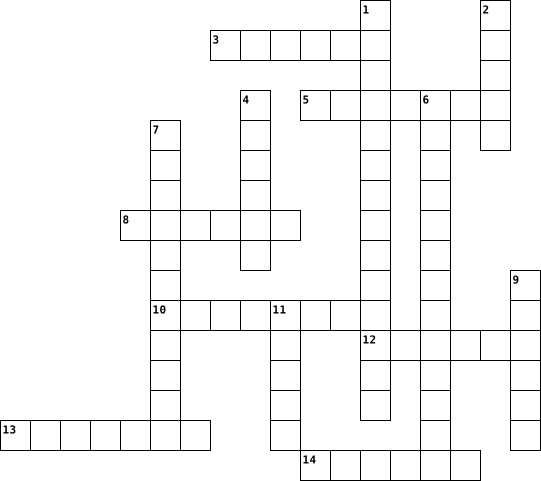
Across
- glucose stored as ... in plants
- waxy layer to prevent water loss
- test for sugar in plants
- most number of chloroplasts found here
- 2nd highest number of chloroplasts found here
- positions the leaf blade for maximum absorption of light
- found in the leaf vein/vascular bundle (transport food)
Down
- process whereby plants make food
- found in the leaf vein/vascular bundle (transport water)
- also known as leaf blade
- gas taken in during making food
- pigment required to absorb light energy
- gas given out during making food
- opening found in the leaf lower epidermis
14 Clues: also known as leaf blade • test for sugar in plants • glucose stored as ... in plants • gas taken in during making food • process whereby plants make food • waxy layer to prevent water loss • gas given out during making food • most number of chloroplasts found here • pigment required to absorb light energy • opening found in the leaf lower epidermis • ...
Serendipity: Host Plants 2019-08-12

Across
- Baltimore Checkerspot
- Soldier
- Red Admiral
- Hackberry Emperor
- Mourning Cloak
- Cecropia
- Eastern Black Swallowtail
Down
- Pipevine Swallowtail
- Cabbage White
- Painted Lady
- Tiger Swallowtail
- Hummingbird Clearwing
- Spicebush Swallowtail
- Giant Swallowtail
14 Clues: Soldier • Cecropia • Red Admiral • Painted Lady • Cabbage White • Mourning Cloak • Tiger Swallowtail • Hackberry Emperor • Giant Swallowtail • Pipevine Swallowtail • Baltimore Checkerspot • Hummingbird Clearwing • Spicebush Swallowtail • Eastern Black Swallowtail
Plants and Matter 2023-02-10

Across
- Fixed volume, no fixed shape
- a change in which the thing becomes a different thing
- the science of matter and energy
- fixed volume and fixed shape
- No fixed volume, no fixed shape
- the old science of chemistry
- the old science of physics
Down
- a change in which the thing is still the same
- the superstition of the stars
- a change in which chemical composition changes
- the science of matter and its composition
- a change in which chemical composition stays the same
- the lego blocks that make up physical things
- stuff
14 Clues: stuff • the old science of physics • Fixed volume, no fixed shape • fixed volume and fixed shape • the old science of chemistry • the superstition of the stars • No fixed volume, no fixed shape • the science of matter and energy • the science of matter and its composition • the lego blocks that make up physical things • a change in which the thing is still the same • ...
Plants and Matter 2023-02-10

Across
- Fixed volume, no fixed shape
- a change in which the thing becomes a different thing
- the science of matter and energy
- fixed volume and fixed shape
- No fixed volume, no fixed shape
- the old science of chemistry
- the old science of physics
Down
- a change in which the thing is still the same
- the superstition of the stars
- a change in which chemical composition changes
- the science of matter and its composition
- a change in which chemical composition stays the same
- the lego blocks that make up physical things
- stuff
14 Clues: stuff • the old science of physics • Fixed volume, no fixed shape • fixed volume and fixed shape • the old science of chemistry • the superstition of the stars • No fixed volume, no fixed shape • the science of matter and energy • the science of matter and its composition • the lego blocks that make up physical things • a change in which the thing is still the same • ...
Plants Vocabulary Crossword 2022-03-09

Across
- Pore found in the epidermis of leaves, stems, and other organs, that controls the rate of gas exchange
- Vascular tissue that conveys water and dissolved minerals from the roots to the rest of the plant
- Hormone involved in phototropism
- Reproductive structure of gymnosperms
- Waxy, protective coating of leaves
- Ability of water to flow in narrow spaces against gravity
- Growth of the parts of plants with respect to the force of gravity
- Vascular tissue that conducts foods made in the leaves during photosynthesis to all other parts of the plant
Down
- Male reproductive structure of a flower
- Turning of a plant in response to a touch stimulus
- Reproduction that results in offspring genetically identical to the parent
- Smallest, most basic unit of life
- Organism that can produce its own food using light, water, carbon dioxide, or other chemicals
- Produces eggs
14 Clues: Produces eggs • Hormone involved in phototropism • Smallest, most basic unit of life • Waxy, protective coating of leaves • Reproductive structure of gymnosperms • Male reproductive structure of a flower • Turning of a plant in response to a touch stimulus • Ability of water to flow in narrow spaces against gravity • ...
The food plants 2024-01-15

Across
- ajo
- nabo
- aguacate
- apio
- coliflor
- rabano
- frejol
Down
- col
- brocoli
- tomate
- choclo
- papa
- zanahoria
- arroz
14 Clues: col • ajo • nabo • apio • papa • arroz • tomate • choclo • rabano • frejol • brocoli • aguacate • coliflor • zanahoria
All About Plants 2024-03-10

Across
- a substance that gives color
- to carry
- things in a room that can be moved around and make a room easier to use
- power from electricity
- something that makes heat or power when burned
- vitamins, minerals, and other things that plants and animals need to live and grow
- person, place, or thing that something comes from
Down
- chemicals that come from nonliving things and are needed in small amounts for good health
- carry pollen from one plant to another
- special powder made by male flower cells
- a tiny part of a living thing
- to stay alive
- things used to make other things
- to lose or get rid of something
14 Clues: to carry • to stay alive • power from electricity • a substance that gives color • a tiny part of a living thing • to lose or get rid of something • things used to make other things • carry pollen from one plant to another • special powder made by male flower cells • something that makes heat or power when burned • person, place, or thing that something comes from • ...
Plants and Fungi 2024-02-29

Across
- the tubes in plants that transport water and minerals up from the roots to the leaves
- an organism that makes its own food by absorbing simple molecules; most autotrophs use photosynthesis
- the green substance that is found in plant cells, which absorbs the Sun’s energy during photosynthesis
- an organism that only has one cell
- the process that organisms use to produce offspring
- one of the two types of flowering plants; angiosperm seeds are inside a fruit
- complex molecules that contain carbon and normally come from living things
Down
- one of the two types of flowering plants; gymnosperms do not produce fruit
- the process that plants use to turn inorganic compounds into organic nutrients; it requires sunlight and water
- the tubes that transport glucose around a plant
- the process that living things use to get energy
- substances that all organisms need in order to grow, reproduce, repair themselves and get energy
- an organism that absorbs nutrients from dead or decaying organisms
- the process by which water evaporates or is removed from the surface of a plant
14 Clues: an organism that only has one cell • the tubes that transport glucose around a plant • the process that living things use to get energy • the process that organisms use to produce offspring • an organism that absorbs nutrients from dead or decaying organisms • one of the two types of flowering plants; gymnosperms do not produce fruit • ...
Watershed, Pollution & Plants 2025-09-25

Across
- Plant structures that absorb water from soil
- Soil or rock carried away by water, wind, or ice
- Water molecules stick together like a chain
- Water evaporating from leaves creating suction
- All the land where water drains to the same place
- Water soaking into the ground
- Pollution from one single, obvious source
Down
- Contamination of air, water, or soil
- Pollution from many smaller, spread-out sources
- The repeating process of water moving through the environment
- Water that flows over the land into rivers and streams
- Water moves upward inside plants through thin tubes
- High ridges of land that separate watersheds
- Water molecules stick to the walls of xylem tubes
14 Clues: Water soaking into the ground • Contamination of air, water, or soil • Pollution from one single, obvious source • Water molecules stick together like a chain • Plant structures that absorb water from soil • High ridges of land that separate watersheds • Water evaporating from leaves creating suction • Pollution from many smaller, spread-out sources • ...
Transport in Plants 2025-04-17

Across
- The process of transporting the products of photosynthesis in the phloem
- What is it called when water molecules stick together?
- What pulls water upward in the xylem?
- The process of transporting water in the xylem
- The type of experiment that involves radioactive isotopes to trace movement in the plant
- Where water moves out from
- Where is sucrose stored?
- What moves sucrose from leaf cell to phloem?
Down
- Process of sucrose moving to a lower pressure area
- Sugar made in the source
- The theory of water transport in the xylem
- The leaf is the ______ of the plant
- What type of pressure is created when water moves from xylem to phloem?
- The type of experiment that involves removing a ring of surface tissues and leaves stem core?
14 Clues: Sugar made in the source • Where is sucrose stored? • Where water moves out from • The leaf is the ______ of the plant • What pulls water upward in the xylem? • The theory of water transport in the xylem • What moves sucrose from leaf cell to phloem? • The process of transporting water in the xylem • Process of sucrose moving to a lower pressure area • ...
Vivaan Science puzzle 2020-12-06

Across
- process that plants make their food
- plants-Plants that don’t have the parts to transfer essentials into their body
- Plants that live for more than 2 years
- that live in or on water
- that don’t have an outer protection
- substance that makes the leaves of a plant green
Down
- that need very little water to survive
- that have the parts to transfer essentials into their body
- that live for only a season or 2
- that need moderate amount of water to survive
10 Clues: that live in or on water • that live for only a season or 2 • process that plants make their food • that don’t have an outer protection • that need very little water to survive • Plants that live for more than 2 years • that need moderate amount of water to survive • substance that makes the leaves of a plant green • ...
Photosynthesis 2026-01-16

Across
- Natural light from the sun that provides energy.
- All living things and their environment in one area.
- A green substance in plants that absorbs sunlight.
- A type of sugar tht gives energy to plants.
- A feature that helps an organism survive in its environment.
- The process where plants use sunlight to make food.
- Substances that living organisms need to grow and survive.
Down
- The power needed to grow, move or function.
- An organism thats gets energy by eating other organisms.
- The layer of gases surrounding the earth.
- The process of using oxygen to produce energy.
- An organism, like a plant, that makes its own food.
- The part of a plant cell where photosynthesis happens.
- dioxide A gas in the air that plants need for photosynthesis.
- A gas released by plants that humans and animals breathe.
15 Clues: The layer of gases surrounding the earth. • The power needed to grow, move or function. • A type of sugar tht gives energy to plants. • The process of using oxygen to produce energy. • Natural light from the sun that provides energy. • A green substance in plants that absorbs sunlight. • An organism, like a plant, that makes its own food. • ...
SOURCES OF FOOD 2019-04-16

Across
- food chains always starts with this
- eat plants
- the fuel used by our body to keep it working
- eat fles of other animals
- small animals that depend on other animals for thier food
- eat mainly dead bodies of animals
Down
- shows how each living things gets its food in a particular environment
- eat both plants and animals
- the chemical substances in food that are body needs
- green plants
- the father of green revelution in India
- a network of many food chains
- the only food that comes neither from plants nor from animals
13 Clues: eat plants • green plants • eat fles of other animals • eat both plants and animals • a network of many food chains • eat mainly dead bodies of animals • food chains always starts with this • the father of green revelution in India • the fuel used by our body to keep it working • the chemical substances in food that are body needs • ...
Photosynthesis Crossword 2025-04-04

Across
- The green pigment in the plant.
- This holds the plant in the ground.
- The process plants use to make food.
- The big yellow thing in the sky that gives energy.
- What plants need to grow, besides sunlight and air.
- The part of the plant that makes food.
Down
- The sugar is ____ for the plant.
- A sugar made by plants.
- The gas plants take in from the air.
- Tiny holes in leaves.
- The part of the plant that makes seeds.
- The gas plants release.
- The part of the plant that carries water to the rest of the plant.
13 Clues: Tiny holes in leaves. • A sugar made by plants. • The gas plants release. • The green pigment in the plant. • The sugar is ____ for the plant. • This holds the plant in the ground. • The gas plants take in from the air. • The process plants use to make food. • The part of the plant that makes food. • The part of the plant that makes seeds. • ...
Introduction to Plants 2013-08-19

Across
- photosynthetic organs that contain vascular tissue.
- this type of angiosperm has two cotyledons
- multicellular eukaryotes that have cell walls made of cellulose.
- develop unique reproductive organs known as flowers
- a dicot plant with have this type of root
- the group of plants lack vascular tissue and obtain water through osmosis.
- oldest seed plant species alive today, sometimes called a "living fossil".
Down
- supporting structures that connect roots and leaves.
- specialized tissue that conducts water and nutrients throughout the plant.
- bear their seeds directly on cones
- this type of angiosperm has a single cotyledon
- wall of tissue surrounding and protecting the seed.
- most common type of bryophytes.
- underground organs that absorb water
14 Clues: most common type of bryophytes. • bear their seeds directly on cones • underground organs that absorb water • a dicot plant with have this type of root • this type of angiosperm has two cotyledons • this type of angiosperm has a single cotyledon • photosynthetic organs that contain vascular tissue. • wall of tissue surrounding and protecting the seed. • ...
Parts of plants 2020-03-27

Across
- absorbs water and mineral from the soil.
- develop into a flower,leaf or shoot.
- where bud,leaf and branch originate.
- can grow into a new plant.
- grow from the trunk from the plant.
- are smallest branches.
- transport fluids between the root.
- are sexual reproduction part of plant.
Down
- is important part of tree for timber production.
- refers to the flat part of the plant.
- is mainly for photosynthesis and exchange of gas.
- absorbs nutrients via the plants different roots.
- coat is outer cover of seed.
- is the seed-bearing structure in flowering plants.
14 Clues: are smallest branches. • can grow into a new plant. • coat is outer cover of seed. • transport fluids between the root. • grow from the trunk from the plant. • develop into a flower,leaf or shoot. • where bud,leaf and branch originate. • refers to the flat part of the plant. • are sexual reproduction part of plant. • absorbs water and mineral from the soil. • ...
Medicinal Plants Crossword 2021-02-10

Across
- Help in respiratory diseases
- Medicine for diabetes
- Restorative tonic
- Native to Maharashtra
- Helps in curing mental disorders
- Anti Inflammatory
- Has high level of vitamins
- Vital in treating Jaundice
Down
- Used to control high blood pressure and hypertension
- Used as a Laxative medicine
- Used to treat diarrhea
- Cardiotonic in heart failures
- Helps in treating cough and cold
- Cures eyes related disorders
14 Clues: Restorative tonic • Anti Inflammatory • Medicine for diabetes • Native to Maharashtra • Used to treat diarrhea • Has high level of vitamins • Vital in treating Jaundice • Used as a Laxative medicine • Help in respiratory diseases • Cures eyes related disorders • Cardiotonic in heart failures • Helps in treating cough and cold • Helps in curing mental disorders • ...
forests and plants 2020-07-30

Across
- instrument used to measure the rate of the growth of a plant.
- seeds are dispersed by water.
- a place providing shelter and protection.
- green pigment in leaves.
- large scale cutting of trees.
- a temporary structure used to support people and materials during construction.
- disperse through water.
- gir national park.
- parts of the seed that store food for the baby plant.
Down
- type of reproduction without seeds.
- an area with high density of trees.
- a young plant.
- a large scale planting of trees.
- a light weight narrow boat.
14 Clues: a young plant. • gir national park. • disperse through water. • green pigment in leaves. • a light weight narrow boat. • seeds are dispersed by water. • large scale cutting of trees. • a large scale planting of trees. • type of reproduction without seeds. • an area with high density of trees. • a place providing shelter and protection. • ...
Tansport in plants 2021-01-14

Across
- increases surface area in roots
- attractive forces between water molecules
- movement of water molecules
- when cells of animals will wrinkle or shivel
- when cells membrane pulls away from cell wall
- opening in leaves
- movement of particles from an area of high. to low concentration
Down
- high solute concentration
- solute concentration in equilibrium
- attractive forces between two unlike materials
- process by which water evaporate from leaves
- carries sugars
- low solute concentration
- carries water and nutrients
14 Clues: carries sugars • opening in leaves • low solute concentration • high solute concentration • movement of water molecules • carries water and nutrients • increases surface area in roots • solute concentration in equilibrium • attractive forces between water molecules • process by which water evaporate from leaves • when cells of animals will wrinkle or shivel • ...
nutrition in plants 2017-05-04
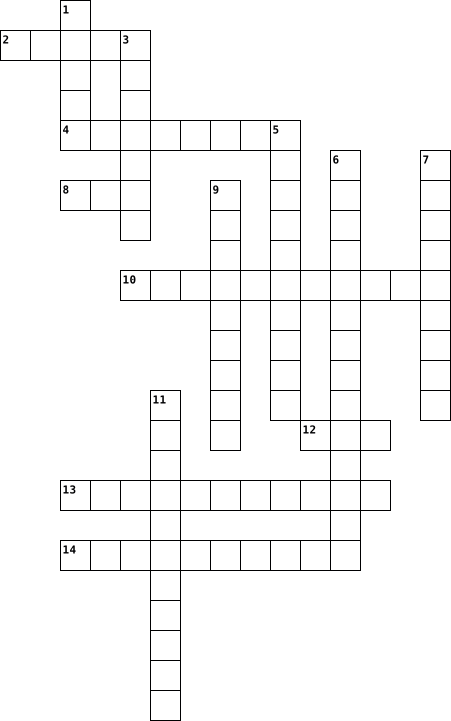
Across
- called ___________
- green structures called _________
- is called _____
- fungi and bacteria that use this mode of saprotrophic
- Venus flytrap catch insect by ingenious methods . they are known as
- the cells of green plants and young stems of plants contain
- organisms that can make their food from simple non-living
Down
- pigment called _________
- leaves take in carbon di oxide from the air through tiny
- . such plants are called _______
- the synthesis of food occurs in the presence of sunlight
- dodder plants that sucks food from another plant using root-like
- are known as ________________
- the chloroplast are green because of the presence of a
14 Clues: is called _____ • called ___________ • pigment called _________ • are known as ________________ • . such plants are called _______ • green structures called _________ • fungi and bacteria that use this mode of saprotrophic • the chloroplast are green because of the presence of a • leaves take in carbon di oxide from the air through tiny • ...
Transport in plants 2019-04-23

Across
- movement of sucrose and amino acids in the phloem
- process that plant absorbs mineral ions
- part of plant where sugar is used or stored
- interaction between water molecule and cellulose wall of xylem
- part of plant where sugar is made
- causes the stomata to open
- interaction between water molecules
- dead tissue that transport water and mineral ions
Down
- draws water in the xylem up against gravity
- the loss of water vapour from plant leaves by evaporation of water at the surface of mesophyll cells followed by the diffusion of water vapour through the stomata
- pathway of water uptake by root is root hair, root hair cell, _____, xylem
- the apparatus for investigating the transpiration rate in plant
- contains both xylem and phloem
- occurs when the volume of water vapour lost by leaves is greater than that absorbed by root
14 Clues: causes the stomata to open • contains both xylem and phloem • part of plant where sugar is made • interaction between water molecules • process that plant absorbs mineral ions • draws water in the xylem up against gravity • part of plant where sugar is used or stored • movement of sucrose and amino acids in the phloem • dead tissue that transport water and mineral ions • ...
Transport in plants 2019-04-23

Across
- process that plant absorbs mineral ions
- interaction between water molecules
- the apparatus for investigating the transpiration rate in plant
- movement of sucrose and amino acids in the phloem
- causes the stomata to open
- water at the surface of mesophyll cells turn into water vapour
- contains both xylem and phloem
- pathway of water uptake by root is root hair, root hair cell, ______, xylem
Down
- dead tissue that provides support and transports water and mineral ions
- draws water in the xylem up against gravity
- interaction between water molecules and cellulose wall of xylem
- occurs when the volume of water vapour lost by leaves is greater than that absorbed by root
- part of plant where sugar is used or stored
- part of plant where sugar is made
14 Clues: causes the stomata to open • contains both xylem and phloem • part of plant where sugar is made • interaction between water molecules • process that plant absorbs mineral ions • draws water in the xylem up against gravity • part of plant where sugar is used or stored • movement of sucrose and amino acids in the phloem • ...
CLASSIFICATION OF PLANTS 2019-09-29

Across
- fastest growing woody plant in the world that can grow up to 35 inches in just one day
- largest flower in the world
- nonvascular
- a support structure for the petal
- bearing cones
- mMost plants are autotrophic, creating their own food using water, carbon dioxided and light through the process called _______
- these are plants that have one-seed lead or cotyledon
Down
- naked seeds
- the part of flower that produces pollen
- scientific name for flowering plants
- vascular
- it is when seed begins to grow
- these are plants that have two-seed leaves or cotyledons
- examples: mosses and ferns
14 Clues: vascular • naked seeds • nonvascular • bearing cones • examples: mosses and ferns • largest flower in the world • it is when seed begins to grow • a support structure for the petal • scientific name for flowering plants • the part of flower that produces pollen • these are plants that have one-seed lead or cotyledon • these are plants that have two-seed leaves or cotyledons • ...
Non Vascular Plants 2020-10-13

Across
- Leaflike structure of a moss which is one layer thick and has a costa. Essentially, a non-vascular leaf.
- Thread-like structures that attach gametophore to the ground.
- In leafy liverworts, a tubular sheath surrounding an archegonium, and later, the developing sporophyte.
- Part of the sporophyte that acts as a stalk to hold other parts of the sporophyte above the boundary layer.
- A thread-like chain of cells that forms the earliest stage (the haploid phase) of the life cycle of mosses and liverworts.
- Enlarged archegonial venter that protects the capsule that contains the embryonic sporophyte.
- Leaves that form in a row on the undersurface of the stem of a leafy liverwort. They are smaller than the leaves on the upper surface.
Down
- Lack of an ability to regulate and maintain water content.
- Basal portion of an embryo, sporophyte, or spore-producing body, which is embedded in the parental tissue. It serves as an anchor and to absorb nutrients.
- Adjective used to describe clear cells, found in hinge tissue.
- Tough substance that covers the outer wall of spores and pollen grains.
- The swollen lower portion of an archegonium containing the egg.
- Small mass of vegetative tissue that can develop into an entire new plant. Part of non vascular plant asexual reproduction.
- Type of plant body that is not differentiated into root, stem, or leaves.
14 Clues: Lack of an ability to regulate and maintain water content. • Thread-like structures that attach gametophore to the ground. • Adjective used to describe clear cells, found in hinge tissue. • The swollen lower portion of an archegonium containing the egg. • Tough substance that covers the outer wall of spores and pollen grains. • ...
Hawaiian Native Plants 2024-05-01

Across
- A relative of the cranberry, this plant produces edible berries and is found in high-elevation regions.
- This tree's name means "warrior" in Hawaiian, reflecting its strength and historic use in crafting weapons.
- This shrub produces small, pink berries and is found in high-elevation forests.
- Its long, spiky leaves are used in weaving mats, baskets, and other traditional crafts.
- lehua Known for its striking red flowers, this tree is a symbol of love and resilience in Hawaiian culture.
- Its fragrant leaves are often used in lei making and as ceremonial garlands.
- Found in dry coastal areas, this shrub has small yellow flowers and berries used for dyeing.
Down
- Has A close relative of Ohia lehua, this tree is known for its pinkish flowers and is found in wetter forests.
- Its nuts were historically used by Native Hawaiians for oil and candle making.
- This tree is endemic to Hawaii and has distinctively serrated leaves.
- This plant is used to make a traditional Polynesian beverage known for its relaxing effects.
- This shrub is known for its small, white flowers and is often found in dry forests.
- Legend says that this coastal plant's flowers appear to be half-formed due to a tragic love story.
- A member of the ginger family, this plant is prized for its medicinal and culinary properties.
- This flowering plant produces small, yellow blooms and is the official flower of the island of Oahu.
15 Clues: This tree is endemic to Hawaii and has distinctively serrated leaves. • Its fragrant leaves are often used in lei making and as ceremonial garlands. • Its nuts were historically used by Native Hawaiians for oil and candle making. • This shrub produces small, pink berries and is found in high-elevation forests. • ...
Transport in Plants 2023-01-31

Across
- there is a small surface area to volume ratio
- The tissue that make up the phloem are _____
- Water enters the root by this process
- transport food in plants
- increases the absorption rate of water in the roots
- water leaves the plant by evaporation
Down
- As temperature increases the rate of transpiration will _____
- The concentration of water vapour in the air
- the movement of sugars in a plant
- transports water in plants
- Water leaves the leaf through tiny holes called the ____________
- The tissues that make up the Xylem are ____
- helps bring water up the plant through cohesion and adhesion
- Water exits the plants through the _____
14 Clues: transport food in plants • transports water in plants • the movement of sugars in a plant • Water enters the root by this process • water leaves the plant by evaporation • Water exits the plants through the _____ • The tissues that make up the Xylem are ____ • The concentration of water vapour in the air • The tissue that make up the phloem are _____ • ...
Body and Plants 2023-03-07

Across
- I grow to get insects to pollinate me
- A,B,C and K are examples
- I am found in fruit and can grow into a plant
- I am made to stop dust/bacteria getting into the lungs
- I circulate around the body
- I take up water from the soil
Down
- this protects trees from infection
- I am the sugar used by the body for energy
- I am found in the stomach to help digestion
- humans and apes have these
- This protects animals from infection
- I help digest food
- I am made during photosynthesis
- I am the slowest mammal
14 Clues: I help digest food • I am the slowest mammal • A,B,C and K are examples • humans and apes have these • I circulate around the body • I take up water from the soil • I am made during photosynthesis • this protects trees from infection • This protects animals from infection • I grow to get insects to pollinate me • I am the sugar used by the body for energy • ...
Plants Around US 2024-11-21

Across
- I protect seeds
- the leaves contain a green substance called
- The inner most layer of the stem
- A modification seen in cactus
- plants that bears buds in leaves for propogation
- Tiny openings on the leaves
- underground part of a plant
- My outer most layer is called
Down
- The process by which a seed grows into a young plant
- one big main root
- Store food for the baby plants
- The flattened green part of leaf
- structure that develops into flower
- the central big vein of a leaf
14 Clues: I protect seeds • one big main root • Tiny openings on the leaves • underground part of a plant • A modification seen in cactus • My outer most layer is called • Store food for the baby plants • the central big vein of a leaf • The flattened green part of leaf • The inner most layer of the stem • structure that develops into flower • the leaves contain a green substance called • ...
Reproduction in plants 2024-04-01

Across
- Fruits or seeds are usually light and small and have wing-like structures. These are dispersed by ______.
- This part enlarges to become the fruit
- The transfer of pollen grains from the anther to the stigma of a flower.
- The fusion of male reproductive cell with the egg cell.
- The seeds need water, air and warmth for this process.
- This part connects the stigma to the ovary
- Seeds found in fleshy fruits are dispersed by _____.
Down
- The scattering of fruits or seeds away from the parent plant
- This part develops into seeds
- These reproductive cells are found in the ovule
- Non-flowering plants do not produce seeds, the produce _______.
- This part supports the anther.
- These reproductive cells are found in the pollen grains
- Fruits with fibrous husk that trap air are dispersed by _______.
14 Clues: This part develops into seeds • This part supports the anther. • This part enlarges to become the fruit • This part connects the stigma to the ovary • These reproductive cells are found in the ovule • Seeds found in fleshy fruits are dispersed by _____. • The seeds need water, air and warmth for this process. • The fusion of male reproductive cell with the egg cell. • ...
Life cycle: plants 2024-03-22

Across
- person, who helps
- main body of the flower
- red edible root plant
- baby plant
- fine yellow dust
- underground part of the flower
- an insect, that spreads pollen
Down
- a thick string
- a place with many shops and fun activities
- baby flower
- park with flowers
- ground, that can grow plants
- a flower that looks like a sun
- colorful parts of the flower
14 Clues: baby plant • baby flower • a thick string • fine yellow dust • person, who helps • park with flowers • red edible root plant • main body of the flower • ground, that can grow plants • colorful parts of the flower • a flower that looks like a sun • underground part of the flower • an insect, that spreads pollen • a place with many shops and fun activities
Uses of Plants 2022-02-08

Across
- produce fiber that are used to manufacture clothes, towels, and carpets
- used in making barongs, bags, and table linens
- acquired from plants to treat health disorders
- used in school to write on and are made from dried leaves and barks of trees.
- produced by plants that animals and humans breathe.
- absorbed by plants keeping the air fresh
- keep us warm and protected
- sewn to make linen
Down
- built using bamboo or narra that provides shelter to so many
- an accessory made using flowers that are tied in woman's wrist
- it is provided by plants giving us energy
- helps prevent constipation and aids in digestion
- it has vitamin K which is needed for blood clothing
- add beauty to surroundings and a pleasant sight to see
14 Clues: sewn to make linen • keep us warm and protected • absorbed by plants keeping the air fresh • it is provided by plants giving us energy • used in making barongs, bags, and table linens • acquired from plants to treat health disorders • helps prevent constipation and aids in digestion • it has vitamin K which is needed for blood clothing • ...
World of Plants 2025-09-17

Across
- community of living things among an area.
- green pigment in plants to capture light.
- clear waxy layer surrounding a leaf.
- different kinds of life in one area.
- ___mesophyll is near the top of the leaf capturing sunlight.
- Fluid inside chloroplast surrounding thylakoids.
- green disc inside a chloroplast.
Down
- large region of a/biotic factors adapted to conditions.
- organelle that contains chlorophyll.
- Outer most layer of a leaf.
- Role an organism has in its habitat.
- transports water through plant roots.
- used to transport sugars and food nutrients.
- ___ mesophyll is the lower layer of a leaf.
14 Clues: Outer most layer of a leaf. • green disc inside a chloroplast. • organelle that contains chlorophyll. • clear waxy layer surrounding a leaf. • Role an organism has in its habitat. • different kinds of life in one area. • transports water through plant roots. • community of living things among an area. • green pigment in plants to capture light. • ...
Trees and Plants 2026-05-01

Across
- Parts of a plant that grow underground and soak up water
- Yellow dust from flowers that helps make new plants
- A tiny plant baby that can grow into a new plant
- Tall plants with trunks, branches, and leaves
- Soft green plants that cover lawns and fields
- The thick main stem of a tree
- A young plant just starting to grow
Down
- Colorful parts of plants that often smell nice
- Pretty flowers that bloom on trees in spring
- The “arms” of a tree that grow out from the trunk
- A plant you should NOT touch—it can make your skin itchy!
- Flat green parts of a plant that make food from sunlight
- Small sticks you find on the ground under trees
- A spiky plant that grows in the desert and stores water
14 Clues: The thick main stem of a tree • A young plant just starting to grow • Pretty flowers that bloom on trees in spring • Tall plants with trunks, branches, and leaves • Soft green plants that cover lawns and fields • Colorful parts of plants that often smell nice • Small sticks you find on the ground under trees • A tiny plant baby that can grow into a new plant • ...
Junior Science Ecology 2013-03-29

Across
- Plants are generally these
- Interlinking food chains
- Organisms are linked by this
- A bear is this type of consumer
- How organisms are linked by what they eat
- One thing that plants compete for
- Energy Source
Down
- One thing that animals compete for
- The home of a plant or animal
- Everything other than plants
- Plants only please
- Everything that surrounds the organism
- The clean up crew
13 Clues: Energy Source • The clean up crew • Plants only please • Interlinking food chains • Plants are generally these • Everything other than plants • Organisms are linked by this • The home of a plant or animal • A bear is this type of consumer • One thing that plants compete for • One thing that animals compete for • Everything that surrounds the organism • ...
Photosynthesis and Food Webs 2013-11-24

Across
- These animals hunt and eat other animals
- These animals eat plants and other animals
- These are green plants that make their own food from sunlight
- The amount of organic material in an organism
- These animals only eat other animals
- The way plants make their energy
- The type of sugar the plant makes
Down
- The form of energy used by plants to make food
- The plant makes this as a waste product
- The plant used this from the air to help make its food
- These animals have to eat things to get their energy
- The green substance in plant cells that allow them to photosynthesize
- These are little discs in the plant cell. These have the green substance called chlorophyll in them.
- These animals get hunted and eaten by the predators!
- These animals only eat plants
15 Clues: These animals only eat plants • The way plants make their energy • The type of sugar the plant makes • These animals only eat other animals • The plant makes this as a waste product • These animals hunt and eat other animals • These animals eat plants and other animals • The amount of organic material in an organism • The form of energy used by plants to make food • ...
life and living 2025-03-25

Across
- the important parts of food needed by the body for energy
- a substance that makes plants green
- difficulty in passing solid waste out of the body
- micro-organisms that break down dead plants and animals
- educated guess or possible outcome for an investigation
- an illness that stops our bodies from working properly
Down
- animals that eat other animals or meat eaters
- the process by which plants make their own food
- germs entering your body and causing problem
- animals that eat both plants and animals
- helps push waste out of the digestive system
- an area where living and non-living things depend on each other in different ways
- the different foods a person or animal eats everyday
- plants that make their own food
- a gas in the air that living things need
15 Clues: plants that make their own food • a substance that makes plants green • animals that eat both plants and animals • a gas in the air that living things need • germs entering your body and causing problem • helps push waste out of the digestive system • animals that eat other animals or meat eaters • the process by which plants make their own food • ...
Plant -increasing the numbers 2018-04-23

Across
- dry soil
- gram rabicrops
- wind dispersal
- plants moist soil
- pumpkin summer plants
- used for destroying harmful insects insecticides
- maize kharif crops
- used for food such as wheat,oats or corn cereals
- process of scattering of seeds through agents of nature dispersal
Down
- ground nut well drained sandy soil
- mangoes animal dispersal
- watered irrigated
- cauliflower winter plants
- bajra sandy soil
- water dispersal
15 Clues: dry soil • wind dispersal • water dispersal • gram rabicrops • watered irrigated • plants moist soil • bajra sandy soil • pumpkin summer plants • maize kharif crops • mangoes animal dispersal • cauliflower winter plants • ground nut well drained sandy soil • used for destroying harmful insects insecticides • used for food such as wheat,oats or corn cereals • ...
Spring 2024-03-02
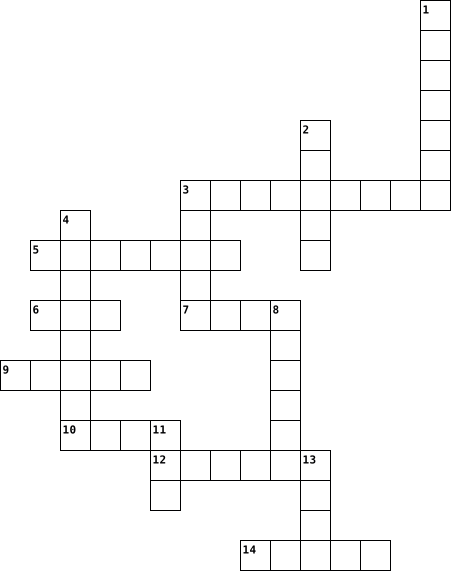
Across
- sneezing and coughing because of plants
- bright colored parts of plants
- the third month of spring
- baby sheep
- baby chicken
- plants do this in the spring
- Christian spring holiday
- small, fluffy animal with long ears
Down
- short times of rain
- first month of spring
- the second month of spring
- spring housework
- gentle wind
- opposite of dry
- wet weather
15 Clues: baby sheep • gentle wind • wet weather • baby chicken • opposite of dry • spring housework • short times of rain • first month of spring • Christian spring holiday • the third month of spring • the second month of spring • plants do this in the spring • bright colored parts of plants • small, fluffy animal with long ears • sneezing and coughing because of plants
Water Cycle - Porter C. 2024-12-17

Across
- Body of water
- Water vapor produced through plants
- Holds water vapor
- Running of land
- Water in the ground
- Clouds made of ice particles
- Clouds of water
Down
- Rain, snow, hail
- H2O
- The sun _______ the water
- Evaporates the water
- Vegitation
- Flows to another body of water
- Biggest body of water
- Water vapor in the air/on plants
15 Clues: H2O • Vegitation • Body of water • Running of land • Clouds of water • Rain, snow, hail • Holds water vapor • Water in the ground • Evaporates the water • Biggest body of water • The sun _______ the water • Clouds made of ice particles • Flows to another body of water • Water vapor in the air/on plants • Water vapor produced through plants
Plants and Microbes 2020-03-09

Across
- We refer to the complexity and organisation of life in the soil as a ____ in the soil.
- This keeps the soil moist, encourages soil microbes, stops weed seeds germinating and nourishes the soil.
- These organisms send signals along their threads as far as 20 km in the forest.
- We refer to the soil as the _______ of the plant.
- The chemical process that happens inside the green leaf which uses sunlight energy to produce glucose
- We refer to the leaves of the plant as ____ panels.
- We digest our foods inside our body, plants digest their food _______ their roots.
Down
- Bark mulch is best used for _____ and trees.
- The technical name for worm poo.
- Earthworms roam through the soil leaving _____ for other organisms and roots to travel down.
- This type of garden turns the soil organisms world into chaos.
- Plants send this percentage of sugars produced in the leaf, down to the roots.
- Grass or hay mulch is best used for __________.
- All life on planet earth depends upon the _____
14 Clues: The technical name for worm poo. • Bark mulch is best used for _____ and trees. • Grass or hay mulch is best used for __________. • All life on planet earth depends upon the _____ • We refer to the soil as the _______ of the plant. • We refer to the leaves of the plant as ____ panels. • This type of garden turns the soil organisms world into chaos. • ...
Plants -cb takaki 2016-11-23

Across
- of water
- from the sun.
- that obsorbs light in a plant
- to the soil and takes in water
- that makes it's own food
- carries food from the leaves to other parts of the plant
- dioxide-the stuff that we breathe out
Down
- supports a plant and carries water and nutrients
- makes food for the plant
- that uses water from soil carbon dioxide from the air and
- oxygen is made by a plant
- that eats plants or other animals
- small hole that opens and closes to breath in air for the plant
- tube that carries water and nutrients from the soil
14 Clues: of water • from the sun. • makes food for the plant • that makes it's own food • oxygen is made by a plant • that obsorbs light in a plant • to the soil and takes in water • that eats plants or other animals • dioxide-the stuff that we breathe out • supports a plant and carries water and nutrients • tube that carries water and nutrients from the soil • ...
Plants as food 2013-02-24

Across
- These are at the bottom of food chains.
- Many food chains linked together.
- An animal that eats plants.
- An animal that eats other animals
- Plants need this to produce their own food and energy.
- A carrot is an example of this part of a plant that can be eaten
- The amount of this being passed up a food chain decreases.
- Peas are an example of this type of plant that can be eaten.
Down
- What plants are known as because they make food for themselves and others
- The process in which plants produce their own energy
- A strawberry is an example of this part of a plant that can be eaten.
- Lettuce is an example of this type of plant that can be eaten.
- An animal that is hunted by other animals.
- Celery is an example of this part of the plant that can be eaten.
14 Clues: An animal that eats plants. • Many food chains linked together. • An animal that eats other animals • These are at the bottom of food chains. • An animal that is hunted by other animals. • The process in which plants produce their own energy • Plants need this to produce their own food and energy. • The amount of this being passed up a food chain decreases. • ...
Plants In Action 2013-11-24

Across
- A plant that lives for 1 year
- When bees and other creatures pollinate the plant
- One of the three most important objects for living things
- One of the most essential things for plants
- Absorb water and minerals
- The beautiful part of the plant
- Create the food for the plant
- The reproductive part of the plant
- The smell of the plant
Down
- The embryonic root of the plant
- The biochemical process in which light energy is absorbed
- The seed coating
- Holds the plant upright
- The beginning of the plant
14 Clues: The seed coating • The smell of the plant • Holds the plant upright • Absorb water and minerals • The beginning of the plant • A plant that lives for 1 year • Create the food for the plant • The embryonic root of the plant • The beautiful part of the plant • The reproductive part of the plant • One of the most essential things for plants • ...
Animals and Plants 2015-07-14

Across
- An animal that spreads diseases
- A plant with a red fruit
- An animal that has stripes
- A plant that rabbits loves to eat
- An animal that goes marching
- A plant with beautiful flowers and thorns
- An animal that climbs trees and eats bananas
Down
- A plant that is big with a bark
- A mighty animal in the ocean
- A vegetable all children love
- A plant that grows like a carpet
- An animal that purrs
- A plant with a happy flower
- An animal that can drive a car
14 Clues: An animal that purrs • A plant with a red fruit • An animal that has stripes • A plant with a happy flower • A mighty animal in the ocean • An animal that goes marching • A vegetable all children love • An animal that can drive a car • A plant that is big with a bark • An animal that spreads diseases • A plant that grows like a carpet • A plant that rabbits loves to eat • ...
NUTRITION IN PLANTS 2016-04-20

Across
- added to plants
- bacteria
- mutually beneficial relationship
- cells that control opening and closing of stomata
- all living organisms require
- plants that consume insects
- self feeding
Down
- provide nutrition
- live in or on other organisms
- hair present in roots
- grows in humid weather
- animals and non green plants
- solution results to blue black
- fungi
14 Clues: fungi • bacteria • self feeding • added to plants • provide nutrition • hair present in roots • grows in humid weather • plants that consume insects • animals and non green plants • all living organisms require • live in or on other organisms • solution results to blue black • mutually beneficial relationship • cells that control opening and closing of stomata
NUTRITION IN PLANTS 2016-04-20
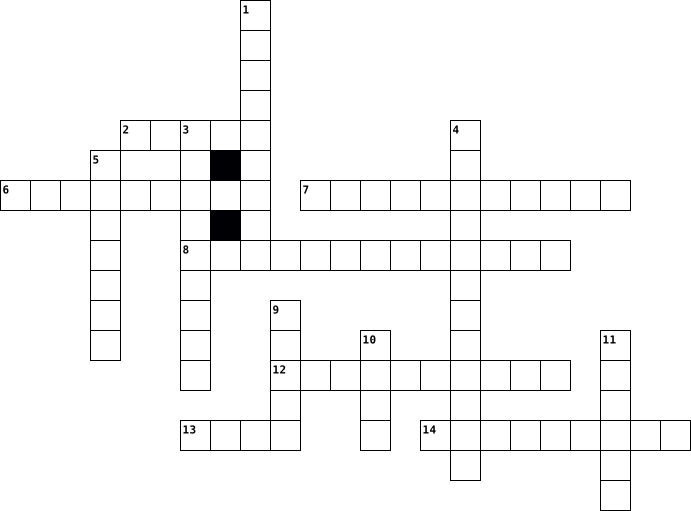
Across
- grows in humid weather
- live in or on other organisms
- fungi
- plants that consume insects
- self feeding
- all living organisms require
- bacteria
Down
- mutually beneficial relationship
- provide nutrition
- animals and non green plants
- added to plants
- cells that control opening and closing of stomata
- hair present in roots
- solution results to blue black
14 Clues: fungi • bacteria • self feeding • added to plants • provide nutrition • hair present in roots • grows in humid weather • plants that consume insects • animals and non green plants • all living organisms require • live in or on other organisms • solution results to blue black • mutually beneficial relationship • cells that control opening and closing of stomata
Plants/Animals Breeding 2023-12-08

Across
- farming - the “refinement of processes made in order to increase productivity and yield”1 in farming with the use of technology.
- Proteins - proteins that are “genetically modified” to become “potent medicines” to treat illnesses.
- - “diversity amongst plant and animal life based on species” 1
- - known as a “genetically modified organism,”1 scientists make these to yield organisms with more desirable traits
- - the quality or regulation of productivity.
- - “foreign substances”1 that provoke an organism’s “immune system”1 to have a reaction.
- - made from tissue culture. The turning of “plantlets”1 into a mass amount of plants.
- breeding- the crossing of animals in order to yield more desirable traits in offsprings
- culture - any “sterile living tissue” from the plant “under a controlled environments”4
Down
- - the ability to be resistant to a disease due to “antibodies found in one’s immune system”.
- - using technology to enhance and “manipulate biology for agricultural, industrial, or other purposes.”
- - a change or alteration made to something’s original form
- - “a complete set of genes in an organism”1
- - pertaining to genes
14 Clues: - pertaining to genes • - “a complete set of genes in an organism”1 • - the quality or regulation of productivity. • - a change or alteration made to something’s original form • - “diversity amongst plant and animal life based on species” 1 • - made from tissue culture. The turning of “plantlets”1 into a mass amount of plants. • ...
Amazing Plants A 2024-04-11

Across
- Tiny little organisms that are everywhere around us that may often cause diseases.
- The way a person or animal acts or behaves.
- To change food in your stomach into substances that your body can use.
- The state or fact of continuing to live or exist especially in spite of difficult conditions.
- Provides energy for plants, animals and people.
- Parts of a plant that grow down into the earth and get water and food for the plant.
- To deceive.
Down
- To cause (someone) to choose to do or be involved in something.
- A carefully formed plan or plot.
- To change to the circumstances.
- Flat, usually green parts of a plant that are joined at one end to the stem or branch.
- The surface of the earth.
- To be unable to move or escape from a place or situation.
- To have a disgusting smell.
14 Clues: To deceive. • The surface of the earth. • To have a disgusting smell. • To change to the circumstances. • A carefully formed plan or plot. • The way a person or animal acts or behaves. • Provides energy for plants, animals and people. • To be unable to move or escape from a place or situation. • To cause (someone) to choose to do or be involved in something. • ...
Plants and photosynthesis 2023-04-28

Across
- vessels that carry food around the plant
- the small sacks of green pigment in leaves
- small pores on a leaf which open and close
- vessels that carry water through a plant
- fertilisers contain these to help a plant grow better
- part of the plant that takes in water
- upper layer of the leaf that protects it.
- the food the plant makes during photosynthesis.
Down
- the layer of a leaf containing many plant cells
- The process where plants make food to grow
- the gas that is given off in photosynthesis
- the thing that sunlight provides to enable this process
- the liquid a plant needs in order to stay alive
- part of a plant that holds it upright
14 Clues: part of a plant that holds it upright • part of the plant that takes in water • vessels that carry food around the plant • vessels that carry water through a plant • upper layer of the leaf that protects it. • The process where plants make food to grow • the small sacks of green pigment in leaves • small pores on a leaf which open and close • ...
PLANTS - Crossword Puzzle 2023-01-26

Across
- - reproductive structure made of overlapping scales where naked plant seeds develop
- - plant organelle where photosynthesis takes place
- - waxy substance secreted by plant cells that helps prevent water loss
- - reproductive structure that contains a plant embryo and a food supply
- - male reproductive organ in a flower
- - modern nonvascular plant
- - type of plant tissue that transports fluids
Down
- - female reproductive organ in a flower
- plant that produces naked seeds in cones
- - type of plant tissue that carries out biochemical reactions
- - tiny pore in a plant leaf through which gas exchange takes place
- - plant that produces seeds in the ovaries of flowers
- - type of plant tissue that covers the outside of a plant
- - type of plant tissue consisting of undifferentiated cells that can continue to divide
14 Clues: - modern nonvascular plant • - male reproductive organ in a flower • - female reproductive organ in a flower • plant that produces naked seeds in cones • - type of plant tissue that transports fluids • - plant organelle where photosynthesis takes place • - plant that produces seeds in the ovaries of flowers • ...
Christmas Plants Crossword 2022-09-14

Across
- cactus festive Brazilian succulent
- ancient glossy leafed flowering tree
- Rosmarinus officinalis
- classic Christmas tree candle scent
- anti-moth conifer
- parasitic evergreen
- December’s birth flower
Down
- showy red flowers from a bulb
- tuberous flower in pink, purple, red, and white
- English sounding evergreen
- balsam fir’s shorter cousin
- daffodils’ Christmas-y cousin
- colorful Christmas tree
- ornamental berry plant
14 Clues: anti-moth conifer • parasitic evergreen • Rosmarinus officinalis • ornamental berry plant • colorful Christmas tree • December’s birth flower • English sounding evergreen • balsam fir’s shorter cousin • showy red flowers from a bulb • daffodils’ Christmas-y cousin • cactus festive Brazilian succulent • classic Christmas tree candle scent • ancient glossy leafed flowering tree • ...
Photosynthesis Tic Tac Toe By: Zoe Moe 2023-01-30

Across
- unique structures found in plants
- a sugar that plants produce
- dioxide a colourless and non-flammable gas
- made in the leaves of plants from excess glucose
- when chlorophyll absorbs energy from sunlight
- most important part of the plant
Down
- plants take from the air and soil during photosynthesis
- chemical process where molecules are broken down by light
- responsible for cellular respiration in plants
- a substance in plants that makes them green
- small openings in stems
11 Clues: small openings in stems • a sugar that plants produce • most important part of the plant • unique structures found in plants • dioxide a colourless and non-flammable gas • a substance in plants that makes them green • when chlorophyll absorbs energy from sunlight • responsible for cellular respiration in plants • made in the leaves of plants from excess glucose • ...
cycles and balance in ecosystems 2026-02-03

Across
- The large variety of living organisms
- dioxide Consumers exhale this gas
- the process where plants make their own food
- organisms that take in water through the food that they eat
Down
- Provides light energy to plants
- Plants give off this gas during photosynthesis
- used by plants to produce food
- Plant leaves are adapted to absorb as much as possible
- This slope will be cooler
- Plants convert light energy into ____ energy
- This slope will contain fewer plants
11 Clues: This slope will be cooler • used by plants to produce food • Provides light energy to plants • dioxide Consumers exhale this gas • This slope will contain fewer plants • The large variety of living organisms • the process where plants make their own food • Plants convert light energy into ____ energy • Plants give off this gas during photosynthesis • ...
Climate And Vegetation 2022-10-05

Across
- animals that naturally live in specific region
- areas of the world that are dominated by grass like the prairies in Canada
- types of forests where the trees drop their leaves for part of the year
- the close to this a place is the more likely it is to have more vegetation
- travelling to a place to see its natural features without destroying the natural environment
- in Canada the further north you go the less vegetation there is until you reach this where there almost no vegetation at all
- forests where the trees stay green all year and many of the types of trees have pine cones
- when soil becomes dry and loses moisture due to high temperatures and little moisture
- different regions of the world that provide food and shelter for animals
- the day to day weather and temperature conditions in an area
- plants release this gas into the air that is beneficial to humans
- if soil does not contain many of these plants and other vegetation cannot grow well
- the variety of plant and animal life around
Down
- when all of the animals in a particular species die out because of habitat loss
- the temperature and moisture patterns in an area over a long period of time
- snow and rain are examples of this
- when plants turn sunlight and water into energy to grow
- plants use this gas that is expelled by humans
- areas of the world that receive less than 250 mm of precipitation per year
- the higher this is the more difficult it is for plants to grow
- cutting down trees to clear space for living and farming
- dead plant and animal matter that mixes with the soil to make it more fertile
- areas of the world that are dominated by trees
- this part of plants captures sunlight and moisture helping the to grow
- this part of plants helps to hold the soil in place
- ecotourism provides a lot of these for people
- when animals do to much of this too much sunlight gets through to the soil making it difficult for the soil to retain moisture
- trees grass and other plants that grwo in different areas of the world
28 Clues: snow and rain are examples of this • the variety of plant and animal life around • ecotourism provides a lot of these for people • plants use this gas that is expelled by humans • animals that naturally live in specific region • areas of the world that are dominated by trees • this part of plants helps to hold the soil in place • ...
Intro to Plant Science and Floral Design 2024-02-07

Across
- _____________ stems are found in plants that produce wood, such as trees and most shrubs.
- _____________ roots are heavily branched and spread out underground from the stem.
- The main portion of the root
- Found in a tube-like shape along the stem (including the main roots) of woody plants
- Design ______________ are considered the “laws of beauty.” They provide guidelines for organizing floral materials and elements in pleasing ways.
- When the seed head forms and is protected by the flag leaf at the top of the stem
- The _____________ of each piece of plant material is very important to the overall visual weight and balance of a design.
- AKA monocots; Plants that have one seed leaf when they first emerge
- The percentage of moisture by weight found in the crop
- Found in the nodes of the plants or the places where leaves and branches attach to the main stem of the plant
Down
- In _______________ floral designs, the weight is equal on both sides of the CVA, but the distribution of flowers and materials is different.
- In _______________ floral designs, equal visual weight is placed in similar positions on both sides of the CVA, creating an almost mirror image between each side of the arrangement.
- _____________ roots arise from the stem and provide additional support for the plant.
- _____________ stems are found in plants that do not produce wood, such as daisies, grasses, and most crop plants.
- Refers to the optical stability of a design
- _____________ roots form from the stem or other non-root plant structure
- Found at the tips of roots and shoots of the plant
- Plants can use both sexual and ____________ meiosis to reproduce.
- ____________ of a plant absorb water and nutrients from the environment and store energy for the plant.
- The very first seed leaf produced by a plant.
- _____________ are a system of roots with one large primary root and few, if any, lateral roots growing from it.
- AKA dicots; Plants with two seed leaves when first emerging
- _____________ roots often have large branches growing out from the primary root
- Water is the single most important element to keep flowers fresh after delivery from a supplier. _________________ is therefore a top priority.
24 Clues: The main portion of the root • Refers to the optical stability of a design • The very first seed leaf produced by a plant. • Found at the tips of roots and shoots of the plant • The percentage of moisture by weight found in the crop • AKA dicots; Plants with two seed leaves when first emerging • Plants can use both sexual and ____________ meiosis to reproduce. • ...
Science Ch. 5 2025-11-12

Across
- The part of the plant that makes the seeds.
- What all flowering plants have.
- To refill
- A single cell that is able to reproduce living organisms.
- What all living things depend on.
- The largest plants in the world.
- A case they contains hundreds of spores.
- The part of the plant that holds the plant up; carries water and minerals upward and food downward.
- The protective “skin” of a tree trunk.
- The part of the plant that makes the food.
- Plant like organisms that cannot make their own food because they do not have chlorophyll.
- The smallest part of an Organism.
- The shell that protects the baby plant from drying out or getting damaged.
- The yellow powdery dust formed by a flower.
- A soil builder.
- The act of moving pollen from one part of a flower to another, or from one flower to a different flower so that the flowers can make seeds.
- Where a pine tree’s seeds are held.
- A living thing.
- The Food making process in green plants.
- A forest that grows in tropical climates.
- The part of the plant that holds the plant in the ground and absorbs water and minerals from the soil.
Down
- The green material in plants.
- Type of leaves that grow on a pine tree.
- The green plants which begin with a spore instead of a seed.
- A forest that grows in temperate climates with leaves that change by seasons.
- The lighter rings of wood that carry sap.
- What the leaves and branches of a tree are called.
- To make more of the same kind.
- An organism that helps to break down dead things.
- The dark rings of wood at the center of a tree trunk.
- A gas given off by people and animals when they breathe that plants need.
- Another name for plants.
- The part of a flowering plant that holds and protects the seeds.
- The stem of the tree.
- Circles in the wood of a tree trunk that tell the age of the tree.
- The type of forest containing many needle trees bearing cones.
- When a leaf breaks down into tiny pieces.
- To rest
- The root’s mouth, what allows the root to absorb water and minerals.
39 Clues: To rest • To refill • A soil builder. • A living thing. • The stem of the tree. • Another name for plants. • The green material in plants. • To make more of the same kind. • What all flowering plants have. • The largest plants in the world. • What all living things depend on. • The smallest part of an Organism. • Where a pine tree’s seeds are held. • ...
Water 2014-01-19

Across
- Wetland that is forested
- Rock formations under ground that are able to hold or transmit water
- Somewhat salty water
- Aquifer under western OK; one of the largest in the world
- Small, fast-running stream, generally cascading over a rocky bed
- Pedrcentage of earth covered by water
- The water beneath the surface of the ground
- Wetland dominated by plants with leaves and stems
- Meandering waterway that is generally shallow and rocky
- Another name for prairie pothole
- Shallow inland body of water; often man-made
Down
- Type of plants that flourish in wetlands
- Wide, deep waterway that flows to the ocean and provides power and transportation
- Branch of a river
- Community of living organisms
- Large, deep naturally made inland body of water
- Underground water that has surfaced
- Type of soil that supports aquatic plants
- Land area saturated by water, either seasonally or permanently
- Wetland usually fed by minertal rich surface or groundwater but few plant nutrients
- Wetland dominated by peat-forming plants
21 Clues: Branch of a river • Somewhat salty water • Wetland that is forested • Community of living organisms • Another name for prairie pothole • Underground water that has surfaced • Pedrcentage of earth covered by water • Type of plants that flourish in wetlands • Wetland dominated by peat-forming plants • Type of soil that supports aquatic plants • ...
ch.2 crossword 2015-03-09

Across
- A leafy roof formed by tall trees in a forest.
- An organism that obtains energy by feeding on other organisms.
- A consumer that eats meat.
- A group of land ecosystems with similar climates and organisms.
- Shallow water over the continental shelf.
- Soil frozen all year.
- A layer of shorter plants that grow in the shade of a canopy.
- An organism that breaks down waste and dead organisms.
- Weather in an area.
Down
- A consumer that eats plants and meat.
- A series of events in which one organism eats another and gains energy.
- A carnivore that feeds on dead organisms.
- A consumer that eats plants.
- The pattern of overlapping food chains in an ecosystem.
- Species carried to a new location.
- A habitat where salt and fresh water meet.
- Cold climate area.
- The movement of organisms.
- An area made mostly of grasses and other nonwoody plants.
- An organism that can make its own food.
20 Clues: Cold climate area. • Weather in an area. • Soil frozen all year. • A consumer that eats meat. • The movement of organisms. • A consumer that eats plants. • Species carried to a new location. • A consumer that eats plants and meat. • An organism that can make its own food. • A carnivore that feeds on dead organisms. • Shallow water over the continental shelf. • ...
Yr 7 Ecology Crossword Assessment 2018-09-11

Across
- Living factor.
- An example is a human. It eats meat and plants.
- Eats only meat.
- A animal that eats another animal.
- A individual form of life.
- An example would be fungi. It breaks down dead animals and plants.
- Area in which living and non-living components interact.
- Eats only herbs/plants.
- A feature of an animal that allows it to survive.
- When plants use the sunlight to live and produce.
- Anything that eats.
- Study of ecosystems.
Down
- Non-living factor.
- The item in a food chain that allows everything else to work. (Usually a plant.)
- Where all living things live.
- It needs another organism to survive and live off.
- +/0 . 1 benefits, 1 neither benefits or suffers.
- +/+ both organisms benefit.
- Prolonged relationship between 2 species.
- +/- 1 benefits, 1 suffers.
- Chain A line of what eats what. Line of transfer of energy.
- Where organisms live.
- An organism that sleeps all day, and is awake all night, hunting.
- Gets eaten by predators.
24 Clues: Living factor. • Eats only meat. • Non-living factor. • Anything that eats. • Study of ecosystems. • Where organisms live. • Eats only herbs/plants. • Gets eaten by predators. • A individual form of life. • +/+ both organisms benefit. • +/- 1 benefits, 1 suffers. • Where all living things live. • A animal that eats another animal. • Prolonged relationship between 2 species. • ...
Tanisha Crossword Class 7 2017-06-29

Across
- A type of indicator
- A storm with a violent wind , in particular a tropical cyclone in the Caribbean
- The first wind computer
- Substances which insectivorous plants eats
- An instrument which indicates temperature
- The condition in which 2 organism that live in close physical association and are mutual benefit to each other is known as ____
- A thing which tells that the substance is an acid or a base
- An example of parasitic plants
- An instrument used for measuring atmospheric pressure
- A powerful spinning storm that contains strong wind and rain.
- Substances which taste bitter
Down
- Plants which lives on other organism to get their food
- A type of Fungi
- An example of Symbiotic plants
- An instrument used for measuring moisture content
- A heterotrophic plant which eats insects
- A flower indicator
- Substances which taste sour
- Formula of Sodium Hydroxide
- A visible mass of condensed watery vapor floating in the atmosphere, typically high above the general level of the ground
20 Clues: A type of Fungi • A flower indicator • A type of indicator • The first wind computer • Substances which taste sour • Formula of Sodium Hydroxide • Substances which taste bitter • An example of Symbiotic plants • An example of parasitic plants • A heterotrophic plant which eats insects • An instrument which indicates temperature • Substances which insectivorous plants eats • ...
Biosphere Crossword 2018-11-19

Across
- changes to survive
- plants create glucose using _____
- cells in plants that allow them to use photosynthesis
- the act of breathing
- a place in which different species live together
- mosses and lichens re-building the ecosystem
- a certain type of animal
- powerhouse of the cell
- exiting a place
- eats both meat and plants
- relies on other organisms for food
- only eats plants
- an equal exchange
Down
- one benefits one isn’t helped nor harmed
- a resource holding back the ecosystem
- Symbiosis in which only 1 benefits and the other suffers
- the amount a biosphere can hold
- makes its own food
- entering a new place
- eats dead animals
- only consumes meat
- a place where animals live
- relation ship between 2 organisms
- place made up of abiotic and biotic factors
- Number of animals in an ecosystem
- a place different from others due to climate and other factors
26 Clues: exiting a place • only eats plants • eats dead animals • an equal exchange • changes to survive • makes its own food • only consumes meat • the act of breathing • entering a new place • powerhouse of the cell • a certain type of animal • eats both meat and plants • a place where animals live • the amount a biosphere can hold • plants create glucose using _____ • ...
Science Crossword Alex 2018-12-10

Across
- relies on other organisms for food
- an equal exchange
- exiting a place
- Symbiosis in which only 1 benefit and the other suffers
- a resource holding back the ecosystem
- one benefits one isn’t helped nor harmed
- a place where animals live
- only consumes meat
- Number of animals in an ecosystem
- the amount a biosphere can hold
- relationship between 2 organisms
- plants create glucose using _____
- a place different from others due to climate and other factors
- cells in plants that allow them to use photosynthesis
- entering a new place
Down
- the act of breathing
- changes to survive
- place made up of abiotic and biotic factors
- mosses and lichens re-building the ecosystem
- a certain type of animal
- only eats plants
- makes its own food
- eats both meat and plants
- powerhouse of the cell
- eats dead animals
- a place in which different species live together
26 Clues: exiting a place • only eats plants • an equal exchange • eats dead animals • changes to survive • only consumes meat • makes its own food • the act of breathing • entering a new place • powerhouse of the cell • a certain type of animal • eats both meat and plants • a place where animals live • the amount a biosphere can hold • relationship between 2 organisms • ...
Ecosystems 2024-06-05

Across
- Process by which plants convert sunlight into energy.
- Organisms that cannot make its own food.
- The non-living component of an ecosystem.
- An organism that disrupts the natural environment.
- Process by which living organisms breakdown food into energy.
- Unique variety of plants and animals in an ecosystem.
- A place that receives little to no rainfall.
Down
- The role an organism plays in a particular environment.
- Organism that makes its own from from sunlight.
- A sequence of events showing how energy is transferred in an ecosystem.
- The primary source of energy in an ecosystem.
- Organism that eats only plants.
- The living components of an ecosystem.
- Environment consisting of intertidal zone, twilight zone etc.
- Organisms that break down dead material.
- Organism that hunts other animals for food.
- An organism hunted down by other living organisms.
- A place where animals, plants and microorganisms live.
- Environment consisting of understory layer, canopy layer and emergent layer..
- A place where living organisms and non-living organisms interact with each other.
20 Clues: Organism that eats only plants. • The living components of an ecosystem. • Organisms that cannot make its own food. • Organisms that break down dead material. • The non-living component of an ecosystem. • Organism that hunts other animals for food. • A place that receives little to no rainfall. • The primary source of energy in an ecosystem. • ...
Cycle of Life 2023-05-16

Across
- a flaming ball that gives energy to organism
- organic matter stored as energy/fuel
- something that can either give or store energy
- an animal or plants level in the food chain
- the amount of carbon emitted due to consumption of fossil fuels by a person or group
- combination of oxygen and food molecules
- power
- an animal that eats only plants
- having many parts to function as one
- The levels of where food takes place
- in which organelle the process occurs in a cell
Down
- an animal that eats meat and plants
- the process of something
- all the food chains in one ecosystem
- an organelle
- a substance that undergoes change during a reaction
- third on food pyramid
- the result of an action or process
- energy is lost when transferred up the food chain
- second to bottom of food pyramid
- atoms bonded together
- how plants eat
- an animal that eats only meat
- top of food pyramid
- bottom of food pyramid
25 Clues: power • an organelle • how plants eat • top of food pyramid • third on food pyramid • atoms bonded together • bottom of food pyramid • the process of something • an animal that eats only meat • an animal that eats only plants • second to bottom of food pyramid • the result of an action or process • an animal that eats meat and plants • all the food chains in one ecosystem • ...
food we eat class 5 2023-08-27

Across
- deficiency of vitamin D
- we get from food
- the process by which plants prepare food
- helps in pushing the food around your mouth
- plant eating animals
- deficiency of iron
- put into the soil to give plants a healthy growth
- flesh eating animals
- bacteria, fungi and some worms
- food factory of plants
- an animal that kills and eat other animals
Down
- deficiency of vitamin B
- to chew the food
- deficiency of vitamin C
- eat the remains of dead animals
- junk food
- present in saliva
- deficiency of iodine
- the oldest method of food preservation
- oils and sugar
- means keeping it safe from getting spoiled
- Deficiency of proteins
- salt, sugar, oil and vinegar
- tiny structure in the cells of leaves
- the process by which our body takes in food and breaks it down
- little lumps present in the tongue
- eat both plants and flesh
- deficiency disorder
28 Clues: junk food • oils and sugar • to chew the food • we get from food • present in saliva • deficiency of iron • deficiency disorder • deficiency of iodine • plant eating animals • flesh eating animals • Deficiency of proteins • food factory of plants • deficiency of vitamin B • deficiency of vitamin C • deficiency of vitamin D • eat both plants and flesh • salt, sugar, oil and vinegar • ...
4A Wood 2021-04-19

Across
- how water is converted into a gaseous state
- these organisms get nitrogen by consuming plants or other animals
- water that falls from the atmosphere in different forms
- water stored under the surface of the earth
- an acid that is created by nitrogen
- carbon moves from plants and animals to here
- most of this is frozen in snow and ice
- travels between living and non-living parts of the earth
- how water is moved from one place to another
- Is able to move from one realm to another
- All the water on earth
- how carbon moves in animals
Down
- microscopic algae
- carbon moves from living things to the atmosphere
- how things on earth are categorized
- all living organisms on earth
- rocks and minerals in the earth
- this is what nitrogen helps make inside the bodies of plants and animals
- How carbon moves from the atmosphere to plants
- this makes up 97% of earth's water
- shortened version of carbon
21 Clues: microscopic algae • All the water on earth • shortened version of carbon • how carbon moves in animals • all living organisms on earth • rocks and minerals in the earth • this makes up 97% of earth's water • how things on earth are categorized • an acid that is created by nitrogen • most of this is frozen in snow and ice • Is able to move from one realm to another • ...
2nd Week of Easter 2025-04-27

Across
- — A fun toy to fly on a windy day.
- — A small pool of rainwater.
- — A green field for animals.
- — Happens earlier each day in spring.
- — A bird seen often when spring begins.
- — Baby birds often seen in spring.
- — Tiny plants just breaking through the soil.
- — Light wind often felt in spring.
- — The month when spring often begins.
- — How butterflies move.
- — Waters the lawn and garden.
- — A yellow flower that becomes a puffball.
- — A red insect with black spots.
Down
- — Helps plants grow strong.
- — Light rain common in the season.
- — One of the first flowers to bloom.
- — Green plants sometimes associated with good luck.
- — Action of putting seeds in the ground.
- — Marks the official start of spring.
- — Useful for spring rainstorms.
- — What birds do to prepare for babies.
- — Bright spring flowers that bloom early.
- — Open grassy land with flowers.
- — A fresh start often connected with spring.
- — Tiny beginnings of plants.
25 Clues: — How butterflies move. • — Helps plants grow strong. • — A small pool of rainwater. • — A green field for animals. • — Tiny beginnings of plants. • — Waters the lawn and garden. • — Useful for spring rainstorms. • — Open grassy land with flowers. • — A red insect with black spots. • — A fun toy to fly on a windy day. • — Light rain common in the season. • ...
ECOLOGY 2024-04-05

Across
- Where plants and animals naturally live and grow
- an organisms that makes its own food
- Where biotic and abiotic organisms thrive
- factors Living
- an organism that is able to form nutrution
- someone who feeds off the dead animal
- non living
- an functioning living things
- organism that uses a host
- Study of relationships between animals
- small group of several organisms
- The body an parasite uses
- an organism that only eats meet
- an organism that only eats plants and animals
- an organisms that feeds on plants
- an organism that cannot produce its own food
Down
- an organism that eats other plants and animals for energy
- Eats and kills all
- the order food and animals get eaten
- What gets united
- a bubble of life
- Group of the same organisms
- someone who digests everything left over
- the position of an organisms in a food chain
- All the food sources in an community
25 Clues: non living • factors Living • What gets united • a bubble of life • Eats and kills all • organism that uses a host • The body an parasite uses • Group of the same organisms • an functioning living things • an organism that only eats meet • small group of several organisms • an organisms that feeds on plants • an organisms that makes its own food • the order food and animals get eaten • ...
Cells and Organelles Review 2025-05-29

Across
- Living organism used in a lab to show cellular respiration
- Does photosynthesis in plant cells
- Selectively permeable layer around the cell
- Instructions for the cell; stored in nucleus
- Process of making energy from sugar
- Process plants use to make food from sunlight
- Causes water to leave plant cells and vacuole to shrink
- Inflated during yeast lab from carbon dioxide gas
- Made by plants during photosynthesis; used for energy
- Gas released during photosynthesis
- Stores materials like water, food, and waste in cells
Down
- Control center of the cell; holds DNA
- Allows some materials through but blocks others
- Rigid support layer found only in plants
- Plant cell without chloroplasts because it grows underground
- Aquatic plant used in microscope labs; has visible chloroplasts
- Stores water; helps plants stay upright
- Gas released during respiration
- Breaks down sugar to release energy (ATP)
- Another name for sugar made in photosynthesis
20 Clues: Gas released during respiration • Does photosynthesis in plant cells • Gas released during photosynthesis • Process of making energy from sugar • Control center of the cell; holds DNA • Stores water; helps plants stay upright • Rigid support layer found only in plants • Breaks down sugar to release energy (ATP) • Selectively permeable layer around the cell • ...
Conservation Around the World 2022-10-24

Across
- / kangaroos, wallabies and other marsupials
- / returning resources, ecosystems and structures to near-original condition
- / watercraft such as ships
- / the place where plants or animals live
- pets / animals kept as pets that have not been domesticated
- / genetic variability or living organisms
- / plants, animals and nonliving components that interact in an environment
- / something growing or living on land
- / protecting resources, ecosystems and structures
- / group of plants or animals of the same species that breed with each other
- species / plants or animals whose numbers are decreasing due to changes in it's environment
Down
- / industry dedicated to catching, processing and selling fish and other aquatic species
- / managing environmental resources
- pets / animals that have been bred for living with humans
- / sounds produced for communicating through audio
- / a species represented by living creatures
- / wireless technology where information is measured remotely and reported to a receiving station for analysis
- / species that no longer exist
- use / using resources moderately to not deplete them
- species / a species likely to become endangered
20 Clues: / watercraft such as ships • / species that no longer exist • / managing environmental resources • / something growing or living on land • / the place where plants or animals live • / genetic variability or living organisms • / kangaroos, wallabies and other marsupials • / a species represented by living creatures • ...
Science Vocabulary 2026-04-22

Across
- Species that are introduced into new ecosystem and cause harm
- Another word for Consumers
- Multiple food chains showing the flow of energy through an ecosystem
- Something that eats other things for energy
- The arrows represent this in a food chain or web
- Atoms are _________ as they cycle through ecosystems
- Organisms such as fungi break down and recycle the remains of dead plants and animals
- A nutrient that can cause too much plant growth
- Another word for Producers
- Animal that only eats plants
Down
- Liquid water is heated and turns into a gas
- A product of Photosynthesis (Sugar)
- Process that plants use to make energy from the sun
- A product of Cellular Respiration (Energy)
- Negative change to Environment
- Something that makes it own energy from the sun
- Animal that eats both plants and animals
- Water vapor (Gas) is cooled and turned into liquid
- Rain Sleet Snow Hail
- Animal that only eats other animals
20 Clues: Rain Sleet Snow Hail • Another word for Consumers • Another word for Producers • Animal that only eats plants • Negative change to Environment • A product of Photosynthesis (Sugar) • Animal that only eats other animals • Animal that eats both plants and animals • A product of Cellular Respiration (Energy) • Liquid water is heated and turns into a gas • ...
Climate And Vegetation 2022-10-05

Across
- types of forests where the trees drop their leaves for part of the year
- areas of the world that are dominated by trees
- snow and rain are examples of this
- the day to day weather and temperature conditions in an area
- when plants turn sunlight and water into energy to grow
- when all of the animals in a particular species die out because of habitat loss
- the close to this a place is the more likely it is to have more vegetation
- travelling to a place to see its natural features without destroying the natural environment
- forests where the trees stay green all year and many of the types of trees have pine cones
- different regions of the world that provide food and shelter for animals
- this part of plants helps to hold the soil in place
- the temperature and moisture patterns in an area over a long period of time
- cutting down trees to clear space for living and farming
- animals that naturally live in specific region
- the higher this is the more difficult it is for plants to grow
Down
- plants use this gas that is expelled by humans
- areas of the world that are dominated by grass like the prairies in Canada
- the variety of plant and animal life around
- when animals do to much of this too much sunlight gets through to the soil making it difficult for the soil to retain moisture
- when soil becomes dry and loses moisture due to high temperatures and little moisture
- plants release this gas into the air that is beneficial to humans
- this part of plants captures sunlight and moisture helping the to grow
- dead plant and animal matter that mixes with the soil to make it more fertile
- if soil does not contain many of these plants and other vegetation cannot grow well
- areas of the world that receive less than 250 mm of precipitation per year
- trees grass and other plants that grwo in different areas of the world
- in Canada the further north you go the less vegetation there is until you reach this where there almost no vegetation at all
- ecotourism provides a lot of these for people
28 Clues: snow and rain are examples of this • the variety of plant and animal life around • ecotourism provides a lot of these for people • plants use this gas that is expelled by humans • areas of the world that are dominated by trees • animals that naturally live in specific region • this part of plants helps to hold the soil in place • ...
camp vocab 2017-10-18

Across
- impact: recorded history, as well as chemical and geological evidence, and they take in decades that human activities in agriculture, in your study, and everyday life have had major impacts on the land, rivers, ocean, and air
- cycle: cycle includes the breakdown of materials, both Dad and alive, by the decomposers
- A person who studies plants and animals as they live in nature
- a symbiotic relationship between two kinds of plants or animals in which obtains a benefit from the other without damage were benefiting the other organism
- series of stages in an organism, including birth, reproduction, death, and decomposition
- flow: The process of energy moving from the sun to the producers then to the consumers
- physical or behavioral characteristics of a plant or animal that helps it survive in its natural environment
- nonliving things in an ecosystem
- The number and variety of plants, animals, and other organisms found in different ecosystems around the world
- Animals active at or around dusk, dawn, or twilight
- my biological community of interacting organisms and their physical environment
- in organism that feeds on plants and/or animals
- State of the atmosphere with respect to win, temperature, cloudiness, moisture, pressure, etc.
Down
- consistent process of the arts transforming in becoming different
- change: Long term change in the earth's climate, especially a change due to an increase in the average atmospheric temperature
- process by which plants make food from water, carbon dioxide, minerals, and the sun's energy
- living or once living things in an ecosystem
- protection of animals, plants, and natural resources
- web: A series of organisms linked together by food energy, each organism eaten by the next one in a chain
- organisms such as fungi, bacteria, or invertebrates that feed on and break down dead plant and animal matter
- cycle: this cycle include evaporation, condensation, and precipitation
- animal active by day, such as certain birds or insects
- cycle: this cycle includes the transfer of carbon dioxide into the plants for use in photosynthesis, in the transfer of oxygen to animals from plants
- all the different plant and animal populations interacting with each other in an ecosystem
- organism that makes it’s own food through the process of photosynthesis
25 Clues: nonliving things in an ecosystem • living or once living things in an ecosystem • in organism that feeds on plants and/or animals • Animals active at or around dusk, dawn, or twilight • protection of animals, plants, and natural resources • animal active by day, such as certain birds or insects • A person who studies plants and animals as they live in nature • ...
camp vocab 2017-10-18

Across
- change: Long term change in the earth's climate, especially a change due to an increase in the average atmospheric temperature
- organisms such as fungi, bacteria, or invertebrates that feed on and break down dead plant and animal matter
- organism that makes it’s own food through the process of photosynthesis
- physical or behavioral characteristics of a plant or animal that helps it survive in its natural environment
- nonliving things in an ecosystem
- The number and variety of plants, animals, and other organisms found in different ecosystems around the world
- A person who studies plants and animals as they live in nature
- Animals active at or around dusk, dawn, or twilight
- flow: The process of energy moving from the sun to the producers then to the consumers
- cycle: cycle includes the breakdown of materials, both Dad and alive, by the decomposers
Down
- protection of animals, plants, and natural resources
- a symbiotic relationship between two kinds of plants or animals in which obtains a benefit from the other without damage were benefiting the other organism
- web: A series of organisms linked together by food energy, each organism eaten by the next one in a chain
- living or once living things in an ecosystem
- cycle: this cycle includes the transfer of carbon dioxide into the plants for use in photosynthesis, in the transfer of oxygen to animals from plants
- my biological community of interacting organisms and their physical environment
- process by which plants make food from water, carbon dioxide, minerals, and the sun's energy
- consistent process of the arts transforming in becoming different
- cycle: this cycle include evaporation, condensation, and precipitation
- all the different plant and animal populations interacting with each other in an ecosystem
- State of the atmosphere with respect to win, temperature, cloudiness, moisture, pressure, etc.
- animal active by day, such as certain birds or insects
- impact: recorded history, as well as chemical and geological evidence, and they take in decades that human activities in agriculture, in your study, and everyday life have had major impacts on the land, rivers, ocean, and air
- series of stages in an organism, including birth, reproduction, death, and decomposition
- in organism that feeds on plants and/or animals
25 Clues: nonliving things in an ecosystem • living or once living things in an ecosystem • in organism that feeds on plants and/or animals • Animals active at or around dusk, dawn, or twilight • protection of animals, plants, and natural resources • animal active by day, such as certain birds or insects • A person who studies plants and animals as they live in nature • ...
The Role of Flowers 2024-04-22

Across
- The science and practice of cultivating crops and raising livestock for food, fiber, and other products.
- Male reproductive organ of a flower, consisting of the anther and filament.
- The artistic placement and combination of flowers and foliage to create decorative displays, often used for events, celebrations, and interior decoration.
- The colorful part of a flower.
- The biological process by which plants produce offspring, involving the transfer of pollen to the stigma and fertilization of ovules.
- Variety of plant and animal life in a particular habitat.
- The part of the pistil that receives pollen during pollination.
- Union of male and female gametes to form a zygote.
- The process by which a seed develops into a new plant.
- Relating to the customs, arts, social institutions, and achievements of a particular nation, people, or other social group.
- The practice of cultivating and tending to plants, including flowers, for aesthetic or practical purposes.
- Transfer of pollen from the male reproductive organs to the female reproductive organs in plants.
- The process of making something visually appealing, often involving flowers and plants.
- The use of aromatic plants and essential oils for therapeutic purposes.
Down
- The art or practice of garden cultivation and management.
- Process by which green plants use sunlight to synthesize food from carbon dioxide and water.
- The reproductive structure found in flowering plants, responsible for the production of seeds.
- The period during which a flower is fully open and functional.
- A community of living organisms and their interactions with each other and their environment.
- Protection and preservation of natural resources, including plant species.
- The state of equilibrium or harmony within an ecosystem, where species coexist and interact in a sustainable manner.
- The part of the pistil that contains ovules.
- Protective outer covering of a flower bud.
- The use of flowers and their extracts for therapeutic purposes, such as herbal remedies and traditional medicine.
- Sweet fluid produced by flowers to attract pollinators.
- Mature ovary of a flower, containing seeds.
- Type of animal often involved in the pollination of flowers.
- The physical structure and parts of a flower, including petals, sepals, stamens, pistils, stigma, style, and ovary.
- The ability to analyze, evaluate, and synthesize information to make reasoned judgments or decisions.
- Fine powder produced by the male reproductive organs of flowering plants.
30 Clues: The colorful part of a flower. • Protective outer covering of a flower bud. • Mature ovary of a flower, containing seeds. • The part of the pistil that contains ovules. • Union of male and female gametes to form a zygote. • The process by which a seed develops into a new plant. • Sweet fluid produced by flowers to attract pollinators. • ...
Unit 6 Vocabulary 2026-04-10

Across
- Large gritty soil particles that do not hold water well and allow air and water to pass through quickly
- The process where water carries dissolved nutrients down through soil and away from plant roots, sometime into groundwater.
- Very small, fine soil particles that stick together, hold a lot of water, and become very hard and compact.
- Collecting small amounts of soil from different areas to test and analyze its properties and nutrient content.
- Dead plants, animals, and their waste that contains carbon and nutrients and help make soil healthier.
- The ability of soil to allow water and air to pass through it, which depends on soil texture and structure.
- The top layer of soil that is richest in nutrients and organic materials and is where most plants grow their roots.
- The process where water soaks into and moved down through soil from the surface.
- Managing and using natural resources like soil in a way that can continue for a long time without damaging the environment or running out of resources
Down
- The responsible care and management of land and resources, making choices that protect soil and the environment for future generations..
- Dark, crumbly material made from decomposed plants and animals that improves soil structure and adds nutrients.
- The ability of soil to provide nutrients that plants need to grow healthy and strong.
- When soil becomes tightly packed and compressed, reducing pore space and making it harder for water and roots to move through.
- The size and proportion of sand and clay particles in soil which affects how water moves through it
- A balanced mixture of sand, silt, and clay that is considered ideal for growing plants because it drains well and holds nutrients.
- A measurement of how acidic or basic soil is,which affects which nutrients plants can absorb and which organisms can live in the soil.
- Medium-sized soil particles that are finer than sand but coarser than clay and can hold some water.
- The amount of sat dissolved in soil which can harm plants if it is too high and prevent water from reaching plant roots.
- the process where dead plants and animals break down into simpler materials and return nutrients to the soil.
- The amount of empty space between soil particles where water and air can be stored and move through.
20 Clues: The process where water soaks into and moved down through soil from the surface. • The ability of soil to provide nutrients that plants need to grow healthy and strong. • The size and proportion of sand and clay particles in soil which affects how water moves through it • ...
Science Review 2023-08-16

Across
- THE WEATHER CONDITIONS OF AN AREA
- AN ANIMAL THAT EATS PLANTS AND ANIMALS
- THE THIN OUTERMOST LAYER OF THE EARTH
- MOLTEN ROCK BENEATH THE EARTH'S SURFACE
- A LIVING THING THAT MAKES ITS OWN FOOD
- AN ANIMAL THAT EATS PLANTS
- WATER THAT FALLS TO EARTH
Down
- A LIVING THING THAT FEEDS ON DEAD PLANTS OR ANIMALS
- THE WAY PLANTS MAKE FOOD BY USING SUNLIGHT
- A PLACE WHERE LIVING AND NON-LIVING THINGS INTERACT
- THE FLOW OF ENERGY AND HEAT BY DIRECT CONTACT
- THE CHANGING OF A LIQUID INTO A GAS
- AN ANIMAL THAT EATS OTHER ANIMALS
- A VERY COLD AND DRY LAND
- THE ENERGY OF A MOVING OBJECT
- THE TRANSFER OF ENERGY BY ELECTROMAGNETIC WAVES
- THE THICK LAYER OF ROCK BELOW THE CRUST
17 Clues: A VERY COLD AND DRY LAND • WATER THAT FALLS TO EARTH • AN ANIMAL THAT EATS PLANTS • THE ENERGY OF A MOVING OBJECT • THE WEATHER CONDITIONS OF AN AREA • AN ANIMAL THAT EATS OTHER ANIMALS • THE CHANGING OF A LIQUID INTO A GAS • THE THIN OUTERMOST LAYER OF THE EARTH • AN ANIMAL THAT EATS PLANTS AND ANIMALS • A LIVING THING THAT MAKES ITS OWN FOOD • ...
Crossword 2025-01-15

Across
- Electricity made by water moving through dams.
- Providing water to crops using pipes or canals.
- The practice of farming and growing crops.
- A barrier built to hold back water.
- Breathing in oxygen and breathing out carbon dioxide.
- The slimy substance in your nose or throat.
- The upper layer of earth where plants grow.
- How plants make food using sunlight.
Down
- When too much water covers land that is normally dry.
- A long period without rain.
- Dirtying the environment with harmful things.
- Animals like frogs that live in water and on land.
- A disease that spreads quickly to many people.
- Plants releasing water vapor from their leaves.
- Living things, like plants, animals, and tiny bacteria.
- Water that is safe to drink.
- The process where water turns into vapor.
17 Clues: A long period without rain. • Water that is safe to drink. • A barrier built to hold back water. • How plants make food using sunlight. • The process where water turns into vapor. • The practice of farming and growing crops. • The slimy substance in your nose or throat. • The upper layer of earth where plants grow. • Dirtying the environment with harmful things. • ...
Plants~~~~ Gas Exchange 2013-08-14

Across
- What gas do we need to live?
- Where is carbon dioxide broken apart?
- What do plants turn into oxygen?
- How do animals and plants rely on each other?
- Plants need ________ to turn carbon dioxide to oxygen?
Down
- We rely on plants as a ___________________
- What is the process used by plants to complete the gas exchange?
- How does the carbon dioxide enter the plants?
- What is a plants main source of food?
- What colour plants photosynthesise?
10 Clues: What gas do we need to live? • What do plants turn into oxygen? • What colour plants photosynthesise? • Where is carbon dioxide broken apart? • What is a plants main source of food? • We rely on plants as a ___________________ • How does the carbon dioxide enter the plants? • How do animals and plants rely on each other? • ...
Elijah 2016-10-06

Across
- empty
- oil
- Elijah
- flour
- water
- baked
- raven
Down
- pitcher
- hills
- plants
- bread
- never
- widow
- jar
14 Clues: oil • jar • empty • hills • flour • bread • never • water • widow • baked • raven • plants • Elijah • pitcher
Photosynthesis, Cellular Respiration & Chemosynthesis 2021-12-07

Across
- Bacteria or Fungi break down waste.
- cytoplasmic pathway which breaks down glucose into two three-carbon compounds and generates energy.
- Plants that produce their own food.
- Animals that eat the same animal.
- Bacteria uses energy to convert sulfide into sugar.
- Animals that eat other animals for energy.
- Animals that eat only plants.
- Organisms use oxygen to release chemical energy.
Down
- series of protein complexes that transfer electrons from electron donors to electron acceptors.
- Scavengers such as a vulture.
- Organisms that respire to create energy.
- series of chemical reactions to release stored energy through the oxidation of acetyl-CoA derived from carbohydrates, fats, and proteins.
- Animals that eat both plants and animals.
- Plants use sunlight to convert energy into sugar.
- Green pigment usually found on plants.
15 Clues: Scavengers such as a vulture. • Animals that eat only plants. • Animals that eat the same animal. • Bacteria or Fungi break down waste. • Plants that produce their own food. • Green pigment usually found on plants. • Organisms that respire to create energy. • Animals that eat both plants and animals. • Animals that eat other animals for energy. • ...
Growth Factors Crossword 2024-10-24

Across
- process by which roots take in water and air
- plant completes its cycle in one year
- process of increasing plant numbers
- plant that completes its cycle in two years
- plants that retain their leaves and remain green year-round
- process of evaporation through the leaves
- plants that lose their leaves during the dormant season
Down
- process by which water and minerals enter the cell wall
- a stage when a plant rests or grows very little
- process by which food and nutrients are moved from one part of the plant to the other
- Season stage where plants like warm temperatures like in summer or early fall
- food manufacturing process
- process which plants consume CO2 and give off oxygen
- plant that lives more than two years
- Season stage where plants like cool temperatures like spring and fall
15 Clues: food manufacturing process • process of increasing plant numbers • plant that lives more than two years • plant completes its cycle in one year • process of evaporation through the leaves • plant that completes its cycle in two years • process by which roots take in water and air • a stage when a plant rests or grows very little • ...
Agriculture Career Cluster 2026-03-10

Across
- A farm animal that gives milk.
- A large machine used to help with work on a farm.
- A person who grows crops and takes care of animals.
- A yellow crop that grows on tall stalks.
- A strong animal that can help people do work on a farm.
- The dirt where plants grow.
- Small parts of plants that can grow into new plants.
- The time when crops are picked from the field.
Down
- A place where flowers, fruits, or vegetables are grown.
- Living things that grow in the ground.
- Plants grown by farmers, like corn or wheat.
- Items used to help do work, like shovels or rakes.
- A place where crops grow and animals are raised.
- A farm bird that lays eggs.
- A big building on a farm used for animals or storage.
15 Clues: A farm bird that lays eggs. • The dirt where plants grow. • A farm animal that gives milk. • Living things that grow in the ground. • A yellow crop that grows on tall stalks. • Plants grown by farmers, like corn or wheat. • The time when crops are picked from the field. • A place where crops grow and animals are raised. • A large machine used to help with work on a farm. • ...
Nonvascular and Vascular Plants 2024-04-19

Across
- Nonvascular plants with 'liver-shaped' lobes
- Vascular tissue that transports sugars from the leaves to the rest of the plant
- A type of tissue that allows plants to transport water, minerals and sugar
- Vascular tissue that transports water and minerals from the roots to the rest of the plant
- Root-like structures possessed by nonvascular plants
- There are ______ types of nonvascular plant
- Process by which nonvascular plants absorb water
Down
- the metabolic process for converting solar energy into chemical energy for plants to use
- Nonvascular plants that have protruding horn-like structures
- Body of nonvascular plants that lacks distinct parts
- Nonvascular plants which are small and dense and can appear as a green carpet
11 Clues: There are ______ types of nonvascular plant • Nonvascular plants with 'liver-shaped' lobes • Process by which nonvascular plants absorb water • Body of nonvascular plants that lacks distinct parts • Root-like structures possessed by nonvascular plants • Nonvascular plants that have protruding horn-like structures • ...
What Do Plants Need? 2026-06-04

Across
- Plants need sun light and ________.
- A plant ______ out of the soil.
- How often should we water the _______?
- Plants need water and sun ________.
- Plants need _________, water and light.
Down
- Bees like ________.
- First, we put the _________ in the soil.
- If you water the plants every day, they ______ grow quickly
- We need to put the plants in a ________ of soil
- What do plants ________?
10 Clues: Bees like ________. • What do plants ________? • A plant ______ out of the soil. • Plants need sun light and ________. • Plants need water and sun ________. • How often should we water the _______? • Plants need _________, water and light. • First, we put the _________ in the soil. • We need to put the plants in a ________ of soil • ...
Natural Resources 2021-02-24

Across
- a natural fuel
- air surrounding earth
- generated by the sun
- animals, sunlight, plants and wind are all
- a dark oil
- black or brownish rock
- moving water
Down
- heat of the earth
- man-made resources
- fossil fuels, metals and minerals are all
- a shiny solid
- animals and plants
- plants need this to grow
- any source of using power
- mineral that has metal
15 Clues: a dark oil • moving water • a shiny solid • a natural fuel • heat of the earth • man-made resources • animals and plants • generated by the sun • air surrounding earth • black or brownish rock • mineral that has metal • plants need this to grow • any source of using power • fossil fuels, metals and minerals are all • animals, sunlight, plants and wind are all
Organelles 2025-10-31

Across
- packages materials
- power house of the cell.
- has a selective preamble
- fills the cell
- only in plants and makes plants food
Down
- only in plants and surrounds the cell
- proteins
- storage for the cell
- transports proteins
- genetic material
- have specific functions inside the cell
- inside the nucleus
- controls the cell
- transports carbs and lipids
- basic unit of life
15 Clues: proteins • fills the cell • genetic material • controls the cell • packages materials • inside the nucleus • basic unit of life • transports proteins • storage for the cell • power house of the cell. • has a selective preamble • transports carbs and lipids • only in plants and makes plants food • only in plants and surrounds the cell • have specific functions inside the cell
Plantation 2024-10-09

Across
- a plant with one seed leaf, flower parts in 3’s and parallel leaf veins
- plants that have soft stems
- plants that bear cones for reproduction
- plants that bear flowers for reproduction
- a plant that completes its life in one year
Down
- vascular plants that do not use a cone or flower for reproduction
- plants that have rigid, lignified stems
- a plant with two seed leaves, flower parts in 4’s or 5’s, and netted leaf patterns
- plants without stems, roots or leaves.
- a plant that lives more than two years
- a plants that completes its life in two years
11 Clues: plants that have soft stems • plants without stems, roots or leaves. • a plant that lives more than two years • plants that have rigid, lignified stems • plants that bear cones for reproduction • plants that bear flowers for reproduction • a plant that completes its life in one year • a plants that completes its life in two years • ...
Horticulture 2023-09-06

Across
- What language is used for binomial nomenclature?
- The culture of plants for food, comfort, and beauty.
- What two names make up binomial nomenclature.
- The growing and using of plants for their beauty is what type of horticulture?
- What are plants grown for their leaves and stems called?
- The growing, harvesting, storing, processing, and marketing of vegetables.
Down
- What is used to give the probability that something will turn out with certain traits?
- Who first speculated the roots of plants absorbed nutrients?
- The production, transportation, and use of flowers and foliage plants.
- Who developed binomial nomenclature?
- Who is considered the "Father of Genetics"?
- Producing and using plants to make outdoor environments more appealing is what type of horticulture?
- The growing, harvesting, storing, processing, and marketing of fruits and nuts.
13 Clues: Who developed binomial nomenclature? • Who is considered the "Father of Genetics"? • What two names make up binomial nomenclature. • What language is used for binomial nomenclature? • The culture of plants for food, comfort, and beauty. • What are plants grown for their leaves and stems called? • Who first speculated the roots of plants absorbed nutrients? • ...
Living things in the environment 2019-10-16

Across
- something different from the others
- we use this word to describe plants because they give us food to eat
- they eat or consume plants
- an insect or other small animal that harms or destroys garden plants, trees, etc
- home for plants and animals
Down
- these are important for plants, example are iron and magnesium
- we get this from plants or everything we eat
- plants need this to make their own food
- this provides or gives energy to plants
- plants take water and nutrients from the ground through this
10 Clues: they eat or consume plants • home for plants and animals • something different from the others • plants need this to make their own food • this provides or gives energy to plants • we get this from plants or everything we eat • plants take water and nutrients from the ground through this • these are important for plants, example are iron and magnesium • ...
Science Camp 2014-05-02

Across
- A group of plants or animals sharing a particular environment which are bound together by food chains
- A plant or animal which feeds on dead materials and causes its mechanical or chemical breakdown
- The process used by plants to manufacture food using sunlight
- An animal which eats plants and animals
- An Organism which hunts and eats animals
- An animal hunted by another animal
Down
- An organism which eats animals
- An animal which eats plants and animals
- The green colored chemical in plants which is necessary in manufacturing food through photosynthesis
- A living thing
- An animal which eats dead remains and waste
- An animal which eats plants
- Living things which are not easily classified
- Any green colored plant
- Chain An arrangement of living things according to how they are eaten
15 Clues: A living thing • Any green colored plant • An animal which eats plants • An organism which eats animals • An animal hunted by another animal • An animal which eats plants and animals • An animal which eats plants and animals • An Organism which hunts and eats animals • An animal which eats dead remains and waste • Living things which are not easily classified • ...
Plant Classes and Hearts 2021-12-13

Across
- two-name system, first name is the genus, second name is the species
- plants that complete their life cycle in two
- seeds have two cotyledons therefore the seedlings have two seed leafs
- plants with hardy stems that can survive winter frost
- plants that have soft stems that are killed by frost
- the chemical process converting sunlight into energy and food for the plant
- seasons
- in Greek means “covered seed” or “enclosed seed”
Down
- seeds have one cotyledon therefore the seedlings have one seed leaf
- plants that complete their life cycle in one year
- plants that complete their life cycle in two
- means “naked seed” in Greek
- seasons
- the process of plants using stored energy
- an embryonic leaf which become the seed leaf
- the plant or plant products are used by humans
16 Clues: seasons • seasons • means “naked seed” in Greek • the process of plants using stored energy • plants that complete their life cycle in two • plants that complete their life cycle in two • an embryonic leaf which become the seed leaf • the plant or plant products are used by humans • in Greek means “covered seed” or “enclosed seed” • ...
Unit 2 Arctic Fires Vocabulary Review 2025-01-07

Across
- The process of releasing energy from food using oxygen
- The frozen soil found in very cold regions
- The breakdown of dead plants and animals
- The process in which plants use sunlight to make food
- A gas released by animals and plants during cellular respiration
Down
- Light and heat energy from the sun
- The region around the North Pole
- Solid, liquid, or gas that takes up space and has mass
- A type of organic material made from decayed plants in wetlands
- A material burned to produce energy
- The ability to do work or cause change
- A chemical reaction that produces heat and light
- A gas used by plants for photosynthesis (an input)
- A sugar used by living things for energy
14 Clues: The region around the North Pole • Light and heat energy from the sun • A material burned to produce energy • The ability to do work or cause change • The breakdown of dead plants and animals • A sugar used by living things for energy • The frozen soil found in very cold regions • A chemical reaction that produces heat and light • ...
Terrarium tower 2025-10-12

Across
- The gas all living things need to breathe.
- The seven life processes that show something is alive (Movement, Respiration, etc.).
- What plants grow in — it holds their roots.
- The natural home of a plant or animal.
- Plants need this from the sun to grow.
- Animals and plants both need this to stay alive.
- All living creatures, big or small.
- Things that breathe, grow, and move are called ______ things.
- The system of living and non-living things working together.
Down
- A teacher who helps us learn about plants
- Our school where we study science!
- The opposite of living.
- A closed glass garden where plants grow — a mini ecosystem.
- The power we get from food or sunlight.
14 Clues: The opposite of living. • Our school where we study science! • All living creatures, big or small. • The natural home of a plant or animal. • Plants need this from the sun to grow. • The power we get from food or sunlight. • A teacher who helps us learn about plants • The gas all living things need to breathe. • What plants grow in — it holds their roots. • ...
Biology Module 19 2024-05-02

Across
- tubular cell in phloem; lacks nucleus
- protective tissue that forms from the hardening of the outside layers of the ovule
- vascular plant tissue composed of tubular cells
- tubular cell in the xylem that has tapered ends; has small openings for transport of water and minerals
- first part of the embryo to emerge from the seed and begin to absorb water and nutrients from the environment
- region of the stem nearest the seed
- male reproductive organ of most flowers composed of a filament and an anther
- plants that do not have vascular tissues
- colorful flower structure that attracts pollinators and provides them a landing place
- openings in the outer cell layers of leaves that enable the exchange of gases even with the presence of a waxy cuticle
- tissues found in vascular plants composed of tubelike, elongated cells through which food, water, and other materials are transported throughout the plant; include xylem and phloem
- seed structure that stores food or helps absorb food for the sporophyte of vascular seed plants
- tissue that provides nourishment to the developing embryo of flowering plants
- plants that have vascular tissues; enables faster movement of substances
Down
- hollow, tubular cell in the xylem
- process in which a seed’s embryo begins to grow
- in plants, the outermost layer of flattened cells that covers and protects all parts of the plant
- controls the opening and closing of the stomata
- a plant organ of seed plants consisting of an embryo, a food supply, and a protective coat; protects the embryo from drying out
- vascular plant tissue made of tubular cells joined end to end
- flower organ that protects the bud
- type of asexual reproduction in plants where a new plant is produced from existing plant organs or parts of organs
- compact cluster of spore bearing structures in some seedless vascular plant sporophytes
- flower’s female reproductive organ; it is usually composed of a stigma, a style, and an ovary
- plant tissue that is not meristematic, dermal, or vascular; has diverse functions, including photosynthesis, storage, and support
- cell with nucleus that helps transport sugars and other organic compounds through sieve tubes
- period of little or no growth that varies from species to species
27 Clues: hollow, tubular cell in the xylem • flower organ that protects the bud • region of the stem nearest the seed • tubular cell in phloem; lacks nucleus • plants that do not have vascular tissues • process in which a seed’s embryo begins to grow • vascular plant tissue composed of tubular cells • controls the opening and closing of the stomata • ...
Unit 17 Review 2024-10-31

Across
- tip of a shoot placed in media and covered
- fibrous- rooted begonias are frequently propagated
- section cutting selecting a section of the stem located in the middle or behind the tip cutting
- reproduction process of increasing the numbers of species
- used with large leaf types such as begonias
- reproduction uses part or parts of only one parent egg
- rate percentage of seed that germinates
- reproduction union of egg and sperm resulting in seed
- the medium
- pesticide that helps prevent diseases
- when a plant ha alternate leaves
- plant propagation by girdling a plant stem, wrapping with sphagnum peat, and protecting with plastic
- popular type of bud graft in which a vertical cut about a quarter inch long is made on the rootstock
- seed will spout and begin to grow
- resting state
- vegetative parts that the parent plant used to regenerate itself
- hormone chemical that will react with the newly formed cells ans encourage plants to develop roots faster
- top part of the plant that is to be propagated
- when plants have opposite leaves
Down
- new method of propagation
- absorption of water
- cutting made from a leaf with a petiole cut to less than a half inch
- used with woody- stem plants
- tip cutting cutting taken from the end if a stem or branch, normally including the terminal bud
- practice introducing formation of roots for new plants while maintaining the health and vigor of a parent plant
- leaf with a petiole about 0.5 to 1.5 inches long is detached from the plant
- to soak, keep moist, to aid germination
- seed is alive and capable of germinating
- union of a small piece of bark with a bud and rootstock
- vigor hybrid plants stronger than plants of variety
- section of root cut used for propagation purposes
- reproduction uses the vegetative parts of he plant namely stem, roots, and leaves
- where two parts meet
- cutting stems cut into sections that have one or two eyes or nodes
- union is wrapped with a piece of rubber band
- procedure for joining two plants together so they can grow as one
- will be the new plants root system and will supply nutrients and water
- stem is bent to the ground, held in place, and covered with soil
38 Clues: the medium • resting state • absorption of water • where two parts meet • new method of propagation • used with woody- stem plants • when a plant ha alternate leaves • when plants have opposite leaves • seed will spout and begin to grow • pesticide that helps prevent diseases • rate percentage of seed that germinates • to soak, keep moist, to aid germination • ...
Food Chains and Food Webs 2026-07-21

Across
- Simple living organisms that usually live in water and make their own food using sunlight.
- An animal that eats both plants and animals.
- An animal that hunts and eats another animal.
- A group of living things that are the same type and can reproduce together.
- A living thing, such as fungi or bacteria, that breaks down dead plants and animals into nutrients.
- Pyramid, A diagram that shows how energy and the number of organisms change at different levels of a food chain.
- Energy from the Sun that plants use to make food.
- Everything around a living thing, including other living things, air, water, soil and sunlight.
- A liquid that all living things need to survive.
- All the living and non-living things in one place.
- The place where a living thing lives.
- Many food chains joined together.
- A living thing.
- An animal that is hunted and eaten.
- A small sea animal that lives in groups and builds coral reefs, which provide habitats for many organisms.
- Living things, such as mushrooms and mould, that break down dead material and recycle nutrients.
- Too small to see without a microscope.
Down
- A diagram that shows who eats whom.
- An animal that eats dead plants, dead animals and waste material.
- A living thing that gets energy by eating plants or animals.
- An animal that eats dead plants, dead animals and waste material.
- The process where plants use sunlight, water and carbon dioxide to make their own food.
- A living thing that makes its own food using sunlight.
- Anything that has mass and takes up space. All living and non-living things are made of matter.
- The top layer of Earth where plants grow. It contains minerals, water, air and living organisms.
- Flow, The movement of energy from one living thing to another through a food chain or food web.
- Substances that living things need to grow, repair and stay healthy.
- Predator, A predator at the top of a food chain that is not normally hunted by other animals.
- An animal that only eats other animals.
- An animal that only eats plants.
- Tiny microscopic organisms. Some bacteria help break down dead material and recycle nutrients.
31 Clues: A living thing. • An animal that only eats plants. • Many food chains joined together. • A diagram that shows who eats whom. • An animal that is hunted and eaten. • The place where a living thing lives. • Too small to see without a microscope. • An animal that only eats other animals. • An animal that eats both plants and animals. • ...