
plants Crossword Puzzles
Ruby_Palnts_3rdGrade 2023-01-30

Across
- at which of the following time may a plant be preparing food
- plants store extra food in the form of
- the main purpose of plants flowers is to produce
- the tiny pores present on the leaves of plants are called
- which of the following is NOT needed for photosynthesis
Down
- the leaves of plants are green The reason is
- when you are eating sugarcane, you are actually eating the
- which of the following are called food factories of the plant
- transport water, food and minerals in a leaf
- many plants wilt in the summer time because they do not have enough
- plants get carbon dioxide from the
11 Clues: plants get carbon dioxide from the • plants store extra food in the form of • the leaves of plants are green The reason is • transport water, food and minerals in a leaf • the main purpose of plants flowers is to produce • which of the following is NOT needed for photosynthesis • the tiny pores present on the leaves of plants are called • ...
Photosynthesis 2024-11-07

Across
- The process by which plants use sunlight, water, and carbon dioxide to make food (glucose) and oxygen.
- The part of photosynthesis (also known as the Calvin Cycle) that doesn't need light and uses the energy made in the light-dependent phase to make glucose.
- A type of sugar that plants make during photosynthesis; it is used as energy for growth and development.
- A gas in the air that plants use for photosynthesis.
- A part of plant cells where photosynthesis takes place.
- Membrane structures inside chloroplasts where the light-dependent reactions of photosynthesis occur.
- An organism that makes its own food (e.g., plants, which use photosynthesis).
Down
- A gas released as a byproduct of photosynthesis, which is needed by animals for breathing.
- The process in photosynthesis that requires sunlight to make energy.
- The main source of energy of all living things.
- The green pigment in plants that captures light energy for photosynthesis.
- The fluid-filled space inside the chloroplast where the light-independent reactions (Calvin Cycle) take place.
- An organism that gets its food by eating other organisms (e.g., animals).
- A liquid that plants absorb through their roots, used in photosynthesis to make glucose and oxygen.
- A molecule that stores energy, produced during photosynthesis and used by cells for various functions.
15 Clues: The main source of energy of all living things. • A gas in the air that plants use for photosynthesis. • A part of plant cells where photosynthesis takes place. • The process in photosynthesis that requires sunlight to make energy. • An organism that gets its food by eating other organisms (e.g., animals). • ...
Crossword Puzzle 2025-09-16

Across
- Compressed leaves modified to store food for use in the next growing season.
- A sugary liquid produced by some flowers to attract animals.
- The production of new plants of the same type.
- A tree that keeps its leaves all the year.
- A gas present in the air, given off by plants during the day.
- The tubes that carry water and salts from the stem to the leaves, and food from the leaves to the stem of the plant.
- Transfer of pollen from anther to stigma of a flower, or from male to female cones.
- Using energy from sunlight to combine carbon dioxide and water and produce food.
Down
- Loss of water through the leaves of growing plants.
- The chemical used by plants to trap the energy in sunlight for making sugars giving plants their green colour.
- The scientific study of plants and plant life.
- The upright part of the plant that holds up the leaves and carries food from the leaves to the roots, and water and minerals from the roots to the leaves.
- The process that occurs when a seed absorbs water and produces a seedling.
- The part of the plant held up to trap sunlight and absorb carbon dioxide to make sugars.
- Trees that shed their leaves after the growing season.
15 Clues: A tree that keeps its leaves all the year. • The scientific study of plants and plant life. • The production of new plants of the same type. • Loss of water through the leaves of growing plants. • Trees that shed their leaves after the growing season. • A sugary liquid produced by some flowers to attract animals. • ...
The parable of the sower 2020-07-18

Across
- Type of ground some seed fell on (5)
- Somewhere the seed fell (4)
- Who went out to sow seed? (6)
- Some plants ________ (8)
- Some seed fell among ______ (6)
- Maturity is stopped by _______ (7)
- The crop was _______ times what was sown (7)
- The _____ takes the word away from some (5)
- Maturity is stopped by _______ (6)
Down
- Maturity is enabled by those who ______ the word (6)
- Maturity is stopped by _______ (9)
- Some fall away in a time of _______ (7)
- Birds ___ some seed (3)
- Maturity is enabled by ___________ (11)
- Some seed was ________ (8)
- Some plants were ______ (6)
- Type of soil some seed fell on (4)
- In good soil plants _______ a crop (7)
18 Clues: Birds ___ some seed (3) • Some plants ________ (8) • Some seed was ________ (8) • Somewhere the seed fell (4) • Some plants were ______ (6) • Who went out to sow seed? (6) • Some seed fell among ______ (6) • Maturity is stopped by _______ (9) • Type of soil some seed fell on (4) • Maturity is stopped by _______ (7) • Maturity is stopped by _______ (6) • ...
Ecology 2023-01-27

Across
- only eats plants
- another name for producer
- amount of energy transferred from one trophic level to the next
- eats plants and animals
- only eats animals
- process by which plants get energy
- nonliving parts of an ecosystem
- break down dead material
- human caused selection
Down
- ecosystems with share similar characteristics
- all the living and nonliving things
- a group of various species that live in the same place and interact with each other
- another name for consumer
- Earth
- all members of the same species that live in the same place at the same time
- an individual living thing
- what 90% of the energy is lost as
- living and once living organisms
18 Clues: Earth • only eats plants • only eats animals • human caused selection • eats plants and animals • break down dead material • another name for producer • another name for consumer • an individual living thing • nonliving parts of an ecosystem • living and once living organisms • what 90% of the energy is lost as • process by which plants get energy • all the living and nonliving things • ...
Asha Bell 2014-02-23

Across
- study of plants and animals underwater
- set chromosomes in amicroorganism
- the code in human conduct
- organisms that have genes from another organism
- using pipettes to inject liquids under a microscope
- identical copy
- cutting DNA
- offspring of 2 different species
- an alternative fuel choice for deisel engines
Down
- when something is not pure
- a practice/science of farming
- growing genetically altered plants for medicine
- when genetic material is manipulated
- taking a organisms material and putting into another
- a set of biological techniques developed through research
- the control system
- when plants or animals are breed to have certain traits
- a process determining where genes are located
18 Clues: cutting DNA • identical copy • the control system • the code in human conduct • when something is not pure • a practice/science of farming • offspring of 2 different species • set chromosomes in amicroorganism • when genetic material is manipulated • study of plants and animals underwater • a process determining where genes are located • ...
Ecology 2023-10-04

Across
- a group of plants and animals in a area
- one benefits other has no harm or good
- a group of species and how many there is
- organisms that cannot produce their own food
- growth after disaster
Down
- lifeless areas now with growth
- species adapting to their enviroment
- a diverse ecosystem
- both benefit
- organisms that make their own food.
- way of identifying species of plants or animanls
- factors such as other plants and animals
- a region on earth where life exists
- a branch of biology
- a group of living things in a area
- only one benefits
- species and how they interact in a ecosystem
- factors such as sunlight and temperature
18 Clues: both benefit • only one benefits • a diverse ecosystem • a branch of biology • growth after disaster • lifeless areas now with growth • a group of living things in a area • organisms that make their own food. • a region on earth where life exists • species adapting to their enviroment • one benefits other has no harm or good • a group of plants and animals in a area • ...
Biology Vocab Unit 11 2025-06-09

Across
- "Genetically Modified Organism" or An organism who's genes have been directly modified by humans
- Eats insects
- Active during the day
- Organisms that make their own food, Plants
- What level of the food chain you are at
- Organisms that consume dead things
- Organisms that consumes other things/often plants
- Active during the night
Down
- Eats everything
- Living things that are too small to be seen without a microscope
- Chain A description of what eats what
- Eats meat
- Eats fish
- Everything about an organism's lifestyle
- Active during the twilight/dawn & dusk
- A very small living thing that can cause infection and/or disease
- Eats plants
- Web A combination of food chains
- First consumer level
- Chains + Food Webs show USUAL situations
20 Clues: Eats meat • Eats fish • Eats plants • Eats insects • Eats everything • First consumer level • Active during the day • Active during the night • Web A combination of food chains • Organisms that consume dead things • Chain A description of what eats what • Active during the twilight/dawn & dusk • What level of the food chain you are at • Everything about an organism's lifestyle • ...
Biology Vocab Unit 11 2025-06-09

Across
- "Genetically Modified Organism" or An organism who's genes have been directly modified by humans
- Eats insects
- Active during the day
- Organisms that make their own food, Plants
- What level of the food chain you are at
- Organisms that consume dead things
- Organisms that consumes other things/often plants
- Active during the night
Down
- Eats everything
- Living things that are too small to be seen without a microscope
- Chain A description of what eats what
- Eats meat
- Eats fish
- Everything about an organism's lifestyle
- Active during the twilight/dawn & dusk
- A very small living thing that can cause infection and/or disease
- Eats plants
- Web A combination of food chains
- First consumer level
- Chains + Food Webs show USUAL situations
20 Clues: Eats meat • Eats fish • Eats plants • Eats insects • Eats everything • First consumer level • Active during the day • Active during the night • Web A combination of food chains • Organisms that consume dead things • Chain A description of what eats what • Active during the twilight/dawn & dusk • What level of the food chain you are at • Everything about an organism's lifestyle • ...
Chapter 22 Crossword - Mikayla Kentch 2017-12-07

Across
- Having unisexual flowers or cones, with the male flowers or cones confined to certain plants and the female flowers or cones of the same species confined to different plants
- Ovule tissue within which an embryo sac develops
- Phylum of plants grouped within the gymnosperms
- Phylum that includes Ginkgo plants
- A tubular duct of many conifers and some angiosperms that is lined with resin-secreting cells
Down
- A mature ovule containing an embryo and bound by a protective seed coat
- Phylum that includes conifers
- grain A structure derived from the microspore of seed plants that develops into a male gametophyte
- Phylum that includes seed plants such as, cycad
- coat The outer boundary layer of a seed; it is developed from the integuments
- A modified leaf that bears a sporangium or sporangia
- The outermost layer of an ovule; usually develops into a seed coat; a gymnosperm ovule usually has a single integument, and an angiosperm ovule usually has two integuments
- A plant whose seeds are not enclosed within an ovary during their development
13 Clues: Phylum that includes conifers • Phylum that includes Ginkgo plants • Phylum that includes seed plants such as, cycad • Phylum of plants grouped within the gymnosperms • Ovule tissue within which an embryo sac develops • A modified leaf that bears a sporangium or sporangia • A mature ovule containing an embryo and bound by a protective seed coat • ...
Chlorophyll crosswords 2013-10-27

Across
- Disk like compartments made of membranes
- A green liquid in plants that turns light to food
- the inner liquid portion of the Chloroplasts
- Give plants their color, where light is changed to food
- A fruitless seed group
- One long thin root
- The study of plants
- The tip of a root
Down
- A plants process of creating food
- Stacks of thylakiods
- A thin hair like part of the roots
- A group of seeds covered with fruit
12 Clues: The tip of a root • One long thin root • The study of plants • Stacks of thylakiods • A fruitless seed group • A plants process of creating food • A thin hair like part of the roots • A group of seeds covered with fruit • Disk like compartments made of membranes • the inner liquid portion of the Chloroplasts • A green liquid in plants that turns light to food • ...
Classification 2014-01-08

Across
- the largest living organism.
- the things that make their own food.
- the name of the process of plants making their own food.
- to put into groups.
- the things that let a mushroom ubsorb food.
- the proper name for slime.
Down
- a cell that has a nucleus.
- the bacteria kingdom.
- the kingdom for algae.
- it makes plants green.
- one of the three things plants need to grow.
- the fourth level of the classification system.
12 Clues: to put into groups. • the bacteria kingdom. • the kingdom for algae. • it makes plants green. • a cell that has a nucleus. • the proper name for slime. • the largest living organism. • the things that make their own food. • the things that let a mushroom ubsorb food. • one of the three things plants need to grow. • the fourth level of the classification system. • ...
Classification 2014-01-08

Across
- the bacteria kingdom.
- the things that let a mushroom ubsorb food.
- the name of the process of plants making their own food.
- the fourth level of the classification system.
- the kingdom for algae.
- the things that make their own food.
Down
- the largest living organism.
- to put into groups.
- one of the three things plants need to grow.
- it makes plants green.
- a cell that has a nucleus.
- the proper name for slime.
12 Clues: to put into groups. • the bacteria kingdom. • it makes plants green. • the kingdom for algae. • a cell that has a nucleus. • the proper name for slime. • the largest living organism. • the things that make their own food. • the things that let a mushroom ubsorb food. • one of the three things plants need to grow. • the fourth level of the classification system. • ...
Trophisms 2022-09-08

Across
- a plants response to gravity
- how a plant stands ridged
- a plants response to water loss
- the part of a plant that hold extra water
Down
- where photosynthesis takes place
- a plants response to touch
- a plants response to sunlight
- a plants response to water
- why a plant is green
- how a plant moves water
10 Clues: why a plant is green • how a plant moves water • how a plant stands ridged • a plants response to touch • a plants response to water • a plants response to gravity • a plants response to sunlight • a plants response to water loss • where photosynthesis takes place • the part of a plant that hold extra water
Plants are Adapted to Living on Land 2014-01-21

Across
- multicellular organisms
- transports materials through the plants
- flowering plants that grow in tropical rain
Down
- the movement of water vapor out of a plant
- carbon dioxide+ water+ sunlight= sugars+ oxygen
- pathway for nutrients
- tissue that carries nutrients up from roots
- tissue that carries nutrients down to roots
- home to a lot of plants
- produced in plants
10 Clues: produced in plants • pathway for nutrients • multicellular organisms • home to a lot of plants • transports materials through the plants • the movement of water vapor out of a plant • tissue that carries nutrients up from roots • tissue that carries nutrients down to roots • flowering plants that grow in tropical rain • carbon dioxide+ water+ sunlight= sugars+ oxygen
14.1 Plant Reproduction Crossword 2025-01-05

Across
- Both Male and Female flowers on the same plants
- A type of haploid spore in plants formed through meiosis. It develops into the female gametophyte.
- A bud, stem, or root section from one plant is joined to another by aligning their vascular cambium tissues, with the graft covered to prevent water loss. In cleft grafting, the rootstock is split, and a stem section (scion) from another plant is inserted into it.
- the process by which growth resumes in a seed after a period of being dormant
- Vascular plants dominant generation
- produces seeds that are not enclosed in protective tissue
Down
- A type of haploid spore in plants formed through meiosis. It develops into the male gametophyte.
- Plants Plants that receive pollen from another plant, ensuring genetic diversity
- Flowers with sepals, petals, stamens, and one or more pistils.
- Flowers that have both pistils and stamens
- A plant is split into two or more pieces, each containing intact shoots and roots.
- When the male gametophyte (pollen grain) transfers to the female reproductive structure (pistil)
- The female Gametophytes
- a structure created by the division and lengthening of embryonic root cells inside a germinating seed
- The haploid stage in the life cycle of a plant. It produces gametes (sperm and egg cells) through mitosis.
15 Clues: The female Gametophytes • Vascular plants dominant generation • Flowers that have both pistils and stamens • Both Male and Female flowers on the same plants • produces seeds that are not enclosed in protective tissue • Flowers with sepals, petals, stamens, and one or more pistils. • the process by which growth resumes in a seed after a period of being dormant • ...
Plant Classification and Anatomy 2026-04-28

Across
- A flowering plant that takes two years to complete its biological life cycle
- The female reproductive part of a flower, responsible for producing seeds
- A flowering plant whose embryo has two seed leaves
- Microscopic, specialized pores located on the epidermis of leaves, stems, and other plant organs for gas exchange
- Long-lived plants that grow, bloom, and return year after year for more than two consecutive years
- A vascular tissue in plants responsible for transporting water and dissolved minerals upwards from the roots to the stems and leaves
- The part of a flower's stamen that produces and contains pollen
- vascular,seed-producing plants that hold "naked" seeds in cones rather than a fruit or flower
Down
- A group of flowering plants characterized by seeds that contain only one cotyledon
- A living, vascular tissue in plants responsible for transporting organic nutrients from leaves to the rest of the plant
- Vascular,seed-producing plants characterized by producing flowers
- A modified, often brightly colored or white, leaf-like structure that surrounds the reproductive parts of a flower
- The enlarged basal portion of a flower's pistil that contains ovules, which eventually develop into fruit.
- The male, pollen-producing reproductive organ of a flower
- A type of plant that completes its entire life cycle within a single growing season or year
15 Clues: A flowering plant whose embryo has two seed leaves • The male, pollen-producing reproductive organ of a flower • The part of a flower's stamen that produces and contains pollen • Vascular,seed-producing plants characterized by producing flowers • The female reproductive part of a flower, responsible for producing seeds • ...
Ecosystems 2020-05-19

Across
- an organism that feeds on plants or other animals for energy
- an organism that produces its own food and food for consumers
- the process of how plants make their food
- in the arctic polar bears are the top of this
- an organism that breaks down the remains of other living things
- the specific place where an animal finds anything it needs
- a community of interacting organisms and their environment
- this type of ecosystem is underwater
- this type of ecosystem flat, grassy, dry, large, almost treeless.
- rocks, water, air, sunlight.
- this type of ecosystem is covered with trees
- this type of ecosystem has many trees and it rains a lot there
- an ecosystem doesn't thrive if it is
Down
- this type of ecosystem is large and covered with rolling terrains and grass
- the ability to do work
- all of the living and nonliving things that surround and effect an organism
- an animal that hunts, catches, and eats other animals
- this type of ecosystem is dry and hot
- the role that a plant or animal plays in its habitat
- animals that are caught and eaten by predator
- plants, animals,insects, birds.
- this type of ecosystem is frozen and covered in snow
- an interacting group of various species in a common location
- this type of ecosystem is high up and cold
- the number of organisms of the same species that live in a particular area
- an ecosystem thrives if it is
- an animal that eats other animals to get its energy
- the natural interconnection of food chains
- an individual animal, plant, or single-celled life form
- an animal that eats plants and animals to get its energy
- an animal that eats plants to get its energy
- this type of ecosystem gets a lot of snow, rain, there is not many plants, and there are a lot of fires there.
32 Clues: the ability to do work • rocks, water, air, sunlight. • an ecosystem thrives if it is • plants, animals,insects, birds. • this type of ecosystem is underwater • an ecosystem doesn't thrive if it is • this type of ecosystem is dry and hot • the process of how plants make their food • this type of ecosystem is high up and cold • the natural interconnection of food chains • ...
Ecosystems 2020-05-19

Across
- animals that are caught and eaten by predator
- this type of ecosystem is frozen and covered in snow
- an animal that hunts, catches, and eats other animals
- an animal that eats plants to get its energy
- an interacting group of various species in a common location
- plants, animals,insects, birds.
- the number of organisms of the same species that live in a particular area
- an organism that produces its own food and food for consumers
- rocks, water, air, sunlight.
- a community of interacting organisms and their environment
- the role that a plant or animal plays in its habitat
- this type of ecosystem is high up and cold
- an animal that eats plants and animals to get its energy
- an animal that eats other animals to get its energy
- this type of ecosystem flat, grassy, dry, large, almost treeless.
- an organism that breaks down the remains of other living things
Down
- an ecosystem thrives if it is
- this type of ecosystem is dry and hot
- the process of how plants make their food
- this type of ecosystem has many trees and it rains a lot there
- all of the living and nonliving things that surround and effect an organism
- an organism that feeds on plants or other animals for energy
- an individual animal, plant, or single-celled life form
- this type of ecosystem is underwater
- this type of ecosystem is covered with trees
- the specific place where an animal finds anything it needs
- the ability to do work
- this type of ecosystem gets a lot of snow, rain, there is not many plants, and there are a lot of fires there.
- this type of ecosystem is large and covered with rolling terrains and grass
- an ecosystem doesn't thrive if it is
- in the arctic polar bears are the top of this
- the natural interconnection of food chains
32 Clues: the ability to do work • rocks, water, air, sunlight. • an ecosystem thrives if it is • plants, animals,insects, birds. • this type of ecosystem is underwater • an ecosystem doesn't thrive if it is • this type of ecosystem is dry and hot • the process of how plants make their food • this type of ecosystem is high up and cold • the natural interconnection of food chains • ...
LEAF STRUCTURE AND PHOTOSYNTHESIS 2023-01-19

Across
- cells located in the middle of a plants leaves that store energy and are loosely arranged to allow gas exchange
- Part of photosynthesis that uses energy absorbed during the light-dependent reactions to synthesize carbohydrates
- specialized ground tissue that makes up the bulk of most leaves; performs most of a plant's photosynthesis
- the compartment within the stroma; contains the grana
- cycle in plants that makes sugar from carbon dioxide, H+ ions, and high-energy electrons carried by NADPH
- use light energy to convert carbon dioxide and water to carbon compounds and oxygen in a process similar to that used by green plants
- cluster of chlorophyll and other molecules in a thylakoid
- any of a group of green pigments found in photosynthetic organisms
- an outer layer of cells designed to provide protection
- electron carrier that provides high-energy electrons for photosynthesis
Down
- A waxy covering on the surface of stems and leaves that acts as an adaptation to prevent desiccation in terrestrial plants.
- thick fluid contained in the inner membrane of a chloroplast
- the synthesis of organic compounds from carbon dioxide, such as in photosynthesis
- The tightly packed photosynthetic cell found just under the epidermus in many leaves.
- A flattened membrane sac inside the chloroplast, used to convert light energy to chemical energy.
- Raw material from which plants and other producers assemble glucose...this molecule is a product of the calvin cycle.
- a particle of electromagnetic radiation having zero mass and carrying a quantum of energy
- the small openings on the undersides of most leaves through which oxygen and carbon dioxide can move
- process by which plants use the sun's energy to convert water and carbon dioxide into sugars
- A stacked portion of the thylakoid membrane in the chloroplast. Grana function in the light reactions of photosynthesis
20 Clues: the compartment within the stroma; contains the grana • an outer layer of cells designed to provide protection • cluster of chlorophyll and other molecules in a thylakoid • thick fluid contained in the inner membrane of a chloroplast • any of a group of green pigments found in photosynthetic organisms • ...
Chapter 7 Science crossword. 2021-02-26

Across
- Flowering plants.
- Produce seeds with 2 seed leafs.
- Angiosperms with only 1 seed leaf.
- A green pigment found in the chloroplast of some plants, algae, and bacteria
- The stage in which the plant produces spores
- Plants that have real vascular tissue.
- A layer of cells that divide to create new phloem and xylem.
- When the embryo begins to grow again and push out the seed.
- The vascular tissue in which water and minerals travel.
- a structure that contains a young plant inside a protective covering.
- The transfer of pollen from male to female reproductive structures.
- The process by which water evaporates from the plants leaves.
- When a plant uses water carbon dioxide and gas to create food and oxygen.
- An adaption of a waxy waterproof layer that helps plants reduce water loss.
- Tiny structures that contain the cells that will later become sperm cells.
- A system of tube like structures inside a plant through which water, minerals , and food move.
- The leaf like structure that encloses a flower bud.
Down
- The young plant that develops from the fertilized egg.
- When the sepals fold back they reveal the flowers colorful leaf like.
- A large storage sac that can expand or shrink.
- The structures in which food are made.
- A flowers male reproductive parts.
- A seed leaf that provides food for the embryo.
- The vascular tissue in which food moves.
- A seed plant that produces naked seeds.
- A hollow structure that protects the seeds as they develop.
- Surface layers of the leaf that have small openings or pores.
- The reproductive structure of an agngiosperm.
- Plants the lack vascular tissue for transporting materials.
- Thin root like structures that absorb water and nutrients.
- The stage in which the plant produces sperm and egg cells.
- A ferns leaves.
- cap Protects the root from injury while spreading through the soil.
- A flowers female reproductive parts.
34 Clues: A ferns leaves. • Flowering plants. • Produce seeds with 2 seed leafs. • Angiosperms with only 1 seed leaf. • A flowers male reproductive parts. • A flowers female reproductive parts. • The structures in which food are made. • Plants that have real vascular tissue. • A seed plant that produces naked seeds. • The vascular tissue in which food moves. • ...
classification 2017-09-03

Across
- animal lives
- MRS GREN
- eats plants and animals
- eats consumer
- changing for environment
- no MRS GREN
- eats plants
Down
- grouping
- kingdom
- make more
- critical to survival
- food
- living thing
- threat
- eats meat/animals
15 Clues: food • threat • kingdom • grouping • MRS GREN • make more • no MRS GREN • eats plants • animal lives • living thing • eats consumer • eats meat/animals • critical to survival • eats plants and animals • changing for environment
Biophilic Design 2025-10-13

Across
- Incorporating natural light
- Courtyards
- Natural color palette
- Organic shapes
- Sunlit atrium
- Indoor gardens
- Natural textures
- Indoor plants
Down
- Living walls
- Views of nature
- Biophilic ceiling
- Indoor water features
- Natural ventilation
- Green roofs
- Natural materials
15 Clues: Courtyards • Green roofs • Living walls • Sunlit atrium • Indoor plants • Organic shapes • Indoor gardens • Views of nature • Natural textures • Biophilic ceiling • Natural materials • Natural ventilation • Indoor water features • Natural color palette • Incorporating natural light
Environmental Science - 1 2022-02-18

Across
- Making a guess about what will happen based upon what you know.
- The part of the plant that holds it in the ground.
- One way that seeds are moved is by what eats them.
- Plants and animals survive in their environment because of their ___.
- Consumer eats grass and other plants.
- How seeds are carried by air.
Down
- The part of a plant that carries seeds and allows the plant to reproduce.
- Consumer eats the animals that got their energy from plants.
- It holds roots in place.
- This part of a plant moves water to all parts of the plant.
- It falls as rain on plants and humans need it to live.
- Energy from it goes into plants. It is essential for life.
- Scientific name for the air that we breathe.
13 Clues: It holds roots in place. • How seeds are carried by air. • Consumer eats grass and other plants. • Scientific name for the air that we breathe. • The part of the plant that holds it in the ground. • One way that seeds are moved is by what eats them. • It falls as rain on plants and humans need it to live. • Energy from it goes into plants. It is essential for life. • ...
Photosynthesis 2025-10-19

Across
- A rigid outer layer that gives plant cells structure and protection.
- An organism that makes its own food through photosynthesis.
- The large storage organelle in plant cells that holds water.
- A starting material that goes into a chemical reaction.
- The process plants use to make food using light energy.
- The gas that plants release into the air as a product of photosynthesis.
Down
- A clear liquid needed by plants to carry out photosynthesis.
- The organelle in plant cells where photosynthesis happens.
- The main sugar made during photosynthesis.
- A substance that is made by a chemical reaction.
- Energy from the sun that drives the process of photosynthesis.
- The gas that plants take in from the air during photosynthesis.
- The green pigment in plants that captures light energy from the sun.
13 Clues: The main sugar made during photosynthesis. • A substance that is made by a chemical reaction. • A starting material that goes into a chemical reaction. • The process plants use to make food using light energy. • The organelle in plant cells where photosynthesis happens. • An organism that makes its own food through photosynthesis. • ...
FOOD CHAIN 2020-04-06

Across
- BACTERIA AND FUNGI
- web A NATURAL INTERCONNECTION OF DIFFERENT FOOD CHAINS
- CONSUMERS CARNIVORES EAT CARNIVORES
- ANIMALS, THEY DON NOT PRODUCE ENERGY
- PRIMARY CONSUMERS
- EAT DEAD PLANTS OR ANIMALS
- TOP OF THE FOOD CHAIN
Down
- PLANTS, THEY PRODUCE ENERGY
- PROCESS WHERE PLANTS PRODUCE FOOS
- EAT PLANTS AND ANIMALS
- SECONDARY CONSUMERS, ANIMALS THAT EAT OTHER ANIMALS
11 Clues: PRIMARY CONSUMERS • BACTERIA AND FUNGI • TOP OF THE FOOD CHAIN • EAT PLANTS AND ANIMALS • EAT DEAD PLANTS OR ANIMALS • PLANTS, THEY PRODUCE ENERGY • PROCESS WHERE PLANTS PRODUCE FOOS • CONSUMERS CARNIVORES EAT CARNIVORES • ANIMALS, THEY DON NOT PRODUCE ENERGY • SECONDARY CONSUMERS, ANIMALS THAT EAT OTHER ANIMALS • web A NATURAL INTERCONNECTION OF DIFFERENT FOOD CHAINS
Geocaching Course #1 2016-05-30

Across
- Rain gardens are completely __.
- larger trees are found in __ forests
- ground first stage of forest succession
- Rain gardens have only __ plants.
- replace low-lying plants
- Rain gardens are a functioning __.
- absorb decomposed materials
Down
- nature's way of recycling
- __ and fungi are decomposers
- Rain gardens help manage __.
- one of the first plants to colonize bare ground
11 Clues: replace low-lying plants • nature's way of recycling • absorb decomposed materials • __ and fungi are decomposers • Rain gardens help manage __. • Rain gardens are completely __. • Rain gardens have only __ plants. • Rain gardens are a functioning __. • larger trees are found in __ forests • ground first stage of forest succession • ...
Climate And Vegetation 2022-10-05

Across
- the temperature and moisture patterns in an area over a long period of time
- travelling to a place to see its natural features without destroying the natural environment
- plants release this gas into the air that is beneficial to humans
- dead plant and animal matter that mixes with the soil to make it more fertile
- the close to this a place is the more likely it is to have more vegetation
- areas of the world that are dominated by grass like the prairies in Canada
- when soil becomes dry and loses moisture due to high temperatures and little moisture
- types of forests where the trees drop their leaves for part of the year
- animals that naturally live in specific region
- areas of the world that receive less than 250 mm of precipitation per year
- areas of the world that are dominated by trees
- the higher this is the more difficult it is for plants to grow
- when animals do to much of this too much sunlight gets through to the soil making it difficult for the soil to retain moisture
- when all of the animals in a particular species die out because of habitat loss
Down
- snow and rain are examples of this
- the day to day weather and temperature conditions in an area
- forests where the trees stay green all year and many of the types of trees have pine cones
- plants use this gas that is expelled by humans
- the variety of plant and animal life around
- this part of plants helps to hold the soil in place
- cutting down trees to clear space for living and farming
- this part of plants captures sunlight and moisture helping the to grow
- different regions of the world that provide food and shelter for animals
- trees grass and other plants that grwo in different areas of the world
24 Clues: snow and rain are examples of this • the variety of plant and animal life around • plants use this gas that is expelled by humans • animals that naturally live in specific region • areas of the world that are dominated by trees • this part of plants helps to hold the soil in place • cutting down trees to clear space for living and farming • ...
Garden Puzzle 2021-04-19

Across
- There are many different types of these common garden features
- A small decoration some gardens have
- A lot of gardens have this around the edges due to it being outside
- A good way to keep your plants standing straight up
- These smell good, come in different colors, and grow everywhere
- Use this to carry around a lot of stuff (it's on a wheel)
- You can store tools and other supplies in this small wooden room
- You put your seeds in this
- You can mount this on a wall or fence to hold plants in place
- You can hang this in trees for birds
- A simple tool used for cutting things like vines
- You don't want these growing in your garden, but chances are you'll get them
- Use this to hold plants
- Use these to trimp things like hedges
- Use this tool to prepare the land for plants
- Use this to dig dirt or dig out plants
Down
- Use this if your grass gets too long
- Use these in the garden so your hands don't get dirty
- You put your hose into this
- Use this to get rid of leaves
- You use this if you want to do something like get to a high point of a tree
- Use these to add a certain amount of watter to a plant
- You will find these long insects in the dirt
- Use this to water something that's far away from your water source
- Use this to hold flowers
- A common food group for growing in gardens, such as strawberries
- This is a very useful shovel-like gardening tool
- Wear these in the garden if you don't want your sneakers to get muddy or dirty
- A common food group for growing in gardens, such as carrots
- Water these to grow a plant
30 Clues: Use this to hold plants • Use this to hold flowers • You put your seeds in this • You put your hose into this • Water these to grow a plant • Use this to get rid of leaves • Use this if your grass gets too long • A small decoration some gardens have • You can hang this in trees for birds • Use these to trimp things like hedges • Use this to dig dirt or dig out plants • ...
Obtaining and Using Materials and Energy Unit Review 2021-12-15

Across
- The main photosynthetic pigment in plants; green
- The most important product of cellular respiration; the form of chemical energy used by living organisms
- A reactant necessary for photosynthesis other than carbon dioxide
- Bacteria and fungi are examples
- Not requiring oxygen
- A type of polysaccharide that plants use to store energy
- Requiring oxygen; cellular respiration is this type of process
- The trophic level that eats primary consumers
- A deer is an example because it only eats grasses and leaves
- The most important produce of photosynthesis
- A molecules that absorbs light energy
- Organisms that consume detritus
- The process of breaking down glucose when oxygen is NOT present
Down
- The organelle in which cellular respiration occurs
- The trophic level that can make its own food through photosynthesis or chemosynthesis
- The amount of energy that moves from one trophic level to another
- A waste product of photosynthesis and a reactant in cellular respiration
- The process by which plants convert light energy into chemical energy in the form of glucose
- Another name for producer; makes its own food
- Arrows in a food chain or food web represent the movement of this through an ecosystem
- A molecule that speeds up the rate of a chemical reaction; necessary for photosynthesis and cellular respiration
- The organelle in which photosynthesis occurs
- Tissue in a plant through which water moves
- Holes in the underside of leaves that allow gases to go in or out of the leaf
- A reactant of photosynthesis and a waste product in cellular respiration
- A type of of polysaccharide that makes up the cell wall of plants; provides structure to plants
- Another name for a heterotroph
- The type of energy used by plants to convert carbon dioxide into glucose
- The type of energy produced as waste in cellular respiration
29 Clues: Not requiring oxygen • Another name for a heterotroph • Bacteria and fungi are examples • Organisms that consume detritus • A molecules that absorbs light energy • Tissue in a plant through which water moves • The organelle in which photosynthesis occurs • The most important produce of photosynthesis • Another name for producer; makes its own food • ...
Plant Kingdom 2025-02-19

Across
- Type of venation in a dicot leaf.
- Polymer found in xylem cell walls that strengthens the tubes.
- Class of flowering plants with one cotyledon.
- Type of venation in a monocot leaf.
- The first "seed leaf" produced by the embryo of a seed plant.
- Protective outer layer of a seed. (2 words)
- The organs of photosynthesis.
- Plants with vascular tissue belong to this group.
- Dicot stems have vascular bundles that are arranged in a ____________.
- The cone bearing plants.
- One of the three groups of tracheophytes.
- Seeds of angiosperms are enclosed in this structure, aiding in seed dispersal.
- Class of flowering plants with two cotyledons.
- What is found inside the pollen grains? (2 words)
- The gymnosperms evolved this type of leaf that helps prevent water loss from the leaf.
- Type of root system in monocots.
- The reproductive structures of gymnosperms.
- The reproductive structures of angiosperms
Down
- One of the three groups of tracheophytes.
- One of the two things inside a seed. (2 words)
- Plants containing xylem and phloem. (2 words)
- Type of root system in dicots.
- Type of tissue that carries solutions of glucose throughout the plant body.
- One of the three groups of tracheophytes.
- What does the word "gymnosperm" mean? (2 words)
- These structures containing vascular tissue function in anchorage of a plant and absorption of water and minerals.
- A fruit develops from what part of the flower?
- The most numerous of the seedless vascular plants.
- Dicots have flower parts in multiples of ____________. (3 words)
- The flowering plants.
- One of two things found inside a seed. (1 word)
- The transfer of pollen from the male reproductive structures to the female reproductive structures.
- Monocots have flower parts in multiples of __________.
- In ferns, waxy outer layer designed to prevent water loss.
- Type of tissue that carries water from the roots to the leaves.
35 Clues: The flowering plants. • The cone bearing plants. • The organs of photosynthesis. • Type of root system in dicots. • Type of root system in monocots. • Type of venation in a dicot leaf. • Type of venation in a monocot leaf. • One of the three groups of tracheophytes. • One of the three groups of tracheophytes. • One of the three groups of tracheophytes. • ...
Chapter 5.1 Food Security Key Words 2025-01-31

Across
- the cultivation of single crop in one area
- to store large amounts of good or materials, in this instance food stores
- a system of farming that uses a small amount of labour and capital investment to the area of land being farmed
- a fuel derived from biomass (plant or algal material, or animal waste)
- the growth of plants without soil
- chemicals used to control unwanted fungi in commercial food crops
- a chemical or natural product that can be added to soils to increase nutrients available for plants
- to limit the amount of food each person or family is allowed to purchase
- the supply of water to land or crops to help plants grow
- food derived from organisms in which DNA has been changed known as GM crops.
- security when all people, at all times, have physical, social and economic access to sufficient, safe and nutritious food that meets their dietary needs and food preferences for an active and healthy life
Down
- aid help given to a country or region suffering from food insecurity
- when a farmer grows food for their family and not to sell at the market
- lack of adequate nutrition, caused by not having a balanced diet, or enough to eat.
- suffering or death caused by lack of food
- describing things of the same kind, e.g. the crops produced by a farmer may be all of the same kind.
- when humans grow plants and animals for specific characteristics, e.g. high yield or drought tolerance
- a soil free farming system that uses the waster produced by aquatic organisms (fish) to supply nutrients to plants being grown hydroponically
- the extreme scarcity of food
- a system of farming that uses large amounts of investment and labour and capital investment relative to the area of land being farmed
- an increase in salt content, usually of agricultural soils, irrigation water, or drinking water.
- chemicals used to control unwanted plants in commercial food crops
- nutrient deficient soils due to crops being continuously grown on them.
23 Clues: the extreme scarcity of food • the growth of plants without soil • suffering or death caused by lack of food • the cultivation of single crop in one area • the supply of water to land or crops to help plants grow • chemicals used to control unwanted fungi in commercial food crops • chemicals used to control unwanted plants in commercial food crops • ...
Gardening Terms 2024-11-05

Across
- The average date when the temperature drops to 32°F or lower.
- When a plant becomes established in a new environment and can reproduce and spread on its own.
- The transfer of pollen from a flower’s stamen to the pistil, which results in the forming of a seed.
- A plant that has just emerged from its seed.
- A geographic temperature zone that indicates where certain plants can thrive.
- Producing new plants by natural processes using the parent plants.
- Having little or no woody parts and lasting usually for a single growing season.
- A plant that keeps its leaves throughout the growing season.
- Dormant plants that have been removed from the ground, with their soil also removed, and preserved until later planting.
- A plant that has a one-year life cycle.
- A plant that loses its leaves each fall or winter.
- A flowering plant’s unit of reproduction, capable of developing into another such plant.
Down
- A plant that lives for multiple growing seasons.
- The beginning of a seed’s growth.
- Seeds that develop and grow naturally through wind, insect activity, or soil movement.
- A plant that is difficult to control.
- The period—usually winter—when a plant rests.
- A plant that has a two-year life cycle.
- A plant that can withstand exposure to frost without protection.
- Growing spontaneously without direct human control or supervision.
- An open-pollinated plant variety that has remained unchanged for 50 years or more.
- Plants grown for the way they look, not for consumption or for economic use.
- A woody plant that is smaller than a tree and has several main stems arising at or near the ground.
- A low-growing (usually 18 inches or less), spreading plant.
- Plants that have underground, fleshy storage structures in which they store their complete life cycle.
25 Clues: The beginning of a seed’s growth. • A plant that is difficult to control. • A plant that has a two-year life cycle. • A plant that has a one-year life cycle. • A plant that has just emerged from its seed. • The period—usually winter—when a plant rests. • A plant that lives for multiple growing seasons. • A plant that loses its leaves each fall or winter. • ...
All About Water 2025-08-21

Across
- Water that soaks into the ground and fills spaces between rocks and soil.
- Water that falls from the sky as rain, snow, sleet, or hail.
- A layer of material (like bark, wood chips, or leaves) placed on soil to keep water in and stop weeds.
- Plants that do not need much water to grow, such as cacti, lavender, or sage.
- Saving and protecting natural resources like water.
- Water nymphs who lived in rivers, streams, and springs; often helpful but sometimes mischievous.
- Plants that naturally grow in a certain place and are used to the local weather and soil.
- An underground layer of rock or sand that stores water.
- Water that flows over the ground and into bodies of water after rain or melting snow.
Down
- Water that is not salty and is safe to drink, found in rivers, lakes, and underground.
- A long time with little or no rain, making it hard for plants and animals to survive.
- – A type of landscaping that uses plants and designs to need very little water.
- A watering system that gives water slowly and directly to a plant’s roots to save water.
- The Greek god of the sea, earthquakes, and horses; known for carrying a trident and ruling the oceans.
- A container used to collect and store rainwater for watering plants later.
- Ground material that lets rainwater soak through, like gravel or mulch, instead of running off.
- Decayed food and plants that are used to make soil rich and healthy.
- The never-ending movement of water through evaporation, condensation, and precipitation.
- Water that contains salt, like in oceans and seas.
- A Titan who personified the great, encircling river believed to surround the world.
- When water vapor cools and changes back into liquid form.
- When liquid water changes into a gas (water vapor) because of heat.
- Water that flows over the ground and into drains, rivers, or oceans instead of soaking into the soil.
23 Clues: Water that contains salt, like in oceans and seas. • Saving and protecting natural resources like water. • An underground layer of rock or sand that stores water. • When water vapor cools and changes back into liquid form. • Water that falls from the sky as rain, snow, sleet, or hail. • When liquid water changes into a gas (water vapor) because of heat. • ...
FCMG Christmas 2020-12-01

Across
- spring southern shrub
- summer flower
- earthy growing material
- what Santa says, garden tool
- Name of I40 garden
- Broken down organic matter
- smelly Christmas forced bulbs
- snow, snap, sugar
- plants need this to survive
- climbing plant
- butternut,summer,zucchini
Down
- Christmas plant
- conserves soil moisture
- Hot, sweet, bell
- false shamrocks
- Fall red foliage tree
- Ouida loves these
- gather crops
- plants in wrong place
- FCMG advisor
20 Clues: gather crops • FCMG advisor • summer flower • climbing plant • Christmas plant • false shamrocks • Hot, sweet, bell • Ouida loves these • snow, snap, sugar • Name of I40 garden • spring southern shrub • Fall red foliage tree • plants in wrong place • conserves soil moisture • earthy growing material • butternut,summer,zucchini • Broken down organic matter • plants need this to survive • ...
Ecosystems—Kayla Chen 2026-04-20

Across
- Produce
- Tiny living thing
- Consume
- Interaction
- Plants (related to animals)
- Home of an animal
- Living
- Large range of variety
- Scavenger
Down
- The study of ecosystems
- Recycler
- Living thing
- Animals (related to plants)
- Number of this thing
- Group of a living thing
- Non-living
- Eat smaller animals
- Outdoors
- Ecosystem (each one is unique in its own way)
- Kind or type of biotic factor
20 Clues: Living • Produce • Consume • Recycler • Outdoors • Scavenger • Non-living • Interaction • Living thing • Tiny living thing • Home of an animal • Eat smaller animals • Number of this thing • Large range of variety • The study of ecosystems • Group of a living thing • Animals (related to plants) • Plants (related to animals) • Kind or type of biotic factor • Ecosystem (each one is unique in its own way)
Phantastic Photosynthesis 2021-01-28

Across
- a molecule made during the light reactions that stores energy
- the number of membranes on a chloroplast
- the color chlorophyll reflects
- where the light reactions take place in a plant
- during the light reactions, plants produce this gas as a waste product
- this chemical is split by sunlight
- where the Calvin Cycle takes place
- this molecule is formed when ATP releases energy by losing a phosphate
- during the _________, sunlight is absorbed by plants and then energy storage molecules are created
Down
- the molecule that carries electrons which are created during the light reactions
- a process in which plants make glucose using light energy, carbon dioxide and water
- the majority of a plant's mass comes from this gas
- the specialized structures in leaves which allow gases to enter and exit
- the main product of photosynthesis
- ATP and NADPH are created during the _________ chain
- where energy in molecules is stored
- the enzyme in a plant which takes atmospheric carbon dioxide and bonds it to RuBP
- stacks of thylakoids
- the pigment in plants that absorbs most of the the wavelengths of sun's light
19 Clues: stacks of thylakoids • the color chlorophyll reflects • the main product of photosynthesis • this chemical is split by sunlight • where the Calvin Cycle takes place • where energy in molecules is stored • the number of membranes on a chloroplast • where the light reactions take place in a plant • the majority of a plant's mass comes from this gas • ...
Science II chp 6 and 7 crossword 2021-07-09

Across
- which pattern of energy exchange in an ecosystem is called
- which species of plant in which the seeds are naked
- what between the producers,consumers and decomposers in the definite sequence is known as the food chain
- this is released in the atmosphere through aboitic processes like burning of fuel
- what is the conversion of ammonia into a nitrate and the nitrate is then called as
- who proposed the five kingdom classification
- evergreen and woody plants
- these is known as the producers
- which type of seeds have two cotyledons
Down
- who proposed the concept of ecological pyramid Omnivores 3rd trophic level
- these plants mainly grow in water
- leaves that show reticulate venation
- what is the most important source of energy in all types of ecosystems
- what is a gaseous cycle
- bryophytes have root like structure called
- find the odd one from corn,rice,wheat,groundnut
- example of pteridophyta
- it is a abphibian and a secondary consumer
- example of monocotyledonous plants
- the flowers are the reproductive organs in this type of plants
20 Clues: what is a gaseous cycle • example of pteridophyta • evergreen and woody plants • these is known as the producers • these plants mainly grow in water • example of monocotyledonous plants • leaves that show reticulate venation • which type of seeds have two cotyledons • bryophytes have root like structure called • it is a abphibian and a secondary consumer • ...
Gardening 2022-03-09

Across
- process of seed to plant
- the quality of state of being porosity
- It is found in large quantities in protein foods such as milk and dairy products and alternative foods such as beans, lentils, and nuts.
- Rock crumbled powder covering the earth's surface
- the mixture of invisible odorless tasteless gases that surrounds the earth
- indefinite growth can produce seed annually grasses,trees.
- relating to, derived from, or consisting of matter
- Units counting during one-24th of the day.
- package containing an embryo
Down
- wild plants grown in unwanted places.
- to convert to compost
- Water vapor in the atmosphere
- Require 2 growing seasons to produce seed
- the part of the world in which life can exist
- an earthy material that is plastic when moist but hard
- upper layer of earth where plants grow, black dark brown material Seedling Young plants, especially plants grown from seed rather than cutting.
- Rocks made of soil, which are medium thick of sand and clay soil.
- complete life cycle in 1 growing season
- the whole mass of air surrounding the earth
19 Clues: to convert to compost • process of seed to plant • package containing an embryo • Water vapor in the atmosphere • wild plants grown in unwanted places. • the quality of state of being porosity • complete life cycle in 1 growing season • Require 2 growing seasons to produce seed • Units counting during one-24th of the day. • the whole mass of air surrounding the earth • ...
Gardening 2022-03-09

Across
- the mixture of invisible odorless tasteless gases that surrounds the earth.
- process of seed to plant.
- It is found in large quantities in protein foods such as milk and dairy products and alternative foods such as beans, lentils, and nuts.
- Rock crumbled powder covering the earth's surface.
- the whole mass of air surrounding the earth
- an earthy material that is plastic when moist but hard.
- the part of the world in which life can exist
- indefinite growth can produce seed annually grasses,trees.
Down
- to convert (a material, such as plant debris) to compost.
- Require 2 growing seasons to produce seed.
- Water vapor in the atmosphere.
- the quality or state of being porous.
- complete life cycle in 1 growing season.
- upper layer of earth where plants grow, black dark brown material Seedling Young plants, especially plants grown from seed rather than cutting.
- package containing an embryo.
- wild plants grown in unwanted places.
- relating to, derived from, or consisting of matter.
- Units counting during one-24th of the day.
- Rocks made of soil, which are medium thick of sand and clay soil.
19 Clues: process of seed to plant. • package containing an embryo. • Water vapor in the atmosphere. • the quality or state of being porous. • wild plants grown in unwanted places. • complete life cycle in 1 growing season. • Require 2 growing seasons to produce seed. • Units counting during one-24th of the day. • the whole mass of air surrounding the earth • ...
Gardening 2022-03-09

Across
- the mixture of invisible odorless tasteless gases that surrounds the earth.
- process of seed to plant.
- It is found in large quantities in protein foods such as milk and dairy products and alternative foods such as beans, lentils, and nuts.
- Rock crumbled powder covering the earth's surface.
- the whole mass of air surrounding the earth
- an earthy material that is plastic when moist but hard.
- the part of the world in which life can exist
- indefinite growth can produce seed annually grasses,trees.
Down
- to convert (a material, such as plant debris) to compost.
- Require 2 growing seasons to produce seed.
- Water vapor in the atmosphere.
- the quality or state of being porous.
- complete life cycle in 1 growing season.
- upper layer of earth where plants grow, black dark brown material Seedling Young plants, especially plants grown from seed rather than cutting.
- package containing an embryo.
- wild plants grown in unwanted places.
- relating to, derived from, or consisting of matter.
- Units counting during one-24th of the day.
- Rocks made of soil, which are medium thick of sand and clay soil.
19 Clues: process of seed to plant. • package containing an embryo. • Water vapor in the atmosphere. • the quality or state of being porous. • wild plants grown in unwanted places. • complete life cycle in 1 growing season. • Require 2 growing seasons to produce seed. • Units counting during one-24th of the day. • the whole mass of air surrounding the earth • ...
Horticulture 3.00 Review 2022-12-12

Across
- Cornus florida is the name of a flowering ______.
- The common name for the genus Acer.
- The primary function of seeds is ___ reproduction.
- A large deciduous shrub with yellow flowers in the spring.
- The genus for Holly.
- Easiest type of root to transplant.
- A function of this plant part is to anchor the plant in the ground.
- Because trees are plants that grow many years, they are considered what type of life cycle?
- Scientific names are written in what language?
- The common name of Rhododendron kiusianum.
Down
- Bud on the side of the stem.
- The time in which plants grow very little or rest.
- When a plant loses its leaves in the fall that plant is considered ____.
- What does cv. stand for?
- The words annual, biennial, and perennial describe the plant's ____.
- Annual plants complete their life cycle in ___ year(s).
- A Christmas time sold plant that is usually has red bracts.
- Plants that complete their life cycle in two years.
- The part of a flower that develops the fruit.
19 Clues: The genus for Holly. • What does cv. stand for? • Bud on the side of the stem. • The common name for the genus Acer. • Easiest type of root to transplant. • The common name of Rhododendron kiusianum. • The part of a flower that develops the fruit. • Scientific names are written in what language? • Cornus florida is the name of a flowering ______. • ...
1.2 Food Chains/Food Webs 2022-09-27

Across
- An organism that feeds on organisms that are still living
- eat producers
- An organism's particular role in an ecosystem, or how it makes its living.
- a carnivore that feeds on the bodies of dead organisms
- an organism that eats other organisms
- A community of organisms where there are several interrelated food chains
- Green pigment in plants that absorbs light energy used to carry out photosynthesis
- an animal or plant that nourishes and supports a parasite
- An animal that hunts other animals for food
- an organism that is killed and eaten by another organism
Down
- Is the feeding level in a food chain or web
- An animal that eats both plants and animals
- eat primary consumers
- An organism that breaks down wastes and dead organisms
- An animal that eats only animals.
- Plants use the sun's energy to convert water and carbon dioxide into sugars
- A animal that eats only plants.
- An organism that can make its own food
- A series of steps in which organisms transfer energy by eating and being eaten
19 Clues: eat producers • eat primary consumers • A animal that eats only plants. • An animal that eats only animals. • an organism that eats other organisms • An organism that can make its own food • Is the feeding level in a food chain or web • An animal that eats both plants and animals • An animal that hunts other animals for food • ...
Food Webs and Ecosystems 2025-02-20

Across
- - All the living and nonliving things in an area that interact with each other
- - organism that gets energy from eating plants or animals
- - any living thing
- - An animal that hunts other animals
- - a consumer that eats only animals
- - a part of the ecosystem that is not living
- - a consumer that eats only plants
- - The introduction of a substance that can harm the environment
Down
- - the natural home or environment of an animal, plant, or other organism
- - organism that breaks down the remains of dead plants or animals
- - organism that eats both plants and animals
- - The process of breaking down organic matter
- - The living or once-living parts of an ecosystem
- - a group of organisms of the same species populating a given area
- - A long period with little to no rainfall
- - An animal that is hunted by other animals
- - organism that uses sunlight to make its own food for energy
- - The nonliving parts of an ecosystem.
- a group of organisms that are closely related and can mate to produce fertile offspring
19 Clues: - any living thing • - a consumer that eats only plants • - a consumer that eats only animals • - An animal that hunts other animals • - The nonliving parts of an ecosystem. • - A long period with little to no rainfall • - An animal that is hunted by other animals • - organism that eats both plants and animals • - a part of the ecosystem that is not living • ...
Plant Crossword 2025-05-22

Across
- the central ________ functions in holding water in a plant cell
- a plant hormone that causes cells to enlarge
- when a plant responds to gravity
- this is what absorbs the green pigment in plants
- plants release this gas as a product of photosynthesis
- this organelle is where plants break down glucose to ATP
- when a plant responds to touch
- this layer of the leaf is where gas exchange happens
- vascular tissue that transports glucose
- a plant hormone that causes fruit to ripen
Down
- when a plant responds to light
- this organelle is where photosynthesis takes place
- vascular tissue that transports water
- this opening allows oxygen to leave the leaf and carbon dioxide to leave the leaf
- a plant hormone that causes cells to divide
- plants need this as an energy source to undergo photosynthesis
- when a plant responds to a stimulus it is called a ______
- this waxy tissue protects a plant from losing water
- this layer of the leaf is where most of the chloroplasts are found
19 Clues: when a plant responds to light • when a plant responds to touch • when a plant responds to gravity • vascular tissue that transports water • vascular tissue that transports glucose • a plant hormone that causes fruit to ripen • a plant hormone that causes cells to divide • a plant hormone that causes cells to enlarge • this is what absorbs the green pigment in plants • ...
Gardening 2020-06-01

Across
- building to keep plants warm
- future plant
- necessary for photosynthesis
- seed-bearing part of a plant, often edible
- plants drink with these
- clay plant container
- polite word for dirt
- a place where you can plant flowers and vegetables
- often the most colorful part of the plant
- chemicals to enrich soil
Down
- bees use this to make honey
- tulips and daffodils have these
- plant just emerging from a seed
- flower that comes back every year
- this holds the plant up and helps water and nutrients move
- tool for digging
- make food for the plant in the process of photosynthesis
- usually sticks to bees and some people are allergic to it
- thirsty plants need this
19 Clues: future plant • tool for digging • clay plant container • polite word for dirt • plants drink with these • thirsty plants need this • chemicals to enrich soil • bees use this to make honey • building to keep plants warm • necessary for photosynthesis • tulips and daffodils have these • plant just emerging from a seed • flower that comes back every year • ...
PS vs CR 2025-02-06

Across
- radiant energy used by plants in photosynthesis
- Primary pigment in plants
- Organisms that rely on other organism to obtain their glucose
- Speeds up chemical reactions
- Gas produce during cellular respiration
- Converts Glucose into ATP
- Blocks substrate from binding to a enzyme
- Organisms that can make their own Glucose
- When an enzyme is at too high of a temperature and loses its shape
Down
- Organelle that makes ATP
- Molecule used to make ATP
- Gas produced by plants that is used by other organisms
- Chemical energy used in cells
- Requires oxygen
- Organelle that does photosynthesis
- Like an uncharged battery
- Converts radiant energy into glucose
- Reactant needed by a plant to perform photosynthesis
- Without oxygen
19 Clues: Without oxygen • Requires oxygen • Organelle that makes ATP • Molecule used to make ATP • Primary pigment in plants • Converts Glucose into ATP • Like an uncharged battery • Speeds up chemical reactions • Chemical energy used in cells • Organelle that does photosynthesis • Converts radiant energy into glucose • Gas produce during cellular respiration • ...
Biomes 2022-02-14

Across
- organism that eats both plants and animals
- a forest with deer rabbits and beavers
- prone to wildfires
- breaks down remains of dead organisms
- living things that eat animals for energy
- all living things need this to survive
- home to the most diverse animals
- an animal that only eats plants
Down
- the process of plants making food
- zebra lions and giraffes live here
- hunts other animals for energy
- a smaller habitat
- all food chains start with this
- living things that can make their own energy
- cold temps year round and very little soil
- gets energy from eating remains of organisms
- hunted by other animals for food
- covers nearly 20% of earth
- organism eats only animals for energy
19 Clues: a smaller habitat • prone to wildfires • covers nearly 20% of earth • hunts other animals for energy • all food chains start with this • an animal that only eats plants • hunted by other animals for food • home to the most diverse animals • the process of plants making food • zebra lions and giraffes live here • breaks down remains of dead organisms • ...
HORT1 - Unit 4 + 5 Crossword Test 2023-04-28

Across
- Decayed organic matter used for soil conditioning and fertilizer
- The process by which food and nutrients are moved within a plant from one plant part to another
- The amount of air space between soil particles
- A swollen, modified stem that grows underground.
- Subsoil that is usually brown or reddish due to the large amount of clay.
- This number indicates a neutral soil
- The process through which plant leaves, stems and roots consume oxygen and give off carbon dioxide
- A creeping underground stem, usually horizontal, that produces roots and leaves at the nodes.
- For leaf cuttings, this vein must be cut in order to make roots form
- Plants are categorized by zones based on the average minimum temperature
- The process by which plants lose water from leaves and stems through evaporation
- The food and manufacturing process in green plants that combines carbon dioxide and water in the presence of light to make sugar and oxygen
- A form of grafting when a bud is used instead of a scion
- Horizon is the topsoil and is home to earthworms and soil organisms.
- Produce one seed leaf
- An advantage of horticultural soils is it improves crop____
- The piece of the plant at the root or bottom of graft
- These soils have a granular soil structure
- A creeping above ground stem that grows horizontally and produces roots and shoots at the nodes
- Young plants grown from seeds
- Produce two seed leaves
- Natural volcanic material that helps aeration and water-holding capacity
- Disadvantages of horticultural soils are that it's ____ and lightweight
- The first sets of leaves
- When a plant first starts to grow from a seed
- Scarring a small area of stem to produce new plants
Down
- The round parts of some plants that are underground
- Carries nutrients throughout the plant
- Tendency for plants to grow toward a light source
- These soil structure is the best for plants.
- The plant process that increases plant numbers
- Mica mineral matter commonly used to start seed and cuttings
- Partially decomposed material mined from the swamps
- The process by which plant roots take in water and air
- The multiplication of a kind or species. Reproduction of a species
- The response of plants to different amounts of light regarding their flowering and reproduction cycles
- The rate at which water moves through the soil
- has a high carbon-to-nitrogen ratio and makes nitrogen unavailable for plant use
- This matter is dead plant or animal tissue and contains carbon
- This will raise the pH value in soils (make the soil less acidic)
- a measure of the acidity or alkalinity of soils
- These soils typically have a loose soil structure
- Is bed rock
- Larger matter added to some horticulture media to promote drainage
- The piece of plant at the top of graft
- This horizon is rich in organic matter in various stages of decomposition and is dark in color
- Dehydrated remains of acid bog plants; commonly used to line wire hanging baskets
- Soil layers
- Is parent material and consists mainly of clumps of un-weathered rocks
- has almost equal parts of sand, silt, and clay. This is the ideal texture for most non container outside plants.
- A reproductive process that involves two parents plants that combine their genetic material to produce a new organism, which differs from both parents
- This has the largest particles
- These soils have a blocky or platy structure.
- The second set of leaves
- When a plant rests or grows very little, if any
- Joining separate plant parts together so that they form a union and grow together to make one plant
- An enlarged, bulb-like, fleshy structure found at the base of a stem. Usually flattened and round.
57 Clues: Is bed rock • Soil layers • Produce one seed leaf • Produce two seed leaves • The second set of leaves • The first sets of leaves • Young plants grown from seeds • This has the largest particles • This number indicates a neutral soil • Carries nutrients throughout the plant • The piece of plant at the top of graft • These soils have a granular soil structure • ...
27 2024-08-19

Across
- Symmetrical design
- Private garden space
- Small stones
- Garden lighting
- Entry to garden
- Arranging plants
- Garden crossing
- Garden feature
- Green leaves
- Elevated beds
- Soil area
- Seating in garden
Down
- Water feature
- Garden edges
- Narrow garden path
- Garden bloom
- Garden style
- Shade provider
- Edible garden
- Small garden space
- Warm climate garden
- Climbing plants
- Land shape
- Stone walkway
- Garden boundary
25 Clues: Soil area • Land shape • Garden edges • Garden bloom • Garden style • Small stones • Green leaves • Water feature • Edible garden • Stone walkway • Elevated beds • Shade provider • Garden feature • Garden lighting • Climbing plants • Entry to garden • Garden crossing • Garden boundary • Arranging plants • Seating in garden • Symmetrical design • Narrow garden path • Small garden space • Warm climate garden • ...
science camp 2014-05-02

Across
- footprints
- an organism that only eats plants
- a housing area for insect larvae
- a limiting factor of the riparian
- a plant with warm colored flowers and sticky leaves
- a dry and hot ecosystem
- a system of roots that oak trees use
- an organism that eats both meat and plants
- annoying bugs
Down
- is abundant in the riparian
- the hard beds we slept on
- an organism that feeds on the remains of other animals
- an organism that only eats meat
- animal waste
- the green chemical in plants that makes them green
- organisms that are most active at night
- an organism that only eats insects
- a mutual relationship between algae and fungus
18 Clues: footprints • animal waste • annoying bugs • a dry and hot ecosystem • the hard beds we slept on • is abundant in the riparian • an organism that only eats meat • a housing area for insect larvae • an organism that only eats plants • a limiting factor of the riparian • an organism that only eats insects • a system of roots that oak trees use • organisms that are most active at night • ...
vocabulary 2016-09-15

Across
- plants and trees
- cold evergreen forest
- the world around us
- the way people live
- land in a very hot climate with very little rainfall and few plants
- dry area with few plants and trees
- story passed down that may or may or may not be true
Down
- high, flat land
- normal weather in a place
- treeless plain with soil that is always frozen
- culture farming
- land under governments control
- the state of being poor
- actions for a special event wedding, funeral, prayer, etc
- free time
- village stacked adobe houses
- a group of families with the same back ground and culture
- sun baked bricks made of clay and straw
18 Clues: free time • high, flat land • culture farming • plants and trees • the world around us • the way people live • cold evergreen forest • the state of being poor • normal weather in a place • village stacked adobe houses • land under governments control • dry area with few plants and trees • sun baked bricks made of clay and straw • treeless plain with soil that is always frozen • ...
jurasic park 2023-12-08

Across
- A small scavenger that escaped the island
- Paleontologist that likes raptors
- dinosaurs with 3 toes
- an animal that eats meat
- A rich man that bought isla nublar
- the herbivorous long necked dinosaurs
- A small carnivore with a big claw
- A raptor that mainly eats eggs
- the first dinosaur that was hatched on the island
- an animal that eats plants
- The author of the book
Down
- A mathematician that went to the island
- duck herbivorous billed dinosaurs
- an animal that eats both plants and meat
- the remains of dinosaurs
- A large carnivore whose name means tyrant
- very large and a long neck
- A paleontologist that specializes in plants
18 Clues: dinosaurs with 3 toes • The author of the book • an animal that eats meat • the remains of dinosaurs • very large and a long neck • an animal that eats plants • A raptor that mainly eats eggs • duck herbivorous billed dinosaurs • Paleontologist that likes raptors • A small carnivore with a big claw • A rich man that bought isla nublar • the herbivorous long necked dinosaurs • ...
Biology Project 2024-02-22

Across
- A polymer made of many glucose molecules that are found inside plants.
- Sugary monomers that are created by plants during photosynthesis to feed different areas of the plant.
- Proteins that breakdown or speed up chemical reactions that happens inside plants.
- Group of different kinds of molecules that plants use as their main source of energy.
Down
- Insoluble substances that are used by plants to help create cell membrane.
- Molecules (Which have many different kinds) that plants use to create proteins.
- Long chains of different kinds of amino acids that are created inside of plants.
- Polymers that are created out of sugars inside plants to make plant cell walls.
- Mineral salts that contains a lot of nitrogen that plants need to create amino acids.
- A type of lipid usually found in plant seeds to help seeds germinate as an energy source.
10 Clues: A polymer made of many glucose molecules that are found inside plants. • Insoluble substances that are used by plants to help create cell membrane. • Molecules (Which have many different kinds) that plants use to create proteins. • Polymers that are created out of sugars inside plants to make plant cell walls. • ...
Photosynthesis 2025-11-24

Across
- The green chemical that helps the plants to do photosynthesis (c________)
- What energy do plants need to grow? (l______)
- Plants absorb these from the soil too to keep them healthy (m________)
- How the plants get the water into them (r____)
- Name the gas taken in by plants (c________d_________)
Down
- What are the green cells in leaves where photosynthesis happens? )c________)
- What g word is for the sugar that is made in photosynthesis?
- What do plants get from the soil when it rains? (W_____)
- The plants organ where photosynthesis happens. (l____)
- The gas made in photosynthesis that humans use to breath (o_________)
10 Clues: What energy do plants need to grow? (l______) • How the plants get the water into them (r____) • Name the gas taken in by plants (c________d_________) • The plants organ where photosynthesis happens. (l____) • What do plants get from the soil when it rains? (W_____) • What g word is for the sugar that is made in photosynthesis? • ...
Plant Parts and Functions Crossword 2024-04-09

Across
- Plants in a tropical forest get ________________ sunlight.
- All plants need water and ______________ to grow.
- The _______________ is the plant part that holds up the plant.
- ______________ are parts that keep plants in the ground.
- Some plants grow _____________ that we can eat.
- New plants can grow from __________________.
Down
- The ______________ of a plant take in sunlight and air to make food.
- Plants take in ______________ from the soil.
- ______________ are like vitamins.
- Part of the plant that has petals and makes seeds.
10 Clues: ______________ are like vitamins. • Plants take in ______________ from the soil. • New plants can grow from __________________. • Some plants grow _____________ that we can eat. • All plants need water and ______________ to grow. • Part of the plant that has petals and makes seeds. • ______________ are parts that keep plants in the ground. • ...
SCIENCE: PLANTS AND ANIMALS TOGETHER 2025-01-22

Across
- Animals help plants by spreading these
- Animals that eat plants
- The part of the plant that absorbs water and nutrients (5 letters)
- The part of the plant that supports it
Down
- The green part of a plant that makes food
- Plants need it to grow, but not too much of it.
- Plants need this from the sun to grow
- Animals and plants work together to provide this
- Animals that help pollinate flowers
- what plants breathe in
10 Clues: what plants breathe in • Animals that eat plants • Animals that help pollinate flowers • Plants need this from the sun to grow • Animals help plants by spreading these • The part of the plant that supports it • The green part of a plant that makes food • Plants need it to grow, but not too much of it. • Animals and plants work together to provide this • ...
Ecology 2026-04-16

Across
- These are hunted by predators
- This is passed along food chains
- These are chemicals that kill plants
- Plants make this
- These show energy flow in food chains
- This is where plants get their energy
Down
- These are also called producers
- These hunt and kill prey
- These make their own food
- These eat plants and animals
10 Clues: Plants make this • These hunt and kill prey • These make their own food • These eat plants and animals • These are hunted by predators • These are also called producers • This is passed along food chains • These are chemicals that kill plants • These show energy flow in food chains • This is where plants get their energy
Photysynthesis 2021-01-29

Across
- what plants give off to the air from photosynthesis
- shortest light wavelength
- sun's energy
- Sugar made from photosynthesis.
- dioxide gas taken by plants for photosynthesis
- number of carbon dioxide and water molecules needed for photosynthesis
- structure in the plant cell that carries on photosynthesis
- color of the chlorophyll
Down
- process in which plants use sun's energy to make food
- longest light wavelength
- pigment in plant cells that carry on photosynthesis
- what plants need for photosynthesis
12 Clues: sun's energy • longest light wavelength • color of the chlorophyll • shortest light wavelength • Sugar made from photosynthesis. • what plants need for photosynthesis • dioxide gas taken by plants for photosynthesis • what plants give off to the air from photosynthesis • pigment in plant cells that carry on photosynthesis • ...
Plant Parts and Photosynthesis 2022-10-13

Across
- our waste gas that plants need
- the fuel for photosynthesis
- transport water and nutrients throughout plant
- where photosynthesis occurs
Down
- what we need to breathe, plants waste gas
- an ingredient that goes into plants to make food
- the plant making process of plants
- anchor the plant and absorb water/minerals
- one large, main root
- roots made of many, small string like roots
- plant part that gives support and contains veins
- produced by photosynthesis, plant food
12 Clues: one large, main root • the fuel for photosynthesis • where photosynthesis occurs • our waste gas that plants need • the plant making process of plants • produced by photosynthesis, plant food • what we need to breathe, plants waste gas • anchor the plant and absorb water/minerals • roots made of many, small string like roots • transport water and nutrients throughout plant • ...
Photosynthesis 2025-12-22

Across
- Means “putting together”
- A reactant needed for photosynthesis
- The process plants use to make food using sunlight
- Means “light”
- Energy from the Sun used by plants
Down
- An organism that gets energy by eating other organisms
- The green pigment in plants that absorbs light
- The sugar made during photosynthesis
- A gas plants take in during photosynthesis
- An organism that makes its own food
- Tiny openings on leaves that allow gas exchange
- A gas released during photosynthesis
12 Clues: Means “light” • Means “putting together” • Energy from the Sun used by plants • An organism that makes its own food • The sugar made during photosynthesis • A reactant needed for photosynthesis • A gas released during photosynthesis • A gas plants take in during photosynthesis • The green pigment in plants that absorbs light • Tiny openings on leaves that allow gas exchange • ...
choice board 2023-02-10

Across
- the first consumer
- Whats being hunted
- eats both plants and animals
- the area organisms are in
- what plants do with the sun
- only eats meat
- beginning of every food web
Down
- living things
- The second consumer
- Only eats plants
- Non living things
- whats hunting
12 Clues: living things • whats hunting • only eats meat • Only eats plants • Non living things • the first consumer • Whats being hunted • The second consumer • the area organisms are in • what plants do with the sun • beginning of every food web • eats both plants and animals
Chapter 9: Seed Plants Vocabulary Quiz 2012-11-05

Across
- the plant structure that contains a young plant inside a protective covering
- the female reproductive parts of a flower
- cap a structure that covers the tip of a root, protecting the root from injury
- a plant that produces seeds that are enclosed in a protective structure
- the process by which water is lost through a plant's leaves
- the reproductive structure of a gymnosperm
- the vascular tissue through which food moves in some plants
- a protective structure in plants that encloses the developing seeds
- tiny particles produced by plants that contain the microscopic cells that later become sperm cells
- the ripened ovary and other structures that enclose one or more seeds of an angiosperm
- the small openings on the undersides of most leaves through which oxygen and carbon dioxide can move
- a seed leaf that stores food
- a plant structure in seed plants that contain an egg cell
- the plant horomone that speeds up the rate of growth of plant cells
- the young plant that develops from a zygote
Down
- a leaflike structure that encloses the bud of a flower
- the reproductive structure of an angiosperm
- the growth response of a plant toward or away from a stimulus
- the male reproductive parts of a flower
- a plant that produces seeds that are not enclosed by a protective covering
- the early growth stage of the embryo plant in a seed
- a chemical that affects a plant's growth and development
- the transfer of pollen from male reproductive structures to female reproductive structures in plants
- an angiosperm that has only one seed leaf
- the layer of cells in a plant that produces new phloem and xylem cells
- an angiosperm tha thas twon seed leaves
- one of the colorful, leaflike structures of a flower
- the vascular tissue through which water and nutrients move in some plants
28 Clues: a seed leaf that stores food • the male reproductive parts of a flower • an angiosperm tha thas twon seed leaves • the female reproductive parts of a flower • an angiosperm that has only one seed leaf • the reproductive structure of a gymnosperm • the reproductive structure of an angiosperm • the young plant that develops from a zygote • ...
Biology from Unit 2 2013-04-16

Across
- Genetic engineering involves inserting a gene into a loop of bacterial DNA, this loops is called a ____.
- What would happen to proteins if you heated them too much?
- Polar bears' habitat is disappearing due to one abiotic factor- ____ rise.
- The process by which a cell makes intself into two new identical cells.
- The carbon in fossil fuels is returned to the atmosphere by which process?
- Elephants' ears have a ____/____/____ for efficient heat loss.
- We are all unique; there is ____ within our species
- The nucleus of a human cell contains 46 ____.
- Dead organisms are broken down and nutrients recycled by ____ such as bacteria and fungi.
- Plants compete for ____ by growing tall and spreading out.
- One of the compounds needed by plants.
- Plants remove carbon dioxide from the atmosphere by which process?
Down
- Many organisms can reproduce asexually, this is called ____.
- In food chains, plants are known as ____.
- Organisms (usually bacteria) which live in extreme/harsh environments.
- Smaller animals are ____ affected by environmental changes in temperature.
- Gametes are formed by the process of ____.
- Sea lions have a layer of ____ to insulate against the cold.
- Weak individuals die, but stronger, better adapted individuals survive to reproduce, this is called ____.
- Animals compete for 3 main things- this is one
- A random change in DNA sequence is called a ____.
- The venus fly trap is a ____ plant: it gets nutrients from animals such as insects.
- Animals compete for 3 main things- this is one
- Some of the food we eat becomes new tissue in our bodies- fat, muscle etc- this is known as ____.
- Many cacti store ____ by swelling up after it rains.
- A molecule used in respiration.
- Animals compete for 3 main things- this is one
- Cacti are ____ to survive in very dry habitats.
- In food chains, plants are almost always at the first ____ level.
- Cacti have ____ which are reduced to spines, to reduce the loss of water by evaporation.
- Spreading ____ is one way that plants compete for space to grow.
31 Clues: A molecule used in respiration. • One of the compounds needed by plants. • In food chains, plants are known as ____. • Gametes are formed by the process of ____. • The nucleus of a human cell contains 46 ____. • Animals compete for 3 main things- this is one • Animals compete for 3 main things- this is one • Animals compete for 3 main things- this is one • ...
PP_Individual Assignment 2023-10-16

Across
- The first carboxylation is done by PEP carboxylase (PEPC) in the ____ cells in C4 pathways
- Movement of molecules between cells are facilitated by _____
- The attraction of water to solid phase
- During the day, CAM pathway, the CO2 in the organic acids are released back to the ____
- Main product in light independent reaction
- Water and solute that occupies 95% of the total volume of a mature plant cells
- Anatomy that consists the bundle sheath cells form a ring around the vascular tissue
- Nitrogen ____ the acquisition of nitrogen from the atmosphere through several reactions to produce ammonia and nitrate
- Entrance of carbon dioxide in plants
- A form of symbiotic relationship that occurs between a fungal symbiont and the roots of majority forest trees
- Plants develop extensive root systems and form a _____ with mycorrhizal fungi or rhizobium
- Passive transsport (no ATP needed)
- The mutual attraction between molecules
- New cells originate in a dividing tissue
- The movement of two molecules in the opposite direction through a protein channel
- The site of photosynthesis
- Soil particles have predominantly ___ charges
Down
- produces one 3-PGA and one 2-phosphogylcolate (2-PG)
- A polymer of tubulin in plant cytoskeleton
- Symbioses facilitate nutrient uptake by roots
- Facilitate the movement of water across plasma membranes
- Enzymes releases CO2 fixed in malate after being transported to the bundle sheath cells
- Light dependent reaction occurs in ____
- _____ protein contain particular region called gates that open and close in response to signal
- Suppressed in C4 plants, not suppressed in C3 plants
- Active transport (requires ATP)
- The first stable intermediate product in C4 plants; consists of 4 carbon acid
- ____ acid; the first stable intermediate product in C3 plants; consists of 3 carbon acid
- Inorganic compound; colored substances
- Mostly encoded by the chloroplast genome
- The movement of two molecules in the same direction through a protein channel
- ___ strip direct water to xylem through symplast and transmembrane pathway
32 Clues: The site of photosynthesis • Active transport (requires ATP) • Passive transsport (no ATP needed) • Entrance of carbon dioxide in plants • The attraction of water to solid phase • Inorganic compound; colored substances • Light dependent reaction occurs in ____ • The mutual attraction between molecules • Mostly encoded by the chloroplast genome • ...
Ecology! 2024-04-05

Across
- linear sequence of organisms through which nutrients and energy pass as one organism eats another
- an organism that cannot produce its own food and must eat other plants and/or animals to get energy
- all the organisms of the same group or species that live in a specific area and are capable of breeding among themselves.
- larger organism that harbours a smaller organism
- an organism that mostly feeds on plants
- a living organism that shapes its environment
- an organism that mostly eats meat, or the flesh of animals
- a relationship between the two living species in which one organism is benefitted at the expense of the other
- the region of the earth that encompasses all living organisms: plants, animals and bacteria
- an organism that eats other plants or animals for energy and nutrients
Down
- a non-living part of an ecosystem that shapes its environment
- the position of an organism in the food chain
- all of the food chains in an ecosystem
- any living thing
- the study of organisms and how they interact with the environment around them
- an organism that makes its own food
- an organism that mostly consumes decaying biomass, such as meat or rotting plant material
- An organism, often a bacterium, fungus, or invertebrate that feeds on and breaks down dead plant or animal matter, making organic nutrients available to the ecosystem.
- the natural home or environment of a plant, animal, or other organism
- animals that are killed and eaten by other animals
- an organism that can produce its own food using light, water, carbon dioxide, or other chemicals.
- an organism that regularly consumes a variety of material, including plants, animals, algae, and fungi
- organisms that hunt and kill other organisms for food
- community of living organisms (plants, animals and microbes) in a particular area
- interacting group of various species in a common location
25 Clues: any living thing • an organism that makes its own food • all of the food chains in an ecosystem • an organism that mostly feeds on plants • the position of an organism in the food chain • a living organism that shapes its environment • larger organism that harbours a smaller organism • animals that are killed and eaten by other animals • ...
Final Vocabulary review 2024-05-03

Across
- Energy that an object has because it is moving.
- A living thing, like a plant, animal, or microorganism.
- Growth response of plants toward or away from gravity.
- Growth response of plants toward or away from light.
- A large, rotating storm with strong winds and heavy rain, typically forming over warm ocean waters.
- The dropping of eroded material in a new location.
- The part of Earth where life exists, including land, water, and air.
- A change in the environment that triggers a response in an organism.
- A plant's growth response toward or away from a stimulus.
- Water located beneath the Earth's surface in soil and rock layers.
- A community of organisms and their physical environment interacting as a system.
Down
- A reaction to a stimulus by an organism.
- Growth response of plants toward or away from water.
- Meeting the needs of the present without compromising the ability of future generations to meet their own needs.
- The variety of different species living in an ecosystem.
- Growth response of plants toward or away from touch or contact.
- All the populations of different species living and interacting in the same area.
- The breaking down of rocks and minerals on Earth's surface.
- The process of moving weathered material by wind, water, or ice.
- Changing one form of energy into another, like when potential energy from food is transformed into kinetic energy for movement.
- The process by which green plants and some other organisms use sunlight to make food from carbon dioxide and water.
- An area of land where all the water drains into the same river, lake, or ocean.
- Stored energy that an object has because of its position or condition.
- A group of organisms of the same species living in the same area.
- A large geographic area with similar climate, plants, and animals.
25 Clues: A reaction to a stimulus by an organism. • Energy that an object has because it is moving. • The dropping of eroded material in a new location. • Growth response of plants toward or away from water. • Growth response of plants toward or away from light. • Growth response of plants toward or away from gravity. • A living thing, like a plant, animal, or microorganism. • ...
LEAF STRUCTURE AND PHOTOSYNTHESIS 2023-01-19

Across
- cells located in the middle of a plants leaves that store energy and are loosely arranged to allow gas exchange
- Part of photosynthesis that uses energy absorbed during the light-dependent reactions to synthesize carbohydrates
- specialized ground tissue that makes up the bulk of most leaves; performs most of a plant's photosynthesis
- the compartment within the stroma; contains the grana
- cycle in plants that makes sugar from carbon dioxide, H+ ions, and high-energy electrons carried by NADPH
- use light energy to convert carbon dioxide and water to carbon compounds and oxygen in a process similar to that used by green plants
- cluster of chlorophyll and other molecules in a thylakoid
- any of a group of green pigments found in photosynthetic organisms
- an outer layer of cells designed to provide protection
- electron carrier that provides high-energy electrons for photosynthesis
Down
- A waxy covering on the surface of stems and leaves that acts as an adaptation to prevent desiccation in terrestrial plants.
- thick fluid contained in the inner membrane of a chloroplast
- the synthesis of organic compounds from carbon dioxide, such as in photosynthesis
- The tightly packed photosynthetic cell found just under the epidermus in many leaves.
- A flattened membrane sac inside the chloroplast, used to convert light energy to chemical energy.
- Raw material from which plants and other producers assemble glucose...this molecule is a product of the calvin cycle.
- a particle of electromagnetic radiation having zero mass and carrying a quantum of energy
- the small openings on the undersides of most leaves through which oxygen and carbon dioxide can move
- process by which plants use the sun's energy to convert water and carbon dioxide into sugars
- A stacked portion of the thylakoid membrane in the chloroplast. Grana function in the light reactions of photosynthesis
20 Clues: the compartment within the stroma; contains the grana • an outer layer of cells designed to provide protection • cluster of chlorophyll and other molecules in a thylakoid • thick fluid contained in the inner membrane of a chloroplast • any of a group of green pigments found in photosynthetic organisms • ...
7I Energy 2023-05-17

Across
- Any fuel that comes from living things; plants, animals, or their wastes.
- energy The kind of energy stored in chemicals. Food, fuels and cells (batteries) all contain chemical energy.
- An energy resource that will never run out.
- Process that plants use to make their own food.
- Energy stored inside the nucleus of the atom.
- Fossil fuel formed from the remains of dead plants and animals that lived in the sea.
- current A flow of liquid or gas caused by part of it being heated or cooled more than the rest.
- The unit for measuring energy.
- The kind of energy made by anything that is making a noise.
- Any energy resource that will run out.
- The hotter something is, the more heat energy it has.
- Making electricity by letting falling water turn turbines and generators.
- A fossil fuel made from the remains of plants.
- A dead organism that has been trapped in mud and whose body has not completely rotted away.
- Fossil fuel natural gas formed from the remains of dead plants and animals that lived in the sea.
Down
- These convert light energy into electrical energy.
- Large coil of wire with a magnet inside which makes electricity
- fuels Coal, oil and natural gas – all fuels that were formed from the remains of dead plants and animals.
- There are 1000 joules in 1 kilojoule.
- This is pushed round by water or steam and turns the generator.
- A nuclear fuel.
- The idea that energy can never be created or destroyed, only changed from one form into another.
- Making electricity using heat from hot rocks underground.
- Flat plates that use the Sun's energy to heat water.
- Make electricity by turning a magnet inside coils of wire.
- The kind of energy in moving things.
- Dangerous particles and energy given off by radioactive materials.
- Making electricity using energy from the tides.
- Anything that stores energy that can be converted into heat energy.
29 Clues: A nuclear fuel. • The unit for measuring energy. • The kind of energy in moving things. • There are 1000 joules in 1 kilojoule. • Any energy resource that will run out. • An energy resource that will never run out. • Energy stored inside the nucleus of the atom. • A fossil fuel made from the remains of plants. • Process that plants use to make their own food. • ...
Grade 5 Science MCAS Review 2025-05-06

Across
- Water vapor turning back into liquid to form clouds
- Dropping off of sediments in a new location
- Gas produced by plants that animals need to breathe
- Animal that only eats other animals
- Layer of gases surrounding Earth
- Stored energy based on position or condition
- Layers of rock used to study Earth's history
- Type of rock that often contains fossils
- Animal that only eats plants
- Microscopic organisms, some of which decompose organic material
- Force that pulls objects toward Earth
- An organism, like a plant, that makes its own food
- Cold-blooded vertebrate that lives part of its life in water and part on land
- The theory explaining the movement of Earth's plates
- An organism that eats other organisms for energy
- Breaking down of rocks into smaller pieces
- A series of events that repeat in the same order
- Preserved remains or traces of ancient living things
Down
- Resource that cannot be easily replaced in a short time
- Water that falls to Earth from clouds as rain, snow, sleet, or hail
- A warm-blooded animal with fur or hair that usually gives live birth
- The process of moving rocks and soil by wind, water, or ice
- Sudden shaking of the ground caused by plate movement
- Animal that eats both plants and animals
- The ability to do work or cause change
- Organism that breaks down dead plants and animals
- Type of resource that can be replaced naturally over time
- A mountain that erupts with lava, ash, and gas
- Process plants use to make food using sunlight
- Type of energy an object has due to its motion
- Chemical element cycled through air, plants, animals, and fossil fuels
- Cold-blooded animal with scales that lays eggs
- Process where liquid water changes into water vapor
- Scientist who studies rocks and Earth's structure
34 Clues: Animal that only eats plants • Layer of gases surrounding Earth • Animal that only eats other animals • Force that pulls objects toward Earth • The ability to do work or cause change • Animal that eats both plants and animals • Type of rock that often contains fossils • Breaking down of rocks into smaller pieces • Dropping off of sediments in a new location • ...
Turgor Pressure and Tropisms 2020-09-29

Across
- It happens when a plant does not have enough water; drooping or sagging
- Pressure The pressure that vacuoles filled with water put on plants
- A reaction to sunlight/radiant or light energy by plants
- The process in which water exits the plant cell from the vacuole, causing the plant to wilt
- A reaction to the ground/gravity by plants
Down
- A reaction to "touch" by plants
- An organelle inside a cell that stores water and nutrients; it's much larger in a plant cell than an animal cell
- A reaction to water by plants
- A positive reaction to a/any type of tropism
- A negative reaction to a/any type of tropism
- A reaction to either the ground/gravity, water, sunlight, or "touch" by plants
- The process in which water flows from high concentration to low concentration
12 Clues: A reaction to water by plants • A reaction to "touch" by plants • A reaction to the ground/gravity by plants • A positive reaction to a/any type of tropism • A negative reaction to a/any type of tropism • A reaction to sunlight/radiant or light energy by plants • Pressure The pressure that vacuoles filled with water put on plants • ...
St Luce Integrated Science Review Chapter 1 2025-06-07

Across
- the process by which organisms break down sugars to release energy for all the reactions of life.
- plants plants that do not produce flowers and seeds
- Modified roots swollen with starch as a store of food.
- very small blood vessels within tissues that transport blood from the arteries to the veins
- non flowering plants reproduce by using what__
- the movement of particles in a gas or liquid from an area of higher concentration to an area with lower concentration.
Down
- the process through which plants make their own food and oxygen is called
- _____ reproduction involves only one parent.
- the transfer of pollen from the anther to the stigma
- Plants that produce flowers and seeds are called
- blood vessel that carry blood to the heart
- blood vessels that carry blood away from the heart
12 Clues: blood vessel that carry blood to the heart • _____ reproduction involves only one parent. • non flowering plants reproduce by using what__ • Plants that produce flowers and seeds are called • blood vessels that carry blood away from the heart • plants plants that do not produce flowers and seeds • the transfer of pollen from the anther to the stigma • ...
5th Grade Structures/Processes and Ecosystems #1 2021-05-27

Across
- The MAIN way that plants gain mass is by THIS.
- An organism that needs to eat other organisms to gain energy.
- Many food chains interacting with each other.
- An organism that break down dead plants and animals into nutrients.
- A community of organisms that live and interact with each other in a specific environment.
Down
- The movement of energy from one animal to another when it is eaten.
- An animal that eats only meat.
- An organism that can make its own food.
- An animal that eats only plants.
- Air, water, and decomposed materials can be turned into THIS by plants, which can then be eaten as food.
- An animal that is eaten by other animals.
- An animal that eats other animals.
- An animals that eats both plants and other animals.
13 Clues: An animal that eats only meat. • An animal that eats only plants. • An animal that eats other animals. • An organism that can make its own food. • An animal that is eaten by other animals. • Many food chains interacting with each other. • The MAIN way that plants gain mass is by THIS. • An animals that eats both plants and other animals. • ...
Life Science 2022-04-07

Across
- a consumer that eats both plants and animals
- a body part
- an organism that makes its own food
- eats dead plants and animals
- blend in with the environment
- when seeds begin growing after being dormant
- a living thing
Down
- organism that gets energy from other organisms
- consumer that eats only plants
- behavior an animal is born knowing how to do
- a consumer that eats only other animals
- an animal that hunts other animals
- the process by which producers make energy
- animals that are hunted
- the purpose of a structure
- a deep, sleeplike state
- traits passed down from parent to offspring
17 Clues: a body part • a living thing • animals that are hunted • a deep, sleeplike state • the purpose of a structure • eats dead plants and animals • blend in with the environment • consumer that eats only plants • an animal that hunts other animals • an organism that makes its own food • a consumer that eats only other animals • the process by which producers make energy • ...
Herbology Crossword 2022-07-20

Across
- The scientific study of plants
- One of the most common allergens
- Convert light into energy
- Become dry and shriveled
- Supplies plant nutrients
- Would it smell as sweet by any other name?
- Whomping tree at Hogwarts
- Post Malone and Harry Styles have songs with this plant as the title
- Can have vegetables or flowers
Down
- Another name for plantain lily
- Plant with a cry that can be fatal to a wizard
- Green pigment in plants
- Yeasts and molds
- Group of cone-bearing seed plants
- Allows wizards to breathe under water
- Plant that lives more than two years
- Herbology professor
17 Clues: Yeasts and molds • Herbology professor • Green pigment in plants • Become dry and shriveled • Supplies plant nutrients • Convert light into energy • Whomping tree at Hogwarts • Another name for plantain lily • The scientific study of plants • Can have vegetables or flowers • One of the most common allergens • Group of cone-bearing seed plants • Plant that lives more than two years • ...
Forestry & Horticulture Word Search 2026-01-23

Across
- (Tissue in plants that conducts water)
- (Used for felling trees)
- & Tools
- & Biology
- (A young tree)
- (Small hand tool for digging)
- (The upper layer or habitat zone formed by mature tree crowns)
- (Machine for gathering crops or timber)
- (Cutting away dead or overgrown branches)
Down
- (Soil composed of sand, silt, and clay)
- (Machine for breaking up soil)
- (Tree that bears cones and needle-like leaves)
- (Used to prepare soil)
- (Heavy equipment for digging earth)
- (Heavy vehicle used to pull cut trees out of a forest)
- (Material spread around plants to insulate and enrich soil)
- (Joining two plants together)
17 Clues: & Tools • & Biology • (A young tree) • (Used to prepare soil) • (Used for felling trees) • (Joining two plants together) • (Small hand tool for digging) • (Machine for breaking up soil) • (Heavy equipment for digging earth) • (Tissue in plants that conducts water) • (Soil composed of sand, silt, and clay) • (Machine for gathering crops or timber) • ...
Plant 2023-06-26

Across
- An area of land used for growing plants, flowers, or vegetables. Gardens can be small or large and require regular care and maintenance.
- A small plant used for culinary, medicinal, or aromatic purposes. Herbs are often grown in gardens and used to enhance flavors in cooking.
- The reproductive structure of a plant that contains the embryo and can grow into a new plant. Seeds are often used for growing plants.
- The main structural part of a plant that supports leaves, flowers, and fruits. Stems transport water and nutrients throughout the plant.
- A colorful and fragrant part of a plant that is often used for decoration. Flowers can be found in various shapes, sizes, and colors.
- can A container with a handle and a spout used for watering plants. Watering cans help provide plants with the necessary moisture.
- The mature ovary of a flowering plant that contains seeds. Fruits are usually sweet or savory and can be eaten fresh or used in cooking.
- The flattened green part of a plant that grows from the stem or branch. Leaves help plants perform photosynthesis and provide shade.
- The part of a plant that grows underground and absorbs water and nutrients from the soil. Roots anchor the plant and store food.
Down
- A type of plant that typically grows in arid regions and has thick, fleshy stems to store water. Cacti are known for their spiky appearance.
- Edible parts of plants that are consumed as food. Vegetables are often rich in vitamins, minerals, and fiber and are important for a healthy diet.
- The natural light and energy from the sun. Sunlight is essential for photosynthesis, which helps plants grow and produce food.
- A tall plant with a single woody stem and branches. Trees provide shade, produce oxygen, and can live for many years.
- A container used for growing plants indoors or on balconies. Flowerpots provide space for plants to grow and can be made of various materials.
- A type of plant with delicate, feathery leaves. Ferns are often found in moist environments and add a lush greenery to gardens.
- A low-growing plant with narrow leaves that covers the ground in lawns, fields, and meadows. Grass is often used for landscaping and sports fields.
16 Clues: A tall plant with a single woody stem and branches. Trees provide shade, produce oxygen, and can live for many years. • The natural light and energy from the sun. Sunlight is essential for photosynthesis, which helps plants grow and produce food. • ...
A New Way to Grow 2013-01-22

Across
- Container to hold and grow plants in
- Another word for dirt
- Animal needed for aquaponics (plural)
- Main source of energy for plants
- Known as producers (plural)
- H2O
Down
- Plants release this during photosynthesis
- Natural solid material that forms from minerals example lava, granite quartz (plural)
- The sun is an example of this
- Equipment that recycles and loops water back to the plant to the tank
- Cleans the water
- Equipment where fish is stored
12 Clues: H2O • Cleans the water • Another word for dirt • Known as producers (plural) • The sun is an example of this • Equipment where fish is stored • Main source of energy for plants • Container to hold and grow plants in • Animal needed for aquaponics (plural) • Plants release this during photosynthesis • Equipment that recycles and loops water back to the plant to the tank • ...
Surgeon's Steakbox 2018-09-21

Across
- Sugar particles
- Combining glucose molecules forms this substance (Found in Potatoes)
- Sugars formed in 1 or 2 unit chains
- Combinations of more than 2 monosaccharides
Down
- Nutrient that is a person's main source of energy
- Used in place of sugars
- Formed when 2 monosaccharides combine
- Simple carbohydrates
- Green pigment in plants
- Plants that can be eaten but human enzymes can't digest
- Sugars extracted from plants to sweeten foods
- Plants transform sunlight into energy
12 Clues: Sugar particles • Simple carbohydrates • Used in place of sugars • Green pigment in plants • Sugars formed in 1 or 2 unit chains • Formed when 2 monosaccharides combine • Plants transform sunlight into energy • Combinations of more than 2 monosaccharides • Sugars extracted from plants to sweeten foods • Nutrient that is a person's main source of energy • ...
Energy crossword 2023-12-06

Across
- storable energy source for cells
- the powerhouse of the cell
- needs to gain energy from consuming
- able to eat plants
- able to eat animals
Down
- can produce it's own energy
- able to eat plants & animals
- an organelle made for photosynthesis
- how green plants synthesize sunlight into energy
- chain a diagram of how energy transfers directly from organisms
- the process of cells producing energy
- a green pigment that absorbs sunglight, present in all plants
- web a larger diagram containing smaller food chains
13 Clues: able to eat plants • able to eat animals • the powerhouse of the cell • can produce it's own energy • able to eat plants & animals • storable energy source for cells • needs to gain energy from consuming • an organelle made for photosynthesis • the process of cells producing energy • how green plants synthesize sunlight into energy • ...
Living Things Need Energy 2025-08-15

Across
- makes its own food
- shows how chains are loinked together
- How plants use sunlight to make food
- when two things go head to head for something
Down
- everything that surrounds a living thing
- eats mostly meat
- breaks down dead plants and animals
- eats both plants and meat
- the path of energy in the form of foood
- eats other living things
- something to small to be seen by the naked eye
- eats mostly plants
12 Clues: eats mostly meat • makes its own food • eats mostly plants • eats other living things • eats both plants and meat • breaks down dead plants and animals • How plants use sunlight to make food • shows how chains are loinked together • the path of energy in the form of foood • everything that surrounds a living thing • when two things go head to head for something • ...
January stems list 4 2025-01-13

Across
- more
- phile
- light
- first
- most college students live in a
- mega
- photo
- dorm
- sleep
- ec/eco
- plur
- many
- large-or-great
- caustic/caut
- fire
Down
- omni
- plants turn towards the sun
- all
- love books
- prim
- mono
- pyro
- multi/poly
- phyt
- scientist who work with plants
- lover-of
- environment
- growth
- one
- fire
30 Clues: all • one • omni • more • prim • mono • pyro • mega • phyt • dorm • plur • many • fire • fire • phile • light • first • photo • sleep • growth • ec/eco • lover-of • love books • multi/poly • environment • caustic/caut • large-or-great • plants turn towards the sun • scientist who work with plants • most college students live in a
April Crossword 2026-04-14

Across
- April showers bring it
- early plant growth
- rain protection clothing
- spring balance day
- flowering stage
- rain protection tool
- spring flower
- theme of spring renewal
- fresh start
- brief spring rain
- flowers open into this
Down
- place for growing plants
- season of renewal
- fourth month of the year
- spring allergen
- plants developing
- bright spring light
- spring holiday
- environmental awareness day in April
- yellow spring flower
20 Clues: fresh start • spring flower • spring holiday • spring allergen • flowering stage • season of renewal • plants developing • brief spring rain • early plant growth • spring balance day • bright spring light • rain protection tool • yellow spring flower • April showers bring it • flowers open into this • theme of spring renewal • place for growing plants • fourth month of the year • ...
4.3 Ecosystem Study Guide 2025-10-13

Across
- plants that make their own food and are a source of food to animals
- an area where living and nonliving things interact
- a diagram that links ALL organisms
- organisms that eat plants and meat
- organisms that help enrich the soil by breaking down the remains
- the environment or home of an organism
- the role played by a species in a community
Down
- an organism that eats plants, or eats other animals that eat plants
- organisms that mostly meat
- organisms that eat ONLY plants
- a series of organisms that eat one another so that energy and nutrients flow
- a group of organisms of the same kind living in the same place at the same time
- all populations of species that live in the same place at the same time
13 Clues: organisms that mostly meat • organisms that eat ONLY plants • a diagram that links ALL organisms • organisms that eat plants and meat • the environment or home of an organism • the role played by a species in a community • an area where living and nonliving things interact • organisms that help enrich the soil by breaking down the remains • ...
PLANTS INCREASING THE NUMBERS 2018-04-23

Across
- well-drained sandy soil
- water dispersel
- clayey soil
- two cotyledons
- rabi crops
- kharif crops
- chemical used for detroying harmful insects
- leaf germination
- explosion
Down
- seed leaves
- one cotyledon
- artificially watered
- black soil
- chemicals used for destroying pests
- seeds getting scattered away from the parent plant
- seed developing into a new plant
- seed wind dispersel
- animal dispersal
- stem cutting
19 Clues: explosion • black soil • seed leaves • clayey soil • rabi crops • kharif crops • stem cutting • one cotyledon • two cotyledons • water dispersel • animal dispersal • leaf germination • seed wind dispersel • artificially watered • well-drained sandy soil • seed developing into a new plant • chemicals used for destroying pests • chemical used for detroying harmful insects • ...
Non Vascular/Seedless plants 2022-04-07

Across
- Group of bryophytes in which a primitive conductive system appears
- species
- Tangle of single celled called filaments that forms from the haploid spore
- Female spore
- Produce two types of spores
- Describes an organ that grows in an unusual place, such as roots growing from the side of a stem
- Other name for land plant; embryo is protected and nourished by the sporophyte
- Mosses Earliest group of seedless vascular plants
- Case of the sporangium in mosses
- No longer existing species
Down
- plant Plant that lacks vascular tissue, which is formed of specialized cells
- Male spore
- Group that includes green algae and land plants
- Seedless vascular plant that produces large fronds; the most advanced group of seedless vascular plants
- Vascular plant
- that surrounds the opening of the capsule and allows periodic release of spores
- Seedless vascular plant characterized by joints
- Diploid stage is the dominant stage
- (Plural, gemmae) Leaf fragment that spreads for asexual reproduction
19 Clues: species • Male spore • Female spore • Vascular plant • No longer existing species • Produce two types of spores • Case of the sporangium in mosses • Diploid stage is the dominant stage • Group that includes green algae and land plants • Seedless vascular plant characterized by joints • Mosses Earliest group of seedless vascular plants • ...
Plants and Cultural Beliefs 2024-09-25

Across
- Seed used by ancient Aztecs and Mayans as a superfood. (4)
- Cane: Stem used to produce sweeteners, molasses, and rum. (5, 4)
- as the "plant of immortality" in ancient Egypt, used for wound healing. (Aloe Vera)
- Herb known for enhancing memory, used in cooking. (8)
- to have calming and protective energies in ancient Rome. (Chamomile)
- for its antioxidant properties and used to lower blood pressure. (Hibiscus)
- rhizome is used in cooking and for treating colds and digestion issues. (Ginger)
- Flower used in teas for relaxation and sleep aid. (9)
- Leaves used by Indigenous Australians for respiratory ailments. (11)
- used in Mexican cuisine, this cactus is a source of vitamins and fiber. (Nopal Cactus)
Down
- Flower used in teas, known for lowering blood pressure. (8)
- from this plant are used in teas and oils for antibacterial properties. (Eucalyptus)
- Flowers used in aromatherapy for relaxation and skin care. (8)
- Rhizome used in Asian cultures for digestion and flu symptoms. (6)
- herb is traditionally used to enhance memory and for pain reduction. (Rosemary)
- Rhizome with anti-inflammatory properties, sacred in Hindu rituals. (8)
- Vera: Believed to be the "plant of immortality" and used for skin healing. (4, 4)
- Bark with anti-inflammatory properties, used in cooking. (8)
- bark of this plant was highly valued in ancient Egypt and used in traditional medicine. (Cinnamon)
- in aromatherapy for relaxation, this flower also acts as a natural insect repellent. (Lavender)
- Cactus: Pads used in Mexican culture for food and managing blood sugar. (5, 6)
- by ancient Aztecs, these seeds are rich in omega-3 and protein. (Chia)
22 Clues: Herb known for enhancing memory, used in cooking. (8) • Flower used in teas for relaxation and sleep aid. (9) • Seed used by ancient Aztecs and Mayans as a superfood. (4) • Flower used in teas, known for lowering blood pressure. (8) • Bark with anti-inflammatory properties, used in cooking. (8) • Flowers used in aromatherapy for relaxation and skin care. (8) • ...
The Beijing Natural History Museum 2014-12-01
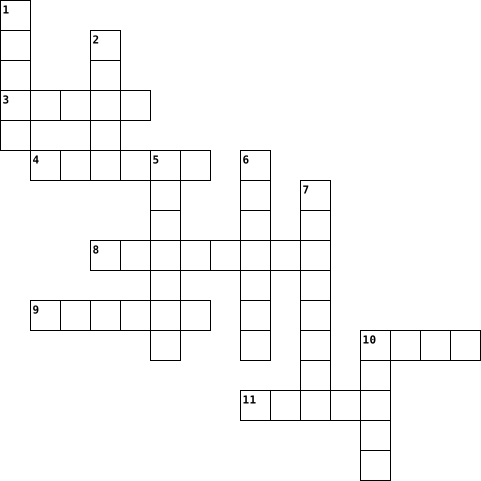
Across
- Trunk
- Fossil
- Skeleton
- Plants
- Tail
- Horns
Down
- Teeth
- Wings
- Insects
- Feather
- Dinosaur
- Tusks
12 Clues: Tail • Teeth • Wings • Trunk • Tusks • Horns • Fossil • Plants • Insects • Feather • Dinosaur • Skeleton
The Beijing Natural History Museum 2014-12-01
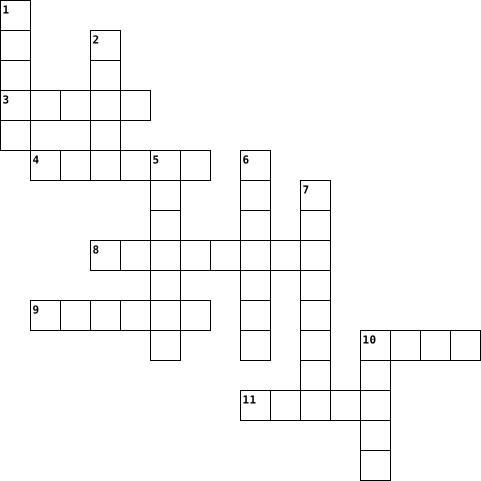
Across
- Trunk
- Fossil
- Skeleton
- Plants
- Tail
- Horns
Down
- Teeth
- Wings
- Insects
- Feather
- Dinosaur
- Tusks
12 Clues: Tail • Teeth • Wings • Trunk • Tusks • Horns • Fossil • Plants • Insects • Feather • Dinosaur • Skeleton
Vocab Crossword 2023-06-13

Across
- To sort individuals together into groups having common characteristics or attributes.
- soil developing and creating opportunities for plants or animals.
- a plant community replaced by another by fires, flooding or other.
- The progressive development of vegetation toward its ultimate plant community, the climax. The replacement of one plant community by another.
- A vegetative or flora sample for determining the plant community and dominant plant species within a specified area.
- The process or a period of changing from one state or condition to another.
- Plant migration on newly formed soils or upon soils that have never borne vegetation
- invasion by plants on land that was previously vegetated occurs more rapidly then primary succession.
Down
- the degree of different life forms within a given species, ecosystem, biome, or an entire planet.
- The progressive development of vegetation toward its ultimate community, the climax The replacement of one plant community by another.
- an organism that can create organic molecules from inorganic substances.
- A list of the plants in a delimited plot of vegetation, with information on species cover and on substrate and other abiotic features in the plot.
- An assemblage of plants living together under the same environmental conditions.
- Any group or association of plants; the sum of vegetable life; plants in general.
- and event of force either biological or not, changes organisms spatial patterning in the ecosystems they inhabit.
- A biologist who studies the relationship between organisms and their environment.
- The total external conditions that may effect organism or community that effects its development or existence.
- Groups of similar organisms that can reproduce similar offspring identified by its genus and species name.
18 Clues: soil developing and creating opportunities for plants or animals. • a plant community replaced by another by fires, flooding or other. • an organism that can create organic molecules from inorganic substances. • The process or a period of changing from one state or condition to another. • ...
Sources of food 2016-04-25

Across
- known as complete food
- fleas, leeches, and bugs are known as
- chain the chain of events is known as?
- the chemical substance in the body
- have long sharp teeth
- product product obtained by milk
- eat the decomposers
Down
- also known as omnivores
- all food chain starts from this
- green plants are called
- plants that eat plants
11 Clues: eat the decomposers • have long sharp teeth • known as complete food • plants that eat plants • also known as omnivores • green plants are called • all food chain starts from this • product product obtained by milk • the chemical substance in the body • fleas, leeches, and bugs are known as • chain the chain of events is known as?
Environment 2013-06-24

Across
- Type of plant which reproduces by seeds
- Process that plants use to make food
- Process to release energy- what plants do at night.
- Animal that eats plants only
- Top of the food chain
- Show the direction of energy transfer in food chain
Down
- Gas produced by respiration
- Uses sunlight to make energy
- Community of living things
- First thing in a food chain
- Way to protect animals or an environment
- The way mosses and ferns reproduce
12 Clues: Top of the food chain • Community of living things • Gas produced by respiration • First thing in a food chain • Uses sunlight to make energy • Animal that eats plants only • The way mosses and ferns reproduce • Process that plants use to make food • Type of plant which reproduces by seeds • Way to protect animals or an environment • ...
Classification 2014-01-08

Across
- the proper name for slime.
- the fourth level of the classification system.
- the kingdom for algae.
- the largest living organism.
- it makes plants green.
- one of the three things plants need to grow.
Down
- a cell that has a nucleus.
- the things that let a mushroom ubsorb food.
- the name of the process of plants making their own food.
- the bacteria kingdom.
- to put into groups.
- the things that make their own food.
12 Clues: to put into groups. • the bacteria kingdom. • the kingdom for algae. • it makes plants green. • the proper name for slime. • a cell that has a nucleus. • the largest living organism. • the things that make their own food. • the things that let a mushroom ubsorb food. • one of the three things plants need to grow. • the fourth level of the classification system. • ...
Photosynthesis and Cellular Respiration 2023-03-31

Across
- cellular respiration that requires oxygen
- energy made from glucose
- results of reactants working together
- sugar that plants use as food
- produced as waste after photosynthesis
- organelle where photosynthesis happens
- pigment used to make plants green
Down
- plants need this for photosynthesis
- organelle where cellular respiration happens
- starting materials of a reaction
- cellular respiration that doesn't require oxygen
- the process by which plants create oxygen and glucose to use as food
12 Clues: energy made from glucose • sugar that plants use as food • starting materials of a reaction • pigment used to make plants green • plants need this for photosynthesis • results of reactants working together • produced as waste after photosynthesis • organelle where photosynthesis happens • cellular respiration that requires oxygen • ...
7th grade science idk 2024-03-26

Across
- plants reaction to light
- multiple elements as one molecule
- thing that happens to trigger a response
- type of stimuli outside the body
- tells you how many molecules there are
Down
- plants reaction to water
- reaction to a stimulus
- an individual atom with different attributes that make them different from one another
- plants reaction to touch
- tells you how many atoms of an element there are
- type of stimuli inside the body
- plants reaction to gravity
12 Clues: reaction to a stimulus • plants reaction to water • plants reaction to light • plants reaction to touch • plants reaction to gravity • type of stimuli inside the body • type of stimuli outside the body • multiple elements as one molecule • tells you how many molecules there are • thing that happens to trigger a response • tells you how many atoms of an element there are • ...
Pollination 2023-07-25

Across
- self-pollinating plants don't need ... factors.
- pollen transferred in the same flower.
- new plants are normally a ... of the parent
- special underground stem
- Transfer of pollen is necessary for ... to occur.
- the most well known pollinators are ...
- are pollinators that can fly.
Down
- pollen is transferred from the ... to the stigma.
- in self pollinating plants the anther and stigma have a ...
- cross-polination creates ... plants.
- Geitonogamy - pollen transferred on the same ...
- pollinators help to ... pollen.
12 Clues: special underground stem • are pollinators that can fly. • pollinators help to ... pollen. • cross-polination creates ... plants. • pollen transferred in the same flower. • the most well known pollinators are ... • new plants are normally a ... of the parent • self-pollinating plants don't need ... factors. • Geitonogamy - pollen transferred on the same ... • ...
Everything is Connected Study Guide 2016-02-22

Across
- an animal that eats prey
- consumers that only eat plants.
- an animal that is eaten by a predator
- consumers that only eat other consumers.
- water released from the clouds as rain
- herbivores; 2nd part of the food web (2 words)
- energy that could be used; big hint: has potential (2 words)
- the process named after the burning of an object. Releases Carbon.
- They can fix Nitrogen into it's usable form, and help with decomposition. (Ex. Fred the ____)
Down
- plants; the 1st part of the food web
- when the sun turns water into water vapor
- when water vapor comes together in one clump to form rain
- carnivores & omnivores; last part of the food web (2 words)
- when an animal dies and bacteria and fungi eat off the animal or plant. Releases Carbon
- energy in use/motion (2 words)
- the process that plants use to produce their own food.
- the process that animals breath in and out
- what comes before thunder. (can also make Nitrogen to it's usable form.)
- consumers that eat both plants and animals.
19 Clues: an animal that eats prey • energy in use/motion (2 words) • consumers that only eat plants. • plants; the 1st part of the food web • an animal that is eaten by a predator • water released from the clouds as rain • consumers that only eat other consumers. • when the sun turns water into water vapor • the process that animals breath in and out • ...
Plant Crossword Puzzle 2016-02-13

Across
- on the root, help to increase water absorption.
- plants that lack transport tissues.
- process by which cells produce their own food.
- covers the tip of the root allowing for easier movement through soil.
- cells that regulate the opening of the stomata.
- small pores that act as doorway to regulate gas exchange with the environment
- provides support for the plant
- plants that have specialized cells that are used to transport substances. Majority of plants.
- when the first root becomes the largest root.
- as part of the stem help prevent water loss.
Down
- evaporation of water from plant leaves.
- tissue carries sugars (food) made by photosynthesis from the leaves to where they will be stored or used
- tissue carries water and minerals upward from the roots
- surrounds the cell membrane and helps support and protect the plant cell.
- when the first root does not become large but becomes tons of tiny roots
- where photosynthesis takes place.
- main body of a leaf
- waxy substance on the exterior of plants that is excreted by the epidermal cells.
- skin of leaf
19 Clues: skin of leaf • main body of a leaf • provides support for the plant • where photosynthesis takes place. • plants that lack transport tissues. • evaporation of water from plant leaves. • as part of the stem help prevent water loss. • when the first root becomes the largest root. • process by which cells produce their own food. • on the root, help to increase water absorption. • ...
Plant Crossword Puzzle 2016-02-13

Across
- main body of a leaf
- as part of the stem help prevent water loss.
- evaporation of water from plant leaves.
- plants that lack transport tissues.
- where photosynthesis takes place.
- tissue carries sugars (food) made by photosynthesis from the leaves to where they will be stored or used
- on the root, help to increase water absorption.
- skin of leaf
- plants that have specialized cells that are used to transport substances. Majority of plants.
- provides support for the plant
Down
- when the first root does not become large but becomes tons of tiny roots
- process by which cells produce their own food.
- covers the tip of the root allowing for easier movement through soil.
- when the first root becomes the largest root.
- cells that regulate the opening of the stomata.
- tissue carries water and minerals upward from the roots
- surrounds the cell membrane and helps support and protect the plant cell.
- small pores that act as doorway to regulate gas exchange with the environment
- waxy substance on the exterior of plants that is excreted by the epidermal cells.
19 Clues: skin of leaf • main body of a leaf • provides support for the plant • where photosynthesis takes place. • plants that lack transport tissues. • evaporation of water from plant leaves. • as part of the stem help prevent water loss. • when the first root becomes the largest root. • process by which cells produce their own food. • cells that regulate the opening of the stomata. • ...
Earth and Atmosphere 2016-06-12

Across
- The hard stony remains of an animal skeleton
- An igneous rock that cooled very quickly
- The gas that is 78% of the atmosphere
- The name of an igneous rock that cooled slowly in the earth
- An energy source made from dead trees and plants
- An igneous rock that cooled on the surface of the earth
- The process how plants make their food
- An energy source that is made from dead sea animals
- The map that shows how carbon is recycled
- Type of rock changed by heat and pressure
Down
- The name of the process of heating up the Earth
- The gas in the atmosphere we are most concerned about.
- A fuel source that can be re-grown
- Type of rock made from magma and lava
- All living things do this in their cells
- Type of rock made from weathered rock particles
- A sedimentary rock made from the shells of sea animals
- The process that all dead animals and plants undergo
- An energy source made from plants
19 Clues: An energy source made from plants • A fuel source that can be re-grown • Type of rock made from magma and lava • The gas that is 78% of the atmosphere • The process how plants make their food • All living things do this in their cells • An igneous rock that cooled very quickly • The map that shows how carbon is recycled • Type of rock changed by heat and pressure • ...