
plate tectonics Crossword Puzzles
unit 3 vocabulary 2023-09-27

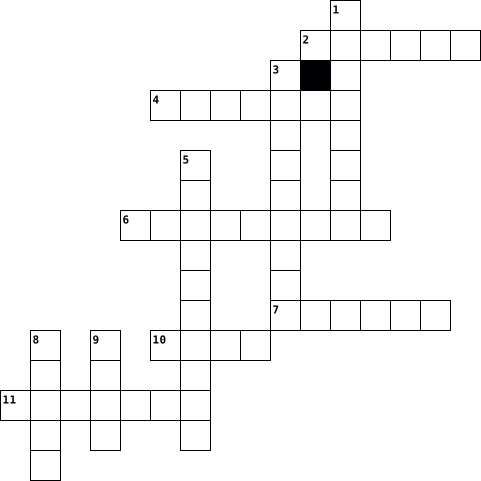
Across
- places where plates slide sideways past each other.
- the rigid outer part of the earth, consisting of the crust and upper mantle.
- a scientific theory that explains how major landforms are created as a result of Earth's subterranean movements.
- the force applied to a rock and may cause deformation.
- a major geologic discontinuity or suture marking the juncture of lithospheric plates that have been joined by plate tectonics
- a change in shape or size resulting from applied forces (deformation).
- a geologic process in which tectonic plates—large slabs of Earth's lithosphere—split apart from each other
- occurs when two tectonic plates move away from each other
- the gradual movement of the continents across the earth's surface through geological time.
- cause (rock strata) to undergo bending or curvature.
- long chains of active volcanoes with intense seismic activity found along convergent tectonic plate boundaries.
- formed from pre-existing rocks or pieces of once-living organisms.
Down
- a cluster of parallel faults.
- a naturally occurring inorganic element or compound having an orderly internal structure and characteristic chemical composition, crystal form, and physical properties.
- a measure of its relative resistance to scratching, measured by scratching the mineral against another substance of known hardness on the Mohs Hardness Scale.
- the equilibrium that exists between parts of the earth's crust, which behaves as if it consists of blocks floating on the und
- a long, seismically active submarine ridge system situated in the middle of an ocean basin and marking the site of the upwell
- started out as some other type of rock, but have been substantially changed from their original igneous, sedimentary, or earlier metamorphic form.
- the upper layer of the earth's mantle, below the lithosphere, in which there is relatively low resistance to plastic flow and
- the study of the Earth's magnetic field preserved in rocks.
- an opening in the Earth's crust through which lava, ash, and gases erupt.
- a web of processes that outlines how each of the three major rock types—igneous, metamorphic, and sedimentary—form and break down based on the different applications of heat and pressure over time.
- an extended break in a body of rock, marked by the relative displacement and discontinuity of strata on either side of a part
- form when hot, molten rock crystallizes and solidifies.
- a change in the shape or dimensions of a body, resulting from stress; strain.
25 Clues: a cluster of parallel faults. • places where plates slide sideways past each other. • cause (rock strata) to undergo bending or curvature. • the force applied to a rock and may cause deformation. • form when hot, molten rock crystallizes and solidifies. • occurs when two tectonic plates move away from each other • ...
DO NOW! crossword puzzle 2025-05-18

Across
- a landform produced by cooled lava
- a landform created by a divergent boundary
- a plate boundary where two plates are moving away from each other
- a plate boundary that can cause earthquakes
Down
- an island formed around a rising seamount
- the incredibly hot rock, that behaves like a liquid
- a plate boundary that includes two plates meeting
- a natural feature created where two plate move away from each, like the Great Rift
- a natural feature formed by the convergence of an oceanic plate and a continental plate, like the Mariana
- these are formed when two continental plates meet, the crust rises
10 Clues: a landform produced by cooled lava • an island formed around a rising seamount • a landform created by a divergent boundary • a plate boundary that can cause earthquakes • a plate boundary that includes two plates meeting • the incredibly hot rock, that behaves like a liquid • a plate boundary where two plates are moving away from each other • ...
Tectonic Plate 2023-04-04

Across
- Tectonic plates sliding into each other
- Under Africa
- Tectonic plates push into each other
- Under South America
- Under Australia
- Under Eurasia
- A crack in Earth's crust
- Under Pacific Ocean
Down
- Under North America
- Causing earthquakes and forming volcanoes on seafloor
- Shaking the ground
- Caused by convergent tectonic plates
- Tectonic plates push away from each other
- A long chain of volcanoes
- Under Antarctica
- Erupts hot liquid
16 Clues: Under Africa • Under Eurasia • Under Australia • Under Antarctica • Erupts hot liquid • Shaking the ground • Under North America • Under South America • Under Pacific Ocean • A crack in Earth's crust • A long chain of volcanoes • Tectonic plates push into each other • Caused by convergent tectonic plates • Tectonic plates sliding into each other • Tectonic plates push away from each other • ...
Tectonic Plate 2023-04-04

Across
- Under South America
- Shaking the ground
- Tectonic plates push away from each other
- Causing earthquakes and forming volcanoes on seafloor
- Tectonic plates sliding into each other
- Caused by convergent tectonic plates
- A crack in Earth's crust
Down
- Under Antarctica
- Under North America
- Tectonic plates push into each other
- Under Eurasia
- Erupts hot liquid
- Under Africa
- A long chain of volcanoes
- Under Pacific Ocean
- Under Australia
16 Clues: Under Africa • Under Eurasia • Under Australia • Under Antarctica • Erupts hot liquid • Shaking the ground • Under South America • Under North America • Under Pacific Ocean • A crack in Earth's crust • A long chain of volcanoes • Tectonic plates push into each other • Caused by convergent tectonic plates • Tectonic plates sliding into each other • Tectonic plates push away from each other • ...
Plate Motion 2024-09-18

Across
- hot liquid rock below the surface of Earth
- an extinct reptile that lived about 300 million years ago
- one of the very large sections of hard, solid rock that make up Earth’s outer layer
- an underwater mountain range formed when two plates move apart
- something we observe to be similar over and over again
- a long, deep indentation in the ocean floor formed when two plates move together
- the layer of soft, solid rock underneath Earth’s plates
- the slow pulling apart of land that is caused by plate movement
Down
- Earth’s outermost layer of hard, solid rock that is underneath the soil, vegetation, and
- a set of interacting parts forming a complex whole
- the place where two plates meet
- an object, diagram, or computer program that helps us understand something
- the outside or top layer of something
- when two plates are moving toward one another
- when two plates are moving away from one another
- how often or fast something happens
16 Clues: the place where two plates meet • how often or fast something happens • the outside or top layer of something • hot liquid rock below the surface of Earth • when two plates are moving toward one another • when two plates are moving away from one another • a set of interacting parts forming a complex whole • something we observe to be similar over and over again • ...
Plate Motion 2024-10-11

Across
- the layer of soft, solid rock underneath Earth's plates.
- a diagram that shows what the inside of something looks like.
- Earth's outermost layer of hard, solid rock that is underneath the soil, vegetation, and water.
- hot liquid rock below the surface of the earth.
- a long deep indentation in the ocean floor formed when two plates move together at a convergent boundary.
- another word for claim.
- moving towards the same place.
- one of the very large sections of hard, solid rock that make up earth's outer layer.
- the place where two plates meet.
Down
- an underwater mountain range formed when two plates move apart at a divergent boundary.
- the land that sits atop of a plate.
- something we observe over and over again.
- moving apart in different directions.
- an extinct reptile that lived 300-260 million years ago.
- hot liquid rock on the surface of the earth.
- how fast or often something happens.
16 Clues: another word for claim. • moving towards the same place. • the place where two plates meet. • the land that sits atop of a plate. • how fast or often something happens. • moving apart in different directions. • something we observe over and over again. • hot liquid rock on the surface of the earth. • hot liquid rock below the surface of the earth. • ...
Plate tech 2022-03-03

Across
- (Note 2) Asia Pakistan, China, India K2 8611
- Mountains (Note 2) Asia China, Myanmar Mount Gongga 7556
- Asia Pakistan, Nepal, India, China, Bhutan Everest 8848
- Continent(s) Country/ies Highest point Altitude
- is a list of mountain ranges on Earth and a few other astronomical bodies. First, the highest and longest mountain ranges on Earth are listed, followed by more comprehensive alphabetical lists organized by continent. Ranges in the oceans and on other celestial bodies are listed afterwards.
- (Note 2) Asia China Mount Nyenchen Tanglha 7162
- Kush (Note 2) Asia Afghanistan, Pakistan Tirich Mir 7708
- level)
Down
- above
- Asia China Liushi Shan 7167
- Range North America United States Denali 6194
- (Note 2) Asia Tajikistan, Kyrgyzstan, China, Afghanistan, Pakistan Kongur Tagh (Note 1) 7649
- Mountains Europe and Asia Georgia, Russia, Azerbaijan Mount Elbrus 5642
- Shan Asia China, Kyrgyzstan, Kazakhstan, Uzbekistan; Jengish Chokusu 7439
- Raj Asia Pakistan Koyo Zom 6873
- Elias Mountains North America United States, Canada Mount Logan 5959
- South America Argentina, Chile, Peru, Bolivia, Ecuador, Colombia, Venezuela Aconcagua 6961
17 Clues: above • level) • Asia China Liushi Shan 7167 • Raj Asia Pakistan Koyo Zom 6873 • (Note 2) Asia Pakistan, China, India K2 8611 • Range North America United States Denali 6194 • Continent(s) Country/ies Highest point Altitude • (Note 2) Asia China Mount Nyenchen Tanglha 7162 • Asia Pakistan, Nepal, India, China, Bhutan Everest 8848 • ...
Inventory Manager 2023-03-23

Across
- The _____ level is the minimum threshold for inventory levels for each office.
- When a session is not completed, but have attatched a plate to the transaction, the status is set to_____.
- By clicking _____ ID, I can view the status of plates in that series.
- If a plate is _____ it will have a check mark next to it.
Down
- The_____ will be mostly used by the stockroom and designated individuals.
- The plate order will be assigned to the stockroom as a _____ to be completed.
- If a plate is ruined, the status of that plate would be changed to _____.
- The plate _____ is accessible immediately.
- The inventory location you issue out of is known as your _____location.
- Once a session is completed the plate status is _____
10 Clues: The plate _____ is accessible immediately. • Once a session is completed the plate status is _____ • If a plate is _____ it will have a check mark next to it. • By clicking _____ ID, I can view the status of plates in that series. • The inventory location you issue out of is known as your _____location. • ...
Earthquake/Earth 2022-10-20

Across
- when plate move away from each other
- only travels through solids
- when plate move past eachother
- 84% of earths volume
- under the lithosphere
Down
- above the asthenoshpere
- when plate move towards each other
- composed of iron and other metal
- capable of flow
- earthquakes create this
- travels through liquids and solids
- humans live on it
12 Clues: capable of flow • humans live on it • 84% of earths volume • under the lithosphere • above the asthenoshpere • earthquakes create this • only travels through solids • when plate move past eachother • composed of iron and other metal • when plate move towards each other • travels through liquids and solids • when plate move away from each other
Plate Tectonics 2017-04-07

Across
- fluid rock that comes out of a volcano
- naturally occurring molten rock material generated within earth
Down
- a vent in the surface of Earth through which magma and associated gases and ash erupt
3 Clues: fluid rock that comes out of a volcano • naturally occurring molten rock material generated within earth • a vent in the surface of Earth through which magma and associated gases and ash erupt
plate tectonics 2021-10-26

Across
- layers
- ridges
Down
- plates
3 Clues: layers • plates • ridges
Plate Tectonics 2023-02-14

Across
- These are underneath the continents
- Alfred Wegener proposed this
Down
- Caused by an oceanic plate going underneath a continental plate.
3 Clues: Alfred Wegener proposed this • These are underneath the continents • Caused by an oceanic plate going underneath a continental plate.
plate tectonics 2021-04-01

Across
- valley
- islands
Down
- mountines
3 Clues: valley • islands • mountines
plate tectonics 2024-02-02

Across
- plate
Down
- boundary
- spot
3 Clues: spot • plate • boundary
Changes to Earth's Surface 2021-01-13

Across
- the upper part of the mantle below the lithosphere
- an instrument used to detect and record earthquakes
- the process of an oceanic plate colliding with and descending underneath a continental plate
- a deep valley that forms where plates move apart
- beneath the mantle; the layer of Earth in the center
- forms when molten rock is pushed to the surface and builds up
- the point on Earth's surface directly above the focus of an earthquake
- the thin outer layer of Earth
- the process of being broken down into smaller pieces
Down
- a plate boundary where the plates move together
- large ocean wave created by undersea earthquakes or volcanic eruptions
- the dropping or settling of eroded material
- the removal and transportation of weathered material
- the snap and slide of rocks as energy is released in Earth's crust
- the very thick layer of Earth beneath the crust
- a plate boundary where the plates are moving apart
- the crust and the upper solid part of the mantle
- the point inside Earth where an earthquake begins
- a break in Earth's crust where rocks can slide past each other
19 Clues: the thin outer layer of Earth • the dropping or settling of eroded material • a plate boundary where the plates move together • the very thick layer of Earth beneath the crust • the crust and the upper solid part of the mantle • a deep valley that forms where plates move apart • the point inside Earth where an earthquake begins • ...
Chapter 3 Vocab Crossword Puzzle 2018-11-13

Across
- a plate boundary where two plates move away from each other
- the name of the single landmass that began to break apart 200 million years ago and gave rise to today's continents
- a break in Earth's crust along which rocks move
- the process by which molten material adds new oceanic crust to the ocean floor
- the process by which oceanic crust sinks beneath a deep-ocean trench and back into the mantle at a convergent plate boundary
Down
- drift the hypothesis that the continents slowly move across Earth's surface
- a plate boundary where two plates move past each other in opposite directions
- a deep valley along the ocean floor beneath which oceanic crust slowly sinks toward the mantle
- the theory that pieces of Earth's lithosphere are in constant motion, driven by convection currents in the mantle
- an undersea mountain chain where new ocean floor is produced; a divergent plate boundary
- a section of the lithosphere that slowly moves over the asthenosphere, carrying pieces of continental and oceanic crust
- a plate boundary where two plates move toward each other
- the preserved remains or traces of an organism that lived in the past
- a deep valley that forms where two plates move apart
14 Clues: a break in Earth's crust along which rocks move • a deep valley that forms where two plates move apart • a plate boundary where two plates move toward each other • a plate boundary where two plates move away from each other • the preserved remains or traces of an organism that lived in the past • ...
plate tectonics 2021-03-31

Across
- tectonics
Down
- Drift
2 Clues: Drift • tectonics
plate techonics 2021-06-18

Across
- tectonics
- core
Down
- core
3 Clues: core • core • tectonics
plate techonics 2021-06-18

Across
- tectonics
- core
Down
- core
3 Clues: core • core • tectonics
Science Crossword Activity 2022-10-10

Across
- tectonics
Down
- weathering
2 Clues: tectonics • weathering
Volcanoes 2022-11-16

Across
- opening that allows air or gas out
- a type of mountain that erupts
- Temporarily inactive
- gigantic piece of earth's crust
- farthest from sun
- powdery residue left after burning something
- an act or instance of erupting
Down
- most solid bulk of earth's interior
- erupts and sends water/ steam into air\
- channel for conveying water
- a hot liquid base
- The center part
- Hot molten or semi fluid rock
- hard outer layer
- of Fire- Hot ring
15 Clues: The center part • hard outer layer • a hot liquid base • farthest from sun • of Fire- Hot ring • Temporarily inactive • channel for conveying water • Hot molten or semi fluid rock • a type of mountain that erupts • an act or instance of erupting • gigantic piece of earth's crust • opening that allows air or gas out • most solid bulk of earth's interior • ...
the TABLE SETTING 2014-03-05

Across
- YOU USE IT FOR COFFEE
- IT MUST BE CLEAN AND WELL IRONED
- FOR BREAD OR FRUIT
- ITS USED TO POUR WATER OR WINE
- A VERY BIG PLATE USED FOR HOLDING AND CARRYING THINGS
- IT IS FILLED WITH SALT OR PEPPER
- BE VERY CAREFUL WITH IT!
Down
- IN ITALY IT IS USUALLY FILLED WITH OIL AND VINEGAR
- A SPECIAL PLATE FOR SOUP
- IT IS USUALLY COMBINED WITH THE TABLECLOTHE
- IT CAN BE WHITE OR COLOURED
- AN AMERICAN SHAKER!
- IT GOES UNDER THE CUP
- IT COMES IN MANY TYPES, FOR WINE OR WATER
- YOU NEED IT TO EAT A SOUP
- IT ALWAYS GOES AT YOUR LEFT
16 Clues: FOR BREAD OR FRUIT • AN AMERICAN SHAKER! • YOU USE IT FOR COFFEE • IT GOES UNDER THE CUP • A SPECIAL PLATE FOR SOUP • BE VERY CAREFUL WITH IT! • YOU NEED IT TO EAT A SOUP • IT CAN BE WHITE OR COLOURED • IT ALWAYS GOES AT YOUR LEFT • ITS USED TO POUR WATER OR WINE • IT MUST BE CLEAN AND WELL IRONED • IT IS FILLED WITH SALT OR PEPPER • IT COMES IN MANY TYPES, FOR WINE OR WATER • ...
not fun 2023-12-06

Across
- the first layer of the earth
- the longest fault line
- the worst ever earthquake in hitsory
- the plate boundary that slide
- makes a earthquake or is the epicenter of one
- Circle of volcanoes
- the plate boundary that divides
- there are how many types of volcanoes
Down
- the secend layer of the earth
- the plate boundary that collides
- the type of fault when the hanging wall fell down
- comes out of a volcano once called lava
- an instrument that measuers an earthquake
- this volcano made hawaii
- the fourth layer of the earth
- the third layer of the earth
16 Clues: Circle of volcanoes • the longest fault line • this volcano made hawaii • the first layer of the earth • the third layer of the earth • the secend layer of the earth • the fourth layer of the earth • the plate boundary that slide • the plate boundary that divides • the plate boundary that collides • the worst ever earthquake in hitsory • there are how many types of volcanoes • ...
not fun 2023-12-06

Across
- the first layer of the earth
- the longest fault line
- the worst ever earthquake in hitsory
- the plate boundary that slide
- makes a earthquake or is the epicenter of one
- Circle of volcanoes
- the plate boundary that divides
- there are how many types of volcanoes
Down
- the secend layer of the earth
- the plate boundary that collides
- the type of fault when the hanging wall fell down
- comes out of a volcano once called lava
- an instrument that measuers an earthquake
- this volcano made hawaii
- the fourth layer of the earth
- the third layer of the earth
16 Clues: Circle of volcanoes • the longest fault line • this volcano made hawaii • the first layer of the earth • the third layer of the earth • the secend layer of the earth • the fourth layer of the earth • the plate boundary that slide • the plate boundary that divides • the plate boundary that collides • the worst ever earthquake in hitsory • there are how many types of volcanoes • ...
Earthquakes 2021-04-11

Across
- occurs on a oceanic - continental convergent plate boundary
- land feature of a transform plate boundary
- land feature of an oceanic - oceanic convergent plate boundary
- The name of the plate boundary where plates move away from each other
Down
- Plate boundary that can also be associated with subduction
- land feature of a continental - continental convergent plate boundary
- plates move in different directions beside each other
- The country we will be looking at today as a case study
- landform the occurs on a divergent plate boundary
9 Clues: land feature of a transform plate boundary • landform the occurs on a divergent plate boundary • plates move in different directions beside each other • The country we will be looking at today as a case study • Plate boundary that can also be associated with subduction • occurs on a oceanic - continental convergent plate boundary • ...
vocab 2022-05-17

Across
- boundary
Down
- boundary
- tectonics
- boundary
4 Clues: boundary • boundary • boundary • tectonics
Earth quakes 2025-11-04

Across
- waves
- waves
Down
- tectonics
- waves
4 Clues: waves • waves • waves • tectonics
Nail Anatomy 2023-08-31

Across
- This is the living skin at the base of the natural nail plate that covers the matrix area. It seals the nail plate to the matrix.
- Tissue that attaches the nail bed and matrix to the underlying bone.
- A dead tissue that seals and attaches the space between the natural nail plate and living skin.
- These are the fingertips or toenails, supporting sensitive flesh and touch sensation.
- The part of the nail plate extending over the fingertip.
- This area is responsible for producing nail plate cells. It contains matrix cells and extends from under the nail fold at the base of the nail plate.
Down
- The soft tissue that protects the emerging nail plate.
- This tough protein is found in nails and animal hooves, providing strength and structure.
- The outer layer of the skin.
- The lunula is the crescent-shaped whitish area at the base of the nail plate.
10 Clues: The outer layer of the skin. • The soft tissue that protects the emerging nail plate. • The part of the nail plate extending over the fingertip. • Tissue that attaches the nail bed and matrix to the underlying bone. • The lunula is the crescent-shaped whitish area at the base of the nail plate. • ...
Plate Tectonics Vocab Part 1 Crossword Puzzle 2024-10-31

Across
- The surface location of the earthquake directly above the focus
- How the energy of the earthquake travels
- Rocks formed from extreme heat and pressure
- Rocks formed from cooled/solidified molten rock
- Rocks formed from compacted sediment
- The starting point of the earthquake
Down
- Large slabs of solid, cool rock on the Earth's crust that moves slowly
- Measures the energy (or strength) of the earthquake
- Squeezing stress that pushes objects together
- Stress that pulls an object apart
- The plane or a rupture zone along which two rocks move
- Parallel forces acting in opposite directions
12 Clues: Stress that pulls an object apart • Rocks formed from compacted sediment • The starting point of the earthquake • How the energy of the earthquake travels • Rocks formed from extreme heat and pressure • Squeezing stress that pushes objects together • Parallel forces acting in opposite directions • Rocks formed from cooled/solidified molten rock • ...
Grayson 6th 2024-10-10

Across
- hot,gas,ash,cinders,and bombs
- stores magma
- eruption of heated water
- violent with cinders
- alternating lava
- Earth's heat
- water heated by magma
Down
- caved in volcano
- when lava pours out
- connects
- edge of Pacific plate
- hole
- middle of a plate
- opening
- calm,lava flows
15 Clues: hole • opening • connects • stores magma • Earth's heat • calm,lava flows • caved in volcano • alternating lava • middle of a plate • when lava pours out • violent with cinders • edge of Pacific plate • water heated by magma • eruption of heated water • hot,gas,ash,cinders,and bombs
tectonics plates 2017-02-19

Across
- fault Where tectonic plates slide horizontally past each other
- that continents are in constant motion on the surface of the earth
- new oceanic crust forms along a mid-ocean ridge and older oceanic crust moves away from the ridge
- An area of many fractured pieces of crust along a large fault
- A state in which magnetized objects would reverse direction and orient themselves to point geographically south
- A curved line of volcanoes that forms parallel to a plate boundary
- magnetized objects, such as compass needles, will orient themselves to point geographically north
Down
- all continents that were once connected as a supercontinent
- The magnetic field_____directions
- Are deep underwater troughs created by one plates subducting under another plate at convergent plate boundary
- Mountain ranges in the middle of the ocean
- parallel ridges that form where blocks of crust move up or down along faults
- Are made of layers of rock that are folded
- When large regions rise vertically with very little deformation form
14 Clues: The magnetic field_____directions • Mountain ranges in the middle of the ocean • Are made of layers of rock that are folded • all continents that were once connected as a supercontinent • An area of many fractured pieces of crust along a large fault • fault Where tectonic plates slide horizontally past each other • ...
Tectonics Crossword! 2022-11-11

Across
- to move around quickly. Earth does this
- thick liquid, but not runny like water
- types of currents in the Earth's mantle
- the solid metal core at the centre
- the thick, flat slabs that make up the Earth
- the materials the Earth's core is made of
- the type of crust where land is
- the thickest layer of the Earth
Down
- the movement liquids are capable of
- the type of Geography we are now studying
- the theory of plates moving around
- the edge of something, eg. the edge of plates
- the outer, brittle layer of Earth
- the type of crust under the sea
14 Clues: the type of crust where land is • the type of crust under the sea • the thickest layer of the Earth • the outer, brittle layer of Earth • the theory of plates moving around • the solid metal core at the centre • the movement liquids are capable of • thick liquid, but not runny like water • to move around quickly. Earth does this • types of currents in the Earth's mantle • ...
Natural Nail Diseases/Disorders/Conditions 2020-12-11

Across
- A nail condition that is a nervous habit
- Caused by a fungus
- A thickening of the nail plate
- An excess of living skin
- Inflammation of the nail matrix
- The nail disease referred to as ringworm of the nail
- Loosening or separation of the nail
- When the cuticle becomes overly dry and splits
- Spoon nails
- Refer to a physician
- The disorder in which the nail grows into the edge of the nail groove
Down
- White spots of the nail caused by an injury
- Another term for tinea pedis
- Shedding or falling off of nails
- Possible cause of paronychia
- Indented vertical lines down the nail plate
- Nail condition that can be indicated by a green discoloration on the nail plate
- Bitten nails
- Split or brittle nails
- Any disease, disorder or condition of the nail
- A cause of uneven nail growth
21 Clues: Spoon nails • Bitten nails • Caused by a fungus • Refer to a physician • Split or brittle nails • An excess of living skin • Another term for tinea pedis • Possible cause of paronychia • A cause of uneven nail growth • A thickening of the nail plate • Inflammation of the nail matrix • Shedding or falling off of nails • Loosening or separation of the nail • ...
Plate Tectonic Crossword Puzzle 2021-05-02

Across
- What divergent boundary is located in
- All plates are called...
- What famous trench was formed by divergent plates?
- What is the chain of volcanoes around the Pacific Ocean called?...
- Divergent plate boundaries can sometimes form a..
- What famous mountain was created by convergent plates?
- What makes plate boundaries move?
Down
- What is above the mantle but underneath the Earth's crust?
- What type of layer of Earth makes oceans?
- What layer is denser and weak in the Mantle?
- What type of plates move away from each other?
- What plates shift or collide into each other?
- What layer of Earth is the hottest?
- Divergent boundaries can make...
- What plates shift past each other?
- What type of layer of Earth makes land?
- What layer of Earth is the thinnest?
- Transform and divergent boundaries can cause...
- When convergent and divergent plates move they can sometimes make...
- How many plate boundaries are there?
20 Clues: All plates are called... • Divergent boundaries can make... • What makes plate boundaries move? • What plates shift past each other? • What layer of Earth is the hottest? • What layer of Earth is the thinnest? • How many plate boundaries are there? • What divergent boundary is located in • What type of layer of Earth makes land? • What type of layer of Earth makes oceans? • ...
Our Restless Earth 2014-04-30

Across
- Where are most volcanic eruptions?
- White, icy substance.
- The part in the earth closet to the core.
- How many secondary tectonic plates are there?
- The plate boundaries that are sliding against one another.
- Takes up 70% of the earth.
- The plate boundaries that are crashing against each other.
- The plates that separate the earth.
Down
- Red/orange substance that comes out of a volcano.
- The plate boundaries that are moving away from each other.
- Where is goes from cool to heat.
- The part in the earth closet to the crust.
- The middle bit of the Earth.
- A major volcano.
- A type of land form.
- Are tectonic plates moving?
- A very famous land form.
- The outer layer of the Earth.
- A mountain with a flat top on the cliff side.
- How many primary tectonic plates are there?
20 Clues: A major volcano. • A type of land form. • White, icy substance. • A very famous land form. • Takes up 70% of the earth. • Are tectonic plates moving? • The middle bit of the Earth. • The outer layer of the Earth. • Where is goes from cool to heat. • Where are most volcanic eruptions? • The plates that separate the earth. • The part in the earth closet to the core. • ...
Plate Tectonic Crossword 2014-02-13

Across
- the bending of rock layers
- boundary between two colliding plates
- theory that continents drift apart
- soft layer of the mantle
- Large moving section of lithosphere that contains continents and seafloor
- Movement of a fluid because of density differences.
- boundary between two plates that are sliding past each other
- boundary between two plates moving away from each other
- layer between the crust and the core
Down
- a region where a an oceanic plate sinks down into the athenosphere
- a break in the Earth's crust
- outermost layer of the Earth
- Deep valley which runs down the middle of a mid-ocean ridge
- outermost, rigid layer of the Earth
- Long chain of underwater mountains
- the central part of the Earth below the mantle
- a squeezing force
- plate piece of the lithosphere that moves on the asthenosphere
- Name of the hypothetical great continent
- a pulling force
20 Clues: a pulling force • a squeezing force • soft layer of the mantle • the bending of rock layers • a break in the Earth's crust • outermost layer of the Earth • Long chain of underwater mountains • theory that continents drift apart • outermost, rigid layer of the Earth • layer between the crust and the core • boundary between two colliding plates • ...
Canada's Food Guide 2022-02-09

Across
- A source of plant-based proteins
- These help to make healthy choices on food labels
- This is a better option then frying
- The drink of choice
- a good dairy option
- The healthy plate is _________ fruits and vegetables
- healthy choices _____________ health
- Canada's Food Guide looks at the _________ plate
- Antioxidants are found in this fruit
- Canada's Food Guide recommends to avoid __________ drinks
Down
- This meat protein is a healtier choice
- This colour of vegetables has a lot of folate
- this colour of fruits and vegetable contains vitamin C
- this product helps to support healthy digestion
- a health condition that may benefit from Canada's Food Guide
- Whole grains cover __________of the plate
- plant-based proteins are low in this fat
- Water helps to ____________ joints
- Red fruits and vegetables help to improve _________ quality
- Everyone should enjoy a __________of food
- this colour of fruit and vegetable helps keep bones strong
21 Clues: The drink of choice • a good dairy option • A source of plant-based proteins • Water helps to ____________ joints • This is a better option then frying • healthy choices _____________ health • Antioxidants are found in this fruit • This meat protein is a healtier choice • plant-based proteins are low in this fat • Whole grains cover __________of the plate • ...
tectonic plates 2023-09-26

Across
- what is the center of the earth called
- was a theory 50 years ago
- plates crashed together forming -------
- was a theory in 1912
- where does earthquakes happen on plates
- plates that are under the ocean
- what is the first layer of the earth called
- South America and Africa --- together
- which ocean is the fire located
Down
- plates crashed together
- if similar fossils are seen all around the world that means that the world may have been --------
- where 90% of the world earthquakes
- ice sheets,mountains,fossils and continents fitting together is -------- that the theory of continental drift may be true
- a plate slides under another plate
- plates that are under the continents
- how many major plates are there
- mega continent
- move on the liquid layer
- how minor plates are there
- What plate is the ring of fire mainly located
20 Clues: mega continent • was a theory in 1912 • plates crashed together • move on the liquid layer • was a theory 50 years ago • how minor plates are there • how many major plates are there • plates that are under the ocean • which ocean is the fire located • where 90% of the world earthquakes • a plate slides under another plate • plates that are under the continents • ...
Plate motion crossword 2024-11-05

Across
- earth’s outermost layer of hard solid rock
- an object, diagram, or computer program that helps us understand
- something we observe over and over
- the outside top layer of something
- a long deep indentation in the ocean floor
- a natural spring
- two plates moving apart from one another
- an extinct reptile that lived 300 million years ago
- slow pulling apart of land that is caused by plate motion
Down
- boundary the place were two plates meet
- how often or fast something happens
- A large piece of land such as Asia or North America
- a feature that forms on the surface of a plate
- two plates moving toward the same place
- a set of interacting parts
- to examine in detail
- hot liquid rock on surface
- a sudden shaking of earth’s surface
- a bone left by dinosaurs
- hot liquid rock below surface
20 Clues: a natural spring • to examine in detail • a bone left by dinosaurs • a set of interacting parts • hot liquid rock on surface • hot liquid rock below surface • something we observe over and over • the outside top layer of something • how often or fast something happens • a sudden shaking of earth’s surface • boundary the place were two plates meet • ...
4th 9 Weeks Crossword 2024-05-13

Across
- The Earth's outermost layer, consisting of solid rock and divided into oceanic and continental crust.
- Small rocky bodies that orbit the sun, primarily found in the asteroid belt between Mars and Jupiter.
- Project The secret research project during World War II that developed the first atomic bombs.
- A celestial object made of ice, rock, and dust that orbits the sun and develops a glowing tail when it approaches it.
- Alamos A research institution known for its contributions to science, particularly in nuclear research.
- Drift The theory that Earth's continents move over time due to the movement of tectonic plates.
- Fission The process by which a heavy atomic nucleus splits into smaller nuclei and releases energy.
- Energy Energy that travels in electromagnetic waves, including visible light, infrared radiation, and ultraviolet light.
- Sun The star at the center of our solar system, providing light and heat to Earth.
- A solid piece of debris from a comet, asteroid, or meteoroid that survives its passage through Earth's atmosphere and lands on its surface.
- An extremely massive and luminous star, much larger and brighter than the sun.
- The total amount of energy a star radiates per unit time.
- Bang Theory The prevailing cosmological model that suggests the universe originated from an extremely dense and hot state approximately 13.8 billion years ago.
- The process by which one tectonic plate moves under another, often causing earthquakes and volcanic activity.
- A cloud of gas and dust in space where stars are born.
Down
- A massive, luminous sphere of plasma held together by gravity, radiating energy due to nuclear fusion reactions in its core.
- Dwarf A small, dense star that has exhausted its nuclear fuel and is gradually cooling.
- The cataclysmic explosion of a massive star, resulting in an extremely bright object that can outshine entire galaxies.
- Fusion The process by which atomic nuclei combine to form heavier nuclei, releasing vast amounts of energy.
- A geometric shape that is like a stretched-out circle, characterized by two focal points.
- The layer of Earth between the crust and the core, composed of solid rock that can flow slowly over long periods.
- A system of stars, stellar remnants, interstellar gas, dust, dark matter, and other cosmic elements bound together by gravity.
- Tectonics The theory that Earth's lithosphere is divided into large, rigid plates that float on the underlying mantle and move over time.
- A diagram that classifies stars based on their luminosity and temperature.
- The curved path followed by an object around another object due to gravity.
25 Clues: A cloud of gas and dust in space where stars are born. • The total amount of energy a star radiates per unit time. • A diagram that classifies stars based on their luminosity and temperature. • The curved path followed by an object around another object due to gravity. • An extremely massive and luminous star, much larger and brighter than the sun. • ...
Dynamic Earth 2017-11-27

Across
- This kind of boundary results in a fault — a crack or fracture in the earth's crust that is associated with this movement. Faults and Earthquakes. Transform boundaries and the resulting faults produce many earthquakes because edges of tectonic plates are jagged rather than smooth.
- boundaries In plate tectonics, a divergent boundary or divergent plate boundary (also known as a constructive boundary or an extensional boundary) is a linear feature that exists between two tectonic plates that are moving away from each other.
- wave
- boundaries A tectonic boundary where two plates are moving away from each other and new crust is forming from magma that rises to the Earth's surface between the two plates. ... See more at tectonic boundary. Compare convergent plate boundary.
- fault A geologic fault in which the hanging wall has moved upward relative to the footwall. Reverse faults occur where two blocks of rock are forced together by compression. Compare normal fault. See Note and illustration at fault. The American Heritage® Science Dictionary.
- noun. The definition of an S wave, or secondary wave, is a wave motion in a solid medium where the medium moves perpendicular to the direction of the travel of the wave. An example of an S wave is when pieces of rock in an earthquake vibrate at right angles to the direction of the seismic wave.
- mapis a type of map characterized by large-scale detail and quantitative representation of relief, usually using contour lines, but historically using a variety of methods.
- ridges a long, seismically active submarine ridge system situated in the middle of an ocean basin and marking the site of the upwelling of magma associated with seafloor spreading. An example is the Mid-Atlantic Ridge.
Down
- boundaries Transform boundaries are places where plates slide sideways past each other. At transform boundaries lithosphere is neither created nor destroyed. Many transform boundaries are found on the sea floor, where they connect segments of diverging mid-ocean ridges. California's San Andreas fault is a transform boundary.
- a record made by a seismograph
- analysis analysis using the fact that physical quantities added to or equated with each other must be expressed in terms of the same fundamental quantities (such as mass, length, or time) for inferences to be made about the relations between them.
- fault The normal force is the support force exerted upon an object that is in contact with another stable object. For example, if a book is resting upon a surface, then the surface is exerting an upward force upon the book in order to support the weight of the book.
- currents the transfer of heat by the mass movement of heated particles into anarea of cooler fluid
- core planetology) The hot liquid material found near the centre of some planets, distinct from the solid inner core.
- mantle This is made up rock that is fluid and can move. It is this fluidity that powers the movement of the tectonic plates of the Earth's crust
- wave a longitudinal earthquake wave that travels through the interior of the earth and is usually the first conspicuous wave to be recorded by a seismograph. Expand. Also called primary wave
16 Clues: wave • a record made by a seismograph • currents the transfer of heat by the mass movement of heated particles into anarea of cooler fluid • core planetology) The hot liquid material found near the centre of some planets, distinct from the solid inner core. • ...
Bear's Pie 2 2013-10-28
Across
- moment
- concert
- surprised
- singer
- lick
- cartoon
Down
- continue
- delicious
- girlfriend
- plate
- pity
11 Clues: pity • lick • plate • moment • singer • concert • cartoon • continue • delicious • surprised • girlfriend
QUANTIFYING NOUNS 2024-09-02

Across
- a carton of ...
- a glass of ...
- a bottle of ...
- a can of ...
- a plate of ...
- a piece of ...
- a bowl of ...
Down
- a jar of ...
- a ... of spaghetti
- a slice of ...
- a spoon of ...
- cream a scoop of ...
- a ... of pizza
- a kilogram of ...
- a cup of ...
- a ... of salt
16 Clues: a jar of ... • a can of ... • a cup of ... • a ... of salt • a bowl of ... • a slice of ... • a glass of ... • a spoon of ... • a ... of pizza • a plate of ... • a piece of ... • a carton of ... • a bottle of ... • a kilogram of ... • a ... of spaghetti • cream a scoop of ...
Volcano Crossword 2021-03-05

Across
- are ejected from volcanic explosion.
- slow upward magma movement.
- 64mm diameter of hardened lava.
- volcanic activity that occurs within a plate away from a plate boundary.
- lava that is more fluid.
- buildup of volcanic explosion remains.
- formed from continuous small eruptions.
- greatest volume of volcanic rock is produced along the mid-ocean ridge plate.
- formed by hardened lava that was in a vent.
- water vapor and carbon dioxide in magma/lava.
- helps the melting process of rock.
Down
- volcano with broad gently sloping balsaltic lava
- if not right rock cannot liquify.
- big depression circular formed craters.
- large and dangerous volcanoes.
- magma that is outside of a volcano.
- small volcanoes.
- increases with depth in earth's layers.
- cinders, small beads to walnuts size pyroclastic material.
- air filled lava.
- substance's resistance to flow.
- opening to air surfaces in which molten rock gases are released.
22 Clues: small volcanoes. • air filled lava. • lava that is more fluid. • slow upward magma movement. • large and dangerous volcanoes. • 64mm diameter of hardened lava. • substance's resistance to flow. • if not right rock cannot liquify. • helps the melting process of rock. • magma that is outside of a volcano. • are ejected from volcanic explosion. • ...
Volcano Crossword 2021-03-05

Across
- buildup of volcanic explosion remains.
- cinders, small beads to walnuts size pyroclastic material.
- volcano with broad gently sloping balsaltic lava
- opening to air surfaces in which molten rock gases are released.
- increases with depth in earth's layers.
- large and dangerous volcanoes.
- substance's resistance to flow.
- magma that is outside of a volcano.
- formed by hardened lava that was in a vent.
- greatest volume of volcanic rock is produced along the mid-ocean ridge plate.
- small volcanoes.
- if not right rock cannot liquify.
Down
- are ejected from volcanic explosion.
- water vapor and carbon dioxide in magma/lava.
- slow upward magma movement.
- volcanic activity that occurs within a plate away from a plate boundary.
- formed from continuous small eruptions.
- helps the melting process of rock.
- 64mm diameter of hardened lava.
- air filled lava.
- lava that is more fluid.
- big depression circular formed craters.
22 Clues: air filled lava. • small volcanoes. • lava that is more fluid. • slow upward magma movement. • large and dangerous volcanoes. • 64mm diameter of hardened lava. • substance's resistance to flow. • if not right rock cannot liquify. • helps the melting process of rock. • magma that is outside of a volcano. • are ejected from volcanic explosion. • ...
Plate Tectonic Crossword Puzzle 2021-05-02

Across
- How many plate boundaries are there?
- All plates are called...
- What type of layer of Earth makes oceans?
- What famous trench was formed by divergent plates?
- What is the chain of volcanoes around the Pacific Ocean called?...
- What is above the mantle but underneath the Earth's crust?
- Divergent plate boundaries can sometimes form a..
- What famous mountain was created by convergent plates?
- What divergent boundary is located in
- When convergent and divergent plates move they can sometimes make...
Down
- What makes plate boundaries move?
- What layer is denser and weak in the Mantle?
- What type of plates move away from each other?
- What plates shift or collide into each other?
- What layer of Earth is the hottest?
- Divergent boundaries can make...
- What plates shift past each other?
- What type of layer of Earth makes land?
- What layer of Earth is the thinnest?
- Transform and divergent boundaries can cause...
20 Clues: All plates are called... • Divergent boundaries can make... • What makes plate boundaries move? • What plates shift past each other? • What layer of Earth is the hottest? • How many plate boundaries are there? • What layer of Earth is the thinnest? • What divergent boundary is located in • What type of layer of Earth makes land? • What type of layer of Earth makes oceans? • ...
Vivian Gomez 2021-05-18

Across
- striking the floor with the toe plate with change of weight
- where your weight should always be in dancing
- shuffle hop step
- striking the floor with heel plate with change of weight
- carriage of the arms
- section we do crunches with twist in body conditioning
- number of sections in tap combo #1
- short for proper body alignment
- movie we watched with hiphop and ballet
- brush spank &1
Down
- tap dance we just finished
- section of our body conditioning notes where we do fly chops
- lift heels and slide on your toe plates
- brush step &1
- ballet performance we watched associated with christmas
- to rise onto the toes
- swing the foot forward and only striking the toe plate
- a theatrical art form using dancing
- dance performed wearing shoes fitted with metal taps
- number of parts in counting stars
20 Clues: brush step &1 • brush spank &1 • shuffle hop step • carriage of the arms • to rise onto the toes • tap dance we just finished • short for proper body alignment • number of parts in counting stars • number of sections in tap combo #1 • a theatrical art form using dancing • lift heels and slide on your toe plates • movie we watched with hiphop and ballet • ...
Canada's Food Guide 2022-02-09

Across
- plant-based proteins are low in this fat
- Water helps to ____________ joints
- Red fruits and vegetables improves _________ quality
- healthy choices _____________ health
- this product helps to support healthy digestion
- this colour of fruits and vegetable contains vitamin C
- The drink of choice
- Canada's Food Guide recommends to avoid __________ drinks
- Antioxidants are found in this fruit
- The healthy plate is _________ fruits and vegetables
- This colour of vegetables has a lot of folate
Down
- Whole grains cover __________of the plate
- a health condition that may benefit from Canada's Food Guide
- this colour of fruit and vegetable helps keep bones strong
- Canada's Food Guide looks at the _________ plate
- This meat protein is a healtier choice
- A source of plant-based proteins
- These help to make healthy choices on food labels
- a good dairy option
- Everyone should enjoy a __________of food
- This is a better option then frying
21 Clues: a good dairy option • The drink of choice • A source of plant-based proteins • Water helps to ____________ joints • This is a better option then frying • healthy choices _____________ health • Antioxidants are found in this fruit • This meat protein is a healtier choice • plant-based proteins are low in this fat • Whole grains cover __________of the plate • ...
Pangaea-tectonic plates/layers of earth 2018-02-19

Across
- earth's crust and upper mantle
- characterizes the relative size of an earthquake
- formed because of fusion of Indian and Australian plate
- a fluid layer about 2,300 km (1,400 mi) thick
- when two plates are moving away from each other
- the main landmass has granitic core called craton
- lies beneath the Pacific Ocean
- containing continent of Antarctica
- upper layer of earth's mantle below lithosphere
- where two plates are moving toward each other
- where plates slide sideways past each other
Down
- a supercontinent
- includes both South America and Atlantic Ocean
- includes traditional continents of Europe and Asia
- center of the earth
- major plate in eastern and southern hemispheres
- tectonic plate straddling the equator and the prime meridian
- originally part of ancient continent Gondwana which India broke away from
- location where greatest damage associated with the earthquake occurs
- violent shaking of the ground
20 Clues: a supercontinent • center of the earth • violent shaking of the ground • earth's crust and upper mantle • lies beneath the Pacific Ocean • containing continent of Antarctica • where plates slide sideways past each other • a fluid layer about 2,300 km (1,400 mi) thick • where two plates are moving toward each other • includes both South America and Atlantic Ocean • ...
Unit 7 Crossword Puzzle 2016-02-04

Across
- The metallic center of Earth
- The middle layer of Earth
- Another word for thermal energy
- Outer part of magnetic field that interacts with particles
- Plate boundary formed where two plates separate
- Plate boundary formed when two plates collide
- Earth's entire solid body
- The amount of mass in a material per unit volume
- Frozen water on Earth
- A cloud of gas, ice and dust that formed the solar system
- The force that every object exerts on all other objects
Down
- The outer layer of Earth
- All living organisms on Earth
- The layer of gases surrounding Earth
- Solid outer section of Earth
- Liquid water on Earth
- The shape of Earth
- push mantle material creates the potential for plates to move
- Mass and ________ affect the strength of the gravitational force between objects
- Plate boundary formed when two plates move past each other
20 Clues: The shape of Earth • Liquid water on Earth • Frozen water on Earth • The outer layer of Earth • The middle layer of Earth • Earth's entire solid body • The metallic center of Earth • Solid outer section of Earth • All living organisms on Earth • Another word for thermal energy • The layer of gases surrounding Earth • Plate boundary formed when two plates collide • ...
Plate Motion Choice Project By Anish Nandikolla 2023-11-07

Across
- Big explosive stuff
- The border of two plates
- Very big Land
- moving apart in different directions
- the action or process of moving or being moved.
- a boundary where two plates slide against each other.
- the pulling apart of land, caused by plate movement
- the layer of soft, solid rock underground
- ——- Of Fire
- a sudden shaking of Earth's surface
Down
- a straight line of travel where data is being collected
- the outermost layer of Earth
- the place where two plates meet
- moving toward the same place
- evidence of life from the past
- a land mass that forms on the surface of a planet
- hot liquid rock below the surface of Earth
- very large sections of hard solid rock that make land move
- the thing that comes out of volcanoes
- a long, deep indentation in the ocean floor formed by plates
20 Clues: ——- Of Fire • Very big Land • Big explosive stuff • The border of two plates • the outermost layer of Earth • moving toward the same place • evidence of life from the past • the place where two plates meet • a sudden shaking of Earth's surface • moving apart in different directions • the thing that comes out of volcanoes • the layer of soft, solid rock underground • ...
Geography Review Game 2023-11-10

Across
- One of the sun's purposes is to make this
- A certain way a group of people live
- The climate type in Minnesota
- Total of all the water in Earth's atmosphere
- An example of a greenhouse gas
- People who come to a new country
- How much of the earth's water is freshwater
- What plate tectonic boundary forms shallow earthquakes with little to no volcanic activity
- The process of wearing or being worn by long exposure to the atmosphere
- Example of hydrosphere takes up 70% of the earth
- Something created by erosion
- About how much of earth's water is in ice caps
- What plate tectonic boundary forms volcanic eruptions
Down
- Evaporation, Condensation, Precipitation
- Has divergent, convergent, and transform boundaries
- Seven What percent of earth's water is saltwater
- Subtropicalpoical The climate Minnesota has
- A person who leaves their country
- What plate tectonic boundary forms earthquakes
- Primary, Secondary, Tertiary, and Quaternary
20 Clues: Something created by erosion • The climate type in Minnesota • An example of a greenhouse gas • People who come to a new country • A person who leaves their country • A certain way a group of people live • Evaporation, Condensation, Precipitation • One of the sun's purposes is to make this • How much of the earth's water is freshwater • ...
Ambers puzzle 2023-11-14

Across
- waves of energy that are released during an earthquake
- thinner than continental crust
- a supercontinentnent
- the point right above the earthquake
- where two tectonic plates meet
- the process when new floor gets added to the ocean
- two tectonic plates move away from each other
- earth'sreak in earths crust
- crust thicker then oceanic crust
- thickest layer of the earth
- location where the fault begins
- when land in the ocean goes back into the mantle
Down
- earthquakes side
- when two tectonic plates move toward each other
- creates land in the ocean
- when one tectonic plate moves under the other one in a convergent boundary
- sections of the earths surface that move
- common at plate boundaries
- two tectonic plates slide past each other
- moves tectonic plates on the crust
20 Clues: earthquakes side • a supercontinentnent • creates land in the ocean • common at plate boundaries • earth'sreak in earths crust • thickest layer of the earth • thinner than continental crust • where two tectonic plates meet • location where the fault begins • crust thicker then oceanic crust • moves tectonic plates on the crust • the point right above the earthquake • ...
Unit 2 Earth Science Crossword Puzzle 2024-01-11

Across
- a break in Earth's crust
- an area under the crust, where magma is hotter than surrounding magma
- an opening or vent where lava erupts on Earth's surface
- border between two plates
- a gooey, melted rock and is the upper layer of the earths mantle
- heat transfer through the movement of either liquid or gas.
- solid topmost layer of Earth
- solid outermost layer of Earth
- innermost layer of Earth
- a sudden and violent shake of the ground
Down
- plates move away from each other
- a crack that lava comes out
- when two plates squeeze together
- plates move toward each other
- a plate going beneath another plate
- event of plate movement
- liquid rock made out of iron and nickel
- uppermost part of the mantle
- a very deep and narrow hole in the ground
- plates slide sideways past each other
20 Clues: event of plate movement • a break in Earth's crust • innermost layer of Earth • border between two plates • a crack that lava comes out • uppermost part of the mantle • solid topmost layer of Earth • plates move toward each other • solid outermost layer of Earth • plates move away from each other • when two plates squeeze together • a plate going beneath another plate • ...
Preventing Injuries in young athletes 2023-02-17

Across
- can occur to do repeated motions in activity
- injury that last for a long period of time
- type of range of motion when you stretch yourself
- end of a long bone
- are 2x as likely to get growth plate fractures
- inflammation of the growth plate
- first phase of healing
- injury to ligaments
- fracture where bone tears away
- fastest source of energy for muscles
- the type of training where you keep adding weight
- sodium, potassium, chloride
Down
- stressors on kids by overzealous parents
- should be emphasis of kids playing sports
- should be conducted 6 weeks before practice
- shaft of the bone
- another name for growth plate
- injury to muscle or tendons
- delaying this leads to more elite athletes
- greater risk due to slower reaction time
- Foot ball has highest number of these injuries
21 Clues: shaft of the bone • end of a long bone • injury to ligaments • first phase of healing • injury to muscle or tendons • sodium, potassium, chloride • another name for growth plate • fracture where bone tears away • inflammation of the growth plate • fastest source of energy for muscles • stressors on kids by overzealous parents • greater risk due to slower reaction time • ...
EXTREME EVENTS 2025-06-27

Across
- Molten rock that flows from a volcano
- Fine particles ejected from a volcanic eruption
- Large section of Earth’s crust that moves slowly
- The point on Earth's surface directly above an earthquake
- A crack in the Earth's crust where earthquakes occur
- Molten rock beneath the Earth's surface
- A scale used to measure earthquake strength
- A large volcanic crater, often formed by collapse
- Layer beneath the Earth's crust where magma forms
- When a volcano expels lava, ash, and gases
- Bowl-shaped opening at the top of a volcano
- A place where magma rises in the middle of a plate
Down
- A mountain that erupts molten rock and gases
- Device that records earthquake waves
- – Relating to the plates that move and cause quakes
- Relating to earthquakes
- Giant sea wave caused by an underwater earthquake
- A smaller earthquake following the main one
- One plate going under another
- A small or slight earthquake
20 Clues: Relating to earthquakes • A small or slight earthquake • One plate going under another • Device that records earthquake waves • Molten rock that flows from a volcano • Molten rock beneath the Earth's surface • When a volcano expels lava, ash, and gases • A scale used to measure earthquake strength • A smaller earthquake following the main one • ...
Geology 2021-11-18

Across
- solid metal layer of the Earth
- pieces of Earth's crust floating on top of mantle
- liquid metal layer of the Earth
- boundary where one plate pulls away from another plate
- top layer of the Earth
- viscous, semi-solid layer of the Earth
Down
- boundary where one plate moves along the edge of another plate
- boundary where one plate pushes against another plate
- third planet from the sun
9 Clues: top layer of the Earth • third planet from the sun • solid metal layer of the Earth • liquid metal layer of the Earth • viscous, semi-solid layer of the Earth • pieces of Earth's crust floating on top of mantle • boundary where one plate pushes against another plate • boundary where one plate pulls away from another plate • ...
Tectonic Plates 2012-10-01

Across
- Caused by two plates rubbing against each other
- The result of two plates seperating
- Includes the crust and the upper most part of the mantle
- Magma rotating in a circular motion due to temperature
- Formed by the friction of subduction
- Magma coming directly from the mantle and forming volcanoes
- In which boundray do two plates collide
- The deepest layer of the Earth
- Formed by subduction
- When gravity pulls down a slab of a plate
Down
- The area between two ridges
- In which boundaray do two plates seperate
- Includes the upper mantle
- The thickest layer of the Earth
- The liquid layer below the mantle
- When the oceanic plate goes underneath the continental plate
- The result of two plates colliding
- The Thinnest layer of the Earth
- In which boundaray do two plates rub against each other
- When two ridges seperate
20 Clues: Formed by subduction • When two ridges seperate • Includes the upper mantle • The area between two ridges • The deepest layer of the Earth • The thickest layer of the Earth • The Thinnest layer of the Earth • The liquid layer below the mantle • The result of two plates colliding • The result of two plates seperating • Formed by the friction of subduction • ...
Pangaea-tectonic plates/layers of earth 2018-02-19

Across
- characterizes the relative size of an earthquake
- where plates slide sideways past each other
- earth's crust and upper mantle
- major plate in eastern and southern hemispheres
- includes both South America and Atlantic Ocean
- containing continent of Antarctica
- lies beneath the Pacific Ocean
- tectonic plate straddling the equator and the prime meridian
Down
- location where greatest damage associated with the earthquake occurs
- originally part of ancient continent Gondwana which India broke away from
- where two plates are moving toward each other
- the main landmass has granitic core called craton
- formed because of fusion of Indian and Australian plate
- center of the earth
- a supercontinent
- a fluid layer about 2,300 km (1,400 mi) thick
- includes traditional continents of Europe and Asia
- violent shaking of the ground
- upper layer of earth's mantle below lithosphere
- when two plates are moving away from each other
20 Clues: a supercontinent • center of the earth • violent shaking of the ground • earth's crust and upper mantle • lies beneath the Pacific Ocean • containing continent of Antarctica • where plates slide sideways past each other • where two plates are moving toward each other • a fluid layer about 2,300 km (1,400 mi) thick • includes both South America and Atlantic Ocean • ...
Mya Browns science crossword 2024-03-20

Across
- plates make this happen
- A heavy element used in coins and jewelry
- the sideways and downward movement of the edge of a plate of the earth's crust into the mantle beneath another plate
- the liquid rock underneath earths crust
- all the gases surrounding the earth
- all the body’s of water
- a hard solid substance that is bumpy
- the great size or extent of something
- also know as the lithosphere
- the hottest place in the earth
Down
- horse shoe volcanic circle
- A highly transparent rock the is shinny
- a very hard igneous rock containing mostly quartz and feldspar
- a rock that form by sea creatures
- all living organisms
- this is when the plates move toward each other
- something that make earthquakes
- outside of the earth
- this means when the plates move away from each other
- sometimes in this volcanos form and make a island here
20 Clues: all living organisms • outside of the earth • plates make this happen • all the body’s of water • horse shoe volcanic circle • also know as the lithosphere • the hottest place in the earth • something that make earthquakes • a rock that form by sea creatures • all the gases surrounding the earth • a hard solid substance that is bumpy • the great size or extent of something • ...
Canada's Food Guide 2022-02-09

Across
- A source of plant-based proteins
- These help to make healthy choices on food labels
- This is a better option then frying
- The drink of choice
- a good dairy option
- The healthy plate is _________ fruits and vegetables
- healthy choices _____________ health
- Canada's Food Guide looks at the _________ plate
- Antioxidants are found in this fruit
- Canada's Food Guide recommends to avoid __________ drinks
Down
- This meat protein is a healtier choice
- This colour of vegetables has a lot of folate
- this colour of fruits and vegetable contains vitamin C
- this product helps to support healthy digestion
- a health condition that may benefit from Canada's Food Guide
- Whole grains cover __________of the plate
- plant-based proteins are low in this fat
- Water helps to ____________ joints
- Red fruits and vegetables help to improve ________ quality
- Everyone should enjoy a __________of food
- this colour of fruit and vegetable helps keep bones strong
21 Clues: The drink of choice • a good dairy option • A source of plant-based proteins • Water helps to ____________ joints • This is a better option then frying • healthy choices _____________ health • Antioxidants are found in this fruit • This meat protein is a healtier choice • plant-based proteins are low in this fat • Whole grains cover __________of the plate • ...
Louisville PCR 2022-07-14

Across
- added by Janus reformatter AFTER prep
- Combining multiple specimens for 1 patient
- Analyze samples in high ____
- Fecal QC
- Sample lysate solution
- Action when amp is poor or ambiguous
- Internal positive control
- Getting samples ready for extraction
- Has different extraction protocol
- PCR curve shape
- PCR dept only program for plate building
- Used to elute DNA
- Instrument used for running real-time PCR
Down
- enzyme needed in PCR reaction
- Action when sample neg and fails QCs
- Used to prep and dilute whole blood samples
- color to label gDNA plates
- Unit for PCR plate setup
- color to label cDNA plates
- Storing and organizing samples
- Example of something that does not need IPC
- Example of something that needs IPC
- Instrument used for extraction
- Positives reflex to microbiology
- Instrument used for setting up sample plate
25 Clues: Fecal QC • PCR curve shape • Used to elute DNA • Sample lysate solution • Unit for PCR plate setup • Internal positive control • color to label gDNA plates • color to label cDNA plates • Analyze samples in high ____ • enzyme needed in PCR reaction • Storing and organizing samples • Instrument used for extraction • Positives reflex to microbiology • Has different extraction protocol • ...
Tectonic Plates Lab 2020-11-26

Across
- formed at divergent boundaries
- circular pattern created by rising warm liquid and sinking colder liquid
- 2 tectonic plates sliding past each other
- 2 tectonic plates coming together
- caused by transform boundaries
- famous convergent boundary formation
Down
- forms when 1 plate is more dense than the other
- 2 tectonic plates moving away from each other
- tectonic plate boundary between the Pacific Plate and the North American Plate
- molten rock
- number of convergent boundary combos
11 Clues: molten rock • formed at divergent boundaries • caused by transform boundaries • 2 tectonic plates coming together • number of convergent boundary combos • famous convergent boundary formation • 2 tectonic plates sliding past each other • 2 tectonic plates moving away from each other • forms when 1 plate is more dense than the other • ...
in a cafe 2022-05-20

Across
- salt
- cup
- bottle
- spoon
- sugar
- fork
Down
- plate
- pepper
- glass
- bowl
- knife
11 Clues: cup • salt • bowl • fork • plate • glass • knife • spoon • sugar • pepper • bottle
Pangaea-tectonic plates/layers of earth 2018-02-19

Across
- a supercontinent
- characterizes the relative size of an earthquake
- the main landmass has granitic core called craton
- formed because of fusion of Indian and Australian plate
- center of the earth
- violent shaking of the ground
- upper layer of earth's mantle below lithosphere
- where plates slide sideways past each other
- lies beneath the Pacific Ocean
- includes traditional continents of Europe and Asia
- earth's crust and upper mantle
Down
- originally part of ancient continent Gondwana which India broke away from
- includes both South America and Atlantic Ocean
- when two plates are moving away from each other
- containing continent of Antarctica
- tectonic plate straddling the equator and the prime meridian
- a fluid layer about 2,300 km (1,400 mi) thick
- major plate in eastern and southern hemispheres
- where two plates are moving toward each other
- location where greatest damage associated with the earthquake occurs
20 Clues: a supercontinent • center of the earth • violent shaking of the ground • lies beneath the Pacific Ocean • earth's crust and upper mantle • containing continent of Antarctica • where plates slide sideways past each other • a fluid layer about 2,300 km (1,400 mi) thick • where two plates are moving toward each other • includes both South America and Atlantic Ocean • ...
Pangaea-tectonic plates/layers of earth 2018-02-19

Across
- tectonic plate straddling the equator and the prime meridian
- includes both South America and Atlantic Ocean
- containing continent of Antarctica
- characterizes the relative size of an earthquake
- earth's crust and upper mantle
- violent shaking of the ground
- upper layer of earth's mantle below lithosphere
- where two plates are moving toward each other
- includes traditional continents of Europe and Asia
- a fluid layer about 2,300 km (1,400 mi) thick
Down
- the main landmass has granitic core called craton
- a supercontinent
- formed because of fusion of Indian and Australian plate
- lies beneath the Pacific Ocean
- major plate in eastern and southern hemispheres
- originally part of ancient continent Gondwana which India broke away from
- center of the earth
- when two plates are moving away from each other
- where plates slide sideways past each other
- location where greatest damage associated with the earthquake occurs
20 Clues: a supercontinent • center of the earth • violent shaking of the ground • lies beneath the Pacific Ocean • earth's crust and upper mantle • containing continent of Antarctica • where plates slide sideways past each other • where two plates are moving toward each other • a fluid layer about 2,300 km (1,400 mi) thick • includes both South America and Atlantic Ocean • ...
Geology terms 2018-03-06

Across
- the volcano with mafic lava
- which one is sliding past each other
- different kinds of volcanic material
- the plate boundary that collides into each other
- earthquake specialist
- instrument that produces seismograms
- a volcano that hasn't erupted for a while but still has a chance of eruption
- frequency of long wavelength
- a volcano combining a shield and cinder cone volcano
- magma when it hits earth's surface
Down
- which plate boundary is dividing
- a mountain or hill made by the earth that has magma inside
- what's it called when a volcano erupts
- the movement of these cause earthquakes
- shaking of the earth
- how many main different kinds of plate boundaries
- lava that cools and hardens into different material
- steep sided volcano with felsic lava
- a depression at the top of volcanoes
- molten rock inside the volcano before it erupts
20 Clues: shaking of the earth • earthquake specialist • the volcano with mafic lava • frequency of long wavelength • which plate boundary is dividing • magma when it hits earth's surface • which one is sliding past each other • different kinds of volcanic material • steep sided volcano with felsic lava • a depression at the top of volcanoes • instrument that produces seismograms • ...
and there was one 2025-02-24

Across
- frog
- flame
- present
- gloves
- glasses
- free
Down
- plate
- fraction
- grow
- purse
- glue
11 Clues: frog • grow • glue • free • plate • flame • purse • gloves • present • glasses • fraction
Volcanoes 2022-11-16

Across
- opening that allows air or gas out
- a type of mountain that erupts
- Temporarily inactive
- gigantic piece of earth's crust
- farthest from sun
- powdery residue left after burning something
- an act or instance of erupting
Down
- most solid bulk of earth's interior
- erupts and sends water/ steam into air\
- channel for conveying water
- a hot liquid base
- The center part
- Hot molten or semi fluid rock
- hard outer layer
- of Fire- Hot ring
15 Clues: The center part • hard outer layer • a hot liquid base • farthest from sun • of Fire- Hot ring • Temporarily inactive • channel for conveying water • Hot molten or semi fluid rock • a type of mountain that erupts • an act or instance of erupting • gigantic piece of earth's crust • opening that allows air or gas out • most solid bulk of earth's interior • ...
Struture of the nail 2021-05-11

Across
- Hardened keratin plate that sits on and covers the natural nail bed. It is the most visible and functional part of the natural nail unit.
- Also known as onyx
- Visible part of the matrix that extends from underneath the living skin; it's the whitish, half moon shaped at the base of the nail
- Portion of the living skin that supports the nail plate as it grows toward the free edge
- Living skin at the base of the natural nail plate that covers the matrix
- Part of the nail plate that extends over the tip of the finger or toe.
Down
- Slightly thickened layer of skin under the nail that lies between the fingertip and free edge of the natural nail plate
- The tissue bordering the root and sides of the fingernail or toenail
- Where the nail plate cells are formed
- Dead, colorless tissue that attached to the natural nail plate
- Furrow run alongside on each side of the nail
11 Clues: Also known as onyx • Where the nail plate cells are formed • Furrow run alongside on each side of the nail • Dead, colorless tissue that attached to the natural nail plate • The tissue bordering the root and sides of the fingernail or toenail • Part of the nail plate that extends over the tip of the finger or toe. • ...
Plate Tectonics 2022-09-23

Across
- a plate boundary where two tectonic plates move away from each other
Down
- The upper solid layer of earth consisting of crust and upper mantle
- a valley created at divergent plate boundary
3 Clues: a valley created at divergent plate boundary • The upper solid layer of earth consisting of crust and upper mantle • a plate boundary where two tectonic plates move away from each other
plate tectonics 2021-10-26

Across
- layers
- ridges
Down
- plates
3 Clues: layers • plates • ridges
Plate tectonics 2022-03-28

Across
- causes mid-ocean ridges and rift valleys.
Down
- causes mountains.
- causes volcanoes.
3 Clues: causes mountains. • causes volcanoes. • causes mid-ocean ridges and rift valleys.
Plate Tectonics 2022-03-09

Across
- plates move away
Down
- plates move toward each other
- plates slide past each other
3 Clues: plates move away • plates slide past each other • plates move toward each other
Plate tectonics 2023-09-29

Across
- plates move together
Down
- plates move apart
- plates slide
3 Clues: plates slide • plates move apart • plates move together
Plate Tectonics 2023-10-19

Across
- Person who came up with the Theory of Continental Drift
- Super continent
Down
- Move over a layer of liquid rock
3 Clues: Super continent • Move over a layer of liquid rock • Person who came up with the Theory of Continental Drift
plate tectonics 2026-03-18

Across
- plates Transforming boundary
Down
- valley mountain
- plates sea floor spreading
3 Clues: valley mountain • plates sea floor spreading • plates Transforming boundary
Plate tectonics 2024-10-31

Across
- drift
- tectonics
- motion
Down
- ridge
- boundary
5 Clues: ridge • drift • motion • boundary • tectonics
Ch 15 crossword EMC 2026-04-09

Across
- these types of methods consider microscopic and macroscopic morphology, physiology, and biochemistry to diagnose a pathogen
- type of agar plate that is selective for gram positive bacteria and differential for mannitol fermentation
- used to encourage growth of only suspected type of bacteria (gram positive or negative)
- type of agar plate that is differential for hemolysis
- also known as immunochromatography, a type of phenotypic and immunologic typing that uses detection and capture antibodies flowing laterally along a surface to identify an antigen
- type of agar plate that is enriched and differential, allowing for growth of most organisms
- concentration of antibodies in a patient sample
- type of agar plate that is selective and differential, allowing for growth of gram negative organisms that ferment lactose
- type of ELIZA that detects antibodies
Down
- flow chart used to help identify bacteria based on phenotypic results
- this type of method sequences the microbe's DNA/RNA for diagnosis
- used to identify definitive characteristics of a bacteria
- techniques that allows for staining of bacteria with mycolic acid in their cell wall, which prevents gram staining
- protein gel electrophoresis used as a confirmatory test, more specific and quantitative than an ELISA
- these types of methods are serological in nature, determining amount of antibody/antigen to diagnose a pathogen
- type of agar plate that is selective for gram positive bacteria
- sterile sample containers and tools are used, and only infected sites are sampled to avoid contamination
- type of ELIZA that detects antigens
18 Clues: type of ELIZA that detects antigens • type of ELIZA that detects antibodies • concentration of antibodies in a patient sample • type of agar plate that is differential for hemolysis • used to identify definitive characteristics of a bacteria • type of agar plate that is selective for gram positive bacteria • ...
Science words 2023-09-20

Across
- The process by which new oceanic crust continuously forms along mid-ocean ridges and destroyed at ocean trenches
- The rupture and sudden movement of rocks along a break or a crack in Earth's crust
- when magma erupts onto Earth's surface
- These impacts leave giant circular depressions in Earths' surface
- A wave that forms when an ocean disturbance suddenly moves a large volume water
- when two plates move apart from each other
- The rapid downhill movement of soil loose rocks and boulders
- Deep underwater troughs on the seafloor
- A break in Earth's crust along which movement occurs
Down
- Any natural process that changes objects on Earth's surface over time
- When two plates move towards each other
- Molten rock below Earh's surface
- When plates slide horizontally past each other
- A semicircular hollow that formed by glacial erosion
- An area of many fractured pieces of curst along a large fault
- A supercontinent that later drifts apart
- As the denser Nazca Plate collides with South America Plate it is forced under the South American Plate
- A large mass of ice that forms on land and moves slowly across Earth's surface
- A curved line of volcanoes that forms parallel to a plate boundary
- A sharp ridge of rock formed between two glaciers
20 Clues: Molten rock below Earh's surface • when magma erupts onto Earth's surface • When two plates move towards each other • Deep underwater troughs on the seafloor • A supercontinent that later drifts apart • when two plates move apart from each other • When plates slide horizontally past each other • A sharp ridge of rock formed between two glaciers • ...
Katangiang Pisikal ng Daigdig 2026-06-19

Across
- Rehiyon kung saan kabilang ang China, Japan, at Korea.
- Pinakaloob na bahagi ng daigdig.
- tumutukoy sa paggalaw ng mga plate ng daigdig.
- Arkipelagong bansa sa Timog-Silangang Asya.
- Bansang matatagpuan sa Timog-Silangang Asya.
- Uri ng boundary kung saan nagbabanggaan ang mga plate.
- Sinaunang superkontinenteng pinagmulan ng mga kontinente.
- Uri ng boundary kung saan naghihiwalay ang mga plate.
- Hilagang bahagi ng Pangaea.
- Bahagi ng daigdig sa ilalim ng crust.
- Ocean Pinakamaliit at pinakamalamig na karagatan.
- Wat Sikat na templong matatagpuan sa Cambodia.
- Mga guhit na patayo sa globo.
- Mga guhit na pahalang sa globo.
Down
- Kabisera ng Myanmar.
- Malaking masa ng kalupaan sa daigdig.
- Kontinenteng kilala sa Sahara Desert.
- Guhit na naghahati sa Hilagang at Timog Hemisperyo.
- Ocean Karagatang nasa pagitan ng Americas at Europe-Africa.
- Uri ng boundary kung saan nagkikiskisan ang mga plate.
- Pinakamalaking kontinente sa mundo.
- Napakalaking karagatang nakapaligid sa Pangaea.
- Bansa kung saan matatagpuan ang Angkor Wat.
- Kontinenteng nasa kanluran ng Asya.
- Siyentipikong nagmungkahi ng Continental Drift Theory.
- Timog na bahagi ng Pangaea.
- Pangmatagalang kalagayan ng panahon sa isang lugar.
- Kabisera ng Indonesia.
- Paliwanag na nakabatay sa ebidensya at pag-aaral.
- Pinakalabas na bahagi ng daigdig.
30 Clues: Kabisera ng Myanmar. • Kabisera ng Indonesia. • Timog na bahagi ng Pangaea. • Hilagang bahagi ng Pangaea. • Mga guhit na patayo sa globo. • Mga guhit na pahalang sa globo. • Pinakaloob na bahagi ng daigdig. • Pinakalabas na bahagi ng daigdig. • Pinakamalaking kontinente sa mundo. • Kontinenteng nasa kanluran ng Asya. • Malaking masa ng kalupaan sa daigdig. • ...
Plates 2022-12-16

Across
- a big hole after convergent boundaries move down
- slides past eachother
- happens where one plate goes under another
- lava flows out of it
- plate that goes torwards eachother
- makes plates move
Down
- lets magma through the rift valley
- can tell how far the plate moved
- is molten rock
- plate that goes away from eachother
10 Clues: is molten rock • makes plates move • lava flows out of it • slides past eachother • can tell how far the plate moved • lets magma through the rift valley • plate that goes torwards eachother • plate that goes away from eachother • happens where one plate goes under another • a big hole after convergent boundaries move down
week6 spelling words 2026-03-06

Across
- a fundamental geological process occurring at convergent plate boundaries where one tectonic plate, typically dense oceanic lithosphere, bends and sinks beneath a less-dense, overriding plate into the Earth's mantle
- plate tectonic plate in the eastern Pacific Ocean
- a vent, fissure, or opening in the Earth's crust that allows molten rock (magma), ash, and gases to escape from below the surface
- massive, slow-moving, perennial bodies of compacted snow and ice
- a volcanic chain surrounding the Pacific Ocean
Down
- plate a major tectonic plate covering most of the Eurasian landmass, excluding the Indian subcontinent, Arabia, and far eastern Siberia
- Border, Orientation, Legend, Title, Scale, and Source
- plate massive, irregularly shaped slabs of solid rock
- occurs when two tectonic plate converge at a convergent boundary
9 Clues: a volcanic chain surrounding the Pacific Ocean • plate tectonic plate in the eastern Pacific Ocean • Border, Orientation, Legend, Title, Scale, and Source • plate massive, irregularly shaped slabs of solid rock • occurs when two tectonic plate converge at a convergent boundary • massive, slow-moving, perennial bodies of compacted snow and ice • ...
polar regions: 2023-09-21

Across
- tectonics theory:
Down
- drift:
2 Clues: drift: • tectonics theory:
Unit 4 Crossword 2020-11-16

Across
- Wegener's theory about the continents
- deepest, solid layer of the Earth
- stress found at a convergent boundary
- layer of the mantle that is solid but moves around like a liquid
- upper layer of the Earth
- plate that is nicknamed Ring of Fire
- stress found at a divergent boundary
- stress found at a transform boundary
- layer that makes up 67% of Earth's mass
- remains of plants and animals that provided evidence of continental drift
- made of liquid iron and nickel
Down
- boundary when plates separate
- boundary when plates collide
- movement in the mantle that causes the plates to move around
- when one plate slides under another plate
- made of continental crust and oceanic crust
- name of one supercontinent
- where most earthquakes & volcanoes are located
- layer that includes the crust and upper mantle
19 Clues: upper layer of the Earth • name of one supercontinent • boundary when plates collide • boundary when plates separate • made of liquid iron and nickel • deepest, solid layer of the Earth • plate that is nicknamed Ring of Fire • stress found at a divergent boundary • stress found at a transform boundary • Wegener's theory about the continents • ...
Science unit Ms.Brantley Tectonic plates 2024-02-08

Across
- The innermost layer of the Earth
- Plates slide past each other
- When oceanic plate meets continental plate and the oceanic plate goes below
- The innermost liquid portion of the Earth
- It is when tectonic plates drift apart
- The innermost portion of the Earth
- The crust and upper mantle
- floor of sea spreading created by Harry Hess
- It is the upper mantle but below lithosphere
Down
- Plates moving theory created by Alfred Wegner
- different layers of the earths model
- The mechanical layers of the earth
- force that squeezes something together
- tectonic plates come together and form a mountain
- Lower mantle
- Break between plates occurs from Transform boundary
- pieces of the Earth's crust that moves from convection currents
- The most solid bulk of the Earth's interior
- Outermost shell of a terrestrial planet
19 Clues: Lower mantle • The crust and upper mantle • Plates slide past each other • The innermost layer of the Earth • The mechanical layers of the earth • The innermost portion of the Earth • different layers of the earths model • force that squeezes something together • It is when tectonic plates drift apart • Outermost shell of a terrestrial planet • ...
week6 spelling words 2026-03-06

Across
- a fundamental geological process occurring at convergent plate boundaries where one tectonic plate, typically dense oceanic lithosphere, bends and sinks beneath a less-dense, overriding plate into the Earth's mantle
- plate tectonic plate in the eastern Pacific Ocean
- a vent, fissure, or opening in the Earth's crust that allows molten rock (magma), ash, and gases to escape from below the surface
- massive, slow-moving, perennial bodies of compacted snow and ice
- a volcanic chain surrounding the Pacific Ocean
Down
- plate a major tectonic plate covering most of the Eurasian landmass, excluding the Indian subcontinent, Arabia, and far eastern Siberia
- Border, Orientation, Legend, Title, Scale, and Source
- plate massive, irregularly shaped slabs of solid rock
- occurs when two tectonic plate converge at a convergent boundary
9 Clues: a volcanic chain surrounding the Pacific Ocean • plate tectonic plate in the eastern Pacific Ocean • Border, Orientation, Legend, Title, Scale, and Source • plate massive, irregularly shaped slabs of solid rock • occurs when two tectonic plate converge at a convergent boundary • massive, slow-moving, perennial bodies of compacted snow and ice • ...
Pangaea-tectonic plates/layers of earth 2018-02-19

Across
- tectonic plate straddling the equator and the prime meridian
- formed because of fusion of Indian and Australian plate
- characterizes the relative size of an earthquake
- major plate in eastern and southern hemispheres
- containing continent of Antarctica
- includes traditional continents of Europe and Asia
- a fluid layer about 2,300 km (1,400 mi) thick
- when two plates are moving away from each other
- where two plates are moving toward each other
Down
- earth's crust and upper mantle
- lies beneath the Pacific Ocean
- includes both South America and Atlantic Ocean
- originally part of ancient continent Gondwana which India broke away from
- the main landmass has granitic core called craton
- a supercontinent
- upper layer of earth's mantle below lithosphere
- center of the earth
- location where greatest damage associated with the earthquake occurs
- violent shaking of the ground
- where plates slide sideways past each other
20 Clues: a supercontinent • center of the earth • violent shaking of the ground • earth's crust and upper mantle • lies beneath the Pacific Ocean • containing continent of Antarctica • where plates slide sideways past each other • a fluid layer about 2,300 km (1,400 mi) thick • where two plates are moving toward each other • includes both South America and Atlantic Ocean • ...
Plate Tectonic Crossword 2014-02-13

Across
- Large moving section of lithosphere that contains continents and seafloor
- a squeezing force
- boundary between two plates moving away from each other
- Long chain of underwater mountains
- Movement of a fluid because of density differences.
- theory that continents drift apart
- Deep valley which runs down the middle of a mid-ocean ridge
- outermost layer of the Earth
- outermost, rigid layer of the Earth
- boundary between two colliding plates
Down
- plate piece of the lithosphere that moves on the asthenosphere
- Name of the hypothetical great continent
- boundary between two plates that are sliding past each other
- layer between the crust and the core
- a region where a an oceanic plate sinks down into the athenosphere
- soft layer of the mantle
- the bending of rock layers
- a break in the Earth's crust
- the central part of the Earth below the mantle
- a pulling force
20 Clues: a pulling force • a squeezing force • soft layer of the mantle • the bending of rock layers • a break in the Earth's crust • outermost layer of the Earth • Long chain of underwater mountains • theory that continents drift apart • outermost, rigid layer of the Earth • layer between the crust and the core • boundary between two colliding plates • ...
Plate Tectonic Crossword Puzzle 2021-05-02

Across
- What divergent boundary is located in
- All plates are called...
- What famous trench was formed by divergent plates?
- What is the chain of volcanoes around the Pacific Ocean called?...
- Divergent plate boundaries can sometimes form a..
- What famous mountain was created by convergent plates?
- What makes plate boundaries move?
Down
- What is above the mantle but underneath the Earth's crust?
- What type of layer of Earth makes oceans?
- What layer is denser and weak in the Mantle?
- What type of plates move away from each other?
- What plates shift or collide into each other?
- What layer of Earth is the hottest?
- Divergent boundaries can make...
- What plates shift past each other?
- What type of layer of Earth makes land?
- What layer of Earth is the thinnest?
- Transform and divergent boundaries can cause...
- When convergent and divergent plates move they can sometimes make...
- How many plate boundaries are there?
20 Clues: All plates are called... • Divergent boundaries can make... • What makes plate boundaries move? • What plates shift past each other? • What layer of Earth is the hottest? • What layer of Earth is the thinnest? • How many plate boundaries are there? • What divergent boundary is located in • What type of layer of Earth makes land? • What type of layer of Earth makes oceans? • ...
8th grade 2024-04-10

Across
- negative charged particle
- in the outermost ring
- higher high tides and lower low tides
- central part of an atom
- a plate boundary where tectonic plates slide past each other
- distance light travels
- law that says every action there's an opposite/equal reaction
- have properties of both metals and nonmetals
- law of acceleration of an object (F=m*a)
Down
- a plate boundary where 2 plates move toward each other
- a plate boundary where tectonic plates move away from each other
- law that says an object in motion/at rest will stay in motion/at rest unless acted upon
- shiny
- W=Force*Distance
- dull
- positive charged particle
- no charge(neutral)
- used to identify type and location of land features
- lower high tides and higher low tides
- classifies stars by their temperature, color, and absolute magnitude
- changes in the ocean water level
21 Clues: dull • shiny • W=Force*Distance • no charge(neutral) • in the outermost ring • distance light travels • central part of an atom • negative charged particle • positive charged particle • changes in the ocean water level • higher high tides and lower low tides • lower high tides and higher low tides • law of acceleration of an object (F=m*a) • have properties of both metals and nonmetals • ...
tectonic plates earthquakes and volcanoes 2025-01-30

Across
- created when a volcano blows off it's cone and the magma chamber empties and collapses
- volcanoes which have alternate explosive and nonexplosive eruptions
- volcanoes with steep sides and violent erruptions
- point on surface where earthquake is strongest
- molten rock
- when one plate goes under another plate
- scale that measures intensity of a quake
- projectiles from volcano
- created by heated and cooling magma that causes tectonic plate movement
- volcanoes with gentle slopes and nonviolent erruptions
- the gas, ash and molten rock coming from a volcano
Down
- section of crust
- boundaries that come together
- the supercontinent before the continents drifted
- breaks created by crust movement
- volcanoes resulting in long breaks in the crust when divergent plates pull away from each other
- boundaries that move apart
- boundaries that move beside each other in opposite directions
- the point underground where earthquake first occurs
- waves created by the movement of tectonic plates
20 Clues: molten rock • section of crust • projectiles from volcano • boundaries that move apart • boundaries that come together • breaks created by crust movement • when one plate goes under another plate • scale that measures intensity of a quake • point on surface where earthquake is strongest • the supercontinent before the continents drifted • ...
Plate techtonics 2026-01-13

Across
- occur at transform boundaries
- boundaries plates slide past each other
- plate boundaries plates come together
- created by convergent plate boundaries
Down
- molten rock
- plate boundaries plates move away from each other
- outer layer of Earth
- ridge created by divergent boundaries
- currents makes plates wave
- zone one plate slide under another
10 Clues: molten rock • outer layer of Earth • currents makes plates wave • occur at transform boundaries • zone one plate slide under another • ridge created by divergent boundaries • plate boundaries plates come together • created by convergent plate boundaries • boundaries plates slide past each other • plate boundaries plates move away from each other
hhh 2023-10-06

Across
- the block above the fault moves up opposite of they lower one
- plates on the land
- each individual section of crust for earth
- movement in plates together
- the "hottest" part of a boundary
- sliding into each other
- plates on the ocean
Down
- highest layer of the earth
- when a plate goes below the crust under another plate
- bump in ocean made my plate convergent movement
- sliding apart from each other
- When forces are parallel but moving in opposite directions
- word for the plates
- low point usually in oceans
- sliding next to each other (north and south)
15 Clues: plates on the land • word for the plates • plates on the ocean • sliding into each other • highest layer of the earth • movement in plates together • low point usually in oceans • sliding apart from each other • the "hottest" part of a boundary • each individual section of crust for earth • sliding next to each other (north and south) • ...
Victorias very amazing crossword puzzle. (It’s amazing btw) 2024-03-14

Across
- air that has sand and dust, it’s also kinda annoying in the winter because it’s fast air.
- almost lava but not liquid enough
- island from a volcano
- after they break up they make this.
- large crakes in the earth
- the ____ rock is pieces of other rock, minerals, and living thing.
- After the plate boundary go together they make this
- The plate boundary wanted to break up.
- the plates of t water
Down
- A type of Sedimentary rock, this stone loves the beach!
- its a type of igneous rock, its granited it amazing!
- the earth shaking from plate movement
- Magma but liquid more
- a mixture of rocks, minerals, and organic material.
- this rock is formed from high temperatures deep in the earths crust.
- The plate boundary got back together.
- A type of Metamorphic rock! I would make a joke about it but i dont know if it’s pronounced genius or not…
- the thing that makes it so we dont float on earth.
- plates go in it when they go together.
- the plates bumped into each other but instead of walking away they slide next to eachother awkwardly
- This is formed from heat and pressure over time.
21 Clues: Magma but liquid more • island from a volcano • the plates of t water • large crakes in the earth • almost lava but not liquid enough • after they break up they make this. • the earth shaking from plate movement • The plate boundary got back together. • plates go in it when they go together. • The plate boundary wanted to break up. • ...
Rocks and Weathering 2022-09-26

Across
- the process or industry of obtaining coal or other minerals from a mine
- a sudden and violent shaking of the ground, sometimes causing great destruction, as a result of movements within the earth's crust or volcanic action
- the rigid outer part of the earth, consisting of the crust and upper mantle
- the action of clearing a wide area of trees
- formed through the cooling and solidification of magma or lava
- a mountain or hill, typically conical, having a crater or vent through which lava, rock fragments, hot vapor, and gas are being or have been erupted from the earth's crust
- Rock that was once one form of rock but has changed to another under the influence of heat, pressure, or some other agent
- the process of making an area more urban
Down
- are types of rock that are formed by the accumulation or deposition of mineral or organic particles at Earth's surface
- the science or practice of farming, including cultivation of the soil for the growing of crops and the rearing of animals to provide food, wool, and other products
- tectonics scientific theory that explains how major landforms are created as a result of Earth's subterranean movements
- excessive grazing which causes damage to grassland
- cycle a basic concept in geology that describes transitions through geologic time among the three main rock types
13 Clues: the process of making an area more urban • the action of clearing a wide area of trees • excessive grazing which causes damage to grassland • formed through the cooling and solidification of magma or lava • the process or industry of obtaining coal or other minerals from a mine • the rigid outer part of the earth, consisting of the crust and upper mantle • ...
Pacific ring of fire 2018-07-04

Across
- hot molten liquid
- the pacific plate and what other plate are located inside the ring of fire
- what is the trench north of nz
- the deepest part of the ocean
- what type of the plate is the pacific plate
- what shape if the ring of fire in
Down
- what the crust is made out of (split into different compartments)
- big rock that can explode sometimes
- 90% of them happen along the pacific ring of fire
- ring of ______
10 Clues: ring of ______ • hot molten liquid • the deepest part of the ocean • what is the trench north of nz • what shape if the ring of fire in • big rock that can explode sometimes • what type of the plate is the pacific plate • 90% of them happen along the pacific ring of fire • what the crust is made out of (split into different compartments) • ...
Lesson 14 Do you need a cup? 2023-05-11

Across
- lunch
- spoon
- plate
- bowl
- breakfast
Down
- pan
- chopsticks
- cup
- smell
- glass
- pot
11 Clues: pan • cup • pot • bowl • lunch • spoon • smell • plate • glass • breakfast • chopsticks
14 Common Nail Disorders 2022-02-07

Across
- a condition in which a blood clot forms under the nail plate, causing a dark purplish spot
- also known as bitten nails, is the result of a habit of chewing the nail or the hardened, damaged skin surrounding the nail plate
- are noticeably thin, white nail plates that are more flexible than normal
- is a condition in which the living skin around the nail plate splits and tears
- refers to split or brittle nails that have a series of lengthwise ridges giving a rough appearance to the surface of the nail plate
- is darkening of the fingernails or toenails
- also known as white spots, are whitish discolorations of the nails, usually caused by minor injury to the nail matrix
- nails that turn a variety of colors, which may indicate surface staining, a systemic disorder, or poor blood circulation
Down
- are soft spoon nails with a concave shape that appear scooped out
- also known as folded nail, is a type of highly curved nail plate usually caused by injury to the matrix, but it may be inherited
- is caused by physical trauma or injury to the nail bed that damages the capillaries and allows small amounts of blood flow
- sometimes called furrows or corrugations, are visible depressions running across the width of the natural nail plate
- named for the nail bed color, is usually caused by a lack of circulating oxygen in the red blood cells
- are vertical lines running down the length of the natural nail plate that are caused by uneven growth of the nails, usually the result of normal aging
14 Clues: is darkening of the fingernails or toenails • are soft spoon nails with a concave shape that appear scooped out • are noticeably thin, white nail plates that are more flexible than normal • is a condition in which the living skin around the nail plate splits and tears • a condition in which a blood clot forms under the nail plate, causing a dark purplish spot • ...
QUANTIFYING NOUNS 2024-09-02

Across
- a carton of ...
- a glass of ...
- a bottle of ...
- a can of ...
- a plate of ...
- a piece of ...
- a bowl of ...
Down
- a jar of ...
- a ... of spaghetti
- a slice of ...
- a spoon of ...
- cream a scoop of ...
- a ... of pizza
- a kilogram of ...
- a cup of ...
- a ... of salt
16 Clues: a jar of ... • a can of ... • a cup of ... • a ... of salt • a bowl of ... • a slice of ... • a glass of ... • a spoon of ... • a ... of pizza • a plate of ... • a piece of ... • a carton of ... • a bottle of ... • a kilogram of ... • a ... of spaghetti • cream a scoop of ...