
solar Crossword Puzzles
Solar System 2022-11-10

Across
- is one of the planets in the solar system (solar system) contained in a galaxy called the Milky Way Galaxy (The Milky Ways or White Fog).
- is the star at the center of the solar system.
- is the second closest planet to the Sun after Mercury.
- is the seventh planet from the Sun. Uranus is a planet that has the third largest radius and the fourth largest mass in the Solar System.
- is the farthest planet when viewed from the Sun.
- is the fourth closest planet to the Sun. It is named after the Roman god of war, Mars.
Down
- is the sixth planet from the Sun and is the second largest planet in the Solar System after Jupiter.
- System is a collection of celestial bodies consisting of a star called the Sun and all objects that are bound by its gravitational force.
- is the fifth closest planet to the Sun after Mercury, Venus, Earth and Mars.
- is the smallest planet in the Solar System and the closest to the Sun.
10 Clues: is the star at the center of the solar system. • is the farthest planet when viewed from the Sun. • is the second closest planet to the Sun after Mercury. • is the smallest planet in the Solar System and the closest to the Sun. • is the fifth closest planet to the Sun after Mercury, Venus, Earth and Mars. • ...
GALAXY CROSSWORD PUZZLE 2022-11-16

Across
- What surrounds our planets
- The biggest star
- What makes you float in space
- The biggest planet in our solar system
- What is in or solar system
- The smallest planet in our solar system
- The smallest star
Down
- What made galaxies
- The galaxy but in a different word
- Where are galaxies are located
- What the Milky Way is called
11 Clues: The biggest star • The smallest star • What made galaxies • What surrounds our planets • What is in or solar system • What the Milky Way is called • What makes you float in space • Where are galaxies are located • The galaxy but in a different word • The biggest planet in our solar system • The smallest planet in our solar system
Space 2023-01-30

Across
- The seventh planet from sun
- The largest planet in the solar system
- Earth's Natural Satellite
- The blue planet
- Titan is the lergest moon of ____
- The star at the center of Solar system
Down
- Smaller bodies in the orbit around the sun
- Our galaxy
- The smallest planet in the solar system
- The distance travelled by light in one tropical year
- Morning star
11 Clues: Our galaxy • Morning star • The blue planet • Earth's Natural Satellite • The seventh planet from sun • Titan is the lergest moon of ____ • The largest planet in the solar system • The star at the center of Solar system • The smallest planet in the solar system • Smaller bodies in the orbit around the sun • The distance travelled by light in one tropical year
Astronomy Check-in 2021-12-15

Across
- The art and science of mapping celestial bodies.
- A fuzzy-looking patch of dust, gases, and ionized matter in interstellar space.
- One of Jupiter's major moons. It has a heavily cratered surface.
- __________ solar time is time measured from the direct observation of the Sun.
- The largest of Neptune's moons. Scientists believe that it was a Kuiper Belt object from beyond Neptune's orbit, captured by Neptune's gravity.
- The time it takes for the Sun to go from its highest position in the sky on one day to its highest position on the next day.
- The largest moon in the solar system - larger than Mercury.
- A device that records the Sun's daily motion across the sky.
Down
- A pair of spacecraft which are currently the most distant man-made objects from Earth.
- The largest rover sent to Mars.
- A spacecraft sent to study Jupiter and its moons. It was dropped into Jupiter's atmosphere to prevent an unwanted impact (and bacterial contamination) on Europa.
- A group of stars that is smaller than a constellation and may be part of a constellation.
- A group of stars that forms a pattern in the sky.
- A spacecraft that visited Saturn and its moons, capturing amazing images. It was also dropped into the atmosphere to prevent an unwanted impact with a moon.
- Time measured by using Earth's position relative to distant stars, instead of relative to the Sun. (Also called sidreal time.)
- The only known moon with a substantial atmosphere.
- The first spacecraft to orbit two extraterrestrial objects. It had a special solar-electric engine that powered it to 25,700 mph.
- __________ solar time is the time based on the apparent solar time, averaged over the course of the year.
18 Clues: The largest rover sent to Mars. • The art and science of mapping celestial bodies. • A group of stars that forms a pattern in the sky. • The only known moon with a substantial atmosphere. • The largest moon in the solar system - larger than Mercury. • A device that records the Sun's daily motion across the sky. • ...
Keagen Markuson P4 10-23-2023 2023-10-23

Across
- artificial material that is orbiting Earth but is no longer functional
- a celestial event in which a number of meteors are observed to radiate, or originate, from one point in the night sky
- a torus-shaped region in the Solar System, centered on the Sun and roughly spanning the space between the orbits of the planets Jupiter and Mars.
- an icy, small Solar System body that warms and begins to release gases when passing close to the Sun
- a regular oval shape, traced by a point moving in a plane so that the sum of its distances from two other points
- a small body of matter from outer space that enters the earth's atmosphere
- fundamental system in condensed matter sciences and the main constituent of gas giant planets
- a planet that is composed primarily of silicate rocks or metals
- a meteor that survives its passage through the earth's atmosphere
- composed mainly of hydrogen and helium
Down
- a conic section is a non-negative real number that uniquely characterizes its shape.
- a unit of measurement equal to 149.6 million kilometers, the mean distance from the center of the earth to the center of the sun.
- circumstellar disc in the outer Solar System
- solid objects thought to exist in protoplanetary disks and debris disks
- a small body moving in the solar system
- actual or apparent motion of a body in a direction opposite to that of the (direct) motions of most members of the solar system or of other astronomical systems with a preferred direction of motion.
- A small planet
- the area around a star where it is not too hot and not too cold for liquid water to exist on the surface of surrounding planets
18 Clues: A small planet • composed mainly of hydrogen and helium • a small body moving in the solar system • circumstellar disc in the outer Solar System • a planet that is composed primarily of silicate rocks or metals • a meteor that survives its passage through the earth's atmosphere • artificial material that is orbiting Earth but is no longer functional • ...
Keagen Markuson P4 10-23-2023 2023-10-23

Across
- artificial material that is orbiting Earth but is no longer functional
- a celestial event in which a number of meteors are observed to radiate, or originate, from one point in the night sky
- a torus-shaped region in the Solar System, centered on the Sun and roughly spanning the space between the orbits of the planets Jupiter and Mars.
- an icy, small Solar System body that warms and begins to release gases when passing close to the Sun
- a regular oval shape, traced by a point moving in a plane so that the sum of its distances from two other points
- a small body of matter from outer space that enters the earth's atmosphere
- fundamental system in condensed matter sciences and the main constituent of gas giant planets
- a planet that is composed primarily of silicate rocks or metals
- a meteor that survives its passage through the earth's atmosphere
- composed mainly of hydrogen and helium
Down
- a conic section is a non-negative real number that uniquely characterizes its shape.
- a unit of measurement equal to 149.6 million kilometers, the mean distance from the center of the earth to the center of the sun.
- circumstellar disc in the outer Solar System
- solid objects thought to exist in protoplanetary disks and debris disks
- a small body moving in the solar system
- actual or apparent motion of a body in a direction opposite to that of the (direct) motions of most members of the solar system or of other astronomical systems with a preferred direction of motion.
- A small planet
- the area around a star where it is not too hot and not too cold for liquid water to exist on the surface of surrounding planets
18 Clues: A small planet • composed mainly of hydrogen and helium • a small body moving in the solar system • circumstellar disc in the outer Solar System • a planet that is composed primarily of silicate rocks or metals • a meteor that survives its passage through the earth's atmosphere • artificial material that is orbiting Earth but is no longer functional • ...
Observing the Solar System 2015-11-05

Across
- Huge, reddish loops of gas that connect sunspots
- "solar sneeze"; eruptions of gas from the sun in space
- Sun-centered model of the universe; Galileo Galilei was persecuted because of this theories about this.
- center of a planet, moon, or star
- This trapping of heat by the atmosphere
- outermost layer of the sun’s interior
- oval-shaped orbit of a planet
- middle layer of the sun’s atmosphere; gives the reddish glow of the sun during a solar eclipse
- rocky objects within the asteroid belt
- inner layer of the sun’s atmosphere; the "surface" of the sun we can see
- region of sun between the core and the convection zone; energy can take more than 100,000 years to move through it
- center of a comet
- belt region of the solar system between the orbits of Mars and Jupiter
- Jupiter, Saturn, Neptune, Uranus; known for being large, gaseos, and having many moons and at least 1 ring
Down
- areas of gas on the sun’s surface that are cooler than the gases around them
- outer layer of the sun's atmosphere; the whitish part of the sun we can see during a solar eclipse
- source of energy within the sun; hydrogen atoms join together to form helium
- movement of solar energy from the sun to outer space
- inner planets, known for being small and rocky satellites of the sun
- fuzzy, outer layer of a comet
- chunk of rock or dust in space coming from comets and asteroids
- Earth-centered model of the universe; proposed by Aristole
- thin disk of small particles of ice and rock orbiting a planet
- "dirty snowball"; loose collections of ice, dust, and small rocky particles whose orbits are usually very long, narrow ellipses
- doughnut-shaped region that extends from beyond Neptune’s orbit; place where Pluto and most of the dwarf planets are found
- spherical region of comets that surrounds the solar system out to more than 1,000 times the distance between Pluto and the sun; place where comets are found
26 Clues: center of a comet • fuzzy, outer layer of a comet • oval-shaped orbit of a planet • center of a planet, moon, or star • outermost layer of the sun’s interior • rocky objects within the asteroid belt • This trapping of heat by the atmosphere • Huge, reddish loops of gas that connect sunspots • movement of solar energy from the sun to outer space • ...
Planets and Celestial Bodies 2024-11-19

Across
- – The second planet from the Sun, similar in size to Earth but with a toxic atmosphere.
- – The third planet from the Sun, the only known planet to support life.
- Hole – A region in space where gravity is so strong that nothing, not even light, can escape.
- – The star at the center of the solar system, providing light and heat to the planets.
- – A dwarf planet that was formerly considered the ninth planet in the solar system.
- – The curved path that a celestial object follows around a star, planet, or moon.
- – A space rock or particle that enters Earth's atmosphere and burns up, creating a streak of light.
- – A small rocky body that orbits the Sun, mostly found in the asteroid belt.
- – The seventh planet from the Sun, known for its tilted axis and pale blue color.
- – A circular band of ice, dust, and rock particles that orbits around a planet (e.g., Saturn's rings).
- – A massive, luminous ball of gas (mostly hydrogen and helium) held together by gravity.
Down
- – A large cloud of gas and dust in space, often the birthplace of stars.
- – The blocking of light from one celestial body by another (e.g., solar or lunar eclipse).
- – A small icy body that, when close to the Sun, develops a glowing coma and tail.
- – The largest planet in the solar system, known for its Great Red Spot.
- – The eighth planet from the Sun, known for its deep blue color and strong winds.
- – A natural satellite that orbits a planet, Earth's is the only one in our solar system.
- – The sixth planet from the Sun, famous for its prominent ring system.
- – The fourth planet from the Sun, known as the "Red Planet."
- – A massive system of stars, gas, dust, and dark matter, bound together by gravity.
20 Clues: – The fourth planet from the Sun, known as the "Red Planet." • – The sixth planet from the Sun, famous for its prominent ring system. • – The third planet from the Sun, the only known planet to support life. • – The largest planet in the solar system, known for its Great Red Spot. • – A large cloud of gas and dust in space, often the birthplace of stars. • ...
UNIT 6 APES CROSSWORD 2023-05-10

Across
- star: Certification for energy efficiency
- Use of resources
- solar: System that converts solar energy into electricity
- fuels: Non-renewable sources of energy
- standards: Regulations for energy efficiency
- footprint: Measure of carbon emissions
- Element essential to life on Earth
- cell: Device that converts chemical energy into electricity
- Sedimentary rock that contains oil or gas
- Vehicle powered by electricity
- Powered by water flow
- Powered by the sun
- Protection and preservation of natural resources
- Fossil fuel extracted from underground
- Using Earth's internal heat
- Release of gases into the atmosphere
- Simultaneous production of electricity and useful heat
- Organic matter used as fuel
- Fuels derived from biomass
- Element with potential as a clean fuel source
- Relating to ocean waves
- Relating to atomic energy
- Form of energy produced by moving electrons
- Powered by moving air
Down
- Structure for growing plants
- Fossil fuel formed from plants
- metering: System that credits excess solar power back to the grid
- Material used to prevent heat loss
- Ability to use resources effectively
- Rate at which work is done
- Long-term weather patterns
- Substance used for energy generation
- Fossil fuel in gaseous form
- Process of extracting oil or gas from shale rock
- sands: Mixture of sand, water, and oil
- Form of energy transfer
- Use of natural light to illuminate indoor spaces
- audit: Evaluation of energy use
- Partially decayed plant matter used as fuel
- Type of electric vehicle
- Production of energy
- Biofuel made from corn or other crops
- solar: Design that utilizes natural light and heat
- Capable of being replenished
- grid: Advanced electricity distribution system
- Result or consequence
- Biofuel made from vegetable oils or animal fats
- Process of becoming different
- Relating to the tide
49 Clues: Use of resources • Powered by the sun • Production of energy • Relating to the tide • Powered by water flow • Result or consequence • Powered by moving air • Form of energy transfer • Relating to ocean waves • Type of electric vehicle • Relating to atomic energy • Rate at which work is done • Long-term weather patterns • Fuels derived from biomass • Fossil fuel in gaseous form • ...
Solar System Review 2025-11-03

Across
- hottest planet in the solar system
- the largest planet in our solar system
- scientists say the big ____ created the universe
- this is a hole left by impact from space objects
- this planet was the first discovered by telescope
- the second largest dwarf planet
- an explosion happens when a star runs out of...
- comets have this feature that follows them
- solar ______, particles emitted from the Sun
- the galaxy we are in is the Milky ___
- our galaxy is this type
- OMS's original mascot
- a "shooting star" of gas and ice
- new stars are born here
- dwarf planet located in the asteroid belt
- it means the moon is losing light
- _____ belt, the area beyond Neptune
- Jupiter is an example of a ___ giant
- the sun's name
- the center of the Earth
- this is the largest natural satellite of Earth
- the "cloud" on the edge of our solar system
- ____ giants, planets such as Uranus & Neptune
Down
- planet furthest from the sun
- the larger of Mars' moons
- planet closest to the sun
- the only habitable planet in our solar system
- this is the largest manmade satellite of Earth
- Pluto is an example of a _____ planet
- being suitable or good enough to live in
- when the moon isn't lit, it's a ___ moon
- one of Jupiter's moons that may be habitable
- it means the moon is gaining light
- the smaller of Mars' moons
- a _____ hole has very powerful gravity
- this planet has the most visible rings
- it stopped being a planet in 2006
- what the "O" in OMS stands for
- Earth's magnetic _____ protects it
- the third most abundant gas in Earth's atmosphere
- the sun is one of these
- the path one object follows around another
- it is known as the "red planet"
43 Clues: the sun's name • OMS's original mascot • our galaxy is this type • new stars are born here • the sun is one of these • the center of the Earth • the larger of Mars' moons • planet closest to the sun • the smaller of Mars' moons • planet furthest from the sun • what the "O" in OMS stands for • the second largest dwarf planet • it is known as the "red planet" • ...
Unit 5: Investigating the Solar System 2026-01-06

Across
- a measure of gravity exerted on an object
- a natural satellite that orbits a planet
- a rocky object that orbits the Sun; composed of the metals nickel and iron; much
- nearness in space, time, or relationship
- the star that the Earth and other planets in the solar system orbit
- a large, rock-shaped object in space that orbits the Sun – smaller than a planet
- a meteor that hits or lands on Earth’s surface; very small, cause little damage, and usually only weigh a few pounds
- the force that pulls all objects with mass toward one another
- a sphere-shaped object in space that orbits a star
- a huge burning sphere of gas fueled by nuclear fusion
- are located
- in size than asteroids
- a rocky object that produces a streak of light in the sky as it enters Earth’s atmosphere, known as a “shooting star”
- a chunk of ice and dust travelling through space
- the first four planets closest to the Sun with rocky or solid surfaces – Mercury, Venus,Earth, and Mars
Down
- the air that surrounds Earth
- the most distant region in the solar system believed to be a giant shell of icy, cometlike objects surrounding the Sun, planets, and Kuiper Belt objects Gravity in the Solar System
- the last four planets in the solar system referred to as the “gas giants” – Jupiter, Saturn, Uranus, and Neptune
- a region of the solar system between the orbits of Mars and Jupiter where most
- consists of a star and everything that orbits that star
- the spiral shaped galaxy in which we live
- the 4 largest moons of Jupiter - Io, Europa, Ganymede, and Callisto
- a collection of small, icy objects located in a doughnut-shaped ring beyond the orbit of Neptune
- a huge system of millions or billions of stars, together with gas and dust held together by gravity
- the amount of matter in an object
25 Clues: are located • in size than asteroids • the air that surrounds Earth • the amount of matter in an object • a natural satellite that orbits a planet • nearness in space, time, or relationship • a measure of gravity exerted on an object • the spiral shaped galaxy in which we live • a chunk of ice and dust travelling through space • ...
Space 2021-09-03

Across
- is the smallest planet in the Solar System and the closest to the Sun. Its orbit around the Sun takes 87.97 Earth days, the shortest of all the Sun's planets.
- is the sixth planet from the Sun and the second-largest in the Solar System, after Jupiter. It is a gas giant with an average radius of about nine and a half times that of Earth. It only has one-eighth the average density of Earth; however, with its larger volume, Saturn is over 95 times more massive.
- is a modular space station in low Earth orbit. It is a multinational collaborative project involving five participating space agencies: NASA, Roscosmos, JAXA, ESA, and CSA.
- is Earth's only natural satellite. At about one-quarter the diameter of Earth, it is the largest natural satellite in the Solar System relative to the size of its planet, the fifth largest satellite in the Solar System overall, and is larger than any known dwarf planet.
- is the seventh planet from the Sun. Its name is a reference to the Greek god of the sky, Uranus, who, according to Greek mythology, was the great-grandfather of Ares, grandfather of Zeus and father of Cronus. It has the third-largest planetary radius and fourth-largest planetary mass in the Solar System.
- is the gravitationally bound system of the Sun and the objects that orbit it, either directly or indirectly. Of the objects that orbit the Sun directly, the largest are the eight planets, with the remainder being smaller objects, the dwarf planets and small Solar System bodies.
- is a person trained, equipped, and deployed by a human spaceflight program to serve as a commander or crew member aboard a spacecraft.
Down
- is the European Space Agency's ground based observatory at the Teide Observatory on Tenerife, Spain, built for the observation of space debris. OGS is part of the Artemis experiment and is operated by the IAC and Ataman Science S.L.U.
- is the innermost geologic layer of the planet Earth. It is primarily a solid ball with a radius of about 1,220 km, which is about 20% of Earth's radius or 70% of the Moon's radius. There are no samples of Earth's core accessible for direct measurement, as there are for Earth's mantle
- is the fifth planet from the Sun and the largest in the Solar System. It is a gas giant with a mass more than two and a half times that of all the other planets in the Solar System combined, but slightly less than one-thousandth the mass of the Sun.
- is a robotic space probe mission to Mars launched by NASA on November 26, 2011, which successfully landed Curiosity, a Mars rover, in Gale Crater on August 6, 2012.
- is the second planet from the Sun. It is named after the Roman goddess of love and beauty. As the brightest natural object in Earth's night sky after the Moon, Venus can cast shadows and can be, on rare occasions, visible to the naked eye in broad daylight.
- is the third planet from the Sun and the only astronomical object known to harbor and support life. About 29.2% of Earth's surface is land consisting of continents and islands. And the planet we live in
- was a partially reusable low Earth orbital spacecraft system operated from 1981 to 2011 by the U.S. National Aeronautics and Space Administration as part of the Space Shuttle program.
- is the star at the center of the Solar System. It is a nearly perfect sphere of hot plasma, heated to incandescence by nuclear fusion reactions in its core, radiating the energy mainly as visible light, ultraviolet light, and infrared radiation.
- is an object that has been intentionally placed into orbit. These objects are called artificial satellites to distinguish them from natural satellites such as Earth's Moon. On 4 October 1957, the Soviet Union launched the world's first artificial satellite, Sputnik 1.
- is a dwarf planet in the Kuiper belt, a ring of bodies beyond the orbit of Neptune. It was the first and the largest Kuiper belt object to be discovered. After Pluto was discovered in 1930, it was declared to be the ninth planet from the Sun.
- is the eighth and farthest known Solar planet from the Sun. In the Solar System, it is the fourth-largest planet by diameter, the third-most-massive planet, and the densest giant planet. It is 17 times the mass of Earth, slightly more massive than its near-twin Uranus.
18 Clues: is a person trained, equipped, and deployed by a human spaceflight program to serve as a commander or crew member aboard a spacecraft. • is the smallest planet in the Solar System and the closest to the Sun. Its orbit around the Sun takes 87.97 Earth days, the shortest of all the Sun's planets. • ...
Planetas Rocosos 2022-05-12

Across
- Luna de Saturno en la cual la misión Huygens aterrizó una nave
- Venus tiene montañas y
- Los planetas rocosos también pueden ser llamados planetas
- Planeta más pequeño del Sistema Solar
- Cinturón de … (¿De qué está hecha la línea divisoria entre Marte y Júpiter?)
- Orbitador que ha visitado Venus
- El grupo de minerales más abundante. Forman las rocas y los planetas rocosos
- Los planetas terrestres tienen una superficie
- La tierra tiene la rotación más
Down
- Montaña más grande del sistema solar
- Otro nombre que se le da a los planetas rocosos (no es terrestre)
- Planeta con superficie rojiza
- La superficie de Mercurio tiene muchos
- Planeta en que su superficie se compone mayormente por agua
- La atmósfera de Venus es
- Planeta más caliente del Sistema Solar
- Marte tiene una superficie con mucha
17 Clues: Venus tiene montañas y • La atmósfera de Venus es • Planeta con superficie rojiza • Orbitador que ha visitado Venus • La tierra tiene la rotación más • Montaña más grande del sistema solar • Marte tiene una superficie con mucha • Planeta más pequeño del Sistema Solar • La superficie de Mercurio tiene muchos • Planeta más caliente del Sistema Solar • ...
climate 2023-02-14

Across
- organic
- biodiversity
- crude oil
- recyclable
- temperature
Down
- solar energy
- petrol
- emissions
- drought
- ecosystem
10 Clues: petrol • organic • drought • emissions • ecosystem • crude oil • recyclable • temperature • solar energy • biodiversity
unit 7 2023-04-12

Across
- tierra
- astronauta
- gravedad
- planetario
- cielo
Down
- traje espacial
- meteorito
- system sistema solar
- sol
- telescopio
10 Clues: sol • cielo • tierra • gravedad • meteorito • astronauta • telescopio • planetario • traje espacial • system sistema solar
Planets 2023-06-12

Across
- A dwarfplanet in our Solar System.
- The galaxy we live in.
- A machine used to travel in space.
- closest planet to the Sun.
- Planets orbit around this star.
- Small object mostly made out of ice, rocks, dust and frozen gases.
Down
- Biggest planet in Solar System.
- A meteroid that hit the Earth.
- Fourth planet in the Solar System.
- The planet with a ring around it.
- The planet we live on.
- The satellite of Earth.
12 Clues: The galaxy we live in. • The planet we live on. • The satellite of Earth. • closest planet to the Sun. • A meteroid that hit the Earth. • Biggest planet in Solar System. • Planets orbit around this star. • The planet with a ring around it. • A dwarfplanet in our Solar System. • Fourth planet in the Solar System. • A machine used to travel in space. • ...
Total Solar Eclipse 2024-03-19

Across
- A solar eclipse where the Moon is large enough to completely cover the Sun
- The maximum phase of a total solar eclipse, during which the Moon’s disk completely covers the Sun's bright face.
- The star at the center of the Solar System
- Not occurring very often
- The only natural satellite of the Earth
- The time between second and third contact during a total or annular solar eclipse.
- positioned in or relating to the sky; relating to heaven
Down
- National Aeronautical and Space Administration
- Special-purpose solar filters used for looking at the sun. NOT sunglasses
- The Sun’s upper atmosphere, visible as a pearly glow around the eclipsed Sun during totality.
10 Clues: Not occurring very often • The only natural satellite of the Earth • The star at the center of the Solar System • National Aeronautical and Space Administration • positioned in or relating to the sky; relating to heaven • Special-purpose solar filters used for looking at the sun. NOT sunglasses • ...
Solar System 2025-10-18

Across
- The name of the tallest volcano in the solar system
- The name of the star that all planets in our system orbit
- The farthest planet from the Sun
- The hottest planet in the solar system
- Closest planet to the Sun
- The planet that has a storm so big even Earth can fit inside of it
Down
- The planet with the largest rings in our solar system
- The second planet in the solar system to have rings, which is not Saturn!
- The only moon in the solar system with an atmosphere and bodies of water
- A moon that is named after a continent and has a frozen ocean
10 Clues: Closest planet to the Sun • The farthest planet from the Sun • The hottest planet in the solar system • The name of the tallest volcano in the solar system • The planet with the largest rings in our solar system • The name of the star that all planets in our system orbit • A moon that is named after a continent and has a frozen ocean • ...
SPACE 2017-05-21

Across
- planet that orbits the earth
- now known as a dwarf planet
- the brightest planet in our solar system
- galaxy that contains our solar system
- the furthest planet from the sun
- luminous ball of gas
Down
- the fourth planet from the sun
- the largest planet in our solar system
- known as an 'ice giant'
- our home planet
- planet know for its rings
11 Clues: our home planet • luminous ball of gas • known as an 'ice giant' • planet know for its rings • now known as a dwarf planet • planet that orbits the earth • the fourth planet from the sun • the furthest planet from the sun • galaxy that contains our solar system • the largest planet in our solar system • the brightest planet in our solar system
Solar System 2023-11-29

Across
- - carries astronauts
- - is a dwarf planet
- - number of planets in the solar system
- - a pull
- - made of chunks of metal and rock
Down
- - made of dirt and ice
- - the first human-made object to orbit Earth
- - another name for the solar system
- - to go around the sun
- - energy from the sun
- - at the center of the solar system
11 Clues: - a pull • - is a dwarf planet • - carries astronauts • - energy from the sun • - made of dirt and ice • - to go around the sun • - made of chunks of metal and rock • - another name for the solar system • - at the center of the solar system • - number of planets in the solar system • - the first human-made object to orbit Earth
Planets 2024-04-21

Across
- smallest planet in the solar system
- on its side
- earth's best friend
- largest planet in the solar system
- has rings
Down
- farthest from the sun
- in the middle of the solar system
- used to be a planet, but isn't anymore
- the temperature on this planet is 900 degrees C
- the red planet
- this planet is the only one that has life
11 Clues: has rings • on its side • the red planet • earth's best friend • farthest from the sun • in the middle of the solar system • largest planet in the solar system • smallest planet in the solar system • used to be a planet, but isn't anymore • this planet is the only one that has life • the temperature on this planet is 900 degrees C
The Solar System 2024-02-18

Across
- This planet is a failed star, its also the most massive planet in our solar system.
- The hottest planet in our solar system, a single day on this planet lasts longer than its year does.
- Sized similarly to earths moon, it is the planet orbiting closest to the sun.
- Between Mars and Jupiter, this region of space has over 600,000 asteroids.
- Our home solar system where the solar winds from the sun protect us from interstellar radiation.
- The central star in our solar system.
- With more planets (146) than any other planet in our solar system, you can't stand on this gas giant planet known for its rings.
Down
- The most famous object in this donut shaped piece of space is Pluto.
- With dust storms that last for months this red planet is covered in iron oxide.
- This celestial body was too small to become spherical under its own gravitational weight. Its limited gravity also was too weak to cleared its orbit of other debris.
- This planet was discovered by math, not by telescopes. It has 5 rings and 14 moons.
- It takes 8 minutes for suns light to get to this planet, over half of this planet's surface remains unexplored.
- With 13 rings, this ice giant world spins on its side and is the 7th planet from the sun.
13 Clues: The central star in our solar system. • The most famous object in this donut shaped piece of space is Pluto. • Between Mars and Jupiter, this region of space has over 600,000 asteroids. • Sized similarly to earths moon, it is the planet orbiting closest to the sun. • With dust storms that last for months this red planet is covered in iron oxide. • ...
Sistema solar 2024-04-23

Across
- Tiene una atmosfera muy densa compuesta por dióxido de carbono.
- Clasificación de los cuatro primeros planetas
- Ultimo planeta de nuestro sistema solar.
- Nombre que reciben los cuatro últimos planetas.
- Tiene una superficie sólida y agua en estado líquido que cubre el 70%
Down
- Tiene una atmosfera densa y un grupo de anillos formado por hielo y roca.
- Su atmósfera está compuesta por grandes cantidades de metano.
- Su superficie es desértica y se conoce como el planeta rojo
- En cuantos planetas se compone nuestro sistema solar
- Planeta más pequeño de nuestro sistema solar.
- Planeta más grande del sistema solar.
11 Clues: Planeta más grande del sistema solar. • Ultimo planeta de nuestro sistema solar. • Clasificación de los cuatro primeros planetas • Planeta más pequeño de nuestro sistema solar. • Nombre que reciben los cuatro últimos planetas. • En cuantos planetas se compone nuestro sistema solar • Su superficie es desértica y se conoce como el planeta rojo • ...
Space Odissey 2025-06-23

Across
- Massive groups of billions of stars, along with gas, dust, and dark matter.
- The largest planet of our solar system.
- Called the "Red Planet" (due to iron oxide or rust)
- Huge balls of hot glowing gas (mostly hydrogen).
- Furthest planet from the Sun.
- The closest planet to the Sun and the smallest of our solar system
Down
- Spins on its side and it's very cold and windy.
- The hottest planet of our solar system.
- Famous for its beautiful rings
- Source of light and heat for all planets ( the center of our solar system)
- The only planet known to support life
11 Clues: Furthest planet from the Sun. • Famous for its beautiful rings • The only planet known to support life • The hottest planet of our solar system. • The largest planet of our solar system. • Spins on its side and it's very cold and windy. • Huge balls of hot glowing gas (mostly hydrogen). • Called the "Red Planet" (due to iron oxide or rust) • ...
SISTEMA SOLAR 2020-06-08

Across
- GERALMENTE É O PERIODO DO JANTAR
- AQUECE A TERRA
- SEXTO PLANETA DO SISTEMA SOLAR A PARTIR DO SOL
- PLANETA QUE NASCEMOS E VIVEMOS
- PODE SER SOLAR OU LUNAR
- MOVIMENTO QUE A TERRA FAZ NO SEU PRÓPRIO EIXO
Down
- MOVIMENTO QUE A TERRA FAZ EM TORNO DO SOL
- MAIOR PLANETA DO SISTEMA SOLAR
- ASTROS LUMINOSOS
- CHAMADO DE PLANETA VERMELHO
- SATÉLITE NATURAL DA TERRA
- PERIODO QUE COMPREENDE DESDE O NASCER DO SOL ATÉ SEU OCASO.
12 Clues: AQUECE A TERRA • ASTROS LUMINOSOS • PODE SER SOLAR OU LUNAR • SATÉLITE NATURAL DA TERRA • CHAMADO DE PLANETA VERMELHO • MAIOR PLANETA DO SISTEMA SOLAR • PLANETA QUE NASCEMOS E VIVEMOS • GERALMENTE É O PERIODO DO JANTAR • MOVIMENTO QUE A TERRA FAZ EM TORNO DO SOL • MOVIMENTO QUE A TERRA FAZ NO SEU PRÓPRIO EIXO • SEXTO PLANETA DO SISTEMA SOLAR A PARTIR DO SOL • ...
Types of engineers 2021-02-25

Across
- supply engineer reinventing Urban Water infrastructure
- engineer suspension bridge
- system engineer software integration
- engineer microscopy
- engineer the cotton gin
- engineer alternating current
- engineering The Burj Khalifa
- engineer steam engine
- engineer echo ranging system
- engineer reinforced concrete
Down
- engineer manufacturing automobiles
- engineer Lawnmower
- engineer solar cell
- engineer underground aquifer
- engineer carbon nanotube
- engineer Artifical cardiac pacemaker
- engineer The X-ray
- engineer Gas turbine
- engineer nuclear power plant
- control engineer building quality
- engineer Automated Facility Maintenance Software
- engineer Analog to digital converter
- engineer generative design
23 Clues: engineer Lawnmower • engineer The X-ray • engineer solar cell • engineer microscopy • engineer Gas turbine • engineer steam engine • engineer the cotton gin • engineer carbon nanotube • engineer suspension bridge • engineer generative design • engineer underground aquifer • engineer nuclear power plant • engineer alternating current • engineering The Burj Khalifa • ...
Vocabulary Unit 12 2021-07-06

Across
- Luftwiderstand
- Komposit
- Lösung
- Kiel
- Stromrichter
- seitwärts
- Sauerstoff
- Wunder
- wind scheinbarer Wind
- Weltrekord
- tropisch
- panel Solarpanel
- Segeltuch
- Wald
- Zyklon
- Versorgung
- Segelschiff
- Wasserstoff
- that mit der Ausnahme, dass
- sekondär
- Schiff, Fahrzeug
- lagern
- Wind
Down
- Vorhersage
- stattdesen
- U- Boot
- komplett, vollständig
- Umwelt
- minimieren
- tanken
- Solarenergie
- charging Laden berührungslos
- Surfbrett
- Schlittschuh
- maximieren
- primär
- Stromversorgung
- tiefliegend
- source Stromquelle
- nach unten
- magnetisch
- wechsel
- (battery) leer (Batterie)
- panel Schaltschrank
- Systemüberpüfung
- Segel
46 Clues: Kiel • Wald • Wind • Segel • Lösung • Umwelt • tanken • Wunder • primär • Zyklon • lagern • U- Boot • wechsel • Komposit • tropisch • sekondär • seitwärts • Surfbrett • Segeltuch • Vorhersage • stattdesen • minimieren • Sauerstoff • maximieren • Weltrekord • nach unten • magnetisch • Versorgung • tiefliegend • Segelschiff • Wasserstoff • Stromrichter • Solarenergie • Schlittschuh • Luftwiderstand • Stromversorgung • panel Solarpanel • Systemüberpüfung • ...
Summer Fun 2019-05-31

Across
- The game of summer
- non-powered watercraft
- Drink of the South
- Cooling summer fun
- What is earned by reading the newsletter and taking a quiz
- Cause of July injuries
- Pediatric visit reason in summer
- Kids fun, but not mom's
- You scream...
- Campfire treat
Down
- A new T-System program starting in May
- Reason for not wanting to mow the yard
- Essential watersport safety equipment
- Dorothy and Tornados
- Prevent solar radiation injury
- Top cause of fatalities
- Powered watercraft
- Exposure to solar radiation
- Summertime Family...
- Longhorn's and Aggies
20 Clues: You scream... • Campfire treat • The game of summer • Drink of the South • Cooling summer fun • Powered watercraft • Dorothy and Tornados • Summertime Family... • Longhorn's and Aggies • non-powered watercraft • Cause of July injuries • Top cause of fatalities • Kids fun, but not mom's • Exposure to solar radiation • Prevent solar radiation injury • Pediatric visit reason in summer • ...
Facts and fiction 2016-04-21

Across
- vorbeigehen an
- Leuchtfeuer, Lichtschein
- Arbeiter/in, Angestelle/r
- weiter
- Boss, Chef/in
- Paar
- Spannung
- legal, rechlich, Rechts-
- Räuber/in
- hier: ungefährt, zirka, etwa
- Sonnensystem
- Zahnarzt/ärztin
- politisch
- Stück
- V-förmig
- Agentur, Behörde
- Agent/in, Vertreter/in
- Bande, Kapelle
Down
- erschrecken, einen Schrecken einjagen, Angst machen
- formen, bilden
- hier: wenig
- Brille
- Experte/in
- Sonnen-, Solar-
- hier: breit, im Durchmesser
- Berg
- fremd, ausländisch
- geheim, heimlich
- Raumschiff
- auch nicht
- Zahnschmerzen
- illegal, unrechtmäßig, rechtswidrig
- Fabrik, Werk
- etwas verstehen, begreifen
- Schmerz
35 Clues: Berg • Paar • Stück • Brille • weiter • Schmerz • Spannung • V-förmig • Räuber/in • politisch • Experte/in • Raumschiff • auch nicht • hier: wenig • Sonnensystem • Fabrik, Werk • Boss, Chef/in • Zahnschmerzen • vorbeigehen an • formen, bilden • Bande, Kapelle • Sonnen-, Solar- • Zahnarzt/ärztin • geheim, heimlich • Agentur, Behörde • fremd, ausländisch • Agent/in, Vertreter/in • Leuchtfeuer, Lichtschein • legal, rechlich, Rechts- • ...
Science vocab! 2023-04-06

Across
- water goes against gravity
- observes someth
- The hottest layer of the atmosphere
- Stored energy
- doesnt have a definite shape
- predict something
- orbits something
- The gravitational pull of the earth causes these
- This is what we live on
- cannot change its shape
Down
- water sticks to water
- Water is a _____
- our _____ is called the milky way
- water sticks to other suubstances
- Planet not in our solar system
- measures Tempearture
- Liquid to gas
- The thing that drives our solar system
- spins in place
- a system of water that comes together
20 Clues: Liquid to gas • Stored energy • spins in place • observes someth • Water is a _____ • orbits something • predict something • measures Tempearture • water sticks to water • This is what we live on • cannot change its shape • water goes against gravity • doesnt have a definite shape • Planet not in our solar system • our _____ is called the milky way • water sticks to other suubstances • ...
Science vocab! 2023-04-06

Across
- water goes against gravity
- observes someth
- The hottest layer of the atmosphere
- Stored energy
- doesnt have a definite shape
- predict something
- orbits something
- The gravitational pull of the earth causes these
- This is what we live on
- cannot change its shape
Down
- water sticks to water
- Water is a _____
- our _____ is called the milky way
- water sticks to other suubstances
- Planet not in our solar system
- measures Tempearture
- Liquid to gas
- The thing that drives our solar system
- spins in place
- a system of water that comes together
20 Clues: Liquid to gas • Stored energy • spins in place • observes someth • Water is a _____ • orbits something • predict something • measures Tempearture • water sticks to water • This is what we live on • cannot change its shape • water goes against gravity • doesnt have a definite shape • Planet not in our solar system • our _____ is called the milky way • water sticks to other suubstances • ...
How Do We Get There? 2024-08-31

Across
- PURPLE
- RIDER
- DIESEL
- PETROL
- WINDMILL
- TRANSIT
- TRAIN
- STUB
- UBER
- JAM
- SOLAR
- WINDOW
- DRIVER
- TOLL
- CNG
- QRCODE
- COMMUTE
- TICKET
- OLA
- LOCAL
- TRAM
- FIRST
- CENTER
- SKYWALK
- LADIES
- METRO
Down
- RAPIDO
- LANE
- BMRCL
- SILVER
- PUNCH
- RIGHT
- GREEN
- AISLE
- UTURN
- BUS
- VAJRA
- RED
- MONORAIL
- ORANGE
- WIFI
- NAMMA
- YELLOW
- MERGE
- FOB
- TESLA
- AUTO
- TRAFFIC
- CAB
- RICKSHAW
- SPEED
- LEFT
52 Clues: BUS • RED • JAM • FOB • CNG • OLA • CAB • LANE • STUB • UBER • WIFI • TOLL • AUTO • TRAM • LEFT • BMRCL • RIDER • PUNCH • RIGHT • GREEN • TRAIN • AISLE • UTURN • VAJRA • SOLAR • NAMMA • MERGE • TESLA • LOCAL • FIRST • SPEED • METRO • PURPLE • RAPIDO • DIESEL • SILVER • PETROL • ORANGE • WINDOW • YELLOW • DRIVER • QRCODE • TICKET • CENTER • LADIES • TRANSIT • COMMUTE • TRAFFIC • SKYWALK • WINDMILL • MONORAIL • RICKSHAW
Cultura General Nivel Medio 2026-03-19

Across
- Criptomoneda más conocida
- Selva tropical más grande del mundo
- Planeta más grande del sistema solar
- País de América del Norte
- País más poblado del mundo
- Montaña más alta del mundo
- Científico de la relatividad
- Filósofo griego antiguo
- Río más largo de África
Down
- Líder militar francés
- Capital del Imperio Romano
- Escritor de Hamlet
- Unidad básica de la materia
- Futbolista argentino legendario
- Gas necesario para la vida
- Científico de la evolución
- Empresa tecnológica global
- Inventor asociado a la electricidad
- Segundo planeta del sistema solar
- Capital de Francia
20 Clues: Escritor de Hamlet • Capital de Francia • Líder militar francés • Filósofo griego antiguo • Río más largo de África • Criptomoneda más conocida • País de América del Norte • Capital del Imperio Romano • Gas necesario para la vida • Científico de la evolución • Empresa tecnológica global • País más poblado del mundo • Montaña más alta del mundo • Unidad básica de la materia • ...
IB TOPIC: Concencuencias Ambientes (use - for spaces) 2025-10-22

Across
- fossil fuels
- endangered species
- Endangered species
- destroy
- solar energy
- to protect
- hole in the ozone layer
- industrial waste
- environmental education
- gas emissions
- to recycle
- wind energy
- to use
- sustainable society
Down
- greenhouse-effect
- natural resources
- extinct species
- Deforestation
- global warming
- renewable energy
- to harm
- hydroelectric energy
- to contaminate
- waste
24 Clues: waste • to use • destroy • to harm • to protect • to recycle • wind energy • fossil fuels • solar energy • Deforestation • gas emissions • global warming • to contaminate • extinct species • industrial waste • renewable energy • greenhouse-effect • natural resources • endangered species • Endangered species • sustainable society • hydroelectric energy • hole in the ozone layer • environmental education
Science, Earth & Space Crossword 2022-09-26

Across
- Most planets in our solar system have at least one
- The Blue Icy Planet
- The force that pulls objects towards each other
- The Red planet
- A piece of rock or metal that lands on Earth’s surface
- The planet with 7 Rings
Down
- Allows us see into space
- Star planets in solar system orbit
- The biggest planet in the solar system
- Our World
- A person trained to travel in a spacecraft
- Shiny, glows in the dark
12 Clues: Our World • The Red planet • The Blue Icy Planet • The planet with 7 Rings • Allows us see into space • Shiny, glows in the dark • Star planets in solar system orbit • The biggest planet in the solar system • A person trained to travel in a spacecraft • The force that pulls objects towards each other • Most planets in our solar system have at least one • ...
Earth, Moon, and Sun 2021-01-29

Across
- eclipse: when the Moon is completely dark
- the border between light and dark on the Moon
- moon: a moon phase that looks like more than half a circle from Earth
- the relative size of things
- an object, diagram, or computer program that helps us understand something by making it simpler or easier to see
- a rocky sphere that travels around a planet
- phase: the shape of the illuminated part of the Moon as it appears from Earth
- a planet outside our solar system
- moon: a moon phase that looks like a half-circle from Earth
- system: the sun, the planets that orbit the sun, and other objects that orbit the sun
Down
- the star that is the main source of light at the center of our solar system
- the nearly circular path a smaller object (like the Moon) travels around a larger object (like Earth).
- moon: a moon phase that looks like less than half a circle from Earth
- the amount of time it takes for a planet to complete one orbit around a star or stars
- moon: a moon phase in which the Moon is not visible from Earth
- to shine light on an object and make it visible
- a moon outside our solar system
- something we observe to be similar over and over again
- moon: a moon phase that looks like a full circle from Earth
19 Clues: the relative size of things • a moon outside our solar system • a planet outside our solar system • eclipse: when the Moon is completely dark • a rocky sphere that travels around a planet • the border between light and dark on the Moon • to shine light on an object and make it visible • something we observe to be similar over and over again • ...
Earth, Moon, and Sun 2021-02-02

Across
- a planet outside our solar system
- the amount of time it takes for a planet to complete one orbit around a star or stars
- a moon phase that looks like a half-circle from Earth
- a moon phase that looks like more than half a circle from Earth
- to shine light on an object and make it visible
- the relative size of things
- something we observe to be similar over and over again
- the nearly circular path a smaller object (like the Moon) travels around a larger object (like Earth).
- a moon phase that looks like a full circle from Earth
- when the Moon is completely dark
- the shape of the illuminated part of the Moon as it appears from Earth
- a rocky sphere that travels around a planet
Down
- a moon outside our solar system
- the border between light and dark on the Moon
- the star that is the main source of light at the center of our solar system
- a moon phase that looks like less than half a circle from Earth
- an object, diagram, or computer program that helps us understand something by making it simpler or easier to see
- the sun, the planets that orbit the sun, and other objects that orbit the sun
- a moon phase in which the Moon is not visible from Earth
19 Clues: the relative size of things • a moon outside our solar system • when the Moon is completely dark • a planet outside our solar system • a rocky sphere that travels around a planet • the border between light and dark on the Moon • to shine light on an object and make it visible • a moon phase that looks like a half-circle from Earth • ...
Earth, Moon, and Sun 2021-02-02

Across
- to shine light on an object and make it visible
- phase: the shape of the illuminated part of the Moon as it appears from Earth
- the sun, the planets that orbit the sun, and other objects that orbit the sun
- a moon phase that looks like a half-circle from Earth
- a rocky sphere that travels around a planet
- the border between light and dark on the Moon
- when the Moon is completely dark
- a moon phase that looks like a full circle from Earth
- a moon phase that looks like less than half a circle from Earth
- something we observe to be similar over and over again
Down
- moon: a moon phase that looks like more than half a circle from Earth
- an object, diagram, or computer program that helps us understand something by making it simpler or easier to see
- a moon phase in which the Moon is not visible from Earth
- the amount of time it takes for a planet to complete one orbit around a star or stars
- the nearly circular path a smaller object (like the Moon) travels around a larger object (like Earth).
- a planet outside our solar system
- the relative size of things
- a moon outside our solar system
- the star that is the main source of light at the center of our solar system
19 Clues: the relative size of things • a moon outside our solar system • when the Moon is completely dark • a planet outside our solar system • a rocky sphere that travels around a planet • the border between light and dark on the Moon • to shine light on an object and make it visible • a moon phase that looks like a half-circle from Earth • ...
uh oh mr well 2021-02-02

Across
- to shine light on an object and make it visible
- a rocky sphere that travels around a planet
- something we observe to be similar over and over again
- an object, diagram, or computer program that helps us understand something by making it simpler or easier to see
- the relative size of things
- a moon phase that looks like less than half a circle from Earth
- the sun, the planets that orbit the sun, and other objects that orbit the sun
- a moon phase that looks like a full circle from Earth
- a moon phase in which the Moon is not visible from Earth
- moon: a moon phase that looks like more than half a circle from Earth
- a moon phase that looks like a half-circle from Earth
Down
- when the Moon is completely dark
- a moon outside our solar system
- the star that is the main source of light at the center of our solar system
- the border between light and dark on the Moon
- the amount of time it takes for a planet to complete one orbit around a star or stars
- a planet outside our solar system
- the nearly circular path a smaller object (like the Moon) travels around a larger object (like Earth).
- phase: the shape of the illuminated part of the Moon as it appears from Earth
19 Clues: the relative size of things • a moon outside our solar system • when the Moon is completely dark • a planet outside our solar system • a rocky sphere that travels around a planet • the border between light and dark on the Moon • to shine light on an object and make it visible • a moon phase that looks like a full circle from Earth • ...
Earth, Moon, and Sun 2021-02-02

Across
- something we observe to be similar over and over again
- the border between light and dark on the Moon
- to shine light on an object and make it visible
- a rocky sphere that travels around a planet
- moon a moon phase that looks like more than half a circle from Earth
- a moon phase that looks like less than half a circle from Earth
- a planet outside our solar system
- the amount of time it takes for a planet to complete one orbit around a star or stars
Down
- when the Moon is completely dark
- a moon phase that looks like a half-circle from Earth
- a moon phase that looks like a full circle from Earth
- a moon phase in which the Moon is not visible from Earth
- the star that is the main source of light at the center of our solar system
- the sun, the planets that orbit the sun, and other objects that orbit the sun
- the shape of the illuminated part of the Moon as it appears from Earth
- an object, diagram, or computer program that helps us understand something by making it simpler or easier to see
- a moon outside our solar system
- the relative size of things
- the nearly circular path a smaller object (like the Moon) travels around a larger object (like Earth).
19 Clues: the relative size of things • a moon outside our solar system • when the Moon is completely dark • a planet outside our solar system • a rocky sphere that travels around a planet • the border between light and dark on the Moon • to shine light on an object and make it visible • a moon phase that looks like a half-circle from Earth • ...
Earth, Moon, and Sun 2021-02-02

Across
- something we observe to be similar over and over again
- the border between light and dark on the Moon
- to shine light on an object and make it visible
- a rocky sphere that travels around a planet
- moon a moon phase that looks like more than half a circle from Earth
- a moon phase that looks like less than half a circle from Earth
- a planet outside our solar system
- the amount of time it takes for a planet to complete one orbit around a star or stars
Down
- when the Moon is completely dark
- a moon phase that looks like a half-circle from Earth
- a moon phase that looks like a full circle from Earth
- a moon phase in which the Moon is not visible from Earth
- the star that is the main source of light at the center of our solar system
- the sun, the planets that orbit the sun, and other objects that orbit the sun
- the shape of the illuminated part of the Moon as it appears from Earth
- an object, diagram, or computer program that helps us understand something by making it simpler or easier to see
- a moon outside our solar system
- the relative size of things
- the nearly circular path a smaller object (like the Moon) travels around a larger object (like Earth).
19 Clues: the relative size of things • a moon outside our solar system • when the Moon is completely dark • a planet outside our solar system • a rocky sphere that travels around a planet • the border between light and dark on the Moon • to shine light on an object and make it visible • a moon phase that looks like a half-circle from Earth • ...
moon, earth, sun 2024-02-02

Across
- an object, diagram, or computer program that helps us understand something by making it simpler or easier to see
- a rocky sphere that travels around a planet
- a planet outside our solar system
- the amount of time it takes for a planet to complete one orbit around a star or stars
- a moon phase that looks like more than a half a circle from Earth
- the relative size of things
- to shine a light on an object and make it visible
- a moon phase that looks like a half-circle from Earth
- the nearly circular path a smaller object(like the moon)travels around a larger object(like Earth)
- a moon phase that looks less than half circle from Earth
- a moon phase in which the moon is not visible from Earth
Down
- the border between light and dark on the Moon
- a moon outside our solar system
- a moon phase that looks like a full circle from Earth
- the shape of the illuminated part of the moon as it appears from Earth
- the sun, the planets that orbit the sun, and other objects that orbit the sun
- when the moon is completely dark
- something we observe to be similar over and over again
- the star that is the main source of light at the center of our solar system
19 Clues: the relative size of things • a moon outside our solar system • when the moon is completely dark • a planet outside our solar system • a rocky sphere that travels around a planet • the border between light and dark on the Moon • to shine a light on an object and make it visible • a moon phase that looks like a full circle from Earth • ...
Our Solar System 2023-05-04

Across
- The four planets farthest from the Sun: Jupiter, Saturn, Uranus, and Neptune.
- The second planet from the Sun, known for its thick, toxic atmosphere and extremely high surface temperatures.
- Icy bodies that orbit the Sun and develop a coma and/or tail when passing close to it.
- The largest planet in our solar system, known for its Great Red Spot and numerous moons.
- Small celestial bodies that orbit the Sun and are spherical in shape, but have not cleared their orbits of other debris.
- Earth's natural satellite, the fifth largest moon in the solar system, and the only one visited by humans.
- Small rocky bodies that orbit the Sun, mostly located in the asteroid belt between Mars and Jupiter.
- The seventh planet from the Sun, known for its tilted axis and faint rings.
- The star at the center of our solar system, the source of light and heat for the planets.
- The smallest planet in our solar system, and the closest planet to the Sun.
Down
- The four planets closest to the Sun: Mercury, Venus, Earth, and Mars.
- Celestial bodies that orbit the Sun, are spherical in shape, and have cleared their orbits of other debris.
- Small rocky or metallic debris that enters the Earth's atmosphere and produces a streak of light.
- The third planet from the Sun, and the only known planet to harbor life.
- A region beyond Neptune's orbit that is home to many icy objects, including Pluto.
- The eighth planet from the Sun, known for its blue color and strong winds.
- The sixth planet from the Sun, known for its prominent rings and numerous moons.
- A hypothetical cloud of icy bodies thought to surround the solar system beyond the Kuiper Belt.
- The fourth planet from the Sun, known for its reddish color and potential for past or present microbial life.
- The path an object takes as it revolves around another object, such as a planet around the Sun.
20 Clues: The four planets closest to the Sun: Mercury, Venus, Earth, and Mars. • The third planet from the Sun, and the only known planet to harbor life. • The eighth planet from the Sun, known for its blue color and strong winds. • The seventh planet from the Sun, known for its tilted axis and faint rings. • ...
Our Universe Crossword Puzzle 2023-05-04

Across
- Until August 2006, it was considered the ninth planet.
- An astronomical body that orbits planet Earth and causes the tides.
- Agroup where the milky way resides with Andromeda, the Triangulum Galaxy...etc
- An area which contains galaxies, black holes, stars, quasars and planets.
- A gas gigant with a Big Red spot on its surface.
- The largest moon in our solar system.
- A planet that has Olympus Mons the largest volcano in the solar system.
- One of the dwarf planets in the outer reaches of the solar system.
- icy, small Solar System body that warms and begins to release gases when passing close to the Sun
- A giant planet which got its name from a figure from Greek mythology.
- A dwarf planet tht spins very fast
- The smallest and the closest planet to the Sun.
- The smallest of the Galilean moons orbitiing Jupiter.
- A scientist name and a space telescope's name.
Down
- One of the most luminous massive star named after a weapon.
- A red supergiant which may be exploding now
- An orange giant in the constellation of Taurus.
- We are in a collision course with this galaxy.
- The star at the center of the solar system.
- A piece of equipment shaped like a tube that you look through to make distant objects look closer.
- This star is relatively close at only 25 light-years from the Sun, and one of the most luminous stars in the Sun's neighborhood.
- The hottest planet that rotates in the opposite direction.
- A Jovian planet with winds that rich 2100 km/h it has a dark spot.
- The third planet from the Sun and the only object in the Universe known to harbor life.
- A planet whose rings were discovered before the other giant planet rings.
- The brightest star in the constellation Bootes.
- A red dwarf planet in the Kuiper belt with a funny name.
27 Clues: A dwarf planet tht spins very fast • The largest moon in our solar system. • A red supergiant which may be exploding now • The star at the center of the solar system. • We are in a collision course with this galaxy. • A scientist name and a space telescope's name. • An orange giant in the constellation of Taurus. • The brightest star in the constellation Bootes. • ...
UNIT 6 APES CROSSWORD 2023-05-10

Across
- star: Certification for energy efficiency
- Use of resources
- solar: System that converts solar energy into electricity
- fuels: Non-renewable sources of energy
- standards: Regulations for energy efficiency
- footprint: Measure of carbon emissions
- Element essential to life on Earth
- cell: Device that converts chemical energy into electricity
- Sedimentary rock that contains oil or gas
- Vehicle powered by electricity
- Powered by water flow
- Powered by the sun
- Protection and preservation of natural resources
- Fossil fuel extracted from underground
- Using Earth's internal heat
- Release of gases into the atmosphere
- Simultaneous production of electricity and useful heat
- Organic matter used as fuel
- Fuels derived from biomass
- Element with potential as a clean fuel source
- Relating to ocean waves
- Relating to atomic energy
- Form of energy produced by moving electrons
- Powered by moving air
Down
- Structure for growing plants
- Fossil fuel formed from plants
- metering: System that credits excess solar power back to the grid
- Material used to prevent heat loss
- Ability to use resources effectively
- Rate at which work is done
- Long-term weather patterns
- Substance used for energy generation
- Fossil fuel in gaseous form
- Process of extracting oil or gas from shale rock
- sands: Mixture of sand, water, and oil
- Form of energy transfer
- Use of natural light to illuminate indoor spaces
- audit: Evaluation of energy use
- Partially decayed plant matter used as fuel
- Type of electric vehicle
- Production of energy
- Biofuel made from corn or other crops
- solar: Design that utilizes natural light and heat
- Capable of being replenished
- grid: Advanced electricity distribution system
- Result or consequence
- Biofuel made from vegetable oils or animal fats
- Process of becoming different
- Relating to the tide
49 Clues: Use of resources • Powered by the sun • Production of energy • Relating to the tide • Powered by water flow • Result or consequence • Powered by moving air • Form of energy transfer • Relating to ocean waves • Type of electric vehicle • Relating to atomic energy • Rate at which work is done • Long-term weather patterns • Fuels derived from biomass • Fossil fuel in gaseous form • ...
Solar System Crossword - Eddie Willauer 2024-01-26

Across
- The gaseous atmosphere surrounding the head of a comet.
- One of the numerous small, solid bodies that, when accreted together, form a planet.
- A small, generally rocky, solid body orbiting the Sun and ranging in diameter from a few meters to hundreds of kilometers.
- The plume of gas and dust from a comet.
- The solid remains of a meteor that falls to Earth.
- The component of a star's motion in the direction toward or away from Earth.
- The theory that the Solar System formed from a rotating cloud of gas and dust; the solar nebula.
- A disk of gas and dust surrounding a young star out of whic planetary systems form.
- Regions in the asteroid belt with fewer than the average number of asteroids.
- Microscopic solid dust particles in interstellar space.
- A meteorite lacking chondrules.
- A planet that does not orbit our Sun.
- A small, icy object orbiting the outer part of the Solar System beyond the orbit of Neptune.
- The addition of matter to a body.
Down
- The bending of light from a distant star as the star's light travels past our Sun.
- The outflow of low-density, hot gas from the Sun's upper atmosphere.
- Planets that closely resemble Earth.
- A cloud of gas and dust in between the stars.
- The technical name for the small, solid bodies moving within the Solar System.
- An asteroid with an orbit that crosses Earth's orbit or comes close to it.
- A region between the orbits of Mars and Jupiter in which most of the Solar System's asteroids are located.
- Planets that closely resemble Jupiter.
- A meteorite containing small spherical grains called chondrules.
- The bright trail of light created by small solid particles entering Earth's atmosphere and burning up.
- A small spherical grain embedded in a meteorite.
25 Clues: A meteorite lacking chondrules. • The addition of matter to a body. • Planets that closely resemble Earth. • A planet that does not orbit our Sun. • Planets that closely resemble Jupiter. • The plume of gas and dust from a comet. • A cloud of gas and dust in between the stars. • A small spherical grain embedded in a meteorite. • ...
MOONS, SEASONS, TIDES, AND ECLIPSE CROSSWORD 2013-04-25

Across
- THE MOON IS TILTED ON THIS
- TIDE THE WATER IS LOWERING
- IT GETS HOT OUT THERE
- IT GETS COLD OUT THERE
- TIDE THE WATER IS RISING
- WHAT CAUSES THE SEASONS
- MORE THAN 1/2
- THE TILT OF THE EARTH
Down
- ASTROMINCAL UNIT
- ECLIPSE THIS IS A RARE ECLIPSE
- LESS THAN 1/2
- MOON THE SKY IS 100% LIT
- LOSING
- THE MOON CAUSES THIS
- ECLIPSE THE MOON TURNS MEDUIM DARK
- SIDE OF THE MOON YOU NEVER SEE
- PHASES TRANSITIONS MOONS GO THROUGH
- BLACKNESS WHERE THE PLANETS ARE
- GAINING
- THE SOLAR SYSTEM DOES THIS
20 Clues: LOSING • GAINING • LESS THAN 1/2 • MORE THAN 1/2 • ASTROMINCAL UNIT • THE MOON CAUSES THIS • IT GETS HOT OUT THERE • THE TILT OF THE EARTH • IT GETS COLD OUT THERE • WHAT CAUSES THE SEASONS • THE MOON IS TILTED ON THIS • THE SOLAR SYSTEM DOES THIS • MOON THE SKY IS 100% LIT • TIDE THE WATER IS RISING • ECLIPSE THIS IS A RARE ECLIPSE • SIDE OF THE MOON YOU NEVER SEE • ...
6th Science vocab 2023-04-06

Across
- Does not have a definite shape
- Water sticks to other substances
- Observes something
- Water is a _____
- Predict something
- The thing that drives our solar system
- What we live on
- The gravitational pull of the earth causes these
- Water sticks to water
- Measures temperature
- liquid to gas
- Our _____ is called the Milky Way
Down
- A system of water that comes together
- Water goes against gravity
- Cannot change it's shape
- Orbits something
- Spins in place
- Stored Energy
- Planets not in our solar system
- The hottest layer of the atmosphere
20 Clues: Stored Energy • liquid to gas • Spins in place • What we live on • Orbits something • Water is a _____ • Predict something • Observes something • Measures temperature • Water sticks to water • Cannot change it's shape • Water goes against gravity • Does not have a definite shape • Planets not in our solar system • Water sticks to other substances • Our _____ is called the Milky Way • ...
Science vocab! 2023-04-06

Across
- water goes against gravity
- observes someth
- The hottest layer of the atmosphere
- Stored energy
- doesnt have a definite shape
- predict something
- orbits something
- The gravitational pull of the earth causes these
- This is what we live on
- cannot change its shape
Down
- water sticks to water
- Water is a _____
- our _____ is called the milky way
- water sticks to other suubstances
- Planet not in our solar system
- measures Tempearture
- Liquid to gas
- The thing that drives our solar system
- spins in place
- a system of water that comes together
20 Clues: Liquid to gas • Stored energy • spins in place • observes someth • Water is a _____ • orbits something • predict something • measures Tempearture • water sticks to water • This is what we live on • cannot change its shape • water goes against gravity • doesnt have a definite shape • Planet not in our solar system • our _____ is called the milky way • water sticks to other suubstances • ...
Science vocab! 2023-04-06

Across
- water goes against gravity
- observes someth
- The hottest layer of the atmosphere
- Stored energy
- doesnt have a definite shape
- predict something
- orbits something
- The gravitational pull of the earth causes these
- This is what we live on
- cannot change its shape
Down
- water sticks to water
- Water is a _____
- our _____ is called the milky way
- water sticks to other suubstances
- Planet not in our solar system
- measures Tempearture
- Liquid to gas
- The thing that drives our solar system
- spins in place
- a system of water that comes together
20 Clues: Liquid to gas • Stored energy • spins in place • observes someth • Water is a _____ • orbits something • predict something • measures Tempearture • water sticks to water • This is what we live on • cannot change its shape • water goes against gravity • doesnt have a definite shape • Planet not in our solar system • our _____ is called the milky way • water sticks to other suubstances • ...
Planets - Stage 1 2014-10-07

Across
- A planet starting with the letter M----.
- What gives us light during the day?
- A planet starting with the letter S-----.
- The Solar System also contains many D----- planets including Pluto.
- This is made from the sun and used to power things.
- A night the sky is filled with these.
- A planet starting with the letter M------.
- The planets go around or orbit what?
- A planet starting with the letter V----.
- How many planets are there in the Solar System.
Down
- The Solar System began as s huge cloud of ---- and gas.
- What gives us light at night time.
- The planets belong to the S----System.
- A planet starting with the letter U-----.
- The biggest planet of them all.
- A planet starting with the letter J------.
- The sun is also a s---.
- Where we live.
18 Clues: Where we live. • The sun is also a s---. • The biggest planet of them all. • What gives us light at night time. • What gives us light during the day? • The planets go around or orbit what? • A night the sky is filled with these. • The planets belong to the S----System. • A planet starting with the letter M----. • A planet starting with the letter V----. • ...
Space Unit Review 2025-01-22

Across
- This part of the sun is the hottest in part of our solar system.
- The closest planet to the sun?
- The most famous dwarf planet.
- The largest planet in the solar system?
- The Oort Cloud is the source of these.
- A meteor that burns up in the Earth's atmosphere
- Earth is the only place known place in the universe to have ________.
- The "red planet?"
- A remote controlled exploration vehicle.
- The closest planet to Earth?
Down
- Venus's atmosphere is made of this gas.
- The coldest planet in the solar system?
- The _________ telescope is the most famous space telescope.
- The sun in made up of hydrogen and _____________.
- A meteor that passes through the Earth's atmosphere and lands on its surface.
- An uncrewed spacecraft that travels through space.
- The largest dwarf planet.
17 Clues: The "red planet?" • The largest dwarf planet. • The closest planet to Earth? • The most famous dwarf planet. • The closest planet to the sun? • The Oort Cloud is the source of these. • Venus's atmosphere is made of this gas. • The coldest planet in the solar system? • The largest planet in the solar system? • A remote controlled exploration vehicle. • ...
space - crossword 2025-03-24

Across
- the planet also named "the dust planet"
- the dominant spices on earth
- big chunk of rock but aint a planet
- bit is a cluster of planes,stars and solar systems
- what are other living creatures in space called
- the smallest ice giant in the sollar system ice giant
- the planet that is no longer part of the solar system
Down
- can suck everything inside itself
- the planet with the most moon's
- biggest planet in the sollar system
- closest star t earth
- the tallest mountain in the solar system
- are used to cary people or satilites or other things into space
- humans that are specialy trained to go to space
- are big and bright
- the only planet where you can gamble and drink beer over the age of 16 in Denmark
- discoverd by Galileo
17 Clues: are big and bright • closest star t earth • discoverd by Galileo • the dominant spices on earth • the planet with the most moon's • can suck everything inside itself • biggest planet in the sollar system • big chunk of rock but aint a planet • the planet also named "the dust planet" • the tallest mountain in the solar system • humans that are specialy trained to go to space • ...
Space 2024-01-26

Across
- "comet" flying in space
- has 82 moons
- has 79 moons
- the Solar System revolves around this
- "comet" flying inside the atmosphere
- no moons
- only planet that can support life
- hottest planet
- has 2 moons
- Hole larger than 1 million suns
Down
- "comet" that hit Earth's ground
- last planet
- a dwarf planet
- System everything in this orbits the Sun
- has 8 phases
- 60 Earths could fit inside
- Way our galaxy
17 Clues: no moons • last planet • has 2 moons • has 82 moons • has 79 moons • has 8 phases • a dwarf planet • hottest planet • Way our galaxy • "comet" flying in space • 60 Earths could fit inside • "comet" that hit Earth's ground • Hole larger than 1 million suns • only planet that can support life • "comet" flying inside the atmosphere • the Solar System revolves around this • ...
Space 2024-01-26

Across
- "comet" flying in space
- has 82 moons
- has 79 moons
- the Solar System revolves around this
- "comet" flying inside the atmosphere
- no moons
- only planet that can support life
- hottest planet
- has 2 moons
- Hole larger than 1 million suns
Down
- "comet" that hit Earth's ground
- last planet
- a dwarf planet
- System everything in this orbits the Sun
- has 8 phases
- 60 Earths could fit inside
- Way our galaxy
17 Clues: no moons • last planet • has 2 moons • has 82 moons • has 79 moons • has 8 phases • a dwarf planet • hottest planet • Way our galaxy • "comet" flying in space • 60 Earths could fit inside • "comet" that hit Earth's ground • Hole larger than 1 million suns • only planet that can support life • "comet" flying inside the atmosphere • the Solar System revolves around this • ...
Engineering Type 2021-08-24

Across
- Food processors
- Planes
- Hand warmers
- engines
- Lightning pole
- DAM
- Code
- Plumbing and sewage
- Using kinetic energy to make better gas mileage on cars
- Wind turbines
- factory efficiency
- Spreadsheet
Down
- Geothermal power plant
- Find the stress point of diamonds
- Create new fields of engineering
- Nuclear fission for energy
- Ways of taking care of animals humanely
- The things in Netherlands that keep the rising sea levels out
- Pym particles
- Solar panels
- Bridges
- Glasses
- Prosthetic Leg
- X - Ray machine with less radiation
- Supersonic engine
- Car
26 Clues: DAM • Car • Code • Planes • Bridges • engines • Glasses • Spreadsheet • Hand warmers • Solar panels • Pym particles • Wind turbines • Lightning pole • Prosthetic Leg • Food processors • Supersonic engine • factory efficiency • Plumbing and sewage • Geothermal power plant • Nuclear fission for energy • Create new fields of engineering • Find the stress point of diamonds • X - Ray machine with less radiation • ...
Science vocab! 2023-04-06

Across
- water goes against gravity
- observes someth
- The hottest layer of the atmosphere
- Stored energy
- doesnt have a definite shape
- predict something
- orbits something
- The gravitational pull of the earth causes these
- This is what we live on
- cannot change its shape
Down
- water sticks to water
- Water is a _____
- our _____ is called the milky way
- water sticks to other suubstances
- Planet not in our solar system
- measures Tempearture
- Liquid to gas
- The thing that drives our solar system
- spins in place
- a system of water that comes together
20 Clues: Liquid to gas • Stored energy • spins in place • observes someth • Water is a _____ • orbits something • predict something • measures Tempearture • water sticks to water • This is what we live on • cannot change its shape • water goes against gravity • doesnt have a definite shape • Planet not in our solar system • our _____ is called the milky way • water sticks to other suubstances • ...
Science vocab! 2023-04-06

Across
- water goes against gravity
- observes someth
- The hottest layer of the atmosphere
- Stored energy
- doesnt have a definite shape
- predict something
- orbits something
- The gravitational pull of the earth causes these
- This is what we live on
- cannot change its shape
Down
- water sticks to water
- Water is a _____
- our _____ is called the milky way
- water sticks to other suubstances
- Planet not in our solar system
- measures Tempearture
- Liquid to gas
- The thing that drives our solar system
- spins in place
- a system of water that comes together
20 Clues: Liquid to gas • Stored energy • spins in place • observes someth • Water is a _____ • orbits something • predict something • measures Tempearture • water sticks to water • This is what we live on • cannot change its shape • water goes against gravity • doesnt have a definite shape • Planet not in our solar system • our _____ is called the milky way • water sticks to other suubstances • ...
SPACE 2023-06-03
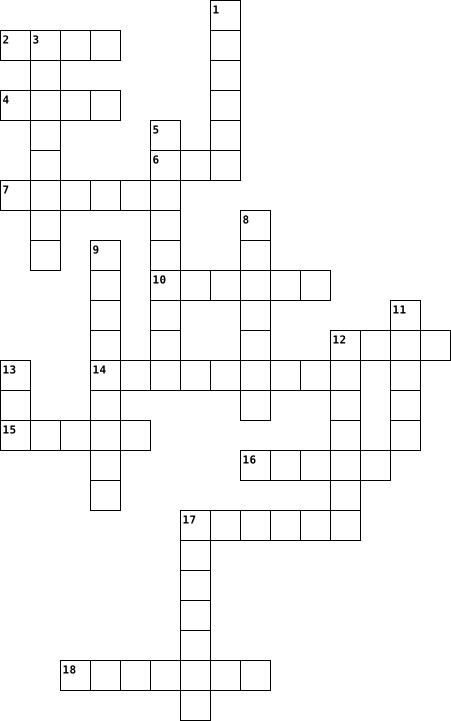
Across
- Red planet
- Twinkling celestial object
- Center of our solar system
- Vehicle that travels to space
- Cloud of gas and dust in space
- Earth's natural satellite
- Artificial object in orbit around a planet
- Prominent constellation
- Second planet from the sun
- Huge collection of stars
- Largest planet in our solar system
Down
- Planet with rings
- Rocky object orbiting the sun
- Person who explores space
- Spacecraft for launching and landing
- Optical instrument for stargazing
- Icy object with a tail
- Closest planet to the sun
- Unidentified flying object
- Force that keeps objects grounded
20 Clues: Red planet • Planet with rings • Icy object with a tail • Prominent constellation • Huge collection of stars • Person who explores space • Earth's natural satellite • Closest planet to the sun • Twinkling celestial object • Center of our solar system • Unidentified flying object • Second planet from the sun • Rocky object orbiting the sun • Vehicle that travels to space • ...
Resources 2022-02-11

Across
- a strong chemical bond in fuels
- process of burning a fuel
- a resource that can be used again
- a car that uses gas and battery together
- invisible fossil fuel
- 26th US president
- oil drilling spill in 2010
- wrote "silent spring"
Down
- organization that makes laws
- alaska oil spill in 1989
- a naturalist and author
- solid fossil fuel
- energy from under the earth
- energy from living organisms
- machine used to collect wind energy
- another name for oil
- liquid fossil fuel
- energy from the sun
- energy from water
- we collect solar energy using this
20 Clues: solid fossil fuel • 26th US president • energy from water • liquid fossil fuel • energy from the sun • another name for oil • invisible fossil fuel • wrote "silent spring" • a naturalist and author • alaska oil spill in 1989 • process of burning a fuel • oil drilling spill in 2010 • energy from under the earth • organization that makes laws • energy from living organisms • ...
science things that I will totally use when i'm older 2024-11-07

Across
- other blue planet
- huge rock in solar system
- green planet
- distance light goes in a year
- planet with acid
- red planet
- blue planet
- cluster of stars that form a picture
- thing that holds the solar system together
Down
- black thing that sucks up stuff in space
- ball of light
- hugest gas planet
- planet with rings
- small planet
- thing that helps us see in the sky
- gut that explores space
- cluster of stars
- different balls of light
- scary unknown green dude
- small and not a planet
20 Clues: red planet • blue planet • small planet • green planet • ball of light • cluster of stars • planet with acid • other blue planet • hugest gas planet • planet with rings • small and not a planet • gut that explores space • different balls of light • scary unknown green dude • huge rock in solar system • distance light goes in a year • thing that helps us see in the sky • ...
Earth, Moon, and Sun 2021-01-29

Across
- eclipse: when the Moon is completely dark
- the border between light and dark on the Moon
- moon: a moon phase that looks like more than half a circle from Earth
- the relative size of things
- an object, diagram, or computer program that helps us understand something by making it simpler or easier to see
- a rocky sphere that travels around a planet
- phase: the shape of the illuminated part of the Moon as it appears from Earth
- a planet outside our solar system
- moon: a moon phase that looks like a half-circle from Earth
- system: the sun, the planets that orbit the sun, and other objects that orbit the sun
Down
- the star that is the main source of light at the center of our solar system
- the nearly circular path a smaller object (like the Moon) travels around a larger object (like Earth).
- moon: a moon phase that looks like less than half a circle from Earth
- the amount of time it takes for a planet to complete one orbit around a star or stars
- moon: a moon phase in which the Moon is not visible from Earth
- to shine light on an object and make it visible
- a moon outside our solar system
- something we observe to be similar over and over again
- moon: a moon phase that looks like a full circle from Earth
19 Clues: the relative size of things • a moon outside our solar system • a planet outside our solar system • eclipse: when the Moon is completely dark • a rocky sphere that travels around a planet • the border between light and dark on the Moon • to shine light on an object and make it visible • something we observe to be similar over and over again • ...
uh oh mr well 2021-02-02

Across
- to shine light on an object and make it visible
- a rocky sphere that travels around a planet
- something we observe to be similar over and over again
- an object, diagram, or computer program that helps us understand something by making it simpler or easier to see
- the relative size of things
- a moon phase that looks like less than half a circle from Earth
- the sun, the planets that orbit the sun, and other objects that orbit the sun
- a moon phase that looks like a full circle from Earth
- a moon phase in which the Moon is not visible from Earth
- moon: a moon phase that looks like more than half a circle from Earth
- a moon phase that looks like a half-circle from Earth
Down
- when the Moon is completely dark
- a moon outside our solar system
- the star that is the main source of light at the center of our solar system
- the border between light and dark on the Moon
- the amount of time it takes for a planet to complete one orbit around a star or stars
- a planet outside our solar system
- the nearly circular path a smaller object (like the Moon) travels around a larger object (like Earth).
- phase: the shape of the illuminated part of the Moon as it appears from Earth
19 Clues: the relative size of things • a moon outside our solar system • when the Moon is completely dark • a planet outside our solar system • a rocky sphere that travels around a planet • the border between light and dark on the Moon • to shine light on an object and make it visible • a moon phase that looks like a full circle from Earth • ...
Earth, Moon, And Sun 2021-02-02

Across
- the nearly circular path a smaller object (like the Moon) travels around a larger object (like Earth).
- the amount of time it takes for a planet to complete one orbit around a star or stars
- an object, diagram, or computer program that helps us understand something by making it simpler or easier to see
- the border between light and dark on the Moon
- a rocky sphere that travels around a planet
- a moon phase that looks like less than a half-circle from Earth
- a moon phase in which the Moon is not visible from Earth
- to shine light on an object and make it visible
- the shape of the illuminated part of the Moon as it appears from Earth
- a planet outside our solar system
Down
- a moon phase that looks like a half-circle from Earth
- a moon phase that looks like more than half a circle from Earth
- the sun, the planets that orbit the sun, and other objects that orbit the sun
- a moon phase that looks like a full circle from Earth
- something we observe to be similar over and over again
- the relative size of things
- a moon outside our solar system
- star that is the main source of light at the center of our solar system
- when the Moon is completely dark
19 Clues: the relative size of things • a moon outside our solar system • when the Moon is completely dark • a planet outside our solar system • a rocky sphere that travels around a planet • the border between light and dark on the Moon • to shine light on an object and make it visible • a moon phase that looks like a half-circle from Earth • ...
Earth, Moon, and Sun Vocab 2024-02-02

Across
- A planet outside our solar system.
- The amount of time it takes for a planet to complete one orbit around a star or stars.
- A moon phase that looks like a half-circle from Earth.
- A moon phase that looks like more than half a circle from Earth.
- To shine on an object and make it visible.
- The relative size of things.
- Something we observe to be similar over and over again.
- The nearly circular path a smaller object (like the moon) travels around a larger object (like Earth)
- A moon phase that looks like a full circle from Earth.
- When the Moon is completely dark.
- The shape of the illuminated part of the Moon as it appears from Earth.
- A rocky sphere that travels around a planet.
Down
- A moon outside our solar system.
- The border between light and dark on the moon.
- The star that is the main source of light at the center of our solar system.
- A moon phase that looks like less than half a circle from Earth.
- An object, diagram, or computer program that helps us understand something by making it simpler or easier to see.
- The sun, the planets that orbit the sun, and other objects that orbit that orbit the sun.
- A moon phase in which the Moon is not visible from Earth.
19 Clues: The relative size of things. • A moon outside our solar system. • When the Moon is completely dark. • A planet outside our solar system. • To shine on an object and make it visible. • A rocky sphere that travels around a planet. • The border between light and dark on the moon. • A moon phase that looks like a half-circle from Earth. • ...
Earth, Moon, Sun 2024-02-02

Across
- to shine light on an object and make it visble
- an object, diagram, or computer program that helps us understand something by making it simpler or easier to see
- the star that is the main source of light at the center of our solar system
- the amount of time it takes for a plant to complete one orbit around a star or stars
- a moon phase that looks like a half-circle from Earth
- the relative size of things
- when the Moon is completely dark
- the shape of the illuminated part of the Moon as it appears from Earth
- a plant outside our solar system
- a moon phase of the illuminated part of the Moon as it appears from Earth
- the nearly circular path a smaller object (like the Moon) travels around a larger object (like Earth)
Down
- a moon phase that looks like more than half a circle from Earth
- the border between light and dark on the Moon
- a rocky sphere that travels around a plant
- something we observe to be similar over and over again
- system the sun, the planets that orbit the sun, and other objects that orbit the sun
- a moon phase that looks like a full circle from Earth
- a moon phase that looks like less than half a circle from Earth
- a moon outside our solar system
19 Clues: the relative size of things • a moon outside our solar system • when the Moon is completely dark • a plant outside our solar system • a rocky sphere that travels around a plant • the border between light and dark on the Moon • to shine light on an object and make it visble • a moon phase that looks like a half-circle from Earth • ...
Earth, Moon, and Sun 2021-02-01

Across
- the star that is the main source of light at the center of our solar system
- a planet outside our solar system
- moon: a moon phase that looks like more than half a circle from Earth
- the sun, the planets that orbit the sun, and other objects that orbit the sun
- to shine light on an object and make it visible
- an object, diagram, or computer program that helps us understand something by making it simpler or easier to see
- the nearly circular path a smaller object (like the Moon) travels around a larger object (like Earth).
- the amount of time it takes for a planet to complete one orbit around a star or stars
- something we observe to be similar over and over again
- a moon phase in which the Moon is not visible from Earth
- phase: the shape of the illuminated part of the Moon as it appears from Earth
Down
- when the Moon is completely dark
- a moon outside our solar system
- a moon phase that looks like less than half a circle from Earth
- the relative size of things
- a moon phase that looks like a half-circle from Earth
- a moon phase that looks like a full circle from Earth
- the border between light and dark on the Moon
- a rocky sphere that travels around a planet
19 Clues: the relative size of things • a moon outside our solar system • when the Moon is completely dark • a planet outside our solar system • a rocky sphere that travels around a planet • the border between light and dark on the Moon • to shine light on an object and make it visible • a moon phase that looks like a half-circle from Earth • ...
Earth, Moon, and Sun 2021-02-01

Across
- a planet outside our solar system
- the amount of time it takes for a planet to complete one orbit around a star or stars
- a moon phase that looks like a half-circle from Earth
- a moon phase that looks like more than half a circle from Earth
- to shine light on an object and make it visible
- the relative size of things
- something we observe to be similar over and over again
- the nearly circular path a smaller object (like the Moon) travels around a larger object (like Earth).
- a moon phase that looks like a full circle from Earth
- when the Moon is completely dark
- the shape of the illuminated part of the Moon as it appears from Earth
- a rocky sphere that travels around a planet
Down
- a moon outside our solar system
- the border between light and dark on the Moon
- the star that is the main source of light at the center of our solar system
- a moon phase that looks like less than half a circle from Earth
- an object, diagram, or computer program that helps us understand something by making it simpler or easier to see
- the sun, the planets that orbit the sun, and other objects that orbit the sun
- a moon phase in which the Moon is not visible from Earth
19 Clues: the relative size of things • a moon outside our solar system • when the Moon is completely dark • a planet outside our solar system • a rocky sphere that travels around a planet • the border between light and dark on the Moon • to shine light on an object and make it visible • a moon phase that looks like a half-circle from Earth • ...
Earth, Moon, Sun crossword 2025-03-12

Across
- eclipse: when the moon is completely dark
- the border between light and dark on the Moon
- moon: a moon phase that looks like more than a half circle from Earth
- the relative size of things
- an object, diagram, or computer program that helps us understand something by making it simpler or easier to see
- a rocky sphere that travels around a planet
- phase: the shape of the illuminate part of the moon as it appears from Earth
- a planet outside our solar system
- moon: a moon phase that looks like half-circle from Earth
- system: the sun, the planets that orbit the sun, and other objects that orbit the sun
Down
- the star that is the main source of light at the center of our solar system
- the nearly circular path a smaller object (like the Moon) travels around a larger object (like earth)
- moon: a moon phase that looks less than half a circle from Earth
- the amount of time it takes for a planet to complete one orbit around a star or stars
- moon: a moon phase in which the Moon is not visible from Earth
- to shine light on an object and make it visible
- a moon outside our solar system
- some =thing we observe to similar over and over again
- moon: a moon phase that looks like a full circle from Earth
19 Clues: the relative size of things • a moon outside our solar system • a planet outside our solar system • eclipse: when the moon is completely dark • a rocky sphere that travels around a planet • the border between light and dark on the Moon • to shine light on an object and make it visible • some =thing we observe to similar over and over again • ...
solar system puzzle 2023-06-13

Across
- contains 1.5+ million asteroids
- blue and green from space
- named after the roman god of war
- has large distinct rings
- named for the roman god of water
- seventh planet from the sun
Down
- a home to icy rocks left over from the birth of the colar system
- largest planet in our solar system
- closest planet to the sun
- largest object in our solar system
- hottest planet in the solar system
- no longer a planet
12 Clues: no longer a planet • has large distinct rings • blue and green from space • closest planet to the sun • seventh planet from the sun • contains 1.5+ million asteroids • named after the roman god of war • named for the roman god of water • largest planet in our solar system • largest object in our solar system • hottest planet in the solar system • ...
Technology Terms 2017-06-13

Across
- 3D models
- Resistance, current, etc.
- production specially for one thing
- energy in motion
- changes in DNA
- used for internet and work
- technology to edit genes
- systems that utilize electronics, communications and information processing to improve the efficiency and safety of surface transportation
- the ability to do work
- changing an object without cutting
Down
- resistance to failure
- uses water and gas to form energy
- makes solar panels work
- parts of DNA
- construction of things
- animals, tech., etc changing
- the beginning of the Eras
- solar, wind, hydro
- A brand new creation
- dangerous energy source
20 Clues: 3D models • parts of DNA • changes in DNA • energy in motion • solar, wind, hydro • A brand new creation • resistance to failure • construction of things • the ability to do work • makes solar panels work • dangerous energy source • technology to edit genes • Resistance, current, etc. • the beginning of the Eras • used for internet and work • animals, tech., etc changing • ...
Mary Catherine's Engineering Career-Innovation/Invention 2022-01-18

Across
- Zero-Fuel-Aircraft
- solar car
- lawn mower
- Prosthetics
- atomic bomb
- diesel engine
- Carbon Arc Lamp
- inkless printer
- TurbojetEngine
- Drones
- ultrasounds
- electrical power lines
- Hydraulic fracturing
- Nanotubes in Chloroplast
Down
- signal timing
- X-ray-machines
- Digital-blueprints
- energy efficient buildings
- Recycling-techniques
- Underground-aquifer
- look over processes to find improvements
- KineticWaveSculptures
- Heated-water indoors
- SteamEngine
- wind turbine
- Thermal-Bridging
26 Clues: Drones • solar car • lawn mower • Prosthetics • atomic bomb • SteamEngine • ultrasounds • wind turbine • signal timing • diesel engine • X-ray-machines • TurbojetEngine • Carbon Arc Lamp • inkless printer • Thermal-Bridging • Digital-blueprints • Zero-Fuel-Aircraft • Underground-aquifer • Recycling-techniques • Heated-water indoors • Hydraulic fracturing • KineticWaveSculptures • electrical power lines • ...
Science vocab! 2023-04-06

Across
- water goes against gravity
- observes someth
- The hottest layer of the atmosphere
- Stored energy
- doesnt have a definite shape
- predict something
- orbits something
- The gravitational pull of the earth causes these
- This is what we live on
- cannot change its shape
Down
- water sticks to water
- Water is a _____
- our _____ is called the milky way
- water sticks to other suubstances
- Planet not in our solar system
- measures Tempearture
- Liquid to gas
- The thing that drives our solar system
- spins in place
- a system of water that comes together
20 Clues: Liquid to gas • Stored energy • spins in place • observes someth • Water is a _____ • orbits something • predict something • measures Tempearture • water sticks to water • This is what we live on • cannot change its shape • water goes against gravity • doesnt have a definite shape • Planet not in our solar system • our _____ is called the milky way • water sticks to other suubstances • ...
Earth, Moon, and Sun 2021-02-02

Across
- a moon phase that looks like a half-circle from Earth
- an object, diagram, or computer program that helps us understand something by making it simpler or easier to see
- to shine light on an object and make it visible
- the sun, the planets that orbit the sun, and other objects that orbit the sun
- the border between light and dark on the Moon
- phase, the shape of the illuminated part of the Moon as it appears from Earth
- a moon phase that looks like a full circle from Earth
- moon, a moon phase that looks like more than half a circle from Earth
- the nearly circular path a smaller object (like the Moon) travels around a larger object (like Earth).
- the star that is the main source of light at the center of our solar system
- something we observe to be similar over and over again
- the amount of time it takes for a planet to complete one orbit around a star or stars
Down
- a planet outside our solar system
- a moon phase that looks like less than half a circle from Earth
- a rocky sphere that travels around a planet
- when the Moon is completely dark
- the relative size of things
- a moon outside our solar system
- a moon phase in which the Moon is not visible from Earth
19 Clues: the relative size of things • a moon outside our solar system • when the Moon is completely dark • a planet outside our solar system • a rocky sphere that travels around a planet • the border between light and dark on the Moon • to shine light on an object and make it visible • a moon phase that looks like a half-circle from Earth • ...
Earth, Moon, and Sun. 2021-02-02

Across
- the border between light and dark on the Moon
- an object, diagram, or computer program that helps us understand something by making it simpler or easier to see
- the sun, the planets that orbit the sun, and other objects that orbit the sun
- the relative size of things
- moon: a moon phase that looks like more than half a circle from Earth
- when the Moon is completely dark
- a rocky sphere that travels around a planet
- a moon phase in which the Moon is not visible from Earth
- the nearly circular path a smaller object (like the Moon) travels around a larger object (like Earth).
- a planet outside our solar system
- the amount of time it takes for a planet to complete one orbit around a star or stars
Down
- a moon phase that looks like a half-circle from Earth
- a moon phase that looks like less than half a circle from Earth
- a moon phase that looks like a full circle from Earth
- to shine light on an object and make it visible
- a moon outside our solar system
- something we observe to be similar over and over again
- the star that is the main source of light at the center of our solar system
- the shape of the illuminated part of the Moon as it appears from Earth
19 Clues: the relative size of things • a moon outside our solar system • when the Moon is completely dark • a planet outside our solar system • a rocky sphere that travels around a planet • the border between light and dark on the Moon • to shine light on an object and make it visible • a moon phase that looks like a half-circle from Earth • ...
Earth, Moon and Sun 2021-01-29

Across
- eclipse: when the Moon is completely dark
- the border between light and dark on the Moon
- moon: a moon phase that looks like more than half a circle from Earth
- the relative size of things
- an object, diagram, or computer program that helps us understand something by making it simpler or easier to see
- a rocky sphere that travels around a planet
- phase: the shape of the illuminated part of the Moon as it appears from Earth
- a planet outside our solar system
- moon: a moon phase that looks like a half-circle from Earth
- system: the sun, the planets that orbit the sun, and other objects that orbit the sun
Down
- the star that is the main source of light at the center of our solar system
- the nearly circular path a smaller object (like the Moon) travels around a larger object (like Earth).
- moon: a moon phase that looks like less than half a circle from Earth
- the amount of time it takes for a planet to complete one orbit around a star or stars
- moon: a moon phase in which the Moon is not visible from Earth
- to shine light on an object and make it visible
- a moon outside our solar system
- something we observe to be similar over and over again
- moon: a moon phase that looks like a full circle from Earth
19 Clues: the relative size of things • a moon outside our solar system • a planet outside our solar system • eclipse: when the Moon is completely dark • a rocky sphere that travels around a planet • the border between light and dark on the Moon • to shine light on an object and make it visible • something we observe to be similar over and over again • ...
Earth, Moon, And Sun crossword 2024-02-02

Across
- the sun, the planets that orbit the sun, and other objects that orbit the sun
- something we observe to be similar over and over again
- a rocky sphere that travels around the planet
- a moon phase that looks like more than half a circle from Earth
- a moon phase that looks like half a circle from earth
- an object, diagram, or computer program that helps us understand something by making it simpler or easier to see
- moon phase that looks like a full circle from Earth
- the star that is the main source of light at the center of our solar system
- a moon phase in which the moon is not visible from Earth
- the amount of time it takes for a planet to complete one orbit around a star or stars.
- a relative size of things
Down
- a moon phase that looks like a half-circle from earth
- a planet outside our solar system
- the nearly circular path a smaller (like the moon) tavels around a larger object like the earth
- a moon outside our solar system
- when the moon is completely dark
- the border between light and dark on the moon
- to shine light on an object and make it visible
- the shape of the illuminated part of the moon as it appears from Earth
19 Clues: a relative size of things • a moon outside our solar system • when the moon is completely dark • a planet outside our solar system • a rocky sphere that travels around the planet • the border between light and dark on the moon • to shine light on an object and make it visible • moon phase that looks like a full circle from Earth • ...
Earth, Moon, and Sun Glossary 2025-03-13

Across
- Eclipse, when the Moon is completely dark
- The relative size of things
- An object diagram or computer program that helps us understand something by making it simpler or easier to see
- A planet outside our solar system
- Moon, A Moon phase that looks like more than half a circle from earth
- The border between light and dark on the Moon
- To shine light on an object and make it visible
- Something we observe to be similar over and over again
Down
- The amount of time it takes for a planet to complete one orbit around a star or stars
- Moon, A Moon phase that looks like a full circle from earth
- A Moon outside our solar system
- System, The sun the planets that orbit the sun and other objects that orbit the sun
- Moon, A moon phase that looks like less than half a circle from earth
- Moon, A Moon phase that looks like a half-circle from earth
- The star that is the main source of light at the center of our solar system
- The nearly circular path a small object like the Moon travels around a larger object like earth
- Phase, The shape of the illuminated part of the Moon As it appears from Earth
- A rockey sphere that travels around a planet
- Moon, A moon phase in which the Moon is not visible from earth
19 Clues: The relative size of things • A Moon outside our solar system • A planet outside our solar system • Eclipse, when the Moon is completely dark • A rockey sphere that travels around a planet • The border between light and dark on the Moon • To shine light on an object and make it visible • Something we observe to be similar over and over again • ...
Solar Geometry 2012-08-15

Across
- Period when days and nights are of equal length
- Distance east or west of a reference line through England
- Making solar panels move to follow the sun
- Solar energy accumulated over a period of time
- Distance north or south of the equator
- Period when days or nights are at maximum length
- Solar energy accumulated over the course of a day
- Point in the sky directly overhead
Down
- Term used to describe the difference between true north and magnetic north
- The time of day when the sun is highest in the sky
- The power of solar radiation per unit area
11 Clues: Point in the sky directly overhead • Distance north or south of the equator • Making solar panels move to follow the sun • The power of solar radiation per unit area • Solar energy accumulated over a period of time • Period when days and nights are of equal length • Period when days or nights are at maximum length • Solar energy accumulated over the course of a day • ...
Astronomy 2020-11-15

Across
- The planet furthest from the sun
- A gas giant planet that is smaller than Jupiter but larger than Neptune
- used to measure distances within the solar system
- What force formed the solar system
- A loose, icy body with a long, narrow orbit
Down
- An object that orbits a planet
- The smallest planet in the solar system
- A planet that formed closer to the sun than Earth but not closest to the sun
- A small rocky body that orbits the sun
- The largest planet in the solar system
- the sun, the planets, their moons, and a variety of smaller objects
11 Clues: An object that orbits a planet • The planet furthest from the sun • What force formed the solar system • A small rocky body that orbits the sun • The largest planet in the solar system • The smallest planet in the solar system • A loose, icy body with a long, narrow orbit • used to measure distances within the solar system • ...
FONTES DE ENERGIA 2021-11-25

Across
- Recurso classificado como secundário e que se deriva do petróleo.
- Energia proveniente dos geisêres
- Equipamento utilizado para aproveitar a luz solar como fonte de energia.
- Energia obtida de fontes naturais capazes de se regenerar rapidamente.
- Recursos energéticos que a humanidade já domina sua utilização.
- Combustível fóssil mais utilizado na atualidade como fonte de energia
- custo Desvantagem da utilização da energia solar
- Fontes de energia que não poluem o meio ambiente
Down
- Variedade do carvão mineral.
- Recurso energético mais poluente.
- Fonte limpa e renovável.
- Parte do continente americano que mais consomem petróleo
- Energia proveniente dos ventos.
- Energia que vem da queima de carvão mineral
14 Clues: Fonte limpa e renovável. • Variedade do carvão mineral. • Energia proveniente dos ventos. • Energia proveniente dos geisêres • Recurso energético mais poluente. • Energia que vem da queima de carvão mineral • custo Desvantagem da utilização da energia solar • Fontes de energia que não poluem o meio ambiente • Parte do continente americano que mais consomem petróleo • ...
Space 2023-11-14

Across
- it moves 14inches away from earth every year
- biggest planet in our solar system
- its the galaxy that our solar system is in
- a funny word to name a planet
- the a thing that separates the inner planets from the outer planets
- demoted from planet to dwarf planet
- a star when seen from Pluto
Down
- the first gas planet outside the habitable zone
- The first planet near the sun
- we dont know what will happen if we enter it
- the planet that Space x wants to colonise
- the coldest planet in our solar system
- it has 7 Beautiful rings
- where we live
- The planet called morning star
15 Clues: where we live • it has 7 Beautiful rings • a star when seen from Pluto • The first planet near the sun • a funny word to name a planet • The planet called morning star • biggest planet in our solar system • demoted from planet to dwarf planet • the coldest planet in our solar system • the planet that Space x wants to colonise • its the galaxy that our solar system is in • ...
Solar Energy Puzzle 2022-01-07

Across
- The cost of sunlight.
- The cost to build solar panels.
- The process of the Earth heating up.
- Device used to capture solar energy.
- A form of light that is from the sun.
Down
- Is caused by unclean energy sources.
- Power comes from physical or chemical resources.
- A big fiery ball in space.
- Energy that does not harm the environment.
- Greek god of the sun.
- the creator of this puzzle.
- A large group of solar panels.
12 Clues: Greek god of the sun. • The cost of sunlight. • A big fiery ball in space. • the creator of this puzzle. • A large group of solar panels. • The cost to build solar panels. • Is caused by unclean energy sources. • The process of the Earth heating up. • Device used to capture solar energy. • A form of light that is from the sun. • Energy that does not harm the environment. • ...
Astronomy Topic 3, Part 2 2025-05-24

Across
- The Earth is furthest from the Sun in its orbit
- A red moon is caused by the atmsophere doing this to light in the atmosphere
- Some sun rays can shine through valleys during eclipses. These are called.
- The most common type of eclipse
- The Moon is furthest from the Earth in its orbit
- A type of Solar eclipse where a small moon and large Sun causes a halo effect
- An observer here will see a partial solar eclipse
- A transit that totally or patially blocks a star
Down
- An observer here will see a total solar eclipse
- The Earth is closest to the Sun in its orbit
- A lunar eclipse is when the Moon Move in to the Earth's....
- An eclipse where the moon is blocked
- An eclipse where the sun is blocked
- The Moon is closest to the Earth in its orbit
14 Clues: The most common type of eclipse • An eclipse where the sun is blocked • An eclipse where the moon is blocked • The Earth is closest to the Sun in its orbit • The Moon is closest to the Earth in its orbit • An observer here will see a total solar eclipse • The Earth is furthest from the Sun in its orbit • The Moon is furthest from the Earth in its orbit • ...
The Solar System 2020-04-25

Across
- The closest planet to the Sun
- The number of planets in the solar system
- This planet spins on its side like a rolling ball
- The Sun and the planets and bodies that orbit the Sun
- The hottest of all the planets
- It is called the Red Planet
- The largest planet in the solar system
- It is actually a dwarf planet because of its size and orbit
Down
- To go around
- You can fit _____ Earths across the Sun
- It has rings of ice, rock, and dust
- The center of the solar system
- The Sun is a medium-sized _____
- The planet we live on
14 Clues: To go around • The planet we live on • It is called the Red Planet • The closest planet to the Sun • The center of the solar system • The hottest of all the planets • The Sun is a medium-sized _____ • It has rings of ice, rock, and dust • The largest planet in the solar system • You can fit _____ Earths across the Sun • The number of planets in the solar system • ...
Space 2024-06-07

Across
- The natural satellite of Earth
- A large system of stars, gas, and dust held together by gravity
- The planet known for its rings
- The red planet
- The fifth planet from the sun
- The planet closest to the sun
- The planet known for its extreme temperatures and thick atmosphere
- A person who travels into space
Down
- The galaxy that contains our solar system
- The largest planet in our solar system
- Star at the center of our solar system
- The planet famous for its beautiful blue color
- The force that keeps planets in orbit around the sun
- A space rock that enters Earth's atmosphere and burns up
- A vehicle used to travel into space
15 Clues: The red planet • The fifth planet from the sun • The planet closest to the sun • The natural satellite of Earth • The planet known for its rings • A person who travels into space • A vehicle used to travel into space • The largest planet in our solar system • Star at the center of our solar system • The galaxy that contains our solar system • ...
Unit 4 vocab part 3 2024-02-14

Across
- A huge group of single stars
- An attractive force between two masses
- station A large artificial satellite
- Belt A region in the solar system roughly located between the orbits of the planets Jupiter and mars
- Streaks of light
- An object that revolves around another object
- loose collections of ice
- Belt A large region in the solar system past Neptune where pluto and other dwarf planets orbits the sun
Down
- system A gravitationally bound system
- Rocky objects
- Shuttle Spacecraft that can carry a crew to space
- All of space and time and their contents
- Probe A spacecraft that has various scientific instruments
- An astronomical body that orbits a star
- A place that is empty
- spinoff An item that has uses on Earth
- Space Telescope a space telescope
17 Clues: Rocky objects • Streaks of light • A place that is empty • loose collections of ice • A huge group of single stars • Space Telescope a space telescope • An attractive force between two masses • station A large artificial satellite • An astronomical body that orbits a star • system A gravitationally bound system • All of space and time and their contents • ...
Space and Solar System 2021-05-27

Across
- the largest planet in the solar system
- The biggest star in the solar system.
- Cosmic body.
- Planet in which we live
- A celestial body orbiting the sun.
- Closest planet to the sun.
- Earth's satellite.
Down
- All of space and time where we and everything else exists
- How many planets are in solar system?
- What is the name of a person who flies into space?
- Which transport do people use, to fly into space?
- This planet is named after the ancient Roman god of war.
- A space object which gravity is so strong it sucks everything in.
- Gas giant with rings.
14 Clues: Cosmic body. • Earth's satellite. • Gas giant with rings. • Planet in which we live • Closest planet to the sun. • A celestial body orbiting the sun. • The biggest star in the solar system. • How many planets are in solar system? • the largest planet in the solar system • Which transport do people use, to fly into space? • What is the name of a person who flies into space? • ...
Science vocab! 2023-04-06

Across
- water goes against gravity
- observes someth
- The hottest layer of the atmosphere
- Stored energy
- doesnt have a definite shape
- predict something
- orbits something
- The gravitational pull of the earth causes these
- This is what we live on
- cannot change its shape
Down
- water sticks to water
- Water is a _____
- our _____ is called the milky way
- water sticks to other suubstances
- Planet not in our solar system
- measures Tempearture
- Liquid to gas
- The thing that drives our solar system
- spins in place
- a system of water that comes together
20 Clues: Liquid to gas • Stored energy • spins in place • observes someth • Water is a _____ • orbits something • predict something • measures Tempearture • water sticks to water • This is what we live on • cannot change its shape • water goes against gravity • doesnt have a definite shape • Planet not in our solar system • our _____ is called the milky way • water sticks to other suubstances • ...
Spanish Vocab 2024-04-10

Across
- split something apart
- you...pokemon cards
- not use and then throw away
- make smaller or less of
- a...of water
- not people but...
- my mom and dad give me...
- not to throw away but to...
- amount of water vapor in the air
- risk
Down
- give money
- good,average,bad,awful
- solar solar panels
- motion when cooking
- what boxes are made out of
- when you buy something new you...the other thing
- phone,computer,TV
- what sink water comes out of
- goes in a lamp
- go missing
20 Clues: risk • give money • go missing • a...of water • goes in a lamp • phone,computer,TV • not people but... • solar solar panels • motion when cooking • you...pokemon cards • split something apart • good,average,bad,awful • make smaller or less of • my mom and dad give me... • what boxes are made out of • not use and then throw away • not to throw away but to... • what sink water comes out of • ...
SISTEMA SOLAR E MOVIMENTOS DA TERRA 2021-03-26

Across
- MAIOR PLANETA DO SISTEMA SOLAR.
- TEMPO QUE A TERRA FAZ EM TORNO DO SOL.
- O MOVIMENTO DE TRANSLAÇÃO DÁ OREIGEM...
- PRINCIPAL ESTRELA DO SISTEMA SOLAR
- PLANETA MUITO QUENTE,PORQUE FICA MAIS PRÓXIMO DO SOL.
- MOVIMENTO DE ROTAÇÃO DÁ ORIGEM...
- MOVIMENTO QUE A TERRA FAZ EM TORNO DO SOL.
- PLANETA QUE POSSUI ANÉIS.
Down
- É FORMADO POR ESTRELAS, PLANETAS, SAT´LITES E OUTROS.
- TEMPO QUE A TERRA LEVA PARA GIRAR EM TORNO DE SI MESMA.
- PLANETA FORMADO POR 70% DE ÁGUA.
- PLANETA CONHECIDO COMO PLANETA VERMELHO.
- MOVIMENTO QUE A TERRA FAZ EM TORNO DE SI MESMA.
- PLANETA MAIS DISTANTE DO SISTEMA SOLAR.
14 Clues: PLANETA QUE POSSUI ANÉIS. • MAIOR PLANETA DO SISTEMA SOLAR. • PLANETA FORMADO POR 70% DE ÁGUA. • MOVIMENTO DE ROTAÇÃO DÁ ORIGEM... • PRINCIPAL ESTRELA DO SISTEMA SOLAR • TEMPO QUE A TERRA FAZ EM TORNO DO SOL. • O MOVIMENTO DE TRANSLAÇÃO DÁ OREIGEM... • PLANETA MAIS DISTANTE DO SISTEMA SOLAR. • PLANETA CONHECIDO COMO PLANETA VERMELHO. • ...
Cosmic Creations 2025-03-18

Across
- The planet that rotates on its side.
- A small, planet-like object (e.g., Pluto).
- The hottest planet in the solar system.
- The group of planets, moons, and other objects that orbit the Sun.
- The planet with beautiful rings.
- The force that keeps planets in orbit.
- A ball of ice, dust, and gas that orbits the Sun.
Down
- The largest planet in the solar system.
- The smallest planet, closest to the Sun.
- The star at the center of our solar system.
- Known as the Red Planet.
- The planet with the fastest winds.
- The planet we live on.
- The path a planet takes around the Sun.
14 Clues: The planet we live on. • Known as the Red Planet. • The planet with beautiful rings. • The planet with the fastest winds. • The planet that rotates on its side. • The force that keeps planets in orbit. • The largest planet in the solar system. • The hottest planet in the solar system. • The path a planet takes around the Sun. • The smallest planet, closest to the Sun. • ...
Korn M3A 2021-03-03

Across
- are made of rock or gas.
- is the most essential source of energy for life on Earth.
- is the smallest planet in solar system.
- how many planets are there in solar system?
Down
- is the galaxy we are living in.
- is also called "red planet"
- is the largest planet in our solar system.
- is the 2nd closest planet to the Sun.
- is the coldest planet in solar system.
- is what Saturn's rings mostly made of.
10 Clues: are made of rock or gas. • is also called "red planet" • is the galaxy we are living in. • is the 2nd closest planet to the Sun. • is the coldest planet in solar system. • is what Saturn's rings mostly made of. • is the smallest planet in solar system. • is the largest planet in our solar system. • how many planets are there in solar system? • ...
Solar, Wind and Geothermal energy 2022-05-12

Across
- Energy using heat form inside the earth
- Solar heating without mechanical parts
- Solar cells are also known as these kind of cells
- Used to capture geothermal energy
- Turned by wind and hot water from ground to make electricity
Down
- Catches wind to make energy
- tool used in math that can run on a solar cell
- The main source of energy for the Earth
- Solar __ on a house catches photons from sun
- energy that won't run out
10 Clues: energy that won't run out • Catches wind to make energy • Used to capture geothermal energy • Solar heating without mechanical parts • Energy using heat form inside the earth • The main source of energy for the Earth • Solar __ on a house catches photons from sun • tool used in math that can run on a solar cell • Solar cells are also known as these kind of cells • ...
The solar system 2021-08-08

Across
- ninth planet in the solar system (dwarf planet).
- eight planet in the solar system.
- an object that orbits a larger object.
- second planet in the solar system.
Down
- those are nine in number.
- small objects mostly made of ice.
- fifth planet in the solar system.
- smaller than the asteroids or comet.
- the biggest star.
9 Clues: the biggest star. • those are nine in number. • small objects mostly made of ice. • fifth planet in the solar system. • eight planet in the solar system. • second planet in the solar system. • smaller than the asteroids or comet. • an object that orbits a larger object. • ninth planet in the solar system (dwarf planet).
Solar System 2023-05-15

Across
- The coldest planet in the solar system
- The last planet in the solar system
- The red planet
- A group of asteroids between Mars and Jupiter
- The hottest planet in the solar system
Down
- The largest planet in the solar system
- The planet suitable for life
- The closest planet to the sun
- The planet with rings
9 Clues: The red planet • The planet with rings • The planet suitable for life • The closest planet to the sun • The last planet in the solar system • The largest planet in the solar system • The coldest planet in the solar system • The hottest planet in the solar system • A group of asteroids between Mars and Jupiter
Earth, Moon, And Sun 2021-02-02

Across
- the border between light and dark on the Moon
- moon: a moon phase that looks like more than half a circle from Earth
- phase: the shape of the illuminated part of the Moon as it appears from Earth
- when the Moon is completely dark
- something we observe to be similar over and over again
- a moon phase that looks like a full circle from Earth
- the nearly circular path a smaller object (like the Moon) travels around a larger object (like Earth).
- the star that is the main source of light at the center of our solar system
Down
- a moon phase in which the Moon is not visible from Earth
- a planet outside our solar system
- a moon phase that looks like a half-circle from Earth
- a moon outside our solar system
- a moon phase that looks like less than half a circle from Earth
- the amount of time it takes for a planet to complete one orbit around a star or stars
- to shine a light on an object and make it visible
- the relative size of things
- an object, diagram, or computer program that helps us understand something by making it simpler or easier to see
- a rocky sphere that travels around a planet
- system: the sun, the planets that orbit the sun, and other objects that orbit the sun
19 Clues: the relative size of things • a moon outside our solar system • when the Moon is completely dark • a planet outside our solar system • a rocky sphere that travels around a planet • the border between light and dark on the Moon • to shine a light on an object and make it visible • a moon phase that looks like a half-circle from Earth • ...
Earth,Moon and Sun 2021-02-02

Across
- the star that is the main source of light at the center of our solar system
- a planet outside our solar system
- moon: a moon phase that looks like more than half a circle from Earth
- the sun, the planets that orbit the sun, and other objects that orbit the sun
- to shine light on an object and make it visible
- an object, diagram, or computer program that helps us understand something by making it simpler or easier to see
- the nearly circular path a smaller object (like the Moon) travels around a larger object (like Earth).
- the amount of time it takes for a planet to complete one orbit around a star or stars
- something we observe to be similar over and over again
- a moon phase in which the Moon is not visible from Earth
- phase: the shape of the illuminated part of the Moon as it appears from Earth
Down
- when the Moon is completely dark
- a moon outside our solar system
- a moon phase that looks like less than half a circle from Earth
- the relative size of things
- a moon phase that looks like a half-circle from Earth
- a moon phase that looks like a full circle from Earth
- the border between light and dark on the Moon
- a rocky sphere that travels around a planet
19 Clues: the relative size of things • a moon outside our solar system • when the Moon is completely dark • a planet outside our solar system • a rocky sphere that travels around a planet • the border between light and dark on the Moon • to shine light on an object and make it visible • a moon phase that looks like a half-circle from Earth • ...
Earth, Moon, And Sun 2021-02-02

Across
- the amount of time it takes for a planet to complete one orbit around a star or stars
- a moon outside our solar system
- the border between light and dark on the Moon
- a moon phase that looks like less than half a circle from Earth
- moon: a moon phase that looks like more than half a circle from Earth
- to shine a light on an object and make it visible
- phase: the shape of the illuminated part of the Moon as it appears from Earth
- a moon phase that looks like a full circle from Earth
- a planet outside our solar system
- the star that is the main source of light at the center of our solar system
- an object, diagram, or computer program that helps us understand something by making it simpler or easier to see
Down
- the relative size of things
- a moon phase that looks like a half-circle from Earth
- something we observe to be similar over and over again
- when the Moon is completely dark
- a rocky sphere that travels around a planet
- the nearly circular path a smaller object (like the Moon) travels around a larger object (like Earth).
- a moon phase in which the Moon is not visible from Earth
- system: the sun, the planets that orbit the sun, and other objects that orbit the sun
19 Clues: the relative size of things • a moon outside our solar system • when the Moon is completely dark • a planet outside our solar system • a rocky sphere that travels around a planet • the border between light and dark on the Moon • to shine a light on an object and make it visible • a moon phase that looks like a half-circle from Earth • ...
Earth, Moon, and Sun 2021-02-02

Across
- the border between light and dark on the Moon
- a moon phase that looks like less than half a circle from Earth
- a moon phase that looks like a full circle from Earth
- a rocky sphere that travels around a planet
- a planet outside our solar system
- a moon phase in which the Moon is not visible from Earth
- the relative size of things
- something we observe to be similar over and over again
- the sun, the planets that orbit the sun, and other objects that orbit the sun
Down
- a moon outside our solar system
- the amount of time it takes for a planet to complete one orbit around a star or stars
- the nearly circular path a smaller object (like the Moon) travels around a larger object (like Earth).
- a moon phase that looks like a half-circle from Earth
- when the Moon is completely dark
- moon, a moon phase that looks like more than half a circle from Earth
- to shine light on an object and make it visible
- the star that is the main source of light at the center of our solar system
- phase, the shape of the illuminated part of the Moon as it appears from Earth
- an object, diagram, or computer program that helps us understand something by making it simpler or easier to see
19 Clues: the relative size of things • a moon outside our solar system • when the Moon is completely dark • a planet outside our solar system • a rocky sphere that travels around a planet • the border between light and dark on the Moon • to shine light on an object and make it visible • a moon phase that looks like a half-circle from Earth • ...