
states Crossword Puzzles
Chapter 19 Crossword - Angelica Mazumder 2024-12-16

Across
- A law requiring escaped slaves to be returned, even if found in free states.
- Site of John Brown's raid to incite a slave rebellion.
- A preacher who supported antislavery settlers by providing weapons.
- A principle allowing settlers to decide on slavery in their territory, leading to conflict.
- The act of formally withdrawing, as Southern states did before the Civil War.
- A package of laws balancing the interests of slave and free states.
- A political party formed in the 1850s to oppose the spread of slavery into territories.
- An 1857 Supreme Court ruling that African Americans were not U.S. citizens.
- A novel by Harriet Beecher Stowe that exposed slavery’s cruelties.
- Regions under U.S. government control where slavery debates were fierce.
- Something or someone that stirs up conflict or rebellion, often tied to slavery debates.
Down
- Rifles used by antislavery settlers in Kansas, named after Reverend Henry Ward Beecher.
- Violent confrontations between proslavery and antislavery factions in Kansas Territory.
- An abolitionist known for the Pottawatomie Massacre and the raid on Harpers Ferry.
- A rejected proslavery constitution proposed in Kansas.
- A person who advocated for the immediate end of slavery in the United States.
- People who opposed the expansion of slavery into western U.S. territories.
- A system of thought rejecting religious considerations in moral and social debates.
- A violent event where John Brown and his men killed proslavery settlers.
- An 1854 law allowing territories to decide on slavery via popular sovereignty.
20 Clues: Site of John Brown's raid to incite a slave rebellion. • A rejected proslavery constitution proposed in Kansas. • A novel by Harriet Beecher Stowe that exposed slavery’s cruelties. • A preacher who supported antislavery settlers by providing weapons. • A package of laws balancing the interests of slave and free states. • ...
Civil War/Westward Expansion 2025-11-17

Across
- Policy that gave 50 acres of land out west to settlers for free
- chief editor of the abolitionist paper, The Liberator
- Gave black men the right to vote
- Drew a line dividing free and enslaved states in the West
- When the Union placed the military in the South to oversee Reconstruction
- When cotton plantations controlled American society and economics
- Battle that was the turning point of the war
- disputed military basis that leads to the first conflict of the Civil War
- Leader of the Underground Railroad
- Made slavery illegal for the entire United States
- leading general of the Confederacy
- Policy to limit immigration from a particular country
- Gave new states the right to determine their own slavery laws
Down
- Activist movement that became the women's rights movement
- when Southern states left the Union following the Election of 1860
- End of the Civil War
- religious abolitionist leading the Raid on Harpers Ferry and Bleeding Kansas
- Leading Union general
- Loyalty to a region than the country as a whole
- Invention that led to an increase in slavery
- Suffragist who supported racial and gender equality
- freed enslaved people in the South
- group of people who stepped up while men were at war
- President of the Confederacy
- Provided citizenship to former enslaved people
- Gave America the southwest territory
- former enslaved man who was a prominent abolitionist
27 Clues: End of the Civil War • Leading Union general • President of the Confederacy • Gave black men the right to vote • Leader of the Underground Railroad • freed enslaved people in the South • leading general of the Confederacy • Gave America the southwest territory • Invention that led to an increase in slavery • Battle that was the turning point of the war • ...
1812 Crossword! 2026-01-15

Across
- A major battle of the War of 1812,
- The belief that the United States was meant
- French emperor whose wars in Europe affected trade
- during the War of 1812.
- on July 25, 1814, near Niagara Falls
- A 1811 battle where William Henry Harrison fought Indigenous forces
- A Canadian heroine who warned British forces of an American
- in 1813.
- The British practice of forcing sailors (including Americans) into the Royal Navy.
- A British general and Canadian hero who helped defend Upper Canada
- The 1814 treaty that officially ended the War of 1812.
- Wrote “The Star-Spangled Banner” after witnessing a British
- The 4th President of the United States
- The belief that the United States
Down
- An American warship famous for
- An American general who surrendered Detroit
- role in the War of 1812.
- expand west across North America
- U.S. Embargo Act of 1807 hurt American trade.
- An American general in the War of 1812
- A key 1812 battle in Upper Canada where British forces won and
- Brock was killed.A key 1812 battle in Upper Canada where British forces won and Isaac Brock was killed.
- A government order stopping trade with other countries;
- meant to expand west across North America
- on Fort McHenry.
- The 7th President of the United States
- American politicians who strongly supported going to war with Britain
- An American naval commander who won the Battle of Lake Erie.
- The former name of Toronto; captured and burned by American
29 Clues: in 1813. • on Fort McHenry. • during the War of 1812. • role in the War of 1812. • An American warship famous for • expand west across North America • The belief that the United States • A major battle of the War of 1812, • on July 25, 1814, near Niagara Falls • An American general in the War of 1812 • The 7th President of the United States • The 4th President of the United States • ...
Ch 8 Vocabulary Practice 2026-02-06

Across
- review The power of courts to declare laws unconstitutional
- Laws that limited immigration and restricted criticism of the government
- 1794 battle where U.S. troops defeated Native American forces in the Northwest Territory
- Statements arguing states could judge federal laws’ constitutionality
- Court case that established judicial review
- Incident where French officials demanded bribes from U.S. diplomats
- The official ceremony where a president is sworn into office
- Political party favoring a strong national government
- French diplomat who tried to involve the U.S. in France’s war with Britain
- A tax on imported goods
- A group of advisors who lead executive departments and advise the president
- Founding Father, first Chief Justice of the Supreme Court, negotiator of the Jay Treaty
- A tax on certain goods produced or sold within the country (like whiskey)
Down
- A federal bank proposed by Hamilton to manage money and strengthen the economy
- Party favoring states’ rights and limited federal power
- Vice president under Jefferson; political rival of Hamilton
- Second president of the United States
- 1794 protest against the whiskey excise tax, put down by federal troops
- Washington’s 1793 declaration that the U.S. would stay neutral in foreign wars
- Judges appointed by John Adams just before leaving office
- British practice of forcing American sailors into the British navy
- 1795 treaty that eased tensions between the U.S. and Britain
- Chief Justice who strengthened the power of the Supreme Court
- The belief that states can invalidate unconstitutional federal laws
24 Clues: A tax on imported goods • Second president of the United States • Court case that established judicial review • Political party favoring a strong national government • Party favoring states’ rights and limited federal power • Judges appointed by John Adams just before leaving office • review The power of courts to declare laws unconstitutional • ...
Definitions Galore 2015-11-17

Across
- the square footage inside your object
- the answer to a addition promblem
- to get more
- the numerals used to write a number
- states that when you multiply any number by zero, the product is zero
- when you round to get close answer to your problem not the exact answer
- states that multiplying a sum or a difference by a number is the same as multiplying each number in the sum or the difference by the number and adding or subtracting the products
- it states that the order of factorscan be changed, but the product stays the same
- the answer to a division promblem
- is a process that determines wich multiple of ten, hundred, thousands, and so on, a number is closet to
- to get less
Down
- states that you can change the grouping of the factors and the product stays the same
- the answer to a division problem
- a group of three digits, separated by commas, starting from the right.
- the length around the object
- products found by breaking one factor in a multiplication promblem into ones, tens, hundreds, and so on. Then multiplying each of these by the factor
- contains numbers and at least one operation
- a number written as the sum of the values of its digits
- a picture that shows a model of the problem you are solving
19 Clues: to get more • to get less • the length around the object • the answer to a division problem • the answer to a addition promblem • the answer to a division promblem • the numerals used to write a number • the square footage inside your object • contains numbers and at least one operation • a number written as the sum of the values of its digits • ...
Interim Review Crossword Puzzle 2023-11-25

Across
- Where the U.S. Constitution was drafted in 1787
- The Uprising against economic injustices and foreclosures in post-Revolutionary Massachusetts
- The name of the National anthem of the United States
- The first constitution of the United States
- The war that the United States and Britain from 1812 to 1815
- Landmark Supreme Court case establishing the principle of judicial review
- that settled the debate over representation in the U.S. Congress
- Series of essays promoting the ratification of the U.S. Constitution
- were opponents of a strong central government during the Constitution's ratification
- Legislation providing for the orderly expansion of the United States into the Northwest
Down
- The Series of conflicts involving Napoleon Bonaparte's French Empire
- Power of the courts to review the constitutionality of government actions
- A Location in Maryland defended during the War of 1812, inspiring a national anthem
- The Acquisition of territory from France that doubled the size of the United StatesSacajawea Shoshone woman who played a key role as a guide and interpreter for Lewis and Clark
- The major battle of the War of 1812
- The first ten amendments to the U.S. Constitution
- The act of forcing individuals into military service, often associated with naval forces
- Formal approval or acceptance, especially of a constitution or amendment
- A Crime involving speech or actions that incite rebellion against the government
19 Clues: The major battle of the War of 1812 • The first constitution of the United States • Where the U.S. Constitution was drafted in 1787 • The first ten amendments to the U.S. Constitution • The name of the National anthem of the United States • The war that the United States and Britain from 1812 to 1815 • that settled the debate over representation in the U.S. Congress • ...
Cold War 2021-12-01

Across
- Zedong, Former President of the People's Republic of China
- Practice of pushing a dangerous situation or confrontation to the limit of safety
- Chi Minh, Former President of Vietnam
- Plan, U.S. program of economic aid to help Europe rebuild after WW2
- Easing of hostility or strained relations between countries
- Delano Roosevelt, 32nd U.S. President
- Nations, States that are not formally aligned with or against any major power bloc
- United States tried to stop the spread of communism in the late 1940s
- Missile Crisis, The moment when the two superpowers came closest to nuclear conflict
Down
- Pact, Treaty signed in Warsaw, Poland
- Theory, Political event in one country will cause similar events in neighboring countries
- Blockade, Soviet Union blocked the Western Allies railway, road, and canal access to the sectors of Berlin under Western control
- War, Geopolitical tension between the United States and the Soviet Union
- Doctrine, U.S. policy of giving economic and military aid to free nations getting threatened by the USSR
- Wars, A proposed missile defense system intended to protect the United States from attack by ballistic strategic nuclear weapons
- An intergovernmental military alliance signed on 4 April 1949
- Castro, Former President of Cuba
- Nations, An international peacekeeping organization founded in 1945
- Curtain, Boundary separating the Communist nations of Eastern Europe from the democratic nations of Western Europe
19 Clues: Castro, Former President of Cuba • Pact, Treaty signed in Warsaw, Poland • Chi Minh, Former President of Vietnam • Delano Roosevelt, 32nd U.S. President • Zedong, Former President of the People's Republic of China • Easing of hostility or strained relations between countries • An intergovernmental military alliance signed on 4 April 1949 • ...
Mexican National Era 2024-10-15

Across
- ended the Mexican war for Independence
- son of Moses Austin, he established a colony of settlers in Texas and was called the Father of Texas
- a horse trader killed by Spanish soldiers after entering Texas illegally
- a law that further opened Texas to settlement and immigration by giving land to new settlers
- a rebel from Mississippi who fought unsuccessfully for Texas
- agreement signed by Spain and the United States in 1819 which set the boundary between their territories
- priest from Dolores, Mexico who was a leader in the fight for Mexican independence
- colony
- the territory between the Sabine River and the Arroyo Hondo declared by the Spanish and the United States to be neutral
- white settlers from the United States
Down
- Guiterrez and Magee's expedition was known as
- this battle was by Gutierrez-Magee lost but encouraged others to revolt against the Spanish rule
- officials who represent countries in foreign affairs
- Texas settlers of Spanish descent
- a businessman who first got permission from Mexico to bring Anglo settlers to Texas
- a deal in which France sold Louisiana to the United States for $15 million
- military adventurers who tried to stir up rebellion in other countries
- widow of filibuster James Long who held her own land grant in
- the original 297 families and single men who received land grants in Stephen Austin’s first colony
19 Clues: colony • Texas settlers of Spanish descent • white settlers from the United States • ended the Mexican war for Independence • Guiterrez and Magee's expedition was known as • officials who represent countries in foreign affairs • a rebel from Mississippi who fought unsuccessfully for Texas • widow of filibuster James Long who held her own land grant in • ...
Chapter 16 crossword 2021-02-16

Across
- a person owned like property and worked without pay or freedoms
- political powers held for the state governments rather than the federal government according to the United States Constitution
- an American statesman and lawyer who served as the 16th president of the United States from 1861 until his assassination in 1865.
- the agreements made that created the fugitive slave law, admitted California to the country as a slave state, and created Utah and New Mexico territories which slavery determined by popular sovereignty
- a statement executed by a Georgia Convention in Milledgeville, Georgia on December 10, 1850, in response to the Compromise of 1850
- a law passed as part of the Compromise of 1850 that increased the punishment of runaway slaves and those who helped them.
Down
- in the United States from 1861 to 1865, fought between northern states loyal to the Union and southern states that had seceded to form the Confederate States of America.
- was the 19th quadrennial presidential election, held on November 6, 1860.
- was United States federal legislation that admitted Missouri as a slave state
- an enslaved African-American man in the United States who unsuccessfully sued for his freedom and that of his wife
10 Clues: a person owned like property and worked without pay or freedoms • was the 19th quadrennial presidential election, held on November 6, 1860. • was United States federal legislation that admitted Missouri as a slave state • an enslaved African-American man in the United States who unsuccessfully sued for his freedom and that of his wife • ...
Unit 3 Crossword Karly Harrell 2023-02-07

Across
- a fundamental truth or proposition that serves as the for a system of belief or behavior as for a chain of reasoning
- a series of 85 essays urging the citizens of New York to ratify the new United States Constitution
- talk about the duties of the 3 main parts of government
- the first constitution of the 13 independent American colonies
- the first ten amendments to the U.S. constitution, ratified in 1791 and guaranteeing such rights as the freedoms of speech, assembly and worship
- United States diplomat and Jurist who negotiated peace treaties with Britain and served as the first Chief Justice of the United States Supreme court
- on addition or alteration made to a constitution, statute, or legislative bill or resolution
Down
- it clearly communicates the intentions of the framers and the purpose of the document
- a formal meeting held in 1787 for the purpose of creating a constitution of the United States
- a person who opposed the adoption of the U.S. Constitution
- a body of fundamental principles or established precedents according to which a state of other organization is acknowledged to be governed
- made a major contribution of the ratification of the constitution by writing the Federalist Papers
- United States statesman and leader and the federalists
- the federal principal or system of government
- series of violent attacks on courthouses and other government properties in Massachusetts
15 Clues: the federal principal or system of government • United States statesman and leader and the federalists • talk about the duties of the 3 main parts of government • a person who opposed the adoption of the U.S. Constitution • the first constitution of the 13 independent American colonies • ...
Causes of the Civil War 2023-04-23

Across
- This court case ruled that having lived in a free state and territory did not entitle an enslaved person to his freedom.
- 16th president of the United States. His victory in the election caused southern states to secede.
- A network of people offering shelter and aid to escaped enslaved people from the South.
- the North and South would argue over how much ___ the states should have
- the idea that the United States is destined to expand its dominion across the entire North American continent
- the transition from creating goods by hand to using machines.
- a conflict that began with a dispute over the annexation of Texas by the U.S. in 1845.
Down
- Being forced to work against your own will
- an act that required slaves to be returned to their owners, even if they were in a free state.
- The withdrawal of eleven southern states from the Union in 1860.
- of 1860 A major election that took place in 1860. Abraham Lincoln won, and that divided the North and South completely.
- this happened because of a political and ideological debate over the legality of slavery in the proposed state of Kansas.
- An enslaved black man who led a rebellion in Southampton County, Virginia in August 1831.
- the movement to end slavery.
- loyalty to one's own region or section of the country, rather than to the country as a whole.
15 Clues: the movement to end slavery. • Being forced to work against your own will • the transition from creating goods by hand to using machines. • The withdrawal of eleven southern states from the Union in 1860. • the North and South would argue over how much ___ the states should have • ...
Iron Curtain 2022-03-14

Across
- the official name for the country in North America that consists of 50 states
- Who called it the Iron Curtain?
- how many kilometers was the Iron Curtain?
- A collective defense treaty among the Soviet Union and seven other Soviet satellite states in Central and Eastern Europe during the Cold War.
- Who made the Iron Curtain?
- a period of geopolitical tension between the United States and the Soviet Union
- Where was the Iron Curtain located?
- A term indicating the imaginary boundary dividing Europe into two separate areas from the end of World War II in 1945 until the end of the Cold War in 1991
Down
- A theory or system of social organization in which all property is owned by the community and each person contributes and receives according to their ability and needs
- a global war that lasted from 1939 to 1945.
- What is the Iron Curtain?
- How many years did the Iron Curtain last?
- An intergovernmental military alliance signed on April 4, 1949 and including the five Treaty of Brussels states (Belgium, the Netherlands, Luxembourg, France, and the United Kingdom) plus the United States, Canada, Portugal, Italy, Norway, Denmark, and Iceland.
- A system of government by the whole population or all the eligible members of a state, typically through elected representatives
- a transcontinental country spanning Eastern Europe and Northern Asia.
15 Clues: What is the Iron Curtain? • Who made the Iron Curtain? • Who called it the Iron Curtain? • Where was the Iron Curtain located? • How many years did the Iron Curtain last? • how many kilometers was the Iron Curtain? • a global war that lasted from 1939 to 1945. • a transcontinental country spanning Eastern Europe and Northern Asia. • ...
Civil War Crossword Puzzle 2022-03-04

Across
- The southern part of the United States that split away from the north (consisted of slave states).
- The people who supported the south during the Civil War
- The rights that states have that give them the ability to exercise their constitutional power, without the interference of the federal government.
- An abolitionist that was fought in Bleeding Kansas, and was executed for a failed incitement of a slave rebellion at Harpers Ferry.
- The battle in which union forces hoped to gain access to Texas by capturing Sabine Pass, where the Sabine River flows into the Gulf of Mexico. A foothold there would allow Union troops to mount attacks into the interior of Texas.
- A naval and land battle of the American Civil War, when Confederate forces under Major Gen. John B. Magruder expelled occupying Union troops from the city of Galveston, Texas on January 1, 1863.
- Texas's first confederate governor.
Down
- A law that admitted Missouri to the Union as a slave state and Maine as a free state
- The act that split Nebraska and Kansas into two by building a railroad in between the two states, making Nebraska a free state, and making Kansas a slave state.
- President of the confederate states.
- Former leader of the Texian army.
- Laws that restricted the rights of freed people.
- Someone who supported the north, and was against slavery.
- 16th U.S. president.
- 18th U.S. president
15 Clues: 18th U.S. president • 16th U.S. president. • Former leader of the Texian army. • Texas's first confederate governor. • President of the confederate states. • Laws that restricted the rights of freed people. • The people who supported the south during the Civil War • Someone who supported the north, and was against slavery. • ...
Civil War Crossword Puzzle 2022-03-04

Across
- President of the confederate states.
- A law that admitted Missouri to the Union as a slave state and Maine as a free state
- The act that split Nebraska and Kansas into two by building a railroad in between the two states, making Nebraska a free state, and making Kansas a slave state.
- The southern part of the United States that split away from the north (consisted of slave states).
- An abolitionist that was fought in Bleeding Kansas, and was executed for a failed incitement of a slave rebellion at Harpers Ferry.
- Former leader of the Texian army.
Down
- A naval and land battle of the American Civil War, when Confederate forces under Major Gen. John B. Magruder expelled occupying Union troops from the city of Galveston, Texas on January 1, 1863.
- The battle in which union forces hoped to gain access to Texas by capturing Sabine Pass, where the Sabine River flows into the Gulf of Mexico. A foothold there would allow Union troops to mount attacks into the interior of Texas.
- Texas's first confederate governor.
- The people who supported the south during the Civil War
- 16th U.S. president.
- Laws that restricted the rights of freed people.
- 18th U.S. president
- Someone who supported the north, and was against slavery.
- The rights that states have that give them the ability to exercise their constitutional power, without the interference of the federal government.
15 Clues: 18th U.S. president • 16th U.S. president. • Former leader of the Texian army. • Texas's first confederate governor. • President of the confederate states. • Laws that restricted the rights of freed people. • The people who supported the south during the Civil War • Someone who supported the north, and was against slavery. • ...
Manifest Destiny 2025-03-11

Across
- Agreements made during the Constitutional Convention to appease different factions and ensure the Constitution's ratification.
- The 1803 acquisition of the Louisiana territory from France, which doubled the size of the United States.
- Territory that was the final destination of the Oregon Trail.
- Territory that was settled by Brigham Young and the Mormon pioneers.
- The meeting in 1787 where the United States Constitution was drafted.
- The political party founded by Thomas Jefferson and James Madison that opposed the Federalists.
Down
- The rebellion of colonists from the United States and Tejanos in putting up armed resistance to the centralist government of Mexico.
- The original constitution of the US, ratified in 1781, which was replaced by the US Constitution in 1789.
- The early 19th-century expedition commissioned by President Jefferson to explore the newly acquired western territory.
- The belief that the expansion of the US throughout the American continents was both justified and inevitable.
- The 1830 law that authorized the forced removal of Native American tribes from their ancestral lands.
- The political party that supported a strong central government and the ratification of the Constitution.
- Territory that had a population boom thanks to the Gold Rush in 1854.
- The first ten amendments to the United States Constitution.
- The war between the United States and Mexico from 1846 to 1848, leading to the Treaty of Guadalupe Hidalgo.
15 Clues: The first ten amendments to the United States Constitution. • Territory that was the final destination of the Oregon Trail. • Territory that was settled by Brigham Young and the Mormon pioneers. • Territory that had a population boom thanks to the Gold Rush in 1854. • The meeting in 1787 where the United States Constitution was drafted. • ...
The Cold War 2024-05-16

Across
- North Atlantic Treaty Organization
- Former president of the Soviet Union
- Had tension against the US during the Cold War
- Communist states of Central and Eastern Europe, Asia, Africa, and Latin America that were aligned with the Soviet Union
- An American foreign policy that pledges American "support for democracies against authoritarian threats."
- Major confrontation that brought the United States and the Soviet Union close to war.
- An economic organization from 1949 to 1991 under the leadership of the Soviet Union that comprised the countries of the Eastern Bloc
- a type of government as well as an economic system. A way of creating and sharing wealth
Down
- An economic and political system in which a country's trade and industry are controlled by private owners for profit.
- A collective defence treaty established by the Soviet Union and seven other Soviet satellite states in Central and Eastern Europe
- A geopolitical strategic foreign policy pursued by the United States during the Cold War to prevent the spread of communism after the end of World War II.
- A failed military landing operation on the southwestern coast of Cuba in 1961
- A barrier that surrounded West Berlin and prevented access to it from East Berlin
- The countries allied with the NATO against the Soviet Union and its allies.
- A period of competition between the Soviet Union and the United States over who could conquer space exploration first.
15 Clues: North Atlantic Treaty Organization • Former president of the Soviet Union • Had tension against the US during the Cold War • The countries allied with the NATO against the Soviet Union and its allies. • A failed military landing operation on the southwestern coast of Cuba in 1961 • A barrier that surrounded West Berlin and prevented access to it from East Berlin • ...
Cold War 2025-04-11

Across
- The goal of the U.S. in the Cold War in relation to the spread of communism.
- The area of Eastern Europe under Soviet Control during the Cold War.
- A plan enacted by the U.S. in which billions of dollars in loans went to European states to help rebuild after WW2.
- Leader of the British during WW2
- A political ideology that seeks to make a society where property is owned by the government and no classes exist.
- An alliance between the Soviet Union and their Eastern Allies.
- Leader of the communist Soviet Union through the Cold War.
- A physical manifestation of the divide between the Soviets and the rest of the West; located in Germany.
- An economic policy where citizens own property and means of production, and government interference with the economy is minimal.
Down
- States heavily influenced and inadvertently controlled by the Soviet Union.
- An alliance formed to try and counter Soviet influence worldwide.
- The competition between the Soviet Union and U.S. to amass the superior military and nuclear power.
- A U.S. foreign policy that allowed them to provide financial support to states that resisted communism.
- A nuclear crisis encouraged by the separation of the Soviet Union and Western States.
- A war between the Soviet Union and the U.S. where no fighting occurred.
15 Clues: Leader of the British during WW2 • Leader of the communist Soviet Union through the Cold War. • An alliance between the Soviet Union and their Eastern Allies. • An alliance formed to try and counter Soviet influence worldwide. • The area of Eastern Europe under Soviet Control during the Cold War. • ...
An inevitable Civil War 2025-04-01

Across
- Thomas ___________________ wrote the Declaration of Independence
- This was the city where the Declaration of Independence was written
- This state came in as a free state at the same time that Missouri came in as a slave state
- This was the river that marked the boundary between American land and French Land
- Eleven states made up the ____________________
- This was the city that the United States wanted to buy from France but wound up purchasing 828,000 square miles instead.
Down
- The Missouri ___________________ was an agreement between free states and slave states to allow Missouri to enter as a slave state
- The Name of the army of the Northern states who fought against the South
- The _____________________Purchase was the agreement between France and the United States to purchase all land that was owned by France
- John ____________________ was the first signer of the Declaration of Independence
10 Clues: Eleven states made up the ____________________ • Thomas ___________________ wrote the Declaration of Independence • This was the city where the Declaration of Independence was written • The Name of the army of the Northern states who fought against the South • This was the river that marked the boundary between American land and French Land • ...
Wedding 2024-08-10

Across
- Name of their new kitten
- Bride's middle name
- The couple's favorite movie
- Favorite hobby to do together
- Number of countries they've visited together
- Name of their black cat
- Anniversary month
- Months the couple have been engaged
- Month they got engaged
- Where he proposed
- Where they first met
Down
- Years the couple has dated
- Number of states they've visited together
- Number of states they'll visit on their honeymoon
- Groom's middle name
- Age they met
- Name of the street they live at
- First date
- Flavor of the wedding cake
- Where their honeymoon kicks off
20 Clues: First date • Age they met • Anniversary month • Where he proposed • Bride's middle name • Groom's middle name • Where they first met • Month they got engaged • Name of their black cat • Name of their new kitten • Years the couple has dated • Flavor of the wedding cake • The couple's favorite movie • Favorite hobby to do together • Name of the street they live at • ...
Bill of Rights 2024-11-20

Across
- Tenth
- Right to keep and bear arms in order to maintain a well regulated militia.
- Fourth
- Eighth
- Ninth
- Freedom from excessive bail, cruel and unusual punishments.
- Right to due process of law, freedom from self-incrimination, double jeopardy.
- Rights of accused persons,right to a speedy and public trial
- Seventh
Down
- Third
- Second
- Right of trial by jury in civil cases.
- Powers reserved to the states.
- Freedom of religion, speech, press, assembly, and petition.
- Other rights of the people.
- Sixth
- First
- Fifth
- Freedom from unreasonable searches and seizures.
- No quartering of soldiers.
20 Clues: Third • Tenth • Sixth • First • Fifth • Ninth • Second • Fourth • Eighth • Seventh • No quartering of soldiers. • Other rights of the people. • Powers reserved to the states. • Right of trial by jury in civil cases. • Freedom from unreasonable searches and seizures. • Freedom of religion, speech, press, assembly, and petition. • Freedom from excessive bail, cruel and unusual punishments. • ...
federal system 2022-11-18

Across
- united states supreme
- disputes from individuals
- dude in charge of country
- not specifically in the constitution
- state powers
- supreme court
- necessary and proper clause
- house and senate
- action government takes
- national and state government
- national and state powers
- tax on incomes
- periodic checks on government
- states negotiating
- stops public from closed meetings
Down
- criminals return to state
- president, white house
- favors national action
- organization to carry legislation
- powers constitution grants
- powers directly in constitution
- government powers
- state wanter make constitution
- plan for government
24 Clues: state powers • supreme court • tax on incomes • house and senate • government powers • states negotiating • plan for government • united states supreme • president, white house • favors national action • action government takes • criminals return to state • disputes from individuals • dude in charge of country • national and state powers • powers constitution grants • necessary and proper clause • ...
New Jersey 2016-05-02

Across
- What ocean borders New Jersey?
- The United States is _____ the equator.
- What is the capital of the United States of America?
- Florida is a good example of a ___________.
- The highest mountain in the United States, (not in Alaska) is in California, Mount ______
Down
- Most of New Jersey is ______ not urban.
- What country is north of the United States?
- What is New Jersey known as?
- What is the capital of New Jersey?
- The American flag has _____ Stars.
10 Clues: What is New Jersey known as? • What ocean borders New Jersey? • What is the capital of New Jersey? • The American flag has _____ Stars. • Most of New Jersey is ______ not urban. • The United States is _____ the equator. • What country is north of the United States? • Florida is a good example of a ___________. • What is the capital of the United States of America? • ...
Physics Review 2025-10-23

Across
- ________'s Law states that force is proportional to the displacement of a spring
- a type of energy which is stored in an object at rest
- a change in speed or direction
- Newton's _________ Law of Motion states that for every action, there is an equal and opposite reaction
- Newton's _________ Law of Motion states that the greater the mass of an object, the greater force is needed to cause it to accelerate
- an object or material that is able to return to its normal state after being displaced or stretched
Down
- Newton's __________ Law of Motion states that an object at rest will stay at rest...
- a type of energy which is used in an object in motion
- ___________ constant is a measure of the stiffness of an elastic object
- a push or a pull acting on an object, which causes a change in motion
- The Law of Conservation of ________ states that _______ cannot be created or destroyed, only transformed
- the amount of matter something is made of
12 Clues: a change in speed or direction • the amount of matter something is made of • a type of energy which is used in an object in motion • a type of energy which is stored in an object at rest • a push or a pull acting on an object, which causes a change in motion • ___________ constant is a measure of the stiffness of an elastic object • ...
Lousiana Purchase 2015-12-17

Across
- a young officer that explored Louisiana
- a purchase that doubled the United states
- the area between the Mississippi river and Appalachian mountains
- a Native American tribe
- emperor of France
- a slave that lead a revolt against the French
Down
- the river that is the United states western border
- a president of the United states
- a native American that helped Clark and Lewis
- a trading port
- a old friend of Lewis
- Clarks slave that went with him
12 Clues: a trading port • emperor of France • a old friend of Lewis • a Native American tribe • Clarks slave that went with him • a president of the United states • a young officer that explored Louisiana • a purchase that doubled the United states • a native American that helped Clark and Lewis • a slave that lead a revolt against the French • ...
unit 4 vocab 2017-11-17

Across
- the first ten ammendments of the united states constitution
- a group of people elected by citizens in every state
- the right to vote
- the power of a court to enforce a law
- a group of electorals that advise the president
- to overrule
- the smaller of the 2 states in the congress
Down
- to approve
- the bigger of 2 states in the congress
- to change
- to reject
- to bring charges to an official the wrong way
12 Clues: to change • to reject • to approve • to overrule • the right to vote • the power of a court to enforce a law • the bigger of 2 states in the congress • the smaller of the 2 states in the congress • to bring charges to an official the wrong way • a group of electorals that advise the president • a group of people elected by citizens in every state • ...
The Civil War Vocab 2024-03-13

Across
- To continuously attack with bombs and missiles
- When one human is owned by another
- The southern states who fought against the north to keep slavery
- Officially prohibit someone from doing something
- Put an end to
- The southern part of the United States who focused on farming their land
Down
- To become a member of the armed forces
- The northern part of the United States who focused more on creating industries
- The northern states who fought to abolish slavery
- The first official shot that began the Civil War
- The action of finding new people to join a cause or force
11 Clues: Put an end to • When one human is owned by another • To become a member of the armed forces • To continuously attack with bombs and missiles • The first official shot that began the Civil War • Officially prohibit someone from doing something • The northern states who fought to abolish slavery • The action of finding new people to join a cause or force • ...
Civil War Battle 2021-05-19

Across
- There are alot of __ Happening in the Civil War.
- who was a career United States Army officer who became a major general in the Confederate States Army?
- Who was the most honored women in American history?
- Who was an American Confederate general?
- How many soldiers were killed,wounded in the summer of 1864?
- What did soldiers build to keep warm?
- Who was a hero against slavery?
- Who was the 16th president of the united states?
- What is the other flag americans didnt use in war?
Down
- What is the american battle flag?
- What was Stonewall´s real name?
- What was a very bloody war?
- Who helped supply soldiers in battle, they worked as spys,and medical care?
- Who was "an instrument of God¨?
- what battle lasted from june 25 to july 1st?
- The Battle of Gaines'Mill.
- Whats the another name for the Battle of First Manassas?
- What another name for Cedar Creek?
- What was the warships they used to battle against their enemies?
- Who won the battle of Shiloh?
20 Clues: The Battle of Gaines'Mill. • What was a very bloody war? • Who won the battle of Shiloh? • What was Stonewall´s real name? • Who was "an instrument of God¨? • Who was a hero against slavery? • What is the american battle flag? • What another name for Cedar Creek? • What did soldiers build to keep warm? • Who was an American Confederate general? • ...
beef 2021-10-14

Across
- _____type of cattle in the United States are classified as either British or European breeds.
- cattle came to the United States,
- cattle originated in France
- were hunted for food.
- is a certificate or diagram of an animal’s ancestry.
- describes an animal’s ability to gain weight quickly and efficiently,
- who is known as the first great improver of cattle
Down
- which cattle originated in northern England
- cattle originated in Hereford County England
- The second option is to sell cattle by ______ weight.
- cattle were developed in the southwestern part of the united States
- Angus cattle originated in
- sale barns are popular because of their convenience to sellers and buyers.
- another ______in marketing cattle is to sell them directly.
- Simmental breed originated in Switzerland,
- breeds are known for growing fast and being heavy muscled.
- There are how many main types of beef production operations
- animals do not absorb as much heat as black ones,
- Purebred ____ is one way of marketing your beef cattle.
19 Clues: were hunted for food. • Angus cattle originated in • cattle originated in France • cattle came to the United States, • Simmental breed originated in Switzerland, • which cattle originated in northern England • cattle originated in Hereford County England • animals do not absorb as much heat as black ones, • who is known as the first great improver of cattle • ...
Civil War 2016-12-19

Across
- States wedged between the North and the South
- The man who led the Union Navy
- The name for the South
- Union general who was hesitant to attack
- Union general that was bold and restless
- The location where the first major battle of the Civil War took place
- General that was rumored to be scared of nothing
- The river that the North wanted to control in the West
Down
- First Battle of the Civil War
- The location where citizens had to eat dogs, horses, and rats
- The name the Union gave to their war strategy
- Southern general that Lincoln wanted to lead the North
- The first state to secede the Union
- Bloodiest single day battle of the Civil War
- The president of the United States during the Civil War
- The president of the Confederate States during the Civil War
- The largest city of the Confederacy
- The name for the North
- Ships heavily armored with iron
19 Clues: The name for the South • The name for the North • First Battle of the Civil War • The man who led the Union Navy • Ships heavily armored with iron • The first state to secede the Union • The largest city of the Confederacy • Union general who was hesitant to attack • Union general that was bold and restless • Bloodiest single day battle of the Civil War • ...
k 2015-05-21

Across
- war from 1950-1953
- war/threats between the soviets and U.S. would have ended the world
- united states tries to spread this
- soviets neighbor
- country
- blockade instead of war
- missile crises/a very tense confirmation between the soviets and the united states over the soviets deployment of a nuclear missile in Cuba
- tries to spread this
- soviets citizens freedom of speech and religion
- get along with Kennedy
- an Ussr were these
Down
- communist believe in
- wall/separated east and west Germany
- race/a time of getting weapons
- war/A war were total victory is not the goal
- policy to relax tension between the communist and the free world
- theory/the belief that in one land in a religion came under the influence of communist then more would follow
- city od Israel
- race/ the race between the soviets and the united states
19 Clues: country • city od Israel • soviets neighbor • war from 1950-1953 • an Ussr were these • communist believe in • tries to spread this • get along with Kennedy • blockade instead of war • race/a time of getting weapons • united states tries to spread this • wall/separated east and west Germany • war/A war were total victory is not the goal • soviets citizens freedom of speech and religion • ...
Renaissance crossword puzzle 2021-10-28

Across
- Re-birth
- Humanism
- Medieval
- Patrons
- City-states
Down
- Renaissance
- Commerce
- Classical
- Trade
- Art
10 Clues: Art • Trade • Patrons • Re-birth • Humanism • Commerce • Medieval • Classical • Renaissance • City-states
Coyle7 The Articles of Confederation 2016-01-24

Across
- the state army, not the federal army, ended Shay's Rebellion
- person who owes money or has a debt
- colony that did not want to join the United States, think ice hockey and French
- the opposite of peace, the federal gov't could declare this
- 80% of the federal budget was spent fighting these people
- most of the rebels in MA did this for a living
- institution not allowed in the Northwest Ordinance
- _____________
- peson you owe money to
- city where they met to change the Articles
- money you pay the government, only the states could collect these
- he was the President during the Articles of Confederation
- to make money, both the federal and state gov'ts could do this
- the Northwest Ordinance allowed territories to become _____ when they had 60,000 people
Down
- and silver, farmers had to pay debts with this
- cite of Shay's rebellion
- in the 1780s, the Midwest was the ________ territory
- people who lend money
- country that kept forts on American soil after the war
- 100% support, 13/13 were needed to change the Articles
- fraction needed to pass a law under Articles
- a loose union of states, The Articles of ________
- to fight against your own government
- law
- money you owe to a bank or person
- his rebellion convinced Congress to make a new constitution
- to forgive a crime, the gov't did this to the Shay rebels
27 Clues: law • _____________ • people who lend money • peson you owe money to • cite of Shay's rebellion • money you owe to a bank or person • person who owes money or has a debt • to fight against your own government • city where they met to change the Articles • fraction needed to pass a law under Articles • and silver, farmers had to pay debts with this • ...
Momentum and Its Conservation 2018-02-04

Across
- A system which does not gain or lose any mass
- A wheel or a disk that spins rapidly around one axis while being free to rotate around one or two other axes
- States that the momentum of any closed, isolated system does not change
- Velocity, momentum, force, and impulse are all ______ quantities
- Equation for Impulse
- During a _________ two or more objects exert a force on each other
- States that the angular impulse on an object is equal to the object’s final angular momentum minus the object’s initial angular momentum
- Is equal to the product of the average force on an object and the time interval over which it acts
- Equation for Momentum
Down
- States that if no net external torque acts on a system, then the angular momentum is conserved
- Equation for the Angular Impulse-Angular Momentum Theorem
- States that the impulse on an object is equal to the object’s final momentum minus the object’s initial momentum
- A closed system with a net external force of zero
- Is used to solve momentum-conservation problems in two dimensions
- Equation for Angular Momentum
- Equation for the Law of Conservation of Angular Momentum
- Equation for the Law of Conservation of Momentum
- Is equal to the product of a rotating object’s moment of inertia and angular velocity
- Equation for the Impulse-Momentum Theorem
- Is equal to the product of the object’s mass and the object’s velocity
20 Clues: Equation for Impulse • Equation for Momentum • Equation for Angular Momentum • Equation for the Impulse-Momentum Theorem • A system which does not gain or lose any mass • Equation for the Law of Conservation of Momentum • A closed system with a net external force of zero • Equation for the Law of Conservation of Angular Momentum • ...
Crossword 2015-03-11

Across
- Inslee / Governor of Washington
- Ocean / Lowest Point
- / State Fruit
- Treaty / is a treaty between the United Kingdom and the United States that was signed on June 15, 1846, in Washington, D.C. The treaty brought an end to the Oregon by settling competing American and British claims to the Oregon Country, which had been jointly occupied by both Britain and the U.S. since the Treaty of 1818.
- / State Capital
- State / State Nickname
- / is a state in the Pacific Northwest region of the United States located north of Oregon, west of Idaho, and south of the Canadian province of British on the coast of the Pacific Ocean (42nd).
- Dance / State Dance
- / Largest City
- Owen / Lieutenant Governor of Washington
- hemlock / State Tree
Down
- War / was a conflict between the United States and the Yakama, a Sahaptian-speaking people of the Northwest Plateau, then part of Washington, and the tribal allies of each.
- / Name of residents of Washington.
- / Bordering Country
- Trout / State Fish
- Wood / State Gem
- Washington / Washington was named after.
- Mammoth / State Fossil
- Rainier / Highest Point
- Walla Council / was a meeting in the Pacific Northwest between the United States and sovereign tribal bodies of the Cayuse, Nez Perce, Umatilla, Walla Walla, and Yakama. The treaties signed at this council were ratified by the U.S. Senate in 1859. These treaties codified the constitutional relationship between the people living on the Nez Perce, Umatilla, and Yakama reservations.
20 Clues: / State Fruit • / Largest City • / State Capital • Wood / State Gem • Trout / State Fish • / Bordering Country • Dance / State Dance • Ocean / Lowest Point • hemlock / State Tree • State / State Nickname • Mammoth / State Fossil • Rainier / Highest Point • Inslee / Governor of Washington • / Name of residents of Washington. • Washington / Washington was named after. • ...
chapter 28 2021-03-05

Across
- Juárez / leader of La Reforma
- / append or add as an extra or subordinate part, especially to a document.
- War / War fought between the US and Spain
- Doctrine / US statement of opposition to European influence in the Americas
- of influence / Area in which a foreign nation controls trade and investment
- Madero / Enemy of Díaz who believed in democracy
- of Kanagawa / Treaty between the United States and Japan opening trade between the two nations
- Rebellion / Rebellion against the Qing Dynasty
- Reforma / Movement in Mexico aimed at achieving land reform, better education, and other goals
- War / trading of opium resulted in a war between Britain and China
- Zapata / Leader of a powerful revolutionary army
- Martí / Cuban Writer who fought for Cuban Independence
- War / War between Russia and Japan fought in 1904
Down
- / controlled the new nations as military dictators
- Canal / canal that helps ships get between North and South America faster
- rights / foreigners were not subjects to Chinese laws
- Villa / -Popular leader of the Mexican revolution
- Door Policy / Policy proposed by the United States giving all nations equal opportunities to trade in China
- Rebellion / Policy proposed by the United States giving all nations equal opportunities to trade in China
- López de Santa Anna / Fought for Mexican independence from Spain
- Díaz / Dictator who came to power after Juárez
- era / Mutsuhito took control of the government for 45 years
- Corollary / gave the United States the right to be “an international police power” in the Western Hemisphere.
23 Clues: Juárez / leader of La Reforma • War / War fought between the US and Spain • Rebellion / Rebellion against the Qing Dynasty • Díaz / Dictator who came to power after Juárez • Zapata / Leader of a powerful revolutionary army • Villa / -Popular leader of the Mexican revolution • Madero / Enemy of Díaz who believed in democracy • ...
American History 2022-01-03

Across
- understanding practical knowledge
- difficulty passing laws for the people
- supported constitution and a strong central government
- an agreement between the united states and a foreign government
- system of law based on a close observation of human nature
- first 10 amendments to the US Constitution
- Granted to Congress explicitly in the constitution
- send mail for supporters
- annual sum of money that is awarded by the federal government to a state of local government body
- granted by reasonable deduction from expressed powers
- hypothetical life of humans
- form of government in which the people can decide legislation
- changes to law officially
- the action of extraditing a person accused or convicted a crime
- allows members of congress and staff
Down
- prohibits states from interfering with the federal governments exercise of its constitutional powers
- formal and legislatively enacted agreements between 2 or more states that bind them to compacts provisions
- granted through Constitutions creation of National Government
- life, liberty, and the pursuit of happiness
- claimed by president for the executive branch for the government
- the right of a sovereign to rule as set
- an agreement among the member of a society to cooperate for social benefits
- concept of a government limited in power
- supported weaker central government, felt to much power was removed from states
- form of government with a supreme leader
- law deprived from judicial decisions instead of statutes
26 Clues: send mail for supporters • changes to law officially • hypothetical life of humans • understanding practical knowledge • allows members of congress and staff • difficulty passing laws for the people • the right of a sovereign to rule as set • concept of a government limited in power • form of government with a supreme leader • first 10 amendments to the US Constitution • ...
Vocabulary Crossword Puzzle 2022-09-30

Across
- Party
- English philosopher from the Enlightenment period; developed the idea of natural rights
- the war between Great Britain and its American colonies between 1775 and 1783, in
- the British army at the Battle of Lexington and Concord
- the political theory that individuals have undeniable basic rights given to them by nature
- author of the Declaration of Independence; third president of the United States of
- the colonies won their independence from British control
- American revolutionary leader; author of Common Sense
- signed by Great Britain and France in 1763, officially ending the French and Indian
- who called for independence from Great Britain, during the American Revolution.
- the United States
- signed by the United States and Great Britain in 1783;
- the philosophical concept expressing the balance sought in the system of government
Down
- a war between England and France between 1754 and 1763; also known as the
- colonists who remained loyal to Great Britain, during the American Revolution. Also known as
- agreement signed on February 6, 1778 between France and the United States, in
- a series of laws passed by the British in 1774 enacted to punish colonists for the Boston
- opposed ratification of the United States Constitution
- the social contract
- each country agreed to help the other defend itself against England
- Founding father from Virginia who was famous for saying “Give me liberty or give me
- a person, or a group of people, who remain neutral in foreign affairs
- God
- American colonists who were ready to fight at a minute’s notice. These soldiers fought
24 Clues: God • Party • the United States • the social contract • American revolutionary leader; author of Common Sense • opposed ratification of the United States Constitution • signed by the United States and Great Britain in 1783; • the British army at the Battle of Lexington and Concord • the colonies won their independence from British control • ...
Final AP Gov / Econ Project 2023-06-01

Across
- an opinion a judge has that agrees with the ruling but for a different reason
- article that argues for a strong executive branch
- a charge against a person in a public office
- powers reserved for the states
- protections for certain minority groups
- Congress keeping an eye on the executive branch
- the first frame of government for the United States
- a system created to make sure no branch gets too powerful
- attempt to federal and state government
- contributions to a political party but not to a specific candidate
- court cases that apply bill of rights to state
- protections the Constitution provides
- attempt to give power back to the states
Down
- not written down but taken from the necessary and proper clause
- established the power of judicial review
- no state shall deprive any person of life liberty and property without due process of the law.
- decide cases strictly on the language of the constitution
- no state shall deprive any person within its jurisdiction the equal protection of the laws
- think more modernly when deciding whether a case is unconsitutional or not
- court case that decided no prior restraint(unless during a crisis)
- a series of essays defending the United States constitution
- people directly vote on laws and policies
- written by a president when making a bill a law
- additions to the constitution
- government that balances state and federal governments
25 Clues: additions to the constitution • powers reserved for the states • protections the Constitution provides • protections for certain minority groups • attempt to federal and state government • established the power of judicial review • attempt to give power back to the states • people directly vote on laws and policies • a charge against a person in a public office • ...
Boston Tour, August 2023 2022-12-05

Across
- _____ _____ Library- The first large free municipal library in the United States
- _____ ________ Trail- a 1.6-mile walking tour that explores the history of Boston's 19th century African American community
- _______ Trail- A 2.5 mile trail through Boston’s historic neighborhoods that tells the story of the American Revolution
- MLB team that calls Boston home
- Salem _____ _______- A series of investigations in the 1600s that convicted 19 “witches”
- ______ Market- a festival marketplace filled with eateries and shops
- One of the most expensive streets in the world
- The airport in Boston
- The capital city of Massachusetts
- The oldest city park in the United States
- Harvard ______ - A shopping area near Harvard University
Down
- the oldest commissioned ship in the United States Navy
- A soup made with clams, onions and potatoes.
- ______ ____ Monument- the first public obelisk in the United States designed to commemorate the Battle of the same name
- ___ ______ Church- Boston’s oldest surviving church building, built in 1723.
- _________ and _______- The first battle of the Revolutionary War
- A word meaning really
- Boston ____ _______- A protest against “taxation without representation”
- House of the _____ ______- A house made famous by Nathaniel Hawthorne’s 1851 novel
- A tour on an amphibious bus
- __________ Memorial- this memorial is designed to inspire remembrance, reflection, and hope
- Green ________- The nickname for the left field wall at Fenway Park
- ______ Park- A baseball stadium located in Boston, Massachusetts
- A seaport in northeastern Massachusetts, known for its witch hunt in the 1600s
24 Clues: A word meaning really • The airport in Boston • A tour on an amphibious bus • MLB team that calls Boston home • The capital city of Massachusetts • The oldest city park in the United States • A soup made with clams, onions and potatoes. • One of the most expensive streets in the world • the oldest commissioned ship in the United States Navy • ...
reconstruction crossword 2023-05-10

Across
- Separation of people based on racial, ethnic, or other differences
- freed all slaves
- All male former slaves could vote
- Lincoln's plan that allowed a Southern state to form its own government after ten percent of its voters swore an oath of loyalty to the United States
- A derogatory term for white Southerners who supported Reconstruction following the Civil War
- allowed people to vote if their father or grandfather had voted before Reconstruction
- Bringing together people who were opposed to each other
- A tax of a fixed amount per person and payable as a requirement for the right to vote
- Northerners who migrated south during the Reconstruction to advance their own fortunes
- A secret society created by white southerners that used terror and violence to keep African Americans from obtaining their civil rights
Down
- someone who fought for slave's rights
- Law passed that split up Indian Reservation lands among individual Native Americans and promised them citizenship
- Agency set up to aid former slaves in adjusting themselves to freedom
- A test given to persons to prove they can read and write before being allowed to register to vote
- Made all former slaves citizens of the United States
- many immigrants lived in these buildings
- the era after the civil war
- the act of uniting or bringing together, especially people of different races
- Federal law that gave land to western states to encourage them to build colleges
- 17th President of the United States
20 Clues: freed all slaves • the era after the civil war • All male former slaves could vote • 17th President of the United States • someone who fought for slave's rights • many immigrants lived in these buildings • Made all former slaves citizens of the United States • Bringing together people who were opposed to each other • ...
Constitutional Convention 2025 2025-01-20

Across
- An event where farmers rebelled due to tax issues
- A group who opposed the creation of a stronger U.S. federal government
- Roger Sherman initiated this plan
- The city the constitutional convention was held in
- Diplomat and jurist who served as the first chief justice of the United States Supreme Court
- Was at the forefront of colonial agitation over British policy beginning with his fiery protests against the Stamp Act of 1765
- This plan outlined a strong national government with three branches: legislative, executive, and judicial
Down
- A person chosen or appointed to act or speak for another or others
- Also known as the small states plan
- Famous federalist who served as the first US secretary of the treasury from 1789 to 1795
- The person who wrote the constitution
- Written document that established the functions of the national government of the United States after it declared independence from Great Britain
- The only state to not send delegates to the constitutional convention
- This branch is responsible for enforcing the laws of the land
- This branch drafts possible laws
- This branch protects rights and liberties, upholds and interprets the law, and provides for the peaceful resolution of dispute
- Three out of every five slaves were counted towards population
- A group supporting the proposed Constitution of the United States
- The first US President (1789-97), who had led its army to success in the American Revolution
- Meaning two chambers
20 Clues: Meaning two chambers • This branch drafts possible laws • Roger Sherman initiated this plan • Also known as the small states plan • The person who wrote the constitution • An event where farmers rebelled due to tax issues • The city the constitutional convention was held in • This branch is responsible for enforcing the laws of the land • ...
American Revolution 2024-12-04

Across
- John ______, the British general who lost at Bennington and Saratoga
- capital city of the new American states
- place in Pennsylvania where the Continental Army suffered and transformed
- country that wanted to keep the 13 Colonies
- people who lead and protect an organized community
- Marquis de _______, rich French army officer who helped the Americans
- production, distribution and consumption of goods and services
- biggest city in the American states
- Charles ______, the British general who invaded the South
- place in New Jersey where Washington surprised the Hessians in 1776
- group leading Britain and making laws
- someone who supported the King, also called Tories
- William _____, British general who chased Washington out of New York City
- place in Virginia where Cornwallis surrendered to Washington in 1780
Down
- Benjamin _______, represented America in France, worked to get support
- Congress did not have this power and could only ask the states for money
- George ______, American officer leading the Continental Army
- Sybil ______, 16 year old who warned militia the British had attacked
- country that wanted to help free the 13 Colonies
- the Declaration of Independence said all men are created _____
- group leading America; did not have much power over the states
- Baron Von _______, German officer who transformed the Continental Army
- Articles of ____; plan for how America’s early government worked
- soldier training, such as moving as a group
- being free and making your own choices
25 Clues: biggest city in the American states • group leading Britain and making laws • being free and making your own choices • capital city of the new American states • country that wanted to keep the 13 Colonies • soldier training, such as moving as a group • country that wanted to help free the 13 Colonies • people who lead and protect an organized community • ...
UNHRC 2025-08-24

Across
- Executive arm of the United Nations led by the Secretary-General
- A formal decision or recommendation adopted by the Council
- Independent experts who monitor and report on human rights issues
- Power held by the five permanent members of the Security Council
- Basic rights and freedoms belonging to every person from birth until death
- Case study where the UNHRC investigated violence and killings in Sudan
- Process where the UNHRC reviews all UN member states’ human rights records
- Encouraging respect for human rights worldwide
- Court that UNHRC investigations sometimes support with evidence
- Non-binding human rights statement, such as the UDHR
- Main deliberative and representative organ of the United Nations
- One of the issues the UNHRC responds to when new violations emerge
- Length of term served by UNHRC member states
Down
- Number of member states in the UNHRC
- UN missions that deploy forces to help resolve and prevent conflicts
- Foundational treaty of the United Nations signed in San Francisco in 1945
- UN body responsible for maintaining international peace and security
- Former UN organ responsible for administering trust territories, now inactive
- Seventeen global goals adopted in 2015 as part of the 2030 Agenda
- International organization founded in 1945 to maintain peace and security
- UN body that coordinates economic, social, and environmental issues
- Holding states responsible for human rights violations
- City where the UN Human Rights Council is based
- Mechanism that addresses serious and consistent human rights violations
24 Clues: Number of member states in the UNHRC • Length of term served by UNHRC member states • Encouraging respect for human rights worldwide • City where the UN Human Rights Council is based • Non-binding human rights statement, such as the UDHR • Holding states responsible for human rights violations • A formal decision or recommendation adopted by the Council • ...
The Executive Branch Crossword 2026-06-05

Across
- The ceremony where a newly elected President officially takes office.
- The branch of government led by the President.
- Cabinet department responsible for foreign affairs and relations with other countries.
- The elected official who takes over if the President can no longer serve.
- Cabinet department responsible for the nation's education policies and programs.
- The President's power to forgive a federal crime.
- The minimum age required to become President of the United States.
- Maximum number of terms a President can serve.
- A representative of the United States in a foreign country.
- The head of the executive branch and leader of the United States.
- The process of selecting Cabinet members and other government officials.
- Number of years in one presidential term.
Down
- Cabinet department that supports farmers and oversees food and farming programs.
- The President's role as leader of the nation's armed forces.
- The group of advisors that helps the President make decisions.
- The process by which citizens choose the President.
- The President's annual address to Congress about the nation's condition and goals.
- The President's power to reject a bill passed by Congress.
- Cabinet department responsible for national defense and military affairs.
- The process that determines who becomes President if the current President cannot serve.
- The President's main office in the White House.
- Cabinet department responsible for managing federal finances and collecting taxes.
- A formal agreement between the United States and another country.
- The official residence and workplace of the President.
24 Clues: Number of years in one presidential term. • The branch of government led by the President. • Maximum number of terms a President can serve. • The President's main office in the White House. • The President's power to forgive a federal crime. • The process by which citizens choose the President. • The official residence and workplace of the President. • ...
chaper 6 alexa hernandez 2021-11-09

Across
- in Canada, national legislature made up of the Senate and the House of Commons
- outlying community around a city
- musical form that developed in the United States in the early 1900s blending African rhythms and European harmonies
- an administrative district or division of a country
- an informal network of safe houses in the United States that helped thousands of enslaved people to escape to freedom
- region that includes a central city and its surrounding suburbs
- farming method used in dry regions in which land is plowed and planted deeply to hold water in soil
- a member of the Arctic native peoples of North America
- speaking or using two languages
Down
- a ¨great city¨ that is made up of several large and small cities such as the area between Boston and Washington, D.C.
- trade agreement made in 1994 by Canada, the United States, and Mexico
- the percentage of people given a place who can read and write
- the breaking away of one part of a country to create a separate, independent country
- a colonist who remained loyal to the British government during the American Revolution
- a partially self-governing country with close ties to another country
- mild climate region in the southern United States
- the movement of people into one country from another
- the spreading of urban developments on undeveloped land near a city
- the movement of people from rural areas into cities
- a French-speaking inhabitant of Quebec
20 Clues: speaking or using two languages • outlying community around a city • a French-speaking inhabitant of Quebec • mild climate region in the southern United States • an administrative district or division of a country • the movement of people from rural areas into cities • the movement of people into one country from another • ...
Constitution Crossword 2021-11-08

Across
- There are 435 members in this house
- The government has a system of ____
- Who takes the place of the president when they resign or pass away?
- The Supreme Court is part of what branch?
- Because of the NJ and VA plan, a man named William Paterson came up with a _____
- There are ______ in the constitution
- The president picks this individual and the Senate approves they're pick
- To reject a bill is to ______ a bill
- To be the President, you have to be a _______ citizen
- Many small states favored this
- All officials can be impeached for this
- The President can assemble a ______________
- This branch creates laws
- Who is currently a senator for Connecticut
- Who is the leader of the senate currently?
- The President can _____ against other nations
- All states are required to have a _____ type of government
- In order to add a new state to the union, you need
Down
- Who is the current President of the United States Of America?
- This took place during May and September of 1787 to discuss the issues of the central government that were under the articles of Confederation
- The President can give certain individuals _____
- Every ten years, there is a _____
- Nancy Pelosi is the
- Larger states liked this plan
- This was the last _______ to be ratified in the 20th Century
- There are 9 justices in the ____
- Every year, the president gives a ______
- The President can appoint an ______
28 Clues: Nancy Pelosi is the • This branch creates laws • Larger states liked this plan • Many small states favored this • There are 9 justices in the ____ • Every ten years, there is a _____ • There are 435 members in this house • The government has a system of ____ • The President can appoint an ______ • There are ______ in the constitution • To reject a bill is to ______ a bill • ...
Chapter 2: The Beginnings of American Government 2021-11-05

Across
- French Enlightenment philosopher
- English judge who believed in protecting the rights of the innocent
- King of England who became ruthless in his governing
- author of Considerations on the Nature and Extent of the Legislative Authority of the British Parliament
- known as the father of the Constitution
- first Chief Justice of the United States and Governor of New York
- attended the first and second Continental Congresses and the Constitutional Convention
- American author, inventor, diplomat, and legislator
- wrote about natural rights, social contract, separation of church and state, and other rights
- King of England, Scotland, and Ireland, he triggered a civil war because of his disagreements with Parliament
Down
- King and Queen of England, Scotland, and Ireland
- a lawyer from Boston who became the second President of the United States
- commanded the Continental Army during the American Revolution and was the first President of the United States
- delegate from New York, died in a duel
- formed the Committees of Correspondence, also a delegate to both the first and second Continental Congresses
- founded Maryland as a haven for Catholics
- third President of the United States who drafted the Declaration of Independence
- founded Pennsylvania as a haven for Quakers and other religious minorities; also acquired Delaware
- a farmer who led the movement protesting high takes and a lack of debt relief
- King of Britain, granted charters to many colonies
- opposed the Constitution because it did not include a Bill of Rights
- Swiss philosopher
22 Clues: Swiss philosopher • French Enlightenment philosopher • delegate from New York, died in a duel • known as the father of the Constitution • founded Maryland as a haven for Catholics • King and Queen of England, Scotland, and Ireland • King of Britain, granted charters to many colonies • American author, inventor, diplomat, and legislator • ...
Constitution 2021-11-22

Across
- of Confederation The first plan for a government created during the American Revolution.
- Has the power to override a presidential veto if two-thirds of the members vote to do so.
- States the purpose of the Constitution.
- Another word for approve
- and Balances The ability of each branch of government to have control over the other branch.
- Supreme Court Justices' term.
- Branch of government that enforces the laws.
- Supreme law of the United States.
- Number of branches under the Articles of Confederation.
- Congress would be ________ under the Great Compromise.
- Group against ratification of the Constitution.
- States that wanted slaves to be counted for taxation but not representation.
- Number of branches under the Constitution.
- Group supporting ratification of the Constitution.
Down
- Branch of government that makes the laws.
- Power shared between states and the federal government.
- Seven ______ in the Constitution.
- of Powers The idea that each branch of government would have its own powers.
- City the Constitutional Convention was held.
- The ______ can veto a bill passed by Congress.
- The 3/5 ________ stated that slaves would be counted for representation and taxation.
- Under the ______ Plan, representation in both houses would be determined by the population of the state.
- The ______ Ordinance was an accomplishment of the Articles of
- Branch of government that interprets the laws.
- of Rights Antifederalists wanted a _______ added to the Constitution.
- Jersey Under the ______ Plan, each state would have the same number of representatives in Congress.
- Gives the Constitution its power.
- Change to the Constitution
- Madison Known as the "Father of the Constitution."
29 Clues: Another word for approve • Change to the Constitution • Supreme Court Justices' term. • Seven ______ in the Constitution. • Supreme law of the United States. • Gives the Constitution its power. • States the purpose of the Constitution. • Branch of government that makes the laws. • Number of branches under the Constitution. • City the Constitutional Convention was held. • ...
Chapter 8 Crossword Study Guide 2021-11-29

Across
- years is how long the vice president holds office.
- is having two separate lawmaking chambers.
- used slaves as a major source of labor.
- makes the federal system of government the final authority.
- to the laws of the nation.
- existed and was legal in every state.
- Washington was the presiding officer at the Constitutional Convention.
- rights of the people are what English philosopher John Locke believed.
- Sherman proposed the Great Compromise.
- government holds the power to create money.
- states had approve The Articles of Confederation.
- to fall in value.
- three articles of the Constitution describe the structure of the federal government.
- rebellion is the uprising that occurred when the petitions of the Massachusetts farmers went unanswered.
- Locke wrote that government is based on a
Down
- did not included Native Americans.
- believed that because of the importance
- the laws is the role of the executive branch.
- Federalists did not supported the Constitution.
- is the movement influenced that Constitution’s architects(writers).
- Revolution, most states allowed only white men who were at least 21 years old to vote.
- between people and the ruler.
- well-being says that a "firm league of friendship” implies the relationship of the states under the Articles of Confederation.
- of 1785 which law helped stop the spread of slavery to the West.
- the freeing of individual enslaved persons.
- had one vote on all questions in the constitutional convention.
- of Confederation uses the term “firm league of friendship”.
27 Clues: to fall in value. • to the laws of the nation. • between people and the ruler. • did not included Native Americans. • existed and was legal in every state. • Sherman proposed the Great Compromise. • believed that because of the importance • used slaves as a major source of labor. • Locke wrote that government is based on a • is having two separate lawmaking chambers. • ...
Unit 8 Review 2014-02-06

Across
- encouraged U.S. investments in other countries.
- one of the leading "muckrakers" of the progressive era. Female.
- exploded in Havana harbor
- journalist who writes in the adversarial or alternative tradition, or a non-journalist whose purpose in publication is to advocate reform and change.
- 25th President.
- pledge made by Germany during WWI to not attack ships without warning.
- stated that European nations could not try to colonize land or interfere with states in North or South America. Also stated that the United States would neither interfere with existing European colonies nor in the internal concerns of European countries.
- banning of immigration of _______ people, who were the main work force on the railroad.
- "Trust Buster" President
- A leader of the Progressive Movement and 28th President.
- party originally called the Progressive party.
- party formed by Roosevelt, renamed Bullmoose.
- Danish American social reformer, "muckraking" journalist and social documentary photographer.
Down
- legislation that created the current Federal Reserve System.
- only president to serve two non-consecutive terms.
- policy of extending a country's power and influence through military force.
- result of American intervention in the Cuban War of Independence.
- T.R.'s foreign policy.
- cuts across the Isthmus of Panama.
- exaggerated simple stories. Used little to no legitimate information.
- conservation of natural resources, control of corporations, and consumer protection.
- is a concept in foreign affairs.
- Teddy Roosevelt's nickname involving trusts.
- 27th President of the United States and later the tenth Chief Justice of the United States
24 Clues: 25th President. • T.R.'s foreign policy. • "Trust Buster" President • exploded in Havana harbor • is a concept in foreign affairs. • cuts across the Isthmus of Panama. • Teddy Roosevelt's nickname involving trusts. • party formed by Roosevelt, renamed Bullmoose. • party originally called the Progressive party. • encouraged U.S. investments in other countries. • ...
Matter Ashlee W. 2015-03-11

Across
- one of the states of matter that takes on the shape of the container it’s in, and it has some energy
- one kind of atom that can’t be broken down into something simpler
- one of the states of matter that has little energy
- a change that changes how it looks, but doesn’t make a new substance
- a vapor changing into a liquid as it cools
- the amount of space matter takes up
- when a substance changes phases from a liquid to a gas
- when a substance changes phases from a solid to a liquid
- two or more different elements mixed together to make a new substance
- change a change that forms a new substance with different properties
- anything that has mass or takes up space
Down
- one of the states of matter that has a lot of energy
- a liquid changing to a gas as it gets hot
- the amount of matter in the given amount of space
- when a substance changes phases from liquid goes to a solid
- of matter when matter is in a stage where it’s a solid, liquid, gas, or plasma
- when a substance has dissolved in another think of the lemonade
- one of the states of matter that has a changeable shape and volume, and it has more energy
- two or more parts or elements that are combined
- made of combined atoms
- the smallest particle of an element, and these are the little things in molecules
21 Clues: made of combined atoms • the amount of space matter takes up • anything that has mass or takes up space • a liquid changing to a gas as it gets hot • a vapor changing into a liquid as it cools • two or more parts or elements that are combined • the amount of matter in the given amount of space • one of the states of matter that has little energy • ...
M Stillwell, 3rd hour Gov 2023-01-10

Across
- The branch of government that creates laws.
- The first ten amendments. (3 words)
- The land that a state owns that can be changed through war, negotiation, or purchases.
- The branch of government that carries out laws.
- Powers the states are not allowed to have.
- The last step of becoming a citizen involves taking this. (3 words)
- Changes to the constitution.
- Things that all americans are free to due and are stated in the constitution.
- Powers listed clearly in the consitution.
- America’s first attempt at an independent government. (3 words)
- The process of becoming a US citizen.
- Not written, but things the government need to do.
Down
- The branch of government that interprets laws.
- The government can not run however it wants to because of this big idea (2 words)
- How the government collects money.
- The articles let congress create this but not pay for it.
- The house of congress where the states with more people get more members. (3 words)
- This is what the Legislative branch is called.
- A law that is in the process of being approved.
- Political party which values equality, cooperation, and genorosity.
- The document that provides rules on how the government should be run.
- Political party which values liberty, cost saving, and competition.
- Not written, but powers that are necessary to do what is written.
- Broad powers kept by the states.
- The house of congress where all states get 2 members.
25 Clues: Changes to the constitution. • Broad powers kept by the states. • How the government collects money. • The first ten amendments. (3 words) • The process of becoming a US citizen. • Powers listed clearly in the consitution. • Powers the states are not allowed to have. • The branch of government that creates laws. • The branch of government that interprets laws. • ...
APHG Crossword Puzzle #1 2017-04-23

Across
- Example: In Georgia, there are 173 people per square mile.
- the name given to a specific place on earth
- states and nation-states MUST have this to be considered states.
- An enclosed territory with a foreign territory around it.
- Example: Cows move to high lands in the summer.
- a person who speaks more than two languages
- can be connected to Relative Location
- Semi periphery, Core and ________.
- a regional variety of a language
- The spreading of the Mcdonald's franchise is an example of ____________.
- state most famous example: chile. Based on its shape.
- rotation Example: Harvesting carrots and replanting in a different field.
Down
- industry example: the toy industry and its lack of ties to its location
- diffusion The spread of an idea through physical movement of people from one place to another.
- practiced in Hinduism and Shintoism.
- Malthus Geographer who stated "Population is growing faster than food production.
- Examples: United States, Canada, Great Britain. Opposite of LDC.
- the process of the decline of quality of living or effective power.
- The redrawing of legislative boundaries entirely for electoral purposes, thereby benefiting the party in power
- force a force that brings the people of a state together
- Birth Rate An increase in modern medicine and a decrease in maternal mortality rate can increase the __________.
- Example: outbreak of Ebola.
- Drain Example: A smart person emigrates from India in search of a job.
- nation example: The Kurds
- cleansing relates to racism and genocide.
25 Clues: nation example: The Kurds • Example: outbreak of Ebola. • a regional variety of a language • Semi periphery, Core and ________. • practiced in Hinduism and Shintoism. • can be connected to Relative Location • cleansing relates to racism and genocide. • the name given to a specific place on earth • a person who speaks more than two languages • ...
APHG Crossword Puzzle #1 2017-04-22

Across
- Semi periphery, Core and ________.
- can be connected to Relative Location
- industry example: the toy industry and its lack of ties to its location
- states and nation-states MUST have this to be considered states.
- force a force that brings the people of a state together
- Examples: United States, Canada, Great Britain. Opposite of LDC.
- The spreading of the Mcdonald's franchise is an example of ____________.
- cleansing relates to racism and genocide.
- the process of the decline of quality of living or effective power
- a person who speaks more than two languages
- nation example: The Kurds
- the name given to a specific place on earth
Down
- Example: In Georgia, there are 173 people per square mile.
- diffusion The spread of an idea through physical movement of people from one place to another.
- Birth Rate An increase in modern medicine and a decrease in maternal mortality rate can increase the __________.
- rotation Example: Harvesting carrots and replanting in a different field.
- Example: outbreak of Ebola.
- The redrawing of legislative boundaries entirely for electoral purposes, thereby benefiting the party in power
- An enclosed territory with a foreign territory around it.
- Example: Cows move to high lands in the summer.
- Drain Example: A smart person emigrates from India in search of a job.
- state most famous example: chile. Based on its shape.
- practiced in Hinduism and Shintoism.
- Malthus Geographer who stated "Population is growing faster than food production.
- a regional variety of a language
25 Clues: nation example: The Kurds • Example: outbreak of Ebola. • a regional variety of a language • Semi periphery, Core and ________. • practiced in Hinduism and Shintoism. • can be connected to Relative Location • cleansing relates to racism and genocide. • a person who speaks more than two languages • the name given to a specific place on earth • ...
Black History Month 2021-02-26

Across
- This war was fought between the Northern and Southern states
- The condition of being free or freed; liberty.
- ________________ King Jr was a civil rights leader that practiced peaceful protests
- Means to get rid of or do away with
- Means to separate or place apart from others or from the majority of a group, people, or the like; isolate.
- A large farm or estate used for growing rubber, cotton, or other crops to sell.
- Means to stop the practice of having separate schools and other facilities for people of different races.
- _____________ The president that abolished slavery in southern states when he signed the Emancipation Proclamation.
- a secret system established by former slaves and abolitionists before the U.S. Civil War to help fugitive slaves reach places of safety.
- This was a nickname for the slave Araminta Ross
Down
- A person in charge of running and maintaining a property such as a plantation or landed estate.
- The state that B. T. Washington was born in
- The group of states known as The Union during the Civil War
- Harriet _________ was an escaped slave and a conductor on the Underground Railroad
- Means to get free
- ___________ T. Washington walked 500 miles to reach the Hampton Institute
- The group of states known as The Confederacy during the Civil War
- the owning of people by other people; bondage.
- ________ Douglass was an escaped slave; advisor to President Lincoln during the Civil War
- The state that Frederick D. and Harriet T. were born in
20 Clues: Means to get free • Means to get rid of or do away with • The state that B. T. Washington was born in • The condition of being free or freed; liberty. • the owning of people by other people; bondage. • This was a nickname for the slave Araminta Ross • The state that Frederick D. and Harriet T. were born in • The group of states known as The Union during the Civil War • ...
reconstruction crossword 2023-05-10

Across
- Lincoln's plan that allowed a Southern state to form its own government after ten percent of its voters swore an oath of loyalty to the United States
- Law passed that split up Indian Reservation lands among individual Native Americans and promised them citizenship
- A secret society created by white southerners that used terror and violence to keep African Americans from obtaining their civil rights
- Bringing together people who were opposed to each other
- freed all slaves
- All male former slaves could vote
- Agency set up to aid former slaves in adjusting themselves to freedom
- A test given to persons to prove they can read and write before being allowed to register to vote
- someone who fought for slave's rights
- the act of uniting or bringing together, especially people of different races
- many immigrants lived in these buildings
Down
- allowed people to vote if their father or grandfather had voted before Reconstruction
- 17th President of the United States
- the era after the civil war
- Made all former slaves citizens of the United States
- Northerners who migrated south during the Reconstruction to advance their own fortunes
- A tax of a fixed amount per person and payable as a requirement for the right to vote
- A derogatory term for white Southerners who supported Reconstruction following the Civil War
- Federal law that gave land to western states to encourage them to build colleges
- Separation of people based on racial, ethnic, or other differences
20 Clues: freed all slaves • the era after the civil war • All male former slaves could vote • 17th President of the United States • someone who fought for slave's rights • many immigrants lived in these buildings • Made all former slaves citizens of the United States • Bringing together people who were opposed to each other • ...
History of Kansas farming 2023-10-20

Across
- Being extremely hungry, millions of family's were this during the Great Depression.
- To poor to produce any vegetation.
- having little to no money and not being able to thrive in the world.
- movement of people from one place to another.
- The president during the great depression.
- In 1924 when the United states citizens were struggling with keeping jobs and earning money.
- Migrants from the midwest who migrated to California for the gold rush and a better life.
Down
- A period of time when no rainfalls.
- A state in the United states and a place where a lot of people that lived in the dustbowl migrated to hoping for a better future.
- A job that grows the food and sell it for a living.
- period of time when the Midwest had serve dust storms as a result of over farming.
- A way of making money.
- People in the great depression had to be this to survive.
- The study of the past.
- a collection of micro particles that can hurt our lungs if we breath to much of it.
- A strong wind that carries clouds of dust over a large area.
- A "town" built by unemployed and poor people in the 1930's during the great depression.
- the process of growing food and doing it as a job.
- A region in the middle of the United states.
- A state in the middle of the United States.
20 Clues: A way of making money. • The study of the past. • To poor to produce any vegetation. • A period of time when no rainfalls. • The president during the great depression. • A state in the middle of the United States. • A region in the middle of the United states. • movement of people from one place to another. • the process of growing food and doing it as a job. • ...
Science Study Aid 2024-09-22

Across
- What type of change is it when it produces new substances with new properties than the original substance?
- Where should you go when you get chemical or fires on yourself?
- How many steps are there in the Scientific Inquiry Process?
- The study of matter and energy and the interactions between them.
- What is something that explains why?
- Name the safety symbol that is used when substances could stain or burn clothing?
- Put in order the states of matter from coldest to hottest.
- Any substance that takes up space and has mass.
- What is something that says what will happen?
- Which equipment is used to sanitize goggles after use?
- What is another name for the Scientific Method?
- What is the full name for BEC?
Down
- What is Plasma made up of?
- How many states are matter are there?
- How many types of changes are there?
- What is the name for something influenced by an independent variable?
- Name the safety symbol that is used when care must be taken to dispose of materials properly?
- What are the most accessible states of matter?
- What is the most abundant state of matter?
- What are states of matter also called?
- what are properties referred as?
- Where should you go to stop all gas at the same time during an emergency?
- What type of change is it when it has the same chemical properties?
- Which type of change is it when is it easy to reverse?
- What is the coldest state of matter?
25 Clues: What is Plasma made up of? • What is the full name for BEC? • what are properties referred as? • How many types of changes are there? • What is something that explains why? • What is the coldest state of matter? • How many states are matter are there? • What are states of matter also called? • What is the most abundant state of matter? • ...
A New Nation Unit Test 2026-03-03

Across
- – The branch of government that interprets laws and makes sure they follow the Constitution.
- – The introduction to the Constitution that explains the goals of the government.
- – Words that show the power of the government comes from the citizens.
- – Having leaders who speak and make decisions for the people.
- – A meeting where leaders came together to create a new plan for government.
- – The legislative branch made up of the Senate and the House; it makes the laws.
- – The first ten amendments that protect individual freedoms.
- – A part of Congress where every state gets two senators.
- – The branch of government that carries out or enforces the laws.
- – A plan that gave all states equal power, no matter their size.
Down
- – The highest court in the country that decides if laws are constitutional.
- – Freedoms and protections that people have and the government cannot take away.
- – A group of states that work together but keep most of their own power.
- – An agreement that created two houses of Congress to make both big and small states happy.
- – The highest law of the country that explains how our government is set up.
- – The main sections of the Constitution that explain how the government works.
- – A plan that gave more power to large states with bigger populations.
- – The branch of government that makes the laws.
- – Changes or additions made to the Constitution.
- – A part of Congress where the number of representatives depends on a state’s population.
20 Clues: – The branch of government that makes the laws. • – Changes or additions made to the Constitution. • – A part of Congress where every state gets two senators. • – The first ten amendments that protect individual freedoms. • – Having leaders who speak and make decisions for the people. • – A plan that gave all states equal power, no matter their size. • ...
A New Nation Unit Test 2026-03-03

Across
- – The branch of government that interprets laws and makes sure they follow the Constitution.
- – The introduction to the Constitution that explains the goals of the government.
- – Words that show the power of the government comes from the citizens.
- – Having leaders who speak and make decisions for the people.
- – A meeting where leaders came together to create a new plan for government.
- – The legislative branch made up of the Senate and the House; it makes the laws.
- – The first ten amendments that protect individual freedoms.
- – A part of Congress where every state gets two senators.
- – The branch of government that carries out or enforces the laws.
- – A plan that gave all states equal power, no matter their size.
Down
- – The highest court in the country that decides if laws are constitutional.
- – Freedoms and protections that people have and the government cannot take away.
- – A group of states that work together but keep most of their own power.
- – An agreement that created two houses of Congress to make both big and small states happy.
- – The highest law of the country that explains how our government is set up.
- – The main sections of the Constitution that explain how the government works.
- – A plan that gave more power to large states with bigger populations.
- – The branch of government that makes the laws.
- – Changes or additions made to the Constitution.
- – A part of Congress where the number of representatives depends on a state’s population.
20 Clues: – The branch of government that makes the laws. • – Changes or additions made to the Constitution. • – A part of Congress where every state gets two senators. • – The first ten amendments that protect individual freedoms. • – Having leaders who speak and make decisions for the people. • – A plan that gave all states equal power, no matter their size. • ...
Mexico Geography - Community Challenge 2025-01-14

Across
- The major body of water directly west of Mexico is the _____.
- The national capital of Mexico is _____.
- The major body of water directly _____ of Mexico is the Gulf of Mexico.
- 73.6% of Mexico's imports come from the United States.
- The 2 countries that border Mexico to the south are Guatemala and ______.
- Mountains cover _____% of Mexico.
- 88.6% of Mexico's _____ go to the United States.
- The lower elevation places in Mexico are along the _____.
- The area of Mexico with the highest population density is the _____.
- The land in the southern half of Mexico is mainly used for subsistence farming and _____.
Down
- The tip of the Yucatan Peninsula has what type of vegetation?
- The _____ makes up a huge part of the northeastern political boundary between Mexico and the United States.
- The most common landform in Mexico are _____.
- Mexico is about ___/___ the size of the United States.
- Mexico has oil and natural gas deposits in the northeast part of the country and the _____ part of the country.
- The majority of Mexico's population is _____-_____ people per square mile.
- In the dense jungle areas of southern Mexico, there are few highways because they are difficult and _____ to build.
- _____% of Mexico's population live in the central strip.
- The region of Mexico with the least or little amount of land use is the Baja _____.
- The region of Mexico that gets the most rainfall in a year is the inland part of the _____ Peninsula.
- The most common language spoken in Mexico is _____.
21 Clues: Mountains cover _____% of Mexico. • The national capital of Mexico is _____. • The most common landform in Mexico are _____. • 88.6% of Mexico's _____ go to the United States. • The most common language spoken in Mexico is _____. • Mexico is about ___/___ the size of the United States. • 73.6% of Mexico's imports come from the United States. • ...
Black History Month 2025-02-21

Across
- was an African American revolutionary, Muslim minister and human rights activist who was a prominent figure during the civil rights movement until his assassination in 1965
- an American surgeon and medical researcher. He researched in the field of blood transfusions
- former Chicago Bulls Player wore number #23
- A black jazz player who wrote many famous songs
- 1st black woman to serve on the supreme court
- a famous black boxer
- owner of Fenty
- famous black rapper that performed at the superbowl
- shooting guard for the Los Angeles Lakers
- a famous black talk show host
- creator of black history month
- was an American civil rights lawyer and jurist who served as an associate justice of the Supreme Court of the United States from 1967 until 1991
- for us by us
- It is celebrated annually on June 19 to commemorate the ending of slavery in the United States.
- A celebration of black people and culture
Down
- Cassius Clay
- refused to go to the back of the bus.
- head of the Executive branch
- 44th president of the united states
- is the largest Black-owned business with $17 billion in annual revenue
- a famous black actor
- madea
- American politician who, in 1968, became the first black woman to be elected to the United States Congress
- wrote the speech "I have a Dream".
- former member of Destiny's Child
- treating people the same no matter their gender or race
26 Clues: madea • Cassius Clay • for us by us • owner of Fenty • a famous black actor • a famous black boxer • head of the Executive branch • a famous black talk show host • creator of black history month • former member of Destiny's Child • wrote the speech "I have a Dream". • 44th president of the united states • refused to go to the back of the bus. • shooting guard for the Los Angeles Lakers • ...
civil war 2025-03-31

Across
- a town in pennslyvania
- refers to the slave states (Delaware, Kentucky, Maryland, Missouri, and West Virginia) that remained in the Union, despite bordering the Confederate states
- any of a number of stout-bodied venomous snakes with coppery-pink or reddish-brown coloration.
- (in the past) soldiers who fought on horseback.
- a knife for the end of a rifle
- the fact or process of being set free from legal, social, or political restrictions; liberation.
- relating to ordinary citizens and their concerns, as distinct from military or ecclesiastical matters.
- a league or alliance, especially of confederate states.
- confederate general during civil war
Down
- the ownership of one person by another, where the enslaved person is treated as property and forced to work without pay or freedom
- hard dry bread or biscuit, especially as rations for sailors.
- a sustained fight between large organized armed forces.
- a temporary camp without tents or cover, used especially by soldiers or mountaineers.
- a state of armed conflict between different nations or states or different groups within a nation or state.
- a container consisting of one or more cells, in which chemical energy is converted into electricity and used as a source of power.
- 3rd presedent
- an act or means of sealing off a place to prevent goods or people from entering or leaving.
- the action or fact of joining or being joined, especially in a political context.
- the action of assassinating someone.
- 15th presedent
20 Clues: 3rd presedent • 15th presedent • a town in pennslyvania • a knife for the end of a rifle • the action of assassinating someone. • confederate general during civil war • (in the past) soldiers who fought on horseback. • a sustained fight between large organized armed forces. • a league or alliance, especially of confederate states. • ...
AP US Gov Chapter 3 2022-04-14

Across
- Authority specifically granted to a branch of the government in the Constitution.
- federal requirements that states must follow without being provided with funding
- Constitutional provision declaring that the Constitution and all national laws and treaties are the supreme law of the land.
- Authority of the federal government that goes beyond the expressed powers.
- a system where the subnational governments have the most power over national governments
- powers granted to both states and the federal government in the Constitution
Down
- grants-in-aid provided to states with specific provisions on how they are used
- powers not given to the national government, which are retained by the states and the people
- Language in Article I, Section 8, granting congress the powers necessary to carry out the enumerated powers
- a type of grant-in-aid that gives state officials more authority in the disbursement of federal funds
- a system that divides power between the national and state governments
- a system where the national government has the most power over subnational governments or states
12 Clues: a system that divides power between the national and state governments • Authority of the federal government that goes beyond the expressed powers. • powers granted to both states and the federal government in the Constitution • grants-in-aid provided to states with specific provisions on how they are used • ...
Part 4 reconstruction 2024-04-11

Across
- a period in United States history following the American Civil War
- laws passed at different periods in the southern United States to enforce racial segregation and curtail the power of Black voters
- to charge someone with doing something wrong, specifically a high government official,
- a system where the landlord/planter allows a tenant to use the land in exchange for a share of the crop.
- was an American Republican politician, minister in the African Methodist Episcopal Church,
Down
- The right of citizens of the United States to vote shall not be denied or abridged by the United States
- believed blacks were entitled to the same political rights and opportunities as whites.
- No State shall make or enforce any law which shall abridge the privileges or immunities of citizens of the United States
- Radical Republican answer to Lincoln's 10% Plan
- a person who behaves badly but in an amusingly mischievous rather than harmful way
- 17th president
- provided assistance to tens of thousands of formerly enslaved people
12 Clues: 17th president • Radical Republican answer to Lincoln's 10% Plan • a period in United States history following the American Civil War • provided assistance to tens of thousands of formerly enslaved people • a person who behaves badly but in an amusingly mischievous rather than harmful way • ...
US CIVIL WAR - BY: RAMIRO G 2019-01-27

Across
- Grant captures it, Mississippi river was under union control.
- The first major battle of the war.
- This woman was know as the "Angel of the Battlefield" during the war and founded the American Red Cross after the war.
- Issued by President Lincoln in 1862. It was created to free all the slaves in slave states only.
- President of the Confederate States of America.
Down
- United States fort in Charleston harbor that was fired on by the Confederates.
- Speech given by Abraham Lincoln at a memorial for Union soldiers that died at the Battle of Gettysburg
- The commanding general of the Confederate forces.
- The battle in September of 1862 ended in a draw, but 23,000 men were dead or wounded-making it the single bloodiest day of the war.
- President of the United States who took office in 1861.
- Union Plan by Winfield Scott, strategy to blockade the Mississippi River and Atlantic Ocean.
- name of the new nation formed by the seceding southern states.
12 Clues: The first major battle of the war. • President of the Confederate States of America. • The commanding general of the Confederate forces. • President of the United States who took office in 1861. • Grant captures it, Mississippi river was under union control. • name of the new nation formed by the seceding southern states. • ...
The Road to War (Wk 28) Crossword 2021-05-10

Across
- The "line" that divided the North and South. Below the line slavery was legal, above the line slavery was illegal. (3 words)
- General of the Confederate forces that forced the Union troops to leave Fort Sumter.
- Last state to secede from the United States in 1861.
- What began with the lowering of the American flag and surrender of Union forces at Fort Sumter.
- Illinois senator who believed the US should "Let the people decide on legalizing slavery." (2 words)
- What did Abraham Lincoln study to be when he returned to Illinois?
Down
- Elected president in November, 1860.
- First state to secede from the United States in 1860.
- The states that seceded from the Union called themselves the _______ States of America.
- Fort built on an island in the center of the South Carolina harbor.
- When a state leaves the country it's part of, (Ex: When South Carolina left the Union of the US.)
- State that seceded from the United States in February 1861.
12 Clues: Elected president in November, 1860. • Last state to secede from the United States in 1861. • First state to secede from the United States in 1860. • State that seceded from the United States in February 1861. • What did Abraham Lincoln study to be when he returned to Illinois? • Fort built on an island in the center of the South Carolina harbor. • ...
Civics Unit 3 2023-02-06

Across
- Agreement among 13 states
- Opposition due to high taxes
- 7 Articles written in order
- Author of federalist papers
- Military officer and states man
Down
- Law of the land
- A rule book
- 4th president
- 27 Amendments written in order
- Event to decide how america will be governed
- Opposed to the new government
- 85 essays
- system of government
- first 10 amendments
- Fundamental truth
15 Clues: 85 essays • A rule book • 4th president • Law of the land • Fundamental truth • first 10 amendments • system of government • Agreement among 13 states • 7 Articles written in order • Author of federalist papers • Opposition due to high taxes • Opposed to the new government • 27 Amendments written in order • Military officer and states man • Event to decide how america will be governed
First four Presidents Vocab 2017-02-02

Across
- Second Capital of the United States
- The Illegal taking of people from ships. The British did this to american soldiers and made them serve in the army
- Groups of Congressmen who encouraged war with Britain.
- Believes that if it isn’t in the Constitution you CAN do it
- Made it illegal to speak out against the American Government
- Thomas Jefferson’s vice president
- A peaceful attempt to stop British impressment
- James Madison Vice President
Down
- President
- Fourth President
- John Adams Vice President
- Third (and Current) Capital of the United States
- Example for the Future
- Secretary of the Treasury
- Believes that if it isn’t in the Constitution you CAN’T do it
- American representatives went to France to organize a treaty but when they got their 3 people said that they had to pay in order to speak with the government Leader
- George Washington Vice President
- First President
- First Capital of the United States of America
19 Clues: President • First President • Fourth President • Example for the Future • John Adams Vice President • Secretary of the Treasury • James Madison Vice President • George Washington Vice President • Thomas Jefferson’s vice president • Second Capital of the United States • First Capital of the United States of America • A peaceful attempt to stop British impressment • ...
Korean/vietnam 2015-05-21
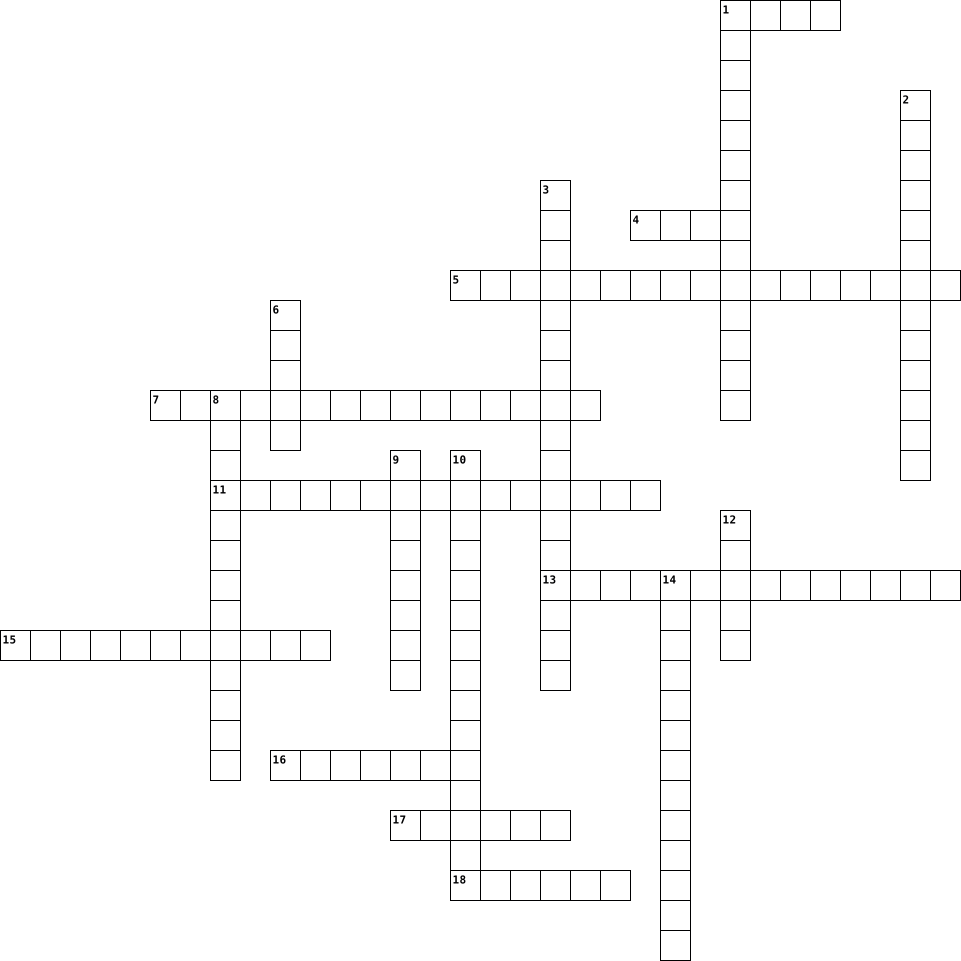
Across
- war/threats between the soviets and U.S. would have ended the world
- race/a time of getting weapons
- city od Israel
- soviets neighbor
- an Ussr were these
- tries to spread this
- policy to relax tension between the communist and the free world
- war/A war were total victory is not the goal
- wall/separated east and west Germany
- theory/the belief that in one land in a religion came under the influence of communist then more would follow
Down
- communist believe in
- united states tries to spread this
- get along with Kennedy
- missile crises/a very tense confirmation between the soviets and the united states over the soviets deployment of a nuclear missile in Cuba
- soviets citizens freedom of speech and religion
- war from 1950-1953
- blockade instead of war
- race/ the race between the soviets and the united states
- country
19 Clues: country • city od Israel • soviets neighbor • war from 1950-1953 • an Ussr were these • communist believe in • tries to spread this • get along with Kennedy • blockade instead of war • race/a time of getting weapons • united states tries to spread this • wall/separated east and west Germany • war/A war were total victory is not the goal • soviets citizens freedom of speech and religion • ...
Unit #1 mini project 1 2021-09-14

Across
- what month did the civil war begin
- What battle was the first win for the north
- Who made the Bill of Rights
- who ran against Abraham Lincoln in 160
- who was the American the patriot general during the revolutionary war
- Who was appointed the first President of the Confederate States of America at Montgomery, Alabama.
- what was the first land battle in the civil war
- What month did the civil war end
- Who was opposed to the ratification of the constitution
- who was not against slavery
- What are the 10 Amendments called
- who was against slavery
- What were the northern states called?
Down
- what was the first battle during the civil war
- who was the union general in the civil war
- What were the southern states called?
- Who was the vice president during the civil war
- Who did John Wilkes booth kill
- who was the president during the reconstruction era
- which battel was the first major batttel in Tennssee during the civil war
- who were the Americans up against during the revolution
21 Clues: who was against slavery • Who made the Bill of Rights • who was not against slavery • Who did John Wilkes booth kill • What month did the civil war end • What are the 10 Amendments called • what month did the civil war begin • What were the southern states called? • What were the northern states called? • who ran against Abraham Lincoln in 160 • ...
USA popultion and government 2026-03-09

Across
- The number of senators USA
- The second most spoken language in USA
- The ballance of powers between states and government
- The shape of the President's office
- The name of the political party that Trump belongs to
- The legislative branch consists of the House of Representatives and the ...
- The name of the other political party
- The President chooses these 15 heads of different departments and the Vice President
- This government branch interprets the laws
- The number of wawes of immigration to the USA
- The surname of the man who is credited with "discovering" USA
- The number of states in the USA
Down
- The name of the American capital
- The original inhabitants in the USA
- The commander in chief in of the US military
- In New York you can find the statue of...
- In 1776 13 states broke free and signed the declaration of....
- Important document from 1787 that Americans are very fond of
- The currency in USA
19 Clues: The currency in USA • The number of senators USA • The number of states in the USA • The name of the American capital • The original inhabitants in the USA • The shape of the President's office • The name of the other political party • The second most spoken language in USA • In New York you can find the statue of... • This government branch interprets the laws • ...
Civil War Battle 2021-05-19

Across
- Whats the another name for the Battle of First Manassas?
- Who was an American Confederate general?
- What did soldiers build to keep warm?
- What was Stonewall´s real name?
- There are alot of __ Happening in the Civil War.
- Who was the most honored women in American history?
- what battle lasted from june 25 to july 1st?
- What is the other flag americans didnt use in war?
- What is the american battle flag?
Down
- The Battle of Gaines'Mill.
- Who was "an instrument of God¨?
- What another name for Cedar Creek?
- Who helped supply soldiers in battle, they worked as spys,and medical care?
- How many soldiers were killed,wounded in the summer of 1864?
- Who was the 16th president of the united states?
- Who was a hero against slavery?
- What was the warships they used to battle against their enemies?
- Who won the battle of Shiloh?
- who was a career United States Army officer who became a major general in the Confederate States Army?
- What was a very bloody war?
20 Clues: The Battle of Gaines'Mill. • What was a very bloody war? • Who won the battle of Shiloh? • Who was "an instrument of God¨? • Who was a hero against slavery? • What was Stonewall´s real name? • What is the american battle flag? • What another name for Cedar Creek? • What did soldiers build to keep warm? • Who was an American Confederate general? • ...
Civil War Crossword 2022-05-03

Across
- Number of border states
- Head Union general (full name)
- The freeing of someone from slavery
- The number of the amendment that banned slavery in the U.S.
- The name of the plan that the Union used to win the war
- The main cause of the war
- The name for the southern states
- Head Confederate general (full name)
Down
- River the Union wanted to capture to divide the Confederacy
- The name for the northern states
- When a part of the country breaks away from the mainland to form their own country
- The capital of the Confederacy
- Civil War started at this fort
- African American woman who helped slaves escape on the Underground Railroad (last name)
- Three day battle that started when Confederate soldiers were looking for shoes
- They handled businesses, became nurses, and were spies during the Civil War
- President of the Union during the Civil War (last name)
- Treaty to end the war was signed at this courthouse
- President of the Confederacy
19 Clues: Number of border states • The main cause of the war • President of the Confederacy • The capital of the Confederacy • Head Union general (full name) • Civil War started at this fort • The name for the northern states • The name for the southern states • The freeing of someone from slavery • Head Confederate general (full name) • ...
Evelyn Lloyd's Articles X-Word 2024-02-09

Across
- The Articles are flawed because congress couldn't ___.
- The loyalist felt like ____ after the war
- A new _____ was almost formed
- The articles were not allowed to ______ laws.
- One of the advantages Hamilton saw in the US was ______ resources.
- Over _____ milita men were hired
- The war left all the states in ________.
- When did the constitutional confederation meet to revise the plan of government?
- A place where loyalist went after the war.
Down
- ________ Hamilton hated congress because they didn't share his visons.
- A former member of the continental army.
- Did the FIRST US constitutail Fail or succeed?
- Money became less valuable because the government kept printing it.
- Did the LAST US constitution Fail or succeed?
- The Articals of Confederation was the first U.S _______.
- How many states were allowed to print money.
- The compassed congress was passed ________ the war.
- There was only one ____ that could make decisions.
- ____ out of thirteen states had to approve a bill just to pass it.
- Enforcing ____ was one of the largest issues of the continental congress
20 Clues: A new _____ was almost formed • Over _____ milita men were hired • A former member of the continental army. • The war left all the states in ________. • The loyalist felt like ____ after the war • A place where loyalist went after the war. • How many states were allowed to print money. • The articles were not allowed to ______ laws. • ...
M Stillwell, 3rd hour Gov 2023-01-10

Across
- The branch of government that creates laws.
- The first ten amendments. (3 words)
- The land that a state owns that can be changed through war, negotiation, or purchases.
- The branch of government that carries out laws.
- Powers the states are not allowed to have.
- The last step of becoming a citizen involves taking this. (3 words)
- Changes to the constitution.
- Things that all americans are free to due and are stated in the constitution.
- Powers listed clearly in the consitution.
- America’s first attempt at an independent government. (3 words)
- The process of becoming a US citizen.
- Not written, but things the government need to do.
Down
- The branch of government that interprets laws.
- The government can not run however it wants to because of this big idea (2 words)
- How the government collects money.
- The articles let congress create this but not pay for it.
- The house of congress where the states with more people get more members. (3 words)
- This is what the Legislative branch is called.
- A law that is in the process of being approved.
- Political party which values equality, cooperation, and genorosity.
- The document that provides rules on how the government should be run.
- Political party which values liberty, cost saving, and competition.
- Not written, but powers that are necessary to do what is written.
- Broad powers kept by the states.
- The house of congress where all states get 2 members.
25 Clues: Changes to the constitution. • Broad powers kept by the states. • How the government collects money. • The first ten amendments. (3 words) • The process of becoming a US citizen. • Powers listed clearly in the consitution. • Powers the states are not allowed to have. • The branch of government that creates laws. • The branch of government that interprets laws. • ...
Project 2020-09-30

Across
- a military operation in which enemy forces surround a town or building
- acts were a series of laws passed by british
- fought between the united states and its allies
- were those colonists of the thirteen colonies
- was a late 18th century movement
- colonies of british america
- the principle of US policy
- the unites states constitution
- amendment a U.S constitution ratified in 1868
- territory of louisiana by the united states
- was an armed upspring in western massachusetts
- is a historic site in east virgina
- U.S history that followed the american civil war
- war a war that is unrestricted in terms of the weapons
- a war that happened between 1846 and 1848
Down
- mainly irish immigrants and civil war
- American imperialist cultural belief in the 19th century
- was the widespread transfer of plants,animals, and culture
- Unites states constitution abolished slavery and involuntary
- act act of 1887 authorized the federal government to break up tribal lands
- the first ten amendments to the US constitution
- industrial school in carlisle pennsylvania
- information especially of a based or misleading nature
- signed into law on may 28,1830
- were american colonists who stayed loyal to british
- issued by king george on october 7,1763
- a territory group whose primary targets are african american
- own region or section of the country
- were state and local laws
- one of the most important and innovative concepts in the U.S
30 Clues: were state and local laws • the principle of US policy • colonies of british america • signed into law on may 28,1830 • the unites states constitution • was a late 18th century movement • is a historic site in east virgina • own region or section of the country • mainly irish immigrants and civil war • issued by king george on october 7,1763 • ...
Unit 1 Review Game- Krohn 2020-01-27

Across
- One of Thomas' five ways that states that there must be an end to all things and the end of the world would be God.
- How we communicate ourselves with God
- interacts with humanity as a human and gives us his new law
- Goes from persecuting to evangelizing
- I believe
- The word of God entrusted in the apostles to carry on
- In scripture, when we read it carefully we get his message.
- Knowledge though testimony, just trusting in what someone else has told you.
- Through the human person or though natural God reveals himself to us
- He wrote the 5 Ways that proved God is real.
- A part of the Bible that shows interaction between God and humanity
- The primary way we communicate with God.
Down
- Drops his net and follows Jesus
- A faith that is beyond reason.
- What God wants with us, the only way we can get to know him
- The people who continue his message
- One of Thomas' five ways, and it states that there must be a "most perfect" being and that would be God
- God communicating himself to us.
- The teaching of the bishops and Pope
- The Eucharist and reconciliation
- The final revelation
- One of the five ways, it states that things are moved by other things that are in motion
- One way Jesus is present, in the community of his people
- Another one of the five ways that states that effects come from a cause
24 Clues: I believe • The final revelation • A faith that is beyond reason. • Drops his net and follows Jesus • God communicating himself to us. • The Eucharist and reconciliation • The people who continue his message • The teaching of the bishops and Pope • How we communicate ourselves with God • Goes from persecuting to evangelizing • The primary way we communicate with God. • ...
Hidden Figures Book Report 2021-11-19

Across
- the first satellite
- a competition between the soviet union and the U.S
- researched supersonic flights and sonic booms
- National Aeronautics and Space Administration
- A civil rights activist who fought for equality in America
- was the first astronaut who orbited the earth
- the third spaceflight program in the united states
- someone who fights for equality
- a law that stopped segregation between race, color, gender, etc
- unfair treatment of one group or many
- a federal union of different countries
- the area that housed the Hampton Institute
- worked as a computer at NASA
- defended her analysis against world's top aerodynamicists
- a group of dominant african american pilots
- a period of political and astronomical tension between the U.S and the Soviet Union
Down
- described the orbital trajectory of john Glenn's flight to space
- wrote algebraic methods and wrote analysis down for her superiors
- first human spaceflight program in the United States
- women nasa workers
- someone who researches or corresponds with engines
- someone who gathers information in a specific area
- people who work in the mathematics department
- National Advisory Committee for Aeronautics
- the separation of different people
- the second spaceflight program in the united states
- being of an equal state as another
- National Association for the Advancement of Colored People
- laws that caused segregation in America
- a science that practices travel through the air
- the 35th president of the United States
31 Clues: women nasa workers • the first satellite • worked as a computer at NASA • someone who fights for equality • the separation of different people • being of an equal state as another • unfair treatment of one group or many • a federal union of different countries • laws that caused segregation in America • the 35th president of the United States • ...
Government 2012-09-18

Across
- Who is in charge of the Executive branch?
- Can declare acts of congress unconstitutional
- A series of 85 articles or essays promoting the ratification of the United States Constitution written by Alexander Hamilton, James Madison, and John Jay.
- Can impeach or remove the President
- Elects the president
- Highest court in the United States
- The people and interest that an elected official represents.
- The Division between central and federal government
- Government expanded into 3 branches
- How many Branches of government are there?
- An informal change to the government ex. presidents cabinet
Down
- A group of people in favor of ratifying the Constitution.
- People are the source of governmental power
- The power of the court to determine something unconstitutional
- The Government can not be to powerful and must obey the laws.
- An informal change ex. democrat/ republican
- The brief introduction that begins the constitution
- How many amendments have been proposed by 2/3rds vote in congress and ratified by a convention held in 3/4ths of the states
- Length of term of a senator
- First 10 Amendments
- Bicameral house under the Legislative Branch
- Can veto acts on congress
- How many amendments have been proposed by 2/3rds vote in congress and ratified by the state legislature in 3/4ths of the states?
- The amount of years a president is in office (one term)
- How many senators are there per state?
25 Clues: First 10 Amendments • Elects the president • Can veto acts on congress • Length of term of a senator • Highest court in the United States • Can impeach or remove the President • Government expanded into 3 branches • How many senators are there per state? • Who is in charge of the Executive branch? • How many Branches of government are there? • ...
Government 2012-09-18

Across
- People are the source of governmental power
- Length of term of a senator
- Can declare acts of congress unconstitutional
- An informal change to the government ex. presidents cabinet
- Elects the president
- A series of 85 articles or essays promoting the ratification of the United States Constitution written by Alexander Hamilton, James Madison, and John Jay.
- How many amendments have been proposed by 2/3rds vote in congress and ratified by a convention held in 3/4ths of the states
- How many Branches of government are there?
- The Division between central and federal government
Down
- The amount of years a president is in office (one term)
- How many senators are there per state?
- Who is in charge of the Executive branch?
- Can impeach or remove the President
- Government expanded into 3 branches
- Can veto acts on congress
- How many amendments have been proposed by 2/3rds vote in congress and ratified by the state legislature in 3/4ths of the states?
- An informal change ex. democrat/ republican
- First 10 Amendments
- The power of the court to determine something unconstitutional
- Bicameral house under the Legislative Branch
- A group of people in favor of ratifying the Constitution.
- Highest court in the United States
- The people and interest that an elected official represents.
- The Government can not be to powerful and must obey the laws.
- The brief introduction that begins the constitution
25 Clues: First 10 Amendments • Elects the president • Can veto acts on congress • Length of term of a senator • Highest court in the United States • Can impeach or remove the President • Government expanded into 3 branches • How many senators are there per state? • Who is in charge of the Executive branch? • How many Branches of government are there? • ...
Chapter 11 Vocabulary 2013-01-05

Across
- Organization involved in the trade of goods, services, or both to consumers.
- The agreement signed by the governments of Canada, Mexico, and the United States.
- To bring into harmony, accord, or agreement.
- International governance of many nations.
- Radically new, or innovative, beyond established principles, procedures, etc.
- A type of organization that the government does not have charge of.
- The first organization to be based on the principles of supranationalism.
- Agreement for free trade.
- The co-operation among nations, for the promotion of their common good.
- An intergovernmental military alliance based on the North Atlantic Treaty.
- A person, group, or nation's act to make peace.
- Organization composed primarily of sovereign states that are referred to as member states.
- A leadership or predominant influence of one nation to another.
Down
- International governance of two nations.
- An economic and political union of 27 states located primarily in Europe.
- An organized political community.
- Organic compound that contains only carbon, chlorine, hydrogen, and fluorine.
- An international organization that was originally created as part of the Bretton Woods system exchange agreement in 1944.
- An organization that intends to supervise and liberalize international trade.
- Favourable to progress or reform.
- The antonym for multilateralism.
- Agreements and/or policies that favour the regionalization and/or co-operation between nations within a continent.
- Humanitarian principles and/or practices.
- The maintenance of international peace and security.
- Isolating one's country from the affairs of another by declining to enter into alliances.
25 Clues: Agreement for free trade. • The antonym for multilateralism. • An organized political community. • Favourable to progress or reform. • International governance of two nations. • International governance of many nations. • Humanitarian principles and/or practices. • To bring into harmony, accord, or agreement. • A person, group, or nation's act to make peace. • ...
Politics of The Roaring Twenties 2013-12-01

Across
- Warren Harding's poker playing cronies.
- Unplanned and uncontrolled spreading of cities into surrounding cities.
- Was the ruler of the United Mine Workers of America in 1919.
- Established the maximum number of people that could enter the United States.
- An attempt following World War 1 for the U.S., Britain and France to collect war reparations debt from Germany.
- Protest started by workers who had not received a raise since the start of WW1.
- Secretary of State that urged for no more warships to be built for 10 years.
- Economic and political system based on a single party government ruled by a dictatorship.
- People who opposed any form of government.
- Inaugurated the first transatlantic passenger flights.
- Was the 30th president of the United States from Massachusetts.
Down
- Policy of pulling away from involvement in world affairs.
- Allowed people to buy goods over an extended period without putting down a lot of money at the time of purchase.
- Raised taxes on some U.S. imports to 60 percent.
- The 29th president of the United States from Ohio.
- This group pledged to avoid strikes.
- Men who were charged with the robbery and murder of a factory paymaster and his guard in Braintree.
- Albert B. Falls secret leasing of oil rich land to private companies in exchange for money.
- United States Navy Secretary of the Interior from 1921-1923.
- Prejudice against foreign born people.
20 Clues: This group pledged to avoid strikes. • Prejudice against foreign born people. • Warren Harding's poker playing cronies. • People who opposed any form of government. • Raised taxes on some U.S. imports to 60 percent. • The 29th president of the United States from Ohio. • Inaugurated the first transatlantic passenger flights. • ...
APHG Crossword Puzzle #1 2017-04-22

Across
- the name given to a specific place on earth
- nation example: The Kurds
- diffusion The spread of an idea through physical movement of people from one place to another.
- Examples: United States, Canada, Great Britain. Opposite of LDC.
- a regional variety of a language
- Example: Cows move to high lands in the summer.
- Semi periphery, Core and ________.
- rotation Example: Harvesting carrots and replanting in a different field.
- The spreading of the Mcdonald's franchise is an example of ____________.
- force a force that brings the people of a state together
- cleansing relates to racism and genocide.
- An enclosed territory with a foreign territory around it.
Down
- Malthus Geographer who stated "Population is growing faster than food production.
- state most famous example: chile. Based on its shape.
- industry example: the toy industry and its lack of ties to its location
- can be connected to Relative Location
- states and nation-states MUST have this to be considered states.
- a person who speaks more than two languages
- Example: In Georgia, there are 173 people per square mile.
- Birth Rate An increase in modern medicine and a decrease in maternal mortality rate can increase the __________.
- the process of the decline of quality of living or effective power
- The redrawing of legislative boundaries entirely for electoral purposes, thereby benefiting the party in power
- practiced in Hinduism and Shintoism.
- Drain Example: A smart person emigrates from India in search of a job.
- Example: outbreak of Ebola.
25 Clues: nation example: The Kurds • Example: outbreak of Ebola. • a regional variety of a language • Semi periphery, Core and ________. • practiced in Hinduism and Shintoism. • can be connected to Relative Location • cleansing relates to racism and genocide. • the name given to a specific place on earth • a person who speaks more than two languages • ...
Meteorolgy 2022-03-17

Across
- This is an air mass that brings very dry and hot weather to the united states
- cool and wet weather to the
- in this type of pressure system, you will experience warm and moist weather
- This is an air mass that generally brings cool, dry weather to the united states
- This is an air mass that brings
- lines that connect areas of similar air pressure on a weather map
- This type of front forms when a warm air mass is caught between two colder air masses.
- A short term state of the atmosphere.
- in this type of pressure system, you will experience sunny and clear skies with cool temperatures
- This type of front forms when cold air moves under warm air
- states
Down
- A severe storm that develops over a tropical ocean.
- The temperature in which a gas condenses into a liquid.
- The average weather conditions in an area over a long period of time.
- This type of front forms when a cold air mass meets a warm air mass and little to no movement occurs.
- A destructive, rotating column of air that touches the ground
- A boundary between air masses of different densities and usually different temperatures.
- A large body of air where the temperature and moisture are constant throughout
- This air mass develops over water and brings warm humid weather to the united states.
- This type of front forms when warm air moves over cold air
20 Clues: states • cool and wet weather to the • This is an air mass that brings • A short term state of the atmosphere. • A severe storm that develops over a tropical ocean. • The temperature in which a gas condenses into a liquid. • This type of front forms when warm air moves over cold air • This type of front forms when cold air moves under warm air • ...
Chapter 8 Crossword Study Guide 2021-11-29

Across
- rebellion is the uprising that occurred when the petitions of the Massachusetts farmers went unanswered.
- of Confederation uses the term “firm league of friendship”.
- rights of the people are what English philosopher John Locke believed.
- used slaves as a major source of labor.
- had one vote on all questions in the constitutional convention.
- of 1785 which law helped stop the spread of slavery to the West.
- Revolution, most states allowed only white men who were at least 21 years old to vote.
- years is how long the vice president holds office.
- states had approve The Articles of Confederation.
- Washington was the presiding officer at the Constitutional Convention.
- to fall in value.
- the freeing of individual enslaved persons.
Down
- makes the federal system of government the final authority.
- believed that because of the importance
- between people and the ruler.
- Sherman proposed the Great Compromise.
- did not included Native Americans.
- three articles of the Constitution describe the structure of the federal government.
- existed and was legal in every state.
- well-being says that a "firm league of friendship” implies the relationship of the states under the Articles of Confederation.
- the laws is the role of the executive branch.
- to the laws of the nation.
- government holds the power to create money.
- Federalists did not supported the Constitution.
- is the movement influenced that Constitution’s architects(writers).
- is having two separate lawmaking chambers.
- Locke wrote that government is based on a
27 Clues: to fall in value. • to the laws of the nation. • between people and the ruler. • did not included Native Americans. • existed and was legal in every state. • Sherman proposed the Great Compromise. • believed that because of the importance • used slaves as a major source of labor. • Locke wrote that government is based on a • is having two separate lawmaking chambers. • ...
Chapter 9 vocab 2021-12-09

Across
- economic system in which private individuals or businesses own capital goods
- former president of mexico
- recongnized the rio grande as the southern boundary with united states
- between mexico and texas colonists
- a group of pioneers from the eastern united states
- bring peace between whites and the sioux
- believe in jesus christ
- used morse code
- mechanical reaper
- soldier and politician who gained enduring fame as a leader of the texas revolution
- the divison and specialization of labor
- 18th century franciscan mission in san antonio
- economy that disoriented and coordinated all aspects of the market economy
- he oversaw the largest territorial expansion in american history
- translation of the book of mormon
- a sovereign state in north america
- a grant of public land
- former texas secretary of state
Down
- accept nothing less from the british than all of the oregon country
- transportation route through central north america
- 12th president
- electric connection signals allowing to communicate
- unrecognized breakaway state from mexico
- individual who starts and runs a business with limited resources and planning
- agreement between the united states and mexico
- rapid influx of fortune seekers to the site of newly discovered gold deposits
- U.S. forces to victory in the mexican war
- steel plow
- frontier officers of the united states army
- religious leader of the mormon church after the assassination
- append or add as an extra or subordinate part
- justified and inevitable
32 Clues: steel plow • 12th president • used morse code • mechanical reaper • a grant of public land • believe in jesus christ • justified and inevitable • former president of mexico • former texas secretary of state • translation of the book of mormon • between mexico and texas colonists • a sovereign state in north america • the divison and specialization of labor • ...
Science Crossword 2022-05-15

Across
- Able to dissolve other substances
- When an object attracts to magnetism
- The smallest particle of chemical that can exist, everything is made up of it
- A liquid or a other substance in which solid particles are mixed but not dissolved
- Firm and stable in shape, one of the three states of matter
- A substance that flows freely, one of the three states of matter
- A substance that can not be broken down in to simpler substances
- Able to dissolve
- A mixture that can be separated
- Cordial then put water in it
- Any characteristic that can be measured
- Pouring a liquid from one container to another typically to separate out sediment
- It has a famous scientist of the name of Einstein in the word
Down
- 'Oh No cleo the _____' famous phrase of H2o just add water
- The substance that dissolves to form a solution
- A mixture of two or more substances that stays evenly mixed
- Matter that settles at the bottom of a liquid
- To disappear
- Make a liquid thinner or weaker by adding water or another solvent
- One of the other states of matte from the sun
- When two or more substances are combined
- Expands feely in a container, one of the three states of matter
- Substance made up of different elements joined together by chemical bond
- To pass through unwanted material through a device
24 Clues: To disappear • Able to dissolve • Cordial then put water in it • A mixture that can be separated • Able to dissolve other substances • When an object attracts to magnetism • Any characteristic that can be measured • When two or more substances are combined • Matter that settles at the bottom of a liquid • One of the other states of matte from the sun • ...
Chapter 4- Federalism 2023-12-19

Across
- an act that limits a state's ability to regulate an area
- to assign a portion of something
- determined as where one lives and is legally eligible to vote
- to return a fugitive who flees across state lines back to the original state
- a formal order given by a higher authority
- powers that both the national government and the states have
- give official permission to operate in a certain occupation
- powers directly stated in the Constitution
Down
- an act that allows the people of a territory interested in becoming a state to prepare a constitution
- a written agreement between two or more states
- to assert the contrary of, to imply the opposite of
- a system of government in which two or more governments exercise power over the same people and the same territory
- powers the government requires to carry out its expressed constitutional powers
- the federal government's ability to take over a state government function
- powers the Constitution grants or delegates to the national government
- the right to command or lead
- wholeness or unity
- to manage or supervise the execution, use, or conduct of
- statement in Article VI of the Constitution establishing that the Constitution, laws passed by Congress, and treaties of the United States "shall be the supreme Law of the Land"
- a sum of money given to a state or local government for a specific purpose
- powers that belong strictly to the states
21 Clues: wholeness or unity • the right to command or lead • to assign a portion of something • powers that belong strictly to the states • a formal order given by a higher authority • powers directly stated in the Constitution • a written agreement between two or more states • to assert the contrary of, to imply the opposite of • ...
Chapter 2 Review 2025-02-17

Across
- THE INTRODUCTION PORTION OF THE CONSTITUTION.
- THE BRANCH OF THE U.S. GOVERNMENT THAT MAKES LAWS.
- THE CONSTITUTION INCLUDES A SYSTEM OF ___________ AND BALANCES.
- THE POWERS THAT BOTH LEVELS OF THE GOVERNMENT CAN EXERCISE
- HOW MANY STATES HAD TO APPROVE THE CONSTITUTION BEFORE IT WOULD BE ACCEPTED?
- A GROUP OF STATE GOVERNMENTS THAT BAND TOGETHER FOR A COMMON PURPOSE.
- KNOWN AS THE "FATHER OF THE CONSTITUTION". (2 WORDS)
- SUPPORTERS OF THE CONSTITUTION.
- WORD THAT MEANS "APPROVED".
- THE STRONGEST CRITICISM OF THE CONSTITUTION WAS THAT IT LACKED A WHAT? (3 WORDS)
- THE BRANCH OF THE U.S. GOVERNMENT THAT INTERPRETS THE LAWS.
- WORD THAT MEANS "THE RIGHT TO RULE".
- THE LAST STATE TO RATIFY THE CONSTITUTION. (2 WORDS)
- THE POWERS GRANTED TO THE NATIONAL GOVERNMENT.
- THE MEETING WHERE DELEGATES WORKED ON CREATING A NEW GOVERNMENT. (2 WORDS)
Down
- A CHANGE IN THE CONSTITUTION.
- THE BRANCH OF THE U.S. GOVERNMENT THAT ENFORCES LAWS.
- A GROUP NAMED BY EACH STATE LEGISLATURE TO SELECT THE PRESIDENT & VICE-PRESIDENT. (2 WORDS)
- DIVIDED INTO TWO PARTS.
- A WRITTEN PLAN FOR GOVERNMENT.
- ____________ COMPROMISE WAS THE PART OF THE CONSTITUTION ABOUT COUNTING THE SLAVE POPULATION. (2 WORDS)
- THE NUMBER OF STATES IN THE UNITED STATES DURING THE CREATION OF THE CONSTITUTION.
- A FORM OF GOVERNMENT IN WHICH POWER IS DIVIDED BETWEEN THE FEDERAL GOVERNMENT & THE STATES.
- CITY WHERE THE LIBERTY BELL IS DISPLAYED.
- THE CONGRESS HAS THE POWER TO DECLARE THIS.
25 Clues: DIVIDED INTO TWO PARTS. • WORD THAT MEANS "APPROVED". • A CHANGE IN THE CONSTITUTION. • A WRITTEN PLAN FOR GOVERNMENT. • SUPPORTERS OF THE CONSTITUTION. • WORD THAT MEANS "THE RIGHT TO RULE". • CITY WHERE THE LIBERTY BELL IS DISPLAYED. • THE CONGRESS HAS THE POWER TO DECLARE THIS. • THE INTRODUCTION PORTION OF THE CONSTITUTION. • ...
US Physical Map 2025-01-16

Across
- Volcano/mountain in Hawai'i that is technically taller than Mt. Everest
- One of the Great Lakes, shares a name with a region in Canada
- Large river running down the state of Califoria
- River that runs from Colorado to the Mississippi River
- Large plateau on the Eastern coast of the United States
- River that creates a border between Texas and Mexico
- Mountain range stretching from California to Washington
- Mountain range North of the Rockies
- River that creates the bottom border of Illinois, Indiana, and Ohio
- One of the Great Lakes, named after one of our state
- Ocean that borders the East Coast
- River that runs through Alaska
- River that runs from Montana to the Mississippi River
- Volcano/mountain peak named after a President
- Large mountain range running from Canada to Mexico
- River that begins in Southern Illinois down to Louisiana
Down
- One of the Great Lakes, largest of the 5
- Large plateau in the central United States
- Volcano/mountain peak in Washington State
- Ocean we'd face on the coast of our state
- Mountain range in Eastern California
- Desert in Arizona and North Mexico
- One of the Great Lakes, named after a Native American tribe
- Desert in Eastern Nevada
- Tallest mountain volcano/mountain peak in the continental United States
- One of the Great Lakes, name starts with an E
- Mountain range on the Eastern portion of the United States
- Body of water below Florida and above Mexico
28 Clues: Desert in Eastern Nevada • River that runs through Alaska • Ocean that borders the East Coast • Desert in Arizona and North Mexico • Mountain range North of the Rockies • Mountain range in Eastern California • One of the Great Lakes, largest of the 5 • Volcano/mountain peak in Washington State • Ocean we'd face on the coast of our state • ...
Ch. 2 Fourth Grade Vocab 2025-10-08

Across
- a person who moves to one country from another
- someone who hunts animals and collects wild plants for food
- a custom or belief that is passed on from one generation to the next
- to approve officially
- a change to the constitution of the United States.
- a settlement ruled by another country
- an object made by people, such as pottery
- freedom from rule by others
- The planting and growing of crops for food
- a person who works to end or get rid of something, especially slavery
- a system under which people of different races are kept separate
- the period of rebuilding after the Civil War during which Southern states rejoined the Union
Down
- a scientist who studies the culture of people who lived long ago
- a way of life for a group of people
- the part of the economy in which machines are used to do the work
- someone who represents a group of people
- an area of land set aside for American Indians to live on
- to work without pay or freedom
- a union of states that agree to cooperate
- a group of people responsible for making a country's laws
- a plan of government
- to officially separate from an organization
- a large area of land that is under the control of an outside government. In the United States, a territory does not have the same rights that a state does
23 Clues: a plan of government • to approve officially • freedom from rule by others • to work without pay or freedom • a way of life for a group of people • a settlement ruled by another country • someone who represents a group of people • a union of states that agree to cooperate • an object made by people, such as pottery • The planting and growing of crops for food • ...
Civil War 2024-05-15

Across
- Confederate general who held his position during the Battle of Bull Run
- The Union had a much more extensive network of these than the South
- freed slaves in Confederate controlled territories
- Lincoln suspended this right that gave citizens the right to seek release from unlawful jailing
- Distinguished Confederate general
- Stonewall Jackson was killed in this Confederate victory
- one of Lincoln's most famous speeches
- Grant surrounded Lee on his march to Richmond causing Lee to surrender here
- The 54th Massachusetts regiment of the Union was composed of these men
- The Southern states during the Civil War
Down
- slave states that remained loyal to the Union
- Distinguished Union general
- First major land battle and Confederate victory
- Confederates successfully defended their capital in Richmond
- Lee's forces were defeated, and Britian decided not to give aid to the South after this battle
- Grant's victory gave the Union control of the Mississippi River after this battle
- The Union's plan to keep the war in the South by constricting supplies and movement
- Confederate surprise attack that ended in Union victory Mississippi
- this Union general captured and destroyed Atlanta, Georgia
- deadliest single day of fighting that led was this battle
- The Virginian and Merrimack had these type of warships
- President of the Confederate states
- strategy of destroying opponent's land and infostructure used by Sherman
- The Northern states during the Civil War
- the first major battle on Union soil resulting in Confederate defeat
25 Clues: Distinguished Union general • Distinguished Confederate general • President of the Confederate states • one of Lincoln's most famous speeches • The Northern states during the Civil War • The Southern states during the Civil War • slave states that remained loyal to the Union • First major land battle and Confederate victory • ...
reconstruction vocab 2025-11-24

Across
- American businessman who built his wealth controlling the railroad industry.
- Tests that were used to determine a person's reading and writing skills
- Founding and leading the Standard Oil Company
- A faction of the Republican Party that believed in harsh measures against the Southern states
- legal provision that allowed individuals to bypass literacy tests or poll taxes if their grandfathers had been eligible to vote before the Civil War
- His disagreement with the Radical Republicans in Congress about Reconstruction policies led to his removal from office.
- An amendment that granted citizenship to all persons born in the us
- The person who killed Lincoln
- American financier and banker who dominated corporate finance and founded JPMorgan Chase Bank
- Amendment An amendment that granted African American men the right to vote
- Powerful American industrialist who became wealthy through unethical business practices
- A railroad that connected the eastern United States to the western territories
Down
- A law that provided land to settlers in the West
- State and local laws that enforced racial segregation in the Southern United States
- Lincoln’s plan to help rebuild the south
- Fees that individuals had to pay in order to vote
- A term describing the political alignment of Southern states
- investigative journalism that exposes corruption, scandals, and social injustices, particularly those of powerful businesses and government officials
- An amendment that abolished slavery
- American steel industry,controlled the U.S. steel market and related industries like mines and railroads.
20 Clues: The person who killed Lincoln • An amendment that abolished slavery • Lincoln’s plan to help rebuild the south • Founding and leading the Standard Oil Company • A law that provided land to settlers in the West • Fees that individuals had to pay in order to vote • A term describing the political alignment of Southern states • ...
chapter 12 2024-04-11

Across
- Republicans merged with others to form the Republican
- Johnson became the 17th President of the United States
- white Southerners who supported Reconstruction policies Carpetbaggers * describe allegedly opportunistic or disruptive Northerners who came to the Southern states
- Revels minister in the African Methodist Episcopal Churc
- Amendment born or naturalized in the United States,
- system where the landlord/planter allows a tenant to use the land in exchange for a share of the crop.
Down
- Bureau the District of Columbia in the years following the war
- Codes restricted black people's right to own property
- the action of reconstructing
- Bill framework for Reconstruction
- charge of misconduct made against the holder of a public office
- Amendment The right of citizens of the United States to vote
12 Clues: the action of reconstructing • Bill framework for Reconstruction • Amendment born or naturalized in the United States, • Republicans merged with others to form the Republican • Codes restricted black people's right to own property • Johnson became the 17th President of the United States • Amendment The right of citizens of the United States to vote • ...
Review Part I: Political Developments in the New Nation 2013-11-14

Across
- This was the first challenge to the U.S. government’s ability to enforce the law when a rebellion took place following an excise tax being placed on luxury goods.
- Republicans Jefferson and Madison wrote resolutions that said states had a duty to ____________, or refuse to recognize the Alien and Sedition Acts.
- The _________________________ , which stated the Alien and Sedition Acts were unconstitutional, supported the idea that state governments could challenge the federal government.
- A group of people with similar political ideas who get together to gain power.
- The ____________is a body of delegates from each state that represents the people’s vote in choosing the president.
- He believed that the United States’ government should be used to help create a strong economy based on manufacturing, business, and trade.
- He personally led the army against the participants in the Whiskey Rebellion because he felt people needed to understand the constitutional right of Congress to create and enforce tax laws.
- The rights kept by the states under the Constitution; supporters of this believed states did not have to recognize federal laws that were unconstitutional.
- He believed that informed citizens were generally good and capable of making good decisions for their country.
- Hamilton believed the reason the United States needed to found a ___________________was to stabilize the national economy.
- Led by John Adams and Alexander Hamilton, this political party believed in a strong central government and a loose construction of the Constitution.
- Led by Thomas Jefferson, this political party believed that government should be small and insisted on a strict construction of the Constitution.
Down
- Americans wanted him to be president because he was seen as an honest leader.
- Adopted after the election of 1800, this amendment to the Constitution created a separate ballot for president and vice president.
- The rivalry between these two political parties dominated the elections of 1796 and 1800.
- The _____________________ can best be defined as the amount of money owed by the United States.
16 Clues: Americans wanted him to be president because he was seen as an honest leader. • A group of people with similar political ideas who get together to gain power. • The rivalry between these two political parties dominated the elections of 1796 and 1800. • The _____________________ can best be defined as the amount of money owed by the United States. • ...
Review Part I: Political Developments in the New Nation 2013-11-14

Across
- He personally led the army against the participants in the Whiskey Rebellion because he felt people needed to understand the constitutional right of Congress to create and enforce tax laws.
- Led by Thomas Jefferson, this political party believed that government should be small and insisted on a strict construction of the Constitution.
- The _________________________ , which stated the Alien and Sedition Acts were unconstitutional, supported the idea that state governments could challenge the federal government.
- He believed that informed citizens were generally good and capable of making good decisions for their country.
- Hamilton believed the reason the United States needed to found a ___________________was to stabilize the national economy.
Down
- This was the first challenge to the U.S. government’s ability to enforce the law when a rebellion took place following an excise tax being placed on luxury goods.
- He believed that the United States’ government should be used to help create a strong economy based on manufacturing, business, and trade.
- Led by John Adams and Alexander Hamilton, this political party believed in a strong central government and a loose construction of the Constitution.
- The rivalry between these two political parties dominated the elections of 1796 and 1800.
- A group of people with similar political ideas who get together to gain power.
- The ____________is a body of delegates from each state that represents the people’s vote in choosing the president.
- Americans wanted him to be president because he was seen as an honest leader.
- The _____________________ can best be defined as the amount of money owed by the United States.
- The rights kept by the states under the Constitution; supporters of this believed states did not have to recognize federal laws that were unconstitutional.
- Adopted after the election of 1800, this amendment to the Constitution created a separate ballot for president and vice president.
- Republicans Jefferson and Madison wrote resolutions that said states had a duty to ____________, or refuse to recognize the Alien and Sedition Acts.
16 Clues: Americans wanted him to be president because he was seen as an honest leader. • A group of people with similar political ideas who get together to gain power. • The rivalry between these two political parties dominated the elections of 1796 and 1800. • The _____________________ can best be defined as the amount of money owed by the United States. • ...
Cold War 2022-05-17

Across
- Massive military build-up, especially of nuclear weapons, by both the Soviet Union and the United States in an effort to gain military superiority.
- The struggle for power between the Soviet Union and the United States that lasted from the end of World War II until the collapse of the Soviet Union.
- Strategic Arms Limitation Talks (SALT) were negotiations between the Soviet Union and the United States to limit the number of newly created nuclear weapons.
- An economic theory in which collective ownership of property leads to a classless society.
- The Union of Soviet Socialist Republics (U.S.S.R.), also commonly called the Soviet Union
- President Ronald Reagan's plan to research, develop, and build a space-based system that could destroy incoming nuclear missiles.
- A country that dominates in political and military power.
- A crossing point between West Berlin and East Berlin when the Berlin Wall divided the city.
Down
- A term used by Winston Churchill in a speech to describe the growing divide between western democracies and Soviet-influenced states
- MAD was the guarantee that if one superpower launched a massive nuclear attack, the other would reciprocate by also launching a massive nuclear attack, and both countries would be destroyed.
- Fundamental U.S. foreign policy during the Cold War in which the U.S. tried to contain Communism by preventing it from spreading to other countries.
- residual radioactive material propelled into the upper atmosphere following a nuclear blast
- United states of america
- A competition between the Soviet Union and the United States to prove their superiority in technology through increasingly impressive accomplishments in space
- The concern within the U.S. that the Soviet Union had greatly surpassed the U.S. in its stockpile of nuclear missiles.
- A direct line of communication between the White House and the Kremlin established in 1963. Often called the "red telephone."
16 Clues: United states of america • A country that dominates in political and military power. • The Union of Soviet Socialist Republics (U.S.S.R.), also commonly called the Soviet Union • An economic theory in which collective ownership of property leads to a classless society. • ...
United States of aMeRiCa 2016-09-12

Across
- the state almost named franklin
- the state you live in
- the state your pen pal is from
- where Los Angeles is located
- the state that Boston is in
- the state daddy was born in
- the state of thomas jefferson and george washington
- the state that is far away in the ocean
Down
- the state shown on liv and maddie
- the state where New York City is located
- this state is not "old" mexico
- The state Nana RJ is from
- the state Charleston is in
- the smallest state; we visited it this year
- The state with a "pp"
- The first state
16 Clues: The first state • the state you live in • The state with a "pp" • The state Nana RJ is from • the state Charleston is in • the state that Boston is in • the state daddy was born in • where Los Angeles is located • this state is not "old" mexico • the state your pen pal is from • the state almost named franklin • the state shown on liv and maddie • ...
United States Citizenship I 2024-02-14

Across
- Actions taken by citizens that contribute to the common good
- Admiration or esteem for people, ideas or objects
- The legislature of the United States
- What a registered citizen does to choose a person for elected office
- The legal process for a non-citizen to gain citizenship
- The study of the rights and duties of citizens
- Government the people whereby people vote and make laws
- A formal change to the Constitution
- The process where a person moves into a new nation to live
- What is required to do as a US citizen or face legal problems
Down
- A body of citizens sworn to render a decision in a court of law
- Loyalty to the country you are currently living in
- Something we should do as citizens. We do this voluntarily
- A person who owes loyalty to the government and is entitled to protection
- Benefits you have by being a citizen
- A system of fundamental principles according to which a nation is governed
16 Clues: A formal change to the Constitution • The legislature of the United States • Benefits you have by being a citizen • The study of the rights and duties of citizens • Admiration or esteem for people, ideas or objects • Loyalty to the country you are currently living in • The legal process for a non-citizen to gain citizenship • ...