
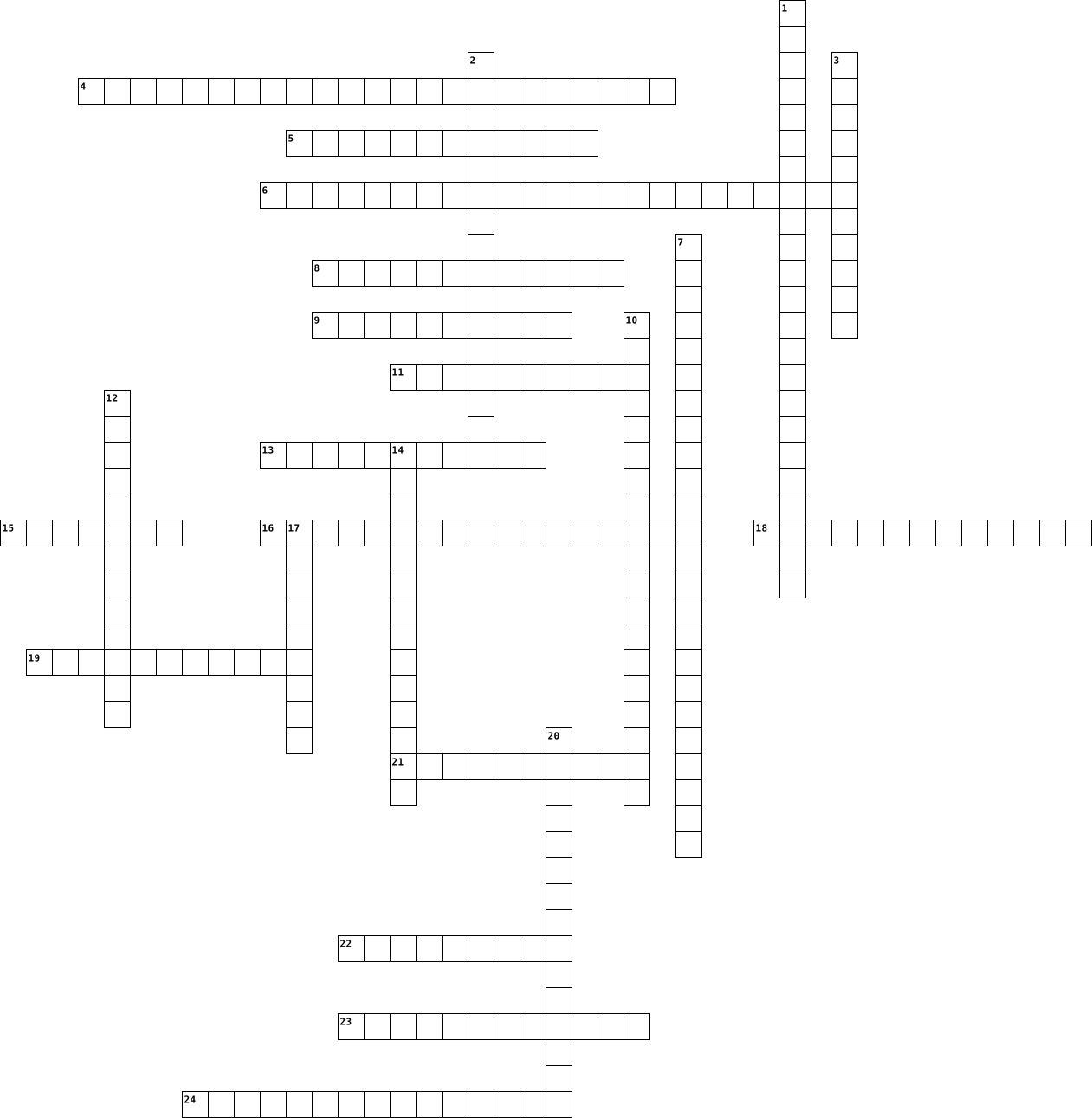
the earth Crossword Puzzles
CBA 2 Review 2026-03-25

Across
- energy of motion
- a type of tide that is when the sun moon and earth are aligned
- only liquid layer of earth
- thinnest layer of earth, the one we live on
- a type of wave that travels perpendicular
- thickest layer of earth
- The sphere that represents life
- rock that is formed by magma cooling
- rock that is formed from heat and pressure
Down
- cause of seasons because of the ___ of earth
- deepest layer made of solid iron and nickel
- the sphere that represents land/soil
- stored energy
- rock that is formed from compaction of sediments
- a type of wave that particles move parallel to the direction of energy
- a type of tide that is 90 degree with earth moon and sun
- the sphere that represents the air
- the sphere that represents water
18 Clues: stored energy • energy of motion • thickest layer of earth • only liquid layer of earth • The sphere that represents life • the sphere that represents water • the sphere that represents the air • the sphere that represents land/soil • rock that is formed by magma cooling • a type of wave that travels perpendicular • rock that is formed from heat and pressure • ...
Climates of the Earth 2022-09-15

Across
- "equal night"
- warming the Earth
- 365 days
- cold or warm stream of seawater
- water in the desert
- physical characteristics of the surface of the land
- major type of ecological community
- windless area near the Equator
- June 21 and December 22
Down
- prevailing winds caused by the Earth’s rotation
- continuous daylight
- condition of the atmosphere in one place over a short period of time
- runs from the North Pole to the South Pole
- pattern of ocean currents and water temperatures in the mid-Pacific region
- permanently frozen layer
- average weather conditions as measured over many years
16 Clues: 365 days • "equal night" • warming the Earth • continuous daylight • water in the desert • June 21 and December 22 • permanently frozen layer • windless area near the Equator • cold or warm stream of seawater • major type of ecological community • runs from the North Pole to the South Pole • prevailing winds caused by the Earth’s rotation • ...
Layers of the Earth 2024-02-07

Across
- Core Liquid and extremely hot
- Pertaining to, governed by, or in accordance with, mechanics, or the laws of motion
- magnetic silver
- Solid outer part of earth
- any substance that has a defined composition
- Core Hot dense ball of iron
- The plant we live on
Down
- Coldest layer of earth
- the act or process of composing
- a highly reactive gas composed of three oxygen atoms
- a solid collection of minerals
- a layer inside a planetary body bounded below by a core and above by a crust.
- The denser, weaker layer
- The central or innermost portion of the Earth
- the upper rigid part of the lithosphere,
- energy that is transferred from one body to another as the result of a difference in temperature.
16 Clues: magnetic silver • The plant we live on • Coldest layer of earth • The denser, weaker layer • Solid outer part of earth • Core Hot dense ball of iron • Core Liquid and extremely hot • a solid collection of minerals • the act or process of composing • the upper rigid part of the lithosphere, • any substance that has a defined composition • ...
The Earth and Plates 2024-08-04

Across
- A type of plate boundary where two plates move away from each other.
- A fracture in Earth's crust where rock on either side has moved.
- The liquid layer of the Earth's core.
- The rigid outer layer of the Earth, including the crust and upper mantle.
- A type of plate boundary where two plates slide past each other horizontally.
- The study of the movement and interaction of Earth's plates.
- The supercontinent that existed over 200 million years ago.
Down
- The solid innermost layer of the Earth's core.
- A crack or break in the Earth's crust, often at a divergent boundary.
- A type of plate boundary where two plates move towards each other.
- The semi-fluid layer of the mantle on which the tectonic plates move.
- The process of new oceanic crust forming at mid-ocean ridges and spreading outwards.
- The process by which heat is transferred through fluids like magma, driving plate movements.
- The process by which one tectonic plate sinks beneath another.
- The outermost layer of the Earth.
- The thick, semi-solid layer between the crust and the core.
16 Clues: The outermost layer of the Earth. • The liquid layer of the Earth's core. • The solid innermost layer of the Earth's core. • The thick, semi-solid layer between the crust and the core. • The supercontinent that existed over 200 million years ago. • The study of the movement and interaction of Earth's plates. • ...
Layers of the Earth 2025-10-17

Across
- of solid iron
- currents Process that occurs in the mantle. This is the engine that causes hotter magma to rise and sink when it cools.
- core Layer of the Earth above the Inner Core. Made of liquid metal
- Crust Part of the crust that made up of rocks that form continents. This is where you live.
- Layer of the Earth above the Outer Core. Location where Convection currents Occur
- Boundary that causes plates to collide
- Boundary that causes plates to slide
- Layer of the Earth above the Mantle. Made of oceans and continents. Layer with the least pressure, temperature and density.
- Supercontinent
- Pieces of the crust
Down
- Crust Part of the crust made out of rocks that forms the ocean floors.
- Boundary that causes plates to spread apart
- Drift Theory that the landmasses move apart.
- core Layer of the Earth that has the greatest temperature, pressure and density.
- Spreading Geologic event that occurs when magma rises causing seafloor to spread. This is a divergent boundary.
- Deformation
- Landmasses
- Tectonics Theory that pieces of the crust are deformed from the convection currents in the mantle.
18 Clues: Landmasses • Deformation • of solid iron • Supercontinent • Pieces of the crust • Boundary that causes plates to slide • Boundary that causes plates to collide • Boundary that causes plates to spread apart • Drift Theory that the landmasses move apart. • core Layer of the Earth above the Inner Core. Made of liquid metal • ...
DeHart 2 CH 2025-02-04

Across
- The layer of Earth made of liquid metal.
- When Earth is the farthest from the Sun.
- The separation of Earth into layers based on density.
- When Earth is the closest to the Sun.
- The boundary between the crust and the mantle.
- The layer of Earth made of solid metal.
- The thinner part of the crust. Mostly made of basalt.
- The thickest layer of Earth. About 2800 miles thick.
Down
- The thicker part of the crust. Mostly made of granite.
- A force that protects Earth from the Sun's charged particles.
- The outer layer of Earth.
- The lower part of the mantle.
- The crust and upper part of the mantle.
- The line that splits Earth into Northern and Southern hemispheres.
14 Clues: The outer layer of Earth. • The lower part of the mantle. • When Earth is the closest to the Sun. • The crust and upper part of the mantle. • The layer of Earth made of solid metal. • The layer of Earth made of liquid metal. • When Earth is the farthest from the Sun. • The boundary between the crust and the mantle. • The thickest layer of Earth. About 2800 miles thick. • ...
Astronomy One 2020-02-09

Across
- hottest part of the Sun
- smallest planet
- like a gas but composed of ions
- spring ___ marks the end of winter
- "backward" motion of planets as seen from Earth
- hottest planet
- the longest or shortest day of the year
- "fourth rock from the Sun"
- best known dwarf planet
- having the Sun at the centre
- force that holds the Sun together
- largest planet
- the North Star
- element discovered on the Sun
Down
- type of telescope used to see a black hole
- planet with the largest orbit
- an event where the Sun, Earth and Moon line up
- huge ball of hot plasma
- "shooting stars"
- the Earth ___ around the Sun
- rotates on its axis every 27 days
- having the earth at the centre
- farthest planet visible with the naked eye
- the Sun is mostly made of ___
- shape of planetary orbits
- astronomical ___ is the Earth-Sun distance
- the Earth ___ on its axis
- nuclear ___ powers the Sun
- our star
- path the Sun traces out through the stars
- the phase of the moon during a solar eclipse
31 Clues: our star • hottest planet • largest planet • the North Star • smallest planet • "shooting stars" • hottest part of the Sun • huge ball of hot plasma • best known dwarf planet • shape of planetary orbits • the Earth ___ on its axis • "fourth rock from the Sun" • nuclear ___ powers the Sun • the Earth ___ around the Sun • having the Sun at the centre • planet with the largest orbit • ...
environmental sience 2022-02-17

Across
- the sun uv rays
- atmosphere conditions such as tempature
- compound organic made up of atoms of carbon chlorine
- caused by humans burning fossils
- can be harmful
- streams winds around 5-7 miles above earth surface
- is a process that occures when gases in the earths atmospheree trp the ehat
- next state inspection
- high wind speeds
- solid part of the earth
- gases sourounding the earth
Down
- the weather some locations averaged over period of time
- when weather is wet
- a segment from a vertex of a triangle that is perpandicular in a line.
- nino the south pacific
- deep cold water rises
- effects due to radtional exposure required which
- the outer most layer of the atmosphere
- inversions warming air on top of cold air
- polluting the earth putting bad things on earth
- a big wind storm
- oxgyen compound found naturally in the earth
- a big storm caused by warm water
- nymer per secind
- nina extra cold tempature in the pacific
- dead animals in soil
- is a layer of earths atmosphere
27 Clues: can be harmful • the sun uv rays • a big wind storm • nymer per secind • high wind speeds • when weather is wet • dead animals in soil • deep cold water rises • next state inspection • nino the south pacific • solid part of the earth • gases sourounding the earth • is a layer of earths atmosphere • a big storm caused by warm water • caused by humans burning fossils • ...
Earths Layers 2022-12-18

Across
- the crust under the ocean is
- amount of mass a object has in volume...
- a cloud of gas and dust in outer space
- below asthenosphere is the
- the fourth layer of Earth
- the first three layers is in
- less dense than oceanic crust
- the center of earth
Down
- the outer layer of Earth
- the third layer of Earth
- the thickest layer of earth
- earths magnetic sphere
- the only liquid layer
- the plastic layer of Earth
- the force pulling objects to the center of earth
- the material that the core is made out of
16 Clues: the center of earth • the only liquid layer • earths magnetic sphere • the outer layer of Earth • the third layer of Earth • the fourth layer of Earth • below asthenosphere is the • the plastic layer of Earth • the thickest layer of earth • the crust under the ocean is • the first three layers is in • less dense than oceanic crust • a cloud of gas and dust in outer space • ...
Our Place in Space 2020-05-06

Across
- The different seasons are caused by the ______ of the Earth on it's axis
- A group of stars that form a recognisable pattern
- The type of reactions that occur in stars
- The Earth ________ on it's axis
- What the half of Earth that is facing away from the Sun experiences
- During summer the days are ___________
- The time taken for a planet to complete one revolution around the Sun
- During winter the sunlight strikes Earth's surface with _____ intensity
- The number of minutes it takes light from the sun to reach Earth
- The season experienced in Australia when the southern hemisphere is leaning towards the sun
- The Earth _______ around the Sun
- The Earth spins from _______ to East
- The fifth biggest planet in our solar system
- The time taken for a planet to rotate on it's axis
Down
- A star map that aids in locating particular stars in the night sky
- A rocky object circling a planet that does not produce it's own light
- The scientific study of stars, planets and other celestial objects
- The galaxy our solar system is in (2 words)
- An imaginary line running through Earth
- The asteroid belt is located between Mars and _________
- The outer planets that consist of huge balls of gas with small rocky cores (2 words)
- During summer the sun rises ________ in the sky
- The shape of Earth's orbit around the Sun.
- The season experienced in Australia when the southern hemisphere is leaning away from the sun
- The force that keeps planets orbiting around the Sun
- The name given to the path a planet takes whilst revolving
- Massive burning ball of hydrogen gas
27 Clues: The Earth ________ on it's axis • The Earth _______ around the Sun • The Earth spins from _______ to East • Massive burning ball of hydrogen gas • During summer the days are ___________ • An imaginary line running through Earth • The type of reactions that occur in stars • The shape of Earth's orbit around the Sun. • The galaxy our solar system is in (2 words) • ...
Space 2025-05-16

Across
- the galaxy we live in
- what we live on
- a man made object that goes around earth
- a probe launched off earth to study the outer milkyway
- a non-glowing ball of mass
- belt a belt of asteroids outside the milkyway
- the earth does this around the sun
- h20
- space station the station in space that we use
- the amount of energy in something
Down
- a constellation of a princess in the sky
- a group of stars that forms a picture
- star system in the southern constellations
- the north star
- opposite of this is a white hill
- rhymes with bubble
- how far light travels in a year
- stars are bornn from this
- an hour and a half
- a glowing ball of mass
- the pull on earth
- the milky way _______
- an objects ability to move
23 Clues: h20 • the north star • what we live on • the pull on earth • rhymes with bubble • an hour and a half • the galaxy we live in • the milky way _______ • a glowing ball of mass • stars are bornn from this • a non-glowing ball of mass • an objects ability to move • how far light travels in a year • opposite of this is a white hill • the amount of energy in something • ...
Our place in space 2022-05-11

Across
- Time when a half of earth isn't facing the sun (5)
- Built a telescope, viewed the solar system and challenged geocentrism (7)
- Season when the half of earth is tilted away from the sun (6)
- Season when the half of earth is tilted towards the sun (6)
- Earth rotates around its __________ (4)
- Caused by the axial tilt of the earth (7)
- Model of the solar system with the sun at the centre (12)
- Path a planet takes around the sun (5)
Down
- Model of the solar system with Earth at the centre (10)
- Time it take earth to rotate around its axis (3)
- The top/bottom halves of the planet (10)
- The amount of matter something has (4)
- Jupiter and Saturn are examples of this type of planet(8)
- An imaginary line going around the middle of earth (7)
- Time it takes for a planet to revolve (travel) around the sun (4)
- A force due to mass, creates orbits and holds us to earths surface (7)
16 Clues: The amount of matter something has (4) • Path a planet takes around the sun (5) • Earth rotates around its __________ (4) • The top/bottom halves of the planet (10) • Caused by the axial tilt of the earth (7) • Time it take earth to rotate around its axis (3) • Time when a half of earth isn't facing the sun (5) • An imaginary line going around the middle of earth (7) • ...
Science Vocabulary 2022-08-15

Across
- Materials are worn away
- Center of Earth
- Arrangement of the natural and artificial physical features of an area
- Erosion by water
- Water underground
- Body of porous rock
- Dissolving of rocks on Earth
- Amount of water on a planet
- All the rocks that make up Earth
- Area of land that drains all the streams and rainfall
- Distinct layer of soil
Down
- Long-term pattern of weather in a particular area
- Causes rocks to crumble
- The loosening of rock, sediment, or soil
- Water "running off" the land surface
- Rigid outer part of Earth
- The parts of Earth where life exists
- Layers of gases surrounding a planet
- Moves soil from one location to another by wind power
- Solid bulk of Earth's interior
- Laying down of sediment
21 Clues: Center of Earth • Erosion by water • Water underground • Body of porous rock • Distinct layer of soil • Causes rocks to crumble • Materials are worn away • Laying down of sediment • Rigid outer part of Earth • Amount of water on a planet • Dissolving of rocks on Earth • Solid bulk of Earth's interior • All the rocks that make up Earth • Water "running off" the land surface • ...
Earth Sun and Moon 2025-10-27

Across
- A ___________ crescent and __________ gibbous have moonlight on the left side.
- ___________ is another word for orbits.
- A __________ crescent and __________ gibbous have moonlight on the right side.
- When the sun is higher in the sky our shadows are ________.
- The earth orbits the sun one time every ____.
- A moon that is a full circle.
- A moon where no light can be seen. The beginning of the moon cycle.
- _______ light, bright light, next night.
- A moon that is less than a semicircle.
Down
- When the moon moves ________ from the sun then the moonlight gets brighter.
- The force that causes the earth to orbit the sun and the moon to orbit the earth.
- When the moon moves _________ to the sun then the moonlight gets dimmer The earth rotates on its axis one time every ______.
- _________ is another word for rotates.
- The earth rotates on its axis one time every ____.
- A moon that is bigger than a semicircle but less than a full moon.
- When the sun is lower in the sky our shadows are ______.
- The moon __________ light from the sun.
- A moon that is equal to a semicircle.
- The moon orbits the earth about one time every ______.
- ________ light, less light, next night.
20 Clues: A moon that is a full circle. • A moon that is equal to a semicircle. • _________ is another word for rotates. • A moon that is less than a semicircle. • ___________ is another word for orbits. • The moon __________ light from the sun. • ________ light, less light, next night. • _______ light, bright light, next night. • The earth orbits the sun one time every ____. • ...
mining 2022-06-26

Across
- the layer of the earth containing all 'air'
- when rocks are brought to the surface
- inner most layer of the earth
- the scale of how hard a mineral is
- igneous rocks formed above the earth
- a resource that is found in nature is said to be
- how shiny a mineral is
- the elements on the left side of the periodic table
- a common aluminium ore
- outer most layer of the earth
- when a rock is broken
- rock type formed from small fragments
- the raw material mined from the earth that we refine
- a second type of fossil
- a type of fossil
- right side of the periodic table
- a resource that cannot be reused
Down
- all of the water on the planet
- when eroded pieces of rock move to new place
- a resource that can be used over and over again
- the layer of the earth all mining is in
- the type of mining that uses huge pits to
- heat and pressure makes these types of rocks
- a common lead ore
- what fossilised tree sap is called
- the name of the theory that all rock layers above others must be younger
- when parts of a rock are removed by air or water
- thickest layer of the earth
28 Clues: a type of fossil • a common lead ore • when a rock is broken • how shiny a mineral is • a common aluminium ore • a second type of fossil • thickest layer of the earth • inner most layer of the earth • outer most layer of the earth • all of the water on the planet • right side of the periodic table • a resource that cannot be reused • the scale of how hard a mineral is • ...
Geogrphy 2025-07-21

Across
- Circle A special latitude line near the North Pole.
- Hemispheres.
- Meridian The main longitude line that divides the Earth into Eastern
- Lines that run east to west and measure distance north or south
- Projection A way to show the round Earth on a flat surface.
- the Equator.
- A round model of Earth.
- Lines that run from north to south and measure distance east or
- Circle A special latitude line near the South Pole.
Down
- of the Prime Meridian.
- A large landmass on Earth.
- The main latitude line that divides the Earth into Northern and
- Half of the Earth, divided by the Equator or Prime Meridian.
- Western Hemispheres.
- of Cancer A special latitude line north of the Equator.
- of Capricorn A special latitude line south of the Equator.
- A large body of salt water on Earth.
17 Clues: Hemispheres. • the Equator. • Western Hemispheres. • of the Prime Meridian. • A round model of Earth. • A large landmass on Earth. • A large body of salt water on Earth. • Circle A special latitude line near the North Pole. • Circle A special latitude line near the South Pole. • of Cancer A special latitude line north of the Equator. • ...
Unit 2 Earths Surface 2025-11-06

Across
- Harmful energy from the sun blocked by the magnetosphere
- All water on Earth: oceans, lakes, rivers, groundwater, ice, snow, and water vapor
- The thickest layer of slowly moving solid rock between the crust and core
- The layer of gases surrounding Earth, including oxygen, carbon dioxide, nitrogen, etc.
- Waves Vibrations caused by earthquakes that travel through Earth
- The height of a landform above sea level
- A natural feature of Earth’s surface
- The central layer of Earth, mostly iron and nickel
- Slower seismic waves that only travel through solids
- A tool used by scientists to measure seismic waves
- The magnetic field generated by the movement of liquid iron in Earth’s outer core
Down
- High, steeply rising areas of land, often with peaks
- The force that pulls objects toward the center of the Earth, forming its spherical shape
- The measure of how compact a material is; denser materials sink, less dense materials rise
- The rigid outermost layer of Earth, including the crust and uppermost mantle
- All living organisms on Earth
- Large, flat areas of land
- The solid portion of the core, made of iron and nickel
- Elevated flat areas that rise sharply above surrounding land
- The thin, rocky outer layer of Earth; includes continental and oceanic crust
- Rock or material that is melted due to high heat
- The arrangement of physical features on Earth’s surface
- The strong, lower part of the mantle
- The partially melted, flowing layer of the mantle below the lithosphere
- Solid Earth, including rocks, minerals, landforms, and interior layers
- The difference in elevation between the highest and lowest points in an area
- Fast-moving seismic waves that travel through solids and liquids
- The liquid portion of the core, made of iron and nickel
- Nebula A giant cloud of gas and dust that collapsed under gravity to form the sun and planets
29 Clues: Large, flat areas of land • All living organisms on Earth • The strong, lower part of the mantle • A natural feature of Earth’s surface • The height of a landform above sea level • Rock or material that is melted due to high heat • The central layer of Earth, mostly iron and nickel • A tool used by scientists to measure seismic waves • ...
Geography 2022-02-07

Across
- the natural home or environment of an animal, plant, or other organism.
- meeting the needs of the present without compromising the ability of future generations to meet their own needs
- Release of harmful materials into the environment
- Take urgent action to combat climate change and its impacts
- part of Earth in which life exists including land, water, and air or atmosphere
- supports life on earth without requiring human action eg. decomposition
- the surroundings or conditions in which a person, animal, or plant lives or operates.
- Worldview holding that we can manage the earth for our benefit but that we have an ethical responsibility to be caring and responsible managers, or stewards, of the earth.
- Ensure access to affordable, reliable, sustainable and modern energy for all
- the ability of natural environments to absorb wastes and pollution
- A term that typically describes a species that no longer has any known living
Down
- Nature exists for all species on earth, not just humans, and humans are equal to other species
- hazardous waste causing danger from chemicals and infectious organisms
- Humans are superior and the most important species on earth
- the solid, outer layer of the earth that consists of the crust and the rigid upper part of the mantle
- perspectives or views held by individuals re global environment based on values and assumptions
- All the water on earth
- the action or fact of treating someone unfairly in order to benefit from their work.
- the envelope of gases surrounding the earth or another planet.
- the variety of life in the world or in a particular habitat or ecosystem.
- An increase in the average temperature of the earth's atmosphere (especially a sustained increase that causes climatic changes)
- The cultural, recreational or psychological value of the environment for people
- degradation Occurs when natural or human-induced processes decrease the future ability of land to support crops, livestock, or wild species.
- The environment's provision of raw materials and natural resources eg food
24 Clues: All the water on earth • Release of harmful materials into the environment • Humans are superior and the most important species on earth • Take urgent action to combat climate change and its impacts • the envelope of gases surrounding the earth or another planet. • the ability of natural environments to absorb wastes and pollution • ...
Environmental change and management Crossword 2024-02-04

Across
- warming An increase in the average temperature of the earth's atmosphere (especially a sustained increase that causes climatic changes)
- Ensure access to affordable, reliable, sustainable and modern energy for all.
- part of Earth in which life exists including land, water, and air or atmosphere
- the ability of natural environments to absorb wastes and pollution
- supports life on earth without requing human action eg. decomposition
- All the water on earth
- the action or fact of treating someone unfairly in order to benefit from their work.
- the natural home or environment of an animal, plant, or other organism.
- the envelope of gases surrounding the earth or another planet.
- the solid, outer layer of the earth that consists of the crust and the rigid upper part of the mantle
- Release of harmful materials into the environment
- hazardous waste causing danger from chemicals and infectious organisms
- perspectives or views held by individuals re global environment based on values and assumptions
Down
- Take urgent action to combat climate change and its impacts
- Humans are superior and the most important species on earth
- Nature exists for all species on earth, not just humans, and humans are equal to other species
- The environment's provision of raw materials and natural resources eg food
- the surroundings or conditions in which a person, animal, or plant lives or operates.
- Worldview holding that we can manage the earth for our benefit but that we have an ethical responsibility to be caring and responsible managers, or stewards, of the earth.
- The cultural, recreational or psychological value of the environment for people
- the variety of life in the world or in a particular habitat or ecosystem.
- Occurs when natural or human-induced processes decrease the future ability of land to support crops, livestock, or wild species.
- meeting the needs of the present without compromising the ability of future generations to meet their own needs
- A term that typically describes a species that no longer has any known living individuals.
24 Clues: All the water on earth • Release of harmful materials into the environment • Take urgent action to combat climate change and its impacts • Humans are superior and the most important species on earth • the envelope of gases surrounding the earth or another planet. • the ability of natural environments to absorb wastes and pollution • ...
Environmental Change and management crossword 2024-02-04

Across
- The environment's provision of raw materials and natural resources eg food
- meeting the needs of the present without compromising the ability of future generations to meet their own needs
- part of Earth in which life exists including land, water, and air or atmosphere
- the action or fact of treating someone unfairly in order to benefit from their work.
- Ensure access to affordable, reliable, sustainable and modern energy for all
- A term that typically describes a species that no longer has any known living individuals.
- supports life on earth without requing human action eg. decomposition
- Occurs when natural or human-induced processes decrease the future ability of land to support crops, livestock, or wild species.
- Release of harmful materials into the environment
- Humans are superior and the most important species on earth
- perspectives or views held by individuals re global environment based on values and assumptions
Down
- the variety of life in the world or in a particular habitat or ecosystem.
- Worldview holding that we can manage the earth for our benefit but that we have an ethical responsibility to be caring and responsible managers, or stewards, of the earth.
- The cultural, recreational or psychological value of the environment for people
- the envelope of gases surrounding the earth or another planet.
- hazardous waste causing danger from chemicals and infectious organisms
- Nature exists for all species on earth, not just humans, and humans are equal to other species
- the natural home or environment of an animal, plant, or other organism.
- the ability of natural environments to absorb wastes and pollution
- Take urgent action to combat climate change and its impacts
- An increase in the average temperature of the earth's atmosphere (especially a sustained increase that causes climatic changes)
- the solid, outer layer of the earth that consists of the crust and the rigid upper part of the mantle
- the surroundings or conditions in which a person, animal, or plant lives or operates.
- All the water on earth
24 Clues: All the water on earth • Release of harmful materials into the environment • Take urgent action to combat climate change and its impacts • Humans are superior and the most important species on earth • the envelope of gases surrounding the earth or another planet. • the ability of natural environments to absorb wastes and pollution • ...
geo crossword 2023-07-18

Across
- Nature exists for all species on earth, not just humans, and humans are equal to other species
- the surroundings or conditions in which a person, animal, or plant lives or operates.
- The cultural, recreational or psychological value of the environment for people
- part of Earth in which life exists including land, water, and air or atmosphere
- the natural home or environment of an animal, plant, or other organism.
- Occurs when natural or human-induced processes decrease the future ability of land to support crops, livestock, or wild species.
- Humans are superior and the most important species on earth
- All the water on earth
- the ability of natural environments to absorb wastes and pollution
- supports life on earth without requiring human action eg. decomposition
- meeting the needs of the present without compromising the ability of future generations to meet their own needs
- The environment's provision of raw materials and natural resources eg food
Down
- the action or fact of treating someone unfairly in order to benefit from their work.
- the solid, outer layer of the earth that consists of the crust and the rigid upper part of the mantle
- the envelope of gases surrounding the earth or another planet.
- hazardous waste causing danger from chemicals and infectious organisms
- An increase in the average temperature of the earth's atmosphere (especially a sustained increase that causes climatic changes)
- Take urgent action to combat climate change and its impacts
- Release of harmful materials into the environment
- the variety of life in the world or in a particular habitat or ecosystem.
- A term that typically describes a species that no longer has any known living individuals.
- Worldview holding that we can manage the earth for our benefit but that we have an ethical responsibility to be caring and responsible managers, or stewards, of the earth.
- perspectives or views held by individuals re global environment based on values and assumptions
- Ensure access to affordable, reliable, sustainable and modern energy for all
24 Clues: All the water on earth • Release of harmful materials into the environment • Take urgent action to combat climate change and its impacts • Humans are superior and the most important species on earth • the envelope of gases surrounding the earth or another planet. • the ability of natural environments to absorb wastes and pollution • ...
Space 2023-05-17

Across
- ______ moon is the phase when the entire lit side of the moon can be seen from Earth.
- space craft that carries astronauts to space
- Rock found in the asteroid belt
- Name of a meteor once it reaches the Earth's surface
- The star that the earth revolves around.
- 6th planet from the sun
- The natural satellite that revolves around the Earth.
- The study of the moon, stars, and other objects in space.
- A person who travels to space
- A large round pit caused by the impact of a meteoroid.
- 3rd planet from the sun
- An optical instrument designed to make distant objects appear nearer.
- thin layer of gases that surround the Earth
- 8th planet from the sun
Down
- 5th planet from the sun
- 2nd planet from the sun
- Each of the two days of the year on which neither hemisphere is tilted toward or away from the sun.
- 7th planet from the sun
- __________ tide, when the Sun, Earth, and moon are all in line and create extreme high and low tides.
- two days of the year on which the sun reaches its greatest distance north or south of the equator.
- _______ eclipse, where the moon passes directly between the earth and sun
- _______ eclipse, where the moon passes into the Earth´s shadow.
- National Aeronautics and Space Administration; formed in 1958 with the goal of placing an American in orbit.
- A relatively small, sometimes active object, which is composed of dirt and ices
- 1st planet from the sun
- The predictable rise and fall of ocean water due to the moon and sun's gravity.
- Used to be the 9th planet from the sun, now a dwarf planet
27 Clues: 5th planet from the sun • 2nd planet from the sun • 6th planet from the sun • 7th planet from the sun • 3rd planet from the sun • 1st planet from the sun • 8th planet from the sun • A person who travels to space • Rock found in the asteroid belt • The star that the earth revolves around. • thin layer of gases that surround the Earth • space craft that carries astronauts to space • ...
Atmospheric Features 2023-11-29

Across
- The half of Earth that is north of the equator.
- An atmospheric cell lying between the Polar cell and the Hadley cell.
- A way in which heat travels.
- An effect whereby a mass moving in a rotating system experiences a force.
- The second layer of the atmosphere surrounding earth.
- The third layer of the atmosphere surrounding earth.
- The fourth layer of the atmosphere surrounding earth.
- Calms of the Intertropical Convergence Zone.
- Opposite of South Pole.
- The first layer of the atmosphere surrounding earth.
- A body of moving water.
- An invisible line spanning the entire earth.
- A pattern of atmospheric circulation in which warm air rises near the equator, cools as it travels poleward at high altitude, sinks as cold air, and warms as it travels equatorward.
- Opposite of clockwise.
- Winds that reliably blow east to west just north and south of the equator.
- The force exerted on a surface by the air above it as gravity pulls it to Earth.
- Opposite of North Pole.
Down
- This is located around the 30° latitude line.
- To close in.
- The half of the earth that lies south of the equator.
- The fifth layer of the atmosphere surrounding earth.
- Dry and cold prevailing winds that blow from the east.
- It has five layer’s.
- Prevailing winds that blow from the west at midlatitudes.
- They are subtropical regions known for calm winds and little precipitation.
- A belt of powerful upper-level winds that sits atop the polar front.
- Can be Fahrenheit or Celsius.
- A weak meridional circulation in the high-latitude troposphere characterized by ascending motion in the subpolar latitudes.
- There’s four in a year.
- Opposite of counterclockwise.
- Move or cause to move into a sloping position.
- The degree of compactness of a substance.
- To open out.
33 Clues: To close in. • To open out. • It has five layer’s. • Opposite of clockwise. • Opposite of South Pole. • There’s four in a year. • A body of moving water. • Opposite of North Pole. • A way in which heat travels. • Can be Fahrenheit or Celsius. • Opposite of counterclockwise. • The degree of compactness of a substance. • Calms of the Intertropical Convergence Zone. • ...
Environment 2022-07-18
Across
- Nature exists for all species on earth, not just humans, and humans are equal to other species
- the variety of life in the world or in a particular habitat or ecosystem.
- perspectives or views held by individuals re global environment based on values and assumptions
- the ability of natural environments to absorb wastes and pollution
- A term that typically describes a species that no longer has any known living individuals.
- the envelope of gases surrounding the earth or another planet.
- All the water on earth
- the natural home or environment of an animal, plant, or other organism.
- The cultural, recreational or psychological value of the environment for people
- An increase in the average temperature of the earth's atmosphere (especially a sustained increase that causes climatic changes)
- the surroundings or conditions in which a person, animal, or plant lives or operates.
- hazardous waste causing danger from chemicals and infectious organisms
- part of Earth in which life exists including land, water, and air or atmosphere
- the action or fact of treating someone unfairly in order to benefit from their work.
- supports life on earth without requing human action eg. decomposition
Down
- Humans are superior and the most important species on earth
- The environment's provision of raw materials and natural resources eg food
- the solid, outer layer of the earth that consists of the crust and the rigid upper part of the mantle
- Ensure access to affordable, reliable, sustainable and modern energy for all
- Worldview holding that we can manage the earth for our benefit but that we have an ethical responsibility to be caring and responsible managers, or stewards, of the earth.
- Take urgent action to combat climate change and its impacts
- meeting the needs of the present without compromising the ability of future generations to meet their own needs
- Release of harmful materials into the environment
- Occurs when natural or human-induced processes decrease the future ability of land to support crops, livestock, or wild species.
24 Clues: All the water on earth • Release of harmful materials into the environment • Humans are superior and the most important species on earth • Take urgent action to combat climate change and its impacts • the envelope of gases surrounding the earth or another planet. • the ability of natural environments to absorb wastes and pollution • ...
crossword 2023-07-18

Across
- and clean energy, Ensure access to affordable, reliable, sustainable and modern energy for all
- the envelope of gases surrounding the earth or another planet.
- function, The environment's provision of raw materials and natural resources eg food
- the variety of life in the world or in a particular habitat or ecosystem.
- worldview, Worldview holding that we can manage the earth for our benefit but that we have an ethical responsibility to be caring and responsible managers, or stewards, of the earth.
- the surroundings or conditions in which a person, animal, or plant lives or operates.
- function, supports life on earth without requiring human action eg. decomposition
- the solid, outer layer of the earth that consists of the crust and the rigid upper part of the mantle
- Occurs when natural or human-induced processes decrease the future ability of land to support crops, livestock, or wild species.
- the action or fact of treating someone unfairly in order to benefit from their work.
- action, Take urgent action to combat climate
- and its impacts
- the natural home or environment of an
- worldview, Humans are superior and the most important species on earth
Down
- part of Earth in which life exists including land, water, and air or atmosphere
- Release of harmful materials into the environment
- worldviews, perspectives or views held by individuals re global environment based on values and assumptions
- worldview, Nature exists for all species on earth, not just humans, and humans are equal to other species
- waste, hazardous waste causing danger from chemicals and infectious organisms
- All the water on earth
- warming, An increase in the average temperature of the earth's atmosphere (especially a sustained increase that causes climatic changes)
- function, The cultural, recreational or psychological value of the environment for people
- A term that typically describes a species that no longer has any known living individuals.
- function, the ability of natural environments to absorb wastes and pollution
- meeting the needs of the present without compromising the ability of future generations to meet their own needs
- plant, or other organism.
26 Clues: and its impacts • All the water on earth • plant, or other organism. • the natural home or environment of an • action, Take urgent action to combat climate • Release of harmful materials into the environment • the envelope of gases surrounding the earth or another planet. • worldview, Humans are superior and the most important species on earth • ...
Environmental Change and Management 2024-02-04

Across
- part of Earth in which life exists including land, water, and air or atmosphere
- The cultural, recreational or psychological value of the environment for people
- the variety of life in the world or in a particular habitat or ecosystem.
- The environment's provision of raw materials and natural resources eg food
- Occurs when natural or human-induced processes decrease the future ability of land to support crops, livestock, or wild species.
- the ability of natural environments to absorb wastes and pollution
- the surroundings or conditions in which a person, animal, or plant lives or operates.
- Humans are superior and the most important species on earth
- Ensure access to affordable, reliable, sustainable and modern energy for all
- perspectives or views held by individuals re global environment based on values and assumptions
- the action or fact of treating someone unfairly in order to benefit from their work.
Down
- Worldview holding that we can manage the earth for our benefit but that we have an ethical responsibility to be caring and responsible managers, or stewards, of the earth.
- Release of harmful materials into the environment
- supports life on earth without requing human action eg. decomposition
- A term that typically describes a species that no longer has any known living individuals.
- An increase in the average temperature of the earth's atmosphere (especially a sustained increase that causes climatic changes)
- meeting the needs of the present without compromising the ability of future generations to meet their own needs
- Take urgent action to combat climate change and its impacts
- The solid, outer layer of the earth that consists of the crust and the rigid upper part of the mantle
- the envelope of gases surrounding the earth or another planet.
- the natural home or environment of an animal, plant, or other organism.
- hazardous waste causing danger from chemicals and infectious organisms
- Nature exists for all species on earth, not just humans, and humans are equal to other species
- All the water on earth.
24 Clues: All the water on earth. • Release of harmful materials into the environment • Take urgent action to combat climate change and its impacts • Humans are superior and the most important species on earth • the envelope of gases surrounding the earth or another planet. • the ability of natural environments to absorb wastes and pollution • ...
Environmental Change and Management 2024-02-04

Across
- meeting the needs of the present without compromising the ability of future generations to meet their own needs
- all the water on Earth
- Occurs when natural or human-induced processes decrease the future ability of land to support crops, livestock, or wild species
- the solid, outer layer of the earth that consists of the crust and the rigid upper part of the mantle
- supports life on earth without requiring human action
- a term that typically describes a species that no longer has any known living individuals
- release of harmful materials into the environment
- the ability of natural environments to absorb wastes and pollution
- Worldview holding that we can manage the earth for our benefit but that we have an ethical responsibility to be caring and responsible managers, or stewards, of the earth
- hazardous waste causing danger from chemical and infectious organisms
- the envelope of gases surrounding the earth or another planet
- part of Earth in which life exists including land, water, and air or atmosphere
Down
- ensure access to affordable, reliable,
- the cultural, recreational or psychological value of the environment for people
- and modern energy for all
- the environment's provision of
- the natural home or environment of an animal, plant, or other organism
- the action or fact of treating someone unfairly in order to benefit from their work
- perspectives or views held by individuals re global environment based on values and assumptions
- the variety of life in the world or in a particular habitat or ecosystem
- humans are superior and the most important species on earth
- an increase in the average temperature of the earth's atmosphere (especially a ustained increase that causes climatic changes)
- the surroundings or conditions in which a person, animal or plant lives or operates
- take urgent action to combat climate change and its impacts
- nature exists for all species on earth, not just humans, and humans are equal to other species
25 Clues: all the water on Earth • and modern energy for all • the environment's provision of • ensure access to affordable, reliable, • release of harmful materials into the environment • supports life on earth without requiring human action • humans are superior and the most important species on earth • take urgent action to combat climate change and its impacts • ...
10 geo envrionmental change and management crossword 2024-02-05

Across
- the natural home or environment of an animal, plant, or other organism.
- Take urgent action to combat climate change and its impacts
- and clean energy: Ensure access to affordable, reliable, sustainableand modern energy for all
- the solid, outer layer of the earth that consists of the crust and the rigid upper part of the mantle
- A term that typically describes a species that no longer has any known living individuals.
- supports life on earth without requing human action eg. decomposition
- function The cultural, recreational or psychological value of the environment for people
- worldview: Humans are superior and the most important species on earth
- meeting the needs of the present without compromising the ability of future generations to meet their own needs
- Occurs when natural or human-induced processes decrease the future ability of land to support crops, livestock, or wild species.
- An increase in the average temperature of the earth's atmosphere (especially a sustained increase that causes climatic changes)
- the variety of life in the world or in a particular habitat or ecosystem
- worldviews perspectives or views held by individuals re global environment based on values and assumptions
- the ability of natural environments to absorb wastes and pollution
Down
- the action or fact of treating someone unfairly in order to benefit from their work.
- hazardous waste causing danger from chemicals and infectious organisms
- Release of harmful materials into the environment
- Worldview holding that we can manage the earth for our benefit but that we have an ethical responsibility to be caring and responsible managers, or stewards, of the earth.
- part of Earth in which life exists including land, water, and air or atmosphere
- Nature exists for all species on earth, not just humans, and humans are equal to other species
- The environment's provision of raw materials and natural resources eg food
- the envelope of gases surrounding the earth or another planet.
- the surroundings or conditions in which a person, animal, or plant lives or operates
- All the water on earth
24 Clues: All the water on earth • Release of harmful materials into the environment • Take urgent action to combat climate change and its impacts • the envelope of gases surrounding the earth or another planet. • the ability of natural environments to absorb wastes and pollution • supports life on earth without requing human action eg. decomposition • ...
Environmental change and management 2024-07-25

Across
- the ability of natural environments to absorb wastes and pollution
- Nature exists for all species on earth, not just humans, and humans are equal to other species
- The environment's provision of raw materials and natural resources eg food
- the natural home or environment of an animal, plant, or other organism.
- perspectives or views held by individuals re global environment based on values and assumptions
- Release of harmful materials into the environment
- the envelope of gases surrounding the earth or another planet.
- An increase in the average temperature of the earth's atmosphere (especially a sustained increase that causes climatic changes)
- part of Earth in which life exists including land, water, and air or atmosphere
Down
- A term that typically describes a species that no longer has any known living individuals.
- Occurs when natural or human-induced processes decrease the future ability of land to support crops, livestock, or wild species.
- Worldview holding that we can manage the earth for our benefit but that we have an ethical responsibility to be caring and responsible managers, or stewards, of the earth.
- the surroundings or conditions in which a person, animal, or plant lives or operates.
- meeting the needs of the present without compromising the ability of future generations to meet their own needs
- Ensure access to affordable, reliable, sustainable and modern energy for all
- supports life on earth without requing human action eg. decomposition
- the solid, outer layer of the earth that consists of the crust and the rigid upper part of the mantle
- All the water on earth
- Humans are superior and the most important species on earth
- The cultural, recreational or psychological value of the environment for people
- Take urgent action to combat climate change and its impacts
- hazardous waste causing danger from chemicals and infectious organisms
- the action or fact of treating someone unfairly in order to benefit from their work.
- the variety of life in the world or in a particular habitat or ecosystem.
24 Clues: All the water on earth • Release of harmful materials into the environment • Humans are superior and the most important species on earth • Take urgent action to combat climate change and its impacts • the envelope of gases surrounding the earth or another planet. • the ability of natural environments to absorb wastes and pollution • ...
Glossary: environmental change and management 2023-07-18

Across
- the envelope of gases surrounding the earth or another planet.
- Release of harmful materials into the environment
- A term that typically describes a species that no longer has any known living individuals.
- the ability of natural environments to absorb wastes and pollution
- part of Earth in which life exists including land, water, and air or atmosphere
- An increase in the average temperature of the earth's atmosphere (especially a sustained increase that causes climatic changes)
- Worldview holding that we can manage the earth for our benefit but that we have an ethical responsibility to be caring and responsible managers, or stewards, of the earth.
- the action or fact of treating someone unfairly in order to benefit from their work.
- the natural home or environment of an animal, plant, or other organism.
- Humans are superior and the most important species on earth
- Nature exists for all species on earth, not just humans, and humans are equal to other species
- The cultural, recreational or psychological value of the environment for people
- Release of harmful materials into the environment
- perspectives or views held by individuals re global environment based on values and assumptions
- Ensure access to affordable, reliable,sustainable and modern energy for all
- supports life on earth without requing human action eg. decomposition
Down
- the solid, outer layer of the earth that consists of the crust and the rigid upper par of the mantle
- hazardous waste causing danger from chemicals and infectious organisms
- the surroundings or conditions in which a person, animal, or plant lives or operates.
- the variety of life in the world or in a particular habitat or ecosystem.
- meeting the needs of the present without compromising the ability of future generations to meet their own needs
- The environment's provision of raw materials and natural resources eg food
- All the water on earth
- Take urgent action to combat climate change and its impacts
- Occurs when natural or human-induced processes decrease the future ability of land to support crops, livestock, or wild species.
25 Clues: All the water on earth • Release of harmful materials into the environment • Release of harmful materials into the environment • Humans are superior and the most important species on earth • Take urgent action to combat climate change and its impacts • the envelope of gases surrounding the earth or another planet. • ...
Environmental change and management 2023-07-19

Across
- A term that typically describes a species that no longer has any known living individuals.
- the solid, outer layer of the earth that consists of the crust and the rigid upper part of the mantle
- Release of harmful materials into the environment
- Worldview holding that we can manage the earth for our benefit but that we have an ethical responsibility to be caring and responsible managers, or stewards, of the earth.
- The cultural, recreational or psychological value of the environment for people
- The environment's provision of raw materials and natural resources eg food
- Nature exists for all species on earth, not just humans, and humans are equal to other species
- An increase in the average temperature of the earth's atmosphere
Down
- the ability of natural environments to absorb wastes and pollution
- Humans are superior and the most important species on earth
- hazardous waste causing danger from chemicals and infectious organisms
- part of Earth in which life exists including land, water, and air or atmosphere
- Occurs when natural or human-induced processes decrease the future ability of land to support crops, livestock, or wild species.
- perspectives or views held by individuals re global environment based on values and assumptions
- supports life on earth without requiring human action eg. decomposition
- Ensure access to affordable, reliable, sustainable and modern energy for all
- All the water on earth
- the variety of life in the world or in a particular habitat or ecosystem.
- Take urgent action to combat climate change and its impacts
- the action or fact of treating someone unfairly in order to benefit from their work.
- meeting the needs of the present without compromising the ability of future generations to meet their own needs
- the surroundings or conditions in which a person, animal, or plant lives or operates.
- the envelope of gases surrounding the earth or another planet.
- the natural home or environment of an animal, plant, or other organism.
24 Clues: All the water on earth • Release of harmful materials into the environment • Humans are superior and the most important species on earth • Take urgent action to combat climate change and its impacts • the envelope of gases surrounding the earth or another planet. • An increase in the average temperature of the earth's atmosphere • ...
Geography Crossword 2023-07-26

Across
- the solid, outer layer of the earth that consists of the crust and the rigid upper part of the mantle
- the variety of life in the world or in a particular habitat or ecosystem.
- worldviews, perspectives or views held by individuals re global environment based on values and assumptions
- ,the envelope of gases surrounding the earth or another planet.
- function, supports life on earth without requiring human action eg. decomposition
- meeting the needs of the present without compromising the ability of future generations
- natural resources eg food
- worldview, Nature exists for all species on earth, not just humans, and humans are equal to other species
- Release of harmful materials into the environment
- worldview, Worldview holding that we can manage the earth for our benefit but that we have an ethical responsibility to be caring and responsible managers, or stewards, of the earth.
Down
- function, The cultural, recreational or psychological value of the environment for people
- and clean energy,Ensure access to affordable, reliable, sustainable and modern energy for all
- All the water on earth
- the surroundings or conditions in which a person, animal, or plant lives or operates.
- the action or fact of treating someone unfairly in order to benefit from their work.
- the natural home or environment of an animal, plant, or other organism.
- action, Take urgent action to combat climate change and its impacts
- waste, hazardous waste causing danger from chemicals and infectious organisms
- A term that typically describes a species that no longer has any known living individuals.
- degradation, Occurs when natural or human-induced processes decrease the future ability of land to support crops, livestock, or wild species.
- function, the ability of natural environments to absorb wastes and pollution
- centred worldview, Humans are superior and the most important species on earth
- function , The environment's provision of raw materials
- meet their own needs
- part of Earth in which life exists including land, water, and air or atmosphere
- warming, An increase in the average temperature of the earth's atmosphere (especially a sustained increase that causes climatic changes)
26 Clues: meet their own needs • All the water on earth • natural resources eg food • Release of harmful materials into the environment • function , The environment's provision of raw materials • ,the envelope of gases surrounding the earth or another planet. • action, Take urgent action to combat climate change and its impacts • ...
Earth, Moon, And Sun Crossword 2024-02-02

Across
- a moon phase that looks like a full circle from earth
- a moon phase that looks like less than half a circle from earth
- the amount of time it takes for a planet to complete one orbit around the earth
- a moon phase that looks like a half circle from the earth
- the sun,the planets that orbit the sun and other objects that orbit the sun
- when the moon is completely dark
- a rocky sphere that travels around a planet
- something we observe to be similar over and over again
- a moon outside our solar system
- the shape of the illuminated portion of the moon as it appears to the earth
Down
- a moon phase that looks lime more than a half circle from earth
- to shine light on an object and make it visible
- an object, diagram, or computer program that helps us understand something by making it simpler or easier to see
- a planet outside our solar system
- the border between the light and dark parts on the moon
- the star that is the main source of light at the center of our solar system
- the nearly circular path a smaller object like the moon takes around a larger object like the earth
- the relative size of things
- a moon phase in which the moon is not visible from the earth
19 Clues: the relative size of things • a moon outside our solar system • when the moon is completely dark • a planet outside our solar system • a rocky sphere that travels around a planet • to shine light on an object and make it visible • a moon phase that looks like a full circle from earth • something we observe to be similar over and over again • ...
Choice Board Assignment Crossword Puzzle 2021-11-08

Across
- the top and thinnest layer of the Earth
- formation of new seafloor when magma comes up at mid-ocean ridge
- the only liquid layer of the Earth that contains iron and nickel
- lowland region formed by a divergent boundary
- plates of the Earth's surface that that constantly move
- the layer right beneath the lithosphere
- are formed at divergent boundaries and mainly at mid ocean ridge
- plates that flow independently over the mantle
- 2 plates that move towards each other
Down
- when the dense plate sinks into the mantle
- the center of the Earth that is as hot as the Sun
- theory that continents slowly move across the Earth's surface
- the scientist who came up with the theory of continental drift
- 2 plates that slide past each other
- 2 plates that move away from each other
- a supercontinent that existed about 250 million years ago
- molten material above the surface of the Earth
- the mostly-solid bulk of Earth's interior
- the rigid outer part of the Earth that consists of the crust and upper mantle
- molten material below the surface of the Earth
20 Clues: 2 plates that slide past each other • 2 plates that move towards each other • the top and thinnest layer of the Earth • 2 plates that move away from each other • the layer right beneath the lithosphere • the mostly-solid bulk of Earth's interior • when the dense plate sinks into the mantle • lowland region formed by a divergent boundary • ...
Choice Board Assignment Crossword Puzzle 2021-11-08

Across
- molten material above the surface of the Earth
- are formed at divergent boundaries and mainly at mid ocean ridge
- plates that flow independently over the mantle
- the mostly-solid bulk of Earth's interior
- the only liquid layer of the Earth that contains iron and nickel
- the layer right beneath the lithosphere
- the scientist who came up with the theory of continental drift
- the rigid outer part of the Earth that consists of the crust and upper mantle
- a supercontinent that existed about 250 million years ago
- molten material below the surface of the Earth
Down
- the center of the Earth that is as hot as the Sun
- 2 plates that slide past each other
- when the dense plate sinks into the mantle
- lowland region formed by a divergent boundary
- theory that continents slowly move across the Earth's surface
- 2 plates that move towards each other
- the top and thinnest layer of the Earth
- formation of new seafloor when magma comes up at mid-ocean ridge
- plates of the Earth's surface that constantly move
- 2 plates that move away from each other
20 Clues: 2 plates that slide past each other • 2 plates that move towards each other • the top and thinnest layer of the Earth • the layer right beneath the lithosphere • 2 plates that move away from each other • the mostly-solid bulk of Earth's interior • when the dense plate sinks into the mantle • lowland region formed by a divergent boundary • ...
scienceee 2022-03-28

Across
- liquid magma/lava that cools and hardens
- large natural/manmade lake using a water source
- underground reservoir, holds and absorbs water
- liquid turns into gas
- wearing/being worn by the atmosphere
- loss of water from a plant due to water vapor
- a natural inorganic substance with a crystal structure and chemical composition
- all of the living things on earth
- water moves through soil into groundwater
- forms when sediments are compacted and cemented together
- rock that forms above surface
Down
- forms below the surface from heat and pressure
- all the gases that surround the earth
- all the water that makes up the earth
- water vapor turns into a liquid/ cloud
- water falling back onto the earth
- rock that forms below surface
- water running downhill because of gravity
- solid material settled into the bottom of the water
- all the rocks that make up the earth
20 Clues: liquid turns into gas • rock that forms below surface • rock that forms above surface • water falling back onto the earth • all of the living things on earth • wearing/being worn by the atmosphere • all the rocks that make up the earth • all the gases that surround the earth • all the water that makes up the earth • water vapor turns into a liquid/ cloud • ...
Year 11 Earth Science 2026-04-29

Across
- God of the sea, rivers and lakes
- Water falling from the atmosphere to Earth
- Gas that makes up most of the atmosphere
- Process where liquid water turns into gas
- Layer of Earth directly beneath the crust
- Biome with high rainfall and high biodiversity
- None living things in the environment
- Layer above the stratosphere
- Sphere made up of rocks, soil, and landforms
- Sphere made up of gases surrounding Earth
Down
- Process that moves sediment from one place to another
- Water soaking into the ground
- Sphere that includes all water on Earth
- The God of volcanoes and earthquakes
- The God of the forest
- traditional Māori proverbs
- Process where rocks are broken into smaller pieces without changing composition
- life force
- Layer of the atmosphere where weather occurs
- Sphere that includes all living things
- Hard outer layer of the Earth
21 Clues: life force • The God of the forest • traditional Māori proverbs • Layer above the stratosphere • Water soaking into the ground • Hard outer layer of the Earth • God of the sea, rivers and lakes • The God of volcanoes and earthquakes • None living things in the environment • Sphere that includes all living things • Sphere that includes all water on Earth • ...
Sun-Earth-Moon Crossword 2025-09-03

Across
- the region that receives the most amount of solar energy
- occur when the sun, earth, and moon are in a line, pulling in the same direction
- cycle the sequence of phases
- the lit part of the moon or planet that can be seen from Earth
- the day when Earth's rotation axis is not leaning towards or away from the sun
- the lighter outer part of a shadow
- the daily rise and fall of sea level
- occur when the sun and moon are 90 degrees from each other, pulling in opposite directions
- a spinning motion around an axis
- when Earth casts a shadow on the moon
- the path an object follows as it moves around another object
- nearest star to Earth
Down
- the material that formed maria when it cooled
- the bulge of ocean water on opposite sides of Earth that causes 2 high tides
- when the moon casts a shadow on Earth
- the day when Earth's rotation axis is most towards or away from the sun
- name of the object that collided with Earth in the GIH
- the large, dark, flat areas on the Moon
- the dark central part of a shadow
- more of the moon's near side is lit each night
- occurs in the sun, nuclei of 2 atoms combine
- less of the moon's near side is lit each night
- the motion of one object around another
- the regions that receive the least amount of solar energy
- the force that keeps the earth and other things in orbit
- the season the hemisphere gets when it tilts towards the sun
26 Clues: nearest star to Earth • cycle the sequence of phases • a spinning motion around an axis • the dark central part of a shadow • the lighter outer part of a shadow • the daily rise and fall of sea level • when the moon casts a shadow on Earth • when Earth casts a shadow on the moon • the large, dark, flat areas on the Moon • the motion of one object around another • ...
Earth layers/Tectonic plates crossword puzzle 2024-02-08

Across
- made of the upper mantle and crust.
- the part theta is liquid metal iron and nickel.
- causes earthquakes.
- theory that came after the idea of continental drift.
- the hottest part of the earth.
- When the oceanic plate goes under the continental plate.
- made of the lower mantle.
- Idea proposed by Alfred Wegner.
- when waves are together in one spot.
Down
- This layer is below the lithosphere.
- Makes mountains/subduction zones.
- the plates that float on top of asthenosphere.
- when 2 plates move AWAY from each other.
- the thickest layer of the earth.
- Idea proposed by Harry Hess.
- the thinnest layer of the earth.
- solid ball of metal inside the earth.
- classified by how the layers they move and behave
- A crack in the earth created by transform boundary.
19 Clues: causes earthquakes. • made of the lower mantle. • Idea proposed by Harry Hess. • the hottest part of the earth. • Idea proposed by Alfred Wegner. • the thickest layer of the earth. • the thinnest layer of the earth. • Makes mountains/subduction zones. • made of the upper mantle and crust. • This layer is below the lithosphere. • when waves are together in one spot. • ...
Earth layers/Tectonic plates crossword puzzle 2024-02-08

Across
- made of the upper mantle and crust.
- the part theta is liquid metal iron and nickel.
- causes earthquakes.
- theory that came after the idea of continental drift.
- the hottest part of the earth.
- When the oceanic plate goes under the continental plate.
- made of the lower mantle.
- Idea proposed by Alfred Wegner.
- when waves are together in one spot.
Down
- This layer is below the lithosphere.
- Makes mountains/subduction zones.
- the plates that float on top of asthenosphere.
- when 2 plates move AWAY from each other.
- the thickest layer of the earth.
- Idea proposed by Harry Hess.
- the thinnest layer of the earth.
- solid ball of metal inside the earth.
- classified by how the layers they move and behave
- A crack in the earth created by transform boundary.
19 Clues: causes earthquakes. • made of the lower mantle. • Idea proposed by Harry Hess. • the hottest part of the earth. • Idea proposed by Alfred Wegner. • the thickest layer of the earth. • the thinnest layer of the earth. • Makes mountains/subduction zones. • made of the upper mantle and crust. • This layer is below the lithosphere. • when waves are together in one spot. • ...
Geography Introduction Vocabulary 2025-09-17

Across
- A round model of the Earth
- Imaginary lines that go around the Earth from east to west and measure distance north or south of the Equator
- Half of the Earth, such as the Northern or Southern half
- Rose A symbol on a map that shows directions (north, south, east, west)
- A very large body of salt water (there are five on Earth)
- The place where something is found on Earth
- An area of Earth that has common features, such as climate, landforms, or culture
Down
- Imaginary lines that go from the North Pole to the South Pole and measure distance east or west of the Prime Meridian
- (or Key) A box on a map that explains the meaning of symbols or colors
- The study of the Earth, its land, water, air, and people
- An imaginary line around the middle of the Earth that divides it into Northern and Southern Hemispheres
- A flat drawing that shows places on Earth
- ______ Meridian The imaginary line at 0° longitude that divides Earth into Eastern and Western Hemispheres
- One of the seven large land areas on Earth (like Africa or Asia)
- A tool on a map that shows the relationship between distances on the map and real distances on Earth
15 Clues: A round model of the Earth • A flat drawing that shows places on Earth • The place where something is found on Earth • The study of the Earth, its land, water, air, and people • Half of the Earth, such as the Northern or Southern half • A very large body of salt water (there are five on Earth) • One of the seven large land areas on Earth (like Africa or Asia) • ...
Earth Science Vocab 1 2021-10-25

Across
- a set distance on a map to measure distance
- a type of map that shows the elevation and topography of the landscape
- the spaceship we all live on.
- type of sphere that earth is shaped like.
- parallel east to west lines on earth
- north to south lines crossing at poles on earth
- measures steepness of a hill
- a line that connects points of equal value
- measures the mass per volume of an object
- the north star name
Down
- a line that shows elevation
- scale model of earth
- shows the cross section of the landscape
- he was the first to calculate the circumference of the earth
- 15 degrees of time on earth, there are 24 of them on earth
15 Clues: the north star name • scale model of earth • a line that shows elevation • measures steepness of a hill • the spaceship we all live on. • parallel east to west lines on earth • shows the cross section of the landscape • type of sphere that earth is shaped like. • measures the mass per volume of an object • a line that connects points of equal value • ...
Environmental Change and Management 2022-02-07

Across
- hazardous waste causing danger from chemicals and infectious organisms
- nature exists for all species on earth, not just humans, and humans are equal to other species
- humans are superior and the most important species on earth
- all the water on earth
- worldview holding that we can manage the earth for our benefit but that we have an ethical responsibility to be caring and responsible managers, or stewards, of the earth.
- an increase in the average temperature of the earth's atmosphere(especially a sustained increase that causes climactic change)
- the ability of natural environments to absorb wastes and pollution
- perspectives or views held by individuals re global environment based on values and assumptions
- a term that typically describes a species that no longer has any known living individuals
- the cultural, recreational or psychological value of the environment for people
- the environment's provision of raw materials and natural resources eg food
Down
- ensure access to affordable, reliable, sustainable and modern energy for all
- part of Earth in which life exists including land, water, and air or atmosphere
- supports life on earth without requiring human action eg. decomposition
- the envelope of gases surrounding the earth or another planet
- the variety of life in the world or in a particular habitat or ecosystem
- the natural home or environment of an animal, plant, or other organism
- the surrounding or conditions in which a person, animal, or plant lives or operates
- release of harmful materials into the environment
- the solid, outer layer of the earth that consists of the crust and the rigid upper part of the mantle
- occurs when the natural or human induced processes decrease the future ability of land to support crops, livestock, or wild species
- the action or fact of treating someone unfairly in order to benefit from their work
- meeting the needs of the present without compromising the ability of future generations to meet their own needs
23 Clues: all the water on earth • release of harmful materials into the environment • humans are superior and the most important species on earth • the envelope of gases surrounding the earth or another planet • the ability of natural environments to absorb wastes and pollution • hazardous waste causing danger from chemicals and infectious organisms • ...
SCIENCE 10 2022-09-22

Across
- it is the liquid part of the earth
- it is a point ender earths surface where an earthquake starts
- it is an area on earth where two tectonic plates move apart from each other
- when two plates of lithosphere slides past to each other
- it happens when rock materials are saturated
- it is the gas part of the earth
- A shallow water wave caused by gravitational interaction between sun,moon, & earth
- The next layer below the crust
- it is the place on earth's surface directly above the focus
- it is also called tidal waves
- it is the measure of shaking created to the earthquake
- it is a natural process and is considered a natural hazard
- it is also called as composite volcano
- it is the result of the sudden release energy in erath's crust
- it's also known as shield volcano
- it is the solid part of the earth
Down
- it is the measure value of the earthquake size
- it is the removal of the soil at grater rate than its replacement by natural agencies
- it is the resistance to flow
- a extinct genus reptile earlly remain of southern africa and south america
- it is the process that id formed beneath the surface of the earth
- a supoercontinent that existed during pateozoic & early mesozoic eras
- it is the proper use of fire extinguisher
- it occur whenever rock materials remain fairly cohrent and move along
- Earth scientist who study the genesis and the propagation of seismic waves in geological materials
- it is the mixture of molten rock, minerals, and gases
- it is an area on earth where two or more lithosphere come together
- The outermost layer of the earth
- it forms layers of lava high in silica
- it is the free-fall movement of detached individual pieces of rock
30 Clues: it is the resistance to flow • it is also called tidal waves • The next layer below the crust • it is the gas part of the earth • The outermost layer of the earth • it's also known as shield volcano • it is the solid part of the earth • it is the liquid part of the earth • it is also called as composite volcano • it forms layers of lava high in silica • ...
Earth Crossword 2025-11-06

Across
- The height of a landform above sea level
- All living organisms on Earth
- The thickest layer of slowly moving solid rock between the crust and core
- A natural feature of Earth’s surface
- Slower seismic waves that only travel through solids
- Fast-moving seismic waves that travel through solids and liquids
- The difference in elevation between the highest and lowest points in an area
- Elevated flat areas that rise sharply above surrounding land
- Solid Earth, including rocks, minerals, landforms, and interior layers
- Large, flat areas of land
- The arrangement of physical features on Earth’s surface
- All water on Earth: oceans, lakes, rivers, groundwater, ice, snow, and water vapor
- The strong, lower part of the mantle
Down
- The solid portion of the core, made of iron and nickel
- A giant cloud of gas and dust that collapsed under gravity to form the sun and planets
- High, steeply rising areas of land, often with peaks
- Waves Vibrations caused by earthquakes that travel through Earth
- The magnetic field generated by the movement of liquid iron in Earth’s outer core
- The liquid portion of the core, made of iron and nickel
- The layer of gases surrounding Earth, including oxygen, carbon dioxide, nitrogen, etc.
- The central layer of Earth, mostly iron and nickel
- The measure of how compact a material is; denser materials sink, less dense materials rise
- Rock or material that is melted due to high heat
- The partially melted, flowing layer of the mantle below the lithosphere
- A tool used by scientists to measure seismic waves
- The rigid outermost layer of Earth, including the crust and uppermost mantle
- The force that pulls objects toward the center of the Earth, forming its spherical shape
- The thin, rocky outer layer of Earth; includes continental and oceanic crust
- Harmful energy from the sun blocked by the magnetosphere
29 Clues: Large, flat areas of land • All living organisms on Earth • A natural feature of Earth’s surface • The strong, lower part of the mantle • The height of a landform above sea level • Rock or material that is melted due to high heat • The central layer of Earth, mostly iron and nickel • A tool used by scientists to measure seismic waves • ...
earth sysetem 2022-12-12

Across
- A group of parts that work together as a whole
- Bacteria changes nitrogen from a gas to a solid
- children in the air is removed by the nitrogen fixing
- Brittle,rocky layer on the outer layer of the earth
- A series of process moves the phosphorus among earth systems
- the thickest layer of the Earth
- When animals die the phosphorus returns to the environment by
- Continuous movements of water on,above, below on earth's surface.
- Heat flowing out of Earth as it cools is one form of ----- that drives the Earth system.
- Forces that wear down or destroy landmasses
- Some organisms excrete phosphorus in there
- The rigid, outermost shell of a rocky planet can be identified on the basis of its mechanical properties.
- Organisms on earth use nitrogen to build
- A system returns data to itself about changes that occur through a process called
- What matter is exchanged with outer space and how much
Down
- Anything that has mass and takes up space
- mostly composed of liquid iron and nickel.
- Which sphere of the earth system includes trees grasses and squirrels
- What absorbs phosphorus when they eat plants
- Below the atmosphere it contains all earth's water; Oceans, glaciers, lakes, ice sheets, ponds and rivers.
- What is Erse principal source of external energy
- A series of processes that moves the carbon among the earth system.
- A naturally occurring inorganic solid that has a crystal structure and a definite chemical composition
- Largest Earth system, includes a thin layer of of soil and rocks on earth's surface it mainly solid, in the system it moves more slowly than gasses in the atmosphere
- Thin layer of gasses, that is surrounding the earth
- core it's the dense, metallic in the center of the earth
- What allows this absorb this phosphorus in there roots
- Blank that is moved from one area to another and builds in excess; sediment is carried by water, wind, and ice.
- In the atmosphere, it absorbs and re-radiates the thermal energy from the sun.
- Interaction among earth's system, it is a series of processes that changes rocks and forms to another.
30 Clues: the thickest layer of the Earth • Organisms on earth use nitrogen to build • Anything that has mass and takes up space • mostly composed of liquid iron and nickel. • Some organisms excrete phosphorus in there • Forces that wear down or destroy landmasses • What absorbs phosphorus when they eat plants • A group of parts that work together as a whole • ...
Hazards 2019-03-13

Across
- are caused when oceanic plates go under the continental plate
- Large pieces of the earth that float around
- A theory that all continents were all joined together and drifted apart over time
- A boundary where two plates move apart from each other
- The hottest part of the earth that has radioactive heat
- a semiliquid part of the earth
- are formed when magma forces its way through the cracks in the earth
- A super continent that contains all the earth masses
Down
- A boundary where two plates move toward each other
- solid rock that surrounds the top of the mantle
- movement causes by heating and cooling
- to explode
- is created by two tectonic rubbing against each other
- it is made out of liquid metal,iron and nickel
- the place where two plates meet
- A boundary where two plates scrape past each other
- melted material
- A molten rock found beneath the earth
18 Clues: to explode • melted material • a semiliquid part of the earth • the place where two plates meet • A molten rock found beneath the earth • movement causes by heating and cooling • Large pieces of the earth that float around • it is made out of liquid metal,iron and nickel • solid rock that surrounds the top of the mantle • A boundary where two plates move toward each other • ...
SUN-MOON-EARTH SYSTEM 2015-05-12

Across
- LONGER NIGHTS THAN DAYS
- MOON CASTS A SHADOW ON THE EARTH
- RISING OF THE WATER LEVEL
- REASON WHY SEASONS CHANGE
- MOVEMENT OF THE EARTH AROUND THE SUN
- EARTH CASTS A SHADOW ON THE MOON
- THE ONLY NATURAL SATELLITE OF THE EARTH
Down
- FALLING OF THE WATER LEVEL
- IMAGINARY LINE WHICH SEPARATES THE DAY AND NIGHT ZONES
- THE CENTER OF THE SOLAR SYSTEM
- EQUAL DAYS AND NIGHTS
- LATIN NAME FOR MOON
- KNOWN AS THE BLUE PLANET
- SPINNING OF THE EARTH ON ITS OWN AXIS
- LONGER DAYS THAN NIGHTS
15 Clues: LATIN NAME FOR MOON • EQUAL DAYS AND NIGHTS • LONGER NIGHTS THAN DAYS • LONGER DAYS THAN NIGHTS • KNOWN AS THE BLUE PLANET • RISING OF THE WATER LEVEL • REASON WHY SEASONS CHANGE • FALLING OF THE WATER LEVEL • THE CENTER OF THE SOLAR SYSTEM • MOON CASTS A SHADOW ON THE EARTH • EARTH CASTS A SHADOW ON THE MOON • MOVEMENT OF THE EARTH AROUND THE SUN • ...
space puzzle 2022-02-16

Across
- For _____ hours of the day, our side of the Earth faces the sun. This causes shadows.
- The Earth is spinning on an axis. This is what causes ____ and night.
- The Earth ____ around the sun
- The sun is a _____ sized star. constellations Stars form clusters called ______.
- It takes the Earth ________ hours to do one rotation on its axis.
- The pull of gravity is called your ______.
- When the moon looks like it is getting bigger, it is a ______ moon.
- ______ on the Earth change during the day due to the rotation and tilt of the Earth.
Down
- _____ is a force of attraction between two or more objects.
- Earth’s orbit around the sun is what causes the ____.
- There are _____ moon phases.
- There are _______ seasons.
- When the moon looks like it is getting smaller, it is a ______ moon.
- The Earth is ______ on its axis at an angle of 23.5 degrees. This is what causes the amount of daylight we get during the year.
- Different constellations are visible at different times of the year due to the earth’s _____ path around the sun.
- The Earth rotates on an _____.
- The Earth’s gravity is what keeps us from floating off into _____.
17 Clues: There are _______ seasons. • There are _____ moon phases. • The Earth ____ around the sun • The Earth rotates on an _____. • The pull of gravity is called your ______. • Earth’s orbit around the sun is what causes the ____. • _____ is a force of attraction between two or more objects. • It takes the Earth ________ hours to do one rotation on its axis. • ...
Geography 2022-02-07

Across
- Meeting the needs of the present without compromising the ability of future generations to meed their own needs
- The natural home or environment of an animal, plant, or other organism
- Take urgent action to combat climate change and its impacts
- The envelope of gases surrounding the earth or another planet
- The action or fact of treating someone unfairly in order to benefit from their work
- The environment's provision of raw materials and natural resources eg. food
- Perspectives or views held by individuals re global environment based on values and assumptions
- The variety of life in the world or in a particular habitat or ecosystem
- Ensure access to affordable, reliable, sustainable and modern energy for all
- Hazardous waste causing danger from chemicals and infectious organisms
- An increase in the average temperature of the earth's atmosphere (especially a sustained increase that causes climatic changes)
- Supports life on earth without requiring human action eg. decomposition
Down
- Occurs when natural or human-induced processes decrease the future ability of land to support crops, livestock or wild species
- Worldview holding that we can manage the earth for out benefit but that we have an ethical responsibility to be caring and responsible managers, or stewards, of the earth
- The solid, outer layer of the earth that consists of the crust and the rigid upper part of the mantle
- Humans are superior and the most important species on earth
- Nature exists for all species on earth, not just humans, and humans are equal to other species
- Part of earth in which life exists including land, water, and air or atmosphere
- The cultural, recreational or psychological value of the environment for people
- A term that typically describes a species that no longer has any known living individuals
- The ability of natural environments to absorb wastes and pollution
- All the water on earth
- Release of harmful materials into the environment
- The surroundings or conditions in which a person, animal, or plant lives or operates
24 Clues: All the water on earth • Release of harmful materials into the environment • Humans are superior and the most important species on earth • Take urgent action to combat climate change and its impacts • The envelope of gases surrounding the earth or another planet • The ability of natural environments to absorb wastes and pollution • ...
Geography environment change and management 2022-02-03

Across
- all the water on earth
- take urgent action to combat climate change and its impacts
- the envelope of gases surrounding the earth or another planet
- the ability of natural environments to absorb wastes and pollution
- part of Earth in which life exists including land, water, and air or atmosphere
- supports life on earth without requiring human action e.g. decomposition
- the cultural, recreational or psychological value of the environment for people
- the environment’s provision of raw materials and natural resources e.g. food
- occurs when natural or human-induced processes decreases the future ability of land to support crops, livestock, or wild species
- a term that typically describes a species that not longer has any known living individuals
- hazardous waste causing danger from chemicals and infectious organisms
- the variety of life in the world or in a particular habitat or ecosystem
Down
- Nature exists for all species on Earth, not just humans, and humans are equal to other species
- an increase in the average temperature of the Earth’s atmosphere (Especially a sustained increase that causes climatic changes)
- ensure access to affordable, reliable, sustainable and modern energy for all
- perspectives or views held by individuals r.e. Global environment based on values and assumptions
- release of harmful materials into the environment
- humans are superior and the most important species on earth
- worldview holding that we can manage the earth for our benefit but that we have an ethical responsibility to be caring and responsible managers, or stewards, or the earth
- the surroundings or conditions in which a person, animal, or plant lives or operates
- the action or fact of treating someone unfairly in order to benefit from their work
- the solid, outer layer of the earth that consists of the curst and the rigid upper part of the mantle
- meeting the needs of the present without compromising the ability of future generation to meet their own needs
- the natural home or environment of an animal, plant or other organism
24 Clues: all the water on earth • release of harmful materials into the environment • take urgent action to combat climate change and its impacts • humans are superior and the most important species on earth • the envelope of gases surrounding the earth or another planet • the ability of natural environments to absorb wastes and pollution • ...
Layers of the Earth 2022-04-11

Across
- Earth's hottest layer,the center layer
- process of moving sediment from one place to another
- layer of rock beneath Earth's crust
- process of breaking rock into tiny pieces
- remains of past life found in Earth's crust
- a supercontinent that was formed 225 million years ago
- downhill movement of rock and soil due to gravity
- the outer layer of earth
Down
- ridgid block of crust and upper mantle
- the prosses of dropping or depositing rock
- shaking of the ground caused by energy
- theory of how Earth's continents move
- hot soft rock from Earth's lower mantle
- opening in Earth's crust that lava flows through
- a physical feature of Earth's suface
- place where pieces of earths crust move
16 Clues: the outer layer of earth • layer of rock beneath Earth's crust • a physical feature of Earth's suface • theory of how Earth's continents move • ridgid block of crust and upper mantle • Earth's hottest layer,the center layer • shaking of the ground caused by energy • hot soft rock from Earth's lower mantle • place where pieces of earths crust move • ...
Layers of the Earth 2024-02-07

Across
- the upper rigid part of the lithosphere,
- The plant we live on
- magnetic silver
- Liquid and extremely hot
- a highly reactive gas composed of three oxygen atoms
- Coldest layer of earth
- The central or innermost portion of the Earth
- Solid outer part of earth
Down
- Pertaining to, governed by, or in accordance with, mechanics, or the laws of motion
- The denser, weaker layer
- a solid collection of minerals
- Hot dense ball of iron
- a layer inside a planetary body bounded below by a core and above by a crust.
- the act or process of composing
- any substance that has a defined composition
- energy that is transferred from one body to another as the result of a difference in temperature.
16 Clues: magnetic silver • The plant we live on • Hot dense ball of iron • Coldest layer of earth • The denser, weaker layer • Liquid and extremely hot • Solid outer part of earth • a solid collection of minerals • the act or process of composing • the upper rigid part of the lithosphere, • any substance that has a defined composition • The central or innermost portion of the Earth • ...
Interior of The Earth 2024-01-05

Across
- Second layer of Mantle
- silica and magnesium
- nife
- first layer of lithosphere
- SIAL
- earthquake measuring instrument
- Nife
- large portion occupied
- travel through both medium
- temperature measuring instrument
Down
- fist layer of mantle
- SIMA
- more distinctive
- travel through solid
- second layer of lithosphere
- Hard Rock
- low density
- High density
- silica and aluminium
19 Clues: SIMA • nife • SIAL • Nife • Hard Rock • low density • High density • more distinctive • fist layer of mantle • silica and magnesium • travel through solid • silica and aluminium • Second layer of Mantle • large portion occupied • first layer of lithosphere • travel through both medium • second layer of lithosphere • earthquake measuring instrument • temperature measuring instrument
The Earth in space 2024-08-20

Across
- the change in the Moon’s appearance between a full moon and the following new moon
- a body such as a moon that orbits another celestial body of a larger size and mass
- occurs when the Moon moves between the Earth and the Sun and prevents some or all of the Sun’s light reaching a place on Earth
- occurs when the Moon moves between the Earth and the Sun so that all of the Sun’s light to a place on Earth is blocked by the Moon
- an attractive force between two objects which have mass
- very high tide that occurs when there is a new or full moon
- days with the same number of daylight hours as night hours
Down
- the change in the Moon’s appearance between a new moon and the following full moon
- the day of the year with the fewest daylight hours
- moon the view of the Moon seen from Earth when the whole of its near side is in sunlight
- the regular rise and fall of water level of the ocean, in a cycle close to twelve and a half hours
- the curved path of a celestial object or spacecraft about a star or planet, for example the path of the Earth around the Sun or the Moon around the Earth
- a weaker high and low tide that occurs when the Sun and the Moon are not in the same line as the Earth
- the turning of an object about its own axis (between the North and South poles)
- all of space and the matter and energy contained in it
- occurs when the Earth moves between the Sun and the Moon so that some or all of the Moon’s surface does not receive light from the Sun and cannot be seen
16 Clues: the day of the year with the fewest daylight hours • all of space and the matter and energy contained in it • an attractive force between two objects which have mass • days with the same number of daylight hours as night hours • very high tide that occurs when there is a new or full moon • ...
Earth The final Frontier 2023-07-17

Across
- Division of the year based on weather patterns and daylight hours.
- Earth-centered model of the universe.
- Rocky object that orbits the Sun, found mainly in the asteroid belt.
- Group of stars forming a pattern in the sky.
- Central part of a planet or celestial body, usually made of solid or molten material.
- Layer between the crust and the core of a planet, typically composed of hot, semi-solid rock.
Down
- Rock that has undergone transformation due to heat, pressure, or chemical reactions.
- Celestial body that orbits a star and is not a satellite.
- Rock formed by the accumulation of sediment over time.
- Object that orbits a larger body, such as a planet or a star.
- System The collection of planets, moons, and other celestial objects orbiting the Sun.
- Study of celestial objects and the universe.
- Rock formed by the cooling and solidification of molten material (magma or lava).
- Earth's outermost layer, composed of solid rock.
- Different stages of the Moon's appearance due to its position relative to the Sun and Earth.
- The path followed by an object around another object in space.
16 Clues: Earth-centered model of the universe. • Study of celestial objects and the universe. • Group of stars forming a pattern in the sky. • Earth's outermost layer, composed of solid rock. • Rock formed by the accumulation of sediment over time. • Celestial body that orbits a star and is not a satellite. • Object that orbits a larger body, such as a planet or a star. • ...
History of the Earth 2022-12-05

Across
- This layer is responsible for earth's magnetic field
- "Age of Invertebrates"
- represents 88% of Earth's history
- Studies Earth' history (rocks)
- This type of rock is created from magma and lava
Down
- "Age of the Mammals"
- The outermost layer of the earth
- The lithosphere and asthenosphere make make up which later of the earth
- This type of weathering decomposes, or decays rocks and minerals
- The process where rock is worn away or broken down into smaller and smaller pieces
- The movement of the broken pieces of rock that have been caused by weathering
- This type of rock is created by the effects of heat and pressure
- Weathering and erosion help create these types of rocks
- This type of weathering physically breaks up rock
- The center of the earth
- "Age of the Reptiles"
16 Clues: "Age of the Mammals" • "Age of the Reptiles" • "Age of Invertebrates" • The center of the earth • Studies Earth' history (rocks) • The outermost layer of the earth • represents 88% of Earth's history • This type of rock is created from magma and lava • This type of weathering physically breaks up rock • This layer is responsible for earth's magnetic field • ...
Choice Board Assignment Crossword Puzzle 2021-11-08

Across
- the top and thinnest layer of the Earth
- formation of new seafloor when magma comes up at mid-ocean ridge
- the only liquid layer of the Earth that contains iron and nickel
- lowland region formed by a divergent boundary
- plates of the Earth's surface that that constantly move
- the layer right beneath the lithosphere
- are formed at divergent boundaries and mainly at mid ocean ridge
- plates that flow independently over the mantle
- 2 plates that move towards each other
Down
- when the dense plate sinks into the mantle
- the center of the Earth that is as hot as the Sun
- theory that continents slowly move across the Earth's surface
- the scientist who came up with the theory of continental drift
- 2 plates that slide past each other
- 2 plates that move away from each other
- a supercontinent that existed about 250 million years ago
- molten material above the surface of the Earth
- the mostly-solid bulk of Earth's interior
- the rigid outer part of the Earth that consists of the crust and upper mantle
- molten material below the surface of the Earth
20 Clues: 2 plates that slide past each other • 2 plates that move towards each other • the top and thinnest layer of the Earth • 2 plates that move away from each other • the layer right beneath the lithosphere • the mostly-solid bulk of Earth's interior • when the dense plate sinks into the mantle • lowland region formed by a divergent boundary • ...
Choice Board Assignment Crossword Puzzle 2021-11-08

Across
- molten material above the surface of the Earth
- are formed at divergent boundaries and mainly at mid ocean ridge
- plates that flow independently over the mantle
- the mostly-solid bulk of Earth's interior
- the only liquid layer of the Earth that contains iron and nickel
- the layer right beneath the lithosphere
- the scientist who came up with the theory of continental drift
- the rigid outer part of the Earth that consists of the crust and upper mantle
- a supercontinent that existed about 250 million years ago
- molten material below the surface of the Earth
Down
- the center of the Earth that is as hot as the Sun
- 2 plates that slide past each other
- when the dense plate sinks into the mantle
- lowland region formed by a divergent boundary
- theory that continents slowly move across the Earth's surface
- 2 plates that move towards each other
- the top and thinnest layer of the Earth
- formation of new seafloor when magma comes up at mid-ocean ridge
- plates of the Earth's surface that that constantly move
- 2 plates that move away from each other
20 Clues: 2 plates that slide past each other • 2 plates that move towards each other • the top and thinnest layer of the Earth • the layer right beneath the lithosphere • 2 plates that move away from each other • the mostly-solid bulk of Earth's interior • when the dense plate sinks into the mantle • lowland region formed by a divergent boundary • ...
geography 2022-02-07
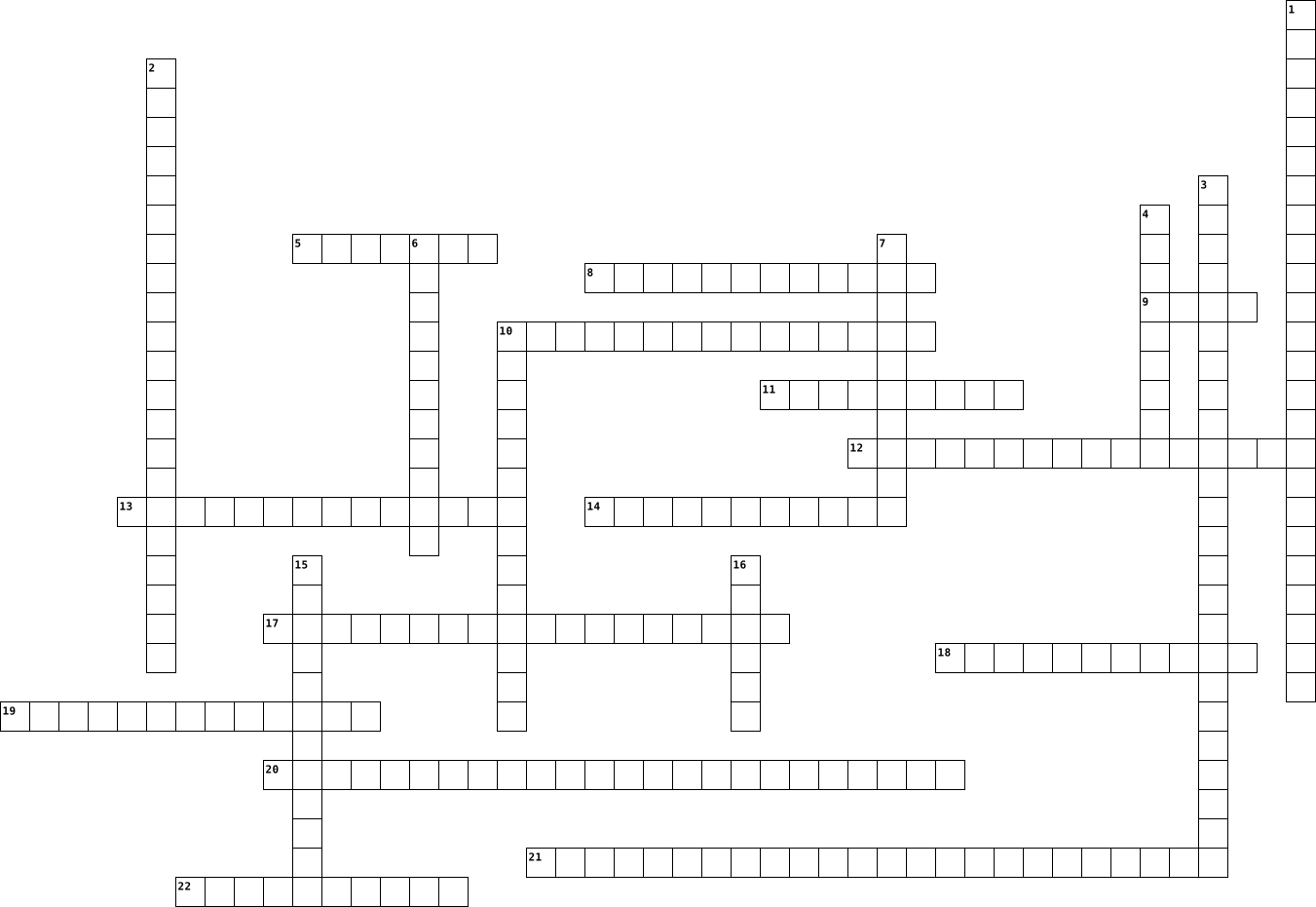
Across
- the natural home or environment of an animal, plant, or other organisms
- the variety of life in the world or in a particular habitat or ecosystem
- degradation occurs when natural or human-induced processes decrease the future ability of land to support crops, livestock, or wild species.
- the environment’s provision of raw materials and natural resources (e.g. food)
- part of Earth in which life exists including land, water, and air or atmosphere
- supports life on earth without requiring human action (e.g. decomposition)
- take urgent action to combat climate change and its impact
- all the water on earth
- the cultural, recreational or psychological value of the environment for people
- the solid, outer layer of the earth that consists of the crust and the rigid upper part of the mantle
- the ability of natural environments to absorb wastes and pollution
- nature exists for all species on earth, not just humans, and humans are equal to other species
- perspectives or views held by individuals re: global environment based on values and assumptions
- a term that typically describes a species that no longer has any known living individuals
Down
- ensure access to affordable, reliable, sustainable and modern energy for all
- Worldview holding that we can manage the earth for our benefit but that we have an ethical responsibility to be caring and responsible managers, or stewards, of the earth
- humans are superior and the most important species on earth
- release of harmful materials into the environment
- hazardous waste causing danger from chemicals and infectious organisms
- the envelope of gases surrounding the earth or another planet
- meeting the needs of the present without compromising the ability of future generations to meet their own needs
- the action or fact of treating someone unfairly in order to benefit from their work
- warming an increase in the average temperature of the earth's atmosphere (especially a sustained increase that causes climatic changes)
23 Clues: all the water on earth • release of harmful materials into the environment • take urgent action to combat climate change and its impact • humans are superior and the most important species on earth • the envelope of gases surrounding the earth or another planet • the ability of natural environments to absorb wastes and pollution • ...
Choice Board Assignment Crossword Puzzle 2021-11-08

Across
- molten material above the surface of the Earth
- are formed at divergent boundaries and mainly at mid ocean ridge
- plates that flow independently over the mantle
- the mostly-solid bulk of Earth's interior
- the only liquid layer of the Earth that contains iron and nickel
- the layer right beneath the lithosphere
- the scientist who came up with the theory of continental drift
- the rigid outer part of the Earth that consists of the crust and upper mantle
- a supercontinent that existed about 250 million years ago
- molten material below the surface of the Earth
Down
- the center of the Earth that is as hot as the Sun
- 2 plates that slide past each other
- when the dense plate sinks into the mantle
- lowland region formed by a divergent boundary
- theory that continents slowly move across the Earth's surface
- 2 plates that move towards each other
- the top and thinnest layer of the Earth
- formation of new seafloor when magma comes up at mid-ocean ridge
- plates of the Earth's surface that that constantly move
- 2 plates that move away from each other
20 Clues: 2 plates that slide past each other • 2 plates that move towards each other • the top and thinnest layer of the Earth • the layer right beneath the lithosphere • 2 plates that move away from each other • the mostly-solid bulk of Earth's interior • when the dense plate sinks into the mantle • lowland region formed by a divergent boundary • ...
Unit 3: Modeling Earth's Systems 2024-03-13

Across
- the process of breaking down rock into smaller pieces
- a large body of air with similar temperature and air pressure
- constantly changing
- a group of organisms of the same type that are capable of reproducing together
- describing material that does not come from living things
- the chemical process inside cells that releases energy from food
- the weight of air pressing on all things beneath and within it
- elevation above sea level
- a large region on Earth with a specific climate that contains certain species
- a disturbance caused by energy traveling through earth's crust
- a dry region on one side of a mountain that results from precipitation on the other side of the removing moisture from clouds
- the movement of sediment
- the Earth system that contains all the rocky layers on earth
- having no more living members
Down
- the Earth system that contains all of the water on earth
- the upper surface or level of groundwater
- describing material that comes from living things
- a substance that is harmful or fatal to an organism
- small particles of rock
- the release of water vapor from the leaves of plants
- a place where water collects
- the variety of species on Earth or in any one biome
- an underground region of rocky materialcontaining water that can be drawn out through a well
- water stored in the spaces between materials beneath Earth’s surface
- the Earth system that is composed of all the living things on Earth
- the Earth system that is composed of all the gases that surround Earth
- solid inorganic substances that occur naturally
- naturally occurring water that contains little or no salt
- the top layer of earth's land that often has a mix of organic and inorganic material
- the branch of science that names and groups organisms
- the dropping of sediment in a new location
- the exchange of gases with the environment
- the dynamic movement of water on, below,and above Earth’s surface
- to affect and be affected by
34 Clues: constantly changing • small particles of rock • the movement of sediment • elevation above sea level • a place where water collects • to affect and be affected by • having no more living members • the upper surface or level of groundwater • the dropping of sediment in a new location • the exchange of gases with the environment • solid inorganic substances that occur naturally • ...
Planet Earth 2024-09-18

Across
- Driest non-polar desert on Earth (7)
- Flat, elevated landform that rises sharply above surrounding area (7)
- Huge ocean wave caused by underwater disturbance (7)
- Atmospheric layer that protects Earth from UV radiation (5)
- Layer between Earth's crust and core (6)
- Process of recycling elements between Earth's systems (6,5)
- Vast region in Russia known for its harsh climate (7)
- When the Moon passes between the Earth and the Sun, blocking sunlight (7)
- Period of long-term reduction in Earth's temperature (3,3)
- Large, slow-moving mass of ice (7)
- Line that divides Northern and Southern Hemispheres (7)
- Supercontinent that existed millions of years ago (7)
- Molten rock beneath Earth’s surface (5)
- Explorer who travelled to Asia in the 13th century (5,4)
- Type of plates that move and cause earthquakes (8)
- Outermost layer of Earth (5)
- Global sum of all ecosystems on Earth (9)
- Arid region with very little rainfall (6)
Down
- Grassland ecosystem with scattered trees, found in Africa (7)
- Largest ocean on Earth (7)
- A hot spring that periodically erupts with water and steam (6)
- Longest continental mountain range (5)
- Layer of gases surrounding Earth (10)
- Deep valley, often formed by a river (6)
- Spectacular Nordic natural light display (6,8)
- Northernmost and southernmost points on Earth (5)
- Body of water with the highest salt content (4,3)
- Rupture in the Earth’s crust that emits molten lava (7)
- Sudden shaking of the ground (10)
- Longest river in the world (4)
- Layers of rock or soil with distinct characteristics (6)
- most populated country in the world (5)
- Mountain range containing the highest peak on Earth (9)
- Largest rainforest in the world (6)
- Force that keeps us anchored to Earth's surface (7)
- Cold, treeless region found near the Arctic Circle (6)
- Process by which wind and water wear away rocks and soil (7)
- Lines that circle the globe, known for warm temperatures (7)
- Largest hot desert on Earth (6)
- Innermost layer of Earth (4)
40 Clues: Largest ocean on Earth (7) • Outermost layer of Earth (5) • Innermost layer of Earth (4) • Longest river in the world (4) • Largest hot desert on Earth (6) • Sudden shaking of the ground (10) • Large, slow-moving mass of ice (7) • Largest rainforest in the world (6) • Driest non-polar desert on Earth (7) • Layer of gases surrounding Earth (10) • ...
Choice Board Assignment Crossword Puzzle 2021-11-08

Across
- molten material above the surface of the Earth
- are formed at divergent boundaries and mainly at mid ocean ridge
- plates that flow independently over the mantle
- the mostly-solid bulk of Earth's interior
- the only liquid layer of the Earth that contains iron and nickel
- the layer right beneath the lithosphere
- the scientist who came up with the theory of continental drift
- the rigid outer part of the Earth that consists of the crust and upper mantle
- a supercontinent that existed about 250 million years ago
- molten material below the surface of the Earth
Down
- the center of the Earth that is as hot as the Sun
- 2 plates that slide past each other
- when the dense plate sinks into the mantle
- lowland region formed by a divergent boundary
- theory that continents slowly move across the Earth's surface
- 2 plates that move towards each other
- the top and thinnest layer of the Earth
- formation of new seafloor when magma comes up at mid-ocean ridge
- plates of the Earth's surface that that constantly move
- 2 plates that move away from each other
20 Clues: 2 plates that slide past each other • 2 plates that move towards each other • the top and thinnest layer of the Earth • the layer right beneath the lithosphere • 2 plates that move away from each other • the mostly-solid bulk of Earth's interior • when the dense plate sinks into the mantle • lowland region formed by a divergent boundary • ...
Tectonic Plates 2023-01-06

Across
- The lithosphere is ___________ affects us the most
- crust that makes up the land we live on
- The last name of the man who came up with continental drift theory
- These occur because of subduction once magma puts enough pressure on the weak crust above it
- where two tectonic plates meet
- Type of lithosphere plates
- The layer of earth that includes both the upper mantle and crust
- crust that is under the ocean
Down
- These are found at divergent boundaries between continental/continental plates
- The liquid layer of melted Iron and Nickel at the center of the earth
- These are cracks in Earth's crust found at transform boundaries
- The name of earth's supercontinent before it seperated
- Earth's layer that is like putty and flows in convection currents
- The solid layer of the earth at the very center
- The largest layer of the earth that has 3 parts
- This is when one tectonic plate slides under another
- These are created at continental/continental convergent boundaries
- The outermost layer of earth that includes both the land under the ocean and the continents
- The athenosphere is _______ earth's plates move
- A deep crevice in the earth created at a subduction zone
20 Clues: Type of lithosphere plates • crust that is under the ocean • where two tectonic plates meet • crust that makes up the land we live on • The solid layer of the earth at the very center • The largest layer of the earth that has 3 parts • The athenosphere is _______ earth's plates move • The lithosphere is ___________ affects us the most • ...
science crossword puzzle🌎 2022-02-18

Across
- increasing light
- cold shorter days and longer nights
- equal days and warmer
- shortest day of the year December 21-22
- moon passes between sun and earth
- all of the moon is visible from Earth
- invisible line dividing earth into north and south
- earth covers the moon from the sun
- 12 hour day and night September 22-23
- "dirty snowball"
- none of the moon is visible from Earth
Down
- large rocks in space
- the difference between low tide and high tide is the greatest
- "shooting star"
- decreasing light
- turning or spinning on an axis
- longest day of the year June 21-22
- the difference between low tide and high tide is the greatest
- warmer/hot longer days and shorter nights
- 12 hour day and night march 21-22
- equal days and cooler weather
- moving completely around another object
22 Clues: "shooting star" • increasing light • decreasing light • "dirty snowball" • large rocks in space • equal days and warmer • equal days and cooler weather • turning or spinning on an axis • moon passes between sun and earth • 12 hour day and night march 21-22 • longest day of the year June 21-22 • earth covers the moon from the sun • cold shorter days and longer nights • ...
Natural Science Chapter 1 2020-09-25

Across
- describes origins of our solar system from a nebula.
- the study of the ocean and its processes
- line running parallel to the globe
- only energy moves (circulatory system)
- science of planets
- science that deals with weather
- the study of rocks
- the study of the earth by. I
- Rimmed by continental shelves
- 97% of water on earth, takes up 71% of surface
- after making observations this is the statement of inferred reasoning
- can be studied separately and continuously interacting
- the steps you take whilst completing an experiment
- 0 degrees longitude 1675
Down
- well tested and widely accepted
- system energy and Matter move (respiratory system)
- the earth is divided in three parts.
- cratons with large flat land masses
- line running horizontal
- drew the first world map.
- time span of the Formation of the earth.
- map with contour lines
- basin two division of earth surfaces
23 Clues: science of planets • the study of rocks • map with contour lines • line running horizontal • 0 degrees longitude 1675 • drew the first world map. • the study of the earth by. I • Rimmed by continental shelves • well tested and widely accepted • science that deals with weather • line running parallel to the globe • cratons with large flat land masses • ...
Geology 2024-01-31

Across
- - a dead that shows what is inside of something looks like
- - lakes, rivers, and ponds on earth
- - the layer of the earth that is by magma
- -the gasses around the earth
- - to examine in detail for a purpose
- - how fast something happens
- - the slow pulling apart of land that is caused by plate movement
- - all living things
- - a feature that formed on the surface for a planet
- - a natural spring that sends up hot water
- - made up of manly molten
Down
- - all rocks and minerals on the earth
- - a underwater mountain range
- - the study of the Earth
- - mostly solid rock
- - an extinct reptile that lived about 300 million years ago
- - moving apart in different directions
- - the place where two plates meet
- — moving towers the same place
- - very hot due to the pressure
- - a diagram
21 Clues: - a diagram • - mostly solid rock • - all living things • - the study of the Earth • - made up of manly molten • -the gasses around the earth • - how fast something happens • - a underwater mountain range • — moving towers the same place • - very hot due to the pressure • - the place where two plates meet • - lakes, rivers, and ponds on earth • - to examine in detail for a purpose • ...
Earth and The Universe 2022-09-04

Across
- Imaginary line that dives Earth into the North and South Hemisphere
- Earth's outermost layer, made with tectonic plates
- Middle layer of the Earth, very hot and creates magma
- The planet we live in
- The space outside of Earth, has 5 layers
- A big star in the center of the solar system
- The Earth's only natural satellite, rotation and revolution lasts 28 days
- Represents Earth on a flat surface
Down
- Earth spins on its axis and takes 24 hours (day and night) to do this
- A substance made up of various types of particles that occupies physical space and has inertia.
- Eight planets orbiting around the sun in space
- Represents the Earth in a way that is physically accurate because it is round
- Sphere in the middle of the Earth
- Imaginary line that connects the North and South Pole
- Earth orbits around the sun and takes one year to do this
15 Clues: The planet we live in • Sphere in the middle of the Earth • Represents Earth on a flat surface • The space outside of Earth, has 5 layers • A big star in the center of the solar system • Eight planets orbiting around the sun in space • Earth's outermost layer, made with tectonic plates • Middle layer of the Earth, very hot and creates magma • ...
Earth layers/Tectonic plates crossword puzzle 2024-02-08

Across
- made of the upper mantle and crust.
- the part theta is liquid metal iron and nickel.
- causes earthquakes.
- theory that came after the idea of continental drift.
- the hottest part of the earth.
- When the oceanic plate goes under the continental plate.
- made of the lower mantle.
- Idea proposed by Alfred Wegner.
- when waves are together in one spot.
Down
- This layer is below the lithosphere.
- Makes mountains/subduction zones.
- the plates that float on top of asthenosphere.
- when 2 plates move AWAY from each other.
- the thickest layer of the earth.
- Idea proposed by Harry Hess.
- the thinnest layer of the earth.
- solid ball of metal inside the earth.
- classified by how the layers they move and behave
- A crack in the earth created by transform boundary.
19 Clues: causes earthquakes. • made of the lower mantle. • Idea proposed by Harry Hess. • the hottest part of the earth. • Idea proposed by Alfred Wegner. • the thickest layer of the earth. • the thinnest layer of the earth. • Makes mountains/subduction zones. • made of the upper mantle and crust. • This layer is below the lithosphere. • when waves are together in one spot. • ...
Earth layers/Tectonic plates crossword puzzle 2024-02-08

Across
- made of the upper mantle and crust.
- the part theta is liquid metal iron and nickel.
- causes earthquakes.
- theory that came after the idea of continental drift.
- the hottest part of the earth.
- When the oceanic plate goes under the continental plate.
- made of the lower mantle.
- Idea proposed by Alfred Wegner.
- when waves are together in one spot.
Down
- This layer is below the lithosphere.
- Makes mountains/subduction zones.
- the plates that float on top of asthenosphere.
- when 2 plates move AWAY from each other.
- the thickest layer of the earth.
- Idea proposed by Harry Hess.
- the thinnest layer of the earth.
- solid ball of metal inside the earth.
- classified by how the layers they move and behave
- A crack in the earth created by transform boundary.
19 Clues: causes earthquakes. • made of the lower mantle. • Idea proposed by Harry Hess. • the hottest part of the earth. • Idea proposed by Alfred Wegner. • the thickest layer of the earth. • the thinnest layer of the earth. • Makes mountains/subduction zones. • made of the upper mantle and crust. • This layer is below the lithosphere. • when waves are together in one spot. • ...
Earth layers/Tectonic plates crossword puzzle 2024-02-08

Across
- made of the upper mantle and crust.
- the part theta is liquid metal iron and nickel.
- causes earthquakes.
- theory that came after the idea of continental drift.
- the hottest part of the earth.
- When the oceanic plate goes under the continental plate.
- made of the lower mantle.
- Idea proposed by Alfred Wegner.
- when waves are together in one spot.
Down
- This layer is below the lithosphere.
- Makes mountains/subduction zones.
- the plates that float on top of asthenosphere.
- when 2 plates move AWAY from each other.
- the thickest layer of the earth.
- Idea proposed by Harry Hess.
- the thinnest layer of the earth.
- solid ball of metal inside the earth.
- classified by how the layers they move and behave
- A crack in the earth created by transform boundary.
19 Clues: causes earthquakes. • made of the lower mantle. • Idea proposed by Harry Hess. • the hottest part of the earth. • Idea proposed by Alfred Wegner. • the thickest layer of the earth. • the thinnest layer of the earth. • Makes mountains/subduction zones. • made of the upper mantle and crust. • This layer is below the lithosphere. • when waves are together in one spot. • ...
Maps 2013-03-26

Across
- Eastern part of the earth
- the topographical features of a region, usually of the earth, sometimes of the planets.
- a device designed to be launched into orbit around the earth, another planet, the sun.
- in the sky
- angular distance east or west on the earth's surface
- The 4 principal directions on a compass.
- The regions of earth's rotational axis
- an image
- the angular distance north or south from the equator of a point on the earth's surface, measured on the meridian of the point.
- The major land masses of the earth
- A map having vertical and horizontal reference lines to facilitate locating a specific point
- a key on the map that shows what the symbols on the map are.
- Western part of the earth
- Southern part of the earth
- an device showing the directions and turns to the earths magnetic field.
Down
- Book of Maps
- the part or edge of a surface or area that forms its outer boundary
- an imaginary circle around the earth's surface dividing the North and South Hemisphere.
- half of a sphere or globe.
- map maker
- i need a ___ to open a door
- a ratio which compares a measurement on a map to the actual distance between locations identified on the map
- A representation of the surface of the earth
- An instrument to determine and measure angles
- A unit of measurements of angles
- Directions measured from one position to another.
- a body of sea water but covers more than 70% of earth's surface
- An outline of an image
- Northern part of the earth
29 Clues: an image • map maker • in the sky • Book of Maps • An outline of an image • Eastern part of the earth • Western part of the earth • half of a sphere or globe. • Northern part of the earth • Southern part of the earth • i need a ___ to open a door • A unit of measurements of angles • The major land masses of the earth • The regions of earth's rotational axis • ...
Subject Enrichment 2017-11-12

Across
- Nonliving elements of atmosphere.
- Gas we inhale
- A muddy swampy structure made by river at coastal area.
- A type of Earth’s movement, Starts with S_._._._._
- The most abundant gas of atmosphere.
- A layer of atmosphere which protects the earth from UV rays
- Satellite of Earth
- State of atmosphere for a short period of time.
Down
- The hottest heat zone of the Earth.
- In CO2, C stands for _________
- All the animals of a place known as........
- A type of igneous rock.
- Opening of Volcano.
- Stream of water in ocean.
- River, wind and glaciers are example of _________forces.
- Giant destructive sea wave
- Upper surface of Earth.
- The innermost layer of the earth.
- Is an aggregate of minerals
19 Clues: Gas we inhale • Satellite of Earth • Opening of Volcano. • A type of igneous rock. • Upper surface of Earth. • Stream of water in ocean. • Giant destructive sea wave • Is an aggregate of minerals • In CO2, C stands for _________ • Nonliving elements of atmosphere. • The innermost layer of the earth. • The hottest heat zone of the Earth. • The most abundant gas of atmosphere. • ...
What do planet have? 2013-12-10

Across
- our planet
- the eighth planet
- what we call our star.
- frozen ice at the top and bottom of the Earth
- the first planet
- covers most of the Earth
- has many rings
- dry and hot
- the sun is a...?
- frozen water
Down
- we have 8 circling around the sun
- brightest planet
- the biggest planet
- seventh planet
- circles the Earth
- where many trees grow
- the red planet
17 Clues: our planet • dry and hot • frozen water • seventh planet • has many rings • the red planet • brightest planet • the first planet • the sun is a...? • the eighth planet • circles the Earth • the biggest planet • where many trees grow • what we call our star. • covers most of the Earth • we have 8 circling around the sun • frozen ice at the top and bottom of the Earth
Martian Metropolis 2023-03-05

Across
- a Martian day
- a specific diet of plant-based foods
- place to grow plants
- skill and job needed on Mars
- grammar expectation for an abbreviation
- how people on earth protect their skin from damaging rays
- waters of the earth's surface
- force or weight on a planet
- structure which organizes ideas and information
- to repurpose and reuse, especially on Mars
- layer of the surface of the earth
Down
- a group of people creating a new environment
- internal heat of the earth
- the vapors and gasses surrounding earth
- reddish coating formed over iron over a period of time
- dangerous energy of high energy particles
- half of the earth
- the Red Planet
- element or feature of informational text
19 Clues: a Martian day • the Red Planet • half of the earth • place to grow plants • internal heat of the earth • force or weight on a planet • skill and job needed on Mars • waters of the earth's surface • layer of the surface of the earth • a specific diet of plant-based foods • grammar expectation for an abbreviation • the vapors and gasses surrounding earth • ...
Earth Structure Crossword 2021-04-03

Across
- The solid, outer layer of the Earth that makes up the plates
- The layer of Earth between the liquid outer core and the asthenosphere
- A place on the surface of the Earth where two plates move toward each other, and the oceanic plate plunges beneath the other tectonic plate
- The layer of the Earth between the crust and the core
- The boundary between two tectonic plates that are sliding past each other
- The transfer of thermal energy by the movement of a hot liquid or gas
- A long, undersea mountain range along the floor of oceans where two plates are spreading apart
- The process by which new oceanic lithosphere forms at a mid-ocean ridge as magma rises to fill the crack left by diverging plates
- The name for the single landmass composed of all of the present day continents that existed about 250 million years ago
- The boundary between two tectonic plates that are moving away from each other
Down
- The central part of the Earth below the mantle, composed mostly of iron
- The modern theory that explains that the surface of the Earth is made up of lithospheric plates that move and change shape
- The thin and outermost layer of the Earth above the mantle
- The layer of Earth between the mesosphere and the lithosphere
- The boundary between two tectonic plates that are colliding with each other
- The separating of the Earth into layers
- The catastrophe in Earth history about 4 billion years ago when most of this element melted and sank
17 Clues: The separating of the Earth into layers • The layer of the Earth between the crust and the core • The thin and outermost layer of the Earth above the mantle • The solid, outer layer of the Earth that makes up the plates • The layer of Earth between the mesosphere and the lithosphere • The transfer of thermal energy by the movement of a hot liquid or gas • ...
Geography 1.1-1.7 2020-09-22

Across
- geography, the study of ways people interact with Earth
- representation, a description or portrayal of Earth or the parts of Earth
- tells us where a place actually is
- Someone who studies money, resources, trade, the economy
- features Visuals, like maps, pictures, charts, and graphs
- A way to divide spaces by their geographic characteristics
- environment interactions Ways that humans use, change, or adapt to their surroundings
- Worldwide or involving most of the earth
- describes what is there in a location both the natural and human characteristics
- features Helps a reader understand what they read
- Someone who studies society, human groupings + behaviors
- a spherical or ball-shaped model of the entire planet
- geography, the study of natural characteristics of Earth
Down
- Someone who studies time, the past, cause + effect
- inquiry, the method for investigating geographic problems and solutions
- Someone who studies cultures, customs + traditions, beliefs
- scientist Someone who studies government, laws, citizenship, and politics
- The spread of people, produces/resources, and ideas
- citizenship, the responsibility of all members of our globe to care for each other and the Earth
- the study of Earth and the ways people interact with Earth
- features Helps the reader make the best use of a text
21 Clues: tells us where a place actually is • Worldwide or involving most of the earth • features Helps a reader understand what they read • Someone who studies time, the past, cause + effect • The spread of people, produces/resources, and ideas • a spherical or ball-shaped model of the entire planet • features Helps the reader make the best use of a text • ...
Science Journal 2026-05-06

Across
- when two plates drift apart
- lava before it leaves the volcano
- the point on the ground right above the center of an earthquakle
- the type of plates that the world is on
- a type of current in the mantle
- when two plates slide on the boundaries
- when a plate goes below another plate
- when continents slowly separate, its continental _____
- what happens when two of the earth plates release stress
- middle layer of earth
Down
- when two plates come together
- outer boundary of the outer and middle layer of earth
- result of a plate going below another plate
- inner boundary of the outer and middle layer of earth
- the alps are a ________ range
- inner layer of earth
- outer layer of the earth
17 Clues: inner layer of earth • middle layer of earth • outer layer of the earth • when two plates drift apart • when two plates come together • the alps are a ________ range • a type of current in the mantle • lava before it leaves the volcano • when a plate goes below another plate • the type of plates that the world is on • when two plates slide on the boundaries • ...
ESL EARTH SCIENCE VOCABULARY 2025-04-07

Across
- : Central part of Earth
- : A section of Earth's crust that moves
- : A mountain formed by eruptions of molten rock
- : Naturally occurring solid substance with a crystal structure
- : Path of Earth around the sun
- : Movement of rock particles by wind, water, or ice
- : Layer of Earth below the crust
- : The uppermost layer of Earth
- : Shaking of Earth's surface due to plate movement
- : An imaginary line around which Earth spins
Down
- : Preserved remains of ancient organisms
- : Laying down of sediment by wind, water, or ice
- : A large mass of moving ice
- : Layer of gases surrounding Earth
- : Small particles of rock or organic material
- : Molten rock beneath Earth's surface
- : Study of Earth's structure and history
- : Breaking down of rocks into smaller pieces
- : Refers to the movement of Earth's plates
- : Large ocean wave caused by an undersea earthquake
20 Clues: : Central part of Earth • : A large mass of moving ice • : Path of Earth around the sun • : The uppermost layer of Earth • : Layer of Earth below the crust • : Layer of gases surrounding Earth • : Molten rock beneath Earth's surface • : A section of Earth's crust that moves • : Preserved remains of ancient organisms • : Study of Earth's structure and history • ...
Finding a planet 2019-12-03

Across
- The smallest planet in our solar system
- Would you weigh more or less on Jupiter than on earth?
- The name of the energy that we get from the heat inside the earth.
- The planet 6th in order from the sun
- One of the basic requirements for human life
- One of the basic requirements for humans to live
- The moon is an example of a natural version of this?
- The 2nd planet in order from he sun
- The force of gravity is ____________ on jupiter than on earth?
- Would you weigh more or less on the moon than you do on earth?
Down
- The largest planet in our solar system
- The name of the energy we get from the sun
- What is force measured in?
- Hydro, wind and tidal are examples of _____________ energy
- What is the name of the fore that pulls us towards the earth
- The planet 4th in order from the sun
- The planet furthest away from the sun
- What is it called when the earth rotates around the sun once?
- What is Uranus made of?
19 Clues: What is Uranus made of? • What is force measured in? • The 2nd planet in order from he sun • The planet 4th in order from the sun • The planet 6th in order from the sun • The planet furthest away from the sun • The largest planet in our solar system • The smallest planet in our solar system • The name of the energy we get from the sun • ...
Earth Day- ACG 2024 2024-04-02

Across
- this shines in the sky and radiates heat
- what you should do with unwanted bottles or plastic
- our planet
- a large body of water
- water is often packaged in this recyclable material
- turning off the lights helps conserve ______
- earth is our _______
- instead of making the earth dirty, we should keep it _______
- a clear, healthy liquid we drink
- april 22nd is...
Down
- what some soda comes in that can be recycled
- dirt used when planting flowers
- the air we breathe
- to use again
- many people plant these on earth day
- warming of the planet is called _____ change
- unwanted garbage on the ground is called ____
- this color is associated with taking care of the planet
- this type of electricity uses energy from sunlight
- the month earth day is in
20 Clues: our planet • to use again • april 22nd is... • the air we breathe • earth is our _______ • a large body of water • the month earth day is in • dirt used when planting flowers • a clear, healthy liquid we drink • many people plant these on earth day • this shines in the sky and radiates heat • what some soda comes in that can be recycled • warming of the planet is called _____ change • ...
Chapter 3: Introducing Earth 2023-10-17

Across
- the semisolid layer of the earth in which convection currents flow
- water in all forms
- a group of parts that work together as a whole
- this is the only fully liquid layer of the Earth
- this is the thinnest portion of the crust
- this rock, along with granite, is what most of the Earth's crust consists of
- the ability to do work
- these two elements are the heavy elements that make up the Earth's core (2 words)
- waves these have taught us about the Earth's interior
- this middle layer of the Earth is also the largest layer
Down
- all living things, including bacteria
- these forces wear away/break down
- the center of the Earth; divided into two layers
- all air in the Earth system
- this increases as you go deeper because there is more matter on top of you
- the outer-most layer of the Earth
- the destructive movement of sediments
- this type of force builds up landforms
- all rock, metal, and mineral
- small particles of the rock/minerals
- field this is produced by the movement of the Inner Core
21 Clues: water in all forms • the ability to do work • all air in the Earth system • all rock, metal, and mineral • these forces wear away/break down • the outer-most layer of the Earth • small particles of the rock/minerals • all living things, including bacteria • the destructive movement of sediments • this type of force builds up landforms • this is the thinnest portion of the crust • ...
tectonic plates 2016-02-15

Across
- A super continent that existed 250 million years ago which included most of the earth’s continental landmasses,
- two plates moving away from each other, mantle,
- The outermost shell of the earth,
- magma when reaches earths surface,
- Plates that are moving toward each other,
- The process of wearing away or grinding something down,
- hemispheric-scale long but narrow topographic depressions of the sea floor.
- fossils found that prove existence of an old species
- When one plate is forced beneath another into the mantle,
Down
- molten rock underground, ,
- A sudden movement of the earth’s curst caused by stress along a geologic fault,
- A vent in the crust of the Earth from which molten rock, ask and steam are ejected,
- An area of stress in the earth where broken rocks slide past each other causing a crack in the Earth’s surface, lithosphere, The solid part of the earth consisting of the crust and the outer mantle,
- Part of the earth that goes around the core and is solid
- boundary where two plates slide against each other,
- The solid part of the earth consisting of the crust and the outer mantle
- Innermost part of the earth
- rock that is formed when magma cools and hardens,
- Continental land masses the move relative to one another,
19 Clues: molten rock underground, , • Innermost part of the earth • The outermost shell of the earth, • magma when reaches earths surface, • Plates that are moving toward each other, • two plates moving away from each other, mantle, • rock that is formed when magma cools and hardens, • boundary where two plates slide against each other, • ...
karas astronomy crossword 2023-02-01

Across
- the study of earth and the processes that have shaped its surface throughout time
- a type of igneous rock formed by cooling magma
- rocks formed through the cooling and crystallization of magma in earth’s interior
- plate boundary where two plates move away from each other
- heat rising from the mantle from subduction zones
- slow motions within the earth cause sections of the crust to shift over time
- heat travels upwards, is cooled as it reaches the surface, and sinks back down again
- radiation belts of highly charged particles surrounding the earth in the magnetosphere
- charged particles from earth generate a magnetic field around earth that protects it
- charged particles that flow outwards from the sun
- plate boundary where two plates move towards each other
Down
- oceanic crust sinks below continental crust at convergent plate boundaries
- high temperatures or pressures physically or chemically alter other rocks
- very dense inner layer of the earth that is part liquid and part solid
- separation of earth into layers of different densities
- the thickest layer of the earth that is between the crust and the core
- plate boundary where layers of the crust slide opposite each other
- fragments of other rock or shells that have been cemented together
18 Clues: a type of igneous rock formed by cooling magma • heat rising from the mantle from subduction zones • charged particles that flow outwards from the sun • separation of earth into layers of different densities • plate boundary where two plates move towards each other • plate boundary where two plates move away from each other • ...
Extreme Earth 2023-07-31

Across
- A ROCK FORMED BY LAVA
- THE EFFECTS OF THE EARTHS RISING TEMPERATURE
- A MOUNTAIN ON THE EARTH'S SURFACE SPEWING LAVA
- A ROCK CHANGED BY HEAT, PRESSURE, OR TIME
- AN AREA WHERE ROCKS ARE EXTRACTED
- ONE OF THE OLDEST MOUNTAIN RANGES IN THE WORLD
- WEATHERING CAUSED BY WATER OR WIND
- THE GEOLOGIC MEASUREMENT OF HARDNESS
- A SHEET OF SNOW AND ICE FALLING
- A ROCK MADE FROM MUD
- LAVA INSIDE OF THE EARTH
- A PHENOMENON WHEN A FUNNEL CLOUD TOUCHES THE EARTH
- THE SOUND OF CHARGED PARTICLES IN CLOUDS
- A CRACK ON THE EARTH'S SURFACE SPEWING LAVA
- OUR HOME PLANET
Down
- THE STUDY OF THE EARTH
- A MASSIVE WAVE, SOMETIMES HUNDREDS OF FEET TALL
- MAGMA OUTSIDE OF THE EARTH
- A LARGE RUSH OF WATER COVERING AN AREA
- LARGEST VOLCANO IN THE SOLAR SYSTEM
- WHAT A CYCLONE IS CALLED IN NORTH AMERICA
- A CONGLOMERATE ROCK NAMED AFTER A BRITISH DESSERT
- A ROCK FORMED BY WATER
- THE FIRST SUPER CONTINENT
- THE FORCE OF WIND, WATER, AND SOLAR RAYS UPON THE EARTH
- HTE GIGANTIC SLABS OF ROCK COVERING THE EARTH
- A LARGE SLAB OF COMPACTED ICE
- SUPER VOLCANO LOCATED IN WYOMING
- HAWAII'S MOST RECENT ACTIVE VOLCANO
- AN IGNEOUS ROCK RICH IN IRON
- THE RESULT OF OCEAN WATER RUSHING INLAND DURING A STORM
31 Clues: OUR HOME PLANET • A ROCK MADE FROM MUD • A ROCK FORMED BY LAVA • THE STUDY OF THE EARTH • A ROCK FORMED BY WATER • LAVA INSIDE OF THE EARTH • THE FIRST SUPER CONTINENT • MAGMA OUTSIDE OF THE EARTH • AN IGNEOUS ROCK RICH IN IRON • A LARGE SLAB OF COMPACTED ICE • A SHEET OF SNOW AND ICE FALLING • SUPER VOLCANO LOCATED IN WYOMING • AN AREA WHERE ROCKS ARE EXTRACTED • ...
Earth-Sun-Moon 2025-11-05

Across
- I describe the Moon as less of it becomes illuminated (lit up) during the month.
- I describe how the Moon looks at any given point during the month. The are 8 (main ones) of me.
- I am the darkest, most solid part of a shadow when there is an eclipse.
- I am what happens when the moon lines up between the Earth & Sun.
- I describe a characteristic of Earth in space. I am 23.5 degrees.
- I am the season that begin around March 21st.
- I describe the type of sunlight a hemisphere of Earth receives when it is tilted towards the Sun.
- I am a word used to describe the "longest" and "shortest" days of the year.
- I am the lighter, less solid part of a shadow when there is an eclipse.
- I describe the Moon as more of it becomes illuminated (lit up) during the month.
Down
- I am the season that begins around June 21st.
- I am a word that means "to light up".
- I describe two days a year when the Sun is directly above the equator.
- I am what happens when the Earth lines up between the Sun and Moon.
- I describe the type of sunlight a hemisphere of Earth receives when it is tilted away from the Sun.
- I am the season in Iowa when the northern hemisphere is tilted away from the Sun.
- I describe a moon phase where 3/4 of the moon is illuminated.
- I am the season that begins around September 21st.
- I am the star at the center of our solar system.
- I am the planet involved during a solar or lunar eclipse.
- When I get between the Earth and Sun I may cast a small shadow on Earth.
21 Clues: I am a word that means "to light up". • I am the season that begins around June 21st. • I am the season that begin around March 21st. • I am the star at the center of our solar system. • I am the season that begins around September 21st. • I am the planet involved during a solar or lunar eclipse. • I describe a moon phase where 3/4 of the moon is illuminated. • ...
Earth layers/Tectonic plates crossword puzzle 2024-02-08

Across
- made of the upper mantle and crust.
- the part theta is liquid metal iron and nickel.
- causes earthquakes.
- theory that came after the idea of continental drift.
- the hottest part of the earth.
- When the oceanic plate goes under the continental plate.
- made of the lower mantle.
- Idea proposed by Alfred Wegner.
- when waves are together in one spot.
Down
- This layer is below the lithosphere.
- Makes mountains/subduction zones.
- the plates that float on top of asthenosphere.
- when 2 plates move AWAY from each other.
- the thickest layer of the earth.
- Idea proposed by Harry Hess.
- the thinnest layer of the earth.
- solid ball of metal inside the earth.
- classified by how the layers they move and behave
- A crack in the earth created by transform boundary.
19 Clues: causes earthquakes. • made of the lower mantle. • Idea proposed by Harry Hess. • the hottest part of the earth. • Idea proposed by Alfred Wegner. • the thickest layer of the earth. • the thinnest layer of the earth. • Makes mountains/subduction zones. • made of the upper mantle and crust. • This layer is below the lithosphere. • when waves are together in one spot. • ...
Geography Glossary 2024-02-04

Across
- part of Earth in which life exists including land, water, and air or atmosphere
- The environment's provision of raw materialsand natural resources eg food
- An increase in the average temperature of the earth's atmosphere (especially a sustained increase that causes climatic changes)
- hazardous waste causing danger from chemicals and infectious organisms
- All the water on earth
- Worldview holding that we can manage the earth for our benefit but that we have an ethical responsibility to be caring and responsible managers, or stewards, of the earth.
- the action or fact of treating someone unfairly in order to benefit from their work.
- meeting the needs of the present without compromising the ability of future generations to meet their own needs
- the envelope of gases surrounding the earth or another planet.
Down
- A term that typically describes a species that no longer has any known living individuals.
- perspectives or views held by individuals re global environment
- function the ability of natural environments to absorb wastes and pollution
- the surroundings or conditions in which a person, animal, or plant lives or operates.
- Nature exists for all species on earth, not just humans, and humans are equal to other species
- Occurs when natural or human-induced processes decrease the future ability of land to support crops, livestock, or wild species.
- Humans are superior and the most important species on earth
- Release of harmful materials into the environment
- The cultural, recreational or psychological value of the environment for people
- Take urgent action to combat climate change and its impacts
- the variety of life in the world or in a particular habitat or ecosystem.
- supports life on earth without requring human action eg. decomposition
- the solid, outer layer of the earth that consists of the crust and the rigid upper part of the mantle
- the natural home or environment of an animal, plant, or other organism.
23 Clues: All the water on earth • Release of harmful materials into the environment • Humans are superior and the most important species on earth • Take urgent action to combat climate change and its impacts • the envelope of gases surrounding the earth or another planet. • perspectives or views held by individuals re global environment • ...
Layers and tectonic plates 2025-03-28

Across
- a scientific term for the mantle of the earth
- the third layer of the Earth's atmosphere
- the layer before the crust
- a crack in the Earth's crust where stress from a plate is released
- a boundary where plates slide past each other and do nothing to the crust
- the part before the mantle that is in the core
- the reason there is no supercontinent anymore
- the center of the earth
- the chemicals that make Earth's layers
- a scientific term for the crust of the earth
Down
- the theory that earth is split into a lot of different sections
- a boundary where to plates allow magma to rise and then make new crust
- a boundary where plates collide
- the large plates that are the cause of earthquakes and volcanic activity
- the strength of the lithosphere and anthenosphere
- when tectonic plates go apart so magma rises and makes new crust
- when the pressure of 2 plates causes it to shorten or thicken
- a place on earth where plates are likely to slide under each other
- the outer layer of the earth
19 Clues: the center of the earth • the layer before the crust • the outer layer of the earth • a boundary where plates collide • the chemicals that make Earth's layers • the third layer of the Earth's atmosphere • a scientific term for the crust of the earth • a scientific term for the mantle of the earth • the reason there is no supercontinent anymore • ...
tree <3 2022-07-18

Across
- perspectives or views held by individuals regarding global environments based on values and assumptions
- animal, or plant lives or operates.
- the variety of life in the world or in a particular habitat or ecosystem.
- Occurs when natural or human-induced processes decrease the future ability of land to support crops, livestock, or wild species.
- All the water on earth
- An increase in the average temperature of
- Take urgent action to combat climate change and its impacts
- Worldview holding that we can manage the earth for our benefit but that we have an ethical responsibility to be caring and responsible managers, or stewards, of the earth.
- the natural home or environment of an
- the action or fact of treating someone unfairly in order to benefit from their work.
- supports life on earth without requing human action eg. decomposition
- Nature exists for all species on earth, not just humans, and humans are equal to other species
- the surroundings or conditions in which a
- A term that typically describes a species that no longer has any known living individuals.
- plant, or other organism.
Down
- Ensure access to affordable, reliable, sustainable and modern energy for all
- the envelope of gases surrounding the earth or another planet.
- are superior and the most important species on earth
- the solid, outer layer of the earth that consists of the crust and the rigid upper part of the mantle
- meeting the needs of the present without compromising the ability of future generations to meet their own needs
- hazardous waste causing danger from chemicals and infectious organisms
- habitat or ecosystem.
- earth's atmosphere (especially a sustained increase that causes climatic changes)
- the variety of life in the world or in a
- Release of harmful materials into the environment
- the ability of natural environments to absorb wastes and pollution
- The cultural, recreational or psychological value of the environment for people
- The environment's provision of raw materials and natural resources eg food
28 Clues: habitat or ecosystem. • All the water on earth • plant, or other organism. • animal, or plant lives or operates. • the natural home or environment of an • the variety of life in the world or in a • An increase in the average temperature of • the surroundings or conditions in which a • Release of harmful materials into the environment • ...
environmental change and management 2023-07-18

Across
- An increase in the average temperature of the earth's atmosphere (especially a sustained increase that causes climatic changes)
- meeting the needs of the present without compromising the ability of future generations to meet their own needs
- The environment's provision of raw materials and natural resources eg food
- the ability of natural environments to absorbwastes and pollution
- the natural home or environment of an animal, plant, or other organism.
- All the water on earth
- Humans are superior and the most important species on earth
- hazardous waste causing danger from chemicals and infectious organisms
- Nature exists for all species on earth, not just humans, and humans are equal to other species
- the surroundings or conditions in which a person, animal, or plant lives or operates.
- A term that typically describes a species that no longer has any known living individuals.
- perspectives or views held by individuals re global environment based on values and assumptions
- supports life on earth wrequiringrequing human action eg. decomposition
Down
- Occurs when natural or human-induced processes decrease the future ability of land to support crops, livestock, or wild species.
- ensure access to affordable, reliable, sustainable, and modern energy for all
- the envelope surrounding the earth or another planet
- Release of harmful materials into the environment
- the action or fact of treating someone unfairly in order to benefit from their work.
- Worldview holding that we can manage the earth for our benefit but that we have an ethical responsibility to be caring and responsible managers, or stewards, of the earth.
- The cultural, recreational or psychological value of the environment for people
- the solid, outer layer of the earth that consists of the crust and the rigid upper part of the mantle
- the variety of life in the world or in a particular habitat or ecosystem
- part of Earth in which life exists includingland, water, and air or atmosphere
- Take urgent action to combat climatechange and its impacts
24 Clues: All the water on earth • Release of harmful materials into the environment • the envelope surrounding the earth or another planet • Humans are superior and the most important species on earth • the ability of natural environments to absorbwastes and pollution • hazardous waste causing danger from chemicals and infectious organisms • ...
geography 2024-02-04

Across
- the ability of natural environments to absorb wastes and pollution
- Nature exists for all species on earth, not just humans, and humans are equal to other species
- Occurs when natural or human-induced processes decrease the future ability of land to support crops, livestock, or wild species.
- All the water on earth
- the natural home or environment of an animal, plant, or other organism.
- supports life on earth without requing human action eg. decomposition
- Humans are superior and the most important species on earth
- the solid, outer layer of the earth that consists of the crust and the rigid upper part of the mantle
- Worldview holding that we can manage the earth for our benefit but that we have an ethical responsibility to be caring and responsible managers, or stewards of the earth
- The cultural, recreational or psychological value of the environment for people
- meeting the needs of the present without compromising the ability of future generations to meet their own needs
- A term that typically describes a species that no longer has any known living individuals.
- the surroundings or conditions in which a person, animal, or plant lives or operates.
- The environment's provision of raw materials and natural resources eg food
Down
- perspectives or views held by individuals re global environment based on values and assumptions
- access to affordable and modern energy
- the action or fact of treating someone unfairly in order to benefit from their work.
- the envelope of gases surrounding the earth or another planet
- An increase in the average temperature of the earth's atmosphere
- Release of harmful materials into the environment
- Take urgent action to combat climate change and its impacts
- hazardous waste causing danger from chemicals and infectious organisms
- part of Earth in which life exists including land, water, and air or atmosphere
- the variety of life in the world or in a particular habitat or ecosystem.
24 Clues: All the water on earth • access to affordable and modern energy • Release of harmful materials into the environment • Humans are superior and the most important species on earth • Take urgent action to combat climate change and its impacts • the envelope of gases surrounding the earth or another planet • ...
Geography Environmental Change and Management 2024-07-25

Across
- All the water on Earth.
- the natural home or environment of an animal, plant, or other organism.
- The cultural, recreational or psychological value of the environment for people.
- Take urgent action to combat climate change and its impacts.
- Hazardous waste causing danger from chemicals and infectious organisms.
- Meeting the needs of the present without compromising the ability of future generations to meet their own needs.
- Part of Earth in which life exists including land, water, and air or atmosphere.
- supports life on earth without requing human action eg. decomposition.
- The ability of natural environments to absorb wastes and pollution.
- Humans are superior and the most important species on earth.
- Perspectives or views held by individuals re global environment based on values and assumptions.
- a species that no longer has any known living individuals.
Down
- Occurs when natural or human-induced processes decrease the future ability of land to support crops, livestock, or wild species.
- The envelope of gases surrounding the earth or another planet.
- Nature exists for all species on earth, not just humans, and humans are equal to other species.
- the variety of life in the world or in a particular habitat or ecosystem.
- Worldview holding that we can manage the earth for our benefit but that we have an ethical responsibility to be caring and responsible managers, or stewards, of the earth.
- The action or fact of treating someone unfairly in order to benefit from their work.
- Ensure access to affordable, reliable, sustainable and modern energy for all
- The environment's provision of raw materials and natural resources. eg. food
- The solid, outer layer of the earth that consists of the crust and the rigid upper part of the mantle.
- An increase in the average temperature of the earth's atmosphere (especially a sustained increase that causes climatic changes)
- the surroundings or conditions in which a person, animal, or plant lives or operates.
- Release of harmful materials into the environment
24 Clues: All the water on Earth. • Release of harmful materials into the environment • a species that no longer has any known living individuals. • Take urgent action to combat climate change and its impacts. • Humans are superior and the most important species on earth. • The envelope of gases surrounding the earth or another planet. • ...
Earth + Space Vocabulary 2024-02-12

Across
- The path an object, such as a planet, takes as it revolves around another object.
- Each of the four divisions of the year marked by particular weather patterns and daylight hours.
- The reflected light is increasing on the moon's surface, but less than half is visible from Earth.
- The process of turning or spinning on an axis.
- The appearance of phases of the moon as viewed from Earth, as the moon orbits the Earth.
- The type of tide that occurs when ocean water is at its highest level during the day.
- No reflected light from the sun is visible on Earth.
- The type of tide that occurs when ocean water is at its lowest level during the day.
- The partial or total blocking of light of one object (sun or moon) by another.
- Marks the longest day of the year (most sunlight); generally occurs around June 21-22 in the northern hemisphere
- The action of one object moving completely around in an orbital path.
- The rising and falling of the ocean's surface.
- A tide in which the difference between high and low tide is the least.
- The type of eclipse that occurs when the moon passes between the sun and Earth.
- The reflected light is decreasing on the moon's surface, but more than half is still visible from Earth.
- An increasing amount of visible light on the moon's surface.
Down
- Only the right half of the moon is visible from Earth.
- An imaginary line that runs through both poles of a planet.
- The type of eclipse that occurs when the moon appears darkened as it passes into Earth's shadow.
- An imaginary line drawn around Earth that divides it into two halves - the northern hemisphere and southern hemisphere.
- A day that marks equal day and night; generally occurs around March 21-22 in the northern hemisphere.
- Marks the shortest day of the year (least sunlight); generally occurs around December 21-22 in the northern hemisphere.
- The reflected light is decreasing on the moon's surface and less than half is visible from Earth.
- The moon's surface is completely visible from Earth.
- A day that marks equal day and night; generally occurs around September 22-23 in the northern hemisphere.
- Only the left half of the moon is visible from Earth.
- A tide in which the difference between high and low tide is the greatest.
- The reflected light is increasing on the moon's surface and more than half is visible from Earth.
- A decreasing amount of visible light on the moon's surface.
29 Clues: The process of turning or spinning on an axis. • The rising and falling of the ocean's surface. • The moon's surface is completely visible from Earth. • No reflected light from the sun is visible on Earth. • Only the left half of the moon is visible from Earth. • Only the right half of the moon is visible from Earth. • ...
Phases of the Moon 2012-06-06

Across
- what is the surname of the first man to step on the moon
- Eclipse When the moon is behind the earth and the earth is blocking it from the suns rays
- When the entire moon is showing
- The third rock from the Sun
- What did the astronauts bring back from the moon
- When half the moon is showing
- What can the moon affect relating to the sea
Down
- A planet that is burning hot
- What is the famous sea call that is on the moon
- When the moon is in a C Shape
- What does the moon do around the earth
- When the moon changes shape orbiting the earth, it is called a
- What howls at the moon
- Eclipse When the moon is between the sun and the Earth
- What can you see from earth on the surface of the moon
- When none of the moon is showing
16 Clues: What howls at the moon • The third rock from the Sun • A planet that is burning hot • When the moon is in a C Shape • When half the moon is showing • When the entire moon is showing • When none of the moon is showing • What does the moon do around the earth • What can the moon affect relating to the sea • What is the famous sea call that is on the moon • ...
Earth in Space 2017-06-24

Across
- There are four in a year
- Midline of the Earth
- Mostly bright moon
- The tide when it's high
- The Earth does this once a day
- Move or cause to move into a sloping position
- Has 365 days and happens every four years
- The Earth does this once a year
- The tide just after a new moon
- South of the equator
- The tide when it's low
Down
- Most of the moon is dark
- The tide just after the first or third quarter of the moon
- When a planet or moon spins around something
- An imaginary line about which a body rotates
- An eclipse in which the sun is obscured by the moon
- When the Earth is in sunlight
- An eclipse in which the moon is covered by the Earth
- Lunar phases
19 Clues: Lunar phases • Mostly bright moon • Midline of the Earth • South of the equator • The tide when it's low • The tide when it's high • Most of the moon is dark • There are four in a year • When the Earth is in sunlight • The Earth does this once a day • The tide just after a new moon • The Earth does this once a year • Has 365 days and happens every four years • ...
Thankful for the Moon 2023-11-16

Across
- the type of eclipse when the Earth is in the center
- the phase that is not visible from Earth
- the type of eclipse when the Moon is in the center
- number of weeks in a Moon cycle
- what most people earth this Thursday
- when the left side of the Moon is lighted
- planet with the most Moons
- caused by the Moon
- dessert at many tables this season
- when the Earth and Moon are closest
- what a turkey says
- the Moon does not have this around it
- the number of days between first and last quarter
Down
- every 26,000 years the Earth will __
- the Moon does this, causing its phases
- number humans who have walked on the Moon
- small tides when S,M,E are at right angles
- large tide during Full and New Moon
- holiday that is this Thursday
- number of moon phases
- phase where S,M,E are at an acute angle
- the number of degrees the Moon's orbit is tilted
- the Moon's rate of rotation and revolution are ___
- number of days it takes to get to the Moon
- when the Earth and Moon are farthest apart
- when the right side of the Moon is lighted
26 Clues: caused by the Moon • what a turkey says • number of moon phases • planet with the most Moons • holiday that is this Thursday • number of weeks in a Moon cycle • dessert at many tables this season • large tide during Full and New Moon • when the Earth and Moon are closest • every 26,000 years the Earth will __ • what most people earth this Thursday • ...
Layers Of The Earth 2023-04-25

Across
- Earth's dense, metallic center
- specific type of metal
- liquid water on Earth
- all living organisms on Earth
- the solid part of Earth
- outer part of Earth's magnetic field
- force of attraction between two objects
Down
- flowering layer within the mantle
- thick middle layer in the solid part of the Earth
- layer that includes crust and uppermost mantle
- rocky, outermost layer of Earth
- amount of mass, or substance, in a material
- frozen water on Earth
- a shape like a ball
- layer of gasses surrounding the Earth
15 Clues: a shape like a ball • frozen water on Earth • liquid water on Earth • specific type of metal • the solid part of Earth • all living organisms on Earth • Earth's dense, metallic center • rocky, outermost layer of Earth • flowering layer within the mantle • outer part of Earth's magnetic field • layer of gasses surrounding the Earth • force of attraction between two objects • ...
Jessica's Geographic Terms 2013-09-11

Across
- A round representation of the earth
- A book full of maps of the world
- A large backup supply
- Point in orbit farthest from the sun
- Crops and plants
- A large body of water
- A point in orbit nearest to the sun
- The four sections of the earth separated by the equator and the prime meridian
- Imaginary lines that run east to west measuring north to south
- A drawing of how the world looks like
Down
- Height above sea level
- An imaginary line that runs east to west and separates the earth into north and south hemispheres
- The times of the year when there are the shortest day of the year and the longest day of the year
- A period of 365 days where the earth makes a full rotation around the sun
- An imaginary straight line around which an object such as Earth rotates on
- Imaginary lines that run north to south measuring east and west
- A full orbit around the sun (365 days for the earth)
- Reference lines on map
- The beginning of a river
- An imaginary line of longitude that runs north to south and separates the eastern and western hemispheres
20 Clues: Crops and plants • A large backup supply • A large body of water • Height above sea level • Reference lines on map • The beginning of a river • A book full of maps of the world • A round representation of the earth • A point in orbit nearest to the sun • Point in orbit farthest from the sun • A drawing of how the world looks like • ...