
the earth Crossword Puzzles
Earths structure and plate tectonics 2017-02-21

Across
- the belief that all the contents made one giant land mass
- this is the second layer of the earth
- _________ mantle
- these plates along with the mantle are located in the _________
- propoesed the theory of sea floor spreading
- the earths crust is made of _____________ plates
- when the earth "swallows" up the old crust
- a Rift Valley is formed when this boundary happends
- when magma reaches the earth surface
- flats are a result of this boundary
Down
- the person who cam up with the idea of Pangea
- the upper/lower mantle and the mantle is a part of the _______
- this is the third layer of earth
- the result of two plates rubbing against each other
- the mantle's state of mater a a solid with _______
- one of the two types of techtonic plates (land)
- the other type of techtonic plate (ocean)
- mountains, volcanoes and deep sea trenches form with this boundary
- the outermost layer of the earth
- _____core, the last layer
20 Clues: _________ mantle • _____core, the last layer • this is the third layer of earth • the outermost layer of the earth • flats are a result of this boundary • when magma reaches the earth surface • this is the second layer of the earth • the other type of techtonic plate (ocean) • when the earth "swallows" up the old crust • propoesed the theory of sea floor spreading • ...
Science Activity thing 2023-09-20

Across
- The outer layer of the Earth
- The Transmission of heat, Electricity, or Sound
- Relating to or being Associated with Heat
- Molten Rock In the Earths Crust
- A crack in the Earths Crust
- An instrument for Measuring the Movements of the Ground
- The Central Part of the Earth
- One of the large Landmasses of the Earth
Down
- Movement of the edge of one Tectonic plate onto another
- A gradual Sinking to a Lower Point
- Vibrations from Underground Movement along a Fault Plane
- Lift Up from the Earth, as by Geological Forces
- The accumulation of Matter deposited by natural Processes
- The Formation of Crystals
- A Rigid Layer of the Earths Crust
- The layer of the earth between the crust and the core
- The branch of Geology that studies Rocks and Land Forms
- A hypothetical continent that broke up later into North America, Europe, and Asia
- The exertation of force to a Surface
- The lower layer of the crust
- The amount per unit size
21 Clues: The amount per unit size • The Formation of Crystals • A crack in the Earths Crust • The outer layer of the Earth • The lower layer of the crust • The Central Part of the Earth • Molten Rock In the Earths Crust • A Rigid Layer of the Earths Crust • A gradual Sinking to a Lower Point • The exertation of force to a Surface • One of the large Landmasses of the Earth • ...
God's Creation 2024-07-14

Across
- What did God create on the first day? (Genesis 1:3)
- Complete the phrase: "The earth is the Lord's, and the ________ thereof.
- God created the earth and ___________ on the third day (Genesis 1: 9-13)
- Over what creatures did God give man dominion? (Hint: Birds and ____)
- In Psalm 139:13-14, what word describes how we are made by God?
- God created great whales and every ________ fowl on the fifth day? (Genesis 1:20-21)
- Who is the creator of the earth? (Isaiah 45:18)
- What did God gather together to form dry land? (Genesis 1:9)
- What does Isaiah 45:18 say God created the earth to be? (Isaiah 45:18)
- And God made the ______ of the earth after his kind (Génesis 1:25)
- What did God create to rule the day? (Genesis 1:16)
Down
- How are God's works described in Psalm 92:5?
- God maketh Arcturus, Orion, and ___________ (Job 9:9)
- Who is the owner of the earth? (Psalm 24:1)
- According to Job 9:9, what did God make?
- What did God create on the second day? (Genesis 1:8)
- Wath word describes God's works in Psalm 92:5?
- What did God create to divide the waters? (Genesis 1:6-7)
- What was created by God to be signs for seasons, days, and years? (Genesis 1:14)
- "The earth is the Lord's, and the fullness thereof;The ________,and they that dwell therein.
- What did God create in His own image on the sixth day?
- What did God say to man about the herbs and trees with seeds? (Hint:They shall be for ____)
22 Clues: According to Job 9:9, what did God make? • Who is the owner of the earth? (Psalm 24:1) • How are God's works described in Psalm 92:5? • Wath word describes God's works in Psalm 92:5? • Who is the creator of the earth? (Isaiah 45:18) • What did God create on the first day? (Genesis 1:3) • What did God create to rule the day? (Genesis 1:16) • ...
Astronomy Review 2022-01-25

Across
- The season on Earth when the sun is high in the sky at a 90 degree angle.
- All of space and everything in it.
- The name for the 24 hour rotation of Earth on its axis.
- The path Earth takes around the sun in its revolution.
- The name for our glaxay.
- Two times in the year when Earth is not tilted towards or away from the sun.
- Two examples of this arrangement of the stars are Big Dipper and Little Dipper.
- A chunk of rock or dust in space.
- The month of our winter solstice.
Down
- The month of our summer solstice.
- This line divides Earth into Northern and Southern Hemispheres.
- Two reasons we have seasons is our tilt and __________ around the sun.
- A synonym for spins or turns on an axis.
- The study of the moon, stars, planets and everything in space.
- The season on Earth when the sun is at a 45 degree angle.
- Another word for the north star.
- Our solar system has ______ star(s).
- The name for the 365 1/4 days it takes Earth to orbit the sun.
18 Clues: The name for our glaxay. • Another word for the north star. • The month of our summer solstice. • A chunk of rock or dust in space. • The month of our winter solstice. • All of space and everything in it. • Our solar system has ______ star(s). • A synonym for spins or turns on an axis. • The path Earth takes around the sun in its revolution. • ...
Plate tetonics 2012-06-21
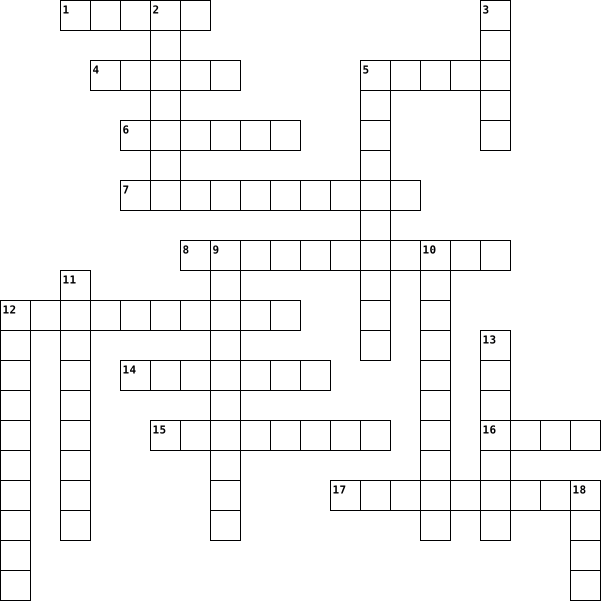
Across
- tectonics the title
- that top of the center of a earthquake
- top layer of the earth
- layer of earth under the crust
- layer of earth that is broken up into plate tetonics
- a device used to measure a earthquakes power
- a graph of ground movement from a earthquake
- scale the sacale used to measure magnitude
- the place where plate tectonics meet
- center of the earth
- center of a earthquake
Down
- what happens when a earthquake happens in the ocean
- core second deepest layer of the earth
- boundary a boundary where two plate tectonics collide and make mountains
- what happens at a transforming boundary
- what happens after a earthquake
- boundary where two plates move apart from eachother
- study of earthquakes
- a mountain with magma inside
- of fire really active plate tetonics boundarys (3 spaces)
20 Clues: tectonics the title • center of the earth • study of earthquakes • top layer of the earth • center of a earthquake • a mountain with magma inside • layer of earth under the crust • what happens after a earthquake • the place where plate tectonics meet • core second deepest layer of the earth • that top of the center of a earthquake • what happens at a transforming boundary • ...
Plate motion 2024-10-24

Across
- A landform witch lava comes out
- One of the big boundaries of a map
- a similar puzzle that repeats and repeats
- A word send for school in an hour
- The deepest part of the earth core
- different or becoming different from something else
- A cool word to use for experimenting
- A land mass that can be different
- a sudden shake of earths surface
- An under water mountain range.
Down
- Large scale process affecting earth crust
- A very hot area underneath earth crust
- Gas, ash and lava get launched out of a mountain
- Plates move toward the same place
- A purposed question about the natural world
- earth outmost layer no hard, solid rock that is underneath the soil, vegetation and water.
- An indent into the ocean floor
- The center of earth
- The layer of soft solid underneath earths surface
- to examine in detail for a purpose
20 Clues: The center of earth • An indent into the ocean floor • An under water mountain range. • A landform witch lava comes out • a sudden shake of earths surface • Plates move toward the same place • A word send for school in an hour • A land mass that can be different • One of the big boundaries of a map • The deepest part of the earth core • to examine in detail for a purpose • ...
Crossword 2025-05-16

Across
- earth is in _____ around the sun
- a large body of matter
- the resistance to change in motion
- a unit of measurement we use in space
- a giant cloud of dust
- A famous astronomer
- the closest star to earth
- an element that makes up an star
- the brightest star we can see
- our sun is this
- our galaxy
- stars that make up a shape in the sky
- this pulls us all down
Down
- something that orbits earth with people living inside
- a region in the solar system that includes pluto
- an hour and a half
- something we send into space
- not even light can escape
- the milky way is an example of this
- Greek princess who was saved by perseus
- what earth is
- the planet in which we exit on
- the farthest man-made object in space
23 Clues: our galaxy • what earth is • our sun is this • an hour and a half • A famous astronomer • a giant cloud of dust • a large body of matter • this pulls us all down • not even light can escape • the closest star to earth • something we send into space • the brightest star we can see • the planet in which we exit on • earth is in _____ around the sun • an element that makes up an star • ...
Genesis 1 - Creation (KJV) 2023-11-15

Across
- And the ___________ of God moved upon the face of the waters.
- So God created man in his own image... male and ________ created he them.
- And God saw the ________, that it was good: and God divided the ________ from the darkness.
- And God created... every winged fowl after his ________:
- And God saw every thing that he had made, and, behold, it was ________ good.
- And God said, Let there be ________ in the firmament of the heaven,
- In the ____________ God created the heaven and the earth.
- And God made the ________ of the earth after his kind,
- And the earth was without form, and ___________...
- And God called the dry land ________;
Down
- The atmosphere that divides the waters below from the waters above.
- And... God said unto them... have ________ over... the sea, and over... the air, and over... the earth.
- And God said, Let the earth bring forth grass, the herb yielding ________... after his kind,
- And God called the firmament ________.
- And God blessed them, saying, Be fruitful, and ________, and fill the waters in the seas,
- and ____________ was upon the face of the deep.
- And God said, Let us make man in our ________, after our likeness:
- And God said, Behold, I have given you every herb bearing seed... to you it shall be for ________.
- And God said unto them, Be fruitful, and... replenish the earth, and ________ it:
- And God said, Let the ________ bring forth abundantly the moving creature that hath life,
20 Clues: And God called the dry land ________; • And God called the firmament ________. • and ____________ was upon the face of the deep. • And the earth was without form, and ___________... • And God made the ________ of the earth after his kind, • And God created... every winged fowl after his ________: • In the ____________ God created the heaven and the earth. • ...
Crossword Puzzle 2022-09-19

Across
- study of the flow of matter primarily in the liquid state
- they are formed by various forces of nature of Earth
- a resistant rock that usually surrounds table mountains
- also called byland or biland
- formed when moving water in a stream erodes the out banks then widens its valley
- high rocky coasts that plunge down to the edge of the sea
- a product of glacial activity in an area
- extends from the surface of Earth to a depth of about 70-100 km
- they may be dome-shaped, crescent-shaped, star-shaped, linear-shaped, or parabolic
Down
- its name originated from a French word which means "hillock" or small hill
- scientific study of landforms and the processes that shape them
- the last and innermost layer of Earth and is separated into two
- refers to the sediment that has accumulated due to the interaction of delta and bodies of water
- influenced by water and wind erosion over a long period of geologic time
- the Greek god of the winds; where the word Aeolian is derived from
- portion of lands elevated thousands of feet above their surroundings
- the most common type of dune found on Earth
- study of the current terrain features of a region
- largest layer of Earth
- divided into five layers
- makes up only about one percent of Earth
21 Clues: largest layer of Earth • divided into five layers • also called byland or biland • a product of glacial activity in an area • makes up only about one percent of Earth • the most common type of dune found on Earth • study of the current terrain features of a region • they are formed by various forces of nature of Earth • ...
THE UNIVERSE 2018-11-22

Across
- The first of the outer planets
- It's called the blue planet.
- The name of our gallaxy
- Huge ball of gas where nuclear reactions take place
- This person invented the telescope and proved Copernicus' theory.
- This scientist suggested the heliocentric model of the solar system.
- A rocky irregular mass that orbit the Sun
- The most brilliant planet in the night sky.
- Small pieces of asteroids or comet that orbit the Sun
- It's the first day of Summer and Winter
- Dwarf planet
Down
- It's the name of a belt of asteroids
- This movement of the Earth takes 24 hours
- They are classified according to their shape.
- Celestial body that orbit a star.
- The nearest star to the Earth
- Imaginary line that goes from the North Pole to the South Pole
- The Equator is the imaginary line that divides the Earth into 2 _________________
- A natural satellite that orbit the Earth
- It occurs thanks to the Earth's revolution
20 Clues: Dwarf planet • The name of our gallaxy • It's called the blue planet. • The nearest star to the Earth • The first of the outer planets • Celestial body that orbit a star. • It's the name of a belt of asteroids • It's the first day of Summer and Winter • A natural satellite that orbit the Earth • This movement of the Earth takes 24 hours • ...
Science Vocabulary Appetizer 2014-11-04

Across
- How much stuff (elements) something is made up of
- Gases that change and vary through time
- Fake Science, Opinions not based on the scientific method
- Kinds of gases that stay the same
- Energy of Motion
- The day when the North Pole leans toward the Sun
- Energy from the Sun
- A process where plants use the sun's energy to make food
- The day when the sun shines directly on the Earth
- Become larger or more extensive
- When Earth and the Sun are closest to each other
- A piece of information that is definitely true
- Someone that is poorly educated and science and does not understand
- Layers of gases that surround planet Earth
- Tighten
- A testable explanation of something
Down
- Imaginary axle that Earth spins on
- What everything is made up of
- When the Earth makes one turn on its axis
- Energy including light, radio waves, and gamma rays
- When Earth and the Sun are farthest from each other
- A procedure that includes observation, testing, and changing of hypotheses
- A structure of ideas that proves or disproves something
- Weather systems that are intense and possibly harmful
- What everything is made up of
- Energy transfer through physical contact
- When the Earth makes a full trip around the Sun
- True facts that can prove or disprove a belief
- degree of heat
- To release energy as radiation
30 Clues: Tighten • degree of heat • Energy of Motion • Energy from the Sun • What everything is made up of • What everything is made up of • To release energy as radiation • Become larger or more extensive • Kinds of gases that stay the same • Imaginary axle that Earth spins on • A testable explanation of something • Gases that change and vary through time • ...
Geography Vocab Part 1 2024-04-15

Across
- a a river and all of its tributaries
- geographic features that come from nature
- an area of flat land alongside an ocean
- an imaginary line that divides the Earth into the northern and southern hemispheres
- a long low area between hills or mountains
- one of the five themes of geography tells what it's like there
- one of the main landmasses of the Earth
- where a place is located in relation to other places
- all the plant life of an area
- a stream or river that flows into a larger stream of river
- a series of connected mountains
- a low area surrounded by higher land
Down
- features on the surface of the Earth such as plains, mountains, etc.
- half of the Earth
- five ideas that help you learn about the Earth and everything on it
- lines that define the border of a state or country
- an area of flat land with a higher elevation
- a dry region with very little rainfall
- one of the five themes of geography tells where a place is
- part of an ocean partly surrounded by land
- an imaginary line that divides the Earth into the eastern and western hemispheres
- a deep valley with steep sides
- an area of flat or gently rolling land
- the location of a place on Earth identified by a grid system such as latitude and longitude
24 Clues: half of the Earth • all the plant life of an area • a deep valley with steep sides • a series of connected mountains • a a river and all of its tributaries • a low area surrounded by higher land • a dry region with very little rainfall • an area of flat or gently rolling land • an area of flat land alongside an ocean • one of the main landmasses of the Earth • ...
The Moon 2021-01-28

Across
- growing larger
- narrow sliver of he moon's circle shape
- the force that pulls objects towards the ground
- the meaning of the word luna
- measurement of the amount of matter an object has
- eclipse when the moon is casting a shadow on the earth
- any object that travels around another object
- the most prominent feature on the moon
- one kind of science uses ____________________ and observations to understand the present
Down
- identifies how much of the near side of the moon is lit by the sun
- eclipse when the earth casts a shadow on the moon
- when one object passes into the shadow of another object
- shrinking
- light colored streaks
- complete spin of the moon on its axis
- moon's path around the earth
- made of basalt
- slightly flattened circle
- complete trip of the moon around the earth
- one kind of science uses ________________________ of the present to understand the past
- side of the moon that cannot be seen from earth
21 Clues: shrinking • growing larger • made of basalt • light colored streaks • slightly flattened circle • moon's path around the earth • the meaning of the word luna • complete spin of the moon on its axis • the most prominent feature on the moon • narrow sliver of he moon's circle shape • complete trip of the moon around the earth • any object that travels around another object • ...
Plate Tectonics 2022-01-12

Across
- the chemistry of the earth's crust
- evidence
- the earliest eon in the history of the Earth from the first accretion of planetary material (around 4,600 million years ago) until the date of the oldest known rocks (about 3,800 million years ago); no evidence of life
- the phenomena associated with volcanic activity
- relating to or occurring or living in or frequenting the open ocean
- movement of the edge of one tectonic plate under another
- a salt or ester derived from silicic acid
- molten rock in the earth's crust
- the longest unit of geological time
- relating to ocean depths from 2000 to 5000 meters
- subject to or caused by an earthquake or earth vibration
Down
- a geologist who uses physical principles to study the properties of the earth
- relating to the earliest known rocks formed during the Precambrian Eon
- the branch of geology studying the folding and faulting of the earth's crust
- the regions of the Earth where living organisms exist
- use again after processing
- a grey tetravalent metallic element that resembles zirconium chemically and is found in zirconium minerals; used in filaments for its ready emission of electrons
- a specialist in the history of the Earth recorded in rocks
- the process of covering the earth with glaciers or masses of ice
- relating to or characteristic of the crust of the earth or moon
- atom with same atomic number, different number of neutrons
21 Clues: evidence • use again after processing • molten rock in the earth's crust • the chemistry of the earth's crust • the longest unit of geological time • a salt or ester derived from silicic acid • the phenomena associated with volcanic activity • relating to ocean depths from 2000 to 5000 meters • the regions of the Earth where living organisms exist • ...
Earth,Moon,Sun Test study guide practice 2025-02-24

Across
- All of the planets _______ around the Sun.
- The earth is the only planet which has an _____________ we can breathe.
- Why do we have day and night,The earth ___around the Sun.
- The earth is the largest of the inner planets. True or false.
- What shape is Earth's orbit around.
- This is the atmosphere we breathe.
- The Earth spins _________.
- The sun's radiation from ___________ warms our planets.
- The outer planets are called _________ giants.
- Days which have equal hours of daylight/night are called ______.
Down
- Our sun is a huge ball of___________.
- The Sun rises in the _________.
- The inner planets are ________.
- The earth axis is _______.
- During a solar eclipse we cannot see the ___________.
- Our atmosphere is mostly a mix of what gas ?
- The shortest day of the year is called ________________.
- What kind of tides would you expect to experience during this moon phase?
- When the moon is waning ,it appears to be __________.
19 Clues: The earth axis is _______. • The Earth spins _________. • The Sun rises in the _________. • The inner planets are ________. • This is the atmosphere we breathe. • What shape is Earth's orbit around. • Our sun is a huge ball of___________. • All of the planets _______ around the Sun. • Our atmosphere is mostly a mix of what gas ? • ...
Tectonic Plates 2022-03-09

Across
- collide
- Biggest plate
- We talked about it in class
- small
- movement
- biggest part of earth
- To the left
- upper part of earth
- Small piece of land
Down
- slides
- separate
- smaller
- At the middle
- together
- At the top
- parts of earth
- Big plate
- There are 7 major plates
- Under north america
- separation
20 Clues: small • slides • smaller • collide • separate • together • movement • Big plate • At the top • separation • To the left • At the middle • Biggest plate • parts of earth • Under north america • upper part of earth • Small piece of land • biggest part of earth • There are 7 major plates • We talked about it in class
Jasyman 2024-03-14

Across
- the study of earth and how we use it
- naturally formed solid substance
- somthing that erupts lava
- air that moves fast and produces pressure
- a mixture of rock,minerial particles, and organic materials
- the study of earth
- this is formed by heat and pressure over time.
- when the ground shakes and causes homes to fall apart.
- the color of a mineral
Down
- the ______ rock is pieces of other rock, minerals and living things.
- magma but liquid more
- force of attraction between two objects
- remains, impression, track, or other evidence of somthing.
- almost lava but not liquid enough
- has large mineral grains
- the rocky sphere part of earth
- solid earth materials
- core the most middle part of earth
- this rock is formed from high temperatures deep in the earths crust.
- the tendency of a material
20 Clues: the study of earth • magma but liquid more • solid earth materials • the color of a mineral • has large mineral grains • somthing that erupts lava • the tendency of a material • the rocky sphere part of earth • naturally formed solid substance • almost lava but not liquid enough • core the most middle part of earth • the study of earth and how we use it • ...
Earth Moon and Sun 2023-02-14

Across
- From earth we can only see the half of the moon that is ________________us
- the amount of time it takes for a planet to complete one orbit around the star or stars
- when the Moon is completely dark (2 words)
- the border between light and dark on the Moon
- the relative size of things
- a moon outside our solar system
- a moon phase that looks like more than half a circle from Earth
- ________________eclipses can only happen when Earth is in between the sun and the Moon.
- It takes about one___________for the Moon to orbit Earth
Down
- a moon phase that looks like less than half a circle from Earth
- There is a ___________________to the position of the Moon because the Moon orbits around Earth.
- The sun _________________the Moon
- It takes about one month to see the full pattern of moon_____________
- a moon phase in which the Moon is not visible from Earth (2 words)
- Light from the sun travels in ______________lines
- a rocky sphere that travels around a planet
- The moon does not make its own____________
- The sun illuminates the ___________of the moon that is facing it
18 Clues: the relative size of things • a moon outside our solar system • The sun _________________the Moon • when the Moon is completely dark (2 words) • The moon does not make its own____________ • a rocky sphere that travels around a planet • the border between light and dark on the Moon • Light from the sun travels in ______________lines • ...
weather 2023-03-30

Across
- water that falls from the clouds to earth
- gases that have no color or smell
- weight of air as it presses down on earth
- largest gas around earth
- rain that freezes as it falls
- measures air pressure
- weather conditions in an area
- most common type of precipitation
Down
- layers of air the surround the earth
- change of state from liquid to gas
- change of state from a gas to a liquid
- conditions of the atmosphere at a certain place and time
- clouds that are formed close to the ground
- the number of atmospheres
- water is gas form
- movement of water into air and back to earth
- height above sea level
- a large body of air that has the same tempature
- measures the speed of wind
19 Clues: water is gas form • measures air pressure • height above sea level • largest gas around earth • the number of atmospheres • measures the speed of wind • rain that freezes as it falls • weather conditions in an area • gases that have no color or smell • most common type of precipitation • change of state from liquid to gas • layers of air the surround the earth • ...
The Crossword of Doomed (hey that's what the human race is) 2024-12-05

Across
- The Non-living materials found in a ecosystem
- The forms of water on earth
- the heating up of earth thanks to carbon dioxide and other greenhouse gasses
- bad
- The different types of living things in a system of life
- The ability to keep renewing and using natural resources
- The living things of earth
Down
- The gasses and air of earth, usually surrounding the earth
- A effect where a certain change keeps happening, which can lead to a positive or negative _________
- The rocky, solid parts of earth (like the mantle)
- A gas that heats up the atmosphere, made by fossil fuels
- Living
- the max amount of a species a ecosystem can hold
- Not living
- Then ice and glaciers of earth
- A collection of living things that work in harmony to keep this place stable
16 Clues: bad • Living • Not living • The living things of earth • The forms of water on earth • Then ice and glaciers of earth • The Non-living materials found in a ecosystem • the max amount of a species a ecosystem can hold • The rocky, solid parts of earth (like the mantle) • A gas that heats up the atmosphere, made by fossil fuels • ...
Earth's Components 2022-12-16

Across
- gasses in the earth make up the ___________
- the gas that is most abundant in the atmosphere
- temperature decreases in the troposphere and ________ as altitude increases
- Glaciers and oceans are part of the ________
- This layer of the earth is the most dense
- the atmospheric layer that is most dense
- metal found in the earth's core
Down
- this is how the layers of the Earth and atmosphere are sorted
- earth sphere that is encompasses the solid rock
- this protective layer is found in the stratosphere
- the semi-solid layer of the upper mantle
- the earth layer that is completely liquid
- earth sphere that encompasses all life
- the layer that has convection currents
- the least dense earth layer
15 Clues: the least dense earth layer • metal found in the earth's core • earth sphere that encompasses all life • the layer that has convection currents • the semi-solid layer of the upper mantle • the atmospheric layer that is most dense • the earth layer that is completely liquid • This layer of the earth is the most dense • gasses in the earth make up the ___________ • ...
I lime the songing monstre 2022-12-19

Across
- Plant-Water-Earth
- Plant-Air
- Earth
- Plant-Air-Water
- Plant-Cold-Water-Earth
- Cold-Air
- Plant-Air-Water-Earth
- Cold
- Cold-Air-Water-Earth
- Water
- Cold-Earth
- Air-Water-Earth
- Cold-Water
- Air-Water
Down
- Plant-Air-Earth
- Plant-Cold-Air-Water
- Air-Earth
- Cold-Air-Water
- Water-Earth
- Plant-Cold-Air-Earth
- Plant-Earth
- Air
- Cold-Air-Earth
- Plant-Water
- Plant
- Plant-Cold-Water
- Cold-Water-Earth
- Plant-Cold-Air-Water-Earth
- Plant-Cold-Air
- Plant-Cold
- Plant-Cold-Earth
31 Clues: Air • Cold • Earth • Plant • Water • Cold-Air • Plant-Air • Air-Earth • Air-Water • Plant-Cold • Cold-Earth • Cold-Water • Water-Earth • Plant-Earth • Plant-Water • Cold-Air-Water • Cold-Air-Earth • Plant-Cold-Air • Plant-Air-Earth • Plant-Air-Water • Air-Water-Earth • Plant-Cold-Water • Cold-Water-Earth • Plant-Cold-Earth • Plant-Water-Earth • Plant-Cold-Air-Water • Plant-Cold-Air-Earth • Cold-Air-Water-Earth • ...
Earthquake Revision 2018-06-19

Across
- Tectonic plates that grind against each other
- Shaking of the ground when tectonic plates move
- Cracks between tectonic plates are called ____ lines
- The study of earthquakes
- The thickest tectonic plates
- Tectonic plates that separate from each other
- The thinnest tectonic plates
- The scale that measures the damage an earthquake causes
- The name of the continent when all land on Earth was together
Down
- Tectonic plates that crush together
- The centre of an earthquake
- A tool used to measure the size and location of earthquakes
- The Earth is more than 4.5 _____ years old
- These are often found in the same regions as earthquakes
- The crust is broken into large pieces called _____ plates
- The large landmass originally made from Australia, South America, Africa and Antarctica
- The centre layer of the Earth
- The scale that measures the energy of an earthquake
- The solid outer layer of the Earth that tectonic plates are made from
- The liquid layer of the Earth that moves tectonic plates
20 Clues: The study of earthquakes • The centre of an earthquake • The thickest tectonic plates • The thinnest tectonic plates • The centre layer of the Earth • Tectonic plates that crush together • The Earth is more than 4.5 _____ years old • Tectonic plates that grind against each other • Tectonic plates that separate from each other • Shaking of the ground when tectonic plates move • ...
Crossword Puzzle 2021-10-02

Across
- waves of energy
- instruments used to record the motion of the ground during an earthquake
- travel through inner layers of the earth
- known as rock salt
- sediments are move along by the moving agents
- outer solid part of the earth
- breaking down of rock in lithosphere
- form by solidification of molten rock
- magma cools fast in the surface of the earth to form extrusive rock.
- laying down of sediments
- source of the earth's internal heat
- most common mineral on earth
- metamorphic rock is subject to extreme heat and pressure and turns into magma
- a term used for a very large group of minerals
- known as volcanic
- travel through surface of the earth
Down
- form by transformations of preexisting rocks
- process by which a solid forms, where the atoms or molecules are highly organized into a structure known as a crystal.
- hardest mineral
- known as the compositional layer
- compaction and cementation
- common sedimentary rock component
- any product of the condensation of atmospheric water vapor that falls under gravitational pull from clouds.
- largest layer of the earth
- compounds of metallic cations and oxygen
- concept used to explain how the three basic rock types are related
- outermost layer of the earth
- worn away soil and rock particles
- known as plutonic
- a solid inorganic substance of natural occurrence
30 Clues: hardest mineral • waves of energy • known as plutonic • known as volcanic • known as rock salt • laying down of sediments • compaction and cementation • largest layer of the earth • outermost layer of the earth • most common mineral on earth • outer solid part of the earth • known as the compositional layer • common sedimentary rock component • worn away soil and rock particles • ...
Science Vocabulary Appetizer 2014-11-04

Across
- What everything is made up of
- Energy from the Sun
- A piece of information that is definitely true
- When the Earth makes one turn on its axis
- Kinds of gases that stay the same
- Energy including light, radio waves, and gamma rays
- A procedure that includes observation, testing, and changing of hypotheses
- Weather systems that are intense and possibly harmful
- Tighten
- Energy of Motion
- Layers of gases that surround planet Earth
- True facts that can prove or disprove a belief
- Someone that is poorly educated and science and does not understand
Down
- degree of heat
- The day when the North Pole leans toward the Sun
- Fake Science, Opinions not based on the scientific method
- A testable explanation of something
- To release energy as radiation
- Energy transfer through physical contact
- A process where plants use the sun's energy to make food
- Imaginary axle that Earth spins on
- When the Earth makes a full trip around the Sun
- The day when the sun shines directly on the Earth
- Become larger or more extensive
- How much stuff (elements) something is made up of
- A structure of ideas that proves or disproves something
- Gases that change and vary through time
- What everything is made up of
- When Earth and the Sun are closest to each other
- When Earth and the Sun are farthest from each other
30 Clues: Tighten • degree of heat • Energy of Motion • Energy from the Sun • What everything is made up of • What everything is made up of • To release energy as radiation • Become larger or more extensive • Kinds of gases that stay the same • Imaginary axle that Earth spins on • A testable explanation of something • Gases that change and vary through time • ...
outside this world 2026-05-20

Across
- This is a type of matter.
- this is also called ISS!
- This is earth or anything in the solar systems!
- the bounder you cant escape from.
- pioneer to the outer space voyages.
- this is a path or a cycle that happens outside of earth.
- our home!
- This is a constellation that has a little sibling that led blacks to the free states.
- This constellation led blacks to the free states!
- A collection of dust.
- This is what holds us down to earth.
- the first element.
- the star closest to earth!!!
- tons,grams,pound,and other things like that.
Down
- this star is at the end of its life named is also a musical.
- This is a man made type of space station that is used my millions everyday
- the story's in the night sky like leo,the king and queen!
- what is the milky way?
- This is a telescope that works 24/7.
- Waht is another name for the north star!
- the lion in the night sky!
- This is a smaller type of planets.
- This is a mix of icy debreas and dorfe planets
- how far away something is to earth.
- one hour and thirty min.
- home to earth.
- THis is something that we can make a wish on!
- nearest major neighborhood.
28 Clues: our home! • home to earth. • the first element. • A collection of dust. • what is the milky way? • this is also called ISS! • one hour and thirty min. • This is a type of matter. • the lion in the night sky! • nearest major neighborhood. • the star closest to earth!!! • the bounder you cant escape from. • This is a smaller type of planets. • pioneer to the outer space voyages. • ...
Seasons 2023-11-03

Across
- Earth's axis tilts towards this star
- coldest season of the year
- the direction the sun spins(2 words)
- marked by the longest and shortest days of the year
- when the light from the sun hits earth at an angle(2 words)
- half of the earth that lies south of the equator(2 words)
- warmest season of the year
Down
- when the light from the sun hits earth directly(2 words)
- half of the earth that lies north of the equator(2 words)
- slant of Earths axis
- Earth ______ around the sun
- star that the planets revolve around
- when day and night are approximately equal lengths
- straight line that earth rotates around
- the Earth ________ around the sun
15 Clues: slant of Earths axis • coldest season of the year • warmest season of the year • Earth ______ around the sun • the Earth ________ around the sun • Earth's axis tilts towards this star • the direction the sun spins(2 words) • star that the planets revolve around • straight line that earth rotates around • when day and night are approximately equal lengths • ...
WALL-E 2024-05-16

Across
- This tiny insect is WALL-E's loyal companion on Earth
- The _______ that EVE finds proves that Earth can be revitalized
- This company is responsible for the mess on Earth
- WALL-E's primary directive is _____ allocation
- When the plant was discovered, it represented _______ to return to Earth
- EVE has a defense mechanism when she uses this weapon from her eyes
- The massive piles of trash WALL-E compacts
- WALL-E's compacted trash often is this shape
- WALL-E enjoys watching these on his tiny screen
- The lazy humans on the Axiom rely on these for everything
- WALL-E's job is to clean up this polluted environment
- WALL-E spends his das doing this with trash
- WALL-E uses his _____ to show EVE a beautiful image.
Down
- What color do the humans clothes change into with the push of a button?
- WALL-E's journey with EVE is a story of _______ and perseverance
- the sleek robot sent to Earth on a mission
- WALL-E and EVE use ______ to communicate
- A malfunctioning robot might need this
- The luxurious spaceship where humans live
- There is so much ________ on Earth, humans had to leave
- The plant EVE found was sitting in this
- WALL-E gets his energy from this type of power
- A tiny, sassy robot that is really the one in charge of the spaceship the humans are on
- WALL-E's way of showing affection
- WALL-E hides from this scary weather event on Earth
25 Clues: WALL-E's way of showing affection • A malfunctioning robot might need this • The plant EVE found was sitting in this • WALL-E and EVE use ______ to communicate • The luxurious spaceship where humans live • the sleek robot sent to Earth on a mission • The massive piles of trash WALL-E compacts • WALL-E spends his das doing this with trash • ...
Earth's Layers and Plate tectonics 2016-12-08

Across
- Outer most layer
- the crust is different from the mantle and it moves like crust
- Slide past each other
- Layer of the mantle that comes with the liquid outtercore
- Layer of Earth that lies above the inner core
- Is an energy that through the earth
- To move away from each other
- Is the largest layer of the earth
- The thickest part of the tectonics plates
- Its an underground water where the sea spreading takes place
- The mass that compare the size and the volume of it
- Dense layer composed of mostly sold iron
Down
- Is an oceanic fault between two plates
- Its like plastic below the lithosphere
- Its an instrument that make vibration happen
- It makes a new oceanic lithosphere and it forms a magma
- The thinnest layer of the earth
- Is the upper part of the mantle
- Release the Earth's crust causing the earth to shake
- To move towards each other
20 Clues: Outer most layer • Slide past each other • To move towards each other • To move away from each other • The thinnest layer of the earth • Is the upper part of the mantle • Is the largest layer of the earth • Is an energy that through the earth • Is an oceanic fault between two plates • Its like plastic below the lithosphere • Dense layer composed of mostly sold iron • ...
tectonic plates 2024-02-08

Across
- Crack in the earths surface where earthquakes usually happen
- The mesosphere is one of the -------- of earth
- This is formed when two tectonic plates are converging and they make this zone..
- Makes 1% of the earth
- The inner part of the earth.
- Theory proposed by Alfred Wegner
- This is under the asthenosphere
- crust becomes shorter and bigger while the tectonic plates squashed.
- This was thought of by alfred wegner hence continental drift.
- This is made out of the crust and the upper mantle
- The outer part of the core
Down
- Where faults usually occur
- The inner part of the core
- Two plates crash into each other to make this boundary
- Theory proposed by Harry Hess
- The layer which is between the crust and the core
- The tectonic plates move away from each other.
- This is below the lithosphere
- The earth has a ----- of iron and nickel
- There are seven major plates of these in the earth
20 Clues: Makes 1% of the earth • Where faults usually occur • The inner part of the core • The outer part of the core • The inner part of the earth. • Theory proposed by Harry Hess • This is below the lithosphere • This is under the asthenosphere • Theory proposed by Alfred Wegner • The earth has a ----- of iron and nickel • The mesosphere is one of the -------- of earth • ...
astronomy 2022-05-12

Across
- Sunlight that is highly concentrated or focused; causes summer
- distance north or south of the Equator, measured in degrees
- first moon fase
- the season after summer
- Earth has seasons because its axis is tilted as it moves around the sun.
- 23.5 degrees
- the warmest season of the year
- The movement of an object around another object
- A force of attraction between objects that is due to their masses.
- The spinning of Earth on its axis
- hemisphere north of the equator
- one half of the earth
Down
- Sunlight that has low concentration or is spread across a large area; causes winter
- the coldest season of the year
- the season after winter and before summer
- An imaginary circle around the middle of the earth, halfway between the North Pole and the South Pole
- the half of the Earth south of the equator
- An imaginary line that passes through Earth's center and the North and South poles, about which Earth rotates
18 Clues: 23.5 degrees • first moon fase • one half of the earth • the season after summer • the coldest season of the year • the warmest season of the year • hemisphere north of the equator • The spinning of Earth on its axis • the season after winter and before summer • the half of the Earth south of the equator • The movement of an object around another object • ...
Space 2024-10-27

Across
- the name of what hit the moon to create craters
- farthest planet from the sun
- the center of our solar system, has the most gravitational force
- will change from planet to planet - depends on gravity
- when we can see all of the moon we say it is a ____ Moon
- the "invisible pencil" in the middle of the Earth
- when the Earth goes around the sun
- the reason we have seasons on Earth
- large pits on the moon's surface created by asteroids
Down
- an object that is the size of this, hit the Earth to create the moon
- does not change from planet to planet - the amount of matter in an object
- something that orbits something else in space
- closest planet to the sun
- when we can't see the moon we say it is a _____ Moon
- when the Earth spins on its axis
- means 'to cover' - we talked about lunar and solar
- we live here
- a force of attraction between objects
18 Clues: we live here • closest planet to the sun • farthest planet from the sun • when the Earth spins on its axis • when the Earth goes around the sun • the reason we have seasons on Earth • a force of attraction between objects • something that orbits something else in space • the name of what hit the moon to create craters • the "invisible pencil" in the middle of the Earth • ...
My Singing Monsters 2020-12-04

Across
- Werdo of Cold and Water Island
- Mech + Crystal
- Light + Fire
- Plant + Cold + Earth
- Shadow + Poison
- Fire + Cold
- Celestial of Mech
- Wublin that creates a digitized flute sound.
- Fire + Air + Water
- Light + Plant + Cold
- Earth + Plant
- Faerie + Earth + Fire + Cold
- Wublin that sings it's name in a warbly voice.
- Fire + Earth
- Wublin that sings "Wake Up The Wublins".
- Faerie + Fire
- Mech + Poison
- Light + Plant + Fire
- Air + Water + Earth
- Earth
- Werdo of Plant, Cold, and Earth Island
- Celestial of Plant
- Fire + Water + Cold
- Bone + Earth + Fire
- Celestial of Air
- Faerie
- Fire + Plant + Cold
- Plasma + Shadow
- Plant + Cold + Water
- Bone + Earth + Water
- Fire + Air + Plant + Earth
- Wublin that creates a cymbal-crash sound.
- Light + Plant + Fire + Cold
- Wublin that sings "Get Down and Funky" in a rough, scratchy voice.
- Air + Earth + Cold + Water
- Celestial of Water
- Psychic + Fire
- Shadow + Crystal
- Werdo of Air and Earth Island
- Water + Earth + Plant + Air
- Kayna + Glowl
- Plasma + Crystal
- Plasma
- Water
- Air + Cold + Earth
- Cold + Plant
- Earth + Cold
- Plant
- T-Rox + Bowgart
- Slug-like Wublin that creates a synth sound.
- Air + Cold + Plant
- Wublin that sings in a rough, scratchy voice.
- Bone + Water
- Faerie + Earth + Cold
- Fire + Air + Earth
- Fire + Air + Water + Cold
- Wublin that creates an organ sound.
- Bug-like Wublin that creates a synth sound.
- Wublin that creates several simultaneous percussion sounds.
- Psychic + Water
- Fire
- Fire + Plant + Water
- Plant + Water + Earth
- Plant + Air
- Mech
- Bone + Earth
- Psychic
- Water + Air
- Light + Plant
- Wublin that creates a chiptune sound.
Down
- Fire + Air + Cold
- Celestial of Electricity
- Light + Cold
- Fire + Air
- Thumpies + Congle
- Air + Cold + Water
- Faerie + Earth
- Fire + Plant
- Fire + Water
- Earth + Water
- Electricity
- Bone + Water + Fire
- Werdo of Plant, Air, and Water Island
- Air Island Mythical
- Earth + Cold + Plant + Air
- Crystal + Poison
- The first Legendary Monster
- Plant Island Mythical
- Plant + Earth + Cold + Water
- Wublin that creates a bass sound.
- Shadow
- Cold
- Earth + Air
- Faerie + Cold
- Bone
- Cold + Water
- + Fire + Earth + Cold
- Bone + Earth + Fire + Water
- Water + Plant
- Wublin that creates a saxophone sound.
- Fire + Earth + Water
- Shadow + Mech
- Psychic + Plant + Fire + Water
- Light
- Celestial of Poison
- Fire + Air + Plant
- Light + Cold + Fire
- Pango + PomPom
- Faerie + Earth + Fire
- Poison
- Celestial of Cold
- Wublin that sings in a high-pitched, wavery voice.
- Psychic + Plant + Fire
- Tweedle + Riff
- Wublin that creates a kazoo sound.
- Cold + Water + Plant + Air
- Earth + Cold + Water
- Air + Earth + Plant
- Psychic + Plant + Water
- Celestial of Earth
- Crystal
- Wublin that sings body parts in a robotic voice.
- Cold + Air
- Celestial of Fire
- Bone + Fire
- Wublin that creates a drumkit sound.
- Spunge + Scups
- Psychic + Water + Fire
- Wublin that creates several individual percussion sounds.
- Air
- Plasma + Poison
- Fire + Plant + Earth
- Celestial of Crystal
- Celestial of Plasma
- Faerie + Cold + Fire
- Plasma + Mech
- Wublin that creates a kick-drum sound.
- Psychic + Plant
- Celestial of Shadow
- Air + Water + Plant
140 Clues: Air • Cold • Bone • Fire • Mech • Earth • Light • Water • Plant • Shadow • Faerie • Poison • Plasma • Crystal • Psychic • Fire + Air • Cold + Air • Fire + Cold • Electricity • Earth + Air • Bone + Fire • Plant + Air • Water + Air • Light + Cold • Light + Fire • Fire + Plant • Fire + Water • Fire + Earth • Cold + Water • Cold + Plant • Earth + Cold • Bone + Water • Bone + Earth • Earth + Water • Earth + Plant • Faerie + Fire • Mech + Poison • Faerie + Cold • ...
science puzzle 2022-02-11

Across
- black smooth igneous rock
- a part of the earth
- drift were pangai moved apart
- rigid outer part of earth
- the layer on the top of the earth
- how dense something is
- center of the earth
- forces the processes of forces to build up the earth
Down
- forces process of breaking down land and rocks
- plates zenith the earth
- the upper layer of the earth mantle
- a dead animal that was covered up after the years
- corseted grain igneous rock
- movement caused with the fluent of tendinitis
14 Clues: a part of the earth • center of the earth • how dense something is • plates zenith the earth • black smooth igneous rock • rigid outer part of earth • corseted grain igneous rock • drift were pangai moved apart • the layer on the top of the earth • the upper layer of the earth mantle • movement caused with the fluent of tendinitis • forces process of breaking down land and rocks • ...
KARENS 2017-05-07

Across
- IT KEEPS THE GARDEN PRIVATE
- ALEXA DID THIS BEFORE SHE BOUGHT THE FLOWERS INSIDE
- ARRANGED NEATLY-NOT MESSY
- THEY SOMETIMES SMELL
- WE KEEP GARDEN EQUIPMENT HERE
- REMOVED FROM THE EARTH WITH A SPADE
- PUT IN THE EARTH TO GROW
- WE DON'T WANT THEM IN THE GARDEN
- PLANTS GIVEN A DRINK
- THE EARTH IS BROKEN UP
- USED FOR WALKING ON
Down
- REPAIRED
- THESE CAN BE BAKED IN THE OVEN
- THE HEDGE LOOKED NEAT IT HAD BEEN _______
- THEY ARE USUSALLY GREEN AND BUSHY
- A BRUSH WAS USED FOR THIS TASK
- PULLED FROM THE EARTH
- A PLANT GROWS FROM HERE
- THE LEAVES WERE ____ AWAY
- PUT UP
20 Clues: PUT UP • REPAIRED • USED FOR WALKING ON • THEY SOMETIMES SMELL • PLANTS GIVEN A DRINK • PULLED FROM THE EARTH • THE EARTH IS BROKEN UP • A PLANT GROWS FROM HERE • PUT IN THE EARTH TO GROW • ARRANGED NEATLY-NOT MESSY • THE LEAVES WERE ____ AWAY • IT KEEPS THE GARDEN PRIVATE • WE KEEP GARDEN EQUIPMENT HERE • THESE CAN BE BAKED IN THE OVEN • A BRUSH WAS USED FOR THIS TASK • ...
Aadhav's geology puzzle 2024-02-01

Across
- A boundary in which the plates are moving away from each other.
- The converging of plates.
- A boundary in which plates move side to side
- The thickkest layer of the Earth.
- The thinnest layer of the earth.
- It is the middle part of the earth
- A crack in Earth's crust. And it happens between transform boundaries.
- The upper layer of the Earth contaning the crust.
- The outermost part of the core.
- It has more layers than normal layer of earth.
Down
- The reason why the continents look how it looks today.
- What a object is made of.
- Innermost part of the core.
- Out-most part of the core.
- Plates that make up the Earth's crust.
- A zone in which oceanic plate goes under the continental plate.
- A object experiencing a lot of pressure.
- Another thing that proved continental drift.
- It has the convection currents that moves the plates.
- A layer under the asthenosphere.
20 Clues: What a object is made of. • The converging of plates. • Out-most part of the core. • Innermost part of the core. • The outermost part of the core. • The thinnest layer of the earth. • A layer under the asthenosphere. • The thickkest layer of the Earth. • It is the middle part of the earth • Plates that make up the Earth's crust. • A object experiencing a lot of pressure. • ...
Maps Crossword Puzzle 2023-12-14

Across
- latitude lines that runs around the middle of the earth
- the half of the Earth north of the equator
- lines that run east and west around the earth called parallels
- half of the earth west of the Prime Meridian
- what time it is in a particular place
- squares formed by lines on a map that make finding a location easier
- the half of the earth south of the equator
- imaginary line of the map that shows the boundary between one day and the next
Down
- a large area of land
- northeast, northwest, southeast, southwest
- a grid that uses letters and numbers to label the grid lines
- important line of latitude that contains the Southern Ocean
- half of sphere half of the earth
- half of the earth east of the prime merdian
- vertical lines that go from the North Pole to the South Pole around the earth
15 Clues: a large area of land • half of sphere half of the earth • what time it is in a particular place • northeast, northwest, southeast, southwest • the half of the Earth north of the equator • the half of the earth south of the equator • half of the earth east of the prime merdian • half of the earth west of the Prime Meridian • ...
Science puzzle 2024-02-01

Across
- the South Pole
- a wind that blows from the land to the sea
- which hot material rises while cold material sinks.
- an imaginary horizontal line around the middle of Earth.
- 90° angle
- the time at which the Moon disappears below the
- transfer of heat through movement of a fluid
- the northernmost point on Earth.
- horizon
- current the circular motion of a fluid (such as air)
- the appearance of the Moon, as seen by an
- an imaginary line through the center of Earth that connects the North Pole
- the line along which the sky appears to meet the
Down
- on Earth
- that strikes Earth’s surface at close to
- a wind that blows from the land to the sea
- or sea
- hemisphere the half of Earth north of the equator
- change from a gas to a liquid
- the time at which the Moon appears above the
- horizon
21 Clues: or sea • horizon • horizon • on Earth • 90° angle • the South Pole • change from a gas to a liquid • the northernmost point on Earth. • that strikes Earth’s surface at close to • the appearance of the Moon, as seen by an • a wind that blows from the land to the sea • a wind that blows from the land to the sea • transfer of heat through movement of a fluid • ...
Earths Spheres Vocabulary 2026-03-05

Across
- The study of Earth's Spheres and how they interact is called _____.
- The solid part of Earth, including rocks, soil, sediments, and the interior from the surface to the core.
- The frozen water part of the Earth system, including sea ice, ice sheets, and permafrost.
- All living organisms on Earth, including plants, animals, and bacteria.
- This cycle shows how the hydrosphere interacts with the atmosphere and the geosphere.
- Primary Component of the Hydrosphere
- How the atmosphere and hydrosphere shape the geosphere over time.
- Primary Component of the Biosphere
Down
- The layer of gases surrounding the Earth.
- All liquid and solid water on Earth, including oceans, lakes, rivers, and glaciers.
- The solid, rigid, outermost shell of the Earth, encompassing the crust and the brittle upper mantle.
- This cycle shows how the biosphere interacts with the atmosphere.
- Water is present around the globe, the vast majority of the water on Earth, a whopping 96.5 percent is this.
- Primary Component of the Atmosphere
- Primary Component of the Geosphere
- Another gas inside the atmosphere.
- One of the gases that make up Earths Atmosphere.
17 Clues: Primary Component of the Geosphere • Another gas inside the atmosphere. • Primary Component of the Biosphere • Primary Component of the Atmosphere • Primary Component of the Hydrosphere • The layer of gases surrounding the Earth. • One of the gases that make up Earths Atmosphere. • This cycle shows how the biosphere interacts with the atmosphere. • ...
environmental change and management 2024-02-04

Across
- linked with climate change; increase in earth's mean temperature
- the variety of life in an ecosystem
- Ensure access to affordable, reliable, sustainable and modern energy for all
- all the water on earth
- ability of natural environment to absorb waste
- using/treating someone or something unfairly for benefits
- supports life on earth without requirng human action
- The environment's provision of raw materials
- meeting the needs of the present without compromising future generation
- Occurs when natural or human-induced processes decrease the future ability of land to support crops, livestock, or wild species.
- The cultural, recreational or psychological value of the environment for people
- nature exists for all species of earth, not just humans
Down
- solid outer layer of earth
- Worldview holding that we can manage the earth for our benefit but that we have an ethical responsibility to be caring and responsible managers, or stewards, of the earth.
- Take urgent action to combat climate change and its impacts
- the envelope of gases surrounding a planet.
- Release of harmful materials into the environment
- perspectives or views held by individuals re global environment based on values and assumptions
- hazardous waste
- natural resources eg food
- the environments provision of raw materials
- Take urgent action to combat climate change and its impacts
- one of the spheres; part of earth containing life
- term used to describe a species with no living individuals
- the surroundings/conditions in which one lives or operates
25 Clues: hazardous waste • all the water on earth • natural resources eg food • solid outer layer of earth • the variety of life in an ecosystem • the envelope of gases surrounding a planet. • the environments provision of raw materials • The environment's provision of raw materials • ability of natural environment to absorb waste • Release of harmful materials into the environment • ...
MSM Naturals 2026-02-26

Across
- Cold
- Air Water Cold
- Air Water Earth Cold
- Earth
- Plant Water Cold
- Air Plant Earth Cold
- Air
- Air Water Earth
- Plant Earth Cold
- Water
- Water Cold
- Air Water
- Plant Water
- Air Plant Water
Down
- Air Cold
- Air Plant
- Water Earth Cold
- Air Plant Water Cold
- Water Earth
- Plant Water Earth Cold
- Air Plant Water Earth
- Air Plant Cold
- Earth Cold
- Air Plant Water Earth Cold
- Air Plant Earth
- Plant Water Earth
- Plant Earth
- Air Earth Cold
- Air Earth
- Plant Cold
- Plant
31 Clues: Air • Cold • Earth • Water • Plant • Air Cold • Air Plant • Air Earth • Air Water • Earth Cold • Plant Cold • Water Cold • Water Earth • Plant Earth • Plant Water • Air Water Cold • Air Plant Cold • Air Earth Cold • Air Plant Earth • Air Water Earth • Air Plant Water • Water Earth Cold • Plant Water Cold • Plant Earth Cold • Plant Water Earth • Air Plant Water Cold • Air Water Earth Cold • Air Plant Earth Cold • ...
Seasons 2023-11-03

Across
- Earth's axis tilts towards this star
- coldest season of the year
- the direction the sun spins(2 words)
- marked by the longest and shortest days of the year
- when the light from the sun hits earth at an angle(2 words)
- half of the earth that lies south of the equator(2 words)
- warmest season of the year
Down
- when the light from the sun hits earth directly(2 words)
- half of the earth that lies north of the equator(2 words)
- slant of Earths axis
- Earth ______ around the sun
- star that the planets revolve around
- when day and night are approximately equal lengths
- straight line that earth rotates around
- the Earth ________ around the sun
15 Clues: slant of Earths axis • coldest season of the year • warmest season of the year • Earth ______ around the sun • the Earth ________ around the sun • Earth's axis tilts towards this star • the direction the sun spins(2 words) • star that the planets revolve around • straight line that earth rotates around • when day and night are approximately equal lengths • ...
Seasons 2023-11-03

Across
- Earth's axis tilts towards this star
- coldest season of the year
- the direction the sun spins(2 words)
- marked by the longest and shortest days of the year
- when the light from the sun hits earth at an angle(2 words)
- half of the earth that lies south of the equator(2 words)
- warmest season of the year
Down
- when the light from the sun hits earth directly(2 words)
- half of the earth that lies north of the equator(2 words)
- slant of Earths axis
- Earth ______ around the sun
- star that the planets revolve around
- when day and night are approximately equal lengths
- straight line that earth rotates around
- the Earth ________ around the sun
15 Clues: slant of Earths axis • coldest season of the year • warmest season of the year • Earth ______ around the sun • the Earth ________ around the sun • Earth's axis tilts towards this star • the direction the sun spins(2 words) • star that the planets revolve around • straight line that earth rotates around • when day and night are approximately equal lengths • ...
Earth's Patterns 2023-11-06

Across
- Month in which the summer solstice occurs
- Summer, winter, spring and fall
- To do with the sun
- One half of the earth
- Where the sun always sets to
- The smaller this is, the longer the shadow
- A device used to tell time based on shadows
- The spinning motion of a planet on its axis
- An imaginary line that passes through the Earth that it spins around
Down
- A round model of the Earth
- Month in which the sun is closest to earth
- The movement of an object around another object
- Where the sun always rises from
- Having to do with the sky or heavens
- There is more of this in the summer than the winter
- Month in which the winter solstice occurs
- When the sun is directly above the equator, happens twice a year
- The earth spins at a ______
- An imaginary line halfway between the north and south poles
- The path of an object as it revolves around another object
20 Clues: To do with the sun • One half of the earth • A round model of the Earth • The earth spins at a ______ • Where the sun always sets to • Summer, winter, spring and fall • Where the sun always rises from • Having to do with the sky or heavens • Month in which the summer solstice occurs • Month in which the winter solstice occurs • Month in which the sun is closest to earth • ...
Space Crossword puzzle 2021-04-29

Across
- The second stage of a stars life cycle
- The natural satellite of Earth
- The brightness of something
- when a star is 100 times its former size
- The phases of the moon
- The actual brightness of a star
- A dead star
- The type of Galaxy that the milky way is
- A fixed luminous point in the night sky that is a large, remote incandescent body like the sun.
Down
- The brightness of a celestial object as it appears from Earth
- when a star starts dying
- The star turns into a different type of nebula
- Travel in a closed path
- A star during the main part of its life
- The star around which the earth orbits
- The hottest color of stars
- The path earth takes around the sun
- The stage that a star begins it's life
- The planet on which we live
- Imaginary line that runs through the center of a planet, moon, or star that it rotates around
20 Clues: A dead star • The phases of the moon • Travel in a closed path • when a star starts dying • The hottest color of stars • The brightness of something • The planet on which we live • The natural satellite of Earth • The actual brightness of a star • The path earth takes around the sun • The second stage of a stars life cycle • The star around which the earth orbits • ...
Unit 2 Crossword Puzzle 2023-10-05

Across
- The process by which plants use sunlight, water, and carbon dioxide to make oxygen and energy in the form of sugar.
- The source of energy for use and storage at the cellular level.
- Sphere of earth, all the water on earth.
- Type of organism that is able to make its own food, base of the food chain.
- Anything that has mass and it takes up space,makes up everything.
- Electron Transport Chain, Third step of aerobic respiration, NADH and FADH from earlier reactions are used to make 32 units of ATP.
- Type of organism that breaks down biotic compounds, recycles.
- Organelle, site of photosynthesis.
- Adenosine diphosphate, uncharged energy storage with two phosphates.
- Nutrient, used in proteins and nucleic acids, must be fixed for living things to use, often limited
Down
- Pigment in chloroplasts, used to trap light energy during photosynthesis.
- Nutrient, forms the backbone for all macromolecules in living things.
- Sphere of earth, all living things on earth.
- Describes a situation in which oxygen is present.
- Describes a situation in which oxygen is not present.
- Organelle, site of steps two and three aerobic cellular respiration.
- Type of organism that must eat other organism to obtain energy.
- Second step of anaerobic respiration,two types include alcoholic and lactic acid.
- Nutrient, used in phosphates of nucleic acids and phospholipids of membranes, often limited.
- Sphere of earth, all the rocks and soil on earth.
- sphere of earth, all the gases surrounding earth.
21 Clues: Organelle, site of photosynthesis. • Sphere of earth, all the water on earth. • Sphere of earth, all living things on earth. • Describes a situation in which oxygen is present. • Sphere of earth, all the rocks and soil on earth. • sphere of earth, all the gases surrounding earth. • Describes a situation in which oxygen is not present. • ...
2025 Physical Science Ohio 5th Grade 2023-12-03

Across
- a natural satellite which orbits the Earth and is about one quarter the size of Earth
- Earth’s closest star and the center of our Solar System
- the resistance (or stopping) of motion when one object rubs against another
- A small rocky body orbiting the sun
- to be taken in by something
- the Earth moving around the sun; this takes Earth 365 ¼ days (one year) to complete
- a force that pulls all objects toward Earth
- Materials that allow all light to pass through
- to put forth effort to do something
- when light bounces off an object
- the highness or lowness of a sound
- A celestial body resembling a small planet but lacking certain technical criteria that are required for it to be classed as such.
- the way in which the Earth slants on its axis
- back-and-forth movements that create sound waves
- Any circle drawn around Earth divides it into two equal halves
Down
- The collection of eight planets and their moons in the orbit around the sun, together with smaller bodies in the form of asteroids, meteoroids, and comets.
- Materials that let some light pass through
- An object consisting of a nucleus of ice and dust, may have a tail.
- the loudness or softness of a sound
- The curved path of a celestial object or spacecraft around a moon, planet, or star
- the Earth spinning around its axis; this takes Earth 24 hours (1 day) to complete
- A small body of matter from outer space that enters the earth’s atmosphere , becoming incandescent as a result of friction and appearing as a streak of light.
- light bending when it hits a new material
- it is the path the Earth takes around the sun. The Earth makes an elliptical (almost circular) shape orbit.
- Materials that do not allow any light to pass through
- an imaginary line that passes through the North and South poles
- any motion that changes the direction of an object
- how fast or how slow an object moves
28 Clues: to be taken in by something • when light bounces off an object • the highness or lowness of a sound • the loudness or softness of a sound • A small rocky body orbiting the sun • to put forth effort to do something • how fast or how slow an object moves • light bending when it hits a new material • Materials that let some light pass through • ...
Earth's Layers and Plate tectonics 2016-12-08

Across
- crust The thickest part of the tectonics plates
- To move towards each other
- Its like plastic below the lithosphere
- It makes a new oceanic lithosphere and it forms a magma
- Its an underground water where the sea spreading takes place
- Release the Earth's crust causing the earth to shake
- the thinnest layer of the earth
- the crust is different from the mantle and it moves like crust
- Is the largest layer of the earth
- Its an instrument that make vibration happen
- To move away from each other
Down
- is an oceanic fault between two plates
- Is the upper part of the mantle
- layer of the mantle that comes with the liquid outtercore
- Dense layer composed of mostly sold iron
- The mass that compare the size and the volume of it
- outer most layer
- Layer of Earth that lies above the inner core
- Is an energy that through the earth
- Slide past each other
20 Clues: outer most layer • Slide past each other • To move towards each other • To move away from each other • Is the upper part of the mantle • the thinnest layer of the earth • Is the largest layer of the earth • Is an energy that through the earth • is an oceanic fault between two plates • Its like plastic below the lithosphere • Dense layer composed of mostly sold iron • ...
Earth's Layers and Plate tectonics 2016-12-08

Across
- Is an oceanic fault between two plates
- Plates that move towards each other
- the crust is different from the mantle and it moves like crust
- Outer most layer
- Dense layer composed of mostly sold iron
- It makes a new oceanic lithosphere and it forms a magma
- The thickest part of the tectonics plates
- Plates that move away from each other
- Its an instrument that make vibration happen
- Is the largest layer of the earth
Down
- The thinnest layer of the earth
- Release the Earth's crust causing the earth to shake
- Is the upper part of the mantle
- Layer of the mantle that comes with the liquid outtercore
- The mass that compare the size and the volume of it
- Its like plastic below the lithosphere
- Is an energy that through the earth
- Its an underground water where the sea spreading takes place
- Layer of Earth that lies above the inner core
- Plates that Slide past each other
20 Clues: Outer most layer • The thinnest layer of the earth • Is the upper part of the mantle • Plates that Slide past each other • Is the largest layer of the earth • Plates that move towards each other • Is an energy that through the earth • Plates that move away from each other • Is an oceanic fault between two plates • Its like plastic below the lithosphere • ...
Earth's Layers and Plate tectonics 2016-12-08

Across
- Is an oceanic fault between two plates
- Outer most layer
- Its an underground water where the sea spreading takes place
- Its like plastic below the lithosphere
- The thinnest layer of the earth
- Layer of the mantle that comes with the liquid outtercore
- Plates that move towards each other
- Its an instrument that make vibration happen
- The thickest part of the tectonics plates
Down
- The mass that compare the size and the volume of it
- Layer of Earth that lies above the inner core
- the crust is different from the mantle and it moves like crust
- It makes a new oceanic lithosphere and it forms a magma
- Is the upper part of the mantle
- Dense layer composed of mostly sold iron
- Plates that move away from each other
- Plates that Slide past each other
- Is an energy that through the earth
- Is the largest layer of the earth
- Release the Earth's crust causing the earth to shake
20 Clues: Outer most layer • Is the upper part of the mantle • The thinnest layer of the earth • Plates that Slide past each other • Is the largest layer of the earth • Is an energy that through the earth • Plates that move towards each other • Plates that move away from each other • Is an oceanic fault between two plates • Its like plastic below the lithosphere • ...
Plate tectonics 2021-06-21

Across
- molten rock under the surface
- the top layer of rocks on the Earth, the crust and the uppermost mantle
- a boundary between tectonic plates or a weak spot on a plate, where earthquakes occur and the relative position of the ground changes
- All of the living things on Earth
- rock formed from layers of dirt, silt or sand
- rock rock that has been changed without completely melting by high temperature and pressure
- type of fault where the plates move towards each other
- type of rock formed from cooled molten rock
- exact point where an earthquake originated (under the ground)
- the middle layer of molten hot rock of the Earth
Down
- type of fault where the ground separates
- the solid layer on the outside of the Earth
- All the rocks and minerals, molten and solid, making up the Earth
- All of the gases surrounding the Earth
- type of fault where two plates moves along each other in opposite directions
- tectonics study of the movement of the Earth’s crust as a series of large slabs moving in different directions
- molten rock that has erupted onto the surface
- one plate moves under another
- point on the ground where an earthquake originated
- the movement of magma into other layers of rock
- centre of the Earth, extremely hot and dense with high iron content
- the bending of rock into anticlines and synclines as the rock gets compressed
22 Clues: molten rock under the surface • one plate moves under another • All of the living things on Earth • All of the gases surrounding the Earth • type of fault where the ground separates • the solid layer on the outside of the Earth • type of rock formed from cooled molten rock • molten rock that has erupted onto the surface • rock formed from layers of dirt, silt or sand • ...
Science P4 - Unit 5 - Light 2024-01-30

Across
- The planet before Earth.
- The reflection of yourself in the mirror.
- There is an _______ belt between Mars and Jupiter.
- The moon _____ around the Earth.
- The largest planet in our solar system
- The action of light bouncing off a surface
- A line that light travels in
- A model of the Earth
- The Earth completes a turn on its ______ every 24 hours.
- The sixth planet from the Sun in our solar system.
Down
- The spinning direction of the Earth
- A lump of ice and dirt that travels in a large orbit around the Sun
- Scientific evidence that something is true
- The planet furthest away from the Sun in our solar system.
- The Sun is a ______
- The planet in our solar system that is closest to the Sun
- Turning round and round
- Asteroids are ______ masses that orbit the Sun.
- Surfaces like wood _______ light.
- A body in space that reflects light
- A body in space that gives out light
21 Clues: The Sun is a ______ • A model of the Earth • Turning round and round • The planet before Earth. • A line that light travels in • The moon _____ around the Earth. • Surfaces like wood _______ light. • The spinning direction of the Earth • A body in space that reflects light • A body in space that gives out light • The largest planet in our solar system • ...
Features of the Geosphere pgs. 70-71 2024-03-22

Across
- The Hawaiin Island farthest from the hot spot and the oldest
- The rocker outermost layer of Earth
- The geosphere includes soil, rock pieces, and _____
- _____ movement, weathering, and erosion can change the appearance of Earth's surface
- The Himalayas grow _____ every year
- The Hawaiian Islands are on a slowly _____ plate
- all rock, soil, landforms, magma on Earth
- When plates are ______ together they may form mountains
- all living things on Earth
- The Earth has several different ______
Down
- When two plates push together and one moves up and the other slides down- these mountains are called _____
- The core is very hot and made mostly of ______
- The layer made out of molten rock
- The Hawaiian Islands were formed from a ________
- Molten rock flows slowly like thick _____
- all of the gasses on Earth
- all water on Earth
17 Clues: all water on Earth • all of the gasses on Earth • all living things on Earth • The layer made out of molten rock • The rocker outermost layer of Earth • The Himalayas grow _____ every year • The Earth has several different ______ • Molten rock flows slowly like thick _____ • all rock, soil, landforms, magma on Earth • The core is very hot and made mostly of ______ • ...
Layers of Earth 2018-06-11

Across
- the heat source for convection currents
- continental crust is thicker than oceanic because it contains
- the layers on the inside of Earth have the ___ temperatures
- cycle of heating up and cooling down materials
- the Earth's crust is composed of silicon, aluminum and ___
- outermost layer
- this layer can contain both oceanic and continental crust
- the lower mantle is ____ dense than the upper mantle
- the oceanic crust is ____ than continental crust
- cooler materials ____ as opposed to warmer materials which float
Down
- the asthenosphere is known as the _____ layer
- volcanic ____ on the ocean floor tells scientists about the inside of Earth
- the layer where circular currents take place
- warm materials have more heat which means more _____
- the inner core is _____
- type of plates which make up the lithosphere
- the inside of Earth is formed into
- the amount of cores inside Earth
- the layers on the outside of Earth are the ____ dense
19 Clues: outermost layer • the inner core is _____ • the amount of cores inside Earth • the inside of Earth is formed into • the heat source for convection currents • the layer where circular currents take place • type of plates which make up the lithosphere • the asthenosphere is known as the _____ layer • cycle of heating up and cooling down materials • ...
Layers of Earth 2023-11-07

Across
- the heat source for convection currents
- continental crust is thicker than oceanic because it contains
- the layers on the inside of Earth have the ___ temperatures
- cycle of heating up and cooling down materials
- the Earth's crust is composed of silicon, aluminum and ___
- outermost layer
- this layer can contain both oceanic and continental crust
- the lower mantle is ____ dense than the upper mantle
- the oceanic crust is ____ than continental crust
- cooler materials ____ as opposed to warmer materials which float
Down
- the asthenosphere is known as the _____ layer
- volcanic ____ on the ocean floor tells scientists about the inside of Earth
- the layer where circular currents take place
- warm materials have more heat which means more _____
- the inner core is _____
- type of plates which make up the lithosphere
- the inside of Earth is formed into
- the amount of cores inside Earth
- the layers on the outside of Earth are the ____ dense
19 Clues: outermost layer • the inner core is _____ • the amount of cores inside Earth • the inside of Earth is formed into • the heat source for convection currents • the layer where circular currents take place • type of plates which make up the lithosphere • the asthenosphere is known as the _____ layer • cycle of heating up and cooling down materials • ...
Plate motion crossword 2024-10-15

Across
- these spew out hot rock from the mantle
- the rock we stand on
- plates moving up and down
- our planet
- the biggest layer of the earth
- these spread out all over the earth to form the crust
- these come from divergent plate boundaries
- super continent
- these happen on plate boundaries
- plates moving towards each other
Down
- The lower layer of the mantle
- The outer layer of the lithosphere
- the center of the earth
- these come from convergent plate boundaries
- the process of the sea floor going underneath the crust
- The upper layer of the mantle
- think of Pangea
- The branch of geophysics involving magnetism
- plates moving apart
- someone who studies rocks
20 Clues: our planet • think of Pangea • super continent • plates moving apart • the rock we stand on • the center of the earth • plates moving up and down • someone who studies rocks • The lower layer of the mantle • The upper layer of the mantle • the biggest layer of the earth • these happen on plate boundaries • plates moving towards each other • The outer layer of the lithosphere • ...
Geology Vocabulary 2024-04-02

Across
- Series of processes that change one type of rock into another type of rock
- the planet that has 4 layers that we live on
- Core a layer of earth made of solid ball of iron and nickel
- Type of rock formed from sediment that has undergone pressure
- Breaking down of rocks and minerals on the surface of the Earth
- Core a layer of earth made of liquid ball of iron and nickel
- Rocks formed by heat and pressure that can only be created from igneous & sedimentary rocks
- Heated rock on the SURFACE of the Earth
- When rocks on Earth’s surface are worn down by water, wind or ice
Down
- the thinnest layer of Earth where all living things exist
- During compaction, minerals & water fill the spaces between sediment and connect them together
- Heated rock INSIDE of the Earth
- Rock formed by cooling lava and magma
- Rock material that forms when rocks are broken down into smaller pieces or dissolved in water
- Process where solid rock changes into liquid lava OR magma
- The laying down of sediment carried by wind, water, or ice
- a layer of the earth where convection currents occur
- When sand, dirt, clay, and/or small rocks(sediment) are pressed together over time so that the space between the pieces gets smaller
18 Clues: Heated rock INSIDE of the Earth • Rock formed by cooling lava and magma • Heated rock on the SURFACE of the Earth • the planet that has 4 layers that we live on • a layer of the earth where convection currents occur • the thinnest layer of Earth where all living things exist • Process where solid rock changes into liquid lava OR magma • ...
Solar System and Beyond Vocabulary 2023-08-28

Across
- how long it takes for the Earth to revolve around the sun
- the Earth belongs to this galaxy
- theory about the creation of the universe
- when a meteroid burns in the atmosphere and hits the ground
- objects revolving around the sun that are too small and too numerous to be considered planets
- streak of light produced by a burning meteroid in Earth's atmosphere
- a ball of ice & dust that orbits the sun
- to revolve around another object
- any consolidated, large object which orbits a star
- the movement of one object around another (Earth around the sun)
Down
- having the earth as center
- measure of the force of gravity on an object
- a chunk of rock or dust in space that comes from comets or asteroids
- how long it take for Earth to complete a rotation
- the amount of matter in an object
- force that keeps the planets in orbit
- the spinning of the Earth on its axis, day and night
- having the sun as center
18 Clues: having the sun as center • having the earth as center • the Earth belongs to this galaxy • to revolve around another object • the amount of matter in an object • force that keeps the planets in orbit • a ball of ice & dust that orbits the sun • theory about the creation of the universe • measure of the force of gravity on an object • ...
GD Science Project - Gisele 2023-02-15

Across
- The ___________ hours that Earth takes to make one full rotation is equal to 1 day.
- The change in Earth's distance between the Sun does NOT create ________.
- Waxes grows, _____ shrinks.
- Shadows also gradually change _________ throughout the day.
- Seasons are caused by direct or __________ rays.
- Throughout the day, the Sun appears to move from ____ to west across the sky.
- The sun always illuminates one half of the Moon's surface, but the portion visible from Earth varies as the Moon ______ around Earth on its orbit.
- The ______ cycle between new moon, waxing crescent, waxing gibbous, full moon, waning gibbous, waning crescent.
- The size of stars can appear ______ the closer they are to Earth.
Down
- Groton-Dunstable's mascot
- An object must be very _______ to pull hard enough on objects to cause a change.
- When it is ____, the part of Earth you are on faces toward the Sun.
- _______ is a pull force that pulls objects to the center of Earth.
- Your changing shadow is caused by Earth's _________.
- Distances between Earth and stars are called _______.
- The farther an object is away from Earth, the ________ the force of Gravity is on them.
- Giant balls of gas that produce their own light and heat energy.
- We get direct rays during __________.
- Earth's ____ is tilted at an angle of 23.5 degrees.
19 Clues: Groton-Dunstable's mascot • Waxes grows, _____ shrinks. • We get direct rays during __________. • Seasons are caused by direct or __________ rays. • Earth's ____ is tilted at an angle of 23.5 degrees. • Your changing shadow is caused by Earth's _________. • Distances between Earth and stars are called _______. • ...
Earth 2020-05-01

Across
- the out most layer of the earth
- moving around a center
- the height above sea level
- the gas around the earth
- the planet we live on
- the center of the earth
Down
- a long time without rain fall
- erosion by friction
- the center the earth spins on
- an area of land with natural features
- line on the earth that shows the north&south poles are.
- the area between the core and crust of the earth
12 Clues: erosion by friction • the planet we live on • moving around a center • the center of the earth • the gas around the earth • the height above sea level • a long time without rain fall • the center the earth spins on • the out most layer of the earth • an area of land with natural features • the area between the core and crust of the earth • ...
Earth 2021-03-26

Across
- move apart each other (shear)
- the inner most part of the Earth
- plate move apart from each other (tension)
- the layers of hot liquid material found near the centre of Earth
- massive land mass the connect together
- the theory that Earth's outer shell is divided into large slabs of solid rock that glide over Earth's mantle. The rocky inner layer above Earth's core.
- the thickest part of the Earth
Down
- plate move together (compression)
- the name of the land before the land split
- concept used to explain how the three basic rock types are related and how Earth processes.
- is the hypothesis that the Earth's continents have moved over geologic time relative to each other
- the outer part of the Earth
12 Clues: the outer part of the Earth • move apart each other (shear) • the thickest part of the Earth • the inner most part of the Earth • plate move together (compression) • massive land mass the connect together • the name of the land before the land split • plate move apart from each other (tension) • the layers of hot liquid material found near the centre of Earth • ...
earth 2024-05-15

Across
- 365 days
- 23.5 degrees
- line between day and night
- takes 24 hours
- summer, fall, spring, winter
Down
- ___ around the sun
- south boundary
- longest or shortest days
- day and night are same length
- imaginary ling doing through the middle
- north boundary
- earth spins on its ___
12 Clues: 365 days • 23.5 degrees • south boundary • north boundary • takes 24 hours • ___ around the sun • earth spins on its ___ • longest or shortest days • line between day and night • summer, fall, spring, winter • day and night are same length • imaginary ling doing through the middle
earth 2025-05-05

Across
- To do something good for others or the planet.
- To stop something from being wasted or lost.
- A material often used for bottles and bags.
- All the things in the world not made by people (like mountains, rivers, animals).
- Use things again instead of throwing them away.
- A liquid we drink and use every day.
- A tall plant with branches and leaves.
Down
- What we use to write or draw on.
- Nature around us like air, water, trees,and animals.
- Not dirty.
- Our planet, where we live.
- What we breathe to stay alive.
12 Clues: Not dirty. • Our planet, where we live. • What we breathe to stay alive. • What we use to write or draw on. • A liquid we drink and use every day. • A tall plant with branches and leaves. • A material often used for bottles and bags. • To stop something from being wasted or lost. • To do something good for others or the planet. • ...
Unit 2 Review - Moon Phases, Eclipses, & Seasons 2020-12-07

Across
- identified based on the time of year, climate conditions, and position of earth around the sun
- the number of seasons we have
- less than 50% of the moon we see is illuminated, but not 0%
- another word used to refer to the fall season
- the illuminated portion of the moon we see ______ during waning phases
- 100% of the moon we see is illuminated
- more than 50% of the moon we see is illuminated, but not 100%
- a _______ eclipse happens when either the moon or earth pass through the most concentrated (darker) shadow region
- imaginary line running north to south dividing the Eastern and Western Hemispheres
- identified by the part of the moon that we can see illuminated at different times of the month
- the moon orbits the ________
- this much of the moon is always illuminated (but we see different portions of this amount throughout the month)
- another word used to refer to the spring season
- 0% of the moon we see is illuminated
- the quarter moon phase when illuminated on the left side
- the season in the Northern Hemisphere is always the ________ of the season in the Southern Hemisphere
- either longer days and shorter nights (summer) or shorter days and longer nights (winter)
- hours of day and night are the same (spring and fall)
- the earth spinning on its axis (determines length of day)
- the illuminated portion of the moon we see _______ during the first half
- the eclipse that can occur during a full moon phase when orbits line up (Sun → Earth → Moon; Earth’s shadow is cast upon moon; moon turns a red color)
- December 21st officially starts our ______ season (Northern Hemisphere is tilted away from the Sun; it would be Summer in the Southern Hemisphere)
- earth orbiting the sun (determines length of year)
Down
- the hemisphere that has summer during our winter season, spring during our fall season, winter during our summer season, and fall during our spring season
- the illuminated portion of the moon we see when its on the left side
- the direction of orbit of the moon and earth
- a _______ eclipse happens when either the moon or earth pass through the less concentrated (lighter) shadow region
- northern hemisphere is ______ to the sun during spring and fall
- the quarter moon phase when illuminated on the right side
- the earth orbits the __________
- northern hemisphere is tilted ______ the sun during summer
- Earth is _______ on its axis; also the moon’s orbit is _______.
- March 21st officially starts our ______ season (Northern Hemisphere is parallel to Sun; it would be fall in the Southern Hemisphere)
- 50% of the moon we see is illuminated
- the moon does not make its own light but instead is __________ by the sun resulting in the parts we see throughout each month
- northern hemisphere is tilted ______ the sun during winter
- results from either the moon passing through the shadow of the earth or the earth passing through the shadow of the moon
- the hemisphere that we live in
- imaginary line running east to west dividing the Northern and Southern Hemispheres
- Earth is tilted 23.5 degrees on its _______ (imaginary line runs straight through the center of Earth from north to south pole)
- the illuminated portion of the moon we see when its on the right side
- the number of moon phases we have
- September 21st officially starts our ______ season (Northern Hemisphere is parallel to Sun; it would be Spring in the Southern Hemisphere)
- the eclipse that can occur during a new moon phase when orbits line up (Sun → Moon → Earth; moon’s shadow is cast upon Earth)
- half of earth (northern, southern, eastern, or western)
- the number of days for a complete moon phase cycle
- June 21st officially starts our ______ season (Northern Hemisphere is tilted towards the Sun; it would be Winter in the Southern Hemisphere)
47 Clues: the moon orbits the ________ • the number of seasons we have • the hemisphere that we live in • the earth orbits the __________ • the number of moon phases we have • 0% of the moon we see is illuminated • 50% of the moon we see is illuminated • 100% of the moon we see is illuminated • the direction of orbit of the moon and earth • ...
Unit 2 Review - Moon Phases, Eclipses, & Seasons 2020-12-07

Across
- identified based on the time of year, climate conditions, and position of earth around the sun
- the number of seasons we have
- less than 50% of the moon we see is illuminated, but not 0%
- another word used to refer to the fall season
- the illuminated portion of the moon we see ______ during waning phases
- 100% of the moon we see is illuminated
- more than 50% of the moon we see is illuminated, but not 100%
- a _______ eclipse happens when either the moon or earth pass through the most concentrated (darker) shadow region
- imaginary line running north to south dividing the Eastern and Western Hemispheres
- identified by the part of the moon that we can see illuminated at different times of the month
- the moon orbits the ________
- this much of the moon is always illuminated (but we see different portions of this amount throughout the month)
- another word used to refer to the spring season
- 0% of the moon we see is illuminated
- the quarter moon phase when illuminated on the left side
- the season in the Northern Hemisphere is always the ________ of the season in the Southern Hemisphere
- either longer days and shorter nights (summer) or shorter days and longer nights (winter)
- hours of day and night are the same (spring and fall)
- the earth spinning on its axis (determines length of day)
- the illuminated portion of the moon we see _______ during the first half
- the eclipse that can occur during a full moon phase when orbits line up (Sun → Earth → Moon; Earth’s shadow is cast upon moon; moon turns a red color)
- December 21st officially starts our ______ season (Northern Hemisphere is tilted away from the Sun; it would be Summer in the Southern Hemisphere)
- earth orbiting the sun (determines length of year)
Down
- the hemisphere that has summer during our winter season, spring during our fall season, winter during our summer season, and fall during our spring season
- the illuminated portion of the moon we see when its on the left side
- the direction of orbit of the moon and earth
- a _______ eclipse happens when either the moon or earth pass through the less concentrated (lighter) shadow region
- northern hemisphere is ______ to the sun during spring and fall
- the quarter moon phase when illuminated on the right side
- the earth orbits the __________
- northern hemisphere is tilted ______ the sun during summer
- Earth is _______ on its axis; also the moon’s orbit is _______.
- March 21st officially starts our ______ season (Northern Hemisphere is parallel to Sun; it would be fall in the Southern Hemisphere)
- 50% of the moon we see is illuminated
- the moon does not make its own light but instead is __________ by the sun resulting in the parts we see throughout each month
- northern hemisphere is tilted ______ the sun during winter
- results from either the moon passing through the shadow of the earth or the earth passing through the shadow of the moon
- the hemisphere that we live in
- imaginary line running east to west dividing the Northern and Southern Hemispheres
- Earth is tilted 23.5 degrees on its _______ (imaginary line runs straight through the center of Earth from north to south pole)
- the illuminated portion of the moon we see when its on the right side
- the number of moon phases we have
- September 21st officially starts our ______ season (Northern Hemisphere is parallel to Sun; it would be Spring in the Southern Hemisphere)
- the eclipse that can occur during a new moon phase when orbits line up (Sun → Moon → Earth; moon’s shadow is cast upon Earth)
- half of earth (northern, southern, eastern, or western)
- the number of days for a complete moon phase cycle
- June 21st officially starts our ______ season (Northern Hemisphere is tilted towards the Sun; it would be Winter in the Southern Hemisphere)
47 Clues: the moon orbits the ________ • the number of seasons we have • the hemisphere that we live in • the earth orbits the __________ • the number of moon phases we have • 0% of the moon we see is illuminated • 50% of the moon we see is illuminated • 100% of the moon we see is illuminated • the direction of orbit of the moon and earth • ...
Sydni's crossword 2022-04-29

Across
- 71% of earth
- outer layer of the earth
- The fourth planet from the sun, known for it’s red appearance
- 2 layer of earth
- (4,200 km) long and, in places, is 4.5 miles (7km) deep.
- ice Ice found at the poles and beneath some of the surface of Mars.
- When the orbit of another planet lines it up in the opposite direction of the sun as seen from Earth.
- second to last of earths layers
Down
- The larger of Mars’ two moons, orbits closest to the planet.
- largest moutain on earth
- Marineris An extensive canyon system on the Mars equator. It is 2,500
- the deepest layer of earth
- The smaller of Mars’ two moons, orbits furthest from the planet.
- the 4 planet from the sun
- blowing air in earths atmosphere
- Mons A very large shield volcano mountain on the planet Mars.
16 Clues: 71% of earth • 2 layer of earth • largest moutain on earth • outer layer of the earth • the 4 planet from the sun • the deepest layer of earth • second to last of earths layers • blowing air in earths atmosphere • (4,200 km) long and, in places, is 4.5 miles (7km) deep. • The larger of Mars’ two moons, orbits closest to the planet. • ...
Internal Geological Processes - 3rdESO - Biology and Geology -Patricia Acero 2025-10-22

Across
- Natural shapes on the Earth's surface like mountains or valleys.
- Movement caused by differences of temperature inside the Geosphere, responsible for the movement of tectonic plates.
- Magma that has reached the Earth's surface.
- The point on the Earth’s surface directly above where an earthquake starts.
- Pieces of rock and lava thrown from a volcano during an eruption.
- Type of geological processes that create landforms like mountains or volcanoes.
- The outer solid part of the Earth, including the crust and upper mantle.
- Hot, melted rock inside the Earth.
- Type of geological processes that wear down and shape the land.
Down
- When two tectonic plates crash into each other.
- A giant sea wave caused by underwater earthquakes or volcanic eruptions.
- map; A map showing areas that are in danger of natural disasters.
- A sudden shaking of the ground caused by energy release inside the Earth.
- crust; Thick part of the crust under continents, mostly made of granite.
- Edge where tectonic plates meet and interact.
- The shape and features of the Earth's surface.
- An opening in the Earth where magma, gases, and ash come out.
- The place inside the Earth where an earthquake begins.
- The centermost layer of the Earth, made mostly of iron.
- plates; Large pieces of the Earth's surface that move and interact.
- A cloud of tiny volcanic particles in the air.
- The thick layer of Earth between the crust and the core.
22 Clues: Hot, melted rock inside the Earth. • Magma that has reached the Earth's surface. • Edge where tectonic plates meet and interact. • The shape and features of the Earth's surface. • A cloud of tiny volcanic particles in the air. • When two tectonic plates crash into each other. • The place inside the Earth where an earthquake begins. • ...
Earth's Layers and Plate tectonics - CROSSWORD LADS 2016-12-08

Across
- Layer of the mantle that comes with the liquid outtercore
- Is the upper part of the mantle
- The thickest part of the tectonics plates
- Dense layer composed of mostly sold iron
- Is the largest layer of the earth
- Plates that move towards each other
- It makes a new oceanic lithosphere and it forms a magma
- Release the Earth's crust causing the earth to shake
Down
- Outer most layer
- Is an energy that through the earth
- Layer of Earth that lies above the inner core
- Is an oceanic fault between two plates
- Its like plastic below the lithosphere
- Its an instrument that make vibration happen
- Plates that Slide past each other
- Its an underground water where the sea spreading takes place
- The mass that compare the size and the volume of it
- Plates that move away from each other
- The thinnest layer of the earth
- the crust is different from the mantle and it moves like crust
20 Clues: Outer most layer • Is the upper part of the mantle • The thinnest layer of the earth • Plates that Slide past each other • Is the largest layer of the earth • Is an energy that through the earth • Plates that move towards each other • Plates that move away from each other • Is an oceanic fault between two plates • Its like plastic below the lithosphere • ...
Earth 2021-12-13

Across
- Scientist who try finding life on another planet.
- This layer has a temperature of 1500ºC.
- Life could have existed in this planet.
- This layer of the atmosphere has the lowest temperature.
- The atmosphere is a layer almost 10,000km ____.
- When the temperature is high there is more water ____.
Down
- The hydrosphere is formed by oceans, seas, rivers and ____.
- This zone consists a mixture of gases.
- Is divided into 3 zones.
- This zone consists of the crust and mantle.
- Consists of all the water in Earth.
- We changes in the weather in this layer.
12 Clues: Is divided into 3 zones. • Consists of all the water in Earth. • This zone consists a mixture of gases. • This layer has a temperature of 1500ºC. • Life could have existed in this planet. • We changes in the weather in this layer. • This zone consists of the crust and mantle. • The atmosphere is a layer almost 10,000km ____. • ...
earth 2025-05-12

Across
- Hole: A region in space with such strong gravity that nothing, not even light, can escape
- A small, rocky body that orbits the Sun.
- A person trained to travel in a spacecraft.
- The layer of gases that surrounds a planet, including Earth.
- A giant ball of hot gas that emits light and heat.
- A vast collection of stars, gas, and dust held together by gravity.
Down
- A cloud of gas and dust in space.
- A celestial body that orbits a star.
- A celestial body made of ice, rock, and dust that orbits the Sun
- The distance light travels in one year, used to measure interstellar distances.
- A scientist who studies the universe
- A pattern of stars in the sky.
12 Clues: A pattern of stars in the sky. • A cloud of gas and dust in space. • A celestial body that orbits a star. • A scientist who studies the universe • A small, rocky body that orbits the Sun. • A person trained to travel in a spacecraft. • A giant ball of hot gas that emits light and heat. • The layer of gases that surrounds a planet, including Earth. • ...
GeoGraphic Terms Crossword! 2013-09-11

Across
- a picture that represents the Earth or a specific part of the Earth.
- a large mass of land
- a map of Earth on a sphere
- the 4 cardinal directions (North, South, East, West)
- the southern end of the earth's axis
- diagram of directions
- the level of surface of the sea
- the time it takes for the Earth to fully rotate the sun
Down
- point in orbit farthest from the sun
- the southern line of latitude near equator(23.5 degrees south of equator)
- all plants in general
- imaginary lines traveling North to South
- the two days in the year when the day is the exact same as the night
- a lake or tank for storing water
- a map with contour lines
- a large body of sand and little vegetation
- a large body of water
- the year with one extra day
- a book of maps
- the time it takes for the Earth to spin Once
20 Clues: a book of maps • a large mass of land • all plants in general • a large body of water • diagram of directions • a map with contour lines • a map of Earth on a sphere • the year with one extra day • the level of surface of the sea • a lake or tank for storing water • point in orbit farthest from the sun • the southern end of the earth's axis • imaginary lines traveling North to South • ...
Crossword Puzzle 2022-07-17

Across
- The place, people, things and nature that surround any living organism
- Igneous rocks are also called as _____________________ rocks
- Molten magma on the surface of the earth
- The remains of the dead plants and animals trapped in the layers of rocks
- Made of silica and alumina
- The thin layer of air that surrounds the earth
- Changes into slate
- Plant and animal kingdom together make ______________________
- A type of rock that contains dead remains of plants animals and other micro-organisms
- The thinnest layer of the earth
- The system in which goods are exchanged without the use of money
Down
- Igneous rocks formed inside the earth's crust are called _______________ igneous rocks
- The domain of water
- The world of non-living elements
- The hard top layer of the earth
- A rock made from grains of sand
- Made of silica and magnesium
- The innermost layer of the earth
- The small fragments or particles of rocks
- Made up of nickel and iron
20 Clues: Changes into slate • The domain of water • Made of silica and alumina • Made up of nickel and iron • Made of silica and magnesium • The hard top layer of the earth • A rock made from grains of sand • The thinnest layer of the earth • The world of non-living elements • The innermost layer of the earth • Molten magma on the surface of the earth • ...
Weather vs. Climate 2025-09-25

Across
- Cold air pushing through the warm air
- Energy that has electromagnetic waves
- Second layer of the atmosphere
- The thinnest layer of the atmosphere
- Third layer of the atmosphere
- Gasses that surround the Earth
- Heat and electricity
- The part of Earth that includes plant life
- Rocks that cover the Earth
- The weight of the air pressuring down on Earth
- The part of the Earth that is made of water
Down
- Warm and Humid air mass
- Air that has the same temperature, humidity, and moisture
- The way that something is usually done.
- Any water that falls from the sky
- Lowest layer of the atmosphere
- The layer that absorbs the energy from the sun
17 Clues: Heat and electricity • Warm and Humid air mass • Rocks that cover the Earth • Third layer of the atmosphere • Second layer of the atmosphere • Gasses that surround the Earth • Lowest layer of the atmosphere • Any water that falls from the sky • The thinnest layer of the atmosphere • Cold air pushing through the warm air • Energy that has electromagnetic waves • ...
Earth's Interior 2025-03-24

Across
- What type of wave travels all the way through Earth?
- Water in a swimming pool is different to Earth's interior because the temperature ______ as depth increases.
- are fragments of xenoliths
- They learn about Earth's _____ and conditions deep inside Earth
- geologists have found other ways to study the unseen _____ of Earth
- What do earthquakes produce?
- Just beneath Earth's surface, the surrounding rock is _______
- What carries rocks to the surface from depths of more than 100 kilometers?
- type of evidence that is from rock samples
- At what location in a pool would the water pressure be greatest?
- earthquakes produce different types of seismic waves that travel through ______
- At about 20 meters down, the rock starts to get_____
- The temperature inside Earth increases as what increases?
- the speed of the seismic waves give geologists what?
Down
- geologist methods focus on two main types of _____
- The temperature inside Earth are mostly the result of the release of _____
- yellowish-green pieces of rock
- what brings up many samples of rock and gives geologists many clues
- indirect evidence comes from _____ waves
- What is the result from a force pressing on an area?
- in laboratories, _____ have used models to recreate conditions similar to those inside Earth
- The deeper inside Earth's interior, the pressure becomes?
- Water in a swimming pool is similar to Earth's interior because pressure _____ as the depth increases.
- What type of wave does not travel all the way through the Earth?
- the paths of seismic waves reveal where the makeup of ____ of the rocks change
- How many layers is Earth's interior made up of?
26 Clues: are fragments of xenoliths • What do earthquakes produce? • yellowish-green pieces of rock • indirect evidence comes from _____ waves • type of evidence that is from rock samples • How many layers is Earth's interior made up of? • geologist methods focus on two main types of _____ • What type of wave travels all the way through Earth? • ...
Into The Blue 2023-05-29

Across
- Name the planet between Earth and Jupiter
- Earth has a 23.5
- What is the largest planet in our solar system
- Nicolaus
- What planet orbits the Sun every twelve years
- What has a twenty eight day cycle
- How many astrological star signs are there
- Name the planet between Earth and Mercury
- Which peoples developed an accurate calendar
Down
- Waxing
- What large planet has rings around it
- What invention did Galileo hear of
- How many hemispheres does Earth have
- What is the planet closest to the Sun
- Name the planet furthest from Earth
- What planet has a 365 day orbit around the Sun
- Which star sign has two fish for its symbol
17 Clues: Waxing • Nicolaus • Earth has a 23.5 • What has a twenty eight day cycle • What invention did Galileo hear of • Name the planet furthest from Earth • How many hemispheres does Earth have • What large planet has rings around it • What is the planet closest to the Sun • Name the planet between Earth and Jupiter • Name the planet between Earth and Mercury • ...
Plate Tectonics 2025-03-28

Across
- The outer part of the Mechanical Layers
- What the lithosphere is split into
- Mechanical properties describe a materials response to something
- The last layer of the Mechanical Layers of the Earth
- The inner part of the Earth
- How something is made up
- When the continents move
- When two plates slide past each other
- The theory that tectonic plates moved and was once a super continent called Pangaea
- When two plates come apart
Down
- A semi-solid layer of the Mechanical Layers
- When two things are pushed together
- The third layer of the mechanical layers of the Earth
- A fracture in the Earth´s surface
- When an oceanic plate goes under a continental plate
- When Oceanic Crust is formed at ridges
- Where the convection currents are
- The outer part of the earth
- When two plates collide
- The outer part of the core
20 Clues: When two plates collide • How something is made up • When the continents move • The outer part of the core • When two plates come apart • The outer part of the earth • The inner part of the Earth • A fracture in the Earth´s surface • Where the convection currents are • What the lithosphere is split into • When two things are pushed together • When two plates slide past each other • ...
Vocabulary Week 3 2021-01-01

Across
- especially as recorded in rocks
- the manner in which the parts of a thing are put together
- central part of the earth having different properties
- to reduce to powder or pieces by friction
- those of the surrounding parts
- to change by exposure to the weather
- to let fall or sink
- field.
- to change completely in composition, structure, or
- In whatever way; regardless of how
Down
- of an earthquake
- temperature and pressure
- core the solid material found in the center of Earth at extremely
- a science that deals with the history of the earth and its
- the part of the earth's surface directly above the starting
- core the third layer of the Earth and is responsible for Earth's
- to tend or move toward one point or one another
- the portion of the earth lying between the crust and the
- to move or extend in different directions from a common
- to apply pressure to
20 Clues: field. • of an earthquake • to let fall or sink • to apply pressure to • temperature and pressure • those of the surrounding parts • especially as recorded in rocks • In whatever way; regardless of how • to change by exposure to the weather • to reduce to powder or pieces by friction • to tend or move toward one point or one another • ...
The Magic Schoolbus: Inside the Earth 2012-10-09

Across
- limestone+ heat+pressure+time= __________ (type of rock).
- Core part of the earth made up of solid metal.
- Shapes that look like cones and icicles are called _____.
- Gray stripe rock is called ________.
- Top layer of the crust is made up of _________.
- Core part of the earth made of melted metal.
- Items that were buried turn into ________.
- Rocks that were changed.
- Shell of the earth.
- Opening in earth's crust where melted rock can flow out of.
Down
- Shiny volcanic glass is called ________.
- Melted rock from a volcano is called ________.
- Dust and sand that settles into layers.
- Part of the earth that is made up of solid rock.
- Tan layer rock is called _______.
- Black rock on a volcano is called ______.
- Rocks are made up of ____________.
- White rock is called ________.
- Melted rock that cools and hardens, it is called ______.
19 Clues: Shell of the earth. • Rocks that were changed. • White rock is called ________. • Tan layer rock is called _______. • Rocks are made up of ____________. • Gray stripe rock is called ________. • Dust and sand that settles into layers. • Shiny volcanic glass is called ________. • Black rock on a volcano is called ______. • Items that were buried turn into ________. • ...
Do Now 2023-02-17

Across
- a proposed answer to a question
- the air that surrounds Earth
- a group of atoms joined in a particular way
- a scientist who studies stars, planets, and other objects in the universe
- an arrangement of stars as seen from Earth
- all the land on Earth
- a scientist that studies ecosystems
- the ability to make things move or change
Down
- the invisible pull between Earth and other objects
- a living thing, such as animals or plants
- information that supports an answer to a question
- all the water on Earth
- to describe how something works or why something happens
- water in the form of an invisible gas
- an organism that breaks down dead organisms
- the stuff that things are made of
- all the living things on Earth
17 Clues: all the land on Earth • all the water on Earth • the air that surrounds Earth • all the living things on Earth • a proposed answer to a question • the stuff that things are made of • a scientist that studies ecosystems • water in the form of an invisible gas • a living thing, such as animals or plants • the ability to make things move or change • ...
Unit 2 Review - Moon Phases, Eclipses, & Seasons 2020-12-07

Across
- identified based on the time of year, climate conditions, and position of earth around the sun
- the number of seasons we have
- less than 50% of the moon we see is illuminated, but not 0%
- another word used to refer to the fall season
- the illuminated portion of the moon we see ______ during waning phases
- 100% of the moon we see is illuminated
- more than 50% of the moon we see is illuminated, but not 100%
- a _______ eclipse happens when either the moon or earth pass through the most concentrated (darker) shadow region
- imaginary line running north to south dividing the Eastern and Western Hemispheres
- identified by the part of the moon that we can see illuminated at different times of the month
- the moon orbits the ________
- this much of the moon is always illuminated (but we see different portions of this amount throughout the month)
- another word used to refer to the spring season
- 0% of the moon we see is illuminated
- the quarter moon phase when illuminated on the left side
- the season in the Northern Hemisphere is always the ________ of the season in the Southern Hemisphere
- either longer days and shorter nights (summer) or shorter days and longer nights (winter)
- hours of day and night are the same (spring and fall)
- the earth spinning on its axis (determines length of day)
- the illuminated portion of the moon we see _______ during the first half
- the eclipse that can occur during a full moon phase when orbits line up (Sun → Earth → Moon; Earth’s shadow is cast upon moon; moon turns a red color)
- December 21st officially starts our ______ season (Northern Hemisphere is tilted away from the Sun; it would be Summer in the Southern Hemisphere)
- earth orbiting the sun (determines length of year)
Down
- the hemisphere that has summer during our winter season, spring during our fall season, winter during our summer season, and fall during our spring season
- the illuminated portion of the moon we see when its on the left side
- the direction of orbit of the moon and earth
- a _______ eclipse happens when either the moon or earth pass through the less concentrated (lighter) shadow region
- northern hemisphere is ______ to the sun during spring and fall
- the quarter moon phase when illuminated on the right side
- the earth orbits the __________
- northern hemisphere is tilted ______ the sun during summer
- Earth is _______ on its axis; also the moon’s orbit is _______.
- March 21st officially starts our ______ season (Northern Hemisphere is parallel to Sun; it would be fall in the Southern Hemisphere)
- 50% of the moon we see is illuminated
- the moon does not make its own light but instead is __________ by the sun resulting in the parts we see throughout each month
- northern hemisphere is tilted ______ the sun during winter
- results from either the moon passing through the shadow of the earth or the earth passing through the shadow of the moon
- the hemisphere that we live in
- imaginary line running east to west dividing the Northern and Southern Hemispheres
- Earth is tilted 23.5 degrees on its _______ (imaginary line runs straight through the center of Earth from north to south pole)
- the illuminated portion of the moon we see when its on the right side
- the number of moon phases we have
- September 21st officially starts our ______ season (Northern Hemisphere is parallel to Sun; it would be Spring in the Southern Hemisphere)
- the eclipse that can occur during a new moon phase when orbits line up (Sun → Moon → Earth; moon’s shadow is cast upon Earth)
- half of earth (northern, southern, eastern, or western)
- the number of days for a complete moon phase cycle
- June 21st officially starts our ______ season (Northern Hemisphere is tilted towards the Sun; it would be Winter in the Southern Hemisphere)
47 Clues: the moon orbits the ________ • the number of seasons we have • the hemisphere that we live in • the earth orbits the __________ • the number of moon phases we have • 0% of the moon we see is illuminated • 50% of the moon we see is illuminated • 100% of the moon we see is illuminated • the direction of orbit of the moon and earth • ...
Sydni's crossword 2022-04-29

Across
- 71% of earth
- outer layer of the earth
- The fourth planet from the sun, known for it’s red appearance
- 2 layer of earth
- (4,200 km) long and, in places, is 4.5 miles (7km) deep.
- ice Ice found at the poles and beneath some of the surface of Mars.
- When the orbit of another planet lines it up in the opposite direction of the sun as seen from Earth.
- second to last of earths layers
Down
- The larger of Mars’ two moons, orbits closest to the planet.
- largest moutain on earth
- Marineris An extensive canyon system on the Mars equator. It is 2,500
- the deepest layer of earth
- The smaller of Mars’ two moons, orbits furthest from the planet.
- the 4 planet from the sun
- blowing air in earths atmosphere
- Mons A very large shield volcano mountain on the planet Mars.
16 Clues: 71% of earth • 2 layer of earth • largest moutain on earth • outer layer of the earth • the 4 planet from the sun • the deepest layer of earth • second to last of earths layers • blowing air in earths atmosphere • (4,200 km) long and, in places, is 4.5 miles (7km) deep. • The larger of Mars’ two moons, orbits closest to the planet. • ...
Earth Science Ch4 Geology Crossword Puzzle 2023-10-24

Across
- the belief that earth-forming processes are natural, have been the same, and happen gradually
- The upper mantle and the crust that move together with tectonic plates.
- God’s command to manage the earth wisely and use it for His glory.
- resources used right now
- solid, outermost layer of earth and other rocky planets.
- nonliving resources such as soil, groundwater, air, sunlight, and minerals
- the region around the sun or another star in which conditions are right for life to exist like it does on earth.
- A secular idea that the earth is ancient, or billions of years old.
- resources that are available for use.
- the action or process of converting waste into reusable material.
- The addition of anything to a resource that reduces its usefulness.
- any raw material we use from the environment.
- resources that have an unlimited supply or are easily replenished.
- A solid metallic ball made mainly of iron found at the center of the earth.
- Geology that considers past catastrophic events, such as volcanic activity and ice ages.
Down
- The boundary between the earth’s crust and mantle.
- Mainly made up of iron and nickel, and is responsible for Earth's magnetic field.
- A section of the earth’s crust that moves and meets at boundaries.
- The effort to oversee and control the use of natural resources.
- the study of earth
- Hot plastic rock that fills the earth between the crust and outer core.
- resources that can be used up and can’t be replenished.
- Living resources such as forests, ocean fish, and agriculture
- Geology that considers making observations, drawing maps, or studying rock movement.
24 Clues: the study of earth • resources used right now • resources that are available for use. • any raw material we use from the environment. • The boundary between the earth’s crust and mantle. • resources that can be used up and can’t be replenished. • solid, outermost layer of earth and other rocky planets. • Living resources such as forests, ocean fish, and agriculture • ...
Renew It 2024-05-12

Across
- Any natural resource from Earth that cannot be replaced if it is used up
- The measurement for the impact that a person has on the environment. It is calculated using information like house size, amount of meat consumed and travel method
- Any natural resource from Earth that can be replaced over and over again
- The sphere of Earth that includes the layer of gases around Earth
- The removal of resources from Earth
- A natural fuel formed in the geological past from the remains of living organisms
- A source or supply where there is some human benefit
Down
- The process of using wind to generate electricity
- The sphere of Earth that includes all of the rocks on Earth
- The sphere of Earth that includes all living organisms
- The process of converting waste products into new products. Usually done on a fortnightly basis in most cities and towns
- Fuel that has come from animal and plant matter
- The sphere of Earth that includes all water
- A type of rock that contains metals
- The process of using the sun to generate electricity
- A man-made resource commonly used for packagings
16 Clues: A type of rock that contains metals • The removal of resources from Earth • The sphere of Earth that includes all water • Fuel that has come from animal and plant matter • A man-made resource commonly used for packagings • The process of using wind to generate electricity • The process of using the sun to generate electricity • ...
The Inner Planets Crossword 2021-09-22

Across
- Venus is known as Earth's _____ Planet
- This is the closest planet to the sun
- The inner planets are all _____
- This planet's atmosphere is so thick, it would crush a human.
- How many moons does Earth have?
- How many moons does Mars have?
- It takes 24 hours for Earth to ____on it's axis.
- Earth's _____ is 365.25 days long.
- Earth's surface is 70% ____
- The only known planet that supports life
Down
- The volcano on Mars that is as big as Arizona
- An imaginary line that runs from the North Pole to the South Pole
- Earth is ______ 23.5 degrees on its axis
- "The Red Planet"
- Humans are planning to _____ Mars
- Venus rotates backwards. This is called a ______ rotation.
- The Earth's tilt causes the _____
- Which gas is in the atmosphere along with Oxygen?
- This word means "Earth"
19 Clues: "The Red Planet" • This word means "Earth" • Earth's surface is 70% ____ • How many moons does Mars have? • The inner planets are all _____ • How many moons does Earth have? • Humans are planning to _____ Mars • The Earth's tilt causes the _____ • Earth's _____ is 365.25 days long. • This is the closest planet to the sun • Venus is known as Earth's _____ Planet • ...
Binx's Crossy Wordy Puzzle earth edition 2021-10-14

Across
- Lower layer of the earth below lithosphere
- Including the crust and upper mantle in the earth
- Below the crust in the earth
- Moving in different directions from a common point
- Above the mantle in the earth
- To stretch like a rubber band
- In the earth but more out than the innercore
Down
- To be deformed without losing strength
- Plates colliding together
- Something hard that can shatter easily
- The act of being squished
- A long hole in the ground
- More into the earth than the outercore
- Strain in a structure
- To make a dramatic change
15 Clues: Strain in a structure • Plates colliding together • The act of being squished • A long hole in the ground • To make a dramatic change • Below the crust in the earth • Above the mantle in the earth • To stretch like a rubber band • To be deformed without losing strength • Something hard that can shatter easily • More into the earth than the outercore • ...
Space 3 Review 2024-03-21

Across
- if the North Pole is tilted toward the sun, days are ____
- is day we add extra every four years in February
- one hemisphere has more daylight than another
- the ____ of the earth is 23.5 degrees
- when tides are lower than average sea level
- is the difference between high and low tide
- eclipse in which the earth moves between the sun and moon
- when tides are higher than average sea level
- tides change about every ____ hours
- more than half the moon showing
- are characterized by a pattern of temperature and other weather patterns
Down
- What force affects earth’s tides most?
- one full ______= 365.25 days
- the moon appears to be getting bigger
- when one object orbits another body in space
- the ____ of earth &_____ of suns rays causes the earth to have seasons
- both hemispheres have same amount of daylight
- the moon appears to be getting smaller
- the different appearances of the moon as seen from earth
- eclipse in which the moon moves between earth and sun
- when one object in space casts a shadow on another
- there are about _____ tidal changes in a day
22 Clues: one full ______= 365.25 days • more than half the moon showing • tides change about every ____ hours • the moon appears to be getting bigger • the ____ of the earth is 23.5 degrees • What force affects earth’s tides most? • the moon appears to be getting smaller • when tides are lower than average sea level • is the difference between high and low tide • ...
The hitchhikers Guide to the Galaxy Crossword 2023-04-07

Across
- Saves our main characters from death by airlock
- Earth was to be destroyed to make a ____ highway
- Outcomes from the spaceships engine are____
- secretly the species that controls earth
- Very emotional and rude robot
- Zaphods age
- one missile turns into a whale, the other turns into a __
- Ford and Arthur are sentenced to death by ___
- Name of the 2nd smartest supercomputer
- Deemed the best drink in the universe
- Vogons torture method
- Answer to the universal question
- The answer to life and the ___
- Spaceship powered by the improbability drive
Down
- Creature used to translate all languages
- Main characters best friend
- old man found on magrathea
- Ford turns into this animal when in the Heart of gold engine
- 2nd smartest species to live on earth
- Most improbably planet to ever exist
- Zaphods assistant
- Magratheas business is to build ____
- species of aliens that destroyed earth
- Deemed a "necessary item" in the Guide to the galaxy
- A missile threatening our characters lives turns to this large mammal
- Zaphod is the ____ of the galaxy
- name of main character
- Arthurs home planet
- How Ford first arrived on Earth
29 Clues: Zaphods age • Zaphods assistant • Arthurs home planet • Vogons torture method • name of main character • old man found on magrathea • Main characters best friend • Very emotional and rude robot • The answer to life and the ___ • How Ford first arrived on Earth • Zaphod is the ____ of the galaxy • Answer to the universal question • Most improbably planet to ever exist • ...
Earth Science Ch 4 Geology Crossword Puzzle 2025-10-13

Across
- Resources that are available for use.
- The study of earth
- A solid metallic ball made mainly of iron found at the center of the earth.
- Mainly made up of iron and nickel, and is responsible for Earth's magnetic field.
- A section of the earth’s crust that moves and meets at boundaries.
- Any raw material we use from the environment.
- Resources used right now
- God’s command to manage the earth wisely and use it for His glory.
- The boundary between the earth’s crust and mantle.
- Resources that have an unlimited supply or are easily replenished.
- Resources that can be used up and can’t be replenished.
Down
- The upper mantle and the crust that move together with tectonic plates.
- The region around the sun or another star in which conditions are right for life to exist like it does on earth.
- Solid, outermost layer of earth and other rocky planets.
- Hot plastic rock that fills the earth between the crust and outer core.
- A secular idea that the earth is ancient, or billions of years old.
- The effort to oversee and control the use of natural resources.
- The belief that earth-forming processes are natural, have been the same, and happen gradually
- Nonliving resources such as soil, groundwater, air, sunlight, and minerals
- The addition of anything to a resource that reduces its usefulness.
- The action or process of converting waste into reusable material.
- Living resources such as forests, ocean fish, and agriculture
- Geology that considers past catastrophic events, such as volcanic activity and ice ages.
- Geology that considers making observations, drawing maps, or studying rock movement.
24 Clues: The study of earth • Resources used right now • Resources that are available for use. • Any raw material we use from the environment. • The boundary between the earth’s crust and mantle. • Resources that can be used up and can’t be replenished. • Solid, outermost layer of earth and other rocky planets. • Living resources such as forests, ocean fish, and agriculture • ...
6th Grade Fall Semester Vocab 2021-12-08

Across
- days- takes the earth 24 hours to revolve around the axis
- moons- IO, Eropa, Callisto, Ganymede
- solstice- longest day of the year approximately June 21st
- what did you learn from the experiment?
- the path that one object in space takes around another object
- intensity- how close or direct the light is to the source
- the force that attracts a body toward the center of the earth, or toward any other physical body having mass.
- of rotation (on Earth)- 24 hours
- an artificial body placed in orbit around the earth or other planets to collect information for communication.
- what happened during the experiment?
- group/ constant- the variables in an experiment that stays the same.
- – what do you want to find out?
- Variable- the variable that changes because the independent variable is changed.
- planets (outer planets)- Jupiter Saturn Neptune Uranus- further apart, larger, less dense, mostly gas.
- the star around which the earth orbits.
- the motion of one body around another
- the planet on which we live
- solstice shortest day of the year approximately December 21st
- 23.5- the tilt the earth experiences
- hemisphere- above the equator North America Africa Asia Europe Middle East
- the imaginary point through the North and South pole
Down
- of Capricorn- 23.5 degrees north 10.5 hours of daylight
- to pay close attention to your surroundings, what do you see hear, smell, or taste?
- physical substance in general, as distinct from mind and spirit; (in physics) that which occupies space.
- equinox - day and night are equal at the equator approximately September 22nd
- planets (inner planets)- mercury Venus earth Mars; closer together, more dense, smaller, shorter revolution.
- the natural satellite of the earth, visible (chiefly at night) by reflected light from the sun.
- the envelope of gases surrounding a planet
- period (on Earth)- 365 1/4 days
- spinning along the axis
- properties- color size speed density and proximity to sun
- equinox- day and night are equal at the equator approximately March 20th
- what are your thoughts? What are your predictions?
- of cancer- 23.5 N 13.5 hours of daylight
- what materials and procedures do you need to test your hypothesis?
- years- takes the earth 365 days to revolve around the sun
- Variable- the variable that is manipulated (changed) during the experiment.
- measure of the amount of matter in an object.
- hemisphere below the northern hemisphere southern America Australia Antarctica
- the attraction between two objects
- a large bowl-shaped cavity (hole) in the ground
41 Clues: spinning along the axis • the planet on which we live • period (on Earth)- 365 1/4 days • – what do you want to find out? • of rotation (on Earth)- 24 hours • the attraction between two objects • moons- IO, Eropa, Callisto, Ganymede • what happened during the experiment? • 23.5- the tilt the earth experiences • the motion of one body around another • ...
Geography Vocab Quiz 2023-10-23

Across
- a way of representing the spherical Earth on a flat surface
- an imaginary line around Earth that runs parallel to the equator
- the meridian of longitude labeled 0 degrees, from which all other degrees of longitude are measured.
- the seven largest areas of land on Earth
- an element of a map that shows how a unit of distance on the map (such as an inch) relates to actual distance on the surface of Earth
- the northernmost line of latitude where the sun’s rays ever beat straight down. This line marks the northern limit of the tropical zone.
- the southernmost line of latitude where the sun’s rays ever beat straight down. This line marks the southern limit of the tropical zone.
- the precise point where a place is located on Earth
- a very large, unbroken area of land
- a box or other display on a map that explains the meaning of the symbols used on the map
- a set of numbers that together describe the exact location of something, such as a place on a map
- the line of latitude that circles Earth exactly midway between the North and South poles
- an imaginary line between the North and South poles that crosses the equator at right angles
Down
- the meridian of longitude located at 180º. By international agreement, the date is one day earlier to the east of this line.
- the system of imaginary lines (called parallels of latitude and meridians of longitude) used to divide the surface of Earth on maps and globes
- the four main directions on a compass rose: north, south, east, and west
- where a place is located in relation to another place
- the spinning motion of Earth around its axis
- the directions on a compass rose, such as southeast, that are located between the cardinal directions
- a change in the shape, size, or position of a place when it is shown on a map
- Another name for lines of longitude
- Another name for lines of latitude
- one complete trip by Earth around the sun
- a diagram on a map that shows directions such as north, south, east, and west
- the imaginary line that runs from the North Pole to the South Pole through the center of Earth
- one half of a sphere/globe. Earth can be divided into eastern, western, northern and southern
26 Clues: Another name for lines of latitude • Another name for lines of longitude • a very large, unbroken area of land • the seven largest areas of land on Earth • one complete trip by Earth around the sun • the spinning motion of Earth around its axis • the precise point where a place is located on Earth • where a place is located in relation to another place • ...
AOuellette Vocab Crossword 2023-02-01

Across
- movement of tectonic plates into eachother (two types)
- the radiation that is emanated from the surface of the sun
- slow motions in the mantle of earth move large segments of crust
- igneous/sedimentary rock that heat has chemically altered
- when two plates come together, one plate is forced under the other
- a unit of measurement that is composed of one thousand meters
- waves spread through the interior of earth from earthquakes/explosions
- the magnetic field of earth that traps incoming atomic particles
- igneous rock that makes up the continental crust
- igneous rock that makes up most of the oceanic crust
Down
- the separation of Earth into layers of different densities
- rock that is formed from cooling lava
- the outer layer of the earth
- movement of tectonic plates away from eachother
- regions of high energy ions in the earth’s magnetosphere
- upward flow of warmer materials and sinking of cool material
- rock formed from sedimented igneous rock or organic shells
- a machine that detects seismic waves
- the effect of a wave bending (especially light)
- the study of earth and how it has changed over time
20 Clues: the outer layer of the earth • a machine that detects seismic waves • rock that is formed from cooling lava • movement of tectonic plates away from eachother • the effect of a wave bending (especially light) • igneous rock that makes up the continental crust • the study of earth and how it has changed over time • igneous rock that makes up most of the oceanic crust • ...
Science pg 157 - 162 2026-02-25

Across
- under sea valleys
- Undersea mountains
- Second Layer of the Earth.
- Third Layer of the Earth
- The crust under the oceans
- Chain of under sea mountains in the Atlantic
- study of Earth's oceans
- The Atlantic ocean is getting _______________________.
- the number of ocean ridges on Earth.
- The Pacific Ocean is getting ________________________.
- First Layer of the Earth
- Final layer of the Earth
Down
- What is produced based on a hypothesis
- The Crust under the Continents
- What comes up from the mantle during the process of sea floor spreading.
- Process where molten rock flows up through a crack in earth's crust.
- Sinking movement of ocean floor back into the mantle
- Has one large ridge and No subduction zones
- the supercontinent where all the continents were connected
- an idea that can be tested or investigated
- Ocean with ridges and subduction zones
- the scientist who created the hypothesis in 1912 about the Continental Drift.
22 Clues: under sea valleys • Undersea mountains • study of Earth's oceans • Third Layer of the Earth • First Layer of the Earth • Final layer of the Earth • Second Layer of the Earth. • The crust under the oceans • The Crust under the Continents • the number of ocean ridges on Earth. • What is produced based on a hypothesis • Ocean with ridges and subduction zones • ...
Earth Quiz 2015-03-31

Across
- Early astronomers thought that the Earth was _______.
- Early astronomers thought that ________ is at the center of the Universe and that all other objects in space revolved around Earth.
- The appearance of the Sun traveling across the sky during the day is the result of the Earth’s _____________.
- After a long and slow process, astronomers began to believe (and then see) the Earth is a ________.
- Earth has a 23.5 degree axial tilt that causes Earth’s __________.
- It takes 1 day for Earth to make one ___________ rotation on its axis.
- Astronomers believe that Earth began to form about 4.7 __________ years ago.
- Earth is 24,901 miles ___________.
Down
- Earth spins (or __________) on its axis.
- Day and night occur on Earth as the Earth rotates along its _______, causing half of the Earth to be facing the Sun (day) and half of the Earth to be facing away from the Sun (night).
- It takes 1 year for Earth to make one complete ____________ around the Sun.
- All of the planets except Earth are named for Greek or Roman gods. Earth comes from the English word ertha and the German word erda. Both words means “the ___________.”
- _________ is the 3rd planet from the Sun.
- 1 ______ on Earth (the time it takes to make one complete rotation) is not 24 hours, but rather 23 hours and 56 minutes and 4 seconds.
14 Clues: Earth is 24,901 miles ___________. • Earth spins (or __________) on its axis. • _________ is the 3rd planet from the Sun. • Early astronomers thought that the Earth was _______. • Earth has a 23.5 degree axial tilt that causes Earth’s __________. • It takes 1 day for Earth to make one ___________ rotation on its axis. • ...
mr goldmans science 2022-02-04

Across
- a material made matter minerals and organisams
- a michanicle wave on the surface
- a primary wave also known as a pressure wave
- a solid bulk of the inner part of earth
- a wave mad by earth
- two plates sliding past eachother
- the moving of continents over a period of time
- shifting rock under the earth
- a sticky finely graind peice of earth
- current a fluid made from covection waves
- when two plates move away from eachother
- when two plates come together
- a break off or cause to break something off
Down
- the uper part of earth mantle
- a large area of land made by rivers and shifting land masses
- the reduction of volume
- the formation of new area in the ocean
- a hot dence ball made of iron
- the sideways and downward movement of the edg of plates in the earth earth
- an organic componint of soil made by leaves and other decomposed stuff
- a larg and long hole in the ocean
- the hot liquid near the center of planets
- a fractrue of two rocks
- a large wave that can cover a city
- a large land mass made of rock
- solid outer core of the earth
- a seismic wavealso known as a shere wave
- the outer shell of the planet
- a large land mass that used to be our continents
- a large land mass with lava in the middle
- a ring of volcans that spew lava
- stress that streaches rocks the oposite way
- a peice of fertile soil contaning sand and soil
- a suden and violent shaking under earths surface
34 Clues: a wave mad by earth • the reduction of volume • a fractrue of two rocks • the uper part of earth mantle • a hot dence ball made of iron • shifting rock under the earth • solid outer core of the earth • the outer shell of the planet • when two plates come together • a large land mass made of rock • a michanicle wave on the surface • a ring of volcans that spew lava • ...
Geography Terms 2018-11-05

Across
- an artificial waterway
- imaginary lines on the Earth that run between the North and South poles
- a collection of islands in the sea
- the farthest North and South points on Earth
- the imaginary line that runs around the center of the Earth
- an arid area where there is little rain and little vegetation
- units of latitude and longitude
- the place where land meets the sea
Down
- most accurate representation of the Earth
- a deep rift between two mountain peaks
- half of the Earth
- the mixture of gases and particles that circle the Earth
- the largest land masses on Earth; there are seven
- the height of an object in the atmosphere above sea level
- landform along an ocean
15 Clues: half of the Earth • an artificial waterway • landform along an ocean • units of latitude and longitude • a collection of islands in the sea • the place where land meets the sea • a deep rift between two mountain peaks • most accurate representation of the Earth • the farthest North and South points on Earth • the largest land masses on Earth; there are seven • ...
Crossword Puzzle 2022-09-19

Across
- they may be dome-shaped, crescent-shaped, star-shaped, linear-shaped, or parabolic
- largest layer of Earth
- the last and innermost layer of Earth and is separated into two
- influenced by water and wind erosion over a long period of geologic time
- they are formed by various forces of nature of Earth
- study of the flow of matter primarily in the liquid state
- portion of lands elevated thousands of feet above their surroundings
- a resistant rock that usually surrounds table mountains
- makes up only about one percent of Earth
- refers to the sediment that has accumulated due to the interaction of delta and bodies of water
- ideal nesting habitat for many species of sea birds
Down
- scientific study of landforms and the processes that shape them
- its name originated from a French word which means "hillock" or small hill
- study of the current terrain features of a region
- formed when moving water in a stream erodes the out banks then widens its valley
- a product of glacial activity in an area
- the Greek god of the winds; where the word Aeolian is derived from
- also called byland or biland
- extends from the surface of Earth to a depth of about 70-100 km
- divided into five layers
- the most common type of dune found on Earth
21 Clues: largest layer of Earth • divided into five layers • also called byland or biland • a product of glacial activity in an area • makes up only about one percent of Earth • the most common type of dune found on Earth • study of the current terrain features of a region • ideal nesting habitat for many species of sea birds • they are formed by various forces of nature of Earth • ...
Plate motion 2025-11-05

Across
- A circular area in the Pacific known for volcanoes and earthquakes
- Molten rock found beneath the Earth's surface
- formed underneath the ocean at a divergent plate boundary
- outermost layer of the earth
- The first person to propose plate tectonics(last name)
- The outermost rigid layer of the Earth
- True or false: the ocean floor is flat
- (the layer below the lithosphere that plates move on)
- the continents were together how many million years ago?
- 2 plates moving together
Down
- Vibrations of the Earth due to released energy
- Something in nature that is observed to happen again and again
- 2ed outermost layer of the earth
- Geological features formed when two continental plates converge
- 2 plates moving away from each other
- true or false: the bottom of the ocean is hard solid rock
- the deepest layer of the earth
- The super continent
- where 2 plates meet
- 2 plates boundary’s slide past each other
20 Clues: The super continent • where 2 plates meet • 2 plates moving together • outermost layer of the earth • the deepest layer of the earth • 2ed outermost layer of the earth • 2 plates moving away from each other • The outermost rigid layer of the Earth • True or false: the ocean floor is flat • 2 plates boundary’s slide past each other • Molten rock found beneath the Earth's surface • ...
Form Three Homework 2018-11-01

Across
- The layer of the earth made of melted metal
- When a hemisphere is tilted more toward the sun
- The collecting of water in the clouds
- The time between dry and wet season
- The layer of melted rock in the earth
- The last layer of the atmosphere where space begins
- The layer of the atmosphere where astronauts are
- Rock formed when sand is compressed
- This type of rock is formed when magma cools
- The evaporation of water from plant leaves
- The coldest layer of the atmosphere
- Rock formed when other rocks have heat and pressure applied to them
- The day when the earth has no tilt
Down
- The earths movement around the sun
- A day where the earth is tilted most toward or away from the sun
- The time between wet and dry season
- Core The layer of the earth made of solid metal
- Rain and snow are an example of this part of the water cycle
- When a hemisphere is tilted more away from the sun
- The outer layer of the earth
- The process of turning water into water vapor
- Melted rock
- The layer of the atmosphere where planes fly
- The bottom layer of the atmosphere
- The earth's spin around its axis
25 Clues: Melted rock • The outer layer of the earth • The earth's spin around its axis • The earths movement around the sun • The bottom layer of the atmosphere • The day when the earth has no tilt • The time between wet and dry season • The time between dry and wet season • Rock formed when sand is compressed • The coldest layer of the atmosphere • The collecting of water in the clouds • ...
Earth's Rotation, Tilt and Revolution 2022-05-10

Across
- A force that make an object follow a curved path
- The Earth stays in orbit aroung the sun because of the sun's gravity and the Earth's forward _______.
- the amount of time it takes for the Earth to rotate once. (2 words)
- The longest day of the year in one hemisphere and the shortest in the other.
- The imaginary line running through the center of Earth on which it rotates (3 words)
- A circular movement of an object around the center
- The way the Earth spins if looking at the North Pole
- If it is summer in the Northern Hemisphere, what season is it in the Southern Hemisphere?
- Newton's First Law of Motion states that an object at rest stays at _______.
Down
- The motion of one object around another object
- The direction in which the sun rises
- The day that the sun shines equally on both hemispheres and the whole Earth has 12 hours of daylight and 12 hours of darkness.
- The force that pulls objects toward the center of Earth
- If the earth had no tilt, there would be no _______.
- How many exinoxes are there each year?
- The amount of time it takes for the Earth to revolve around the sun. (2 words)
- The smallest changes in seasonal temperatures are near the _______.
17 Clues: The direction in which the sun rises • How many exinoxes are there each year? • The motion of one object around another object • A force that make an object follow a curved path • A circular movement of an object around the center • If the earth had no tilt, there would be no _______. • The way the Earth spins if looking at the North Pole • ...
Our Restless Earth Tia 2014-04-30

Across
- a giant wave
- plates move together
- plates move away from each other
- the most common type of mountain
- axis is a 23.5 degree tilt
- creates night and dark
- Uluru is a big ..... in Australia
- natural disaster
- an uplift in the earth
- (earthquake) 8.0 .....
- shatters the earth
- canon big v famous valley
- a gig ditch in the earth
Down
- create earthquakes
- creates light and heat
- holds lots of lava
- is a sea landform
- measures earthquakes
- measures magnitude
- most volcanic place
- are man made or natural
21 Clues: a giant wave • natural disaster • is a sea landform • create earthquakes • holds lots of lava • measures magnitude • shatters the earth • most volcanic place • plates move together • measures earthquakes • creates light and heat • creates night and dark • an uplift in the earth • (earthquake) 8.0 ..... • are man made or natural • a gig ditch in the earth • canon big v famous valley • ...