
the earth Crossword Puzzles
Earth, Moon, And Sun 2021-02-02

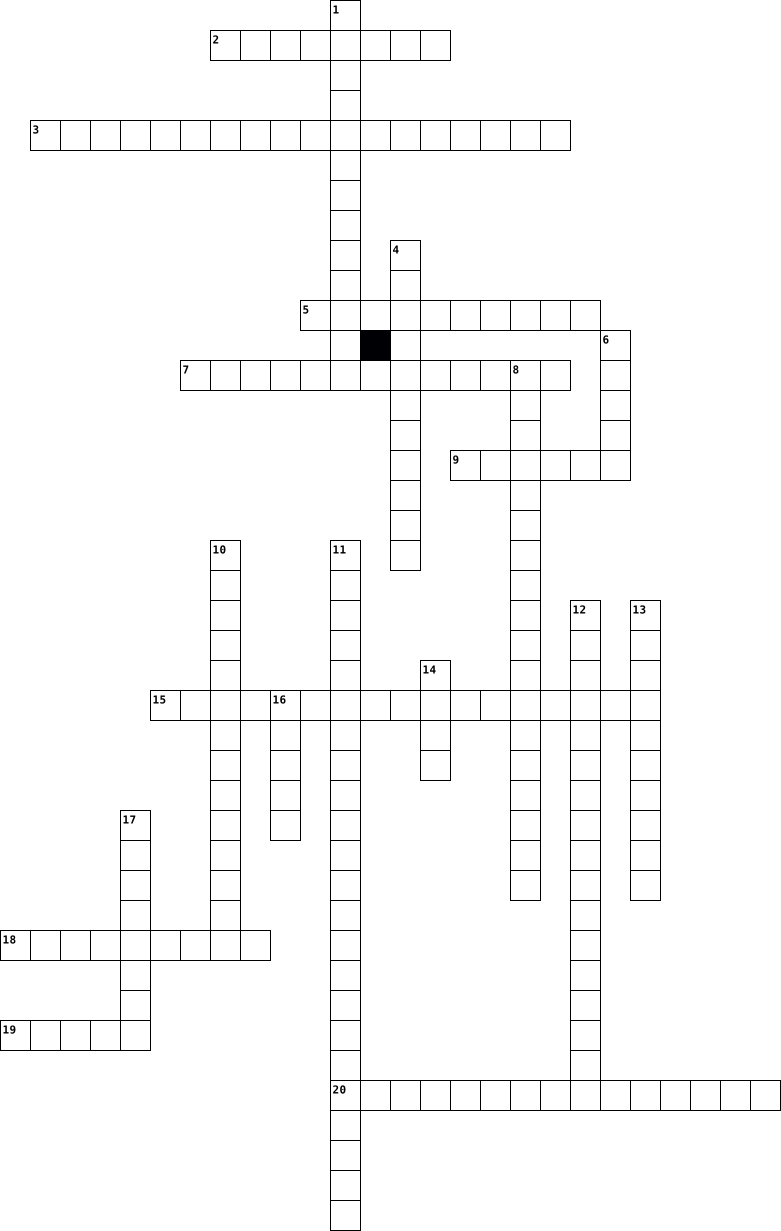
Across
- the nearly circular path a smaller object (like the Moon) travels around a larger object (like Earth).
- the amount of time it takes for a planet to complete one orbit around a star or stars
- an object, diagram, or computer program that helps us understand something by making it simpler or easier to see
- the border between light and dark on the Moon
- a rocky sphere that travels around a planet
- a moon phase that looks like less than a half-circle from Earth
- a moon phase in which the Moon is not visible from Earth
- to shine light on an object and make it visible
- the shape of the illuminated part of the Moon as it appears from Earth
- a planet outside our solar system
Down
- a moon phase that looks like a half-circle from Earth
- a moon phase that looks like more than half a circle from Earth
- the sun, the planets that orbit the sun, and other objects that orbit the sun
- a moon phase that looks like a full circle from Earth
- something we observe to be similar over and over again
- the relative size of things
- a moon outside our solar system
- star that is the main source of light at the center of our solar system
- when the Moon is completely dark
19 Clues: the relative size of things • a moon outside our solar system • when the Moon is completely dark • a planet outside our solar system • a rocky sphere that travels around a planet • the border between light and dark on the Moon • to shine light on an object and make it visible • a moon phase that looks like a half-circle from Earth • ...
Earth Moon and Sun Unit Vocab 2025-03-10

Across
- A Moon phase that looks like a full circle from Earth
- The Sun,the planters that orbits the sun,and other objects that orbit the sun
- Something we observe to be similar over and over again
- The border between light and dark on the moon
- A Moon phase that looks like more than half a circle from Earth
- A planet outside our solar system
- A moon phase that looks like less than half a circle from Earth
Down
- To shine light on and object and make it visible
- A Moon outside our solar system
- The relative size of things
- When the Moon is completely dark
- An object,diagram,or computer program that helps us understand something by making it simpler or easier to see
- A Moon phase that looks like a half-circle from Earth
- The star that is the main source of light at the center of our solar system
- The amount of time it takes for a planet to complete one orbit around a star or stars
- The nearly circular path a smaller object (like the Moon) travels around a larger object (like Earth)
- The shape of the illuminated part of the Moon as it appears from Earth
- A rocky sphere that travels around a planet
- A Moon phase in which the Moon is not visible from Earth
19 Clues: The relative size of things • A Moon outside our solar system • When the Moon is completely dark • A planet outside our solar system • A rocky sphere that travels around a planet • The border between light and dark on the moon • To shine light on and object and make it visible • A Moon phase that looks like a full circle from Earth • ...
Earth, Moon and Sun 2025-03-11

Across
- a moon phase that looks like a full circle from earth
- the nearly circular path a smaller object (like the moon) travels around a larger object (like earth)
- the amount of time it takes for a planet to complete one orbit around a star or stars.
- a sphere that travels around a planet
- the relative size of things
- something we observe to be similar over and over again
- a moon phase that looks like more than a half circle from earth
- an object,diagram or computer program that helps us understand something by making simpler or easier to see
- the shape of the illuminated part of the moon as it appears from the earth
- a planet outside our solar system
- a moon phase that looks like less than half a circle from earth
Down
- the sun, planets that orbit the sun and other objects that orbit the sun
- a moon phase that looks like a half a circle from earth
- the border between light and dark on the moon.
- when the moon is completely dark
- to shine light on an object and make it visible
- a moon outside our solar system
- the star that is the main source of light at the center of our universe
- a moon phase that in which the moon is not visible from earth
19 Clues: the relative size of things • a moon outside our solar system • when the moon is completely dark • a planet outside our solar system • a sphere that travels around a planet • the border between light and dark on the moon. • to shine light on an object and make it visible • a moon phase that looks like a full circle from earth • ...
Earth, Moon, and Sun Vocab 2024-02-02

Across
- A planet outside our solar system.
- The amount of time it takes for a planet to complete one orbit around a star or stars.
- A moon phase that looks like a half-circle from Earth.
- A moon phase that looks like more than half a circle from Earth.
- To shine on an object and make it visible.
- The relative size of things.
- Something we observe to be similar over and over again.
- The nearly circular path a smaller object (like the moon) travels around a larger object (like Earth)
- A moon phase that looks like a full circle from Earth.
- When the Moon is completely dark.
- The shape of the illuminated part of the Moon as it appears from Earth.
- A rocky sphere that travels around a planet.
Down
- A moon outside our solar system.
- The border between light and dark on the moon.
- The star that is the main source of light at the center of our solar system.
- A moon phase that looks like less than half a circle from Earth.
- An object, diagram, or computer program that helps us understand something by making it simpler or easier to see.
- The sun, the planets that orbit the sun, and other objects that orbit that orbit the sun.
- A moon phase in which the Moon is not visible from Earth.
19 Clues: The relative size of things. • A moon outside our solar system. • When the Moon is completely dark. • A planet outside our solar system. • To shine on an object and make it visible. • A rocky sphere that travels around a planet. • The border between light and dark on the moon. • A moon phase that looks like a half-circle from Earth. • ...
Plate Tectonics 2021-04-01

Across
- Two continental plates collide together
- The thinnest layer of the earth
- Where two oceanic crust start to diverge
- Where one plate goes under the other one
- The floor of the ocean
- One plate subducts under the other one
- Two plates sliding past each other
- The solid outer section of the earth which includes the crust
Down
- The biggest layer of the earth
- Two plates spread apart
- The second largest layer of the earth
- The middle of the earth
- Two plates colliding together
- The floor of the continents
- The solid part of the upper mantle
- Two continental plates are diverging apart
16 Clues: The floor of the ocean • Two plates spread apart • The middle of the earth • The floor of the continents • Two plates colliding together • The biggest layer of the earth • The thinnest layer of the earth • The solid part of the upper mantle • Two plates sliding past each other • The second largest layer of the earth • One plate subducts under the other one • ...
Seasons Practice 2026-02-20

Across
- “_______ directions”
- Another name for an orbit
- The shape of a planetary orbit
- The centerline through an object
- An imaginary line that divides the Earth into two hemispheres
- Liquids and solids formed from the air
- Happens every March and September
- The scientist who discovered laws of planetary motion
- The northern or southern half of Earth.
- Written during the year without summer
- Air and gases surrounding Earth
- Imaginary horizontal lines that tell you how far north or south you are
Down
- Long term atmospheric conditions
- A repeating pattern of changing weather
- This star helps prove that Earth is tilted at an angle.
- Approaching at an angle other than 90 degrees
- Earth does this every 24 hours
- The longest and shortest day of the year
- The northern and southern tips of the planet
- Short term atmospheric conditions
- Imaginary vertical lines that tell you how far east or west you are
- When a planet is closest to the star it orbits.
22 Clues: “_______ directions” • Another name for an orbit • The shape of a planetary orbit • Earth does this every 24 hours • Air and gases surrounding Earth • Long term atmospheric conditions • The centerline through an object • Short term atmospheric conditions • Happens every March and September • Liquids and solids formed from the air • Written during the year without summer • ...
Introducing the Sun-Earth-Moon System 2022-09-27

Across
- imaginary rotation line of Earth
- about one fourth the diameter of Earth
- the moon revolves around this planet
- the widest point across the equator
- 108 Earths can fit across its diameter
- the organization of our solar system
- gather light so we can see dim objects
- receive electromagnetic waves
Down
- time it takes for Earth to rotate once
- Identify elements on stars using light
- ground-based robots
- one revolution of the moon around Earth
- one revolution of Earth around the sun
- Earth's journey around the sun
- man-made ones orbit other planets
15 Clues: ground-based robots • receive electromagnetic waves • Earth's journey around the sun • imaginary rotation line of Earth • man-made ones orbit other planets • the widest point across the equator • the moon revolves around this planet • the organization of our solar system • time it takes for Earth to rotate once • Identify elements on stars using light • ...
Y7 Revision Crossword 2023-10-26

Across
- What tide occurs when a location moves through Earth’s tidal bulges?
- What is the term used to describe the moon becoming more lit up by the sun during the lunar cycle?
- What tide occurs when the Earth, Moon and Sun are in a straight line?
- What is the shape of Earth’s orbit around the sun?
- What type of Solar eclipse can be seen inside the Umbra?
- What is the name of the lunar phase when the moon appears to be in half shadow, with the light side on the right?
- What phenomenon is caused by the moon and sun affecting the waters of Earth?
- What is the name of the lunar phase when the moon appears to be in complete shadow?
- What force is generated by the Moon and Sun to pull the waters of Earth?
- What occurs every 4 years to realign our calendar with the position of the Earth around the sun?
- Name for movement of the Earth from West to East?
- What is the term used to describe the moon apparently becoming more covered in shadow during the lunar cycle?
- What is the name of the lunar phase when the moon appears to be completely lit up?
Down
- What season occurs after Summer?
- What is the name of the lunar phase when the moon appears to be in half shadow, with the light side on the left?
- What season occurs in the Southern Hemisphere when it is tilted away from the sun?
- What is the name of the area with intense shadow during an eclipse?
- Name for movement of the Earth around the Sun?
- What tide occurs when a location moves away from Earth’s tidal bulges?
- What type of Solar eclipse can be seen inside the Penumbra?
- What is the term for a moon that is only partly visible to us on Earth during the lunar cycle?
- What season occurs in the Southern Hemisphere when it is tilted towards the sun?
- What type of eclipse occurs when the Earth moves between the Moon and the Sun?
- What tide occurs when the Moon and Sun pull on Earth’s waters at right angles to one another?
- How many tidal bulges form on Earth because of the Moon’s gravity?
- What type of eclipse occurs when the moon moves between the Earth and the Sun?
- What season occurs after Winter?
- What is the term for a moon that is nearly all visible to us on Earth during the lunar cycle?
- What type of assessment do you have this term?
29 Clues: What season occurs after Summer? • What season occurs after Winter? • Name for movement of the Earth around the Sun? • What type of assessment do you have this term? • Name for movement of the Earth from West to East? • What is the shape of Earth’s orbit around the sun? • What type of Solar eclipse can be seen inside the Umbra? • ...
Earth-Space Ch 3 2022-08-19

Across
- Atoms with a different number of electrons and protons.
- Outer part of the Earth.
- Earth spinning on its axis
- Middle layer of the Earth.
- Outermost layer of the sun.
- Center of an atom.
- Smallest particle of an element.
- Half of a sphere.
- Line that divides the Earth into north and south hemispheres.
Down
- Earth's movement around the sun.
- Imaginary line that runs from the North to South Poles.
- Innermost layer of the Earth.
- Solid upper mantle material so hot it can flow.
- Time it takes for a planet to rotate once on its axis
- The crust and the upper mantle.
- Periods of equal days and nights.
- Substance that physical objects are made of.
- Slabs of the Earth's lithosphere that can shift.
18 Clues: Half of a sphere. • Center of an atom. • Outer part of the Earth. • Earth spinning on its axis • Middle layer of the Earth. • Outermost layer of the sun. • Innermost layer of the Earth. • The crust and the upper mantle. • Earth's movement around the sun. • Smallest particle of an element. • Periods of equal days and nights. • Substance that physical objects are made of. • ...
EMS vocab 2025-03-11

Across
- an object, diagram, or computer program that helps us understand something by making it simple or easier to see
- the relative size of things
- moon a moon phase that looks like like a full circle from the earth
- a moon phase that looks like less that half a circle from earth
- the sun, the planets that orbits the sun, and other objects that orbits the sun
- the shape of the illuminated part of the moon as it appears from earth
- a moon phase that looks like more that half a circle from earth
- something we observe to be similar over and over again
- the nearly circular path a smaller object(like the moon) travels around a larger object(like earth)
- a moon phase in which the moon is not visable from earth
- a planet outside our solar system
Down
- when the moon is completely dark
- a rocky sphere that travels around a planet
- the border between light and dark on the moon
- to shine light on an object and make it visible
- a moon outside our solar system
- the star that is the main source of light at the center of our solar system
- a moon phase that looks like half circle from earth
- the amount of time it takes for a planet to complete one orbit around a star of stars
19 Clues: the relative size of things • a moon outside our solar system • when the moon is completely dark • a planet outside our solar system • a rocky sphere that travels around a planet • the border between light and dark on the moon • to shine light on an object and make it visible • a moon phase that looks like half circle from earth • ...
Geography & the 5 Themes of Geography Crossword Puzzle 2023-02-07

Across
- the line of 0 degrees longitude
- both human and physical characteristics of a specific location
- distance east or west of the prime meridian
- a figure on a map used to show the cardinal & intermediary directions
- how people, goods, and ideas get from one place to another
- the location of a place in relation to another place
- a large continuous mass of land
- a spherical representation of earth
- northeast, northwest, southeast, & southwest
- a collection of maps
- a large body of salt water that covers most of the Earth
Down
- latitude and longitude or street address
- north, south, east, & west
- people adapt to, modify, or depend on the environment
- the study of Earth and people
- the long term pattern of weather in a particular area
- height above sea level
- the unifying characteristics - how geographers divide the world
- distance north or south of the equator
- half of the earth
- an imaginary line that divides Earth into a northern and southern hemisphere
21 Clues: half of the earth • a collection of maps • height above sea level • north, south, east, & west • the study of Earth and people • the line of 0 degrees longitude • a large continuous mass of land • a spherical representation of earth • distance north or south of the equator • latitude and longitude or street address • distance east or west of the prime meridian • ...
weather + water 2021-03-30

Across
- when air moves in a circle
- frozen pieces of water
- water droplets
- when something is lifted
- water and snow
- thick water vapor
- 1 factor that affects the climate of a place and how far something is from the equator
- rain clouds
- the movement from materials from a place
- all the water on Earth
- low and big clouds
- the state of the atmosphere
Down
- scientists who study weather
- when water melts and goes straight to clouds
- the living part of Earth
- movement of the air
- mid-level clouds
- when water falls to Earth in various forms
- all the hard parts of Earth
- the process of laying down materials
- when water turns to water vapor
- the usual state of weather in a certain place
- when water vapor rises
- small and tiny pieces of precipitation
- how fast particles move
- high level clouds
- small particles all around the Earth
27 Clues: rain clouds • water droplets • water and snow • mid-level clouds • thick water vapor • high level clouds • low and big clouds • movement of the air • frozen pieces of water • when water vapor rises • all the water on Earth • how fast particles move • the living part of Earth • when something is lifted • when air moves in a circle • all the hard parts of Earth • the state of the atmosphere • ...
Planets of the Solar System 2024-02-14

Across
- mix of dust and ice that leave trails as they pass by
- the four outer planets are called _____ giants
- the 4 inner planets are
- What is in between Mars and Jupiter?
- hottest planet in the solar system
- has an earth sized rocky core
- smallest planet in the solar system
- chunks of rock smaller than a meter that usually burn up
- takes 84 years to orbit the sun
- sun centered model of the solar system
- Our Yellow dwarf star
Down
- pattern or group or stars that represent an object
- half the size of earth
- 5th planet from the sun
- time in minutes it take light to reach earth from the sun
- earth centered model of the solar system
- body that orbits a planet
- has 7 visible rings and many moons
- 70% of it's surface is covered with water
- This gas gives Neptune it's Blue color
- large round object orbiting the Sun
- oval shaped path planets take around the sun
22 Clues: Our Yellow dwarf star • half the size of earth • 5th planet from the sun • the 4 inner planets are • body that orbits a planet • has an earth sized rocky core • takes 84 years to orbit the sun • hottest planet in the solar system • has 7 visible rings and many moons • smallest planet in the solar system • large round object orbiting the Sun • What is in between Mars and Jupiter? • ...
Planet Earth Crossword Puzzle! 2020-03-17

Across
- rot or decompose through the action of bacteria and fungi
- a method of dating geological or archeological specimens by determining the relative proportions of particular radioactive isotopes present in a sample.
- Earth material is a measure of how old it actually is in years
- a term that describes time
- the gradual process of being eroded by natural forces.
- the central portion of the earth which lies below the mantle.
- the act of rotating around a center or axis.
- the outer layer of the earth's surface.
- a specific area of the earth that falls between the core and the crust.
- a prolonged period of time without rainfall.
Down
- The geologic age of a fossil organism, rock, geologic feature, or event
- the determination of the age or date of organic matter from the relative proportions
- a scientist who studies the history of life on Earth through the fossil record
- a fossil that is useful for dating and correlating the strata in which it is found.
- a layer of sedimentary rock or soil, or igneous rock that was formed at the Earth's surface
- the central like the earth revolves around.
- the specific gas that surrounds the earth.
- large areas of salt water that surround much of the earth's surface.
- the made up line around the earth that shows how far the North and South poles are.
- any preserved remains, impression, or trace of any once-living thing from a past geological age
- the process of moving around a center or axis.
21 Clues: a term that describes time • the outer layer of the earth's surface. • the specific gas that surrounds the earth. • the central like the earth revolves around. • the act of rotating around a center or axis. • a prolonged period of time without rainfall. • the process of moving around a center or axis. • the gradual process of being eroded by natural forces. • ...
6th Grade ESS Unit 8 2025-11-14

Across
- when the ocean's water level is at its lowest point during a tidal cycle
- the lunar phase when the Moon is positioned between the Earth and the Sun, making the side of the Moon facing Earth appear completely dark and invisible to us
- the term for one body orbiting another, specifically Earth's full orbit around the Sun
- the regular, repeating, curved path an object in space takes around another due to gravity
- a rotating disk of gas and dust that formed our solar system about 4.6 billion years ago
- a massive, luminous sphere of plasma held together by its own gravity that generates energy through nuclear fusion in its core
- when the visible, sunlit portion of the moon appears to get smaller each night
- a moment in Earth's orbit when one hemisphere is tilted farthest toward or away from the sun, resulting in the longest or shortest day of the year
- when the Earth's axis is not tilted toward or away from the Sun, resulting in nearly equal amounts of daylight and darkness across the planet
- a moon phase that occurs when the Earth is between the Sun and the Moon, causing the side of the Moon facing Earth to be fully illuminated by the Sun
- one of the four divisions of the year (spring, summer, fall, winter) characterized by specific weather patterns and daylight hours, caused by the Earth's axial tilt as it revolves around the sun
- when the Moon passes between the Sun and Earth, blocking the Sun's light and casting a shadow on Earth
- the time when the ocean reaches its highest level during its daily cycle
Down
- the spinning of a planet, like Earth, on its own imaginary axis, which causes day and night
- a moon phase where less than half of the visible lunar surface is illuminated
- the approximately 29.5-day period it takes for the Moon to orbit Earth and go through its phases
- a moon that is more than half illuminated but not yet full
- when the Earth passes directly between the Sun and Moon, casting a shadow on the Moon and blocking the Sun's light
- when the illuminated portion of the Moon appears to be getting larger each night, from the new moon to the full moon
- the different appearances of the Moon as it orbits Earth, caused by the changing angles at which we see the sunlit portion of its surface
- an imaginary line that runs through the center of the Earth from the North Pole to the South Pole, around which the planet rotates
- the Sun and all objects that are held in orbit around it by its gravity, including eight planets, their moons, asteroids, comets, and dwarf planets
22 Clues: a moon that is more than half illuminated but not yet full • when the ocean's water level is at its lowest point during a tidal cycle • the time when the ocean reaches its highest level during its daily cycle • a moon phase where less than half of the visible lunar surface is illuminated • ...
Wesley's Space Puzzle. 2022-04-29

Across
- the path that the earth travels around the sun.
- movement, something moving around.
- what the earth turn's on.
- a measure of distance in space.
- rotation single turn.
- relating to the heavens of skies.
- the Milky Way.
- a kind of star formation.
- the study of space.
- are small objects between Mars and Jupiter.
Down
- the turning of the earth.
- earth space and all things in it.
- has something to do with the moon.
- rocketship or spaceship.
- forms when light from the sun gets cut off.
- a meteor or an asteroid.
- shooting stars.
- telescope is something to see small objects in space.
- has to do with the sun.
19 Clues: the Milky Way. • shooting stars. • the study of space. • rotation single turn. • has to do with the sun. • rocketship or spaceship. • a meteor or an asteroid. • the turning of the earth. • what the earth turn's on. • a kind of star formation. • a measure of distance in space. • earth space and all things in it. • relating to the heavens of skies. • has something to do with the moon. • ...
Science Crossword 2022-03-08

Across
- Earth does this making us have 365 days a year
- Known as the red planet
- is a group of stars close together
- An measurement in space.
- The furthest away from sun
- Our sun is one
- The planet we live on
- The joining of separate nuclei
- The galaxy that we are in
- Jupiter Saturn Uranus Neptune in this category
- Nothing can escape not even light
Down
- The amount of light received on Earth from Star
- The amount of light received from 33 light years
- A streak rock or dust burning up
- is summer and winter
- Billion of stars together
- These are made up of mostly Ice
- Our sun and stars are formed from this
- Is the most common galaxy
- Earth Venus Mars Mercury in this category
- the outer layer of the sun
- Stars have large amounts of this
- Sometimes called North Star
- Is what our sun produces for earth
- Known as the planet with the ring
25 Clues: Our sun is one • is summer and winter • The planet we live on • Known as the red planet • An measurement in space. • Is the most common galaxy • The galaxy that we are in • Billion of stars together • The furthest away from sun • the outer layer of the sun • Sometimes called North Star • The joining of separate nuclei • These are made up of mostly Ice • A streak rock or dust burning up • ...
The Earth 2021-01-29

Across
- A type of rock that is created under intense heat
- A type of rock that is compressed and cemented
- Layer that lies between Earth's core and outer layer
- The top layer of the Earth
Down
- An unknown fact about this is that it has five layers to it
- core, The hottest layer of the Earth
- A type of rock that is created via the cooling of magma and/or lava
7 Clues: The top layer of the Earth • core, The hottest layer of the Earth • A type of rock that is compressed and cemented • A type of rock that is created under intense heat • Layer that lies between Earth's core and outer layer • An unknown fact about this is that it has five layers to it • A type of rock that is created via the cooling of magma and/or lava
The Earth 2021-01-29

Across
- A type of rock that is created under intense heat
- The hottest layer of the Earth
- Layer that lies between Earth's core and outer layer
- The top layer of the Earth
Down
- A type of rock that is compressed and cemented
- An unknown fact about this is that it has five layers to it
- A type of rock that is created via the cooling of magma and/or lava
7 Clues: The top layer of the Earth • The hottest layer of the Earth • A type of rock that is compressed and cemented • A type of rock that is created under intense heat • Layer that lies between Earth's core and outer layer • An unknown fact about this is that it has five layers to it • A type of rock that is created via the cooling of magma and/or lava
The Earth 2020-05-21

Across
- natural fuel formed from the remains of living things
- a colourless gas that can do harm to life forms
- is the innermost part of the Earth
- A building that generates electricity
Down
- the layers of gases that surround the Earth
- Outer layer of the Earth
- a zone of hot rock in the interior of the Earth located in between the outer crust and molten core
7 Clues: Outer layer of the Earth • is the innermost part of the Earth • A building that generates electricity • the layers of gases that surround the Earth • a colourless gas that can do harm to life forms • natural fuel formed from the remains of living things • a zone of hot rock in the interior of the Earth located in between the outer crust and molten core
The Earth 2024-04-04

Across
- ¿Qué animal hace un sonido de "relincho"?waterfall Type of water that falls
- frío La Antártida es el ___ lugar de la Tierra.
- ¿La Antártida es un qué?
- Una colina muy grande.
- ¿Qué sonido hace una vaca?
Down
- lugar más frío de la Tierra
- Palabra que describe el clima cuando hay viento.Hot Describe the weather when it's warm
7 Clues: Una colina muy grande. • ¿La Antártida es un qué? • ¿Qué sonido hace una vaca? • lugar más frío de la Tierra • frío La Antártida es el ___ lugar de la Tierra. • ¿Qué animal hace un sonido de "relincho"?waterfall Type of water that falls • Palabra que describe el clima cuando hay viento.Hot Describe the weather when it's warm
Science Project 1 2024-05-01

Across
- rocky, outermost layer of earth
- specific type of metal
- amount of mass or substance in a material
- the solid part of earth, including the soil and Earth's rocky center
- outer part of Earth's magnetic field
- liquid water on earth
- core Earth's dense, metallic center
- frozen water on earth
Down
- force of attraction between every object and every other object that exists because of mass
- rigid layer that includes the crust and uppermost mantle
- all living organisms on earth
- thick middle layer in the solid part of earth
- plastic, flowing layer within the mantle
- layer of gasses surrounding earth
- a shape like a ball
15 Clues: a shape like a ball • liquid water on earth • frozen water on earth • specific type of metal • all living organisms on earth • rocky, outermost layer of earth • layer of gasses surrounding earth • core Earth's dense, metallic center • outer part of Earth's magnetic field • plastic, flowing layer within the mantle • amount of mass or substance in a material • ...
ASIAN CROSSWORD 2012-07-31

Across
- was taken over by China.
- what the Earth spins on.
- vertical lines all the way across the earth.
- the biggest country in the world.
- where does sushi come from?
- countrys all the way around it.
- weather conditions.
- Asia is a.........
- the strip between the polar zone and tropical zone.
- Mueslim is a type of........
Down
- the last olypics were held there.
- horizontal lines all the way across the earth.
- the northen and sourthen........
- your only aloud to have one child here.
- the home of butter chicken.
- one straight line all the way across the face of the earth.
- the science of working on live stock.
- the subject at school on the world.
- a natural and man made map.
- what this crossword is about.
20 Clues: Asia is a......... • weather conditions. • was taken over by China. • what the Earth spins on. • the home of butter chicken. • where does sushi come from? • a natural and man made map. • Mueslim is a type of........ • what this crossword is about. • countrys all the way around it. • the northen and sourthen........ • the last olypics were held there. • ...
R Post Sience 2023-04-21

Across
- takes great pictures of space
- we live on??
- the moon is in _______ to the earth
- can be planetary or steller
- small thing that orbits a bigger thing
- sun
- holds us on earth
- amount of time it takes the iss to travel around earth
- is at the constellation of Ophiucus
- another word for weight
- NASA
Down
- donut shaped object around the sun
- molecule in oxygen
- object resistence of motion
- Gaia BH1
- in the southern constellation of Centaurus
- we are 5 _____________away from the sun
- the big dipper
- beautiful daughter of King Cepheus
- the best candy bar.is milky
- the Milky Way
- type of snowmachine
- we live on a...?
23 Clues: sun • NASA • Gaia BH1 • we live on?? • the Milky Way • the big dipper • we live on a...? • holds us on earth • molecule in oxygen • type of snowmachine • another word for weight • object resistence of motion • can be planetary or steller • the best candy bar.is milky • takes great pictures of space • donut shaped object around the sun • beautiful daughter of King Cepheus • ...
Key Terms 2020-09-23

Across
- a hypothesis that has stood the test of time and surpassed any similar ones. It’s well tested and widely accepted
- the outer layer of the Earth that includes the crust and uppermost mantle.
- expansive flat regions that are composed of deformed rock and are located in the continental interior.
- states that the members of the solar system from a large cloud consisting of dust and other matter known as the solar nebula.
- relatively narrow depressions that are produced by the bending of the oceanic crust
- a process used to make observations and generate facts in order to formulate a hypothesis.
- a deep underwater region that lies far below the continents.
- a broad and elevated feature that winds for a very long distance and consists of fractured igneous rock
- the relatively stable interiors of the continents that were generally involved in the early creating of mountains.
- a layer of the Earth that is somewhat less dense than the core
- a temporary explanation for a scientific idea. Generally used before any testing occurs.
- The solid Earth, which is found below the atmosphere and ocean at a depth of 4000 miles.
- a potion of the sea floor that lies adjacent to major landmasses
- submerged volcanic structures that can often be found organized in long and narrow chains.
- The study of the oceans that integrates a number of different sciences.
- The study of weather, climate, and the atmosphere. Focuses on a thin layer of air that surrounds the Earth
- The study of the Earth, which can be divided into physical and historical subcategories.
- a sector of weak and slowly flowing rocks that respond to an uneven distribution of heat in the Earth’s depths.
- a steep continental slope than inclines gradually. Made up of a thick set of sediment that came down from the shelf.
- the section of Earth that includes all life on earth, land and sea.
Down
- the thin, gaseous layer of air that surrounds the Earth that allows us to breathe.
- a group of interacting parts that form a whole. Just as the earth can be seen as a system, our political system or air conditioning are the same.
- a mass of water that is always moving in some form of another, and is highlighted by the world’s oceans.
- the study of Earth as a system made up of various parts that work together. It seeks to integrate the knowledge of multiple fields of study.
- areas that are found on the craton yet consist of sedimentary rocks.
- found between continental margins and oceanic ridges, and consisting of abyssal plains.
- prominent features of continents that are created as a result of plate tectonics
- a light and very thin layer of the Earth that does does not have the same thickness all the way around.
- remarkably flat features that are found across the earth and lie relatively close to sea level.
- a steep drop off that is home to the boundary between the continents and ocean basins
- System the idea that each sphere of the Earth can be studied separately, yet they all are related to each other
- The name for the group of sciences that concern our planet and the others that surround it.
- the dense inner sphere of the Earth
- The study of outer space and the universe as a whole. It can be used to trace the origins of our own environment.
- a sloping platform that is found along most coasts and extends seaward.
- Flat features that make up the deep ocean basins and often lie at the bottom of a rise
36 Clues: the dense inner sphere of the Earth • a deep underwater region that lies far below the continents. • a layer of the Earth that is somewhat less dense than the core • a potion of the sea floor that lies adjacent to major landmasses • the section of Earth that includes all life on earth, land and sea. • ...
Geography 2021-10-25
Across
- interspace of two or more things
- every place has a global address or..
- One of the halves in which earth is divided
- Indicates directions
- Tell you about the info.of the map
- a globe
- “Can you send me your….?”
- model a globe
- a map
Down
- people who make maps
- when lines form a patter
- a car in which you can travel
- East of the prime meridian 180
- the way cartographers create maps
- shows the globe in a cylinder
- show the earth centered
- Show the relationship between map measurements
- It lists and explains the color, symbols and lines
- where we live
- lines that circle the earth
20 Clues: a map • a globe • where we live • model a globe • people who make maps • Indicates directions • show the earth centered • when lines form a patter • “Can you send me your….?” • lines that circle the earth • a car in which you can travel • shows the globe in a cylinder • East of the prime meridian 180 • interspace of two or more things • the way cartographers create maps • ...
Earth, Sun, Moon. 2024-03-14

Across
- To follow a path.
- The envelope of gases surrounding the Earth or another planet.
- The laying down of sediment carried by wind flowing water, the sea, or ice.
- A system of millions or billions of stars, together with gas and dust, held together by gravitational attraction.
- The stellar object that the Earth revolves around.
- An imaginary line about which the Earth rotates.
- A burning ball of gas.
- A system of stars, planets, moons, and other objects, bound together by gravitational orbit.
- The planet we live on.
- The process of eroding or being eroded by wind, water or other natural agents.
- The lowest region of the atmosphere, extending from the Earth's surface to a height of about 3.7-6.2 miles (6-10 km), which is the lower boundary of the stratosphere.
- The Earth's only natural satellite.
- A celestial body orbiting the Earth or another planet.
- When the Moon blocks out the sun.
Down
- An imaginary line drawn around the Earth equally distant from both poles, dividing the Earth into northern and southern hemispheres and constituting the parallel of latitude 0°.
- To spin.
- The force that attracts a body toward the center of the earth, or toward another physical body having mass.
- To orbit.
- An astronomical event where the Moon moves into the Earth's shadow, causing it to darken.
- Holes made for an asteroid or meteor.
- The region of the Earth's atmosphere above the mesosphere and below the height at which that atmosphere ceases to have the properties of a continuous medium.
- The region of the Earth's atmosphere above the stratosphere and below the thermosphere.
- The part of the Earth's atmosphere which extends from the top of the troposphere to about 30 miles (50 kilometers.)
- The process of eating or being worn down by long exposure to the atmosphere.
- There are eight of these in our Solar System.
25 Clues: To spin. • To orbit. • To follow a path. • A burning ball of gas. • The planet we live on. • When the Moon blocks out the sun. • The Earth's only natural satellite. • Holes made for an asteroid or meteor. • There are eight of these in our Solar System. • An imaginary line about which the Earth rotates. • The stellar object that the Earth revolves around. • ...
Earth, Sun, Moon. 2024-02-20

Across
- To spin.
- A system of millions or billions of stars, together with gas and dust, held together by gravitational attraction.
- An imaginary line about which the Earth rotates.
- A burning ball of gas.
- The part of the earth's atmosphere which extends from the top of the troposphere to about 30 miles (50 kilometers) above the surface.
- The laying down of sediment carried by wind, flowing water, the sea or ice.
- The region of the earth's atmosphere above the stratosphere and below the thermosphere.
- The planet we live on.
- An imaginary line drawn around the earth equally distant from both poles, dividing the earth into northern and southern hemispheres and constituting the parallel of latitude 0°.
- There are eight of these in our Solar System.
- The lowest region of the atmosphere, extending from the earth's surface to a height of about 3.7–6.2 miles (6–10 km), which is the lower boundary of the stratosphere.
- An astronomical event where the Moon moves into Earth's shadow, causing it to darken.
- A celestial body orbiting the earth or another planet.
Down
- A system of stars, planets, moons, and other objects, bound together by gravitational orbit.
- The envelope of gases surrounding the earth or another planet.
- The force that attracts a body toward the center of the earth, or toward any other physical body having mass.
- The process of wearing or being worn by long exposure to the atmosphere.
- Holes made by an asteroid or meteor.
- To orbit.
- The process of eroding or being eroded by wind, water, or other natural agents.
- When the Moon blocks out the Sun.
- The region of the atmosphere above the mesosphere and below the height at which the atmosphere ceases to have the properties of a continuous medium.
- Earth's only natural satellite.
- To follow a path.
- The stellar object that the Earth revolves around
25 Clues: To spin. • To orbit. • To follow a path. • A burning ball of gas. • The planet we live on. • Earth's only natural satellite. • When the Moon blocks out the Sun. • Holes made by an asteroid or meteor. • There are eight of these in our Solar System. • An imaginary line about which the Earth rotates. • The stellar object that the Earth revolves around • ...
Earth, Moon, and Sun 2021-02-02

Across
- a moon phase that looks like a half-circle from Earth
- an object, diagram, or computer program that helps us understand something by making it simpler or easier to see
- to shine light on an object and make it visible
- the sun, the planets that orbit the sun, and other objects that orbit the sun
- the border between light and dark on the Moon
- phase, the shape of the illuminated part of the Moon as it appears from Earth
- a moon phase that looks like a full circle from Earth
- moon, a moon phase that looks like more than half a circle from Earth
- the nearly circular path a smaller object (like the Moon) travels around a larger object (like Earth).
- the star that is the main source of light at the center of our solar system
- something we observe to be similar over and over again
- the amount of time it takes for a planet to complete one orbit around a star or stars
Down
- a planet outside our solar system
- a moon phase that looks like less than half a circle from Earth
- a rocky sphere that travels around a planet
- when the Moon is completely dark
- the relative size of things
- a moon outside our solar system
- a moon phase in which the Moon is not visible from Earth
19 Clues: the relative size of things • a moon outside our solar system • when the Moon is completely dark • a planet outside our solar system • a rocky sphere that travels around a planet • the border between light and dark on the Moon • to shine light on an object and make it visible • a moon phase that looks like a half-circle from Earth • ...
Earth, Moon, and Sun. 2021-02-02

Across
- the border between light and dark on the Moon
- an object, diagram, or computer program that helps us understand something by making it simpler or easier to see
- the sun, the planets that orbit the sun, and other objects that orbit the sun
- the relative size of things
- moon: a moon phase that looks like more than half a circle from Earth
- when the Moon is completely dark
- a rocky sphere that travels around a planet
- a moon phase in which the Moon is not visible from Earth
- the nearly circular path a smaller object (like the Moon) travels around a larger object (like Earth).
- a planet outside our solar system
- the amount of time it takes for a planet to complete one orbit around a star or stars
Down
- a moon phase that looks like a half-circle from Earth
- a moon phase that looks like less than half a circle from Earth
- a moon phase that looks like a full circle from Earth
- to shine light on an object and make it visible
- a moon outside our solar system
- something we observe to be similar over and over again
- the star that is the main source of light at the center of our solar system
- the shape of the illuminated part of the Moon as it appears from Earth
19 Clues: the relative size of things • a moon outside our solar system • when the Moon is completely dark • a planet outside our solar system • a rocky sphere that travels around a planet • the border between light and dark on the Moon • to shine light on an object and make it visible • a moon phase that looks like a half-circle from Earth • ...
Earth, Moon and Sun 2021-01-29

Across
- eclipse: when the Moon is completely dark
- the border between light and dark on the Moon
- moon: a moon phase that looks like more than half a circle from Earth
- the relative size of things
- an object, diagram, or computer program that helps us understand something by making it simpler or easier to see
- a rocky sphere that travels around a planet
- phase: the shape of the illuminated part of the Moon as it appears from Earth
- a planet outside our solar system
- moon: a moon phase that looks like a half-circle from Earth
- system: the sun, the planets that orbit the sun, and other objects that orbit the sun
Down
- the star that is the main source of light at the center of our solar system
- the nearly circular path a smaller object (like the Moon) travels around a larger object (like Earth).
- moon: a moon phase that looks like less than half a circle from Earth
- the amount of time it takes for a planet to complete one orbit around a star or stars
- moon: a moon phase in which the Moon is not visible from Earth
- to shine light on an object and make it visible
- a moon outside our solar system
- something we observe to be similar over and over again
- moon: a moon phase that looks like a full circle from Earth
19 Clues: the relative size of things • a moon outside our solar system • a planet outside our solar system • eclipse: when the Moon is completely dark • a rocky sphere that travels around a planet • the border between light and dark on the Moon • to shine light on an object and make it visible • something we observe to be similar over and over again • ...
vocabulary 2024-02-02

Across
- a moon phase that looks like less than half a circle from earth
- a planet outside our solar system
- a moon phase that looks like a full circle from earth
- the relative size of things
- the nearly circular path a smaller object (like the moon) travels around a larger object (like earth)
- the amount of time it takes for a planet to complete one orbit around a star or stars
- the sun, the planets that orbit the sun, and other objects that orbit the sun
- to shine light on an object and make it visible
- a moon phase in which the moonis not visible from earth
- a moon phase that looks like more than half of a circle from earth
Down
- an object, diagram, or computer program that helps us understand something by making it simpler or easier to see
- something we observe to be simular over and over again
- eclipse when the moon is completely dark
- a moon outside our solar system
- the shape of the illuminated part of the moon as it appears from earth
- a moon phase that looks like half-circle from earth
- the border between light and dark on the moon
- the star that is the main source of light at the center of our solar system
- a rocky sphere that travels around a planet
19 Clues: the relative size of things • a moon outside our solar system • a planet outside our solar system • eclipse when the moon is completely dark • a rocky sphere that travels around a planet • the border between light and dark on the moon • to shine light on an object and make it visible • a moon phase that looks like half-circle from earth • ...
vocab 2024-02-06

Across
- the shape of the illuminated part of the moon as it appears from earth
- a moon outside our solar system
- a moon phase that looks like less than half a circle from earth
- when the moon is completely dark
- to shine light on a object and make it visible
- the amount of time it takes for a planet to complete one orbit around a star or other stars
- an object, diagram, or computer program that helps us understand something by making it simpler or easier to see
- the sun, the planets that orbit the sun, and other objects that orbit the sun
- a moon phase in which the moon is not visible from earth
Down
- the border between light and dark on the moon
- a rocky sphere that travels around a planet
- a planet outside our solar system
- a moon phase that looks like a half circle from earth
- a moon phase that looks like a full circle from earth
- a moon phase that looks like more than half a circle from earth
- something we observe to be similar over and over again
- the nearly circular path a smaller object (like the moon) travels around a larger object (like earth)
- the relative size of things
- the star that is the main source of light at the center of our solar system
19 Clues: the relative size of things • a moon outside our solar system • when the moon is completely dark • a planet outside our solar system • a rocky sphere that travels around a planet • the border between light and dark on the moon • to shine light on a object and make it visible • a moon phase that looks like a half circle from earth • ...
Earth, Moon, and Sun 2023-02-10

Across
- a moon outside our solar system
- an object, diagram, or computer program that helps us understand something by making it simpler or easier to see
- a moon phase that looks like a half-circle from Earth
- the relative size of things
- to shine light on an object and make it visible
- a moon phase that looks like more than half a circle from Earth
- a planet outside our solar system
- a moon phase that looks like less than half a circle from Earth
- something we observe to be similar over and over again
Down
- the shape of the illuminated part of the Moon as it appears from Earth
- the sun, the planets that orbit the sun, and other objects that orbit the sun
- a moon phase in which the Moon is not visible from Earth
- the boarder between light and dark on the moon
- a moon phase that looks like a full circle from Earth
- when the Moon is completely dark
- the star that is the main source of light at the center of our solar system
- the nearly circular path a smaller object (like the Moon) travels around a larger object (like Earth)
- a rocky sphere that travels around a planet
- the amount of time it takes for a planet to complete one orbit around a star or stars
19 Clues: the relative size of things • a moon outside our solar system • when the Moon is completely dark • a planet outside our solar system • a rocky sphere that travels around a planet • the boarder between light and dark on the moon • to shine light on an object and make it visible • a moon phase that looks like a half-circle from Earth • ...
Earth, Moon, and Sun Vocabulary 2022-12-12

Across
- a moon phase that looks like more than half a circle from Earth
- when the Moon is completely dark
- the border between light and dark on the Moon
- the shape of the illuminated part of the Moon as it appears from Earth
- a moon phase that looks like a half-circle from Earth
- the star that is the main source of light at the center of our solar system
- a moon phase that looks like less than half a circle from Earth
- a planet outside our solar system
Down
- a rocky sphere that travels around a planet
- to shine light on an object and make it visible
- the amount of time it takes for a planet to complete one orbit around a star or stars
- the nearly circular path a smaller object (like the Moon) travels around a larger object (like Earth)
- the sun, the planets that orbit the sun, and other objects that orbit the sun
- something we observe to be similar over and over again
- a moon phase that looks like a full circle from Earth
- a moon outside our solar system
- an object, diagram, or computer program that helps us understand something by making it simpler or easier to see
- the relative size of things
- a moon phase in which the Moon is not visible from Earth
19 Clues: the relative size of things • a moon outside our solar system • when the Moon is completely dark • a planet outside our solar system • a rocky sphere that travels around a planet • the border between light and dark on the Moon • to shine light on an object and make it visible • a moon phase that looks like a full circle from Earth • ...
Earth, Moon, and Sun Glossary 2025-03-13

Across
- Eclipse, when the Moon is completely dark
- The relative size of things
- An object diagram or computer program that helps us understand something by making it simpler or easier to see
- A planet outside our solar system
- Moon, A Moon phase that looks like more than half a circle from earth
- The border between light and dark on the Moon
- To shine light on an object and make it visible
- Something we observe to be similar over and over again
Down
- The amount of time it takes for a planet to complete one orbit around a star or stars
- Moon, A Moon phase that looks like a full circle from earth
- A Moon outside our solar system
- System, The sun the planets that orbit the sun and other objects that orbit the sun
- Moon, A moon phase that looks like less than half a circle from earth
- Moon, A Moon phase that looks like a half-circle from earth
- The star that is the main source of light at the center of our solar system
- The nearly circular path a small object like the Moon travels around a larger object like earth
- Phase, The shape of the illuminated part of the Moon As it appears from Earth
- A rockey sphere that travels around a planet
- Moon, A moon phase in which the Moon is not visible from earth
19 Clues: The relative size of things • A Moon outside our solar system • A planet outside our solar system • Eclipse, when the Moon is completely dark • A rockey sphere that travels around a planet • The border between light and dark on the Moon • To shine light on an object and make it visible • Something we observe to be similar over and over again • ...
Earth, Moon, And Sun 2021-02-02

Across
- the border between light and dark on the Moon
- moon: a moon phase that looks like more than half a circle from Earth
- phase: the shape of the illuminated part of the Moon as it appears from Earth
- when the Moon is completely dark
- something we observe to be similar over and over again
- a moon phase that looks like a full circle from Earth
- the nearly circular path a smaller object (like the Moon) travels around a larger object (like Earth).
- the star that is the main source of light at the center of our solar system
Down
- a moon phase in which the Moon is not visible from Earth
- a planet outside our solar system
- a moon phase that looks like a half-circle from Earth
- a moon outside our solar system
- a moon phase that looks like less than half a circle from Earth
- the amount of time it takes for a planet to complete one orbit around a star or stars
- to shine a light on an object and make it visible
- the relative size of things
- an object, diagram, or computer program that helps us understand something by making it simpler or easier to see
- a rocky sphere that travels around a planet
- system: the sun, the planets that orbit the sun, and other objects that orbit the sun
19 Clues: the relative size of things • a moon outside our solar system • when the Moon is completely dark • a planet outside our solar system • a rocky sphere that travels around a planet • the border between light and dark on the Moon • to shine a light on an object and make it visible • a moon phase that looks like a half-circle from Earth • ...
Earth,Moon and Sun 2021-02-02

Across
- the star that is the main source of light at the center of our solar system
- a planet outside our solar system
- moon: a moon phase that looks like more than half a circle from Earth
- the sun, the planets that orbit the sun, and other objects that orbit the sun
- to shine light on an object and make it visible
- an object, diagram, or computer program that helps us understand something by making it simpler or easier to see
- the nearly circular path a smaller object (like the Moon) travels around a larger object (like Earth).
- the amount of time it takes for a planet to complete one orbit around a star or stars
- something we observe to be similar over and over again
- a moon phase in which the Moon is not visible from Earth
- phase: the shape of the illuminated part of the Moon as it appears from Earth
Down
- when the Moon is completely dark
- a moon outside our solar system
- a moon phase that looks like less than half a circle from Earth
- the relative size of things
- a moon phase that looks like a half-circle from Earth
- a moon phase that looks like a full circle from Earth
- the border between light and dark on the Moon
- a rocky sphere that travels around a planet
19 Clues: the relative size of things • a moon outside our solar system • when the Moon is completely dark • a planet outside our solar system • a rocky sphere that travels around a planet • the border between light and dark on the Moon • to shine light on an object and make it visible • a moon phase that looks like a half-circle from Earth • ...
Earth, Moon, And Sun 2021-02-02

Across
- the amount of time it takes for a planet to complete one orbit around a star or stars
- a moon outside our solar system
- the border between light and dark on the Moon
- a moon phase that looks like less than half a circle from Earth
- moon: a moon phase that looks like more than half a circle from Earth
- to shine a light on an object and make it visible
- phase: the shape of the illuminated part of the Moon as it appears from Earth
- a moon phase that looks like a full circle from Earth
- a planet outside our solar system
- the star that is the main source of light at the center of our solar system
- an object, diagram, or computer program that helps us understand something by making it simpler or easier to see
Down
- the relative size of things
- a moon phase that looks like a half-circle from Earth
- something we observe to be similar over and over again
- when the Moon is completely dark
- a rocky sphere that travels around a planet
- the nearly circular path a smaller object (like the Moon) travels around a larger object (like Earth).
- a moon phase in which the Moon is not visible from Earth
- system: the sun, the planets that orbit the sun, and other objects that orbit the sun
19 Clues: the relative size of things • a moon outside our solar system • when the Moon is completely dark • a planet outside our solar system • a rocky sphere that travels around a planet • the border between light and dark on the Moon • to shine a light on an object and make it visible • a moon phase that looks like a half-circle from Earth • ...
Earth, Moon, and Sun 2021-02-02

Across
- the border between light and dark on the Moon
- a moon phase that looks like less than half a circle from Earth
- a moon phase that looks like a full circle from Earth
- a rocky sphere that travels around a planet
- a planet outside our solar system
- a moon phase in which the Moon is not visible from Earth
- the relative size of things
- something we observe to be similar over and over again
- the sun, the planets that orbit the sun, and other objects that orbit the sun
Down
- a moon outside our solar system
- the amount of time it takes for a planet to complete one orbit around a star or stars
- the nearly circular path a smaller object (like the Moon) travels around a larger object (like Earth).
- a moon phase that looks like a half-circle from Earth
- when the Moon is completely dark
- moon, a moon phase that looks like more than half a circle from Earth
- to shine light on an object and make it visible
- the star that is the main source of light at the center of our solar system
- phase, the shape of the illuminated part of the Moon as it appears from Earth
- an object, diagram, or computer program that helps us understand something by making it simpler or easier to see
19 Clues: the relative size of things • a moon outside our solar system • when the Moon is completely dark • a planet outside our solar system • a rocky sphere that travels around a planet • the border between light and dark on the Moon • to shine light on an object and make it visible • a moon phase that looks like a half-circle from Earth • ...
Earth, Moon, and Sun 2021-02-02

Across
- something we observe to be similar over and over again
- moon, a moon phase that looks like more than half a circle from Earth
- a moon phase that looks like a full circle from Earth
- a rocky sphere that travels around a planet
- when the Moon is completely dark
- the nearly circular path a smaller object (like the Moon) travels around a larger object (like Earth).
- the border between light and dark on the Moon
- the sun, the planets that orbit the sun, and other objects that orbit the sun
- phase, the shape of the illuminated part of the Moon as it appears from Earth
- to shine light on an object and make it visible
Down
- an object, diagram, or computer program that helps us understand something by making it simpler or easier to see
- a moon phase that looks like less than half a circle from Earth
- a moon outside our solar system
- the relative size of things
- the star that is the main source of light at the center of our solar system
- a moon phase in which the Moon is not visible from Earth
- a moon phase that looks like a half-circle from Earth
- the amount of time it takes for a planet to complete one orbit around a star or stars
- a planet outside our solar system
19 Clues: the relative size of things • a moon outside our solar system • when the Moon is completely dark • a planet outside our solar system • a rocky sphere that travels around a planet • the border between light and dark on the Moon • to shine light on an object and make it visible • a moon phase that looks like a full circle from Earth • ...
Earth, Moon, and Sun. 2021-02-02

Across
- the border between light and dark on the Moon
- the amount of time it takes for a planet to complete one orbit around a star or stars
- a moon phase in which the Moon is not visible from Earth
- the relative size of things
- an object, diagram, or computer program that helps us understand something by making it simpler or easier to see
- a moon phase that looks like a full circle from Earth
- a moon outside our solar system
- the star that is the main source of light at the center of our solar system
- the nearly circular path a smaller object (like the Moon) travels around a larger object (like Earth).
- moon phase that looks like less than half a circle from Earth
- the shape of the illuminated part of the Moon as it appears from Earth
Down
- a moon phase that looks like more than half a circle from Earth
- a planet outside our solar system
- something we observe to be similar over and over again
- the sun, the planets that orbit the sun, and other objects that orbit the sun
- a rocky sphere that travels around a planet
- shine light on an object and make it visible
- the Moon is completely dark
- a moon phase that looks like a half-circle from Earth
19 Clues: the relative size of things • the Moon is completely dark • a moon outside our solar system • a planet outside our solar system • a rocky sphere that travels around a planet • shine light on an object and make it visible • the border between light and dark on the Moon • a moon phase that looks like a full circle from Earth • ...
Earth, Moon, and Sun Vocab 2024-02-02

Across
- A planet outside our solar system.
- The amount of time it takes for a planet to complete one orbit around a star or stars.
- A moon phase that looks like a half-circle from Earth.
- A moon phase that looks like more than half a circle from Earth.
- To shine on an object and make it visible.
- The relative size of things.
- Something we observe to be similar over and over again.
- The nearly circular path a smaller object (like the moon) travels around a larger object (like Earth)
- A moon phase that looks like a full circle from Earth.
- When the Moon is completely dark.
- The shape of the illuminated part of the Moon as it appears from Earth.
- A rocky sphere that travels around a planet.
Down
- A moon outside our solar system.
- The border between light and dark on the moon.
- The star that is the main source of light at the center of our solar system.
- A moon phase that looks like less than half a circle from Earth.
- An object, diagram, or computer program that helps us understand something by making it simpler or easier to see.
- The sun, the planets that orbit the sun, and other objects that orbit that orbit the sun.
- A moon phase in which the Moon is not visible from Earth.
19 Clues: The relative size of things. • A moon outside our solar system. • When the Moon is completely dark. • A planet outside our solar system. • To shine on an object and make it visible. • A rocky sphere that travels around a planet. • The border between light and dark on the moon. • A moon phase that looks like a half-circle from Earth. • ...
Earth Moon And Sun Vocab 2024-02-02

Across
- the shape of the illuminated part of the moon as it appears from earth
- a moon outside our solar system
- a moon phase that looks like less than a half a circle from earth
- when the moon is completely dark
- to shine light on an object and make it visible
- the amount of time it takes for a planet to complete one orbit around a star or stars
- an object, diagram, or computer program that helps us understand something by making it simpler or easier to see
- the sun, the planets that orbit the sun, and other objects that orbit the sun
- a moon phase in which the moon is not visible from earth
Down
- the border between light and dark on the moon
- a rocky sphere that travels around a planet
- a planet outside our solar system
- a moon phase that looks like a half-circle from earth
- a moon phase that looks like a full circle from earth
- a moon phase that looks like more than half a circle from earth
- something we observe to be similar over and over again
- the nearly circular path a smaller object (like the moon) travels around a larger object (like earth)
- the relative size of things
- the star that is the main source of light at the center of our solar system
19 Clues: the relative size of things • a moon outside our solar system • when the moon is completely dark • a planet outside our solar system • a rocky sphere that travels around a planet • the border between light and dark on the moon • to shine light on an object and make it visible • a moon phase that looks like a half-circle from earth • ...
Earth,Moon and sun vocab 2024-02-02

Across
- the border between light and dark on the moon
- a moon phase that looks like a half-circle from earth
- the relative size of things
- the star that is the main source of light at the center of our solar system
- a moon phase that looks like more than half a circle from earth
- a planet outside our solar system
- a moon outside our solar system
- when the moon is completely dark
- a rocky sphere that travels around a planet
Down
- to shine light on a object and make it visable
- the shape of the illumanated part of the moon as it appears from earth
- a moon phase that looks like less than half a circle from earth
- the sun, the planets that orbit the sun, and other objects that orbit the sun
- an object, diagram, or computer progranm that helps us understand something by making it simpler or easier to see
- a moon phase in which the moon is not visible from earth
- the nearly circular path a smaller object travels around a larger object i.e the moon and earth
- a moon phase that looks like a full circle from earth
- something we observe to be similar over and over again
- the amount of time it takes for a planet to complete one orbit around a star or stars
19 Clues: the relative size of things • a moon outside our solar system • when the moon is completely dark • a planet outside our solar system • a rocky sphere that travels around a planet • the border between light and dark on the moon • to shine light on a object and make it visable • a moon phase that looks like a half-circle from earth • ...
Earth, Moon, Sun 2024-02-02

Across
- the shape of the illuminated part of the Moon as it appears from Earth
- a moon outside our solar system
- a moon phase that looks like less than half a circle from Earth
- when the Moon is completely dark
- to shine light on an object and make it visible
- the amount of time it takes for a planet to complete one orbit around a star or stars
- an object, diagram, or computer program that helps us understand something by making it simpler or easier to see
- the sun, the planets that orbit the sun, and other objects that orbit the sun
- a moon phase in which the Moon is not visible from Earth
Down
- the border between light and dark on the Moon
- a rocky sphere that travels around a planet
- a planet outside our solar system
- a moon phase that looks like a half-circle from Earth
- a moon phase that looks like a full circle from Earth
- a moon phase that looks like more than half a circle from Earth
- something we observe to be similar over and over again
- the nearly circular path a smaller object (like the moon) travels around a larger object (like Earth)
- the relative size of things
- the star that is the main source of light at the center of our solar system
19 Clues: the relative size of things • a moon outside our solar system • when the Moon is completely dark • a planet outside our solar system • a rocky sphere that travels around a planet • the border between light and dark on the Moon • to shine light on an object and make it visible • a moon phase that looks like a half-circle from Earth • ...
vocab 2024-02-06

Across
- the shape of the illuminated part of the moon as it appears from earth
- a moon outside our solar system
- a moon phase that looks like less than half a circle from earth
- when the moon is completely dark
- to shine light on a object and make it visible
- the amount of time it takes for a planet to complete one orbit around a star or other stars
- an object, diagram, or computer program that helps us understand something by making it simpler or easier to see
- the sun, the planets that orbit the sun, and other objects that orbit the sun
- a moon phase in which the moon is not visible from earth
Down
- the border between light and dark on the moon
- a rocky sphere that travels around a planet
- a planet outside our solar system
- a moon phase that looks like a half circle from earth
- a moon phase that looks like a full circle from earth
- a moon phase that looks like more than half a circle from earth
- something we observe to be similar over and over again
- the nearly circular path a smaller object (like the moon) travels around a larger object (like earth)
- the relative size of things
- the star that is the main source of light at the center of our solar system
19 Clues: the relative size of things • a moon outside our solar system • when the moon is completely dark • a planet outside our solar system • a rocky sphere that travels around a planet • the border between light and dark on the moon • to shine light on a object and make it visible • a moon phase that looks like a half circle from earth • ...
8th Unit 5 Crossword #3 2025-11-07

Across
- the relative size of things
- a moon phase that looks like more than half a circle from Earth
- something we observe to be similar over and over again
- an object, diagram, or computer program that helps us understand something by making it simpler or easier to see
- a moon phase in which the Moon is not visible from Earth
- when the Moon is completely dark
- the amount of time it takes for a planet to complete one orbit around a star or stars
- a planet outside our solar system
- a moon phase that looks like a half-circle from Earth
- a moon phase that looks like a full circle from Earth
- the sun, the planets that orbit the sun, and other objects that orbit the sun
Down
- to shine light on an object and make it visible
- a rocky sphere that travels around a planet
- the nearly circular path a smaller object (like the Moon) travels around a larger object (like Earth)
- the shape of the illuminated part of the Moon as it appears from Earth
- a moon phase that looks like less than half a circle from Earth
- the star that is the main source of light at the center of our solar system
- a moon outside our solar system
- the border between light and dark on the Moon
19 Clues: the relative size of things • a moon outside our solar system • when the Moon is completely dark • a planet outside our solar system • a rocky sphere that travels around a planet • the border between light and dark on the Moon • to shine light on an object and make it visible • a moon phase that looks like a half-circle from Earth • ...
Earth, Moon and Sun Crossword 2025-03-10

Across
- The relative size of things
- A Moon phase that looks like less than a half a circle from Earth
- A Moon phase that looks like a full circle from Earth
- An object, diagram,or computer program that helps us understand something by making it simpler or easier to see
- A moon phase that looks like a half-circle from Earth
- A planet outside our solar system
- A Moon phase that looks like more than half a circle from Earth
- The amount of time it takes for a planet to complete one orbit around a star or stars
Down
- The shape of the illuminated part of the moon as it appears from Earth
- The border between light and dark on the Moon
- Something we observe to be similar over and over again
- A Moon outside our solar system
- The star that is the main source of light at the center of our solar system
- To shine light on an object and make it visible
- A rocky sphere that travels around a planet
- When the moon is completely dark
- The nearly circular path a smaller object (like the moon) travels around a larger object(like Earth)
- A moon phase in which the moon is not visible form Earth
- The Sun, the planets that orbit the sun, and other objects that orbit the sun
19 Clues: The relative size of things • When the moon is completely dark • A Moon outside our solar system • A planet outside our solar system • A rocky sphere that travels around a planet • The border between light and dark on the Moon • To shine light on an object and make it visible • A Moon phase that looks like a full circle from Earth • ...
Earth moon science vocabs 2025-03-11

Across
- The amount of time it takes for a planet to complete one orbit around a star or stars
- The nearly circular path a smaller object like the moon travels around a larger object like earth
- An object, diagram or computer that helps us understand something by making it simpler or easier to see
- A planet outside of our solar system
- A moon phase that looks like a full circle from earth
- A rocky sphere that travels around planet
- a moon phase that looks like a half circle from earth
- the star that is the main source of light at the center of our solar system
- The shape of the illuminated part of the moon as it appears from earth
- When the moon is completely dark
- A moon phase that looks less than half a circle from earth
Down
- A moon outside out solar system
- Something we observe to be similar over and over again
- To shine light on an object and make it visible
- the relative size of things
- the sun. the planets that orbit the sun, and other objects that orbit the sun
- the border between light and dark on the moon
- A moon phase that looks like more than half a circle from earth
- A moon phase in which the moon is not visible from earth
19 Clues: the relative size of things • A moon outside out solar system • When the moon is completely dark • A planet outside of our solar system • A rocky sphere that travels around planet • the border between light and dark on the moon • To shine light on an object and make it visible • A moon phase that looks like a full circle from earth • ...
Earth Moon and Sun 2025-03-10

Across
- the shape of the illuminated part of the Moon as it appears from Earth
- a moon outside our solar system
- a moon phase that looks like less than half a circle from Earth
- when the Moon is completely dark
- to shine light on an object and make it visible
- the amount of time it takes for a planet to complete one orbit around a start or stars
- an object, diagram, or computer program that helps us understand something by making it simpler or easier to see
- the sun, the planets that orbit the sun, and other objects that orbit the sun
- a moon phase in which the Moon is not visible from Earth
Down
- the border between light and dark on the Moon
- a rocky sphere that travels around a planet
- a planet outside our solar system
- a moon phase that looks like a half-circle from Earth
- a moon phase that looks like a full circle from Earth
- a moon phase that looks like more than half a circle from Earth
- something we observe to be similar over and over again
- the nearly circular path a smaller object (like the Moon) travels around a larger object (like Earth)
- the relative size of things
- the star that is the main source of light at the center of our solar system
19 Clues: the relative size of things • a moon outside our solar system • when the Moon is completely dark • a planet outside our solar system • a rocky sphere that travels around a planet • the border between light and dark on the Moon • to shine light on an object and make it visible • a moon phase that looks like a half-circle from Earth • ...
Trackers of Dynamic Earth 2019-03-11

Across
- an instrument that records earth tremors.
- molten rock underground.
- the layer of Earth between the crust and the core where magma is formed.
- a scientist who studies volcanoes.
- the outer layer of Earth.
- a tremor that occurs after the main earthquake.
- a tiny coral animal.
Down
- a scientist who studies the movement of Earth.
- the place on the surface that is directly above the starting point of an earthquake.
- the supercontinent that existed 200 million years ago, and contained all of today's continents in one land mass.
- magma that reaches the surface of Earth.
- the scientific study of Earth.
- sticky, gooey, thick.
- the layer of Earth at the center.
- a part of an organism from a past geological age, found in Earth's crust.
15 Clues: a tiny coral animal. • sticky, gooey, thick. • molten rock underground. • the outer layer of Earth. • the scientific study of Earth. • the layer of Earth at the center. • a scientist who studies volcanoes. • magma that reaches the surface of Earth. • an instrument that records earth tremors. • a scientist who studies the movement of Earth. • ...
Earth Science Final Project 2024-12-13

Across
- Particles of Earth that get moved around a lot, it isn't simply called "dirt"
- A type of igneous rock that is formed outside the Earth
- The uppermost layer of the Earth
- The second layer of Earth mostly made of solid rock
- A type of rock that is made up of sediments that are cemented
- A type of plate boundary that has the plates slide past each other
- A type of plate boundary that has the plates move apart from each other
- When particles are moved/dropped into a new location like water or wind
- A type of weathering that involves forces like water to break rocks down
Down
- The middle of the Earth made of solid iron and nickel due to the intense pressure surrounding it
- A type of rock that is formed by intense heat and pressure
- A type of igneous rock that is formed inside the Earth
- Made of molten iron and nickel as the third layer of Earth
- A type of plate boundary that has the plates move towards each other
- The breaking down of rock into sediments
- The shaking of plates as they either split, converge or slide
- A type of rock that is formed by volcanic activity
- The movement or transport of sediment
- A slowly moving mass or river made of ice formed by compacted snow
- A type of weathering that involves chemicals like acid rain to change the rock chemically and can no longer return to normal
20 Clues: The uppermost layer of the Earth • The movement or transport of sediment • The breaking down of rock into sediments • A type of rock that is formed by volcanic activity • The second layer of Earth mostly made of solid rock • A type of igneous rock that is formed inside the Earth • A type of igneous rock that is formed outside the Earth • ...
Earth, Sun, and Moon 2024-01-22

Across
- Half lit on the left side, dark on the right.
- Light starting on the right; only a little sliver of the moon is visible from Earth.
- March 20th or 21st in the Northern Hemisphere, when both hemispheres receive 12 hours of daylight and 12 hours of darkness.
- Occurs when the New Moon passes directly between the Sun and Earth and casts a shadow over part of Earth.
- Sources of illumination in a solar system.
- Occurs when the path of light on an object is blocked by another object either between the light source and the object or between the object and the observer.
- The slant of Earth's axis, 23.5 degrees, causing the North Pole to always point toward the North Star. The reason for the seasons.
- A predictable pattern of reflected light from the Sun on the Moon, as seen on Earth.
- Moon is starting to get darker. It is slightly dark on the right side, mostly lit on the left.
- The spinning of Earth on its axis.
- A curved path followed by a satellite as it revolves around an object.
- Lit crescent on the left side, dark on the right.
- Direct light in the Northern Hemisphere, warmest season.
- Moon phase when the entire side facing Earth is illuminated, the phase in which a lunar eclipse could occur.
- The outer layer of the sun's atmosphere.
- Almost all of the moon is lit up from the right to the left, except a small bit on the left.
Down
- Caused by the tilt of Earth on its axis as it revolves around the Sun causing varied amounts of sunlight on Earth; divides our year into quarters.
- The day with the least hours of sunlight and the most hours of darkness. December 21st.
- A force of attraction between objects that is due to their masses.
- The day with the most hours of sunlight and the fewest hours of darkness. June 21st.
- Half lit on the right side, dark on the left.
- Indirect light in the Northern Hemisphere, coldest season.
- The imaginary line through Earth that extends from the North Pole to the South Pole and is the center of Earth's rotation.
- All of the solar systems and every object they contain.
- September 22 in the Northern Hemisphere, when both hemispheres receive 12 hours of daylight and 12 hours of darkness.
- Star made of hydrogen and helium
- Occurs at a full moon when Earth is directly between the moon and the sun.
- Dark moon phase that occurs when the Moon is between Earth and the Sun. When a solar eclipse could happen.
- A celestial body that revolves around a planet.
29 Clues: Star made of hydrogen and helium • The spinning of Earth on its axis. • The outer layer of the sun's atmosphere. • Sources of illumination in a solar system. • Half lit on the left side, dark on the right. • Half lit on the right side, dark on the left. • A celestial body that revolves around a planet. • Lit crescent on the left side, dark on the right. • ...
Earth & Space - 6th Grade 2024-12-09

Across
- When the moon is shaped like a "C"
- Path an object takes around another object
- Part of core that is solid
- Molten rock
- To spin around
- Ice, snow, water, & rocks
- All the land masses on Earth
- Mixture of gases
- Outer surface
- All of the life on Earth
- Line that divides the Earth in half
Down
- All of the water on Earth
- Mainly made up of molten rock
- Shrinking
- Includes crust and part of mantle
- Growing
- Rising and falling of ocean water
- Includes soft flowing portion
- Part of core that is liquid
19 Clues: Growing • Shrinking • Molten rock • Outer surface • To spin around • Mixture of gases • All of the life on Earth • All of the water on Earth • Ice, snow, water, & rocks • Part of core that is solid • Part of core that is liquid • All the land masses on Earth • Mainly made up of molten rock • Includes soft flowing portion • Includes crust and part of mantle • Rising and falling of ocean water • ...
Earth, Moon, and Sun 2021-01-29

Across
- eclipse: when the Moon is completely dark
- the border between light and dark on the Moon
- moon: a moon phase that looks like more than half a circle from Earth
- the relative size of things
- an object, diagram, or computer program that helps us understand something by making it simpler or easier to see
- a rocky sphere that travels around a planet
- phase: the shape of the illuminated part of the Moon as it appears from Earth
- a planet outside our solar system
- moon: a moon phase that looks like a half-circle from Earth
- system: the sun, the planets that orbit the sun, and other objects that orbit the sun
Down
- the star that is the main source of light at the center of our solar system
- the nearly circular path a smaller object (like the Moon) travels around a larger object (like Earth).
- moon: a moon phase that looks like less than half a circle from Earth
- the amount of time it takes for a planet to complete one orbit around a star or stars
- moon: a moon phase in which the Moon is not visible from Earth
- to shine light on an object and make it visible
- a moon outside our solar system
- something we observe to be similar over and over again
- moon: a moon phase that looks like a full circle from Earth
19 Clues: the relative size of things • a moon outside our solar system • a planet outside our solar system • eclipse: when the Moon is completely dark • a rocky sphere that travels around a planet • the border between light and dark on the Moon • to shine light on an object and make it visible • something we observe to be similar over and over again • ...
Earth, Moon, and Sun 2021-02-02

Across
- a planet outside our solar system
- the amount of time it takes for a planet to complete one orbit around a star or stars
- a moon phase that looks like a half-circle from Earth
- a moon phase that looks like more than half a circle from Earth
- to shine light on an object and make it visible
- the relative size of things
- something we observe to be similar over and over again
- the nearly circular path a smaller object (like the Moon) travels around a larger object (like Earth).
- a moon phase that looks like a full circle from Earth
- when the Moon is completely dark
- the shape of the illuminated part of the Moon as it appears from Earth
- a rocky sphere that travels around a planet
Down
- a moon outside our solar system
- the border between light and dark on the Moon
- the star that is the main source of light at the center of our solar system
- a moon phase that looks like less than half a circle from Earth
- an object, diagram, or computer program that helps us understand something by making it simpler or easier to see
- the sun, the planets that orbit the sun, and other objects that orbit the sun
- a moon phase in which the Moon is not visible from Earth
19 Clues: the relative size of things • a moon outside our solar system • when the Moon is completely dark • a planet outside our solar system • a rocky sphere that travels around a planet • the border between light and dark on the Moon • to shine light on an object and make it visible • a moon phase that looks like a half-circle from Earth • ...
Earth, Moon, and Sun 2021-02-02

Across
- to shine light on an object and make it visible
- phase: the shape of the illuminated part of the Moon as it appears from Earth
- the sun, the planets that orbit the sun, and other objects that orbit the sun
- a moon phase that looks like a half-circle from Earth
- a rocky sphere that travels around a planet
- the border between light and dark on the Moon
- when the Moon is completely dark
- a moon phase that looks like a full circle from Earth
- a moon phase that looks like less than half a circle from Earth
- something we observe to be similar over and over again
Down
- moon: a moon phase that looks like more than half a circle from Earth
- an object, diagram, or computer program that helps us understand something by making it simpler or easier to see
- a moon phase in which the Moon is not visible from Earth
- the amount of time it takes for a planet to complete one orbit around a star or stars
- the nearly circular path a smaller object (like the Moon) travels around a larger object (like Earth).
- a planet outside our solar system
- the relative size of things
- a moon outside our solar system
- the star that is the main source of light at the center of our solar system
19 Clues: the relative size of things • a moon outside our solar system • when the Moon is completely dark • a planet outside our solar system • a rocky sphere that travels around a planet • the border between light and dark on the Moon • to shine light on an object and make it visible • a moon phase that looks like a half-circle from Earth • ...
uh oh mr well 2021-02-02

Across
- to shine light on an object and make it visible
- a rocky sphere that travels around a planet
- something we observe to be similar over and over again
- an object, diagram, or computer program that helps us understand something by making it simpler or easier to see
- the relative size of things
- a moon phase that looks like less than half a circle from Earth
- the sun, the planets that orbit the sun, and other objects that orbit the sun
- a moon phase that looks like a full circle from Earth
- a moon phase in which the Moon is not visible from Earth
- moon: a moon phase that looks like more than half a circle from Earth
- a moon phase that looks like a half-circle from Earth
Down
- when the Moon is completely dark
- a moon outside our solar system
- the star that is the main source of light at the center of our solar system
- the border between light and dark on the Moon
- the amount of time it takes for a planet to complete one orbit around a star or stars
- a planet outside our solar system
- the nearly circular path a smaller object (like the Moon) travels around a larger object (like Earth).
- phase: the shape of the illuminated part of the Moon as it appears from Earth
19 Clues: the relative size of things • a moon outside our solar system • when the Moon is completely dark • a planet outside our solar system • a rocky sphere that travels around a planet • the border between light and dark on the Moon • to shine light on an object and make it visible • a moon phase that looks like a full circle from Earth • ...
Earth, Moon, and Sun 2021-02-02

Across
- something we observe to be similar over and over again
- the border between light and dark on the Moon
- to shine light on an object and make it visible
- a rocky sphere that travels around a planet
- moon a moon phase that looks like more than half a circle from Earth
- a moon phase that looks like less than half a circle from Earth
- a planet outside our solar system
- the amount of time it takes for a planet to complete one orbit around a star or stars
Down
- when the Moon is completely dark
- a moon phase that looks like a half-circle from Earth
- a moon phase that looks like a full circle from Earth
- a moon phase in which the Moon is not visible from Earth
- the star that is the main source of light at the center of our solar system
- the sun, the planets that orbit the sun, and other objects that orbit the sun
- the shape of the illuminated part of the Moon as it appears from Earth
- an object, diagram, or computer program that helps us understand something by making it simpler or easier to see
- a moon outside our solar system
- the relative size of things
- the nearly circular path a smaller object (like the Moon) travels around a larger object (like Earth).
19 Clues: the relative size of things • a moon outside our solar system • when the Moon is completely dark • a planet outside our solar system • a rocky sphere that travels around a planet • the border between light and dark on the Moon • to shine light on an object and make it visible • a moon phase that looks like a half-circle from Earth • ...
Earth, Moon, and Sun 2021-02-02

Across
- something we observe to be similar over and over again
- the border between light and dark on the Moon
- to shine light on an object and make it visible
- a rocky sphere that travels around a planet
- moon a moon phase that looks like more than half a circle from Earth
- a moon phase that looks like less than half a circle from Earth
- a planet outside our solar system
- the amount of time it takes for a planet to complete one orbit around a star or stars
Down
- when the Moon is completely dark
- a moon phase that looks like a half-circle from Earth
- a moon phase that looks like a full circle from Earth
- a moon phase in which the Moon is not visible from Earth
- the star that is the main source of light at the center of our solar system
- the sun, the planets that orbit the sun, and other objects that orbit the sun
- the shape of the illuminated part of the Moon as it appears from Earth
- an object, diagram, or computer program that helps us understand something by making it simpler or easier to see
- a moon outside our solar system
- the relative size of things
- the nearly circular path a smaller object (like the Moon) travels around a larger object (like Earth).
19 Clues: the relative size of things • a moon outside our solar system • when the Moon is completely dark • a planet outside our solar system • a rocky sphere that travels around a planet • the border between light and dark on the Moon • to shine light on an object and make it visible • a moon phase that looks like a half-circle from Earth • ...
moon, earth, sun 2024-02-02

Across
- an object, diagram, or computer program that helps us understand something by making it simpler or easier to see
- a rocky sphere that travels around a planet
- a planet outside our solar system
- the amount of time it takes for a planet to complete one orbit around a star or stars
- a moon phase that looks like more than a half a circle from Earth
- the relative size of things
- to shine a light on an object and make it visible
- a moon phase that looks like a half-circle from Earth
- the nearly circular path a smaller object(like the moon)travels around a larger object(like Earth)
- a moon phase that looks less than half circle from Earth
- a moon phase in which the moon is not visible from Earth
Down
- the border between light and dark on the Moon
- a moon outside our solar system
- a moon phase that looks like a full circle from Earth
- the shape of the illuminated part of the moon as it appears from Earth
- the sun, the planets that orbit the sun, and other objects that orbit the sun
- when the moon is completely dark
- something we observe to be similar over and over again
- the star that is the main source of light at the center of our solar system
19 Clues: the relative size of things • a moon outside our solar system • when the moon is completely dark • a planet outside our solar system • a rocky sphere that travels around a planet • the border between light and dark on the Moon • to shine a light on an object and make it visible • a moon phase that looks like a full circle from Earth • ...
The Earth's Sphere 2025-12-02

Across
- The geosphere is also known as ______.
- The _______ is made up of all the frozen water in the Earth.
- We live in this sphere.
- The Earth is 97% of ______.
- The Earth system is made of ______ and living things.
- Takes place most of the
Down
- The Earth system can be divided into five main parts, or _____.
- The _____is the part of Earth that is liquid water.cryosphere The _____ is made up of all of the frozen water on Earth.
- The Earth _____ is all of the matter, energy, and processes within Earth's boundary.
- The thinnest layer of the Earth, earthquakes take place here.
- center layer of the Earth, it is very hot here.
- The ______ contains the air we breathe.
- The middle layer of the Earth, rocks melt here.
13 Clues: We live in this sphere. • Takes place most of the • The Earth is 97% of ______. • The geosphere is also known as ______. • The ______ contains the air we breathe. • center layer of the Earth, it is very hot here. • The middle layer of the Earth, rocks melt here. • The Earth system is made of ______ and living things. • ...
Total Geo Review 2025-09-11

Across
- where a place is in relation to other places, using landmarks, directions, or distances (for example, “Kansas is west of Missouri”)
- Where a place is found on Earth.
- The branch of geography dealing with natural features and processes
- A system that uses satellites to show your exact location on Earth.
- How people change and adapt to their surroundings.
- The imaginary line at 0° latitude that divides the Earth into Northern and Southern Hemispheres.
- the precise point where a place is found on Earth, often given using coordinates of latitude and longitude.
- The branch of geography dealing with how human activity affects or is influenced by the earth
- Maps that show highways, roads, and cities for travel.
- Maps that show natural features like mountains, rivers, and deserts.
Down
- Maps that show countries, states, and borders.
- The physical and human features that make a location unique.
- Imaginary lines that run north–south on a map and measure distance east or west of the Prime Meridian.
- A navigation tool that shows direction (North, South, East, West).
- a structure, monument, or place that was built or created by people and is easily recognized, important, or historically significant.
- The imaginary line at 0° longitude that divides the Earth into Eastern and Western Hemispheres.
- The way people, goods, and ideas travel from place to place.
- Imaginary lines that run east–west on a map and measure distance north or south of the Equator.
- A naturally occurring part of the Earth's surface. They are shaped over millions of years by natural forces like wind, water, and shifting tectonic plates.
- An area that has common features, like climate, culture, or geography.
- A book of maps.
- The study of Earth and it's features.
- A flat representation of Earth.
23 Clues: A book of maps. • A flat representation of Earth. • Where a place is found on Earth. • The study of Earth and it's features. • Maps that show countries, states, and borders. • How people change and adapt to their surroundings. • Maps that show highways, roads, and cities for travel. • The physical and human features that make a location unique. • ...
Plate Tectonics, Earthquakes and Volcanoes 2024-02-22

Across
- a theory explaining the structure of the earth's crust
- the amount of earths layers
- where plates move apart
- the only liquid layer of earth
- second layer of earth
- what the inner core is mostly made of
- whats along the pacific ocean
- the amount of locations you need marked for an earthquake
- mixture of molten and semi-molten rock
Down
- convergent, divergent, and transform
- third layer of earth
- openings, or vents where lava, tephra (small rocks) and steam erupt onto the Earth's surface
- outermost layer of earth
- hot plumes rise upward, forming volcanoes on the overlying crust
- where plates move sideways in relation to each other
- where plates move into one another
- small rocks
- what happens when two blocks of the earth suddenly slip past one another
- powdery residue left after the burning of a substance
19 Clues: small rocks • third layer of earth • second layer of earth • where plates move apart • outermost layer of earth • the amount of earths layers • whats along the pacific ocean • the only liquid layer of earth • where plates move into one another • convergent, divergent, and transform • what the inner core is mostly made of • mixture of molten and semi-molten rock • ...
My Singing Monsters 2023-08-11

Across
- Plant, Water
- Air, Water, Fire
- Earth, Fire
- Plant, Earth, Fire
- Cold, Water
- Cold, Fire
- Air, Water, Earth
- Plant, Fire
- Plant, Water, Earth
- Air, Water
- Plant, Cold
- Plant, Cold, Water
- Plant, Cold, Earth
- Cold, Air, Earth
- Plant
- Earth
- Fire
- Plant, Air, Earth
- Cold, Water, Earth
- Plant, Air, Fire
- Cold, Air
- Cold
Down
- Plant, Air
- Water, Fire
- Cold, Water, Fire
- Cold, Air, Fire
- Water
- Air
- Plant, Earth
- Plant, Air, Water
- Cold, Air, Water
- Air, Fire
- Water, Earth
- Cold, Earth
- Water, Earth, Fire
- Plant, Cold, Fire
- Plant, Water, Fire
- Air, Earth, Fire
- Cold, Earth, Fire
- Air, Earth
- Plant, Cold, Air
41 Clues: Air • Fire • Cold • Water • Plant • Earth • Air, Fire • Cold, Air • Plant, Air • Cold, Fire • Air, Water • Air, Earth • Water, Fire • Earth, Fire • Cold, Water • Plant, Fire • Cold, Earth • Plant, Cold • Plant, Water • Plant, Earth • Water, Earth • Cold, Air, Fire • Air, Water, Fire • Cold, Air, Water • Air, Earth, Fire • Cold, Air, Earth • Plant, Cold, Air • Plant, Air, Fire • Cold, Water, Fire • Air, Water, Earth • Plant, Air, Water • ...
Planet Earth Crossword Puzzle! 2020-03-17

Across
- rot or decompose through the action of bacteria and fungi
- a method of dating geological or archeological specimens by determining the relative proportions of particular radioactive isotopes present in a sample.
- Earth material is a measure of how old it actually is in years
- a term that describes time
- the gradual process of being eroded by natural forces.
- the central portion of the earth which lies below the mantle.
- the act of rotating around a center or axis.
- the outer layer of the earth's surface.
- a specific area of the earth that falls between the core and the crust.
- a prolonged period of time without rainfall.
Down
- The geologic age of a fossil organism, rock, geologic feature, or event
- the determination of the age or date of organic matter from the relative proportions
- a scientist who studies the history of life on Earth through the fossil record
- a fossil that is useful for dating and correlating the strata in which it is found.
- a layer of sedimentary rock or soil, or igneous rock that was formed at the Earth's surface
- the central like the earth revolves around.
- the specific gas that surrounds the earth.
- large areas of salt water that surround much of the earth's surface.
- the made up line around the earth that shows how far the North and South poles are.
- any preserved remains, impression, or trace of any once-living thing from a past geological age
- the process of moving around a center or axis.
21 Clues: a term that describes time • the outer layer of the earth's surface. • the specific gas that surrounds the earth. • the central like the earth revolves around. • the act of rotating around a center or axis. • a prolonged period of time without rainfall. • the process of moving around a center or axis. • the gradual process of being eroded by natural forces. • ...
Planet Earth Crossword Puzzle! 2020-03-17

Across
- rot or decompose through the action of bacteria and fungi
- a method of dating geological or archeological specimens by determining the relative proportions of particular radioactive isotopes present in a sample.
- Earth material is a measure of how old it actually is in years
- a term that describes time
- the gradual process of being eroded by natural forces.
- the central portion of the earth which lies below the mantle.
- the act of rotating around a center or axis.
- the outer layer of the earth's surface.
- a specific area of the earth that falls between the core and the crust.
- a prolonged period of time without rainfall.
Down
- The geologic age of a fossil organism, rock, geologic feature, or event
- the determination of the age or date of organic matter from the relative proportions
- a scientist who studies the history of life on Earth through the fossil record
- a fossil that is useful for dating and correlating the strata in which it is found.
- a layer of sedimentary rock or soil, or igneous rock that was formed at the Earth's surface
- the central like the earth revolves around.
- the specific gas that surrounds the earth.
- large areas of salt water that surround much of the earth's surface.
- the made up line around the earth that shows how far the North and South poles are.
- any preserved remains, impression, or trace of any once-living thing from a past geological age
- the process of moving around a center or axis.
21 Clues: a term that describes time • the outer layer of the earth's surface. • the specific gas that surrounds the earth. • the central like the earth revolves around. • the act of rotating around a center or axis. • a prolonged period of time without rainfall. • the process of moving around a center or axis. • the gradual process of being eroded by natural forces. • ...
Planets and Space Crossword 2014-10-25
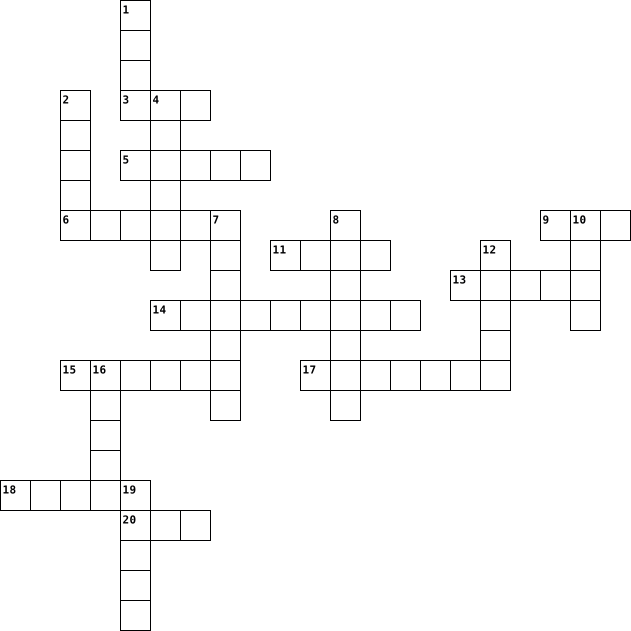
Across
- Yellow star in the middle of our Solar System
- This planet takes 365 days to orbit the sun
- Planet has rings you can see with a telescope
- How many moons does the Earth have?
- Color of Uranus and Neptune
- Moon controls these on Earth
- Metal body that orbits the Earth
- Man discovered that gravity keep the planets in orbit around the Sun
- Closest planet to the Sun
- Planet that is no longer a part of our Solar System
- Color of the spot on Jupiter
Down
- This planet is known as the 'Red Planet'
- Hottest planet in our solar system
- This planet spins on its side
- Last planet in our Solar System
- Largest planet in our Solar system
- Abbreviation for the American space company
- Way Our Solar System is part of this Galaxy
- How many planets are there in our Solar System?
- The Earth takes 365 days to do this around the sun
20 Clues: Closest planet to the Sun • Color of Uranus and Neptune • Moon controls these on Earth • Color of the spot on Jupiter • This planet spins on its side • Last planet in our Solar System • Metal body that orbits the Earth • Hottest planet in our solar system • Largest planet in our Solar system • How many moons does the Earth have? • This planet is known as the 'Red Planet' • ...
Restless Earth 2022-11-17

Across
- When unstable elements break down. Is responsible for the heat produced by the Earth core. (2 words)
- Middle to lower mantle
- A physical layer that consists of the crust and upper mantle.
- Layer of gases that surround the earth.
- Earth system that includes the layers of the Earth.
- Liquid due to heat and pressure (2 words)
- Layers that are affected by temperature, pressure, composition, and rigidity.
Down
- Solid but putty. Right below the Lithosphere.
- Earth system that contains all of the life.
- Breaking down of rock.
- The building up of landforms.
- Waves created by earthquakes.
- Waves that are slower moving and cannot move through liquids.
- Layers of the Earth that have the same chemical makeup.
- Waves that can travel through solids, liquids, and gasses. Fast moving.
- Highest density and pressure of Earth's layers. (2 words)
- The carrying away of rock.
17 Clues: Breaking down of rock. • Middle to lower mantle • The carrying away of rock. • The building up of landforms. • Waves created by earthquakes. • Layer of gases that surround the earth. • Liquid due to heat and pressure (2 words) • Earth system that contains all of the life. • Solid but putty. Right below the Lithosphere. • Earth system that includes the layers of the Earth. • ...
EMS Assessment Review 2025-01-27

Across
- season Southern Hemisphere is experiencing now
- the moon and Earth both have this
- the type of sunlight Earth receives between 23.5 degrees north and south
- the equinox that begins Sept 22 or 23
- December 21
- 365 1/4 days around the sun, we celebrate a new year
- its gravitational force is so strong it forms the center of the solar system
- we are closer to this than closer to the sun
- Earth spins making day and night
Down
- the number of minutes it takes light from the sun to reach Earth
- Earth's tilt and revolution are main causes for this
- 23 and a half degrees
- two high, two low in 24 hr 50 min
- March 21
- this type of moon is about 14 after a full moon
- the strongest type of tides because the moon, sun, and Earth are aligned
- times the moon revolves around Earth
17 Clues: March 21 • December 21 • 23 and a half degrees • Earth spins making day and night • the moon and Earth both have this • two high, two low in 24 hr 50 min • times the moon revolves around Earth • the equinox that begins Sept 22 or 23 • we are closer to this than closer to the sun • season Southern Hemisphere is experiencing now • this type of moon is about 14 after a full moon • ...
Earth Science Vocab 2024-04-29

Across
- rocky, outermost layer of Earth
- force of attraction between every object and every other object that exists because of mass
- Earth’s dense, metallic center
- all living organisms on Earth
- amount of mass, or substance, in a material
- thick middle layer in the solid part of Earth
- a shape like a ball
- rigid layer that includes the crust and uppermost mantle
Down
- frozen water on Earth
- specific type of metal
- layer of glasses surrounding Earth
- plastic, flowing layer within the mantle
- outer part of Earth’s magnetic field
- liquid water on Earth
- the solid part of Earth, including the soil and Earth’s rocky center
15 Clues: a shape like a ball • frozen water on Earth • liquid water on Earth • specific type of metal • all living organisms on Earth • Earth’s dense, metallic center • rocky, outermost layer of Earth • layer of glasses surrounding Earth • outer part of Earth’s magnetic field • plastic, flowing layer within the mantle • amount of mass, or substance, in a material • ...
Science Project #1 Crossword Puzzle 2023-04-21

Across
- Earth’s dense, metallic center
- specific type of metal
- liquid water on Earth
- all living organisms on Earth
- the solid part of Earth, including the soil and Earth’s rocky center
- outer part of Earth’s magnetic field
- force of attraction between every object and every other object that exists because of mass
Down
- plastic, flowing layer within the mantle
- thick middle layer in the solid part of Earth
- rigid layer that includes the crust and uppermost mantle
- rocky, outermost layer of Earth
- amount of mass, or substance, in a material
- frozen water on Earth
- a shape like a ball
- layer of gasses surrounding Earth
15 Clues: a shape like a ball • frozen water on Earth • liquid water on Earth • specific type of metal • all living organisms on Earth • Earth’s dense, metallic center • rocky, outermost layer of Earth • layer of gasses surrounding Earth • outer part of Earth’s magnetic field • plastic, flowing layer within the mantle • amount of mass, or substance, in a material • ...
Earth Science Vocabulary 2023-04-21

Across
- Force of attraction between every object and every other object that exists because of mass
- Thick middle layer in the solid part of Earth
- Rocky, outermost layer of Earth
- Liquid water on Earth
- Layer of gases surrounding Earth
- A shape like a ball
- Plastic, flowing layer within the mantle
- Earth's dense, metallic center
- Rigid layer that includes the crust and uppermost mantle
Down
- The solid part of Earth, including the soil and Earth's rocky center
- Outer part of Earth's magnetic field
- Specific type of metal
- All living organisms on Earth
- Frozen water on Earth
- Amount of mass, or substance, in a material
15 Clues: A shape like a ball • Liquid water on Earth • Frozen water on Earth • Specific type of metal • All living organisms on Earth • Earth's dense, metallic center • Rocky, outermost layer of Earth • Layer of gases surrounding Earth • Outer part of Earth's magnetic field • Plastic, flowing layer within the mantle • Amount of mass, or substance, in a material • ...
Earth science vocab 2023-04-21

Across
- specific type of metal
- layer of gasses surrounding Earth
- frozen water on Earth
- liquid water on Earth
- Earth’s dense, metallic center
- outer part of Earth’s magnetic field
- force of attraction between every object and every other object that exists because of mass
Down
- rigid layer that includes the crust and uppermost mantle
- plastic, flowing layer within the mantle
- all living organisms on Earth
- thick middle layer in the solid part of Earth
- amount of mass, or substance, in a material
- a shape like a ball
- the solid part of Earth, including the soil and Earth’s rocky center
- rocky, outermost layer of Earth
15 Clues: a shape like a ball • frozen water on Earth • liquid water on Earth • specific type of metal • all living organisms on Earth • Earth’s dense, metallic center • rocky, outermost layer of Earth • layer of gasses surrounding Earth • outer part of Earth’s magnetic field • plastic, flowing layer within the mantle • amount of mass, or substance, in a material • ...
Earth Science Vocabulary 2023-04-25

Across
- force of attraction between every object and every other object that exists because of mass
- thick middle layer in the solid part of Earth
- rocky, outermost layer of Earth
- liquid water on Earth
- layer of gasses surrounding Earth
- a shape like a ball
- plastic, flowing layer within the mantle
- Earth’s dense, metallic center
- rigid layer that includes the crust and uppermost mantle
Down
- the solid part of Earth, including the soil and Earth’s rocky center
- outer part of Earth’s magnetic field
- specific type of metal
- all living organisms on Earth
- frozen water on Earth
- amount of mass, or substance, in a material
15 Clues: a shape like a ball • liquid water on Earth • frozen water on Earth • specific type of metal • all living organisms on Earth • Earth’s dense, metallic center • rocky, outermost layer of Earth • layer of gasses surrounding Earth • outer part of Earth’s magnetic field • plastic, flowing layer within the mantle • amount of mass, or substance, in a material • ...
Unit 3 2016-05-19

Across
- The transfer of energy through electromagnetic waves.
- Winds that blow in 30-60 degrees of latitude.
- A transfer of energy from one object to another with direct contact.
- The measure of the force with which air molecules push on an area of a surface.
- Narrow band of high speed wind that fly from west to east at 7km-16km/hr.
- The part of Earth that is liquid water.
- The transfer of energy through the movement of matter.
- All of the frozen water on Earth.
- Mostly solid, rocky part of Earth. Extends from Earth's core to its surface.
- Winds that blow in 60N-60S degrees of latitude.
Down
- Uppermost level of the atmosphere, about 2,000F.
- Between the Mesosphere and the troposphere.
- The movement of air caused by differences in air pressure.
- The lowest level of the atmosphere, very close to Earth, and contains nearly all of the atmosphere's mass.
- A mixture of mostly invisible gases that surround Earth.
- Energy transferred between two objects of different temperatures.
- The living things and the areas of Earth.
- A measure of the average kinetic energy in particles.
- Between the thermosphere and the stratosphere, around -150F.
- Any living thing that is made up of cells.
20 Clues: All of the frozen water on Earth. • The part of Earth that is liquid water. • The living things and the areas of Earth. • Any living thing that is made up of cells. • Between the Mesosphere and the troposphere. • Winds that blow in 30-60 degrees of latitude. • Winds that blow in 60N-60S degrees of latitude. • Uppermost level of the atmosphere, about 2,000F. • ...
Science 6 2026-03-02

Across
- A classification of planets that are made out of ice.
- Example is of it is Pluto.
- The Polish astronomer who proposed the model of solar system we use today.
- the smallest planet
- Red planet
- other name for inner plants
- pieces of rocks from the fragments of other planetesimals.
- Largest planet
- Shape of the moon of Mars
- The period of the year that characterized by changes in weather.
- An imaginary line that passes through the center of Earth.
- It has 16 moons including Triton
- The motion where the earth revolves around the sun
- Who propose the Geocentric Model
- Biggest planet in the inner planets
- Hottest planet
- It rotates on it's axis every 17 earth hours
- largest Object in the solar system
- The model we used for our solar system
Down
- Planets found beyond Mars.
- Keeps the planets and objects in orbit around it.
- Natural Satellite of Earth
- Cosmic snowballs of ice, rock, and gas.
- In Geocentric Model it is the Center of Solar system.
- Are inactive, rocky bodies or cratered irregular surfaces.
- The spinning of Earth on its axis
- the planets near the sun.
- Second largest planet
- A classification of planets that are made out of gas.
- a model proposed by Greek astronomer.
30 Clues: Red planet • Largest planet • Hottest planet • the smallest planet • Second largest planet • Shape of the moon of Mars • the planets near the sun. • Planets found beyond Mars. • Example is of it is Pluto. • Natural Satellite of Earth • other name for inner plants • It has 16 moons including Triton • Who propose the Geocentric Model • The spinning of Earth on its axis • ...
Unit 1 Geography Vocab 2025-08-14

Across
- the exact place where a geographic feature is found
- a place in relation to other places around it
- a representation of natural and man-made features on earth
- storms that form over warm, tropical ocean waters
- a heavy snowstorm with winds of more than 35 miles per hour
- a long period without rain or with very minimal rainfall
- each half of the globe
- imaginary lines that go around the earth over the poles
- a mapmaker
- study of the distribution and interaction of physical and human features on Earth
Down
- powerful, funnel-shaped column of spiraling air
- the imaginary line that divides the north and south halves of the earth
- the day on which the sun is at its farthest north or farthest south latitude
- when the day and night are the same length; happens twice a year
- water droplets falling in the form of rain, sleet, snow, or hail
- two-dimensional graphic representations of selected parts of the earth’s surface
- weather at a particular location over a long period of time
- imaginary lines that run parallel to the equator
- imaginary line that divides the east and west halves the earth
- the atmosphere at a particular location and time
- hurricane in Asia
- a three-dimensional representation of the earth
22 Clues: a mapmaker • hurricane in Asia • each half of the globe • a place in relation to other places around it • powerful, funnel-shaped column of spiraling air • a three-dimensional representation of the earth • imaginary lines that run parallel to the equator • the atmosphere at a particular location and time • storms that form over warm, tropical ocean waters • ...
Planet Earth Crossword Puzzle! 2020-03-17

Across
- rot or decompose through the action of bacteria and fungi
- a method of dating geological or archeological specimens by determining the relative proportions of particular radioactive isotopes present in a sample.
- Earth material is a measure of how old it actually is in years
- a term that describes time
- the gradual process of being eroded by natural forces.
- the central portion of the earth which lies below the mantle.
- the act of rotating around a center or axis.
- the outer layer of the earth's surface.
- a specific area of the earth that falls between the core and the crust.
- a prolonged period of time without rainfall.
Down
- The geologic age of a fossil organism, rock, geologic feature, or event
- the determination of the age or date of organic matter from the relative proportions
- a scientist who studies the history of life on Earth through the fossil record
- a fossil that is useful for dating and correlating the strata in which it is found.
- a layer of sedimentary rock or soil, or igneous rock that was formed at the Earth's surface
- the central like the earth revolves around.
- the specific gas that surrounds the earth.
- large areas of salt water that surround much of the earth's surface.
- the made up line around the earth that shows how far the North and South poles are.
- any preserved remains, impression, or trace of any once-living thing from a past geological age
- the process of moving around a center or axis.
21 Clues: a term that describes time • the outer layer of the earth's surface. • the specific gas that surrounds the earth. • the central like the earth revolves around. • the act of rotating around a center or axis. • a prolonged period of time without rainfall. • the process of moving around a center or axis. • the gradual process of being eroded by natural forces. • ...
Earth Science Vocabulary 2023-04-21

Across
- amount of mass, or substance, in a material
- force of attraction between every object and every other object that exists because of mass
- Earths dense, metallic center
- thick middle layer in the solid part of Earth
- liquid water of Earth
- plastic, flowing layer within the mantle
- the solid part of Earth, including the soil and Earth’s rocky center
- outer part of Earth’s magnetic field
Down
- frozen water on Earth
- rigid layer that includes the crust and uppermost mantle
- specific type of metal
- layer of gasses surrounding Earth
- rocky, outermost layer of Earth
- all living organisms on Earth
- a shape like a ball
15 Clues: a shape like a ball • frozen water on Earth • liquid water of Earth • specific type of metal • all living organisms on Earth • Earths dense, metallic center • rocky, outermost layer of Earth • layer of gasses surrounding Earth • outer part of Earth’s magnetic field • plastic, flowing layer within the mantle • amount of mass, or substance, in a material • ...
Earth's Interior 2023-04-23

Across
- specific type of metal
- amount of mass, or substance, in a material
- all living organisms on Earth
- plastic, flowing layer within the mantle
- outer part of Earth's magnetic field
- liquid water on Earth
- rocky, outermost layer of Earth
Down
- Earth's dense, metallic center
- thick middle layer in the solid part of Earth
- frozen water on Earth
- layer of gasses surrounding Earth
- a shape like a ball
- the solid part of Earth, including the soil and Earth's rocky center
- rigid layer that includes the crust and uppermost mantle
- force of attraction between every object and every other object that exists because of mass
15 Clues: a shape like a ball • frozen water on Earth • liquid water on Earth • specific type of metal • all living organisms on Earth • Earth's dense, metallic center • rocky, outermost layer of Earth • layer of gasses surrounding Earth • outer part of Earth's magnetic field • plastic, flowing layer within the mantle • amount of mass, or substance, in a material • ...
Layers of Earth 2023-05-01

Across
- rocky, outermost layer of Earth
- force of attraction between every object and every other object that exists because of mass
- Earth's dense, metallic center
- all living organisms on Earth
- amount of mass, or substance in a material
- thick middle layer in the solid part of Earth
- a shape like ball
- rigid layer that includes the crust and uppermost mantle
Down
- frozen water on Earth
- specific type of metal
- layer of gasses surrounding Earth
- plastic, flowing layer within the mantle
- outer part of Earth's magnetic field
- liquid water on Earth
- the solid part of Earth including the soil and Earth's rocky center
15 Clues: a shape like ball • frozen water on Earth • liquid water on Earth • specific type of metal • all living organisms on Earth • Earth's dense, metallic center • rocky, outermost layer of Earth • layer of gasses surrounding Earth • outer part of Earth's magnetic field • plastic, flowing layer within the mantle • amount of mass, or substance in a material • ...
Earth science vocab 2023-05-02

Across
- specific type of metal
- Earth’s dense, metallic center
- plastic, flowing layer within the mantle
- amount of mass, or substance, in a material
- frozen water on Earth
- force of attraction between every object and every other object that exists because of mass
- a shape like a ball
Down
- thick middle layer in the solid part of Earth
- outer part of Earth’s magnetic field
- the solid part of Earth, including the soil and Earth’s rocky center
- rigid layer that includes the crust and uppermost mantle
- liquid water on Earth
- all living organisms on Earth
- layer of gasses surrounding Earth
- rocky, outermost layer of Earth
15 Clues: a shape like a ball • liquid water on Earth • frozen water on Earth • specific type of metal • all living organisms on Earth • Earth’s dense, metallic center • rocky, outermost layer of Earth • layer of gasses surrounding Earth • outer part of Earth’s magnetic field • plastic, flowing layer within the mantle • amount of mass, or substance, in a material • ...
Plate Tectonics 2017-07-23

Across
- a break in a rock with movement
- concentration of heat in the mantle
- device for recording waves
- a break in a rock without movement
- outer portion of the earth
- two plates slide past
- science that study the earth
- central part of the earth
- chain of volcanoes
- denser and thin crust
- group of mountains
- less dense and thicker crust
- The outer part of the Earth consisting of the crust and upper mantle
- two plates move apart
- first type of seismic wave
- center point of the earthquake
Down
- part of the earth between the core and the the crust
- shaking of the surface of the Earth
- process or the bending of crust towards mantle
- consolidated mixture of minerals
- method uses distance to locate epicenter
- theory as resulting from the interaction of rigid lithospheric plates that move slowly
- upper layer of the earth's mantle, below the lithosphere
- central valley on an ocean floor
- geologic feature in convergent
- A long, narrow valley lying between two normal geologic faults
- two plates collide
- second type of seismic wave
- molten rock
- depression in the seafloor produced by subduction
- transfer of energy that travels through a medium
31 Clues: molten rock • chain of volcanoes • two plates collide • group of mountains • two plates slide past • denser and thin crust • two plates move apart • central part of the earth • device for recording waves • outer portion of the earth • first type of seismic wave • second type of seismic wave • science that study the earth • less dense and thicker crust • geologic feature in convergent • ...
science vocab 2024-04-27

Across
- Earth’s dense, metallic center
- liquid water on Earth
- a shape like a ball
- amount of mass, or substance, in a material
- rocky, outermost layer of Earth
- frozen water on Earth
- plastic, flowing layer within the mantle
- thick middle layer in the solid part of Earth
- specific type of metal
Down
- the solid part of Earth, including the soil and Earth’s rocky center
- rigid layer that includes the crust and uppermost mantle
- force of attraction between every object and every other object that exists because of mass
- layer of gasses surrounding Earth
- outer part of Earth’s magnetic field
- all living organisms on Earth
15 Clues: a shape like a ball • liquid water on Earth • frozen water on Earth • specific type of metal • all living organisms on Earth • Earth’s dense, metallic center • rocky, outermost layer of Earth • layer of gasses surrounding Earth • outer part of Earth’s magnetic field • plastic, flowing layer within the mantle • amount of mass, or substance, in a material • ...
Layers of Earth Vocabulary Crossword 2024-05-01

Across
- rigid layer that includes the crust and uppermost mantle.
- a specific type of metal.
- frozen water on Earth.
- thick middle layer in the solid part of Earth.
- plastic, flowing layer within the mantle.
- liquid water on Earth.
- rocky, outermost layer of Earth.
Down
- a shape like a ball.
- the solid part of Earth, including the soil an earth's rocky center.
- all living organisms on Earth.
- outer part of Earth's magnetic field.
- layer of gasses surrounding Earth.
- force of attraction between every object and every other object that exists because of mass.
- amount of mass, or substance in a material.
- Earth's dense, metallic center.
15 Clues: a shape like a ball. • frozen water on Earth. • liquid water on Earth. • a specific type of metal. • all living organisms on Earth. • Earth's dense, metallic center. • rocky, outermost layer of Earth. • layer of gasses surrounding Earth. • outer part of Earth's magnetic field. • plastic, flowing layer within the mantle. • amount of mass, or substance in a material. • ...
science project 2023-04-25

Across
- outer part of Earth’s magnetic field
- all living organisms on Earth
- amount of mass, or substance, in a material
- a shape like a ball
- rigid layer that includes the crust and uppermost mantle
- specific type of metal
- rocky, outermost layer of Earth
Down
- the solid part of Earth, including the soil and Earth’s rocky center
- layer of gasses surrounding Earth
- thick middle layer in the solid part of Earth
- liquid water on Earth
- plastic, flowing layer within the mantle
- Earth’s dense, metallic center
- frozen water on Earth
- force of attraction between every object and every other object that exists because of mass
15 Clues: a shape like a ball • liquid water on Earth • frozen water on Earth • specific type of metal • all living organisms on Earth • Earth’s dense, metallic center • rocky, outermost layer of Earth • layer of gasses surrounding Earth • outer part of Earth’s magnetic field • plastic, flowing layer within the mantle • amount of mass, or substance, in a material • ...
Earth's Layers Vocab 2023-05-02

Across
- rigid layer that includes the crust and uppermost mantle
- outer part of Earth's magnetic field
- frozen water on Earth
- all living organisms on Earth
- rocky, outermost layer of Earth
- a shape like a ball
- force of attraction between every object and every other object that exists because of mass
Down
- thick middle layer in the solid part of Earth
- Earth's dense, metallic center
- the solid part of Earth, including the soil and Earth's rocky center
- amount of mass, or substance, in a material
- liquid water on Earth
- specific type of metal
- plastic, flowing within the mantle
- layer of gasses surrounding Earth
15 Clues: a shape like a ball • liquid water on Earth • frozen water on Earth • specific type of metal • all living organisms on Earth • Earth's dense, metallic center • rocky, outermost layer of Earth • layer of gasses surrounding Earth • plastic, flowing within the mantle • outer part of Earth's magnetic field • amount of mass, or substance, in a material • ...
The Reason for the Seasons 2024-01-19

Across
- The shortest day of the year
- September 23rd
- The half of the Earth that is North of the Equator
- Earth's orbital movement around the Sun
- March 21st
Down
- Southernmost part of the Earth
- The one day of the year when the Earth is at it's maximum tilt towards the Sun
- The half of the Earth that is South of the Equator
- The Earth's _______ is the reason for the seasons
- Imaginary line Earth spins around
- Northernmost part of the Earth
- The spinning of the Earth around its axis
- Imaginary line splitting the Earth into two hemispheres
13 Clues: March 21st • September 23rd • The shortest day of the year • Southernmost part of the Earth • Northernmost part of the Earth • Imaginary line Earth spins around • Earth's orbital movement around the Sun • The spinning of the Earth around its axis • The Earth's _______ is the reason for the seasons • The half of the Earth that is South of the Equator • ...
Geography Crossword Puzzle 2015-08-27

Across
- It takes the moon about this much time to revolve around the Earth one time.
- This branch of geography studies human activities and their relationship to the environment.
- The percentage of the Earth that is water.
- This branch of geography focuses on the study of Earth's physical features.
- When a sea plate collides with and dives beneath a continental plate.
- Land makes up this region of the Earth.
- A fertile, yellow-gray soil that can provide mineral rich soil.
- Describes a place's location in relation to another place.
- Part of the continent that extends underwater.
- Study of weather and weather forecasting.
- The movement of plates in the Earth's crust.
- The theory that all the continents were once joined and have broken apart.
- A community of plants and animals that depend on one another and their surroundings for survival.
- This layer of the Earth is made of plates.
Down
- The study of humans throughout time.
- 21 percent of the atmosphere is made of this gas.
- Geographers study this to understand how the location of resources affects the ways people make, transport, and use goods and provide services.
- These systems shape the earth's surface.
- This layer of the Earth is made of hot, dense rock.
- The exact latitude and longitude at which a place is found on a globe.
- Oceans, lakes, rivers, and other bodies of water make up this part of the Earth.
- Mapmaking.
- These are formed when the layers grind or slide past each other in the Earth's crust.
- This layer of the Earth is made of iron and nickel.
- The study of groups.
- 78 percent of the atmosphere is made of this element.
- This process occurs when large masses of rock are broken down into smaller pieces.
- advanced technology geographers use to study the environment, weather, and human settlement patterns.
- The percentage of Earth that is land.
- The part of the Earth that supports life.
30 Clues: Mapmaking. • The study of groups. • The study of humans throughout time. • The percentage of Earth that is land. • Land makes up this region of the Earth. • These systems shape the earth's surface. • Study of weather and weather forecasting. • The part of the Earth that supports life. • The percentage of the Earth that is water. • This layer of the Earth is made of plates. • ...
Earth, Moon, and Sun 2021-02-01

Across
- the star that is the main source of light at the center of our solar system
- a planet outside our solar system
- moon: a moon phase that looks like more than half a circle from Earth
- the sun, the planets that orbit the sun, and other objects that orbit the sun
- to shine light on an object and make it visible
- an object, diagram, or computer program that helps us understand something by making it simpler or easier to see
- the nearly circular path a smaller object (like the Moon) travels around a larger object (like Earth).
- the amount of time it takes for a planet to complete one orbit around a star or stars
- something we observe to be similar over and over again
- a moon phase in which the Moon is not visible from Earth
- phase: the shape of the illuminated part of the Moon as it appears from Earth
Down
- when the Moon is completely dark
- a moon outside our solar system
- a moon phase that looks like less than half a circle from Earth
- the relative size of things
- a moon phase that looks like a half-circle from Earth
- a moon phase that looks like a full circle from Earth
- the border between light and dark on the Moon
- a rocky sphere that travels around a planet
19 Clues: the relative size of things • a moon outside our solar system • when the Moon is completely dark • a planet outside our solar system • a rocky sphere that travels around a planet • the border between light and dark on the Moon • to shine light on an object and make it visible • a moon phase that looks like a half-circle from Earth • ...
Earth, Moon, and Sun 2021-02-01

Across
- a planet outside our solar system
- the amount of time it takes for a planet to complete one orbit around a star or stars
- a moon phase that looks like a half-circle from Earth
- a moon phase that looks like more than half a circle from Earth
- to shine light on an object and make it visible
- the relative size of things
- something we observe to be similar over and over again
- the nearly circular path a smaller object (like the Moon) travels around a larger object (like Earth).
- a moon phase that looks like a full circle from Earth
- when the Moon is completely dark
- the shape of the illuminated part of the Moon as it appears from Earth
- a rocky sphere that travels around a planet
Down
- a moon outside our solar system
- the border between light and dark on the Moon
- the star that is the main source of light at the center of our solar system
- a moon phase that looks like less than half a circle from Earth
- an object, diagram, or computer program that helps us understand something by making it simpler or easier to see
- the sun, the planets that orbit the sun, and other objects that orbit the sun
- a moon phase in which the Moon is not visible from Earth
19 Clues: the relative size of things • a moon outside our solar system • when the Moon is completely dark • a planet outside our solar system • a rocky sphere that travels around a planet • the border between light and dark on the Moon • to shine light on an object and make it visible • a moon phase that looks like a half-circle from Earth • ...
Science Game 2024-02-02

Across
- The shape of the illuminated part of the moon as it appears from earth
- A moon outside our solar planet
- A moon phase that looks like less than half a circle from earth
- When the moon is completely dark
- To shine light on an object and make it visible
- The amount of time it takes for a planet to complete one orbit around a star or stars
- An object, diagram, or computer program that helps us understand something by making it simpler or easier to see
- The sun, the planets that orbit the sun, and other objects that orbit the sun
- A moon phase in which the moon is not visible from earth
Down
- The border between light and dark on the moon
- A rocky sphere that travels around a planet
- A planet outside our solar system
- A moon phase that looks like a half-circle from earth
- A moon phase that looks like a full circle from earth
- A moon phase that looks like more than half a circle from earth
- Something we observe to be similar over and over again
- The nearly circular path of a smaller object (like the moon) travels around a larger object (like earth)
- The relative size of things
- The star that is the main source of light at the center of our solar system
19 Clues: The relative size of things • A moon outside our solar planet • When the moon is completely dark • A planet outside our solar system • A rocky sphere that travels around a planet • The border between light and dark on the moon • To shine light on an object and make it visible • A moon phase that looks like a half-circle from earth • ...
Earth, Moon, Sun crossword 2025-03-12

Across
- eclipse: when the moon is completely dark
- the border between light and dark on the Moon
- moon: a moon phase that looks like more than a half circle from Earth
- the relative size of things
- an object, diagram, or computer program that helps us understand something by making it simpler or easier to see
- a rocky sphere that travels around a planet
- phase: the shape of the illuminate part of the moon as it appears from Earth
- a planet outside our solar system
- moon: a moon phase that looks like half-circle from Earth
- system: the sun, the planets that orbit the sun, and other objects that orbit the sun
Down
- the star that is the main source of light at the center of our solar system
- the nearly circular path a smaller object (like the Moon) travels around a larger object (like earth)
- moon: a moon phase that looks less than half a circle from Earth
- the amount of time it takes for a planet to complete one orbit around a star or stars
- moon: a moon phase in which the Moon is not visible from Earth
- to shine light on an object and make it visible
- a moon outside our solar system
- some =thing we observe to similar over and over again
- moon: a moon phase that looks like a full circle from Earth
19 Clues: the relative size of things • a moon outside our solar system • a planet outside our solar system • eclipse: when the moon is completely dark • a rocky sphere that travels around a planet • the border between light and dark on the Moon • to shine light on an object and make it visible • some =thing we observe to similar over and over again • ...
Earth, Moon, and Sun Crossword 2025-03-24

Across
- the shape of the illuminated part of the Moon as it appears from Earth
- a moon outside our solar system
- a moon phase that looks like less than half a circle from Earth
- when the Moon is completely dark
- to shine light on an object and make it visible
- the amount of time it takes for a planet to complete one orbit around a star or stars
- an object, diagram, or computer program that helps us understand something by making it simpler or easier to see
- the sun, the planets that orbit the sun, and other objects that orbit the sun
- a moon phase in which the Moon is not visible from Earth
Down
- the border between light and dark on the Moon
- a rocky sphere that travels around a planet
- a planet outside our solar system
- a moon phase that looks like a half-circle from Earth
- a moon phase that looks like a full circle from Earth
- a moon phase that looks like more than half a circle from Earth
- something we observe to be similar over and over again
- the nearly circular path a smaller object (like the Moon) travels around a larger object (like Earth)
- the relative size of things
- the star that is the main source of light at the center of our solar system
19 Clues: the relative size of things • a moon outside our solar system • when the Moon is completely dark • a planet outside our solar system • a rocky sphere that travels around a planet • the border between light and dark on the Moon • to shine light on an object and make it visible • a moon phase that looks like a half-circle from Earth • ...
SCIENCE 4- REVIEW U4 2026-01-13

Across
- separate solids from liquids
- the point in the crust under the Earth's surface
- shaking of the Earth
- a low lying area along the border land and sea
- a hole
- baby volcano
- burnt material
- the part of a bird used to catch and hold food
- the centre of the Earth
- help fish to breathe
- help fish to swim
Down
- a flat uplifted area of rock
- melted rock
- a con-shaped mountain.
- the layer consists of magma
- the point of the surface above the focus
- magma that reaches the surface of the Earth
- a huge sea wave
- a large hole at the top of a volcano
- a mass of rocks and soil that slides down a slope
- the outer layer of the Earth
21 Clues: a hole • melted rock • baby volcano • burnt material • a huge sea wave • help fish to swim • shaking of the Earth • help fish to breathe • a con-shaped mountain. • the centre of the Earth • the layer consists of magma • a flat uplifted area of rock • separate solids from liquids • the outer layer of the Earth • a large hole at the top of a volcano • the point of the surface above the focus • ...
Astrology 2023-03-23

Across
- When the earth, moon, and sun line up in the sky.
- April 20 - May 20; Earth Sign.
- The dividing line between two different signs.
- September 23 - October 22; Air Sign.
- November 22 - December 21; Fire Sign.
- August 23 - September 22; Earth Sign.
- A forecast of a person's future.
- July 23 - August 22; Fire Sign.
- March 21 - April 19; Fire Sign.
- The study of influences the stars and planets have on humans.
Down
- May 21 - June 20; Air Sign.
- February 19 - March 20; Water Sign.
- June 21 - July 22; Water Sign.
- A group of stars forming a pattern.
- January 20 - February 18; Air Sign.
- When 2 signs get along better than others.
- December 22 - January 19; Earth Sign.
- Positions of the sun, moon, and planets divided into 12 signs.
- Earth, Air, Water, and Fire.
- October 23 - November 21; Water Sign.
20 Clues: May 21 - June 20; Air Sign. • Earth, Air, Water, and Fire. • June 21 - July 22; Water Sign. • April 20 - May 20; Earth Sign. • July 23 - August 22; Fire Sign. • March 21 - April 19; Fire Sign. • A forecast of a person's future. • February 19 - March 20; Water Sign. • A group of stars forming a pattern. • January 20 - February 18; Air Sign. • September 23 - October 22; Air Sign. • ...
Science vocab choice 2022-02-04

Across
- massive irregularly shaped
- A sliding force
- A area prone to earthquakes
- A tall Rocky peak with lava
- A force that shakes areas of earth
- when two plates come together
- A squeezing force
- Transverse waves
- The innermost layer of the earth
- The outer layer of the earth
- when the bottom of the sea splits
- The movement towards the crust
- A fault along a plate boundary
- The rigid outer part of the earth
- The cause of earthquakes
- a mechanical wave that propagates
- A tall Rocky peak
Down
- one of the two main types ofWaves
- A current in a fluid envirement
- the largest layer of the earth
- when two tectonic plats move away
- A giant wall of water
- A deep crevice in the ocean
- dark organic material in soil
- Fertile soil or clay
- You plant flowers in it
- The 2nd most inner layer of earth
- When a continent breaks off
- Characterized by active volcanoes
- upper layer of the earths mantle
- A force that pulls
- depresion of the earths surface
- Pottery is made out of it
- super continent from long ago
34 Clues: A sliding force • Transverse waves • A squeezing force • A tall Rocky peak • A force that pulls • Fertile soil or clay • A giant wall of water • You plant flowers in it • The cause of earthquakes • Pottery is made out of it • massive irregularly shaped • A area prone to earthquakes • A tall Rocky peak with lava • A deep crevice in the ocean • When a continent breaks off • ...
The Rock Cycle and Earth's history crossword 2022-02-11

Across
- Hot fluid, or semifluid material which when cooled creates forms of igneous rock.
- The small fragments of other rocks created by weathering and erosion.
- _ _ _ _ _ _ _ _ split into all continents and land except Eurasia and North America.
- 2nd stage of the rock cycle. It is created by the deposition, compaction, and cementation of sediments.
- The process which breaks down rocks and other substances on Earth’s surface.
- What is Greek for, “All Sea” and surrounded Pangea about 250 million years ago?
- Contains all tectonic plates. Located underneath the crust of the Earth.
- The rock formed by the cooling of magma?
- The layer of the Earth that all terrestrial life known lives on. This is the outermost layer of the Earth.
- The movement of soil or rock from one place to another.
Down
- The innermost layer of the Earth. Located underneath the outer core.
- Who was the first person to suggest that all continents might have actually been connected?
- The last rock of the rock cycle. It is created by heat and pressure.
- The largest layer of the Earth made up of oxygen and molten silicate rocks. Located above the Outer Core.
- The most liquid layer of the Earth. Contains liquid iron and nickel.
- The semi-liquid layer of the Earth’s upper mantle.
- One of the oldest theories of how geologists thought continents moved over time.
- What landform existed 250 million years ago and is Greek for, “All Earth”.
- _ _ _ _ _ _ _ _ broke into Eurasia and North America.
- _ _ _ _ _ _ _ _ _ is what happens to metamorphic rocks and is the process by which rock turns into magma.
20 Clues: The rock formed by the cooling of magma? • The semi-liquid layer of the Earth’s upper mantle. • _ _ _ _ _ _ _ _ broke into Eurasia and North America. • The movement of soil or rock from one place to another. • The innermost layer of the Earth. Located underneath the outer core. • The last rock of the rock cycle. It is created by heat and pressure. • ...