
the earth Crossword Puzzles
Earth Science 2015-05-25

Across
- develops over warm, tropical oceans
- forms when cold air retreats from one area
- two thermometers mounted together
- measures temperature, you use when you feel sick.
- a gradual increase in the average global temperatures
- when a substance is cooled to below freezing
- blows east to west from 30 degrees latitude to equator
- water vapor that has condensed very close to earths surface
- a destructive rotating column of air
- blows in upper troposphere
- the movement of matter due to differences in density
Down
- an instrument that measures atmospheric pressure
- gas molecule made up of 3 oxygen atoms
- heavy storm with rain, thunder, lighting and strong winds
- fluffy looking object in the sky
- the formation larger droplets
- uppermost layer of atmosphere
- cloud with a dark bottom and top that looks like cotton ball
- composed of ice crystals with the highest altitude of any cloud in the sky
- when raindrops are smaller than 0.5 mm in diameter
- scientist that study past and present climate
- forms when cold air masses overtake a warm air mass
- and form of water that falls to earths surface
- when solid changes right into a gas
- lowest layer of atmosphere
- stands for radio detection
- measures wind speed
- thee transfer of heat energy as heat through a material
- mixture of gasses sounding earth
- the gaseous phase of water
- how direction of the wind is determined
31 Clues: measures wind speed • lowest layer of atmosphere • stands for radio detection • the gaseous phase of water • blows in upper troposphere • the formation larger droplets • uppermost layer of atmosphere • fluffy looking object in the sky • mixture of gasses sounding earth • two thermometers mounted together • develops over warm, tropical oceans • when solid changes right into a gas • ...
about earth 2015-02-12

Across
- there are layers of earth
- when rocks form at the bottom of the ocean the magnetic minerals line up with magnetic north not all the rock was formed at the same time this is what shows
- first layer 20 miles thick
- scientist that proposed the theory of continental drift but was rejected
- helped prove continental drift remains or impression of prehistoric organism in petrified form
- large wave caused by earthquake underwater
- mostly solid heats asthenoshpere
- based on 10 scale measures magnitude of earthquake
- can act like a solid or liquid based on amount of pressure
- when a fault breaks it causes
Down
- a break in the rock in which both sides of the rock are moving
- idea that continents were once together in a large landmass called pangea and have moved over time
- measure intensity of earthquake based on eye witness accounts
- convection occurs here layer is plastic like
- last layer 780 miles thick
- crust and upper most part of mantle
- 3rd layer about 1400 miles thick
- rocks from space made of iron and nickel
- sections that crust is broken into
- 2nd layer about 1700 miles thick
20 Clues: last layer 780 miles thick • first layer 20 miles thick • there are layers of earth • when a fault breaks it causes • 3rd layer about 1400 miles thick • mostly solid heats asthenoshpere • 2nd layer about 1700 miles thick • sections that crust is broken into • crust and upper most part of mantle • rocks from space made of iron and nickel • ...
Earth Science 2014-11-30

Across
- It is the rising of cold water from deeper layers to replace warmer surface water that has been moved away.
- The basic building blocks of minerals that cannot be broken down.
- The process by which plate tectonics produces new oceanic lithosphere at ocean ridges.
- An atom with the same number of protons but different numbers of neutrons for a given element.
- The process of plants absorbing water and releasing into the atmosphere.
- A solid and rocky shell that extends to a depth of 2890 kilometers.
- A massive igneous body intruded between preexisting strata.
- The force per unit area acting on a solid.
- The transfer of energy (heat) through space by electromagnetic waves.
- A substance formed by the chemical combination of two or more elements.
- The slope or steepness of a stream channel.
Down
- The opposite process of where water vapor changing to the liquid state.
- A molecule of oxygen containing three oxygen atoms.
- This is the theory that proposes that the earth's outer shell consists of individual plates interacting in various ways and tghereby producing earthquakes, volcanoes, mountains, and the crust itself.
- The concept that earth's crust is floating in gravitational balance upon the material of the mantle.
- A line connecting points of equal temperature.
- A tabular igneous body formed when magma is injected along sedimentary.
- A measure of a fluid's resistance to flow.
- A molten material that forms deep beneath earth's surface.
- Any solid mass material or mineral-like matter that occurs naturally as part of our planet.
20 Clues: A measure of a fluid's resistance to flow. • The force per unit area acting on a solid. • The slope or steepness of a stream channel. • A line connecting points of equal temperature. • A molecule of oxygen containing three oxygen atoms. • A molten material that forms deep beneath earth's surface. • A massive igneous body intruded between preexisting strata. • ...
Earth Science 2014-11-29

Across
- repeating pattern of a minerals particles
- describes how a minerals looks when it breaks apart in a irregular way
- any trace of ancient organism that has been preserved in rock
- a fountain of water and stream that erupts from the ground
- an earthquake that occurs after a large earthquake in the same area
- stress that pushes a mass of rock into opposite direction
- stress force that squeezes rock until it folds or breaks
- shapes and pictures for features on earth surface
- small solid pieces of material that come from rocks or living things
- running water, wind, or ice loosen and carry away fragments of rock
Down
- force pressing on area
- how light is reflected from a mineral surface
- when magma reaches the surface
- molding mixture of rock forming substances,gases and water from the mantle
- landform with high elevation and high relief
- transfer within a material or between materials that are touching
- ability to work or causes change
- ball shaped area that may form at the top of a volcano around the central vent
- look and feel of rock surface
- transfer of heat through space
- answer to a scientific question
- flat model of all parts of Earth's surface seen from above
- shaking and trembling that results from the movement of rock beneath Earth's surface
- way of learning about the natural world
- dead
- layer of hot rock
26 Clues: dead • layer of hot rock • force pressing on area • look and feel of rock surface • when magma reaches the surface • transfer of heat through space • answer to a scientific question • ability to work or causes change • way of learning about the natural world • repeating pattern of a minerals particles • landform with high elevation and high relief • ...
Earth Day 2014-04-24

Across
- To make dirty
- Made by nature
- To prevent waste
- Fumes from vehicles
- The air surround the earth
- External conditions or surroundings
- To use again
- To process used good to make better
Down
- Branch of Science that studies organisms and their environment
- Place to dispose of trash
- To keep safe
- To be able to use continuously
- Light and heat from the Sun
- Protects the earth from ultraviolet rays
- Decaying material used for fertilizer
- The place where an organism lives
- No longer living
- Able to be again
- Scattered Trash
- Organisms and their environment working together
20 Clues: To keep safe • To use again • To make dirty • Made by nature • Scattered Trash • To prevent waste • No longer living • Able to be again • Fumes from vehicles • Place to dispose of trash • The air surround the earth • Light and heat from the Sun • To be able to use continuously • The place where an organism lives • External conditions or surroundings • To process used good to make better • ...
solar earth 2014-09-05

Across
- something in 360 degrees
- plane a circle on the same as the planes.
- sphere an imaginary sphere of an investigation
- a session or time
- when day and night time are the same duration
- apsis
- an instrument for direction
- a round vault
- a measurement of a sphere
- a period of a turning axis
- a the opposite of north
Down
- a point or least greatest in body
- a turn
- day a time between meridian transits and the sun
- orientation of a rotational axis
- the line that goes horizontally in an east to west direction
- an event twice a year
- a half imaginary line
- meridian of or pertaining to afternoon
- a a direction easterly
- a curve on a plane
- a very small rotation
- a straight direction
23 Clues: apsis • a turn • a round vault • a session or time • a curve on a plane • a straight direction • an event twice a year • a half imaginary line • a very small rotation • a a direction easterly • a the opposite of north • something in 360 degrees • a measurement of a sphere • a period of a turning axis • an instrument for direction • orientation of a rotational axis • ...
Restless Earth 2014-08-26

Across
- where the earths plates meet
- an under water ridge
- fracturing of rock
- the recycling of material in the earths crust
- The process of rock breakdown
- the physical breakdown of rocks into smaller pieces
- a large segment of the earths crust that is slowly moving
- wearing down of beaches
- the buckling of rock due to earths pressure
- the seperation of oceanic plates
- mountain that resulted in folding from the earths crust
Down
- A sudden movement of the earths crust
- study of the earths movement of the earths plates
- an opening in the earths surface
- The wearing away of soft rocks
- The thin layer on the earth
- a large elongated depression with steep walls
- an underwater depression created when to plates move apart
- Caused by rain and wind
- the layer between earths core and crust
20 Clues: fracturing of rock • an under water ridge • Caused by rain and wind • wearing down of beaches • The thin layer on the earth • where the earths plates meet • The process of rock breakdown • The wearing away of soft rocks • an opening in the earths surface • the seperation of oceanic plates • A sudden movement of the earths crust • the layer between earths core and crust • ...
Earth terminologies 2016-10-19

Across
- A large mass of ice that moves over the land
- A layer that compromises the Earth's crust, it's divided into tectonic plates
- Animal life
- The crust of the ocean
- the deepest core inside the Earth
- the layer that is before the outer core
- Plant life
- A mantle layer that is before the outer core
- Zero degrees latitude, divides the earth into Northern and Southern hemisphere
- A land where little to no water is in it and filled with sand
Down
- Half of the earth's surface, there are 4 in total
- The plant and animal life on the Earth
- Molten rock that lies beneath the surface of the Earth
- A map which shows points of equal elevation as a line
- When all the continents separated
- The core after the inner core
- Forces that shape the Earth's surface
- The long term trend in weather conditions of an area
- The study of the interrelationships between life forms and their environment
- Magma that reaches the Earth's surface
20 Clues: Plant life • Animal life • The crust of the ocean • The core after the inner core • When all the continents separated • the deepest core inside the Earth • Forces that shape the Earth's surface • The plant and animal life on the Earth • Magma that reaches the Earth's surface • the layer that is before the outer core • A large mass of ice that moves over the land • ...
Earth Science 2023-10-12

Across
- A type of energy that cannot be replenished or regenerated on a human time cycle.
- Rocks that are derived from the cooling and solidification of magma or lava.
- Also known as the Continuous Creation Theory.
- The gases that surround the Earth (its air).
- A hydrocarbon that is mostly made up of methane and is lighter than air.
- Used to build and maintain an organism's body.
- All water found on Earth on, under, and over the surface of Earth.
- A product of the condensation of atmospheric water vapor that falls from clouds due to gravitational pull.
- Combination of two lighter atoms to form heavier atoms.
- The transition of a substance directly from a solid state to a gas state.
- Rocks that are formed at or near the surface of the Earth.
- An igneous rock that is formed from solidified magma underneath the Earth.
- Organisms use light or chemical energy to live.
- Influences how quickly atoms and molecules move.
- A hypothetical kind of matter that cannot be seen with a telescope.
- Occurs when water vapor changes state directly from a gas to a solid.
- It occurs when atoms of one species of chemical element are transformed into atoms of another species by nuclear change.
- A mineral that is most often associated with our teeth and bones.
- An igneous rock that is formed from solidified lava at or near the surface of the Earth.
- A basic concept in geology that describes transitions through geologic time among the three main rock types.
- Big Bang + Big Crunch.
- The largest electric power distribution company in the Philippines.
Down
- This happens when water soaks into the soil from the ground level.
- A type of water that is located in the ocean.
- A process that changes liquid water to gaseous water (water vapor).
- Proposed by Emanuel Swedenborg (1734).
- Rocks formed below the surface of the earth through the process of metamorphism.
- The other name for Geosphere.
- A gravitationally-bound system of stars.
- Known as the energy of the empty space.
- An inorganic, naturally occurring solid that has a definite chemical composition and atomic structure.
- A type of water that is located in rivers and lakes.
- A simple compound that is made of two atoms of hydrogen and one oxygen bonded together.
- A biogeochemical cycle that describes the continuous movement of water on, above, and below the surface of the Earth.
- Traps heat and shields the surface from harmful radiation.
- Splitting of heavy atoms into lighter atoms.
- A process by which water vapor in the air is changed into liquid water.
- Regarded as an extension of Standard Big Bang Theory.
- Dissolves and transports chemicals within and to and from a cell.
- Also known as the Parallel Universe.
- It is known as the oldest known energy source.
- Proposed by George Lemaitre (1927).
- A type of metamorphism that occurs in areas that have undergone considerable amount of mechanical deformation and chemical recrystallization during an orogenic event.
- A type of energy that can be replenished or regenerated on a human cycle.
- Includes the rocks and minerals on Earth.
- A naturally occurring liquid that is composed of complex hydrocarbons.
- A type of metamorphism that occurs when a pre-existing rock gets in contact with magma.
- The galaxy we live in.
- All life on Earth.
- A black combustible rock made up of elemental C, H, O, N, & varying amounts of S.
50 Clues: All life on Earth. • The galaxy we live in. • Big Bang + Big Crunch. • The other name for Geosphere. • Proposed by George Lemaitre (1927). • Also known as the Parallel Universe. • Proposed by Emanuel Swedenborg (1734). • Known as the energy of the empty space. • A gravitationally-bound system of stars. • Includes the rocks and minerals on Earth. • ...
Earth Word 2023-10-25

Across
- a network of satellites and receiving devices used to determine the location of something on Earth
- long, narrow depressions on the seafloor that form at the boundary of tectonic plates
- a chain or group of islands that forms from volcanic activity along a subduction zone
- what happens when two blocks of the earth suddenly slip past one another
- the layer of granitic, sedimentary, and metamorphic rocks, which form the continents and the areas of shallow seabed close to their shores
- a long crack in the surface of the earth
- A geologic process in which one edge of one lithospheric plate is forced below the edge of another
- he is most remembered as the originator of continental drift hypothesis
- the location on the surface of the Earth directly above where the earthquake starts
- the geological process in which earthen materials are worn away and transported by natural forces such as wind or water
- any of several continuous submarine mountain chains rising from the ocean floor
- a large plume of hot mantle material rising from deep within the Earth
- When two plates come together
- smaller earthquakes that occur in the same general area during the days to years following a larger event or "mainshock."
Down
- openings, or vents where lava, tephra (small rocks), and steam erupt onto the Earth's surface
- the breaking down or dissolving of rocks and minerals on the surface of the Earth
- a massive, irregularly shaped slab of solid rock, generally composed of both continental and oceanic lithosphere
- the movement of an ice sheet over a land surface
- a seismic wave that travels along or parallel to the earth's surface
- the predicted future landmass might be extremely hot, plagued by volcanoes and largely inhospitable
- occurs when two tectonic plates move away from each other.
- the outermost solid layer of the lithospheric tectonic plates under the oceans that covers much of the Earth's surface
- The relative movement between the two sides of a geologic fault.
- the movement of continents resulting from the motion of tectonic plates
- The density- and heat-driven cycling, transfer or circulation of energy through which material initially warms up and becomes relatively less dense
- places where plates slide sideways past each other
- a series of extremely long waves caused by a large and sudden displacement of the ocean
- the laying down of sediment carried by wind, flowing water, the sea or ice
- a supercontinent that incorporated almost all the landmasses on Earth
- a transverse or longitudinal earthquake wave that travels through the interior of the earth
30 Clues: When two plates come together • a long crack in the surface of the earth • the movement of an ice sheet over a land surface • places where plates slide sideways past each other • occurs when two tectonic plates move away from each other. • The relative movement between the two sides of a geologic fault. • ...
Earth Word 2023-10-25

Across
- a network of satellites and receiving devices used to determine the location of something on Earth
- long, narrow depressions on the seafloor that form at the boundary of tectonic plates
- a chain or group of islands that forms from volcanic activity along a subduction zone
- what happens when two blocks of the earth suddenly slip past one another
- the layer of granitic, sedimentary, and metamorphic rocks, which form the continents and the areas of shallow seabed close to their shores
- a long crack in the surface of the earth
- A geologic process in which one edge of one lithospheric plate is forced below the edge of another
- he is most remembered as the originator of continental drift hypothesis
- the location on the surface of the Earth directly above where the earthquake starts
- the geological process in which earthen materials are worn away and transported by natural forces such as wind or water
- any of several continuous submarine mountain chains rising from the ocean floor
- a large plume of hot mantle material rising from deep within the Earth
- When two plates come together
- smaller earthquakes that occur in the same general area during the days to years following a larger event or "mainshock."
Down
- openings, or vents where lava, tephra (small rocks), and steam erupt onto the Earth's surface
- the breaking down or dissolving of rocks and minerals on the surface of the Earth
- a massive, irregularly shaped slab of solid rock, generally composed of both continental and oceanic lithosphere
- the movement of an ice sheet over a land surface
- a seismic wave that travels along or parallel to the earth's surface
- the predicted future landmass might be extremely hot, plagued by volcanoes and largely inhospitable
- occurs when two tectonic plates move away from each other.
- the outermost solid layer of the lithospheric tectonic plates under the oceans that covers much of the Earth's surface
- The relative movement between the two sides of a geologic fault.
- the movement of continents resulting from the motion of tectonic plates
- The density- and heat-driven cycling, transfer or circulation of energy through which material initially warms up and becomes relatively less dense
- places where plates slide sideways past each other
- a series of extremely long waves caused by a large and sudden displacement of the ocean
- the laying down of sediment carried by wind, flowing water, the sea or ice
- a supercontinent that incorporated almost all the landmasses on Earth
- a transverse or longitudinal earthquake wave that travels through the interior of the earth
30 Clues: When two plates come together • a long crack in the surface of the earth • the movement of an ice sheet over a land surface • places where plates slide sideways past each other • occurs when two tectonic plates move away from each other. • The relative movement between the two sides of a geologic fault. • ...
Earth Layers 2014-11-13

Across
- Minerals break along smooth surfaces
- Ocean Rock
- Color of minerals powder
- mantle and crust meet
- Latin phrase for Solid
- warmer layer of core
- Layer between crust and outer core
- Rocky and Brittle
- Latin phrase for Earth
- All layers of Earth
- cooler layer of core
Down
- cycle of lava movement
- Minerals break along irregular surfaces
- zone of upper mantle
- chemical element
- Earth is made of
- Number of spheres that make up Earth
- Number of interior layers of Earth
- layer above Basalt
- Mineral surface reflection
- Property
- Planet
22 Clues: Planet • Property • Ocean Rock • chemical element • Earth is made of • Rocky and Brittle • layer above Basalt • All layers of Earth • zone of upper mantle • warmer layer of core • cooler layer of core • mantle and crust meet • cycle of lava movement • Latin phrase for Solid • Latin phrase for Earth • Color of minerals powder • Mineral surface reflection • Number of interior layers of Earth • ...
Earth Crossword 2024-01-22

Across
- The pieces that make up the earth’s crust
- a liquid transfer of heat where the hotter fluid rises to the top
- one of Pharrell’s biggest hits with the Teriyaki Boys was titled Tokyo _____
- seismic measurement scale
- David Bowie x Queen
- the layer that makes up the majority of earth’s insides
- the study of these is called geology
- you feel more of this temperature in the summer
- when plates smoosh together and push the crust upward it creates a…
- the opposite of decompress
- the blue planet
- the hot fluid like material below the earth’s crust
- there are seven of this
Down
- the super continent
- an angry mountain with lava
- when one plate is forced below another
- (land formation)
- the part of the apple that the seeds are in
- the last name of the man who popularized the theory of continental drift
- a long narrow cut in the ground
- to change from one thing into another (like a robot into a car)
- a crack in the earths crust indicating movement
- a type of wave used to measure earthquakes
- Onions and ogres have these
- spreading, when plates split apart from eachother (water)
- earths outer most layer
26 Clues: the blue planet • (land formation) • the super continent • David Bowie x Queen • there are seven of this • earths outer most layer • seismic measurement scale • the opposite of decompress • an angry mountain with lava • Onions and ogres have these • a long narrow cut in the ground • the study of these is called geology • when one plate is forced below another • ...
Earth science 2024-01-10

Across
- this is the slow moving hot rock, which is kind of like goo, and the layer directly under the lithosphere.
- this is when plates collide and create pressure
- an un smooth jagged cut
- this is an aggregate of minerals and other organic or inorganic matter.
- these are created when tectonic plates crash into each other
- this is a solid, inorganic, has a definite chemical composition, has an orderly crystalline structure, and is naturally occuring
- this is the innermost ;layer of earth it is the core.
- minerals that only have oxygen and silicon
Down
- the study of minerals
- this is heat transferred from liquid and gases.
- this is something that was never living
- this is the thin uppermost part of the mantle that is solid.
- the powdered form of a mineral
- Igneous rock underground
- shape a definite shape
- this is the opening that allows liquid rock in the atmosphere to come to the surface.
- somethings resistance to scratching
- this is the solid outermost layer of earth, and it is subdivided into the continental crust which is dry, and oceanic crust which is wet, but a liquid.
- this is the crust plus the upper mantle, which is solid
- a clean smooth cut along weak bonds
20 Clues: the study of minerals • shape a definite shape • an un smooth jagged cut • Igneous rock underground • the powdered form of a mineral • somethings resistance to scratching • a clean smooth cut along weak bonds • this is something that was never living • minerals that only have oxygen and silicon • this is heat transferred from liquid and gases. • ...
Dynamic Earth 2023-02-15

Across
- Hard and rigid, the earth's outermost and thinnest layer. It is only a few miles (5 km) thick under the oceans and averages 20 miles (30 km) thick under the continents.
- A huge ocean wave caused by a sudden, powerful shift on the ocean floor, like an undersea earthquake, landslide, or volcanic eruption.
- The boundary that occurs where two plates are moving apart from each other.
- A dropped zone where two tectonic plates are pulling apart.
- The zone where a collision between two continental plates crunches and folds the rocks at the boundary, lifting them up and leading to mountain formation.
- The zone where one plate is getting bent and pulled under the edge of another plate.
- A layer of the earth's crust that lies under the seven continents. It is about 20 to 40 miles (35 to 70 km) thick and very old.
- Molten rock that flows beneath the earth's surface and is made up of gases, liquids, and crystals. When magma reaches the surface, it is called lava.
- Made up of the crust and a tiny bit of the upper mantle, this zone is divided into several constantly (very slowly) moving plates of solid rock that hold the continents and oceans.
- A raised area or mountain range under the oceans formed when magma fills the space between two tectonic plates that are spreading apart.
- A trembling and shaking of the earth's surface resulting from the sudden release of energy in the crust, either along fault lines or from volcanic activity.
Down
- The boundary that occurs where two plates are pushing toward each other.
- This layer of the earth lies between the mantle and the solid inner core. It is the only liquid layer, a sea of mostly iron and nickel about 2,300 km thick.
- The boundary that occurs where two plates slide past each other.
- Name given to the plates that are several large slabs of the lithosphere that hold the continents and oceans and are slowly but constantly moving around the earth.
- A crack or fracture in Earth's crust where two tectonic plates grind past each other in a horizontal direction.
- The process that forms new ocean floor and oceanic crust. Magma oozes up from the mantle through a crack in the ocean floor, filling in the space between the plates and spreading out from the plate boundary.
- The innermost layer of the earth, an extremely hot, solid sphere of mostly iron and nickel. The inner core is 3,200 to 3,960 miles (5,150 to 6,378 km) below the surface and about 750 miles (1,200 km) thick.
- This dense layer of the earth is made of hot, semisolid rock and is located directly below the crust. It is about 1,800 miles (2,900 km) thick.
- The type of crust lying under the oceans of the world. It is only 4 to 6 miles (7 to 10 km) thick and usually younger than continental crust.
- A deep valley that forms at the edge of a continent when an oceanic plate sinks underneath a continental plate.
- A hot, malleable semiliquid zone in the upper mantle, directly underneath the lithosphere, on which the plates of the lithosphere move (or float).
- The border between two tectonic plates.
- The name given to the supercontinent that existed more than 225 million years ago
24 Clues: The border between two tectonic plates. • A dropped zone where two tectonic plates are pulling apart. • The boundary that occurs where two plates slide past each other. • The boundary that occurs where two plates are pushing toward each other. • The boundary that occurs where two plates are moving apart from each other. • ...
EARTH SCIENCE 2024-02-18

Across
- a type of rock that is often used in jewelry making
- a renewable energy source that comes from plants and animals
- giant wave caused by earthquakes or volcanic eruptions under the sea
- is a seasonal wind shift over a region
- a giant continent that comprised the southern continents
- a precious metallic resource that is often made into jewelries
- type of stress that pushes rocks together
- the point on the ground directly above the focus
- a geologic feature that ejects materials such as lava, ash, and gases
- water that is not suitable for drinking
- a supercontinent
Down
- a type of stress that pulls rocks apart
- is a natural substance consisting of aggregate minerals
- southwest wind
- is an instrument used to record the motion of the ground during an earthquake
- is a type of rock that is formed from the cooling or the solidification of molten volcanic material
- water that is found near the coast that is a mix of fresh and salwater
- this material rises to the surface to form new oceanic crust
- a zone that is submerged during high tides and exposed during low tides
- refers to the highest point of shaking recorded on seismographs
- are the occurrence of widespread damage from hazards
- one of the R in 3Rs
- the block of rock below the fault plane
- a preserved impression, remnant, or trace of organic material
- a piece of land that is suitable for growing crops
25 Clues: southwest wind • a supercontinent • one of the R in 3Rs • is a seasonal wind shift over a region • a type of stress that pulls rocks apart • the block of rock below the fault plane • water that is not suitable for drinking • type of stress that pushes rocks together • the point on the ground directly above the focus • a piece of land that is suitable for growing crops • ...
Restless Earth 2024-04-12

Across
- new oceanic crust is formed as tectonic plates pull apart and magma rises
- rock formed when lava or magma cools and hardens
- formed at plate boundaries usually when plates collide
- the semi-liquid layer of the mantle where convection currents happen
- cycles: hot material rises, cool materials sink; drives plate tectonics
- extinction events that occur over a long time period
- name of the ancient supercontinent when it was all one landmass
- formed as a result of high temperature and pressure deep within Earth changing a rock that already existed
- a group of the same species living in the same area
- located between the mantle and outer core
Down
- instruments used to measure and record seismic waves
- sudden events that led to a mass extinction
- forms after weathering and erosion when sediments compact and cement
- tectonic plates move away from each other usually forms new crust and rift valleys
- large rigid pieces of the Earth's lithosphere that move and interact with each other along plate boundaries
- fractures or zones of weakness in the Earth's crust
- includes the crust and upper part of the mantle; is divided into tectonic plates
- tectonic plates move toward each other usually forming mountains and volcanoes
- an opening in the Earth's crust through which molten rock is pushed out and creates new rock
- where tectonic plates slide past each other, causing earthquakes
- deep elongated depressions in the ocean, often associated with subduction zones
21 Clues: located between the mantle and outer core • sudden events that led to a mass extinction • rock formed when lava or magma cools and hardens • fractures or zones of weakness in the Earth's crust • a group of the same species living in the same area • instruments used to measure and record seismic waves • extinction events that occur over a long time period • ...
Earth Systems 2024-04-12

Across
- name of the ancient supercontinent when it was all one landmass
- fractures or zones of weakness in the Earth's crust
- extinction takes longer to form
- rock formed when lave or magma cools
- tectonic plates that move away from each other
- events before mass extinction
- where tectonic plates slide past each other
- located between the mantle and outer core
- formed at plate boundaries usually when plates collide
- the semi-fluid layer of the mantle
- formed as a result of high temperature and pressure deep within earth changing a rock that already existed
- a group of the same species
Down
- large, rigid pieces of the earth's lithosphere
- an opening in the earth's crust through which molten rock is pushed out and creates new rock
- hot material rises, cooler materials sink, it drives plate tectonics.
- forms after weathering and erosion when sediments compact and cement.
- new oceanic crust is formed as tectonic plates pull apart and magam rises.
- tectonic plates move toward each other
- deep, elongated depressions in the ocean, often associated with subduction zones.
- instruments used to measure seismic waves
- includes the crust and upper part of the mantle
21 Clues: a group of the same species • events before mass extinction • extinction takes longer to form • the semi-fluid layer of the mantle • rock formed when lave or magma cools • tectonic plates move toward each other • located between the mantle and outer core • instruments used to measure seismic waves • where tectonic plates slide past each other • ...
Earth Systems 2024-04-12

Across
- Tectonic plates move away from each other, usually forms new crust and rift valleys.
- The semi-fluid layer of the mantle where convection currents happen
- Hot material rises, cooler materials sink. It drives plate tectonics.
- Rock formed when lava or magma cools and hardens.
- Fractures or zones of weakness in the Earth's crust
- Large, rigid pieces of the Earth's lithosphere that move and interact with each other along plate boundaries.
- A group of the same species living in the same area
- tectonic plates move toward each other, usually forms mountains and volcanoes.
- Includes the crust and upper part of the mantle, and is divided into tectonic plates
- Formed as a result of high temperature and pressure deep within earth changing a rock that already existed
Down
- Extinction events that occur over a longer time period
- Sudden events that led to a mass extinction
- where tectonic plates SLIDE past each other. Causes earthquakes
- Name of the ancient supercontinent when it was all one landmass
- Instruments used to measure and record seismic waves
- new oceanic crust is formed as tectonic plates pull apart and magma rises
- an opening in the Earth's crust through which molten rock is pushed out and creates new rock
- Deep, elongated depressions in the ocean, often associated with subduction zones
- formed at plate boundaries usually when plates collide
- located between the mantle and the outer core
- Forms after weathering and erosion when sediments compact and cement
21 Clues: Sudden events that led to a mass extinction • located between the mantle and the outer core • Rock formed when lava or magma cools and hardens. • Fractures or zones of weakness in the Earth's crust • A group of the same species living in the same area • Instruments used to measure and record seismic waves • Extinction events that occur over a longer time period • ...
Earth Day 2024-04-16

Across
- to be maintained
- group of babies(cat)
- branch of biology studying organisms
- layer of gas around the earth's surface
- place full of trash
- not alive anymore
- derived from living matter
- to keep something safe
- layer above the earth
Down
- biological community
- to use old things to make new
- to make foul or unclean
- production of discharge
- surrounding conditions in which a person lives
- able to use again __ energy
- to collect objects that can be used again
- place where animals live
- to save something
- converting organic materials into nutrients
- sun
20 Clues: sun • to be maintained • not alive anymore • to save something • place full of trash • biological community • group of babies(cat) • layer above the earth • to keep something safe • to make foul or unclean • production of discharge • place where animals live • derived from living matter • able to use again __ energy • to use old things to make new • branch of biology studying organisms • ...
Earth Science 2024-03-05

Across
- The study of weather
- Ability of rock or soil to allow water to flow through it
- The outermost shell of a terrestrial planet
- The state or process that occurs when no more of something can be absorbed, combined with, or added.
- The percentage of the total volume of a rock or sediment that consists of open spaces.
- The range of all types of electromagnetic radiation
- The state or process that occurs when no more of something can be absorbed, combined with, or added.
- Temporary state of the atmosphere in a region
- Energy cannot be created or destroyed
- A curve winding around a point for an increasing/decreasing distance
Down
- A series of steps used for acquiring knowledge and testing hypotheses.
- The uppermost part of the crust
- An arrangement of lenses and mirrors to magnify an object
- All of earth's water
- The study of Earth's water
- A device used to observe celestial bodies, planets stars, etc.
- A severe tropical storm,sometimes known as a typhoon
- Very hot, very dense center of the planet
- The rigid outer layer of the earth, consisting of the crust and the mantle
- Overall weather in an area over a long period of time
- The most solid bulk of the earth's interior
- Protective layer of the atmosphere that protects from UV rays
- All life on earth
- An oval shaped path like a slightly elongated circle
- The study of the earth
25 Clues: All life on earth • The study of weather • All of earth's water • The study of the earth • The study of Earth's water • The uppermost part of the crust • Energy cannot be created or destroyed • Very hot, very dense center of the planet • The outermost shell of a terrestrial planet • The most solid bulk of the earth's interior • Temporary state of the atmosphere in a region • ...
Earth week 2024-03-26

Across
- - results when sulfur dioxide (SO2) and nitrogen oxides (NOX) are emitted into the atmosphere
- – the variety of all living things and their interactions
- - astronomical, gravity
- – 28x potent than CO2
- - an international agreement, adopted in 1997, that set binding targets for reducing greenhouse gas emissions.
- – the coldest, driest and windiest continent on the planet with no human population.
- – rising temperature issue affecting our planet.
- - the action of clearing a wide area of tress, contribute to global warming.
- – an organization dedicated to protecting wildlife and their habitats.
- - the breakdown of organic matter by microorganisms, such as bacteria and fungi
- – voice actor for Our Plane
Down
- – a country in East Asia, known for its diverse wildlife and Mount Kilimanjaro
- – an international accord signed in 2015 aimed at addressing climate change by reducing greenhouse gas emissions.
- – referring to the amount of greenhouse gases emitted due to human activities.
- – the complete disappearance of a species from Earth
- – a young climate activist from Sweden.
- – a small bear-like mammal with reddish-brown fur, native to the Western Himalayas and Southwestern China
- - a body of rock and/or sediment that holds groundwater
- - The Netflix series focuses on the wildlife and natural wonders of eight different ecosystems.
- – endangered Arctic carnivore with a white coat
20 Clues: – 28x potent than CO2 • - astronomical, gravity • – voice actor for Our Plane • – a young climate activist from Sweden. • – endangered Arctic carnivore with a white coat • – rising temperature issue affecting our planet. • – the complete disappearance of a species from Earth • - a body of rock and/or sediment that holds groundwater • ...
earth day 2024-03-30

Across
- area Protected region for wildlife and ecosystems.
- Able to decompose naturally.
- Able to be maintained over time.
- Planting trees in deforested areas.
- Natural environment where an organism lives.
- energy Energy sources that don't produce pollution.
- quality Measure of pollutants in the atmosphere.
Down
- Able to be replenished naturally.
- Duty to care for the planet.
- Improving something to make it more environmentally friendly.
- Pertaining to the entire planet.
- Taking action to bring about environmental change.
- Interconnected network of living organisms and their environment.
- Ability to recover from environmental changes.
- Practices that minimize harm to the planet.
- Changing to suit new environmental conditions.
- conservation Efforts to reduce water usage.
- Natural disaster caused by shifting tectonic plates.
- footprint Measure of greenhouse gases produced by human activities.
- Produce grown without synthetic pesticides or fertilizers.
20 Clues: Duty to care for the planet. • Able to decompose naturally. • Pertaining to the entire planet. • Able to be maintained over time. • Able to be replenished naturally. • Planting trees in deforested areas. • Practices that minimize harm to the planet. • conservation Efforts to reduce water usage. • Natural environment where an organism lives. • ...
Earth & Space 2024-04-08

Across
- low temperatures and precipitation in the form of ice
- occurs when water is heated by the sun
- The Closest star to the Earth and therefore appears larger and brighter.
- Takes about 365 1 / 2 days. Earth's movement around the sun.
- formed when molten rock is cooled
- Takes about 24 hours, one complete spin on the Earth's Axis
- appears to change its shape every month due to the illuminated portions on what is seen on Earth
- when rocks are exposed to extreme heat and pressure
- orbit the sun, consist of frozen gas, dust, ice
- determined by the way a mineral looks when light strikes it
- Resources that are being used faster than they are being replaced
- consists of gas, dust, and many stars including objects that orbit the stars.
- has hot summers and cool winters
Down
- occurs when precipitation meets the land and runs downhill
- Composed of gas, have many moons, large planets
- made of fossils, small rocks, sand, and shells
- orbit the sun, made of rocky metal
- Natural resources that are replenished by the Earth
- when water droplets get large and heavy then fall back to Earth
- a minerals resistance to being scratched
- Receives very direct sunlight because of its closeness to the equator
- small, rocky planets that are closer to the Sun
- The process of weathered rocks moving from one place to another
- the way a mineral breaks
- the powder color of a mineral left begin when rubbed against a porcelain plate
- occurs when water vapor cools and turns liquid
- A spiral galaxy made up of over 100 billion other stars that range in size and range. The Earth and Sun belong to this galaxy.
- Composed of The Sun, the eight planets, satellites (moons) of the planets, asteroids, comets.
- The breaking down of rocks
29 Clues: the way a mineral breaks • The breaking down of rocks • has hot summers and cool winters • formed when molten rock is cooled • orbit the sun, made of rocky metal • occurs when water is heated by the sun • a minerals resistance to being scratched • made of fossils, small rocks, sand, and shells • occurs when water vapor cools and turns liquid • ...
Earth Science 2024-05-17

Across
- crust bending without breaking.
- A rock that has been changed from their original form.
- Hot or cold mixture of water and rock fragments that flows down the slopes of a volcano.
- The innermost part of Earth.
- One of the super continets that formed when pangaea split in two
- The outermost layer of Earth's lithosphere
- large portions of land on the earths surface.
- A metamorphic rock known as greenstone.
- Sandstone, limestone, and shale.
- liquid, is about 1300 miles (2092 km) thick.
- First landmass exists.
Down
- Parts of earths crust.
- hot, molten rock crystallizes and solidifies.
- The molten rock in the mantel.
- 100km of rigid rock inculding part of the crust and upper mantel.
- When a rock is folded downwards.
- The hot Semi-solid layer beneath the crust.
- A large split or crack in earths crust.
- The outer layer of the earth.
- Blocks of rock broken apart pushed upwards.
20 Clues: Parts of earths crust. • First landmass exists. • The innermost part of Earth. • The outer layer of the earth. • The molten rock in the mantel. • crust bending without breaking. • When a rock is folded downwards. • Sandstone, limestone, and shale. • A large split or crack in earths crust. • A metamorphic rock known as greenstone. • The outermost layer of Earth's lithosphere • ...
EARTH STUFF 2024-05-26

Across
- Star at the center of our solar system
- Biblical crop damage
- Mythical creature that is half human, half fish
- Large body of freshwater surrounded by land
- Large marine mammal
- Two wheeled motorized vehicle
- Natural light displays in the polar sky
- Large sea wave caused by underwater disturbances
- Sport played on a course with clubs and a ball
- Liquid fossil fuel
- Ground shakes
Down
- Ancient triangular structure in Egypt
- Underwater vessel
- Collection of written or printed pages bound together
- Cold white flakes
- Activity for fitness
- Bathing pot
- Spews lava
- The red planet
- Periodical publication with articles and images
- Overflow of water onto land
- Marine organism that forms reefs
- Rapid combustion producing heat and light
23 Clues: Spews lava • Bathing pot • Ground shakes • The red planet • Underwater vessel • Cold white flakes • Liquid fossil fuel • Large marine mammal • Biblical crop damage • Activity for fitness • Overflow of water onto land • Two wheeled motorized vehicle • Marine organism that forms reefs • Ancient triangular structure in Egypt • Star at the center of our solar system • ...
Earth Science 2024-08-14

Across
- What term encompasses all scientific disciplines related to the study of Earth, including geology and meteorology?
- What concept describes a universe that remains unchanged over time?
- Which branch of science focuses on celestial objects and the universe as a whole?
- What type of theory describes the rapid expansion of the universe from an extremely hot and dense initial state?
- What is the scientific study of weather and atmospheric conditions?
- What large body of saltwater covers most of the Earth's surface?
- What theory suggests that the universe began from a very dense and hot state and has been expanding ever since?
Down
- Who is known for developing the theory of relativity and has made significant contributions to our understanding of physics?
- What early model of the universe proposed a primordial state from which the universe expanded?
- What layer of gases surrounds the Earth and is crucial for supporting life?
- What term describes the layer of Earth consisting of all its water bodies, including oceans, rivers, and lakes?
- What is the force that acts between charged particles and is fundamental to electromagnetism?
- What system includes all the living organisms on Earth and their interactions with the environment?
- What theory proposes the existence of multiple, potentially infinite, universes?
- What remains or traces of ancient organisms are used to study past life on Earth?
- Which physicist is renowned for his laws of motion and universal gravitation?
- What term refers to the solid part of the Earth, including the crust and u
- What fundamental force attracts objects toward the center of the Earth and is responsible for weight?
- What is the study of oceans and their phenomena, including marine life and ocean currents?
- What field of science involves the study of the Earth's physical structure and substances?
20 Clues: What large body of saltwater covers most of the Earth's surface? • What concept describes a universe that remains unchanged over time? • What is the scientific study of weather and atmospheric conditions? • What term refers to the solid part of the Earth, including the crust and u • What layer of gases surrounds the Earth and is crucial for supporting life? • ...
Earth Science 2024-08-14

Across
- Described the universe as a static, steady-state, infinite universe.
- describes the universe as expanding, having originated from an infinitely tiny dense point around 14 billion years ago.
- Was Albert Einstein favored model after rejecting his own original model.
- It binds atoms into molecules.
- The study of the origin, history, processes, and structure of the solid Earth.
- Predicted a universe that expanded but did not change its density.
- Is a possible explanation or solution to a problem.
- A scientific study of the Earth’s ocean.
- The study of the Earth’s atmosphere.
- American physicist Alan Guth proposed a model of the universe based on the big bang theory.
- It is the attraction between bodies.
Down
- Break down an atom’s nucleus and produces radioactive decay.
- It’s the process of objectively establishing facts through testing and experimentation.
- This theory sees the universe as of many “bubbles” that grew as a part of the _________.
- Binds proton and neutron together in the nucleus.
- It’s a space expanded out of a single concentrated point called _____.
- The study of the Earth’s place in the universe.
- nebula It eventually evolved into the sun.
- Based on a body of facts that have been repeatedly confirmed through observation and experiment.
- One of the books of the Hebrew Bible and Christian Old Testament.
20 Clues: It binds atoms into molecules. • The study of the Earth’s atmosphere. • It is the attraction between bodies. • A scientific study of the Earth’s ocean. • The study of the Earth’s place in the universe. • Binds proton and neutron together in the nucleus. • nebula It eventually evolved into the sun. • Is a possible explanation or solution to a problem. • ...
Earth Structure 2024-09-30

Across
- system of frozen water
- breakdown of rock
- the drying up of vegetation
- system of gas surrounding Earth
- system of interacting life
- zone where one plate sinks under another
- describes the "why" something happens in nature
- dating rocks for a guess at an age (is a scientific law)
- is the convecting fluid mantle
- describes the "what" in nature
- broken into plates; is the crust & upper, solid mantle
- movement of rock
- rock made of layers of compacted sediment
- is a testable educated guess
Down
- plates that slide past each other
- is cutting down trees for human use
- is the cycle of hot fluids rise & cold fluids fall
- system of water on, above, & below Earth
- plates that move into each other
- settlement of rock
- dating rocks for exact age
- most outer layer of Earth
- plates that move apart from each other
- a crack in Earth's crust
- system of natural, non-living material
- the growth of population & cities
- rock that's been changed under heat & pressure
- large amount of pressure on sediment
- most inner layer of Earth
- how hard rock becomes molten
- molten rock that is cooled & solidified becomes ____ rock
- lava & magma are considered ____ rock because they're liquid
32 Clues: movement of rock • breakdown of rock • settlement of rock • system of frozen water • a crack in Earth's crust • most outer layer of Earth • most inner layer of Earth • dating rocks for exact age • system of interacting life • the drying up of vegetation • how hard rock becomes molten • is a testable educated guess • is the convecting fluid mantle • describes the "what" in nature • ...
Earth Day 2023-04-21

Across
- conditions in which something lives
- turns waste into usable material
- decayed organic material
- reuse objects to create a higher quality product
- able to be maintained
- branch of biology that deals with relation of organisms
- unstable toxic gas
- no longer in existence
- trash left in an open environment
- capable of being renewed
Down
- relating from living matter
- maintain its original state
- gases surrounding the earth
- a place to dispose of waste material
- contaminate with harmful substances
- discharge of radiation & gases
- interacting organisms in their environment
- protect from harm
- relating to the sun
- natural home or environment
20 Clues: protect from harm • unstable toxic gas • relating to the sun • able to be maintained • no longer in existence • decayed organic material • capable of being renewed • relating from living matter • maintain its original state • gases surrounding the earth • natural home or environment • discharge of radiation & gases • turns waste into usable material • trash left in an open environment • ...
Early Earth 2023-04-10

Across
- type of time scale that European geologists created
- mountain-building episodes
- dissolved the soluble minerals at Earth's surface
- period named for the Jura mountains in France and Switzerland
- era that means middle life; age of reptiles
- increased oxygen gas levels in the beginning of the Proterozoic
- Cycle where continents will come together to create a supercontinent ever 500 million years
- means before complex life
Down
- carbon or mineral-rich objects that bombarded Earth's surface
- a process that cyanobacteria used to produce nutrients needed to survive
- provides protection from harmful ultraviolet radiation
- era means old life
- "ancient"; eon regarding the formation of the Earth
- cannot survive without liquid water
- eon means visible life; includes three eras
- period since the beginning of the ice ages
- occurs when matter changes state from a gas to a liquid
- also called the Recent
- iron oxides; when iron reacts with oxygen in the atmosphere
- all of Earth's continents were once consolidated into a single landmass called
- volcanoes releasing water vapor, carbon dioxide, nitrogen and other gases
- era means new life; sometimes called the Age of Mammals
22 Clues: era means old life • also called the Recent • means before complex life • mountain-building episodes • cannot survive without liquid water • period since the beginning of the ice ages • eon means visible life; includes three eras • era that means middle life; age of reptiles • dissolved the soluble minerals at Earth's surface • ...
earth day 2023-04-24

Across
- reusing stuff that is trash
- the production and discharge of something, especially gas or radiation.
- a layer in the atmosphere
- above the sky is the
- place trash goes
- sun
- bigger than a habitat
- bigger than environment
- fresh and nutrients full
Down
- to keep something for a long time
- type of dirt
- signs and cops tell you not to do this
- study of the earth
- lower than the environment
- not here anymore
- car factories and cows do this to the air
- to protect something
- a resource that can be used and reproduced fast
- to withstand something
- one of the 3 rs that you need to do
20 Clues: sun • type of dirt • not here anymore • place trash goes • study of the earth • above the sky is the • to protect something • bigger than a habitat • to withstand something • bigger than environment • fresh and nutrients full • a layer in the atmosphere • lower than the environment • reusing stuff that is trash • to keep something for a long time • one of the 3 rs that you need to do • ...
Earth Day 2023-04-24

Across
- Maintain an original state
- Energy from the sun
- Production of gas or radiation
- Contaminating water or air with harmful chemicals
- Conditions that an animal lives in
- A animals or insects or persons natural living place
- Dropping trash to the ground
- Biology that deals with living organisms
- To reuse a used item (like plastic
- How the environment and the animals interact with each other
Down
- A species that is no longer living
- A reusable material
- Able to be maintained at a certain rate or level
- Creating a higher product than its original state
- Recycling organic materials for fertilizer
- Well-engineered and managed facilities for the disposal of solid waste
- The gasses surrounding the earth
- Colorless unstable toxic gas
- Protecting an environment from destruction
- Made from growing or living materials
20 Clues: Energy from the sun • A reusable material • Maintain an original state • Dropping trash to the ground • Colorless unstable toxic gas • Production of gas or radiation • The gasses surrounding the earth • A species that is no longer living • Conditions that an animal lives in • To reuse a used item (like plastic • Made from growing or living materials • ...
Earth day 2023-04-27

Across
- discharge of something
- the original or existing state.
- living organisms
- chemical formula
- relating to or derived from living matter
- where animals live
- reuse them again and again
- create a product of higher quality or value than the original.
- poison gas or air
- certain rate or level
Down
- determined by the sun
- protection from harm or danger
- surrounding of humans and animals
- study of living organisms
- gases surrounding the earth or another planet
- burying dispose
- no longer lives
- capable of being renewed
- plant fertilizer
- trash in the ground in public places
20 Clues: burying dispose • no longer lives • living organisms • chemical formula • plant fertilizer • poison gas or air • where animals live • determined by the sun • certain rate or level • discharge of something • capable of being renewed • study of living organisms • reuse them again and again • protection from harm or danger • the original or existing state. • surrounding of humans and animals • ...
Earth Day 2023-05-08

Across
- capable of being decomposed by bacteria or organisms
- garbage dump
- to maintain to its original state
- relating to the sun
- to contaminate with harmful poisonous substance
- able to be maintained at a certain level
- synthetic material that takes a long time to degrade
- trash on the sidewalk
- decayed organic material
- rescue and recover
- reuse
Down
- to protect from harm or destruction
- the act of clearing a wide area of trees
- solid surface of earth, not submerged in water
- no longer in existence
- production and discharge of something
- layers of gases surrounding earth
- relating to a planet
- where an animal lives
- a stock or supply of materials
- upper layer of earth where plants grow
- capable of being renewed
- convert into usable material
- food produced without the use of chemical fertilizers or pesticides
24 Clues: reuse • garbage dump • rescue and recover • relating to the sun • relating to a planet • where an animal lives • trash on the sidewalk • no longer in existence • capable of being renewed • decayed organic material • convert into usable material • a stock or supply of materials • to maintain to its original state • layers of gases surrounding earth • to protect from harm or destruction • ...
Earth Resources 2023-05-07

Across
- rock solid unweathered rock lying beneath surface deposits of soil
- Density-__________factors environmental factors like disease, parasites, and lack of food, that affect population growth
- A gas mixture of methane and carbon dioxide produced by bacterial degradation of organic matter and used as a fuel.
- resources natural resources that it is possible to use indefinitely without causing reduction in the available supply
- fuels energy sources that formed over geologic time as a result of the compression and partial decomposition of plants and other organic matter
- a plant material that is compressed by the weight of water and by other sediments that accumulate above it turning it into a light, spongy material
- A mixture of gravel, sand, and crushed stone that naturally accumulates on or close to Earth's surface.
- resources resources that exists in a fixed amount in various places in Earth's crust and can only be replaced by processes that take hundreds of millions of years
- the process whereby productive land becomes desert
- the planting of one species in a field
- the restoring of land to its original contours and the replanting of vegetation
- substances that can adversely affect the survival, health, or activities of organisms
- energy Involves global management of Earth's natural resources to ensure that current and future energy needs will be met without causing environmental damage.
- yield replaced through natural processes at the same rate as it's being used
- efficiency the use of energy resources in the ways that are most productive
- production of two usable forms of energy at the same time from the same process, which can conserve resources and generate income.
Down
- growth a pattern of growth in which population grows faster as it increases in size.
- a wide variety of different species (plants and/or animals)
- minerals left after an ore is extracted that may release harmful chemicals into ground water or surface water
- energy Energy produced by naturally occurring steam and hot water
- Density - __________ factors environmental factors like storms, droughts, floods and pollution, that affect population growth
- a natural resource that can be mined for a profit
- the use of organisms to clean up toxic wastes
- pollution occurs when pollutants in air are at quantities that become harmful to the health of humans and the environment.
- capacity the number of organisms that any given environment can support
- a gasoline and ethanol mixture used in conventional gasoline engines
- removal of trees from a forested area without adequate replanting
- resources materials or substances that the Earth provides
- __________cell Thin, transparent wafers made up of layers of boron- and phosphorus-enriched silicon that when exposed to sunlight produce an electrical current.
- process of removing salt from salt water through distillation
30 Clues: the planting of one species in a field • the use of organisms to clean up toxic wastes • a natural resource that can be mined for a profit • the process whereby productive land becomes desert • resources materials or substances that the Earth provides • a wide variety of different species (plants and/or animals) • ...
earth day 2023-04-26

Across
- a colorless unstable toxic gas with a pungent odor and powerful oxidizing properties, formed from oxygen by electrical discharges or ultraviolet light. It differs from normal oxygen (O2) in having three atoms in its molecule (O3)
- reuse (discarded objects or material) in such a way as to create a product of higher quality or value than the origina
- protect (something, especially an environmentally or culturally important place or thing) from harm or destruction
- the branch of biology that deals with the relations of organisms to one another and to their physical surroundings.
- a geographic area where plants, animals, and other organisms, as well as weather and landscape, work together to form a bubble of life
- the natural home or environment of an animal, plant, or other organism
- decayed organic material used as a plant fertilizer
- (of a contract, agreement, etc.) capable of being renewed.
- able to be maintained at a certain rate or level.
- contaminate (water, air, or a place) with harmful or poisonous substances.
Down
- a mixture of gases that surrounds the Earth
- convert (waste) into reusable material
- the surroundings or conditions in which a person, animal, or plant lives or operates.
- maintain (something) in its original or existing state
- something sent forth by emitting
- relating to or derived from living matter
- trash, wastepaper, or garbage
- relating to or determined by the sun
- (of a species, family, or other group of animals or plants) having no living members; no longer in existence
- place to dispose of refuse and other waste material by burying it and covering it over with soil, especially as a method of filling in or extending usable land.
20 Clues: trash, wastepaper, or garbage • something sent forth by emitting • relating to or determined by the sun • convert (waste) into reusable material • relating to or derived from living matter • a mixture of gases that surrounds the Earth • able to be maintained at a certain rate or level. • decayed organic material used as a plant fertilizer • ...
Earth science 2023-02-09

Across
- sideways and downward movement of the edge of a plate of the earth's crust
- accumulation of decomposed and disintegrated plant remains
- mass of a unit volume of a material substance
- testable statement between two or more variables
- perennial accumulation of crystalline ice
- solidified from lava or magma
- a joint that divides the rock into two or more pieces
- any characteristics that can take on different values
- molten rock that breaks through the Earth's surface
- brings together intellectually diverse researchers
- forms when magma is trapped
- hot fluid within the earth's crust
- icicle-shaped formation that hangs from the ceiling of a cav
- minerals to split along crystallographic planes
Down
- a way for heat to move
- laying down of sediment carried by wind, flowing water, the sea or ice
- the resistance of a material to localised plastic deformation
- earthen materials are worn away and transported by natural forces
- landscape where the dissolving of the bedrock has created sinkholes
- formed on the floor of a cave by the drip of calcareous water
- color of a mineral after it has been ground into a powder
- an element that remains unchanged
- rocks consisting of thin layers that can be separated
- process of mineral assemblage and texture variation
- science that deals with the earth's physical structure and substance
- formed from pre-existing rocks
- natural opening in the earth
- rocks are composed of broken pieces of older rocks
- appearance of a mineral surface in terms of its light-reflective qualities
29 Clues: a way for heat to move • forms when magma is trapped • natural opening in the earth • solidified from lava or magma • formed from pre-existing rocks • an element that remains unchanged • hot fluid within the earth's crust • perennial accumulation of crystalline ice • mass of a unit volume of a material substance • minerals to split along crystallographic planes • ...
Earth science 2023-02-09

Across
- sideways and downward movement of the edge of a plate of the earth's crust
- accumulation of decomposed and disintegrated plant remains
- mass of a unit volume of a material substance
- testable statement between two or more variables
- perennial accumulation of crystalline ice
- solidified from lava or magma
- a joint that divides the rock into two or more pieces
- any characteristics that can take on different values
- molten rock that breaks through the Earth's surface
- brings together intellectually diverse researchers
- forms when magma is trapped
- hot fluid within the earth's crust
- icicle-shaped formation that hangs from the ceiling of a cav
- minerals to split along crystallographic planes
Down
- a way for heat to move
- laying down of sediment carried by wind, flowing water, the sea or ice
- the resistance of a material to localised plastic deformation
- earthen materials are worn away and transported by natural forces
- landscape where the dissolving of the bedrock has created sinkholes
- formed on the floor of a cave by the drip of calcareous water
- color of a mineral after it has been ground into a powder
- an element that remains unchanged
- rocks consisting of thin layers that can be separated
- process of mineral assemblage and texture variation
- science that deals with the earth's physical structure and substance
- formed from pre-existing rocks
- natural opening in the earth
- rocks are composed of broken pieces of older rocks
- appearance of a mineral surface in terms of its light-reflective qualities
29 Clues: a way for heat to move • forms when magma is trapped • natural opening in the earth • solidified from lava or magma • formed from pre-existing rocks • an element that remains unchanged • hot fluid within the earth's crust • perennial accumulation of crystalline ice • mass of a unit volume of a material substance • minerals to split along crystallographic planes • ...
Earth Science 2022-11-29

Across
- Something revolving around another thing
- The invisible line splitting the planet into the southern and northern hemispheres
- The planet we live on
- hot molten rock
- The action of rotating around an axis or center
- The weather in a certain area
- The study of the sea
- When you closely observe something and record results
- The moon controls them
- The remains or impression of a prehistoric organism
- Someone who studies astronomy
- The study of space and celestial bodies
Down
- The outer layer of earth
- The study of the atmosphere
- The movement of an object in a circular or elliptical course around another or about an axis or center
- A specific point in history
- Changing from liquid to gas
- Something that is living
- The study of rocks
- A particular time of something
- The state of the atmosphere at a place and time as regards heat, dryness, sunshine, wind, rain, etc
- A proposition made as a basis for reasoning, without any assumption of its truth
- The National Aeronautics and Space Administration
- An area with a distinct climate
24 Clues: hot molten rock • The study of rocks • The study of the sea • The planet we live on • The moon controls them • The outer layer of earth • Something that is living • The study of the atmosphere • A specific point in history • Changing from liquid to gas • The weather in a certain area • Someone who studies astronomy • A particular time of something • An area with a distinct climate • ...
Earth Science 2022-10-14

Across
- when gravitational forces of moon/Sun are perpendicular
- material deposited from 1 area to another
- made from molten rock
- rocks are made of 1+ _______
- 2 plates slide past one another
- tilt + rotation of Earth makes wind and water move
- crust collides with another oceanic plate or continental plate
- belt of active faults/volcanoes in Pacific Ocean
- has dry air components, dry gas, water vapor, solid particles (dust from soil, etc.)
Down
- oil, coal, gas
- compaction, compress sediments
- Sun is farthest from Earth's equitorial plane
- theory that explains the: movement of the continents and changes in Earth's crust caused by internal forces
- oceanic plate, dense, slides under continental plate
- 2 plates move away from each other
- new & diff minerals b/c of chemical reactions with heated water/dissolved minerals
- rocks are broken down into smaller rocks, no
- when Earth, Sun, moon are in line
- Alps, Himalayas, Appalachian Mts.
- rigid blocks of crust and upper mantle
- how Pangaea was broken
21 Clues: oil, coal, gas • made from molten rock • how Pangaea was broken • rocks are made of 1+ _______ • compaction, compress sediments • 2 plates slide past one another • when Earth, Sun, moon are in line • Alps, Himalayas, Appalachian Mts. • 2 plates move away from each other • rigid blocks of crust and upper mantle • material deposited from 1 area to another • ...
Earth Science 2022-05-10

Across
- a water vapor process
- cresent shaped lake
- the process that breaks rocks apart
- energy released in the form of a particle
- gas made of three oxygen atoms
- the dropping of sediment
- process by which heat is transferred
- spherical concentrations of matter
- air flow from sea to land
Down
- all the waters on earths surface
- a wetland that forms rivers
- the frozen part of the earth
- process that happens in solids and liquids
- the state of the atmosphere
- a depression in the ground
- process in which materials are worn away naturally
- the average weather in one area over time
- very strong air currents
- a cloud that touches the ground
- disintegration of rocks
20 Clues: cresent shaped lake • a water vapor process • disintegration of rocks • the dropping of sediment • very strong air currents • air flow from sea to land • a depression in the ground • a wetland that forms rivers • the state of the atmosphere • the frozen part of the earth • gas made of three oxygen atoms • a cloud that touches the ground • all the waters on earths surface • ...
Earth Science 2023-05-24

Across
- The mud flow from a volcano.
- Tectonic plates float on this layer of molten rock.
- Boundaries that occur when two plates pull apart.
- Rocks that are formed from magma.
- The height of the zig-zag line on a seismograph.
- Solid rock layer that we live on.
- AN instrument used to record an earthquake or the shaking of the ground.
- When a volcano has not recently erupted but could erupt again.
- Large portions of land on the earths surface.
- In the North Island this plate is subducting under the Australian plate.
Down
- The first person to propose the theory of plate tectonics.
- Molten rock on the surface.
- This crust is dense and is found under the sea floor.
- These rocks form from grains of eroded rock or undecomposed plant or animal parts.
- Sticky airborne solids from explosive eruptions like a lava bomb.
- Wave that is caused by an earthquake.
- The inner and outer core are made up of molten iron and.
- This current is in the mantle and is caused by difference in temperature.
- The first landmass that existed.
- Crack formed when part of the crust breaks as it shifts.
20 Clues: Molten rock on the surface. • The mud flow from a volcano. • The first landmass that existed. • Rocks that are formed from magma. • Solid rock layer that we live on. • Wave that is caused by an earthquake. • Large portions of land on the earths surface. • The height of the zig-zag line on a seismograph. • Boundaries that occur when two plates pull apart. • ...
Earth Science 2023-10-01

Across
- The Earth's outermost layer, forming the planet's solid surface?
- A large ocean wave caused by underwater earthquakes or eruptions?
- The preserved remains of a once-living organism, often found in rocks?
- The type of energy derived from the Earth's internal heat?
- A massive, slow-moving river of ice formed from compacted snow?
- What are tiny particles of rock and organic material carried by wind or water?
- A violent, rotating column of air extending from a thunderstorm to the ground?
- The scientific study of the Earth's structure, composition, and processes?
- The scientific study of earthquakes and seismic waves?
- The study of the Earth's oceans, including their composition and currents?
Down
- The layer of gases that surrounds the Earth?
- The layer of the Earth beneath the crust and above the core?
- The boundary between the Earth's crust and the mantle?
- A fracture in Earth's crust along which movement has occurred?
- A mountain that erupts with lava, ash, and gases?
- A large, rigid slab of Earth's lithosphere that can move?
- The Earth's total water, including oceans, lakes, and groundwater?
- The process of wearing away the Earth's surface by wind, water, or other natural forces?
- The study of the Earth's atmosphere and weather?
- A round rock with a hollow cavity lined with crystals?
20 Clues: The layer of gases that surrounds the Earth? • The study of the Earth's atmosphere and weather? • A mountain that erupts with lava, ash, and gases? • The boundary between the Earth's crust and the mantle? • The scientific study of earthquakes and seismic waves? • A round rock with a hollow cavity lined with crystals? • ...
Moving Earth 2023-10-11

Across
- when two continents crumple together to form a mountain range
- range a group of high ground features, commonly the result of tectonic collision
- plate boundary where crust is neither created or destroyed
- fault a break where the rock above the fault moves ‘up' due to compression
- plate boundary where new crust is formed
- extremely hot liquid or semi-liquid rock within the mantle. When it erupts on the surface of the Earth it is called lava.
- a break in the crust where one side moves relative to the other
- core solid inner-most layer of the core under extreme pressure conditions, with an approximate 1200 km radius
- a stretching force
- a convergent plate boundary where one plate moves under another
- fault a break where the rock above the fault moves ‘down' due to tension
- a smearing force
Down
- boundary where two tectonic plates move towards each other
- tectonics a scientific theory that describes the relative movements and interaction of plates of the Earth's crust over the underlying mantle
- a highland between two normal faults
- drift movement of the Earth's continents relative to each other over geologic time
- fault a break where the rocks on either side of the fault move horizontally due to shearing
- core liquid outer layer of the core, about 2300 km thick
- hot centre of the Earth made of iron and nickel
- valleys a sunken lowland between two normal faults; a graben
- squeezing force
- boundary where two tectonic plates slide past one another
- solid but soft middle rock layer of the Earth
- a supercontinent that existed about 225 million years ago. All landmasses were joined together to form this supercontinent.
24 Clues: squeezing force • a smearing force • a stretching force • a highland between two normal faults • plate boundary where new crust is formed • solid but soft middle rock layer of the Earth • hot centre of the Earth made of iron and nickel • core liquid outer layer of the core, about 2300 km thick • boundary where two tectonic plates slide past one another • ...
Earth Systems 2024-09-25

Across
- A layer of gasses that surrounds a planet or star.
- Forces that build up land
- Different mountain ranges in one region make up a mountain...
- Features of land like coastlines, dunes and mountains
- All of Earth's water
- A group of parts that works together
- The boundary between land and a body of water
- The earth has ______ main spheres or subsystems
- All of Earth's living organisms
- A hill of sand piled up by wind
- The change in elevation from one contour line to another
- The mountain range that formed when India collided with Asia
- A landform that has high elevation and low relief
- The state that has the longest coastline
Down
- Every fifth contour line that is darker than the other is called an...
- Feedback that reinforces or causes a process to speed up
- A landform that has low elevation and low relief
- The landform that is made when sediments build up after being deposited into a body of water
- Feedback that causes a process to slow down or go in reverse
- This state has the highest and lowest point of elevation in the contiguous U.S.
- The height of Earth's surface above sea level
- The rock and metal that make up Earth
- The shape of the land
- Earth's surface is constantly changing because of constructive and destructive...
- The difference between the highest and lowest points of a landform
- A landform with high elevation and high relief
- Dunes on coastlines protect the land from these...
- A natural stream of water
- These show elevation, relief and slope on a map
- The frozen part of the hydrosphere
- The direction to the right of the compass rose
31 Clues: All of Earth's water • The shape of the land • Forces that build up land • A natural stream of water • All of Earth's living organisms • A hill of sand piled up by wind • The frozen part of the hydrosphere • A group of parts that works together • The rock and metal that make up Earth • The state that has the longest coastline • The height of Earth's surface above sea level • ...
Earth Science 2024-11-15

Across
- Crust the layer of the crust that makes up the ocean
- boundaries The boundaries between plates, there are a lot of these
- a long, narrow piece of raised land
- The Asthenosphere is made up of the upper mantle and the a part of the lower mantle
- A very very deep hole at the conversion bouldering
- Crust the top layer of crust that makes the surface
- Earth's surface shaking due to plate movement
- core the deepest and hottest layer of the Earth
- A mountain that spews molten rock that can turn into igneous rocks
Down
- Convergent are plates that move together that cause mountains
- the outermost layer of Earth, made of the crust and the highest layer of the mantle
- Fault is a crack in the earth that is not very big but not very small.
- Core the most dense layer that is made from nickel and iron
- Divergent are plates that move away from each other that cause cracks in the earth
- activity anything that is formed by tectonic plates, for example earthquakes
- the largest layer of the Earth
- Transform are plates that slide against each other, causing earthquakes
- deposition weathering and erosion move sediments
- currents heat risers cools and falls, It can occur a lot and makes the plates move
- the outermost layer of the Earth
20 Clues: the largest layer of the Earth • the outermost layer of the Earth • a long, narrow piece of raised land • Earth's surface shaking due to plate movement • core the deepest and hottest layer of the Earth • deposition weathering and erosion move sediments • A very very deep hole at the conversion bouldering • Crust the top layer of crust that makes the surface • ...
Earth Systems 2025-04-28

Across
- rain, snow, sleet, or hail that falls to the ground
- severe weather, like hurricanes and tornadoes
- the long term patterns of weather in a particular area
- heat, sunshine, wind, rain, snow (short period)
- instrument for measuring the speed of wind
- Harmful substances released into the environment
- buildings, roads, power supplies
- carbon blank (usage)
- the height of the oceans surface
Down
- prolonged period of abnormally low rainfall, shortage of water
- Gases in the atmosphere that trap heat, like carbon dioxide
- type of climate (Mexico, Peru, Brazil)
- suitable for living
- science of practice of farming. cultivation of soil
- energy obtained from the sun
- submerging of normally dry land with large amount of water
- instrument for measuring the humidity of the air
- uncontrolled fires in forest areas, which can be influenced by climate change
- Type of climate (Canada,Greenland,Sweden)
- instrument for measuring temperature
20 Clues: suitable for living • carbon blank (usage) • energy obtained from the sun • buildings, roads, power supplies • the height of the oceans surface • instrument for measuring temperature • type of climate (Mexico, Peru, Brazil) • Type of climate (Canada,Greenland,Sweden) • instrument for measuring the speed of wind • severe weather, like hurricanes and tornadoes • ...
Earth Day 2025-04-21

Across
- Mate, A traditional South American tea.
- Water, Safe to drink because it does not have chemicals or toxins in it.
- A mix of decomposing plant and food scraps that help make soil rich and great for growing plants.
- When harmful chemicals are put into the air, water, and land making them toxic and unsafe for people.
- A poisonous chemical used to separate gold from rocks inside of gold mines.
- Energy, Energy that comes from natural resources like the sun, wind, and water, and can be used to produce electricity.
- Mine, A place where people dig deep into the ground and extract gold.
- When something is very harmful or poisonous to the environment making it dangerous for plants, animals, and humans.
- Top layer of the ground made up of rocks, minerals, and organic matter where plants grow.
- Tall plants with a trunk, leaves, branches, and roots that clean the air and serve as habitats for wildlife.
- Protecting the environment like forests, oceans, and animals to ensure they are healthy for the future.
- Everything that surrounds us like the air, water, plants, animals.
Down
- Day, Observed every year on April 22 as a way to celebrate the Earth and also remind the community to take care of the environment.
- Rights Defender, A person who protects and advocates for a safe, clean, and sustainable environment.
- Using the Earth's resources in ways that do not damage the planet and can be used for many generations.
- Instead of throwing old items away, they are reused or turned into new products.
- A place where trash is burned.
- To take advantage of something or someone for your own gain.
- A process that involves cutting down a lot of trees which takes away homes from animals and damages the environment.
- Defenders, People who protect the land from harmful things like pollution and deforestation.
- A place where trash goes to be buried underground and covered with soil.
- Shiny, liquid metal that is used in gold mines to help gather tiny pieces of gold.
22 Clues: A place where trash is burned. • Mate, A traditional South American tea. • To take advantage of something or someone for your own gain. • Everything that surrounds us like the air, water, plants, animals. • Mine, A place where people dig deep into the ground and extract gold. • Water, Safe to drink because it does not have chemicals or toxins in it. • ...
Middle earth 2025-01-14

Across
- a box with no hinges key or lid yet golden treasure inside is hid
- The name of the beast the nazgul ride
- Who was originally saurons master
- the true name for olliphants
- the main antagonist in the hobbit
- The name of pass at the top of the secret stair
- The only place where the ring can be unmade
- Merry, pippin, frodo, sam, rosie, and bilbo are
- who is boramir and faramir's father
- The Name of the first king of the dwarves
- what is the elvish name for gandalf
- The third member to join the fellowship
Down
- The kingly name for aragorn
- who leads the battle of pellanor in the movies
- the name of the capitol of rohan
- who forged the three elven rings
- the first to find the ring after isildur loses it
- who is shelob spawn of
- Isildurs father
- Gandalfs horse
20 Clues: Gandalfs horse • Isildurs father • who is shelob spawn of • The kingly name for aragorn • the true name for olliphants • the name of the capitol of rohan • who forged the three elven rings • Who was originally saurons master • the main antagonist in the hobbit • who is boramir and faramir's father • what is the elvish name for gandalf • The name of the beast the nazgul ride • ...
Doughnut Earth 2025-01-27

Across
- Icelandic currency
- New _____ Wales
- Polynesia, Melanesia, ___________
- Line between Koreas, Abbreviated
- Island in-between Wales and Scotland
- Seattle's sister
- South American steppe
- South American desert
- North of Norway
- Main color in the flag of Bangladesh
Down
- Capital city river
- Lost NA colony
- The most populated country
- Island featuring the capital of Hawaii
- C of C.A.R.
- Second-largest island in Indonesia
- Third-largest Mediterranean island
- Potatoes and province
- Iberian territory of the UK
- Easter Island figure
- Capitol of Scotland
- Mountains and mints
22 Clues: C of C.A.R. • Lost NA colony • New _____ Wales • North of Norway • Seattle's sister • Capital city river • Icelandic currency • Capitol of Scotland • Mountains and mints • Easter Island figure • Potatoes and province • South American steppe • South American desert • The most populated country • Iberian territory of the UK • Line between Koreas, Abbreviated • Polynesia, Melanesia, ___________ • ...
Earth science 2024-12-04

Across
- When two plates come together
- the upper layer of the earth's mantle, below the lithosphere
- formed where two tectonic plates pass laterally by one another.
- calculates an age in years for geologic materials by measuring the presence of a short-life radioactive element,
- any fairly small natural object from interplanetary space
- the rigid outer part of the earth, consisting of the crust and upper mantle.
- liquid, iron-nickel layer of the Earth between the solid inner core and lower mantle
- a neutrino or antineutrino emitted during the decay of naturally-occurring radionuclides in the Earth.
- The original unstable isotope is called the parent isotope, and the more stable form is called?
Down
- the mostly solid bulk of Earth's interior
- composed of the oceanic lithosphere and the thicker continental lithosphere
- , region of the upper atmosphere between about 50 and 80 km (30 and 50 miles) above the surface of the Earth.
- the emission of energy in the form of ionizing radiation
- The original unstable isotope
- vibrations in the earth that transmit energy and occur during seismic activity such as earthquakes, volcanic eruptions, and even man-made explosions.
- heat-driven cycles that occur in the air, ocean, and mantle.
- the relatively thick part of the earth's crust that forms the large landmasses.
- is the denser crustal layer of Earth that makes up portions of tectonic plates in deep oceans.
- a hot, dense ball of (mostly) iron.
- when two tectonic plates move away from each other.
20 Clues: When two plates come together • The original unstable isotope • a hot, dense ball of (mostly) iron. • the mostly solid bulk of Earth's interior • when two tectonic plates move away from each other. • the emission of energy in the form of ionizing radiation • any fairly small natural object from interplanetary space • ...
Earth Systems 2025-09-11

Across
- to try something again using what you learned the last time
- a group of atoms joined together in a particular way
- the solid part of Earth
- matter made of only one kind of atom or molecule
- when a gas turns into a liquid
- to put together pieces of information to understand something
- all the living things on Earth
- the things engineers think about and test to know how well something solves a problem
- the stuff that things are made of
- what you can observe or measure about something
- a process in which substances change into different substances
Down
- all of the liquid water and ice on Earth
- water in the form of invisible gas
- a person who uses science knowledge to design something to solve a problem
- a description of how something works or why something happens
- the air that surrounds Earth
- a group of parts that work together
- a supply of something that is useful
- water that has been used and now contains harmful substances
- when a liquid turns into a gas
- to try to make something new that solves a problem
21 Clues: the solid part of Earth • the air that surrounds Earth • when a gas turns into a liquid • when a liquid turns into a gas • all the living things on Earth • the stuff that things are made of • water in the form of invisible gas • a group of parts that work together • a supply of something that is useful • all of the liquid water and ice on Earth • ...
Earth Systems 2025-09-18

Across
- – The regions of Earth that support life.
- – The most abundant gas in Earth’s atmosphere.
- – Effect caused by gases trapping heat in Earth’s atmosphere.
- – A large, rigid section of Earth’s crust that moves.
- – Rain, snow, hail, or sleet falling from clouds.
- – The process of liquid water turning into vapour.
- – All the water on Earth’s surface and underground.
- – A landform where molten rock escapes from Earth’s crust.
- & Clues
- – A large ocean wave caused by underwater earthquakes or eruptions.
- – Water that flows over the land surface into rivers and lakes.
Down
- – The breakdown of rocks by wind, water, and temperature.
- – A violent storm with strong winds and heavy rain.
- – The process of water vapour turning into liquid.
- – Small pieces of rock, soil, or sand carried by water or wind.
- – Process where plants use sunlight to make food.
- – A sudden shaking of the ground due to tectonic movement.
- – The solid part of Earth, including rocks and soil.
- – The layer of gases surrounding Earth.
- – The movement of sediment from one place to another.
- – The element central to organic life and the carbon cycle.
21 Clues: & Clues • – The layer of gases surrounding Earth. • – The regions of Earth that support life. • – The most abundant gas in Earth’s atmosphere. • – Process where plants use sunlight to make food. • – Rain, snow, hail, or sleet falling from clouds. • – The process of water vapour turning into liquid. • – The process of liquid water turning into vapour. • ...
earth systems 2025-10-01

Across
- the thin outer layer of Earth that lies beneath the world's oceans,
- form from compressed sediment or precipitated minerals,
- a geological fault where two tectonic plates slide horizontally past each other, rather than moving toward or away from one another
- a geological fault where two tectonic plates slide horizontally past each other, rather than moving toward or away from one another
- an elastic wave in the earth produced by an earthquake or other means.
- the upper layer of the earth's mantle, below the lithosphere, in which there is relatively low resistance to plastic flow and convection is thought to occur.
- long narrow ditch
- the cooling of magma or lava
- a mass of stone or metal that has reached the earth from outer space
- is the sudden shaking of the Earth's surface caused by the rapid release of stress built up in the crust.
- Intermost layer of the earth
- a region where Earth's lithosphere is being pulled apart, creating fractures and faults
- The process by which one tectonic plate is forced underneath another into the Earth's mantle.
- the first waves to arrive at a seismograph
- a tectonic plate boundary where two plates move apart from each other, causing magma to rise to the surface to create new oceanic crust
- a type of wave that travels along the surface or boundary between two different mediums
Down
- the layer of igneous, metamorphic, and sedimentary rocks that forms the geological continents and the areas of shallow seabed close to their shores, known as continental shelves.
- the preserved remains, impressions, or traces of ancient living things, often over 10,000 years old, that provide scientists with evidence of past life and Earth's history
- occurs when an atom loses one or a combination of particles.
- the rigid outer part of the earth, consisting of the crust and upper mantle.
- describes the processes and events related to the movement of molten rock (magma) from Earth's interior to the surface, leading to eruptions of lava, ash, gases, and creating volcanic landforms.
- a thick layer of rock found inside a planet or other celestial body that lies between its crust and its core, making up the majority of its volume
- heat-driven cycles that occur in the air, ocean, and mantle.
- occurs when an atom loses one or a combination of particles.
- the preserved remains, impressions, or traces of ancient living things, often over 10,000 years old, that provide scientists with evidence of past life and Earth's history
- outermost layer of earth surface
- the time elapsed since the oceanic crust was formed at mid-ocean ridges, a process determined by magnetic polarity patterns on the ocean floor
- form when existing rocks are transformed by heat and pressure
- a large, rigid slab of rock that forms part of Earth's outer shell, the lithosphere, which includes the crust and the uppermost mantle.
29 Clues: long narrow ditch • the cooling of magma or lava • Intermost layer of the earth • outermost layer of earth surface • the first waves to arrive at a seismograph • form from compressed sediment or precipitated minerals, • occurs when an atom loses one or a combination of particles. • heat-driven cycles that occur in the air, ocean, and mantle. • ...
Earth surface 2025-10-29

Across
- the difference in elevation from one contour to the other
- A wall of rocks to prevent beach erosion
- wave washed sediment along a coast
- movement of sand along a beach
- a deposited of wind blown sand
- process in which water ice and wind moves weathered rock and soil
- the difference in elevation between the highest and lowest parts of a area
- A loop like bend in a course of a river
- the process that breaks down the rocks through chemical change
- The land area that supplies water to a river
- Wide valley through which a river flood
- Wind erosion that removes surface materials
Down
- process in which sediment is laid down in a new location
- anyone of many processes which gravity makes sediment move downward
- large mass of moving ice and snow on land
- The type of weathering in which rock is physically broken down into smaller pieces
- Ridge formed by sediments along a river channel
- The grinding away of rocks by other rock particles in the water
- a sudden violent flood that happens in hours to even minutes
- water that flows over the ground surface rather than socking into the ground
- A meander cut off from a river
- A land form made by sediments deposited at where river ends
- rush of water that flows rapidly back to the sea from the sand bar
- earths materials deposited by erosion
- process that splits rock when water seeps into cracks and freezes
- A line on a topographic map that connects lines with equal elevation
26 Clues: movement of sand along a beach • A meander cut off from a river • a deposited of wind blown sand • wave washed sediment along a coast • earths materials deposited by erosion • A loop like bend in a course of a river • Wide valley through which a river flood • A wall of rocks to prevent beach erosion • large mass of moving ice and snow on land • ...
Earth Systems 2025-10-27

Across
- A measure of how much open space exists in soil or rock to hold water.
- A dry region on the downwind side of a mountain due to air losing moisture on the windward side.
- A plate boundary where two tectonic plates move toward each other, often forming mountains or subduction zones.
- The buildup of salt in soil due to irrigation or evaporation, reducing agricultural productivity.
- The movement of cold, nutrient-rich water from the deep ocean to the surface, supporting high productivity.
- Niña A periodic cooling of Pacific Ocean waters that typically causes opposite climate effects of El Niño.
- The semi-molten layer beneath the lithosphere where convection drives plate motion.
- Niño A periodic warming of surface waters in the Pacific Ocean that disrupts global weather patterns.
- A location where magma rises through the mantle outside of plate boundaries, forming volcanic islands like Hawaii.
- A large circular ocean current system formed by global wind patterns and Earth’s rotation.
- The dark, nutrient-rich organic material in soil formed from decomposed plant and animal matter.
Down
- A plate boundary where tectonic plates move apart, creating new crust such as mid-ocean ridges.
- The process in which one tectonic plate sinks beneath another into the mantle.
- The movement of sediment or rock fragments by wind, water, ice, or gravity.
- A soil texture ideal for plant growth, containing a balanced mixture of sand, silt, and clay.
- A groundwater storage area in permeable rock or sediment that supplies wells and springs.
- The rigid outer layer of Earth made up of the crust and upper mantle.
- The breaking down of rock into smaller pieces by physical, chemical, or biological processes.
- The land area that drains all precipitation to a single stream or river system.
- The ability of soil or rock to allow water to flow through it.
20 Clues: The ability of soil or rock to allow water to flow through it. • The rigid outer layer of Earth made up of the crust and upper mantle. • A measure of how much open space exists in soil or rock to hold water. • The movement of sediment or rock fragments by wind, water, ice, or gravity. • ...
Planet Earth 2026-01-11

Across
- Volunteers give their ___ to help at nature reserves (n).
- To help or back an environmental law or a wildlife charity (v).
- We need to save the ___ by protecting its environment (n).
- An eco-friendly lifestyle that tries to reduce waste (adj).
- What forests and oceans do to carbon dioxide from the air (v).
- Money collected, like ___ raised to build a wildlife sanctuary (n).
- Companies that provide money for a community clean-up event (n).
- Protecting endangered animals is a ___ many people believe in (n).
- Carbon dioxide and methane are greenhouse ___ that trap heat (n).
- Forests, wetlands, and oceans are natural ___ for species (n).
- Pollution and deforestation ___ the survival of many animals (v).
- A signed request, e.g., asking the government to protect a forest (n).
- Our ___ is to reach zero net carbon emissions by 2050 (n).
- An organized effort, like a ___ to ban single-use plastics (n).
- To start a campaign, like one to clean up local rivers (v).
Down
- Refers to long-term weather patterns, as in ___ change (n).
- A charity run or a tree-planting day is an example of an ___ (n).
- To give money to a cause, like to an organization that plants trees (v).
- Pandas and polar bears are ___ at risk due to habitat loss (n).
- The ___ of rainforests is a major problem for biodiversity (n).
- What we must do to our use of plastic and energy (v).
- We reached our ___ of reducing plastic use by 50% this year (n).
- Every small action can make a ___ for the environment (n).
- Farming or energy sources that don't harm the planet's future (adj).
- Pollution can do this to coral reefs and animal habitats (v).
- This happens to wildlife populations when their habitats are destroyed (v).
- A person's carbon ___ measures their impact on climate change (n).
- The long-term shift in global weather patterns is called climate ___ (n).
28 Clues: What we must do to our use of plastic and energy (v). • Volunteers give their ___ to help at nature reserves (n). • We need to save the ___ by protecting its environment (n). • Every small action can make a ___ for the environment (n). • Our ___ is to reach zero net carbon emissions by 2050 (n). • Refers to long-term weather patterns, as in ___ change (n). • ...
Active Earth 2026-02-07

Across
- A place where two tectonic plates push towards each other
- The rigid outer layer of Earth; crust and upper mantle
- The movement of continents across Earth's surface
- A scientist who studies Earth
- A border between two neighboring plates
- Valley a long indent/vallet formed when a continent pulls aart
- Any rock formed by the cooling of magma and lava
- A single large landmass made of smaller continents
- A place where two tectonic plates slide past eachother
- A method to determine if one rock layer is older than another
Down
- rock Any rock that formed from a pre-existing rock
- Gluing together of sediments by new mineral crystals
- squeezing together of sediment by overlying layers
- rock The original rock from which a metamorphic rock is formed
- Wearing away and removal of rock
- a crack where two slabs of rock move past each other
- Forms as a crystal like structure and is the building block of rocks
- The outer most layer of Earth
- Boundary A place where two tectonic plates move away from each other
- Small broken pieces of rocks
20 Clues: Small broken pieces of rocks • A scientist who studies Earth • The outer most layer of Earth • Wearing away and removal of rock • A border between two neighboring plates • Any rock formed by the cooling of magma and lava • The movement of continents across Earth's surface • rock Any rock that formed from a pre-existing rock • ...
Earth science 2026-04-15

Across
- cycles. Study of movement of inorganic Materials through the ecosystem.
- Molecules - Molecules made by living things (Contain Carbon)
- Rock Creation of big rocks from smaller pieces
- cycle tracking the movement of carbon through the atmosphere and living things.
- making new items from old ones
- cycle. the tracking of energy in a Set order through a food chain.
- bacteria decomposes dead Plants & animals releasing Nitrogen to air
- cycle- the tracking of changes in rocks
- Cycle - The movement of Nitrogen in Air to Nitrogen based molecules
- the study of how water moves through the ecosystem
- -Inorganic Materials
- - Scientist who studies water.
- Scientist who studies Volcanoes -and igneous rocks.
Down
- - Scientist who studies inorganic Materials in the ground
- - Study plants
- Rock Creation of rock through melting
- Scientist who studies glaciers and their affects on rocks around them
- Rock Creation of rock by heat pressure
- - Study of Vitamins & minerals in food.
- Scientist who studies Rocks
- Scientist who studies fossils and other Sedimentary rock
- Scientists - Study the needs of plants and animals raised for food A
- fixing bacteria on roots of plants & in Ocean Produces NO, NO 2
23 Clues: - Study plants • -Inorganic Materials • Scientist who studies Rocks • making new items from old ones • - Scientist who studies water. • Rock Creation of rock through melting • Rock Creation of rock by heat pressure • - Study of Vitamins & minerals in food. • cycle- the tracking of changes in rocks • Rock Creation of big rocks from smaller pieces • ...
Earth Day 2026-04-09

Across
- Animals living in their natural environment.
- Relating to plants and plant science.
- To protect and preserve natural resources.
- Not harmful to the environment; sustainable.
- Trash or garbage left carelessly in public places.
- A person who works to create social or environmental change.
- At risk of becoming extinct; nearly gone.
- Hazardous materials that pose a danger to health or environment.
- The natural home or environment of an organism.
- A site where waste is buried underground.
- Areas of land saturated with water; marshes or swamps.
Down
- The total greenhouse gases produced by human activities.
- Dense tropical forest with high rainfall.
- Poisonous or harmful to living things.
- Energy from the sun used to generate electricity.
- The scenery or terrain of a particular area.
- A community of organisms and their physical environment.
- The surroundings or conditions in which something lives.
- Chemical used to kill harmful insects or pests.
- Seasonal movement of animals from one place to another.
20 Clues: Relating to plants and plant science. • Poisonous or harmful to living things. • Dense tropical forest with high rainfall. • At risk of becoming extinct; nearly gone. • A site where waste is buried underground. • To protect and preserve natural resources. • Animals living in their natural environment. • The scenery or terrain of a particular area. • ...
Earth Systems 2026-05-19

Across
- frozen water on Earth
- information that affects a system
- water water containing large amounts of salt
- natural features on Earth’s surface
- all living things on Earth
- liquid water changing into gas
- high elevated landform
- series of steps or changes
- ability to do work or cause change
- water vapor released by plants
- measuring and mapping land
- movement of water through Earth systems
- water falling from clouds
- layer of gases surrounding Earth
- underground layers that store water
Down
- area where land meets the ocean
- solid rocky part of Earth
- water with very little salt
- landform created where a river meets a larger body of water
- hill of sand shaped by wind
- water vapor cooling into liquid
- shape and features of land
- land area where water drains to one place
- representation used to explain something
- organized parts working together
- deep hole used to collect groundwater
- all of Earth’s water
- flowing body of freshwater
28 Clues: all of Earth’s water • frozen water on Earth • high elevated landform • solid rocky part of Earth • water falling from clouds • all living things on Earth • shape and features of land • series of steps or changes • measuring and mapping land • flowing body of freshwater • hill of sand shaped by wind • water with very little salt • liquid water changing into gas • ...
Earth Science 2018-04-12

Across
- ,formed when Earth's plates collide
- ,liquid inner layer of the Earth
- ,the place where the waves hit the surface, directly over the focus
- ,the movement of Earth caused by the sudden release of energy
- ,waves that move back and forth
- ,the solid inner layer of the Earth
- ,the process that causes new ocean crusts
- ,waves that bounce up and down
- ,formed when large sections of the crust are faulted and uplifted
- ,forms when one plate gets pushed under another plate
- ,a theory of how the plates move
Down
- ,moving because they rest on plasticlike layers within the mantle
- ,magma when it erupts through an opening or vent of the Earth's surface
- ,the cycle in which hot magma of forced up and cools
- ,formed when Earth's crust is stretched and pushed up by forces
- ,in the Earth's crust where plates rub against each other build energy that releases waves
- ,the exact spot inside the Earth where an earthquake starts
- ,melted rock
- ,the movement of continents
- ,the thickest layer of the Earth
20 Clues: ,melted rock • ,the movement of continents • ,waves that bounce up and down • ,waves that move back and forth • ,liquid inner layer of the Earth • ,the thickest layer of the Earth • ,a theory of how the plates move • ,formed when Earth's plates collide • ,the solid inner layer of the Earth • ,the process that causes new ocean crusts • ...
Plate Tectonics 2023-03-10

Across
- The upper layer of the earths interior, including the crust and the brittle portion at the top of the mantle
- A form of stress produced by a force that acts to stretch a material.
- The phenomenon associated with volcanic activity
- An area of fracturing rocks
- Large, movable segments of the lithosphere
- The chemistry of the earths crust
- A specialist in the history of the earth recorded in rocks
- A split between two previously joined bodies
- The region's of the earth where living organisms exist
- A form of stress resulted from an equal and opposite force that does not act along the same line
Down
- The deformation of the lithosphere
- The centre of the earth
- Coming closer together.
- To undergo condensation
- The study of tectonism including its cause and effects
- An area of rock that has been bent by stress
- A brach of earth science that involves geology and physics
- To be different or develop in different directions.
- The top layer of solid earth
- The longest unit of geological time
20 Clues: The centre of the earth • Coming closer together. • To undergo condensation • An area of fracturing rocks • The top layer of solid earth • The chemistry of the earths crust • The deformation of the lithosphere • The longest unit of geological time • Large, movable segments of the lithosphere • An area of rock that has been bent by stress • ...
Earth and Moon Crossword 2013-11-19

Across
- Amount of layers in Earth's layers.
- Inner most layer of the Earth.
- To keep us on the earth.
- Protects us from the Suns harmful rays
- What orbits the Earth.
- Outer most layer of the atmosphere
- The Earths tilt.
Down
- Amount of layers in the Earth's atmosphere.
- Amount of time it takes the Earth to orbit the Sun.
- To help grow plants.
- The atmosphere we live in.
- The middle of the earth's layers.
- The third planet from the Sun.
- Where the plants grow.
- What we breathe in.
15 Clues: The Earths tilt. • What we breathe in. • To help grow plants. • What orbits the Earth. • Where the plants grow. • To keep us on the earth. • The atmosphere we live in. • Inner most layer of the Earth. • The third planet from the Sun. • The middle of the earth's layers. • Outer most layer of the atmosphere • Amount of layers in Earth's layers. • Protects us from the Suns harmful rays • ...
Earth Sun & Moon 2022-04-12

Across
- causes the moon or orbit the Earth.
- shadow made on the moon by the earth
- shadow made on the Earth by the moon
- changes in how the moon looks from Earth.
- shadows caused by Earth or the Moon.
- turns in place, spins
- what orbits the Earth.
Down
- Travels around something
- Slanted
- daily change in the height of the water
- revolves in a way that is controlled by gravity.
- an imaginary line through the center of the Earth.
- spring, summer, fall, and winter
13 Clues: Slanted • turns in place, spins • what orbits the Earth. • Travels around something • spring, summer, fall, and winter • causes the moon or orbit the Earth. • shadow made on the moon by the earth • shadow made on the Earth by the moon • shadows caused by Earth or the Moon. • daily change in the height of the water • changes in how the moon looks from Earth. • ...
geography 2022-02-07
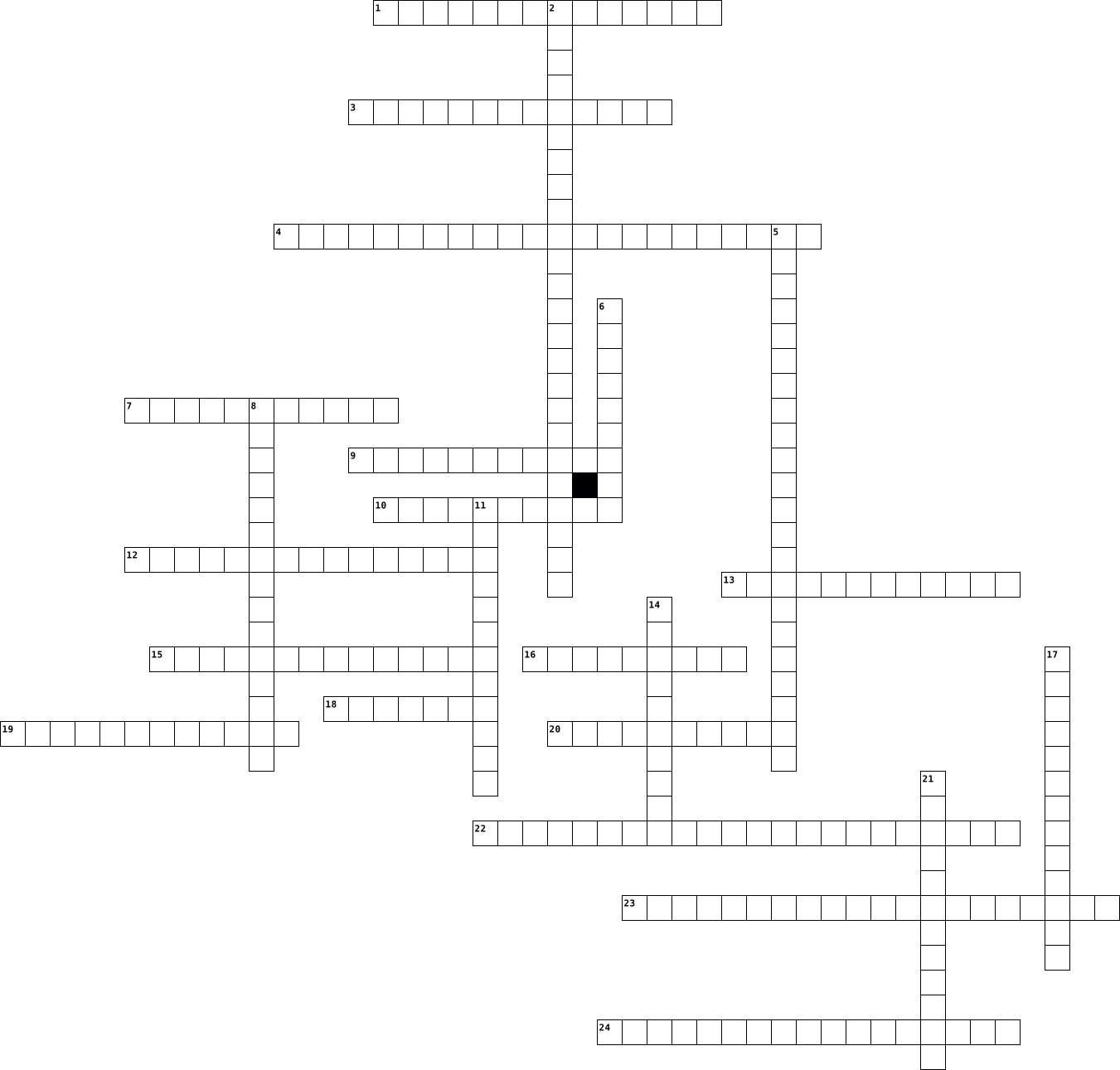
Across
- meeting the needs of the present without compromising the ability of future generations to meet their own needs
- an increase in the average temperature of the earth’s atmosphere (especially a sustained increase that causes climatic changes)
- humans are superior and the most important species in the world
- all the water on earth
- the solid outer layer of the earth that consist of the crust and the rigid upper part of the mantle
- the envelope of gases surrounding the earth or another planet
- the value of a natural biophysical environment being impacted by human induced processes
- the variety of life in the world or in a particular habitat or ecosystem
- the environment’s provision of raw materials and natural resources, e.g. food
- release of harmful materials into the environment
- the natural home or environment of an animal, plant or other organism
- the action or fact of treating someone unfairly to benefit from their work
- hazardous waste causing danger from chemicals and infectious organisms
- nature exists for all species on earth, not just humans, and humans are equal to other species
- worldview holding that we can manage the earth for our benefit but that we have an ethical responsibility to be caring and responsible managers, or stewards, of the earth.
- the cultural, recreational or psychological value of the environment for people
Down
- ensure access to affordable, reliable, sustainable and modern energy for all
- perspectives or views held by individuals re global environment based on values and assumptions
- part of Earth in which life exists including land, water, and air or atmosphere
- supports life on earth without requiring human action eg. decomposition
- the ability of natural environments to absorb wastes and pollution
- a term that typically describes a species that no longer has any known living individuals
- part of Earth in which life exists including land, water, and air or atmosphere
- the surroundings or conditions in which a person, animal, or plant lives or operates
24 Clues: all the water on earth • release of harmful materials into the environment • the envelope of gases surrounding the earth or another planet • humans are superior and the most important species in the world • the ability of natural environments to absorb wastes and pollution • the natural home or environment of an animal, plant or other organism • ...
geo = land, earth 2015-02-09

Across
- a raised, flat mound of Earth (dirt) that looks like a platform with sloping sides
- a medicine used to save lives because it destroys harmful bacteria and cures infections
- an angle greater than 180 degrees because the angle is bent beyond the straight line
- baked Earth; hard, brownish-red pottery
- almost or completely surrounded by land
- a hollow stone found on the Earth that is lined on the inside with crystals
- under the surface of the Earth; underground
- the study of the Earth, specifically rocks and the planet's crust
Down
- having a good outcome; favorable
- a person who studies the regions of the Earth, including the climates and natural resources
- out of this world; above and beyond what is found on planet Earth
- to destroy one's self
- an area, region, or piece of land
- the science of the Earth that deals with the regions or places on the planet's surface
- To cut into two pieces
15 Clues: to destroy one's self • To cut into two pieces • having a good outcome; favorable • an area, region, or piece of land • baked Earth; hard, brownish-red pottery • almost or completely surrounded by land • under the surface of the Earth; underground • out of this world; above and beyond what is found on planet Earth • ...
Earth and the Universe 2013-05-20

Across
- This is very attractive.
- Ours is called the Milkyway.
- Biggest Planet
- The group of planets and the star Earth is part of.
- This kind of eclipse occurs when the moon is in between the Earth and the Sun.
- Closest planet to the Sun
Down
- Distances in space are measured in these
- Some planets are made of rock while others of this.
- A theory which explains the start of the Universe.
- The time it takes for one planet to complete one orbit.
- This kind of eclipse occurs when the Earth is situated in between the Sun and the moon.
- No longer a planet.
- An instrument used to observe the sky.
- This star gives us light.
- A natural satellite.
15 Clues: Biggest Planet • No longer a planet. • A natural satellite. • This is very attractive. • This star gives us light. • Closest planet to the Sun • Ours is called the Milkyway. • An instrument used to observe the sky. • Distances in space are measured in these • A theory which explains the start of the Universe. • Some planets are made of rock while others of this. • ...
forces within the earth 2016-02-17

Across
- attack
- shake
- deaths
- vibration
- mistakes
- plates
- lava
- on land
Down
- tectonics
- foundation
- ocean
- earthquakes
- water saturated
- hard
- slide
15 Clues: hard • lava • ocean • shake • slide • attack • deaths • plates • on land • mistakes • tectonics • vibration • foundation • earthquakes • water saturated
Layer's of the Earth 2019-09-21

Across
- Lava before it erupts out of a Volcano.
- The Outside of the Earth/Where we live.
- This layer has two layers of rock, surrounding heated flowing rock.
- A scientist who studies the Earth's physical structure and features.
- Second-to-last layer of the Earth. Made of liquid molten lava.
- Tectonic Plates (Crust) can shift and create these landforms.
- Solid ball of iron and other minerals. Middle of the Earth's layers.
Down
- Earth has many different _____.
- ______ Plates are cracked pieces of the Earth's shell.
- Our Planet.
- Tectonic Plates shifting can cause this natural disaster.
- The outermost layer of the Earth.
- A place where water erupts from the ground.
- One of the minerals the Inner Core is made up of.
- Many rocks on the surface are _____ Magma
15 Clues: Our Planet. • Earth has many different _____. • The outermost layer of the Earth. • Lava before it erupts out of a Volcano. • The Outside of the Earth/Where we live. • Many rocks on the surface are _____ Magma • A place where water erupts from the ground. • One of the minerals the Inner Core is made up of. • ______ Plates are cracked pieces of the Earth's shell. • ...
Exploiting the earth-Photosynthesis 2020-10-14

Across
- παρασκευάζω
- πηγή
- διαδικασία
- υγρασία
- ατμόσφαιρα
- ρίζες
Down
- αναπνέω
- δεσμεύω
- γλυκόζη
- ιστός
- χλωροφύλλη
- φωτοσύνθεση
- χώμα
- μίσχος
- οξυγόνο
15 Clues: πηγή • χώμα • ιστός • ρίζες • μίσχος • αναπνέω • δεσμεύω • γλυκόζη • υγρασία • οξυγόνο • χλωροφύλλη • διαδικασία • ατμόσφαιρα • παρασκευάζω • φωτοσύνθεση
Layers of the Earth 2023-11-27

Across
- This layer is the only liquid layer.
- The Earth has _______ layers.
- This layer is about 6,000 degrees Celcius!
- The outer core creates the Earth's ______ field.
- This zone is found where the oceanic crust sinks beneath the continental crust.
- This layer is found at a depth of 2,900 km
Down
- This layer is broken into tectonic plates.
- As you can deeper into the Earth, the temperature gets __________.
- The inner core is made of _____________.
- This is the planet we live on.
- This type of crust is found under the oceans.
- Look at Figure 2, letter G is ____________.
- The continental crust is made up of ________.
- This is the outermost layer of the Earth.
- The inner core is as hot as the _______.
15 Clues: The Earth has _______ layers. • This is the planet we live on. • This layer is the only liquid layer. • The inner core is made of _____________. • The inner core is as hot as the _______. • This is the outermost layer of the Earth. • This layer is broken into tectonic plates. • This layer is about 6,000 degrees Celcius! • This layer is found at a depth of 2,900 km • ...
The layers of Earth 2024-02-08

Across
- thickest layer
- has magma/volcanic eruptions
- each layer has this in it
- is caused when liquid moves
- makes tectonic plates move (2 words)
- a material that is used
Down
- the layer we live on
- earth's liquid layer(2 words)
- units to measure
- has tectonic plates that move
- comes up out of volcanos
- moves(2 words)
- solid layer(2 words)
- huge piece of land
- in all of the layers
15 Clues: thickest layer • moves(2 words) • units to measure • huge piece of land • the layer we live on • solid layer(2 words) • in all of the layers • a material that is used • comes up out of volcanos • each layer has this in it • is caused when liquid moves • has magma/volcanic eruptions • earth's liquid layer(2 words) • has tectonic plates that move • makes tectonic plates move (2 words)
View From the Earth 2023-06-18

Across
- What is the event where the sun is highest in the sky on the northern side of the earth
- Prominent constellation visible in the night sky and known for my distinctive three-star belt
- The slow and gradual change in the orientation of the Earth's axis of rotation
- The point at which the moon is closest to earth
- To measure the direction of an object in the horizontal plane
- The position of a planet when it is at a right angle to the Sun as observed from Earth
- Vertical circle that runs due north and south
Down
- Eight-shaped curve that represents the apparent motion of the Sun in the sky
- Collective name for the 13 constellations
- Two intersection of moon orbit with ecliptic
- An imaginary line that divides the Earth into Northern and Southern Hemispheres
- A celestial coordinate used to measure the eastward angular distance from the vernal equinox.
- The coordinate system that based on earth's orbit around the sun
- The darkest part of a shadow during an eclipse
- What is the degree of the star in the sky for the shape of a fist
15 Clues: Collective name for the 13 constellations • Two intersection of moon orbit with ecliptic • Vertical circle that runs due north and south • The darkest part of a shadow during an eclipse • The point at which the moon is closest to earth • To measure the direction of an object in the horizontal plane • The coordinate system that based on earth's orbit around the sun • ...
View from the Earth 2023-06-17

Across
- Altitude of 90 degrees from horizon is called
- The path of the Sun can also be called as
- The Big Dipper is a part of this constellation.
- Coordinate system that use azimuths & altitudes
- The apparent path of the Sun on the celestial sphere.
- Vernal equinox also known as the first point of
- The Moon rotates on its axis with a period that is the same as its orbital period is called
- Coordinate system that use latitudes & longitudes
Down
- Total solar eclipse is possible because the size is nearly equal.
- Summer solstice is when the sun is
- Solar eclipse is when the moon is in of the Sun and the earth
- Total solar eclipse can only be seen at the
- The lesser known the 13th zodiac is the
- The reason why we don’t have eclipse every month is because the moon’s is inclined by
- A super moon occurred when
15 Clues: A super moon occurred when • Summer solstice is when the sun is • The lesser known the 13th zodiac is the • The path of the Sun can also be called as • Total solar eclipse can only be seen at the • Altitude of 90 degrees from horizon is called • The Big Dipper is a part of this constellation. • Coordinate system that use azimuths & altitudes • ...
Motions of the Earth 2023-03-18

Across
- The path on which the Earth revolves around the Sun
- Duration of days in Summer
- An imaginary line passing through the centre of the Earth
- Spherical model of the Earth
- The season between winter & summer
- The Earth's movement around the Sun
- The position of the Earth's axis
- Season when one hemisphere is tilted away from the Sun
Down
- The period between sunset and sunrise
- Direction of movement of the Earth
- Year with an extra day
- The daily motion of the Earth
- Time taken by the Earth's movement around the Sun
- Duration of days in Winter
- The season between summer & winter
15 Clues: Year with an extra day • Duration of days in Summer • Duration of days in Winter • Spherical model of the Earth • The daily motion of the Earth • The position of the Earth's axis • Direction of movement of the Earth • The season between winter & summer • The season between summer & winter • The Earth's movement around the Sun • The period between sunset and sunrise • ...
The Earth is Ours 2025-01-14

Across
- разрушение, крах
- устойчивость, экологичность
- вырубка лесов
- обильный, богатый
- загрязнённый
- инновация
- обязанность
Down
- эксплуатировать, использовать
- последствия
- экономический рост
- сырьё
- биоразнообразие
- управление, забота
- право собственности
- присущий, неотъемлемый
15 Clues: сырьё • инновация • последствия • обязанность • загрязнённый • вырубка лесов • биоразнообразие • разрушение, крах • обильный, богатый • экономический рост • управление, забота • право собственности • присущий, неотъемлемый • устойчивость, экологичность • эксплуатировать, использовать
The Earth is Ours 2025-01-14

Across
- право собственности
- управление, забота
- экономический рост
- биоразнообразие
- обильный, богатый
- последствия
- инновация
Down
- разрушение, крах
- вырубка лесов
- сырьё
- загрязнённый
- устойчивость, экологичность
- эксплуатировать, использовать
- присущий, неотъемлемый
- обязанность
15 Clues: сырьё • инновация • последствия • обязанность • загрязнённый • вырубка лесов • биоразнообразие • разрушение, крах • обильный, богатый • управление, забота • экономический рост • право собственности • присущий, неотъемлемый • устойчивость, экологичность • эксплуатировать, использовать
Laysers of the Earth 2023-11-09

Across
- I'm the 2nd layer of the Earth,I'm made of hot rock and tar-lake consistency, I'm also the thick layer of the Earth. What am I?
- I'm a state of mater that doesnt has shape. What am I?
- I'm a state of mater that has shape. What am I?
- I'm between the mantel and the lithosphere. I'm so hot that I melt the crust. What am I?
- I'm the pressure of the mantle. What am I?
- I'm a zone with rigid in Mantle and the Core. What am I?
Down
- I'm right under the crust and I make up the earth. What am I?
- I'm the 4th and last layers of the earth.I'm completly liquid lava. What am I?
- I'm a rock that gets melted by lava. What type of rock am I?
- I'm a tiny part of the layers. Some say that i'm right under the Sea levals. What am I?
- I'm the 3rd layer of the Earth, I'm made of iron and nickle and a soild. What am I?.
- I'm the name of each of the laysers separated. what am I?
- I'm 1st layer of the Earth,I'm made of rock and I'm the thinnest layer. You might be standing on me right now. What am I?
- I'm thing that measures how thick something is. What thing am I?
- I'm the thing expreasse how hot or cold something is. You can use a thermomete. What am I?
15 Clues: I'm the pressure of the mantle. What am I? • I'm a state of mater that has shape. What am I? • I'm a state of mater that doesnt has shape. What am I? • I'm a zone with rigid in Mantle and the Core. What am I? • I'm the name of each of the laysers separated. what am I? • I'm a rock that gets melted by lava. What type of rock am I? • ...
Parts of the Earth 2023-12-05

Across
- Flowing bodies of freshwater, often originating from mountains and flowing into lakes or oceans, shaping landscapes along their path.
- Dense and extensive areas covered with trees and other vegetation, providing habitats for diverse plant and animal species.
- Deep and narrow gorges or ravines, typically formed by the erosive activity of rivers or tectonic processes.
- Low-lying areas between mountains or hills, often formed by erosion and containing rivers or streams.
- Landforms surrounded by water on three sides, connected to the mainland by a narrow strip of land, such as the Iberian Peninsula.
- Groups or chains of islands clustered together in a body of water, such as the Indonesian Archipelago or the Greek Islands.
- Dry and arid regions with minimal precipitation, often characterized by sand dunes, rocky landscapes, and extreme temperatures.
Down
- Large landmasses on Earth, such as Asia, Africa, and North America, characterized by distinct boundaries and diverse ecosystems.
- Elevated landforms with steep slopes and high peaks, often formed by tectonic forces or volcanic activity.
- Cold and treeless landscapes with permafrost, characterized by low-growing vegetation and adapted wildlife, often found in polar regions.
- Broad and flat expanses of land, usually with fertile soil, supporting agriculture and various human activities.
- Landmasses surrounded by water, smaller than continents, and often formed by volcanic activity or tectonic processes.
- Large inland bodies of water, surrounded by land, and often fed by rivers or streams, providing habitats for aquatic life.
- Elevated flat or gently sloping areas of land, often with steep sides, formed by geological forces or volcanic activity.
- Vast bodies of saltwater, including the Pacific, Atlantic, Indian, Southern, and Arctic Oceans, covering a significant portion of the Earth's surface.
15 Clues: Low-lying areas between mountains or hills, often formed by erosion and containing rivers or streams. • Elevated landforms with steep slopes and high peaks, often formed by tectonic forces or volcanic activity. • Deep and narrow gorges or ravines, typically formed by the erosive activity of rivers or tectonic processes. • ...
Layers of the Earth 2024-02-05

Across
- a hot dense ball, mostly made of iron
- the inner core is mostly made of this
- the outermost shell of the Earth
- the center of the Earth
- The ___ of the outer core is 1300 miles
- the material of the lower part of the earth's crust, underlying both the ocean and the continents
- a part of the Earth's crust formed of hard igneous or metamorphic rock that lies beneath the cover of soft sedimentary rock, sediment, and soil
- the temperature of the core is around 6000 ___
- the bulk of Earth's interior
Down
- The middle layer of Earth's atmosphere
- liquid,about 1300 miles thick
- the layer of igneous, metamorphic, and sedimentary rocks that forms the geological continents and the areas of shallow seabed close to their shores, known as continental shelves.
- the solid outer part of the Earth
- the denser, weaker layer beneath the lithosphere
- the material of the upper or continental part of the earth's crust
15 Clues: the center of the Earth • the bulk of Earth's interior • liquid,about 1300 miles thick • the outermost shell of the Earth • the solid outer part of the Earth • a hot dense ball, mostly made of iron • the inner core is mostly made of this • The middle layer of Earth's atmosphere • The ___ of the outer core is 1300 miles • the temperature of the core is around 6000 ___ • ...
The Earth And Landforms 2024-10-07

Across
- the area of land that has many kinds of grass with few trees.
- the area of land that elevate higher than its surroundings.
- the natural features that create the earth's surface.
- all things outside the earth's atmosphere.
- the body part of water that flows through the lands.
- the earth needs 365 days to finish a ______
Down
- the earth needs 24 hour to do a ______
- the large area of salt water near the lands.
- the largest body part of salt water.
- we live in a ______ called Milky Way.
- the force that keep us on the ground.
- the large area of grassland with no trees.
- the higher area of land that is smaller than a mountain.
- the third planet of our solar system.
- the lower area of land between the hills or mountains.
15 Clues: the largest body part of salt water. • we live in a ______ called Milky Way. • the force that keep us on the ground. • the third planet of our solar system. • the earth needs 24 hour to do a ______ • the large area of grassland with no trees. • all things outside the earth's atmosphere. • the earth needs 365 days to finish a ______ • ...
Layers of the Earth 2025-09-23

Across
- liquid iron and nickel; convection currents in this layer creates Earth's magnetic field
- lowest part of the mantle
- solid iron and nickel; densest and hottest layer
- convection currents in this layer moves Earth's lithosphere
- thickest under mountains; composed of granite
- thickest layer
Down
- source that provides continuous heat energy in Earth's inner core
- process by which the denser portions of a planet will sink to the center; while less dense materials rise to the surface
- crust + uppermost part of mantle; makes up tectonic plates
- anything that has mass and volume
- the force that pulls matter towards Earth’s center
- outermost and thinnest layer
- nearly constant in thickness & very dense; composed of basalt
- how much matter occupies a given amount of space
- a natural power that pushes or pulls on an object
15 Clues: thickest layer • lowest part of the mantle • outermost and thinnest layer • anything that has mass and volume • thickest under mountains; composed of granite • solid iron and nickel; densest and hottest layer • how much matter occupies a given amount of space • a natural power that pushes or pulls on an object • the force that pulls matter towards Earth’s center • ...
New Continent Vocabulary 2023-02-01

Across
- Wegener's idea of continents moving apart - La idea de Wegener de que los continentes se separan
- an opening between the mantle and the crust - volcán
- outer most layer of earth on land - capa más externa de la tierra en la tierra, corteza continental
- expansión del fondo marinos
- the center of the earth where is it the hottest - el centro de la tierra donde hace mas calor
- where two tectonic plates come together and one goes under the other - donde dos placas tectónicas se juntan y una pasa debajo de la otra
- outer part of earth made of the crust and upper mantle - parte exterior de la tierra formada por la corteza y el manto superior
- super large areas of land under the ocean - áreas súper grandes de tierra bajo el océano,corteza oceánica
- who invented the idea of continental drift - quien invento la idea de la deriva continental
- falla en la tierra
Down
- part of the upper mantle under the lithosphere - parte del manto superior bajo la litosfera
- when all the continents were together - cuando todos los continentes estaban juntos
- part of the earth between the Crust and core - parte de la tierra entre la corteza y el núcleo
- the long mountain chain under the ocean - la larga cadena montañosa bajo el océano
- the theory that the earth is made of plates that move around - la teoría de que la tierra está hecha de placas que se mueven, placa tectonica
- Where part of continent is ripping apart and moving away from the main part - Donde parte del continente se está desgarrando y alejándose de la parte principal
- límite de placas tectonica
- hard, outer layer of the Earth - capa exterior dura de la Tierra
- 7 super large areas of land on earth - 7 super grandes áreas de tierra en la tierra, continente
- when two things move apart - divergente, cuando dos cosas se separan
- a deep gash in the earth- Una profunda herida en la tierra; zanja
- when the earth's plates move and shake the earth - terremoto
- to change - transformar
23 Clues: falla en la tierra • to change - transformar • límite de placas tectonica • expansión del fondo marinos • an opening between the mantle and the crust - volcán • when the earth's plates move and shake the earth - terremoto • hard, outer layer of the Earth - capa exterior dura de la Tierra • a deep gash in the earth- Una profunda herida en la tierra; zanja • ...
Plate Tectonics 2023-12-14

Across
- area around the North Pole or the South Pole
- a large land mass separated from other land masses by oceans
- scientific study of the deformation of the rocks that make up the Earth's crust and the forces that produce such deformation.
- a name for all sediment
- the mostly solid bulk of Earth's interior.
- separate different regions of Earth.
- an area on Earth where two or more lithospheric plates collide.Plate
- occurs when two tectonic plates move away from each other.
- the solid, outer part of Earth.
Down
- a fracture or zone of fractures between two blocks of rock.
- what happens when two blocks of the earth suddenly slip past one another.
- a central region in an economy, with good communications and high population density, which leads to its prosperity
- preserved remains of plants and animals whose bodies were buried in sediments,
- is the zone of the earth which lies beneath the lithosphere.
- a super-continent that incorporated almost all the landmasses on Earth
- the movement of particles through a substance,
- a type of fault in which two tectonic plates slide past one another.
- When magma flows onto Earth's surface
- the outermost shell of a terrestrial planet.
19 Clues: a name for all sediment • the solid, outer part of Earth. • separate different regions of Earth. • When magma flows onto Earth's surface • the mostly solid bulk of Earth's interior. • area around the North Pole or the South Pole • the outermost shell of a terrestrial planet. • the movement of particles through a substance, • ...
stuff for Mr.howards class 2026-05-20

Across
- we use it to get stations to watch on tv
- what we are using to continuesly move around the earth
- a doughnut shaped planet orbiting the rubble
- the simplist element on earth
- first name _
- a very strong hole that if you get to close too in space you will be sucked in
- the ______ dipper
- its what our earth is
- a bunch of stars that make a picture
- in the big dipper
- the closet star to earth
- in the little dipper
- what keeps us from floating away
- what solar system our plant is on
- also in the big dipper
- there are thousands of them in the night sky
Down
- exactly how long it is to the international space station
- how the the earth it _ around the sun
- in-between the big and little dipper
- ISS
- is a little probe that was sent to space
- its a giant cluster of stars with other plants in it
- what you are on tight now
- a giant cloud of dust and gas
- how to measure how far away the planets are
- the three most major concepts in astrology and mythology
- a weight of something
- located in ursa minor
28 Clues: ISS • first name _ • the ______ dipper • in the big dipper • in the little dipper • its what our earth is • a weight of something • located in ursa minor • also in the big dipper • the closet star to earth • what you are on tight now • the simplist element on earth • a giant cloud of dust and gas • what keeps us from floating away • what solar system our plant is on • ...
Plate Tectonics 2022-02-10

Across
- Heat transferring through empty space
- waves made during an earthquake
- Heat transferred through contact with matter
- when two plates slide past eachother
- a mountain with magma in it
- a colorful rock found on the crust
- The second layer of the earth
- the 4 and last layer of the earth
- third layer of the earth
- happens when two plate pull away from eachother
Down
- the tectonic plates shaking when they move
- A black volcanic rock
- a part of the crust and upper mantle
- the reason why the Pacific is getting smaller
- The rigid outer part of the crust and mantle
- An extended break in a body of rock
- when two plate collide
- super continents
- Granite and basalt is one
- first layer of the earth
20 Clues: super continents • A black volcanic rock • when two plate collide • third layer of the earth • first layer of the earth • Granite and basalt is one • a mountain with magma in it • The second layer of the earth • waves made during an earthquake • the 4 and last layer of the earth • a colorful rock found on the crust • An extended break in a body of rock • ...
Earth Science Units 1-3 Vocabulary 2024-10-16

Across
- A map that shows elevations
- The part of Earth that is composed of water
- A map projection created by projecting the Earth's surface onto a cylinder
- When the Earth passes between the Moon and the Sun
- All organisms that live on Earth
- The lighter part of a shadow
- A map projection created by projecting the Earth's surface onto a cone
- A map projection created by projecting the Earth's surface onto a plane
- The layer of gases that surround a planet
- The difference in elevation between adjacent contour lines
- The plane containing Earth's orbit around the Sun
- The region around a star in which liquid water can exist on the surface of a planet and can support advanced life
- The shape of the Earth
- The term to describe the growing visibility of the Moon
- When the Moon passes between the Sun and the Earth
Down
- The art and science of making maps
- The rigid outer layer of the Earth, composed mostly of solid rock
- The term to describe the shrinking visibility of the Moon
- A massive system of stars, gravitationally bound to one another
- Lines on a topographic map
- The theory that the Sun is at the center of the Solar System
- When the Sun is highest in the sky
- When the Sun is lowest in the sky
- The darker part of a shadow
- Halfway between the solstices when there is an equal amount of daylight and nighttime
- A thick contour line
- The theory that the heavenly bodies and stars orbit the Earth
- The horizontal lines that run parallel to the Equator
- The vertical lines that meet at the poles
- A mathematical measurement of the rate of change of surface elevation
30 Clues: A thick contour line • The shape of the Earth • Lines on a topographic map • A map that shows elevations • The darker part of a shadow • The lighter part of a shadow • All organisms that live on Earth • When the Sun is lowest in the sky • The art and science of making maps • When the Sun is highest in the sky • The layer of gases that surround a planet • ...
Eclipses 2025-10-16

Across
- The Moon phase needed for a solar eclipse
- The Moon phase needed for a lunar eclipse
- When the Moon passes between the Sun and Earth
- Time when the eclipse is at its peak
- Small bright points of sunlight seen just before totality
- When the Moon blocks a star or planet
- Shadow region where only part of the Sun is blocked
Down
- When part of the Moon or Sun is covered
- Outer lighter part of a shadow
- The tilt of the Moon’s orbit
- The path the Moon takes around Earth
- The plane Earth orbits the Sun on
- A rare alignment of Earth, Moon, and Sun
- A repeating eclipse cycle (~18 years)
- When Earth passes between the Sun and Moon
- When the Moon completely covers the Sun
- The darkest part of a shadow during an eclipse
- The bright ring seen around the Sun during an annular eclipse
18 Clues: The tilt of the Moon’s orbit • Outer lighter part of a shadow • The plane Earth orbits the Sun on • The path the Moon takes around Earth • Time when the eclipse is at its peak • A repeating eclipse cycle (~18 years) • When the Moon blocks a star or planet • When part of the Moon or Sun is covered • When the Moon completely covers the Sun • ...
Test Review Sheet 2023-02-03

Across
- As the tide rises, water moves toward the shore.
- Oblong bands of water around Earth.
- The Earth rotates on its ____________.
- The difference between high and low tide.
- When the moon is fully illuminated.
- The moon ________________ around earth.
- As the tide recedes, the water moves toward the shore.
- What the moon looks like from Earth at a particular time.
- When the Earth casts a shadow on the moon.
- The highest point of a wave.
- When the illuminated part of the moon looks like a little sliver or is in a curved shape.
- The lowest point of a wave.
- When there is a smaller difference between high and low tide.
Down
- A horizontal movement of water accompanied by the rising and falling of the tide.
- When the high tide is very high and low tide is very low.
- The path the moon takes.
- When the moon is more than half illuminated, but not full.
- When the moon appears to be getting smaller.
- When the moon is in the middle of the Sun and Earth.
- When the moon casts a shadow on the moon.
- The moon’s _____________ is the cause of the tides.
- The blocking or darkening of a celestial body.
- When the moon is completely dark.
- When the moon appears to be getting larger.
- Very long period waves that move through the ocean in response to forces exerted by the Moon and Sun.
25 Clues: The path the moon takes. • The lowest point of a wave. • The highest point of a wave. • When the moon is completely dark. • Oblong bands of water around Earth. • When the moon is fully illuminated. • The Earth rotates on its ____________. • The moon ________________ around earth. • When the moon casts a shadow on the moon. • The difference between high and low tide. • ...
Space Science Crossword puzzle 2013-11-13

Across
- Lightest part of Earth's shadow.
- Outermost layer of the Moon.
- Occurs when the Moon appears close to the sun in the sky.
- At any time, ______ shines on half of the Moon's surface
- Dark covered rock that formed from lava.
- Lower areas of the Moon's surface filled with lava and then cooled.
- The half of the Moon that constantly faces Earth is called the ____ side.
- it takes about a month for the moon to _____ Earth and go through all the phases.
Down
- When the near side of the moon is more than half lit but not fully lit.
- It takes about a _____ for the moon to orbit Earth and go through all the phases.
- The breaking of the material from impacts of craters.
- The pull of ______ keeps the moon in orbit around Earth.
- In the ocean The average water level rises slowly for about 6 _____.
- _____ occur because the Moon's gravity changes the shape of Earth's oceans.
- Occurs when a shadow makes the sun or the moon seem to grow dark.
- A solar eclipse occurs when the Moon passes directly between Earth and the ___.
- The darkest part of Earth's shadow.
- The dark area on the Moon is called a lunar ____.
- The Moon become dark during a ____ eclipse because it passes through Earth's shadow.
- The half of the moon that constantly faces away from Earth is called the ___ side.
20 Clues: Outermost layer of the Moon. • Lightest part of Earth's shadow. • The darkest part of Earth's shadow. • Dark covered rock that formed from lava. • The dark area on the Moon is called a lunar ____. • The breaking of the material from impacts of craters. • The pull of ______ keeps the moon in orbit around Earth. • At any time, ______ shines on half of the Moon's surface • ...
Movers and Shakers Vocab 2014-03-04

Across
- a wave in the earth produced by an earthquake
- what happens when hot molten rock spurts out of a volcano
- a region when two tectonic plates move away from each other
- the places where tectonic plates crash together
- the formation of new ocean floor
- the part of the earth between the crust and the core
- the amount of energy an earthquake lets out
- a seismic wave that travels along or parallel to the earth's surface
- the crust and upper mantle of the earth
- a landmass that existed before the continents were separated
- made up of different materials
Down
- the outer most part of the earth's core
- a zone of seismic and volcanic activity
- a region where two tectonic plates collide
- an earthquake wave that travels through the interior of the earth
- big slabs of rock under the surface of the earth that can cause earthquakes
- when tectonic plates shift under the earth's surface
- the hot molten rock that erupts out of a volcano
- a small volcano built of ash and cinder
- the innermost part of the earth's core
20 Clues: made up of different materials • the formation of new ocean floor • the innermost part of the earth's core • the outer most part of the earth's core • a zone of seismic and volcanic activity • a small volcano built of ash and cinder • the crust and upper mantle of the earth • a region where two tectonic plates collide • the amount of energy an earthquake lets out • ...
SPACE 2014-10-13

Across
- How many planets are in our solar system?
- Which planet is well known for it's rings?
- The sun is a star, true or false?
- What do we call it when the moon moves directly between the sun and the Earth?
- Which planet has the longest day?
- No longer recognised as a planet?
- The Earth orbits the sun twice every year, true or false?
- What is the largest planet?
- Who was the first person to walk on the moon?
- What is the third planet from the sun?
Down
- What colour are the hottest stars?
- When it is day in Australia, it is what in America?
- What is the name of our galaxy?
- Most of the planets in our solar system orbit the sun in which direction?
- Closest planet to the sun?
- Which is not a moon phase? Gibbous, new, sliver or crescent?
- The Earth and all the other planets orbit what?
- Farthest planet from the sun?
- The sun provides Earth with heat and what?
- Known as the red planet?
20 Clues: Known as the red planet? • Closest planet to the sun? • What is the largest planet? • Farthest planet from the sun? • What is the name of our galaxy? • The sun is a star, true or false? • Which planet has the longest day? • No longer recognised as a planet? • What colour are the hottest stars? • What is the third planet from the sun? • How many planets are in our solar system? • ...
Historical Astronomy 2022-04-26

Across
- the type of moon before and after a new moon
- a planets path around the Sun
- Earth's _____ creates the seasons
- moon phase that follows a full moon
- the universe is _________ and galaxies are moving further apart from each other
- without this, our planet would fly off into space
- spinning on axis; makes day and night
- eclipse that occurs when the Earth creates a shadow on the moon
- occurs when Earth is tilted towards the Sun
- losing light
- gaining light
- eclipse that occurs when the moon is between the Earth & Sun
Down
- model of the solar system with the earth in the center
- a planet's trip around the Sun
- theory that estimates the universe is about 14 billion years old
- model of the solar system with the sun in the center
- phase that occurs when the moon is closest to the Sun
- the type of moon before and after a full moon
- shape of the planets' orbit
- without this, our moon would crash into earth
- moon phase that follows a first quarter moon
21 Clues: losing light • gaining light • shape of the planets' orbit • a planets path around the Sun • a planet's trip around the Sun • Earth's _____ creates the seasons • moon phase that follows a full moon • spinning on axis; makes day and night • occurs when Earth is tilted towards the Sun • the type of moon before and after a new moon • moon phase that follows a first quarter moon • ...
Science Midterm Chapter 1 2025-01-02

Across
- The location in the galaxy that is not too close to the inner core or outer arm
- The calendar we use today that fixed the number of leap years
- When there is an equal amount of daylight and nighttime
- The model where Sun is in the center of the solar system
- The lunar calendar that added an extra month so the holidays do not occur 11 days earlier each year
- The model where Earth is in the center of the solar system
- Equinox in March
- When the Earth is tilted towards or away from the Sun
- The two types of solstices
- The calendar that has 12 months with 30 or 31 days, but has too many leap years
- The shape of Earth's orbit
Down
- All life on Earth
- Planets made mostly or entirely of gas
- The location around the Sun that is warm enough to support life
- Layer of gases around Earth
- Part of Earth made of water
- The lunar calendar whose holidays occur 11 days earlier each year
- Equinox in September
- Upper layer of Earth's crust
- planets Earthlike planets
20 Clues: Equinox in March • All life on Earth • Equinox in September • planets Earthlike planets • The two types of solstices • The shape of Earth's orbit • Layer of gases around Earth • Part of Earth made of water • Upper layer of Earth's crust • Planets made mostly or entirely of gas • When the Earth is tilted towards or away from the Sun • ...
Astronomy 2017-09-17

Across
- A sphere of plasma held together by it's own gravity that produces light. The nearest to earth is the Sun
- The series of weather patterns caused by the tilt of the earth towards or away from the sun at a particular time in a year
- the collection of the planets and smaller objects orbit the sun.
- The only object in the Universe known to harbor life, formed 4 billion years ago
- The largest planet in our solar system
- A gas giant,composed mainly of hydrogen and helium. It is the coldest planet in our solar system.
- The time when the moon is between the sun and the earth.
- The Maori name for a dwarf planet that was considered the 9th planet from the sun until 2006.
- The farthest planet from the sun.
- The path a planet takes around the sun
- The period of time in which the sun can be seen from a point on Earth
- The astronomical body that orbits planet Earth
- Our nearest star
Down
- The fourth planet from the Sun, scientists are figuring out ways to inhabit it.
- Maori for "eyes of god"
- A group of stars that form a particular shape in the sky
- The smallest and innermost planet in our Solar System
- The period of time in which the sun can not be seen from a point on Earth
- A body of mass that has it's own gravity and orbits the sun
- the Maori name for the sixth planet from the sun
- The rising and falling of coastal sea levels caused by the gravitational pull of the Moon
- The Maori name for the second planet from the sun.
22 Clues: Our nearest star • Maori for "eyes of god" • The farthest planet from the sun. • The largest planet in our solar system • The path a planet takes around the sun • The astronomical body that orbits planet Earth • the Maori name for the sixth planet from the sun • The Maori name for the second planet from the sun. • The smallest and innermost planet in our Solar System • ...
Science Vocabulary Crossword Puzzle 2022-01-28

Across
- An object that sinks in water in _______ dense
- The bouncing of light when it strikes an object
- The breaking down of rocks
- When the Earth spins on it's axis, it makes a _______
- An item that does NOT attract electricity and heat
- The force that stops an object from moving
- Sediments being pushed together over time
- The time of day that your shadow is the shortest
- Two or more substances that can easily be separated
- About the amount of time it takes for the moon to revolve around Earth
Down
- The type of erosion that mainly caused the Grand Canyon to form
- An item that attracts electricity and heat
- The gathering of rocks
- The bending of light as it moves thru an object
- The moving away of sediments
- The planet between Mars and Saturn
- When the Earth goes around the sun, it makes a _______
- About the amount of time it takes for the earth to revolve around the sun
- Two or more substances that can NOT easily be separated
- The third planet from the sun
20 Clues: The gathering of rocks • The breaking down of rocks • The moving away of sediments • The third planet from the sun • The planet between Mars and Saturn • Sediments being pushed together over time • An item that attracts electricity and heat • The force that stops an object from moving • An object that sinks in water in _______ dense • ...
Science Midterm Chapter 1 2025-01-02

Across
- The location in the galaxy that is not too close to the inner core or outer arm
- The calendar we use today that fixed the number of leap years
- When there is an equal amount of daylight and nighttime
- The model where Sun is in the center of the solar system
- The lunar calendar that added an extra month so the holidays do not occur 11 days earlier each year
- The model where Earth is in the center of the solar system
- Equinox in March
- When the Earth is tilted towards or away from the Sun
- The two types of solstices
- The calendar that has 12 months with 30 or 31 days, but has too many leap years
- The shape of Earth's orbit
Down
- All life on Earth
- Planets made mostly or entirely of gas
- The location around the Sun that is warm enough to support life
- Layer of gases around Earth
- Part of Earth made of water
- The lunar calendar whose holidays occur 11 days earlier each year
- Equinox in September
- Upper layer of Earth's crust
- planets Earthlike planets
20 Clues: Equinox in March • All life on Earth • Equinox in September • planets Earthlike planets • The two types of solstices • The shape of Earth's orbit • Layer of gases around Earth • Part of Earth made of water • Upper layer of Earth's crust • Planets made mostly or entirely of gas • When the Earth is tilted towards or away from the Sun • ...
Plate Tectonics 2023-10-21

Across
- The Ring of Fire circles what ocean?
- Plates move over a layer of _______ rock
- An area of magma under the Earth that's hotter than the surrounding magma
- What country collided with Asia to create the Himalayas?
- Came up with the Theory of Continental Drift
- The uppermost part of the mantle and the crust create this layer
- The top layer of the Earth
- This is what the super-continent was called
- An area where two plates move horizontally along each other
Down
- Created from continents slamming into each other
- An area where two or more plates collide
- The mechanically weak layer of the upper mantle
- A piece of evidence from animals that supports the super continent theory
- The Theory of Continental Drift stated that the continents were ________
- The second to top layer of the Earth
- The Earth is made up of many ______
- An area where two plates move away from each other
- Plates rubbing into each other cause _______
- These are formed by rising magma erupting through cracks in the Earth
- South America and _______ fit together
20 Clues: The top layer of the Earth • The Earth is made up of many ______ • The Ring of Fire circles what ocean? • The second to top layer of the Earth • South America and _______ fit together • An area where two or more plates collide • Plates move over a layer of _______ rock • This is what the super-continent was called • Came up with the Theory of Continental Drift • ...