
the earth Crossword Puzzles
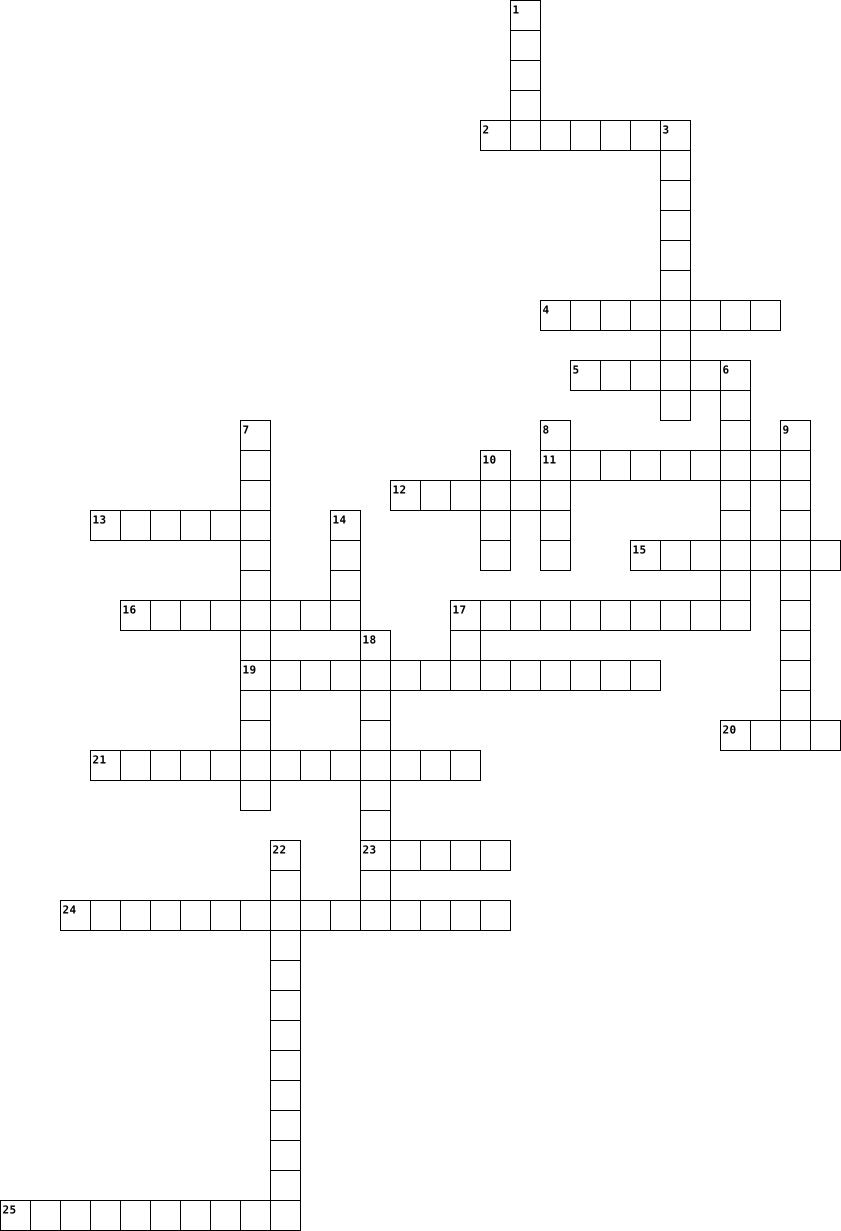
Bay Boughan Puzzle on Geology 2024-01-30

Across
- when one plate moves under the other.
- the layers on the earth.
- the gas all around the earth.
- how fast or often something happens.
- a long deep indention in the ocean floor.
- the outside or top layer of something.
- A solid substance with crystal structure.
- moving apart in different directions.
- A planet with layers and crusts.
- hot liquid rock on Earth.
- seven plates on top of the earth.
- any of earths lands.
Down
- earths living organisms.
- All of earths water.
- the layer of soft solid rock under Earth.
- a feature that forms on the surface of a planet.
- Fossilized evidence of life from the past.
- a sudden shaking on earth surface.
- the study of rocks.
- A plate under the earth’s surface.
- one of the large rock sections that make earth.
21 Clues: the study of rocks. • All of earths water. • any of earths lands. • earths living organisms. • the layers on the earth. • hot liquid rock on Earth. • the gas all around the earth. • A planet with layers and crusts. • seven plates on top of the earth. • a sudden shaking on earth surface. • A plate under the earth’s surface. • how fast or often something happens. • ...
EARTH 2021-04-22

Across
- forest
- wind
- flower
- desert
- earthquake
- recycle
- river
- antartic
Down
- pollution
- electricity
- beach
- waste
- water
- sun
- air
- bee
16 Clues: sun • air • bee • wind • beach • waste • water • river • forest • flower • desert • recycle • antartic • pollution • earthquake • electricity
Earth 2026-01-20

Across
- 1300 miles thick
- starts on March 20
- starts on december 21
- less dense crustal masses
- consists of the crust
- orbital motion
- path of the planet
Down
- oceanic and continental
- is in the crust
- Fe
- 1500 miles thick
- imaginary line in the earth
- molten rock
- starts on September 23
- 1800 miles thick
- 23 hours 56 minutes and 4 secounds
16 Clues: Fe • molten rock • orbital motion • is in the crust • 1300 miles thick • 1500 miles thick • 1800 miles thick • starts on March 20 • path of the planet • starts on december 21 • consists of the crust • starts on September 23 • oceanic and continental • less dense crustal masses • imaginary line in the earth • 23 hours 56 minutes and 4 secounds
Earth 2026-01-21

Across
- tough outer part of earth
- sun reaches most north and south excursion
- boundary making earth less dense
- thick layer of silicate rock
- ferromagnetic transition metal
- circular movement of object around axis
- sun crosses celestial equator
- marks first day of summer
Down
- daytime starts becoming longer
- imaginary line drawn around earth
- speed object needs break celestial gravity
- orbital motion of one body around another
- successive meridian transits of the sun
- thick layer of molten iron and nickel
- time between two consecutive transits
- curved path an object takes due to gravity
16 Clues: tough outer part of earth • marks first day of summer • thick layer of silicate rock • sun crosses celestial equator • daytime starts becoming longer • ferromagnetic transition metal • boundary making earth less dense • imaginary line drawn around earth • thick layer of molten iron and nickel • time between two consecutive transits • successive meridian transits of the sun • ...
earth 2026-01-21

Across
- march 21
- division between outercore and the mantle
- june 21
- point closest to sun
- line that divides the earth in to parts
- the wobble of the earth
- based off the sun
Down
- september 21
- december 21
- this is at 23.5 degrees
- second layer from inside earth
- the molten core is made of what
- point furthest from sun
- based off the stars
- below the crust lies
- dead center of earth
16 Clues: june 21 • march 21 • december 21 • september 21 • based off the sun • based off the stars • below the crust lies • dead center of earth • point closest to sun • this is at 23.5 degrees • point furthest from sun • the wobble of the earth • second layer from inside earth • the molten core is made of what • line that divides the earth in to parts • division between outercore and the mantle
Earth 2025-12-05

Across
- the study of the stars and space
- what your parents ask you to do at home
- keeping everything and not letting go
- this is in a book
- football, wrestling, softball are all?
- able to cut
- area along the beach
Down
- what you do with water
- creating deep gouges
- place for your dog to run
- hurting
- bad weather
- someone who uses their talent to make beautiful things
- use these to row a boat
- Belonging to you
- attached to the house
16 Clues: hurting • bad weather • able to cut • Belonging to you • this is in a book • creating deep gouges • area along the beach • attached to the house • what you do with water • use these to row a boat • place for your dog to run • the study of the stars and space • keeping everything and not letting go • football, wrestling, softball are all? • what your parents ask you to do at home • ...
just do it and sove it 2023-03-03

Across
- travel though earth's interior.
- a series of devastating waves.
- squeezing something.
- the force through a rope.
- A land that bigger than normal land.
- a path along the ocean that has Earthquakes and volcanoes.
- the upper layer of earth's mantle.
- is the mostly soled part of earth.
- The surface mineral or the first layer of the earth.
- the plates under the earth.
- a sudden release of earth under the earth.
- a zone of fractures between two rocks.
- the motion of tectonic plates under the earth.
- the liquid layer of the earth.
- something that the earth puts between plates when they move apart.
- depressions in the earth's surface.
- where plates slide past each other.
Down
- when an organic plate runs into a non-organic plate.
- the outer layer of the earth.
- something that forms when plant and animal decay.
- when the plates come together
- innermost core of the planet.
- waves that travel through the earth's interior.
- plates split from each other.
- long narrow depressions that are on the seafloor.
- a continent.
- a mountain that has a hole which lava comes out of.
- to change shape without changing volume.
- the outer shell of earth.
- travel more slowly through Earth material.
- when particles heat up and less destiny making them float.
- rich soil with the same part of sand and silt.
- caused by sudden movements in the earth.
- soft, can build with, and can be found on earth.
34 Clues: a continent. • squeezing something. • the force through a rope. • the outer shell of earth. • the plates under the earth. • the outer layer of the earth. • when the plates come together • innermost core of the planet. • plates split from each other. • a series of devastating waves. • the liquid layer of the earth. • travel though earth's interior. • the upper layer of earth's mantle. • ...
Earth Science - Crossword puzzle (CG) 2024-08-15

Across
- It is the movement of the Earth on its axis.
- Shaking of Earth due to rapid release of energy.
- What is the tallest mountain on Earth?
- Earth's largest living structure.
- An arid region characterized by extremely high or low temperatures and has scarce vegetation.
- What is the main component of the Earth’s atmosphere?
- It refers to the path of the Earth when it revolves around the Sun.
- It is the direction of the Earth while revolving around the Sun.
- It is an imaginary line describing Earth's tilt.
- Which country has the largest population?
- Great division of land on the globe.
Down
- Which Earth subsystem is involved in the biotic factors?
- How long does it take the Earth to spin once on its axis?
- is the second smallest continent in size but the third largest in population.
- Home to the largest ice sheet on Earth.
- It refers to the movement of the Earth around the Sun.
- How many planets are between the sun and the earth?
- The whole body of saltwater that covers three fourths of Earth’s surface.
- What percentage of Earth’s surface is covered with water?
- It is the shape of an orbit.
20 Clues: It is the shape of an orbit. • Earth's largest living structure. • Great division of land on the globe. • What is the tallest mountain on Earth? • Home to the largest ice sheet on Earth. • Which country has the largest population? • It is the movement of the Earth on its axis. • Shaking of Earth due to rapid release of energy. • ...
just do it and sove it 2023-03-03

Across
- travel though earth's interior.
- a series of devastating waves.
- squeezing something.
- the force through a rope.
- A land that bigger than normal land.
- a path along the ocean that has Earthquakes and volcanoes.
- the upper layer of earth's mantle.
- is the mostly soled part of earth.
- The surface mineral or the first layer of the earth.
- the plates under the earth.
- a sudden release of earth under the earth.
- a zone of fractures between two rocks.
- the motion of tectonic plates under the earth.
- the liquid layer of the earth.
- something that the earth puts between plates when they move apart.
- depressions in the earth's surface.
- where plates slide past each other.
Down
- when an organic plate runs into a non-organic plate.
- the outer layer of the earth.
- something that forms when plant and animal decay.
- when the plates come together
- innermost core of the planet.
- waves that travel through the earth's interior.
- plates split from each other.
- long narrow depressions that are on the seafloor.
- a continent.
- a mountain that has a hole which lava comes out of.
- to change shape without changing volume.
- the outer shell of earth.
- travel more slowly through Earth material.
- when particles heat up and less destiny making them float.
- rich soil with the same part of sand and silt.
- caused by sudden movements in the earth.
- soft, can build with, and can be found on earth.
34 Clues: a continent. • squeezing something. • the force through a rope. • the outer shell of earth. • the plates under the earth. • the outer layer of the earth. • when the plates come together • innermost core of the planet. • plates split from each other. • a series of devastating waves. • the liquid layer of the earth. • travel though earth's interior. • the upper layer of earth's mantle. • ...
Actual Facts 2021-08-20

Across
- The Earth distance from the sun
- The total area of the land and water of the Planet Earth
- The Indian Ocean covers
- The area of the water
- The earth travels
- Light travels at the rate of
- The Hills and Mountains
- The Island are
- The area of the land
- The deserts are
- The circumference of the Planet Earth
- Sound travels at the rate of
Down
- The Earth weighs
- The diameter of the sun
- The Atlantic Ocean covers
- The Producing Land
- The diameter of the Planet Earth
- The Lakes and Rivers
- Mount Everest
- The Pacific Ocean covers
20 Clues: Mount Everest • The Island are • The deserts are • The Earth weighs • The earth travels • The Producing Land • The Lakes and Rivers • The area of the land • The area of the water • The diameter of the sun • The Indian Ocean covers • The Hills and Mountains • The Pacific Ocean covers • The Atlantic Ocean covers • Light travels at the rate of • Sound travels at the rate of • ...
The Earth 2020-11-06

Across
- State, value or quality susceptible to variation within a series, a process or a scale ordered in an increasing or decreasing way, which is put in relation to other states, values or qualities of the same series, scale or process
- Aspect or characteristic of things by virtue of which they are countable or measurable
- That its half tone scope is increased.
- Likes to chase miceis a quantity referred to the notion of heat measurable by a thermometer
Down
- Force with which the Earth attracts a body, by action of gravity
- is a mathematical symbol, representing a given quantity as a fraction into 100 equal parts
- Vertical dimension of a body in its natural or normal position
- Force with which the Earth attracts a body, by action of gravity
- Bounded surface, which is distinguished from its surroundings
- The outermost part of a body that limits or separates it from its surroundings.
10 Clues: That its half tone scope is increased. • Bounded surface, which is distinguished from its surroundings • Vertical dimension of a body in its natural or normal position • Force with which the Earth attracts a body, by action of gravity • Force with which the Earth attracts a body, by action of gravity • ...
Actual Facts 2021-08-20

Across
- Mount Everest
- The circumference of the Planet Earth
- The Indian Ocean covers
- Sound travels at the rate of
- The Earth weighs
- The total area of the land and water of the Planet Earth
- The diameter of the sun
- The area of the land
Down
- The Lakes and Rivers
- The area of the water
- Light travels at the rate of
- The Pacific Ocean covers
- The Atlantic Ocean covers
- The deserts are
- The Hills and Mountains
- The Producing Land
- The Earth distance from the sun
- The earth travels
- The Island are
- The diameter of the Planet Earth
20 Clues: Mount Everest • The Island are • The deserts are • The Earth weighs • The earth travels • The Producing Land • The Lakes and Rivers • The area of the land • The area of the water • The Hills and Mountains • The Indian Ocean covers • The diameter of the sun • The Pacific Ocean covers • The Atlantic Ocean covers • Light travels at the rate of • Sound travels at the rate of • ...
clark 2025-04-25

Across
- a mixture of molten and semi molten rock found beneath the surface of earth
- the outside layer of earth out of solid rock
- the originator of continental drift
- the location where 2 plates meet
- the earth shaking
- most extensive of mountains on earth
- a theory in geography travel over mantle
- a hot mixture collapsing flow front
- process earth worn away by water glacier and winds
- dissolving rocks and minerals
Down
- boundary between 2 major plates of the Earth's crust
- openings or vents where lava tephra stream erupt onto the earth surface
- ancient continental mass in the northern hemisphere
- natural features of the lands solid features of earth surface
- having normal physical functions suspended of slowed down for a period of time
- the inner place of the earth
- molten or partly molten rock
- the out spot of the earth
- heat driven cycles that occur in the air ocean and mantle
- any of several geographic regoins
20 Clues: the earth shaking • the out spot of the earth • the inner place of the earth • molten or partly molten rock • dissolving rocks and minerals • the location where 2 plates meet • any of several geographic regoins • the originator of continental drift • a hot mixture collapsing flow front • most extensive of mountains on earth • a theory in geography travel over mantle • ...
Earth's Systems Review 2021-09-28

Across
- Energy that comes from splitting atoms
- Vibrations travelling through something
- All human presence on Earth
- Heat is transferred through differences in density
- Heat and thermal energy
- Heat is transferred through waves without a medium
- All frozen water on Earth
- Energy stored in the bonds of molecules
- Radiation from the sun is a ______ for the Earth
Down
- All rocks on Earth
- All living things on Earth
- This feedback type is stabilizing
- All water on Earth
- All air on Earth
- This feedback type is destabilizing
- Kinetic and potential energy
- Heat is transferred through collision of atoms
- The power charged particles have
- Energy from the formation of the Earth and radioactive decay are _____ energy sources for the earth
19 Clues: All air on Earth • All rocks on Earth • All water on Earth • Heat and thermal energy • All frozen water on Earth • All living things on Earth • All human presence on Earth • Kinetic and potential energy • The power charged particles have • This feedback type is stabilizing • This feedback type is destabilizing • Energy that comes from splitting atoms • ...
Earth Crossword Puzzle 2017-10-17

Across
- the upper layer of Earth`s mantle
- part of the Earth between the core and crust
- breaks in the Earth`s crust
- when continests slowly move over Earth`s surface
- trace of an ancitent organism thats preserved in rock
- plates come together
- deep underwater conyons
- pieces of Earth`s crust diverge on land
- a measure of how much mass there is in a given volume of a substance
- ocean floor sinks beneath a deep-ocean trench and back into the mantle
Down
- when mid-ocean ridges continually add new material to the ocean floor
- theory that Earth`s plates are in slow constant montion
- super continet that existed about 300 million years ago
- formed by convergent boundaries colliding together
- the rigid outer part of the Earth
- plates move apart from each other
- current the flow that transfers heat within a fluid
- plates slip past each other
- crust the outermost layer of Earth
- mountain ranges along the bottom of the Earth`s floor
20 Clues: plates come together • deep underwater conyons • breaks in the Earth`s crust • plates slip past each other • the upper layer of Earth`s mantle • the rigid outer part of the Earth • plates move apart from each other • crust the outermost layer of Earth • pieces of Earth`s crust diverge on land • part of the Earth between the core and crust • ...
Earth Crossword Puzzle 2017-10-17

Across
- breaks in the Earth`s crust
- ocean floor sinks beneath a deep-ocean trench and back into the mantle
- part of the Earth between the core and crust
- the upper layer of Earth`s mantle
- a measure of how much mass there is in a given volume of a substance
- pieces of Earth`s crust diverge on land
- plates move apart from each other
- plates come together
- plates slip past each other
- super continet that existed about 300 million years ago
- trace of an ancitent organism thats preserved in rock
Down
- the rigid outer part of the Earth
- formed by convergent boundaries colliding together
- current the flow that transfers heat within a fluid
- when mid-ocean ridges continually add new material to the ocean floor
- deep underwater conyons
- when continests slowly move over Earth`s surface
- mountain ranges along the bottom of the Earth`s floor
- theory that Earth`s plates are in slow constant montion
- crust the outermost layer of Earth
20 Clues: plates come together • deep underwater conyons • breaks in the Earth`s crust • plates slip past each other • the rigid outer part of the Earth • the upper layer of Earth`s mantle • plates move apart from each other • crust the outermost layer of Earth • pieces of Earth`s crust diverge on land • part of the Earth between the core and crust • ...
Sun, Stars, Earth, and Moons 2022-03-31

Across
- When the Moon appears to get smaller
- When the Moon appears to get bigger
- The force of gravity between two objects like the Earth and the Sun and the Earth and the moon.
- of the moon the progression of changes in the moon's appearance during the month
- the phase of the moon in which only a curved edge of the moon's side that faced earth is illuminated which lasts about 6 days, can be a small sliver or almost a quarter moon.
- The phase of the Moon when half of the Moon's near side is sunlit.
- An imaginary line that passes through Earth's center and the North and South poles, about which Earth rotates
- The (tilt) angle that a planet's axis is tilted from vertical
- The path of an object as it revolves around another object in space
- A natural satellite that revolves around a planet.
- the time required for Earth to rotate once on its axis
- main source of energy for life on earth
- moon phase when the entire side facing Earth is illuminated.
- The season experienced when the earth's axis is tilted TOWARD the sun
- The partial or total blocking of one object in space by another
- a fixed luminous point in the night sky that is a large, remote incandescent body like the sun.
- the regular rise and fall of the ocean's surface influenced by the moon's gravity pulling on earth
- A large body in space that orbits a star and does not produce light of its own
Down
- when the size of the illuminated portion of the moon is greater than half but not a full moon, lasts about 6 days can be almost all white or just a little more than 1/2 white
- the time required for the Earth to orbit once around the sun
- when the side of earth that you are on is facing away from the sun
- eclipse. the blocking of sunlight to the moon that occurs when Earth is directly between the sun and the moon
- The season experienced when the earth's axis is tilted AWAY from the sun
- A sequence of phases of the moon as it revolves around the Earth once every 27.3 days.
- are caused by the tilt of the earth's axis & the revolution around the sun
- half of the earth. The earth is split between these two.
- Moon phase that occurs when the Moon is between Earth and the Sun, at which point the Moon cannot be seen because its lighted half is facing the Sun and its dark side faces Earth.
- The tilt of the Earth means the Earth will lean towards the Sun (Summer) or lean away from the Sun (Winter) 6 months later. In between these, Spring and Autumn will occur. The Earth revolves around the Sun.
- The movement of an object around another object
- The spinning of Earth on its axis
- eclipse. Occurs when the Moon passes directly between the Sun and Earth and casts a shadow over part of Earth
31 Clues: The spinning of Earth on its axis • When the Moon appears to get bigger • When the Moon appears to get smaller • main source of energy for life on earth • The movement of an object around another object • A natural satellite that revolves around a planet. • the time required for Earth to rotate once on its axis • half of the earth. The earth is split between these two. • ...
Space 2024-03-26
Across
- Our current North Star
- The point in a planet´s orbit farthest from the Sun
- the ´supercontinent´ land mass that was present 200 million years ago
- the layer of earth atmosphere immediately before space
- the planet with the largest most visible rings
- The type of planet that includes jupiter,Saturn, Uranus, and Neptune
- The largest planet in the solar system
- The most abundant gas in earth atmosphere
- particles found in the outer van allen belt
- the process by which life produced oxygen
- the month in which the earth is closest to the sun
- the radio frequency that has the ability to reflect off the ionosphere
- The only planet with liquid water on the surface
- is the closest star to earth, other than the sun
- the layer of earth´s atmosphere that contains highly charged particles
Down
- Once considered a planet, this object is now dwarf out in the kuiper belt
- the study of seismic waves
- The theorized source of water on earth
- the region around earth influenced by earth magnectic field
- the hottest planet in the solar system
- the type of planet that includes mercury that includes mercury, venus, earth, and mars
- The month in which the Earth is closest to the Sun
- the closest celestial object to the earth
- the largest thing in the solar system
- type of fault
- the average distance of plate movement in a year
26 Clues: type of fault • Our current North Star • the study of seismic waves • the largest thing in the solar system • The theorized source of water on earth • the hottest planet in the solar system • The largest planet in the solar system • the closest celestial object to the earth • The most abundant gas in earth atmosphere • the process by which life produced oxygen • ...
Histories of lives 2021-10-08
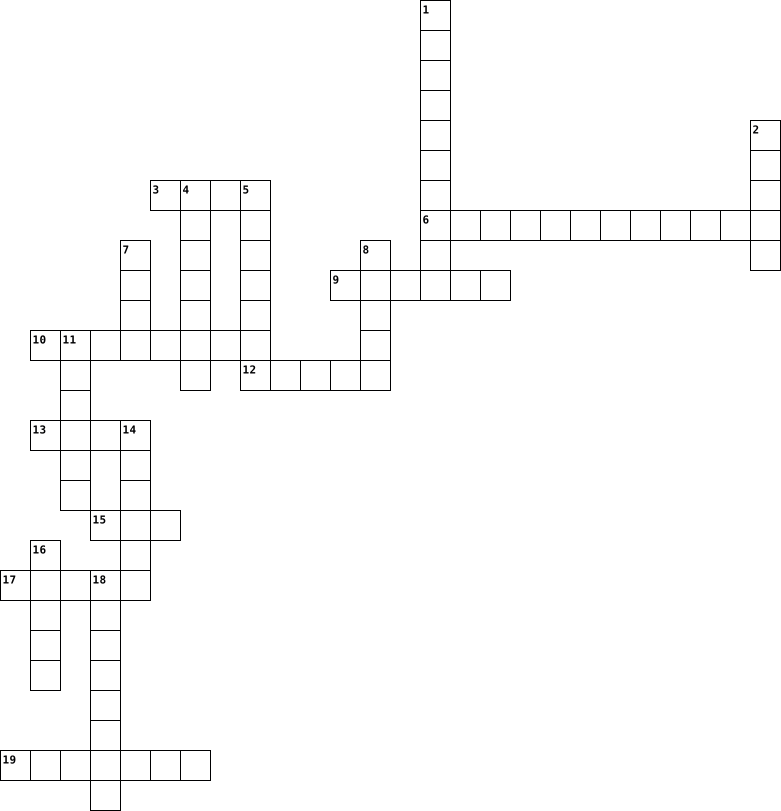
Across
- natural satellite of earth
- India got _________ (freedom’s synonym) in 1947
- the coldest planet in the sola system
- earth spinning
- number of planets in the solar system
- the rusty red planet in the solar system
- closest star to the earth
- the land of the rising sun
- the biggest planet in the solar system
Down
- earth spining around the sun
- the continents on earth
- Japan started the Tokyo ________ in 1964
- the last planet in the solar system
- the biggest continent on earth
- the fixed path which earth use to revolve around the sun
- capital of Canada
- the lightest planet in the solar system
- the planet which has air,water,sunlight,plants and living organisams on it
- the belt between Mars and Jupiter
19 Clues: earth spinning • capital of Canada • the continents on earth • closest star to the earth • natural satellite of earth • the land of the rising sun • earth spining around the sun • the biggest continent on earth • the belt between Mars and Jupiter • the last planet in the solar system • the coldest planet in the sola system • number of planets in the solar system • ...
Seasons/Day/Night Review 2026-01-13

Across
- the movement of Earth around the sun
- the imaginary line that Earth spins around
- the south half of the Earth
- the time it takes Earth to go around the sun once
- the angle at which Earth is leaning
- the two ends of Earth
- A time when the sun does not rise for many days in places near the poles
- A year with 366 days instead of 365 days
Down
- traditional story that was passed down by Inuit People for generations
- the time of year with certain weather and daylight
- the north half of the Earth
- the time when a place on Earth is facing away from the sun
- the spinning of Earth on its axis
- the path that Earth follows as it moves around the sun
- summer, winter, fall, and spring
- the invisible line in the middle of Earth
- the time when a place on Earth is facing toward the sun
17 Clues: the two ends of Earth • the north half of the Earth • the south half of the Earth • summer, winter, fall, and spring • the spinning of Earth on its axis • the angle at which Earth is leaning • the movement of Earth around the sun • A year with 366 days instead of 365 days • the invisible line in the middle of Earth • the imaginary line that Earth spins around • ...
Earth 2025-10-08

Across
- When the air or water becomes dirty.
- Land surrounded by water.
- cap Frozen land at the top of the world.
- A very high hill, often with snow on top.
- To use something again instead of throwing it away.
- A big natural hole filled with fresh water.
- A long time with no rain.
- Land with many trees and animals.
Down
- A very big area of salt water.
- A flat area between two mountains.
- range A group of many mountains together.
- spill When oil falls into the sea or onto land.
- A hot, dry place with lots of sand and no trees.
- A place with many trees, animals, and rain — usually hot.
- A place with sand and sea for swimming.
- When ice becomes water.
- A long line of moving water that goes to the sea.
17 Clues: When ice becomes water. • Land surrounded by water. • A long time with no rain. • A very big area of salt water. • Land with many trees and animals. • A flat area between two mountains. • When the air or water becomes dirty. • A place with sand and sea for swimming. • cap Frozen land at the top of the world. • range A group of many mountains together. • ...
EARTH 2026-05-21

Across
- Boundary for the exosphere
- Absorbs most of the sun's ultra violet radiation
- What is a major obstacle in the troposphere?
- closest to the earth contains the air humans breath
- the air is especially thin meteors burn up here
- Marks the altitude where a traditional aircraft can no longer effectively fly
- These are colorless, tasteless, formless, and they blend together so well
- here temperature from the sun effects this layer
Down
- Where the Ozone layer is
- In the stratosphere what is a major obstacle?
- Made the comparison between the “world's biggest memory” in 1973
- This happens when high energy particles collide with the sun
- the body or air the surrounding earth/envelope of gasses held around the earth filters what comes in and out of earth
- this has very few molecules that can escape into space
- when is the troposphere thinnest?
- blank and oxygen is 99% of earth, what is blank?
16 Clues: Where the Ozone layer is • Boundary for the exosphere • when is the troposphere thinnest? • What is a major obstacle in the troposphere? • In the stratosphere what is a major obstacle? • the air is especially thin meteors burn up here • Absorbs most of the sun's ultra violet radiation • blank and oxygen is 99% of earth, what is blank? • ...
Science Vocabulary review 2023-04-23

Across
- A pack of ice that accumulates, changes Earth
- Art of mapmaking
- On maps to give directions of N, S, E, W
- Sphere of Earth with living things
- Sphere of Earth dealing with water
- A slide of rocks that changes the Earth
- Imaginary lines going north to south on Earth
- One who makes maps
- Deposit of earth in a new place
Down
- Imaginary line that goes around center of Earth
- Sphere of Earth dealing with air
- A slide of mud that changes the Earth
- Rock made from hot liquid that cools
- Imaginary lines running east to west around Earth
- A slide of snow that changes the Earth
- Rock formed in layers
- Rock that changes from one shape to another
- He is our rock
- Sphere of Earth dealing with the ground
19 Clues: He is our rock • Art of mapmaking • One who makes maps • Rock formed in layers • Deposit of earth in a new place • Sphere of Earth dealing with air • Sphere of Earth with living things • Sphere of Earth dealing with water • Rock made from hot liquid that cools • A slide of mud that changes the Earth • A slide of snow that changes the Earth • A slide of rocks that changes the Earth • ...
test 2021-11-26

Across
- Christmas is celebrated in Australia in which season?
- When the North Pole is inclined towards the sun, the places beyond which region experience continuous daylight for about six months?
- How many seasons are there in a year?
- What is the name of the latitude on the Earth, 23.5 degrees south of the equator?
- Earth receives light from the ____
- The movement of the earth around the sun in a fixed path or orbit
- Days and Nights are caused by which movement of the earth?
- What's the shape of the earth's orbit around the sun?
- On 23rd September, it is spring season in which Hemisphere?
- The _____ of the earth make an angle of 66.5 with its orbital plane?
- The daily motion of the earth is called _____
Down
- The movement of the earth on its axis
- To complete one rotation around its axis earth takes ____ hours
- An ancient Indian astronomer
- Position of Earth when neither of the poles is tilted towards the sun is called ____________
- India is in which hemisphere?
- The plane formed by the orbit
- Which month has 29 days in a leap year?
- There are 366 days in _____year?
- Shape of the earth
- On 21st June, which Hemisphere is tilted towards the sun?
- Position of Earth when the rays of the Sun fall directly on the Tropic of Capricorn is called ____________
- Position of Earth when the rays of the Sun fall directly on the Tropic of Cancer is called ___________
- Seasons are caused by which movement of the earth?
24 Clues: Shape of the earth • An ancient Indian astronomer • India is in which hemisphere? • The plane formed by the orbit • There are 366 days in _____year? • Earth receives light from the ____ • The movement of the earth on its axis • How many seasons are there in a year? • Which month has 29 days in a leap year? • The daily motion of the earth is called _____ • ...
Moon and Earth- Blake 2025-09-10

Across
- it orbits the Earth but is not a planet
- the first layer on the Earth and Moon's structure
- created by meteors impacting the surface
- below the crust but above the core
- is at the center of the Earth
- causes damage during tornado
- Moon has extreme and the Earth has mild
- Earth has ____ such spring, summer, fall, and winter
Down
- Earth __ the Sun fully in 365 days
- causes Earth to have a day and night cycle
- field is much weaker on the Moon versus Earth
- Earth has sustainable but the moon is not
- contains sea life on Earth
- pours from clouds on Earth
- the 3rd planet from the Sun
- warms up the Earth
16 Clues: warms up the Earth • contains sea life on Earth • pours from clouds on Earth • the 3rd planet from the Sun • causes damage during tornado • is at the center of the Earth • Earth __ the Sun fully in 365 days • below the crust but above the core • it orbits the Earth but is not a planet • Moon has extreme and the Earth has mild • created by meteors impacting the surface • ...
Tectonic Plates 2024-02-08

Across
- Plates Sliding past each other
- Break between Plates Occur and that is called what?
- The innermost solid part of the Earth
- Tectonic Plates Drifting apart
- The inner liquid part of the earth
- Different substances of the Earth
- A force that squeezes something together
- A theory created by Alfred Wegner
- Mechanical layers of the earth
- Outer Part of Earth
- Solid, Outer part of the earth
- Solid Bulk of the Earth
Down
- Tectonic Plates Coming together/Squeezing together
- Cold Oceanic Lithosphere sinks back into the mantle and is recycled
- Upper Mantle below Lithosphere
- Floor of Sea Spreading
- Innermost part/layer of the Earth
- Middle of the five layers
- Pieces of the Earth's Crust
19 Clues: Outer Part of Earth • Floor of Sea Spreading • Solid Bulk of the Earth • Middle of the five layers • Pieces of the Earth's Crust • Plates Sliding past each other • Upper Mantle below Lithosphere • Tectonic Plates Drifting apart • Mechanical layers of the earth • Solid, Outer part of the earth • Different substances of the Earth • Innermost part/layer of the Earth • ...
On Earth & the Moon 2021-11-04

Across
- Solstice that begins around June 21.
- Equinox that begins close to September 22.
- Phase of the Moon when it is more than a Quarter Moon but less than a Full Moon.
- Phase of the Moon that is less than a quarter.
- The point in Earth's orbit where the Earth is nearest the Sun.
- Point of the orbit where the Moon is furthest from the Earth.
- The point of the orbit where the Moon is closest to the Earth.
- The movement of one object around another.
- Type of eclipse where the Moon passes through the shadow of Earth.
- The solid surface of Earth.
- Region of the Earth that contains water.
- The outer layer of the Moon.
Down
- The solstice that begins around December 21.
- The layer of air that surrounds the Earth.
- The flat area of the Moon.
- The inner portion of the Moon.
- The middle layer of the Moon.
- Movement of an object about an internal axis.
- Name of the equinox that begins Spring.
- Circular depressions on the Moon.
- the magnetic field of the Earth.
- Type of eclipse where the Moon passes between the Sun and Earth.
- Point of the orbit where Earth is furthest from the Sun.
23 Clues: The flat area of the Moon. • The solid surface of Earth. • The outer layer of the Moon. • The middle layer of the Moon. • The inner portion of the Moon. • the magnetic field of the Earth. • Circular depressions on the Moon. • Solstice that begins around June 21. • Name of the equinox that begins Spring. • Region of the Earth that contains water. • ...
Reasons For The Seasons 2021-11-23

Across
- north hemisphere Tropic
- March________
- Earth _______ around the
- Tropical Z__e
- Polar Z__e
- direct______
- polaris
- Summer __________
- indirect______
- North star
Down
- when the sun and moon meet its a ______
- the hottest part of earth
- Earth has a rev_______
- temperate Z__e
- santa doesn't live on the ?
- earths_____
- the earth spins on its ?
- Santa lives on the ?
- south hemisphere Tropic
- Earth has a tilt
20 Clues: polaris • Polar Z__e • North star • earths_____ • direct______ • March________ • Tropical Z__e • temperate Z__e • indirect______ • Earth has a tilt • Summer __________ • Santa lives on the ? • Earth has a rev_______ • north hemisphere Tropic • south hemisphere Tropic • Earth _______ around the • the earth spins on its ? • the hottest part of earth • santa doesn't live on the ? • ...
Science 5 2026-03-02

Across
- Red planet
- Natural Satellite of Earth
- A phase when the dark side of the moon faces Earth.
- A point where the moon's orbit is nearest to the Earth
- Keeps the planets and objects in orbit around it.
- Derived from the Latin word terra
- Occurs when the lighted part of the moon forms crescent shape as viewed from Earth
- Process of iron mixing with oxygen to form rust
- Hottest planet
- Occurs when one-half of the illuminated side of the moon is seen from earth
- the smallest planet
- largest Object in the solar system
Down
- Almost all of the moon's lighted side can be seen from Earth.
- Largest planet
- A point where the moon's orbit is farthest to the Earth
- The stage before New moon phase
- Second largest planet
- Large round pits formed from the impact of meteorites to the moon.
- It has 16 moons including Triton
- refers to the apparent shape of the moon's directly sunlit portion as viewed from Earth.
- The largest moon of Neptune.
- The larger moon of Mars.
- The lighted side of the moon appears to wane or grow smaller
- It rotates on it's axis every 17 earth hours
- All of the lighted parts of the Moon can be seen from Earth
- Biggest planet in the inner planets
26 Clues: Red planet • Largest planet • Hottest planet • the smallest planet • Second largest planet • The larger moon of Mars. • Natural Satellite of Earth • The largest moon of Neptune. • The stage before New moon phase • It has 16 moons including Triton • Derived from the Latin word terra • largest Object in the solar system • Biggest planet in the inner planets • ...
Unit 1 Vocabulary 2012-08-28

Across
- The sphere of Earth where organisms live
- The variable that changes in response to the experiment
- The study of Earth and its neighbors in space
- The thought that Earth was formed from a spinning cloud of dust and gas
- a well tested, generally accepted hypothesis
- All of the land on the interior and exterior of the Earth
- The gaseous layer that surrounds Earth
- Data that has a number
- Results gained from observations
- The largest layer of Earth, made of molten rock
- All of the water on Earth
Down
- The variable that is changed in an experiment
- The solid inner part of the Earth, made of iron and nickel
- Measured in grams
- The last step in the scientific process, performing the experiment again to ensure results are accurate
- The part of the experiment that stays the same and is used as a comparison
- An educated guess that must be testable
- The rocky outer layer of the Earth
- Data that does not have a number; color, smell, etc
- Measured in liters with a graduated cylinder
- Mass divided by volume
21 Clues: Measured in grams • Data that has a number • Mass divided by volume • All of the water on Earth • Results gained from observations • The rocky outer layer of the Earth • The gaseous layer that surrounds Earth • An educated guess that must be testable • The sphere of Earth where organisms live • a well tested, generally accepted hypothesis • ...
Modeling Earth's resources 2025-02-04

Across
- Water that contains dissolved salt
- the Earth system that contains all of the rocky layers of the Earth
- a large body of air with similar temperature, air pressure and moisture throughout
- The dynamic movement of water on, below, and above Earth's surface
- the process of breaking down rock into smaller pieces
- the dropping of sediment in a new location
- The variety of species on earth of in any one environment on earth
- A large region on Earth with a specific climate that contains a certain species
- the Earth system that is composed of all of the living things on earth
- a group of organisms of the same type that are capable of reproducing together
- a place where water collects
- Earth
Down
- the weight of air pressing on all things beneath and within in
- the upper surface or level of groundwater
- Earth system that contains all of the water on Earth
- an underground region of rocky material containing water that can be drawn out through a well
- The Earth system that is composed of all the gases that surround the Earth
- the movement of sediment
- The process through which rock changes form through igneous, sedimentary, and metamorphic types
19 Clues: Earth • the movement of sediment • a place where water collects • Water that contains dissolved salt • the upper surface or level of groundwater • the dropping of sediment in a new location • Earth system that contains all of the water on Earth • the process of breaking down rock into smaller pieces • the weight of air pressing on all things beneath and within in • ...
Environment systems crossword puzzle 2025-05-07

Across
- top layer of the earth
- under the surface
- appears at the thermosphere
- energy in the form of glucose
- living things that depend on the same resources
- The total amount of water on the Earth
- Layer of gases surrounding a planet
- uppermost layer of our atmosphere
- frozen areas
- different types of land
Down
- center of the earth
- Temperature from -86.5°C to 1200°C
- big blocks of floating ice
- Where all of life on Earth resides
- Frozen water part of the Earth
- middle layer of earth
- Lakes, rivers, oceans, and clouds
- earth’s lowest layer of our atmosphere
- Where meteors burn
- extends from the top of the troposphere
- a planet
21 Clues: a planet • frozen areas • under the surface • Where meteors burn • center of the earth • middle layer of earth • top layer of the earth • different types of land • big blocks of floating ice • appears at the thermosphere • energy in the form of glucose • Frozen water part of the Earth • Lakes, rivers, oceans, and clouds • uppermost layer of our atmosphere • ...
Earth and Universe 2020-12-08

Across
- Millions of stars forming part of the galaxy
- Imaginary line that connects the North and South Pole
- Sphere in the middle of the Earth
- The space outside of Earth, has 5 layers
- Four furthest planets to the sun, made with gas
- A big star in the center of the solar system
- Imaginary line that dives Earth into the North and South Hemisphere
- Represents the Earth in a way that is physically accurate because it is round
- Earth spins on its axis and takes 24 hours (day and night) to do this
Down
- Eight planets orbiting around the sun in space
- Earth orbits around the sun and takes one year to do this
- All the layers of rock and mineral inside the Earth
- The planet we live in
- All the layers of water on Earth, has three different states
- Earth's outermost layer, made with tectonic plates
- Four closest planets to the sun, made with rocks and metal
- Represents Earth on a flat surface
- The Earth's only natural satellite, rotation and revolution lasts 28 days
- Middle layer of the Earth, very hot and creates magma
19 Clues: The planet we live in • Sphere in the middle of the Earth • Represents Earth on a flat surface • The space outside of Earth, has 5 layers • Millions of stars forming part of the galaxy • A big star in the center of the solar system • Eight planets orbiting around the sun in space • Four furthest planets to the sun, made with gas • ...
Science theo polleys 2024-01-30

Across
- mountain white lava in it.
- there is blank on the earth.
- found in old mountains.
- The earth blank is 5882 sextillion metric tons.
- core the blank is in the earth.
- blank brakes existing rocks.
- a characteristic.
- the blank is under the crust.
- a blank makes mountains like the Himalayas.
- rock formation.
Down
- frozen chunks of water.
- core is not in the earth.
- the blank from the South Pole to the North Pole is 12664 km.
- the earth is 45 percent of blank.
- a way to measure the earth.
- Moving air.
- when blank hardens it makes a new rock.
- found in a rock.
- over time heat and pressure melt blank.
- if the blank was an apple the crust would be as thick as the skin.
20 Clues: Moving air. • rock formation. • found in a rock. • a characteristic. • frozen chunks of water. • found in old mountains. • core is not in the earth. • mountain white lava in it. • a way to measure the earth. • there is blank on the earth. • blank brakes existing rocks. • the blank is under the crust. • core the blank is in the earth. • the earth is 45 percent of blank. • ...
Earth Science 2017-01-25

Across
- The section of the Earth under the Crust. Made mostly of molten lava.
- One who studies Seismology.
- The second deepest section of the Earth, it is in between the Mantle and the Inner Core. Made mostly of iron and nickel.
- When two plates come together, this can form volcanos.
- The section of the Earth which is inhabited. The Outer layer of the Earth.
- The study of seismic waves and earthquakes.
- The first waves to reach a seismic station. A type of Body Wave.
- This is created due to the movement of tectonic plates.
- The second type of Surface Wave, this wave moves the ground up and down.
- A main type of Seismic Wave, that can penetrate the Earth.
- One who studies geology.
- The fastest type of Surface Waves, this wave move the ground side to side.
Down
- When two plates slide past each other, unlike the other two boundaries no magma is formed.
- The record of rocks and fossils used to figure out the history of Earth.
- When two tectonic plates move away from each other, lava helps the create a oceanic crust.
- The second Body Wave, this wave can only solid rock and not through liquid.
- A part of the Earth that moves in with each other.
- The study of rocks and the earth.
- A main type of Seismic Wave, this wave can not penetrate the Earth.
- Waves of energy due to the movement of rocks in the Earth.
- The deepest section of the Earth, the center of the Earth. Made mostly of iron.
21 Clues: One who studies geology. • One who studies Seismology. • The study of rocks and the earth. • The study of seismic waves and earthquakes. • A part of the Earth that moves in with each other. • When two plates come together, this can form volcanos. • This is created due to the movement of tectonic plates. • Waves of energy due to the movement of rocks in the Earth. • ...
Earth and Universe 2020-12-08

Across
- Represents the Earth in a way that is physically accurate because it is round
- The space outside of Earth, has 5 layers
- the Earth's only natural satellite, rotation and revolution lasts 28 days
- Imaginary line that connects the North and South Pole
- Middle layer of the Earth, very hot and creates magma
- A big star in the center of the solar system
- Imaginary line that dives Earth into the North and South Hemisphere
- Four closest planets to the sun, made with rocks and metal
Down
- All the layers of water on Earth, has three different states
- Earth orbits around the sun and takes one year to do this
- Four furthest planets to the sun, made with gas
- Earth spins on its axis and takes 24 hours (day and night) to do this
- Sphere in the middle of the Earth
- The planet we live in
- Earth's outermost layer, made with tectonic plates
- Eight planets orbiting around the sun in space
- Represents Earth on a flat surface
- all the layers of rock and mineral inside the Earth
- Millions of stars forming part of the galaxy
19 Clues: The planet we live in • Sphere in the middle of the Earth • Represents Earth on a flat surface • The space outside of Earth, has 5 layers • A big star in the center of the solar system • Millions of stars forming part of the galaxy • Eight planets orbiting around the sun in space • Four furthest planets to the sun, made with gas • ...
Seafloor Crossword 2022-11-14

Across
- layer between the crust and the core
- outermost firm layer of earth
- plates moving away from each other
- liquid layer of earth
- lava and gas are released from a volcano
- the bending of rock layer
- crack in a plate
- a squeezing force
- deepest part of the ocean
- plates sliding past eachother
- hot rocks in the core
Down
- soft layer of earth
- melted rock on earth's surface
- a pulling force
- plates coming together
- solid layer of earth
- dividing lines where plates meet
- outermost layer of Earth
- all the continents on Earth were actually one huge supercontinent surrounded by one enormous ocean
- melted rock beneath the earth
20 Clues: a pulling force • crack in a plate • a squeezing force • soft layer of earth • solid layer of earth • liquid layer of earth • hot rocks in the core • plates coming together • outermost layer of Earth • the bending of rock layer • deepest part of the ocean • outermost firm layer of earth • melted rock beneath the earth • plates sliding past eachother • melted rock on earth's surface • ...
Earth, Moon, and Sun - LG 1-4 2025-08-30

Across
- Earth-centered model
- Causes seasons
- Sun-centered model
- Time when it is light on Earth
- Sunlight that hits Earth straight
- Season with more direct sunlight
- Earth going around Sun → year
- Caused when sunlight is blocked
- Big star at the center of the Solar System
- Pulls objects together
Down
- Time when it is dark on Earth
- Season with less direct sunlight
- Earth spinning → day and night
- Sunlight that spreads out
- Shape of the Moon we see
- Our planet
- Orbits Earth
- Path an object travels around another
- Line Earth spins around
19 Clues: Our planet • Orbits Earth • Causes seasons • Sun-centered model • Earth-centered model • Pulls objects together • Line Earth spins around • Shape of the Moon we see • Sunlight that spreads out • Time when it is dark on Earth • Earth going around Sun → year • Earth spinning → day and night • Time when it is light on Earth • Caused when sunlight is blocked • Season with less direct sunlight • ...
Layers of the Earth 2024-02-08

Across
- outside the inner core
- what something (specifically the earth) is made up of or composed of or the original layers of the earth
- the tectonic plates move away from eachother
- the mechanical layers of the earth
- the thickest layer of the earth
- the border of a tectonic plate
- created by Alfred Wegner that proposed the idea of plate tectonis
- The thinnest layer of the Earth
- plates move against eachother
Down
- large slabs of rock that moves at 2cm per year
- the older seafloor pushes outwards to make room for the new seafloor
- it's below the lithoshpere and takes up most of the mantle
- the largest mechanical layer of the earth
- plates are moving towards each other
- the innermost layer of the core
- the result of a transform boundary
- high tension
- the uppermost layer of the earth that includes the crust and part of the mantle
- the continents were once pangea and then drifted apart
- the innermost layer of the earth
20 Clues: high tension • outside the inner core • plates move against eachother • the border of a tectonic plate • the innermost layer of the core • the thickest layer of the earth • The thinnest layer of the Earth • the innermost layer of the earth • the result of a transform boundary • the mechanical layers of the earth • plates are moving towards each other • ...
GEO TERR Words and MAL Words 2014-10-28

Across
- math that deals with the measurement of the earth
- science that deals with earth's history recorded in rocks
- a bad health condition, disease
- bad-smelling
- a word used the wrong way, usually with humorous results
- bad or harmful, producing death; cancerous
- to bury in the earth
- taking the earth as center
- lying under the surface of the earth
- illness believed to be spread by bad air, actually spread by mosquitoes
- the physical features of a region of the earth
- a level platform of earth
Down
- one who does wrong; a villian
- an earth-shaped stone with crystals inside
- desiring harm to someone or something else
- performing one's duty in a bad or wrong way, often used of doctors
- bad speech, a curse
- science that records facts about earth's surface
- having bad feelings toward someone or something; spite, hatred
- the sea located in the middle region of the earth
20 Clues: bad-smelling • bad speech, a curse • to bury in the earth • a level platform of earth • taking the earth as center • one who does wrong; a villian • a bad health condition, disease • lying under the surface of the earth • an earth-shaped stone with crystals inside • desiring harm to someone or something else • bad or harmful, producing death; cancerous • ...
Layer Of The Earth 2022-03-03

Across
- means A Massive irregularly shaped slab of solid rock. Generally composed of both continental and oceanic lithosphere.
- means are caused by the very hot material at the deepest part of the mantle rising then cooling and sinking again repeating this cycle over and over again.
- means this occurs when plates move towards each other and collide.
- means the upper layer of the earth's mantle, below the lithosphere, in wich there is relatively low convection is thought to occur.
- Means a lowland region that forms where earth's tectonic plates move apart or rift.
- means the formation of an new area of oceanic crust.
- Means Though Outer Part Of A Loaf Of Bread.
- Means That He Is A Science And Meteorogist and geophysicist.
- means ___________ Is defined as the rock and crust surface that covers the earth.
- Is A liquid That Is Call ____ And Its Hot When It Fells To The Water Starts Creating A New Island Made Of Extrusive rocks And The Lava Comes From The Layers Of The Earth.
- means an elevated region with a central valley on an ocean floor at the boundary between between two diverging tectonics plates where new crust forms from upwelling magma.
- The ______ is the mostly solid bulk of the earth's interior the ______ Lies between earth's dense,super heated core and it's thin outer layer.
Down
- means A plate boundary along wich relative motion between the two plates is parallel to the strike of the fault.
- means a scientific theory that explains how major lands forms are created as a result of earth's subterranean movements.
- Means _____ also _______ In Early Geologic Time, A Super Continent that incorporated almost all the land masses on earth's.
- Means Is A Liquid And It's hot by inner core heat.
- boundary means occurs when two tectonics plates move away each other.
- means the movement of continents resulting from the motion of tectonics plates.
- Means The Solid Material Found In The Center Of The Earth And It Has High Temperature and Pressure, distinct from the liquid outer core.
- means A fracture or zone of fractures between two blocks or rocks.
- means Molten Rock that's is underground.
21 Clues: means Molten Rock that's is underground. • Means Though Outer Part Of A Loaf Of Bread. • Means Is A Liquid And It's hot by inner core heat. • means the formation of an new area of oceanic crust. • Means That He Is A Science And Meteorogist and geophysicist. • means this occurs when plates move towards each other and collide. • ...
water on the Earth 2017-12-13

Across
- spring: a spring whose water flows from a crack in the cap rock of the aquifer
- The percentage of open space between individual rock particles in a rock layer
- the area of land that is drained by a water system
- cycle: the continuous movement of Earth’s water from the ocean to the atmosphere to the land and back to the ocean
- A human-made hole that is deeper than the level of the water table
- the boundary between drainage areas that have streams that flow in opposite directions
- the materials carried by a stream
- As its current slows, a river often deposits its load in a fan-shaped pattern
- zone: The ground surface where water enters an aquifer
- the process by which soil and sediment are transported from one location to another
- A rock’s ability to let water pass through
- Sharp, icicle-shaped features that form on cave ceilings
- When the water table is lower than the level of a cave, the cave is no longer supported by the water underneath. The roof of the cave can then collapse, which leaves a circular depression
Down
- the measure of the change in elevation over a certain distance
- river: erodes its channel wider rather than deeper. The gradient of a mature river is not as steep as that of a youthful river. Also, a mature river has fewer falls and rapids
- river: erodes its channel deeper rather than wider. The river flows quickly because of its steep gradient. Its channel is narrow and straight. The river tumbles over rocks in rapids and waterfalls
- the path that a stream follows
- a stream that flows into a lake or into a larger stream
- The amount of water that a stream or river carries in a given amount of time
- Rivers: rivers are found where the land is raised by tectonic activity. When land rises, the river’s gradient becomes steeper, and the river flows more quickly
- fans: fan-shaped deposits that, unlike deltas, form on dry land
- deposit: Heavy minerals sometimes deposited at places in a river where the current slows down
- water held underground in the soil or in pores and crevices in rock
- A rock layer that stores groundwater and allows the flow of groundwater
- the process in which material is laid down or dropped
- of aeration: the layer that lies directly between the zone of saturation and the earth's surface
- The area along a river that forms from sediment deposited when a river overflows its banks
- river: has a low gradient and little erosive energy. Instead of widening and deepening its banks, the river deposits rock and soil in and along its channel
28 Clues: the path that a stream follows • the materials carried by a stream • A rock’s ability to let water pass through • the area of land that is drained by a water system • the process in which material is laid down or dropped • zone: The ground surface where water enters an aquifer • a stream that flows into a lake or into a larger stream • ...
Waters of the Earth 2017-10-11

Across
- the process by which water moves through the Earth and atmosphere
- largest ocean
- longest river in the United States
- percent of Earth's surface that is covered by water
- when water cools and changes from a gas to a liquid
- where most of freshwater is trapped
- another or more scientific name for water cycle
- a use of freshwater for humans
- the main source of energy that fuels the water cycle
- percent of water on Earth that is freshwater
Down
- world's longest river
- percent of water on Earth that is saltwater
- when water changes from a liquid to a gas
- when rain, sleet, snow or hail fall from Earth's atmosphere
- the amount of salt water has and a characteristic of water
- water found below Earth's surface
- characteristic of water
- largest body of water
- an example(s) of where we can get freshwater from
- the last stage of the water cycle where water moves to a storage area
20 Clues: largest ocean • world's longest river • largest body of water • characteristic of water • a use of freshwater for humans • water found below Earth's surface • longest river in the United States • where most of freshwater is trapped • when water changes from a liquid to a gas • percent of water on Earth that is saltwater • percent of water on Earth that is freshwater • ...
Chapter 1 - The Earth 2012-10-08

Across
- this is the middle layer of the earth
- the middle layer of the earth is made up mostly of this
- Ireland is on this plate
- the Alpine fold mountains are _____ than the Armoricans
- the inner most layer of the earth
- the supercontinent where all the continents were joined together
- the Mid Atlantic Ridge happened because the Eurasian and ____ plate pulled apart
- a dormant volcano in Ecuador
- San Francisco lies along this fault and suffers many earthquakes as a result
- earthquakes are measured on this scale
- these fold mountains are 250 million years old
- a volcanic island
- in 2004 a huge tsunami destroyed towns and killed thousands here
- an active volcano in Italy
- these lie on the earths surface like a jigsaw
Down
- magma reaches the surface of a volcano through this
- an extinct volcano in Ireland
- measure earthquakes
- the Mid Atlantic Ridge is an example of this
- the worlds youngest fold mountains
- these pieces of earth can crash into each other or
- this is when an earthquake happens at sea
- when an earthquake occurs it send these out
- the point on the ground where the strongest effects of an earthquake are felt
- Many volcanoes and earthquake occur at this ring of fire
- where the earthquake occurs below the ground
- in 1906 a powerful earthquake struck here
- where plates slide past each other these can occur
- this is the layer of the earth on the surface
- a volcanic island at the top of the Mid Atlantic Ridge
30 Clues: a volcanic island • measure earthquakes • Ireland is on this plate • an active volcano in Italy • a dormant volcano in Ecuador • an extinct volcano in Ireland • the inner most layer of the earth • the worlds youngest fold mountains • this is the middle layer of the earth • earthquakes are measured on this scale • this is when an earthquake happens at sea • ...
Inside the Earth 2 2014-01-02

Across
- Paper is one kind of this...
- Thunder makes this sound.
- Water comes out.
- Water slowly coming out.
- Can't see.
- Changed to.
- Round on the ground.
- For cars or scooters.
- Under the mountain.
- The lava comes out.
- Not solid.
- Removed.
Down
- From the boiling water.
- It makes is cool.
- Holds.
- Really.
- Only eating bread is...
- Where the water meets the air...
- Ice cream in the sun.
- To the top...
20 Clues: Holds. • Really. • Removed. • Can't see. • Not solid. • Changed to. • To the top... • Water comes out. • It makes is cool. • Under the mountain. • The lava comes out. • Round on the ground. • Ice cream in the sun. • For cars or scooters. • From the boiling water. • Only eating bread is... • Water slowly coming out. • Thunder makes this sound. • Paper is one kind of this... • ...
Unit 6 - The Earth 2014-02-03

Across
- This type of rock forms when liquid magma cools.
- Liquid metal.
- The coldest layer of the atmosphere that protect Earth from meteors.
- Salt water and fresh water are in this state.
- The layer of gases surrounding Earth.
- Contains the ozone layer that absorbs and reflects UV light.
- Water in its gaseous form.
- Made of one or more minerals.
- All the water that exists on Earth.
- The hardest mineral.
- The part of the Earth that includes rocks and minerals.
- The outer layer of the geosphere, made of rocks and minerals.
- Water in its solid form.
Down
- The inner sphere of the Earth
- Non-living solid matter from the Earth classified by color, hardness, and lustre.
- Small rivers and streams.
- The end of a river (usually at an ocean or sea).
- Compressed sediment forms this form of rock.
- Heat and pressure can change other rocks into this type of rock.
- When water or wind move pieces of weathered rock or soil to a different place.
- A natural process that breaks rocks into smaller pieces.
- Extends approximately 17 km above the Earth´s surface.
- The hottest part of the Earth is made of this.
- Small particles on the bottom of the oceans formed by weathering of igneous rocks.
- The layer that surrounds the core.
- A river starts here.
26 Clues: Liquid metal. • The hardest mineral. • A river starts here. • Water in its solid form. • Small rivers and streams. • Water in its gaseous form. • The inner sphere of the Earth • Made of one or more minerals. • The layer that surrounds the core. • All the water that exists on Earth. • The layer of gases surrounding Earth. • Compressed sediment forms this form of rock. • ...
The Earth and Space 2014-05-21

Across
- A rock formed from consolidated clay sediments
- Organic material is converted into stone with the replacement of minerals
- Physical force used against an object
- A layer of rock from a certain time period
- An era from 230 million to 190 million years ago (disappearance of dinosaurs)
- The extinction of a large number of species within a relatively short period of geological time
- The star around which the earth orbits
Down
- An era from 500 million to 425 million years ago
- A long and distinct period of history with a particular feature or characteristic
- A discharge of electricity
- A change where a species becomes better suited with its environment
- A group of living organisms who look similar and are able to reproduce
- The eruption of a volcano
- Hard, whitish tissue making up the skeleton in humans
- A specialist in paleontology
- An era from 135 million to 63 million years ago
- An era from 405 million to 345 million years ago
- A solid inorganic substance of natural occurrence
- The process of being eroded by natural agents
- An era from 280 million to 230 million years ago
- The remains of an organism preserved in petrified form
21 Clues: The eruption of a volcano • A discharge of electricity • A specialist in paleontology • Physical force used against an object • The star around which the earth orbits • A layer of rock from a certain time period • The process of being eroded by natural agents • A rock formed from consolidated clay sediments • An era from 135 million to 63 million years ago • ...
History of the Earth 2023-12-21

Across
- the number of years that have passed since the rock formed
- a vertebrate that controls its own body temperature and feeds milk to it's young
- period during the first part of the Paleozoic era when life took a huge leap forward
- era known as the "age of reptiles"
- Geologists ________ that layers with matching index fossils are the same age
- long units of time
- when an element is unstable and releases energy in the form of radiation
- when compared to another thing
- animals without backbones
- animal that lives part of it's life on land and part of it's life in water
- dating used to find the age of plant and animal remains
- animals with scaly skin that lay eggs with tough, leathery shells
- radioactive _____________ is used by geologists to determine the absolute age of rocks
- Period of the Paleozoic Era know as the "Age of Fish"
- Geologists continually _______ the geologic time scale with new discoveries and new technology
- Eras are subdivided into units of geologic time called
- a gap in the geologic record
Down
- causes losses in rock layers
- used to determine the relative ages of sedimentary rock layers
- time in earth's history with only single-celled organisms
- animal with a backbone
- the preserved remains or traces of living things
- an event during which many types of living things became extinct at the same time
- its age compared to the ages of other rocks
- period of time when mammals first appeared
- dating used to find the age of rocks
- period of the Mesozoic era that ended with the extinction of the dinosaurs
- a record of the geologic events and the evolution of life forms
- Period of Cenozoic Era known as "Age of Humans"
- Last period of Paleozoic Era when Pangaea forms
30 Clues: long units of time • animal with a backbone • animals without backbones • causes losses in rock layers • a gap in the geologic record • when compared to another thing • era known as the "age of reptiles" • dating used to find the age of rocks • period of time when mammals first appeared • its age compared to the ages of other rocks • ...
layers of the earth 2023-03-03

Across
- middle of the earth
- unable to bend or be forced out of shape; not flexible.
- forming or belonging to a continent.
- parts of the earth
- outermost solid shell of a rocky planet
- a line that marks the limits of an area; a dividing line.
- top part
- mostly solid bulk of Earth's interior
- a physical system from one state, or condition, to another
Down
- hard and solid
- Earth's seven main divisions of land
- rocks are types of rock that are formed by the accumulation or deposition of mineral
- asthenosphere
- the outermost layer of Earth's lithosphere that is found under the oceans
- bottom part
- the rigid outer part of the earth, consisting of the crust and upper mantle.
- a dark, fine-grained volcanic rock that sometimes displays a columnar structure.
- hard
- also known as basal lamina, is a thin, dense layer of extracellular matrix
- sphere of living things
20 Clues: hard • top part • bottom part • asthenosphere • hard and solid • parts of the earth • middle of the earth • sphere of living things • Earth's seven main divisions of land • forming or belonging to a continent. • mostly solid bulk of Earth's interior • outermost solid shell of a rocky planet • unable to bend or be forced out of shape; not flexible. • ...
History of the Earth 2024-10-18

Across
- improves adaptation
- source of atmosphere
- star orbiter
- photosynthesis product
- cooperating life-forms
- supercontinent
- eon of visible life
- woolly elephant
- crater maker
- earliest life-forms
- terrible lizard
Down
- gas layer around earth
- eating sunlight
- where life originated
- second eon (no oxygen)
- third eon (has oxygen)
- human specie (2 words)
- disk around early sun
- underwater volcano
- eon of hellish earth
20 Clues: star orbiter • crater maker • supercontinent • eating sunlight • woolly elephant • terrible lizard • underwater volcano • improves adaptation • eon of visible life • earliest life-forms • source of atmosphere • eon of hellish earth • where life originated • disk around early sun • gas layer around earth • photosynthesis product • cooperating life-forms • second eon (no oxygen) • third eon (has oxygen) • ...
Layers of the Earth 2022-11-09

Across
- rock that makes up the oceanic crust
- icy bodies that slammed into early earth
- part of the core that is liquid
- settling into layers due to density
- solid layer that "flows"
- rock that makes up the continental crust
- outermost physical layer
- second planet from the sun
- rocky planet closest to the sun
Down
- Earth is approximately 4.6 _____ years old
- Earth's outermost compositional layer
- make waves that allow us to study the earth
- 4th planet from the sun
- force responsible for pulling earth together
- planet we live on
- what happens to Temp and pressure as you move toward the core
- iron and this dense element make up the core
- part of the core that solid
- Earth's thickest layer
- physical layer known as the lower mantle
20 Clues: planet we live on • Earth's thickest layer • 4th planet from the sun • solid layer that "flows" • outermost physical layer • second planet from the sun • part of the core that solid • part of the core that is liquid • rocky planet closest to the sun • settling into layers due to density • rock that makes up the oceanic crust • Earth's outermost compositional layer • ...
Layers of the Earth 2023-01-27

Across
- A part of the Compositional Layer of the Earth. The layer of solid material between Earth's crust and core. It is almost two-thirds of Earth's mass.
- Layers of the Earth divided based on composition (element) that make up (compose) the rock in each layer.
- A prefix meaning "middle".
- A part of the Mechanical Layers of the Earth. The strong, lower part of the mantle between the Asthenosphere and the outer core. It is solid due to pressure.
- Circulating currents in the mantle caused by the magma being heated by the core of the Earth. It is a process of heating and rising (increase of density), followed by cooling and falling (decrease of density).
- A field that surrounds the Earth because of the convection currents in Earth's liquid outer core.
- A prefix meaning "rock".
- A part of the Mechanical Layers of the Earth. The solid, outer layer of the Earth that consists of the crust and upper part of the mantle.
- A layer of Earth's crust made of granite and makes up continents.
- A prefix meaning "weak".
- A part of the Mechanical Layers of the Earth. It is dense liquid layer made up of iron and nickel. It surrounds the inner core.
Down
- A part of the Mechanical Layers of the Earth. A dense, rigid solid; it has the most extreme temperature and intense pressure.
- An elastic wave (P and S waves) in the earth produced by an earthquake or other means. It travels through the Earth's layers and allows us to learn about the properties of each layer.
- A part of the Compositional Layer of the Earth. The thin and solid outermost layer of the Earth above the mantle. It is only about 1% of Earth's mass.
- Layers of the Earth divided based on physical structure - state of matter and how each moves and reacts to stresses of temperature and pressure.
- A layer of Earth's crust made of basalt and lies beneath the ocean.
- A suffix meaning "layer".
- Temperature, gravity, pressure, and density - all increase moving toward the core of the Earth.
- A part of the Mechanical Layers of the Earth. It is the plastic-like layer of the mantle below the lithosphere; made of mantle rock that flows very slowly, which allows tectonic plates to move on top of it. It is ductile and weak.
- A part of the Compositional Layer of the Earth. The central part of the earth below the mantle composed of iron and nickel.
20 Clues: A prefix meaning "rock". • A prefix meaning "weak". • A suffix meaning "layer". • A prefix meaning "middle". • A layer of Earth's crust made of granite and makes up continents. • A layer of Earth's crust made of basalt and lies beneath the ocean. • Temperature, gravity, pressure, and density - all increase moving toward the core of the Earth. • ...
The Earth System Crossword 2024-10-09

Across
- Something useful
- The air that surrounds Earth
- The first closest planet to the Sun.
- A group of parts that work together
- The solid form of water
- The number of planets in our solar system
- Toxic water
- The Earth does this every 365 days.
- The center of our solar system.
- To create something that solves a problem.
- Liquid to gas
Down
- All living things on Earth
- The Earth does this every 24 hours.
- a person who uses science knowledge to design something in order to solve a problem.
- The only planet we know of with life.
- All of the water on Earth
- Gas to liquid
- Mr. Hammons favorite drink
- A group of atoms joined together in a particular way.
- The gas form of water
- Water vapor is the way to describe which form of water?
- The 2nd closest planet to the Sun.
22 Clues: Toxic water • Gas to liquid • Liquid to gas • Something useful • The gas form of water • The solid form of water • All of the water on Earth • All living things on Earth • Mr. Hammons favorite drink • The air that surrounds Earth • The center of our solar system. • The 2nd closest planet to the Sun. • The Earth does this every 24 hours. • A group of parts that work together • ...
Earth & The Solar System 2024-11-13

Across
- A relatively small, rocky body that travels through space
- A rotating cloud of gas and dust from which the sun and planets formed
- The path that a body follows as it travels around another body in space
- One complete orbit
- The spin of a body on its axis
- A region of the solar system that starts just beyond the orbit of Neptune and that contains dwarf planets and other small bodies made mostly of ice
- A small, rocky object that orbits the sun; most asteroids are located in a band between the orbits of Mars and Jupiter
- The warming of the surface and lower atmosphere of Earth that occurs when water vapor, carbon dioxide, and other gases absorb and reradiate energy
- A large celestial body that is composed of gas and emits light
- A celestial body that orbits the sun, is round because of its own gravity, and has cleared the neighborhood around its orbital path
- A celestial body that revolves around a body that is greater in mass; a natural satellite
- A force of attraction between objects that is due to their masses and that decreases as the distance between the objects increases
Down
- A spherical region that surrounds the solar system, that extends from the Kuiper belt to almost halfway to the nearest star, and that contains billions of comets
- The _____________ point is the temperature and pressure at which a solid becomes a liquid
- A natural or artificial body that revolves around a celestial body that is greater in mass
- A mixture of gases that surrounds a planet, moon, or other celestial body
- Distance from the sun that allows for liquid water
- A bright streak of light that results when a meteoroid burns up in Earth's atmosphere
- A small body of ice, rock, and cosmic dust that follows an elliptical orbit around the sun and that gives off gas and dust in the form of a tail as it passes close to the sun
- The sun and all of the planets and other bodies that travel around it
- The ___________ point is the temperature and pressure at which a liquid becomes a gas
- The transfer of energy as electromagnetic waves
22 Clues: One complete orbit • The spin of a body on its axis • The transfer of energy as electromagnetic waves • Distance from the sun that allows for liquid water • A relatively small, rocky body that travels through space • A large celestial body that is composed of gas and emits light • The sun and all of the planets and other bodies that travel around it • ...
Landforms of the Earth 2025-09-05

Across
- – A steep, high wall of rock or soil.
- – A smaller, rounded landform that is higher than the land around it but lower than a mountain.
- – A triangle-shaped landform made of soil at the mouth of a river.
- – A mountain that can erupt with lava, ash, and gases from inside the Earth.
- – A wetland with grasses and shallow water.
- – A group or chain of islands close together.
- – A body of freshwater surrounded by land.
- – A dry land with little or no rain and very few plants.
- – A piece of land surrounded by water on three sides but connected to the mainland.
- – A tall, steep landform that rises high above the land around it.
Down
- – A long, flowing body of freshwater that moves toward a lake, sea, or ocean.
- – A wide, flat stretch of land with few trees.
- – A natural hollow space found in a hill, cliff, or underground.
- – The largest body of saltwater that covers most of the Earth’s surface.
- – A low area of land between hills or mountains, often with a river flowing through it.
- – A smaller body of saltwater, partly surrounded by land, connected to an ocean.
- – A part of a sea or ocean that is partly surrounded by land.
- – A piece of land completely surrounded by water.
- – A narrow strip of land that connects two larger land areas.
- – A large, flat area of land that is higher than the land around it.
20 Clues: – A steep, high wall of rock or soil. • – A body of freshwater surrounded by land. • – A wetland with grasses and shallow water. • – A group or chain of islands close together. • – A wide, flat stretch of land with few trees. • – A piece of land completely surrounded by water. • – A dry land with little or no rain and very few plants. • ...
Surface of the Earth 2020-12-09

Across
- main part of a continent
- large landform formed from tectonic forces
- the largest mass of water on Earth
- The _____ lies between the Earth's core and crust
- _____ rocks are formed from cemented minerals
- the midline of the Earth
- natural flowing bodies of water
- igneous rocks formed in the Earth's crust
- ______ plates are pieces of Earth's crust
- the most common material found in deserts
Down
- opening in the earth's crust
- world's largest continuous masses of land
- body of intrusive igneous rocks
- tallest mountain in the world (8848 m)
- area characterized by its soil, plants, and climate
- _____ rocks are rocks that changed forms
- igneous rocks formed on the surface
- distance above sea water
- _____ rocks are formed from the cooling of lava
- the lowest point of dry land on Earth (413 m)
20 Clues: main part of a continent • the midline of the Earth • distance above sea water • opening in the earth's crust • body of intrusive igneous rocks • natural flowing bodies of water • the largest mass of water on Earth • igneous rocks formed on the surface • tallest mountain in the world (8848 m) • _____ rocks are rocks that changed forms • world's largest continuous masses of land • ...
Unit 8 The Earth 2022-05-27

Across
- a length of time in the Earth's history
- the outer layer of Earth
- wear caused by one rock rubbing against another
- molten rock below the Earth's crust
- small fragments of rock
- when lava cools down on the earths surface
- the inner part of the Earth
- substance that makeup rock
- a molten rock
- the modern horse
- when grains of sand were pressed together (sedimentary rock)
- when eroded rock fragments settle
- a liquid state
- a division of time within an era
Down
- wear on rocks caused by rains, wind, frost and temperature changes
- squeezed into smaller space
- the features of material, how it behaves
- the layer of molten rock below the earth's surface
- underground cooling
- the remains of plants and animal from millions years
- type of igneous rock
- fragments of rock that fall on the Earth from space
- a type of large particle found in soil
- a type of small particle found in soil
- allows water pass through
- the remains and products of living thongs found in soil
- carrying away fragments of rock
- fragments of rock
28 Clues: a molten rock • a liquid state • the modern horse • fragments of rock • underground cooling • type of igneous rock • small fragments of rock • the outer layer of Earth • allows water pass through • substance that makeup rock • squeezed into smaller space • the inner part of the Earth • carrying away fragments of rock • a division of time within an era • when eroded rock fragments settle • ...
The Changing Earth Crossword 2020-06-14

Across
- dating, Used to arrange geological events, and the rocks they leave behind, in a sequence. The method of reading the order is called stratigraphy (layers of rock are called strata).
- The act or result of decomposing; disintegration.
- A remnant or trace of an organism of a past geologic age, such as a skeleton or leaf imprint, embedded and preserved in the earth's crust.
- A type of rock formed under pressure and high temperatures.
- In geology, formed by deposition of materials previously held in suspension by water.
- The molten rock material under the earth's crust, from which igneous rock is formed by cooling.
- The quantity of something per unit measure, especially per unit length, area, or volume in which the layers of the Earth are differentiated by.
- The condition of being pressed.
- Of or relating to igneous rock that is forced while molten into cracks or between other layers of rock and form larger crystals.
- Relating to or being a commodity or resource, that is inexhaustible or replaceable by new growth.
- Any of the chemical or mechanical processes by which objects exposed to the weather are worn or broken down.
Down
- The waters of the earth's surface as distinguished from those of the lithosphere and the atmosphere.
- Derived from magma poured out or ejected at the earth's surface. These rocks contain small crystal.
- The outer part of the earth, consisting of the crust and upper mantle.
- Formed by solidification from a molten state.
- the outer most layer of the Earth.
- An essential part of sedimentary rock or fossil formation/The process of compacting or the state of being compacted.
- The group of natural processes, including weathering, dissolution, abrasion, corrosion, and transportation, by which material is worn away from the earth's surface.
- The process or business of extracting ore or minerals from the ground.
- renewable, A substance that is being used up more quickly than it can replace itself.
20 Clues: The condition of being pressed. • the outer most layer of the Earth. • Formed by solidification from a molten state. • The act or result of decomposing; disintegration. • A type of rock formed under pressure and high temperatures. • The outer part of the earth, consisting of the crust and upper mantle. • ...
Layers of the Earth 2020-11-04

Across
- the top layer of oceanic crust is made of _____________, sand, and other sediments
- folded rocks forming mountains
- crust beneath the oceans
- the fastest seismic waves
- layer of the mantle that is mostly solid
- created by heat from the core, this makes using a compass possible
- mantle layer that is between the other two layers
- layer of the upper mantle made of rock material that flows slowly, like putty
- ancient land masses made of crystalline rocks
- layer of the mantle that is hot and flexible
- boundary between the mantle and the crust
- crust on which the continents rest
- currents in the mantle caused by differences in heat
Down
- the liquid layer of the core
- most common rock in continental crust
- the second layer of oceanic crust is mostly made of ________
- the ability of rock to flow and change shape
- deep depressions filled with sedimentary rocks
- the thinnest layer of the earth
- s waves can only travel through this type of matter
- this solid portion of the earth is made of an iron-nickel alloy
- outermost layer of the mantle and the crust
- the central portion of the earth
- layer makes up most of the earth's volume and mass
- the bottom layer of oceanic crust is mostly made of ________
25 Clues: crust beneath the oceans • the fastest seismic waves • the liquid layer of the core • folded rocks forming mountains • the thinnest layer of the earth • the central portion of the earth • crust on which the continents rest • most common rock in continental crust • layer of the mantle that is mostly solid • boundary between the mantle and the crust • ...
Inside the Earth 2020 2020-11-20

Across
- As an object heats up its density is ____ and it floats.
- The largest layer of the Earth.
- The kind of rock that makes up the continental crust is called?
- The process of going under another continent is called.
- ____ are an example of indirect evidence that scientists use to learn about the inside of the Earth.
- Earthquakes produce ____ waves that scientists use to study the inside of the Earth.
- An example of radiation is ____ that we feel outside every day.
- The middle of the Earth is called the.
- _____ samples are an example of direct evidence that scientists use to learn about the inside of the Earth.
- We think the heat that causes the convection currents in the mantle comes from the Earth's ____.
- The outer core of the Earth is in this phase of matter.
- Hot things become less dense and _____ in a convection current.
- At the mid-ocean _____ new crust is made.
- Heat transfer by mixing of hot and cold fluids.
- The layer of the Earth we live on.
Down
- As an object cools down its density ______ and it falls.
- The kind of rock that makes up the oceanic crust is called?
- The process of new crust being made is called sea-floor______
- The part of the mantle that is the soft part where convection currents occur.
- The name for the single landmass millions of years ago.
- One of the pieces of evidence that Wegener had suggested that the continents had moved.
- As you go deeper into the Earth both temperature and pressure ____.
- At the _____ old crust is pulled under the less dense crust.
- Heat transfer by touching.
- This is a kind of evidence that you can see and touch.
- The layer of the core we think is a solid iron ball.
- The measure of an object's mass and volume is called?
27 Clues: Heat transfer by touching. • The largest layer of the Earth. • The layer of the Earth we live on. • The middle of the Earth is called the. • At the mid-ocean _____ new crust is made. • Heat transfer by mixing of hot and cold fluids. • The layer of the core we think is a solid iron ball. • The measure of an object's mass and volume is called? • ...
Carbon and the Earth 2023-02-01

Across
- The movement of substances that involves Earth’s physical features, such as the rock cycle, plate tectonics, or volcanism
- A monosaccharide sugar, C6H12O6,that is produced in photosynthesis and used during cellular respiration for energy production
- The amount of biomass present at each trophic level in a given area
- The whole mass of air surrounding Earth; made up of 78% nitrogen, 21% oxygen, and other trace gases
- The sum of all the life on Earth
- A gas found in Earth's atmosphere produced by animals during respiration or during burning(combustion); used by plants for photosynthesis
- One of the primary substances that make up
- Containing the element carbon
- The process by which autotrophic organisms capture light energy to convert carbon dioxide and water into glucose and oxygen, thereby storing some of the captured energy in chemical bonds
- The process by which cells convert chemical energy stored in various compounds, such as sugars, into useful energy for cellular processes; may be aerobic or anaerobic
- and cannot be chemically broken down or
- A substance composed of multiple elements combined in fixed proportions
- An organism’s position on a food chain
Down
- The conversion of inorganic carbon to organic molecules
- A naturally occurring element of Earth that is an essential building block of organic compounds
- The ending substance(s), written on the right side of the chemical reaction arrow, that are created during a chemical change
- Organisms such as bacteria and fungi that break down the remains of dead plants and animals without need for internal digestion
- All water on Earth, including oceans, surface water, groundwater, and glaciers
- A biomolecule that contains hydrogen, carbon,and oxygen in a 1:2:1 ratio and that is used as a primary energy source and structural support
- The primary molecule used by cells to store chemical energy for use in cellular processes
- Matter that does not contain carbon
- The starting substance(s), written on the left side of the chemical reaction arrow, which will be destroyed during a chemical change
- The movement of carbon in and among the abiotic environment and living things
- The process of breaking down a substance into its smaller components of organic matter; the process of decaying
- The portion of the Earth system that includes Earth’s interior, rocks and minerals, landforms,and the processes that shape Earth’s surface
- An organism that obtains its energy from an abiotic source, such as sunlight or inorganic chemicals
- into other substances; defined by the atomic number
27 Clues: Containing the element carbon • The sum of all the life on Earth • Matter that does not contain carbon • An organism’s position on a food chain • and cannot be chemically broken down or • One of the primary substances that make up • into other substances; defined by the atomic number • The conversion of inorganic carbon to organic molecules • ...
Layers of the Earth 2023-02-27

Across
- Molten layer of Iron and Nickel
- How hot the outer core can get
- Layer where Convection currents occur and contain the asthenosphere
- How hot the crust can get
- This is how thick the asthenosphere is
- Solid ball of Iron and Nickel
- These form when magma erupts from hot spots in the earth
- What the continents rest on
- Thickest layer of the earth
- The outermost layer of the earth
- Thinner, denser crust
Down
- How many layers of the earth are there
- Part of the crust mainly made up of granite
- This is how thick the crust is on average
- How hot the mantle can get
- How hot the inner core can get
- Produced by an earthquake, they destroy the man-made structures on earth
- Most abundant element in the crust
- Part of the crust mainly made up of Basalt
- Thicker, less dense crust
- Second most abundant element in the crust
21 Clues: Thinner, denser crust • How hot the crust can get • Thicker, less dense crust • How hot the mantle can get • What the continents rest on • Thickest layer of the earth • Solid ball of Iron and Nickel • How hot the inner core can get • How hot the outer core can get • Molten layer of Iron and Nickel • The outermost layer of the earth • Most abundant element in the crust • ...
Layers of the earth 2012-11-11

Across
- Huge underwater mountain ranges
- A ball of hot, solid metals
- A boundary where plates push together
- One of the metals found in the core
- A gap in the middle of a mid ocean ridge
- A boundary where plates scrape past each other
- Earths outer layer
- When one plate sinks beneath another it is called __________
- The crust and the top part of the mantle
- The man who introduced the theory of plate tectonics
Down
- Huge plates in the earths lithosphere
- A super continent that contained all of the current continents
- Currents in the mantle that move the tectonic plates
- What happens when earths magnetic poles switch
- A place where new crust is formed
- A theory that the continents move over time
- Earths thickest layer
- A boundary where plates move apart
- Convergent, divergent and transform
- A place where heated rock rises in plumes, often creating volcanoes
20 Clues: Earths outer layer • Earths thickest layer • A ball of hot, solid metals • Huge underwater mountain ranges • A place where new crust is formed • A boundary where plates move apart • One of the metals found in the core • Convergent, divergent and transform • Huge plates in the earths lithosphere • A boundary where plates push together • A gap in the middle of a mid ocean ridge • ...
We Love the Earth 2016-08-10

Across
- Just
- Person from another planet
- Really great!
- Rocket ship
- Venus is very ____ like the moon.
- Very
- Excellent
- All the planets and all the stars form the ______ .
- Shining things in the night sky
- My mother's brother.
- Mother
Down
- The alien in the story
- Nine
- The Earth is our favorite one.
- Stars that look like a spoon. (two words)
- What you say after five, four, three, two, one. (two words)
- It's very hot
- My
- Sent
- Look through this to see the moon better.
- Really beautiful
- Us
- Pizzas
- Saturn has _____ around it.
24 Clues: My • Us • Nine • Just • Sent • Very • Pizzas • Mother • Excellent • Rocket ship • Really great! • It's very hot • Really beautiful • My mother's brother. • The alien in the story • Person from another planet • Saturn has _____ around it. • The Earth is our favorite one. • Shining things in the night sky • Venus is very ____ like the moon. • Stars that look like a spoon. (two words) • ...
Surface of the Earth 2026-02-12

Across
- only mountain we studied which is shrinking
- the tallest mountain on Earth
- sections of Earth's crust between fault lines
- the shaking movement of bedrock caused by plates getting stuck on each other
- distance above sea level
- type of rock that primarily creates oceanic crust
- country created on top of a mid ocean ridge
- the rate an area of land is worn down over time
- two things which are related to each other
Down
- loose Earth materials such as sand, rock, and soil
- the rate an area of land rises over time
- the type of crust made primarily of granite
- the way we describe the size of an earthquake
- the point on Earth's surface directly above where an earthquake occurred
- the location of Mount Hotaka
- the spot on the ocean floor where plates separate
- very hot rock slowly moving
- melted rock on top of Earth's surface
- when one thing makes another happen
- the space where plates border each other known for earthquakes
- the name of the land when all the continents were joined together
- solid rock found everywhere
22 Clues: distance above sea level • very hot rock slowly moving • solid rock found everywhere • the location of Mount Hotaka • the tallest mountain on Earth • when one thing makes another happen • melted rock on top of Earth's surface • the rate an area of land rises over time • two things which are related to each other • the type of crust made primarily of granite • ...
Layers of the Earth 2024-05-18

Across
- Mountain formed by the eruption of magma through the Earth's crust
- Boundary between the Earth's crust and mantle, short for Mohorovičić discontinuity
- Molten rock that erupts from a volcano onto the Earth's surface
- Molten rock found beneath the Earth's surface
- Rigid outer layer of the Earth, including the crust and upper mantle
- Innermost layer of the Earth, made of solid and liquid metal
- Heat energy generated and stored in the Earth
- Outermost layer of the Earth, made of solid rock
- Solid layer at the center of the Earth, made mostly of iron
- Measure of how much mass is contained in a given volume, increases with depth in the Earth
Down
- Thicker and less dense type of crust found under the continents
- Currents in the mantle that drive the movement of tectonic plates
- Weak, plastic layer of the upper mantle beneath the lithosphere
- Waves that travel through the Earth's layers during an earthquake
- Lower layer of the mantle, between the asthenosphere and outer core
- Layer between the crust and core, made of hot, dense rock
- Shaking of the Earth's surface caused by movement along a fault
- Plates that make up the Earth's lithosphere and move slowly over time
- Thinner and denser type of crust found under the oceans
- Liquid layer of the core, made mostly of iron and nickel
20 Clues: Molten rock found beneath the Earth's surface • Heat energy generated and stored in the Earth • Outermost layer of the Earth, made of solid rock • Thinner and denser type of crust found under the oceans • Liquid layer of the core, made mostly of iron and nickel • Layer between the crust and core, made of hot, dense rock • ...
Layers of the Earth 2025-01-09

Across
- - molten rock that is inside the Earth - we can’t see it, but know it’s there
- - preserved remains or evidence (traces) of a plant or animal that lived long ago
- rocks that form when parent rocks get squeezed and heated, but do not melt. They remain solid, but the texture and composition of the new rock may change form and makeup from the original (parent) rock
- rocks formed from sediment that is deposited in a low area - the layers of sediment build up over time and the weight of the upper layers compact the lower layers and dissolved minerals usually cement the grains of rock together into sedimentary rock.
- - a process that moves large amounts of rock up to Earth's surface and to higher elevations; this is associated with mountain building
- plate boundary between two plates that move away from each other
- a process where rocks get moved from one place to another by wind or water
- currents that occur in the mantle, where unequal amounts of heat create a cycle; hot, less dense magma is forced upward by the surrounding cooler, more dense magma- as the hot magma reaches the upper part of the mantle, it cools and sinks back toward the hot core and the cycle continues
- the scientific law: undisturbed rock layers, the oldest rocks are at the bottom
- shape of the ocean floor,resembles land, influenced by plate tectonics
- rocks that form as magma or lava cools - igneous are the most abundant type of rock on Earth (we have the most of this type of rock).
- eroded rocks and sediment settle and build up
- the series of processes that continually change one rock type into another
Down
- plate boundary between two plates that move toward each other
- - the thick, middle layer in the solid part of the Earth; this is the thickest overall layer, made of rock that is very hot; it contains the lithosphere and asthenosphere
- - the cold and rigid outermost rock layer; this is the uppermost surface layer of the crust that we walk and live on
- vent in Earth’s crust through which molten rock flows
- when lava cools and crystallizes on Earth’s surface
- rocks are to the environment and get broken down by wind, rain, freezing/melting
- - the continents are in constant motion on Earth’s surface; they have slowly moved apart over time to their current positions
- - the dense, metallic center of the Earth; made of iron and nickel and has an inner and outer layer - extreme pressure and heat squeezes the atoms together to make it very dense
- when magma cools and crystallizes inside Earth
- - the brittle, rocky outer layer of the Earth; this is the thinnest layer and includes dry land and ocean floor
- - molten rock that erupts onto the Earth’s surface - we can see it when magma cools and crystallizes inside Earth
- Supercontinent that slowly broke apart to form the continents we know today
- - this is the plastic-like layer within the mantle; it is very hot and flexible (has the ability to flow, but very, very slowly)
26 Clues: eroded rocks and sediment settle and build up • when magma cools and crystallizes inside Earth • when lava cools and crystallizes on Earth’s surface • vent in Earth’s crust through which molten rock flows • plate boundary between two plates that move toward each other • plate boundary between two plates that move away from each other • ...
Layers of the Earth 2026-04-26

Across
- The layers are arranged by _____.
- The semi solid layer of the Earth between the crust and the core is the _____?
- The inner core is made up of _____ iron and nickel.
- The crust is the _______ layer.
- The ______ crust is beneath the ocean floor.
- The part of the crust beneath the continents is the ________ crust.
- The _______ increases with depth.
- The thin, solid outermost layer of the Earth is the ___?
- The ____ core surrounds the inner core.
- The mantle is made of iron and _____.
- The mantle is made up of ______ and Magnesium.
Down
- The very center of the Earth is called the ____ core.
- The layers range from solid to _____.
- The inner core is the _____ part of the planet.
- The mantle is the ______ layer of the Earth's crust.
- The outer core is made up of _____ iron and nickel.
- This is the melted rock beneath the Earth's surface.
- The _______ current is the transfer of heat from one place to another by motion of molten rock.
- There are ____ main layers of the Earth.
- This is the molten rock that reaches the Earth's surface by volcanic eruption?
20 Clues: The crust is the _______ layer. • The layers are arranged by _____. • The _______ increases with depth. • The layers range from solid to _____. • The mantle is made of iron and _____. • The ____ core surrounds the inner core. • There are ____ main layers of the Earth. • The ______ crust is beneath the ocean floor. • The mantle is made up of ______ and Magnesium. • ...
Sun-Earth-Moon System 2022-03-07

Across
- One orbit of the Earth around the Sun
- One orbit of the moon around Earth
- Imaginary vertical line that cuts through the center of Earth around which Earth spins
- Sunlight that shines in a straight path from the source
- The partial or total blocking of light of one celestial object by another
- Describes phase that occur after a full moon as the visible lighted side of the Moon grows smaller
- Earth tilted away from the sun and receiving indirect light
- Earth tilted to the side and receiving equal amounts of light
- Occurs when Earth's shadow falls on the Moon
- Earth tilted towards the sun and receiving direct light
- Two days of the year where there is an equal amount of daylight and darkness (December 21 and June 21)
- Caused by the tilt of Earth's axis as the Earth travel around the Sun
- Thin silver of the moon
- Describes phase following a new moon, as more of the Moon's lighted side becomes visible
Down
- spinning of Earth on its imaginary axis
- Curved path followed by a celestial body as it revolves around an object
- The alternate rising and falling of the sea due to the attraction of the moon and sun
- Occurs when the Moon pauses directly between the Sun and Earth and cast a shadow over part of Earth
- Moon phase that occurs when the Moon is between Earth and the Sun
- Occurs when the Moon pauses directly between the Sun and Earth and cast a shadow over part of Earth
- Moon phase that occurs when all of the Moon's surface facing Earth reflects light
- Scattered sunlight that reaches the Earth’s surface after being dispersed in the atmosphere
- Two days of the year where there is the most daylight or the most darkness (around March 21
- Eight different shapes of the Moon as viewed from Earth during a months’ time
- One rotation of Earth’s axis
25 Clues: Thin silver of the moon • One rotation of Earth’s axis • One orbit of the moon around Earth • One orbit of the Earth around the Sun • spinning of Earth on its imaginary axis • Occurs when Earth's shadow falls on the Moon • Sunlight that shines in a straight path from the source • Earth tilted towards the sun and receiving direct light • ...
Laney ~ 3/13/24 2024-03-13

Across
- Capital of England
- Home of Disney World
- Biggest lake in Maine
- Known for its huge opera house
- Capital is Austin
- Home of the Golden Gate Bridge
- Tallest mountain in Maine
- 66 Degrees North
- Home of the Eiffel Tower
- Multiple horizontal lines on earth
Down
- Home of the White House
- Top of the Earth
- Biggest state in the USA
- Bottom of the Earth
- County we live in
- Capital of Maine
- Imaginary vertical line on earth
- State of the lobsters
- Imaginary horizontal line on earth
- Left side of the earth
20 Clues: Top of the Earth • Capital of Maine • 66 Degrees North • Capital is Austin • County we live in • Capital of England • Bottom of the Earth • Home of Disney World • Biggest lake in Maine • State of the lobsters • Left side of the earth • Home of the White House • Biggest state in the USA • Home of the Eiffel Tower • Tallest mountain in Maine • Known for its huge opera house • ...
Laney ~ 3/13/24 2024-03-13

Across
- Capital Of England
- Home Of Disney World
- Biggest Lake In Maine
- Known For It's Huge Opera House
- Capital Is Austin
- Home Of The Golden Gate Bridge
- Tallest Mountain In Maine
- 66 Degrees North
- Home Of The Eiffel Tower
- Multiple Horizontal Lines On Earth
Down
- Home Of The White House
- Top Of The Earth
- Biggest State In The USA
- Bottom Of The Earth
- County We Live In
- Capital Of Maine
- Imaginary Vertical Line On Earth
- State Of The Lobsters
- Imaginary Horizontal Line On Earth
- Left Side Of The Earth
20 Clues: Top Of The Earth • Capital Of Maine • 66 Degrees North • Capital Is Austin • County We Live In • Capital Of England • Bottom Of The Earth • Home Of Disney World • Biggest Lake In Maine • State Of The Lobsters • Left Side Of The Earth • Home Of The White House • Biggest State In The USA • Home Of The Eiffel Tower • Tallest Mountain In Maine • Home Of The Golden Gate Bridge • ...
Supreme Wisdom Actual Facts 2024-12-27

Across
- The circumference of the planet Earth is
- The Pacific Ocean covers
- The total area of the Land and Water of the planet Earth is
- The Producing Land is
- The Indian Ocean covers
- The Atlantic Ocean covers
- The area of the Land is
- Mount Everest is
- The Earth weighs
- The Deserts are
- Sound travels at the rate of
- The Earth travels at the rate of
- The Lakes and Rivers cover
Down
- The Earth is
- The Hills and Mountains cover
- The Islands are
- The diameter of the Sun is
- The diameter of the Earth is
- Light travels at the rate of
- The area of the Water is
20 Clues: The Earth is • The Islands are • The Deserts are • Mount Everest is • The Earth weighs • The Producing Land is • The Indian Ocean covers • The area of the Land is • The Pacific Ocean covers • The area of the Water is • The Atlantic Ocean covers • The diameter of the Sun is • The Lakes and Rivers cover • The diameter of the Earth is • Light travels at the rate of • Sound travels at the rate of • ...
Plate Tectonics 2024-02-08

Across
- the outer part of the core
- the innermost layer of the earth
- the inner part of the core
- first mechanical layer of the earth
- squeezing together
- top layer of the earth
- created the idea of continental drift
- the super-continent that was made up of the continents we know today
- 2nd layer of the earth
- two plates come together
Down
- tectonic plates split apart on the seafloor
- the creator of the theory seafloor spreading
- plates move away from each other
- the slow moving away of the continents
- the plates that make up the crust of the earth
- plates slide past each other
- 3rd mechanical layer of the earth
- Earth's tectonic plates dive back into the mantle
- fracture in the earth's crust
- second mechanical layer of the earth
20 Clues: squeezing together • top layer of the earth • 2nd layer of the earth • two plates come together • the outer part of the core • the inner part of the core • plates slide past each other • fracture in the earth's crust • plates move away from each other • the innermost layer of the earth • 3rd mechanical layer of the earth • first mechanical layer of the earth • ...
Chapter 1 Vocab 2014-09-16

Across
- another name for lines of latitude
- four ___________ on Earth
- another name for lines of longitude
- different ways of presenting the round earth on a flat map
- imaginary line that measures the distance north and south of the equator
- seven large land masses on the Earth
- study of weather
- condensed drops of water that fall from the sky
- the units that measure lines of latitude and longitude
- lines going around the Earth in an east-west direction
Down
- book of maps
- study if maps and mapmaking
- the way a person looks at something
- shortest distance between any two places on Earth
- the scenery of a place
- connected, bordering
- lines going around the Earth in a north-south direction
- study of everything on Earth
- imaginary line measuring through the Earth north-south
- identifies symbols on a map
20 Clues: book of maps • study of weather • connected, bordering • the scenery of a place • four ___________ on Earth • study if maps and mapmaking • identifies symbols on a map • study of everything on Earth • another name for lines of latitude • the way a person looks at something • another name for lines of longitude • seven large land masses on the Earth • ...
TSA Earth Science 1st Semester Epic Exam Review 2021-12-13

Across
- legend states she is perhaps the greatest bio teacher of all time
- An imaginary pole that Earth rotates, or spins around.
- When Earth is directly between the sun and the moon, casting a shadow on the moon
- The path that an object in space follows as it moves around another object
- Greatest living creature
- While the Northern Hemisphere is having summer the Southern Hemisphere is having _______.
- The spinning motion of Earth around its own axis.
- Earth's yearlong orbit around the sun
- We have winter when the Northern Hemisphere is tilted ___ from the sun.
- It takes the earth __ ______ to complete 1 rotation.
Down
- The direction of the Earth and moon's orbit
- force with which the earth, moon, or other massively large object attracts another object towards itself.
- We have ________ because Earth is tilted on its axis.
- When the moon passes between the earth and the sun, blocking the sun
- In these High Hills Proudly Does She Stand
- When we have winter, the Southern Hemisphere has _____.
- Force is a quantity that is measured using the standard metric unit known as the...
- All objects upon earth experience a force of gravity that is directed
- The earth revolves around the ____.
- We have summer when the Northern Hemisphere is tilted _____ the sun.
20 Clues: Greatest living creature • The earth revolves around the ____. • Earth's yearlong orbit around the sun • In these High Hills Proudly Does She Stand • The direction of the Earth and moon's orbit • The spinning motion of Earth around its own axis. • It takes the earth __ ______ to complete 1 rotation. • We have ________ because Earth is tilted on its axis. • ...
8th Grade Unit 8 Test Review 2025-01-09

Across
- If the moon were half the size it is now, the tidal variations on Earth would be _______ than they are now.
- Both the waters closest to the moon AND the waters on the direct opposite of Earth will be at _________ at the same time.
- A person's ______ is higher on Earth than on the moon because the force of gravity is greater on Earth.
- The moon revolves around the sun about once a ______.
- The Earth is closest to the sun in winter, which is strange because it is still our coldest month, this is because the our continent is tilted ______ from the sun and gets less direct sunlight.
- This moon phase follows a full moon.
- This moon is visible when the moon is between the Earth and the Sun. It appears completely shadowed.
- This event occurs when a new moon passes between sun and Earth completely blocking the sun from view.
- Earth's orbit around the sun takes this shape.
- We can see the different shapes of the moon because the light from the sun is ________ off the surface of the moon.
Down
- The sun and moon both impact the tides on Earth, the sun has more mass than the moon but the moon is much closer to Earth so its ______________ is stronger.
- To create a ______ showing the phases of the moon, you must include the Earth, Sun and our moon.
- When the moon is completely in Earth's shadow opposite the sun this event occurs.
- Earth is moving around the sun in an ______, while the moon is in orbit, moving around Earth.
- The difference between a solar and lunar eclipse is the _______ of Earth and the moon.
- This is the season when the land is tilted away from the sun.
- Fishing might be best when the moon is between the sun and Earth (new moon) and the _____ is coming to be highest.
- The sun appears to do this across the sky from east to west each day because Earth is spinning on its axis.
- If Earth's rotation slowed down significantly, a day on Earth would be _______.
- When a hemisphere is pointed away from the sun it is receiving more _______ sunlight.
20 Clues: This moon phase follows a full moon. • Earth's orbit around the sun takes this shape. • The moon revolves around the sun about once a ______. • This is the season when the land is tilted away from the sun. • If Earth's rotation slowed down significantly, a day on Earth would be _______. • ...
6th Grade Science Chapter 6 2024-12-11

Across
- material deposited by water, wind, or glaciers
- the outermost solid shell of the Earth
- physical disintegration and chemical decomposition of earth materials
- bodies of water on the earth
- processes through which rock types transform from one into another
- fluid layer that lies below the mantle
- welding of sediments by the precipitation of minerals in the pores
- cause a portion of the earth's surface to rise above adjacent areas
- part of the Earth between the crust and the core
- a vent in the crust from which molten rock issues
- rocks formed by solidification of magma
Down
- process of gradual destruction by wind and water
- part of the world in which life can exist
- process in which sediments, soil and rocks are added to a landmass
- mass of air surrounding the earth
- molten rock material within the Earth
- solid innermost layer of the Earth
- solid portions of the Earth
- molten rock that issues from a volcano
- rocks that changed form due to high heat and pressure
- rocks formed by deposits of material
- central part of the Earth
22 Clues: central part of the Earth • solid portions of the Earth • bodies of water on the earth • mass of air surrounding the earth • solid innermost layer of the Earth • rocks formed by deposits of material • molten rock material within the Earth • the outermost solid shell of the Earth • fluid layer that lies below the mantle • molten rock that issues from a volcano • ...
Kailyn's Actual facts! 2023-05-25

Across
- area of the Land
- circumference of the planet earth
- Indian Ocean
- Producing Land is
- Mount Everest is
- diameter of the Sun
- Earth travels
- diameter of the earth
- Earth is
- Islands
- Lakes and Rivers cover
Down
- Pacific Ocean
- Atlantic Ocean
- Hills and Mountains
- Earth weighs
- Sound travels at the rate
- area of the Water
- diameter of the sun
- total area of the land and water
- Deserts
- Light travels at the rate
21 Clues: Deserts • Islands • Earth is • Indian Ocean • Earth weighs • Pacific Ocean • Earth travels • Atlantic Ocean • area of the Land • Mount Everest is • Producing Land is • area of the Water • Hills and Mountains • diameter of the Sun • diameter of the sun • diameter of the earth • Lakes and Rivers cover • Sound travels at the rate • Light travels at the rate • total area of the land and water • ...
Analyzing Earth’s Motion Through Space 2026-01-05

Across
- last name of scientist who described laws of planetary motion
- slow wobble in Earth’s rotational axis
- ocean level changes caused mainly by Moon’s gravity
- time for one full rotation of Earth
- measure of how stretched Earth’s orbit is
- one complete orbit of Earth around the Sun
- point when Earth is farthest from the Sun
- spinning of Earth on its axis
- longest or shortest day of the year
- imaginary line Earth spins around
Down
- speed and direction of Earth’s motion
- plane of Earth’s orbit around the Sun
- point when Earth is closest to the Sun
- force that keeps Earth in orbit
- time for one full revolution of Earth
- tendency of an object to resist a change in motion
- path Earth follows around the Sun
- shape of Earth’s orbit
- day and night are equal length
- yearly weather patterns caused by tilt and revolution
20 Clues: shape of Earth’s orbit • spinning of Earth on its axis • day and night are equal length • force that keeps Earth in orbit • path Earth follows around the Sun • imaginary line Earth spins around • time for one full rotation of Earth • longest or shortest day of the year • speed and direction of Earth’s motion • plane of Earth’s orbit around the Sun • ...
8th Grade Unit 8 Test Review 2021-03-03

Across
- If the moon were half the size it is now, the tidal variations on Earth would be _______ than they are now.
- Both the waters closest to the moon AND the waters on the direct opposite of Earth will be at _________ at the same time.
- A person's ______ is higher on Earth than on the moon because the force of gravity is greater on Earth.
- The moon revolves around the sun about once a ______.
- The Earth is closest to the sun in winter, which is strange because it is still our coldest month, this is because the our continent is tilted ______ from the sun and gets less direct sunlight.
- This moon phase follows a full moon.
- This moon is visible when the moon is between the Earth and the Sun. It appears completely shadowed.
- This event occurs when a new moon passes between sun and Earth completely blocking the sun from view.
- Earth's orbit around the sun takes this shape.
- We can see the different shapes of the moon because the light from the sun is ________ off the surface of the moon.
Down
- The sun and moon both impact the tides on Earth, the sun has more mass than the moon but the moon is much closer to Earth so its ______________ is stronger.
- To create a ______ showing the phases of the moon, you must include the Earth, Sun and our moon.
- When the moon is completely in Earth's shadow opposite the sun this event occurs.
- Earth is moving around the sun in an ______, while the moon is in orbit, moving around Earth.
- The difference between a solar and lunar eclipse is the _______ of Earth and the moon.
- This is the season when the land is tilted away from the sun.
- Fishing might be best when the moon is between the sun and Earth (new moon) and the _____ is coming to be highest.
- The sun appears to do this across the sky from east to west each day because Earth is spinning on its axis.
- If Earth's rotation slowed down significantly, a day on Earth would be _______.
- When a hemisphere is pointed away from the sun it is receiving more _______ sunlight.
20 Clues: This moon phase follows a full moon. • Earth's orbit around the sun takes this shape. • The moon revolves around the sun about once a ______. • This is the season when the land is tilted away from the sun. • If Earth's rotation slowed down significantly, a day on Earth would be _______. • ...
crossword sciencevnukala3895@st.cabarrus.k12.nc.us 2024-02-09

Across
- the part we live on
- fracture between the earth's crust
- when the plate goes in the mantul
- when two tectonic plats move past one another
- the region of the earth atmosphere
- the formation of new sea floor crust
- the rigid outer part of the earth
- the center of the earth
- boundaries sea floor spreading ocean get farther appart
- the most solid bulk of the earth interior
- plates of the earth crust
Down
- developed by Hess
- substance consisting of two or more substances mixed
- the inner most of the earth
- is the act of compressing
- the gradual movement of the continets
- properties that involve a reaction
- when two plate come together
- portion of the earth mantle that flows like molten plastic
- the outside of the inner core
20 Clues: developed by Hess • the part we live on • the center of the earth • is the act of compressing • plates of the earth crust • the inner most of the earth • when two plate come together • the outside of the inner core • when the plate goes in the mantul • the rigid outer part of the earth • fracture between the earth's crust • the region of the earth atmosphere • ...
Earth's Systems 2024-12-03

Across
- ALL THE PARTS OF EARTH WHERE THERE IS LIFE.
- THE PROCESS BY WHICH A LIQUID CHANGES INTO A GAS
- MOLTEN ROCK BENEATH THE SURFACE OF EARTH
- EARTH'S SOLID AND MOLTEN ROCKS, SOIL AND SEDIMENT
- WHEN THE GAS CHANGES TO A LIQUID
- LOW DENSITY MINERALS THAT ARE COMPOSED OF SILICON AND OXYGEN. BRITTLE, ROCKY, LEAST DENSE OUTER LAYER OF EARTH
- SYSTEM CONTAINING ALL OF THE SOLID AND LIQUID WATER ON EARTH
- DENSE METALLIC CENTER OF EARTH
- CYCLE THE SERIES OF PROCESSES THAT CONTINUOUSLY MOVE CARBON AMONG EARTH SYSTEMS
- THE PROCESS BY WHICH PLANTS RELEASE WATER VAPOR THOUGH THEIR LEAVES
Down
- CYCLE CONTINOUS MOVEMENT OF WATER ON, ABOVE, OR BELOW EARTH'S SURFACE.
- THE MATERIAL THAT FORMS WHEN ROCKS ARE BROKEN DOWN INTO SMALLER PIECES OR DISSOLVED IN WATER
- CORE LIQUID LAYER SURROUNDING THE INNER CORE, COMPOSED OF LIQUID, IRON AND NICKEL
- A VENT IN EARTH'S CRUST THROUGH WHICH MOLTEN ROCK FLOWS
- THE PROCESS THAT MOVES LARGE BODIES OF EARTH MATERIALS TO HIGHER ELEVATIONS
- LAYER OF GASES SURROUNDING EARTH AND MADE UP OF MOSTLY NITROGEN AND OXYGEN
- MOLTEN ROCK THAT ERUPTS ON EARTH'S SURFACE
- THICK MIDDLE LAYER IN THE SOLID PART OF EARTH AND CONTAINS MORE IRON AND MAGNESIUM THAN OCEANIC CRUST DOES
- CYCLE THE SERIES OF PROCESSES THAT TRANSPORT AND CONTINUALLY
- MOISTURE THAT FALLS FROM CLOUDS TO EARTH SURFACE
- CYCLE THE SERIES OF PROCESSES THAT MOVE PHOSPHORUS AMONG EARTH SYSTEMS
- CORE INNERMOST GEOLOGIC LAYER OF EARTH, A SOLID IRON CRYSTALS. SPINS A BIT FASTER COMPARED TO THE REST OF THE EARTH.
22 Clues: DENSE METALLIC CENTER OF EARTH • WHEN THE GAS CHANGES TO A LIQUID • MOLTEN ROCK BENEATH THE SURFACE OF EARTH • MOLTEN ROCK THAT ERUPTS ON EARTH'S SURFACE • ALL THE PARTS OF EARTH WHERE THERE IS LIFE. • THE PROCESS BY WHICH A LIQUID CHANGES INTO A GAS • MOISTURE THAT FALLS FROM CLOUDS TO EARTH SURFACE • EARTH'S SOLID AND MOLTEN ROCKS, SOIL AND SEDIMENT • ...
Verbal Skill Review 2020-11-25

Across
- under
- under the moon
- beyond
- middle
- sea
- earth centered
- beyond the ordinary
- it travels under the sea
- over
- having to do with the moon
Down
- moon
- under the earth
- earth(Latin)
- beyond Earth
- middle of the earth
- sun
- earth or ground(Greek)
17 Clues: sun • sea • moon • over • under • beyond • middle • earth(Latin) • beyond Earth • under the moon • earth centered • under the earth • middle of the earth • beyond the ordinary • earth or ground(Greek) • it travels under the sea • having to do with the moon
Earth's Moon 2021-05-03

Across
- how the moon appears to observers on Earth
- the darkest part of a shadow
- the amount of moonlight seen from Earth is decreasing
- the time it takes for one rotation of Earth
- the number of Earth days for one rotation of the moon
- the phase that occurs when the near side is fully lit
- the side of the moon never seen from Earth
- the phase where the moon is a sliver of light
- one object moving around another object
- a natural satellite
Down
- one object in space casts a shadow on another object
- the force that pulls the moon towards Earth
- the amount of moonlight seen from Earth is increasing
- an object that orbits another object
- less than a full circle
- the quarter moon that is waning
- the number of moons that orbit Earth
- spinning on an axis
- the source of the moon's light
- the phase when the near side of the moon is dark
20 Clues: spinning on an axis • a natural satellite • less than a full circle • the darkest part of a shadow • the source of the moon's light • the quarter moon that is waning • an object that orbits another object • the number of moons that orbit Earth • one object moving around another object • how the moon appears to observers on Earth • the side of the moon never seen from Earth • ...
Gabriella Sibaja - Earth Science 2021-11-24

Across
- Bottom half of the Earth's topic area
- Sun shining directly on Earth
- The light scource for all planets
- The top half of the Earth's polar zone
- A ray of light
- The path around the moon, Earth, ect.
- What the Earth takes 365 1/4 days to do
- Sun shinging undirectly on Earth
Down
- The top half of the world's tropic zone
- Morning and night are the shortest or longest
- THe bottom half of the worlds polar zone
- What the Earth does in one day
- The place we live on
- Imaginary line going through the Earth from W/E
- The 4 different types of waether that we get
- This is eaual to 12 months or 365 1/4 days
- How big and angle is
- When morning and daytime have the same # of hrs
- Distance between the equator from the N/S
- The star on the top of the Earth : Polaris
20 Clues: A ray of light • The place we live on • How big and angle is • Sun shining directly on Earth • What the Earth does in one day • Sun shinging undirectly on Earth • The light scource for all planets • Bottom half of the Earth's topic area • The path around the moon, Earth, ect. • The top half of the Earth's polar zone • The top half of the world's tropic zone • ...
Our Solar System 2025-10-28

Across
- imaginary line running through the center of the earth
- how long it takes earth to orbit around the sun
- earth's shape
- how long it takes the earth to revolve around the sun
- number of planets in the solar system
- made the solar system
- the center of the solar system
- scientist that studies sun, moon, stars, planets
- first planet from the sun
Down
- how the earth sits on its axis
- last planet from the sun
- caused by the earth's tilt and earth's orbit
- the earth's path around the sun
- when the earth moves around the sun
- shows land and water on the earth
- time it takes the earth to rotate one time
- what number planet from the sun earth is
- gives the earth sunrise and sunset, daytime and nighttime
18 Clues: earth's shape • made the solar system • last planet from the sun • first planet from the sun • how the earth sits on its axis • the center of the solar system • the earth's path around the sun • shows land and water on the earth • when the earth moves around the sun • number of planets in the solar system • what number planet from the sun earth is • ...
STAGE TWO SCIENCE 2022-03-31

Across
- there are 24 of these in one day
- 12 o'clock in the middle of the day
- the opposite to daytime
- the sun makes these during the day
- the opposite to southern
- the earth rotates on this
- summer is one of these
- the main gas on earth
- an imaginary line around the middle of the earth
- the sun is the largest of these
- the opposite to west
Down
- it takes the earth 365 of these to orbit the sun
- one half of the earth
- the main gas on the sun
- 12 o'clock at night time
- the earth is one of these
- heats and lights the earth
- you can see one of these in the night sky
- to travel around another object
- what the sun is made of
20 Clues: the opposite to west • one half of the earth • the main gas on earth • summer is one of these • the opposite to daytime • the main gas on the sun • what the sun is made of • 12 o'clock at night time • the opposite to southern • the earth rotates on this • the earth is one of these • heats and lights the earth • to travel around another object • the sun is the largest of these • ...
crossword science 2024-02-08

Across
- the part we live on
- fracture between the earth's crust
- when the plate goes in the mantul
- when two tectonic plats move past one another
- the region of the earth atmosphere
- the formation of new sea floor crust
- the rigid outer part of the earth
- the center of the earth
- boundaries sea floor spreading ocean get farther appart
- the most solid bulk of the earth interior
- plates of the earth crust
Down
- developed by Hess
- substance consisting of two or more substances mixed
- the inner most of the earth
- is the act of compressing
- the gradual movement of the continets
- properties that involve a reaction
- when two plate come together
- portion of the earth mantle that flows like molten plastic
- the outside of the inner core
20 Clues: developed by Hess • the part we live on • the center of the earth • is the act of compressing • plates of the earth crust • the inner most of the earth • when two plate come together • the outside of the inner core • when the plate goes in the mantul • the rigid outer part of the earth • fracture between the earth's crust • the region of the earth atmosphere • ...
earthquake puzzle 2024-02-22

Across
- the name of the supercontinent
- a mountain that erupts
- Ocean deep points
- melted rock the have erupted from a volcano
- melted rock below earth surface
- the planet we live on
- second layer of earth
- large land territories
- when two tectonic plates move
- the innermost part of their earth
- Water surrounding continent's
- the theory that the plates moved the continents
Down
- a fracture between two blocks of rock
- where the tectonic plates collided
- climate and earth like clouds
- the plates that makes up the earth
- a colder version of the core the is a liquide
- the first layer of earth
- were the plates go under a part of the crust
- a place where a lot of volcanoes go
20 Clues: Ocean deep points • the planet we live on • second layer of earth • a mountain that erupts • large land territories • the first layer of earth • climate and earth like clouds • when two tectonic plates move • Water surrounding continent's • the name of the supercontinent • melted rock below earth surface • the innermost part of their earth • where the tectonic plates collided • ...
Final Topic 2024-06-10

Across
- earth sphere that is form mainly by vapor
- earth science that studies ancient resources
- earth science that studies oceans
- earth sphere mainly form by land
- Fortaleza
- it
- it keeps the temperature of beverages
- consecuence of the raise of the levels of sea
- helpful to catch fish
- earth sphere form mainly by water
- earth science that studies land and everything
- botiquin
Down
- earth sphere form mainly by living creatures
- Aguja
- earth science that studies mainly water
- device used to orienter
- science that studies stars and bodies in the
- its the consecuence of all the enviromental
- silbato
- Debilidad
- use batteries and gives light
- it´s better than matches
- smaller than a machete
- a small boat
24 Clues: it • Aguja • silbato • botiquin • Fortaleza • Debilidad • a small boat • helpful to catch fish • smaller than a machete • device used to orienter • it´s better than matches • use batteries and gives light • earth sphere mainly form by land • earth science that studies oceans • earth sphere form mainly by water • it keeps the temperature of beverages • earth science that studies mainly water • ...
Different Season 2026-05-07

Across
- → the time when day and night are nearly equal
- → path followed by a satellite
- → people go to space
- → an imaginary line dividing Earth into the Northern and Southern Hemispheres
- → coldest season with shorter days
- → season when leaves fall and temperatures cool
- → the slanted position of Earth’s axis
- → planet satellites often orbit around
- → the star that provides light and heat to Earth
- → device used to send signals from satellites
- → the imaginary tilted line through Earth’s poles
- → natural satellite of Earth
- → half of Earth (Northern or Southern)
Down
- → the movement of Earth around the Sun
- → Force that keeps satellites in orbit
- → the path Earth follows around the Sun
- → machine sent into space to orbit Earth
- → the spinning movement of Earth on its axis
- → the time when one hemisphere gets the most sunlight
- → season with warming temperatures and plant growth
- → hottest season with longer days
- → area beyond Earth’s atmosphere
22 Clues: → people go to space • → natural satellite of Earth • → path followed by a satellite • → area beyond Earth’s atmosphere • → hottest season with longer days • → coldest season with shorter days • → the movement of Earth around the Sun • → Force that keeps satellites in orbit • → the slanted position of Earth’s axis • → planet satellites often orbit around • ...
The History of Earth 2022-01-28

Across
- Event, it was largely responsible for the demise of the great coral reefs, jawless fishes and trilobites.
- time scale, It is a system of chronological measurement that relates stratigraphy to time.
- time of middle life.
- Period, Warm -- moist climate conditions contributed to lash vegetation and dense swampy forests.
- time, also known as the “time of hidden life”.
- time of recent life.
- it gave rise to mammals.
- Eon, the period just before the proliferation of complex life on Earth.
- a primitive armoured fish with a cartilage skeleton.
- Era, this era is known as the “age of mammals”.
- a scientist who studies the solid, liquid, and gaseous matter that constitutes Earth and other terrestrial planets, as well as the processes that shape them.
- Period, This period marks the earliest appearance ofvertebrates and the jawless fish known as Agnatha.
- of life forms occur and fill the various ecological niches available on Earth.
Down
- a scientist who studies the history of life on Earth through the fossil record.
- time of ancient life.
- Eon, this is the period of visible life where rapid expansion and
- Mesozoic Era, it is known as the age of reptiles.
- Eon, the period where life first formed on Earth, archea and bacteria.
- Age, the formation of organic deposits of coal in plant debris formed the world’s first extensive coal deposits.
- bacteria, It appeared on Earth at some time between 3.9 billion years ago.
- It is the subdivision of eons.
- Period, this is when almost all marine organisms came into existence as evidenced by abundant fossils.
- Era, It is also sometimes called the “ age of flowering plants”.
- it gave rise to the dinosaurs.
- The largest intervals of geologic time.
- Period, A dramatic climatic shift may have been partially triggered the assembly of smaller continents into Pangea.
- egg, a porous shell containing a membrane that provided an environment for embryo.
- Period, this period known as the “age of fishes”.
- Layer, without it life could not exist on land because of harmful ultraviolet radiation.
- the earliest well developed circulatory system (vascular plants).
- Period, This period brought the emergence of terrestrial life.
31 Clues: time of middle life. • time of recent life. • time of ancient life. • it gave rise to mammals. • It is the subdivision of eons. • it gave rise to the dinosaurs. • The largest intervals of geologic time. • time, also known as the “time of hidden life”. • Era, this era is known as the “age of mammals”. • Mesozoic Era, it is known as the age of reptiles. • ...
The Changing Earth Crossword 2020-06-14

Across
- dating, Used to arrange geological events, and the rocks they leave behind, in a sequence. The method of reading the order is called stratigraphy (layers of rock are called strata).
- The act or result of decomposing; disintegration.
- A remnant or trace of an organism of a past geologic age, such as a skeleton or leaf imprint, embedded and preserved in the earth's crust.
- A type of rock formed under pressure and high temperatures.
- In geology, formed by deposition of materials previously held in suspension by water.
- The molten rock material under the earth's crust, from which igneous rock is formed by cooling.
- The quantity of something per unit measure, especially per unit length, area, or volume in which the layers of the Earth are differentiated by.
- The condition of being pressed.
- Of or relating to igneous rock that is forced while molten into cracks or between other layers of rock and form larger crystals.
- Relating to or being a commodity or resource, that is inexhaustible or replaceable by new growth.
- Any of the chemical or mechanical processes by which objects exposed to the weather are worn or broken down.
Down
- The waters of the earth's surface as distinguished from those of the lithosphere and the atmosphere.
- Derived from magma poured out or ejected at the earth's surface. These rocks contain small crystal.
- The outer part of the earth, consisting of the crust and upper mantle.
- Formed by solidification from a molten state.
- the outer most layer of the Earth.
- An essential part of sedimentary rock or fossil formation/The process of compacting or the state of being compacted.
- The group of natural processes, including weathering, dissolution, abrasion, corrosion, and transportation, by which material is worn away from the earth's surface.
- The process or business of extracting ore or minerals from the ground.
- renewable, A substance that is being used up more quickly than it can replace itself.
20 Clues: The condition of being pressed. • the outer most layer of the Earth. • Formed by solidification from a molten state. • The act or result of decomposing; disintegration. • A type of rock formed under pressure and high temperatures. • The outer part of the earth, consisting of the crust and upper mantle. • ...
Unit 6 - The Earth 2014-02-03

Across
- The inner sphere of the Earth
- Liquid metal.
- Small particles on the bottom of the oceans formed by weathering of igneous rocks.
- The hardest mineral.
- The coldest layer of the atmosphere that protect Earth from meteors.
- A natural process that breaks rocks into smaller pieces.
- The layer of gases surrounding Earth.
- Contains the ozone layer that absorbs and reflects UV light.
- A river starts here.
- When water or wind move pieces of weathered rock or soil to a different place.
- This type of rock forms when liquid magma cools.
- The layer that surrounds the core.
- Small rivers and streams.
- The outer layer of the geosphere, made of rocks and minerals.
Down
- The curves in a river.
- The end of a river (usually at an ocean or sea).
- Non-living solid matter from the Earth classified by color, hardness, and lustre.
- The part of the Earth that includes rocks and minerals.
- The hottest part of the Earth is made of this.
- Heat and pressure can change other rocks into this type of rock.
- Compressed sediment forms this form of rock.
- Extends approximately 17 km above the Earth´s surface.
- All the water that exists on Earth.
- Made of one or more minerals.
24 Clues: Liquid metal. • The hardest mineral. • A river starts here. • The curves in a river. • Small rivers and streams. • The inner sphere of the Earth • Made of one or more minerals. • The layer that surrounds the core. • All the water that exists on Earth. • The layer of gases surrounding Earth. • Compressed sediment forms this form of rock. • ...
Earth: The Water Planet 2015-02-09

Across
- : the place where an organism lives and obtains all the things it needs to survive
- self : a gently slopping, sallow area that extends outward from the edge of each continent
- : the total amount of dissolved salts in a sample of water
- : water that fills the cracks and spaces in underground soil and rock layers
- nina : when surface waters in the eastern pacific are colder than normal
- nino : a climate event that occurs every two to seven years in the pacific ocean
- plain : a broad covered area with thick layers of mud and silt
- : the process by which water is given off through leaves as water vapor
- : a long, deep valley on the ocean floor
Down
- : a long stream of moving water
- : SOund NAvigation and Ranging
- : water that falls to the earth as rain snow sleet or hail
- : the process by which runoff seeps into groundwater
- ridges : long chains of mountains on the ocean floor
- cycle : the process by which water moves from Earth's surface to the atmosphere and back
- effect : the effect of Earth's rotation on the direction of the winds and currents
- : the process by which molecules at the surface of a liquid absorb enough energy to change in to a gaseous state
- : the pattern of temperature and precipitation typical of an area over a long period of time
- : a volcanic mountain rising from the ocean floor that doesn't touch the surface
- : occurs when the suffice particles of a solid gain enough energy that hey form a gas\
20 Clues: : SOund NAvigation and Ranging • : a long stream of moving water • : a long, deep valley on the ocean floor • : the process by which runoff seeps into groundwater • ridges : long chains of mountains on the ocean floor • : water that falls to the earth as rain snow sleet or hail • : the total amount of dissolved salts in a sample of water • ...
The Earth´s Layers 2015-10-13

Across
- dense, solid layer
- thin outer layer
- expressing the magnitude of an earthquake
- Mixture of gases that makes up air
- Geo-sphere, Atmosphere, Hydrosphere, Biosphere
- earth divids into five layers
- Outerlayer, Atmosphere, Mesosphere, Outercore, Innercore
- activity at the surface of the earth
- outer most layer of the earth NOT CRUST
- layer beneath the crust
- makes up all of the water near the Earth´s Surface
Down
- dense, liquid layer
- Rock, solid part of the Earth
- inner most layer
- Crust, Mantel, Core
- measures the speed and direction of the waves in the interior
- measures the energy released by an earthquake
- Rock,Air, and Living things
- lithoshpere
- lower part of the Mantel
- Made up of geo-sphere, hydrosphere, and atmosphere
21 Clues: lithoshpere • inner most layer • thin outer layer • dense, solid layer • dense, liquid layer • Crust, Mantel, Core • layer beneath the crust • lower part of the Mantel • Rock,Air, and Living things • Rock, solid part of the Earth • earth divids into five layers • Mixture of gases that makes up air • activity at the surface of the earth • outer most layer of the earth NOT CRUST • ...
Layers of the Earth 2016-05-19

Across
- __ comes from the mantle to the crust
- The outer core is the __ layer of the Earth's core
- Core The __ is the liquid layer
- The Earth's layers are based on their __
- The densest physical layer
- The mantle is denser than the crust
- __ in the core range from 3,700C to 7,000C
- The thinnest layer
- The crust is too __ to drill through
- The __ is below the asthenosphere
Down
- The mantle has more __ than aluminum
- Lithosphere is divided into pieces called __
- he outermost physical layer
- The core is mostly made up of __
- The __ is the liquid layer
- The less dense compounds make up the mantle and crust
- The Oceanic crust is __ than the Continental crust
- The asthenosphere is made of __
- The densest layer
- The core is __ percent of Earth's mass
- The Earth's core is divided into __ parts
21 Clues: The densest layer • The thinnest layer • The __ is the liquid layer • The densest physical layer • he outermost physical layer • Core The __ is the liquid layer • The asthenosphere is made of __ • The core is mostly made up of __ • The __ is below the asthenosphere • The mantle is denser than the crust • The mantle has more __ than aluminum • The crust is too __ to drill through • ...
Earth & the Solar System 2022-12-07

Across
- galaxy we live in
- the planet on which we live; the world
- force of gravity,not even light can escape
- object that orbits another larger object
- particle of rock,metal,ice traveling in space
- suitable for living in or on
- 2nd planet from the sun, earth's "twin"
- seventh planet from the sun
- object that orbits a planet or asteroid
- planet that orbits a star other than the sun
- object in space passes into shadow of another
- shrunken star at the end of its life
- all space and everything in it
- smallest planet in solar system, closest to sun
- huge groups of stars,gas,dust held by gravity
- large spherical objects that orbits a star
- place beyond earth's atmosphere
- sun, planets and other objects that orbit it
- orbits around sun, made of dust and ice
- fourth planet from the sun, second smallest
- path an object takes around another
- broken pieces of rock, other materials in space
- lands on a planet or moon's surface
Down
- small spacecraft for crew,scientific instruments
- rocket powered vehicle
- thick layer of hot rock between core and crust
- word used for sun
- cloud of gas, dust in space where stars are born
- force field around a planet,star,or galaxy
- fifth planet from sun, largest in solar system
- sixth planet from the sun, second-largest
- huge glowing sphere,gas, creates energy at its core
- one half of a planet or moon
- imaginary line halfway between north/south poles
- imaginary line through center of a planet, rotates
- word used to relate to the moon
- outer layer of a rocky planet
- eight planet from the sun, farthest known planet
- small/rocky planet-like body,orbits the sun
- asteroids orbit together
- large, bright star at the center of our solar system
- central part of a star, planet, or moon
- the spinning of a planet around its own axis
- force that pulls objects toward each other
44 Clues: galaxy we live in • word used for sun • rocket powered vehicle • asteroids orbit together • seventh planet from the sun • suitable for living in or on • one half of a planet or moon • outer layer of a rocky planet • all space and everything in it • word used to relate to the moon • place beyond earth's atmosphere • path an object takes around another • ...
Layers of the Earth 2023-02-27

Across
- The thickness of the mantle
- The thickness of the lithosphere
- How many layers the earth has
- The thickness of the inner core
- Thicker less dense crust, below the lithosphere
- How hot the outer core can get
- The innermost layer of the earth
- The outermost layer of the earth
- The most abundant element in the crust
- 20 to 70km thick, made up of granite
Down
- The thickness of the asthenosphere
- 6 to 7km thick, made up of basalt
- The layer that is above the inner core
- How hot the crust can get
- Thinner more dense crust, above the asthenosphere
- The thickness of the outer core
- The reusing of old rocks and transfers heat
- How hot the inner core can get
- The layer below the crust
- How hot the mantle can get
20 Clues: How hot the crust can get • The layer below the crust • How hot the mantle can get • The thickness of the mantle • How many layers the earth has • How hot the inner core can get • How hot the outer core can get • The thickness of the outer core • The thickness of the inner core • The thickness of the lithosphere • The innermost layer of the earth • The outermost layer of the earth • ...
Ecosystems of the Earth 2023-05-02

Across
- Makes its own foods?
- All organisms of the some species that live in a particular area make up a?
- Which ecosystem is dry with very little water?
- Which ecosystem shows maximum biodiversity?
- What breaks apart the dead organisms?
- All living things in an ecosystem are?
- Non living things that make up an ecosystem
- The locality where an organism lives in is the?
- The measure of the biological variety in an area is the?
- 71% of the earth is covered with what?
Down
- The rate of deforestation is high in?
- Water is an example of a?
- Eats plants and other animals for energy?
- All populations that live together in the same place make a?
- Which habitat has levels all through it?
- The living and non living things in area make up an?
- What is more realistic than a food chain for showing the feeding relationships in an ecosystem?
- The biggest ecosystem is the?
- What is an example of an aquatic ecosystem?
- Ecosystems Are there more aquatic or land ecosystems?
- Each species has a different () or role in a community?
21 Clues: Makes its own foods? • Water is an example of a? • The biggest ecosystem is the? • The rate of deforestation is high in? • What breaks apart the dead organisms? • All living things in an ecosystem are? • 71% of the earth is covered with what? • Which habitat has levels all through it? • Eats plants and other animals for energy? • Which ecosystem shows maximum biodiversity? • ...