
the plant Crossword Puzzles
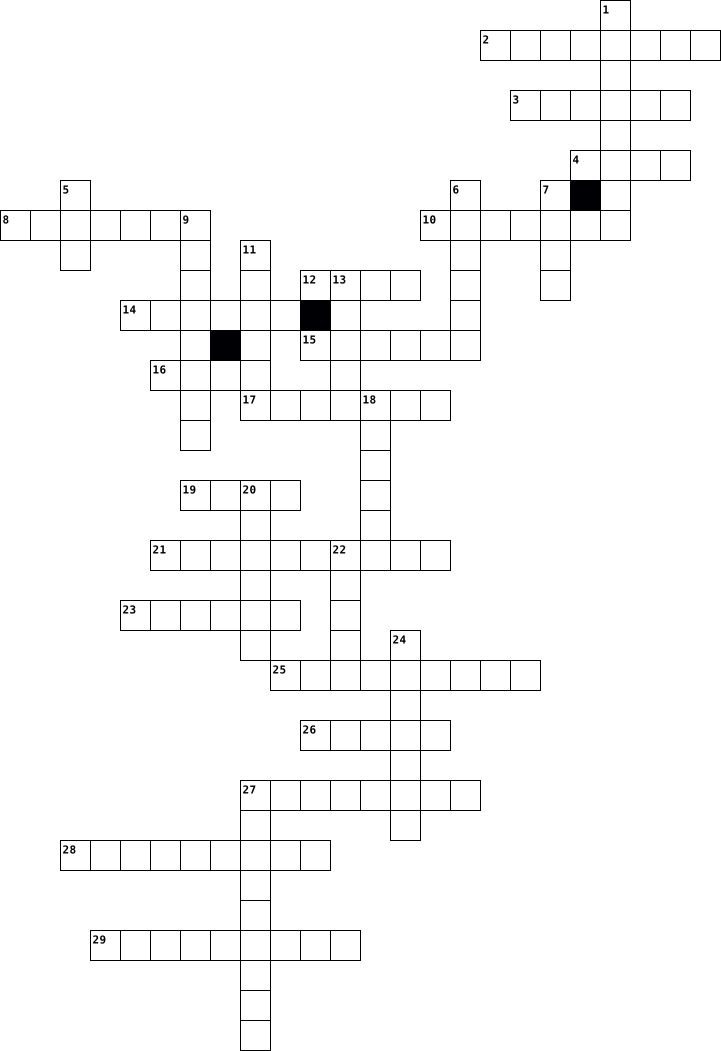
Animal Cells & Plant Cells 2023-05-08

Across
- Shape of Plant Cells
- Controls what comes in and out of the cell (2 words)
- the digestive system of the cell, serving both to degrade material taken up from outside the cell and to digest obsolete components of the cell itself
- Packages and distributes materials to other parts of the cell (2 words)
- All cells need these to make the proteins necessary for life
- All unicellular and multicellular organisms have these types of cells
Down
- Produces the energy needed for the cell to carry out its functions
- Rigid layer surrounding a plant cell that provides support, strength, and shape (Plant Cells Only)
- The storage area of the cell
- Contains chlorophyll and makes food from sunlight (Plant Cells Only)
- Passageways in the cell that carry materials from one part of the cell to another
- Controls the activities of the cell
- All bacteria, archaea, cyanobacteria, etc., are/have this type of cell
- Generally the shape of Animal Cells
- Thick gel-like fluid inside the cell between the nucleus and the cell membrane
15 Clues: Shape of Plant Cells • The storage area of the cell • Controls the activities of the cell • Generally the shape of Animal Cells • Controls what comes in and out of the cell (2 words) • All cells need these to make the proteins necessary for life • Produces the energy needed for the cell to carry out its functions • ...
Propagation 2026-05-11

Across
- Propagation used on plants in clumps
- Grapes best use what type of propagation?
- A form of grafting where a ________ is used instead of a scion
- The piece of the plant at the top of the graft
- Starting a plant WITH a seed
Down
- leaf cuttings, you must cut which vein?
- Whats the best time to take stem cuttings?
- layering where mound soil on top?
- Starting plant by means other than seed
- Bottom of the graft
- Decora Rubber plant is an example of ?
11 Clues: Bottom of the graft • Starting a plant WITH a seed • layering where mound soil on top? • Propagation used on plants in clumps • Decora Rubber plant is an example of ? • leaf cuttings, you must cut which vein? • Starting plant by means other than seed • Grapes best use what type of propagation? • Whats the best time to take stem cuttings? • ...
Biology - Cells 2020-09-15

Across
- Cells with NO nucleus-bacterial cells
- Receives and modify's proteins
- Lacks ribosomes and makes lipids
- Surrounds animal cells and is selectively permeable
- Has ribosomes and makes proteins
- Protects and gives structure to plant and bacteria cells
- The "brain" of a cell
Down
- Large organelle in plant cells that holds sugars and proteins
- Organelle that makes plants green
- Organelle that produces proteins
- The "powerhouse" of the cell
- Cells with a nucleus-animal and plant cells
- Makes glucose through photosynthesis
- Basic unit of a living organism
- Contains digestive enzymes and breaks down food
15 Clues: The "brain" of a cell • The "powerhouse" of the cell • Receives and modify's proteins • Basic unit of a living organism • Organelle that produces proteins • Lacks ribosomes and makes lipids • Has ribosomes and makes proteins • Organelle that makes plants green • Makes glucose through photosynthesis • Cells with NO nucleus-bacterial cells • ...
PLANTS. 22-08-2015 2015-08-06

Across
- Richest source of proteins among plant foods
- Sacred tree for Hindus and Buddhists. .
- Staple food of many Western Countries. .
- Jowar, Bajra and Ragi are examples for. ..
- Its wood has exotic value and is smuggled a lot.
- This vegetable is known for its Vit-A content. .
Down
- Standard Cricket bats are made from this wood. .
- Considered Holy as well as medically important. .
- Egg Plant
- Generic name of National Fruit of India. .
- Widely used vegetable across the world
- Rhizobium's favorite group of plants. .
- A parasitic plant
- Herbal Indian Doctor.
- National tree of the UK and the USA
15 Clues: Egg Plant • A parasitic plant • Herbal Indian Doctor. • National tree of the UK and the USA • Widely used vegetable across the world • Sacred tree for Hindus and Buddhists. . • Rhizobium's favorite group of plants. . • Staple food of many Western Countries. . • Generic name of National Fruit of India. . • Jowar, Bajra and Ragi are examples for. .. • ...
Savannah puzzle 2022-10-14

Across
- a horse with black and white stripes
- a big cat, the male has a stylish hairstyle
- most common type of insect
- a small woody plant
- the fastest big cat on Earth
- a tall plant that has a trunk, branches and leaves.
- fast antelope
- African wild dog
- a large animal with big ears
Down
- large animal with a horn on its nose
- insect with big colourful wings
- an animal who can laugh
- it has a very long neck
- very fast big cat with spots
- a plant with narrow leaves growing from the base
15 Clues: fast antelope • African wild dog • a small woody plant • an animal who can laugh • it has a very long neck • most common type of insect • the fastest big cat on Earth • very fast big cat with spots • a large animal with big ears • insect with big colourful wings • a horse with black and white stripes • large animal with a horn on its nose • a big cat, the male has a stylish hairstyle • ...
7A Crossword 2014-10-05

Across
- Organ that controls what our body does.
- Plant organ that used to make food by photosynthesis.
- Thin piece of glass used to hold a specimen in place on a slide.
- Organ used for protection and feeling.
- Process that plants use to make their own food.It needs light to work.
- More scientific name for 'windpipe'
- Organ used to make and destroy substances in our bodies.
- A scientific idea about why something happens, which can be tested with experiments.
- Nerve Cell.
Down
- Job.
- A large part of a plant or animal that does a very important job. It is made from different tissues.
- Green discs that contain chlorophyll. Found in plant cells.
- When a small piece of tissue is taken from the body to check for certain diseases or problems.
- Organ that helps you to breathe.
- Another word for food.
- Getting rid of waste materials from the body.
- Plant organ used to take water out of the soil.
17 Clues: Job. • Nerve Cell. • Another word for food. • Organ that helps you to breathe. • More scientific name for 'windpipe' • Organ used for protection and feeling. • Organ that controls what our body does. • Getting rid of waste materials from the body. • Plant organ used to take water out of the soil. • Plant organ that used to make food by photosynthesis. • ...
B324 L4 Vocab 2024-03-29

Across
- root, The first organ/root to appear when a seed germinates.
- root system, A dense network of roots with no main root that grows closer to the soil surface.
- roots, A type of root which secretes phosphatases which allows the plant to extract as much phosphorus from phosphorus-poor soil as possible.
- apical meristem, A small region at the tip of a root in which all cells can repeat division and from which all primary root tissues are derived; Also called the root apex.
- strip, Part of the endodermis, helps to regulate apoplastic movement of nutrients.
- lateral meristem, Cells found at the margins of roots associated with lateral growth.
- roots, Adventitious roots that grow above the ground; typically used for support.
- A short, thin filament found in bryophytes, mosses, hornworts, and liverworts that anchors the growing body of the organism to a substratum and that is capable of absorbing nutrients.
- cap, A thin layer of tissue that protects the apical meristem.
- A sponge-like tissue of specific aerial roots that aids in atmospheric nutrient absorption.
- root, The smaller roots that emerge horizontally from the taproot or the main root.
- The layer of soil bound to the root by mucigel and root hairs.
- roots, A type of modified root that is used for nutrient storage.
- roots, A type of aerial root that traps and transports oxygen to other parts of the plant.
- of elongation, A region of the root containing cells that do not divide but instead elongate rapidly.
- A coordinated process of differential growth by a plant in response to gravity pulling on it.
- plants, Plant which creates basket litter traps with their roots to collect falling leaves to use as nutrients.
- mycorrhizae, When the hyphae of the fungi penetrate the cell walls and form bundles to exchange nutrients; Also known as endomycorrhiza.
Down
- The symbiosis between fungi and plants.
- Roots in the air with no direct connection to support or aeration.
- Part of the ground tissue that creates a boundary around the vascular tissue to control the movement of nutrients into the root.
- tissue system of root, The cortex and pith of the root cell that facilitates the storage of sugars or starches.
- A layer of cells surrounding the xylem and phloem that helps to initiate and regulate the growth of lateral roots.
- cylinder, The bundle of vascular tissue that is inside the exodermis.
- When the hyphae of the fungi do not penetrate the cell walls but rather grow around them to exchange nutrients.
- Part of the ground system that creates a boundary that separates the inner vascular tissue from the outer cortex.
- The descending axis of plant, normally underground, which serves to anchor the plant and absorb and conduct water and nutrients.
- system, The main root that grows down vertically; from which many smaller lateral roots arise
- of maturation, The area where freshly formed root cells mature and strengthen; This is also the zone where root hairs are formed; Also called the root hair zone.
- tissue system of root, The outer protective layer of the primary root body.
- roots, Roots that form from any non-root tissue and are produced both during normal development.
- A pod on the root which houses bacteria used to exchange nutrients with the plant.
32 Clues: The symbiosis between fungi and plants. • root, The first organ/root to appear when a seed germinates. • cap, A thin layer of tissue that protects the apical meristem. • The layer of soil bound to the root by mucigel and root hairs. • roots, A type of modified root that is used for nutrient storage. • ...
11BSc Flowering Plants 2021-05-20

Across
- a growth response whereby plants grow towards or away from light.
- an essential catalyst for photosynthesis.
- the meristematic tissue which is the site of primary growth.
- the process which involves the fusion of male and female gametes to form a zygote.
- the site of photosynthesis in a plant cell.
- a hormone that causes cells to elongate and thus drives plant tropisms.
- the process where water moves up the plant against gravity.
- an organelle that is enlarged in plant cells and holds water/dissolved trace minerals.
- trace mineral needed for protein structure and DNA synthesis.
- the vascular tissue in plants which conducts water and dissolved nutrients upwards from the root.
- a growth response whereby plants grow towards or away from gravity.
- a key product of cellular respiration - without this growth cannot occur.
- a type of reproduction that only requires one individual.
- movement of water molecules from a high concentration to a low concentration across a semi-permeable membrane.
- a key product of photosynthesis.
- the vascular tissue in plants which conducts sugars and other metabolic products downwards from the leaves.
- this might happen to enzymes if they are heated up too much or if they are put in the incorrect pH.
- if this decreases too much photosynthesis and ultimately growth will occur very slowly.
Down
- a process whereby pollen from one flowers anther is transferred to the stigma of another flower.
- the site of cellular respiration in a cell.
- the process whereby the embryonic plant emerges from the seed.
- the meristematic tissue which is the site of secondary growth.
- the third stage of primary growth.
- the requirements for successful germination.
- the prefix for water.
- the embryonic shoot.
- the prefix for touch.
- the protective coating of a seed.
- an important structure in a flower that makes nectar.
- a type of growth in plants that creates rings.
- a type of cell found in a leaf which contains lots of chloroplasts.
31 Clues: the embryonic shoot. • the prefix for water. • the prefix for touch. • a key product of photosynthesis. • the protective coating of a seed. • the third stage of primary growth. • an essential catalyst for photosynthesis. • the site of cellular respiration in a cell. • the site of photosynthesis in a plant cell. • the requirements for successful germination. • ...
Plants & Photosynthesis 2025-10-20

Across
- Attracts pollinators to produce fruits and seeds.
- The gas produced in photosynthesis
- What is absorbed by the roots
- Supports the plants in its ability to grow upwards.
- acronym to help us remember the characteristics of living things
- Gives a leaf its green colour
- Contains and protects the seeds to ensure reproduction.
- The energy plants require for photosynthesis
- The gas used for photosynthesis
Down
- Absorb water from the ground and help anchor the plant.
- Allow new plants to grow away from the parent plants.
- provides support for the leaf ensuring it stays straight.
- Attaches the leaf to the stem of the plant
- The outer edge of the leaf. May have spines of rough edges to deter animals.
- The 'N' in MRS C GREN
- Large flat surface positioned to receive plenty of sunlight. Thin to allow light to reach all cells within the leaf.
- A plants food which is produced in photosynthesis
- Carry water to all parts of the plant and carry away the food made in the leaf cells.
- Has a large surface area to absorb sunlight (energy).
19 Clues: The 'N' in MRS C GREN • What is absorbed by the roots • Gives a leaf its green colour • The gas used for photosynthesis • The gas produced in photosynthesis • Attaches the leaf to the stem of the plant • The energy plants require for photosynthesis • Attracts pollinators to produce fruits and seeds. • A plants food which is produced in photosynthesis • ...
Drugs 2024-10-26

Across
- chemicals that people inhale (breath in) to cause a pleasurable feeling of effect(high)
- prominent angiotensin-converting enzyme (ACE) inhibitor
- insensibility or stupor due to their depressant effect of the central nervous system.
- addictive stimulant drug made from the leaves of the coca plant
- alter the user’s perception of reality
- process of disconnecting from one's thoughts, feelings, memories or sense of identity.
- one of the most widely used and abused psychoactive drugs in the world
- the dried leaves,flowers,stems, and seeds of cannabis plant
- which is made from the dried leaves and flowers of the hemp plant, and which can be smoked.
- synthetic opioid drug approved by the Food and Drug Administration for use as an analgesic (pain relief) and anesthetic
Down
- used in the management and treatment of pain.
- known as volatile subtances or solvents
- - effects the central nervous system
- broad class of drugs that increase the activity of the central nervous system
- -the practice of buying goods in small, affordable quantities suitable for one-time use.
- subtances found in the opium poppy plant
- hydrocarbon radical C5H11 that occurs in various isomeric forms and is derived from pentane. called also pent
17 Clues: - effects the central nervous system • alter the user’s perception of reality • known as volatile subtances or solvents • subtances found in the opium poppy plant • used in the management and treatment of pain. • prominent angiotensin-converting enzyme (ACE) inhibitor • the dried leaves,flowers,stems, and seeds of cannabis plant • ...
Common Names Crossword 2023-05-29

Across
- a highly invasive berry bush with sets of 5 leaves
- a small, pink, four-petaled wildflower named after a 19th century English botanist
- a small deciduous tree with leaves in lobes of 5-9 that turns bright red in the fall
- a relatively tall hairy plant with serrated egg-shaped leaves that produces pink, tube-like flowers in the summer
- a small, tree-dwelling fern
- a large evergreen with scale-like needles that resemble a flattened braid
- a deciduous tree with oval, serrated leaves with curled margins
- a native berry bush that produces clusters of small, red berries with leaflets that form in opposite pairs
- a low-growing plant with deeply lobed leaves and greenish, spherical blossoms in mid-spring
- one of the first plants to produce leaves in the spring, produces round, black fruit with large pits
- a moisture-loving plant with round or heart-shaped leaves and small, five-petaled yellow flowers
- a common wildflower on the edge of forests, produces pink or white bell-shaped flowers on stalks in the springtime
Down
- an extremely common fern with lance-shaped blades
- produces pink heart-shaped flowers in the spring
- a berry plant with soft, maple-shaped leaves that produces dome-shaped red berries
- a native blackberry with sets of 3 leaves
- a prickly berry plant that blooms hot pink and produces yellow or red raspberry-shaped berries
- a large deciduous tree with large, lobed leaves that produces "whirlybird" seeds
- produces toxic white berries in the summer
- a delicate fern with dark black stalks
- an edible claytonia species with five-petaled "peppermint" striped flowers
- fond of forest edges, this wildflower produces tiny, brownish blossoms in the springtime
- a tall berry bush that produces tiny, tart red berries
- a large evergreen identified by the "mousetails" that stick out of its cones
- a large, three-petaled, three-leaved wildflower that blooms in early spring
25 Clues: a small, tree-dwelling fern • a delicate fern with dark black stalks • a native blackberry with sets of 3 leaves • produces toxic white berries in the summer • produces pink heart-shaped flowers in the spring • an extremely common fern with lance-shaped blades • a highly invasive berry bush with sets of 5 leaves • a tall berry bush that produces tiny, tart red berries • ...
Photosynthesis 2024-03-04

Across
- The chemical reaction that plants use to make food from light energy
- The plant organ where most photosynthesis occurs
- A reactant needed for photosynthesis that is a gas [2 words]
- A product of photosynthesis that the plant releases as a gas
- A coloured pigment needed for photosynthesis. It makes a plant green
Down
- Excess glucose (sugar) is converted into this molecule so the plant can store it.
- The part (organelle) of a plant cell where photosynthesis happens
- A reactant needed for photosynthesis that is absorbed by the plant's roots
- A product of photosynthesis that the plant uses for food
- An environmental condition plants need to photosynthesise
10 Clues: The plant organ where most photosynthesis occurs • A product of photosynthesis that the plant uses for food • An environmental condition plants need to photosynthesise • A reactant needed for photosynthesis that is a gas [2 words] • A product of photosynthesis that the plant releases as a gas • The part (organelle) of a plant cell where photosynthesis happens • ...
Plant Parts and Their Functions 2025-01-21

Across
- Perform photosynthesis
- Supports the plant and transports materials throughout
- Place where leaves or buds are attached
- Sticky surface that collects the pollen
- The thickest part of the root that grows downward
- Absorb water and nutrients and anchors the plant
- Attract insects for pollination
- Tube that helps the pollen travel safely from the stigma to the ovary
- Term describing the undeveloped shoot of a leaf
- becomes the fruit and the seed within the plant
- Flat part of the leaf
- These are found on the ends of the roots and help protect and guide the tip
Down
- Thin, fine roots that absorb water and nutrients
- Part of the flower that creates pollen
- Outer section that helps protect the developing flower
- edge of the leaf
- Part of the stem between the buds or leaves
- Protects the eggs (ovules)
- Female part of the flower
- Male part of the flower
- part of the leaf that attaches to the stem
- Central vein of the leaf
- Stalks that help support the anther
- The root that grows out to the side and not as thick
24 Clues: edge of the leaf • Flat part of the leaf • Perform photosynthesis • Male part of the flower • Central vein of the leaf • Female part of the flower • Protects the eggs (ovules) • Attract insects for pollination • Stalks that help support the anther • Part of the flower that creates pollen • Place where leaves or buds are attached • Sticky surface that collects the pollen • ...
Cell Organelle Functions 2025-02-10

Across
- Rigid outer layer of a PLANT cell
- Receives proteins and materials from the ER, packages them, and distributes them
- Control center of the cell; contains DNA (genetic material)
- Produces the energy (ATP) a cell needs to carry out its functions; carries out cellular respiration
- Assembles amino acids to create proteins; may be free floating in the cytoplasm or attached to the rough ER
- Network of microtubules and filaments that helps the cell maintain its shape. Helps organelles move
- The portion of the endoplasmic reticulum studded with ribosomes
- The "little organs" with specialized functions within the an eukaryotic cell
- Controls what comes into and out of a cell; found in plant and animal cells "skin of the cell"
Down
- Vesicle filled with enzymes to break down food and worn out cell parts
- Stores food, water, wastes, and other materials
- Cell with nucleus and membrane bound organelles; larger and more complex (plant and animal cells)
- Gel-like fluid where the organelles are found floating
- The portion of the endoplasmic reticulum that is responsible for lipid synthesis and detoxification
- Captures energy from the sunlight and uses it to produce food in PLANT cells; photosynthesis
- Cells with NO nucleus or membrane-bound organelles; smaller and less complex (bacteria cells)
- Helps pull cell contents apart during cell division
17 Clues: Rigid outer layer of a PLANT cell • Stores food, water, wastes, and other materials • Helps pull cell contents apart during cell division • Gel-like fluid where the organelles are found floating • Control center of the cell; contains DNA (genetic material) • The portion of the endoplasmic reticulum studded with ribosomes • ...
Earth Day 2023-04-23

Across
- women and men
- around yourself
- garbage
- color
- group of trees
- to keep something well
Down
- big plants
- transparent cover
- house
- feeling
- transparent liquid
- the same
- baby plant growing
- flowers, vegetables or fruits
- ground
15 Clues: house • color • ground • feeling • garbage • the same • big plants • women and men • group of trees • around yourself • transparent cover • transparent liquid • baby plant growing • to keep something well • flowers, vegetables or fruits
Chapter 2 2014-02-04

Across
- material that has pockets of air in it which water can go through
- curves of a hill to prevent the loss of soil
- connects points of the same height on a topographic map
- difference of one contour line to the next
- a process to break rock through wind or water or gravity or ice
- dark colored material with plant and animal matter
- soil that has differences in color and texture
- when a rock is broke down into smaller peices
- a change that makes rust
- thick grass roots and soil
- breaks down the remains of organisms and digest them
- rich soil made up mostly of clay sand and silt
- a contour line that's says the height
- water goes into rock then freezes then expands
- something that a person can use
- soil under topsoil with clay and other minerals mixed in
- plants can grow in this
Down
- a process to break down rock
- layer of rock under soil
- map that shows elevation
- to prevent soil destruction
- process that operates now and then
- breaks down rock by a chemical change
- dead plant from the last year to keep soil fertility
- rock particles carried by wind water and ice
- dead plant leaves on the top of soil
- top layer of soil mixed with humus and clay
- measure of how soil supports the rate of plant growth
- wind erosion in the 1930's to cause the loss of soil
29 Clues: plants can grow in this • layer of rock under soil • map that shows elevation • a change that makes rust • thick grass roots and soil • to prevent soil destruction • a process to break down rock • something that a person can use • process that operates now and then • dead plant leaves on the top of soil • breaks down rock by a chemical change • ...
Fry Sight Words 61-90 2024-12-17

Across
- - A small, thick plant.
- - A story shown on a screen in cinemas.
- - A large animal that gives milk.
- - A screen that shows shows and movies.
- - A group of people who make music together.
- - A living thing that grows in soil.
- - A farm animal that is pink and oinks.
- - A person who grows food on a farm.
- - A small mountain or raised land.
- - A colorful part of a plant.
- - A person who makes food.
- - A person who helps sick people in a hospital.
- - A device that plays music or news to listen to.
- - A bright point of light in the night sky.
- - White shapes in the sky that hold water.
Down
- - A bird that lays eggs and is often eaten.
- - A big animal used for riding.
- - Soil, the brown stuff on the ground.
- - The big, hot ball in the sky during the day.
- - A person who helps people feel better when they are sick.
- - A tall plant with a trunk and leaves.
- - A man who helps keep people safe.
- Game - A sport played with a ball.
- - Open land where crops grow.
- - The round light in the sky at night.
- - Water that falls from clouds.
- - A large area of water surrounded by land.
- - Green plants that cover the ground.
- - A hard piece of earth.
- - A bird that swims and has webbed feet.
30 Clues: - A small, thick plant. • - A hard piece of earth. • - A person who makes food. • - Open land where crops grow. • - A colorful part of a plant. • - A big animal used for riding. • - Water that falls from clouds. • - A large animal that gives milk. • Game - A sport played with a ball. • - A small mountain or raised land. • - A man who helps keep people safe. • ...
Unit 1 crossword puzzle 2020-10-19

Across
- stores water and food
- smallest unit, made of all living things, made from pre existing cells. Hint: theory
- Holds organelles together
- an individual animal, plant, or single-celled life form.
- Power house
- Small cells making of
- rigid wall (plant cell)
Down
- the brain and dna of the cell
- surrounds cytoplasm
- smallest unit
- organs working together
- where photosynthesis takes place in plant cell.
- such as the heart or liver in humans.
13 Clues: Power house • smallest unit • surrounds cytoplasm • stores water and food • Small cells making of • organs working together • rigid wall (plant cell) • Holds organelles together • the brain and dna of the cell • such as the heart or liver in humans. • where photosynthesis takes place in plant cell. • an individual animal, plant, or single-celled life form. • ...
Samantha & Jaren-Genetics 2026-04-18

Across
- a distinguishing quality, trait or feature of an individual, or thing.
- pollination that occurs when pollen from one plant lands on the pistil of the flower from the same plant.
- pollination that occurs when pollen from one plant lands on the pistil of the flower from a different plant.
- a genetic factor that is blocked by the presence of a dominant factor.
- a genetic factor that blocks another genetic factor.
Down
- the branch of biology that deals with characteristics that are inherited from one generation to the next.
- the offspring resulting from combining the qualities of two organisms from different breeds.
- the passing of traits from parents to offspring.
- the molecule that carries genetic information. It is inside the nucleus.
- thread-like structures in the cell nucleus made of DNA and protein that carry genetic information. Humans have 46 chromosomes.
- to receive something from someone who came before you.
- the basic, inherited units of information, composed of DNA segments found on chromosomes inside cells.
- group of genes.
- the young born of living organism. They are the children.
- an organism that always passes down certain traits to its offspring of many generations.
- a distinguishing quality or characteristic.
16 Clues: group of genes. • a distinguishing quality or characteristic. • the passing of traits from parents to offspring. • a genetic factor that blocks another genetic factor. • to receive something from someone who came before you. • the young born of living organism. They are the children. • a distinguishing quality, trait or feature of an individual, or thing. • ...
crossword puzzle 2022-11-17

Across
- C at periodic table
- hot energy
- some thing we will breath out at air
- a thing one face to the ground and move
- is the gelatinous liquid that fills the inside of a cell
- plant die will
- is body change food to energy
- movement by heat
- get smaller
- A lot of atom is this
- state of cell swelling
- some thing we must get at air
Down
- what is plant use sunlight make oxygen and energy
- something we must drink
- a little room in your body
- something we get energy from
- stain used in microscope
- are membrane-bound organelles that can be found in both animals and plants.
- get bigger
- water change to the rain
- powerhouse of the cell
- H at periodic table
- plant move around
- a lot of this are molecule
- corresponds to a cell lacking turgidity
- something eat to much will fat
26 Clues: hot energy • get bigger • get smaller • plant die will • movement by heat • plant move around • C at periodic table • H at periodic table • A lot of atom is this • powerhouse of the cell • state of cell swelling • something we must drink • stain used in microscope • water change to the rain • a little room in your body • a lot of this are molecule • something we get energy from • ...
Weeks 11&12 Words 2019-11-03

Across
- a type of fruit
- a pronoun used in place of a female's name
- to make a promise to someone you intend not to break
- a plant-eating animal (herbivore), sometimes with antlers
- to carry or have on the body
- to smile, write, or say something scornfully
- a microorganism that can get us sick
- a shout of encouragement
- any place a bird can rest upon
- a person who is equal to others
- growth of hair on the face of an adult man
Down
- amount of time it takes for the Earth to revolve around the Sun (365 days)
- a number of animals traveling together
- a person who is kind, or the beginning of a letter
- a long stabbing weapon
- type of plant
- muscle that pumps blood throughout our body
- another word for transparent, easy to see through
- a plant people like for its flavor, scent, or medicinal properties
- close to, a short distance
- a quick, sharp pull
21 Clues: type of plant • a type of fruit • a quick, sharp pull • a long stabbing weapon • a shout of encouragement • close to, a short distance • to carry or have on the body • any place a bird can rest upon • a person who is equal to others • a microorganism that can get us sick • a number of animals traveling together • a pronoun used in place of a female's name • ...
NATURE 2023-12-09
Across
- Radiant energy from the sun
- Grassland area with wildflowers
- Elevated land smaller than a mountain
- Flower's state of flowering
- Plant leaves collectively
- Small still body of water
- Deep narrow valley with steep sides
- Arid and dry land with little rainfall
- Natural underground hollow
- Optical and meteorological phenomenon
- Small flowerless plant
- Lush tropical woodland with heavy rainfall
- Low area between hills or mountains
- Marine ecosystem with diverse life
- Sandy or pebbly shore by the sea
- Shell of a marine mollusk
- Flowing water descending a rock face
- Light from the moon
Down
- Animals living in their natural habitat
- Thick cloud near the ground
- Dense area of trees and vegetation
- Inland body of water
- High landmass with peaks
- Blooming plant reproductive structure
- Large body of saltwater
- Gentle wind
- Daily disappearance of the sun
- Natural flowing watercourse
- Large mass of ice and snow
- Light from distant stars
30 Clues: Gentle wind • Light from the moon • Inland body of water • Small flowerless plant • Large body of saltwater • High landmass with peaks • Light from distant stars • Plant leaves collectively • Small still body of water • Shell of a marine mollusk • Natural underground hollow • Large mass of ice and snow • Radiant energy from the sun • Thick cloud near the ground • ...
Holiday Crossword 2025-12-04

Across
- Wrapped surprises exchanged during celebrations
- Horned creature from Alpine folklore who punishes naughty children
- Vehicle Santa rides in on Christmas Eve
- Old-fashioned word for the Christmas season
- Decorative greenery draped over mantels and railings
- Gentle glow that makes winter evenings feel cozy
- Plant traditionally hung overhead for kissing
- Antlered animal that pulls Santa’s sleigh
- Wooden figure made famous by a holiday ballet
Down
- Colorful items hung on branches of a tree
- Minty plant or flavor often associated with the season
- Spinning top used in a traditional Hanukkah game
- Red plant frequently seen in holiday centerpieces
- Spiced treat often shaped like people or houses
- Deep pile of wind-swept snow
- Traditionally burned or eaten as a festive holiday treat
- Tree that stays green even in winter
- Groups who go out singing festive songs in the neighborhood
- The shortest day and longest night of the year
- Fried potato pancakes traditionally eaten during Hanukkah
20 Clues: Deep pile of wind-swept snow • Tree that stays green even in winter • Vehicle Santa rides in on Christmas Eve • Colorful items hung on branches of a tree • Antlered animal that pulls Santa’s sleigh • Old-fashioned word for the Christmas season • Plant traditionally hung overhead for kissing • Wooden figure made famous by a holiday ballet • ...
Cell transport vocabulary 2013-05-30

Across
- water-loving
- fear of water
- having a positive and partial negative charge
- an animal cell swells and bursts when placed in a solution with a low concentration of solute
- force of water on the inside of an animal cell
- large or polar objects go trough protein in the cell membrane;does not use energy
- what is being dissolved
- the shrinking of a plant cell's membrane when the plant cell is placed in a solution with high concentration of solute
- having a charge:neutral
- what the solute is being dissolved in
- the same concentration of molecules
- movement of water across the membrane from high to low concentrations; no energy used
- energy source for the cell
- a plant cell swells when placed in a solution with a low concentration on solute
- to maintain the body's internal environment
- a greater concentration of solute outside the cell;water leaves the cell
Down
- movement of molecules across the membrane from high to low concentrations;no energy use
- cell membrane made of a double layer of lipids and proteins
- moves molecules from areas of low concentration to high concentration using evergy
- force of water on the inside of a plant cell wall
- general movement from one concentration to a different concentration
- same concentration of solute inside and outside the cell
- the solute and the solvent combined
- an animal cell shrinks when placed in a solution with a high concentration of solute
- a greater concentration of solute inside the cell; water enters the cell
25 Clues: water-loving • fear of water • what is being dissolved • having a charge:neutral • energy source for the cell • the solute and the solvent combined • the same concentration of molecules • what the solute is being dissolved in • to maintain the body's internal environment • having a positive and partial negative charge • force of water on the inside of an animal cell • ...
Unit 6: Outdoor 2026-05-08

Across
- Singular form of “to be”
- Opposite of small
- Moving air
- Bright weather
- Full of clouds
- Ice house
- Tall plant with a trunk
- Water on the ground after rain
- hole in the ground
- Plural form of “to be”
Down
- Cold and white weather
- Used to show location inside something
- Means “next to” or “through the action of”
- Opposite of “over”
- White thing in the sky
- Used to show position above a surface
- Baby clothing item
- A plant with petals
- A verb meaning “place”
19 Clues: Ice house • Moving air • Bright weather • Full of clouds • Opposite of small • Opposite of “over” • Baby clothing item • hole in the ground • A plant with petals • Cold and white weather • White thing in the sky • A verb meaning “place” • Plural form of “to be” • Tall plant with a trunk • Singular form of “to be” • Water on the ground after rain • Used to show position above a surface • ...
Plants 2021-10-14

Across
- Usually is based in the center of the flower and is consist of three parts: the stigma, style, and ovary.
- It supports the upper parts of plants
- Is a system that aerial part of the plant body and enables a plant to grow taller to gain access to energy-giving light, and helps plant to prepare food
- Plant that grow beside water have buoyant, waterproof coverings that allow them to float and disperse their seeds by water
- Are the most attractive part of a plant
Down
- Some seed are scattered by ______ are usually enclosed in wing-like husks or fluffy coverings that help them to fly away long distance from the parent plant.
- The parts of a flower that are often brightly colored or unusually shaped to attract pollinators
- Is the production of new individuals or offspring in plants
- Is a fleshy or dry ripened (mature) ovary of a plant, enclosing the seed or seeds
- These are the parts of the plant where food is made by the process of photosynthesis
10 Clues: It supports the upper parts of plants • Are the most attractive part of a plant • Is the production of new individuals or offspring in plants • Is a fleshy or dry ripened (mature) ovary of a plant, enclosing the seed or seeds • These are the parts of the plant where food is made by the process of photosynthesis • ...
Plants 2021-09-20

Across
- Made by the process of photosynthesis
- Roots that spread in many ways
- A gas in the air that plants and animals need to live
- A plant that does not produce flowers
- A small cell that grows into a new plant
- The process where plants use energy from the sun
- A plant that produces flowers with seeds
- Tree Leaves fall of in the fall and come back in the spring
- A material needed by living things for energy, growth, and repair
Down
- To make more of the same kind
- To carry pollen to
- To begin to grow
- Roots One large root
- Produces cones
- Dioxide A gas in the air absorbed by plants
- Cycle The stages through which living things passes during its life
16 Clues: Produces cones • To begin to grow • To carry pollen to • Roots One large root • To make more of the same kind • Roots that spread in many ways • Made by the process of photosynthesis • A plant that does not produce flowers • A small cell that grows into a new plant • A plant that produces flowers with seeds • Dioxide A gas in the air absorbed by plants • ...
Cells 2025-01-28

Across
- gel-like substance that organelles float in inside the cell
- subunits of the cell that have specific functions
- membrane sacs for storage
- protective layer that surrounds the cell
- found inside the nucleus. makes ribosomes
- a passageway that transports protein
- in plant cells only. stiff outer covering for the cell
Down
- contains substances for breaking down waste and bacteria
- packages and transports proteins to other parts of cell
- 2 types of cells, plant and ...
- control center or brain of the cell that has DNA
- short cylinders. aids in cell division
- powerhouse of the cell that produces energy
- double membrane that encloses the nucleus
- in plant cells only. used for photosynthesis. makes sugar
- the building blocks of life
16 Clues: membrane sacs for storage • the building blocks of life • 2 types of cells, plant and ... • a passageway that transports protein • short cylinders. aids in cell division • protective layer that surrounds the cell • double membrane that encloses the nucleus • found inside the nucleus. makes ribosomes • powerhouse of the cell that produces energy • ...
task 3 2022-06-25

Across
- a living organism from which a parasite derives its food
- procees by which plant make their own food
- the last set of teeths
- fnger-like projection presenr in small interstine
- also known as false feet
- process of taking in food
- also known as kitchen of plant
- an essential raw material needed for the process of photosynthesis and isavailable in soil
- a juice secracted by liver
- nutrtion is followed by humans and amobea
Down
- organisms can prepare their own food
- plants that feed on insects
- an essential raw material needed for the process of photosynthesis and isavailable in air
- juice secrated by pancreas
- organisms feeding on dead and decaying matter
- another name for food pipe
- organisms driving food from another organism
- a green color pigment present in leaves
- a paraatic plant
19 Clues: a paraatic plant • the last set of teeths • also known as false feet • process of taking in food • juice secrated by pancreas • another name for food pipe • a juice secracted by liver • plants that feed on insects • also known as kitchen of plant • organisms can prepare their own food • a green color pigment present in leaves • nutrtion is followed by humans and amobea • ...
Bacteria and Protists 2022-02-17

Across
- plant-like, animal-like, fungus-like
- a process of heating food to a temperature where it kills some or most of the bacteria
- rod shaped bacteria
- organism that occupies oxygen to break down food
- boxes that sink when any organism die
- can prevent some bacterial diseases
- consumer bacteria that keeps nature balanced.
- doesn't occupy oxygen.
- spiral shaped bacteria
Down
- whip like tail that helps bacteria move around
- changes nitrogen form the air into shapes that benefit plants and animals
- any poisonous substance.
- limit the growth of other bacteria
- make their own food using carbon dioxide, water,sun energy ,produce oxygen as a waste.
- sphere shaped bacteria
- both characteristics of plant and animal
- any organisms that cause diseases.
- when an organisms help clean environmental pollutant
- plant like protists, not all are green
19 Clues: rod shaped bacteria • sphere shaped bacteria • doesn't occupy oxygen. • spiral shaped bacteria • any poisonous substance. • limit the growth of other bacteria • any organisms that cause diseases. • can prevent some bacterial diseases • plant-like, animal-like, fungus-like • boxes that sink when any organism die • plant like protists, not all are green • ...
Makena&Raiden Crossword Puzzle 2024-05-14

Across
- Chemical symbol: H2O
- Waste or trash in the environment
- Latin word: Animalis
- Process of cutting trees for land
- Types of species that re low in population
- The chemical symbol of carbon dioxide
- Area where plant, animals, and other living organisms work together to form a system
- Study of live and living organisms
- smells like garbage and rhymes with smash
- Shares 99% of DNA with monkeys
- 0 population
Down
- Sphere that has 5 layers
- Buildings that make up of education
- change Icebergs are melting across the globe, this is due to
- Study of ecosystems
- A house that plants are kept in and traps heat
- Process of growing crops or animals
- Made up of leaves, stem, and seeds.
- Shelter/home for a plant, animal or other living organisms
19 Clues: 0 population • Study of ecosystems • Chemical symbol: H2O • Latin word: Animalis • Sphere that has 5 layers • Shares 99% of DNA with monkeys • Waste or trash in the environment • Process of cutting trees for land • Study of live and living organisms • Buildings that make up of education • Process of growing crops or animals • Made up of leaves, stem, and seeds. • ...
Life cycle of plant and animal 2024-07-18

Across
- The stage in a butterfly’s life cycle where it is enclosed in a protective casing
- A young frog that hatches from an egg and lives in water
- The underground part of a plant that absorbs water and nutrients
- The final stage of a frog’s life cycle
- The stage in a frog’s life cycle between tadpole and adult
Down
- The reproductive part of a flowering plant
- The stage in the plant life cycle where the seed starts to grow
- The process by which a plant uses sunlight to make food
- The part of a plant that grows into a new plant
- The second stage of a butterfly’s life cycle where it hatches from the egg
10 Clues: The final stage of a frog’s life cycle • The reproductive part of a flowering plant • The part of a plant that grows into a new plant • The process by which a plant uses sunlight to make food • A young frog that hatches from an egg and lives in water • The stage in a frog’s life cycle between tadpole and adult • ...
Cells 2021-11-15

Across
- is the door for the plant and animal cells that controls what comes in and what comes out
- is the space in both plant and animal cells
- are different parts that make up a cell
- are the cells that have nucleus and are more complex
- is the kitchen for the plant cell and gives the cell green color
Down
- are cells that are more simple and do not have organelles
- are the genetic material in plant and animal cells
- is the structure outside of the plant cells
- is the control center of the cell with DNA around it
- is an organelle that breaks down nutrients into energy for plant and animal cells
10 Clues: are different parts that make up a cell • is the structure outside of the plant cells • is the space in both plant and animal cells • are the genetic material in plant and animal cells • is the control center of the cell with DNA around it • are the cells that have nucleus and are more complex • are cells that are more simple and do not have organelles • ...
Party Planning Committee 2 2022-09-14

Across
- Perfectionist zodiac
- Italian ice cream
- Indian Ocean Country
- Social, outgoing
- Panda's favorite plant
- Italian sauce or plant
- Bikini bottom
- Name day
- One of the seven dwarfs
Down
- Furniture store
- Booty bone, or lower spine
- Humans metallic yellow best friend
- Dipsy
- Michael at the Career Center
- What a buzzkill kills
- Absence of light
16 Clues: Dipsy • Name day • Bikini bottom • Furniture store • Social, outgoing • Absence of light • Italian ice cream • Perfectionist zodiac • Indian Ocean Country • What a buzzkill kills • Panda's favorite plant • Italian sauce or plant • One of the seven dwarfs • Booty bone, or lower spine • Michael at the Career Center • Humans metallic yellow best friend
Science crossword 2018-11-26

Across
- Who eats both plant ad animals.
- Organisms that produce fertile offspring.
- A relationship between two organisms which both benefit from each other.
- eat died plant material.
- A single breath.
- Moving to place to place.
- capacity: Maximum organisms that can live in a space and be supported.
- A plant that use energy from the sunlight to produce its own food.
- a community made of living and nonliving organisms such as air, water and soil.
- To come together and live permanently.
- A person or thing that reacts.
- something that is adapted
- a heterotrophic individual
- species: A species that can live in an unstable environment.
- only eats plants
- Another word for a group.
Down
- Formed as a result of a chemical reaction.
- A relationship between to different people or groups.
- Everything that lives in an area.
- Wisch
- Following one after the other.
- Parts in a plant sell that contains chlorophyll.
- Feed on flesh
- The powerhouses of one cell.
- Obtaining food for another without harming them. parasitism: living on another organisms.
- Air land or water where organisms exist.
- an autotrophic organism
- the killing by one living organism of another for food
- factor: lack of winter is a (blank) for many deer herds.
29 Clues: Wisch • Feed on flesh • A single breath. • only eats plants • an autotrophic organism • eat died plant material. • Moving to place to place. • something that is adapted • Another word for a group. • a heterotrophic individual • The powerhouses of one cell. • Following one after the other. • A person or thing that reacts. • Who eats both plant ad animals. • Everything that lives in an area. • ...
Non-Vascular Plants/Seedless 2022-04-08

Across
- land plants with its embryo retained on the parent and is nourished
- Tracheophytes
- a type of plant without a vacular system and consists of a xylem and pholem
- female part of non vascular plant
- produce spores and need very little water and can live on rocks
- non vascular, flowerless plants that are abundant in extreme environments and can become dormant
- fertilized egg that developes into a new sporophyte
- plants with a dominant sporophyte and is homosporous. It includes lycophytes, pterophytes, and seed plants.
- male part of non vascular plant
- release spores and resemble small trees or flowers
- produce sperm and egg cells
- a vascular plant don't have seeds or flowers and usually found in humid soil
Down
- liver-shaped leaves; can grow on bare rock or tree bark which helps in soil formation
- moss, liverworts, hornworts
- a vascular tissue that carries sugars and organic substances downward from leaves
- sporophytes that look like horns and have
- reduces the rate of water loss from the leaf surface
- thin, rootlike structures that anchor moss and absorb nutrients from the soil
- plant species that has a single kind of spore, no male or female
- completes gas exchange which have a pore that opens and closes
- a vascular tissue that carries water a dissolved nutrients upward from root
21 Clues: Tracheophytes • moss, liverworts, hornworts • produce sperm and egg cells • male part of non vascular plant • female part of non vascular plant • sporophytes that look like horns and have • release spores and resemble small trees or flowers • fertilized egg that developes into a new sporophyte • reduces the rate of water loss from the leaf surface • ...
Flowers 2024-08-05

Across
- Symbolizes good fortune and prosperity
- Signals the end of winter
- An edible flowering herb known for its blue star-shaped flowers
- A climbing vine with stunning, large flowers in various shapes and colors
- Often mistaken for a daffodil
- Large, showy blooms and often used in teas
- Has a star-like appearance
- Has "faces" that look like expressions
- "Pot marigold"
- A companion plant
- Often called lily of the Nile
- Often found in Southern gardens and landscapes
- Used in bouquets and signifies a range of emotions
- Known as the prayer plant for its unique leaf movements
- Symbol of purity and refined beauty
- A trumpet-shaped flower
- "Mexican sunflower"
- Bell-shaped blooms
- Resemble a dragon's mouth
Down
- A shrub with large clusters of colorful blooms
- "Bee" plant
- Genus name for poppies
- "Remembrance"
- Prized for their beauty
- A climbing vine
- Given on Valentine's Day
- Turns toward the sun
- A fall-blooming flower
- Found in wildflower gardens
- Delicate, layered petals
- Used in classical mythology
- Attractive to butterflies
- Thistle-like and medicinal
- Aromatherapy scent
- Represents innocence and purity
- Comes in many colors
- A flowering, fragrant plant often found in gardens
- Round blossom shape
38 Clues: "Bee" plant • "Remembrance" • "Pot marigold" • A climbing vine • A companion plant • Aromatherapy scent • Bell-shaped blooms • "Mexican sunflower" • Round blossom shape • Turns toward the sun • Comes in many colors • Genus name for poppies • A fall-blooming flower • Prized for their beauty • A trumpet-shaped flower • Given on Valentine's Day • Delicate, layered petals • Signals the end of winter • ...
Identification and Classification of Agricultural Plants 2021-09-01

Across
- A grass family comprised of cereals.
- Any plant that is grown for its useful part.
- A dry fruit that does not split open when dry.
- Rubber is an example of this crop.
- A type of nut that is actually a grain legume.
- The broad part of a leaf.
Down
- Part of the plant that manufactures food for the plant by the process of photosynthesis.
- Flowering crop plants having only one cotyledon.
- Plant that stores food in its tuberous root.
- Crops that are grown for their mature plant ovaries.
- Plants that are grown for their edible leaves or young fruits.
11 Clues: The broad part of a leaf. • Rubber is an example of this crop. • A grass family comprised of cereals. • Any plant that is grown for its useful part. • Plant that stores food in its tuberous root. • A dry fruit that does not split open when dry. • A type of nut that is actually a grain legume. • Flowering crop plants having only one cotyledon. • ...
3rd grade 2026-03-18

Across
- to turn over quickly
- to stay on the surface of water without sinking
- a tool with bristles used to clean or paint
- a small round mark or area
- to let something fall
- a device that gives light
- a place where people stay in tents or cabins
- a set of connected vehicles that move on tracks
- a tall plant with a trunk, branches, and leaves
Down
- the colorful part of a plant that grows seeds
- to push yourself off the ground using your legs
- a piece of cloth with colors or symbols representing a country
- to turn around quickly
- a large vehicle used to carry things
- a musical instrument you hit to make sound
- a living thing that grows in the ground
- to control and move a vehicle
- to have fun doing games or activities
- a journey from one place to another
19 Clues: to turn over quickly • to let something fall • to turn around quickly • a device that gives light • a small round mark or area • to control and move a vehicle • a journey from one place to another • a large vehicle used to carry things • to have fun doing games or activities • a living thing that grows in the ground • a musical instrument you hit to make sound • ...
GARDENING 2026-09-19

Across
- Supplying plants with water
- Plant commonly used for flavoring
- Decayed organic material used as fertilizer
- Cutting away unwanted plant growth
- Substance added to help plants grow
- Edible plant used as food
- Plant that lives for several years
- Young plant grown from a seed
Down
- Young plant grown from a seed
- Flower on a plant
- Glass structure for growing plants
- Transfer of pollen that enables plant reproduction
- Person who cares for plants
- Covering soil around plants
- Gathering mature crops
15 Clues: Flower on a plant • Gathering mature crops • Edible plant used as food • Supplying plants with water • Person who cares for plants • Covering soil around plants • Young plant grown from a seed • Young plant grown from a seed • Plant commonly used for flavoring • Glass structure for growing plants • Cutting away unwanted plant growth • Plant that lives for several years • ...
Parts of a cell 2021-11-23

Across
- Contains Chlorophyll and gives the plant its green color
- Packages and processes proteins for the cell
- The outer layer of a plant cell
- Controls all cell activities
- helps transport materials that an organism needs to survive, destroys toxic substances
- Jelly-like fluid that contains cell materials
- Connects the proteins of the cell
- Protein synthesis, modification, packaging, and quality control.
Down
- Helps to maintain the shape and internal organization of the cell
- Stores water and keeps plants from decaying
- Separates the chromosomes from the rest of the cell
- Processes ribosomes
- The powerhouse of the cell
- Serves as a gatekeeper and passes waste in and out of the cell.
- Found in both animal cells and plant cells, processes toxins
15 Clues: Processes ribosomes • The powerhouse of the cell • Controls all cell activities • The outer layer of a plant cell • Connects the proteins of the cell • Stores water and keeps plants from decaying • Packages and processes proteins for the cell • Jelly-like fluid that contains cell materials • Separates the chromosomes from the rest of the cell • ...
Ecosystems 2017-10-27

Across
- all nonliving parts of an ecosystem
- these trace how energy flows in an ecosystem
- this is an adaptation that helps animals blend in to their surroundings
- there use the suns energy to make food
- this is how many variables should be changed at a time in an experiment
- a name for a scientific prediction in an experiment
- a relationship where one organism benefits and the other is unaffected
- a relationship where one organism benefits and the other is harmed
- all living parts of an ecosystem
- this shows ALL the energy flow through an ecosystem (many connections)
Down
- a name for a hunter
- a true "win-win" relationship
- the interaction between all living and nonliving things in an area
- this breaks down dead plant and animal material
- plant and animal consumers
- plant consumers
- consumers of other animals
- the animal that gets hunted
18 Clues: plant consumers • a name for a hunter • plant and animal consumers • consumers of other animals • the animal that gets hunted • a true "win-win" relationship • all living parts of an ecosystem • all nonliving parts of an ecosystem • there use the suns energy to make food • these trace how energy flows in an ecosystem • this breaks down dead plant and animal material • ...
Chemistry101 2026-01-03

Across
- - common polymer (monomer involved in ripening of fruits)
- - come to the chemists mind when looking at Department of War
- - fuel for camping stove
- - lightest element
- - important plant food, present in DNA
- - you breath it
- - each atom of it has the same number of protons
- - important plant food
- - yellow gas (think swimming pool or bleach)
Down
- - name of this element has something in common with the name of geological era
- - found in sugar
- - hydrocarbon with 1 carbon atom
- - hydrocarbon with 2 carbon atoms
- of an element has the same number of protons but different number of neutrons
- - of carbon is not as harmful as its monoxide, but you should avoid elevated concentrations of it
- - a neutral atom has the same number of those as the number of protons
- - compounds containing this element are necessary as plant food
- - noble gas, you talk funny when you breath it
18 Clues: - you breath it • - found in sugar • - lightest element • - important plant food • - fuel for camping stove • - hydrocarbon with 1 carbon atom • - hydrocarbon with 2 carbon atoms • - important plant food, present in DNA • - yellow gas (think swimming pool or bleach) • - noble gas, you talk funny when you breath it • - each atom of it has the same number of protons • ...
Plants! 2024-04-18

Across
- What plants carry out to produce glucose
- The part of a plant that captures sunlight, is normally wide and flat
- The singular word for stomata
- The part of a plant that sticks into the ground and absorbs water
Down
- A sugar that plants produce
- The layer of a leaf that is full of rectangular cells that do the majority of photosynthesis in the plant
- Organelles in a plant cell that contain green pigment
- The gas given off by photosynthesis
- Small pores on the underside of a leaf
- The green pigment found in plant cells
10 Clues: A sugar that plants produce • The singular word for stomata • The gas given off by photosynthesis • Small pores on the underside of a leaf • The green pigment found in plant cells • What plants carry out to produce glucose • Organelles in a plant cell that contain green pigment • The part of a plant that sticks into the ground and absorbs water • ...
SC 2025-08-21

Across
- part of the plant makes food.
- plant's part start to fall over
- keeps the plant upright.
- roots spread out to get water and ___ from the soil.
- the plant needs this to make food from sunlight. Water, sunlight, and ___?
Down
- the process by which plants make their own food
- keeps the plant in place. Absorbs water from soil.
- part of a plant that have nice smell and colour.
- plants that have grown where they are not wanted.
- dead plants and animals materials in soil.
10 Clues: keeps the plant upright. • part of the plant makes food. • plant's part start to fall over • dead plants and animals materials in soil. • the process by which plants make their own food • part of a plant that have nice smell and colour. • plants that have grown where they are not wanted. • keeps the plant in place. Absorbs water from soil. • ...
Valentine's Day Crossword 2022 2022-02-10

Across
- Our first hike.
- Weird but cute cat name we've discussed.
- A favorite Henry David Thoreau quote that I've mentioned as a potential tattoo.
- Finish the quote: "Our love fern! You [?].
- What is green, then yellow, then brown.
- Largest leaf size of any monstera in the house in inches.
- The cutest bird that visits our feeders.
- My favorite Breaking Benjamin song.
- Name of the plant taking over the window between the kitchen and living room.
Down
- The newest plant added to the collection.
- My favorite charity.
- My favorite plant stores water in these.
- Many of the people I watch on YouTube live here.
- Name of the characters in project I've been working on since Christmas.
- We don't drink this as much as we used to and should.
- I'm hoping to knit or crochet these.
- You purchased me art from this country for Christmas.
- One of my favorite photographers has this in common with you.
- Type of cross stitch I've recently discovered but has been around for hundreds of years.
- This is a bird I particularly like in artwork.
20 Clues: Our first hike. • My favorite charity. • My favorite Breaking Benjamin song. • I'm hoping to knit or crochet these. • What is green, then yellow, then brown. • My favorite plant stores water in these. • Weird but cute cat name we've discussed. • The cutest bird that visits our feeders. • The newest plant added to the collection. • Finish the quote: "Our love fern! You [?]. • ...
Happy Anniversary 2023-07-14

Across
- the 2nd anniversary is commonly referred to the ‘blank’ anniversary
- a group for talking through problems
- nearby
- rapunzel’s chameleon
- These tall flowers like sunny conditions
- you need one of these to ride
- Roy Kent knows all the words to this famous Disney song
- this plant from the daisy family can be grown as a house plant or outside
- what was the only thing Ted Lasso learnt about football
- this village lies to the south of York
- Wooly creatures which look like clouds with legs
- canine pet
- this plant is commonly referred to as the Touch-me-not
Down
- resembles a preying mantis
- we got married in this town
- one of your husbands favourite TV shows
- approximately 600 students learn magic here
- 15 dwarves, a hobbit and a wizard went on one
- this is one of your husbands favourite hobbies
- where did we first meet?
- where the main event was held
- the actress who played Pam from The Office used to work as a …
22 Clues: nearby • canine pet • rapunzel’s chameleon • where did we first meet? • resembles a preying mantis • we got married in this town • you need one of these to ride • where the main event was held • a group for talking through problems • this village lies to the south of York • one of your husbands favourite TV shows • These tall flowers like sunny conditions • ...
Science Crossword 2023-11-14

Across
- a plant that makes it owns food
- "Animal hunted by a predator
- "Hunter in the animal kingdom
- An autotroph/ a plant that makes it owns food
- "Bacterium commonly found in the intestines
- An organism that consumes other plants and animals for energy
- "Symbiotic relationship where both organisms benefit
- "Symbiotic relationship where one organism benefits, and the other is unaffected"
- "Each step in,indicating an organism's position in the food chain
- Meat-eatinganimal
Down
- The process in which energy is taken from the sun to create food for the plants in which excess oxygen and glucose is released into the air.
- "Plant cell organelle responsible for photosynthesis
- An animal that eats both plants and meat
- Diagram illustrating the distribution of organic matter in _____ levels
- an organism that mostly feeds on plants.
- "Antibiotic discovered by Alexander Fleming
- "Organism that eats another in a biological hierarchy
- "Process of exchanging gases for energy production
- "Interconnected system of multiple food chains in an ecosystem
- "Tiny organisms, often invisible to the naked eye
20 Clues: Meat-eatinganimal • "Animal hunted by a predator • "Hunter in the animal kingdom • a plant that makes it owns food • An animal that eats both plants and meat • an organism that mostly feeds on plants. • "Antibiotic discovered by Alexander Fleming • "Bacterium commonly found in the intestines • An autotroph/ a plant that makes it owns food • ...
The environment 2024-04-25

Across
- Cutting down all the trees
- Artificial air in buildings
- Lots of trees
- Animals not in a zoo
- No water for a long time
- The place where animals live in cages
- Planet getting hotter
- Colorful part of a plant
- Ground shaking
- The physical world and everything in it (ex. plants, animals, mountains, oceans, stars, etc.)
- Where animals live
- A fossil fuel
- You can see them in the night sky
- Transport on two wheels
- Land by the sea where people go when it's hot
- Long area of flowing water
- When the sun goes down
Down
- A big hill
- Person who doesn't eat or use animal products
- The round ball we live on
- Using things again
- Water falling in the mountains
- Animal that lives with people
- Looking after the garden
- Dirty air & water
- Usually green, it grows in the garden
- Has wings, flies
- What trees are made of
- Plant food
- What bottles can be made of
- Big plants
- A very big and dangerous wave
- Eating outside
33 Clues: A big hill • Plant food • Big plants • Lots of trees • A fossil fuel • Ground shaking • Eating outside • Has wings, flies • Dirty air & water • Using things again • Where animals live • Animals not in a zoo • Planet getting hotter • What trees are made of • When the sun goes down • Transport on two wheels • No water for a long time • Looking after the garden • Colorful part of a plant • ...
BIOLOGY 2024-08-29

Across
- cells that regulate the opening and closing of stomata
- prevents water-loss and reflects excess light
- Plant tissue that are composed of nondividing cells
- flexible support in plants
- Basic unit of life
- prevents water-loss and invasion of disease-causing microorganism
- responsible for storage and photosynthesis
- cells that transform into phagocytic macrophages
- cells found in cartilages
- cells that replaces the epidermis of mature plants
- Type of meristem responsible for the primary growth of plants
- basic unit of the nervous system
Down
- flexible matrix
- Plant tissues that are found on the growing areas of the plant
- growth in plants characterized by increase in the plant's height
- two kinds of this cell are sclereids and fibers
- hard matrix with calcium salts and collagen fibers
- refers to a group of individuals of the same species that live in a specific area
- cells that surround all nerve fibers and produce myelin sheaths
- Responsible for the transport of substances in the human body
- This cambium give rise to secondary xylem and phloem
21 Clues: flexible matrix • Basic unit of life • cells found in cartilages • flexible support in plants • basic unit of the nervous system • responsible for storage and photosynthesis • prevents water-loss and reflects excess light • two kinds of this cell are sclereids and fibers • cells that transform into phagocytic macrophages • hard matrix with calcium salts and collagen fibers • ...
Cell: The Building Block of Life 2026-05-24

Across
- Shrinkage of plant cell contents away from the wall due to water loss.
- Central cell component discovered by Robert Brown in 1831.
- Movement of water across a semi-permeable membrane.
- Fundamental structural and functional unit of life.
- Apparatus involved in the storage, modification, and packaging of products.
- Large storage sacs often occupying most of a plant cell's volume.
- Complex substance providing strength to plant cell walls.
- Cells with an undefined nuclear region called a nucleoid.
- Reductional cell division responsible for producing gametes.
Down
- Movement of substances from high to low concentration.
- The fluid content enclosed by the plasma membrane.
- Functional segments of DNA that carry genetic information.
- Plastids containing green pigment for photosynthesis.
- Known as suicide bags because they can self-digest.
- Equational cell division used for growth and tissue repair.
- Organelle known as the powerhouse of the cell.
- The undefined nuclear region found in prokaryotes.
- Scientist who first discovered cells in cork in 1665.
- The molecule serving as the energy currency of cells.
- Membrane-less organelles that are the sites of protein synthesis.
20 Clues: Organelle known as the powerhouse of the cell. • The fluid content enclosed by the plasma membrane. • The undefined nuclear region found in prokaryotes. • Known as suicide bags because they can self-digest. • Movement of water across a semi-permeable membrane. • Fundamental structural and functional unit of life. • ...
Deadly Plants 2024-04-22

Across
- Formerly a common gift for teachers, one of these injected with cyanide was what killed famed code-breaker and computer scientist Alan Turing
- This is the plant that killed Abraham Lincoln’s Mom, additional hint: color, reptile, part of plant
- The suicide rate in Kerala, India is three times higher than India’s national average, with about one hundred residents attempting suicide daily, due to the high population of this plant
- This plant was allegedly used to create the poison that the KGB used to kill BBC journalist Georgi Markov with a needle hidden in an umbrella
- Young shoots of this common vegetable can be deadly to humans and are delicious when cooked properly and served with Hollandaise
Down
- Also known as Lenten Rose, a 'medicinal' dose of this deadly plant is allegedly what killed Alexander the Great; it was also used in the first instance of chemical warfare in recorded history in 585 BCE
- Atropine is derived from this plant, which was diluted and dropped into women’s eyes in the 1920’s to dilate their pupils
- The extract from the bark of the cinchona tree is used to make this medication that saved the world from malaria and from having to drink straight gin
- Frequently used for hedge mazes, this plant was frequently used as a method of suicide in Caesar’s Gallic Wars and is also known as the graveyard tree
- It is possible to develop a tolerance to this poison, a favorite of serial killers and derived from a tree
- Socrates was the most famous victim of this deadly plant that is frequently mistaken for parsley
- A common food crop in Latin America that is also used as a gluten free flour alternative, this root can produce deadly cyanide in the body if not prepared properly prior to preparation
- This plant was what killed Juliet in the William Shakespeare play and supposedly shrieks so loudly when it is pulled from the ground that it will kill anyone who hears it; also lets you put a white chip back in your bag when playing Quacks of Quedlinburg
13 Clues: Socrates was the most famous victim of this deadly plant that is frequently mistaken for parsley • This is the plant that killed Abraham Lincoln’s Mom, additional hint: color, reptile, part of plant • It is possible to develop a tolerance to this poison, a favorite of serial killers and derived from a tree • ...
Hostas 2018-01-24

Across
- Hostas are very easy to ______.
- The plant needs to be ______ to propagate.
- This lesson is demonstrating how to ______ Hostas.
- Wipe off the ____ to remove excess soil?
- Leaves may ______ on warm days.
- The best time to divide Hostas are during what time of year?
- There should be no ___ growing from the center of the clump.
Down
- What plant species is this lesson over?
- Don't divide a Hosta to____.
- Keep newly divided plants well ____.
- Division will improve the overall ______ of a plant.
- Division is the most widely used _____ for propagation.
- Most Hostas are propagated by what?
- Make sure to wipe off cutting tools to remove _____?
- Hosta leaves grow in different what?
15 Clues: Don't divide a Hosta to____. • Hostas are very easy to ______. • Leaves may ______ on warm days. • Most Hostas are propagated by what? • Keep newly divided plants well ____. • Hosta leaves grow in different what? • What plant species is this lesson over? • Wipe off the ____ to remove excess soil? • The plant needs to be ______ to propagate. • ...
Farmers and Rice 2022-05-13

Across
- What do we call baby cows?
- What is known as golden fibre?
- What keeps crops healthy and nutritious?
- It is the part of the plant that remains underground.
- What part of plant is rice?
- A plant cultivated by people.
- This is a dish made of rice.
- What gives plants the power to make their own food?
Down
- India is an ---------- country.
- Who works in the farm everyday?
- This animal is the primary source of milk.
- It is one of the world's most important crops.
- What do farmers use to plough their fields?
- Indian farmers depend on _______ for irrigation.
- __________ crops are those crops which are grown for sale in the market.
15 Clues: What do we call baby cows? • What part of plant is rice? • This is a dish made of rice. • A plant cultivated by people. • What is known as golden fibre? • Who works in the farm everyday? • India is an ---------- country. • What keeps crops healthy and nutritious? • This animal is the primary source of milk. • What do farmers use to plough their fields? • ...
cells and plants 2023-03-27

Across
- make proteins
- organelle that carries out photosynthesis
- help plant cells devide
- controlles what goes in and out of the cell
- the powerhouse of the cell
- organelle that contains digestive enzymes
Down
- protect the plant cells
- storage area in plant cells
- packages molecules for the cell
- the liquid part of the cell
- the control centre for the cell
11 Clues: make proteins • protect the plant cells • help plant cells devide • the powerhouse of the cell • storage area in plant cells • the liquid part of the cell • packages molecules for the cell • the control centre for the cell • organelle that carries out photosynthesis • organelle that contains digestive enzymes • controlles what goes in and out of the cell
Crossword on Plants 2022-05-19

Across
- Part of a plant that develops from flower
- flat,thin and geen colour part of plant used for making food
- Plants with weak stems that need support to stand and grow up
- Part of a plant that has tiny new plant inside it
- plants need sunlight, air and ______to grow
Down
- holds the plant in the ground
- Plants with weak stem that grow along the ground
- the pretty, colorful part of the plant
- carries water and minerals from roots to all parts of the plant
9 Clues: holds the plant in the ground • the pretty, colorful part of the plant • Part of a plant that develops from flower • plants need sunlight, air and ______to grow • Plants with weak stem that grow along the ground • Part of a plant that has tiny new plant inside it • flat,thin and geen colour part of plant used for making food • ...
Plants and animals 2023-07-19

Across
- colourful part of the plant that becomes fruit
- animals that feed on other animals
- part of the plant that absorbs water from the soil
- they eat only plants
- part of the plant that contains seeds
- part of the plant that holds the other parts
Down
- they are called the kitchen of the plant
- the energy pathway from the Sun to plants and animals
- remains of plants/animals that got buried under the earth millions of years ago.
- most important source of energy for all living things on earth
10 Clues: they eat only plants • animals that feed on other animals • part of the plant that contains seeds • they are called the kitchen of the plant • part of the plant that holds the other parts • colourful part of the plant that becomes fruit • part of the plant that absorbs water from the soil • the energy pathway from the Sun to plants and animals • ...
crossword - The Explorer 2022-09-05

Across
- Identical sibling
- Travel to make discoveries
- Large feline commonly found in jungles
- Small lake
- Cornwall sits here
- Home in the woods
- Large area of woodland
- Large watercourse
- Daily intake
Down
- Clear liquid
- Large plant with trunk
- Dense tropical forest
- Airborne vehicle
- Fly grub
- Small pool of rain
- Fallen tree trunks
- Limbless reptile
- Wall plant
- Flat watercraft
- Amphibian that croaks
20 Clues: Fly grub • Small lake • Wall plant • Clear liquid • Daily intake • Flat watercraft • Airborne vehicle • Limbless reptile • Identical sibling • Home in the woods • Large watercourse • Small pool of rain • Cornwall sits here • Fallen tree trunks • Dense tropical forest • Amphibian that croaks • Large plant with trunk • Large area of woodland • Travel to make discoveries • ...
BCMB 321 2019-09-22

Across
- Pressure on the plant cell wall caused by osmosis.
- This vascular tissue transports water in the plant.
- This vascular tissue transports sugar in the plant.
- Spindle fibers attach to this region of a chromosome during mitosis.
- A process used by the plant to produces sugars from carbon dioxide, water, and energy from sunlight.
- TATA box is located in this region of genes.
- This cell wall polysaccharide has a backbone made of galacturonic acid and able to form junction zones.
- DNA replication in the absence of cell division.
- A hydrophobic barrier of the leaves that reduces penetration by microorganisms, prevents water loss and organ fusion.
- This pigment absorbs blue and red light while reflecting green light.
- The fluid within the chloroplast.
- An organelle that modifies, sorts, and packages proteins for secretion or delivery.
- An organism contains more than two homologous sets of chromosomes.
- An organelle in plant cells that converts energy from sunlight into chemical energy.
- A membrane-bound organelle that contains waste products and maintains the plant's structure.
- The cell will swell if placed in this type of solution.
- The family of plants reduces photorespiration.
Down
- This cell wall is made up of glucose monomers.
- The site where protein synthesis takes place.
- A structure is unique to plant cells and forms during late cytokinesis to separate the two daughter cells.
- The alignment of cellulose microfibrils depends on this structure.
- DNA wrapped around a histone core to form this structure.
- A metabolic pathway which the oxygen concentration exceeds carbon dioxide and decreases photosynthesis rate.
- Plants convert glucose into this monomer to store energy.
- A type of bacteria that is used to make transgenic plants.
- The nucleotide sequence of a gene that is removed during transcription.
- Control of enzyme involving protein synthesis or degradation.
- The first stage of the Calvin cycle involving carbon fixation.
- This cell wall polysaccharide has a backbone made of glucose and xylose.
- This molecule provides energy for light-independent reactions.
- This cell contains two sets of chromosomes.
- An organism produces its food from inorganic materials.
- The cell will shrink if placed in this type of solution.
- The secondary cell wall made up of cellulose and this material.
- The movement of water from a low concentration of solute to a higher concentration of solute.
35 Clues: The fluid within the chloroplast. • This cell contains two sets of chromosomes. • TATA box is located in this region of genes. • The site where protein synthesis takes place. • This cell wall is made up of glucose monomers. • The family of plants reduces photorespiration. • DNA replication in the absence of cell division. • ...
BCMB 321 2019-09-22

Across
- Plants convert glucose into this monomer to store energy.
- An organism produces its food from inorganic materials.
- This cell wall polysaccharide has a backbone made of galacturonic acid and able to form junction zones.
- This cell wall is made up of glucose monomers.
- The site where protein synthesis takes place.
- An organelle that modifies, sorts, and packages proteins for secretion or delivery.
- This pigment absorbs blue and red light while reflecting green light.
- Spindle fibers attach to this region of a chromosome during mitosis.
- This cell wall polysaccharide has a backbone made of glucose and xylose.
- The secondary cell wall made up of cellulose and this material.
- A metabolic pathway which the oxygen concentration exceeds carbon dioxide and decreases photosynthesis rate.
- The first stage of the Calvin cycle involving carbon fixation.
- A structure is unique to plant cells and forms during late cytokinesis to separate the two daughter cells.
- A hydrophobic barrier of the leaves that reduces penetration by microorganisms, prevents water loss and organ fusion.
- Pressure on the plant cell wall caused by osmosis.
Down
- A membrane-bound organelle that contains waste products and maintains the plant's structure.
- The movement of water from a low concentration of solute to a higher concentration of solute.
- The cell will shrink if placed in this type of solution.
- The nucleotide sequence of a gene that is removed during transcription.
- The family of plants reduces photorespiration.
- The alignment of cellulose microfibrils depends on this structure.
- This vascular tissue transports sugar in the plant.
- This vascular tissue transports water in the plant.
- The fluid within the chloroplast.
- A process used by the plant to produces sugars from carbon dioxide, water, and energy from sunlight.
- DNA replication in the absence of cell division.
- This molecule provides energy for light-independent reactions.
- A type of bacteria that is used to make transgenic plants.
- DNA wrapped around a histone core to form this structure.
- The cell will swell if placed in this type of solution.
- Control of enzyme involving protein synthesis or degradation.
- An organelle in plant cells that converts energy from sunlight into chemical energy.
- TATA box is located in this region of genes.
- This cell contains two sets of chromosomes.
- An organism contains more than two homologous sets of chromosomes.
35 Clues: The fluid within the chloroplast. • This cell contains two sets of chromosomes. • TATA box is located in this region of genes. • The site where protein synthesis takes place. • This cell wall is made up of glucose monomers. • The family of plants reduces photorespiration. • DNA replication in the absence of cell division. • ...
BCMB 321 2019-09-22

Across
- The cell will swell if placed in this type of solution.
- This cell contains two sets of chromosomes.
- This vascular tissue transports water in the plant.
- A structure is unique to plant cells and forms during late cytokinesis to separate the two daughter cells.
- The alignment of cellulose microfibrils depends on this structure.
- The nucleotide sequence of a gene that is removed during transcription.
- An organelle that modifies, sorts, and packages proteins for secretion or delivery.
- Plants convert glucose into this monomer to store energy.
- The first stage of the Calvin cycle involving carbon fixation.
- This molecule provides energy for light-independent reactions.
- Pressure on the plant cell wall caused by osmosis.
- An organism produces its food from inorganic materials.
- DNA replication in the absence of cell division.
- An organelle in plant cells that converts energy from sunlight into chemical energy.
- The movement of water from a low concentration of solute to a higher concentration of solute.
- This cell wall is made up of glucose monomers.
- The site where protein synthesis takes place.
Down
- A metabolic pathway which the oxygen concentration exceeds carbon dioxide and decreases photosynthesis rate.
- DNA wrapped around a histone core to form this structure.
- The cell will shrink if placed in this type of solution.
- An organism contains more than two homologous sets of chromosomes.
- This cell wall polysaccharide has a backbone made of galacturonic acid and able to form junction zones.
- The fluid within the chloroplast.
- This pigment absorbs blue and red light while reflecting green light.
- This cell wall polysaccharide has a backbone made of glucose and xylose.
- The family of plants reduces photorespiration.
- A membrane-bound organelle that contains waste products and maintains the plant's structure.
- A type of bacteria that is used to make transgenic plants.
- A process used by the plant to produces sugars from carbon dioxide, water, and energy from sunlight.
- TATA box is located in this region of genes.
- Spindle fibers attach to this region of a chromosome during mitosis.
- Control of enzyme involving protein synthesis or degradation.
- This vascular tissue transports sugar in the plant.
- A hydrophobic barrier of the leaves that reduces penetration by microorganisms, prevents water loss and organ fusion.
- The secondary cell wall made up of cellulose and this material.
35 Clues: The fluid within the chloroplast. • This cell contains two sets of chromosomes. • TATA box is located in this region of genes. • The site where protein synthesis takes place. • The family of plants reduces photorespiration. • This cell wall is made up of glucose monomers. • DNA replication in the absence of cell division. • ...
BIOINDICATORS 2024-10-21

Across
- This aquatic plant indicates sewage and pollution in water.
- The union that classifies bioindicators into three systems.
- This plant, when abundant, indicates heavy metal pollution in water.
- Aquatic organisms used to assess water pollution; often insects.
- A substance often used in agriculture that can cause water pollution and be detected by bioindicators
- A type of algae that lives in glass-like houses.
- This lower plant is sensitive to sulfur dioxide in the air.
- Sensitive insect larvae used to test water quality based on oxygen levels.
Down
- Macroinvertebrate that lives in sewage-polluted water.
- Indicator organisms sensitive to both air and water pollutant.
- A bioindicator group that includes bacteria, fungi, and viruses.
- An annual weed used as an indicator of overgrazing.
- A bioindicator animal that shows pollution by deformities or population changes.
- Process where pollutants increase in concentration as they move up the food chain.
- Microorganism used to detect toxins in water by emitting light.
- The presence of this metal is indicated by horsetail plants.
- gas that lichens are sensitive to.
- Flatworms live in this type of water.
- Higher plant bioindicator known to accumulate heavy metals like Lead and Cadmium.
- An animal system indicator that breathes through its skin and is sensitive to environmental changes.
20 Clues: gas that lichens are sensitive to. • Flatworms live in this type of water. • A type of algae that lives in glass-like houses. • An annual weed used as an indicator of overgrazing. • Macroinvertebrate that lives in sewage-polluted water. • This aquatic plant indicates sewage and pollution in water. • The union that classifies bioindicators into three systems. • ...
Plant & Animal Cells 2015-12-10

Across
- ________ break down the waste products and detoxify the cell.
- Animal cells have only a cell ________ to protect their insides from the outside environment.
- Chloroplasts are the site of ________.
- Plant cells are surrounded by a rigid cell ________.
- The ________ of cell walls helps both to support and protect the plant.
- The ________ is a large membrane-bound sac that fills up much of most plant cells.
Down
- Each chloroplast encloses a system of flattened, membranous sacs called thylakoids, which contain ________.
- ________ is one of the largest organ of the cell and is known as the 'power house of the cell'.
- Plant and animal cells are both ________ cells.
- The vacuole serves as a ________ area.
- Generally, plant cells are (smaller/larger) than animal cells.
11 Clues: Chloroplasts are the site of ________. • The vacuole serves as a ________ area. • Plant and animal cells are both ________ cells. • Plant cells are surrounded by a rigid cell ________. • ________ break down the waste products and detoxify the cell. • Generally, plant cells are (smaller/larger) than animal cells. • ...
Organisation 2018-02-06

Across
- The largest organ of the human body. Covers the complete outside.
- The system which supports the body in animals and contains bones.
- The organ in animals which allows them to see.
- The system responsible for movement in animals.
- The system responsible for breaking down and absorbing food molecules in animals.
- The organ which releases egg cells in animals.
- The system responsible for transporting substances around the body in the blood (animals).
- The organs where sperm are made in animals.
- A group of organ systems working together makes up the living thing known as an __________.
- The plant tissue which carries water around the plant.
- The organ in animals which allows them to hear.
Down
- A group of organs working together makes an organ _________.
- The organ which controls the body.
- The smallest building block of life.
- The testes and ovaries are organs in this system.
- The organ which pumps blood around the body.
- A group of the same cells working together.
- An organ in the digestive system. It churns food and contains enzymes and hydrochloric acid.
- A group of tissues working together to perform a certain function.
- The organ in a plant which is used for photosynthesis.
20 Clues: The organ which controls the body. • The smallest building block of life. • A group of the same cells working together. • The organs where sperm are made in animals. • The organ which pumps blood around the body. • The organ in animals which allows them to see. • The organ which releases egg cells in animals. • The system responsible for movement in animals. • ...
Kingdoms of Life Review 2023-04-24

Across
- a multicellular home for a developing plant
- vascular tissue that carries water up a plant
- type of stem that has lateral growth and is rigid
- adjective describing an organism that makes its own food
- the part of a flower that develops into fruit
- this leaf layer is made of long, skinny cells with lots of chloroplasts
- this type of reproduction requires a mate
- term for a round or spherical bacteria
- part of the root that grows up and down
- part of a seed that supplies food
- waxy outer covering found on leaves
Down
- the scientific study of classification
- pores that allow for gas exchange in the leaf
- the male part of a flower
- second largest taxonomic group
- cell containing no nucleus or membrane-bound organelles
- type of root that contains lots of secondary roots and is good at absorption
- the process where pollen is brought to female plant parts
18 Clues: the male part of a flower • second largest taxonomic group • part of a seed that supplies food • waxy outer covering found on leaves • the scientific study of classification • term for a round or spherical bacteria • part of the root that grows up and down • this type of reproduction requires a mate • a multicellular home for a developing plant • ...
Picking daisies on sundays 2026-02-03

Across
- a garden plot in which flowers are grown
- a sping plant by lance-shaped leaves and petali cup-shaped
- a small container, usually made of plastic or terracotta, for growing a plant
- A flower famous for its color variations, its simplicity, and its painful thorns,
- a machine with a mechanically driven needle for sewing cloth
- a very thin pointed piece of metal, used for sewing
- material produced by weaving or knitting fibres
- plant with very large golden-rayed flowers
Down
- each of the components of a flower's corolla, typically colored
- a woman who sews
- plant with abundant and colorful blooms
- a shrub or climbing plant with rounded or flattened flowering heads of small florets
- It is often associated with spring, elegance and simplicity
- plant that resembles a bush or a cloud in shades of pink or white
14 Clues: a woman who sews • plant with abundant and colorful blooms • a garden plot in which flowers are grown • plant with very large golden-rayed flowers • material produced by weaving or knitting fibres • a very thin pointed piece of metal, used for sewing • a sping plant by lance-shaped leaves and petali cup-shaped • ...
Science vocab 2025-11-03

Across
- A vascular plant having seeds that are not enclosed
- An error that can occur during meiosis
- The offspring or a fully developed plant "egg"
- The reproductive structure of the gymnosperm that oontains the seeds
Down
- A plant hormone that helps growth
- A plant having seeds in a overy
- The fertilized ovule of a plant that you can grow into a new one
- Part of the male reproductive part that produces and releases pollen
- The transfer of pollen from the anther to the stigma
- The female reproductive structure in plants
10 Clues: A plant hormone that helps growth • A plant having seeds in a overy • An error that can occur during meiosis • The female reproductive structure in plants • The offspring or a fully developed plant "egg" • A vascular plant having seeds that are not enclosed • The transfer of pollen from the anther to the stigma • ...
Science Is The Best!! 2025-03-12

Across
- in plants a noncelular protective covering over leaves and young stems
- a tissue that serves as a protective covering in plants
- a region on a stem where a leaf is or attached
- in plants a structure containing vascular tissues in leaf blades
- a vascular tissue made of long, hollow cells that carry water and dissolved minerals upward in a plant
- near the top of the leaf, many chloroplasts that move around the cell
- opening between guard cells of a leaf that permit water vapor and gasses to pass into and out of the leaf
- the lower layer of leaf tissue consistently of loosely packed cells that carry on photosynthesis and have many air spaces between them
- a root system having one or a few roots that are thicker and longer than the other parts of a plant
- a root system having a cluster of roots that are about equal in size and lacking a taproot
Down
- the growth of plants in response to external stimuli such as light, gravity, and touch
- one of the cells that surround a stomata on a plant leaf and control the openig and closing of the stmata
- the part of the leaf between the node and blade
- a vascular tissue that carries dissolved food in a plant
- the release of the water from plant leaves through stomata
15 Clues: a region on a stem where a leaf is or attached • the part of the leaf between the node and blade • a tissue that serves as a protective covering in plants • a vascular tissue that carries dissolved food in a plant • the release of the water from plant leaves through stomata • in plants a structure containing vascular tissues in leaf blades • ...
Cell and Transport Crossword 2025-09-11

Across
- another difference between plant and animal cells is that plant cells have this rigid outer covering
- white blood cells main job is to engulf and destroy germs. White blood cells probably have a lot of ______
- after the golgi packages and ships proteins, what organelle acts as the passageway
- the ability of the smell of perfume to _____ throughout a room is an example of diffusion.
- plant and animal cells are complex cells with a nucleus and membrane bound organelles. They are _______.
- if this organelle wasn't working properly cells would not have the instructions to reproduce
- in contrast to animal cells, plant cells have a large _______
- food coloring starting very close together then spreading out through water is an example of this
Down
- plants use sunlight, water, and CO2 to make food for the cell in a process called
- allows water to enter into the cell
- fluid like organelle where things can freely move around IN the cell
- a cell in the leaf of a plant is different than a cell in the roots. It does more photosynthesis so it probably has more ________.
- before the golgi can modify, package, and ship the protein, this organelle makes the proteins
- if this organelle wasn't working the cell would not be able to make energy
- process in the mitochondria that takes food and turns it into energy
15 Clues: allows water to enter into the cell • in contrast to animal cells, plant cells have a large _______ • fluid like organelle where things can freely move around IN the cell • process in the mitochondria that takes food and turns it into energy • if this organelle wasn't working the cell would not be able to make energy • ...
Plants 2024-10-17

Across
- A structure with transparent walls and roof for growing plants.
- leaf base of a flower
- extra nutrients are stored here
- small sized plants
- A plant adapted to dry environments, often with spines.
- the colorful part of the plant that produces seeds.
Down
- process which uses air water and sunlight to generate energy
- large plants
- A type of plant with a long, flexible stem that climbs or trails.
- The transfer of pollen from one flower to another, leading to seed production
- process of joining two plants so that they can grow as one
- This small part can grow into a new plant.
- medium sized plants
13 Clues: large plants • small sized plants • medium sized plants • leaf base of a flower • extra nutrients are stored here • This small part can grow into a new plant. • the colorful part of the plant that produces seeds. • A plant adapted to dry environments, often with spines. • process of joining two plants so that they can grow as one • ...
plants 2021-04-29
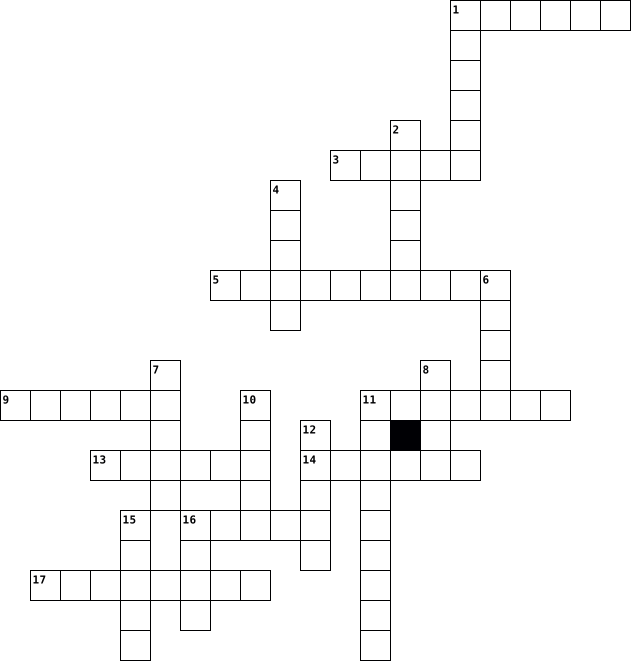
Across
- the thing that flower's need to reproduce
- a leaf that attracts pollinators
- a insect that pollenates
- a pollenator
- a type of flower
- the anther and the filament
- the place where pollen is catched
- a plants tube
- the thing that holds up the anther
Down
- the stigma the ovary and the style
- where pollen goes down in order to pollenate
- plant eggs
- the thing that holds the plant in place
- the leaf that protects the flowers organs
- the most popular flower
- bee a pollenator
- a pollenator
- what plants need to survive
- where eggs of plants are made
- the thing that holds the flower up
20 Clues: plant eggs • a pollenator • a pollenator • a plants tube • bee a pollenator • a type of flower • the most popular flower • a insect that pollenates • what plants need to survive • the anther and the filament • where eggs of plants are made • a leaf that attracts pollinators • the place where pollen is catched • the stigma the ovary and the style • the thing that holds the flower up • ...
plants increasing the numbers 2019-04-16

Across
- coat protects the seed
- dispersal
- source of energy
- for the sedd to be put
- stem
- is a root
Down
- veins
- helps the plant to grow
- health of plant
- fruit
- nutrients
- bangladesh
- karif corp
13 Clues: stem • veins • fruit • dispersal • nutrients • is a root • bangladesh • karif corp • health of plant • source of energy • for the sedd to be put • coat protects the seed • helps the plant to grow
Power of Flowers 2021-01-09

Across
- A container that holds a plant's eggs
- A yellow powder that sticks to animals and moves from flower to flower
- To receive traits from the parent plant
- A plant has has seeds and tastes sweet
- When we use selection to change a wild plant, we get a new plant
- an animal that moves pollen from flower to flower
- The sticky center of the flower where pollen must land for the seed to develop
Down
- A bee brushes up against these and pollen sticks to the bee
- Moving pollen from one flower to another flower so that it can reproduce, or make seeds
- a sugary liquid or sugar water that attracts bees to the flower
- The process used by plant growers to make bigger, better varieties of plants
- Characteristics that we get from our parents
12 Clues: A container that holds a plant's eggs • A plant has has seeds and tastes sweet • To receive traits from the parent plant • Characteristics that we get from our parents • an animal that moves pollen from flower to flower • A bee brushes up against these and pollen sticks to the bee • a sugary liquid or sugar water that attracts bees to the flower • ...
Structures and Functions of a Plant 2023-05-10

Across
- how a plant makes food
- the part of the plant
- makes the fruit with one or more seeds
- holds up the leaves and transports water from the roots
- the function
Down
- anchors the plant in place and takes in water from the soil
- what the roots do to water
- the structure
- makes food for the plant through photosynthesis
- the job each structure has
10 Clues: the function • the structure • the part of the plant • how a plant makes food • what the roots do to water • the job each structure has • makes the fruit with one or more seeds • makes food for the plant through photosynthesis • holds up the leaves and transports water from the roots • anchors the plant in place and takes in water from the soil
horticulture 2024-09-24

Across
- outgrowths of epidermal cells, specialized cells at the tip of a plant root.
- the roots grow downwards into the soil, and also branch off sideways throughout the soil.
- an area where freshly formed roots mature and lengthen.
- plant vascular tissue that conveys water and dissolved minerals from the roots to the rest of the plant and also provides physical support.
- the building blocks of the root system that arises from pericycle and exhibit a morphology that is similar to the primary root
- the presence of a large single root growing downward from the base of the plant.
- the outermost layer of skin on your body.
Down
- to suppress or prevent (a biological function or process and especially an immune response)
- the first organ to appear when a seed germinates.
- an undifferentiated meristematic tissue found in the buds and growing tips of roots in plants.
- the vascular tissue in charge of transport and distribution of the organic nutrients.
- an outer or surrounding layer of an organ or body part.
- a type of tissue at the tip of a plant root.
- the terminal portion of a root or root branch usually including the root cap and the meristematic region behind it and often the regions of differentiation, elongation, and root hair formation.
14 Clues: the outermost layer of skin on your body. • a type of tissue at the tip of a plant root. • the first organ to appear when a seed germinates. • an outer or surrounding layer of an organ or body part. • an area where freshly formed roots mature and lengthen. • outgrowths of epidermal cells, specialized cells at the tip of a plant root. • ...
Photosynthesis 2023-09-30

Across
- Makes plants green
- Type of air taken in through the leaves of a plant
- Any living thing
- Released during photosynthesis
- Food for the plant
Down
- An organism that makes its own food
- The process of turning sunlight, water, and carbon dioxide into sugar and oxygen
- A form of energy absorbed by plants
- The heaviness of an object
- To take in
- Absorbed through the roots of a plant
- An organism that eats plants
- Anything that has mass and takes up space
13 Clues: To take in • Any living thing • Makes plants green • Food for the plant • The heaviness of an object • An organism that eats plants • Released during photosynthesis • An organism that makes its own food • A form of energy absorbed by plants • Absorbed through the roots of a plant • Anything that has mass and takes up space • Type of air taken in through the leaves of a plant • ...
Vocabulary Crossword Puzzle 2025-02-10

Across
- An organism that cannot make its own food.
- The role and location of an organism within an ecological community.
- The transfer of food energy from one organism to another
- Breakdown dead and decaying organisms.
- All living organisms
- make their own food using the sunlight
- An organism that cannot make its own food.
Down
- A series of interrelated food chains in an ecosystem.
- Meat and plant eaters
- Nonliving factors in the enviornment
- Eat dead organisms
- make their own food using the sunlight
- Plant eaters
- Meat eaters
- The environment where a plant or animal lives.
15 Clues: Meat eaters • Plant eaters • Eat dead organisms • All living organisms • Meat and plant eaters • Nonliving factors in the enviornment • make their own food using the sunlight • Breakdown dead and decaying organisms. • make their own food using the sunlight • An organism that cannot make its own food. • An organism that cannot make its own food. • ...
ecosystem 2021-02-03

Across
- the animal that eats both plants and meat.
- the food source that keeps on going.
- the animal that hunts others but is hard to hunt.
- An organism, often a bacterium, fungus, or invertebrate that feeds on and breaks down dead plant or animal matter, making organic nutrients available to the ecosystem.
- the animal or plant that consumes what the plant provides to live.
- the animal that is hunted but can hunt others.
Down
- : animals that eat meat.
- the living organism that shapes the environment
- : the plant that produces stuff for the animals to live.
- : the system of interlocking food chains.
- animal that feeds on plants.
- nonliving part of an ecosystem.
12 Clues: : animals that eat meat. • animal that feeds on plants. • nonliving part of an ecosystem. • the food source that keeps on going. • the animal that eats both plants and meat. • : the system of interlocking food chains. • the animal that is hunted but can hunt others. • the living organism that shapes the environment • the animal that hunts others but is hard to hunt. • ...
Cell Organelles 2023-11-14

Across
- rounds control center of the cell
- jelly like materials filling the cell
- stores water, salts, proteins, carbs, ect.
- store starch
- conducts photosynthesis
- apparatus packages proteins
- envelope surrounds the nucleus
- digests materials
- pores allows passage of materials
- make proteins
Down
- cells has a large central vacuole
- wall protects and supports the cell
- contain red, yellow, and orange pigments
- cells has no cell wall
- supports cells and allows movement
- found in plant cells
- has a nucleus
- contains enzymes that produce atp
- reticulum membranes that transport materials
- no nucleus
- membrane regulates what enter and leaves the cell
21 Clues: no nucleus • store starch • has a nucleus • make proteins • digests materials • found in plant cells • cells has no cell wall • conducts photosynthesis • apparatus packages proteins • envelope surrounds the nucleus • cells has a large central vacuole • rounds control center of the cell • contains enzymes that produce atp • pores allows passage of materials • ...
G4 Science Review for Mini Test 4 2025-03-14

Across
- A plant part that collects water from the soil.
- (Two-words) Examples are: heart, brain. They are inside the body.
- (Two-words) Set of organs that use information from the senses to control all the body systems.
- Something that helps a living thing to survive in its environment
Down
- The release of water vapour through the leaves
- An organ in the central nervous system that controls the body by sending and receiving messages
- A plant part that makes food for the plant
- A reaction to a stimulus
- A plant part that helps the plant to stand up and transports nutrients.
- (Two-words) Examples are: skin, fur, beak. They are outside of the body.
- Something in the environment that causes a response
11 Clues: A reaction to a stimulus • A plant part that makes food for the plant • The release of water vapour through the leaves • A plant part that collects water from the soil. • Something in the environment that causes a response • (Two-words) Examples are: heart, brain. They are inside the body. • Something that helps a living thing to survive in its environment • ...
Photosynthesis 2025-01-16

Across
- a pigment present in all green plants and a few other organisms
- A type of sugar; the chief source of energy for living organisms
- is a plant that cycles carbon dioxide into four-carbon sugar compounds to enter into the Calvin cycle
- is a clear gas composed of one atom of carbon (C) and two atoms of oxygen (O)
- a type of plant that produces a three-carbon compound (3-phosphoglyceric acid) through the Calvin-Benson cycle\
- the electromagnetic radiation of the sun that reaches the earth, particularly infrared, visible light, and ultraviolet ligh
- a chemical element with an atomic number of 8
- is a photosynthetic adaptation to periodic water supply
- pouch-like sacs that are bound to a membrane in the chloroplasts of a plant cell
Down
- measured in a billionth
- the source of energy for use and storage at the cellular level
- the organelles responsible for photosynthesis
- certain photochemical reactions involved in photosynthesis, the main process by which plants acquire energy.
- little discs of membrane on which the light-dependent reactions of photosynthesis take place
- a substance composed of the chemical elements hydrogen and oxygen and existing in gaseous, liquid, and solid states
- divided into three main stages: carbon fixation, reduction, and regeneration of the starting molecule
- organism that goes through photosynthesis
- The cells and tissues that support and give structure to organs, glands, or other tissues in the body
- Colors of light that human eyes can see
- any coloured material found in a plant or animal cell
- tiny openings present on the epidermis of leaves
21 Clues: measured in a billionth • Colors of light that human eyes can see • organism that goes through photosynthesis • the organelles responsible for photosynthesis • a chemical element with an atomic number of 8 • tiny openings present on the epidermis of leaves • any coloured material found in a plant or animal cell • is a photosynthetic adaptation to periodic water supply • ...
Cells 2015-03-19

Across
- endocytosis and exocytosis are examples of __________ transport
- jellylike material that fills the cell
- gives the cell shape and controls what goes in and out of the cell
- determines what traits a living thing will have
- cells that do not have a nucleus
- controls the cell
- stores water, food, and waste
- the process by which particles go from high concentration to low concentration
Down
- produces energy when food is broken down
- the diffusion of water across a semipermeable membrane
- where photosynthesis happens, only found in plant cells
- digests waste
- where protein is produced
- found in plant cells only; form thick outer coating and supports plant structure
- Robert Hooke was the first person to "coin" this term in 1665
- cells that have a nucleus
- diffusion and osmosis are examples of __________ transport
17 Clues: digests waste • controls the cell • where protein is produced • cells that have a nucleus • stores water, food, and waste • cells that do not have a nucleus • jellylike material that fills the cell • produces energy when food is broken down • determines what traits a living thing will have • the diffusion of water across a semipermeable membrane • ...
Biology Final Exam, Part 2 2023-06-04

Across
- The breakdown of food particles by enzymes into smaller molecules
- Living examples of the organism are known to exist
- A developmental stage where an immature organism goes through extensive changes in body parts to enter an adult stage
- The process by which a seed develops into a seedling
- The branch of Biology dealing with the relationship of organisms with their environment and with each other
- A short-term resting state in seeds where growth of the embryo is suspended
- An animal that carries pollen from one plant to another to aid in fertilization
- A large collection of animals and plants that occupy a particular geographical location
- The wide range of all forms of life on earth or in a specific region
- The emission of light by organisms
- capable of being divided into 2 halves that are mirror images of each other
Down
- A plant that grows on another plant in commensal relationship
- Producing young by means of eggs that are hatched inside on the the parents
- The process of aging that leads to death
- The evaporation of water from the leaves of a plant
- The weather conditions prevailing in an area over a long period of time (many years)
- The study of how an organism functions
- The condition in which a set of primary teeth is later replaced by a secondary set
- Pressure exerted by the cytoplasm being pushed against the cell wall
- A blood protein produced to fight against a specific antigen
- The inner membrane of an egg that contains fluid to provide protection of the embryo
- A process in which the plant cells seals off its connection to a leaf, causing the leaf to die and fall off
- The amount of salt dissolved in a body of water
- bone-like structures produced by the dermis
- The shedding and replacing of an old outer covering
- A body of water where freshwater from rivers or streams mixes with saltwater from the ocean
- All feathers of a bird
- Something used to achieve an objective
28 Clues: All feathers of a bird • The emission of light by organisms • The study of how an organism functions • Something used to achieve an objective • The process of aging that leads to death • bone-like structures produced by the dermis • The amount of salt dissolved in a body of water • Living examples of the organism are known to exist • ...
MythBusters - Plants 2026-07-21

Across
- The part of the launcher where the straw is loaded.
- A device that quickly releases the compressed air.
- A tool used to measure air pressure.
- A narrow beam of light used to line up the barrel.
- The long tube that guides the straw towards the tree.
- The tiny living organisms found in yogurt.
- The soft object used during the first test shot.
- The scientific name for white blood cells.
- The force of compressed air used to launch the straw.
- A machine used to measure small electrical signals.
- The machine used to pump air into the tank.
- A machine that separates cells by spinning them quickly.
- The type of tree Adam and Jamie try to shoot straw through.
- The unit used to measure the pressure inside the air tank.
- The stronger plant material fired after ordinary straw.
- The speed of an object in a particular direction.
- The dry plant material fired at the tree.
- The food tested because it contains living bacteria.
Down
- An object that is fired through the air.
- The equipment used to record the straw moving at high speed.
- The metal material that passed through the palm tree.
- A small sensor attached to the plant’s leaf.
- The device used to shock Tori during the experiment.
- The machine first connected to the plant to record responses.
- The scientist whose plant experiments were recreated.
- A story or claim that the MythBusters test.
- The replacement tree used because it is similar to a coconut palm.
- A weather event with very strong winds.
- The result given when the evidence shows a myth is false.
- The idea that plants may sense thoughts and feelings.
30 Clues: A tool used to measure air pressure. • A weather event with very strong winds. • An object that is fired through the air. • The dry plant material fired at the tree. • The tiny living organisms found in yogurt. • The scientific name for white blood cells. • A story or claim that the MythBusters test. • The machine used to pump air into the tank. • ...
Plant Science 1 2022-12-27

Across
- The outer layer of cells which give protection
- The dominant bud at the top of a stem
- the process by which plants use sunlight, water, and carbon dioxide to create oxygen and sugar
- A factor affecting the rate of transpiration
- A stem that runs along the ground and can root at its nodes
- The _____ mesophyll is where most photosynthesis takes place
- The space between two nodes
- An essential nutrient for photosynthesis
- A pore in leaves which gases can exchange
Down
- A flower with male and female organs
- the act of transferring pollen grains from the male anther of a flower to the female stigma
- A plant nutrient to promote the formation of flowers and fruits within the plant
- A pore in a stem through which gases can be exchanged
- A plant produced by the sexual reproduction of different species or genera
- An underground stem, often used to store food
- A type of leaf resistant to drought
- The movement of water across a semi-permeable membrane from a high concentration to a low concentration
17 Clues: The space between two nodes • A type of leaf resistant to drought • A flower with male and female organs • The dominant bud at the top of a stem • An essential nutrient for photosynthesis • A pore in leaves which gases can exchange • A factor affecting the rate of transpiration • An underground stem, often used to store food • ...
Aboriginal Plant Use 2017-02-06

Across
- Fly Agaric can be boiled with other plants to make ______
- Bracket Fungus can be smoked to treat ______
- Crowberry branches can be chewed to treat a _____ in children
- Saskatoon Berry can be used to treat lung problems such as ______
- Cow Parsnip can be used to treat a _______
- Bulrush stems can be boiled to make medicine for ____
- Eating blueberries helps ____
- Bog Laurel can be chewed to treat ______
Down
- Canadian Thistle can be used as a poultice for aching _____
- Bog Rosemary stem and root decoction can be drunk to treat a _____
- Bracted Honeysuckle can be boiled to treat ____ disease
- Ox-eye Daisy can be used to treat _________ in children
- Colorado Rubber-plant can be ground into a powder to induce _____
- Gumweed flower heads can be brewed into a tea to treat a ______
- Tinder Fungus can be burned to get rid of _________
- Pineapple weed can be steeped to treat _______
- Spreading Dogbane can be made into a tea to increase ______ in nursing mothers
17 Clues: Eating blueberries helps ____ • Bog Laurel can be chewed to treat ______ • Cow Parsnip can be used to treat a _______ • Bracket Fungus can be smoked to treat ______ • Pineapple weed can be steeped to treat _______ • Tinder Fungus can be burned to get rid of _________ • Bulrush stems can be boiled to make medicine for ____ • ...
American Plant :P 2021-05-02

Across
- No ___ no service
- Worst customers
- Favorite pasttime besides puzzle books
- Don't know the names of the ___
- Favorite warehouse guy
- Best area to work
- Long waited returned customer
- can't legally do deliveries
Down
- Sir you need to pull up your
- Biker short wearer
- future red head
- Common excuse for cultural miscommunications
- Frequent runs to
- Anabel has a ___ account
- Newest design display
- Ma'am you need to put on your
- No longer partaking in ___ masking
- Winter ap snack
- The queen of hair dye
19 Clues: future red head • Worst customers • Winter ap snack • Frequent runs to • No ___ no service • Best area to work • Biker short wearer • Newest design display • The queen of hair dye • Favorite warehouse guy • Anabel has a ___ account • can't legally do deliveries • Sir you need to pull up your • Ma'am you need to put on your • Long waited returned customer • Don't know the names of the ___ • ...
Plant & Animal Cells 2023-04-27

Across
- Sac filled with digestive chemicals found in animal cells.
- Structure that manufactures ribosomes
- Stack of membranes that packages chemicals
- a plastid that contains chlorophyll and in which photosynthesis takes place.
- Structures that convert nutrients to energy, found in plant and animal cells.
- Membrane that protects the nucleus.
- Jelly-like substance within the cell membrane.
- provides tensile strength and protection to plant cells
- Small structure that synthesizes proteins, only found in animal cells.
Down
- Membrane that surrounds and protects the cell.
- Tubules and filaments that give the cell its shape.
- Passageways where chemicals are made.
- Structure that organizes motion of chromosomes, only found in animal cells.
- Structure that contains DNA and regulates genes.
- Sac that stores water, nutrients, or waste products.
- containing pigment or food in plant cells.
- Package created by the Golgi apparatus
17 Clues: Membrane that protects the nucleus. • Passageways where chemicals are made. • Structure that manufactures ribosomes • Package created by the Golgi apparatus • Stack of membranes that packages chemicals • containing pigment or food in plant cells. • Membrane that surrounds and protects the cell. • Jelly-like substance within the cell membrane. • ...
12.4 Plant defences 2026-05-19

Across
- 9
- 5
- 11
- 1
- 4
- 10
- 17
- 13
Down
- 15
- 8
- 16
- 3
- 12
- 7
- 2
- 14
- 6
17 Clues: 9 • 8 • 3 • 5 • 1 • 7 • 2 • 4 • 6 • 15 • 16 • 12 • 11 • 14 • 10 • 17 • 13
FOOD 2022-08-31

Across
- an enclosed compartment, as in a kitchen range, for cooking and heating food.
- an implement with a broad, flat, blunt blade, used for mixing and spreading things.
- any nutritious substance that people or animals eat or drink.
- cook food with dry heat, typically in an oven or on a hot surface.
- a round, deep dish or basin used for food or liquid.
- cover food with liquor and set it alight briefly.
- an instrument composed of a blade fixed into a handle, used for cutting or as a weapon
- domestic fowl, such as chickens, turkeys, ducks, and geese.
- a container, typically rounded or cylindrical and of ceramic ware or metal, used for storage or cooking.
Down
- a starchy plant tuber whicjh is one of the most important food crops.
- make or become hot or warm
- the flesh of fish as food
- the flesh of an animal, eaten as food.
- the action of cutting something
- prepare food by combining and heating the ingredients in various ways.
- cook food by exposure to direct, intense radiant heat.
- the sweet and fleshy product of a tree or other plant that contains seeds.
- a plant or part of a plant used as food.
- cook food in hot fat or oil
- an implement consisting of a small, shallow oval or round bowl on a long handle, used for eating, stirring and serving food.
20 Clues: the flesh of fish as food • make or become hot or warm • cook food in hot fat or oil • the action of cutting something • the flesh of an animal, eaten as food. • a plant or part of a plant used as food. • cover food with liquor and set it alight briefly. • a round, deep dish or basin used for food or liquid. • cook food by exposure to direct, intense radiant heat. • ...
Food and drink 2017-01-09

Across
- An oval fleshy fruit which is purple, reddish, or yellow when ripe and contains a flattish pointed stone
- fruit The edible purple fruit of a kind of passion flower that is grown commercially, especially in tropical America and the Caribbean
- A cultivated plant of the parsley family, with closely packed succulent leaf stalks which are used as a salad or cooked vegetable
- A cultivated variety of cabbage which bears heads of green or purplish flower buds that are eaten as a vegetable
- A European plant cultivated for its large thistle-like flower heads
- A spherical fruit with a tough golden-orange outer skin and sweet red gelatinous flesh containing many seeds
- A tropical fruit shaped like an elongated melon, with edible orange flesh and small black seeds
- A tall plant of the lily family with fine feathery foliage, cultivated for its edible shoots
- Maize of a variety with kernels that have a high sugar content. It is grown for human consumption and is harvested while slightly immature
- An aromatic yellow-flowered European plant of the parsley family, with feathery leaves
Down
- A juicy, soft fruit of an orange-yellow colour resembling a small peach
- A dish of Italian origin, consisting of a flat round base of dough baked with a topping of tomatoes and cheese
- An edible soft fruit related to the blackberry, consisting of a cluster of reddish-pink drupelets
- The edible dark-red spherical root of a kind of beet, eaten as a vegetable
- A round yellowish edible seed, widely used as a pulse, also called garbanzo
- A large round yellow citrus fruit with an acid juicy pulp
- A soft pear-shaped fruit with sweet dark flesh and many small seeds, eaten fresh or dried
- An edible Asian plant of the goosefoot family, with large dark green leaves which are widely eaten as a vegetable
- The large oval brown seed of a tropical palm, consisting of a hard woody husk surrounded by fibre, lined with edible white flesh and containing a clear liquid
- A plant related to the onion, with flat overlapping leaves forming an elongated cylindrical bulb which together with the leaf bases is eaten as a vegetable. It is used as a Welsh national emblem
20 Clues: A large round yellow citrus fruit with an acid juicy pulp • A European plant cultivated for its large thistle-like flower heads • A juicy, soft fruit of an orange-yellow colour resembling a small peach • The edible dark-red spherical root of a kind of beet, eaten as a vegetable • A round yellowish edible seed, widely used as a pulse, also called garbanzo • ...
Plant and Animal cells 2019-01-31

Across
- contains a green substance called chlorophyll, only in plant cells
- liquidy substance inside cells
- barrier for a plant cell
- makes energy for the cell, respiration
- used for making protein
Down
- occurs in the plant chloroplasts
- encloses the cytoplasm
- stores salts, nutrients, proteins and pigments for plant cells
- everything is made of...
- the brain of the cell
10 Clues: the brain of the cell • encloses the cytoplasm • used for making protein • barrier for a plant cell • everything is made of... • liquidy substance inside cells • occurs in the plant chloroplasts • makes energy for the cell, respiration • stores salts, nutrients, proteins and pigments for plant cells • contains a green substance called chlorophyll, only in plant cells
planting crossword 2014-06-16

Across
- Opposite of a fruit
- The process of a plant making food
- Gives the plant water and nutrients
- The male part of a plant
Down
- What humans breath out
- The female part of a plant
- When pollen goes from flower to flower
- Gas in the air that humans breath in
- Dig underground and give plants oxegen
- Stage one
10 Clues: Stage one • Opposite of a fruit • What humans breath out • The male part of a plant • The female part of a plant • The process of a plant making food • Gives the plant water and nutrients • Gas in the air that humans breath in • When pollen goes from flower to flower • Dig underground and give plants oxegen
ASEXUAL REPRODUCTION 2015-09-19

Across
- In this type of asexual reproduction, a new individual may form as an outgrowth of the parent
- The parent and the offspring have the same genes and this is the reason why they have the same ____________.
- When a hydra is cut into several pieces, a process known as _________________, each piece can grow into another hydra
- A specialized stem which function as a food storage organ
- It is a round single-celled green algae that can reproduce through fission
- It is commonly called as eye in the potato plant
- A medicinal plant that can reproduce through its leaves, plantlets can grow around the leaf margin
- A microorganism used in baking and can reproduce asexually
- The parent and the resulting offspring have the same genes
- How many potato plant can grow in each eye
Down
- A type of asexual reproduction wherein from a single parent, several new plants can be produced
- These microorganisms can reproduce very rapidly through fission
- A plant that can reproduce asexually through its shoots
- A type of asexual reproduction where cell divides to form two identical daughter cell
- A type of asexual reproduction common among molds or fungi
- Cannot reproduce asexually
- Strawberries can reproduced through their their stems called __________
- These are found in the chromosomes which are in turn located in the nucleus of the cells
- A yellow flower that blooms in the spring and can reproduce through its buds
- A type of reproduction where a new individual, known as the offspring, is produced from a single parent
20 Clues: Cannot reproduce asexually • How many potato plant can grow in each eye • It is commonly called as eye in the potato plant • A plant that can reproduce asexually through its shoots • A specialized stem which function as a food storage organ • A type of asexual reproduction common among molds or fungi • A microorganism used in baking and can reproduce asexually • ...
Plant Transport System 2022-08-10

Across
- This green pigment traps light for the leaves to photosynthesise.
- Excess food or glucose made by leaves is stored as _______________.
- A seed can _______________ into a young plant in the presence of water, warmth and oxygen.
Down
- Without this, leaves cannot make food. They will turn dry and brown and eventually die.
- Leaves make this in the presence of light, water, carbon dioxide and chlorophyll.
- This gas is released as the end product of photosynthesis.
- This part holds the plant firmly to the ground.
- This part of the plant develops into a fruit after fertilisation.
- This part of the plant protects the seeds in it.
- This part of the plant keeps the plant upright.
10 Clues: This part holds the plant firmly to the ground. • This part of the plant keeps the plant upright. • This part of the plant protects the seeds in it. • This gas is released as the end product of photosynthesis. • This green pigment traps light for the leaves to photosynthesise. • This part of the plant develops into a fruit after fertilisation. • ...
Mass Transport in Plants 2017-05-08

Across
- dead, elongated tubes with no end walls that transport water in plants
- plant exchange surface cells in plants for absorption of water from the soil
- attraction between molecules of the same type that causes water to move up the xylem
- the evaporation of water from leaves that pulls water through a plant
- the route water takes moving through plant cell cytoplasm
Down
- the type of bonding between water molecules
- cytoplasm 'bridges' between plant cells
- a distinctive band in a plant root that prevents water passing into the xylem via cell walls and directs water through the protoplast
- the route water takes moving along plant cell walls
- the 'holes' on the underside of leaves
10 Clues: the 'holes' on the underside of leaves • cytoplasm 'bridges' between plant cells • the type of bonding between water molecules • the route water takes moving along plant cell walls • the route water takes moving through plant cell cytoplasm • the evaporation of water from leaves that pulls water through a plant • ...
FSE Christmas 2023-12-04

Across
- - Striped sweet treat
- - Gifts under the tree
- - The jolly man in the red suit
- - Hung by the fireplace for Santa
- - Traditional Christmas dessert
- - Santa’s mode of transport
- - The reindeer with the red nose
- - Built from snow, with a carrot nose
- - Santa’s little helper
- - Spiced cookie, often shaped like a man or a house
- - Red and green holiday plant
- - Santa’s home
Down
- - Festive ballet or a tool to open nuts
- - Traditional Christmas drink
- - Kiss beneath this plant
- - Songs sung at Christmas
- - Shiny decoration for the tree
- - Circular decoration for your door
- - Santa’s flying helpers
- - Decorated with lights and ornaments
20 Clues: - Santa’s home • - Striped sweet treat • - Gifts under the tree • - Santa’s little helper • - Santa’s flying helpers • - Kiss beneath this plant • - Songs sung at Christmas • - Santa’s mode of transport • - Traditional Christmas drink • - Red and green holiday plant • - The jolly man in the red suit • - Shiny decoration for the tree • - Traditional Christmas dessert • ...
Unit5 Preparing for the Topic 2026-04-02

Across
- the gas we breathe
- the green plant on the ground
- a small mountain
- the big salt water
- a glass part in a wall
- the world of plants and animals
- a tree/flower; grow plants
- a building to live in
- a dry sandy land
- drop down; happen; autumn
- a spot; put sth somewhere
Down
- a land with much grass
- a wet forest with much rain
- obtain; receive; arrive
- a big animal with a long trunk
- water falling from a high place
- a living thing that moves
- the usual weather of a place
- the highest part
- not dry
20 Clues: not dry • a small mountain • the highest part • a dry sandy land • the gas we breathe • the big salt water • a building to live in • a land with much grass • a glass part in a wall • obtain; receive; arrive • a living thing that moves • drop down; happen; autumn • a spot; put sth somewhere • a tree/flower; grow plants • a wet forest with much rain • the usual weather of a place • ...
Unit5 Preparing for the Topic 2026-04-02

Across
- the gas we breathe
- the green plant on the ground
- a small mountain
- the big salt water
- a glass part in a wall
- the world of plants and animals
- a tree/flower; grow plants
- a building to live in
- a dry sandy land
- drop down; happen; autumn
- a spot; put sth somewhere
Down
- a land with much grass
- a wet forest with much rain
- obtain; receive; arrive
- a big animal with a long trunk
- water falling from a high place
- a living thing that moves
- the usual weather of a place
- the highest part
- not dry
20 Clues: not dry • a small mountain • the highest part • a dry sandy land • the gas we breathe • the big salt water • a building to live in • a land with much grass • a glass part in a wall • obtain; receive; arrive • a living thing that moves • drop down; happen; autumn • a spot; put sth somewhere • a tree/flower; grow plants • a wet forest with much rain • the usual weather of a place • ...
Transport Sytems in Plants 2021-04-19

Across
- Substances are transported into and out of the Amoeba by this process
- Pores or holes in leaves that allows the movement of gases in and out of the leaf
- Transports glucose and proteins within the plant
- A ______ root system divides to form a thin network of roots
- Supports the part of the plant above ground
- Main organ for sexual reproduction in plants
Down
- Responsible for absorbing water for the plant
- Part of the plant where photosynthesis occurs
- A plant with a main root from which other smaller roots sprout has a ______ root system
- An organism whose body is made up of many cells
- Transports water and water-soluble minerals in plants
11 Clues: Supports the part of the plant above ground • Main organ for sexual reproduction in plants • Responsible for absorbing water for the plant • Part of the plant where photosynthesis occurs • An organism whose body is made up of many cells • Transports glucose and proteins within the plant • Transports water and water-soluble minerals in plants • ...