
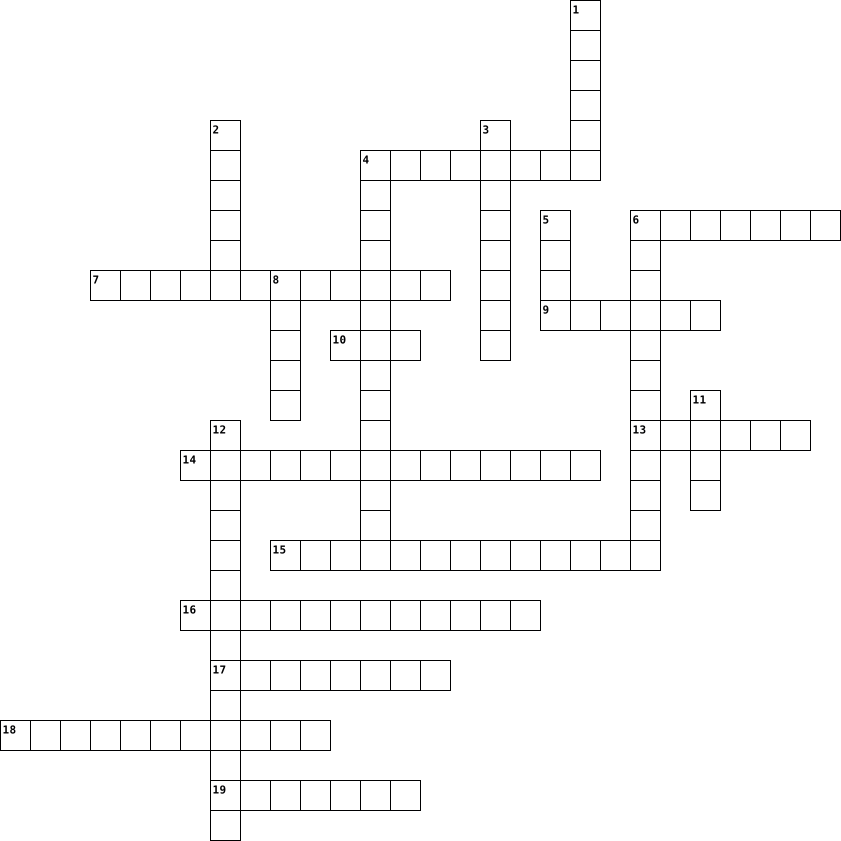
water cycle Crossword Puzzles
Water's Properties 2024-02-12

Across
- Water can also stick to ___ molecules through adhesion.
- When water freezes it ___.
- When water changes from a gas to a liquid.
- One example of ___ is when snow melts and joins a river.
- Water vapor in the air
- Water has the ability to be a liquid, solid, or gas depending on the ___ at which it is found.
- The top ___ of water molecules are extra sticky.
- You can find water in all three ___ in nature.
- The top layer of water molecules create a ___ surface.
- When plants lose water through their leaves.
- It takes a lot of ___ to make water hot.
- When water changes from a solid to a liquid.
- Water molecules are attracted to other ___ through the property of cohesion.
- Most of the fresh water on Earth is found here.
Down
- When water changes from a liquid to a gas.
- Water becomes ___ dense when it freezes.
- Water ___ dissolves a lot of other substances.
- Water is known as the universal ___.
- When water changes from a liquid to a solid.
- Ice will ___ on water due to the properties associated with density.
- Water has a slight ___ charge on the hydrogen atoms.
- Ice on the surface of a pond
- Water has a slight ___ charge on the oxygen atom.
- The ___ drives the water cycle on Earth.
- When water falls from clouds in the form of rain, snow, sleet, or hail.
- Water having a high heat capacity helps regulate ___ ranges world-wide.
- Each ___ of water is made up of 2 hydrogen molecules and 1 oxygen molecule bonded together.
- Water in a pond
28 Clues: Water in a pond • Water vapor in the air • When water freezes it ___. • Ice on the surface of a pond • Water is known as the universal ___. • Water becomes ___ dense when it freezes. • The ___ drives the water cycle on Earth. • It takes a lot of ___ to make water hot. • When water changes from a liquid to a gas. • When water changes from a gas to a liquid. • ...
Weather and Climate for ding dongs 2023-03-22

Across
- wispy cloud
- A violent storm with lightning
- an electric discharge naturally
- the sound of lightning
- big blanket cloud
- current state of the atmosphere
- A cloud that hovers over the ground
- A front that doesn't move
- atmospheric pressure is greater than the pressure in the surrounding region
- different forms of water falling towards the ground
- measure the speed of wind
- A violent wind storm or tropical vortex
- big fluffy cloud
Down
- instrument to measure pressure in air
- scientist who studies weather/climate
- A mobile destructive vortex
- the amount of water vapor in the air
- Measures the temperature of the air
- A violent wind and snowstorm
- large mass of air
- weather over a long period of time
- how hot or cold it is
- giant wave of water caused by wind
- the cycle where water goes through every state
24 Clues: wispy cloud • big fluffy cloud • big blanket cloud • large mass of air • how hot or cold it is • the sound of lightning • A front that doesn't move • measure the speed of wind • A mobile destructive vortex • A violent wind and snowstorm • A violent storm with lightning • an electric discharge naturally • current state of the atmosphere • weather over a long period of time • ...
Water and Carbon Cycle 2021-09-04

Across
- Carbon dioxide or other gaseous carbon compounds released into the atmosphere associated with climate change.
- The liquid or frozen water that forms in the atmosphere and falls back to the earth.
- Gases in earth's atmosphere that traps heat.
- The process by which water vapor in the air is changed into liquid water.
- Type of precipitation distinct from snow, hail, and freezing rain.
Down
- A heavy colorless gas that is formed by burning fuels.
- The whole mass of air that surrounds the earth.
- A source of nuclear energy.
- When sunlight warms the surface of the water.
- A type of precipitation or water in the atmosphere.
10 Clues: A source of nuclear energy. • Gases in earth's atmosphere that traps heat. • When sunlight warms the surface of the water. • The whole mass of air that surrounds the earth. • A type of precipitation or water in the atmosphere. • A heavy colorless gas that is formed by burning fuels. • Type of precipitation distinct from snow, hail, and freezing rain. • ...
Water Cycle Crossword Puzzle 2022-02-18

Across
- The water found underground in the cracks and spaces in soil, sand and rock.
- The process by which water moves through the earth and atmosphere
- The process by which water vapor from a plant evaporates into the atmosphere
- The process by which water absorbs into the ground
- Water that falls from the clouds as rain, snow, hail or sleet, collects in the oceans, rivers, lakes, streams
- The process in which water that has precipitated is absorbed by soil and brought to the ocean.
- The largest body of water on Earth.
Down
- The process that occurs when water changes from a liquid to a gas, caused a rise in
- The process which occurs when water droplets fall from the atmosphere in the form of rain, snow, hail, sleet
- The process that occurs when water changes from a vapor or gas into a liquid in the atmosphere.
10 Clues: The largest body of water on Earth. • The process by which water absorbs into the ground • The process by which water moves through the earth and atmosphere • The water found underground in the cracks and spaces in soil, sand and rock. • The process by which water vapor from a plant evaporates into the atmosphere • ...
Water Cycle Swagg Puzzle 2012-04-25

Across
- The change and movement of the Earth’s water
- Water found beneath earth's surface
- Is the opposite of evaporation; it occurs when vapor cools
- The gas formed when water evaporates
- Is the opposite of sublimation;vapor turns directly into ice or snow
- Is when precipitation travels over the soil surface into a stream
Down
- Occurs when the sun heats water up and it becomes vapor in the air
- Is condensation falling onto land in the form of rain, sleet, hail, snow
- Occurs when snow or ice changes into vapor
- Store most of the Earth’s water. Over 70% of the Earth’s surface
10 Clues: Water found beneath earth's surface • The gas formed when water evaporates • Occurs when snow or ice changes into vapor • The change and movement of the Earth’s water • Is the opposite of evaporation; it occurs when vapor cools • Store most of the Earth’s water. Over 70% of the Earth’s surface • Is when precipitation travels over the soil surface into a stream • ...
water cycle cross word 2016-03-10

Across
- another word for ocean
- runoff rain on permeable materials
- heat on water
- the sea
- rain
- ball of gas in the sky
Down
- some surfaces like soil
- rain on non-Permeable materials
- clouds form
- thick surfaces like a road
10 Clues: rain • the sea • clouds form • heat on water • another word for ocean • ball of gas in the sky • some surfaces like soil • thick surfaces like a road • rain on non-Permeable materials • runoff rain on permeable materials
Climate, Weather, & Water Cycle 2024-01-10

Across
- Storage places for water similar to a lake
- Water soaking into the ground
- The loss of water from parts of plants, especially the leaves
Down
- Liquid water turns into gaseous form called vapor
- How the atmosphere (air) is changing at different times and places
- Vapor cools and becomes a liquid: clouds, fog
- A form of water, rain, snow, sleet, or hail, that falls to the ground
- The average weather in an area over a long period of time
- Water that has infiltrated into the ground. Water that is underground
- Precipitation that runs off the land, adding to the flow of rivers and streams
10 Clues: Water soaking into the ground • Storage places for water similar to a lake • Vapor cools and becomes a liquid: clouds, fog • Liquid water turns into gaseous form called vapor • The average weather in an area over a long period of time • The loss of water from parts of plants, especially the leaves • How the atmosphere (air) is changing at different times and places • ...
Water Cycle Crossword Puzzle 2024-01-30

Across
- The __________ is constant.
- ____ can form when the temperature is cold enough.
- Clouds can be extremely _____ because of how much water it can hold.
- ___________ can be stuck for years.
- Water droplets combine and become too heavy for the cloud, causing rain.
Down
- Water in the clouds is _____ water.
- ____ blows clouds for long distances.
- Water vapor cools and turns back into liquid.
- When water is evaporated, it turns into steam or _____
- The amount of water on Earth ______ remains the same
10 Clues: The __________ is constant. • Water in the clouds is _____ water. • ___________ can be stuck for years. • ____ blows clouds for long distances. • Water vapor cools and turns back into liquid. • ____ can form when the temperature is cold enough. • The amount of water on Earth ______ remains the same • When water is evaporated, it turns into steam or _____ • ...
Water Cycle Crossword - Jovanni 2023-11-28

Across
- A water molecule contains 2 hydrogen (H) atoms and 1 oxygen (O) atom.
- The energy that drives the water cycle
- Plants bringing water from underground
- Runoff is nothing more than water "running off" the land surface.
- Ocean currents move massive amounts of water throughout the oceans.
- Frozen mountain water melting to the rivers
Down
- Water vapor coming from an erupting volcano
- Solid turning into a gas
- "transpire" water while humans "respire" water.
- Water vapor all around us in the sky
10 Clues: Solid turning into a gas • Water vapor all around us in the sky • The energy that drives the water cycle • Plants bringing water from underground • Water vapor coming from an erupting volcano • Frozen mountain water melting to the rivers • "transpire" water while humans "respire" water. • Runoff is nothing more than water "running off" the land surface. • ...
Water Cycle - Ethan F 2023-11-28

Across
- the recirculation of water
- When something becomes denser
- Water evaporating from plants and trees
- water sinking into soil
Down
- when a solid turns into a gas without becoming a liquid first
- When water turns into a gas
- When roots bring water for the stem and they release it back out
- rain hail or snow
- Gaseous water turning into a liquid
- when it rains and the water goes into a nearby river
10 Clues: rain hail or snow • water sinking into soil • the recirculation of water • When water turns into a gas • When something becomes denser • Gaseous water turning into a liquid • Water evaporating from plants and trees • when it rains and the water goes into a nearby river • when a solid turns into a gas without becoming a liquid first • ...
Water Cycle Crossword Puzzle 2024-04-10

Across
- Water turns from a liquid inside a plant into water vapor in the air: when a plant 'sweats'
- Water makes its way down through the soil from gravity pulling on it.
- Water continuously moving through all four of Earth's spheres over millions of years.
- Source of energy for the water cycle.
- The Sun's heat turns liquid water into water vapor in the air.
- water slides off the side of something, pulled by gravity to the lowest point.
Down
- Water is sucked up through the roots of a plant.
- Water in a cloud gets too heavy, and gravity pulls it back down as: rain, sleet, snow, or hail.
- Water vapor cools off, clumps together, and turns back into a liquid in a cloud.
- Water collects in one area and builds up forming: puddles, aquifers, oceans, etc.
10 Clues: Source of energy for the water cycle. • Water is sucked up through the roots of a plant. • The Sun's heat turns liquid water into water vapor in the air. • Water makes its way down through the soil from gravity pulling on it. • water slides off the side of something, pulled by gravity to the lowest point. • ...
Water Cycle Crossword Puzzle 2024-09-07

Across
- less than 1% of Earth's water is liquid
- pieces of ice form in the clouds
- 97% of Earth's water is
- some freshwater can be found in
- when gas changes into liquid
Down
- different forms of water falling to the ground
- liquid freshwater can be found in water
- when liquid changes into gas
- evaporation of water through openings of leaves of plants leaves
- when a gas changes into a liquid to a gas to a
10 Clues: 97% of Earth's water is • when liquid changes into gas • when gas changes into liquid • some freshwater can be found in • pieces of ice form in the clouds • less than 1% of Earth's water is liquid • liquid freshwater can be found in water • different forms of water falling to the ground • when a gas changes into a liquid to a gas to a • ...
Water Cycle Crossword Puzzle 2024-05-14

Across
- When water droplets gather
- when water from the sky goes into the ground
- the sun warms the water which causes
- When water from plants rise up
Down
- This has both gravity and the sun in it
- This falls from the sky
- When water is a gas
- All the vocabs make the?
- Where rain, hail, sleet, snow etc fall from
- When water from the ground is overfilled and slides down
10 Clues: When water is a gas • This falls from the sky • All the vocabs make the? • When water droplets gather • When water from plants rise up • the sun warms the water which causes • This has both gravity and the sun in it • Where rain, hail, sleet, snow etc fall from • when water from the sky goes into the ground • When water from the ground is overfilled and slides down
Carbon and Water cycle 2023-01-24

Across
- water particles gaining energy when heated
- microbes breaking down glucose into carbon
- burning fossil fuels releases C
- cooled water particles solidifying
- dead remains changing to oil and coal
- condensed liquid particles falling
Down
- planta and animals releasing carbon dioxide into the atmosphere
- plants absorbing Carbon dioxide
- water vapour cooling and transferring energy into the surrounding
- element that most organic matter is composed of
10 Clues: plants absorbing Carbon dioxide • burning fossil fuels releases C • cooled water particles solidifying • condensed liquid particles falling • dead remains changing to oil and coal • water particles gaining energy when heated • microbes breaking down glucose into carbon • element that most organic matter is composed of • ...
water cycle period 6 2022-11-29

Across
- rushing water with some fish
- lots frozen wter
- water and land
- soil and ground and water
- water with fish
- big water with sea animals
- frozen water
Down
- soil with water
- frozen layer on or under earth
- layers of snow
10 Clues: frozen water • water and land • layers of snow • soil with water • water with fish • lots frozen wter • soil and ground and water • big water with sea animals • rushing water with some fish • frozen layer on or under earth
Rivers and water cycle 2022-11-27

Across
- fine light materials get carried along
- Rocks hit each other
- when there is not enough energy in the river to carry sediment
Down
- It wears away at river banks
- Rocks and pebbles roll along river bed
- when rivers flow over different types of rocks
- action causes cracks in the surface
- dissolved materials get transported
- Rocks bounce along river bed
- causes the falls to move back
10 Clues: Rocks hit each other • It wears away at river banks • Rocks bounce along river bed • causes the falls to move back • action causes cracks in the surface • dissolved materials get transported • Rocks and pebbles roll along river bed • fine light materials get carried along • when rivers flow over different types of rocks • ...
Weather and Water Cycle 2025-03-26

Across
- is water that falls to Earth from clouds.
- describes how hot or cold something is.
- A lump of ice that fall during a thunderstorm.
- Is crystalline water ice, consisting of snowflakes that fall from clouds.
- Water vapor will turn back into liquid.
- Liquid water then become heavy enough to fall under gravity.
Down
- freezes as it falls.
- clouds are thin clouds that are high in the sky.
- clouds are white and puffy.
- change from liquid to a gas
10 Clues: freezes as it falls. • clouds are white and puffy. • change from liquid to a gas • describes how hot or cold something is. • Water vapor will turn back into liquid. • is water that falls to Earth from clouds. • A lump of ice that fall during a thunderstorm. • clouds are thin clouds that are high in the sky. • Liquid water then become heavy enough to fall under gravity. • ...
Water Cycle SMS/Gael 2024-12-16

Across
- The process of snow or hail or rain.
- The process of a liquid changing into a gas.
- Main Energy
- water vapor or snow or Etc.
- Water collects in rivers, oceans or lakes.
- seconded water resource.
- Water socks into the soil from ground level
Down
- water from plants.
- The process of a gas changing into a liquid.
- run-off Precipitation that reaches Earth's surface.
10 Clues: Main Energy • water from plants. • seconded water resource. • water vapor or snow or Etc. • The process of snow or hail or rain. • Water collects in rivers, oceans or lakes. • Water socks into the soil from ground level • The process of a gas changing into a liquid. • The process of a liquid changing into a gas. • run-off Precipitation that reaches Earth's surface.
Weather and Water Cycle 2026-01-13

Across
- cycle the constant movement of water through the land, air, oceans, and living things
- the process by which plants lose water (water vapor) through the stomata in their leaves
- change in state of matter from a gas to a liquid
- the entire body of salt water that covers about 71% of Earth
- actions by one thing that have an effect on a different or separate thing
Down
- rain, snow, sleet, or hail that falls from clouds in the sky
- average weather conditions for a region year after year
- change in state of matter from a liquid to a vapor or gas
- the star at the center of the solar system that supplies heat and light to Earth; its enormous gravity keeps the solar system in orbit
- the current outdoor conditions
10 Clues: the current outdoor conditions • change in state of matter from a gas to a liquid • average weather conditions for a region year after year • change in state of matter from a liquid to a vapor or gas • rain, snow, sleet, or hail that falls from clouds in the sky • the entire body of salt water that covers about 71% of Earth • ...
Chemical Oceanography 2023-03-03

Across
- mixture a mixture in which the composition is not uniform throughout the mixture.
- a steep temperature gradient in a body of water such as a lake, marked by a layer above and below which the water is at different temperatures.
- there is an uneven distribution of electron density
- the action or fact of forming a united whole.
- A measure of how acidic or basic a substance or solution is.
- the quality or degree of being saline.
- any substance, usually liquid, which is capable of dissolving one or several substances, thus creating a solution.
- organisms that actively regulate their osmotic pressure, independent of the surrounding environment.
- bands of scar-like tissue that form between two surfaces inside the body and cause them to stick together.
Down
- relating to or denoting the cycle in which chemical elements and simple substances are transferred between living systems and the environment.
- organisms that keep their internal fluids isotonic to their environment
- vertical zone in the oceanic water column in which salinity changes rapidly with depth, located below the well-mixed, uniformly saline surface water layer.
- A series of transformations or biological events which follow one after the other one, reaching at the end of the cycle the initial conditions
- mixture a gaseous, liquid, or solid mixture that has the same proportions of its components throughout a given sample.
- the net movement of water across a semipermeable membrane.
- the number of things which could be people, animals, plants, or objects in a certain area.
- a substance that can be dissolved into a solution by a solvent.
- layer in an ocean or other body of water in which water density increases rapidly with depth.
- A state of balance among all the body systems needed for the body to survive and function correctly.
19 Clues: the quality or degree of being saline. • the action or fact of forming a united whole. • there is an uneven distribution of electron density • the net movement of water across a semipermeable membrane. • A measure of how acidic or basic a substance or solution is. • a substance that can be dissolved into a solution by a solvent. • ...
Chapter 14 Water 2021-12-22

Across
- Sources of saline water
- is the main source of water
- Water drawn from tube well, hand pump and wells
- harvesting Meant to make up of the water level
Down
- Results due to excess and continuous rains
- cycle circulation of water between land and ocean
- The solid form of water
- Are sources of sweet water
- Are of both types sweet water and saline water
- Results due to no rain for a long time
10 Clues: Sources of saline water • The solid form of water • Are sources of sweet water • is the main source of water • Results due to no rain for a long time • Results due to excess and continuous rains • Are of both types sweet water and saline water • harvesting Meant to make up of the water level • Water drawn from tube well, hand pump and wells • ...
Climate Change Challenge 2024-05-30

Across
- traps gases
- long-term conditions
- these are rising
- these are melting
- daily conditions
Down
- the earth
- release of algae
- living things
- stopping chopping down
- greenhouse gas
- water cycle
11 Clues: the earth • traps gases • water cycle • living things • greenhouse gas • release of algae • these are rising • daily conditions • these are melting • long-term conditions • stopping chopping down
Rock Cycle 2022-04-13

Across
- how is sediment made
- small pieces of rock form together to make a big rock.
- made from heat and pressure.
- formed from melting
- what makes the rock cycle happen.
- it is the moving of sediments from their original position.
- sediment squeezed into rock form.
Down
- it is the settling out of sediment.
- what are the three main rock types.
- it contains fossils.
- it is the opposite of the water cycle.
11 Clues: formed from melting • how is sediment made • it contains fossils. • made from heat and pressure. • what makes the rock cycle happen. • sediment squeezed into rock form. • it is the settling out of sediment. • what are the three main rock types. • it is the opposite of the water cycle. • small pieces of rock form together to make a big rock. • ...
Energy 2014-03-06

Across
- It is used more often the wood.
- A wall to carry a lot of water.
- It can be a wind turbine.
- Its has a cycle of a _____ cycle.
Down
- Anther word for oil.
- Energy from the sun.
- When came out of the ground, its called Crude ___.
- Used to help your car running.
- Found from plant remains underground.
- Coal is a form of ______.
10 Clues: Anther word for oil. • Energy from the sun. • It can be a wind turbine. • Coal is a form of ______. • Used to help your car running. • It is used more often the wood. • A wall to carry a lot of water. • Its has a cycle of a _____ cycle. • Found from plant remains underground. • When came out of the ground, its called Crude ___.
Conservation of Natural Resources & Population Ecology Review 2017-05-10

Across
- # of people moving into a country
- noise that causes animals to leave a habitat
- unlimited source
- illegal trading wildlife
- completely devastating a habitat
- layer in the atmosphere that protect us from UV rays
- food, water,fuel & timber
- splitting habitats with roads and developments
- of people who dies per year
- destruction of habitats
Down
- changes in water temp due to pollution
- species that take over an ecosystem
- development that meets the needs of present without compromising the abilities of future generations
- hunting so much that a species cannot recover
- pollution in the air that crates a thick smog
- limited source
- slowly eating away at a habitat
- # of people moving out of a country
- pollution in water cycle
- cutting down trees
- # of births per year
- water supple, air purification, soil fermentation, pollination
22 Clues: limited source • unlimited source • cutting down trees • # of births per year • destruction of habitats • pollution in water cycle • illegal trading wildlife • food, water,fuel & timber • of people who dies per year • slowly eating away at a habitat • completely devastating a habitat • # of people moving into a country • species that take over an ecosystem • ...
Earth Science 2023-06-08

Across
- change of a liquid to a gas
- the use of resources
- the outermost layer of Earth
- relating to the whole world
- to soak up
- the sum of all living things on Earth
- a rising body of water
- when plants lose water vapor through leaves
- rain, snow, or hail that falls from clouds
- Earth's water and ice
- the force that causes objects to attract each other
- the layer of Earth between the crust and the core
- air around the earth
Down
- rock formed when lava or magma cools
- when water soaks into the ground
- a repeated sequence of events
- process of sediments being moved
- the permanent disappearance of a species
- the process of rocks being broken down
- very small
- the solid part of the earth
- average per person
- a prediction of future events
23 Clues: very small • to soak up • average per person • the use of resources • air around the earth • Earth's water and ice • a rising body of water • change of a liquid to a gas • relating to the whole world • the solid part of the earth • the outermost layer of Earth • a repeated sequence of events • a prediction of future events • when water soaks into the ground • ...
Chapter Two Vocab - Christian Tebeau 2015-03-09

Across
- Cycle that all water goes through
- area between high tide line, and low tide line
- Organism that eats other living things
- Organism that eats both producers and other animals
- habitat in which fresh water and salt water meet
- study of where organisms live
- group of land ecosystems with similar climates and animals
- soil that is frozen all year
- typical weather pattern of an area
Down
- series of events in which one organism eats another for energy
- leafy roof formed by trees
- movement of organisms
- Diagram showing the flow of energy
- process of changing nitrogen into a usable state
- Organism that eats plants, and producers
- Organism that breaks down food
- Organism that uses photosynthesis to make its own food
- barren land with sand
- Pattern of overlaping food chains
- reigon of shallow water over the Continental shelf
20 Clues: movement of organisms • barren land with sand • leafy roof formed by trees • soil that is frozen all year • study of where organisms live • Organism that breaks down food • Cycle that all water goes through • Pattern of overlaping food chains • Diagram showing the flow of energy • typical weather pattern of an area • Organism that eats other living things • ...
Chapter 3 2024-10-23

Across
- the atmosphere is 21% what gas?
- the solid part or layer of Earth
- the process by which a gas changes to a liquid
- the Earth system that contains all living things
- tropical or dry are examples of weather or climate?
- the atmosphere is 78% what gas?
- moisture that falls from clouds such as rain or snow
- the process by which plants release water vapor through leaves
- cycle, the continuous movement of water
- 97% of Earth's water is from the __________
- naturally occurring inorganic solids with crystal structure
- the center of Earth is called the ________
Down
- type of water that is stored beneath Earth's surface
- the process by which a liquid changes to gas
- the average weather patter n for a region over a long period of time
- the state of the atmosphere at a certain time and place
- the outer layer of the geosphere
- the system containing all of Earth's water
- the layer around Earth with mixture of gases
- the middle and largest layer of the geosphere
20 Clues: the atmosphere is 21% what gas? • the atmosphere is 78% what gas? • the solid part or layer of Earth • the outer layer of the geosphere • cycle, the continuous movement of water • the system containing all of Earth's water • the center of Earth is called the ________ • the process by which a liquid changes to gas • the layer around Earth with mixture of gases • ...
Ella and Pat's Crossword 2021-02-09

Across
- poisons, materials, wastes, gases
- a substance used in or produced by a chemical process
- something that could be bought or sold
- cycle the process by which water on the earth evaporates
- particles of earth,clay,or sand that eventually settle water.
- having to do with the sea; living in or caused by the sea.
- to make something dirty, polluted or unusable
- a natural environment of a living thing
- a waste substance that makes air or water unhealthy
Down
- blooms organisms that live mainly in the water and make their food through photosynthesis.
- everything that surrounds a particular type of living thing
- a substance that can kill unwanted plants
- water or waste materials
- harm, loss, ruin, tragic
- a small amount of something or piece of something
- to interrupt or interfere
- a natural substance added to dirt to make it better for growing plants
17 Clues: water or waste materials • harm, loss, ruin, tragic • to interrupt or interfere • poisons, materials, wastes, gases • something that could be bought or sold • a natural environment of a living thing • a substance that can kill unwanted plants • to make something dirty, polluted or unusable • a small amount of something or piece of something • ...
Quiz 7 Review 2022-12-01

Across
- this type of activity in the phosphorus cycle starts when people mine for this element
- other than phosphorus and potassium, this nutrient is included in fertilizers because it is limited in the soil
- the rate at which primary producers create new organic material (2 words)
- nitrogen is limited in what aquatic system?
- if enough sunlight and water are available, primary productivity is limited by what?
- phosphors is limited in what aquatic system?
- this type of activity in the phosphorus cycle is when weathering occurs
Down
- feedback loop that decreases the process after every cycle or product
- this type of activity in the phosphorus cycle starts when producers take up phosphorus from the fertilizers and ends when it gets excreted as waste or from decomposition
- needed for the growth, maintenance, and repair of tissues and cells, and for the production of the genetic building blocks, DNA and RNA
- loop two words used to describe when the products of a system/process either stop or increase that system/process
- feedback loop that increases the process after every cycle or product
12 Clues: nitrogen is limited in what aquatic system? • phosphors is limited in what aquatic system? • feedback loop that decreases the process after every cycle or product • feedback loop that increases the process after every cycle or product • this type of activity in the phosphorus cycle is when weathering occurs • ...
Photosynthesis 2021-05-27

Across
- complete name of ATP
- opposite of photosynthesis, a process in which plants take energy from glucose
- liquid found inside the chloroplast where the light independent reaction happens
- All of photosynthesis starts with the ______
- Colour that most plants reflect
- ATP is _________ energy
- Waste product of photosynthesis, and gas that humans breathe
- Leaf cells are ___________ cells
- Organelle found in all living cells that stores ATP energy inside the plant
- site where the light dependent reaction happens, which contains the chlorophyll
Down
- second name for a light independent reaction
- process that plants use to make their own food
- any coloured material of a plant or animal cell
- The process that makes carbon dioxide enter the plant
- The food that plants create for themselves
- Tiny pores on the bottom of the plant leafs where carbon dioxide enters the plant
- Stack of thylakoids found in the chloroplast
- pigment found in the plant that absorbs sunlight
- plant cell where all of photosynthesis happens
- Photosynthesis is a never ending __________
- Part of the plant were photosynthesis happens
- path that water takes in order to get to the leafs
- part of the plant from which water gets in
23 Clues: complete name of ATP • ATP is _________ energy • Colour that most plants reflect • Leaf cells are ___________ cells • The food that plants create for themselves • part of the plant from which water gets in • Photosynthesis is a never ending __________ • second name for a light independent reaction • All of photosynthesis starts with the ______ • ...
crossword 2024-01-26

Across
- Frozen water crystals that fall from the clouds and cover the ground in a soft, white layer.
- Any form of water, such as rain, snow, sleet, or hail, that falls from the atmosphere to the Earth's surface.
- When water turns into vapor or steam and rises into the air.
- The process where water vapor cools and turns back into liquid, forming clouds.
- droplets: Tiny particles of water that can be seen in the form of droplets, such as on leaves or windows, especially when condensation occurs.
Down
- vapor: The invisible form of water in the air, such as steam or humidity.
- Water droplets falling from the clouds to the ground in liquid form.
- A series of events or processes that repeat in a particular order, such as the continuous movement of water through the atmosphere, Earth, and back again.
- Collections of tiny water droplets or ice crystals in the air that are visible in the sky.
- The light and heat that comes from the sun, playing a crucial role in the water cycle.
10 Clues: When water turns into vapor or steam and rises into the air. • Water droplets falling from the clouds to the ground in liquid form. • vapor: The invisible form of water in the air, such as steam or humidity. • The process where water vapor cools and turns back into liquid, forming clouds. • ...
Science Unit 2 Crossword Puzzle 2020-09-17

Across
- A process which multiple things happen over and over
- Process in which water turns into water vapor.
- Anything that is eats plants, or other animals
- Process in which clouds rain down water.
- Cannot be used in a free state.
- Process in which plants use excess water
Down
- Breaks down dead animals
- Process in which water vapor turns into clouds.
- Scientifically known as H20, and can be used to drink.
- Is emitted from fossil fuel burning.
- Process in which nitrogen is turned into a usable form
11 Clues: Breaks down dead animals • Cannot be used in a free state. • Is emitted from fossil fuel burning. • Process in which clouds rain down water. • Process in which plants use excess water • Process in which water turns into water vapor. • Anything that is eats plants, or other animals • Process in which water vapor turns into clouds. • ...
Cellular Respiration & Photoynthesis 2012-10-25

Across
- The break down of glucose into two pyruvate molecules
- The organelle in which photosynthesis takes place
- Found in the thylakoid membrane and contains chlorophyll
- The final stage of aerobic respiration
- Broken down at the reaction center
- A process that occurs in the mitochondrian, it produces CO₂ & 2ATP
Down
- First part of photosynthesis that takes in light energy and releases energy molecules which peform synthesis reaction
- The pigment that gives plants their green color
- Found in the Chloroplast in stacks called Grana
- After the pyruvates break off into two C₂ molecules, the rest of aerobic respiration happens here
- Glucose is broken into 2 molecules called _______ in Cellular Respiration
- the main product of the Calvin Cycle
- Absorbed by chlorophyll pigments in the Photosystem
- Reacts with water to make glucose and oxygen
- The Electron Transport Chain is where the ________ molecules are made
- A molecule that is created in the Krebs Cycle and is moved to the ETC
- The _______ is responsible for the production of glucose
- Produced in the photostage as a by-product
18 Clues: Broken down at the reaction center • the main product of the Calvin Cycle • The final stage of aerobic respiration • Produced in the photostage as a by-product • Reacts with water to make glucose and oxygen • The pigment that gives plants their green color • Found in the Chloroplast in stacks called Grana • The organelle in which photosynthesis takes place • ...
Water in the world 2025-05-09

Across
- Water that is safe and clean to drink
- CYCLE The continuous movement of water through the environment
- Water that falls from the sky as rain, snow or hail
- Water that is stored underground
- A long period with very little or no rain
Down
- The process where plants lose water through their leaves
- The shortage or lack of water
- WATER Water found in oceans and seas
- Water used to grow crops and support farming
- A wall built to hold back water in a river or reservoir
10 Clues: The shortage or lack of water • Water that is stored underground • WATER Water found in oceans and seas • Water that is safe and clean to drink • A long period with very little or no rain • Water used to grow crops and support farming • Water that falls from the sky as rain, snow or hail • A wall built to hold back water in a river or reservoir • ...
kyarra crossword 2018-05-02

Across
- the end of the river where it join the sea
- where water is heated up and turn into water vapour
- wearing away of the land and removing loose material
- wet weather including rain, hill and snow
- the movement of water from plants back into the atmosphare
- the beginning point of the river
- cycle the movement of water through land, sea and atmosphare
Down
- depositing material to build new landforms
- moving material from one one place to another
- where water vapour meets cool air and turn into water droplets
- water stored in rocks within the ground
- a river or stream, which feeds water to the main river
12 Clues: the beginning point of the river • water stored in rocks within the ground • wet weather including rain, hill and snow • depositing material to build new landforms • the end of the river where it join the sea • moving material from one one place to another • where water is heated up and turn into water vapour • wearing away of the land and removing loose material • ...
B. Pauni's Cellular Respiration/Photosynthesis 2016-12-07

Across
- Occurs in animal skeletal muscles
- Oxygen is present
- Pigment for chloroplast
- Organism that creates it's own energy
- Broken down molecules that release energy for the cell to use
- Looks like a soggy pancake
- Organism that depends on inorganic chemicals for energy and carbon dioxide for carbon
- It occurs in the cytoplasm of the cell
Down
- Organism requiring organic compounds for a food source
- Organelle that makes energy for animals
- Oxygen is not present
- Adenosine dephosphate
- Cycle where glucose is synthesized from carbon dioxide
- Cycle where ATP is formed from reduced oxygen and where carbon dioxide is produced
- Process where energy from the sun, water, and carbon dioxide form glucose and oxygen
- Adenosine triphosphate
- This organelle carries out photosynthesis
- Supporting framework or matrix of cell
18 Clues: Oxygen is present • Oxygen is not present • Adenosine dephosphate • Adenosine triphosphate • Pigment for chloroplast • Looks like a soggy pancake • Occurs in animal skeletal muscles • Organism that creates it's own energy • Supporting framework or matrix of cell • It occurs in the cytoplasm of the cell • Organelle that makes energy for animals • ...
crossword 2024-01-26

Across
- droplets: Tiny particles of water that can be seen in the form of droplets, such as on leaves or windows, especially when condensation occurs.
- Any form of water, such as rain, snow, sleet, or hail, that falls from the atmosphere to the Earth's surface.
- The light and heat that comes from the sun, playing a crucial role in the water cycle.
- Frozen water crystals that fall from the clouds and cover the ground in a soft, white layer.
Down
- The process where water vapor cools and turns back into liquid, forming clouds.
- A series of events or processes that repeat in a particular order, such as the continuous movement of water through the atmosphere, Earth, and back again.
- vapor: The invisible form of water in the air, such as steam or humidity.
- Water droplets falling from the clouds to the ground in liquid form.
- Collections of tiny water droplets or ice crystals in the air that are visible in the sky.
- When water turns into vapor or steam and rises into the air.
10 Clues: When water turns into vapor or steam and rises into the air. • Water droplets falling from the clouds to the ground in liquid form. • vapor: The invisible form of water in the air, such as steam or humidity. • The process where water vapor cools and turns back into liquid, forming clouds. • ...
crossword 2024-01-26

Across
- Frozen water crystals that fall from the clouds and cover the ground in a soft, white layer.
- Any form of water, such as rain, snow, sleet, or hail, that falls from the atmosphere to the Earth's surface.
- When water turns into vapor or steam and rises into the air.
- The process where water vapor cools and turns back into liquid, forming clouds.
- droplets: Tiny particles of water that can be seen in the form of droplets, such as on leaves or windows, especially when condensation occurs.
Down
- vapor: The invisible form of water in the air, such as steam or humidity.
- Water droplets falling from the clouds to the ground in liquid form.
- A series of events or processes that repeat in a particular order, such as the continuous movement of water through the atmosphere, Earth, and back again.
- Collections of tiny water droplets or ice crystals in the air that are visible in the sky.
- The light and heat that comes from the sun, playing a crucial role in the water cycle.
10 Clues: When water turns into vapor or steam and rises into the air. • Water droplets falling from the clouds to the ground in liquid form. • vapor: The invisible form of water in the air, such as steam or humidity. • The process where water vapor cools and turns back into liquid, forming clouds. • ...
Matter 2015-03-11
Across
- Holds one or more elements
- Objects put together that can be separated.
- The stage in the water cycle before precipitation. Wen gas turns into a liquid again.
- Anything that has mass and takes up space
- The atoms move fast but not really fast.
- The atoms move very, very fast.
- When you morph something into something else and can't morph it back.
- The time when a liquid becomes a solid do to the temperature.
- The time when a liquid gets so hot it starts to bubble then it becomes a gas
- The smallest part of a compound
- The stage in the water cycle when liquid becomes a gas.
- Can not be broken down. Something that makes something else.
Down
- The atoms move around in a medium pace.
- The amount of space an object takes up
- Holds two or more substances blended evenly
- When you morph something into something else and can't morph it back
- The smallest part of matter. Contains Nucleus, Protons, Neutrons, and Electrons
- The time when a solid becomes a liquid do to the temperature
- The atoms move around a little bit.
- How much. (Amount)
- This consists of Solid, Liquid, Gas, and Plasma
21 Clues: How much. (Amount) • Holds one or more elements • The atoms move very, very fast. • The smallest part of a compound • The atoms move around a little bit. • The amount of space an object takes up • The atoms move around in a medium pace. • The atoms move fast but not really fast. • Anything that has mass and takes up space • Holds two or more substances blended evenly • ...
Matter Tanner McKimmey 2015-03-11

Across
- The atoms move very, very fast.
- The smallest part of matter. Contains Nucleus, Protons, Neutrons, and Electrons
- Can not be broken down. Something that makes something else.
- The time when a liquid becomes a solid do to the temperature.
- When you morph something into something else and can't morph it back.
- The time when a liquid gets so hot it starts to bubble then it becomes a gas
- When you morph something into something else and can't morph it back
- Anything that has mass and takes up space
- The stage in the water cycle when liquid becomes a gas.
- The atoms move around a little bit.
Down
- This consists of Solid, Liquid, Gas, and Plasma
- The time when a solid becomes a liquid do to the temperature
- Holds one or more elements
- Holds two or more substances blended evenly
- The smallest part of a compound
- Objects put together that can be separated.
- The stage in the water cycle before precipitation. Wen gas turns into a liquid again.
- The atoms move around in a medium pace.
- The atoms move fast but not really fast.
- How much. (Amount)
- The amount of space an object takes up
21 Clues: How much. (Amount) • Holds one or more elements • The atoms move very, very fast. • The smallest part of a compound • The atoms move around a little bit. • The amount of space an object takes up • The atoms move around in a medium pace. • The atoms move fast but not really fast. • Anything that has mass and takes up space • Holds two or more substances blended evenly • ...
Science crossword 2019-11-20

Across
- to go to the bottom
- anything that takes up space
- abilities such as solubility and density
- changes to Earth as it revolves around the sun
- to rotate on its axis
- does not let heat or electricity to pass
- when a rock breaks down
- Lats heat o electricity to pass
- happens for a long period of time
- anything that takes up space
Down
- force taking away or breaking rocks
- rock Sediments formed over many years compacted and cemented
- force to create land or land forms
- made of gases and is the center of the solar system
- resorces such as coal,natural gas,and oil
- solids,liquids,gases
- to revolve around something in the middle
- how dense something is
- if it can dissolve
- happens daily in areas
- sediments squeezed together
- when sediments are carried away
- rotates around the Earth
- cycle a cycle that happens on Earth and needs the Sun to work
- only planet with life and water
- to be on top of a liquid
- when sediments are placed somewhere else
- sediments To stick together
- happens daily at beaches
29 Clues: if it can dissolve • to go to the bottom • solids,liquids,gases • to rotate on its axis • how dense something is • happens daily in areas • when a rock breaks down • rotates around the Earth • to be on top of a liquid • happens daily at beaches • sediments squeezed together • sediments To stick together • anything that takes up space • anything that takes up space • ...
Science crossword 2019-11-20

Across
- to go to the bottom
- anything that takes up space
- abilities such as solubility and density
- changes to Earth as it revolves around the sun
- to rotate on its axis
- does not let heat or electricity to pass
- when a rock breaks down
- Lats heat o electricity to pass
- happens for a long period of time
- anything that takes up space
Down
- force taking away or breaking rocks
- rock Sediments formed over many years compacted and cemented
- force to create land or land forms
- made of gases and is the center of the solar system
- resorces such as coal,natural gas,and oil
- solids,liquids,gases
- to revolve around something in the middle
- how dense something is
- if it can dissolve
- happens daily in areas
- sediments squeezed together
- when sediments are carried away
- rotates around the Earth
- cycle a cycle that happens on Earth and needs the Sun to work
- only planet with life and water
- to be on top of a liquid
- when sediments are placed somewhere else
- sediments To stick together
- happens daily at beaches
29 Clues: if it can dissolve • to go to the bottom • solids,liquids,gases • to rotate on its axis • how dense something is • happens daily in areas • when a rock breaks down • rotates around the Earth • to be on top of a liquid • happens daily at beaches • sediments squeezed together • sediments To stick together • anything that takes up space • anything that takes up space • ...
Unit 7: Air Pollution, Crossword 2 2025-05-15

Across
- A species that shows the health of an ecosystem
- Process where traits that help survival are passed on
- When two species use the same resources
- Cycle that moves matter through Earth's systems
- The area where a species is found
- Process of converting nitrogen into usable forms
- The range of conditions an organism can survive
- A boundary where two ecosystems meet
- Movement of phosphorus through rocks, water, and living things
- A species with a broad niche
- One organism benefits while the other is harmed
- A nonnative species that harms ecosystems
- Both species benefit from the interaction
Down
- Something that restricts population growth
- Change in a species over time
- A trait that helps an organism survive
- One species hunts and eats another
- Movement of carbon through the biosphere
- A species that naturally belongs in an area
- Movement of water through Earth
- A place where a substance is stored in a cycle
- Changes that occur at habitat boundaries
- A species with a narrow niche
- A close long-term interaction between species
- One benefits and the other is not affected
25 Clues: A species with a broad niche • Change in a species over time • A species with a narrow niche • Movement of water through Earth • The area where a species is found • One species hunts and eats another • A boundary where two ecosystems meet • A trait that helps an organism survive • When two species use the same resources • Movement of carbon through the biosphere • ...
Water 2025-03-29

Across
- Currents - Large streams of moving water in the ocean, affecting climate.
- Cycle - The continuous movement of water through evaporation, condensation, and precipitation.
- - Water from rain or melted snow flowing over the ground.
- - The periodic rise and fall of sea levels due to gravitational forces.
- - Water falling from clouds in the form of rain, snow, or sleet.
- - When water turns into vapor due to heat from the sun.
- - A giant sea wave caused by underwater earthquakes or volcanic eruptions.
Down
- - Water stored beneath the earth’s surface in soil and rocks.
- - A large mass of ice that moves slowly over land.
- - A small, enclosed environment that mimics natural water circulation.
- - The amount of dissolved salt in ocean water.
- Water - Water from rivers, lakes, and glaciers, suitable for human use.
- - The process where water vapor cools and forms clouds.
- Tide - A tide with the greatest difference between high and low water levels.
- Tide - A tide with the least difference between high and low water levels
15 Clues: - The amount of dissolved salt in ocean water. • - A large mass of ice that moves slowly over land. • - The process where water vapor cools and forms clouds. • - When water turns into vapor due to heat from the sun. • - Water from rain or melted snow flowing over the ground. • - Water stored beneath the earth’s surface in soil and rocks. • ...
Photosynthesis 2021-05-27

Across
- complete name of ATP
- opposite of photosynthesis, a process in which plants take energy from glucose
- liquid found inside the chloroplast where the light independent reaction happens
- All of photosynthesis starts with the ______
- Colour that most plants reflect
- ATP is _________ energy
- Waste product of photosynthesis, and gas that humans breathe
- Leaf cells are ___________ cells
- Organelle found in all living cells that stores ATP energy inside the plant
- site where the light dependent reaction happens, which contains the chlorophyll
Down
- second name for a light independent reaction
- process that plants use to make their own food
- any coloured material of a plant or animal cell
- The process that makes carbon dioxide enter the plant
- The food that plants create for themselves
- Tiny pores on the bottom of the plant leafs where carbon dioxide enters the plant
- Stack of thylakoids found in the chloroplast
- pigment found in the plant that absorbs sunlight
- plant cell where all of photosynthesis happens
- Photosynthesis is a never ending __________
- Part of the plant were photosynthesis happens
- path that water takes in order to get to the leafs
- part of the plant from which water gets in
23 Clues: complete name of ATP • ATP is _________ energy • Colour that most plants reflect • Leaf cells are ___________ cells • The food that plants create for themselves • part of the plant from which water gets in • Photosynthesis is a never ending __________ • second name for a light independent reaction • All of photosynthesis starts with the ______ • ...
Nikita's Science Crossword 2020-05-03

Across
- anything that has mass
- particles always have ............
- a 3 dimensional shape occupied by a state of matter
- the ................... of sugar is 186 degrees
- solid turns into gas without turning into liquid
- fill the shape of the container they are in
- the process of a solid changing to a liquid
- heat cause spreading out of a material
- atoms of the same ......... are identical
- colour and texture are examples of .........
- .............. is part of a water cycle
- extremely cold
- a large number of objects together
Down
- explains known facts
- bubbling is an example of ................
- came from a Greek philosopher
- can be compressed
- is when water vapor in the air changes to a liquid
- an example of ........... is a tea bag in a cup of water
- the ........... of water is 100 degrees
- don't change their shape and can't be squeezed
21 Clues: extremely cold • can be compressed • explains known facts • anything that has mass • came from a Greek philosopher • particles always have ............ • a large number of objects together • heat cause spreading out of a material • the ........... of water is 100 degrees • .............. is part of a water cycle • atoms of the same ......... are identical • ...
Weather and Climate for ding dongs 2023-03-22

Across
- wispy cloud
- A violent storm with lightning
- an electric discharge naturally
- the sound of lightning
- big blanket cloud
- current state of the atmosphere
- A cloud that hovers over the ground
- A front that doesn't move
- atmospheric pressure is greater than the pressure in the surrounding region
- different forms of water falling towards the ground
- measure the speed of wind
- A violent wind storm or tropical vortex
- big fluffy cloud
Down
- instrument to measure pressure in air
- scientist who studies weather/climate
- A mobile destructive vortex
- the amount of water vapor in the air
- Measures the temperature of the air
- A violent wind and snowstorm
- large mass of air
- weather over a long period of time
- how hot or cold it is
- giant wave of water caused by wind
- the cycle where water goes through every state
24 Clues: wispy cloud • big fluffy cloud • big blanket cloud • large mass of air • how hot or cold it is • the sound of lightning • A front that doesn't move • measure the speed of wind • A mobile destructive vortex • A violent wind and snowstorm • A violent storm with lightning • an electric discharge naturally • current state of the atmosphere • weather over a long period of time • ...
Jason Scialpa Exam 2 2024-10-18

Across
- Location of photosynthesis
- Reactants that enzyme acts on
- Low water concentration
- Second step in cellular respiration
- Passive transport
- Same water concentration
- Second step of photosynthesis
- Enzyme involved in cellular respiration
- Location of krebs cycle
- First step of photosynthesis
- Location of ETC
- First step of cellular respiration
- Location of gycolysis
- Reaction that absorbs energy
Down
- Requires energy
- Waters membrane transport protein
- place on enzyme where inhibition or stimulation happens
- Reaction that releases energy
- Prevents cell from making extra product
- Cell takes large molecule into membrane
- Large molecule dissolves into memberane and secreted out of cell
- Diffusion of Water
- Also known as anerobic cellular respiration
- Protein that speeds up a reaction without being absorbed
- pocket in enzyme structure that substrate binds to
- Third step in cellular respiration
- High water concentration
27 Clues: Requires energy • Location of ETC • Passive transport • Diffusion of Water • Location of gycolysis • Low water concentration • Location of krebs cycle • Same water concentration • High water concentration • Location of photosynthesis • First step of photosynthesis • Reaction that absorbs energy • Reaction that releases energy • Reactants that enzyme acts on • Second step of photosynthesis • ...
The Water Cyc;e 2024-03-01

Across
- When water turns from liquid to gas
- The thing that heats the water cycle
- the thing that pulls water to the ground
- when water goes into the ground
- Most of the water is in here
- When water vapor turns to clouds
Down
- when water evaporates from plants
- When the water in 3 forms fall down from clouds
- the white and gray cotton candy puffs that float in the sky
- when water "runs off" the land
10 Clues: Most of the water is in here • when water "runs off" the land • when water goes into the ground • When water vapor turns to clouds • when water evaporates from plants • When water turns from liquid to gas • The thing that heats the water cycle • the thing that pulls water to the ground • When the water in 3 forms fall down from clouds • ...
EIM10 unit 2 2026-03-09

Across
- fastest public transport in a big city
- transport on water
- lying on the beach doing nothing
- piece of paper that shows you paid for a trip
- go by plane
- the place where you get on a train
- voyager
- where you get a plane
- visiter un château
- spending nights in a tent
- return home
- sport on the water using wind
Down
- the day after today
- acheter des souvenirs
- where the bus or the train stops
- frightening sport, you need a high place
- spend nights at a hotel
- paper with information about a place on it
- opposite of arrive
- this evening
- visit a town, looking at the monuments
- swimming under water to watch fish
- go on a bike
- walking in the mountains
24 Clues: voyager • go by plane • return home • this evening • go on a bike • transport on water • opposite of arrive • visiter un château • the day after today • acheter des souvenirs • where you get a plane • spend nights at a hotel • walking in the mountains • spending nights in a tent • sport on the water using wind • where the bus or the train stops • lying on the beach doing nothing • ...
Rain Water Harvesting 2021-05-19

Across
- From open community lands, the rainwater was collected and stored in ___________ wells.
- __________ or Kere in the Deccan Plateau
- Baolis or Dighis in the __________ plains
- They harvested rainwater runoff by capturing water from __________ streams during the monsoon season and storing it in water bodies.
- __________ in Western Ghats
Down
- Johads in ___________ India.
- They harvested water from __________ rivers.
- ____________ in Eastern Ghats
- ________ is the primary of water according to the hydrological cycle.
- They were called Khatri or Kuhl in __________ Himalayas.
- water _____________ means understanding the value of rain and making optimum use of rainwater at the place where it falls.
- _________ in Ladakh.
- Rivers, lakes and groundwater are all ___________ sources of water.
13 Clues: _________ in Ladakh. • __________ in Western Ghats • Johads in ___________ India. • ____________ in Eastern Ghats • __________ or Kere in the Deccan Plateau • Baolis or Dighis in the __________ plains • They harvested water from __________ rivers. • They were called Khatri or Kuhl in __________ Himalayas. • ...
Photosynthesis/ATP 2021-12-12

Across
- the process in which sunlight, water, and carbon dioxide are converted into glucose
- pigment that captures sunlight
- C6H12O6 and O2
- movement of ions down a concentration gradient
- Cycle uses energy carrying molecules to make sugar
- sugar ring
- independent does not require solar
- groups held together by high energy bonds
Down
- H20 and CO2
- made of Grana and Stroma
- glucose
- process of organism making its own food
- fluid-like substance that fills the space between the grana
- ultimate energy source
- pancake-like stacks of thylakoid membrane
- nitrogen base
- light dependent location
- carbon dioxide
- Dependent requires solar
- water
20 Clues: water • glucose • sugar ring • H20 and CO2 • nitrogen base • C6H12O6 and O2 • carbon dioxide • ultimate energy source • made of Grana and Stroma • light dependent location • Dependent requires solar • pigment that captures sunlight • independent does not require solar • process of organism making its own food • pancake-like stacks of thylakoid membrane • ...
PHOTOSYNTHESIS 2016-12-04

Across
- Split during Photosystem II of the light phase
- Calvin cycle
- Electron and H acceptor
- Stated light was needed
- Light wave that is absorbed in green plants
- Organelle of photosynthesis
- Affects the rate of photosynthesis
- A pigment in plants
- End product of photosynthesis
- Makes own food
- Process that makes sugar from water and carbon dioxide
- High energy compound
- Stated oxygen is needed
Down
- Site of the Dark phase of photosynthesis
- Results when ATP gives up energy
- Light wave reflected in plants
- Helps chemical reactions take place
- Consumer;takes in food
- PhotosystemII and I
- A product of splitting water
- Enzyme used to regenerate ATP
- A stack of Thylakoids
- The left side of a chemical reaction
- Light Independent phase
24 Clues: Calvin cycle • Makes own food • PhotosystemII and I • A pigment in plants • High energy compound • A stack of Thylakoids • Consumer;takes in food • Electron and H acceptor • Stated light was needed • Light Independent phase • Stated oxygen is needed • Organelle of photosynthesis • A product of splitting water • Enzyme used to regenerate ATP • End product of photosynthesis • ...
Water 2022-01-09

Across
- ________ is considered to be the purest form of natural water
- large body of salt water
- water beneath the earth surface
- evaporation, transpiration, condensation and precipitation make up the water ________
- A shrub or tree that grows in coastal saline water
- no rain for a long period of time causes _______
Down
- water is able to absorb ______ from the food that we eat in our body
- ecosystem found in and around water bodies
- scientific term used for water
- a tube used to pump ground water
- a thick subsurface layer of soil that remains below freezing point throughout the year
- vapour in the atmosphere forms _______ in the morning
12 Clues: large body of salt water • scientific term used for water • water beneath the earth surface • a tube used to pump ground water • ecosystem found in and around water bodies • no rain for a long period of time causes _______ • A shrub or tree that grows in coastal saline water • vapour in the atmosphere forms _______ in the morning • ...
saltwater moose 2013-10-09

Across
- do farming
- is the friend of joe
- water that has a salt in it
- is the girl cycle
- in the village where bobby lives in
- is the capital of nova scotia
Down
- main character of movie
- got ripped
- is the city where bobby lives in
- they stole the boat
- pacific is an example of this water
- booby play baseball
- main chracater of movie
- where bobby grandmother works
14 Clues: do farming • got ripped • is the girl cycle • they stole the boat • booby play baseball • is the friend of joe • main character of movie • main chracater of movie • water that has a salt in it • where bobby grandmother works • is the capital of nova scotia • is the city where bobby lives in • pacific is an example of this water • in the village where bobby lives in
Cell respiration 2023-02-27

Across
- Not having or requiring oxygen
- area where glycolysis takes place
- product of glycolysis that is not peruvic acid
- powerhouse of the cell
- having or requiring oxygen
Down
- Excess anergy form the ETC escapes as...
- The type of acid molecule broken down in the krebs cycle
- Phase one of cellular respiration
- waste product of the Krebs cycle
- waste product of the ETC
10 Clues: powerhouse of the cell • waste product of the ETC • having or requiring oxygen • Not having or requiring oxygen • waste product of the Krebs cycle • area where glycolysis takes place • Phase one of cellular respiration • Excess anergy form the ETC escapes as... • product of glycolysis that is not peruvic acid • The type of acid molecule broken down in the krebs cycle
Water system crosswords 2025-01-25

Across
- How many days can a human live without water?
- As Earth’s population continues to ____, so will demand for potable water.
- What is the body of water where the salt levels is so high, you float?
- The three states are Solid, ______ and Gas
- What is an area with a small localized climate that differs from the climate around it
- Is there a beginning or end of the water cycle?
- The worst hurricane in Canada is called Hurricane _______?
- What happens when snow builds up over time?
- Does air or water heat up quicker?
- What is the ability of a material to absorb heat?
Down
- A place where all water is present and is drained into a large body of water is called?
- _____ is crucial to life on Earth
- What is causing the glaciers to melt?
- What has a higher heating capacity then air?
- What water is to salty and cannot be drank?
- A body of permeable rock which contains and transmit groundwater is called?
- What else can water be?
- When a period begins and ice and glaciers begin to melt, they are called _______ periods?
- During the day in the summer, does the Land or Water get hotter?
- What does the sun provide?
- What starts from thunderstorms over the ocean
21 Clues: What else can water be? • What does the sun provide? • _____ is crucial to life on Earth • Does air or water heat up quicker? • What is causing the glaciers to melt? • The three states are Solid, ______ and Gas • What water is to salty and cannot be drank? • What happens when snow builds up over time? • What has a higher heating capacity then air? • ...
crossword 2024-01-26

Across
- droplets: Tiny particles of water that can be seen in the form of droplets, such as on leaves or windows, especially when condensation occurs.
- Any form of water, such as rain, snow, sleet, or hail, that falls from the atmosphere to the Earth's surface.
- The light and heat that comes from the sun, playing a crucial role in the water cycle.
- Frozen water crystals that fall from the clouds and cover the ground in a soft, white layer.
Down
- The process where water vapor cools and turns back into liquid, forming clouds.
- A series of events or processes that repeat in a particular order, such as the continuous movement of water through the atmosphere, Earth, and back again.
- vapor: The invisible form of water in the air, such as steam or humidity.
- Water droplets falling from the clouds to the ground in liquid form.
- Collections of tiny water droplets or ice crystals in the air that are visible in the sky.
- When water turns into vapor or steam and rises into the air.
10 Clues: When water turns into vapor or steam and rises into the air. • Water droplets falling from the clouds to the ground in liquid form. • vapor: The invisible form of water in the air, such as steam or humidity. • The process where water vapor cools and turns back into liquid, forming clouds. • ...
ECOLOGY 2023-01-12

Across
- study of interactions among organisms
- captures energy from sunlight
- organisms that rely in other organisms
- group of organisms
- factors that influence an ecosystem
- group of ecosystems that have the same climate
- collection of all organisms
Down
- lives in a host organism
- dead/bacteria/fungi
- live together in a defined area
- live in the same area
- role species play
- inluence an ecosystem plant life
- cycle procces of water
14 Clues: role species play • group of organisms • dead/bacteria/fungi • live in the same area • cycle procces of water • lives in a host organism • collection of all organisms • captures energy from sunlight • live together in a defined area • inluence an ecosystem plant life • factors that influence an ecosystem • study of interactions among organisms • organisms that rely in other organisms • ...
The Story of Drinking Water Webquest Crossword 2017-12-10

Across
- How much of Earth is water in percent?
- What is the name of which when water goes down through opening in soil?
- The name of the cycle when water goes up in the air and to the ground over and over again?
- Apples have what percent to water?
- A Water source underground is called?
- Human blood is what percent of water?
- How many Hydrogen atoms are there in one water molecule?
- In the United States of America what is the average amount of money for 1,000 gallons of water?
Down
- How many states of water are there?
- What is the name of when liquid water becomes a gas?
- If you shower for five minutes you will what?
- without water the Earth would probably look like what planet?
- One water drop has about how many water molecules?
- What was the first country to kill germs by using chlorine?
- The first people who recorded ways of treating water were?
15 Clues: Apples have what percent to water? • How many states of water are there? • A Water source underground is called? • Human blood is what percent of water? • How much of Earth is water in percent? • If you shower for five minutes you will what? • One water drop has about how many water molecules? • What is the name of when liquid water becomes a gas? • ...
Water Systems Crossword 2025-01-26

Across
- Solid form of water
- The primary factor causing glaciers to melt
- Any liquid or frozen water that forms in the atmosphere and falls back to earth is called?
- What is the upper surface of the groundwater zone called?
- A small area with a climate different from its surroundings
- A place where water is naturally stored
- The percentage of earth's surface covered by water
- An area of land where water drains into one large body
- When water vapor cools and forms clouds it is called?
- What has a higher heat capacity than air or land?
Down
- A large area covered with glaciers is called?
- Glaciers can shrink or grow depending on the earths?
- what refers to the ability of a material to absorb heat?
- A type of water that has less than 1 percent dissolved salts
- What is a storm that starts out as a thunderstorm over warm ocean waters?
- The process where water changes states in a continuous cycle
- When snow builds up overtime what does it create?
- A type of water with salinity averaging 3.5 percent
- The melting of ice leading to a rise in sea level is called?
- The term that describes the total dissolved salts in water
20 Clues: Solid form of water • A place where water is naturally stored • The primary factor causing glaciers to melt • A large area covered with glaciers is called? • When snow builds up overtime what does it create? • What has a higher heat capacity than air or land? • The percentage of earth's surface covered by water • A type of water with salinity averaging 3.5 percent • ...
cell 2025-02-14

Across
- SUGAR
- Transport Chain (ETC) STEP 3
- A PRODUCT FROM GLYCOLYSIS
- INSIDE OF THE CELL
- THE BYPRODUCT
- SPECIFIC ENERGY
- ELECTRON
Down
- THE OVER ALL PROCESS
- INSIDE OF THE CELL
- WHERE DOES THIS PROCESS TAKE PLACE
- USED IN CHEMICAL EQUATION
- PRODUCT FROM ETC
- STEP 1
- Cycle STEP 2
- HUMANS BREATHE THIS
15 Clues: SUGAR • STEP 1 • ELECTRON • Cycle STEP 2 • THE BYPRODUCT • SPECIFIC ENERGY • PRODUCT FROM ETC • INSIDE OF THE CELL • INSIDE OF THE CELL • HUMANS BREATHE THIS • THE OVER ALL PROCESS • USED IN CHEMICAL EQUATION • A PRODUCT FROM GLYCOLYSIS • Transport Chain (ETC) STEP 3 • WHERE DOES THIS PROCESS TAKE PLACE
Photosynthesis 2024-12-05

Across
- Also known as Krebs cycle
- fluid like substance that fills space
- Uses solar energy
- where photosynthesis takes place
- energy carrying molecule
- H
Down
- Does not use solar energy
- Pancake stacked like structures
- CO2
- H2O
- energy carrying molecule
- Ultimate source of energy
- sugar
- why things are green
- O
15 Clues: O • H • CO2 • H2O • sugar • Uses solar energy • why things are green • energy carrying molecule • energy carrying molecule • Does not use solar energy • Also known as Krebs cycle • Ultimate source of energy • Pancake stacked like structures • where photosynthesis takes place • fluid like substance that fills space
Ecology Part II 2022-03-22

Across
- long-term shifts in temperatures and weather patterns
- the cycle that describes the movement of phosphorus throughout the atmosphere
- the process where nitrogen is converted into multiple chemical forms
- a part of a system in which a portion of the system is used as input for the future
- the movement of ions or molecules across a cell membrane
- we breathe this out and plants take it in
- the wide spreading of something
- a really high muscle tone
- a human induced warming of the earth
- a process where plants convert light energy into chemical energy
- a type of membrane transport that does not require energy to move substances across cell membranes
Down
- a diagram showing the continuous flow of water throughout the earth and the atmosphere
- the diffusion of water through a semipermeable membrane
- a really low muscle tone
- we take this in to live
- a normal contraction
- the outside environment
- the cycle in which carbon is exchanged among the biosphere
- a main sugar found in your blood, is also the product of photosynthesis
- the breaking down of glucose with the use of oxygen
- separates the interior of the cell
21 Clues: a normal contraction • we take this in to live • the outside environment • a really low muscle tone • a really high muscle tone • the wide spreading of something • separates the interior of the cell • a human induced warming of the earth • we breathe this out and plants take it in • the breaking down of glucose with the use of oxygen • ...
12TH/ 7TH 2025-09-22

Across
- Cycle – The water cycle: evaporation, condensation, precipitation.
- – An imaginary line Earth rotates around (north to south pole).
- – Long-term patterns of temperature and precipitation.
- System – The sun and all planets, moons, and objects that orbit it.
- – Warm region near the equator between Cancer & Capricorn.
- – Weather effect caused by air rising over mountains.
- Zone – Region with moderate climate between tropics & poles.
- – The longest or shortest day of the year (summer & winter).
- Shadow – A dry area on the leeward side of a mountain.
- – The layers of gases surrounding Earth.
- Zones – Areas divided by distance north or south of the equator.
- – The boundary where two air masses meet.
- – A large region with similar plants, animals, and climate.
Down
- – Earth spinning on its axis (causes day and night).
- Effect – The way Earth’s rotation makes winds and currents curve.
- Change – Long-term shifts in global or regional climate.
- – Day-to-day conditions of temperature, wind, and rain.
- Regions – Cold areas near Earth’s poles.
- – Water falling from the sky as rain, snow, sleet, or hail.
- Zones – Divisions of Earth based on average weather.
- – Earth moving around the sun (causes seasons).
- – When day and night are equal in length (spring & fall).
- Point – The temperature at which air becomes saturated and dew forms.
23 Clues: Regions – Cold areas near Earth’s poles. • – The layers of gases surrounding Earth. • – The boundary where two air masses meet. • – Earth moving around the sun (causes seasons). • – Earth spinning on its axis (causes day and night). • Zones – Divisions of Earth based on average weather. • – Weather effect caused by air rising over mountains. • ...
PHOTOSYNTHESIS CROSSWORD 2025-08-27

Across
- When light contacts the thylakoid, electrons become _____________.
- During the light reactions, plants produce ______________ gas.
- One factor that can affect the rate of photosynthesis.
- The dark reactions occur here.
- and carotenoids).
- The __________ cycle is a series of reactions used to create sugar.
- A process in which plants make glucose using light energy, water, and carbon dioxide.
- The decomposition of water into hydrogen ions and oxygen gas.
- The part of the plant that contains chloroplasts.
- Stacks of thylakoids.
- The chloroplast is a _____________ membrane organelle.
- ATP and NADPH are created during the _______ _________chain.
Down
- An atmospheric gas required to make sugar.
- ATP and _____________ are energy storage molecules that provide the energy to make sugar.
- During the ______ reaction, the Calvin Cycle processes glucose.
- Organelle in which photosynthesis takes place.
- During the ___________ reactions, sunlight is absorbed by plants and energy storage molecules are created.
- Carbon dioxide is fixed into glucose during carbon _______________.
- This pigment absorbs most of the sunlight and gives leaves their green color.
- The primary sugar formed during photosynthesis.
- Light reactions occur in the membranes of the _________________.
- A special light-absorbing structure found in plants (examples include
- A molecule created during the light reaction which stores energy.
23 Clues: and carotenoids). • Stacks of thylakoids. • The dark reactions occur here. • An atmospheric gas required to make sugar. • Organelle in which photosynthesis takes place. • The primary sugar formed during photosynthesis. • The part of the plant that contains chloroplasts. • One factor that can affect the rate of photosynthesis. • ...
Photosynthesis And cellular resperation 2025-02-05

Across
- uses 2 ATP molecules to make an unstable modified 6 carbon sugar molecule
- a series of compounds that transfer e- from e- donor substance to e- accepter
- 3- phosholglycerate all abbreviated as 3PGA
- also known as Krebs cycle occurs in cellular respiration
- is a carbon receptor; rubisco
- contains chlorophyll important step in photosynthesis
- chemical process that provides energy in a way that does not require oxygen
- the anaerobic breakdown of sugars to pyruvate and then to either lactic acid or CO2 and alcohol
- takes up electrons and hydrogen ions in light dependent phase to make NADPH
Down
- a green pigment that absorbs energy from sunlight to energize electrons kicking off photosynthesis
- occurs in. The stroma
- the process by which cells break down glucose or other nutrients to produce usable energy ( glucose + oxygen= water + carbon dioxide
- means light and forming ( water + carbon dioxide= glucose + oxygen
- occurs in the thylakoid membrane
- glyceraldehyde 3- phosphate occurs in the light dependent phase Electron
- is used in the Calvin cycle
16 Clues: occurs in. The stroma • is used in the Calvin cycle • is a carbon receptor; rubisco • occurs in the thylakoid membrane • 3- phosholglycerate all abbreviated as 3PGA • contains chlorophyll important step in photosynthesis • also known as Krebs cycle occurs in cellular respiration • means light and forming ( water + carbon dioxide= glucose + oxygen • ...
Class VIII - Water 2025-03-29

Across
- When water turns into vapor due to heat from the sun.
- Cycle The continuous movement of water through evaporation, condensation, and precipitation.
- A giant sea wave caused by underwater earthquakes or volcanic eruptions.
- Water Water from rivers, lakes, and glaciers, suitable for human use.
- Water stored beneath the earth’s surface in soil and rocks.
- The amount of dissolved salt in ocean water.
- Water from rain or melted snow flowing over the ground.
Down
- Tide A tide with the least difference between high and low water levels.
- The process where water vapor cools and forms clouds.
- The periodic rise and fall of sea levels due to gravitational forces.
- A large mass of ice that moves slowly over land.
- Water falling from clouds in the form of rain, snow, or sleet.
- Currents Large streams of moving water in the ocean, affecting climate.
- A small, enclosed environment that mimics natural water circulation.
- Tide A tide with the greatest difference between high and low water levels.
15 Clues: The amount of dissolved salt in ocean water. • A large mass of ice that moves slowly over land. • The process where water vapor cools and forms clouds. • When water turns into vapor due to heat from the sun. • Water from rain or melted snow flowing over the ground. • Water stored beneath the earth’s surface in soil and rocks. • ...
Watershed Crossword 2024-09-12

Across
- Contaminants that degrade water quality, often from industrial activities, agriculture, and improper waste disposal
- Cycle The continuous movement of water through the atmosphere, surface, and groundwater
- Excessive withdrawal of water for agricultural, industrial, or domestic use
- The source of a river or stream
- The process by which water enters the soil and becomes groundwater
- The process by which water changes from a liquid to a gas or vapor
- The process by which water vapor in the air is changed into liquid water
- Services Benefits provided by natural systems, including clean water, flood regulation, and habitat provision
- Water that flows over the ground surface rather than infiltrating into the soil
- Any form of water that falls from clouds and reaches the ground, such as rain, snow, sleet, or hail
- The arrangement of the natural and artificial physical features of an area
Down
- Strategies to protect and manage water resources, including sustainable practices and reducing pollution
- Water Water that is found on the surface of the Earth, such as rivers, lakes, and reservoirs
- An area of land that drains into a particular water body
- Smaller streams or rivers that flow into a larger one
- Harvesting Collecting and storing rainwater for future use
- Water stored in aquifers beneath the Earth's surface
- A geological formation that can store and transmit groundwater
- The end point where the watershed drains into a larger body of water
- Channel The primary pathway through which water flows in a watershed
20 Clues: The source of a river or stream • Water stored in aquifers beneath the Earth's surface • Smaller streams or rivers that flow into a larger one • An area of land that drains into a particular water body • Harvesting Collecting and storing rainwater for future use • A geological formation that can store and transmit groundwater • ...
Watersheds and Sources 2025-09-09

Across
- regulation, and habitat provision.
- practices and reducing pollution.
- Contaminants that degrade water quality, often from industrial activities,
- Strategies to protect and manage water resources, including
- Smaller streams or rivers that flow into large ones
- The process by which water enters the soil and becomes groundwater
- A geological formation that can store and transmit groundwater
- Collecting and storing rainwater for future use
- Water that flows over the ground surface rather that infiltrating into the soil
- and improper waste disposal
- The source of river or stream
- Process by which water vapor in the air is changed into liquid water
- Movement of water through the atmosphere, surface, and groundwater
- Area of land that drains into a particular water boy.
Down
- Excessive withdrawal of water for agricultural, industrial, or domestic
- End point where the watershed drains into larger body of water
- Benefits provided by natural systems, including clean water,
- Water stored in aquifers beneath the earths surface
- Arrangement of the natural and artificial physical features of an area
- Water that is found on the surface of the earth, like a river, lakes, and reservoirs
- The process by which water changes from liquid to a gas or vapor
- Any form of water that falls from clouds and reaches the ground, such as rain, snow, sleet, or hail
- Primary pathway through which water flows in a watershed
23 Clues: and improper waste disposal • The source of river or stream • practices and reducing pollution. • regulation, and habitat provision. • Collecting and storing rainwater for future use • Water stored in aquifers beneath the earths surface • Smaller streams or rivers that flow into large ones • Area of land that drains into a particular water boy. • ...
Vocabulary Crossword 2021-09-22

Across
- total amount of water found on earth.
- eats dead matter.
- includes rocks and minerals.
- site of calvin cycle.
- break down organic matter.
- the process of turning from liquid into vapor.
- where life exists.
- automatically make their own food using energy from the sun.
- (of a plant or leaf) the exhalation of water vapor through the stomata.
- does not require oxygen.
- site of light dependent reactions.
Down
- obtain energy by eating other organisms.
- only eats plants.
- envelope of gases surrounding planets.
- requires oxygen.
- only eats meat.
- water which collects as droplets on a cold surface when humid air is in contact with it.
- eat plants and meat.
- rain, snow, sleet, or hail that falls to the ground.
- stack of thylakoids.
20 Clues: only eats meat. • requires oxygen. • only eats plants. • eats dead matter. • where life exists. • eat plants and meat. • stack of thylakoids. • site of calvin cycle. • does not require oxygen. • break down organic matter. • includes rocks and minerals. • site of light dependent reactions. • total amount of water found on earth. • envelope of gases surrounding planets. • ...
ecology 2026-02-12

Across
- mrsgrEn
- eating the dead
- water under soil to tree
- over-predation makes a food web _________
- to fight for the same resources
- waste product upon respiration
- _______ + water -> oxygen + glucose
- clouds too heavy
- a cause of an unbalanced food web when done excessively
Down
- heterotrophic
- ________ bacteria in waterlogged soil
- converts amino acids to ammonia
- victims in an ecosystem
- evaporates water
- more arrows describing organism relationship
- non-picky eaters
- the fourth trophic level in a food chain
- population of different species living together
- autotrophic
- greater than a community
- generating their own food
- tree layer that is a blockage of light
- ammonia becomes ____ in organisms during the nitrogen cycle
- consumers who are herbivores
- a misleading pyramid about the organisms in an area
25 Clues: mrsgrEn • autotrophic • heterotrophic • eating the dead • evaporates water • non-picky eaters • clouds too heavy • victims in an ecosystem • water under soil to tree • greater than a community • generating their own food • consumers who are herbivores • waste product upon respiration • converts amino acids to ammonia • to fight for the same resources • _______ + water -> oxygen + glucose • ...
The water sycle 2018-08-06

Across
- clouds
- air
- power
- ice
- H2o
Down
- proses
- energy
- the
- ice
9 Clues: the • air • ice • ice • H2o • power • proses • energy • clouds
Immunological Agents 2020-04-13

Across
- Used to prevent cancer and can be considered specific immunotherapy
- These are drugs that stop or slow the growth of nonspecific drugs that act during any phase of the cell cycle
- Death of cells
- Destroys CD4 t cells or helper t cells
- Drugs that act during a specific phase of the cell cycle
- Host defense system comprising many biological structures and processes
- HIV life cycle where sets of viral protein chains come together
- Interfere w/ various substances needed for normal cell function
- cell cycle; responsible for dna synthesis and metabolism
- Defend against infected cells, cancers and transplant issues
- 1st drug to treat HIV
- These are drugs that damages the cell's DNA by cross linkage of DNA strands, abnormal base pairing and etc.
- Secrete antibodies that defend against extracellular pathogens
- Interfere w/ DNA replication and RNA transcription of cancer cells
- Cells are dividing
- Most important cells in adaptive immunity;required for almost all adaptive immune responses
Down
- HIV life cycle where the virus penetrates the cell
- Other term for nrti
- HIV life cycle where the infected cells divides and long chains of proteins are made
- Standard treatment of HIV infection
- an inhibitor that acts as the end of HIV life cycle by inhibiting the activity of pro tease
- HIV life cycle where viral DNA is combined with the cell's own DNA by the integrase enzyme
- mask the cancer cells to prevent them from using or producing hormones
- HIV life cycle where the free HIV virus binds to a CD4 molecule and one of two co receptors
- the only approved agent in the Fusion Entry Inhibitors
- the only agent in the Chemokine Coreceptor Antagonists
- blocks cell division during M-phase of the cell cycle
- cell cylce that focuses on cell division
- First choice of drug within NNRTI
- Result of HIV
30 Clues: Result of HIV • Death of cells • Cells are dividing • Other term for nrti • 1st drug to treat HIV • First choice of drug within NNRTI • Standard treatment of HIV infection • Destroys CD4 t cells or helper t cells • cell cylce that focuses on cell division • HIV life cycle where the virus penetrates the cell • blocks cell division during M-phase of the cell cycle • ...
Immunological Agents 2020-04-14

Across
- Used to prevent cancer and can be considered specific immunotherapy
- These are drugs that stop or slow the growth of nonspecific drugs that act during any phase of the cell cycle
- Death of cells
- Destroys CD4 t cells or helper t cells
- Drugs that act during a specific phase of the cell cycle
- Host defense system comprising many biological structures and processes
- HIV life cycle where sets of viral protein chains come together
- Interfere w/ various substances needed for normal cell function
- cell cycle; responsible for dna synthesis and metabolism
- Defend against infected cells, cancers and transplant issues
- 1st drug to treat HIV
- These are drugs that damages the cell's DNA by cross linkage of DNA strands, abnormal base pairing and etc.
- Secrete antibodies that defend against extracellular pathogens
- Interfere w/ DNA replication and RNA transcription of cancer cells
- Cells are dividing
- Most important cells in adaptive immunity;required for almost all adaptive immune responses
Down
- HIV life cycle where the virus penetrates the cell
- Other term for nrti
- HIV life cycle where the infected cells divides and long chains of proteins are made
- Standard treatment of HIV infection
- an inhibitor that acts as the end of HIV life cycle by inhibiting the activity of pro tease
- HIV life cycle where viral DNA is combined with the cell's own DNA by the integrase enzyme
- mask the cancer cells to prevent them from using or producing hormones
- HIV life cycle where the free HIV virus binds to a CD4 molecule and one of two co receptors
- the only approved agent in the Fusion Entry Inhibitors
- the only agent in the Chemokine Coreceptor Antagonists
- blocks cell division during M-phase of the cell cycle
- cell cylce that focuses on cell division
- First choice of drug within NNRTI
- Result of HIV
30 Clues: Result of HIV • Death of cells • Cells are dividing • Other term for nrti • 1st drug to treat HIV • First choice of drug within NNRTI • Standard treatment of HIV infection • Destroys CD4 t cells or helper t cells • cell cylce that focuses on cell division • HIV life cycle where the virus penetrates the cell • blocks cell division during M-phase of the cell cycle • ...
Citric Acid Cycle Medical Biochemistry II 2021 2021-02-06

Across
- Pyruvate dehydrogenase in _______ when it becomes phosphorylated
- The second reaction in the citric acid cycle is an example of this type of chemical transformation
- This is the number NADH that are produced during one full turn of the citric acid cycle
- This molecule is a co-substrate of the pyruvate dehydrogenase complex (use as one word)
- This molecule is the substrate of fumarase enzyme in the citric acid cycle
- This enzyme produces FADH2 in the citric acid cycle and also as Complex II in the electron transport chain
- This molecule is produced from L-malate catalyzed by malate dehydrogenase
- This enzyme in the citric acid cycle is controlled by citrate levels (use abbreviation)
- Isocitrate dehydrogenase releases this molecule from isocitrate
Down
- This electron carrier is produced during the last oxidative decarboxylation in the citric acid cycle catalyzed by alpha-ketoglutarate dehydrogenase complex
- This enzyme catalyzes the condensation of acetyl-CoA and oxaloacetate
- This thioester is produced by the alpha-ketoglutarate dehydrogenase complex (use as one word)
- This prosthetic group, cofactor is regenerated while producing NADH in the final steps pyruvate dehydrogenase complex
- This ring system can be produced from Succinyl-CoA, the iron coordinating ring systems found in the cytochromes in the electron transport chain
- This molecule in the citric acid cycle is an intermediate in the biosynthesis of fatty acids and sterols
- This enzyme catalyzes the oxidative decarboxylation of pyruvate (use abbreviation)
- This enzyme produces GTP via substrate-level phosphorylation in the citric acid cycle; Succinyl-CoA __________
- This atom is a positive allosteric activator of several enzymes in the citric acid cycle
- NADH and Acetyl-CoA can inhibit pyruvate dehydrogenase which is an example of this type of inhibition mechanism
- This molecule is an inhibitor and negative allosteric regulator of the citric acid cycle
20 Clues: Isocitrate dehydrogenase releases this molecule from isocitrate • Pyruvate dehydrogenase in _______ when it becomes phosphorylated • This enzyme catalyzes the condensation of acetyl-CoA and oxaloacetate • This molecule is produced from L-malate catalyzed by malate dehydrogenase • This molecule is the substrate of fumarase enzyme in the citric acid cycle • ...
Chemical Oeanography 2022-09-08

Across
- transport Passive Transport and Active Transport
- the pH that goes 7 and above
- Water Vapor in the atmosphere attaches to particles in the atmosphere like dust and condenses to form liquid water droplets
- Water in form of rain, snow, sleet, hail etc. fall from clouds
- Cycle the continuous flow of elements and compounds between organisms and the Earth
- dissolved substance
- he total quantity or concentration of all dissolved inorganic solids (ions) in seawater.
- when water concentration inside the cell
Down
- pH for to 1-7
- Precipitation that is not absorbed into the ground flows into rivers, lakes, streams, and the ocean
- Precipitation infiltrates the soil/rocks and is stored in the ground
- the same as the surrounding water outside the
- transport moving materials from low to high concentration
- Liquid water stored in lakes, rivers, streams, and oceans is heated and forms water vapor
- the dissolver
- diffusion of water through a semipermeable cell membrane.
- having a higher salt concentration, and the water will diffuse into the cells.
- There is no osmotic pressure in either direction.
18 Clues: pH for to 1-7 • the dissolver • dissolved substance • the pH that goes 7 and above • when water concentration inside the cell • the same as the surrounding water outside the • transport Passive Transport and Active Transport • There is no osmotic pressure in either direction. • diffusion of water through a semipermeable cell membrane. • ...
Science Vocabulary Review 2023-08-18

Across
- a set of steps that make a new product or accomplish a goal
- is the process of the water cycle where plants release water vapor from their leaves
- transfer of heat through the air or water
Down
- when the sun heats up water and turns it into vapor
- transfer of heat through direct touch
- transfer of heat through waves
- the process of the water cycle where gas cools and becomes a liquid
7 Clues: transfer of heat through waves • transfer of heat through direct touch • transfer of heat through the air or water • when the sun heats up water and turns it into vapor • a set of steps that make a new product or accomplish a goal • the process of the water cycle where gas cools and becomes a liquid • ...
Rivers Crossword By Trincyria Rodrigues 2018-05-02

Across
- is a small river flowing into a larger river
- is an area of land drained by the river system
- is wet weather including rain, hail and snow
- is the process of water movement through a plant
- is where a river flows
- is where a river begins
Down
- is where water vapour meets cool air and turns into water droplets
- is deposition material to build new landforms
- Run Off is the movement of water to the river which passes over the land
- is where the water is heated up and turns into water vapour
- water is water stored in rocks within the ground
- is moving material from one place to another
- cycle is the movement of water through land sea and atmosphere
- is a ridge of high land the boundary between several river basins
- is a place where the river flows into a lake or the sea
- is wearing away of the land and removing loose material
16 Clues: is where a river flows • is where a river begins • is moving material from one place to another • is a small river flowing into a larger river • is wet weather including rain, hail and snow • is deposition material to build new landforms • is an area of land drained by the river system • water is water stored in rocks within the ground • ...
water you talkin' about? by allison 2018-01-22

Across
- more evaporation happened when water was hot
- _________ is another part of the water cycle
Down
- __________ is a part of the water cycle
- more water evaporates from containers with larger ____________
- less evaporation happened when water was cold
- when the water vapor touches a cool surface it _______ and becomes liquid.
6 Clues: __________ is a part of the water cycle • more evaporation happened when water was hot • _________ is another part of the water cycle • less evaporation happened when water was cold • more water evaporates from containers with larger ____________ • when the water vapor touches a cool surface it _______ and becomes liquid.
Water Cycle and Climate Change 2025-12-01

Across
- the daily forecast (rain, snow, cold, hot).
- The last step of the water cycle.
- A mix of fresh and salt water.
- The average weather over a long period of time.
Down
- When water is heated a lot it begins to ______.
- Another word for hot.
- A liquid found all over the planet.
- a type of water found in lakes.
- A source of water that doesn't end (River).
- A type of water found in oceans.
10 Clues: Another word for hot. • A mix of fresh and salt water. • a type of water found in lakes. • A type of water found in oceans. • The last step of the water cycle. • A liquid found all over the planet. • the daily forecast (rain, snow, cold, hot). • A source of water that doesn't end (River). • When water is heated a lot it begins to ______. • ...
Vocabulary 2022-03-01

Across
- When a liquid turns into a gas, so when water turns into water vapor in the water cycle.
- A state of matter in the form of a fluid that changes its shape.
- The season between fall and spring. There’s a lot of cold weather, and frozen things.
- A part of the year that brings a kind of weather or condition, or a cycle in weather.
- A rumbling sound that’s caused by lightning and follows after a lightning strike.
- A cloud is a mass of water drops in the atmosphere and looks fluffy and white.
- When gas collects together and turns into a liquid, so when water vapor turns into water.
- The state outside at a particular time and place, such as heat, cold, calm or storm, etc.
- A living creature that is not a plant. Animals in general vary a lot in terms of species, size, behavior, and more.
- A weather condition when bolts of electricity zap across the sky, creating a bright flash.
Down
- An electrical storm where lightning appears and the sound of thunder can be heard.
- The liquid and solid water that falls from clouds, like rain, snow, and hail.
- A colorless, odorless liquid that forms in seas, lakes, oceans, and rivers. It’s essential for life.
- A colorless, odorless gas that makes up part of air. Animals breathe in oxygen, and breathe out carbon dioxide.
- The season between spring and fall. During this season there’s lots of hot, sunny weather, and people take vacations.
- The action of subtracting or taking away numbers from each other. The answer to a subtraction problem is the difference.
- A state of matter, where something is stable and firm in shape.
- The action of adding or putting numbers together. Addition problems have a sum as an answer. (2 + 3 = 5)
- The star at the center of the solar system, and a source of heat and light.
- The season between winter and summer. During this season, there’s a lot of plant growth and warm weather.
- The season between summer and winter. During this season there’s a lot of change, to prepare for winter.
21 Clues: A state of matter, where something is stable and firm in shape. • A state of matter in the form of a fluid that changes its shape. • The star at the center of the solar system, and a source of heat and light. • The liquid and solid water that falls from clouds, like rain, snow, and hail. • ...
Chapter 14 Earth And Environment Crossword 2025-08-13

Across
- fancy name for the water cycle
- water vapor rises through the atmosphere and turns into clouds
- transfers heat through the movement of waves called electromagnetic radiation
- wind transports clouds through the atmosphere
- small amount of water gets into the atmosphere from the outgassing of volcanoes
- transfers heat through touch
- when plants pump water throughout the plant and some water leaves through their leaves
Down
- liquid water flows downhill due to gravity
- when the sun shines on surface water and the water changes to a gas
- when heat moves from one object to another
- when solid ice becomes a gas without become liquid water
- water that enters though the soil in Earth and forms a big pocket of water
- water droplets in clouds collide and grow and get big enough to make it rain
- a huge water pocket beneath Earth’s surface
14 Clues: transfers heat through touch • fancy name for the water cycle • liquid water flows downhill due to gravity • when heat moves from one object to another • a huge water pocket beneath Earth’s surface • wind transports clouds through the atmosphere • when solid ice becomes a gas without become liquid water • water vapor rises through the atmosphere and turns into clouds • ...
Rivers Crossword 2019-09-29

Across
- another term for the lower course of a river
- another term for the upper course of a river
- process by which a liquid is converted to a gas
- another term for water cycle
- the force of the water eroding its banks
- the overland flow of water
- feature formed in the upper course of a river when a rock gets lodged in the bed and turns
- the downward movement of water into rocks and the soil
- the starting point of a river
Down
- combined effects of plants losing water and another water loss process
- process by which plants lose water
- the movement of water into a water storage medium
- sudden and step drop off in the river at the upper course
- a winding curve or bend in a river
- process by which water vapor is converted to a liquid
- all material moved by a river
- process by which fine light material is carried along in the water
- the ending point of a river
- the natural erosion of materials by rivers due to the chemical composition of the water
- medium that stores water naturally
- occurs when bed load itself is eroded when sediment particles knock against the bed
- process by which large boulders and rocks are rolled along the river bed
- affects the speed of river water and can be seasonal
23 Clues: the overland flow of water • the ending point of a river • another term for water cycle • all material moved by a river • the starting point of a river • process by which plants lose water • a winding curve or bend in a river • medium that stores water naturally • the force of the water eroding its banks • another term for the lower course of a river • ...
Water cycle crossword 2013-02-20

Across
- water loss from plants trough stomata
- water vapour in the air condenses from a gas into liquid form
- the absorption of water into the soil
- when liquid water turns to water vapour as it warms
- the flow of water above the surface
Down
- water falling from the air to earth as rain,hail,sleet or snow
- water that flows through saturated soil above the bedrock
7 Clues: the flow of water above the surface • water loss from plants trough stomata • the absorption of water into the soil • when liquid water turns to water vapour as it warms • water that flows through saturated soil above the bedrock • water vapour in the air condenses from a gas into liquid form • water falling from the air to earth as rain,hail,sleet or snow
THE WATER CYCLE 2016-02-04

Across
- the river
- something that comes down a mountain or hill
Down
- water evaporating from trees and plants
- the title
- the edge of a river
- the bottom of a river
- where the river starts
7 Clues: the title • the river • the edge of a river • the bottom of a river • where the river starts • water evaporating from trees and plants • something that comes down a mountain or hill
The Water Cycle 2018-05-17

Across
- water changes from a liquid to a gas due to the sun’s energy
- evaporation from plants
Down
- precipitation that soaks into the groud
- water in liquid or solid form falls to the ground from clouds
- water vapor (gas) turns back to liquid due to colder temperatures (form clouds)
- a large body of water
- flows into a body of water
7 Clues: a large body of water • evaporation from plants • flows into a body of water • precipitation that soaks into the groud • water changes from a liquid to a gas due to the sun’s energy • water in liquid or solid form falls to the ground from clouds • water vapor (gas) turns back to liquid due to colder temperatures (form clouds)
The Water Cycle 2021-01-22

Across
- When rain falls back down onto the ground
- When tiny drops of water float towards the sky and make clouds
- What holds rain droplets
- Water that makes up 97.5% of all water
Down
- Water droplets that fall from the sky
- When water droplets form clouds
- Water that we can drink
7 Clues: Water that we can drink • What holds rain droplets • When water droplets form clouds • Water droplets that fall from the sky • Water that makes up 97.5% of all water • When rain falls back down onto the ground • When tiny drops of water float towards the sky and make clouds
The Water Cycle 2018-05-18

Across
- Water changes from a liquid to a gas due to the sun’s energy
- Water vapor (gas) turns back to liquid due to colder temperatures (clouds forms)
- Evaporation of water from plants
- Flow into a body of water
Down
- Water in liquid or solid forms fall to the ground from clouds
- A large body of water
- Precipitation that soaks into the ground
7 Clues: A large body of water • Flow into a body of water • Evaporation of water from plants • Precipitation that soaks into the ground • Water changes from a liquid to a gas due to the sun’s energy • Water in liquid or solid forms fall to the ground from clouds • Water vapor (gas) turns back to liquid due to colder temperatures (clouds forms)
The Water Cycle 2020-09-19

Across
- what forms when heating water
- changing from a liquid to a gas
- air that is moving
- place this on a container to stop evaporation
Down
- rain, hail, and snow that falls from the sky
- changing from a gas to a liquid
- condensation, precipitation, and evaporation form The Water ______
7 Clues: air that is moving • what forms when heating water • changing from a gas to a liquid • changing from a liquid to a gas • rain, hail, and snow that falls from the sky • place this on a container to stop evaporation • condensation, precipitation, and evaporation form The Water ______
Water Cycle Crossword! 2023-11-18

Across
- Excess water traveling to larger bodies of water, across land
- Caused by the sun's heat; matter phase change
- 97% of water on Earth is in oceans through ____________.
Down
- occurs in plants; a phase change
- Produced by clouds and condensation; cumulonimbus clouds indicate this
- What happens when hot water begins to cool down and water droplets start to form.
- Solar energy; provides heat and light
7 Clues: occurs in plants; a phase change • Solar energy; provides heat and light • Caused by the sun's heat; matter phase change • 97% of water on Earth is in oceans through ____________. • Excess water traveling to larger bodies of water, across land • Produced by clouds and condensation; cumulonimbus clouds indicate this • ...
water cycle crossword 2023-01-26

Across
- where the clouds are full of water
- where the water goes throught the rocks
- where the water in plants evaporate
Down
- where the water sinks in the ground
- where the water heats up by the sun
- where the water has not sunked in the ground yet
- where the water cools in the cloud
7 Clues: where the clouds are full of water • where the water cools in the cloud • where the water sinks in the ground • where the water heats up by the sun • where the water in plants evaporate • where the water goes throught the rocks • where the water has not sunked in the ground yet
The water cycle 2023-01-26

Across
- -This occurs when water changes from a liquid to a gas.
- -This occurs when water soaks all the way in the ground.
- -This occurs when plants release water as gas.
Down
- -This occurs when water like rain, or hail,or snow something like that falls down from the sky onto earth.
- -This occurs when water soaks into the ground but not all the way.
- -This occurs when water changes from a gas to a liquid.
- -This occurs when water has not soaked into the ground and runoff of a hill and into a lake.pond,a stream,or whatever water sorce is closest to it.
7 Clues: -This occurs when plants release water as gas. • -This occurs when water changes from a liquid to a gas. • -This occurs when water changes from a gas to a liquid. • -This occurs when water soaks all the way in the ground. • -This occurs when water soaks into the ground but not all the way. • ...
Water Cycle Vocabulary 2023-05-01

Across
- Rain, hail, snow
- Water vapor in the air forms clouds
- the constant movement of water thorugh land, air, oceans, and living things
- Water turns into water vapor
Down
- An example of this is dew on grass
- Water that flows underground
- Water flows into lakes, streams, rivers, and oceans.
7 Clues: Rain, hail, snow • Water that flows underground • Water turns into water vapor • An example of this is dew on grass • Water vapor in the air forms clouds • Water flows into lakes, streams, rivers, and oceans. • the constant movement of water thorugh land, air, oceans, and living things
The water Cycle 2023-07-26

Across
- Water from lakes and rivers can also seep into the ground.
- The water droplets in clouds join together and cool further until they fall to earth as either rain, snow or hail.
- Groundwater close to the surface is taken up by plants.
- Water that infiltrates into the earth’s surface fills up the groundwater stores.
- Rainfall falling on the land flows downhill across the landscape providing water to lakes, rivers and oceans.
Down
- The sun heats water from the oceans and it turns into water vapour. This invisible vapour rises into the atmosphere where it is colder
- The water droplets in clouds join together and cool further until they fall to earth as either rain, snow or hail.
- Some rainfall soaks into the ground. When the soil is waterlogged, any extra rainfall will runoff into surface storage areas
- flow Some groundwater moves through the earth and flows into rivers or oceans keeping the water cycle going
- The water vapour cools and turns back into tiny water droplets. These water droplets form clouds
10 Clues: Groundwater close to the surface is taken up by plants. • Water from lakes and rivers can also seep into the ground. • Water that infiltrates into the earth’s surface fills up the groundwater stores. • The water vapour cools and turns back into tiny water droplets. These water droplets form clouds • ...
The Water Cycle 2021-10-25

Across
- Water beneath the surface of the ground
- Water that falls to earth
- The process in which liquid becomes a gas
Down
- The process where water vapor becomes a liquid
- The release of water from plant leaves
- Movement of water into the ground
- Water running off the land surface
7 Clues: Water that falls to earth • Movement of water into the ground • Water running off the land surface • The release of water from plant leaves • Water beneath the surface of the ground • The process in which liquid becomes a gas • The process where water vapor becomes a liquid
The Water Cycle 2021-11-17

Across
- I get over weight and fall to the ground
- I accumulate with my family after rising
- I warm everyone up with my bright spirit
- I run back to different homes after I fall down
Down
- I like to hop off of greenery and fly
- I get very hot and rise into the air
- I gather with my family after a long run
7 Clues: I get very hot and rise into the air • I like to hop off of greenery and fly • I get over weight and fall to the ground • I gather with my family after a long run • I accumulate with my family after rising • I warm everyone up with my bright spirit • I run back to different homes after I fall down
The Water Cycle 2023-12-15

Across
- gas to water
- ice to gas
- evaporation Through leaves
Down
- When water goes into atmosphere
- Rain, Snow, Ice
- water on earths surface
- water sinking through earth
7 Clues: ice to gas • gas to water • Rain, Snow, Ice • water on earths surface • evaporation Through leaves • water sinking through earth • When water goes into atmosphere
The Water Cycle 2023-12-15

Across
- gas to water
- ice to gas
- evaporation Through leaves
Down
- When water goes into atmosphere
- Rain, Snow, Ice
- water on earths surface
- water sinking through earth
7 Clues: ice to gas • gas to water • Rain, Snow, Ice • water on earths surface • evaporation Through leaves • water sinking through earth • When water goes into atmosphere