
water Crossword Puzzles
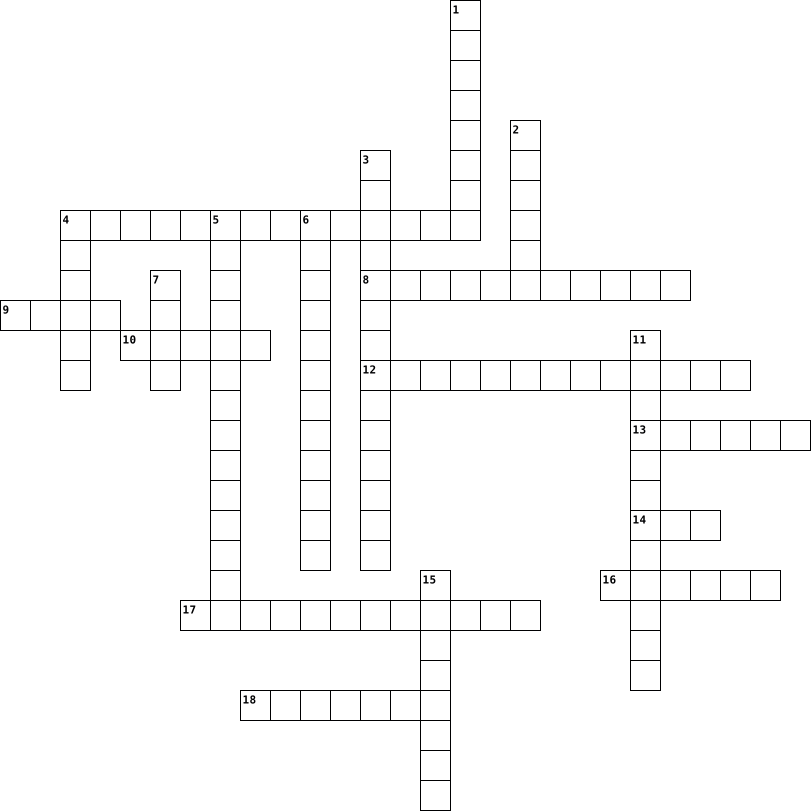
clay crossword #3 2020-09-04

Across
- Plastic clay contains more __________ than pore clay
- As the water dries there must be __________ in the width and height
- The angle of compression is __________
- The shape of clay crystals are dependent upon its __________ structure
- Oxygen is the __________ force in clay
- Clay crystal is about an anverage of about 0*5 __________ across
- Water is locked in the ________
- Fine clay are more plastic than __________ ones
- __________ is the most common element on earth
Down
- Each sheet of aluminum silicate struture contains __________ of atoms
- Pore water could equal __________ liters in 100 kg's of dry clay
- These crystals are __________ to the naked eye
- "OH" is __________
- When there is less water there is a slight __________
- Dry clay contains __________ water
- China clay has __________ crystals
- Water gives clay __________
- Ball clay has __________ crystals
- Many hundrends of crystals make up a __________ of clay dust
- __________ and shape are important parts of the physics of clay
20 Clues: "OH" is __________ • Water gives clay __________ • Water is locked in the ________ • Ball clay has __________ crystals • Dry clay contains __________ water • China clay has __________ crystals • The angle of compression is __________ • Oxygen is the __________ force in clay • These crystals are __________ to the naked eye • __________ is the most common element on earth • ...
Chapter 7 2020-12-08

Across
- this animal has long legs & specially adapted feet to walk in mud
- reeds and grasslike plants
- ducks, geese, and swans
- Largest coastal wetland in the US
- rivers have spilled over the banks
- places where the land and water meet in a zone of transition
- bacteria that require dissolved oxygen in water
- breaking down of detritus
- soft spongy ground
- this animal has a flat bill to strain seeds from water
- animals that travel seasonally
Down
- water oozes from underground spring
- water that is more salty than fresh
- large trees that live in the water
- trees or woody shrubs
- coastal plants that can live in high salinity
- Wetland where shallow water collects on land
- bacteria that do not need oxygen
- dead plant and animal matter
- Wetland that forms where salt and freshwater mix
- wetlands are one of the most _____ habitats on earth
21 Clues: soft spongy ground • trees or woody shrubs • ducks, geese, and swans • breaking down of detritus • reeds and grasslike plants • dead plant and animal matter • animals that travel seasonally • bacteria that do not need oxygen • Largest coastal wetland in the US • large trees that live in the water • rivers have spilled over the banks • water oozes from underground spring • ...
Stranded 2 2022-10-19

Across
- were you stay when camping
- Eats seals and bites people in the water
- bottle It holds water
- Huge star that warms us up
- Sand with water next to it
- You have to eat —--- to survive
- Fish are in it and rimes with Pea
- It worms you up and orange
- It flies but poops
- Pandas eat it
- It takes pictures
- Made up of wood and leaves
- It eats bananas and climbs trees
- It floats on water
Down
- It flies ing the sky super high up
- when you don't eat to the point of death
- They live in the water
- It cuts wood
- It cuts stuff
- wild pigs
- gun It shoots a big red thing that is super bright
- Place were bears live
- Flying mammal
- It is hard and made up of minerals
- fruit with hard shell and water in it
25 Clues: wild pigs • It cuts wood • It cuts stuff • Flying mammal • Pandas eat it • It takes pictures • It flies but poops • It floats on water • Place were bears live • They live in the water • bottle It holds water • were you stay when camping • Huge star that warms us up • Sand with water next to it • It worms you up and orange • Made up of wood and leaves • You have to eat —--- to survive • ...
Cell Transport 2023-05-25

Across
- high solute and low water concentration
- process that doesn't need energy to move molecules across cell membrane
- a mixture of one or more solutes dissolved in a solvent
- the transport of substances across the membrane from an area of high concentration to low concentration using protein channels
- proteins found inside the cell membrane
- any substance able to dissolve solute
- bringing molecules in
- process of moving molecules across a cell membrane through the use of cell energy
- process of water moving across membrane
Down
- when a bacteria is surrounded and engulfed
- Fear of water
- substance dissolved in solution
- the concentration of particles is higher in one area than another
- releasing molecules
- loves water
- level concentrations of water and solutes
- high water and low solute concentration
- when water is brought in and particles are released
- regulates the body
- movement of substances across membrane from high to low without any help
20 Clues: loves water • Fear of water • regulates the body • releasing molecules • bringing molecules in • substance dissolved in solution • any substance able to dissolve solute • high solute and low water concentration • high water and low solute concentration • proteins found inside the cell membrane • process of water moving across membrane • level concentrations of water and solutes • ...
Landforms 2023-09-27

Across
- vent in the Earth's surface that lava flows from
- flat land
- narrow body of water that connects two larger bodies of water
- narrow strip of land connecting two larger lands
- hot spring that occasionally sprays water and steam
- piece of land that is surrounded by water on 3 sides
- long narrow inlet bordered by steep cliffs y
- large area of land that is higher than surrounding area
- mouth of a river where mud builds up
- piece of land surrounded by water
Down
- low place between two mountains
- elevated area of land taller than a hill
- shallow body of water near coast
- long lasting slow moving ice on land
- ring of coral that forms an island
- when a river falls off steeply
- hill made of sand
- flowing body of water, empties into the ocean
- chain of islands
- steep face of rock and soil
20 Clues: flat land • chain of islands • hill made of sand • steep face of rock and soil • when a river falls off steeply • low place between two mountains • shallow body of water near coast • piece of land surrounded by water • ring of coral that forms an island • long lasting slow moving ice on land • mouth of a river where mud builds up • elevated area of land taller than a hill • ...
Chemicals Of Life Crossword 2024-10-18

Across
- these molecules can not dissolve in water
- this is the bond that forms between 2 water molecules
- water takes a long time to heat up and cool down
- monomer of carbs
- many building blocks
- a substance that can dissolve other substances
- fats, and oils make up this macromolecule
- building block
- Enzymes ________ up chemical reactions
- this is an example of a polar molecule
- this is our last resort for energy
- polymer for proteins
Down
- This macromolecules function is short term energy storage
- Water is a _____________ molecule
- Enzymes are what macromolecule
- when we change the structure of an enzyme with temp or pH
- one substance sticking to another substance
- one substance sticking to itself
- remove water to turn many molecules into one molecule
- add water to turn one molecule into many molecules
- Water has this chemical formula
- we can not use this macromolecule for energy
- the substance that gets dissolved
- monomer for nucleic acids
24 Clues: building block • monomer of carbs • many building blocks • polymer for proteins • monomer for nucleic acids • Enzymes are what macromolecule • Water has this chemical formula • one substance sticking to itself • Water is a _____________ molecule • the substance that gets dissolved • this is our last resort for energy • Enzymes ________ up chemical reactions • ...
Aquatic biomes crossword puzzle 2024-11-12

Across
- A mix of fresh and saltwater
- 4th largest lake in America
- 2nd largest river in America
- When river water and seawater mix
- Layer of the ocean that gets sunlight
- Excess water that could potentially be polluted
- Cleans dirty water
- wet, muddy land caused by flooding from salt water
Down
- Where the North Sea and Great Britain meet
- Too much of this can cause a decrease of marine life in the ocean
- When a lot of water reaches Earth's land
- Layer of the ocean that doesn't get sunlight
- Organisms that live in the sea
- Harmful chemicals that negatively effects our ocean and our health
- Brown algae
- A type of swamp made up of wetland and dead plants
- Deep trench found at the bottom of the Pacific Ocean
- When little water reaches Earth's land
- Water that is not salty
- Sand and saltwater are found here
20 Clues: Brown algae • Cleans dirty water • Water that is not salty • 4th largest lake in America • A mix of fresh and saltwater • 2nd largest river in America • Organisms that live in the sea • When river water and seawater mix • Sand and saltwater are found here • Layer of the ocean that gets sunlight • When little water reaches Earth's land • When a lot of water reaches Earth's land • ...
Thirst 2025-12-09

Across
- a religious ceremony involving water
- the small community where Minni lives
- a long period without rain
- being courageous even when scared
- the main character who searches for water for her family
- the deep hole where villagers collect water
- carrier, a job where people deliver water to homes
- believing things can get better
- the word Minni uses for her mother
- what Minni feels when her family is in danger
Down
- unfair treatment based on who you are
- when there is not enough water for everyone
- refusing to give up even when things are hard
- the painful need for water
- a person treated unfairly because of caste
- the word Minni uses for her father
- staying alive despite danger
- the social class system that affects who can use the well
- a holy place where Minni goes to pray
- the religion Minni’s family practices
20 Clues: the painful need for water • a long period without rain • staying alive despite danger • believing things can get better • being courageous even when scared • the word Minni uses for her father • the word Minni uses for her mother • a religious ceremony involving water • unfair treatment based on who you are • the small community where Minni lives • ...
Dewgong Moveset 2024-01-12

Across
- 1 Ice Sp
- 13 Normal St
- 21 Psychic St
- 23 Water St
- 55 Ice Sp
- 1 Normal Ph
- 27 Ice Sp
- 1 Normal St
Down
- Evo Ice Sp
- 33 Water Sp
- 45 Water Ph
- 65 Ice St
- 61 Normal St
- 17 Ice Ph
- Pre Fairy St
- 31 Water Ph
- 39 Normal Ph
- 49 Water Ph
18 Clues: 1 Ice Sp • 65 Ice St • 17 Ice Ph • 55 Ice Sp • 27 Ice Sp • Evo Ice Sp • 33 Water Sp • 45 Water Ph • 23 Water St • 1 Normal Ph • 31 Water Ph • 49 Water Ph • 1 Normal St • 13 Normal St • 61 Normal St • Pre Fairy St • 39 Normal Ph • 21 Psychic St
Goodra Moveset 2024-01-12

Across
- 1 Poison Sp
- 58 Water Sp
- Evo Water Ph
- 20 Normal Ph
- 1 Dragon Sp
- 25 Water Sp
- 30 Water St
- 1 Normal St
- 67 Grass Ph
Down
- 1 Normal Ph
- 15 Normal St
- Pre Dragon Sp
- 1 Poison Ph
- Pre Poison St
- 1 Normal Ph
- 1 Water Sp
- 43 Ghost St
- 49 Normal Ph
- 1 Grass Sp
19 Clues: 1 Water Sp • 1 Grass Sp • 1 Normal Ph • 1 Poison Sp • 58 Water Sp • 1 Poison Ph • 1 Normal Ph • 1 Dragon Sp • 25 Water Sp • 43 Ghost St • 30 Water St • 1 Normal St • 67 Grass Ph • 15 Normal St • Evo Water Ph • 20 Normal Ph • 49 Normal Ph • Pre Dragon Sp • Pre Poison St
Earth's Waters Crossword 2022-04-06

Across
- small streams
- chemical formula used to represent water's unique structure
- distance from one crest to another, or from one trough to another
- form when water collects in hollows and low lying areas of land
- move and mix water around the Earth, moving slower than surface currents, carrying cold water from poles to equator
- a river and all its tributaries and the land area that supplies water to the system
- is essential for living things to grow, reproduce, and carry out important processes.
- large looped systems of surface currents
- process of solid changing to liquid using heat
- huge mass of ice and snow that moves slowly over land formed in areas where more snow falls each year than melts
- the third largest ocean that is located between India, Africa and the Indonesian Islands
- process by which water moves through the living and non living parts of the environment
- molecules on surface of water cause a tightness
- layer of rock or sediment that holds water and can range in size from a small pond to an area of several states
- area of shallow seawater that receives the most sunlight
- surrounds the Antarctic continent and is covered by ice part of the year
- wind driven currents which affect water to a depth of several hundred meters
- smallest and shallowest ocean that is located near the North Pole and is also covered by ice part of the year
- receives very little sunlight and of it only the blue-green wavelengths
- largest and deepest of the oceans; larger than all of Earth’s continental land mass put together
Down
- water is known as this because many substances dissolve in it
- movement of wind and water to the right or left that is caused by Earth's rotation
- lowest point of wave
- type of hot spring which begins to rise through narrow passages being forced out by heated gases and steam from below
- plants release water to air through leaves
- highest point of wave
- positive hydrogen end of one water molecule attracts the negative oxygen ends of another
- place where groundwater bubbles or flows out of cracks in the rock
- largest tidal range and occurs when Earth, the Moon, and the Sun form a straight line
- lowest tidal range and occurs when Earth, the Sun, and the Moon form a right angle
- the amount of energy a wave carries (measured from resting point to crest)
- water that fills the spaces in soil and rock layers
- measure of the mass of dissolved solids in a mass of water
- top of the saturated zone
- allows water to move through materials with pores or narrow spaces
- movement of cold water to the surface to replace warmer water
- broken pieces of glaciers that have fell in the ocean
- plants that photosynthesize are not found here because there is NO light
- half the size of the Pacific, covers about 20% of Earth’s surface
- area of land that is covered with a shallow layer of water during some or all of the year
- well which water rises because of pressure within an aquifer
- water from a sea or ocean that has an average salinity of 35 ppt
- process of liquid changing to gas at surface
- water droplets in clouds become heavy and fall back to Earth
- number of waves that pass a point in a certain amount of time
- man made hole drilled below the water table in order to obtain groundwater from an aquifer
- area of permeable rock or soil that is totally filled or saturated with water
- process of gas changing to liquid
48 Clues: small streams • lowest point of wave • highest point of wave • top of the saturated zone • process of gas changing to liquid • large looped systems of surface currents • plants release water to air through leaves • process of liquid changing to gas at surface • process of solid changing to liquid using heat • molecules on surface of water cause a tightness • ...
Kanto Pokédex 1-100 2024-01-19

Across
- 36 Fairy I
- 7 Water I
- 56 Fighting I
- 79 Water/Psychic I
- 38 Fire or Ice/Fairy I
- 84 Normal/Flying I
- 50 Ground(/Steel) I
- 4 Fire I
- 29 Poison I F
- 75 Rock/(Ground/Electric) I
- 11 Bug I
- 88 Poison(/Dark) I
- 44 Grass/Poison I
- 64 Psychic I
- 16 Normal/Flying I
- 26 Electric(/Psychic) I
- 13 Bug/Poison I
- 37 Fire or Ice I
- 35 Fairy I
- 93 Ghost/Poison I
- 100 Electric I
- 60 Water I
- 47 Bug/Grass I
- 46 Bug/Grass I
- 86 Water I
- 1 Grass/Poison I
- 6 Fire/Flying I
- 31 Poison/Ground I
- 58 Fire I
- 57 Fighting I
- 33 Poison I
- 73 Water/Poison I
- 92 Ghost/Poison I
- 87 Water/Ice I
- 28 Ground or Ice/Steel I
- 59 Fire I
- 43 Grass/Poison I
- 12 Bug/Flying I
- 40 Normal/Fairy I
- 52 Normal or Dark I
- 62 Water/Fighting I
- 99 Water I
- 3 Grass/Poison I
- 83 Normal/Flying I
Down
- 69 Grass/Poison I
- 72 Water/Poison I
- 9 Water I
- 82 Electric/Steel I
- 2 Grass/Poison I
- 68 Fighting I
- 42 Poison/Flying I
- 70 Grass/Poison I
- 81 Electric/Steel I
- 65 Psychic I
- 67 Fighting I
- 8 Water I
- 94 Ghost/Poison I
- 5 Fire I
- 19 (Dark/)Normal I
- 20 (Dark/)Normal I
- 61 Water I
- 71 Grass/Poison I
- 55 Water I
- 89 Poison(/Dark) I
- 76 Rock/(Ground/Electric) I
- 21 Normal/Flying I
- 41 Poison/Flying I
- 10 Bug I
- 22 Normal/Flying I
- 25 Electric I
- 91 Water/Ice I
- 14 Bug/Poison I
- 77 Fire I
- 30 Poison I
- 15 Bug/Poison I
- 53 Normal or Dark I
- 98 Water I
- 85 Normal/Flying I
- 66 Fighting I
- 74 Rock/(Ground/Electric) I
- 18 Normal/Flying I
- 80 Water/Psychic I
- 17 Normal/Flying I
- 51 Ground(/Steel) I
- 23 Poison I
- 45 Grass/Poison I
- 27 Ground or Ice/Steel I
- 95 Rock/Ground I
- 39 Normal/Fairy I
- 78 Fire I
- 24 Poison I
- 49 Bug/Poison I
- 97 Psychic I
- 54 Water I
- 34 Poison/Ground I
- 32 Poison I M
- 90 Water I
- 48 Bug/Poison I
- 96 Psychic I
- 63 Psychic I
100 Clues: 4 Fire I • 5 Fire I • 11 Bug I • 10 Bug I • 9 Water I • 7 Water I • 8 Water I • 77 Fire I • 58 Fire I • 78 Fire I • 59 Fire I • 36 Fairy I • 61 Water I • 55 Water I • 35 Fairy I • 60 Water I • 98 Water I • 86 Water I • 54 Water I • 90 Water I • 99 Water I • 30 Poison I • 23 Poison I • 24 Poison I • 33 Poison I • 65 Psychic I • 64 Psychic I • 97 Psychic I • 96 Psychic I • 63 Psychic I • 68 Fighting I • 56 Fighting I • 67 Fighting I • ...
Water, Solutions, Suspensions and Colloids 2024-04-03

Across
- An unusual characteristic for a molecule as small as water
- Filtration won't do anything to me
- This tea has the right amount of sugar, making it ___
- Solutions are heterogenous, no ____ here
- WHOA, this tea is way too sweet, it must be ___
- Not the salt but the water
- It's fun to roast this gas/solid colloid over a campfire
- Solid/solid solution
- Hygroscopic compounds remove this from the air
- Salt in water, for example
- A very tasty deliquescent compound
- This liquid/solid colloid comes from an oyster and can be really expensive
- You didn't put enough sugar in this tea, making it ___
- To keep your muscles working properly, you should drink water containing these
- No Tyndall effect here
- Na and Cl are separated from each other causing the ____ of NaCl
- You need a lot of this to change the temperature of water
- Gravity will cause particles in a suspension to
- This solution is 78% Nitrogen
- Non-electrolyte substances contain this type of compound
- A condition of solubility
- Water dissolves many different substances because it is highly
- _____ dissolves _____
Down
- _____ water is less dense than liquid water
- When a hydrated compound loses its water of hydration
- When making Kool-aid you want to use __ water to make the powder dissolve quicker
- This guy came up with a law that says the solubility of a gas in a liquid is directly proportional to the pressure of the gas over the liquid
- Oil and water solutions, for example
- Remember to commit when pouring out water to break this property
- There are no example for this type of colloid
- Has itty, bitty, teeny, tiny particles
- Liquid/liquid colloid
- Thanks to this types of bonding, water is a liquid at room temperature
- When a liquid is soluble in another liquid
- In general, solubility of a solid in a liquid ___ as the temperature of the liquid solvent increases
- Soaps and detergents
- 2,257 J/g for water (abbreviation)
- In general, the solubility of a gas in a liquid _____ as the temperature of the liquid solvent increases.
- By grinding sugar into small particles we increase the ___
- Agent Drying, at your service
- Water molecules might do this to you if you were an ionic compound
- I am ____ because I will not dissolve
- I may also do this when making Kool-aid to help the powder dissolve quicker
- 334 J/g for water (abbreviation)
- Soluble compounds will do this
- Mrs. Patrick's favorite gas/liquid solution
- There's water trapped in my crystalline structure making me a
- Universal solvent
48 Clues: Universal solvent • Solid/solid solution • Soaps and detergents • Liquid/liquid colloid • _____ dissolves _____ • No Tyndall effect here • A condition of solubility • Not the salt but the water • Salt in water, for example • Agent Drying, at your service • This solution is 78% Nitrogen • Soluble compounds will do this • 334 J/g for water (abbreviation) • ...
Hydrosphere & Atmosphere 2026-03-03

Across
- – Changes between solid, liquid, and gas (melting, freezing, evaporation, condensation).
- – Large circulation patterns of warm rising air near the equator and cooler sinking air around 30° latitude.
- – When liquid water changes into water vapor (gas), usually due to heat from the Sun.
- – Heat transfer through movement of fluids (liquids or gases).
- – The total energy of moving particles in a substance (heat energy).
- – The usual sequence of weather conditions in an area over time.
- – Large-scale wind systems that move air around the planet.
- – Movement of thermal energy from warmer areas to cooler areas.
- – All the water on Earth (oceans, lakes, rivers, groundwater, glaciers, and water vapor).
- – Large circular ocean current systems formed by global winds and the Coriolis effect.
- – The ability of a substance to hold onto heat energy.
- – The layer of gases surrounding Earth.
- – The amount of heat energy required to raise the temperature of a substance by 1°C. Water has a high specific heat.
- – The lowest layer of the atmosphere where weather occurs.
- – When a substance takes in heat energy.
- – Heat transfer through electromagnetic waves (like energy from the Sun).
- – Long-term effects on Earth’s climate due to changes in temperature, greenhouse gases, or ocean circulation.
- – The process where certain gases trap heat in Earth’s atmosphere, keeping the planet warm.
- – Large bodies of air with similar temperature and humidity.
- – Heat transfer through direct contact.
- – When cold, nutrient-rich water rises from deep in the ocean to the surface.
Down
- – The global ocean circulation driven by temperature (thermo) and salinity (haline) differences. Also called the “global conveyor belt.”
- Current – Movement of water caused by differences in density (often from temperature or salinity differences).
- – Gases like carbon dioxide, methane, and water vapor that trap heat.
- – The attraction between water molecules. (Example: water droplets forming.)
- – When water vapor cools and changes back into liquid water (cloud formation).
- – The amount of salt dissolved in water.
- – A fast-moving band of air high in the atmosphere that influences weather systems.
- warm ocean current in the Atlantic Ocean
- – The measure of how much sunlight a surface reflects. Light surfaces (like ice) have high albedo; dark surfaces (like ocean water) have low albedo.
- – The “tight skin” on the surface of water caused by cohesion.
- – Release of greenhouse gases into the atmosphere, often from burning fossil fuels.
- – The amount of energy needed to raise the temperature of a substance.
- – The bending of moving air or water due to Earth’s rotation.
- – The attraction between water molecules and other substances. (Example: water sticking to a glass or plant stem.)
35 Clues: – The layer of gases surrounding Earth. • – Heat transfer through direct contact. • – The amount of salt dissolved in water. • warm ocean current in the Atlantic Ocean • – When a substance takes in heat energy. • – The ability of a substance to hold onto heat energy. • – The lowest layer of the atmosphere where weather occurs. • ...
Hydrology 2024-05-01

Across
- Liquid water stored underground, within cracks in rocks of all kinds and in the pore spaces of sediments and sedimentary rocks
- the amount of oxygen that is present in water
- Property of water where water likes to stick to water
- results when tiny condensation particles, through collision and coalescence, grow too large for the rising air to support, and thus fall to the Earth
- the "potential" of hydrogen, how acidic or basic something is
- process by which snow and ice transform into gaseous water (water vapor) without first melting into water.
- a measure of waters ability to conduct electricity
Down
- an area of land that drains all the streams and rainfall to a common outlet such as the outflow of a reservoir, mouth of a bay, or any point along a stream channel.
- Continuous circulation of water in the Earth-Atmosphere system. Motion of water from the earth to the atmosphere and back again
- The release of gaseous water (water vapor) from plant leaves
- precipitation that does not soak into the soil but instead moves on the Earth's surface toward streams
- process that changes liquid water to a gas (water vapor).
- Process that changes gaseous water (water vapor) into liquid water
- Property of water where water likes to stick to other substances
- a measure of the level of particles such as sediment, plankton, or organic by-products, in a body of water
15 Clues: the amount of oxygen that is present in water • a measure of waters ability to conduct electricity • Property of water where water likes to stick to water • process that changes liquid water to a gas (water vapor). • The release of gaseous water (water vapor) from plant leaves • the "potential" of hydrogen, how acidic or basic something is • ...
Freshwater 3 2015-01-20

Across
- raises and lowers ships over a dam
- runoff from agriculture(fertilizer)
- water you use
- amount of minerals in water
- amount of oxygen dissolved in water (shows health)
- water bond that is harder to break
- lack of water
- sewage runoff
Down
- sheet of slow moving ice
- water molecules bond together but can be broken easily
- to conserve; not use
- mass of floating ice
- to keep water; to sustain
- major source of water pollution from fertilizers
- block water, creates energy hydroelectric power
15 Clues: water you use • lack of water • sewage runoff • to conserve; not use • mass of floating ice • sheet of slow moving ice • to keep water; to sustain • amount of minerals in water • raises and lowers ships over a dam • water bond that is harder to break • runoff from agriculture(fertilizer) • block water, creates energy hydroelectric power • ...
Hydrosphere Vocabulary 2015-03-17

Across
- a wetland dominated by grasses
- contain salt water only
- water found in cracks and pores in sand
- drains into a smaller river or stream
- a large piece of freshwater ice floating in open waters
- basin drains into a large river
Down
- A body of water contained on a body of land
- is the part of the earth that contains water
- a wetland dominated by peat moss
- a wetland dominated by trees
- a stream feeding a larger stream
- well a well in which water rises
- a lake that stores water for human use
- any large mass of ice that moves slowly over land
- rock layer that stores water
- A small channel where water is flowing down a slope
- where the water table is at
17 Clues: contain salt water only • where the water table is at • a wetland dominated by trees • rock layer that stores water • a wetland dominated by grasses • basin drains into a large river • a wetland dominated by peat moss • a stream feeding a larger stream • well a well in which water rises • drains into a smaller river or stream • a lake that stores water for human use • ...
Aquatic Biome 2025-10-22

Across
- Big floating chunks of frozen water
- movement of water in rivers and oceans
- Colorful fish that lives in coral reefs
- Body of water that is surrounded by land
- The moon pulls the water making this go in and out
- Area of water where ships load and unload cargo
- Areas of land that are flooded with water for part of the year
- Large body of salt water but smaller than an ocean
- Top layer of the ocean where sunlight reaches
- Body of flowing water
Down
- Large body of salt water
- Colorful underwater structures made by tiny animals
- Largest mammal on earth
- Animal with 8 arms
- River that flows into the ocean
- Mammal known for its intelligence and clicking sound
- Plants that grow underwater
17 Clues: Animal with 8 arms • Body of flowing water • Largest mammal on earth • Large body of salt water • Plants that grow underwater • River that flows into the ocean • Big floating chunks of frozen water • movement of water in rivers and oceans • Colorful fish that lives in coral reefs • Body of water that is surrounded by land • Top layer of the ocean where sunlight reaches • ...
Swampert Moveset 2024-01-02

Across
- 1 Normal Ph
- 1 Water Sp
- Rem Water Sp
- 1 Ground Sp
- 25 Rock Ph
- 63 Water Sp
- 20 Water Sp
- Rem Fighting Ph
- 1 Normal St
Down
- 15 Normal St
- 56 Normal Ph
- 35 Psychic St
- 42 Water Sp
- Rem Fighting Ph
- 30 Normal Ph
- Rem Ground Ph
- 9 Rock Ph
- 49 Normal St
- 12 Normal St
19 Clues: 9 Rock Ph • 1 Water Sp • 25 Rock Ph • 1 Normal Ph • 42 Water Sp • 1 Ground Sp • 63 Water Sp • 20 Water Sp • 1 Normal St • 15 Normal St • 56 Normal Ph • Rem Water Sp • 30 Normal Ph • 49 Normal St • 12 Normal St • 35 Psychic St • Rem Ground Ph • Rem Fighting Ph • Rem Fighting Ph
CHAPTER 4 CROSS WORD PUZZLE 2021-12-06

Across
- The upper surface of the saturated zone underground is the
- An forms when more ice accumulates than melts.
- is water that flows over land
- All the water on Earth is included in the
- is the release of water from plants
- evaporation is one of four processes in the
- water in gaseous forms is called
- occurs when liquid water moves through a porous substance
- Rain and snow are forms of
Down
- An ocean, lake, or river is an example of
- An is an area of land that catches and collects water
- is water that collects underground
- is an area of land that catches and collects water
- Gaseous water is found in Earth's
- occurs when water goes from being gas to a liquid
- occurs when water goes from being a liquid to a gas
16 Clues: Rain and snow are forms of • is water that flows over land • water in gaseous forms is called • Gaseous water is found in Earth's • is water that collects underground • is the release of water from plants • An ocean, lake, or river is an example of • All the water on Earth is included in the • evaporation is one of four processes in the • ...
unit 5 vocab 2021-05-05

Across
- officially, an MPA is any area of the marine environment that has been reserved by federal, state, tribal, territorial, or local laws or regulations to provide lasting protection for part or all of the natural and cultural resources therein. In practice, MPAs are defined areas where natural and/or cultural resources are given greater protection than the surrounding waters.
- water that lays on the earth’s surface. Surface water includes water in rivers, lakes, streams, creeks, ponds, and wetlands
- when the point of the pollution is difficult to identify
- when any harmful substance enters the water underground and makes it unsuitable for use Groundwater model- a representation of the underground water system
- an underground water system made of porous rock and sand
- unwanted marine creatures that are caught in the nets while fishing for another species.
- when water vapor (gaseous water) forms droplets of water in the atmosphere, making clouds. The change in water from gas to liquid form.
- the change in water from liquid to gas
- living or growing in water
- very small aquatic animals
- water that is released from the atmosphere as rain, snow, hail, etc.
- a colorless, pungent gas composed of nitrogen and hydrogen from animal waste
- A colorless, odorless gas that is a non-metallic element which makes up almost four fifths of the air
- trawling fishing method that involves towing trawl nets along the sea floor.
- Plant A plant that is transported from its place of origin and introduced into a new environment
- the process by which plants convert energy from the sun into food
- holds the rock layers that make up an aquifer and the water that is stored and transported through the openings in the rocks
- pollution that occurs when living things decompose
- When large amounts of nutrients enter the water and cause an increase in the amount of oxygen
- a hole that is drilled into the aquifer
Down
- layer a place in the aquifer where impermeable rock covers permeable rock
- pollution that occurs when loose soil is carried into bodies of water by rain
- A plant that lives and thrives in its place of origin
- rainwater that does not soak into the ground and carries pollution into bodies of water
- pollution from rural areas where few people live
- water returning to the surface after being absorbed by the ground
- precipitation that drains across the land into lakes, streams, or rivers
- something that does not allow liquid to run through it
- a rock with many spaces between grains.
- water that percolates through the surface and is retained in underlying rock and soil.
- an area of land over which water flows to reach a common body of water such as a lake or pond
- Phosphorous can come from natural sources such as phosphate- containing rocks and human sources such as fertilizers, pesticides, detergents, and industrial wastes.
- the passage of water between reservoirs (oceans and atmosphere) by groundwater percolation, evaporation, condensation, and precipitation.
- the process by which water is released from plans leaves
- ability of something to allow liquids to run through it
- when the source of the pollutant is easily identified
- the cultivation of aquatic organisms (as fish or shellfish) especially for food; fish farming.
- when precipitation is absorbed into the ground and moves down through the soil
- single celled algae
- chemicals used to kill weeds
- chemical substances applied to plants to keep insects away
- a general term for small, chlorophyll-containing plants such as seaweed or pond scum
- a water-soluble molecule made up of nitrogen and oxygen, commonly found in agricultural fertilizers
43 Clues: single celled algae • living or growing in water • very small aquatic animals • chemicals used to kill weeds • the change in water from liquid to gas • a rock with many spaces between grains. • a hole that is drilled into the aquifer • pollution from rural areas where few people live • pollution that occurs when living things decompose • ...
Earth's Waters Crossword 2022-04-06

Across
- small streams
- chemical formula used to represent water's unique structure
- distance from one crest to another, or from one trough to another
- form when water collects in hollows and low lying areas of land
- move and mix water around the Earth, moving slower than surface currents, carrying cold water from poles to equator
- a river and all its tributaries and the land area that supplies water to the system
- is essential for living things to grow, reproduce, and carry out important processes.
- large looped systems of surface currents
- process of solid changing to liquid using heat
- huge mass of ice and snow that moves slowly over land formed in areas where more snow falls each year than melts
- the third largest ocean that is located between India, Africa and the Indonesian Islands
- process by which water moves through the living and non living parts of the environment
- molecules on surface of water cause a tightness
- layer of rock or sediment that holds water and can range in size from a small pond to an area of several states
- area of shallow seawater that receives the most sunlight
- surrounds the Antarctic continent and is covered by ice part of the year
- wind driven currents which affect water to a depth of several hundred meters
- smallest and shallowest ocean that is located near the North Pole and is also covered by ice part of the year
- receives very little sunlight and of it only the blue-green wavelengths
- largest and deepest of the oceans; larger than all of Earth’s continental land mass put together
Down
- water is known as this because many substances dissolve in it
- movement of wind and water to the right or left that is caused by Earth's rotation
- lowest point of wave
- type of hot spring which begins to rise through narrow passages being forced out by heated gases and steam from below
- plants release water to air through leaves
- highest point of wave
- positive hydrogen end of one water molecule attracts the negative oxygen ends of another
- place where groundwater bubbles or flows out of cracks in the rock
- largest tidal range and occurs when Earth, the Moon, and the Sun form a straight line
- lowest tidal range and occurs when Earth, the Sun, and the Moon form a right angle
- the amount of energy a wave carries (measured from resting point to crest)
- water that fills the spaces in soil and rock layers
- measure of the mass of dissolved solids in a mass of water
- top of the saturated zone
- allows water to move through materials with pores or narrow spaces
- movement of cold water to the surface to replace warmer water
- broken pieces of glaciers that have fell in the ocean
- plants that photosynthesize are not found here because there is NO light
- half the size of the Pacific, covers about 20% of Earth’s surface
- area of land that is covered with a shallow layer of water during some or all of the year
- well which water rises because of pressure within an aquifer
- water from a sea or ocean that has an average salinity of 35 ppt
- process of liquid changing to gas at surface
- water droplets in clouds become heavy and fall back to Earth
- number of waves that pass a point in a certain amount of time
- man made hole drilled below the water table in order to obtain groundwater from an aquifer
- area of permeable rock or soil that is totally filled or saturated with water
- process of gas changing to liquid
48 Clues: small streams • lowest point of wave • highest point of wave • top of the saturated zone • process of gas changing to liquid • large looped systems of surface currents • plants release water to air through leaves • process of liquid changing to gas at surface • process of solid changing to liquid using heat • molecules on surface of water cause a tightness • ...
Water Cycle Matthew Woznick 2023-11-27

Across
- a cloud hanging out on earth's surface
- water in a cold, solid state
- when water goes from liquid to gas
- water soaks into the ground from precipitation
- falls from the sky (rain,snow,hail,etc)
- plants soak up water from the ground through roots
- over 96% of Earth's water are found in these
Down
- water that is underground
- when water goes from gas to liquid
- when temperatures rise the snow will melt
- water vapor in the air
- when plants release water
- the energy that drives the water cycle
- flows on land downhill to the oceans
- water that flows downhill over the landscape
15 Clues: water vapor in the air • water that is underground • when plants release water • water in a cold, solid state • when water goes from gas to liquid • when water goes from liquid to gas • flows on land downhill to the oceans • a cloud hanging out on earth's surface • the energy that drives the water cycle • falls from the sky (rain,snow,hail,etc) • ...
Water Cycle Matthew Woznick 2023-11-27

Across
- a cloud hanging out on earth's surface
- water in a cold, solid state
- when water goes from liquid to gas
- water soaks into the ground from precipitation
- falls from the sky (rain,snow,hail,etc)
- plants soak up water from the ground through roots
- over 96% of Earth's water are found in these
Down
- water that is underground
- when water goes from gas to liquid
- when temperatures rise the snow will melt
- water vapor in the air
- when plants release water
- the energy that drives the water cycle
- flows on land downhill to the oceans
- water that flows downhill over the landscape
15 Clues: water vapor in the air • water that is underground • when plants release water • water in a cold, solid state • when water goes from gas to liquid • when water goes from liquid to gas • flows on land downhill to the oceans • a cloud hanging out on earth's surface • the energy that drives the water cycle • falls from the sky (rain,snow,hail,etc) • ...
water cycle crossword Eric pd 7 2023-11-27

Across
- water evaporated to make _____.
- rain, hail, snow, and sleet are all examples.
- the force that runs the water cycle.
- the process of liquid turning into a gas.
- moves water through the sky.
- are big bodies of water.
- water underground comes up to the surface.
Down
- water that comes from mountains.
- a volcano releasing steam into the air is called.
- a the atomic formula for water.
- when plants take water from the ground it is called__________.
- when extra water runs to the ocean.
- process of a gas turning into a liquid.
- water that travels underground to the ocean
- drink water and soon let it out.
15 Clues: are big bodies of water. • moves water through the sky. • a the atomic formula for water. • water evaporated to make _____. • water that comes from mountains. • drink water and soon let it out. • when extra water runs to the ocean. • the force that runs the water cycle. • process of a gas turning into a liquid. • the process of liquid turning into a gas. • ...
Water Cycle Clark Pd 7 2023-11-27

Across
- A volcano releasing steam into the air.
- When extra water runs to the ocean.
- The process of a liquid turns into a gas.
- Water underground that travels to the ocean.
- When plants take water from the ground.
- Rain, Hail, Snow, Sleet.
- A scientific way to say water.
- The driving source of the water cycle.
Down
- Moves water through the sky
- Water that comes from mountains to the ocean.
- The Process of a gas turns into a liquid.
- Big bodies of water on the land.
- Water underground comes up to the surface.
- Water evaporated to make _______.
- They drink the water and pass it soon.
15 Clues: Rain, Hail, Snow, Sleet. • Moves water through the sky • A scientific way to say water. • Big bodies of water on the land. • Water evaporated to make _______. • When extra water runs to the ocean. • They drink the water and pass it soon. • The driving source of the water cycle. • A volcano releasing steam into the air. • When plants take water from the ground. • ...
Koopers Water Cycle P6 2023-11-28

Across
- Flows runoff back into the ocean "biggest one"
- Water the flows down hills
- Plants pulling water out of the ground
- Water vapor that has been condensed
- What happens when plants "breath"
- When droplets in a cloud grow too dense
- A cloud that is near the earths surface
- How water changes from gas to liquid
Down
- Water under the surface
- How water gets back up into the air
- How water on earth moves around the planet
- Contains about 96% of the worlds water
- Water that falls through the earth's surface
- The driving force of the water cycle
- Water in the form of glaciers
15 Clues: Water under the surface • Water the flows down hills • Water in the form of glaciers • What happens when plants "breath" • How water gets back up into the air • Water vapor that has been condensed • The driving force of the water cycle • How water changes from gas to liquid • Plants pulling water out of the ground • Contains about 96% of the worlds water • ...
Water cycle Hazel P6 2023-11-27

Across
- This is when water turns into gas
- Tiny cloud droplets combine and create rain drops
- When all of the snow melts of mountains
- The chemical recipe for water or the water molecule
- Water is coming into this place faster than it leaves, so it backs up creating a...
- Water in the ground going up through a plants root then into the plant
- Water or melted snow running off a hill
Down
- Some runoff or precipitation seeps underground to become groundwater
- They may not not play a big part but like us help move water through waste
- Water soaking into the ground
- The "highway" that moves water everywhere around the earth
- The energy that drives the water cycle
- Liquid water in the atmosphere
- 96% of the earths water is in this body of water
- The water flowing in creeks or streams
15 Clues: Water soaking into the ground • Liquid water in the atmosphere • This is when water turns into gas • The energy that drives the water cycle • The water flowing in creeks or streams • When all of the snow melts of mountains • Water or melted snow running off a hill • 96% of the earths water is in this body of water • Tiny cloud droplets combine and create rain drops • ...
Water cycle- Makenzie B. 2022-11-29

Across
- evaporation turns liquid water into water vapor gas
- Huge amounts of water beneath the
- condensed water falling to the earths surface again
- when a gas changes to a liquid
- want the water that soaks into the ground next to them, not from the water that lands on their leaves.
- when precipitation falls on the landscape and starts to soak into the ground
- releases steam into the air, steam which rises and becomes clouds.
- Driving force of the water cycle
- A water molecule contains 2 hydrogen atoms and 1 oxygen atom.
Down
- big bodies of water
- rainwater soaking into the ground
- invisible water vapor encounters cooler temperatures next to the ground and some of the water vapor condenses out into liquid water droplets
- water that flows over land until it joins up with other waters
- the process of evaporation water from the plants.
- when a liquid changes to a gas
15 Clues: big bodies of water • when a gas changes to a liquid • when a liquid changes to a gas • Driving force of the water cycle • rainwater soaking into the ground • Huge amounts of water beneath the • the process of evaporation water from the plants. • evaporation turns liquid water into water vapor gas • condensed water falling to the earths surface again • ...
Aquatic Geography and Features 2024-02-26

Across
- Small, man-made freshwater body.
- Inlet surrounded by land, often found along coastlines.
- Large, shallow water area with minimal structure.
- Naturally occurring body of flowing water.
- Small river, often unnavigable by large boats.
- Peninsula extending into a lake.
- Man-made body of water formed by damming a river.
- Cliff-like feature along a river, indicating deep water.
Down
- Crescent-shaped body of water near a river.
- Slow-moving area of a river near fast-flowing water.
- Mix of fresh and saltwater, common in coastal areas.
- Inland body of freshwater.
- Sudden transition from shallow to deep water.
- Man-made structure extending into the sea.
- Fast-moving water on a river.
- Platform extending into a body of water.
- Bank protection made of rocks or boulders.
17 Clues: Inland body of freshwater. • Fast-moving water on a river. • Small, man-made freshwater body. • Peninsula extending into a lake. • Platform extending into a body of water. • Man-made structure extending into the sea. • Naturally occurring body of flowing water. • Bank protection made of rocks or boulders. • Crescent-shaped body of water near a river. • ...
Introduction to Watersheds 2023-05-05

Across
- Small rivers or streams that flow into a larger river, stream, or body of water. They “contribute” to the watershed!
- Process of water soaking into the ground
- bays.
- water vapor turning into liquid water
- Bull Run Creek -> Potomac River -> Chesapeake Bay -> Atlantic Ocean
- Area of land that drains into a river system
Down
- Separates watersheds
- water (in any form) falling from the sky
- anywhere water collects or accumulates on earth’s surface. Ex.: lakes, rivers,
- Water held underground in soil or rock crevices.
- water flowing on or under the surface of Earth
- A body of rock that contains groundwater
- liquid water from the surface turns into gas water vapor
- The continuous movement of water on, above and below the surface of the Earth
- water All water above ground such as rivers, lakes, ponds, etc.
15 Clues: bays. • Separates watersheds • water vapor turning into liquid water • water (in any form) falling from the sky • Process of water soaking into the ground • A body of rock that contains groundwater • Area of land that drains into a river system • water flowing on or under the surface of Earth • Water held underground in soil or rock crevices. • ...
Water resources/Pollution crossword 2024-04-04

Across
- Water is called this when it contains an abundant of salt
- Water is called this when it contains little to no salt.
- Sand, soil,and minerals
- What water is called when it has an excessive amount of trash and/or sediment in it
- Amount of pollution inside a body of water
- A dug hole made to reach Aquifers and store water
- Extra Water that travels to the nearest body of water
Down
- Water located under the Surface
- The waste produced by humans, found in sewers
- Water is called this when it is over 7.0 pH
- A place where all the drained off water goes to
- A type of surface water
- Water seeping into the soil
- the long-term capacity of an ecosystem to maintain and keep thriving
- An underground body of water
15 Clues: A type of surface water • Sand, soil,and minerals • Water seeping into the soil • An underground body of water • Water located under the Surface • Amount of pollution inside a body of water • Water is called this when it is over 7.0 pH • The waste produced by humans, found in sewers • A place where all the drained off water goes to • ...
Lesson 5 Ocean Currents 2023-01-04

Across
- cold surface water in the Pacific along the equator
- causes ocean water to move in a curved path
- cold, dense, deep water current in the Atlantic
- warm water current that flows north along the east coast of the U.S.
- found on the surface, driven by wind
- discovered the Gulf Stream
Down
- slow-moving, density driven circulation that runs pole to pole
- amount of salt dissolved in water
- the movement of ocean water in a particular direction
- upwelling brings this for marine life
- cold dense water from the Gulf Stream that cools as it travels north and sinks
- moved by the ocean
- unusually warm surface water in the Pacific, every 2-7 years
- water moves this direction in the Southern Hemisphere
- cold, very salty water ______________
- warm, less salty water ______________
- rising of cold, deep water from the ocean bottom
17 Clues: moved by the ocean • discovered the Gulf Stream • amount of salt dissolved in water • found on the surface, driven by wind • upwelling brings this for marine life • cold, very salty water ______________ • warm, less salty water ______________ • causes ocean water to move in a curved path • cold, dense, deep water current in the Atlantic • ...
Earth Science - Book 908 - Words to Know 2024-02-05

Across
- seasonal barrier formed between water layers of different temperature
- total evaporation
- ocean layer from 656 feet to 3,281 feet
- ocean layer from 19,686 feet to 32,810 feet
- movement of water at the surface of the ocean to the bottom of the ocean, and movement of ocean water from the depths to the surface
- odorless, tasteless, transparent liquid
- layer of water that acts as a boundary layer
- evaporation of water through stomata in the leaves of plants
- circulation of ocean waters
- ocean floor area
- amount of dissolved salt in water
- interconnected mass of seawater
- effect in which water moves clockwise in the northern hemisphere and counter-clockwise in the southern hemisphere
- "without sunlight"; one of the two zones of the oceanic province
- part of the pelagic realm away from shore
- the continental shelf, slope, and rise together
- layer of water at or near the earth's surface
- one of the winds that most affect ocean currents; at 40-50 degrees latitude, blowing west to east
- photosynthesis bacteria and floating algae
- free-floating microscopic organisms
- first of the five layers of ocean
- floating organisms that rely on the phytoplankton as food sources
- all liquid and solid water particles that fall from clouds and reach the ground
- sloping, smooth-surfaced features at the end of continental shelves
Down
- fields of study concerning water
- ocean water area covering the benthic realm
- water flowing towards the poles to replace the sinking cold water
- when the temperature of the atmosphere increases with altitude, instead of decreasing
- movement of wind blowing over ocean surface
- layer of ocean from 13,124 feet to 19,686 feet
- ocean layer from 3,281 feet to 13,124 feet
- slopes cutting down to the ocean bottom
- continuous circular process in which the water of the earth evaporates from the oceans, condenses, falls to the earth as rain or snow, and eventually returns to the oceans through run-off in rivers or streams
- process of a liquid penetrating a surface through its pores
- one of the two zones of the oceanic province
- water in a gaseous state
- deep-water circulation of the oceans caused by differences in density between the waters of different regions
- caused as cold water at the poles sinks and slowly moved toward the equator
- rainfall not absorbed by soil
- the study of the ocean and seas
- direct conversion from solid to vapor
- surface features
- permanent barrier formed between water layers of different salinity
- current that moves along through the Gulf of Mexico, past the East Coast of the United States, and on to northern Europe
- transfer of water from the surface of the earth to the atmosphere
- sloping, underwater plains
- one oft he winds that most affect ocean currents; at 20-degrees latitude, blowing east to west
- measurements of distance north or south of the equator
48 Clues: ocean floor area • surface features • total evaporation • water in a gaseous state • sloping, underwater plains • circulation of ocean waters • rainfall not absorbed by soil • interconnected mass of seawater • the study of the ocean and seas • fields of study concerning water • amount of dissolved salt in water • first of the five layers of ocean • free-floating microscopic organisms • ...
The Way Water Works 2022-09-01

Across
- allows water to exist in all 3 forms in the environment
- stores 97% of all water on Earth
- polar molecule
- the movement of water through the soil itself
- weak bonds between water molecules
- water held underground in the soil
- a body of permeable rock which can contain or transmit ground water
- the continuous circulation of water through the atmosphere
- the conversion of a vapor or gas to a liquid
Down
- where rivers meet oceans
- oceans have this water
- closely related to its density
- the most visible part of the water cycle in aquariums
- lakes and rivers
- where energy for the water cycle comes from
15 Clues: polar molecule • lakes and rivers • oceans have this water • where rivers meet oceans • closely related to its density • stores 97% of all water on Earth • weak bonds between water molecules • water held underground in the soil • where energy for the water cycle comes from • the conversion of a vapor or gas to a liquid • the movement of water through the soil itself • ...
Water Cycle Clark Pd 7 2023-11-27

Across
- A volcano releasing steam into the air.
- When extra water runs to the ocean.
- The process of a liquid turns into a gas.
- Water underground that travels to the ocean.
- When plants take water from the ground.
- Rain, Hail, Snow, Sleet.
- A scientific way to say water.
- The driving source of the water cycle.
Down
- Moves water through the sky
- Water that comes from mountains to the ocean.
- The Process of a gas turns into a liquid.
- Big bodies of water on the land.
- Water underground comes up to the surface.
- Water evaporated to make _______.
- They drink the water and pass it soon.
15 Clues: Rain, Hail, Snow, Sleet. • Moves water through the sky • A scientific way to say water. • Big bodies of water on the land. • Water evaporated to make _______. • When extra water runs to the ocean. • They drink the water and pass it soon. • The driving source of the water cycle. • A volcano releasing steam into the air. • When plants take water from the ground. • ...
Water Cycle Matthew Woznick 2023-11-27

Across
- a cloud hanging out on earth's surface
- water in a cold, solid state
- when water goes from liquid to gas
- water soaks into the ground from precipitation
- falls from the sky (rain,snow,hail,etc)
- plants soak up water from the ground through roots
- over 96% of Earth's water are found in these
Down
- water that is underground
- when water goes from gas to liquid
- when temperatures rise the snow will melt
- water vapor in the air
- when plants release water
- the energy that drives the water cycle
- flows on land downhill to the oceans
- water that flows downhill over the landscape
15 Clues: water vapor in the air • water that is underground • when plants release water • water in a cold, solid state • when water goes from gas to liquid • when water goes from liquid to gas • flows on land downhill to the oceans • a cloud hanging out on earth's surface • the energy that drives the water cycle • falls from the sky (rain,snow,hail,etc) • ...
Water Cycle Clark Pd 7 2023-11-27

Across
- A volcano releasing steam into the air.
- When extra water runs to the ocean.
- The process of a liquid turns into a gas.
- Water underground that travels to the ocean.
- When plants take water from the ground.
- Rain, Hail, Snow, Sleet.
- A scientific way to say water.
- The driving source of the water cycle.
Down
- Moves water through the sky
- Water that comes from mountains to the ocean.
- The Process of a gas turns into a liquid.
- Big bodies of water on the land.
- Water underground comes up to the surface.
- Water evaporated to make _______.
- They drink the water and pass it soon.
15 Clues: Rain, Hail, Snow, Sleet. • Moves water through the sky • A scientific way to say water. • Big bodies of water on the land. • Water evaporated to make _______. • When extra water runs to the ocean. • They drink the water and pass it soon. • The driving source of the water cycle. • A volcano releasing steam into the air. • When plants take water from the ground. • ...
Water Cycle Matthew Woznick 2023-11-27

Across
- a cloud hanging out on earth's surface
- water in a cold, solid state
- when water goes from liquid to gas
- water soaks into the ground from precipitation
- falls from the sky (rain,snow,hail,etc)
- plants soak up water from the ground through roots
- over 96% of Earth's water are found in these
Down
- water that is underground
- when water goes from gas to liquid
- when temperatures rise the snow will melt
- water vapor in the air
- when plants release water
- the energy that drives the water cycle
- flows on land downhill to the oceans
- water that flows downhill over the landscape
15 Clues: water vapor in the air • water that is underground • when plants release water • water in a cold, solid state • when water goes from gas to liquid • when water goes from liquid to gas • flows on land downhill to the oceans • a cloud hanging out on earth's surface • the energy that drives the water cycle • falls from the sky (rain,snow,hail,etc) • ...
watercycleSMS/Zander 2024-12-16

Across
- form of clouds that are on the ground
- goes in the tree and makes it sweat
- was most of rain water
- opposite of evaporation
- runoff water from a river
- where the water goes after evaporating
- drops water back into lakes
Down
- liquid that goes up in the air
- starts the cycle
- run off precipitation that reaches earth and ends up in oceans, lakes, drivers
- the process of snow and ice changing into water vapor
- water water that goes into the ground
- melts into water that goes into rivers
- was the water from rain
- keeps the water cycle going
15 Clues: starts the cycle • was most of rain water • opposite of evaporation • was the water from rain • runoff water from a river • keeps the water cycle going • drops water back into lakes • liquid that goes up in the air • goes in the tree and makes it sweat • form of clouds that are on the ground • water water that goes into the ground • melts into water that goes into rivers • ...
Weather crossword puzzle 2024-12-06

Across
- when an organism breathes out water vapor
- Any form of water that falls from the sky
- No water for a long period of time
- Know as thunderstorm clouds.
- when plants release water vapor
- Covers large areas of the sky blocking out the sun.
- water droplets
- Boundaries between air masses with different characteristics
- when water vapor freezes
Down
- when water turns to water vapor.
- Visible accumulations of water droplets or ice crystals that float in the Earths troposphere.
- Solid ice that forms in thunderstorms
- Looks like cotton balls
- Highest clouds in the sky
- when water vapor turns to water.
15 Clues: water droplets • Looks like cotton balls • when water vapor freezes • Highest clouds in the sky • Know as thunderstorm clouds. • when plants release water vapor • when water turns to water vapor. • when water vapor turns to water. • No water for a long period of time • Solid ice that forms in thunderstorms • when an organism breathes out water vapor • ...
Places and Messurements 2023-10-30

Across
- It is not small.
- Drops of water.
- Very small.
- Hot.
- Is not wet.
- Giant water fall.
- It is not short.
- Cuenca.
- Water stream.
- Holow space.
- Ground elevation.
- Route to travel.
- Small river.
Down
- Galápagos.
- Snow.
- Montañita.
- Is not narrow.
- Ir is not big.
- Sahara desert.
- Contains water.
- There are trees.
- Ecuador.
- Atlantic.
23 Clues: Hot. • Snow. • Cuenca. • Ecuador. • Atlantic. • Galápagos. • Montañita. • Very small. • Is not wet. • Holow space. • Small river. • Water stream. • Is not narrow. • Ir is not big. • Sahara desert. • Drops of water. • Contains water. • It is not small. • There are trees. • It is not short. • Route to travel. • Giant water fall. • Ground elevation.
Fiore Browser List (R-101 to R-200) 2024-01-31

Across
- R-160 Ground/Flying II Cut
- R-162 Normal III Cut
- R-141 Fire I Burn 2
- R-139 Fire/Rock II Burn 2
- R-183 Water I Soak 2
- R-192 Steel/Psychic III Crush 3
- R-108 Water I
- R-122 Water/Flying III
- R-132 Water/Grass III Soak
- R-127 Grass/Poison I
- R-120 Water III
- R-159 Ground/Dragon III Gust 3
- R-175 Ice III
- R-180 Grass III Tackle
- R-177 Normal III
- R-147 Electric III Recharge 2
- R-179 Steel/Ground II
- R-157 Bug/Poison II
- R-190 Steel/Psychic III Tackle
- R-145 Fire I Burn 3
- R-137 Fire I Burn 2
- R-178 Normal III
- R-173 Ice/Ground II Tackle 3
- R-187 Dark II
- R-149 Fighting I Crush
- R-144 Fire I
- R-101 Normal I Tackle
- R-198 Rock/Flying I
- R-197 Dragon/Flying III Gust 3
- R-118 Water/Dark III
- R-151 Poison I
- R-129 Grass III Cut
- R-116 Water/Flying II
- R-105 Normal I
- R-117 Water/Dark III
- R-195 Rock/Dark II Crush 3
- R-115 Water II
- R-119 Water III
- R-174 Ice III Crush
- R-161 Dark/Fire II Burn 2
- R-104 Normal III
- R-168 Ice/Psychic I
- R-148 Bug/Fighting II Tackle 3
- R-140 Fire I Burn
- R-135 Fire/Ground III Burn
- R-170 Psychic II
- R-181 Grass/Dark III Gust
- R-109 Water/Dragon II Soak 3
- R-121 Water I
Down
- R-138 Fire II Burn
- R-164 Normal III Crush 3
- R-155 Bug III
- R-184 Fire I Burn 2
- R-150 Fighting I Crush 2
- R-153 Bug/Poison I
- R-182 Grass/Dark III Gust 2
- R-189 Poison III
- R-169 Rock/Psychic III
- R-196 Normal/Flying III Gust
- R-193 Rock/Ground II Cut
- R-125 Water/Flying I
- R-103 Normal I
- R-199 Dark/Ice II Cut 2
- R-165 Dragon III Tackle
- R-110 Water I
- R-134 Water/Grass III
- R-131 Grass III Cut 3
- R-128 Grass/Poison I
- R-194 Rock/Ground II
- R-123 Water/Flying III
- R-171 Ghost III
- R-106 Water/Ice I
- R-146 Electric III Recharge
- R-158 Bug/Poison II
- R-200 Dark III Cut 3
- R-154 Bug III
- R-114 Water II
- R-133 Water/Grass III Soak 2
- R-163 Normal III Cut 2
- R-191 Steel/Psychic III Tackle 2
- R-188 Electric I Recharge 3
- R-185 Electric I Recharge 3
- R-124 Water I
- R-176 Normal III
- R-126 Grass/Poison I Cut
- R-143 Fire III Burn 2
- R-130 Grass III Cut 2
- R-156 Bug/Flying III
- R-166 Dragon III Tackle 2
- R-167 Dragon/Flying III Crush 3
- R-113 Water/Psychic I
- R-152 Poison I
- R-136 Fire/Ground III Burn 3
- R-186 Psychic II
- R-112 Water I Flash
- R-111 Water I
- R-107 Water I
- R-172 Ice/Ground II Tackle
- R-102 Normal I Cut 2
- R-142 Fire/Flying I Burn 3
100 Clues: R-144 Fire I • R-155 Bug III • R-108 Water I • R-110 Water I • R-175 Ice III • R-154 Bug III • R-187 Dark II • R-124 Water I • R-111 Water I • R-107 Water I • R-121 Water I • R-103 Normal I • R-114 Water II • R-151 Poison I • R-105 Normal I • R-152 Poison I • R-115 Water II • R-120 Water III • R-171 Ghost III • R-119 Water III • R-189 Poison III • R-177 Normal III • R-178 Normal III • R-176 Normal III • ...
Year 7 Science (2) 2021-11-01

Across
- Runoff can contribute to this happening
- Using now and protecting for future use
- Most used non-renewable energy source
- All forms of water falling to the ground
- Water flowing off hard surfaces
- Water vapour turning back into water
- Water gathered
- Type of water most common on Earth (97.5%)
Down
- Resources that can't be replaced in our lifetime
- Water filtered through the soil and rocks
- Easiest renewable energy resource to use
- Water turned into vapour by the sun
- Australia's biggest non-renewable energy export
- Where most fresh water is found (frozen)
- Resources that can be replaced in our lifetime
- Evaporation from plants
16 Clues: Water gathered • Evaporation from plants • Water flowing off hard surfaces • Water turned into vapour by the sun • Water vapour turning back into water • Most used non-renewable energy source • Runoff can contribute to this happening • Using now and protecting for future use • Easiest renewable energy resource to use • All forms of water falling to the ground • ...
Matter 2015-03-11
Across
- change you can see
- water turning to water vapor
- measured by volume
- hard phase of matter
- point at which liquid turns to a solid
- water
- steam, really hot water
- the amount of mass in an object
- point at which solid turns to a liquid
- a substance that cannot be broken down
Down
- larger than an atom
- anything that has mass
- solid liquid gas plasma
- electricity
- change you cannot see
- the step of the water cycle before precipitation
- smaller than a molecule
- point at which water bubbles and gets very hot
- a mixture of a single substance
19 Clues: water • electricity • change you can see • measured by volume • larger than an atom • hard phase of matter • change you cannot see • anything that has mass • solid liquid gas plasma • smaller than a molecule • steam, really hot water • water turning to water vapor • a mixture of a single substance • the amount of mass in an object • point at which liquid turns to a solid • ...
Aquatic Biomes 2022-10-03

Across
- wetland where water is still and lots of trees
- word used to name an estuary
- habitat under the water with fish and coral
- climate change is causing reefs to ________
- wetland with still water and lots of grass
- area where water and land meet
- when algae builds up in water
- wetland where water is still and lots of moss
Down
- where water runs off a steep cliff
- takes the nutrients for crabs, clams, etc.
- covers eggs, gets in gills of fish and clams
- the wetlands are having an issue with this
- too much can cause animals and plants to dry out
- place where fresh and saltwater meet
- water surrounded by land
- too much trash, carbon dioxide, salt, dirt
- water that flows into the ocean
17 Clues: water surrounded by land • word used to name an estuary • when algae builds up in water • area where water and land meet • water that flows into the ocean • where water runs off a steep cliff • place where fresh and saltwater meet • takes the nutrients for crabs, clams, etc. • the wetlands are having an issue with this • wetland with still water and lots of grass • ...
Water Cycle Matthew Woznick 2023-11-27

Across
- a cloud hanging out on earth's surface
- water in a cold, solid state
- when water goes from liquid to gas
- water soaks into the ground from precipitation
- falls from the sky (rain,snow,hail,etc)
- plants soak up water from the ground through roots
- over 96% of Earth's water are found in these
Down
- water that is underground
- when water goes from gas to liquid
- when temperatures rise the snow will melt
- water vapor in the air
- when plants release water
- the energy that drives the water cycle
- flows on land downhill to the oceans
- water that flows downhill over the landscape
15 Clues: water vapor in the air • water that is underground • when plants release water • water in a cold, solid state • when water goes from gas to liquid • when water goes from liquid to gas • flows on land downhill to the oceans • a cloud hanging out on earth's surface • the energy that drives the water cycle • falls from the sky (rain,snow,hail,etc) • ...
Water Cycle Clark Pd 7 2023-11-27

Across
- A volcano releasing steam into the air.
- When extra water runs to the ocean.
- The process of a liquid turns into a gas.
- Water underground that travels to the ocean.
- When plants take water from the ground.
- Rain, Hail, Snow, Sleet.
- A scientific way to say water.
- The driving source of the water cycle.
Down
- Moves water through the sky
- Water that comes from mountains to the ocean.
- The Process of a gas turns into a liquid.
- Big bodies of water on the land.
- Water underground comes up to the surface.
- Water evaporated to make _______.
- They drink the water and pass it soon.
15 Clues: Rain, Hail, Snow, Sleet. • Moves water through the sky • A scientific way to say water. • Big bodies of water on the land. • Water evaporated to make _______. • When extra water runs to the ocean. • They drink the water and pass it soon. • The driving source of the water cycle. • A volcano releasing steam into the air. • When plants take water from the ground. • ...
Water Cycle Clark Pd 7 2023-11-27

Across
- A volcano releasing steam into the air.
- When extra water runs to the ocean.
- The process of a liquid turns into a gas.
- Water underground that travels to the ocean.
- When plants take water from the ground.
- Rain, Hail, Snow, Sleet.
- A scientific way to say water.
- The driving source of the water cycle.
Down
- Moves water through the sky
- Water that comes from mountains to the ocean.
- The Process of a gas turns into a liquid.
- Big bodies of water on the land.
- Water underground comes up to the surface.
- Water evaporated to make _______.
- They drink the water and pass it soon.
15 Clues: Rain, Hail, Snow, Sleet. • Moves water through the sky • A scientific way to say water. • Big bodies of water on the land. • Water evaporated to make _______. • When extra water runs to the ocean. • They drink the water and pass it soon. • The driving source of the water cycle. • A volcano releasing steam into the air. • When plants take water from the ground. • ...
Water Cycle Clark Pd 7 2023-11-27

Across
- A volcano releasing steam into the air.
- When extra water runs to the ocean.
- The process of a liquid turns into a gas.
- Water underground that travels to the ocean.
- When plants take water from the ground.
- Rain, Hail, Snow, Sleet.
- A scientific way to say water.
- The driving source of the water cycle.
Down
- Moves water through the sky
- Water that comes from mountains to the ocean.
- The Process of a gas turns into a liquid.
- Big bodies of water on the land.
- Water underground comes up to the surface.
- Water evaporated to make _______.
- They drink the water and pass it soon.
15 Clues: Rain, Hail, Snow, Sleet. • Moves water through the sky • A scientific way to say water. • Big bodies of water on the land. • Water evaporated to make _______. • When extra water runs to the ocean. • They drink the water and pass it soon. • The driving source of the water cycle. • A volcano releasing steam into the air. • When plants take water from the ground. • ...
Building services crossword 1 sept '22 2022-09-22

Across
- don't carry any water-drainage system
- used for maintenance-drainage system
- type of water closet
- waste water from Water Closet.
- containing one plumbing fixtures.
- type of water reservoir on terrace
- installed to measure the flow of water
- used to stop water supply in pipe
- single non mechanical operating faucet
Down
- better than single pipe plumbingsystem.
- waterdistributed-highvelocity &pressure
- its is type of bathtub
- It is a type of shower
- connects pipes-health faucet&handshower
- first step of water purification
- trap type based on shape.
16 Clues: type of water closet • its is type of bathtub • It is a type of shower • trap type based on shape. • waste water from Water Closet. • first step of water purification • containing one plumbing fixtures. • used to stop water supply in pipe • type of water reservoir on terrace • used for maintenance-drainage system • don't carry any water-drainage system • ...
Vocabulary Project 2017-03-29

Across
- An environment that provides the things a specific organism needs to live, grow, and reproduce.
- The continual movement of water among Earth's atmosphere, oceans, and land surface through evaporation, condensation, and precipitation.
- The layer of rocks and soil above the water table in which the pores contain air as well as water.
- A large stream of moving water that flows through the oceans.
- Characteristics of a material that contains connected air spaces, or pores, that water can seep through easily.
- The total amount of dissolved salts in a water sample.
- The area of permeable rock or soil in which the cracks and pores are totally filled with water
- A characteristic of materials, such as clay and granite, through which water does not easily pass.
- Any form of water the falls from clouds and reaches Earth's surface as rain, snow, sleet, or hail.
Down
- The top of the saturated zone, or depth to the groundwater under earth's surface.
- An abnormal climate event the occurs every two to seven years in the pacific ocean, causing changes in winds, currents, and weather patterns for one to two years.
- The effect of Earth's rotation on the direction of winds and currents.
- Water that fills the cracks and spaces in underground soil and rock layers.
- The average annual conditions of temperature, precipitation, winds, and clouds in the area.
- An underground layer of rock or sediment that hold water
- A well in which water rises because of pressure within the aquafier.
- The process by which water is lost through a plant's leaves.
- The process by which molecules at the surface of a liquid absorb enough energy to change to a gas.
- A climate event in the eastern Pacific Ocean in which surface waters are colder than normal.
19 Clues: The total amount of dissolved salts in a water sample. • An underground layer of rock or sediment that hold water • The process by which water is lost through a plant's leaves. • A large stream of moving water that flows through the oceans. • A well in which water rises because of pressure within the aquafier. • ...
Unique Land forms and Landscapes 2016-02-10

Across
- The slow wearing away of something.
- off The draining away of water (or substances carried in it) from the surface of an area of land, a building or structure, etc.
- A river or stream flowing into a larger river or lake.
- The process where plants absorb water through the roots and then give off water vapor through pores in their leaves.
- The water vapour cools in the sky and turns back into water liquid
- The process of reducing something's strength or effectiveness through sustained attack or pressure.
- water Groundwater (or ground water) is the water present beneath Earth's surface in soil pore spaces and in the fractures of rock formations.
- a riverbank is the land above the edge of a river.
- a length of water wider than a strait, joining two larger areas of water, especially two seas.
Down
- basin A river basin is the land that water flows across or under on its way to a river.
- To pass into or through
- Rain, sleet or snow
- flow Water that flows over wide unconfined areas like parking lot or field
- A ridge or basin dividing the areas drained by different rivers.
- basin A drainage basin or catchment basin is an extent or an area of land where surface water from rain, melting snow, or ice converges to a single point
- The process of a liquid changing into a gas.
- A branch of a river that does not return to the main stream after leaving it (as in a delta).
- Of a river or road) follow a winding course.
- Delta A river delta is a land form that forms from deposition of sediment carried by a river as the flow leaves its mouth and enters slower-moving or standing water.
- The process of scraping or wearing something away.
20 Clues: Rain, sleet or snow • To pass into or through • The slow wearing away of something. • The process of a liquid changing into a gas. • Of a river or road) follow a winding course. • a riverbank is the land above the edge of a river. • The process of scraping or wearing something away. • A river or stream flowing into a larger river or lake. • ...
Unit 7 Vocabulary Words 2022-01-12

Across
- any form of water that falls from clouds and reaches Earth's surface
- a long body of water curling into an arched form and breaking on the shore
- water that fills up the spaces in underground soil or rock layers
- The process in which water is lost through a plant's leaves
- a river or stream flowing into a larger river or lake
- the change in state from a solid to a gas
- Nina, when surface water in the eastern Pacific is colder than normal
- The weather conditions prevailing in an area in general or over a long period.
- a large stream of moving water that flows through oceans
Down
- the movement of water into the ground from the surface
- a body of rock or sediment that is completely saturated
- the change in state from a gas to a liquid
- cycle - the continuous movement of water within the Earth and atmosphere
- higher near the poles due to the freezing water leaving behind extra salt
- effect, causes currents to move in circular patterns
- table, the surface where the water pressure head is equal to the atmospheric pressure
- allowing liquids or gases to pass through it.
- the process in which molecules at the surface of a liquid absorb enough energy to change to a gas
- Nino, when surface water in the western Pacific Ocean is warmer than normal
- a long high sea wave caused by an earthquake, submarine landslide, or other disturbance
20 Clues: the change in state from a solid to a gas • the change in state from a gas to a liquid • allowing liquids or gases to pass through it. • effect, causes currents to move in circular patterns • a river or stream flowing into a larger river or lake • the movement of water into the ground from the surface • a body of rock or sediment that is completely saturated • ...
Building services crossword 3 sept '22 2022-09-22

Across
- don't carry any water-drainage system
- used for maintenance-drainage system
- type of water closet
- waste water from Water Closet.
- containing one plumbing fixtures.
- type of water reservoir on terrace
- installed to measure the flow of water
- used to stop water supply in pipe
- single non mechanical operating faucet
Down
- better than single pipe plumbingsystem.
- waterdistributed-highvelocity &pressure
- its is type of bathtub
- It is a type of shower
- connects pipes-health faucet&handshower
- first step of water purification
- trap type based on shape.
16 Clues: type of water closet • its is type of bathtub • It is a type of shower • trap type based on shape. • waste water from Water Closet. • first step of water purification • containing one plumbing fixtures. • used to stop water supply in pipe • type of water reservoir on terrace • used for maintenance-drainage system • don't carry any water-drainage system • ...
Oceanography Test Version A 2014-12-10

Across
- The ___________ counter current flows from west to east.
- The distance between two wave crests.
- The cold ___________ current flows along the western coast of Africa.
- The Coriolis Effect deflects moving objects in the northern hemisphere to the __________.
- ____________ rejection increases ocean salinity.
- Total travel time of water in Oceanic Conveyor Belt is a ____________ years.
- This layer separates the warmer surface water from the colder deep water.
- A relatively thin layer in which a property changes dramatically is a(n) _____________.
- Large circular surface current found in all five major ocean basins.
- The Antarctic ________________ current flows around Antarctica.
- The Coriolis Effect deflects moving objects in the southern hemisphere to the __________.
- Most of the dissolved salts in the ocean come from the ____________ of rocks.
- The __________ forms by Greenland and Iceland.
- Moving objects are deflected by the __________ effect caused by the Earth’s rotation.
- The most common element in ocean water besides hydrogen and oxygen.
- The _________ spiral describes what direction water at different depths flows.
- The area that wave-generating winds blow over.
- The average flow of water is at __________ degrees to the wind.
Down
- _____________ cooling decreases ocean temperature.
- The cold water surface current also called the Peru current.
- On average, 96.5% of seawater is ______________.
- The cold water surface current flowing along the western coast of North America.
- ____________ brings colder, nutrient-rich water up to the surface.
- ____________ circulation is also called the Oceanic Conveyor Belt.
- The average travel time around an ocean gyre is about ___________ years.
- The time it takes two successive waves to pass a fixed point.
- This layer separates the less dense surface water from the more dense deep water.
- Both the salinity and the temperature of ocean water affect its _____________.
- The global winds that blow along the Equator are the _____________.
- The global winds that blow towards the west are the______________.
- The __________ forms by Antarctica.
- This layer separates the less salty surface water from the saltier deep water.
- The salt content of the ocean is called ___________.
- __________ currents travel at 45 degree angles to the wind.
- __________ gas is added to seawater by plants and the atmosphere.
35 Clues: The __________ forms by Antarctica. • The distance between two wave crests. • The __________ forms by Greenland and Iceland. • The area that wave-generating winds blow over. • On average, 96.5% of seawater is ______________. • ____________ rejection increases ocean salinity. • _____________ cooling decreases ocean temperature. • ...
Oceanography Test Version A 2014-12-10

Across
- The Coriolis Effect deflects moving objects in the southern hemisphere to the __________.
- On average, 96.5% of seawater is ______________.
- __________ gas is added to seawater by plants and the atmosphere.
- The distance between two wave crests.
- Large circular surface current found in all five major ocean basins.
- This layer separates the warmer surface water from the colder deep water.
- _____________ cooling decreases ocean temperature.
- The Antarctic ________________ current flows around Antarctica.
- This layer separates the less salty surface water from the saltier deep water.
- The salt content of the ocean is called ___________.
- The ___________ counter current flows from west to east.
- ____________ rejection increases ocean salinity.
- The average flow of water is at __________ degrees to the wind.
- The cold water surface current flowing along the western coast of North America.
- Moving objects are deflected by the __________ effect caused by the Earth’s rotation.
- Total travel time of water in Oceanic Conveyor Belt is a ____________ years.
- The average travel time around an ocean gyre is about ___________ years.
Down
- ____________ brings colder, nutrient-rich water up to the surface.
- __________ currents travel at 45 degree angles to the wind.
- The cold ___________ current flows along the western coast of Africa.
- The __________ forms by Greenland and Iceland.
- Most of the dissolved salts in the ocean come from the ____________ of rocks.
- The cold water surface current also called the Peru current.
- ____________ circulation is also called the Oceanic Conveyor Belt.
- The _________ spiral describes what direction water at different depths flows.
- A relatively thin layer in which a property changes dramatically is a(n) _____________.
- This layer separates the less dense surface water from the more dense deep water.
- Both the salinity and the temperature of ocean water affect its _____________.
- The time it takes two successive waves to pass a fixed point.
- The most common element in ocean water besides hydrogen and oxygen.
- The __________ forms by Antarctica.
- The Coriolis Effect deflects moving objects in the northern hemisphere to the __________.
- The area that wave-generating winds blow over.
33 Clues: The __________ forms by Antarctica. • The distance between two wave crests. • The __________ forms by Greenland and Iceland. • The area that wave-generating winds blow over. • On average, 96.5% of seawater is ______________. • ____________ rejection increases ocean salinity. • _____________ cooling decreases ocean temperature. • ...
Oceanography Test Version B 2014-12-10

Across
- The _________ spiral describes what direction water at different depths flows.
- This layer separates the warmer surface water from the colder deep water.
- The time it takes two successive waves to pass a fixed point.
- _____________ cooling decreases ocean temperature.
- The Antarctic ________________ current flows around Antarctica.
- The average travel time around an ocean gyre is about ___________ years.
- This layer separates the less salty surface water from the saltier deep water.
- The distance between two wave crests.
- The most common element in ocean water besides hydrogen and oxygen.
- Most of the dissolved salts in the ocean come from the ____________ of rocks.
- The Coriolis Effect deflects moving objects in the northern hemisphere to the __________.
- Moving objects are deflected by the __________ effect caused by the Earth’s rotation.
- The cold water surface current also called the Peru current.
- The __________ forms by Greenland and Iceland.
- The ___________ counter current flows from west to east.
- ____________ rejection increases ocean salinity.
Down
- __________ currents travel at 45 degree angles to the wind.
- This layer separates the less dense surface water from the more dense deep water.
- The cold ___________ current flows along the western coast of Africa.
- ____________ circulation is also called the Oceanic Conveyor Belt.
- ____________ brings colder, nutrient-rich water up to the surface.
- On average, 96.5% of seawater is ______________.
- The area that wave-generating winds blow over.
- The average flow of water is at __________ degrees to the wind.
- Total travel time of water in Oceanic Conveyor Belt is a ____________ years.
- A relatively thin layer in which a property changes dramatically is a(n) _____________.
- The cold water surface current flowing along the western coast of North America.
- Both the salinity and the temperature of ocean water affect its _____________.
- Large circular surface current found in all five major ocean basins.
- The __________ forms by Antarctica.
- The salt content of the ocean is called ___________.
- __________ gas is added to seawater by plants and the atmosphere.
- The Coriolis Effect deflects moving objects in the southern hemisphere to the __________.
33 Clues: The __________ forms by Antarctica. • The distance between two wave crests. • The area that wave-generating winds blow over. • The __________ forms by Greenland and Iceland. • On average, 96.5% of seawater is ______________. • ____________ rejection increases ocean salinity. • _____________ cooling decreases ocean temperature. • ...
Plants, Plants, Plants! 2016-03-22
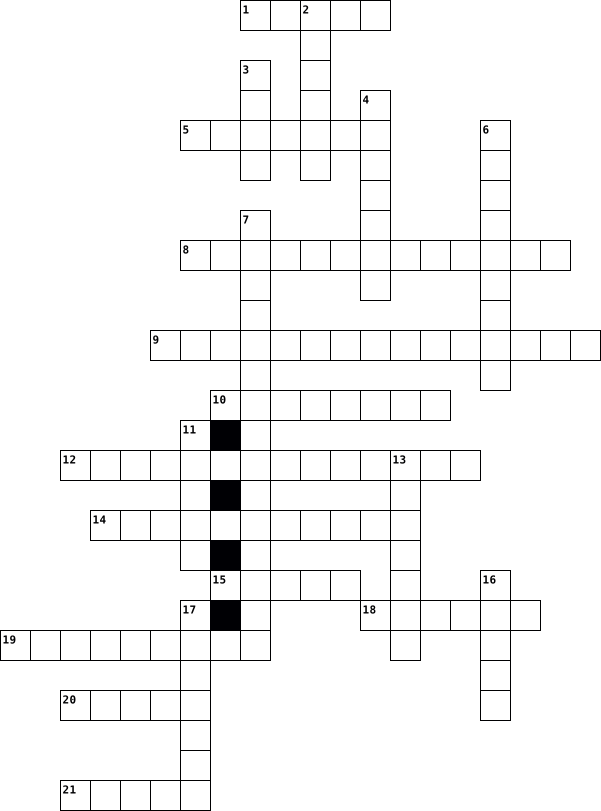
Across
- These absorb water and dissolved nutrients, and anchor the plant in the soil.
- These usually have both male and female parts for reproduction.
- Water evaporates from the leaves of the plants, leaving room for more water molecules to take their place. This helps the water travel up the plant.
- Plants ____ __ _____ soil. Plant roots hold the soil together.
- Some plants have long _______ which help them reach water from deep underground.
- The process by which plants make their own food using water, energy from the sun, and carbon dioxide. This produces oxygen and glucose.
- The process of gases entering and exiting a plant
- Making clothing out of cotton is an example of using plants for____________
- These produce food for the plant, take in and release gases, and allow water to exit the plant.
- The process of particles moving from an area of high concentration to an area of low concentration.
- Cacti stems are adapted to store lots of _______ to help them survive in the dry desert.
- These provide a pathway for movement of water and food. They also support the leaves and reproductive structures.
Down
- Plants produce this during photosynthesis, and it helps animals breathe.
- Humans often use plants for _______. An example would be making chocolate out of cocoa.
- The process of water moving across a membrane from an area of high water concentration to an area of low water concentration.
- Some plants are adapted to have colourful flowers that attract insects like bees. These insects ________ the plants as they go from flower to flower.
- The process that helps water move up a plant through the attraction between molecules and the walls of tiny tubes in the stem.
- There are separate male and female _________ for reproduction.
- Plants provide ____________ which protects organisms from weather and predators.
- These contain an embryo that will form a new plant, and they often contain a food supply for the embryo as well.
- Some plants have ________ roots, which form a thick mat that gathers water at the upper layers of the soil.
21 Clues: The process of gases entering and exiting a plant • Plants ____ __ _____ soil. Plant roots hold the soil together. • There are separate male and female _________ for reproduction. • These usually have both male and female parts for reproduction. • Plants produce this during photosynthesis, and it helps animals breathe. • ...
Watershed Crossword 2019-11-13

Across
- A stream that flows, dries up and flows again at different times of the year (E).
- The river that flows beginning near Mount Calm and flows south into the Brazos River at a point where Brazos, Grimes, and Washington counties converge.
- An excess substances in a body of water; the contamination of water by substances that are harmful to living things.
- A drainage area, generally made up of many smaller units called watersheds; area of land drained to form a river.
- A stream that flows, dries up and flows again at different times of the year (T).
- The process of particles carried in water falling out of suspension; deposition of silt, sand, rock, and other matter carried by water.
- Impurities, including pollution or pollutants, in water that can make it unfit for drinking or for supporting life.
- A stream that flows into a larger stream or other body of water.
- Water and all things that live in or around water.
- A partly enclosed body of water along the coast where one or more streams or rivers enter and mix freshwater with saltwater.
- The wearing away of land surface materials, especially rocks, sediments, and soils, by the action of water, wind, or ice; usually includes the movement of such materials from their original location.
- Water pollution that comes from a single source or outlet.
- A stream that flows for most or all of the year.
Down
- River basin that we live in.
- The basins that include the areas of coastal plains, peninsulas, and islands that lie adjacent to and between the main river basins.
- The high ground where precipitation first collects and flows downhill, to small to create a permanent channel.
- Water pollution that comes from a combination of many sources rather than a single outlet (has a dash as he 4th blank).
- Our closest recreational puplic lake.
- The watershed, sub-watershed, and sub-sub-watershed that includes a particular location.
- All the land from which water drains into a specific body of water.
20 Clues: River basin that we live in. • Our closest recreational puplic lake. • A stream that flows for most or all of the year. • Water and all things that live in or around water. • Water pollution that comes from a single source or outlet. • A stream that flows into a larger stream or other body of water. • ...
Hoenn Pokemon 2022-03-09

Across
- Normal, the Rushing Pokemon
- Grass, the Mushroom Pokemon
- Psychic/Fairy, the Feeling Pokemon
- Grass, the Forest Pokemon
- Bug, the Firefly Pokemon, male
- Steel/Rock, the Iron Armor Pokemon, middle evolution
- Dark/Ghost, the Darkness Pokemon
- Ground/Dragon, the Mystic Pokemon
- Grass, the Wood Gecko Pokemon, first evolution
- Rock/Psychic, the Meteorite Pokemon, night
- Water/Ground, the Mud Fish Pokemon, middle evolution
- Electric, the Discharge Pokemon
- Poison, the Poison Bag Pokemon
- Dragon/Flying, the Humming Pokemon
- Poison, the Fang Snake Pokemon
- Water/Grass, the Jolly Pokemon
- Fire/Fighting, the Blaze Pokemon
- Water/Ground, the Mud Fish Pokemon, final evolution
- Water, the Sea Basin Pokemon
- Grass/Dark, the Wily Pokemon
- Ice/Water, the Ice Break Pokemon
- (Normal/Fire/Water/Ice), the Weather Pokemon
- Ghost, the Puppet Pokemon
- Grass/Poison, the Thorn Pokemon
- Fighting, the Guts Pokemon
- Water/Flying, the Seagull Pokemon
- Rock/Bug, the Plate Pokemon
- Normal, the Lazy Pokemon
- Water, the Tender Pokemon
- Normal, the Slacker Pokemon
- Fire/Fighting, the Young Fowl Pokemon
- Water/Ground, the Whiskers Pokemon, first evolution
- Dragon/Flying, the Sky High Pokemon
- Water/Dark, the Rogue Pokemon
- Bug, the Firefly Pokemon, female
- Bug, the Worm Pokemon
- Steel/Rock, the Iron Armor Pokemon, first evolution
- Dark, the Bite Pokemon, final evolution
- Grass/Flying, the Fruit Pokemon
- Fighting/Psychic, the Meditate Pokemon, first evolution
- Normal, the Loud Noise Pokemon
- Psychic, the Wind Chime Pokemon
- Poison, the Stomach Pokemon
- Water, the South Sea Pokemon
- Grass/Fighting, the Mushroom Pokemon
- Normal/Fairy, the Polka Dot Pokemon
- Rock/Bug, the Old Shrimp Pokemon
- Ghost, the Beckon Pokemon
- Normal, the Cat Ferret Pokemon
- Psychic, the Bounce Pokemon
- Normal, the Prim Pokemon
- Steel/Fairy, the Deceiver Pokemon
- Steel/Psychic, the Iron Claw Pokemon
- Normal, the Kitten Pokemon
- Dark, the Disaster Pokemon
- Fire/Ground, the Numb Pokemon
- Steel/Psychic, the Wish Pokemon
- Dark, the Bite Pokemon, first evolution
- Grass, the Cactus Pokemon
- Fighting, the Arm Thrust Pokemon
- Steel/Rock, the Iron Armor Pokemon, final evolution
- Ice/Water, the Clap Pokemon
- Psychic, the Bright Pokemon
- Rock, the Compass Pokemon
- Ice, the Snow Hat Pokemon
Down
- Water/Flying, the Water Bird Pokemon
- Ground, the Continent Pokemon
- Normal/Flying, the Tiny Swallow Pokemon
- Psychic/Fairy, the Embrace Pokemon
- Dragon, the Endurance Pokemon
- Dragon/Flying, the Dragon Pokemon
- Ice/Water, the Ball Roll Pokemon
- Ice, the Iceberg Pokemon
- Rock/Grass, the Barnacle Pokemon
- Electric, the Cheering Pokemon, blue
- Normal, the Color Swap Pokemon
- Normal, the Tiny Raccoon Pokemon
- Water/Grass, the Carefree Pokemon
- Water/Dark, the Savage Pokemon
- Water, the Bivalve Pokemon
- Fighting/Psychic, the Meditate Pokemon, final evolution
- Bug, the Cocoon Pokemon, purple
- Bug/Water, the Pond Skater Pokemon
- Normal, the Wild Monkey Pokemon
- Normal/Flying, the Cotton Bird Pokemon
- Bug, the Cocoon Pokemon, white
- Grass, the Acorn Pokemon
- Normal, the Big Voice Pokemon
- Electric, the Lightning Pokemon
- Water/Ground, the Whiskers Pokemon, final evolution
- Water, the Fish Pokemon
- Water, the Float Whale Pokemon
- Ground/Psychic, the Clay Doll Pokemon, final evolution
- Psychic/Fairy, the Emotion Pokemon
- Grass/Dark, the Wicked Pokemon
- Rock/Psychic, the Meteorite Pokemon, day
- Dragon, the Rock Head Pokemon
- Grass/Dark, the Scarecrow Pokemon
- Ground/Dragon, the Vibration Pokemon
- Water/Grass, the Water Weed Pokemon
- Water/Dark, the Brutal Pokemon
- Bug/Flying, the Butterfly Pokemon
- Steel/Psychic, the Iron Ball Pokemon
- Dragon/Psychic, the Eon Pokemon, female
- Normal, the Whisper Pokemon
- Normal/Flying, the Swallow Pokemon
- Water, the Mud Fish Pokemon
- Water, the Ruffian Pokemon
- Grass, the Wood Gecko Pokemon, middle evolution
- Steel, the Iron Pokemon
- Bug/Ground, the Trainee Pokemon
- Fire, the Chick Pokemon
- Water, the Rondezvous Pokemon
- Psychic, the Manipulate Pokemon
- Ground/Psychic, the Clay Doll Pokemon, first evolution
- Bug/Ghost, the Shed Pokemon
- Fire, the Coal Pokemon
- Bug/Flying, the Eyeball Pokemon
- Electric, the Cheering Pokemon, red
- Rock, the Rock Peak Pokemon
- Ghost, the Requiem Pokemon
- Ice, the Face Pokemon
- Ghost, the Marionette Pokemon
- Psychic, the DNA Pokemon
- Water, the Deep Sea Pokemon
- Normal, the Spot Panda Pokemon
- Rock/Grass, the Sea Lily Pokemon
- Ground, the Ant Pit Pokemon
- Water, the Ball Whale Pokemon
- Bug/Poison, the Poison Moth Pokemon
- Dragon/Psychic, the Eon Pokemon, male
- Bug/Flying, the Ninja Pokemon
- Steel/Psychic, the Iron Leg Pokemon
- Fire/Ground, the Eruption Pokemon
- Water/Rock, the Longevity Pokemon
135 Clues: Bug, the Worm Pokemon • Ice, the Face Pokemon • Fire, the Coal Pokemon • Water, the Fish Pokemon • Steel, the Iron Pokemon • Fire, the Chick Pokemon • Ice, the Iceberg Pokemon • Grass, the Acorn Pokemon • Normal, the Lazy Pokemon • Psychic, the DNA Pokemon • Normal, the Prim Pokemon • Grass, the Forest Pokemon • Ghost, the Puppet Pokemon • Water, the Tender Pokemon • ...
Oceans 2025-03-02

Across
- The narrow ocean margin between the high-tide mark and the low-tide mark.
- The natural environment in which a living thing gets all that it needs to live; examples include a desert, a coral reef,and a freshwater lake.
- A built-up limestone deposit formed by small ant-sized organisms called corals.
- A shoreline area where fresh water from a river mixes with salt water from the ocean.
- The measure of the amount of dissolved salt contained in water.
- An opening in the sea floor from which heated water rises and mixes with the ocean water above.
- Microscopic floating organisms that live in water and, like plants, convert sunlight and carbon dioxide into food.
- A mass of moving ocean water.
- The flat or gently sloping land that lies submerged around the edges of a continent and that extends from the shoreline out to the continental slope.
- The movement of water from the surface to greater depths.
Down
- The overall direction and movement of water as waves strike the shore at an angle.
- A large community of kelp, a type of seaweed that can attach to the ocean floor.
- A narrow stream of water that breaks through sandbars and drains rapidly back into deeper water.
- A wet,swampy area that is often flooded with water.
- A system that uses underwater sound waves to measure distance and locate objects.
- The portion of animals that are caught in a net and then thrown away as unwanted.
- A property of matter representing the mass per unit volume.
- A disturbance of wind patterns and ocean currents in the Pacific Ocean that causes temporary climate changes in many parts of the world.
- The catching of fish at a faster rate than they can reproduce.
- The vertical movement of deep water up to the surface.
20 Clues: A mass of moving ocean water. • A wet,swampy area that is often flooded with water. • The vertical movement of deep water up to the surface. • The movement of water from the surface to greater depths. • A property of matter representing the mass per unit volume. • The catching of fish at a faster rate than they can reproduce. • ...
Water storage 2014-08-24

Across
- Small wells to draw water using small pot
- Storage of water on forts
- Big clay jars for free water
- A large dam in Maharashtra
Down
- Very deep but narrow well
- Useful when room is dark
- Tanks for storing water in cities
7 Clues: Useful when room is dark • Very deep but narrow well • Storage of water on forts • A large dam in Maharashtra • Big clay jars for free water • Tanks for storing water in cities • Small wells to draw water using small pot
Water words 2014-06-22

Across
- A braided river just out of Christchurch
- Wild
- something you get from food that makes you healthy
Down
- Grows on land and is not aquatic
- to go from one country to the other
- something you can play in and is better when its hot
- Plant life taken as a whole
7 Clues: Wild • Plant life taken as a whole • Grows on land and is not aquatic • to go from one country to the other • A braided river just out of Christchurch • something you get from food that makes you healthy • something you can play in and is better when its hot
Water Terminology 2013-09-01

Across
- a part of the water cycle when moisture off trees and plants go into the sky
- a cloud that looks like cauliflower
- vapour going up to the clouds
- frozen water
Down
- a build up of moisture
- a gas in the sky
- after water has fallen from the sky it forms a ______ on the ground
7 Clues: frozen water • a gas in the sky • a build up of moisture • vapour going up to the clouds • a cloud that looks like cauliflower • after water has fallen from the sky it forms a ______ on the ground • a part of the water cycle when moisture off trees and plants go into the sky
Water pollution 2016-04-14

Across
- Dumping: The pollution source of this pollution type is a Sewage Barge
- Sewage: The pollution source of this pollution type is a Urban Population
- The pollution source of this pollution type is a farm when it rains and goes into a lake
- Water: The pollution source of this pollution type is Heat
Down
- The pollution source of this pollution type is a Power Station
- The pollution source of this pollution type is from a farm when it rains
- spill: The pollution source of this pollution type is a Factory
7 Clues: Water: The pollution source of this pollution type is Heat • The pollution source of this pollution type is a Power Station • spill: The pollution source of this pollution type is a Factory • Dumping: The pollution source of this pollution type is a Sewage Barge • The pollution source of this pollution type is from a farm when it rains • ...
ground water 2016-06-06

Across
- another word for waste items
- droplets that fall from the sky
- a system were are throwing unwanted things in clear and drinkable water
Down
- which go underground and which are connected to all the houses drainage system
- what do we use to drink, cook, wash, cloths
- a tube which takes dirty water
- over rain leads to
7 Clues: over rain leads to • another word for waste items • a tube which takes dirty water • droplets that fall from the sky • what do we use to drink, cook, wash, cloths • a system were are throwing unwanted things in clear and drinkable water • which go underground and which are connected to all the houses drainage system
Water cycle 2018-05-17

Across
- water changes from liquid to a gas due to suns energy
- evaporation of water from plants
- a large body of water
Down
- precipitation that soaks into the ground
- water vapor(gas) turns back to liquid water due to colder temperatures
- water water in liquid or solid form falls to the ground form clouds
- flows into a body of water
7 Clues: a large body of water • flows into a body of water • evaporation of water from plants • precipitation that soaks into the ground • water changes from liquid to a gas due to suns energy • water water in liquid or solid form falls to the ground form clouds • water vapor(gas) turns back to liquid water due to colder temperatures
WATER CYCLE 2020-08-30

Across
- PROCESS OF PLANTS LOOSING WATER
- PROCESS OF WATER TURNING INTO VAPOR
- PROCESS OF WATER ENTERING THE GROUND
Down
- PROCESS IN WICH WATER VAPOR TURNS INTO LIQUID
- PROCESS OF WATER FALLING
- THE PROCESS OF WATER FLOWIUNG OVER THE SURFACE
- WATER FLOW THAT INFILTRATES THE GROUND
7 Clues: PROCESS OF WATER FALLING • PROCESS OF PLANTS LOOSING WATER • PROCESS OF WATER TURNING INTO VAPOR • PROCESS OF WATER ENTERING THE GROUND • WATER FLOW THAT INFILTRATES THE GROUND • PROCESS IN WICH WATER VAPOR TURNS INTO LIQUID • THE PROCESS OF WATER FLOWIUNG OVER THE SURFACE
Water Cycle 2021-01-07

Across
- , harmful materials into the environment
- , when water moves from Earth's surface to the atmosphere and back
- , water is heated up into water vapor that rises into the air.
- , a period of dry weather when an area gets less than its normal amount of rain
Down
- , water in the form of ice, rain, sleet, hail, or snow, falls to Earth
- , using something (water) too much.
- , water vapor cools and becomes a liquid
7 Clues: , using something (water) too much. • , harmful materials into the environment • , water vapor cools and becomes a liquid • , water is heated up into water vapor that rises into the air. • , when water moves from Earth's surface to the atmosphere and back • , water in the form of ice, rain, sleet, hail, or snow, falls to Earth • ...
Water Cycle 2021-01-15

Across
- I come in different forms but I'm made out of the same thing
- h
- h
- L
Down
- k
- F
- H
- l
- n
- g
10 Clues: k • F • H • l • h • n • g • h • L • I come in different forms but I'm made out of the same thing
Water cycle 2018-05-18

Across
- water changes from a liquid to a gas due to the suns energy
- water in liquid or solid form falls to the ground from clouds
Down
- water vapor turns back to liquid water due to colder temperatures
- evaporation of water from plants
- a large body of water
- flows into a body of water
- precipitation that soaks into the ground
7 Clues: a large body of water • flows into a body of water • evaporation of water from plants • precipitation that soaks into the ground • water changes from a liquid to a gas due to the suns energy • water in liquid or solid form falls to the ground from clouds • water vapor turns back to liquid water due to colder temperatures
Water Cycles 2017-08-23

Across
- It's repeating.
- The state of body
- vapor A dispersion in air
- From GROUND
- Procedure
Down
- The result of being made more compact or dense
- The process
7 Clues: Procedure • The process • From GROUND • It's repeating. • The state of body • vapor A dispersion in air • The result of being made more compact or dense
Water & Erosion 2021-05-19

Across
- What happens when too much water falls from the sky
- What happens when water flows over soil without plants living things that hold soil together
- A forest that was buried in mud and turned to rock
Down
- The way smaller things get eaten by bigger things
- area or landscape that does not get much rain
- the most powerful force on earth for good and bad
- Where water collects after falling from the sky.
7 Clues: area or landscape that does not get much rain • Where water collects after falling from the sky. • The way smaller things get eaten by bigger things • the most powerful force on earth for good and bad • A forest that was buried in mud and turned to rock • What happens when too much water falls from the sky • ...
water a 2021-05-04

Across
- whats happening when water gets too cold
- what is water
- rising up air carry water
- the red and green fruit
- whats happends when you boil water
Down
- happents when enought water has condensed
- what is the best drinking liquit
7 Clues: what is water • the red and green fruit • rising up air carry water • what is the best drinking liquit • whats happends when you boil water • whats happening when water gets too cold • happents when enought water has condensed
water a 2021-05-04

Across
- whats happends when you boil water
- rising up air carry water
- whats happening when water gets too cold
- what is water
Down
- happents when enought water has condensed
- the red and green fruit
- what is the best drinking liquit
7 Clues: what is water • the red and green fruit • rising up air carry water • what is the best drinking liquit • whats happends when you boil water • whats happening when water gets too cold • happents when enought water has condensed
WATER SUPPLY 2023-09-30

Across
- water under the ground
- number of great oceans on Earth
- largest of the world's seas
- Sea water
- one of the leisure activity with water
Down
- water in the air
- watering the crops
7 Clues: Sea water • water in the air • watering the crops • water under the ground • largest of the world's seas • number of great oceans on Earth • one of the leisure activity with water
Water pollution 2024-09-05

Across
- this is essential to live
- alot of elements finished into the water and make it not drinkable
- who causes this environmetal issus
- the elment is for the car
- it can be if that finished into us
Down
- this element is contaminated we talk
- You throw away the
7 Clues: You throw away the • this is essential to live • the elment is for the car • who causes this environmetal issus • it can be if that finished into us • this element is contaminated we talk • alot of elements finished into the water and make it not drinkable
Water Cycle 2023-01-26

Across
- Water on earth's surface that has not soaked in yet
- Water changes from a gas to liquid
- When plants release water as gas
- Water soaks into the ground
Down
- Water filling into the cracks and spaces underground
- Water falls from the sky to the earth
- When water changes from a gas to a liquid
7 Clues: Water soaks into the ground • When plants release water as gas • Water changes from a gas to liquid • Water falls from the sky to the earth • When water changes from a gas to a liquid • Water on earth's surface that has not soaked in yet • Water filling into the cracks and spaces underground
Water Cycle 2023-01-26

Across
- a special type of evaporation in plants
- any form of water falling from the sky
- a process that occurs when water in the air changes
Down
- a process that occurs when water soaks into the ground
- water has soaked into spaces between soil and rocks
- a process that occurs when water changes from a liquid
- water that has not been soaked into the ground
7 Clues: any form of water falling from the sky • a special type of evaporation in plants • water that has not been soaked into the ground • water has soaked into spaces between soil and rocks • a process that occurs when water in the air changes • a process that occurs when water soaks into the ground • a process that occurs when water changes from a liquid
Water Cycle 2023-02-03

Across
- When water vapor forms in clouds
- The process of water continuously being moved around
- When the water in plants is extracted and turns into water vapor
- When the water vapor from clouds falls and turns into liquid water
Down
- Excess water flowing on top of the ground
- The process of water seeping into the ground and soil
- The process of liquid water turning into water vapor
7 Clues: When water vapor forms in clouds • Excess water flowing on top of the ground • The process of water continuously being moved around • The process of liquid water turning into water vapor • The process of water seeping into the ground and soil • When the water in plants is extracted and turns into water vapor • ...
Water Cycle 2023-05-06

Across
- The process of changing liquid to gas.
- Something that goes round and round.
- The gathering of water.
Down
- Water falling from the cloud.
- The process of changing gas to liquid.
- The cold air around the Earth.
- To clean or remove bad things.
7 Clues: The gathering of water. • Water falling from the cloud. • The cold air around the Earth. • To clean or remove bad things. • Something that goes round and round. • The process of changing gas to liquid. • The process of changing liquid to gas.
Water Cycle 2023-05-18

Across
- The process that changes liquid water to gaseous water.(water vapor)
- Occurs when there is more water than land can absorb.
Down
- Describes how water evaporates from the surface of the earth, rises into the atmosphere, cools and condenses into rain or snow in clouds, and falls again to the surface as precipitation.
- Water released from clouds in the form of rain, freezing rain, sleet, snow, or hail.interception
- The flow of water from aboveground into the subsurface.percolation
- The process by which water vapor in the air is changed into liquid water
- The physiological loss of water in the form of water vapor, mainly from the stomata in leaves, but also through evaporation from the surfaces of leaves, flowers, and stems.
7 Clues: Occurs when there is more water than land can absorb. • The flow of water from aboveground into the subsurface.percolation • The process that changes liquid water to gaseous water.(water vapor) • The process by which water vapor in the air is changed into liquid water • ...
Water pollution 2023-05-23

Across
- long tubes
- Contamination
- Trash
Down
- bad, fatal
- hygienic
- olive
- messy, not clean
7 Clues: olive • Trash • hygienic • bad, fatal • long tubes • Contamination • messy, not clean
Water Animals 2021-05-12

Across
- You don't want to go near this animal! You might get poisoned...
- This animal is the biggest mammal
- This animal is an edible fish
- This animal has eight legs
- This animal eats people if they are bleeding
Down
- This animal is blue and can jump high
- This animal has the word "horse" in it's name, but it has nothing to do with a horse
7 Clues: This animal has eight legs • This animal is an edible fish • This animal is the biggest mammal • This animal is blue and can jump high • This animal eats people if they are bleeding • You don't want to go near this animal! You might get poisoned... • This animal has the word "horse" in it's name, but it has nothing to do with a horse
Water Forms 2022-03-29

Across
- second largest salty water form
- big body of water surrounded by land
- stream of water that flows to a lake or the sea
- small body of water surrounded by land
Down
- largest salty water form
- body of water that flows from a high place
- flows from the ground and source of a river
7 Clues: largest salty water form • second largest salty water form • big body of water surrounded by land • small body of water surrounded by land • body of water that flows from a high place • flows from the ground and source of a river • stream of water that flows to a lake or the sea
Water cycle 2025-01-17

Across
- water is released from clouds in the form of rain, freezing rain, sleet, snow or hail
- water evaporates from plants and trees
- A solid changes directly to a gas without first becoming a liquid
- water moves downward from the land surface into soil or porous rock
Down
- water vapor in the air changes into liquid water
- water changes from a liquid to a gas due to thermal energy
- precipitation that does not absorb into the soil or evaporate
7 Clues: water evaporates from plants and trees • water vapor in the air changes into liquid water • water changes from a liquid to a gas due to thermal energy • precipitation that does not absorb into the soil or evaporate • A solid changes directly to a gas without first becoming a liquid • water moves downward from the land surface into soil or porous rock • ...
Water Pollution 2025-02-26

Across
- Public place covered in sand.
- Black substance used to make engins work.
- A big boat on wich people live for some days.
Down
- Animals living underwater.
- Trowing trash in bins made for that type of trash.
- When there are too many people in the same place.
- Bottles are made from that material.
7 Clues: Animals living underwater. • Public place covered in sand. • Bottles are made from that material. • Black substance used to make engins work. • A big boat on wich people live for some days. • When there are too many people in the same place. • Trowing trash in bins made for that type of trash.
Water Ways 2024-01-10

Across
- a rigid container with a typical capacity of 4 to 60 litres
- not sanitary
- potential of hydrogen
- drinking water packaged in plastic or glass water bottles
Down
- has a higher pH level than that of plain tap water
- waste material
- not liked
7 Clues: not liked • not sanitary • waste material • potential of hydrogen • has a higher pH level than that of plain tap water • drinking water packaged in plastic or glass water bottles • a rigid container with a typical capacity of 4 to 60 litres
Water Cycle 2023-11-08

Across
- Water infiltrates the soil by moving through the surface
- movement of water underground slowly moves through the spaces and cracks between the soil
- the water movement from the soil to the atmosphere via plants
Down
- the process of a gas changing to a liquid. In the water cycle, water vapour in the atmosphere condenses and becomes liquid
- water that falls from the clouds towards the ground, especially as rain or snow
- occurs when there is more water than land can absorb. The excess liquid flows across the surface of the land and into nearby creeks, streams, or ponds. Runoff can come from both natural processes and human activity
- the process that changes liquid water to gaseous water (water vapour)
7 Clues: Water infiltrates the soil by moving through the surface • the water movement from the soil to the atmosphere via plants • the process that changes liquid water to gaseous water (water vapour) • water that falls from the clouds towards the ground, especially as rain or snow • ...
water cycle 2023-10-25

Across
- water that comes down from the sky
- water ___ to make water vapor
- liquid that people drink
- water that is underground
Down
- water goes into the ground
- water vapor ____ to make liquid
- something that involves rocks in the water cycle
7 Clues: liquid that people drink • water that is underground • water goes into the ground • water ___ to make water vapor • water vapor ____ to make liquid • water that comes down from the sky • something that involves rocks in the water cycle
Water Puzzle. 2023-10-25

Across
- Water falling onto the earth's surface
- a planet that has a water cycle
- Liquid water that turns into Gas
Down
- Gas that gets cold and sticks to the surface of like a cup or window
- undrinkable water
- this water is drinkable and found in glaciers.
- something that contains a lot of freshwater, it's also very cold
7 Clues: undrinkable water • a planet that has a water cycle • Liquid water that turns into Gas • Water falling onto the earth's surface • this water is drinkable and found in glaciers. • something that contains a lot of freshwater, it's also very cold • Gas that gets cold and sticks to the surface of like a cup or window
WATER - Crossword 2024-10-25

Across
- Simple aquatic organisms that can perform photosynthesis, often found in water bodies
- process that forms clouds
- A state of matter for your element
Down
- The introduction of harmful substances or contaminants into the environment
- Element in a water molecule
- Associated with sadness or calmness
- A device that uses energy to perform a specific task or function
7 Clues: process that forms clouds • Element in a water molecule • A state of matter for your element • Associated with sadness or calmness • A device that uses energy to perform a specific task or function • The introduction of harmful substances or contaminants into the environment • Simple aquatic organisms that can perform photosynthesis, often found in water bodies
Water 2 2024-03-24

Across
- Difficulty passing stool
- % of water produced by body via metabolism
Down
- Water acts as this in joints
- Way to cool the body down
- Food group with lowest amount of moisture
- Loose stools
- Drinking solution given to rehydrate the body
7 Clues: Loose stools • Difficulty passing stool • Way to cool the body down • Water acts as this in joints • Food group with lowest amount of moisture • % of water produced by body via metabolism • Drinking solution given to rehydrate the body
Water pollution 2022-02-02

Across
- by which make water impure
- is a disease that caused by drinking polluted water
- and people responsiblity to keep surroundings clean
Down
- increase the production of crops but cause water pollution
- spills by tankers and Oil wells pollutes sea water
- wash clothes in rivers some people bathe in rivers and bathe with their cattles
- is the purest form of water
7 Clues: by which make water impure • is the purest form of water • spills by tankers and Oil wells pollutes sea water • is a disease that caused by drinking polluted water • and people responsiblity to keep surroundings clean • increase the production of crops but cause water pollution • wash clothes in rivers some people bathe in rivers and bathe with their cattles
Water systems 2022-02-03

Across
- an area of land where all water present eventually drains into one main body of water
- an area where the climate is different from its surroundings
Down
- the underground fresh water reservoir
- the upper surface of ground water is called the _____ _____
- the concentrations of salts in water
- a mass of ice overlaying snow
- the ability of a material to absorb heat
7 Clues: a mass of ice overlaying snow • the concentrations of salts in water • the underground fresh water reservoir • the ability of a material to absorb heat • the upper surface of ground water is called the _____ _____ • an area where the climate is different from its surroundings • an area of land where all water present eventually drains into one main body of water
Water Pollution 2022-03-08

Across
- makes up over 70% of the human body
- used for fishing and catching fish
- harmful materials into the environment
Down
- anything that is thrown away, garbage,rubbish
- untreated water, wastewater in sewers
- material of bottled water, trash bags, straws
- common liquid produced from ships
7 Clues: common liquid produced from ships • used for fishing and catching fish • makes up over 70% of the human body • untreated water, wastewater in sewers • harmful materials into the environment • anything that is thrown away, garbage,rubbish • material of bottled water, trash bags, straws
Water Project 2022-10-05

Across
- Ocean- The Pacific Ocean is the largest and deepest of Earth’s five oceanic divisions. It extends from the Arctic Ocean in the north to the Southern Ocean in the south.
- Ocean- The Southern Ocean, also known as the Antarctic Ocean.
- Ocean- Atlantic Ocean is the second-largest of the world's five oceans.
- Juliette- The 3600-acre lake and surrounding uplands are maintained in cooperation with the Georgia Department of Natural Resources.
Down
- River- is a 52.3 mile-long tributary of the Ocmulgee River in Central Georgia.
- Ocean- The Indian Ocean is the third-largest of the world’s five oceanic divisions.
- High Falls- 650-acre lake on the Towaliga River in Butts County near the city of Jackson
- River- 3-mile-long river that flows northwestward through the southern Appalachian Mountains of the southeastern United States.
- Lanier- A different word, close to home and located north of Atlanta.
- Allatoona- a U.S. Army Corps of Engineers reservoir on the Etowah River in northwestern part of the State of Georgia.
10 Clues: Ocean- The Southern Ocean, also known as the Antarctic Ocean. • Lanier- A different word, close to home and located north of Atlanta. • Ocean- Atlantic Ocean is the second-largest of the world's five oceans. • River- is a 52.3 mile-long tributary of the Ocmulgee River in Central Georgia. • ...
Water Polo 2022-11-06

Across
- a well-rounded player that is able to play most, if not all, the positions
- a goal that’s scored by a hard shot aimed at, or close to, the goalie’s head
- permits the referee to refrain from calling a foul
Down
- a technical foul that occurs when a player holds the ball underwater while being held or tackled by an opponent
- an offensive strategy that tries to give the offense an advantage by quickly moving the ball down the pool after a turnover
- awarded when the goalkeeper deflects the ball out of bounds, or a defensive player intentionally sends the ball over the back line
- refers to the time between the whistle after a foul, which stops the clock, and the resetting of the clock after the ball returns to play
7 Clues: permits the referee to refrain from calling a foul • a well-rounded player that is able to play most, if not all, the positions • a goal that’s scored by a hard shot aimed at, or close to, the goalie’s head • a technical foul that occurs when a player holds the ball underwater while being held or tackled by an opponent • ...
Water Cycle 2023-01-17

Across
- is when water vapor turns into liquid water.
- The process in which water falls from clouds in the sky.
- when water pools in large bodies
- water held underground in the soil
Down
- is the process in which water within plants evaporates into the atmosphere
- Water that flows in surface streams, rivers, or canals.
- is when liquid water becomes water vapor
7 Clues: when water pools in large bodies • water held underground in the soil • is when liquid water becomes water vapor • is when water vapor turns into liquid water. • Water that flows in surface streams, rivers, or canals. • The process in which water falls from clouds in the sky. • is the process in which water within plants evaporates into the atmosphere