
animals Crossword Puzzles
Animals 2025-08-05

Across
- nocturnal animal. It flies and has difficulties to see.
- it can be poisonous. It has a long body and different colors.
- one of the most dangerous animals in the ocean.
- small, annoying insect that flies. It can bite.
- farm animal. It gives us milk, cheese and more.
- lives in the ocean and doesn't have a brain. It can sting.
Down
- lives in Australia. It can jump a lot.
- there are black, brown and polar ____. Found in North America mostly.
- farm animal. It gives us meat and eggs.
- small insect that can sting. Similar to a bee.
- lives in Africa. It's one of the biggest animals.
- small animal. People are usually scared of it.
12 Clues: lives in Australia. It can jump a lot. • farm animal. It gives us meat and eggs. • small insect that can sting. Similar to a bee. • small animal. People are usually scared of it. • one of the most dangerous animals in the ocean. • small, annoying insect that flies. It can bite. • farm animal. It gives us milk, cheese and more. • ...
Animals 2025-09-30

Across
- Man's best friend
- Has a trunk
- Likes to chase mice
- Lives in water
- Lives underground
- climbs trees
- lives in trees
Down
- Long neck
- lays eggs
- Dangerous to humans
- Large marsupial
- Flying mammal
12 Clues: Long neck • lays eggs • Has a trunk • climbs trees • Flying mammal • Lives in water • lives in trees • Large marsupial • Man's best friend • Lives underground • Likes to chase mice • Dangerous to humans
animals 2025-09-20

Across
- An animal people ride and use for races
- A tall animal with a very long neck
- A bird that cannot fly but swims very well
- A loyal animal that barks and wags its tail
- A big wild cat known as the king of the jungle
- A small animal with long ears that hops fast
- A small pet that purrs and loves to chase mice
Down
- A smart sea creature that loves to jump in waves
- A giant animal with a long trunk
- An animal from Australia that jumps with strong legs
- A bird that hoots and sees well at night
- A large furry animal that hibernates in winter
12 Clues: A giant animal with a long trunk • A tall animal with a very long neck • An animal people ride and use for races • A bird that hoots and sees well at night • A bird that cannot fly but swims very well • A loyal animal that barks and wags its tail • A small animal with long ears that hops fast • A big wild cat known as the king of the jungle • ...
Animals 2025-09-04

Across
- Yellow and black stiped bug that makes honey
- Animal with long horns in the savannah
- Man's best friend
- Large marsupial
- Golden animal with a mane
- Orange striped animal in jungles
Down
- Has a trunk
- Bird with big, beautiful tail
- An animal that chases mice
- White animal with black stripes
- Long thin animal that hisses
- Fast sea animal that can jump fully out of the water
12 Clues: Has a trunk • Large marsupial • Man's best friend • Golden animal with a mane • An animal that chases mice • Long thin animal that hisses • Bird with big, beautiful tail • White animal with black stripes • Orange striped animal in jungles • Animal with long horns in the savannah • Yellow and black stiped bug that makes honey • Fast sea animal that can jump fully out of the water
Animals 2025-10-27

Across
- lots of them in the ocean
- Football team that people hate
- Small
- You can go to feed them bread
- You can ride them
- If its black fight back
Down
- There is a movie about it biteing someone
- Swings on trees
- Flys in the sky
- a pet that people like
- Pinches people at the beach
- a pet that people are allergic to
12 Clues: Small • Swings on trees • Flys in the sky • You can ride them • a pet that people like • If its black fight back • lots of them in the ocean • Pinches people at the beach • You can go to feed them bread • Football team that people hate • a pet that people are allergic to • There is a movie about it biteing someone
Animals 2026-02-01

Across
- It's small and scary.
- It's long, green and lives in the jungle.
- It's got a long neck, it lives in the jungle.
- It's black and white,it lives on the farm and eats grass.
- It's small, strong and has many friends.
- It's small and it can fly.
- It's not small, it's not big, it can fly and talk.
Down
- It's black and white and fat. It lives in the jungle.
- It's your best friend, it has four legs and a tail.
- It's heavy, big and gray.
- It's funny and lives at the zoo.
- It's orange and black, it's scary and strong.
12 Clues: It's small and scary. • It's heavy, big and gray. • It's small and it can fly. • It's funny and lives at the zoo. • It's small, strong and has many friends. • It's long, green and lives in the jungle. • It's got a long neck, it lives in the jungle. • It's orange and black, it's scary and strong. • It's not small, it's not big, it can fly and talk. • ...
Animals 2026-02-08

Across
- świnka
- ryba
- słoń
- kurczak
- lew
- małpa
Down
- delfin
- pies
- koń
- pingwin
- żyrafa
- kot
12 Clues: koń • kot • lew • pies • ryba • słoń • małpa • delfin • świnka • żyrafa • pingwin • kurczak
Animals 2025-11-05

Across
- The animal that lives in the desert and has humps.
- The reptile that slithers and has scales and no legs.
- A common insect that makes honey.
- The animal known as "man's best friend"
- A pet that chases mice and says "meow"
- A small, furry pet known for spinning on a wheel.
- Wild animal that howls at the moon.
Down
- The large farm animal famous for giving us milk.
- The animals known as the "king of the jungle"
- This animal says "quack"
- A large, gray animal with a trunk.
- A very tall animal with a long neck.
12 Clues: This animal says "quack" • A common insect that makes honey. • A large, gray animal with a trunk. • Wild animal that howls at the moon. • A very tall animal with a long neck. • A pet that chases mice and says "meow" • The animal known as "man's best friend" • The animals known as the "king of the jungle" • The large farm animal famous for giving us milk. • ...
Animals 2025-11-06

Across
- - lives in a giant shell, leaves a train of slime
- - males have lots of hair round their face, seen as ferocious
- - four legs, fury, loves to bring it's owner's a 'gift' such as mice!
- - scales, no legs, can be venomous
- - flies around, most often in spring and summer, loves flowers, makes runny sweet stuff
- - lots of people are very scared of these, they have eight legs, they are known as being the biggest of their kind
- - very large animal, has a very long nose, often grey in colour
- - lives in the sea, very friendly, loves human interaction
Down
- - four legs, fury, 'man's best friend'
- - great at hiding in the trees, very good camoflage
- - sticky pads pads on feet, live in the rainforest
- - lives in water, can often be found in rock pools, have 5 arms
12 Clues: - scales, no legs, can be venomous • - four legs, fury, 'man's best friend' • - lives in a giant shell, leaves a train of slime • - sticky pads pads on feet, live in the rainforest • - great at hiding in the trees, very good camoflage • - lives in the sea, very friendly, loves human interaction • - males have lots of hair round their face, seen as ferocious • ...
Animals 2026-02-06

Across
- c
- l
- h
- d
- a
- f
Down
- g
- e
- i
- k
- j
- b
12 Clues: g • c • e • i • l • k • j • h • d • b • a • f
ANIMALS 2026-02-02

Across
- A tusked marine mammal of the Arctic.
- A burrowing rodent often found in tunnels.
- A reptile known for its protective shell.
- A fish known for swimming upstream to spawn.
- A medium-sized spotted wild cat.
- A massive constricting snake.
Down
- A large, tropical green lizard.
- A long-eared hopper that loves carrots.
- A large wild cat also known as a mountain lion.
- A large primate with a dog-like snout.
- A dam-building rodent.
- A "wily" wild dog of North America.
12 Clues: A dam-building rodent. • A massive constricting snake. • A large, tropical green lizard. • A medium-sized spotted wild cat. • A "wily" wild dog of North America. • A tusked marine mammal of the Arctic. • A large primate with a dog-like snout. • A long-eared hopper that loves carrots. • A reptile known for its protective shell. • A burrowing rodent often found in tunnels. • ...
ANIMALS 2026-05-14

Across
- THIS ANIMAL IS THE SCARIEST. IT HAS BIG JAWS AND SHARP TEETH.
- THIS ANIMAL IS THE BRAVEST. IT HAS A LONG MANE.
- THIS ANIMAL HAS THE LONGEST NECK. IT HAS BROWN SPOTS.
- THIS ANIMALS IS THE SLEEPIEST. IT HAS BROWN FUR.
- THIS ANIMAL IS THE CUTEST. IT HAS A BEAK AND FEATHERS. IT FLOATS IN WATER.
- THIS ANIMAL IS THE SMARTEST. IT HAS FINS.
Down
- THIS ANIMAL IS THE MOST BEAUTIFUL. IT IS SMALL AND IT HAS LONG EARS.
- THIS ANIMAL IS THE THINNEST. IT IS LONG AND POISONOUS.
- THIS ANIMAL IS THE STRONGEST. IT HAS BLACK STRIPES.
- THIS ANIMAL IS THE MOST BEAUTIFUL. IT HAS WINGS.
- THIS ANIMAL IS THE FATTEST. IT HAS BIG EARS.
- WHALE THIS ANIMAL IS THE LOUDEST. IT HAS A BIG BODY, UNDER THE SEA.
12 Clues: THIS ANIMAL IS THE SMARTEST. IT HAS FINS. • THIS ANIMAL IS THE FATTEST. IT HAS BIG EARS. • THIS ANIMAL IS THE BRAVEST. IT HAS A LONG MANE. • THIS ANIMAL IS THE MOST BEAUTIFUL. IT HAS WINGS. • THIS ANIMALS IS THE SLEEPIEST. IT HAS BROWN FUR. • THIS ANIMAL IS THE STRONGEST. IT HAS BLACK STRIPES. • THIS ANIMAL HAS THE LONGEST NECK. IT HAS BROWN SPOTS. • ...
animals 2026-04-23

Across
- fat
- strip
- weird
- strip
- annoying
- idk
- hairy
Down
- big
- small
- hairy
- desert
- tall
- my favorite animal
- big
- col
15 Clues: big • fat • idk • big • col • tall • small • strip • hairy • weird • strip • hairy • desert • annoying • my favorite animal
Animals 2026-05-19

Across
- king of the jungle
- animal people can ride
- animal that likes bananas
- big striped animal
- animal that can fly
- animal that says meow
Down
- animal that lives in water
- big animal with trunk
- animal that barks
- animal with long ears
- animal that says quack
- animal that gives milk
12 Clues: animal that barks • king of the jungle • big striped animal • animal that can fly • big animal with trunk • animal with long ears • animal that says meow • animal people can ride • animal that says quack • animal that gives milk • animal that likes bananas • animal that lives in water
Animals 2026-05-19

Across
- hisses, fangs
- fluffy and meows
- eats hay and gallops
- common bird seen in NYC
- Large mammal with strong kicks; live in Australia
- runs on a wheel, small and furry
- different sizes and barks
Down
- black and white stripes
- Has a trunk and big ear
- roars, have a big mane
- orange and black stripes, king of the jungle
- loves to sleep and moves slowly
12 Clues: hisses, fangs • fluffy and meows • eats hay and gallops • roars, have a big mane • black and white stripes • Has a trunk and big ear • common bird seen in NYC • different sizes and barks • loves to sleep and moves slowly • runs on a wheel, small and furry • orange and black stripes, king of the jungle • Large mammal with strong kicks; live in Australia
Animals 2026-04-29

Across
- blanca con manchas negras,makes a moo sound
- un gato con pelaje main
- tiene el cuello largo y manchas por todo el cuerpo.
- blanco y salta alrededor
- pequeño que nada con escamas y aletas.
- gris con grandes orejas caídas
- peluda con patas y cola y maullidos
Down
- suaves y peludas
- pequeña y come queso.
- tiene alas y puede volar
- rosa y banjo con hocico
- larga y delgada sin patas
12 Clues: suaves y peludas • pequeña y come queso. • rosa y banjo con hocico • un gato con pelaje main • tiene alas y puede volar • blanco y salta alrededor • larga y delgada sin patas • gris con grandes orejas caídas • peluda con patas y cola y maullidos • pequeño que nada con escamas y aletas. • blanca con manchas negras,makes a moo sound • ...
Rilo's food web and chain puzzle 2021-12-02

Across
- more precise than food chain
- animals that eat or live on land
- something that give energy to producers
- an animal that eats the prey an animal hunten by animal
- bug that eats plant
- to give energy to another living thing
- animals that can eat different things
- something you can eat that is going to keep you alive
- where the animals live
- strength from sun or food
Down
- a continuity of organisms
- animals that eat each other and plants
- eats the bug
- top of all the consumer
- someone or something that eats
- organisms that live in the ocean
- a plant that can be eaten
- eat waste from animals or eat dead things
18 Clues: eats the bug • bug that eats plant • where the animals live • top of all the consumer • a continuity of organisms • a plant that can be eaten • strength from sun or food • more precise than food chain • someone or something that eats • animals that eat or live on land • organisms that live in the ocean • animals that can eat different things • animals that eat each other and plants • ...
Animal Classification 2023-11-15

Across
- to take in air
- animals that keep the same body temperature all the time
- animals with backbones/spines
- animals whose body temperature changes due to their environment
- to put things in groups based on traits
- animals without a backbone/spine
- what mammals use to breathe
- animals that swim in the sea
- the exterior of a person is made of
- how birds have babies
Down
- one example is a monkey
- the exterior of a bird is made of
- one example is a frog
- also called a spine, only vertebrates have this
- the exterior of a reptile is made of
- one example is a crocodile
- one example is an eagle
- the hair of an animal
18 Clues: to take in air • one example is a frog • the hair of an animal • how birds have babies • one example is a monkey • one example is an eagle • one example is a crocodile • what mammals use to breathe • animals that swim in the sea • animals with backbones/spines • animals without a backbone/spine • the exterior of a bird is made of • the exterior of a person is made of • ...
Review Crossword Quiz 2024-11-18

Across
- To write on the top of the egg
- Animals that catch other animals for food.
- Annoying or causes trouble or problems.
- Not being able to leave or be free.
- To hit something hard.
- People who teach animals how to do tricks.
- Something to catch animals.
- Groups or families of whales that live together in the sea.
- Spots on a face
Down
- When a bird or alligator is born from an egg
- To not remember.
- Someone who frightens smaller or weaker people.
- To hurt someone
- A kind of boat that floats.
- A short message written to someone.
- Animals should live freely in the _____
- To take something that isn’t yours.
- Round ball that people kick
18 Clues: To hurt someone • Spots on a face • To not remember. • To hit something hard. • A kind of boat that floats. • Something to catch animals. • Round ball that people kick • To write on the top of the egg • Not being able to leave or be free. • A short message written to someone. • To take something that isn’t yours. • Annoying or causes trouble or problems. • ...
Hibernation 2026-02-05

Across
- Turtles are _____ blooded animals
- Many insects, such as _____, hibernate in houses
- Frogs hibernate in mud at the bottom of _____
- a very sound sleep
- Hibernating animals eat lots of food before _____
- Snakes hibernate in _____ burrows
- Hibernating animals _____ very slowly
Down
- a cold-blooded animal
- In _____, all the hibernating animals wake up
- The bear's sleep is called a _____
- Groundhogs are _____ blooded animals
- a warm-blooded animal
- Some animals, like bats, hibernate in _____
- In the winter, the bear sleeps in a _____
14 Clues: a very sound sleep • a cold-blooded animal • a warm-blooded animal • Turtles are _____ blooded animals • Snakes hibernate in _____ burrows • The bear's sleep is called a _____ • Groundhogs are _____ blooded animals • Hibernating animals _____ very slowly • In the winter, the bear sleeps in a _____ • Some animals, like bats, hibernate in _____ • ...
Terrible Things 2025-11-07

Across
- narcissist
- fishes home
- birds home
- terrible things weapon of choice
- smelly perpetrator
Down
- white animals
- animal with good morals
- feathered animals
- swimming animals
- quilled animals
- animals shared home
- bushy-tailed animals
12 Clues: narcissist • birds home • fishes home • white animals • quilled animals • swimming animals • feathered animals • smelly perpetrator • animals shared home • bushy-tailed animals • animal with good morals • terrible things weapon of choice
Animals in Groups 2025-01-09

Across
- What do animals give to warn their group of danger?
- What is a group of bees called?
- What is a group of lions called?
- Why do penguins huddle together in groups?
- What do animals learn from others in their group?
- What do animals protect each other from?
- What is a group of elephants called?
- What is a group of ants living together called?
Down
- What do meerkats do to keep watch for predators?
- What do fish stay in a group to confuse?
- What is a group of penguins on land called?
- What do wolves do better in groups?
- What do animals search for when foraging?
- What is a group of fish called?
- What do baby animals get from groups?
- Why do animals stay in groups to avoid predators?
- What is a group of wolves called?
17 Clues: What is a group of bees called? • What is a group of fish called? • What is a group of lions called? • What is a group of wolves called? • What do wolves do better in groups? • What is a group of elephants called? • What do baby animals get from groups? • What do fish stay in a group to confuse? • What do animals protect each other from? • ...
sustainability 2020-05-07

Across
- a tropical and wet place
- a small animal that has six legs
- an animal that has milk
- destruction of plants
- not many of animals are left
- defend against harm
- a big bit of land with animals on it
- points north
Down
- a place where animals live
- a big open space
- plants
- not a plant but i grow on trees
- swamps
- the space above the land
- to keep for the future
- a very hot place
- food like wheat and fruit and veggies
- animals
18 Clues: plants • swamps • animals • points north • a big open space • a very hot place • defend against harm • destruction of plants • to keep for the future • an animal that has milk • a tropical and wet place • the space above the land • a place where animals live • not many of animals are left • not a plant but i grow on trees • a small animal that has six legs • a big bit of land with animals on it • ...
Fun on the Farm 2025-07-01

Across
- – White and fluffy in the sky.
- – Animals drink it.
- – Shines in the sky.
- – Comes from a hen.
- – Pulled by horses or tractors.
- – A baby cow.
- – Fruit that grows on trees.
- – Yellow and grows on a cob.
- – White drink from cows.
- – Planted in the ground to grow.
Down
- – Used to turn the soil.
- – Used to clean animals.
- – Keeps animals inside.
- – Wheat, oats, and corn are types.
- – Used to carry things on the farm.
- – Food for animals.
- – A baby sheep.
- – Used to tie things.
18 Clues: – A baby cow. • – A baby sheep. • – Animals drink it. • – Comes from a hen. • – Food for animals. • – Shines in the sky. • – Used to tie things. • – Keeps animals inside. • – Used to turn the soil. • – Used to clean animals. • – White drink from cows. • – Fruit that grows on trees. • – Yellow and grows on a cob. • – White and fluffy in the sky. • – Pulled by horses or tractors. • ...
Crossword 2021-01-24

Across
- mandibles
- featherlike
- tracheal
- metamorphosis
- chelicerata
- compound
- aquatic
Down
- spinnerets
- jointed
- molting
- liquefy
- animals
- spiders
- Exoskeleton
- two
- thorax
- malpighian
- open
- waterproof
- parasitic
20 Clues: two • open • thorax • jointed • molting • liquefy • animals • spiders • aquatic • tracheal • compound • mandibles • parasitic • spinnerets • malpighian • waterproof • featherlike • Exoskeleton • chelicerata • metamorphosis
this is nyomi puzzle 2021-03-12

Across
- your
- come
- book
- plant
- chill
- water
- home
- name
- pokemon
- english
- done
Down
- notebook
- weather
- bills
- bull
- teacher
- animals
- phone
- house
- books
20 Clues: your • come • book • bull • home • name • done • bills • plant • chill • water • phone • house • books • weather • teacher • animals • pokemon • english • notebook
Test 2024-10-10

Across
- olives
- lotzia
- riddles
- treasure
- hunter
- heraklion
- dreamer
- bookshop
Down
- windshield
- animals
- crossword
- finals
- pathfinder
- monkeys
- university
- storming
- library
- jacket
- freedom
- weather
20 Clues: finals • olives • lotzia • jacket • hunter • animals • monkeys • riddles • library • freedom • weather • dreamer • storming • treasure • bookshop • crossword • heraklion • windshield • pathfinder • university
Sources Of Food 2019-04-16

Across
- are animals that eat the flesh of other animals
- potato
- are animals that eat both plants and animals
- are animals that eat plants
- are small animals that depend on other living animals for their food
- pea
Down
- are omnivores
- eats a green plant
- spinach
- apple
- brocoli
- turnip
12 Clues: pea • apple • potato • turnip • spinach • brocoli • are omnivores • eats a green plant • are animals that eat plants • are animals that eat both plants and animals • are animals that eat the flesh of other animals • are small animals that depend on other living animals for their food
Ecosystem 2 2024-01-31

Across
- arrows represent the energy flow from one organism to another
- an animal that eats another animal
- food chains connected to each other, shows where energy travels between many different organisms
- organisms that eat only animals
- animals that eat both primary and secondary consumers
- organisms that eat only plants
- an animal that is hunted and/or eaten
Down
- living things such as bacteria, plants, and animals
- organisms that eat both plants and animals
- nonliving things such as sunlight, soil, and water
- animal that eats the leftover dead animals, but does not return their nutrients to the soil
- animals that eat producers
- animals that eat other animals
- break down dead organisms and return their nutrients to the soil
14 Clues: animals that eat producers • animals that eat other animals • organisms that eat only plants • organisms that eat only animals • an animal that eats another animal • an animal that is hunted and/or eaten • organisms that eat both plants and animals • nonliving things such as sunlight, soil, and water • living things such as bacteria, plants, and animals • ...
South Africa crossword 2025-11-19

Across
- food synonym
- top of the food chain
- different types of animals
- no water
- hot strokes
- rugby team
- animals living conditions
Down
- opposite of dry lands
- different types of animals habitat
- big grey animal
- stripy animal
- water unclean water
- a way of cooking eggs
- animals changing to survive in their environments
- thunder and lightning
- Africa A country in Africa
16 Clues: no water • rugby team • hot strokes • food synonym • stripy animal • big grey animal • water unclean water • opposite of dry lands • top of the food chain • a way of cooking eggs • thunder and lightning • animals living conditions • different types of animals • Africa A country in Africa • different types of animals habitat • animals changing to survive in their environments
Lailah Hill- Career Menu Board 2021-09-21

Across
- Many types provide many services to small animal owners petcare worker Many types provide many services to small animal owners
- Treat and control animal injuries,Vaccinate against diseases,Set broken bones,surgery,⅓ treat only small animals
- What animal is #3?
- Feed and care for animals and keep kennels clean
- Bathe pets and brush the pet and keep hair and nails trimmed
- 15,000 - 18,000 retail pet stores in the US
- What animal is #2?
Down
- Raise and market fur-bearing animals, animals for sale to pet shops , labs , and for the general public, they also arrange mating’s and care for females and the young.
- Assist vet and other members of the vet staff
- Pharmaceutical and Biotechnology Research
- Care for small animals they offer for sale .
- Teach dogs to obey signals or commands, hunt, herd , or track, to guard lives or to lead the blind
- Run the daily pet store operations.
- Animal Acts, Carnivals, Circus,Fairs, Zoo, and the Marine Mammal Displays
- Can include supplying food, equipment, and healthcare
- Americans spend $20.3 ______ per year on pets.
- one small area of small animals care and management. Other jobs that are included are in lab animal care, zoo animal care, animal health, animal training, and in the area of biological sciences.
- What animal is #5?
- people who sell lab animals for research and teaching
- and boarding account for about $2.7 billion
20 Clues: What animal is #3? • What animal is #5? • What animal is #2? • Run the daily pet store operations. • Pharmaceutical and Biotechnology Research • and boarding account for about $2.7 billion • 15,000 - 18,000 retail pet stores in the US • Care for small animals they offer for sale . • Assist vet and other members of the vet staff • ...
Classification of Living Things 2026-01-18

Across
- Flowers develop into this and seeds are found in it.
- Living things that feed young with milk.
- Animals that can maintain a constant body temperature are called this.
- Type of plant that reproduces without flowers.
- A type of fish that gives birth to their young alive.
- Living things with three body parts and six legs.
- Type of plant that has flowers and seeds.
- Mammals have hair or ____ as their outer covering.
- Tiny living things that can be helpful or harmful.
- Plants like ferns and fungi such as mushrooms reproduce by producing this.
- Whales and sharks have this to help them swim in water.
- Animals with dry, scaly skin.
Down
- Group of living things like mushrooms and mould.
- Animals like the penguins, owls and ostrich use this body part to pick up food.
- The middle part of a six-legged living thing.
- Living things that make their own food using light.
- Observable features used to classify living things.
- Fishes breathe through this.
- Animals that live on land and in water.
- Trees are able to make their own food when there is ______.
- Mammals do this to cool down.
- Living things that move and eat other organisms.
- Animals with feathers and wings.
- Female animals like crocodiles, frogs and parrots lay this to reproduce.
24 Clues: Fishes breathe through this. • Mammals do this to cool down. • Animals with dry, scaly skin. • Animals with feathers and wings. • Animals that live on land and in water. • Living things that feed young with milk. • Type of plant that has flowers and seeds. • The middle part of a six-legged living thing. • Type of plant that reproduces without flowers. • ...
Going Deep Vocabulary 2022-08-04

Across
- fish body parts for breathing
- octopus body part that looks like arms
- the way someone or something look
- swing
- not dangerous
- living thing
Down
- has many different types
- animals of the same type and characteristics
- special and different from others
- deadly
- animals that become food for other animals
- fish body parts that keeps balance and for movement
- a natural place to live
- animals that hunt and kill other animals
- jump
15 Clues: jump • swing • deadly • living thing • not dangerous • a natural place to live • has many different types • fish body parts for breathing • special and different from others • the way someone or something look • octopus body part that looks like arms • animals that hunt and kill other animals • animals that become food for other animals • animals of the same type and characteristics • ...
Habitats Review 2019-06-10

Across
- Animals that hunt and eat other animals.
- Organisms that produce their own food.
- Where plants or animals live—it provides food, shelter, water, and air to organisms.
- Animals that eat only other animals.
- A group of interacting species sharing a habitat.
- A community of living things and the non-living things around it (air, water, soil).
Down
- Animals that eat both plants and other animals.
- Organisms that consume food.
- Animals that are hunted and eaten by other animals.
- A single living thing.
- Animals that eat only plants.
- A type of living thing.
12 Clues: A single living thing. • A type of living thing. • Organisms that consume food. • Animals that eat only plants. • Animals that eat only other animals. • Organisms that produce their own food. • Animals that hunt and eat other animals. • Animals that eat both plants and other animals. • A group of interacting species sharing a habitat. • ...
Habitats Review 2019-06-10

Across
- Organisms that produce their own food.
- Where plants or animals live—it provides food, shelter, water, and air to organisms.
- Animals that eat only other animals.
- A group of interacting species sharing a habitat.
- A community of living things and the non-living things around it (air, water, soil).
- Organisms that consume food.
- Animals that eat both plants and other animals.
Down
- Animals that are hunted and eaten by other animals.
- A single living thing.
- Animals that eat only plants.
- Animals that hunt and eat other animals.
- A type of living thing.
12 Clues: A single living thing. • A type of living thing. • Organisms that consume food. • Animals that eat only plants. • Animals that eat only other animals. • Organisms that produce their own food. • Animals that hunt and eat other animals. • Animals that eat both plants and other animals. • A group of interacting species sharing a habitat. • ...
Super Foods and Ready to Eat 2024-10-17

Across
- Seeds and pollen can ______ into neighboring fields
- Others can help people _____ illness
- animals that eat both plants and other animals
- animals that eat only plant materials
- _____ can be carnivores, too. Some eat insects
- ______ foods in the U.S. say they don't contain GM
- animals that eat mostly fruit
- Herbivores also have special _______ that are useful for their diet of plants
Down
- chemicals that provide what is needed for growth and development
- animals that eat only meat
- A change in the plants might ____ some insects
- Scavengers, like _____, feed on animals already dead
- able to stand against or fight against a force
- insects that eat plant juices
- _______ breeding where plants are bred to have desirable characteristics
- changing of an organism's genes
16 Clues: animals that eat only meat • insects that eat plant juices • animals that eat mostly fruit • changing of an organism's genes • Others can help people _____ illness • animals that eat only plant materials • A change in the plants might ____ some insects • animals that eat both plants and other animals • able to stand against or fight against a force • ...
Animales 2026-04-14

Across
- animal that can maintain its own body temp
- animals with no symmetry, cephalization, or guts
- mammal with a ouch to raise its young
- living internal support structure
- support structure on the outside of an animal
- property of an object that can be divided evenly
- animal with a backbone
- large group of animals with jointed legs and an exoskeleton
- lives in water when young and on land as an adult
- define boundaries between various animals
Down
- flexible rod found in chordates
- animals with stinging cells
- mammal that provides embryo with food and oxygen with the placenta
- animals with soft bodies, shells,
- animals with a body temp that is determined by their environment
- animal with no back bone
16 Clues: animal with a backbone • animal with no back bone • animals with stinging cells • flexible rod found in chordates • animals with soft bodies, shells, • living internal support structure • mammal with a ouch to raise its young • define boundaries between various animals • animal that can maintain its own body temp • support structure on the outside of an animal • ...
Animal Senses 2023-07-12

Across
- animals that eat other animals
- killing animals for food
- capacity to see
- move or shake
- place where bees live
- liquid inside flowers
- share information
Down
- animals that are eaten by predators
- the surroundings
- change to survive
- continue living
- a type of nocturnal bird
- place
- type of bee
- scared
15 Clues: place • scared • type of bee • move or shake • continue living • capacity to see • the surroundings • change to survive • share information • place where bees live • liquid inside flowers • killing animals for food • a type of nocturnal bird • animals that eat other animals • animals that are eaten by predators
Habitats Review 2019-06-10

Across
- Animals that eat only other animals.
- A group of interacting species sharing a habitat.
- A community of living things and the non-living things around it (air, water, soil).
- Animals that hunt and eat other animals.
Down
- Organisms that produce their own food.
- Animals that eat both plants and other animals.
- A single living thing.
- Animals that eat only plants.
- A type of living thing.
- Organisms that consume food.
- Where plants or animals live—it provides food, shelter, water, and air to organisms.
- Animals that are hunted and eaten by other animals.
12 Clues: A single living thing. • A type of living thing. • Organisms that consume food. • Animals that eat only plants. • Animals that eat only other animals. • Organisms that produce their own food. • Animals that hunt and eat other animals. • Animals that eat both plants and other animals. • A group of interacting species sharing a habitat. • ...
Reptiles/Amphibians/Birds 2023-09-21

Across
- Mammals and Birds are referred to as _____________ because they are endothermic and can regulate their own body temperature.
- The place where reptiles lay their eggs
- The shape of a bird's wing that allows it to fly fast in tight spaces
- Easily found in large amounts
- The term that means animals cannot regulate their own body temperature
- Animals that eat only meat
- Animals that eat only plants
- limited supply of something
- The place where amphibians lay their eggs
- This word describes the skin of an amphibian
- An organism that has a back bone
- Reptiles and Amphibians are both referred to as ________ because they are ectothermic and cannot regulate their own body temperature
- The process by which birds travel seasonally
Down
- Animals that eat both meat and plants
- An innate or internal fixed pattern of behavior in animals
- Animals that eat only fish
- An organism that does not have a back bone
- Animals that eat only insects
- The part of a bird made of keratin the they use to eat their food
- Another word for beak that many aquatic birds use to feed
- To endure harsh conditions
- The substance that feathers and Beaks are made of
- The term that means an animal can internally generate its own body heat
- The process by which birds shed or lose their feathers
- The substance that a reptile's scales are made of.
25 Clues: Animals that eat only fish • Animals that eat only meat • To endure harsh conditions • limited supply of something • Animals that eat only plants • Easily found in large amounts • Animals that eat only insects • An organism that has a back bone • Animals that eat both meat and plants • The place where reptiles lay their eggs • The place where amphibians lay their eggs • ...
Invertebrates 2019-03-04

Across
- biologist classify animals into about 35 different groups
- is a tiny hole or opening that allows the passage of liquid
- invertebrates with soft, unsegmented bodies that are often protected by a hard outer shell
- structures or behaviors that allow animal to perform these basic functions in their environments
- an organism that lives inside or on another organism
- a process in which an animal’s body undergoes dramatic changes in form during its life cycle
- most mollusks that live in water have organs that remove oxygen from the water
- long,round body
- some gastropods are herbivores, animals that only eat plants
- invertebrate animals that usually have no body symmetry and never have tissues or organs
Down
- some species of cnidarians live in a colony, a group of many individual animals
- is an appendage attached to the head that contains sense organs
- the process of shedding an outgrown exoskeleton
- most bivalves are omnivores, animals that eat plants and animals (both)
- chemicals that kill pests
- a larva is an immature form of an animal that looks very different from the adult
- invertebrates with an internal skeleton and a system of fluid-filled tubes called a water vascular system
- an animal that carries pollen among plants
- Some are carnivores, that only eat other animals
- long,they are flat and as soft as a jelly
20 Clues: long,round body • chemicals that kill pests • long,they are flat and as soft as a jelly • an animal that carries pollen among plants • the process of shedding an outgrown exoskeleton • Some are carnivores, that only eat other animals • an organism that lives inside or on another organism • biologist classify animals into about 35 different groups • ...
Isle Royale Crossword Puzzle 2020-01-16

Across
- web a system of interlocking and interdependent food chains
- make their own food
- study of all living things
- animals that eat herbivores and sometimes other carnivores
- a biological community of interacting organisms and their physical environment
- the relationship between two species and both benefit
- an animal that feeds on plants
- the activity or condition of competing
- the types of relationships between two species
- the relationship between two species when one isn’t helped or harmed
- animals that eat both plants and animals
- an individual animal, plant, or single-celled life form
Down
- living organisms
- any carnivorous animal that exists by preying on other organisms
- the relationship between two species when a parasite can live inside or outside the other species, causing harm to it
- chain a hierarchical series of organisms each dependent on the next as a source of food
- a group of interacting populations occupying a given area
- the surroundings or conditions in which a person, animal, or plant lives or operates
- the natural home or environment of an animal, plant, or other organism
- plants and animals that break down dead plants and animals into organic materials that go back into the soil
- a particular section, group, or type of animals living in an area
- animals that get their energy from producers or from organisms that eat producers
- an animal hunted or seized for food, especially by a carnivores animal
- non-living
24 Clues: non-living • living organisms • make their own food • study of all living things • an animal that feeds on plants • the activity or condition of competing • animals that eat both plants and animals • the types of relationships between two species • the relationship between two species and both benefit • an individual animal, plant, or single-celled life form • ...
ecology definition crossword puzzle 2023-04-16

Across
- animals that can eat both plants and animals
- the interaction between two different species that live closely together
- animals that only eat plants
- the ultimate source of energy in a food chain
- an interaction that benefits both species. For example: bees and flowers
- it is the amount of sunlight that is reflected
- groups of plants animals and environment that work together
- they are the ultimate source of all the food energy on earth
- the study of plants and animals
Down
- they are massive ecological areas on the earth’s surface defined by abiotic factors such as temperature, climate, and soils
- chains, the directory of who eats who in an ecosystem
- it occurs when an organism (predator) consumes another organism (prey)
- are known as the producers or the living species that can produce their own food with the help of sunlight
- factors, they are the living factors in an ecosystem
- all the organisms of the same species in a given area
- ecosystem, is an ecosystem that can withstand pressure and give support to a wide variety of organisms
- the non-living factors in the ecosystem
- competition, when two or more animals of the same species fight over resources
- a group if different species living in the same area
- they eat the waste left by the dead plants and animals
20 Clues: animals that only eat plants • the study of plants and animals • the non-living factors in the ecosystem • animals that can eat both plants and animals • the ultimate source of energy in a food chain • it is the amount of sunlight that is reflected • factors, they are the living factors in an ecosystem • a group if different species living in the same area • ...
CSC Chapter 10 and 11 2025-03-10

Across
- Where do people go to see art, history, or science exhibits?
- What is a place with no buildings, only trees, rivers, and wild animals?
- What word means animals are in danger of disappearing?
- Who makes paintings, drawings, or sculptures?
- What do you need to have a great idea or create something new?
- What do people do at a party or festival?
- What word means the traditions, art, and customs of a group of people?
- What do we call the marks a painter makes with a brush?
- What do we call animals that no longer exist?
- What word means the usual weather in a place?
Down
- What word means to become fewer or weaker over time?
- What do we call it when people or animals stay alive in danger?
- What do we call open fields with grass and flowers?
- What do we call a very great work of art or writing?
- What do we do when we travel to new places and learn about them?
- What do we call the natural home of an animal or plant?
- What do we call trees, rivers, mountains, and animals?
- What word means the number of people or animals in a place?
- What do people and animals need to stay safe from bad weather?
- What do scientists do when they study something carefully?
20 Clues: What do people do at a party or festival? • Who makes paintings, drawings, or sculptures? • What do we call animals that no longer exist? • What word means the usual weather in a place? • What do we call open fields with grass and flowers? • What word means to become fewer or weaker over time? • What do we call a very great work of art or writing? • ...
Ecosystem 2025-07-14

Across
- where plants make food using sunlight in green leaves
- animal that hunts and eats other animals
- that breaks down dead plants and animals (like fungi and bacteria)
- area where a plant or animal lives (its natural home)
- flows through a food chain starting from the sun
- plant that makes its own food using sunlight
- diagram that shows who eats whom in an ecosystem
- large natural area with specific climate, plants, and animals (like desert or rainforest)
- community of living things and their environment
- the different living things in one ecosystem
- living things that can only be seen under a microscope – some help break down dead things
- animal that is hunted and eaten by a predator
- animal that eats both plants and animals (like humans or bears)
Down
- animal that eats other animals (lion, tiger, eagle)
- study of how living things interact with each other and their environment
- movement of water through evaporation, condensation, and precipitation
- feature that helps a living thing survive in its environment
- animal that eats only plants (like deer or cows)
- animal that eats plants or other animals for energy
- group of the same kind of animals or plants living in an area
20 Clues: animal that hunts and eats other animals • plant that makes its own food using sunlight • the different living things in one ecosystem • animal that is hunted and eaten by a predator • flows through a food chain starting from the sun • animal that eats only plants (like deer or cows) • diagram that shows who eats whom in an ecosystem • ...
Pastures Glossary 2025-09-15

Across
- Microorganisms that convert nitrogen gas into a usable form for plants.
- Grazing land that is not regularly ploughed or reseeded.
- Grazing animals in small sections of pasture at a time.
- Pastures made up of plants that live for more than two years.
- Plants that complete their life cycle in one year.
- How acceptable or tasty feed is to grazing animals.
- Small lumps on legume roots where nitrogen-fixing bacteria live.
- A system where young animals graze pastures that adults cannot reach.
Down
- Pastures made up of introduced, non-native species.
- When a plant is alive but not actively growing.
- A plant that forms a symbiotic relationship with nitrogen-fixing bacteria.
- Pastures that grow without human planting or management.
- Grazing land established for a short period, usually less than 5 years.
- Plants grown specifically to be cut and fed to livestock.
- Crops that animals graze directly or are cut for feed.
- Material, like bacteria or fungi, added to soil or seed to aid growth.
- Plants that take two years to grow, flower, and die.
- A condition where animals’ stomachs swell due to excess gas.
- Moving animals between paddocks to allow pastures to rest and regrow.
- Grasslands made up of naturally occurring, local plant species.
- Land covered with grass or plants for grazing animals.
- Plant material that is juicy, moist, and high in water content.
22 Clues: When a plant is alive but not actively growing. • Plants that complete their life cycle in one year. • Pastures made up of introduced, non-native species. • How acceptable or tasty feed is to grazing animals. • Plants that take two years to grow, flower, and die. • Crops that animals graze directly or are cut for feed. • ...
ecology definition puzzle 2023-04-16

Across
- they eat the waste left by the dead plants and animals
- animals that can eat both plants and animals
- the non-living factors in the ecosystem
- are known as the producers or the living species that can produce their own food with the help of sunlight
- animals that only eat plants
- it occurs when an organism (predator) consumes another organism (prey)
- the ultimate source of energy in a food chain
- the interaction between two different species that live closely together
- factors, they are the living factors in an ecosystem
- ecosystem, is an ecosystem that can withstand pressure and give support to a wide variety of organisms
- they are the ultimate source of all the food energy on earth
Down
- an interaction that benefits both species. For example: bees and flowers
- chains, the directory of who eats who in an ecosystem
- the study of plants and animals
- competition, when two or more animals of the same species fight over resources
- all the organisms of the same species in a given area
- they are massive ecological areas on the earth’s surface defined by abiotic factors such as temperature, climate, and soils
- a group if different species living in the same area
- groups of plants animals and environment that work together
- it is the amount of sunlight that is reflected
20 Clues: animals that only eat plants • the study of plants and animals • the non-living factors in the ecosystem • animals that can eat both plants and animals • the ultimate source of energy in a food chain • it is the amount of sunlight that is reflected • a group if different species living in the same area • factors, they are the living factors in an ecosystem • ...
BioSphere Crossword 2017-11-16

Across
- Factor A limited resource in an environment
- An animal that preys of dead animals
- Capacity The Maximum amount of animals an environment can hold.
- A second level consumer
- The cells in which produce energy in respiration
- When both animals benefit
- The changes an animal goes through to survive the biome an organism is located in
- When one organism benefits in the suffering of another.
- The food that animals use
- The Biome or Environment an animals lives in.
- One animal benefits and no harm is done
- species The firsts species to colonies an area
- The amount of animals in a certain environment
- animals migrate north or south
- The extras an plant produces
Down
- The Interactions, Environment, Weather, and Organisms of Earth.
- one's resident country with the intent to settle elsewhere.
- The praying of one animal on the other.
- succession When a species is destroyed from a natural occurrence and another species takes its place
- Makes its own food
- Using Sunlight to create glucose ( food )
- The process of an organism making energy
- When an organism goes under change and changes
- The interactions between organisms in an environment
- Hunts for food
- The different types of organisms that belong to the same animal species
- A 3rd level consumer ( Eats plants and Meat )
- An animal that can produce its own food
28 Clues: Hunts for food • Makes its own food • A second level consumer • When both animals benefit • The food that animals use • The extras an plant produces • animals migrate north or south • An animal that preys of dead animals • The praying of one animal on the other. • One animal benefits and no harm is done • An animal that can produce its own food • ...
Animal Categories Word Search 2025-01-14

Across
- Animals that make their own heat.
- The "big change" that most amphibians and some invertebrates go through.
- What fish and some amphibians have so they can breathe in water.
- The skin covering of reptiles and fish that protects them.
- What mammals feed their babies to help them grow.
- Cold-blooded animals that live almost everywhere and have no inside skeletons.
Down
- Animals that can't make their own heat.
- What birds are covered with to keep them warm and help them fly or swim.
- Cold-blooded animals with slimy skin that live on land or in water.
- A soft or hard shell that protects the babies of some animals as they grow.
- Cold-blooded animals with scales that live and breathe in water
- Cold-blooded animals with scales that lay eggs.
- Warm-blooded animals with hair or fur that give their babies milk.
- Warm-blooded animals with feathers that lay eggs.
14 Clues: Animals that make their own heat. • Animals that can't make their own heat. • Cold-blooded animals with scales that lay eggs. • What mammals feed their babies to help them grow. • Warm-blooded animals with feathers that lay eggs. • The skin covering of reptiles and fish that protects them. • Cold-blooded animals with scales that live and breathe in water • ...
Wacky Words 2022-05-13

Across
- The calm raven.
- The hardworking horse.
- Napoleon's bodyguards.
- The old and pessimistic donkey.
- Farm The name of the farm after the animals have taken over.
- The farmer in charge of Manor Farm.
- Resistance against a higher authority.
- Something that is banned to be worn among the animals.
- The messenger pig.
Down
- What the animals call each other.
- The pig that gets chased away and used as a scapegoat.
- Major The wise old pig that started the rebellion.
- The building that the animals have worked on for years.
- The idea that animals should have their own rights and equality.
- The animals that constantly chant "Four legs good, two legs bad."
- The power-hungry pig.
16 Clues: The calm raven. • The messenger pig. • The power-hungry pig. • The hardworking horse. • Napoleon's bodyguards. • The old and pessimistic donkey. • What the animals call each other. • The farmer in charge of Manor Farm. • Resistance against a higher authority. • Major The wise old pig that started the rebellion. • The pig that gets chased away and used as a scapegoat. • ...
Environment 2023-07-23

Across
- the illegal hunting of animals
- the study of or an interest in the environment and the belief that it must be protected from harmful human activity
- The increasing population of the world
- causing little or no damage to the environment and therefore able to be continued over a long period of time
- something that can decay naturally without causing harm
- the cutting down of trees in an area
- eats a plant-based diet
- the natural environment where an animal or plant lives
- to move from one place to another with the change of season
Down
- an organism that grows on plants or decaying matter, for example, mushrooms
- the presence of a substance in a place where it does not belong, or at higher levels than normal
- a state of deep sleep that many animals do during the winter months
- eats both plants and meat
- the animals kept on a farm
- the protection of animals, plants, natural areas and natural substances
- the production of meat, vegetables or other foods from plants or animals
- the number and types of plants and animals in a specific area or in the world
- the relationship between plants, other living things, and the environment
- all the people, animals and plants living in an area and the way they affect each other and the environment
- a location outside a large city or town
20 Clues: eats a plant-based diet • eats both plants and meat • the animals kept on a farm • the illegal hunting of animals • the cutting down of trees in an area • The increasing population of the world • a location outside a large city or town • the natural environment where an animal or plant lives • something that can decay naturally without causing harm • ...
Week 10 Matter Flow in Ecosystems 2022-04-28

Across
- matter that is or was alive
- Animals that eat plants
- Animals that make their own food
- Aldo _______ A Forest Service ranger
- Process where plants create their own food
- Consumers eat food to get _________.
- scientists who study ecosystems
Down
- All animals are ________________.
- Animals that eat both plants and animals
- consumers eat dead or decaying matter
- Animals that eat other animals
- breaking down food into smaller pieces
- a food ______ is a connection of food chains
13 Clues: Animals that eat plants • matter that is or was alive • Animals that eat other animals • scientists who study ecosystems • Animals that make their own food • All animals are ________________. • Aldo _______ A Forest Service ranger • Consumers eat food to get _________. • consumers eat dead or decaying matter • breaking down food into smaller pieces • ...
Animals of the world 2024-07-17

Across
- a slithery slippery animal
- there are 6 types of these on earth
- the most dangerous of all animals
- these animals lay eggs
- used to describe animals that are dying out
Down
- these animals hum at night
- cold blooded scaley animals
- they breathe but not through lungs
- the only mammal that can fly
- this animal hops around
- animals which must always remain moist
- these are spineless creatures
- this animal can only jump as a baby
13 Clues: these animals lay eggs • this animal hops around • these animals hum at night • a slithery slippery animal • cold blooded scaley animals • the only mammal that can fly • these are spineless creatures • the most dangerous of all animals • they breathe but not through lungs • there are 6 types of these on earth • this animal can only jump as a baby • ...
Invertebrates 2019-03-04

Across
- most bivalves are omnivores, animals that eat plants and animals (both)
- some gastropods are herbivores, animals that only eat plants
- structures or behaviors that allow animal to perform these basic functions in their environments
- a process in which an animal’s body undergoes dramatic changes in form during its life cycle
- is a tiny hole or opening that allows the passage of liquid
- most mollusks that live in water have organs that remove oxygen from the water
- some species of cnidarians live in a colony, a group of many individual animals
- long,they are flat and as soft as a jelly
Down
- a larva is an immature form of an animal that looks very different from the adult
- Some are carnivores, that only eat other animals
- the process of shedding an outgrown exoskeleton
- an organism that lives inside or on another organism
- chemicals that kill pests
- long,round body
- is an appendage attached to the head that contains sense organs
- an animal that carries pollen among plants
- invertebrates with an internal skeleton and a system of fluid-filled tubes called a water vascular system
- biologist classify animals into about 35 different groups
- invertebrate animals that usually have no body symmetry and never have tissues or organs
- invertebrates with soft, unsegmented bodies that are often protected by a hard outer shell
20 Clues: long,round body • chemicals that kill pests • long,they are flat and as soft as a jelly • an animal that carries pollen among plants • the process of shedding an outgrown exoskeleton • Some are carnivores, that only eat other animals • an organism that lives inside or on another organism • biologist classify animals into about 35 different groups • ...
Science Chapter 1 Test Review 2023-09-04

Across
- A Christian's role in his environment is to be a good ______ by taking card of what God has given him.
- Some animals _______ from one ecosystem to another to find food and water.
- Competition occurs when living things use the ______ resources.
- Anything that makes the air, water, or land dirty is called ______.
- Some living things are protected by looking like other living things. This is called _____.
- During the coldest months of the year, some animals ______.
- Plants need ________ to make food.
- All living things are called _______.
- All living things have basic needs such as food, water, and ____.
- An adaption may be a physical characteristic, a skill, or a _____.
- All the nonliving things surrounding an organism are called _____.
Down
- A change in a characteristic of a living thing that allows it to survive in its environment is called ____.
- Animals that are food for other animals are called _________.
- The living and nonliving things in an area are called _____.
- Some living things work together in _________.
- Anything that can meet a need of a living thing is ______.
- Animals that blend in with their environment are protected by _______.
- Some animals migrate as the _______ change.
- The changes that living things make in their ecosystem can be helpful and ______.
- Living in a _________ makes it easier for animals to find food, to be better protected, and to care for their young.
20 Clues: Plants need ________ to make food. • All living things are called _______. • Some animals migrate as the _______ change. • Some living things work together in _________. • Anything that can meet a need of a living thing is ______. • During the coldest months of the year, some animals ______. • The living and nonliving things in an area are called _____. • ...
Keynote 2 Unit 1 Vocabulary review 2025-09-26

Across
- without any difficulty; easily
- easily hurt or harmed
- feeling sorry for someone
- the natural home of an animal or plant
- animals that feed milk to their young
- to fall down suddenly
- in danger of becoming extinct
- to give something that is needed
- very small living things, some cause disease
- to put into a group
- the soft part of an animal's body
- to travel to learn about new places
- a bald bird that eats dead animals
- catching too many fish
- to cause danger to someone or something
- strong; able to live in difficult conditions
Down
- an animal that eats dead animals
- related to how living things relate to their environment
- to break down naturally after death
- to understand the value of something
- animals like frogs that live in water and on land
- animals like snakes and turtles
- kept in a cage or zoo, not in the wild
- wanting to have a lot of something
- having no hair on the head
- a group of similar animals or plants
- the group of people who rule a country
- to decide something surely
- to decrease and reduce in number
- the act of protecting nature
- silly or funny
- to try to do something
- farm animals like cows and sheep
33 Clues: silly or funny • to put into a group • easily hurt or harmed • to fall down suddenly • to try to do something • catching too many fish • feeling sorry for someone • having no hair on the head • to decide something surely • the act of protecting nature • in danger of becoming extinct • without any difficulty; easily • animals like snakes and turtles • an animal that eats dead animals • ...
Conservation Crossword 2021-11-17

Across
- Keeping something unchanged
- The commodities found in nature
- the 2nd of 3 things all animals need to survive
- Taking game animals for consumption
- The most successful conservation approach
- How hunters first raised money for conservation
- Using natural resources in a way that ensures we always have them
Down
- The government sells these to raises money for game and land management
- The wise use of natural resources
- The maximum amount of animals a habitat can hold
- One of 3 things all animals need to survive
- Taking care of our natual resources
- The 3rd of 3 things animals need to survive
- The first conservation leaders in history
- A natural area where animals thrive
- The science of life function
16 Clues: Keeping something unchanged • The science of life function • The commodities found in nature • The wise use of natural resources • Taking care of our natual resources • Taking game animals for consumption • A natural area where animals thrive • The first conservation leaders in history • The most successful conservation approach • One of 3 things all animals need to survive • ...
reactions 2024-06-24

Across
- the role an organism has in a habitat
- animals that only eat meat
- organisms that feed on dead animals and plants
- a term for organisms that make their own food
- the energy needed to drive photosynthesis
- the sugar made in photosynthesis
- the process by which plants make their won food
Down
- animals that eta both meat and vegetation
- animals that only eat vegetation
- a gas needed for photosynthesis
- animals that hunt and kill for food
- bacteria and what other organism are decomposers
- what the arrows in a food chain represent
- the place where an animal lives
- animals that are hunted and killed for food
- the predator at the top of the food chain
16 Clues: animals that only eat meat • a gas needed for photosynthesis • the place where an animal lives • animals that only eat vegetation • the sugar made in photosynthesis • animals that hunt and kill for food • the role an organism has in a habitat • animals that eta both meat and vegetation • what the arrows in a food chain represent • the energy needed to drive photosynthesis • ...
Week 10 Matter Flow in Ecosystems 2022-04-28

Across
- matter that is or was alive
- Animals that eat plants
- Animals that make their own food
- Aldo _______ A Forest Service ranger
- Process where plants create their own food
- Consumers eat food to get _________.
- scientists who study ecosystems
Down
- All animals are ________________.
- Animals that eat both plants and animals
- consumers eat dead or decaying matter
- Animals that eat other animals
- breaking down food into smaller pieces
- a food ______ is a connection of food chains
13 Clues: Animals that eat plants • matter that is or was alive • Animals that eat other animals • scientists who study ecosystems • Animals that make their own food • All animals are ________________. • Aldo _______ A Forest Service ranger • Consumers eat food to get _________. • consumers eat dead or decaying matter • breaking down food into smaller pieces • ...
vertebrates and invertebrates 2013-04-15

Across
- a name for most animals
- a skeleton outside the body
- animals with no backbone
- cold blooded animals with scales
- animal with no nucleus, e.g bacteria
- hippopotamus amphibius
- an animal with a shell
Down
- warm blooded animals
- lives on land and water
- a skeleton inside the body
- toadstools, mushroom
- animals with a backbone
- backbone for vertebrates
- homosapiens
14 Clues: homosapiens • warm blooded animals • toadstools, mushroom • hippopotamus amphibius • an animal with a shell • a name for most animals • lives on land and water • animals with a backbone • animals with no backbone • backbone for vertebrates • a skeleton inside the body • a skeleton outside the body • cold blooded animals with scales • animal with no nucleus, e.g bacteria
Animal Farm 2024-01-14

Across
- The large structure the animals build
- The original pig with the idea for Animal Farm
- The original farmer of the property
- The pig that shares all messages with the animals
- The pig blamed for everything bad that happens
- The farm owner that gives them fake money
- The pig that takes over and runs everything
- The lawyer that works with the animals
Down
- The owner of Foxwood Farm
- The song the animals sing
- The strongest horse on the farm
- What kind of alcohol the pigs find in the cellar
- The mean animals that protect Napoleon
- A horse that loves sugar
- The number of commandments Old Major creates
- The first battle between the animals and humans
16 Clues: A horse that loves sugar • The owner of Foxwood Farm • The song the animals sing • The strongest horse on the farm • The original farmer of the property • The large structure the animals build • The mean animals that protect Napoleon • The lawyer that works with the animals • The farm owner that gives them fake money • The pig that takes over and runs everything • ...
Animal Farm 2024-10-15

Across
- What is the set of rules the animals set for themselves after taking over the farm?
- What is the name of the other pig who also takes over after the first pig dies (begins with N)?
- Which historical event inspired Animal Farm?
- Which human runs the farm to begin with?
- What is the name of an imagined society in which everything is perfect?
- What is the name of the pig who takes over after the first pig dies but is eventually run off (begins with S)?
- What type of story is Animal Farm (think fairy tale)?
- What kind of animal does the tyrrant leader pig "educate"?
- What is the name of the hard-working horse who eventually collapses from exhaustion?
- What is the name of an imagined society where there is great suffering or injustice?
- What do the animals change the name of the farm to after winning the battle?
- What is the name of a story which contains a hidden political message?
- What is the name of the pig who is an excellent public speaker and is loyal to the tyrant leader pig?
Down
- How many hens die after protesting unfair treatment?
- What do the animals work together to build?
- What is the name for the fight between the humans and animals where the animals win?
- What is the name of the farm the animals live on to begin with?
- What is the word used when words, images or films are used to try and make people think a certain way?
- What initially destroys the project the animals worked together to build?
- What type of structure does the book Animal Farm have?
- Who wrote Animal Farm?
- Who destroys the project the animals had been working on the second time?
- Which character reveals his dream to the other animals at the start?
23 Clues: Who wrote Animal Farm? • Which human runs the farm to begin with? • What do the animals work together to build? • Which historical event inspired Animal Farm? • How many hens die after protesting unfair treatment? • What type of story is Animal Farm (think fairy tale)? • What type of structure does the book Animal Farm have? • ...
Animal Care & Use 2026-01-27

Across
- Guidelines all euthanasia methods must comply with
- Scientific name of the laboratory mouse (__ musculus)
- Common “hooded” laboratory rat stock
- Daily cage‑check requirements acronym
- Vapor‑based room sterilization
- Key factors of personal protection are shielding, time, and distance
- Program used to prevent introduction of pathogens from outside sources
- These occur weekly to thoroughly inspect animals.
- Period must be completed before newly received animals can be used for research
- Before putting a rack into service, it must be clean and free of this.
- One of the guiding principles in the care and use of laboratory animals is to minimize pain and distress
- Method that avoids using animals
- Animals needing strict protocols and handling due to vulnerable status
- Required protective gear must be worn as listed at vivarium entry points.
Down
- Safe handling of biohazards
- When the incisors are not in alignment, the teeth do not wear down and become overly long
- Must be included in the Procedures Exemptions/Justifications section of the ACUP for GMAs or immunocompromised animals.
- Facility airflow area maintained at higher pressure than surrounding rooms
- A type of cleaning to remove pathogens
- Person responsible for ensuring the acclimation period is met
- Test performed on sentinel swabs to detect bacteria, viruses, fungi, and parasites
- A form required before transferring animals between rooms or protocols
- Cage additions to reduce stress
- A chemical used to kill pathogens
- A governing body that must approve all protocols and deviations to standard husbandry procedures.
- Nutrient-rich gel sometimes used for rodents needing supplemental intake
- Person responsible for the health and well-being of all lab animals used in the institution
- Strategy for obtaining comparable info using fewer animals
- The type of air supply that should be used in isolation rooms
- Biosafety cabinets that are known as “glove boxes" (Class __)
- Acronym refers to withholding both food and water from an animal
31 Clues: Safe handling of biohazards • Vapor‑based room sterilization • Cage additions to reduce stress • Method that avoids using animals • A chemical used to kill pathogens • Common “hooded” laboratory rat stock • Daily cage‑check requirements acronym • A type of cleaning to remove pathogens • These occur weekly to thoroughly inspect animals. • ...
Animal Adaptations 2023-03-14

Across
- Charles Darwin observed these birds to come up with his theory of natural selection.
- Animals that are active at dawn and dusk are known as this.
- Blending into the environment to stay safe from predators.
- Slow changes in animals and plants over time.
- The type of selection that happens when animals that are best adapted survive and reproduce.
- A skeleton on the inside of an animal protecting their important organs.
- Animals that are active during the day are known as this.
- These animals camouflaged against the trees.
- To leave an area due to lack of food or the weather.
- When an animal copies a dangerous animal, it is known as this.
- This type of adaptation is how an animal acts to help it survive.
Down
- This type of adaptation is something about the body of an animal that helps it survive.
- Animals that are active at night are known as this.
- Inactivity during the cold winter months.
- Inactivity during the hot summer months.
- These animals evolved from the wolf.
- Hard outer covering that protects insects and crustaceans.
- The type of selection that happens when humans change a species to be more like what they want.
- The last name of the scientist who came up with the theory of natural selection.
19 Clues: These animals evolved from the wolf. • Inactivity during the hot summer months. • Inactivity during the cold winter months. • These animals camouflaged against the trees. • Slow changes in animals and plants over time. • Animals that are active at night are known as this. • To leave an area due to lack of food or the weather. • ...
Science Review 2023-11-14

Across
- An adaptation in which an animal is protected against predators by its resemblance to a different animal or object.
- Examples of external structures that help animals catch prey include ____ and teeth.
- The movement of animals from one place to another.
- ___ Adaptations are inherited changes to physical features that help an organism survive and reproduce.
- The purpose of an animal ___ is to provide protection and structure for an animals body.
- Any coloring, shape or pattern that allows animals to blend in with its environment.
- A Zoologist is a scientist who studies ___.
Down
- What do fish have to help them breathe?
- ___ Adaptations are adjustments to an organisms behavior.
- ___ are structures that are found outside an animals body.
- The brain, kidneys, lungs and ___ are all examples of internal structures.
- Fins, beaks and ___ are all examples of external structures.
- Animals need ___, water, space, air and shelter.
- A period of inactivity during cold weather.
- A trait that helps a living thing survive in its environment.
- ___ are structures that are found inside an animals body.
16 Clues: What do fish have to help them breathe? • A period of inactivity during cold weather. • A Zoologist is a scientist who studies ___. • Animals need ___, water, space, air and shelter. • The movement of animals from one place to another. • ___ Adaptations are adjustments to an organisms behavior. • ___ are structures that are found inside an animals body. • ...
Habitats 2020-07-02

Across
- A long period of time with no rain
- An animal that hunts other animals for food
- Animals that are eaten by other animals
- Shows where animals' food comes from
- The remains of animals from long ago can be
- When only a few are left of a living thing
Down
- Shows how two or more food chains are connected
- Besides food and water animals need this from their habitats in order to grow
- Animals that are gone forever
- They destroy plant and animal homes by building roads and buildings
- A place where animals and plants live
- An important part of all food chains
- To survive in a habitat that changes animals have to
13 Clues: Animals that are gone forever • A long period of time with no rain • Shows where animals' food comes from • An important part of all food chains • A place where animals and plants live • Animals that are eaten by other animals • When only a few are left of a living thing • An animal that hunts other animals for food • The remains of animals from long ago can be • ...
ADAPTATION 2023-10-29

Across
- sometimes it use for digging, or can be use to tear meat,and also for their self defense.
- An adaptation that cannot be seen froman animals's outer appearance.
- Pelicans use it to scoop up food along with large amount of water.
- something an animal does usually in response to some type of external stimulus in order to survive.
- Helped elephant to break and eat leaves from trees.
- most of Reptiles have it to protect their bodies from the variety of terrain they encounter
- the way that the colour or shape of an animal or plant appears to mix with its natural environment to prevent it from being seen and attacked.
- most aves that can swim and move in the mud have it
- a group of animals that get their energy from eating plants and others animals.
Down
- one of variation of a special adaptation called camouflage to help animals blend into their environment.
- a group of an birds that cannot fly.
- a group of animals that have moist, slick akin that is well suited for the water.
- adaptation such as body parts,body coverings from the animals that help them survive,find their food and stay safe
- Help birds to stay warm in winter and also help them to fly or swim
- the animal has mandibulate mouthparts that are directed downward for biting and chewing the leaves of a host plant.
- any behavioural or physical characteristics of an animals that help them to survive in their environment
- the males from this kind of animals uses its bright feathers for attracting their mate.
- another body part that important adaptation for many large animals to maneuver in a rocky environment.
- found primarily on meat-eating animals
- Their sharp front teeth help them to cut grass and their flat grinding teeth at the back help them to chew the grass.
20 Clues: a group of an birds that cannot fly. • found primarily on meat-eating animals • Helped elephant to break and eat leaves from trees. • most aves that can swim and move in the mud have it • Pelicans use it to scoop up food along with large amount of water. • Help birds to stay warm in winter and also help them to fly or swim • ...
Chapter 8 - Animal Life Processes Vocabulary 2026-02-10

Across
- when animals go through major body changes as they develop from young organisms to adults
- the eggs of land vertebrates
- nerve cells that carry response information to muscles and other organs
- animals that live in water that strain their food from the water
- the length of time between fertilization and birth
- a nerve cell with a unique structure for receiving and passing on information
- structures that an animal uses to exchange gases with its surroundings
- animals that eat both plants and animals
- tissues that contract or relax to create movement
- fertilization that occurs inside the females body
- the process in which cells use oxygen and digested food to release energy
- an organized grouping of neurons in the head of an animal with bilateral symmetry
- transports needed materials to cells and takes away wastes
Down
- animals that eat only other animals
- nerve cells that detect stimuli
- the process that breaks down food into small molecules
- an animal's reaction to a stimulus
- fertilization that occurs outside of the females body
- allows animals to detect signals in their environments, processes the signals, and reacts to them
- a place where two or more parts of a skeleton meet
- a signal that causes an animal to react in some way
- a system of fluid-filled tubes
- an internal, gas-filled sac
- when animals shed their exoskeletons periodically and produce new ones
- nerve cells that pass information between neurons
- a tissue that is more flexible than bone
- an organ system that has specialized structures for obtaining and digesting food
- animals that eat only plants
- organ that allows materials to be exchanged between the embryo and the mother
- when particles move from an area of high concentration to an area of low concentration
30 Clues: an internal, gas-filled sac • the eggs of land vertebrates • animals that eat only plants • a system of fluid-filled tubes • nerve cells that detect stimuli • an animal's reaction to a stimulus • animals that eat only other animals • animals that eat both plants and animals • a tissue that is more flexible than bone • tissues that contract or relax to create movement • ...
Science is fun 2025-09-08

Across
- animals that eat plants and flesh of other animals
- animals that eat flesh of dead animals
- animals go into deep sleep during winter to save energy
- animals that live both on land and in water
- seasonal movement of animals in search of food
- animals that eat plants
Down
- a characteristic to blend into the surrounding
- animals that live on land
- animals who spend most of their lives on trees
- animals that live in water
- animals that eat flesh of other animals
11 Clues: animals that eat plants • animals that live on land • animals that live in water • animals that eat flesh of dead animals • animals that eat flesh of other animals • animals that live both on land and in water • a characteristic to blend into the surrounding • animals who spend most of their lives on trees • seasonal movement of animals in search of food • ...
Exploring the Animal Industry 2021-03-05

Across
- the group name for all domesticated birds used for meat, eggs, and feathers
- encompasses mammals raised on farms and/or ranches for food and other human purposes
- an animal that has undergone sexual alteration
- the preparation of animals and animal products for human use or consumption
- animals that have not been domesticated
- the removal or destruction of the testicles of a male
- the area of the animal industry that includes the professional and technical assistance that producers need and use in efficiently producing animals
- the removal of the ovaries or the cutting of the fallopian tubes of a female
- the area of the animal industry that provides the inputs needed to produce animals
- the surroundings in which and animal is living
- all the processes involved in assuring that consumers have the desired animal products
- member of a species that was once domesticated but has returned to live in the wild
Down
- animals that assist people in living and work
- an animal's diet, or what an animal eats each day
- is an animal kept by a human for enjoyment in a long-term relationship
- the process by which offspring are produced
- the result of caring for an animal so all its needs are met and it does not suffer
- all the activities in producing animals and their products or benefits to meet the needs of people
- the study of the kind and amount of feed and water an animal needs and how the animal uses food substances
- the choosing of animals to achieve desired goals
- the condition in which the animal is free of disease and all body systems are functioning properly
- is the process of removing animals from wild settings and raising them in a controlled environment
- the production of animals for food and other uses
23 Clues: animals that have not been domesticated • the process by which offspring are produced • animals that assist people in living and work • an animal that has undergone sexual alteration • the surroundings in which and animal is living • the choosing of animals to achieve desired goals • an animal's diet, or what an animal eats each day • ...
Conservation/ Wildlife Management 2023-10-05

Across
- – An animal of a domesticated species that now lives without any direct human supervision or control.
- -species – Any species of plant or animal that occurs naturally in an area, not introduced by humans.
- -A biological community of interacting organisms and their physical environment
- -Plant or animal that may go extinct
- -Plant or animal that is not native that takes over.
- – The illegal hunting, shooting, trapping, or taking of a plant or animal from public or private property.
- – An animal hunted for food by a carnivorous animal.
- – An animal that lives by preying on (consuming) other animals.
- – Game species include any wild birds, fish, and mammals that are legally hunted or trapped by humans for food or sport.
- – A form of tourism where visitors travel to enjoy, study, and appreciate nature as a way to promote conservation and support the socio-economic status of local human communities.
- - The category of animals that prey or feed upon animals and insects.
- - The category of animals that feed on plants.
- – A species altered by humans via an evolutionary process with the goal of benefiting humans, though the animals often benefit as well.
Down
- – A group of living organisms consisting of similar individuals capable of interbreeding.
- - The category of animals that feed on both plants and animals.
- -Prevention of wasteful use of a resource.
- -Plant or animal that's population is declining rapidly
- - A broad term that includes non-domesticated animals but not exclusively mammals, birds, reptiles, and amphibians. Some definitions may include fish and invertebrates.
- -The natural home or environment of an animal, plant, or other organism.
- – Protection of a natural resource or natural area by severely limiting or eliminating human influence.
- - A collective term used to describe an assemblage of plants and animals living together.
21 Clues: -Plant or animal that may go extinct • -Prevention of wasteful use of a resource. • - The category of animals that feed on plants. • -Plant or animal that is not native that takes over. • – An animal hunted for food by a carnivorous animal. • -Plant or animal that's population is declining rapidly • - The category of animals that feed on both plants and animals. • ...
Zoology 2024-10-21

Across
- - A community of interacting organisms and their physical environment.
- - A scientist who studies animal biology, behavior, and classification.
- - An animal with a backbone, including mammals, birds, reptiles, and amphibians.
- - A warm-blooded vertebrate animal that has hair or fur and feeds its young with milk.
- - A species at risk of extinction due to declining population.
- - An animal that eats both plants and animals.
- - A group of organisms capable of interbreeding and producing fertile offspring.
- - An animal that primarily eats other animals.
- - A cold-blooded vertebrate that can live both in water and on land, like frogs and salamanders.
- - A class of joint-legged invertebrates that includes spiders and scorpions.
- - An animal that primarily eats plants.
- - A species that no longer exists.
- - Animals that live in water, such as fish and amphibians.
- - Animals that give birth to live young rather than laying eggs.
- - An animal that is hunted and eaten by predators.
Down
- - The internal skeleton that supports the body of vertebrates.
- - A cold-blooded, scaly vertebrate that lays eggs, such as snakes and lizards.
- - An animal that hunts and eats other animals for food.
- - Animals that live on land, such as mammals and reptiles.
- - The seasonal movement of animals from one region to another.
- - The ability of animals to blend in with their surroundings to avoid detection.
- - A warm-blooded animal with fur or hair that nurses its young.
- - A soft-bodied invertebrate often protected by a hard shell, such as clams and snails.
- - An animal that is active during the day.
- - An animal without a backbone, such as insects and mollusks.
- - A warm-blooded vertebrate with feathers, wings, and a beak.
- - The natural environment where an animal lives and thrives.
- - An animal that is active during the night.
- - The process of transformation that some animals, like butterflies, undergo from larva to adult.
- - A hard outer structure that provides protection and support to invertebrates like insects and crustaceans.
30 Clues: - A species that no longer exists. • - An animal that primarily eats plants. • - An animal that is active during the day. • - An animal that is active during the night. • - An animal that eats both plants and animals. • - An animal that primarily eats other animals. • - An animal that is hunted and eaten by predators. • ...
Oxford Disover 4 (Units 1 - 5) 2025-07-16

Across
- The technology bar connecting two wheels on a car or cart. (4 letters)
- A place that gives protection from bad weather or danger. (7 letters)
- This bird cannot fly and is now extinct, meaning it no longer exists. (4 letters)
- To make a hole with a sharp object. (6 letters)
- Moving people or goods from one place to another. (14 letters)
- crush something into a powder or very small pieces. (5 letters)
- To unfairly use something or someone for your own benefit. (7 letters)
- Animals that eat only plants. (9 letters)
- To hurt an animal illegally, often to sell its parts. (5 letters)
- A type of dog, or related to dogs. (6 letters)
- A place where animals are protected and safe. (9 letters)
- Different kinds of things; having many different types. (7 letters)
- A person or device that follows and finds things. (7 letters)
Down
- To move something heavy with effort. (4 letters)
- When an animal or plant is in danger of disappearing forever. (10 letters)
- Animals that eat both plants and meat. (8 letters)
- The use of scientific knowledge to invent useful things, like computers or phones. (10 letters)
- To bite and rub something hard, like a mouse with cheese. (4 letters)
- A very sharp tooth, like those of a vampire or a snake. (4 letters)
- A person who studies nature, plants, and animals. (10 letters)
- To make a small, thin flat piece of something, like a piece of bread. (5 letters)
- The act of protecting animals and nature. (12 letters)
- Animals like lions and tigers often hunt other animals for food. Those hunted animals are their _____. (4 letters)
- A group of animals or plants that are similar and can reproduce. (7 letters)
- A small hole, often in a tooth or a wall. (6 letters)
25 Clues: Animals that eat only plants. (9 letters) • A type of dog, or related to dogs. (6 letters) • To make a hole with a sharp object. (6 letters) • To move something heavy with effort. (4 letters) • Animals that eat both plants and meat. (8 letters) • A small hole, often in a tooth or a wall. (6 letters) • The act of protecting animals and nature. (12 letters) • ...
Ecosystems—Kayla Chen 2026-04-20

Across
- Produce
- Tiny living thing
- Consume
- Interaction
- Plants (related to animals)
- Home of an animal
- Living
- Large range of variety
- Scavenger
Down
- The study of ecosystems
- Recycler
- Living thing
- Animals (related to plants)
- Number of this thing
- Group of a living thing
- Non-living
- Eat smaller animals
- Outdoors
- Ecosystem (each one is unique in its own way)
- Kind or type of biotic factor
20 Clues: Living • Produce • Consume • Recycler • Outdoors • Scavenger • Non-living • Interaction • Living thing • Tiny living thing • Home of an animal • Eat smaller animals • Number of this thing • Large range of variety • The study of ecosystems • Group of a living thing • Animals (related to plants) • Plants (related to animals) • Kind or type of biotic factor • Ecosystem (each one is unique in its own way)
Changes in Animals and Environments 2020-03-02

Across
- To inhale and exhale
- Animals that have backbones
- Animals whose body heat changes with the temperature of their environment
- The ability to do work. An example is heat energy
- Animals who keep the same body temperature
- The grouping of plants or animals by similar features
- An insect that is changing from a larva to an adult
- A claw of a bird of prey
- The things around something
- Animals such as frogs, toads, and salamanders
- To become larger and take up more space
- A scale of temperature
- To shed, as some animals do in their skin, feathers or fur
- An instrument that makes small things look large
- An early stage of an insect's life
- A tank for living fish
- The natural surroundings of where a plant or animal lives.
- The last of the three parts of an insect, the segments of an insect's body behind the thorax
Down
- A small animal that lives in dead wood
- Between hot and cold
- To look, see and learn
- A design
- An instrument that measures the temperature of something
- A scale of temperature
- A complete change in form that takes place in the life cycle of some animals
- When a liquid, such as water, turns to vapor
- An animal who eats dead animals
- A long feeler on an insect
- To increase
- To adjust or become suitable for an environment
- The middle part of an insect's three-part body
- Organs used for breathing
- A measure of heat
- A tube that carries body fluid, such as blood
- A very young frog that still lives in water
- Animals who have hair or fur, give birth to their young and make milk for their young
- Liquid water
- A period in metamorphosis
- A full-grown animal or plant
- To stay alive
40 Clues: A design • To increase • Liquid water • To stay alive • A measure of heat • Between hot and cold • To inhale and exhale • To look, see and learn • A scale of temperature • A scale of temperature • A tank for living fish • A claw of a bird of prey • Organs used for breathing • A period in metamorphosis • A long feeler on an insect • Animals that have backbones • The things around something • ...
Life Science 2017-05-01

Across
- Plants and Animals.
- The stage at which an organism can reproduce.
- Traces the path of energy from one organism to another organism in an ecosystem.
- Animals that only eat meat.
- The stage in the life cycle of some insects when the organism changes from larva to adult. Does not eat or move.
- All the living and nonliving things found in one place.
- Overlapping food chains with different pathways for the flow of food energy in an ecosystem.
- 4 stages of development where the organism looks very different from the adult.
- To make more organisms of the same kind.
- Air, water, rocks
- An organism that makes it own food using sunlight.
- The first stage of development for many organisms.
- A special body feature or behavior that helps an organism meet it needs in order to survive.
- The small worm-like stage in the life cycle of some insect, caterpillar eats and eats and eats.
- A series of distant stages of life an organism grows through.
Down
- What the structure does.
- A characteristic that is passed from parent to offspring. Cannot be changed.
- 3 stages of development where the organism looks like the adult but smaller
- Animals that kill and eat other animals.
- Animals that eat only plants.
- An animal that is killed and eaten by other animals.
- Animals that eat both plants and animals.
- A behavior that an animal develops by observing other animals or by being taught.
- Contains a tiny undeveloped plant and a supply of food for the plant.
- To shed skin, sclaes, feathers or an exoskeleton. To grow larger.
- An organism that gets energy by eating other organisms.
- A physical feature of an organism.
- An organism that breaks down dead animmal matter, dead plant matter, or animal waste.
- In incomplete metamorphosis this stage the organism looks like the adult but lacks wings. Will molt.
29 Clues: Air, water, rocks • Plants and Animals. • What the structure does. • Animals that only eat meat. • Animals that eat only plants. • A physical feature of an organism. • Animals that kill and eat other animals. • To make more organisms of the same kind. • Animals that eat both plants and animals. • The stage at which an organism can reproduce. • ...
Animal Farm Crossword 2021-04-12
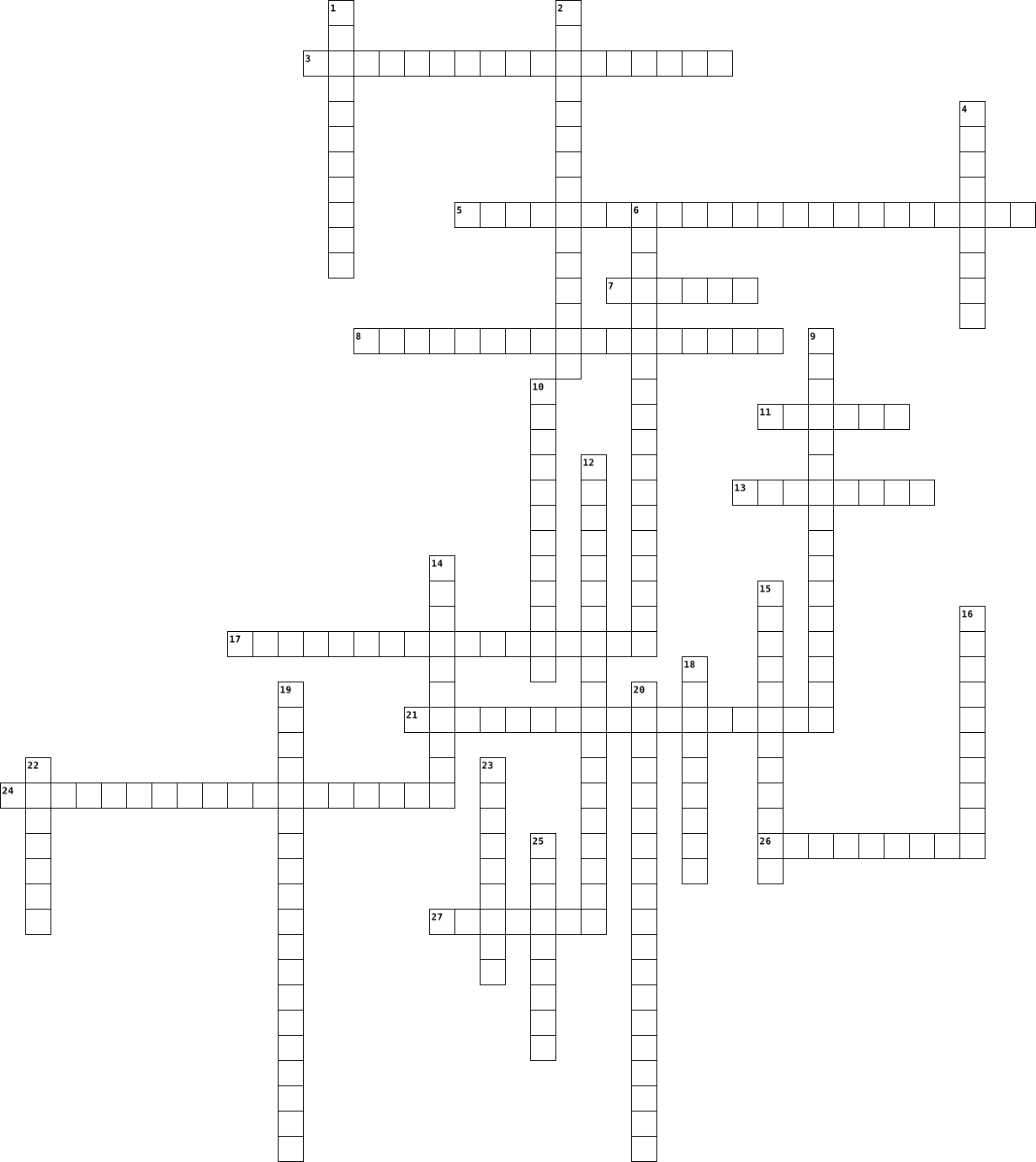
Across
- “No animal shall kill any other animal.”
- Six-word phrase bleated by the sheep often.
- Horse who works the hardest of all the animals; “I will work harder;” “Napoleon is always right.”
- “No animal shall drink alcohol.”
- Tame raven that tells stories of Sugarcandy Mountain.
- Previous farmer to own Animal Farm.
- “No animal shall wear clothes.”
- “Whatever goes upon two legs is an enemy.”
- “No animal shall sleep in a bed.’
- Pig who often fought with Napoleon on what to do on the farm; chased off the farm by the dogs after a debate with Napoleon.
- Horse who confronts Mollie about allowing a farmer to pet her.
Down
- New name for Manor Farm; run by the animals (Napoleon and the pigs).
- Run by Mr. Frederick; well kept; smaller-sized farm.
- Donkey who only does the work that is required; friend to Boxer.
- “Whatever goes upon four legs, or has wings, is a friend.”
- Song the animals sing together.
- Run by Mr. Pilkington; run-down and overgrown; larger-sized farm.
- Where animals go when they die; like heaven.
- The idea that all animals are equal and that humans are bad.
- Nine dogs that Napoleon trained and educated himself after taking them from their parents.
- Original name for Animal Farm; run by Mr. Jones.
- Founder of Animalism.
- “All animals are equal.”
- When the humans came to Animal Farm to take it back from the animals, led mostly by Snowball.
- Horse who runs the farm after it is discovered that she allowed a farmer to pet her; Animalism was not really working for her and wasn’t what she wanted.
- Leader of Animal Farm; exploits, manipulates, and over-works the animals.
- A very persuasive pig who works with Napoleon to keep the animals in check and helps to spread lies.
27 Clues: Founder of Animalism. • “All animals are equal.” • Song the animals sing together. • “No animal shall wear clothes.” • “No animal shall drink alcohol.” • “No animal shall sleep in a bed.’ • Previous farmer to own Animal Farm. • “No animal shall kill any other animal.” • “Whatever goes upon two legs is an enemy.” • Six-word phrase bleated by the sheep often. • ...
Chapter 1 & 2 from Animal Farm by George Orwell 2022-08-22

Across
- What has disappeared as they came back from harvesting?
- Which animal betrayed the other animals?
- Why did the animals start the rebellion?
- What happened to Mr. and Mrs. Jones and their men
- What is the spirituality of the animals called?
- How is the Farm called
- Into What did the animals turned the old farmhouse?
Down
- Which animal leads the animal?
- Who is responsible for the misery of the Animals?
- What are all Animals?
- What does Mollie want to wear in her mane?
- What is the amount of the commandments?
- How do the animals address each other?
- What is forbidden to drink?
14 Clues: What are all Animals? • How is the Farm called • What is forbidden to drink? • Which animal leads the animal? • How do the animals address each other? • What is the amount of the commandments? • Which animal betrayed the other animals? • Why did the animals start the rebellion? • What does Mollie want to wear in her mane? • What is the spirituality of the animals called? • ...
Outdoor Learning 2022-12-12

Across
- Produced by the Horse Chestnut tree.
- The area where a species of animal likes to live.
- Animals that plants
- The Life Process that means to get rid of waste.
- The Life Process that means responding to your environment.
- When some animals travel to warmer climates.
Down
- Animals that eat other animals
- Animals that eat plants and animals
- The Life Process that means making more of your kind.
- The season where the leaves fall from the trees.
- Lots of different kinds of life.
- What plants grow from.
- What hedgehogs do during the winter.
- Root vegetable carved at Halloween.
- The season where new life begins to grow.
15 Clues: Animals that plants • What plants grow from. • Animals that eat other animals • Lots of different kinds of life. • Animals that eat plants and animals • Root vegetable carved at Halloween. • Produced by the Horse Chestnut tree. • What hedgehogs do during the winter. • The season where new life begins to grow. • When some animals travel to warmer climates. • ...
Biomed 1 Unit 2 Vocabulary 2025-01-30

Across
- United States Department of Agriculture
- using less animals, only enough to get good results
- the belief that we should treat animals with compassion
- the belief that animals should be treated the same as humans
- finding ways to make research animals' lives better
- discrimination against animals
- Federal Law that congress passed to protect warm blooded animals used in research
Down
- treatment
- using nonanimal alternatives wherever possible
- Animal Liberation Front
- a committee that oversees the use of animals in research, teaching and testing. Required at all research institutions
- People for the Ethical Treatment of Animals
- Food and Drug Administration
13 Clues: treatment • Animal Liberation Front • Food and Drug Administration • discrimination against animals • United States Department of Agriculture • People for the Ethical Treatment of Animals • using nonanimal alternatives wherever possible • using less animals, only enough to get good results • finding ways to make research animals' lives better • ...
Structure and Behaviors 2023-05-24

Across
- , help animals move on land
- , help animals move in water
- , animals build shelters into soil, trees or rocks
- , help animals breath underwater
- Packs , animals hunting together to increase effectiveness
- , animals moving to new locations in different seasons
Down
- , help animals eat
- , animals building shelters for protection
- , animals sleep through winter
- , help animals move in the air
- , help animals breath above water
11 Clues: , help animals eat • , help animals move on land • , help animals move in water • , animals sleep through winter • , help animals move in the air • , help animals breath underwater • , help animals breath above water • , animals building shelters for protection • , animals build shelters into soil, trees or rocks • , animals moving to new locations in different seasons • ...
Science is fun 2025-09-08

Across
- animals that eat plants and flesh of other animals
- animals that eat flesh of dead animals
- animals go into deep sleep during winter to save energy
- animals that live both on land and in water
- seasonal movement of animals in search of food
- animals that eat plants
Down
- a characteristic to blend into the surrounding
- animals that live on land
- animals who spend most of their lives on trees
- animals that live in water
- animals that eat flesh of other animals
11 Clues: animals that eat plants • animals that live on land • animals that live in water • animals that eat flesh of dead animals • animals that eat flesh of other animals • animals that live both on land and in water • a characteristic to blend into the surrounding • animals who spend most of their lives on trees • seasonal movement of animals in search of food • ...
Living World 2026-05-10

Across
- A living thing made up of only one cell
- Green pigment in leaves
- Organisms too small to be seen with naked eyes
- Animals that eat only plants
- The natural home of an organism
- Animals that eat both plants and animals
- Animals active during the night
- Tiny pores on leaves used for exchange of gases
Down
- The process by which green plants prepare food
- The process of growing a new plant from seeds
- Organisms that break down dead plants and animals
- Animals that eat only meat
- The transfer of pollen from one flower to another
- Animals that can live both on land and in water
14 Clues: Green pigment in leaves • Animals that eat only meat • Animals that eat only plants • The natural home of an organism • Animals active during the night • A living thing made up of only one cell • Animals that eat both plants and animals • The process of growing a new plant from seeds • The process by which green plants prepare food • ...
Vocabulary List 9 2023-10-09

Across
- At first Animalist ideas were __________.
- The animals _________ to the pigs over the milk.
- Snowball repeated himself saying, "Not to sound __________".
- Squealer ________ the pig's rights to take the milk and apples.
- Boxer bumped into the Clover_______.
- Some of the animals might be planning to ___________ the pigs
Down
- The revolt was ________ but ended up working out.
- Moses has _____ instead of nails.
- Mr. Jones leaving led to a _________ in the animals.
- The pigs ___________ took the milk and windfall apples.
- None of the animals _________ openly against the pigs.
- Squealer has an __________ to misleading the animals.
- When the pigs put the milk in their food they had to let it _______.
- The animals thought Mr. Jones was a ______.
- Mr. Jones had ______ when it came to taking care of the animals.
15 Clues: Moses has _____ instead of nails. • Boxer bumped into the Clover_______. • At first Animalist ideas were __________. • The animals thought Mr. Jones was a ______. • The animals _________ to the pigs over the milk. • The revolt was ________ but ended up working out. • Mr. Jones leaving led to a _________ in the animals. • ...
The Wild Robot Crossword 2021-01-22

Across
- being hidden.
- Roz was made in a _________.
- Roz gets ______ from the sun.
- ten power on Roz.
- carried robot crates. Two words.
- Roz built them for the animals.
- Coldest season of the year.
- this story is an ______.
- surrounded by ocean.
- Roz's first friend.
- someone you can trust and care about.
Down
- Made to give food to the animals.
- Roz’s son is a __________.
- a big wooden box for robots.
- at first the animals thout Roz was a ____________.
- the way the animals communicate.
- Brightbill’s best friend is a ________.
- something that someone didn’t mean to happen
- Roz became a parent to Brightbill.
- One of the lodges caught on __________.
20 Clues: being hidden. • ten power on Roz. • Roz's first friend. • surrounded by ocean. • this story is an ______. • Roz’s son is a __________. • Coldest season of the year. • Roz was made in a _________. • a big wooden box for robots. • Roz gets ______ from the sun. • Roz built them for the animals. • the way the animals communicate. • Made to give food to the animals. • ...
destiny's puzzle (4A) 2021-04-21

Across
- nitrogen is important to animals by
- water that falls from atmosphere
- living organisms on the planet
- carbon moves from atmosphere to plants
- water 3% is
- carbon moves from living thing to
- form commonly used by plants
- air surrounds earth
- water stored under surface of earth
Down
- water is changed back into liquid water
- all water on earth
- occurs because of heat from sun
- carbon moves from plants to animals
- can be converted into forms usable for plants & animals
- divided into how many spheres?
- plants use water to help make energy
- carbon moves from plants and animals to
- always been present on earth
- what water can become
- 97% is
20 Clues: 97% is • water 3% is • all water on earth • air surrounds earth • what water can become • always been present on earth • form commonly used by plants • divided into how many spheres? • living organisms on the planet • occurs because of heat from sun • water that falls from atmosphere • carbon moves from living thing to • nitrogen is important to animals by • ...
Animal Farm 2016-04-16
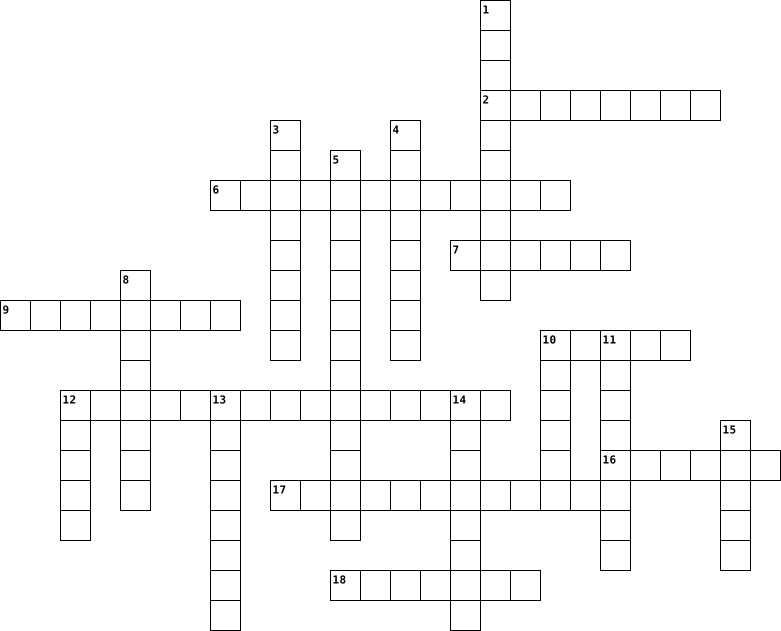
Across
- The word the pigs would call the farm animals
- Owns Foxwood Farm
- Mothering box cart horse
- Commandments the rules that the animals on the farm lived by
- The tame raven
- the song the animals would sing at the close of every meeting
- Farm the name the animals gave the farm once they took control
- author of Animal Farm
- Farm neglected farm neighbor
Down
- Farm well taken care of neighboring farm
- Owns Manor Farm
- Planted seeds of revolution
- Owns Pinchfield Farm
- Oldest animal on the farm
- Foolish and self-centered horse
- Persuasive talker
- "I will work harder"
- Represents Trotsky
- Represents Stalin
- Farm the original name of Mr. Jones' farm
20 Clues: The tame raven • Owns Manor Farm • Owns Foxwood Farm • Persuasive talker • Represents Stalin • Represents Trotsky • Owns Pinchfield Farm • "I will work harder" • author of Animal Farm • Mothering box cart horse • Oldest animal on the farm • Planted seeds of revolution • Farm neglected farm neighbor • Foolish and self-centered horse • Farm well taken care of neighboring farm • ...
Animal Farm 2016-04-16
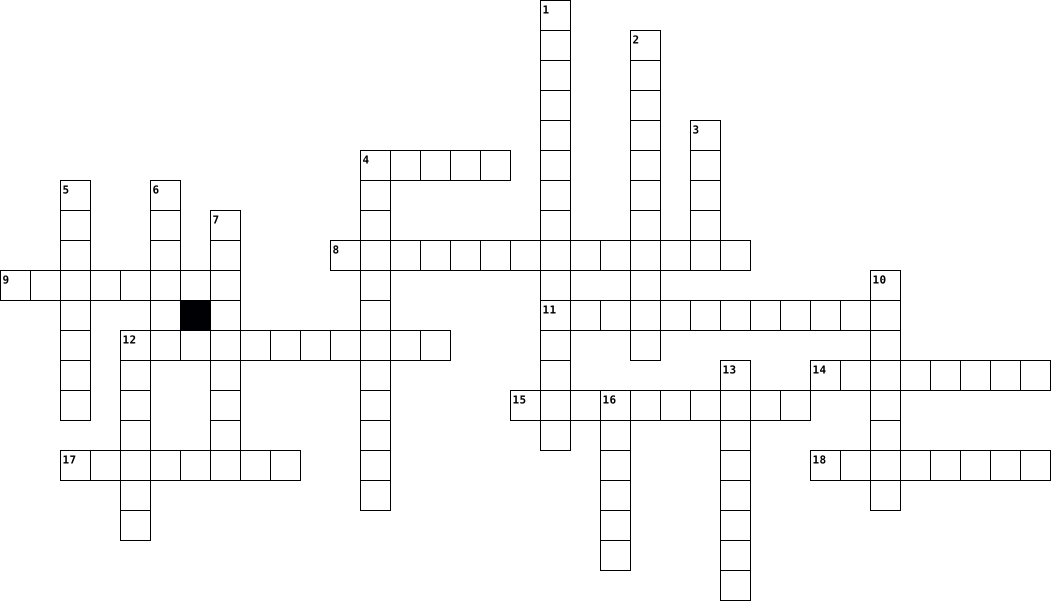
Across
- The tame raven
- well taken care of neighboring farm
- Commandments the rules that the animals on the farm lived by
- author of Animal Farm
- Owns Foxwood Farm
- The word the pigs would call the farm animals
- the name the animals gave the farm once they took control
- Oldest animal on the farm
- Represents Trotsky
Down
- the song the animals would sing at the close of every meeting
- neglected farm neighbor
- "I will work harder"
- Owns Pinchfield Farm
- Persuasive talker
- Mothering box cart horse
- the original name of Mr. Jones' farm
- Planted seeds of revolution
- Owns Manor Farm
- Represents Stalin
- Foolish and self-centered horse
20 Clues: The tame raven • Owns Manor Farm • Persuasive talker • Owns Foxwood Farm • Represents Stalin • Represents Trotsky • "I will work harder" • Owns Pinchfield Farm • author of Animal Farm • neglected farm neighbor • Mothering box cart horse • Oldest animal on the farm • Planted seeds of revolution • Foolish and self-centered horse • well taken care of neighboring farm • ...
BIOLOGY 2025-04-21

Across
- The Study Of Animals
- The Study Of Structure and Function of Animal and Plant Cells
- Technique of Growing Fish
- Science Treatment and Surgery Of Animals
- The Study Of Algae
- The Study Of Diseases of Plants and Animals
- Father Of Medicine
- The Science of the transmission of Body Charact
- The Study Of Plants
- Study of Origin And Descent of Organisms
- The Study Of Birds
- Biology Study Of Life in Sea
Down
- The Process of Raising Crops And Livestock
- Also called as Systematics
- The Study Of Viruses
- The Study Of Fungi
- Father Of Biology
- The Study Of Fishes
- TheStudy Of Insects
- The Study Of Geographical Distribution Of Plants and Animals
20 Clues: Father Of Biology • The Study Of Fungi • The Study Of Algae • Father Of Medicine • The Study Of Birds • The Study Of Fishes • TheStudy Of Insects • The Study Of Plants • The Study Of Animals • The Study Of Viruses • Technique of Growing Fish • Also called as Systematics • Biology Study Of Life in Sea • Science Treatment and Surgery Of Animals • Study of Origin And Descent of Organisms • ...
Reproduction in animal 2025-12-04

Across
- Animals that give birth to young ones
- Fertilised egg
- Book containing endangered species data
- Destruction of forests
- Protected area for wild animals
- Protected forest area for wildlife
- Development from larva to adult
- Asexual reproduction in Amoeba
- Animals that lay eggs
Down
- Structure in sperm providing energy
- Species found only in a particular region
- Outgrowth on Hydra for asexual reproduction
- The joining of male and female gametes
- Organ where eggs are produced
- All the plants in a region
- Species that no longer exist
- Identical copy of a cell or organism
- Variety of plants and animals in an area
- Release of egg from ovary
- Cells produced in the testes
20 Clues: Fertilised egg • Animals that lay eggs • Destruction of forests • Release of egg from ovary • All the plants in a region • Species that no longer exist • Cells produced in the testes • Organ where eggs are produced • Asexual reproduction in Amoeba • Protected area for wild animals • Development from larva to adult • Protected forest area for wildlife • ...
Animals and Behavior crossword puzzle 2021-09-23

Across
- organism at an early stage of development
- behavior behaviors that are inherited through genes
- organisms that are made up of many cells
- animals that don't have a backbone
- the animals that are being eaten by th predator
- animals that eat other animals
- activities like finding food or building homes that are native to all animals
- collections of similar cells
Down
- animal cells that have a nucleus
- a group of tissues that carry out a special function of the body
- behavior behavior that is learned from experience and through observing other animals
- part of an organism breaks off and develops into a new organism
- animals that have a backbone
- organism that eats other organisms
- fertilized egg divides into many cells to form an embryo
15 Clues: animals that have a backbone • collections of similar cells • animals that eat other animals • animal cells that have a nucleus • animals that don't have a backbone • organism that eats other organisms • organisms that are made up of many cells • organism at an early stage of development • the animals that are being eaten by th predator • ...
descriptive text 2013-10-03

Across
- animals which usually bark
- animals have "this" to attack their enemy
- the synonym of jungle
- this animals similar with turtle
- the name of animals which love to eat plants
- elephants and plants have "this"
- the synonym of extinct
Down
- the synonym of calf
- it has a long neck
- people love to keep "it" in their home
- animals which live in polar
- we called it as "turtle house"
- it lives in water
- the synonym of not wild
- dog have "this" softly
15 Clues: it lives in water • it has a long neck • the synonym of calf • the synonym of jungle • dog have "this" softly • the synonym of extinct • the synonym of not wild • animals which usually bark • animals which live in polar • we called it as "turtle house" • this animals similar with turtle • elephants and plants have "this" • people love to keep "it" in their home • ...
descriptive text 2013-10-03

Across
- dog have "this" softly
- this animals similar with turtle
- the name of animals which love to eat plants
- the synonym of not wild
- the synonym of jungle
- the synonym of calf
- animals have "this" to attack their enemy
Down
- it lives in water
- animals which live in polar
- animals which usually bark
- we called it as "turtle house"
- it has a long neck
- the synonym of extinct
- elephants and plants have "this"
- people love to keep "it" in their home
15 Clues: it lives in water • it has a long neck • the synonym of calf • the synonym of jungle • dog have "this" softly • the synonym of extinct • the synonym of not wild • animals which usually bark • animals which live in polar • we called it as "turtle house" • this animals similar with turtle • elephants and plants have "this" • people love to keep "it" in their home • ...
NIHS-MYPScience2- LAYLA 2023-06-26

Across
- Centipedes
- A warm blooded egg laying vertebrate
- Absorbs carbon dioxide from the air
- The one that fish uses to breathe.
- The development of a plant from a seed
- Worms
- Pollinating with 2 flowers
Down
- Animals with no backbones
- Absorbing nutrients and distributing
- Animals that have fur and drinks milk from their mom
- To make new animals or plants
- Pollinating by its self
- Animals with backbones
- Animals which helps to pollinate plants
- Pollinators which works in the night
15 Clues: Worms • Centipedes • Animals with backbones • Pollinating by its self • Animals with no backbones • Pollinating with 2 flowers • To make new animals or plants • The one that fish uses to breathe. • Absorbs carbon dioxide from the air • Absorbing nutrients and distributing • A warm blooded egg laying vertebrate • Pollinators which works in the night • ...
Ecology 2026-02-14

Across
- Factor Nonliving Thing
- The natural home or environment of a plant or animal
- Animals that eat meat or other animals
- A linear sequence in an ecosystem that represents energy transfer
- Animals that eat plants and animals
- An organism that cannot produce its own food
- A person or thing that uses or eats something
Down
- Animals that eat plants
- Factor Living Thing
- Creates goods, services or energy
- Something that feeds on the remains of other animals
- An animal that feeds on dead carrion
- Organism that produce their own food
- Network of multiple food chains
- Functional role, position, in an habitat
15 Clues: Factor Living Thing • Animals that eat plants • Factor Nonliving Thing • Network of multiple food chains • Creates goods, services or energy • Animals that eat plants and animals • An animal that feeds on dead carrion • Organism that produce their own food • Animals that eat meat or other animals • Functional role, position, in an habitat • ...
Animal Science 2023-03-10

Across
- all animals are purebred
- Last Name
- feet are pointing towards each other
- Animals of common origin with distinct characteristics from the same species
- mating closely related animals
- provides movement to the skeleton
- The % a trait is affected by the animals genetics
Down
- animals that are grouped together based on products they produce
- going to immediate slaughter
- Have time to grow and finish before slaughter
- A group of closely related animals that can interbreed and produce fertile offspring
- different alleles for the same trait
- Represented by capital letters
- A form of a gene found in pairs
- Evaluated for breed quality
15 Clues: Last Name • all animals are purebred • Evaluated for breed quality • going to immediate slaughter • Represented by capital letters • mating closely related animals • A form of a gene found in pairs • provides movement to the skeleton • different alleles for the same trait • feet are pointing towards each other • Have time to grow and finish before slaughter • ...
General Animal Terminology 2023-10-26

Across
- The father or male parent
- Animals that do not have horns
- A male animal that has had its testicles removed
- Characteristics that can be passed down from parent to offspring
- Taking a young animal off milk by removing it from being with its mother
- Adapting an animal to the needs of humans
- Mating animals that are related
Down
- Mating animals of different breeds
- Animals whose ancestors are of only one breed
- Removing an animal from the herd
- Giving birth in livestock
- Animals that are not purebred
- Identifying desirable animals for breeding purposes
- The young of an animal
- The mother or female parent
15 Clues: The young of an animal • The father or male parent • Giving birth in livestock • The mother or female parent • Animals that are not purebred • Animals that do not have horns • Mating animals that are related • Removing an animal from the herd • Mating animals of different breeds • Adapting an animal to the needs of humans • Animals whose ancestors are of only one breed • ...
Types of animals 2025-05-30

Across
- A smart sea mammal
- A big fish with sharp teeth
- Animals that live in water and breathe through gills
- A bird that cannot fly but swims very well
- A mammal from Australia that jumps
- A mammal that can fly
- A big wild cat from Africa
- Small animals with six legs
Down
- Animals with feathers and wings
- Animals that live in water and on land
- A very large mammal with a trunk
- Cold-blooded animals with scales
- Animals that have hair and feed milk to their babies
- An amphibian that jumps and croaks
- A long reptile with no legs
15 Clues: A smart sea mammal • A mammal that can fly • A big wild cat from Africa • A big fish with sharp teeth • A long reptile with no legs • Small animals with six legs • Animals with feathers and wings • A very large mammal with a trunk • Cold-blooded animals with scales • An amphibian that jumps and croaks • A mammal from Australia that jumps • Animals that live in water and on land • ...
ALAT Chapter 11: Animal Procurement & Quarantine 2025-07-31

Across
- The first level of microbial cleanliness; animals at this level carry an unknown, uncontrolled variety and number of organisms
- The system of engineering and work practice controls that ensure the exclusion of microorganisms
- The second level of microbial cleanliness; animals are known to be free of specific pathogens, although not necessarily free from all microorganisms
- A dealer that purchase and condition random-source animals for resale
- All animals must be associated with a:
- The separation of newly received animals from those already in the facility until the health and possibly the microbial status of the newly received animals have been determined; these rooms are often maintained under negative pressure
- What newly received animals should be given to recover from the stress of transportation and to adjust to their new surroundings before use in a study; generally 72 hours (at least 14 days for NHPs)
- The fourth level of microbial cleanliness; considered gnotobiotic; these animals harbor very small numbers of known microorganisms
Down
- A time where health problems are treated and an animal's body condition can be improved; often necessary for wild-caught animals; generally 72 hours (at least 14 days for NHPs)
- A term that means "known life"
- A.K.A. germfree, the third level of microbial cleanliness; considered gnotobiotic; animals that harbor no detectable bacteria, viruses, or other microorganisms
- Animal housing that is set up to contain a bacterial agent, virus, or human material that is being experimentally introduced to animals
- The types of microorganisms that an animal is carrying, e.g., bacteria and viruses
- Completing this is usually the first step for an investigator to order animals for the purpose of conducting research on an approved protocol
- A dealer that breeds their own animals; can usually provide information on the health status of their animals from birth
15 Clues: A term that means "known life" • All animals must be associated with a: • A dealer that purchase and condition random-source animals for resale • The types of microorganisms that an animal is carrying, e.g., bacteria and viruses • The system of engineering and work practice controls that ensure the exclusion of microorganisms • ...
Unit 3: Energy and Matter Flow 2023-12-18

Across
- pathways of energy in an ecosystem
- the study of relationships between living and non living things
- generally second trophic level: primary consumers
- total rate of photosynthesis in a given area
- use photosynthesis to convert solar energy into usable energy
- the rate at which producers make useful chemical energy
- species that hold the energy flow of the ecosystem in balance
- _____ of thermodynamics states that energy is neither created or destroyed, only transformed
- _____ of thermodynamics states that ten percent of energy from each energy transfer is usable, the rest is lost as heat
- generally third trophic level: secondary consumers
Down
- stored in rocks, weathering releases it into soil and water, plants take up, animals eat plants, animals produce waste, animals die and decomposers break down nutrients
- organisms that create their own energy
- organisms that must consume other organisms to gain energy
- consists of evaporation, condensation, precipitation, and accumulation
- gas taken by bacteria, ammonification, assimilation, dentrification
- generally fourth trophic level: tertiary consumers
- sum of primary and secondary productivity minus what decomposers use
- plants absorb from atmosphere, animals eat plants, animals breakdown carbohydrates for energy, animals produce waste, animals die and decomposers break down nutrients
18 Clues: pathways of energy in an ecosystem • organisms that create their own energy • total rate of photosynthesis in a given area • generally second trophic level: primary consumers • generally fourth trophic level: tertiary consumers • generally third trophic level: secondary consumers • the rate at which producers make useful chemical energy • ...