
animals Crossword Puzzles
Unit 3: Energy and Matter Flow 2023-12-18

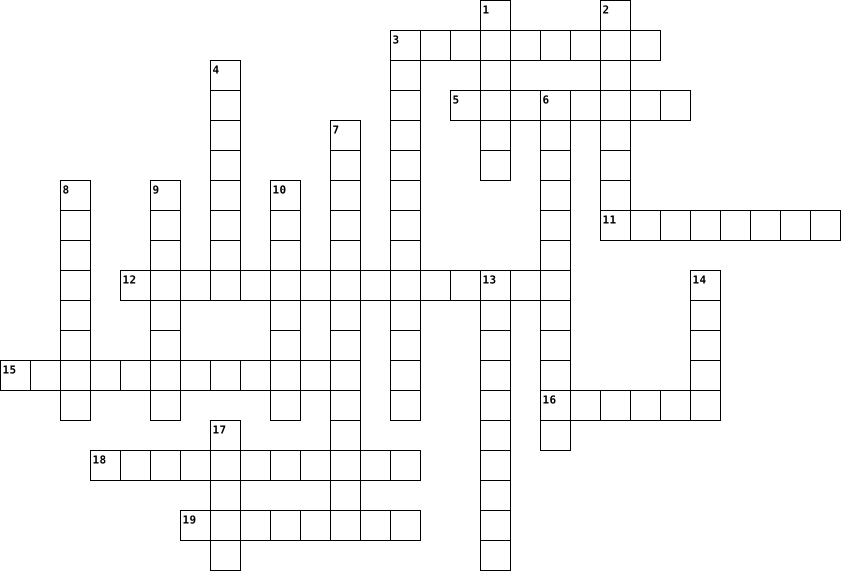
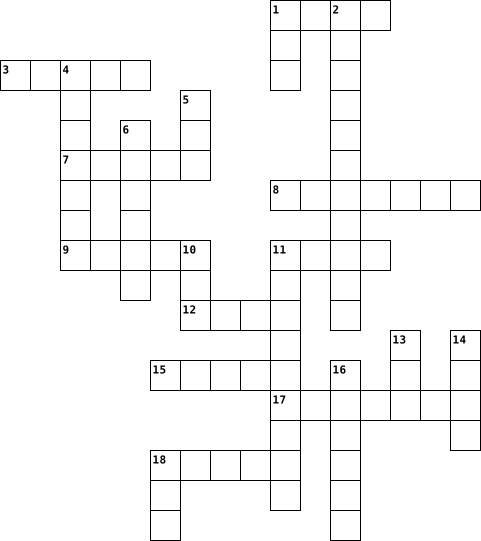
Across
- pathways of energy in an ecosystem
- the study of relationships between living and non living things
- generally second trophic level: primary consumers
- total rate of photosynthesis in a given area
- use photosynthesis to convert solar energy into usable energy
- the rate at which producers make useful chemical energy
- species that hold the energy flow of the ecosystem in balance
- _____ of thermodynamics states that energy is neither created or destroyed, only transformed
- _____ of thermodynamics states that ten percent of energy from each energy transfer is usable, the rest is lost as heat
- generally third trophic level: secondary consumers
Down
- stored in rocks, weathering releases it into soil and water, plants take up, animals eat plants, animals produce waste, animals die and decomposers break down nutrients
- organisms that create their own energy
- organisms that must consume other organisms to gain energy
- consists of evaporation, condensation, precipitation, and accumulation
- gas taken by bacteria, ammonification, assimilation, dentrification
- generally fourth trophic level: tertiary consumers
- sum of primary and secondary productivity minus what decomposers use
- plants absorb from atmosphere, animals eat plants, animals breakdown carbohydrates for energy, animals produce waste, animals die and decomposers break down nutrients
18 Clues: pathways of energy in an ecosystem • organisms that create their own energy • total rate of photosynthesis in a given area • generally second trophic level: primary consumers • generally fourth trophic level: tertiary consumers • generally third trophic level: secondary consumers • the rate at which producers make useful chemical energy • ...
Animal Farm 2016-04-16
Across
- the original name of Mr. Jones' farm
- Planted seeds of revolution
- Represents Trotsky
- the song the animals would sing at the close of every meeting
- author of Animal Farm
- Mothering box cart horse
- neglected farm neighbor
- Oldest animal on the farm
Down
- Foolish and self-centered horse
- Owns Manor Farm
- Owns Pinchfield Farm
- The word the pigs would call the farm animals
- Owns Foxwood Farm
- well taken care of neighboring farm
- Represents Stalin
- Persuasive talker
- Commandments the rules that the animals on the farm lived by
- the name the animals gave the farm once they took control
- "I will work harder"
- The tame raven
20 Clues: The tame raven • Owns Manor Farm • Owns Foxwood Farm • Represents Stalin • Persuasive talker • Represents Trotsky • Owns Pinchfield Farm • "I will work harder" • author of Animal Farm • neglected farm neighbor • Mothering box cart horse • Oldest animal on the farm • Planted seeds of revolution • Foolish and self-centered horse • well taken care of neighboring farm • ...
OG crossword 2015-05-27

Across
- things that have life
- organisms role in an ecosystem
- opposite of biotic
- how to class biotic beings
- eat other animals
- animal that gives birth
- animals on land
- many organisms in a community working together
- where an animal lives
- when binomial nomenclature starts
Down
- two names for each animal
- most broad classifications of animals
- many species interacting in a common location
- earth is an example
- really funny guy in your bio class.
- fancy dirt
- animals in water
- where you will find a certain species of animal
- start of all life on earth via rays.
- bird can't fly
- animal on the nickel
21 Clues: fancy dirt • bird can't fly • animals on land • animals in water • eat other animals • opposite of biotic • earth is an example • animal on the nickel • things that have life • where an animal lives • animal that gives birth • two names for each animal • how to class biotic beings • organisms role in an ecosystem • when binomial nomenclature starts • really funny guy in your bio class. • ...
The Wild Robot Crossword 2021-01-22

Across
- carried robot crates. Two words.
- someone you can trust and care about.
- a big wooden box for robots.
- something that someone didn’t mean to happen
- Roz built them for the animals.
- Roz's first friend.
- being hidden.
- this story is an ______.
- the way the animals communicate.
- Roz’s son is a __________.
Down
- Made to give food to the animals.
- Roz gets ______ from the sun.
- Coldest season of the year.
- Roz was made in a _________.
- Roz became a parent to Brightbill.
- at first the animals thout Roz was a ____________.
- Brightbill’s best friend is a ________.
- surrounded by ocean.
- ten power on Roz.
- One of the lodges caught on __________.
20 Clues: being hidden. • ten power on Roz. • Roz's first friend. • surrounded by ocean. • this story is an ______. • Roz’s son is a __________. • Coldest season of the year. • Roz was made in a _________. • a big wooden box for robots. • Roz gets ______ from the sun. • Roz built them for the animals. • the way the animals communicate. • Made to give food to the animals. • ...
Animal Rights and welfare 2024-09-17

Across
- vegetarians who abstain from eating meat
- unable to eat due to physical conditions
- A young castrated male pig
- removal of horns
- farming Use of transgenic animals
- A castrated male bovine
- study of animal behavior
- Listless behavior,lack of interest
- Refuse to eat
- Process of giving birth
- trimming Removal of beak
Down
- Surgical removal of claws
- a pen area
- Purposeful action with actual or potential rescue
- killing siblings
- Rights A movement that believes a reduced number of animals that should be used in research
- total number of genes in species
- fear of animals
- Bahavior Behavior that deviates in form
- stalling housing for animals
20 Clues: a pen area • Refuse to eat • fear of animals • killing siblings • removal of horns • A castrated male bovine • Process of giving birth • study of animal behavior • Surgical removal of claws • A young castrated male pig • stalling housing for animals • trimming Removal of beak • total number of genes in species • farming Use of transgenic animals • Listless behavior,lack of interest • ...
Llama in Lima 2022-12-12

Across
- driver
- the city that the stories in Lima
- what Mono eats
- Fantastic
- what they use to travel
- finally
- what is the name of the beach they go too
- family
- what Cuy eats
- rapidly
- where did the girl take the sick animals
- llamas small friend
- plants
- llama smart friend
- guards
Down
- zoo
- where they see the mummies
- how many other cages are there in the zoo
- exactly
- investigate
- place where animals eat
- surfers
- what do the animals dance to at the fountains
- history
- feeds animals
- is the first place they stop in the city
- imagination
- cut steals then unlock cages
- mummies
29 Clues: zoo • driver • family • plants • guards • exactly • surfers • history • finally • rapidly • mummies • Fantastic • investigate • imagination • what Cuy eats • what Mono eats • feeds animals • llama smart friend • llamas small friend • place where animals eat • what they use to travel • where they see the mummies • cut steals then unlock cages • the city that the stories in Lima • ...
Environments 2026-02-11

Across
- (Home of animals)
- energy (Energy from the sun)
- energy (Using less electricity)
- (Cutting down many trees)
- (Trash that is hard to compost)
- (Too much water after heavy rain)
- dioxide (Gas from cars and factories)
- change (Weather changes for a long time)
- (Using old things again)
Down
- pollution (Dirty water in rivers or seas)
- (Many kinds of plants and animals)
- layer (Layer that protects Earth from the sun)
- (Protecting nature)
- (Planting trees again)
- pollution (Dirty air from cars and factories)
- (Things that make the environment dirty)
- energy (Energy from wind)
- warming (When the Earth becomes hotter)
- animals (Animals that may disappear)
- (Place to throw garbage)
20 Clues: (Home of animals) • (Protecting nature) • (Planting trees again) • (Place to throw garbage) • (Using old things again) • (Cutting down many trees) • (Trash that is hard to compost) • (Too much water after heavy rain) • (Many kinds of plants and animals) • energy (Energy from wind) • energy (Energy from the sun) • (Things that make the environment dirty) • ...
Lizards in the sky Crossword puzzle-RMBA 2 2013-02-19

Across
- a shrimp egg that can survive in very extreme conditions such as the desert.
- a mini worm that lives in water that can launch out miniature bombs.
- regular worms-that lives in glaciers.
- Many animals live on the solid ____.
- A fish that can live in any small body of water and can live without water for 5 months
- Single celled orginisms that can travel on thin air currents
- The name of the book.
- One of the main reasons why many animals are not normal.
- The _________ is an animal that looks like a deer but can dive underwater.
Down
- The _______________ live in the Waitomo river and attract food by producing light
- The author of the book.
- A bunch of animals live in the clear, liquidly world, of ______.
- The ___________ is a lizard that can glide, and lives in the southeast Asian forest.
- All the animals in the book are fairly _________.
- A snake that can flatten it's rib to glide.
- Each of these animals has a _________ adaptation and way of living.
- Many animals appear to live in one place, but actually live in ___________.
- The place where most winged animals fly.
18 Clues: The name of the book. • The author of the book. • Many animals live on the solid ____. • regular worms-that lives in glaciers. • The place where most winged animals fly. • A snake that can flatten it's rib to glide. • All the animals in the book are fairly _________. • One of the main reasons why many animals are not normal. • ...
General Animal Terminology 2023-10-26

Across
- Animals whose ancestors are of only one breed
- A male animal that has had its testicles removed
- Giving birth in livestock
- Identifying desirable animals for breeding purposes
- The father or male parent
- Taking a young animal off milk by removing it from being with its mother
- Animals that do not have horns
Down
- Characteristics that can be passed down from parent to offspring
- The young of an animal
- The mother or female parent
- Mating animals that are related
- Removing an animal from the herd
- Mating animals of different breeds
- Adapting an animal to the needs of humans
- Animals that are not purebred
15 Clues: The young of an animal • Giving birth in livestock • The father or male parent • The mother or female parent • Animals that are not purebred • Animals that do not have horns • Mating animals that are related • Removing an animal from the herd • Mating animals of different breeds • Adapting an animal to the needs of humans • Animals whose ancestors are of only one breed • ...
SCIENCE VOCABULARY 2022-09-15

Across
- - animals that eat meat only
- - the young of the frog does not look similar to its parent
- - organisms died out if they don't reproduce
- - depend on plants and animals for food
- - to match colors and shape to the environment
- - feeding relationship between producer and consumer
- - two of more food chains linked together
Down
- - some animals go into a deep sleep during winter
- - can make their own food
- - when offspring is slightly different from parents
- - helps organisms survive in their habitat
- - animals that eat plants and meat
- - break down dead plants and animals
- - animals that eat plants only
- - passing on of traits from parents to offspring
15 Clues: - can make their own food • - animals that eat meat only • - animals that eat plants only • - animals that eat plants and meat • - break down dead plants and animals • - depend on plants and animals for food • - two of more food chains linked together • - helps organisms survive in their habitat • - organisms died out if they don't reproduce • ...
Ani Sci 1 - Unit 2 2022-09-26

Across
- licensed medical professional that treats, cures, and prevents illness and injury in animals
- licensed medical professional that assists veterinarians in diagnosing and treating animals in private clinics, animal hospitals, and research facilities
- assists with daily store operations
- completion of a four-year college or university degree
- educates students about agriculture, food, and natural resources
- Use communication and technology skills to trade animal-related products
- studies the way animals behave and tries to determine what causes certain types of behavior and what factors can prompt behavior change
- provides cosmetic services for animals
- provides guidance for financial planning, analysis, and projection for animal-related companies or organizations
- educates the public about wildlife, investigates wildlife crimes, and assists in wildlife management research
- perform research to improve the competitive position of the animal industry in the United States
- studies a variety of animal species; may work in zoos, aquarium, parks, laboratories, governmental agencies
- enforces the law to protect animals through intervention and education
- 2 year degree program
- use technical skills to produce animals and animal-related products
- use communication skills and technical expertise to perform services and provide information about animals
Down
- informs veterinary professionals about new and improved pharmaceutical products
- use communication skills to share information about the animal industry
- maintains systems to promote proper handling, storage, and utilization of animal waste products
- Trains animals for obedience, performance, riding, security, or assisting people with disabilities
- sells and manages insurance policies on behalf of the insurance companies, assists owners in filing claims, and works with veterinary clinics to provide insurance coverage
- use human relation and communication skills to provide economic guidance within the animal industry
- university employee who develops and delivers educational programs to assist people in agriculture, leadership development, and healthy living
- produces food, fiber, and other agricultural commodities by raising livestock or crops
- examines and provides care to wildlife that are sick, injured or orphaned with the hopes of returning them back to the wild
- researches target consumers and designs advertising campaigns for animal-related products, services, or companies
- usually results after an additional two years at a college or university, and requires a project or thesis
- designs and creates enclosures for animals in captivity that support their natural habitat and instinctual needs
- provides basic care for animals in veterinary clinics, adoption shelters, or boarding facilities
- creates rations for animals based on their individual nutritional needs
- supervises and leads an animal-related company’s operations and employees
- provide preventive and therapeutic medical treatment to animals based on latest industry standards and research
- selects and breeds animals to produce offspring with desired characteristics
- generally requires additional specialization of two or more years at a college or university, and can result in a degree where someone could create a dissertation after intense research or scientific experimentation
34 Clues: 2 year degree program • assists with daily store operations • provides cosmetic services for animals • completion of a four-year college or university degree • educates students about agriculture, food, and natural resources • use technical skills to produce animals and animal-related products • enforces the law to protect animals through intervention and education • ...
Animal Farm 2022-05-24

Across
- the first human the pigs allow contact with
- of food
- the hardest worker
- she likes her ribbons and sugar
- leader of the animals
- a war that breaks out when they animals are
- the rebellion
- a horse and boxers companion
Down
- only humans were supposed to drink this
- the eldest and wisest pig
- the "guards' of the farm
- the owner of foxwood
- the farms donkey
- used to run the farm
- the weapon used against the animals by farmer jones
- spreads propaganda
- the "traitor"
- represents the animals victory over farmer jones
- owns the farm of pinchfield and is a drunk
- snowball came up with this idea
20 Clues: of food • the "traitor" • the rebellion • the farms donkey • the hardest worker • spreads propaganda • the owner of foxwood • used to run the farm • leader of the animals • the "guards' of the farm • the eldest and wisest pig • a horse and boxers companion • she likes her ribbons and sugar • snowball came up with this idea • only humans were supposed to drink this • ...
Vocabulary Activity 2020-08-19

Across
- The different grops of animals
- very tall group of rocks
- No live
- when something is atacking
- Risk of something
- all the actions you do in a farm
- when humana enter in other habitats to entretain theirselfs
- Protect Groups of animals
- place were nature live
Down
- Species in danger of extinction
- Specie doesnt exist
- give special care to something
- Kill animals
- Science that protect the environment
- Human always make it in special habitats
- all the outside space
- Sell ilegaly parts of the animals
- venom in something
- something that is incorrect for the law
- To increase the utility of something
- the price of something
21 Clues: No live • Kill animals • Risk of something • venom in something • Specie doesnt exist • all the outside space • the price of something • place were nature live • very tall group of rocks • Protect Groups of animals • when something is atacking • The different grops of animals • give special care to something • Species in danger of extinction • all the actions you do in a farm • ...
The Wild Robot Crossword 2021-01-22

Across
- Roz was made in a _________.
- something that someone didn’t mean to happen
- Roz’s son is a __________.
- Roz's first friend.
- being hidden.
- Made to give food to the animals.
- surrounded by ocean.
- someone you can trust and care about.
- at first the animals thout Roz was a ____________.
- One of the lodges caught on __________.
- Brightbill’s best friend is a ________.
Down
- the way the animals communicate.
- Roz became a parent to Brightbill.
- Roz built them for the animals.
- carried robot crates. Two words.
- Roz gets ______ from the sun.
- a big wooden box for robots.
- this story is an ______.
- ten power on Roz.
- Coldest season of the year.
20 Clues: being hidden. • ten power on Roz. • Roz's first friend. • surrounded by ocean. • this story is an ______. • Roz’s son is a __________. • Coldest season of the year. • Roz was made in a _________. • a big wooden box for robots. • Roz gets ______ from the sun. • Roz built them for the animals. • the way the animals communicate. • carried robot crates. Two words. • ...
Vocabulary 2023-09-04

Across
- a place to visit.
- visitors from other countries.
- a food made from sugar or honey.
- animal hair
- an elevated porch area attached to a building.
- animals that eat plants and animals.
- a large area of water.
- animals that eat other animals.
- a substance that adds color.
- things you buy to remember a place.
Down
- patterns with shapes or lines.
- to do something to see if you like it.
- to move in the water.
- very elegant and comfortable.
- a street market.
- a sandy place next to the ocean.
- famous places.
- land surrounded by water.
- to rest or enjoy leisure activities.
- an area with many trees.
20 Clues: animal hair • famous places. • a street market. • a place to visit. • to move in the water. • a large area of water. • an area with many trees. • land surrounded by water. • a substance that adds color. • very elegant and comfortable. • patterns with shapes or lines. • visitors from other countries. • animals that eat other animals. • a food made from sugar or honey. • ...
Energy Flow 2024-01-26

Across
- Makes its own food
- Example of decomposer from notes
- An organism that ________ on others is a consumer
- Eats plants and animals
- Organisms that feeds on other organisms
- A Producer __________ its own food
- Food web is ________ food chains
- Many overlapping food chains
- Herbivores eat __________
- Food chain shows how organisms get energy
- Scavenger eats bodies of ________ organisms
- Carnivores eat ___________
Down
- Eat only animals
- Example of consumer from notes
- Carnivore that eats dead organisms
- Only eats plants
- Series of events that organisms obtain energy
- Omnivores _________ plants and animals
- Pyramid shows the _________ of energy
- Decomposer break down _____________.
- Example of a producer from notes
- Energy _______ shows energy moving
22 Clues: Eat only animals • Only eats plants • Makes its own food • Eats plants and animals • Herbivores eat __________ • Carnivores eat ___________ • Many overlapping food chains • Example of consumer from notes • Example of decomposer from notes • Food web is ________ food chains • Example of a producer from notes • Carnivore that eats dead organisms • A Producer __________ its own food • ...
Reproduction in animals and conservation of animals and plants 2025-12-04

Across
- Development from larva to adult
- Organ where eggs are produced
- Outgrowth on Hydra for asexual reproduction
- Cells produced in the testes
- All the plants in a region
- The joining of male and female gametes
- Fertilised egg
- Animals that give birth to young ones
- Asexual reproduction in Amoeba
- Release of egg from ovary
Down
- Protected area for wild animals
- Structure in sperm providing energy
- Animals that lay eggs
- Destruction of forests
- Species that no longer exist
- Protected forest area for wildlife
- Book containing endangered species data
- Identical copy of a cell or organism
- Variety of plants and animals in an area
- Species found only in a particular region
20 Clues: Fertilised egg • Animals that lay eggs • Destruction of forests • Release of egg from ovary • All the plants in a region • Cells produced in the testes • Species that no longer exist • Organ where eggs are produced • Asexual reproduction in Amoeba • Protected area for wild animals • Development from larva to adult • Protected forest area for wildlife • ...
descriptive text 2013-10-03

Across
- the synonym of jungle
- people love to keep "it" in their home
- the name of animals which love to eat plants
- it lives in water
- this animals similar with turtle
- animals which usually bark
- dog have "this" softly
- the synonym of calf
Down
- the synonym of extinct
- animals which live in polar
- the synonym of not wild
- animals have "this" to attack their enemy
- it has a long neck
- we called it as "turtle house"
- elephants and plants have "this"
15 Clues: it lives in water • it has a long neck • the synonym of calf • the synonym of jungle • the synonym of extinct • dog have "this" softly • the synonym of not wild • animals which usually bark • animals which live in polar • we called it as "turtle house" • this animals similar with turtle • elephants and plants have "this" • people love to keep "it" in their home • ...
descriptive text 2013-10-03

Across
- animals have "this" to attack their enemy
- it has a long neck
- the synonym of extinct
- animals which live in polar
- elephants and plants have "this"
- it lives in water
- we called it as "turtle house"
Down
- the name of animals which love to eat plants
- animals which usually bark
- the synonym of not wild
- the synonym of jungle
- people love to keep "it" in their home
- dog have "this" softly
- this animals similar with turtle
- the synonym of calf
15 Clues: it lives in water • it has a long neck • the synonym of calf • the synonym of jungle • dog have "this" softly • the synonym of extinct • the synonym of not wild • animals which usually bark • animals which live in polar • we called it as "turtle house" • this animals similar with turtle • elephants and plants have "this" • people love to keep "it" in their home • ...
Cruz Science Class 2022-09-22

Across
- Shows the transfer of energy in a habitat
- Plants
- the role an organism plays in a community
- decomposes organic material
- Make their own food
- Animals that only eat plants
- Living things
Down
- Animals that eat both plants and animals
- Non-Living things
- The sequence of energy from organisms
- Cannot produce their own food
- Animals that only eat animals
- An animal that eats off of dead materials
- Living things that eat organisms to live
- the natural home of an organism
15 Clues: Plants • Living things • Non-Living things • Make their own food • decomposes organic material • Animals that only eat plants • Cannot produce their own food • Animals that only eat animals • the natural home of an organism • The sequence of energy from organisms • Animals that eat both plants and animals • Living things that eat organisms to live • ...
NIHS-MYPScience 2-Hinata 2023-06-26

Across
- Centipedes
- A warm blooded egg laying vertebrate
- Absorbs carbon dioxide from the air
- The one that fish uses to breathe
- The development of a plants from a seed
- Worms
- Pollinating with 2 flowers
Down
- Animals with no backbones
- Absorbing nutrients and distributing
- Animals that have fur and drinks milk from their mom
- To make new animals or plants
- Pollinating by its self
- Animals with backbones
- Animals which helps to pollinate plants
- Pollinators whitch works in the night
15 Clues: Worms • Centipedes • Animals with backbones • Pollinating by its self • Animals with no backbones • Pollinating with 2 flowers • To make new animals or plants • The one that fish uses to breathe • Absorbs carbon dioxide from the air • Absorbing nutrients and distributing • A warm blooded egg laying vertebrate • Pollinators whitch works in the night • ...
Manor Farm 2022-02-25
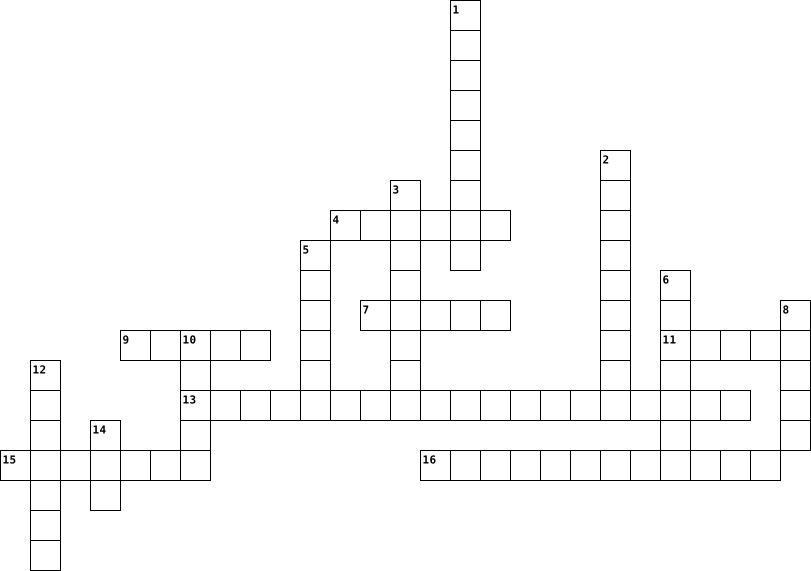
Across
- Pigs and dogs are the most ______
- The animals named the farm "______ Farm'
- The sole enemy to animals
- An adored boar on the farm
- Animal heaven
- Animals received halved ________ except pigs
- They created 7 of these
Down
- No animal can escape this
- What Old Major wanted to happen
- Oldest animal on the farm
- A pig fattened for extra meat
- Word used to address animals
- Old Major wanted to share this
- The special pet on the farm
- The animals want to be freed from _________
- The amount of times Jones fired his gun
16 Clues: Animal heaven • They created 7 of these • No animal can escape this • Oldest animal on the farm • The sole enemy to animals • An adored boar on the farm • The special pet on the farm • Word used to address animals • A pig fattened for extra meat • Old Major wanted to share this • What Old Major wanted to happen • Pigs and dogs are the most ______ • ...
Animal Equipment 2024-03-19

Across
- headgear used for leading or tethering
- captures and rescues animals
- for clipping, shearing or foot trimming
- device that prevents biting
- holds cat
- helps prevent injuries to livestock handlers
Down
- a measure to keep something under control
- to move animals with minimum stress
- attaches to halter
- to weigh animals
- band worn around neck
- strap/cord for restraining or guiding a dog or other animals
- device used to safely examining/treating livestock
- to move an organize animals
- allows for head to come through but not shoulders
- device that catches or holds things
16 Clues: holds cat • to weigh animals • attaches to halter • band worn around neck • to move an organize animals • device that prevents biting • captures and rescues animals • to move animals with minimum stress • device that catches or holds things • headgear used for leading or tethering • for clipping, shearing or foot trimming • a measure to keep something under control • ...
Animal Farm 2016-04-16
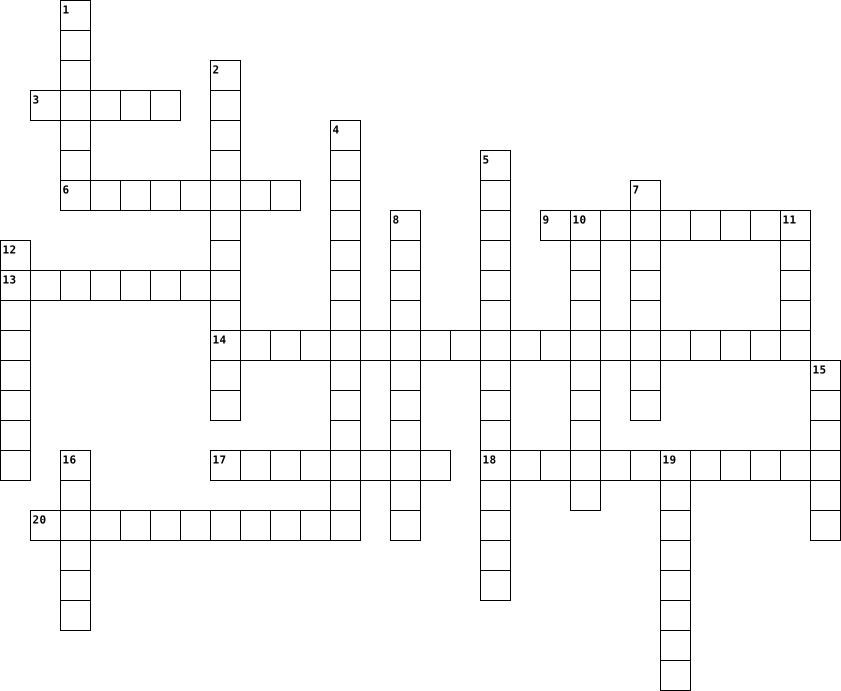
Across
- "I will work harder"
- Persuasive talker
- the original name of Mr. Jones' farm
- Represents Stalin
- the rules that the animals on the farm lived by
- Oldest animal on the farm
- author of Animal Farm
- neglected farm neighbor
Down
- Owns Manor Farm
- Owns Pinchfield Farm
- well taken care of neighboring farm
- the song the animals would sing at the close of every meeting
- The word the pigs would call the farm animals
- Owns Foxwood Farm
- the name the animals gave the farm once they took control
- The tame raven
- Represents Trotsky
- Foolish and self-centered horse
- Mothering box cart horse
- Planted seeds of revolution
20 Clues: The tame raven • Owns Manor Farm • Persuasive talker • Owns Foxwood Farm • Represents Stalin • Represents Trotsky • Owns Pinchfield Farm • "I will work harder" • author of Animal Farm • neglected farm neighbor • Mothering box cart horse • Oldest animal on the farm • Planted seeds of revolution • Foolish and self-centered horse • well taken care of neighboring farm • ...
Animal Farm 2023-05-11
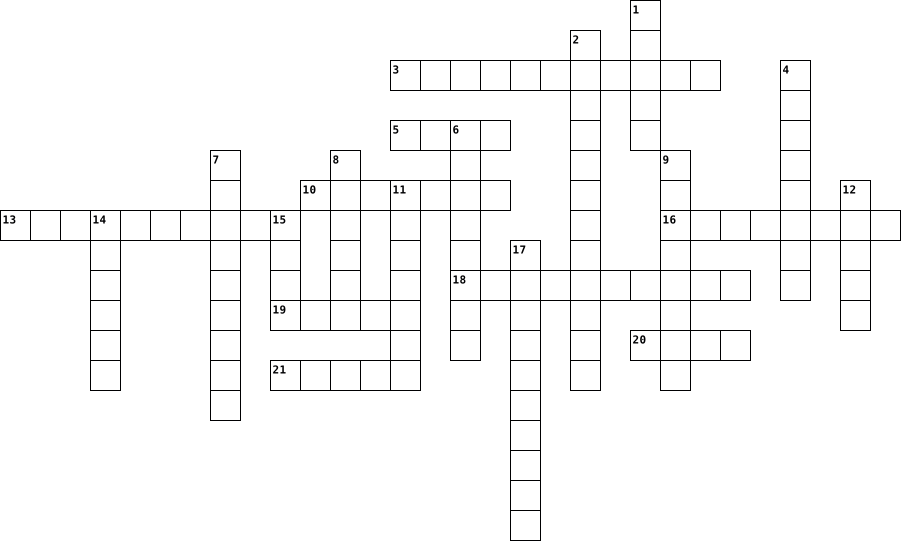
Across
- person, symbolized by Snowball
- the country the farm symbolizes
- farm that represents fascist Germany
- farm that represents the capitalist Allied countries
- leader of the farm
- formerly known as Manor Farm
- group of animals, represents the dumbest citizens
- group of animals, represents the ruling class
- hardest worker
Down
- spreads religion to the animals
- person, symbolized by Napoleon
- spreads propaganda
- chased out by dogs
- farmer for Pinchfield Farm
- selfish and vain, left the farm
- can read and write, chooses not to help
- human representative for the farm
- former leader of the farm
- motherly and caring
- group of animals, represents police force
- farmer for Foxwood Farm
21 Clues: hardest worker • spreads propaganda • chased out by dogs • leader of the farm • motherly and caring • farmer for Foxwood Farm • former leader of the farm • farmer for Pinchfield Farm • formerly known as Manor Farm • person, symbolized by Napoleon • person, symbolized by Snowball • spreads religion to the animals • the country the farm symbolizes • selfish and vain, left the farm • ...
Animal Crossword Puzzle 2026-03-22

Across
- A way animals reproduce by growing a new one
- Shedding old outer layer
- Vascular System Helps move and feed like starfish
- hard outer covering
- Free swimming jellyfish form
- Cold blooded animals
- Symmetry Body parts arranged in a circle
- Symmetry Same on both sides
- Animal with a backbone
- Lives at the bottom of water
- Has both male and female parts
- Tube Shaped body that stays in one place
Down
- Animals with no backbone
- Bladder Helps fish float
- Soft flexible tissue
- Eggs Eggs that can live on land
- Glands make Milk for babies
- Skeleton inside the body
- No body shape or pattern
- Warm blooded animals
20 Clues: hard outer covering • Soft flexible tissue • Cold blooded animals • Warm blooded animals • Animal with a backbone • Animals with no backbone • Bladder Helps fish float • Shedding old outer layer • Skeleton inside the body • No body shape or pattern • Glands make Milk for babies • Symmetry Same on both sides • Free swimming jellyfish form • Lives at the bottom of water • ...
Irregular Plural Nouns 2024-10-27

Across
- plural of aircraft
- more than one lady
- more than one awful thing
- elements like helium, oxygen, neon, or hydrogen
- small exams
- many human beings
- a Saudi man may have up to four of these
- strong cow-like animals that pull a farm wagon
- green things on a tree branch
Down
- more than one syllabus
- where you put your socks
- infants
- plural of fungus
- farm animals used for wool
- two small cheese-eating animals
- many boys and girls
- sharp tools used to cut in the kitchen
- sea creatures with eight legs
- bugs that land on food or animals
- white things found in your mouth
20 Clues: infants • small exams • plural of fungus • many human beings • plural of aircraft • more than one lady • many boys and girls • more than one syllabus • where you put your socks • more than one awful thing • farm animals used for wool • sea creatures with eight legs • green things on a tree branch • two small cheese-eating animals • white things found in your mouth • ...
Biology 2025-04-01

Across
- of plants and animals
- plants and animals
- as systematics
- study of algae
- and the causes of
- the body at tissue level
- study of
- study of fishes
- study of form and structure
- study of fungi
- study of reptiles
- the science of transmission
- of tiny bits
- body characters from parents to
- of plant and animal cells
- study of geographical
- study of plants
Down
- of organisms
- study of parasites
- science of naming and
- study of origin and
- study of insects
- animals and plants also
- study of birds
- and their parts
- study of viruses
- of metabolism of
- study of animals
- forms of life
- of structure and
- science dealing with the
31 Clues: study of • of organisms • of tiny bits • forms of life • study of birds • as systematics • study of algae • study of fungi • and their parts • study of fishes • study of plants • study of insects • study of viruses • of metabolism of • study of animals • of structure and • and the causes of • study of reptiles • study of parasites • plants and animals • study of origin and • science of naming and • ...
Farm Animal Vocabulary Words 2023-01-20
Across
- Duck
- Llama
- Mouse
- Chicken
- Sheep
- Bull
- Goat
- Horse
- Rooster
- Camel
Down
- Dog
- Caterpillar
- Animals
- Bee
- Turkey
- Pig
- Butterfly
- Cat
- Farm
- Donkey
- Cow
21 Clues: Dog • Bee • Pig • Cat • Cow • Duck • Bull • Goat • Farm • Llama • Mouse • Sheep • Horse • Camel • Turkey • Donkey • Animals • Chicken • Rooster • Butterfly • Caterpillar
NIHS-MYPScience2- LAYLA 2023-06-26

Across
- Centipedes
- A warm blooded egg laying vertebrate
- Absorbs carbon dioxide from the air
- The one that fish uses to breathe.
- The development of a plant from a seed
- Worms
- Pollinating with 2 flowers
Down
- Animals with no backbones
- Absorbing nutrients and distributing
- Animals that have fur and drinks milk from their mom
- To make new animals or plants
- Pollinating by its self
- Animals with backbones
- Animals which helps to pollinate plants
- Pollinators which works in the night
15 Clues: Worms • Centipedes • Animals with backbones • Pollinating by its self • Animals with no backbones • Pollinating with 2 flowers • To make new animals or plants • The one that fish uses to breathe. • Absorbs carbon dioxide from the air • Absorbing nutrients and distributing • A warm blooded egg laying vertebrate • Pollinators which works in the night • ...
Food Webs and Ecosystems 2025-02-20

Across
- - All the living and nonliving things in an area that interact with each other
- - organism that gets energy from eating plants or animals
- - any living thing
- - An animal that hunts other animals
- - a consumer that eats only animals
- - a part of the ecosystem that is not living
- - a consumer that eats only plants
- - The introduction of a substance that can harm the environment
Down
- - the natural home or environment of an animal, plant, or other organism
- - organism that breaks down the remains of dead plants or animals
- - organism that eats both plants and animals
- - The process of breaking down organic matter
- - The living or once-living parts of an ecosystem
- - a group of organisms of the same species populating a given area
- - A long period with little to no rainfall
- - An animal that is hunted by other animals
- - organism that uses sunlight to make its own food for energy
- - The nonliving parts of an ecosystem.
- a group of organisms that are closely related and can mate to produce fertile offspring
19 Clues: - any living thing • - a consumer that eats only plants • - a consumer that eats only animals • - An animal that hunts other animals • - The nonliving parts of an ecosystem. • - A long period with little to no rainfall • - An animal that is hunted by other animals • - organism that eats both plants and animals • - a part of the ecosystem that is not living • ...
Subject of animal biotechnology, purpose and objectives 2024-09-12

Across
- Manipulation of animal genomes to enhance disease resistance
- Complete sequencing of an organism's genetic material
- Animals with altered DNA for expressing traits from another species
- Introduction of foreign DNA into the genome of an animal
- Selecting animals with desirable traits for breeding
- Molecular tool used for precise gene editing
- Molecular structures that cut DNA at specific sequences
- Cells that can differentiate into any type of cell, used in therapeutic cloning
- Producing genetically identical animals using cloning techniques
Down
- Use of animals to grow human-compatible organs
- Method of growing animal tissues or organs in vitro
- Method used to modify genes within an organism's DNA
- Use of animals for producing therapeutic proteins or drugs
- Production of offspring from a single organism without sexual reproduction
- Technique for fusing cells to produce genetically identical animals
- The transfer of a gene from one organism to another
- Study of the entire set of genetic information within an organism
- Branch of biology focused on studying proteins
- Technique for amplifying DNA segments in a laboratory setting
19 Clues: Molecular tool used for precise gene editing • Use of animals to grow human-compatible organs • Branch of biology focused on studying proteins • Method of growing animal tissues or organs in vitro • The transfer of a gene from one organism to another • Method used to modify genes within an organism's DNA • Selecting animals with desirable traits for breeding • ...
Ecosystems - 5th Grade 2025-12-01

Across
- An animal that eats only plants
- A group of the same type of organism in one area
- A biome covered mostly with grasses and few trees
- A living thing that eats plants or animals for energy
- A group of connected food chains
- An animal that hunts other animals for food
- An animal that eats both plants and animals
- A large area with its own climate, plants, and animals
- A body part or behavior that helps an organism survive
- A warm, wet biome with many plants and animals
Down
- An animal that eats only meat
- All the living and nonliving things that interact in an area
- An animal that eats both plants and animals
- Everything around a living thing
- A living thing, like a plant, that makes its own food
- A living thing that breaks down dead plants and animals
- The place where a plant or animal lives
- All the different populations living together
- An animal that is hunted or eaten by another animal
- A path that shows how energy moves from one organism to another
20 Clues: An animal that eats only meat • An animal that eats only plants • Everything around a living thing • A group of connected food chains • The place where a plant or animal lives • An animal that eats both plants and animals • An animal that hunts other animals for food • An animal that eats both plants and animals • All the different populations living together • ...
Baby Farm Animals 2021-11-29
Across
- lamb
- cheese
- kid
- ducklings
- pond
- animals
- milk
- calf
- nest
Down
- farmer
- baby
- deer
- chicks
- fish
- wool
- farm
- duck
- goat
- milk
- sheep
- mother
- cow
22 Clues: kid • cow • lamb • baby • deer • fish • wool • farm • duck • goat • pond • milk • milk • calf • nest • sheep • farmer • cheese • chicks • mother • animals • ducklings
Animal Farm 2022-05-24

Across
- the first human the pigs allow contact with
- of food
- the hardest worker
- she likes her ribbons and sugar
- leader of the animals
- a war that breaks out when they animals are
- the rebellion
- a horse and boxers companion
Down
- only humans were supposed to drink this
- the eldest and wisest pig
- the "guards' of the farm
- the owner of foxwood
- the farms donkey
- used to run the farm
- the weapon used against the animals by farmer jones
- spreads propaganda
- the "traitor"
- represents the animals victory over farmer jones
- owns the farm of pinchfield and is a drunk
- snowball came up with this idea
20 Clues: of food • the "traitor" • the rebellion • the farms donkey • the hardest worker • spreads propaganda • the owner of foxwood • used to run the farm • leader of the animals • the "guards' of the farm • the eldest and wisest pig • a horse and boxers companion • she likes her ribbons and sugar • snowball came up with this idea • only humans were supposed to drink this • ...
UNIT 2 CROSSWORD 2023-11-20

Across
- A person or an animal that hunts.
- Thick forests in a hot, tropical country.
- Cathing or killing birds, animals or fish illegaly.
- An area of land where endangered plants, animals etc. are protected
- A person who studies plants or animals.
- Keeping something in good condition.
- A number of people or animals that live in a place.
- A person who can find people or wild animals by following the marks they leave on the ground.
- An important task that a person or people do.
- Wild bird, plants, animals etc.
Down
- Spoiled, harmed or broken.
- To give someone a feeling of wanting to do something good.
- To harm or hurt done to a person or an animal.
- A large area of beautiful land that is protected by the government.
- The protection of the natural world.
- Very different from eachother.
- To keep someone or something safe from danger.
- To be able to say who or what someone or something is.
18 Clues: Spoiled, harmed or broken. • Very different from eachother. • Wild bird, plants, animals etc. • A person or an animal that hunts. • The protection of the natural world. • Keeping something in good condition. • A person who studies plants or animals. • Thick forests in a hot, tropical country. • An important task that a person or people do. • ...
UNIT 4 VOCABULARY 2021-03-03

Across
- How tall someone is
- We take it when we want to get/feel better
- Baby wolf
- Animals which eat grass and meat
- Not save
- Animals which eat meat
- Without hair
- Things we throw away
- AWAY Put something in the bin
Down
- How many kilos an animal is
- when animals sleep from October till March or April
- People
- Animals which eat grass but not meat
- POINT You take things for recycling there
- A group of ...
- Put things in groups
- Shop
17 Clues: Shop • People • Not save • Baby wolf • Without hair • A group of ... • How tall someone is • Put things in groups • Things we throw away • Animals which eat meat • How many kilos an animal is • AWAY Put something in the bin • Animals which eat grass and meat • Animals which eat grass but not meat • We take it when we want to get/feel better • POINT You take things for recycling there • ...
Semester 2 Review 2021-04-22

Across
- zoo
- bird
- football
- wrestler
- champion
- compete
- migrate
- solve
- win
- SuperBowl
- winter
Down
- problem
- count
- zoologist
- identify
- animals
- festival
- championship
- ice
- snow
- retire
21 Clues: zoo • ice • win • bird • snow • count • solve • retire • winter • problem • animals • compete • migrate • identify • football • festival • wrestler • champion • zoologist • SuperBowl • championship
Moving & Transport 2012-12-13

Across
- Animals should have access to _________
- How many animals in a space
- For welfare reasons journey times are ______
- Temperatures being too high can cause _________
- Animals can fall during ________
- Ramps must be _________
Down
- Transport plans should be ________
- Length of journey
- People moving licestock should understand animal _______
- Body part of an animal requiring special planning for transport
- Police stop & do theses
- DEFRA require drivers to have this
- Carries small numbers of animals
- Animals will not be transported if too ________
- Large animal transporter
15 Clues: Length of journey • Police stop & do theses • Ramps must be _________ • Large animal transporter • How many animals in a space • Carries small numbers of animals • Animals can fall during ________ • Transport plans should be ________ • DEFRA require drivers to have this • Animals should have access to _________ • For welfare reasons journey times are ______ • ...
NIHS-MYPScience2- LAYLA 2023-06-26

Across
- Centipedes
- A warm blooded egg laying vertebrate
- Absorbs carbon dioxide from the air
- The one that fish uses to breathe.
- The development of a plant from a seed
- Worms
- Pollinating with 2 flowers
Down
- Animals with no backbones
- Absorbing nutrients and distributing
- Animals that have fur and drinks milk from their mom
- To make new animals or plants
- Pollinating by its self
- Animals with backbones
- Animals which helps to pollinate plants
- Pollinators which works in the night
15 Clues: Worms • Centipedes • Animals with backbones • Pollinating by its self • Animals with no backbones • Pollinating with 2 flowers • To make new animals or plants • The one that fish uses to breathe. • Absorbs carbon dioxide from the air • Absorbing nutrients and distributing • A warm blooded egg laying vertebrate • Pollinators which works in the night • ...
NIHS-MYPScience 2-Hinata 2023-06-26

Across
- Centipedes
- A warm blooded egg laying vertebrate
- Absorbs carbon dioxide from the air
- The one that fish uses to breathe
- The development of a plants from a seed
- Worms
- Pollinating with 2 flowers
Down
- Animals with no backbones
- Absorbing nutrients and distributing
- Animals that have fur and drinks milk from their mom
- To make new animals or plants
- Pollinating by its self
- Animals with backbones
- Animals which helps to pollinate plants
- Pollinators whitch works in the night
15 Clues: Worms • Centipedes • Animals with backbones • Pollinating by its self • Animals with no backbones • Pollinating with 2 flowers • To make new animals or plants • The one that fish uses to breathe • Absorbs carbon dioxide from the air • Absorbing nutrients and distributing • A warm blooded egg laying vertebrate • Pollinators whitch works in the night • ...
Food Chain 2021-05-09

Across
- Organisms that break down dead animals and recycle nutrients back into the soil.
- Animals that eat the dead bodies of their animals.
- Organisms that get their energy from other organisms.
- Animals that get hunted.
- Animals that eat only meat.
- The process that producers use to make their own food.
Down
- Animals that only eat plants.
- Organisms that make their own food through photosynthesis.
- A group of linked food chains.
- A chain of living things that are linked together by what they eat.
- Animals that will hunt other animals.
- Animals that eat plants and other animals.
12 Clues: Animals that get hunted. • Animals that eat only meat. • Animals that only eat plants. • A group of linked food chains. • Animals that will hunt other animals. • Animals that eat plants and other animals. • Animals that eat the dead bodies of their animals. • Organisms that get their energy from other organisms. • The process that producers use to make their own food. • ...
Ecosystems and Invasive Species 2025-08-26

Across
- plants & animals that take over an ecosystem and hurt other animals and plants
- to hurt or break something
- a community of living organisms (like plants, animals, and microbes) interacting with their non-living environment (like air, water, and soil)
- non-living, has never been alive
- an organism that eats plants and animals for energy
- living, or was once alive
- the variety of all living things
- plants & animals that naturally live in an ecosystem
- a living thing
- the network of the flow of energy in an ecosystem (ex: consumers eat producers and other consumers)
- an organism that breaks down dead matter and returns nutrients to the soil
Down
- something that is hard to fix
- a way to fix a problem
- an organism that makes its own food
- individuals moving out of a population
- the specific job a species has in its ecosystem
- a group of the same organism living in one place
- individuals moving into a population
- a large area of the world that has similar weather, plants and animals
19 Clues: a living thing • a way to fix a problem • living, or was once alive • to hurt or break something • something that is hard to fix • non-living, has never been alive • the variety of all living things • an organism that makes its own food • individuals moving into a population • individuals moving out of a population • the specific job a species has in its ecosystem • ...
polar biome crossword puzzle 2017-02-28

Across
- allows animals to maintain their body temperature in harsh conditions.
- plants produce long stems, that break off and lay down roots.
- trap air, are white and big.
- a small bulb that breaks off and the roots grow into a new plant.
- Plants that live up to two years.
- allows smaller animals to hide food and themselves from predators.
- the land of sedges,mosses, grasses and lichens is called_______
- some plants use this to get amino acids.
- Are the first living organism to arrive, can grow on bare rock.
Down
- fine and traps warm layers trapped by the body
- allows animals to blend with the environment
- dome shaped hills called_____
- animals without a backbone are called_________
- oily, fat layer that is between the skin and muscle.
- Provides isolation by trapping air that the body warms.
- courser and waterproof.
- the frozen earth is called__________
- allows warm blooded animals to survive harsh winter conditions.
- something that allows animals to remove lots of snow are called _______
- Something that prevents heat loss and is small is called________
- a specific characteristic within a community of organisms.
21 Clues: courser and waterproof. • trap air, are white and big. • dome shaped hills called_____ • Plants that live up to two years. • the frozen earth is called__________ • some plants use this to get amino acids. • allows animals to blend with the environment • fine and traps warm layers trapped by the body • animals without a backbone are called_________ • ...
Polar Region Vocabulary 2015-02-07

Across
- land of sedges, mosses, grasses, and lichens growing in patches
- provides insulations by trapping air, warmed by the body
- allows animals to remove heavy accumulations of snow and ice to access food
- grow in sheltered places on bare rock, and remains provide food for mosses
- dome-shaped hills near the edge of an ice sheet
- specific fat layer between the skin and muscle
- allows many animals to maintain their body temperature even though the environmental temperature surrounding them plunges well below zero
- long stems some plants produce
Down
- takes nitrogen from air and converts it to ammonia to produce amino acids
- beyond permanent ice, ground may be frozen
- courser and waterproof
- fine, traps a layer of air warmed by the body
- allows animals to move over snow and ice easier
- allows warm blooded animals to survive harsh winter conditions by living in close quarters in a dormant condition
- allows some animals to blend with their environment
- plants that live for more than two years
- speific function or position within a community of organisms
- carcass of a dead animal
- prevent heat loss
- allows smaller animals to survive away from the harsh polar conditions
20 Clues: prevent heat loss • courser and waterproof • carcass of a dead animal • long stems some plants produce • plants that live for more than two years • beyond permanent ice, ground may be frozen • fine, traps a layer of air warmed by the body • specific fat layer between the skin and muscle • allows animals to move over snow and ice easier • ...
Polar Region Vocabulary 2015-02-07

Across
- grow in sheltered places on bare rock, their remains provide food for mosses
- long stems that some plants produce
- thicker, trap more air and are white
- allows animals to move over snow and ice easier
- provides insulation by trapping air, warmed by the body
- takes nitrogen from the air and converts it to ammonia to produce amino acids
- carcass of a dead animal
- land of sedges, mosses, grasses, and lichens growing in patches
- ground that may be frozen beyond the permanent ice
- dome-shaped hills near the edge of an ice sheet
Down
- allows some animals to blend with their environment
- prevent heat loss
- allows animals to remove heavy accumulations of snow and ice to access food
- specific function or position withina communityof organisms
- fine, traps a layer of air warmed by the body
- specific fat layer between skin and muscle
- allows many warm-blooded animals to survive harsh polar conditions by living in close quarters in a dormant condition
- allows many animals to maintain their body temperature even though the environmental temperature surrounding them plunges well below zero
- courser and waterproof
- allows smaller animals to survive away from the harsh polar conditions
20 Clues: prevent heat loss • courser and waterproof • carcass of a dead animal • long stems that some plants produce • thicker, trap more air and are white • specific fat layer between skin and muscle • fine, traps a layer of air warmed by the body • allows animals to move over snow and ice easier • dome-shaped hills near the edge of an ice sheet • ...
Animal Farm - George Orwell 2015-12-19

Across
- The farm was called ( ) farm before Animal Farm
- The first battle was the battle of the
- Who in the book represents Trotsky.
- Having a secret or hidden meaning
- This animal dies after being sent to be slaughtered
- This animal has a very deceitful personality
- Without interruption
- Finish what Boxer says 'Napoleon is always
- This word was used before the animals name to make them seem more friendly
- Finish this: four legs good, two legs
Down
- A fictional book about animals is called a
- The animals made a poem about this animal called 'comrade
- What type of animal is Boxer
- Who was Napoleon's spokesman.
- Euphemisms for 'fat'
- Napoleon represents this famous Russian leader.
- The animals want to build this so there is less work for them
- The battle of the windmill was against this person.
- This animal is related to Boxer
- Squealer is this type of animal
- What is the song that the animals would always sing at the end of meetings, Beasts of
- The animals thought Napoleon was dying after having to much
- Play Boisterously
- The first pig that was the leader, Old
24 Clues: Play Boisterously • Euphemisms for 'fat' • Without interruption • What type of animal is Boxer • Who was Napoleon's spokesman. • This animal is related to Boxer • Squealer is this type of animal • Having a secret or hidden meaning • Who in the book represents Trotsky. • Finish this: four legs good, two legs • The first battle was the battle of the • ...
Incredible Invertebrates 2024-08-26

Across
- Animals that eat only meat.
- Animals that eat both plants and meat.
- Invertebrates with jointed legs and a hard outer structure.
- Mollusks with hinged shells.
- The process of shedding the exoskeleton to grow.
- Resting during hot or dry conditions.
- An animal that is hunted by another for food.
- A group of nerve cells acting as a simple brain in invertebrates.
- Soft-bodied invertebrates, often with shells.
- An animal that hunts and eats other animals.
- Flexible limbs found on some invertebrates, like octopuses and squids.
Down
- The hard outer covering of an arthropod.
- The middle part of an arthropod's body, often where the legs and wings are attached.
- - Animals without backbones.
- Organisms that live on or in another organism, drawing nutrients from it.
- Single-celled animals that can only be seen with a microscope.
- Arthropods with hard outer shells, like crabs and lobsters.
- The process of regrowing a lost body part.
- Eight-legged arthropods, including spiders and scorpions.
- A slippery, sticky substance produced by living things.
- Animals that eat only plants.
- The individual parts of a segmented body, like in arthropods.
22 Clues: Animals that eat only meat. • - Animals without backbones. • Mollusks with hinged shells. • Animals that eat only plants. • Resting during hot or dry conditions. • Animals that eat both plants and meat. • The hard outer covering of an arthropod. • The process of regrowing a lost body part. • An animal that hunts and eats other animals. • ...
Energy And Energy Transfer 2025-07-27

Across
- An animal that eats insects.
- Tint kiving things that breaks down dead plants and animals.
- An animal that eats both plants and animals
- The part of the plant that takes in water from the soil.
- The transfer of energy from one organism to another.
- An animal that is hunted and eaten by another.
- Animals that eat plants or other animals.
- The gas that plants take in from the air during photosynthesis.
- An animal that eats dead animals it did not kill.
- An animal that eats only plants.
- Living things that make their own food from sunlight.
- The main source of energy for all life on Earth.
Down
- One of the seven life processes: where living gets rid of waste.
- The Sun gives us this.
- The process plants use to make food using sunlight.
- One of the seven life processes: when a living thing brings in oxygen.
- An animal that eats meat only.
- A living thing that cannot make its own food and gets energy by eating other living things.
- An animal that hunts and eats other animals.
- Plants use sunlight,carbon dioxide and _______ to make food.
- The transfer of energy from one living thing to the next.
21 Clues: The Sun gives us this. • An animal that eats insects. • An animal that eats meat only. • An animal that eats only plants. • Animals that eat plants or other animals. • An animal that eats both plants and animals • An animal that hunts and eats other animals. • An animal that is hunted and eaten by another. • The main source of energy for all life on Earth. • ...
amphibians + reptiles 2026-04-24

Across
- a young frog
- a biological community of interacting organisms and their physical environment
- tetrapod vertebrate animals
- an extinct species known for its striking coloration and unique habitat in the cloud forests of Costa Rica
- all extant and extinct amphibians and amniotes
- the flexible membrane of skin possessed by most male frogs and toads
- supercontinent that incorporated almost all the landmasses on Earth
- a specialized respiratory organ that many aquatic animals use for aquatic gas exchange
- mall slender-bodied amphibian with lungs and a well-developed tail
- a tailless amphibian with a short squat body, moist smooth skin, and very long hind legs for leaping
Down
- a genus of toads
- animals that neither develop nor retain a spine/back bone
- ectothermic, anamniotic, four-limbed vertebrate animals
- a geologic period
- tetrapod vertebrate animals with an ectothermic metabolism and amniotic development
- the process of transformation from an immature form to an adult form in two or more distinct stages
- commonly referred to as a "cold-blooded animal
- the scientific study of animals
- a lizard-like amphibian with an elongated body and tail and short limbs
- is the change in the heritable characteristics of biological populations over successive generations.
20 Clues: a young frog • a genus of toads • a geologic period • tetrapod vertebrate animals • the scientific study of animals • commonly referred to as a "cold-blooded animal • all extant and extinct amphibians and amniotes • ectothermic, anamniotic, four-limbed vertebrate animals • animals that neither develop nor retain a spine/back bone • ...
BIOLOGY CROSSWORD 2026-05-30

Across
- , the relationship of an organism to both its biotic
- , have a green coloured pigment called chlorophyll
- , geographical distribution of plants and animals
- , fundamental structural and functional unit
- , study of origin and descent of organisms
- , study of viruses
- , different tissues arranged together form an
- , science of transmission of body characteristics from parents to offspring
- , study of bacteria
- , study of birds
- , study of animals
- , study of insects
- , many small particles in the cytoplasm
- , power house of the cell
- , starts life as a single cell
Down
- , study of fungi
- , synthesis of proteins
- , father of biology
- , study of algae
- , epithelium tissue which is found in some parts of kidney tubules
- , study of reptiles
- , study of form & structure of planta and animals
- , study of formation and development of embryo of plants and animlas
- , is a hard porous tissue
- , composed of plasma and RBCs, WBCs and platelets
- , study of fishes
- , grouping and classifying plants and animals
- , cell whos nucleus is not well defined
- , only in animals
- , study of plants
- , study of structure and function of animals & plant cell
- , only in plants
- biology , study of humans
33 Clues: , study of birds • , study of fishes • , only in animals • , study of plants • , study of bacteria • , study of fungi • , study of algae • , study of reptiles • , study of insects • , only in plants • , father of biology • , study of viruses • , study of animals • , power house of the cell • biology , study of humans • , synthesis of proteins • ...
Ecosystem 2025-12-02

Across
- An animal that eats only plants
- A group of the same type of organism in one area
- A biome covered mostly with grasses and few trees
- A living thing that eats plants or animals for energy
- A group of connected food chains
- An animal that hunts other animals for food
- An animal that eats both plants and animals
- A large area with its own climate, plants, and animals
- A body part or behavior that helps an organism survive
- A warm, wet biome with many plants and animals
Down
- An animal that eats only meat
- All the living and nonliving things that interact in an area
- An animal that eats both plants and animals
- Everything around a living thing
- A living thing, like a plant, that makes its own food
- A living thing that breaks down dead plants and animals
- The place where a plant or animal lives
- All the different populations living together
- An animal that is hunted or eaten by another animal
- A path that shows how energy moves from one organism to another
20 Clues: An animal that eats only meat • An animal that eats only plants • Everything around a living thing • A group of connected food chains • The place where a plant or animal lives • An animal that eats both plants and animals • An animal that hunts other animals for food • An animal that eats both plants and animals • All the different populations living together • ...
Animal Rights 2022-10-03

Across
- the idea that animal use by humans reflects a bias that humans are superior to animals
- position that animals should not be exploited
- protects horses and regulates the horse show business
- position that animal should be treated humanely
- australian philosopher that wrote animal liberation
- was formed to look after the welfare of disabled horses and mules and save them from abandomnet
- english housewife that wrote The New Factory Farming Industry
- people that believe that animals should be treated like humans
Down
- protected livestock from cruel treatment
- the idea that animals have the sae rights as humans
- used to deterine drug doses when animals are exposed to increasing doses
- passed to include humane handling before and after slaughter
- protested animal use for clothes
- believe that nimals used for testing should be cared for humanely
- measure effects of cosmetics on unprotected eyes
- passed to protect animals travelling by rail
- dogs and cats from shelters are sold to laboratories
- drafted anit-cruelty legislation
18 Clues: protested animal use for clothes • drafted anit-cruelty legislation • protected livestock from cruel treatment • passed to protect animals travelling by rail • position that animals should not be exploited • position that animal should be treated humanely • measure effects of cosmetics on unprotected eyes • the idea that animals have the sae rights as humans • ...
Animal farm crossword 2024-10-17

Across
- What boxer was turned into after he "retired"
- Frederick The farmer that represents Hitler
- The hardest working animal of all
- Every animal is _____, but some are more _____ than others.
- One of the leaders for animal farm
- The structure the animals plan to build to shorten the work week
- The battle which Jones tried to take back Animal farm
- The name of the farm after the animals took over
- Leader of animal farm who ran away
- The leader of Manor farm
- An item banned as it was what humans wore
- The smartest animals on the farm which get selected as leaders
- The farm when it was run by Mr. Jones
Down
- The boar that told the animals they must rebel when the time comes
- Rules the animals set to follow to keep peace
- The pig who represents propaganda
- The first battle in the book when the animals took over the farm
- Napoleon started brewing this with barley
- Pilkington The farmer that represents capitalist governments like the U.S.
- Whymper The way that the animals communicate with humans.
20 Clues: The leader of Manor farm • The hardest working animal of all • The pig who represents propaganda • One of the leaders for animal farm • Leader of animal farm who ran away • The farm when it was run by Mr. Jones • Napoleon started brewing this with barley • An item banned as it was what humans wore • What boxer was turned into after he "retired" • ...
World History Vocab Unit 1 2023-10-16

Across
- Direct records of the past, like old letters or diaries.
- A long time with little or no rain.
- The way a group of people live, including their traditions and beliefs.
- Information about the past that comes from books or other people.
- The remains of old plants and animals found in rocks.
- People who dig up and study old things to learn about the past.
- People who study how humans live in different places.
- Things people made a long time ago that we find now.
- Soil that is good for growing many plants.
Down
- Very large animals that lived long ago.
- Making wild animals or plants useful for humans.
- Natural pathways connecting two pieces of land.
- Growing crops and raising animals for food.
- Tools and machines that make life easier.
- People who move from place to place with no permanent home.
- People who hunted animals and collected food from nature.
- When groups of animals or people move from one place to another.
- Stories about the past that are told by people.
- A special place in the desert with water and plants.
19 Clues: A long time with little or no rain. • Very large animals that lived long ago. • Tools and machines that make life easier. • Soil that is good for growing many plants. • Growing crops and raising animals for food. • Natural pathways connecting two pieces of land. • Stories about the past that are told by people. • Making wild animals or plants useful for humans. • ...
Great Lakes Piping Plovers 2026-04-20

Across
- Small animals without backbones, like insects and worms.
- An area an animal protects and claims as its own space.
- Behaviors animals use to attract a mate.
- Working to protect animals, plants, and nature.
- A species that is at risk of disappearing forever.
- When a young bird becomes able to fly.
- When animals travel from one place to another during certain seasons.
- The place where the water meets the land.
- Keeping eggs warm until they hatch.
Down
- Something that bothers or scares animals from their normal behavior.
- An animal that hunts and eats other animals.
- A structure that keeps predators out but lets the birds in.
- Plover A sand-colored, sparrow-sized shorebird with orange legs, single breast band and orange bill with black tip.
- A baby bird.
- Colors or patterns that help an animal blend into its surroundings.
- Plants growing in an area.
- A place where birds lay eggs and take care of their young.
- Placing colored bands on birds’ legs to help identify them.
- The natural home where an animal lives.
19 Clues: A baby bird. • Plants growing in an area. • Keeping eggs warm until they hatch. • When a young bird becomes able to fly. • The natural home where an animal lives. • Behaviors animals use to attract a mate. • The place where the water meets the land. • An animal that hunts and eats other animals. • Working to protect animals, plants, and nature. • ...
Natural Science 2016-03-14

Across
- group of organisms of the same species that live in a defined area and are able to breed
- organisms that make their own food
- a way to show how different food chains are connected in the environment
- animal that eats meat only
- the study of the relationships in an ecosystem
- the chemical process in which plants make their own food
- organisms that feed on other things
- an integrated system of biotic and abiotic factors
- the angle of the ground relative to the horizontal
Down
- something produced in addition to the main product
- the height above sea level
- a relationship in which both parties depend on each other for something
- a group of different populations living in a defined area
- organisms that break down dead animals and plant materials
- animals that eat plants
- animals that eat both plants and animals
- an energy level in an environment
- a way to show how energy is passed from one organism to another in the environment
- organic matter in soil
- the largest ecological unit on earth
- actively hunt and kill other animals
- animals that feed on carrion
22 Clues: organic matter in soil • animals that eat plants • the height above sea level • animal that eats meat only • animals that feed on carrion • an energy level in an environment • organisms that make their own food • organisms that feed on other things • the largest ecological unit on earth • actively hunt and kill other animals • animals that eat both plants and animals • ...
polar biome crossword puzzle 2017-02-28

Across
- Plants that live up to two years.
- animals without a backbone are called_________
- allows animals to blend with the environment
- something that allows animals to remove lots of snow are called _______
- a small bulb that breaks off and the roots grow into a new plant.
- allows animals to maintain their body temperature in harsh conditions.
- dome shaped hills called_____
- some plants use this to get amino acids.
- Provides isolation by trapping air that the body warms.
- allows smaller animals to hide food and themselves from predators.
Down
- plants produce long stems, that break off and lay down roots.
- the frozen earth is called__________
- allows warm blooded animals to survive harsh winter conditions.
- ears: Something that prevents heat loss and is small is called________
- fine and traps warm layers trapped by the body
- feathers: trap air, are white and big.
- a specific characteristic within a community of organisms.
- courser and waterproof.
- Are the first living organism to arrive, can grow on bare rock.
- oily, fat layer that is between the skin and muscle.
- the land of sedges,mosses, grasses and lichens is called_______
21 Clues: courser and waterproof. • dome shaped hills called_____ • Plants that live up to two years. • the frozen earth is called__________ • feathers: trap air, are white and big. • some plants use this to get amino acids. • allows animals to blend with the environment • animals without a backbone are called_________ • fine and traps warm layers trapped by the body • ...
polar biome crossword puzzle 2017-02-28

Across
- a small bulb that breaks off and the roots grow into a new plant.
- oily, fat layer that is between the skin and muscle.
- Something that prevents heat loss and is small is called________
- some plants use this to get amino acids.
- animals without a backbone are called_________
- allows smaller animals to hide food and themselves from predators.
- allows animals to blend with the environment
- dome shaped hills called_____
- plants produce long stems, that break off and lay down roots.
- the land of sedges,mosses, grasses and lichens is called_______
Down
- Provides isolation by trapping air that the body warms.
- courser and waterproof.
- Are the first living organism to arrive, can grow on bare rock.
- trap air, are white and big.
- the frozen earth is called__________
- allows warm blooded animals to survive harsh winter conditions.
- Plants that live up to two years.
- allows animals to maintain their body temperature in harsh conditions.
- something that allows animals to remove lots of snow are called _______
- fine and traps warm layers trapped by the body
- a specific characteristic within a community of organisms.
21 Clues: courser and waterproof. • trap air, are white and big. • dome shaped hills called_____ • Plants that live up to two years. • the frozen earth is called__________ • some plants use this to get amino acids. • allows animals to blend with the environment • animals without a backbone are called_________ • fine and traps warm layers trapped by the body • ...
Food Chain / Food Web 2017-04-09

Across
- Animals do not make their own food, they eat others for food.
- Many interconnected food chains form a ____ _____.
- These animals eat meat only.
- All plant eaters are ______.
- Energy ______ as it goes up the energy pyramid.
- The ________ of the populations within a food chain helps to maintain the balance of plants and animal populations within a community.
- A food chain shows the energy ______ from one organism to another.
- These animals eat both plants and animals.
- Some energy is lost along the food chain as all consumers use some energy to carry out life _____.
- Each ______ in a food chain is food for the next.
Down
- The main source of energy
- _______ help to break down dead carcasses into smaller pieces and speed up the decomposition process.
- Green plants make their own food and are food __________.
- These animals eat plant parts only.
- Fungi and bacteria help to return ______ back into the soil for better plant growth.
- A ______ hunts other animals for food.
- _____ are organisms that feed on decaying matter.
- Meat eaters get their energy from plants _______.
- A food chain also show the feeding _______ between organisms.
- The organisms at the top of the energy pyramid has the ____ amount of energy.
20 Clues: The main source of energy • These animals eat meat only. • All plant eaters are ______. • These animals eat plant parts only. • A ______ hunts other animals for food. • These animals eat both plants and animals. • Energy ______ as it goes up the energy pyramid. • _____ are organisms that feed on decaying matter. • Meat eaters get their energy from plants _______. • ...
Animal Farm 2014-03-27
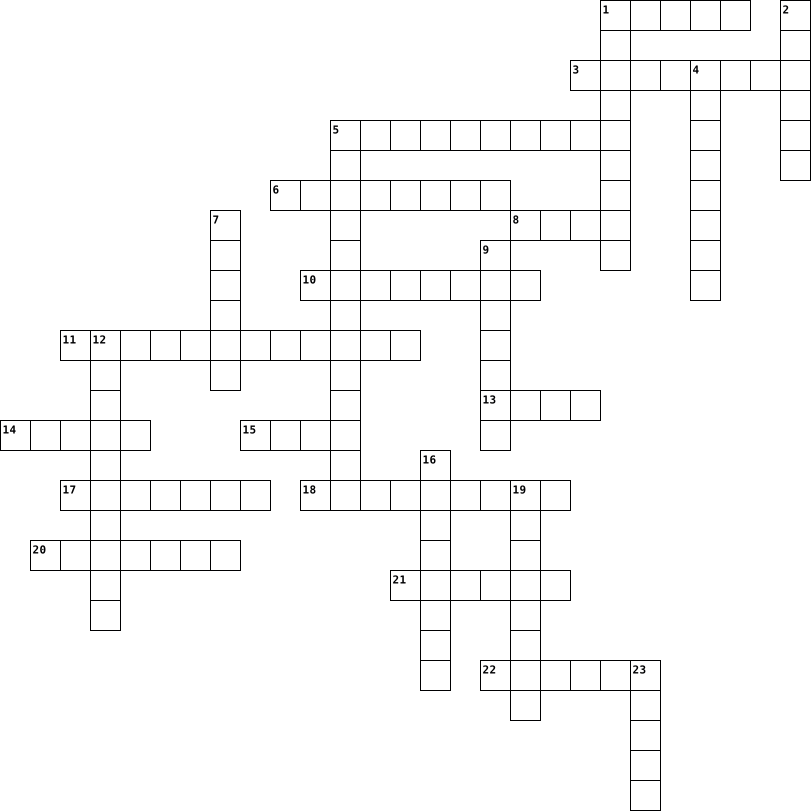
Across
- The tame Raven.
- It was his idea to build a windmill.
- First human the animals came in contact with after the rebellion.
- He owned the Farm until the Animals chased him away.
- The kind of Pig that Napoleon is.
- Died in the beginning of the Book.
- Enemies with Mr.Pilkington.
- The animals that chased Snowball off of the farm.
- Strongest animal on the Farm, very hard working.
- Type of animal that Muriel was.
- Things Mollie wears in her hair.
- A system of Government created by Napoleon.
- Kind of alcohol the animals were drinking.
- Boxer's Companion.
- _____ of England.
Down
- Name of the farm before the rebellion.
- Girl Horse, She's dumb and vain.
- Oldest Animal on the Farm with the worst temper, he never talks.
- Enemies with Mr.Frederick.
- What type of Animal is Benjamin?
- The animals addressed each other as _______.
- The sheep's speech was quite ______(word that describes their style of speech).
- "Our Leader, Our Comrade!"
- He's a brilliant talker, it is said that he can turn black into white.
- The animals that repeatedly chanted "Four legs good, Two legs bad."
25 Clues: The tame Raven. • _____ of England. • Boxer's Companion. • Enemies with Mr.Frederick. • "Our Leader, Our Comrade!" • Enemies with Mr.Pilkington. • Type of animal that Muriel was. • Girl Horse, She's dumb and vain. • What type of Animal is Benjamin? • Things Mollie wears in her hair. • The kind of Pig that Napoleon is. • Died in the beginning of the Book. • ...
Spelling List 25 2025-03-12

Across
- black and white bears that eat bamboo
- predatory birds
- to eat very hungrily
- the study of animals
- covered in soft small hairs or feathers
- striped cats
- marshy habitat for alligators and other water animals
- these mammals have manes and hooves, and you can ride them
- a habitat with trees for deer, foxes, moose, and other animals that live in trees
- dry habitat for camels and other animals that can last without much water
- water birds with deep beaks
- striped "horses"
- the largest ape
Down
- marsupials that live in trees and eat eucalyptus leaves
- big predatory birds
- animals that have a ringed tail and a black "mask" on their face
- active during the night
- one of the larger reptiles with sharp teeth and lives in water
- natives of Australia and are marsupials that stand on their back two legs
- humid habitat with trees for tigers and other animals that live under a canopy
- pig or pigs
- amphibians that look like smooth lizards
- big venomous snakes
- small aquatic mammals that are playful
- the largest land mammal with a trunk and tusks
25 Clues: pig or pigs • striped cats • predatory birds • the largest ape • striped "horses" • big predatory birds • big venomous snakes • to eat very hungrily • the study of animals • active during the night • water birds with deep beaks • black and white bears that eat bamboo • small aquatic mammals that are playful • covered in soft small hairs or feathers • ...
Hunting 2025-04-15

Across
- Illegal hunting or capturing of animals.
- Stand A platform placed in a tree for elevated hunting.
- Used in archery hunting; can include compound bows, recurve, or crossbows.
- A prize or commemorative item, often referring to the antlers of a hunted deer.
- Footprints or signs that animals leave behind.
- The protection and management of wildlife and habitats.
- Chase The ethical, sportsmanlike pursuit of game.
- A young deer.
- A female deer.
- Species of wild animals and birds designated in law and hunted for sport and food.
Down
- A device on a firearm that helps a hunter aim accurately.
- A structure used to hide hunters from animals.
- The hunted animal in any kind of hunting.
- Education Courses or certifications are required before legally hunting.
- Animal droppings, often used for tracking.
- An antlered deer.
- The act of legally killing a game animal.
- Mating season for deer, when bucks are more active and easier to hunt.
- Clothing or gear that helps hunters blend in with their environment.
- A spot where animals (like deer) paw the ground and leave scent.
- A gun used for hunting (e.g., rifle or shotgun
- A sound hunters use to mimic animals to lure them in.
22 Clues: A young deer. • A female deer. • An antlered deer. • Illegal hunting or capturing of animals. • The hunted animal in any kind of hunting. • The act of legally killing a game animal. • Animal droppings, often used for tracking. • A structure used to hide hunters from animals. • Footprints or signs that animals leave behind. • A gun used for hunting (e.g., rifle or shotgun • ...
Energy And Energy Transfer 2025-07-27

Across
- An animal that eats insects.
- Tint kiving things that breaks down dead plants and animals.
- An animal that eats both plants and animals
- The part of the plant that takes in water from the soil.
- The transfer of energy from one organism to another.
- An animal that is hunted and eaten by another.
- Animals that eat plants or other animals.
- The gas that plants take in from the air during photosynthesis.
- An animal that eats dead animals it did not kill.
- An animal that eats only plants.
- Living things that make their own food from sunlight.
- The main source of energy for all life on Earth.
Down
- One of the seven life processes: where living gets rid of waste.
- The Sun gives us this.
- The process plants use to make food using sunlight.
- One of the seven life processes: when a living thing brings in oxygen.
- An animal that eats meat only.
- A living thing that cannot make its own food and gets energy by eating other living things.
- An animal that hunts and eats other animals.
- Plants use sunlight,carbon dioxide and _______ to make food.
- The transfer of energy from one living thing to the next.
21 Clues: The Sun gives us this. • An animal that eats insects. • An animal that eats meat only. • An animal that eats only plants. • Animals that eat plants or other animals. • An animal that eats both plants and animals • An animal that hunts and eats other animals. • An animal that is hunted and eaten by another. • The main source of energy for all life on Earth. • ...
Science 4 2025-12-16

Across
- A tunnel an animal digs for shelter.
- Any animal that eats only plants
- God gives animals ... which help them know how to survive.
- When an animal's body temperature changes with the surrounding temperature, it is ... -blooded.
- Animals that are hunted by other animals for food
- To divide into groups.
- Have smooth, moist skin.
- Make milk for their babies and take care of their young.
- Bones that form the framework of the body.
- A poison that some animals give by bite or sting.
- Warm=blooded and have at least some hair.
- Mammals breathe with ...
- Warm-blooded and have feathers and wings.
- Cold-blooded and have no backbone.
- Insects have ... legs.
Down
- Any animal that eats both meat and plants.
- Contains the brain of an insect.
- Spiders have ... legs.
- The largest group of invertebrates
- Insect feelers used to smell, hear, and taste.
- Have fins and gills
- The tiny holes an insect uses to breathe.
- Lay eggs and have bills or beaks.
- The ability to blend in with surroundings.
- Animals that hunt other animals for food
- A part of an animal's body used for grasping, feeling, or moving.
- Breathe with gills and some with lungs.
- Insects have ... body parts.
- Cold-blooded and covered with dry scales
29 Clues: Have fins and gills • Spiders have ... legs. • To divide into groups. • Insects have ... legs. • Have smooth, moist skin. • Mammals breathe with ... • Insects have ... body parts. • Contains the brain of an insect. • Any animal that eats only plants • Lay eggs and have bills or beaks. • The largest group of invertebrates • Cold-blooded and have no backbone. • ...
Animal Farm Ch. 3 2023-12-04

Across
- The main purpose of the Sunday meetings
- The animals who learn to read are the dogs, Muriel, and __
- The animals have a more successful one than Jones
- The type of workers Squealer says the pigs are
- Always finds an excuse to get out of work
- The strongest, hardest working animal
- Explains why the pigs need the milk and apples
- The flag of Animal Farm is a __ background with a hoof and horn
Down
- What the pigs do while the other animals work
- Squealer says he'll come back if the pigs don't get the milk and apples
- What Snowball and Napoleon do at every Sunday meeting
- The animals have a hard time using them because they were made for humans
- Takes the puppies to 'educate' them
- Makes animal committees, or clubs, to help the animals
- The only animals to give ideas at the meeting
- The number of letters Boxer is able to learn
- The subject of Snowball's classes
- Four __ good, two __ bad
18 Clues: Four __ good, two __ bad • The subject of Snowball's classes • Takes the puppies to 'educate' them • The strongest, hardest working animal • The main purpose of the Sunday meetings • Always finds an excuse to get out of work • The number of letters Boxer is able to learn • What the pigs do while the other animals work • The only animals to give ideas at the meeting • ...
biomes 2 2025-04-29

Across
- an animal that eats only animals
- an interaction between 2 organisms that need the same resource
- an organism that breaks down dead material
- water Biome. Ocean plants & animals
- a line of animals that eat each other
- an organism that must eat to get food
- the #1 produces in the ocean. In fresh water usually found in ponds, lakes & slow Moving rivers.
- organism that makes its own food
Down
- an interconnected chart showing the food relationships between all the animals in an ecosystem
- an interaction between2 organisms that helps both of them
- an animal that eats both plants and animals
- an interaction between2 organisms that helps one and doesnt hurt the other
- an area with salt water intrusion Only during high tide.
- an animal that eats only plants
- biome all the plants & animals living in streams, rivers & lakes.
- a sea plant that sticks up out of the water
- shallow water with plants growing Up through it
- weed-a sea plants that live in Shallow water
18 Clues: an animal that eats only plants • an animal that eats only animals • organism that makes its own food • water Biome. Ocean plants & animals • a line of animals that eat each other • an organism that must eat to get food • an organism that breaks down dead material • an animal that eats both plants and animals • a sea plant that sticks up out of the water • ...
sustainability 2019-11-13

Across
- some were flat
- were a animals live
- a animals life
- mans best friend
- something you do in school
- animals
- make something
- another word for plants
- stay away from danger
Down
- hot and cold
- study stuff and learn
- has a body
- grows over time
- another word for tell
- something you to go
15 Clues: animals • has a body • hot and cold • some were flat • make something • a animals life • grows over time • mans best friend • were a animals live • something you to go • study stuff and learn • stay away from danger • another word for tell • another word for plants • something you do in school
youssef's crossword 2024-01-25

Across
- meat and plant eaters
- a graphical representation of the energy found within the trophic levels of an ecosystem
- consumes dead organisams
- species new species to the world
- a animal that kills other animals
- group of organisms linked in order of the food they eat, from producers to consumers, and from prey, predators, scavengers, and decomposers.
- a plant or animal
- animals that eat plants
Down
- consumer The organisms that eat the primary consumers
- somthing non-living
- somthing living
- animals that eat meat
- consumer animal that eats plants
- Consumer animals that consume other animals
- animal that is hunted
- breaks down organisams
- to describe feeding relationship among species in a community.
17 Clues: somthing living • a plant or animal • somthing non-living • animals that eat meat • meat and plant eaters • animal that is hunted • breaks down organisams • animals that eat plants • consumes dead organisams • consumer animal that eats plants • species new species to the world • a animal that kills other animals • Consumer animals that consume other animals • ...
Agriculture 2022-09-26

Across
- water-bird with broad blunt bill, webbed feet
- raise these animals for pork, bacon, and ham
- gathering the crops once they have grown
- plants start from these
- where plant roots grow
- land for growing crops and rearing animals
- a food made from the pressed curds of milk
- help plants and animals grow
- eating grass in a field
- the topic you are studying
- grain ground to make flour, bread, pasta, etc.
- planting a piece of land with seed
- grain used for food - wheat, maize, rye, etc.
- a collection of sheep, goes, or geese
Down
- domestic fowl kept for eggs and meat
- use fleece from these animals to make wool
- a large group of animals (cows, elephants, etc.)
- a male sheep
- a food powder obtained by grinding grain
- cured meat from the back or sides of a pig
- someone who tends and rears sheep
- put a seed, bulb, or plant, in the ground
- large game bird, a popular food at thanksgiving
- oval object, laid by chickens, used for food
- raise these large animals to produce beef
- a female sheep
- a baby cow
- a young sheep
28 Clues: a baby cow • a male sheep • a young sheep • a female sheep • where plant roots grow • plants start from these • eating grass in a field • the topic you are studying • help plants and animals grow • someone who tends and rears sheep • planting a piece of land with seed • domestic fowl kept for eggs and meat • a collection of sheep, goes, or geese • ...
Animal Behavior 2023-03-09

Across
- When animals are exposed to the same stimuli repeatedly and eventually stop responding to that stimulus.
- It can be physical or physiological.
- The science of animal behavior.
- this is a type of learning in which an animal learns from the consequences of its behavior.
- Behavior is broadly defined as the way animals act
- The distance at which an animal flees from another animal or human.
- A type of behavior intended to cause physical or mental harm
- When animals gather together.
- When an animal orients itself in a specific spatial relationship to a stimulus.
- Problem solving ability.
Down
- When one animal does what is needed to not get hurt by another animal.
- this is a type of learning in which an animal learns from the consequences of its behavior.
- An animals personality.
- The way animals act and influence each other.
- of balance Usually at the animal’s shoulder and it's determined by the animal’s wide-angle vision.
- Something new or different.
- feeding and drinking
- When an animal forms attachments and develops a concept of its own identity.
- An animal that is not docile is quiet, not aggressive, and is easily controlled.
- How people respond to and interact with animals.
- The animal that has influence over the group.
21 Clues: feeding and drinking • An animals personality. • Problem solving ability. • Something new or different. • When animals gather together. • The science of animal behavior. • It can be physical or physiological. • The way animals act and influence each other. • The animal that has influence over the group. • How people respond to and interact with animals. • ...
Unit A Vocab 2023-04-06

Across
- a relationship in which both organisms benefit
- several living arrangements between members of two different species.
- organisms that break down dead material.
- chain describes how nutrients and energy move.
- eat meat, or flesh on animals
- compounds in food that provide us with energy adaption species become fitted to its environment.
- relationships in which one animal benefits but the other is neither helped or harmed.
- A chemical process in which oxygen is used to make energy
- relationships between animals that strives for the same resources
- to utter threat against
Down
- species that exists in a certain part of a plant.
- is an organism that feeds mostly on plants.
- process where species and habitat change over time.
- used by plants and other organisms to convert light energy.
- where animals get their energy by eating plants or other animals.
- association between species of plants or animals in which one benefits at the expense of the other.
- cycle continuous movement of water within the earth and the atmosphere
- group of organisms that can produce fertile.
- one animal kills and consumes another.
- is an area where different animals and organisms.
20 Clues: to utter threat against • eat meat, or flesh on animals • one animal kills and consumes another. • organisms that break down dead material. • is an organism that feeds mostly on plants. • group of organisms that can produce fertile. • a relationship in which both organisms benefit • chain describes how nutrients and energy move. • ...
Ecology 2013-05-01

Across
- An eight-legged invertebrate
- Living things that get energy from eating other living things
- A plant-eating animal
- A feature that helps an organism survive
- An animal that eats animals and plants
- Another name for an internal skeleton
- A more complicated food chain
- Animal populations that live in the same place at the same time
- animals without a backbone
- Another name for a living thing
- animals that live on land and water; have thin skin
- Decomposers that have spores; an example is a mushroom
Down
- A thing on Earth that does not have cells, does not need/use energy, and does not reproduce or adapt
- A meat-eating animal
- Cold-blooded animal with tough, leathery skin
- An invertebrate with a shell that lives on land
- The process of a plant making its own food
- A hard, outer shell for protection
- Organisms that make their own food
- Organisms that eat and break down dead matter
- Animals that live exclusively in water
- A single-celled organism; could be the cause of a disease or used to make food
- Animals with lightweight bones
- warm-blooded animals, have hair or fur
24 Clues: A meat-eating animal • A plant-eating animal • animals without a backbone • An eight-legged invertebrate • A more complicated food chain • Animals with lightweight bones • Another name for a living thing • A hard, outer shell for protection • Organisms that make their own food • Another name for an internal skeleton • An animal that eats animals and plants • ...
Polar Region Vocabulary 2015-02-07

Across
- specific fat layer between skin and muscle
- grow in sheltered places on bare rock, their remains provide food for mosses
- takes nitrogen from the air and converts it to ammonia to produce amino acids
- fine, traps a layer of air warmed by the body
- provides insulation by trapping air, warmed by the body
- courser and waterproof
- allows animals to move over snow and ice easier
- specific function or position withina communityof organisms
- prevent heat loss
- dome-shaped hills near the edge of an ice sheet
Down
- ground that may be frozen beyond the permanent ice
- carcass of a dead animal
- thicker, trap more air and are white
- allows animals to remove heavy accumulations of snow and ice to access food
- allows many warm-blooded animals to survive harsh polar conditions by living in close quarters in a dormant condition
- allows many animals to maintain their body temperature even though the environmental temperature surrounding them plunges well below zero
- long stems that some plants produce
- allows some animals to blend with their environment
- allows smaller animals to survive away from the harsh polar conditions
- land of sedges, mosses, grasses, and lichens growing in patches
20 Clues: prevent heat loss • courser and waterproof • carcass of a dead animal • long stems that some plants produce • thicker, trap more air and are white • specific fat layer between skin and muscle • fine, traps a layer of air warmed by the body • allows animals to move over snow and ice easier • dome-shaped hills near the edge of an ice sheet • ...
Natural Science 2016-03-14

Across
- organisms that break down dead animals and plant materials
- actively hunt and kill other animals
- something produced in addition to the main product
- organisms that make their own food
- a group of different populations living in a defined area
- a way to show how energy is passed from one organism to another in the environment
- a relationship in which both parties depend on each other for something
- animals that eat plants
- animals that eat both plants and animals
- animals that feed on carrion
- an integrated system of biotic and abiotic factors
Down
- a way to show how different food chains are connected in the environment
- the angle of the ground relative to the horizontal
- the chemical process in which plants make their own food
- an energy level in an environment
- organic matter in soil
- the height above sea level
- group of organisms of the same species that live in a defined area and are able to breed
- animal that eats meat only
- organisms that feed on other things
- the study of the relationships in an ecosystem
- the largest ecological unit on earth
22 Clues: organic matter in soil • animals that eat plants • the height above sea level • animal that eats meat only • animals that feed on carrion • an energy level in an environment • organisms that make their own food • organisms that feed on other things • actively hunt and kill other animals • the largest ecological unit on earth • animals that eat both plants and animals • ...
Animal Farm Craze 2023-10-10
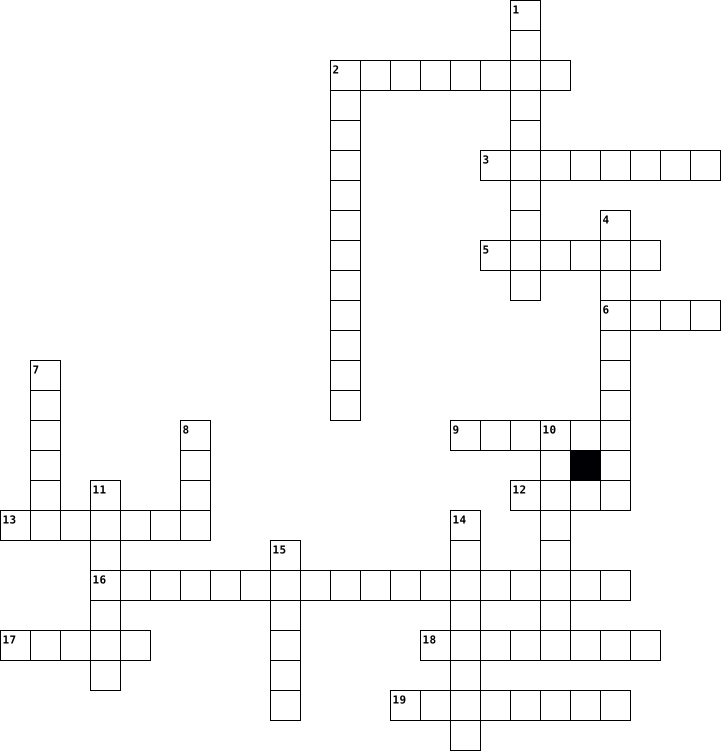
Across
- What was the idea that Snowball came up with to benefit animals on the farm?
- What did the pigs add to the commandment about drinking alcohol?
- Who loved hated to do work on the farm in the beginning of the rebellion?
- Which animals refused to give up their eggs to Napolean?
- Who was the dog who's puppies were taken?
- What animals did Napolean teach to obey him?
- Who owned Manor Farm?
- What was the imaginary heaven Moses dreamed of?
- Who was the most hardworking horse on the farm?
- Who was the pig that took over animal farm?
- Who was the owner of Pinchfield?
Down
- Who was the owner of Foxwood?
- What did the pigs add to the commandment about killing animals?
- What did the pigs add to the commandment about sleeping in beds?
- Who was the female horse on the farm?
- Who were the animals that ruled Animal Farm?
- Who was the pig that was chased out of the farm?
- What was the first battle, that took place in October?
- Who was the pig who's job was to convince the other animals to listen to Napolean?
- What did the pigs want to grow after having alcohol?
20 Clues: Who owned Manor Farm? • Who was the owner of Foxwood? • Who was the owner of Pinchfield? • Who was the female horse on the farm? • Who was the dog who's puppies were taken? • Who was the pig that took over animal farm? • Who were the animals that ruled Animal Farm? • What animals did Napolean teach to obey him? • What was the imaginary heaven Moses dreamed of? • ...
Review Test 2025-07-08

Across
- Fish and eggs are rich in ______________ that help our body to grow and repair itself.
- Fruits and vegetables are rich in vitamins and _____________.
- Our body has 70% of ___________.
- ____________are animals that eat plants only.
- Rice and noodles are rich in ______________ that give us energy.
- Life cycle of chicken starts from eggs to ________ to chick and to adult chicken.
- 19 - 65 years old.
- We breathe in air through nose, to ____________ and to our lungs.
- Life of cat begins from Newborn kitten to ___________ to adult cat.
- _________________ is a doctor of animals.
Down
- We breathe in ___________ from the air.
- 0 - 2 years old.
- ____________ are animals that eat both plants and animals.
- Adolescence is also known as ________________.
- Life of a butterfly begins from eggs, to larva, to _________ and to adult butterfly.
- 12 - 18 years old.
- above 66 years old.
- Humans and animals need _______, water, and air to survive.
- Life of a frog begins from eggs, to tadpole, to tadpole with hind legs, to ___________ and to adult frog.
- 3-11 years old.
- ____________ are animals that eat plants only.
- ______ foods are unhealthy foods.
- Water maintains our body _____________.
23 Clues: 3-11 years old. • 0 - 2 years old. • 12 - 18 years old. • 19 - 65 years old. • above 66 years old. • Our body has 70% of ___________. • ______ foods are unhealthy foods. • We breathe in ___________ from the air. • Water maintains our body _____________. • _________________ is a doctor of animals. • ____________are animals that eat plants only. • ...
Photosynthesis and Ecosystems 2023-04-12

Across
- One of the products of photosynthesis. It is the food of the plant.
- Plants make their own food. This means that plants are ________.
- The process where plants use light, carbon dioxide, and water to make sugar.
- Yes or No:Does photosynthesis occur in animals?
- Which is a producer? sun, grass, or cow?
- An organism that gets energy by eating other organisms.
- An organism that eats only animals.
- One of the things needed for photosynthesis to occur. It is absorbed by the roots of the plant.
- Type of plants or animals from another region of the world that take up the resources of native species.
- True or false: Animals that eat plants get energy from the sugar made during photosynthesis.
Down
- An organism that eats both plants and animals.
- One of the things needed for photosynthesis to occur. Humans and animals produce this when we breathe.
- all the different plants and animals in an ecosystem.
- Photosynthesis provides plants the materials they need to ______ and reproduce.
- An animal that hunts and eats other animals.
- One of the products of photosynthesis. Humans and animals need it to breathe.
- An organism that gets energy by breaking down the remains of dead organisms.
- Chain A diagram that shows how energy flows from a single kind of producer to a top predator.
- The original source of energy for most food chains.
- An organism that eats only plants.
- An organism that has always lived in any area is a _______ species.
- True or false: Photosynthesis changes light energy from the Sun into chemical energy.
- One of the things needed for photosynthesis to occur. Plants get this from the sun.
- An animal that is hunted and eaten.
24 Clues: An organism that eats only plants. • An organism that eats only animals. • An animal that is hunted and eaten. • Which is a producer? sun, grass, or cow? • An animal that hunts and eats other animals. • An organism that eats both plants and animals. • Yes or No:Does photosynthesis occur in animals? • The original source of energy for most food chains. • ...
Animal Farm - George Orwell 2015-12-19

Across
- A fictional book about animals is called a
- The animals made a poem about this animal called 'comrade
- Play Boisterously
- The farm was called ( ) farm before Animal Farm
- Who in the book represents Trotsky.
- This word was used before the animals name to make them seem more friendly
- What type of animal is Boxer
- The first pig that was the leader, Old
- Napoleon represents this famous Russian leader.
- Without interruption
- Euphemisms for 'fat'
- Finish this: four legs good, two legs
- This animal is related to Boxer
Down
- This animal has a very deceitful personality
- The animals want to build this so there is less work for them
- What is the song that the animals would always sing at the end of meetings, Beasts of
- Squealer is this type of animal
- Who was Napoleon's spokesman.
- The first battle was the battle of the
- Finish what Boxer says 'Napoleon is always
- The second battle that they have was called the battle of the
- Having a secret or hidden meaning
- The battle of the windmill was against this person.
- The animals thought Napoleon was dying after having to much
- This animal dies after being sent to be slaughtered
25 Clues: Play Boisterously • Without interruption • Euphemisms for 'fat' • What type of animal is Boxer • Who was Napoleon's spokesman. • Squealer is this type of animal • This animal is related to Boxer • Having a secret or hidden meaning • Who in the book represents Trotsky. • Finish this: four legs good, two legs • The first battle was the battle of the • ...
Ecosystems & Food Webs Vocabulary 2022-11-29

Across
- an animal that eats only plants
- a living thing that uses sunlight for energy
- the species variety & balance in an ecological community
- the role an organism plays in an ecosystem
- a consumer that eats both plants and animals
- living things
- all the different organisms that live within a habitat
- an animal that eats plants or other animals
- one organism benefits while the other is harmed
- common, mutually benefical among animals in a community
Down
- a community & the environment in which it lives
- an organisms surroundings consisting of living & nonliving things
- the process of learning the rules for interaction within a community group
- both organisms benefit from the relationship
- microorganism found in the ocean
- one organism benefits while the other is not affected
- an animal that is eaten by other animals
- two or more different species live together - positive partnership
- surroundings
- a living organism that breaks down dead organism into smaller parts that can be reused by other living organisms
- a consumer that eats only animals
- an organism that lives on another organism & harms it
- when two or more organisms need the same resource
- an animal that eats other animals
24 Clues: surroundings • living things • an animal that eats only plants • microorganism found in the ocean • a consumer that eats only animals • an animal that eats other animals • an animal that is eaten by other animals • the role an organism plays in an ecosystem • an animal that eats plants or other animals • both organisms benefit from the relationship • ...
Oysters' 2024-09-06

Across
- feeders It produces water in the animals' body
- A place where organisms grow and eat
- A type of mollusk
- To pull something up
- Palp It can send the food to the animals' gills
- surges When water rises to the land
- An organ that pumps blood to keep the body alive
- Muscle It is a working strength that can open and close an animal’s shell
- To sink or to dip in
- It is in the outside of an animal and its hard so it can protect them
- When the land goes down and up
- A type of skin that protects the oysters' organisms
Down
- A tool that used to measure oyster’s growth
- To take too much from a specific item
- It is mostly in animals' neck and lets them breath underwater and the surface
- Where an animal loses its home
- Animals with closed shells
- Used to consume food and other liquids and other edible stuff
- Where animals form into a large group
- Something that holds the shell in its form
- Species Animals that are important or the ecosystem
- It has smaller shells
22 Clues: A type of mollusk • To pull something up • To sink or to dip in • It has smaller shells • Animals with closed shells • Where an animal loses its home • When the land goes down and up • A place where organisms grow and eat • To take too much from a specific item • Where animals form into a large group • Something that holds the shell in its form • ...
Oceanography Crew Miller 2025-02-12

Across
- animals that only eat meat
- symmetry spherical equality across the body of an organism
- is a body plan that is in a vase shape form
- animals without a backbone
- is a body plain named for cnidaria animals shaped like a bell
- a type of symmetry seen in sponges
- decaying organic material
- sponges reproduce asexually by using these
Down
- referred to as the bottom side of an animal furthest from the surface
- a type of organism that does not move a lot because they are attached to something
- is the arrangement of body parts across a axis displaying everything being equal
- referred to as the top side of an animal
- genetically identical organism produced by a bud on the side of the parent organism
- when sperm fertilizes the egg it creates an
- itchy scratchy pain caused by stinging cells
- when both sexes in a species can produce sperm and eggs
- sac-like animals like jellyfish
- animals that do not move and their movement is determined by the water movements
- a specialized equilibrium that allows jellyfish to determine if they are upside down
- stinging cells on the testicles of cnidaria animals
20 Clues: decaying organic material • animals that only eat meat • animals without a backbone • sac-like animals like jellyfish • a type of symmetry seen in sponges • referred to as the top side of an animal • sponges reproduce asexually by using these • when sperm fertilizes the egg it creates an • is a body plan that is in a vase shape form • ...
Review Unit 5 2025-05-06

Across
- A small body of water.
- Dirty or not clean.
- rabbit Small rabbits that live near volcanoes in Mexico.
- An animal that hunts other animals.
- crab A big crab that can open coconuts.
- To keep safe.
- Very, very strange.
- The soft hair on animals.
- bat The world’s smallest bat, very tiny like a bug.
- A water animal with gills that looks like a fish but is not really a fish.
- devil Small animals from Australia that make loud noises and have strong teeth.
- Not normal or different.
- panda A small red animal with a long, bushy tail.
Down
- Gone forever.
- fish A deep-sea fish with a light on its head to catch food.
- dragon A very big lizard from Indonesia.
- Smart animals that look a bit like people.
- A big hole in a mountain or rock.
- Tiny animals with big eyes that live in trees.
- Odd or funny in a different way.
- Very few left; might disappear soon.
- The place where an animal lives.
- Something used to catch animals.
- condor Very big birds that can fly high in the sky.
24 Clues: Gone forever. • To keep safe. • Dirty or not clean. • Very, very strange. • A small body of water. • Not normal or different. • The soft hair on animals. • Odd or funny in a different way. • The place where an animal lives. • Something used to catch animals. • A big hole in a mountain or rock. • An animal that hunts other animals. • Very few left; might disappear soon. • ...
Natural selection 2025-05-14

Across
- humans selecting favorites
- something passed down
- characteristics passed down
- nature choosing favorites
- a group of people in a area
- where a species live
- farming
- evolutionary bioligist
- animals that get eaten by other animals
Down
- a child
- changes over time
- animals that eat other animals
- the best lives
- artificial selection
- anything thats living
15 Clues: a child • farming • the best lives • changes over time • artificial selection • where a species live • something passed down • anything thats living • evolutionary bioligist • nature choosing favorites • humans selecting favorites • characteristics passed down • a group of people in a area • animals that eat other animals • animals that get eaten by other animals
Biomes & Food Webs 2025-09-18

Across
- Animals that eat only plants.
- Web A diagram that shows energy flow.
- A community of living organisms interacting with each other and their environment.
- Rainy, warm biome with high biodiversity.
- Animals that eat only meat.
- A large area with similar climate, plants, and animals.
- Biome with tall grasses, few trees.
- Organisms that get energy by eating other organisms.
- Primary consumers eat mostly _____.
Down
- Organisms that break down dead matter.
- Biome with many trees, four seasons.
- ______ consumers eat herbivores.
- Animals that eat both plants and animals.
- Large dry biome with little rainfall..
- Organisms that make their own food.
- Largest biome, covers most of Earth
- Biome with frozen soil called permafrost.
17 Clues: Animals that eat only meat. • Animals that eat only plants. • ______ consumers eat herbivores. • Organisms that make their own food. • Largest biome, covers most of Earth • Biome with tall grasses, few trees. • Primary consumers eat mostly _____. • Biome with many trees, four seasons. • Web A diagram that shows energy flow. • Organisms that break down dead matter. • ...
Ear to Ear 2025-07-20

Across
- The natural method animals use to hide from predators.
- A flying bird that mimics human voice.
- A black-and-white striped animal that uses camouflage
- These make it hard for predators to identify zebras.
- A flying animal with feathers, mentioned in your table.
- These natural traits help animals survive.
- Big cat that uses stripes to hide in grass
Down
- A domestic mammal that moos and gives birth to young ones.
- Patterns or markings on animals are due to this
- These are found on birds instead of hair
- These animals lay eggs.
- A small insect that lays eggs and is common in homes.
- Type of reproduction where animals give birth to young ones.
- A cold-blooded egg-laying animal that can stick to walls.
- Tall plant in which tigers and zebras hide.
- Class of animals with hair on their body.
- A domestic animal with hair, part of class Mammalia.
17 Clues: These animals lay eggs. • A flying bird that mimics human voice. • These are found on birds instead of hair • Class of animals with hair on their body. • These natural traits help animals survive. • Big cat that uses stripes to hide in grass • Tall plant in which tigers and zebras hide. • Patterns or markings on animals are due to this • ...
Polar Region Vocabulary 2015-02-07

Across
- plants that live for more than two years
- grow in sheltered places on bare rock, and remains provide food for mosses
- allows animals to move over snow and ice easier
- allows warm blooded animals to survive harsh winter conditions by living in close quarters in a dormant condition
- carcass of a dead animal
- long stems some plants produce
- prevent heat loss
- takes nitrogen from air and converts it to ammonia to produce amino acids
- allows many animals to maintain their body temperature even though the environmental temperature surrounding them plunges well below zero
- provides insulations by trapping air, warmed by the body
Down
- allows animals to remove heavy accumulations of snow and ice to access food
- specific fat layer between the skin and muscle
- beyond permanent ice, ground may be frozen
- land of sedges, mosses, grasses, and lichens growing in patches
- fur fine, traps a layer of air warmed by the body
- dome-shaped hills near the edge of an ice sheet
- fur courser and waterproof
- speific function or position within a community of organisms
- allows smaller animals to survive away from the harsh polar conditions
- allows some animals to blend with their environment
20 Clues: prevent heat loss • carcass of a dead animal • fur courser and waterproof • long stems some plants produce • plants that live for more than two years • beyond permanent ice, ground may be frozen • specific fat layer between the skin and muscle • allows animals to move over snow and ice easier • dome-shaped hills near the edge of an ice sheet • ...
Ecosystems 2023-02-28

Across
- a group of organisms that live in an area together
- things in an environment like water, food, and space that animals need to survive
- a living thing that is being used to support the life of another
- an animal that eats other animals to survive
- to help (verb)
- a living thing that uses another living thing to stay alive
- living things that can't make their own food
- to try to get something that another animal is also trying to get
- an animal that eats only plants to survive
- an animal that hunts other animals for food
Down
- describes something that can hurt or cause damage (adj.)
- consumers that eat dead plants and animals, they break down dead material
- when two or more organisms are connected through their actions
- an animal that eats plants and other animals to survive
- a community of interacting living things and their environment
- to hurt or cause damage (verb)
- describes something that is helpful (adj.)
- one path that food energy takes through a community
- an animal that other animals hunt for food
- living things that make their own food
- more than one food chain in a community
21 Clues: to help (verb) • to hurt or cause damage (verb) • living things that make their own food • more than one food chain in a community • describes something that is helpful (adj.) • an animal that other animals hunt for food • an animal that eats only plants to survive • an animal that hunts other animals for food • an animal that eats other animals to survive • ...
Introducing Biology 2025-04-22

Across
- The father of Botany
- Biology The study of survival problems of living things in outer space
- The study of geographical distribution of plants and animals
- The study of metabolism of organisms and their parts
- The study of animals
- The study of structure and function of animals and plants cells
- The study of fungi
- The study of chemical and reactions that take place inside the living things. One of its numerous application is DNA fingerprinting
- The study of origin and descent of organisms
Down
- The study of minute structures or tiny bits of the body at tissue level as seen with the help of a compound microscope
- The study of bacteria
- The study of of gross structure of the organs in an organism as seen in dissection
- The study of fishes
- The study of diseases of plants and animals
- The study of plants
- The study of formation and development of embryo of plants and animals
- The first person to study animals in sufficient detail and he is called
- The study of the relationship of an organism to both its biotic and abiotic environment
- Biology The study of life in the sea
- The study of insects
20 Clues: The study of fungi • The study of fishes • The study of plants • The father of Botany • The study of animals • The study of insects • The study of bacteria • Biology The study of life in the sea • The study of diseases of plants and animals • The study of origin and descent of organisms • The study of metabolism of organisms and their parts • ...
Introducing Biology 2025-04-22

Across
- The father of Botany
- Biology The study of survival problems of living things in outer space
- The study of geographical distribution of plants and animals
- The study of metabolism of organisms and their parts
- The study of animals
- The study of structure and function of animals and plants cells
- The study of fungi
- The study of chemical and reactions that take place inside the living things. One of its numerous application is DNA fingerprinting
- The study of origin and descent of organisms
Down
- The study of minute structures or tiny bits of the body at tissue level as seen with the help of a compound microscope
- The study of bacteria
- The study of of gross structure of the organs in an organism as seen in dissection
- The study of fishes
- The study of diseases of plants and animals
- The study of plants
- The study of formation and development of embryo of plants and animals
- The first person to study animals in sufficient detail and he is called
- The study of the relationship of an organism to both its biotic and abiotic environment
- Biology The study of life in the sea
- The study of insects
20 Clues: The study of fungi • The study of fishes • The study of plants • The father of Botany • The study of animals • The study of insects • The study of bacteria • Biology The study of life in the sea • The study of diseases of plants and animals • The study of origin and descent of organisms • The study of metabolism of organisms and their parts • ...
Animal Science Crossword Puzzle 2021-08-31

Across
- Someone who oversees the daily operations of feed yards
- Someone who monitors and moves cattle around during a feeding operation
- Someone who is employed to help at a beef farm
- Someone who selects what a herd will eat
- Someone who is hired to buy and sell horses for breeding and racing
- Someone who styles/grooms animals
- Helps in the management of a mill and feed crews
- Someone who studies the genes of an animal
- Someone who sells animals at a public auction house
- Someone who grades the quality of livestock and meat
Down
- Someone who oversees all aspects of a sow farm
- Someone who takes care of birds of prey
- Someone who buys and sells livestock for a company or and individual
- Someone who oversees and manages a ranch
- Someone who manages honeybee colonies
- Rehabilitates animals who have undergone surgery or are in pain
- Someone who researches the food that animals eat and tries to make it better
- Someone who manages the day to day operations involving the animals of a ranch
- Someone who handles and takes care of animals on a farm
- Someone who specialises in the hoof care of horses
20 Clues: Someone who styles/grooms animals • Someone who manages honeybee colonies • Someone who takes care of birds of prey • Someone who oversees and manages a ranch • Someone who selects what a herd will eat • Someone who studies the genes of an animal • Someone who oversees all aspects of a sow farm • Someone who is employed to help at a beef farm • ...
Vertebrate animals 2026-04-01

Across
- The egg develops inside the mother's body
- Cannot regulate their body temperature
- Animals that feed on other animals
- Group to which snakes belong
- Group to which frogs and toads belong
- Fish with skeletons made of cartilage, like sharks
- Structure used by mammals, birds, and reptiles to breathe
- They have smooth, moist skin with glands
- Animals whose embryos develop in the mother's uterus
- Maintain a constant internal temperature
- Mammals that lay eggs
- Process amphibians undergo to transform from tadpole to adult
- They have a beak, two legs, and two wings
- The embryo develops inside a pouch in the mother's body
Down
- Animals that lay eggs
- They are called this because they have a backbone
- Group of reptiles that includes iguanas
- Group of reptiles to which turtles belong
- Animals with fins, scales, and gills
- Type of fish that have a skeleton made of bones
- Mammals with a placenta
- Group to which newts belong
- Animals that have lips and bodies covered with hair
- Variety of living beings on Earth
- Streamlined body shape of fish
- Glands that secrete milk in mammals
- Bony cover that protects the gills in bony fish
27 Clues: Animals that lay eggs • Mammals that lay eggs • Mammals with a placenta • Group to which newts belong • Group to which snakes belong • Streamlined body shape of fish • Variety of living beings on Earth • Animals that feed on other animals • Glands that secrete milk in mammals • Animals with fins, scales, and gills • Group to which frogs and toads belong • ...
Food chains and food webs 2014-06-09

Across
- organisms that eat the same food
- the animal who gets hunted
- an animal that eats a first order consumer
- the process that trees and grass use to make their own food
- a line of animals that eat other animals in a specific order
- organisms that eat other organisms or their products
- animals that only eat plants
Down
- another name for producer
- an animal who hunts another animal for its food
- as you move up the food chain/web there is less food energy to go around therefore fewer of each type of organisms
- they break down plant and animal remains into simple compounds
- an organism who makes their own food
- an animal that eats a producer
- animals that only eat other animals or meat
- those that eat both plants and meat
- another name for consumers, animals and fungi
- many food chains joined together
17 Clues: another name for producer • the animal who gets hunted • animals that only eat plants • an animal that eats a producer • organisms that eat the same food • many food chains joined together • those that eat both plants and meat • an organism who makes their own food • an animal that eats a first order consumer • animals that only eat other animals or meat • ...
ANIMAL CHARACTERISTICS 2024-01-08

Across
- INSECTS HAVE A HEAD, ABDOMEN, AND...
- ANIMALS THAT CAN MAKE THEIR BODY HEAT ARE CALLED _____ BLOODED
- 10-LEGGED CRUSTACEAN
- 8-LEGGED ANIMALS
- THIS MEANS TO BE STATIONARY OR UNABLE TO MOVE.
- SPONGES ARE FOUND UNDER THE PHYLUM _____ BECAUSE THEY ARE MALITTLE OF TINY LITLE PORES.
- ANIMALS THAT ARE DEPENDENT ON OUTSIDE SOURCES OF HEAT ARE ___ BLOODED.
- SPONGES ARE THE _____ FORM OF AN ANIMAL.
- JOINTED APPENDAGES
- ANIMALS LIKE SOME INSECTS HAVE AN OUTSIDE SKELETON CALLED AN...
- ANIMALS WITHOUT A BACKBONE ARE CALLED...
Down
- SPONGES ARE _______ MEANING THAT IT HAS TWO SIDES THAT ARE DIFFERENT.
- SPONGES LACK A _______ SYSTEM AND CANNOT FEEL ANYTHING.
- AN EXAMPLE OF AN INVERTEBRATE IS AN ANIMAL THAT IS VERY POROUS.
- THESE ARE TINY SPIKES THAT PROTECT THE SPONGE FROM PREDATORS.
- OUR SKELETON IS FOUND INSIDE OUR BODY AND IS CALLED AN ______ SKELETON.
- ANIMALS WITH A BACKBONE ARE CALLED...
17 Clues: 8-LEGGED ANIMALS • JOINTED APPENDAGES • 10-LEGGED CRUSTACEAN • INSECTS HAVE A HEAD, ABDOMEN, AND... • ANIMALS WITH A BACKBONE ARE CALLED... • SPONGES ARE THE _____ FORM OF AN ANIMAL. • ANIMALS WITHOUT A BACKBONE ARE CALLED... • THIS MEANS TO BE STATIONARY OR UNABLE TO MOVE. • SPONGES LACK A _______ SYSTEM AND CANNOT FEEL ANYTHING. • ...
Animal Farm 2013-06-16

Across
- In the end, Clover descovered that all the pigs were ____
- Whatever goes on two legs is a(n) ___
- The farmer who tricked Napoleon into free lumber
- "No animal shall drink ___"
- The battle with the humans after they blew up their hard work, the Battle of ___
- The hens had to give up their ___
- Inspired the rebellion
- All animals are ___
- The animals that got special treatment
- The pig who was chaced away and was blamed for everything bad that happened
- Mr.Pilkington's farm
- The raven who created mischief
- Boxers other motto is "Napoleon is always ___"
- No animal shall sleep in a ___
Down
- The white goat. Muriel can read fairly well and helps read the Seven Commandments.
- The song the animals sand was called "Beasts of ___"
- The man who works for the animals every Monday
- The old donkey that was the wisest of the animals
- Mr.Fredricks farm
- Whatever goes upon four legs, or has wings, is a(n) ___
- No animal shall ___ another animal
- Napoleon's messenger pig
- No animal shall wear ___
- Napolean trained them to protected him and slaughter the animals.
- One of Boxer's mottos was "I will ___ harder"
- The animal who lead all of the animals
- Animal Farm's old name, the ___ Farm
- The battle with the humans for the farm the Battle of ___
- The horrible farmer who did not take care of the animals
- The hard working horse
- The other horse who is Bokers friend
- The white mane who wore ribbons all of the time
- Four legs ___
- The animal who gave their eggs to sell
- Two legs ___
35 Clues: Two legs ___ • Four legs ___ • Mr.Fredricks farm • All animals are ___ • Mr.Pilkington's farm • Inspired the rebellion • The hard working horse • Napoleon's messenger pig • No animal shall wear ___ • "No animal shall drink ___" • The raven who created mischief • No animal shall sleep in a ___ • The hens had to give up their ___ • No animal shall ___ another animal • ...
Ecosystems 2024-11-10

Across
- Adaptations. Changes in how a living thing's body works to help it survive in its environment.
- A living thing that can make its own food. This includes all green plants on land.
- Living parts of the environment, including all plants and animals.
- When a type of plant or animal completely dies out and no longer exists on Earth.
- The place where a plant or animal naturally lives and grows.
- The process plants use to make their own food using sunlight, water, and air.
- Non-living parts of the environment, like water, air, and rocks.
- Adaptations. Actions or behaviors that help a living thing survive in its environment.
- living thing that eats other living things for food. This includes all animals.
- An animal that eats both plants and other animals.
- A community of living things and their environment, working together as a system.
- A living thing that is hunted by predators for food.
Down
- An animal that only eats other animals or parts of animals.
- Impact. The ways people change or affect the natural environment.
- The way living things rely on each other and their environment to survive.
- Adaptations. Physical features that help a living thing survive in its environment.
- Change. Long-term changes in temperature and weather patterns on Earth.
- A living thing that hunts and kills other animals for food.
- An animal that only eats plants.
- A type of plant or animal that is at risk of becoming extinct.
- A living thing that eats dead animals it didn't kill itself.
- A living thing that breaks down dead plants and animals into simpler parts.
22 Clues: An animal that only eats plants. • An animal that eats both plants and other animals. • A living thing that is hunted by predators for food. • An animal that only eats other animals or parts of animals. • A living thing that hunts and kills other animals for food. • The place where a plant or animal naturally lives and grows. • ...
Animal Farm 2024-10-15

Across
- What is the name of an imagined society in which everything is perfect?
- What is the name of an imagined society where there is great suffering or injustice?
- What is the name of the hard-working horse who eventually collapses from exhaustion?
- Who destroys the project the animals had been working on the second time?
- Who wrote Animal Farm?
- What kind of animal does the tyrrant leader pig "educate"?
- What is the set of rules the animals set for themselves after taking over the farm?
- How many hens die after protesting unfair treatment?
Down
- What type of structure does the book Animal Farm have?
- Which historical event inspired Animal Farm?
- What is the name for the fight between the humans and animals where the animals win?
- Which character reveals his dream to the other animals at the start?
- What is the name of the pig who is an excellent public speaker and is loyal to the tyrant leader pig?
- What is the name of the farm the animals live on to begin with?
- What is the word used when words, images or films are used to try and make people think a certain way?
- What type of story is Animal Farm (think fairy tale)?
- What initially destroys the project the animals worked together to build?
- Which human runs the farm to begin with?
- What is the name of the other pig who also takes over after the first pig dies (begins with N)?
- What do the animals work together to build?
- What is the name of the pig who takes over after the first pig dies but is eventually run off (begins with S)?
21 Clues: Who wrote Animal Farm? • Which human runs the farm to begin with? • What do the animals work together to build? • Which historical event inspired Animal Farm? • How many hens die after protesting unfair treatment? • What type of story is Animal Farm (think fairy tale)? • What type of structure does the book Animal Farm have? • ...
Animal Rights 2014-03-17

Across
- the practice of testing products on animals
- treat with cruelty or with violence
- the sale of ivory from elephant tusks
- rights believed to belong to animals to live free from destructivity
- the use of nonhuman animals used as experiments
- painful surgery to make a dogs ears "look better"
- a person who will not eat meat or any animal products
- seriously at risk of extinction
- illegal hunting , killing, or capturing of wild animals
- a type of jawless fish such as lampreys and hagfish
Down
- a person who will not eat meat
- the painful removing of a birds beak
- having no living members
- rescue of animals conducted openly without masks or other to hide identity
- farming or hunting animals for their fur
- small metal crate where mother pigs almost her entire adult with no room to move
- an illegal organized fight between dogs used as entertainment
17 Clues: having no living members • a person who will not eat meat • seriously at risk of extinction • treat with cruelty or with violence • the painful removing of a birds beak • the sale of ivory from elephant tusks • farming or hunting animals for their fur • the practice of testing products on animals • the use of nonhuman animals used as experiments • ...
Ecosystems Samuel Cossio Perez 6A 2020-10-23

Across
- an ecosystem that recibes aquatic creatures
- the harm that someone or something does to the ecosystem when the ecosystem ends up destructed.
- a web in which a animal eats another animal and that animal gets eaten
- the damage that the ecosystem gets from something or someone.
- the danger that some species in the ecosystem have because of something or because of someone
- animals that invade the ecosystem
- the ability to recover from any harm made to animals or plants
- the species that are from the ecosystem
- an ecosystem that recibes animals that live in wet conditions and in forests.
Down
- an ecosystem that recibes mountain creatures
- natural park in southern Florida
- the nutrients that the animals need to live
- different variations of animals in an ecosystem community of animals and plants in a place
- The action in which humans drop a unwanted pet into a place for example unwanted pythons usually are dropped to desserts.
- ecosystems the ecosystems in which usually pets live.
- when the ecosystem doesn't have any water
- an ecosystem that recibes animals that adapt to extreme temperatures
17 Clues: natural park in southern Florida • animals that invade the ecosystem • the species that are from the ecosystem • when the ecosystem doesn't have any water • an ecosystem that recibes aquatic creatures • the nutrients that the animals need to live • an ecosystem that recibes mountain creatures • ecosystems the ecosystems in which usually pets live. • ...
BIOLOGY SEC. 16-1. 2026-02-26

Across
- Animals that do not have a backbone (makes up 95% of animal species).
- The movement of blood or nutrients throughout the body.
- An organism in the phylum Chordata, possessing a notochord at some stage.
- The outermost germ layer; develops into skin and nervous system.
- "Cold-blooded"; animals that rely on the environment for body heat.
- Animals with jointed legs and an exoskeleton (e.g., Insects, Spiders).
- "Warm-blooded"; animals that generate body heat internally.
- Plan, The structural design or "blueprint" of an animal's body.
- The maintenance of a stable internal environment despite external changes.
- A support system maintained by fluid pressure (e.g., jellyfish, worms).
Down
- Animals with stinging cells and radial symmetry (e.g., Sea Anemone).
- Animals that possess a backbone or spinal column.
- Symmetry, Body parts arranged around a central axis (like a wheel or starfish).
- The concentration of sense organs and nerve cells at the head end.
- The middle germ layer; develops into muscles and circulatory system.
- The ability to change position; can be motile or Sessile (fixed in one place).
- Simple aquatic animals (Porifera) that lack true tissues or organs.
- A hard, external support structure (e.g., shells of insects or crabs).
- Symmetry, Can be divided into two identical halves (left/right) along a single plane.
- Spiny-skinned marine animals (e.g., Starfish, Sea Urchin).
- The process by which organisms produce offspring.
- The exchange of oxygen and carbon dioxide gases.
- An internal skeleton or supporting framework (e.g., human bones).
- Animalia, A kingdom of multicellular, eukaryotic organisms that are heterotrophic.
- The innermost germ layer; develops into the lining of digestive tract.
- A hollow ball of cells formed during early embryonic development.
26 Clues: The exchange of oxygen and carbon dioxide gases. • Animals that possess a backbone or spinal column. • The process by which organisms produce offspring. • The movement of blood or nutrients throughout the body. • Spiny-skinned marine animals (e.g., Starfish, Sea Urchin). • "Warm-blooded"; animals that generate body heat internally. • ...