
body parts Crossword Puzzles
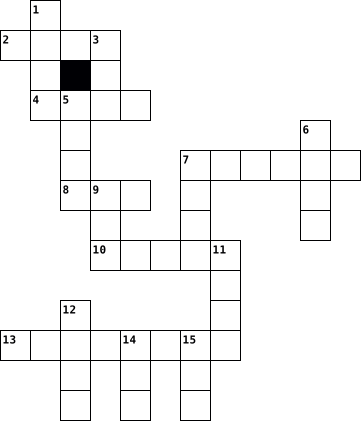
Infants Growth and Development 2018-12-04

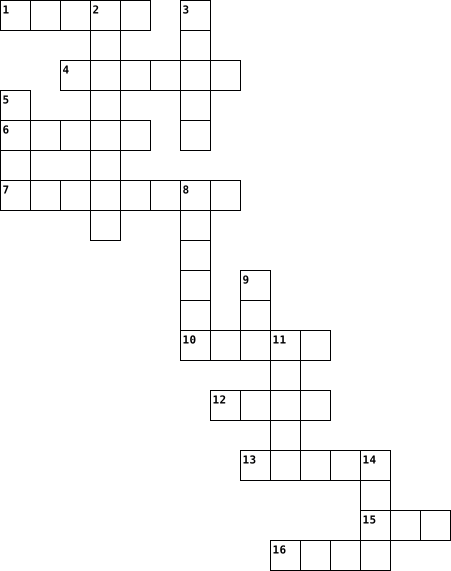
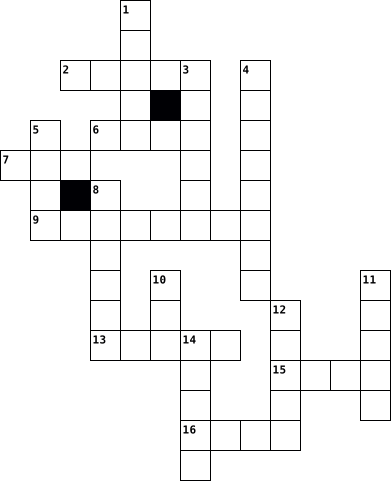
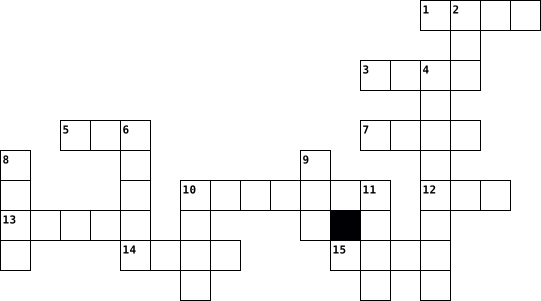
Across
- a condition that includes patches of rough red irritated skin in the diaper area
- key skill used to check a child's progress
- skill that involves with large muscles of the body
- size relationship between different body parts
- a skin condition known for yellowish crusty patches on scalp
- a condition that occurs when the baby is severely shaken
- a shot of a small amount of a dead or weakened disease so the body can build resistance
- inadequate nutrition
Down
- the ability to perceive objects that are 3D
- the average weight and height of boys and girl at various ages
- an environment in which the baby has a wide variety of things using their senses
- ability to move the hands and fingers precisely in relation to what is seen
- an instinctive, automatic response
- involves the smaller muscles of the body
- changing from drinking formula to a cup
- the disease-carrying germ that usually in injected into the body
- a substance produced by the body to fight off germs
- the process of the teeth pushing their way through the gums
18 Clues: inadequate nutrition • an instinctive, automatic response • changing from drinking formula to a cup • involves the smaller muscles of the body • key skill used to check a child's progress • the ability to perceive objects that are 3D • size relationship between different body parts • skill that involves with large muscles of the body • ...
NERVOUS SYSTEM 2025-02-17

Across
- The loss of the ability to move parts of the body due to nervous system injury
- Chemicals that help carry messages between neurons
- Nutrients that help maintain the health of neurons
- Branch-like structures that receive signals from other neurons
- The part of the brain that controls balance and coordination
- A long fiber that carries messages away from the cell body
- The bundle of nerves that runs from the brain down the back
- Cells in the nervous system that transmit electrical signals
- The system of nerves that branch out from the spinal cord
- Cells that send electrical signals throughout the body
- The largest part of the brain, responsible for thinking and voluntary movements
Down
- A bundle of nerves that connects the brain to the body
- The ability to stay upright and steady
- The main part of a neuron that contains the nucleus
- The tiny gap between neurons where messages are transmitted
- The system made up of the brain and spinal cord
- The control center of the body, responsible for processing information
- The body system that controls all body functions, actions, and reactions
- The part of the brain that controls automatic functions like heartbeat
- Quick, automatic reactions that do not involve the brain
20 Clues: The ability to stay upright and steady • The system made up of the brain and spinal cord • Chemicals that help carry messages between neurons • Nutrients that help maintain the health of neurons • The main part of a neuron that contains the nucleus • A bundle of nerves that connects the brain to the body • Cells that send electrical signals throughout the body • ...
Introduction to muscles 2020-09-16

Across
- connective tissue that envelops or separates parts of the body
- prime mover
- Contralateral muscles
- proximal attachment of a muscle
- movement against gravity
- movement of the joint causing a concentric contraction of a muscle
- Connective tissue that connects muscles to
- assist in guiding for refined movement
- Central or fleshy part of the muscle
- also known as isotonic
Down
- connective tissue that is sheet like
- no movement in the joints
- fixators
- movement with gravity
- pertaining to muscles that arise outside the body
- pertaining to muscles within
16 Clues: fixators • prime mover • Contralateral muscles • movement with gravity • also known as isotonic • movement against gravity • no movement in the joints • pertaining to muscles within • proximal attachment of a muscle • connective tissue that is sheet like • Central or fleshy part of the muscle • assist in guiding for refined movement • Connective tissue that connects muscles to • ...
Human body systems 2020-12-11

Across
- System that discharges wastes.
- Helps the body digest food
- System that permits movement of the body
- Organs that help you breathe .
- The most complex part of the human body.
- Two or more bones meet to allow movement.
Down
- Transmits nerve impulses between parts of the body.
- System that regulates blood volume and blood pressure
- System that permits blood and transports nutrients.
- System with all the bones and joints in the body .
10 Clues: Helps the body digest food • System that discharges wastes. • Organs that help you breathe . • System that permits movement of the body • The most complex part of the human body. • Two or more bones meet to allow movement. • System with all the bones and joints in the body . • Transmits nerve impulses between parts of the body. • ...
Bolivar,Davila,Parra,Vera,Franco crossword puzzle 2020-12-04

Across
- something happens before an expected time
- not filled or occupied
- is better than good
- in all the places and parts
- a body part
Down
- a detailed inspection or study.
- a person who explores a new area.
- machine with parts that converts power in motion.
- used to emphasize something surprising
- this coat is too...
10 Clues: a body part • is better than good • this coat is too... • not filled or occupied • in all the places and parts • a detailed inspection or study. • a person who explores a new area. • used to emphasize something surprising • something happens before an expected time • machine with parts that converts power in motion.
4 Tissues of the Body 2021-10-11

Across
- Unmineralized loose connective tissue
- Muscle, Attached to bones, tendons, or other muscles
- Muscle, Involuntary actions and cannot be stimulated to contract
- Tissue, Coordinates, and controls many body activities
- Tissue, Major support material of the body and connects organs and tissues
- Tissue, Move body parts; can lengthen and shorten
- Tissue, Covering for the external and internal body
- Basic cells of nervous tissue are called
Down
- junctions, Tissues are held together by structures called
- Ligament, Fibrous connective tissue fibers that connect the root of the tooth to its socket
- Muscle, Only in the heart
- Uncontrolled movement such as food being moved along the digestive tract or heart pumping blood throughout the body
- Controlled movement such as moving an arm or leg
- Formed when millions of the same type of cell join together to perform a specific function for the body
- Raises the mandible and allows us to open and close the mouth
15 Clues: Muscle, Only in the heart • Unmineralized loose connective tissue • Basic cells of nervous tissue are called • Controlled movement such as moving an arm or leg • Tissue, Move body parts; can lengthen and shorten • Tissue, Covering for the external and internal body • Muscle, Attached to bones, tendons, or other muscles • ...
Skeletal System & Nervous System 2017-11-14

Across
- A place where two bones meet
- This system controls all the functions of the body
- the muscles of the digestive system
- The longest bone in a human body
- The largest part of brain
- This part of the skeletal system has 22 bones
- Thin membrane-like structure that vibrates on receiving sound
- A transparent layer that covers the front of the eye
- ____ joint allows back and forth movement
Down
- Muscles are _____ that covers the bones
- _____ nerves carries messages from the brain to the different parts of our body
- the joint at the base of the skull and first two vertebrae
- These carry messages
- An automatic response of the body to an event
- heart and lungs are protected by _______
15 Clues: These carry messages • The largest part of brain • A place where two bones meet • The longest bone in a human body • the muscles of the digestive system • Muscles are _____ that covers the bones • heart and lungs are protected by _______ • ____ joint allows back and forth movement • An automatic response of the body to an event • This part of the skeletal system has 22 bones • ...
The Tissue Quiz and System 2025-11-21

Across
- Takes oxygen and uses it to pump blood throughout the body.
- The network that sends massage to the brain and allows you to feel
- Covers the inner and outer of organs
- Pumps blood and nutrient
- Take oxygen from outside to be used to pump blood
- Makes movement of the body and it parts
- The thing that has acid and digest your food
Down
- Organs make up that get the nutrient from the food and turn it into the energy
- Supports and binds other tissue and organs
- Cells make up is
- Organ makes up this
- Sends massage throughout the body
- Takes the nutrients from the foods through absorption
- Tissue makes up this
- The things that make up everything in your body
15 Clues: Cells make up is • Organ makes up this • Tissue makes up this • Pumps blood and nutrient • Sends massage throughout the body • Covers the inner and outer of organs • Makes movement of the body and it parts • Supports and binds other tissue and organs • The thing that has acid and digest your food • The things that make up everything in your body • ...
Chapter 3&4 Vocabulary 2020-11-30

Across
- cold-blooded vertebrates with gills for breathing oxygen from water
- warm-blooded vertebrates that have feathers, beak with no teeth, two legs, and lay eggs with hard shells
- an animal that uses energy to keep a constant body temperature (endothermic)
- cold-blooded vertebrates that have waterproof skin, live on land, and lay eggs with leathery shells
- controls all the other body systems (controls senses, breathing, muscles, heart rate, etc.)
- made up of bones and supports & protects the body
- an animal with a backbone
- the way an animal’s body parts match up around a central line
- an internal supporting structure
- largest phyla of animal kingdom with jointed legs and a body divided into sections
Down
- cold-blooded vertebrates that live part of their lives in water and part on land
- removes liquid waste
- moves blood, water, and oxygen through the body
- made up of muscles that move bones
- an animal that gets heat from outside its body (exothermic)
- an animal without a backbone
- a group of organs that work together to carry on life functions
- warm-blooded vertebrates that have hair and usually give birth to live young which are fed milk
- breaks down food for energy
- a hard outer covering that protects and supports
- brings oxygen to the cells of the body and removes the waste gas carbon dioxide
21 Clues: removes liquid waste • an animal with a backbone • breaks down food for energy • an animal without a backbone • an internal supporting structure • made up of muscles that move bones • moves blood, water, and oxygen through the body • a hard outer covering that protects and supports • made up of bones and supports & protects the body • ...
Medical Terminology Crossword Puzzle 2025-09-04

Across
- Flexion pointing away from something
- angle formed bone joints
- complains of
- medial rotation anterior of a surface in the middle
- closest to a body
- of Motion amount of movement for something
- away from center
- farthest part of a body
- example is a dorsal fin
- away middle
- forearm towards
- upward scapula
- up or brain
- Laxity looseness in something of fingers
- midline of a body
- connects both
- chief complaint
- somewhere behind the body
- friction in bones that damage parts of bones
- somewhere in the midline body
- stretching something
- bent outwards
- abduction away from middle
- imcomplete separation
- to the body
- To push forwards
- toes midline
Down
- lateral rotation anterior of a surface that goes away
- adduction transverse plane infront
- separate and divorce
- tearing tendons or something else
- To pull backwards
- blood pressure
- underside of where you stand
- connects what to bones
- toes towards body
- holding a cup of soup
- long duration
- sudden onset
- toes outwards
- down or up on a structure
- downwards scapula
- activities of daily living
- twice a day
- somewhere looking straight of the body
- bent inward
- center of where your at
- bleeding underneath
- tenderness
- towards middle
- heat,ice,light,tape, electric stimulation
- except origin
52 Clues: tenderness • away middle • twice a day • up or brain • bent inward • to the body • complains of • sudden onset • toes midline • long duration • toes outwards • connects both • bent outwards • except origin • blood pressure • upward scapula • towards middle • forearm towards • chief complaint • away from center • To push forwards • closest to a body • To pull backwards • toes towards body • downwards scapula • ...
Unit 5 2023-11-12

Across
- one of the two parts of the body at each side of the neck that join the arms to the rest of the body
- the part in the middle of the arm where it bends
- one of many tissues in the body that can tighten and relax to produce movement
- the joint between the foot and the leg.
- any of the hard parts inside a human or animal that make up its frame
Down
- organs in the chest with which people breathe
- the part of the body between the hand and the arm
- the middle joint of the leg that allows the leg to bend
- the large, soft piece of flesh in the mouth that you can move, and is used for tasting, speaking
- the natural outer layer that covers a person
10 Clues: the joint between the foot and the leg. • the natural outer layer that covers a person • organs in the chest with which people breathe • the part in the middle of the arm where it bends • the part of the body between the hand and the arm • the middle joint of the leg that allows the leg to bend • any of the hard parts inside a human or animal that make up its frame • ...
Lesson 5 Vocabulary 2025-10-21

Across
- A digestive structure that mixes digestive juices with food and absorbs useful parts of the food.
- A material consisting of solid parts floating in liquid plasma, which moves substances through an animal’s body.
- Blood vessels that carry blood away from the heart.
- The process that breaks down food into smaller substances that the body can use.
Down
- A digestive structure that removes water from undigested food.
- A digestive structure lined with muscles that stir the food and mix it with digestive juices.
- Balloon-like structures in the bodies of some animals that take in air and release waste.
- Blood vessels that carry blood back toward the heart.
- The process of moving blood and the materials it carries through an animal’s body.
- A pump made of muscle that moves blood through the body.
10 Clues: Blood vessels that carry blood away from the heart. • Blood vessels that carry blood back toward the heart. • A pump made of muscle that moves blood through the body. • A digestive structure that removes water from undigested food. • The process that breaks down food into smaller substances that the body can use. • ...
Unit 1 review words 2022-03-23

Across
- make their own food directly from sunlight
- is an organism's ability to maintain stable internal conditions thus preventing death
- organisms are made up of only one cell that carries out functions
- no nucleus
- contain a nucleus
- quality descriptions
- uses egg and sperm to produce offspring
- becomes different or specialized
Down
- organisms made up of more than one cell
- how your body uses energy
- the nonliving parts of an environment
- numbers descriptions
- identical copies of themselves
- the parts of an environment that are living or dead
- eat other things to get the suns energy
15 Clues: no nucleus • contain a nucleus • numbers descriptions • quality descriptions • how your body uses energy • identical copies of themselves • becomes different or specialized • the nonliving parts of an environment • organisms made up of more than one cell • eat other things to get the suns energy • uses egg and sperm to produce offspring • make their own food directly from sunlight • ...
CELL CROSSWORD 2025-10-31

Across
- transports biomolecules to other parts of the cell
- powerhouse of the cell
- delivery vehicles of the products provided from golgi body
- they are green and only in plat cells
- separates nucleus from the rest of the cell
- storage compartments
- produces ribosomes
- covered in ribosomes
- digestion/recycling of old cell parts
Down
- the outer most layer of animal cells
- stringy DNA in the nucleus during cell division
- rigid most outer layer only in plant, algae, and funi cells
- produces and processes biomolecules
- produces protein
- the cell organelle that houses the nucleolus
15 Clues: produces protein • produces ribosomes • storage compartments • covered in ribosomes • powerhouse of the cell • produces and processes biomolecules • the outer most layer of animal cells • they are green and only in plat cells • digestion/recycling of old cell parts • separates nucleus from the rest of the cell • the cell organelle that houses the nucleolus • ...
body 2012-04-10
Across
- jalg
- keha
- hiir
- suu
- aken
- nina
- vasak cloud pilv
- pea
Down
- varvas
- lamp
- puudutama
- õlg
- parem
- põlv
- koos
- silm
16 Clues: õlg • suu • pea • jalg • lamp • keha • hiir • põlv • aken • koos • nina • silm • parem • varvas • puudutama • vasak cloud pilv
Body 2022-02-07
Across
- jalad
- põlv
- sõrm
- kõrv
- suu
- õlg
Down
- kael
- varvas
- nina
- pea
- jalg
- käsivars
- juuksed
- keha
- jalasäär
- silm
16 Clues: pea • suu • õlg • kael • põlv • nina • sõrm • jalg • kõrv • keha • silm • jalad • varvas • juuksed • käsivars • jalasäär
Body 2024-04-04
Across
- The front surface of the body between the neck and the abdomen, containing the heart and lungs.
- The joint connecting the arm to the torso, providing a wide range of motion for the arm.
- O
- The opening in the face through which food is taken in and vocal sounds are emitted.
- The part of the body that connects the head to the torso, supporting the weight of the head.
- The rear surface of the human body from the shoulders to the hips, opposite the chest.
Down
- The lower limb of the human body, extending from the hip to the ankle, containing the thigh, calf, and foot.
- The end part of the arm beyond the wrist, including the palm, fingers, and thumb.
- One of the five digits of the foot, used for balance and propulsion while walking or running.
- The organ of hearing and balance in humans and other vertebrates, located on the sides of the head.
- The don't
- The upper limb of the human body, between the shoulder and the wrist, containing the biceps and triceps muscles.
- The part of the face that protrudes above the mouth, used for breathing and smelling.
- The organ of sight, consisting of a spherical eyeball and various structures surrounding it.
- The lower extremity of the leg below the ankle, on which a person stands or walks.
- The upper part of the human body, containing the brain, eyes, nose, mouth, and other sensory organs.
16 Clues: O • The don't • The end part of the arm beyond the wrist, including the palm, fingers, and thumb. • The lower extremity of the leg below the ankle, on which a person stands or walks. • The opening in the face through which food is taken in and vocal sounds are emitted. • The part of the face that protrudes above the mouth, used for breathing and smelling. • ...
body 2023-07-03
Across
- The organ in the body where food is digested.
- The muscular organ in the mouth used for tasting and speaking.
- The opening in the face used for eating and speaking.
- The joint in the middle of the leg that allows bending.
- The rear surface of the body from the shoulders to the waist.
- The front part of the body between the neck and the abdomen.
- The organ of sight located in the head.
- The organ of hearing located on the side of the head.
Down
- The lower limb of the body used for standing and walking.
- The lower extremity of the leg used for walking and standing.
- The joint connecting the arm to the body.
- The part of the body at the end of the arm with fingers.
- The hard structures in the mouth used for biting and chewing.
- The upper part of the body that contains the face and brain.
- The part of the face used for smelling and breathing.
- The upper limb of the body extending from the shoulder to the hand.
16 Clues: The organ of sight located in the head. • The joint connecting the arm to the body. • The organ in the body where food is digested. • The opening in the face used for eating and speaking. • The part of the face used for smelling and breathing. • The organ of hearing located on the side of the head. • The joint in the middle of the leg that allows bending. • ...
Body 2023-06-21
Across
- The lower extremity of the leg, below the ankle and consisting of the heel, sole, and toes.
- One of the two lower limbs of the body, extending from the hip to the foot.
- The part of the body at the end of the arm, consisting of the palm, fingers, and thumb.
- The joint that connects the thigh to the lower leg, allowing movement and support.
- The joint between the forearm and the upper arm, allowing bending and straightening of the arm.
- The joint connecting the arm to the body, allowing movement and flexibility of the arm.
- One of the two upper limbs of the body, extending from the shoulder to the hand.
- One of the digits of the foot, usually excluding the big toe.
- The internal organ in the abdomen where food is digested and processed.
Down
- The part of the body that connects the head to the rest of the body, supporting the head and allowing movement.
- One of the digits of the hand, usually excluding the thumb.
- The upper part of the body that contains the brain, eyes, nose, mouth, and other facial features.
- The front part of the body between the neck and the abdomen, containing the heart and lungs.
- The organ of hearing and balance, located on the sides of the head.
- Hard, calcified structures in the mouth used for biting and chewing food.
- The rear surface of the human body, from the shoulders to the hips.
16 Clues: One of the digits of the hand, usually excluding the thumb. • One of the digits of the foot, usually excluding the big toe. • The organ of hearing and balance, located on the sides of the head. • The rear surface of the human body, from the shoulders to the hips. • The internal organ in the abdomen where food is digested and processed. • ...
body 2023-06-16
Across
- The posterior part of the body, from the shoulders to the hips.
- The organ of sight located in the head.
- The upper limb of the body extending from the shoulder to the hand.
- The joint connecting the arm to the body.
- The terminal part of the leg that supports the body and is used for walking.
- The digit on the foot, typically there are five toes on each foot.
- The part of the body at the end of the arm, used for grasping and manipulating objects.
Down
- The organ in the abdomen responsible for digestion.
- The front part of the body between the neck and the abdomen.
- The uppermost part of the body that contains the brain, eyes, nose, and mouth.
- The organ of hearing located on the side of the head.
- The facial organ used for smelling and breathing.
- The opening in the face used for eating, speaking, and tasting.
- The lower limb of the body extending from the hip to the foot.
- The joint between the thigh and the lower leg.
- The slender appendage on the hand used for gripping and touching.
16 Clues: The organ of sight located in the head. • The joint connecting the arm to the body. • The joint between the thigh and the lower leg. • The facial organ used for smelling and breathing. • The organ in the abdomen responsible for digestion. • The organ of hearing located on the side of the head. • The front part of the body between the neck and the abdomen. • ...
Body 2023-06-26
Across
- The joint that connects the thigh to the lower leg, allowing bending and straightening.
- The upper limb of the body that extends from the shoulder to the hand.
- Hard structures in the mouth used for biting and chewing food.
- The organ in the body where food is digested, located in the abdomen.
- The organ responsible for vision, located on the face.
- The rear surface of the body, from the shoulders to the waist.
- The facial feature that sticks out above the mouth, used for smelling.
Down
- The part of the body at the end of the arm, with fingers and a palm.
- The organ responsible for hearing, located on the sides of the head.
- The opening in the face through which food is eaten and words are spoken.
- The part of the body at the end of the leg, used for standing and walking.
- The uppermost part of the body that contains the brain and the face.
- The area of the body between the neck and the abdomen, containing the heart and lungs.
- The strands that grow from the scalp and can be styled in different ways.
- The lower limb of the body that extends from the hip to the foot.
- The outer covering of the body that protects the underlying tissues.
16 Clues: The organ responsible for vision, located on the face. • Hard structures in the mouth used for biting and chewing food. • The rear surface of the body, from the shoulders to the waist. • The lower limb of the body that extends from the hip to the foot. • The part of the body at the end of the arm, with fingers and a palm. • ...
Body 2023-06-21
Across
- It's the front part of the head, including the forehead, eyes, nose, and mouth.
- It's the part of the face used for smelling and breathing.
- It's the upper part of the body where the face is located.
- It's the opening in the face used for eating and speaking.
- It's one of the digits on the foot.
- It's the joint connecting the arm to the body.
- It's one of the digits on the hand.
Down
- It's the terminal part of the leg used for standing and walking.
- It's the organ of sight in the body.
- It's the part of the body at the end of the arm, used for grasping and manipulating objects.
- It's the upper limb of the body, extending from the shoulder to the hand.
- It's a hard structure in the mouth used for biting and chewing.
- It's the thin strands that grow on the head.
- It's one of the limbs that supports the body and helps in walking.
- It's the organ of hearing on the side of the head.
- It's the part of the body that connects the head to the rest of the body.
16 Clues: It's one of the digits on the foot. • It's one of the digits on the hand. • It's the organ of sight in the body. • It's the thin strands that grow on the head. • It's the joint connecting the arm to the body. • It's the organ of hearing on the side of the head. • It's the part of the face used for smelling and breathing. • ...
Body 2022-12-09
Across
- jalad
- põlv
- sõrm
- kõrv
- suu
- õlg
Down
- kael
- varvas
- nina
- pea
- jalg
- käsivars
- juuksed
- keha
- jalasäär
- silm
16 Clues: pea • suu • õlg • kael • põlv • nina • sõrm • jalg • kõrv • keha • silm • jalad • varvas • juuksed • käsivars • jalasäär
body 2025-09-22

Across
- teeth
- finger
- arm
- elbow
- neck
- hand
- leg
- knee
Down
- horn
- hair
- head
- mouth
- foot
- eye
- wing
- nose
16 Clues: arm • eye • leg • horn • hair • head • foot • neck • hand • wing • nose • knee • teeth • mouth • elbow • finger
Unit 2: Animal Science Vocab 2024-08-30

Across
- a group of ductless glands that release hormones into the body.
- hair from Angora goats used to make a shiny, heavy, wooly fabric.
- female of the swine family that has given birth.
- the process whereby all body parts receive materials needed for function, growth, and renewal.
- animal with a single compartment stomach.
- giving birth in the swine family.
- chemicals that regulate many of the activities of the body.
- milk production.
- system that removes waste materials from the blood.
- member of the sheep family less than one year old; also meat from young sheep.
- the lean meat of the animal.
- female of the cattle family that has not given birth.
- element essential for normal body functions.
- compound milk sugar.
- a non-nutritive substance added to feed to improve growth, to increase feed efficiency, or to maintain health.
- muscles that can be controlled by animals to do things such as walk and eat food.
- female of the sheep family.
- the amount of feed fed in one day.
- matter — material left after all water is removed from a feed material.
- meat from mature sheep.
- castrated male member of the cattle family.
- compound cane sugar.
- woody fiber parts that make up plant cell walls.
- nutrients that have 2.25 times as much energy as carbohydrates.
- female of the swine family that has not given birth.
- one of the compartments of the stomach of cattle and sheep.
- the brain and the spinal cord.
- period of time when mammals are producing milk.
- first milk produced by mammals; high in antibodies.
- starches and sugars that provide energy in the diet.
- the system that provides food and oxygen to the cells of the body and filters waste materials from the body.
Down
- animals used for work.
- substance used to help prevent or control infections and diseases ofanimals.
- muscles that operate in the body without control by the will of the animal.
- simple fruit sugar.
- structure and arrangement of the various parts of the body.
- simple milk sugar.
- system that controls the functions of the body tissues including the organs.
- system that provides oxygen to the blood of the animal.
- young goat.
- to place a substance under the skin to improve growth of animals.
- male of the cattle family.
- grass, hay, or silage and other feeds high in fiber and low in TDN.
- conditions resulting from improper levels or balances of nutrients.
- feeds high in total digestible nutrients and low in fiber.
- major energy source in livestock feeds.
- young member of the cattle family.
- complex chemical essential for normal body functions.
- milk-producing animal.
- meat from goats.
- compound malt sugar.
- nutrient made up of amino acids and essential for maintenance, growth, and reproduction.
- bones joined together by cartilage and ligaments.
- male of the swine family.
- male member of the sheep family.
- to give birth to cattle.
- young calves or meat from young calves.
- modified hair obtained from sheep and some other animals; a fiber with very good insulating qualities used to make cloth.
- animals that have a stomach with four digestive compartments.
- female of the cattle family that has given birth.
- meat from swine.
- newborn of the swine family.
62 Clues: young goat. • milk production. • meat from goats. • meat from swine. • simple milk sugar. • simple fruit sugar. • compound milk sugar. • compound malt sugar. • compound cane sugar. • animals used for work. • milk-producing animal. • meat from mature sheep. • to give birth to cattle. • male of the swine family. • male of the cattle family. • female of the sheep family. • ...
Science Crossword 2022-05-26

Across
- Smallest structure of a organism
- Type of cell
- Major body parts
- Breaks Down Food
- Cardiovascular system function
Down
- Powerhouse of the cell
- Way for bats to find prey
- Command center of the cell
- how many organs in a body
- Group of cells
10 Clues: Type of cell • Group of cells • Major body parts • Breaks Down Food • Powerhouse of the cell • Way for bats to find prey • how many organs in a body • Command center of the cell • Cardiovascular system function • Smallest structure of a organism
Plants and Animals 2022-01-12

Across
- getting bigger
- parts of a plant/animal and arrangement
- make more
- role or job
- what happens after a stimulus
- how to stay alive
Down
- something that causes something else to happen
- outside the body
- how plants/animals act
- inside the body
10 Clues: make more • role or job • getting bigger • inside the body • outside the body • how to stay alive • how plants/animals act • what happens after a stimulus • parts of a plant/animal and arrangement • something that causes something else to happen
Giant Panda 2018-04-09

Across
- part of body that causes movement
- very much
- food
- cannot see
- edible plant
- strong
- related to you
- parts of food not easy to digest
- example is elephants, humans and bears
Down
- to soak up
- eats vegetables
- area of land
- low numbers
- in your neck
- girl
- keep safe
- a group of animals
- prefer to be alone
18 Clues: food • girl • strong • very much • keep safe • to soak up • cannot see • low numbers • area of land • in your neck • edible plant • related to you • eats vegetables • a group of animals • prefer to be alone • parts of food not easy to digest • part of body that causes movement • example is elephants, humans and bears
Colin's Body Systems and Homeostasis crossword Puzzle 2022-03-10

Across
- system that controls reproduction
- a complex network of glands and organs.
- any of the minute blood vessels that form networks throughout the bodily tissues
- involves the secretions of enzymes throughout your digestive tract.
- An organ that makes one or more substances, such as hormones, digestive juices, sweat, tears, saliva, or milk.
- what your body does to keep yourself in survivable conditions
- system of our body that controls what we feel
- the tendency toward a relatively stable equilibrium between interdependent elements, especially as maintained by physiological processes.
- any of the tubes forming part of the blood circulation system of the body, carrying in most cases oxygen-depleted blood toward the heart.
- single muscle cells
- system used to turn food into energy
- combination of cells that have the ability to contract
Down
- a substance that effects the way you behave
- system that consist of the bones in an organisms body
- any of the muscular-walled tubes forming part of the circulation system by which blood is conveyed from the heart to all parts of the body.
- the system that circulates blood and lymph through the body,
- sum of all systems in a human body
- when food is broken down by processes that are not chemical in origin.
- system that allows you to breathe
- system that rids waste from the body
20 Clues: single muscle cells • system that controls reproduction • system that allows you to breathe • sum of all systems in a human body • system used to turn food into energy • system that rids waste from the body • a complex network of glands and organs. • a substance that effects the way you behave • system of our body that controls what we feel • ...
The Human Body 2025-02-27

Across
- a collection of the same kinds of cells grouped together
- a storage bag that holds liquid waste
- a nutrient essential for brain development in the first few years of life
- the body system responsible for absorbing nutrients and getting rid os solid waste
- this makes up most of the human body and blood
- the smallest unit of life
- this organ acts like a filter cleaning the blood in the body
- an essential nutrient that helps the body make new cells
- a watery substance that kills bacteria in food before you swallow
- a 10 inch long tube leading from the throat to the hundreds
- an organ that expands to hold food and contains gastric juices to help break down food
- nourishing substances necessary for growth and life
Down
- these tubes connect from the kidneys to the bladder carrying liquid waste
- intestine the organ where solid waste ends up
- poisons that leave the body
- Anton van Leeuwenhoek
- threads found in the small intestine that absorb nutrients from food
- a job or role
- the largest body organ
- the body needs a ______ of nutrients to stay healthy
- to soak up, villi do this to nutrients
- parts that work together to perform a job
- work together to make up your body's systems
- this nutrient is found mostly in fruits and vegetables and gives the body energy
24 Clues: a job or role • Anton van Leeuwenhoek • the largest body organ • the smallest unit of life • poisons that leave the body • a storage bag that holds liquid waste • to soak up, villi do this to nutrients • parts that work together to perform a job • work together to make up your body's systems • intestine the organ where solid waste ends up • ...
Forensic Pathologist: Name: 2026-02-12

Across
- fluid in the body
- medical professional
- an injury to body tissue
- place where bodies are kept
- place where testing happens
- body parts inside (heart, lungs, etc.)
- body material (skin, muscle, etc.)
- what made the person die
- organs used for breathing
- proof used in an investigation
- written findings
- not enough info to decide manner of death
- exam of a body after death
- organ that pumps blood
- skin injury that causes discoloration
- related to medicine
- object used to do a task
- person harmed or killed
- death caused by self
- person who saw something
- where an event happened
- how the death happened (category)
Down
- official who investigates deaths (in some areas)
- smell (can be evidence)
- study of disease and death
- hand covering for safety
- death from disease/aging
- unplanned death
- a helpful piece of information
- tiny living things that can cause sickness
- organ that controls the body
- an illegal act
- the remains of a person
- person who may be involved
- harm to the body
- claim of being elsewhere
- a check to find facts
- death caused by another person
- being protected from harm
- reason someone did something
- an investigation
- the end of life
- face covering for safety
- genetic material used to identify
44 Clues: an illegal act • unplanned death • the end of life • harm to the body • written findings • an investigation • fluid in the body • related to medicine • medical professional • death caused by self • a check to find facts • organ that pumps blood • smell (can be evidence) • the remains of a person • person harmed or killed • where an event happened • hand covering for safety • ...
Science worksheet 2023-07-18

Across
- cluster of frogs egg
- a growing baby inside the egg
- bean shaped structure in body
- a green colour pigment present in leaf
- egg laying animals
- tiny opening of leaf
- flow through blood vessels
Down
- plants living on land
- adjusting itself in the habitat
- carries blood from heart to body parts
- process of giving birth to young ones
- pump blood
12 Clues: pump blood • egg laying animals • cluster of frogs egg • tiny opening of leaf • plants living on land • flow through blood vessels • a growing baby inside the egg • bean shaped structure in body • adjusting itself in the habitat • process of giving birth to young ones • carries blood from heart to body parts • a green colour pigment present in leaf
Ecology vocabulary 2018-04-11

Across
- animal killed by a predator
- must eat organisms to live
- breaks down dead organisms and waste
- environment with things an organisms needs to survive
- organisms that are similar and can reproduce
- living thing
- factors living parts of a habitat
- parasite lives in or on a species
Down
- makes its own food inside their body
- living and non living things in an area
- live inside or on organisms
- animal who hunts other animals for food
- every population that live together
- factors non living parts of a habitat
- study of living things and how they work
15 Clues: living thing • must eat organisms to live • animal killed by a predator • live inside or on organisms • factors living parts of a habitat • parasite lives in or on a species • every population that live together • makes its own food inside their body • breaks down dead organisms and waste • factors non living parts of a habitat • living and non living things in an area • ...
C6L2 Biological Evidence 2017-04-24

Across
- an organism which is the shared ancestor of two or more different descendant groups of organisms
- the study of the growth and development of offspring from from fertilization to birth
- parts that look similar, but are passed down from different ancestors
- a diagram that shows evolutionary relationships
- genetic change in a population over time
Down
- body parts that have no function in their present-day form
- the study of similarities and differences in the physical structures of living things
- parts of organisms that are similar in origin and structure
- an incomplete record of all known fossils and place in time
- species that inherited many of the same genes from a common ancestor would have similar body structures and development
10 Clues: genetic change in a population over time • a diagram that shows evolutionary relationships • body parts that have no function in their present-day form • parts of organisms that are similar in origin and structure • an incomplete record of all known fossils and place in time • parts that look similar, but are passed down from different ancestors • ...
C6L2 Biological Evidence 2017-04-24

Across
- genetic change in a population over time
- species that inherited many of the same genes from a common ancestor would have similar body structures and development
- an incomplete record of all known fossils and place in time
- an organism which is the shared ancestor of two or more different descendant groups of organisms
- parts that look similar, but are passed down from different ancestors
- a diagram that shows evolutionary relationships
Down
- parts of organisms that are similar in origin and structure
- body parts that have no function in their present-day form
- the study of similarities and differences in the physical structures of living things
- the study of the growth and development of offspring from from fertilization to birth
10 Clues: genetic change in a population over time • a diagram that shows evolutionary relationships • body parts that have no function in their present-day form • parts of organisms that are similar in origin and structure • an incomplete record of all known fossils and place in time • parts that look similar, but are passed down from different ancestors • ...
nutrition 2022-09-13

Across
- concentrated sources of food energy
- is the science of how nutrients support the body
- fatty substance found in every body cell
- grain parts of the kernel removed during the milling process
- major sources of energy in your diet
- solid at room temperature
- the RDAs are one of the four references
- building blocks of your cells
- nutrient found in every cell in your body
- means nutrients have been added to a food to improve its nutritional value
Down
- permits a personalized approach to healthful eating
- usually liquid at room temperature
- inorganic substances needed for building tissues and regulating body functions
- organic substances needed in small amounts for normal growth and the maintenance of good health
- nutrients that were lost during processing have been added back to a product
- chemical substances from food,which the body uses to function properly
16 Clues: solid at room temperature • building blocks of your cells • usually liquid at room temperature • concentrated sources of food energy • major sources of energy in your diet • the RDAs are one of the four references • fatty substance found in every body cell • nutrient found in every cell in your body • is the science of how nutrients support the body • ...
Ch 1.1 Crossword 2024-08-14

Across
- a form of cardio respiratory endurance
- the ability to move all body parts and joints freely.
- something you wish to achieve
- the ability to perform exercise with your entire body for long periods of time without getting tired.
- the ability to use muscles for a long period of time without getting tired.
- if you are ___, you will lose fitness
Down
- your favorite teacher
- the ability of the body systems to work together efficiently
- combination of all tissues that make up the body such as bones, muscles, organs, and body fat.
- another word for inactive
- the ability to combine strength with speed while moving.
- the ability of muscles to lift a heavy weight or exert a lot of force
- THE STUDY OF HUMAN MOVEMENT
- ___ helps improve flexibility
- bodily characteristics people inherit from their parents.
- A form of muscular endurance
16 Clues: your favorite teacher • another word for inactive • THE STUDY OF HUMAN MOVEMENT • A form of muscular endurance • something you wish to achieve • ___ helps improve flexibility • if you are ___, you will lose fitness • a form of cardio respiratory endurance • the ability to move all body parts and joints freely. • the ability to combine strength with speed while moving. • ...
HS1: 1.01 Key Terms 2025-01-17

Across
- pertaining to the skin
- type of tissue that lines surfaces and spaces that lead to the outside of the body
- microscopic study of living tissues
- to deposit mineral salts
- band or sheet of fibrous membranes covering, binding, and supporting muscle
- lining of a body cavity
- tiny red granules that are visible in the base of a healing wound; granules consist of newly formed capillaries and fibroblasts
- thin, watery body fluid
Down
- study of small tissues, organs, and cells that cannot be seen with the naked eye
- lining of the abdominal cavity that protects the abdominal organs
- the study of the structure of an organism
- elastic like fibers found in connective tissue
- fibrous protein occurring in bone and cartilage
- study of the functions of living organisms and their parts
- membrane covering each organ in a body cavity
- to transplant tissue into a body part to replace damaged tissue
16 Clues: pertaining to the skin • lining of a body cavity • thin, watery body fluid • to deposit mineral salts • microscopic study of living tissues • the study of the structure of an organism • membrane covering each organ in a body cavity • elastic like fibers found in connective tissue • fibrous protein occurring in bone and cartilage • ...
Directional Terms 2024-08-12

Across
- relating to the neck
- membrane that reduces friction between joints
- relating to the palm
- fluid secreted to reduce friction from muscle movement
- the wall of a body cavity
- membrane consisting of the skin
- inner layer; relating to an organ
- farther from the midline
- region of the body around the navel
- near the surface
- membrane that lines and protects the inside of the body
- closer to the midline
- relating to the front
- a plane that divides the body into ventral and dorsal segments
- a hollow area inside the body
- at or near the edge
Down
- a plane that divides the body into superior and inferior sections
- a plane that divides the body into two equal halves
- relating to the eye
- toward the head; above
- relating to the back
- biological study of the function of living organisms and their parts
- nearer the point of reference
- movement which decreases the angle between two bones
- relating to the chest
- relating to the cheek
- away from the point of reference
- farther from the head; below
- relating to the armpit
- relating to the thigh
- a plane that divides the body into a left and a right side
- the biological study of structure
- relating to the head
- Organ located in the right lower quadrant
- relating to the mouth
35 Clues: near the surface • relating to the eye • at or near the edge • relating to the neck • relating to the palm • relating to the back • relating to the head • relating to the chest • relating to the cheek • relating to the thigh • closer to the midline • relating to the front • relating to the mouth • toward the head; above • relating to the armpit • farther from the midline • ...
CFU/Day 1: Animal Crossword Puzzle Creation 2025-03-18

Across
- A body plan where left and right sides are mirror images.
- A flexible, supportive tissue found in joints and certain skeletal structures.
- Eggs with protective layers that allow development outside of water.
- A body plan that cannot be divided into matching halves.
- An organ that connects a developing offspring to its mother, providing nutrients and oxygen.
- An animal with a backbone or spinal column.
- A hard, protective outer layer supporting an animal’s body.
- Able to maintain a constant body temperature through internal processes.
- Organs that produce milk to feed offspring.
Down
- An organism that possesses both male and female reproductive structures.
- A network of fluid-filled tubes used for movement and feeding in some marine animals.
- An internal framework that supports and protects the body.
- An organ that helps aquatic animals maintain buoyancy.
- An animal lacking a backbone or spinal column.
- A body plan where parts are arranged evenly around a central axis.
- Relating to life at the bottom of a body of water.
- Relying on external sources to regulate body temperature.
- A free-swimming, bell-shaped life stage of some aquatic creatures.
- A form of reproduction where a new organism grows directly from the parent.
- A tube-shaped, often stationary life stage of certain aquatic animals.
- The process of shedding an outer layer to allow growth.
21 Clues: An animal with a backbone or spinal column. • Organs that produce milk to feed offspring. • An animal lacking a backbone or spinal column. • Relating to life at the bottom of a body of water. • An organ that helps aquatic animals maintain buoyancy. • The process of shedding an outer layer to allow growth. • A body plan that cannot be divided into matching halves. • ...
Respiration & Circulation Review 2024-03-26

Across
- tubelike structure in the body through which blood flows
- the process of moving blood throughout parts of the body
- blood cells tiny structures in blood that carry oxygen to body tissues
- upper chamber in the heart from which blood moves to the ventricle
- the exchange of gases between the body and air
- oxygen in the air is a gas
- the degree of wellness of the body
- beat caused by the heart contracting, or squeezing, and pushing the blood throughout the body
- inhaling and exhaling
- major blood vessel through which oxygen-rich blood leaves the heart
Down
- the combination of foods a person eats
- system the organ system that moves blood throughout the body
- exercise: activity that requires physical effort, done to improve health
- system this system moves all gases in the air into and out of the body but most importantly oxygen gas and carbon dioxide gas
- the detectable surge in pressure as blood moves through an artery
- the clear fluid part of blood
- activity that requires physical effort, done to improve health
- dioxide a gas that we exhale, or get rid of as air leaves the lungs
- the muscular organ that pumps blood through the circulatory system
- blood cells blood cells that contain structures that fight infections
- main chamber in the heart that pumps blood to the arteries
- a body fluid that moves materials throughout the body
22 Clues: inhaling and exhaling • oxygen in the air is a gas • the clear fluid part of blood • the degree of wellness of the body • the combination of foods a person eats • the exchange of gases between the body and air • a body fluid that moves materials throughout the body • tubelike structure in the body through which blood flows • ...
Colin's Body Systems and Homeostasis crossword Puzzle 2022-03-10

Across
- system of our body that controls what we feel
- the tendency toward a relatively stable equilibrium between interdependent elements, especially as maintained by physiological processes.
- a complex network of glands and organs.
- what your body does to keep yourself in survivable conditions
- system that controls reproduction
- involves the secretions of enzymes throughout your digestive tract.
- a substance that effects the way you behave
- when food is broken down by processes that are not chemical in origin.
- system that allows you to breathe
Down
- system used to turn food into energy
- single muscle cells
- system that rids waste from the body
- An organ that makes one or more substances, such as hormones, digestive juices, sweat, tears, saliva, or milk.
- any of the muscular-walled tubes forming part of the circulation system by which blood is conveyed from the heart to all parts of the body.
- system that consist of the bones in an organisms body
- sum of all systems in a human body
- any of the tubes forming part of the blood circulation system of the body, carrying in most cases oxygen-depleted blood toward the heart.
- combination of cells that have the ability to contract
- any of the minute blood vessels that form networks throughout the bodily tissues
- the system that circulates blood and lymph through the body,
20 Clues: single muscle cells • system that controls reproduction • system that allows you to breathe • sum of all systems in a human body • system used to turn food into energy • system that rids waste from the body • a complex network of glands and organs. • a substance that effects the way you behave • system of our body that controls what we feel • ...
Anatomy 2022-12-05

Across
- skull
- an organ that is part of the digestive system
- neuron that transmits electrical impulses
- curved bony that stiffen the walls of the body
- an organ that receives light and visual images
- membrane separates the interior of the cell from the outside environment
- the thin layer of tissue forming the natural outer covering of the body
- the bones that form the head
- cord A column of nerve tissue that runs from the base of the skull down the back
- female glands in which eggs form
- the pair of organs that supply's the body with oxygen
- the study of the structure of an animal or the human body
Down
- the process in which a single parent cell divides to make two new daughter cells
- the structure in the cell that contains the chromosomes
- the fibers that send your body messages and signals
- system is the part of the body that transmits nerve impulses between parts of the body
- muscle on the front part of the arm
- the clear,yellowish part of the blood that carries out the blood cells
- an organ that makes one or more substances
- a large organ located in the upper abdomen
- blood vessels in humans
- a pair of organs in the abdomen
- the fluid that circulates the body
23 Clues: skull • blood vessels in humans • the bones that form the head • a pair of organs in the abdomen • female glands in which eggs form • the fluid that circulates the body • muscle on the front part of the arm • neuron that transmits electrical impulses • an organ that makes one or more substances • a large organ located in the upper abdomen • ...
Metabolism crossword 2025-10-27

Across
- – a type of sugar that gives your body quick energy
- – mixes food with acids and enzymes to break it down
- – tiny building blocks that make up all living things
- – a muscle that pumps blood
- – what your body needs to move, grow, and stay alive
- – carries oxygen, nutrients, and waste around the body
- – organs that help us breathe
- – absorbs nutrients from digested food
- – where digestion begins; food is chewed and mixed with saliva.
- – tiny air sacs in the lungs where oxygen and carbon dioxide are exchanged
- – gas our body gets rid of when we breathe out
- – how your body breaks down food into smaller parts it can use
- – liquid in your mouth that helps break down food
- – gas you breathe in that helps your cells release energy from food
Down
- – ___________ system, moves blood around the body
- – tube that carries food from your mouth to your stomach
- – __________ system - breaks down food so your body can use it
- – two tubes that branch off from the trachea into each lung
- – very small blood vessels where oxygen and nutrients pass to the cell
- - large intestine absorbs
- – the process your body uses to get energy from food
- – makes bile to help digest fats
- – muscle under the lungs that helps with breathing
- – the tube that carries air to the lungs
24 Clues: - large intestine absorbs • – a muscle that pumps blood • – organs that help us breathe • – makes bile to help digest fats • – absorbs nutrients from digested food • – the tube that carries air to the lungs • – gas our body gets rid of when we breathe out • – ___________ system, moves blood around the body • – liquid in your mouth that helps break down food • ...
Cheryl’s 2 2025-03-12

Across
- Body parts that help you move.
- Very small.
- The opposite of heavy.
- The bone that protects the brain.
- To save someone in danger.
Down
- Hard parts that make up the skeleton.
- The bones in your back.
- Moving off the ground using your legs.
- Things used to fix or build something.
- To look for something.
10 Clues: Very small. • The opposite of heavy. • To look for something. • The bones in your back. • To save someone in danger. • Body parts that help you move. • The bone that protects the brain. • Hard parts that make up the skeleton. • Moving off the ground using your legs. • Things used to fix or build something.
Circulatory System 2013-02-02

Across
- lower parts of the heart, there are two
- the body's disease fighters
- The top parts of the heart, there are two
Down
- largest artery in the body
- delivers oxygen to cells everywhere in the body
- blood vessels that carry blood back to the heart
- blood vessels that carry blood away from the heart
- the liquid part of blood
8 Clues: the liquid part of blood • largest artery in the body • the body's disease fighters • lower parts of the heart, there are two • The top parts of the heart, there are two • delivers oxygen to cells everywhere in the body • blood vessels that carry blood back to the heart • blood vessels that carry blood away from the heart
plant vocab 2022-04-04

Across
- Factor non living parts of an ecosystem
- plant growth in response to touch
- the growth a of plant roots toward or away from water
- Stimuli Changes to the conditions outside the body
Down
- plant growth in response to light
- plant growth in response to the environment
- Stimuli Changes to the conditions inside the body
- Factor Living parts of an ecosystem
8 Clues: plant growth in response to light • plant growth in response to touch • Factor Living parts of an ecosystem • Factor non living parts of an ecosystem • plant growth in response to the environment • Stimuli Changes to the conditions inside the body • Stimuli Changes to the conditions outside the body • the growth a of plant roots toward or away from water
Movement 2019-12-18

Across
- Movement of organisms from place to place is called ____
- Cardiac muscle is an ______ muscle
- ____joints are immovable
- A structure which provides rigid framework to the body is called _____
- ___skeleton consists of skull, sternum and vertebral column
- The appendicular skeleton consists of the shoulder bone and the ____ bone
- ___refers to change in position of the part of an organism’s body
- There are _____ pairs of ribs in the human body
- The part where two bones meet is called a _____
Down
- _____is attached to soft parts of the body like blood vessels, iris, bronchi and the skin
- External ear – pinna – is supported by ____
- ____connects bone to bone
- ____muscle makes pupil of eyes wider
- ____connects bone to muscle
- Cockroach moves with the help of its ___
15 Clues: ____joints are immovable • ____connects bone to bone • ____connects bone to muscle • Cardiac muscle is an ______ muscle • ____muscle makes pupil of eyes wider • Cockroach moves with the help of its ___ • External ear – pinna – is supported by ____ • There are _____ pairs of ribs in the human body • The part where two bones meet is called a _____ • ...
Body Systems 2023-05-13

Across
- System that works with circulatory system to transport materials to and from cells
- System that fights off foreign invaders
- System that works in response to the environment
- System that uses hormones to regulate the body's actions
- System that removes waste from the body
- Reproductive system that produces sperms
- System that gives structure to the body
Down
- Nervous system that contains nerves that connect to different parts of the body
- Reproductive system that produces eggs
- System that breaks down food
- System that defends from injury and illness
- System that allows movement
- System that moves blood around the body
- System that exchanges Oxygen and Carbon Dioxide gases in the lungs
- Nervous system part that contains the brain and spinal cord
15 Clues: System that allows movement • System that breaks down food • Reproductive system that produces eggs • System that fights off foreign invaders • System that moves blood around the body • System that removes waste from the body • System that gives structure to the body • Reproductive system that produces sperms • System that defends from injury and illness • ...
Week 25 Crossword 2025-08-31

Across
- Not afraid, even when something is scary
- Coming before all the others
- A figure made of stone or metal
- Parts that make up a country (like pieces of a puzzle)
- Plays or shows with acting
- When everyone is treated the same
- People who like and care about each other
- Very big hill
- A feeling that good things will happen
- A land where people live together under one government
Down
- Leaders of a country
- Not just good, but even more good
- The greatest or number one
- Long lines of color
- Another word for freedom
- A place or thing that helps people remember someone or something
- Not controlled by anyone else
- Body parts birds use to fly
- Belonging to a whole country
- Very tall buildings
20 Clues: Very big hill • Long lines of color • Very tall buildings • Leaders of a country • Another word for freedom • The greatest or number one • Plays or shows with acting • Body parts birds use to fly • Coming before all the others • Belonging to a whole country • Not controlled by anyone else • A figure made of stone or metal • Not just good, but even more good • ...
Old psychology ideas crossword. 2024-02-29

Across
- Question whether our mind is separate from body or the same.
- discovered phrenology guy
- scientific beleifs that arent scientific.
- where the brain is the source of the thoughts. Widely accepted view today
- believed in dualism
- The idea that the mind and the body are the same
- father of medicine
Down
- organ that pumps blood
- The theory that lumps and bumps on different parts of the brain indicate personality and character traits.
- the idea that the mind is sepperate from the body
- believed by early Greek philosophers and Egyptians to be where the mind is
- first philosopher to argue the brain hypothesis
- the so called debate about whether thoughts come from brain or heart.
- the idea that the mind and the body are separate
- organ in the skull
- the idea that the body and mind are the same
16 Clues: organ in the skull • father of medicine • believed in dualism • organ that pumps blood • discovered phrenology guy • scientific beleifs that arent scientific. • the idea that the body and mind are the same • first philosopher to argue the brain hypothesis • the idea that the mind and the body are separate • The idea that the mind and the body are the same • ...
COD Review 2025-01-14

Across
- The tearing or rupturing of soft tissue, usually torn or jagged.
- The shortening of muscle tissue and stiffening of body parts is known as ____ mortis.
- When all of the water is gone from the body.
- Rigor mortis beings ____ after death.
- A cut, slash, or slice. Usually longer than deep.
- Rigor mortis is completely gone after ___ hours.
- A penetrating injury due to an injury with no blade.
- A contusion is more commonly known as a:
- Settling of blood in areas of the body closest to the ground.
Down
- Algor mortis causes the body to lose ___.
- The part of decomposition that results in noxious odors.
- The dehydration of the body.
- ____ pathology is the postmortem investigation of sudden, unexpected death or trauma.
- The altered physiology by which disease/injury produces death.
- Entomology is the study of:
- An area that is damaged by scraping or wearing away the skin.
16 Clues: Entomology is the study of: • The dehydration of the body. • Rigor mortis beings ____ after death. • A contusion is more commonly known as a: • Algor mortis causes the body to lose ___. • When all of the water is gone from the body. • Rigor mortis is completely gone after ___ hours. • A cut, slash, or slice. Usually longer than deep. • ...
challenge yourself 2023-10-29

Across
- correct time for specific prayer
- banding down during prayer
- prostrating during prayer
- covering the necessary parts of body
- making the intention for specific prayer
- turning towards Ka'ba
Down
- spiritual& physical cleansing of certain organs
- reciting Qur'an during qiyam
- last sitting at the end of prayer
- spiritual and physical cleansing of whole body
- saying Allahuakbar when starting prayer
- standing during prayer
12 Clues: turning towards Ka'ba • standing during prayer • prostrating during prayer • banding down during prayer • reciting Qur'an during qiyam • correct time for specific prayer • last sitting at the end of prayer • covering the necessary parts of body • saying Allahuakbar when starting prayer • making the intention for specific prayer • spiritual and physical cleansing of whole body • ...
Ch. 7 Crossword puzzle 2025-04-11

Across
- A substance that is involved in the clotting of blood is _______.
- A fatty substance called ______ is found in meats, dairy products, and egg yolks.
- Blood is carried from the heart to other parts of the body by ______.
- Supplying oxygen to and eliminating carbon dioxide from the bloodstream is the job of the _______ system.
- Blood is carried to the heart from other parts of the body by _____.
- High-density lipoproteins appear to help prevent ______.
- Exercising steadily enough for the heart to supply oxygen needed by the muscles is _____ activity.
Down
- Excess cholesterol is carried out of the bloodstream by _____ lipoproteins and eliminated.
- Cholesterol is carried through the bloodstream by particles called _______.
- Moving oxygen and nutrients to body cells and removing cell wastes is the job of the _______ system.
- The heart of a fit person beats 9.5 million times ______ each year than that of an average person.
- Cholesterol that will probably stay in the bloodstream is carried by ________ lipoproteins.
- The number of times the heart beats per minute when a person is inactive is the ____ heart rate.
- Exercising in short, fast bursts is _____ activity.
- Your _____ is the number of times your heart beats per minute to pump blood through the body.
15 Clues: Exercising in short, fast bursts is _____ activity. • High-density lipoproteins appear to help prevent ______. • A substance that is involved in the clotting of blood is _______. • Blood is carried to the heart from other parts of the body by _____. • Blood is carried from the heart to other parts of the body by ______. • ...
Chapter 8: Body Movement 2021-11-29

Across
- ____ move with the help of a muscular foot
- two ____ have to work together to move a bone.
- These are not bones but are additional parts of skeleton.
- The body of an _____is made up of many rings joined end to end
Down
- Some important internal parts of our body lie
- inside this cage.
- Ball and ______Joint allows movements in all directions
- _______ joint is where our neck joins the head.
- ________is used to see the bones.
9 Clues: inside this cage. • ________is used to see the bones. • ____ move with the help of a muscular foot • Some important internal parts of our body lie • two ____ have to work together to move a bone. • _______ joint is where our neck joins the head. • Ball and ______Joint allows movements in all directions • These are not bones but are additional parts of skeleton. • ...
UNIT 1: SKELETON vocabulary 2023-08-02

Across
- Animals with no backbone
- The parts of the body that allow our bones to move
- The parts inside our bodies
- The bones of the head
- A frame made of bone that supports our body
Down
- An injection that prevents disease
- The hard skin or shell on the outside of the body of some animals
7 Clues: The bones of the head • Animals with no backbone • The parts inside our bodies • An injection that prevents disease • A frame made of bone that supports our body • The parts of the body that allow our bones to move • The hard skin or shell on the outside of the body of some animals
body 2019-01-06
Across
- the part around the middle of your body where you wear a belt
- the soft thing inside your mouth
- the part of your leg that is just above your foot
- the part of your face between your eyes and your hair
- in your mouth that you use for biting and crushing food
- the bottom part of your face, below your mouth
- the soft part of your face below your eye
- one of the two organs on your head that you hear with
- a small, dark mark on the skin
Down
- where your arm joins your body next to your neck
- the short, thick finger
- the back of your leg below your knee
- under your shoulder
- one of the two organs in your face, which you use to see with
- the top part of your leg above your knee
- the middle part of your leg where it bends
16 Clues: under your shoulder • the short, thick finger • a small, dark mark on the skin • the soft thing inside your mouth • the back of your leg below your knee • the top part of your leg above your knee • the soft part of your face below your eye • the middle part of your leg where it bends • the bottom part of your face, below your mouth • ...
body 2019-01-06
Across
- the part around the middle of your body where you wear a belt
- the bottom part of your face, below your mouth
- one of the two organs on your head that you hear with
- the part of your face between your eyes and your hair
- in your mouth that you use for biting and crushing food
- the middle part of your leg where it bends
- a small, dark mark on the skin
Down
- the top part of your leg above your knee
- the soft thing inside your mouth
- where your arm joins your body next to your neck
- the back of your leg below your knee
- under your shoulder
- one of the two organs in your face, which you use to see with
- the soft part of your face below your eye
- the part of your leg that is just above your foot
- the short, thick finger
16 Clues: under your shoulder • the short, thick finger • a small, dark mark on the skin • the soft thing inside your mouth • the back of your leg below your knee • the top part of your leg above your knee • the soft part of your face below your eye • the middle part of your leg where it bends • the bottom part of your face, below your mouth • ...
Body 2023-06-12
Across
- The part of the body where the face and brain are located.
- The body part located on the face that helps us smell and breathe.
- The upper limb that extends from the shoulder to the hand.
- The part of the body at the end of the leg, used for walking and balance.
- The organ in the abdomen where food is digested and nutrients are absorbed.
- The lower limb that supports the body and helps in movement.
- The area between the neck and abdomen, containing the heart and lungs.
- The strands that grow on our head and come in different colors and textures.
- The joint connecting the thigh and the lower leg, allowing leg movement.
Down
- The organ that allows us to see and perceive the world around us.
- The joint connecting the arm to the body, allowing arm movement.
- The opening in the face that allows us to eat, speak, and express emotions.
- The rear part of the body, supporting the spine and protecting vital organs.
- The sensory organ that helps us hear sounds and maintain balance.
- The outer covering of the body that protects our internal organs and gives us sensation.
- The body part with fingers and a thumb that helps us grasp and manipulate objects.
16 Clues: The part of the body where the face and brain are located. • The upper limb that extends from the shoulder to the hand. • The lower limb that supports the body and helps in movement. • The joint connecting the arm to the body, allowing arm movement. • The organ that allows us to see and perceive the world around us. • ...
Body 2023-06-08
Across
- Man's best friend
- Likes to chase mice
- You have many in your mouth, they are white.
- Has a trunk
- 10
- I use these to walk.
- They are under your head.
- I ______ two arms.
Down
- A nice pet that says "Woof Woof"
- At the end of your feet.
- A nice pet that says" meow"!
- 2
- 7
- I have two of these on my legs.
- At the top of your body.
- Flying mammal
16 Clues: 2 • 7 • 10 • Has a trunk • Flying mammal • Man's best friend • I ______ two arms. • Likes to chase mice • I use these to walk. • At the end of your feet. • At the top of your body. • They are under your head. • A nice pet that says" meow"! • I have two of these on my legs. • A nice pet that says "Woof Woof" • You have many in your mouth, they are white.
Body 2023-07-03
Across
- The front part of the body between the neck and the abdomen.
- The part of the face that is used for smelling and breathing.
- The rear part of the body, opposite the chest.
- The strands that grow from the scalp on the head.
- The organ of sight that allows us to see the world around us.
- The opening in the face used for eating, speaking, and expressing emotions.
- The organ of hearing located on the side of the head.
Down
- The front part of the head that includes the eyes, nose, mouth, and cheeks.
- The lower part of the leg that is used for standing and walking.
- The part of the body at the end of the arm, used for grasping and manipulating objects.
- The joint where the arm connects to the body.
- The organ in the body where food is digested.
- The part of the body that connects the head to the rest of the body.
- The upper limb of the body connected to the shoulder and hand.
- The upper part of the body that contains the brain, eyes, nose, and mouth.
- The lower limb of the body that is used for walking and running.
16 Clues: The joint where the arm connects to the body. • The organ in the body where food is digested. • The rear part of the body, opposite the chest. • The strands that grow from the scalp on the head. • The organ of hearing located on the side of the head. • The front part of the body between the neck and the abdomen. • ...
Body 2024-01-25
Across
- oreille
- estomac
- cuisse
- talon
- nez
- torse
- doight
- genoux
Down
- bras
- épaule
- orteil
- cheveux
- main
- bouche
- yeux
- cheville
16 Clues: nez • bras • main • yeux • talon • torse • épaule • orteil • cuisse • bouche • doight • genoux • oreille • estomac • cheveux • cheville
Body 2026-03-10

Across
- волосы
- лицо
- шея
- кисть
- лапа
- бровь
- плечо
- глаз
Down
- голова
- палец
- хвост
- нос
- рука
- стопа
- нога
- ухо
16 Clues: шея • нос • ухо • лицо • лапа • рука • нога • глаз • палец • хвост • кисть • стопа • бровь • плечо • волосы • голова
nervous system 2023-02-03

Across
- the network of nerve cells and fibers which transmits nerve impulses between parts of the body.
- largest part of brain
- connection between two neurons.
- connects nerves and body to the brain
- transmits signals from soma to another cell
Down
- brings in information
- carries messages through electochemical process
- protects the axon
- brain,spinalcord, and nerves
- neuron cell body
10 Clues: neuron cell body • protects the axon • brings in information • largest part of brain • brain,spinalcord, and nerves • connection between two neurons. • connects nerves and body to the brain • transmits signals from soma to another cell • carries messages through electochemical process • ...
Human Body and Digestive System 2021-10-12

Across
- A tube that connects mouth to stomach
- Digestion begins here
- Digested food is absorbed here
- Transport materials to all parts of the body
- Takes in and gives out air
- Gives body its shape
Down
- Breaks down food into simple substance
- Water and minerals are absorbed from the undigested food
- Food becomes liquid-like substance
- Enables body to move
10 Clues: Enables body to move • Gives body its shape • Digestion begins here • Takes in and gives out air • Digested food is absorbed here • Food becomes liquid-like substance • A tube that connects mouth to stomach • Breaks down food into simple substance • Transport materials to all parts of the body • Water and minerals are absorbed from the undigested food
Branches Of Biology 2025-06-11

Across
- Study of chemical reactions in the body
- Study of genomes
- The verification of a person by his body parts
- Study of body at tissue level
- Producing genetically identical individuals of an organism
- Study of fungi
Down
- The science of naming, grouping and classifying plants and animals
- Bee farming
- Study of metabolism of organisms
- Silk farming
10 Clues: Bee farming • Silk farming • Study of fungi • Study of genomes • Study of body at tissue level • Study of metabolism of organisms • Study of chemical reactions in the body • The verification of a person by his body parts • Producing genetically identical individuals of an organism • The science of naming, grouping and classifying plants and animals
Nervous System and Endocrine System 2021-05-04

Across
- Main highway
- Brings about a response
- Gland closest to the brain
- Controls balance and coordination
- How many major parts the brain is divided into.
- Main control center
- Hormone affected by diabetes
- Controls voluntary actions
Down
- Keeps the body in balance
- Hormone managed by the pineal gland that aids in sleep
- Message carried by a neuron
- Carries signals from the brain
- Hormone secreated by the adrenal glands
- Rate at which energy is used in the body
- Controls involuntary actions
- Connects the brain to the spinal cord
16 Clues: Main highway • Main control center • Brings about a response • Keeps the body in balance • Gland closest to the brain • Controls voluntary actions • Message carried by a neuron • Controls involuntary actions • Hormone affected by diabetes • Carries signals from the brain • Controls balance and coordination • Connects the brain to the spinal cord • ...
Renaissance 2022-03-16

Across
- a painting.
- bad thing
- can read book
- breaking away from a established church
- it was thought to help keep certain body parts healthy
- after the middle ages.
- learning thing
- probably what people had in the middle ages
- can't read book
Down
- A machine that was used to create books
- what people gained when the Renaissance started
- ___ spread the plague
- what the people in the renaissance thought our solar system looked like.
- things in the body
- the start of
- the thing that started the Renaissance
16 Clues: bad thing • a painting. • the start of • can read book • learning thing • can't read book • things in the body • ___ spread the plague • after the middle ages. • the thing that started the Renaissance • A machine that was used to create books • breaking away from a established church • probably what people had in the middle ages • what people gained when the Renaissance started • ...
Internal Organs 2024-11-19

Across
- Control Tower of our Body
- Pumping Station of our body
- Organs located inside our Body
- Carries oxygen from lungs to all parts of our body
- Breathing Organ
Down
- Organs located on the surface of our Body
- Taking in of air
- giving out of air
8 Clues: Breathing Organ • Taking in of air • giving out of air • Control Tower of our Body • Pumping Station of our body • Organs located inside our Body • Organs located on the surface of our Body • Carries oxygen from lungs to all parts of our body
PLANT_TISSUES_navinbio 2020-05-11

Across
- CONDUCTS WATER IN THE PLANT
- TRANSPORTS FOOD FROM LEAVES TO ALL PARTS
- THIS IS A DEAD TISSUE
- GROUND TISSUE WITH THIN WALLS
- CONDUCTING TISSUE
- IT IS ALSO CALLED INTERCALARY MERISTEM
- OUTERMOST PROTECTIVE LAYER
Down
- THIS IS PRESENT IN GREEN PARTS OF THE PLANT
- PRESENT IN HYDROPHYTES
- THIS TISSUE OCCURS IN YOUNG STEMS
- OPENINGS ON STEM THAT HELP IN GASEOUS EXCHANGE
- TISSUE THAT SHOWS RAPID GROWTH AT THE TIPS
- GROUP OF CELLS OF SIMILAR ORIGIN, STRUCTURE AND FUNCTION
- EXCHANGE OF GASES TAKES PLACES WITH THESE IN LEAVES
- _________TISSUE OCCUPIES BULK OF THE PLANT BODY
15 Clues: CONDUCTING TISSUE • THIS IS A DEAD TISSUE • PRESENT IN HYDROPHYTES • OUTERMOST PROTECTIVE LAYER • CONDUCTS WATER IN THE PLANT • GROUND TISSUE WITH THIN WALLS • THIS TISSUE OCCURS IN YOUNG STEMS • IT IS ALSO CALLED INTERCALARY MERISTEM • TRANSPORTS FOOD FROM LEAVES TO ALL PARTS • TISSUE THAT SHOWS RAPID GROWTH AT THE TIPS • THIS IS PRESENT IN GREEN PARTS OF THE PLANT • ...
Unit 1 2026-03-26

Across
- how your body uses energy
- organism with more than one cell
- The nonliving parts of an environment
- organism that has only one cell
- Organisms that don't make their own food
- The parts of an environment that are living or dead
Down
- an organism's ability to hold stable internal conditions
- Reproduction that involves 2 organisms
- Reproduction that involves only one organism
- data that uses numbers
- The process findingbetweene difference between things
- Organisms that make their own food
- data that doesn't involve numbers
- cell that doesn't have a nucleus
- cell that involves a nucleus
15 Clues: data that uses numbers • how your body uses energy • cell that involves a nucleus • organism that has only one cell • organism with more than one cell • cell that doesn't have a nucleus • data that doesn't involve numbers • Organisms that make their own food • The nonliving parts of an environment • Reproduction that involves 2 organisms • ...
words with /k/ and /kw/ sounds 2024-04-15

Across
- a long-bodied marine
- sound make by a duck
- fast
- divided into four eaqual parts
- the rear surface of the human body from the shoulder to the hips
Down
- where books and notebooks are carried
- break without a complete separation of parts
- test of knowledge
- making little or no noise
- state of isolation
10 Clues: fast • test of knowledge • state of isolation • a long-bodied marine • sound make by a duck • making little or no noise • divided into four eaqual parts • where books and notebooks are carried • break without a complete separation of parts • the rear surface of the human body from the shoulder to the hips
Sect 2025-09-26

Across
- to cut into three
- to cut for investigation
- research by cutting into a living animal
- a seperate part of society
- a separate part
- to cut across something
Down
- to cut into two
- the point two lines meets
- couch made of separate parts
- an arthropod with a body made up of three parts
10 Clues: to cut into two • a separate part • to cut into three • to cut across something • to cut for investigation • the point two lines meets • a seperate part of society • couch made of separate parts • research by cutting into a living animal • an arthropod with a body made up of three parts
Nutrition and Digestion 2021-05-12

Across
- a long tube between mouth and stomach
- stores and realises bile.
- needed to repair broken parts of your body.
- long term energy
- small amounts for the body to keep on working
- prevents scurvy
Down
- keeps you hydrated
- short term energy
- to stay healthy (in your diet.
- Makes enzymes
- absorbs nutrients
- absorbs water
- there is acid to kill bacteria, creates right PH for stomach enzymes.
13 Clues: Makes enzymes • absorbs water • prevents scurvy • long term energy • short term energy • absorbs nutrients • keeps you hydrated • stores and realises bile. • to stay healthy (in your diet. • a long tube between mouth and stomach • needed to repair broken parts of your body. • small amounts for the body to keep on working • ...
Environment Puzzle 2025-05-07

Across
- noun – The thick hair that covers the bodies of some animals.
- noun – A colored part of a flower.
- noun – The variety of different plants and animals in a place.
- noun – Small, thin plates that cover a fish’s or reptile’s body.
- verb – To harm or break something.
- noun – Cutting down many trees in an area.
- noun – A part of a tree that grows out from the trunk.
- verb – To stop something from happening.
Down
- noun – A group of similar animals or plants that can reproduce.
- noun – Flat green parts of a plant that grow from the stem or branches.
- noun – Light, soft parts covering a bird’s body.
- noun – The act of protecting nature and the environment.
- noun – The natural home of an animal or plant.
- verb – To use something again to make a new product.
14 Clues: noun – A colored part of a flower. • verb – To harm or break something. • verb – To stop something from happening. • noun – Cutting down many trees in an area. • noun – The natural home of an animal or plant. • noun – Light, soft parts covering a bird’s body. • verb – To use something again to make a new product. • noun – A part of a tree that grows out from the trunk. • ...
Chapter 25 Vocabulary 2015-03-19

Across
- tubelike muscular organ
- blood is confined to vessels as it moves through the body
- where food and soil is still is stored until they pass the gizzard
- a group of nerve cell bodies that coordinates incoming and outgoing nerve signals
- a process in which body parts that are missing because of damage or predation can be regrown
- parts of the mantle that consists of a system of filamentous projections that are like the fringes on a blanket
- a knob-shaped structure with hooks and suckers that attach to the intestinal lining of a host
- a membrane that surrounds the internal organs of the mollusk
Down
- mollusks get rid of metabolic wastes from cellular processes through this
- behind the scolex of the worm are a series of individual sections
- skeleton fluid within a closed space that provides rigid support for muscles to work against
- a thickend band of segments
- blood is pumped out of vessels into open spaces surrounding the body organs
- a disease that can be contracted by eating raw or uncooked pork or pork products of wild game infected with larvae of Trichinella
- taking water into the mantle cavity and expel it through this tube
- a muscular sac containing hard particles that help grind soil and food before they pass into the intestine
- a cilia-lined, bulblike cell that moves water and certain substances into excretory tubules for elimination from the body
- a tongue like organ with rows of teeth
- tiny bristles that push into the soil and anchor the worm during movement
19 Clues: tubelike muscular organ • a thickend band of segments • a tongue like organ with rows of teeth • blood is confined to vessels as it moves through the body • a membrane that surrounds the internal organs of the mollusk • behind the scolex of the worm are a series of individual sections • where food and soil is still is stored until they pass the gizzard • ...
man the living machine 2014-09-17

Across
- all the sense organs are connected to the brain through the ______________
- the living machine
- the sense organs sends messages to ______________
- the ___________ supplies oxygen to various parts of our body.
- the length of small intestine
- there are ____________ sense organs
- throw out carbondioxide
Down
- the length of large intestine.
- ___________ consists of the brain, the spinal cord and the nerves.
- remove urine
- the heart, blood and the blood vessels make up the _______
- removes sweat
- our body is made of _________ bones
- purifies our blood
- _____ is the process of changing of food into a simple form so that it can be used by the body.
15 Clues: remove urine • removes sweat • the living machine • purifies our blood • throw out carbondioxide • the length of small intestine • the length of large intestine. • our body is made of _________ bones • there are ____________ sense organs • the sense organs sends messages to ______________ • the heart, blood and the blood vessels make up the _______ • ...
Respiratory System Crossword 2018-03-02

Across
- Waste product the lungs excrete
- The gas that our body needs to take in
- Air moves into the lungs
- Each bronchus extends into a ___
- Brings oygen to all parts of the body
- Taking in oygen and breathing out carbon dioxide
- Structure that controls our voice
Down
- Made by respiration, all living things need it
- Air moves out of the lungs
- Vessels that surround the alveoli
- Windpipe, carries air from mouth to lungs
- Filters air as it enters the body
- Contracts as you inhale, relaxes as you exhale
- trachea branches into these to ventilate each lung
- two structures inside chest cavity that fill with air
15 Clues: Air moves into the lungs • Air moves out of the lungs • Waste product the lungs excrete • Each bronchus extends into a ___ • Vessels that surround the alveoli • Filters air as it enters the body • Structure that controls our voice • Brings oygen to all parts of the body • The gas that our body needs to take in • Windpipe, carries air from mouth to lungs • ...
Medicine 5 2023-02-20

Across
- an organized examination of a patient's physiological state as compared to what is understood to be normal
- a pain felt in the head
- the inability to have children
- a semi-solid substance placed between the patient's skin and an ultrasound probe
- a bodily organ that creates a substance and releases it, often into the bloodstream
- an illness that causes body temperature to rise
- a cell that thansmits information by electrical and chemical signaling
- the act of tapping on an area of the body such as the chest or abdomen to determine the condition of the underlying bone or tissues
- yellowish colouring of the skin caused by excessive levels of bilirubin in the blood
- fracture when parts of the bone are crushed into each other
- a field of medicine that focuses on preventing and treating diseases in older people
- the part of the brain that connects the nervous system with the endocrine system, it controls body temperature, hunger, thirst and fatigue
- the bodily system that transmits signals and coordinates actions of the body
- a hormone that controls the day and night cycles of the body
- a facility that provides 24-hour care to elderly patients
Down
- the inability to control one's bladder or bowel movements
- soft substance inside bones that is part of the body's immune system
- a cordlike structure that enables the transmission of electric impulses through the nervous system
- a branch of medicine that provides long-term, general health care for all individuals
- medical care for infants, children and adolescents
- it is the bending and breakage of a young, soft bone
- the smooth movement of something, usually a liquid
- the layer of skin beneath the dermis used for fat storage
- a viral illness that can cause fevers, aches and wheezing
- a medical condition in which a person accumulates a potentially unhealthy amount of excess body fat
- the examination of something by touch
- the act of teaching people about their bodies and good health habits
- a chemical released by one part of the body that sends out messages which affect other parts of the body
- one of the two organs that removes waste from the blood and produces urine
29 Clues: a pain felt in the head • the inability to have children • the examination of something by touch • an illness that causes body temperature to rise • medical care for infants, children and adolescents • the smooth movement of something, usually a liquid • it is the bending and breakage of a young, soft bone • the inability to control one's bladder or bowel movements • ...
Kinesiology Kinetics/Kinematics 2025-09-02

Across
- How pressure is applied to the bones of the body.
- How are mobility, stability, balance, and coordination related? They are all required for daily _____.
- Is gravity vertical, horizontal or cyclical?
- The heaviest weight one movement can occur would be referred to as muscle ______.
- What axis does the head rotate around?
- Building a lever requires a rigid bar and an __.
- One of the four key structures of movement. B___
- How many factors of equilibrium are there?
- What is the net effect of two forces applied to the same segment that intersects at an angle?
- The rate of work production applied to a muscle would be referred to as muscle ______.
- Mechanical principles that directly relate to the body.
- How pressure is applied to the joints of the body.
- Aspects of non moving systems.
- One of the four key structures of movement. M___
- What plane does rotation of the head occur on?
- One of the four key structures of movement. S___
- How movement is applied using mathematics.
- Push or pull on an object
- Terms used to refer to the magnitude of rotation.
- The upward and downward force with contact.
- A rolling ball that meets no resistance continues to roll. This is an example of Newton's Law of ____.
- What happens to the CoM and the LoG of a rigid object when the object is moved around in space?
- What are the sources of forces?
Down
- What is the measurement unit for force?
- One of the four key structures of movement. C___
- tension forces on objects in contact.
- Force involving gravity.
- The wider the ___ the more stability.
- The entire body is moving at the same time is classified as ____ movement.
- What are three types of motion? (__,__,__)
- Three critical factors in Newton's second law. (__,__,__)
- A theoretical point of rigidity for rotation.
- How forces interact with the body.
- Parts of the body are moving in a series is classified as ___ movement.
- The body exerting opposite effects with muscles, fasciae, and joints.
- Force that resists movement.
- How many principles of stability are there?
- Permanent pivot point for rotation.
- Aspects of moving systems.
- Where parts of the body are connected or linked is called a kinetic ___.
40 Clues: Force involving gravity. • Push or pull on an object • Aspects of moving systems. • Force that resists movement. • Aspects of non moving systems. • What are the sources of forces? • How forces interact with the body. • Permanent pivot point for rotation. • tension forces on objects in contact. • The wider the ___ the more stability. • What axis does the head rotate around? • ...
nervous system 2023-02-03

Across
- the network of nerve cells and fibers which transmits nerve impulses between parts of the body.
- largest part of brain
- connection between two neurons.
- connects nerves and body to the brain
- transmits signals from soma to another cell
Down
- brings in information
- carries messages through electochemical process
- protects the axon
- brain,spinalcord, and nerves
- neuron cell body
10 Clues: neuron cell body • protects the axon • brings in information • largest part of brain • brain,spinalcord, and nerves • connection between two neurons. • connects nerves and body to the brain • transmits signals from soma to another cell • carries messages through electochemical process • ...
Chapters 12 and 13 2025-10-01

Across
- A temporary loss of brain function caused by a blow to the head.
- The parts of the body from the hip to the toes.
- A limb of the body; upper extremity is the arm; lower extremity is the leg.
- A cloth wrapped around a person to securely hold the arm against the person’s chest to
- The part of the lower extremity from the knee to the ankle.
- The 33 bones of the spine
Down
- The parts of the body from the shoulder to the fingers.
- also referred to as the spinal column or the vertebral column.
- to the head or a penetrating injury to the brain. TBIs are associated with temporary and/or
- impairment to brain function, including physical, emotional and cognitive functioning.
- An injury to the brain resulting from an external force such as a
- The part of the lower extremity from the pelvis to the knee.
- The part of the upper extremity from the elbow to the wrist.
- stability; also called a swathe.
- The part of the upper extremity from the shoulder to the elbow.
- The series of vertebrae extending from the base of the skull to the tip of the tailbone
16 Clues: The 33 bones of the spine • stability; also called a swathe. • The parts of the body from the hip to the toes. • The parts of the body from the shoulder to the fingers. • The part of the lower extremity from the knee to the ankle. • The part of the lower extremity from the pelvis to the knee. • The part of the upper extremity from the elbow to the wrist. • ...
Environment 2025-10-16

Across
- - person engaged in commerce
- - people who prepare and sell medicines
- - tall natural landform
- - shopkeeper selling fruit and vegetables
- - person who sells meat
- - coloured part of a flower
Down
- - rural area away from towns
- - riding a bicycle
- - a sport of riding waves on a board
- - travelling in a boat using sails
- - soft parts covering a part's body
- - a small flowing body of water
- - unopened flower
13 Clues: - unopened flower • - riding a bicycle • - tall natural landform • - person who sells meat • - coloured part of a flower • - rural area away from towns • - person engaged in commerce • - a small flowing body of water • - travelling in a boat using sails • - soft parts covering a part's body • - a sport of riding waves on a board • - people who prepare and sell medicines • ...
Cnidarians — Crossword Puzzle 2026-01-08

Across
- Environments where cnidarians are found
- Simple nervous system that allows response to stimuli from all directions
- Structure that distributes nutrients throughout the body
- Process by which oxygen and carbon dioxide move across the body surface
- Structure cnidarians do not have for centralized control
- System cnidarians lack for transporting oxygen and nutrients
- Cnidarians are not protostomes or deuterostomes because they have ___ _______.
Down
- Specialized cells used to capture prey and defend the animal
- Body cavity between organs that cnidarians lack
- A cnidarian that swims by contracting its body
- Description of corals and sea anemones that don't move much
- Body arrangement where parts radiate outwards from a central point
- Term describing animals that develop two main tissue layers
13 Clues: Environments where cnidarians are found • A cnidarian that swims by contracting its body • Body cavity between organs that cnidarians lack • Structure that distributes nutrients throughout the body • Structure cnidarians do not have for centralized control • Description of corals and sea anemones that don't move much • ...
Human Body Systems 2024-02-06

Across
- breaks down food molecules into smaller molecules the body can use
- covers the body and helps regulate body temperature
- breaths air into lungs, distributes oxygen into blood stream and releases CO2
- causes bones move voluntarily or involuntarily
- sends messages to different parts of the body through longs cells
Down
- protects against infection through outside barriers and white blood cells
- get rids of waste from the body that the CELLS make
- supports the body gives protection to internal organs
- controls the body functions through hormones
- pumps nutrients, blood and hormones throughout the body using blood
10 Clues: controls the body functions through hormones • causes bones move voluntarily or involuntarily • get rids of waste from the body that the CELLS make • covers the body and helps regulate body temperature • supports the body gives protection to internal organs • sends messages to different parts of the body through longs cells • ...
plant vocab 2022-04-04

Across
- Factor non living parts of an ecosystem
- plant growth in response to touch
- the growth a of plant roots toward or away from water
- Stimuli Changes to the conditions outside the body
Down
- plant growth in response to light
- plant growth in response to the environment
- Stimuli Changes to the conditions inside the body
- Factor Living parts of an ecosystem
8 Clues: plant growth in response to light • plant growth in response to touch • Factor Living parts of an ecosystem • Factor non living parts of an ecosystem • plant growth in response to the environment • Stimuli Changes to the conditions inside the body • Stimuli Changes to the conditions outside the body • the growth a of plant roots toward or away from water
Flippers and Fins 2023-04-18

Across
- wide flat body parts for swimming or moving
- parts that form an object or living thing
- helps animals live, thrive and stay alive
- organs that help a marine animals move in water
Down
- outside the body
- to stay alive and thrive
- the job or activity of a certain part or trait
- all the living and non-living things around
8 Clues: outside the body • to stay alive and thrive • parts that form an object or living thing • helps animals live, thrive and stay alive • wide flat body parts for swimming or moving • all the living and non-living things around • the job or activity of a certain part or trait • organs that help a marine animals move in water
Shawn 2021-11-12

Across
- The ability to keep an upright posture while stationary or moving.
- Any sustained exercise that stimulates and strengthens the heart and lungs, thereby improving the body
- The ability to change body position quickly and to control one’s physical movements.
- The ability to move the joints through the full range of motion.
Down
- The ability to use one’s senses together with one’s body parts, or to use two or more body parts together.
- One’s ability, skill, and knowledge to perform a task.
- A means or method of defending or protecting.
- The maximum rate at which the body or an individual muscle can take up and use oxygen from the air; also known as maximal oxygen consumption (uptake) or VO2max
- A discipline in which gymnasts perform short routines on different apparatus, which may include the balance beam, vault, bars, and floor.
- The measurement of intensity of physical activity based on exertion.
10 Clues: A means or method of defending or protecting. • One’s ability, skill, and knowledge to perform a task. • The ability to move the joints through the full range of motion. • The ability to keep an upright posture while stationary or moving. • The measurement of intensity of physical activity based on exertion. • ...
Anatomy & Physiology Quarter 1 Project 2022-10-12

Across
- type of burn that damages epidermis and upper dermis
- The study of the function of the body's structural machinery
- surrounds the lungs
- cells that protect you
- ability to maintain a relatively stable internal environment in an ever-changing outside world
- the gland found all over body regulate body heat
- bottom layer of the dermis
- gives color to skin
- made of organs that work together
- made up of the organ system
- has 5 layers
- All structures in one part of the body (ex. abdomen or leg)
- study of internal structures visualized by x-ray
Down
- Study of the cell
- the membranes that line open body mucous cavities that are closed to the exterior of the body
- Study of the internal structures as they relate to the overlying skin
- has think and thin skin
- top layer of the dermis
- lines that opening to the exterior body
- the gland found in armpit & genital areas
- Produced by the hair follicle
- Gross anatomy of the body studied by system
- pigment in red blood cells
- made of different types of tissue
- orange-yellow pigment/cast
- Heavily keratinized
- The study of the Structures of body parts & their relation ships to one another
- has 4 layers
- cell sensory cell (feeling)
- the membrane known as skin
- atoms combined to form molecules
31 Clues: has 4 layers • has 5 layers • Study of the cell • surrounds the lungs • gives color to skin • Heavily keratinized • cells that protect you • has think and thin skin • top layer of the dermis • pigment in red blood cells • bottom layer of the dermis • orange-yellow pigment/cast • the membrane known as skin • made up of the organ system • cell sensory cell (feeling) • ...
Animal 2025-03-17

Across
- Located in the body cavity and is derived
- An animal without a backbone
- When the body plan can be divided along a plane that splits the animal body into right and left sides
- Are those with no pattern or symmetry, such as a sponge
- One of two principal body types occurring in members
- Are those that generate their own body heat through internal metabolic processes
- A structural frame on the inside of an animal
Down
- A flexible and avascular connective tissue that provides support
- Eggs that are encased by extra embryonic membranes
- An animal that has a backbone and a skeleton
- A unique,hydraulic system found in echinoderms
- An animal or plant having both male and females reproductive organs
- Animals that are unable to regulate their own internal body temperature
- The process by which animals shed worn out fur
- Milk producing gland characteristic of female mammals and present in a rudimentary and generally
- The vascular supplied with blood vessels organ in most mammals that unites the fetus to the uterus of the mother
- An asexual mode of producing new organisms
- A hard,external,protective covering that supports and protects the bodies of certain animals
- Animals that live on the sea floor
- A body plan where parts are arranged symmetrically around a central axis
- One of two body forms found in the phylum Cnidarian (like jellyfish and corals)
21 Clues: An animal without a backbone • Animals that live on the sea floor • Located in the body cavity and is derived • An asexual mode of producing new organisms • An animal that has a backbone and a skeleton • A structural frame on the inside of an animal • A unique,hydraulic system found in echinoderms • The process by which animals shed worn out fur • ...
The body 2025-05-12

Across
- yellow discoloration of the skin
- bone in the wrist
- bone in the upper arm
- collar bone
- reddish color
- get smaller
- bluish discoloration
- lower leg
- freckles
Down
- oil glands
- flexible bones of fibrous
- ends on the diaphysis
- baldness
- long shaft on a long bone
- the skull
- outermost layer of skin
- where two bones connect
- “true skin”
- body parts near sacral region
- bone in the thigh
20 Clues: baldness • freckles • the skull • lower leg • oil glands • “true skin” • collar bone • get smaller • reddish color • bone in the wrist • bone in the thigh • bluish discoloration • ends on the diaphysis • bone in the upper arm • outermost layer of skin • where two bones connect • flexible bones of fibrous • long shaft on a long bone • body parts near sacral region • yellow discoloration of the skin
Circulatory system 2023-04-28

Across
- a condition in which blood flow to part of the heart muscle is blocked, causing heart cells to die
- blood vessels that carry blood away from the heart
- The liquid that carries the needed materials for the body
- blood vessels that carry blood to the heart
- veins and arteries that bring blood to and from the brain
Down
- lower parts of the heart
- prevent the backward flow of blood
- upper parts of the heart
- A hollow, muscular organ that pumps blood throughout the body.
- connect veins and arteries
10 Clues: lower parts of the heart • upper parts of the heart • connect veins and arteries • prevent the backward flow of blood • blood vessels that carry blood to the heart • blood vessels that carry blood away from the heart • The liquid that carries the needed materials for the body • veins and arteries that bring blood to and from the brain • ...
Aug Week 1 Rainforest 2023-07-27

Across
- The layer with thick branches, plenty of rain and sunlight.
- The tallest layer of the rainforest.
- A forest where it rains all year long.
- When there are a lot of different types of animals.
- Animals with fur and warm blood.
Down
- The lowest level of the rainforest that's damp, hot and dark.
- The layer where smaller trees grow.
- Animals with 6 legs, 3 body parts, wings and antennae.
- Animals with 8 legs and 3 body parts.
- Animals that lay eggs, live on land or water and have scales.
10 Clues: Animals with fur and warm blood. • The layer where smaller trees grow. • The tallest layer of the rainforest. • Animals with 8 legs and 3 body parts. • A forest where it rains all year long. • When there are a lot of different types of animals. • Animals with 6 legs, 3 body parts, wings and antennae. • The layer with thick branches, plenty of rain and sunlight. • ...
Parts 2023-01-19

Across
- Protective air-filled cushion.
- Only use for legs in a car.
- Something that powers a computer.
- Part of a car engine that makes the wheels move.
- A wheel with projections on its edge.
- Moving part of a car engine.
- Mechanical advantage device used in a door handle
- Part of a watch that shows time.
Down
- Responsible for generating the visuals onto the computer monitor.
- A part of a computer that cools it.
- Absorbs, stores and released energy by lenghthening and shortening
- Part that makes a bike be able to move.
- A part that most if not all modern phones have
- Something that transfers power.
- Computer accessory named after an animal.
15 Clues: Only use for legs in a car. • Moving part of a car engine. • Protective air-filled cushion. • Something that transfers power. • Part of a watch that shows time. • Something that powers a computer. • A part of a computer that cools it. • A wheel with projections on its edge. • Part that makes a bike be able to move. • Computer accessory named after an animal. • ...
Organ Function Review! 2020-08-04

Across
- Organ that rids the body of liquid waste
- Thin cover over the myocardium of the heart
- Contractile tissue that allows for movement of the animal
- Vessels that exchange nutrients, oxygen, carbon dioxide, waste products from the arteries and veins
- Tissue type that holds various tissues together (like bone)
- Tubes that connect the kidneys to the bladder
- Term for single-stomached animals
- muscle that is under the control of the animal's will
- Muscle that makes up the thickness of the heat wall
- Organ that contains bacteria to digest food, enlarged in rabbits
- System responsible for moving oxygen throughout the body
- Small tube-like structures that carry blood to the heart from organs and tissues
- Tissue that covers other tissues (like skin)
- Involuntary muscle found in internal organs and blood vessels
- Two branch shaped structures that connect trachea to each lung
- Involuntary muscle found in the heart
- Organ responsible for absorbing water
Down
- Thin layer inside the myocardium of the heart
- Tissue that transmits information to various parts of the body
- System responsible for breaking down food to be used by the body
- Draws in air
- Organ responsible for adding oxygen to the blood
- muscle that is not under the animal's control
- Small tube-like structures that carry blood from the heart to organs and tissues throughout the body
- Cartilage structures that contain vocal cords
- Organ responsible for pumping blood
- Digestive organ in birds that grinds their food
- Added to feces to aid in the passage of waste
- System responsible for maintaining blood volume and ridding the body of liquid waste
- Organ that digests carbohydrates, fats, and proteins
- System responsible for coordinating all other body activity
- Air is warmed and moistened while dust particles are filtered out
- Voluntary and involuntary muscles that are attached to the skeleton by tendons
- Thin, microscopic sacs located at the terminal end to respiratory system where carbon dioxide and oxygen exchange
- Tube that connects the larynx to the bronchi
- Gives the body movement, posture, support, and heat regulation
- Organ that maintains chemical composition, volume of blood, and tissue fluid
- Large muscle separating the chest from the abdomen that aids in respiration process
- Site where air and food passages are joined and split into respective parts
39 Clues: Draws in air • Term for single-stomached animals • Organ responsible for pumping blood • Involuntary muscle found in the heart • Organ responsible for absorbing water • Organ that rids the body of liquid waste • Thin cover over the myocardium of the heart • Tube that connects the larynx to the bronchi • Tissue that covers other tissues (like skin) • ...
Kinesiology Kinetics/Kinematics 2025-09-02

Across
- How pressure is applied to the bones of the body.
- How are mobility, stability, balance, and coordination related? They are all required for daily _____.
- Is gravity vertical, horizontal or cyclical?
- The heaviest weight one movement can occur would be referred to as muscle ______.
- What axis does the head rotate around?
- Building a lever requires a rigid bar and an __.
- One of the four key structures of movement. B___
- How many factors of equilibrium are there?
- What is the net effect of two forces applied to the same segment that intersects at an angle?
- The rate of work production applied to a muscle would be referred to as muscle ______.
- Mechanical principles that directly relate to the body.
- How pressure is applied to the joints of the body.
- Aspects of non moving systems.
- One of the four key structures of movement. M___
- What plane does rotation of the head occur on?
- One of the four key structures of movement. S___
- How movement is applied using mathematics.
- Push or pull on an object
- Terms used to refer to the magnitude of rotation.
- The upward and downward force with contact.
- A rolling ball that meets no resistance continues to roll. This is an example of Newton's Law of ____.
- What happens to the CoM and the LoG of a rigid object when the object is moved around in space?
- What are the sources of forces?
Down
- What is the measurement unit for force?
- One of the four key structures of movement. C___
- tension forces on objects in contact.
- Force involving gravity.
- The wider the ___ the more stability.
- The entire body is moving at the same time is classified as ____ movement.
- What are three types of motion? (__,__,__)
- Three critical factors in Newton's second law. (__,__,__)
- A theoretical point of rigidity for rotation.
- How forces interact with the body.
- Parts of the body are moving in a series is classified as ___ movement.
- The body exerting opposite effects with muscles, fasciae, and joints.
- Force that resists movement.
- How many principles of stability are there?
- Permanent pivot point for rotation.
- Aspects of moving systems.
- Where parts of the body are connected or linked is called a kinetic ___.
40 Clues: Force involving gravity. • Push or pull on an object • Aspects of moving systems. • Force that resists movement. • Aspects of non moving systems. • What are the sources of forces? • How forces interact with the body. • Permanent pivot point for rotation. • tension forces on objects in contact. • The wider the ___ the more stability. • What axis does the head rotate around? • ...
Human Body Systems 2024-02-27

Across
- includes the heart, blood, and three types of blood vessels
- paired bean shaped organs
- One pair of organs in the chest that supplies the body with oxygen
- Pumps blood to circulate oxygen and important nutrients to cells
- Made up of glands that secrete hormones into the blood
- 11 major organs
- protects an organism from diseases
- has the two kidneys
- holds together parts of the body and provides structure and support
- The organs that take food and liquid and break them down into substances
Down
- made up of our skin,nails, and hair
- includes the bones, Joints, And cartilage
- The human body
- A complex organ that controls every process that regulates our body
- three different muscles smooth,cardiac,and voluntary
15 Clues: The human body • 11 major organs • has the two kidneys • paired bean shaped organs • protects an organism from diseases • made up of our skin,nails, and hair • includes the bones, Joints, And cartilage • three different muscles smooth,cardiac,and voluntary • Made up of glands that secrete hormones into the blood • includes the heart, blood, and three types of blood vessels • ...
The Body 2024-04-12

Across
- RED BODY PART USED FOR SPEAKING
- USED TO BREATHE AND SMELL
- THEY'RE HALF WAY DOWN YOUR LEGS
- A CAT USES IT TO DRINK MILK
- WE HAVE TWO OF THESE TO HEAR
- SWIMMING IS GOOD EXERCISE FOR THIS BODY PART
- IT CAN BE STRAIGHT, WAVY OR CURLY
- MOST PEOPLE HAVE 32 OF THEM AND USE THEM TO EAT
Down
- IMPORTANT BODY PARTS FOR LIFTING HEAVY OBJECTS
- WHEN YOU CRY OR PEEL ONIONS, THEY TURN RED
- THERE ARE 5 OF THESE ON EACH HAND
- THE DENTIST ASKS YOU TO OPEN THIS WHEN YOU SIT DOWN
- THE PART OF THE BODY WHERE FOOD IS DIGESTED AFTER YOU'VE EATEN IT
- A GIRAFFE HAS A LONG...
- THERE ARE 5 OF THESE ON EACH FOOT
15 Clues: A GIRAFFE HAS A LONG... • USED TO BREATHE AND SMELL • A CAT USES IT TO DRINK MILK • WE HAVE TWO OF THESE TO HEAR • RED BODY PART USED FOR SPEAKING • THEY'RE HALF WAY DOWN YOUR LEGS • THERE ARE 5 OF THESE ON EACH HAND • THERE ARE 5 OF THESE ON EACH FOOT • IT CAN BE STRAIGHT, WAVY OR CURLY • WHEN YOU CRY OR PEEL ONIONS, THEY TURN RED • SWIMMING IS GOOD EXERCISE FOR THIS BODY PART • ...
Cardiovascular System 2023-03-10

Across
- One of two upper Chambers of the heart
- Beat of the heart as felt through the walls of the arteries
- Relaxation state of the heartbeat.
- Contraction phase of the heartbeat.
- Small artery.
- Largest type of blood vessel; carries blood away from the heart to all parts of the body.
- Record of the electrical activity of the heart
- Instrument to measure blood pressure.
Down
- Muscular middle layer of the heart
- Smallest type of blood vessel
- Largest artery in the body
- One of two lower chambers of the heart.
- Largest vein in the body.
- Small vein.
- Innermost lining of blood vessel.
- Abnormal swishing sound caused by improper closure of the heart valves
16 Clues: Small vein. • Small artery. • Largest vein in the body. • Largest artery in the body • Smallest type of blood vessel • Innermost lining of blood vessel. • Muscular middle layer of the heart • Relaxation state of the heartbeat. • Contraction phase of the heartbeat. • Instrument to measure blood pressure. • One of two upper Chambers of the heart • ...
Body Systems 2026-03-05

Across
- Provides a barrier and cools through sweat
- Major organ of the nervous system
- Taken in by the respiratory system
- Major organ of the digestive system
- Sends signals through nerves to communicate to body parts
- Uses the lungs to exchange gases
- Major organ of the circulatory system
- Major organ of the skeletal system
- Moves blood throughout the body
Down
- Uses energy to move the body
- Energy molecule regenerated by oxygen and food in cellular respiration
- Breaks down food to regenerate ATP
- Sends hormones through the blood for things like growth
- Made of calcium, builds blood cells and provides structure
- part of the muscular system
- The main organ of the integumentary system
16 Clues: part of the muscular system • Uses energy to move the body • Moves blood throughout the body • Uses the lungs to exchange gases • Major organ of the nervous system • Breaks down food to regenerate ATP • Taken in by the respiratory system • Major organ of the skeletal system • Major organ of the digestive system • Major organ of the circulatory system • ...