
body Crossword Puzzles
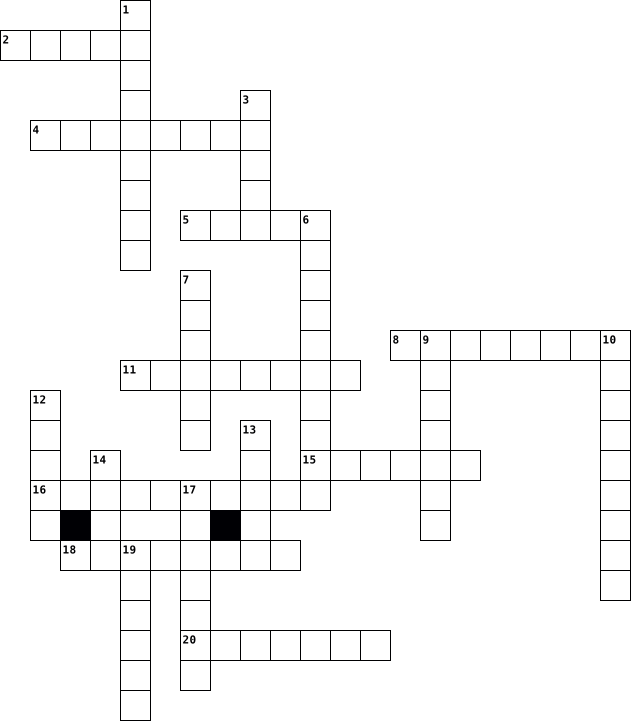
Human Body Crossword 2019-02-11

Across
- The part of the body that joins the head to the shoulders (pescoço)
- The part of your leg below your knee (canela)
- The rounded part of a woman's chest that produces milk after she has a baby (mama)
- The part of the leg above the knee (coxa)
- The short finger that is at angle to the others fingers (dedão da mão)
- The part of the body that contains stomach, bowels and other organs (abdome)
- The part of your body that contains eyes, nose, mouth, ears and the brain (cabeça)
- The part in the middle of the arm where it bends (cotovelo)
- White and hard objects in the mouth used for biting and chewing food (dentes)
- The piece of skin that you can close over each eye (pálpebra)
- Hair that grows above the upper lip (bigode)
- The part of the body on which a person stands (pé)
- The inside part of your hand (palma)
- Informal way of saying umbilicus (umbigo)
- Hair that grows on the lower part of a man's face (barba)
- The line of short hairs above each eye (sobrancelha)
- The thin skin at the base of the nail (cutícula)
- The part of your body around the opening of your mouth (lábios)
- The flat part of the face above the eyes and below the hair (testa)
- The front part of your body at the waist (barriga)
- The part of the body that joins the neck to the arm (ombro)
- The joint connecting the foot to the leg (tornozelo)
- The narrowest part of the torso (cintura)
- The long part of the body used for standing or walking (perna)
- The outside part of the organ by which people hear sounds (orelha)
Down
- The natural outer layers that covers the body (pele)
- The part of the arm between the forearm and the hand (pulso)
- The soft part of your face that is below your eye and between your mouth and ear (bochecha)
- An organ where food is digested (estômago)
- The part of the face below the mouth (queixo)
- The movable part in the mouth that is used in tasting, swallowing food and in producing speech (língua)
- The organ inside the chest that sends the blood around the body (coração)
- Synonym of bottom
- The part of your body that you sit on (traseiro)
- The upper front part of the body between the neck and the stomach (peito)
- The organ of seeing (olho)
- A pink area of the mouth that covers the bones to which the teeth are attached (gengiva)
- The largest toe on you foot (dedão do pé)
- The lower part of the arm, between the wrist and the elbow (antebraço)
- The part of the face above the mouth through which a person breathes or smells (nariz)
- The end part of the arm that includes fingers (mão)
- The small round part in the middle of the belly that is left after the umbilical cord has been cut at birth (umbigo)
- The hard covering that protects the upper part of the end of a finger (unha)
- The long tube that carries solid waste from the stomach out of the body (intestino)
- The opening in the face used by a person to eat and drink (boca)
- The mass of thin structures on the head of a person, or any of these structures that grow out of the skin of this person (cabelo, pelos)
- The front part or space inside the neck down which food and air can go (garganta)
- One of the five long, thin parts of the hand that bend and hold things (dedo da mão)
- A big organ inside your head (cérebro)
- The bones of the head that surround the brain (crânio)
- The curved part of the human leg below the knee (panturrilha)
- The middle joint of the leg (joelho)
- The thin parts at the end of the foot, similar to the fingers of the hand (dedos do pé)
- The part of the upper body that is joined to a shoulder and have a hand at the end (braço)
54 Clues: Synonym of bottom • The organ of seeing (olho) • The inside part of your hand (palma) • The middle joint of the leg (joelho) • A big organ inside your head (cérebro) • The part of the leg above the knee (coxa) • The largest toe on you foot (dedão do pé) • Informal way of saying umbilicus (umbigo) • The narrowest part of the torso (cintura) • ...
Parts of body 2019-03-19

Across
- pirštai
- ranka nuo peties iki alkūnės
- burna
- nosis
- ranka
- galva
- kaklas
- ausis
- pečiai
- koja
Down
- riešas
- kelias
- veidas
- pilvas
- pėda
- nugara
- plaukai
- kulkšnis
- krūtinė
- akis
20 Clues: pėda • akis • koja • burna • nosis • ranka • galva • ausis • riešas • kelias • veidas • pilvas • nugara • kaklas • pečiai • pirštai • plaukai • krūtinė • kulkšnis • ranka nuo peties iki alkūnės
Human Body Systems 2019-09-19

Across
- The maintenance of a constant internal state in a changing environment
- Type of involuntary muscle found in the heart
- The system that breaks down food so that it can be used by the body
- A blood vessel that carries blood away from the heart to the body's organs
- The system that supports the body and provides protection
- A collection of tissues that carry out a specialized function of the body
- The system that allows movement of body parts
- The system that protects the body against infection
- The system that rids the body of waste and excess water
- The fluid that carries gases, nutrients, and waste throughout the body
- Type of involuntary muscle found in internal organs such as the intestines
Down
- The system that takes in oxygen and expels carbon dioxide
- The system that moves blood through the body
- The primary organ of the cardiovascular system
- A tiny blood vessel that allows an exchange between blood and cells in tissue
- Connects muscle to bone
- Holds together the bones in a joint
- A group of similar cells that perform a common function
- A group of organs that interact in the body
- A blood vessel that carries blood to the heart
- The system that controls the actions and reactions of the body
- The smallest unit that can perform life processes
- A place where two or more bones meet
23 Clues: Connects muscle to bone • Holds together the bones in a joint • A place where two or more bones meet • A group of organs that interact in the body • The system that moves blood through the body • Type of involuntary muscle found in the heart • The system that allows movement of body parts • The primary organ of the cardiovascular system • ...
Human Body Systems 2019-09-13

Across
- the body area within the ribs
- a broken bone
- this body system provides shape and support to the body
- a flap of tissue that prevents food from entering the trachea
- this condition can result in an emergency related to low or high blood sugar
- this body system has different structures in males and females
- these are chemical messengers in the body that are produced by glands
- ______________ precautions refer to treating all blood from any person as though it were infectious
- another word for the pharynx
- this system protects the body against disease
- movement of one or more bones out of their normal location within a joint
- the cardiovascular system is made up of the heart, blood vessels and ________
- altered __________ status refers to a change in a person's level of responsiveness
Down
- the medical term myocardial infarction refers to a ___________ attack
- a regulating agency that tells employers what they must do to protect employees from blood borne diseases
- a life-threatening condition when the body temperature becomes too high
- the heart pumps blood to all body tissues through these vessels
- a name for the arms and legs
- a physical blockage of the airway
- severe vomiting and diarrhea can lead to this condition when the body does not have enough water
- this is breathed in during inhalation
- this organ stores urine until it is released from the body
- a spinal cord injury may lead to this, which is loss of movement and sensation
- these structures connect muscle to bone
- one of the organs of the central nervous system
25 Clues: a broken bone • a name for the arms and legs • another word for the pharynx • the body area within the ribs • a physical blockage of the airway • this is breathed in during inhalation • these structures connect muscle to bone • this system protects the body against disease • one of the organs of the central nervous system • ...
Animals/Body Parts 2019-09-26

Across
- head
- body
- fish
- foot
- leg
- lion
- neck
- arm
- tongue
- snake
- butterfly
- tooth
- frog
- finger
- EAR
- nose
- mouth
- cat
- mouse
- wolf
Down
- pig
- dog
- knee
- thumb
- bull
- hair
- eye
- shoulder
- elbow
- back
- monkey
- bear
- horse
- bird
- hand
35 Clues: pig • dog • leg • eye • arm • EAR • cat • head • body • knee • fish • foot • bull • hair • lion • neck • back • bear • frog • nose • bird • hand • wolf • thumb • elbow • snake • tooth • horse • mouth • mouse • tongue • monkey • finger • shoulder • butterfly
Body Parts 1 2019-10-15

Across
- голень
- глаз
- ляжка
- нога
- шея
- локоть
- плечо
- запястье
- бровь
- рука
- щиколотка
- бедро
- стопа
- палец ноги
- рука
Down
- грудь
- палец
- колено
- пятка
- нога
- подбородк
- лоб
- живот
- ухо
- пупок
- талия
- спина
- голова
28 Clues: шея • лоб • ухо • глаз • нога • нога • рука • рука • грудь • палец • ляжка • пятка • плечо • живот • бровь • пупок • талия • спина • бедро • стопа • голень • колено • локоть • голова • запястье • подбородк • щиколотка • палец ноги
Body and toys 2020-01-20

Across
- haj
- karok
- kézfejek
- baba
- papírsárkány
- lábfejek
- has
- száj
- térdek
- játékok
- lábak
- ujj
- szemek
Down
- fej
- labda
- hát
- orr
- fogak
- lábujj
- test
- vállak
- szörny
- fülek
- boka
- arc
25 Clues: haj • fej • hát • orr • has • ujj • arc • baba • test • száj • boka • labda • karok • fogak • fülek • lábak • lábujj • vállak • szörny • térdek • szemek • játékok • kézfejek • lábfejek • papírsárkány
Anterior Body Landmarks 2013-01-28

Across
- palm of the hand
- region of the breastbone
- hand
- side of the leg
- anterior body trunk region inferior to the ribs
- bony eye socket
- fingers and toes
- chest
- head
- foot
- navel
- forearm
- thumb
- thigh
- wrist
- chin
- groin
- cheek
Down
- nose
- mouth
- anterior knee (kneecap) region
- leg
- neck region
- anterior surface of the elbow
- ankle
- point of the shoulder
- hip
- armpit
- arm
- great toe
- forehead
- breast
- pelvis region
- genital region
34 Clues: leg • hip • arm • nose • hand • head • foot • chin • mouth • ankle • chest • navel • thumb • thigh • wrist • groin • cheek • armpit • breast • forearm • forehead • great toe • neck region • pelvis region • genital region • side of the leg • bony eye socket • palm of the hand • fingers and toes • point of the shoulder • region of the breastbone • anterior surface of the elbow • anterior knee (kneecap) region • ...
Jackson's Body Crossword 2013-04-10

Across
- Helps you walk
- White _____ help kill germs in your body
- In your back you have 24 bones that make your _______
- Pumps blood
- Like a bone but softer
- Helps you see
- Carries Blood
- You have them on your hand
- Stores hormones
- Lungs, liver, heart are _______
- Blood returns to the heart in these
- You kneel down on your __________
Down
- Inhales oxygen
- White blood cells kill them
- Used to kick a soccer ball
- Half your body is made of this
- An ingredient in blood
- From your eyes when you cry
- Another word for windpipe
- Cancer is a _____________
- The body turns food into _________
- Helps you digest food
- Without them you have no feeling
- When you are tired you ______ with your mouth
- Where you genes are stored
- The body's largest organ
26 Clues: Pumps blood • Helps you see • Carries Blood • Helps you walk • Inhales oxygen • Stores hormones • Helps you digest food • An ingredient in blood • Like a bone but softer • The body's largest organ • Another word for windpipe • Cancer is a _____________ • Used to kick a soccer ball • You have them on your hand • Where you genes are stored • White blood cells kill them • ...
U9 Body talk 2012-02-29

Across
- Teufel
- erstens
- Fernost
- Hochzeitsanzug
- Nadel
- gemein,gemeinsam
- verwirrt
- Zeigefinger
- Brautjungfer
- Wohnzimmer
- Zeremonie
- Daumen
- verlegen
- Handfläche
- Bräutigam
- Geste
- etwas-weitergeben
- religiös
- blinzeln
- rebellisch
- Begrüßung
- Wimpern
- begrüßen
- Null
Down
- kichern
- imitieren
- hastig
- verscheuchen
- Arabisch
- in-Mode,modisch
- Hochzeitskleid
- beleidigen
- begraben
- Sieg
- durchstochen;gepierct
- kommunizieren
- einigermaßen-gut-aussehend
- Grufti
- Möglichkeit
- Gesundheitsrisiko
- mit-dem-Kopf-nicken
- seufzen
- Begräbnis
- Ärmel
- Sohle
- Braut
- ignorieren
- Hebräisch
48 Clues: Sieg • Null • Nadel • Geste • Ärmel • Sohle • Braut • Teufel • hastig • Daumen • Grufti • kichern • erstens • Fernost • seufzen • Wimpern • Arabisch • begraben • verwirrt • verlegen • religiös • blinzeln • begrüßen • imitieren • Zeremonie • Bräutigam • Begräbnis • Begrüßung • Hebräisch • beleidigen • Wohnzimmer • Handfläche • ignorieren • rebellisch • Zeigefinger • Möglichkeit • verscheuchen • Brautjungfer • kommunizieren • Hochzeitsanzug • Hochzeitskleid • ...
The Body System 2012-04-30

Across
- / The grape like structure surrounded by capillaries
- / _____________ carries blood back to the heart
- / The main organ of the excretory system
- / Most mechanical digestion happen here
- / What is an automatic response that occurs rapidly without control?
- / There is the ______________________, the spinal chord, and the peripheral nervous system (three words)
- / Skin is part of the ________ system
- / The energy we absorb is released by __________ energy
- / What connective tissue is more flexible that the bone?
- / What does the kidney do? (two words)
- / What part of the brain coordinates the actions of your muscles?
Down
- / The blood exchange happen at the ___________
- / The main organ in the circulatory system
- / The blood enters through the _____________ (two words)
- / The _________________ system protects organisms against diseases
- / Most chemical digestion happen here
- / Cones are a part of what system?
- / The main organ of the nervous system
- / The air goes in through the nose, then the pharynx, then the ________, then to the bronchi
- / What is stored in the gallbladder until released into the small intestine?
20 Clues: / Cones are a part of what system? • / Most chemical digestion happen here • / Skin is part of the ________ system • / The main organ of the nervous system • / What does the kidney do? (two words) • / Most mechanical digestion happen here • / The main organ of the excretory system • / The main organ in the circulatory system • ...
The Human Body 2012-05-01

Across
- cage it protects the heart, kidneys and lungs
- another name for your voicebox
- in the top of your arm
- down the middle of your back
- at the back of your lower leg
- helps clean the blood
- another name for your fingers and toes
- outside layer of your body
- connects the rib cage
- it pumps about sixty times per minute
- you have two of them and they filter the blood
- is the largest bone in your body
Down
- at the front of your lower leg
- helps break down food
- one of the bones in your foream
- the bones that make up your hips
- another name for skull
- the scientific name for the jaw
- used for breathing
- one of the bones in the forearm
20 Clues: used for breathing • helps break down food • helps clean the blood • connects the rib cage • in the top of your arm • another name for skull • outside layer of your body • down the middle of your back • at the back of your lower leg • at the front of your lower leg • another name for your voicebox • one of the bones in your foream • the scientific name for the jaw • ...
Human Body: Skeleton 2013-05-29

Across
- Lower jawbone
- bones that form the wrist
- Bones at the tip of the fingers
- bigger and longer than the ulna
- Hand bones
- Calf bone
- Curved bone
- The third portion of the small intestine
Down
- bone, form joints at the shoulder and the elbow
- consist of 24 bones
- Triangular bone
- the skull
- Foot bone
- The thinner and longer of the two bones in the human forearm
- Kneecap
- the bone extended from the knee to the ankle
- linked by scapula and sternum
- thickened ventral plate
- third segment of the leg in insects
- Bone of the tarsus
20 Clues: Kneecap • the skull • Foot bone • Calf bone • Hand bones • Curved bone • Lower jawbone • Triangular bone • Bone of the tarsus • consist of 24 bones • thickened ventral plate • bones that form the wrist • linked by scapula and sternum • Bones at the tip of the fingers • bigger and longer than the ulna • third segment of the leg in insects • The third portion of the small intestine • ...
human body skeleton 2013-07-21

Across
- what is the hip bone?
- bone what bone is another name for Sternum.
- Starting withe the letter M what is another name for foot
- bone Either of the pair of bones joining the breastbone to
- Of, relating to, or situated near the tarsus of the foot.
- What is the kneecap called?
- to the thumb in humans.
- Something that protects the heart and lungs?
- bone the outer and thinner of the two bones of the human leg
Down
- shoulder blades.
- The lumbar usually refers to the lower part of the back.
- The bone extending from the elbow to the wrist on the side
- the bone covering you brain
- whats the upper arm bone called?
- the knee and ankle.
- these are apart of you hands?
- the shoulder blade
- Any of the eight small bones forming the wrist.
- A straight line from the center to the circumference
- What is the shin bone called?
- a circle or sphere
21 Clues: shoulder blades. • the shoulder blade • a circle or sphere • the knee and ankle. • what is the hip bone? • to the thumb in humans. • the bone covering you brain • What is the kneecap called? • these are apart of you hands? • What is the shin bone called? • whats the upper arm bone called? • bone what bone is another name for Sternum. • Something that protects the heart and lungs? • ...
Body & Pastimes Review 2015-03-09

Across
- We write.
- You are swimming.
- I run.
- You're going to the party.
- She swims.
- I like to jump.
- We have to walk.
- He/she likes volleyball.
- Eye
- Leg
- Knee
- They play baseball.
- Nose
- He/she is painting.
- I'm going shopping.
- Head
Down
- We like to sing.
- They are sewing.
- You ride a bike.
- They have to go.
- You do exercises.
- Hand
- We're going to the park.
- I play an instrument.
- Ear
- Foot
- We dance.
- Arm
- You're going to the movies.
- They draw.
30 Clues: Ear • Eye • Leg • Arm • Hand • Foot • Knee • Nose • Head • I run. • We write. • We dance. • She swims. • They draw. • I like to jump. • We like to sing. • They are sewing. • You ride a bike. • They have to go. • We have to walk. • You are swimming. • You do exercises. • They play baseball. • He/she is painting. • I'm going shopping. • I play an instrument. • We're going to the park. • He/she likes volleyball. • ...
Body & Pastimes Review 2015-03-09

Across
- Ear
- I like to jump.
- We like to sing.
- You're going to the party.
- You do exercises.
- Arm
- They play baseball.
- You are swimming.
- I play an instrument.
- I run.
- We have to walk.
- Head
- They are sewing.
- I'm going shopping.
- He/she is painting.
- They draw.
Down
- She swims.
- Eye
- Foot
- They have to go.
- We dance.
- You ride a bike.
- Hand
- We're going to the park.
- We write.
- He/she likes volleyball.
- Leg
- Knee
- You're going to the movies.
- Nose
30 Clues: Eye • Ear • Arm • Leg • Foot • Hand • Knee • Head • Nose • I run. • We dance. • We write. • She swims. • They draw. • I like to jump. • They have to go. • You ride a bike. • We like to sing. • We have to walk. • They are sewing. • You do exercises. • You are swimming. • They play baseball. • I'm going shopping. • He/she is painting. • I play an instrument. • We're going to the park. • He/she likes volleyball. • ...
Animals & Body Parts 2015-11-26

Across
- _____ball.
- When you have a pet, you must clean its ______.
- You would never show up to class without wearing these.
- Kelsey´s favorite animal is a ______.
- Sara´s ______ is blonde and straight.
- Primates (humans included) have an opposable ______.
- This animal is small and often lives in a cage. It looks like a furry ball.
- This animal has black and white stripes.
- Most basketball players are ______.
- When you carry your groceries, you lift with your ______.
- When you go to sleep, you close your ______.
- A ______ goes QUACK!
Down
- An ______ has eight legs!
- Before bed, you must brush your ______.
- An ______ has large ears and a trunk. It´s also very heavy.
- Ahhh! They´re so slimey and creepy. This animal is also missing a pair of legs.
- This animal has long ears and a fluffy tail.
- You don´t have a ______, but cats and lizards do!
- The opposite of tall.
- This animal is small. It is said to be dirty and live in sewers.
- You use these to kiss someone!
- You wear jewelry around your ______.
- "Man´s best friend."
- This animal goes MOOOOOO!
24 Clues: _____ball. • A ______ goes QUACK! • "Man´s best friend." • The opposite of tall. • An ______ has eight legs! • This animal goes MOOOOOO! • You use these to kiss someone! • Most basketball players are ______. • You wear jewelry around your ______. • Kelsey´s favorite animal is a ______. • Sara´s ______ is blonde and straight. • Before bed, you must brush your ______. • ...
Body Systems Crossword 2015-02-12

Across
- an organ with 4 chambers that pump blood
- will push your lungs out to breath
- the opening that put food into
- carry's oxygenated blood
- disc-shaped element in the blood that assists in blood clotting
- the process of eliminating or expelling waste matter
- reflex centres (coughing, breathing, sneezing etc.)
- tubes that lead in to the smaller tubes called bronchioles
- the long nerve that sends information done the back of the body
- is disputed over its purpose
- small, cone-shaped pouch which comes out from the upper and front part of the atrium
- the largest vein in the human body
- the pipe to help swallow food
- a gas that contributes to global warming
- it carry's de-oxygenated blood to the heart
- the first part of the intestine
- voluntary muscle contraction, reason, emotion
- a cell the moves though the blood that helps with the immune system
- a red protein responsible for transporting oxygen in the blood
- to link the nervous system to the endocrine system
- the 2nd body part that u can breathe though other than the mouth
- the major branching part in the lungs
- the pipe that goes down to the lungs
- These are two chambers divided by the septum in the nose
- the organ that holds urine
- small veins that carry blood
- balance, finer movement, reticular activating system
- element # 8
- it is the two main top parts of the heart
Down
- come immediately after u swallow the food in your mouth
- the grape branch like things in the lungs
- the action if breathing
- the colourless fluid part of blood in which corpuscles or fat globules are suspended
- the second part of the intestine
- the rate at which the heart beats is called...
- the process of oxidizing food molecules, like glucose, to carbon dioxide and water
- to carry electrical signals
- cells that carry oxygen in oxygenated blood
- a fluid that holds red and white cells
- to transmit generator potentials from the eye to brain
- connects two cerebral hemisphere
- the organ that holds food to Digest
- it is the two main bottom parts of the heart
- processes to break food down
- an organ that stores vitamins and makes blood proteins
- transmit action potentials from neurone to neurone
- the organ that takes Oxygen form the air
- other name is Adams apple
- a large gland behind the stomach which puts enzymes into the start on the intestine
- the big white thing that "most peoples" head
50 Clues: element # 8 • the action if breathing • carry's oxygenated blood • other name is Adams apple • the organ that holds urine • to carry electrical signals • is disputed over its purpose • processes to break food down • small veins that carry blood • the pipe to help swallow food • the opening that put food into • the first part of the intestine • the second part of the intestine • ...
Cells & Body Systems 2015-01-13

Across
- tiny blood vessel that connect arteries to veins
- foot like projections on an amoeba used for movement and capturing food
- parts of an organism that perform a specific tasks
- substance created by the body to carry out chemical digestion
- protects body's internal environment from the external environment
- Specialized cells of the nervous system that receive and transmit information
- moves bones and moves organs that contain muscle tissue
- made of more than one cell
- finger like projections on the cells that line the villi
Down
- hair like extensions that protrude from the surface of some unicellular organisms and from some in multicellular organisms
- small finger like projections on the inner surface of the small intestine that absorbs nutrients
- group of similar cells working together to preform a specific function
- Transport system reaching every cell in the body
- supplies blood with oxygen from the outside air and removes carbon dioxide from your blood
- the movement of particles from an area of higher concentration to an area of lower concentration
- Breaks down the food you eat into small parts to be absorbed and transported through your body
- removes chemical and gaseous wastes from the body
- coordinates and controls all organs and organ systems
- provides a mobile support frame for the body and protects soft tissue organs
- any change in an organism's environment
- made of just one cell
- structures in cells that preform a certain function
- purpose or task
- the diffusion of water through a selectively permeable membrane
- is a living thing
25 Clues: purpose or task • is a living thing • made of just one cell • made of more than one cell • any change in an organism's environment • tiny blood vessel that connect arteries to veins • Transport system reaching every cell in the body • removes chemical and gaseous wastes from the body • parts of an organism that perform a specific tasks • ...
FAMILY-BODY PARTS 2014-10-05

Across
- GRAND-PÈRE
- JAMBE
- ENFANTS
- GENOUX
- FILS
- ÉPAULES
- TÊTE
- DOIGTS
- PETIT
- GAUCHE
Down
- MÈRE
- ONCLE
- FRÈRE
- GRAND-MÈRE
- MALADE
- JOUE
- TANTE
- ORTEILS
- FILLE
- DROITE
- ENFANT
- SOEUR
- COEUR
23 Clues: MÈRE • JOUE • FILS • TÊTE • ONCLE • FRÈRE • JAMBE • TANTE • FILLE • SOEUR • COEUR • PETIT • MALADE • GENOUX • DROITE • ENFANT • DOIGTS • GAUCHE • ENFANTS • ORTEILS • ÉPAULES • GRAND-PÈRE • GRAND-MÈRE
Spanish Body Parts 2014-05-26

Across
- / Mouth
- / Ankle
- / Hand
- / Back
- / Arm
- / Stomach
- / Eyebrows
- / Elbow
- / Nose
Down
- / Neck
- / Tooth
- / Knee
- / Shoulder
- / Eyes
- / Fingers
- / Thigh
- / Ear
- / Foot
- / Head
- / Leg
20 Clues: / Arm • / Ear • / Leg • / Neck • / Knee • / Hand • / Back • / Eyes • / Foot • / Head • / Nose • / Mouth • / Tooth • / Ankle • / Thigh • / Elbow • / Fingers • / Stomach • / Shoulder • / Eyebrows
Human Body Systems 2016-01-11

Across
- the system that fights pathogens and prevents them from entering your body
- breaks down food for consumption
- the system that enables voluntary/involuntary movement
- the system that allows organisms to make more of themselves
- the system that filters your blood in order to remove waste
- a muscle at the bottom of the lung that aids in our breathing
- the system that extracts nutrients and water from the food we eat
- the body need that makes sure your body has exactly enough of what it needs
- the bone that protects your brain
- the body need that ensures our body grows a good pace
- the system that directs your body on what to do
- the body need that makes sure your body is safe and can be fixed
- the organ that directs the body on what to do
Down
- the system that carries blood, nutrients, waste, and oxygen throughout your body
- arguably the strongest bone in the body, located in the thigh
- the body need that makes us able to move
- the system that provides support to your muscles
- the body need that deals with three essential things our body needs
- carries blood away from the heart
- the system that releases hormones throughout your body in order to aid in daily activities
- the organ responsible for filtering your blood
- the system that allows you to breathe
22 Clues: breaks down food for consumption • carries blood away from the heart • the bone that protects your brain • the system that allows you to breathe • the body need that makes us able to move • the organ that directs the body on what to do • the organ responsible for filtering your blood • the system that directs your body on what to do • ...
Coordinated Body Systems 2016-07-10

Across
- a nerve cell
- part of the brain where the spinal cord enters the skull
- the chemical store of glucose in the liver and muscles
- glands that produce hormones
- part of the brain that is responsible for coordination and balance
- a nerve fibre that sends nerve impulses away from the cell body
- the cells on which a hormone acts
- an organism that causes disease
- chemical substances that act as messengers in the body
- the process of maintaining a constant internal environment
- a bacterial infection caused by Clostridium tetani
- the part of the that contains the nucleus
- a substance that kills bacteria or prevents the growth of bacteria
- anything that causes our body to stop working properly
- microscopic, single-celled organisms
Down
- branches from the cell body that receives messages from other neurons
- an early antibiotic
- the electrical message carried by a nerve cell
- muscles or glands that put the messages into effect
- the organism a parasite lives in
- automatic actions that protect the body from danger
- the lower half of the brain stem
- the common name for the hormone epinephrine
- able to make the antibodies to a pathogen before it can make you unwell
- very easy to spread
- any factor that stimulates a receptor and brings about a response
- all the chemical reactions occurring in the cells
- a special cell that detects stimuli
- a white blood cell that consumes pathogens and is found in the lymph nodes
29 Clues: a nerve cell • an early antibiotic • very easy to spread • glands that produce hormones • an organism that causes disease • the organism a parasite lives in • the lower half of the brain stem • the cells on which a hormone acts • a special cell that detects stimuli • microscopic, single-celled organisms • the part of the that contains the nucleus • ...
The human body 2016-10-20

Across
- It is in the middle of your face.
- It is in your head and you use it to think.
- It is always behind you.
- Without them you would be blind.
- You have ten on your feet.
- Together they are your skeleton.
- Grows on top of your head.
- Between your knee and your hip.
- It pumps your blood and it is the symbol of love.
- The front of your hand.
- Connects your arm to your body.
- Make it possible to bend your arm.
Down
- Without them you would be deaf.
- You use it to point at anything you like.
- Make it possible to bend your leg.
- You stand, run and walk on them every day.
- Between your hand and your arm.
- When you eat it gets full.
- The backside of your foot.
- On your side, above your legs but below your belly.
- A finger. Put it up for good, down for bad.
21 Clues: The front of your hand. • It is always behind you. • You have ten on your feet. • When you eat it gets full. • Grows on top of your head. • The backside of your foot. • Without them you would be deaf. • Between your hand and your arm. • Between your knee and your hip. • Connects your arm to your body. • Without them you would be blind. • Together they are your skeleton. • ...
Body System Crossword 2023-10-19

Across
- Ligaments are connective tissue that attach your bones to bones, and _________ are connective tissue attaching muscles to bones.
- ________ neurons (nerve cells) send messages from your brain to your hand muscles as you complete this worksheet.
- These are the smallest blood vessels. They are so small that oxygen, carbon dioxide, and nutrients can travel in and out of them from your cells.
- This type of muscle is voluntary (meaning they work when you want them to move. You can control them and decide when you want to move them. Examples include the biceps, abdominals, and deltoids)
- To prevent bones from knocking into each other, we have a soft, rubbery tissue between our joints called ________________.
- In order for your muscles to get energy they need nutrients. Nutrients must first be ABSORBED from the ___________ intestines into the bloodstream. (Hint: 20 feet long)
- The ___________ lobe (in the cerebrum) is in charge of critical thinking and decision making as you complete this worksheet.
- If someone has bronchitis they have inflammation of the tiny tubes in the lungs called the _______________.
- Muscles work in pairs. While one contracts, the other muscle relaxes. For example, when the hamstrings (back thigh muscle) contracts, the ____________ (front thigh muscle) relaxes .
- Food must pass from the mouth through this muscular tube in order to get to the stomach to be broken down.
- To prevent respiratory infections, these tiny hair-like structures filter out dust, germs and other particles.
- This bone is crucial in protecting your spinal cord from getting injured.
- Which blood cells are in charge of supplying your brain with the OXYGEN it needs to function?
- In order to play sports, this part of the brain helps with balance and coordination.
- If you were to fall down during a game and cut your leg, which blood cells would help to clot your blood to create a scab?
Down
- If food gets into the windpipe or ____________, then you could choke.
- This tiny flap, at the back of the throat, blocks food from going into the windpipe.
- Information is constantly traveling to and from your brain through your ________ cord (a bundle of nerves in the center of the back)
- As you swallow your snack, which TYPE of muscle is working around your stomach to break down food?
- As you run and play, oxygen-rich blood is flowing AWAY from the heart to your muscles through which blood vessel?
- The ball-and-___________ joint in the shoulder and hip allow for movements like throwing and kicking.
- This muscle works “twenty-four/seven”. It is the hardest working muscle because it beats 60-100 times every minute.
- Billions of new blood cells for the circulatory system are made each day in the bone ______________.
- Take a deep breath in. Which structure is the last stop in the respiratory system? (Hint: tiny air sacs in your lungs)
- When you’re exercising, your heart rate goes up because the ___________ system is delivering more oxygen to your muscles.
- Which part of the brain is controlling AUTOMATIC functions (like your heart rate and breathing rate increasing) while you run?
- This bone helps prevent the brain from getting injuries like a concussion.
- ______ digestion in the mouth is when the enzymes in your saliva begin to break down food.
28 Clues: If food gets into the windpipe or ____________, then you could choke. • This bone is crucial in protecting your spinal cord from getting injured. • This bone helps prevent the brain from getting injuries like a concussion. • This tiny flap, at the back of the throat, blocks food from going into the windpipe. • ...
HUMAN BODY SYSTEMS 2023-10-20

Across
- system, regulates the body with hormones
- system, breaks down food to provide nutrients and energy
- by physical means
- system, provides structure and protection for the body
- interacting; interrelated; or interdependent elements forming a more complex
- system, provides protection of the body
- change, the formation of a new substance with different properties; cannot be
- system, exchanges oxygen and carbon dioxide
- a push or pull that can change the position or motion of an object / material
- system, controls and coordinates the body
- a thing or event that causes a response or reaction
- stimulus, a change within the organism
Down
- system, produces offspring
- stimulus, a change in the environment outside of the organism
- system, provides movement of the body
- system, removes waste from the body
- balanced; unchanging
- a change in the position of an object
- the body’s ability to keep the internal balance of the body stable
- the identity of the substance
- system, transports nutrients and oxygen to the body
- change, change which alters matter without changing its chemical composition
- mechanism, a response within a system that influences the activity of that
23 Clues: by physical means • balanced; unchanging • system, produces offspring • the identity of the substance • system, removes waste from the body • system, provides movement of the body • a change in the position of an object • stimulus, a change within the organism • system, provides protection of the body • system, regulates the body with hormones • ...
Body Systems #1 2023-12-13

Across
- when the blood supply to part of the brain is blocked or reduced
- the thin, outermost layer of the skin
- another word for skull
- Our main protection against outside germs and bacteria
- bones are connected by these
- blood flow to part of the heart in blocked
- red fluid that carries oxygen and nutrients through the body
- hardened dead cells, varying in color and texture
- taking care of the body through movement or physical activity
- the innermost layer of skin
- cage of bones that surround the lungs and heart
- disease in which the bones become thin and brittle
Down
- carries blood away from the heart
- the middle layer of skin
- another name for your knee cap
- organ in the body that beats and pumps blood through the body
- carries blood towards the heart
- Disease that involves damage to the alveoli in the lungs
- 206 of these in the human body
- caused by viruses or bacteria
- high blood pressure
- disease that narrows or blocks the bronchial tubes
- flexible tissue on the ends of some bones,providing cushioning
- allows us to breathe by taking in oxygen and releasing carbon dioxide
- deformity of the spine in which the spine develops in an S-shaped curve
- the place where two bones meet
26 Clues: high blood pressure • another word for skull • the middle layer of skin • the innermost layer of skin • bones are connected by these • caused by viruses or bacteria • another name for your knee cap • 206 of these in the human body • the place where two bones meet • carries blood towards the heart • carries blood away from the heart • the thin, outermost layer of the skin • ...
Body Parts Afrikaans 2024-01-29

Across
- / nek
- / bene
- / hare
- / maag
- / mond
- / elemboog
- / lippe
- / vingers
- / voet
- / knieë
Down
- / tande
- / bene
- / oogwimpers
- / hande
- / arm
- / oor
- / neus
- / tone
- / duim
- / ken
- / oë
- / tong
22 Clues: / oë • / nek • / arm • / oor • / ken • / bene • / bene • / hare • / maag • / neus • / tone • / mond • / duim • / voet • / tong • / tande • / hande • / lippe • / knieë • / vingers • / elemboog • / oogwimpers
Body parts ext 2023-12-06

Across
- локоть
- волосы
- нос
- пальцы на ногах
- брови
- стопа
- губа
- уши
- язык
- зубы
- глаза
- рука
- колено
- голова
Down
- ресницы
- плечо
- запястье
- рот
- палец
- лоб
- ноги
- шея
22 Clues: нос • рот • лоб • уши • шея • губа • ноги • язык • зубы • рука • плечо • брови • палец • стопа • глаза • локоть • волосы • колено • голова • ресницы • запястье • пальцы на ногах
Spanish: body parts 2024-01-31

Across
- ear
- lungs
- eyelashes
- elbow
- teeth
- eye
- body
- heel
- skin
- face
- lips
- hand
Down
- forehead
- thigh
- toe
- arm
- stomach
- head
- chest
- leg
- mouth
- finger
- back
- foot
- nose
25 Clues: toe • arm • ear • leg • eye • head • body • back • foot • heel • skin • face • lips • hand • nose • thigh • lungs • chest • mouth • elbow • teeth • finger • stomach • forehead • eyelashes
body parts spanish 2024-01-23

Across
- we have two rows of them (p)
- over top part of the face
- used to see
- where the funny bone is
- on top of the arms
- right outside the mouth (p)
- what we eat and talk with
- where taste buds are
- part between hand and arm
- where people pierce the most
Down
- these of giraffes are long
- long limbs on either side of the torso
- most people have 20 of these (p)
- where old people say it hurts
- at the bottom of the arms
- right above the foot, where people sprain
- has eyes, mouth, nose
- sides of the face, there is a bone of the name
- sounds like waste
- used to smell
20 Clues: used to see • used to smell • sounds like waste • on top of the arms • where taste buds are • has eyes, mouth, nose • where the funny bone is • over top part of the face • what we eat and talk with • part between hand and arm • these of giraffes are long • at the bottom of the arms • right outside the mouth (p) • we have two rows of them (p) • where people pierce the most • ...
Body Parts Peleg 2024-01-23

Across
- Te ayuda a saborear la comida.
- Son pelos sobre tus ojos.
- use it when you do pull ups
- ¿Dónde pones la comida cuando comes?
- You bend it when you sit down.
- Lo usas para ver.
- Está debajo de tu boca.
- Lo usas para sostener cosas.
- Está encima de tus cejas.
- Los usas para masticar alimentos.
Down
- Son pelos en tus párpados.
- some people have a kink for it
- use it to curl in the gym
- You use it when you bench press
- ¿Dónde está tu cerebro?
- Conecta tu brazo con tu cuerpo.
- Escuchas usarlas
- Los usas para hablar.
- Están a los lados de tu nariz.
- Puedes oler con esta parte de la cara.
20 Clues: Escuchas usarlas • Lo usas para ver. • Los usas para hablar. • ¿Dónde está tu cerebro? • Está debajo de tu boca. • use it to curl in the gym • Son pelos sobre tus ojos. • Está encima de tus cejas. • Son pelos en tus párpados. • use it when you do pull ups • Lo usas para sostener cosas. • Te ayuda a saborear la comida. • some people have a kink for it • You bend it when you sit down. • ...
Health & the Body 2024-01-15

Across
- extreme physical or mental pain
- a small flat round piece of medicine that you swallow whole, without biting it
- the joint connecting the foot to the leg; the narrow part of the leg just above the ankle joint
- an area that is larger and rounder than normal) under the skin, sometimes a sign of serious illness
- a long narrow piece of cloth used for tying around a part of the body that has been hurt in order to protect or support it
- an illness that is caused by bacteria or a virus and that affects one part of the body
- to care for somebody who is ill or injured
- an official piece of paper on which a doctor writes the type of medicine you should have, and which enables you to get it from a chemist's
- to photograph and examine bones and organs inside the body
- a room in a hospital used for medical operations
- an area of red spots on a person’s skin, caused by an illness or a reaction to something
Down
- larger than normal, especially as a result of a disease or an injury
- an injury to part of the body, especially one in which a hole is made in the skin using a weapon
- a pain in your back
- a smooth substance that you rub on your skin to make a wound or painful place get better or stop hurting
- to injure a joint in your body, especially your wrist or ankle, by suddenly twisting it
- a substance that is put into the blood and that protects the body from a disease
- a blue, brown or purple mark that appears on the skin after somebody has fallen, been hit, etc.
- either of the two parts of the body between the top of each arm and the neck
- a white powder that is mixed with water and becomes very hard when it dries, used especially for holding broken bones in place
20 Clues: a pain in your back • extreme physical or mental pain • to care for somebody who is ill or injured • a room in a hospital used for medical operations • to photograph and examine bones and organs inside the body • larger than normal, especially as a result of a disease or an injury • either of the two parts of the body between the top of each arm and the neck • ...
(BEG) Body Parts 2024-01-25

Across
- ząb
- głowa
- usta
- kolana
- palce u rąk
- czoło
- brwi
- policzki
- oczy
- język
- uszy
Down
- stopa
- ręce
- broda
- twarz
- włosy
- nos
- ramiona
- nogi
- szyja
- ciało
- dłonie
- łokcie
- brzuch
- plecy
25 Clues: ząb • nos • ręce • usta • nogi • brwi • oczy • uszy • stopa • broda • twarz • głowa • włosy • czoło • szyja • ciało • język • plecy • kolana • dłonie • łokcie • brzuch • ramiona • policzki • palce u rąk
The Human Body 2023-02-14

Across
- Pumps blood throughout body
- Stores Oxygen that then enters the bloodstream
- This system allows you to get energy from food
- These carry blood toward heart
- produces all movement
- Absorbs most of the nutrients from food
- Squeezes food into stomach
- These carry blood away from the heart
- Stores energy in form of sugar
- This system allows us to extract wastes from our body
- tiny air sacs, oxygen passes through it into the blood
- This system transports blood throughout the body
- This system has bones
- This system contains the brain and controls our functions
Down
- Breaks food apart
- Absorbs water from digested chyme
- This system produces hormones
- keeps bones from rubbing together
- Allows passage of air
- Support and protect
- 2 of these, removes extras wastes and fluids from body
- This system allows you to move
- Carries oxygen
- This system contains the lungs
- These connect muscle to the bone
- Below the lungs, dome shaped, lets air into lungs
- Controls sugar levels, produces special juice that lets nutrients out of foods
- Churns food and mixes it with enzymes and other acids
- HAHAHAHAHA ouch (not an organ)
29 Clues: Carries oxygen • Breaks food apart • Support and protect • Allows passage of air • produces all movement • This system has bones • Squeezes food into stomach • Pumps blood throughout body • This system produces hormones • These carry blood toward heart • This system allows you to move • This system contains the lungs • Stores energy in form of sugar • HAHAHAHAHA ouch (not an organ) • ...
Body Systems Review 2024-03-08
Across
- another word for large intestines
- this system controls involuntary and voluntary movements
- major organ of your respiratory system
- this system provides structure and support and protects your organs
- fibrous tissue that connects bone to bone
- the number of body systems
- the amount of blood in liters the kidneys filter a day
- these pump blood away from the heart
- this system eliminates waste from the body, regulates blood volume and blood pressure
Down
- this system produces and secretes hormones through the glands
- main organ in the nervous system
- number of muscles in the body
- the gas that we need to survive
- two bean-shaped organs that filter waste from the blood and produce urine
- this system protects your body from foreign invaders and fights infection
- number of different hormones the human body makes
- number of layers of your skin
- number of chambers in your heart
- this system gathers and delivers outside information to the brain
- connects a bone to a muscle
20 Clues: the number of body systems • connects a bone to a muscle • number of muscles in the body • number of layers of your skin • the gas that we need to survive • main organ in the nervous system • number of chambers in your heart • another word for large intestines • these pump blood away from the heart • major organ of your respiratory system • ...
Human Body Systems 2024-04-10

Across
- Takes up oxygen from the air we breathe and expels the unwanted carbon dioxide
- The body's process of getting and using oxygen
- An important organ in the Nervous System
- This type of muscle is found in many of your organs
- Your windpipe that brings oxygen and carbon dioxide in and out of your body
- This carries oxygen around the body
- A waste product that your body needs to get rid of and that your cells do not need
- A change in the body that starts a message (impulse) to the brain
- This type of muscle works by pulling bones and helping you move
- Muscles that you have control over
- Something all of your cells in your body need to help them function and survive
- Cells that make up the nerves
- Supports your body's weight, protects organs, maintains your posture, and helps you move.
Down
- This type of muscle is found in your heart and helps pump blood
- Gathers, processes, and responds to information
- Another name for the Circulatory and Respiratory Systems working together
- A group of organs/parts that work together to do a job in the body
- The complex system in our body that transports needed materials and eliminates waste (through the blood)
- Channels/Tubes that transport blood throughout the body
- Muscles that you do not have control over
- Blood vessels that carry blood away from the heart
- Blood vessels that carry blood toward the heart
- The tiny blood vessels throughout the body that connect arteries and veins
- Send messages to and from the brain
- The brain's reaction to a stimulus; the signal sent from the brain to the body
25 Clues: Cells that make up the nerves • Muscles that you have control over • This carries oxygen around the body • Send messages to and from the brain • An important organ in the Nervous System • Muscles that you do not have control over • The body's process of getting and using oxygen • Gathers, processes, and responds to information • ...
Body parts A2 2024-03-11

Across
- По ним можно читать что говорит другой человек, если у него нет слуха
- Его можно подпереть рукой Внизу лица.
- Ими мы печатаем на клавиатуре
- На них делают педикюр
- На нем может развиться кариес
- Вся нога
- Два сустава в между голенью и бедрами
- Им мы говорим
- Один. Им ты смотришь.
- Верхняя часть ноги
- То, на чем отображаются эмоции
- Ты им слышишь
- Многие ненавидят звук когда ими щелкают
- Им мы нюхаем
- Их отпечатки остаются на песке на пляже
- В ней хранятся мозги
- На них можно нанести тушь
- Мужчина - голова, а женщина - ??? (иу, это между нами, вообще я этого не говорила, сексизм фи фи фи)
Down
- На ней есть "линии" по которым гадают
- Передняя часть ноги
- На нее надевают жилет
- Там переваривается еда
- ими можно ходить
- 👍🏼
- Две дуги над бровями
- На них может развиться кариес
- Бабушка может тебя за них потрепать
- Ахиллесова ...
- Косточка между голенью и стопой сбоку
- Два бугра от которых растут руки
- Один. Используется при маникюре
- Вся рука
32 Clues: 👍🏼 • Вся нога • Вся рука • Им мы нюхаем • Им мы говорим • Ты им слышишь • Ахиллесова ... • ими можно ходить • Верхняя часть ноги • Передняя часть ноги • Две дуги над бровями • В ней хранятся мозги • На нее надевают жилет • На них делают педикюр • Один. Им ты смотришь. • Там переваривается еда • На них можно нанести тушь • Ими мы печатаем на клавиатуре • На нем может развиться кариес • ...
Science Body Systems 2024-03-05

Across
- What part of the brain controls the balance, posture, and helps fine-tune movements?
- Chemicals that kill specific pathogens and are produced by white blood cells.
- Part of the neuron that carries messages away from the cell body to other nerve cells or neurons.
- The branches of the neurons that carry messages from other neurons back to the cell body.
- These are tiny sacs in the lungs where oxygen and carbon dioxide gas exchange takes place.
- This attaches muscle to bone.
- This system removes carbon dioxide from the body.
- What are similar cells that work together to perform a particular function in the body called?
- This type of tissues include the cardiac, smooth, and skeletal tissues.
- This system breaks down materials into simper substances the body can use.
- This part of the brain maintains blood pressure, heartbeat, respiration, and digestion.
- This is formed when two or more tissues work together to get a particular job done.
- What system provides oxygen to the body and removes gas wastes?
Down
- Calcium, blood vessels, and red marrow are part of this.
- This system provides protection for the organs and support for the body.
- This system releases hormones and maintains balance in the body.
- This system carries blood and nutrients to cells throughout the body.
- The skin prevents these from entering the body.
- This system keeps hormones in balance in the body.
- This system collects and processes information passed through the neurons.
- These type muscles are smooth muscles of the digestive system and cardiac muscles that work automatically.
- The knee joint is this type of joint.
- The elbow joint is this type of joint.
- This bone disease cause bones to become weak and break easily.
24 Clues: This attaches muscle to bone. • The knee joint is this type of joint. • The elbow joint is this type of joint. • The skin prevents these from entering the body. • This system removes carbon dioxide from the body. • This system keeps hormones in balance in the body. • Calcium, blood vessels, and red marrow are part of this. • ...
The Human Body 2024-03-18

Across
- another word for your collar bone
- helps you breath
- helps you hear
- controls your movements, thoughts and speech
- supports your body
- bones that make up your spine
- the group of bones that make up your hand
- pumps blood through the body
- helps you sallow your food
- protects your brain
Down
- helps you move
- your thigh muscles
- the bones that give you hips
- a network to transport blood through the body
- absorbs nutrients from your food
- the food that you swallow goes down it
- organ that helps to cleans your blood
- crushes your food before you swallow it
- supports your lower teeth
- another word for kneecap
- the organ that you see with
- forms a cage around your heart and lungs to protect them
- stores energy from food as sugar
23 Clues: helps you move • helps you hear • helps you breath • your thigh muscles • supports your body • protects your brain • another word for kneecap • supports your lower teeth • helps you sallow your food • the organ that you see with • the bones that give you hips • pumps blood through the body • bones that make up your spine • absorbs nutrients from your food • stores energy from food as sugar • ...
Human Body systems 2024-05-06

Across
- blood vessel that carries blood from the body back to the heart
- gland in the brain that produces hormones to control the pituitary gland
- organ of the digestive track responsible for absorbing water and releasing solid waste
- smallest blood vessel that brings nutrients and oxygen to the tissues and absorbs carbon dioxide and waste products
- a less toxic nitrogenous waste
- gland that controls the other glands of the endocrine system
- cell fragment released by bone marrow that helps in blood clotting
- preparation of weakened or killed pathogens used to produce immunity to a disease
- when extra hormones are produces in an event that may need them for example more adrenaline when in danger or more hormones produced for women who are pregnant
- male gland that produces the hormone testosterone for reproduction
- tiny air sacs in the lungs
- the beginning location of digestion
- female gland that produces the hormones estrogen and progesterone for reproduction
- tube that connects the larynx (voice box) to the bronchi also called the windpipe
- toxic waste produced by the breakdown of red blood cells
- gland that produces adrenaline a hormone used to speed up heart rate and produce an extra burst of energy
- process by which metabolic wastes are eliminated form the body
- a protein that speeds up the rate of reactions (used to speed up digestion)
- anything that enters the body and causes illness ex: virus, bacteria, fungi.
- proteins found on cells that must match with a specific hormone in order to receive the message
- a pair of fist sized organs, they remove excess water urea and metabolic wastes from the blood.
- the process of nutrients moving from the digestive track into the blood
- chemical substance than an organism needs to sustain life (examples: proteins, carbohydrates and lipids)
- when the body can produce antibodies to attach to a pathogen and destroy it before the body is considered sick
- process that requires oxygen
- blood that does not contain oxygen
- two large tubes in the chest that leads from the trachea to the lungs
- tube connecting the mouth to the stomach
- large muscular sac that continues the mechanical and chemical digestion of food
- contractions of smooth muscles that provide the force that moves food through the digestive system
- sac like organ in which urine is stored
- type of blood cell that guards against infection, fights parasites and attacks bacteria
- blood containing oxygen
Down
- process that releases energy by breaking down glucose and other food molecules in the presence of oxygen.
- organ of the digestive track where chemical digestion and absorption of nutrients happen
- process that does not require oxygen
- a group of drugs used to kill of bacteria when someone is already infected.
- produces bile which helps the breakdown of fats
- largest organ that helps in both protecting the body and releasing wastes such as excess water, salt and sweat.
- process by which enzymes break down food into small molecules that the body can use
- hairlike structures in the nasal cavity that can trap dust and microorganisms in the air entering
- protein that either attacks antigens directly or signals a pathogen to be destroyed.
- tube through which urine leaves the body
- fingerlike projections in the small intestine that aids in the absorption of nutrient molecules
- physical breakdown of large pieces of food into smaller pieces
- produces insulin a hormone that controls blood sugar levels
- a gland that produces thyroxine a hormone that controls metabolism
- Cavity pathway of the respiratory system in which air can enter the body
- the process of releasing carbon dioxide
- the movement of blood to transport materials around the body
- respiratory organ, where gases are exchanged between blood and inhaled air
- the combination of chemical reactions through which an organism builds up or breaks down materials (typically refers to digestion in the digestive system)
- blood filtering structures in the kidneys in which impurities are filtered out, wastes are collected and purified blood is returned into circulation.
- the process of taking in oxygen
- chemical messengers of the endocrine system
- any substance that triggers an immune response
- a system to keep hormones balanced, when hormones get to low a message is sent to make more, when they get to high a message is sent to stop producing them.
- overreaction of the immune system to something that is not harmful to the body
- waste released from metabolism (chemical reactions) such as carbon dioxide.
- a measurement of how often the heart beats in a minute
- hollow muscular organ that pumps blood throughout the body
- liquid portion of the blood
- large flat muscle at the bottom of the chest cavity that helps with breathing
- process by which the body keeps hormones regulated (balances)
- cell containing hemoglobin that carries oxygen
- large blood vessel that carries blood away from the heart to the tissues of the body
- an organ that produces and releases hormones
67 Clues: blood containing oxygen • tiny air sacs in the lungs • liquid portion of the blood • process that requires oxygen • a less toxic nitrogenous waste • the process of taking in oxygen • blood that does not contain oxygen • the beginning location of digestion • process that does not require oxygen • the process of releasing carbon dioxide • sac like organ in which urine is stored • ...
Human Body systems 2024-05-06

Across
- female gland that produces the hormones estrogen and progesterone for reproduction
- anything that enters the body and causes illness ex: virus, bacteria, fungi.
- tube through which urine leaves the body
- a protein that speeds up the rate of reactions (used to speed up digestion)
- blood filtering structures in the kidneys in which impurities are filtered out, wastes are collected and purified blood is returned into circulation.
- large flat muscle at the bottom of the chest cavity that helps with breathing
- when extra hormones are produces in an event that may need them for example more adrenaline when in danger or more hormones produced for women who are pregnant
- chemical substance than an organism needs to sustain life (examples: proteins, carbohydrates and lipids)
- process by which enzymes break down food into small molecules that the body can use
- organ of the digestive track responsible for absorbing water and releasing solid waste
- produces bile which helps the breakdown of fats
- process by which metabolic wastes are eliminated form the body
- the combination of chemical reactions through which an organism builds up or breaks down materials (typically refers to digestion in the digestive system)
- gland that produces adrenaline a hormone used to speed up heart rate and produce an extra burst of energy
- a system to keep hormones balanced, when hormones get to low a message is sent to make more, when they get to high a message is sent to stop producing them.
- process that releases energy by breaking down glucose and other food molecules in the presence of oxygen.
- waste released from metabolism (chemical reactions) such as carbon dioxide.
- chemical messengers of the endocrine system
- tiny air sacs in the lungs
- process that does not require oxygen
- process that requires oxygen
- the process of taking in oxygen
- toxic waste produced by the breakdown of red blood cells
- male gland that produces the hormone testosterone for reproduction
- cell fragment released by bone marrow that helps in blood clotting
- Cavity pathway of the respiratory system in which air can enter the body
- proteins found on cells that must match with a specific hormone in order to receive the message
- gland in the brain that produces hormones to control the pituitary gland
- gland that controls the other glands of the endocrine system
Down
- smallest blood vessel that brings nutrients and oxygen to the tissues and absorbs carbon dioxide and waste products
- contractions of smooth muscles that provide the force that moves food through the digestive system
- organ of the digestive track where chemical digestion and absorption of nutrients happen
- an organ that produces and releases hormones
- type of blood cell that guards against infection, fights parasites and attacks bacteria
- a group of drugs used to kill of bacteria when someone is already infected.
- a measurement of how often the heart beats in a minute
- the movement of blood to transport materials around the body
- physical breakdown of large pieces of food into smaller pieces
- large blood vessel that carries blood away from the heart to the tissues of the body
- when the body can produce antibodies to attach to a pathogen and destroy it before the body is considered sick
- blood containing oxygen
- the process of nutrients moving from the digestive track into the blood
- any substance that triggers an immune response
- a gland that produces thyroxine a hormone that controls metabolism
- tube that connects the larynx (voice box) to the bronchi also called the windpipe
- largest organ that helps in both protecting the body and releasing wastes such as excess water, salt and sweat.
- the beginning location of digestion
- blood vessel that carries blood from the body back to the heart
- overreaction of the immune system to something that is not harmful to the body
- hollow muscular organ that pumps blood throughout the body
- produces insulin a hormone that controls blood sugar levels
- process by which the body keeps hormones regulated (balances)
- two large tubes in the chest that leads from the trachea to the lungs
- respiratory organ, where gases are exchanged between blood and inhaled air
- large muscular sac that continues the mechanical and chemical digestion of food
- fingerlike projections in the small intestine that aids in the absorption of nutrient molecules
- liquid portion of the blood
- cell containing hemoglobin that carries oxygen
- tube connecting the mouth to the stomach
- the process of releasing carbon dioxide
- a pair of fist sized organs, they remove excess water urea and metabolic wastes from the blood.
- sac like organ in which urine is stored
- hairlike structures in the nasal cavity that can trap dust and microorganisms in the air entering
- preparation of weakened or killed pathogens used to produce immunity to a disease
- a less toxic nitrogenous waste
- blood that does not contain oxygen
- protein that either attacks antigens directly or signals a pathogen to be destroyed.
67 Clues: blood containing oxygen • tiny air sacs in the lungs • liquid portion of the blood • process that requires oxygen • a less toxic nitrogenous waste • the process of taking in oxygen • blood that does not contain oxygen • the beginning location of digestion • process that does not require oxygen • the process of releasing carbon dioxide • sac like organ in which urine is stored • ...
Body Systems Crossword 2024-05-08

Across
- Loss of bone tissue particularly in the elderly.
- Tendons get inflamed or irritated most common in wrists, elbows, shoulders and heels causing pain and swelling.
- Muscle fibers run perpendicular to midline
- Can change in response to how it's used.
- A flap of elastic cartilage attached to the larynx that closes when food passes by.
- Sends blood to the rest of the body and back to the heart.
- Abnormal heart rate
- A sheet of internal skeletal muscle that extends across the bottom of the thoracic cavity.
- The air sacs at the end of the bronchioles where the gas exchange takes place.
- Attach muscle to bone
Down
- Returns blood from the upper body.
- Congenital disorder that affects the posture, balance, and motor functions.
- Internal Skeleton of animals which is comprised of bone and cartilage.
- The main artery of the heart carrying oxygenated blood to all parts of the body except the lungs.
- Sends blood from the heart to the lungs and back.
- Attach bone to bone
- Side to side curve in the spine becomes evident during adolescence.
- Returns blood from the lower body.
- Able to return to resting shape after being contracted or extended.
- Found inside bones and is lighter and less dense than compact bone because it is porous.
20 Clues: Attach bone to bone • Abnormal heart rate • Attach muscle to bone • Returns blood from the upper body. • Returns blood from the lower body. • Can change in response to how it's used. • Muscle fibers run perpendicular to midline • Loss of bone tissue particularly in the elderly. • Sends blood from the heart to the lungs and back. • ...
Parts of body 2024-05-24

Across
- kuku
- lidah
- tubuh
- lutut
- pinggang
- ibu jari
- lengan
- siku
- kepala
- dada
- dagu
- tangan
- jari
Down
- dahi
- leher
- kaki
- wajah
- hidung
- telinga
- perut
- eye
- mulut
- pundak
- gigi
- rambut
- pipi
- bibir
27 Clues: eye • dahi • kuku • kaki • gigi • siku • dada • pipi • dagu • jari • leher • lidah • tubuh • wajah • lutut • perut • mulut • bibir • hidung • lengan • pundak • kepala • rambut • tangan • telinga • pinggang • ibu jari
BODY PARTS 2 2024-08-05

Across
- Inner part of the hand
- Bundle of fibers transmitting impulses
- Organ that filters blood
- Tissue that contracts to produce movement
- Narrow part of the body between the ribs and hips
- Belly button
- Organ that pumps blood
- Joint connecting the foot with the leg
- Joint connecting the leg to the torso
- Bone structure of the mouth
- Back part of the lower leg
- Organ that detoxifies chemicals
- One of the curved bones of the chest
- Backbone
- Part of the leg between the hip and the knee
Down
- Blood vessel carrying blood from the heart
- Joint of a finger
- Movable cover for the eye
- One of the two openings of the nose
- Blood vessel returning blood to the heart
- Hair growing on the edge of the eyelid
- Back part of the foot
- Joint connecting the hand with the forearm
- Organ for breathing
- Fleshy tissue around the teeth
25 Clues: Backbone • Belly button • Joint of a finger • Organ for breathing • Back part of the foot • Inner part of the hand • Organ that pumps blood • Organ that filters blood • Movable cover for the eye • Back part of the lower leg • Bone structure of the mouth • Fleshy tissue around the teeth • Organ that detoxifies chemicals • One of the two openings of the nose • ...
Animal body parts 2024-07-16

Across
- The feelers on an insect's head
- The long, stiff hairs on an animal's face
- The small, hard plates on a fish or reptile's skin
- The hair on an animal's body
- Long, curved teeth of elephants
- Sharp nails on an animal's paw or foot
- A long part at the back of many animals
Down
- The long, flexible arms of an octopus
- The long hair on the neck of a horse or lion
- Helps fish to swim
- The hard, pointed mouthpart of a bird
- The foot of a cat or dog
- A hard, pointed part on some animals' heads
- The long nose of an elephant
- The soft, light parts covering a bird
- The hard foot of a horse or a cow
- The hard, protective outer covering of some animals
- The nose and mouth of an animal
- Used by birds to fly
- Helps fish to breathe underwater
20 Clues: Helps fish to swim • Used by birds to fly • The foot of a cat or dog • The long nose of an elephant • The hair on an animal's body • The feelers on an insect's head • Long, curved teeth of elephants • The nose and mouth of an animal • Helps fish to breathe underwater • The hard foot of a horse or a cow • The long, flexible arms of an octopus • The hard, pointed mouthpart of a bird • ...
Human Body Systems 2024-10-18

Across
- It controls every body function
- Gives our body shape, protects organs, create movement, creates blood cells, & stores minerals
- Facilitate gas Exchange (respiration)
- Controls senses, movement, breathing, temperature, thinking, emotions, & language
- Filters blood, controls blood pressure,& produces urine
- Pumps blood through your body, which carries oxygen, nutrients, hormones to cells and organs
- Pumps blood & oxygen around the body & deliver waste products back to the lungs to be removed
- Create movement, maintain body temperature, provides stability and posture
- Produces and release hormones
- Cleans toxins out of blood, makes bile, stores & metabolizes nutrients
Down
- Intestine absorbs water and nutrients and release waste
- It acts like a protective barrier, fights germs, controls body temperature, and allows sensations
- Protect the body from infection and keeps a healthy balance of fluids throughout your body
- Allows you to breathe in oxygen and breathe out carbon dioxide
- Intestine Digesting and absorbing food
- enables sexual function and produces hormones that allow sexual development and reproduction
- a group of organs and tissues that work together to perform a specific function in the body
- Produce substance for digestion, release hormones, controls sugar levels
- Stores and releases bile
- Stores and breaks down food
- It breaks down and absorbs food and releases waste
- Removes toxins and wastes from your body
- Releases hormones that help growth, mood, and metabolism
23 Clues: Stores and releases bile • Stores and breaks down food • Produces and release hormones • It controls every body function • Facilitate gas Exchange (respiration) • Intestine Digesting and absorbing food • Removes toxins and wastes from your body • It breaks down and absorbs food and releases waste • Intestine absorbs water and nutrients and release waste • ...
PART OF BODY 2024-10-17

Across
- Bahu
- Kuku
- Dagu
- Perut
- Mata
- Kaki
- Lidah
- Lutut
- Jari Kaki
- Muka
- Kepala
- Pergelangan Tangan
Down
- Bibir
- Tangan
- Telinga
- Mulut
- Telapak Tangan
- Dada
- Jari Tangan
- Gigi
- Hidung
21 Clues: Bahu • Kuku • Dagu • Dada • Mata • Kaki • Gigi • Muka • Bibir • Mulut • Perut • Lidah • Lutut • Tangan • Hidung • Kepala • Telinga • Jari Kaki • Jari Tangan • Telapak Tangan • Pergelangan Tangan
Health and body 2024-09-28

Across
- eat bad food
- finger of foot
- elbow of leg
- behind hurt
- mouth loud
- neck hurt
- nose wet
- owwww
- toe of hand
Down
- between shoulders and legs
- put on finger
- teeth hurt
- between head and shoulders
- knee of arm
- head hurt
- behind stomach
- next to neck
- same as ill
- hot or cold
- same as sick
20 Clues: owwww • nose wet • head hurt • neck hurt • teeth hurt • mouth loud • knee of arm • behind hurt • same as ill • hot or cold • toe of hand • eat bad food • elbow of leg • next to neck • same as sick • put on finger • finger of foot • behind stomach • between shoulders and legs • between head and shoulders
The Human Body 2023-04-21

Across
- support
- cools the body
- humans are not
- cells that contract
- brain
- eliminates waste
- the starting place for all matter
- absorbs nutrients
- caused by inflamed pores
- oxygenates blood
- formed from atoms
- middle layer
Down
- connects outside to inside
- tendons fat cartilage
- balance
- has a soul
- fights of invaders
- formed from membranes
- similar tissues
- layers that cover
- protects from invaders
- dry scaly skin
22 Clues: brain • support • balance • has a soul • middle layer • cools the body • humans are not • dry scaly skin • similar tissues • eliminates waste • oxygenates blood • layers that cover • absorbs nutrients • formed from atoms • fights of invaders • cells that contract • tendons fat cartilage • formed from membranes • protects from invaders • caused by inflamed pores • connects outside to inside • ...
Spanish Body Parts 2023-04-11

Across
- the elbow
- the ankle
- the face
- the back
- the sketeton
- the teeth
- the head
- the knee
- the mouth
Down
- the hand
- the leg
- the head hair
- the throat
- the chest
- the foot
- the heart
- the finger
- the eye
- the hair
- the nose
20 Clues: the leg • the eye • the hand • the foot • the face • the back • the head • the hair • the knee • the nose • the elbow • the chest • the ankle • the heart • the teeth • the mouth • the throat • the finger • the sketeton • the head hair
Body Parts Spanish 2023-05-01

Across
- abdomen
- chest
- shoulder
- ears
- beard
- neck
- hair
- belly button
- face
- nose
- nostrils
- teeth
- head
- eyebrow
Down
- mustaches
- forehead
- lips
- cheeks
- eyelids
- tonsils
- tongue
- mouth
- eyes
- chin
- eyelashes
25 Clues: lips • ears • neck • hair • face • eyes • chin • nose • head • chest • beard • mouth • teeth • cheeks • tongue • abdomen • eyelids • tonsils • eyebrow • forehead • shoulder • nostrils • mustaches • eyelashes • belly button
parts of body 2023-05-12

Across
- the part that sticks out and can be moved at the back of the body of a bird, an animal or a fish
- one of the hairs growing on the edge of the eyelids
- the part of the body between the head and the shoulders
- the part of the body between the neck and legs, on the opposite side to the stomach and chest
- the part of the body at the end of the arm, including the fingers and thumb
- either of the two long parts that stick out from the top of the body and connect the shoulders to the hands
- the hard pointed part of a bird's mouth
- the foot of an animal that has claws or nails
- one of the many soft light parts covering a bird's body
- the part of the body on top of the neck containing the eyes, nose, mouth and brain
- the line of hair above the eye
- one of the four long thin parts that stick out from the hand (or five, if the thumb is included)
- the soft thick mass of hair that grows on the body of some animals
- a piece of skin that covers your eye when it is closed
- the hard foot of an animal such as a horse, cow, pig, elephant, deer, goat etc
Down
- any of the hard white structures in the mouth used for biting and chewing food
- the front part of the head between the forehead and the chin
- one of the five small parts that stick out from the foot
- the layer of tissue that covers the body
- one of the sharp curved nails at the end of each of the toes of some animals and birds
- either of the two parts of the body between the top of each arm and the neck
- the joint connecting the foot to the leg
- the fur on the back of a horse's neck, or around the face and neck of a lion
- the joint between the top and bottom parts of the leg where it bends in the middle
- the lowest part of the leg, below the ankle, on which a person or an animal stands
- the mass of things like fine threads that grows on your head
- one of the parts of the body of a bird, insect or bat that it uses for flying
- the whole physical structure of a human or an animal
- the joint between the upper and lower parts of the arm where it bends in the middle
- one of the long parts that connect the feet to the rest of the body
30 Clues: the line of hair above the eye • the hard pointed part of a bird's mouth • the layer of tissue that covers the body • the joint connecting the foot to the leg • the foot of an animal that has claws or nails • one of the hairs growing on the edge of the eyelids • the whole physical structure of a human or an animal • ...
Human Body Organs 2023-05-07

Across
- produces and protects good germs in the gut
- only organ that can float on water
- takes 7 seconds for food to travel through
- can hold between 3 - 20 ounces of urine
- absorbs water, electrolytes and vitamins
- starts at brain + ends in a horse's tail
- filters 50 gallons of blood per day
- you technically can survive without one
- strongest muscle in the body
- made up of 22 bones + protects the brain
Down
- humans and giraffes have the same amount in their neck
- biggest organ in your body
- strongest bone in the body
- body contains more than 600 of them
- isn't fully formed until age 25
- only muscle that functions independent of the skeletal system
- transmits signals at 100 meters per second
- 3-4 times longer than you are tall
- pumps blood through 60,000 miles of blood vessels
- largest solid organ + only organ that regenerates
20 Clues: biggest organ in your body • strongest bone in the body • strongest muscle in the body • isn't fully formed until age 25 • only organ that can float on water • 3-4 times longer than you are tall • body contains more than 600 of them • filters 50 gallons of blood per day • can hold between 3 - 20 ounces of urine • you technically can survive without one • ...
Body Part Terminology 2023-01-11

Across
- Sole of the foot
- Far from the surface
- Within or on the inside of an organ
- Back part of the body or an organ
- On the opposite side of the body
- Opposite of lateral
- Pertaining to caudad
- Middle or main part of an organ
- Away from the head of the body
- Nearest the point of attachment or origin
Down
- Opposite of superior
- At or near the edge of a body part
- Opposite of inferior
- Away from the median plane to the right or left
- Posterior side
- Outside an organ or the body
- On the same side of the body
- Toward the head of the body
- Farthest from the point of reference or origin
- Front part of the body or an organ
20 Clues: Posterior side • Sole of the foot • Opposite of lateral • Opposite of superior • Opposite of inferior • Far from the surface • Pertaining to caudad • Toward the head of the body • Outside an organ or the body • On the same side of the body • Away from the head of the body • Middle or main part of an organ • On the opposite side of the body • Back part of the body or an organ • ...
French body parts 2022-11-14

Across
- heel
- cheek
- mouth
- belly
- hand
- finger
- elbow
- ankle
- lips
- eyebrows
- chest
- nose
Down
- chin
- wrist
- leg
- head
- foot
- teeth
- knee
- thigh
- eyes
- toe
- eye
- arm
- neck
- body
- face
- hair
- back
29 Clues: leg • toe • eye • arm • chin • heel • head • foot • knee • eyes • hand • neck • body • lips • face • hair • back • nose • wrist • cheek • teeth • mouth • thigh • belly • elbow • ankle • chest • finger • eyebrows
Body Regions (Anterior) 2022-11-10

Across
- Skull
- Pelvis
- Wrist
- Cheek
- Front of elbow
- Abdomen
- Face
- Eye
- Palm
- Hand
- Chin
- Head
- Knee
- Ear
- Forearm
- Breastbone
- Thumb
Down
- Temple
- Arm
- Groin
- Thigh
- Pubis
- Foot
- Nose
- Navel
- Shin
- Breast
- Top of Foot
- Neck
- Chest
- Forehead
- Fingers
- Armpit
- Armpit
- Hip
- Mouth
- Great Toe
- Ankle
38 Clues: Arm • Eye • Hip • Ear • Foot • Nose • Face • Shin • Neck • Palm • Hand • Chin • Head • Knee • Groin • Skull • Thigh • Pubis • Wrist • Cheek • Navel • Chest • Mouth • Ankle • Thumb • Temple • Pelvis • Breast • Armpit • Armpit • Abdomen • Fingers • Forearm • Forehead • Great Toe • Breastbone • Top of Foot • Front of elbow
Protect your body 2022-10-28

Across
- who is the volunteer of elementary school in an underdeveloped neghborhood?
- a place of every waste throw in.
- the materials take from two to five months to decompose.
- are things that can make you sick.
- can make you fat.
- the material take maybe up to one thousand years.
- makes less the waste.
- is a profession that can help check our teeth healthy.
- is also a carbohydrate.
- are devided by milk, cheese, and yogurt.
- is also important for healthy hair and fingernails.
- gives us nutrients to grow well and stay healthy.
Down
- there's more light from the sun.
- stay in landfills for too long, and this is bad for earth.
- catch it in a tissue.
- like beans and lentils, are rich in proteins.
- is bad for you.
- is also part of the way to protect our body
- a place that get less light from the sun, so it's cold.
- makes earth warm.
- he stated that try to focus on the positive vibes, even we knew that not everyone is the same.
- to stay healthy and fight diseases.
- can get germs off your fingers.
- the material take from eighty to one hundred years.
24 Clues: is bad for you. • can make you fat. • makes earth warm. • catch it in a tissue. • makes less the waste. • is also a carbohydrate. • can get germs off your fingers. • there's more light from the sun. • a place of every waste throw in. • are things that can make you sick. • to stay healthy and fight diseases. • are devided by milk, cheese, and yogurt. • ...
Body Parts Crossword 2022-12-20

Across
- This is above your eyes
- cuerpo your ___ is your temple
- Moves your feet
- You stabbed me in the ____
- Grab things with this
- After your hips
- Shrugging your _____
- Food goes down yourthis
- You smell with this
- cabeza On top of your neck
- Ewww your ____ stink
- This moves your hands around
- Helps you think
- Staying a ___ length away
- Hoola hop with these
- You brush these every morning
- Bends on your arm
- labios These get chapped in the winter
Down
- Say it with your ____
- Food is in your ______
- You show emotions through this
- Close your ___ while you eat
- Bends your legs
- You taste with this
- Walk with this
- You see with these
- In between your head and shoulders
- Touch things with this
- Lots of hair on your chin
- de pie 5 of these on your foot
- You hear with this
31 Clues: Walk with this • Moves your feet • Bends your legs • After your hips • Helps you think • Bends on your arm • You see with these • You hear with this • You taste with this • You smell with this • Shrugging your _____ • Ewww your ____ stink • Hoola hop with these • Say it with your ____ • Grab things with this • Food is in your ______ • Touch things with this • This is above your eyes • ...
Body Parts Crossword 2022-12-20

Across
- This is above your eyes
- cuerpo your ___ is your temple
- Moves your feet
- You stabbed me in the ____
- Grab things with this
- After your hips
- Shrugging your _____
- Food goes down yourthis
- You smell with this
- cabeza On top of your neck
- Ewww your ____ stink
- This moves your hands around
- Helps you think
- Staying a ___ length away
- Hoola hop with these
- You brush these every morning
- Bends on your arm
- labios These get chapped in the winter
Down
- Say it with your ____
- Food is in your ______
- You show emotions through this
- Close your ___ while you eat
- Bends your legs
- You taste with this
- Walk with this
- You see with these
- In between your head and shoulders
- Touch things with this
- Lots of hair on your chin
- de pie 5 of these on your foot
- You hear with this
31 Clues: Walk with this • Moves your feet • Bends your legs • After your hips • Helps you think • Bends on your arm • You see with these • You hear with this • You taste with this • You smell with this • Shrugging your _____ • Ewww your ____ stink • Hoola hop with these • Say it with your ____ • Grab things with this • Food is in your ______ • Touch things with this • This is above your eyes • ...
Spanish Body Parts 2023-01-03

Across
- está bajo de la cabeza.
- cuando estás en un hospital, tu eres un…
- dices este cuando alguien estornudar.
- vas aquí cuando estás enfermo.
- usas este para decir y comer.
- “este” de coronavirus es dolor de cabeza, tos, y fiebre.
- vas aquí para recibir el medicina.
- vas a un farmacia para este.
Down
- recibes este cuando rompes un hueso.
- está en la cabeza, usas este para pensar.
- mucho gente se rompan los huesos.
- quien ayuda gente enfermos.
- te pones los zapatos en este (hay dos, pero la palabra es singular).
- este es un líquido rojo.
- usas estos para caminar (hay dos, pero la palabra es singular).
- tienes cinco de este en tu mano.
- te pones una máscarilla cuando hacer este.
- usas este para oler.
- el cerebro está en este.
- usas este para ver.
20 Clues: usas este para ver. • usas este para oler. • está bajo de la cabeza. • este es un líquido rojo. • el cerebro está en este. • quien ayuda gente enfermos. • vas a un farmacia para este. • usas este para decir y comer. • vas aquí cuando estás enfermo. • tienes cinco de este en tu mano. • mucho gente se rompan los huesos. • vas aquí para recibir el medicina. • ...
Human Body System 2022-09-29

Across
- The thing that makes up an organism
- They system that consists of the heart and blood vessels
- The system that helps how you breathe
- The thing that make up an organ
- The tiny things that make up an tissue
- The system that breaks down your food to nutrients
- a change in the position of the object
- The system that pumps blood throughout your body
- The most important part of the nervous system
- The nerve conected to the brain
- The system that makes you big strong
- the body's ability to keep the internal balance of the body stable
- produces offspring
Down
- Also known as kneecap
- Also known as you
- The smallest organ
- Also known as booty or hiney
- The system that you buy shampoo and nail polish for
- Most important organ
- Largest bone
- a push or pull that can relocate an object
- The system that controls your body's hormones
- balanced;unchanging
- The thing that makes up organ systems
- A thing or an event that causes a response or reaction
- Those five things conected to your hands
- The system that makes you go to the bathroom
- Largest organ
- The system that gives you support and protection
- The system that maintains fluids levels
30 Clues: Largest bone • Largest organ • Also known as you • The smallest organ • produces offspring • balanced;unchanging • Most important organ • Also known as kneecap • Also known as booty or hiney • The thing that make up an organ • The nerve conected to the brain • The thing that makes up an organism • The system that makes you big strong • The system that helps how you breathe • ...
Human body organs 2022-09-29

Across
- they let you see
- lets you move
- the smallest bone in the body
- a group of cells
- the largest bone
- the largest organ
- a group of organs
- protects your inner organs
- pumps blood
- a group of tissues
Down
- a group of organ systems
- produces offspring
- some people put nail polish on them
- lets you breath
- a organ that is about 22 feet
- protect your heart and lungs
- protects your brain
- the most important nerve
- you put shampoo on it
- you have 206 of them
- breaks down food
21 Clues: pumps blood • lets you move • lets you breath • they let you see • a group of cells • the largest bone • breaks down food • the largest organ • a group of organs • produces offspring • a group of tissues • protects your brain • you have 206 of them • you put shampoo on it • a group of organ systems • the most important nerve • protects your inner organs • protect your heart and lungs • ...
Human Body Systems 2022-09-29

Across
- protects your spinal cord
- system that deals with movement
- the organ that controls everything
- the system that deals with blood
- bones that protect your inner organs
- the longest organ
- the main organ of the respiratory system
- cord that controls movement
- proper foot function
- the organ used for hearing
- the center of it contains marrow
- the bone around your neck
Down
- system that deals with bones
- another name for circulatory system
- the system that deals w oxygen
- the system that controls hormones
- your largest solid organ that is not skin
- jawbone
- provides wrist movement
- nose bone
- your largest organ
- bone of your hip
- the largest bone
- the wrist bone that starts with a U
- the bone above your ears
25 Clues: jawbone • nose bone • bone of your hip • the largest bone • the longest organ • your largest organ • proper foot function • provides wrist movement • the bone above your ears • protects your spinal cord • the bone around your neck • the organ used for hearing • cord that controls movement • system that deals with bones • the system that deals w oxygen • system that deals with movement • ...
Human Body Crossword 2022-09-29

Across
- used fro hearing
- another name for the funny bone
- movement of something/someone
- pumps blood, nutrients, and oxygen to the rest of the body
- group of organs
- a system that is made to help you move; connected to your bones
- holds oxygen in your chest
- the body of a human or animal
- how many organs are there
- what blush goes on
- group of cells
- a column of nerve tissue that runs from the base of your skull down the center of your back
- a system that transmits signals between the brain and the rest of the body
- body's ability to keep internal balance
- the largest bone in the body
- removes waste
- the middle part of your body
Down
- a system that gives shape to the body; allows protection for internal organs
- holds oxygen and lets out carbon dioxide
- hardest part of your body
- to have children
- balanced
- largest organ in/on the body
- group of tissues
- 33 of them are stacked in the spine
- breaks down food
- largest solid organ; size of a football
- where you eyes and nose are; where that big mouth and smile is
- living thing
- another word for the human body
- holds and moves blood throughout your body
- nail polish; apart of integumentary system
- push or pull
- the basic unit of life
- 24 of these; they protect your lungs
35 Clues: balanced • living thing • push or pull • removes waste • group of cells • group of organs • used fro hearing • to have children • group of tissues • breaks down food • what blush goes on • the basic unit of life • hardest part of your body • how many organs are there • holds oxygen in your chest • largest organ in/on the body • the largest bone in the body • the middle part of your body • ...
The human body 2022-09-29

Across
- everything in the world
- produces offspring
- provides structure and protection for the body
- a thing or event that causes a response or reaction
- transports nutrients and oxygen to the body bladder help get rid of liquid waste.
- balanced; unchanging
- breaks down food and provides energy,nutrient
- helps people eat things
- provides movement of the body
- The largest organ in the circulatory system.
- helps people smell.
- a group of cells make tissue
- a change in the position of the object
Down
- controls and coordinates the body
- keeps your head warm but if you're bold.
- regulates the body with hormones
- removes waste from the body
- interacting,interacting, or interdependent elements forming a more complex whole.
- exchanges oxygen and carbon dioxide
- help you breath
- protect fingers or be used as a weapon.
- a push or pull that can change the position or motion.
- The largest organ in the body
23 Clues: help you breath • produces offspring • helps people smell. • balanced; unchanging • everything in the world • helps people eat things • removes waste from the body • a group of cells make tissue • provides movement of the body • The largest organ in the body • regulates the body with hormones • controls and coordinates the body • exchanges oxygen and carbon dioxide • ...
Body in Motion 2022-08-18

Across
- Blood vessels that carry blood from the body back to the heart
- Type of joint with maximum movement
- Blood vessels that exchange oxygen and nutrients for CO2
- Rotation of hands so palms face up
- Towards the back
- Movement of the end of the bone in a circular motion
- A system which provides posture, protection, movement, and manufactures blood cells
- A system which provides oxygen and nutrients to the body
- A type of contraction in which the muscle shortens
- Movement of the body part towards the midline of the body
- Type of joint where no movement is possible
- Tough inelastic cords of tissue that attach muscle to bone
- Movement of the sole of the foot away from the midline of the body
- Towards the front
- Fibrous bands that connect articulating bones
- Circulation of the blood that goes from the heart to the body
- Blood vessels that carry blood away from the heart
- Movement of the shoulders away from the head
- Increase in the angle of the joint
- Air moves from the atmosphere into the lungs
Down
- Movement of the shoulders towards the head
- Circulation of blood that goes from the heart to the lungs
- Movement of the sole of the foot towards the midline of the body
- Towards the feet
- A system which provides oxygen to the bloodstream and expels CO2
- A type of contraction in which the muscle lengthens
- A type of contraction in which the muscle length remains the same and tightens
- Muscle causing a major action in movement
- Increase in the angle between foot and lower leg
- Towards the body
- Movement of a body part around a central axis
- Movement of a body part away from the midline of the body
- Type of joint with limited movement
- Away from the midline of the body
- A system which provides posture, protection, movement, and heat
- Towards the head
- Decrease in the angle of the joint
- Rotation of hands so palms face down
- Away from the body
- Decrease in the angle of the joint between the foot and lower leg
- Muscle that relaxes and lengthens to allow another muscle to contract
- Towards the midline of the body
- Air moves from the lungs to the atmosphere
43 Clues: Towards the feet • Towards the back • Towards the body • Towards the head • Towards the front • Away from the body • Towards the midline of the body • Away from the midline of the body • Rotation of hands so palms face up • Decrease in the angle of the joint • Increase in the angle of the joint • Type of joint with maximum movement • Type of joint with limited movement • ...
Body - Samoan & English 2022-07-14

Across
- oga lima
- tamatama'ilima
- ua
- taliga
- fatafata
- alagavae
- manava
- mata
- laulaufaiva
- tulivae
- o le nifo
- ulu
- tau'au
- tulilima
- lima matua
Down
- patua
- fatu
- foliga
- isu
- alafau
- vae matua
- auvae
- o nifo
- alofivae
- lima
- vae
- fa'a'i
- laulu
- gutu
- laugutu
30 Clues: ua • isu • vae • ulu • fatu • lima • mata • gutu • patua • auvae • laulu • foliga • taliga • alafau • o nifo • manava • fa'a'i • tau'au • tulivae • laugutu • oga lima • fatafata • alofivae • alagavae • tulilima • vae matua • o le nifo • lima matua • laulaufaiva • tamatama'ilima
Human Body Systems 2022-09-29

Across
- a system that provides structure and support
- a group of tissues make
- what your blood is in
- the largest organ
- a system that works the oxygen in your body
- a system that works blood
- the bones that protect your your lungs
- a thing or event that causes reaction
- the system that provides movement to the body
- the most important organ of the nerves system
- main organ of the circulatory system
Down
- a group of cells make
- the largest bone
- a change in the position of a object
- the system that removes waste
- the system that breaks down food
- a push or pull the changes the position of some thing
- part of the nervous system used to smell
- a system that produces offspring
- balanced;unchanging
- part of the respiratory system
- protects your organs
22 Clues: the largest bone • the largest organ • balanced;unchanging • protects your organs • a group of cells make • what your blood is in • a group of tissues make • a system that works blood • the system that removes waste • part of the respiratory system • the system that breaks down food • a system that produces offspring • a change in the position of a object • ...
Human Body Systems 2022-09-29

Across
- a system that provides structure and support
- a group of tissues make
- what your blood is in
- the largest organ
- a system that works the oxygen in your body
- a system that works blood
- the bones that protect your your lungs
- a thing or event that causes reaction
- the system that provides movement to the body
- the most important organ of the nerves system
- main organ of the circulatory system
Down
- a group of cells make
- the largest bone
- a change in the position of a object
- the system that removes waste
- the system that breaks down food
- a push or pull the changes the position of some thing
- part of the nervous system used to smell
- a system that produces offspring
- balanced;unchanging
- part of the respiratory system
- protects your organs
22 Clues: the largest bone • the largest organ • balanced;unchanging • protects your organs • a group of cells make • what your blood is in • a group of tissues make • a system that works blood • the system that removes waste • part of the respiratory system • the system that breaks down food • a system that produces offspring • a change in the position of a object • ...
Part of body 2023-09-06

Across
- the flat part of the face, above the eyes and below the hair
- you use it for walking
- connect the shoulders to the hands
- the soft part of your face that is below your eye and between your mouth and ear
- you use it for writing
- part inside your mouth which you use for tasting
- the organ of hearing
- the line of short hairs above each eye in humans
- the joint connecting the arm with the body.
Down
- Part of your foot
- you use it for biting and chewing
- the part of your face which you put food into
- the mass of thin thread-like structures on human's head
- the organ of smell
- each of the four slender jointed parts attached to either hand
- any of the short hairs that grow along the edges of the eye
- the part of the body that joins the head to the shoulders
- one of the two organs in your face that are used for seeing
- the upper part of the human body
- either of the two fleshy parts of the mouth
20 Clues: Part of your foot • the organ of smell • the organ of hearing • you use it for walking • you use it for writing • the upper part of the human body • you use it for biting and chewing • connect the shoulders to the hands • the joint connecting the arm with the body. • either of the two fleshy parts of the mouth • the part of your face which you put food into • ...
Body System Crossword 2022-11-16

Across
- Blood flows through this valve to go from the left ventricle to the aorta.
- Blood vessels that carry oxygenated blood away from the heart.
- Blood flows from the pulmonary vein to the...?
- The main organs of the respiratory system. They are large, soft and cone-shaped.
- This system is the body's blood transportation system.
- The number of chambers in the heart.
- This is developed over a lifetime from natural (infection) and artificial (vaccines) occurrences.
- Smallest blood vessels that carry blood from the arteries to the body's cells and from those cells to the veins.
- This blood vessel brings oxygenated blood back to the heart.
- The body's system to fight off intruders.
- The largest vein in the body that collects blood before dumping it into the right atrium.
- The muscular blood pump.
- Exhalation pushing out CO2.
- The muscle responsible for expanding and compressing the chest cavity.
- Inhalation with oxygen.
- Blood flows through the bicuspid valve into...?
Down
- This is the first line of defense of your immune system.
- This circulatory disorder is caused by an inadequate amount of iron in the diet and causes your RBC to live shorter lives.
- Blood flows from the tricuspid valve to the...?
- This blood vessel brings blood to the lungs.
- These WBC make antibodies and remember previous invaders.
- Blood flows through this valve to go from the right ventricle to the pulmonary artery.
- After blood has exchanged o2 for co2 in the capillaries/tissues, where does blood flow to?
- This respiratory illness can be found in the upper or lower tract of the respiratory system, it is caused by a virus. Symptoms include a runny nose, watery eyes or a cough.
- These WBC kill invaders.
- The rate at which your heart beats in a minute.
- This system is made up of the upper and lower tracts, it is the system that exchanges gases for proper body function.
- this suffix means inflammation
- Blood flows through this valve to go from the left atrium to the left ventricle.
- This is obtained at birth, you obtain this form your mother's immune system.
- vessels that take blood back to the heart.
- This is an increase in body temperature that indicates the body is fighting an infection.
- Responsible for exchanging gases with blood.
- Blood flows through this valve to go from the right atrium to the right ventricle.
- This is a form of cancer caused by uncontrolled amount of white blood cells that don't function properly.
- The largest artery in the body.
36 Clues: Inhalation with oxygen. • These WBC kill invaders. • The muscular blood pump. • Exhalation pushing out CO2. • this suffix means inflammation • The largest artery in the body. • The number of chambers in the heart. • The body's system to fight off intruders. • vessels that take blood back to the heart. • This blood vessel brings blood to the lungs. • ...
Body and Health 2022-11-22

Across
- ear
- eye
- tongue
- face
- foot
- leg
- forehead
- neck
- arm
- ankle
- knee
Down
- body
- shoulder
- throat
- back
- brain
- hand
- lip
- chest
- head
- hair
- nose
- elbow
- mouth
- finger
25 Clues: ear • eye • lip • leg • arm • body • back • face • hand • foot • head • hair • nose • neck • knee • brain • chest • elbow • ankle • mouth • throat • tongue • finger • shoulder • forehead
Body+monsters+colors 2022-11-03

Across
- sinine
- juuksed
- punane
- varvas
- kollane
- käsi
- valge
- lilla
- roosa
- prillid
- müts
- kael
Down
- kõht
- keha
- pruun
- roheline
- pea
- must
- sõrmed
- suu
- täpp
- jalg
- selg
23 Clues: pea • suu • kõht • keha • must • käsi • täpp • jalg • selg • müts • kael • pruun • valge • lilla • roosa • sinine • punane • varvas • sõrmed • juuksed • kollane • prillid • roheline
Face and Body 2022-05-26

Across
- CUELLO
- OREJAS
- DIENTES
- CEJAS
- BOCA
- PESTAÑAS
- PIERNAS
- BRAZOS
- CABEZA
- CUERPO
Down
- FRENTE
- LABIOS
- PECHO
- DEDOS
- NARIZ
- OJOS
- MANOS
- CARA
- PELO
- PARPADOS
20 Clues: OJOS • BOCA • CARA • PELO • PECHO • DEDOS • NARIZ • CEJAS • MANOS • FRENTE • LABIOS • CUELLO • OREJAS • BRAZOS • CABEZA • CUERPO • DIENTES • PIERNAS • PESTAÑAS • PARPADOS
Body System Crossword 2022-05-10

Across
- of, relating to, or located between an atrium and ventricle of the heart
- an aortic valve that has two flaps (cusps) instead of three
- a rapid heart rate
- force originating in the pumping action of the heart, exerted by the blood against the walls of the blood vessels
- period of contraction of the ventricles of the heart that occurs between the first and second heart sounds of the cardiac cycle
- a slow heart rate
- the largest blood vessel in the body
- a condition in which the blood vessels have persistently raised pressure
- a blood vessel that carries blood to the heart from tissues and organs in the body.
- thin-walled chamber that receives blood from the veins
- period of relaxation of the heart muscle, accompanied by the filling of the chambers with blood
- large vein that carries blood to the heart from other areas of the body.
Down
- minute blood vessels that form networks throughout the bodily tissues
- the membrane enclosing the heart
- a condition in which the blood vessels have persistently raised pressure
- the system of transportation that shunts de-oxygenated blood from the heart to the lungs to be re-saturated with oxygen before being dispersed into the systemic circulation
- valve consisting of three triangular flaps of tissue between the right auricle and ventricle of the heart
- the time from the end of one heart contraction to the end of the subsequent contraction
- very rapid irregular contractions of the muscle fibers of the heart resulting in a lack of synchronism between heartbeat and pulse
- chamber of the heart that receives blood from one or more atria and pumps it by muscular contraction into the arteries
- hardening and thickening of the walls of the arteries
- unusual, 'whooshing' heart sound that may be innocent or may reflect disease or malformation
- low blood pressure
- system made up of the vessels that carry blood and lymph through the body
- the area between lungs
25 Clues: a slow heart rate • a rapid heart rate • low blood pressure • the area between lungs • the membrane enclosing the heart • the largest blood vessel in the body • hardening and thickening of the walls of the arteries • thin-walled chamber that receives blood from the veins • an aortic valve that has two flaps (cusps) instead of three • ...
human body xword 2023-05-06

Across
- The human body
- The Neck
- The Teeth
- The Mouth
- The Face
- The Nostrils
- The Shoulder
- The Chest
- The Nose
- The Cheeks
- The Eyelashes
- The Forehead
- The Lips
- The Tonsils
Down
- The Tongue
- How do you feel?
- The eyelids
- The Mustache
- The Eyebrow
- The Ears
- The Chin
- The Beard
- The Eyes
- The Head
- The Hair
25 Clues: The Neck • The Ears • The Chin • The Face • The Eyes • The Nose • The Head • The Hair • The Lips • The Teeth • The Mouth • The Beard • The Chest • The Tongue • The Cheeks • The eyelids • The Eyebrow • The Tonsils • The Mustache • The Nostrils • The Shoulder • The Forehead • The Eyelashes • The human body • How do you feel?
the body spanish 2023-09-26

Across
- throat
- eyes
- foot
- mouth
- muscle
- cough
- back
- nose
- stomach
- knee
- hair
- hand
Down
- teeth
- to vomit
- neck
- moustache
- arm
- face
- fingernails
- thumb
- tounge
- elbow
22 Clues: arm • eyes • foot • neck • face • back • nose • knee • hair • hand • teeth • mouth • cough • thumb • elbow • throat • muscle • tounge • stomach • to vomit • moustache • fingernails
part of body 2023-10-10

Across
- to inhale
- body organs to walk
- body organs to pump blood
- carries blood from the heart to the rest of the body
- body organs to turn
- organs for kiss
- bones to protect the chest
- hard part of the finger
- see
Down
- body organs for taste
- body organs for eating
- body organs for biting
- body organs for thinking
- lid hair above the eyes
- part of the eye for seeing
- place for gas exchange in the tu
- intestine
- body organs for hearing
- body organs to squeeze
- thick fur on the head
- body frame
21 Clues: see • to inhale • intestine • body frame • organs for kiss • body organs to walk • body organs to turn • body organs for taste • thick fur on the head • body organs for eating • body organs for biting • body organs to squeeze • lid hair above the eyes • body organs for hearing • hard part of the finger • body organs for thinking • body organs to pump blood • part of the eye for seeing • ...
8BC body parts 2025-03-17

Across
- käsivarsi
- hartiat
- käsi
- huulet
- silmät
- jalkaterä
- kaula, niska
- varvas
- nilkka
- jalka
- peukalo
- kynsi
Down
- korvat
- suu
- nenä
- rinta
- sormi
- pylly
- selkä
- pää
- pohje
- hiukset
22 Clues: suu • pää • käsi • nenä • rinta • sormi • pylly • selkä • pohje • jalka • kynsi • korvat • huulet • silmät • varvas • nilkka • hartiat • peukalo • hiukset • käsivarsi • jalkaterä • kaula, niska
Spanish body parts 2024-09-23

Across
- head
- face
- teeth
- leg
- arm
- ankle
- mouth
- back
- elbow
- ear
Down
- throat
- wrist
- chest
- body
- shoulder
- cheek
- stomach
- knee
- feet
- neck
20 Clues: leg • arm • ear • head • face • body • knee • back • feet • neck • wrist • chest • teeth • cheek • ankle • mouth • elbow • throat • stomach • shoulder
Illnesses and body 2025-02-06

Across
- 目・め
- 痒い・かゆい
- 風邪・かぜ
- アレルギー
- 捻挫・ねんざ
- 耳・みみ
- 薬・くすり
- 怪我・けが
Down
- 頭・あたま
- かた
- あしのゆび
- 足・あし
- 熱・ねつ
- 手術・しゅじゅつ
- うで
- 鼻・はな
- 痛い・いたい/いたみ
- 口・くち
- 咳・せきがでる
- ひざ
20 Clues: かた • うで • ひざ • 目・め • 足・あし • 熱・ねつ • 鼻・はな • 耳・みみ • 口・くち • 頭・あたま • あしのゆび • 風邪・かぜ • アレルギー • 薬・くすり • 怪我・けが • 痒い・かゆい • 捻挫・ねんざ • 咳・せきがでる • 手術・しゅじゅつ • 痛い・いたい/いたみ
Clothes and body 2025-02-19

Across
- зубы
- плечо
- кожа
- пальто
- ботинки
- сердце
- обувь
- рубашка
- свитер
- мозг
- шея
- часы
- пояс
- кроссовки
- живот
- колено
- шорты
- костюм
- палец
- ступня
- волосы
- юбка
- ухо
- кольцо
Down
- глаз
- платье
- ноготь
- грудная клетка
- палец ноги
- спина
- перчатки
- рот
- бедро
- куртка
- колготки
- талия
- кровь
- сторона
- джинсы
- футболка
- солнечные очки
- кисть руки
- пижама
- рука
- джемпер
- шарф
- зуб
- нос
- брюки
- большой палец
- очки
- ступни
- губа
- нога
54 Clues: рот • шея • зуб • нос • ухо • глаз • зубы • кожа • мозг • часы • пояс • рука • шарф • очки • губа • юбка • нога • спина • бедро • плечо • талия • кровь • обувь • живот • шорты • брюки • палец • платье • ноготь • куртка • пальто • сердце • джинсы • свитер • пижама • колено • костюм • ступня • ступни • волосы • кольцо • ботинки • сторона • рубашка • джемпер • перчатки • колготки • футболка • кроссовки • палец ноги • кисть руки • большой палец • грудная клетка • солнечные очки
Body parts revision 2025-03-20

Across
- – You use it to smell.
- – They are on your hands and feet.
- – The opposite of long.
- – The part of the body with eyes, nose, and mouth.
- – They are part of your mouth.
- – It is above your eyes.
- – They grow on your head.
- – The opposite of big.
- – The opposite of beautiful.
- – The opposite of short.
Down
- – The opposite of small.
- – You use them to hear.
- – A tall person is this.
- – The opposite of ugly.
- – You use them to chew food.
- – You use them to see.
- – You use it to eat and speak.
- – You walk with it.
- – It connects your head to your body.
- – A short person is this.
20 Clues: – You walk with it. • – You use it to smell. • – You use them to see. • – The opposite of big. • – You use them to hear. • – The opposite of long. • – The opposite of ugly. • – The opposite of small. • – A tall person is this. • – It is above your eyes. • – The opposite of short. • – They grow on your head. • – A short person is this. • – You use them to chew food. • ...
Human Body System 2024-10-23

Across
- this system transports oxygen and nutrients around the body
- Cells working together form this material such as muscle and connective
- this system controls the body response to stimuli
- the nervous or endocrine system send signals to perform _____
- this system removes waste products from the body
- this system grows hair and nails
- a change in the environment
- this system breaks down food into nutrients
- The lowest level of organization
- this system supports and protects the body
- how the body reacts to a change
- the chemical released by the endocrine system
Down
- this system brings in oxygen to the body through the nose and stores in lungs
- the maintaining of internal balance
- organs working together to complete functions
- this system controls growth and development
- the body will transport ____ around the body to produce energy
- this system allows movement
- this system fights infections, bacteria and viruses
- the brain sends signals to muscles to allow this function
- body structures composed of tissue like the heart and brain
21 Clues: this system allows movement • a change in the environment • how the body reacts to a change • this system grows hair and nails • The lowest level of organization • the maintaining of internal balance • this system supports and protects the body • this system controls growth and development • this system breaks down food into nutrients • ...
Body Systems Crossword 2021-09-13

Across
- skin removes heat and waste through releasing___
- female reproductive organs
- your skin serves to regulate the body's___
- the lymphatic system protects from viruses and_
- system that removes carbon dioxide
- the cardiovascular system___ oxygen to cells
- system for passing on genetics
- recognizable organ in the GI tract
- cartilage in the ___system connects bones
- system that contains hair and nails
- bones surround and ______ organs
- all__and lungs belong to the respiratory system
- ligaments and ___ make up the articular system
- hormones are____messengers of the endocrine system
- regulates and controls the body
- major organ in the respiratory system
- main organ of the urinary system
- organs of the skeletal system
- the ___ system contains the GI tract
- major organ of the cardiovascular system
- nervous system sends_____signals to control organs
- the urinary system is also called the___ system
- female reproductive cell
Down
- organ in the nervous system that runs down the back
- this system creates blood cells in marrow
- contains adrenaline and the thyroid gland
- skeletal muscle is the only ___ muscle meaning you can control it
- another name for the cardiovascular system
- the endocrine system regulates the body using__
- this system contains your bladder
- major organ of the nervous system
- the __ system causes the body to move
- digestive system breaks food down to___nutrients
- this type of muscle surrounds the heart
- male reproductive organs
- the respiratory system bring___ into the body
- muscles cause motion and help maintain____
- blood vessels like __and veins are in the cardiovascular system
- your blood___is regulated by the kidneys filtering your blood
- this system fights off foreign invaders
- major organ in the integumentary system
- another name for the lymphatic system
- how your muscles generate heat
- the digestive system removes____waste
- the pancreas and__are also in the digestive system
- tonsils and the___ are in the lymphatic system
- males reproductive cell
47 Clues: males reproductive cell • male reproductive organs • female reproductive cell • female reproductive organs • organs of the skeletal system • system for passing on genetics • how your muscles generate heat • regulates and controls the body • bones surround and ______ organs • main organ of the urinary system • this system contains your bladder • major organ of the nervous system • ...
Spanish body parts 2025-04-10

Across
- arm
- toes
- nose
- hips
- outer ear
- face
- belly button
- elbow
- chest
- back
- left
- inner ear
- wrist
- lip
- eye
- head
Down
- shoulder
- skin
- leg
- tooth
- right
- heart
- neck
- hand
- throat
- mouth
- finger
- stomach
- foot
- ankle
- knee
- body
- fingernail
33 Clues: arm • leg • lip • eye • skin • toes • nose • hips • face • neck • hand • back • foot • left • knee • body • head • tooth • right • heart • mouth • elbow • chest • ankle • wrist • throat • finger • stomach • shoulder • outer ear • inner ear • fingernail • belly button
Human Body Systems 2024-11-26

Across
- “Nervceller som överför signaler i nervsystemet.”
- “Eliminerar avfall och reglerar vätskebalans.”
- “Den längsta benet i människokroppen.”
- “Skyddar kroppen och hjälper till att reglera temperaturen.”
- “Ger struktur, stöd och skydd för kroppen.”
- “Kroppens system som transporterar blod, näring och syre.”
- “Röret som transporterar mat från munnen till magen.”
- “Organ som filtrerar blod för att producera urin.”
- “Kemiska budbärare i det endokrina systemet.”
- “Transporterar lymfa och stöder immunsystemet.”
Down
- “Försvarar kroppen mot patogener och sjukdomar.”
- “Producerar avkomma och stödjer reproduktion.”
- “Små luftblåsor i lungorna för gasutbyte.”
- “Systemet som ansvarar för att ta in syre och ta bort koldioxid.”
- “Producerar hormoner för att reglera kroppens processer.”
- “Möjliggör rörelse genom sammandragning och avslappning.”
- “Bryter ner mat till näringsämnen för kroppen.”
- “Systemet som styr kroppens aktiviteter genom att sända signaler.”
- “Protein i röda blodkroppar som transporterar syre.”
- “Muskeln under lungorna som hjälper vid andning.”
20 Clues: “Den längsta benet i människokroppen.” • “Små luftblåsor i lungorna för gasutbyte.” • “Ger struktur, stöd och skydd för kroppen.” • “Kemiska budbärare i det endokrina systemet.” • “Producerar avkomma och stödjer reproduktion.” • “Eliminerar avfall och reglerar vätskebalans.” • “Bryter ner mat till näringsämnen för kroppen.” • ...
Human Body Vocabulary 2024-11-18

Across
- stomach
- chest
- foot
- leg
- hair
- chin
- knee
- thumb
- lip
- buttocks
- head
- elbow
- eye
- finger
- ankle
Down
- mouth
- ear
- teeth
- neck
- face
- tongue
- shoulder
- arm
- nose
- breast
- toe
- hand
- back
28 Clues: ear • leg • arm • lip • toe • eye • neck • foot • face • hair • chin • knee • nose • head • hand • back • mouth • chest • teeth • thumb • elbow • ankle • tongue • breast • finger • stomach • shoulder • buttocks
DwaunDaniel Body parts 2024-11-05

Across
- toes
- bone
- shoulder
- hair
- beard
- face
- elbow
- eyebrows
- throat
- arm
- stomach
- teeth
- heart
Down
- forehead
- mouth
- brain
- head
- back
- tummy
- waist
- fingers
- hip
- neck
- moustache
24 Clues: arm • hip • toes • bone • head • hair • back • face • neck • mouth • brain • beard • tummy • elbow • waist • teeth • heart • throat • fingers • stomach • forehead • shoulder • eyebrows • moustache
Human Body Systems 2025-05-08

Across
- tiny balloon like air sacs in the lungs
- nerve cell
- pumps blood throughout the body
- causes the lungs to expand and contract
- removes waste
- directs sugar to cells
- a group that makes up the endocrine system
- muscles you have no control over
- detects information from the environment and controls body functions
- transports materials to and from cells
- supports and protects the body
- the maintenance of stable internal conditions in an organism
- muscles you can control
Down
- protects bones when they rub against each other
- controls many processes by releasing chemicals
- master gland
- takes in oxygen and eliminates carbon dioxide
- enable movement of the body and internal organs
- creates blood cells
- breaks down food and absorbs nutrients
- controls metabolism
- organs in the skeletal system
- a place where two bones come together
- carries blood to the heart
- raises/lowers sugar levels in the blood
- chemical messengers secreted by glands
26 Clues: nerve cell • master gland • removes waste • creates blood cells • controls metabolism • directs sugar to cells • muscles you can control • carries blood to the heart • organs in the skeletal system • supports and protects the body • pumps blood throughout the body • muscles you have no control over • a place where two bones come together • breaks down food and absorbs nutrients • ...
parts of body 2025-04-29

Across
- - kaki
- - punggung
- - pinggang
- - mata
- - pinggul
- - betis
- - leher
- - gigi
- - dada
- - paha
- - pergelangan kaki
- - telapak tangan
- - jenggot
- - ibu jari
Down
- - alis
- - ketiak
- - kuku
- - siku
- - dagu
- - wajah
- - hidung
- - perut
- - kepala
- - lengan
24 Clues: - kaki • - alis • - kuku • - mata • - siku • - dagu • - gigi • - dada • - paha • - betis • - wajah • - leher • - perut • - ketiak • - hidung • - kepala • - lengan • - pinggul • - jenggot • - punggung • - pinggang • - ibu jari • - telapak tangan • - pergelangan kaki
Body Parts - french 2025-05-06

Across
- eyes
- toe
- foot
- head
- thigh
- forehead
- ear
- big toe
- first finger
- eyebrows
- neck
- mouth
- knee
- waist
- ankle
- cheek
- legs
Down
- elbow
- ring finger
- hand
- chin
- tongue
- nose
- thumb
- chest
- eye
- back
- cheekbone
- heel
- leg
- shoulders
- hair
- eyelash
33 Clues: toe • ear • eye • leg • hand • eyes • chin • nose • foot • head • back • neck • heel • hair • knee • legs • elbow • thigh • thumb • chest • mouth • waist • ankle • cheek • tongue • big toe • eyelash • forehead • eyebrows • cheekbone • shoulders • ring finger • first finger
Scrambled Body Parts 2025-02-13

Across
- mars
- tehte
- enkc
- neos
- hadn
- neek
- rdluohess
- gles
- webesyor
- rsae
- lelby
Down
- csehek
- etungo
- eeys
- oumth
- hdae
- nsgifre
- oets
- wolesb
- tfee
20 Clues: mars • eeys • enkc • neos • hdae • hadn • neek • gles • oets • rsae • tfee • tehte • oumth • lelby • csehek • etungo • wolesb • nsgifre • webesyor • rdluohess
The Human Body 2025-01-03

Across
- Helps clean the blood and aids in digestion by secreting a bile.
- The outer layer of the body
- The joints that connect the lower and upper arm
- Where you will find your teeth and tongue
- Sensory organ that allows you to hear
- Holds your head up
- The upper limbs of the human body
- The joints that connect the leg and the foot
- Sensory organ that allows you to taste food with this
- A body system that helps break down food into nutrient.
- System that helps body deliver blood.
- holds the food and mixes it with acid and enzymes that continue to break the food down into a liquid or paste.
- The system that gives the structure and support.
- The pair of organs take in oxygen so it can pass into the blood and carbon dioxide can be removed.
- An organ that circulates blood throughout your body
- A complex organ that controls thought, memory, emotion, touch, motor skills, vision, breathing, temperature, hunger and every process that regulates our body
- Sensory organ that allows you to see
- The end of a person's upper limb, it includes the palm, fingers, and thumb
- The rigid material supporting or containing the body.
- Sensory organ that allows you to smell (and taste)
- Also called the backbone, this the core part of the axial skeleton in vertebrates.
- You chew with these
Down
- The joints attached to the end of the foot
- The pair of organs that filter waste materials out of the blood and pass them out of the body as urine.
- They absorb nutrients and water by breaking down the food and fluid that you consume (there are large ___ and small ___).
- System that is used to produce the egg and sperm cell.
- The lower limbs of the human body
- The slender jointed parts attached to either hand
- Thr hollow, balloon-shaped organ in the lower part of the abdomen that stores urine.
- System that allows movements to occur.
- The joints that connec the arm to the torso
- System that transmits and receives information.
- The joints that connect the torso to the legs
- The hair directly above your eyes
- You have five on each foot
- Prevents sicknesses and heals.
- These work by either contracting or relaxing to cause movement.
- The body system responsible for breathing.
38 Clues: Holds your head up • You chew with these • You have five on each foot • The outer layer of the body • Prevents sicknesses and heals. • The lower limbs of the human body • The upper limbs of the human body • The hair directly above your eyes • Sensory organ that allows you to see • Sensory organ that allows you to hear • System that helps body deliver blood. • ...
Unit 12: Body 2025-05-22

Across
- The organ you smell with
- Red fluid that circulates in the heart
- Connects the head to the torso
- You do it when you find something funny
- The organs used for hearing
- The short hairs that grow along the eyelids
- The largest organ of the body
- The part of your body between your neck and your abdomen
- Connects the upper and lower leg
- You do it when you have a cold
- Hair that grows on the jaw, chin, lower lip and cheeks
Down
- Marks the spot where your umbilical cord was once attached to
- When you open and close your eyes quickly
- Eastiest-breaking bone
- You do it when you have a cold
- The digits of the foot
- The fleshy side of the face next to the mouth
- You do it when you're tired or something is boring
- Consists of 206 bones
- The organ used for pronunciation and tasting
- Connects your upper and lower arm
21 Clues: Consists of 206 bones • Eastiest-breaking bone • The digits of the foot • The organ you smell with • The organs used for hearing • The largest organ of the body • Connects the head to the torso • You do it when you have a cold • You do it when you have a cold • Connects the upper and lower leg • Connects your upper and lower arm • Red fluid that circulates in the heart • ...
About the Body 2025-05-22

Across
- move through water
- the upper part of the leg
- where the arm bends
- where the hand meets the arm
- the lower part of the leg
- the bones that hold you up
- bring air into the body
- clap and shout for someone
- sense feelings
- moves your blood around
- where the leg bends
Down
- warm up your muscles
- where the arm meets the main body
- come together
- tells your body how to act
- to bring in air
- to feel
- move the body
- your stomach does this to food
- work your body a lot
20 Clues: to feel • come together • move the body • sense feelings • to bring in air • move through water • where the arm bends • where the leg bends • warm up your muscles • work your body a lot • bring air into the body • moves your blood around • the upper part of the leg • the lower part of the leg • tells your body how to act • the bones that hold you up • clap and shout for someone • ...
8. Body Parts 2025-07-31

Across
- Skin
- Foot
- Finger
- Hand
- Tongue
- Mouth
- Heart
- Eye
- Head
- Arm
- Knee
Down
- Leg
- Bone
- Stomach
- Ankle
- Back
- Ear
- Eyebrow
- Neck
- Nose
- Face
- Elbow
22 Clues: Leg • Ear • Eye • Arm • Skin • Bone • Foot • Back • Hand • Neck • Nose • Face • Head • Knee • Ankle • Mouth • Heart • Elbow • Finger • Tongue • Stomach • Eyebrow
Human Body Parts 2025-07-29

Across
- I control thoughts, memory, and actions.
- I regulate blood sugar with insulin.
- I filter waste from the blood and produce urine.
- I help you hear sounds and maintain balance.
- I help you chew your food.
- I support your upper body and protect the spinal cord.
- I help you hold and manipulate things.
- I help you breathe by taking in oxygen.
- I support your body and help you walk.
- I help you taste food and speak.
Down
- I help detoxify blood and produce bile.
- I help you move your body parts.
- I help you smell and also assist in breathing.
- I help you see the world around you.
- I provide structure and support to your body.
- I absorb nutrients and remove waste.
- I pump blood throughout the body.
- I store urine before it's excreted.
- I’m the body’s largest organ and protect it from harm.
- I digest the food you eat.
20 Clues: I help you chew your food. • I digest the food you eat. • I help you move your body parts. • I help you taste food and speak. • I pump blood throughout the body. • I store urine before it's excreted. • I regulate blood sugar with insulin. • I help you see the world around you. • I absorb nutrients and remove waste. • I help you hold and manipulate things. • ...
human body system 2025-06-30

Across
- The control center of the nervous system.
- Part of the digestive system involved in food breakdown.
- Provide structure and support, part of the skeletal system.
- This system acts as a protective barrier, like skin.
- This system facilitates gas exchange, taking in oxygen and releasing carbon dioxide.
- This system is responsible for sexual reproduction.
- Enable movement and are part of the muscular system.
- cord: Part of the central nervous system.
- Chemical messengers of the endocrine system.
- and Arteries: Blood vessels in the circulatory system
- This system enables movement through muscle contractions.
- Filter waste from the blood in the urinary system.
Down
- This system transports blood, oxygen, and nutrients throughout the body.
- Carries oxygen and nutrients in the circulatory system.
- Key organs for the respiratory system.
- This system helps with immunity and fluid balance.
- This system uses hormones to regulate various processes.
- Further process food and absorb nutrients.
- Transmit signals in the nervous system.
- This system breaks down food into smaller molecules for absorption.
- This system provides support, structure, and protection for the body.
- This system transmits signals to coordinate bodily functions.
- Produced in the mouth, aids in digestion.
- The central pump of the circulatory system.
- This system filters waste and excess fluid from the blood.
25 Clues: Key organs for the respiratory system. • Transmit signals in the nervous system. • The control center of the nervous system. • Produced in the mouth, aids in digestion. • cord: Part of the central nervous system. • Further process food and absorb nutrients. • The central pump of the circulatory system. • Chemical messengers of the endocrine system. • ...