
cells Crossword Puzzles
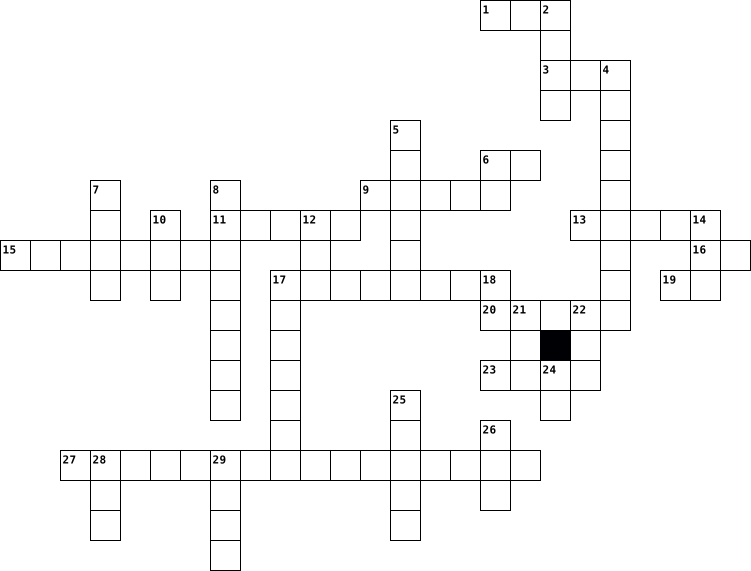
Medical terminology related to blood 2023-12-09

Across
- A blood protein that stores iron
- The most abundant leukocyte in blood
- Iron transporter in blood
- Production of blood cells
- Insufficient oxygen in blood
- Another name for red blood cell
- The process of stopping bleeding
Down
- The process of red blood cells aggregation
- Hormone which stimulates production of red blood cells
- Shape of red blood cells
- Another name for blood platelet
- The process of breaking down blood clot
- Fraction of red blood cells in total blood volume
- Another name for white blood cell
- The molecule inside red blood cells which carry oxygen
15 Clues: Shape of red blood cells • Iron transporter in blood • Production of blood cells • Insufficient oxygen in blood • Another name for blood platelet • Another name for red blood cell • A blood protein that stores iron • The process of stopping bleeding • Another name for white blood cell • The most abundant leukocyte in blood • The process of breaking down blood clot • ...
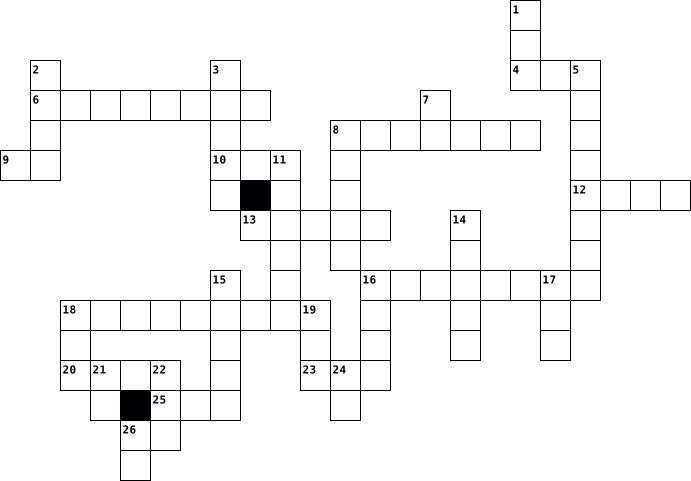
science rocks 2024-05-16

Across
- The protein in red blood cells that carries oxygen
- The liquid component of blood
- The blood clotting process
- The term for red blood cells
- small fragments of cells
- Carry blood towards the heart
Down
- makes the blood red
- the term for white blood cells
- The blood that runs through your veins is a mixture of 4 components
- holds the cells DNA
- 8% of your body weight
- little version of veins
- the most common type of white blood cells bacteria and viruses
- Carry blood away from the heart
- shape of the red blood cell
15 Clues: makes the blood red • holds the cells DNA • 8% of your body weight • little version of veins • small fragments of cells • The blood clotting process • shape of the red blood cell • The term for red blood cells • The liquid component of blood • Carry blood towards the heart • the term for white blood cells • Carry blood away from the heart • ...
Cell Theory 2022-10-03

Across
- thin, flexible barrier that surrounds all cells
- in eukaryotic cells, all cellular contents outside the nucleus, in prokaryotic cells, all of the cells' contents
- organism whose cells contain a nucleus
- structure in an animal cell that helps to organize cell division
- in cells, structure that contains the cells genetic information
- basic unit of all forms of life
Down
- strong, supporting layer around the cell membrane in some cells
- cell organelle that stores materials such as water, salts, proteins, and carbohydrates
- fundamental concept of biology that states all living things are composed of cells
- network of protein filaments in a eukaryotic cell that gives the cell its shape and internal organization and is involved in movement
- organism whose cells do not contain a nucleus
- organelle found in cells of plants and some other organisms that captures the energy from sunlight and convert it into chemical energy
- cell organelle consisting of RNA and protein found throughout the cytoplasm in a cell; the site of protein synthesis
- specialized structure that performs important cellular functions
14 Clues: basic unit of all forms of life • organism whose cells contain a nucleus • organism whose cells do not contain a nucleus • thin, flexible barrier that surrounds all cells • strong, supporting layer around the cell membrane in some cells • in cells, structure that contains the cells genetic information • ...
History of Cell Theory 2023-05-31

Across
- Process by which cells divide to produce new cells.
- Cell theorists proposed that all cells come from pre-existing cells.
- The control center of the cell that contains genetic material.
- Scientist who observed and documented cells for the first time.
- The idea that all living organisms are composed of one or more cells.
- Small structures within a cell that perform specific functions.
- The scientist who developed the cell theory in 1839.
- The most important part of a microscope or telescope.
- Powerhouse of the cell.
Down
- The study of cells and their functions.
- Instrument is used to visualize cells and other microscopic structures.
- The jelly-like substance that fills the cell and surrounds the organelles.
- Scientists discovered that all plants are made up of cells.
- Basic structural and functional unit of life.
- The fluid-filled space inside a cell.
- MEMBRANE The protective outer covering of a cell.
16 Clues: Powerhouse of the cell. • The fluid-filled space inside a cell. • The study of cells and their functions. • Basic structural and functional unit of life. • MEMBRANE The protective outer covering of a cell. • Process by which cells divide to produce new cells. • The scientist who developed the cell theory in 1839. • The most important part of a microscope or telescope. • ...
Cell anatomy 2023-05-08

Across
- structure in a cell that performs a specific function
- jelly like substance organelles float in
- control center of the cells
- protects the outer layer of plant cells
- location of photosynthesis
- pressure that makes plant cells firm
- unicellular organism
Down
- genetic information
- building blocks of life
- smallest living organism
- the powerhouse of the cell
- protects animal cells
- multicellular organism
- distributes substances to outer cell membrane
- holds water for plant cell
15 Clues: genetic information • unicellular organism • protects animal cells • multicellular organism • building blocks of life • smallest living organism • the powerhouse of the cell • holds water for plant cell • location of photosynthesis • control center of the cells • pressure that makes plant cells firm • protects the outer layer of plant cells • jelly like substance organelles float in • ...
Cell Crossword Puzzle 2023-10-17

Across
- There are two types of these. One is rough and one is smooth
- Where proteins are made
- Makes food for plant cells
- Helps plant cells keep their shape
- Allows objects to enter and exit the cell
Down
- A jelly-like mixture that fills the cell
- Produces energy, the "powerhouse"
- Animal cells are more ______ than plant cells
- organisms made of one cell are called this
- Organisms made of multiple cells are called this
- Plant cells are this shape
- All living things are made of this
- Stores food, water and waste
- Control center of the cell
14 Clues: Where proteins are made • Plant cells are this shape • Makes food for plant cells • Control center of the cell • Stores food, water and waste • Produces energy, the "powerhouse" • All living things are made of this • Helps plant cells keep their shape • A jelly-like mixture that fills the cell • Allows objects to enter and exit the cell • ...
Unit 3 Crossword 2025-04-11

Across
- Oblong lymphoid aggregates of the gut located chiefly in the wall of the terminal and small intestine.
- Patches of lymphatic tissue containing B and T cells that underlie the surface of most mucosal surfaces in the body.
- Molecules on the surfaces of many types of microbes that are not present on host cells that mark the microbes as foreign.
- neutrophils, eosinophils, and basophils.
- Butterfly-shaped organ near the tip of the sternum that is the site of T-cell maturation.
- ability of the body to recognize and react with multiple foreign substances
- immunity that arises naturally in an organism via previous experience with the antigen.
- A collection of monocytes and macrophages scattered throughout the extracellular spaces that function to engulf and degrade foreign molecules.
- Enzymes secreted by cytotoxic T cells that damage proteins of target cells.
- infection spreads to several sites and tissue
- any cell, particle, or chemical that induces a specific immune response by B cells or T cells and can stimulate resistance to an infection or a toxin
- pus formers:pneumococci, streptococci, staphylococci, and neisseriae.
- period from the initial contact with an infectious agent to the appearance of the first symptom
- originating or produced within an organism or one of its parts
- Immunity acquired through direct stimulation of the immune system by antigen.
- microbes gain a more stable foothold at the portal of entry
- Proteins released by cytotoxic T cells that produce pores in target cells
- Regulatory chemical released by cells of the immune system that serves as signal between different cells.
- microbe passes host defense
- Bacterial toxins that are potent stimuli for T cells and can be a factor in diseases such as toxic shock
- first line and second line of defense
- progresses and persistent infection
- A specific chemical product of microbes, plants, and some animals that is poisonous to other organisms.
- hazardous, outmoded process of deliberately introducing smallpox material scraped from a victim into the nonimmune subject in the hope of inducing resistance
- serum protein components that act in a definite sequence when set in motion either by an antigen-antibody complex or by factors of the alternative (properdin) pathway
- white blood cells capable of engulfing other cells and particles.
- An extracellular enzyme chiefly for hydrolysis of nutrient macromolecules that are otherwise impervious to the cell membrane.
Down
- Originating outside the body.
- An infection that produces no noticeable symptoms even though the microbe is active in the host tissue.
- plasmalike fluid carried by lymphatic cirrculation
- Patches of lymphatic tissue containing B and T cells that underlie the surface of many skin surfaces in the body.
- antigen that is present in some but not all members of the same species.
- relative capacity of a pathogen to invade and harm host cells
- observed by others
- large amount of white blood cells
- microbes found on/in normal human
- more than one microbe infection
- process by which the various types of blood cells are formed, such as in the bone marrow.
- precise molecular group of an antigen that defines its specificity and triggers the immune response.
- incomplete or partial antigen
- third line of defense
- disease communication, the natural host or habitat of a pathogen.
- swelling, redness post trauma
- comes on rapidly with severe, but short effects
- chemical class of proteins to which antibodies belong
- injection of whole microbes (killed or attenuated), toxoids, or parts of microbes as a prevention or cure for disease.
- A toxin (usually protein) that is secreted and acts upon a specific cellular target.
- evidence of disease sense by patient
- state of being inactive
- leukocyte (white blood cell) having globular, nonlobed nuclei and lacking prominent cytoplasmic granules.
- enzyme found in sweat, tears, and saliva that breaks down bacterial peptidoglycan.
51 Clues: observed by others • third line of defense • state of being inactive • microbe passes host defense • Originating outside the body. • incomplete or partial antigen • swelling, redness post trauma • more than one microbe infection • large amount of white blood cells • microbes found on/in normal human • progresses and persistent infection • evidence of disease sense by patient • ...
Traits Review 2022-01-02

Across
- body cells reproduced from mitosis
- cells that have a specific function
- Reproductive cells; sperm and egg
- The process of reading DNA to make RNA
- cell division needed for growth and repair
- Resulting cells from meiosis and mitosis
- Cell that is divided to make new cells
- biomolecules made of amino acid
Down
- Process that creates proteins
- Undifferentiated cell
- fusion of sperm and egg; makes a zygote
- cell division needed for reproduction
- The basic physical and functional unit of heredity
- The phase that cells spend most of their life
- Acid building block of proteins
15 Clues: Undifferentiated cell • Process that creates proteins • Acid building block of proteins • biomolecules made of amino acid • Reproductive cells; sperm and egg • body cells reproduced from mitosis • cells that have a specific function • cell division needed for reproduction • The process of reading DNA to make RNA • Cell that is divided to make new cells • ...
Get to Know Immunology Basics 2022-10-03

Across
- an immune response that does not involve antibodies but rather involves antigen presenting cells and T-cell lymphocytes
- a molecule that stimulates an immune response by activating leukocytes that fight disease
- genes
- transcription factor that helps activate the expression of many
- cell, a lymphocyte subtype that develops and matures in the bone marrow
- a cell wall component of gram negative bacteria
- these are secreted by plasma cells and that function as antibodies in the immune response by binding with specific antigen
- lymphocyte that matures in the thymus
- part of an innate immune response that kills infected cells kills by apoptosis
- a cytokine that is critical for immunity against viral infections and is commonly known as type II interferon
- subpopulation of T cells that suppress immune responses
- an immune cell that links the innate and adaptive arms of the immune system
- leukocytes with multi-lobed nuclei and cytoplasmic granules
- a medication regimen used to manage and treat human immunodeficiency virus
Down
- the end stage of disease in a HIV infection
- group of genes that code for proteins found on the surfaces of cells that help the immune system recognize foreign substances
- repeating molecular patterns on microbes that are recognized by PRRs on immune cells
- cell surface ligands for leukocyte integrins
- transcription factor expressed in Treg cells that is needed for their function
- a virus that attacks the body's immune system and if not treated can lead to AIDS
- a blood test marker for inflammation in the body
- Y-shaped protein used by the immune system to identify and neutralize foreign objects
- highly pro-inflammatory cytokine produced by macrophages and T cells
- reaction which occurs within an organism for the purpose of defending against foreign invaders
- involved in stimulating B cells to produce antibody against extracellular pathogens
- crystallized fragment of an antibody
- general designation of many of the different cytokines
- an immunoglobulin expressed on B cell surfaces
- receptors on immune cells and epithelial cells that recognize and bind to PAMPs on microbes
- short DNA sequences that serve as the binding sites and allow for somatic recombination
- a subtype of a thymus-derived lymphocyte that expresses the co-receptor protein CD4
31 Clues: genes • crystallized fragment of an antibody • lymphocyte that matures in the thymus • the end stage of disease in a HIV infection • cell surface ligands for leukocyte integrins • an immunoglobulin expressed on B cell surfaces • a cell wall component of gram negative bacteria • a blood test marker for inflammation in the body • ...
Immunology Crossword 2022-09-23

Across
- pulp, this part of the spleen is where damaged red blood cells are removed from circulation
- acronym for tissue that includes tonsils and Peyer's patches
- this type of cell determines when the adaptive immune system needs to be activated
- the death of this granulocyte is what leads to pus in your pimples
- these types of leukocytes are also known as granulocytes
- this type of cell is an effector B cell that secretes antibodies
- acronym for amino acid sequence involved in signal transduction
- patches, lymphoid follicles in the small intestine that make B cells (which give rise to IgA)
- messenger proteins that bind receptors on effector cells to trigger an innate response
- type of microorganisms detected in human feces via nucleic acid sequences
- acronym for treatment for HIV infection involving multiple drugs
- the process of the coating by an antibody (which increases phagocytosis)
- acronym for the part of the antibody that contains the light chain and amino-terminal halks of the heavy chain di-sulfide bonded together
- this granulocyte protects us from helminth worms
- this type of immune response has long-lasting memory
- a secondary lymphoid organ responsible for the immune response to blood-borne pathogens
Down
- the part of an antigenic macromolecule that directly interacts with an antibody
- the process of making white blood cells
- the gland where T cells migrate to mature
- acronym for a type of receptor that recognizes PAMPs on pathogens
- acronym for a mechanism used by NK cells to induce apoptosis in infected cells
- arise from lymphoid precursor cells; can be large or small
- acronym for cell surface proteins that help cells stick to each other
- these cells live permanently in the bone marrow and are precursors for platelets
- this myeloid cell kills pathogens and recruits neutrophils by secreting cytokines
- secreted by plasma cells
- acronym for large lymphocyte that is also called a "cytotoxic" cell
- this type of cell lives in connective tissue and contains chemical mediators that help eject parasites from the gut or respiratory tract
- this type of immune response is our first line of defense
- acronym for a name of proteins in humans and MHC gene complex
30 Clues: secreted by plasma cells • the process of making white blood cells • the gland where T cells migrate to mature • this granulocyte protects us from helminth worms • this type of immune response has long-lasting memory • these types of leukocytes are also known as granulocytes • this type of immune response is our first line of defense • ...
Chapter 12 Vocab - Science 7 2019-05-03

Across
- A thick, clear, gel-like fluid that contains all the organelles in a cell
- the regular sequence of growth and division that cells undergo
- An organism made up of one or many cells that have a nucleus, as well as other organelles
- A small body in a cell's cytoplasm that is specialized to perform a specific function
- A protective layer that acts as a barrier & controls what goes into and out of the cell
- An organelle that packages and distributes materials (warehouse of the cell)
- organelles that convert energy stored in food to energy the cell can use (powerhouses of the cell)
- A mass of abnormal cells that develops when the cells divide and grow uncontrollably
- the second stage of the cell cycle where the cell's nucleus divides into two nuclei and creates two new daughter cells
- The arrangement of parts in an organism
- Organelles that make proteins
- A disease in which some body cells grow and divide uncontrollable, damaging the body
- An organelle in some cells which contains DNA and is the control center of the cell
- A living thing that carries out its own life processes
Down
- A type of sac that stores food, water, wastes, or other materials in a cell
- A single-celled organism that does not have a nucleus or organelles with membranes
- The use of drugs to treat diseases such as cancer
- Green organelles found in plant cells that capture energy from the sun
- the activity of each part in an organism
- wall A rigid structure in plant cells that surrounds the cell membrane
- A widely accepted explanation of the relationship between cells and living things
- An organelle found near the nucleus that consists of a system of membranes that assists in the production and transportation of proteins
- the third stage of the cell cycle where the cytoplasm divides
- A group of organs that work together to perform body functions
- A group of similar cells that perform a common function
- A structure made of a collection of tissue that carries out a specialized function in an organism
- Organelles that contain digestive enzymes which break down materials in the cell
27 Clues: Organelles that make proteins • The arrangement of parts in an organism • the activity of each part in an organism • The use of drugs to treat diseases such as cancer • A living thing that carries out its own life processes • A group of similar cells that perform a common function • the third stage of the cell cycle where the cytoplasm divides • ...
Three Muscle Types 2019-11-12

Across
- Smooth muscle can contract gradually over long periods of time without ______.
- Type of muscle found only in the heart and has its own impulse system
- Skeletal muscle is also known as striped or ________.
- The _______ nervous system is in charge of smooth muscle.
- Cardiac muscles contain specialized cells called _______ cells.
- There are two different types of smooth muscle cells. Multi-unit and single unit, which is also known as _______.
- Smooth muscle distinctly does not have ______ (that both skeletal and cardiac muscle do have, and is also known as striations).
- Skeletal muscles make up +/_____ percent of the total body weight
- Skeletal muscles are long ____ nucleated fiber cells.
- In cardiac muscle, there is an abundance of _________.
- Smooth muscles only have one _____.
- What type of muscle fibers converge on the insertion or maximize the force of muscle contraction.
- Skeletal muscles have _______ striations.
- Smooth muscle cells are _______ than skeletal muscle.
- Skeletal muscles are attached to _______.
- This is the shape of smooth muscle cells.
- Cardiac muscles are located only in the _____.
Down
- There are _______ shapes of skeletal muscle.
- Multi-unit smooth muscles would be found in the walls of large ____
- Some texts classify parallel muscles that are slightly wider in their misled as parallel _______.
- Breathing is an example of a(n) ________ movement.
- Type of muscle controlled by the conscious mind
- Sartorius muscle and rectus abdominus muscle are examples of this type of muscle.
- Skeletal muscle has a large supply of _______ and blood vessels.
- Smooth muscles cells are found in the walls of what type of organs.
- Skeletal muscles have the ______ cells in the body.
- ______ disks are gap junctions staining darker which connect cells together and transmit impulses.
- Cardiac muscle has a ______ nuclei.
- Continual “waves” of contraction of the smooth muscle as food moves through the intestines is called _______.
- When cells form skeletal tissue, they can form in _____ ways with different types of attachments.
- Type of muscle that has many fibers per unit area.
- Orbicularis oris and Orbicularis Oculi muscles are example of this type of muscle.
- Type of muscle that carries out unconscious, internal movements of the body
- Cells banded together forming the tissue of the muscle is called the ____.
34 Clues: Cardiac muscle has a ______ nuclei. • Smooth muscles only have one _____. • Skeletal muscles have _______ striations. • Skeletal muscles are attached to _______. • This is the shape of smooth muscle cells. • There are _______ shapes of skeletal muscle. • Cardiac muscles are located only in the _____. • Type of muscle controlled by the conscious mind • ...
Innate Immune System 2025-04-06

Across
- A substance that causes fever as part of an immune response
- Organelle that breaks down engulfed pathogens in phagocytes
- Immune cell that releases histamine during inflammation
- A large phagocytic cell that plays a role in innate immunity
- Chemical released by mast cells during inflammation
- An example of a parasite that can trigger innate responses
- A type of white blood cell that engulfs and digests pathogens
- The swelling, heat, and redness caused by immune activity
- Fluid secreted by skin that contains antimicrobial properties
- A protein that can break down microbial components
- Movement of immune cells toward chemical signals
- A type of white blood cell containing granules for defense
- Widening of blood vessels during inflammation
- A physical or chemical defence that prevents pathogen entry
- Beneficial microbes that help defend against harmful pathogens
- A disease-causing microorganism
- A condition where the immune system attacks the body’s own cells
- A substance that enhances phagocytosis by marking pathogens
- A white blood cell involved in allergic and inflammatory responses
Down
- A chemical that interferes with viral replication
- A group of proteins that helps destroy pathogens
- Molecules shared by many microbes that innate cells detect
- Non-animal organism that also displays innate immune responses
- An increase in body temperature in response to infection
- A sticky secretion that traps pathogens at body surfaces
- Swelling caused by fluid leakage during inflammation
- Another word for non-specific or innate immune response
- The body’s largest organ and a key physical barrier
- A protein released by NK cells that creates holes in target cells
- A structure on immune cells that detects signals or pathogens
- A molecule that can trigger an immune response
- A type of killer cell that destroys virus-infected cells
- Protein on immune cells that detects common pathogen features
- Any molecule or cell that the immune system recognises as foreign
- The specific part of an antigen recognized by immune cells
- A fast-responding phagocytic white blood cell
- Signalling protein released by immune cells to communicate
- The pH condition of the stomach that kills ingested microbes
- White blood cell that fights multicellular parasites
39 Clues: A disease-causing microorganism • Widening of blood vessels during inflammation • A fast-responding phagocytic white blood cell • A molecule that can trigger an immune response • A group of proteins that helps destroy pathogens • Movement of immune cells toward chemical signals • A chemical that interferes with viral replication • ...
Disorders of WBCs and Lymphoid Tissue 2024-03-12

Across
- WBC <4,000
- Cancer of sudden onset that leads to large amounts of immature cells of lymphoid cell lineage
- Associated with large, atypical cells
- Responsible for fatigue that occurs with leukemia
- Can be a normal response of the immune system
Down
- ANC <500 cells
- Solid tumors of B cells, T cells, & NK cells
- Proliferation of more mature myeloid & lymphoid cells
- Invasion of B cells caused by a type of herpesvirus
- Classification based on cell lineage & progression rate
- Characterized by isolated or widespread lymphadenopathy
- Symptoms include fever, sore throat, and lymphadenopathy
- Malignancy that affects plasma cells & can cause abnormal proteins in blood & urine
13 Clues: WBC <4,000 • ANC <500 cells • Associated with large, atypical cells • Solid tumors of B cells, T cells, & NK cells • Can be a normal response of the immune system • Responsible for fatigue that occurs with leukemia • Invasion of B cells caused by a type of herpesvirus • Proliferation of more mature myeloid & lymphoid cells • ...
D3 Functions of the Liver 2017-11-21

Across
- Vitamin D
- Transports Oxygen Rich Blood to the Liver from the Heart
- Transports Nutrient Rich Blood from the stomach and Intestines to the Liver
- Liver Cells
- The small blood vessels in the liver from the hepatic portal vein
- Vitamin A
- Protein responsible for transporting any bilirubin produced outside of the liver
- A protein essential for clotting
- Protein in red blood cells that carries oxygen; Broken down in the kupffer cell into a globin chains and a heme group
- A symptom that results in the yellowing of skin and eyes due to the excess concentration of bilirubin, which can be caused by other diseases.
- a hormone that stimulates liver cells to take up glucose and store it as glycogen
- Broken down into amino acids, which are recycled
- Composed of soluble bilirubin, water, electrolytes, bicarbonate, cholesterol, phospholipids and salts
Down
- The thin passage that transports bile to the gall bladder
- Made by liver cells; Needed to make Vitamin d and steroid hormones.
- Macrophages that line the sinusoids in the liver; Engulfs red blood cells that swell due to age
- Transports blood from the liver to the heart after detoxication
- The small blood vessels in the liver from the hepatic artery
- White Blood Cells that engulf damaged, dead, and foreign cells in the blood stream
- Red Blood Cell
- Yellow pigment in bile
- a hormone that will break down glycogen, glycerol, amino acids and fatty acids in the liver, therefore releasing glucose to the blood stream
- Broken down into iron and bilirubin
- Recycles old red blood cells
24 Clues: Vitamin D • Vitamin A • Liver Cells • Red Blood Cell • Yellow pigment in bile • Recycles old red blood cells • A protein essential for clotting • Broken down into iron and bilirubin • Broken down into amino acids, which are recycled • Transports Oxygen Rich Blood to the Liver from the Heart • The thin passage that transports bile to the gall bladder • ...
Biology Cell Cycle Vocab 2018-11-02

Across
- cell A cell that is not part of the germ line (i.e. does not give rise to
- and pulling them to opposite ends of the cell.
- A disease resulting from the uncontrolled growth and division of the cells of a multicellular organism.
- replication The synthesis of a new dna molecule that has the same nucleotide
- its dna and divides into identical cells.
- The phase of the eukaryotic cells cycle in which a single cell divides into two cells.
- begins to reform to create two separate but identical nuclei.
- as a preexisting dna molecule.
- The first phase of mitosis in which chromosomes condense becoming visible the nuclear membrane dissolves and the centrosomes move to opposite ends of the nucleus and spindle
- The phase of mitosis in which spindle fibers begin to shorten separating the sister
- cell An undifferentiated cell that can differentiate into one or more specialized cell
Down
- or divide to produce more undifferentiated cells.
- The phase of mitosis where chromosomes line up along an imaginary line (the metaphase plate) in the middle of the cell.
- The division of the cytoplasm into two separate cells during cellular
- fission A form of a sexual reproduction where a single-celled organism
- The longest phase of the cell cycle in which the cell grows performs its functions
- if it is going to divide replicates its dna.
- form.
- The phase of mitosis in which the genetic material has been separated and the nuclear
- cycle The process by which cells grow and divide to produce more cells.
20 Clues: form. • as a preexisting dna molecule. • its dna and divides into identical cells. • if it is going to divide replicates its dna. • and pulling them to opposite ends of the cell. • or divide to produce more undifferentiated cells. • begins to reform to create two separate but identical nuclei. • The division of the cytoplasm into two separate cells during cellular • ...
Science - Cells and microscopes 2015-05-19

Across
- has different sized holes and is used to vary the intensity and size of the cone of light that is projected upward into the slide
- It is only found in plants and it is the site of photosynthesis
- When plants use sunlight to make nutrients from carbon dioxide or water
- Known as the "pantry"
- Describes the properties of cells
- It employs visible light to detect small objects
- Provides power or energy and is found in both plant and animal cells
- Found in every cell
- When cells commit suicide
- It is a "jelly like" fluid that holds the organelles in place
- Only found in plant cells and gives structure and shape
- something you look through
- The lower lens
- Exist at or from an earlier time
- a transparent piece of glass or plastic with at least one curved surface
Down
- Weird symbol
- 4X, 10X, 40X
- First person to make a microscope
- First man to discover cells
- Controls what goes in and out of a cell
- A cell that is found in men only
- One millionth of a meter
- These are cells designed to stimulate other cells in the body in order to communicate
- The flat platform where you place your slide
- Building blocks of life
- The opposite of animal cell
- When cells divide
- Carries oxygen, also removes carbon dioxide from your body, transporting it to the lungs for you to exhale
- The taking in of matter by a living cell by invagination of its membrane to form a vacuole
29 Clues: Weird symbol • 4X, 10X, 40X • The lower lens • When cells divide • Found in every cell • Known as the "pantry" • Building blocks of life • One millionth of a meter • When cells commit suicide • something you look through • First man to discover cells • The opposite of animal cell • A cell that is found in men only • Exist at or from an earlier time • First person to make a microscope • ...
Bio Ch. 2 2021-10-04

Across
- Surrounds the organelles and made up of salts, minerals, and organic molecules
- is not covered in ribosomes and is involved in the synthesis of lipids and breakdown of toxic substances
- Acts as a support system for organelles and maintains cell shape
- Degrades hydrogen peroxide
- covered in ribosomes and makes large amounts of proteins to be exported from the cell
- Used for temporary storage of wastes, nutrients, and water
- Who was the first person to observe living cells?
- Breaks down food particles, invading objects, or worn out cell parts
- Include: animals, plants, fungi, protists
- Converts energy stored in food into usable energy, "the powerhouse of the cell"
- Manages cell functions and stores DNA
Down
- The boundary between the cell and the external environment
- Who determined that cells come only from other cells?
- Include: bacteria
- Who concluded that all plants are composed of cells?
- Location of protein synthesis
- What is the longest cell?
- All living things are composed of one or more ____________.
- Only plant cells contain this organelle, it takes up majority of the plant cell
- Who observed a thin slice of cork and called the little boxes that made it up "cells"?
- In charge of photosynthesis
- distributes the proteins received from the Rough ER and distributes them to other organelles or out of the cell
- Plays a major roll in cell division (mitosis)
- Who concluded that all animals are composed of cells?
- Boundary around plant cell outside of the cell membrane that provides structure and support
25 Clues: Include: bacteria • What is the longest cell? • Degrades hydrogen peroxide • In charge of photosynthesis • Location of protein synthesis • Manages cell functions and stores DNA • Include: animals, plants, fungi, protists • Plays a major roll in cell division (mitosis) • Who was the first person to observe living cells? • Who concluded that all plants are composed of cells? • ...
Epithelial tissue 2022-09-30

Across
- a cell that is taller than it is wide.
- the epithelium with a single layer of flat cells.
- this epithelium seems stratified but it's not.
- These short fibres cluster into a mesh-like network (reticulum = network) that covers and supports the structures bordering the connective tissue.
- inelastic fibres of great tensile strength made up of collagen protein.
- the ground substance and fibers between cells in a connective tissue.
- the basal surface of epithelial cells lies on it.
- it lacks blood vessels
- the main function of epithelial tissue.
Down
- the epithelium with a single layer of cuboidal cells.
- the epithelium that lines the bladder cavity. Its apical cells change their shape as the bladder fills with urine.
- a group of cells of similar structure that perform a common function.
- A passive process in which there is a net or greater movement of molecules or ions from a region of high concentration to a region of low concentration until equilibrium is reached.
- fibres composed primarily of the protein elastin (rubber like protein) that allows them to function like rubber bands.
- a cell that is as high as wide.
- the surface of a cell that faces the lumen, which is the inner cavity of an organ or blood vessel, or that is exposed to the body exterior.
- an epithelium with more layers of cells.
- an epithelium with a single layer of cells.
- the basic structural and functional unit of all organisms
- a flat cell (it is wider than it is high).
20 Clues: it lacks blood vessels • a cell that is as high as wide. • a cell that is taller than it is wide. • the main function of epithelial tissue. • an epithelium with more layers of cells. • a flat cell (it is wider than it is high). • an epithelium with a single layer of cells. • this epithelium seems stratified but it's not. • the epithelium with a single layer of flat cells. • ...
Epithelial tissue 2022-09-30

Across
- inelastic fibres of great tensile strength made up of collagen protein.
- an epithelium with more layers of cells.
- this epithelium seems stratified but it's not.
- the surface of a cell that faces the lumen, which is the inner cavity of an organ or blood vessel, or that is exposed to the body exterior.
- the basic structural and functional unit of all organisms
- the epithelium with a single layer of cuboidal cells.
- a cell that is as high as wide.
- a flat cell (it is wider than it is high).
Down
- the basal surface of epithelial cells lies on it.
- the epithelium that lines the bladder cavity. Its apical cells change their shape as the bladder fills with urine.
- the main function of epithelial tissue.
- the epithelium with a single layer of flat cells.
- the ground substance and fibers between cells in a connective tissue.
- A passive process in which there is a net or greater movement of molecules or ions from a region of high concentration to a region of low concentration until equilibrium is reached.
- These short fibres cluster into a mesh-like network (reticulum = network) that covers and supports the structures bordering the connective tissue.
- fibres composed primarily of the protein elastin (rubber like protein) that allows them to function like rubber bands.
- it lacks blood vessels
- an epithelium with a single layer of cells.
- a cell that is taller than it is wide.
- a group of cells of similar structure that perform a common function.
20 Clues: it lacks blood vessels • a cell that is as high as wide. • a cell that is taller than it is wide. • the main function of epithelial tissue. • an epithelium with more layers of cells. • a flat cell (it is wider than it is high). • an epithelium with a single layer of cells. • this epithelium seems stratified but it's not. • the basal surface of epithelial cells lies on it. • ...
Epithelial tissue 2022-09-30

Across
- the main function of epithelial tissue.
- it lacks blood vessels
- the epithelium with a single layer of cuboidal cells.
- the epithelium with a single layer of flat cells.
- fibres composed primarily of the protein elastin (rubber like protein) that allows them to function like rubber bands.
- this epithelium seems stratified but it's not.
- the ground substance and fibers between cells in a connective tissue.
- These short fibres cluster into a mesh-like network (reticulum = network) that covers and supports the structures bordering the connective tissue.
- a flat cell (it is wider than it is high).
- inelastic fibres of great tensile strength made up of collagen protein.
Down
- an epithelium with a single layer of cells.
- the basic structural and functional unit of all organisms
- the basal surface of epithelial cells lies on it.
- a group of cells of similar structure that perform a common function.
- the surface of a cell that faces the lumen, which is the inner cavity of an organ or blood vessel, or that is exposed to the body exterior.
- an epithelium with more layers of cells.
- a cell that is taller than it is wide.
- the epithelium that lines the bladder cavity. Its apical cells change their shape as the bladder fills with urine.
- a cell that is as high as wide.
- A passive process in which there is a net or greater movement of molecules or ions from a region of high concentration to a region of low concentration until equilibrium is reached.
20 Clues: it lacks blood vessels • a cell that is as high as wide. • a cell that is taller than it is wide. • the main function of epithelial tissue. • an epithelium with more layers of cells. • a flat cell (it is wider than it is high). • an epithelium with a single layer of cells. • this epithelium seems stratified but it's not. • the basal surface of epithelial cells lies on it. • ...
Brain and Behavior Exam 2 2020-03-04

Across
- Occurs when our senses detect a stimulus
- Tone quality or complexity of sound wave
- Layer of cells in brain development that the nervous system develops from
- Muscles that control the movement of the eyes
- Sharpness of vision
- Muscles that change lens shape
- ______ cells make contact from receptor to bipolar cells
- Rods and cones are _____
- Most common vision problem in young people
- Detect photons in low light
- Establishment of synaptic connections
- System that transmits sensations of pain and temperature to brain
- Bending of light
- The sense our brain makes of the stimulus
- Recessive hereditary disorder of phenylalanine metabolism
Down
- Intensity of sound wave
- Heat in chilis that makes it spicy
- 3 tiny bones in the ear
- Peripheral receptors that respond to painful stimuli
- Best acuity of vision is in this spot
- Chemical reactions from light causes cells to _____
- Combination of senses activated together, unusual
- Process of light being turned into neural signals
- ______ cells make contact from bipolar to ganglion cells
- Optic nerve crosses midline at optic ____
- Photopigment in rods
- ______ axons make up the optic nerve
- The optic chiasm turns into the optic ____
- Refining of cells into distinctive neurons/glial cells
- Creation of new neurons
- Detect color
- Neuronal cell death
- Many photoreceptors sending signals to one ganglion cell
- Number of compressions per second of sound wave
- Transparent outer layer of eye
- Lets more light into the eye with sympathetic division of autonomic system
- Light particles
37 Clues: Detect color • Light particles • Bending of light • Sharpness of vision • Neuronal cell death • Photopigment in rods • Intensity of sound wave • 3 tiny bones in the ear • Creation of new neurons • Rods and cones are _____ • Detect photons in low light • Muscles that change lens shape • Transparent outer layer of eye • Heat in chilis that makes it spicy • ...
GEN BIO 1 - CROSSWORD ACT. 2024-09-04

Across
- ribosomes that found in the cytosol
- ER that doesn't have attached ribosomes, produces lipids
- is the semifluid matrix in the nucleus
- ribosomes that are attached to the outside of the endoplasmic reticulum or nuclear envelope
- organisms that belong to the same species and live in the same area
- prominent, usually oval structure in a eukaryotic cell, and is located in almost the center of the cell
- the smallest, basic, functional unit of life formed when different atoms and molecules combine and function together
- tissues that are composed of tightly packed cells that cover, line, and protect the body part
- contains enzymes and serve as metabolic assistance to organelles and specialize in synthesizing & breaking down lipids
- tissues that are made up of neurons that receive and conduct electrochemical signals and supporting cells (glial cells) that support, protect, and insulate neurons
- membrane-bound structures in eukaryotic cells
Down
- includes all the communities interacting with one another and with their environment
- organelle that is unique to plant and algae cells, and performs photosynthesis.
- storage of water, organic nutrients, variety of salts, sugar & some weak acids
- groups of cells that work together to perform a specialized function
- ER that has thousands of ribosomes attached to the outer surface, and produces proteins
- groups of tissues that work together to perform a specialized function
- organelles that use instructions from the nucleus, written in mRNA, to build proteins
- composed of highly specialized muscle cells that contract to produce movement
- tissues that are made up of cells and an extracellular matrix that connects, protects, and supports body parts
20 Clues: ribosomes that found in the cytosol • is the semifluid matrix in the nucleus • membrane-bound structures in eukaryotic cells • ER that doesn't have attached ribosomes, produces lipids • organisms that belong to the same species and live in the same area • groups of cells that work together to perform a specialized function • ...
cell review 2021-06-11

Across
- cells that do not have membrane-bound organelles are called __________ cells
- what makes protein in a cell other then the rough ER
- often referred to as the "power house" of the cell
- rigid wall outside the plasma membrane. it provides the cell with extra support
- all cells come from preexisting _______
- cells that contain organelles which are held together by ________
- sorts and sends the proteins made by ribosomes to the places its needed in the cell is the function of _______
- when plants and plant-like organisms make their energy(glucose)
- found inside the nucleus; ribosomes are made here
- what does the rough ER make
Down
- fluid filled organelles enclosed by a membrane are called _______
- directions on how to make proteins is called _______
- captures light and energy; and converts it in to chemical energy
- the smooth ER is ______ for the fats and proteins that the rough er makes
- largest organelle in the cell and it is the most inner compartment of the cell is called _______
- organelles that are filled with digestive enzymes to remove waste and invading bacteria
- cells are the basic unit of ________organisms
- cells that do have membrane-bound organelles are called ________ cells
- organelles that store things such as the foods in the plant cell
- green pigment found inside the chloroplast
- organisms need___ to survive AKA energy answer is shortened to make it smaller and a little easier
- keeping a healthy balance of nutrients and water within the cell is called _______
- clear gel like fluid found in the cell is called _______
23 Clues: what does the rough ER make • all cells come from preexisting _______ • green pigment found inside the chloroplast • cells are the basic unit of ________organisms • found inside the nucleus; ribosomes are made here • often referred to as the "power house" of the cell • directions on how to make proteins is called _______ • ...
Immune System 2022-04-04

Across
- disorders caused by bacteria and viruses.
- a disorder that disrupts normal metabolism.
- a type of B lymphocyte that forms part of the adaptive immune system.
- a type of white blood cell.
- a vessel or cavity in which a body fluid is stored.
- a protein released by animal cells, which also inhibiting virus replication.
- white blood cells that create antibodies.
- when a disease affects the world population.
- a medicine that inhibits growth of bacteria or microrganisms.
- type of cell that kills certain cells, including cancer cells and cells infected with a virus.
- a disease in which the immune system makes an inflammatory response to something harmless that has entered the body.
Down
- A disease in which the structure of the affected tissues worsens over time.
- a substance that is made in response to the detection of a foreign material in the body and that participates in a complement reaction.
- when someone is protected from disease by vaccination.
- type of white blood cell that acts as the mediator of immune function
- severe allergic reaction, when someone blood pressure drops so far down that not enough oxygen is getting to the cells.
- a widespread occurrence of a disease.
- proteins that are made in the response to infection.
- large blood cells that play a big part in protecting its vessel from foreign bacteria and microorganisms.
- a type of bacteria that can cause a disease.
- a disease caused by the uncontrollable division of abnormal cells in the affected body part.
21 Clues: a type of white blood cell. • a widespread occurrence of a disease. • disorders caused by bacteria and viruses. • white blood cells that create antibodies. • a disorder that disrupts normal metabolism. • when a disease affects the world population. • a type of bacteria that can cause a disease. • a vessel or cavity in which a body fluid is stored. • ...
WSCS 8th grade Anatomy 1 2019-09-18

Across
- yellowish fluid which carries RBC,WBC and platelets
- group of cell performing a function together
- root word that means heart
- making something new of component parts
- single cell vessels where blood encounters cells and exchanges of gases happen
- groups of organs that function togetether
- organ that contains RBC ,WBC, platelets and plasma
- system that has to do with transport of blood
- theory that all living things are made up of cells, cell are teh basic unit of life, all cells come from pre-existing cells
- 8 types determined by proteins in the blood
- vessels that carry red (oxygen-rich) blood from the heart
- protein in red blood cells that turns red in the presence of oxygen
- only type of cell that can become any other type of cell
Down
- vessels that carry blue (carbon dioxide-rich) blood to the heart
- group of tissues performing a function together
- system that is involved in breaking down food
- cells in the blood that have to do with forming clots
- the movement of blood through vessels felt at certain points on the body
- 'brain' of the cell
- part of a plant cell that contain chlorophyll, makes plants green
- gelatinous substance that fills cells in which the organelles 'float'
- have a cell wall and chloroplasts in addition to the other basic cell parts
- mnemonic to help us remember how we know if something is living
- smallest unit of life
- gas carried by red blood to all cells
25 Clues: 'brain' of the cell • smallest unit of life • root word that means heart • gas carried by red blood to all cells • making something new of component parts • groups of organs that function togetether • 8 types determined by proteins in the blood • group of cell performing a function together • system that is involved in breaking down food • ...
Genetics Chapter Two Crossword 2012-10-10

Across
- sac containing enzymes
- hollow structure that is part of the cytoskeleton
- joining of cells
- cells that reveal surprising relationships
- Cell that does not have a nucleus
- soild rods that are part of the cytoskeleton
- stage when cell is not dividing
- stage when chromosomes line up in the middle
- power house of the cell and makes ATP
- organelle that makes proteins
- stage when centromeres part
- small organs which are found inside eukaryotic cells and have a particular function
- contents that surrounds organelles
- type of cell that can become anything it wants
- chromosome tip
Down
- garbage disposal of the cell
- organelle where proteins and lipids are made
- first stage of mitosis
- control center of the cell
- when cells asses, transmit, and amplify incoming messages
- stage when spindles break down
- a macromolecule that is found is pasta and crackers
- Cell that contains organelles and has a nucleus
- division of nonsex cells
- stacks of membrane enclosed sacs
- outer membrane of the cell
- stage when daughter cells separate
- a macromolecule that insulates and stores energy
- a macromolecule that is present in cells and makes proteins
- type of cell has already become fixed to one duty
- cycle of events explaining the division of a cell
- a macromolecue with enzymes found in meat and fish
- a part of the cell cycle where a protein controls the process
- help guide white blood cells to the injured area
- cell death
- all proteins a cell can make
36 Clues: cell death • chromosome tip • joining of cells • sac containing enzymes • first stage of mitosis • division of nonsex cells • control center of the cell • outer membrane of the cell • stage when centromeres part • garbage disposal of the cell • all proteins a cell can make • organelle that makes proteins • stage when spindles break down • stage when cell is not dividing • ...
SNC2D Cell Structures Crossword 2015-03-25

Across
- storage structure, mainly for water, nutrients, wastes
- a kind of unicellular water organism
- a flexible exterior boundary of all cells
- male body cell that has a flagellum
- the fluid inside the nucleus
- the nucleus has hundreds of these to help with transport
- the site of photosynthesis
- used by the cell to break down nutrients or viruses
- thick, sturdy, inflexible coating of plant & fungal cells
- the main job of the endoplasmic reticulum system
- the bacteria, because they don't have a nucleus
- chromatin takes on this form when the cell divides
- a type of very high powered microscopes
- the thick gel-like fluid that holds all of the organelles
- 'recipes' of hereditary information found in DNA
- the cytoskeleton is made of this nutrient
- a group of similar cells all doing the same job
- the type of endoplasmic reticulum that doesn't have ribosomes
- a unit for measuring cells and organelles
Down
- completes the protein-making process; packaging & transport
- any cell with a true, membrane-bound nucleus
- makes energy for the cell
- because they're not made of cells, they're considered acellular
- pair of organelles found near the nucleus in animal cells
- the cell wall is made of this type of starch
- where ribosomes get made
- process where damaged cells spontaneously die off
- specialized organelle that contains pigments in plant cells
- a mixture of DNA and protein found in the nucleus
- female body cell that is visible without a microscope
30 Clues: where ribosomes get made • makes energy for the cell • the site of photosynthesis • the fluid inside the nucleus • male body cell that has a flagellum • a kind of unicellular water organism • a type of very high powered microscopes • a flexible exterior boundary of all cells • the cytoskeleton is made of this nutrient • a unit for measuring cells and organelles • ...
BMT terms 2016-05-10

Across
- Stem cell transplant from a donor
- Human leukocyte antigen.
- Due to small cell volume, these are often performed with cells from two donors.
- Side-effect that may occur after a bone marrow or stem cell transplant from a donor
- Chemotherapy given to kill cancer cells, also kills all healthy bone marrow and allows new stem cells to grow in the bone marrow
- An intensive drug treatment to kill cancer cells,that also destroys healthy cells in the marrow
- Test to determine if lymphoid or myeloid line have engrafted
- This is “planting more seeds” using primitive cells, and is less likely to cause GVHD
- Stem Cell Transplant
- Hematopoietic cell transplant
Down
- In this type of transplant, the donor is usually the patient’s child or parent
- Transplant between genetically identical twins
- Less toxic treatment allows older patients, or patients with significant co-morbidities to have a transplant.
- In this type of transplant the donor isn't related to patient
- The number ONE thing the NIH recommends transplant patients do before transplant
- Progression of disease
- Lymphocytes from the donor are infused into patient
- Two genetically distinct types of cells
- Patient donates for themselves
- Hematopoietic stem cell transplant
- Stem cells mobilized from marrow and collected through apheresis
- Treatment that replaces bone marrow that is either not working correctly or has been destroyed by chemotherapy &/or radiation
- Characterized by hepatomegaly, right upper quadrant pain, jaundice, and ascites, most often occurring in patients undergoing stem cell transplant. Previously called VOD
23 Clues: Stem Cell Transplant • Progression of disease • Human leukocyte antigen. • Hematopoietic cell transplant • Patient donates for themselves • Stem cell transplant from a donor • Hematopoietic stem cell transplant • Two genetically distinct types of cells • Transplant between genetically identical twins • Lymphocytes from the donor are infused into patient • ...
The Mystery of BMT Terms & Abbreviations 2016-04-21

Across
- Hematopoietic cell transplant
- Two genetically distinct types of cells
- In this type of transplant the donor isn't related to patient
- Lymphocytes from the donor are infused into patient
- Human leukocyte antigen.
- The number ONE thing the NIH recommends transplant patients do before transplant
- Stem cell transplant from a donor
- Due to small cell volume, these are often performed with cells from two donors.
- In this type of transplant, the donor is usually the patient’s child or parent
- Characterized by hepatomegaly, right upper quadrant pain, jaundice, and ascites, most often occurring in patients undergoing stem cell transplant. Previously called VOD
- Progression of disease
- Treatment that replaces bone marrow that is either not working correctly or has been destroyed by chemotherapy &/or radiation
Down
- Stem Cell Transplant
- Hematopoietic stem cell transplant
- Stem cells mobilized from marrow and collected through apheresis
- Less toxic treatment allows older patients, or patients with significant co-morbidities to have a transplant.
- Chemotherapy given to kill cancer cells, also kills all healthy bone marrow and allows new stem cells to grow in the bone marrow
- Test to determine if lymphoid or myeloid line have engrafted
- Transplant between genetically identical twins
- This is “planting more seeds” using primitive cells, and is less likely to cause GVHD
- An intensive drug treatment to kill cancer cells,that also destroys healthy cells in the marrow
- Patient donates for themselves
- Side-effect that may occur after a bone marrow or stem cell transplant from a donor
23 Clues: Stem Cell Transplant • Progression of disease • Human leukocyte antigen. • Hematopoietic cell transplant • Patient donates for themselves • Stem cell transplant from a donor • Hematopoietic stem cell transplant • Two genetically distinct types of cells • Transplant between genetically identical twins • Lymphocytes from the donor are infused into patient • ...
lymphatic system 2023-10-27

Across
- - create antibodies
- - organ primarily responsible for the production and maturation of immune cells
- - Specialized lymphatic vessels found in the small intestine
- - Protein-rich fluid that leaks from blood vessels into surrounding tissues
- - a lymphatic tissue where B and T cells carry out immune responses
- - part of the lymphatic vessel that ensures a one-way flow of lymph.
- -part of spongy bone that produces blood cells (hematopoiesis)
- - thin walled tubes that are structured like blood vessels that carry lymph to lymphatic ducts
- - are small lumps of tissue that contain white blood cells that fight against infection.
- - a large phagocytic cell that is found in a stationary form in the tissues or as a mobile white blood cell, especially at sites of infection.
Down
- - produced by lymph nodes that contain white blood cells
- - tiny vessels in the tissues of most organs that absorb Interstitial fluid and transport lymphatic fluid(lymph) to afferent lymphatic vessels
- - small organ inside the ribcage just above the stomach
- - Tiny, finger-like projections in the small intestine that absorb fats
- - combat intracellular pathogens
- - the condition in which an excessive amount of interstitial fluid accumulates in the tissue spaces.
- - two round fleshy masses in the back of your throat (pharynx)
- - it is usually a clear fluid that circulates in the lymphatic vessels, bathes the cells of the body, and consists of white blood cells and a liquid portion resembling blood plasma
- - White blood cells responsible for immune response
- - is the cancer of lymph tissue in lymph nodes
20 Clues: - create antibodies • - combat intracellular pathogens • - is the cancer of lymph tissue in lymph nodes • - White blood cells responsible for immune response • - small organ inside the ribcage just above the stomach • - produced by lymph nodes that contain white blood cells • - Specialized lymphatic vessels found in the small intestine • ...
Immune System 2023-09-26

Across
- Part of the lymphatic system found in the back of our mouth
- Immunity against antigens found in body fluids
- Stimulates the cells of the immune system to recruit immune cells to an area of infection
- This enzyme is found in saliva, tears, and nasal secretions and kills pathogens
- This chemical barrier acts as a protective barrier that blocks bacteria from sticking to cells
- Immune response the defends the body against viruses, fungi, and abnormal cancer cells
- The first line of defense in nonspecific immunity
- The lymphocytes that are responsible for destroying pathogens
- Any foreign substance that stimulates an immune response
Down
- Temporary protection that is transferred from another person or animal. Ex: mothers to their baby
- Activates both t cells and b cells to do their jobs
- Type of immunity that helps the body prevent disease and slow the progression of disease
- Immunity that occurs when the immune system is exposed to an infectious disease
- The second line of defense that increases blood flow to an infected area
- Organs and cells that keeps body fluids in check and defends the body against infections
- A chemical barrier that kills pathogens found in the food we eat
- b cells are produced here
- Immunity The most effective type of immune system response
- The defense system the body uses to fight off pathogens
- This is what we call the good bacteria on our skin
- A type of white blood cell that is produced in red bone marrow
- The lymphocytes that are responsible for making antibodies
22 Clues: b cells are produced here • Immunity against antigens found in body fluids • The first line of defense in nonspecific immunity • This is what we call the good bacteria on our skin • Activates both t cells and b cells to do their jobs • The defense system the body uses to fight off pathogens • Any foreign substance that stimulates an immune response • ...
Epithelial tissue 2022-09-30

Across
- it lacks blood vessels
- a flat cell (it is wider than it is high).
- vessel, or that is exposed to the body exterior.
- the basic structural and functional unit of all organisms
- the ground substance and fibers between cells in a connective tissue.
- the epithelium that lines the bladder cavity. Its apical cells change their shape as the bladder fills with urine.
- A passive process in which there is a net or greater movement of molecules or ions from a region of high concentration to a region of low concentration until equilibrium is reached.
- These short fibres cluster into a mesh-like network (reticulum = network) that covers and supports the structures bordering the connective tissue.
- the surface of a cell that faces the lumen, which is the inner cavity of an organ or
- inelastic fibres of great tensile strength made up of collagen protein.
- a group of cells of similar structure that perform a common function.
Down
- the main function of epithelial tissue.
- a cell that is as high as wide.
- the epithelium with a single layer of cuboidal cells.
- an epithelium with a single layer of cells.
- the basal surface of epithelial cells lies on it.
- the epithelium with a single layer of flat cells.
- this epithelium seems stratified but it's not.
- a cell that is taller than it is wide.
- fibres composed primarily of the protein elastin (rubber like protein) that allows them to function like rubber bands.
- an epithelium with more layers of cells.
21 Clues: it lacks blood vessels • a cell that is as high as wide. • a cell that is taller than it is wide. • the main function of epithelial tissue. • an epithelium with more layers of cells. • a flat cell (it is wider than it is high). • an epithelium with a single layer of cells. • this epithelium seems stratified but it's not. • vessel, or that is exposed to the body exterior. • ...
Epithelial tissue 2022-09-30

Across
- the basal surface of epithelial cells lies on it.
- These short fibres cluster into a mesh-like network (reticulum = network) that covers and supports the structures bordering the connective tissue.
- a group of cells of similar structure that perform a common function.
- the ground substance and fibers between cells in a connective tissue.
- the epithelium that lines the bladder cavity. Its apical cells change their shape as the bladder fills with urine.
- the basic structural and functional unit of all organisms
- an epithelium with more layers of cells.
- a cell that is as high as wide.
- A passive process in which there is a net or greater movement of molecules or ions from a region of high concentration to a region of low concentration until equilibrium is reached.
Down
- a flat cell (it is wider than it is high).
- an epithelium with a single layer of cells.
- this epithelium seems stratified but it's not.
- the epithelium with a single layer of cuboidal cells.
- the epithelium with a single layer of flat cells.
- the main function of epithelial tissue.
- fibres composed primarily of the protein elastin (rubber like protein) that allows them to function like rubber bands.
- the surface of a cell that faces the lumen, which is the inner cavity of an organ or blood vessel, or that is exposed to the body exterior.
- it lacks blood vessels
- inelastic fibres of great tensile strength made up of collagen protein.
- a cell that is taller than it is wide.
20 Clues: it lacks blood vessels • a cell that is as high as wide. • a cell that is taller than it is wide. • the main function of epithelial tissue. • an epithelium with more layers of cells. • a flat cell (it is wider than it is high). • an epithelium with a single layer of cells. • this epithelium seems stratified but it's not. • the basal surface of epithelial cells lies on it. • ...
Epithelial and Connective Tissue 2022-09-30

Across
- the main function of epithelial tissue.
- it lacks blood vessels
- the epithelium with a single layer of cuboidal cells.
- the epithelium with a single layer of flat cells.
- fibres composed primarily of the protein elastin (rubber like protein) that allows them to function like rubber bands.
- this epithelium seems stratified but it's not.
- the ground substance and fibers between cells in a connective tissue.
- These short fibres cluster into a mesh-like network (reticulum = network) that covers and supports the structures bordering the connective tissue.
- a flat cell (it is wider than it is high).
- inelastic fibres of great tensile strength made up of collagen protein.
Down
- an epithelium with a single layer of cells.
- the basic structural and functional unit of all organisms
- the basal surface of epithelial cells lies on it.
- a group of cells of similar structure that perform a common function.
- the surface of a cell that faces the lumen, which is the inner cavity of an organ or blood vessel, or that is exposed to the body exterior.
- an epithelium with more layers of cells.
- a cell that is taller than it is wide.
- the epithelium that lines the bladder cavity. Its apical cells change their shape as the bladder fills with urine.
- a cell that is as high as wide.
- A passive process in which there is a net or greater movement of molecules or ions from a region of high concentration to a region of low concentration until equilibrium is reached.
20 Clues: it lacks blood vessels • a cell that is as high as wide. • a cell that is taller than it is wide. • the main function of epithelial tissue. • an epithelium with more layers of cells. • a flat cell (it is wider than it is high). • an epithelium with a single layer of cells. • this epithelium seems stratified but it's not. • the basal surface of epithelial cells lies on it. • ...
#12 & 12A Tissues 2024-10-12

Across
- Involuntary muscle tissue found in blood vessels and digestive organs, lacks striations.
- Nerve cells responsible for conducting impulses.
- The liquid part of blood that contains specialized cells and proteins.
- The most common tissue, found throughout the body, holding things together and providing support.
- Cube-shaped epithelial cells found in glands and kidney tubules.
- Support cells in nervous tissue that assist in cell function.
- Muscle found in the heart walls, with branched, striated cells that contract involuntarily.
- The hardest connective tissue, made primarily of calcium and phosphate.
- The movement of food through the esophagus caused by smooth muscle contractions.
Down
- Tissue responsible for movement, including skeletal, cardiac, and smooth types.
- Cells that change shape and allow the bladder to expand.
- Muscle attached to bones that controls voluntary movements, appears striated.
- Tall, slender cells that line the digestive tract, including the intestines.
- Tissue that provides support and structure to the body.
- A type of tissue with chondrocytes in lacunae that is strong and withstands pressure.
- Covers and lines much of the body and forms tightly packed sheets.
- Tissue that transmits electrical impulses throughout the body.
- A single layer of flat, thin cells lining organs and facilitating substance passage.
18 Clues: Nerve cells responsible for conducting impulses. • Tissue that provides support and structure to the body. • Cells that change shape and allow the bladder to expand. • Support cells in nervous tissue that assist in cell function. • Tissue that transmits electrical impulses throughout the body. • Cube-shaped epithelial cells found in glands and kidney tubules. • ...
Get to Know Immunology Basics 2022-10-03
Across
- a blood test marker for inflammation in the body
- group of genes that code for proteins found on the surfaces of cells that help the immune system recognize foreign substances
- these are secreted by plasma cells and that function as antibodies in the immune response by binding with specific antigen
- lymphocyte that matures in the thymus
- transcription factor expressed in Treg cells that is needed for their function
- cell surface ligands for leukocyte integrins
- crystallized fragment of an antibody
- reaction which occurs within an organism for the purpose of defending against foreign invaders
- highly pro-inflammatory cytokine produced by macrophages and T cells
- a molecule that stimulates an immune response by activating leukocytes that fight disease
- a lymphocyte subtype that develops and matures in the bone marrow
- the end stage of disease in a HIV infection
- genes
Down
- repeating molecular patterns on microbes that are recognized by PRRs on immune cells
- a subtype of a thymus-derived lymphocyte that expresses the co-receptor protein CD4
- part of an innate immune response that kills infected cells kills by apoptosis
- general designation of many of the different cytokines
- subpopulation of T cells that suppress immune responses
- a cytokine that is critical for immunity against viral infections and is commonly known as type II interferon
- a virus that attacks the body's immune system and if not treated can lead to AIDS
- leukocytes with multi-lobed nuclei and cytoplasmic granules
- an immunoglobulin expressed on B cell surfaces
- involved in stimulating B cells to produce antibody against extracellular pathogens
- Y-shaped protein used by the immune system to identify and neutralize foreign objects
- an immune response that does not involve antibodies but rather involves antigen presenting cells and T-cell lymphocytes
- a cell wall component of gram negative bacteria
- an immune cell that links the innate and adaptive arms of the immune system
- a medication regimen used to manage and treat human immunodeficiency virus
- receptors on immune cells and epithelial cells that recognize and bind to PAMPs on microbes
- short DNA sequences that serve as the binding sites and allow for somatic recombination
- transcription factor that helps activate the expression of many
31 Clues: genes • crystallized fragment of an antibody • lymphocyte that matures in the thymus • the end stage of disease in a HIV infection • cell surface ligands for leukocyte integrins • an immunoglobulin expressed on B cell surfaces • a cell wall component of gram negative bacteria • a blood test marker for inflammation in the body • ...
Get to Know Immunology Basics 2022-10-03
Across
- an immune response that does not involve antibodies but rather involves antigen presenting cells and T-cell lymphocytes
- crystallized fragment of an antibody
- involved in stimulating B cells to produce antibody against extracellular pathogens
- Y-shaped protein used by the immune system to identify and neutralize foreign objects
- leukocytes with multi-lobed nuclei and cytoplasmic granules
- the end stage of disease in a HIV infection
- a lymphocyte subtype that develops and matures in the bone marrow
- highly pro-inflammatory cytokine produced by macrophages and T cells
- a subtype of a thymus-derived lymphocyte that expresses the co-receptor protein CD4
- repeating molecular patterns on microbes that are recognized by PRRs on immune cells
- an immunoglobulin expressed on B cell surfaces
- short DNA sequences that serve as the binding sites and allow for somatic recombination
- reaction which occurs within an organism for the purpose of defending against foreign invaders
Down
- group of genes that code for proteins found on the surfaces of cells that help the immune system recognize foreign substances
- transcription factor that helps activate the expression of many pro-inflammatory genes
- transcription factor expressed in Treg cells that is needed for their function
- a cytokine that is critical for immunity against viral infections and is commonly known as type II interferon
- an immune cell that links the innate and adaptive arms of the immune system
- lymphocyte that matures in the thymus
- part of an innate immune response that kills infected cells kills by apoptosis
- a medication regimen used to manage and treat human immunodeficiency virus
- cell surface ligands for leukocyte integrins
- subpopulation of T cells that suppress immune responses
- a virus that attacks the body's immune system and if not treated can lead to AIDS
- a blood test marker for inflammation in the body
- a cell wall component of gram negative bacteria
- a molecule that stimulates an immune response by activating leukocytes that fight disease
- receptors on immune cells and epithelial cells that recognize and bind to PAMPs on microbes
- these are secreted by plasma cells and that function as antibodies in the immune response by binding with specific antigen
- general designation of many of the different cytokines
30 Clues: crystallized fragment of an antibody • lymphocyte that matures in the thymus • the end stage of disease in a HIV infection • cell surface ligands for leukocyte integrins • an immunoglobulin expressed on B cell surfaces • a cell wall component of gram negative bacteria • a blood test marker for inflammation in the body • ...
bio318new 2021-04-07
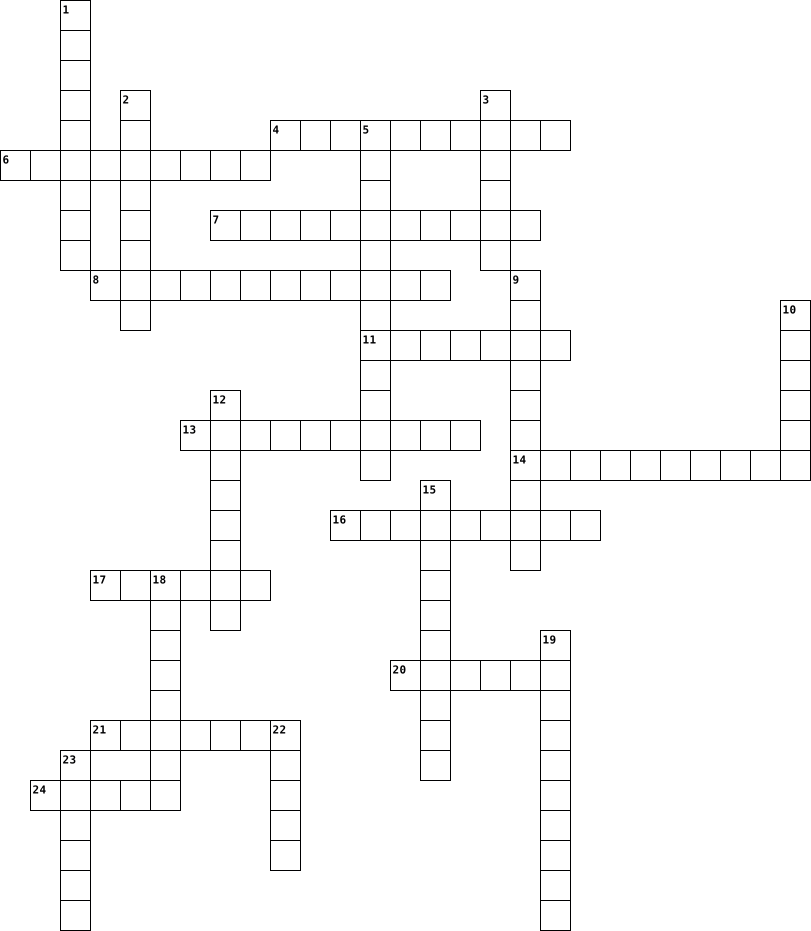
Across
- These types of antigens are produced by microbes that reproduce inside a body’s cells
- These types of cells can be found in the epidermis and mucous membranes, where they function in phagocytosis
- The leukocytes are involved in adaptive immune response
- This attribute of adaptive immunity involves activation by specific antigens
- A molecule that triggers a specific immune response
- These organs house numerous white blood cells, including B and T lymphocytes, which recognize and attach foreign molecules (two words)
- These types of vaccines include live viruses that have reduced virulence
- This attribute of adaptive immunity involves proliferation of many, nearly identical cells which collectively respond to the invader
- Once a B cells has identified it’s specific epitope, it will begin to divide and become a ______ cell, producing antibodies
- Resistance to pathogens conferred by non-specific defenses, including barriers, chemicals, cells, and processes is referred to as ________ immunity
- The three-dimensional shape of a region of an antigen that is recognized by the immune system
- This type of inflammation develops quickly and is typically beneficial
Down
- These types of antigens include toxins, and other components of microbial cell walls, membranes, flagella, or pili, and are found outside of cells.
- Fever is induced by many different types of stimulus, all referred to as ________.
- in the mucous membranes, these types of cells secrete mucous, which acts to trap pathogens
- One of the functions of antibodies, this one involves the stimulation of phagocytosis
- In phagocytosis, the stage which involves movement of the phagocyte toward a foreign microbe by way of detection of chemicals stimulus
- These types of vaccines include modified toxins
- a chemical defense of the skin, specifically an enzyme that destroys cells walls of bacteria
- the normal microbiome helps to defend against pathogens in numerous ways. These all are referred to as microbial ________.
- The ability to recognize and mount a defense against distinct invaders and their products is referred to as this type of immunity.
- a fancy name for white blood cells.
- This type of serological test uses an enzyme which catalyzes a reaction that is visible, and only occurs if the correct antigen is present
- These types of immunizations result in the generation of antibodies within the host, and the development of memory cells
24 Clues: a fancy name for white blood cells. • These types of vaccines include modified toxins • A molecule that triggers a specific immune response • The leukocytes are involved in adaptive immune response • This type of inflammation develops quickly and is typically beneficial • These types of vaccines include live viruses that have reduced virulence • ...
Ap Biology vocabulary crossword puzzle 2023-12-06

Across
- - asexual reproduction by a separation of the body into two new bodies.
- - A molecule that binds to another (usually larger) molecule.
- - the death of cells which occurs as a normal and controlled part of an organism's growth or development.
- - protein enzyme controls cell cycle; active when connected to cyclin
- - cells separate from the tumor and travel to other parts of the body
- membrane receptors - these are proteins that are found on the surface of cells and span the plasma membrane
- - A case where outputs from a system are subsequently fed back into it, minimizing or reducing the effect of subsequent iterations.
- - it catalyze the reaction producing cyclic adenosine monophosphate (cAMP) from adenosine triphosphate (ATP)
- cells- - this cell has a receptor that can bind to the ligand
- - a gene which in certain circumstances can transform a cell into a tumor cell.
- - a plasma membrane invagination at the cell division site.
- Transduction - the process in which binding of an extracellular messenger to the cell surface receptor.
- containing two complete sets of chromosomes, one from each parent.
- - the cytoplasmic division of a cell at the end of mitosis or meiosis, bringing about the separation into two daughter cells.
Down
- - crowded cells normally stop dividing; cell-surface protein binds to adjoining cells to inhibit growth
- - small molecules and ions that relay signals received by cell-surface receptors to effector protein.
- - the signaling molecules (hormones) are secreted by specialized endocrine cells
- - enzymes that regulate the biological activity of protein by phosphorylation of specific amino acids with ATP as the source of phosphate
- - cells must be attached to another cell or ECM (extracellular matrix) to divide
- - carried out when the typical signal output level of a sensor is considered to be too low.
- - specific cyclin-Cdk complex which allows cells to pass G2 and go to the M phase
- - adding a phosphate group to a molecule
- - receptor proteins found in inside of the cell typically in the cytoplasm or nucleus
- - cancerous and can spread cancer cells throughout one's body through the blood or lymphatic system
- - an intracellular second messenger to a wide variety of hormones and neurotransmitters
25 Clues: - adding a phosphate group to a molecule • - a plasma membrane invagination at the cell division site. • - A molecule that binds to another (usually larger) molecule. • cells- - this cell has a receptor that can bind to the ligand • containing two complete sets of chromosomes, one from each parent. • ...
Animal Characteristics and Sponges/cnidarians 2022-04-13

Across
- 32 or more cells
- cells that have a nucleus
- fertilized egg
- the creation of egg and sperm
- cells that transport nutrients/sperm
- can move
- many cells that are specialized
Down
- becomes the skin and nervous tissue
- able to produce both egg and sperm cells
- the study of animals
- gets energy from outside sources
- sessile and tentacles go up
- motile and tentacles go down
- one side of blastula has been pushed in
- large opening at top of sponge
- becomes the digestive tract
16 Clues: can move • fertilized egg • 32 or more cells • the study of animals • cells that have a nucleus • sessile and tentacles go up • becomes the digestive tract • motile and tentacles go down • the creation of egg and sperm • large opening at top of sponge • many cells that are specialized • gets energy from outside sources • becomes the skin and nervous tissue • ...
Forensics Blood Unit 2024-03-12

Across
- carries blood towards the heart
- cancer in the plasma of the blood
- condition in which a person does not have enough red blood cells
- protein in red blood cells
- involved in the blood clotting process
- cancerous tumor
- an abnormal clump of cells
Down
- clump of platelets and blood proteins
- another term for red blood cells
- liquid part of blood that transports blood cells
- threadlike protein that supports the formation of blood clots
- another term for white blood cells
- carries blood away from the heart
- scientific study of blood
- refers to a non cancerous tumor
15 Clues: cancerous tumor • scientific study of blood • protein in red blood cells • an abnormal clump of cells • carries blood towards the heart • refers to a non cancerous tumor • another term for red blood cells • cancer in the plasma of the blood • carries blood away from the heart • another term for white blood cells • clump of platelets and blood proteins • ...
Meiosis 2024-03-21

Across
- female cells are larger because they?
- how many cells are made after meiosis is done?
- chromosomes line up in the?
- when cells are about to separate:
- does the same steps twice from?
- How many chromosomes do the daughter cells have?
- what do both meiosis and mitosis do?
- what do chromosomes look like?
Down
- Final cells are called?
- Meiosis makes?
- how many chromosomes are in a parent cell?
- Step before Prophase:
- when cells are FULLY separated
- chromosomes split and are pulled to ________ sides of the cell
- truth or lie?: meiosis and mitosis are the same.
15 Clues: Meiosis makes? • Step before Prophase: • Final cells are called? • chromosomes line up in the? • when cells are FULLY separated • what do chromosomes look like? • does the same steps twice from? • when cells are about to separate: • what do both meiosis and mitosis do? • female cells are larger because they? • how many chromosomes are in a parent cell? • ...
Microscopes, Cells & Organelles 2015-01-03

Across
- Cells shape often reflects their job; they change to do specific jobs in the organism.
- Used to focus the image only under low power only.
- Makes usable cell energy called ATP.
- Used to focus the image under high power.
- Takes in and breaks down the waste or trash in a cell.
- Holds and protects DNA in eukaryotic cells.
- A cell that has a nucleus & membrane bound organelles.
- Collects, modifies & repackages proteins in a cell and prepares them to be shipped out.
- Short hairs on a cell’s surface, used for movement.
- Absorbs sunlight and uses its energy to make sugar.
- A tool used to magnify a small organism.
- Controls what enters and leaves the cell (found around all cells).
Down
- Rigid structure found outside of the cell membrane in plant cells.
- Transport channels for material to move through the cell.
- Changes the amount of light shining on the specimen to see more detail.
- Little spikes on the outside of bacteria cells; helps them stick to surfaces.
- A structure in a cell that has a specialized task.
- Storage structure in both plant and animal cells.
- A cell that does not have a nucleus or membrane bound organelles.
- Used to magnify your image (attached to the revolving nosepiece).
- Site of proteins production, found in all cells.
- An extra protective layer found outside of a bacteria’s cell wall. It allows the bacteria to survive in harsh conditions.
- Long whip-like tails that cells use for movement.
23 Clues: Makes usable cell energy called ATP. • A tool used to magnify a small organism. • Used to focus the image under high power. • Holds and protects DNA in eukaryotic cells. • Site of proteins production, found in all cells. • Storage structure in both plant and animal cells. • Long whip-like tails that cells use for movement. • ...
D3 Functions of the Liver 2017-11-21

Across
- Vitamin D
- Transports Oxygen Rich Blood to the Liver from the Heart
- Transports Nutrient Rich Blood from the stomach and Intestines to the Liver
- Liver Cells
- The small blood vessels in the liver from the hepatic portal vein
- Vitamin A
- Protein responsible for transporting any bilirubin produced outside of the liver
- A protein essential for clotting
- Protein in red blood cells that carries oxygen; Broken down in the kupffer cell into a globin chains and a heme group
- A symptom that results in the yellowing of skin and eyes due to the excess concentration of bilirubin, which can be caused by other diseases.
- a hormone that stimulates liver cells to take up glucose and store it as glycogen
- Broken down into amino acids, which are recycled
- Composed of soluble bilirubin, water, electrolytes, bicarbonate, cholesterol, phospholipids and salts
Down
- The thin passage that transports bile to the gall bladder
- Made by liver cells; Needed to make Vitamin d and steroid hormones.
- Macrophages that line the sinusoids in the liver; Engulfs red blood cells that swell due to age
- Transports blood from the liver to the heart after detoxication
- The small blood vessels in the liver from the hepatic artery
- White Blood Cells that engulf damaged, dead, and foreign cells in the blood stream
- Red Blood Cell
- Yellow pigment in bile
- a hormone that will break down glycogen, glycerol, amino acids and fatty acids in the liver, therefore releasing glucose to the blood stream
- Broken down into iron and bilirubin
- Recycles old red blood cells
24 Clues: Vitamin D • Vitamin A • Liver Cells • Red Blood Cell • Yellow pigment in bile • Recycles old red blood cells • A protein essential for clotting • Broken down into iron and bilirubin • Broken down into amino acids, which are recycled • Transports Oxygen Rich Blood to the Liver from the Heart • The thin passage that transports bile to the gall bladder • ...
lymphatic system 2023-10-31

Across
- - create antibodies
- - organ primarily responsible for the production and maturation of immune cells
- - Specialized lymphatic vessels found in the small intestine
- - Protein-rich fluid that leaks from blood vessels into surrounding tissues
- - a lymphatic tissue where B and T cells carry out immune responses
- - part of the lymphatic vessel that ensures a one-way flow of lymph.
- -part of spongy bone that produces blood cells (hematopoiesis)
- - thin walled tubes that are structured like blood vessels that carry lymph to lymphatic ducts
- - are small lumps of tissue that contain white blood cells that fight against infection.
- - a large phagocytic cell that is found in a stationary form in the tissues or as a mobile white blood cell, especially at sites of infection.
Down
- - produced by lymph nodes that contain white blood cells
- - tiny vessels in the tissues of most organs that absorb Interstitial fluid and transport lymphatic fluid(lymph) to afferent lymphatic vessels
- - small organ inside the ribcage just above the stomach
- - Tiny, finger-like projections in the small intestine that absorb fats
- - combat intracellular pathogens
- - the condition in which an excessive amount of interstitial fluid accumulates in the tissue spaces.
- - two round fleshy masses in the back of your throat (pharynx)
- - it is usually a clear fluid that circulates in the lymphatic vessels, bathes the cells of the body, and consists of white blood cells and a liquid portion resembling blood plasma
- - White blood cells responsible for immune response
- - is the cancer of lymph tissue in lymph nodes
20 Clues: - create antibodies • - combat intracellular pathogens • - is the cancer of lymph tissue in lymph nodes • - White blood cells responsible for immune response • - small organ inside the ribcage just above the stomach • - produced by lymph nodes that contain white blood cells • - Specialized lymphatic vessels found in the small intestine • ...
cardiovascular system 2024-04-15

Across
- a protein found in the body involved in forming blood clots
- clotting factors do an "activation cascade" and eventually activate fibrin which reinforce the platelet plug
- 2nd most numerous white blood cell, large nucleus that takes up most of the cell
- series of reactions that stops the bleeding when a blood vessel breaks
- rarest white blood cell
- carries deoxygenated blood back to the heart from the body cells
- non-cellular, bloods liquid matrix
- carries oxygenated blood away from the heart and to the body cells
- small colorless fragments in our blood that form clots and stop/prevent more bleeding
- a type of protein fiber found abundantly throughout the body
- circulate blood throughout the body
- bound platelets activate more platelets which activate more platelets
- 45 percent of blood volume (red blood cells)
- most numerous white blood cells (50-70%), multi lobed nucleus
Down
- a molecule made up of amino acids
- provides blood supply throughout the body
- uses enzymes to digest parasitic worms, two lobed nucleus
- tiny blood vessels that connect arteries and veins at the body cells
- job is to help clot damaged blood (called hemostasis)
- glycoprotein crucial to primary hemostasis through platelet and subendothelial collagen adhesion, and the intrinsic coagulation cascade, through factor VIII stabilization
- purpose: decreases blood loss
- a pump made of cardiovascular muscle that pumps blood to the body cells
- transports, fights infection, and clots blood
- largest leukocyte, 3-8% of white blood cells
- white blood cells (lifespan 1-3 days)
25 Clues: rarest white blood cell • purpose: decreases blood loss • a molecule made up of amino acids • non-cellular, bloods liquid matrix • circulate blood throughout the body • white blood cells (lifespan 1-3 days) • provides blood supply throughout the body • largest leukocyte, 3-8% of white blood cells • 45 percent of blood volume (red blood cells) • ...
Unit 2 review. 2024-02-13

Across
- Longer, hair-like structures, used for adhering to substances
- cells that contains DNA.
- makes proteins
- organisms whose cells lack a nucleus and other organelles
- reticulum smooth makes hormones and controls calcium release. Rough is covered in ribosomes and makes proteins
- the body's raw materials, cells from which all other cells with specialized functions are generated
- holds chlorophyll and where photosynthesis takes place.
- an organelle that is surrounded by a membrane.
- organisms whose cells contain a nucleus and other membrane-bound organelles
- Used to absorb excess water (stretch and swell) and expel water (contract and release)
Down
- Tail-like structure,used for movement
- acts as a barrier to protect the cell and a “doorway” letting substances in or out of the cell.
- subcellular structure that has one or more specific jobs to perform in the cell
- contains digestive enzymes that dissolve cellular waste. Acts like a garbage disposal system.
- rigid structure that surrounds the cell membrane. Only found in pant cells
- thin tissue that surrounds and contains an organelle.
- Used to absorb excess sunlight
- helps the cell keep its shape and hold organelles in place
- where cellular respiration takes place. Releases energy from glucose for the cell.
- membrane-bound structure inside
- Used for movement and feeding (capturing prey)
- packages substances for transport inside or out of the cell. Acts like a mail delivery system.
- Hair-like structures, used for movement
- stores food, water and waste.
24 Clues: makes proteins • cells that contains DNA. • stores food, water and waste. • Used to absorb excess sunlight • membrane-bound structure inside • Tail-like structure,used for movement • Hair-like structures, used for movement • Used for movement and feeding (capturing prey) • an organelle that is surrounded by a membrane. • thin tissue that surrounds and contains an organelle. • ...
Hematology 2025-12-09

Across
- – Skin discoloration sign.
- – Excess basophils in blood.
- Cell – Cell that produces antibodies.
- – Thickened blood flow.
- Vera – Excess production of red cells.
- – Enlargement of organs.
- – Elevated body temperature.
- Cell – Cell formed from bone marrow precursors.
- Stage – Thickened skin lesion stage.
- – Cancer of blood-forming tissues.
- Sternberg Cell – Large abnormal cell in Hodgkin disease.
- Marrow – Main site of blood cell formation.
- Cell – Cell not functioning normally.
- Cell – Cell involved in immune response.
- Lymphocyte – Enlarged reactive lymphocyte.
- Fungoides – Skin-based T cell cancer.
- Leukemia – Slow buildup of abnormal white cells.
- – High number of lymphocytes.
- Stage – Early red skin stage in skin lymphoma.
- – Increased monocytes.
- – Protein used for immune defense.
- Stage – Late phase of cancer growth.
- – Excess eosinophils in blood.
Down
- – Low neutrophil count.
- Cell – Undeveloped blood cell.
- Leukemia – Rapid rise of immature blood cells.
- Cell – Immature developing blood cell.
- – Organ involved in blood filtration.
- – Cancer of plasma cells in bone marrow.
- – Increased cellular content in marrow.
- Cell – Lymphocyte with hair-like projections.
- Disease – Condition with abnormal cell storage.
- Throat – Common sign of viral infection.
- Formation – Stacked red cells due to high protein.
- – Bone marrow replaced by fibrous tissue.
- Node – Small organ of immune response.
- Jones Protein – Light chain protein found in myeloma.
- – Increased white cell count.
- – Cancer of lymphoid tissues.
- – Decreased white cell count.
- – Green tumor of myeloid cells.
- – Tissue macrophage cell.
- – Tumor of immature myeloid cells.
- Cell – Original cell that produces blood cells.
- – Pain in joints.
45 Clues: – Pain in joints. • – Increased monocytes. • – Low neutrophil count. • – Thickened blood flow. • – Enlargement of organs. • – Tissue macrophage cell. • – Skin discoloration sign. • – Excess basophils in blood. • – Elevated body temperature. • – Increased white cell count. • – Cancer of lymphoid tissues. • – High number of lymphocytes. • – Decreased white cell count. • ...
Lower Science BK7 Bio 2026-03-19

Across
- the layer of tall photosynthetic cells just below the upper epidermis of a leaf
- one of hundreds of cells found on the outer surface of roots which increase the surface area for absorption
- the layer of cells on the top surface of a leaf
- differences between members of the same species
- a particle made of either RNA or DNA, surrounded by a protein coat
- polymers of amino acids; they are important nutrients for living organisms used in growth and repair
- a coloured substance, such as haemoglobin
- a sample, for example a piece of rock, or a single organism of a species
- (of a cell) with a structure that increases its ability to carry out its function
- the layer of photosynthetic cells just below the palisade layer with large air spaces
- the most common type of cell in blood; circular with a depression in each side (biconcave)
Down
- a group of organisms that can reproduce together to produce fertile offspring
- breaking down food to release energy that the organism can use
- making more organisms of the same species
- a coloured substance or dye that is used to colour cells
- a cell found just beneath the upper surface of a leaf, specialised to carry out photosynthesis
- detecting changes in the environment
- a nucleic acid found in all living cells
- a group of similar cells working together to perform a function
- a structure that is often, but not always, present in plant cells; it contains a liquid called cell sap
20 Clues: detecting changes in the environment • a nucleic acid found in all living cells • making more organisms of the same species • a coloured substance, such as haemoglobin • the layer of cells on the top surface of a leaf • differences between members of the same species • a coloured substance or dye that is used to colour cells • ...
Cell Structure and Function 2025-10-14

Across
- Unwound, loose, tangled thread of DNA
- Organelle responsible for converting light energy into chemical energy
- Cells that contain nuclei and membrane-bound organelles
- Largest structure in a plant cell that stores fluids and helps maintain shape
- Organelle that manages all activities and contains genetic material
- Folds that increase the surface area of mitochondria
- The outer layer that surrounds all cells
- A complex and flexible framework to give the cell shape
- Makes membrane lipids, detoxifies harmful substances, and lacks ribosomes
- Tiny structures found in cells that do specific jobs
- The theory of the origin of Eukaryotic cells from Prokaryotic Cells
- Thinnest strands to help the cell keep its shape and move
Down
- Cells that lack a nucleus and membrane-bound organelles
- Organelle responsible for creating energy in the cell
- A specialized microtubule that helps with cell division
- Creates proteins for the cells
- Cytoplasm of a chloroplast
- Fluid filled storage sac to maintain homeostasis and structure
- Type of structure made of a hydrophilic head and a hydrophobic tail
- The double membrane that surrounds the nucleus
- The inner fluid of a mitochondrion
- Organelle responsible for modifying & packaging proteins for transport
- Organelle responsible for waste disposal and defense
- Makes ribosomes, found inside the nucleus
- Tiny holes that control what enters and leaves the nucleus
- A highly condensed, compact form of DNA, necessary for cell division
- Type of protein that acts as a molecular marker for other cells
- A jelly-like substance inside the cell
- Thicker strand to help with support and transportation
29 Clues: Cytoplasm of a chloroplast • Creates proteins for the cells • The inner fluid of a mitochondrion • Unwound, loose, tangled thread of DNA • A jelly-like substance inside the cell • The outer layer that surrounds all cells • Makes ribosomes, found inside the nucleus • The double membrane that surrounds the nucleus • Organelle responsible for waste disposal and defense • ...
Microscope 2021-11-16

Across
- The person who said cells are made from cells
- smallest piece of life
- ability to individual parts clearly
- The person who said plant are made of cells
- uses beam of electrons instead of light
- curved pieces of glass
- all living things are made of cells
Down
- uses only one lens
- Alight microscope that has more than one lens
- A tool that make objects look bigger
- ability to make things look larger
- 1st person to see bacteria that was alive
- One of the first people to observe cells
- The person who said animal are made of cells
14 Clues: uses only one lens • smallest piece of life • curved pieces of glass • ability to make things look larger • ability to individual parts clearly • all living things are made of cells • A tool that make objects look bigger • uses beam of electrons instead of light • One of the first people to observe cells • 1st person to see bacteria that was alive • ...
McLinn Biology Ch. 7.1 & 7.2 View of Cell vocab 2016-03-14

Across
- light-absorbing pigment in plants and some protists that is required for photosynthesis; absorbs most wavelengths of light except for green.
- clear, gelatinous fluid in eukaryotic cells that suspends the cell's organelles and is the site of numerous chemical reactions.
- organelle in eukarotic cells with a series of highly folded membranes surrounded in cytoplasm; site of cellular chemical reactions; can either be rough (with ribosomes) or smooth (without ribosomes).
- unicellular or multicellular organisms, such as yeast, plants, and animals, composed of eukaryotic cells, which contain a true nucleus and membrane-bound organelles.
- feature of the plasma membrane that maintains homeostasis within a cell by allowing some molecules into the cell while keeping others out.
- basic unit of all organisms; all living things are composed of cells.
- stuctural model of the plasma membrane where molecules are free to move sideways within a bilayer.
- thin,solid protein fibers that provide structural support for eukaryotic cells.
- proteins that span the plasma membrane creating a selectively permeable membrane that regulates which molecules enter and leave a cell.
- short, numerous, hairlike projections composed of pairs of microtubules; frequently move in a wavelik motion; aid in feeding and locomotion.
- organelles that contain digestive enzymes; digest excess or worn out organelle, food particles, and engulfed viruses or bacteria.
- eukaryotic membrane-bound organelles that transform energy stored in food molecules into ATP, has a highly folded inner membrane that produces energy-storing molecules,
- nonmembrane-bound organelles in the nucleus where enzymes and other proteins are assembled.
- serves as boundary between the cell and its environment; allows materials such as water and nutrients to enter and waste products to leave.
- chlorophyll-containing cell organelles found in the cells of green plants and some protists; captures light energy from the sun, which is converted to chemical energy in food molecules.
- group of plant organelles that are used for storage of starches, lipids, or pigments.
- unicellular organisms, such as bacteria, composed of prokaryotic cells; Prokaryotuc cells lack membrane-bound structures.
- firm,fairly rigid structure located just outside the plasma membrane of plants, fungi, most bacteria, and some protists; provides support and protection.
- long, hairlike projections composed of pairs of microtubules; found on some cell surfaces; they help propel cells and organisms by a whiplike motion.
Down
- organelle in eukaryotic cell nucleus that produces ribosomes.
- instrument that uses visible light to magnify objects in steps; can magnify an object up to 1,500 times its original size.
- cellular framework found within the cytoplasm composed of microtubules and microfilaments
- instruent that uses a beam of electrons instead of natural light to magnify structures up to 500,000 times its actual size; allows scientists to view structures within a cell.
- membrane-bound fluid-filled space in the cytoplasm of plant cells used for the temporary storage of materials.
- lipids within an attached phosphate group; plasma membranes are composed of phospholipid bilayer with embedded proteins.
- in eukaryotic cells, the central membrane-bound organelle that manages cellular functions and contains DNA.
- organelle in eukaryotic cells with astste, of flattened tubular membranes; modifies proteins and sends them to their appropriate destinations.
- thin, hollow cylinders made of protein that provide structural support for eukaryotic cells.
- organism's regulation of its internal environment to maintain conditions suitable for survival; a characteristic of all living things; process of maintaining equilibrium in an organism's internal environment.
- long, tangled strands of DNA found in the eukayotic cell nucleus during interphase.
- the theory that all organisms are composed of cells,the cell is the basic unit of organization of organisms, and all cells come from pre-existing cells.
- membrane-bound structures within eukaryotic cells.
32 Clues: membrane-bound structures within eukaryotic cells. • organelle in eukaryotic cell nucleus that produces ribosomes. • basic unit of all organisms; all living things are composed of cells. • thin,solid protein fibers that provide structural support for eukaryotic cells. • long, tangled strands of DNA found in the eukayotic cell nucleus during interphase. • ...
Chasity Chapter 7-Biology 2017-01-17

Across
- Little organs
- Small organelles filled with enzymes
- All cells are surrounded by a thin flexible barrier called
- Is the portion of the cells outside the nucleus
- Cells that enclose their DNA in nuclei
- Located near the nucleus and help organize cell division
- Proteins in the rough er move next into an organelle called
- Basic units of life
Down
- Small particles of RNA and protein found throughout the cytoplasm in all cells
- Large membrane-enclosed structure that contains genetic material in the form of DNA
- Large,saclike,membrane-enclosed structures
- Internal organization by a network of protein filaments
- Fundamental concepts of biology
- Eukaryotic cells contain an internal membrane system knowns as
- Cells that do not enclose DNA in nuclei
15 Clues: Little organs • Basic units of life • Fundamental concepts of biology • Small organelles filled with enzymes • Cells that enclose their DNA in nuclei • Cells that do not enclose DNA in nuclei • Large,saclike,membrane-enclosed structures • Is the portion of the cells outside the nucleus • Internal organization by a network of protein filaments • ...
Cells:Structure and Function 2022-02-15

Across
- concluded all animals are composed of cells
- determined cells come only from other cells
- single-celled organism that has neither a distinct nucleus.
- a sphere that contains another sphere called a nucleolus
- concluded all plants are composed of cells
- Controls substances passing in and out
- described his observations as little boxes
- A theory which states that cells are the fundamental units of life
Down
- Elements that life originated from
- semifluid mixture containing cell compon.
- a cell component that performs specific functions in the cell.
- Basic Unit of life
- first person to observe living cells
- genetic information
- cells in which the genetic material is DNA in the form of chromosomes contained within a nucleus
15 Clues: Basic Unit of life • genetic information • Elements that life originated from • first person to observe living cells • Controls substances passing in and out • semifluid mixture containing cell compon. • concluded all plants are composed of cells • described his observations as little boxes • concluded all animals are composed of cells • ...
Cell Division 2023-02-02

Across
- one cell creates another new cell
- chromosomes are pulled apart to opposite ends of the cell
- Nuclear membranes reform completing 2 new nuclei
- creates four cells with half the total number of chromosomes
- requires an egg and sperm cell to get the total number of chromosomes
- amoeba cells reproduce this way
- replicated chromosomes line up in the middle and attach to spindle fibers
Down
- starfish do this when they lose an arm
- Nuclear membrane disappears, centrioles appear
- creates two new identical cells
- yeast cells reproduce this way
- plant cells form this during cytokinesis
- cytoplasm divides and two new cells form
- egg and sperm cells with half the number of chromosomes
- cell grows and chromosomes are copied
15 Clues: yeast cells reproduce this way • creates two new identical cells • amoeba cells reproduce this way • one cell creates another new cell • cell grows and chromosomes are copied • starfish do this when they lose an arm • plant cells form this during cytokinesis • cytoplasm divides and two new cells form • Nuclear membrane disappears, centrioles appear • ...
Medical Terminology 2022-02-07

Across
- Inflammation of a joint
- basic unit of living things
- absence of signs of disease
- supportive care for terminally ill patients.
- term derived from the name of a person or place
- resembling fat
- genetic material regulating body activity
- producing cells
- study of disease
- cells performing specific functions
Down
- enlargement of the liver
- without fever
- plural form of prognosis
- attached at the beginning of a word root
- The core of the word
- Black tumor
- abbreviation of white blood cells
- study of cells
- attached at the endo of a word root
19 Clues: Black tumor • without fever • resembling fat • study of cells • producing cells • study of disease • The core of the word • Inflammation of a joint • enlargement of the liver • plural form of prognosis • basic unit of living things • absence of signs of disease • abbreviation of white blood cells • attached at the endo of a word root • cells performing specific functions • ...
Stem Cell Crossword 2022-12-07

Across
- A screening of a person testing to see if they are eligalbe for certain treatments
- A cell that has no specific structure or function
- The basic unit of all living things
- Cells that are able to self-renew by dividing and developing
- performed elsewhere outside of the living organism it is hoped to be used on
- A medicine or procedure prescribed more for the psychological benefit to the patient than for any true effect.
- The surrounding fluid of Nuclei within the cell
- A disease that is caused by the occurrence of un-controlled mitosis
- The cell that is result of Meiosis division
- performed within the living organism it is hoped to be used on
- The material of which plants and animals are made
- A cell that has a specific structure and or function
- A type of cell division that results in four daughter cells
- Stem cells that are obtained from early-stage left over embryos
- A stem cell that has developed to the stage where it can be committed to forming a particular type of new blood cell
Down
- cells that are lineage-restricted
- A cell that possesses functions for tissue renewal and repair of certain tissues within the body
- A type of cell division that results in two daughter cells
- An affliction against bodily autonomy
- Any cell other that a reproductive cell
- at first natural cells that are altered to perform pluripotent actions
- The result of to gamete cells
- The cell of which all other cells originate
- a zygote that has begun developing
24 Clues: The result of to gamete cells • cells that are lineage-restricted • a zygote that has begun developing • The basic unit of all living things • An affliction against bodily autonomy • Any cell other that a reproductive cell • The cell that is result of Meiosis division • The cell of which all other cells originate • The surrounding fluid of Nuclei within the cell • ...
Epithelial tissue 2022-09-30

Across
- a cell that is as high as wide.
- the epithelium with a single layer of cuboidal cells.
- These short fibres cluster into a mesh-like network (reticulum = network) that covers and supports the structures bordering the connective tissue.
- A passive process in which there is a net or greater movement of molecules or ions from a region of high concentration to a region of low concentration until equilibrium is reached.
- the epithelium with a single layer of flat cells.
- the ground substance and fibers between cells in a connective tissue.
- the main function of epithelial tissue.
- a flat cell (it is wider than it is high).
- this epithelium seems stratified but it's not.
- the basal surface of epithelial cells lies on it.
Down
- vessel, or that is exposed to the body exterior.
- the basic structural and functional unit of all organisms
- it lacks blood vessels
- an epithelium with more layers of cells.
- a cell that is taller than it is wide.
- the epithelium that lines the bladder cavity. Its apical cells change their shape as the bladder fills with urine.
- the surface of a cell that faces the lumen, which is the inner cavity of an organ or
- a group of cells of similar structure that perform a common function.
- an epithelium with a single layer of cells.
- inelastic fibres of great tensile strength made up of collagen protein.
- fibres composed primarily of the protein elastin (rubber like protein) that allows them to function like rubber bands.
21 Clues: it lacks blood vessels • a cell that is as high as wide. • a cell that is taller than it is wide. • the main function of epithelial tissue. • an epithelium with more layers of cells. • a flat cell (it is wider than it is high). • an epithelium with a single layer of cells. • this epithelium seems stratified but it's not. • vessel, or that is exposed to the body exterior. • ...
Bio Exam #2 Review 2021-03-12

Across
- epithelium tissue composed of tall, rectangular cells
- a chemical released by nerve cells that has either an excitatory or inhibitory effect on another excitable cell
- serve to maintain the proper water balance between the blood and interstitial fluid
- attach bone to bone
- tissue that consists of cells that are specialized to contract
- the natural process of stopping the flow or loss of blood
- the points of contact between bones
- muscles that make up most of the heart
- transport medium for blood cells and platelets
- fibrous connective tissue that encloses muscle bundles
- commonly described as good cholesterol
Down
- cells responsible for producing and secreting the proteins that compose the collagen, elastic, and reticular fibers
- one of the two protein filaments that a sarcomere consists of (notice the amount of spaces to know which it is)
- hard elements of the skeleton which consist of calcium
- tissue that supports the softer organs of the body against gravity and connects the parts of the body together
- the column that is the main axis of the body
- the bone in which red bone marrow resides
- the longest and strongest bone in the body
- tissue that consists of cells that transmit or generate electrical impulses throughout the body
- the cells in red marrow that all blood cells and platelets originate from
- the percentage of blood that consists of RBC is called this
- muscles' first choice for energy
- transitional tissue from which bone develops
- relative constancy of the conditions within the internal environment
- the muscle bundles mentioned in #5
25 Clues: attach bone to bone • muscles' first choice for energy • the muscle bundles mentioned in #5 • the points of contact between bones • muscles that make up most of the heart • commonly described as good cholesterol • the bone in which red bone marrow resides • the longest and strongest bone in the body • the column that is the main axis of the body • ...
S.L. A&P Vocab. Chapters 4, 5 2013-09-26

Across
- Collection of neuron cell bodies outside the CNS
- Examination of organs of a cadaver
- Name of neuron cell body (starts with an s)
- Adhesive glycoprotein between two cells
- Cells that are said to have the ability to divide throughout their lives are called
- Layer of loose connective tissue with high amounts of adipocytes
- Glands with ducts.
- Gland that secretes products without loss of cell components (sweat)
- Sloughing off of dead cells from the surface of the skin
- Conduct signals between neurons in the CNS
- Process of filling epithelial cells with keratin
- Connective tissue with fibroblasts, few adipocytes and macrophages. (Below epi)
- Glands without ducts. Secrete hormones
- Special type of epithelium that secretes mucous into the respiratory tract
- (2wd) Protein channels between two cells
- Signal to the CNS
- Gland that the entire cell is secreted
- Bundle of axons within the CNS
Down
- Germ layer that gives rise to skin and nervous tissue
- Chondrocyte location in cartilage (name of their home)
- Gland that the apex of the cell is released (breast milk)
- Brain and spinal cord compose this
- Cells that assist with the pigmentation of skin
- (2wd) Structure that forms a permeability barrier between two cells
- Adhesive glycoprotein between cell and basement memb.
- Cells that maintain cartilage
- Signal to the effector
- Ground substance component that resists compression
- Tough type of cartilage with thick bundles of collagen fibers
- (2wd) Place where hemopoietic tissue in adults is found (inside long bones)
- Surgical removal of tissues from a living patient.
31 Clues: Signal to the CNS • Glands with ducts. • Signal to the effector • Cells that maintain cartilage • Bundle of axons within the CNS • Brain and spinal cord compose this • Examination of organs of a cadaver • Glands without ducts. Secrete hormones • Gland that the entire cell is secreted • Adhesive glycoprotein between two cells • (2wd) Protein channels between two cells • ...
The Mystery of BMT Terms & Abbreviations 2016-04-21

Across
- Stem cells mobilized from marrow and collected through apheresis
- Transplant between genetically identical twins
- Side-effect that may occur after a bone marrow or stem cell transplant from a donor
- Progression of disease
- Chemotherapy given to kill cancer cells, also kills all healthy bone marrow and allows new stem cells to grow in the bone marrow
- Two genetically distinct types of cells
- Test to determine if lymphoid or myeloid line have engrafted
- Stem Cell Transplant
- Characterized by hepatomegaly, right upper quadrant pain, jaundice, and ascites, most often occurring in patients undergoing stem cell transplant. Previously called VOD
- Human leukocyte antigen.
- Due to small cell volume, these are often performed with cells from two donors.
Down
- This is “planting more seeds” using primitive cells, and is less likely to cause GVHD
- Less toxic treatment allows older patients, or patients with significant co-morbidities to have a transplant.
- The number ONE thing the NIH recommends transplant patients do before transplant
- Stem cell transplant from a donor
- Patient donates for themselves
- Hematopoietic stem cell transplant
- Lymphocytes from the donor are infused into patient
- Hematopoietic cell transplant
- Treatment that replaces bone marrow that is either not working correctly or has been destroyed by chemotherapy &/or radiation
- An intensive drug treatment to kill cancer cells,that also destroys healthy cells in the marrow
- In this type of transplant the donor isn't related to patient
- In this type of transplant, the donor is usually the patient’s child or parent
23 Clues: Stem Cell Transplant • Progression of disease • Human leukocyte antigen. • Hematopoietic cell transplant • Patient donates for themselves • Stem cell transplant from a donor • Hematopoietic stem cell transplant • Two genetically distinct types of cells • Transplant between genetically identical twins • Lymphocytes from the donor are infused into patient • ...
ESGUERRA, Growth Disturbances and Neoplasia 2022-04-04

Across
- Defined as the gross and microscopic degree of differentiation of the tumor.
- Is lack of differentiation and is a characteristic feature of most malignant tumors.
- Agents which can induce tumors
- The common or collective term used for all malignant tumors.
- This have mesenchymal tumor cells arranged as interlacing bundles, fasicles or whorls, lying separated from each other usually by the intercellular matrix substance such as hyaline material in leiomyoma.
- A group of malignant tumors which arise from embryonal or partially differentiated cells which would normally form blastema of the organs and tissue during embryogenesis.
- Malignant tumor of the testis.
- When two types of tumors are combined in the same tumor
- A benign tumor arising from cartilages.
Down
- Is benign tumor which is made of mature but disorganized cells of tissues indigenous to the particular organ
- It means new growth.
- Just like cellular pleomorphism, the nuclei too, show variation in size and shape in malignant tumor cells.
- Often have none or little stromal support.
- Generally consist of acini, sheets, columns, or cords of epithelial tumour cells.
- Malignant neoplasms of epithelial cells
- Carcinomas that grow in a glandular pattern.
- Variation in size and shape of the tumor cells
- Means extent of spread of the tumor within the patient.
- A benign tumor arising in fibrous tissue.
- Is the ectopic islands of normal tissue; a congenital anomaly consisting of a heterotopic rest of cells.
- The branch of science dealing with the study of neoplasms or tumors; (oncos=tumor, logos=study).
21 Clues: It means new growth. • Agents which can induce tumors • Malignant tumor of the testis. • Malignant neoplasms of epithelial cells • A benign tumor arising from cartilages. • A benign tumor arising in fibrous tissue. • Often have none or little stromal support. • Carcinomas that grow in a glandular pattern. • Variation in size and shape of the tumor cells • ...
Q2.2. Microscopy and cells 2026-02-22

Across
- - type of cells and tissues which you can watch under an optical microscope but not with electron microscope
- - type of microscope allowing for seeeing large molecules and viruses
- - a type of microscope where pictore is created by light
- - an organelle used by plants for photosynthesis
- - an object prepared to be watched under a microscope
- - an assisting microscopic technique allowing for seeing transparent structures
- - tells how many times the picture you see under a microscope is enlarged
- - a glass part of a microscope directly responsible for its magnifying function
- - set of lenses providing the biggest part of microscope's magnification
- - a length-measuring unit smaller than micrometer
Down
- - a property of microscopic picture deciding about its quality
- - set of microscopic lenses into which you look
- wall - an outermost layer covering fungal and plant cells
- - type of cell which has no nucleus of other membrane-bound compartments
- - a cell-covering structure which controls transport
- - an eukaryoptic organelle containing majority of cell's genetic material
- - the part of a microscope where a speciment is placed
- - an organelle responsible for cell respiration in eukaryotic cells
- - a form of endoplasmic reticulum used for producing proteins
- - you get it by dividing a milimeter by 1000
- - a protein-producing organelle present in all types of cells
- - hair-like structures covering bacterial cells used for attaching to other cells
- - cell with internal membrane-bound compartments
- - type of regulation in microscope which moves the microscope's table up and down quickly
- - external layer protecting bacterial cells
- - gell-like environment for metabolic processess filling all cells
26 Clues: - external layer protecting bacterial cells • - you get it by dividing a milimeter by 1000 • - set of microscopic lenses into which you look • - an organelle used by plants for photosynthesis • - cell with internal membrane-bound compartments • - a length-measuring unit smaller than micrometer • - a cell-covering structure which controls transport • ...
Honors Cells Crossword Puzzle 2025-09-23

Across
- microscope with 1 lens
- cell without a nucleus
- adjustment knob that crisps up focus
- found microbes caused food to spoil but heat could kill microbes
- claimed all animals have cells
- moves vesicles and organelles via attachment proteins
- makes glucose and where photosynthesis occurs
- basic unit of structure and function in living things
- found that specific microbes caused specific diseases
- cell with a nucleus
- microscope with 2 lenses
- make proteins that build stuff
- modifies, packages, and sorts proteins
- type of cell with lysosomes and centrioles
- storage for cell - stores water
- protect and control what goes in and out of the cell
- structure and stability for plant cell
Down
- regulates cell division cycle
- breaks down waste and toxins in an animal cell
- contains the DNA and directs all of the cells activities
- transports proteins from ER to golgi apparatus
- type of cell with free floating DNA
- genetic information responsible for the development and function of an organism
- carries materials from one place to another
- adjustment knob that moves stage
- type of cell with chloroplast and cell wall
- produces energy for the cell and where cellular respiration occurs
- protects and controls what goes in and out of the membrane
- stated cells come from other living cells
- claimed all plants have cells
- movement of ribosomes and other materials
- holds organelles in place and place where many reactions take place
- saw microscopic tiny rooms and called them cells
- produces ribosomes
- saw living cells and called them animalcules
35 Clues: produces ribosomes • cell with a nucleus • microscope with 1 lens • cell without a nucleus • microscope with 2 lenses • regulates cell division cycle • claimed all plants have cells • claimed all animals have cells • make proteins that build stuff • storage for cell - stores water • adjustment knob that moves stage • type of cell with free floating DNA • ...
BHS 316 Exam 2 Review 2026-02-16

Across
- The ______ system is the network of vessels that returns interstitial fluid to bloodstream.
- Molecule of microbes recognized by innate immune receptors.
- 2, MHC class found primarily on professional antigen-presenting cells.
- Organ that filters blood-borne pathogens.
- A ____ cell is an APC that is especially important for priming naïve T cells.
- CD4+ T cell that dampens the immune response.
- Receptor on T cells that binds B7.
- Molecule used by CTLs to poke holes in cell membranes targeted for apoptosis.
- Cell death program triggered by CTLs.
- Failure to respond to antigen due to lack of co-stimulation results in this process.
- Co-stimulatory molecule on APCs that binds CD28.
- ______ selection ensures T cells recognize self-MHC molecules.
- _______ selection eliminates T cells that bind self-peptide too strongly.
- An ___ cell is a T cell subtype that kills infected host cells.
- Inability to distinguish self from nonself.
- The ____ T cell subtype orchestrates immune responses using cytokines.
- Receptor that deactivates an experienced T cell and is found on the same cell.
- ______ describes rapid multiplication of antigen-specific lymphocytes.
Down
- Organ where T-cell education occurs.
- Abbreviated name for cytotoxic T lymphocyte.
- Process by which a cell engulfs and degrades extracellular material.
- Cytokine produced by helper T cells that activates macrophages.
- B cell tolerance mechanism involves editing their ______.
- Protein expressed by repeatedly activated T cells that triggers apoptosis when bound to its cognate ligand.
- MHC _____ is the requirement that TCR recognize both peptide and MHC.
- node, Site where B cells form germinal centers.
- 1, MHC class that presents endogenous peptides to cytotoxic T cells.
- T cell subtype that suppresses excessive immune responses.
- Cytokine that drives clonal expansion of activated T cells.
- Cell type that displays antigen on MHC II to helper T cells.
- The co-______ signal is the two-signal requirement that prevents inappropriate T-cell activation.
- Short protein fragment bound in the groove of an MHC molecule.
- The _____ antigen is recognized by a matching lymphocyte receptor.
- Specialized blood vessel that allows lymphocytes to exit circulation. Abbreviation for high endothelial venule.
- Cellular compartment where ingested proteins are degraded for MHC II loading.
- Protein complex that presents peptide fragments on cell surfaces.
36 Clues: Receptor on T cells that binds B7. • Organ where T-cell education occurs. • Cell death program triggered by CTLs. • Organ that filters blood-borne pathogens. • Inability to distinguish self from nonself. • Abbreviated name for cytotoxic T lymphocyte. • CD4+ T cell that dampens the immune response. • node, Site where B cells form germinal centers. • ...
Hematology 2022-10-04

Across
- little white specs in the cytoplasm
- liquid turning from liquid to solid, usually blood
- bone marrow producing red blood cells faster than normal
- process of the body stopping bleeding
- platelets, help with clotting
- blood lacking proper amount of blood cells
- white blood cells
- when the blood has too much fat in it
Down
- stops clotting
- red blood cells
- excessive fat in the blood
- absence of white blood cells within the blood
- blood bursting fourth as cause by a broken vessel
- an absence of all types of cells in the blood
- presence of bacteria in the blood
15 Clues: stops clotting • red blood cells • white blood cells • excessive fat in the blood • platelets, help with clotting • presence of bacteria in the blood • little white specs in the cytoplasm • process of the body stopping bleeding • when the blood has too much fat in it • blood lacking proper amount of blood cells • absence of white blood cells within the blood • ...
Cell Organelle Quiz 2013-04-17

Across
- Surrounds folds in mitochondria.
- Short, oar-like structures used for movement.
- Site of protein manufacture.
- Vesicles containing enzymes.
- "Cell eating".
- Keeps cells contents separate from external environment.
- Power-house of the cell.
- The components of a cells, excluding the nucleus.
- Long whip-like structures used for movement.
Down
- Inner folded membrane of mitochondria.
- Ribosomes are made here.
- Aids in cell division.
- Plant power-station.
- Cells have rough and smooth ---.
- Centrioles and flagella are made of these.
- Energy-producing substance.
- Provides shape and structure to the cell.
- "cell drinking".
- Large fluid-filled space found in plant cells.
- Substance produced by ribosomes.
- Structure in a cell with a particular function.
- Strong substance found in cell walls.
- Organelle which contains instructions for cell function.
- Gives plant cells a firm regular shape.
- Packaging and processing station.
25 Clues: "Cell eating". • "cell drinking". • Plant power-station. • Aids in cell division. • Ribosomes are made here. • Power-house of the cell. • Energy-producing substance. • Site of protein manufacture. • Vesicles containing enzymes. • Cells have rough and smooth ---. • Surrounds folds in mitochondria. • Substance produced by ribosomes. • Packaging and processing station. • ...
Health Vocab 2013-03-14

Across
- the "control center of the body"
- muscles in your heart
- the organ that breaks down food using acid
- cells that help fight off infection
- the organ that removes nutrition from food
- a joint that can move back and forth
- the organ that pumps blood around body
- cells that carry O2 though the body
- blood vessels that take blood away from the heart
Down
- nodes that carry large amounts of white blood cells
- a joint that can move in all directions
- hard organs that help the body keep its shape
- tiny blood vessels
- blood vessel that takes blood back to the lungs
- the organ that removes moisture from food
- voluntary muscles
- a cord of cells that are key to communication through the body
- cells that send messages throughout the body
- the organ that Oxygenates the blood
- the largest bone in your body
20 Clues: voluntary muscles • tiny blood vessels • muscles in your heart • the largest bone in your body • the "control center of the body" • cells that help fight off infection • cells that carry O2 though the body • the organ that Oxygenates the blood • a joint that can move back and forth • the organ that pumps blood around body • a joint that can move in all directions • ...
Cancer Medical Terminology 2014-09-03

Across
- process of determination of the extent of the distribution of neoplasm
- to increase in number through reproduction
- a cancer arising from glandular epithelial cells
- extremely toxic or pathogenic
- use of a light-sensitive drug wiht a laser beam to destroy cells
- a new growth, either a benign or malignant tumor
- treatment using chemical agents
- pertaining to a malignant neoplasm
- to penetrate and invade a tissue or cell
Down
- treatment using radiation
- radioactive agent used in diagnostic imaging
- a malignant and invasive epithelial tumor
- cancer arising in bone-forming cells
- tumor that invades surrounding tissues and metastasizes to distant organs
- in cancerpathology, a classification of the rate of growth of cancer cells
- cancer derived from skeletal muscle
- denoting the nonmalignant character of a neoplasm or illness
- cancer-producing agent
- spread of disease from one part of the body to another
- destructive to cells
20 Clues: destructive to cells • cancer-producing agent • treatment using radiation • extremely toxic or pathogenic • treatment using chemical agents • pertaining to a malignant neoplasm • cancer derived from skeletal muscle • cancer arising in bone-forming cells • to penetrate and invade a tissue or cell • a malignant and invasive epithelial tumor • ...
Tahmin Alfoyez - 2021 Bio Final Project 2021-06-06

Across
- the process by which plants make glucose
- the molecule has C-C and C-H bonds
- Proteins that regulate the rate of chemical reactions
- the total mass of organisms in a given area
- the action of breathing
- A characteristic or condition
- an animal that eats other animals
- the smallest unit of life
- grassy areas that are home to many different species of plants and animals
- the molecule does not have C-C and C-H bonds
Down
- an animal that feeds on plants
- energy that moves from one place to another
- The process of stem cells becoming different cells
- the chemical element of atomic number 6
- the amount of matter in an object
- Some cells can change into other kinds of cells
- the chemical element of atomic number 8
- the basic unit of a chemical element
- Made with cells
- a group of atoms bonded together by chemical bonds
20 Clues: Made with cells • the action of breathing • the smallest unit of life • A characteristic or condition • an animal that feeds on plants • the amount of matter in an object • an animal that eats other animals • the molecule has C-C and C-H bonds • the basic unit of a chemical element • the chemical element of atomic number 6 • the chemical element of atomic number 8 • ...
durgashree 2021-08-03

Across
- is where the air is brought into the lungs and removed from it
- is our body is made out of
- defends the body against infection and disease
- need food
- controls substances entering or leaving the cells
- is a muscular bag and produces acid
- are found in the nucleus of cells
- contains water and food materials
- are used to break large insoluble food particles
Down
- are passed down from parents to their children
- it carries nutrients that our cells need
- is a red pigment
- is completed in the small intestine
- helps to keep our bones healthy and strong
- controls all activities in the cells
- contract and relax to help us move
- is used to make objects look bigger
- to support our body
- is needed to break down digested food to release energy to do work
- is an important tissue in our body
20 Clues: need food • is a red pigment • to support our body • is our body is made out of • are found in the nucleus of cells • contains water and food materials • contract and relax to help us move • is an important tissue in our body • is completed in the small intestine • is used to make objects look bigger • is a muscular bag and produces acid • controls all activities in the cells • ...
Blood Vocab 2024-02-05

Across
- blood type with an a antigen
- white blood cells without a grainy surface
- white blood cells with a grainy surface
- blood clotting that prevents from bleeding out
- blood type with a and b antigens
- blood type with no antigens
- white blood cell
- hormone that stimulates rbc production
- platelets
Down
- a type of blood cell that eats dead cells
- blood type with b antigens
- the white blood cell in charge of the inflammatory response
- a type of white blood cell that neutralizes
- a type of white blood cell that attacks parasites
- immunoprotein that circulates the body protecting it from invaders
- name tag on cell surface
- the clumping of blood cells in an antigen-antibody response
- the percent of cells and plasma in blood
- red blood cell
- a type of white blood cell that engulfs foreign objects
20 Clues: platelets • red blood cell • white blood cell • name tag on cell surface • blood type with b antigens • blood type with no antigens • blood type with an a antigen • blood type with a and b antigens • hormone that stimulates rbc production • white blood cells with a grainy surface • the percent of cells and plasma in blood • a type of blood cell that eats dead cells • ...
Domains of Life 2024-04-12

Across
- Most specific of the 8 levels of taxonomy
- Domain that has 1 cell, prokaryotic, found everywhere and can make you sick
- Humans are in this domain
- Scientist to first put living things in groups
- Level one down from domain
- prokaryotes have this many cells
- Eukaryotes have these special structures in cells to do work
- Domain, kingdom, phylum, class, order, family, genus, species are called __________ levels
- Least specific of the 8 levels of taxonomy
- genetic material in cells
- level one down from class
- Level one down from kingdom
Down
- Salmonella and E. Coli are in this domain
- Level one down from phylum
- Eukaryotic cells have one of these to hold DNA
- Goo inside all cells
- level one down from family
- level one down from order
- Domain that includes plants, animals and fungi
- Extremophiles like Hadarchaeota are in this domain
- Domain that has 1 cell, prokaryotic, extremophiles
- structure found outside the cell membrane in bacteria, archaea, and plants
- prokaryotes have ____ nucleus
23 Clues: Goo inside all cells • Humans are in this domain • level one down from order • genetic material in cells • level one down from class • Level one down from phylum • level one down from family • Level one down from domain • Level one down from kingdom • prokaryotes have ____ nucleus • prokaryotes have this many cells • Salmonella and E. Coli are in this domain • ...
Chapter19OncologyAH311Sp23Puzzle 2023-04-19

Across
- preprogrammed cell death
- most frequent site of fatal cancer in men and women
- benign tumor of cartilage
- malignant tumor of smooth muscle
- cancer of immature liver cells
- malignant bone tumor
- cancer of bone marrow
- tumor with many different cell types
- abbreviation for international staging system
- radiation therapy from a distance
- largest group of cancerous tumors (from epithelium)
- alleviating symptoms but not curing disease
- use subfreezing temperature to destroy tissue
Down
- cancer of light-sensitive cells back of eye in kids
- ill health with wasting of muscles and emaciation
- transplant of your own tissue or cells
- malignant tumors from connective tissue
- dedifferentiated non-specialized disorderly cells
- destroy tissue with burning
- local therapy with radioactive seeds within tumor
- tumor marker for ovarian cancer
- cells are abnormal but not clearly cancerous yet
- tumor is encapsulated, slow growth, no metastasis
- transplant of unrelated donor tissue into someone
24 Clues: malignant bone tumor • cancer of bone marrow • preprogrammed cell death • benign tumor of cartilage • destroy tissue with burning • cancer of immature liver cells • tumor marker for ovarian cancer • malignant tumor of smooth muscle • radiation therapy from a distance • tumor with many different cell types • transplant of your own tissue or cells • ...
Module 2 - Lesson 5.1 Daily Assignment 2: Immune System Terms Crossword 2025-05-07

Across
- Lymphocyte that produces antibodies
- Chemical messenger that regulates immune responses
- Condition where the immune system attacks the body
- immunity Immunity produced by the body’s own immune response
- Microorganism that causes disease
- A large phagocytic cell that engulfs pathogens
- Process of engulfing and destroying pathogens
- Body’s response to injury or infection
Down
- Lymphocyte involved in cell-mediated immunity
- A preparation that stimulates an immune response
- cell Long-lived cell that remembers previous pathogens
- Protein that interferes with viral replication
- Protein produced by B-cells to neutralize pathogens
- immunity Temporary immunity from transferred antibodies
- cells (Natural Killer cells) Lymphocytes that destroy virus-infected cells
- cell Activated B-cell that secretes antibodies
- Group of proteins that enhance immune response
- A substance that triggers an immune response
- Chemical released by mast cells during inflammation
- The body’s ability to resist infections
20 Clues: Microorganism that causes disease • Lymphocyte that produces antibodies • Body’s response to injury or infection • The body’s ability to resist infections • A substance that triggers an immune response • Lymphocyte involved in cell-mediated immunity • Process of engulfing and destroying pathogens • Protein that interferes with viral replication • ...
Blood Anatomy Crossword Puzzle 2023-04-04

Across
- Protien in red blood cells that allows blood to carry oxygen and carbon dioxide
- Responsible for allergic responses
- The formation of all blood cells
- Red blood cells
- Responsible for your main immune responses, are catagorized into three cell types.
- Fights off parasites in your body
- The formation of white blood cells
- Protien the body produces to fight off foreign materials
- The formation of platelets
Down
- Profesional trained to draw blood
- Platelets
- Horomone that stimulates red blood cell production
- Protien that does not belong in the body
- Are located in the blood and tissue and perform phagocytosis
- A lack of oxygen carrying capacity in the blood
- First WBC on the site of infection
- White blood cells
- Houses an iron molecule
- When blood is dark red and low in oxygen
- Machine used to seperate blood by spinning it
20 Clues: Platelets • Red blood cells • White blood cells • Houses an iron molecule • The formation of platelets • The formation of all blood cells • Profesional trained to draw blood • Fights off parasites in your body • Responsible for allergic responses • First WBC on the site of infection • The formation of white blood cells • Protien that does not belong in the body • ...
Cell Vocab 2022-12-12

Across
- scientist who saw box like structures
- organisms that make their own food
- basic building blocks of matter
- shrinking of cell membrane
- site of protein synthesis
- movement of molecules from high to low concentration
- scientist who discovered the nucleus
- branching diagram that shows the proposed phylogeny
- branch of bio that deals with classifying living organisms
- group of cells that preform same function
- most general classification level
Down
- watery material inside cells
- taking in of solid particles
- diffusion of water
- storage area in cell for water, food and waste
- rigid structure outside cell membrane
- most specific classification level
- simple cells
- evolution history of a species
- taking in of liquid molecule
- cell division in animal cells
- DNA bound with proteins
- contains enzymes that digest waste
- group of tissues that work together to preform specific function
- control center
25 Clues: simple cells • control center • diffusion of water • DNA bound with proteins • site of protein synthesis • shrinking of cell membrane • watery material inside cells • taking in of solid particles • taking in of liquid molecule • cell division in animal cells • evolution history of a species • basic building blocks of matter • most general classification level • ...
Muscular System Test Review Colton Tice 2024-12-02

Across
- single muscle cell
- pacemaker cells
- where a nerve and muscle fiber come together
- also known as the heart muscle
- connect cells and allow them to contract
- fibers are organized into bundles called a
- gap between the neuron and motor end plate
- part of the fiber that contains actin and myosin
- heart muscle cells
- thick/dark filament
- a muscle that is not under conscious control
- A muscle under conscious control
Down
- enzyme that breaks down ACH
- an example of a voluntary muscle
- another name for skeletal muscle
- found in the walls of hollow organs
- where neurotransmitters are stored
- the plasma membrane of muscle cells
- a collection of collagen fibers attached to a bone
- each muscle is surrounded by a membrane called the
- where thick and thin filaments overlap
- these cells contain mitochondria
- thin/light filament
- boundary between the sarcomeres
- energy source of muscle contractions
25 Clues: pacemaker cells • single muscle cell • heart muscle cells • thin/light filament • thick/dark filament • enzyme that breaks down ACH • also known as the heart muscle • boundary between the sarcomeres • an example of a voluntary muscle • another name for skeletal muscle • these cells contain mitochondria • A muscle under conscious control • where neurotransmitters are stored • ...
RBC Anomalies 2025-12-08

Across
- refers to erythrocytes with normal amount of hemoglobin
- elongated or slit-like area of central pallor
- Pocket book roll
- ovalocytes
- Condition where in the red cells appear pale
- cells with bull’s eye appearance
- red cells vary in size
- RBC with few irregularly spaced projections of varying length
- MCV less than 80 fl
- abnormal aggregation of HbS
Down
- Spectrin Deficiency
- abnormal maturation squeezing and fragmentation during splenic passage
- G6P def. resulting to accumulation of Heinz bodies
- red cells exhibit variation in shape
- mcv > 100 FL
- erythrocytes wherein the central light area of the cell is larger and paler
- cells which have an increased hb content and central light area is smaller
- red cell are stained with various shades of blue with tinges of pink
- Cell fragmentation due to trauma
- cell with irregularly spaced blunt processes
20 Clues: ovalocytes • mcv > 100 FL • Pocket book roll • Spectrin Deficiency • MCV less than 80 fl • red cells vary in size • abnormal aggregation of HbS • Cell fragmentation due to trauma • cells with bull’s eye appearance • red cells exhibit variation in shape • Condition where in the red cells appear pale • cell with irregularly spaced blunt processes • ...
Mitosis - CP 2021-03-01

Across
- appear during prophase, spindle fibers are connected to these
- cells that divide uncontrollably form these masses
- one reason cells divide
- splitting of one cell into two
- cleavage furrow forms
- includes interphase and mitosis
- dna is chromatin during this phase
- nucleus disappears and chromosomes become visible
- separation of the cytoplasm
- prophase, metaphase, anaphase, telophase
Down
- forms in plant cells during telophase/cytokinesis, later will form cell wall
- number of chromosomes in human body cells
- chromatids are separated and move to opposite poles of the cell
- chromatids are held together here
- fibers that attach chromatids to centrioles
- daughter cells at the end of mitosis compared to the initial parent cell
- synthesized during S phase
- chromosomes line up along the equator of the cell
- these replicate during the S phase
- DNA is in this form during cytokinesis and G1
- one reason cells divide
- sister chromosomes formed during S phase
- one reason cells divide
23 Clues: cleavage furrow forms • one reason cells divide • one reason cells divide • one reason cells divide • synthesized during S phase • separation of the cytoplasm • splitting of one cell into two • includes interphase and mitosis • chromatids are held together here • these replicate during the S phase • dna is chromatin during this phase • sister chromosomes formed during S phase • ...
Cassandra's Science Crossword 2020-04-26

Across
- Results in the production of proteins (at ribosomes)
- Has no nucleus or organelles
- Results in the production of RNA and DNA (in the nucleus)
- This ships and sorts cell products
- Powerhouse of the cell and found in plant and animal cells
- The rigid outer layer of cells
- The fundamental units of life
- The diffusion of water
- A location within the nucleus
Down
- This holds cells together into a tissue
- The import into the cell
- This cell has membrane enclosed organelles
- Requires energy and moves substances across a cell membrane
- This is a network of protein fibers and it provides reinforcement and mechanical support
- Membrane enclosed systems that perform specific functions
- This requires no energy and moves substances across a cell membrane
- Export from the cell
- These build proteins
- Where most of the cells DNA is located
- These are intercellular sacs
20 Clues: Export from the cell • These build proteins • The diffusion of water • The import into the cell • Has no nucleus or organelles • These are intercellular sacs • The fundamental units of life • A location within the nucleus • The rigid outer layer of cells • This ships and sorts cell products • Where most of the cells DNA is located • This holds cells together into a tissue • ...
Organelles & Photosynthesis 2020-05-27

Across
- Very simple cells that don't have a nucleus
- organelles in plants that help convert energy
- stacks of thylakoids create a _____.
- facilitated diffusion of water
- cellular transport that requires energy is called ___ transport
- protection that is present in all cells
- the cell's cleanup organelle
- tells proteins where to go
- adenosine triphosphate
- organelle that transports molecules
- electron carrier in photosynthesis
Down
- ATP is created when H+ ions go through the ATP ______.
- cellular transport that does NOT require energy is called _____ transport
- organelle in both plant and animal cells that support the cell
- C6H12O6; a sugar produced by photosynthesis
- powerhouse of the cell
- Organelle that stores DNA in eukaryotic cells
- stores water/food/etc. for the cell
- protection present in plant and prokaryotic cells
- produces proteins based on instructions from DNA
- the light independent reaction is also called the ____ cycle.
21 Clues: powerhouse of the cell • adenosine triphosphate • tells proteins where to go • the cell's cleanup organelle • facilitated diffusion of water • electron carrier in photosynthesis • stores water/food/etc. for the cell • organelle that transports molecules • stacks of thylakoids create a _____. • protection that is present in all cells • Very simple cells that don't have a nucleus • ...
Test 2 Review 2021-04-22

Across
- Antigen presenting cell
- When a person is sexually mature
- Decreases urine volume by saving water
- The inner lining of the uterus
- Which adaptive immune cells are trained in the thymus gland
- This hormone increases the metabolic rate
- The target of aldosterone
- This hormone lowers blood glucose levels
- Secretion of this hormone is affected by light
- This hormone is secreted by the heart
- The male gamete
- Active B cells
Down
- The female gonads
- Defense proteins that interfere with virus growth
- Promotes growth of body tissues
- This hormone is also called a glucocorticoid
- cells that eat / swallow other cells
- Increases blood calcium levels
- An increased body temperature that can stop pathogen growth
- The gland that secretes testosterone
- Increases heart rate and blood pressure
- An innate defense that acts like a wall
- The protein B cells secrete
23 Clues: Active B cells • The male gamete • The female gonads • Antigen presenting cell • The target of aldosterone • The protein B cells secrete • Increases blood calcium levels • The inner lining of the uterus • Promotes growth of body tissues • When a person is sexually mature • cells that eat / swallow other cells • The gland that secretes testosterone • ...
Chapter 6 Key Concepts 2021-11-24

Across
- Performs one or more specific tasks within the cell
- Cleans your lungs of trapped mucus.
- Through the use of multiple lenses, it is possible to magnify objects
- Subcellular components can be separated
- regulate cellular growth
- Organisms that have a clearly defined nucleus
- All cells are connected by this
- intercellular connection between two cells
- are limited to one or only a few per cell
- involved in cell division
- passes through enjoined cells
Down
- Electron beams with wavelike qualities are used to magnify objects
- Junctions between cells that provide strong adhesion
- prevents the passage of molecules
- Organisms that lack a distinct nucleus
- bind to the cell-surface receptor proteins
- the movement of cytoplasm in a cell
- This allows contractions of muscles.
- A structure that maintains the shape and organization of cells
- lies outside the membrane
20 Clues: regulate cellular growth • lies outside the membrane • involved in cell division • passes through enjoined cells • All cells are connected by this • prevents the passage of molecules • the movement of cytoplasm in a cell • Cleans your lungs of trapped mucus. • This allows contractions of muscles. • Organisms that lack a distinct nucleus • Subcellular components can be separated • ...
Unit 5 Test 2021-11-18

Across
- cell changes from 1 type to another
- DNA replication
- cell is in most of the time
- give rise to the entire body of the organism
- error in cell division
- 2 new cells are created
- identifying dna
- clumps of cancer cells
- spindle fibers pull chromosomes apart
- ability to receive,process,and transmit signals
- cell division
- programmed cell death
- spreading a disease from 1 organ to another
- abnormal cells that normally stay together
- growth
Down
- end of a chromosome
- nucleus disappears
- found in adult bone marrow
- cells that rapidly divide
- divides genetic material
- 2 new nuclei form
- middle of chromosomes
- point where stop & go signals control the cycle
- holds genetic information
- two identical chromatids
- another word for nucleus
- getting ready for Mitosis
- genes
- chromosomes connect to spindle fibers
- cancer cells that break from the tumor
30 Clues: genes • growth • cell division • DNA replication • identifying dna • 2 new nuclei form • nucleus disappears • end of a chromosome • middle of chromosomes • programmed cell death • error in cell division • clumps of cancer cells • 2 new cells are created • divides genetic material • two identical chromatids • another word for nucleus • cells that rapidly divide • holds genetic information • ...
Chapter 21: The Blood 2016-08-17

Across
- Plasma consists of 95% ______, 7% proteins, and 1.5% other solutes.
- Where blood cells are produced
- Original Stem cells that differentiate into Myeloid or Lymphoid stem cells.
- "Self-identity markers."
- The pH of blood is 7.5-7.45 making it slightly ____________.
- "Platelets."
- Process of blood cell formation.
- Sequence of events to avoid bleeding when a vessel is damaged.
- Stationary clot in an undamaged blood vessel.
Down
- Helps avoid inappropriate/unneeded clots.
- When platelets become sticky, it's called platelet ___________.
- Blood clotting.
- The gathering of platelets that stick together is called platelet ____________.
- Accumulation of fatty substances on arterial walls.
- A WBC that directly attacks microbes.
- Threads of a blood clot.
- "Red Blood Cells."
- "Big eater" macrophages.
- WBC's that are first responders to an infection.
- Gives RBC's it's red color and carries Oxygen.
- "White Blood Cells."
- Actual clot itself.
22 Clues: "Platelets." • Blood clotting. • "Red Blood Cells." • Actual clot itself. • "White Blood Cells." • Threads of a blood clot. • "Self-identity markers." • "Big eater" macrophages. • Where blood cells are produced • Process of blood cell formation. • A WBC that directly attacks microbes. • Helps avoid inappropriate/unneeded clots. • Stationary clot in an undamaged blood vessel. • ...
Circulatory System 2023-11-27

Across
- malignant disease of the bone marrow or lymph tissue
- also called platelets, play in role in blood clotting
- fatty plaques deposited on the walls of arteries
- white blood cells
- foreign substance circulating in the bloodstream
- cells that have a lifespan of 3-9 days
- veins that are dilated and swollen
- smallest branches of arteries
- connect arterioles with venules
- blood cells that have a lifespan of 120 days
- hardening or thickening of the arterial walls
Down
- red blood cells
- ballooning out of an artery wall
- high blood pressure
- heart muscles do not beat adequately to supply the blood needs of the body
- inflammation of a vein
- infarction medical term for heart attack
- carries oxygen and carbon dioxide
- made up of water, proteins, nutrients, electrolytes, gases, metabolic wastes, hormones, enzymes
- inadequate number of red blood cells
- carry blood back to the heart
- carry blood away from the heart
22 Clues: red blood cells • white blood cells • high blood pressure • inflammation of a vein • carry blood back to the heart • smallest branches of arteries • connect arterioles with venules • carry blood away from the heart • ballooning out of an artery wall • carries oxygen and carbon dioxide • veins that are dilated and swollen • inadequate number of red blood cells • ...
Blood voc. 2024-02-02
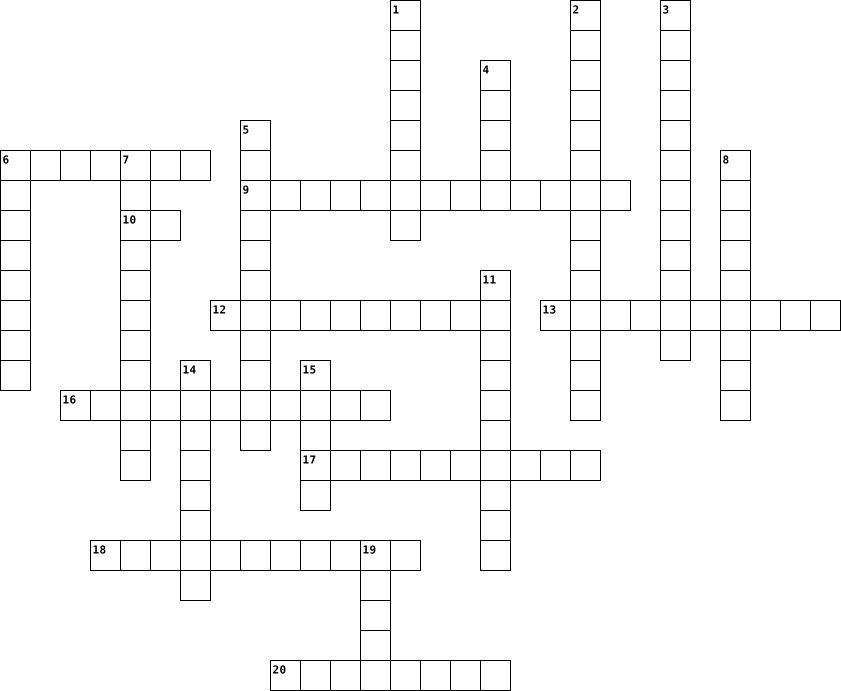
Across
- Nametag on the cell surface
- This blood clot happens when you mix the wrong blood types can lead to death
- Blood type that can receive all blood types
- White blood cells that start as a macromolecule
- The percent of blood to plasma
- Red blood cells
- Attacks parasites
- Platelets
- Inflammatory response/ blows up
Down
- Eats dead cells
- Hormone that stimulates red blood cell production
- A white blood cell without a grainy cytoplasm
- Blood type that can receive A and O
- This blood clot happens to forms scabs to prevent bleeding out
- Immunoprotein that circulates the body protecting you
- A white blood cell with a grainy cytoplasm
- White blood cells
- Types of white blood cells that is 60% of it and it neutralizes
- It determines in the blood is negative or positive
- Blood type that can receive B and O
- Blood type that can receive only O
21 Clues: Platelets • Eats dead cells • Red blood cells • White blood cells • Attacks parasites • Nametag on the cell surface • The percent of blood to plasma • Inflammatory response/ blows up • Blood type that can receive only O • Blood type that can receive A and O • Blood type that can receive B and O • A white blood cell with a grainy cytoplasm • Blood type that can receive all blood types • ...
BHS 316 Exam 1 2022-07-05

Across
- b cell that has never been activated
- system viruses fear the most
- matures into macrophage
- Type of T cell considered a cytokine factory
- important protein in lectin-activation pathway
- cell that causes anaphylactic shock
- fluid that drains from cells and blood
- receptors that "encourage not to kill"
- BCR binds to this
- chemical that can recruit other WBCs
- name of C3bBb molecule
Down
- organ responsible for most complement proteins
- high-rate of mutation
- to tag or prepare an invader for phagocytosis
- state of normal macrophages
- integrins binding partner
- short-lived WBC "foot soldier"
- formed from C5b and other complement proteins
- B cells make when activated
- B cells clustered together
- B and T Cells that have "experience"
- receptor that recognizes danger signal
- location where T cells mature
- can cross placenta
- most abundant antibody class in body
- antibody-dependent complement activation
26 Clues: BCR binds to this • can cross placenta • high-rate of mutation • name of C3bBb molecule • matures into macrophage • integrins binding partner • B cells clustered together • state of normal macrophages • B cells make when activated • system viruses fear the most • location where T cells mature • short-lived WBC "foot soldier" • cell that causes anaphylactic shock • ...
BHS 316 Exam 1 2022-07-05

Across
- b cell that has never been activated
- system viruses fear the most
- matures into macrophage
- Type of T cell considered a cytokine factory
- important protein in lectin-activation pathway
- cell that causes anaphylactic shock
- fluid that drains from cells and blood
- receptors that "encourage not to kill"
- BCR binds to this
- chemical that can recruit other WBCs
- name of C3bBb molecule
Down
- organ responsible for most complement proteins
- high-rate of mutation
- to tag or prepare an invader for phagocytosis
- state of normal macrophages
- integrins binding partner
- short-lived WBC "foot soldier"
- formed from C5b and other complement proteins
- B cells make when activated
- B cells clustered together
- B and T Cells that have "experience"
- receptor that recognizes danger signal
- location where T cells mature
- can cross placenta
- most abundant antibody class in body
- antibody-dependent complement activation
26 Clues: BCR binds to this • can cross placenta • high-rate of mutation • name of C3bBb molecule • matures into macrophage • integrins binding partner • B cells clustered together • state of normal macrophages • B cells make when activated • system viruses fear the most • location where T cells mature • short-lived WBC "foot soldier" • cell that causes anaphylactic shock • ...
Blood Anatomy Crossword Puzzle 2023-04-04

Across
- Red blood cells
- Are located in the blood and tissue and perform phagocytosis
- The formation of platelets
- Horomone that stimulates red blood cell production
- When blood is dark red and low in oxygen
- Responsible for allergic responses
- The formation of all blood cells
- Protien that does not belong in the body
- Machine used to seperate blood by spinning it
Down
- Profesional trained to draw blood
- First WBC on the site of infection
- Protien the body produces to fight off foreign materials
- The formation of white blood cells
- Fights off parasites in your body
- Platelets
- Houses an iron molecule
- Responsible for your main immune responses, are catagorized into three cell types.
- Protien in red blood cells that allows blood to carry oxygen and carbon dioxide
- White blood cells
- A lack of oxygen carrying capacity in the blood
20 Clues: Platelets • Red blood cells • White blood cells • Houses an iron molecule • The formation of platelets • The formation of all blood cells • Profesional trained to draw blood • Fights off parasites in your body • First WBC on the site of infection • The formation of white blood cells • Responsible for allergic responses • When blood is dark red and low in oxygen • ...
cells and cell parts crossword 2024-02-22

Across
- cell with a nucleus and membrane bound organelles
- "powerhouse" of the cell
- found in only animal cells
- an entire living thing that carries all the basic life functions
- helps cell maintain cell shape
- surrounds the outside of all cells
- made of cellulose in plants
- heads that contain glycerol and phosphate and are hydrophillic
- function in moving cells
- contain digestive enzymes
Down
- found in all cells
- cell with no nucleus or membrane bound organelles
- found only in producers
- building block of all matter
- a group of atoms bonded together
- connected to the nuclear envelope
- made of special proteins and dna
- controls the normal activities of the cell
- inside of the nucleus
- looks like a stack of pancakes
- a group of similar cells organized to do a specific job
- fluid filled sacks for storage
22 Clues: found in all cells • inside of the nucleus • found only in producers • "powerhouse" of the cell • function in moving cells • contain digestive enzymes • found in only animal cells • made of cellulose in plants • building block of all matter • looks like a stack of pancakes • helps cell maintain cell shape • fluid filled sacks for storage • a group of atoms bonded together • ...
Unit 2 ap bio 2024-06-06

Across
- Plant and animal cells
- attracted to water
- a measure of water's potential to do work (2 words)
- the gelatinous liquid that fills the inside of a cell
- The movement of water across a semipermeable membrane
- where ribosomes are found (3 words)
- Organelle responsible for maintaining cell shape
- membrane The outer boundary of the cell
- organelle responsible for degrading and recycling cellular waste
Down
- Organelle responsible for lipid synthesis and detoxification in liver cells (3 words)
- The theory that mitochondria and chloroplasts were once free-living bacteria (2 words)
- found surrounding the plasma membrane of plant cells (2 words)
- the basic unit of life
- the brain of the cell
- reppelled by water
- responsible for energy production
- responsible for processing, packaging, and secreting proteins (2 words)
- The site of photosynthesis in plant cells
- organelle responsible for protein synthesis
- Bacteria cells
20 Clues: Bacteria cells • attracted to water • reppelled by water • the brain of the cell • Plant and animal cells • the basic unit of life • responsible for energy production • where ribosomes are found (3 words) • membrane The outer boundary of the cell • The site of photosynthesis in plant cells • organelle responsible for protein synthesis • ...
Chapter 2 Review 2023-09-18

Across
- a bond formed when charged atoms get near each other and form a bond
- a form of reproduction in which cloned cells are made
- a group of the same organisms living in an area at the same time
- no charge, nucleus
- cells that lack a nucleus
- substances on the left
- bond formed in polar molecules when hydrogens are attracted to nearby negative atoms
- substances on the right
Down
- a measure of life on earth
- cells that contain a nucleus
- a chemical bond formed when electrons are shared
- substances made of more than two elements
- has mass and takes up space
- the region of earth containing life
- plants and algae cells
- an important compound filled with hydrogen bonds
- a collection of cells performing a function
- positive charge nucleus
- six elements of life
- negative charge around the nucleus
20 Clues: no charge, nucleus • six elements of life • plants and algae cells • substances on the left • positive charge nucleus • substances on the right • cells that lack a nucleus • a measure of life on earth • has mass and takes up space • cells that contain a nucleus • negative charge around the nucleus • the region of earth containing life • substances made of more than two elements • ...
Cells and Cell Structure 2022-11-01

Across
- Location of photosynthesis.
- Part of the nucleus that forms ribosomes.
- Function to create energy (power house)
- Filaments that provide support and anchor organelles in a cell.
- Single-celled organisms whose cells lack a nucleus.
- Idea that some organelles were once free bacteria absorbed by the cells.
- Control center of the cell.
- The plasma membrane is made up of ________________ and proteins.
- Short, hair-like fibers that move substances outside cells.
- Movement of molecules that requires energy.
Down
- Organelle with digestive enzymes to help eliminate waste.
- Membrane bound storage sacs.
- Water is attracted to the ______________ head of a phospholipid.
- Scientist who first used the term "cell".
- Special proteins that catalyze production of substances.
- No attached ribosomes and helps build molecules like carbohydrates.
- Process of molecules moving to balance concentration.
- Packaging and shipping part of the cell.
- Smallest living unit
- Scientist who theorized "all cells come from cells".
20 Clues: Smallest living unit • Location of photosynthesis. • Control center of the cell. • Membrane bound storage sacs. • Function to create energy (power house) • Packaging and shipping part of the cell. • Part of the nucleus that forms ribosomes. • Scientist who first used the term "cell". • Movement of molecules that requires energy. • ...
Building Blocks of Life 2023-09-26

Across
- The part of the cell where photosynthesis takes place.
- The process that makes new cells.
- The information or blue print of a cell.
- Animals and plants that live in one place.
- One part of a cell that allows water and food to pass in and out.
- Instrument used to see the first cell.
- Communities of living things interacting with non-living things.
- Most common element found in your body.
- Building blocks that are smaller than atoms.
- The smallest unit of life.
Down
- Cellular conversion of the sun's energy.
- The parts of cells.
- Carrier of Bubonic Plague in Europe in the 17th century.
- Type of membrane surrounding cells.
- There are 60 - 90 ______ cells in an adult human body.
- The control center of a cell.
- Another name for Earth.
- When cells begin to divide uncontrolled.
- Part of a cell called the "power house."
- One type of Carbohydrate.
20 Clues: The parts of cells. • Another name for Earth. • One type of Carbohydrate. • The smallest unit of life. • The control center of a cell. • The process that makes new cells. • Type of membrane surrounding cells. • Instrument used to see the first cell. • Most common element found in your body. • Cellular conversion of the sun's energy. • The information or blue print of a cell. • ...
Cell Theory and Organelles 2023-09-29

Across
- powerhouse of cell
- has a nucleus
- store water, food, and waste
- jell-like substance
- more than one cells
- contains digestive enzymes
- shorter hair like and more numerous on cells
- no nucleus
- cell like products that are used inside the cells like special lipids called steriods
- looks like a stack of pancakes, storage or transport out of cell
- allows things in and out of cell
- "protein factories" protein synthesis
- one cell
Down
- consists of two different pieces, hollow membrane tubes
- found in plants, photosynthesis
- controls the whole cell
- found in plant cells next to cell membrane
- has ribosomes on surface
- membrane surrounding nucleus
- inside the nucleus, makes mRNA
- helps hold the shape of the cell found in the cytoplasm
- like a tail and fewer on cells
- forms spindle fibers, paired structures near nucleus
- circular peice of genetic material
24 Clues: one cell • no nucleus • has a nucleus • powerhouse of cell • jell-like substance • more than one cells • controls the whole cell • has ribosomes on surface • contains digestive enzymes • store water, food, and waste • membrane surrounding nucleus • inside the nucleus, makes mRNA • like a tail and fewer on cells • found in plants, photosynthesis • allows things in and out of cell • ...
Biology Concept 1 Vocabulary 2025-10-16

Across
- ER Makes proteins and hugs the nucleus
- Protects the DNA
- In animal cells only and made of microtubules
- In plant cells only and where photosynthesis happens
- In animal cells only and breaks down dead stuff
- Moves fluid across cell's surface
- Holds everything in place
- Wall In plant cells only and protects and maintains shape
- Apparatus Transport proteins around the cell
- Moves entire cell
- Makes RNA and is located inside of the nucleus
Down
- Makes proteins and is located on Rough ER
- Vacuole In plant cells only and a storage center
- Composed of one cell
- Stores water, nutrients, waste, etc.
- Composed of many cells
- ER Attached to the rough ER and makes lipids
- Membrane Controls what goes in and out of the cell
- Specialized structures within the cell that work together to help the cell function
- Powerhouse of the cell
- Gives the cell shape
21 Clues: Protects the DNA • Moves entire cell • Composed of one cell • Gives the cell shape • Composed of many cells • Powerhouse of the cell • Holds everything in place • Moves fluid across cell's surface • Stores water, nutrients, waste, etc. • Makes proteins and is located on Rough ER • In animal cells only and made of microtubules • Makes RNA and is located inside of the nucleus • ...
Cell Divisions 2026-05-14

Across
- The phase where the cell grows and prepares for division
- An organism or cell having only one complete set of chromosomes
- Sister chromatids
- Two nuclei form
- Process producing four genetically unique, haploid gametes
- Chromosomes align in the center
- bacterial cell division.
- A mature sexual reproductive cell
- A threadlike strand of DNA that carries genes
- Having cells with good or membrane-bound nuclei
Down
- The final splitting of the cytoplasm into two cells.
- Another word for cell division
- Chromosomes condense and the nucleus breaks down
- Resulting new cells
- A unicellular organism organism lacking a membrane-bound nucleus
- General terms for division
- division The process in reproduction and growth by which a cell divides to form daughter cells
- Material that carries genetic information in a cell
- A cell that does not participate in reproduction
- An organism of one for more cells with membrane-bound nuclei
20 Clues: Two nuclei form • Sister chromatids • Resulting new cells • bacterial cell division. • General terms for division • Another word for cell division • Chromosomes align in the center • A mature sexual reproductive cell • A threadlike strand of DNA that carries genes • Having cells with good or membrane-bound nuclei • Chromosomes condense and the nucleus breaks down • ...