
cells Crossword Puzzles
All crossword about cell biology 2020-01-13
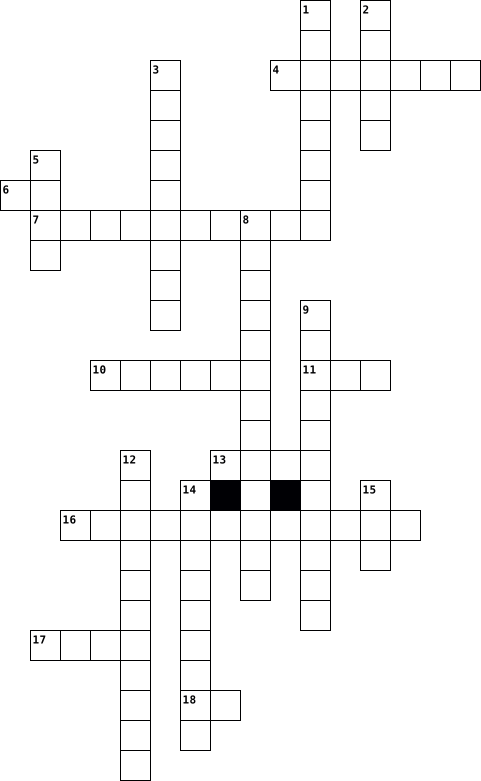
Across
- is interconnected to other fields such as genetics,
- how cells function, ultimately giving insight into
- such as cell culture, various types of microscopy,
- such as cancer, and other diseases. Research in cell
- structure and function of the cell, also known
- many sub-topics which may include the study of cell
- The study of cells is performed using several
- biology is a branch of biology that studies
- the basic unit of life Cell biology encompasses
Down
- while also being essential for research in biomedical
- and how cells work is fundamental to all biological
- being used for discoveries and research pertaining
- prokaryotic and eukaryotic cells and can be divided
- larger organisms. Knowing the components of
- cell communication, cell cycle, and cell
- and cytochemistry.
- genetics, biochemistry, molecular biology, medical microbiology,
- cell fractionation. These have allowed for and are
18 Clues: and cytochemistry. • cell communication, cell cycle, and cell • larger organisms. Knowing the components of • biology is a branch of biology that studies • The study of cells is performed using several • structure and function of the cell, also known • the basic unit of life Cell biology encompasses • being used for discoveries and research pertaining • ...
Cell Organelles 2020-10-21

Across
- substance produced by ribosomes
- gives plant cells a firm, regular shape
- an organelle containing enzymes that break down food or waste
- organelle that controls the cell
- complex mix of proteins, water and other substances which houses the cell organelles
- type of ER responsible for making proteins
- site of protein manufacture
- genetic material found in the nucleus of eukaryotic cells
- a strong substance that makes up cell walls
Down
- the copy of DNA that is sent to the ribosome
- created by plant cells during photosynthesis
- network of membranes attached to the nucleus
- a structure within a cell that performs a specific function
- organelle in animal cells that plays a role in cell division
- creates energy for the cell
- semi-permeable barrier present in all cells
- type of ER responsible for making lipids
- site of packing and labeling of cellular proteins
18 Clues: creates energy for the cell • site of protein manufacture • substance produced by ribosomes • organelle that controls the cell • gives plant cells a firm, regular shape • type of ER responsible for making lipids • type of ER responsible for making proteins • semi-permeable barrier present in all cells • a strong substance that makes up cell walls • ...
Cell Cycle 23-24 SHS 2023-12-12

Across
- times during cell cycle to determine readiness to continue
- phase in which cells spend most of the time
- cell death due to illness or injury
- condensed form of DNA wrapped around proteins
- the number of daughter cells resulting from mitosis
- nervous and ___ cells are stuck in Go
- cell division that creates identical daughter cells from a parent cell
- first part of interphase where cell takes in nutrients and grows
- organelle that disappears during mitosis
Down
- one of the major functions of cell division
- third part of interphase; getting ready for mitosis
- one of the major functions of cell division
- series of events taking place in a cell as it grows, replicates, divides, and repeats
- abbreviated "S" phase; DNA duplicating
- organisms that use binary fission, not mitosis
- controlled cell death that is normal part of development
- a picture of a person's chromosomes
- one of major functions of cell division for multicellular organisms
- your body has 50-75___ cells
19 Clues: your body has 50-75___ cells • cell death due to illness or injury • a picture of a person's chromosomes • nervous and ___ cells are stuck in Go • abbreviated "S" phase; DNA duplicating • organelle that disappears during mitosis • one of the major functions of cell division • one of the major functions of cell division • phase in which cells spend most of the time • ...
DIM Cells & Microbes 2026-03-11

Across
- An organism made of only one cell
- Microbe used to make vaccines
- An organism made up of many cells
- Contains cell sap
- The gas produced by yeast during fermentation that makes dough rise
- Provides structure and shape to plant cells
- Produced by yeast during fermentation and evaporates during the baking process
- Humans have 23 pairs of these in each normal cell
- Microbe used to make cheese and yoghurt
- Controls the cells activities and contains genetic information
Down
- The site of chemical reactions in cells
- The largest type of microorganism
- Controls what substances enter or exit the cell
- The site of photosynthesis in plant cells
- The difference in our characteristics- variety of life!
- Sugar in milk that is used by bacteria to make yoghurt
- Microbe used to make bread and beer
- Enzyme used to clot proteins in milk to make cheese
18 Clues: Contains cell sap • Microbe used to make vaccines • An organism made of only one cell • The largest type of microorganism • An organism made up of many cells • Microbe used to make bread and beer • The site of chemical reactions in cells • Microbe used to make cheese and yoghurt • The site of photosynthesis in plant cells • Provides structure and shape to plant cells • ...
ch 11 biology vocab 2023-03-10

Across
- Fission: A type of asexual reproduction in which a single cell divides into two equal daughter cells, each containing an identical copy of the genetic material.
- A cell that contains two sets of chromosomes, one inherited from each parent.
- Chromosomes: A pair of chromosomes that are similar in size, shape, and genetic content and carry genes for the same traits.
- The final stage of mitosis, during which the cell begins to divide into two daughter cells.
- The third stage of mitosis, during which the sister chromatids are pulled apart and move to opposite ends of the cell.
- The second stage of mitosis, during which the chromosomes line up along the equator of the cell, ready to be separated.
- A structure that forms during cytokinesis in plant cells, which eventually separates the two daughter cells.
- The stage of the cell cycle during which the cell grows, replicates its DNA, and prepares for cell division.
Down
- A cell that contains one set of chromosomes, as opposed to the two sets (diploid) found in most eukaryotic cells.
- Structures in a cell's nucleus that contain genetic material (DNA) and are responsible for passing on genetic information to daughter cells during cell division.
- A type of cell division that occurs in the reproductive organs of eukaryotes and produces four daughter cells, each with half the number of chromosomes as the parent cell.
- The process of cell division in which a single cell divides into two identical daughter cells, each containing the same number of chromosomes as the parent cell.
- The process by which the cytoplasm of a single eukaryotic cell divides into two daughter cells after mitosis, each containing a nucleus and some of the cell's organelles.
- The series of events that take place in a cell leading to its division and duplication (replication) that results in the formation of two daughter cells.
- The first stage of mitosis, during which the chromosomes condense and become visible, and the spindle apparatus begins to form.
- A groove that forms during cytokinesis in animal cells, which eventually separates the two daughter cells.
16 Clues: A cell that contains two sets of chromosomes, one inherited from each parent. • The final stage of mitosis, during which the cell begins to divide into two daughter cells. • A groove that forms during cytokinesis in animal cells, which eventually separates the two daughter cells. • ...
nerve cells 2023-04-28

Across
- Hooked up to trapezius muscle and sternocleidomastoid muscle
- Big, comes from medulla, Services major organs
- Contracts laterally, controls the eyes
- Muscles of the face
- Picks up sound waves
- Spinal cord and brain
- Jaw muscle, eyelids, eyebrows, nasal cavity, teeth, tongue, lower jaw
Down
- connects to the eye and transfers information to the brain
- Gag reflex, Tongue and pharynx, Prevents suffocation
- Innervating muscles of the tongue, Speech (multiple languages)
- Moves eye lateraly
- Comes from back of eye orbit through the superior fissure
12 Clues: Moves eye lateraly • Muscles of the face • Picks up sound waves • Spinal cord and brain • Contracts laterally, controls the eyes • Big, comes from medulla, Services major organs • Gag reflex, Tongue and pharynx, Prevents suffocation • Comes from back of eye orbit through the superior fissure • connects to the eye and transfers information to the brain • ...
stem cells 2017-08-06

Across
- Ball of unspecialised stem cells
- Inner layer of the three germ layers
- cell Has potential to become many specialised cells overtime
- Can develop into several different cell types
- Outside layer of the three layers
- can only differentiate into one cell type
Down
- contains cluster of cells known as inner cell mass
- Can self renew for long periods of time
- The middle layer of the three germ layers
- Can create any cell type or embryo
- differentiation Process by embryonic cell becomes specialised
- occurs about day 12
12 Clues: occurs about day 12 • Ball of unspecialised stem cells • Outside layer of the three layers • Can create any cell type or embryo • Inner layer of the three germ layers • Can self renew for long periods of time • The middle layer of the three germ layers • can only differentiate into one cell type • Can develop into several different cell types • ...
stem cells 2017-08-06

Across
- Ball of unspecialised stem cells
- Inner layer of the three germ layers
- cell Has potential to become many specialised cells overtime
- Can develop into several different cell types
- Outside layer of the three layers
- can only differentiate into one cell type
Down
- contains cluster of cells known as inner cell mass
- Can self renew for long periods of time
- The middle layer of the three germ layers
- Can create any cell type or embryo
- differentiation Process by embryonic cell becomes specialised
- occurs about day 12
12 Clues: occurs about day 12 • Ball of unspecialised stem cells • Outside layer of the three layers • Can create any cell type or embryo • Inner layer of the three germ layers • Can self renew for long periods of time • The middle layer of the three germ layers • can only differentiate into one cell type • Can develop into several different cell types • ...
stem cells 2017-08-06

Across
- Ball of unspecialised stem cells
- Inner layer of the three germ layers
- cell Has potential to become many specialised cells overtime
- Can develop into several different cell types
- Outside layer of the three layers
- can only differentiate into one cell type
Down
- contains cluster of cells known as inner cell mass
- Can self renew for long periods of time
- The middle layer of the three germ layers
- Can create any cell type or embryo
- differentiation Process by embryonic cell becomes specialised
- occurs about day 12
12 Clues: occurs about day 12 • Ball of unspecialised stem cells • Outside layer of the three layers • Can create any cell type or embryo • Inner layer of the three germ layers • Can self renew for long periods of time • The middle layer of the three germ layers • can only differentiate into one cell type • Can develop into several different cell types • ...
Cells Crossword 2021-07-14

Across
- an organelle that breaks down sugars to supply energy
- a unit of length equal to one billionth of a metere
- the smallest unit of life
- the splitting of a cell to form new cells
- a jelly like fluid that fills the space inside a cell
- a large cell that stores excess energy from food
- a long, thin cell that changes shape by contracting
Down
- a unit of equal length equal to one millionth of a metere
- a group of similar cells that work together
- an organelle that absorbs sunlight energy and stores it in sugars
- an organelle that controls a cell's activities
- a rigid structure that protects and strengthens some cells
12 Clues: the smallest unit of life • the splitting of a cell to form new cells • a group of similar cells that work together • an organelle that controls a cell's activities • a large cell that stores excess energy from food • a unit of length equal to one billionth of a metere • a long, thin cell that changes shape by contracting • ...
Cells Crossword 2022-10-14

Across
- membrane surrounding the cytoplasm of a cell
- the liquid that fills the inside of the cell
- a plastid that contains chlorophyll and in which photosynthesis takes place.
- lysosome is a membrane-bound cell organelle that contains digestive enzymes
- 'powerhouse of the cell'
- Center of the cell contains DNA.
Down
- a rigid layer on the outside of the cell
- a network of membranous tubules within the cytoplasm
- a threadlike structure carrying genetic information through the form of genes
- vesicles and folded membranes within the cytoplasm
- a space or vesicle within the cytoplasm of a cell
- particles consisting of RNA and associated proteins found in
12 Clues: 'powerhouse of the cell' • Center of the cell contains DNA. • a rigid layer on the outside of the cell • membrane surrounding the cytoplasm of a cell • the liquid that fills the inside of the cell • a space or vesicle within the cytoplasm of a cell • vesicles and folded membranes within the cytoplasm • a network of membranous tubules within the cytoplasm • ...
plant cells 2022-10-25

Across
- everything found inside the eukaryotic cell membrane except the nucleus.
- membrane: The semi-permeable lipid bilayer covering of a cell that separates the cytoplasm from the cell’s environment
- The chlorophyll-containing organelle in green plant cells where photosynthesis occurs
- an organelle of eukaryotic cells that is the site of respiration, energy production and extra-nuclear genes.
- reticulum: A complex of convoluted membranes in eukaryotic cells responsible for protein and lipid synthesis. There are two types: Smooth ER (no attached ribosomes) and Rough ER (with ribosomes). More in the Eukaryotic Cell Model.
- densely-packed region of nucleic acids and proteins within the eukaryotic cell nucleus visible during interphase Synthesis of ribosomal RNA (rRNA) important for the production of ribosomes takes place in this region. See the Eukaryotic Cell Model
Down
- Ribosomes are packets of RNA and protein that are the site of protein synthesis in both prokaryotes and eukaryotes
- membrane-bound packet of hydrolytic enzymes in the eukaryotic cell that can degrade intracellular materials or aid in killing ingested pathogens
- That region in the eukaryotic cell in which the major portion of the genetic code resides. It is bounded by a double membrane.
- wall: The polysaccharide layer on the external surface of many plant, fungal and bacterial cells.
- an organelle distinguished by a series of stacked membrane sacs that is important in the packaging and transport of macromolecular cell products. Explore more in the Eukaryotic Cell Model
- A membrane-bound fluid filled organelle of eukaryote cells that may contain nutrient or waste materials.
- complex of DNA, RNA and proteins in the eukaryotic cell nucleus
13 Clues: complex of DNA, RNA and proteins in the eukaryotic cell nucleus • everything found inside the eukaryotic cell membrane except the nucleus. • The chlorophyll-containing organelle in green plant cells where photosynthesis occurs • wall: The polysaccharide layer on the external surface of many plant, fungal and bacterial cells. • ...
Cells Crossword 2022-09-08

Across
- Passageways that carry materials from one place in the cell to another
- The storage compartment in a cell
- Regulates what goes in and out of both plant and animal cells
- Gel-like substance that contains the organelles in a cell
- Breaks down waste and organelles that are not needed by the cell
Down
- The DNA found in a cell that stores genetic information
- Packages and distributes things throughout the cell
- Found in plant cells, creates energy using Photosynthesis
- Produces energy to help its cell operate
- Outer layer of a plant cell, protecting it and giving it its shape
- Makes protein to repair damage in a cell
- An organelle near the nucleus of animal cells, which helps develop spindle fibers
12 Clues: The storage compartment in a cell • Produces energy to help its cell operate • Makes protein to repair damage in a cell • Packages and distributes things throughout the cell • The DNA found in a cell that stores genetic information • Found in plant cells, creates energy using Photosynthesis • Gel-like substance that contains the organelles in a cell • ...
Specialised cells 2023-11-20

Across
- The _________ cell does not have a nucleus.
- The red blood cell transports __________.
- A group of similar cells is called _________.
- The __________ cell carries information to the brain.
- The __________ cell makes its own food by photosynthesis.
- The _________ cell contracts to make your body move.
Down
- The __________ cell can transport water throughout the plant.
- The __________ cell transports nutrients throughout the plant.
- The largest organ in the body.
- The __________ cell can absorb minerals and water from the soil.
- A group of different tissues is called _________.
- Unspecialised cells are called __________ cells.
12 Clues: The largest organ in the body. • The red blood cell transports __________. • The _________ cell does not have a nucleus. • A group of similar cells is called _________. • Unspecialised cells are called __________ cells. • A group of different tissues is called _________. • The _________ cell contracts to make your body move. • ...
Cells & structures 2023-09-07

Across
- zone in the form of electrical impulses, away from the cell body
- also frontal or transverse plane
- nerve cell affected by change in the environment
- neuron that transmits neural message to muscles or glands
- on the same side of the body
- toward the periphery
Down
- protective membrane that surround brain/spinal cord
- outermost layer of meninges
- divides the brain into upper and a lower parts
- zone at which cell sends info to another cell
- it means toward the belly
- innermost meninges
12 Clues: innermost meninges • toward the periphery • it means toward the belly • outermost layer of meninges • on the same side of the body • also frontal or transverse plane • zone at which cell sends info to another cell • divides the brain into upper and a lower parts • nerve cell affected by change in the environment • protective membrane that surround brain/spinal cord • ...
Cells Crossword 2023-08-24

Across
- Cells transportation system
- Found in plant cells and protists, photosynthesis takes place here.
- Store materials such as water and salts, and they help the cell maintain homeostasis
- No Nucleus or Membrane Bound Organelles
- Break Down Lipids, Carbs, and Proteins into usable pieces.
- Basic Unit Of Life
Down
- Packages proteins and other material for storage, shipping center
- Control center of he body, Contains DNA
- Contains Nucleus consisting DNA
- Powerhouse of the cell, makes ATP.
- Only found in animal cells,formed in tubulin (a protien)
- Make Proteins and RNA, found throughout the cytoplasm
12 Clues: Basic Unit Of Life • Cells transportation system • Contains Nucleus consisting DNA • Powerhouse of the cell, makes ATP. • Control center of he body, Contains DNA • No Nucleus or Membrane Bound Organelles • Make Proteins and RNA, found throughout the cytoplasm • Only found in animal cells,formed in tubulin (a protien) • ...
Cells & Organelles 2025-09-07

Across
- Controls what enters and leaves the cell
- Rigid outer layer of plant cells
- Makes proteins in the cell
- Helps in cell division
- Control center of the cell
- Breaks down waste and old cell parts
- Jelly-like substance inside the cell
Down
- Produces energy for the cell
- Modifies, sorts, and packages proteins
- Stores water and nutrients
- Network that transports materials within the cell
- Site of photosynthesis in plant cells
12 Clues: Helps in cell division • Stores water and nutrients • Makes proteins in the cell • Control center of the cell • Produces energy for the cell • Rigid outer layer of plant cells • Breaks down waste and old cell parts • Jelly-like substance inside the cell • Site of photosynthesis in plant cells • Modifies, sorts, and packages proteins • Controls what enters and leaves the cell • ...
word cells 2026-05-27

Across
- sun
- far
- lead
- again
- sea
- Earth
- hand
Down
- look
- teeth
- people
- body
- write
12 Clues: sun • far • sea • look • lead • body • hand • teeth • again • Earth • write • people
Anatomy 2020-04-24

Across
- that stimulates antibody production
- maximum volume of air a person can inhale
- double walled sac containing the heart and the roots of great vessels.
- muscular tissue of the heart
- hollow cavities that reduce the weight of the skull
- master of all glands
- amount of fluid in blood
- too few white blood cells
- protein that is made in response to antigens
- stimulates glands
- too many white blood cells
- secretes hormone for digestion
Down
- clumping of red blood cells
- cavities
- regulation of electrolytes
- air sacs
- in erythrocytes that carry oxygen
- beta cells
- can pass through cell membranes
- fluid portion of blood
- red blood cell deficiency
- of air to the outside of the body
- and maintains milk secretion
23 Clues: cavities • air sacs • beta cells • stimulates glands • master of all glands • fluid portion of blood • amount of fluid in blood • too few white blood cells • red blood cell deficiency • regulation of electrolytes • too many white blood cells • clumping of red blood cells • muscular tissue of the heart • and maintains milk secretion • secretes hormone for digestion • ...
CANCER 2020-03-31

Across
- The study of cancer
- Cancer of the blood
- A non-cancerous tumor
- Drugs that kill cancer cells
- The person who gives bone marrow
- An excessive growth of cells
- Cancer of the colon
- These are enlargements of the lymphatic system (2 words)
- The spread of cancer into nearby tissue
Down
- A change in DNA
- Used in bone marrow transplants
- Tissues create blood vessels
- Cancer cells are irradiated with x-rays
- A cancer causing substance
- A raised brown skin feature that is benign
- Genetic material that gives us our physical features
- A malignant for of skin cancer
- A gland of the male reproductive system
- Using drugs to stop cancer cells from reproducing (2 words)
- A sample of a growth is removed for examination
20 Clues: A change in DNA • The study of cancer • Cancer of the blood • Cancer of the colon • A non-cancerous tumor • A cancer causing substance • Tissues create blood vessels • Drugs that kill cancer cells • An excessive growth of cells • A malignant for of skin cancer • Used in bone marrow transplants • The person who gives bone marrow • Cancer cells are irradiated with x-rays • ...
A&P Chapter 4 2021-09-24

Across
- study of tissues
- cartilage cell
- single layer that looks like more
- between vertebrae
- protects and supports organs, stores energy as fat provides immunity
- blood clotting
- detects changes and sends nerve impulse
- covers body surfaces, lines body cavities, organs, ducts, and forms glands
- spaces that contain osteocytes
- tall and thin
- change from cuboidal to flat
Down
- flat
- support nerve cells
- receive input
- two or more layers
- studies cells and tissue to diagnose disease
- a group of similar cells that work together
- cube-shaped
- rings of minerals and collagen
- pale yellow fluid with mostly water and dissolved substances
- conduct impulses
- single layer
- canals that carry nutrients and wastes
- generates force for movement
- space between cells
25 Clues: flat • cube-shaped • single layer • receive input • tall and thin • cartilage cell • blood clotting • study of tissues • conduct impulses • between vertebrae • two or more layers • support nerve cells • space between cells • generates force for movement • change from cuboidal to flat • rings of minerals and collagen • spaces that contain osteocytes • single layer that looks like more • ...
skin crossword 2021-10-07

Across
- resident cell of connective tissue
- composed of cells
- layer of connective tissue that lines the cavities of joints
- type of white blood cells of the immune system
- translucent cartilage found on joint surface
- group of cells that have similar structure
- very strong cartialge found in intervertebral disks
- covering/coating
- moist, inner lining of organs/ body cavities
- type of cartilage present in the pinnae
- cells, responsible for cartilage formation
- cell that lies within the substance of fully formed bone
Down
- membranes lining closed interanl body cavity
- type of complex pigment
- cheif structrual unit compact bone
- cell found in connective tissue
- thin pliable sheet-like type of extracellular matrix
- rigid tissue, makes up the skeleton
- firm, whitish, flexible connective tissue
- large amounts of protein called keratin
20 Clues: covering/coating • composed of cells • type of complex pigment • cell found in connective tissue • resident cell of connective tissue • cheif structrual unit compact bone • rigid tissue, makes up the skeleton • type of cartilage present in the pinnae • large amounts of protein called keratin • firm, whitish, flexible connective tissue • ...
Yuuri Nonaka 2023-03-29

Across
- Smaller pores of phylum porifera
- Class of Phylum Annelida which are mostly marine and have distinct segmentation
- Exoskeleton of sponges
- Common bloodfluke found in southeast asia
- Thick fleshy part where annelids transfer egg and sperm cells
- Simplest canal system of Kingdom porifera
- Sensory cells used to detect chemicals
- Cnidarians respirate through this process
- stinging cells present in cnidarians
- organisms with many cells
- Class of Phylum porifera which consists of 80% of all species
Down
- Dorsoventrally flattened worm
- complex sense organs around the head of nematodes
- Free living mostly marine platyhelminthes
- Other word for segmentation
- Most common parasite in the USA
- Cavity between gut and body wall
- have a false body cavity
- Greek word that means "thread"
- Primitive chordates
20 Clues: Primitive chordates • Exoskeleton of sponges • have a false body cavity • organisms with many cells • Other word for segmentation • Dorsoventrally flattened worm • Greek word that means "thread" • Most common parasite in the USA • Smaller pores of phylum porifera • Cavity between gut and body wall • stinging cells present in cnidarians • Sensory cells used to detect chemicals • ...
Cnidarians 2013-04-24

Across
- Colonial anthozoans that have a tough, branching skeleton
- Cnidarian class that lack a medusa stage
- The layer of cells that line the gut
- Where food is digested
- Digestion within the cells
- Phylum that includes sea anemones, jellyfish, corals and their relatives
- Hydrozoans that form drifting colonies
- Most dangerous class of Cnidarians
- Unique stinging structures
- Thin partitions that help in digestion
- Gelatinous middle layer
- Finger-like extensions used to capture food
Down
- All Cnidarians eat other animals, meaning they are....
- Surface that contains the mouth
- Digestion that takes place outside of the cells
- Bell-like Cnidarian
- Larva stage of Cnidaria
- Form of Cnidaria that attaches itself to ocean floor and doesn't move
- surface Surface opposite of the mouth
- External layer of cells
20 Clues: Bell-like Cnidarian • Where food is digested • Larva stage of Cnidaria • External layer of cells • Gelatinous middle layer • Digestion within the cells • Unique stinging structures • Surface that contains the mouth • Most dangerous class of Cnidarians • The layer of cells that line the gut • surface Surface opposite of the mouth • Hydrozoans that form drifting colonies • ...
Cnidaria Review 2014-09-21

Across
- members have cube-shaped medusa and tentacles at corners
- primitive nervous system in cnidarians
- members of this class have stinging cells
- stinging cells
- colony of polyps that looks like a jellyfish
- some are ____, or produce either egg OR sperm cells
- bell-shaped form with tentacles hanging down
- class with freshwater members
- member of hydrozoa that cartwheel to move around
- outer layer of cnidarian
- hydrozoans are mostly _____polyps
Down
- form with body on bottom and tentacles up
- inner layer of cnidaria
- example of class anthozoa
- outbreak of this starfish can kill entire coral reef
- cnidarians have _______ symmetry
- members are only polyps
- cnidocytes are used to capture ______
- _______cavity where jellyfish digests food
- class with "true jellyfish"
- most are _______, or produce eggs and sperm cells
21 Clues: stinging cells • inner layer of cnidaria • members are only polyps • outer layer of cnidarian • example of class anthozoa • class with "true jellyfish" • class with freshwater members • cnidarians have _______ symmetry • hydrozoans are mostly _____polyps • cnidocytes are used to capture ______ • primitive nervous system in cnidarians • form with body on bottom and tentacles up • ...
Bio 2016-09-28

Across
- cell _ provides structure and support for the cell
- transport where no energy is needed
- molecule which is hydrophobic and hydrophilic
- most abundant lipid in the cell membrane
- cell _ decides what enters and exits the cell
- stuff exiting the cell
- stuff entering the cell
- the cell membrane is selectively _
- cell drinking
- storage space in plant and animal cells
Down
- all living things are made of _
- solution where water is in a dynamic equilibrium
- cell eating
- "powerhouse" of the cell
- _ proteins stay on the surface of the cell membrane
- diffusion of water
- _ proteins are embedded in the bilayer
- organelle whose main function is to make proteins
- cell _ is when cells come from existing cells
- transport where energy is needed
20 Clues: cell eating • cell drinking • diffusion of water • stuff exiting the cell • stuff entering the cell • "powerhouse" of the cell • all living things are made of _ • transport where energy is needed • the cell membrane is selectively _ • transport where no energy is needed • _ proteins are embedded in the bilayer • storage space in plant and animal cells • ...
Cells Organelles/Taxonomy Crossword 2021-11-29

Across
- Group of tissue
- For cell division *Only in animal cells*
- Supports/Protects *Only in plant cells*
- Selectively Permeable
- Where ribosomes are made
- Packing/secreting
- Protein synthesis
- Does not require any use of energy by the cell
- Lack organelles/No nucleus
- branches of biology
- Diffusion of water
- Domain, Kingodm, ______, Class, Order, Family, Genus,Species
- Holds organelles
Down
- High concentration to low concentration
- Has organelles/Has nucleus
- Control center
- surrounds nucleus it is selectively permiable
- Light energy is changed into chemical energy *Only in plant cells*
- Storage
- Digests waste and worn out cell parts
- Cellular respiration/energy is released
- tool used to identify organisms
- Cells, Tissues, Organs, _____, Organisms
- Branching diagram
- Transports Materials
- Low concentration to high concentration
26 Clues: Storage • Control center • Group of tissue • Holds organelles • Packing/secreting • Protein synthesis • Branching diagram • Diffusion of water • branches of biology • Transports Materials • Selectively Permeable • Where ribosomes are made • Has organelles/Has nucleus • Lack organelles/No nucleus • tool used to identify organisms • Digests waste and worn out cell parts • ...
biology 2023-11-21

Across
- second biggest classification of life
- the thing all life strives for
- organized DNA
- the place where proteins are built
- fills the empty space inside cells
- Taxis
- a segment of DNA
- holds all code for an organism
- one of the oldest forms of life
- basic cells
- made up of amino acids
- complex cells
- the basic unit of life
- the standard of which an organism burns calories
- apple-tree car-garage
- sun into energy.
Down
- a scientific idea
- h2o
- delivers protein instructions
- the building blocks of protein
- the organ that is the control station
- holds dna
- the recyclers of the planet
- testing an idea
- the study of life.
- Ms.tanner's favorite form of life
- cellular energy
27 Clues: h2o • Taxis • holds dna • basic cells • organized DNA • complex cells • testing an idea • cellular energy • a segment of DNA • sun into energy. • a scientific idea • the study of life. • apple-tree car-garage • made up of amino acids • the basic unit of life • the recyclers of the planet • delivers protein instructions • the thing all life strives for • the building blocks of protein • ...
Muscle Unit 2023-12-01

Across
- myocardial cells contain a
- fiber that pull on each other
- Attach muscle to the bone
- thick and thin layer overlap
- the plasma membrane of the muscle cells has a special name
- fiber that pull on each other
- gap between the neuron and the motor end
- grouping of cells in our heart called
- Involuntary Muscle
- fascicles are surrounded by a membrane called
- single muscle cell is called
Down
- connect the cells and allow them to contract
- where a nerve and muscle fiber come together
- each muscle/fiber has a smaller fiber called
- heart muscle
- Folded area of the sarcolemma where the muscle and neuron communicate
- boundary between sarcomeres
- is produced by the cellular respiration
- fiber surrounded by a membrane
- fiber organized in bundles called
- Voluntary Muscle
21 Clues: heart muscle • Voluntary Muscle • Involuntary Muscle • Attach muscle to the bone • myocardial cells contain a • boundary between sarcomeres • thick and thin layer overlap • single muscle cell is called • fiber that pull on each other • fiber that pull on each other • fiber surrounded by a membrane • fiber organized in bundles called • grouping of cells in our heart called • ...
Noah Seger Unit 2 2025-03-21

Across
- cell membrane that allow substrates to flow
- movment of molucues from high constration to low constraition
- the movement of water molecules
- movement of cells moving
- something made of cells
- region where an enzyme binds
- structure for living organisms
- a group of cells to perform a function
- to function in the cell
- is a liquid that manages the compont of cell membrane
- mouluces that are formed in a chemical reaction
Down
- triggering a bioligical process
- water-lovinger
- where a protien loses its shape
- biomolecule that speeds up a chemical reaction
- when enyzme acts in a chemical reaction
- cells that move without energy
- a group of differnt organs
- two atoms bonded together
- is the basic unit of matter
- water fearing
- composed of different tissue
22 Clues: water fearing • water-lovinger • something made of cells • to function in the cell • movement of cells moving • two atoms bonded together • a group of differnt organs • is the basic unit of matter • region where an enzyme binds • composed of different tissue • cells that move without energy • structure for living organisms • triggering a bioligical process • ...
Inside a Leaf Crossword 2026-04-21

Across
- – Gaps in the leaf that allow gas movement.
- – Cells surrounding vascular bundles.
- – Area between inner and outer membranes.
- – Control opening and closing of stomata.
- – Tissue that transports water.
- – Bottom layer of the leaf containing stomata.
- – Fluid-filled space inside the chloroplast.
- – Space inside a thylakoid.
- – Stack of thylakoids.
- – Main site of photosynthesis with many chloroplasts.
- – Veins that transport materials through the leaf.
Down
- – Outer boundary of the chloroplast.
- – Inner boundary of the chloroplast.
- – Tissue that transports sugars.
- – Structures connecting thylakoids.
- – Loosely packed cells with air pockets.
- – Waxy outer layer that prevents water loss.
- – Protective layer that allows light to pass through.
- – Flattened sacs where light reactions occur.
- – Openings for gas exchange.
20 Clues: – Stack of thylakoids. • – Space inside a thylakoid. • – Openings for gas exchange. • – Tissue that transports water. • – Tissue that transports sugars. • – Structures connecting thylakoids. • – Outer boundary of the chloroplast. • – Inner boundary of the chloroplast. • – Cells surrounding vascular bundles. • – Loosely packed cells with air pockets. • ...
AP Biology Chapter 6 & 7 Review 2023-11-02

Across
- An open channel through the cell wall that connects the cytoplasm of adjacent plant cells, allowing water, small solutes, and some larger molecules to pass between the cells.
- The contents of the cell bounded by the plasma membrane; in eukaryotes, the portion exclusive of the nucleus.
- A protein with one or more covalently attached carbohydrates.
- A type of intercellular junction in animal cells that functions as a rivet, fastening cells together.
- A membrane-enclosed sac of hydrolytic enzymes found in the cytoplasm of animal cells and some protists.
- An organelle containing enzymes that transfer hydrogen atoms from various substrates to oxygen, producing and then degrading hydrogen peroxide.
- A membrane-bounded vesicle whose specialized function varies in different kinds of cells.
- A structure in the centrosome of an animal cell composed of a cylinder of microtubule triplets arranged in a “9 plus 0” pattern.
Down
- The compartment of the mitochondrion enclosed by the inner membrane and containing enzymes and substrates for the citric acid cycle, as well as ribosomes and DNA.
- A cellular structure consisting of one DNA molecule and associated protein molecules.
- A structure present in the cytoplasm of animal cells that functions as a microtubule-organizing center and is important during cell division.
- The meshwork surrounding animal cells, consisting of glycoproteins, polysaccharides, and proteoglycans synthesized and secreted by cells.
- The membrane at the boundary of every cell that acts as a selective barrier, regulating the cell’s chemical composition.
- A membrane-bound sac in or outside a cell.
- A hollow rod composed of tubulin proteins that makes up part of the cytoskeleton in all eukaryotic cells and is found in cilia and flagella.
- The semifluid portion of the cytoplasm.
16 Clues: The semifluid portion of the cytoplasm. • A membrane-bound sac in or outside a cell. • A protein with one or more covalently attached carbohydrates. • A cellular structure consisting of one DNA molecule and associated protein molecules. • A membrane-bounded vesicle whose specialized function varies in different kinds of cells. • ...
Cell Adaptation 2025-03-03

Across
- Decrease in size of cell
- Increase in size of cells
- Quiescent cells
- Cells structural loss (“backward formation” of cells)
- Continuously dividing cells
- Transformation of one cell type to another cell type
Down
- Study of disease
- Transformation of one cell type to abnormal version
- Increase in number of cells
- Non-dividing cells
- Uncontrolled and abnormal growth of cells(tumour)
11 Clues: Quiescent cells • Study of disease • Non-dividing cells • Decrease in size of cell • Increase in size of cells • Increase in number of cells • Continuously dividing cells • Uncontrolled and abnormal growth of cells(tumour) • Transformation of one cell type to abnormal version • Transformation of one cell type to another cell type • ...
Kayla Mansfield 10255923 2018-08-21

Across
- What shape are red blood cells usually?
- Another name given to red blood cells.
- How many days does it take for red blood cells to reach maturation?
- Name one of the places you'd find red blood cells within the human body.
- What hormone controls the production of red blood cells?
- Where are red blood cells made?
Down
- What do red blood cells carry around the body?
- What do red blood cells carry to the lungs?
- Name of another organelle this red blood cell loses , during development, other than the mitochondria.
- What is the percentage of red blood cells within the blood called?
- What protein holds the oxygen within a red blood cell?
- What disease can you possibly get as a result of having not enough red blood cells?
12 Clues: Where are red blood cells made? • Another name given to red blood cells. • What shape are red blood cells usually? • What do red blood cells carry to the lungs? • What do red blood cells carry around the body? • What protein holds the oxygen within a red blood cell? • What hormone controls the production of red blood cells? • ...
All crossword about cell biology 2020-01-13
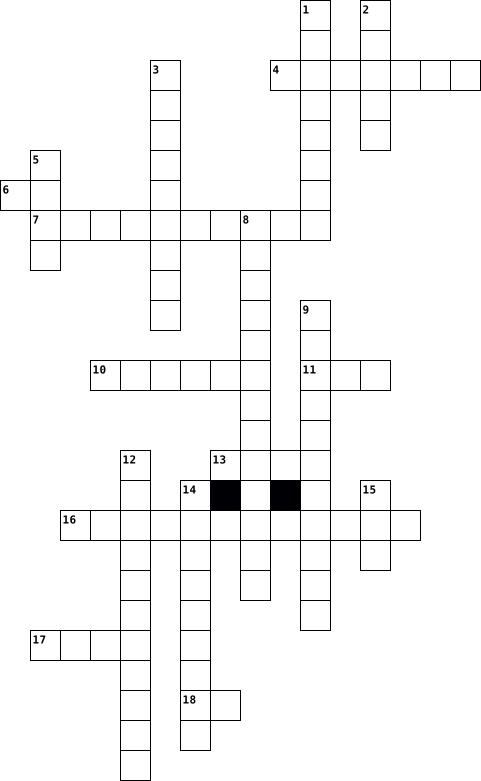
Across
- is interconnected to other fields such as genetics,
- how cells function, ultimately giving insight into
- such as cell culture, various types of microscopy,
- such as cancer, and other diseases. Research in cell
- structure and function of the cell, also known
- many sub-topics which may include the study of cell
- The study of cells is performed using several
- biology is a branch of biology that studies
- the basic unit of life Cell biology encompasses
Down
- while also being essential for research in biomedical
- and how cells work is fundamental to all biological
- being used for discoveries and research pertaining
- prokaryotic and eukaryotic cells and can be divided
- larger organisms. Knowing the components of
- cell communication, cell cycle, and cell
- and cytochemistry.
- genetics, biochemistry, molecular biology, medical microbiology,
- cell fractionation. These have allowed for and are
18 Clues: and cytochemistry. • cell communication, cell cycle, and cell • larger organisms. Knowing the components of • biology is a branch of biology that studies • The study of cells is performed using several • structure and function of the cell, also known • the basic unit of life Cell biology encompasses • being used for discoveries and research pertaining • ...
Mitosis crossword 2023-02-23

Across
- Disruption of the cell cycle due to altered DNA
- Phase where 2 nuclei are formed and spindles break down
- There are ______ amount of Chromosomes in a normal human cell
- Mitosis occurs in all non sex______.
- The longest part of the cell cycle is ___________.
- Phase where DNA is being replicated
- Phase where Chromatids are pulled two opposite sides after being broken up
- Phase of mitosis where DNA is replicated, cell growth and creation of new macromolecules
Down
- There are _____ amount of Chromosomes after Synthesis
- Phase where Chromosomes condense while nucleus breaks down
- Cell prepares
- Macromolecule that prepares cell for division
- Mitosis produces____ daughter cells
- cycle. Cytokinesis is the last part of ____________.
- Process where 2 cell are formed from one cell splitting into identical cells
- Phase where Chromatin is in the middle of the cell while spindles grab on to them.
- Prokaryotic cells produce_________.
- The daughter cells are ____________.
- Phase where cell the is carrying out routine functions
19 Clues: Cell prepares • Mitosis produces____ daughter cells • Prokaryotic cells produce_________. • Phase where DNA is being replicated • Mitosis occurs in all non sex______. • The daughter cells are ____________. • Macromolecule that prepares cell for division • Disruption of the cell cycle due to altered DNA • The longest part of the cell cycle is ___________. • ...
ABO Blood Types 2023-12-05

Across
- the sequence of nucleotides in DNA or RNA
- the expression of a specific trait in an organism
- a protein in the blood
- the clumping of red blood cells as a result of a reaction to a specific antibody
- the unit that one organism inherits from a parent
- a blood disorder
- substances found on the surface of erythrocytes
- Antibodies found in the plasma of blood
- pertains to the legal aspects of the practice of medicine
- white blood cells
Down
- red blood cells
- serum that contains antibodies for one or more antigens
- the transfer of whole blood from one individual to another
- to make a reactive to an antigen
- fluid in the blood, where blood cells are suspended
- the destruction of red blood cells and the release of hemoglobin
- A pair of genes
- the genetic makeup of an organism
18 Clues: red blood cells • A pair of genes • a blood disorder • white blood cells • a protein in the blood • to make a reactive to an antigen • the genetic makeup of an organism • Antibodies found in the plasma of blood • the sequence of nucleotides in DNA or RNA • substances found on the surface of erythrocytes • the expression of a specific trait in an organism • ...
BIO TEST PRACTICE 2022-05-05

Across
- semi permeable membrane. High concentration to low concentration
- packages materials to be transported around the cell
- checks cell size to see and environment must be suitable
- Uncontrollable cell divison taking up space tumor reducing the effectiveness of the surrounding tissue
- genetic info and control centre
- the ‘mini organs’ All cells have to perform the same functions Store energy
- specialized structures in the body that perform specific life processes (functions)
- Site for lipid synthesis
- fibres pairs, cylindrical tubes
- Cells dying to external factors, toxins, infections, trauma
Down
- catlyze protein synthesis
- cellular respiration, double membrane, glucose + o2 = water, energy, converting energy into food, active cells
- Rapid growth, organelles are produced
- The controlled death of old cells eg white blood cells
- where ribosomes are made
- ribosomes attached (NUclear envolope)
- DNA is duplicated
- are specialized structures inside the cell (e.g. mini-organs) Organelles perform specific cell processes needed for a cell to live
18 Clues: DNA is duplicated • where ribosomes are made • Site for lipid synthesis • catlyze protein synthesis • genetic info and control centre • fibres pairs, cylindrical tubes • Rapid growth, organelles are produced • ribosomes attached (NUclear envolope) • packages materials to be transported around the cell • The controlled death of old cells eg white blood cells • ...
Chapter 9 Reading Quiz Review 2013-12-05

Across
- glucose is broken down to lactic acid when oxygen is not present
- basic contractile unit (composed of myofilaments)
- glucose is broken down using oxygen to make ATP
- actin and myosin
- a neurotrasmitter
- striated and voluntary
- connective tissue surrounding whole muscle
- muscle attachmentment at movable bone
- oxygen-binding protein in muscle cells
- muscle cell
Down
- bundle of muscle cells
- rodlike contractile element
- smooth ER that regulates levels of Calcium ions in muscle cells
- connective tissue sheath around each muscle fiber
- cell membrane of a muscle cell
- space between axon terminal and the muscle fiber
- electrical current through a membrane
- extension of sarcolemma that conducts nerve impulses in muscle cells
- nonstriated and involuntary
- glucose is broken down into pyruvic acid
20 Clues: muscle cell • actin and myosin • a neurotrasmitter • bundle of muscle cells • striated and voluntary • rodlike contractile element • nonstriated and involuntary • cell membrane of a muscle cell • electrical current through a membrane • muscle attachmentment at movable bone • oxygen-binding protein in muscle cells • glucose is broken down into pyruvic acid • ...
Chapter 9 Reading Quiz Review 2013-12-05

Across
- space between axon terminal and the muscle fiber
- cell membrane of a muscle cell
- actin and myosin
- glucose is broken down to lactic acid when oxygen is not present
- glucose is broken down using oxygen to make ATP
- oxygen-binding protein in muscle cells
- extension of sarcolemma that conducts nerve impulses in muscle cells
- glucose is broken down into pyruvic acid
- a neurotrasmitter
- nonstriated and involuntary
- rodlike contractile element
Down
- striated and voluntary
- connective tissue sheath around each muscle fiber
- muscle cell
- connective tissue surrounding whole muscle
- muscle attachmentment at movable bone
- bundle of muscle cells
- smooth ER that regulates levels of Calcium ions in muscle cells
- electrical current through a membrane
- basic contractile unit (composed of myofilaments)
20 Clues: muscle cell • actin and myosin • a neurotrasmitter • striated and voluntary • bundle of muscle cells • nonstriated and involuntary • rodlike contractile element • cell membrane of a muscle cell • muscle attachmentment at movable bone • electrical current through a membrane • oxygen-binding protein in muscle cells • glucose is broken down into pyruvic acid • ...
GI system 2020-11-29

Across
- makes insulin and glucagon
- first 10 inches of small intestine
- largest abdominal organ
- drops pH to 2
- maneuver of contracting abdominal muscles and pelvic muscles
- cells secrete lysozyme
- stores and concentrates bile from liver
- cells make pancreatic juice, delivered to duodenum via pancreatic duct.
- absorbed in stomach
- major functional cells of liver
- highly vascular layer
- cells secrete pepsinogen
- catalyses hydrolysis of peptide bonds
Down
- in small intestine peristalsis is this
- bacteria benefit but we aren't harmed of benefitted
- bacteria and us benefit
- first region of stomach
- absorbs bile salts, vitamin b12, water, electrolytes
- accessory digestive organ
- disorder of motility
- begins digestion in stomach
- outer surface pouches of large intestine
- folds of stomach
- stomach turns food to this
24 Clues: drops pH to 2 • folds of stomach • absorbed in stomach • disorder of motility • highly vascular layer • cells secrete lysozyme • largest abdominal organ • bacteria and us benefit • first region of stomach • cells secrete pepsinogen • accessory digestive organ • makes insulin and glucagon • stomach turns food to this • begins digestion in stomach • major functional cells of liver • ...
Biology 2023-11-13
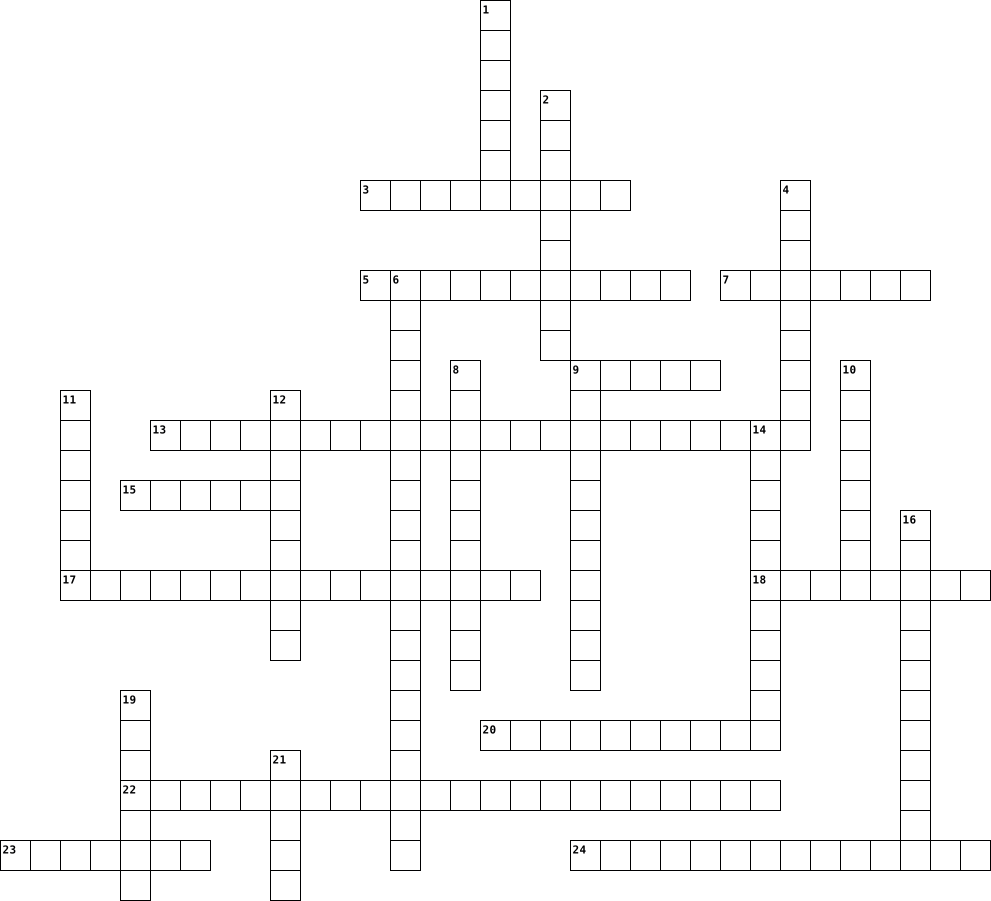
Across
- Aids in waste elimination
- Facilitates breathing
- The study of living things
- Fundamental units of living organisms
- Living things with more than one cell
- Enables movement
- Blood cells, muscle cells, nerve cells
- Pertaining to bones
- Constituent elements of plants
- Living things with only one cell
- Cell's control center
- Microscopic boundary of the cell
Down
- Stores waste and nutrients
- The cell's interior
- Minute particles in the cytoplasm
- Network of tubules in a eukaryotic cell
- Site of photosynthesis
- Ensures blood circulation
- Boundary between the cell inside and outside
- A set of things working together as parts of a mechanism
- Extracts nutrients from food
- Tools for magnification
- Powerhouse of the cell
- Distinct materials in animals or plants
- Facilitates sensation
25 Clues: Enables movement • The cell's interior • Pertaining to bones • Facilitates breathing • Facilitates sensation • Cell's control center • Site of photosynthesis • Powerhouse of the cell • Tools for magnification • Aids in waste elimination • Ensures blood circulation • Stores waste and nutrients • The study of living things • Extracts nutrients from food • Constituent elements of plants • ...
Cell Organelles Crossword Puzzle 2024-02-21

Across
- the basic unit of structure in all living things
- stores, packages, and sends out protiens in the cell
- many organ systems formed together to create a living thing
- helps the cytoplasm to keep all organelles in the same place
- the digestive system of the cell
- located on rough er
- on the exterior of plant cells
- located only in animal cells
- a group of cells together
- a group of tissues
- Stores water and other waste
Down
- Keeps all organelles from moving anywhere
- only in plant cells
- Creates ATP energy for the cell
- contains genetic information
- Allows selected elements to be passed through
- Stores DNA
- produces proteins
- creates hormones and lipids
- produce and assemble ribosomes
- the smallest thing that forms everything known to man
21 Clues: Stores DNA • produces proteins • a group of tissues • only in plant cells • located on rough er • a group of cells together • creates hormones and lipids • contains genetic information • located only in animal cells • Stores water and other waste • on the exterior of plant cells • produce and assemble ribosomes • Creates ATP energy for the cell • the digestive system of the cell • ...
Introduction to Cell Structure and Functions of Animal and Plant Cell 2024-07-07

Across
- Contains digestive enzymes
- Organelle that modifies proteins and synthesizes lipids
- Energy-carrying molecule produced by mitochondria
- Rigid outer layer in plant cells
- Stacks of thylakoids in chloroplasts
- Substance that makes up the cell wall
- Disk-shaped structures in chloroplasts
- Double layer forming the plasma membrane
Down
- Semi-permeable membrane surrounding the cell
- Powerhouse of the cell
- Organelle involved in sorting and packaging proteins.
- The basic unit of life
- Large central organelle in plant cells for storage
- Simple, single-celled organisms
- Breaks down fatty acids and amino acids
- Network of protein fibers in the cytoplasm
- Fluid portion of the cell containing organelles
- Process by which plants make their food
- Site of photosynthesis in plant cells
- Sites of protein synthesis in cells
20 Clues: Powerhouse of the cell • The basic unit of life • Contains digestive enzymes • Simple, single-celled organisms • Rigid outer layer in plant cells • Sites of protein synthesis in cells • Stacks of thylakoids in chloroplasts • Site of photosynthesis in plant cells • Substance that makes up the cell wall • Disk-shaped structures in chloroplasts • ...
Cell Cycle for 2B 2023-03-02

Across
- Cell growth and DNA Replication
- Loosely coiled dna
- amount of phases within mitosis
- Moves to opposite sides of the cell and spindle fibers attaches to them
- pair of two identical chromatids
- One half of duplicated chromosome
- DNA Duplication
- Cell grows and normal metabolic tasks
- plate Cytokinesis in plant cells
Down
- first phase of mitosis
- second phase of mitosis
- Cytokinesis in animal cells
- fourth phase of mitosis
- The region of the chromosome where the mitotic spindle attaches
- division of parent cell cytoplasm
- Microtubule structure used to move chromosomes around
- Cell divides creating two identical cells
- Period after DNA duplicated and the cell prepares for division
- Resting phase
- third phase of mitosis
- Series of events for a cell to divide into two daughter cells
21 Clues: Resting phase • DNA Duplication • Loosely coiled dna • first phase of mitosis • third phase of mitosis • second phase of mitosis • fourth phase of mitosis • Cytokinesis in animal cells • Cell growth and DNA Replication • amount of phases within mitosis • pair of two identical chromatids • plate Cytokinesis in plant cells • division of parent cell cytoplasm • ...
Cell Cycle for 2B 2023-03-02

Across
- plate Cytokinesis in plant cells
- One half of duplicated chromosome
- DNA Duplication
- Cytokinesis in animal cells
- Resting phase
- division of parent cell cytoplasm
- The region of the chromosome where the mitotic spindle attaches
- second phase of mitosis
- pair of two identical chromatids
Down
- Cell growth and DNA Replication
- third phase of mitosis
- fourth phase of mitosis
- Cell divides creating two identical cells
- Microtubule structure used to move chromosomes around
- first phase of mitosis
- Moves to opposite sides of the cell and spindle fibers attaches to them
- Cell grows and normal metabolic tasks
- Series of events for a cell to divide into two daughter cells
- Loosely coiled dna
- amount of phases within mitosis
- Period after DNA duplicated and the cell prepares for division
21 Clues: Resting phase • DNA Duplication • Loosely coiled dna • third phase of mitosis • first phase of mitosis • fourth phase of mitosis • second phase of mitosis • Cytokinesis in animal cells • Cell growth and DNA Replication • amount of phases within mitosis • plate Cytokinesis in plant cells • pair of two identical chromatids • One half of duplicated chromosome • ...
skin crossword 2021-10-07

Across
- resident cell of connective tissue
- composed of cells
- layer of connective tissue that lines the cavities of joints
- type of white blood cells of the immune system
- translucent cartilage found on joint surface
- group of cells that have similar structure
- very strong cartialge found in intervertebral disks
- covering/coating
- moist, inner lining of organs/ body cavities
- type of cartilage present in the pinnae
- cells, responsible for cartilage formation
- cell that lies within the substance of fully formed bone
Down
- membranes lining closed interanl body cavity
- type of complex pigment
- cheif structrual unit compact bone
- cell found in connective tissue
- thin pliable sheet-like type of extracellular matrix
- rigid tissue, makes up the skeleton
- firm, whitish, flexible connective tissue
- large amounts of protein called keratin
20 Clues: covering/coating • composed of cells • type of complex pigment • cell found in connective tissue • resident cell of connective tissue • cheif structrual unit compact bone • rigid tissue, makes up the skeleton • type of cartilage present in the pinnae • large amounts of protein called keratin • firm, whitish, flexible connective tissue • ...
Tour of the Cell 2021-11-24

Across
- A membranous sac of hydrolytic enzymes that many eukaryotic cells use to digest macromolecules.
- Mitochondria makes this.
- the front entrance to a school.
- how plants make their own food using sunlight
- Sites of cellular respiration.
- encloses the nucleus
- a system that all these cells and organelles are a part of.
- Storage space for cells.
Down
- The main office to a school.
- Make Protiens
- A useful technique for cell studying cell structure and function
- prepares proteins for usage and transports
- the proteins do not pass this stage.
- provide cytoplasmic channels
- Responsible for the bending and movement of the organelle.
- wall only plant cells have this.
- support cell structure
- The kitchen of the school.
- Process photosynthesis
- a specialized member of the family of the chloroplast.
20 Clues: Make Protiens • encloses the nucleus • support cell structure • Process photosynthesis • Mitochondria makes this. • Storage space for cells. • The kitchen of the school. • The main office to a school. • provide cytoplasmic channels • Sites of cellular respiration. • the front entrance to a school. • wall only plant cells have this. • the proteins do not pass this stage. • ...
Ch 7 A&P 2022-01-10

Across
- Formation of bone from cartilage
- The production of blood cells
- Spaces between infant skull bones
- The femur is an example of this shape of bone
- The pelvis is an example pf this shape of bone
- This type of bone has a lot of open spaces to keep the bone light
- Fat storage happens in this color marrow
- The ends of bone
- There are 206 of these in your body
- Means porous bone
Down
- Bone destroying cells
- The shaft of a bone
- Disease caused from lack of Vitamin D
- Breaking and reforming of bone
- Inflammation of joints
- Bone building cells
- Bone cells
- These plates are also called growth plates
- This type of bone is dense
- Hematopoeisis happens in this color marrow
20 Clues: Bone cells • The ends of bone • Means porous bone • The shaft of a bone • Bone building cells • Bone destroying cells • Inflammation of joints • This type of bone is dense • The production of blood cells • Breaking and reforming of bone • Formation of bone from cartilage • Spaces between infant skull bones • There are 206 of these in your body • Disease caused from lack of Vitamin D • ...
Red Blood Cells and White Blood Cells 2021-09-20

Across
- old RBC are ...
- ... is the last factor affecting RBC number
- blood cells is made in ..., erythropoiesis happens here
- RBC contains ... although denucleated. netting shape
- .... also affects number of RBC
- other word for WBC
- produces antibodies to attack foreign cells or proteins
- RBC is ... to provide more space for oxygen
- twice the size of RBC, ovel/kidney bean shape
- second materials needed for RBC production
- multiple nucleus,smaller size, numerous granules, discharges granules containing histamine and heparin
- second phase of RBC
- attacks foreign and tumor cells
- an average adult has about ... litres of blood
- RBC is small and flexible to pass through ...
- third phase of RBC, produced through RBC formation
- containing T and B cells
Down
- WBC with no granules, long lived
- first product of when old RBC's haemoglobin decomposes
- biliverdin is used in the ... then excreted as bile pigments
- other word for platelets
- release oxygen
- third materials needed for RBC production
- ... affects number of RBC
- WBC with granules, short lived
- makes up 45% of blood
- the iron is used in ...
- oxygen carrying protein
- red blood cell formation
- second product of when old RBC's haemoglobin decomposes
- RBC contains a huge amount of ...
- bi-lobed nuclei, uniformed granules, modertates allergic reactions
- first materials needed for RBC production
- most common, 2-5 lobed nucleus, faint granules, ingests bacteria, fungus, protozoa, etc
- prolonged oxygen deficiency
- combine with oxygen
- shape of RBC to increase surface area
- type of stem cell in the bone marrow, first stage of RBC
- fourth materials needed for RBC production
- other name of RBC
40 Clues: release oxygen • old RBC are ... • other name of RBC • other word for WBC • combine with oxygen • second phase of RBC • makes up 45% of blood • the iron is used in ... • oxygen carrying protein • other word for platelets • red blood cell formation • containing T and B cells • ... affects number of RBC • prolonged oxygen deficiency • WBC with granules, short lived • ...
Plant Cells 2015-09-25

Across
- Protects the cell from its surroundings.
- Contains the cell's DNA.
- Collects and dispatches protein products throughout the cell.
- The jelly-like fluid that fills a cell is called.
- Sack that stores and transports substances throughout the cell.
Down
- Produce the energy of the cell.
- Surrounds the cell membrane.
- Capture light energy from the sun and to produce the free energy through photosynthesis.
- The breakdown of chains of fatty acids.
- A complex protein.
- Storage bubbles found in cells.
- The stomach of the cell.
12 Clues: A complex protein. • Contains the cell's DNA. • The stomach of the cell. • Surrounds the cell membrane. • Produce the energy of the cell. • Storage bubbles found in cells. • The breakdown of chains of fatty acids. • Protects the cell from its surroundings. • The jelly-like fluid that fills a cell is called. • Collects and dispatches protein products throughout the cell. • ...
Prokaryotic Cells 2017-08-13

Across
- specialised lipids that makes up most of the double layered plasma membrane.
- in Greek “prokaryotic” means “______ nucleus”.
- most cell walls are made up of this polymer
- A circular loop storage place for additional DNA besides the nucleoids.
- a single cell organism that lacks a nucleus and membrane bound organelles.
- the genetic material in a prokaryotic cell
Down
- a network of proteins filaments and tubules that provides a cell shape and coherence.
- a domain of prokaryotic cells that can survive in extreme environments.
- most prokaryotic cells size ranges from 0.1- 0.5 ________.
- the most common type of prokaryotic cells
- a whip like structure that helps the bacteria to move
- fission the process of duplication in prokaryotic cells
12 Clues: the most common type of prokaryotic cells • the genetic material in a prokaryotic cell • most cell walls are made up of this polymer • in Greek “prokaryotic” means “______ nucleus”. • a whip like structure that helps the bacteria to move • fission the process of duplication in prokaryotic cells • most prokaryotic cells size ranges from 0.1- 0.5 ________. • ...
Cells #2 2018-05-28

Across
- - Absorbs light energy for photosynthesis
- - most chemical processes take place here, controlled by enzymes
- - Contain haemoglobin to carry oxygen to the cells.
- - contains genetic material, which controls the activities of the cell
- - most energy is released by respiration here.
Down
- - strengthens the cell
- - Fertilises an egg cell female gamete.
- - protein synthesis happens here
- vacuole - filled with cell sap to help keep the cell turgid
- - controls the movement of substances into and out of the cell
- - contain chlorophyll, which absorbs light energy for photosynthesis
- - Absorbs water and mineral ions from the soil
12 Clues: - strengthens the cell • - protein synthesis happens here • - Fertilises an egg cell female gamete. • - Absorbs light energy for photosynthesis • - Absorbs water and mineral ions from the soil • - most energy is released by respiration here. • - Contain haemoglobin to carry oxygen to the cells. • vacuole - filled with cell sap to help keep the cell turgid • ...
cells crossword 2013-03-25

Across
- the control centre of the cell
- opposite of the rough er
- this is in both plant and animal cels starts wit a'g'
- this is where microtubule is produced
- a substances that a plant uses to make food
- animal cells have more ___________ than plant cells
- both in plant and animal cells starts with 'r'
Down
- an animal cell has two of it
- which is bigger a plant cell or a animal cell
- this is where photosynthesis takes place
- part of the nucleus
- animal cells don't have a c____w____l
12 Clues: part of the nucleus • opposite of the rough er • an animal cell has two of it • the control centre of the cell • this is where microtubule is produced • animal cells don't have a c____w____l • this is where photosynthesis takes place • a substances that a plant uses to make food • which is bigger a plant cell or a animal cell • both in plant and animal cells starts with 'r' • ...
stem cells 2012-12-10

Across
- copying cells
- small sections of DNA
- stem cells that have all their genes switched on
- another word for differentiated
- stem cells found in placenta and us
- to be placed into
Down
- a disease of the blood
- an issue which causes debate regarding right or wrong
- making cells that match your DNA is part of ..... cloning
- cells we could use to cure parkinsons
- large organ that is part of our immune system and thermoregulation
- the source of adult bone stem cells
12 Clues: copying cells • to be placed into • small sections of DNA • a disease of the blood • another word for differentiated • stem cells found in placenta and us • the source of adult bone stem cells • cells we could use to cure parkinsons • stem cells that have all their genes switched on • an issue which causes debate regarding right or wrong • ...
CELLS 1 2014-04-13

Across
- their cells have walls
- the power house of a cell
- makes up most of the cell wall in plants
- all the structures found inside a cell
- it gives plants their green color
- where water is stored in a cell
- semi permeable barrier called a cell ____________
Down
- their cells do not have a rigid shape
- made up of long thin cells
- found inside red blood cells
- Where most of a cell's chemical reactions take place
- this cell transmit electrical impulses in the body
12 Clues: their cells have walls • the power house of a cell • made up of long thin cells • found inside red blood cells • where water is stored in a cell • it gives plants their green color • their cells do not have a rigid shape • all the structures found inside a cell • makes up most of the cell wall in plants • semi permeable barrier called a cell ____________ • ...
Cells Vocab 2014-07-25

Across
- The tiny structures in a plant cell
- The tiny droplets of liquid in the cytoplasm
- Green substance that absorbs energy from sunlight
- The core or the central part
- The thin skin that controls the flow of all the matters which pass through the cell
- A cluster of cells in an organism that have similar structure and function
- Breathing synonym
Down
- The firm wall that plant cells are surrounded by
- Grouped together to form an organ
- Different groups of cell performing a specific function
- Holds the cells together
- The chemical factory of the cell
12 Clues: Breathing synonym • Holds the cells together • The core or the central part • The chemical factory of the cell • Grouped together to form an organ • The tiny structures in a plant cell • The tiny droplets of liquid in the cytoplasm • The firm wall that plant cells are surrounded by • Green substance that absorbs energy from sunlight • ...
CELLS (AUDIOVISUAL) 2022-03-05

Across
- A3
- A2
- A1
- A12
- A4
- A8
Down
- A9
- A6
- A10
- A11
- A7
- A5
12 Clues: A9 • A6 • A3 • A2 • A1 • A7 • A5 • A4 • A8 • A10 • A11 • A12
Science Cells 2022-05-23

Across
- is the process of a cell multiplying
- helps create new blood cells and filters blood
- when a cells carry out a specific part of the DNA to carry out a different function
- what a male frog uses to create a deep voice
- system breaks down food into energy
Down
- found in the immune system
- a complex cell that has a nucleus
- the smallest unit of life
- a less complex cell that is unicellular
- what the frog uses to capture its prey
- the nucleus is gone
- 90% of cells spend their life here
12 Clues: the nucleus is gone • the smallest unit of life • found in the immune system • a complex cell that has a nucleus • 90% of cells spend their life here • system breaks down food into energy • is the process of a cell multiplying • what the frog uses to capture its prey • a less complex cell that is unicellular • what a male frog uses to create a deep voice • ...
Cells Crossword 2022-10-14

Across
- a rigid layer lying outside the plasma membrane of the cells of plants
- Central part of a cell
- separates the inside of the cell to from the outside environment
- a plastid that contains chlorophyll and in which photosynthesis takes place
- the fluid inside the cell but outside the cell's nucleus
- a network of membranous tubules within the cytoplasm of a eukaryotic cell
Down
- enclosed organelles that contain an array of enzymes capable of breaking down all types of biological polymers
- a space or vesicle within the cytoplasm of a cell usually enclosed by a membrane and typically containing fluid
- a complex of vesicles and folded membranes within the cytoplasm of most eukaryotic cells
- found in the nucleus of most living cells and carries genetic information in the form of genes
- a particle consisting of RNA and associated proteins found in large numbers in the cytoplasm of living cells
- Powerhouse of a cell
12 Clues: Powerhouse of a cell • Central part of a cell • the fluid inside the cell but outside the cell's nucleus • separates the inside of the cell to from the outside environment • a rigid layer lying outside the plasma membrane of the cells of plants • a network of membranous tubules within the cytoplasm of a eukaryotic cell • ...
Cells Crossword 2023-08-24

Across
- Store materials such as water and salts, and they help the cell maintain homeostasis
- Packages proteins and other material for storage, shipping center
- Cells transportation system
- Powerhouse of the cell, makes ATP.
- Only found in animal cells,formed in tubulin (a protien)
- Basic Unit Of Life
Down
- Contains Nucleus consisting DNA
- Found in plant cells and protists, photosynthesis takes place here.
- Make Proteins and RNA, found throughout the cytoplasm
- Control center of he body, Contains DNA
- No Nucleus or Membrane Bound Organelles
- Break Down Lipids, Carbs, and Proteins into usable pieces.
12 Clues: Basic Unit Of Life • Cells transportation system • Contains Nucleus consisting DNA • Powerhouse of the cell, makes ATP. • Control center of he body, Contains DNA • No Nucleus or Membrane Bound Organelles • Make Proteins and RNA, found throughout the cytoplasm • Only found in animal cells,formed in tubulin (a protien) • ...
Eukaryotic Cells 2023-09-25

Across
- smartest IB teacher
- small unique structures no membranes carry out translation and make all proteins on earth
- first work _____?____ reticulum extensive network of tubules surrounding the nucleus
- All eukaryotic cells have this but not prokaryotic cells. Our cells have lots and lots of organelles
- Dr. Young thinks Dr. Pratt resembles on The Simpsons hint ______ Bob
- intracellular digestive centers the garbage cans of the eukaryotic cell show as dark circles
Down
- a network of fibres composed of proteins
- same size as mitochondria but only found in plants photosynthesis make oxygen
- rod-shaped organelles have their own DNA and make ATP for the eukaryotic cell
- the fluid portion of the cytoplasm
- organelle that is large has a double membrane with pores that have massive amount of molecules exit holds our cheormosmes
- type of joke Dr. Young tells
12 Clues: smartest IB teacher • type of joke Dr. Young tells • the fluid portion of the cytoplasm • a network of fibres composed of proteins • Dr. Young thinks Dr. Pratt resembles on The Simpsons hint ______ Bob • same size as mitochondria but only found in plants photosynthesis make oxygen • rod-shaped organelles have their own DNA and make ATP for the eukaryotic cell • ...
wstons cells 2024-02-14

Across
- controls the cell
- a rigid layer that surrounds plant cells
- uses energy from the sun
- makes energy
- packages proteins
- in a cell that Carries out a function
- lets things in and out of a cell
Down
- stores water and waste
- makes protein
- break down cells and waste
- A gel-like fluid
- helps Ribosomes make protein
12 Clues: makes energy • makes protein • A gel-like fluid • controls the cell • packages proteins • stores water and waste • uses energy from the sun • break down cells and waste • helps Ribosomes make protein • lets things in and out of a cell • in a cell that Carries out a function • a rigid layer that surrounds plant cells
Cells Crossword 2023-10-12

Across
- contain chemicals to break down large food particles into smaller ones; Recycle old cell parts
- Cells control center that directs all of the cells activities and contains the DNA
- very thin outer layer that controls what substances come in and out of a cell
- capture sunlight and use it to produce food in plant cells
- factories that produce proteins that are important to the cell function
Down
- a threadlike structure in a cell's nucleus that contains the cells DNA
- The area between the cell membrane and the nucleus that contains a gel-like fluid and organelles
- Carry proteins and other materials from one part of the cell to another
- receives proteins from the endoplasmic reticulum packages them and sends them throughout the cell
- storage area (food,water,waste)
- rigid outer layer of nonliving material that surrounds plant cells and protects and supports the cell
- "powerhouse", breaks down food particles to produce most of the cell's energy
12 Clues: storage area (food,water,waste) • capture sunlight and use it to produce food in plant cells • a threadlike structure in a cell's nucleus that contains the cells DNA • Carry proteins and other materials from one part of the cell to another • factories that produce proteins that are important to the cell function • ...
Eukaryotic cells 2023-10-08

Across
- The ability to distinguish two different points in a specimen.
- A membrane-bound structure found in plant cells that contains cell sap.
- A phospholipid bilayer studded with proteins (6,8)
- A membrane-bound organelle involved in the synthesis and packaging of proteins(5,11,10)
- An organelle found in eukaryotic cells that stores the genetic information of the cell.
- An organelle found in eukaryotic cells that is the site of aerobic respiration.
Down
- Membrane-bound vesicles that contain hydrolytic enzymes.
- An organelle that is involved in the modification and packaging of proteins (5,9)
- A whip-like structure found on bacterial cells that is used for cell movement.
- A membrane-bound organelle involved in lipid synthesis (6,11,10)
- A permeable layer that surrounds plant, algae and fungi cells (4,4)
- An organelle found in plants and algae that is the site of photosynthesis.
12 Clues: A phospholipid bilayer studded with proteins (6,8) • Membrane-bound vesicles that contain hydrolytic enzymes. • The ability to distinguish two different points in a specimen. • A membrane-bound organelle involved in lipid synthesis (6,11,10) • A permeable layer that surrounds plant, algae and fungi cells (4,4) • ...
Cells Crossword 2023-10-12

Across
- cell's powerhouse
- gel-like substance
- captures sunlight and uses it to produce food
- Storage area
- breaks down large food particles
- recieves and packages proteins and sends them out to the cell
Down
- carries proteins from one part of the cell to another
- Only in plant cells, the outer layer
- contains a cell's DNA
- Controls what goes in and out of a cell
- control center
- factories that produce proteins
12 Clues: Storage area • control center • cell's powerhouse • gel-like substance • contains a cell's DNA • factories that produce proteins • breaks down large food particles • Only in plant cells, the outer layer • Controls what goes in and out of a cell • captures sunlight and uses it to produce food • carries proteins from one part of the cell to another • ...
The cells 2024-02-23

Across
- Moving cells, moving fluid, or moving small particles across the cell surface
- controls what comes in and out
- Contains the digestive enzymes
- contains the DNA
- "Protein factory" For the cells
- Modify, sort, and package molcules from ER for storage or transport out of the cell
Down
- Jelly like substance enclosed by the cell Membrane
- Powerhouse of the cell
- supports and protects the cell
- Help pulled chromosome pairs apart to opposite ends of cell
- Fluid sack for the cell
- makes up the cytoplasm
12 Clues: contains the DNA • Powerhouse of the cell • makes up the cytoplasm • Fluid sack for the cell • supports and protects the cell • controls what comes in and out • Contains the digestive enzymes • "Protein factory" For the cells • Jelly like substance enclosed by the cell Membrane • Help pulled chromosome pairs apart to opposite ends of cell • ...
Muscle Cells 2024-02-27

Across
- disease of the muscle
- another term for elastic filament
- the shape of a smooth muscle cell
- stimulates production of more myofilaments and more mitochondria, myoglobin, glycogen, and blood vessels
- when muscle is relaxed, this regulatory protein blocks the active site on myosin
- another term for neuromuscular junction
Down
- thick myofilament
- thin myofilament
- space between the motor neuron and muscle cell, where neurotransmitters are released
- term for cardiac muscle cell
- this occurs in unused muscles
- this muscle type has no striations
12 Clues: thin myofilament • thick myofilament • disease of the muscle • term for cardiac muscle cell • this occurs in unused muscles • another term for elastic filament • the shape of a smooth muscle cell • this muscle type has no striations • another term for neuromuscular junction • when muscle is relaxed, this regulatory protein blocks the active site on myosin • ...
Cells Biology 2020-10-19

Across
- The basic unit of life
- Only in plant cells, a strong, supporting layer around the cell membrane
- Powerhouse of the cell, organelle that produces energy for the cell
- A tiny cell structure that carries out a specific function within the cell
- Control center of the cell containing DNA
- A group of similar cells that perform the same function
Down
- the thin, flexible barrier around a cell; regulates what enters and leaves the cell
- A jellylike fluid inside the cell in which the organelles are suspended
- A sac inside a cell that acts as a storage area
- Organelle inside the cell that makes proteins
- A group of tissues that work together to perform closely related functions
- An organelle found in plant and algae cells where photosynthesis occurs
12 Clues: The basic unit of life • Control center of the cell containing DNA • Organelle inside the cell that makes proteins • A sac inside a cell that acts as a storage area • A group of similar cells that perform the same function • Powerhouse of the cell, organelle that produces energy for the cell • A jellylike fluid inside the cell in which the organelles are suspended • ...
Cells Assessment 2024-06-14

Across
- What part of the microscope is responsible for shining light on the object on the slide?
- What do you use to move the stage up and down?
- The circular structure that the objective lenses are screwed into
- Where do you place the slide on the microscope?
- What do you hold a microscope with?
- What do you use when looking at the particle?
- What part of the microscope is placed on the bench?
Down
- What do you use to adjust the how much light comes through the slide?
- What part of the microscope do you use to precisely focus on the particle you are viewing?
- What are the names of the lenses that have magnification power in them?
- Above the illuminator but under the stage
- What do you use to secure the slide on the stage?
12 Clues: What do you hold a microscope with? • Above the illuminator but under the stage • What do you use when looking at the particle? • What do you use to move the stage up and down? • Where do you place the slide on the microscope? • What do you use to secure the slide on the stage? • What part of the microscope is placed on the bench? • ...
City Cells 2022-12-12

Across
- carry out complex metabolic reactions that prokayotes
- oxidative phosphorylation
- provides tensile strength and protection against mechanical and osmotic stress
- calcium, protein synthesis and lipid metabolism
- surrounds the cell
- is the site of protein synthesis in the cell
Down
- recycling of nutrients by decomposing dead organisms and allowing their nutrients to be reused
- is inside and outside the nucleus
- are the basic building
- perpares proteins and lipid molecules for use in other places inside andout the cell
- rid cells of waste products and scavenge metabolic building blocks that sustain essential biosynthetic reactions
- forming the basis of it's activity growth
12 Clues: surrounds the cell • are the basic building • oxidative phosphorylation • is inside and outside the nucleus • forming the basis of it's activity growth • is the site of protein synthesis in the cell • calcium, protein synthesis and lipid metabolism • carry out complex metabolic reactions that prokayotes • ...
Cells Crossword 2022-12-08

Across
- the cell's environment
- pack and carry proteins
- a group of cells working together
- produce energy for the cell
- a group of tissues working together
- a place for cell reactions
Down
- Recycle worn-out products
- multiple organs systems
- regulates cell activity
- a group of organs working together
- the outer structure
- make proteins for the cell
12 Clues: the outer structure • the cell's environment • multiple organs systems • regulates cell activity • pack and carry proteins • Recycle worn-out products • make proteins for the cell • a place for cell reactions • produce energy for the cell • a group of cells working together • a group of organs working together • a group of tissues working together
Cells Crossword 2023-08-16

Across
- Contains digestive enzymes and helps manage waste
- Small, dense, spherical structure in the centre of the nucleus
- Synthesise proteins and are attached to the RER
- Transport, modify and package proteins and lipids
- Semi-permeable barrier which allows substances in and out
- Contains the genetic information of the cell
- Rigid structural barrier surrounding plant cells
Down
- The powerhouse of the cell
- Where photosynthesis occurs in the cell
- Single-celled organisms are
- Gelatinous liquid that fills the inside of the cell
- Involved in storage in the cell
12 Clues: The powerhouse of the cell • Single-celled organisms are • Involved in storage in the cell • Where photosynthesis occurs in the cell • Contains the genetic information of the cell • Synthesise proteins and are attached to the RER • Rigid structural barrier surrounding plant cells • Contains digestive enzymes and helps manage waste • ...
Cells Crossword 2025-12-11

Across
- The jelly-like substance inside the cell where organelles are found.
- Genetic material that carries instructions for life.
- Specialized structures within a cell that perform specific functions.
- The control center of the cell that contains DNA.
- A rigid layer that supports and protects plant cells.
Down
- The powerhouse of the cell; produces energy (ATP) through cellular respiration.
- Movement of molecules from high concentration to low concentration.
- A thin, flexible barrier that surrounds the cell and controls what enters and leaves.
- Diffusion of water across a membrane.
- Found in plant cells; site of photosynthesis.
- The ability of a cell or organism to maintain a stable internal environment.
- Theory States that all living things are composed of cells, cells are the basic units of structure and function, and all cells come from pre-existing cells.
- The basic unit of life; all living things are made of cells.
13 Clues: Diffusion of water across a membrane. • Found in plant cells; site of photosynthesis. • The control center of the cell that contains DNA. • Genetic material that carries instructions for life. • A rigid layer that supports and protects plant cells. • The basic unit of life; all living things are made of cells. • ...
Biology 2018-01-31

Across
- Refers to organisms or cells having two copies of each specific chromosome, that is, having a paired set of chromosomes.
- Cell division which the new cells are genetically identical.
- Small organs of the cell which undertake the processes which happen inside cells.
- An organised representation of an organism’s chromosomes. Typically going from size order from largest to smallest.
- An acronym for this is DNA. It contains fours bases - adenine, guanine, cytosine and thymine - which code for genetic instructions.
- It is an egg or sperm cell.
- Cells which are found in the gonads.
- It is any cell with a membrane-bound nucleus.
- A stage of mitosis and meiosis in which the cells are in between cell division.
- It is an organelle containing RNA which is the major place of protein production in cells.
- It is the position where the chromatids are held together. It is generally in the centre of the chromatids.
- It is the second stage of mitosis in which chromosomes align along the equator of the spindle.
- An organism with half the amount of chromosomes - unpaired chromosomes.
- It is an organelle found in plant, algae, fungi and bacteria cells. It is a semi-rigid structure found outside the cell membrane.
- Cell division where the new cells each contain half the number of chromosomes as the original cell.
- It is base sequences which code for a specific protein that are inherited on chromosomes.
- The microscopic structures which are the building blocks of all living things.
Down
- This is the process of which the cell is programmed to die.
- A structure containing proteins and DNA, which is wound up tightly.
- Any cells or organism without a membrane-bound nucleus.
- It is the organelle which is vital when the spindle fibres are being created.
- They are protein structures which divide the chromosomes in a cell during cell division.
- The alternate forms of genes.
- They are made up of amino acids and produce a phenotype.
- They are cells in the body that are not found in the gonads.
- It is the total amount of genes in an organism or cell.
- It is the first stage of mitosis in which the nuclear membrane begins to disintegrate and the spindle begins to form.
- It is a membrane bound organelle in a cell which is said to be the ‘control centre’ of the cell as it controls all cellular activity.
- It is the third stage of mitosis in which the the one cells is split in two and nuclear membrane starts to form again.
29 Clues: It is an egg or sperm cell. • The alternate forms of genes. • Cells which are found in the gonads. • It is any cell with a membrane-bound nucleus. • Any cells or organism without a membrane-bound nucleus. • It is the total amount of genes in an organism or cell. • They are made up of amino acids and produce a phenotype. • ...
2020 Grd 10 Mitosis Crossword Puzzle 2020-06-10

Across
- The phase of mitosis during which the chromosomes line up along the equator of the cell.
- When the cytoplasm of a cell divides to form two daughter cells.
- The type of asexual reproduction in plants where a section of the plant can grow into a new genetically identical plant.
- The structure or region which holds two chromatids together until they separate.
- The type of cell division which produces haploid gametes.
- The type of cell division which results in the production of two identical daughter cells.
- The phase of cell division during which the chromatids of a chromosome are separated and move to opposite poles of the cell.
- The thread-like protein strands which contract to pull daughter chromosomes apart during cell division. (2 words)
- Cells which have two sets of chromosomes are said to be ...
- The part of a long bone where blood cells are produced by mitosis.
- The cell formed by the fusion of a sperm and an egg cell.
- The plate-like region across the head of a long bone where mitosis occurs, so that the bone grows longer to make you taller.
- Thread-like DNA molecules found in the nucleus of a cell.
- The buds on the side of a plant stem which can develop into new branches, or even leaves or flowers.
Down
- The structure which develops across a dividing plant cell to produce two separate daughter cells.
- The phase of cell division during which the nucleolus and nuclear membrane of a cell break down.
- The two rod-like structures found at right angles near the nucleus of an animal cell.
- The phase of mitosis when two nuclei are formed at opposite ends of a dividing cell.
- The division of the nucleus of a cell during mitosis.
- An example of a cell which is haploid.
- The organ in which human egg cells are produced.
- The organ in which human sperm cells are produced.
- The sequence of stages that a cell passes through between one cell division and the next. (2 words)
- The process when the DNA of a cell is copied.
- Cells which have a single set of chromosomes are said to be...
- The cylindrical ring of tissue within a plant root where cells divide by mitosis to produce branch roots.
- General term for cells forming part of the body, eg. of the liver, stomach and lungs, etc.
- The stage of a cell's cycle when the cell grows and makes proteins.
- The early stage in the development of an organism when all the cells are still the same.
- The bud at the tip of a stem which enables it to grow in length.
30 Clues: An example of a cell which is haploid. • The process when the DNA of a cell is copied. • The organ in which human egg cells are produced. • The organ in which human sperm cells are produced. • The division of the nucleus of a cell during mitosis. • The type of cell division which produces haploid gametes. • The cell formed by the fusion of a sperm and an egg cell. • ...
Host Defenses & Immunology 2025-04-01

Across
- developed in red bone marrow
- pathogen-associated molecular patterns, red flag
- small protein produced by WBC and tissue cells
- lymphoid tissue in the throat
- Substance that prompts antibody generation
- the primary habitat in the natural world where a pathogen lives and reproduces
- inflammation signals cause cells to migrate to the area
- bean-shaped organs that filter lymph
- & Beta product of lymphocytes, fibroblasts and macrophages
- specialized fluid carried in the lymphatic system
- immune directed against a particular pathogen
- narrowing of blood vessels
- Immunity cell-mediated (T cell)
- is a type of white blood cell that helps fight infections by engulfing and destroying harmful microbes
- first antibody produced in a primary immune response
- part of a molecule that is recognized by the immune system
- elevated body temperature as an immune response
- the degree of pathogenicity, or ability to cause disease
- lymphatic vessels in the small intestine
- antigen-presenting cells in the skin
- disease transmitted from animals to humans
- gut-associated lymphoid tissue
- network of connective tissue that supports cells
- WBCs involved in immune response
- disruption of tissue or organ caused by microbes
- cell fragments involved in clotting
- multilevel network of nonspecific and specific
- is the process of forming new blood cells from bone marrow
Down
- an individual who has the organism living on them but does not show symptoms
- pattern recognition receptors identify and stick to foreign cells
- cells that produce connective tissue and cytokines
- redness, warmth, swelling and pain
- liquid portion of blood
- T-cell provide immunity from future exposure to antigen
- return to healthy tissue
- helps immune cells recognize antigens
- a microorganism that causes disease
- quick immune response upon re-exposure to a pathogen
- marrow primary site of B cell development
- protein that regulates immune activity
- process by which cells engulf and digest microbes
- T-cell T-cell that directly kills infected cells
- large phagocyte found in tissues
- filters blood and removes old red blood cells
- plasma from clotted blood
- product of T-cell
- lymphoid organ attached to the large intestine
- precursor to macrophages
- early symptoms of disease, such as general feeling of unwellness
- toxins that affect the nervous system
- swelling due to fluid accumulation
- movement of WBC from the blood into tissues
- mature in thymus
- most abundant antibody, crosses the placenta
- process of stimulating the immune system with an antigen
- toxins that affect the intestine
- Immunity antibody-mediated (B cell)
- antigen that causes an allergic reaction
- accumulation of dead WBCs, debris, and bacteria
- a specific protein toxin secreted by bacteria
60 Clues: mature in thymus • product of T-cell • liquid portion of blood • return to healthy tissue • precursor to macrophages • plasma from clotted blood • narrowing of blood vessels • developed in red bone marrow • lymphoid tissue in the throat • gut-associated lymphoid tissue • Immunity cell-mediated (T cell) • large phagocyte found in tissues • toxins that affect the intestine • ...
BHS 316 immunology chapter 2 vocab 2021-07-07

Across
- (1 word) C3bBb functions as this type of enzyme in the complement alternative activation pathway. In the MBL activation pathway, MASP functions as this type of enzyme.
- (1 word) The _________ system is a part of the innate immune system that ultimately leads to a membrane attack complex punching holes in invaders.
- (1 word) This type of molecule is abundant on gram-negative bacteria cell walls.
- (1 word) One of three levels of macrophage readiness. At this level, macrophages secrete TNF, and become very large and phagocytic.
- (1 word) Macrophages and neutrophils are considered professional __________.
- (1 word) When they detect a virus, plasmacytoid dendritic cells become _______ factories.
- (1 word) This protein is pre-made in neutrophils. When it binds to its binding partner on endothelial cells, the neutrophil stops rolling along the blood vessel.
- (1 word) The complement system activation pathway that is antibody-dependent.
- (2 words) This class of molecular patterns are released by cells that died due to infection.
Down
- (1 word) A sugar type that is common on the surface of pathogens but not human cells. Important for one of the cascade activation pathways.
- (2 words) This immune cell is short-lived and can kill invading or tumor cells by using the protein perforin to deliver “suicide” enzymes
- (1 acronym) This adhesion protein is constitutively expressed on endothelial cells of the blood vessels.
- (3 words) Forms during the complement cascade and is made up of complement proteins C5b, C6, C7, C8, C9.
- (1 word) The most common type of leukocyte. They are short-lived and are “on-call” from the blood.
- (2 words) This is one of the chemoattractants, along with C5a, that neutrophils “sniff” out as they leave the blood to locate the site of inflammation.
- (1 word) This protein is expressed on endothelial cells which, when bound to its partner, slows the rolling of neutrophils within blood vessels.
- (2 words) Immune cells come with this type of receptor so that they can broadly recognize many classes of microbes.
- (2 words) This class of molecular patterns can be found on many types of invaders.
- (2 words) This protein is constitutively expressed on the surface of neutrophils.
- (1 word) The organ where most complement proteins are produced.
- (1 word) One of three levels of macrophage readiness. This level occurs in response to IFN-γ secretions from helper T cells and natural killer cells. Class II MHC molecules are upregulated, and the macrophage becomes more phagocytic.
- (1 word) One of three levels of macrophage readiness. At this level, macrophages primarily clean up cellular debris and dead cells. They present few class II MHC molecules.
22 Clues: (1 word) The organ where most complement proteins are produced. • (1 word) Macrophages and neutrophils are considered professional __________. • (1 word) The complement system activation pathway that is antibody-dependent. • (1 word) This type of molecule is abundant on gram-negative bacteria cell walls. • ...
Biology Holiday Homework Crossword 2018-01-28

Across
- Cells that contain contain only one complete set of chromosome cells are a result of the process of meiosis
- The stage in the development of a cell following mitosis or meiosis, during which the nucleus is not dividing
- The complete set of genetic material present in a cell or organism
- The final phase of cell division where the chromatids or chromosomes move to opposite ends of the cell and two nuclei are formed
- Different forms of the same gene, usually dominant or recessive
- A region of DNA that codes for a specific protein or trait
- Cells that contain two complete sets of chromosomes and reproduce by mitosis making daughter cells that are exact replicas
- A long coiled strand of DNA found in the nucleolus
- The chain of nucleotides that contain genetic information, commonly abbreviated as DNA
- structural layer surrounding some types of cells, situated outside the cell membrane providing support and protection
- Cells in multicellular organisms that directly produce gametes
- The second stage of cell division during which the chromosomes become attached to the spindle fibres.
- Organelles that produce proteins needed to repair, damage or direct chemical processes
- a membrane-bound structure that controls the most important functions of the cell, such as the growth and reproduction of the cell
- The first stage of cell division where chromatids are paired up and the nuclear envelope disappears
Down
- small cylindrical organelles that help the cell to divide and replicate themselves
- An organism consisting of a cell or cells bound by a membrane and with a distinct nucleus
- The smallest structural and functional unit of an organism, which consists of cytoplasm and typically a nucleus enclosed in a membrane
- Specialised structures within a cell that carry out specific functions
- Controlled cell death
- Chemical structures required for the structure, function, and regulation of the body's tissues and organs
- Any cell of a living organism other than the reproductive cells
- Haploid cells that unite with a similar type of cell to reproduce
- A structure that forms a spindle in mitosis or meiosis that is responsible for moving chromosomes during nuclear division
- The constriction point of a chromosome, which divides the it into two sections
- A type of cell division that results in two daughter cells each having the same number and kind of chromosomes as the parent nucleus
- A usually single-celled organism without a distinct nucleus or membrane-bound organelles
- A type of cell division that results in four daughter cells each with half the number of chromosomes of the parent cell
- The number and visual appearance of the chromosomes in the cell of an organism
29 Clues: Controlled cell death • A long coiled strand of DNA found in the nucleolus • A region of DNA that codes for a specific protein or trait • Cells in multicellular organisms that directly produce gametes • Any cell of a living organism other than the reproductive cells • Different forms of the same gene, usually dominant or recessive • ...
Biology Holiday Homework Crossword 2018-01-28

Across
- Haploid cells that unite with a similar type of cell to reproduce
- Cells that contain contain only one complete set of chromosome cells are a result of the process of meiosis
- Cells that contain two complete sets of chromosomes and reproduce by mitosis making daughter cells that are exact replicas
- The smallest structural and functional unit of an organism, which consists of cytoplasm and typically a nucleus enclosed in a membrane
- Specialised structures within a cell that carry out specific functions
- A structure that forms a spindle in mitosis or meiosis that is responsible for moving chromosomes during nuclear division
- A usually single-celled organism without a distinct nucleus or membrane-bound organelles
- Chemical structures required for the structure, function, and regulation of the body's tissues and organs
- The first stage of cell division where chromatids are paired up and the nuclear envelope disappears
- Different forms of the same gene, usually dominant or recessive
- The number and visual appearance of the chromosomes in the cell of an organism
- A long coiled strand of DNA found in the nucleolus
- Cells in multicellular organisms that directly produce gametes
- The final phase of cell division where the chromatids or chromosomes move to opposite ends of the cell and two nuclei are formed
- A type of cell division that results in two daughter cells each having the same number and kind of chromosomes as the parent nucleus
- small cylindrical organelles that help the cell to divide and replicate themselves
- Organelles that produce proteins needed to repair, damage or direct chemical processes
Down
- structural layer surrounding some types of cells, situated outside the cell membrane providing support and protection
- a membrane-bound structure that controls the most important functions of the cell, such as the growth and reproduction of the cell
- Controlled cell death
- The chain of nucleotides that contain genetic information, commonly abbreviated as DNA
- An organism consisting of a cell or cells bound by a membrane and with a distinct nucleus
- The complete set of genetic material present in a cell or organism
- The constriction point of a chromosome, which divides the it into two sections
- Any cell of a living organism other than the reproductive cells
- The second stage of cell division during which the chromosomes become attached to the spindle fibres.
- A region of DNA that codes for a specific protein or trait
- A type of cell division that results in four daughter cells each with half the number of chromosomes of the parent cell
- The stage in the development of a cell following mitosis or meiosis, during which the nucleus is not dividing
29 Clues: Controlled cell death • A long coiled strand of DNA found in the nucleolus • A region of DNA that codes for a specific protein or trait • Cells in multicellular organisms that directly produce gametes • Any cell of a living organism other than the reproductive cells • Different forms of the same gene, usually dominant or recessive • ...
Chapter 3 2016-09-27

Across
- what makes up organs
- tissue lining body cavities
- ribosome mRNA - protein amino acid chain
- fluid found without the cell but outside of the nucleus
- a kind of junction that keeps cells together
- contains digestive enzymes
- a vesicles that contains material that is to be released from to fell
- a carrier protein that uses ATP to actively transport sodium ions out of the cell and potassium ions into the cell
- prevents cells from pulling apart
- pores a hole in the nuclear envelope that allows genetic information to pass In and out of the nucleus
- a gradient of low concentration to high
- small particle in cell where proteins are assembled
- a cartilage cell
- from higher to lower pressure
- a projection from the cell
- substance in which another substance is dissolved forming a solution
- fat cells
- the in structure that is particularly made to protect the nucleus
- one layer of cells
- nucleus DNA-MRNA
- the futile found in the inter cellular space between cells
- more than one layer protects the outside of body (skin)
- arp required amino acid sugars against concentration
- heart
- tissue that connects body parts
Down
- darkly stained regions of the nucleus
- walls of hollow organs , stomach
- the genetic material inside the nucleus
- release product
- microscopic, hair like protection on surface of some cells
- mature bone cells that maintain bone tissue
- used for movement
- products nutrients
- the movement of chemical substances usally across a cell membrane against the concentration gradient requiring the use of energy
- supports cell like bones support us, frame work
- replace with same cells
- the diffusion of water or another solvent from. More dilute solution brought a meme brand that is permeable to the solvent
- basic unit for life
- tissue that stretches. Found in urinary system.
- GAMETES, dividing
- passageways between adjacent cells that allow communication
- replace dead or damaged cells
- brain, spinal cord and nerves
- open external environment
- lining covering the glands tissue of the body
- tissue in glands
- controls center of cell. Synthesizes DNA and RNA
- specialized structure that performs cellular functions
- division mitosis and meiosis
- flat sac-like membrane with fluids sorts packages proteins from the er
- selectively permeable Barnes between interior and exterior cells
- tendons and ligaments
- connect bones to bones at joint
- Powerhouse of the cell
- substance dissolves in another substance usually component of a solution present in the lesser amount
- water and solute a are forced by blued or hydrostatic pressure
- found where a structure with elasticity is required
57 Clues: heart • fat cells • release product • tissue in glands • a cartilage cell • nucleus DNA-MRNA • used for movement • GAMETES, dividing • products nutrients • one layer of cells • basic unit for life • what makes up organs • tendons and ligaments • Powerhouse of the cell • replace with same cells • open external environment • contains digestive enzymes • a projection from the cell • ...
Chapter 5 - Cell Growth and division 2013-01-22

Across
- the process that divides the cytosol and organelles.
- a hollow ball of cells that is one of the first developmental stages of an animal embryo.
- a group of diseases that is caused by uncontrolled cell division.
- a form of reproduction that is based on mitosis and is common in flatworms, sea stars, and planaria.
- a protein that can turn a kinase on or off
- a term that describes stem cells that will only grow into cells of a closely related type, like all blood cells.
- the use of chemicals that destroys cells that are dividing too fast.
- a growth factor that increases the growth of red blood cells.
- the series of growth duplication and divisions a cell goes through.
- the asexual reproduction process that is used by prokaryotes.
- a term that describes a cell which can grow into any other type of cell.
- microtubules from the cytoskeleton assemble to form a structure that pulls on the chromosomes, this structure is called the
- a tumor is said to be this if its cells are likely to spread through the body.
- a section of DNA that controls the rate of the cell cycle
- a small protein that is used to wrap the DNA in an organized way is called a(n)
- a type of mitotic reproduction seen often in hydra and yeast cells.
- the stage of mitosis in which the nuclear membrane breaks down.
Down
- the ratio of volume and this value controls how large the cell becomes.
- a unique type of body cell that can divide and renew itself for long periods of time.
- the main advantage of sexual reproduction is a remixing of the DNA which creates
- a stage of development that occurs after an embryo has been a blastocyst; the embryo is around 16 cells
- a line of cancer cells that have been used for research all over the world
- an area at the center of the chromosome that holds two chromatids together.
- the scientific term for programmed cell death
- a single monomer of deoxyribonucleic acid is known as ___.
- the stage when the cell copies its nuclear DNA.
- adult stem cells are often harvested from bone marrow and used to treat bone marrow cancer, which is called
- a step in mitosis where sister chromatids separate.
- an enzyme that can move a high energy phosphate group between two molecules.
- the shape of the chromosome found in a prokaryote
- there are three of these stages, each one involves the cell growing.
31 Clues: a protein that can turn a kinase on or off • the scientific term for programmed cell death • the stage when the cell copies its nuclear DNA. • the shape of the chromosome found in a prokaryote • a step in mitosis where sister chromatids separate. • the process that divides the cytosol and organelles. • a section of DNA that controls the rate of the cell cycle • ...
Alex Guallpa-Skin cancer crossword Puzzle 1/12/24 2024-01-12

Across
- is the most invasive skin cancer with the highest risk of death. While it’s a serious skin cancer, it's highly curable if caught early.
- oncologists use radiation (strong beams of energy) to kill cancer cells or keep them from growing and dividing.
- disease that involves the growth of abnormal cells in your skin tissues. Normally, as skin cells grow old and die, new cells form to replace them. When this process doesn’t work as it should — like after exposure to ultraviolet light from the sun — cells grow more quickly. These cells may be noncancerous (benign), which don’t spread or cause harm.
- a machine that people lie in while being exposed to bright light in order to darken their skin.
- Your dermatologist removes the tumor and some surrounding healthy skin to be sure all the cancer is gone.
- "Your dermatologist uses liquid nitrogen to freeze skin cancer. The dead cells slough off after treatment."
- the skin's reaction to too much exposure to ultraviolet (UV) radiation from the sun.
- a common cancer treatment. It uses drugs to destroy cancer cells and prevent tumor growth. It may be paired with other cancer treatments such as radiation therapy or surgery.
- Healthcare providers would recommended If you have a rash, skin infection or suspicious mole, During this procedure, your provider removes a small sample of skin.
Down
- medical doctors who specialize in diagnosing and treating diseases of the skin, hair, nails and mucus membrane. Some dermatologists are also surgeons.
- a healthcare provider who specializes in diagnosing and treating cancer.
- Enlarging, changing in shape, color or size. (This is the most important sign.)
- uses a combination of light energy and photosensitizing medications to treat certain types of cancer and other health conditions such as psoriasis, acne and infections.
- is a precise, outpatient procedure to remove high-risk skin cancer while preserving healthy tissue. The process of microscopic examination and layer-by-layer excision allows for complete tumor removal and high cure rates.
- occurs when cancer cells break off from the original tumor, enter your bloodstream or lymph system and spread to other areas of your body.
- is a type of skin cancer caused by an overproduction of squamous cells in your epidermis, the top layer of your skin.
- a type of skin cancer that causes a lump, bump or lesion to form on the outside layer of your skin (epidermis).
- “Your oncologist gives you medications to train your immune system to kill cancer cells.”
- any area of your skin that’s abnormal from the skin around it, often the result of an injury or damage to your skin, but some have the potential to be cancerous.
- light from the sun.
20 Clues: light from the sun. • a healthcare provider who specializes in diagnosing and treating cancer. • Enlarging, changing in shape, color or size. (This is the most important sign.) • the skin's reaction to too much exposure to ultraviolet (UV) radiation from the sun. • “Your oncologist gives you medications to train your immune system to kill cancer cells.” • ...
Life Science Ch 2 The Cell 2023-10-09

Across
- The organelle in eukaryotic cells that modifies many proteins and packages them into small, bubble-like structures called vesicles
- The usually membrane surrounded structure found inside a eukaryotic cell that perform special functions
- Allowing some substances to pass while keeping others out
- The movement of molecules through a membrane as a result of a concentration gradient
- A small structure that assembles proteins found in both prokaryotic and eukaryotic cells
- A protein that speeds up chemical reactions
- The movement of molecules across a membrane without the cell doing any work as in osmosis and diffusion
- A structure that contains a cell's DNA
- A group of tissues that work together
- The molecule that contains the information for making the different proteins that have different jobs to do
- The molecule that a cell uses to power many processes in the cell and need chemical energy
- The material inside of a cell excluding the nucleus
- A whip like structure that some cells use to propel themselves through their environment
- A small organelle in eukaryotic cells that act as the demolition crew within the cell
- The organelle in eukaryotic cells that makes most of the cell's ATP energy
- The difference in the number of a certain type of particles (Such a K ions) on each side of a membrane
- A group of similar cells that work together
- The green pigment that absorbs sunlight for photosynthesis
- The structure that surrounds all cells and regulates what comes in and goes out
Down
- The model of the cell that states that cells make up all living things, come from preexisting cells and perform the functions of living things
- Describes a process that does not use oxygen
- A rigid structure that surrounds and protects some cells not all
- The process in organisms of breaking down molecules of glucose to make ATP
- The movement of molecules across a membrane that requires the use of work (uses energy)
- The movement of water across a semipermeable membrane
- Several types of long and thin fibers anchored to various parts of the cell that the help the cell maintain and change its shape
- A slimy layer surrounding some bacteria that protects them from harmful substances and prevents them from drying out
- A special cell that divides and matures into any type of cell needed by the body
- A network of tubes in eukaryotic cells that help produce and transport proteins and other molecules throughout the cell
- The process by which a plant uses energy from the sun to turn carbon dioxide and water into glucose
- An organism that can make its own food typically through photosynthesis
31 Clues: A group of tissues that work together • A structure that contains a cell's DNA • A protein that speeds up chemical reactions • A group of similar cells that work together • Describes a process that does not use oxygen • The material inside of a cell excluding the nucleus • The movement of water across a semipermeable membrane • ...
NAT5 1.1 Division and Differentiation in Human Cells 2026-03-25

Across
- stem cells can be used to produce skin grafts to treat serious _____
- mass of abnormal cells that do not respond to regulatory signals
- unspecialised cell that can differentiate into a specialised cell
- stem cells that can differentiate into limited cell types (e.g. bone marrow)
- division producing germline or somatic cells
- stem cells can be used to repair the ______ of the eye
- _________ tumours can form when cancer cells spread around the body
Down
- division producing haploid gametes
- stem cells that can differentiate into all cell types (e.g. embryonic)
- most body cells, can only divide by mitosis
- type of cell that produces gametes
- term referring to moral debates around the use of stem cells
12 Clues: division producing haploid gametes • type of cell that produces gametes • most body cells, can only divide by mitosis • division producing germline or somatic cells • stem cells can be used to repair the ______ of the eye • term referring to moral debates around the use of stem cells • mass of abnormal cells that do not respond to regulatory signals • ...
T2L1 Structure and Function of Cells 2025-08-18

Across
- The job or role something performs
- How clearly the details of an image can be seen
- Concluded plants are made of cells (last name)
- Instrument that makes small objects look larger
- Proposed new cells come from existing cells (last name)
Down
- How parts are made and arranged
- Scientist who named cells (last name)
- How much larger an image appears
- theory Widely accepted explanation of the relationship between cells and living things
- Concluded animals are made of cells (last name)
- First to observe living cells—“animalcules” (last name)
- Living thing made of one or more cells
- Basic unit of structure and function in living things
13 Clues: How parts are made and arranged • How much larger an image appears • The job or role something performs • Scientist who named cells (last name) • Living thing made of one or more cells • Concluded plants are made of cells (last name) • Concluded animals are made of cells (last name) • How clearly the details of an image can be seen • ...
Meiosis/mitosis 2024-03-21

Across
- what breaks down during prophase
- process where parent cells divided into 4 daughter cells
- physical appearance of an organism
- 2 chromatids connected by a centromere
- What do you call the center of the chromosome
- which stage does the cell spend most of its life in
- structure that holds DNA that is tightly wrapped around protein
- process where the parent cell divides and produces 2 daughter cells
- what attaches to the centromeres and pulls them apart
Down
- what crosses over to give cells more variety
- a gene that is not very common and is unexpected
- cells that are similar in length gene and centromere position
- what's the result of meiosis
- produced by parent cells in mitosis
- what happens most of the time in interphase
15 Clues: what's the result of meiosis • what breaks down during prophase • physical appearance of an organism • produced by parent cells in mitosis • 2 chromatids connected by a centromere • what happens most of the time in interphase • what crosses over to give cells more variety • What do you call the center of the chromosome • a gene that is not very common and is unexpected • ...
Microbiology Chapter 4 2022-03-31

Across
- Having flagella at both ends.
- Having a flagellum at one pole.
- Helical shaped bacteria; rigid cell wall
- Granular structures that serve as storage vessels
- Flagella distributed all around a cell.
- Process by which living cells engulf and destroy foreign particles (such as bacteria).
- Help propel spirochetes in a spiral motion
- Helical shaped bacteria; flexible cell wall
- This structure is involved in exchange of genetic material between some G- bacteria; long and few in number
- Number of chromosomes in a prokaryotic cell.
- After a Gram stain is complete, G- organisms are stained ________.
- Polysaccharide present in G+ and G- cells.
- Bacteria known to cause the most common form of the Bubonic plague.
- Region of a prokaryotic cell that contains most, or all, of the genetic material.
- These can be a problem in the food industry because they are hard to kill and produce toxins.
- Prefix used when bacterial cells appear in a bunch or cluster.
- These cells have many layers of peptidoglycan
Down
- Prefix used when bacterial cells appear in a chain.
- "sugar coat" that lies external to the cell wall
- Major component of the cell membrane
- Present in eukaryotes, but not in prokaryotes
- These cells have an outer membrane which helps them evade destruction by the host's immune cells.
- Bacteria shaped like curved rods
- After the primary stain is added, G+ and G- cells appear what color?
- Selectively-permeable; retains cytoplasm and provides a location for various metabolic reactions.
- Polysaccharide layer that is firmly attached to the outer layer of prokaryotic cells.
- Term used to describe bacteria that are variable in shape.
- Disease causing
- Holds the shape of a cell and prevents it from rupture due to osmotic pressure.
- The mordant used in a Gram stain procedure.
- The counterstain used in a Gram staining procedure.
- Structure found in all bacterial cells.
- Exist independently of the chromosome; Increase chance of survival but not required for growth or reproduction
- Filamentous structures extending from the surface of some bacterial cells; help them attach to substrate; May have hundreds per cell.
- The decolorizing agent in a Gram stain procedure.
- Mechanism of bacterial reproduction
- Primary stain used in Gram staining procedure
- Interferes with cell wall synthesis.
- Involved in bacterial locomotion.
- Bacteria that are rod shaped
- Help bacteria survive extreme conditions.
- You must do this prior to staining & smearing in order to kill the specimen and firmly attach it to the slide.
- Endospore formation occurs when a G+ cell lacks ______
- Bacteria that are round.
- Organelle that is involved in protein synthesis
- The genetic material of all prokaryotes.
46 Clues: Disease causing • Bacteria that are round. • Bacteria that are rod shaped • Having flagella at both ends. • Having a flagellum at one pole. • Bacteria shaped like curved rods • Involved in bacterial locomotion. • Mechanism of bacterial reproduction • Major component of the cell membrane • Interferes with cell wall synthesis. • Flagella distributed all around a cell. • ...
Chapter 4 2013-02-28

Across
- Energy extraction process without oxygen.
- Green pigment contained in the thylakoid.
- Cells that have genetic material enclosed within a membrane bound nucleus and contain other organelles.
- The site of photosynthesis and capture solar energy.
- A small particle composed of ribosomal RNA and proteins.
- The outer membrane of a cell, composed of a bi-layer of phospholipids in which proteins are embedded.
- Energy extraction process with oxygen.
- A network of protein fibers in the cytoplasm that gives shape to the cell, holds and moves organelles, and is typically involved in cell movement.
- A series of interconnected membranes; where proteins and phospholipids of cell membranes are synthesized.
- A membrane enclosed structures found inside a eukaryotic cell that performs a specific function.
- A molecule composed of ribose nucleotides, each of which consits of a phosphate group, the sugar ribose, and one of the bases adenine, cytosine, guanine or uracil; involved in converting the information of DNA into protein.
- These vesicles serve as the cell's digestive system.
- The control center of the eukaryotic cell.
- Sorts, chemically alters, and packages important molecules.
- A molecule composed of deoxyribose nucleotides, and contains the genetic information of all living cells.
Down
- The scientific theory that every living organism is made up of one or more cells; cells are the functional units of all organisms; all cells arise from preexisting cells.
- Chromatin compacted into long strands.
- Part of the cytoskeleton of eukaryotic cells that is composed of the proteins actin and myosin; functions in the movement of cell organelles, locomotion by extension of the plasma membrane, and sometimes contraction of entire cells.
- All of the material contained within the plasma membrane of a cell excluding the nucleus.
- A hollow cylindrical strand found in eukaryotic cells that is composed of the proteins tubulin; part of the cytoskeleton used in the movement of organelles, cell growth and the construction of cilia and flagella.
- The fluid portion of the cytoplasm.
- Slender extensions of the plasma membrane; used in the movement of the cell.
- Membranous sacs that transport substances among the seperate regions of the membrane system.
- The site of ribosome synthesis.
- The outer surface of plants, fungi and some protists; composed of cellulose and other polysaccharides.
- Slender extensions of the plasma membrane; used in the movement of the cell.
- This seperates the nucleus from the rest of the cell; a double membrane perforated by nuclear pores.
- Cells that have genetic material that is not enclosed in a membrane bound nucleus.
- The "powerhouse" of the cell.
- Sacs which regulate water and storage.
- Storage containers for various molecules and are only found in plant cells.
31 Clues: The "powerhouse" of the cell. • The site of ribosome synthesis. • The fluid portion of the cytoplasm. • Chromatin compacted into long strands. • Energy extraction process with oxygen. • Sacs which regulate water and storage. • Energy extraction process without oxygen. • Green pigment contained in the thylakoid. • The control center of the eukaryotic cell. • ...
Biology Holiday Homework Crossword 2018-01-28

Across
- A type of cell division that results in two daughter cells each having the same number and kind of chromosomes as the parent nucleus
- Controlled cell death
- The complete set of genetic material present in a cell or organism
- A structure that forms a spindle in mitosis or meiosis that is responsible for moving chromosomes during nuclear division
- An organism consisting of a cell or cells bound by a membrane and with a distinct nucleus
- Haploid cells that unite with a similar type of cell to reproduce
- The number and visual appearance of the chromosomes in the cell of an organism
- structural layer surrounding some types of cells, situated outside the cell membrane providing support and protection
- Chemical structures required for the structure, function, and regulation of the body's tissues and organs
- A long coiled strand of DNA found in the nucleolus
- small cylindrical organelles that help the cell to divide and replicate themselves
- Cells that contain contain only one complete set of chromosome cells are a result of the process of meiosis
- Cells in multicellular organisms that directly produce gametes
- Specialised structures within a cell that carry out specific functions
- Different forms of the same gene, usually dominant or recessive
Down
- A type of cell division that results in four daughter cells each with half the number of chromosomes of the parent cell
- a membrane-bound structure that controls the most important functions of the cell, such as the growth and reproduction of the cell
- The constriction point of a chromosome, which divides the it into two sections
- A usually single-celled organism without a distinct nucleus or membrane-bound organelles
- The stage in the development of a cell following mitosis or meiosis, during which the nucleus is not dividing
- The chain of nucleotides that contain genetic information, commonly abbreviated as DNA
- A region of DNA that codes for a specific protein or trait
- The smallest structural and functional unit of an organism, which consists of cytoplasm and typically a nucleus enclosed in a membrane
- The second stage of cell division during which the chromosomes become attached to the spindle fibres.
- The first stage of cell division where chromatids are paired up and the nuclear envelope disappears
- Any cell of a living organism other than the reproductive cells
- The final phase of cell division where the chromatids or chromosomes move to opposite ends of the cell and two nuclei are formed
- Cells that contain two complete sets of chromosomes and reproduce by mitosis making daughter cells that are exact replicas
- Organelles that produce proteins needed to repair, damage or direct chemical processes
29 Clues: Controlled cell death • A long coiled strand of DNA found in the nucleolus • A region of DNA that codes for a specific protein or trait • Cells in multicellular organisms that directly produce gametes • Any cell of a living organism other than the reproductive cells • Different forms of the same gene, usually dominant or recessive • ...
Biology Holiday Homework Crossword 2018-01-28

Across
- Chemical structures required for the structure, function, and regulation of the body's tissues and organs
- The second stage of cell division during which the chromosomes become attached to the spindle fibres.
- structural layer surrounding some types of cells, situated outside the cell membrane providing support and protection
- The constriction point of a chromosome, which divides the it into two sections
- A structure that forms a spindle in mitosis or meiosis that is responsible for moving chromosomes during nuclear division
- The stage in the development of a cell following mitosis or meiosis, during which the nucleus is not dividing
- a membrane-bound structure that controls the most important functions of the cell, such as the growth and reproduction of the cell
- small cylindrical organelles that help the cell to divide and replicate themselves
- Any cell of a living organism other than the reproductive cells
- Different forms of the same gene, usually dominant or recessive
- An organism consisting of a cell or cells bound by a membrane and with a distinct nucleus
- Controlled cell death
- A type of cell division that results in two daughter cells each having the same number and kind of chromosomes as the parent nucleus
- The final phase of cell division where the chromatids or chromosomes move to opposite ends of the cell and two nuclei are formed
Down
- The number and visual appearance of the chromosomes in the cell of an organism
- The complete set of genetic material present in a cell or organism
- Specialised structures within a cell that carry out specific functions
- Haploid cells that unite with a similar type of cell to reproduce
- The chain of nucleotides that contain genetic information, commonly abbreviated as DNA
- Cells that contain two complete sets of chromosomes and reproduce by mitosis making daughter cells that are exact replicas
- Cells in multicellular organisms that directly produce gametes
- A usually single-celled organism without a distinct nucleus or membrane-bound organelles
- The first stage of cell division where chromatids are paired up and the nuclear envelope disappears
- Organelles that produce proteins needed to repair, damage or direct chemical processes
- The smallest structural and functional unit of an organism, which consists of cytoplasm and typically a nucleus enclosed in a membrane
- A long coiled strand of DNA found in the nucleolus
- A type of cell division that results in four daughter cells each with half the number of chromosomes of the parent cell
- A region of DNA that codes for a specific protein or trait
- Cells that contain contain only one complete set of chromosome cells are a result of the process of meiosis
29 Clues: Controlled cell death • A long coiled strand of DNA found in the nucleolus • A region of DNA that codes for a specific protein or trait • Cells in multicellular organisms that directly produce gametes • Any cell of a living organism other than the reproductive cells • Different forms of the same gene, usually dominant or recessive • ...
Biology Holiday Homework Crossword 2018-01-28

Across
- structural layer surrounding some types of cells, situated outside the cell membrane providing support and protection
- Cells that contain contain only one complete set of chromosome cells are a result of the process of meiosis
- Controlled cell death
- a membrane-bound structure that controls the most important functions of the cell, such as the growth and reproduction of the cell
- The second stage of cell division during which the chromosomes become attached to the spindle fibres.
- small cylindrical organelles that help the cell to divide and replicate themselves
- Chemical structures required for the structure, function, and regulation of the body's tissues and organs
- The stage in the development of a cell following mitosis or meiosis, during which the nucleus is not dividing
- Cells in multicellular organisms that directly produce gametes
- The complete set of genetic material present in a cell or organism
- The number and visual appearance of the chromosomes in the cell of an organism
- The chain of nucleotides that contain genetic information, commonly abbreviated as DNA
- A type of cell division that results in two daughter cells each having the same number and kind of chromosomes as the parent nucleus
Down
- Cells that contain two complete sets of chromosomes and reproduce by mitosis making daughter cells that are exact replicas
- An organism consisting of a cell or cells bound by a membrane and with a distinct nucleus
- Different forms of the same gene, usually dominant or recessive
- Specialised structures within a cell that carry out specific functions
- A usually single-celled organism without a distinct nucleus or membrane-bound organelles
- A long coiled strand of DNA found in the nucleolus
- The constriction point of a chromosome, which divides the it into two sections
- Haploid cells that unite with a similar type of cell to reproduce
- Any cell of a living organism other than the reproductive cells
- The final phase of cell division where the chromatids or chromosomes move to opposite ends of the cell and two nuclei are formed
- A structure that forms a spindle in mitosis or meiosis that is responsible for moving chromosomes during nuclear division
- A type of cell division that results in four daughter cells each with half the number of chromosomes of the parent cell
- A region of DNA that codes for a specific protein or trait
- Organelles that produce proteins needed to repair, damage or direct chemical processes
- The first stage of cell division where chromatids are paired up and the nuclear envelope disappears
- The smallest structural and functional unit of an organism, which consists of cytoplasm and typically a nucleus enclosed in a membrane
29 Clues: Controlled cell death • A long coiled strand of DNA found in the nucleolus • A region of DNA that codes for a specific protein or trait • Cells in multicellular organisms that directly produce gametes • Different forms of the same gene, usually dominant or recessive • Any cell of a living organism other than the reproductive cells • ...
Host Defenses & Immunology 2025-04-01

Across
- Immunity cell-mediated (T cell)
- swelling due to fluid accumulation
- antigen-presenting cells in the skin
- pattern recognition receptors identify and stick to foreign cells
- movement of WBC from the blood into tissues
- lymphatic vessels in the small intestine
- a specific protein toxin secreted by bacteria
- pathogen-associated molecular patterns, red flag
- toxins that affect the nervous system
- multilevel network of nonspecific and specific
- first antibody produced in a primary immune response
- specialized fluid carried in the lymphatic system
- liquid portion of blood
- process of stimulating the immune system with an antigen
- process by which cells engulf and digest microbes
- a microorganism that causes disease
- the degree of pathogenicity, or ability to cause disease
- an individual who has the organism living on them but does not show symptoms
- cell fragments involved in clotting
- gut-associated lymphoid tissue
- lymphoid tissue in the throat
- accumulation of dead WBCs, debris, and bacteria
- return to healthy tissue
- early symptoms of disease, such as general feeling of unwellness
- the primary habitat in the natural world where a pathogen lives and reproduces
- mature in thymus
- is the process of forming new blood cells from bone marrow
- quick immune response upon re-exposure to a pathogen
- is a type of white blood cell that helps fight infections by engulfing and destroying harmful microbes
- Substance that prompts antibody generation
Down
- narrowing of blood vessels
- product of T-cell
- our natural flora, includes bacteria and other microorganisms
- disruption of tissue or organ caused by microbes
- redness, warmth, swelling and pain
- large phagocyte found in tissues
- elevated body temperature as an immune response
- disease transmitted from animals to humans
- T-cell T-cell that directly kills infected cells
- network of connective tissue that supports cells
- inflammation signals cause cells to migrate to the area
- developed in red bone marrow
- filters blood and removes old red blood cells
- toxins that affect the intestine
- helps immune cells recognize antigens
- cells that produce connective tissue and cytokines
- & Beta product of lymphocytes, fibroblasts and macrophages
- lymphoid organ attached to the large intestine
- small protein produced by WBC and tissue cells
- marrow primary site of B cell development
- most abundant antibody, crosses the placenta
- protein that regulates immune activity
- WBCs involved in immune response
- Immunity antibody-mediated (B cell)
- plasma from clotted blood
- antigen that causes an allergic reaction
- part of a molecule that is recognized by the immune system
- bean-shaped organs that filter lymph
- T-cell provide immunity from future exposure to antigen
- immune directed against a particular pathogen
- precursor to macrophages
61 Clues: mature in thymus • product of T-cell • liquid portion of blood • return to healthy tissue • precursor to macrophages • plasma from clotted blood • narrowing of blood vessels • developed in red bone marrow • lymphoid tissue in the throat • gut-associated lymphoid tissue • Immunity cell-mediated (T cell) • large phagocyte found in tissues • toxins that affect the intestine • ...
5th Science Chapter 14 Part 2 2025-05-07

Across
- A common acute disease that causes the inflammation of the appendix.
- This changes some white blood cells into different types of white blood cells.
- This is caused by infections. When it occurs, the body heats up as it trys to defend itself.
- This is an example of a genetic disorder where a person has an extra copy of a certain chromosome.
- A watery fluid that contains dissovlced materials and special white blood cells.
- Exasmples of this type of noninfectious disease are strokes and appendicitis.
- Jonas Salk is responsible for developing this.
- These trap pathogens and fight infection.
- This is important when discussing genetic disorders beuase several common diseases tend to be passed down in families.
- Genetic disorders may be caused by this in the DNA of genes.
- An abnormal condition that is usually inherited through genes.
- The first type of white blood cells _____ invaders.
- A substance that provokes allergies.
- The body's ability to protect itself from pathogens before they cause disease.
- When a person acquires immunity from a source other than the person's body such as antibodies a mother passes to her child.
Down
- Where white blood cells are produced.
- Examples of this type of noninfectious disease are cancer, diabetes, heart disease, stroke, asthma, and arthritis.
- Surgical procedures that doctors perform to remove tonsils.
- A type of immunity in which the immune system produces antibodies in response to the presence of a pathogen.
- Lymph nodes often become _____ because the white blood cells are multiplying in order to fight the infection.
- This condition causes the inflammation adn swelling of joints.
- These white blood cells are programmed to remember both the invader and how to make the antibody.
- A major component of the immune system that protexts teh body from pathogens.
- This filteres the blood.
- This is a type of virus that attacks the immune system, in particular T-cells which are white blood cells that recognize pathogens.
- A type of white blood cell that engulfs pathogens and other cells.
- These are not caused by pathogens and are not contagious.
- The series of reactions that take place when white blood cells fight against infection.
- Proteins that mark pathogens for destruction.
- When you receive one of these, a dead or weakened pathogen is introduced to your body which triggers the immune system to develop antibodies against it.
- A rounded mass of tissue that filters fluids from other body tissues and traps pathogens.
- This is noninfectious disease produced by the immune system's irregular reaction to a substance in the environment.
32 Clues: This filteres the blood. • A substance that provokes allergies. • Where white blood cells are produced. • These trap pathogens and fight infection. • Proteins that mark pathogens for destruction. • Jonas Salk is responsible for developing this. • The first type of white blood cells _____ invaders. • These are not caused by pathogens and are not contagious. • ...
Levels of organization 2024-09-05

Across
- tissue forms the epidermis
- movement towards the side, away from the body
- the structural units that form all body tissue
- cells that are flat in shape
- toward or near the front; ventral
- composed of a group of similar cells that perform a specific function
- Tissue composed of cells called contractile fibers
Down
- cells that are cube shaped
- structures made up of two or more types of tissue that perform specialized functions.
- cells that are cylindrical in shape
- Tissue composed of cells that can form tissues of various consistencies.
- Tissue composed of cells called neurons
12 Clues: cells that are cube shaped • cells that are flat in shape • tissue forms the epidermis • toward or near the front; ventral • cells that are cylindrical in shape • Tissue composed of cells called neurons • movement towards the side, away from the body • the structural units that form all body tissue • Tissue composed of cells called contractile fibers • ...
The Immune System 2013-06-16

Across
- ___________Killer cells are large lymphocytes that bind to cancer cells and kill them
- type of immunity that includes a specific immune response that uses lymphocytes
- term used to describe allergic reactions
- type of immune cell that remains after an infection is contained to recognize the pathogen if it invades again
- cells that leave lymphatic tissue and kill pathogens
Down
- where T cells mature
- T cells and B cells
- symptoms are S-H-A-R-P
- type of immunity that includes skin, mucosa,gastric juices and inflammation
- protein that inactivates pathogens
- cells that produce antibodies
- type of T cell that help B and T cells by secreting hormones that stimulate them
- type of disease that involves the body's attacking its own normal tissue because it thinks it is foreign
13 Clues: T cells and B cells • where T cells mature • symptoms are S-H-A-R-P • cells that produce antibodies • protein that inactivates pathogens • term used to describe allergic reactions • cells that leave lymphatic tissue and kill pathogens • type of immunity that includes skin, mucosa,gastric juices and inflammation • ...
Hematology Essentials: Blood Cell Identification and Function 2024-10-09

Across
- The shape of red blood cells in sickle cell disease
- Cells involved in the immune response and fighting infections
- The body’s first responders to bacterial infections
- Fragments of red blood cells, often seen in hemolytic anemia
- A disorder with an abnormally high number of red blood cells
- A type of white blood cell with multi-lobed nuclei
- The test that measures the amount of hemoglobin in the blood
- Blood cells responsible for oxygen transport
Down
- Immature white blood cells found in leukemia
- The process by which the body stops bleeding
- Common type of anemia involving small, pale red blood cells
- The percentage of blood volume occupied by red blood cells
- Increased numbers of this cell type often suggest an allergic reaction or parasitic infection
13 Clues: Immature white blood cells found in leukemia • The process by which the body stops bleeding • Blood cells responsible for oxygen transport • A type of white blood cell with multi-lobed nuclei • The shape of red blood cells in sickle cell disease • The body’s first responders to bacterial infections • The percentage of blood volume occupied by red blood cells • ...
Circulatory System 2019-05-16

Across
- The stage of the cardiac cycle in which the heart relaxes and fills with blood.
- Small blood cells that are important in blood clotting.
- Arteries and veins can alter their diameter to “dilate” or “constrict” as a result of these layers.
- These may be found in veins or in the heart; their function is to prevent backflow of blood within the circulatory system.
- The liquid matrix of blood in which the cells are suspended.
- One characteristic of blood vessels which allows them to expand their diameter as blood flow increases during a heart pump.
- A gaseous reactant of cellular respiration.
- The body system which transports required materials and waste products to and from all the cells in our body.
- Materials required by cells in our body.
- The transfer of blood from one individual into another; generally as an emergency procedure.
- The hydrostatic force that blood exerts against the wall of a vessel.
- One of the distinguishing differences between blood vessels.
- One of two main factors regulated by the circulatory system.
- The physiological control of various conditions in the body at a steady or set point value.
- The stage of the cardiac cycle in which the heart contracts and pumps blood.
- White blood cells; typically functions in immunity, such as phagocytosis or antibody production.
- The blood type system for humans.
- These carry the semi-fluid material within the circulatory system to all parts of the body.
Down
- The steps involved in pumping blood into, though, and out of the heart.
- Vessels that carry blood towards the heart from the organs of the body.
- Small, “leaky” vessels that are found in regions of gas exchange within the circulatory system.
- Blood pressure is measured as a ratio called this.
- A gaseous waste product of cellular respiration.
- A protein antigen on the surface of red blood cells.
- Materials that must be removed from our body cells continuously to avoid building up to toxic levels.
- One of two controls over heart muscle contractions.
- These are components of the blood which are “white” or “red”.
- Red blood cells; contain hemoglobin, which functions in transporting oxygen in the circulatory system.
- One of two main factors regulated by the circulatory system.
- Chemical messengers that are produced by a gland and transported to a target area by the circulatory system.
- One of the main functions of white blood cells is to provide this response.
- One of two controls over heart muscle contractions.
- Vessels that carry blood away from the heart to the organs throughout the body.
- The transport media for the circulatory system. A connective tissue with a fluid matrix called plasma in which cells are suspended.
- A muscular pump which is used to circulate blood within the circulatory system.
35 Clues: The blood type system for humans. • Materials required by cells in our body. • A gaseous reactant of cellular respiration. • A gaseous waste product of cellular respiration. • Blood pressure is measured as a ratio called this. • One of two controls over heart muscle contractions. • One of two controls over heart muscle contractions. • ...
Excel Lesson 5 and 6 Vocabulary puzzle 2020-04-02

Across
- an excel feature that enables you to specify how cells that meet one or more given conditions should be displayed
- a tool that enables you to set the order of multiple rules, fine-tune rule settings, and more
- a formatting characteristic, such as bold, italic, or underlined text
- the parameters of a function
- two or more cells combined into a single cell
- returns today's date and the current time, in the default format of mm/dd/yyyy hh:mm
- arrange in a line or bring into alignment
- a formatting tool that appears above or below the shortcut menu when you right-click a cell and that displays the most commonly used formatting commands
- a set of formatting attributes that you can apply to a cell or range of cells more easily than by setting each attribute individually
- a formula that calculates (by default) the total from the adjacent cell through the first nonnumeric cell using the sum function in its formula
- function that calculates (by default) the total from the adjacent cell through the first nonnumeric cell using the AVG function in its formula
- function that determines how many cells in a range contain a number
- to automatically display data on the next line when it is too long to display within the cells width.
- requires a series of inputs regarding interest rate, loan amount (principal), and loan duration, and then calculates the resulting loan payment
- a set of text properties that affects the typeface, size, and similar aspects of text
Down
- an arrow that shows the relationship between formulas and the cells they refer to in order to resolve a formula error
- a tool that enables you to control specifically what you want to paste after using the copy or cut commands, such as cell content, formulas, values, formatting and much more
- Determinesthe minimum value in a range of cells
- returns a subtotal for a list
- a shortcut that enables you to navigate to a web page or a location in another file in just one click of the mouse
- totals all of the cells in a range
- function that returns the number of cells in the selected range that contain text or vales, but not blank cells
- function that returns the largest value in a set of values
- returns the current date in a worksheet
- a feature found in most office applications that allows you to quickly copy formatting attributes that you have already applied and paint those attributes onto other text, shapes, pictures, pictures, and worksheet cells
25 Clues: the parameters of a function • returns a subtotal for a list • totals all of the cells in a range • returns the current date in a worksheet • arrange in a line or bring into alignment • two or more cells combined into a single cell • Determinesthe minimum value in a range of cells • function that returns the largest value in a set of values • ...
Biology Holiday Homework Crossword 2018-01-28

Across
- Different forms of the same gene, usually dominant or recessive
- Controlled cell death
- A usually single-celled organism without a distinct nucleus or membrane-bound organelles
- small cylindrical organelles that help the cell to divide and replicate themselves
- The number and visual appearance of the chromosomes in the cell of an organism
- The final phase of cell division where the chromatids or chromosomes move to opposite ends of the cell and two nuclei are formed
- The stage in the development of a cell following mitosis or meiosis, during which the nucleus is not dividing
- Haploid cells that unite with a similar type of cell to reproduce
- The smallest structural and functional unit of an organism, which consists of cytoplasm and typically a nucleus enclosed in a membrane
- The first stage of cell division where chromatids are paired up and the nuclear envelope disappears
- A structure that forms a spindle in mitosis or meiosis that is responsible for moving chromosomes during nuclear division
- An organism consisting of a cell or cells bound by a membrane and with a distinct nucleus
- structural layer surrounding some types of cells, situated outside the cell membrane providing support and protection
- A type of cell division that results in two daughter cells each having the same number and kind of chromosomes as the parent nucleus
Down
- A type of cell division that results in four daughter cells each with half the number of chromosomes of the parent cell
- Organelles that produce proteins needed to repair, damage or direct chemical processes
- Specialised structures within a cell that carry out specific functions
- The chain of nucleotides that contain genetic information, commonly abbreviated as DNA
- The complete set of genetic material present in a cell or organism
- Chemical structures required for the structure, function, and regulation of the body's tissues and organs
- The constriction point of a chromosome, which divides the it into two sections
- Cells in multicellular organisms that directly produce gametes
- The second stage of cell division during which the chromosomes become attached to the spindle fibres.
- Any cell of a living organism other than the reproductive cells
- Cells that contain two complete sets of chromosomes and reproduce by mitosis making daughter cells that are exact replicas
- A region of DNA that codes for a specific protein or trait
- A long coiled strand of DNA found in the nucleolus
- a membrane-bound structure that controls the most important functions of the cell, such as the growth and reproduction of the cell
- Cells that contain contain only one complete set of chromosome cells are a result of the process of meiosis
29 Clues: Controlled cell death • A long coiled strand of DNA found in the nucleolus • A region of DNA that codes for a specific protein or trait • Cells in multicellular organisms that directly produce gametes • Different forms of the same gene, usually dominant or recessive • Any cell of a living organism other than the reproductive cells • ...