
civil war Crossword Puzzles
Maine History 2025-10-08

Across
- Most severe injury Andrew Tozier got
- the 20th regiment of Maine defended Little Round Top
- Tallest mountain in Maine
- the band that wrote the state ballad of Maine
- the Governor who made the answer to number 3 the Maine state ballad
- Only Civil War battle fought in maine
- color bearer for 20th regiment of Maine
- the month and year when the Civil War battle fought in Maine took place
Down
- the state ballad of Maine
- leader of 20th regiment of Maine
- Civil war battle also known as Battle of Manassas
- Year Joshua Chamberlain died
12 Clues: the state ballad of Maine • Tallest mountain in Maine • Year Joshua Chamberlain died • leader of 20th regiment of Maine • Most severe injury Andrew Tozier got • Only Civil War battle fought in maine • color bearer for 20th regiment of Maine • the band that wrote the state ballad of Maine • Civil war battle also known as Battle of Manassas • ...
Civil War Crossword 2024-01-10

Across
- the withdrawal of the southern states from the Union in 1860, in which lead to the civil war
- a relatively small backpack, but with one large stap insteadead of two
- a condition in which one human was owened by the other; the main reason why the civil war started
- an act of sealing something of to prevent goods or materials form entering or leaving
- weapons such as guns, cannons, or bullets
- a large shoe
- the deadliest one day battle according to American War history
- a large group of soldiers who are marching or fighting on foot
Down
- the southern states who wanted slavery to stay
- a warship with iron plating
- a person who wanted to end slavery
- a large field with crops and slave labor
- a northerners who went down to the South for their own personal and political gain
- emergency money that was made during the Civil War
- the northern states that never seceded
15 Clues: a large shoe • a warship with iron plating • a person who wanted to end slavery • the northern states that never seceded • a large field with crops and slave labor • weapons such as guns, cannons, or bullets • the southern states who wanted slavery to stay • emergency money that was made during the Civil War • the deadliest one day battle according to American War history • ...
Vocabulary 2026-02-26

Across
- Freed African Americans who joined the army after the Civil War.
- Legal, social, and economic rights that guarantee freedom and equality for all citizens.
- Former Confederate whites who supported Republican Reconstruction.
- African American who fled to Kansas in 1880s.
- An office that provides specific information.
- Laws that said that you could only vote if your father and grandfather had voted.
- Period when the South was reintegrated after war.
- Northerners with luggage made of carpet, who came south after the Civil War.
Down
- Opened to all or admitted equally.
- A policy of separating groups of people from one another, often on the basis of race.
- A free or tax people once had to pay in order to vote.
- Laws passed in Southern states right after the Civil War designed to control freed African Americans.
- Farming system in which land is rented for a portion of crops.
- Act of holding onto something as in a job.
- To kill a person, often by hanging, without a trial.
15 Clues: Opened to all or admitted equally. • Act of holding onto something as in a job. • African American who fled to Kansas in 1880s. • An office that provides specific information. • Period when the South was reintegrated after war. • To kill a person, often by hanging, without a trial. • A free or tax people once had to pay in order to vote. • ...
CHAPTER 4 SECTION 2: The Civil War Begins 2013-11-13

Across
- A famous Civil War nurse
- The doctrine that turned the tide of the war; issued by president Lincoln
- The Confederate general
- A Union fort that was seized by the Confederacy, and the first battle in the Civil War
Down
- A Confederate commander; known for being indestructible
- A draft; compulsory for military service
- The Union general
- The battle that turned the war to the Union's favor
- A tax that takes a percentage of an individual's income
- The 2nd battle in the Civil War
10 Clues: The Union general • The Confederate general • A famous Civil War nurse • The 2nd battle in the Civil War • A draft; compulsory for military service • The battle that turned the war to the Union's favor • A Confederate commander; known for being indestructible • A tax that takes a percentage of an individual's income • ...
1860's 2023-05-02

Across
- Who assassinated Abraham Lincoln?
- How did the Civil War start?
- Who fired the first shot of the Civil War?
- This president won in a four way contest?
- What war was going on during this time? (Two Words)
Down
- Which Amendment was ratified in 1868?
- Who won the Civil War?
- What fort was the Civil War mostly at?
8 Clues: Who won the Civil War? • How did the Civil War start? • Who assassinated Abraham Lincoln? • Which Amendment was ratified in 1868? • What fort was the Civil War mostly at? • This president won in a four way contest? • Who fired the first shot of the Civil War? • What war was going on during this time? (Two Words)
Williams civil war 2022-01-21

Across
- Republicans wanted to do what to slavery
- what state did
- Most famous civil war prison
- To block southern import and exports
- won Georgia's electoral votes in the election
- winner of the 1860 election
- Divided America
Down
- Was Georgia free or slave
- Made the atlanta campaign
- Major confederate crop
- bloodiest battle of Georgia
- The north's nickname
- Won the civil war
- Georgia committed state suicide
14 Clues: what state did • Divided America • Won the civil war • The north's nickname • Major confederate crop • Was Georgia free or slave • Made the atlanta campaign • bloodiest battle of Georgia • winner of the 1860 election • Most famous civil war prison • Georgia committed state suicide • To block southern import and exports • Republicans wanted to do what to slavery • ...
Chapter 15 Review 2021-05-04

Across
- The Union had many more miles of _____ to transport supplies and soldiers
- This Union general was very successful in the West, but was still unpopular because he was losing too many men to do it (last name only)
- The USS Monitor and CSS Merrimack were the first two _______ ships to fight against one another in the Civil War - it ended in a draw.
- The ________ was fighting on its own land and knew the terrain better
- One of the outcomes of the Seven Days’ Battles was that the Confederate _____ city was saved
- Lee decided to bring the war to the North, which resulted in the Battle of ____ in Maryland, the deadliest single-day of the war
- Use the map on page 496. How many states seceded before the fall of Fort Sumter?
- The Civil War began with this battle in the harbor of Charleston, SC (2)
- Who became and Confederate hero and earned the nickname “Stonewall” after the first Battle of Bull Run? (Last name only)
- At the beginning of the war, the main ________ of the war for the Union was to bring the seceded states back into the Union
- The “Union” was another way of describing the states in the ______
- This was the capital city of the Confederacy
- The _______ had many more manufacturing resources to create military equipment and weapons
- The roles of ______ were changing during the Civil War, with many serving as spies, nurses, etc., while also doing double-duty at home?
Down
- This border state surrounded Washington DC on three sides and, luckily for the Union, didn’t secede
- She became famous during the Civil War for her efforts as a nurse, supplier of resources, and later founding the American Red Cross (2)
- Use the map on page 496. Which state was first to secede after the fall of Fort Sumter?
- One of the outcomes of the Seven Days’ Battles was that Lincoln was very upset with his commanding general, George _______
- The South failed to get the support of ______ and Britain
- One of the outcomes of the Seven Days’ Battles was that _____ (confidence) was higher and Southerners felt confident (starts with an M)
- The “Confederacy” was another way of describing the states in the _____
- The Civil War was much more dangerous in part because ____ were more accurate, could be fired more quickly, and had a much greater range
- One of the outcomes of the Seven Days’ Battles was that General ____ became a huge hero in the South (last name only)
- In a typical month during the war, the average soldier spent this many days fighting.
- Part of the Union strategy was to control the _____ River and divide the Confederacy in half
- This was the nickname for the Union’s strategy for winning the war
- The Union had a larger ________ to draw soldiers from
- Part of the Union strategy was to set up a _____ of Confederate port cities
28 Clues: This was the capital city of the Confederacy • The Union had a larger ________ to draw soldiers from • The South failed to get the support of ______ and Britain • This was the nickname for the Union’s strategy for winning the war • The “Union” was another way of describing the states in the ______ • ...
Chapter 15 Review 2021-05-04

Across
- The ________ was fighting on its own land and knew the terrain better
- The roles of ______ were changing during the Civil War, with many serving as spies, nurses, etc., while also doing double-duty at home?
- In a typical month during the war, the average soldier spent this many days fighting.
- Use the map on page 496. Which state was first to secede after the fall of Fort Sumter?
- At the beginning of the war, the main ________ of the war for the Union was to bring the seceded states back into the Union
- Lee decided to bring the war to the North, which resulted in the Battle of ____ in Maryland, the deadliest single-day of the war
- The Union had a larger ________ to draw soldiers from
- The South failed to get the support of ______ and Britain
- The USS Monitor and CSS Merrimack were the first two _______ ships to fight against one another in the Civil War - it ended in a draw.
- This was the nickname for the Union’s strategy for winning the war
- One of the outcomes of the Seven Days’ Battles was that General ____ became a huge hero in the South (last name only)
- The “Union” was another way of describing the states in the ______
- The Civil War was much more dangerous in part because ____ were more accurate, could be fired more quickly, and had a much greater range
- She became famous during the Civil War for her efforts as a nurse, supplier of resources, and later founding the American Red Cross (2)
- The “Confederacy” was another way of describing the states in the _____
- This border state surrounded Washington DC on three sides and, luckily for the Union, didn’t secede
Down
- One of the outcomes of the Seven Days’ Battles was that Lincoln was very upset with his commanding general, George _______
- Part of the Union strategy was to control the _____ River and divide the Confederacy in half
- Use the map on page 496. How many states seceded before the fall of Fort Sumter?
- Who became and Confederate hero and earned the nickname “Stonewall” after the first Battle of Bull Run? (Last name only)
- This was the capital city of the Confederacy
- The _______ had many more manufacturing resources to create military equipment and weapons
- The Union had many more miles of _____ to transport supplies and soldiers
- Part of the Union strategy was to set up a _____ of Confederate port cities
- One of the outcomes of the Seven Days’ Battles was that _____ (confidence) was higher and Southerners felt confident (starts with an M)
- One of the outcomes of the Seven Days’ Battles was that the Confederate _____ city was saved
- This Union general was very successful in the West, but was still unpopular because he was losing too many men to do it (last name only)
- The Civil War began with this battle in the harbor of Charleston, SC (2)
28 Clues: This was the capital city of the Confederacy • The Union had a larger ________ to draw soldiers from • The South failed to get the support of ______ and Britain • This was the nickname for the Union’s strategy for winning the war • The “Union” was another way of describing the states in the ______ • ...
1960s Mix 2023-05-04

Across
- - Bob Dylan
- - Beat Generation
- - Martin Luther King Jr.
- - Cuban Missile Crisis
- - British Invasion
- - Andy Warhol
- - Cold War Politics
- - JFK Assassination
- - Pop Art
- - The Rolling Stones
- - Civil Rights Movement
Down
- - Women's Liberation Movement
- - Woodstock Music Festival
- - Black Panthers
- - Space Race
- - The Beatles
- - Hippie Culture
- - Vietnam War
- - The Summer of Love
- - Counterculture
20 Clues: - Pop Art • - Bob Dylan • - Space Race • - The Beatles • - Andy Warhol • - Vietnam War • - Black Panthers • - Hippie Culture • - Counterculture • - Beat Generation • - British Invasion • - Cold War Politics • - JFK Assassination • - The Summer of Love • - The Rolling Stones • - Cuban Missile Crisis • - Civil Rights Movement • - Martin Luther King Jr. • - Woodstock Music Festival • ...
Historical Battles 2023-07-26

Across
- - Bloody conflict.
- - Spartan stand.
- - Roman disaster.
- - Norman conquest.
- - British surrender.
- - World War I battle.
- - English triumph.
- - Pacific island fight.
- - Napoleon's brilliance.
- - Charles Martel's victory.
- - Ancient siege.
Down
- - Naval supremacy.
- - Napoleon's defeat.
- - Revolutionary event.
- - Turning point in the Pacific.
- - Greek victory.
- - American resistance.
- - Civil War clash.
- - Naval engagement.
- - Soviet turning point.
20 Clues: - Spartan stand. • - Greek victory. • - Ancient siege. • - Roman disaster. • - Bloody conflict. • - Naval supremacy. • - Norman conquest. • - Civil War clash. • - English triumph. • - Naval engagement. • - Napoleon's defeat. • - British surrender. • - World War I battle. • - Revolutionary event. • - American resistance. • - Soviet turning point. • - Pacific island fight. • - Napoleon's brilliance. • ...
Week 21 Crossword 2024-04-22

Across
- news of the end of the war reached Texas
- a key crop in Texas during Reconstruction
- one of the biggest challenges after the war was creating a state government that was united, not _____.
- the period of time following the Civil War
- this office was to help newly freed African Americans in their new lives
- legally abolished all slavery in the United States
Down
- laws that denied African Americans their basic rights
- newly emancipated people were given citizenship with civil rights and protection
- farmers who did not own their own land and farmed on someone else's land
- this was the primary economic activity before the civil war
- people who moved to Texas to escape war, disease, and famine in their homeland
- newly emancipated citizens had the right to vote
12 Clues: news of the end of the war reached Texas • a key crop in Texas during Reconstruction • the period of time following the Civil War • newly emancipated citizens had the right to vote • legally abolished all slavery in the United States • laws that denied African Americans their basic rights • this was the primary economic activity before the civil war • ...
Causes of the Civil war 2022-03-07

Across
- Suggested all lands from Mexican cession had no slaves.
- Some states thought they could leave the Union if they didn't like the laws.
- African American slaves worked on plantation in the South.
- The new states would vote if their state would be admitted as a free or slave state.
- President of the united states during the civil war.
- Abraham Lincoln became the 26th president campaigning on a platform opposing the spread of slavery.
- Five year long war.
Down
- northern abolitionist launched a slave revolt in 1859.
- Required all citizens to help catch runaway enslaved people.
- Greater loyalty to your own section rather than the country as a whole.
- He sued his owner for his freedom.
- Admitted Missouri as a slave state and Maine as a non-slave state, keeping the number slave free states equal.
- The southern states during the civil war.
- 11 southern states leave the Union and become The Confederacy.
- The northern states during the civil war.
15 Clues: Five year long war. • He sued his owner for his freedom. • The southern states during the civil war. • The northern states during the civil war. • President of the united states during the civil war. • northern abolitionist launched a slave revolt in 1859. • Suggested all lands from Mexican cession had no slaves. • ...
Civil War 2017-05-01

Across
- surround and capture a city
- set free
- you are in the army now
- freedom fighter
- withdraw by formal agreement
- pertaining to a central government authority
- not a fighter
- agree to disagree
Down
- drive away from danger
- fallen soldiers
- tight ships
- sharp shooter
- powers retained by the states
13 Clues: set free • tight ships • sharp shooter • not a fighter • fallen soldiers • freedom fighter • agree to disagree • drive away from danger • you are in the army now • surround and capture a city • withdraw by formal agreement • powers retained by the states • pertaining to a central government authority
Civil War 2017-05-02

Across
- pertaining to a central government
- fallen soldiers
- freedom fighter
- withdraw from the group
- agree to disagree
- protect from harm
Down
- soldier selection
- obstructing ships
- musket blade
- powers retained by the states
- not in the military
- set free
- surround and capture a city
13 Clues: set free • musket blade • fallen soldiers • freedom fighter • soldier selection • obstructing ships • agree to disagree • protect from harm • not in the military • withdraw from the group • surround and capture a city • powers retained by the states • pertaining to a central government
Civil War 2017-02-12

Across
- deaths
- events that change the way things are going
- declare that the enemy has won and the fighting can stop
- ran away from
- led an army into a land to take it over
- difficulties, problems
Down
- a war between parts of the same country
- injured or hurt
- fierce, like an animal
- set to fight
- the strongest places
- beat
- what is left after buildings fall to pieces or are blasted
13 Clues: beat • deaths • set to fight • ran away from • injured or hurt • the strongest places • fierce, like an animal • difficulties, problems • a war between parts of the same country • led an army into a land to take it over • events that change the way things are going • declare that the enemy has won and the fighting can stop • what is left after buildings fall to pieces or are blasted
CIVIL WAR 2017-02-12

Across
- the general of the south
- what are the people called that fought for confederate?
- what is the name of a person that rules the whole country?
- the capital of north
- blue is the?
Down
- what are the soldiers called?
- name one of the soldiers of confederate
- other word for city?
- the general of south
- United state of union America
- president of union
- the purpose to keep a way of life, and protects states' for rights
- color of the south
13 Clues: blue is the? • president of union • color of the south • other word for city? • the general of south • the capital of north • the general of the south • what are the soldiers called? • United state of union America • name one of the soldiers of confederate • what are the people called that fought for confederate? • what is the name of a person that rules the whole country? • ...
Civil war 2021-11-30

Across
- to seal off an area from receiving imports
- accomplish
- confederate abbreviation
- freed slaves
- right to vote
- Country
- tax on imports
- rent land & tools
Down
- rent land, own tools
- rebuild
- the general in charge of the March to the sea
- separate or break away
- sign and approve
13 Clues: rebuild • Country • accomplish • freed slaves • right to vote • tax on imports • sign and approve • rent land & tools • rent land, own tools • separate or break away • confederate abbreviation • to seal off an area from receiving imports • the general in charge of the March to the sea
Civil War 2022-05-17

Across
- One of the advantages of the south. They had the _____ to fight for their rights and protect the way they lived. They had better leaders and soldiers in their army.
- Abraham Lincoln won this, and it caused the eleven states to leave our country and form the Confederate States.
- Courthouse where Lee surrendered to Grant after finding out that the Union was ready to capture the Confederate capital. The Union now won the war, and slaves had become free.
- The North's strategy worked, while the South's did not. The North's strategies were what led them to success.
- Won by Lincoln with his new Vice President, Andrew Johnson.
Down
- Lincoln issued this proclamation that told the Confederate States to rejoin the country by the beginning of 1863. If they refused, their slaves would be freed.
- This side wanted to fight a defensive war by using natural surroundings, such as mountains and rivers, for barriers. They wanted to get Britain and France to help and support them.
- The Union's first win, even though it ended in a tie. Lee tried to invade northern Maryland.
- One of the eight advantages of the north. People, money, factories, weapons, schools, immigrants, land, and _____.
- The way that Lincoln died. Occurred in Ford's Theater.
- Vice President in 1864. A democrat, and a slaveholder. Became president after Lincoln died.
- Also called the Anaconda Plan. A plan that would cut off the south's trade by surrounding them.
- Battle won by the Union. Lee tried to invade the North. The Union had more soldiers since the war was now a war to help free slaves.
13 Clues: The way that Lincoln died. Occurred in Ford's Theater. • Won by Lincoln with his new Vice President, Andrew Johnson. • Vice President in 1864. A democrat, and a slaveholder. Became president after Lincoln died. • The Union's first win, even though it ended in a tie. Lee tried to invade northern Maryland. • ...
Civil War 2022-05-16

Across
- The ___ had the advantage of more factories, railroads, people, weapons, schools, immigrants, land, and money.
- Lincoln tried to get ___ to keep the US united in 1864
- more ___ joined the union soldiers when the Civil War turned into a war to free slaves
- The north won the war after this general was defeated after invading the north 2 times
- the south had the ___ to win the war and protect their way of life.
- the union's strategy was to use the ___ plan to cut off trade from the south to prevent them from gaining resources
- Lincoln was ___ in Ford's theater while watching a play, which resulted in Andrew Johnson becoming president just 42 days after he was sworn in as Vice President
- Lincoln issues the ___ proclomation that threatened the confederate states to join the US, otherwise all of their slaves would be freed
Down
- The battle of ___ occured when Lee invaded Maryland. (This was the north's first victory)
- The battle of ___ happened in Pennsylvania the second time Lee tried to invade the union
- This strategy was used to fight a defensive war using natural barriers like mountains and rivers, as well as trading with Britain and France to get more resources
- won the election of 1860 soon after South Carolina left the Confederate states of America
- the state that the courthouse where Lee surrendered to Ulysses S. Grant was
13 Clues: Lincoln tried to get ___ to keep the US united in 1864 • the south had the ___ to win the war and protect their way of life. • the state that the courthouse where Lee surrendered to Ulysses S. Grant was • more ___ joined the union soldiers when the Civil War turned into a war to free slaves • ...
Civil war 2025-02-21

Across
- what state was the last to free slaves
- What court was where the south surrendered
- what was the turning point of the civil war
- _____Lincoln
Down
- the most respected commander in the Confederacy Army
- A war between citizens in the same country
- bleeding_______
- Where did the Battle of GettysBurg take place
- the first state to secede in civil war
- president of south
- _______Jackson
- last name of the general who led the union army
- what the south was called
13 Clues: _____Lincoln • _______Jackson • bleeding_______ • president of south • what the south was called • what state was the last to free slaves • the first state to secede in civil war • A war between citizens in the same country • What court was where the south surrendered • what was the turning point of the civil war • Where did the Battle of GettysBurg take place • ...
Civil War 2023-10-23

Across
- State that seceded by repealing the ratification of constitution
- A state leaving the union
- first shots of the civil war were fired here
- Ferry Raid on a this virginia city in 1859
- Senator from Michigan
Down
- a theory or position on an issue
- Part of an alliance or confederacy
- someone who dies for his or her beliefs
- Buchanan Democratic Party nominee for the election of 1856
- Act that required northern citizens to assist slave catchers
- the ceremony at which someone is sworn into office
- relief from an injury or wrongdoing
- Freed slave that was denied by the supreme court
13 Clues: Senator from Michigan • A state leaving the union • a theory or position on an issue • Part of an alliance or confederacy • relief from an injury or wrongdoing • someone who dies for his or her beliefs • Ferry Raid on a this virginia city in 1859 • first shots of the civil war were fired here • Freed slave that was denied by the supreme court • ...
Civil War 2023-12-14

Across
- Completed the March to the Sea through Georgia
- Top General in the Union Army
- He was the president of the Confederates
- Outlawed slavery in confederate states
- Presidental plan for reconstruction
- Lincon dedcated a cemetary and pledged to win the war
Down
- This was the last confederate hold of the mississippi
- Bloodiest battle of the civil war
- Congressinal plan for reconstruction
- Opening battle of Sherman’s March to the Sea
- This was the first battle of the civil war
- Top General in the Confederate Army
- Bloodiest one day battle
13 Clues: Bloodiest one day battle • Top General in the Union Army • Bloodiest battle of the civil war • Top General in the Confederate Army • Presidental plan for reconstruction • Congressinal plan for reconstruction • Outlawed slavery in confederate states • He was the president of the Confederates • This was the first battle of the civil war • ...
Civil War 2022-03-18

Across
- Injured
- The south
- The _____ Just ended
- Where most deaths took place
- 3000 of these were killed at Gettysburg
- Cannot be found
Down
- The thing you are reading
- The north
- People in charge
- 750,000 people
- 1 in 5 ____ of Death
- HOw many people live somewhere
- Not happy
13 Clues: Injured • The north • The south • Not happy • 750,000 people • Cannot be found • People in charge • 1 in 5 ____ of Death • The _____ Just ended • The thing you are reading • Where most deaths took place • HOw many people live somewhere • 3000 of these were killed at Gettysburg
civil war 2022-03-10

Across
- Forcing people to do labour
- Edmunds/ A field nurse who served in the war
- Houston/ He served as the first and third president of the Republic of Texas
- Hamilton/ United States Army officer who served with distinction during the Mexican–American War
- the United States led by President Abraham Lincoln
- rights/ the rights and powers held by individual US states rather than by the federal government
- someone who didn't agree with secession
Down
- of Sabine/ a failed Union Army attempt to invade the Confederate state of Texas
- Lincoln/ 16th president
- the withdrawal of 11 slave states
- /Confederate States of America
- of Galveston/ a naval and land battle of the American Civil War
- someone who used to be a slave
- a ruler
14 Clues: a ruler • Lincoln/ 16th president • Forcing people to do labour • /Confederate States of America • someone who used to be a slave • the withdrawal of 11 slave states • someone who didn't agree with secession • Edmunds/ A field nurse who served in the war • the United States led by President Abraham Lincoln • of Galveston/ a naval and land battle of the American Civil War • ...
Civil War 2022-03-04

Across
- Someone who supported the Union in the Civil War
- The power within the states
- the amount of states that seceded from the United Sates before Texas
- A freed slave is called a _______
- Sam Houston was removed from office because he refused to take what
- Commanded the Confederate Army of Tennessee
Down
- People that were considered property
- A book that showed that cruelties of slavery
- The Unionists motive for this battle was to get inside of Texas
- The confederate and union had back and forth control over this place during this battle
- they enforced the Conscription Act
- a former Texas president who became a unionist
- The union president during the Civil War
13 Clues: The power within the states • A freed slave is called a _______ • they enforced the Conscription Act • People that were considered property • The union president during the Civil War • Commanded the Confederate Army of Tennessee • A book that showed that cruelties of slavery • a former Texas president who became a unionist • ...
Civil War 2023-01-18

Across
- the state of being a slave.
- a Confederate prisoner-of-war camp during the final fourteen months of the American Civil War.
- was a series of battles fought in the Western Theater of the American Civil War throughout northwest Georgia and the area around Atlanta during the summer of 1864
- is a legal theory that a state has the right to nullify
- the rights and powers held by individual US states rather than by the federal government.
- Election where lincoln was elected president
- was a presidential proclamation and executive order issued by United States President Abraham Lincoln on January 1, 1863, during the Civil War
Down
- was a military campaign of the American Civil War conducted through Georgia from November 15 until December 21, 1864, by William Tecumseh Sherman, major general of the Union Army
- was a naval strategy by the United States to prevent the Confederacy from trading.
- fought on September 19–20, 1863, between U.S. and Confederate forces in the American Civil War, marked the end of a Union offensive, the Chickamauga Campaign, in southeastern Tennessee and northwestern Georgia.
- A slave sued for his freedom
- admitted California to the United States as a “free” (no slavery) state but allowed some newly acquired territories to decide on slavery for themselves.
- warned that the state would and should resist any future congressional activity disrupting the interstate slave trade, weakening the fugitive slave laws, or abolishing slavery in the District of Columbia.
13 Clues: the state of being a slave. • A slave sued for his freedom • Election where lincoln was elected president • is a legal theory that a state has the right to nullify • was a naval strategy by the United States to prevent the Confederacy from trading. • the rights and powers held by individual US states rather than by the federal government. • ...
Civil War 2025-12-04

Across
- Law protecting people from being jailed without a reason
- The North wanted to preserve this
- Idea that people should decide issues like slavery for themselves
- A system forcing men to join the army
- Major battle fought in Pennsylvania
- Amendment that ended slavery
Down
- Place where the Confederacy surrendered
- Southern name for their new country
- He issued the Emancipation Proclamation
- Union general who led a “March to the Sea”
- A person who secretly gathers information
- Paper money printed by the Union
- The South’s belief that states could make their own laws
13 Clues: Amendment that ended slavery • Paper money printed by the Union • The North wanted to preserve this • Southern name for their new country • Major battle fought in Pennsylvania • A system forcing men to join the army • Place where the Confederacy surrendered • He issued the Emancipation Proclamation • A person who secretly gathers information • ...
AICE US History Review 2018-12-17

Across
- Land we won in the Mexican American War
- authorized the President of the United States to survey Native American tribal land and divide it into allotments for individual Native Americans. Those who accepted allotments and lived separately from the tribe would be granted United States citizenship.
- was an agency of the United States Department of War to "direct such issues of provisions, clothing, and fuel, as he may deem needful for the immediate and temporary shelter and supply of destitute and suffering refugees and freedmen and their wives and children."
- Missouri as a slave state and Maine as a free state. Furthermore, with the exception of Missouri, this law prohibited slavery in the Louisiana Territory north of the 36° 30´ latitude line.
- laws passed by the United States Congress during the Civil War with the intention of freeing the slaves still held by the Confederate forces in the South.
- attempt by Radical Republicans and others in the U.S. Congress to set Reconstruction policy before the end of the Civil War.
- Signed into law in 1862 by Abraham Lincoln after the secession of southern states, this Act turned over vast amounts of the public domain to private citizens. 270 millions acres, or 10% of the area of the United States was claimed and settled under this act.
- name of the region that was gained from the Treaty of Guadelope-Hildalgo
- President from 1845-1849, avid expansionist, hope to acquire Mexico, California, and Oregon
- a package of five separate bills passed by the United States Congress in September 1850, which defused a four-year political confrontation between slave and free states on the status of territories acquired during the Mexican–American War (1846–1848).
- minor but influential political party in the pre-Civil War period of American history that opposed the extension of slavery into the western territories. Fearful of expanding slave power within the national government, Representative David Wilmot of Pennsylvania in 1846 introduced into Congress his famous Wilmot Proviso, calling for the prohibition of slavery in the vast southwestern lands that had been newly acquired from Mexico.
- This allowed us to purchase Alaska
Down
- Volunteer Infantry was an infantry regiment that saw extensive service in the Union Army during the American Civil War. The unit was the first African-American regiment organized in the northern states during the Civil War. Authorized by the Emancipation Proclamation, the regiment consisted of African-American enlisted men commanded by white officers.
- passed by the U.S. Congress on May 30, 1854. It allowed people in the territories of Kansas and Nebraska to decide for themselves whether or not to allow slavery within their borders. The Act served to repeal the Missouri Compromise of 1820 which prohibited slavery north of latitude 36°30´.
- Peace Democrat, during the American Civil War, pejoratively, any citizen in the North who opposed the war policy and advocated restoration of the Union through a negotiated settlement with the South.
- Paid Mexico $15 million dollars and established the Rio Grande River as the boarder
- diplomatic crisis that took place between the United States and Great Britain from November to December 1861, during the U.S. Civil War (1861-65).
- American Civil War, naval engagement at Hampton Roads, Virginia, a harbour at the mouth of the James River, notable as history’s first duel between ironclad warships
- Belief we owned all the lands from the Atlantic to the Pacific Ocean
- offers pardon and restoration of property -- except slaves -- to Confederates who swear allegiance to the Union and agree to accept emancipation. Known as the 10 Percent Plan, it requires only 10% of a former Confederate state's voters to pledge the oath before the state can begin the process of readmission into the Union.
- the action of a state impeding or attempting to prevent the operation and enforcement within its territory of a law of the U.S.
- a writ requiring a person under arrest to be brought before a judge or into court, especially to secure the person's release unless lawful grounds are shown for their detention.
- American naval engagement at Hampton Roads, Virginia, a harbour at the mouth of the James River, notable as history’s first duel between ironclad warshipsinted provisional president of the Cnfederacy
- A failed amendment to purchase Mexico
- a member of the cavalry unit in which Theodore Roosevelt fought during the Spanish-American War.
25 Clues: This allowed us to purchase Alaska • A failed amendment to purchase Mexico • Land we won in the Mexican American War • Belief we owned all the lands from the Atlantic to the Pacific Ocean • name of the region that was gained from the Treaty of Guadelope-Hildalgo • Paid Mexico $15 million dollars and established the Rio Grande River as the boarder • ...
7th Grade Social Studies - Interim #5 Study Guide 2025-05-19

Across
- The belief in working for the _____ meant working as a group to improve the lives of others (2 words)
- Name given to the thousands of Black Americans who took lands in Kansas to farm after the Civil War
- A large Civil War battle was fought in this Pennsylvania city in early July 1863
- This Minnesota city was the site of the execution of 38 Dakota prisoners of war from the US/Dakota War of 1862
- Process of giving recently freed slaves tools and seeds to work on white landowners land and the workers give a share of their harvest to the landowner
- The _____ was the name given to the journey ranchers took to bring cattle to a railhead (2 words)
- Last name of the assassin who killed Abraham Lincoln
- All slaves were freed fully after the Civil War and were then called _____
- The _____ Act was a 1862 law giving 160 acres of FREE land to anyone who would farm it for at least 5 years
- The _____ was a name given to jobs that involved lots of manual labor and usually had low pay (2 words0
- The _____ was a relatively flat land reaching over 3,000 miles across the the US stretching to Canada (2 words)
- The _____ Dakota tried to assimilate to American culture in an effort to keep their lands in Minnesota
- To _____ someone means to accuse a government official of doing something wrong or improper
- The 13th Amendment abolished _____ in the United States
- Nickname of Northern businessman who tried to make money in the South after the Civil War
- Racist laws imposed by states in the south after the Civil War to keep African Americans segregated from white society (2 words)
Down
- Cash payments made to the Dakota by the US government to buy food and supplies on the reservation were called _____.
- The _____ Dakota DID NOT try to assimilate to American culture
- The 15th Amendment to the US Constitution gave all Black American MEN the right to _____ in 1870
- The first Minnesota farmers were given the nickname of _____ because of the tough topsoil they needed to break up before farming crops
- The _____ was said to get rid of the American settlers and bring back the buffalo herds for the Great Plains Native Americans (2 words)
- A _____ of wheat is equal to 1.25 cubic feet of farmland
- The US bought this future state from Russia in 1867 for 7.2 million dollars
- Name of the type of cattle found in Texas in the 1860s
- This massacre ended the Indian Wars Period (2 words)
- The BIA stood for the Bureau of _____ (2 words)
- When a group of cattle all rush somewhere at once it is called a _____
- This farming tool was used to break up tough soil for farming and was usually pulled by teams of oxen or horses (2 words)
- When a company controls all or most of an industry it is called a _____
- An _____ is a place where civilians, prisoners of war, and political prisoners are held
- A decision not to punish someone for a crime they have committed is called _____
- This massacre started the Indian Wars Period (2 words)
- The Emancipation Proclamation said ALL slaves would be freed in the south except the _____ states as of January 31, 1863
- Fort _____ was attacked by South Carolina to start the Civil War
- A _____ crop is grown to make money
- The main cash crop grown in MN in the late 1800s was _____
- The right to vote is known as _____
- A city with a railroad was called a _____
- Type of Civil War warship covered in metal plating
- When workers refuse to work until their demands are met they go on _____
40 Clues: A _____ crop is grown to make money • The right to vote is known as _____ • A city with a railroad was called a _____ • The BIA stood for the Bureau of _____ (2 words) • Type of Civil War warship covered in metal plating • This massacre ended the Indian Wars Period (2 words) • Last name of the assassin who killed Abraham Lincoln • ...
Civil War Surgeon Vocab 2013-10-02

Across
- A large tool made of stainless steel with an ebony handle used for cutting through bone
- Small, hooked tool used for extracting arteries for easier suturing
- Harvard surgeon who served during the Battle of Gettysburg
- Instrument used for bloodletting
- Primary tool used for suturing
- Used to anaesthetise patients during an operation
- Life threatening postoperative infection where massives amount of tissue die due to necrosis
- Life threatening postoperative blood infection caused by the spread of pus-forming bacteria
Down
- A small, handheld blade used to cut through muscle and severe smaller appendages
- The minimum length of medical school in the 1800's
- Founder of the modern ambulance corps and Civil War Surgeon
- Tool used to stop blood flow
- Most common operation performed during the Civil War
- one of the few female trauma surgeons that served during the Civil War
- Anatomical term meaning "back"
- Anatomical term meaning "front"
- A knife varying in size that was used as the primary cutting tool during an operation
17 Clues: Tool used to stop blood flow • Anatomical term meaning "back" • Primary tool used for suturing • Anatomical term meaning "front" • Instrument used for bloodletting • Used to anaesthetise patients during an operation • The minimum length of medical school in the 1800's • Most common operation performed during the Civil War • ...
civil war crossword puzzel 2023-01-27

Across
- of 1860
- on the water
- in the civil war
Down
- summer
- E Lee
- present of the united states
- major General of the union.
- Tubman
- war ship
9 Clues: E Lee • summer • Tubman • of 1860 • war ship • on the water • in the civil war • major General of the union. • present of the united states
vocabe 2012-10-10

Across
- restrict totally
- two day battle in dense forest
- forced into service for military
- battle in northern new mexico
- use of cotton as a tool
- democrats that made peace
- 30 minutes of fighting
- states slave holding states that did not leave the union
- battle in arkansas
- end slavery in the us
- horse back soldiers
- slaves that were emanipated
Down
- freed slaves
- foot soldiers
- successfull new weapons of the civil war
- the constitutional right of an arrested person to appear in court
- term for those killed, missing in action, or wounded
- mounted guns
- rule in which military commanders in control
- illustrates the civil war was a world event
20 Clues: freed slaves • mounted guns • foot soldiers • restrict totally • battle in arkansas • horse back soldiers • end slavery in the us • 30 minutes of fighting • use of cotton as a tool • democrats that made peace • slaves that were emanipated • battle in northern new mexico • two day battle in dense forest • forced into service for military • successfull new weapons of the civil war • ...
chase kasten 2013-05-21

Across
- the Southern States and their army
- of habeas corpus prevents the gov't. from putting people in jail for no reason
- remove
- notherners that favored peace with the south
- paper money in the civil war
- freed the slaves in the confederacy
- the president does not sign a bill
- to free
- setting slaves free
- large farm that raises cash crops
Down
- president controls the army
- civil war nurse who founded the Red Cross
- school school for former slaves
- to lengthen in time
- approve
- of antietam battle that ended lee's first invasion
- the Northern states and their army
- military draft
- tax tax on earnings
- killing by hanging without due process
20 Clues: remove • approve • to free • military draft • to lengthen in time • setting slaves free • tax tax on earnings • president controls the army • paper money in the civil war • school school for former slaves • large farm that raises cash crops • the Southern States and their army • the Northern states and their army • the president does not sign a bill • freed the slaves in the confederacy • ...
Civil War Crossword Puzzle Answer Key 2015-04-22

Across
- The Russian czar frees_____.
- The first battle of bull run, the Civil War’s first major land battle, took place in this Southern state.
- Won the Civil War
- President of the united states during the Civil War.
- President Lincoln issued the ______________Proclamation after the Battle of Antietam, freeing all slaves in rebellious states.
- The war also put this to an end in the United States.
- Attended the United States Military Academy at West Point.
- ____ beat back the Confederates and won the battle of Shiloh.
Down
- Is the belief that one race is by nature superior to another.
- In April 1861,_____ slave states were still in the union.
- Site where General Lee surrender on April 9th of 1865.
- The First major battle of the war takes place at_____ on July 21.
- Color of the union uniforms
- The battle of ________ ends the Confederate drive into the North.
- In September 1862, General Lee took the offensive and marched his troops North into_______.
15 Clues: Won the Civil War • Color of the union uniforms • The Russian czar frees_____. • President of the united states during the Civil War. • The war also put this to an end in the United States. • Site where General Lee surrender on April 9th of 1865. • In April 1861,_____ slave states were still in the union. • Attended the United States Military Academy at West Point. • ...
Reconstruction Era Aliyah Aguilar 2026-02-25

Across
- Freed African Americans who joined the army after the Civil War
- laws that said you could only vote if your father or grandfather had voted
- an office that provides specific information
- act of holding onto something as in a job
- a policy of separating groups of people from one another, often on the basis of race
- laws passed in southern states right after the civil war designed to control freed African American
- a free or tax people once had to pay in order to vote
- opened up to all or admitted equally
Down
- period when the south was reintegrated after war
- former confederate whites who supported republican reconstruction
- to kill a person, often by hanging, without trial
- luggage made of carpet, who came south after the civil war
- African American who fled to Kansas in the 1800s
- farming system in which land is rented for a portion of crops
- legal social economic rights that guarantee freedom and equality for all citizens
15 Clues: opened up to all or admitted equally • act of holding onto something as in a job • an office that provides specific information • period when the south was reintegrated after war • African American who fled to Kansas in the 1800s • to kill a person, often by hanging, without trial • a free or tax people once had to pay in order to vote • ...
Famous People of the Civil War Era 2020-12-02

Across
- served as the sixth President of the United States
- American Author, Wrote the Liberator
- He led Union forces in crushing campaigns through the South, marching through Georgia and the Carolinas
- known for his command of Fort Sumter at the start of the war.
- his division was decimated during a massive frontal assault that became known as “Pickett's Charge.” After Gettysburg, Pickett commanded troops in North Carolina and later participated in the defense of Petersburg.
- He had a brief stint in the Western Theater, but he is best known for his defeat at the Second Battle of Bull Run
- was a United States Army officer, notable for his leadership in the Mexican–American War and American Civil War.
- was a Confederate general who led the South's attempt at secession during the Civil War
- inspired hundreds of thousands more African Americans to enlist for the Union helping to turn the tide of the war to its ultimate victory
- won the lottery and bought his freedom for $600
- U.S. politician, leader of the Democratic Party, and orator who espoused the cause of popular sovereignty
- enslaved black man who tried to sue for his freedom against Sandford
- helped distribute needed supplies to the Union Army during the Civil War and later founded the disaster relief organization, the American Red Cross.
- entered the war in 1861 and was promoted to full general after General Albert Sidney Johnston's death at the Battle of Shiloh in 1862.
- was a war hero and one of the South's most successful generals during the American Civil War (1861-65). After a difficult childhood, he graduated from the U.S. Military Academy at West Point, New York, in time to fight in the Mexican War
Down
- the wife of the 16th President of the United States, Abraham Lincoln
- he believed that states had an unquestionable right to leave the Union.
- radical abolitionist whose fervent hatred of slavery led him to seize the United States arsenal at Harpers Ferry
- Wrote Uncle Tom's Cabin
- helped ease border tensions with Britain through negotiations of the Webster-Ashburton Treaty in 1842.
- started a slave rebellion in Southampton County
- Former slave who petitioned for slave and womens rights
- led the Union Armies to victory over the Confederacy in the American Civil War
- Secretary of John Quincy Adams; "Great Pacificator"
- become an agent for the American Anti-Slavery Society, recruiting and training people to work for the cause
- an escaped slave who became a prominent activist, author and public speaker. He became a leader in the abolitionist movement.
- shot President Abraham Lincoln in the head and killed him
- Her efforts on behalf of the mentally ill and prisoners helped create dozens of new institutions across the United States
- escaped slavery and led hundreds of slaves to freedom using the underground railroad
- was the 16th president of the United States and is regarded as one of America's greatest heroes due to his role as savior of the Union and emancipator of enslaved people.
30 Clues: Wrote Uncle Tom's Cabin • American Author, Wrote the Liberator • started a slave rebellion in Southampton County • won the lottery and bought his freedom for $600 • served as the sixth President of the United States • Secretary of John Quincy Adams; "Great Pacificator" • Former slave who petitioned for slave and womens rights • ...
Slavery 2021-04-30

Across
- to break away and start your own country
- someone who owns slaves
- the system in which people are forced to work wiout pay
- a type of war in which a country fights itself
- a way of selling things to the person who is willing to pay the most
- a person who fought to end slavery
- the 16th president who freed the slaves
Down
- an abolitionist who learned to read and write and spoke up against slavery
- the southern states during the Civil War
- a system of paths the led slaves to freedom
- another word for freedom
- an abolitionist who was a key part of the Underground Railroad
- the northern states during the Civil War
13 Clues: someone who owns slaves • another word for freedom • a person who fought to end slavery • the 16th president who freed the slaves • the southern states during the Civil War • to break away and start your own country • the northern states during the Civil War • a system of paths the led slaves to freedom • a type of war in which a country fights itself • ...
The Civil War 2012-12-09

Across
- Battle that was the bloodiest of the Civil War
- Name of the US General who was know for his famous " " to the Sea.
- Name of the new iron covered ships
- The name of the 1st union ironclad that fought the Merrimack.
- General of the Union forces at the end of the Civil War
- The state that seceded from the Union first.
Down
- The name of the Confederate President
- " " Proclamation that freed all the slaves in the confederacy.
- General of the Confederate forces
- President of the Union during the Civil War
- Founder of the American Red Cross
- Commander of the Mass. 54th that assaulted Fort Wagner
- The place where Lee surrendered to Grant
13 Clues: General of the Confederate forces • Founder of the American Red Cross • Name of the new iron covered ships • The name of the Confederate President • The place where Lee surrendered to Grant • President of the Union during the Civil War • The state that seceded from the Union first. • Battle that was the bloodiest of the Civil War • ...
West Virginians and the Civil War 2023-04-20

Across
- Served on the military commission that tried the conspirators in Lincoln's assassination
- First Union combat casualty of the Civil War
- Warhorse of General Robert E. Lee
- Highest ranking African American officer during the Civil War
- Introduced the concept of indirect fire
Down
- Commander of the Northern Army of Virginia
- Famous Confederate General born in Clarksburg WV
- President of the Confederate States of America
- Led raid on federal arsenal at Harpers Ferry
- 16th President of U.S.
- Reno Nevada is named in honor of this person from Wheeling WV
- Confederate Spy that assisted the Moccasin Rangers during the Civil War
- Confederate Spy known as the "Rebel Joan of Arc" and "Siren of the Shenandoah"
13 Clues: 16th President of U.S. • Warhorse of General Robert E. Lee • Introduced the concept of indirect fire • Commander of the Northern Army of Virginia • Led raid on federal arsenal at Harpers Ferry • First Union combat casualty of the Civil War • President of the Confederate States of America • Famous Confederate General born in Clarksburg WV • ...
Civil War and Reconstruction 2022-08-08

Across
- Amendment that protected the right to vote.
- The right to vote.
- Pivotal speech by Lincoln that begins with "Four score and seven years ago."
- An idea proposed by Stephen A. Douglas that stated US Territories could refuse to police the fugitive slave act.
- Amendment that granted citizenship to freed slaves.
- A system where an employer compels an employee to pay off their debt with work.
- Union strategy to surround and blockade the Confederacy with their navy.
- An organization of Confederate civil war veterans that terrorized freedmen and 'carpetbaggers' in the south.
- Laws in the south that allowed for segregation between whites and blacks.
Down
- Amendment that outlawed Slavery.
- The south attempted to use these laws to disenfranchise blacks from voting.
- Large movement of African Americans from the south to the north to find employment.
- Northerners that went into the south to profit off of reconstruction.
- A proposal by slavery sympathetic congressmen to annex and turn Cuba into a slave state.
- A system wherein workers were given farm equipment and housing in exchange for half of their crops, replaced slavery at the end of the Civil War.
- A supreme court case that ruled that no black man, slave or free, was a US citizen.
- A group of senators that believed in heavily punishing the rebellious states after the civil war.
- A presidential proclamation that freed all slaves within the rebelling southern states.
- Laws that restricted the rights of black people to vote or own property right after the end of the Civil War.
19 Clues: The right to vote. • Amendment that outlawed Slavery. • Amendment that protected the right to vote. • Amendment that granted citizenship to freed slaves. • Northerners that went into the south to profit off of reconstruction. • Union strategy to surround and blockade the Confederacy with their navy. • ...
Civil War 2024-04-24

Across
- Which battle took place on July 11, 1863?
- Which battle of the Civil War made the Union retreat?
- Which battle was the first battle of the Civil War?
- What was the bloodiest battle of the Civil War?
Down
- Which battle was the first to use ironclads?
- What was the longest battle of the Civil War?
- Which battle was the turning point of the Civil War?
- Which battle was the last military action in the Vicksburg Campaign?
- Which battle did the Union capture New Orleans?
9 Clues: Which battle took place on July 11, 1863? • Which battle was the first to use ironclads? • What was the longest battle of the Civil War? • Which battle did the Union capture New Orleans? • What was the bloodiest battle of the Civil War? • Which battle was the first battle of the Civil War? • Which battle was the turning point of the Civil War? • ...
Civil War 2025-04-22

Across
- who was president when the Civil War happened
- the battle at the end of the civil war
- number of the 1863 constitution amendments that abolished slavery
Down
- political union consisting of the southern states during the civil war
- that part of military force which serves on horseback
- city in virginia chosen as the confederate capital in 1861
- war people from the same country fighting against each other
- this claimed the most lives during the civil war
8 Clues: the battle at the end of the civil war • who was president when the Civil War happened • this claimed the most lives during the civil war • that part of military force which serves on horseback • city in virginia chosen as the confederate capital in 1861 • war people from the same country fighting against each other • ...
Famous Battles 2023-09-12

Across
- - Canadian victory in World War I
- - WWII siege in North Africa
- - American victory in the Revolutionary War
- - Brutal Eastern Front clash
- - British surrender in the American Revolution
- - Largest naval battle of World War I
- - Allied victory in the War of Spanish Succession
- - Spartan last stand
- - Napoleon's tactical masterpiece
- - English victory in the Hundred Years' War
Down
- - Napoleon's final defeat
- - Greek victory over Persia
- - Naval battle against Napoleon
- - Turning point of the American Civil War
- - D-Day invasion location
- - Key Pacific naval battle
- - Norman Conquest battle
17 Clues: - Spartan last stand • - Norman Conquest battle • - Napoleon's final defeat • - D-Day invasion location • - Key Pacific naval battle • - Greek victory over Persia • - WWII siege in North Africa • - Brutal Eastern Front clash • - Naval battle against Napoleon • - Canadian victory in World War I • - Napoleon's tactical masterpiece • - Largest naval battle of World War I • ...
EOC Review 2023-12-05

Across
- Civil War plan gain control of the Mississippi River
- Someone who gives time or money to a charity
- Government hands off the economy
- The merging of cultures
- President during the Civil War who wanted to Preserve the Union
- Period of the easing of Cold War tensions between the United States and the Soviet Union
- Journalist who expose the trust
Down
- A Presidents economic plan to cut taxes for the rich
- God given right to go west
- Money to rebuild Europe after WWII
- Supreme Court justice who ruled in favor of Civil Rights programs
- Women who challenged traditions behaviors in the 1920s
- African Americans who left the south to head to Kansas by Steamboat
13 Clues: The merging of cultures • God given right to go west • Journalist who expose the trust • Government hands off the economy • Money to rebuild Europe after WWII • Someone who gives time or money to a charity • A Presidents economic plan to cut taxes for the rich • Civil War plan gain control of the Mississippi River • Women who challenged traditions behaviors in the 1920s • ...
Civil War Crossword 2025-09-30

Across
- Accepted General Lee's surrender
- battle where Confederacy split in two
- General of the South
- First battle of Civil War (not major)
- President of Confederacy
- 18th President of the United States
- free state added during Missouri Compromise
- Lt. General who inspired "Rebel Yell"
- Battle in southwest TN
- Robert Lee's "perfect battle"
- overly cautious general of North
- radical Union general
Down
- First major battle of civil war
- Freed slaves; Emancipation _______
- Senator that debated against Lincoln
- Result of Battle of Antietam
- escaped slave and influential abolitionist
- Battle that had the bloodiest day in US history
- author of Uncle Tom's Cabin
- Northern plan-blockading south's ports
- first President of Republican Party
21 Clues: General of the South • radical Union general • Battle in southwest TN • President of Confederacy • author of Uncle Tom's Cabin • Result of Battle of Antietam • Robert Lee's "perfect battle" • First major battle of civil war • Accepted General Lee's surrender • overly cautious general of North • Freed slaves; Emancipation _______ • 18th President of the United States • ...
Civil War Crossword Puzzle 2024-04-22

Across
- type of gun which causes bullet to spin and increases accuracy
- name of the North's strategy (-- plan)
- type of economy the South had
- majority of soldiers were from this occupation
- name of river that the Union wanted to capture in order to split Confederacy into two
- name of fort where Civil War began (fort ---)
- creek where a battle took place; this battle is known as "America's Bloodiest Day"
Down
- last name of president of the United States (Union) during the Civil War
- Jackson's nickname (only the first word)
- Emancipation --- (blank, this document freed slaves and was later turned into 13th amendment
- the famous battle that starts with letter G
- more soldiers died of this than on the battlefield due to lack of hygiene
- place where citizens had to eat horses, dogs, mules, etc. because of a siege
- new medical job for women that developed during the Civil War
- cemetery where soldiers are buried
- General Lee's first name
- type of economy the North had
17 Clues: General Lee's first name • type of economy the South had • type of economy the North had • cemetery where soldiers are buried • name of the North's strategy (-- plan) • Jackson's nickname (only the first word) • the famous battle that starts with letter G • name of fort where Civil War began (fort ---) • majority of soldiers were from this occupation • ...
Civil war crossword puzzle 2020-12-10

Across
- Northerners who moved to the south after the war.
- required that 50 percent of a state's white males take a loyalty oath to be readmitted to the Union.
- helped millions of former black slaves and poor whites in the South in the aftermath of the Civil War.
- a way to remove government officers from office in some countries.
- passed in 1865 and 1866 by Southern states, after the American Civil War, in order to restrict African Americans' freedom.
Down
- granted citizenship and legal and civil rights to former slaves
- Was the first African American Senator
- When landowners gave a few acres of their land to former slaves along with seed and tools.
- Their goal was to get rid of slavery once and for all.
- Was the 17th president of the United States.
- lasted from 1863-1877 following the civil war.
- A southerner who joined the republican party.
12 Clues: Was the first African American Senator • Was the 17th president of the United States. • A southerner who joined the republican party. • lasted from 1863-1877 following the civil war. • Northerners who moved to the south after the war. • Their goal was to get rid of slavery once and for all. • granted citizenship and legal and civil rights to former slaves • ...
US Ch 15-16 Crossword 2024-05-13

Across
- This was the bloodiest day in American History.
- This general took command of the Confederate forces during the Seven Days' Battles.
- This general was in command of Union forces at the battle of Shiloh.
- This was a plan from the Union that was named after a snake that strangles its prey.
- Where the first shots of the Civil War happened.
Down
- The Southern states seceded, and created the _______ States of America.
- Lincoln commemorated the loss of so many men in this speech.
- Lincoln issued this after the battle of Antietam, which freed all people enslaved in states of open rebellion.
- One of the most famous battles of the Civil War happened on July 1-3 of 1863.
- The Confederate name for the first battle of the Civil War.
- First real battle of the Civil War.
- This place was a Confederate stronghold on the Mississippi river, and its capture gave the Union control of the Mississippi River.
12 Clues: First real battle of the Civil War. • This was the bloodiest day in American History. • Where the first shots of the Civil War happened. • The Confederate name for the first battle of the Civil War. • Lincoln commemorated the loss of so many men in this speech. • This general was in command of Union forces at the battle of Shiloh. • ...
US History Exam #2 Review 2024-01-17

Across
- Abraham Lincoln became President and the country broke up into Union and Confederacy.
- Conflict between North and South. More than 620,000 people died.
- Created a pathway for new states to join the USA. Took land from Louisiana. Slavery was banned here.
- the idea that God told Americans to move west and take over North America for themselves
- Part of the country that seceded from the United States over slavery. Mostly agricultural economy. Wore gray uniforms.
- Law signed by Jackson that forced Native Americans to move West of the Mississippi River
- Very important Civil War Battle where many soldiers died. Lincoln gave a big speech here.
Down
- First government document of the United States. Took the ideas of "life, liberty, and" equality from John Locke and the Enlightenment.
- Major body of water that the United States got from France. Helped the United States ship goods to Europe and the East Coast more easily.
- The Civil War begins
- What the North did to make money (economy) and what helped them win the war
- The Civil War ends
- Last battle of the Civil War. General Grant Offers General Lee the opportunity to surrender and not be bothered by the US government.
- Enslaved man that sued for his freedom and lost. The Supreme Court ruled that Black people were not citizens and could not become citizens.
- the Confederacy withdrew from the United States
- Thomas Jefferson got this from France in 1803. Doubled the size of the United States.
- Part of the country that had more resources and was better able to supply its soldiers with food, weapons, and materials. Wore dark blue uniforms.
- President that abused his power by acting like a king and sent Native Americans to the West
18 Clues: The Civil War ends • The Civil War begins • the Confederacy withdrew from the United States • Conflict between North and South. More than 620,000 people died. • What the North did to make money (economy) and what helped them win the war • Abraham Lincoln became President and the country broke up into Union and Confederacy. • ...
Intro to Reconstruction + Westward Expansion Vocab Crossword Puzzle 2025-11-03

Across
- Formerly enslaved people that were freed after the Civil War
- Confederates used this negative term for white southerners who supported Republicans and Reconstruction
- Southern laws designed to enforce segregation of Black people from white people and keep Black people from voting.
- The number of the amendment that granted citizenship to Black Americans (spell it out)
- A pledge of loyalty or allegiance (2 words)
- A test given as a voting requirement (2 words)
- Political party that most Southerners belonged to that supported slavery, secession, and discrimination
- Post-Civil War era from 1865-1877 where the United States tried to rebuild the South and bring them back into the Union
- Political party that favorited harsh punishment of Southern states after the Civil War (2 words)
- System in which landowners rented a few acres of land to farmworkers in return for a portion of their crops
- To bring the races together
- The number of the amendment that abolished slavery (spell it out)
Down
- To separate the races
- Organization run by the government to care for and protect Black people after the Civil War (2 words - no apostrophe)
- White supremacy organization that intimidated Black people out of their newly found freedoms (3 words)
- Confederates used this negative term to describe the white northerners who came to help rebuild the South during Reconstruction
- Southern laws designed to restrict the rights of freedmen
- A tax a person had to pay in order to vote (2 words).
- The number of the amendment that gave Black men the right to vote (spell it out)
19 Clues: To separate the races • To bring the races together • A pledge of loyalty or allegiance (2 words) • A test given as a voting requirement (2 words) • A tax a person had to pay in order to vote (2 words). • Southern laws designed to restrict the rights of freedmen • Formerly enslaved people that were freed after the Civil War • ...
The Civil War 2022-04-01

Across
- Official start of the Civil War.
- this is the name of the Courthouse where the Confederate Army officially surrendered.
- Davis was elected to a _____________.
- Jefferson Davis was appointed as acting senator of ______________.
- President during the Civil War and leader of the Union.
- General for the Confederate States of America
- Side of the Civil War that fought to prevent the other side from becoming independent.
- Franklin Pierce made Davis his ______________________.
- A person who was against slavery and tried to do something about it.
- Delaware, Maryland, Kentucky, Missouri, and West Virginia.
- Before he became President, Lincoln was a ______.
Down
- Both President were born in this state.
- First state to secede from the Union.
- General for the Union Army.
- First president of the Confederate States of America
- Lincoln ran for the U.S. ________ but didn’t win.
- Lincoln won a seat in the ________Legislator when he was 25.
- to leave
- Abraham Lincoln was the _________ president.
- Abraham Lincoln was born in a _____________.
- Lincoln’s nickname was ________________.
- death, injuries, and people missing in battle.
- Lincoln was a member of the _____________ party.
- During Lincoln's presidency which was was being fought?
- Abraham Lincoln's wife was ________________.
- Abraham Lincoln was __________ and skinny.
26 Clues: to leave • General for the Union Army. • Official start of the Civil War. • First state to secede from the Union. • Davis was elected to a _____________. • Both President were born in this state. • Lincoln’s nickname was ________________. • Abraham Lincoln was __________ and skinny. • Abraham Lincoln was the _________ president. • Abraham Lincoln was born in a _____________. • ...
Civil War Review 2022-04-21

Across
- President of the Union during the Civil War
- After Lincoln's election, SC decided to ____from the Union
- Small, wooden ships used by the Confederates to bypass the Union blockade
- This stated that slaves in rebellious states were free
- Armored ships used in the Civil War
Down
- Submarine used by the Confederates- sunk the USS Housatonic
- The fighting in Kansas and Nebraska when popular sovereignty was used became known as this
- Robert____gained his freedom stealing a Confederate boat
- The________Plan was a blockade set up by the Union to stop imports/exports in the South
- John C Calhoun wanted to ____the _____ passed that benefitted the North(7&15 are together)
- Strategy used by the Union during the "March to the Sea" that destroyed anything of value
- added as a free state in the Missouri Compromise
- Failed to gain his freedom in Supreme Court case
- Having 80% of these in the country gave an advantage to the North during the war
- The first shots of the Civil War were fired here in SC
- SC wanted to ___ the ____that they felt benefitted the North(7&15 are together)
16 Clues: Armored ships used in the Civil War • President of the Union during the Civil War • added as a free state in the Missouri Compromise • Failed to gain his freedom in Supreme Court case • The first shots of the Civil War were fired here in SC • This stated that slaves in rebellious states were free • Robert____gained his freedom stealing a Confederate boat • ...
HS US History: Unit 1 - Sectionalism and Slavery: Round 1 2022-01-14

Across
- pre-civil war liberal political party
- relating to fabric or weaving
- a crop produced for its commercial value rather than for use by the grower
- relating to or concerned with a city or densely populated area
- a person in support of ending slavery
- large-scale estate which grow cash crops using slave labor
- the processing of raw materials and manufacturing of goods in factories
Down
- pre-civil war conservative political party
- idea that the individual states should have more power than the federal government
- the belief that a person’s region was superior to other sections of the country
- pre-civil war anti-slavery political party
- tax on imported goods
- do away with
13 Clues: do away with • tax on imported goods • relating to fabric or weaving • pre-civil war liberal political party • a person in support of ending slavery • pre-civil war conservative political party • pre-civil war anti-slavery political party • large-scale estate which grow cash crops using slave labor • relating to or concerned with a city or densely populated area • ...
The American Civil War 2019-09-09

Across
- The right of anyone under arrest to appeal to a court before they are detained
- Another term for the Confederate States of America
- Laws passed in the south after the Civil War to restrict African American's newly gained rights
- The document that changed the legal status of over 3.5 million African Americans
- Democrats who wanted peace and opposed the Civil War
Down
- Period after the Civil War in which societal problems were addressed
- The man who put a half inch diameter hole into Lincoln's head
- Capital of the Confederate States of America
- Name for a party that supported the war but opposed Republican policies and civil rights violations
- Famous book that sold over 300,000 copies when it was released
- Transportation method that allowed for quick movement of soldiers and supplies
- The most famous battle of the Maryland campaign where the armies of the Potomac and Northern Virginia collided
12 Clues: Capital of the Confederate States of America • Another term for the Confederate States of America • Democrats who wanted peace and opposed the Civil War • The man who put a half inch diameter hole into Lincoln's head • Famous book that sold over 300,000 copies when it was released • Period after the Civil War in which societal problems were addressed • ...
Unit 7 Crossword 2019-01-16

Across
- A derogatory term for Southerners who were working with the North to buy up land from desperate Southerners
- northern whites who moved to the south and served as republican leaders during reconstruction
- A secret society created by white southerners in 1866 that used terror and violence to keep African Americans from obtaining their civil rights
- The three amendments to the Constitution that resulted from the Civil War and abolished slavery, guaranteed civil rights, and guaranteed blacks the right to vote
- the period after the Civil War in the United States when the southern states were reorganized and reintegrated into the Union
- A system used on southern farms after the Civil War in which farmers worked land owned by someone else in return for a small portion of the crops
Down
- Compromise that enables Hayes to take office in return for the end of Reconstruction
- Limited rights of blacks, Literacy tests, grandfather clauses and poll taxes limited black voting rights
- After the Civil War, a group that believed the South should be harshly punished and thought that Lincoln was sometimes too compassionate towards the South
- Attempted against President in 1868, power struggle between him and Congress
- run by the army to care for and protect southern Blacks after the Civil War
11 Clues: run by the army to care for and protect southern Blacks after the Civil War • Attempted against President in 1868, power struggle between him and Congress • Compromise that enables Hayes to take office in return for the end of Reconstruction • northern whites who moved to the south and served as republican leaders during reconstruction • ...
6th Grade Social Studies 2023-06-08

Across
- City where the Declaration of Independence was signed.
- Famous Civil War battle that took place on July 1st-3rd, 1863.
- Who won the Battle Lexington?
- Name of King of Great Britain during the Revolutionary War.
- Last name of the Woman who used the Underground Railroad to free slaves.
- President known as "Old Hickory".
- Who was the 16th President of the US?
- Who was the 1st President of the US?
- What president created the Monroe Doctrine?
- Region known as the "Breadbasket Colonies"
- Won the Battle of Bull Run.
Down
- Killed more soldiers than actual fighting during the Civil War
- Jefferson had to deal with this group of people stealing goods of the coast of North Africa.
- Group who travelled to California in 1849.
- Major turning point that gave French aid during the Revolution.
- Last name of the person who drew the Join or Die snake.
- Who was president during the War of 1812?
- Who the Revolutionary War?
- Term used to describe Colonists who wanted full independence from Great Britain.
19 Clues: Who the Revolutionary War? • Won the Battle of Bull Run. • Who won the Battle Lexington? • President known as "Old Hickory". • Who was the 1st President of the US? • Who was the 16th President of the US? • Who was president during the War of 1812? • Group who travelled to California in 1849. • Region known as the "Breadbasket Colonies" • ...
Civil War Crossword 2024-05-09

Across
- The first woman to get a license to practice medicine, created an organization to help soldiers on the battlefield
- Lee sent his army and in a few battles forced the Union away from the Confederate Capitol, Richmond, Virginia
- The Union captured the mississippi river and cut the Confederate's supply chain in half
- A three day battle that the Union won and took a defensive position
- the idea that Great briton would help the south because they needed their raw cotton
- A general who used the Total War strategy
- Ships armoured with iron to try and break the Union blockade
- The first battle of the Civil War, the Confederacy ordered all the people out of Fort sumter, when they refused they shelled them until the people surrendered
- A war strategy where you destroyed everything in your path
- the general of the Confederate army
- the Confederate general who led the largest unit and Pickett's Charge
- Slave states that stayed in the Union
- A navy admiral that commanded many key victories for the Union
Down
- A series of battles that gave the Union's other armies a way into the South, the death toll was high as over 17,500 soldiers died for the Union and over 7,000 died for the South
- the bloodiest single day battle in the civil war
- During the battle of Gettysburg, General Pickett led a charge with 15,000 men across Cemetery Ridge, they failed and lost 7,500 men
- The constitutional right against unlawful imprisonment
- Mid-westerners who thought the war was pointless and sympathized with the south
- President during the civil war
- where Lee surrendered to Grant
20 Clues: President during the civil war • where Lee surrendered to Grant • the general of the Confederate army • Slave states that stayed in the Union • A general who used the Total War strategy • the bloodiest single day battle in the civil war • The constitutional right against unlawful imprisonment • A war strategy where you destroyed everything in your path • ...
'Murica Civil War 2022-09-26

Across
- lincoln wins, southern states begin to secede
- Grant besieged the city from May 18 to July 4, 1863, until it surrendered, yielding command of the Mississippi River to the Union.
- confederate general
- Declares that all persons born in the U.S. are citizens and are guaranteed equal protection of the laws
- Abolished slavery
- the adding of a region to the territory of an existing political unit
- bill that would ban slavery in the territories acquired after the war with Mexico
- 16th president of the US, was assassinated by Booth
- rule by the army rather than of elected government
- The most violent battle of the American Civil War that took place in PA and is frequently cited as the war's turning point, fought from July 1 - July 3, 1863.
- federal agency set up in 1865 to provide food, schools, and medical care to freed slaves in the South
- The 11th U.S. President, he led the country during the Mexican War and sought to expand the United States
Down
- the southern states that secede from the US in 1861
- served as president of the Confederate States of America
- new political party anti slavery roots national party
- Citizens cannot be denied the right to vote because of race, color , or precious condition of servitude
- sherman's march to the sea
- Federal fort in the harbor of Charleston, South Carolina; the confederate attack on the fort marked the start of the Civil War
- the Union (Northern) plan devised by General Winfield Scott to blockade the south and restrict its trade to win the war.
- loyalty to ones own region of the country rather than to the nation as a whole
- Stands for Ku Klux Klan and started right after the Civil War in 1866.
21 Clues: Abolished slavery • confederate general • sherman's march to the sea • lincoln wins, southern states begin to secede • rule by the army rather than of elected government • the southern states that secede from the US in 1861 • 16th president of the US, was assassinated by Booth • new political party anti slavery roots national party • ...
Honors US history Review 2025-06-05

Across
- Teenager whose murder sparked national outrage
- Legalized “separate but equal” segregation
- Program that allowed the U.S. to supply allies before joining WWII
- Belief that if one nation fell to communism, others would follow
- Economic plan of tax cuts and deregulation
- Communist leader of North Vietnam
- Symbol of suburban expansion and conformity
- Protesters who rode buses into segregated southern states
- First Black students to integrate Central High School
- Supreme Court case that upheld internment
- Helped returning soldiers with college and home loans
- Alliance formed to counter Soviet aggression
- Division between communist and non-communist Europe
- FBI program that spied on civil rights groups
- First city destroyed by an atomic bomb
- Justification used for Iraq War in 2003
- Law expanding government surveillance after 9/11
- Overturned school segregation in 1954
- Nonviolent protests at segregated lunch counters
- Toxic herbicide used by the U.S. in Vietnam
Down
- Civil rights protest triggered by Rosa Parks
- Leaders of the U.S., U.K., and USSR during WWII
- Promised support for nations resisting communism
- Civil defense drill practiced during Cold War nuclear fears
- Authorized the internment of Japanese Americans
- “Star Wars” missile defense proposal
- U.S. financial aid for rebuilding post-war Europe
- Gave LBJ war powers in Vietnam
- Site of student deaths during anti-war protest
- 1989 event signaling Cold War’s end
- Latino fight for rights, education, and labor justice
- MLK's defense of nonviolent protest
- Militant group that demanded Black empowerment
- Surprise attack that brought the U.S. into WWII
- Site of MLK’s “I Have a Dream” speech
- Accusations of communism without evidence
- Flammable weapon used during the Vietnam War
- Congressional committee that investigated communism
38 Clues: Gave LBJ war powers in Vietnam • Communist leader of North Vietnam • 1989 event signaling Cold War’s end • MLK's defense of nonviolent protest • “Star Wars” missile defense proposal • Site of MLK’s “I Have a Dream” speech • Overturned school segregation in 1954 • First city destroyed by an atomic bomb • Justification used for Iraq War in 2003 • ...
Civil War: Card Game #16 by Professor Noggin 2026-03-30

Across
- How many states seceded from the Union to join the Confederate States of America?
- What type of vessel was the Confederate vessel HL Hunley?
- Sixty-year-old naval officer, David Glasgow Farragut, became known for his heroic actions during the Civil War. Which side did he fight for?
- What political party did Abraham Lincoln lead while president of the United States?
- What is the time after the Civil War known as?
- Which general led the Union forces in the Siege of Vicksburg?
- What was the most valuable crop in the South before the war?
- What was John Wilkes Booth's occupation?
- Which state provided the most soldiers for the Confederate army?
- What illness was nicknamed the Virginia Quickstep?
- What were northerners called who moved south to gain political power by influencing the vote of freed slaves?
- Both Robert E.Lee and Ulysses S. Grant studied at what military academy on the sores of the Hudson River?
- At the beginning of the war, Union soldiers were attacked by Southern sympathizers in what Maryland city?
- What nickname was given to Confederate general, Thomas Jackson?
Down
- The indecisive Battle of the Wilderness occurred in 1864 in which state?
- What were whites who were opposed to slavery called?
- Who replaced Jefferson Davis as president of the Confederate States of America?
- Near the end of the war, William Sherman ordered the burning of homes and crops of civilians of which state?
- What was the first state to secede from the Union?
- What Union nurse founded the American Red Cross after the Civil War?
- What sport was popular with soldiers?
- Who led the Confederate troops at the Battle of Gettysburg?
22 Clues: What sport was popular with soldiers? • What was John Wilkes Booth's occupation? • What is the time after the Civil War known as? • What was the first state to secede from the Union? • What illness was nicknamed the Virginia Quickstep? • What were whites who were opposed to slavery called? • What type of vessel was the Confederate vessel HL Hunley? • ...
Civil War Era 2017-05-23

Across
- Leading general for the Union
- Who assassinated Lincoln?
- What states were fighting to get rid of slavery?
- Turning point of the CW in the east
- Name of the slave who sued for his freedom
- Lincoln's speech to free slaves in territories of rebellion
- Where were most battles fought in the CW?
- First state to secede
- First African American to receive Medal of Honor
- President of the Confederate States during the Civil War
- Lincoln's speech in November 1863(named after a battle)
- What states were fighting to keep slaves?
- Leader of the South's Army
- General who was nicknamed "Stonewall"
Down
- Bloodiest battle of the CW
- First battle of the Civil War
- Where did Lee surrender to Grant?
- How many years was the CW?
- President of the United States during the Civil War
- Turning point of the CW in the west
- First Hispanic to receive Medal of Honor
- Main reason North and South were fighting
- How did Lincoln die?
- What country was fighting in the CW?
- What did Lincoln want to maintain between the states after the CW?
25 Clues: How did Lincoln die? • First state to secede • Who assassinated Lincoln? • Bloodiest battle of the CW • How many years was the CW? • Leader of the South's Army • Leading general for the Union • First battle of the Civil War • Where did Lee surrender to Grant? • Turning point of the CW in the east • Turning point of the CW in the west • What country was fighting in the CW? • ...
Cival war cross words 2025-04-14

Across
- States of America: The official name of the Confederacy.
- Davis: The president of the Confederate States of America.
- Box: A soldier's ammunition cap box.
- The name of the group of Northern states.
- Proclamation: A decree issued by Lincoln freeing slaves in Confederate states.
- Sumter: The fort where the Civil War began.
- The period before the Civil War.
- The name of the group of Southern states that seceded from the Union.
- Basket: One's stomach.
- An earthen rampart or defensive structure.
- Someone drafted into military service.
- A term for Confederate soldiers or for lice.
- Iron Crackers: Hardtack biscuits.
- Lost Cause: A term referring to the Confederacy's fight and aftermath.
Down
- A type of long-barreled firearm used in the Civil War.
- Strengthening a position for defense.
- Line: The line separating the Northern and Southern states.
- Nickname for Union currency.
- A type of pistol.
- Any portable gun.
- A warship covered in iron or steel plates.
- Lincoln: The 16th president of the United States.
- Toothpick: A very large, long knife.
- Cook and Bottle Washer: A person capable of doing many things.
- The opening in a gun's barrel for loading.
25 Clues: A type of pistol. • Any portable gun. • Basket: One's stomach. • Nickname for Union currency. • The period before the Civil War. • Iron Crackers: Hardtack biscuits. • Box: A soldier's ammunition cap box. • Toothpick: A very large, long knife. • Strengthening a position for defense. • Someone drafted into military service. • The name of the group of Northern states. • ...
Reconstruction 2025-10-01

Across
- Group in Congress pushing for harsh Reconstruction measures.
- Southern laws restricting the rights of freed African Americans.
- Guaranteed citizenship and equal protection under the law.
- Deal ending Reconstruction by removing federal troops from the South.
- Abolished slavery in the U.S.
- Northerner who moved South during Reconstruction for political/economic gain.
- Law limiting the president’s power to remove officials; led to Johnson’s impeachment.
- Formerly enslaved person emancipated after the Civil War.
- Southern white who supported Reconstruction and the Republican Party.
- Farming system where freedpeople rented land for a share of the crops.
- Union general during the Civil War and later U.S. president who supported Reconstruction.
- Segregation laws that institutionalized racism in the South.
- Scandal during Grant’s presidency involving tax fraud.
- Political tactic reminding voters of Union victory and Confederate treason.
Down
- White supremacist group that used terror to intimidate freedpeople and Republicans.
- President after Lincoln, clashed with Radical Republicans.
- Legal or social separation of races.
- Process of charging a government official with wrongdoing.
- Southern Democrats who regained control from Republicans after Reconstruction.
- Southern effort to restore white rule after federal troops withdrew.
- Period of rebuilding the South after the Civil War.
21 Clues: Abolished slavery in the U.S. • Legal or social separation of races. • Period of rebuilding the South after the Civil War. • Scandal during Grant’s presidency involving tax fraud. • Formerly enslaved person emancipated after the Civil War. • President after Lincoln, clashed with Radical Republicans. • Guaranteed citizenship and equal protection under the law. • ...
Unit 2 - Changing Republic 2021-09-28

Across
- Sherman's March to the Sea was an example of this kind of warfare
- The last name of the man who was president during the Civil War
- The U.S. gained land from California to New Mexico through a war with this country
- The amendment that abolished slavery
- The communication advancement that helped the Union win the Civil War
- The last name of the man who was president during Reconstruction
- The amendment that gave suffrage to African American men
- Holiday celebrating when enslaved people in Texas learned they were free
- The last name of the man who was president who ordered the Indian Removal Act
Down
- the event that boosted population in California
- Invention that led to a rise in slavery
- The idea that it was the divine destiny of Americans to own the entire continent
- The amendment that guarantees citizenship and equal protection under the laws
- The last name of the father of the Underground Railroad
- Who had more railroads, the North or the South?
- The period of rebuilding after the Civil War
16 Clues: The amendment that abolished slavery • Invention that led to a rise in slavery • The period of rebuilding after the Civil War • the event that boosted population in California • Who had more railroads, the North or the South? • The last name of the father of the Underground Railroad • The amendment that gave suffrage to African American men • ...
Unit 2 - Changing Republic 2021-09-28

Across
- Sherman's March to the Sea was an example of this kind of warfare
- The last name of the man who was president during the Civil War
- The U.S. gained land from California to New Mexico through a war with this country
- The amendment that abolished slavery
- The communication advancement that helped the Union win the Civil War
- The last name of the man who was president during Reconstruction
- The amendment that gave suffrage to African American men
- Holiday celebrating when enslaved people in Texas learned they were free
- The last name of the man who was president who ordered the Indian Removal Act
Down
- the event that boosted population in California
- Invention that led to a rise in slavery
- The idea that it was the divine destiny of Americans to own the entire continent
- The amendment that guarantees citizenship and equal protection under the laws
- The last name of the father of the Underground Railroad
- Who had more railroads, the North or the South?
- The period of rebuilding after the Civil War
16 Clues: The amendment that abolished slavery • Invention that led to a rise in slavery • The period of rebuilding after the Civil War • the event that boosted population in California • Who had more railroads, the North or the South? • The last name of the father of the Underground Railroad • The amendment that gave suffrage to African American men • ...
Chapter 15: Civil War & Reconstruction 2012-03-29

Across
- the closing of an area to keep people or supplies from moving in or out
- to charge a government official with wrongdoing
- laws passed by Southern states after Reconstruction that established segregation
- announcement made by President Lincoln that led to the end of slavery in Confederate States
- a person who is not in the armed forces
- laws passed by Southern states after the Civil War that limited the rights of newly-freed African-Americans
- the period after the Civil War in which Congress passed laws designed to bring Southern states back into the Union
- officially established African-Americans as citizens with the same rights as whites
- the speech made by President Lincoln at the site of this battle
- a war in which both sides strike against each other's soldiers, civilians, and economy
- the process of selection of men for compulsory military service
Down
- the war between the Union and the Confederacy
- a system in which farmers rented land from the owner and paid with a share of their crops
- made it illegal to withhold voting rights "on account of race or color"
- it abolished slavery
- a government agency that provided food, schools, and medical care for freed slaves in the South
- the separation of people, usually based on race or religion
- the Union’s 3-step plan for defeating the Confederacy in the Civil War
18 Clues: it abolished slavery • a person who is not in the armed forces • the war between the Union and the Confederacy • to charge a government official with wrongdoing • the separation of people, usually based on race or religion • the speech made by President Lincoln at the site of this battle • the process of selection of men for compulsory military service • ...
The Civil War 2021-05-19

Across
- To rush towards the enemy.
- The ----- War. A war we are doing a project on.
- The confederate general during the battle of Shiloh.
- An overwhelming, advancing force that crushes or seems to crush everything in its path.
- The union general during the civil war.
Down
- Someone who wishes to abolish or get rid of slavery.
- Lost the battle of Shiloh.
- A soldier who was wounded, killed, or missing in action.
- A Civil war battle; held in Hardin county, Tennessee.
- Freedom from slavery.
10 Clues: Freedom from slavery. • Lost the battle of Shiloh. • To rush towards the enemy. • The union general during the civil war. • The ----- War. A war we are doing a project on. • Someone who wishes to abolish or get rid of slavery. • The confederate general during the battle of Shiloh. • A Civil war battle; held in Hardin county, Tennessee. • ...
Reconstruction 2017-08-27

Across
- Slaves that attempted to escape their masters in the South.
- Led the Radical Republicans in Congress
- 19th President of the United States; formally ended Reconstruction.
- 17th President of the United States; took office after Lincoln was assassinated.
- Mob violence often used against African Americans
- Civil War Battle in Maryland
- The formal withdrawal of a state from the Union.
- Civil War Battle in Tennessee
- A military strategy of burning or destroying buildings, crops, or other resources that might be of use to an invading enemy force.
- Invaded Harper's Ferry federal arsenal in an effort to free slaves.
- Civil War Battle where the North gained control of the Mississippi River.
- Economic depression during Reconstruction.
- A pardon extended by the government to a group or class of persons, usually for a political offense.
- Laws had the intent and the effect of restricting African Americans' freedom, and of compelling them to work in a labor economy based on low wages or debt.
Down
- 18th President of the United States; known for a serious of corruption while in office.
- A Northerner who moved to the South after the Civil War.
- Created by African-Americans; combined Christian themes with African music.
- Manipulate the boundaries of (an electoral constituency) so as to favor one party or class.
- An executive order issued by Abraham Lincoln on January 1, 1863, freeing the slaves in all regions behind Confederate lines.
- The process of accusing a public official of wrongdoing.
- 1854 allowed citizens in the Kansas and Nebraska territories to decide locally whether to allow slavery.
- A system in which landowners give farm workers land, seed, and tools in return for a part of the crops they raise.
- Loyalty of local interests over national interests.
23 Clues: Civil War Battle in Maryland • Civil War Battle in Tennessee • Led the Radical Republicans in Congress • Economic depression during Reconstruction. • The formal withdrawal of a state from the Union. • Mob violence often used against African Americans • Loyalty of local interests over national interests. • A Northerner who moved to the South after the Civil War. • ...
7.3 2025-04-15

Across
- A process of voting, in writing and typically in secret.
- The Southern states that seceded from the United States to form their own country.
- The President of the Confederate States of America.
- A speech given during the ceremony to mark the beginning of a new president's term.
- A Southern Democrat who wanted to allow slavery everywhere.
- The Northern states during the Civil War that were against the secession of the Southern states.
- The practice of owning people as property and forcing them to work without pay.
- Military buildings designed for defense against attacks.
- The act of withdrawing from an organization, union, or political entity.
- A place on the coast where ships may moor in shelter.
- The location near Fort Sumter where the first shots of the Civil War were fired.
- To give up or yield to the power or control of another.
- To maintain something in its original or existing state.
- A Northern Democrat who believed in popular sovereignty regarding slavery.
Down
- The idea that each state or territory should vote on whether to allow slavery.
- Areas of land that are not yet states but are controlled by the government.
- The group of Southern states that seceded from the United States in 1860-1861.
- To withdraw formally from membership in a federal union, an alliance, or a political or religious organization.
- A speech given by a president at the beginning of their term to outline their intentions and policies.
- 16th President of the United States who led the country during the Civil War.
- Large, heavy guns typically mounted on wheels, used in warfare.
- A military fort in Charleston, South Carolina, where the first battle of the Civil War took place.
- A candidate from the Constitutional Union Party who tried to avoid the slavery debate.
23 Clues: The President of the Confederate States of America. • A place on the coast where ships may moor in shelter. • To give up or yield to the power or control of another. • A process of voting, in writing and typically in secret. • Military buildings designed for defense against attacks. • To maintain something in its original or existing state. • ...
Russia in WW1 2015-04-21

Across
- people suffered from this under Czarina Alexandra's rule
- the bolsheviks side in the Russian Civil war
- economic system where businesses are privately owned
- czar nicholas 2 left her in charge during his absense
- a plan created by Lenin to increase food production
- a marxist group in Russia
- the number of soldiers in Russia's army @ start of war
- another name for WW1
- economic system where society controls means of production
- conditions grew ____ when Czar Nicholas the second took command of the military
Down
- responsible for socialist thought
- the czar of Russia during WW1
- the Russian revolution took place during this war
- marx believed that workers would fall into _____ if capitolism kept up
- most of Russia's equipment was
- everyone who opposed the bolsheviks during the Russian Civil war
16 Clues: another name for WW1 • a marxist group in Russia • the czar of Russia during WW1 • most of Russia's equipment was • responsible for socialist thought • the bolsheviks side in the Russian Civil war • the Russian revolution took place during this war • a plan created by Lenin to increase food production • economic system where businesses are privately owned • ...
The Civil War 2022-04-01

Across
- General for the Union Army.
- Side of the Civil War that fought to prevent the other side from becoming independent.
- Davis was elected to a _____________.
- General for the Confederate States of America
- Abraham Lincoln was born in a _____________.
- Abraham Lincoln was __________ and skinny.
- Lincoln was a member of the _____________ party.
- Lincoln ran for the U.S. ________ but didn’t win.
- this is the name of the Courthouse where the Confederate Army officially surrendered.
- First state to secede from the Union.
- Official start of the Civil War.
- Before he became President, Lincoln was a ______.
- First president of the Confederate States of America
- A person who was against slavery and tried to do something about it.
Down
- Both President were born in this state.
- Lincoln’s nickname was ________________.
- President during the Civil War and leader of the Union.
- Lincoln won a seat in the ________Legislator when he was 25.
- to leave
- Abraham Lincoln was the _________ president.
- Abraham Lincoln's wife was ________________.
- Franklin Pierce made Davis his ______________________.
- Delaware, Maryland, Kentucky, Missouri, and West Virginia.
- Jefferson Davis was appointed as acting senator of ______________.
- death, injuries, and people missing in battle.
- During Lincoln's presidency which was was being fought?
26 Clues: to leave • General for the Union Army. • Official start of the Civil War. • Davis was elected to a _____________. • First state to secede from the Union. • Both President were born in this state. • Lincoln’s nickname was ________________. • Abraham Lincoln was __________ and skinny. • Abraham Lincoln was born in a _____________. • Abraham Lincoln was the _________ president. • ...
History Bingo Project-Tristan Moye 2024-05-10

Across
- A region of the U.S. that was primarily industrial and did not need slaves
- The man who assassinated Abraham Lincoln
- A region of the U.S. that mainly included fishing and cattle. This region was also a product of manifest destiny.
- An agricultural estate worked by laborers
- Required recruitment for a military service
- The action of leaving the union
- Prohibited slavery north of the 36, 30" line
- Powers held by the states as opposed to the federal government
Down
- The first U.S. president
- An attempt to redevelop the South after the civil war
- A region of the U.S. that was primarily agricultural
- A radical abolitionist who raided Harper's Ferry
- A radical white nationalist group that opposed black rights
- The act of being interested in one region instead of the whole country
- Laws designed to restrict black freedom in the south
- Showed the reality of slavery and created more abolitionists
- The first major battle of the civil war
- Most well known for the Emancipation Proclamation
- The town that housed the bloodiest battle of the civil war
- An event where U.S. colonists threw British tea into the harbor as a form of protest
20 Clues: The first U.S. president • The action of leaving the union • The first major battle of the civil war • The man who assassinated Abraham Lincoln • An agricultural estate worked by laborers • Required recruitment for a military service • Prohibited slavery north of the 36, 30" line • A radical abolitionist who raided Harper's Ferry • ...
History crossword civil war 2024-05-14

Across
- Terrorists of the civil war
- Civil war's first Urban conflict and first oppossed american river crossing
- first battle of the war were the south opened fire on a ship delevering food
- When a Union general led a campain from nov 15 to dec 21 1864 destroying military and civilian postions.
- poor farmers without slave
- It said all southern slaves are now free
- Robert E Lee defeats Union troops under Major General John Pope
- Attack on General Joseph Johnston's intrenched position
- Gave control of the mississippi to the union
- Opened the door for Sherman's march to the sea won by the union
- Enforced segregation and denied their right to vote
- It was the path slaves took to escape slavery
- It was when people started buildling back what was destroyed
Down
- Marked the start of unification after the war
- Robert E Lee lost and was forced to surrender and never fight against the Union again
- 23000 soldiers died died making it the bloodiest battle of the civil war
- 60000 soldiers were sent by general Sherman on december 1864
- Union strategy proposed by Winfield Scot
- 23000 died and ended the first invasion on the north
- Many Americans looked down on immigrants like they do today
- Escaping slaves
- time Auction The largest sail of slaves in US history
22 Clues: Escaping slaves • poor farmers without slave • Terrorists of the civil war • It said all southern slaves are now free • Union strategy proposed by Winfield Scot • Gave control of the mississippi to the union • Marked the start of unification after the war • It was the path slaves took to escape slavery • Enforced segregation and denied their right to vote • ...
History crossword civil war 2024-05-14

Across
- Terrorists of the civil war
- Civil war's first Urban conflict and first oppossed american river crossing
- first battle of the war were the south opened fire on a ship delevering food
- When a Union general led a campain from nov 15 to dec 21 1864 destroying military and civilian postions.
- poor farmers without slave
- It said all southern slaves are now free
- Robert E Lee defeats Union troops under Major General John Pope
- Attack on General Joseph Johnston's intrenched position
- Gave control of the mississippi to the union
- Opened the door for Sherman's march to the sea won by the union
- Enforced segregation and denied their right to vote
- It was the path slaves took to escape slavery
- It was when people started buildling back what was destroyed
Down
- Marked the start of unification after the war
- Robert E Lee lost and was forced to surrender and never fight against the Union again
- 23000 soldiers died died making it the bloodiest battle of the civil war
- 60000 soldiers were sent by general Sherman on december 1864
- Union strategy proposed by Winfield Scot
- 23000 died and ended the first invasion on the north
- Many Americans looked down on immigrants like they do today
- Escaping slaves
- time Auction The largest sail of slaves in US history
22 Clues: Escaping slaves • poor farmers without slave • Terrorists of the civil war • It said all southern slaves are now free • Union strategy proposed by Winfield Scot • Gave control of the mississippi to the union • Marked the start of unification after the war • It was the path slaves took to escape slavery • Enforced segregation and denied their right to vote • ...
8th Grade Final Exam Practice 2025-05-20

Across
- The Louisiana Territory was purchased from this country
- Destiny The belief that the United States had the right to go West
- This branch of government interprets the laws
- First battle of the Civil War
- Andrew Jackson created this system to reward his followers
- Number president of Andrew Jackson
- Address were Lincoln remembered the dead of the turning point
- Political party that wanted the Bill of Rights
- This branch of government makes the laws
- Native Americans walked this trail to reach the West
- List of freedoms in the Constitution (First 10 Amendments)
- Location of the surrender during Civil War
- Political party that wanted a strong central government
- Compromise that outlined how slaves would be counted
Down
- Battle that made Andrew Jackson famous
- Act that allowed voting for slavery in the territories
- Articles of first government that were too weak
- This document kept Europeans away from the Americas
- Compromise that created a line for slave states
- Plan proposed by the larger states to count votes
- Plan proposed by the smaller state to count votes
- These failed negotiations led to a naval war with the French
- Taxes on imported goods
- President of the U.S. during Civil War
- This branch of government enforces the laws
- Andrew Jackson's favorite tree
- Proclamation that freed slaves in rebelling states
27 Clues: Taxes on imported goods • First battle of the Civil War • Andrew Jackson's favorite tree • Number president of Andrew Jackson • Battle that made Andrew Jackson famous • President of the U.S. during Civil War • This branch of government makes the laws • Location of the surrender during Civil War • This branch of government enforces the laws • ...
Chapter 7 Review 2023-03-16

Across
- New technology for war
- name of the Northern army
- formally leave
- The number of training camps
- President during the Civil War
- author of Uncle Tom's Cabin
Down
- the right to vote
- a change or addition to the Constitution
- conductor of the Underground Railroad.
- Made speech to support women's rights.
- the first Ohioan to become President
- The number of battles fought in OH during civil war.
12 Clues: formally leave • the right to vote • New technology for war • name of the Northern army • author of Uncle Tom's Cabin • The number of training camps • President during the Civil War • the first Ohioan to become President • conductor of the Underground Railroad. • Made speech to support women's rights. • a change or addition to the Constitution • ...
Civil War ABC Book 2025-05-07

Across
- The democratic candidate who went up against Lincoln and said slavery should be left to popular sovereignty.
- A legal right that states the rights of a person being imprisoned.
- To be actively involved in attacking or battling.
- This battle was the first all-out battle of the Civil war.
- The president of the Confederacy during the Civil War.
- Stated that the two territories would become better organized and the slavery issue would be left to popular sovereignty.
- The northernmost region of the United States and was based off of economics.
- A political event or focus that had the goal of ending slavery.
- Large cages, cylinders, and even boxes that may be filled with rocks and other materials.
- The 16th president of the United States and famous for the Gettysburg Address.
- "A defensive wall or other reinforcement built to strengthen a place against attack."
- An important and powerful gun used in the Civil War. It was a long and heavy rifle with high accuracy.
- A "government" that was created after 11 states seceded from the Union.
- A military tactic in which all aspects of war are implemented to annihilate an opponent.
Down
- Soldiers who were fighting to restore the Union.
- A "mounted sentry" who warned troops if enemy soldiers were approaching.
- Commander of the Union and the 18th president after the Civil War.
- A government's laws and truthfulness are determined by the people.
- "Relating to or characterized by industry."
- "A person who is fanatical and uncompromised in pursuit of their religious, political, or other ideals."
- The southernmost region of the United States and consisted of agriculture.
- The capital of the United States and the Union's place of interest.
- Soldiers fighting for the south's protection.
- A military tactic in which a group of forces or target is surrounded by the opponent.
24 Clues: "Relating to or characterized by industry." • Soldiers fighting for the south's protection. • Soldiers who were fighting to restore the Union. • To be actively involved in attacking or battling. • The president of the Confederacy during the Civil War. • This battle was the first all-out battle of the Civil war. • ...
Civil War Crossword 2019-01-15

Across
- Home of Confederate soldiers
- A main cause of the civil war
- Nickname for Northern currency
- President of the Confederacy
- Battle in the woods won by Union
- _______ of factories changed the economy of the North
- Part of the compromise of 1850 was this ________ Slave Act
- Lee courthouse surrender
- Names of ironclad ships in famous battle
- Home of Union soldiers
- Sumter First battle of the American Civil War
- Major military leader of the Confederacy
- Siege of _______, 1863
- General put in charge of Union armies, 1864
- Confederates won the battle, Jackson lost his arm
- Led a raid on Harper’s Ferry
- Turner Slave who led violent revolt
- Believed that slavery should be outlawed
Down
- Supervised slaves on plantation
- States that left the Union formed the ______ States of America
- Pennsylvania site of major battle and famous address
- 2,000 women in the civil war worked as these
- South did this from the Union
- Someone who wants to end slavery
- Battle of _______, 1862 confederate victory
- Confederate Capital from 1861-1865
- Important crop in the South
- Executive order that freed slaves
- First major battle of the Civil War
- Jackson nickname after First Battle of Bull Run
- In charge of female nurses for the Union
- Economy of the South was based on this
- Woman who helped free hundreds of slaves
- Big battle in Maryland, big win for Union
- Lincoln’s opponent in Illinois Senate election
- states Slave states that didn’t leave the union
- State with many battles and a Capital of the Confederacy
- Important new mode of transportation for the North
- “Four _______ and seven years ago…”
- Republican candidate 1860
40 Clues: Home of Union soldiers • Siege of _______, 1863 • Lee courthouse surrender • Republican candidate 1860 • Important crop in the South • Home of Confederate soldiers • President of the Confederacy • Led a raid on Harper’s Ferry • A main cause of the civil war • South did this from the Union • Nickname for Northern currency • Supervised slaves on plantation • ...
Civil War Crossword 2019-01-15

Across
- Part of the compromise of 1850 was this ________ Slave Act
- President of the Confederacy
- Lincoln’s opponent in Illinois Senate election
- Nickname for Northern currency
- “Four _______ and seven years ago…”
- Big battle in Maryland, big win for Union
- Names of ironclad ships in famous battle
- _______ of factories changed the economy of the North
- Confederates won the battle, Jackson lost his arm
- Important new mode of transportation for the North
- Lee courthouse surrender
- State with many battles and a Capital of the Confederacy
- South did this from the Union
- Led a raid on Harper’s Ferry
- Believed that slavery should be outlawed
- Economy of the South was based on this
- General put in charge of Union armies, 1864
Down
- Major military leader of the Confederacy
- Pennsylvania site of major battle and famous address
- Woman who helped free hundreds of slaves
- Battle in the woods won by Union
- Executive order that freed slaves
- First major battle of the Civil War
- 2,000 women in the civil war worked as these
- In charge of female nurses for the Union
- Confederate Capital from 1861-1865
- Jackson nickname after First Battle of Bull Run
- Supervised slaves on plantation
- A main cause of the civil war
- States that left the Union formed the ______ States of America
- Home of Union soldiers
- Battle of _______, 1862 confederate victory
- Turner Slave who led violent revolt
- Someone who wants to end slavery
- Sumter First battle of the American Civil War
- Important crop in the South
- Republican candidate 1860
- states Slave states that didn’t leave the union
- Siege of _______, 1863
- Home of Confederate soldiers
40 Clues: Home of Union soldiers • Siege of _______, 1863 • Lee courthouse surrender • Republican candidate 1860 • Important crop in the South • President of the Confederacy • Home of Confederate soldiers • Led a raid on Harper’s Ferry • A main cause of the civil war • South did this from the Union • Nickname for Northern currency • Supervised slaves on plantation • ...
Topic 7 Key Terms 2023-03-21

Across
- an 1867 law that threw out the southern state governments that had refused to ratify the Fourteenth Amendment
- for a particular purpose
- tax required before a person can vote
- person who rents a plot of land from another person and farms it in exchange for a share of the crop
- an 1865 amendment to the United States Constitution that bans slavery throughout the nation
- Southern laws that severely limited the rights of African Americans after the Civil War
- government pardon
- an 1868 amendment to the United States Constitution that guarantees equal protection of the laws
- secret society organized in the South by Southern Democrats after the Civil War to reassert white supremacy by means of violence
Down
- legal separation of people based on racial, ethnic, or other differences
- an uncomplimentary nickname for a northerner who went to the South after the Civil War
- members of Congress during Reconstruction who wanted to break the power of wealthy southern plantation owners and ensure that freedmen received the right to vote.
- an 1869 amendment to the United States Constitution that forbids any state to deny African Americans the right to vote because of race
- a term used to describe the South in the late 1800s when efforts were being made to expand the economy by building up industry
- the men and women who had been enslaved.
- Laws that separated people of different races in public places in the south
- white Southerner who supported the Republicans during Reconstruction
- the rebuilding of the South after the Civil War
- an examination to see if a person can read and write; used in the past to restrict voting rights
- to interfere in order to stop or change something
20 Clues: government pardon • for a particular purpose • tax required before a person can vote • the men and women who had been enslaved. • the rebuilding of the South after the Civil War • to interfere in order to stop or change something • white Southerner who supported the Republicans during Reconstruction • ...
Communism in China 2021-03-25

Across
- The act of colonizing and annexing land. For example, China had annexed Tibet and Hong Kong.
- Where most Uyghurs live.
- The act of setting oneself on fire, Some Tibetans used that to pressure China to make Tibet independent.
- First Leader of the Chinese Communist Party during the Chinese Civil War.
- Location of Tiananmen square.
- The act of working together and working in communes. Mao Zedong used this as an attempt to industrialize China.
- An ideology in which the means of production is public to the community. China is influenced by that ideology.
- Can get peaceful or violent. Tibetans and Hong Kongers had protested about their rights in China.
- Many KMT refugees, and eventually the government had fled to that island. Has a capitalist ideology.
- An ideology in which businesses are owned privately. Taiwan is influenced by that ideology.
- Founded Kuomintang in 1915, won many accolades from world leaders including Vladmir Lenin.
Down
- Leader of the Kuomintang during the Chinese Civil War.
- Mao Zedong's successor, had a different vision of communism, well known for China's economic success.
- Located next to China, majorly a Buddhist nation.
- The Chinese Nationalist Party, eventually became democratized in the Chinese Civil War.
- The head of the Tibetan government.
- A sense of pride and willingness for their nation. For example, citizens in Hong Kong had a sense of nationalism when China annexed Hong Kong, primarily because China and Hong Kong had different ideologies.
- A minority ethnic group in China, are usually treated unfairly for being Muslim.
- Location where Mao Zedong announced the foundation of Communist China after the Chinese Civil War, there was a massacre in 1989.
- Was under British Control during the Opium Wars, became a Chinese territory in 1997, and was mostly influenced by capitalism.
20 Clues: Where most Uyghurs live. • Location of Tiananmen square. • The head of the Tibetan government. • Located next to China, majorly a Buddhist nation. • Leader of the Kuomintang during the Chinese Civil War. • First Leader of the Chinese Communist Party during the Chinese Civil War. • A minority ethnic group in China, are usually treated unfairly for being Muslim. • ...
Famous People 2023-05-10
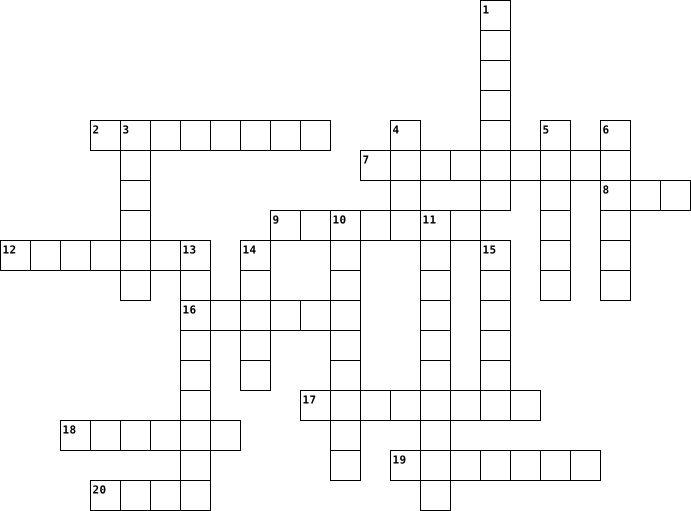
Across
- British Prime Minister who served from 1979 to 1990 and was known for her conservative policies.
- American President who led the country through the Great Depression and World War II.
- American boxer and civil rights activist known for his political and social activism.
- Spanish artist known for his contributions to the development of Cubism.
- South African anti-apartheid revolutionary and politician who served as President of South Africa from 1994 to 1999.
- Teresa Albanian-Indian Catholic nun and missionary known for her work with the poor and sick in India.
- German-born physicist who developed the theory of relativity and made significant contributions to the development of atomic energy.
- American actress and cultural icon known for her beauty and talent.
- American President who played a key role in the Civil Rights Movement and the Cuban Missile Crisis.
- American civil rights leader and advocate of nonviolent protest.
Down
- American singer and cultural icon known as the "King of Rock and Roll."
- German dictator who led the country during World War II and was responsible for the Holocaust.
- American businessman and co-founder of Apple Inc.
- Chinese communist leader who led the country from 1949 until his death in 1976.
- Soviet dictator who led the country during World War II and was responsible for the deaths of millions of people.
- British Prime Minister who led the country during World War II.
- French-German theologian, philosopher, and physician known for his humanitarian work in Africa.
- American astronaut and the first person to walk on the moon.
- American businessman and co-founder of Microsoft Corporation.
- Indian independence leader and advocate of nonviolent civil disobedience.
20 Clues: American businessman and co-founder of Apple Inc. • American astronaut and the first person to walk on the moon. • American businessman and co-founder of Microsoft Corporation. • British Prime Minister who led the country during World War II. • American civil rights leader and advocate of nonviolent protest. • ...
Chapter 10 history 2025-06-10

Across
- Escaped enslaved woman who helped others gain freedom via the Underground Railroad.
- 14th U.S. president who supported the Kansas-Nebraska Act.
- Belief in favoring native-born citizens over immigrants.
- Author of Uncle Tom’s Cabin, a powerful anti-slavery novel.
- Agreement that tried to ease tensions over slavery between North and South.
- Term referring to the period before the Civil War.
- Political party that opposed the expansion of slavery into new territories.
- Presidential race won by Abraham Lincoln, leading to secession.
- Violent attack on Senator Charles Sumner in the U.S. Senate.
- Secret network that helped enslaved people escape to freedom.
- Violent conflict between pro- and anti-slavery groups in Kansas.
- Anti-immigrant, anti-Catholic political group from the 1850s.
Down
- Northern laws designed to counter the Fugitive Slave Act.
- Supreme Court decision that ruled enslaved people were not citizens.
- Famous novel that exposed the cruelty of slavery.
- Allowed settlers to vote on slavery in new territories.
- The act of Southern states leaving the Union before the Civil War.
- Political party founded in 1854 to oppose the spread of slavery.
- President of the Confederate States during the Civil War.
- Site of John Brown’s failed raid to start a slave rebellion.
- Senator who debated Lincoln and supported popular sovereignty.
- Idea that people in a territory should decide whether to allow slavery.
- 15th U.S. president, whose inaction failed to stop secession.
- Abolitionist who led violent anti-slavery raids.
- First Republican candidate for president in 1856.
- 16th U.S. president who led the country during the Civil War.
- Law that required escaped enslaved people to be returned to their owners.
- The government formed by Southern states that seceded from the Union.
28 Clues: Abolitionist who led violent anti-slavery raids. • Famous novel that exposed the cruelty of slavery. • First Republican candidate for president in 1856. • Term referring to the period before the Civil War. • Allowed settlers to vote on slavery in new territories. • Belief in favoring native-born citizens over immigrants. • ...
civil war crossword 2026-02-03

Across
- rose quickly through the ranks under grant and defeated Confederate in shenandoah valley using scorched earth tactics
- the only general to never lose a battle
- critical union victory splitting the confederacy in two and giving the union the mississippi
- the 16th president of the U.S.A
- prominent confederate lieutenant general
- battle lasted only three hours with nether side being able to properly attack the other
- led a bayonet charge the the battle of gettysburg
- major general know for his charge during the battle of gettysburg
- the bloodiest single day in American history, nearly 23,000 casualties
- army officer who became a senior union general
- first and only president of the Confederate states
- flag officer in the U.S navy
- union plan to divide the south and cut off the mississippi
- the only U.S senator to die in combat
Down
- declared enslaved people in the Confederate states to be free
- the opening engagement of the civil war
- only native American to obtain the rank of Brigadier General during the civil war
- confederate defeat by two union armies near a small church
- frequently clashed with Lincoln and was eventually removed from his position as general-in-chief
- to Confederate general under Lee called lees old war horse
- a union army general considered the first modern general
- 18th president of the U.S.A
- confederate general who led the army of western virginia
- location where general Lee surrendered to grant
- Master of reconocience and had a long name
- major Confederate store house location and manufacturing center
- general who was defeated by Robert E. Lee during the battle of Chancellorsville
- fought the USS monitor leading to a draw
- turning point of the civil war leading to union victory
- the first major land battle of the civil war
30 Clues: 18th president of the U.S.A • flag officer in the U.S navy • the 16th president of the U.S.A • the only U.S senator to die in combat • the opening engagement of the civil war • the only general to never lose a battle • prominent confederate lieutenant general • fought the USS monitor leading to a draw • Master of reconocience and had a long name • ...
Kansas in the Civil War 2017-05-10

Across
- '_________ Kansas'. The nickname given to Kansas during the Civil War.
- Included Kansas and many northern states during the Civil War. They fought to united the U.S.
- Started a campaign called 'Independent Kansas Jayhawkers'
- Also known as the Battle of the Osage
- Slave who escaped using the underground railroad in Topeka.
- A person who believes in getting rid of slavery.
- The war between states
- A guerrilla fighter who was pro-slavery
- The state all of the 'bushwhackers' came from
Down
- The state all of the jayhawkers came from
- Also known as Quantrill's raid
- Fought for Kansas during the Pottawatomie Massacre.
- The southern states that fought against the Union.
- Pro-Union Kansans
- "The most ruthless bushwhacker"
- "No Mans Land"
- The type of warfare typically used during Bleeding Kansas.
- The murder of five men by John Brown.
- The capital.
- boarder scouts sent by the union to protect Kansas from Missourians
20 Clues: The capital. • "No Mans Land" • Pro-Union Kansans • The war between states • Also known as Quantrill's raid • "The most ruthless bushwhacker" • Also known as the Battle of the Osage • The murder of five men by John Brown. • A guerrilla fighter who was pro-slavery • The state all of the jayhawkers came from • The state all of the 'bushwhackers' came from • ...
the civil war (ciana acfalle) ordot 2017-02-15

Across
- robert e ___ is the general known for commanding the confederate army
- order to bring accused to court
- southern states that succeeded & proslavery
- lincoln appoints ulysses s. _____ as commander of all union armies in march 1864
- what the union had
- cottin profits,generals,motivation
- ceremony held to dedicate cemetary in gettysburg
- abraham _______ is the president that announced the emancipation proclamation
- 3 day battle & turning point of war
- where lee surrendered in april 1865
Down
- commander of MS division
- the emancipation proclamation freed the slaves in the south
- soldiers,factories,foods,railroads
- where the 2nd part of the anaconda plan was achieved
- a statement lincoln gave that freed all slaves in the south
- where the civil war started
- drafting people into the military
- 3 part union strategy to win the civil war
- ________ march was the march to sea that devastated atlanta georgia
- union victory
20 Clues: union victory • what the union had • commander of MS division • where the civil war started • order to bring accused to court • drafting people into the military • soldiers,factories,foods,railroads • cottin profits,generals,motivation • 3 day battle & turning point of war • where lee surrendered in april 1865 • 3 part union strategy to win the civil war • ...
8th grade history overview 2017-05-21

Across
- president of the union during the civil war
- the shot heard round the world
- year George Washington crossed the Delaware
- author of common sense
- trade system that benefits the mother country
- the 7 year war
- president on the 2 dollar bill
- bloodiest civil war battle
- last battle of the revolution
- Nobel french man who fought with the Americans during the revolution
- Lewis and Clark's guide
- king of England during the revolution
Down
- first treasury secretary
- ship the pilgrims sailed on
- year of the Boston tea party
- reason Jamestown was founded
- Lincoln's assassin
- The right to vote
- movement against the consumption of alcohol
- year the CA gold rush started
- doubled the size of the country
- first permanent English settlement in the American colonies
- who killed Hamilton?
- first US president
- year Lincoln was elected
25 Clues: the 7 year war • The right to vote • Lincoln's assassin • first US president • who killed Hamilton? • author of common sense • Lewis and Clark's guide • first treasury secretary • year Lincoln was elected • bloodiest civil war battle • ship the pilgrims sailed on • year of the Boston tea party • reason Jamestown was founded • year the CA gold rush started • last battle of the revolution • ...
History Crossword Puzzle 2019-03-02

Across
- Sojourner Truth fought for these for women
- Jefferson Davis had this type of plantation/farm
- Harriet Tubman helped free slaves from this country
- Lincoln said "All men are created" this way
- Lincoln was the first President to die this way
- Ulysses S. Grant
- Battle of Gettysburg lasted this many days
- Lincoln was this number US President
- Sojourner Truth's famous speech was "Ain't I" one of these
- Grant held this position for the Union army
Down
- This type of house is where the war ended
- Harriet Tubman was famous for freeing them
- 50,000 of these at Gettysburg
- Robert E. Lee led this army
- Lincoln was President during this war
- Fort Sumter was located here
- Slaves were freed by this type of railroad
- Frederick Douglas was a famous one of these
- This many shots started the Civil War
- Sherman's march to the sea ended in this GA city
20 Clues: Ulysses S. Grant • Robert E. Lee led this army • Fort Sumter was located here • 50,000 of these at Gettysburg • Lincoln was this number US President • Lincoln was President during this war • This many shots started the Civil War • This type of house is where the war ended • Sojourner Truth fought for these for women • Harriet Tubman was famous for freeing them • ...
The Civil War 2012-05-11

Across
- The North
- First major battle of the Civil War
- The South
- AKA the second battle of Manassas
- The four year war
- Delaware, Kentucky, Maryland, and Missouri
- The order to free Confederate Slaves.
- A new idea or way of doing something.
- Has the famous nickname of "Stonewall"
- Ships heavily armored with iron.
Down
- A series of clashes that forced the Union Army to retreat from near Richmond
- The freeing of slaves.
- Consisted mostly of free African Americans.
- General Grant's troops cut off the city of Vicksburg and shelled it repeatedly.
- When the Union Army gained greater control of the Mississippi River Valley.
- A federal outpost in Charleston,South Carolina
- AKA the bloodiest single-day battle of the Civil War
- Escaped slaves.
- Jefferson Davis tried to win foreign allies with this
- A constitutional pretection against unlawful imprisonment.
20 Clues: The North • The South • Escaped slaves. • The four year war • The freeing of slaves. • Ships heavily armored with iron. • AKA the second battle of Manassas • First major battle of the Civil War • The order to free Confederate Slaves. • A new idea or way of doing something. • Has the famous nickname of "Stonewall" • Delaware, Kentucky, Maryland, and Missouri • ...
Civil War Terms 2024-05-16

Across
- Confederate victory in Stafford and Spotsylvania
- Led by General Benjamin Lincoln, forces based in Charleston.
- Proposed by General Winfield Scott
- The Civil War began here
- Union sided men who robbed and murdered people of the Confederacy.
- William T Sherman wanted to neutralize Confederate supply lines here.
- Escaping Slaves
- Robert E Lee surrendered here.
- A system of safe houses and codes to help slaves escape.
- Pride in native status
- Weakened the Confederacy by splitting their forces.
- Largest slave auctions.
- 2 stage battle 1st stage won by the Confederates
Down
- Turning point in the Civil war. This battle had a total of 50,000 casualties.
- Confederate victory in Cobb County.
- Codes used along the underground railroad.
- Issued by Abraham Lincoln
- Military Campaign in Georgia
- A Union victory in Hardin.
- A Union victory against Robert E Lee in Washington county.
- Reorganized the south after the war.
- "Self working farmers"
22 Clues: Escaping Slaves • Pride in native status • "Self working farmers" • Largest slave auctions. • The Civil War began here • Issued by Abraham Lincoln • A Union victory in Hardin. • Military Campaign in Georgia • Robert E Lee surrendered here. • Proposed by General Winfield Scott • Confederate victory in Cobb County. • Reorganized the south after the war. • ...
Civil War Crossword 2023-04-13

Across
- nickname for the South
- large-carliber guns
- soldier that is wounded or killed during battle
- law that says escaped enslaved people in free states had to be returned to their owners
- nickname for the northerners who were against the Civil War
- name given to the South supporting the Confederates
- states that stayed loyal to the United States government
- the side of an army or military unit
- a group of states that left the United States
- a person who wanted to end slavery
- a long gun with a smooth bore
Down
- states that did not leave the Union
- A large farm in the southern United States
- murder of a public figure, usually for political reasons
- nickname for the United States paper money
- when southern states chose to leave the United States
- issued by Lincoln
- "before war"
- crackers that the Civil War soldiers ate
- putting local interests and customs ahead
20 Clues: "before war" • issued by Lincoln • large-carliber guns • nickname for the South • a long gun with a smooth bore • a person who wanted to end slavery • states that did not leave the Union • the side of an army or military unit • crackers that the Civil War soldiers ate • putting local interests and customs ahead • A large farm in the southern United States • ...
US Midterm 2022-12-14

Across
- Thomas of Common Sense last's name
- southern general
- no housing of soldiers
- progressive journalists
- sitting _____
- rebellion in Massachusetts
- major battle of the civil war
- first battle of the civil war
- rockefeller's first
- free ________ party
- Hamilton's First name
- freedom of speech
- carnegie's first
- Tea Party Location
- did not like the national government
- SF immigration
- New York immigration
- northern general
- Locke's first
- act selling Indian land at a discount
Down
- former slaves
- Rough Rider President
- first ten amendments
- supreme court case vs. Sanford
- william's last name
- yosemite environmentalist
- right to bear arms
- covered in gold
- roosevelt's deal
- treaty that ennded spanish American war
- controlling all businesses in an industry
- land given to indians
- photojournalist
- well's first name
- ship blown up in Havana
- twain's first name
- salad ______ (better analogy)
- Abraham Lincoln's nickname
- Confederate president
39 Clues: former slaves • sitting _____ • Locke's first • SF immigration • covered in gold • photojournalist • southern general • roosevelt's deal • carnegie's first • northern general • well's first name • freedom of speech • right to bear arms • twain's first name • Tea Party Location • william's last name • rockefeller's first • free ________ party • first ten amendments • New York immigration • ...
Chapter 3 Section 2 Vocab 2022-05-05

Across
- Refusal to take sides or become involved
- Ruler with complete control
- Action to overthrow a government by citizens or colonists
- Across an entire continent
- The movement to end slavery, before and after the Civil War in the US
- Large farm that grows crops for profit
- To strengthen
- To adjust or modify to fit
- Build settlements and develop trade in lands that a country controls
- Person sent by a religious organization to convert others to that religion
- Formal change to a law
- Settler of new land
Down
- Document that organizes a government and states its powers
- To formally withdraw
- Shift to large-scale production using machines
- War War between opposing groups of citizens in the same country
- To object to
- Type of warfare using violence to achieve political results, typically carried out by individuals or small groups
- Partnership between country
- Fee paid to a government for public services
20 Clues: To object to • To strengthen • Settler of new land • To formally withdraw • Formal change to a law • Across an entire continent • To adjust or modify to fit • Ruler with complete control • Partnership between country • Large farm that grows crops for profit • Refusal to take sides or become involved • Fee paid to a government for public services • ...
APUSH terms 2023-05-15

Across
- Last name of a famous escaped slave. She led many others to freedom through the term described on item 2
- the last name of an escaped slave that was a major advocate for abolitionism that had a rap battle with Thomas Jefferson
- combination of the four Coercive Acts, meant to punish the colonists after the Boston Tea party, drove colonists to war of Independence
- journalism exposing economic, social, and political evils, named by Teddy Roosevelt for "raking the mud from the bottom of American Society"
- era after reconstruction when southern whites took control and ended political rights for freedmen
- Destiny the thought that the US had a right to expand from sea to sea
- vigilante group that terrorized black people in the South
- the ban on the sale of alcohol
- first major battle of the Civil War fought in the North
- an individual who contracted to serve in return for a passage to America
Down
- Mr Travis' favorite insult; northern whites who moved to the south and served as republican leaders during reconstruction
- First successful British colony, founded in 1607
- religious revival among Lakota Sioux
- war between the US and Great Britain due to British impressment of sailors. Jackson became a war hero in its battle of New Orleans
- Northern, mostly abolitionist side of the Civil War
- a system that helped enslaved African Americans follow a network of escape routes out of the South to freedom in the North
- Southern, mostly pro-slavery side of the Civil war
- forced removal of Cherokee Indians done by Andrew Jackson
- A sequence of violent events involving abolitionists and pro-Slavery elements that took place in Kansas-Nebraska Territory
- Last name of the president that signed the Emancipation Proclamation
20 Clues: the ban on the sale of alcohol • religious revival among Lakota Sioux • First successful British colony, founded in 1607 • Southern, mostly pro-slavery side of the Civil war • Northern, mostly abolitionist side of the Civil War • first major battle of the Civil War fought in the North • forced removal of Cherokee Indians done by Andrew Jackson • ...
Kennedy, Johnson and Nixon presidency 2024-10-10

Across
- Supporters of the Vietnam War during Johnson’s presidency
- Nixon’s policy to reduce U.S. involvement in the Vietnam War
- Johnson’s domestic agenda aimed at eliminating poverty and racial injustice
- The crime at the Democratic National Committee headquarters that led to Watergate
- Policy aimed at easing Cold War tensions with the Soviet Union
- 1962 Cold War confrontation with the Soviet Union over nuclear weapons in Cuba
- Scandal that led to Nixon's resignation
- Wisconsin senator whose anti-communist crusade influenced the era before Kennedy’s presidency
- Country Nixon authorized bombing, expanding the Vietnam War
- Theory that if one country in Southeast Asia fell to communism, others would follow
- Kennedy’s domestic policy agenda focusing on education, healthcare, and civil rights
- Education program for disadvantaged children created under Johnson
- Johnson’s Vice President, who ran for president in 1968
- Civil rights leader assassinated during Johnson’s presidency
- 36th U.S. President, succeeded Kennedy in 1963
- Kennedy’s military strategy for dealing with threats other than nuclear war
- Chief Justice who led the commission that investigated Kennedy’s assassination
- Term used to describe Kennedy’s presidency, evoking a sense of idealism
- Gulf where an incident led to U.S. escalation in Vietnam
- People who opposed the Vietnam War during Johnson’s presidency
- Proceedings started but not completed due to resignation
- 1965 act aimed at eliminating racial barriers to voting
Down
- Johnson’s policy in Vietnam, leading to increased U.S. military involvement
- 35th U.S. President, assassinated in 1963
- Nixon’s first Vice President, resigned in 1973
- 1964 legislation that banned discrimination based on race, color, religion, or national origin
- Kennedy’s 1961 ceremony, where he famously said, “Ask not what your country can do for you…”
- Name of Nixon’s famous 1952 speech regarding campaign finance
- Failed 1961 invasion of Cuba by U.S.-backed forces
- Location of 1968 Democratic National Convention, marked by anti-war protests
- 1965 civil rights protest that led to the Voting Rights Act
- Volunteer program established by Kennedy to assist developing nations
- Program established under Johnson to provide healthcare for low-income individuals
- Country Nixon visited, marking a historic moment in U.S. diplomacy
- War that escalated significantly during Johnson’s presidency
- Major 1968 military campaign by North Vietnam during Johnson's term
- Segregationist candidate who challenged Johnson’s civil rights policies
- 37th U.S. president, resigned in 1974
- Cold War symbol that went up during Kennedy’s presidency
- Healthcare program for the elderly created during Johnson’s presidency
- Vice President who succeeded Nixon
- Classified documents that exposed government secrets during Nixon's era
- System of compulsory enlistment for military service during the Vietnam War
43 Clues: Vice President who succeeded Nixon • 37th U.S. president, resigned in 1974 • Scandal that led to Nixon's resignation • 35th U.S. President, assassinated in 1963 • Nixon’s first Vice President, resigned in 1973 • 36th U.S. President, succeeded Kennedy in 1963 • Failed 1961 invasion of Cuba by U.S.-backed forces • Johnson’s Vice President, who ran for president in 1968 • ...
Current War 2023-11-16

Across
- Turning Point of war
- Made Annexation his goal
- Sued for Freedom
- Start of Civil War
- Critical Win for union
Down
- President of Confederates during Civil War
- Border of free/enslaved status
- President of Union during Civil War
8 Clues: Sued for Freedom • Start of Civil War • Turning Point of war • Critical Win for union • Made Annexation his goal • Border of free/enslaved status • President of Union during Civil War • President of Confederates during Civil War
Civil War Crossword 2023-02-15

Across
- something that blocks ports
- the war between union and confederate
- the turning point of the civil war
- a plan to blockade the south and attack through the mississippi river
- the president during the civil war
- Judging someone based on the color of there skin
- a former slave that escaped on a ship
- a march through the Carolinas
- states who separated from america because of slavery
Down
- the first to announce from the union
- the nickname of the north
- The 1st black regimen raised in the north
- a main general of the union army
- A increase in prices and falling in the purchasing power of money
- Someone who gets resources from those who are blocked
- the general who came up with the Anaconda plan
- served as drummers
- helped make food and served as nurses
- main leader of the confederate army
- former slaves
20 Clues: former slaves • served as drummers • the nickname of the north • something that blocks ports • a march through the Carolinas • a main general of the union army • the turning point of the civil war • the president during the civil war • main leader of the confederate army • the first to announce from the union • the war between union and confederate • ...
US History 2022-05-11
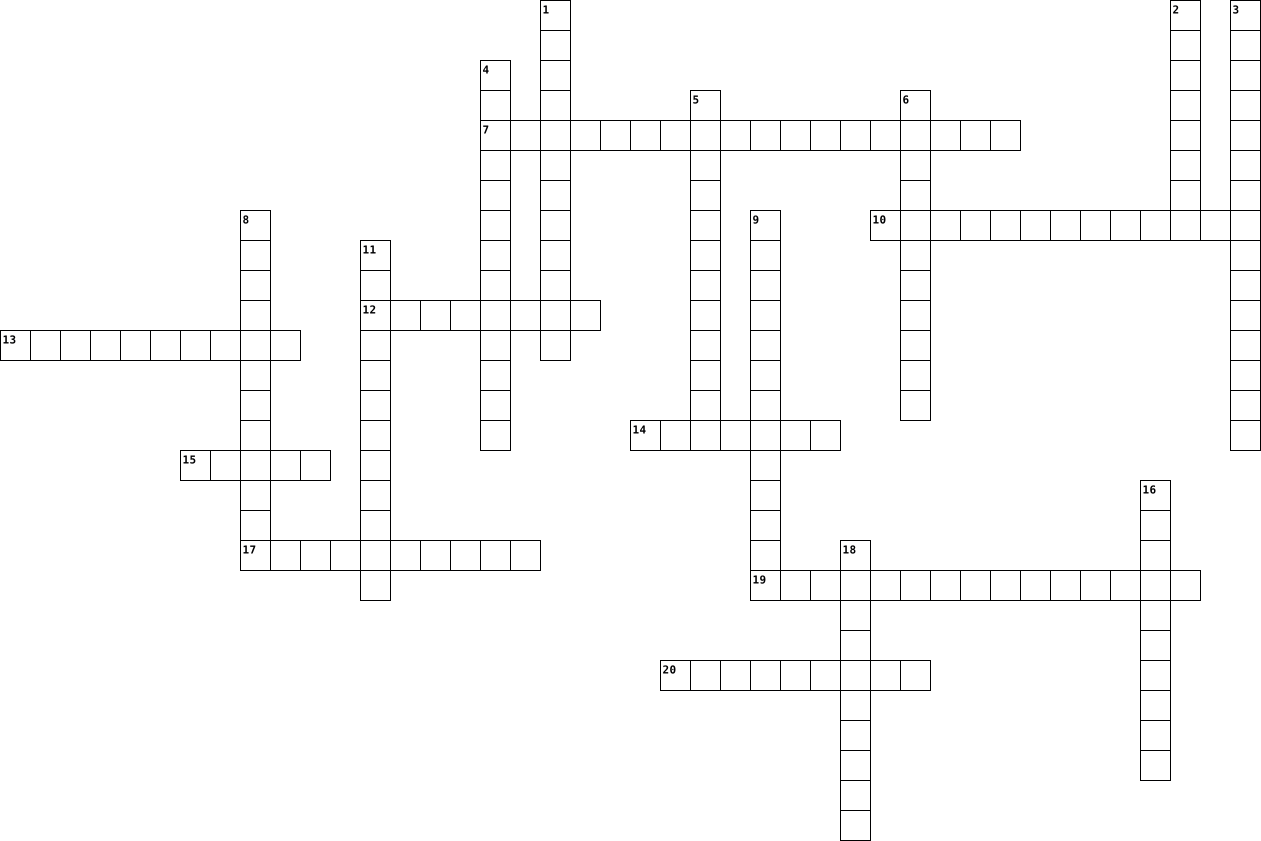
Across
- denial of the right to vote
- Northerners who moved the South during Reconstruction
- execution, often by hanging without a legal trial
- laws enacted shortly after the Civil War intended to keep African Americans in a condition similar to slavery
- pardon for offenses
- Stanton secretary of war
- name applied to the Southern statesbecause of their strong support for Democratic canidates
- removed the last federal troops from the South
- Southerners who supported the new Southern state governments established during Reconstruction
Down
- elected president in 1868
- the right to vote
- Radical Republican in the House of Representatives
- violated the tenure of Office Act
- won the popular vote in the 1876 election
- bring charges against the president
- head of the Freedmen's Bureau
- Radical Republican in the Senate
- arrested for his dishonest dealings
- paper money issued by the U.S. Congress during the Civil War
- cartoonist
20 Clues: cartoonist • the right to vote • pardon for offenses • Stanton secretary of war • elected president in 1868 • denial of the right to vote • head of the Freedmen's Bureau • Radical Republican in the Senate • violated the tenure of Office Act • bring charges against the president • arrested for his dishonest dealings • won the popular vote in the 1876 election • ...
U.S. Citizenship 2018-12-05

Across
- The main concern of the U.S. during the Cold War
- We vote for President in this month
- The name of the current Vice President
- He was president during WWI
- The person who wrote the Declaration of Independence
- A change to the Constitution
- The name of the current president
- The supreme law of the land
- The ocean on the west coast of the U.S.
- The political party of the president now
- When is Flag Day?
Down
- He was president during the Civil War
- The U.S. bought this from France in 1803
- The President during the WWII
- One reason colonist came to America
- The Capital of California
- The name of the longest river in the U.S.
- There are 100 in Congress
- One American Indian Tribe in the United States
- One problem that led to the Civil War
- This country is north of the United States
21 Clues: When is Flag Day? • The Capital of California • There are 100 in Congress • He was president during WWI • The supreme law of the land • A change to the Constitution • The President during the WWII • The name of the current president • One reason colonist came to America • We vote for President in this month • He was president during the Civil War • ...
Russia 2025-04-27

Across
- Ruler by divine right.
- Leader of the Bolshevik Revolution.
- Leader of the Red Army.
- Communism, Harsh economic policy during Civil War.
- Stalin’s policy of consolidating farms.
- Colour associated with the Bolsheviks.
- Government, Temporary ruling body in 1917.
- Mystic who influenced the Tsarina.
- System of forced labour camps.
- Russian parliament set up after 1905.
- Counter-revolutionary forces in the Civil War.
- General who attempted a coup in 1917.
- Radical socialist faction led by Lenin.
- Lenin’s partial return to capitalism.
- Wealthy peasant targeted by Stalin.
Down
- of Brest-Litovsk, Ended Russia’s involvement in WWI.
- Head of the Provisional Government.
- Tool to influence public opinion and glorify leaders.
- Sailor rebellion that challenged Bolshevik rule.
- Lenin’s secret police.
- Moderate socialist faction.
- Soviet dictator after Lenin.
- Plan, Stalin’s strategy for rapid industrialisation.
- Theses, Lenin’s call for revolution and “Peace, Bread, Land.”
24 Clues: Ruler by divine right. • Lenin’s secret police. • Leader of the Red Army. • Moderate socialist faction. • Soviet dictator after Lenin. • System of forced labour camps. • Mystic who influenced the Tsarina. • Leader of the Bolshevik Revolution. • Head of the Provisional Government. • Wealthy peasant targeted by Stalin. • Russian parliament set up after 1905. • ...