
civil war Crossword Puzzles
Civil War Crossword 2023-03-06

Across
- The side that won the Battle of Shiloh.
- The Confederacy's capital.
- Technological Advancement for transportation.
- The place wee the Confederates surrendered.
- Lead Genera of the Union
- Technological Advancement for sea battles.
- Capital of the Union
- Both sides used this to get more soldiers to fight in war.
Down
- Most common treatment for wounds in Civil War
- The Bloodiest battle in US History.
- Lead General of the Confederacy.
- Number one killer of soldiers in the War.
- Military blockade of a city to force it to surrender.
- What the Union called their paper money.
- Technological Advancement for communication.
15 Clues: Capital of the Union • Lead Genera of the Union • The Confederacy's capital. • Lead General of the Confederacy. • The Bloodiest battle in US History. • The side that won the Battle of Shiloh. • What the Union called their paper money. • Number one killer of soldiers in the War. • Technological Advancement for sea battles. • The place wee the Confederates surrendered. • ...
Civil War Crossword 2023-03-07

Across
- battle tactic to deplete supplies
- making people work for no pay
- against slavery
- formally leave
- bloodiest battle
Down
- increase in price of products
- transportation
- Union general
- death or injury in war
- South
- communication device
- soldiers on foot
- tougher ship
- Confederate general
- North
15 Clues: South • North • tougher ship • Union general • transportation • formally leave • against slavery • soldiers on foot • bloodiest battle • Confederate general • communication device • death or injury in war • increase in price of products • making people work for no pay • battle tactic to deplete supplies
The Civil War 2023-02-23

Across
- Wanted to take control of Fort Griffin
- The date that General Lee surrendered
- 18th president of the U.S.
- Confederate general
- Restricted rights for black people
- Last battle of civil war took place
- Name of the celebration of the Emancipation Proclomation
- small union fleet sailed into harbor
- Decides legal cases/interprets the law
Down
- 13th amendment
- 14thamendment
- U.s. marine corps general
- The jobs that African Americans had
- Carries or enforces the law
- Town in Texas known for celebrations
15 Clues: 14thamendment • 13th amendment • Confederate general • U.s. marine corps general • 18th president of the U.S. • Carries or enforces the law • Restricted rights for black people • The jobs that African Americans had • Last battle of civil war took place • Town in Texas known for celebrations • small union fleet sailed into harbor • The date that General Lee surrendered • ...
Civil war vocabulary 2023-04-18

Across
- to leave or break away
- the nations top court it decides wether laws follow the united states constitution
- the u.s government that wanted the nation to remain a single country
- to do away with end or stop
- the U.S declared California a free state and allowed five new states to vote on the issue
- compromise that counted each slave as 3/5 of a person for representation
- the act declared that citizens could vote on whether new states would be free or slave states
- a national bestselling book that exposed the brutality of slavery
- a war between citizens of the same country
- the supreme court declared that all states must allow slavery
Down
- the 16th president of the U.S.
- the u.s split the Louisiana purchase, assigning half of Missouri as a slave state and the rest as a free state
- person elected to represent a state based on its population
- the government that the 11 seceded states formed
- a person who wanted to get rid of slavery
15 Clues: to leave or break away • to do away with end or stop • the 16th president of the U.S. • a person who wanted to get rid of slavery • a war between citizens of the same country • the government that the 11 seceded states formed • person elected to represent a state based on its population • the supreme court declared that all states must allow slavery • ...
Civil War ILT 2023-05-09

Across
- Last name of the general of the general of the Confederacy
- A nickname for a soldier fighting for the North
- To prevent goods or people from leaving
- Name of the courthouse where the confederacy surrendered
- Last name of the president of the Confederacy
- A term for the Northern States
- The bloodiest battle in American history
- Last name of the president of the Union
Down
- Nickname for a soldier fighting for the Confederacy
- A term for the Southern states
- Being set free
- The first stae to secede from the Union
- First battle of the civil war
- Name of the plan used by the North
- Last name of the general for the Union
15 Clues: Being set free • First battle of the civil war • A term for the Southern states • A term for the Northern States • Name of the plan used by the North • Last name of the general for the Union • The first stae to secede from the Union • To prevent goods or people from leaving • Last name of the president of the Union • The bloodiest battle in American history • ...
the civil war 2023-05-10

Across
- a Confederate victory and Federal forces retreated to the defenses of Washington, DC.
- the Civil War's bloodiest battle
- the killing of government leaders
- known as the union
- shell-firing guns, howitzers, and mortars
- The Reconstruction Era
- known as the united states
- occurring or existing before a particular war
Down
- If the Union took the city, they would control the river, and Arkansas,
- known as the Confederate
- knife, dagger, sword, or spike-shaped to fit the end of a rifle
- known as the south
- was a crucial success for the Union Army, led by Gen. Ulysses S. Grant's Army of the Tennessee
- a person who sought to abolish slavery
- fought between the Union and the Confederacy
15 Clues: known as the south • known as the union • The Reconstruction Era • known as the Confederate • known as the united states • the Civil War's bloodiest battle • the killing of government leaders • a person who sought to abolish slavery • shell-firing guns, howitzers, and mortars • fought between the Union and the Confederacy • occurring or existing before a particular war • ...
the civil war 2023-05-10

Across
- a Confederate victory and Federal forces retreated to the defenses of Washington, DC.
- the Civil War's bloodiest battle
- the killing of government leaders
- known as the union
- shell-firing guns, howitzers, and mortars
- The Reconstruction Era
- known as the united states
- occurring or existing before a particular war
Down
- If the Union took the city, they would control the river, and Arkansas,
- known as the Confederate
- knife, dagger, sword, or spike-shaped to fit the end of a rifle
- known as the south
- was a crucial success for the Union Army, led by Gen. Ulysses S. Grant's Army of the Tennessee
- a person who sought to abolish slavery
- fought between the Union and the Confederacy
15 Clues: known as the south • known as the union • The Reconstruction Era • known as the Confederate • known as the united states • the Civil War's bloodiest battle • the killing of government leaders • a person who sought to abolish slavery • shell-firing guns, howitzers, and mortars • fought between the Union and the Confederacy • occurring or existing before a particular war • ...
the civil war 2023-05-10

Across
- a Confederate victory and Federal forces retreated to the defenses of Washington, DC.
- the Civil War's bloodiest battle
- the killing of government leaders
- known as the union
- shell-firing guns, howitzers, and mortars
- The Reconstruction Era
- known as the united states
- occurring or existing before a particular war
Down
- If the Union took the city, they would control the river, and Arkansas,
- known as the Confederate
- knife, dagger, sword, or spike-shaped to fit the end of a rifle
- known as the south
- was a crucial success for the Union Army, led by Gen. Ulysses S. Grant's Army of the Tennessee
- a person who sought to abolish slavery
- fought between the Union and the Confederacy
15 Clues: known as the south • known as the union • The Reconstruction Era • known as the Confederate • known as the united states • the Civil War's bloodiest battle • the killing of government leaders • a person who sought to abolish slavery • shell-firing guns, howitzers, and mortars • fought between the Union and the Confederacy • occurring or existing before a particular war • ...
the civil war 2023-05-10

Across
- a Confederate victory and Federal forces retreated to the defenses of Washington, DC.
- the Civil War's bloodiest battle
- the killing of government leaders
- known as the union
- shell-firing guns, howitzers, and mortars
- The Reconstruction Era
- known as the united states
- occurring or existing before a particular war
Down
- If the Union took the city, they would control the river, and Arkansas,
- known as the Confederate
- knife, dagger, sword, or spike-shaped to fit the end of a rifle
- known as the south
- was a crucial success for the Union Army, led by Gen. Ulysses S. Grant's Army of the Tennessee
- a person who sought to abolish slavery
- fought between the Union and the Confederacy
15 Clues: known as the south • known as the union • The Reconstruction Era • known as the Confederate • known as the united states • the Civil War's bloodiest battle • the killing of government leaders • a person who sought to abolish slavery • shell-firing guns, howitzers, and mortars • fought between the Union and the Confederacy • occurring or existing before a particular war • ...
Civil War Crossword 2012-10-14

Across
- This person said, "An express and fundamental condition of the acquisition of any territory from the Republic of Mexico... neither slavery nor involuntary servitude shall ever exist in any part of said territory.
- A federal fort on an island in Charleston Harbor.
- This invention magnified the difference between the North and the South.
- Got the most support from the North. The first president of this party was Abraham Lincoln.
- A movement to ensure that native born Americans received better treatment than immigrants. This was one of the factors that brought down the Whigs.
- This invention dramatically reduced the cost and time needed to ship goods from a factory or farm to the marketplace.
- The Supreme Court's most controversial decisions in U.S. history.
- Obvious or undeniable fate.
Down
- Got the most support from the South. The first president of this party was John Buchanan.
- This allowed people to decide to have slavery in their territory or to ban slavery in their territory.
- These people worked to end slavery in the territories.
- A novel written by Harriet Beecher Stowe in 1852 which offered antislavery forces new engagement to invest in the slavery system.
- The South used the 10th Amendment to defend the idea of ___________ and therefore slavery.
- A law that would make all citizens of the United States to assist in the return of enslaved people who had escaped from their owners. It would also deny a jury trial to escaped slaves.
- Those who wanted the South to secede, argued that since states had voluntarily joined the United States, could also choose to leave it.
15 Clues: Obvious or undeniable fate. • A federal fort on an island in Charleston Harbor. • These people worked to end slavery in the territories. • The Supreme Court's most controversial decisions in U.S. history. • This invention magnified the difference between the North and the South. • ...
Civil War Review 2012-12-18

Across
- This man burned Atlanta to the ground
- How Lincoln was killed?
- This man killed President Lincoln
- City that was known as the railroad center of the south
- number of minutes Lincoln's most famous speech lasted
- Where was Lincoln was killed?
- Name of speech that Lincoln gave
- number of days between the end of the Civil War and Lincoln's Death
Down
- place where good soldiers learn
- soldiers that weren't treated as well as others
- General of the Union Army
- battle where 27,000 soldiers were either killed or wounded
- This is where Lee surrendered
- battle that gained control of the MS river
- General of the Confederate Army
15 Clues: How Lincoln was killed? • General of the Union Army • This is where Lee surrendered • Where was Lincoln was killed? • place where good soldiers learn • General of the Confederate Army • Name of speech that Lincoln gave • This man killed President Lincoln • This man burned Atlanta to the ground • battle that gained control of the MS river • ...
Civil War Crossword 2013-05-20

Across
- type of cannon that threw a bomb in high arcs
- label for Northerners who opposed the war
- first shot of a cannonade
- cylindrical wicker basket several feet high
- function of cavalry deployed to prevent enemy reconnaissance from determining the size or movement of the main army
- maneuver that seeks to avoid a frontal assault by gaining the side or read of an enemy position
- designation meaning a day of the month
Down
- land or marine mine
- white canvas bag about a foot square that held soldiers rations
- wall on top of a rampart that shielded riflemen from enemy fire
- orderly retreat usually designed to move away from an enemy
- oldest form of defense fortification
- to fire upon the length rather than the face of the enemy
- 2 or 3 sided field fort
- Civil War hat
15 Clues: Civil War hat • land or marine mine • 2 or 3 sided field fort • first shot of a cannonade • oldest form of defense fortification • designation meaning a day of the month • label for Northerners who opposed the war • cylindrical wicker basket several feet high • type of cannon that threw a bomb in high arcs • to fire upon the length rather than the face of the enemy • ...
civil war causes 2014-10-31

Across
- to fasten or stay firm
- tending to stir up
- north and south had one
- regulations established in a community
- Abe Lincoln stopped it
- a result of such
- make go away
- a person who betrays another
- is where freedom was
Down
- slave ending president
- newspaper that help stop slavery
- money demanded by a government
- is where slavery happened
- withdraw formally from an alliance
- north had it
15 Clues: make go away • north had it • a result of such • tending to stir up • is where freedom was • to fasten or stay firm • slave ending president • Abe Lincoln stopped it • north and south had one • is where slavery happened • a person who betrays another • money demanded by a government • newspaper that help stop slavery • withdraw formally from an alliance • ...
civil war causes 2014-10-31

Across
- money demanded by a government
- a person who betrays another
- Abe Lincoln stopped it
- make go away
- north and south had one
- tending to stir up
- a result of such
- is where freedom was
Down
- newspaper that help stop slavery
- withdraw formally from an alliance
- is where slavery happened
- regulations established in a community
- slave ending president
- north had it
- to fasten or stay firm
15 Clues: make go away • north had it • a result of such • tending to stir up • is where freedom was • Abe Lincoln stopped it • slave ending president • to fasten or stay firm • north and south had one • is where slavery happened • a person who betrays another • money demanded by a government • newspaper that help stop slavery • withdraw formally from an alliance • ...
Civil War Causes 2014-10-31

Across
- straightening of body part
- a settlement
- highest court in a state
- are limits
- projectiles to be fired from a gun
- person sold labor American exchange
- a coming together or formal meeting
- bondage
Down
- committee
- person who deals with conflict
- wanted to end slavery
- huge farms
- feelings of extreme heartlessness
- a public discussion
- person settles without permission
15 Clues: bondage • committee • huge farms • are limits • a settlement • a public discussion • wanted to end slavery • highest court in a state • straightening of body part • person who deals with conflict • feelings of extreme heartlessness • person settles without permission • projectiles to be fired from a gun • person sold labor American exchange • a coming together or formal meeting
Civil War Causes 2014-10-31

Across
- president who ebolished slavery
- fighters for slaverys end
- new party extension slavery territories
- author of uncle toms cabin
- led states right movement
- expressed views in Webster-Hayne debate
- peacemaker from boarder state
- book against slavery
Down
- wrote paper which changed feelings
- anti-slavery newspaper
- wished slavery could be abolished
- southerns slave law
- both sides give something
- didn't want to extend slavery
- somebody who agrees with slavery
15 Clues: southerns slave law • book against slavery • anti-slavery newspaper • fighters for slaverys end • both sides give something • led states right movement • author of uncle toms cabin • didn't want to extend slavery • peacemaker from boarder state • president who ebolished slavery • somebody who agrees with slavery • wished slavery could be abolished • wrote paper which changed feelings • ...
Civil war causes 2014-10-31

Across
- To Make
- Lead American Politition
- Member of the Republican Party
- Running away
- A servant in the House
- Newspaper against slavery
Down
- To stop or go away
- Showing strong feelings
- Relating to a colony
- A Branch of the government
- A law
- Of 1850 Defused slavery
- Lincoln The president who ended slavery
- To suffer
- A collection of weapons
15 Clues: A law • To Make • To suffer • Running away • To stop or go away • Relating to a colony • A servant in the House • Showing strong feelings • Of 1850 Defused slavery • A collection of weapons • Lead American Politition • Newspaper against slavery • A Branch of the government • Member of the Republican Party • Lincoln The president who ended slavery
Civil War Causes 2014-10-31

Across
- being harsh
- debate.
- disagreement
- act against or provide resistance
- people get authority over abolishment
- compelling force to do something
- willfully causing pain
Down
- someone who wants no slavery
- to withdraw or to leave
- everybody gives something
- a contract sealed
- Newspaper against slavery
- To revoke
- to take hold of suddenly
- a person fleeing from persecution
15 Clues: debate. • To revoke • being harsh • disagreement • a contract sealed • willfully causing pain • to withdraw or to leave • to take hold of suddenly • everybody gives something • Newspaper against slavery • someone who wants no slavery • compelling force to do something • act against or provide resistance • a person fleeing from persecution • people get authority over abolishment
Civil War Crossword 2014-11-21

Across
- Men who championed Southern causes.
- Rising democratic star from Illinois.
- Turned northerners against slavery.
- People would decide slavery fate.
- Purchase of Arizona and New Mexico.
- Divided Kansas and Nebraska.
- Chief justice who hated republicans.
Down
- Denied congresses authority to exclude slavery.
- Called for major political realignment.
- Slaveholder claimed a runaway.
- Secret stations to Canada.
- A free soil settler.
- Self reliant, hardworking free men.
- Novel that vividly depicts the South.
- Said "I know nothing".
15 Clues: A free soil settler. • Said "I know nothing". • Secret stations to Canada. • Divided Kansas and Nebraska. • Slaveholder claimed a runaway. • People would decide slavery fate. • Men who championed Southern causes. • Turned northerners against slavery. • Self reliant, hardworking free men. • Purchase of Arizona and New Mexico. • Chief justice who hated republicans. • ...
Civil War Crossword 2014-11-26

Across
- Used to seize alleged slaves.
- Stemmed from dream of Transcontinental railroad.
- Northern men that champion southern causes.
- Wrote Uncle Tom's Cabin.
- Novel of South's "peculiar institution."
- Proposed doctrine of popular sovereignty.
- "Pathfinder of the West."
Down
- Also called American Party.
- Secrete stations to Canada.
- Whigs nominated for election 1848.
- Founded by Whigs and antislavery Democrats.
- Rising Democratic star from Illinois.
- Divided Nebraska and Kansas.
- Territories decide slavery for themselves.
- Called for a major political realignment.
15 Clues: Wrote Uncle Tom's Cabin. • "Pathfinder of the West." • Also called American Party. • Secrete stations to Canada. • Divided Nebraska and Kansas. • Used to seize alleged slaves. • Whigs nominated for election 1848. • Rising Democratic star from Illinois. • Novel of South's "peculiar institution." • Called for a major political realignment. • ...
Civil War Crossword 2014-11-26

Across
- Daughter of Senator Thomas Benton
- Transformed sleepy frontier of California
- President of the Confederacy
- declared the Confederacy's "cornerstone"
- Repealed the Missouri Compromise
- Gave voters a Unionist choice
- Architect of Union-saving compromises
- Whigs and anti-slavery Democrats founded
- Pathfinder of the west
Down
- James Gadsen negotiated the
- Solomon Northrop wrote
- Revealed Democrat's main challenger
- were officially the American Party
- Wrote Uncle Tom's Cabin
- Depicts the South's "peculiar institution"
15 Clues: Solomon Northrop wrote • Pathfinder of the west • Wrote Uncle Tom's Cabin • James Gadsen negotiated the • President of the Confederacy • Gave voters a Unionist choice • Repealed the Missouri Compromise • Daughter of Senator Thomas Benton • were officially the American Party • Revealed Democrat's main challenger • Architect of Union-saving compromises • ...
Civil War Vocabulary 2018-03-01

Across
- a group of soldiers who fight battles on horseback.
- To cancel.
- to officially leave or separate from a group.
- A large farm that produces crops to sell
- A state celebration which started on June 19, 1866, of the day when slaves in Texas learned that they were free.
- Soldiers African American soldiers who fought against the plains Indians in the late 1800s.
- Territory: Land that was set aside for American Indians in 1830.
- The time of rebuilding and change in the South after the Civil War.
Down
- The practice of owning people and forcing them to work without pay.
- An effort to stop ships from going in or out of a port.
- A strongly constructed building used to house soldiers and weapons.
- A farmer who pays part of what he or she grows to a landowner.
- an unfair separation, based on race.
- A person who wants to end slavery.
- A tax paid on goods that come from another country.
15 Clues: To cancel. • A person who wants to end slavery. • an unfair separation, based on race. • A large farm that produces crops to sell • to officially leave or separate from a group. • a group of soldiers who fight battles on horseback. • A tax paid on goods that come from another country. • An effort to stop ships from going in or out of a port. • ...
Civil War - Texas 2022-03-08

Across
- People who wanted to end slavery.
- He lead the Texas Rangers during the war.
- Governor of Texas from 1861 - 1863.
- The plan to form a blockade around the entire Confederate coastline.
- Confederate guns opened fire from Fort Griffin onto the Union ships in this battle.
- People who took the law into their own hands.
- His unit was known as Hood's Texas Brigade.
- This city made some trade possible for the Confederate.
Down
- Fought for the Union cause because they would be free if the Union won.
- This Supreme Court case showed that African Americans didn't have the rights as citizens.
- A law that required all men from 18 - 35 years old to join the Confederate army.
- Ships that continued to bring much needed supplies for Texas and the Confederacy in Galveston.
- This book showed the cruelties of slavery.
- The country that the Confederate traded with to get supplies.
- A small Union fleet overcame the Confederate defenses in this battle.
15 Clues: People who wanted to end slavery. • Governor of Texas from 1861 - 1863. • He lead the Texas Rangers during the war. • This book showed the cruelties of slavery. • His unit was known as Hood's Texas Brigade. • People who took the law into their own hands. • This city made some trade possible for the Confederate. • ...
Civil War Review 2022-04-05

Across
- Union victory that won control of the Mississippi River
- Site of Lee's surrender to Grant
- Commander of the CSA Army
- To leave
- Used to send "lightning" messages
- First Union victory
- Commander of the USA Army
- Used to move troops and supplies
Down
- President of the Confederacy
- Made wooden war ships obsolete
- One part of the Union strategy
- Turning point of the war
- Marched through Georgia to the sea
- President of the Union
- First shots of the war
15 Clues: To leave • First Union victory • President of the Union • First shots of the war • Turning point of the war • Commander of the CSA Army • Commander of the USA Army • President of the Confederacy • Made wooden war ships obsolete • One part of the Union strategy • Site of Lee's surrender to Grant • Used to move troops and supplies • Used to send "lightning" messages • ...
Civil war causes 2021-12-09

Across
- the selling and buying of slaves
- person against slavery
- to leave
- great compromiser
- when the state decides if they have slavery
- wrote Uncle Tom’s Cabin
- to do away with
Down
- in 1854 this party formed
- people who got a free passage to America, but had to work for a certain amount of time
- a settled agreement which both sides give a little
- laws that prevented slaves from certain rights
- an abolitionist that stole weapons from the arsenal for slaves
- to try and leave owners
- Douglas and ______ debates
- where weapons are stored
15 Clues: to leave • to do away with • great compromiser • person against slavery • to try and leave owners • wrote Uncle Tom’s Cabin • where weapons are stored • in 1854 this party formed • Douglas and ______ debates • the selling and buying of slaves • when the state decides if they have slavery • laws that prevented slaves from certain rights • ...
Civil War Puzzle 2022-02-18

Across
- the rail road that slaves used to escape
- the north was this
- an agreement
- a former slave who went on a rampadge
- someone who was against slavery
- the south was this
- a female escaped slave who was a conducter
Down
- a former slave who told his story around the globe
- Southern states did this after Lincoln was elected
- Increased the want for slavery
- The slave who sued in the dred scott case
- Slavery was illegal
- someone being forced to work under someone else
- The President who abolished slavery
- Slavery was legal
15 Clues: an agreement • Slavery was legal • the north was this • the south was this • Slavery was illegal • Increased the want for slavery • someone who was against slavery • The President who abolished slavery • a former slave who went on a rampadge • the rail road that slaves used to escape • The slave who sued in the dred scott case • a female escaped slave who was a conducter • ...
Civil War Crossword 2022-05-03

Across
- The North
- King _______
- _________ warfare
- Union rations
- Leaving the union
- _______ E. Lee
- President 1860 - 1865
- Battle of ________ Roads, naval battle
Down
- United States ironclad
- Powerful warship
- The South
- The bloodiest battle
- George B. _________
- The bloodiest single day
- John Wilkes _______
15 Clues: The North • The South • King _______ • Union rations • _______ E. Lee • Powerful warship • _________ warfare • Leaving the union • George B. _________ • John Wilkes _______ • The bloodiest battle • President 1860 - 1865 • United States ironclad • The bloodiest single day • Battle of ________ Roads, naval battle
The Civil War 2022-05-03

Across
- The ones who opposed the Confederates
- The commanding general of the Confederates
- A crop the Confederates planned to deprive the Union of to force them to surrender
- The president of the Confederacy
- The name of the plan the Union planned to use against the Confederates
- South Carolina was the first to do it after Lincoln was elected president
- The bloodiest battle of the war
- The president of the Union
Down
- The states that seceded
- The second commanding general of the Union
- Laws that required men to serve in the military
- Had the most of this in Gettysburg and the most in American History
- The practice that was abolished after the Civil War
- The man who assassinated Lincoln
- The gun that changed warfare because of its accuracy and capacity for bullets
15 Clues: The states that seceded • The president of the Union • The bloodiest battle of the war • The president of the Confederacy • The man who assassinated Lincoln • The ones who opposed the Confederates • The second commanding general of the Union • The commanding general of the Confederates • Laws that required men to serve in the military • ...
Civil War Crossword 2022-05-04

Across
- What was the North's plan called?
- Laws that draft soldiers
- What is the proclamation that ended slavery in the South?
- What were cash payments called?
- What is the unit that insisted on fighting without pay?
- Who were the people that wanted peace with the South?
- Who was the president during the Civil war?=
- What is the tax on earnings?
- Who were the people that wanted slavery to end?
- What was a new paper currency?
Down
- What is the side of the North called?
- Who was the person who assassinated Lincoln?
- What is the side of the South called?
- Who was the North's best general?
- Who was the South's best general?
15 Clues: Laws that draft soldiers • What is the tax on earnings? • What was a new paper currency? • What were cash payments called? • What was the North's plan called? • Who was the North's best general? • Who was the South's best general? • What is the side of the North called? • What is the side of the South called? • Who was the person who assassinated Lincoln? • ...
Causes Civil War 2022-03-07

Across
- What was the name of the part of the Compromise of 1850 that suggested all lands from Mexican secession had no slaves.
- Who was the 16th president?
- What was it called when southern states left the union?
- New Mexico and what other state could vote during the Compromise of 1850?
- What is greater loyalty to your own section called?
- What decision was made in 1857?
- Which compromise admitted Missouri as a slave state?
Down
- The _______ slave act required all citizens to help catch runaway slaves.
- Kansas and what other state made up the Act of 1854?
- The _____ of 1850.
- Where the rights for states individual or shared?
- What was it called when African Americans were forced to work on plantations in the south?
- Who was the abolitionist who launched the slave revolt in 1859?
- What the first name of the lady who wrote "Uncle Tom's Cabin"?
- What state was described as "bleeding"?
15 Clues: The _____ of 1850. • Who was the 16th president? • What decision was made in 1857? • What state was described as "bleeding"? • Where the rights for states individual or shared? • What is greater loyalty to your own section called? • Kansas and what other state made up the Act of 1854? • Which compromise admitted Missouri as a slave state? • ...
The Civil War 2022-03-04

Across
- a naval battle with the union
- Supporters the union during the civil War
- Free states
- union tried to invade Texas
- Commanded the hood's Texas brigade
- a state proclaims sovereignty over territory outside its domain
Down
- A patriot and funded the troops
- was a slave and later became a union soldier
- self governing
- slave states
- Focus on the interests of one's region
- People who take the law into their own hands
- an accomodation in which both sides make concession
- formally leave a union or country
- a person who is property to another person and is forced to obey them
15 Clues: Free states • slave states • self governing • union tried to invade Texas • a naval battle with the union • A patriot and funded the troops • formally leave a union or country • Commanded the hood's Texas brigade • Focus on the interests of one's region • Supporters the union during the civil War • was a slave and later became a union soldier • ...
The Civil War 2023-10-13

Across
- - The formal withdrawal of 11 southern states from the United States in 1860-1861, leading to the formation of the Confederate States of America.
- Crisis - A conflict between South Carolina and the federal government in the 1830s over tariffs, which revealed the growing divide between northern and southern states.
- of 1860 - The presidential election in which Abraham Lincoln, a Republican and opponent of slavery, was elected, causing southern states to secede.
- Slave Act - A federal law passed in 1850 that mandated the return of escaped slaves to their owners, leading to increased tensions between the North and South.
- Scott Decision - A Supreme Court ruling in 1857 that said slaves were property and had no right to sue in federal court, ultimately inflaming tensions between the North and South.
- Railroad - A network of secret routes and safe houses used by enslaved African Americans to escape to free states and Canada.
- Ferry Raid - An unsuccessful attempt by abolitionist John Brown to raid the federal arsenal in Harpers Ferry, Virginia in 1859, with the goal of starting a slave rebellion.
- Act - A law passed in 1854 that allowed the territories of Kansas and Nebraska to determine whether they would allow slavery, sparking violence and political turmoil.
Down
- Debates - A series of debates in 1858 between Abraham Lincoln and Stephen Douglas during the Illinois Senate election, which famously highlighted their differing views on slavery.
- Brown's Raid - Another term for the Harpers Ferry raid, named after the abolitionist leader John Brown.
- Tom's Cabin - A novel written by Harriet Beecher Stowe in 1852 that depicted the harsh realities of slavery, helping to increase anti-slavery sentiments.
- Kansas - A violent conflict between pro-slavery and anti-slavery supporters in Kansas during the 1850s, resulting from the Kansas-Nebraska Act.
- of 1850 - A series of acts passed to address the issue of slavery in the territories acquired from Mexico, including the admission of California as a free state and the enforcement of the Fugitive Slave Act.
- Compromise - A law passed in 1820 to maintain the balance of power between slave and free states, admitting Missouri as a slave state and Maine as a free state.
- - The movement to end slavery, primarily in the United States, which gained momentum in the years leading up to the Civil War.
15 Clues: Brown's Raid - Another term for the Harpers Ferry raid, named after the abolitionist leader John Brown. • Railroad - A network of secret routes and safe houses used by enslaved African Americans to escape to free states and Canada. • ...
The Civil War 2023-10-13

Across
- A place where weapons and other military supplies are stored.
- A metal blade, like a long knife or short sword, that could be attached to the end of a musket or rifle-musket and used as a spear or pike in hand-to-hand combat.
- The science of growing crops or raising livestock; farming.
- The long metal tube on a gun through which a projectile is fired.
- The effort by the North to keep ships from entering or leaving Southern ports.
- Cannon or other large caliber firearms; a branch of the army armed with cannon. See image»
- Someone who wishes to abolish or get rid of slaveryAgriculture: The science of growing crops or raising livestock; farming.
Down
- A soldier who was appointed by an officer to be his confidential assistant. The aide wrote and delivered orders and held a position of responsibility which required him to know troop positions and where officer quarters were located. The aide-de-camp was an officer by virtue of his position and he took orders from his commander only.
- A two-wheeled or four-wheeled wagon or cart used to transport wounded or sick soldiers
- To lie in wait for an unexpected attack
- A term often used to describe the United States of America before the outbreak of the Civil War.
- Blanket or other bedding rolled up and carried over the shoulder by a soldier. Sometimes soldiers would include personal belongings in their bedroll.
- A line of trees, chopped down and placed with their branches facing the enemy, used to strengthen fortifications
- A place where weapons and other military supplies are manufactured.
- Raised platform or mound allowing an artillery piece to be fired over a fortification's walls without exposing the gun crew to enemy fire.
15 Clues: To lie in wait for an unexpected attack • The science of growing crops or raising livestock; farming. • A place where weapons and other military supplies are stored. • The long metal tube on a gun through which a projectile is fired. • A place where weapons and other military supplies are manufactured. • ...
Civil War Vocabulary 2023-11-14

Across
- the name given to the South
- the murder of an important person
- make a bold statement
- a person who has escaped or is running away
- A war between citizens in the same country
- a person who is injured or killed in war
Down
- an agreement where each group gives up something they wanted in order to end an argument
- giving up
- process of being set free
- A person who opposes slavery
- the name given to the North
- make something useless or disregard it
- When a person owns another person as property
- to prevent goods or people from entering or leaving
- when a part of a country breaks off from its own country
15 Clues: giving up • make a bold statement • process of being set free • the name given to the South • the name given to the North • A person who opposes slavery • the murder of an important person • make something useless or disregard it • a person who is injured or killed in war • A war between citizens in the same country • a person who has escaped or is running away • ...
the civil war 2023-11-23

Across
- first name of the President "sudiste"
- s'échapper
- blocus
- se rendre
- first name of the American president
- nom d'un état du sud
Down
- nom d'un général victorieux
- name of the American President
- what was the political party of the president?
- place where the president "sudiste" went in 1865
- libre en anglais
- esclavage en anglais
- comment appelle-t-on les sudistes?
- séparation de l'Etat en anglais
- name of the president "sudiste"
15 Clues: blocus • se rendre • s'échapper • libre en anglais • nom d'un état du sud • esclavage en anglais • nom d'un général victorieux • name of the American President • séparation de l'Etat en anglais • name of the president "sudiste" • comment appelle-t-on les sudistes? • first name of the American president • first name of the President "sudiste" • ...
American Civil War 2024-02-07

Across
- break away from
- where a famous battle took place?
- putting ships or soldiers in a place to stop products from getting into a country
- object you use to fight against or attack someone
- border state that fought for the North
- strong metal that you can make machines out of
- when prices go up and the government starts printing money
- general who commanded the Union's army (last name)
Down
- put into effect
- single fight in a war
- southern city that was captured by the army of the Union
- president of the Union (last name)
- the most important southern export product
- president of the Confederate States
- sudden start of something
15 Clues: break away from • put into effect • single fight in a war • sudden start of something • where a famous battle took place? • president of the Union (last name) • president of the Confederate States • border state that fought for the North • the most important southern export product • strong metal that you can make machines out of • ...
Civil War Crossword 2024-01-02

Across
- Union general who was known for drinking; also became a U.S president
- Name of Confederate general who had the nickname "Stonewall"
- Commander of the Army of the Potomac; also ran against Lincoln in the 1864 election
- Famous confederate general known for commanding the Army of Northern Virginia
- Name given to the Southern states during the War
- Area of the U.S which abolished slavery
- Area of the U.S which allowed slavery
- The plan that called for a naval blockade of the Confederates; also a snake
- The ownership of a person as property, especially in regards to their labor
- Names of soldiers who fought for the confederates
Down
- Union action used to prevent the Southern export of cotton and war material via navy
- The bloodiest battle of the war which turned the tide for the Union
- 16th president who wrote the emancipation proclamation
- First and only president of the Confederacy
- Author of Uncle Tom's Cabin
15 Clues: Author of Uncle Tom's Cabin • Area of the U.S which allowed slavery • Area of the U.S which abolished slavery • First and only president of the Confederacy • Name given to the Southern states during the War • Names of soldiers who fought for the confederates • 16th president who wrote the emancipation proclamation • ...
Civil War Crossword 2024-01-10

Across
- To go against
- Warshipships designed with heavy metal
- Someone who went to the South to make a profit off of the Reconstruction after the Civil War
- A small, sturdy bag commonly used by hikers or soldiers, carried over their shoulder or back
- A large field used to grow crops such as sugar, tobacco, and cotton
- Soldiers marching or fighting on foot
- The Southern states leaving the Union
- The Southern side of the war
Down
- Slang for U.S. money
- A heavy shoe
- Lincoln 16th president
- African Americans being forced to do labor without giving consent
- Someone who's against slavery
- Cannons
- The Northern side of the war
15 Clues: Cannons • A heavy shoe • To go against • Slang for U.S. money • Lincoln 16th president • The Northern side of the war • The Southern side of the war • Someone who's against slavery • Soldiers marching or fighting on foot • The Southern states leaving the Union • Warshipships designed with heavy metal • African Americans being forced to do labor without giving consent • ...
Civil War Crossword 2024-01-10

Across
- To go against
- Warshipships designed with heavy metal
- Someone who went to the South to make a profit off of the Reconstruction after the Civil War
- A small, sturdy bag commonly used by hikers or soldiers, carried over their shoulder or back
- A large field used to grow crops such as sugar, tobacco, and cotton
- Soldiers marching or fighting on foot
- The Southern states leaving the Union
- The Southern side of the war
Down
- Slang for U.S. money
- A heavy shoe
- Lincoln 16th president
- African Americans being forced to do labor without giving consent
- Someone who's against slavery
- Cannons
- The Northern side of the war
15 Clues: Cannons • A heavy shoe • To go against • Slang for U.S. money • Lincoln 16th president • The Northern side of the war • The Southern side of the war • Someone who's against slavery • Soldiers marching or fighting on foot • The Southern states leaving the Union • Warshipships designed with heavy metal • African Americans being forced to do labor without giving consent • ...
Civil War Project 2024-03-31

Across
- The North's Ironclad
- This happens when a military force circles the enemy to blockade and bombard them until they surrender.
- Northern supporters of the war called northerners who opposed force being used to get the South back this.
- This was one of the bloodiest battles of the Civil War and the Union was able to capture the railroad crossing at Corinth.
- This was one of the Union's worst defeats and afterwards General Burnside was fired.
- Lincoln said "We here highly resolve that these dead shall not have died in vain-that this nation, under God, shall have a new birth of freedom-and that government of the people.for the people, shall not perish from the Earth."
- July 18, 1863, the 54th Massachuetts Regiment fought here.
- The Confederates called this the Battle of Sharpsburg.
Down
- Congress established this to help pay for the war and it was collected by the IRS.
- Able-bodied males ages 20 to 45 were forced to serve in the military during a _____.
- The Conferates called this the Battle of Manassas.
- Something that come before, or is introductory.
- General George Pickett led 15000 men against the Union in this battle.
- This happens when prices rise and the value of money decreases.
- The South's first iron plated warship.
15 Clues: The North's Ironclad • The South's first iron plated warship. • Something that come before, or is introductory. • The Conferates called this the Battle of Manassas. • The Confederates called this the Battle of Sharpsburg. • July 18, 1863, the 54th Massachuetts Regiment fought here. • This happens when prices rise and the value of money decreases. • ...
Toward Civil War 2025-08-17

Across
- this helped slaves escape
- "Northerners and Southerners developed ___"
- "Clay's plan was divided into several parts by senator__"
- "the compromise banned slavery of 36:30 N latitude
- "kansas and newbraska were likely to become __ states"
- "_ bills were passed in 1850 and were known as the compromise of 1850"
- "__ joined at a slave state"
Down
- "The ____ required citizens to help catch runaway slaves
- "In 1819 there was a ___ in Congress"
- "__ joined as a slave state"
- runaway slaves where called this
- "senator __ opposed Clay's plan"
- "Senator Clay proposed a plan to ban slavery in ___"
- "Wilmot Proviso wanted to ban slavery in lands taken from __"
- "The __ party 1848"
15 Clues: "The __ party 1848" • this helped slaves escape • "__ joined as a slave state" • "__ joined at a slave state" • runaway slaves where called this • "senator __ opposed Clay's plan" • "In 1819 there was a ___ in Congress" • "Northerners and Southerners developed ___" • "the compromise banned slavery of 36:30 N latitude • "Senator Clay proposed a plan to ban slavery in ___" • ...
The Civil War 2025-07-21

Across
- capturing this city in the South was a major turning point for the North, giving them control of the Mississippi River.
- enslaved people in these states were not included in the Emancipation Proclamation.
- the Emancipation Proclamation made foreign _____ on behalf of the South more difficult because it broadened the focus of the war to include ending slavery.
- the first 2+ years of the war were fought to a _____, both sides had victories, but neither side was clearly winning the war.
- this American fort in South Carolina was attacked by the South, largely considered the first act of the Civil War.
- the Confederate general who surrendered to the North to end the war.
- the Union general who accepted the South's surrender to end the war, he later becmame President.
Down
- victory for the North at both Antietam and Gettysburg resulted in the North stopping the South's _____ of the North.
- Abraham Lincoln's Gettysburg Address redefined the war as an effort to end this practice in the United States.
- having more of these was a major advantage for the North during the war.
- this major battle in 1862 was the single bloodiest day in American military history, proved the North could win a major battle against the South.
- this city was a major Confederate hub of transportation, supplies, and manufacturing, its capture in 1864 was the beginning of the end of the South's war effort.
- this 3-day battle in the North was the bloodiest battle of the war, a major turning point in favor of the North.
- the South's military had better ones.
- July 1863 saw a huge _____ shift in favor of the North with victories at both Gettysburg and Vicksburg.
15 Clues: the South's military had better ones. • the Confederate general who surrendered to the North to end the war. • having more of these was a major advantage for the North during the war. • enslaved people in these states were not included in the Emancipation Proclamation. • ...
Civil War Vocabulary 2024-05-15

Across
- Somebody who moved from the North to the South.
- When one human is being owned by another.
- A heavy shoe.
- Large bore fire arms.
- A person who wants to stop slavery.
- Armor plated ships that prevent bullets from interfering with the ship.
- A league or alliance.
- A club, society or people that work together to have a voice.
Down
- Declared that all enslaved shall be freed.
- The action of formerly coming separated.
- When you block or preventing goods or people to leave.
- U.S. dollars.
- A sack or bag with only one strap.
- Large property that is dependent on the enslaved.
- People who operate weapons.
15 Clues: U.S. dollars. • A heavy shoe. • Large bore fire arms. • A league or alliance. • People who operate weapons. • A sack or bag with only one strap. • A person who wants to stop slavery. • The action of formerly coming separated. • When one human is being owned by another. • Declared that all enslaved shall be freed. • Somebody who moved from the North to the South. • ...
Civil War crossword 2024-05-29

Across
- soldiers marching/fighting on foot
- a 19th century warship with armor plating
- a person from the northern states who went to the south after the Civil War to profit from the reconstruction
- the states that were in between the CSA and USA
- a person who favors the abolition of slavery
- the act of formally withdrawing of a federation
Down
- a heavy shoe
- an estate that crops such as tobacco and coffee
- a small, sturdy bag carried on the back or over the shoulder, used especially by soldiers
- the act of sealing off an area so that nothing gets in or out
- large caliber guns used during warfare on land
- soldiers who fight on horse back
- slang for money in the 1800s
- the portion of the country that stayed loyal to a federal government
- an alliance of confederate states
15 Clues: a heavy shoe • slang for money in the 1800s • soldiers who fight on horse back • an alliance of confederate states • soldiers marching/fighting on foot • a 19th century warship with armor plating • a person who favors the abolition of slavery • large caliber guns used during warfare on land • an estate that crops such as tobacco and coffee • ...
Civil War Vocab 2024-06-02

Across
- something covered in iron
- organization formed by workers who joined together
- people who support the union
- a bag used by soldiers and hikers
- troops trained to fight on horse back
- a place where a battle is fought
- a group that joins together for common interest
- large caliber guns used for warfare on land
- A coarse stout leashed shoe
Down
- a place that is planted or under cultivation
- A dollar bill
- a person who seeks election in an area with no local connections
- Spoofers trained armed and equipped to fight on foot
- a person who wants to stop or abolish slavery
- organization that is organized into divisions that consist of brigades
15 Clues: A dollar bill • something covered in iron • A coarse stout leashed shoe • people who support the union • a place where a battle is fought • a bag used by soldiers and hikers • troops trained to fight on horse back • large caliber guns used for warfare on land • a place that is planted or under cultivation • a person who wants to stop or abolish slavery • ...
Civil War crossword 2024-04-24

Across
- What was the name given to citizens in the North who opposed the war policy of the North and advocated a negotiated settlement with the South to end the American Civil War?
- The Union military strategy, to blockade southern ports and divide the south into three distinct theaters, is known as the
- the famous speech delivered by Abraham Lincoln at the site of one of the most decisive battles was the _______ adress
- which battle was the turning point of the war?
- What was the site of the Confederacy’s largest prison camp for captured Union soldiers?
- What courthouse did Robert E. Lee surrender in?
- Who proposed the "Anaconda plan" military strategy during the American Civil War?
- which part of virginia was the confderate's capital?
Down
- Who was the U.S President during the war?
- How many states were there in the Confederate States of America?
- Who was the president of the Confederate States of America?
- S. Grant who took over as the union general?
- Who commanded an African American regiment from a Northern state?
- What were the groups of people called that campaigned against slavery?
- Who was the confederate general?
- Which American soldier disguised herself as a man to fight in the war?
16 Clues: Who was the confederate general? • Who was the U.S President during the war? • S. Grant who took over as the union general? • which battle was the turning point of the war? • What courthouse did Robert E. Lee surrender in? • which part of virginia was the confderate's capital? • Who was the president of the Confederate States of America? • ...
Civil war crossword 2024-04-23

Across
- supported-south-but-in-union
- using-african-labor
- hard-cracker
- strengthen-troops-with-new-soldiers
- rebel-nation
- get-rid-of-slavery
- smooth-firearm
Down
- unexpected-attack
- cruel-killing-of-many
- going-against-people
- rush-to-army
- attacking
- unexpected-side-attack
- Freedom-from-slavery
- white-flag-defeat
15 Clues: attacking • rush-to-army • hard-cracker • rebel-nation • smooth-firearm • unexpected-attack • white-flag-defeat • get-rid-of-slavery • using-african-labor • going-against-people • Freedom-from-slavery • cruel-killing-of-many • unexpected-side-attack • supported-south-but-in-union • strengthen-troops-with-new-soldiers
English Civil War 2025-12-02

Across
- England was officially this denomination of protestantism
- A system in which a king rules according to a set constitution and alongside an elected government
- This king was openly Catholic and eventually produced a Catholic heir
- This man5 was invited to be king after Cromwell died for fear of chaos erupting
- A ruling body in England that represented the people’s interests
- William of Orange agreed to rule by this document- limiting his power
- Oliver Cromwell took this title for himself as the leader of England
- Supporters of parliament in the English Civil War
- laws that barred catholics from holding political or military power in England
Down
- This man led the roundheads and established England as a Republic
- A document drafted by parliament to limit Charles’ power
- This group wanted to see the church of England become less catholic in practice
- English King during the 30 Years war who tried to rule as an absolutist monarch
- This man was invited by parliament to rule England and overthrow James II
- Supporters of King Charles I during the English Civil War
15 Clues: Supporters of parliament in the English Civil War • A document drafted by parliament to limit Charles’ power • England was officially this denomination of protestantism • Supporters of King Charles I during the English Civil War • A ruling body in England that represented the people’s interests • This man led the roundheads and established England as a Republic • ...
Reconstruction Crossword Puzzle 2025-05-21

Across
- Separation of people based on race
- Constitutional amendment that abolished slavery
- Laws that enforced racial segregation in the South
- Gave African American men the right to vote
- White supremacist group that used terror to oppose Reconstruction
- A pardon, often used for former Confederates after the war
- Group in Congress who wanted to punish the South and protect African American rights
- Farming system where landowners provided land and supplies in return for a share of the crop
Down
- The period of rebuilding the South after the Civil War
- Gave citizenship and equal protection under the law
- Agency that helped newly freed slaves adjust after the Civil War
- Northerner who moved South during Reconstruction for political or financial gain
- White Southerner who supported Reconstruction and the Republican Party
- Laws passed in Southern states to restrict the freedom of African Americans
14 Clues: Separation of people based on race • Gave African American men the right to vote • Constitutional amendment that abolished slavery • Laws that enforced racial segregation in the South • Gave citizenship and equal protection under the law • The period of rebuilding the South after the Civil War • A pardon, often used for former Confederates after the war • ...
Unit 8 Reconstruction 2025-05-07

Across
- The time period when the South was rebuilt after the war
- Group that helped former slaves
- The president after Lincoln who was impeached
- The war fought between the North and South
- The executive order issued by President Abraham Lincoln in 1863, freeing slaves in Confederate states.
Down
- A law that gave citizenship to African Americans
- Southern laws that limited the rights of African Americans
- Amendment that freed the slaves
- The Northern states during the Civil War, which fought to preserve the United States and end slavery.
- Refers to the Confederate states that fought against the North during the Civil War.
10 Clues: Group that helped former slaves • Amendment that freed the slaves • The war fought between the North and South • The president after Lincoln who was impeached • A law that gave citizenship to African Americans • The time period when the South was rebuilt after the war • Southern laws that limited the rights of African Americans • ...
Crossword 9.4 Secession and War (Pages 427-432) 2024-01-12

Across
- border state that was significant to the North because, if it seceded, it would mean Washington DC was surrounded by the Confederates
- side in the Revolutionary war that had better quality officers and were fighting a defensive war
- slave states that did not secede from the Union
- the first major battle of the Civil War
- side in the Revolutionary war that had the most factories, men, food, and railroads
- president of the Confederate States of America
Down
- winner of the Election of 1860
- the first shots of the Civil War were fired at this location
- the pro slavery, pro secession candidate in the Election of 1860
- controlling this border state meant controlling access to part of the Mississippi River for the North
- border state that was important to the Union because it bordered the Ohio River
- candidate in the Election of 1860 that believed that the issue of slavery should be solved by popular sovereignty within the states
- Carolina the first state to secede from the Union
13 Clues: winner of the Election of 1860 • the first major battle of the Civil War • president of the Confederate States of America • slave states that did not secede from the Union • Carolina the first state to secede from the Union • the first shots of the Civil War were fired at this location • the pro slavery, pro secession candidate in the Election of 1860 • ...
History Crossword 2021-02-19

Across
- the 16th president of the United States
- Era after the Civil War to help try and unite both parts of the U.S.
- boys that carried powder for cannons
- Bloodiest battle in American History
- Riot to buy food for same price as army
- Leaving military before a soldier’s term is up
- Union spy and helped guild people in the Underground Railroad
- Where Robert E. Lee offically became a Southern general and the Battle of Hampton Roads happened
- Capital of the Union and current capital of U.S.
- states that had slavery and did not secede
Down
- First speech a president gives when they officially become the president of the U.S.
- Federal fort, once fired at, started the Civil War
- Bloodiest single day in American history
- Domestic terrorist group that helped increase racism
- helped union secure Tennessee river
- Another Southern name
- war was started and ended in his property
- Confederate general that fought in the Battle of Antietam and Gettysburg
- Nicknamed after a poisonous snake, the Copperheads
- man who inspired the word sideburn
- war fought between the North and South side of America
- another Northern name
- Union general and the 18th president
- A document that freed slaves in rebelled confederacy states
- When most of the South formilly withdrew from the Union
25 Clues: Another Southern name • another Northern name • man who inspired the word sideburn • helped union secure Tennessee river • boys that carried powder for cannons • Bloodiest battle in American History • Union general and the 18th president • the 16th president of the United States • Riot to buy food for same price as army • Bloodiest single day in American history • ...
Reconstruction Crossword Puzzle 2023-09-12

Across
- the president after Abraham Lincoln
- the name for racist laws passed across the nation meant to control black people
- the name of the nation people in the North fought for
- the name for a war that happens within a nation
- the general for the union and later the 18th president (don't include the middle initial)
- the amendment granting black men voting rights
- November 29, 1864, union army soldiers killed Arapahoe and Cheyenne women and children seeking refuge in an event called the Sand Creek ________
- the amendment guaranteeing equal rights (except voting) for people regardless of race
- 40 acres and a _____ (Special Field Order No. 15)
- the president during the Civil War
- the hate group formed by veterans from the Confederacy
- the bureau made by the government to help newly freed people
Down
- paying farmers very little to tend to the land they don't own
- the word (ending in ING) for killing people as punishment for "crimes" without a trial
- the president after Andrew Johnson (don't include the middle initial)
- the amendment outlawing slavery (except in prisons)
- the name of the nation people in the South fought for
- the period after the Civil War
- the law codes meant to control black people passed in the South
- in 1873 there was a financial ______ that destroyed the post-war economy
20 Clues: the period after the Civil War • the president during the Civil War • the president after Abraham Lincoln • the amendment granting black men voting rights • the name for a war that happens within a nation • 40 acres and a _____ (Special Field Order No. 15) • the amendment outlawing slavery (except in prisons) • the name of the nation people in the North fought for • ...
Civil War Assignment Crossword 2024-04-10

Across
- can also be known as secessionists.
- a plan the union came up with to force the south to submit.
- Declared that all slaves in slave states were officially free by law.
- Union capital was located in.
- Confederate capital was located in.
- Marked the beginning of the civil war (put exactly what it is no filler).
- Which country gave the confederate the most chance of winning the civil war
- First major setback for the confederate.
- first submarine to sink a warship.
- The main reason for the war was that the south thought the union was.
Down
- a job young boys (aged 10 and up) in the military could work as with an instrument.
- Federal governments would not interfere with states rights
- a job young boys would do holding up flags to help the soldiers follow commands.
- freed all slaves regardless where they lived.
- General Robert E lee surrendered General Ulysses S Grant in this place. to
- were okay with being part of the union and they believed the constitution did not harm SC way of life.
- South Carolinians who believed seceding was a last resort and they needed the support of other southern states.
- believed that breaking away from the union was the only answer for SC.
- how old could boys joining the military be.
- The south wanted to have this type of war.
20 Clues: Union capital was located in. • first submarine to sink a warship. • can also be known as secessionists. • Confederate capital was located in. • First major setback for the confederate. • The south wanted to have this type of war. • how old could boys joining the military be. • freed all slaves regardless where they lived. • ...
African Wars Crossword Sophie Flaherty 2024-05-22

Across
- Islamic extremist group in Somalia
- President of Tanzania from 1964-1985
- Authoritarian leader of Somalia whose overthrow created a power vacuum
- May have caused the US not to intervene during the Rwandan Genocide
- Opposition group led by Ugandan exiles
- Concert organized to raise funds for famine relief in Ethiopia
- Term for jewels mined to help fund war in the Congo
- Border region between Ethiopia and Somalia
- Unpopular president of Uganda that was overthrown by the army in 1971
- Emperor whose rule raised ethnic and class divisions within Ethiopia
- "Africa’s first world war"
- Ethiopian Red Terror, in Amharic
- Majority Igbo state that tried to succeed from Nigeria
Down
- Leader of Nigeria during the civil war
- Organization that claimed the elections that put Milton Obote back in power were rigged
- Event in 1994 where between 5-8 hundred thousand Tutsi killed by the Hutu majority
- Ethiopian group that challenged the authority of the Derg
- Event during Nigerian civil war that killed 1-3 million people in Biafra
- African dictator known as one of the most brutal in modern history
- Leader of Biafra's independence movement
- Congolese dictator who took power after Patrice Lumumba
- Marxist-Leninist military dictatorship
- Ethnic group from northern Nigeria
- UN created task force to provide aid and stabilize Somalia
24 Clues: "Africa’s first world war" • Ethiopian Red Terror, in Amharic • Islamic extremist group in Somalia • Ethnic group from northern Nigeria • President of Tanzania from 1964-1985 • Leader of Nigeria during the civil war • Opposition group led by Ugandan exiles • Marxist-Leninist military dictatorship • Leader of Biafra's independence movement • ...
Unit 7/8 Vocabulary Review 2015-05-19

Across
- the selection of persons for military service
- the idea that people living in a territory had the right to decide by voting if slavery would be allowed there
- segregation or isolation of a race, class, or group
- war on all aspects of the enemies life
Down
- state between the North and the South that was divided over whether to stay in the union or join the confederacy
- laws passed in the south just after the Civil War aimed at controlling freedmen and enabling plantation owners to exploit African American workers
- the reconstruction and rebuilding of the former confederate states after the Civil War
- northerner who moved to the South after the Civil War
- withdrawal from the union
- system of farming in which a farmer works land for an owner who provides equipment and seeds and receives a share of the crop
10 Clues: withdrawal from the union • war on all aspects of the enemies life • the selection of persons for military service • segregation or isolation of a race, class, or group • northerner who moved to the South after the Civil War • the reconstruction and rebuilding of the former confederate states after the Civil War • ...
Jericho texas history 2021-05-05

Across
- to adjust to conditions
- war between the north and south
- to make changes
- a type of oil that comes from underground
- to limit the amounts of goods
- soil conservation service
- object made by a human that lived long
- a native canoe
- a war between the axis and the allies
- first elected president of texas
Down
- not having a permanent home
- the process of adding land to terratory
- a native gathering
- native american tent
- a force of men smaller than the army
- caddo word that means friend
- a time between the civil war
17 Clues: a native canoe • to make changes • a native gathering • native american tent • to adjust to conditions • soil conservation service • not having a permanent home • caddo word that means friend • a time between the civil war • to limit the amounts of goods • war between the north and south • first elected president of texas • a force of men smaller than the army • ...
SLM4 2014-01-28

Across
- this was done to the Yazoo Land Fraud papers,to make invalid
- small ships that broke through small gaps in the blockaded ports
- big war ships used during the civil war
- political party started in 1854
- lost all thier land in the second treaty of Indian Springs
- Ceded the land between the Ogeechee River to the north and the Oconee and Altamaha Rivers to the south
- many natives died after being forced from their homes
- anyone could enter a lottery to win government land
- syllabary, kicked out of land
- bloodiest battle
- no slavery north of the 36 parallel
- improved productivity of farms,Eli Whitley
- cherokee created syllabary
- court case that ruled georgia must see cherokee discussions as international afairs
- means people are there own rulers kansas nebraska act
- the Cherokee language
- John Westly est. in Savannah
- McIntosh killed for signing
- was an act which allowed both Kansas and Nebraska to become states
- where all the Yazoo documents were burned
- a war prison in ga whit awful condition during the civil war
- land rant university, Go Dawgs
- started brown university
- civil war battle in sept. 1863
- Lincoln elected
- Made all Indians move west, trail of tears
Down
- mostly in the north but they did not allow slaves
- case which a slave had been taken to a free state brought back to a slave state and fought to be seen as free but sense he was a slave he could not go to court
- bloodiest day in american history
- one of Lincolns most well known speeches he gave it at a memorial service
- first elected chief of the Cherokee
- Principal chief of Cherokee
- a statement issued at the ga convention in response to the compromise of 1850
- killed by his own people for giving up the rest of the Creek land to the government
- started trail of teaars
- Union Plan in the Civil War to cut of the south
- battle during the atl campain fought near marietta
- ruled that the courts had no power over Cherokee
- battle near savannah where the union broke through the forts walls
- speech Lincoln gave to try and get the confederacy to rejoin the union by january 1
- gave up creek land on the Flint River
- sherman took control of atl with this battle
- any white male could win land in a drawing
- made transportation easier
- compromise which allowed california to enter the union
- first gold mine found in the U.S.
- traveling pastors in the Methodist church
- president during Indian removal
48 Clues: Lincoln elected • bloodiest battle • the Cherokee language • started trail of teaars • started brown university • cherokee created syllabary • made transportation easier • Principal chief of Cherokee • McIntosh killed for signing • John Westly est. in Savannah • land rant university, Go Dawgs • civil war battle in sept. 1863 • political party started in 1854 • ...
SLM4 2014-01-28

Across
- this was done to the Yazoo Land Fraud papers,to make invalid
- small ships that broke through small gaps in the blockaded ports
- big war ships used during the civil war
- political party started in 1854
- lost all thier land in the second treaty of Indian Springs
- Ceded the land between the Ogeechee River to the north and the Oconee and Altamaha Rivers to the south
- many natives died after being forced from their homes
- anyone could enter a lottery to win government land
- syllabary, kicked out of land
- bloodiest battle
- no slavery north of the 36 parallel
- improved productivity of farms,Eli Whitley
- cherokee created syllabary
- court case that ruled georgia must see cherokee discussions as international afairs
- means people are there own rulers kansas nebraska act
- the Cherokee language
- John Westly est. in Savannah
- McIntosh killed for signing
- was an act which allowed both Kansas and Nebraska to become states
- where all the Yazoo documents were burned
- a war prison in ga whit awful condition during the civil war
- land rant university, Go Dawgs
- started brown university
- civil war battle in sept. 1863
- Lincoln elected
- Made all Indians move west, trail of tears
Down
- mostly in the north but they did not allow slaves
- case which a slave had been taken to a free state brought back to a slave state and fought to be seen as free but sense he was a slave he could not go to court
- bloodiest day in american history
- one of Lincolns most well known speeches he gave it at a memorial service
- first elected chief of the Cherokee
- Principal chief of Cherokee
- a statement issued at the ga convention in response to the compromise of 1850
- killed by his own people for giving up the rest of the Creek land to the government
- started trail of teaars
- Union Plan in the Civil War to cut of the south
- battle during the atl campain fought near marietta
- ruled that the courts had no power over Cherokee
- battle near savannah where the union broke through the forts walls
- speech Lincoln gave to try and get the confederacy to rejoin the union by january 1
- gave up creek land on the Flint River
- sherman took control of atl with this battle
- any white male could win land in a drawing
- made transportation easier
- compromise which allowed california to enter the union
- first gold mine found in the U.S.
- traveling pastors in the Methodist church
- president during Indian removal
48 Clues: Lincoln elected • bloodiest battle • the Cherokee language • started trail of teaars • started brown university • cherokee created syllabary • made transportation easier • Principal chief of Cherokee • McIntosh killed for signing • John Westly est. in Savannah • land rant university, Go Dawgs • civil war battle in sept. 1863 • political party started in 1854 • ...
Civil War Vocabulary 2024-02-09

Across
- An attempt to stop people and supplies from going in or out of a port.
- When the southern states chose to leave the United States and to no longer be a part of the country.
- A nickname for southern whites who supported the Republican Party.
- A nickname for people from the North as well as Union soldiers.
- The rebuilding of war torn southern states so they could be readmitted into the Union after the Civil War.
- A nickname given to people in the South supporting the Confederate States.
Down
- A warship that is fully covered and protected by iron cladding.
- A term meaning "before war".
- A northerner who moved to the South during the reconstruction in order to become rich.
- A person who wanted to eliminate or "abolish" slavery.
- When a person is murdered for political reasons.
- Slave states that did not leave the Union.
- A nickname for northerners who were against the Civil War.
13 Clues: A term meaning "before war". • Slave states that did not leave the Union. • When a person is murdered for political reasons. • A person who wanted to eliminate or "abolish" slavery. • A nickname for northerners who were against the Civil War. • A warship that is fully covered and protected by iron cladding. • ...
The Civil War 2022-02-10

Across
- Grant forced this city to surrender on July 4, 1863
- Where the first shots of the Civil War were fired (two words)
- Site of two Civil War battles, both of which the South won
- site of the battle that turned the tide of war in the North's favor
- eleven states seceded from the union to form the ______ States of America
- Lee surrendered to Grant at _____ Courthouse
Down
- President ______ called for the states' governors to to send 75,000 militia to fight for three months
- William T Sherman led a devastating march through this state
- City that was under siege near the end of the war
- The Main Union Army was called the army of the ______
- Commander of the Confederate Army of Northern Virginia (first and last name)
- This was the final commander of the Union Army
- The Confederate Army that fought in most of the well-known battles was the Army of _____________
13 Clues: Lee surrendered to Grant at _____ Courthouse • This was the final commander of the Union Army • City that was under siege near the end of the war • Grant forced this city to surrender on July 4, 1863 • The Main Union Army was called the army of the ______ • Site of two Civil War battles, both of which the South won • ...
Civil War 2022-11-15

Across
- Where was the first battle of the civil war
- Who won the civil war
- What was the south main trade
Down
- Who was the president during the civil war
- When did the Civil war start
- Who was freed during the Emancipation procomation
6 Clues: Who won the civil war • When did the Civil war start • What was the south main trade • Who was the president during the civil war • Where was the first battle of the civil war • Who was freed during the Emancipation procomation
Civil war battles by someone your bestest most coolest pal 2026-01-21

Across
- The first shots that were fired
- where the war was fought
- the southern side of the United states
- a Turing point in the war
- a war that breaks will the of people
- the main confederacy general
- the first black regiment fought
Down
- the last battle where the south surrender
- a important battle that took over the entire mississippi
- a southern city was burnt down as well as many others
- the main union general
- most bloody single day battle of the war
- the northern side of the USA
- first REAL battle of the civil war
14 Clues: the main union general • where the war was fought • a Turing point in the war • the northern side of the USA • the main confederacy general • The first shots that were fired • the first black regiment fought • first REAL battle of the civil war • a war that breaks will the of people • the southern side of the United states • most bloody single day battle of the war • ...
The Major Events that led to the Civil War 2024-01-11

Across
- Paved the way for a period of political realignment and the eventual rise of the Republican Party as a major political force.
- A crucial agreement reached during the drafting of the United States Constitution in 1787. It addressed the issue of how enslaved individuals would be counted for the purpose of determining a state's representation in the House of Representatives.
- A landmark agreement in the United States that aimed to maintain a balance between free and slave states in the Union. It was enacted in 1820 to address the issue of whether new territories admitted to the Union would allow slavery or not.
- A significant piece of legislation often cited as one of the key events that pushed the nation closer to the brink of civil war. It allowed people in the territories to decide on the legality of slavery.
- A package of legislative measures in the United States that aimed to address the sectional tensions between the Northern and Southern states over the issue of slavery.
- The crisis marked a significant moment in American history, highlighting the tension between states' rights and federal authority. The problem revolved around the claim that the policy was benefiting the North while the South was paying for it. While a compromise temporarily resolved the immediate issue, underlying conflicts over states' rights persisted and contributed to the sectional tensions that eventually led to the American Civil War in 1861.
- One of the most influential works of American literature, particularly in the context of the abolitionist movement and the lead-up to the American Civil War.
- The belief that America was destined to expand to the Pacific Ocean. Led to conflicts over the expansion of slavery.
Down
- This outcome directly led to the secession of seven southern states.
- A machine that revolutionized the process of cotton production. It played a crucial role in the Southern United States, transforming the economy and contributing to the expansion of slavery.
- Overall, while the it aimed to appease Southern slaveholders, it had the unintended consequence of heightening tensions between the North and the South, contributing to the deepening divide that eventually led to the American Civil War.
- A major factor in the outbreak of the Civil War.
- A landmark Supreme Court case that affirmed that enslaved people were property, declared the Missouri Compromise unconstitutional, and established that African Americans were not entitled to U.S. citizenship.
- Significantly altered the territorial landscape of North America, expanding the United States westward and exacerbating sectional tensions over the issue of slavery, as the acquired territories raised questions about whether they would allow slavery or not.
- A fervent abolitionist led a group of 21 men (including some of his sons and other abolitionists) in an attempt to seize a federal arsenal and spark a widespread slave rebellion.
- Location that marked the start of the Civil War.
16 Clues: A major factor in the outbreak of the Civil War. • Location that marked the start of the Civil War. • This outcome directly led to the secession of seven southern states. • The belief that America was destined to expand to the Pacific Ocean. Led to conflicts over the expansion of slavery. • ...
16 Sections 1 & 2 Review 2023-10-23

Across
- Earned his famous nickname at the 1st Battle of Bull Run by holding the line.
- This was the side that had a "strong military tradition"
- This was the battle that had George B. McClellan trying to get to Richmond by landing at Fort Monroe and fighting his way up (right through were we are!!)
- This Confederate general was known for being unpredictable and willing to take risks.
- This was idea that Great Britain would support the Confederacy because it needed the South's raw cotton.
- This was the first major battle of the Civil War. The confederates won and it was important because it showed it was NOT going to be a quick war!
- A series of battles outside of Richmond taking place in the summer of 1862. These battles forced McClellan to retreat from Richmond.
- Found in Charleston harbor, this is where the first shots of the Civil War were fired.
- This Union general was an excellent trainer of troops and was known for being cautious and hesitant.
Down
- These four states stayed with the Union even though they were slave states.
- This Confederate victory convinced general Robert E. Lee that it was time to invade the North.
- This Union general was a Mexican war hero, ran for president, AND came up with the Anaconda Plan!
- This battle is also known as Sharpsburg and it was the bloodiest single day battle of the Civil War.
- This was the population of the North.
- These ships made of iron changed naval warfare for ever!
15 Clues: This was the population of the North. • This was the side that had a "strong military tradition" • These ships made of iron changed naval warfare for ever! • These four states stayed with the Union even though they were slave states. • Earned his famous nickname at the 1st Battle of Bull Run by holding the line. • ...
U.S. History Review 2020-12-15

Across
- he was the leader of the american polital.
- a series of force relocation's of approximately 60,000 native americans between the 1830 and 1850 by the U.S governments.
- designated the headwaters of rivers flowing into the atlantic from the appalachians as the temporary western boundary for colonial settlement.
- the constitution of the United States that granted citizenship and eqaul civil and legal rights to african americans and slaves.
- it was used by hundreds of of thousand of american of american pioneers in the mid-1800s to the emigrate west.
- the first tax on the American colonies imposed by the British Parliament.
- This treaty, signed on February 2, 1848, ended the war between the United States and Mexico.
- a formal statement of the fundamental rights of the people of the United States
- they had war with U.S. and Mexico lost to the U.S.
- The United States took the greatest naval power in the world, Great Britain, in a conflict that would have a impact in the future countries.
- it is the passed in 1887 under President Grover Cleveland, allowed the federal government to break up tribal lands.
Down
- is the guy that killed president Abraham Lincoln.
- the withdrawal of eleven southern states from union in 1860, leading of the civil war.
- a plan, unsuccessfully proposed at the constitutional convention providing for a single legislative house with equal representational for each state.
- a plan, unsuccessfully proposed at the constitutional convention.
- he was one of the founding fathers of the United States.
- the most decisive Native American victory and the worst U.S. Army defeat in the long Plains Indian War.
- The right of citizens of the United States to vote shall not be denied or abridged by the United States or by any State on account of race, color, or previous condition of servitude.
- he was the third president in 1797-1801.
- during the reconstruction period after the american civil war.
- the 19th century doctrine.
- is abolished slavery in the United States.
- provide Federal subsidies in land and loons of the construction of transcontinental railroad across the U.S.
- people decide policy initiative directly on voting
- trading profitable item.
- he was the king of Ireland & Great Britain.
- the act of all paper goods like; playing cards, wills, marriage licenses, pamphlets and newspapers.
- the governor refused to let it sail, Adam and rebel sympathizes would not pay.
- he was an american statesman and lawyer who served as the 16th president of the U.S.
- the nation approached its third year of bloody civil war.
- a person who favors the abilition of a pratice or slavery.
31 Clues: trading profitable item. • the 19th century doctrine. • he was the third president in 1797-1801. • he was the leader of the american polital. • is abolished slavery in the United States. • he was the king of Ireland & Great Britain. • is the guy that killed president Abraham Lincoln. • people decide policy initiative directly on voting • ...
Social Studies Crossword Project 2026-02-20

Across
- formally announces and justifies the thirteen American colonies' separation from Great Britain
- In 1732 Oglethorpe was granted this legal document issued by King George II, establishing the Province of Georgia as the thirteenth British colony in North America
- In 1850 averted a crisis caused by California's request to enter the Union as a free state, threatening the fragile balance between free and slave states, South allowed California to join the country and strengthened the Fugitive Slave Act.
- the formal withdrawal of a state a federal union, to establish independence
- a landmark U.S. Supreme Court decision ruling that enslaved people were not U.S. citizens and could not sue in federal court. Rendering the Missouri compromise unconstitutional.
- system of forced, race-based, inherited bondage of Black people in the U.S., serving as the primary economic foundation for the South, led to the civil war because the south was afraid of its abolition.
- American colonists that supported Independence and believed in self governance, rejected British rule
- Led by General Sherman, series of battles fought in the Western Theater of the American Civil War throughout northwest Georgia. Aimed to take the vital rail and industrial hub of Atlanta, which significantly boosted Northern morale and assisted President Lincoln’s re-election.
- naval strategy by the United States to prevent the Confederacy from trading, also known as the Anaconda Plan
Down
- Confederate prisoner-of-war camp during the final fourteen months of the American Civil War. Known for its brutal conditions.
- forced relocation of over 100,000 Native Americans, primarily the Cherokee, Muscogee from their ancestral U.S. Lands.
- the constitutional theory that U.S. states can invalidate federal laws deemed unconstitutional
- longest-serving Principal Chief of the Cherokee Nation, leading the tribe through forced removal and the Civil War.
- served as a defense mechanism for states against perceived federal overreach throughout American history, belief that any power not directly given to the federal government should be controlled by the states
- 1860 President Lincoln is elected into office leading to Southern State successions
- defined tribes as "domestic dependent nations," meaning they were not foreign nations but possessed a right to their lands under federal, not state, jurisdiction.
- American colonists that supported Great Britain and saw that they needed to keep ties with the mother land, opposed Independence during the American revolution
- Created to avert a national crisis and prevent Georgia from leaving the Union at the time, encouraging other Southern states to not secede from the nation. Supported the Compromise of 1850.
- Caused by French and Indian War, Proclamation 1763, Stamp Act
- He signed the 1825 Treaty of Indian Springs, selling all remaining Creek lands to the U.S. against tribal law.
20 Clues: Caused by French and Indian War, Proclamation 1763, Stamp Act • the formal withdrawal of a state a federal union, to establish independence • 1860 President Lincoln is elected into office leading to Southern State successions • formally announces and justifies the thirteen American colonies' separation from Great Britain • ...
Chapter 10 Vocab Terms 2025-10-20

Across
- the appeal of art, writing, music and other forms of entertainment to a larger audience
- the right to vote
- movement that fought for more rights to vote for workers and other groups/ presented demands in the People's Charter of 1838
- one of the most popular English Queens/ gave up some power voluntarily
- four year period in the United States where the Northern States fought the Southern states over slavery
- the movement of Jewish people to reestablish their homeland
- separation of blacks and whites in the South following the Civil War
- the idea that over generations, species change through the process of natural selection
- self-governing regions in domestic affairs but still a part of a larger empire (Canada)
- name given to new energy source by Marie Curie
- the idea that the United States had the right and duty to rule the entire North American continent
- the study of human mind and behavior
- a spy controversy involving a Jewish officer in the French Army
- president during the American Civil War
Down
- declared all slaves in the Southern states were free
- line of workers that would put a single piece onto unfinished cars
- colonies where prisoners from England went to serve their sentences
- unofficial military force seeking independence for Ireland
- man who came up with the theory of evolution
- native groups that were scattered throughout Australia
- republic setup in France that lasted over 60 years
- Polynesian group that was settled in New Zealand
- the term used for states leaving the Union during the Civil War
23 Clues: the right to vote • the study of human mind and behavior • president during the American Civil War • man who came up with the theory of evolution • name given to new energy source by Marie Curie • Polynesian group that was settled in New Zealand • republic setup in France that lasted over 60 years • declared all slaves in the Southern states were free • ...
January22 2026-01-21

Across
- The amount of space matter takes up
- Last name for the Commanding General for the Union.
- Once slave turned Union soldier who patriotically defended the U.S. Flag
- Easiest state of matter to compress; No shape or depth of its own
- Last name for the brave and daring Confederate General who won at Bull Run
- The smallest part of all matter. Uncuttable
- Southern abolitionist who formed a spy ring in Richmond for the North.
- smallest metric capacity unit
- average metric length unit
- Changes in form but nothing new is made
Down
- largest metric length unit
- Brave union soldier who was once a slave won the Medal of Honor.
- First battle of the Civil War
- physical combination of substance. Nothing new is made.
- Layer of the Earth made of 1/2 and all melted rock
- Abolitionist who rescued slave on the Underground Railroad
- Spy for the Union who became a teacher after the Civil War. Did she burn the Confederate White House down.
- Has its own shape and depth
- Has no shape of its own but has a depth.
- Any substance that has mass and volume
- Changes that create new substances with new properties
- Last name of the Commanding General for the South
- The total amount of particles inside of something
- Layer of the Earth made of liquid metal
- Even steven mixture where all the substances dissolve into one substance
- Layer of the Earth made of solid metal
- Final battle of the Civil War
27 Clues: largest metric length unit • average metric length unit • Has its own shape and depth • First battle of the Civil War • smallest metric capacity unit • Final battle of the Civil War • The amount of space matter takes up • Any substance that has mass and volume • Layer of the Earth made of solid metal • Layer of the Earth made of liquid metal • ...
Barton's Red Crunch 2023-09-12

Across
- Where was Clara Barton born?
- War Clara Barton was a nurse during which war?
- Where did Clara Barton die?
- What did Clara Barton found?
Down
- What was Clara Barton known as?
- What was Clara Barton's real first name?
- Who did Clara help during the Civil War?
- What was Clara Barton's first job ?
8 Clues: Where did Clara Barton die? • Where was Clara Barton born? • What did Clara Barton found? • What was Clara Barton known as? • What was Clara Barton's first job ? • What was Clara Barton's real first name? • Who did Clara help during the Civil War? • War Clara Barton was a nurse during which war?
bom11 2024-06-28

Across
- Trail
- Gorillas
- Western hero
- Western lawman
- Smith
- Men
- Counselor
- Marshal series
- Frontiersman
- In Paradise
- Civil War
Down
- Mississippi steamer
- Shiloh ranch
- Drama series
- M.D.
- School series
- Paramedic show
- Western marksman
- Ranch drama
- Western drifter
- Western ranch
- Western show
- Center
- Theater
- Western outlaws
25 Clues: Men • M.D. • Trail • Smith • Center • Theater • Gorillas • Counselor • Civil War • Ranch drama • In Paradise • Shiloh ranch • Drama series • Western hero • Western show • Frontiersman • School series • Western ranch • Paramedic show • Western lawman • Marshal series • Western drifter • Western outlaws • Western marksman • Mississippi steamer
American History Crossword Puzzle! 2025-12-09

Across
- Network helping enslaved people escape to freedom.
- Belief that America was destined to expand across the continent.
- Site of the 1848 women’s rights convention.
- Post–Civil War effort to rebuild the South.
- Site of Confederate surrender in 1865.
- colony was founded by the Pilgrims in 1620.
- Movement seeking the end of slavery.
- 1803 land acquisition doubling U.S. territory.
- Samuel Morse’s invention transforming communication.
- Protest in 1773 against British taxation.
- U.S. policy opposing European interference in the Americas.
- Inventor, diplomat, and Founding Father.
- Conflict resulting in American independence (1775–1783).
- Explorers who mapped the West after 1803.
- Southern agricultural system dependent on enslaved labor for cash crops.
- President during the Civil War.
Down
- Conflict between U.S. and Britain over maritime rights.
- Escaped slave and famous abolitionist orator.
- Enslaved man whose Supreme Court case denied citizenship to African Americans.
- Period of rapid technological growth in the U.S. (late 1700s–1800s).
- First permanent English settlement in North America.
- Eli Whitney’s invention that transformed Southern agriculture.
- Turning-point Civil War battle in 1863.
- Forced removal of Native Americans under the Indian Removal Act.
- Constitutional system dividing power between states and the national government.
- 1863 order declaring slaves free in rebellious states.
- 1620 agreement that established self-government for the Pilgrims.
- Third U.S. President and author of the Declaration of Independence.
- The right to vote, expanded slowly in the 19th century.
- 19th-century waterway innovations (like the Erie Canal) that boosted trade and westward expansion.
30 Clues: President during the Civil War. • Movement seeking the end of slavery. • Site of Confederate surrender in 1865. • Turning-point Civil War battle in 1863. • Inventor, diplomat, and Founding Father. • Protest in 1773 against British taxation. • Explorers who mapped the West after 1803. • Site of the 1848 women’s rights convention. • ...
Civil War 2023-05-18

Across
- Anti-Slavery
- is one of the bloodiest battles
- Numerous laws enacted in the former Confederate states after the civil war which limited the rights and liberties of African Americans
- pro-Slavery
Down
- A war between citizens of the same country. American civil war was a war between Americans over state's rights
- Required all escaped slaves to be returned to their masters and that citizens of free states must cooperate.
- won the civil war
7 Clues: pro-Slavery • Anti-Slavery • won the civil war • is one of the bloodiest battles • Required all escaped slaves to be returned to their masters and that citizens of free states must cooperate. • A war between citizens of the same country. American civil war was a war between Americans over state's rights • ...
Civil War 2015-01-29

Across
- A system of farming where workers are paid a percentage of the crops grown on the plantation
- A Northerner who moved to the South to make money after the Civil War
- Citrus County's county seat
- When the army is in charge of the government
Down
- A person in the South who rooted for the North at the end of the Civil War
- To build again; refers to the time just after the Civil War
- A fight between the U.S. Government and the American Indians that started the Second Seminole War
- Sumter County's county seat
8 Clues: Sumter County's county seat • Citrus County's county seat • When the army is in charge of the government • To build again; refers to the time just after the Civil War • A Northerner who moved to the South to make money after the Civil War • A person in the South who rooted for the North at the end of the Civil War • ...
Sectionalism in the Early Republic 2023-12-07

Across
- Creator of the Cotton Gin.
- Loyalty to one region rather than the country as a whole.
- The Great Compromiser
- Rule that prevented abolitionism from being discussed
- To leave or withdraw
- Made separating seeds from cotton easier
- Amendment that ended slavery
- Region that supports slavery and agrarian lifestyles
- The president during the Civil War
- Movement to end slavery
- Agreement to allow Missouri to be a slave state while Maine became a free state.
- A club, society, or association formed by people with a common interest or purpose.
Down
- Only slave uprising that founded a state without slavery
- A person who dies for a great cause
- Conflict that occurs within a region or country
- Region that supports abolitionism and industrialization
- Proposed laws to abolish slavery in Missouri.
- A military force raised from the civil population to supplement a regular army
- The purchase of land from France that doubled the size of the country
- Main cause of the Civil War
- Laws that banned African Americans from voting and stopped them from getting into schools.
- A time of intense difficulty, trouble, or danger
- A person running away from legal authority
- Reject a proposal made by a law-making body.
- General public uproar or outrage
25 Clues: To leave or withdraw • The Great Compromiser • Movement to end slavery • Creator of the Cotton Gin. • Main cause of the Civil War • Amendment that ended slavery • General public uproar or outrage • The president during the Civil War • A person who dies for a great cause • Made separating seeds from cotton easier • A person running away from legal authority • ...
George Albu Nixon 2021-02-21

Across
- The country that Nixon considers invading in order to get an advantage in the Vietnam War
- College where protesters of the Vietnam War were killed (hyphen in the college name)
- Top-secret Pentagon tapes that are discussing the decision-making related to the Vietnam War
- US President referenced multiple times in the movie (alongside the term "civil war") who was the President during the United States Civil War
- person who revealed the taping system in The White House
- name of the scandal that accused Nixon of having a secret slash fund (hyphen between the two words)
Down
- Name for robbers in the Watergate robberies, plugged leaks to protect Nixon
- Johnny Roseli set this up
- Accused of what passing secret documents to the Soviet Union
- the scandal that involves Nixon hiring White House officials to put surveillance equipment in private offices to find "leaks"
- What is America's greatest asset when fighting the Vietnam War, according to Nixon
- Nixon's opponent in 1960 (shortened initials of his name)
- President during the movie
13 Clues: Johnny Roseli set this up • President during the movie • person who revealed the taping system in The White House • Nixon's opponent in 1960 (shortened initials of his name) • Accused of what passing secret documents to the Soviet Union • Name for robbers in the Watergate robberies, plugged leaks to protect Nixon • ...
Japan 2022-06-23

Across
- capital
- Japanese Martial arts
- western Europe culture adopted
- Japanese code
- Military officer
- Former Emperor
- Way of the sword
- edo shogunate
- Continent
Down
- time period
- turning something into something Modern
- display of land
- Large Mountain
- middle age
- Warriors
- Military dictators
- peasant strike
- war.
- city in Japan
- Japanese Poetry
20 Clues: war. • capital • Warriors • Continent • middle age • time period • Japanese code • city in Japan • edo shogunate • Large Mountain • peasant strike • Former Emperor • display of land • Japanese Poetry • Military officer • Way of the sword • Military dictators • Japanese Martial arts • western Europe culture adopted • turning something into something Modern
Clara Barton 2019-08-03

Across
- Barton Who was the 1st President of the American Red Cross?
- Where did Clara Barton see her first combat in the Civil War?
- Soldiers Fill in the Blanks "Clara Barton worked for the War Department, helping to either reunite__________ ________ and their families"
Down
- What job did Clara Barton have before the Civil War?
- Flood What was the disaster that happened in 1889 that Clara Barton provided relief for?
- What was Clara Barton the founder of?
- How old was Clara Barton when she became an educator/teacher?
- What job did Clara Barton have during the Civil war?
8 Clues: What was Clara Barton the founder of? • What job did Clara Barton have before the Civil War? • What job did Clara Barton have during the Civil war? • Barton Who was the 1st President of the American Red Cross? • How old was Clara Barton when she became an educator/teacher? • Where did Clara Barton see her first combat in the Civil War? • ...
Civil war 2022-05-12

Across
- The Last Battle of the Civil War
- The longest battle in the civil war
- president throughout the civil
Down
- The First Major Battle of The Civil War
- Union General
- General turned president
6 Clues: Union General • General turned president • president throughout the civil • The Last Battle of the Civil War • The longest battle in the civil war • The First Major Battle of The Civil War
Unit 7 Vocab Part 1 2025-04-24

Across
- White supremacist group that used terror to oppose civil rights
- Supreme Court case that ended school segregation
- Teen whose murder helped spark the civil rights movement
- Racial separation by custom or practice, not law
- First Black Supreme Court Justice; lawyer in Brown v. Board
- Refused to give up bus seat, sparked Montgomery Bus Boycott
- Leader who preached nonviolence and gave “I Have a Dream” speech
- Racial separation enforced by law
- Gave Black men the right to vote
Down
- Laws that restricted rights of newly freed Black people after the Civil War
- Protest against segregated buses in Alabama
- Ended slavery in the United States
- Gave citizenship and equal protection under the law
- Black students who integrated a white high school in Arkansas
- Civil rights group that fought for racial equality in courts
- Peacefully breaking laws to protest injustice
- Laws enforcing racial segregation in the South
17 Clues: Gave Black men the right to vote • Racial separation enforced by law • Ended slavery in the United States • Protest against segregated buses in Alabama • Peacefully breaking laws to protest injustice • Laws enforcing racial segregation in the South • Supreme Court case that ended school segregation • Racial separation by custom or practice, not law • ...
U.S. Civil War Crossword 2021-09-10

Across
- The leading cause of death during the War
- Where slaves would often work
- To give up and admit defeat
- Longest Single Battle Of the War
- What the North was fighting for
- The major turning point of the war
- The enemy to the Union
Down
- A tin soldiers would drank from
- When someone is forced to work
- What slaves were forced to pick
- The name of Robert E. Lee's horse
- Type of gun used by soldiers
- Name of the North in the Civil war
- To formally approve or sanction
- A snack soldiers ate
15 Clues: A snack soldiers ate • The enemy to the Union • To give up and admit defeat • Type of gun used by soldiers • Where slaves would often work • When someone is forced to work • A tin soldiers would drank from • What slaves were forced to pick • What the North was fighting for • To formally approve or sanction • Longest Single Battle Of the War • The name of Robert E. Lee's horse • ...
10-historical events 2023-06-20
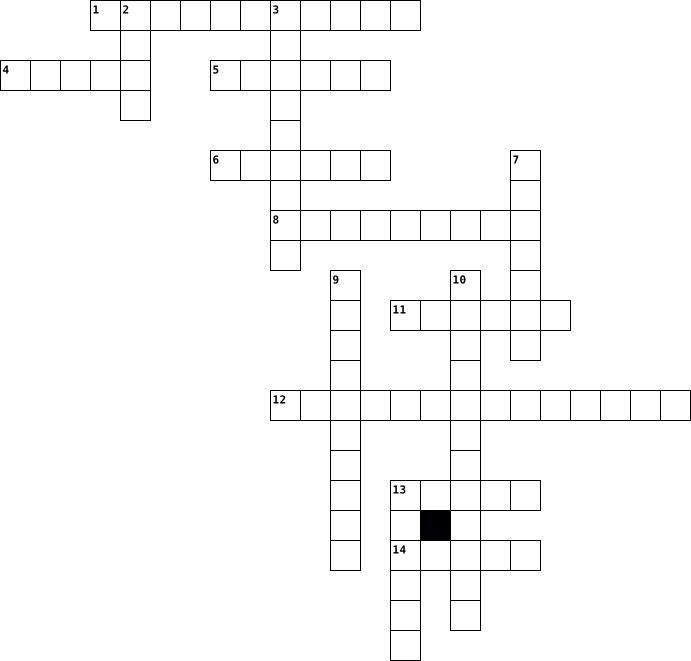
Across
- (Anti-communist investigations in the U.S.)
- RIGHTS (Movement for equality and desegregation)
- (Summit meeting between U.S., U.K., and USSR)
- WALL (Barrier dividing East and West Berlin)
- (End of the Korean War)
- WAR (Conflict on the Korean Peninsula)
- (Independence movements in Africa and Asia)
- REVOLUTION (Overthrow of Batista's regime)
- AGE (Era of space exploration and satellite launches)
Down
- WAR (Period of political tension)
- UPRISING (Revolt against Soviet control in Hungary)
- WAR (Conflict between North and South Vietnam)
- (Conflict over the Suez Canal)
- (Landmark Supreme Court case on segregation)
- (Fidel, Cuban leader and revolutionary)
15 Clues: (End of the Korean War) • (Conflict over the Suez Canal) • WAR (Period of political tension) • WAR (Conflict on the Korean Peninsula) • (Fidel, Cuban leader and revolutionary) • REVOLUTION (Overthrow of Batista's regime) • (Anti-communist investigations in the U.S.) • (Independence movements in Africa and Asia) • WALL (Barrier dividing East and West Berlin) • ...
Crossword 2022-05-23

Across
- a type of ceremony that is usually associated with the end of university education.
- One of the two sides of the Civil War in which the General saw service.
- Is a person who is no more serving in an army.
Down
- So called rank of the General by her grandaughter.
- The general's original rank in the Civil War.
- A type of riffle that has seen usage during the Civil War.
- A world-famous American Drink.
- the word used by the general to describe girls.
- The shoes which were supposed to be worn by the general's Granddaughter during the ceremony.
9 Clues: A world-famous American Drink. • The general's original rank in the Civil War. • Is a person who is no more serving in an army. • the word used by the general to describe girls. • So called rank of the General by her grandaughter. • A type of riffle that has seen usage during the Civil War. • One of the two sides of the Civil War in which the General saw service. • ...
Manifest Chronicles: Threads of War, Rebirth, Liberation 2023-12-14

Across
- The withdrawal of Southern states from the Union, leading to the Civil War.
- Network of secret routes and safe houses used to help slaves escape to freedom.
- A person who advocated for the end of slavery
- The belief that the U.S. was destined to expand across the continent
Down
- Former slaves who were emancipated after the Civil War.
- The act of setting slaves free
- Conflict between the U.S. and Mexico in the mid-19th century.
- Landmark Supreme Court case that declared slaves were property.
- The period after the Civil War aimed at rebuilding the Southern states
9 Clues: The act of setting slaves free • A person who advocated for the end of slavery • Former slaves who were emancipated after the Civil War. • Conflict between the U.S. and Mexico in the mid-19th century. • Landmark Supreme Court case that declared slaves were property. • The belief that the U.S. was destined to expand across the continent • ...
1960s and 1970s 2025-04-01

Across
- Last name of the last Shah of Iran
- Nixon's Domestic Policy
- This law, passed in 1964, ensured that poll taxes and literacy tests at voting places was banned.
- Founder of HUELGA
- Republican Presidential candidate in 1980.
- This Civil Rights Leader founded the Black Power Movement
- Nation that helped get the 6 out of Iran by housing and feeding them.
- The leader of North Vietnam from 1955-1969.
- War that led to US inflation based on imported oil prices.
Down
- This Constitutional amendment grants Congress the power to appoint a VP in the event of a vacancy.
- Nixon's foreign policy blueprint that featured "telling it like it was - Realpolitik"
- Leader in the feminist movement during the 60s and 70s
- This Civil Rights activist preached peaceful protest in an effort to change race relations in the US.
- Pres. Johnson's plan to bomb N. Vietnam into surrender
- The only US President to ever resign from office.
- Democratic Presidential candidate in 1968.
- Name of the "movie" that Tony Mendez was producing
- The accords that made peace between Egypt and Israel
- This Civil Rights Activist preached "Self Defense"
- The CIA code name for the group that broke into the Watergate.
- Where 4 people were killed for protesting cover-ups and lies about the Vietnam War.
21 Clues: Founder of HUELGA • Nixon's Domestic Policy • Last name of the last Shah of Iran • Democratic Presidential candidate in 1968. • Republican Presidential candidate in 1980. • The leader of North Vietnam from 1955-1969. • The only US President to ever resign from office. • Name of the "movie" that Tony Mendez was producing • This Civil Rights Activist preached "Self Defense" • ...
US Presidents 2025-01-13

Across
- the heaviest president
- only president from New Hampshire
- nickname was Old Hickory
- first republican president
- first president to serve two non-consecutive terms
- was only president for one month
- winning general in the Civil War
- president during World War I
- second president to die in office
Down
- father of the Constitution
- only president who never married
- winning general in World war II
- the teddy bear is named after him
- first black president
- he was a president, not an orange cat
- George Washington's vice-president
- last president to be assassinated
17 Clues: first black president • the heaviest president • nickname was Old Hickory • father of the Constitution • first republican president • president during World War I • winning general in World war II • only president who never married • was only president for one month • winning general in the Civil War • only president from New Hampshire • the teddy bear is named after him • ...
America 2024-10-08

Across
- ______ Renaissance, cultural movement of the 1920s (6)
- 16th President during the Civil War (7)
- Icon of American independence (7,4)
- Historic battle site in Texas (5)
- Competitive event featuring horse riding and lassoing (6)
- Explorer who reached America in 1492 (8)
- Norse explorers who reached North America (7)
- Great ______, movement of African Americans to northern cities (9)
- U.S. national bird (4,5)
- Religious group seeking freedom in America (8)
- Agency responsible for the U.S. space program (4)
- Early settlers of New England (8)
- Era of banned alcohol in the 1920s (11)
- Aid for European recovery after WWII (8,4)
- Foundational document of the U.S. government (12)
- Scandal leading president Nixon’s resignation (9)
- Classic American roadside restaurant (5)
- A change to the U.S. Constitution (9)
- Centre of the American film industry (9)
- Failed invasion of Cuba in 1961 (3,2,4)
Down
- Period after the Civil War (14)
- “America's pastime” and a popular sport (8)
- Symbol of the U.S. government (5,3)
- U.S. law enforcement agency (3)
- First national park in the U.S. (11)
- Great ______, region known for farming and agriculture (6)
- American West during the 19th century (8)
- Popular music genre originating in the U.S. (4,1,4)
- Proclamation freeing slaves (12)
- Site of a pivotal Civil War battle (10)
- Harvest festival celebrated in November (12)
- Boston ______, protest against British taxation (3,5)
- Trade agreement between U.S., Canada, and Mexico (5)
- President during the Great Depression (9)
- Conflict that led to U.S. independence (10)
- Unique American music genre born in New Orleans (4)
36 Clues: U.S. national bird (4,5) • Period after the Civil War (14) • U.S. law enforcement agency (3) • Proclamation freeing slaves (12) • Historic battle site in Texas (5) • Early settlers of New England (8) • Symbol of the U.S. government (5,3) • Icon of American independence (7,4) • First national park in the U.S. (11) • A change to the U.S. Constitution (9) • ...
Power Sharing 2017-05-31

Across
- Eelam clue
- Prudential clue
- concurrent list clue
- Union list clue
- majority clue
- coming clue
- sinhala clue
- accommodation clue
- community clue
- together clue
- ethnic clue
- coalition govt clue
- Civil War clue
Down
- federalism clue
- state list clue
- decentralization clue
- Jurisdiction clue
- linguistic states clue
- horizontal clue
- french speaking clue
20 Clues: Eelam clue • coming clue • ethnic clue • sinhala clue • majority clue • together clue • community clue • Civil War clue • federalism clue • state list clue • Prudential clue • Union list clue • horizontal clue • Jurisdiction clue • accommodation clue • coalition govt clue • concurrent list clue • french speaking clue • decentralization clue • linguistic states clue
Vocabulario 2025-04-15

Across
- Rights
- flood
- Artificial
- Preserve
- intelligence
- Illiteracy
- Rate
- War
- cost
- environment
- protest
- Spokesman
Down
- Refugee
- away
- Climate
- hurricane
- reduce
- earthquake
- living
- Debt
- birth
- waste
- layer
- sustainable
- taxes
- grow
- crime
- Tornado
- ozone
- Change
- Civil
- made something worse
32 Clues: War • away • Debt • Rate • grow • cost • flood • birth • waste • layer • taxes • crime • ozone • Civil • Rights • reduce • living • Change • Refugee • Climate • Tornado • protest • Preserve • hurricane • Spokesman • Artificial • earthquake • Illiteracy • sustainable • environment • intelligence • made something worse
Chapter 18 Valarie S-W 2026-02-25

Across
- Northerner that with luggage made of carpet who came south after the Civil War
- accused without a trial
- separating people by their race
- was passed to make African-American people lives harder
- an office that provides specific information
- African-American, who fled in Kansas in the 80s
Down
- only if your father and grandfather have voted
- every person has it
- freed African-Americans after the Civil War
9 Clues: every person has it • accused without a trial • separating people by their race • freed African-Americans after the Civil War • an office that provides specific information • only if your father and grandfather have voted • African-American, who fled in Kansas in the 80s • was passed to make African-American people lives harder • ...
Cold War 2018-06-19

Across
- Missile Crisis
- Fighting ended July 27, 1953
- Communist and Capitalist
- Dangerous weapon
- Soviet government
- Joseph Stalin
- Had a wall
Down
- Amount of sections of Berlin
- US government
- What the US and the Soviet Union had
- Had a civil war
- US and South Korea were...
- Ended April 30, 1975
- Intervened in the Korean War
- What women were fighting for at the time
15 Clues: Had a wall • US government • Joseph Stalin • Missile Crisis • Had a civil war • Dangerous weapon • Soviet government • Ended April 30, 1975 • Communist and Capitalist • US and South Korea were... • Amount of sections of Berlin • Fighting ended July 27, 1953 • Intervened in the Korean War • What the US and the Soviet Union had • What women were fighting for at the time
Effects of the Civil War 2024-04-10

Across
- Many of the kids were __________ in the war
- Many people were worried when the enslaved people got freed because they didn't know how to _______
- How many people ended up dying
- After the war, the confederate dollar was worth _________.
- Who was the leader of the Confederacy army?
- Who was the leader of the Union army?
- How was the leader of the 54th Massachusetts
- The Emancipation Proclamation __________ many native american lives.
- Plantation owners made wealth off of ________
- Many of the kids grew up _______ after the war
- Many women worked as __________ in the war
Down
- Abraham Lincoln wrote the _________
- Women ran the _________ while the men were in the war.
- How many people were wounded
- Families had a _________ of food and clothes during the war.
- Many people didn't _____ the Emancipation Proclamation
- Many of the plantations were __________
- Since a lot of the men died in the civil war, many states took years to ________
- Many of the south had to ________ a lot of the cities.
- What was the first black regiment?
20 Clues: How many people were wounded • How many people ended up dying • What was the first black regiment? • Abraham Lincoln wrote the _________ • Who was the leader of the Union army? • Many of the plantations were __________ • Many women worked as __________ in the war • Many of the kids were __________ in the war • Who was the leader of the Confederacy army? • ...
US President Word Puzzle 2022-03-21

Across
- Wrote the Declaration of Independence
- Co-founder of the Democratic -Republican party
- Contributed in freeing the black slaves after the Civil War
Down
- Leading member of the Continental Congress
- Main founder of the Democratic Party
- Fought in the American Revolutionary War
- General of the Civil War
- Helped formulate the Monroe Doctrine
8 Clues: General of the Civil War • Main founder of the Democratic Party • Helped formulate the Monroe Doctrine • Wrote the Declaration of Independence • Fought in the American Revolutionary War • Leading member of the Continental Congress • Co-founder of the Democratic -Republican party • Contributed in freeing the black slaves after the Civil War
US President Word Puzzle 2022-03-21

Across
- Wrote the Declaration of Independence
- Co-founder of the Democratic -Republican party
- Contributed in freeing the black slaves after the Civil War
Down
- Leading member of the Continental Congress
- Main founder of the Democratic Party
- Fought in the American Revolutionary War
- General of the Civil War
- Helped formulate the Monroe Doctrine
8 Clues: General of the Civil War • Main founder of the Democratic Party • Helped formulate the Monroe Doctrine • Wrote the Declaration of Independence • Fought in the American Revolutionary War • Leading member of the Continental Congress • Co-founder of the Democratic -Republican party • Contributed in freeing the black slaves after the Civil War
Reconstruction Study Guide 2023-12-06

Across
- Name for the group in Congress who wanted strict measures imposed on former Confederate states
- Redeemer governments introduced this separation of whites and African Americans in public places.
- Johnson angered Radical Republicans when he granted thousands of these to wealthy southerners and former Confederate officials
- Redeemers established this tax to deny the vote to African Americans
- This Vice-President became President when Lincoln was assassinated in 1865.
- Term for Democrats who worked to get rid of Reconstruction reforms after 1877
- In 1870 this amendment gave African American men the right to vote
- President Johnson survived removal from office by this many votes in the Senate.
- This agency was established by Congress in 1865 to provide relief for former slaves
- Congress proposed this much stricter plan than the one proposed by Lincoln
- Sixteen African Americans were elected to this lawmaking body during Reconstruction
- This 1865 amendment to the constitution made slavery illegal.
Down
- Congress voted to do this to the President when he removed a cabinet official without the consent of the Senate
- This is what southerners called northerners who came to the south after the Civil War.
- This is what southerners called white southern Republicans after the Civil War
- This secret society was formed in 1866 to oppose civil rights for African Americans
- These laws in the south after Reconstruction enforced segregation.
- Radical Republicans were outraged that Johnson’s plan for reconstruction was resulting in the denial of these for African Americans
- The newly formed governments of the southern states began to pass these laws that denied civil rights to former slaves
- Lasting from 1865 to 1877, this was the process of readmitting the former Confederate states to the Union
- This 1896 Supreme Court decision ruled that segregation was constitutional
- The Fourteenth Amendment granted this to all people born in the United States
- This 1868 amendment outlawed states violating the civil rights of American citizens.
- In 1867 the Congress passed Reconstruction Acts that put southern states under this kind of control
- The election of this man in 1876 led to the removal of all federal troops from the south
- Johnson set up a program for each southern state to establish these
- President Johnson opposed laws that gave this kind of treatment to African Americans
- President Lincoln proposed this plan that offered amnesty to southerners
- This Republican and former Civil War general became president in 1869
29 Clues: This 1865 amendment to the constitution made slavery illegal. • These laws in the south after Reconstruction enforced segregation. • In 1870 this amendment gave African American men the right to vote • Johnson set up a program for each southern state to establish these • Redeemers established this tax to deny the vote to African Americans • ...
History Unit 4 Crossword 2022-01-28

Across
- Premier of Quebec who started the Quebec independence movement.
- President of France during the cold war
- A crisis that was a major event in world history
- President of the United states during the cold war. Also ended the Vietnam war.
- proxy war of the Cold war
- Easternmost canadian province
- wall built to separate Germany
- Premier of quebec during the 1960s and 70s
- Canadian Prime Minister during the 1960s
Down
- Legendary Canadian who created our constitution
- Soviet Union vs the United States
- Civil rights activist in Canada in the 1950s
- President of the United States during the cold war
- Organization designed to prevent wars and keep the peace
- Movie actor during the 1950s who played in a cold war movie called Hellcats of the navy
- Athlete who ran across canada to raise money for cancer
16 Clues: proxy war of the Cold war • Easternmost canadian province • wall built to separate Germany • Soviet Union vs the United States • President of France during the cold war • Canadian Prime Minister during the 1960s • Premier of quebec during the 1960s and 70s • Civil rights activist in Canada in the 1950s • Legendary Canadian who created our constitution • ...
Civil War SS 2023-01-25

Across
- Protect
- get rid of
- captured
- promise
- privilege
- book
- war
Down
- split
- President
- Safe
- beginning
11 Clues: war • Safe • book • split • Protect • promise • captured • President • privilege • beginning • get rid of
Civil War SS 2023-01-25

Across
- Protect
- get rid of
- captured
- promise
- privilege
- book
- war
Down
- split
- President
- Safe
- beginning
11 Clues: war • Safe • book • split • Protect • promise • captured • President • privilege • beginning • get rid of
Unit 6 Vocabuluary Assignment - Crossword Puzzle 2025-04-23

Across
- A Northerner who moved to the South after the war, often seen as exploiting the region.
- The period after the Civil War when the Southern states were reorganized and reintegrated into the Union.
- Abolished slavery, gave African-Americans citizenship, and gave African American men the right to vote.
- The Northern states during the Civil War that remained loyal to the U.S. government.
- A pardon for offenses, such as President Andrew Johnson’s offer of amnesty to many former Confederates
- A system where freedmen rented land from landowners and paid with a portion of their crops, often trapping them in poverty.
- Government agency that helped formerly enslaved people adjust to freedom by providing food, education, and medical care.
- The 1863 declaration by President Abraham Lincoln that freed slaves in Confederate states.
- The act of formally withdrawing from an organization or alliance, such as the Southern states leaving the Union.
- The system of forced labor where people were considered property.
- Laws passed in the South to limit the freedom of African Americans after the Civil War.
Down
- A short speech by Lincoln honoring fallen soldiers and emphasizing national unity.
- The rights of citizens to political and social freedom and equality.
- A person who wanted to end slavery in the United States.
- The group of Southern states that seceded and formed their own government.
- The belief that individual states have the right to govern themselves, often used to justify secession.
- Laws that enforced racial segregation in the South after Reconstruction.
- The Union’s military strategy to defeat the Confederacy by blockading Southern ports and controlling the Mississippi River to “squeeze” the South, like an anaconda snake.
18 Clues: A person who wanted to end slavery in the United States. • The system of forced labor where people were considered property. • The rights of citizens to political and social freedom and equality. • Laws that enforced racial segregation in the South after Reconstruction. • The group of Southern states that seceded and formed their own government. • ...
causes of the Civil war 2024-04-16

Across
- man who burned Columbia
- who had the most casualties
- what did the men leave the women to work on
- made plantation owners scared
- who won the war
- when did Lincoln die
- the slaves were free but still lived at the ___
- slaves got this
- boys had to be this during war
Down
- women had to act as these during war
- had the most rebuilding to do
- because slaves were free,____ increased
- years it took to rebuild southcarolina
- slaves where able to be known as___
- when did civil war end
- what did Sherman want the south to do
- the men who returned, came home___
- woman had to do this while watching the plantation
- kind of help provided on the plantation
- husbands died leaving women___
20 Clues: who won the war • slaves got this • when did Lincoln die • when did civil war end • man who burned Columbia • who had the most casualties • had the most rebuilding to do • made plantation owners scared • husbands died leaving women___ • boys had to be this during war • the men who returned, came home___ • slaves where able to be known as___ • women had to act as these during war • ...