
clay rich soil crossword Crossword Puzzles
Ancient Egyptian Vocabulary Puzzle 2022-01-06

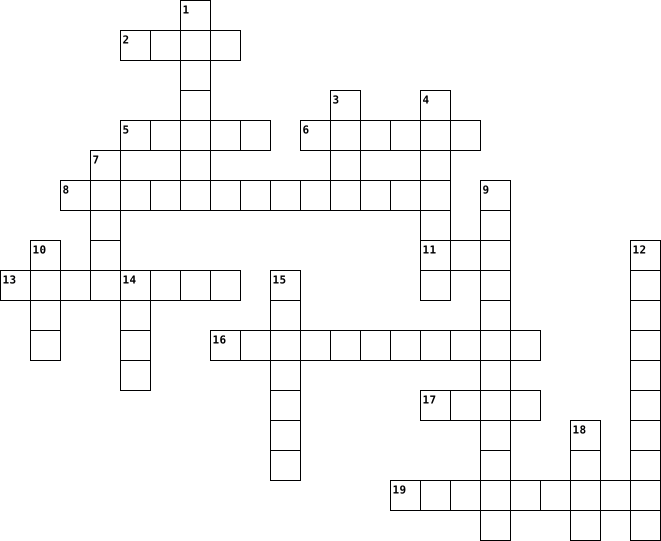
Across
- a combination of minerals which metals can be made
- woven cloth
- a life that some people believe begins when a person dies
- a person who is trained inn writing
- a person who rules for a king/queen who is too young
- soil the hot sand of the Egyptian desert
- a bucket attached to a long pole used to move water for irrigation
- the worshipping of only one God
- government officials
- a family of rulers
- dangerous, fast-moving waters
- huge, 3-D triangular shaped tombs for the Egyptian pharaohs
Down
- monarchy a government in which the ruler has total power
- a fan shaped area of rich soil at the mouth of a river
- the worshipping of many gods
- cutting down almost all the trees in an area
- the study of the sun, moon, stars and planets
- super super dry
- the process of treating a body for burial
- an agricultural society
- rich black Egyptian soil
- land turning to desert due to lack of trees
- an Egyptian king or queen
- Egyptian writing that involved using pictures to represent words
- Stone a huge slab found in 1799 which had hieroglyphics and Greek writing
- a building for storing grain
- a government run by a religious leader
- grassy plains that stretch across Africa
- a wild reed plant from which "paper" was made
29 Clues: woven cloth • super super dry • a family of rulers • government officials • an agricultural society • rich black Egyptian soil • an Egyptian king or queen • the worshipping of many gods • a building for storing grain • dangerous, fast-moving waters • the worshipping of only one God • a person who is trained inn writing • a government run by a religious leader • ...
Soil 2017-02-08

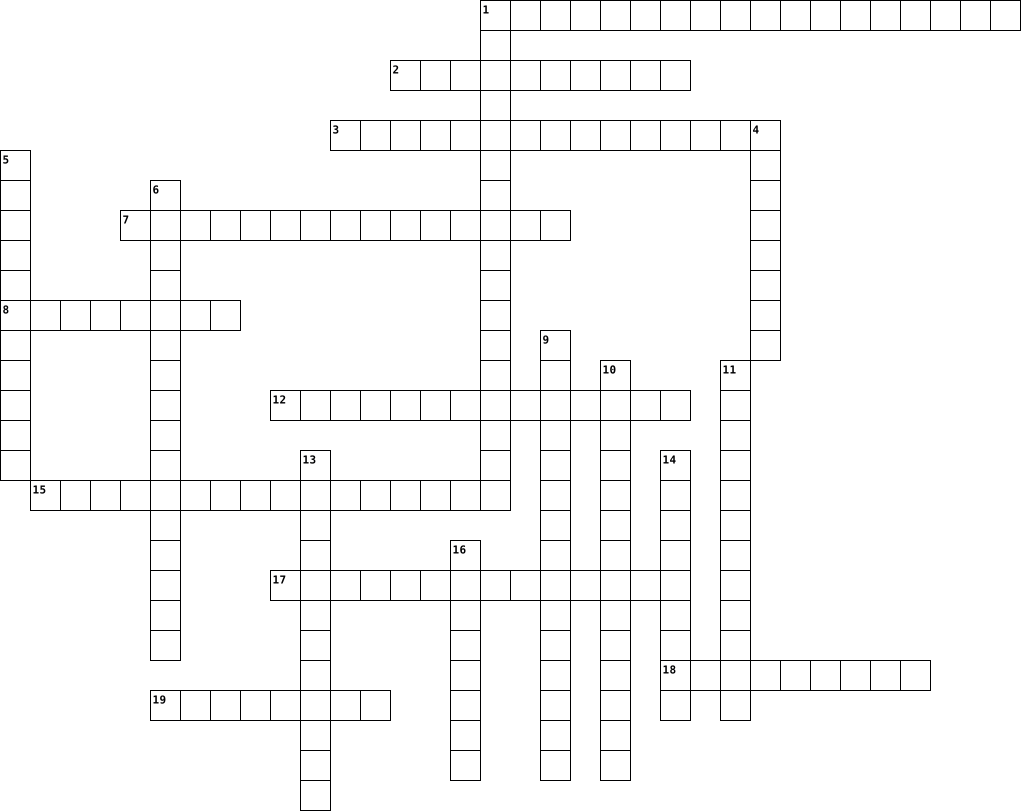
Across
- layer of rock beneath the soil
- horizon a soil layer with physical and chemical properties that differ from those of the soil layers above or below it
- weathering the breakdown of rock into smaller pieces of the same material without any change to its composition
- the process in which layers or sheets of rock gradually break off
- the expansion of desert conditions in an area where the natural plant cover has been destroyed
- the decaying organic matter in soil
- the amount of open space between an object
Down
- the size, shape, and position of the particles of soil
- weathering breakdown or decomposition of rock that takes place when minerals change through chemical processes
- the top layer of soil that contains humus
- a chemical reaction in which an element combines with oxygen to form an oxide; iron oxide = rust
- the process by which natural forces break down rocks and soil
- the ability to let water pass through
- the makeup of rock or soil describing the minerals or elements present in it
- the process of wearing something down by friction
- the process by which rainwater dissolves and carries away minerals and nutrients in topsoil
- the process in which transported sediment is laid down
- the process in which sediment is picked up and moved from one place to another
18 Clues: layer of rock beneath the soil • the decaying organic matter in soil • the ability to let water pass through • the top layer of soil that contains humus • the amount of open space between an object • the process of wearing something down by friction • the size, shape, and position of the particles of soil • the process in which transported sediment is laid down • ...
soil 2017-02-10

Across
- the process in which sediment is picked up and moved from one place to another
- the decaying organic matter in soil
- the top layer of soil that contains humus
- the amount of open space between an object
- weathering the breakdown of rock into smaller pieces of the same material without any change to its composition
- a chemical reaction in which an element combines with oxygen to form an oxide; iron oxide = rust
- the expansion of desert conditions in an area where the natural plant cover has been destroyed
- the process by which rainwater dissolves and carries away minerals and nutrients in topsoil
- the process in which layers or sheets of rock gradually break off
Down
- the makeup of rock or soil describing the minerals or elements present in it
- the process in which transported sediment is laid down
- horizon a soil layer with physical and chemical properties that differ from those of the soil layers above or below it
- the size, shape, and position of the particles of soil
- the ability to let water pass through
- weathering breakdown or decomposition of rock that takes place when minerals change through chemical processes
- the process by which natural forces break down rocks and soil
- the process of wearing something down by friction
- layer of rock beneath the soil
18 Clues: layer of rock beneath the soil • the decaying organic matter in soil • the ability to let water pass through • the top layer of soil that contains humus • the amount of open space between an object • the process of wearing something down by friction • the process in which transported sediment is laid down • the size, shape, and position of the particles of soil • ...
Avalanches and Landslides Crossword Puzzle 2023-02-24

Across
- the downward movement of a large chunk of solid snow
- an opening in the earth's surface through which hot rocks and gases can escape
- the downhill movement of large amounts of rock and soil
- filled with the maximum amount of a liquid or solid substance
- the steep slope left behind when a landslide falls away
- the slow, almost unnoticeable, movement of loose soil down the surface of a slope
- to make a surface slippery
- a violent shaking movement of the outer layer, or crust, that surrounds the earth
- the movement down a slope of a block of rock and soil. The slumped block tilts back towards the slope
- the violent release of steam, rocks, dust, and ash through an opening in the earth's surface
- water that is found in rocks and soil beneath the surface
Down
- a mixture of rocks, melting snow and ice, and the ash and dust from an erupting volcano
- a burst of energy that is released from the center of an earthquake
- the downward movement of a mass of ice and snow
- a coarse rock made up of grains of sand joined together
- the large-scale removal of trees and other vegetation
- describes a slope that is likely to start moving downward
- a kind of soft rock made from tiny pieces of mud and clay
- the slipping movement of rock along one or more surfaces
- loose solid material such as soil, mud, small pieces of rock, and
- the rapid downhill movement of soil mixed with water
21 Clues: to make a surface slippery • the downward movement of a mass of ice and snow • the downward movement of a large chunk of solid snow • the rapid downhill movement of soil mixed with water • the large-scale removal of trees and other vegetation • a coarse rock made up of grains of sand joined together • the downhill movement of large amounts of rock and soil • ...
Ceramics Review 2024-12-13

Across
- – The process of shaping clay on a potter’s wheel.
- – The process of aligning clay on a wheel before shaping.
- – Clay that is partially dry and firm enough to carve.
- – The surface quality of a ceramic piece, either tactile or visual.
- – The first firing that hardens the clay but leaves it porous.
- – A hand-building method using rolled clay strands stacked in layers.
- – A turntable used for decorating, carving, or assembling clay pieces.
- – A pointed tool used for scoring, cutting, fine details, or testing thickness.
- – The tool used for throwing pottery.
- – A flat, curved tool made of wood, metal, or plastic, used for shaping and smoothing.
- – A hand-building technique that involves shaping clay by pinching it between fingers.
Down
- – The base of a ceramic piece.
- – Small particles added to clay to improve strength and reduce shrinkage.
- – A type of decoration applied before the glaze. Can be applied to greenware
- – A coating applied to bisque ware that turns glass-like after firing.
- – Clay that is unfired.
- – The process of heating clay to a high temperature to harden it.
- – Scratching the surface of clay to help it stick when joining pieces.
- – _____ Dry: Clay that is fully dried and ready for firing.
- – A liquid form of clay used as a glue to join pieces together.
- – The oven-like device used to fire ceramics.
- – The primary material used in ceramics.
- – A removable surface placed on a wheel for shaping clay.
- – The process of kneading clay to remove air bubbles and improve consistency.
- – A flat piece of clay used in hand-building.
25 Clues: – Clay that is unfired. • – The base of a ceramic piece. • – The tool used for throwing pottery. • – The primary material used in ceramics. • – The oven-like device used to fire ceramics. • – A flat piece of clay used in hand-building. • – The process of shaping clay on a potter’s wheel. • – Clay that is partially dry and firm enough to carve. • ...
Brooks Ceramics Puzzle 2020-08-18

Across
- formed as residual deposits in soil and remain at the site of formation
- clays that have been transported from their original location by water erosion and deposited in a new sedimentary deposit
- secondary clays
Down
- highly plastic secondaryformed from volcanic ash
- The purest of primary clay
- highly plastic secondary that can shrink
- main component of clay
- a furnace or oven used for burning, baking, or drying, especially one for calcining lime or firing pottery.
- an impervious layer or coating of a vitreous substance which has been fused to a ceramic body through firing
- a combination of silica, aluminum oxide, and water
10 Clues: secondary clays • main component of clay • The purest of primary clay • highly plastic secondary that can shrink • highly plastic secondaryformed from volcanic ash • a combination of silica, aluminum oxide, and water • formed as residual deposits in soil and remain at the site of formation • ...
Early African Civilizations Name______________ 2015-02-03

Across
- A large country
- South of the Sahara Desert in Africa
- a type of ceramic
- tools used by humans
- traveling, moving
- A wind that changes with seasons
- to be defeated, invaded
- Aunts, uncles, grandparents cousins
- small primitive houses
- metal used to make steel
- groups of people
Down
- ghost, supernatural being
- a soil used to make pottery
- show or describe
- people who study prehistoric people
- Journey with a purpose
- paths, roads, a way to go
- grasslands with a few trees
18 Clues: A large country • show or describe • groups of people • a type of ceramic • traveling, moving • tools used by humans • Journey with a purpose • small primitive houses • to be defeated, invaded • metal used to make steel • ghost, supernatural being • paths, roads, a way to go • a soil used to make pottery • grasslands with a few trees • A wind that changes with seasons • ...
Early African Civilizations - Name______________ 2015-02-03

Across
- groups of people
- tools used by humans
- Journey with a purpose
- people who study prehistoric people
- ghost, supernatural being
- metal used to make steel
- paths, roads, a way to go
Down
- a soil used to make pottery
- grasslands with a few trees
- show or describe
- A wind that changes with seasons
- Aunts, uncles, grandparents cousins
- traveling, moving
- small primitive houses
- a type of ceramic
- to be defeated, invaded
- South of the Sahara Desert in Africa
- A large country
18 Clues: A large country • groups of people • show or describe • traveling, moving • a type of ceramic • tools used by humans • Journey with a purpose • small primitive houses • to be defeated, invaded • metal used to make steel • ghost, supernatural being • paths, roads, a way to go • a soil used to make pottery • grasslands with a few trees • A wind that changes with seasons • ...
Early African Civilizations - Name______________ 2015-02-03

Across
- A wind that changes with seasons
- tools used by humans
- people who study prehistoric people
- A large country
- show or describe
- paths, roads, a way to go
- South of the Sahara Desert in Africa
- Journey with a purpose
Down
- groups of people
- grasslands with a few trees
- a type of ceramic
- a soil used to make pottery
- Aunts, uncles, grandparents cousins
- to be defeated, invaded
- traveling, moving
- small primitive houses
- ghost, supernatural being
- metal used to make steel
18 Clues: A large country • groups of people • show or describe • a type of ceramic • traveling, moving • tools used by humans • small primitive houses • Journey with a purpose • to be defeated, invaded • metal used to make steel • paths, roads, a way to go • ghost, supernatural being • grasslands with a few trees • a soil used to make pottery • A wind that changes with seasons • ...
A.S 2022-01-18

Across
- texture feeling which soil is the finest soil.
- best to plant with.
- volume of air in soil.
- structure how particles are arranged in soil.
Down
- profile shows the different lays of soil.
- dead remain from animals and plants.
- finest soil.
- holds water loosely .
8 Clues: finest soil. • best to plant with. • holds water loosely . • volume of air in soil. • dead remain from animals and plants. • profile shows the different lays of soil. • structure how particles are arranged in soil. • texture feeling which soil is the finest soil.
environmental system 2025-05-08

Across
- Variety of life in a particular ecosystem
- A major regional community of plants and animals
- Long-term maintenance of environmental balance
- Contamination of air, water, or land
- Gas essential for respiration
- Breaking down organic waste into nutrient-rich soil
- heat in the atmosphere
- sources bodies of water that supply water for public and private use
- Land where water covers the soil
- method of waste disposal
- The process by which plants make food
Down
- A natural unit of living and nonliving components Climate– The condition of the atmosphere over time
- Chemical element present in all living things
- Protecting natural resources from destruction
- Source of fresh underground water
- The layer of gases surrounding Eart
- water water that collects on the ground
- Trees being cut down on a large scale
- Where an organism lives
- The slow wearing away of soil or rock
20 Clues: heat in the atmosphere • Where an organism lives • method of waste disposal • Gas essential for respiration • Land where water covers the soil • Source of fresh underground water • The layer of gases surrounding Eart • Contamination of air, water, or land • Trees being cut down on a large scale • The slow wearing away of soil or rock • The process by which plants make food • ...
Ceramics Terms 2017-08-30

Across
- Clay is rolled out to an even thickness using a rolling pin
- A long thin rope made by rolling a ball of clay back and forth between the hands until it stretches
- Using a potter’s wheel to make forms with clay
- Partially dried and hardened clay, still containing some moisture. Best stage to carve and attach other pieces of clay
- Oldest and simplest method of forming clay using only hands
- Glass forming material that fuses to clay body when fired
- Clay that has been fired once and not yet glazed
- An oven-like chamber used to fire ceramic clay, that is heated by electricity, gas, or wood
- Kneading clay to mix the moisture throughout and expel air bubbles
- Clay that is very dry and at its most fragile stage
Down
- To apply scratches to the surface of clay in preparation for joining 2 pieces together
- Unfired clay that is bone-dry and ready to be fired the 1st time
- Clay with creamy, soft consistency that when formed will hold shape
- Watered down clay used as “glue” to join pieces together
- Building Using hands and other objects to create objects with clay
- Clay that has been fired twice, the 2nd time after being glazed
- Firing 1st firing for Greenware
- Heating the clay in the kiln to a specific temperature. This bakes and hardens the clay.
18 Clues: Firing 1st firing for Greenware • Using a potter’s wheel to make forms with clay • Clay that has been fired once and not yet glazed • Clay that is very dry and at its most fragile stage • Watered down clay used as “glue” to join pieces together • Glass forming material that fuses to clay body when fired • Clay is rolled out to an even thickness using a rolling pin • ...
Clay 2023-10-06

Across
- the tool used to lift clay off a pottery wheel
- the machine used to fire the clay
- what we call bone-dry clay
- the last step when connecting two pieces of clay together
- you can still ______ clay that has not been fired
- clay that has been bisque fired is no longer recyclable, it is _______
- making small scratches in the surface of the clay (SSS)
- clay that is moist and easy to mold
Down
- the special paint we use to decorate clay
- what we call clay after the second firing
- what we call clay after the first firing
- the tool used to poke small holes in clay
- liquid clay that is used as glue
13 Clues: what we call bone-dry clay • liquid clay that is used as glue • the machine used to fire the clay • clay that is moist and easy to mold • what we call clay after the first firing • the special paint we use to decorate clay • what we call clay after the second firing • the tool used to poke small holes in clay • the tool used to lift clay off a pottery wheel • ...
Emglish Task 5, Part C 2025-06-14

Across
- Clues:
- main theme of the story involving corruption (7 letters) → Scandal
- opposite of a lie (5 letters) → Truth
- desire for more money (5 letters) → Greed
- Puzzle (Guidelines):
- that keeps readers turning the pages (8 letters) → Suspense
Down
- people buy hoping to get rich (6 letters) → Ticket
- Entries (Words):
- principle shown by telling the truth (7 letters) - Honesty
- need to create a crossword puzzle with 10–15 entries. Here's how to approach it:
10 Clues: Clues: • Entries (Words): • Puzzle (Guidelines): • opposite of a lie (5 letters) → Truth • desire for more money (5 letters) → Greed • people buy hoping to get rich (6 letters) → Ticket • principle shown by telling the truth (7 letters) - Honesty • that keeps readers turning the pages (8 letters) → Suspense • ...
Vocab 1 2017-02-20

Across
- the layer of a soil profile immediately below the A horizon, containing deposits of leached material
- the layer of a soil profile immediately below the B horizon and above the bedrock, composed of weathered rock little affected by soil-forming processes.
- occurs when the ground gets more water than it can absorb and it washes away
- a broad-based approach that integrates practices for economic control of pests
- the layer of unconsolidated rocky material covering bedrock.
- a substance used for killing insects
- is a way of growing crops or pasture from year to year without disturbing the soil through tillage
- a layer generally parallel to the soil crust, whose physical characteristics differ from the layers above and beneath
- a thing, such as a row of trees or a fence, wall, or screen, that provides shelter or protection from the wind.
- the uppermost layer of soil containing humus, topsoil, and organic debris
- the action of clearing a wide area of trees
- defined as the wearing away of topsoil
- a chemical that destroys fungus
Down
- when using this, chemicals can harm both pests and non-pest organisms
- plowing along the contours of the land in order to minimize soil erosion
- the process by which water-soluble salts accumulate in the soil
- a group of chemicals composed of carbon, chlorine, and hydrogen. As pesticides, they are also referred to by several other names, including chlorinated organics, chlorinated insecticides, and chlorinated synthetics.
- a type of land degradation in which a relatively dry land region becomes increasingly arid, typically losing its bodies of water as well as vegetation and wildlife.
- the layer of loose leaves and organic debris at the surface of soil.
- Triangle: three sided figure that represents increasing or decreasing percentages of sand, silt and clay particles
- a substance that is toxic to plants and is used to destroy unwanted vegetation
- make or form (sloping land) into a number of level flat areas resembling a series of steps
- to saturate with water
- wear away or change the appearance or texture of (something) by long exposure to the air
24 Clues: to saturate with water • a chemical that destroys fungus • a substance used for killing insects • defined as the wearing away of topsoil • the action of clearing a wide area of trees • the layer of unconsolidated rocky material covering bedrock. • the process by which water-soluble salts accumulate in the soil • ...
Science Term 1 review 2015-12-08

Across
- The movement of weathered rocks and soil by wind, water and glaciers.
- A solid formed naturally and was never alive.
- A scientist who studies fossils and fossil records.
- Is the breakdown of dead animals and plants into smaller pieces
- What process are associated with the following agents: wind, water and rust?
- Remains or traces of organisms that lived long ago.
Down
- A material formed when air and water cause iron to become reddish brown.
- A rock formed from weathered material.
- A rock that changed from igneous or sedimentary or metamorphic due to high pressure and temperature.
- A type of soil with almost equal amounts of sand, silt and clay.
- A type of rock formed when molten rock cools and hardens.
- The layer of soil closest to Earth's surface.
- The part of soil made up of organic matter
13 Clues: A rock formed from weathered material. • The part of soil made up of organic matter • A solid formed naturally and was never alive. • The layer of soil closest to Earth's surface. • A scientist who studies fossils and fossil records. • Remains or traces of organisms that lived long ago. • A type of rock formed when molten rock cools and hardens. • ...
Soil 2017-02-15

Across
- the decaying organic matter in soil
- weathering breakdown or decomposition of rock that takes place when minerals change through chemical processes
- layer of rock beneath the soil
- the process by which natural forces break down rocks and soil
- the process of wearing something down by friction
- the expansion of desert conditions in an area where the natural plant cover has been destroyed
- a chemical reaction in which an element combines with oxygen to form an oxide; iron oxide = rust
- the top layer of soil that contains humus
Down
- weathering the breakdown of rock into smaller pieces of the same material without any change to its composition
- the process by which rainwater dissolves and carries away minerals and nutrients in topsoil
- the amount of open space between an object
- the process in which transported sediment is laid down
- the process in which layers or sheets of rock gradually break off
- the size, shape, and position of the particles of soil
- the makeup of rock or soil describing the minerals or elements present in it
- the ability to let water pass through
- the process in which sediment is picked up and moved from one place to another
- horizon a soil layer with physical and chemical properties that differ from those of the soil layers above or below it
18 Clues: layer of rock beneath the soil • the decaying organic matter in soil • the ability to let water pass through • the top layer of soil that contains humus • the amount of open space between an object • the process of wearing something down by friction • the process in which transported sediment is laid down • the size, shape, and position of the particles of soil • ...
Irrigation 2024-05-06

Across
- This type of soil has a high infiltration rate, rapid drainage and low storage capacity.
- Is another form of irrigation that is underground.
- Adhesion is measured in units of:
- After the percolation of gravitational water from the upper soil is completed, the soil is said to be at:
- The combined loss of water from the soil because of evaporation and transpiration:
- When a stem lacks turgidity, it will shrivel and is said to be:
- If the percentage of water drops to this percent the plant will die.
- Water movement from soil, to roots, to atmosphere is called:
- The spaces between soil particles.
- These reduce the tendency of water to form drops and reduce the tension between water and solids or other liquids, resulting in an increased wetting capacity of hydrophobic soils.
- An advantage to this type of irrigation system is lower installation cost.
- The speed at which a soil can absorb water.
- AKA aeration pores, most common in sandy soils.
- Smaller lines branching from mains
- Water makes plants rigid and able to stand up on their own, this is referred to as being:
- A simple method for determining when to water is observing signs of moisture ______.
- Instrument used to measure the water needs of plants:
Down
- The upward movement of water into micropores:
- The movement of water down through the soil.
- This type of system reduces labor cost and is more efficient but requires more maintenance. m
- When all of the pores are filled with water, the soil is said to be:
- The series of terminals in an irrigation system:
- The area that a station controls
- Water that is reclaimed, also known as recycled, nonpotable, or wastewater:
- This type of soil has a low infiltration rate, slow drainage, and high storage capacity.
- Pipes that transport water throughout the system:
- Applying small amounts of water to turfgrass:
- The vertical angle at which water leaves a sprinkler:
- Pumps that pull water from the source:
- Large lines that carry water from the source, to smaller lines:
- The two types of pop-up sprinkler heads are spray and ______.
- The horizontal pattern of water created by a sprinkler
- The attraction between molecules of water and surface soil particles:
- Water that drains from the macropores to move down through the soil:
34 Clues: The area that a station controls • Adhesion is measured in units of: • The spaces between soil particles. • Smaller lines branching from mains • Pumps that pull water from the source: • The speed at which a soil can absorb water. • The movement of water down through the soil. • The upward movement of water into micropores: • Applying small amounts of water to turfgrass: • ...
Ceramics II Vocabulary 2025-02-05

Across
- The stage of clay between plastic and bone dry when clay has dried, but may still be carved or joined to other pieces
- Unfired clay sculpture or pottery
- Making a hollow in centered clay on the wheel, then creating a base and shaping the clay into its intended basic form (cylinder, bowl, etc.)
- Ceramic ware that has gone through the second kiln firing in which glazes are melted to form a smooth glassy surface.
- Objects made from clay that permanently retain their shape after they have been heated to specific temperatures.
- Heating pottery or clay sculpture to a temperature hot enough to render it hard and durable.
- Dull surface, not shiny.
- A mechanical device used to prepare clay slabs.
- Decorating technique where design is formed by cutting or carving shallow lines in clay surface.
- Decorating technique where textured or patterned material or object is impressed into clay surface.
- A coating of glass that is fused to the surface of a ceramic piece.
- A fluid suspension of clay in water, used in joining clay pieces or as surface decoration; usually the consistency of thick cream.
- A color or design applied underneath another glaze which creates designs and patterns that come up through another layer of glazing that covers it.
Down
- Stage of drying when moisture in the clay body has evaporated so the clay surface no longer feels cold.
- A support or frame used when sculpting clay; usually removed before firing.
- The stage of clay where it has the quality of moldable flexibility as damp clay
- The process of applying pressure to a lump of clay on a spinning wheel head to position it for even rotation.
- Machine with a horizontally spinning wheel head upon which potters form and trim clay vessels by hand.
- The process of shaping plastic clay on the potter’s wheel.
- A structure built to fire clay at high temperatures.
- A base for throwing, hand-building, or drying; usually made of plastic, pressboard, plywood, or plaster.
- At the leather-hard stage, removal of excess clay from a piece, using any of a variety of sharp cutting tools.
- Ceramic ware that has gone through the first firing at a relatively low temperature and still maintains its porous state.
- Decorating technique achieved by scratching or carving through a layer of slip or glaze before firing to expose contrasting clay body beneath.
- Beating clay with a flat stick to strengthen joints, thin walls, alter shapes, or create texture.
25 Clues: Dull surface, not shiny. • Unfired clay sculpture or pottery • A mechanical device used to prepare clay slabs. • A structure built to fire clay at high temperatures. • The process of shaping plastic clay on the potter’s wheel. • A coating of glass that is fused to the surface of a ceramic piece. • ...
pottery crossword. 2021-09-13

Across
- the clay for optimal use
- Fire-Unglazed clay
- mixtures of clay, earthen elements, powders, and water and shaping them into desired forms.
- unfired clay
- a heating chamber used to transform materials at high temperatures
- hard- clay that is dry enough but still damp enough to be joined to other pieces or carved without distortion.
- dry-clay which is ready to be fired
- process from the time the clay touches the wheel to the time the wheel is stopped
- mixture of powdered materials that often includes a pre melted glass made into a slip and applied to a ceramic body
Down
- clay slurry used to produce pottery and other ceramic wares
- made out of clay and baked in a kiln
- the simplest and oldest method of construction
- clay that has been fired for the first time.
- fire-Typically the second firing of a piece pottery which has been coated with glass forming materials.
- has been applied and the piece has been fired for a second time
- slabs of clay that are then formed around molds or shaped by hand.
- outstanding property of clay–water systems
- to scratch hatch marks on it as part of joining clay pieces together.
- building- a ceramics technique that allows you to create forms with clay and your hands
- building up sides of pots with successive rolls of clay.
20 Clues: unfired clay • Fire-Unglazed clay • the clay for optimal use • dry-clay which is ready to be fired • made out of clay and baked in a kiln • outstanding property of clay–water systems • clay that has been fired for the first time. • the simplest and oldest method of construction • building up sides of pots with successive rolls of clay. • ...
colonial America 2021-03-01

Across
- craftsmen
- settled by puritans
- house caretakers
- made for debtors
- sold goods to colonists
Down
- settled by Quakers
- lost colonies
- relied on family
- rich farmland
- good harbors
- rocky soil
- settled by Samaritans
- Virginia company
13 Clues: craftsmen • rocky soil • good harbors • lost colonies • rich farmland • relied on family • house caretakers • Virginia company • made for debtors • settled by Quakers • settled by puritans • settled by Samaritans • sold goods to colonists
Soil Unit Assessment 2022-03-26

Across
- component of soil made of fine particles of rock pieces
- wearing away of land
- component of soil with a silky and smooth texture
Down
- SOME plants and roots are in this soil layer
- an inactive form of decayed organic matter
- grainy component of soil made of small rock pieces and mineral grains
- plants are more likely to get their nutrients from this layer
- soil layer that is made up of layers of rock
8 Clues: wearing away of land • an inactive form of decayed organic matter • SOME plants and roots are in this soil layer • soil layer that is made up of layers of rock • component of soil with a silky and smooth texture • component of soil made of fine particles of rock pieces • plants are more likely to get their nutrients from this layer • ...
Chapter 7 The Rock Cycle 2017-05-26

Across
- the breaking down of rocks on Earth's surface into smaller pieces
- a type of rock that forms from melted rock that cools and hardens
- a type of rock that forms when heat or pressure change an existing rock
- the smallest particles that make up soil
- the process of moving sediment from one place to another
Down
- the largest particles that make up soil
- a type of rock that forms when layers of sediment are pressed together
- the solid rock that forms Earth's surface
- the remains of decayed plants or animals in the soil
- a solid substance made of one or more minerals
- the sequence of processes that change rocks from one type to another over long periods
- a solid substance that occurs naturally in rocks or in the ground
- a layer in the soil
13 Clues: a layer in the soil • the largest particles that make up soil • the smallest particles that make up soil • the solid rock that forms Earth's surface • a solid substance made of one or more minerals • the remains of decayed plants or animals in the soil • the process of moving sediment from one place to another • ...
Earth History 2021-05-17

Across
- a mix of humus, sand, silt, clay, gravel, and/or pebbles
- the rock that forms earth’s crust
- dropping off sediments at their final location
- grinding and bumping of rocks
- the breaking down of sediments or rocks
- a rock that forms when layers of sediments get stuck together
- plants that grow in between rocks until they break apart
- using pressure to decrease the size and number of spaces between particles (to create sedimentary rocks like sandstone)
- when nitrogen and sulfur dissolves in raindrops
Down
- showing many layers or horizons of soil
- moving or pushing sediments by water or wind
- water getting into cracks, which freezes and expands to break apart rocks
- the material that holds particles together to make stone
- bits of dead plant and animal parts in soil
- water stored below earth’s surface
15 Clues: grinding and bumping of rocks • the rock that forms earth’s crust • water stored below earth’s surface • showing many layers or horizons of soil • the breaking down of sediments or rocks • bits of dead plant and animal parts in soil • moving or pushing sediments by water or wind • dropping off sediments at their final location • ...
Unit 4 Vocabulary Crossword 2023-11-30

Across
- a mixture of weathered rock and decayed plant and animal matter that forms over a long period of time
- in this type of weathering, the chemical bonds that hold the rock together are broken down and something new is formed
- this type of soil has very small grains, is sticky when it is wet but clumps when it is dry
- this type of soil has large grains which allows water to flow through it easily
- the process of rock(s) breaking down into smaller pieces
- this type of soil is made up of decayed parts of things that were once alive, it is dark, soft and very crumbly
- what layers of soil are sometimes called
Down
- in this type of weathering, rocks are broken into smaller pieces but what they are made of stays the same
- this type of soil is made up of pieces smaller than sand and feels like a powder
- when sediment is dropped in a new location
- this type of soil is a combination of all the soil types
- the movement of sediment
- this type of physical weathering occurs when water enters a crack in the rock, freezes, and when it thaws it takes part of the rock away
13 Clues: the movement of sediment • what layers of soil are sometimes called • when sediment is dropped in a new location • this type of soil is a combination of all the soil types • the process of rock(s) breaking down into smaller pieces • this type of soil has large grains which allows water to flow through it easily • ...
Clay/Ceramics 2023-02-06

Across
- a is a very useful tool in a workshop to make fat blocks of clay in various sizes it is manually controlled
- not shiny
- indenting a line into a flat surface
- used to cut trim and score clay
- a liquid form of clay used as a glue or decoration
- refers to clay that is ready to be fired
- a decorating technique produced by applying layers of color or colors (underglazes or color slips) to leather hard clay and then scratching off parts of the layers to create contrasting images patterns and texture and reveal the clay color underneath
- three dimensional shape and structure of an object
- to bake in a kiln
- a decomposed granite type rock
- the art of making things of clay
- method of kneading clay to make it homogenous ridding clay of air bubbles
- colored decoration applied to bisque fired clay then coated with a clear glaze to make it shiny
Down
- a sharp instrument used to cut pierce and incise designs on clay
- small tools used to carve clay they are made out of flattened metal with sharp edges available in variety of shapes and sizes for all types of clay work
- unglazed clay fired once at a low temperature
- firing typically the second firing of a piece of pottery which has been coated with glass forming materials.
- unfired pottery that is bone dry a state in which clay forms are the most fragile
- a shaped tool made of flexible steel or plastic for pressing and smoothing clay in a mold
- refers to clay that is dry but still damp enough to be joined to other pieces or carved with distortion
- enclosed container of various sizes built of refractor brick and heated by electricity gas oil or wood to temps from 1500 to 2340 in which clay is fired
- cutter tool that cuts blocks of clay either to check for air bubbles or to cut it into smaller slabs
- rope like pieces of clay that are stacked to form a wall and build the object
- a shiny surface
- roughing up the surface of clay for joining
- one of the oldest craft techniques in which objects are constructed entirely by hand
- a toll that passes clay through a tube to form coils, which are used for handles on jugs cups teapots and for applied decorating
- a glassy coating that has been melted down onto a ceramic surface. It is used to decorate the piece and to seal the clay surfaces
28 Clues: not shiny • a shiny surface • to bake in a kiln • a decomposed granite type rock • used to cut trim and score clay • the art of making things of clay • indenting a line into a flat surface • refers to clay that is ready to be fired • roughing up the surface of clay for joining • unglazed clay fired once at a low temperature • a liquid form of clay used as a glue or decoration • ...
art 2023-05-17
Across
- wetting the clay for attaching
- scratching the clay for attaching
- tool a ribbon shaped tool used to cut or shave off
- a knife shaped tool used to cut things
- a rib liked tool used to smooth corners and edges
- tools tools used to model or shape
- clay is firm,sturdy and able to carve
- a long snake like piece of clay
- room temperature, ready to fire, and breakable
Down
- a pen like tool used to poke or scratch
- the machine used to fire clay
- color change, cold, and brittle
- to roll out clay to get air bubbles out of it
- a kidney shaped tool used to smooth clay
- blending or smearing the clay together
- a wire used to cut clay
- tool a loop shaped tool used to cut things
- soft and workable clay
- rolled, out flat sheet of clay
19 Clues: soft and workable clay • a wire used to cut clay • the machine used to fire clay • wetting the clay for attaching • rolled, out flat sheet of clay • color change, cold, and brittle • a long snake like piece of clay • scratching the clay for attaching • tools tools used to model or shape • clay is firm,sturdy and able to carve • a knife shaped tool used to cut things • ...
Weathering/Erosion/Deposition Vocabulary Crossword 2014-12-14

Across
- The process by which water, ice, wind, or gravity moves weathered rock or soil.
- Soil organism that breaks down the remains of organisms and digests them
- a fan-shaped mass of alluvium deposited as the flow of a river decreases in velocity.
- Time in the past when continental glaciers covered large parts of Earth's surface
- A chemical change in which a substance combines with oxygen.
- The area of the great plains in the US where wind erosion caused soil loss during the 1930'S
- The chemical and physical process that breaks down rock at Earth's surfaces.
- A force that moves rocks and other materials toward each other
- The management of soil to prevent its destruction
- Dark colored organic matter in soil.
- The process in which sediment is laid down in new locations
- The process that breaks rock down through chemical processes.
- Mixture of humus, clay, and other minerals that form the top most layer of soil.
- A land form that is made of sediment that is deposited where a river flows into an ocean or lake
- A large mass of moving ice and snow on land
Down
- Characteristics of a material that is fully of tiny, connected air spaces where water can seep through
- The type of weathering in which rock is physically broken down into smaller pieces.
- Water that flows over the ground surface rather than soaking into the ground
- Water fills the cracks and spaces in underground soil and rock layers
- Wave washed sediment along coast
- plain A wide valley through which a river flows
- Small, solid pieces of material that come from rocks or organisms
- A loop like bend in the course of a river
- A channel through which water is constantly flowing downhill
- The solid layer of rock beneath the soil.
- A stream or smaller river that feeds into a main river
- A large channel in soft soil formed by erosion
- The loose, weathered material on Earth's surface where plants grow.
28 Clues: Wave washed sediment along coast • Dark colored organic matter in soil. • A loop like bend in the course of a river • The solid layer of rock beneath the soil. • A large mass of moving ice and snow on land • A large channel in soft soil formed by erosion • plain A wide valley through which a river flows • The management of soil to prevent its destruction • ...
Ceramics 101 2023-11-14

Across
- The machine that fires the clay to high temperatures.
- Liquid clay used to help join pieces together
- The stage where clay is fired for the first time.
- Building technique where clay is rolled into flat even sheets.
- The stage where clay is very moldable and easy to build with.
- Process of kneading the clay to eliminate air bubbles.
- The main cause for most explosions in the firing process.
- Building technique where clay is pushed and squeezed into a bowl shape.
- A ceramic piece of art that has a useful purpose (ex: a mug).
- Applied to clay at the bisque stage to add color and design.
Down
- Lung disease caused by long-term exposure to clay dust.
- The stage where clay is slightly flexible and great for carving.
- The stage of clay where color is applied and fired for the second time.
- Scratching technique used to combine two pieces of clay together.
- Name of the process where clay is "cooked" in the kiln.
- Building technique where clay is rolled into long ropes.
- The stage where clay is very fragile and has zero moisture.
- A combination of broken down rock & fine grained mineral fragments.
18 Clues: Liquid clay used to help join pieces together • The stage where clay is fired for the first time. • The machine that fires the clay to high temperatures. • Process of kneading the clay to eliminate air bubbles. • Lung disease caused by long-term exposure to clay dust. • Name of the process where clay is "cooked" in the kiln. • ...
Ceramics Terms Crossword 2024-01-25

Across
- liquid clay
- furnace of bricks for firing pottery
- glass-like surface coating that is used to decorate and seal pores of fired clay
- kneading clay to expel all air pockets
- base of a ceramic form
- cross-hatch and moistening method of putting together clay
- a piece of clay rolled by hand like a rope or snake
- to heat a clay object in a kiln
- clay at any stage that has not been fired
- fine-grained earth materials made from decomposing rock
- unfired clay that is completely dry
Down
- the final firing, with glaze
- pottery that has been fired once
- a device with a rotating wheel used to throw clay
- method of pinching clay into a vessel
- workability, the ability to shape clay
- creating ceramic shapes on a potter's wheel
- method in hand building where clay is rolled out into flat sheets
18 Clues: liquid clay • base of a ceramic form • the final firing, with glaze • to heat a clay object in a kiln • pottery that has been fired once • unfired clay that is completely dry • furnace of bricks for firing pottery • method of pinching clay into a vessel • workability, the ability to shape clay • kneading clay to expel all air pockets • clay at any stage that has not been fired • ...
Gardening 2023-09-29

Across
- A field of fruit trees
- Comes back every year
- Thorny bushes
- Narcissus plants
- Make a wish
- To till
- Could be grown for Grandma to can
Down
- Soft, wet earth
- Cut back, not the fruit
- A vine plant that grows a summer treat
- Taking out unwanted plants
- Dad likes the seeds of these
- Replanted yearly
- Decayed plant matter
- Some types can change color based on soil acidity
- Popular in perfumes
- Plant
17 Clues: Plant • To till • Make a wish • Thorny bushes • Soft, wet earth • Replanted yearly • Narcissus plants • Popular in perfumes • Decayed plant matter • Comes back every year • A field of fruit trees • Cut back, not the fruit • Taking out unwanted plants • Dad likes the seeds of these • Could be grown for Grandma to can • A vine plant that grows a summer treat • ...
Ancient Egypt 2024-08-26

Across
- The longest river in the world
- Conquered land bringing Egypt to its largest size.
- Builder of the step pyramid
- Ruling family
- Gift of the Nile
- Process of that preserved the body of dead for entry into the afterlife
- The belief in one God
- Wife of Osiris
- Goddess of Motherhood
- The last pharaoh of Egypt
- First woman ruler known to history.
- A group of territories or people controlled by one ruler
- Burial Tombs for the Kings
- A black soil rich in minerals deposited by flooding rivers
Down
- The belief in many Gods
- The ruler of ancient Egyptian
- God of the Nile and the Dead
- Triangular area of marshy flatlands
- Sky God and son of Osiris
- A chief minister who helped pharaoh rule
- Waterfalls along the Nile River
- Evil brother of Osiris
- Pharaoh brought monotheism in Egypt
- Term settlers used foe their land which means rich black soil
- Last great powerful ruler of ancient Egypt
- Guide of dead and god of embalming
26 Clues: Ruling family • Wife of Osiris • Gift of the Nile • The belief in one God • Goddess of Motherhood • Evil brother of Osiris • The belief in many Gods • Sky God and son of Osiris • The last pharaoh of Egypt • Burial Tombs for the Kings • Builder of the step pyramid • God of the Nile and the Dead • The ruler of ancient Egyptian • The longest river in the world • ...
Ceramics I 2025-01-05

Across
- A long tapered knife used for cutting and trimming clay.
- The part of a vessel between lip and shoulder
- The process of shaping plastic clay on the potter’s wheel.
- A fluid suspension of clay in water, used in joining clay pieces or as surface decoration; usually the consistency of thick cream.
- Scratching the edges of the clay before joining them together.
- The stage of clay where it has the quality of moldable flexibility as damp clay
- A wheel head mounted to a pedestal base and turned by hand, used in the formation and decoration of pottery.
- Ceramic ware that has gone through the first firing at a relatively low temperature and still maintains its porous state.
- A hand-building technique that involves squeezing the clay, usually between the thumb and forefingers.
- A hand-building technique that involves shaping clay into a broad, flat, thick piece.
- Making clay forms by a non-mechanical process, such as coiling, pinching, slab building.
- Process of kneading the clay with the hands to remove air bubbles and ensure homogenous mass.
- Unfired clay sculpture or pottery
Down
- Ceramic ware that has gone through the second kiln firing in which glazes are melted to form a smooth glassy surface.
- A hand-building technique that involves rolling ropelike coils of plastic clay.
- The opening of a ceramic vessel.
- Objects made from clay that permanently retain their shape after they have been heated to specific temperatures.
- Heating pottery or clay sculpture to a temperature hot enough to render it hard and durable.
- The base of a pot upon which it can stand.
- The stage of clay between plastic and bone dry when clay has dried, but may still be carved or joined to other pieces
- A structure built to fire clay at high temperatures.
- A coating of glass that is fused to the surface of a ceramic piece.
- Stage of drying when moisture in the clay body has evaporated so the clay surface no longer feels cold.
- The rim opening of a pot.
- A flat curved tool made of wood, metal, or plastic used to refine shapes.
25 Clues: The rim opening of a pot. • The opening of a ceramic vessel. • Unfired clay sculpture or pottery • The base of a pot upon which it can stand. • The part of a vessel between lip and shoulder • A structure built to fire clay at high temperatures. • A long tapered knife used for cutting and trimming clay. • The process of shaping plastic clay on the potter’s wheel. • ...
Clay Slabs 2025-03-25

Across
- How much clay will get smaller
- Rough up clay to be ready to stick together
- Liquid Clay
- Cloth used on table
- Moldable clay
- clay that is drying but can still be carved
- How to cut clay of the block
- Use this or a rolling pin to flatten clay by hand
Down
- Type of colors David Stabley uses
- Kneading process to remove air bubbles
- Person who inspires David Stabley
- Artist who creates sculptures from clay slabs
- Clay oven
- Dry 100% no moisture clay
- Flat slice of clay
- Rolled out snake of clay
- How much moisture is in the air
17 Clues: Clay oven • Liquid Clay • Moldable clay • Flat slice of clay • Cloth used on table • Rolled out snake of clay • Dry 100% no moisture clay • How to cut clay of the block • How much clay will get smaller • How much moisture is in the air • Type of colors David Stabley uses • Person who inspires David Stabley • Kneading process to remove air bubbles • ...
CH 4 Mesopotamia 2023-09-14

Across
- long poems that tell the stories of heroes
- A way of supplying water to an area of land
- A mixture of rich soil and tiny rocks
- human-made waterways
- Crescent A large arc of rich, or fertile, farmland
- a person who performs religious ceremonies
- the art or practice of designing and constructing buildings.
- Belief in many gods
- a person who writes things down
- a set of letters that can be combined to form words
- A form of writing developed by the Sumerians using a wedge shaped stylus and clay tablets.
Down
- A picture or drawing representing words or ideas
- The world's first civilization, founded in Mesopotamia, which existed for over 3,000 years.
- a two-wheeled horse-drawn vehicle used in ancient warfare and racing.
- hierarchy the division of society by rank or class
- of Hammurabi A collection of 282 laws. One of the first (but not THE first) examples of written law in the ancient world.
- massive pyramidal stepped tower made of mudbricks. It is associated with religious complexes in ancient Mesopotamian cities, but its function is unknown.
- land with different territories and peoples under a single rule
- A situation in which quantity supplied is greater than quantity demanded
- of labor the type of arrangement in which each worker specializes in a particular task or job
- A city with political and economic control over the surrounding countryside
- The largest and most important city in Mesopotamia. It achieved particular eminence as the capital of the king Hammurabi in the eighteenth century B.C.E. and the Neo-Babylonian king Nebuchadnezzar in the sixth century B.C.E. (p. 29)
22 Clues: Belief in many gods • human-made waterways • a person who writes things down • A mixture of rich soil and tiny rocks • long poems that tell the stories of heroes • a person who performs religious ceremonies • A way of supplying water to an area of land • A picture or drawing representing words or ideas • hierarchy the division of society by rank or class • ...
Ceramics Vocabulary Crossword Puzzle 2024-08-18

Across
- Moist and elastic to the touch; clay that is easily manipulated.
- Raised surface design on a clay piece.
- Curved tool used to extend the length of your thumb to smooth or join clay where you fingers are unable to reach.
- Rolled flat sections of clay. Wet slabs can be draped over or into forms or rolled around cylindrical or square forms. Slabs may be cut into shapes and joined together using the score and slip method. This is most successful when slabs are dried to the leather-hard state.
- Pottery pieces in the raw, bisque, or glazed state.
- Scratching or roughing-up the clay surface; used in combination with brushed-on slip, scoring is a preparation step for joining two or more separate clay pieces together.
- Pencil like tool that is used for drawing onto and into clay.
- Fine grained earth materials formed by the decomposition of igneous rocks; plastic when wet; strong when dry; and rock hard when exposed to red heat (fired).
- The second firing of a piece pottery which has been coated with glass forming materials. The approximate temperature of this firing 2200.
- A combination of miniscule clay and glass particles mixed with water; applied to bisque ware before firing. During the firing process this applied mixture adheres to the form, giving it a hard, durable surface. Glazes can be colored, opaque, clear, translucent, or matte.
- Pointed metal tool used for cutting, incising or scoring clay.
- Colored slip or liquid stain applied to leather hard clay or bisque ware, then coated with a clear glaze.
- A form which is used to support wet clay in the early stages of construction. They are typically made of plaster. We used plastic bowls covered with plastic.
- Bendable rubber tool that is used for smoothing clay.
- Construction processes that include pinching, coiling or building with slabs. Incising: Surface decoration made by scratching, cutting, or carving lines into clay at various depths.
- Unglazed clay, fired once at a low temperature. Clay is hard but porous and absorbent.
- Rope like pieces of clay that are stacked to form a wall and build the object. This technique is one of the most commonly used hand-building methods.
- A kneading process, manipulating the clay to remove air bubbles, lumps, and excess water.
- Refers to clay which is ready to be fired. All the moisture is gone from the clay. Clay is VERY FRAGILE at this stage. No visible moisture and no dampness to the touch. Clay is ready to be fired.
- Quality of clay that allows it to be manipulated and still maintain its shape without cracking or sagging.
- Starting with a ball of clay, the potter opens a hole with his thumb. Pinching the clay between his thumb on the inside and fingers on the outside, a bowl shape is formed.
- Rubber ended tools used to clean clay boogers from leatherhard clay.
- Enclosed air spaces within clay that must be removed for they may cause ceramic work to explode or crack.
- A metal knife used to cut and trim clay.
- A shiny surface.
Down
- Objects made of clay fired to a high temperature, over 1550 degrees F.
- Wooden or plastic instruments that shape and carve clay.
- When all three dimensions (length, height, and width) can be touched and felt.
- The quality and feel of a surface.
- Three-dimensional shape and structure of an object.
- Much hotter than a bisque fire. Firing to temperature at which glaze melts to form a glasslike surface.
- Unfired clay ready or nearly ready for firing.
- A furnace or oven built of heat-resistant materials for firing pottery. Heat is produced by electricity, propane, natural gas or wood.
- Finely ground clay particles mixed with water. 1) Used for joining two pieces of clay; 2) May be squeezed or extruded onto the surface for a raised effect. Slip may be colored.
- Sharp exacto like metal tool used for cutting and slicing clay cleanly.
- Wire ended tool that are used to carve or incise clay.
- The crack formed where two pieces of clay are joined.
- a turntable that can be used for decorating, sculpting, carving and hand building ceramics. A banding wheel gives a potter access to all sides of a ceramic piece
- Tool with tiny wire loops at the end that are used to carve details into clay.
- The process of firing unglazed clay to a low temperature to harden the clay and drive the physical water from it. The approximate temperature of this firing is 1815 F.
- Rolled, snake-like ropes of clay, joined together to build pots.
- Surface decoration created by filling an impression in a clay surface with another clay or slip.
- To bake in a kiln. Firing is a term used for “cooking” the clay.
- A slab or platform on which clay is handled; a circular device attached to the wheel-head.
- Clay is too firm to bend yet soft enough to carve. It is the consistency of cheddar cheese.
45 Clues: A shiny surface. • The quality and feel of a surface. • Raised surface design on a clay piece. • A metal knife used to cut and trim clay. • Unfired clay ready or nearly ready for firing. • Three-dimensional shape and structure of an object. • Pottery pieces in the raw, bisque, or glazed state. • The crack formed where two pieces of clay are joined. • ...
Ceramics Crossword 2017-02-14

Across
- Used to fire the clay
- Pressing clay together firmly
- Clay that's fired to a high temperature
- To scratch into the surface of the clay
- Clay that has been fired once
- Liquid clay used as glue when attaching
- Building on an electric-driven machine
- Clay that is totally dry
Down
- Clay that has been fired twice
- Eroded rock
- Clay that doesn't crack or tear when shaping
- Building by squeezing the clay
- Clay that can still be reclaimed back into slip
- Partially dried clay
- Building with flat sheets of clay
- Building with ropes of clay
16 Clues: Eroded rock • Partially dried clay • Used to fire the clay • Clay that is totally dry • Building with ropes of clay • Pressing clay together firmly • Clay that has been fired once • Clay that has been fired twice • Building by squeezing the clay • Building with flat sheets of clay • Building on an electric-driven machine • Clay that's fired to a high temperature • ...
Rocks, Minerals, and Soils 2013-06-06

Across
- a combination of one or more minerals
- how shiny something looks
- the hardest mineral according to Moh's test
- an attribute found using Moh's test
- a type of rock that is formed by melted rock that has cooled and hardened
- when rocks and minerals break down in nature
- a type of rock that is formed by heat and pressure
Down
- soil that is a mixture of clay, silt, sand, and humus; the best soil for growing plants
- when rocks and soil are carried away by wind water and other forces in nature
- a property or characteristic that describes something
- decaying and dead plants and animals
- a person who studies rocks, minerals, and the Earth
- how something feels
- a type of rock that is formed by layers of sediment
- a non-living, naturally occurring substance; the same throughout
15 Clues: how something feels • how shiny something looks • an attribute found using Moh's test • decaying and dead plants and animals • a combination of one or more minerals • the hardest mineral according to Moh's test • when rocks and minerals break down in nature • a type of rock that is formed by heat and pressure • a person who studies rocks, minerals, and the Earth • ...
Ceramics I 2025-01-05

Across
- A long tapered knife used for cutting and trimming clay.
- The part of a vessel between lip and shoulder
- The process of shaping plastic clay on the potter’s wheel.
- A fluid suspension of clay in water, used in joining clay pieces or as surface decoration; usually the consistency of thick cream.
- Scratching the edges of the clay before joining them together.
- The stage of clay where it has the quality of moldable flexibility as damp clay
- A wheel head mounted to a pedestal base and turned by hand, used in the formation and decoration of pottery.
- Ceramic ware that has gone through the first firing at a relatively low temperature and still maintains its porous state.
- A hand-building technique that involves squeezing the clay, usually between the thumb and forefingers.
- A hand-building technique that involves shaping clay into a broad, flat, thick piece.
- Making clay forms by a non-mechanical process, such as coiling, pinching, slab building.
- Process of kneading the clay with the hands to remove air bubbles and ensure homogenous mass.
- Unfired clay sculpture or pottery
Down
- Ceramic ware that has gone through the second kiln firing in which glazes are melted to form a smooth glassy surface.
- A hand-building technique that involves rolling ropelike coils of plastic clay.
- The opening of a ceramic vessel.
- Objects made from clay that permanently retain their shape after they have been heated to specific temperatures.
- Heating pottery or clay sculpture to a temperature hot enough to render it hard and durable.
- The base of a pot upon which it can stand.
- The stage of clay between plastic and bone dry when clay has dried, but may still be carved or joined to other pieces
- A structure built to fire clay at high temperatures.
- A coating of glass that is fused to the surface of a ceramic piece.
- Stage of drying when moisture in the clay body has evaporated so the clay surface no longer feels cold.
- The rim opening of a pot.
- A flat curved tool made of wood, metal, or plastic used to refine shapes.
25 Clues: The rim opening of a pot. • The opening of a ceramic vessel. • Unfired clay sculpture or pottery • The base of a pot upon which it can stand. • The part of a vessel between lip and shoulder • A structure built to fire clay at high temperatures. • A long tapered knife used for cutting and trimming clay. • The process of shaping plastic clay on the potter’s wheel. • ...
erosion 2023-05-24

Across
- the extraction of minerals and useful substances from the earth
- erosion caused by the spattering of rain
- the clearing of forest for industrial purposes
- is the actual removal of soil by wind erosion
- the transport of sediments after weathering
- when huge boulders of rock suddenly fall because of gravity
- are formations of sand due to wind erosion
- are deep channels of water created when rills combined
- is the continuous rubbing of wind to earth
- the most powerful agent of erosion
Down
- the particles being transported during erosion
- when glaciers seep into the cracks of rocks then freezes
- also called debris fall or flow
- allowing livestock to feed on forage for a long period of time
- when soil particles are lifted above the ground
- are wonderful effect of both erosion and weathering
- one preventive measure to prevent rock erosion
- when large volume of CLAY and WET soil move and erode as a result of digging
- erosion of snow by gravity
- the sediments from a volcanic eruption
- the place where the stones and rocks are being extracted
21 Clues: erosion of snow by gravity • also called debris fall or flow • the most powerful agent of erosion • the sediments from a volcanic eruption • erosion caused by the spattering of rain • are formations of sand due to wind erosion • is the continuous rubbing of wind to earth • the transport of sediments after weathering • is the actual removal of soil by wind erosion • ...
Structural Landforms 2013-04-23

Across
- a form of mass movement, when streams of mud move downslope.
- a ridge with a dip slope and a scarp slope.
- a hill with a pointed top formed by the erosion of a butte.
- the downslope movement of a large mass of rock and soil.
- a large, flat-topped isolated hill.
- the lowering and recession of a watershed.
- saturated soil sliding along frozen ground.
- movement of eroded material downhill due to gravity.
- most gradual form of mass movement.
- the less steep slopeof an escarpment or homoclinal ridge.
- weathered rock falls downslope and collects as scree.
Down
- a slope element that is greater than 80deg to the horizontal.
- ridge formed by inclined strata that are tilted.
- underground water that flows inro a river.
- small, convex slope with a thin soil cover.
- a ridge with a steep dip slope and a scarp slope.
- the level to which a river erodes.
- clay particles become saturated with water and flow downhill.
- erosion of a mesa to form a small flat-topped hill.
- slope element with low-angle, concave slope.
20 Clues: the level to which a river erodes. • a large, flat-topped isolated hill. • most gradual form of mass movement. • underground water that flows inro a river. • the lowering and recession of a watershed. • a ridge with a dip slope and a scarp slope. • small, convex slope with a thin soil cover. • saturated soil sliding along frozen ground. • ...
Hydrosphere Crossword 2025-04-07

Across
- process of water entering soil
- degradation of land
- elastic like force at surface of liquid
- unsorted mixture of sediment including clay and silt
- a natural resource that can be replenished
- large undergroundspace
- process of plants absorbing water thru soil
- permanently frozen groundwater
- flowing body of water
- large slow moving mass of ice
- measure of how acidic a solution is
- frozen seawater
- a natural resource that can be replenished
- deep crack in a glacier
- vast body of water
Down
- process of water evaporation from plants
- drainage basin
- Total amount of water on planet
- water that exists beneath the surface
- a hole drilled into the ground to find water
- total frozen water on planet
- bowl shaped depression on a mountain
- water that flows over the ground surface
- Total amount of water on planet
- elastic like force at surface of liquid
- ability of substance to dissolve in water
- tiny openings in rocks and soil that can hold water
- ionic compounds that dissolves in water
- long winding ridge formed by sediment
- large scale flows of seawater driven by wind
- natural flow of water
31 Clues: drainage basin • frozen seawater • vast body of water • degradation of land • flowing body of water • natural flow of water • large undergroundspace • deep crack in a glacier • total frozen water on planet • large slow moving mass of ice • process of water entering soil • permanently frozen groundwater • Total amount of water on planet • Total amount of water on planet • ...
Sertec 2024-05-31

Across
- heating system often powered by gas
- heat distributor attached to the wall of a room
- a famous French seductress
- walls that are internal and subdivide a building into rooms
- a fine-grained metamorphic rock used on rooves
- tool used by surveyors
- a wall that is essential to the building's stability
- downward movement of the ground when a load is applied to it
Down
- the depth the groundwater in soil is expected to freeze
- protection from heat dispersion
- the surname of an up and coming interior designer
- the interface between a building and the supporting soil
- airborne device/ plane used to survey land from above
- the process by which water or waste liquid flow away
- an alloy mostly of iron with a carbon content
- the water distribution system in a building
- waste water pipes
- a fine-grained natural soil material used for ceramics
- a successful engineering and construction company
- distance between the supports of an arch or bridge
- a hard-working and original woman
- cut wood used for construction
22 Clues: waste water pipes • tool used by surveyors • a famous French seductress • cut wood used for construction • protection from heat dispersion • a hard-working and original woman • heating system often powered by gas • the water distribution system in a building • an alloy mostly of iron with a carbon content • a fine-grained metamorphic rock used on rooves • ...
Last Science Crosswords 2nd Semester 2025-05-17

Across
- electricity flow from ______ end of a cell
- In the middle of Saturn and Neptune
- Connecting parts in circuit
- a tool with two mirror reflecting lights
- stregth measurement of electricity
- on a _______ surface, light will be dispersed
- Soil layers with most organic material
- Mr. Aldo zodiac sign
- losing water in sedimentation
- Planet orbiting around sun
- main ingredient for igneous rock
- In Mandarin : Yue
- Change in metamorphic rock 2
- Anagram of D E S T I N Y
Down
- Planet : the morning star
- variable that changed in experiment
- opposite of crescent
- a part of circuit that produced sound
- Line that perpendicular with mirror
- opposite of reflected light
- first step of sedimentation
- Extrusive igneous main characteristics
- Refraction : change in direction and _____
- a closed loop through which electric current can flow
- Soil with Highest water retention
- main ingredient for sedimentary rock
- Planet : the messenger of god
- light will bend when travel through different ____
- brighter circuit
- soil with 40:40:20 ratio
- Change in metamorphic rock 1
31 Clues: brighter circuit • In Mandarin : Yue • opposite of crescent • Mr. Aldo zodiac sign • soil with 40:40:20 ratio • Anagram of D E S T I N Y • Planet : the morning star • Planet orbiting around sun • Connecting parts in circuit • opposite of reflected light • first step of sedimentation • Change in metamorphic rock 2 • Change in metamorphic rock 1 • losing water in sedimentation • ...
US History 2023-12-18
Across
- Colonists defeated the British
- Region had rocky soil & Harsh Winters
- Life Liberty & Pursuit of Happiness
- Unreasonable Search & Seizures
- Region with Long summers and rich soil
- Supreme court case Marbury VS Madison
- Leader of the first Continental Army
- Washington's last speech to remain neutral
- This victory made the US economically independent
- Last Battle of American Revolution
Down
- Created the first National Bank
- Turning Point of the American Revolution
- Writer of Common Sense
- First Legislature
- War that caused debt leading to taxes from parliament
- Protection from Cruel & Unusual Punishment
- The three Gs
- Founded Connecticut
- Founded in 1607 for growing Tabaco
- Religious Settlement founded by the Pilgrims
20 Clues: The three Gs • First Legislature • Founded Connecticut • Writer of Common Sense • Colonists defeated the British • Unreasonable Search & Seizures • Created the first National Bank • Founded in 1607 for growing Tabaco • Last Battle of American Revolution • Life Liberty & Pursuit of Happiness • Leader of the first Continental Army • Region had rocky soil & Harsh Winters • ...
Farm Investigation 2025-06-02

Across
- Natural water source collected from precipitation.
- Turning organic waste into nutrient-rich soil.
- Where crops are grown and animals are raised.
- Substance added to soil to promote plant growth.
- Insects or animals that can damage crops.
- The ground layer that provides nutrients for plants.
Down
- A system used to supply water to crops artificially.
- Modern tools and machines used in farming.
- The natural world that surrounds and supports farming.
- Plants grown in large quantities for food or sale.
- A living organism that grows in soil and needs sunlight.
- Variety of species or crops grown to support ecosystem health.
12 Clues: Insects or animals that can damage crops. • Modern tools and machines used in farming. • Where crops are grown and animals are raised. • Turning organic waste into nutrient-rich soil. • Substance added to soil to promote plant growth. • Plants grown in large quantities for food or sale. • Natural water source collected from precipitation. • ...
SOIL NUTRIENT INTRO 2023-02-01

Across
- Soil-living microbes that turn nitrogen gas into food for plants
- Element that plants need to survive represented by the symbol K in NPK fertiliser
- A compound of nitrogen that plants like a little of
- Gardeners add this sediment to clay soil to make it more loamy
- An animal that lives in the soil and helps to recycle nutrients
- Plants need lots of this element, but they can get it easily from the air
- Animal poo used for fertilising soil
- Plants use nitrogenous compounds to make these protein forming compounds (5,5)
Down
- Decayed organic material used as a plant fertiliser - gardeners often keep a pile of this
- A compound of nitrogen that plants love
- Without enough nitrogen a plants growth will be this
- Plants need lots of this element which they can obtain by splitting water
- To break down into smaller molecules
- Without this micronutrient, plants leaves will be yellowed
- Plants cannot get this element from the air
15 Clues: To break down into smaller molecules • Animal poo used for fertilising soil • A compound of nitrogen that plants love • Plants cannot get this element from the air • A compound of nitrogen that plants like a little of • Without enough nitrogen a plants growth will be this • Without this micronutrient, plants leaves will be yellowed • ...
Chapter 6 Land Water and Air 2019-05-08

Across
- __________ and trucks and airplanes give off harmful materials into the air.
- Turning old things into new things is called _______________.
- Land is an _______________ natural resource.
- ______________ is when wind or water moves soil and rocks.
- Rocks and soil are natural _________
- A natural resource is a useful thing that comes from ___________
- Plants grow in the soil and ___________ can live in it too.
- Moving air is called _______.
- People and animals need to _________ air. Plants need it too.
- A palaeontologist studies _________________.
- Water than has land all around ir is called a __________.
- The _________ of plants can stop erosion by keeping soil in place.
- A _________ is very steep land.
- __________ is tiny pieces of broken rock.
Down
- ___________ is soft and sticky and most plants don't grow in it.
- When rocks break apart and change we call this ______________.
- Someone who studies rocks is called a ____________.
- The Earth is made of ________ and water
- Gold, silver and copper are ____________, found in the ground and rocks.
- __________ is made of dead things, it helps plants to grow.
- People use __________ for drinking, bathing, cooking food and swimming in!
- A ___________ is water than flows through the land.
- To help save Earth's resources, we can use less. ________ means to use less.
- We can __________ things, which means use things again.
- A plain is _________ land.
25 Clues: A plain is _________ land. • Moving air is called _______. • A _________ is very steep land. • Rocks and soil are natural _________ • The Earth is made of ________ and water • __________ is tiny pieces of broken rock. • Land is an _______________ natural resource. • A palaeontologist studies _________________. • Someone who studies rocks is called a ____________. • ...
Chapter 6 Land Water and Air 2019-05-08

Across
- __________ is made of dead things, it helps plants to grow.
- Moving air is called _______.
- Water than has land all around ir is called a __________.
- Plants grow in the soil and ___________ can live in it too.
- ______________ is when wind or water moves soil and rocks.
- Rocks and soil are natural _________
- People use __________ for drinking, bathing, cooking food and swimming in!
- Someone who studies rocks is called a ____________.
- __________ is tiny pieces of broken rock.
- A _________ is very steep land.
- To help save Earth's resources, we can use less. ________ means to use less.
- ___________ is soft and sticky and most plants don't grow in it.
- __________ and trucks and airplanes give off harmful materials into the air.
Down
- A palaeontologist studies _________________.
- When rocks break apart and change we call this ______________.
- A natural resource is a useful thing that comes from ___________
- Land is an _______________ natural resource.
- People and animals need to _________ air. Plants need it too.
- Gold, silver and copper are ____________, found in the ground and rocks.
- Turning old things into new things is called _______________.
- The Earth is made of ________ and water
- A ___________ is water than flows through the land.
- The _________ of plants can stop erosion by keeping soil in place.
- We can __________ things, which means use things again.
- A plain is _________ land.
25 Clues: A plain is _________ land. • Moving air is called _______. • A _________ is very steep land. • Rocks and soil are natural _________ • The Earth is made of ________ and water • __________ is tiny pieces of broken rock. • A palaeontologist studies _________________. • Land is an _______________ natural resource. • A ___________ is water than flows through the land. • ...
3D DESIGN 2016-09-07

Across
- dry very brittle and chalky clay
- forming clay objects by pouring slip into a hollow plaster mold
- many motifs together
- glass like coat can be painted dipped or pored on
- hard halted dry clay
- smooth until shiny using a tool.
- a rope of clay or of pottery which is made by layering on top of each other
- once fired un glazed clay
Down
- one unit of a pattern
- to mix up clay with are hands
- 3 dimensional art
- a type of paint that washes with water
- bone dry clay that has been fired
- shrinkage the contraction of clay when it dries throwing working clay on potter's wheel
- the round to view an artwork from all sides
- a raised design on a slab
- the roughness or smoothness of a surface
- a flattened out piece of clay
- to apply a finish , then wipe off most of the material
19 Clues: 3 dimensional art • many motifs together • one unit of a pattern • hard halted dry clay • a raised design on a slab • once fired un glazed clay • to mix up clay with are hands • a flattened out piece of clay • dry very brittle and chalky clay • smooth until shiny using a tool. • bone dry clay that has been fired • a type of paint that washes with water • ...
Agricultural machinery 2024-02-22

Across
- is a method of tillage in which the soil is turned over.
- mootori veorihm
- sisse keerama
- is a device for lifting weights or creating a longitudinal pressing force.
- kardaani võll
- veovõllid
- hay making machine, which is used to mix, turn over and lift hay bales and bales of hay and straw.
- a substance that, when introduced between moving parts of a machine or other device, reduces their friction, wear and heating and prevents corrosion
- i.e. a mower is a machine for mowing grasses and cereals and legumes, as well as leveling meadows.
- is food given to farm animals and pets.
- käigukast
- is an energy storage device.
- korpus
- oil used as a working fluid in the hydraulic system.
Down
- tera
- täitma
- keeralahti
- mutter
- a plant that grows on cultivated land in addition to sown or planted plants is classified.
- väljalaskma
- lekked
- is a substance that releases heat when burned and is therefore used as a source of energy.
- eemaldama
- is an ordered and regular whole consisting of parts and the connections of parts.
- asend
- is a machine element designed to support the parts located on it.
- eemaldatud
- is a sediment composed predominantly of clay minerals.
- is the distribution of the seed crop or seed in the field and covering it with soil
29 Clues: tera • asend • täitma • mutter • lekked • korpus • eemaldama • veovõllid • käigukast • keeralahti • eemaldatud • väljalaskma • sisse keerama • kardaani võll • mootori veorihm • is an energy storage device. • is food given to farm animals and pets. • oil used as a working fluid in the hydraulic system. • is a sediment composed predominantly of clay minerals. • ...
Soil 2017-02-14

Across
- layer of rock beneath the soil
- weathering breakdown or decomposition of rock that takes place when minerals change through chemical processes
- the process by which natural forces break down rocks and soil
- the process of wearing something down by friction
- horizon a soil layer with physical and chemical properties that differ from those of the soil layers above or below it
- the expansion of desert conditions in an area where the natural plant cover has been destroyed
- the makeup of rock or soil describing the minerals or elements present in it
- the process by which rainwater dissolves and carries away minerals and nutrients in topsoil
Down
- the amount of open space between an object
- weathering the breakdown of rock into smaller pieces of the same material without any change to its composition
- the ability to let water pass through
- the size, shape, and position of the particles of soil
- the process in which layers or sheets of rock gradually break off
- the decaying organic matter in soil
- a chemical reaction in which an element combines with oxygen to form an oxide; iron oxide = rust
- the process in which transported sediment is laid down
- the top layer of soil that contains humus
- the process in which sediment is picked up and moved from one place to another
18 Clues: layer of rock beneath the soil • the decaying organic matter in soil • the ability to let water pass through • the top layer of soil that contains humus • the amount of open space between an object • the process of wearing something down by friction • the size, shape, and position of the particles of soil • the process in which transported sediment is laid down • ...
Soil 2017-02-15

Across
- the process of wearing something down by friction
- weathering breakdown or decomposition of rock that takes place when minerals change through chemical processes
- the expansion of desert conditions in an area where the natural plant cover has been destroyed
- the top layer of soil that contains humus
- the size, shape, and position of the particles of soil
- the process by which natural forces break down rocks and soil
- the amount of open space between an object
- horizon a soil layer with physical and chemical properties that differ from those of the soil layers above or below it
Down
- the decaying organic matter in soil
- a chemical reaction in which an element combines with oxygen to form an oxide; iron oxide = rust
- the makeup of rock or soil describing the minerals or elements present in it
- weathering the breakdown of rock into smaller pieces of the same material without any change to its composition
- the process by which rainwater dissolves and carries away minerals and nutrients in topsoil
- the ability to let water pass through
- the process in which layers or sheets of rock gradually break off
- the process in which transported sediment is laid down
- layer of rock beneath the soil
- the process in which sediment is picked up and moved from one place to another
18 Clues: layer of rock beneath the soil • the decaying organic matter in soil • the ability to let water pass through • the top layer of soil that contains humus • the amount of open space between an object • the process of wearing something down by friction • the process in which transported sediment is laid down • the size, shape, and position of the particles of soil • ...
Soil 2023-02-22

Across
- is an example of metamorphic rock.
- is an example of igneous rock.
- process by which sediment is "squeezed".
- can be found in sedimentary rock.
- a measure of the level of nutrients in the soil.
- protecting and being responsible for something.
- is an example of sedimentary rock.
- the original rock from which younger rock or soil is formed.
Down
- rock that forms by heat or pressure.
- rock made forms through solidification and layering.
- is the process of moving sediment from one place to another.
- is the formation, breakdown, and reformation of rocks.
- is a type of rock found on Hawaiian beaches. It breaks down and causes the sand to be black.
- is used to measure how basic or acidic the soil is. 7 is neutral.
- made of weathered rocks and organic material.
- rock made from cooled magma or lava.
- process by which sediment is "glued" together to form new rock.
- a vertical section of the soil that shows all its "layers".
18 Clues: is an example of igneous rock. • can be found in sedimentary rock. • is an example of metamorphic rock. • is an example of sedimentary rock. • rock that forms by heat or pressure. • rock made from cooled magma or lava. • process by which sediment is "squeezed". • made of weathered rocks and organic material. • protecting and being responsible for something. • ...
Ceramics Vocabulary Puzzle 2014-11-19

Across
- Decomposed rock
- Distorted; out of shape
- The stage of clay that is very brittle and fragile
- The Element of Design that is 2D and encloses area
- Line, shape, form, value and texture are ______ of Art
- Ceramic ware that has not been fired
- A creamy liquid clay used to join pieces of clay together
- The quality of work
- Clay that has been fired once.
- The Element of Design that is 3D and encloses volume
- Also known as a needle tool
- To knead clay to blend it thoroughly
- The lightness or darkness of grays and colors
- An oven for firing clay objects at extremely high temperatures.
Down
- To scratch the surface of clay
- A repeated motif; is also a Principle of Art
- Shape or form that is precisely measured
- The stage of clay that is ideal for carving
- A machine used for recycling clay
- The Element of Art that can be felt as well as seen
- A single unit of design when repeated creates a pattern
- The stage of clay that allows it to move it around easily
- To bake clay objects at very high temperatures.
- Irregular (shape or form), also known as freeform.
- To join pieces of clay together securely.
25 Clues: Decomposed rock • The quality of work • Distorted; out of shape • Also known as a needle tool • To scratch the surface of clay • Clay that has been fired once. • A machine used for recycling clay • Ceramic ware that has not been fired • To knead clay to blend it thoroughly • Shape or form that is precisely measured • To join pieces of clay together securely. • ...
Intro to Clay 2022-01-04

Across
- Also called bone dry.
- When all the water in your piece has evaporated, it is bone dry and ready to be ____.
- Clay that is halfway between wet and dry.
- Clay that has been fired once, is rock hard, and is ready to be glazed.
- Trapped air or water in clay can cause it to do this in the kiln.
- The plastic stage of clay is _____ and best for pinch or coil pottery.
- Potter's "glue"
- Clay should be no thinner than this.
- Apply slip with a _____.
- Leather hard clay holds its _____ and is best for slab pottery.
Down
- Pounding or kneading of clay to remove air bubbles.
- Handle bone dry clay carefully because it is very _____.
- Slip is made from a mixture of clay and _____.
- To join pieces of clay you must do this to it before adding slip.
- Clay should be no thicker than this.
- Clay must be thoroughly covered with plastic to keep it from ____ out.
- If you glaze the bottom of your piece it will ____ to the kiln shelf.
- This stage of clay is moldable and cool to the touch.
- Apply glaze in _____ even coats.
- This is dangerous to breath in and should be cleaned up carefully.
20 Clues: Potter's "glue" • Also called bone dry. • Apply slip with a _____. • Apply glaze in _____ even coats. • Clay should be no thicker than this. • Clay should be no thinner than this. • Clay that is halfway between wet and dry. • Slip is made from a mixture of clay and _____. • Pounding or kneading of clay to remove air bubbles. • ...
Ceramics 1 Crossword 2024-02-05

Across
- Your ______ should be locked when you are centering clay.
- When centering clay yours speed should be ________.
- _________ attaches around the pottery wheel that keeps water and clay contained.
- A _____cutter often has two wood pieces at the ends and is used for removing clay off the wheel.
- A machine used to heat up clay to a very high temperature
- To control the speed of the pottery wheel, you use a _______.
- The last step when throwing on the pottery wheel.
- A metal or rubber tool used for smoothing or shaping clay.
- It can take lots of time _______ to learn how to throw on the pottery wheel.
- A machine that is used to create clay pots.
- The stage of clay that is perfect for trimming and carving.
- To prepare clay before throwing on the pottery wheel you should _________ it.
- A machine used to reclaim clay.
Down
- A machine used to make flat pieces of clay.
- To put two pieces of clay together, you must______
- __________ has been fired one time.
- You should never _____ the clay unless the pottery wheel is moving.
- _______ is the first step when throwing pottery wheel.
- __________ has not been fired.
- Tool A ______ tool is sharp and often used for trimming the uneven rim on the potters wheel.
20 Clues: __________ has not been fired. • A machine used to reclaim clay. • __________ has been fired one time. • A machine used to make flat pieces of clay. • A machine that is used to create clay pots. • The last step when throwing on the pottery wheel. • To put two pieces of clay together, you must______ • When centering clay yours speed should be ________. • ...
Ceramics 1 2023-02-07

Across
- glazing firing makes it
- scratching the clay
- when glaze comes in contact with a surface
- native american potter
- name of the oven
- can't go on the bottom of a ceramic piece
- means "cord patterns"
- clay after it's fired 1 time
- roll out a snake
- the stage for carving and drawing into clay
Down
- first firing
- purpose for slipping and scoring
- remove air pockets
- workable stage of clay
- wet clay used to join
- clay before it's fired
- number of coats of glaze or underglaze
- dried out clay
- second firing
- press thumb into clay
20 Clues: first firing • second firing • dried out clay • name of the oven • roll out a snake • remove air pockets • scratching the clay • wet clay used to join • means "cord patterns" • press thumb into clay • workable stage of clay • clay before it's fired • native american potter • glazing firing makes it • clay after it's fired 1 time • purpose for slipping and scoring • ...
3D Design Terminology 2016-09-09

Across
- To shine using a tool
- To framework or skeleton of the artwork
- 3 dimensional art
- White, extremely high firing clay
- Earthy substance composed of many materials; used in pottery, sculptures
- Many motifs together
- Working clay on potter's wheel
- Size of sculpture
- To apply a finish then wipe off most material, leaving a finish
Down
- The roughness or smoothness of a surface
- Glass-like coat; can be painted, dipped, or poured on
- Dull, no gloss
- Red earthenware clay
- When one element is very different than another (black/white)
- Functional containers made from clay
- Used under clay to keep clay from sticking to table
- One unit of a pattern
- To roughen clay surface for joining pieces of clay
- Oven for baking clay
19 Clues: Dull, no gloss • 3 dimensional art • Size of sculpture • Red earthenware clay • Many motifs together • Oven for baking clay • To shine using a tool • One unit of a pattern • Working clay on potter's wheel • White, extremely high firing clay • Functional containers made from clay • To framework or skeleton of the artwork • The roughness or smoothness of a surface • ...
Ceramics Review 2024-10-01

Across
- Clay that is soft, moist and workable.
- Tool that has a small wire oval at the end for carving and removing clay.
- The natural, earthy material used to make pottery and sculptures.
- A tool used to cut large blocks of clay.
- A tool used to create flat, even pieces of clay.
- A flat wooden or metal tool used to shape or smooth clay.
- A mixture applied to clay pieces to create a glossy or matte surface after firing.
- The final firing of a ceramic piece after glaze is applied.
Down
- Liquid clay or watered down clay used to attach.
- The process of shaping clay on a potter’s wheel.
- Clay that is hard and cold to the touch. It is a good stage for carving into the clay.
- Method of building pottery using long coils of rolled clay stacked on top of each other.
- The term used for "baking" ceramics in the kiln.
- The first firing of a clay piece before glaze is applied.
- Scratching or roughening up the clay in order to attach another piece.
- A flat piece of clay that is around 1/8-1/4" thick.
- A type of high-temperature oven used to fire ceramics.
- Process of kneading clay to remove air bubbles.
18 Clues: Clay that is soft, moist and workable. • A tool used to cut large blocks of clay. • Process of kneading clay to remove air bubbles. • Liquid clay or watered down clay used to attach. • The process of shaping clay on a potter’s wheel. • The term used for "baking" ceramics in the kiln. • A tool used to create flat, even pieces of clay. • ...
Land and Water 2016-01-22

Across
- a loose granular substance, typically pale yellowish brown, resulting from the erosion of other rocks and forming a major component of beaches, riverbeds, the seabed, and deserts.
- a mixture of small stones
- a scientist who studies how water circulates on the earth’s surface, underground, and in the atmosphere
- the organic component of soil, formed by the decomposition of leaves and other plant material by soil microorganisms
- the top layer of earth, composed of organic materials (humus), inorganic materials (sand, silt, and clay)
- a small version of an object or a process that scientists use to study an actual thing or event.
Down
- a procedure that is carried out to investigate a scientific question
- cycle the process by which water moves through the ground, evaporates from earth into the air, forms clouds, and falls back to earth as rain or snow
- a stiff, sticky fine-grained earth, typically yellow, red, or bluish-gray in color. A layer of soil that can be molded when wet, and is dried and baked to make bricks, pottery, and ceramics.
- a prediction about how something works or how two variables are related
- an element in an experiment that can be changed
11 Clues: a mixture of small stones • an element in an experiment that can be changed • a procedure that is carried out to investigate a scientific question • a prediction about how something works or how two variables are related • a small version of an object or a process that scientists use to study an actual thing or event. • ...
The Profiler 2022-01-11

Across
- soil degradation cause by capillary action pulling minerals from deep to the surface
- a boundary where new crust is created
- the most abundant gas in the atmosphere
- may result from an underwater earthquake
- bacteria that can fix nitrogen
- smallest soil particle size, helps with water retention
- process that turns arable land to unproductive land
- a highly productive soil type with a good texture and nutrient load
- layer of atmosphere containing the ozone layer
- a boundary where plates slide past each other
Down
- a phenomenon where the leeward side of a mountain tends to be very dry
- a boundary where subduction may occur
- weather phenomenon creating high ocean surface temperature in the eastern pacific, heavy rainfall in South America, and poor fishing
- describes Earth's crust as being split into moving pieces
- causes winds traveling north or south to deflect
- practice of creating furrows against a hill's slope to slow water's flow down the hillside
- largest soil particle size, contributes drainage and air spaces
- carving steps into a hill side for agriculture
- wind and water moving
- the outer, rocky layer of the earth consisting of the crust and upper mantle/asthenosphere
- layer of atmosphere in which weather occurs
21 Clues: wind and water moving • bacteria that can fix nitrogen • a boundary where subduction may occur • a boundary where new crust is created • the most abundant gas in the atmosphere • may result from an underwater earthquake • layer of atmosphere in which weather occurs • a boundary where plates slide past each other • carving steps into a hill side for agriculture • ...
Ecosystems Crossword 2023-06-14

Across
- living factors in an ecosystem, like plants and animals
- a region of land where all the streams and rainfall drain to a single place
- species that are completly gone from an area, but still in the world
- what a homeless beaver drinks
- species that are non-native and disrupt the ecosystem
- species that are the most important to an ecosystem, ex. Beaver
- species that are completely gone from the world
- type of soil found in dry and arid regions like deserts
- type of soil frequently found next to freshwater ponds, lakes, or rivers
Down
- crucial animal to freshwater ecosystems, build dams
- species that have low functional redundancy
- invasive species in the Great Lakes that kill predator fish and disrupt ecosystems
- physical geography that affects an ecosystem in a number of ways
- a habitat for billions of organisms, a filtration system, a growing medium
- species that are at risk of extinction
- a region with its own features, determined by physical and environmental characteristics
- type of soil found in warmer climates
- non-living factors in an ecosystem, like sunlight and air
- species that are originally from an area
- an important role within an ecosystem, examples include keystones, indicators, native species, etc.
- the name of your favorite peer tutor
21 Clues: what a homeless beaver drinks • the name of your favorite peer tutor • type of soil found in warmer climates • species that are at risk of extinction • species that are originally from an area • species that have low functional redundancy • species that are completely gone from the world • crucial animal to freshwater ecosystems, build dams • ...
Spring Science Final Review 2013-05-17

Across
- The rise and fall of ocean water is called _____.
- This is the smallest soil particle size.
- Contour lines that are close together indicate a ____ slope.
- The two factors that combine to keep Earth and the moon in their orbits are inertia and _____.
- The four mass movements of soil are landslides, mudflows, _____ and creep.
- The eroded materials carried by water or wind are _____.
- The summer solstice is the _____ day of the year.
- The soil particles sizes are _____, sand, silt, clay
- This particle of an atom has a neutral charge
- Soil that is rich in humus has high _____.
- This type of tide occurs when the sun is at right angles to the line between Earth and the moon.
- What happens to the force of gravity when the distance between the objects increase?
- Contour lines that form a closed loop with small dashes pointing inside of the loop represents a _____
- A landform's height above sea level is called _____.
- The growth of plant roots and animal activity may result in _____ weathering.
- This natural disaster is difficult to predict and happens infrequently.
- Newton's law of universal _____ states that every object in the universe attracts every other object.
- The smallest particle of an element is a(n) _____
- Most of the work of mixing humus within the soil is done by _____.
- Materials that allow the charges of an electric current to move freely through them are called ____.
- It takes the moon abount one _____ to orbit around the Earth.
- This particle of an atom has a negative charge
- A hot and wet climate causes weathering to take place at a _____ rate.
- A device used to open and close a circuit is a _____
- Contour lines that form a closed loop represent a _____
- Horizon A is high in _____ matter.
- A rock containing iron becomes soft and crumbly and reddish-brown in color. It probably has been chemically weathered by _____.
Down
- Earth's rotation takes about one _____.
- The simplest pure substance that cannot be broken down into any other substances is called a(n) ____
- The type of mechanical weathering in which rock is worn away by the grinding action of other rock particles is called _____
- When it is winter in the northern hemisphere, it is _____ in the southern hemisphere.
- Protons and neutrons are located in the atom's ____
- The summer _____ is June 21.
- What happens to the force of gravity when the masses of the objects increase?
- This particle of an atom has a positive charge
- One complete revolution of Earth around the sun takes about one _____.
- Natural disasters such as earthquakes and ____ can create landforms such as mountains.
- A complete, unbroken path through which electric charges can flow is a(n) _____ (two words)
- The shape of the land is called _____.
- The most important factors in determining the rate of weathering are rock type and _____.
- Two variables that affect the force of gravity are _____ and mass.
- Plateaus can have high elevation and _____ relief.
- The magnetic ____ are the areas of the magnet where the magnetic force is strongest
- Acid rain falling on rocks over a period of years is an example of _____ weathering.
- This type of tide occurs when the sun, moon, and Earth line up.
- Mountains have high elevation and _____ relief.
- The _____ of an area is the difference in height between its highest and lowest point.
47 Clues: The summer _____ is June 21. • Horizon A is high in _____ matter. • The shape of the land is called _____. • Earth's rotation takes about one _____. • This is the smallest soil particle size. • Soil that is rich in humus has high _____. • This particle of an atom has a neutral charge • This particle of an atom has a positive charge • ...
Pillar of Iman & Islam 2024-03-27

Across
- Pillar of Iman
- The last prophets
- Muslim worship to
- Prevent when fasting
- The last day
Down
- Muslim should do 5 time a day
- Belief in
- Pillar of Islam
- Allah create from soil / clay
- We read everyday
10 Clues: Belief in • The last day • Pillar of Iman • Pillar of Islam • We read everyday • The last prophets • Muslim worship to • Prevent when fasting • Muslim should do 5 time a day • Allah create from soil / clay
Ceramics Crossword 2023-01-23

Across
- evenly rolled out piece of clay used for building
- pressing clay together with your fingers
- long snake-like piece of clay used for building
- silica-based color used to paint clay
- creating a clay sculpture without a wheel
- carving or cutting instruments
- scratching into the clay before adding slip
- bending and folding clay to release air bubbles
- another term for functional clay pieces
Down
- instrument used to remove inside of clay piece
- an electric or food pedal tool that spins
- semi-hardened unfired clay ready for carving
- oven that bakes the clay
- watered down clay used for attaching pieces
- many hours of heating in the kiln
- clay after the first firing
- clay that is air-dried but not fired yet
17 Clues: oven that bakes the clay • clay after the first firing • carving or cutting instruments • many hours of heating in the kiln • silica-based color used to paint clay • another term for functional clay pieces • pressing clay together with your fingers • clay that is air-dried but not fired yet • an electric or food pedal tool that spins • ...
crossword puzzle content 2021-09-12
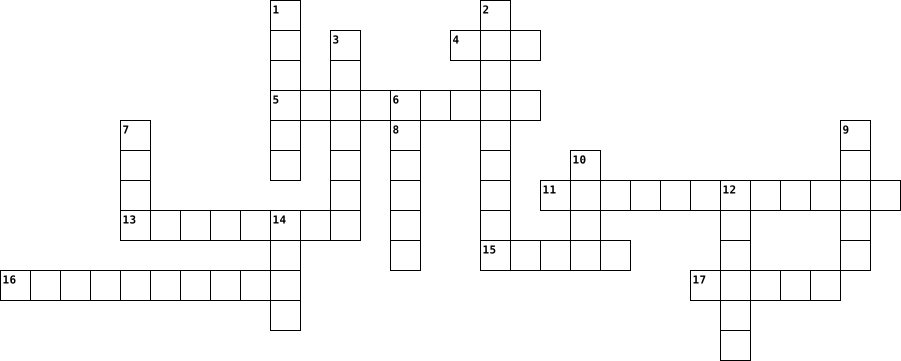
Across
- Planets
- Labs is a crossword puzzle maker. It's the simplest a fastest way to build, print, share and solve crossword puzzles online. And it's free to use!
- little crossword
- your crossword puzzle to PDF or Microsoft Word
- your crossword as an image
- your puzzle on your website
- a ready-made crossword puzzle on any subject
- the puzzle online
Down
- simple and free to use
- crossword URL
- just ads, watermarks, and registration required.
- Crosswords
- Search a Crossword Puzzle but only spelled differently
- on tablets and phones
- Fast and Easy
- to SVG for full customization
- one million crossword puzzles made!
17 Clues: Planets • Crosswords • crossword URL • Fast and Easy • little crossword • the puzzle online • on tablets and phones • simple and free to use • your crossword as an image • your puzzle on your website • to SVG for full customization • one million crossword puzzles made! • a ready-made crossword puzzle on any subject • your crossword puzzle to PDF or Microsoft Word • ...
Chapter 6 Land Water and Air 2019-05-08

Across
- The Earth is made of ________ and water
- Gold, silver and copper are ____________, found in the ground and rocks.
- Rocks and soil are natural _________
- A plain is _________ land.
- Plants grow in the soil and ___________ can live in it too.
- A _________ is very steep land.
- Someone who studies rocks is called a ____________.
- __________ and trucks and airplanes give off harmful materials into the air.
- A ___________ is water than flows through the land.
- People use __________ for drinking, bathing, cooking food and swimming in!
- To help save Earth's resources, we can use less. ________ means to use less.
Down
- Water than has land all around ir is called a __________.
- A natural resource is a useful thing that comes from ___________
- __________ is made of dead things, it helps plants to grow.
- When rocks break apart and change we call this ______________.
- Land is an _______________ natural resource.
- Turning old things into new things is called _______________.
- People and animals need to _________ air. Plants need it too.
- __________ is tiny pieces of broken rock.
- A palaeontologist studies _________________.
- ___________ is soft and sticky and most plants don't grow in it.
- ______________ is when wind or water moves soil and rocks.
- The _________ of plants can stop erosion by keeping soil in place.
- Moving air is called _______.
- We can __________ things, which means use things again.
25 Clues: A plain is _________ land. • Moving air is called _______. • A _________ is very steep land. • Rocks and soil are natural _________ • The Earth is made of ________ and water • __________ is tiny pieces of broken rock. • Land is an _______________ natural resource. • A palaeontologist studies _________________. • Someone who studies rocks is called a ____________. • ...
Egyption Crossword Puzzle 2022-02-18

Across
- they belived a pharaoh was a child of...
- a waterfall like those on the nile river in egypt
- farthest city to east
- these people invaded egypt
- wife of akhenaton
- created a steady empire
- rich soil
Down
- a number of people sharing a spisific characteristic
- Egyptian monument that had a tall shaft
- soil good for growing crops
- a god of one of the canopic jars
- royal family bloodline
- stole valuables from tombs
- triangle building
14 Clues: rich soil • wife of akhenaton • triangle building • farthest city to east • royal family bloodline • created a steady empire • these people invaded egypt • stole valuables from tombs • soil good for growing crops • a god of one of the canopic jars • Egyptian monument that had a tall shaft • they belived a pharaoh was a child of... • a waterfall like those on the nile river in egypt • ...
EcoregionandWED-BellaMacMahon 2019-10-17

Across
- How much rainfall did The Gulf Coast Prairies And Marshes get.(amount)
- Has many trees and is located in The Eastern portion of Texas (2 words)
- An organism that is living or once lived. (2 words)
- Organism that lives in a region (2 words)
- located Far west, and has the tallest mountain in Texas. (3 words)
- West of piney woods and Gulf Coast plains and is a region of grasslands (4 words)
- Located west of Post oak woods and prairies and is named for its Black, rich, heavy clay soil. (2 words)
- In the south central portion of the state, at the point of the Big Bend. (2 words)
- The process of which rocks are broken down.
- Breaks down sediment through a chemical process.(2 words)
Down
- Located in the panhandel,It is part of the largest and most completely flat areas in the world. (2 words)
- Something that will never live or never lived before (2 words)
- When eroding sediment stops moving.
- Located on the Gulf of Mexico and has saltwater marshes (5 words)
- A physical feature found in a region. (2 words)
- What was the South Texas Plains soil type.
- Breaks down sediment through a physical process. (2 words)
- Located in the center of the state,is known for its unique minerals and rocks (2 words)
- Located in the Northern section of the state and has fertile grassland (2 words)
- In the Southern tip of Texas,and has gentle rolling hills. (2 words)
- Moves sediment to another location.
- There are this many natural regions in Texas
22 Clues: When eroding sediment stops moving. • Moves sediment to another location. • Organism that lives in a region (2 words) • What was the South Texas Plains soil type. • The process of which rocks are broken down. • There are this many natural regions in Texas • A physical feature found in a region. (2 words) • An organism that is living or once lived. (2 words) • ...
Sedimentary Rock Crossword 2023-11-06

Across
- Occurs when oxygen from the air combines with iron rich minerals of the rocks. (= Rust)
- The lithification of organic material into things like coal.
- When a rock is transported by wind, water, or ice, and put elsewhere.
- The physical and chemical breakdown of rocks at or near the surface.
- The mechanical or physical breakdown of rock into smaller pieces.
- Parent material has been carried from elsewhere and deposited.
- The process of removing empty spaces between minerals by the weight of the overlying sediment.
- Water freezes in a crack of the rock surface, expanding and splitting the rock.
- Formed by the action of organisms as they build shells and other body parts by extracting chemical components.
- Layers of rock peel off the main body of the rock.
- When water combines with minerals such as mica and feldspar found in granite, to form clay, the rock weakens and crumbles apart.
Down
- As sediment is transported from its source to where it is deposited, the particles collide with each other and with other objects in their path.
- The tendency for currents of air or water to separate sediments according to size.
- Soil formed from the parent material and is of the same composition.
- Pieces of rock collide with each other due to transportation by wind, ice, water, and gravity.
- The process of “gluing” the compacted minerals together by minerals that filter through the sediment.
- The process by which chemicals break down rock through a change in the mineral’s composition.
- Occurs when water combines with carbon dioxide in the air to form carbonic acid.
- When water dissolved minerals and deposits them elsewhere.
- The wearing away of soil or rock by water, wind, or ice.
20 Clues: Layers of rock peel off the main body of the rock. • The wearing away of soil or rock by water, wind, or ice. • When water dissolved minerals and deposits them elsewhere. • The lithification of organic material into things like coal. • Parent material has been carried from elsewhere and deposited. • ...
Unit 7: Agriculture & Land Use Review 2023-12-13

Across
- an increase in nutrients in a body of water
- the intermediate of the grain sizes
- the horizon you would find hummus in
- the horizon you would find bedrock
- specializing in growing multiple crops
- the smallest of the grain sizes
- this element from unit 7 can be found in all living things, makes up 78% of our atmosphere
- measures how acidic or basic water is
- these can also also lead to killing beneficial insects
- bringing water into an area to use on soil
Down
- specialized bacteria and legumes such as soybeans and peanuts are able to do what to nitrogen
- the acronym with characteristics to fatten and slaughter and the use of antibiotics to prevent disease spread
- the horizon you would find rock fragments in
- raising cattle for food would increase our....
- when water can't penetrate, needs to go around (like in clay)
- farming technique that is primitive and relied on animal and human labor
- specializing in growing only one crop
- the horizon you would find subsoil in
- air and water make up half of what
- the horizon you would find topsoil in
- largest of the grain sizes
- what is created or the negative effect of pesticides
- what could lead to the creation of dead zones in nearby waterways
- the three letters explaining where plants or animals have their DNA changed in some way
24 Clues: largest of the grain sizes • the smallest of the grain sizes • the horizon you would find bedrock • air and water make up half of what • the intermediate of the grain sizes • the horizon you would find hummus in • specializing in growing only one crop • the horizon you would find subsoil in • the horizon you would find topsoil in • measures how acidic or basic water is • ...
Ceramics Vocabulary Crossword 2023-01-19

Across
- a liquid form of clay used as a glue to join pieces
- the art of making things from clay
- holding the oven at around 200 degrees to dry out all the moisture
- stage of clay that is most workable and very moist
- unfired pottery
- a handbuilding technique in which the object is built up with rope like pieces of clay
- fired pottery
- one of the oldest craft technique in which objects are constructed by hand
- the first firing of the clay
- clay that is ready to be fired very fragile
- paint for clay made of particles of sand that turns glasslike when fired.
Down
- stage of clay that is dry enough to be joined or carved without disortion
- the large brick oven used for firing ceramic pieces
- roughing up the surface of the clay for joining pieces
- the term used for baking work in large brick oven
- firing to a tempature at which glaze melts to form a glasslike surface as well as seal the clay
- high or low patterns carved or pressed into the clay
- a handbuilding technique in which flat pieces of clay are joined together
- a process of kneading clay in a spiral motion focing out any air bubbles
- a technique in which a ball of clay is pinched from the center out with the thumbs to create a bowl shape
20 Clues: fired pottery • unfired pottery • the first firing of the clay • the art of making things from clay • clay that is ready to be fired very fragile • the term used for baking work in large brick oven • stage of clay that is most workable and very moist • a liquid form of clay used as a glue to join pieces • the large brick oven used for firing ceramic pieces • ...
Unit 1-The Dynamic Earth 2021-03-25

Across
- layer of the atmosphere where the ozone layer is found.
- geographic region that shares a particular climate, fauna and flora
- surface currents diverge and deep waters move up to replace them
- subsoil layer in the tundra
- physical property of soil based on the composition
- waste produced as a byproduct of mining
- way to measure magnitude of an earthquake
- one plate of Earth's crust passing under another.
- one way that igneous rock can turn into metamorphic.
- rock made from magma
- zone deep layer of the ocean that lacks sunlight
- part of the water cycle when water is removed from plants by the sun
- muddy bottom of a lake or the ocean floor
- length of time that a chemical remains in the environment
- interacting components that influence one another by exchanging energy or materials
- removal of dissolved molecules from soil by groundwater
- element that is major component of soil and often used in fertilizer
Down
- chemically distinctive outermost layer of the lithosphere
- how organisms can create ammonia
- plates of the Earth's crust moving away from each other.
- sand is the __ component of soil
- large scale pattern of water circulation (clockwise in the Northern Hemisphere, counter in the Southern Hemisphere)
- how most autotrophs make their own energy
- type of mining that exposes sections of soil and rock to expose ore
- another name for the A horizon
- the average weather in a given region over a prolonged period of time.
- smallest component of soil
- matter does this through an ecosystem
- process by which rock over time turns into soil
- a fracture in rock caused by a movement of the Earth's crust
- one layer of soil
- outermost layer of Earth, includes mantle and crust
- region with dry conditions on the leeward side of a mountain range; causes precipitation on the windward side
33 Clues: one layer of soil • rock made from magma • smallest component of soil • subsoil layer in the tundra • another name for the A horizon • how organisms can create ammonia • sand is the __ component of soil • matter does this through an ecosystem • waste produced as a byproduct of mining • how most autotrophs make their own energy • way to measure magnitude of an earthquake • ...
Book of Morman 2024-01-24

Across
- A Prophet
- Son of God
- Rich Guy
- This crossword
- Fruit from a tree
- House of _____
Down
- Big City
- The Lord
- An Evil People (this is a joke about the book dont sue pls)
9 Clues: Big City • Rich Guy • The Lord • A Prophet • Son of God • This crossword • House of _____ • Fruit from a tree • An Evil People (this is a joke about the book dont sue pls)
3D Art Review 2022-05-22

Across
- Paper stencil to trace onto clay
- What we use to fire ceramics
- Clay Greek potters used
- In order to attach pieces of clay together you must _________ and slip
- Describe, Analyze, Interpret and Evaluate are the 4 step of ________
- Used to hold up kiln shelves
- Removing material to create a finished work
- Clay that has been fired with glaze
- Last stage before going into the kiln
- What you use to prop of something in the kiln
- Connecting two pieces of metal together
- First stage of clay
Down
- Clay that is ready to be fired
- Colors that are across each other on the color wheel
- Removing the glaze from the foot of a pot
- Ball of clay pinched to make an opening
- Third stage of clay
- Your clay will _________ if air is trapped
- Second stage
- What must we do in order to get all the air bubbles out of our clay
- Clay snakes used for reinforcing, building or decorating
- Clay that has been fired to cone 04
- Constructing with slabs at the plastic stage
- Adding to your main form
24 Clues: Second stage • Third stage of clay • First stage of clay • Clay Greek potters used • Adding to your main form • What we use to fire ceramics • Used to hold up kiln shelves • Clay that is ready to be fired • Paper stencil to trace onto clay • Clay that has been fired with glaze • Clay that has been fired to cone 04 • Last stage before going into the kiln • ...
for rowan 2 2025-09-09

Across
- draco is getting transfered there
- woods
- the childeren yern for them
- they're taking the hobbits there
Down
- rich underwater creature
- chill slur
- what are you doing right now?
- huntin n ___
- the 10th number
- "eyes as __ as a fresh pickled toad"
10 Clues: woods • chill slur • huntin n ___ • the 10th number • rich underwater creature • the childeren yern for them • what are you doing right now? • they're taking the hobbits there • draco is getting transfered there • "eyes as __ as a fresh pickled toad"
13 Colonies Crossword 2025-11-04

Across
- Crops raised to be sold for money
- Colonies with rocky soil, forests, and a short growing season
- A reason people leave a place
- A Southern cash crop along with tobacco and indigo
- Middle Colony founded by William Penn for religious tolerance
- A reason people move to a new place
- A group of people ruled by their home country but living elsewhere
- Middle Colony workers who ground grain into flour
- New England town building for meetings and worship
- Middle Colonies were the most culturally and religiously what
- Colonies with fertile soil, rivers, and called the “Breadbasket Colonies”
Down
- A written contract giving permission to start a colony
- Fertile Middle Colony land was good for growing this crop
- The first permanent English settlement in North America
- Large-scale farming system in the Southern Colonies
- The main farming challenge in New England
- A major job in New England because of forests and coastline
- The colony founded by the Pilgrims seeking religious freedom
- Colonies with rich soil, warm weather, and large plantations
- Forced labor by people on Southern plantations
20 Clues: A reason people leave a place • Crops raised to be sold for money • A reason people move to a new place • The main farming challenge in New England • Forced labor by people on Southern plantations • Middle Colony workers who ground grain into flour • A Southern cash crop along with tobacco and indigo • New England town building for meetings and worship • ...
Ancient Greece and Clay Vocab 2021-12-13

Across
- tool for scoring clay, or making delicate designs. Can be used to cut clay
- tools good for fluting and trimming leather hard clay to create designs or thin a piece
- hand-building technique where clay "snakes" or coils are formed, pushed and pinched to combine them into a pot.
- Deep bowl with wide mouth, Used for mixing things, mostly wine
- rigid & fragile; clay is light in color; all physical moisture has evaporated from clay
- fine-grained mineral that contains aluminum silicate - formed when igneous rocks break down
- applying pressure to clay to achieve a more dense clay body.
- scratching through a layer of slip to reveal another clay body beneath.
- Tall, two handled pot, Used for transporting wine, oil, grain, etc. Sometimes used as grave markers if larger
- Three handles, one vertical at the back of the pot and two horizontal, Used for fetching water
- Style Decoration the use of simple shapes and lines, later with stylized figures of animals and humans (1050-600 BCE).
Down
- an arrangement of lines or shapes created to form a pattern or decoration.
- the stem of the vase
- Pitcher with one handle placed vertically at the back, Used for pouring wine
- cutting tool for cutting clay
- dried slightly, some shrinkage has taken place, but still slightly flexible, good stage for carving, brushing on slip, slip-trailing, and sgraffito.
- for wetting or smoothing clay
- Main portion of the vessel
- Scratching the clay surface in a cross-hatched method. Used in combination with slip to join 2 pieces of clay together securely
- knife for compressing and carving into clay, sometimes used for trimming extra clay
- Soft and pliable. (Clay is most versatile at this stage allowing many types of building to occur such as coil, soft slab, pinch pots, wheel throwing, extruding, etc
- used in combination with scoring to attach moist clay together.
- the slope from the neck to the body
- the base of a vessel
- opening of the pot
- rib, wood rib for smoothing clay
26 Clues: opening of the pot • the stem of the vase • the base of a vessel • Main portion of the vessel • cutting tool for cutting clay • for wetting or smoothing clay • rib, wood rib for smoothing clay • the slope from the neck to the body • applying pressure to clay to achieve a more dense clay body. • Deep bowl with wide mouth, Used for mixing things, mostly wine • ...
Clay Vocabulary 2024-03-18

Across
- A shiny surface.
- The first firing of clay object must go through in which the firing removes all water from clay and makes it hard and dense.
- Unfired clay.
- When long ropes of clay of equal thickness are stacked to form a wall and build an object.
- A glassy coating that is melted onto a ceramic surface. It is used to decorate the piece and to seal the clay surfaces.
- Rope like pieces of clay of equal thickness.
- Indenting a line into a flat surface.
- Typically the second firing of a piece of pottery which has been coated with glass forming materials. The approximate temperature of this firing is 2300 F.
- Refers to clay which is ready to be fired in the kiln. Clay is very FRAGILE at this stage.
Down
- Refers to clay that is dry enough to be joined to other pieces or carved without distortion. Clay at this state resembles leather.
- Clay which has been made flat with your hands or a rolling pin.
- To rough up or scratch the clay's surface with a tool to join two pieces together.
- Unfired pottery that is bone-dry and at a state in which clay forms are the most fragile.
- Not shiny.
- Kneading clay to remove air bubbles.
- Clay and water mixed to form pottery glue that is used to "glue" two pieces of clay together.
- One of the oldest craft techniques in which objects are constructed entirely by hand.
- Quality of clay that allows it to be manipulated and still maintain its shape without cracking or sagging.
- Enclosed containers - built of refractor brick and are heated to temperatures from 1500 Fahrenheit to 2340 Fahrenheit in which ceramic ware is fired.
- The name of clay that has been fired once and is unglazed.
- An earthy material that is plastic when moist but hired when fired at high temperatures.
- To bake in a kiln. Firing is a term used for "cooking" clay.
- Three-dimensional shape and structure of an object.
23 Clues: Not shiny. • Unfired clay. • A shiny surface. • Kneading clay to remove air bubbles. • Indenting a line into a flat surface. • Rope like pieces of clay of equal thickness. • Three-dimensional shape and structure of an object. • The name of clay that has been fired once and is unglazed. • To bake in a kiln. Firing is a term used for "cooking" clay. • ...
Colours 2023-06-12

Across
- A dark reddish-brown color.
- A color that combines red and blue.
- The color of grass.
- The color of chocolate.
- A color named after a semi-precious stone.
- A color between black and white.
- The color of the precious metal.
Down
- A rich, deep red color.
- while designing your crossword, these words need to intersect correctly within the grid. The number of letters in each color name represents the number of cells it will occupy in the crossword.
- A color that shares its name with a fruit.
- The color of a ripe banana.
- A light variant of red.
- The color of the sky on a clear day.
- One of the colors of the rainbow, between blue and violet.
- The color of a ripe tomato.
15 Clues: The color of grass. • A rich, deep red color. • A light variant of red. • The color of chocolate. • A dark reddish-brown color. • The color of a ripe banana. • The color of a ripe tomato. • A color between black and white. • The color of the precious metal. • A color that combines red and blue. • The color of the sky on a clear day. • A color that shares its name with a fruit. • ...
Earth's Geological Processes 2025-02-18

Across
- A wave that moves along the surface of a medium, such as water or the earth.
- To filter, trickle through
- Carbon based compound that comes from living organisms.
- The exertion of force on something so that it becomes more dense.
- A type of rock that forms when sediments , like organic or mineral particles, accumulate on the earth’s surface and are cemented together.
- Vibrations that travel through the earth caused by sudden movements in the earth’s materials.
- The unconsolidated mineral or organic material on the immediate surface of the Earth that serves as a natural medium for the growth of land plants.
- A still, sticky, fine grained earth, typically yellow, red, or bluish gray in color and often forming an impermeable layer in the soil.
- tectonic plate that moves slowly beneath the ocean.
- A small area or region with a relatively hot temperature in comparison to its surroundings.
- A long high sea wave caused by an earthquake, submarine landslide, or other disturbance.
- area where two or more tectonic plates meet.
- Original rock from which younger rock is formed.
- A tectonic plate that moves slowly beneath the ocean.
- Permeation of a liquid into something.
- Seismic waves that travel through the Earth’s interior after an earthquake.
- The study of earthquakes and other seismic waves that travel through the earth.
- The state or quality of a material or membrane that causes it to allow liquids or gases to pass through it.
- An object that’s reduced to a liquid form by heating.
- A fault is a break in the Earth's crust where rock masses move parallel to the break.
- Fine sand, clay, or other material carried by running water and deposited as a sediment, especially in a channel or harbor.
- The organic component of soil formed by the decomposition of leaves and other plant material by soil microorganisms.
- A type of rock that forms when magma or lava cools and solidifies.
- The amount of water that something can hold.
- The exertion of force on something so that it becomes more dense.
- One of the large pieces of the surface of the earth that move separately.
- Molten rock that flows from a volcano onto the surface of a planet or moon.
- A geological process that occurs when sediment, soil, or rocks are laid down in a new location.
- The intentional clearing of forests for other uses, such as agriculture, mining, or urban development.
- The job or supervising or taking care of something.
- The center of interest or activity.
- A basic concept in geology that describes transition through geologic time among the three main rock types: sedimentary, metamorphic, and igneous.
- A mixture of molten and semi molten rock found beneath the surface of the earth.
- The process of rocks, minerals, and soils breaking down over time. It occurs when rocks, minerals, and soils are exposed to water, sunlight, atmospheric gases, and biological organisms.
- Excess fertilizer alters the soil by creating too high of a salt concentration.
- A place where two tectonic plates meet and one slides beneath the other.
- The amount of salt dissolved in a body of water.
- The process by which fertile land gradually turns into desert.
- A supercontinent that existed millions of years ago, when all the continents on earth were joined together.
- The measurement of how acidic or alkaline soil is.
- A farming technique that involves growing two or more crops simultaneously in the same field.
- A process of extracting a substance from a solid material that is dissolved in a liquid.
- The process of removing and transporting soil, rock, or dissolved material from one place to another.
- A mountain or hill, typically conical, having a crater or vent through which lava, rock fragments, hot vapor, and gas are being or have erupted from the earth's crust.
- The process of making an area more urban.
- A Solid, dense ball of iron and nickel at the center of the planet.
- A sudden and violent shaking of the ground, sometimes causing great destruction, as a result of movements within the earth’s crust or volcanic action.
- A type of rock that has been changed by hear, pressure, and or chemical reactions.
- Any method of soil cultivation that leaves the previous years crop residue on fields before and after planting the next crop to reduce soil erosion and runoff.
Down
- A row of trees, shrubs, or other plants that reduce and redirect wind.
- The gradual movement of the continents across the earth’s surface through geological time.
- A place where two tectonic plates move towards each other and collide.
- Matter that settles to the bottom of a liquid.
- The process of formation of solid crystals from solution, melt, or by deposition directly from a gas phase.
- A place where two tectonic plates slide past each other horizontally.
- A long, narrow depression in the ocean floor that’s formed when two tectonic plates meet and one slides beneath the other.
- A device that measures and records seismic waves or vibrations caused by earthquakes.
- The process of removing harmful substances from soil, sediment, or water.
- A farming technique that involves plowing and planting along the natural contours of a clope.
- A fertile soil of clay and sand containing humus.
- The outermost layer of the Earth that makes up the continents and continental shelves.
- Primary waves are seismic waves that move through solids, liquids and gases.
- The area around a magnet in which the effect of magnetism is felt.
- A goal that involves using resources in a way that meets the needs of the present without compromising the ability of future generations to meet their own needs.
- The linear feature where two tectonic plates move apart.
- The amount of nutrients in a food or drink source.
- The relative amounts of sand, silt, and clay particles in soil.
- The process of collecting small amount of soil to analyze its chemical, physical, and biological properties.
- Layer of earth immediately below the surface soil, consisting predominantly of minerals and leached materials such as iron and aluminum compounds.
- The soil mantle of earth.
- The binding together of particles or other things by cement.
- To become liquified by heat.
- The quality or degree of having minute spaces or holes through which liquid or air may pass.
- core A liquid layer of Earth that’s made of mostly iron and nickel.
- A semi-solid layer of Earth’s upper mantle that lies below the lithosphere.
- A geological process that creates new ocean floor by splitting tectonic plates apart.
- The thin, dense layer of Earth’s crust that makes up the ocean floor.
- The ability of soil to support plant growth and produce consistent crop yields.
- To water crops by bringing in water from pipes, canals, sprinklers, or other man-made means, rather than relying on rainfall alone.
- The part of the earth’s surface directly above the focus of an earthquake.
- Chemical compounds that do not contain carbon hydrogen bonds.
- Excessive grazing which causes damage to grassland.
- The practice of growing different crops in the same area over multiple growing seasons.
- Each of a series of flat areas made on a slope, used for cultivation.
- Solid rock underlying loose deposits such as soil or alluvium.
- The process where water soluble salts accumulate in the soil, gradually increasing its salt concentration.
- A Loose granular substance, typically pale yellowish brown, resulting from the erosion of siliceous and other rocks.
- A layer of the planet between the crust and core.
- The state or process of rotting.
- The rigid outer part of the earth, consisting of the crust and upper mantle.
- A naturally occurring, inorganic solid with a specific chemical composition and atomic structure.
- Surface soil usually including the rich upper layer in which plants have most of their roots and which the farmer turns over in plowing.
- The outermost solid layer of a planet, moon, or asteroid.
93 Clues: The soil mantle of earth. • To filter, trickle through • To become liquified by heat. • The state or process of rotting. • The center of interest or activity. • Permeation of a liquid into something. • The process of making an area more urban. • area where two or more tectonic plates meet. • The amount of water that something can hold. • ...
Badges 2013-04-16

Across
- worms on the end of a hook
- bandages, blood, snake bites
- running, throwing balls, skipping
- smile, camera action
- singing and performing
- clay pots, hide your face
- cakes, 3course meal, hot drink
- discovering and experimenting
- soil, plants digging
Down
- planning a journey from one place to another
- dogs and cats
- morse code
- emails, computers, pamphlets
- freestyle and breaststroke
- have you got loads of things you collect?
15 Clues: morse code • dogs and cats • smile, camera action • soil, plants digging • singing and performing • clay pots, hide your face • worms on the end of a hook • freestyle and breaststroke • emails, computers, pamphlets • bandages, blood, snake bites • discovering and experimenting • cakes, 3course meal, hot drink • running, throwing balls, skipping • ...
science 2021-04-16

Across
- WHEN FORCE IS CREATED BY A PERSON
- FEMALE PART OF FLOWER
- A STICKY SOIL
- FUNGUS
- CHANGES IN BODY OVER TIME TO SURVIVE BETTER
- MALE PART OF FLOWER
Down
- REQUIRED FOR PHOTOSYNTHESIS
- PART FROM WHICH LEAVES FLOWER ARISE
- INNER LAYER OF FRUIT
- ADDING LOTS OF SALT TO PRESERVE FOOD
- KITCHEN OF PLANT
- COULD CAUSE DISEASES
- A PUSH OR PULL
- OVULE DEVELOPS INTO
- AN ACTION OF FORCE
15 Clues: FUNGUS • A STICKY SOIL • A PUSH OR PULL • KITCHEN OF PLANT • AN ACTION OF FORCE • OVULE DEVELOPS INTO • MALE PART OF FLOWER • INNER LAYER OF FRUIT • COULD CAUSE DISEASES • FEMALE PART OF FLOWER • REQUIRED FOR PHOTOSYNTHESIS • WHEN FORCE IS CREATED BY A PERSON • PART FROM WHICH LEAVES FLOWER ARISE • ADDING LOTS OF SALT TO PRESERVE FOOD • CHANGES IN BODY OVER TIME TO SURVIVE BETTER
Rocks 2023-12-13

Across
- A gem given by a rich man
- Used for pottery
- Used for a blackboard or your driveway
- Calculus + Bite - Ulus - B = ?
- Profitable rocks
- Studies rocks and minerals
- Made up of dead animals and leaves
- Known as a cleanser
- Liquid rock
- The eye of a big cat
- Used to make a nether portal in Minecraft
- Zebra striped group
- One of which is used to clean the body
Down
- You'd be a ___ thinking this was real gold
- Rich persons countertop is usually made of ____
- Sheeted like and thin
- In a volcano
- Periodic element "Bi"
- Opposite of lemon
- Trypophobias worst nightmare
- takes millions of years to form with heat and pressure
- A name or tree resin that has been fossilized
- Fun rock to break open
- Can be found in SHALLOW water
- Bad kids get this on christmas
25 Clues: Liquid rock • In a volcano • Used for pottery • Profitable rocks • Opposite of lemon • Known as a cleanser • Zebra striped group • The eye of a big cat • Sheeted like and thin • Periodic element "Bi" • Fun rock to break open • A gem given by a rich man • Studies rocks and minerals • Trypophobias worst nightmare • Can be found in SHALLOW water • Calculus + Bite - Ulus - B = ? • ...
Ceramics 1 2022-11-07

Across
- scratching the clay
- the stage for carving and drawing into clay
- name of the oven
- remove air pockets
- roll out a snake
- clay after it's fired 1 time
- second firing
- wet clay used to join
- number of coats of glaze or underglaze
- first firing
Down
- press thumb into clay
- on the bottom of the piece
- when glaze comes in contact with a surface
- clay before it's fired
- can go on greenware or bisqueware
- workable stage of clay
- dried out clay
- when glaze is applied
- purpose for slipping and scoring
19 Clues: first firing • second firing • dried out clay • name of the oven • roll out a snake • remove air pockets • scratching the clay • press thumb into clay • when glaze is applied • wet clay used to join • clay before it's fired • workable stage of clay • on the bottom of the piece • clay after it's fired 1 time • purpose for slipping and scoring • can go on greenware or bisqueware • ...
Intro To Soils 2022-09-30

Across
- - A channel dug into the soil and designed to conduct surface runoff water safely to the desired location.
- - the change in elevation for a given horizontal distance of the earth's surface often expressed as a percentage.
- - the planting of alternating crops in parallel, narrow strips around the slope of a field. Usually to help control or reduce erosion.
- -the probability of that a flood of a given degree of severity will occur in a known period of time.
- -a physical structure constructed across the slope of a hill to prevent the free downhill movement of surface runoff.
- - black or brown substance, typically at the soil surface, resulting from the decay of plant and animal matter.
- - a layer of parent material deposited overtime at the floor of the ocean or sea that forms the basis for the subsequent development of a soil.
- - the cultivation of a field with rows produced across the slope.
- -the description of the ability of a land parcel to produce crops given the danger of erosion and other limiting factors.
- - loss of soil in larger often impassible trenches or ditches resulting from runoff.
- - any one of numerous methods of soil cultivation to control soil loss and erosion.
- - is the process of wearing away or removal of the surface layer of anything, especially in natural resource management. This refers to the loss of surface soil to water and land.
- - an upon-like structure built for the specific purpose of collecting surface runoff and allowing sediment to settle out.
- -sand moved by land resulting in either removal of sand particles as in wind erosion or accumulation of sand particles as in sand dune at a beach.
- - a crop grown primarily to prevent erosion and to improve the soil structure and tilth.
Down
- surface layer of soil containing relatively high percentages of decomposed organic matter.
- -layers in a mature soil
- matter-dead plant and animal matter in various stages of decomposition.
- - the process of breaking down rocks and minerals through the actions of weather, ice, roots, and grinding.
- - those materials underlying the soil from which the soil was formed.
- - the alternation of one crop with one or more other crops to promote soil conservation to improve soil structures and numerous other benefits.
- - soil loss in small but visible tracks or traces like small gullies resulting from runoff.
- - in a soil profile, the distance measured from the bottom edge of the topsoil to the top edge of the parent material.
- - a ditch designed to conduct surface runoff to the desired location planted to a heavy grass, sodd to prevent erosion in the ditch.
- -soil loss resulting from the cutting action from running surface water.
- - with regard to soil, this refers to the relative percentage of sand, silt, and clay particles.
- -loss of a fairly uniform layer of the soil surface often without noticeable gullying.
- - the ability of soil to allow water to move through and of the soil structure. This is closely related to the amount and size of spaces between soil particles as well as to the absence or presence of impermeable layers under the soil surface.
- - soil loss resulting from the action of the wind.
29 Clues: -layers in a mature soil • - soil loss resulting from the action of the wind. • - the cultivation of a field with rows produced across the slope. • - those materials underlying the soil from which the soil was formed. • matter-dead plant and animal matter in various stages of decomposition. • ...
Ceramics Terms 2023-09-18

Across
- Italian "to scratch"
- The building method that uses snake like pieces of clay to make bigger objects
- The special oven we use to cook clay
- Large ribbon tool good for carving wider areas
- Potter’s glue
- Sharp tool good for scoring
- How many layers of glaze a pot needs
- The term for cooking clay
- Building method in which you roll the clay like cookie dough
- The material made from dirt and water
- Colorful decoration that can be applied before or after the 1st firing
- Tool for cutting large blocks of clay
Down
- Small loop tool good for carving smaller areas
- Term that refers to fresh clay
- Absorbent tool great for cleaning
- Clay that has been fired 1 time
- Glass like decoration that is usually shiny after firing
- Best time for carving details in the stages of clay
- This building method starts as a ball of clay that is slowly squeezed between your thumb and fingers to shape
- This tool comes in both metal, wood, or plastic; good for smoothing clay
- Scratching the clay to attach together
- The term used to refer to the temperature being fired to
- Clay that is completely dry and ready to be fired
23 Clues: Potter’s glue • Italian "to scratch" • The term for cooking clay • Sharp tool good for scoring • Term that refers to fresh clay • Clay that has been fired 1 time • Absorbent tool great for cleaning • The special oven we use to cook clay • How many layers of glaze a pot needs • The material made from dirt and water • Tool for cutting large blocks of clay • ...
Q2Unit1 Ancient Mesopotamia Vocabulary Dr E 2025-10-20

Across
- (noun)The science and technology of moving and controlling fluids, especially water, often used in ancient times for irrigation and other purposes.
- (noun)The beliefs, customs, arts, and way of life of a group of people.
- (noun)An independent city and its surrounding territory that functions as a separate political unit, often found in ancient civilizations.
- (noun) _____ structure is the organization of people in a society into different social levels based on wealth, job, or family background.
- (noun) An ____ society’s economy is based on producing and maintaining crops and farmland.
- (noun)A person who writes or keeps records, especially in ancient times before printing was invented.
- (noun)Fertile soil deposited by rivers, often found in floodplains and good for growing crops.
- (noun)The exchange of goods and services between people or countries.
Down
- (noun)The artificial application of water to land to help grow crops, usually by means of channels or pipes.
- (noun) Flat land near a river that is likely to flood and often has rich soil for farming.
- (noun) The process of taming wild plants or animals for human use, such as farming or companionship.
- (noun)Fine soil or particles carried by water and deposited on land, often making the land more fertile.
- (noun)The practice of farming, including growing crops and raising animals for food, clothing, and other products.
- (noun) The point on the Earth's surface directly above where an earthquake starts, but in historical contexts, may refer to the central point of activity.
- (noun) An ancient system of writing developed by the Sumerians of Mesopotamia, using wedge-shaped marks on clay tablets.
15 Clues: (noun)The exchange of goods and services between people or countries. • (noun)The beliefs, customs, arts, and way of life of a group of people. • (noun) Flat land near a river that is likely to flood and often has rich soil for farming. • (noun) An ____ society’s economy is based on producing and maintaining crops and farmland. • ...
Egyption Crossword Puzzle 2022-02-18

Across
- they belived a pharaoh was a child of...
- a waterfall like those on the nile river in egypt
- farthest city to east
- these people invaded egypt
- wife of akhenaton
- created a steady empire
- rich soil
Down
- a number of people sharing a spisific characteristic
- Egyptian monument that had a tall shaft
- soil good for growing crops
- a god of one of the canopic jars
- royal family bloodline
- stole valuables from tombs
- triangle building
14 Clues: rich soil • wife of akhenaton • triangle building • farthest city to east • royal family bloodline • created a steady empire • these people invaded egypt • stole valuables from tombs • soil good for growing crops • a god of one of the canopic jars • Egyptian monument that had a tall shaft • they belived a pharaoh was a child of... • a waterfall like those on the nile river in egypt • ...
Earth's crust, volcanoes and earthquakes 2017-10-04

Across
- This type of earthquake wave can travel the fastest of the three and can pass through solids.
- This is a layer of solid,unbroken rock.It marks the dividing line between soil and rock.
- The process of materials being laid down or deposited by wind, water and ice.
- refers to the mechanical and chemical processes that break down rocks by means of water, glacial ice, wind and waves
- The distance between two major earthquake waves
- What is the name of the 8 major “plates”
- This is the third layer of soil, it contains pieces of larger rock and clay and is usually light coloured
- Constantly circulating, the same thing happens in the mantle
- This type of volcano has large amounts of gas trapped inside it, this makes the eruptions violent. This type of volcano is only active for a short period of time before it becomes dormant.
- This type of weathering is caused by the activity of living things VolcanoStructure what does a ash cloud, magma chamber, central vent, side vent, lava, old layers of lava and the earth's crust make up?
- this type of Earthquake wave has a rolling motion. They cause the most damage out of the three waves. San Andres What is the name of a famous fault line?
- The name of the thing when two plates collide and cause a crack
- scale What machine is used to measure the magnitude of an earthquake?
- What are the name of scientists who study earthquakes?
- This type of weathering happens when chemicals in the air mix with moisture in the air and creates a weak acid that can wear away at things.
- where the earthquake begins below the surface
- Sudden release of stress between rocks that causes a shaking in the ground
- The science of living organisms and things
- Molten mass of of mostly iron, towards the center of the earth
Down
- Hill or mountain that has a vent in which lava and rock fragments erupt from the earth's crust
- Gasses join together with moisture in the air or mix with rain and form acids that return to earth
- This type of volcano has very mild eruptions that can occur several times. The magma inside of this volcano is rich in iron and magnesium. His volcano has a gentle slope.
- The name of what once was a supercontinent
- Thin layer of solid rock
- What type of volcano is combined of a cinder cone and a shield volcano?
- This happens when two plates collide and one of the plates get pushed under the other
- solid portion of something
- Occurs when a rock is broken down by by physical forces, such as wind or water. A form of this type of weathering is frost wedging
- Large ball of iron and nickel, is almost as hot as the earth's surface
- The magma inside of this volcano is rich in silica. The eruption from this volcano can be explosive or flowing lava. This is the most deadly type of volcano.
- This type of earthquake waves travel slower than P waves and can only pass through solids.
- What is the fastest moving wave in a earthquake?
- this is the second layer of soil, it is rich in nutrients needed for plant growth
- This is below the earth's crust. It is hot and thick
- The name of the machine used to measure the intensity of an earthquake
- This is the name of the center of a earthquake
- This type of soil is the top layer of soil, it keeps the ground damp by preventing to much water from evaporating
- occurs when the products of weathering are transported from place to place
38 Clues: Thin layer of solid rock • solid portion of something • What is the name of the 8 major “plates” • The name of what once was a supercontinent • The science of living organisms and things • where the earthquake begins below the surface • This is the name of the center of a earthquake • The distance between two major earthquake waves • ...
MAPEH 5 Art Forms (CROSSWORD: Fill the boxes with the correct words using the given clues.) 2025-07-24

Across
- Traditional
- Tapis and Bahag
- Modern
Down
- Skin Art
- Necklace
- Songs
- Clay Soil
7 Clues: Songs • Modern • Skin Art • Necklace • Clay Soil • Traditional • Tapis and Bahag
Ceramics 2015-05-14

Across
- To knead and pound clay as a means of improving its consistency and to remove air pockets
- A glassy coating which is fused onto ceramic surfaces for decorative purposes
- A furnace capable of controlled high temperatures used to fire ceramic ware and sculpture
- Clay that has not been fired
- A large wheel with a rod, called an axle, through its center
- Is to heat up to over 1000 degrees in a kiln in order to process the clay
- A flat circular stone, used for sharpening tools
- Any clay piece that has been fired in a kiln to make it hard and durable
- A mix of clay and water, used to hold clay pieces together
- If a ceramic piece has a useful purpose
- A small piece of ceramic material that will melt at a specific temperature
- To scratch the surface of the clay where another piece will be joined to it
Down
- Kneading clay in order to remove air bubbles and prepare it to be used
- Stage of the clay between plastic and bone dry. Clay is still damp enough to join it to other pieces using slip
- The application of melted wax to the foot or body of a clay object to resist the glaze
- Pottery that has been fired but not yet glazed
- If a ceramic piece has a useful purpose
- Bottom of clay pot
- The potter makes this type of hand built pot using flat pieces of clay
- Top edge of a pot
- A piece of clay rolled like a rope to make pottery
- Clay in which all the moisture has dried out
- Pot made complety by pinching the clay with the fingers and thumb
23 Clues: Top edge of a pot • Bottom of clay pot • Clay that has not been fired • If a ceramic piece has a useful purpose • If a ceramic piece has a useful purpose • Clay in which all the moisture has dried out • Pottery that has been fired but not yet glazed • A flat circular stone, used for sharpening tools • A piece of clay rolled like a rope to make pottery • ...
science 2021-04-16

Across
- A STICKY SOIL
- CHANGES IN BODY OVER TIME TO SURVIVE BETTER
- OVULE DEVELOPS INTO
- MALE PART OF FLOWER
- A PUSH OR PULL
- FEMALE PART OF FLOWER
- FUNGUS
- REQUIRED FOR PHOTOSYNTHESIS
Down
- AN ACTION OF FORCE
- PART FROM WHICH LEAVES FLOWER ARISE
- WHEN FORCE IS CREATED BY A PERSON
- ADDING LOTS OF SALT TO PRESERVE FOOD
- COULD CAUSE DISEASES
- INNER LAYER OF FRUIT
- KITCHEN OF PLANT
15 Clues: FUNGUS • A STICKY SOIL • A PUSH OR PULL • KITCHEN OF PLANT • AN ACTION OF FORCE • OVULE DEVELOPS INTO • MALE PART OF FLOWER • COULD CAUSE DISEASES • INNER LAYER OF FRUIT • FEMALE PART OF FLOWER • REQUIRED FOR PHOTOSYNTHESIS • WHEN FORCE IS CREATED BY A PERSON • PART FROM WHICH LEAVES FLOWER ARISE • ADDING LOTS OF SALT TO PRESERVE FOOD • CHANGES IN BODY OVER TIME TO SURVIVE BETTER
science 2021-04-16

Across
- FUNGUS
- FEMALE PART OF FLOWER
- A PUSH OR PULL
- CHANGES IN BODY OVER TIME TO SURVIVE BETTER
- MALE PART OF FLOWER
- PART FROM WHICH LEAVES FLOWER ARISE
- INNER LAYER OF FRUIT
Down
- COULD CAUSE DISEASES
- AN ACTION OF FORCE
- WHEN FORCE IS CREATED BY A PERSON
- ADDING LOTS OF SALT TO PRESERVE FOOD
- A STICKY SOIL
- OVULE DEVELOPS INTO
- REQUIRED FOR PHOTOSYNTHESIS
- KITCHEN OF PLANT
15 Clues: FUNGUS • A STICKY SOIL • A PUSH OR PULL • KITCHEN OF PLANT • AN ACTION OF FORCE • MALE PART OF FLOWER • OVULE DEVELOPS INTO • COULD CAUSE DISEASES • INNER LAYER OF FRUIT • FEMALE PART OF FLOWER • REQUIRED FOR PHOTOSYNTHESIS • WHEN FORCE IS CREATED BY A PERSON • PART FROM WHICH LEAVES FLOWER ARISE • ADDING LOTS OF SALT TO PRESERVE FOOD • CHANGES IN BODY OVER TIME TO SURVIVE BETTER
joonasmittisme2010 2021-12-03
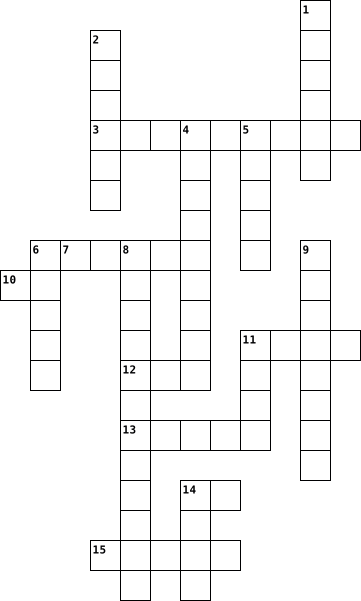
Across
- Labs is a crossword puzzle maker. It's the simplest and fastest way to build, print, share and solve crossword puzzles online. And it's free to use!
- Crosswords
- ads, no watermarks, and no registration required.
- a ready-made crossword puzzle on any subject:
- Planets
- your puzzle on your website
- make your own!
- Fast and Easy
Down
- to SVG for full customization
- simple and free to use
- crossword URL
- on tablets and phones
- the puzzle online
- little crossword
- your crossword puzzle to PDF or Microsoft Word
- your crossword as an image
- a Crossword Puzzle
- one million crossword puzzles made!
18 Clues: Planets • Crosswords • crossword URL • Fast and Easy • make your own! • little crossword • the puzzle online • a Crossword Puzzle • on tablets and phones • simple and free to use • your crossword as an image • your puzzle on your website • to SVG for full customization • one million crossword puzzles made! • a ready-made crossword puzzle on any subject: • ...
allison navar 2023-06-07

Across
- cross hybridization using two traits with two alleles each
- a sleeveless garment like a cloak but shorter
- cell division that produces reproductive cells
- system the sensory and control apparatus consisting of a network of nerve cells
- a part of the cell responsible for growth and reproduction
- a root-like attachment in parasitic plants that penetrates and obtains food from the host
- the act of dispersing something
- diffusion of molecules through a semipermeable membrane
- taxonomic group whose members can interbreed
- cast off hair, skin, horn, or feathers
- the thin, watery outer layer of a cell
- an organism's orienting response to light
- aggregate of small organisms that float or drift in water
- the science dealing with the functioning of organisms
- embryonic leaf in seed-bearing plants
Down
- the act of making copies
- a change or alteration in form or qualities
- lacking affinity for water
- the process by which a cell divides into two smaller cells
- the environment as it relates to living organisms
- any toxin that affects neural tissues
- when one organism benefits from another by causing damage
- small, hard part of a plant from which a new plant can growspecies
- rich soil consisting of sand, clay and organic materials
- the earth science that studies fossil organisms
25 Clues: the act of making copies • lacking affinity for water • the act of dispersing something • any toxin that affects neural tissues • embryonic leaf in seed-bearing plants • cast off hair, skin, horn, or feathers • the thin, watery outer layer of a cell • an organism's orienting response to light • a change or alteration in form or qualities • ...
Mesopotamia 2024-12-16

Across
- the people who developed the first city-states in Mesopotamia.
- Describes the hot and dry climate of Mesopotamia.
- The other major river that flowed through Mesopotamia.
- A system of exchange where goods are traded without using money.
- Describes the rich, nutrient-filled soil of Mesopotamia’s river valley.
- A raised structure built to prevent flooding from rivers.
- To tame plants and animals for human use.
- The king famous for creating one of the earliest written law codes.
- system of channels and ditches used to bring water to crops.
- Extra food produced by farmers, allowing specialization of jobs
- cities of ancient Mesopotamia.
- the belief in many gods, practiced by the Mesopotamians.
- Animals raised for food, labor, or other resources.
Down
- A professional writer or record keeper in ancient Mesopotamia.
- The world’s first system of writing, carved into clay tablets.
- complex society with cities, government, and social structure.
- A person who moves from place to place in search of food or pasture.
- one of the two major rivers that supported life in Mesopotamia
- Theruler who created the world’s first empire in Mesopotamia.
- A pyramid-shaped temple found in Mesopotamian cities
- A stone slab inscribed with important laws or achievements.
21 Clues: cities of ancient Mesopotamia. • To tame plants and animals for human use. • Describes the hot and dry climate of Mesopotamia. • Animals raised for food, labor, or other resources. • A pyramid-shaped temple found in Mesopotamian cities • The other major river that flowed through Mesopotamia. • the belief in many gods, practiced by the Mesopotamians. • ...
Unit 5 Test Crossword Puzzle 2023-04-13

Across
- a type of system where energy and matter cannot be exchanged.
- a type of system where both matter and energy can be exchanged.
- the smallest soil particle size.
- the medium soil particle size.
Down
- a type of system where matter cannot be exchanged but energy can.
- living components of ecosystems.
- nonliving components of ecosystems.
- the largest soil particle size.
8 Clues: the medium soil particle size. • the largest soil particle size. • living components of ecosystems. • the smallest soil particle size. • nonliving components of ecosystems. • a type of system where energy and matter cannot be exchanged. • a type of system where both matter and energy can be exchanged. • a type of system where matter cannot be exchanged but energy can.
Unit 5 Test Crossword Puzzle 2023-04-13

Across
- a type of system where energy and matter cannot be exchanged.
- a type of system where both matter and energy can be exchanged.
- the medium soil particle size.
Down
- a type of system where matter cannot be exchanged but energy can.
- nonliving components of ecosystems.
- the smallest soil particle size.
- living components of ecosystems.
- the largest soil particle size.
8 Clues: the medium soil particle size. • the largest soil particle size. • the smallest soil particle size. • living components of ecosystems. • nonliving components of ecosystems. • a type of system where energy and matter cannot be exchanged. • a type of system where both matter and energy can be exchanged. • a type of system where matter cannot be exchanged but energy can.