
divergent Crossword Puzzles
Tectonic Activity 2015-01-08

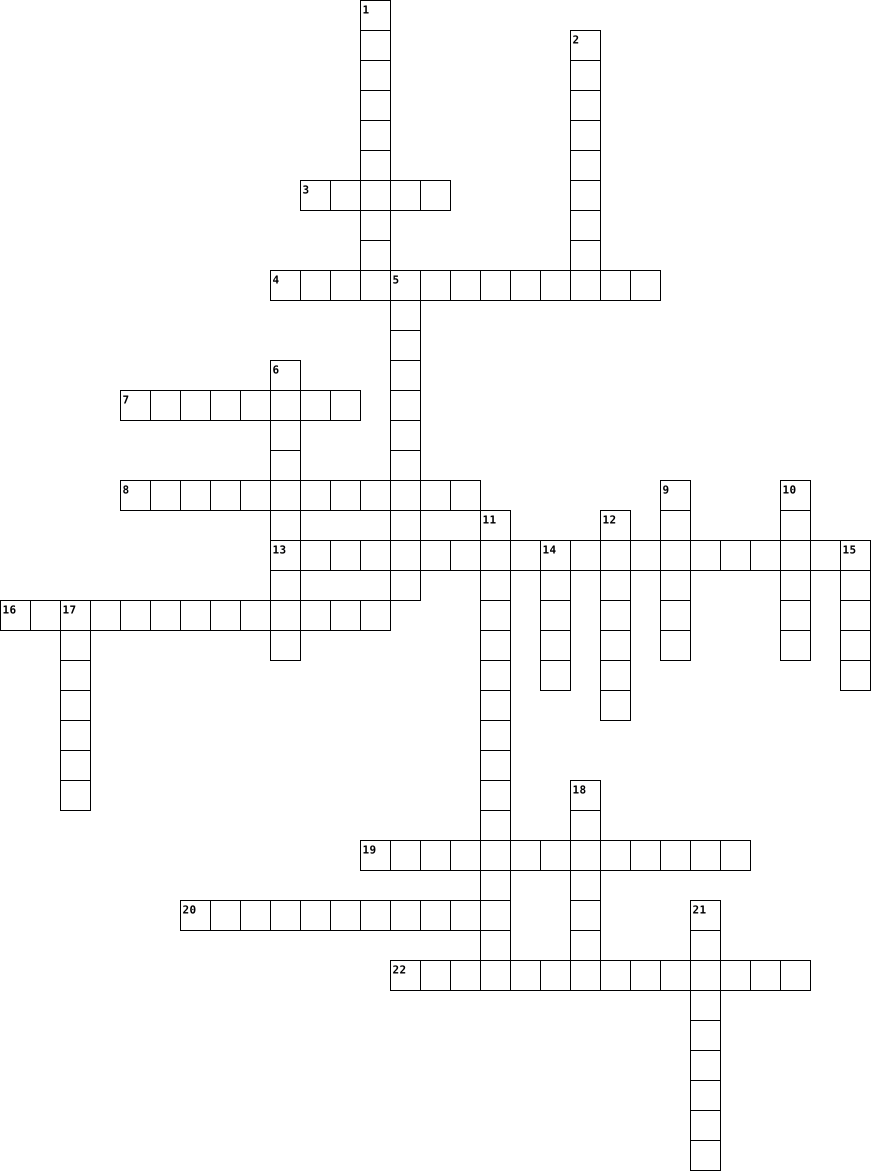
Across
- Plates that slide past each other.
- The instrument that measures the motions of the ground.
- A scale for measuring the effects of earthquakes.
- Islands created by volcanoes.
- When a more dense plate moves under a less dense plate.
- Used to measure the power of an earthquake
- Leaving home and moving to a safer location.
- Can check any movement withing the rocks.
Down
- A sudden violent shaking of the ground
- Plates that move away from each other.
- A measurement of the strength of an earthquake.
- The location where the earthquake begins.
- Movement withing the Earth, which moves tectonic plates.
- A mountain or hill, typically conical, having a crater or vent through which lava, rock fragments, hot vapour, and gas are or have been erupted from the earth's crust.
- A volcanic center
- These cause earthquakes and volcanoes.
- Molten rock under the surface of the Earth.
- Plates that move towards each other.
- The point on the Earth's surface directly above the focus.
- An Indonesian word for a rapidly flowing mixture of rock debris and water. Sometimes referred to as m mud flows.
20 Clues: A volcanic center • Islands created by volcanoes. • Plates that slide past each other. • Plates that move towards each other. • A sudden violent shaking of the ground • Plates that move away from each other. • These cause earthquakes and volcanoes. • The location where the earthquake begins. • Can check any movement withing the rocks. • ...
OHPL Teen Crossword 2015-09-10

Across
- Four girls pass around a pair of _____.
- A series of books made popular during the vampire craze.
- What Wesley tells Buttercup.
- Protector of Saphira's Egg.
- Abbreviation for Teen Book Genre
- The _____ of Being a Wallflower.
- YARG! meets on....
- Award-Winning novel set in Alabama.
- _____ of Green Gables.
- The first Color Jonas sees in The Giver.
- Vampires don't wear ________.
- What grants everlasting life in Tuck Everlasting?
- Setting of Paper Towns.
- Third Book in the Mercy Falls Series.
- Used by Aberson to call the dead
- The Fault in our ________.
- Author of Divergent Series.
Down
- Victorian Sci-Fi Genre
- Popular Series that began a YA boom.
- Main Character's Name in Diary of a Wimpy Kid.
- Big Bad of the Hobbit.
- One of the most challenged books for content.
- What was Algernon?
- The Author of The Infernal Devices Series.
- Award Given to outstanding Juvenile Fiction.
- What Katniss threatens to eat.
- What does Lyra call her daemon.
- What Ponyboy uses to treat his hair.
- What is Mr. Tumnus?
- Narrator of The Book Theif.
30 Clues: YARG! meets on.... • What was Algernon? • What is Mr. Tumnus? • Victorian Sci-Fi Genre • Big Bad of the Hobbit. • _____ of Green Gables. • Setting of Paper Towns. • The Fault in our ________. • Protector of Saphira's Egg. • Narrator of The Book Theif. • Author of Divergent Series. • What Wesley tells Buttercup. • Vampires don't wear ________. • What Katniss threatens to eat. • ...
Plate Tectonics 2015-11-04

Across
- hard, outermost layer of the earth
- an act of changing physical location
- a line that marks the limits of an area
- region of the interior of the earth between the core and the crust
- the rigid outer part of the earth, consisting of the crust and upper mantle
- a thin, flat sheet or strip of a material
- a section of the crust of the earth that moves relative to each other
- upper layer of the earth's mantle
- a system of ideas intended to explain something
- a mountain or hill having a vent which lava is being erupted from the earth's crust
Down
- a long high sea wave caused by an earthquake, submarine landslide, or other disturbance
- to go in a different direction
- the hypothetical landmass that existed when all continents were joined
- oceanic tectonic plate that lies beneath the Pacific Ocean
- to slide past
- a sudden and violent shaking of the ground
- coming closer together
- long, narrow hilltop, or mountain range
- the remains of a prehistoric organism preserved in petrified form
- the central portion of the earth
20 Clues: to slide past • coming closer together • to go in a different direction • the central portion of the earth • upper layer of the earth's mantle • hard, outermost layer of the earth • an act of changing physical location • a line that marks the limits of an area • long, narrow hilltop, or mountain range • a thin, flat sheet or strip of a material • ...
Plate tectonics 2023-03-01

Across
- elevated areas of the sea floor characterized by high heat flow and volcanism
- what moves the crust
- of irregular topography on the deep ocean floor
- mountains formed in part igneous activity associated with the subduction of oceanic lithosphere beneath a continent
- a chain of volcanic islands generally located a few hundred km from trench
- older,denser portions of oceanic lithosphere descends
- what is the oceanic crust made of
- a hypothesis, first proposed in the 1960s by harry hess
Down
- what does a convergent plates make
- occurs when two tectonic plates move away from each other.
- has a greater density than continental crust
- plates are moving towards one another.
- plates are moving up and down each other
- a narrow elongated depression of the sea floor
- two oceanic plates converge
- the primary source of the movement of plates
- a continues elevated zone on the floor of all the major ocean basins
- has a less density than oceanic crust
- made the hypothesis of the sea floor spreading
- they are made by earthquakes
20 Clues: what moves the crust • two oceanic plates converge • they are made by earthquakes • what is the oceanic crust made of • what does a convergent plates make • has a less density than oceanic crust • plates are moving towards one another. • plates are moving up and down each other • has a greater density than continental crust • the primary source of the movement of plates • ...
Plate Motion Vocabulary 2022-12-01

Across
- Hot liquid rock below the Earth's surface.
- An extinct reptile.
- An object or diagram that helps us understand something.
- A digram that shows what the inside of something looks like.
- Moving apart in different drections.
- Any activity in which gas, steam, and lava are pushed from the Earth.
- A sudden shaking of the Earth's surface.
- An underwater mountain range.
- A natural spring that sends hot water into the atmosphere.
- The slow pulling apart of land.
- A large section of land.
- A long deep indentation in the ocean floor.
Down
- Where two plates meet.
- How fast something happens.
- To examine in dtail for a purpose.
- Evidence of life from the past.
- The Earths, outer most layer.
- A set of interacting parts.
- The outside or top layer.
- A feature that forms on land.
- Any of Earth's continuos areas of land.
- Something that is similar over and over.
- Hot liquid rock on the Earth's surface.
- The sudden pushing out of lava from a volcano.
24 Clues: An extinct reptile. • Where two plates meet. • A large section of land. • The outside or top layer. • How fast something happens. • A set of interacting parts. • The Earths, outer most layer. • A feature that forms on land. • An underwater mountain range. • Evidence of life from the past. • The slow pulling apart of land. • To examine in dtail for a purpose. • ...
Pedro crossword vocab 2023-05-01

Across
- contain or include
- convey or express a meaning
- without fault or error
- leave/abandon someone
- behavior
- act of deceiving/acting in bad faith
- give in, as to influence or pressure
- secret and sly
- move apart in different directions
- organization involved in a pact
- sequence of likely events
- cause extensive destruction/ruin
- inherent ability/talent
- unreasonable; illogical
- strong & sharp, as a taste or smell
- rough contact with while moving
- hesitant or lacking confidence; unsettled in mind or opinion
Down
- take the place or move into
- favorite saying; slogan
- servile submissive dependent
- lack of respect & feeling of contempt
- imitating situation/process
- without mercy or pity
- flow over or cover completely
- a very steep cliff
- the act of misleading
- arousing animosity/hostility
- discouraging through fear
- weak, unsteady, or uncertain
- totally exterminate/destroy
- formal entry into an organization, position, or office
- having a common center
- escaping hostile environment
- compulsory force or threat
- group’s ideas and beliefs
35 Clues: behavior • secret and sly • contain or include • a very steep cliff • without mercy or pity • leave/abandon someone • the act of misleading • without fault or error • having a common center • favorite saying; slogan • inherent ability/talent • unreasonable; illogical • discouraging through fear • sequence of likely events • group’s ideas and beliefs • compulsory force or threat • ...
GEOGRAPHY 2017-09-26

Across
- The outer layer of the Earth
- A movement which 2 plates collide forming a mountain
- The highest volcano in Africa
- When an earthquake happened on the sea.
- What is the element that contains in the ash?
- Movement of tectonic plates.
- What should the people do if there is a volcanic eruption?
- The point where earthquake happens the first time
Down
- The mouth of a Volcano
- A location where a large number of earthquakes and volcanic eruptions occur
- A device to measure the force of an earthquake.
- When a volcano spits out lava.
- Two plates sliding together to opposite direction each other.
- A place inside a volcano that stores a lot of magma and gas
- When two tectonic plate move further away from each other
- A hot liquid substance that came out when a mountain errupted
- A mountain that can erupava.
- A crack that was made when two plates slide
- The mountain that created the largest volcanic eruption in Indonesia
- The common name of projectiles launched by the volcano
20 Clues: The mouth of a Volcano • The outer layer of the Earth • Movement of tectonic plates. • A mountain that can erupava. • The highest volcano in Africa • When a volcano spits out lava. • When an earthquake happened on the sea. • A crack that was made when two plates slide • What is the element that contains in the ash? • A device to measure the force of an earthquake. • ...
Volcanoes 2021-03-04

Across
- lava type that is silica rich and often moves too slow to see
- occurs when water-soaked volcanic ash and rock slide rapidly downhill
- broad and small slopes
- substance's resistance to flow
- what provides the force to propel lava out of the vent
- lava type that is very fluid and less viscous
- small volcanoes built from pyroclastic material
- a depression in a volcanic mountain
- landform produced by repeated eruptions of very fluid, basaltic lava
- volcanic activity that occurs within a plate
Down
- the long belt of volcanoes that circles much of the Pacific Ocean
- steep walled depression on top of volcano
- small volcanic region a few hundred kilometers across
- particles produced in volcanic eruptions
- landform made of magma that hardened in a volcano's pipe
- type of basaltic lava that is cooler and slower moving
- type of basaltic lava that is hotter, and faster moving
- what forms in the crust and upper mantle when solid rock partially melts
- boundaries where volcanic activity occurs when plates pull apart
- an opening to the surface
20 Clues: broad and small slopes • an opening to the surface • substance's resistance to flow • a depression in a volcanic mountain • particles produced in volcanic eruptions • steep walled depression on top of volcano • volcanic activity that occurs within a plate • lava type that is very fluid and less viscous • small volcanoes built from pyroclastic material • ...
APES Crossword Puzzle Review :) 2022-05-07

Across
- hides from others
- living
- exceeds carrying capacity
- nitrates into nitrogen gas
- variety of species in an ecosystem
- deposit at the mouth of a river (triangle)
- humans lions and whales
- is a mineral used in insolation that causes respiratory issues
- makes its own food
- comes from natural and replenishable resources
- finest soil
- a group of organisms that interact in an environment
- outermost shell of the atmosphere
- a species that does not belong
- status of an organism within its community
Down
- degrading of land due to human actions
- benefits one not the other
- types of plates that move away from each other
- day to day variation in temp, precipitation, air pressure etc
- produces glucose from CO2 and water
- is a widespread source of pollution
- preys on others
- a type of species that serves as a warning for a damaged ecosystem
- is the build-up of pollutants or a substance up a food chain
- gaseous mass surrounding the Earth
- a layer of soil
26 Clues: living • finest soil • preys on others • a layer of soil • hides from others • makes its own food • humans lions and whales • exceeds carrying capacity • benefits one not the other • nitrates into nitrogen gas • a species that does not belong • outermost shell of the atmosphere • variety of species in an ecosystem • gaseous mass surrounding the Earth • produces glucose from CO2 and water • ...
APES Crossword Puzzle Review :) 2022-05-07

Across
- hides from others
- living
- exceeds carrying capacity
- nitrates into nitrogen gas
- variety of species in an ecosystem
- deposit at the mouth of a river (triangle)
- humans lions and whales
- is a mineral used in insolation that causes respiratory issues
- makes its own food
- comes from natural and replenishable resources
- finest soil
- a group of organisms that interact in an environment
- outermost shell of the atmosphere
- a species that does not belong
- status of an organism within its community
Down
- degrading of land due to human actions
- benefits one not the other
- types of plates that move away from each other
- day to day variation in temp, precipitation, air pressure etc
- produces glucose from CO2 and water
- is a widespread source of pollution
- preys on others
- a type of species that serves as a warning for a damaged ecosystem
- is the build-up of pollutants or a substance up a food chain
- gaseous mass surrounding the Earth
- a layer of soil
26 Clues: living • finest soil • preys on others • a layer of soil • hides from others • makes its own food • humans lions and whales • exceeds carrying capacity • benefits one not the other • nitrates into nitrogen gas • a species that does not belong • outermost shell of the atmosphere • variety of species in an ecosystem • gaseous mass surrounding the Earth • produces glucose from CO2 and water • ...
Lithosphere 2022-04-20

Across
- boundary type where most volcanoes formed
- sea waves triggered from an earthquake
- rock forms from extreme heat and pressure
- point in earth where an earthquake starts
- small quake before a major earthquake
- amount of pore space available, empty space
- rock types are classified by their
- igneous rock type that forms on the surface
- the study of earthquake waves is called
- one of the 4 types of erosion we discussed
- largest of the 3 particles that make up soil
- igneous rocks formed inside of the earth
Down
- process of one plate forced underneath
- type of weathering from chemical reactions
- the driving force that causes plates to move
- dangerous volcano type and very explosive
- fastest waves, travel through solids/liquids
- slowest seismic waves and most destructive
- rock forms from layers, pressure, and time
- fault where the hanging wall moves down
- the plates move away from each other
- rock forms from magma/lava cooling over time
- sudden release of energy along a fault line
- molten material found inside the earth
- volcano type with small slope and slow lava
25 Clues: rock types are classified by their • the plates move away from each other • small quake before a major earthquake • process of one plate forced underneath • sea waves triggered from an earthquake • molten material found inside the earth • fault where the hanging wall moves down • the study of earthquake waves is called • igneous rocks formed inside of the earth • ...
Plate Tectonics 2022-11-14

Across
- heated lower rock that rises toward the top because it is less dense than the surrounding mantle rock.
- Greek for "All Land"
- cause the plates to move from the heat going up and cooling down
- lava flows underwater
- two plates slide past one another
- valley on the ocean floor
- - plates come together
- rock moving against rock along a fault causing the rock surface to become polished
- Idea that continents move around on Earth's Surface
Down
- theory explaining how the pieces of Earth's Surface move
- striped patterns that are formed in patterns as magnetic materials in the new rocks cool
- long chain of undersea mountains
- large pieces of Earth's lithosphere that move other the asthenosphere
- plates move apart
- thin lithospheric plates that dense
- thick lithospheric plates that are less dense
- German Scientist and Arctic Explorer who suggested the concept of continental drift
- geophysicist and naval officer mapped the ocean floor
- hypothesis that new floor is created and continents are pushed apart from each other
- process that involves plates sinking into the mantle
20 Clues: plates move apart • Greek for "All Land" • lava flows underwater • - plates come together • valley on the ocean floor • long chain of undersea mountains • two plates slide past one another • thin lithospheric plates that dense • thick lithospheric plates that are less dense • Idea that continents move around on Earth's Surface • ...
Plate Tectonics 2017-10-17

Across
- The remains of a prehistoric organism
- When plates come together
- When plates move away from each other
- Valley along the ocean floor where oceanic crust sinks into the mantle
- When pieces of Earth’s crust diverges on land
- When molten material is added to make new oceanic crust
- The theory that Earth’s plates are in a slow, constant motion
- How scientists study the inside of Earth since we can’t drill down that far
Down
- Produced when 2 continental plates collide
- Scientist that came up with the theory of continental drift
- When oceanic crust sinks beneath a deep-ocean trench and back into the mantle
- Causes the plates to move
- Theory of how the continents spread away from each other
- When plates slip past each other
- 3rd layer of Earth that is very hot, yet solid where convection currents are
- Where seafloor spreading begins
- Measure of how much mass there is in an object
- A break in Earth’s crust where rocks slipped past each other
- Supercontinent that existed around 300 million years ago
- What scientists use to explore the ocean floor
20 Clues: Causes the plates to move • When plates come together • Where seafloor spreading begins • When plates slip past each other • The remains of a prehistoric organism • When plates move away from each other • Produced when 2 continental plates collide • When pieces of Earth’s crust diverges on land • Measure of how much mass there is in an object • ...
Earthy Things 2018-03-07

Across
- When plates move into each other
- Plates that move away from each other
- A large volcano that is in the shape of a shield
- A volcano that exploded in the state of Washington
- A scientist who studies earthquakes
- The largest volcano in the solar system
- The largest volcano that can leave areas in destruction for lifetimes
- A fault line that is in California
- When two or more plates shift causing the Earth to shake
Down
- The largest volcano on Hawaii
- A small volcano that has the shape of a cone
- An area in the Pacific Ocean that has many volcano and earthquakes
- A scientist that studies volcanoes
- A site in america with one of the strongest super volcanoes in the world
- A large destructive volcano
- A large mountain with magma inside
- The scale that measures the strength of a volcano
- When to plates shift around each other
- The scale that measures the strength of an earthquake
- Islands that were made by volcanoes and still have live volcanoes in the U.S.
20 Clues: A large destructive volcano • The largest volcano on Hawaii • When plates move into each other • A scientist that studies volcanoes • A large mountain with magma inside • A fault line that is in California • A scientist who studies earthquakes • Plates that move away from each other • When to plates shift around each other • The largest volcano in the solar system • ...
-ent 2019-10-04

Across
- An act or instance of placing
- The act or process of advertising something
- One that replaces another especially in a job or function
- An agreement or pledge to do something in the future
- A penalty inflicted on an offender through judicial procedure
- A reason given for or against a matter under discussion
- A major administrative division of a government
- The outlay of money usually for income or profit
- Submissive to the restraint or command of authority
Down
- The part of a building that is wholly or partly below ground level
- The state of being arranged
- Recognition or favorable notice of an act or achievement
- The act or process of improving
- Moving or extending in different directions from a common point
- The act or fact of agreeing
- Amusement or diversion provided especially by performers
- A particular instance or manner of moving
- A series of games or contests that make up a single unit of competition
- An expression of esteem, respect, affection, or admiration
- Judicious use of means to accomplish an end
20 Clues: The state of being arranged • The act or fact of agreeing • An act or instance of placing • The act or process of improving • A particular instance or manner of moving • The act or process of advertising something • Judicious use of means to accomplish an end • A major administrative division of a government • The outlay of money usually for income or profit • ...
Volcanoes and Earthquakes 2023-05-25

Across
- What type of waves deal the most damage?
- What type of waves only go through solids?
- What does is mean if a volcano has recent activity?
- What is magma called when it reaches the surface?
- What is the center of the earthquake?
- What type of waves go through both solids and liquids?
- 9.5 is the highest recorded magnitude __________.
- Speed, damage, and _________ are all things that classify earthquakes.
- What city was destroyed by Mt. Vesuvius?
Down
- What scale is used to determine the magnitude of an earthquake?
- What type of faults move horizontally?
- What type of faults are convergent?
- What is lava called that hasn't reached the surface?
- What type of faults are divergent?
- What is the term for a volcano that hasn't been active?
- What type of volcano is Mauna Loa?
- What is it called if a volcano will not be active for eternity?
- What is located directly above the focus?
- What do seismic waves do as they get further from the focus?
- What is the abbreviation of the scale we use to measure volcanoes?
20 Clues: What type of faults are divergent? • What type of volcano is Mauna Loa? • What type of faults are convergent? • What is the center of the earthquake? • What type of faults move horizontally? • What type of waves deal the most damage? • What city was destroyed by Mt. Vesuvius? • What is located directly above the focus? • What type of waves only go through solids? • ...
Final Review Crossword 2023-05-16

Across
- dude who came up with continental drift
- air mass that is over water and warm
- can occur at a transform boundary
- where warm ocean currents generally come from
- cloud term that means lowest altitude
- cloud prefix that means middle
- evidence includes age of the Hawaiian Islands and chains of seamounts
- air mass that is over land and warm
- cloud prefix that means high
- place where tectonic plates are spreading apart
- zone where one plate moves underneath another
Down
- air mass that is oceanic and cold
- why glaciers (or anything else) moves downhill
- boundary type where two plates are spreading apart
- cloud droplets form around this
- cloud prefix that means rain bearing
- boundary type that includes a strike slip fault
- type of energy that includes coal, uranium, and natural gas
- what rates of decay are, thus we can use radiometric dating
- effect that is caused by the earth's rotation
- current that is the reason tectonic plates are moving
- fossil used to determine relative age
22 Clues: cloud prefix that means high • cloud prefix that means middle • cloud droplets form around this • air mass that is oceanic and cold • can occur at a transform boundary • air mass that is over land and warm • cloud prefix that means rain bearing • air mass that is over water and warm • cloud term that means lowest altitude • fossil used to determine relative age • ...
Volcanism 2023-05-08

Across
- World's most active volcano that is located over a hot spot
- stress that pulls a material apart
- stress that decreases the volume of a material
- Corresponds to the outline of the Pacific plate
- Huge flood basalt located in India; could have contributed to the extinction of dinosaurs
- opening of a volcano
- oldest Hawaiian island that no longer sits above a hot spot
- smaller belt which includes Mount Etna and Mount Vesuvius
- National Park that sits atop of a large volcanic basin
Down
- basalts form when lava flows out of long cracks in Earth's crust
- magma that reaches Earth's surface
- total force acting on crustal rocks per unit of area
- stress that causes material to twist
- a bowl-shaped depression at the top of the volcano
- lava reaches the surface by traveling through a tube-like structure
- basalts located in the northwestern United States
- slushy mixture of molten rock, mineral crystals, and gases
- larger depression than a crater
- deformation of materials in response to stress
- plate boundaries that move apart
20 Clues: opening of a volcano • larger depression than a crater • plate boundaries that move apart • magma that reaches Earth's surface • stress that pulls a material apart • stress that causes material to twist • stress that decreases the volume of a material • deformation of materials in response to stress • Corresponds to the outline of the Pacific plate • ...
Tectonic Plates 2023-11-09

Across
- Related to the study of earthquakes and seismic waves.
- A sudden release of energy in the Earth's crust, causing seismic waves.
- The study of the Earth's structure and the movement of its lithospheric plates.
- A fracture in the Earth's crust along which movement has occurred.
- Type of plate boundary where plates slide past each other horizontally.
- Type of plate boundary where plates move toward each other.
- The semi-fluid layer beneath the Earth's lithosphere.
- The result of two tectonic plates moving toward each other and meeting.
- The layer of the Earth below the crust.
- Relating to the Earth's landmasses.
Down
- A mountain that erupts molten rock, ash, and gases.
- Type of plate boundary where plates move away from each other.
- A specific mid-ocean ridge that separates tectonic plates.
- A crack or fissure in the Earth's crust.
- Earth's outermost layer.
- A rigid segment of the Earth's lithosphere.
- Where two tectonic plates meet.
- The rigid outer layer of the Earth.
- Process where one tectonic plate is forced beneath another.
- Relating to the Earth's ocean basins.
20 Clues: Earth's outermost layer. • Where two tectonic plates meet. • The rigid outer layer of the Earth. • Relating to the Earth's landmasses. • Relating to the Earth's ocean basins. • The layer of the Earth below the crust. • A crack or fissure in the Earth's crust. • A rigid segment of the Earth's lithosphere. • A mountain that erupts molten rock, ash, and gases. • ...
Plate motion by Sid 2023-11-02

Across
- hot liquid rock below the surface of Earth
- an extinct reptile that lived about 300 million years ago
- evidence of life from the past
- a natural spring that sends and steam suddenly into the air from the ground
- a feature that forms on the surface of a planet
- hot liquid rock on the surface of Earth
- the sudden pushing out of something
- moving apart in different directions
- moving toward the same place
- a diagram that’s shows the inside of something
Down
- a sudden shaking of Earths surface
- something we observe to be similar over and over again
- one of the very large sections of hard,solid rock that make up Earths outer layer
- any of Earths main continuous areas of land
- the place where two plates meet
- an underwater mountain range formed Whalen two plates move apart
- an object, diagram, or computer program that helps us understand something by making it simpler or easier
- hard solid rock that is underneath the soil,vegetation, and Water
- how often or fast something happens
- the layer of soft solid rock underneath Earths plates
20 Clues: moving toward the same place • evidence of life from the past • the place where two plates meet • a sudden shaking of Earths surface • the sudden pushing out of something • how often or fast something happens • moving apart in different directions • hot liquid rock on the surface of Earth • hot liquid rock below the surface of Earth • ...
Vocab 2023-12-12

Across
- lots of time in the library to become this
- the valedictorian does this
- the mechanical talk at the auto shop
- The bank robber is aware of the consequences
- what you created in the basement
- When you breakup with someone
- the amount of money Bezos has
- the president talking to me
- The southern accent you have
- follow this and you'll get an A
- for Ms. Hartman this is technology
- realizing something crazy
- The two did not get a long for their project
- Ted Talk speakers poses this
- written in stone
Down
- don't preach to me
- you'll get thrown out of a sports game for these penalties
- Ms. Hartmans fan
- the formal paper that was ten pages
- Ms. Hartman learning Italian
- you and your fourth cousin
- Whatever goes on in the creepy house no one comes out of
- the score keeper at the basketball game does this
- Have this for your grandpa
- you cant agree
- Ms. Hartman and a great teacher
26 Clues: you cant agree • Ms. Hartmans fan • written in stone • don't preach to me • realizing something crazy • you and your fourth cousin • Have this for your grandpa • the valedictorian does this • the president talking to me • Ms. Hartman learning Italian • The southern accent you have • Ted Talk speakers poses this • When you breakup with someone • the amount of money Bezos has • ...
English crossword puzzle 2023-12-12

Across
- The antonym of going down.
- College professors
- Sometimes people don't understand that I am trying to be nice.
- You learn this at a young age so your a good friend
- What you learn in school
- Death
- When you lay in bed and get a realization about two events
- The writer writes a big .....
- Holding the door at retirement home
- Hanging out with them is extremely annoying.
- I won't date you unless you check the boxes on my check list
Down
- I don't understand what your saying
- You want to speak with ...
- Being stuck at the airport at 2 am
- Teachers teach children, however, teachers also learn from their students
- A fork in the road.
- In almost every move they always face a ....
- People don't understand why they try and make English more difficult by adding more words.
- grave
- I took speech and debate to learn this skill
- einstein
- Your total GPA
- When I make this crossword I am ...
- Best friends keep secrets
- I have no clue what is going to happen in the future
25 Clues: Death • grave • einstein • Your total GPA • College professors • A fork in the road. • What you learn in school • Best friends keep secrets • You want to speak with ... • The antonym of going down. • The writer writes a big ..... • Being stuck at the airport at 2 am • I don't understand what your saying • When I make this crossword I am ... • Holding the door at retirement home • ...
Amplify - Plate Motion 2023-09-19

Across
- the place where two plates meet
- hot liquid rock on the surface of the Earth
- a diagram that shows that shows what the inside of something looks like
- moving apart in different directions
- how often or fast something happens
- the layer of soft, solid rock underneath Earth'sp plates
- Earth's outermost layer of hard, solid rock
- a set of interacting parts forming a complex whole
- a long, deep indentation in the ocean floor
Down
- evidence of life from the past
- one of the very large sections of hard, solid rock that make up Earth's outer layer
- the outside or top layer of something
- an underwater mountain range formed when two plates move apart
- moving toward the same place
- something we observe to be similar over and over again
- any of Earth's main continuous areas of land
- the slow pulling apart of land that is caused by plate movement
- is a feature that forms on the surface of a planet
- a sudden shaking of the Earth's surface
- is hot liquid rock below the surface of the Earth
20 Clues: moving toward the same place • evidence of life from the past • the place where two plates meet • how often or fast something happens • moving apart in different directions • the outside or top layer of something • a sudden shaking of the Earth's surface • hot liquid rock on the surface of the Earth • Earth's outermost layer of hard, solid rock • ...
SAT COLLEGE BOARD VOCAB 2024-07-31

Across
- short account of event
- patronizing
- agreeable
- sharing of feelings
- pertaining to beauty
- follower of customs
- crowd of people
- theory requiring proof
- irritation, frustration
- outstanding
- misfortune
- long life
- dishonor, disgrace
- opponent
- to attribute to someone
- rash, impulsive
- flushed, ornate
- thrifty
- joy, exultation
- overused, cliched
- unavoidable, certain
- short-lived, as an image
- trivial
- act of refraining from
- extremely dry
- follow an example
- indirect, roundabout
- harmful
- rabble-rousing leader
Down
- tiring, weakening
- provisional, contingent
- momentary, fleeting
- honesty, decency
- sanctuary
- arrogant, condescending
- friendly, helpful
- shorten, abridge
- nameless
- high praise
- sympathy, mercy
- instinctive, untaught
- guilt diminishing
- fearless, adventurous
- unable to work together
- joining of parts
- to settle differences
- pleasure seeker
- trust among friends
- to regard with scorn
- hard-working
- improve, augment
- straying from main point
- variant, moving apart
- able to see the future
- lucky
- to work together
- hard-working
- out-of-date
- persuader of legislators
- to criticize harshly
60 Clues: lucky • thrifty • trivial • harmful • nameless • opponent • agreeable • sanctuary • long life • misfortune • patronizing • outstanding • high praise • out-of-date • hard-working • hard-working • extremely dry • crowd of people • sympathy, mercy • pleasure seeker • rash, impulsive • flushed, ornate • joy, exultation • honesty, decency • shorten, abridge • joining of parts • improve, augment • to work together • tiring, weakening • ...
hyTectonic plates 2022-06-07
Across
- hot fluid below or within earths crust
- when where tectonic plates actually discovered
- how many years have tectonic plates been known
- the most common underwater tectonic plate
- the most common tectonic plate movement
- the man who discovered tectonic plates
- the location where two plates meet
- the plates that make up earths atmosphere
- the movement of earths crust drifting
Down
- the one type of tectonic plate movement that starts with a c
- the one type of tectonic plate movement that starts with a D
- most likely result from plate movement
- how much tectonic plates can move up to
- the layer of hot solid rock underneath earth's plates
- kilometers how deep tectonic plates can go
- the heat from radio active processes within the planets interiot that causes the plates to move
- when one tectonic plate moves under another
- how many types of tectonic plates there are
- how many tectonic plates there are
- how tectonic plates where discovered
- when tectonic plates in the ocean floor collide together
- the one type of tectonic plate movement that starts with t
22 Clues: how many tectonic plates there are • the location where two plates meet • how tectonic plates where discovered • the movement of earths crust drifting • hot fluid below or within earths crust • most likely result from plate movement • the man who discovered tectonic plates • how much tectonic plates can move up to • the most common tectonic plate movement • ...
CHAPTER 5: Lessons 1 - 3 2024-02-22

Across
- USING INFO FROM AT LEAST 3 STATIONS TO FIND AN EPICENTER.
- CONTINENTAL DRIFT IS SUPPORTED BY EVIDENCE FROM ROCKS AND ___________.
- TYPE OF CRUST MADE OF BASALT.
- MOUNTAINS IN AN OCEAN, MID-OCEAN _________.
- CRACK IN THE LITHOSPHERE.
- SCIENTIST WHO PROPOSED CONTINENTAL DRIFT HYPOTHESIS.
- SCALE USED TO MEASURE AN EARTHQUAKE'S MAGNITUDE.
- AMOUNT OF LARGE PLATES ON EARTH'S CRUST.
- SCALE USED TO MEASURE AN EARTHQUAKE'S INTENSITY.
- POINT WHERE EARTHQUAKE OCCURS.
- POINT ON THE SURFACE ABOVE WHERE AN EARTHQUAKE STARTS.
- TYPE OF SEISMIC WAVE THAT MOVES SLOWER THAN BODY WAVES.
- WHEN PLATES MAKE SUDDEN CONTACT.
Down
- TRANSFER OF ENERGY THROUGH A LIQUID OR GAS.
- WHEN ONE PLATE EDGE SINKS UNDER ANOTHER.
- PIECES OF EARTH'S CRUST.
- INSTRUMENT USED TO RECORD EARTH'S VIBRATIONS.
- THE SUPERCONTINENT.
- BOUNDARY WHEN PLATES MOVE APART.
- AMOUNT OF ENERGY RELEASED DURING AN EARTHQUAKE.
- VALLEY IN AN OCEAN.
- BOUNDARY WHERE PLATES SLIDE PAST EACH OTHER.
- TYPE OF WAVE THAT TRAVELS THROUGH EARTH.
- BIGGEST LAYER OF EARTH.
- CRUST AND THE UPPER PART OF THE MANTLE.
- MELTED ROCK UNDER EARTH'S SURFACE.
26 Clues: THE SUPERCONTINENT. • VALLEY IN AN OCEAN. • BIGGEST LAYER OF EARTH. • PIECES OF EARTH'S CRUST. • CRACK IN THE LITHOSPHERE. • TYPE OF CRUST MADE OF BASALT. • POINT WHERE EARTHQUAKE OCCURS. • BOUNDARY WHEN PLATES MOVE APART. • WHEN PLATES MAKE SUDDEN CONTACT. • MELTED ROCK UNDER EARTH'S SURFACE. • CRUST AND THE UPPER PART OF THE MANTLE. • WHEN ONE PLATE EDGE SINKS UNDER ANOTHER. • ...
Plate Tectonics 2024-04-05

Across
- - scrapes across rocks where a glacier once was
- - type of boundary between two colliding plates
- -currents are found in the mantle and cause the tectonic plates to move
- - when two plates move away from each other
- - South America matches up with this continent.
- - the other result of plate tectonics
- - the scientist who is most known for the continental drift theory
- - the outer most layer of earth
- - the lithosphere is divided into...
- - what element makes up most of the Earth's core
Down
- - the Earth is made up of these and they are constantly moving along above the mantle.
- - what is the liquid layer of Earth's core.
- - evidence of dead plants and animals
- - this idea developed in the 20th century
- - result of plate tectonics
- - the Earth's crust is divided into plates that shift over time.
- - this piece of evidence explains why palm tree fossils have been found in very cold regions
- - continents fit together like_______ pieces
- - the super continent was called
- - the layer of Earth which is believed to be responsible for plate movement
20 Clues: - result of plate tectonics • - the outer most layer of earth • - the super continent was called • - the lithosphere is divided into... • - evidence of dead plants and animals • - the other result of plate tectonics • - this idea developed in the 20th century • - what is the liquid layer of Earth's core. • - when two plates move away from each other • ...
Geol 110: Exam 1 Review 2024-09-23

Across
- Boundary where new sea floor is created
- Causes tectonic plates to move (2-words)
- Boundary type associated with hydrothermal metamorphism
- Increase in sea level
- Low viscosity lavas are _________.
- Cycle describing the opening and closing of an ocean basin
- Breaking apart rocks
- The stage of the Wilson Cycle during which a narrow sea continues to get smaller
- Boundary type associated with regional metamorphism
- Igneous texture with small crystals
- Phaneritic rocks are ___________.
- The Red Sea is in this stage of the Wilson Cycle.
- The most dangerous type of volcano
- Sediment size typically found in the deep ocean
- High grade metamorphic rock
- The largest type of volcano
Down
- Melting caused by a decrease in pressure
- Volcanic hazard associated with mafic magma (2-words)
- Boundary characterized by a deep ocean trench and mountain range
- Process that alters the composition of a magma
- Poorly sorted material is ____________.
- Published Continental Drift in 1915
- Dominate rock in the valley and ridge
- Volcanic activity far from a tectonic boundary (2-words)
- Planes of weakness in a mineral
- Magma associated with dangerous volcanic eruptions
- Ultramafic mineral
27 Clues: Ultramafic mineral • Breaking apart rocks • Increase in sea level • High grade metamorphic rock • The largest type of volcano • Planes of weakness in a mineral • Phaneritic rocks are ___________. • Low viscosity lavas are _________. • The most dangerous type of volcano • Published Continental Drift in 1915 • Igneous texture with small crystals • ...
CLASS 8 CROSSWORD PUZZLE ACTIVITY 2024-10-24

Across
- the fact of being given honour and respect by people
- to go against or refuse to obey a law, agreement, etc.
- uncomfortable and ashamed, especially in a social situation
- an act of laughing out loudly with pleasure
- likely to happen very soon
- a small area of trees growing together
- hard, boring work
- behaving in a proud unpleasant way
- sad because you are away from home and you miss your family
- an animal especially one that is large or dangerous
- to offer to do something without being forced to do it
- reserved, uncommunicative
Down
- having a lot of different parts and small details that fit together
- having enough skill or knowledge to do something well
- able to do things and make decisions without help from anyone else
- a failure to do something that must be done by law
- to eat all of something quickly because you are hungry
- developing or moving in different directions becoming less similar
- a dark red colour
- to read something, especially in a careful way
20 Clues: a dark red colour • hard, boring work • reserved, uncommunicative • likely to happen very soon • behaving in a proud unpleasant way • a small area of trees growing together • an act of laughing out loudly with pleasure • to read something, especially in a careful way • a failure to do something that must be done by law • an animal especially one that is large or dangerous • ...
Evolution 2025-01-08

Across
- charlie d's ship
- structures leftover from ancestors but have little or no use
- structures in different species are similar
- type of selection that is survival of the fittest
- someone else does the selecting
- change over time
- random chance event causes loss of allele freq. (2words)
- chose your desired mate type of selection
- effect where individuals become first in a new area
- evolution not from common ancestor
- evolution from common ancestor
- isolation type where a population becomes physically separated
- collection of alleles in a pop. (2words)
Down
- isolation type where organisms do or don't mate based on their actions
- pacific islands where evidence for evolution was first conceived
- ability to survive and reproduce
- leads to new species because organisms can't mate (2words)
- evolution can occur if DNA doesn't change
- isolation type that depends on mating time/season
- effect that reduces pop. and recovered pop has diff. allele freq.
- similar structures that evolved independent of each other
- preserved remains
- organisms initially develop very similarly
- father of evolution
- all living things have this
- increases fitness
26 Clues: charlie d's ship • change over time • preserved remains • increases fitness • father of evolution • all living things have this • evolution from common ancestor • someone else does the selecting • ability to survive and reproduce • evolution not from common ancestor • collection of alleles in a pop. (2words) • evolution can occur if DNA doesn't change • ...
Biology Bingo Natural Selection 2025-03-21

Across
- Organisms whose cells have a nucleus.
- Process where unrelated species develop similar traits.
- The study of how embryos develop.
- Process where humans choose which animals reproduce to create the animal we want.
- Features between species that evolved independently.
- Type of adaptation when organisms develop different physical traits.
- Random change in allele frequency.
- when a population evolves into a different species.
- Structures that have similar physical features.
- Genes that are found on chromosomes.
- evolutionary change due to multiple species' interactions.
Down
- When two or more similar species become different over time.
- Structures that have features that were once useful to their ancestors but are now useless.
- Type of adaptation when organisms act differently.
- Type of reproduction where a parent produces offspring that are identical to itself.
- organisms whose cells have no nucleus.
- The end of an entire species on earth.
- When an organism becomes better suited to its environment.
- Type of reproduction where two parents contribute genetic information to produce offspring.
- Movement of genetic material between populations.
20 Clues: The study of how embryos develop. • Random change in allele frequency. • Genes that are found on chromosomes. • Organisms whose cells have a nucleus. • organisms whose cells have no nucleus. • The end of an entire species on earth. • Structures that have similar physical features. • Movement of genetic material between populations. • ...
Cognitive Concepts 2025-01-27

Across
- Applying knowledge to real-world situations effectively
- A type of thinking involving careful consideration for deeper understanding
- Considering facts without personal bias
- A type of thinking that uses structured reasoning for valid conclusions
- Being receptive to new ideas and different perspectives
- Following organized procedures to solve problems
- A type of thinking that processes direct observations and tangible experiences
- A type of thinking that breaks down complex information systematically
- Making judgments based on careful thought and evidence
- A type of thinking dealing with theoretical concepts and ideas
- A type of thinking that generates multiple unique solutions or ideas
- Understanding abstract ideas and relationships
Down
- Adapting approaches based on new information
- A type of thinking that draws conclusions based on evidence
- A type of thinking focused on finding the single best solution to a problem
- A type of thinking that evaluates information to make reasoned judgments
- Developing new and original solutions to problems
- Eagerly seeking new knowledge and understanding
- A type of thinking that produces original and valuable ideas
- Making decisions based on reason rather than emotions
20 Clues: Considering facts without personal bias • Adapting approaches based on new information • Understanding abstract ideas and relationships • Eagerly seeking new knowledge and understanding • Following organized procedures to solve problems • Developing new and original solutions to problems • Making decisions based on reason rather than emotions • ...
CROSSWORD PUZZLE 2025-01-28

Across
- - "The correspondence of a statement to reality."
- - "A logical statement of the form 'if P, then Q.'"
- - "A thinking style that breaks down problems into smaller parts."
- - "Thinking that narrows down to a single, correct answer."
- - "A compound statement formed using 'and'."
- - "A declarative statement that is either true or false."
- - "Organized thinking that follows a structured approach."
- - "The process of deriving logical conclusions from premises."
- - "Thinking that deals with concepts and ideas, not physical objects."
- - "Thinking that explores multiple possible solutions."
- - "Thinking focused on generating new ideas or solutions."
Down
- - "A property of an argument where the conclusion logically follows the premises."
- - "Awareness and control of one's own thinking processes."
- - "Type of thinking that evaluates evidence logically."
- - "A statement used as the basis for an argument."
- - "A logical operation that reverses the truth value of a proposition."
- - "A form of reasoning with two premises and a conclusion."
- - "A compound statement formed using 'or'."
- - "Thinking about past experiences to improve future decisions."
- - "Practical thinking focused on real-world details."
20 Clues: - "A compound statement formed using 'or'." • - "A compound statement formed using 'and'." • - "The correspondence of a statement to reality." • - "A statement used as the basis for an argument." • - "A logical statement of the form 'if P, then Q.'" • - "Practical thinking focused on real-world details." • - "Type of thinking that evaluates evidence logically." • ...
First Six Weeks 2025-09-15

Across
- Economy controlled by the government
- all the water
- when plates push together to form mountains
- government ruled by one person or party
- government with voting and rights protected
- Private businesses competing for profits
- lines that measure how far east or west a place is
- measures standard of living
- large changes in temperature; seasons
- when plates pull apart and form rift valleys
- dry; very little rain
- flowing body of fresh water
Down
- all the life on earth
- when land is carried away, such as how canyons are formed
- lines that measure how far north or south a place is
- land sticking out into the water
- way of life for a group of people
- when leaders use their power for their own gain
- measures size of economy
- when land is moved, such as how river deltas are formed
- Places far from the Equator; usually very cold
- flat highlands
- Places near the Equator; usually warm and wet
- low land
- a part of the ocean almost surrounded by land
25 Clues: low land • all the water • flat highlands • all the life on earth • dry; very little rain • measures size of economy • measures standard of living • flowing body of fresh water • land sticking out into the water • way of life for a group of people • Economy controlled by the government • large changes in temperature; seasons • government ruled by one person or party • ...
Our Restless Planet 2025-06-03

Across
- volcanoes, new ocean floor and earthquakes form due to this movement
- molten rock below the Earth's surface
- the top part of a volcano
- the crust that is thick but light in weight
- the sudden shaking of the earth
- an earthquake causes more damage on this place
- the passage that lets magma out in a volcano
- molten rock outside the Earth's surface
- result in earthquakes, volcanoes and mountains
- an opening in the crust that lets lava come out
- plates slide past each other
Down
- where there is a lot of magma in a volcano
- used to measure an earthquake
- when an earthquake happens on an ocean floor
- contain molten rock and is constantly moving
- where an earthquake starts
- the layer at the center of the earth
- the passages that let magma out on the sides of a volcano
- the continuous circular movement of magma
- the crack that happen in the crust due to an earthquake
- the crust that is thin but heavy
- the thinnest layer of the earth
22 Clues: the top part of a volcano • where an earthquake starts • plates slide past each other • used to measure an earthquake • the sudden shaking of the earth • the thinnest layer of the earth • the crust that is thin but heavy • the layer at the center of the earth • molten rock below the Earth's surface • molten rock outside the Earth's surface • ...
Plate Tectonics 2025-10-09

Across
- the uppermost layer of the earth
- melted rock on the earth's surface
- the process in which crust breaks apart
- a landform where two continental plates converge and crunch up
- a process caused by a divergent plate boundary
- a plate boundary where two plates slide past each other
- a plate boundary where two plates move toward each other
- the crust and uppermost mantle
- a vent on earth's surface in which magma come out
- the most recent super continent
Down
- when plates move because of plate tectonics
- the scientist who proposed the theory of plate tectonics
- a plate boundary where plates move away from each other
- when one plate dives under another plate
- shaking as a result of plate movement
- currents in the mantle that circulate magma and move tectonic plates
- a valley that forms at a subduction zone
- a theory of how our continents were made and move
- molten rock inside of the earth's crust
- a chain of underwater mountains
- where convection currents occur
- the division of earth's surface into sections
22 Clues: the crust and uppermost mantle • a chain of underwater mountains • where convection currents occur • the most recent super continent • the uppermost layer of the earth • melted rock on the earth's surface • shaking as a result of plate movement • the process in which crust breaks apart • molten rock inside of the earth's crust • when one plate dives under another plate • ...
RMS changing earth 2025-11-27

Across
- volcano A volcano formed over a plume of hot mantle
- A break or crack in Earth’s crust
- Sudden shaking of Earth’s crust
- A natural, nonliving solid with a crystal structure
- Large landforms created by uplift or collisions
- Where one plate sinks beneath another
- The dropping or settling of sediments
- Deep, narrow valleys on the ocean floor
- Earth’s thin, outermost layer
- Rock changed by heat and pressure
- A plate boundary where two plates move away from each other
- Rock formed from cooled magma or lava
Down
- The breaking down of rocks into smaller pieces
- Openings in Earth where lava, ash, and gases erupt
- Rapid downhill movement of rock and soil
- Rock formed from compacted layers of sediments
- A plate boundary where two plates slide past each other
- A large ocean wave caused by underwater earthquakes
- A supercontinent that existed long ago before breaking apart
- A naturally occurring solid made of minerals
- A plate boundary where two plates move toward each other
- The movement of rock pieces by wind, water, or ice
22 Clues: Earth’s thin, outermost layer • Sudden shaking of Earth’s crust • A break or crack in Earth’s crust • Rock changed by heat and pressure • Where one plate sinks beneath another • The dropping or settling of sediments • Rock formed from cooled magma or lava • Deep, narrow valleys on the ocean floor • Rapid downhill movement of rock and soil • ...
Unit 4 Review Slides 1-24 2026-01-05

Across
- Plate boundary where plates slide past one another.
- Study of landforms and how they are created; the Earth “wants” to be flat.
- Human‑caused driver of erosion through removal of forests.
- Fracture where earthquakes commonly occur.
- Mass movement of weathered materials; often slow, sometimes rapid.
- The biologically active A horizon of mineral soil (topmost layer).
- Ancient supercontinent that later broke apart.
- Large ocean wave caused by an underwater earthquake.
- Breakdown of rocks, minerals, and soils due to exposure to elements.
- Sudden release of built‑up stress at fault lines.
- Land‑based mass of ice/snow/rock moving downslope under its own weight.
- Landform associated with endogenic activity; often at plate boundaries.
- Plate boundary where plates push toward each other.
Down
- Dark, organic‑rich top layer of soil formed from decaying matter.
- Theory of Earth’s plates/layers moving slowly together and apart.
- Subsurface water resource historically supported by glacial activity.
- Processes occurring externally to Earth’s surface.
- Plate boundary where plates push away from each other.
- German scientist who proposed continental drift.
- Processes occurring from within Earth’s surface.
20 Clues: Fracture where earthquakes commonly occur. • Ancient supercontinent that later broke apart. • German scientist who proposed continental drift. • Processes occurring from within Earth’s surface. • Sudden release of built‑up stress at fault lines. • Processes occurring externally to Earth’s surface. • Plate boundary where plates slide past one another. • ...
Waves 2026-02-20

Across
- Waves created by earthquakes: _________ waves
- Type of fault or boundary the San Andreas is.
- Type of seismic wave that can create the most damage.
- Name of scale for magnitude of earthquake (2 words).
- Type of boundary (fault) that creates valleys.
- A disturbance of energy that is transferred from one point to another.
- Shape of wave that has the peaks and valleys.
- One of the 2 types of waves that doesn't require matter to move.
- How many times stronger a 6.0 is than a 4.0.
- Area on the Earth's surface directly above where earthquake occurred.
Down
- Amount of energy or strength of an earthquake.
- Large fault located here in California (2 words).
- The lowest point of a wave.
- Device that registers seismic waves.
- Type of seismic wave that shows up first on seismograph.
- One of the 2 types of waves that doesn't require a medium.
- Name for matter (solid, liquid or gas).
- Type of fault (boundary) that creates mountains.
- Number one cause of earthquakes.
- The highest point of a wave.
20 Clues: The lowest point of a wave. • The highest point of a wave. • Number one cause of earthquakes. • Device that registers seismic waves. • Name for matter (solid, liquid or gas). • How many times stronger a 6.0 is than a 4.0. • Type of fault or boundary the San Andreas is. • Shape of wave that has the peaks and valleys. • Amount of energy or strength of an earthquake. • ...
Tectonic Plates 2022-07-24

Across
- : The process where the denser plate slides under the less dense plate
- : The solid outer part of the Earth
- : The process that controls the structure and properties of the Earth's crust and its evolution through time
- : A mountain that is formed due to plates moving, that shoots out magma
- : A ____ valley is formed when plates move apart from each other
- : The mechanically weak and ductile region of the upper mantle of Earth
- : A new _____ is formed when two plates collide
Down
- : The process where two plates move apart from each other
- : The process where two plates slide past each other
- : The process where two plates collide
10 Clues: : The solid outer part of the Earth • : The process where two plates collide • : A new _____ is formed when two plates collide • : The process where two plates slide past each other • : The process where two plates move apart from each other • : A ____ valley is formed when plates move apart from each other • ...
Tectonic Plates 2020-09-29

Across
- Hot fluid within the earth's crust from which lava is form on cooling
- Where two plates are moving away from each other.
- Explaining the structures of the earth's crust
- A current in a fluid that results from convection.
- Where two tectonic plates slide alongside each other.
- The earth's lithosphere is divided into large rigid plates. Also able to interact with each other at boundaries.
Down
- When 2 plates slide under each other.
- The region of the earth's interior between the crust and the core.
- A thick mass of rock which lies under the ocean floor.
- Where two plates are moving toward each other.
10 Clues: When 2 plates slide under each other. • Explaining the structures of the earth's crust • Where two plates are moving toward each other. • Where two plates are moving away from each other. • A current in a fluid that results from convection. • Where two tectonic plates slide alongside each other. • A thick mass of rock which lies under the ocean floor. • ...
Tectonic Plates 2020-09-29

Across
- Where two plates are moving away from each other.
- Explaining the structures of the earth's crust
- Hot fluid within the earth's crust from which lava is form on cooling
- Where two tectonic plates slide alongside each other.
Down
- A current in a fluid that results from convection.
- The earth's lithosphere is divided into large rigid plates. Also able to interact with each other at boundaries.
- The region of the earth's interior between the crust and the core.
- A thick mass of rock which lies under the ocean floor.
- Where two plates are moving toward each other.
- When 2 plates slide under each other.
10 Clues: When 2 plates slide under each other. • Where two plates are moving toward each other. • Explaining the structures of the earth's crust • Where two plates are moving away from each other. • A current in a fluid that results from convection. • Where two tectonic plates slide alongside each other. • A thick mass of rock which lies under the ocean floor. • ...
Science P.T. 2020-11-15

Across
- What is the type of plate boundary wherein two plates collide?
- What is the type of plates that are made up of basalts?
- What is the outermost layer of the Earth?
- What is the type of plate boundary wherein two plates grind each other?
- What is the type of plate boundary wherein two plates move away from each other?
Down
- What is the type of plates that are made up of granite?
- What is the hottest layer of the Earth?
- What is the highest mountain range on earth?
- What is the liquid layer of the Earth?
- What is the thickest layer of the Earth?
10 Clues: What is the liquid layer of the Earth? • What is the hottest layer of the Earth? • What is the thickest layer of the Earth? • What is the outermost layer of the Earth? • What is the highest mountain range on earth? • What is the type of plates that are made up of granite? • What is the type of plates that are made up of basalts? • ...
Tectonic plate boundaries 2021-10-13

Across
- hot molten rock
- when two plates move away from each other
- this is created when two convergent boundaries of the same density collide
- the type of plate boundary that creates volcanoes and mountains
Down
- ridge underwater mountain range formed by tectonic plates
- flowing fluid that is moving because there is a temperature or density difference within the material
- zone when two convergent boundaries of different densities collide and one is subducted under the other
- when two plates slide past each other creating friction
- when two transform plates slide past each other they create this
- Valley a lowland region that forms where Earth's tectonic
10 Clues: hot molten rock • when two plates move away from each other • when two plates slide past each other creating friction • ridge underwater mountain range formed by tectonic plates • Valley a lowland region that forms where Earth's tectonic • the type of plate boundary that creates volcanoes and mountains • ...
Agora Book Club Crossword Puzzle 2023-02-21

Across
- Who is one of the Book Club teachers?
- Who is one of the Book Club teachers?
- What is the name of Stephen King's first published novel?
- Who wrote the Harry Potter Series? (First 2 initials and last name)
- What color is Pippi's hair in Pippi Longstocking?
- What day of the week do we meet?
Down
- What does Hannah Baker leave for her classmates in 13 Reasons Why?
- What is used as the portal to Narnia in C.S. Lewis' children's fantasy series?
- What post-apocalyptic city was Divergent set in?
- Who does Annabel change bodies with in the book, Freaky Friday.
- What is the first name of the protagonist in The Hunger Games
11 Clues: What day of the week do we meet? • Who is one of the Book Club teachers? • Who is one of the Book Club teachers? • What post-apocalyptic city was Divergent set in? • What color is Pippi's hair in Pippi Longstocking? • What is the name of Stephen King's first published novel? • What is the first name of the protagonist in The Hunger Games • ...
Plate Boundaries 2023-04-27

Across
- What creates new crust and igneous rock
- The boundary that occurs when two plates are coming towards each other
- One of the landforms a convergent boundary creates
- When two tectonic plates move away from each other
Down
- The scientist that invented the idea of continental drift, even though no one believed him.
- A convergent boundary, but the two plates have different densities so one goes under the other
- The layer of the earth below the crust that holds the lithosphere and asthenosphere
- A break in the earth's crust
- When two plates slide or scrape past each other
- The splitting apart of a tectonic plate
10 Clues: A break in the earth's crust • What creates new crust and igneous rock • The splitting apart of a tectonic plate • When two plates slide or scrape past each other • One of the landforms a convergent boundary creates • When two tectonic plates move away from each other • The boundary that occurs when two plates are coming towards each other • ...
Volcanoes 2014-01-08

Across
- what the world didn't have before. The more of this helps us to see the signs of the end.
- plate boundary that go toward each other
- Molten rock under the crust containing melted mineral crystals, dissolved gases, and water
- visible reminders of the invisible
- volcanic activity that occurs within a plate
Down
- greatest amount of volcanic rock produced here. Plates that go away from each other
- earth's natural temperature increases with dept
- when pressure is released, solid hot rock will turn into magma
- the long belt of volcanoes that circles much of the Pacific Ocean
- what the ocean floor is made out of
10 Clues: visible reminders of the invisible • what the ocean floor is made out of • plate boundary that go toward each other • volcanic activity that occurs within a plate • earth's natural temperature increases with dept • when pressure is released, solid hot rock will turn into magma • the long belt of volcanoes that circles much of the Pacific Ocean • ...
Plate Tectonics 2018-12-02

Across
- / The process of a less dense plate sinking below a more dense plate.
- / the layer that is semi-solid and immediately below the lithosphere.
- tectonics / The lithosphere is divided into large moving pieces
- boundary / when tectonic plates move toward each other and collide.
- / a system of ideas that explains many related observations about the natural world.
Down
- boundary / When 2 tectonic plates move away from one another
- / the outermost physical layer of the earth
- drift / the hypothesis that today's continents were once apart of a single land mass.
- spreading / process of new seafloor forming.
- boundary / When 2 tectonic plates moving past one another in opposite direction.
10 Clues: / the outermost physical layer of the earth • spreading / process of new seafloor forming. • boundary / When 2 tectonic plates move away from one another • tectonics / The lithosphere is divided into large moving pieces • boundary / when tectonic plates move toward each other and collide. • ...
Abraham 2022-04-29

Across
- (of rock) that has formed from sediment deposited by water or air
- the gradual movement of the continents across the earth's surface
- coming closer together
- make a thorough or dramatic change in the form
Down
- matter that settles to the bottom of a liquid; dregs
- is the theory that Earth's outer shell is divided into large slabs of solid rock, called
- the sideways and downward movement of the edge of a plate of the earth's crust into the mantle beneath another plate
- having solidified from lava or magma
- tending to be different or develop in different directions
- denoting or relating to rock that has undergone transformation by heat, pressure
10 Clues: coming closer together • having solidified from lava or magma • make a thorough or dramatic change in the form • matter that settles to the bottom of a liquid; dregs • tending to be different or develop in different directions • (of rock) that has formed from sediment deposited by water or air • the gradual movement of the continents across the earth's surface • ...
SA 105 2023-08-30

Across
- In the asthenosphere, there are floating lithospheric ____.
- Convection is a type of ____ transfer process.
- Heat transfer in convection is cause by differences is ____ and density in a fluid.
- Magma is made of ___ rock formed beneath the Earth's surface.
- A ___ current tends to move a fluid, gas particles, or molten rock.
Down
- This is where lithospheric plates flow.
- The source of heat from the core is due to the decay of ___ elements.
- The presence of a heavier subducting plate pulls down the trailing slab to the subduction zone.
- The lithosphere at the ___ boundary will uplift and tear apart due to hot magma.
- Convection current also happen in the ____.
10 Clues: This is where lithospheric plates flow. • Convection current also happen in the ____. • Convection is a type of ____ transfer process. • In the asthenosphere, there are floating lithospheric ____. • Magma is made of ___ rock formed beneath the Earth's surface. • A ___ current tends to move a fluid, gas particles, or molten rock. • ...
Natural Disasters Choice Board 2023-10-23

Across
- A natural disaster on Earth, such as an earthquake, tornado, or flood.
- A sudden shaking of earth's surface.
- The size or strength of something, such as an earthquake or tsunami.
- Moving apart in different directions.
- The process by which rock material moves under Earth's outer layer and into the mantle due to plate motion.
Down
- Moving toward the same place.
- Any of the many processes (such as eruptions and lava flows) in which gas, lava, and ash are pushed out.
- The place where two plates meet.
- A large ocean wave caused by a sudden shift in the plates.
- Something we observe to be similar over and over again.
10 Clues: Moving toward the same place. • The place where two plates meet. • A sudden shaking of earth's surface. • Moving apart in different directions. • Something we observe to be similar over and over again. • A large ocean wave caused by a sudden shift in the plates. • The size or strength of something, such as an earthquake or tsunami. • ...
Science 2024-04-09

Across
- the sudden pushing out of something, such as lava from a volcano
- to examine in detail for a purpose
- any of Earth's main continuous areas of land, such as Africa, Asia, and North America
- a sudden shaking of Earth's surface
Down
- a diagram that shows what the inside of something looks like
- moving apart in different directions
- a feature that forms on the surface of a planet, such as a mountain, channel, or sand dune
- moving toward the same place
- hot liquid rock on the surface of Earth
- a natural spring that sends hot water and steam suddenly into the air from a hole in the ground
10 Clues: moving toward the same place • to examine in detail for a purpose • a sudden shaking of Earth's surface • moving apart in different directions • hot liquid rock on the surface of Earth • a diagram that shows what the inside of something looks like • the sudden pushing out of something, such as lava from a volcano • ...
Science Vocab 9 2025-11-19

Across
- a wave of energy that travels through the earth away from an earthquake in all directions
- Two Tectonic plates coming together
- occurs when the hanging wall moves down with respect to the footwall due to tensional stress
- A break in the Earth's crust
Down
- Two Tectonic plates moving away from each other
- When the hanging wall moves up and over the foot wall due to compressional stress
- Sudden movement in the Earth's crust
- the point on the Earth's surface directly above the focus
- Two tectonic plates sliding past each other
- The point inside the earth at which an earthquake begins
10 Clues: A break in the Earth's crust • Two Tectonic plates coming together • Sudden movement in the Earth's crust • Two tectonic plates sliding past each other • Two Tectonic plates moving away from each other • The point inside the earth at which an earthquake begins • the point on the Earth's surface directly above the focus • ...
FINE ME 2022-03-08

Across
- occurs when two plates slide past one another
- occurs when two plates move apart from each other
Down
- area above the focus
- fracture along which the blocks of crust on either side have moved relative to one another parallel to the fracture.
- occur when tectonic plates collide
- sudden movement or vibration of the crust
- origin of earthquake/part where the slippage of rocks occurs
7 Clues: area above the focus • occur when tectonic plates collide • sudden movement or vibration of the crust • occurs when two plates slide past one another • occurs when two plates move apart from each other • origin of earthquake/part where the slippage of rocks occurs • ...
Fun with Layers 2022-02-02

Across
- one bends and slides underneath the other, curving down into the mantle
- The land we walk and including dirt,sand, and rocks
- A number of stacked plates
- The event of two plates sliding across from each other
- two plates drift away from each other
Down
- when two chunks of land bash against each other and keep bashing against each other which makes the land move up
- the inner or center of the earth
- two sections of land that come together
- the region of the earth's interior between the crust and the core
- a type of movement in which two tectonic plates slide past one another.
10 Clues: A number of stacked plates • the inner or center of the earth • two plates drift away from each other • two sections of land that come together • The land we walk and including dirt,sand, and rocks • The event of two plates sliding across from each other • the region of the earth's interior between the crust and the core • ...
Science Crossword 2016-02-10

Across
- the theory that earth's plates are in a slow constant motion due to convection currents in the mantle
- a deep underwater canyon
- when mid-ocean ridges continually add new material to the ocean floor
- a deep valley created where earth's crust diverges on land
- breaks in earth's crust where rocks have slipped past each other
Down
- mountain ranges that run along the middle of some ocean floors
- a boundary where plates move away from each other
- the process which the ocean floor sinks beneath deep ocean trenches and back into the mantle
- a boundary where plates slip past each other
- a boundary where plates move toward each other
10 Clues: a deep underwater canyon • a boundary where plates slip past each other • a boundary where plates move toward each other • a boundary where plates move away from each other • a deep valley created where earth's crust diverges on land • mountain ranges that run along the middle of some ocean floors • breaks in earth's crust where rocks have slipped past each other • ...
Tectonic Plates 2022-12-21

Across
- Who proposed the theory of plate tectonics?
- The tectonic plates are made up of the crust and?
- How many tectonic plates are there?
- What is formed when an oceanic plate moves under a continental one
Down
- Which boundaries form when tectonic plates collide?
- What is the name of the super continent the person from 6 across discussed?
- ______ are cracks in the crust due to plate movements and are areas where earthquakes are likely to occur.
- Which major plate is the furthest south?
- What the plates must do in order for there to be a divergent boundary
- 1-6 inches describes the ______ that tectonic plates move each year
10 Clues: How many tectonic plates are there? • Which major plate is the furthest south? • Who proposed the theory of plate tectonics? • The tectonic plates are made up of the crust and? • Which boundaries form when tectonic plates collide? • What is formed when an oceanic plate moves under a continental one • ...
Vocab 2.2 2023-02-21

Across
- Hitler believed in the ________ of the Jewish people.
- My manager acts ______ like he does not answer to anyone
- To ________ is to formally charge with a crime
- A great example of two things that are ______, are apples and oranges.
- In the past, barbarians practiced _____
Down
- The sky is blue is an totally ______ fact
- My mother sometimes acts judgmental and _______, but I know it is for my own benefit
- I must maintain strong _______ in tough times
- A group called _______ in the Divergent series was the faction that specialized in intelligence and knowledge
- Mustafa experienced a sudden ______ in his emotions last week for the vocab assignment
10 Clues: In the past, barbarians practiced _____ • The sky is blue is an totally ______ fact • I must maintain strong _______ in tough times • To ________ is to formally charge with a crime • Hitler believed in the ________ of the Jewish people. • My manager acts ______ like he does not answer to anyone • A great example of two things that are ______, are apples and oranges. • ...
Unit 8 - Grade 8 2023-02-14

Across
- (n)clothes, apparel, garb;(v) to dress, adorn, or bedeck
- - (adj) puzzling, mystifying or enigmatic
- - (adj) very earnest, emotional, passionate;(adj) extremely hot
- - (v) to plunge straight down(n) a weight fastened to a line
Down
- - (adj) capable of being grasped by the senses or the mind.
- - (adj) going in different directions;(adj) different from each other (adj) departing from convention, deviant
- - (adj) thin and bony, starved looking (adj) bare, barren
- - (adj) self-controlled, not showing feeling in response to pleasure or pain.
- - (v) to pass through or gain entrance gradually or stealthily
- - (v) to make of no value or consequence, cancel, wipe out
10 Clues: - (adj) puzzling, mystifying or enigmatic • (n)clothes, apparel, garb;(v) to dress, adorn, or bedeck • - (adj) thin and bony, starved looking (adj) bare, barren • - (v) to make of no value or consequence, cancel, wipe out • - (adj) capable of being grasped by the senses or the mind. • - (v) to plunge straight down(n) a weight fastened to a line • ...
Tectonic Plates 2020-09-29

Across
- Where two plates are moving away from each other.
- Explaining the structures of the earth's crust
- Hot fluid within the earth's crust from which lava is form on cooling
- Where two tectonic plates slide alongside each other.
Down
- A current in a fluid that results from convection.
- The earth's lithosphere is divided into large rigid plates. Also able to interact with each other at boundaries.
- The region of the earth's interior between the crust and the core.
- A thick mass of rock which lies under the ocean floor.
- Where two plates are moving toward each other.
- When 2 plates slide under each other.
10 Clues: When 2 plates slide under each other. • Where two plates are moving toward each other. • Explaining the structures of the earth's crust • Where two plates are moving away from each other. • A current in a fluid that results from convection. • Where two tectonic plates slide alongside each other. • A thick mass of rock which lies under the ocean floor. • ...
Vocabulary Unit 2 2021-06-17

Across
- a person who collects or removes usable items from waste materials; an animal that feeds on refuse or dead bodies.
- used to describe beliefs that are strongly and sincerely felt or people who have strong and sincere beliefs
- to help or be useful to someone or something
- different or becoming different from something else
- to fall very quickly or suddenly
- to secretly become part of a group in order to get information of to influence the way that group thinks or behaves
Down
- a period of activity
- mysterious and difficult to understand
- clothes, especially of a particular formal type
- to declare publicly or officially, especially something positive
10 Clues: a period of activity • to fall very quickly or suddenly • mysterious and difficult to understand • to help or be useful to someone or something • clothes, especially of a particular formal type • different or becoming different from something else • to declare publicly or officially, especially something positive • ...
Tectonic plate boundaries 2021-10-13

Across
- this is created when two convergent boundaries of the same density collide
- when two plates move away from each other
- currents flowing fluid that is moving because there is a temperature or density difference within the material
- the type of plate boundary that creates volcanoes and mountains
- Valley a lowland region that forms where Earth's tectonic
Down
- ridge underwater mountain range formed by tectonic plates
- zone when two convergent boundaries of different densities collide and one is subducted under the other
- when two plates slide past each other creating friction
- hot molten rock
- when two transform plates slide past each other they create this
10 Clues: hot molten rock • when two plates move away from each other • when two plates slide past each other creating friction • ridge underwater mountain range formed by tectonic plates • Valley a lowland region that forms where Earth's tectonic • the type of plate boundary that creates volcanoes and mountains • ...
Tectonic plate boundaries 2021-10-13

Across
- when two plates move away from each other
- ridge underwater mountain range formed by tectonic plates
- hot molten rock
- zone when two convergent boundaries of different densities collide and one is subducted under the other
Down
- currents flowing fluid that is moving because there is a temperature or density difference within the material
- when two transform plates slide past each other they create this
- this is created when two convergent boundaries of the same density collide
- when two plates slide past each other creating friction
- the type of plate boundary that creates volcanoes and mountains
- Valley a lowland region that forms where Earth's tectonic
10 Clues: hot molten rock • when two plates move away from each other • when two plates slide past each other creating friction • Valley a lowland region that forms where Earth's tectonic • ridge underwater mountain range formed by tectonic plates • the type of plate boundary that creates volcanoes and mountains • ...
Plate tectonics 2022-11-01

Across
- continuous process of forming new igneous rock at mid ocean ridges by ingection of magma that forms new sea floor
- underwater mountain range
- a break or crack in the earth's surface
Down
- a region where two tectonic plates move away from each other
- a region where two tectonic plates slide past each other
- a region where two tectonic plates collide or push together
- the region where one of the plates slide under another plate
- a crack that forms between two tectonic plates
- an area of volcanic activity generally in the middle of a plate
- shaking that occurs when rock in Earth's crust breaks and releases pressure quickly
10 Clues: underwater mountain range • a break or crack in the earth's surface • a crack that forms between two tectonic plates • a region where two tectonic plates slide past each other • a region where two tectonic plates collide or push together • a region where two tectonic plates move away from each other • the region where one of the plates slide under another plate • ...
Plate Tectonics 2018-12-02

Across
- boundary / When 2 tectonic plates move away from one another
- boundary / When 2 tectonic plates moving past one another in opposite direction.
- / the layer that is semi-solid and immediately below the lithosphere.
- tectonics / The lithosphere is divided into large moving pieces
- spreading / process of new seafloor forming.
Down
- / a system of ideas that explains many related observations about the natural world.
- / the outermost physical layer of the earth
- drift / the hypothesis that today's continents were once apart of a single land mass.
- boundary / when tectonic plates move toward each other and collide.
- / The process of a less dense plate sinking below a more dense plate.
10 Clues: / the outermost physical layer of the earth • spreading / process of new seafloor forming. • boundary / When 2 tectonic plates move away from one another • tectonics / The lithosphere is divided into large moving pieces • boundary / when tectonic plates move toward each other and collide. • ...
Tectonic Plate Vocabulary 2025-03-14

Across
- Two tectonic plates slide past each other and create a crack in the Earth.
- Two tectonic plates come together and hit each other.
- Two tectonic plates go away from each other.
- This can form from Transform boundaries.
- These are formed by divergent boundaries.
Down
- Plates that make up the crust of the earth.
- These and mountains can form from convergent plate boundaries.
- Molten rock that comes out of volcanoes.
- This is a famous example of a transform plate boundary.
- This is formed when two tectonic plates hit each other at the bottom of the ocean and the denser one goes under the less dense one.
10 Clues: Molten rock that comes out of volcanoes. • This can form from Transform boundaries. • These are formed by divergent boundaries. • Plates that make up the crust of the earth. • Two tectonic plates go away from each other. • Two tectonic plates come together and hit each other. • This is a famous example of a transform plate boundary. • ...
Plate Tectonics 2022-09-23

Across
- a plate boundary where two tectonic plates move away from each other
Down
- The upper solid layer of earth consisting of crust and upper mantle
- a valley created at divergent plate boundary
3 Clues: a valley created at divergent plate boundary • The upper solid layer of earth consisting of crust and upper mantle • a plate boundary where two tectonic plates move away from each other
Plate Tectonics Assignments 2015-02-04

Across
- Place where two tectonic plates slide horizontally past each another that is characterized by long faults and shallow earthquakes.
- Wegener’s hypothesis that Earth’s continents were joined as a single landmass, called Pangaea, that broke apart about 200 million years ago and slowly moved to their present situations.
- Device used to map the ocean floor that detects small changes in magnetic fields.
- Hess’s theory that new ocean crust is formed at mid-ocean ridges and destroyed at deep-sea trenches; occurs in a continuous cycle of magma intrusion and spreading.
- Line on a map that connects points of the same age.
- Place where two of Earth’s tectonic plates are moving toward each other; is associated with trenches, inlands arcs, and folded mountains.
- Ancient landmass made up of all the continents that began to break apart about 200 million years ago.
- Tectonic process associated with convection currents in Earth’s mantle that occurs when the weight of an elevated ridge pushes an oceanic plate toward a subduction zone.
- Tectonic process associated with convection currents in Earth’s mantle that occurs as the weight of the subducting plate pulls the trailing lithosphere into a subduction zone.
Down
- Study of Earth’s magnetic record using data gathered from iron-bearing minerals in rocks that have recorded the orientation of Earth’s magnetic field at the time of their formation.
- States that Earth’s crust and upper mantle are broken into plates, which are huge rock slabs that move in different directions and at different rates over Earth’s surface.
- Long, narrow depression that forms when continental crust begins to separate at a divergent boundary.
- Process by which one tectonic plate slips beneath another tectonic plate.
- Place where two of Earth’s tectonic plates are moving apart; is associated with volcanism, earthquakes, and high heat flow, and is found primarily on the seafloor.
- Changes in Earth’s magnetic field over geologic time, recorded in ocean-floor rocks and continental basalt flows.
15 Clues: Line on a map that connects points of the same age. • Process by which one tectonic plate slips beneath another tectonic plate. • Device used to map the ocean floor that detects small changes in magnetic fields. • Long, narrow depression that forms when continental crust begins to separate at a divergent boundary. • ...
Divergent chapters 1-4 2022-12-12

Across
- to make a choice is to
- enables you to see your reflection
Down
- A religious occasion, typical celebrated as an event or anniversary
- showing fearlessness and determination.
- a small organized dissenting group within a larger one
- like a quiz but usually larger and more points
6 Clues: to make a choice is to • enables you to see your reflection • showing fearlessness and determination. • like a quiz but usually larger and more points • a small organized dissenting group within a larger one • A religious occasion, typical celebrated as an event or anniversary
Divergent chapters 1-4 2022-12-12

Across
- to make a choice is to
- enables you to see your reflection
Down
- A religious occasion, typical celebrated as an event or anniversary
- showing fearlessness and determination.
- a small organized dissenting group within a larger one
- like a quiz but usually larger and more points
6 Clues: to make a choice is to • enables you to see your reflection • showing fearlessness and determination. • like a quiz but usually larger and more points • a small organized dissenting group within a larger one • A religious occasion, typical celebrated as an event or anniversary
Plate Techtonics 2016-03-24

Across
- the layer just below the crust in the earths atmosphere
- when two plates come together and collide
- fault that runs along California
- result of a convergent boundary
- lift up something; to raise
- the layer in the center of the earth
- a mountain that pours lava from the mantle
- a result of plate movement
- the two-sub layers of the earths crust that move, float, and sometimes fracture and whose interaction causes continental drift, earthquakes, volcanoes, mountains, and oceanic trenches
- the earth was created during __________ times
- top, thin-layer of the earth
Down
- where two techtonic plates slide alongside one another
- scientist who studies techtonics
- large scale process affecting the structure of earths crust
- the formation of new areas of oceanic crust
- the lines where earths different pieces meet
- this layer of the earth is made up of iron and nickel
- the science that deals with earths history, structure, and processes
- when two plates move away from each other
- a line on a rock surface or the ground that traces a geological fault
20 Clues: a result of plate movement • lift up something; to raise • top, thin-layer of the earth • result of a convergent boundary • scientist who studies techtonics • fault that runs along California • the layer in the center of the earth • when two plates come together and collide • when two plates move away from each other • a mountain that pours lava from the mantle • ...
Unit 3-Earth's Features Review 2015-10-16

Across
- What an object will do if it is more dense.
- Boundary when plates move together.
- These have been known to switch.
- Movement of the ocean floor away from either side of a mid-ocean ridge.
- Measure of how much mass is contained in a given unit volume.
- Earthquakes occur with this plate boundary.
- System of undersea mountain ranges.
- Made up of crusts and rigid upper mantle.
- Only moves through solid rock (not liquid).
- Because of this, oceanic crust gets recycled.
- The layer of the Earth that is the hottest.
- The equation for density is: D=Mass/?
Down
- Found below the lithosphere.
- One type of crust we discussed.
- Scientists study these to learn more about Earth's layers.
- Theory that describes continental movement and proposes an explanation of why and how continents move.
- Convection happens in this layer and is the primary force of plate movement.
- Boundary when plates move apart.
- What an object will do if it is less dense.
- Cycling of matter due to flow of energy from Earth's interior.
- Fastest kind of seismic wave.
21 Clues: Found below the lithosphere. • Fastest kind of seismic wave. • One type of crust we discussed. • These have been known to switch. • Boundary when plates move apart. • Boundary when plates move together. • System of undersea mountain ranges. • The equation for density is: D=Mass/? • Made up of crusts and rigid upper mantle. • What an object will do if it is more dense. • ...
Science Crossword 2017-03-05

Across
- large grouping of stars
- two tectonic plates that slide by eachother
- getting smaller
- the alternate rising or falling of sea usually twice a day
- outermost layer of Earth
- the movement cause by hot and cold water
- process that breaks rocks into smaller pieces
- causes night and day
- two tectonic plates moving away from eachother
- the locsation of star formation
- removes and transports sediments from one place to another
Down
- each of the four divisions of the year
- a self-luminous celestial body consisting of a mass of gas
- getiing larger
- plate goes below another
- imaginary line through the Earth from the north to south pole
- all space and the matter space contains
- solid layer in the upper mantle
- two tectonic plates moving toward eachother
- the arrangement of physical features of an area
- less than a quarter moon but not full
- the slant of Earth's axis
- shape of moon that is greater than a quarter moon
- stage in lunar cycle
- smallest daily tidal range
25 Clues: getiing larger • getting smaller • causes night and day • stage in lunar cycle • large grouping of stars • plate goes below another • outermost layer of Earth • the slant of Earth's axis • smallest daily tidal range • solid layer in the upper mantle • the locsation of star formation • less than a quarter moon but not full • each of the four divisions of the year • ...
Tectonic Plates 2016-11-17

Across
- spreading theory that magna forms below and is forced upwards to the surface
- Liquid layer made mostly of Iron
- hypothesis of Alfred Wegener about the continents positions
- a break in a body of rock along which one block slides relative to another
- opening on Earth's surface where volcanic material passes
- rigid, outermost layer
- semicircular depression that forms and sinks
- Earths outermost layer
- a boundary where the plates of the earth's crust collide
- a landmass that's exists when continents are joined together
Down
- lower part of the mantle
- the process of moving the lithosphere down into the mantle
- the bending of rocks due to stress
- dense, solid center
- place where the plates of the Earth's crust move past one another
- slabs that make up the Earth's crust and upper mantle
- soft layer of the mantle
- fissure in the Earth's surface
- shaking of the Earth's surface
- largest layer of the Earth
- boundary where the earth's plates move away from one another
21 Clues: dense, solid center • rigid, outermost layer • Earths outermost layer • lower part of the mantle • soft layer of the mantle • largest layer of the Earth • fissure in the Earth's surface • shaking of the Earth's surface • Liquid layer made mostly of Iron • the bending of rocks due to stress • semicircular depression that forms and sinks • ...
Plate Tectonics 2017-10-17

Across
- How scientists study the inside of Earth since we can’t drill down that far
- When plates move away from each other
- When oceanic crust sinks beneath a deep-ocean trench and back into the mantle
- Measure of how much mass there is in an object
- When plates come together
- A break in Earth’s crust where rocks slipped past each other
- When molten material is added to make new oceanic crust
- Theory of how the continents spread away from each other
- The theory that Earth’s plates are in a slow, constant motion
- The remains of a prehistoric organism
Down
- Scientist that came up with the theory of continental drift
- What scientists use to explore the ocean floor
- Valley along the ocean floor where oceanic crust sinks into the mantle
- Where seafloor spreading begins
- When pieces of Earth’s crust diverges on land
- When plates slip past each other
- Causes the plates to move
- 3rd layer of Earth that is very hot, yet solid where convection currents are
- Supercontinent that existed around 300 million years ago
- Produced when 2 continental plates collide
20 Clues: When plates come together • Causes the plates to move • Where seafloor spreading begins • When plates slip past each other • When plates move away from each other • The remains of a prehistoric organism • Produced when 2 continental plates collide • When pieces of Earth’s crust diverges on land • What scientists use to explore the ocean floor • ...
Science crossword ting 2017-10-17

Across
- A trace of an ancient organism that has been preserved in rock
- formation on the ocean floor that creates land
- Process that occurs in the mantle, in it the magma rotates like a conveyor belt
- Earths second layer, it’s part of the lithosphere
- type of boundary that involves two plates Colliding together
- pieces separated by cracks on Earths crust
- Theory that plates are moved by convection current in the mantle
- Weak spot in the crust where magma has come to surface
Down
- process where land sinks down into the mantle
- Supercontinent that existed millions of years ago
- formation on the ocean floor that creates faults
- type of boundary that involves two plates spreading apart from eachother
- Earths middle and bottom layer
- first theorized plate tectonics
- Theory that continents slowly drift across Earths surface
- type of boundary that involves two plates rubbing together
- Earths top layer
- Areas where Earths crust diverges on land
- Breaks in Earths crust where rocks have slipped past each other
- device used to see what the bottom of the ocean looks like
20 Clues: Earths top layer • Earths middle and bottom layer • first theorized plate tectonics • Areas where Earths crust diverges on land • pieces separated by cracks on Earths crust • process where land sinks down into the mantle • formation on the ocean floor that creates land • formation on the ocean floor that creates faults • Supercontinent that existed millions of years ago • ...
Science crossword ting 2017-10-17

Across
- Weak spot in the crust where magma has come to surface
- pieces separated by cracks on Earths crust
- formation on the ocean floor that creates faults
- Supercontinent that existed millions of years ago
- Process that occurs in the mantle, in it the magma rotates like a conveyor belt
- device used to see what the bottom of the ocean looks like
- first theorized plate tectonics
- A trace of an ancient organism that has been preserved in rock
- type of boundary that involves two plates rubbing together
- Breaks in Earths crust where rocks have slipped past each other
Down
- type of boundary that involves two plates Colliding together
- Areas where Earths crust diverges on land
- Theory that plates are moved by convection current in the mantle
- formation on the ocean floor that creates land
- type of boundary that involves two plates spreading apart from eachother
- Theory that continents slowly drift across Earths surface
- process where land sinks down into the mantle
- Earths middle and bottom layer
- Earths top layer
- Earths second layer, it’s part of the lithosphere
20 Clues: Earths top layer • Earths middle and bottom layer • first theorized plate tectonics • Areas where Earths crust diverges on land • pieces separated by cracks on Earths crust • process where land sinks down into the mantle • formation on the ocean floor that creates land • formation on the ocean floor that creates faults • Supercontinent that existed millions of years ago • ...
Plate Tectonics 2018-02-26

Across
- Outermost layer of the earth
- The rigid, outermost shell of earth
- The upper layer of the earths mantle
- Type of excavation or depression in the ground
- The central, spherical part of the earth below the mantle
- Plates are moving away from one another
- Movement in a gas or liquid in which the warmer parts move up and the cooler parts move down
- A long, high sea wave
- Supercontinent
- The amount of force per unit of area that is put on a given material
- An extended break in a body of rock
Down
- A sudden and violent shaking of the ground
- A squeezing force
- A mountain or hill, typically conical, having a crater or vent
- Plates that are moving toward one another
- Sideways and downward movement of a plate beneath another plate
- Drift Theory that all of earths continents were once joined together into a single landmass
- Formulated the first complete statement of the continental drift hypothesis
- Plates are sliding past one another
- Layer between the crust and the core
20 Clues: Supercontinent • A squeezing force • A long, high sea wave • Outermost layer of the earth • The rigid, outermost shell of earth • Plates are sliding past one another • An extended break in a body of rock • The upper layer of the earths mantle • Layer between the crust and the core • Plates are moving away from one another • Plates that are moving toward one another • ...
Earth Science 2018-04-29

Across
- sphere of water
- rock formed by intense heat and pressure
- the transfer of heat energy by touch
- plate boundary that collides and forms mountains
- used to measure outside our solar system
- long term atmospheric conditions
- sphere of ice
- plate boundary that spreads apart and makes valleys
- sun moon and earth are at a right angle creating very little difference between high tide and low tide
- temporary atmospheric conditions (example: rain)
Down
- used to measure inside our solar system
- rock formed by tiny rock particles
- rock formed by molten and cooled lava
- the transfer of heat energy by heat waves
- sun moon and earth are in a straight line creating higher high tides and lower low tides
- sphere of air
- sphere of rocks
- sphere of living things
- the transfer of heat energy by hot air/liquid rising and cool air/liquid sinking
- type of dating that uses rock layers to determine the general order or rocks
- type of dating that uses radioactive atoms to determine the exact age of rocks
21 Clues: sphere of air • sphere of ice • sphere of water • sphere of rocks • sphere of living things • long term atmospheric conditions • rock formed by tiny rock particles • the transfer of heat energy by touch • rock formed by molten and cooled lava • used to measure inside our solar system • rock formed by intense heat and pressure • used to measure outside our solar system • ...
Layers of the Earth, Elaborate. 2012-10-21

Across
- The lowest section of the Earth's Crust.
- The inner most layer of the Earth.
- The layer of molten Iron and Nickle.
- Created when magma is forced out of the Earth's Crust.
- Plates moving towards each other.
- molten rock and metal.
- The section of Crust we live on.
- Plates moving away from each other.
- Energy that travels through the Earth, from an Earthquake, in all directions.
- Used to measure the intensity of Earthquakes.
- When tectonic plates crash into each other.
- A scientist who studies the Earth.
Down
- A theory that says the continents once formed Pangaea.
- An instrument used to record the vibrations of the Earth.
- Translates to, "All of the Earth"
- These float on the Mantle.
- A portion of the Earth's Mantle that lays above the Lithosphere.
- The semi fluid layer of the Earth.
- These allow the Mantle to "Flow".
- A portion of the Earth that consists of the Crust and Upper Mantle.
- A break in a body of rock.
- The thinnest layer of the Earth.
- Extends from the Lower Mantle to the Core.
23 Clues: molten rock and metal. • These float on the Mantle. • A break in a body of rock. • The section of Crust we live on. • The thinnest layer of the Earth. • Translates to, "All of the Earth" • Plates moving towards each other. • These allow the Mantle to "Flow". • The inner most layer of the Earth. • The semi fluid layer of the Earth. • A scientist who studies the Earth. • ...
Plate Tectonics and MORE!!! 2013-10-15

Across
- this famous mountain range was created by continental collision
- these form at this boundary that slides
- the only fault that collides
- rift valleys are made from this boundary
- rising magma cools filling the cracks and spreading apart forming new crust
- what is the boundary in which plates collide
- the man who proposed the theory of seafloor spreading
- uses sheer force
Down
- when continental plates move apart this can possibly form
- the fault where the hanging wall moves down
- the point inside the earth in which the earthquake really happens
- this is the boundary where most earthquakes happen
- the system of ridges formed by this place
- what pushes the plates around
- the zone where the oceanic plate plunges beneath the less dense continental plate
- the layer that is the crust of the earth and its upper mantle combined
- the plastic like layer below the lithosphere
- earths crust and part of the upper mantle broken into sections
- the point on the surface above the earthquake
- this was used to map the ocean
20 Clues: uses sheer force • the only fault that collides • what pushes the plates around • this was used to map the ocean • these form at this boundary that slides • rift valleys are made from this boundary • the system of ridges formed by this place • the fault where the hanging wall moves down • the plastic like layer below the lithosphere • ...
Plate Tectonics 2013-11-26

Across
- A mountain range or long narrow hilltop.
- Wegner Created the Theory of Continental Drift.
- Plate A landmass consisting of the continents, Europe & Asia.
- Range a line of mountains connected by high ground.
- Located under the continents.
- The name for the Continents before they were seperated.
- 2 plates move away from each other.
- Occurs when two plates collide.
- The outermost rough shell of Earth.
Down
- Plate A tectonic plate which includes the continent of Africa.
- A line that marks the limits of an area.
- 2 plates slide/move past each other.
- 2 plates collide and one goes under the other plate.
- Movements in the earth's crust mostly by transform boundary.
- An individual part of the Earth's Crust.
- Plate One of three plates colliding with the Eurasian Plate.
- Any of the world's main continuous expanses of land.
- Located under the ocean floor.
- Occurs when two plates collide & lava erupts.
- Tectonics The movement of tectonic plates.
20 Clues: Located under the continents. • Located under the ocean floor. • Occurs when two plates collide. • 2 plates move away from each other. • The outermost rough shell of Earth. • 2 plates slide/move past each other. • A mountain range or long narrow hilltop. • A line that marks the limits of an area. • An individual part of the Earth's Crust. • ...
Plate Tectonics 2013-11-26

Across
- Wegner Created the Theory of Continental Drift.
- Occurs when two plates collide & lava erupts.
- Located under the continents.
- A line that marks the limits of an area.
- Plate A landmass consisting of the continents, Europe & Asia.
- 2 plates move away from each other.
- A mountain range or long narrow hilltop.
- Range a line of mountains connected by high ground.
- Plate One of three plates colliding with the Eurasian Plate.
- The outermost rough shell of Earth.
Down
- 2 plates collide and one goes under the other plate.
- Any of the world's main continuous expanses of land.
- Tectonics The movement of tectonic plates.
- 2 plates slide/move past each other.
- Movements in the earth's crust mostly by transform boundary.
- An individual part of the Earth's Crust.
- Plate A tectonic plate which includes the continent of Africa.
- The name for the Continents before they were seperated.
- Occurs when two plates collide.
- Located under the ocean floor.
20 Clues: Located under the continents. • Located under the ocean floor. • Occurs when two plates collide. • 2 plates move away from each other. • The outermost rough shell of Earth. • 2 plates slide/move past each other. • An individual part of the Earth's Crust. • A line that marks the limits of an area. • A mountain range or long narrow hilltop. • ...
Plate Tectonics 2015-03-18

Across
- The layer of rock that forms Earth's outer surface
- __________ often occur when transform plates slide past each other
- A huge mass of ice and snow that moves slowly over the land
- _______ is where new ocean floor is produced
- ___________ happens when continents slowly move across Earth's surface
- A deep valley along the ocean floor
- Opposite of a normal fault
- There is approximately 12 major ______
- The ______ is between the crust and core
- The process that breaks down rock at the earth's surface
- Pushing against or going toward each other
Down
- Was called a supercontinent
- Moving away from each other
- The process by which molten material adds new oceanic crust to the ocean floor
- The rocks on either side of the fault slip past each other sideways, with little up or down motion
- Moves fragments of rock and soil
- Tension in Earth's crust pulls rock apart, causing _______
- The center of the earth
- Sliding by each other
- The process by which sediment settles out of the water or wind that is carrying it and is deposited in a new location
20 Clues: Sliding by each other • The center of the earth • Opposite of a normal fault • Was called a supercontinent • Moving away from each other • Moves fragments of rock and soil • A deep valley along the ocean floor • There is approximately 12 major ______ • The ______ is between the crust and core • Pushing against or going toward each other • ...
Tectonic Activity 2015-01-08

Across
- The instrument that measures the motions of the ground.
- Leaving home and moving to a safer location.
- A mountain or hill, typically conical, having a crater or vent through which lava, rock fragments, hot vapour, and gas are or have been erupted from the earth's crust.
- An Indonesian word for a rapidly flowing mixture of rock debris and water. Sometimes referred to as m mud flows.
- Movement withing the Earth, which moves tectonic plates.
- When a more dense plate moves under a less dense plate.
- A sudden violent shaking of the ground
- Molten rock under the surface of the Earth.
- The point on the Earth's surface directly above the focus.
Down
- Plates that move towards each other.
- A scale for measuring the effects of earthquakes.
- Plates that move away from each other.
- The location where the earthquake begins.
- Used to measure the power of an earthquake
- A volcanic center
- Plates that slide past each other.
- Islands created by volcanoes.
- These cause earthquakes and volcanoes.
- Can check any movement withing the rocks.
- A measurement of the strength of an earthquake.
20 Clues: A volcanic center • Islands created by volcanoes. • Plates that slide past each other. • Plates that move towards each other. • Plates that move away from each other. • These cause earthquakes and volcanoes. • A sudden violent shaking of the ground • The location where the earthquake begins. • Can check any movement withing the rocks. • ...
Spelling and Vocabulary! 2021-05-20

Across
- Having or showing care for one’s work.
- Possible to do easily or conveniently.
- The quality of wishing to do one’s work or duty well and thoroughly.
- Based on a random choice or personal whim, rather than any reason or system.
- Stated clearly and in detail, leaving no room for confusion or doubt.
- Pretending to be affected by something/someone.
- An idea or feeling that invokes in addition to its literal or primary meaning.
- To make a problem worse.
- Tending to be different or to develop in a different way.
- Supposed but not necessarily real or true.
Down
- Great happiness and exhilaration.
- A comprehensive description and explanation of an idea or theory.
- Hasty and therefore not thorough or detailed.
- A short extract of a film, broadcast, music or piece of writing.
- To obtain something from (a specific source).
- Able to be believed; convincing.
- To rise or fall irregularly in number or amount.
- The substance or essence of something (speech or text).
- To create or devise methodically.
- A scarcity or lack of something.
20 Clues: To make a problem worse. • Able to be believed; convincing. • A scarcity or lack of something. • Great happiness and exhilaration. • To create or devise methodically. • Having or showing care for one’s work. • Possible to do easily or conveniently. • Supposed but not necessarily real or true. • Hasty and therefore not thorough or detailed. • ...
Plate Tectonics 2021-11-04

Across
- A rift valley is a linear shaped lowland between several highlands or mountain ranges created by the action of a geologic rift
- molten rock that has been expelled from the earth
- the slipping motion of a plate into the upper mantle
- solid layer of core
- liquid layer of core
- a mountain range in the middle of the Atlantic Ocean that spurts lava
- zone of earth mantle below the
- molten rock in the earths crust
- theory on how major landforms are created
- part of the earth that contains the crust and upper mantle
- tectonic plates that spread apart
Down
- a type of natural disaster that is caused by divergent and convergent boundaries
- tectonic plates that slide against each other
- a type of landform caused by convergent bounderies
- the theory that states that continents move
- tectonic plates that collide
- scientist who discovered continental drift
- a type of natural disaster that is caused by transform boundary
- the process of tectonic plates splitting on the sea floor
- edge where two plates mean
- the movement of energy from one place to another
21 Clues: solid layer of core • liquid layer of core • edge where two plates mean • tectonic plates that collide • zone of earth mantle below the • molten rock in the earths crust • tectonic plates that spread apart • theory on how major landforms are created • scientist who discovered continental drift • the theory that states that continents move • ...
Evolution/Natural Selection 2022-03-21

Across
- The most abundant type of organism
- Studying embryos to research similarities between populations
- Versions of a certain trait
- Transfer of genetic material through populations
- The creation of a new species
- A type of evolution where two species evolve to develop similar traits
- When a species changes over time
- Evidence of convergent evolution where populations have similar traits but different structures.
- Evolution in two closely connected populations to adapt to the other.
- An event that kills off the majority of a population
- A type of evolution in which a species splits into different species through evolution
Down
- A selection of genes present in a population
- Traits tailored to an organism's environment
- A change in frequency of a gene
- Reproduction by one organism, creates clones
- Evidence of divergent evolution where populations have similar general structures.
- Comparing DNA of different populations to see genetic and evolutionary similarities
- Reproduction involving a male and female organism, causes variation of traits
- Evolution caused by favorable traits
- When a species completely dies off
20 Clues: Versions of a certain trait • The creation of a new species • A change in frequency of a gene • When a species changes over time • The most abundant type of organism • When a species completely dies off • Evolution caused by favorable traits • A selection of genes present in a population • Traits tailored to an organism's environment • ...
Herch's Plate Tectonics 2021-12-16

Across
- Points north to magnetic south pole
- Hotspot on N. American plate
- Density of oceanic crust
- Continental Drift Dude
- Type of divergent boundary
- Circulation of heat in Asthenosphere
- Magnetic mineral in oceanic crust
- San Andreas Fault
- Hawaii, Iceland, or Easter Island
- Crashing into Eurasia forming Himalaya Mtns.
- Outer Core is
- Mountains near Peru-Chile Trench
- Large mass of flowing ice
- Created at subduction zones
- Deepest ocean trench
- Seafloor spreading guy
- sound waves used to measure depth
- Plate subducted under S. America
- Planet with no magnetic field
- Roth's other cat
- ESRT Earth's Interior Chart
Down
- 3.5 million atmospheres
- Used to study Earth's composition
- ESRT Tectonic Plate Map
- Continental crust
- Boundary between crust & Rigid Mantle
- Plastic Mantle
- As distance from M.O.R. increases, crust gets
- When 1 plate is drawn under another
- Oceanic crust
- EQ waves change their speed & direction
- Crust & Rigid Mantle
- Island where magnetic lava is tested
- Supercontinent
- Ring of fire plate
35 Clues: Oceanic crust • Outer Core is • Plastic Mantle • Supercontinent • Roth's other cat • Continental crust • San Andreas Fault • Ring of fire plate • Crust & Rigid Mantle • Deepest ocean trench • Continental Drift Dude • Seafloor spreading guy • 3.5 million atmospheres • ESRT Tectonic Plate Map • Density of oceanic crust • Large mass of flowing ice • Type of divergent boundary • ...
Science Crossword 2023-11-16

Across
- a measure of how much mass there is in a given volume in a substance
- A stack of fractured surfaces.
- a mountain that forms in Earth's crust when molten material, or magma, reaches the surface.
- When plates slip past each other.
- a molten rock mixture.
- Mountain ranges that ran along the middle of some ocean floors.
- heat transfer by the movement of fluid.
- A type of land form that is high in the sky.
- a super continent that existed 200 million years ago.
- When the ocean floor sinks and goes back into the mantle again.
- When plates come together.
Down
- Cracks in Earth's lithosphere.
- Deep under water canyons.
- New material from Mid-ocean ridges.
- when magma reaches the surface.
- energy that is carried in rays like light.
- When plates move apart.
- heat transfer between materials that are touching.
- any trace of an ancient organism that has been preserved in rock.
- Breaks in Earth's crust where rocks have slipped past each other.
20 Clues: a molten rock mixture. • When plates move apart. • Deep under water canyons. • When plates come together. • Cracks in Earth's lithosphere. • A stack of fractured surfaces. • when magma reaches the surface. • When plates slip past each other. • New material from Mid-ocean ridges. • heat transfer by the movement of fluid. • energy that is carried in rays like light. • ...
Plate Tectonics 2023-09-26

Across
- Tectonic plates can move less than a ___________a day
- Name of the biggest tectonic plate
- The layer in which earthquakes are most likely to occur
- The country where the largest earthquake occurred
- This is caused when two tectonic plates collide with teach other
- The movement of tectonic plates causes ____________ and volcanoes
- The plate tectonic theory was developed _________ years ago
- Name of the super continent, 300 million years ago
- The planet where the largest volcano is in the Solar System
- Scotland is located on this tectonic plate
- This action is when tectonic plates move into each other
- Layer of the Earth that is closet to the Earth's core
Down
- This action is when tectonic plates move apart
- Tectonic plate motion cause __________ to rise
- The number of major tectonic plates
- This action is when tectonic plates move against each other
- The state where the largest volcano is located
- The thickest layer of the Earth
- Name of the smallest tectonic plate
- Last name of the man who came up with the Theory of Continental Drift
20 Clues: The thickest layer of the Earth • Name of the biggest tectonic plate • The number of major tectonic plates • Name of the smallest tectonic plate • Scotland is located on this tectonic plate • This action is when tectonic plates move apart • Tectonic plate motion cause __________ to rise • The state where the largest volcano is located • ...
Unit 1 - Study Guide 2024-02-18

Across
- emotional intelligence includes the ability to perceive, understand, use and ___ emotions
- smallest distinctive sound unit
- sudden Aha! reaction that instantly reveals the solution
- the way an issue is posed
- to find IQ divide mental age by ______ age and multiply by 100
- inability to view problems from a new angle
- simply thinking strategy; mental shortcut
- type of intelligence that includes our ability to reason speedily and abstractly
- mental image or best example of a category
- created the idea of general intelligence
- smallest unit in language that carries meaning
- the extent to which a test yields consistent results
- type of test that predicts a person's future performance
Down
- impairment of language
- thinking about our thinking
- type of thinking that expands the number of possible solutions
- type of test that assesses what a person has learned
- type of intelligence that includes our accumulated knowledge
- believed that there were nine different types of independent intelligences
- the extent to which a test measures or predicts what it is supposed to
- sudden realization of a problem's solution
21 Clues: impairment of language • the way an issue is posed • thinking about our thinking • smallest distinctive sound unit • created the idea of general intelligence • simply thinking strategy; mental shortcut • mental image or best example of a category • sudden realization of a problem's solution • inability to view problems from a new angle • ...
Plate Tectonics 2016-05-16

Across
- The weakest of the Earth's plates.
- Boundary where plates pull apart.
- These are formed in the ocean when two ocean plates come together.
- These are most common around transform faults.
- Area of solid and dense material, high concentration of iron.
- The mega continent when all of Earth's land was connected.
- Boundary where plates come together.
- The strongest of the Earth's plates.
- These are formed on land near subduction zones.
Down
- Area of solid iron and nickel.
- Large, flat region of an ocean basin.
- The gentle slope from an ocean basin, made of sediment.
- These are formed underwater where plates pull apart.
- Boundary where plates slide next to each other.
- The steep drop from a continent to an ocean basin.
- The theory that the Earth surface is comprised of moving masses riding on top of molten rock.
- These are formed where continental plates pull apart.
- Massive mountain range formed by a continental plate collision.
- These are formed off the coast of subduction zones.
- Area of liquid iron and nickel.
- Area of molten rock under the Earth's surface.
21 Clues: Area of solid iron and nickel. • Area of liquid iron and nickel. • Boundary where plates pull apart. • The weakest of the Earth's plates. • Boundary where plates come together. • The strongest of the Earth's plates. • Large, flat region of an ocean basin. • These are most common around transform faults. • Area of molten rock under the Earth's surface. • ...
Landscapes and Landforms 2020-03-01

Across
- a word for an island mountain
- type of weathering found along coasts
- rock laid down under water such as sandstone
- the boundary where 2 plates pass each other
- a sudden violent shaking of the ground as a result of plate movement
- the Indonesian volcano whose eruption was heard around the world
- material brought down by a river
- wind blown sand
- these landforms hang down in limestone caves
- the type of weathering of rock by plants or animals
Down
- a landscape found in deserts
- an underwater earthquake will cause this
- a metamorphic rock that can contain diamonds
- the boundary where 2 plates move apart
- the Himalayas are this type of mountain
- the boundary where 2 plates collide
- formed when the original supercontinent broke apart
- the landforms formed in limestone as a result of chemical weathering
- this rock makes up the Giant's Causeway in Ireland
- the 'Ring of Fire' circles this ocean
- a landform due to deposition along the coast
- type of volcanic rock such as granite
22 Clues: wind blown sand • a landscape found in deserts • a word for an island mountain • material brought down by a river • the boundary where 2 plates collide • type of weathering found along coasts • the 'Ring of Fire' circles this ocean • type of volcanic rock such as granite • the boundary where 2 plates move apart • the Himalayas are this type of mountain • ...
A Year of Science with Mr. Johnson 2024-05-22

Across
- this crust goes down and gets destroyed in a subduction zone
- A state of balance among all the body systems
- this system carries nutrients throughout the body
- force of attraction between two objects due to their masses.
- this boundary is when 2 crusts separate and create new crust
- type of boundary that can lead to mountains
- The smallest unit of life
- the transportation of sediment from one location to another
- the tendency of an object to resist change in motion
Down
- one of the 6 kingdoms of life. Humans are a part of this kingdom
- heat being transferred through electromagnetic waves
- How plants manufacture their food
- a large crack in the ground usually caused by transform boundaries
- the break down of rock
- the system that helps with breathing
- this system breaks down food
- type of reproduction usually results in less diverse offspring
- type of heat transfer through direct touch
- type of change that results in a new substance
- the path that one object in space follows as it revolves around another object in space.
20 Clues: the break down of rock • The smallest unit of life • this system breaks down food • How plants manufacture their food • the system that helps with breathing • type of heat transfer through direct touch • type of boundary that can lead to mountains • A state of balance among all the body systems • type of change that results in a new substance • ...
Ali's Crossword Puzzle 2024-05-08

Across
- antonym of few
- cancer that starts in the skin or an organ
- a cellular organelle
- a glass enclosed room
- a kind of tectonic plate that forms mid-ocean ridges
- the child had rough, scaly, skin
- Not able to pay debt
- lying or formed at the base of mountains
- the part of the Earths' atmosphere which goes 30 miles above where the clouds form
- a disease caused by virus
- a sphere of deep observation
- an eye doctor
- can't have is to want as _______ surplus is to __________ deficit
Down
- to get the bike, the kids had to _______ the rules
- increasing in quanity
- a cloud with tufted streaks
- rapid heart condition
- antonym of peace making
- one who studies meteors
- a thousand meters
- bears and many mammals do this in the Winter to conserve energy
- antonym of insatiable
- having flowers appear before the leaves
- the pilot received the punishment of __________ because of his mistake on the flight path
- a narrow opening in the earth
25 Clues: an eye doctor • antonym of few • a thousand meters • a cellular organelle • Not able to pay debt • increasing in quanity • rapid heart condition • a glass enclosed room • antonym of insatiable • antonym of peace making • one who studies meteors • a disease caused by virus • a cloud with tufted streaks • a sphere of deep observation • a narrow opening in the earth • ...
TEST REVIEW - Earthquakes, Plate Boundaries, Layers of Earth 2024-03-11

Across
- Used to gather info about changes in Earth's surface.
- I sing awesome science songs about rocks and plates.
- A ____ base helps make a structure earthquake resistant.
- Type of damage caused by earthquake.
- San Andreas Fault is located at this boundary.
- ____ isolation involves separating the foundation from the ground.
- Earthquake waves that cause the most damage.
- Rift valleys and mid-ocean ridges are formed at thie boundary.
- Includes crust and rigid upper part of mantle.
- Invented scale used to measure magnitude.
- Plastic-like part of mantle that flows.
- Folded mountains are formed at this boundary.
- Scale used to measure earthquake intensity.
Down
- Invented first earthquake detector.
- First earthquake waves to arrive.
- Turns out he was not crazy for his plate movement ideas.
- Kind of graph of the waves made by earthquake.
- Fully liquid layer of Earth.
- Earthquake proof structure in Tokyo.
- Total energy released by earthquake.
- Earthquake waves that cannot travel through liquids.
- Supercontinent from the past.
- Convection in ____ causes plates to move.
- Inner core is made mostly of solid ____.
24 Clues: Fully liquid layer of Earth. • Supercontinent from the past. • First earthquake waves to arrive. • Invented first earthquake detector. • Type of damage caused by earthquake. • Earthquake proof structure in Tokyo. • Total energy released by earthquake. • Plastic-like part of mantle that flows. • Inner core is made mostly of solid ____. • ...
plate tectonics 2024-03-16

Across
- what can plate tectonics raise that is related to global warming
- who invented the continental drift theory
- what forms when tectonic plates move vertically towards each other
- what makes the plates move
- what is the name of the liquid layer of earth that pushes through the lithosphere
- what is a result of moving tectonic plates
- what is one type of plate boundary
- where are most of the worlds volcanoes
- what is the place where the sea floor submerges into the molten layer of the earth
- how many kilometers long is the lithosphere
Down
- what was the super continent called
- A famous place in America where a lot of earthquakes happen
- how many kilometers is the ring of fire
- how many inches do tectonic plates move each year
- how many active volcanoes there are
- the number of tectonic plates
- what was one piece of evidence he had
- what does the greek word asthenos mean
- how many years old do secular scientists think the world is
- when was the theory of continental drift invented
20 Clues: what makes the plates move • the number of tectonic plates • what is one type of plate boundary • what was the super continent called • how many active volcanoes there are • what was one piece of evidence he had • what does the greek word asthenos mean • where are most of the worlds volcanoes • how many kilometers is the ring of fire • ...
Plate Tectonics puzzle 2024-03-19

Across
- What are tectonic plates made of?
- What is the smallest tectonic plate?
- How many major tectonic plates are there?
- Who created the continental drift theory?
- What happens to the earth’s geography because of plate tectonics?
- What do tectonic plates make when they come together?
- What happens at a convergent plate boundary when an oceanic plate collides with a continental plate?
- Boundary when tectonic plates move apart?
- Scientists use what to measure the tectonic plates?
Down
- What happens to the continental crust when two continents collide?
- Boundary when moving sideways in relation to one another?
- What type of boundary is it when the tectonic plates move into one another?
- What is the super continent called?
- What are tectonic plates produced by?
- A tectonic belt of earthquakes and volcanoes in the Pacific Ocean is known as what?
- what is the biggest plate?
- A collision between the African plate and the Arabian plates formed what sea?
- Who discredited/opposed continental drifting?
- Where do earthquakes happen at plate boundaries?
- What is a tectonic plate from?
20 Clues: what is the biggest plate? • What is a tectonic plate from? • What are tectonic plates made of? • What is the super continent called? • What is the smallest tectonic plate? • What are tectonic plates produced by? • How many major tectonic plates are there? • Who created the continental drift theory? • Boundary when tectonic plates move apart? • ...
SAT Vocab Crossword 2024-07-31

Across
- out-of-date
- opponent
- straying from main point
- momentary, fleeting
- friendly, helpful
- patronizing
- dishonor, disgrace
- thrifty
- theory requiring proof
- rabble-rousing leader
- to attribute to someone
- provisional, contingent
- irritation, frustration
- sympathy, mercy
- act of refraining from
- hard-working
- sanctuary
- harmful
- variant, moving apart
- flushed, ornate
- trust among friends
- outstanding
- improve, augment
- rash, impulsive
- unavoidable, certain
- hard-working
- unable to work together
- crowd of people
- trivial
- to work together
- long life
- joy, exultation
- nameless
- short-lived, as an image
Down
- joining of parts
- fearless, adventurous
- instinctive, untaught
- overused, cliched
- to regard with scorn
- tiring, weakening
- persuader of legislators
- short account of event
- arrogant, condescending
- indirect, roundabout
- guilt diminishing
- misfortune
- to settle differences
- pertaining to beauty
- agreeable
- extremely dry
- lucky
- sharing of feelings
- shorten, abridge
- pleasure seeker
- honesty, decency
- able to see the future
- follower of customs
- follow an example
- high praise
- to criticize harshly
60 Clues: lucky • thrifty • harmful • trivial • opponent • nameless • sanctuary • agreeable • long life • misfortune • out-of-date • patronizing • outstanding • high praise • hard-working • hard-working • extremely dry • sympathy, mercy • flushed, ornate • pleasure seeker • rash, impulsive • crowd of people • joy, exultation • joining of parts • shorten, abridge • improve, augment • honesty, decency • to work together • overused, cliched • ...