
energy Crossword Puzzles
Intro to Ecology - Sydney 2024-11-19

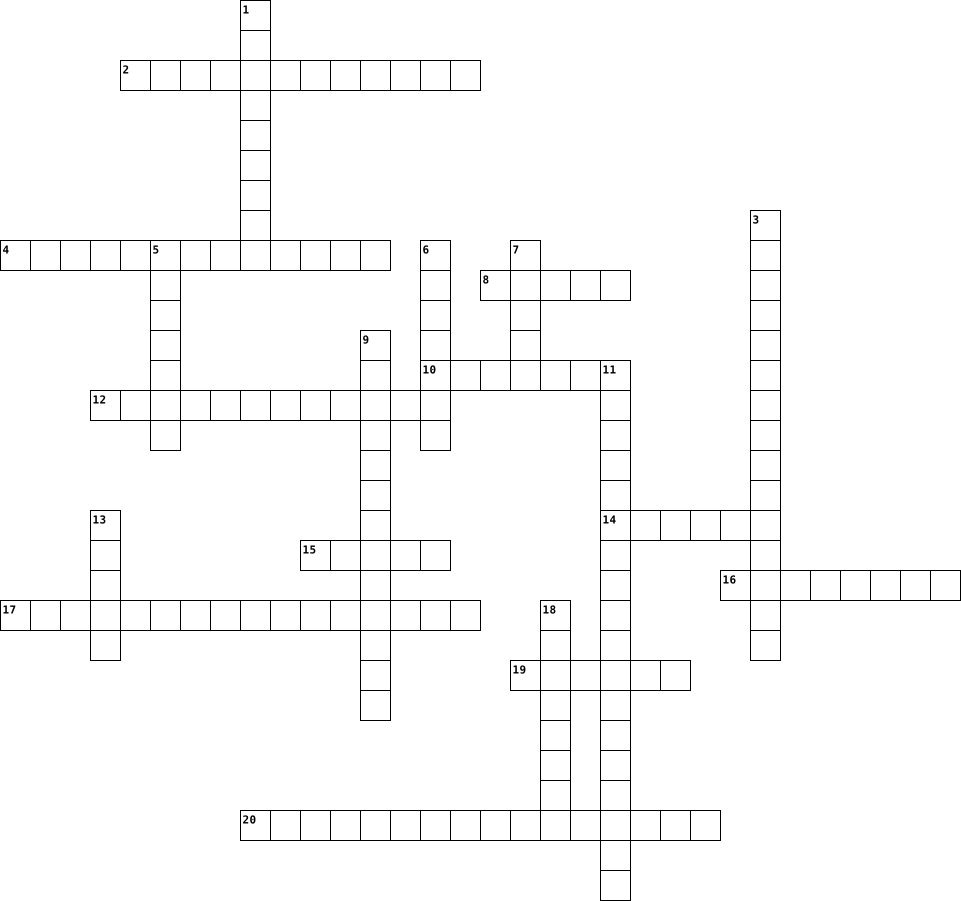
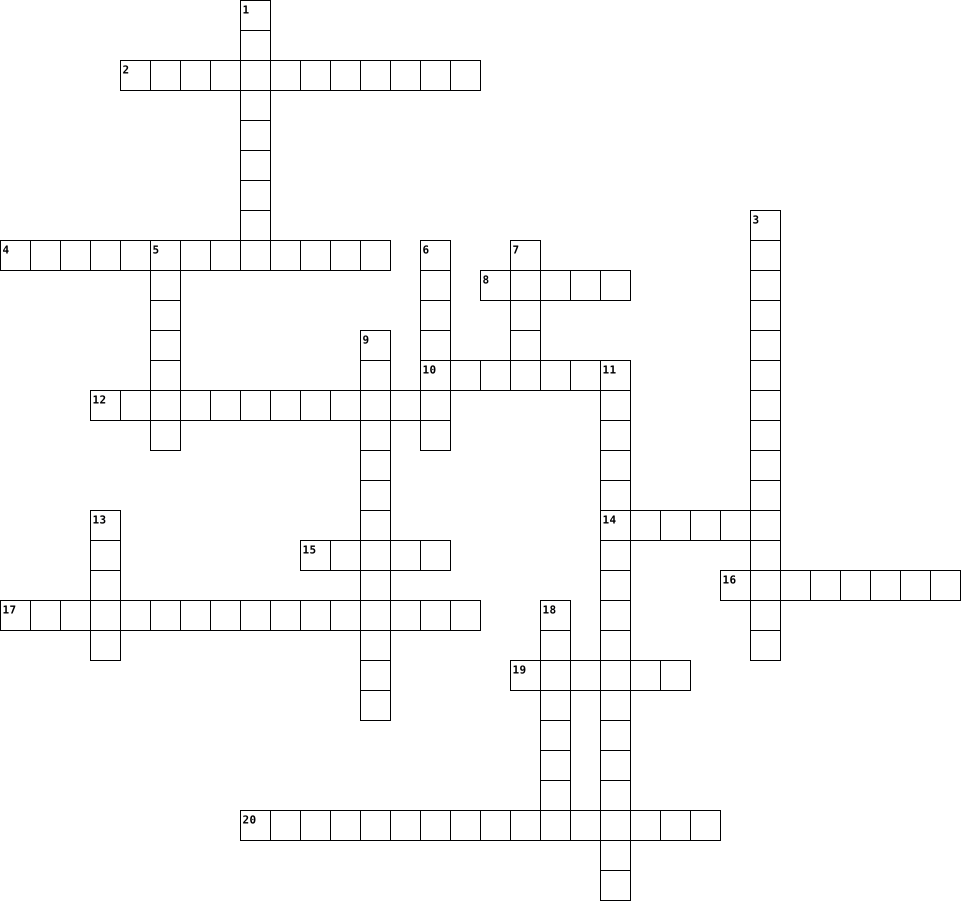
Across
- The process of making energy using chemical reactions (no sun).
- A group of individuals that belong to the same species and live in the same area.
- An organism that only eats plants.
- An organism that only consumes meats.
- Different populations that live together in the same area.
- An organism that produces it's own energy.
- A graphic that represents the distribution of energy and organisms in an ecosystem.
- Organic matter that can be used as energy.
- An organism that is not dependent on others for energy.
- An organism that breaks down organic matter for energy.
- An organism that depends on other organisms for energy.
- A group of individuals so similar that they can breed and produce fertile offspring.
- An organism that consumes its energy.
Down
- The process of taking sunlight to convert into energy.
- All life on earth from the atmosphere to the ocean.
- An organism that consumes plant and animal remains.
- The study of how organisms interact with each other and their environment.
- An organism that consumes both plants and meats.
- The transfer of energy from one organism to the next in an ecosystem.
- A collection of all the organisms that live in a particular place, along with their nonliving environment.
- The position an organism occupies in a food web.
- A group of ecosystems that have the same climate and dominant species.
- Multiple food chains put together.
23 Clues: An organism that only eats plants. • Multiple food chains put together. • An organism that only consumes meats. • An organism that consumes its energy. • An organism that produces it's own energy. • Organic matter that can be used as energy. • An organism that consumes both plants and meats. • The position an organism occupies in a food web. • ...
Energy Crossword Puzzle 2022-03-04

Across
- light that comes from the sun and light bulbs?
- The rule of energy?
- Measured in M/S
- Stored Energy
- Moving Energy
- The formula for solving Potential energy
- Energy stored in chemical bonds.
- Used most often for communication?
- Comes from outlets and power plants.
- Measured in Meters
Down
- Energy stored in objects that are above the Earth's surface?
- The ability to cause change
- KE=1/2xmxv2
- Measured in Kilograms
- The total amount of energy?
15 Clues: KE=1/2xmxv2 • Stored Energy • Moving Energy • Measured in M/S • Measured in Meters • The rule of energy? • Measured in Kilograms • The ability to cause change • The total amount of energy? • Energy stored in chemical bonds. • Used most often for communication? • Comes from outlets and power plants. • The formula for solving Potential energy • ...
Forces Vocab 2023-10-03

Across
- The energy that is associated with motion and position of everyday objects
- The transfer of thermal energy when a fluid moves from one place to another
- The transfer of energy by waves moving through space
- The energy of an object has due to its motion
- The energy associated with electric changes
- The energy stored in chemical bonds
Down
- Thermal transfer with no matter
- The total potential and kinetic energy
- The energy that is a result of its position and or shape
- The SI unit of power
- The rate of doing work
- The SI unit of work
- The product of a distance and the force in the direction
- energy The energy stored in the atomic nuclei
- The ability to do work
15 Clues: The SI unit of work • The SI unit of power • The rate of doing work • The ability to do work • Thermal transfer with no matter • The energy stored in chemical bonds • The total potential and kinetic energy • The energy associated with electric changes • energy The energy stored in the atomic nuclei • The energy of an object has due to its motion • ...
Ch 2 Ecology Vocab Pt 1 2024-05-07

Across
- an organism that makes its own energy-rich food compound using sun's energy
- all of Earth's water in all 3 states of matter
- process by which sugar and oxygen are converted into CO2 in water to provide energy for cell
- non living physical/chemical components of an ecosystem
- process in which sun's energy is converted into chemical energy
- zone around Earth where life can exist
- ecosystem maintained through natural processes
- visible from of radiant energy
Down
- form of energy transferred during heating/cooling
- an organism that obtains its energy from consuming other organisms
- energy that travels through empty space
- living things, their remains, and features associated with their activities
- niche the function a species serves in its ecosystem
- layer of gases surrounding Earth
- Earth's solid outer layer
- ability to maintain ecological balance
- all the living organisms and the physical/chemical environment
17 Clues: Earth's solid outer layer • visible from of radiant energy • layer of gases surrounding Earth • ability to maintain ecological balance • zone around Earth where life can exist • energy that travels through empty space • all of Earth's water in all 3 states of matter • ecosystem maintained through natural processes • form of energy transferred during heating/cooling • ...
Metabolism 2022-02-16

Across
- Make things move or change
- Releases energy into cells
- Molecules building
- a category of large molecules
- a process of clearing your claim
- Breaks down food
- transports molecules
- Molecules made of carbon and oxygen
- A process into a new substance
- a group of atoms joined together in a particular way
Down
- organisms can use to release energy
- organisms get from the air or water around them and use to release energy
- support or go against (refute) a claim
- in oxygen and releases carbon dioxide
- A claim supported by evidence
- Forms a complex whole
- energy and growth
- A proposed answer to a question
- A type of energy
19 Clues: Breaks down food • A type of energy • energy and growth • Molecules building • transports molecules • Forms a complex whole • Make things move or change • Releases energy into cells • A claim supported by evidence • a category of large molecules • A process into a new substance • A proposed answer to a question • a process of clearing your claim • organisms can use to release energy • ...
Bio Crossword 2023-05-19

Across
- uses energy
- puts out energy
- cellular respiration without air
- chemical reactions to maintain life
- how much energy it takes for something to react
- membrane within the cell
- cellular respiration with air
Down
- region on a enzyme that binds to the protein
- releases energy
- how cells get energy
- anaerobic process to make ATP
- reactions that chemicals undergo
- absorbs energy
- substance to make reactions happen faster
- network of proteins
- modifying the cellular structure of a protein
- catalyst in a reaction
17 Clues: uses energy • absorbs energy • releases energy • puts out energy • network of proteins • how cells get energy • catalyst in a reaction • membrane within the cell • anaerobic process to make ATP • cellular respiration with air • reactions that chemicals undergo • cellular respiration without air • chemical reactions to maintain life • substance to make reactions happen faster • ...
Physics and energy 2022-06-03

Across
- how hot or cold something is
- Lowest point
- energy that is transferred between different objects at different temperatures
- Temperature where all molecular motion stops
- Portion where particles of the medium are crowded together
- when a wave passes a barrier or hole and moves and spreads
- Heat transfer through waves
- Used to measure the frequency
- Energy stored in an objects height
- Energy that comes from heat
- Liquid to gas at the surface of liquid
- turning a solid to a liquid
- What waves travel through
- What you see in the mirror
- Movement of heat or electricity by medium
- portion where particles are spread out
Down
- When the reflection is bent
- Liquid to gas phase
- Change of solid directly to gas
- Movement of energy in longitudinal waves
- Causes waves to move
- A type of energy where chemical is involved
- Something that keeps the temperature close the the same
- A type of energy where movement is involved
- Energy that travels in waves
- Energy that is stored
- Highest point of wave
- Heat transfer through liquid or gas
- You can find them at a beach
- Distance from rest point to the crest or trough
- Turning a liquid to a solid
- Energy stored in the movement of objects
- Amount of times a wave passes through a point in a certain time
- Energy stored in the nuclease of an atom
34 Clues: Lowest point • Liquid to gas phase • Causes waves to move • Energy that is stored • Highest point of wave • What waves travel through • What you see in the mirror • When the reflection is bent • Heat transfer through waves • Energy that comes from heat • Turning a liquid to a solid • turning a solid to a liquid • how hot or cold something is • Energy that travels in waves • ...
THERMOCHEMISTRY 2020-11-13

Across
- The measure of the spontaneous dispersal of energy at a specific temperature: how much energy is spread out, or how widely spread out energy becomes
- States that enthalpy changes of reactions are additive
- Experience no change in volume
- Graphs that show the temperatures and pressures at which a substance will be thermodynamically stable in a particular phase
- A specific type of vaporization that occurs only under certain conditions
- System releases heat (deltaQ<0)
- Energy spontaneously disperses from being localized to becoming spread out if it is not hindered from doing so
- Occur when no heat is exchanged between the system and the environment; thus, the thermal energy of the system is constant through the process
- The ability to do work
- Implies that objects are in thermal equilibrium only when their temperatures are equal
- Study of energy changes involved in physical and chemical changes
- Equivalent to heat (Q) under constant pressure
Down
- Exchange of energy, not matter
- The process of measuring transferred heat
- Energy cannot be created or destroyed, only converted from one form to another
- Liquid to solid
- The system cannot exchange energy (heat and work) or matter with the surroundings; for example an insulated bomb calorimeter
- The pressure of the system is constant
- Processes in which systems absorb heat; delta Q >0
- Phase boundary that separates the solid and liquid phases terminates at a point called the critical point
20 Clues: Liquid to solid • The ability to do work • Exchange of energy, not matter • Experience no change in volume • System releases heat (deltaQ<0) • The pressure of the system is constant • The process of measuring transferred heat • Equivalent to heat (Q) under constant pressure • Processes in which systems absorb heat; delta Q >0 • ...
photosynthesis 2024-01-05

Across
- energy used to form ATP from APD
- energy produced when solar energy is converted to chemical energy
- the fluid found within the chloroplast
- creates its own organic material for production of energy
- byproduct released during the light reaction segment of photosynthesis
- when carbon dioxide is added into organic molecules
- acronym for the energy produced when solar energy is converted to chemical energy
- chemical compound added to the Calvin Cycle section of photosynthesis
- chemical compound added to the light reaction section of photosynthesis
- byproduct released during the Calvin Cycle segment of photosynthesis
- the relationship between plants and organisms that breathe oxygen and have an unneeded byproduct of carbon dioxide during the process
- donates hydrogen and electrons to help power the Calvin Cycle
Down
- pigment that helps energy form the sun to be absorb in the organism for photosynthesis to occur
- a series of proteins embedded in the thylakoid membrane where electrons are deposited
- won the Nobel Prize for his work in discovering the Calvin Cycle section of photosynthesis
- stacks of thylakoids within the chloroplast
- also known as the dark reaction and takes place in the stroma of the chloroplast
- the sacs that contain pigments such as chlorophyll
- process by which autotrophic organisms use light energy to make sugar and oxygen gas from carbon dioxide and water
- process where water is split into hydrogen and oxygen during the light reaction
- organelle found in plants where photosynthesis occurs
21 Clues: energy used to form ATP from APD • the fluid found within the chloroplast • stacks of thylakoids within the chloroplast • the sacs that contain pigments such as chlorophyll • when carbon dioxide is added into organic molecules • organelle found in plants where photosynthesis occurs • creates its own organic material for production of energy • ...
Thermo Vocabulary 2025-01-27

Across
- the flow of energy due to a temperature difference
- the entropy of a perfect crystal at zero Kelvin is zero
- any change that occurs without any external inputs
- a hypothetical process in which the entropy change of the universe is zero
- occurring at constant pressure
- the number of arrangements in which energy can be expressed, aka time's arrow
- the ability to do work or produce heat
- heat loss by system
- energy change associated with the conversion of one mole of a solid to gas-phase ions
Down
- harmonic oscillation along bonds
- average kinetic energy of particles
- energy gain by system
- occurring with no net heat flow between system and surroundings
- motion change in symmetry when spun around a given axis
- delta G for the formation of one mole of a compound from its elements in their elemental form
- energy is conserved
- a change that occurs with a corresponding increase in entropy of the surroundings
- change in energy associated with forming one mole of a compound from its elements in their elemental form
- the number of microstates available to one mole of a substance under standard conditions
- occurring at constant temperature
- energy available to do work $$$
- occurring at constant volume
- the entropy of the universe is increasing
- heat gain by system
- energy loss by system
- to change position in (x, y, z)
- the sum of all internal energies of the system
27 Clues: energy is conserved • heat gain by system • heat loss by system • energy gain by system • energy loss by system • occurring at constant volume • occurring at constant pressure • energy available to do work $$$ • to change position in (x, y, z) • harmonic oscillation along bonds • occurring at constant temperature • average kinetic energy of particles • ...
science revision 2012-10-29

Across
- properties What features it has to it
- When the solid object becomes smaller
- The stage in between rocks changing because of heat and pressure
- When a liquid turns into a gas
- When a solid becomes a liquid
- of energy conservation
- How thick an object is
Down
- properties What it looks like
- When a gas turns back into a liquid
- formed by the cooling of magma or lava
- substances A substance that gives off fumes at room temperature
- When water and air slowly take apart layers of a solid
- Rock formed my layers of rock on top of one another and having
- Pushing the particles closer together
- energy When there is energy in movement
- energy Energy that is about to be released
- When you heat up a liquid to a certain temperature and begins to evaporate
- efficiency The amount of energy lost into to unwanted energy types
18 Clues: of energy conservation • How thick an object is • properties What it looks like • When a solid becomes a liquid • When a liquid turns into a gas • When a gas turns back into a liquid • properties What features it has to it • When the solid object becomes smaller • Pushing the particles closer together • formed by the cooling of magma or lava • ...
Science Test Review 2016-10-03

Across
- learned using your five sense
- shows how energy moves through an ecosystem
- the process of how plants make their own food
- breaks down dead plants and animals
- the movement of energy through empty space
- "breathed" in by plants
- "breathed" out by plants as a waste
- the movement of energy from place to place
- has living and nonliving things
- tiny holes in the leaves of a plant
- creates its own food using energy from the sun
Down
- the food made by plants
- the changing of energy to a different form
- is not and never was alive
- an educated guess
- the movement of energy between touching objects
- the source of all energy
- eats other living things
18 Clues: an educated guess • the food made by plants • "breathed" in by plants • the source of all energy • eats other living things • is not and never was alive • learned using your five sense • has living and nonliving things • breaks down dead plants and animals • "breathed" out by plants as a waste • tiny holes in the leaves of a plant • the changing of energy to a different form • ...
Exam 1 recap 2025-02-15

Across
- the energy of motion
- [X] vs time is linear
- rate law that relates concentration and time
- time it takes for half your reactant to go away
- units depend on the overall reaction order
- the study of the changes in energy that accompany chemical reactions
- chaos
- the amount of substance in a given volume
- free energy
Down
- 1/[A] vs time is linear
- energy flows from the surroundings into a system
- measurement of randomness in a system
- the transfer of thermal energy
- ln [X] vs time is linear
- Energy flows from a system to its surroundings
- process that occurs without continuous outside intervention
- system + surrounding
- the change in energy of a system
18 Clues: chaos • free energy • the energy of motion • system + surrounding • [X] vs time is linear • 1/[A] vs time is linear • ln [X] vs time is linear • the transfer of thermal energy • the change in energy of a system • measurement of randomness in a system • the amount of substance in a given volume • units depend on the overall reaction order • rate law that relates concentration and time • ...
Thermochemistry Crossword 2022-11-22

Across
- late to class today
- type of calorimeter that measures enthalpy changes during combustion reactions at a constant volume
- a measure of the average kinetic energy of particles
- SI unit of energy
- the study of energy involved in chemical reactions
- total heat content of a system
- a type of system completely insulated from its surroundings
- a type of reaction that absorbs energy
Down
- device used to measure heat
- a unit of energy equivalent to the heat energy needed to raise the temperature of 1 gram of water by 1 °C
- the transfer of energy from one substance to another
- a type of reaction that releases energy
- the specific heat capacity of this substance is 4.18 J/g°C
- the energy that is stored
- the energy of motion
- maker of this quiz
16 Clues: SI unit of energy • maker of this quiz • late to class today • the energy of motion • the energy that is stored • device used to measure heat • total heat content of a system • a type of reaction that absorbs energy • a type of reaction that releases energy • the study of energy involved in chemical reactions • the transfer of energy from one substance to another • ...
Energy 2022-01-20

Across
- Energy in Food
- ME = KE + PE
- Stored energy due to position
- The energy in the nucleus of an atom
Down
- Energy due to motion
- Energy of Light
- the ability to cause change
- The energy associated with temperature
8 Clues: ME = KE + PE • Energy in Food • Energy of Light • Energy due to motion • the ability to cause change • Stored energy due to position • The energy in the nucleus of an atom • The energy associated with temperature
Energy 2022-02-07

Across
- What reaction can you expect when electrons hop from the atoms in one object to the atoms in another?
- Opposite poles _______ each other, or pull the magnets together.
- What type of charge do electrons have?
- What type of electricity occurs when you rub a balloon on your sweater?
- Magnetic fields can _____ or pull other objects
Down
- lighting is _________
- What causes electricity?
- Which of the following is an example of electricity that is created by nature?
8 Clues: lighting is _________ • What causes electricity? • What type of charge do electrons have? • Magnetic fields can _____ or pull other objects • Opposite poles _______ each other, or pull the magnets together. • What type of electricity occurs when you rub a balloon on your sweater? • Which of the following is an example of electricity that is created by nature? • ...
Energy 2022-03-31

Across
- spills can cause eviormental damages
- Coal is used in most
- It is very dangourses to mine
- You need this to get natural gases
- If leaks it can be very deadly
Down
- It takes 1000 of years to remake
- You have to do this to get oil
- Fraking is used to get it
8 Clues: Coal is used in most • Fraking is used to get it • It is very dangourses to mine • You have to do this to get oil • If leaks it can be very deadly • It takes 1000 of years to remake • You need this to get natural gases • spills can cause eviormental damages
energy 2022-03-31

Across
- a machine that uses wind to create energy
- to open rocks for fossil fuels
- a fossil fuel
- a machine that generates energy
- oil coal natural gas
- sources that can be used again
Down
- resources that you can only use once
- digging in the earth
8 Clues: a fossil fuel • digging in the earth • oil coal natural gas • to open rocks for fossil fuels • sources that can be used again • a machine that generates energy • resources that you can only use once • a machine that uses wind to create energy
Energy 2014-02-04

Across
- unit of measurement for energy.
- stored energy form you would find stored in a battery.
- energy cannot be created nor _________
- electrical energy is transferred into this in a speaker.
- most household items use this form of energy
Down
- the form of energy stored in a stretched elastic material.
- energy is the ability to do ____
- chemical, gravitational potential, nuclear and elastic potential are all examples of this type of energy.
8 Clues: unit of measurement for energy. • energy is the ability to do ____ • energy cannot be created nor _________ • most household items use this form of energy • stored energy form you would find stored in a battery. • electrical energy is transferred into this in a speaker. • the form of energy stored in a stretched elastic material. • ...
Energy 2017-03-07

Across
- energy stored in chemical bonds(food)
- total potential energy and kinetic energy in a system
- the ability to cause change
Down
- anything that can fall has stored GPE
- energy stored by something that can be stretched or compressed
- energy that is stored
- energy of motion
- transfer of energy that occurs when a force makes an object move
8 Clues: energy of motion • energy that is stored • the ability to cause change • anything that can fall has stored GPE • energy stored in chemical bonds(food) • total potential energy and kinetic energy in a system • energy stored by something that can be stretched or compressed • transfer of energy that occurs when a force makes an object move
energy 2017-04-24

Across
- _____energy stored in a battery
- energy of motion
- energy often _____ form
- when you use energy
Down
- based on the postition of the object
- the ability to cause change
- to be used for later
- changes into
8 Clues: changes into • energy of motion • when you use energy • to be used for later • energy often _____ form • the ability to cause change • _____energy stored in a battery • based on the postition of the object
Energy 2020-03-25

Across
- Large structures for __________ exploration must be able to withstand the forces due to powerful storm waves.
- He is __________ recognized as the world's greatest living guitarist.
- Waterskiing is my favorite __________ sport.
- __________ resources are a resource that is present with unlimited amounts in the nature.
Down
- The data is __________ on a hard disk and backed up on a CD.
- The wind farm may be able to __________ enough power for 2000 homes.
- The doctor has made an __________ diagnosis, but there'll be an additional examination by a specialist.
- Residents have called for a clean-up campaign to keep their streets free from __________.
8 Clues: Waterskiing is my favorite __________ sport. • The data is __________ on a hard disk and backed up on a CD. • The wind farm may be able to __________ enough power for 2000 homes. • He is __________ recognized as the world's greatest living guitarist. • Residents have called for a clean-up campaign to keep their streets free from __________. • ...
Energy 2020-03-24

Across
- lighting
- plants
- chemical
- energeia
- conservation
Down
- gravitational
- turbines
- kinetic
8 Clues: plants • kinetic • lighting • turbines • chemical • energeia • conservation • gravitational
Energy 2020-10-29

Across
- underground water.
- The ability to do work.
- It helps in generating electricity and pumping
- It is the sources which can be used over and over again.
- Which converts electrical energy into light energy.
Down
- It is the energy provided by the sun.
- This fuel is used for many furnaces.
- It is an example of renewable sources.
8 Clues: underground water. • The ability to do work. • This fuel is used for many furnaces. • It is the energy provided by the sun. • It is an example of renewable sources. • It helps in generating electricity and pumping • Which converts electrical energy into light energy. • It is the sources which can be used over and over again.
Energy 2021-02-08

Across
- rise and cold sinks
- or cold weather
- contact
Down
- to keep
- expansion, to change shape
- touch
- cant conduct energy
- conduct energy
8 Clues: touch • to keep • contact • conduct energy • or cold weather • cant conduct energy • rise and cold sinks • expansion, to change shape
Energy 2021-03-22

Across
- energy that has electrical charges
- energy that exists in moving things
- energy inside something that can be stretched and then go back to its original shape
- energy that has the potential to fall
Down
- energy stored inside something hot
- energy in a battery
- energy that is ina magnetic object
- energy inside the nucleus of an atom e.g energy inside an atomic bomb
8 Clues: energy in a battery • energy stored inside something hot • energy that is ina magnetic object • energy that has electrical charges • energy that exists in moving things • energy that has the potential to fall • energy inside the nucleus of an atom e.g energy inside an atomic bomb • energy inside something that can be stretched and then go back to its original shape
Energy 2021-09-09

Across
- Using pumps in the ocean to make energy
- Using turbines to create power
- can be renewed by nature over time
- Water is heated by the earth to make power
Down
- The sun is used to make power
- Water used to make power
- The burning of multiple things to create energy
- can run out of things to create energy
8 Clues: Water used to make power • The sun is used to make power • Using turbines to create power • can be renewed by nature over time • can run out of things to create energy • Using pumps in the ocean to make energy • Water is heated by the earth to make power • The burning of multiple things to create energy
energy 2021-05-25

Across
- a form of energy that travels through space in the form of waves
- Kinetic or potential energy associated with the motion or position of an object
- Energy stored in chemical bonds
- the process of changing energy from one form to another
Down
- Heat energy
- Energy stored by something that can stretch or compress
- stored energy that results from the position or shape of an object
- the energy an object has due to its motion
8 Clues: Heat energy • Energy stored in chemical bonds • the energy an object has due to its motion • Energy stored by something that can stretch or compress • the process of changing energy from one form to another • a form of energy that travels through space in the form of waves • stored energy that results from the position or shape of an object • ...
Energy 2022-05-09

Across
- a piece of a circuit or system
- energy that you can save up until you need it
- In a circuit, the components that transfers energy from the battery to a light bulb
- energy flows out of the ______ terminal and into the positive terminal of a battery
Down
- an object that has stored/portable energy
- a type of circuit with all of the conditions necessary to transfer energy
- the places you must make sure you touch to make a light bulb light
- the type of energy when you see something move
8 Clues: a piece of a circuit or system • an object that has stored/portable energy • energy that you can save up until you need it • the type of energy when you see something move • the places you must make sure you touch to make a light bulb light • a type of circuit with all of the conditions necessary to transfer energy • ...
Energy 2022-05-16

Across
- The thing created by convection used to power windmills.
- A form of energy that is made from extracting heat from the earth.
- The creator of heat that our planet revolves around
- A fossil fuel that is high polluting but easy to mine.
- A fossil fuel that we extract from the ground via massive fracking towers, it is used to make gas.
Down
- The thing we use to power dams to create hydroelectricity.
- A fuel that is made from dead plants, usually made from corn.
- An incredibly efficient and low polluting form stone that comes from the ground.
8 Clues: The creator of heat that our planet revolves around • A fossil fuel that is high polluting but easy to mine. • The thing created by convection used to power windmills. • The thing we use to power dams to create hydroelectricity. • A fuel that is made from dead plants, usually made from corn. • A form of energy that is made from extracting heat from the earth. • ...
Energy 2017-02-15

Across
- is the amount of matter in an object
- is the measure of the force of gravity acting on an object
- is the total distance traveled by the total time
- is a form of energy that results from an object's motion
- is the measurement for force
Down
- straight line distance between a starting point and ending point
- energy that is stored in an object position of parts that become kinetic energy
- force that opposes the motion between two surfaces that are in contact
8 Clues: is the measurement for force • is the amount of matter in an object • is the total distance traveled by the total time • is a form of energy that results from an object's motion • is the measure of the force of gravity acting on an object • straight line distance between a starting point and ending point • ...
Energy 2017-01-15

Across
- energy / Energy in motion
- energy / Energy carried by light
- energy / Energy that comes from the bonds in the nucleus of an atom
- energy / Heat energy
- of conservation of energy / This states that energy can't be created nor destroyed
Down
- energy / Stored energy
- energy / The sum of kinetic and potential energy
- energy / Potential energy that's stored in chemical bonds
8 Clues: energy / Heat energy • energy / Stored energy • energy / Energy in motion • energy / Energy carried by light • energy / The sum of kinetic and potential energy • energy / Potential energy that's stored in chemical bonds • energy / Energy that comes from the bonds in the nucleus of an atom • ...
Energy 2017-01-15

Across
- Stored energy
- Potential energy that's stored in chemical bonds
- Energy carried by light
- Energy in motion
Down
- Energy that comes from the bonds in the nucleus of an atom
- This states that energy can't be created nor destroyed
- Heat energy
- The sum of kinetic and potential energy
8 Clues: Heat energy • Stored energy • Energy in motion • Energy carried by light • The sum of kinetic and potential energy • Potential energy that's stored in chemical bonds • This states that energy can't be created nor destroyed • Energy that comes from the bonds in the nucleus of an atom
Energy 2017-01-15

Across
- Heat energy
- This states that energy can't be created nor destroyed
- Potential energy that's stored in chemical bonds
- The sum of kinetic and potential energy
Down
- Energy in motion
- Energy carried by light
- Energy that comes from the bonds in the nucleus of an atom
- Stored energy
8 Clues: Heat energy • Stored energy • Energy in motion • Energy carried by light • The sum of kinetic and potential energy • Potential energy that's stored in chemical bonds • This states that energy can't be created nor destroyed • Energy that comes from the bonds in the nucleus of an atom
Energy 2023-11-14

Across
- to become different
- y
- a measurement of the distance an object travels over an amount of time
- the energy an object possesses while it is moving
Down
- the process of being converted
- x
- energy that has the ability to cause change at a later time
- the ability to cause change
8 Clues: x • y • to become different • the ability to cause change • the process of being converted • the energy an object possesses while it is moving • energy that has the ability to cause change at a later time • a measurement of the distance an object travels over an amount of time
Energy 2023-12-10

Across
- This energy resource releases harmful gases that contribute to global warming?
- The unit of energy
- The transfer of energy in the form of waves.
- The energy stored in the nucleus of an atom.
- The unit of power
Down
- The energy stored when an object has been stretched or compressed.
- The energy stored in food or in the bonds of a substance.
- The energy stored in a moving object
8 Clues: The unit of power • The unit of energy • The energy stored in a moving object • The transfer of energy in the form of waves. • The energy stored in the nucleus of an atom. • The energy stored in food or in the bonds of a substance. • The energy stored when an object has been stretched or compressed. • ...
Energy 2023-11-14

Across
- a measurement of the distance an object travels over an amount of time
- to become different
- energy that has the ability to cause change at a later time
- the energy an object possesses while it is moving
Down
- to come together with impact or instance of colliding
- movement of energy from one object to another or one place to another
- a form of energy that comes from a vibrating object
- the ability to cause change
8 Clues: to become different • the ability to cause change • the energy an object possesses while it is moving • a form of energy that comes from a vibrating object • to come together with impact or instance of colliding • energy that has the ability to cause change at a later time • movement of energy from one object to another or one place to another • ...
Energy 2024-02-07

Across
- this gas makes up roughly 50% of the gas created by landfill waste, carbon dioxide is the other
- energy from sources that are depleted when used.
- type of panel made from crystalline silicon, collects suns rays to make energy
- a form of energy released from the nucleus of atoms, either by fission or fusion
Down
- energy from sources that are not depleted when used is called
- renewable energy that uses moving water to generate electricity
- renewable organic material that comes from plants and animals
- the energy from the Sun
8 Clues: the energy from the Sun • energy from sources that are depleted when used. • energy from sources that are not depleted when used is called • renewable organic material that comes from plants and animals • renewable energy that uses moving water to generate electricity • type of panel made from crystalline silicon, collects suns rays to make energy • ...
Energy 2024-02-05

Across
- something in motion
- most movement with particles
- stored energy
- particles only jiggle
Down
- a stretched material
- average of kinetic energy
- height
- more movements in particle
8 Clues: height • stored energy • something in motion • a stretched material • particles only jiggle • average of kinetic energy • more movements in particle • most movement with particles
Energy 2024-03-13

Across
- water to power
- heavy metal from ground
- earths core energy
Down
- Currents in energy
- Energy by sun
- gas fossil fuel
- animal energy
- fossil fuel from ground
8 Clues: Energy by sun • animal energy • water to power • gas fossil fuel • Currents in energy • earths core energy • heavy metal from ground • fossil fuel from ground
Energy 2023-10-23

Across
- aparato que abre y cierra un circuito eléctrico
- forma de energía que se mide como temperatura
- objecto que almacena energía que puede convertirse en energía eléctrica
- forma de energía que podemos ver
- forma de energía que podemos oír
- forma de energía que se mueve por cables
Down
- forma de energía que se almacena en enlaces químicos
- trayecto por el que puede fluir la energía eléctrica
8 Clues: forma de energía que podemos ver • forma de energía que podemos oír • forma de energía que se mueve por cables • forma de energía que se mide como temperatura • aparato que abre y cierra un circuito eléctrico • forma de energía que se almacena en enlaces químicos • trayecto por el que puede fluir la energía eléctrica • ...
Energy 2024-04-17

Across
- The gas that is turned to steam to power turbines
- What energy is first burned in a boiler?
- What kind of energy produces radioactive waste?
Down
- What kind of machine uses wind to create energy?
- What type of energy uses water?
- What substance is mined from the seabed?
- What type of energy uses the sun?
- What is mined from layers of rock?
8 Clues: What type of energy uses water? • What type of energy uses the sun? • What is mined from layers of rock? • What substance is mined from the seabed? • What energy is first burned in a boiler? • What kind of energy produces radioactive waste? • What kind of machine uses wind to create energy? • The gas that is turned to steam to power turbines
Energy 2024-06-20

Across
- a particular thinking, felling.
- something that is done evade waste time.
- it make hydropower.
- this can charging divide.
- the quality of being extreme in strength or quantity.
Down
- it make light.
- synonyms of strong.
- get energy from sun
8 Clues: it make light. • synonyms of strong. • it make hydropower. • get energy from sun • this can charging divide. • a particular thinking, felling. • something that is done evade waste time. • the quality of being extreme in strength or quantity.
Energy 2024-06-14

Across
- algo que sucede por casualidad
- requiere un mínimo de tiempo y esfuerzo
- reemplazado o restaurado
- para cambiar de forma, condición o uso
Down
- para poner en su lugar
- resultados de una acción
- difícil o imposible de creer
- consumir o destruir
8 Clues: consumir o destruir • para poner en su lugar • resultados de una acción • reemplazado o restaurado • difícil o imposible de creer • algo que sucede por casualidad • para cambiar de forma, condición o uso • requiere un mínimo de tiempo y esfuerzo
Energy 2024-09-30

Across
- the amount of matter something has.
- the h in GPE=mgh
- the ability to do work.
- standard units used for energy.
Down
- 9.8 m/s^2
- stored energy.
- energy due to an objects motion.
- speed in a direction.
8 Clues: 9.8 m/s^2 • stored energy. • the h in GPE=mgh • speed in a direction. • the ability to do work. • standard units used for energy. • energy due to an objects motion. • the amount of matter something has.
ENERGY 2025-02-25

Across
- a disadvantage or negative part of a situation
- the number or amount of something
- role or purpose
- the act of using, eating or drinking something
- new and not tested
Down
- a situation that restricts something
- the work needed to keep something in good condition
- producing good results without waste
8 Clues: role or purpose • new and not tested • the number or amount of something • a situation that restricts something • producing good results without waste • a disadvantage or negative part of a situation • the work needed to keep something in good condition • the act of using, eating or drinking something
Energy 2025-10-22

Across
- Found in power plants
- Something that you hear
- Found in sunlight
- A roller coaster at the top of a hill
Down
- Used in a Tv
- A car driving down a road
- In a rubber band
- Boiling water
8 Clues: Used in a Tv • Boiling water • In a rubber band • Found in sunlight • Found in power plants • Something that you hear • A car driving down a road • A roller coaster at the top of a hill
Energy 2025-10-28

Across
- currents
- contact
- energy heat
- electromagnetic waves
Down
- energy motion
- gets bigger
- heat&cold
- gets smaller
8 Clues: contact • currents • heat&cold • gets bigger • energy heat • gets smaller • energy motion • electromagnetic waves
Energy 2025-11-17

Across
- Movement of energy from one object to another or from one place to another
- To become different
- The energy an object possesses while it is moving
Down
- The process of being converted or changing form
- A form of energy that comes from a vibrating object
- The ability to cause change
- A measurement of the distance an object travels over an amount of time
- Energy that has the ability to cause change at a later time
8 Clues: To become different • The ability to cause change • The process of being converted or changing form • The energy an object possesses while it is moving • A form of energy that comes from a vibrating object • Energy that has the ability to cause change at a later time • A measurement of the distance an object travels over an amount of time • ...
Lesson 1.2 Energy Sources - Key Term Crossword 2021-02-08

Across
- A dynamo or similar machine for converting mechanical energy into electricity.
- A fundamental entity of nature that is transferred between parts of a system in the production of physical change within the system and usually regarded as the capacity for doing work.
- A result of a force moving an object a certain distance.
- Energy Any source of energy other than fossil fuels that is used for constructive purposes.
- The potential difference measured in volts. The amount of work to be done to move a charge from one point to another along an electric circuit.
- Energy The energy that a piece of matter has because of its position or nature or because of the arrangement of parts.
- Plant materials and animal waste used especially as a source of fuel.
- The unit of electric current in the meter-kilogram-second system of units. Referred to as amp and symbolized as A.
- Circuit A circuit in which all parts are connected end to end to provide a single path of current.
- Energy Energy which a body possesses by virtue of being in motion.
- The flow of electrical power or charge.
- A machine for producing power in which a wheel or rotor is made to revolve by a fast-moving flow of water, steam, gas, or air.
- The opposition that a device or material offers to the flow of direct current.
- Fuel A natural fuel such as coal or gas, formed in the geological past from the remains of living organisms.
- Energy An energy source that will never run out.
- Law States that the direct current flowing in an electric circuit is directly proportional to the voltage applied to the circuit.
- Converter Changes one form of power to another.
- Conversion Changing one form of energy to another.
- Energy The state when objects are not yet in motion.
- Grid A system that links electricity produced in power stations to deliver it to where it is needed.
Down
- Energy Energy caused by the movement of electrons.
- Energy A resource that cannot be replaced once used.
- Energy A resource that can be replaced when needed.
- The ratio of the useful energy delivered by a dynamic system to the energy supplied to it.
- Protection Agency An organization that works to develop and enforce regulations that implement environmental laws enacted by Congress.
- The unit of potential difference symbolized as V.
- Energy The use of heat from within the Earth or from the atmosphere near oceans.
- The production of an electric or magnetic state by the proximity (without contact) of an electrified or magnetized body.
- Induction The production of electricity in conductors with the use of magnets.
- The unit of electric resistance in the meter-kilogram-second system of units. Symbolized as Ω.
- The net transfer of electric charge (electron movement along a path) per unit of time.
- The rate at which work is performed or energy is expended.
- Circuit A closed electrical circuit in which the current is divided into two or more paths and then returns via a common path to complete the circuit.
- The rotating member of an electrical machine.
34 Clues: The flow of electrical power or charge. • The rotating member of an electrical machine. • Converter Changes one form of power to another. • Energy An energy source that will never run out. • The unit of potential difference symbolized as V. • Energy Energy caused by the movement of electrons. • Conversion Changing one form of energy to another. • ...
Science PBL: Energy and circuits by Evan Wong 2023-12-20

Across
- Energy harnessed from the wind using wind turbines.
- The unit of electrical resistance.
- A unit of power equal to 1,000 watts.
- Referring to the use of advanced technology and automation in energy management.
- The unit of electric current, equal to a flow of one coulomb of charge per second.
- Energy harnessed from the motion of ocean waves to generate electricity.
- A device that converts mechanical energy into electrical energy.
- Relating to practices that meet current energy needs without compromising the ability of future generations to meet their own needs.
- Relating to the interaction of electric and magnetic fields, fundamental to the generation and transmission of electricity.
- An electric current that flows in only one direction.
- Fuels, such as coal, oil, and natural gas, that are derived from ancient organic matter.
- A material that allows the flow of electric current.
- Heat energy derived from the Earth's internal heat.
- A unit of power equal to one million watts.
- Energy derived from the sun's radiation.
- A device that changes the voltage of an alternating current.
- The measure of how effectively energy is converted into useful work.
- The capacity to do work or produce heat.
- Pertaining to the rise and fall of sea levels caused by gravitational forces, used to generate power.
- Referring to the distribution of power generation and storage across multiple smaller sources.
- Electricity generated by the movement of water.
- An electric current that periodically reverses direction.
Down
- Relating to the conversion of light into electricity using solar cells.
- The unit of power, equal to one joule of energy per second.
- Energy released through nuclear reactions, such as nuclear fission or fusion.
- A device that converts chemical energy into electrical energy.
- The ability of an energy system to withstand and recover from disruptions or failures.
- Renewable energy derived from organic matter, such as plant material or agricultural waste.
- A device that converts direct current (DC) to alternating current (AC).
- Energy that is derived from sources that can be naturally replenished, such as solar power or wind power.
- The force that pushes an electric charge through a circuit.
- A rotary mechanical device that extracts energy from a fluid flow and converts it into useful work.
- A material that resists the flow of electric current.
- A measure of how well energy is used or converted into useful work.
- The flow of electrical power or charge.
- A network of interconnected power lines and equipment used to distribute electricity.
- A closed loop or path through which an electric current flows.
- The rate at which work is done or energy is transferred.
- A small-scale localised grid that can operate independently or in conjunction with the main grid.
- The opposition encountered by an electric current as it flows through a material or device.
- A chemical element found in fossil fuels and associated with greenhouse gas emissions.
- The flow of electric charge through a conductor.
42 Clues: The unit of electrical resistance. • A unit of power equal to 1,000 watts. • The flow of electrical power or charge. • Energy derived from the sun's radiation. • The capacity to do work or produce heat. • A unit of power equal to one million watts. • Electricity generated by the movement of water. • The flow of electric charge through a conductor. • ...
Types of Energy 2023-10-04

Across
- Ability to work
- energy from magnets and their surrounding magnet field
- energy resulting in the movement of particles
- energy cant be destroyed or created
- energy that creates noise through vibrations
- heat
- Energy harnessed from the sun
- pull or push
- work an object can do cause of kinetic & potential energy
Down
- potential energy stored in a object
- energy stored by objects due to the position of the object
- when energy changes from one form to another
- stored in fuel, cells, and food
- energy stored in the nucleus of an atom
14 Clues: heat • pull or push • Ability to work • Energy harnessed from the sun • stored in fuel, cells, and food • potential energy stored in a object • energy cant be destroyed or created • energy stored in the nucleus of an atom • when energy changes from one form to another • energy that creates noise through vibrations • energy resulting in the movement of particles • ...
Kinetic and Potential energy 2023-10-27

Across
- determined by its height and mass
- ability to work
- ability move or cause change in matter
- can be used to determined kinetic and potential energy
- SI unit
- total energy particles in a object
- stored energy
Down
- can be transformed in to other types of energy
- energy of motion
- stored in elastic materials
- found in all objects
- mass the amount of kinetic energy is determined by its and its
- stored enrgy in an object due to
- the higher an object the its potential energy is
- helps determined potential energy
15 Clues: SI unit • stored energy • ability to work • energy of motion • found in all objects • stored in elastic materials • stored enrgy in an object due to • determined by its height and mass • helps determined potential energy • total energy particles in a object • ability move or cause change in matter • can be transformed in to other types of energy • ...
Building Codes 2020-03-13

Across
- An organization, office, or individual responsible for enforcing the requirements of a code
- Canadian Commission on Building and Fire Codes
- A compliance path that compares the energy performance of a proposed building to that of a hypothetical reference house or building
- The building code for small buildings and houses
- Measures to advance a successful low-carbon transition by funding skills development for trades, educators, designers, architects and building officials
- A measure of the total amount of GHGs associated with a building’s energy use that is calculated by converting the energy use of a building into GHG emissions using an emissions factor for the specific energy sources used by the building
- A building envelope first approach measure that is an effective and long-lasting way to reduce energy use
- A voluntary guideline on when to adopt the model codes that would pique consumer interest and send strong market signals
- Proposed Change Form
- A building that can meet all its energy needs with the addition of on-site renewables or off-site clean energy
- The building code for large and complex buildings
Down
- An approach to building energy performance that uses energy modelling software to develop a hypothetical replica of the proposed building but built to a reference standard (e.g. ASHRAE) or code (e.g. NECB 2020 or Section 9.36)
- An effective way to compare building energy performance
- An energy use performance approach based on the energy consumed in a building per unit of floor area expressed over time
- A compliance path for builders and designers like the ENERGY STAR for New Homes program. There are points awarded for energy conservation measures that can be added up to achieve compliance with a specific tier
- Pan-Canadian Framework for Clean Growth and Climate Change
- A building’s ability to maintain critical life-support functions and conditions for its occupants during extended periods of absence of power, heating fuel, and/or water
- A mechanical device that transfers thermal energy in the opposite direction of natural heat transfer by absorbing heat from the air
- Codes developed to be an incremental approach to eliminating energy waste in the built environment
19 Clues: Proposed Change Form • Canadian Commission on Building and Fire Codes • The building code for small buildings and houses • The building code for large and complex buildings • An effective way to compare building energy performance • Pan-Canadian Framework for Clean Growth and Climate Change • ...
Energy And Matter 2023-04-24

Across
- Energy is a _______ that matter has.
- Energy due to position or.
- Who invented the term energy?
- You have to ________ energy into matter.
- The smallest part of an element?
- The fundamental unit of which elements are composed.
- Who gave the atomic theory of matter?
Down
- Particles that have a negative charge.
- Changing phase from liquid to solid
- The ability to do work is?
- Particles with more ________ energy move faster and further apart
- What is it called when energy moves from warm objects to cooler objects by physical contact?
- The substance made up of various types of particles that occupies physical space and has inertia?
- Particles that have a positive charge.
- The amount of matter in an object
- Can energy exist without matter?
- The kinetic energy of the particles in a system. The faster the particles move, the higher the heat
- An electrically charged atom or group of atoms formed by the loss or gain of one or more electrons
18 Clues: The ability to do work is? • Energy due to position or. • Who invented the term energy? • Can energy exist without matter? • The smallest part of an element? • The amount of matter in an object • Changing phase from liquid to solid • Energy is a _______ that matter has. • Who gave the atomic theory of matter? • Particles that have a negative charge. • ...
Ch 2 Ecology Vocab Pt 1 2024-05-07

Across
- an organism that makes its own energy-rich food compound using sun's energy
- all of Earth's water in all 3 states of matter
- process by which sugar and oxygen are converted into CO2 in water to provide energy for cell
- non living physical/chemical components of an ecosystem
- process in which sun's energy is converted into chemical energy
- zone around Earth where life can exist
- ecosystem maintained through natural processes
- visible from of radiant energy
Down
- form of energy transferred during heating/cooling
- an organism that obtains its energy from consuming other organisms
- energy that travels through empty space
- living things, their remains, and features associated with their activities
- niche the function a species serves in its ecosystem
- layer of gases surrounding Earth
- Earth's solid outer layer
- ability to maintain ecological balance
- all the living organisms and the physical/chemical environment
17 Clues: Earth's solid outer layer • visible from of radiant energy • layer of gases surrounding Earth • ability to maintain ecological balance • zone around Earth where life can exist • energy that travels through empty space • all of Earth's water in all 3 states of matter • ecosystem maintained through natural processes • form of energy transferred during heating/cooling • ...
vocab words 2023-12-12

Across
- potential energy and kinetic energy form mechanical energy.
- energy – or mechanical energy – is the energy stored in objects; as objefasterove faste
- energy is the energy of chemical substances that is released when the substances undergo a chemical reaction
- energy is the energy of electromagnetic and gravitational radiation. It is compressed, stretched or generally deformed in any manner.
- energy occurs when objects are impermanently compressed, stretched or generally deformed in any manner.
- power is the use of nuclear reactions to produce electricity.
- energy is energy that results from movement or the location of an object.
Down
- energy is also called radiant energy. It is energy from light,
- energy is a form of potential energy.
- energy is the movement of electrons the tiny particles that make atoms
- the energy in sound is smaller than in other forms of energy.
- energy" is used loosely in various contexts in physics and engineering, generally related to the kinetic energy of vibrating and colliding atoms in a substance.
- energy is the energy of sound waves. Sound waves travel through the air or another medium
13 Clues: energy is a form of potential energy. • potential energy and kinetic energy form mechanical energy. • the energy in sound is smaller than in other forms of energy. • power is the use of nuclear reactions to produce electricity. • energy is also called radiant energy. It is energy from light, • energy is the movement of electrons the tiny particles that make atoms • ...
vocab words 2023-12-12

Across
- potential energy and kinetic energy form mechanical energy.
- energy – or mechanical energy – is the energy stored in objects; as objefasterove faste
- energy is the energy of chemical substances that is released when the substances undergo a chemical reaction
- energy is the energy of electromagnetic and gravitational radiation. It is compressed, stretched or generally deformed in any manner.
- energy occurs when objects are impermanently compressed, stretched or generally deformed in any manner.
- power is the use of nuclear reactions to produce electricity.
- energy is energy that results from movement or the location of an object.
Down
- energy is also called radiant energy. It is energy from light,
- energy is a form of potential energy.
- energy is the movement of electrons the tiny particles that make atoms
- the energy in sound is smaller than in other forms of energy.
- energy" is used loosely in various contexts in physics and engineering, generally related to the kinetic energy of vibrating and colliding atoms in a substance.
- energy is the energy of sound waves. Sound waves travel through the air or another medium
13 Clues: energy is a form of potential energy. • potential energy and kinetic energy form mechanical energy. • the energy in sound is smaller than in other forms of energy. • power is the use of nuclear reactions to produce electricity. • energy is also called radiant energy. It is energy from light, • energy is the movement of electrons the tiny particles that make atoms • ...
vocab words 2023-12-12

Across
- potential energy and kinetic energy form mechanical energy.
- energy – or mechanical energy – is the energy stored in objects; as objefasterove faste
- energy is the energy of chemical substances that is released when the substances undergo a chemical reaction
- energy is the energy of electromagnetic and gravitational radiation. It is compressed, stretched or generally deformed in any manner.
- energy occurs when objects are impermanently compressed, stretched or generally deformed in any manner.
- power is the use of nuclear reactions to produce electricity.
- energy is energy that results from movement or the location of an object.
Down
- energy is also called radiant energy. It is energy from light,
- energy is a form of potential energy.
- energy is the movement of electrons the tiny particles that make atoms
- the energy in sound is smaller than in other forms of energy.
- energy" is used loosely in various contexts in physics and engineering, generally related to the kinetic energy of vibrating and colliding atoms in a substance.
- energy is the energy of sound waves. Sound waves travel through the air or another medium
13 Clues: energy is a form of potential energy. • potential energy and kinetic energy form mechanical energy. • the energy in sound is smaller than in other forms of energy. • power is the use of nuclear reactions to produce electricity. • energy is also called radiant energy. It is energy from light, • energy is the movement of electrons the tiny particles that make atoms • ...
vocab words 2023-12-12

Across
- potential energy and kinetic energy form mechanical energy.
- energy – or mechanical energy – is the energy stored in objects; as objefasterove faste
- energy is the energy of chemical substances that is released when the substances undergo a chemical reaction
- energy is the energy of electromagnetic and gravitational radiation. It is compressed, stretched or generally deformed in any manner.
- energy occurs when objects are impermanently compressed, stretched or generally deformed in any manner.
- power is the use of nuclear reactions to produce electricity.
- energy is energy that results from movement or the location of an object.
Down
- energy is also called radiant energy. It is energy from light,
- energy is a form of potential energy.
- energy is the movement of electrons the tiny particles that make atoms
- the energy in sound is smaller than in other forms of energy.
- energy" is used loosely in various contexts in physics and engineering, generally related to the kinetic energy of vibrating and colliding atoms in a substance.
- energy is the energy of sound waves. Sound waves travel through the air or another medium
13 Clues: energy is a form of potential energy. • potential energy and kinetic energy form mechanical energy. • the energy in sound is smaller than in other forms of energy. • power is the use of nuclear reactions to produce electricity. • energy is also called radiant energy. It is energy from light, • energy is the movement of electrons the tiny particles that make atoms • ...
vocab words 2023-12-12

Across
- potential energy and kinetic energy form mechanical energy.
- energy – or mechanical energy – is the energy stored in objects; as objefasterove faste
- energy is the energy of chemical substances that is released when the substances undergo a chemical reaction
- energy is the energy of electromagnetic and gravitational radiation. It is compressed, stretched or generally deformed in any manner.
- energy occurs when objects are impermanently compressed, stretched or generally deformed in any manner.
- power is the use of nuclear reactions to produce electricity.
- energy is energy that results from movement or the location of an object.
Down
- energy is also called radiant energy. It is energy from light,
- energy is a form of potential energy.
- energy is the movement of electrons the tiny particles that make atoms
- the energy in sound is smaller than in other forms of energy.
- energy" is used loosely in various contexts in physics and engineering, generally related to the kinetic energy of vibrating and colliding atoms in a substance.
- energy is the energy of sound waves. Sound waves travel through the air or another medium
13 Clues: energy is a form of potential energy. • potential energy and kinetic energy form mechanical energy. • the energy in sound is smaller than in other forms of energy. • power is the use of nuclear reactions to produce electricity. • energy is also called radiant energy. It is energy from light, • energy is the movement of electrons the tiny particles that make atoms • ...
Physics 2022-08-30
Across
- the rate of increasing speed
- energy in nan object in motion
- unit used to measure electrical energy
- a body's tendency to resist motion
- the change in an object's position
- how force is measured
- how fast something is moving
- motion resistance from objects rubbing against each other
- energy that comes from electrical charge
- measuremnt of mass in object
- energy in an object due to its motion or position
Down
- when two objects collide
- energy stored in an object
- change in momentum
- attraction force between objects, bodies, and masses
- rate or measurement at which work is done
- energy that heat genreates
- a continuous electric current, switches directs periodically
- the push or pull measurement of an object
- force pushing on an object
20 Clues: change in momentum • how force is measured • when two objects collide • energy stored in an object • energy that heat genreates • force pushing on an object • the rate of increasing speed • how fast something is moving • measuremnt of mass in object • energy in nan object in motion • a body's tendency to resist motion • the change in an object's position • ...
Physics 2022-08-30
Across
- the rate of increasing speed
- energy in nan object in motion
- unit used to measure electrical energy
- a body's tendency to resist motion
- the change in an object's position
- how force is measured
- how fast something is moving
- motion resistance from objects rubbing against each other
- energy that comes from electrical charge
- measuremnt of mass in object
- energy in an object due to its motion or position
Down
- when two objects collide
- energy stored in an object
- change in momentum
- attraction force between objects, bodies, and masses
- rate or measurement at which work is done
- energy that heat genreates
- a continuous electric current, switches directs periodically
- the push or pull measurement of an object
- force pushing on an object
20 Clues: change in momentum • how force is measured • when two objects collide • energy stored in an object • energy that heat genreates • force pushing on an object • the rate of increasing speed • how fast something is moving • measuremnt of mass in object • energy in nan object in motion • a body's tendency to resist motion • the change in an object's position • ...
Food Webs and Trophic Pyramids 2025-12-11

Across
- – An effect that happens later
- – A plant that makes its own food
- – An animal that eats only plants
- – A shape showing energy levels
- – The home of a plant or animal
- – An animal that eats plants and animals
- – An animal that must eat to get energy
- – The amount of living matter in a level
- – Related to energy levels in a pyramid
- – Any living thing
- – An animal that is hunted
Down
- – An animal that eats other animals
- – An animal that hunts other animals
- – Breaks down dead plants and animals
- – An effect that happens right away
- – What all living things need to survive
- – The main source of energy for plants
- – A place where living things interact
- – A simple path of energy
- – Many food chains connected
20 Clues: – Any living thing • – A simple path of energy • – An animal that is hunted • – Many food chains connected • – An effect that happens later • – A shape showing energy levels • – The home of a plant or animal • – A plant that makes its own food • – An animal that eats only plants • – An animal that eats other animals • – An effect that happens right away • ...
Photosythesis 2026-03-11

Across
- | A molecule that absorbs specific wavelengths of light.
- | An energy-carrying molecule produced during the light reactions.
- | A particle of light energy absorbed by chlorophyll.
- | The organelle in plant cells where photosynthesis takes place.
- | A gas released as a by-product of photosynthesis.
- | Stacks of thylakoids inside the chloroplast.
- | The green pigment in plants that absorbs light for photosynthesis.
- | A molecule that carries high-energy electrons used in the Calvin cycle.
- CYCLE | The series of reactions that use carbon dioxide to produce glucose.
- | A substance absorbed by plant roots that is needed for photosynthesis.
Down
- | An organism that makes its own food using light or chemical energy.
- ENERGY | Energy from the sun that powers the process of photosynthesis.
- DIOXIDE | A gas taken in by plants and used to make glucose during photosynthesis.
- REACTIONS | The stage of photosynthesis that captures sunlight and produces energy molecules.
- | The process plants use to convert light energy into chemical energy (glucose).
- | Membrane structures inside chloroplasts where the light reactions occur.
- | A sugar produced during photosynthesis that plants use for energy.
- | The fluid-filled space in the chloroplast where the Calvin cycle occurs.
- INDEPENDENT REACTIONS | Stage three of photosynthesis; another name for the Calvin Cycle.
- | An organic molecule such as sugars that stores energy produced during photosynthesis.
20 Clues: | Stacks of thylakoids inside the chloroplast. • | A gas released as a by-product of photosynthesis. • | A particle of light energy absorbed by chlorophyll. • | A molecule that absorbs specific wavelengths of light. • | The organelle in plant cells where photosynthesis takes place. • | An energy-carrying molecule produced during the light reactions. • ...
Physics of Basketball (Thermodynamics) 2023-05-29

Across
- this type energy is stored or comes a lack of movement
- this type of potential energy is found in batteries and other substances that release energy when mixed together
- when any space gets smaller, resulting in an increase in pressure
- any type of energy created with the need and use of oxygen gas
- the likeliness of something happening
- this describes the repetition of any sequence from start to finish
Down
- the energy responsible for any change in heat
- this type of kinetic energy is due to the spinning of an object
- the measure of space within any object
- when any space gets larger, resulting in a decrease in pressure
- this type of energy takes in account all energy within a system
- this type of energy is created by motion
- something that continues to happen without additional input of energy or effort
- the unit typically used to measure kinetic or potential energy
- what is the measure of dispersal of energy or an increase in randomness
- the primary purpose of heat engines
16 Clues: the primary purpose of heat engines • the likeliness of something happening • the measure of space within any object • this type of energy is created by motion • the energy responsible for any change in heat • this type energy is stored or comes a lack of movement • the unit typically used to measure kinetic or potential energy • ...
Wind Energy Crossword Puzzle 2025-05-12

Across
- Wind turbines being installed have low operating costs, but the initial investment costs ___________.
- Wind turbines capture the __________ energy of the wind, using blades to convert the winds motion into rotational energy.
- The wind is constantly being renewed through natural ____________ patterns, meaning it's a sustainable energy source that won't run out.
- What is produced when wind energy rotates turbines?
- fuels Wind energy helps decrease dependence on ____________ _________, which are finite resources.
- Wind is a ________ source that is truly economical.
- gases Wind energy replacing fossil fuels reduces emission of ______________ ________.
Down
- The whirring of turbine blades can cause ________ pollution.
- A wind turbine can be up to ___________ meters long.
- Wind speed __________, meaning electricity can be inconsistent.
- Wind turbines and gathering of energy can potentially impact ______________.
- Wind is a clean and sustainable source, which leads to _______________ air pollution emissions.
- energy The energy produced by high moving winds.
- What animal has a high fatality rate when wind energy is involved?
- Wind energy is a renewable resource that utilizes wind ______________ to convert the kinetic energy of moving air into electricity.
- Wind is considered _______________ because it is constantly replenished by natural atmospheric processes.
16 Clues: energy The energy produced by high moving winds. • What is produced when wind energy rotates turbines? • Wind is a ________ source that is truly economical. • A wind turbine can be up to ___________ meters long. • The whirring of turbine blades can cause ________ pollution. • Wind speed __________, meaning electricity can be inconsistent. • ...
Earth Resources 2014-04-22

Across
- Energy obtained from underground steam
- Energy obtained from falling water
- substitute for dwindling petroleum supplies
- law that protects the water
- Energy obtained from the air
- pollution coming from unknown location
- Can be replenished over a short time
- energy provided by the sun
- law that protects the air
- pollution coming from a known location
Down
- primarily used by power plants
- process that conserves forest resources
- Hydrocarbons used as fuel
- Energy obtained from the sea
- energy obtained from radioactive materials
- water that carries non point source pollution
- takes millions of years to form and accumulate
- careful use of resources
- it forms from the remains of plants and animals
19 Clues: careful use of resources • Hydrocarbons used as fuel • law that protects the air • energy provided by the sun • law that protects the water • Energy obtained from the sea • Energy obtained from the air • primarily used by power plants • Energy obtained from falling water • Can be replenished over a short time • Energy obtained from underground steam • ...
Chapter 8 Vocab Quiz 2023-03-09

Across
- rate at which the body uses energy
- food guidance system created by USDA
- units of energy that provide little or no nutrients
- process of choosing and consuming food
- substance that helps the body eliminate water
- complex carbohydrate found only in plants
- Fat soluable vitamins
- inorganic nutrients
- solid at room temperature
Down
- organic nutrients that regulate body processes
- plant based, liquid at room temperature
- unit of energy in food
- simple carbohydrate and preferred energy for brain
- fat found in many processed foods
- chemical subsances that provide nutrition
- major energy source
- stylish weight loss plans
- uses height and weight to determine health
- energy source with 9 calories per gram
19 Clues: major energy source • inorganic nutrients • Fat soluable vitamins • unit of energy in food • stylish weight loss plans • solid at room temperature • fat found in many processed foods • rate at which the body uses energy • food guidance system created by USDA • process of choosing and consuming food • energy source with 9 calories per gram • plant based, liquid at room temperature • ...
Science VOCAB 2023-03-24

Across
- /A push or pull
- /created when a rub something
- /keeps things warm or cold
- Goldberg/ a serious of motions to solves easy problem
- energy / moving energy
- /has two poles
- /heat being transferred through touching is called
- /The ability of something to say or change in itself or its surroundings
- mechanical energy /All the energy
- /where the protons and
Down
- /when there is the same # of protons and electrons
- Energy /The mass and height affect the _____ energy that an object has
- /Energy transferred through electromagnetic waves. It does not require matter to travel through
- Magnet /Only sometimes a magnet
- /When heat transfers by currents within a fluid (Liquids and gasses)
- /When something is negative it has more...
- /When something is positive it has more...
- of Conservation / what is this law;It can only transform or transfer or be created or destroyed
18 Clues: /A push or pull • /has two poles • energy / moving energy • /where the protons and • /keeps things warm or cold • /created when a rub something • Magnet /Only sometimes a magnet • mechanical energy /All the energy • /When something is negative it has more... • /When something is positive it has more... • /when there is the same # of protons and electrons • ...
Unit 5 Crossword 2021-01-29

Across
- A lamp grows toward the window in your room
- type of energy sunlight is
- site of photosynthesis
- secondary and tertiary consumers are often this
- consumer that eats both plants and animals
- a plant's response to an external stimulus
- also known as a primary consumer
- organism that breaks down dead stuff
- a carnivore that eat animals that have died
- an ivy wraps itself around a fence post
- multi-directional series of feeding relationships
Down
- sites of cellular respiration
- single line of feeding relationships
- the force between a cell membrane and a cell wall that causes water to enter a plant
- the process plants use to make chemical energy from sunlight
- an ingredient of a chemical reaction
- largest product of photosynthesis
- a tree grows upright after a landslide knocks it down sideways
- a result of a chemical reaction
- energy from cellular respiration
- internal stimulus which causes plants to ripen their fruit or go dormant
- the place an organism occupies in a food chain, web, or energy pyramid (primary consumer, tertiary consumer, etc.)
- demonstrates that only some of the energy from producers is able to move up to consumers at the next level
- organism that eats other organisms for energy in a food chain
- happens when turgor pressure is low
- organism that makes energy in a food chain, web, or energy pyramid
- percent of energy that moves from one level to the next in an energy pyramid
27 Clues: site of photosynthesis • type of energy sunlight is • sites of cellular respiration • a result of a chemical reaction • energy from cellular respiration • also known as a primary consumer • largest product of photosynthesis • happens when turgor pressure is low • single line of feeding relationships • organism that breaks down dead stuff • an ingredient of a chemical reaction • ...
THERMOCHEMISTRY 2020-11-13

Across
- : System releases heat (deltaQ<0)
- LAW : Energy spontaneously disperses from being localized to becoming spread out if it is not hindered from doing so
- DIAGRAMS : Graphs that show the temperatures and pressures at which a substance will be thermodynamically stable in a particular phase
- : The measure of the spontaneous dispersal of energy at a specific temperature: how much energy is spread out, or how widely spread out energy becomes
- : Experience no change in volume
- SYSTEM : The system cannot exchange energy (heat and work) or matter with the surroundings; for example an insulated bomb calorimeter
- LAW : Implies that objects are in thermal equilibrium only when their temperatures are equal
- : Occur when no heat is exchanged between the system and the environment; thus, the thermal energy of the system is constant through the process
- : The process of measuring transferred heat
- POINT : Phase boundary that separates the solid and liquid phases terminates at a point called the critical point
- LAW : Energy cannot be created or destroyed, only converted from one form to another
Down
- LAW : States that enthalpy changes of reactions are additive
- : Liquid to solid
- : The ability to do work
- : Study of energy changes involved in physical and chemical changes
- : A specific type of vaporization that occurs only under certain conditions
- : The pressure of the system is constant
- : Processes in which systems absorb heat; delta Q >0
- : Equivalent to heat (Q) under constant pressure
- SYSTEM : Exchange of energy, not matter
20 Clues: : Liquid to solid • : The ability to do work • : Experience no change in volume • : System releases heat (deltaQ<0) • SYSTEM : Exchange of energy, not matter • : The pressure of the system is constant • : The process of measuring transferred heat • : Equivalent to heat (Q) under constant pressure • : Processes in which systems absorb heat; delta Q >0 • ...
Bio 20 Chapter 1 and 2 Vocabulary 2021-09-09

Across
- the caribou that can be found in Northwest Territories
- living
- displays how several species get their energy
- a species that displays the health of an ecosystem
- nutrient recycler
- all the water (solid, liquid, gas) on Earth
- converts energy stored in glucose into energy storing molecules called ATP
- the range of species that lives in an environment
- eats animals for energy
- aka consumer
- non-living
- show flow of energy from producers to consumers
- the area on and around Earth that supports life
- rocky outer crust of the Earth
- self-feeder
- made of 80% nitrogen, 18% oxygen and other gasses
- no longer lives on Earth
- eats predominantly dead animals and carrion
Down
- eats dead organic materials, usually dead plants
- can make its own food
- uses Sunlight to power a process to make organic compounds for energy storage
- eats plants for energy
- uses chemical energy to power a process to make organic compounds
- the caribou, Arctic wolves, Arctic foxes, snowshoe hares, lichen, grasses, etc. that can be found in Northwest Territories
- eats other organisms for energy
- all of the species that interact with the nonliving environment in Northwest Territories
- eats both plants and animals for energy
- a species that no longer lives in a certain area but still exists on Earth
- a species that when absent would change the equilibrium of an ecosystem
- relates to where an organism fits on a food chain
30 Clues: living • non-living • self-feeder • aka consumer • nutrient recycler • can make its own food • eats plants for energy • eats animals for energy • no longer lives on Earth • rocky outer crust of the Earth • eats other organisms for energy • eats both plants and animals for energy • all the water (solid, liquid, gas) on Earth • eats predominantly dead animals and carrion • ...
Review of terms 2023-12-07

Across
- a number, amount, magnitude, etc
- the rate at which work is done
- the product of force and displacement
- the unit for energy
- a type of collision where two objects combine into a single mass
- the energy of motion
- the basic term for the amount of matter an object has
- an objects tendency to resist changes to its motion
- the energy of position
- a collision in which objects bounce off each other
- the sum of kinetic energy of all particles in an object or substance
- the ability to do work
- (2 words) a term to describe balanced forces
- (2 words) the law for equal and opposite
- movement of thermal energy from hot to cold
- the unit for power
Down
- energy converted from batteries
- a game that closely demonstrates elastic collisions
- how fast an object goes from one place to another
- how hard an object is to stop
- average kinetic energy of a substance
- energy from motion AND position
- the change in momentum due to a force applied over a very small period of time
- a type of net force that changes an objects motion
- what velocity has that speed doesn't
- a type of force pair from two object touching each other
- the energy stored in batteries or gasoline
- has magnitude and direction
- wrote 3 laws, also the unit of force
- the "push" or "pull" applied to an object
- a change in velocity over time
31 Clues: the unit for power • the unit for energy • the energy of motion • the energy of position • the ability to do work • has magnitude and direction • how hard an object is to stop • the rate at which work is done • a change in velocity over time • energy converted from batteries • energy from motion AND position • a number, amount, magnitude, etc • what velocity has that speed doesn't • ...
Science Vocab 2023-05-15

Across
- a biological community of interacting organisms
- a waste product that your body makes when it uses food for energy
- an educated guess
- a disturbance that moves the medium perpendicular to its line of travel
- oxygen is used to make energy from carbohydrates (sugars)
- something that is being measured
- something you change in an experiment
- when prehistoric plants and animals died and were gradually buried by layers of rock.
- energy that is stored in an object
- energy that comes from a source that won't run out
- a group of atoms bonded together
- light energy is converted to chemical energy in the form of sugars
- flows and takes the shape of its container
Down
- when chemical bonds between atoms are formed or broken
- type of sugar you get from foods you eat, and your body uses it for energy
- something that stays the same
- how fast or slow an object moves
- when an object is moving
- particles are barely moving and are close together
- particles are moving super fast and are spread out
- the sequence of transfers of matter and energy in the form of food from organism to organism
- light bends when it passes from one medium to another
- the variety of life in the world or in a particular habitat or ecosystem
- we need this to breathe
- the ability to do work
- a reaction in which energy is released
26 Clues: an educated guess • the ability to do work • we need this to breathe • when an object is moving • something that stays the same • how fast or slow an object moves • something that is being measured • a group of atoms bonded together • energy that is stored in an object • something you change in an experiment • a reaction in which energy is released • ...
Physical Science 2021-02-12

Across
- Energy produced by sound vibrations
- The amount of matter in an object
- Two or more substances that are mixed together to form a liquid solution
- energy produced from the flow of an electric current through a conductor
- Energy that travels in electromagnetic waves and may travel in space
- Produced through a process in which heat from the Earth's core is used to make electricity
- When a temperature change causes a substance to turn from a solid to a liquid
- Anything that takes up space and has mass
- Tool that uses a magnetic needle to determine direction
- the amount of space an object takes up
- Magnet which has the shape of a rectangular prism
- Occurs when two opposite poles of two different magnets are turned towards each other
- Transforming electricity into heat, light, sound, as well as energy in motion
- The distance traveled in a given amount of time given the direction
- Forces that are unequal in size and may or may not b opposite in direction
- Materials which are not good conductors of heat
- A device that starts and stops the flow of electrons in an electric circuit
- Separating liquids from solids by causing the liquid to pass through the pores of a filter
- A form of energy produced by moving electrons
- Forces equal in size yet, opposite in direction
- Renewable energy source emitted by the sun
- The process of changing from a liquid into a gas
Down
- Energy gained by the physical movement in position of an object
- The process by which the wind is used to generate mechanical energy used for producing electricity
- Process for separating coarse particles retained in the sieve while fine particles are sifted through small holes
- The distance traveled in a given amount of time
- The production of electricity created from the gravitational force of falling water
- An electrically-charged object that can attract an uncharged object
- Using a magnet to separate magnetic and non magnetic materials within a mixture
- Increase in the rate of speed
- A physical property of a solid used o describe its surface
- A pathway through which electrons flow
- Heat transfer that occurs when there is direct contact between objects
- A measure of the volume of an irregularly shaped object
- When a temperature change causes a substance to turn from a liquid to a solid
- Materials which conduct heat well
- A negatively charged particle
- Process used to separate substances within mixtures based on their densities
- The tendency for particles to settle at the bottom of a fluid
- Form of energy that is transferred by a difference in temperature
- occurs when two like poles of two different magnets are turned towards each other
- The process of changing a gas into a liquid
42 Clues: Increase in the rate of speed • A negatively charged particle • The amount of matter in an object • Materials which conduct heat well • Energy produced by sound vibrations • A pathway through which electrons flow • the amount of space an object takes up • Anything that takes up space and has mass • Renewable energy source emitted by the sun • ...
Physics Third Nine Weeks Exam 2017-03-09

Across
- Method of energy transfer via electromagnetic waves
- Term for the particles in the nucleus of an atom
- Energy that is transferred between objects
- Changing from one form of energy into another
- Sum of the kinetic and gravitational potential energy in a system
- Term representing total resistance in a parallel circuit
- Method of energy transfer by direct contact
- Electric potential difference is measured in Joules per Coulomb, or _____.
- KE = ½ m ___ 2
- Process in which large nuclei break apart into smaller fragments
- Type of potential energy stored in food, fuel, and batteries
- atoms that have the same number of protons but different numbers of neutrons
- Unit of energy
- Describes a circuit with multiple paths
- Any closed loop or conducting path allowing electric charges to flow
- Heat flows from higher to lower _____
- Stored energy
- What occurs when a neutron is changed into a proton in the nucleus
- Particle whose charge is neither negative nor positive
- Type of decay that has the highest penetrating ability
- Used to calculate electric force
- The difference between the sum of the masses of the individual nucleus and the actual mass of the atom
- The ability of an object to produce a change in itself or the world around it
Down
- Just the nucleus of an isotope
- developed the equation to relate energy and mass
- Also known as the First Law of Thermodynamics
- Occurs whenever the energy or number of nuclear particles changes
- Energy resulting from motion
- The energy generated by the movement of tiny particles within an object
- Continual process of repeated fission reactions caused by the release of neutrons from previous fission reactions
- Method of energy transfer in circulating fluids
- Includes wood, glass, rubber, and plastic
- Type of potential energy that results from multiplying mass by gravity by height
- Energy is neither created nor _____
- Causes rubber to become negative and fur to become positive
- Type of potential energy stored in rubber bands, slingshots, and other compressed objects
- Process in which an unstable atomic nucleus emits charged particles and energy
- Process in which small nuclei combine to form a larger nucleus
- Composed of two protons and two neutrons
- Electric field lines point inward toward a particle with a _____ charge.
- What occurs when a helium nucleus is ejected from the nucleus
- Used to calculate measurable quantities in an electric circuit
- The study of heat transformations into other forms of energy
- The only charged particle in the nucleus
- Changing from one element into another through a nuclear reaction
- Ejected from the nucleus when a neutron is changed into a proton
- Holds nuclear particles together
- As an object falls toward the ground, the amount of GPE it has _____
- The time required for half of the atoms in a radioactive sample to decay
- Represented in a schematic diagram as an open door
50 Clues: Stored energy • KE = ½ m ___ 2 • Unit of energy • Energy resulting from motion • Just the nucleus of an isotope • Holds nuclear particles together • Used to calculate electric force • Energy is neither created nor _____ • Heat flows from higher to lower _____ • Describes a circuit with multiple paths • Composed of two protons and two neutrons • ...
food and nutrition 2022-06-13

Across
- biochemical activity occurring in cells, releasing energy from nutrients or using energy to create substances like proteins
- nutrient, The body can make in sufficient amounts if lacking in the diet
- supporting nutrients, vitamins, minerals, and water
- science that studies the interaction between nutrients and the body's function and health
- nutrient, necessary for life, the body cannot make in sufficient amount to sustain its function (ex: vitamin C)
- the amount of energy needed to raise 1kg of water 1 degree celsius, aka energy we get from food
- (fats), source of energy x2, insoluble in water (oil & butter)
Down
- essential nutrients that do not yield energy, but that are required for growth and proper functioning of the body
- nutrients needed in smaller amounts; do not provide energy, but help control release of energy and metabolism
- nutrients providing energy needed in large amounts
- energy composed of carbon, oxygen, and hydrogen
- energy boosting, contains nitrogen, also supports growth, maintenance, & repair of tissue
- 1000 calories
- plant chemicals that can protect against chronic diseases
- a substance that the body requires for energy, regulation of the body processes, and structure
- providing nutrients, carbohydrates, proteins, and fats
16 Clues: 1000 calories • energy composed of carbon, oxygen, and hydrogen • nutrients providing energy needed in large amounts • supporting nutrients, vitamins, minerals, and water • providing nutrients, carbohydrates, proteins, and fats • plant chemicals that can protect against chronic diseases • (fats), source of energy x2, insoluble in water (oil & butter) • ...
cross word 2022-10-14

Across
- that comes from a source and travels through space at the speed of light.
- collection of elements or components that are organized for a common purpose.
- energy- The energy of an object because of its movement
- degree of hotness or coldness of an object.
- conversion of one form of energy into another, or the movement of energy from one place to another
- state of matter that retains its shape and density when not confined.
- flow of electrical power or charge.
- by which heat is transferred by movement of a heated fluid such as air or water.
- applied over distance
Down
- process by which heat energy is transmitted through collisions between neighboring atoms or molecules.
- ability to do work.
- sample of matter that conforms to the shape of a container in which it is held, and which acquires a defined surface in the presence of gravity.
- energy- stored energy that depends upon the relative position of various parts of a system.
- that takes up space and can be weighed
- small localized object to which can be ascribed several physical or chemical properties such as volume, density or mass
- is the measure of how much “stuff” is in a given amount of space.
- that is transferred from one body to another as the result of a difference in temperature.
- fluid (such as air) that has neither independent shape nor volume but tends to expand indefinitely
- energy- the energy contained within a system that is responsible for its temperature.
- degree of hotness or coldness of an object.
20 Clues: ability to do work. • applied over distance • flow of electrical power or charge. • that takes up space and can be weighed • degree of hotness or coldness of an object. • degree of hotness or coldness of an object. • energy- The energy of an object because of its movement • is the measure of how much “stuff” is in a given amount of space. • ...
Chapter 9 Vocabulary 2023-12-01

Across
- the process when an atom or an ion loses electrons
- the formation of ATP from ADP and a phosphorylated intermediate
- process used by plants and other autotrophs to capture light energy and use it to power chemical reactions that convert carbon dioxide and water into oxygen and energy-rich carbohydrates such as sugars and starches
- principal pigment of plants and other photosynthetic organisms
- (nicotinamide adenine dinucleotide phosphate) carrier molecule that transfers high-energy electrons from chlorophyll to other molecules
- saclike photosynthetic membranes found in chloroplasts
- series of electron carrier proteins that shuttle high-energy electrons during ATP-generating reactions
- organism that obtains food by consuming other living things; also called a consumer
- compound used by cells to store and release energy
- cluster of proteins that span the thylakoid membrane and allow hydrogen ions (H+) to pass through it
Down
- a reaction in which electrons are added to a compound
- the process of diffusion of ions across a selectively permeable membrane
- organism that is able to capture energy from sunlight or chemicals and use it to produce its own food from inorganic compounds; also called a producer
- set of reactions in photosynthesis that do not require light; energy from ATP and NADPH is used to build high-energy compounds such as sugar; also called the Calvin cycle
- set of reactions in photosynthesis that use energy from light to produce ATP and NADPH
- the light-independent reactions of photosynthesis in which energy from ATP and NADPH is used to build high-energy compounds such as sugar
- fluid portion of the chloroplast; outside of the thylakoids
- light-absorbing molecules used by plants to gather the sun’s energy
- cluster of chlorophyll and proteins found in thylakoids
19 Clues: the process when an atom or an ion loses electrons • compound used by cells to store and release energy • a reaction in which electrons are added to a compound • saclike photosynthetic membranes found in chloroplasts • cluster of chlorophyll and proteins found in thylakoids • fluid portion of the chloroplast; outside of the thylakoids • ...
bolisn energy crossword 2018-02-26

Across
- the biggest use of coal in the usa is
- 81% of our total energy is from this
- compounds that are made from oil
- cannot be replenished in a short period of time takes millions and billions of years
- the energy conservations that occur when a car engine burns gasoline
- petrochemicals are mainly used to make plastics cosmetics and
- this is about a quarter of the energy we use
- two nuclei are combined to form one larger nucleus
- energy produced by flowing water
- fossil fuels are renewable or nonrenewable?
- heat from the earth's interior
- the biggest type of fossil fuel we use
Down
- a factory that crude oil is heated and separated into fuels
- the splitting of an atoms nucleus into two smaller nuclei
- chemicals compounds that contain carbon and hydrogen atoms that make fossil fuels
- wood, manure, food wastes, and plant parts that can be used as fuels
- the original source of energy In wind and flowing water
- fossil fuels are formed by ___ when pressure and heat is added
- replenishes in a relatively short period of time
- about 13% of all energy comes from
- fuel rods generate so much heat they start to melt
- what you put in your walls to keep the cold/warm air in
- the biggest use of oil in the Usa is?
- what we dig for in pockets of rock
- a substance that provides energy
- which lightbulb uses less energy incandescent or compact flourescent
- about 20% of all energy is from this
- using your energy smarter
- adding the mixture of alchohol to gasoline forms and can be used as car fuel
- about 2.2% of the USA's energy
30 Clues: using your energy smarter • about 2.2% of the USA's energy • heat from the earth's interior • compounds that are made from oil • a substance that provides energy • energy produced by flowing water • about 13% of all energy comes from • what we dig for in pockets of rock • 81% of our total energy is from this • about 20% of all energy is from this • ...
Force and Motion Vocabulary Crossword 2018-09-03

Across
- The quantity (amount) of matter in a given object.
- A change in the position of an object.
- The distance an object moves in a given amount of time.
- The movement of energy from one object or material to another, or the conversion of one form of energy into another.
- The ability to make things happen; the ability to do work.
- A type of energy associated with the movement of atoms in any material; thermal energy.
- A type of machine that make work easier to do; a type of basic mechanical device used to apply a force.
- Operating by or produced by electricity; concerned with electricity.
- A type of energy that interacts with matter and allows us to see the world around us.
- A push or pull on an object with mass.
- A set of connected things or parts forming a complex whole.
- An instance of one object exerting force upon another object when they make contact, causing an exchange of energy.
- What is put in, taken in, or added to a system.
- A form of energy produced by vibrating objects.
Down
- Relating to motion, or the energy of motion.
- Any physical substance that occupies space.
- A representation of a thing or idea.
- The amount of space between two objects.
- Any substance consisting of matter; a compound or substance; relating to chemistry of the interactions of substances.
- A moving mechanical device.
- This is done if a force moves an object.
- An increase in the rate of speed of something.
- Having the ability to develop something; the energy something has because of its position; stored energy.
- What is produced by a system.
24 Clues: A moving mechanical device. • What is produced by a system. • A representation of a thing or idea. • A change in the position of an object. • A push or pull on an object with mass. • The amount of space between two objects. • This is done if a force moves an object. • Any physical substance that occupies space. • Relating to motion, or the energy of motion. • ...
Year 8 Science Term 1 - 3 2015-08-05

Across
- Thermal energy is also known as ____________?
- Two or more atoms joined together by a chemical bond is called a M____________?
- What state of matter has no fixed shape but a fixed volume?
- When two liquids mix evenly, what process occurs?
- What state of matter has the particles move rapidly?
- Study of plants?
- True or False, The energy conversion, when Katniss release a bow & arrow is as follows: chemical, kinetic, elastic potential, kinetic, heat, sound & gravitational potential?
- H2O is an example of a C____________?
- Liquid wood is an example of a _______________ for plastic?
- Atoms are the b_____ b_____ of all living & non-living things?
- Burning chemicals is an example of what type of energy?
- Identify the element "Cl"?
- Educated guess?
- Energy of motion is called K____________?
- Sound energy is a form of _______________?
- Stored energy is called ________________?
- How many types of energy are there?
Down
- How many particles in H20?
- Process of plastic breaking down?
- A loaded paper wasp is an example of what type of potential energy?
- There are 1000 _______ in 1Kj?
- Fuel Oil, Natural Gases & Coal are examples of __________ __________?
- The quality of being harmful to the environment or depleting natural resources?
- Outer layer of the Earth?
- Energy is the ability to do ________?
- Pure substance?
- What is located between the Mantle & Crust
- What type of energy flows through wires?
- Food is an example of what type of energy?
- True or False, When at the highest point on a roller-coaster there is a high amount of kinetic energy?
- Particles that are arranged in a tight regular pattern is what state of matter?
- Electrical energy is very useful, because its’ easily converted into other forms?
32 Clues: Pure substance? • Educated guess? • Study of plants? • Outer layer of the Earth? • How many particles in H20? • Identify the element "Cl"? • There are 1000 _______ in 1Kj? • Process of plastic breaking down? • How many types of energy are there? • Energy is the ability to do ________? • H2O is an example of a C____________? • What type of energy flows through wires? • ...
Unit 3 Crossword 2021-10-15

Across
- capacity, how many earths we would need if we all lived as you do
- resource, Materials we take from the earth
- location, decided based on factors: proximity to raw materials, market, power, fresh water, labour, transportation, political attitude, community attitude
- resources from nature
- people who work extracting renewable/non-
- sustainability, producing food at rate that can maintain the human population
- energy, renewable energy generated by the sun
- footprint, the amount of resources we take from the earth and the pollution and waste we give back
- the development of the world's economies, cultures and populations
- a person that does work for a customer or sells manufactured goods
- something that reproduces itself so slowly what we have is what there is.
- the process of turning primary resources into something manufactured
Down
- the practice of increasing the rate at which we buy our stuff
- Research and development jobs
- wars, the fight between the indigenous people and the political government over the rights of pigeon lake and whether or not they can plant wild rice there
- energy, renewable energy generated by the rise and fall of ocean currents
- fashion, the “need” to buy more clothes to fit the rapidly changing fashion trends
- energy, non-renewable energy generated by fossil fuels
- energy, renewable energy generated by turbines
- resource, a natural resource that is in constant motion and can be used to generate energy
- depleting the resources that human life and biodiversity depend on
- they can reproduce themselves in a relatively short period of time
- people’s right to healthy and culturally appropriate foods produced through sustainable methods
- pressures, people want more food, more variety, quality food, and at a cheap affordable price
- energy, renewable energy generated by heat within the earth
25 Clues: resources from nature • Research and development jobs • people who work extracting renewable/non- • resource, Materials we take from the earth • energy, renewable energy generated by the sun • energy, renewable energy generated by turbines • energy, non-renewable energy generated by fossil fuels • energy, renewable energy generated by heat within the earth • ...
Science Vocabulary 2019-11-25

Across
- the biochemical processes of respiration and energy production occur
- simple sugar C₆H₁₂O₆
- Adenosine triphosphate (energy)
- use light energy to make two molecules the energy storage molecule ATP and the reduced electron carrier NADPH
- a plastid that contains chlorophyll and in which photosynthesis takes place.
- the process of oxidizing food molecules, like glucose, to carbon dioxide and water
- the colorless fluid surrounding the grana within the chloroplast.
- a series of enzyme-mediated reactions where the product of one reaction is used as the substrate in the next.
- a metabolic process by which glucose and other six-carbon sugars are converted into cellular energy and metabolite lactate
- O2
Down
- the sequence of reactions by which most living cells generate energy during the process of aerobic respiration
- a metabolic process that produces chemical changes in organic substrates through the action of enzymes
- The reactions of the Calvin cycle add carbon to a simple five-carbon molecule called RuBP. These reactions use chemical energy from NADPH and ATP. The final product is glucose
- Dioxide C02
- a chemical compound, a simple alcohol with the chemical formula C ₂H ₆O.
- a series of electron transporters that shuttle electrons from NADH to molecular oxygen
- organisms use sunlight to synthesize food from carbon dioxide and water
- H20
- the breakdown of glucose by enzymes, releasing energy and pyruvic acid.
- produces energy and uses glucose, but it produces less energy and does not require oxygen
- the process of producing cellular energy involving oxygen
- each of a number of flattened sacs inside a chloroplast, bounded by pigmented membranes on which the light reactions of photosynthesis take place, and arranged in stacks or grana.
22 Clues: O2 • H20 • Dioxide C02 • simple sugar C₆H₁₂O₆ • Adenosine triphosphate (energy) • the process of producing cellular energy involving oxygen • the colorless fluid surrounding the grana within the chloroplast. • the biochemical processes of respiration and energy production occur • organisms use sunlight to synthesize food from carbon dioxide and water • ...
Unit 4 Vocab 2024-11-08

Across
- and anaerobic process that follows glycolysis, making lactic acid or alcohol
- series of molecules found in the mitochondria and chloroplast that move electron to make energy
- process that happens without oxygen
- part of photosynthesis where CO2 is turned into glucose using ATP energy
- type of fermentation that makes alcohol and CO2 as seen in years and some bacteria
- process of converting CO2 into organic compounds
- tiny openings on leaves that let CO2 out and O2 in
- first part of photosynthesis where light energy become chemical energy. Occurs in the thylakoid membranes
Down
- a molecule that absorbs light, giving color the plants
- process that uses energy
- an organism that gets energy by consuming other organisms for its energy and nutrition
- process where cells break down food to make energy
- group of pigmet=nts and proteins in chloroplast that capture light energy
- organelle in plants and some algae where photosynthesis takes place
- molecule in chloroplasts that accepts high-energy electrons
- where carbon is taken from the air by green plants. Makes glucose from sunlight, water, and carbon dioxide Photosynthesis
- and adaptation some plants use to store CO2 at night for daytime photosynthesis
- type of fermentation that makes lactic acid
- fluid in chloroplasts around the grana, where the Calvin Cycle happens
- a 3-carbon molecule formed during glycolysis, important in cellular respiration
- a stack of thylakoid where light reaction occurs
- the first stage of cellular respiration in which glucose is is broken down into pyruvic acid and ATP
- series of reactions in the mitochondria that produce energy and CO2 during cellular respiration
- organism that makes its own food through photosynthesis Autotroph
- red, orange, and yellow pigments that help in photosynthesis
- green pigment found in chloroplasts
26 Clues: process that uses energy • process that happens without oxygen • green pigment found in chloroplasts • type of fermentation that makes lactic acid • a stack of thylakoid where light reaction occurs • process of converting CO2 into organic compounds • process where cells break down food to make energy • tiny openings on leaves that let CO2 out and O2 in • ...
Unit 5 Review 1 2026-05-19

Across
- an organism that makes its own food using sunlight or chemical energy
- the process by which plants and some other organisms use sunlight to make glucose from carbon dioxide and water
- a diagram that shows the amount of energy available at each trophic level
- an organelle in plant cells where photosynthesis occurs
- the position an organism occupies in a food chain or food web
- an organism that gets energy by eating other organisms
- an organism that must obtain food by consuming other organisms
- the total amount of living organic matter in a given area or trophic level
- a model that shows the transfer of energy from one organism to another in a single pathway
- the maximum population size an environment can support over time
- cellular respiration that requires oxygen to release energy from glucose
- an organism that breaks down dead organisms and wastes and returns nutrients to the environment
Down
- the release of energy from glucose without the use of oxygen
- a simple sugar used by cells as a source of energy
- an anaerobic process that releases a small amount of energy from glucose
- the movement of energy through organisms in an ecosystem
- the process by which cells break down glucose to release energy in the form of ATP
- organelles where cellular respiration occurs and ATP is produced
- all the different populations living and interacting in the same area
- all the members of the same species living in the same area
- a model showing many interconnected food chains in an ecosystem
- a molecule that stores and transfers energy for cell activities
- an organism that can produce its own food from sunlight or chemicals
- all the living and nonliving things in an area and the interactions between them
24 Clues: a simple sugar used by cells as a source of energy • an organism that gets energy by eating other organisms • an organelle in plant cells where photosynthesis occurs • the movement of energy through organisms in an ecosystem • all the members of the same species living in the same area • the release of energy from glucose without the use of oxygen • ...
skinny wyatt 2025-01-23

Across
- energy that is needed to move a charge against an electric field.
- energy contained within a system that is responsible for its temperature.
- the energy that an object has because of its motion (kinetic energy) and its position (potential energy)
- device consisting of a hub fitted with blades that is made to turn rapidly by an engine.
- energy that an object has because of its position and is measured in Joules (J).
- substance that does not possess a definite shape and easily yields to external pressure. Fluid is any liquid or gas or any material that is unable to withstand a shearing or tangential force, when at rest.
- changing of energy from one type to another, e.g. from kinetic energy to electrical energy, or from potential energy to kinetic energy.
- machine that transforms rotational energy from a fluid that is picked up by a rotor system into usable work or energy.
- is energy that we can hear. It is a type of kinetic energy that is made from the vibration of matter. Sound moves from the source of its vibration through other matter, like air or water
- energy. It is the movement of tiny particles called electrons and protons. Electrical energy can be seen in nature in a bolt of lightning, which is a large number of electrons flowing through air all at once.
- stored in the bonds of atoms and molecules. Batteries, biomass, petroleum, natural gas, and coal are examples of chemical energy.
Down
- principle stating that energy cannot be created or destroyed, but can be altered from one form to another.
- physical energy resulting from electromagnetic radiation, usually observed as it radiates from a source into the surrounding environment. Radiant energy sources include the entire electromagnetic radiation spectrum, including gamma rays, x-rays, radio frequencies, microwaves, light and heat.
- the energy found in the nuclei of atoms.
- energy of motion. All moving objects have kinetic energy.
15 Clues: the energy found in the nuclei of atoms. • energy of motion. All moving objects have kinetic energy. • energy that is needed to move a charge against an electric field. • energy contained within a system that is responsible for its temperature. • energy that an object has because of its position and is measured in Joules (J). • ...
Ch 2 Ecology Vocab Pt 1 2024-05-07

Across
- an organism that makes its own energy-rich food compound using sun's energy
- all of Earth's water in all 3 states of matter
- process by which sugar and oxygen are converted into CO2 in water to provide energy for cell
- non living physical/chemical components of an ecosystem
- process in which sun's energy is converted into chemical energy
- zone around Earth where life can exist
- ecosystem maintained through natural processes
- visible from of radiant energy
Down
- form of energy transferred during heating/cooling
- an organism that obtains its energy from consuming other organisms
- energy that travels through empty space
- living things, their remains, and features associated with their activities
- niche the function a species serves in its ecosystem
- layer of gases surrounding Earth
- Earth's solid outer layer
- ability to maintain ecological balance
- all the living organisms and the physical/chemical environment
17 Clues: Earth's solid outer layer • visible from of radiant energy • layer of gases surrounding Earth • ability to maintain ecological balance • zone around Earth where life can exist • energy that travels through empty space • all of Earth's water in all 3 states of matter • ecosystem maintained through natural processes • form of energy transferred during heating/cooling • ...
photosynthasis/ cellular resperation 2016-12-07

Across
- pretaining to resperation occuring in the presence in oxygen
- C6H12O6 + 6O2 light 6CO2 + 6H2O + Energy
- relys on other organims for energy
- produces the energy a cell needs to carry out its functions
- takes place in the mitochondria
- organism that creats its own food
- the green coloring of leaves and plants
- loss of oxygen
Down
- microorganisms produce yogurt and sour cream
- light energy from the sun made into chemical energy
- an orgamism that depends on inorganic chemicals for energy
- the supporting framework or matrix of a cell
- the energy currency of life
- a plastid containing chlorophyll
- a saclike membrane
- 1 glucose molecule, turns into pyrvate acid
- adenosinediphosphoric acid
- chemical reactions in photosynthasis
18 Clues: loss of oxygen • a saclike membrane • adenosinediphosphoric acid • the energy currency of life • takes place in the mitochondria • a plastid containing chlorophyll • organism that creats its own food • relys on other organims for energy • chemical reactions in photosynthasis • the green coloring of leaves and plants • C6H12O6 + 6O2 light 6CO2 + 6H2O + Energy • ...
unit vocabulary 2018-11-25

Across
- energy that a body possesses by virtue of being in position
- action of conserving something
- the sum of potential and kinetic energy
- energy possessed by it's position
- the process by which heat/electricity is directly transmitted through a substance
- energy that travels by waves or particles
- weight hung from a fixed point
- radiant energy emitted by the sun
Down
- electric charge that can be used to move charged particles
- the emission of energy as electromagnetic waves or moving subatomic particles cause ionization
- energy stored in bonds by chemical compounds
- energy released during nuclear fission or fusion
- energy that comes from heat
- change of form and/or appearance
- movement caused within a fluid by the tendency of hotter & therefore less dense material to rise
- ability to do different work comes from heat light and motion
16 Clues: energy that comes from heat • action of conserving something • weight hung from a fixed point • change of form and/or appearance • energy possessed by it's position • radiant energy emitted by the sun • the sum of potential and kinetic energy • energy that travels by waves or particles • energy stored in bonds by chemical compounds • ...
Kinetic and Potential energy 2023-10-27

Across
- determined by its height and mass
- ability to work
- ability move or cause change in matter
- can be used to determined kinetic and potential energy
- SI unit
- total energy particles in a object
- stored energy
Down
- can be transformed in to other types of energy
- energy of motion
- stored in elastic materials
- found in all objects
- mass the amount of kinetic energy is determined by its and its
- stored enrgy in an object due to
- the higher an object the its potential energy is
- helps determined potential energy
15 Clues: SI unit • stored energy • ability to work • energy of motion • found in all objects • stored in elastic materials • stored enrgy in an object due to • determined by its height and mass • helps determined potential energy • total energy particles in a object • ability move or cause change in matter • can be transformed in to other types of energy • ...
Tristan Mann cossword puzzle 2026-01-22

Across
- energy that is hot
- stored by bonds in atoms
- energy made from the sun
- energy made by streching something
- when energy is transformed it doesnt loose or gain energy
- that takes up space
- the object is moving with energy
Down
- energy being being transferred doesnt gain or lose enrgy
- energy that is being stored in and object
- energy made electricity
- a force that pulls objects down
- force between to materials
- energy that in made by atoms
- anything that causes change in the envoirment
14 Clues: energy that is hot • that takes up space • energy made electricity • stored by bonds in atoms • energy made from the sun • force between to materials • energy that in made by atoms • a force that pulls objects down • the object is moving with energy • energy made by streching something • energy that is being stored in and object • anything that causes change in the envoirment • ...
Science Review 2023-11-11

Across
- Energy of moving electrons
- ELAR teacher
- One of the best conductors
- Energy of motion
- Vibration energy
Down
- Loop of electrical energy
- Resists flow of energy
- Math teacher
- Type of energy used by plants
- Allows flow of energy
- Light turns off
- Also known as heat energy
- Science teacher
- Light comes on
14 Clues: Math teacher • ELAR teacher • Light comes on • Light turns off • Science teacher • Energy of motion • Vibration energy • Allows flow of energy • Resists flow of energy • Loop of electrical energy • Also known as heat energy • Energy of moving electrons • One of the best conductors • Type of energy used by plants
Current Electricity Vocab 2024-04-15

Across
- a flow of electrons that alternates in direction in an electric circuit
- the controlled flow of electrons through a conductor
- a device that converts light energy from any light source directly into electrical energy
- a continuous path in which electrons can flow
- a device in an electric circuit that controls the flow of electrons by opening or closing the circuit
- an electric cell that can be recharged
- a resource that cannot be replaced as quickly as it is consumed
- any biological material (including plants and animals)
Down
- a flow of electrons in one direction through an electric circuit
- the rate at which electrical energy is produced or used
- a device that converts chemical energy into electrical energy
- the energy provided by the flow of electrons in an electric circuit
- the SI unit for measuring electrical energy usage; the use of one kilowatt of power for one hour
- a natural energy resource that is unlimited, or can be replenished by natural processes in a relatively short period of time
- comparison of the energy output of a device with the energy supplied
- an electric cell that may only be used once
- the part of an electric circuit that converts electrical energy into other forms of energy
17 Clues: an electric cell that can be recharged • an electric cell that may only be used once • a continuous path in which electrons can flow • the controlled flow of electrons through a conductor • any biological material (including plants and animals) • the rate at which electrical energy is produced or used • a device that converts chemical energy into electrical energy • ...
Energy Transfers Crossword 2024-08-02

Across
- useful output energy divided by total input energy x100
- the unit of force
- when energy is spread out wastefully
- the store of energy of a moving object
- the store of energy of an object that is raised/moved higher (________ potential energy)
- a store of energy emitted by the Sun that allows us to see
Down
- the law of _____: total energy always remains the same, it is just transferred to different types
- the store of energy of stretching or compressing an object
- the unit of energy
- the store of energy that is released in a reaction
- the store of energy when an object's temperature increases
- the store of energy that creates a noise
- the unit of power
- the store of energy used by a lamp
14 Clues: the unit of force • the unit of power • the unit of energy • the store of energy used by a lamp • when energy is spread out wastefully • the store of energy of a moving object • the store of energy that creates a noise • the store of energy that is released in a reaction • useful output energy divided by total input energy x100 • ...
Grace- Energy Crossword 2015-06-25

Across
- A type of circuit with a single path for the electrons to travel through.
- A form of energy that is produced by the sun and enables us to see in the dark.
- The unit used to measure the amount of energy possessed by an object.
- A law which states that energy can never be created or destroyed, on transferred or transformed.
- The process in which a source of energy is passed onto another object but remains in the same form.
- A measure of how much input energy is converted into useful output energy.
- A circuit in which electrons can travel through more than one path.
- An object which stops electrons from passing through a conductor, such as plastic.
- The potential energy possessed by objects with the ability to fall.
Down
- The process in which one source of energy converts into another.
- Another name for stored energy.
- A series of images that represent the process of energy being transferred and or transformed.
- Energy that powers TVs and computers, and is present in lightning.
- The ability to do work.
- An object which allows electrons to pass through it, such as metal.
- The energy possessed by all moving things or object.
16 Clues: The ability to do work. • Another name for stored energy. • The energy possessed by all moving things or object. • The process in which one source of energy converts into another. • Energy that powers TVs and computers, and is present in lightning. • A circuit in which electrons can travel through more than one path. • ...
Energy Crossword Puzzle 2023-02-09

Across
- quickness of motion
- comes from vibrations moving through something.
- the energy generated by the movement of electrons from one point to another.
- movement toward or attraction to something.
- the energy contained within a system that is responsible for its temperature.
- the energy of either an object in motion or the energy that is stored in objects by their position.
- energy can neither be created nor destroyed - only converted from one form of energy to another
Down
- capable of being easily stretched or expanded and resuming former shape
- the energy which is stored in the bonds of chemical compounds (molecules and atoms).
- the result of the movement of tiny particles called atoms, molecules or ions in solids, liquids and gases
- the capacity for doing work
- a kind of kinetic energy with the ability to make types of light visible to human eyes
- the energy that is stored in an object due to its position relative to some zero position.
- a dimensionless quantity representing the amount of matter in a particle or object.
- the energy in the nucleus, or core, of an atom
- the energy an object has because of its motion.
16 Clues: quickness of motion • the capacity for doing work • movement toward or attraction to something. • the energy in the nucleus, or core, of an atom • comes from vibrations moving through something. • the energy an object has because of its motion. • capable of being easily stretched or expanded and resuming former shape • ...
Heat 2023-05-05

Across
- heat transfer through fluids
- a measure of the kinetic energy of a substance
- heat transfer by colliding particles
- energy caused by differences in temperature
- energy related to an objects motion
- heat transfer by light waves
- gases & _______ will transfer heat by convection
- the Law of Conservation of ____ states that energy can only be changed, not created or destroyed
Down
- this heat transfer causes wind
- metals transfer heat very easily
- radiation will transfer heat through a _____
- this heat transfer moves through the solar system
- energy stored in the bonds of compounds
- energy related to an objects position, stored energy
- this heat transfer is between your tongue and hot chocolate
- heat always travels from____ to low energy
- wood and plastic do not transfer heat easily
- conduction will transfer heat in this substance
- heat will transfer until both objects reach thermal ______
19 Clues: heat transfer through fluids • heat transfer by light waves • this heat transfer causes wind • metals transfer heat very easily • energy related to an objects motion • heat transfer by colliding particles • energy stored in the bonds of compounds • heat always travels from____ to low energy • energy caused by differences in temperature • ...
Abel's Energy Transformation Vocab 2025-01-23

Across
- - a device consisting of a hub fitted with blades that is made to turn rapidly by an engine.
- - the energy contained within a system that is responsible for its temperature.
- - the changing of energy from one type to another, e.g. from kinetic energy to electrical energy, or from potential energy to kinetic energy.
- - a substance that does not possess a definite shape and easily yields to external pressure. Fluid is any liquid or gas or any material that is unable to withstand a shearing or tangential force, when at rest.
- - a principle stating that energy cannot be created or destroyed, but can be altered from one form to another.
- - the physical energy resulting from electromagnetic radiation, usually observed as it radiates from a source into the surrounding environment. Radiant energy sources include the entire electromagnetic radiation spectrum, including gamma rays, x-rays, radio frequencies, microwaves, light and heat.
- - all the energy that an object has because of its motion (kinetic energy) and its position (potential energy)
- - the energy of motion. All moving objects have kinetic energy.
Down
- - Sound is energy that we can hear. It is a type of kinetic energy that is made from the vibration of matter. Sound moves from the source of its vibration through other matter, like air or water.
- - is the energy found in the nuclei of atoms.
- - energy stored in the bonds of atoms and molecules. Batteries, biomass, petroleum, natural gas, and coal are examples of chemical energy.
- - a machine that transforms rotational energy from a fluid that is picked up by a rotor system into usable work or energy.
- - moving energy. It is the movement of tiny particles called electrons and protons. Electrical energy can be seen in nature in a bolt of lightning, which is a large number of electrons flowing through air all at once.
- - the energy that an object has because of its position and is measured in Joules (J).
- - the energy that is needed to move a charge against an electric field.
15 Clues: - is the energy found in the nuclei of atoms. • - the energy of motion. All moving objects have kinetic energy. • - the energy that is needed to move a charge against an electric field. • - the energy contained within a system that is responsible for its temperature. • - the energy that an object has because of its position and is measured in Joules (J). • ...