
environment Crossword Puzzles
Organisms and their Environment 2021-04-30

Across
- graphical representation showing biomass or bio productivity at each trophic in an ecosystem
- food chains linked together to join a food web
- the study of animals in their habitats
- organisms that feed on decaying, non-living organic matter using external digestion
- the permanent destruction of large areas of forests and woodlands
- an individual animal, plant, or. single-celled life form
- the mass of living material
- a key term in the study of organisms in their habitats
- a community of organisms and their environment in an area that interacts together
- organisms which get their energy from eating both plant and animal matter
- the external surroundings including all of the biotic and abiotic factors that surrounds and affects the survival and development of an organism or population
- organisms that consume other organisms to obtain energy
- the non-living part of an ecosystem that shapes its environment
- the only planet known to have life on it.
Down
- levels, each feeding level of a food chain
- organisms that can make their own food
- organisms which consume plant matter
- organisms that cannot make their own food and eat plant and animal matter
- a group of organisms that share many features and can produce fertile offspring
- organisms that eat meat
- a group of organisms of the same species that live in the same environment at the same time
- the total amount of water on a planet
- shows 'who eats what' in a habitat
- a living component of an ecosystem
- all different species of organisms that form the food web
- heat and pressure turns organic material into this after millions of years
- layers of gases surrounding a planet
- burning fossil fuels into the air as carbon dioxide
- organisms that have the ability to make their own food
- organisms that digest or decay dead plant or animal material
30 Clues: organisms that eat meat • the mass of living material • shows 'who eats what' in a habitat • a living component of an ecosystem • organisms which consume plant matter • layers of gases surrounding a planet • the total amount of water on a planet • organisms that can make their own food • the study of animals in their habitats • the only planet known to have life on it. • ...
Environment : Vocab Test 1 2021-03-30

Across
- prévenir.
- tronçonneuse.
- porte-parole
- the process, dans la foulée
- terres
- nourriture bio
- menace
- consist in taking out of the sea more animals that can reproduce.
- en voie de disparition, menacé.
- innondation
- name of James Cameron's film
Down
- tropital forest
- espèces
- country where James Cameron went in the video.
- ozone ____________ ( couche)
- rich nature
- action of killing threatened animals for profit.
- en fontion, en conséquence
- sécheresse
- the thing that was built in the middle of the forest and displaced thousands of people.
- eau potable : ________________ water
21 Clues: terres • menace • espèces • prévenir. • sécheresse • rich nature • innondation • porte-parole • tronçonneuse. • nourriture bio • tropital forest • en fontion, en conséquence • the process, dans la foulée • ozone ____________ ( couche) • name of James Cameron's film • en voie de disparition, menacé. • eau potable : ________________ water • country where James Cameron went in the video. • ...
Ecology and the Environment 2021-06-02

Across
- fish, plants, and insects are all examples of __________ factors
- this process occurs in stages after a volcanic eruption
- when no members of a species is alive, the species is considered _____________
- Fungi, bacteria, and worms are all examples of what type of organism?
- reducing energy use is considered ______________
- An organism's ___________ provides food, water, and shelter.
- the interaction between two species in which both species benefit
- if an organism was multicellular and contained chlorophyll and cell walls, what kingdom would it belong to?
- the biome that is only found in the northern hemisphere
- if an organism is almost extinct, it is known as an _______________ species
- raising fish for food
Down
- all of the white-tailed deer in a forest are considered to be members of the same _______________
- a relationship in which two organisms live together and at least one benefits
- this method of logging is not considered ecologically friendly
- the first organisms to populate an area where primary succession is taking place
- a vulture feeding on a dead squirrel could be considered a ___________
- trees that lose their leaves once per year
- an organism's role or how it makes its living
- a natural resource that is continually supplied
- the grouping of organisms based on similar characteristics
- a group of organisms that can mate with one another and produce fertile offspring
- this is a behavior or physical characteristic that helps an organism survive and reproduce
- this type of organism eats plants and/or other animals
23 Clues: raising fish for food • trees that lose their leaves once per year • an organism's role or how it makes its living • a natural resource that is continually supplied • reducing energy use is considered ______________ • this type of organism eats plants and/or other animals • this process occurs in stages after a volcanic eruption • ...
CAE, Environment 01, (DPB) 2021-11-16

Across
- If a species is in danger of extinction then it can be described as being at … (4)
- In Europe we have forest fires, but in Australia they call them … fires. (4)
- Phrasal verb meaning to eliminate sth. (4,3)
- When a large amount of snow and ice falls down a mountain. (9)
- When there is little or no rain, and or, the water resources disappear. (7)
- A disaster where oil is released into the sea is called an oil … (5)
- Verb for giving completely, collocates with time. (6)
- A facility which produced energy. (5,5)
- The name for plastic, carboard, or other materials that food is sold in. (9)
- The name for rural areas. (11)
Down
- The act of removing tress and other vegetation. (13)
- Adj: To describe that an animal species is at risk of extinction. (10)
- The act of looking after and caring for the natural world. (12)
- When a volcano releases lava it is called a volcanic … (8)
- To try to fix or resolve sth, to … the problem of sth. (9)
- A disaster where earth and rock falls downhill. (9)
- Collocating verb for extinct. (6)
- The name for a person who hunts illegally or without a license. (7)
- The name for the area by the sea. (9)
- Phrasal verb for creating or making, collocates with plan. (4,2)
- Verb to stop or restrict, to … sb from doing sth. (7)
- Adj meaning huge, impressive, spectacular; collocates with increase and decrease in sth. (8)
- A disaster where there is an excessive amount of water. (10)
- Phrasal verb for conducting or doing, often used with research. (5,3)
24 Clues: The name for rural areas. (11) • Collocating verb for extinct. (6) • The name for the area by the sea. (9) • A facility which produced energy. (5,5) • Phrasal verb meaning to eliminate sth. (4,3) • A disaster where earth and rock falls downhill. (9) • The act of removing tress and other vegetation. (13) • Verb for giving completely, collocates with time. (6) • ...
Our Planet, Our Environment! 2022-03-06

Across
- shaking of the groud
- farm animals
- a collapse of rock on a mountain
- used to create heat
- certain type of weather
- absence of water
- a structure made of wood
- to save/conserve
- knowledge of a situation
- frozen water
- large body of water
Down
- the process of not existing anymore
- good for the environment
- recreate usable material from waste
- cutting down trees
- to damage/attack
- large white animal in the Artic
- rubbish
- harmful waste left in the environment
- a long period of hot weather
- the production and discharge of something(carbon)
- a person that doesn't eat meat
22 Clues: rubbish • farm animals • frozen water • to damage/attack • absence of water • to save/conserve • cutting down trees • used to create heat • large body of water • shaking of the groud • certain type of weather • good for the environment • a structure made of wood • knowledge of a situation • a long period of hot weather • a person that doesn't eat meat • large white animal in the Artic • ...
Ecology and the environment 2022-04-14

Across
- An organism is ________ if it makes its own food.
- A ______ ______ shows how energy is moved from one organism to another as a result of feeding.
- The ___ is the original source of energy for an ecosystem.
- A sampling square.
- The total mass of organisms
- The place where an organism lives. Must provide a source of food, water and shelter for the organism.
- Animals that eat plants or other animals.
- An organism that only eats plants.
- The scientific study of the interactions between organisms and their surroundings.
- Large areas of the Earth dominated by a specific type of vegetation.
- The different stages in a food chain.
- Organisms that break down dead material and help to recycle nutrients.
- All the organisms of a particular species found in an ecosystem at a certain time.
- Factors in an ecosystem that limit the population size if there is too much or too little of it.
Down
- An organism tat lives in another organism and gets its nutrition from the host.
- An organism that only eats meat.
- Plants which photosynthesise to produce food.
- Non-living, physical factors in the ecosystem that may influence an organism or a system.
- A group of the same type of organisms that are able to reproduce and produce fertile offspring.
- _______ is a way of transferring energy between organisms.
- An organism that eats both plants and animals.
- The arrows in a food chain show the direction of _____ flow.
- The amount of variation shown by species in an ecosystem is the ecosystem's ________.
- A ____ ___ shows multiple food chains. It is more complex and realistic.
- Energy is lost from an ecosystem through __________.
- The population of all species found in an ecosystem at a particular time.
- An animal that kills and eats another animal.
- The offspring of two plants or animals of a different species. Cannot reproduce/infertile.
- Living components of an ecosystem.
29 Clues: A sampling square. • The total mass of organisms • An organism that only eats meat. • An organism that only eats plants. • Living components of an ecosystem. • The different stages in a food chain. • Animals that eat plants or other animals. • Plants which photosynthesise to produce food. • An animal that kills and eats another animal. • ...
AOS 2: External Environment 2017-01-12

Across
- The people who purchase goods and services from a business, expecting high quality at competitive prices.
- The price charged or paid for the use of money that has been deposited or borrowed.
- Factors which the business has some degree of control.
- _____________ issues relating to the growing use of tools, techniques or systems by businesses to solve problems or serve a purpose.
- _______ environment surrounding conditions in which the business operates.
- Business _______ are organisations that support businesses through the provision of training and education programs, advice and information.
- Refers to the economic, environmental and social performance of a business.
- The effect of hi-tech communications, lower transport costs and unrestricted trade and financial flows turning the whole world into a single market, producing a more integrated global economic system.
- A type of environment which contains factors which the business has little control.
Down
- ______ environment. The broad conditions and trends in the economy and society within which a business operates.
- Those businesses or individuals that supply the materials and other resources that the business needs to conduct its operations.
- The range of suppliers from which the business purchases materials and resources.
- The percentage of income, or the value of a good, service or asset, paid as tax.
- Groups of people who attempt to directly influence or persuade a business to adopt particular policies or procedures.
- Organisations formed by employees in an industry, trade or occupation to represent them in efforts to improve wages and working conditions.
- _______________ lobby groups.Special interest groups that promote environmental issues to the public, government and businesses.
- _______ conditions. The set of influences that relate to economic activity.
- Other businesses or individuals who offer rival, or competing, goods and services to the ones offered by the business.
- The practice of moving some of a business’ processes or services to the same or another business located overseas.
- _______ advantage is the ability of a business to develop strategies that ensure it has an “edge” over competitors.
- A type of environment which contains specific outside stakeholders with whom the business interacts in conducting business.
21 Clues: Factors which the business has some degree of control. • _______ environment surrounding conditions in which the business operates. • _______ conditions. The set of influences that relate to economic activity. • Refers to the economic, environmental and social performance of a business. • ...
Chapter 2 - Economic Environment 2018-01-29

Across
- - Has elements of both state and market economy
- - Type of account used to calculate value of goods and services in and out of the country
- - Frequency of the MPC meetings
- - This type of trade is made up of goods and services
- Easing - Central bank creates money to buy assets etc from private companies, pushing more money into the economy
- Policy - Allows adjustments to interest rates and money supply
- Central Bank - Sets monetary policy for Eurozone
- - Account used for international transactions
- Policy - Allows adjustments to the economy using government spending and taxes
- - Measures a country's output (anagram)
- - Measures household spending including mortgages in the UK (anagram)
- - This type of economy has few barriers to trade
Down
- Controlled - Government decide what is produced and how it is distributed
- - General fall in prices
- - What at the MPC primary focus?
- Price Index - Measures a basket of goods in Europe, excluding mortgages
- - Trade made up of manufactured goods and raw material
- Bank - Acts as banker to the banking system, and government
- - A country that exports more than it imports has a trade.....
- Management Office - They manage the national debt
- - Shortfall in government spending compared to what it collects in taxes
- - This type of economy is based on supply and demand
- - Lender of last resort in America
23 Clues: - General fall in prices • - Frequency of the MPC meetings • - What at the MPC primary focus? • - Lender of last resort in America • - Measures a country's output (anagram) • - Account used for international transactions • - Has elements of both state and market economy • Central Bank - Sets monetary policy for Eurozone • - This type of economy has few barriers to trade • ...
Acids and the Environment 2018-05-30

Across
- Harmful gases such as sulfur dioxide, nitrogen dioxide and carbon dioxide do this when they mix with water in the atmosphere
- We put bicarbonate of soda on this type of sting to neutralise it
- This is a type of reaction where we add acid to alkali and reduce the pH to a neutral 7
- Along with water, this is produced during a neutralisation reaction
- Nitrogen Dioxide dissolves in rainwater to produce this
- We use this experimental technique to extract a solid that is dissolved in a liquid.
- We made a plant indicator from this vegetable
- This is a commonly used indicator which is purple in alkali and red in acid
- This is produced when we mix acid with a carbonate
- This is an example of a common household acid
- This is an environmental problem caused when gases dissolve in rainwater
Down
- Fizzy drinks have a pH that tells us they are this type of substance
- This is an indicator that is a bright deep pink when in alkali and a milky colour in acid
- This salt is made from hydrochloric acid and sodium hydroxide
- We use this method to extract a solid product from a liquid
- This is an example of an alkali
- This is what happens to the pH of an alkali when we add acid to it
- This is added to solutions to help us decide if it is acid or alkali
- This is the name of a liquid with a pH of 7.1-14
- A liquid with a pH of 7 is said to be this
20 Clues: This is an example of an alkali • A liquid with a pH of 7 is said to be this • We made a plant indicator from this vegetable • This is an example of a common household acid • This is the name of a liquid with a pH of 7.1-14 • This is produced when we mix acid with a carbonate • Nitrogen Dioxide dissolves in rainwater to produce this • ...
Environment of Care #2 2019-02-19

Across
- Approved disinfectant for Elephant Ear Wash
- Number of inches from ceiling supplies can be stored in sprinkled rooms
- Perform _________ to prevent the spread of germs
- May not be used to evacuate in the event of a fire but can be used in the event of a tornado
- Chart listing equipment and manufacturer’s disinfection instructions
- Sharps containers are emptied when sharps reach the ____line
- Verbal order process- recite, ________, read it back
- Name of event reporting system
- _____Step cleaning disinfection process
Down
- Sticker placed on a multi-dose vial when it is opened
- Time decontamination of instrument process is to be started after completion of a procedure
- Thermometer used in medication refrigerators
- number of days a multidose vial can be used after it is opened – excluding vaccines and Tuberculin
- Website used for staff education ( CEUs )
- The two questions front desk staff ask all patients at check-in
- Rocephin and Toradol are _______medications
- Empty medication vials are disposed of in ______containers
- Frequency of performing narcotic counts
- Offered to patients who are coughing
- Time exam room has to stay closed after seeing a patient with possible TB/Measles
20 Clues: Name of event reporting system • Offered to patients who are coughing • Frequency of performing narcotic counts • _____Step cleaning disinfection process • Website used for staff education ( CEUs ) • Approved disinfectant for Elephant Ear Wash • Rocephin and Toradol are _______medications • Thermometer used in medication refrigerators • ...
Nature and The Environment 2012-10-31

Across
- substances if you eat these, you'll get very sick or die
- air
- when you guess the meaning of something from the information you have
- the area around you
- a group of people born in the same period of time
- grow
- to use less than before
- populated few people living in a large area
- a long passage under the ground
- visibility unable to see clearly or far
Down
- a facial expression which means you're confused
- unusual
- people living in a certain area
- the protection of plants, animals & nature
- something you do with your nose
- dirty air
- able to be used again and again
- to enable rubbish to be used again
- populated many people living in a very small area
- damage caused to the environment
- blocked or crowded
- to to talk or write about somebody or something
- to use things again
- the place we live
24 Clues: air • grow • unusual • dirty air • the place we live • blocked or crowded • the area around you • to use things again • to use less than before • people living in a certain area • something you do with your nose • able to be used again and again • a long passage under the ground • damage caused to the environment • to enable rubbish to be used again • visibility unable to see clearly or far • ...
Nature and The Environment 2012-10-31

Across
- blocked or crowded
- grow
- few people living in a large area
- the protection of plants, animals & nature
- air
- a group of people born in the same period of time
- able to be used again and again
- a facial expression which means you're confused
- the place we live
- people living in a certain area
- substances if you eat these, you'll get very sick or die
- unusual
Down
- something you do with your nose
- populated many people living in a very small area
- dirty air
- when you guess the meaning of something from the information you have
- the area around you
- visibility unable to see clearly or far
- damage caused to the environment
- to use things again
- to enable rubbish to be used again
- to to talk or write about somebody or something
- a long passage under the ground
- to use less than before
24 Clues: air • grow • unusual • dirty air • the place we live • blocked or crowded • the area around you • to use things again • to use less than before • something you do with your nose • able to be used again and again • people living in a certain area • a long passage under the ground • damage caused to the environment • few people living in a large area • to enable rubbish to be used again • ...
Environment for BTS recap 2013-03-28

Across
- switch-off
- Likes to chase mice
- greenhouse effect
- solar-energy
- chemicals
- bath
- throw-away
- Man's best friend
- waste
Down
- shower
- Flying mammal
- Has a trunk
- glass
- renwable-energies
- be-green
- Large marsupial
- recycle
- rubbish
- dump
- ozone-layer
20 Clues: dump • bath • glass • waste • shower • recycle • rubbish • be-green • chemicals • switch-off • throw-away • Has a trunk • ozone-layer • solar-energy • Flying mammal • Large marsupial • renwable-energies • greenhouse effect • Man's best friend • Likes to chase mice
Strategic Management Overview & Environment 2012-07-01

Across
- Resources are _____ when they support taking advantage of opportunities or neutralizing external threats
- type of environment composed of elements in the broader society that can indirectly influence an industry and the organizations within the industry
- the increasing economic interdependence among countries as reflected in the flow of goods and services, financial capital, and knowledge across country borders
- networks of companies that sell goods and services compatible with the organizations own product or service
- model which adopts an internal perspective to explain how a org's unique bundle or collection of internal resources and capabilities represent the foundation on which value-creating strategies should be built
- the individuals and groups who can affect and are affected by the strategic outcomes achieved and who have enforceable claims on a organization's performance
- conditions that may hinder or constrain a company’s efforts to achieve strategic competitiveness
- represents the process where analysts develop feasible projections of what might happen and how quickly as a result of the changes and trends detected through scanning and monitoring
- segment of the general environment concerned with different societies’ social attitudes and cultural values
- segment of the general environment refers to the nature and direction of the economy in which a org competes or may compete
- an externally focused application of its vision that states the organization's unique purpose and scope of its operations in product and market terms
- a condition of rapidly escalating competition that is based on price-quality positioning, efforts to create new know-how and achieve first-mover advantage, and battles to protect or to invade established product or geographic markets
- a group of organizations producing products that are close substitutes for each other
- represents a process whereby analysts observe environmental changes over time to see if an important trend begins to emerge
- segment of the general environment concerned with how interest groups and organizations attempt to influence representatives of governments and governmental agencies and how they, in turn, are influenced by them
- an integrated and coordinated set of commitments and actions designed to exploit core competencies and gain a competitive advantage
Down
- building strong relationships in which each party feels obligated to help the other
- the capacity for a set of resources to perform, integratively or in combination, a task or activity
- Resources are ______ when they have no structural equivalents
- a picture of what the organization wants to be, and in broad terms, what it wants to ultimately achieve
- represents the step in the external analysis process where all of the other steps come together
- Resources are ______ to imitate when other organizations cannot obtain them inexpensively
- model which adopts an external perspective to explain that forces outside of the organization represent the dominant influences on a organization's strategic actions
- inputs into a organization's production process, such as capital equipment, individual employee's skills, patents, brand names, finance, and talented managers
- Resources are ______ when possessed by few, if any, competitors
- represents the set of capabilities, in all areas of their operations, that organizations use to respond to the various demands and opportunities that are found in dynamic, uncertain environments
- entails the study of all segments in the general environment
- segment concerned with a population’s size, age structure, geographic distribution, ethnic mix, and distribution of income
- a term that is used to describe a type of innovation in which rapid and consistent replacement of current technologies by new, information-intensive technologies
- represent conditions in the general environment that may help a company achieve strategic competitiveness by presenting it with possibilities
- investor uncertainty about the economic gains or losses that will result from a particular investment
31 Clues: entails the study of all segments in the general environment • Resources are ______ when they have no structural equivalents • Resources are ______ when possessed by few, if any, competitors • building strong relationships in which each party feels obligated to help the other • ...
Legal Environment of Business 2013-08-13

Across
- No consideration required
- Vague commitment to barter
- Contracts that are inherently unfair
- Threat of imminent physical harm
- A deliberate and complete agreement supported by mutual consideration
- Present another's goods as one's own
- The 'person' that sets the standard in an action for negligence
- Must have clean hands when invoking these rules
- liability for the tort of another
- Threat of economic harm coerces weaker party
- established by the neighbour principle
- Awarding a reasonable sum for the services or goods provided under a contract
- remedy returning parties to pre-contractual positions
- Judge made law
- The compromise of one's volition
- has some degree of control over land of buildings
Down
- Jurisdiction provided by s. 92 Constitution Act 1867
- Offer withdrawal
- Unlawful contract
- Only a party to a contract can sue on a contract
- Disputes below $25000 handled here
- Law that protects one's good name
- Something of value in the eyes of the law
- Agreement to keep offer open
- Term gives expression to parties' true intentions
- Promise to perform specified acts on specified terms
- A fresh agreement
- Exemplary damages
28 Clues: Judge made law • Offer withdrawal • Unlawful contract • A fresh agreement • Exemplary damages • No consideration required • Vague commitment to barter • Agreement to keep offer open • Threat of imminent physical harm • The compromise of one's volition • Law that protects one's good name • liability for the tort of another • Disputes below $25000 handled here • ...
SOCIETY AND ENVIRONMENT 2013 2013-12-05

Across
- GOVERNED THE COUNTRY
- MADE BY A JUDGE AND A JURY
- POTENTIAL TO CAUSE DISASTER
- KEPT SOCIAL ORDER
- CAUSE NATURAL DISASTERS
- AGREEMENTS
- MEASURED IN A HYGROMETRE
- BETWEEN 2 PEOPLE
- BETWEEN MORE THAN 2 PEOPLE
- COMMENCED BY FLEAS
- NATURAL DISASTER
- BLACK DEATH
- KEEPS SMALL GROUPS OR 1 PERSON IN ORDER
- RESPONSIBILITY OF FINDING KNIGHTS
- MEASURES STRENGTH OF TSUNAMIS
- PEOPLE BELIEVED THESE WERE THEIR REPRESENTATIVES ON EARTH
- CAUSES LOSS OF LIFE
- OUTERMOST LAYER OF EARTH
- FORCED WORKERS
Down
- MINOR PLATE
- KEPT FOREIGN DEVILS OUT
- RULED BY KING OR QUEEN BUT REAL POWER LIES IN THE ELECTED PARLIAMENT
- MAJOR TECTONIC PLATE
- UNINHABITED LAND NOT OWNED BY ANYONE
- WARRIOR IN JAPAN
- BANDITS IN JAPAN
- APPLIES TO MORE THAN ONE ORGANISATION
- MADE OF MOLTEN IRON
- ASTHENOSPHERE
- SAMURAIS MASTER
- MADE AND ENFORCED BY THE GOVERNMENT
- KNIGHTS
- RELIGIOUS LEADER
33 Clues: KNIGHTS • AGREEMENTS • MINOR PLATE • BLACK DEATH • ASTHENOSPHERE • FORCED WORKERS • SAMURAIS MASTER • WARRIOR IN JAPAN • BANDITS IN JAPAN • BETWEEN 2 PEOPLE • NATURAL DISASTER • RELIGIOUS LEADER • KEPT SOCIAL ORDER • COMMENCED BY FLEAS • MADE OF MOLTEN IRON • CAUSES LOSS OF LIFE • GOVERNED THE COUNTRY • MAJOR TECTONIC PLATE • KEPT FOREIGN DEVILS OUT • CAUSE NATURAL DISASTERS • MEASURED IN A HYGROMETRE • ...
Environment by Anhelina Husyeva 2014-11-11

Across
- a problem in our atmosphère because of dangerous gases
- rain that damage our planet
- animals that are going to extinct
- gases that destroy the atmosphere
- what we put to the genetically modified food
- energy from the sun
- when we reuse our rubbish
- when we take too many fishes away from the sea
- when we try to safe our natural world
- the power that we use in ours factories, or for our cars
- where we throw away the bottles
Down
- the natural places where animals live
- the powerproduced in the factories that are really dangerous for our life
- when we cut down the trees
- food produced with chemicals
- when we throw away our rubbish on the street, for example
- energy that don't disappear, and don't pollute
- the air with all the gases and dangerous substances
- the global increase in temperatures
- where we put all our rubbish
20 Clues: energy from the sun • when we reuse our rubbish • when we cut down the trees • rain that damage our planet • food produced with chemicals • where we put all our rubbish • where we throw away the bottles • animals that are going to extinct • gases that destroy the atmosphere • the global increase in temperatures • the natural places where animals live • ...
Ecology and the Environment 2014-09-30

Across
- an environment that provides things a specific organism needs
- in predation, the one that gets killed
- special carnivore that eats dead animals
- nonliving parts of a habitat
- all the members of a species living in an area
- symbiosis, where both species benefit
- leaving a population
- molecules of liquid water absorbing energy and changing to a gas
- drops of water falling from the clouds in the form of rain, sleet snow, or hail
- eats only animals
- struggle between organisms to survive
- relationship where two species live closely together and at least one benefits
- behaviors and characteristics that allow organisms to live successfully
- a living Thing
- one organism kills another for food or nutrients
- things used by people such as trees, water, & coal
- organisms that can mate and produce offspring that can produce offspring
Down
- can make it’s own food
- eats only plants
- in predation, the one that does the killing
- must feed on other organisms for food
- symbiosis, 1 species benefits but the other doesn’t but is not harmed
- in parasitism, the organism that benefits
- all the different populations live together in an area
- a gas changing back into a liquid
- moving into a population
- all the organisms in an area along with it’s nonliving environment
- organisms that break down biotic waste and dead organisms
- the role of an organism in it’s environment
- eats both plants and animals
- symbiosis, 1 species benefits but the other doesn’t and is harmed
- in parasitism, the organism that is lived on or in
- contamination of Earth’s land, water or air
- the study of how organisms interact with the environment
- part of a habitat that is living or once living
35 Clues: a living Thing • eats only plants • eats only animals • leaving a population • can make it’s own food • moving into a population • nonliving parts of a habitat • eats both plants and animals • a gas changing back into a liquid • must feed on other organisms for food • symbiosis, where both species benefit • struggle between organisms to survive • ...
Microorganisms in the Environment 2023-11-16

Across
- The study of organisms and their environment.
- matter Any substance that has been made by a living organism
- rot; organic substance can be decayed by microorganisms
- An organism that cannot make its own food, and therefore relies on food made by plants; all animals and fungi are consumers.
- A microscopic fungus
- dish: A small, clear, round dish with a lid, used for growing microorganisms.
- substance that living organisms can use to supply them with energy, or to help them grow.
- A living organism so small that it can only be seen with a microscope.
- a thick, clear substance made from seaweed, used for growing microorganisms.
- An animal that catches, kills, and eats other animals.
- Organisms made of a very small single cell, with a cell wall but no nucleus (singular: bacterium)
- decay
- Small, plant-like organisms that grow in or near water (singular: alga)
- A diagram that shows how energy is transferred from one organism to another, in the form of food.
Down
- Made of only one cell
- consumers that eat other animals.
- Organisms such as mushrooms, toadstools, and yeast; they get their energy by decaying organic material (singular: fungus)
- An organism that gets its energy by eating plants.
- The first organism in a food change.
- A group of bacteria or fungi, such as the ones growing on the surface of agar jelly.
- An organism that decays dead plant and animal matter
- Completely clean; free from bacteria and other organisms
- organisms made of very small single cell, with a cell wall but no nucleus
- A fungus with a round top and short stem.
- microscopic fungi that are growing on organic matter
- A fungus with a round top and narrow stem
- A diagram showing many interconnecting food chains.
- small, plant-like organisms that grow in or near water
- An animal that is killed and eaten by a predator.
- Very small, single-celled, animal-like organisms (singular: protozoan)
- jelly: A thick, clear substance made from seaweed, used for growing microorganisms.
- solid animal waste
- a group of bacteria or fungi, such as the ones growing on the surface of agar jelly.
33 Clues: decay • solid animal waste • A microscopic fungus • Made of only one cell • consumers that eat other animals. • The first organism in a food change. • A fungus with a round top and short stem. • A fungus with a round top and narrow stem • The study of organisms and their environment. • An animal that is killed and eaten by a predator. • ...
Scene 3: The Environment 2023-11-30

Across
- ympäristö
- matkustaa
- ilmasto
- ilmakehä
- tukea
- kunnioittaa
- ympäri
- vierailla
- salametsästys
- jännittävä
- minne tahansa
Down
- mahtava
- pohjavesi
- suojelu
- välittää
- jäte
- kokemus
- luoda
- uusiutuva
- nauttia
20 Clues: jäte • luoda • tukea • ympäri • mahtava • suojelu • kokemus • ilmasto • nauttia • välittää • ilmakehä • pohjavesi • ympäristö • matkustaa • uusiutuva • vierailla • jännittävä • kunnioittaa • salametsästys • minne tahansa
Humans and the Environment 2023-11-27

Across
- study of human population statistics
- mostly developed land covered mainly with buildings and roads that has a human population of 2500 or more
- how a population changes in size during a specific period of time
- a model that explains the change from high birthrates and death rates to a condition of low birthrates and death rates
- a line that city planners draw on a map to separate urban areas from areas the city would prefer remain rural
- how likely a given substance will cause harm
- viruses, bacteria, and other organisms in the environment that harm human health
- a colorless, odorless, highly toxic radioactive gas
- computerized system for storing, manipulating, and viewing geographic data
- a philosophy of urban growth that focuses on economic and environmental approaches that lead to sustainable growth and the avoidance of sprawl
- the practice of restoring native communities
- diseases caused by a pathogen
- number of babies out of 1000 that die during their first year of life
- study of disease in human population
- average number of years an individual is expected to live
- any other type of land use or land cover that is not urban
- strips of vegetated open space that connect parks or neighborhoods
- began in the mid-1700s, shifting from rural life to urban societies
- the amount of a substance an organism is exposed to
- total fertility rate for a nation that would keep its population stable
Down
- an area in which the temperature is several degrees higher than that of the surrounding area
- refers to the vegetation and manufactured structures that cover land
- human activities that occur on land and are directly related to the land
- factors that threaten or are harmful to human health
- chemicals that affect the nervous system
- a disease that has appeared in the human population for the first time, or that has existed for a while but is increasing rapidly or spreading around the world
- a mineral that forms long, thin microscopic fibers that can cause lung disease
- with each step up the food chain, concentrations of toxic substances can be greatly magnified
- organisms that build up large concentrations of toxic substances in their bodies
- study of how poisonous substances affect an organism's health
- study o fhow environmental factors affect human health and our quality of life
- chemicals that harm embryos and fetuses
- shift of population from the countryside to urban areas
- matter or energy released into the environment, causing negative effects that impact people, wildlife, and other aspects of the environment
- relationship between different doses and the responses they generate
- chemicals that cause cancer
- facilities, services, and installations needed for the functioning of a community
- average number of children a female member of a population has during her lifetime
- process of measuring risk
- attempt to design cities so as to maximize their functionality and beauty
- depends on two factors: one, what the substance is and two, how much of the substance is needed to cause harm
- the spread of low-density urban or suburban development outward from an urban center
- the effect an organism shows as a result of exposure
- the practice of classifying areas for different types of development and land use
- refers to the differences in assets and income between individuals in a society or between nations
45 Clues: process of measuring risk • chemicals that cause cancer • diseases caused by a pathogen • study of human population statistics • study of disease in human population • chemicals that harm embryos and fetuses • chemicals that affect the nervous system • how likely a given substance will cause harm • the practice of restoring native communities • ...
Vocab Man - Physical Environment 2024-04-15

Across
- Continent
- Coast
- Island
- City
- Countryside
- Farm
- Forest
- Valley
- Beach
- Mountain
- Ocean
Down
- Desert
- Country
- World
- Feild
- Hill
- Hurricane
- Lake
- River
- Region
- Town
- Waterfalls
- State
- Tree
- Sea
25 Clues: Sea • Hill • Lake • City • Town • Farm • Tree • World • Feild • Coast • River • State • Beach • Ocean • Desert • Island • Region • Forest • Valley • Country • Mountain • Continent • Hurricane • Waterfalls • Countryside
Business and its environment 2024-08-22

Across
- Expanding a business but opening new branches
- When there is not efficient allocation of resources
- Integration with a company in a different industry
- When businesses consider interests of society
- Market with only one supplier with no close competitors
- Caused by decline in important industries, leading to significant job losses
- Total value of a company's issued shares
- The core aims of a business
- When government spending exceeds revenue from taxation
- Giving employees more challenging and fulfilling work
- Giving false impression of being environmentally friendly
- Costs of economic activity not paid for by producer or consumer but the rest of society
- An employee who turns ideas into new products or ventures
- Government expenditure and borrowing and tax rates
- Businesses with the Triple Bottom Line as their objectives
Down
- Economic resources owned/controlled by private and public sectors
- Total value of goods and services produced in a country adjusted for inflation
- Economic resources are owned by the state
- Businesses agreeing to work together on a project but remain separate
- When a company buys more than 50% of another company
- Selling state-owned businesses to private sector
- Jointly owned business by its members for mutual benefit
- Relating to the structure of the population
- Measures to improve the competitiveness of markets
- Physical goods used to produce other goods
- Businesses agreeing to work together to restrict competition
- Interest rates and supply of money
- Regular swings in output measured by real GDP
- Economic, social and environmental objectives
- Long-term plan of action to achieve objectives
- Average output per employee in a given time
- Businesses providing IT, consultancy and R&D services
- Use of trade barriers to help domestic businesses
- Total value of all long-term and permanent finance invested in the business
- The long-term goals businesses hope to achieve
- An organization of working people trying to improve pay and work conditions
36 Clues: The core aims of a business • Interest rates and supply of money • Total value of a company's issued shares • Economic resources are owned by the state • Physical goods used to produce other goods • Relating to the structure of the population • Average output per employee in a given time • Expanding a business but opening new branches • ...
Living Environment Vocab Review 2024-05-23

Across
- creates genetic diversity
- gestures and conduct
- a state of balance between continuing processes.
- a collection of fossils documenting the history of life on Earth
- having limits or bounds
- Blood protein
- a part or aspect of something abstract, especially one that is essential or characteristic
- evaluation of scientific, academic, or professional work by others working in the same field
- exploitation of biological processes for industrial and other purposes
- separation of a mixture
- to take a species out of it's environment
- population genetics
- trigger a physical or behavioral change
- initiate (accelerate) or to inhibit (slow down) a process
- an exact weighing instrument used in laboratory settings for measuring the mass of substances
Down
- he appearance in a phenotype of a characteristic or effect attributed to a particular gene
- phrases or descriptions which are used to classify a group of living things
- considered to be unfair
- involve the alteration of biomolecules
- the first to colonize newly created environments or recently disturbed
- the action or process of differentiating
- HIV Infection
- the amount of space that a substance or object occupies
- chemical reaction without itself
- the exchange of oxygen and carbon dioxide
- time scale divides up the history of the earth
- developing or being developed
- Weakened virus
- genetically identical
- Even distribution
30 Clues: HIV Infection • Blood protein • Weakened virus • Even distribution • population genetics • gestures and conduct • genetically identical • considered to be unfair • having limits or bounds • separation of a mixture • creates genetic diversity • developing or being developed • chemical reaction without itself • involve the alteration of biomolecules • trigger a physical or behavioral change • ...
Unit 2 The environment 2024-10-17

Across
- the letting off of gas or other substances
- a large mass of ice that moves very slowly-usually down a slope or valley
- energy to make something work
- a layer of gases around the Earth
- someone or something that makes something happen
- a document signed by people to push the idea to go through
- to be likely to damage or harm something
- a source of energy like coal-gas-and petroleum that was formed inside the Earth millions of years ago
- Gas, a gas that makes the air around the Earth warmer
- the job of working on a farm or organizing work on a farm0
- extremely good-exciting-or beautiful
- a deep valley with very steep sides
- the activity or business of cutting down trees for wood
- a trouble or unpleasant occurrence
- the general weather condition usually found in a particular place
- to create-to make something begin to exist or take a particular shape
Down
- The specific idea of a text
- a forest in a tropical area that gets lots of rain
- an increase in the Earth's temperature because of pollution
- to take in a liquid or gas through a surface and hold it
- an area of land with grass for animals to eat
- the variety of different animals and plants in an area
- result-a change that happens because of a cause
- Details
- all the living things in an area and the effect they have on each other and the environment
- the melting of a glacier
- the act of causing so much damage to something that it stops existing because it cannot be repaired
- the process of building something-usually large structures such as houses-roads-buildings
- a large cave
29 Clues: Details • a large cave • the melting of a glacier • The specific idea of a text • energy to make something work • a layer of gases around the Earth • a trouble or unpleasant occurrence • a deep valley with very steep sides • extremely good-exciting-or beautiful • to be likely to damage or harm something • the letting off of gas or other substances • ...
Organisms and their environment 2023-04-24

Across
- Organisms that live in a community and interact with each other and its environment.
- Organisms that feed on secondary consumers.
- When the relative size of different populations remains constant.
- Position of an organism in a food web, food chain or ecological pyramid.
- An organism that makes its own food.
- Organisms that feed on primary consumers.
- Allows a person to compare the number of organisms present in each trophic level at a particular time.
- Allows a person to compare the total energy in each trophic level of a food chain over a certain period of time.
- Organisms of the same species living together in a common habitat.
- Allows a person to compare the mass of organisms present in each trophic level at a particular time.
Down
- A network of interconnected food chains.
- cycle Processes where carbon, in the form of carbon dioxide, is removed from and released into the environment.
- Study of organisms continually interacting with each other and their surroundings.
- Organisms that feed on tertiary consumers.
- Organisms that are herbivores.
- A horizontal bar diagram that shows the relationship between food and energy.
- Processes where nitrogen is constantly removed from the soil and is eventually returned to it in the form of nitrates.
- Organisms that cannot make their own food.
- Different populations of different species in a habitat living and interacting with one another.
- Organisms that get their energy by breaking down dead organisms.
- The place where an organism resides.
- Energy and nutrients being transferred through a series of organisms. (Starts with producer)
22 Clues: Organisms that are herbivores. • An organism that makes its own food. • The place where an organism resides. • A network of interconnected food chains. • Organisms that feed on primary consumers. • Organisms that feed on tertiary consumers. • Organisms that cannot make their own food. • Organisms that feed on secondary consumers. • ...
Organisms and their environment 2023-04-24

Across
- A horizontal bar diagram that shows the relationship between food and energy.
- Organisms that feed on primary consumers.
- A network of interconnected food chains.
- Processes where nitrogen is constantly removed from the soil and is eventually returned to it in the form of nitrates.
- Organisms of the same species living together in a common habitat.
- Organisms that cannot make their own food.
- Processes where carbon, in the form of carbon dioxide, is removed from and released into the environment.
- Allows a person to compare the mass of organisms present in each trophic level at a particular time.
- Organisms that get their energy by breaking down dead organisms.
- Position of an organism in a food web, food chain or ecological pyramid.
- Study of organisms continually interacting with each other and their surroundings.
- An organism that makes its own food.
- Allows a person to compare the total energy in each trophic level of a food chain over a certain period of time.
- The place where an organism resides.
Down
- Organisms that feed on tertiary consumers.
- Allows a person to compare the number of organisms present in each trophic level at a particular time.
- Energy and nutrients being transferred through a series of organisms. (Starts with producer)
- Organisms that live in a community and interact with each other and its environment.
- Organisms that feed on secondary consumers.
- When the relative size of different populations remains constant.
- Organisms that are herbivores.
- Different populations of different species in a habitat living and interacting with one another.
22 Clues: Organisms that are herbivores. • An organism that makes its own food. • The place where an organism resides. • A network of interconnected food chains. • Organisms that feed on primary consumers. • Organisms that feed on tertiary consumers. • Organisms that cannot make their own food. • Organisms that feed on secondary consumers. • ...
Organisms and Their Environment 2023-05-08

Across
- Is the populations of predators and prey.
- organisms that get their energy by breaking down dead organisms.
- The various processes by which carbon, in the form of carbon dioxide, is removed from and released into the environment.
- are organisms that are not bale to make their own food.
- Is a community of organisms interacting with one another and with its non-living environment.
- The process by which nitrogen is constantly removed from the soil and is eventually returned to it in the form of nitrates.
- It consists of a network of interconnected food chains.
- Is the position of an organism in a food chain.
- Is the process which ammonium compounds are converted to nitrates.
- It allows us to compare the mass of organisms present in each trophic level.
- Process by which biological fuels are oxidized in the presence of an inorganic substance.
Down
- Horizontal bar diagrams showing the relationship of food and energy.
- Is the process by which the complex organic substances breakdown into simpler substances by the action of microorganisms.
- Process where a substance in the presence of oxygen, giving off heat and light in the process.
- Is a group of organisms of the same species that live together in a habitat.
- Is the place where organisms live.
- Is a organisms that makes its own organic food substances.
- It allows us to compare the total energy in each trophic level of a food chain.
- A process in living organisms involving the production of energy.
- All populations of different species living and interacting with one another in a habitat.
- Is the study of interactions when organisms continually interact with one another.
- When different populations of plants and animals live together and interact within the same environment
- The process by which green plants and some other organisms use sunlight to synthesize nutrients from carbon dioxide and water.
- It allows us to compare the number of organisms present in each trophic level.
- Is a series of organisms through which energy and nutrients are transferred.
25 Clues: Is the place where organisms live. • Is the populations of predators and prey. • Is the position of an organism in a food chain. • are organisms that are not bale to make their own food. • It consists of a network of interconnected food chains. • Is a organisms that makes its own organic food substances. • ...
Organisms and their environment 2023-05-07

Across
- the place where an organism lives
- A community of organisms interacting with each other and their environment
- An animal that feeds on other animals
- Obtaining nitrogen from green plants in the form of nitrates and ammonium from the soil
- An organism that is unable to make its own food
- The process of nitrogen converting to ammonium compounds
- An organism that get their energy by breaking down dead organisms
- Animals that feed on both plants and animals
- Made up of populations of different species living together
- The position of an organism in a food chain, food web or ecological pyramid
- Allows us to compare the mass of organisms in every trophic level
- Population growth slowly increasing
- Animals that feed on plants
- Death and birth rates and population size staying constant
- Population size dropping as the death rate is higher than the birth rate
- The process of ammonium compounds converting to nitrates
- Allows us to compare the total energy in every trophic level
Down
- Animals that feed on other animals
- Made up by the processes of carbon removed and released into the environment
- web A network of connected food chains
- Plants absorbing carbon dioxide and water to convert into oxygen and glucose
- Different populations of plants and animals living together and interacting in the same environment
- An organism that is able to make its own food
- chain A series of organisms where energy is transferred from producer to consumer
- Population size rapidly increasing due to maximum growth rate
- relative sizes of different populations remaining constant
- A group of organisms of the same species living together
- An animal that is eaten by another animal
- Allows us to compare the number of organisms present in every trophic level
- Bacteria breaking down nitrates in the soil to nitrogen gas
- The study of organisms interacting with each other and their surroundings
- Animals releasing carbon dioxide into the atmosphere
32 Clues: Animals that feed on plants • the place where an organism lives • Animals that feed on other animals • Population growth slowly increasing • An animal that feeds on other animals • web A network of connected food chains • An animal that is eaten by another animal • Animals that feed on both plants and animals • An organism that is able to make its own food • ...
The Environment p. 17 2022-09-08

Across
- istuttaa
- irrottaa pistorasiasta
- aurinko-
- polttoaine
- kuivuus
- onnettomuus
- lahjoittaa
- uusiutuva
- säilyttää
- lajitella
- tulva
- säästää
Down
- kieltää
- vuoto
- ydin-
- tuuli
- öljy
- hurrikaani
- nälänhätä
- kierrättää
- kunnioittaa
- käyttää uudelleen
- katastrofi
23 Clues: öljy • vuoto • ydin- • tuuli • tulva • kieltää • kuivuus • säästää • istuttaa • aurinko- • nälänhätä • uusiutuva • säilyttää • lajitella • hurrikaani • polttoaine • kierrättää • lahjoittaa • katastrofi • onnettomuus • kunnioittaa • käyttää uudelleen • irrottaa pistorasiasta
Interactions in the Environment 2022-10-02

Across
- describes the atmosphere conditions over a short time period
- living elements found in an ecosystem
- a mutually beneficial symbiotic relationship where both organisms benefit
- consumers that primarily hunt for their food
- when new species replace older species over a period of time in an ecosystem
- the space on earth where land, water and air co-exist to sustain life
- allows an organism to live in an ecosystem
- is made up of biotic and abiotic elements that depend on each other to survive
- a symbiotic relationship where one organism benefits, but causes no harm or benefit to the other
- consumers that eat only plants
- plants that provide nutrients and oxygen to an ecosystem from the sun’s energy
- a single biotic element
- organisms that consume biotic elements
Down
- where various populations co-exist with one another in an ecosystem
- living within our needs such that we are able to sustain life for the future
- an interconnected relationship between two different organisms within close distance of each other
- organisms that decompose (break down)animal waste and dead biotic elements
- water part of the Earth which includes all oceans, lakes, seas, etc.
- a one-sided symbiotic relationship where one organism benefits by harming the other
- consumers that eat both plants and other consumers
- a large community that has similar climate, soil and organisms living together
- a group of organisms within the same specie living together in an organism
- consumers that are hunted and eaten as food
- solid part of the Earth that consists of three layers: crust, mantle and core
- the average weather conditions of a specific area over a longer time period
- gases that surround the Earth
- nonliving elements found in an ecosystem
- consumers that eat other consumers
- organisms that eat off the remains of living things
29 Clues: a single biotic element • gases that surround the Earth • consumers that eat only plants • consumers that eat other consumers • living elements found in an ecosystem • organisms that consume biotic elements • nonliving elements found in an ecosystem • allows an organism to live in an ecosystem • consumers that are hunted and eaten as food • ...
Organisms and their environment 2023-05-05

Across
- It consists of a network of interconnected food chains.
- Which allows us to compare the number of organisms present in each tropic level at a particular time.
- Synonym of biological balance.
- Made up by various processes by which carbon, in the form of carbon dioxide, that is removed from and released into the environment.
- One way nitrogen is removed from soil by breaking down nitrates in the soil to nitrogen gas.
- Made up of different populations of plants and animals live together and interact within the same environment.
- An organism that get it energy by breaking down dead organisms, faces and excretory products.
- The position of an organism in a food chain, food web or ecological pyramid.
- The study of interactions between organisms or organisms and their environment.
- A group of organisms of the same species that live together in a habitat.
- The place where an organism lives.
Down
- A series of organisms through which energy and nutrients are transferred, beginning with a producer.
- A community of organisms interacting with one another and with its non-living environment.
- Which allows us to compare the total energy each trophic level of a food chain over a period of time.
- An organism that makes its own organic food substances.
- Made up of all the populations of different species living and interacting with one another in a habitat.
- The relative sizes of the different populations remain constant.
- Which allows us to compare the mass of organisms present in each trophic level at a particular time.
- Consists of processes by which nitrogen is constantly removed from the soil and is eventually returned to it in the form of nitrates.
- Formed by horizontal bar diagrams about relationships between food and energy.
- An organism that are not able to make its own food. It obtains energy and nutrients by feeding on other organisms.
21 Clues: Synonym of biological balance. • The place where an organism lives. • It consists of a network of interconnected food chains. • An organism that makes its own organic food substances. • The relative sizes of the different populations remain constant. • A group of organisms of the same species that live together in a habitat. • ...
School Environment and Emotions 2024-10-30

Across
- nervous (f)
- uncomfortable (f)(ACCENT MARK)
- worried (m)
- calm (f)
- open (f)
- respectful (m)
- respectful (f)
- inclusive (f)
- inclusive (m)
- confused (m)
- sure or secure (f)
- comfortable (m) (ACCENT MARK)
- academic (m) (ACCENT MARK)
Down
- worried (f)
- content (f)
- open (m)
- comfortable (f)(ACCENT MARK)
- content (m)
- academic (f)(ACCENT MARK)
- welcoming
- sure or secure (m)
- tolerant
- calm (m)
- confused (f)
- nervous (m)
- uncomfortable (m)(ACCENT MARK)
26 Clues: open (m) • calm (f) • open (f) • tolerant • calm (m) • welcoming • worried (f) • content (f) • nervous (f) • content (m) • worried (m) • nervous (m) • confused (f) • confused (m) • inclusive (f) • inclusive (m) • respectful (m) • respectful (f) • sure or secure (m) • sure or secure (f) • academic (f)(ACCENT MARK) • academic (m) (ACCENT MARK) • comfortable (f)(ACCENT MARK) • comfortable (m) (ACCENT MARK) • ...
SLP2221 - Health & The Environment 2025-02-09

Across
- Control center of the body
- Breathing organ
- Unwanted or discarded material
- Storage for electrical power
- Decomposed organic matter
- Environmental contamination
- Urgent situation requiring immediate action
- Wound covering
- Metabolic disorder affecting blood sugar
- First step in making change
- Cutting down forests
- Greenhouse gas CH4
Down
- Skeletal structure
- Large organ that filters blood
- Tissue that helps movement
- Discolored injury mark
- Where waste gets buried
- Process materials for reuse
- Bean-shaped filtering organ
- Organic matter used as fuel
- Urban air pollution haze
- Abnormal cell growth disease
- Substances released into the air
- Vital pumping organ
- Brain blood flow disruption
- Elevated body temperature
- Ability to maintain without depleting resources
- Invasion by harmful organisms
28 Clues: Wound covering • Breathing organ • Skeletal structure • Greenhouse gas CH4 • Vital pumping organ • Cutting down forests • Discolored injury mark • Where waste gets buried • Urban air pollution haze • Decomposed organic matter • Elevated body temperature • Control center of the body • Tissue that helps movement • Process materials for reuse • Bean-shaped filtering organ • ...
Legal environment 1-3 2025-01-22

Across
- every person has certain duties to others
- written law of given society at a particular time
- (2 words) evaluate decisions in terms of it affective everyone and everything
- the suing party
- judge-made law
- takes precedent
- all laws that outline methods of enforcing rights established by substantive
- enacted by legislative bodies at any level of gov
- listed out actions
- expressed in federal and state constitutions
- impact of decision on society/key stakeholders
- all laws that define, prescribe, regulate create legal rights and obligations
- wrongs committed against public as a whole
- decision that creates an example for deciding subsequent cases
- greatest good for greatest number of people
- appealing to appellate court
- humans are quantitatively different and have moral integrity and capacity to reason
- scrutiny if substantially related to important gov. objectives
- whom appeal is taken against
Down
- due process emphasizing content of legislation
- study of law; different legal thoughts
- (2 words) may be to protect/promote public order, health, safety, morals, general welfare
- (2 words) obligation to follow precedents established in jurisdiction
- rights/duties that exist between persons and their government as well as relief when a person's rights are violated
- due process emphasizing fair procedures
- scrutiny if conceivable basis on which classification might relate to gov. interest
- evolutionary process of law by concentrating on origin and history of legal system
- "I desire to do right" inquiry, discussion, decision, review
- profits, people, planet (triple bottom line)
- (2 words) minimum compliance with law
- universal law applies to all humans
- law is one of many institutions and shaped by social forces and needs
- power shared by federal and state
- governs transactions via internet
- rules, orders, decisions of executive, independent regulatory agencies
- scrutiny if law/action prohibits person from exercising fundamental right
- study of what constitutes right and wrong behavior
- being sued
38 Clues: being sued • judge-made law • the suing party • takes precedent • listed out actions • appealing to appellate court • whom appeal is taken against • power shared by federal and state • governs transactions via internet • universal law applies to all humans • (2 words) minimum compliance with law • study of law; different legal thoughts • due process emphasizing fair procedures • ...
Words for the Environment 2025-10-22

Across
- Pelestarian alam dan sumber daya
- Tempat banyak pohon dan hewan liar hidup
- Perairan luas yang asin, lebih kecil dari lautan
- Makhluk hidup yang tumbuh dari tanah, seperti bunga dan pohon
- Mendaur ulang barang menjadi bahan baru
- Planet tempat kita hidup
- Zat yang kita hirup untuk bernapas
- Udara yang bergerak dan bisa membuat daun atau rambut tertiup
- Penebangan hutan secara besar-besaran
- Bintang pusat tata surya dan sumber cahaya dan panas bumi
- Tanaman besar dengan batang dan daun
- Makhluk hidup selain manusia dan tumbuhan
Down
- Mengurangi penggunaan barang atau sumber daya
- Membuat sesuatu bebas dari kotoran atau sampah
- Pencemaran lingkungan
- Sampah atau sisa yang tidak dipakai
- Tempat menanam bunga atau sayuran di rumah
- Menggunakan kembali barang yang sudah ada
- Cairan yang diminum dan digunakan setiap hari
- Tanaman pendek yang tumbuh di halaman
- Bahan alami tanpa bahan kimia
21 Clues: Pencemaran lingkungan • Planet tempat kita hidup • Bahan alami tanpa bahan kimia • Pelestarian alam dan sumber daya • Zat yang kita hirup untuk bernapas • Sampah atau sisa yang tidak dipakai • Tanaman besar dengan batang dan daun • Tanaman pendek yang tumbuh di halaman • Penebangan hutan secara besar-besaran • Mendaur ulang barang menjadi bahan baru • ...
Vocabulary Learning about Environment 2026-01-11

Across
- pelestarian
- sungai
- terancam punah
- tempat tinggal
- polusi
- banjir
- terbarukan
- alam
- limbah
- tanah longsor
- gempa bumi
- gunung
Down
- penggundulan hutan
- samudra
- letusan gurung berapi
- lingkungan
- kekeringan
- kebakaran hutan
- bencara
- hutan
20 Clues: alam • hutan • sungai • polusi • banjir • limbah • gunung • samudra • bencara • lingkungan • kekeringan • terbarukan • gempa bumi • pelestarian • tanah longsor • terancam punah • tempat tinggal • kebakaran hutan • penggundulan hutan • letusan gurung berapi
Heat in the Environment 2026-01-22

Across
- Particles move closer together when cooled
- Heat transfer by direct touch
- The flowing movement in convection
- Tiny pieces that make up matter
- When a gas becomes a liquid
- When a solid becomes a liquid
- A state of matter with a definite shape
- To bounce heat or light away
- When a liquid becomes a gas
- Heat transfer through waves and does not need particles
- Thermal energy moving from warmer to cooler objects
- Tool used to measure temperature
- Particles spread out when heated
- Energy transfer that can travel through empty space
- A liquid or gas that can flow
- The ability to do work or cause change
Down
- Heat transfer by movement of liquids or gases
- Warmer air or water is usually less this and rises
- Energy of moving particles
- Keeping heat inside using materials that slow heat loss
- Temperature scale used in Canada
- The movement of heat energy from one object to another
- The main source of energy for Earth
- How tightly packed particles are in a substance
- A state of matter that spreads out to fill a space
- A material that transfers heat easily (example metal)
- A device that controls heating or cooling in buildings
- A state of matter with no fixed shape but fixed volume
- A word that means related to heat
- When a liquid becomes a solid
- How hot or cold something is
31 Clues: Energy of moving particles • When a gas becomes a liquid • When a liquid becomes a gas • To bounce heat or light away • How hot or cold something is • Heat transfer by direct touch • When a solid becomes a liquid • When a liquid becomes a solid • A liquid or gas that can flow • Tiny pieces that make up matter • Temperature scale used in Canada • Tool used to measure temperature • ...
E1 4692 Environment W 2026-02-02

Across
- What you see through or drink from.
- Trashcan.
- Animals, plants, buildings, water and air.
- Typical road name for a cul-de-sac.
- Keeps, doesn't throw away.
- Containing nothing.
- Use again.
- Where roads end in a circle.
- Edible items.
- Ends with a '?'.
Down
- Typical road name in the country.
- Typical road name in a suburb.
- Enjoy.
- Container for liquids.
- Not bad.
- Typical name for a large road.
- Garbage on the ground.
- Putting one foot in front of another.
- Last working day.
- What you don't need or throw away.
- Trash, garbage.
- Typical road name in a city.
22 Clues: Enjoy. • Not bad. • Trashcan. • Use again. • Edible items. • Trash, garbage. • Ends with a '?'. • Last working day. • Containing nothing. • Container for liquids. • Garbage on the ground. • Keeps, doesn't throw away. • Where roads end in a circle. • Typical road name in a city. • Typical road name in a suburb. • Typical name for a large road. • Typical road name in the country. • ...
Environment and extreme weather 2026-03-02

Across
- a long period of dry weather when there is not enough water for plants and animals to live
- a storm that has very strong fast winds and that moves over water
- such as coal or oil that is produced by the gradual decaying of animals or plants under the ground and are used to make energy
- a sudden shaking of the Earth’s surface that often causes a lot of damage
- becomes larger or moves so that it affects more people or a larger area
- animals and plants growing in natural conditions
- the natural home of a plant or animal
- cloudy air near the ground which is difficult to see through
- to put used objects or materials through a special process so that they can be used again
- a sudden fall of a lot of earth or rocks down a hill, cliff etc
- the process of making air, water, soil etc dangerously dirty and not suitable for people to use
Down
- to continue to live after a difficult situation, an accident, war, or illness
- someone who does a job willingly without being paid
- to send people away from a dangerous place to a safe place
- frozen raindrops which fall as hard balls of ice
- unwanted materials or substances that are left after you have used something
- the state of being without a job
- extremely cold
- cold enough to make you feel uncomfortable
- fairly warm
- a situation in which a large number of people have little or no food for a long time and many people die
- a very large amount of water that covers an area
22 Clues: fairly warm • extremely cold • the state of being without a job • the natural home of a plant or animal • cold enough to make you feel uncomfortable • frozen raindrops which fall as hard balls of ice • animals and plants growing in natural conditions • a very large amount of water that covers an area • someone who does a job willingly without being paid • ...
threats to the environment 2026-05-11

Across
- zagrożone gatunki
- przygotować się do czegoś
- nielegalne wysypisko śmieci
- odnawialny
- ślad węglowy
- schronisko dla zwierząt
- pokrywa lodowa
- ssak
- upalny
- nie rozumieć istoty rzeczy
- łowca trofeów
Down
- wykorzystywać materiały wtórne
- gazy cieplarniane
- narzekać na coś
- stawić czoła problemom
- zaprzestać używania plastikowych toreb
- flora i fauna morska
- inicjatywa
- szkodliwy
- oszczędzać wodę
- umiejętnie
- fala upałów
- intensywny chów zwierząt
- znikać
24 Clues: ssak • znikać • upalny • szkodliwy • inicjatywa • umiejętnie • odnawialny • fala upałów • ślad węglowy • łowca trofeów • pokrywa lodowa • narzekać na coś • oszczędzać wodę • gazy cieplarniane • zagrożone gatunki • flora i fauna morska • stawić czoła problemom • schronisko dla zwierząt • intensywny chów zwierząt • przygotować się do czegoś • nie rozumieć istoty rzeczy • nielegalne wysypisko śmieci • ...
Chemicals in the environment 2026-06-05

Across
- The ability to carry electricity or heat.
- The amount of matter in an object.
- An element that is shiny and conducts heat and electricity.
- A pure substance made of one kind of atom.
- A substance with a low pH that can react with metals.
- A substance made from two or more elements joined together.
- How much solute is mixed into a solution.
- Facts or observations used to support an idea.
- The slow wearing away of metal by chemical reactions.
- The substance that does the dissolving.
- A reaction between an acid and a base.
- property A feature of a substance that can be observed without changing it.
- change A change where no new substance is made.
- A mixture where one substance dissolves in another.
- A starting substance in a chemical reaction.
Down
- Matter with a fixed shape and size.
- An element that does not have metal properties.
- A short form used to represent an element.
- Matter that spreads out to fill a space.
- How a substance behaves during a chemical change.
- Matter that takes the shape of its container.
- Letters and numbers that show the parts of a substance.
- The smallest part of an element.
- The substance that dissolves.
- A substance with a high pH.
- How thick or runny a liquid is.
- chemical reaction where a substance reacts with oxygen and releases energy
- Two or more atoms joined together.
- A substance that changes colour to show pH.
- substance Matter made of only one type of particle.
- scale A scale that measures how acidic or basic something is.
- Anything that has mass and takes up space.
- A mixture where you can see the different parts.
33 Clues: A substance with a high pH. • The substance that dissolves. • How thick or runny a liquid is. • The smallest part of an element. • The amount of matter in an object. • Two or more atoms joined together. • Matter with a fixed shape and size. • A reaction between an acid and a base. • The substance that does the dissolving. • Matter that spreads out to fill a space. • ...
Heat in the Environment 2018-12-11

Across
- the state of matter with an indefinite shape and a definite volume
- a measure of the average kinetic energy of the particles of a substance
- to throw back or send back energy
- the colour that absorbs and emits radiant heat the best
- to change from a solid to a liquid
- the state of matter with an indefinite shape and an indefinite volume
- changing from a gas directly to a solid, without a liquid phase
- a decrease in the volume of a substance caused by cooling
- the transfer of radiant energy by means of electromagnetic waves
- this is exerted on a closed container if it contains a gas that is being heated
- an increase in the volume of a substance caused by heating
- to change from a gas to a liquid
- to change from a liquid to a solid
Down
- the state of matter with a definite shape and a definite volume
- the transfer of thermal energy from one part of a fluid to another by a circulating current of faster-moving and slower-moving particles
- energy that all moving objects possess
- a material designed and used to reduce the flow of thermal energy by limiting conduction, convection, or both
- the total kinetic energy and energy of attraction of all the particles of a material
- changing from a solid directly to a gas, without a liquid phase
- to take in or to soak up energy
- an explanation of what matter is made of and how it behaves
- to change from a liquid to a gas
- the transfer of energy from the particles of a warmer object to the particles of a cooler object
- the transfer of thermal energy through a substance or between substances in contact by the collision of particles
- energy that travels in the form of electromagnetic waves through empty space
- a layer of material designed and used to reflect radiant heat energy
- the colour that reflects radiant heat the best
27 Clues: to take in or to soak up energy • to change from a liquid to a gas • to change from a gas to a liquid • to throw back or send back energy • to change from a solid to a liquid • to change from a liquid to a solid • energy that all moving objects possess • the colour that reflects radiant heat the best • the colour that absorbs and emits radiant heat the best • ...
Plants in our environment 2020-09-21

Across
- important for moving water and all of the things that are dissolved in it around through narrow tubes
- the production of plant food by access to sunlight and water
- seeds create a ring like shape
- the underground part of the plant that anchors the plant
- lose their leaves or needles in winter
- one leaf at a node
- the female reproductive organ of a flower
- support the leaf’s reproductive structure
- Leaf found where the petiole contacts the stem
- a group of similar cells that perform a particular function
- a plant that has flowers and produces seeds enclosed within a carpel.
- are small, non-vascular plants, such as mosses, liverworts and hornworts.
Down
- seeds are scattered in no particular order
- leaf stem
- pores, mostly on the underside of the leaf
- conducts sugars manufactured in the leaves by photosynthesis
- a simple, nonflowering, and typically aquatic plant
- have branching side roots and a main root to access waters
- have no main stem but many branches
- two leaves per node
- conducts water and minerals
21 Clues: leaf stem • one leaf at a node • two leaves per node • conducts water and minerals • seeds create a ring like shape • have no main stem but many branches • lose their leaves or needles in winter • the female reproductive organ of a flower • support the leaf’s reproductive structure • seeds are scattered in no particular order • pores, mostly on the underside of the leaf • ...
Legal Environment of Business 2013-08-13

Across
- Term gives expression to parties' true intentions
- Offer withdrawal
- has some degree of control over land of buildings
- Only a party to a contract can sue on a contract
- Exemplary damages
- Disputes below $25000 handled here
- Jurisdiction provided by s. 92 Constitution Act 1867
- Awarding a reasonable sum for the services or goods provided under a contract
- Unlawful contract
- Contracts that are inherently unfair
- liability for the tort of another
- The 'person' that sets the standard in an action for negligence
- Threat of economic harm coerces weaker party
Down
- Vague commitment to barter
- established by the neighbour principle
- Must have clean hands when invoking these rules
- Judge made law
- Threat of imminent physical harm
- Present another's goods as one's own
- Something of value in the eyes of the law
- No consideration required
- Promise to perform specified acts on specified terms
- A fresh agreement
- The compromise of one's volition
- A deliberate and complete agreement supported by mutual consideration
- remedy returning parties to pre-contractual positions
- Law that protects one's good name
- Agreement to keep offer open
28 Clues: Judge made law • Offer withdrawal • Exemplary damages • A fresh agreement • Unlawful contract • No consideration required • Vague commitment to barter • Agreement to keep offer open • Threat of imminent physical harm • The compromise of one's volition • Law that protects one's good name • liability for the tort of another • Disputes below $25000 handled here • ...
Week 8 - The environment 2015-07-31

Across
- biodiversity (n)
- fertile
- species (n)
- a shortage of (phr.)
- the greenhouse effect (n. phr.)
- smuggle (v)
- habitat (n)
- thrive (n)
- emissions (n)
- wipe out (phr. v)
Down
- biodegradable (adj)
- graze (v)
- renewable energy (n. phr)
- adjacent (adj)
- deforestation (n)
- toxic waste (n. phr.)
- (n)
- leak (v)
- die out (phr. v)
- irrigate (v)
20 Clues: (n) • fertile • leak (v) • graze (v) • thrive (n) • species (n) • smuggle (v) • habitat (n) • irrigate (v) • emissions (n) • adjacent (adj) • biodiversity (n) • die out (phr. v) • deforestation (n) • wipe out (phr. v) • biodegradable (adj) • a shortage of (phr.) • toxic waste (n. phr.) • renewable energy (n. phr) • the greenhouse effect (n. phr.)
Environment and Society /Joseph 2014-10-06

Across
- cause allergies, asthma
- things people use such as crops, minerals, animals, or plants
- may cause leukemia
- shows the things found or produced in an area
- causes lung cancer and other diseases of the lungs
- a change in climate due to elevation
- the creation of products
- harmful substances found in the environment
- causes eye, skin, and lung irritation
- solid, liquid, or gas wastes that are poisonous
- causes liver and kidney damage
Down
- originate over the Pacific Ocean
- may cause lung cancer
- causes headaches
- reduce waste using different methods
- naturally occurring elements or substances that are found on the Earth
- dangerous wastes that go into our trash every day
- causes lung disease, cancer
- all thunderstorms create
- originate over the Atlantic Ocean
20 Clues: causes headaches • may cause leukemia • may cause lung cancer • cause allergies, asthma • the creation of products • all thunderstorms create • causes lung disease, cancer • causes liver and kidney damage • originate over the Pacific Ocean • originate over the Atlantic Ocean • reduce waste using different methods • a change in climate due to elevation • ...
human systems and environment 2014-10-06

Across
- dangerous wastes or dangerous things
- floods still water rises and swallows land
- creation of products
- things found or produced in an area
- rate of births every 1000 population
- build up and discharge of electricity
- takeing away something to make less wastes
- harmful substances found in the envirorment
- near equator
- shaking of earth
- flowing water rises
Down
- lack of water
- orriginate over atlantic
- rate of deaths every 1000 population
- rate of cooling with air movement
- naturally occurring elements
- orriginate over pacific
- solid liquid or gas wastes that is poisenious
- machines and tools that can make life easier
- things people use
20 Clues: near equator • lack of water • shaking of earth • things people use • flowing water rises • creation of products • orriginate over pacific • orriginate over atlantic • naturally occurring elements • rate of cooling with air movement • things found or produced in an area • dangerous wastes or dangerous things • rate of deaths every 1000 population • rate of births every 1000 population • ...
Educational Environment Key Terms 2017-05-04

Across
- An acronym used to describe the council that creates and distributes research-based knowledge products and services
- An acronym used to describe students who come from a background where English is not spoken
- A non-compulsory subject that a student selects for study
- A degree diploma or certificate
- An area of study
- Postponement of starting date for study
- A subject/unit that is needed before entry is granted
- Describes an educational institution organisation that ensures equitable access to education by taking individual needs into account
- Study that is undertaken off-campus
- The responsibility or ensuring physical and emotional wellbeing or students and staff
- A grade given for excellent academic achievement
- To allow a person entrance to study a course
- The way in which a student’s academic progress is measured
Down
- A compulsory unit or subject matter for a course
- Financial support for indigenous students undertaking study
- An acronym used to describe the study or technology used to aid communication
- An acronym used to describe core subjects in primary schools
- An acronym used to describe the body that administers education programs in Australia
- A subject area that a student has chosen to specialise in
- An award
- A division of study
- A qualification obtained at university
- Representing somebody else’s work as your own
- A department of a particular academic area
- An acronym used to describe the unified system of national qualifications
- A student who has completed their course but not yet received their award
- An acronym used to describe people whose first language is NOT English
- The main content or subject matter or a course
28 Clues: An award • An area of study • A division of study • A degree diploma or certificate • Study that is undertaken off-campus • A qualification obtained at university • Postponement of starting date for study • A department of a particular academic area • To allow a person entrance to study a course • Representing somebody else’s work as your own • ...
organisms and their environment 2021-05-01

Across
- the mixture of gases surrounding the earth
- a living thing as well as its products
- a group of organisms that share many features and can interbreed
- an organism that feeds on dead plants, dead animals or animal waste
- an organism that digests dead food material outside the body
- the area of earth that contains major water bodies
- all the organisms that live in the same habitat
- an animal that eats plants
- a group of organisms living in a particular habitat
- the external surroundings that surround and affect the survival and development of an organism
- a non-living physical and chemical attribute of a system
- a living thing that has an organised structure, can react to stimuli, reproduce, adapt and maintain homeostasis
- an organism capable of making nutritive organic molecules
- the planet organisms live in
- fuel formed from organic material
Down
- an animal that eats both plants and animals
- burning
- the community of organisms and their environment in an area that interacts together
- transfer of energy from one organism to another by ingestion
- an organism that gets its food by eating other organisms
- the study of organisms and their environment
- the destruction of large areas of forest or woodland
- a feeding level in a food chain or food web
- the feeding relationships between organisms in the same community
- an organism that produce its own food
- an organism that does not have the ability to chemically produce its own food
- the mass of a living organism
- a graph to show the feeding relationships of organisms and the flow of energy through trophi levels in an ecosystem
- an animal that eats animals
- the portion of earth where living things thrive and live
30 Clues: burning • an animal that eats plants • an animal that eats animals • the planet organisms live in • the mass of a living organism • fuel formed from organic material • an organism that produce its own food • a living thing as well as its products • the mixture of gases surrounding the earth • an animal that eats both plants and animals • ...
Organisms and their Environment 2021-04-30

Across
- levels, each feeding level of a food chain
- organisms that feed on decaying, non-living organic matter using external digestion
- layers of gases surrounding a planet
- organisms which get their energy from eating both plant and animal matter
- the only planet known to have life on it.
- the non-living part of an ecosystem that shapes its environment
- organisms which consume plant matter
- a living component of an ecosystem
- web, food chains linked together to join a food web
- organisms that cannot make their own food and eat plant and animal matter
- organisms that digest or decay dead plant or animal material
- organisms that have the ability to make their own food
- the permanent destruction of large areas of forests and woodlands
- a group of organisms of the same species that live in the same environment at the same time
- the total amount of water on a planet
Down
- a community of organisms and their environment in an area that interacts together
- organisms that consume other organisms to obtain energy
- organisms that can make their own food
- a key term in the study of organisms in their habitats
- an individual animal, plant, or. single-celled life form
- fuel, heat and pressure turns organic material into this after millions of years
- organisms that eat meat
- the external surroundings including all of the biotic and abiotic factors that surrounds and affects the survival and development of an organism or population
- the mass of living material
- burning fossil fuels into the air as carbon dioxide
- the study of animals in their habitats
- all different species of organisms that form the food web
- pyramid, graphical representation showing biomass or bio productivity at each trophic in an ecosystem
- a group of organisms that share many features and can produce fertile offspring
- chain, shows 'who eats what' in a habitat
30 Clues: organisms that eat meat • the mass of living material • a living component of an ecosystem • layers of gases surrounding a planet • organisms which consume plant matter • the total amount of water on a planet • organisms that can make their own food • the study of animals in their habitats • the only planet known to have life on it. • ...
Organisms and their Environment 2021-04-30

Across
- organisms that cannot make their own food and eat plant and animal matter
- the total amount of water on a planet
- a key term in the study of organisms in their habitats
- heat and pressure turns organic material into this after millions of years
- layers of gases surrounding a planet
- each feeding level of a food chain
- organisms that consume other organisms to obtain energy
- shows 'who eats what' in a habitat
- organisms that feed on decaying, non-living organic matter using external digestion
- organisms that get their energy from eating both plant and animal matter
- organisms that digest or decay dead plant or animal material
- a living component of an ecosystem
Down
- organisms that eat meat
- the only planet known to have life on it
- the permanent destruction of large areas of forests and woodlands
- the external surroundings including all of the biotic and abiotic factors that surrounds and affects the survival and development of an organism or population
- the mass of living material
- all different species of organisms that form the food web
- the study of animals in their habitats
- a group of organisms of the same species that live in the same environment at the same time
- graphical representation showing biomass or bio productivity at each trophic in an ecosystem
- food chains linked together
- burning fossil fuels into the air as carbon dioxide
- organisms that can make their own food
- the non-living part of an ecosystem that shapes its environment
- organisms that consume plant matter
- a community of organisms and their environment in an area that interacts together
- a group of organisms that share many features and can produce fertile offspring
- an individual animal, plant, or. single-celled life form
- organisms that have the ability to make their own food
30 Clues: organisms that eat meat • the mass of living material • food chains linked together • each feeding level of a food chain • shows 'who eats what' in a habitat • a living component of an ecosystem • organisms that consume plant matter • layers of gases surrounding a planet • the total amount of water on a planet • the study of animals in their habitats • ...
Ecology and the environment 2022-05-16

Across
- Non-living part of an ecosystem
- A place where an organism normally lives
- An animal that eats only animal material
- A group of individuals of the same species that live in the same area at the same time
- The study of how organisms interact with each other and their environment
- An animal that eats only plant material
- Feeding relationships among organisms in an ecosystem, made of many food chains
- An organism that makes its own food using energy from the sun
- All populations of different species that live and interact in an area
- An organism that eats other organisms to get energy
- eats another animal
- Organisms that are closely related that can mate and produce fertile offspring
- A community of organisms and their environment
Down
- Anything that can limit the size of a population
- The role a population plays in an ecosystem
- Shows the direction that energy flows through an ecosystem
- Large geographic areas with similar climates and ecosystems
- An animal that is eaten by a predator
- An animal that eats only plant and animal material
- Living part of an ecosystem
- The path of energy transfer from producers to consumers
- Any close relationship between different species
- A complete living thing
- An organism that gets energy by breaking down dead organisms or animal waste, and releases the nutrient to the environment
24 Clues: eats another animal • A complete living thing • Living part of an ecosystem • Non-living part of an ecosystem • An animal that is eaten by a predator • An animal that eats only plant material • A place where an organism normally lives • An animal that eats only animal material • The role a population plays in an ecosystem • A community of organisms and their environment • ...
Geography: Human Environment Interaction 2022-05-18

Across
- the production of electricity from waterpower
- extra fee on activity that puts carbon into the atmosphere to make things that produce carbon more expensive
- the availability of natural resources affects countries' ____
- any material in nature that people use and value
- a greenhouse gas that is more impactful on climate change than carbon dioxide
- resources Earth replaces naturally
- nonrenewable resources that formed from the remains of ancient plants and animals
- a giant building with a battery that can store energy from solar panels
- planting trees to replace lost forestland
- a dark liquid used to make fuels and other products
- nonrenewable valuable resources that include metals, salt, rocks, and gemstones
Down
- hundreds of turbines create electricity in windy places
- the name of petroleum when it is first removed from the ground
- resources that cannot be replaced
- keep global warming below 2 degrees Celcius by reducing carbon emissions
- help slow climate change by absorbing carbon from the atmosphere and hold it in the plants
- a type of modern windmill
- the clearing of trees
- a reliable energy source for heat that pollutes the air and harms the land
- the cleanest-burning fossil fuel
- energy created from heat within the Earth
21 Clues: the clearing of trees • a type of modern windmill • the cleanest-burning fossil fuel • resources that cannot be replaced • resources Earth replaces naturally • energy created from heat within the Earth • planting trees to replace lost forestland • the production of electricity from waterpower • any material in nature that people use and value • ...
Environment by mekyle nazarko 2022-09-01

Across
- the purposeful clearing of forested land.
- a person who advocates or acts for the protection and preservation of the environment and wildlife.
- the action or state of making or being made impure by polluting or poisoning.
- (of a substance or object) capable of being decomposed by bacteria or other living organisms.
- made from decomposing plants and animals.
- a layer of gas or layers of gases that envelope a planet, and is held in place by the gravity of the planetary body.
- a polluting or poisonous substance that makes something impure.
- intended to be used once, or until no longer useful, and then thrown away.
- a colorless, highly poisonous, odorless, tasteless, flammable gas that is slightly less dense than air.
Down
- is the place or environment where a plant or animal naturally or normally lives and grows
- the production and discharge of something, especially gas or radiation.
- the branch of biology that deals with the relations of organisms to one another and to their physical surroundings.
- when species are diminished
- the variety of life in the world or in a particular habitat or ecosystem.
- the strength and vitality required for sustained physical or mental activity.
- the average weather in a given area over a longer period of time.
- prevention of wasteful use of a resource.
- the surroundings or conditions in which a person, animal, or plant lives or operates.
- a biological community of interacting organisms and their physical environment.
- heat within the earth
20 Clues: heat within the earth • when species are diminished • the purposeful clearing of forested land. • prevention of wasteful use of a resource. • made from decomposing plants and animals. • a polluting or poisonous substance that makes something impure. • the average weather in a given area over a longer period of time. • ...
AOS 2: External Environment 2017-01-12

Across
- Other businesses or individuals who offer rival, or competing, goods and services to the ones offered by the business.
- Groups of people who attempt to directly influence or persuade a business to adopt particular policies or procedures.
- _______________ lobby groups.Special interest groups that promote environmental issues to the public, government and businesses.
- _______ conditions. The set of influences that relate to economic activity.
- The specific outside stakeholders with whom the business interacts in conducting business.
- The price charged or paid for the use of money that has been deposited or borrowed.
- Those businesses or individuals that supply the materials and other resources that the business needs to conduct its operations.
- Factors which the business has some degree of control.
- Factors which the business has little control.
- The range of suppliers from which the business purchases materials and resources.
- The people who purchase goods and services from a business, expecting high quality at competitive prices.
Down
- Business _______ are organisations that support businesses through the provision of training and education programs, advice and information.
- The effect of hi-tech communications, lower transport costs and unrestricted trade and financial flows turning the whole world into a single market, producing a more integrated global economic system.
- The practice of moving some of a business’ processes or services to the same or another business located overseas.
- The ability of a business to develop strategies that ensure it has an “edge” over competitors.
- _______ environment surrounding conditions in which the business operates.
- Refers to the economic, environmental and social performance of a business.
- Organisations formed by employees in an industry, trade or occupation to represent them in efforts to improve wages and working conditions.
- The percentage of income, or the value of a good, service or asset, paid as tax.
- _____________ issues relating to the growing use of tools, techniques or systems by businesses to solve problems or serve a purpose.
- ______ environment. The broad conditions and trends in the economy and society within which a business operates.
21 Clues: Factors which the business has little control. • Factors which the business has some degree of control. • _______ environment surrounding conditions in which the business operates. • Refers to the economic, environmental and social performance of a business. • _______ conditions. The set of influences that relate to economic activity. • ...
political and economic environment 2018-05-30

Across
- liberal run over by war and forced to take illiberal measures
- 1975 act that made it illegal to treat workers of 1 gender less favourably than the other
- threat to british industry - baldwin made programme of tariffs + protection -> short term help but made ind less competitive and not develop new ind
- rumour of corruption where honours were exchanged for political donations
- 1970 act that meant equal pay for equal work but ultimately failed
- 1918 act that gave the right to vote to men over 21 and some women(over 30)
- strong agreement between main political parties
- may 1940 act that gave wide ranging powers over british people to government
- called by gov along with state of emergency after NUM called fro miners strike in 1972 and 1974 after the 1973 oil crisis
- increase of prices - problem for governments as it meant increased cost of living and servises so less buying etc
- 1926 miners strike on 3rd may lead by TUC and 3 million ind workers in sympathy - after 9 days tuc left so miners strike for 6 more mnths until stopped
Down
- formed in 1931 by macdonald to face economic emergency after wall street crash - continued through ww2 until 1945
- 1978-79 economic crisis with series of public sector strikes so rubbish and dead bodies piled up etc
- 1975 act that meant women could not be sacked due to pregnancy and instead got maternity leave and option to return to work
- jobs that are administrative, managerial or professional often done in an office - growth in this kind of job especially with women
- 1945 extreme victory of political party due to wartime contribution, increased w/c identity, promises of bev report implement etc
- liberal leaders split meaning divided liberal party which lost them support
- 1927 act that made sympathetic strikes illegal, unions financially damaged by strikes and scrapped 'contracting out'
- new voting system meaning highest voted candidate return to parliament
- 1921 ____ which gained country independence from UK so liberal party lost support of 80 MPs
- post war gov aim for nationalisation with planning and control measures
21 Clues: strong agreement between main political parties • liberal run over by war and forced to take illiberal measures • 1970 act that meant equal pay for equal work but ultimately failed • new voting system meaning highest voted candidate return to parliament • post war gov aim for nationalisation with planning and control measures • ...
World Environment Day Crossword 2023-05-25

Across
- Action of using again, more than once
- Accumulation of plastic products in the environment that adversely affects wildlife, wildlife habitat and humans
- Plastic single use item, stores liquid and takes 450 years to decompose
- Program to encourage plastic container recycling in WA by providing a financial incentive (3 words)
- Tiny and harmful bits of plastic less than 5mm long
- State which implemented a ban on plastic shopping bags in 2018
- Plastic item that resembles jellyfish underwater
- 75% of this commercial food contains microplastics
- Globally we buy 1 water billion bottles every _______ but only 7% are recycled
- Can you avoid purchasing fruit and vegetables with unnecessary packaging when you are next out shopping?
Down
- Ocean industry which dumps 150,000 tonnes of plastic into the ocean each year
- Type of oil plastics are made from
- The largest market for plastic products (which wraps and protects goods)
- Plastic that may be engineered to biodegrade into a soil conditioning material
- An artificial substance that can be shaped when soft into many different forms and has many different uses
- Popular alternative to plastic in toothbrushes
- Tubular structure for liquid transportation now available in paper or stainless steel
- cup Although made of paper this item has a plastic lining and is not recyclable (2 words)
- All drains lead to this
- Wheelie bin found at your house with a yellow lid
- Name of ocean that the Great Pacific Garbage Patch(floating plastic area the size of Texas) is located
21 Clues: All drains lead to this • Type of oil plastics are made from • Action of using again, more than once • Popular alternative to plastic in toothbrushes • Plastic item that resembles jellyfish underwater • Wheelie bin found at your house with a yellow lid • 75% of this commercial food contains microplastics • Tiny and harmful bits of plastic less than 5mm long • ...
Yr 10 Place & Environment 2023-06-20

Across
- An example of a renewable form of energy.
- A scattergraph is good for comparing __?__ variables.
- When something can be reused or is long lasting.
- An area of farms & countryside.
- A traditional Maori village.
- This is important to an energy efficient home.
- Types of gases that cause global warming.
- An urban area of over 10 million people.
Down
- A country with the world's highest population.
- An example of a fossil fuel.
- __?__ fuels release carbon.
- A central north island city.
- An area of closing packed houses & businesses.
- A highly valued treasure.
- This killed millions of people in the 1350's.
- A temporary ban on an area or activity.
- NZ has a little over __?__ million inhabitants.
- Any type of simplified form of reality.
- Abbreviation for the commercial heart of a town.
- All graphs need this.
20 Clues: All graphs need this. • A highly valued treasure. • __?__ fuels release carbon. • An example of a fossil fuel. • A central north island city. • A traditional Maori village. • An area of farms & countryside. • A temporary ban on an area or activity. • Any type of simplified form of reality. • An urban area of over 10 million people. • An example of a renewable form of energy. • ...
4. Rights, Environment, Advocacy 2024-04-23

Across
- one threat to the environment that involves the warming of the planet at an above average rate (2 words)
- court that is in the UN that could hear cases against states (as a whole) (abbreviation)
- idea that something is depleted or not protected because it is not owned by a single entity (4 words)
- societal human rights (2 words)
- belief that human rights are not universal (2 words)
- security concerns are rising in this area due to warmer temperatures, with countries like Russia establishing a stronger military presence
- something that benefits everyone and is not owned by a single actor (2 words)
- 2023 was the ____ year ever recorded
- a combination of non-state and state actors across state borders who come together to work on some issue (abbreviation, plural)
Down
- a court and trial created by the UNSC after an event, such as the Rwandan Genocide. It is one way to prosecute individuals for genocide (4 words)
- one way to prosecute individuals for genocide. Involves states using their own legal definitions for genocide, along with their own punishments (2 words)
- one threat to the environment that was (at least in 2019) one of the top 3 leading causes of deaths in the world
- one threat to the environment that is particularly concerning to countries like China. Leads to hotter temperatures, less food, and population shifts
- one threat to the environment that is particularly concerning to countries like Brazil. Can lead to flooding, mudslides, and hotter temperatures
- measure of violations of basic human rights in a country by agents of the country (3 words)
- group human rights (2 words)
- individual human rights (2 words)
- court that can prosecute individuals for genocide, war crimes, and crimes against humanity (abbreviation)
- idea that transnational advocacy networks may be more successful at changing the behavior of a repressive state compared to just domestic groups (2 words)
- international norm that states should protect citizens, and that other states should intervene when citizens are not protected (abbreviation)
- idea that transnational advocacy networks go through stages, where they first try to make new norms, then spread those norms, and then get states to internalize those norms (3 words)
21 Clues: group human rights (2 words) • societal human rights (2 words) • individual human rights (2 words) • 2023 was the ____ year ever recorded • belief that human rights are not universal (2 words) • something that benefits everyone and is not owned by a single actor (2 words) • court that is in the UN that could hear cases against states (as a whole) (abbreviation) • ...
The Environment (B2/C1) 2025-01-29

Across
- The gradual increase in the Earth's temperature due to greenhouse gases. (2 words)
- A natural fuel such as coal or gas, formed from the remains of living organisms. (2 words)
- Natural tendencies that make animals behave in particular ways
- The variety of plant and animal life in a particular habitat.
- The contamination of air, water, or soil by harmful substances.
- animals that kill and eat other animals for food
- A power source harnessed from the movement of wind.(2 words)
- killing animals in a way that is against the law
- A material that breaks down naturally without harming the environment.
- when animals travel long distances as part of their normal way of life
- The process of making new products from used materials.
Down
- A gas that contributes to the greenhouse effect, produced by burning fossil fuels. (2 words)
- A form of energy from sources that do not deplete or can be replenished. (2 words)
- wild animals and birds that are hunted for food or sport
- A large mass of ice that moves slowly over land.
- The variety of ecosystems within a given region. (2 words)
- The natural home or environment of an animal, plant, or other organism.
- people who are concerned about protecting animals and the natural world
- The destruction of large areas of trees and forests.
- A substance that makes land, water, or air dirty and unsafe.
- An extended period of unusually dry weather.
- when animals produce young
22 Clues: when animals produce young • An extended period of unusually dry weather. • A large mass of ice that moves slowly over land. • animals that kill and eat other animals for food • killing animals in a way that is against the law • The destruction of large areas of trees and forests. • The process of making new products from used materials. • ...
Topic Vocabulary - The Environment 2025-03-02

Across
- When a species of animal ceases to exist
- Another term for 'different'
- The severe lack of something
- The general direction in which something is developing or changing
- A species of plant or animal that is at serious risk of extinction
- The mass chopping down of trees
- Rich or abundant, often relating to plantlife
- Another word for plantlife
- The opposite of deep
Down
- The protection of nature from harmful human activity
- Made impure by exposure to pollutants
- To deplete the stock of fish in a body of water
- The term for animals that live in water
- The seasonal movement of a group of animals from one place to another
- A journey via boat or ship
- Africa's famous large antelope
- Relating to the Earth or dry land
- A group of mammals that includes mice, squirrels, rats, etc.
- Existing as a part of a tradition
- The natural home or environment of an animal in the wild
20 Clues: The opposite of deep • A journey via boat or ship • Another word for plantlife • Another term for 'different' • The severe lack of something • Africa's famous large antelope • The mass chopping down of trees • Relating to the Earth or dry land • Existing as a part of a tradition • Made impure by exposure to pollutants • The term for animals that live in water • ...
Man and the environment 2025-04-09

Across
- The principle of reducing, reusing, and recycling waste.
- The process of cutting down trees, often leading to habitat destruction.
- Combustible geologic deposits of organic materials, formed from decayed plants and animals that have been converted to crude oil, coal, natural gas, or heavy oils by exposure to heat and pressure in the earth's crust over hundreds of millions of years.
- Convert waste into reusable material.
- A gas released when burning fossil fuels and a key contributor to climate change.
- Energy that is collected from renewable resources that are naturally replenished.
- The long-term rise in global temperatures due to human activities.
- The variety of life in the world or in a particular habitat or ecosystem.
Down
- The presence of toxic chemicals or compounds (including those of biological origin) in the soil, at levels that pose a health risk.
- A site for the disposal of waste materials by burial.
- The day when humanity has used more resources than the Earth can regenerate in a year.
- Preservation, protection, or restoration of the natural environment, natural ecosystems, vegetation, and wildlife.
- Melting glaciers and polar ice caps leading to higher sea levels.
- Meeting the needs of the present without compromising the ability of future generations to meet their own needs.
- Harmful substances contaminating air, water, or soil.
- Small plastic particles that contaminate oceans and enter the food chain.
- Harmful or toxic byproducts from industrial, agricultural, or household activities.
- A biological community of interacting organisms and their physical environment.
- Gases like CO₂ and CH₄ that trap heat in Earth's atmosphere.
- The total amount of CO₂ emissions caused by an individual or group.
20 Clues: Convert waste into reusable material. • A site for the disposal of waste materials by burial. • Harmful substances contaminating air, water, or soil. • The principle of reducing, reusing, and recycling waste. • Gases like CO₂ and CH₄ that trap heat in Earth's atmosphere. • Melting glaciers and polar ice caps leading to higher sea levels. • ...
IELTS Core Vocabulary: Environment 2025-03-26

Across
- Variety of plant/animal life in a habitat (前缀: bio-)
- Natural home of an animal (搭配: wildlife ~)
- Energy sources like solar or wind (非~: fossil fuels)
- To reduce severity (搭配: ~ risks)
- Layer blocking UV rays (~ depletion)
- Making air/water/soil dirty (常见类型: air ~)
- Tiny pieces of matter (搭配: microplastics ~)
- Long-term weather patterns (~ change)
- Relating to the sun (~ energy)
- Community of interacting organisms (词根: eco-)
- Making something impure (同义词: pollution)
- Harmful to living organisms (~ waste)
- Protecting nature from harm (同义词: preservation)
- Man-made (反义词: natural)
- At risk of extinction (~ species)
- Able to break down naturally (前缀: bio-)
- Grown without chemicals (~ farming)
Down
- Capable of being maintained long-term (e.g., ~ development)
- Long period without rain (反义词: flood)
- Plants in an area (同义词: flora)
- Getting rid of waste (搭配: waste ~)
- Ancient remains used as fuel (~ fuels)
- Clearing forests for human use (反义词: reforestation)
- Structure for plants; also a ~ gas effect
- Worldwide (~ warming)
- Element found in coal/oil (搭配: ~ footprint)
- Organic waste used as fertilizer (动词: to ~)
- Processing waste into new products (前缀: re-)
- Permanent loss of a species (动词: go ~)
- Gases released into the air (搭配: carbon ~)
30 Clues: Worldwide (~ warming) • Man-made (反义词: natural) • Plants in an area (同义词: flora) • Relating to the sun (~ energy) • To reduce severity (搭配: ~ risks) • At risk of extinction (~ species) • Getting rid of waste (搭配: waste ~) • Grown without chemicals (~ farming) • Layer blocking UV rays (~ depletion) • Long period without rain (反义词: flood) • Long-term weather patterns (~ change) • ...
Environment & Ecosystem (Year 7) 2025-05-24

Across
- Burning of fuels in cars and factories
- Produce smoke and carbon dioxide
- Eats only plants
- Microscopic decomposers and disease-causers
- A medicine made from fungi
- Can cause flu, Ebola, and more
- Natural source of ash and gases
- Process by which water turns into vapour
- Product made using decomposers
- Many linked food chains in an ecosystem
- An example of a noble gas in small amounts
- Makes food using sunlight
- Storage of water in lakes or oceans
- Most abundant gas in the air (78%)
Down
- Gas plants need for photosynthesis
- Decomposers used in nutrient cycling and food
- Process by which vapour cools and becomes liquid
- Invisible gas from evaporation or transpiration
- Breaking down of dead matter
- Gas needed for respiration
- Process of a plant losing water vapour
- Eats other animals
- Water that flows into rivers or oceans
- Simple line showing who eats whom
- Tool used to see tiny organisms
- Organism that breaks down dead organisms
- A complex system of interrelated organisms
27 Clues: Eats only plants • Eats other animals • Makes food using sunlight • Gas needed for respiration • A medicine made from fungi • Breaking down of dead matter • Can cause flu, Ebola, and more • Product made using decomposers • Natural source of ash and gases • Tool used to see tiny organisms • Produce smoke and carbon dioxide • Simple line showing who eats whom • ...
CROSSWORD - WORLD ENVIRONMENT DAY 2025-06-04

Across
- What is the process of breaking down organic matter into simpler substances? (13)
- 80% of marine litter is made up of this (7)
- A storm with a violent wind, in particular, a tropical cyclone in the Caribbean (9)
- A group of organisms that can interbreed to produce fertile offspring (7)
- A significant source of injury to marine life (12)
- A mass of snow, ice, and rocks falling rapidly down a mountainside (9)
- The complete disappearance of a species from earth (10)
- The last Resort in the 3 R's (7)
- 1 in 3 sea birds mistake plastic for this (4)
Down
- The variety of life forms on earth (12)
- Process where materials of earth's surface are loosened, dissolved, or worn away (7)
- A tiny particle of solid that is suspended in the air or water (11)
- A system formed by the interaction of a community of organisms with their physical environment (9)
- The process by which gases in the atmosphere absorb and radiate energy as heat back to earth (16)
- Gas that protects Earth from harmful UV radiation (5)
- Rain, snow, sleet, hail, or drizzle (13)
- A site where waste is dumped and/or buried (8)
- Ocean temperatures are cooler than normal in the equatorial eastern pacific ocean (6)
- Having little or no rain; too dry or barren to support vegetation (4)
- What is the destruction of forests? (13)
20 Clues: The last Resort in the 3 R's (7) • The variety of life forms on earth (12) • Rain, snow, sleet, hail, or drizzle (13) • What is the destruction of forests? (13) • 80% of marine litter is made up of this (7) • 1 in 3 sea birds mistake plastic for this (4) • A site where waste is dumped and/or buried (8) • A significant source of injury to marine life (12) • ...
UNIT 5:THE ENVIRONMENT 2025-07-19

Across
- energy Energy from sources that are naturally replenishing, such as wind, solar, and hydro power.
- waste Harmful materials that can cause damage to health and the environment.
- The ability to maintain ecological balance without depleting resources.
- change Long-term changes in temperature, precipitation, and other atmospheric conditions.
- The variety of plant and animal life in a particular habitat.
- The illegal hunting or capturing of animals, often for profit or trade.
- pollution The contamination of water bodies (rivers, lakes, oceans) by pollutants like chemicals or waste.
- gases Gases that trap heat in the Earth’s atmosphere, contributing to global warming (e.g., carbon dioxide, methane).
- The process of replanting trees in areas where forests have been cut down or destroyed.
- spill The release of oil into the ocean or other water bodies, causing significant environmental damage.
- footprint The amount of carbon dioxide and other greenhouse gases emitted due to human activities.
- species Species that are at risk of becoming endangered in the near future.
- list A list of species that are considered endangered or threatened with extinction by conservation organizations.
- The process of restoring injured or orphaned animals back to health before releasing them into the wild.
- efforts Actions taken to protect endangered species and their habitats.
Down
- resources Materials or substances occurring in nature that are used by humans, such as water, air, and minerals.
- The introduction of harmful substances into the environment.
- sanctuary Protected areas where animals can live and breed safely without the threat of poaching or habitat destruction.
- The protection and preservation of natural resources and the environment.
- A community of living organisms interacting with their environment.
- toxins Harmful chemicals or particles suspended in the air that can cause health problems and environmental harm.
- pollution The contamination of the air by harmful substances such as smoke or chemicals.
- waste Discarded plastic products that can harm the environment, especially marine life.
- The complete disappearance of a species from the Earth.
- loss The destruction or alteration of natural habitats, often due to human activities, putting animals at risk.
- species Non-native species that cause harm to the environment, economy, or native species.
- species Species that are at risk of extinction due to various factors like habitat loss or hunting.
- pollution Harmful or disruptive sounds, often from industrial or urban sources.
- Areas where waste is buried to reduce its environmental impact.
- The clearing of forests, often for agriculture or urban development, leading to environmental damage.
30 Clues: The complete disappearance of a species from the Earth. • The introduction of harmful substances into the environment. • The variety of plant and animal life in a particular habitat. • Areas where waste is buried to reduce its environmental impact. • A community of living organisms interacting with their environment. • ...
Nature and the Environment 2026-05-27

Across
- 03 .... It is disappearing from the upper atmosphere.
- Very dry, like a desert (adjective).
- Large animal associated with Father Christmas.
- Rough paths, routes followed by animals.
- Freshwater fish that is often eaten.
- Direction from which the sun rises.
- Plant grown for human use or consumption.
- Rapidly rotating atmospheric systems.
- Small rocks.
- Large animal, not too different from 10 down.
- Scottish word for 9 down.
- Type of bird of prey.
- Band of sand beside the sea.
Down
- Whirlwinds, twisters.
- Area around the North Pole.
- Spring is one, so is autumn.
- A type of fruit; its tree has pink blossom.
- Large expanses of fresh water.
- A root vegetable, usually white inside.
- Night birds, with large eyes.
- Animal or insect that causes damage.
- 0.405 of a hectare.
- Large European hardwood tree.
- It sometimes falls as flakes in winter.
- Short period of rain.
- Cinders, or a type of tree.
26 Clues: Small rocks. • 0.405 of a hectare. • Whirlwinds, twisters. • Short period of rain. • Type of bird of prey. • Scottish word for 9 down. • Area around the North Pole. • Cinders, or a type of tree. • Spring is one, so is autumn. • Band of sand beside the sea. • Night birds, with large eyes. • Large European hardwood tree. • Large expanses of fresh water. • ...
AI and the Environment 2026-05-26

Across
- AI can cause pollution which _____ Animals and plants, causing them to die
- First word of "AI"
- AI training can be more ______ to use up less resources
- AI impacts cause animals to move away from the environment, also known as ____
- AI emits this gas
- These organisms are forced to emigrate and are harmed by AI pollution
- Parts of AI can be reused, also known as reusing ______
- The Carbon ____ is majorly impacted by AI
- This type of looping system causes water to evaporate, wasting it
- These buildings have been created due to the recent AI boom
Down
- AI needs this to learn, using up resources
- AI usually consumes this resource for cooling, causing depletion
- AI emits this many times CO2 as cars
- These organisms are the producers of the water ecosystem, their names meaning "Plant Drifter"
- Second word of "AI"
- This bivalve mollusk consumes algae
- AI can cause this type of metal to poison people and animals
- AI can emit as much carbon as 5 of these items that you drive
- Technological waste does this to water, and carbon does this to the air
- This type of looping system saves water in AI usage through reusage
- AI produces technological _____
- This can be enforced, causing the money needed if polluting to be much higher
22 Clues: AI emits this gas • First word of "AI" • Second word of "AI" • AI produces technological _____ • This bivalve mollusk consumes algae • AI emits this many times CO2 as cars • The Carbon ____ is majorly impacted by AI • AI needs this to learn, using up resources • AI training can be more ______ to use up less resources • Parts of AI can be reused, also known as reusing ______ • ...
Fruits, Environment, and Sustainability 2026-06-25

Across
- Food scraps turned into nutrient-rich soil
- They grow many fruits and help clean the air
- Small, colorful fruits packed with antioxidants
- Long yellow fruit that's rich in potassium
- Nutrients that help keep your body healthy
- Sweet tropical fruit with a large pit
- Nature's sweet snack, full of vitamins
- A place where fruit trees are grown
- Small green citrus fruit related to lemons
- Spiky tropical fruit with sweet, juicy flesh
- Plants need this to make food through photosynthesis
- Citrus fruit famous for its vitamin C
Down
- Bee or butterfly that helps fruit plants produce crops
- Tiny beginnings that can grow into plants
- Describes fruits like mangoes and pineapples
- Using resources in a way that protects the future
- The season or act of gathering ripe crops
- Small fruits that grow in bunches
- Nutrient in fruits that supports digestion
- Essential for growing healthy plants and people
20 Clues: Small fruits that grow in bunches • A place where fruit trees are grown • Sweet tropical fruit with a large pit • Citrus fruit famous for its vitamin C • Nature's sweet snack, full of vitamins • Tiny beginnings that can grow into plants • The season or act of gathering ripe crops • Food scraps turned into nutrient-rich soil • Long yellow fruit that's rich in potassium • ...
Ecology Part I 2023-03-06

Across
- consist of all the food chains in a single ecosystem.
- _____ percent of energy stored as biomass in a trophic level is passed from one level to the next.
- the variety of life on Earth at all its levels.
- a food _____ outlines who eats whom.
- organisms that break down dead or decaying organisms.
- the natural environment of a plant, animal, or other organism is a _____.
- a nonnative organism that begins to spread or expand its range and has the potential to cause harm to the environment.
- the only living things on Earth that can make their own source of food energy.
Down
- when animals are exposed to the same stimuli repeatedly and stop responding to that stimulus.
- a relationship between or among living things that compete for a limited resource.
- an organism that depends on producers or other consumers for food, nutrition, and energy.
- _____ diversity is the range of different inherited traits within a species.
- a _____ species is a species that other organisms in an ecosystem largely depend on.
- renewable energy from plants and animals.
- contains biotic or living parts, as well as abiotic factors or nonliving parts.
- _____ factors are living organisms that shape the environment.
- _____ factors are non-living parts of an ecosystem that shape the environment.
- carrying _____ is the maximum population size of a biological species that can be sustained by that environment.
- an animal that is killed by another animal for food.
19 Clues: a food _____ outlines who eats whom. • renewable energy from plants and animals. • the variety of life on Earth at all its levels. • an animal that is killed by another animal for food. • consist of all the food chains in a single ecosystem. • organisms that break down dead or decaying organisms. • _____ factors are living organisms that shape the environment. • ...
Ecosystems Academic Vocabulary Words Unit 2022-09-12

Across
- nonliving factors in the environment
- present in great quantity; more than adequate; over sufficient
- Occurs between species trying to make use of or gain access to the same resource.
- not very great in amount, range, or degree
- refers to harvesting a renewable resource to the point of diminishing returns
- water, from rain, snowmelt, or other sources, that flows over the land surface
- living factors in the environment
Down
- is generally considered to be the death of the last individual of the species, although the capacity to breed and recover may have been lost before this point
- the weather conditions prevailing in an area in general or over a long period
- become better fitted to survive/reproduce
- all of the members of a species living in a particular area at a particular time
- living and non-living resources which can limit the number of organisms that can be supported by that ecosystem
- a man-made underwater structure
- introduction of contaminants into the natural environment that cause adverse change
- place where an organism or a community of organisms lives, including all living and nonliving factors or conditions of the surrounding environment
- – the living and nonliving components of an environment
16 Clues: a man-made underwater structure • living factors in the environment • nonliving factors in the environment • become better fitted to survive/reproduce • not very great in amount, range, or degree • – the living and nonliving components of an environment • present in great quantity; more than adequate; over sufficient • ...
Science vocab 2024-10-21

Across
- The number of individuals in a particular location increases overtime
- the random change in the frequency of a gene variant in a population over time
- The study of how an organism grows in an egg
- A group of organisms that can reproduce with each other to produce fertile offspring
- Differences of individuals from the same species, caused by genetic and environment factors
- Individuals of the same species living together and can reproduce with each other in the same environment
- Non-native organisms that can cause harm to the environment or economy
- A point of congestion that slows or stops a system/ecosystem
- Refers to the alternating periods of economic growth and decline
Down
- The process when two different organisms adapt to each other
- The study of how temperature, precipitation, and other climate factors influence vegetation, wildlife, and species diversity
- when unrelated or distantly related species evolve similar features or behaviors, often as solutions to the same problems
- Species on which other species in that environment largely depend on
- a process in evolutionary biology where a single species rapidly diversifies into many new forms
- The variety of all living things and their interactions
- The rate of population growth overtime
- Ecosystems with high levels of biodiversity and a large number of species
- Remains of dead bodies
- An organisms ability to survive and reproduce in an environment
- When an organism changes overtime through genetic variation
- A curve that shows an initial loss immediately followed by a dramatic gain
21 Clues: Remains of dead bodies • The rate of population growth overtime • The study of how an organism grows in an egg • The variety of all living things and their interactions • When an organism changes overtime through genetic variation • The process when two different organisms adapt to each other • A point of congestion that slows or stops a system/ecosystem • ...
NIHS-MYPSclence 2 - ANNA 2023-06-26

Across
- Humans,Bears,Dog,Cat
- Blending with the environment behind you
- Axolotl,Frog,
- Largest group of Vertebrates
- Sweet substance produced by flowers
- Cold Blooded
- Animals with no back bones and spine.(Worms)
- Need the environment to maintain body temperature
- Protects the Embryo
Down
- Cross fertilization with plants
- Can maintain body temperature without the environment
- Birds,Bees,Bats,Wind,Insects
- Flowers that do not produce seeds
- A personal explanation on a topic based on evidence
- The part of the plant which carries water and nutrients to all of the plant
- The colorful outer part of the flower which attracts pollinators
- A part of a plant which collects nutrients and water for the plant
- A part of a fish which takes oxygen from water
- Animals with a spine/back bone.(
- Lizard,Turtle
20 Clues: Cold Blooded • Axolotl,Frog, • Lizard,Turtle • Protects the Embryo • Humans,Bears,Dog,Cat • Birds,Bees,Bats,Wind,Insects • Largest group of Vertebrates • Cross fertilization with plants • Animals with a spine/back bone.( • Flowers that do not produce seeds • Sweet substance produced by flowers • Blending with the environment behind you • Animals with no back bones and spine.(Worms) • ...
ecology vocab 2024-04-05

Across
- food chains
- gets fed off of in a parasitic relationship
- eats only meat
- creates food from inorganic molecules
- creates their own food
- eats only plants
- organism who searches for food
- a living thing
- gets eaten by other organisms
- living factors in an environment
- groups of organisms in a habitat
- where organisms live
Down
- factors non living factors in an environment
- eats plants and meat
- the study of how organisms interact
- cant produce its own food
- a region of the world
- relationship where one organism feeds off the other
- group of an organism in a habitat
- gets nutrients from breaking down dead organisms
- consumes others for food
- shows which organisms eat what
- organisms and the environment interacting
- chain order of organisms consumption
- eats other organisms
25 Clues: food chains • eats only meat • a living thing • eats only plants • eats plants and meat • eats other organisms • where organisms live • a region of the world • creates their own food • consumes others for food • cant produce its own food • gets eaten by other organisms • shows which organisms eat what • organism who searches for food • living factors in an environment • ...
ecology vocab 2024-04-05

Across
- food chains
- gets fed off of in a parasitic relationship
- eats only meat
- creates food from inorganic molecules
- creates their own food
- eats only plants
- organism who searches for food
- a living thing
- gets eaten by other organisms
- living factors in an environment
- groups of organisms in a habitat
- where organisms live
Down
- factors non living factors in an environment
- eats plants and meat
- the study of how organisms interact
- cant produce its own food
- a region of the world
- relationship where one organism feeds off the other
- group of an organism in a habitat
- gets nutrients from breaking down dead organisms
- consumes others for food
- shows which organisms eat what
- organisms and the environment interacting
- chain order of organisms consumption
- eats other organisms
25 Clues: food chains • eats only meat • a living thing • eats only plants • eats plants and meat • eats other organisms • where organisms live • a region of the world • creates their own food • consumes others for food • cant produce its own food • gets eaten by other organisms • shows which organisms eat what • organism who searches for food • living factors in an environment • ...
Ecology 2024-04-05

Across
- creates its own food
- eats plants and animals
- all food chains in one ecosystem
- mostly eats meats
- breaks down dead organic material
- nonliving components in environment
- eats plants and animals
- living person,animal, or thing
- shelters another organism on/within own body
- eats plants and animals
- group of the same species
Down
- region on, above, and below earths surface
- kills prey and consumes them
- group that live and interact with each other in a specific environment
- consumes dead, decaying meat or rotting plant
- gets killed and consumed by predators
- living components in environment
- creates its own food
- order of events in ecosystem
- group that is commonly found together
- position of organisms in food chain
- relations of organisms to each other and physical surroundings
- area used by specific species
- mostly eats plants
- small organism harmful to larger organism
25 Clues: mostly eats meats • mostly eats plants • creates its own food • creates its own food • eats plants and animals • eats plants and animals • eats plants and animals • group of the same species • kills prey and consumes them • order of events in ecosystem • area used by specific species • living person,animal, or thing • living components in environment • all food chains in one ecosystem • ...
Biology 2025-12-05

Across
- – Organelle where proteins are synthesized.
- Process by which plants convert sunlight into chemical energy.
- Process by which species change over time.
- – Protein that speeds up chemical reactions.
- – Site of photosynthesis in plant cells.
- – Molecule that stores energy for cellular processes.
- – Movement of water across a semipermeable membrane.
- – Preserved remains or traces of ancient organisms.
- Unit of heredity found in DNA.
- Protein produced by the immune system to fight pathogens.
- Natural environment of an organism.
Down
- – Organelle that contains the cell’s genetic material.
- Maintenance of a stable internal environment.
- Nerve cell that transmits signals.
- – The basic structural and functional unit of life.
- – The powerhouse of the cell.
- – Molecule that carries genetic information.
- – A community of organisms interacting with their environment.
- – Macromolecule made of amino acids.
- Change in the DNA sequence.
20 Clues: Change in the DNA sequence. • – The powerhouse of the cell. • Unit of heredity found in DNA. • Nerve cell that transmits signals. • Natural environment of an organism. • – Macromolecule made of amino acids. • – Site of photosynthesis in plant cells. • Process by which species change over time. • – Organelle where proteins are synthesized. • ...
Safe & Supportive Schools 2012-11-16

Across
- the number of tab for Safe & Supportive Schools on the SAS webpage
- the environment containing the setting or climate within the school that values and promotes learning and self-fulfillment
- the types of resources that span two or more of the Safe and Supportive Schools element’s major tabs and are robust in nature
- The presence of and trade in illegally controlled substances within the school setting and during school-related activities
- the environment containing the external surrounding and the physical condition within the school
- The feeling of connection, comfort and acceptance within a secure setting
- formal working partnerships between schools, families, and various local organizations and community representatives (to find this clue follow these steps: click on Safe & Supportive Schools, click on Environment, click on Materials and Resources under Physical Environment, click on Fostering School, Family, and Community Involvement Strategies, scroll to the bottom of the page and click on the website listed under resource(s), go to page 13 of 133)
- the environment containing resources that promote positive behaviors and practices within the school setting.
- refers to the extent to which school settings promote student safety and student health
- refers to the security of the school setting and school-related activities as perceived and experienced by all stakeholders, including families, caregivers, students, school staff, and the community.
Down
- the version of highlights of a booklet that describes steps individuals must be prepared both mentally and physically to take to deal with an active shooter situation (to find this clue follow these steps: click on Safe & Supportive Schools, click on Safety, click on Materials and Resources under Physical Safety, click on Active Shooter: How to Respond, scroll to the bottom of the page and read the description)
- .
- .
- Bodily freedom from danger and threats
- .
- the number of the tab for environment under Safe & Supportive Schools
- .
- the number of the tab for Safety under Safe & Supportive Schools
- the environment concerning the condition of good physical and mental health, especially when maintained by proper diet, exercise, and habits
19 Clues: . • . • . • . • Bodily freedom from danger and threats • the number of the tab for Safety under Safe & Supportive Schools • the number of tab for Safe & Supportive Schools on the SAS webpage • the number of the tab for environment under Safe & Supportive Schools • The feeling of connection, comfort and acceptance within a secure setting • ...
Characteristics of Life 2021-07-30

Across
- basic unit of structure and function in all living things
- a tadpole develops into a frog over many weeks is an example of this characteristic
- groups of tissues working together
- union of sperm from the male and egg from the female
- universal genetic code for growth and development
- fire may appear to grow,move,respond to the environment, and use energy, but it doesn't contain _____ therefore is not living
- causes an organism to respond to it's environment
- the study of living things
- process of maintaining a constant, stable internal environment
- living and non-living things occupying a certain environment
Down
- groups pf organisms of the same species working together
- environmental factors alter the shape of an organism over time
- individual living thing
- groups of cells living together
- an organism breaking down or building up chemicals
- groups of populations living together
16 Clues: individual living thing • the study of living things • groups of cells living together • groups of tissues working together • groups of populations living together • universal genetic code for growth and development • causes an organism to respond to it's environment • an organism breaking down or building up chemicals • ...
The Life Functions 2017-10-26

Across
- Breakdown of complex food materials into a simpler form that an organism can use
- Process by which living organisms increase in size
- Process by which organisms produce new organisms of their own kind
- A change in the environment that causes a response
- Taking in of food from the environment
- The removal of wastes from the body of an organism
- The removal of undigested food
- Process by which substances enter and leave and organism and become distributed within it
Down
- Process of releasing chemical energy
- The reaction to a change in the environment
- Condition in which the internal environment is kept constant
- Process of combining simple substances to form more complex substances
- All the chemical reactions occurring within an organism
- A living thing
- The control and coordination of activities
- Substances that an organism needs for energy and growth
16 Clues: A living thing • The removal of undigested food • Process of releasing chemical energy • Taking in of food from the environment • The control and coordination of activities • The reaction to a change in the environment • Process by which living organisms increase in size • A change in the environment that causes a response • ...
The Life Functions 2017-10-26

Across
- A living thing
- Process by which organisms produce new organisms of their own kind
- Process by which substances enter and leave and organism and become distributed within it
- The removal of undigested food
- Taking in of food from the environment
- Process of combining simple substances to form more complex substances
- The removal of wastes from the body of an organism
Down
- Condition in which the internal environment is kept constant
- Process by which living organisms increase in size
- Process of releasing chemical energy
- Breakdown of complex food materials into a simpler form that an organism can use
- All the chemical reactions occurring within an organism
- The control and coordination of activities
- The reaction to a change in the environment
- Substances that an organism needs for energy and growth
- A change in the environment that causes a response
16 Clues: A living thing • The removal of undigested food • Process of releasing chemical energy • Taking in of food from the environment • The control and coordination of activities • The reaction to a change in the environment • Process by which living organisms increase in size • A change in the environment that causes a response • ...
ESS Chapter 2 2013-01-13

Across
- nonliving, physical features of the environment
- the rate at which biomass accumulates in an ecosystem (abbr.)
- organism that must feed on other organisms for energy
- capital of Djibouti
- the rate at which producers in an ecosystem capture energy (abbr.)
- a system formed by the interaction of a community of organisms with their physical environment
- organism that makes its own food
- group of similar organisms that can breed and produce fertile offspring
Down
- the type of environment in which an organism lives
- process that has light energy, water, and CO2 as inputs
- an animal that lives by eating other animals
- process that has oxygen and glucose as inputs
- ticks on deer are an example of this kind of relationship
- any living or previously living component of an environment
- an organism that eats carrots and bunnies
- first name of one of the surviving members of The Beatles
16 Clues: capital of Djibouti • organism that makes its own food • an organism that eats carrots and bunnies • an animal that lives by eating other animals • process that has oxygen and glucose as inputs • nonliving, physical features of the environment • the type of environment in which an organism lives • organism that must feed on other organisms for energy • ...
Nervous System, Endocrine System & Ecosystems 2020-04-06

Across
- relationship between organisms that are trying to use the same limited resource
- part of the brain that controls conscious thoughts, and the movement of every body part
- organisms in a food chain that feeds on other organisms
- when an ecosystem has the ability to maintain suitable living conditions for the community
- the molecule that is going to be changed by the chemical reaction involving an enzyme
- a chemical message released at the end of an axon to be received by the next neuron's dendrites
- all the chemical reactions occurring in the cells
- any feature that assists an organism to survive and reproduce in its environment
- organisms that break down the bodies of dead organisms and animal wastes and recycle materials
Down
- a chemical that speeds up a rate of reaction
- a non-living factor of the environment
- relationship between two organisms living closely together, where each benefits
- organisms that make food for the community
- relationship where one organism benefits and another organism is unharmed
- branches from the cell body that receive messages from other neurons
- the range of different species in a community
- a place where organisms and their physical surroundings form an environment that is different from others nearby
- the gland that controls the activities of other endocrine glands
- portion of the brain that constantly check the internal environment of the body
- a nerve cell
- any factor that stimulates a receptor and brings about a response
- the process of maintaining a constant internal environment
22 Clues: a nerve cell • a non-living factor of the environment • organisms that make food for the community • a chemical that speeds up a rate of reaction • the range of different species in a community • all the chemical reactions occurring in the cells • organisms in a food chain that feeds on other organisms • the process of maintaining a constant internal environment • ...
Animal Adaptations 2017-12-13

Across
- A large community of flowers and animals.
- The process of an animal or plant to adapt or change over time.
- Something related to water.
- Adaptations When an animal changes its behavior due to its surroundings.
- The study of living organisms.
- A place in nature which determines a relation between two organisms.
- The natural home of an animal or plant.
- An invertebrate animal such as a spider or crustacean.
- Adaptations When an animal changes to fit its environment.
- Darwin Charles Darwin was a former naturalist that discovered new plants.
- The plants of a particular place or habitat.
- The material that rhinos horns are made of.
Down
- When and animal or plant is at zero population mainly because of habitat loss.
- A large area covered with trees and plants.
- Ivory is a hard material from the tusks of elephants an other animals.
- At risk of complete extinction.
- The process of changing to fit a new environment.
- The environment is a huge space for plants,anials and humans to live in.
- A stretch of land with regard to its psychical features.
- The native fauna of a region.
- A huge open space for all different thing for a E.G humans,plants and animals.
- When something or someone is disguised as the environment around them.
- The animals of a particular place or habitat.
- An area in which few forms of life exist because of a lack of water.
- Tundra is a treeless Arctic region in which the subsoil is frozen permanently.
25 Clues: Something related to water. • The native fauna of a region. • The study of living organisms. • At risk of complete extinction. • The natural home of an animal or plant. • A large community of flowers and animals. • A large area covered with trees and plants. • The material that rhinos horns are made of. • The plants of a particular place or habitat. • ...
Chapter 5 Science Quiz 2021-08-25
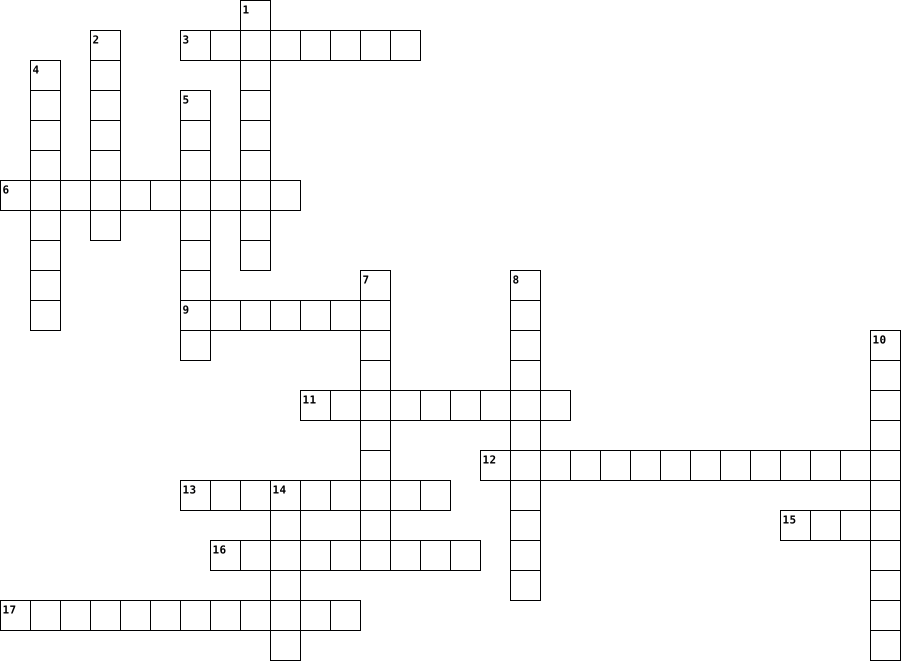
Across
- an organism that lives on or in a host, taking food or shelter from the host the; the host gets nothing in return and may be harmed
- an interaction in which one type of organism (the parasite) lives on or in another type of organism (the host); the host is usually harmed or even killed
- factors non-living factors in the environment
- the place where all life exists; consists of earth and its atmosphere
- depending on each other for survival
- another name for interdependence
- an organism in or on which a parasite lives
- a system formed by organisms interacting with each other and with their non-living surroundings in a balanced way
- and interaction between two organisms in which one of them benefits but the other one is not affected
Down
- all living things
- the place where an organism lives
- an interaction between organisms in which both the organisms benefit from the relationship and neither is harmed
- active or hunting at night
- scientists who study the interactions between living things and their environment
- the term used to describe all the conditions that affect a plant or animal in its habitat
- characteristics that help an organism to survive in its environment
- factors living factors in the environment
17 Clues: all living things • active or hunting at night • another name for interdependence • the place where an organism lives • depending on each other for survival • factors living factors in the environment • an organism in or on which a parasite lives • factors non-living factors in the environment • characteristics that help an organism to survive in its environment • ...
nursing theory 2021-12-16

Across
- Statements that explain the relationship between the concepts in a theory
- Coping mechanism from close relationship which results to giving and receiving of love, respect and value
- Tensions that produce alternations in the environment
- According to Rogers’ theory, “continuous and mutual interaction between man and environment” is termed as
- Any change in the internal and external environment that induces a response in the adaptive system
- Who described about 5 levels of nursing experience from novice to expert?
- She formulated the “Science of Unitary Human Beings” theory
- “Carin consists of caative factors that result in the satisfaction of certain human needs”. This explanation was stated by
- A biopsychosocial being in constant reaction interaction with a changing environment
Down
- nursing, The theory proposed by Madeleine M. Leininger
- Determination of how best assist the person in attaining the established goals
- The state of coming back to actual state of health before the illness occurred
- The term which refers the “irreducible, pan dimensional energy field identified by pattern and integral with the human field” is
- Typolgy of 21 nursing problems were explained by
- Outcome or produced results of certain stressors and actions of the line of resistance
- She is the mind behind the “Nursing Process Theory”
- Who explained about “Care, Cure, and Core as three independent but interconnected circles of the nursing mode”?
- Most immediately confronting the person, attracts the most attention
18 Clues: Typolgy of 21 nursing problems were explained by • She is the mind behind the “Nursing Process Theory” • Tensions that produce alternations in the environment • nursing, The theory proposed by Madeleine M. Leininger • She formulated the “Science of Unitary Human Beings” theory • Most immediately confronting the person, attracts the most attention • ...
EARTH DAY CROSSWORD PUZZLE 2017-04-11

Across
- Living and breathing
- Well being
- Effluence
- Tasty greens used for healing and flavor
- Unrestrained
- Native or instinctive
- Simple, natural, and a color
- To be frugal, as with energy
- One of 365 calendar units
- Refresh
- Ecosystem
- Rechargeable
- Natural fertilizer
- Reutilizing
- Brush
- What you Breath
- Air, earth, fire and water
- Another word for environment
- Pure
- Vitality or power
Down
- Scientific study of our ecosystem
- Means or supply
- Preservation practice
- Unadulterated, pure
- Aqua
- Related to environment
- Recycle or refurbish
- Vegetation plot
- Under threat of vanishing
- Create something new with a used item
- Restock
- Unpolluted, innocent
- Verve
- The blue planet
- All things natural
- Re purpose
- Shrink
- Pure and free like the wind
- Strainer
39 Clues: Aqua • Pure • Verve • Brush • Shrink • Refresh • Restock • Strainer • Effluence • Ecosystem • Well being • Re purpose • Reutilizing • Unrestrained • Rechargeable • Means or supply • Vegetation plot • The blue planet • What you Breath • Vitality or power • Natural fertilizer • All things natural • Unadulterated, pure • Living and breathing • Recycle or refurbish • Unpolluted, innocent • Preservation practice • ...
Environmental Science 2025-07-09

Across
- A Southeast Asian island nation.
- Long-term weather patterns in a region.
- Progress made in a particular area.
- The study of the Earth's physical structure.
- Unwanted or discarded materials.
- Resources Materials found in nature useful to humans.
- The regions of Earth where life exists.
- The process of deterioration or decline.
- The layer of gases surrounding the Earth.
Down
- Harmful substances contaminating the environment.
- The study of interactions between organisms and their environment.
- A systematic approach to understanding the natural world.
- All the water on Earth's surface.
- Variety of life in a particular habitat.
- The Earth's solid outer layer.
- The study of matter and its properties.
- Water found beneath the Earth's surface.
- Number of individuals living in an area.
- The practice of farming.
- Everything surrounding and influencing an organism.
20 Clues: The practice of farming. • The Earth's solid outer layer. • A Southeast Asian island nation. • Unwanted or discarded materials. • All the water on Earth's surface. • Progress made in a particular area. • Long-term weather patterns in a region. • The study of matter and its properties. • The regions of Earth where life exists. • Variety of life in a particular habitat. • ...
Ecosystems 2014-03-19

Across
- A living factor of the environment
- All the living organisms in an ecosystem
- Where an organism lives
- Relationship between organisms that are trying to use the same limited resource
- Relationships between organisms, where each affects the other's survival
- Relationship between two organisms, where one organism lives on or in the other and feeds off it
- Relationship between two organisms living closely together, where each benefits the other
Down
- All the factors in an organism's surroundings that affect it
- A non-living factor of the environment
- A place where organisms and their physical surroundings form a balanced environment that is different from others nearby
- Relationship between two organisms, where one organism kills and eats the other
- Relationship between two organisms, where one benefits and the other is unharmed
- The study of how organisms interact with each other and their environment
13 Clues: Where an organism lives • A living factor of the environment • A non-living factor of the environment • All the living organisms in an ecosystem • All the factors in an organism's surroundings that affect it • Relationships between organisms, where each affects the other's survival • The study of how organisms interact with each other and their environment • ...
2.1 Organisms and Their Environment 2022-09-06

Across
- all the living organisms in an environment
- the place where an organism lives out its life
- relationship in which only 1 species benefits and the other species is not harmed or helped
- relationship between 2 species that live together in which both species benefit
- made up of different populations in a certain area at a certain time
- a community of interacting organisms and their environment.
- the portion of Earth that supports living things
Down
- the nonliving parts of the environment
- relationship in which a member of one species benefits at the expense of another species
- the study of relationships between organisms and their environment
- organisms of different species living together
- a group of organisms that belongs to the same species
- all strategies and adaptations a species uses in its environment
13 Clues: the nonliving parts of the environment • all the living organisms in an environment • the place where an organism lives out its life • organisms of different species living together • the portion of Earth that supports living things • a group of organisms that belongs to the same species • a community of interacting organisms and their environment. • ...
Preservation of ecosystems 2022-02-25

Across
- non governmental organization
- involving questions of right and wrong
- maintain (something) in its original or existing state
- a living thing
- the surroundings or conditions in which a person, animal, or plant lives or operates
- the natural home or environment of an animal, plant, or other organism.
- a biological community of interacting organisms and their physical environment
Down
- prevention of wasteful use of a resource
- is the introduction of harmful materials into the environment.
- the variety of plant and animal life in the world or in a particular habitat, a high level of which is usually considered to be important and desirable.
- a large area covered chiefly with trees and undergrowth
- A example of an NGO that helps preserve the environment
- a group of living organisms consisting of similar individuals capable of exchanging genes or interbreeding.
13 Clues: a living thing • non governmental organization • involving questions of right and wrong • prevention of wasteful use of a resource • maintain (something) in its original or existing state • a large area covered chiefly with trees and undergrowth • A example of an NGO that helps preserve the environment • is the introduction of harmful materials into the environment. • ...
Ecology Unit Vocabulary 2024-02-29

Across
- pyramid of trophic levels of organisms and energy flow
- any factor that limits the number of organisms in an environment
- organisms that eat only meat
- the effect that edges have on habitat fragments
- an organism that can make its own food
- symbiotic interaction where one organism benefits and one is harmed
- the linear flow of energy from one organism to another
- the movement of organisms into an area
- an organism that must eat another to get food
- the fixing of N2 to a form useable by plants (NO2 or NO3)
- the conversion of NO3 or NO2 back to N2 in the atmosphere
- the area on earth where living things live (from deep ocean to atmosphere)
- using up all the resources in an area through overfishing, deforestation, or over-hunting
- symbiotic interaction where one organism benefits and the other in uneffected
Down
- the study of organisms and their interactions in the environment
- the multiple fragments in a habitat causes by human impacts
- a group of ecosystems in an area
- the excess nutrient runoff that causes a harmful algae bloom
- fixing the environment through biological solutions
- the variety of life
- the movement of organisms out of an area
- the maximum number that an environment can support
- the amount of animals per unit area
- includes the carbon, water, and nitrogen cycles
- organisms that eat only plants
- aggressive species that are nonnative to an area
- symbiotic interaction where both organisms benefit
- an organism's role in the environment
28 Clues: the variety of life • organisms that eat only meat • organisms that eat only plants • a group of ecosystems in an area • the amount of animals per unit area • an organism's role in the environment • an organism that can make its own food • the movement of organisms into an area • the movement of organisms out of an area • an organism that must eat another to get food • ...
Ecology Vocab 2024-04-05

Across
- The position of an organism in the food chain
- An organism capable of making its own food through photosynthesis or chemosynthesis
- Interacting group of various species in a common location
- An organism that kills and eats other organisms for food
- A linear sequence of organisms through which nutrients and energy pass as one organism eats another
- The part of Earth where living things exist
- Association between two different organisms wherein one benefits at the expense of the other
- A community of organisms and their physical environment interacting together
- The natural home or environment of a plant, animal, or other organism
- The living components that shape the environment
- organism that are killed and eaten by other organism
- Organism that breaks down dead organic material
- An organism that mostly consumes decaying biomass, such as meat or rotting plant material
Down
- An organism that eats plants and animals
- Organism that make their own food
- An organism that eats other plants or animals for energy
- A group of individuals in the same species living in a particular area
- A single living species, which exhibits all the properties of life
- A larger organism that harbors a smaller organism
- The study of organisms and how they interact with the environment around them
- An organism that cannot make its own
- An organism that mostly feeds on plants
- Factors A non-living part of an ecosystem that shapes its environment
- An organism that mostly eats meat
- All of the food chains in an ecosystem
25 Clues: Organism that make their own food • An organism that mostly eats meat • An organism that cannot make its own • All of the food chains in an ecosystem • An organism that mostly feeds on plants • An organism that eats plants and animals • The part of Earth where living things exist • The position of an organism in the food chain • ...
Sustainability 2024-04-09

Across
- the increase of harmful gases contributes to _______, which has to do with an increase in Earth's temperature
- burning fossil fuels leads to the production of __________
- is the idea that humans must interact with the environment in a way that guarantees there will be enough resources left for future generations
- examples include food, water,plants and minerals
- type of activity that has harmed the environment
- human activity can lead to the loss of the variety of animals and plants in any environment, also called _______
- the use of fossil fuels has led to ______ of air, land, and water
- people are encouraged to not use as much ______ and to recycle the one they use since it produces many environmental problems
- fossil fuels are considered ___________ resources, meaning they are finite
- all life on Earth depends on the _______
- to achieve sustainability industries are focusing on _________, such as solar power and water power
Down
- focuses on making sure each building or structure wastes as little energy as possible
- examples of these are natural gas, coal, and oil
- people can work toward sustainability by installing _________ on their house
- ________ depend on the use of fossil fuels
- to have sustainability, individuals need to think about their ______ in almost every aspect of daily life
- one way construction can be more sustainable is by using ________ material from other buildings
- farmers can conserve ________ by planting crops that match (suited) the climate where they are planted
- individuals can buy appliances that are designed to _______ water usage such as low-flow shower heads or dishwashers
- sustainability looks for ways to protect and _______ the environment
20 Clues: all life on Earth depends on the _______ • ________ depend on the use of fossil fuels • examples of these are natural gas, coal, and oil • examples include food, water,plants and minerals • type of activity that has harmed the environment • burning fossil fuels leads to the production of __________ • the use of fossil fuels has led to ______ of air, land, and water • ...
Ecosystems Relationships 2023-03-02

Across
- The organism that kills for food or nutrients
- All the members of one species living in the same area.
- A group of organisms that can mate and reproduce together
- The struggle between organisms to survive as they attempt to use the same limited resources
- All the different populations that live together in an area
- A relationship where one benefits and the other is harmed
- The organism that benefits by parasitism
- A relationship were one benefits and the other is not harmed or helped
- Non-living, never has lived
- The study of the environment.
- The organism that is killed by a predator
- When one organism kills another for food or nutrients
Down
- The largest population that an area can support.
- An environment that provides the things a specific organism needs to live, grow, and reproduce.
- A relationship were both organisms benefit
- The behaviors and physical characteristics that allow organisms to live successfully in their environment
- An environmental factor that causes a population to stop growing
- A relationship between 2 species were at least one benefits
- A characteristic that makes an individual better suited to a specific environment and may become common in that species
- When organisms move out of a population
- When organisms move into a population
- The organism that is harmed in parasitism
- The role of an organism in its habitat
- A community of organisms and their nonliving environment. All the abiotic and biotic things in an area.
- Living, once living, or comes from a living organism
25 Clues: Non-living, never has lived • The study of the environment. • When organisms move into a population • The role of an organism in its habitat • When organisms move out of a population • The organism that benefits by parasitism • The organism that is harmed in parasitism • The organism that is killed by a predator • A relationship were both organisms benefit • ...
Natural Selection and Adaptions Unit Project Crossword Puzzle 2023-03-22

Across
- The change in frequency of an existing gene variant in the population due to random chance.
- _______ means reproductive success and reflects how well an organism is adapted to its environment.
- When animals save energy to survive harsh weather conditions or lack of food.
- The transfer of genetic material from one population to another.
- When an animal changes color or pattern to match/blend in with the environment.
- A behavior that an organism develops as a result of experience.
- A characteristic belonging to a population or organism.
Down
- An English naturalist who was known for his contributions to evolutionary biology.
- A change or the process of change by which an organism or species becomes better suited to its environment.
- A baby of an animal or person
- Those who eat prey.
- The process of organisms changing over time. Organisms with traits better suited to their environment tend to survive and reproduce.
- A motivation to act in response to events.
- A process in which humans choose specific traits they want and breed organisms together for those specific traits.
- The different occurrences of the same trait among individuals of the same species (hair color, eye color, height, etc.).
- When an animal changes to look like another animal to trick its predators.
- A substance or object required by an organism for its growth and reproduction.
- A change in genetic material (DNA).
- When an animal species changes traits over time through their ancestors so they can live better in their environment.
- The behavior of living things.
20 Clues: Those who eat prey. • A baby of an animal or person • The behavior of living things. • A change in genetic material (DNA). • A motivation to act in response to events. • A characteristic belonging to a population or organism. • A behavior that an organism develops as a result of experience. • The transfer of genetic material from one population to another. • ...
Task 2: Bite Me 2026-03-04

Across
- The variety of plant and animal species in an ecosystem
- An animal that is hunted and eaten by another animal
- An animal that hunts and eats other animals
- The total number of individuals of a species living in a particular area
- The wellbeing and humane treatment of animals
- A species introduced to an area where it is not native and causes harm
- A species that occurs naturally in a particular region
- A community of living organisms interacting with each other and their environment
- A domesticated species that has returned to living in the wild
- The selective removal of animals from a population to control numbers
- The natural environment in which an organism lives
- The complete removal of a species from a particular area
- A situation where natural systems become uneven or disrupted
Down
- The protection and management of natural environments and wildlife
- Food, water, shelter and other necessities organisms need to survive
- The control of population size through natural or human means
- Public disagreement or debate about an issue
- Relating to moral principles about what is right or wrong
- When humans step in to influence or manage a natural process
- The effect or influence something has on the environment
- The ability to maintain ecological balance over the long term
- When a species exceeds the capacity of its environment to sustain it
- The controlled removal of animals for population management
- The maximum number of organisms an environment can support
- The process of controlling or regulating wildlife populations
25 Clues: An animal that hunts and eats other animals • Public disagreement or debate about an issue • The wellbeing and humane treatment of animals • The natural environment in which an organism lives • An animal that is hunted and eaten by another animal • A species that occurs naturally in a particular region • The variety of plant and animal species in an ecosystem • ...
Interactions in the Environment 2013-05-21

Across
- a basic need for life that animals indirectly gain energy from
- provides organisms with nutrients
- are eaten by carnivores (2 words)
- the animal that is hunting
- succession that develops a community in an area after it has been disturbed (2 words)
- non-living
- living
- an animal that hunts other animals for food
Down
- an interaction between individuals of different species that benefits both individuals
- the interactions among the biotic and abiotic parts of an environment
- succession that develops a community of plants and animals in an area where no living things existed before (2 words)
- a sequence that shows how energy and nutrients are transferred from one organism to another in an ecosystem (2 words)
- a form of symbiosis in which one organism benefits at the expense of another organism usually of different species
- are consumed by herbivores
- a relationship in which one organism benefits while causing no harm to the other
- occurs when more than one organism tries to obtain the same basic resources in the same habitat
- is made up of many gases, including oxygen, carbon dioxide, and nitrogen
- a series of gradual changes that result in the replacement of one community of plants and animals by another
- a substance needed to survive
- the animal that is hunted
20 Clues: living • non-living • the animal that is hunted • are consumed by herbivores • the animal that is hunting • a substance needed to survive • provides organisms with nutrients • are eaten by carnivores (2 words) • an animal that hunts other animals for food • a basic need for life that animals indirectly gain energy from • ...
SOCIETY AND ENVIRONMENT 2013 2013-12-05

Across
- MEASURED IN A HYGROMETRE
- NATURAL DISATSER
- MEASURED BY SATELLITES
- CAUSES LOSS OF LIFE
- CAUSE NATURAL DISASTERS
- SAMURAIS MASTER
- RESPONSIBILITY OF FINDING KNIGHTS
- CENTRE OF EARTH
- MADE BY A JUDGE AND A JURY
- PEOPLE BELIEVED THESE WERE THEIR REPRESENTATIVES ON EARTH
- GOVERNED THE COUNTRY
- KEPT FOREIGN DEVILS OUT
- APPLIES TO MORE THAN ONE ORGANISATION
- BLACK DEATH
- BETWEEN MORE THAN 2 PEOPLE
- BANDITS IN JAPAN
- KNIGHTS
- OUTERMOST LAYER OF EARTH
Down
- KING OR QUEEN
- ASTHENOSPHERE
- MADE OF MOLTEN IRON
- KEEPS SMALL GROUPS OR 1 PERSON IN ORDER
- COMMENCED BY FLEAS
- RULED BY KING OR QUEEN BUT REAL POWER LIES IN THE ELECTED PARLIAMENT
- RELIGIOUS LEADER
- FORCED WORKERS
- BLACKSMITHS
- POTENTIAL TO CAUSE DISASTER
- MAJOR TECTONIC PLATE
- MINOR PLATE
- WARRIOR IN JAPAN
- MADE AND ENFORCED BY THE GOVERNMENT
- UNINHABITED LAND NOT OWNED BY ANYONE
- BETWEEN 2 PEOPLE
- MEASURES STRENGTH OF TSUNAMIS
- KEPT SOCIAL ORDER
- AGREEMENTS
37 Clues: KNIGHTS • AGREEMENTS • BLACKSMITHS • MINOR PLATE • BLACK DEATH • KING OR QUEEN • ASTHENOSPHERE • FORCED WORKERS • SAMURAIS MASTER • CENTRE OF EARTH • NATURAL DISATSER • RELIGIOUS LEADER • WARRIOR IN JAPAN • BETWEEN 2 PEOPLE • BANDITS IN JAPAN • KEPT SOCIAL ORDER • COMMENCED BY FLEAS • MADE OF MOLTEN IRON • CAUSES LOSS OF LIFE • MAJOR TECTONIC PLATE • GOVERNED THE COUNTRY • MEASURED BY SATELLITES • ...