
environment Crossword Puzzles
Evolution Crossword! 2023-05-11

Across
- passing traits from parent to offspring
- The term fitness refers to an organism's ability to survive and _________ in a specific environment
- changes the characteristics of a species over several generations and relies on the process of natural selection
- the molecule that carries genetic information for the development and functioning of an organism
- The observable characteristics in an individual resulting from the expression of genes
- A physical or behavioral characteristic of an organism
- where Darwin spent most of his time studying
- organisms best adjusted to their environment are the most successful in __________ and reproducing
- A plausible or scientifically acceptable, well-substantiated explanation of some aspect of the natural world
- Credited with the theory of evolution
- One of two or more versions of a genetic sequence at a particular region on a chromosome
- type of selection where average is best
- A remnant or trace of an organism of a past geologic age
- the adjustment of organisms to their environment in order to improve their chances at survival in that environment
Down
- A tentative explanation for an observation, phenomenon, or scientific problem that can be tested by further investigation
- to breed together
- A change in the sequence of one or more nucleotides in DNA
- ability to adapt and reproduce
- group or things that can described in one common characteristic
- members of a species must do this to survive
- type of selection where one way is better than the other and better than average
- focusing on a specific skill, activity, or production process
- where Rosemary and Grant studied the finches
- type of selection where average is not the best
24 Clues: to breed together • ability to adapt and reproduce • Credited with the theory of evolution • passing traits from parent to offspring • type of selection where average is best • members of a species must do this to survive • where Darwin spent most of his time studying • where Rosemary and Grant studied the finches • type of selection where average is not the best • ...
Ecology Crossword Puzzles 2023-06-09

Across
- a geographic area where plants, animals, and other organisms, as well as weather and landscape, work together to form a bubble of life
- an animal that feeds on flesh
- a place where an organism makes its home
- an organism that is not indigenous, or native, to a particular area
- a living organism that shapes its environment
- Living things that have to hunt, gather and eat their food
- all the different kinds of life you'll find in one area
- a series of organisms that eat one another so that energy and nutrients flow from one to the next
- are organisms that can make their own energy through biochemical processes
- a group of actually or potentially interacting species living in the same location.
- scavengers that feed of other organisms in the environment that have died
Down
- a species' average population size in a particular habitat
- association between organisms of two different species in which each benefits
- describes the role an organism plays in a community
- the position of an organism in the food chain
- the study of organisms and how they interact with the environment around them
- the process by which the mix of species and habitat in an area changes over time
- non-living part of an ecosystem that shapes its environment
- consists of all the organisms of a particular species living in a given area
- an organism that feeds mostly on plants
- one organism kills and consumes another.
- break apart dead organisms into simpler inorganic materials, making nutrients available to primary producers
- an organism that regularly consumes a variety of material, including plants, animals, algae, and fungi
- consists of all the food chains in a single ecosystem
24 Clues: an animal that feeds on flesh • an organism that feeds mostly on plants • a place where an organism makes its home • one organism kills and consumes another. • the position of an organism in the food chain • a living organism that shapes its environment • describes the role an organism plays in a community • consists of all the food chains in a single ecosystem • ...
Geo with winnie 2024-02-04

Across
- the ability of natural environments to absorb wastes and pollution
- the surroundings or conditions in which a person, animal, or plant lives or operates.
- the envelope of gases surrounding the earth or another planet.
- Take urgent action to combat climate change and its impacts
- Release of harmful materials into the environment
- All the water on earth
- An increase in the average temperature of the earth's atmosphere (especially a sustained increase that causes climatic changes)
- the natural home or environment of an animal, plant, or other organism.
- Nature exists for all species on earth, not just humans, and humans are equal to other species
- the solid, outer layer of the earth that consists of the crust and the rigid upper part of the mantle
- A term that typically describes a species that no longer has any known living individuals.
Down
- Humans are superior and the most important species on earth
- perspectives or views held by individuals re global environment based on values and assumptions
- part of Earth in which life exists including land, water, and air or atmosphere
- Ensure access to affordable, reliable, sustainable and modern energy for all
- Occurs when natural or human-induced processes decrease the future ability of land to support crops, livestock, or wild species.
- hazardous waste causing danger from chemicals and infectious organisms
- supports life on earth without requing human action eg. decomposition
- the variety of life in the world or in a particular habitat or ecosystem.
- the action or fact of treating someone unfairly in order to benefit from their work.
20 Clues: All the water on earth • Release of harmful materials into the environment • Humans are superior and the most important species on earth • Take urgent action to combat climate change and its impacts • the envelope of gases surrounding the earth or another planet. • the ability of natural environments to absorb wastes and pollution • ...
Ecology Part 1 Crossword 2024-02-23

Across
- Balance in an ecosystem - ecosystems are organized is a state of stability where species coexist with other species and with their environment
- Habitat - the natural home or environment of an animal, plant, and other organisms
- Food chain - a hierarchical series of organisms each dependent on the next as a source of food
- Biomass - the total quantity or weight of organisms in a given area
- Decomposer - an organism that decomposes organic material
- Producer - organisms that acquire their energy from sunlight and materials from nonliving sources
- Carrying capacity - the number of organisms a system can hold or support
- Predator - an animal that preys on other animals
- Genetic diversity - the range of different inherited traits within one species
- Abiotic and biotic factors - living and nonliving components that make up an ecosystem
Down
- Food web - the natural connection of food chains
- Prey - an animal that is hunted by another animal for food
- Consumer - organisms that consume other organisms to obtain their energy
- 10% rule - when energy is passed in an ecosystem from one trophic level to the next, only ten percent of the energy will be passed on
- Biodiversity - the diversity of living things in specific area
- Limiting factors - a factor where more of it can support a larger population and less of it can support a smaller population
- Ecosystem - the living & nonliving components of an area and how they interact with one another
- Keystone species - a species in which other species in an ecosystem largely depend
- Competition - two species competing for the same limited resources
- Invasive species - a species introduced to an environment that becomes overpopulated and harms the environment
20 Clues: Food web - the natural connection of food chains • Predator - an animal that preys on other animals • Decomposer - an organism that decomposes organic material • Prey - an animal that is hunted by another animal for food • Biodiversity - the diversity of living things in specific area • Competition - two species competing for the same limited resources • ...
Ecology 2024-04-05

Across
- a complex network of interconnecting and overlapping food chains showing feeding relationships within a community
- an organism that cannot produce its own food and must eat other plants and/or animals to get energy
- an organism that eats plants and animals
- an interacting group of various species in a common location
- organisms that hunt and kill other organisms for food
- an individual animal, plant, or single-celled life form
- the natural home or environment of a plant, animal, or other organism
- an organism that eats plants
- organisms that make their own food
- a community of living organisms (plants, animals and microbes) in a particular area
- an organism that mostly consumes decaying biomass, such as meat or rotting plant material
- section of biology about the relations of organisms to each other and their environment
- the living components (organisms) that shape up the environment
Down
- a non-living part of an ecosystem that shapes its environment
- an organism that eats other plants or animals for energy and nutrients
- a linear sequence of organisms through which nutrients and energy pass as one organism eats another
- an organism that eats meat
- the region of the earth that encompasses all living organisms: plants, animals and bacteria
- position of an organism in the food chain
- a host is a larger organism that harbours a smaller organism
- a community of animals, plants, or humans who interbreed
- an organism that can produce its own food using light, water, carbon dioxide, or other chemicals
- association between two different organisms wherein one benefits at the expense of the other
- animals that are killed and eaten by other animals
- an organism, often a bacterium, fungus, or invertebrate that feeds on and breaks down dead plant or animal matter
25 Clues: an organism that eats meat • an organism that eats plants • organisms that make their own food • an organism that eats plants and animals • position of an organism in the food chain • animals that are killed and eaten by other animals • organisms that hunt and kill other organisms for food • an individual animal, plant, or single-celled life form • ...
Chapter 14 Vocabulary 2024-09-25

Across
- interaction where both organisms benefit
- the number of individuals that live in a defined area
- Type of competition where two individual of different species compete
- refers to how a population is spread in an area ex.) clumped and uniform
- occurs when one organism captures and eats another
- interaction where one organism benefits and the other is harmed
- growth Rapid growth of a population increase due to an increase due to an abundance of resources
- When two species use a resource in the same way
- A dramatic decline in the size of a population over a short period of time
- A factor in an environment that limits the size of a population
- interaction where one organism benefit and the other is unharmed
- movement of individuals OUT of a population
- The maximum number of individuals in a population that an environment can support
- A factor in an environment that affects a population regardless of size
- A diagram showing the number of surviving members over time from a measured set of births
- All of the factors that a species needs to survive, stay healthy, and reproduce. It's role.
Down
- Type of competition where two individuals of the same species compete.
- Species that occupy similar niches but live in different geographical regions
- This keeps two species from occupying the same niche
- all aspects of the area in which an organism lives
- A factor in an environment that affects a population based on its size
- growth of a population based on resources
- Movement of individuals INTO a population
- growth Growth of a population that has a limited amount of resources
24 Clues: interaction where both organisms benefit • growth of a population based on resources • Movement of individuals INTO a population • movement of individuals OUT of a population • When two species use a resource in the same way • occurs when one organism captures and eats another • all aspects of the area in which an organism lives • ...
Ecology Crossword 2024-12-10

Across
- An organism that breaks down dead material and recycles nutrients.
- A community of organisms interacting with their environment.
- A trait that helps an organism survive in its environment.
- The part of Earth that supports life.
- An organism that produces its own food, such as plants.
- A group of individuals of the same species living in a specific area.
- An organism that eats both plants and animals.
- Referring to living factors in an ecosystem.
- An organism that eats only animals.
- All the populations of species living together in a specific area.
- An organism that eats only plants.
- The natural environment where an organism lives.
- Referring to abiotic factors like sunlight, water, and air.
- A symbiotic relationship where one organism benefits and the other is harmed.
- The study of how organisms interact with their environment.
- The process by which plants make food using sunlight, water, and carbon dioxide.
Down
- An organism that consumes other organisms for energy.
- A close and long-term relationship between different species.
- An interaction where one organism hunts and eats another.
- A scientist who studies ecosystems and interactions within them.
- A symbiotic relationship where both species benefit.
- An organism that eats other organisms for energy.
- An organism that makes its own food, usually through photosynthesis.
- A symbiotic relationship where one species benefits and the other is unaffected.
- A large area with similar climate, plants, and animals.
- Any living thing.
- The role or function of an organism or species in an ecosystem.
- Referring to non-living factors in an ecosystem.
- A group of organisms that can interbreed and produce fertile offspring.
- Animal feces, often used to study diet and habitat.
30 Clues: Any living thing. • An organism that eats only plants. • An organism that eats only animals. • The part of Earth that supports life. • Referring to living factors in an ecosystem. • An organism that eats both plants and animals. • The natural environment where an organism lives. • Referring to non-living factors in an ecosystem. • ...
Entorno virtual 2018-06-21

Across
- steps to perform work
- group work
- levels of the course
Down
- assessment where work is delivered
- environment knowledge
- list of unknown words
- initial environment
- space for debates
8 Clues: group work • space for debates • initial environment • levels of the course • environment knowledge • list of unknown words • steps to perform work • assessment where work is delivered
Ecosystems Review 4th Grade 2021-12-02

Across
- the role a population plays in its habitat
- organisms that produce their own food, eaten by consumers
- all the same kind of individuals living in an environment
Down
- A single organism in an environment
- all the interactions between the physical environment and its community
- organisms that eat to get the energy they need
- all the populations living in the same environment
- break down and recycle the tissues of dead organisms
- the place where a population lives in an ecosystem
9 Clues: A single organism in an environment • the role a population plays in its habitat • organisms that eat to get the energy they need • all the populations living in the same environment • the place where a population lives in an ecosystem • break down and recycle the tissues of dead organisms • organisms that produce their own food, eaten by consumers • ...
Environmental Ethics 2021-08-27

Across
- Seeks to define what is right or wrong.
- Approach that seeks to have large portions of nature preserved
- Meeting current needs without compromising the future
- Some of the most important decisions affecting the environment are made by corporations
- Changes start at the individual level
- Human centered ethics
- Laws designed to protect both the ecosystem and humans
Down
- Choices we make as a society that effect the evnvironment
- Humans tend to over consume everything
- All forms of life have an inherent right to exist
- Small environmental changes have worldwide impact on the environment
- Environment deserves moral consideration other than what it provides humans or animals
- Approach that seeks to strike a balance between development and preservationism.
13 Clues: Human centered ethics • Changes start at the individual level • Humans tend to over consume everything • Seeks to define what is right or wrong. • All forms of life have an inherent right to exist • Meeting current needs without compromising the future • Laws designed to protect both the ecosystem and humans • Choices we make as a society that effect the evnvironment • ...
Ethan's Life Science Vocabulary 2023-02-08

Across
- to remain alive or existent
- the gaseous envelope of a celestial body
- the aqueous envelope of the earth including bodies of water and aqueous vapor in the atmosphere
- living organisms together with their environment
- a substance of which a physical is made of
- the complex of a community of organisms
Down
- a natural phenomenon marked by gradual changes
- the solid earth
- an organism that primarily obtains food by the killing and consuming of other organisms : an organism that lives by predation
- an animal taken by a predator as food
- the complex of a community of organisms
- the quality or state of being dissimilar
- one concerned about the environment
13 Clues: the solid earth • to remain alive or existent • one concerned about the environment • an animal taken by a predator as food • the complex of a community of organisms • the quality or state of being dissimilar • the complex of a community of organisms • the gaseous envelope of a celestial body • a substance of which a physical is made of • ...
Chapter 3 Lessons 1/2 2024-10-30

Across
- moving into a population
- an environment that provides specific things an organism needs to live, grow, & reproduce
- the study of how organisms interact with each other and with their environment
- nonliving parts of an organism's habitat
- the # of births/1,000 individuals during a time
- different populations that live together in an area
Down
- all members of a species living in an area
- parts of a habitat that are alive or were once alive
- the # of deaths/1,000 individuals during a time
- living thing
- leaving a population
- the community of organisms in an area and their nonliving environment
- a group of organisms that can mate with each other & produce offspring
13 Clues: living thing • leaving a population • moving into a population • nonliving parts of an organism's habitat • all members of a species living in an area • the # of deaths/1,000 individuals during a time • the # of births/1,000 individuals during a time • parts of a habitat that are alive or were once alive • different populations that live together in an area • ...
Ecology Review 2025-10-07

Across
- the species that was removed from Yellowstone
- an organism that makes their own food using sunlight
- the living parts of the environment
- the place where an organism lives
- many interconnected food chains
- the role an organism plays in the ecosystem
- alevel of ecological organization including living and nonliving parts
- the non-living parts of the environment
- an organism that must eat other organisms for energy
Down
- an organism that breaks down dead matter and recycles it back to the soil
- shows the path of energy from one organism to another
- a non-native species that harms the environment
- when a species is removed from the food chain and impacts the other species
13 Clues: many interconnected food chains • the place where an organism lives • the living parts of the environment • the non-living parts of the environment • the role an organism plays in the ecosystem • the species that was removed from Yellowstone • a non-native species that harms the environment • an organism that makes their own food using sunlight • ...
Ian and Jenny Crossword 2021-06-18

Across
- experiment using knockout mice
- figures Zhou study involved looking at
- investigated the role of genes and the environment
- chemical substance released into the environment
- oxytocin in dogs
- family study on depression
Down
- PTSD in patients
- A criticism of biological research
- the brains' ability to rearrange connections
- Rogers and
- Zak rubbed this on shoulders
- neurotransmitter for spatial awareness
- Aharoni's participants
13 Clues: Rogers and • PTSD in patients • oxytocin in dogs • Aharoni's participants • family study on depression • Zak rubbed this on shoulders • experiment using knockout mice • A criticism of biological research • figures Zhou study involved looking at • neurotransmitter for spatial awareness • the brains' ability to rearrange connections • chemical substance released into the environment • ...
Definitions 2016-11-21

Across
- a group of organisms that can reproduce to produce fertile offspring
- a change in the base sequence of DNA
- the movement of small food molecules and ions through the wall of the intestine into the blood
- the maintenance of a constant internal environment
- the movement of particles through a cell membrane from a region of lower concentration to a region of higher concentration using energy from respiration
- a chemical substance, produced by a gland and carried by the blood, which alters the activity of one or more specific target organs
- the removal of the nitrogen-containing part of amino acids to form urea
- a group of organisms of one species, living in the same area, at the same time
- a junction between two neurones
- as the ability to detect or sense stimuli in the internal or external environment and to make appropriate responses
- a length of DNA that codes for a protein
Down
- a group of cells with similar structures, working together to perform a shared function
- a permanent increase in size and dry mass by an increase in cell number or cell size or both
- changing the genetic material of an organism by removing,changing or inserting individual genes
- a thread-like structure of DNA, carrying genetic information
- having two different alleles of a particular gene
- defence against a pathogen by antibody production in the body
- any substance taken into the body that modifies or affects chemical reactions in the body
- the probability of an organism surviving and reproducing in the environment in which it is found
- a unit containing the community of organisms and their environment, interacting together
- a version of a gene
- a network of interconnected food chains
22 Clues: a version of a gene • a junction between two neurones • a change in the base sequence of DNA • a network of interconnected food chains • a length of DNA that codes for a protein • having two different alleles of a particular gene • the maintenance of a constant internal environment • a thread-like structure of DNA, carrying genetic information • ...
Unit 6 Vocabulary 2017-05-02

Across
- is the place where an organism usually lives
- includes organisms that are closely related and can mate to produce fertile offspring
- nonliving part of the environment
- occurs when organisms fight for the same limited resource
- living part of the environment
- a consumer that eats both plants and animals
- the role the population plays in the ecosystem
- is the process of breaking down food to produce ATP
- eats another animal
- is made up of all the species that live and interact in an area
- a consumer that feeds on dead animals
- an organism that eats other organisms
- is a community of organisms and their nonliving environment
- web is the feeding relationship among organisms in an ecosystem
Down
- a consumer that eats other animals
- is a process in plants that uses energy from the sun, carbon dioxide, and water to make sugars
- is a group of individuals of the same species that live in the same place
- an organism that gets energy and nutrients by breaking down the remains of other organisms
- a symbiotic relationship in which both organisms benefit
- a green pigment in chloroplasts that capture energy from sunlight
- a relationship in which one organism benefits and the other is harmed
- a symbiotic relationship in which one organism benefits while the other is unaffected
- uses energy to make food
- a consumer that eats only plants
- is the animal that gets eaten
- is the study of how organisms interact with one another and with the environment
- a close long-term relationship between different species in a community
27 Clues: eats another animal • uses energy to make food • is the animal that gets eaten • living part of the environment • a consumer that eats only plants • nonliving part of the environment • a consumer that eats other animals • a consumer that feeds on dead animals • an organism that eats other organisms • is the place where an organism usually lives • ...
Ecosystems At Risk 2012-09-13

Across
- the environment of a living organism
- the non-living components of ecosystems, such as light, soil, water and air
- Value potential usefulness that can be tapped by humans to use
- the dynamic complex of plant, animal and micro-organism communities and their non-living environment as a functional unit
- interactions afffect the functioning of an ecosystem
- equity within the present generation
- a group of interdependent organisms living together in a common environment and interacting with one another
- equilibrium a situation in which stability is achieved in an ecosystem
- to do with land
- the ecosystem of the planet; the totality of all ecosystems
- the organisms that make up the living parts of ecosystems
Down
- an organism that consumes plants as its only source of food
- ecosystem water-based such as a lake
- Value beauty within - aesthetic qualities
- this includes location extent biodiversity and linkages
- the variety of species and the genetic variability among individuals within each species
- equity ensuring that future generations have the same access to environments
- level organisms that share the same types of food in a food chain are said to belong to this
- organisms an organism that manufactgures its own food from sunlight, water and minerals - also known as a producer organism
- a meat eating animal
- an organism that feeds by breaking down the dead organic matter in an ecosystem eg. mushroom
- strategies a plan of attack - a response to problems
- is the ability of an ecosystem to adapt to a changing environment and to restore function following an episode of natural or human-induced stress
- web a network of interconnected food chains
- Value deemed to be an area of either/or natural beauty or cultural phenomenon
25 Clues: to do with land • a meat eating animal • the environment of a living organism • ecosystem water-based such as a lake • equity within the present generation • Value beauty within - aesthetic qualities • web a network of interconnected food chains • interactions afffect the functioning of an ecosystem • strategies a plan of attack - a response to problems • ...
Hayley Banks Chapter 9 crossword 2012-11-19

Across
- are those birds that spend a significant part of their lives at sea and feed on marine organisms
- are herds, schools that travel in large groups
- is a large pinniped with a pair of distinctive tusks protruding down from the mouth
- a complex nucleic acid that contains a cells genetic information
- snakes are found in the tropical Indian and Pacific oceans
- animals in which the eggs develop and hatch in the reproductive tract of females
- small crustaceans whose bodies are compressed from side to side
- are internal air sacs that allow absorption of oxygen directly from air
- organisms that lose metabolic heat to the environment without it affecting their body temperature
- muscle protein in many animals that stores oxygen
- are graceful flyers that hover over their pray before plunging for it
- are toothless whales
Down
- live-bearing animals whose whose embryos develop within their mother's bodies and are nourished by the maternal bloodstream
- organisms that retain some metabolic heat, which raises their body temperature
- a blood protein that transport oxygen in many animals
- are black long necked seabirds that dive and pursure their pray
- an ingredient in fine perfumes
- organisms that have a body temperature that varies with that of the environment
- is the second member of the order Carnivora that inhabits the marine environment
- organisms able to keep their body temperature more or less constant regardless of the temperature of the environment
- is definitely a member of the order carnivora
- get rid of excess salts
- are a muscular tail ends in a pair of fin like
- is a hole on top that they shoot water/air out of
- is an old tradition with a rich history
25 Clues: are toothless whales • get rid of excess salts • an ingredient in fine perfumes • is an old tradition with a rich history • is definitely a member of the order carnivora • are herds, schools that travel in large groups • are a muscular tail ends in a pair of fin like • muscle protein in many animals that stores oxygen • is a hole on top that they shoot water/air out of • ...
Business Environments 2014-02-22

Across
- Runs the business for the owner
- Imapct on the animals and environment
- Protects the rights of workers
- The environment can have a significant impact on the business but the business had no impact on these factors GETLEGSP
- The way the manager runs the business, the style in which it run
- The shared values and beliefs of the organisation
- In Australia, each level of government imposes its own direct and indirect regulations, to which all businesses must adhere.
- Organisations and individuals that supply the resources that the business needs to conduct is operation
- Groups such as green peace, gay rights, SOS etc
- Worldwide, what's going on around the world
- The people who work for the business
- consider is social force or change that may impact on the success of a business
- The availability of money in the system to the business eg. overdraft rates, merchant rates etc
Down
- Those who purchase goods or services
- The rules, they cover various topics and some are unique to the business
- Otherwise known as micro environment, business has most impact on factors involved MMCCE
- The availability and accessibility of technology for the business
- Where factors and business impact on each other to a similar degree, two way impact LFCCTRS
- Can be divided into two categories, business has barely any impact on factors
- Businesses that are government run and they oversee the operation of legislation
- Some political influence could act as inducements, such as government grants, encouraging businesses to expand
- Businesses that offer rival goods or services
- Local, state federal
- They influence a business's capacity to compete and customers' willingness and ability to spend
24 Clues: Local, state federal • Protects the rights of workers • Runs the business for the owner • Those who purchase goods or services • The people who work for the business • Imapct on the animals and environment • Worldwide, what's going on around the world • Businesses that offer rival goods or services • Groups such as green peace, gay rights, SOS etc • ...
History of the American City Terms 2014-02-10

Across
- To live in a(n) ______ is to live in an area between a urban and rural environment.
- To see the city from an elevated point - often related to power…
- Available through departments such as the United States Department of Housing and Urban Development…
- To live in the country, was to live in a(n) _______ environment.
- The removal of advanced social and/or economic change from a society. ..
- It is important that large cities are engineered to have large roads to prevent _____ as a result from overpopulation.
- The science of creating a map based off of the lands physical features…
Down
- A cities ability to manage the law based on their own discretion…
- The distribution of power from one primary source, to lesser power sources…
- The center of a city, usually most prone to crime…
- Power given to one source, as opposed to having power in various locations…
- To restore broken-down neighborhoods in an attempt to attract new residences and increase property value is…
- After a city has shifted their focus from industrialism and the economy, towards knowledge and specialization…
- As discussed by Schulz, engineers often help the environment and combat…
- This program provides individuals with public housing…
- Transportation technology had to develop quickly in large cities to keep up with the various needs of…
- To live in the city, was to live in a(n) _______ environment.
- This program assists individuals with mortgages and loans when purchasing a home…
- The science of studying the differences in elevation of the land…
- An area that has not yet been charted and remains undiscovered…
20 Clues: The center of a city, usually most prone to crime… • This program provides individuals with public housing… • To live in the city, was to live in a(n) _______ environment. • An area that has not yet been charted and remains undiscovered… • To see the city from an elevated point - often related to power… • ...
Natural Science Vocabulary 2021-11-01

Across
- organism that obtains food by consuming other living things; also called a consumer
- physical or behavioral features of an organism that help them to survive in their environment.
- salt water biome. Includes oceans, seas, and estuaries that cover about 75% of the planet
- coldest and driest biome. Layers of permafrost, long winters and months of total darkness
- rich soil (for crops), but not enough rain for trees and cold winters.
- still and flowing bodies of water surrounded by land (like lakes, ponds, rivers, streams)?
- hot and humid biome found close to the equator, with lots of plant and animal diversity.
- an organism that eats other organisms for food
- an organism that eats only plants
- a series of events in which one organism eats another and obtains energy.
- an organism that makes its own food
Down
- a community of organisms where there are several interrelated food chains
- an organism that feeds on "leftovers" or dead and decaying matter
- large geographic areas that have similar climates.
- physical area in which an organism lives
- (Evergreen Forest)world's largest land biome. No permafrost with long cold winters and short summers.
- a relationship in which one organism benefits and the other is neither helped nor harmed
- organism that can make its own food
- a system made up of an ecological community of living things interacting with their environment especially under natural conditions everything that exists in a particular environment
- a system composed of organisms and nonliving components of an environment.
- forest four seasons, rainfall spread through the year, and rich soil (Virginia)
- science dealing with the relation of living things to their environment and to each other
22 Clues: an organism that eats only plants • organism that can make its own food • an organism that makes its own food • physical area in which an organism lives • an organism that eats other organisms for food • large geographic areas that have similar climates. • an organism that feeds on "leftovers" or dead and decaying matter • ...
Vocab crossword 2021-12-09

Across
- monotheistic religion founded in Punjab in the 15th century by Guru Nanak
- group of people with their own particular set of beliefs and practices, especially within or separated from a larger religious group
- , any movement in society directed away from otherworldliness to life on earth
- density, number of people per square mile
- , A person who advocates or resorts to measures beyond the norm
- a follower of the religion of Islam
- , government by divine guidance or by officials who are regarded as divinely guided
- location, place a statistical unit is located and for which statistics are collected and disseminated
- environment, the part of the human environment that includes purely physical factors
- when a country doesn't have very many ethnicities
- The region from which innovative ideas originate
- , the movement from one place to another
- environment, the natural and physical environment and the relationship of people with that environment
- , monotheistic religion developed among the ancient Hebrews
- resources, materials from the Earth that are used to support life and meet people's needs
- the art and science of cultivating the soil, growing crops and raising livestock
- , world's largest religions
- movement out of a country or territory
Down
- , belief in one god
- a body of religious and philosophical beliefs and cultural practices native to India
- environment, people or populations can change this area
- defection, styles, religions, technologies, languages—between individuals, whether within a single culture or from one
- when a country has many ethnic groups
- study of population
- trends, change in population over time from birth/ death rates, migration , etc.
- distribution, shows how the population is spread out around the land
- factor, something that draws someone into an area
- factor, something that pushes someone away from the area
- movement into a country or territory
- a person who believes in the strict, literal interpretation of scripture in a religion
- , where something starts
- To grow vigorously; flourish
32 Clues: , belief in one god • study of population • , where something starts • , world's largest religions • To grow vigorously; flourish • a follower of the religion of Islam • movement into a country or territory • when a country has many ethnic groups • movement out of a country or territory • , the movement from one place to another • density, number of people per square mile • ...
1,1 2021-06-23

Across
- The living creatures in an ecosystem
- The deepest part of the ocean
- A long line of seaweed and debris deposited on the beach during high tide
- zone This actually includes the entire ocean floor, from the shallow intertidal zone to the deep ocean basin
- zone Below the low tide line, it includes an area of heavy wave impact and the sandy area beyond that
- zone The life zone beyond the subtidal zone, it is the region of water that lies above the continental shelf
- Any characteristic of an organism that enables it to live successfully in its environment
- zone (aphotic means “no light”) The vast area of the ocean which is dark
- zone The life zone that extends beyond the neritic zone and includes most of the open ocean
- zone The area above the intertidal zone, up to the sand dunes
- zone The largest life zone in the ocean, it covers the entire ocean of water above the sea bottom
Down
- The general area or surroundings of a living thing
- Organisms that inhabit the benthic zone
- Living
- Another name for ocean basin
- The part of the seafloor adjoining the continents
- zone A region that contains characteristic organisms that interact with one another and with their environment
- The food-making process on which most living things depend
- The study of relationships in the ocean biome
- zone The area between high tide and low tide
- zone (photic means “light”) The part of the ocean that light penetrates
- The study of relationships among living things and their environment
- A fibrous pad of tissue that anchors kelp and rockweed to a rocky surface
23 Clues: Living • Another name for ocean basin • The deepest part of the ocean • The living creatures in an ecosystem • Organisms that inhabit the benthic zone • The study of relationships in the ocean biome • zone The area between high tide and low tide • The part of the seafloor adjoining the continents • The general area or surroundings of a living thing • ...
Climate Change 2023-09-04

Across
- gases in the earth's atmosphere that trap heat
- When Certain industries, such as fossil fuel companies, have a vested interest in denying or downplaying climate change.
- the process of converting waste materials into new materials and objects.
- When there are drastic changes in an environment, this is a measure of how habitable such environments are
- The name given to all the different populations of species present in an environment
- a period of drier-than-normal conditions.
- The name of a main sector directly affected by climate change
- the contamination of the physical and biological constituents in the earth's atmosphere.
- Due to climate change, these areas as a result now face this term
- any harmful deviation from the normal structural or functional state of an organism, generally associated with certain signs and symptoms and differing in nature from physical injury.
- Where populations of species and their environment all interact together
Down
- a hydrocarbon-containing material formed naturally in the Earth's crust from the remains of dead plants and animals.
- One of the indirect effects of climate change in communities relating to health
- One of the factors affecting the land directly contributing to loss of species
- One of the indirect effects of climate change affecting lands
- _____ ____ help the environment because they produce much less air and climate pollution than vehicles that run on gasoline.
- A group of the same species
- Climate change deniers also argue that climate change is good for us. They suggest longer, warmer summers in the temperate zone will make farming more productive.
- The phenomenon of a gradual increase in the temperature near the earth’s surface.
- Examples of _____ ___ are wind energy, solar energy, etc.
20 Clues: A group of the same species • a period of drier-than-normal conditions. • gases in the earth's atmosphere that trap heat • Examples of _____ ___ are wind energy, solar energy, etc. • One of the indirect effects of climate change affecting lands • The name of a main sector directly affected by climate change • ...
Organisms and Environments 2024-02-25

Across
- A large community of plants and animals that occupies a distinct region defined by its climate and dominant vegetation.
- The transfer of pollen to a stigma, ovule, flower, or plant to allow fertilization.
- The natural home or environment of an animal, plant, or other organism.
- Organisms that produce their own food from sunlight (like plants in photosynthesis).
- An animal that is hunted and killed by another for food.
- An organism that eats only plants.
- The weather conditions prevailing in an area in general or over a long period.
- A community of living organisms in conjunction with the nonliving components of their environment, interacting as a system.
- Interaction between two different organisms living in close physical association, typically to the advantage of both.
- An organism that eats only animals.
- Chain A series of organisms each dependent on the next as a source of food.
Down
- The prevention of wasteful use of a resource, or the protection and preservation of the natural environment.
- The process by which green plants and some other organisms use sunlight to synthesize foods from carbon dioxide and water.
- Organisms that eat other organisms for energy.
- A trait that helps an organism survive and reproduce in its environment.
- The variety of life in a particular habitat or ecosystem.
- The global ecological system integrating all living beings and their relationships, including their interaction with the elements of the lithosphere, hydrosphere, and atmosphere.
- An animal that naturally preys on others.
- Organisms that break down dead or decaying organisms, and in doing so, carry out the natural process of decomposition.
- An organism that eats both plants and animals.
20 Clues: An organism that eats only plants. • An organism that eats only animals. • An animal that naturally preys on others. • Organisms that eat other organisms for energy. • An organism that eats both plants and animals. • An animal that is hunted and killed by another for food. • The variety of life in a particular habitat or ecosystem. • ...
Sustainable Ecosystems 2019-10-01

Across
- / Living organisms on land
- / Pure substances that cannot be broken down into simpler substances
- fuels / Remains of an organism
- / Interactions of a species with its ecosystem form this
- / Plant sweat
- / No trees, but small shrubs, hardy grasses
- / When water seeps from ground to ground water
- / Non-living
- / A person who studies ecology
- / Study of the interaction between organisms and their environment
- / Large naturally occurring economy
- / Living
- / Made up of the interactions between living and non-living things
- / Water
- / A complex and self-regulating system
- / Snow, rain, sleet, freezing rain, hail
- / Few trees, covered in grasses and shrubs
- / How long living organisms can continue to interact and reproduce
- / Populations of different species in an area
- / Cows
- / Air
- / Needle and cone-bearing trees
- / Dew/frost to air
- / Physical environment of an organism
- / C
- / Group of the same species
- / Plants and fungi
Down
- / Sweat
- / Group of similar organisms
- / Lose leaves in autumn
- / Glucose + oxygen ----> carbon dioxide + water + energy
- / Atlantic Ocean
- / Lake Ontario
- / Carbon Dioxide + water + light ----> Glucose (sugar) + oxygen
- / Vulture (eat dead flesh)
- / Grass
- / Humans
- / Converted into usable N by legumes and bacteria
- / Another name for taiga forests
- / Land
- / Fungus
- / N
- / Animals
- / Algae and microoranganisms
- / Spruce and fir
- / Biosphere
- / A substance an organism uses to build and repair the cells of its body
- / Mountain water to ground water
- / Composed of all living things on Earth and the physical environment that surrounds them.
- / Underground lakes
- / H20
51 Clues: / N • / C • / Air • / H20 • / Land • / Cows • / Sweat • / Grass • / Water • / Humans • / Living • / Fungus • / Animals • / Biosphere • / Non-living • / Plant sweat • / Lake Ontario • / Atlantic Ocean • / Spruce and fir • / Dew/frost to air • / Plants and fungi • / Underground lakes • / Lose leaves in autumn • / Living organisms on land • / Vulture (eat dead flesh) • / Group of the same species • ...
Unit 2: Living Things in their Environment 2019-08-02

Across
- An organism that's like a plant and lacks chlorophyll
- Equipment used to study what affects organisms in their environment
- Scientist who studies organisms and their environment
- The place where an organism lives
- Very small plants that are producers in aquatic habitats
- Organisms that break down organic matter to get energy
- An animal that only eats plants
- What an organism does to help it survive
- The rapid growth of algae caused by fertiliser going into water
- A characteristic that helps an organism survive and reproduce
- The variety of organisms; different types of plants & animals found in a place
- Releasing harmful substances into the environment
- A habitat that supports aquatic plants
Down
- Choosing a part of a population to study
- Thin parts of fungi that make enzymes to digest starch & protein
- Describes something that does not exist anymore
- The short name for chemicals that destroy the ozone layer (chlorofluorocarbons)
- An adaptation on the body or colouring to help an organism survive
- Catalysts that speed up biological chemical reactions
- It describes a species with a small population
- Gases in the atmosphere that trap heat and cause global warming
- The layer of atmosphere that protects us from UV radiation
- The gradual increase in temperatures worldwide
- Very small animals that eat phytoplankton
- The study of organisms and their environment
- Carbon dioxide is dissolved into the ocean and the lower pH makes it difficult for some coral organisms to build their skeletons
- A square frame used to help make counting organisms easier for sampling
- An animal that only eats meats
28 Clues: An animal that only eats meats • An animal that only eats plants • The place where an organism lives • A habitat that supports aquatic plants • Choosing a part of a population to study • What an organism does to help it survive • Very small animals that eat phytoplankton • The study of organisms and their environment • It describes a species with a small population • ...
Biosphere Crossword 2019-11-25

Across
- the place where an organism lives
- the number of species in a specific environment to make an ecosystem
- when one organism feeds on another of a different species
- an interaction between two organisms where one organism benefits and the other benefits
- the process where a body of water becomes land
- the way a biological community changes over time
- the process that plants go through to make food
- a constant interaction between two organisms where one organism benefits and the other benefits
- starting materials for a chemical reaction
- an organism that makes its’ own food
- a group of organisms that can reproduce with each other
- the first species in a specific area
- an organism that feeds on both plants and animals
- a community of plants and animals that share similar characteristics
Down
- capacity the maximum number of animals or plants an ecosystem can hold
- an organism that feeds on only animals
- a system that is made up of all biotic and abiotic factors in that area
- changes that an organism makes to survive
- something that prevents a population from growing
- species formed from chemical reactions
- an interaction between two organisms where one organism benefits and the other is harmed
- an interaction between two organisms where one organism benefits and the other is unchanged
- an organism that eats other organisms to survive
- the area where a species inhabits
- living parts of the environment
- made up of multiple ecosystems
- non-living parts of the environment
- the number of animals that live in a specific environment to make up a species
- an organism that feeds only on plants
- an animal that feeds on only dead or decaying organisms
30 Clues: made up of multiple ecosystems • living parts of the environment • the place where an organism lives • the area where a species inhabits • non-living parts of the environment • an organism that makes its’ own food • the first species in a specific area • an organism that feeds only on plants • an organism that feeds on only animals • species formed from chemical reactions • ...
ecology 2024-04-05

Across
- An organism that eats only plants
- each of several hierarchical levels in an ecosystem
- An organism that eats only animals
- a biological community of interacting organisms and their physical environment.
- a nonliving part of an ecosystem that shapes its environment
- the branch of ecology that works to understand the patterns and processes of change over time or space for populations of a single species.
- a system of interlocking and interdependent food chains.
- an animal that naturally preys on others
- a larger organism that harbors a smaller organism
- an individual animal, plant, or single-celled life form.
- an organism deriving its nutritional requirements from complex organic substances.
Down
- organisms that consume other organisms to obtain their energy
- organisms that can make their food
- the natural home or environment of an animal, plant, or other organism.
- an organism, especially a soil bacterium, fungus, or invertebrate, that decomposes organic material.
- an organism that is able to form nutritional organic substances from simple inorganic substances
- A animal that is hunted or killed for food
- study of the organization and functioning of communities
- a hierarchical series of organisms each dependent on the next as a source of food.
- the living components that shape up the environment.
- an animal that feeds on carrion, dead plant material, or refuse.
- the relationship between different species in which one organism lives on or in the other organism and benefits from it by causing some harm
- branch of biology that deals with the relations of orgnaisms
- the region on, above, and below the Earth's surface where life exists.
- an organism that eats plants and animals
25 Clues: An organism that eats only plants • organisms that can make their food • An organism that eats only animals • an animal that naturally preys on others • an organism that eats plants and animals • A animal that is hunted or killed for food • a larger organism that harbors a smaller organism • each of several hierarchical levels in an ecosystem • ...
Biological Diversity Crossword 2024-03-23

Across
- the number and variety of organisms in an environment
- a change in the genetic material of DNA
- relationship between two organisms where one organism benefits, while other is harmed
- type of adaptation. Things organisms do differently from other organisms like hunting seasons, mating season, being nocturnal, etc
- type of reproduction when only one parent supplies genetic information to the offspring. Genetic material of offspring is identical to parent. This type of reproduction is common among bacteria and fungi and is rapid.
- a particular environment where living things interact with other living and non-living things
- form of cell division by one-cell organisms. A type of asexual reproduction. Offspring are identical to parent.
- type of adaptation. Physical features/ characteristics like shape, limbs, coverings, shells, etc
- describes the role of an organism within an ecosystem
- members of the same species
- relationship between two organisms where one organism benefits, while the other neither benefits nor is harmed
- a biological interaction or relationship between two organisms of different species
- change in a species genes over generations
Down
- when bacteria transfer genetical material directly from one cell to another
- group of organisms that share similar genetic and physical characteristics. Can mate and produce fertile offspring.
- relationship between two organisms where both organisms benefit
- organism that live in extreme conditions.
- type of adaptation. Internal organ structure which supports different specific functions. Like immunity to diseases, venom, tolerance, etc
- species that has a very broad niche; can withstand a wide range of environment condition
- member of different species
- species that has a very narrow niche, very sensitive to environment changes
- a fertilized female egg. Contains genetic information from both parents.
22 Clues: member of different species • members of the same species • a change in the genetic material of DNA • organism that live in extreme conditions. • change in a species genes over generations • the number and variety of organisms in an environment • describes the role of an organism within an ecosystem • relationship between two organisms where both organisms benefit • ...
Ecology and the Environment - Unit 1 Words 2024-03-08

Across
- - An animal that eats only plants.
- - The role or job of a species in its habitat.
- - An animal that is hunted and killed by another for food.
- - Non-living elements like sunlight, water, and temperature that affect an ecosystem.
- - All the different populations living together in an area.
- - A type of symbiotic relationship where one species benefits at the expense of the other.
- - A type of symbiotic relationship where one species benefits and the other is unaffected.
- - All the members of one species living in a particular area.
- - The interactions of all living and non-living things in an environment.
- - Something that restricts the growth of a population.
- - Organisms that break down dead plants and animals into nutrients.
- - A living component in an ecosystem, such as plants and animals.
Down
- - The maximum number of individuals an environment can support.
- - An organism that obtains energy by eating other organisms.
- - An animal that hunts and kills other animals for food.
- - An organism that makes its own food through photosynthesis.
- - A close relationship between two different species.
- - An animal that eats only other animals.
- - The specific environment where an organism lives.
- - When organisms work together for mutual benefit.
- - The sequence of who eats whom in a biological community.
- - An animal that eats both plants and animals.
- - A type of symbiotic relationship where both species benefit.
- - The study of how living things interact with each other and their environment.
- - The struggle between organisms for resources like food and territory.
- - A large geographical region with distinct plant and animal communities.
- - A group of organisms that can interbreed and produce fertile offspring.
- - A network of interconnected food chains in an ecosystem.
28 Clues: - An animal that eats only plants. • - An animal that eats only other animals. • - The role or job of a species in its habitat. • - An animal that eats both plants and animals. • - When organisms work together for mutual benefit. • - The specific environment where an organism lives. • - A close relationship between two different species. • ...
Ecology Vocab 2024-04-09

Across
- All non-living things in an ecosystem
- Largest population an environment can hold at one time
- Individuals of one species benefit while the other species does nor benefit
- A complex diagram showing the transfer of energy in an ecosystem
- An association in which both organisms benefit
- Organisms of the same species in the same place at the same time
- The part of the earth and it's atmosphere in which living organisms exist
- Organisms that can make their own food from sunlight or chemicals
- Organisms that are eaten by other organisms
- Consumers that eat plants
- Things to keep the population from growing
- Two organism that live in close association with one another
- Organisms that live together I an ecosystem
- Organisms that eat dead organisms
- Triangular diagram showing the loss of energy in the food chain
- Organisms that get food from an outside source
Down
- A digram that shows how the energy flows from one organism to the next
- The habitat the organism lives in
- Organisms that break down other organisms
- One organism that benefits and the other is adversely affected
- Two or more organisms trying to use the same limited resources
- The way an organism interacts with the biotic and abiotic environment
- Organisms that eat other organisms
- Science of relationships between animals and they're environment
- Organisms that eat plants and meat
- The place a plant or animal normally or naturally lives and grows
- All living things in an ecosystem
- When one organism looks like another for protection
- Organisms that eat meat
- A community of organisms and the abiotic factors in the environment
30 Clues: Organisms that eat meat • Consumers that eat plants • The habitat the organism lives in • All living things in an ecosystem • Organisms that eat dead organisms • Organisms that eat other organisms • Organisms that eat plants and meat • All non-living things in an ecosystem • Organisms that break down other organisms • Things to keep the population from growing • ...
Business Unusual 2024-09-30

Across
- The management section of a business plan defines the structure
- Entrepreneurs are described as these types of seekers
- An environment characterized by beliefs, traditions, and behaviors.
- Entrepreneurs must adapt to______ to stay competitive
- A person who creates and manages a business is called an
- An important quality for entrepreneurs who want to resist distractions
- The national agency where businesses register their names in the Philippines
- When selling a product, entrepreneurs must determine this to ensure profitability
- This environment includes living and non-living things affecting businesses
- An entrepreneur's role in providing value to is essentia
- An entrepreneur must have this quality to handle risks
- PLAN is a formal written description of your business
- The ability to come up with new ideas and innovations.
- PLAN The document that organizes business activities and performance assessments
- A part of the business plan focusing on marketing and sales strategies
- This payment method has become widely used due to technological advances
- A significant feature of entrepreneurship involving wealth creation
- The name for products designed with environmental awareness, such as those by Envirotech Waste Recycling
- financial document containing long-term monetary goals of a business
Down
- Small businesses focus on known products, while entrepreneurs focus on ______ ones.
- Entrepreneurs must have this to successfully bring a product to market
- This environment includes the income level of a region influencing customer purchasing power
- The founder of SM Malls known for hard work
- This plan outlines the goals and strategies of a business
- This type of environment refers to laws and regulations governing businesses
- A process of creating incremental wealth through innovation.
- The French word meaning 'to undertake' from which entrepreneur is derive
- What opportunity environment includes the demographic and cultural factors including beliefs, tastes, and traditions customs
- To remain competitive, entrepreneurs must continue improving their
29 Clues: The founder of SM Malls known for hard work • Entrepreneurs are described as these types of seekers • Entrepreneurs must adapt to______ to stay competitive • PLAN is a formal written description of your business • An entrepreneur must have this quality to handle risks • The ability to come up with new ideas and innovations. • ...
Crossword Puzzle 2023-06-03

Across
- the process by which water on the ground surface enters the soil
- recycling of inorganic matter between living organisms and their environment
- consist of many interconnected food chains
- the process where microscopic organisms break down nitrogen-containing chemicals from dead organic matter, into simple substances like ammonia
- process by which green plants and certain other organisms transform light energy into chemical energy
- living things within an ecosystem
- the process of turning from liquid into vapor
- non-living part of an ecosystem that shapes its environment
- a community or group of living organisms that live in and interact with each other in a specific environment
- group of the same species living in a similar geographical area
Down
- the position of an organism in the food chain
- the process by which water vapor in the air is changed into liquid water
- organisms that carry out the process of decay or breakdown of the dead organism
- any toxic substance that is used to kill insects
- made of material that comes from living organisms, such as plants and animals
- a linear sequence of organisms through which nutrients and energy pass as one organism eats another
- the process by which ammonia is converted to nitrites and then nitrates
- plants that make their own food by using sunlight, air and water
- often stored by cells in biomolecules
- the complete disappearance of a species from Earth
- forms in clouds when water vapor condenses into bigger and bigger droplets of water
- the introduction of harmful materials into the environment
- any recovery operation by which waste materials are reprocessed into products, materials or substances whether for the original or other purposes
- something or someone who has to hunt, search, and gather their own food to eat
24 Clues: living things within an ecosystem • often stored by cells in biomolecules • consist of many interconnected food chains • the position of an organism in the food chain • the process of turning from liquid into vapor • any toxic substance that is used to kill insects • the complete disappearance of a species from Earth • ...
Earth Day 2023-04-21

Across
- The surroundings or conditions in which a person, animal, or plant lives or operates.
- Convert (waste) into reusable material.
- A mixture that consists largely of decayed organic matter and is used for fertilizing and conditioning land.
- Reuse (discarded objects or material) in such a way as to create a product of higher quality or value than the original.
- Able to be maintained at a certain rate or level.
- The branch of biology that deals with the relations of organisms to one another and to their physical surroundings.
- An odorless, colorless gas made up of three oxygen molecules (O3) and is a natural part of the environment.
- (of a species, family, or other group of animals or plants) having no living members; no longer in existence.
- Things that have been thrown away and that are lying on the ground in a public place.
- (of a natural resource or source of energy) not depleted when used.
Down
- Relating to or derived from living matter.
- Maintain (something) in its original or existing state.
- The envelope of gases surrounding the earth or another planet.
- The disposal of waste material by burying it, especially as a method of filling in and reclaiming excavated pits.
- Contaminate (water, the air, etc.) with harmful or poisonous substances.
- The production and discharge of something, especially gas or radiation.
- A biological community of interacting organisms and their physical environment.
- Protect (something, especially something of environmental or cultural importance) from harm or destruction.
- Relating to or determined by the sun.
- The natural home or environment of an animal, plant, or other organism.
20 Clues: Relating to or determined by the sun. • Convert (waste) into reusable material. • Relating to or derived from living matter. • Able to be maintained at a certain rate or level. • Maintain (something) in its original or existing state. • The envelope of gases surrounding the earth or another planet. • ...
Ecology 2023-03-12

Across
- the changes in energy that occur between organisms within an ecosystem
- an animal that is naturally hunted
- a succession of organisms that eat other organisms and may, in turn, be eaten themselves
- the variety of life in the world or in a particular habitat or ecosystem
- organisms that produce food for themselves and other organisms
- states that each trophic level can only give 10% of its energy to the next level
- a living organism that shapes its environment
- Something that restrains a population's size and slows or stops it from growing
- the range of different inherited traits within a species
- an organism that cannot produce its own food and must eat other plants and/or animals to get energy. Can be primary, secondary, tertiary, and quaternary.
Down
- biomass is renewable organic material that comes from plants and animals
- a graphical representation of the energy found within the trophic levels of an ecosystem
- an animal that naturally hunts others
- an introduced,nonnative organism that begins to spread or expand its range from the site of its original introduction and that has the potential to cause harm to the environment
- a situation in an ecosystem where two species require the same thing (like food or territory)
- a system of interlocking and interdependent food chains
- the number of organisms an area can support
- the various steps in a food chain or ecological pyramid, at which the transfer of food (or energy) takes place from one organism to another organism
- the natural home or environment of an animal, plant, or other organism
- a non-living part of an ecosystem that shapes its environment
20 Clues: an animal that is naturally hunted • an animal that naturally hunts others • the number of organisms an area can support • a living organism that shapes its environment • a system of interlocking and interdependent food chains • the range of different inherited traits within a species • a non-living part of an ecosystem that shapes its environment • ...
ECOLOGY VOCAB 2024-11-18

Across
- A living part of an ecosystem
- an organism that eats only animals materials
- an organism that eats other organisms to get energy
- a group of individuals of the same species that live in the same place at the same time
- the path of the energy transfer from producers to consumers
- any close relationship between different species including mutualism, commensalism and parasitism
- organism that eats other organism
- the non-Living part of an ecosystem
- an organism that is eaten by Predator
- an organism that eats only plants materials
- shows the direction that energy flows through an ecosystem and each level on the pyramid is called a trophic level
Down
- feeding realationships among organisms in an ecosystem, made of many food chains
- organize that gets energy by breaking down their remains of dead organisms or animal waste and releases the nutrients to the environment
- a complete living thing
- all of population of different species that live and interact in an area
- anything that can limit the size of a population, including living and nonliving features of and ecosystem
- an organism that can make its own food by using energy from the song
- on organism that eats plant and animal material
- good news that are closely related that can made and produce fertilizer offspring
- a large geographic areas with similar climate and ecosystem can I glue inside environment and slightest snowy term drop the desert or the very diverse tropical rainforest
- a place where an organism usually lives
- a role the population plays in the ecosystem, such as how it gets food and interact with other population
- The study of how organisms interact with one another in their environment
- a community of organisms and their environment
24 Clues: a complete living thing • A living part of an ecosystem • organism that eats other organism • the non-Living part of an ecosystem • an organism that is eaten by Predator • a place where an organism usually lives • an organism that eats only plants materials • an organism that eats only animals materials • a community of organisms and their environment • ...
Ecosystems Vocabulary 2025-03-06

Across
- Interaction between species where one hunts the other for food.
- A property of which objects can be transferred to other objects or converted into different forms
- Linear Progression of energy transfer from producers to decomposers
- Organisms that secrete chemicals that break down dead material and then absorb the nutrients directly
- Living organisms in an ecosystem
- A species that has a disproportionately large effect on its ecosystem.
- The specific environment where an organism lives.
- A set of interacting objects that work together from a unified whole
- Organisms that make food from nonliving sources
- An animal that feeds on plants
Down
- The maximum number of individuals an ecosystem can support based on resources.
- All the populations of different species living in an area and interacting.
- A system of interlocking and interdependent food chains to decomposers
- eats dead organisms
- Environmental conditions that restrict population growth (e.g., food, water, space).
- Matter that is cycled between the living and nonliving parts of an environment, like photosynthesis
- The position an organism occupies in a food chain (e.g., producer, primary consumer, etc.).
- Organisms that must eat other organisms to survive
- Close interactions between species (mutualism, commensalism, parasitism).
- An organism that feeds on the flesh of another organism
- The role an organism plays in its environment, including how it gets food and interacts with others.
- Non living objects in an ecosystem
- A group of individuals of the same species living in the same area.
- All the living organisms in a given area, interacting with each other, and with the nonliving parts of the environment
- Eats both plants and animals
25 Clues: eats dead organisms • Eats both plants and animals • An animal that feeds on plants • Living organisms in an ecosystem • Non living objects in an ecosystem • Organisms that make food from nonliving sources • The specific environment where an organism lives. • Organisms that must eat other organisms to survive • An organism that feeds on the flesh of another organism • ...
Organisms and their environment (Ella) 2023-05-05

Across
- Consists of processes by which nitrogen is constantly removed from the soil and is eventually returned to it in the form of nitrates.
- A series of organisms through which energy and nutrients are transferred, beginning with a producer.
- Formed by horizontal bar diagrams about relationships between food and energy.
- The place where an organism lives.
- An organism that get it energy by breaking down dead organisms, faces and excretory products.
- Which allows us to compare the number of organisms present in each tropic level at a particular time.
- An organism that are not able to make its own food. It obtains energy and nutrients by feeding on other organisms.
- Which allows us to compare the mass of organisms present in each trophic level at a particular time.
- Made up of different populations of plants and animals live together and interact within the same environment.
Down
- Made up by various processes by which carbon, in the form of carbon dioxide, that is removed from and released into the environment.
- The relative sizes of the different populations remain constant.
- Synonym of biological balance.
- Which allows us to compare the total energy each trophic level of a food chain over a period of time.
- It consists of a network of interconnected food chains.
- Made up of all the populations of different species living and interacting with one another in a habitat.
- A group of organisms of the same species that live together in a habitat.
- A community of organisms interacting with one another and with its non-living environment.
- The position of an organism in a food chain, food web or ecological pyramid.
- The study of interactions between organisms or organisms and their environment.
- An organism that makes its own organic food substances.
20 Clues: Synonym of biological balance. • The place where an organism lives. • It consists of a network of interconnected food chains. • An organism that makes its own organic food substances. • The relative sizes of the different populations remain constant. • A group of organisms of the same species that live together in a habitat. • ...
Ecology 2023-03-15

Across
- The change of energy from one form another
- An organism that consumes all or part of the body of another-living or recently killed-organism
- All different kinds of life you'll find in one area-the variety of animals,plants,fungi,and even microorganisms like bacteria that make up our natural world
- A non-living part of an ecosystem that shapes its environment
- The direct or indirect interaction of organisms that leads to a change in fitness when the organisms share the same resources
- The total quantity or weight of organisms in a given area or volume
- Consists of the food chains in a single ecosystem
- The area and resources used by a particular species or an assemblage of animals and plants together with their abiotic environment
- the range of different inherited traits within a species
- Living things that have to hunt, gather and eat their food
- Animals that are killed and eaten by other animals
- The position of an organism in the food chain
Down
- A graphical representation of the energy found within the Trophic levels of an ecosystem
- Plants
- An organism that helps hold the system together
- A species average population size in a particular habitat
- Anything that constrains a population's size and slows or stop it from growing
- Non-native organism that begins to spread or expand its range from the site of is original introduction and that has the potential to cause harm to the environment
- A state of dynamic equilibrium within a community of organisms in which genetic, species and ecosystem diversity remain relatively stable, subject to gradual changes through natural succession
- A living organism that shapes its environment
- Limits the number of trophic levels an ecosystem can support
21 Clues: Plants • The change of energy from one form another • A living organism that shapes its environment • The position of an organism in the food chain • An organism that helps hold the system together • Consists of the food chains in a single ecosystem • Animals that are killed and eaten by other animals • the range of different inherited traits within a species • ...
diversity of living things 2025-10-07

Across
- All members of the same species living together at the same time in the same area
- A desert is a landscape where little precipitation occurs
- Populations of different species of organisms living together in the same geographic area
- an area where the vegetation is dominated by
- A place where an animal or plant lives
- An area that includes all living organisms and the surrounding physical features such as air, water, soil, weather, and landforms
- prevention of wasteful use of a resource.
- Species A species that no longer exists
- extremely low temperatures, permanent ice and snow cover, and limited plant life
- an area where soil is regularly wet with water, supporting unique plants and animals adapted to wet conditions
- vast coniferous forests, a cold climate with long, harsh winters and short summers
- When an organism copies a characteristic of another organism to increase its chances for survival or reproduction.
Down
- A group of organisms that are similar to one another and can combine to produce offspring.
- An organism that is killed and/or eaten by another organism (predator)
- the introduction of harmful materials into the environment.
- All the living and nonliving things that interact with each other in an environment
- A feature, quality, property, or trait of an object or
- A behavior that an animal inherits from its parents; born with the behavior
- A plant or animal action, reaction, or activity that occurs in response to stimuli
- The seasonal movement of animals from one place to another
- An organism that kills and eats other organisms (prey)
- A physical trait or a behavior that helps an organism survive in its environment
22 Clues: A place where an animal or plant lives • prevention of wasteful use of a resource. • Species A species that no longer exists • an area where the vegetation is dominated by • A feature, quality, property, or trait of an object or • An organism that kills and eats other organisms (prey) • A desert is a landscape where little precipitation occurs • ...
Unit 1 2026-03-10

Across
- Rivers and glacial sediments deposit iron near coasts
- Organic sulfur compound produced by marine phytoplankton as a compatible solute
- heterotrophic microbes, release carbon as CO2 is an example of a __________ of carbon
- Iron-chelating molecules that solubilize Fe³⁺ and transport it into cells as Fe²
- A saturated zone example which is of increasing interest to environmental microbiologists for their potential to treat polluted waste streams
- Zone of lake - The surface of open water with sufficient light for photosynthesis
- warm, oxygen-rich upper layer of lake
- Saturated zone of soil
- When water potential becomes less negative (closer to 0 atm), soil becomes __________________
- This is an example of a low temperature environment
- pH of soil in high rainfall areas
- The ability of soil to hold and exchange positively charged ions.
- An example of a substance that stabilize proteins and membranes during dehydration
- Direct contact with iron oxides via _________________ is a microbial strategy to combat the challenge of poor availability of Fe³⁺ in the environment
Down
- Red tide is an example of ___________
- An example of an aphotic environment based on chemolithoautotrophy
- Step in which nitrate is reduced and incorporated in biomass.
- Freshwater environments, lakes, like the open seas, are often __________ environments
- Fe³⁺ serves as a terminal electron acceptor for anaerobic respiration
- interfacial aquatic habitat in which many microbial groups are laterally and tightly compressed into a thin mat of biological activity
- Humified organic matter accumulates in this layer of soil
- Special proteins that repair or refold damaged proteins exposed to high temperatures.
- Mangroves are described as trees adapted to ____________ environment
- This soil texture have many small pores, so they have high total pore space, but water moves slowly
24 Clues: Saturated zone of soil • pH of soil in high rainfall areas • Red tide is an example of ___________ • warm, oxygen-rich upper layer of lake • This is an example of a low temperature environment • Rivers and glacial sediments deposit iron near coasts • Humified organic matter accumulates in this layer of soil • ...
CH1 ENVIRONMENTAL SCIENCE 2025-10-23

Across
- The sum of those physical and biological factors that surround a living thing
- A measure of human impact on the planet
- A set of beliefs and values that shape how individuals and societies see their relationship with the natural world
- The study of how living organisms interact with each other and their physical environment
- The branch of philosophy that examines the moral relationship between humans and the natural environment
- A social and political movement focused on protecting the natural world from harm caused by human activity
- The belief that the Earth is the center of the universe
Down
- The study of the physical, chemical, and biological conditions of the environment and how they affect living organisms
- A person's collection of beliefs, assumptions, and values about the natural world and humanity's role within it
- Relating to the surroundings, including the natural world (like air, water, and ecosystems) and the conditions that affect an organism, place, or object
- A community of living organisms (biotic factors) interacting with their non-living physical environment (abiotic factors) in a specific geographic area
- The sum of all external conditions and influences—such as the air, water, and land—that affect a living organism or a group of organisms
- The process of something becoming worse or lower in quality, a decline in value or status, or a state of being humbled or humiliated
- An act of help or assistance, such as a repair or maintenance task, or the organized system
14 Clues: A measure of human impact on the planet • The belief that the Earth is the center of the universe • The sum of those physical and biological factors that surround a living thing • The study of how living organisms interact with each other and their physical environment • ...
English two UNAD Javier Moreno 2018-02-12

Across
- summers jobs
- collaborative learning environment
- practice learning environment
- starting information
- monitoring and evaluation environment
Down
- vocabulary in the supermarket
- synchronous support by
- 3 writing task forum delivery
8 Clues: summers jobs • starting information • synchronous support by • vocabulary in the supermarket • practice learning environment • 3 writing task forum delivery • collaborative learning environment • monitoring and evaluation environment
English two UNAD Javier Moreno 2018-02-12

Across
- 3 writing task forum delivery
- vocabulary in the supermarket
- synchronous support by
Down
- starting information
- collaborative learning environment
- practice learning environment
- monitoring and evaluation environment
- summers jobs
8 Clues: summers jobs • starting information • synchronous support by • 3 writing task forum delivery • practice learning environment • vocabulary in the supermarket • collaborative learning environment • monitoring and evaluation environment
Species Interactions 2014-11-11

Across
- from outside an environment
- a O,O species interaction
- energetic cost vs benefit
- indirect inhibition
- direct inhibition
- bumper crop
Down
- increases at a decreasing rate
- destruction of ground nests
- flings frass
- from within an environment
- exploitation but not predation
11 Clues: bumper crop • flings frass • direct inhibition • indirect inhibition • a O,O species interaction • energetic cost vs benefit • from within an environment • destruction of ground nests • from outside an environment • increases at a decreasing rate • exploitation but not predation
Nature 2022-04-22

Across
- kuivuus
- viemärivesi
- selluloosa
- tulva
- elinalue
- eroosio
- aavikoituminen
- ympäristö
Down
- salametsästys
- levät
- happi
- lumivyöry
- metsittäminen
- saasteet
- kastelujärjestelmä
- eliökehä
- puutavara
- hedelmällinen
18 Clues: levät • happi • tulva • kuivuus • eroosio • saasteet • eliökehä • elinalue • lumivyöry • puutavara • ympäristö • selluloosa • viemärivesi • salametsästys • metsittäminen • hedelmällinen • aavikoituminen • kastelujärjestelmä
Vocabulary Unit 5 2022-11-24

Across
- ilmastonmuutos
- yhtiö
- saastuminen
- salametsästys
- lisääntyä
- murskata
- onneksi
- suunnitella
- ympäristö
- aiheuttaa
- tuhota
Down
- uusiseelantilainen
- maailmanlaajua
- viidakko
- rakennusala
- haaste
- betoni
- liikakansoitus
18 Clues: yhtiö • haaste • betoni • tuhota • onneksi • viidakko • murskata • lisääntyä • ympäristö • aiheuttaa • rakennusala • saastuminen • suunnitella • salametsästys • ilmastonmuutos • maailmanlaajua • liikakansoitus • uusiseelantilainen
VOCABULARIO 2026-02-09

Across
- empleado
- recursos
- malentendido
- asegurar
- solamente
- clave
- liderazgo
- tratar
- lealtad
Down
- exitoso
- bien
- amabilidad
- proveer
- asignar
- tarea
- ambiente
- valorado
- horario
18 Clues: bien • tarea • clave • tratar • exitoso • proveer • asignar • horario • lealtad • empleado • recursos • asegurar • ambiente • valorado • solamente • liderazgo • amabilidad • malentendido
Ecology Vocab 2020-02-26

Across
- Eats only meant
- Group of the same species
- chain Single sequence of feeding relationships
- All the organisms that live in a place together with their nonliving environment
- level Each step in a food chain or food web
- Total amount of living tissue within a given trophic level
- Total of the variety of organisms in the biosphere
- Many food chains combined
- Process in which chemical energy is used to produce carbohydrates
- Physical or nonliving factor that shapes an ecosystem
- Assemblage of different populations that live together in a defined area
Down
- The study of how organisms interact with each other and their environment
- Single species that is not usually abundant in a community yet exerts strong control on thr structure
- Autorophs convert light energy into chemical energy
- Eats dead organic matter
- Eats only plants
- Organism that is able to capture energy from sunlight or chemicals and can produce its own food
- Any living part of the environment with which an organism might interact
- Eats both meat ans plants
- Breaks down organic matter
- Shows the amount of energy available at each trophic level
- Organism that obtains food by consuming other living things
22 Clues: Eats only meant • Eats only plants • Eats dead organic matter • Group of the same species • Eats both meat ans plants • Many food chains combined • Breaks down organic matter • level Each step in a food chain or food web • chain Single sequence of feeding relationships • Total of the variety of organisms in the biosphere • Autorophs convert light energy into chemical energy • ...
Ecosystems 2021-05-06

Across
- All the plants in the ecosystem
- Evaporation of water from living things mainly plants
- A small area of a habitat
- A complex system of living organisms and their environment that function as a unit
- An organism that helps decompose other organisms
- A chain of animals that eat the next one below them in the chain
- Full; unable to hold more
- growing or living in or near water
- Water enters the atmosphere
- Parts of the environment that has or is alive
- Of or related to the banks of a river or a stream
Down
- The cycle of water and how it travels in the earth and atmosphere
- A living organism that only eats plants
- A living organism that eats both meat and plants
- The process in which plants turn sunlight and water into energy
- The process by which surface water enters the soil
- Does not allow something to pass through
- A living organism that usually cleans up after other animals’ meals
- A living organism that only eats meat
- Comes from clouds usually cold
- Parts of the environment that have never been alive
- The process in which water vapor turns into a liquid
22 Clues: A small area of a habitat • Full; unable to hold more • Water enters the atmosphere • Comes from clouds usually cold • All the plants in the ecosystem • growing or living in or near water • A living organism that only eats meat • A living organism that only eats plants • Does not allow something to pass through • Parts of the environment that has or is alive • ...
Activity in People and Earth 2022-04-12

Across
- the natural flooding and over-irrigation that brings water at underground levels of the surface
- typically an inorganic substance that has a specific chemical composition and crystal structure
- a great consumer of land and energy
- the extraction of minerals and metals from earth
- a very large land community unit where the plant species are more or less uniform
- minerals containing one or more metals
- includes all the physical and biological surroundings and their interactions
- economic activity concerned with the processing of raw materials and manufacture of goods in factories
- the action of clearing a wide area of trees
Down
- result of deforestation
- a combination of fire and grazing animals are important to maintain this
- flat and cold with low plants like grass and moss that only grow during the short summer
- it is when the environment becomes enriched with nutrients
- group of trees and shrubs that live in the coastal intertidal zone
- art and science of cultivating the soil, growing crops and raising livestock
- means house
- sometimes called plains or prairie
- makes up the hottest biome
- a bilogical community of interacting organisms and their physical environment
- components of these are living factors of an ecosystem
20 Clues: means house • result of deforestation • makes up the hottest biome • sometimes called plains or prairie • a great consumer of land and energy • minerals containing one or more metals • the action of clearing a wide area of trees • the extraction of minerals and metals from earth • components of these are living factors of an ecosystem • ...
Earth Day 2022-04-23
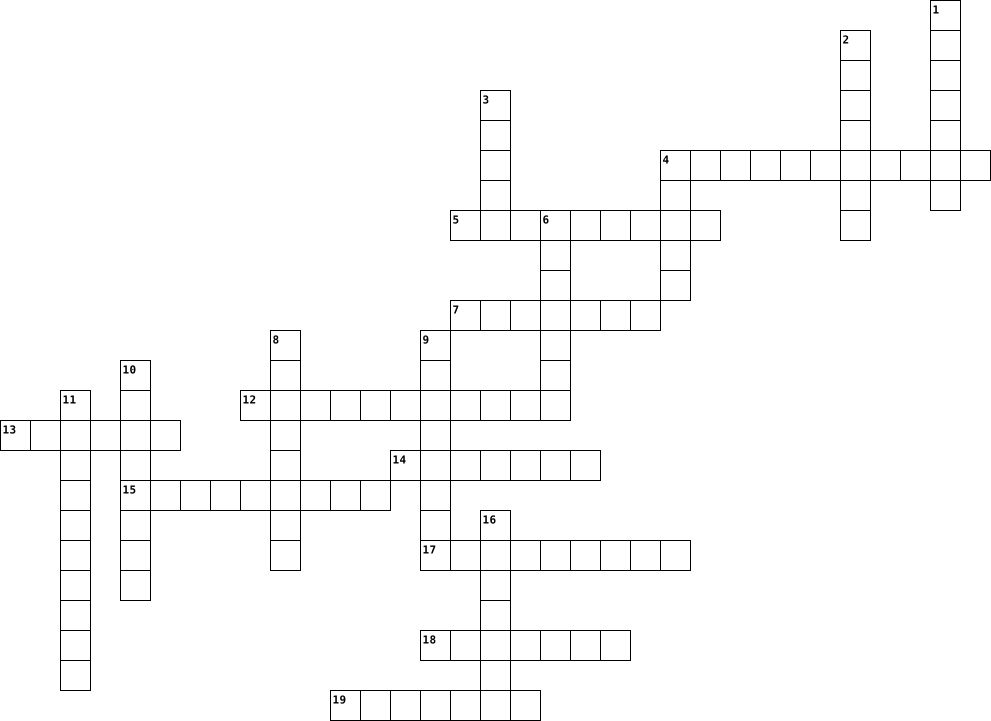
Across
- able to be maintained at a certain rate or level
- a natural resource or source of energy that is not depleted by use
- the natural home or environment of an organism
- our surroundings
- rubbish such as paper, cans, and bottles left lying in an open or public place
- convert (waste) into reusable material
- the production and discharge of something, especially gas or radiation
- a biological community of interacting organisms and their physical environment
- the branch of biology that deals with the relations of organisms to one another and to their physical surroundings
- contaminate
Down
- reuse (discarded objects or material) in such a way as to create a product of higher quality or value than the original
- produced without the use of artificial chemicals
- a colourless unstable toxic gas with a pungent odour and powerful oxidizing properties, formed from oxygen by electrical discharges or ultraviolet light
- relating to or determined by the sun
- no longer in existence
- the disposal of waste material by burying it
- protect from harm or destruction
- maintain in its original or existing state
- the air in any particular place
- decayed organic material used as a fertilizer for growing plants
20 Clues: contaminate • our surroundings • no longer in existence • the air in any particular place • protect from harm or destruction • relating to or determined by the sun • convert (waste) into reusable material • maintain in its original or existing state • the disposal of waste material by burying it • the natural home or environment of an organism • ...
Unit 7 Crosword 2017-03-21

Across
- An area where water drains
- Series of overlapping food chains
- all living organisms on earth
- Groups of populations that interact with each other in a given area
- Both species benefits
- Non-living things in the environment
- All the members of one species that live together
- all the water on earth
- when species within an ecosystem compete for the same resources
- Study of the oceans
- Lives on land
Down
- Current in the ocean that brings deep, cold water to the surface containing high concentrations of nutrients
- The measure of the amount of solid or salt dissolved in seawater
- An area of the land that water drain into
- How water is circulated on earth
- An interaction between species in with predators eat prey
- Living things within the environment
- Lives in water
- One organism gets the benefits at the others expense on them
- One species benefits and the other species is neither harmed nor benefitted
- Mainly bacteria and fungi, consumers that use waste and dead organisms for food
- All gases surrounding earth
- Role and position a species has in it environment
23 Clues: Lives on land • Lives in water • Study of the oceans • Both species benefits • all the water on earth • An area where water drains • All gases surrounding earth • all living organisms on earth • How water is circulated on earth • Series of overlapping food chains • Living things within the environment • Non-living things in the environment • An area of the land that water drain into • ...
Ecology Vocabulary Review 2017-04-06

Across
- populations in a community. Consists of all living and non-living things
- organisms that needs to obtain food
- Factors all living organisms inhabiting the Earth
- is harmful to the local habitat
- a group of organisms of one species living in the same place at the same time that interbreed
- several interacting populations that inhabit a common environment and are interdependent
- Bottom of the food chain
- species A species that has been introduced or is not native to an environment
Down
- organisms that make their own food
- life supporting portions of Earth composed of air, land, fresh water, and salt water
- any interaction between two organisms in which one organism consumes all or part of another organism
- one species benefits and the other is neither harmed nor helped
- one species benefits (parasite) and the other is harmed (host)
- beneficial to both species
- Factors non living organisms
- the role a species plays in a community; its total way of life
- Species those that normally live and thrive in a particular community
- any unicellular or multicellular form exhibiting all of the characteristics of life
- they must ingest food
- The study of relations and interactions between organisms in their environment.
20 Clues: they must ingest food • Bottom of the food chain • beneficial to both species • Factors non living organisms • is harmful to the local habitat • organisms that make their own food • organisms that needs to obtain food • Factors all living organisms inhabiting the Earth • one species benefits (parasite) and the other is harmed (host) • ...
Unit 1 Chapter 1 2013-04-14

Across
- _____ is made up of cells that have a similar job and allow the organ to function.
- If, Then statement.
- A series of steps including; hypothesis, conclusion, and collecting data.
- _____ is the smallest unit that can perform all life's processes.
- Communities of living species and their physical environment.
- Traits to improve an individual’s ability to survive and reproduce.
- ______ is a short segment DNA that contains a single trait for the offspring
- The study of life.
- Biological branch that deals with the environment.
- Seven Fundamental _______ that describe length, mass, etc.
Down
- System of grouping organisms in six major groups.
- _________ is used to test a hypothesis.
- _______ is the sum of all the chemical reactions that take in and transform energy to materials for the environment.
- Formation of two cells from one existing cell.
- Favorable traits that are better to survive in different ecosystems.
- The variable being manipulated by the experimenter.
- being able to control internal functions.
- Tiny structures that carry out function necessary for the cell to live.
- A set of similar hypotheses that are confirmed to be true many times.
- __________ microscope is a microscope that shines light through a specimen and has two lenses for magnifying.
20 Clues: The study of life. • If, Then statement. • _________ is used to test a hypothesis. • being able to control internal functions. • Formation of two cells from one existing cell. • System of grouping organisms in six major groups. • Biological branch that deals with the environment. • The variable being manipulated by the experimenter. • ...
Chapter 14 Lesson 2/3 Side Dish Cavin Dobson 2016-01-12

Across
- chain / a series of events in which one organism eats another and obtains energy
- / carnivore that feeds off dead animals
- / the organism that is killed
- / when a species lives in another and the other is harmed
- / when one organism kills another
- / when one species benefits and the other is unharmed
- / when two species live closely together and at least one benefits (mutualism, commensalism, parasitism)
- / eats only meat
- / makes its own food
- web / consists of many overlapping food chains in an ecosystem
- selection / the process by which organisms that are best adapted to their environment are most likely to survive and adapt
Down
- / eats plants and animals
- / breaks down dead organisms
- / the organism that benefits from parasitism
- / the organism that is lived on in a parasitism
- / the struggle between organisms to survive
- / behaviors and physical characteristics that allow organisms to grow and live successfully in their environment
- / when both species benefit through living close together
- / role of an organism in their environment
- / feeding off other organisms
- / eats only plants
- / the organism that kills
- pyramid / shows the amount of energy that moves from one feeding level to another in a food web
23 Clues: / eats only meat • / eats only plants • / makes its own food • / eats plants and animals • / the organism that kills • / breaks down dead organisms • / the organism that is killed • / feeding off other organisms • / when one organism kills another • / carnivore that feeds off dead animals • / role of an organism in their environment • / the struggle between organisms to survive • ...
Bio Vocab 2023-11-20

Across
- the nitrogen base cytosine pairs with
- the sugar in DNA
- The study of living things
- polymer for carbohydrates
- breaks hydrogen bonds
- Mad up of multiple cells
- smallest classification system
- change form over time
- base that pairs with adenine
- monomer for carbohydrates
- transportation of water
- gives cells ATP energy
- two parents needed to make offspring
- These cells have nucleus
- The science of classifying organisms
- found in plants and animals, makes proteins
Down
- broadest classification system
- control center of the cell contains DNA and chromosomes
- Made up of 1 cell
- polymer for proteins
- found in both plants and animals, holds cells together jellylike
- chemical reaction that build-up or breaks down materials
- Characteristic that improves an organism’s ability to survive in it’s environment and reproduce
- physical or chemical change in an environment
- Gradual change in a species over time
- The first taxonomist
- function is insulation, buoyancy, long-term energy
- first type of cell
- increase in size and cell number
- Regulation of the internal environment to maintain stability
- Water fearing
- One parent produces an identical copy of itself
32 Clues: Water fearing • the sugar in DNA • Made up of 1 cell • first type of cell • polymer for proteins • The first taxonomist • breaks hydrogen bonds • change form over time • gives cells ATP energy • transportation of water • Mad up of multiple cells • polymer for carbohydrates • monomer for carbohydrates • These cells have nucleus • The study of living things • base that pairs with adenine • ...
Unit 1 Life Science Review 2023-02-18

Across
- large field where trash is dumped and buried
- using your resources again without changing them
- the basic things that an organism can use everyday
- a group of similar organisms living in the same area
- when all of the organisms of a similar kind are no longer alive throughout the world
- a person
- using your resources again after changing them
- resources that can take a long time to be made again (thousands of years)
- nonliving things in the environment
- everything in the world
Down
- another word for food
- a resource that can be made again like living organisms.
- another word for organism
- using less resources
- able to make another of its own kind
- resources you can touch like gas, wood, and food
- any living creature on the planet
- something you must have in order to stay alive like air, water, and nutrients
- resources that you cannot touch like happiness, peace, and feelings of safety
- what an organism does in its habitat
- the place where an organism lives in the environment
- anything you feel like having that is not a need
22 Clues: a person • using less resources • another word for food • everything in the world • another word for organism • any living creature on the planet • nonliving things in the environment • able to make another of its own kind • what an organism does in its habitat • large field where trash is dumped and buried • using your resources again after changing them • ...
Characteristics of Life Review 2024-04-25

Across
- All organisms are made up of cells or _________.
- An organism's ability to maintain internal balance when outside conditions change
- An organism made up of only one cell
- Hunger and thirst are examples of _______ stimuli
- Organisms that consume other organisms for food
- When external environment becomes too hot, your body tries to cool you down by __________
- Organisms that consume plants
- The changes that occur in organisms during its lifetime are called _____
- Organisms that rely on the Sun or produce their own food
- Cells use _________ to transport substances, make new cells and perform chemical reactions
- Organisms _________ by increasing cell size or increasing cell number
Down
- An organism made up of more than one cell
- Some organisms need a _____ to reproduce; some do not
- Organisms that consume meat
- Light and temperature are examples of ___________ stimuli
- Changes in an environment
- Another term for a living thing
- There are ________ characteristics of living things
- Smallest structure that functions in a living thing
- Organisms that consume both plants and animals
- When the external environment becomes too cold your body tries to warm you up by _______.
- The process by which one organism makes one or more new organisms
22 Clues: Changes in an environment • Organisms that consume meat • Organisms that consume plants • Another term for a living thing • An organism made up of only one cell • An organism made up of more than one cell • Organisms that consume both plants and animals • Organisms that consume other organisms for food • All organisms are made up of cells or _________. • ...
Ecology Puzzle 2024-04-05

Across
- An organism that can make it's own energy.
- An organism that eats complex organic matter (food).
- A system of interlocking food chains.
- An organism that eats meat.
- An organism that breaks down dead matter
- Inorganic factors in an environment.
- An organism that requires other organisms for sustenance.
- A living thing.
- The organism that a parasite lives off of.
- An organism that eats both plants and meat.
- A group of animals or plants.
Down
- The region on Earth where life exists.
- An organism that hunts other organisms
- A biological network of different animals and plants.
- An organism that eats already dead organisms
- An organism that is hunted by other organisms
- Organic factors in an environment.
- Another name for photosynthesizing organisms.
- A series of organisms that eat one another so that energy and nutrients flow from one to the next.
- Many groups of different animals and/or plants.
- The levels of energy that organisms gain depending on their way of eating.
- A form of biology.
- The environment in which a group of animals and plants live.
- An organism that eats plants.
- When an organism lives off of another organism.
25 Clues: A living thing. • A form of biology. • An organism that eats meat. • An organism that eats plants. • A group of animals or plants. • Organic factors in an environment. • Inorganic factors in an environment. • A system of interlocking food chains. • The region on Earth where life exists. • An organism that hunts other organisms • An organism that breaks down dead matter • ...
Ecology Introduction 2024-04-05

Across
- the home of an organism
- a chain that shows which organism eats the other
- community of organisms in one area
- organisms that make their food with the sun
- when one organism benefits at another organisms expense
- an individual living being
- study of organisms and their environment
- where an organism is on the food web
- organisms that are killed for food
- an organism that has another organism living on it
- organisms that hunt and kill for their food
- part of earth that holds all things living
- a nonliving component in an environment
- number of organisms in an area
- organism that cant make food,so it eats plants and animals
- an organism that eats animals instead of plants
Down
- a living component in an environment
- all of the food chains in an ecosystem put together
- lots of species in one common area
- an organism that eats other organisms for energy
- an organism that eats both plants and animals
- an organism that feeds off of remains that are lying around
- an organism that eats plants instead of animals
- an organism that breaks down decaying material
- organisms that make their own food
25 Clues: the home of an organism • an individual living being • number of organisms in an area • lots of species in one common area • community of organisms in one area • organisms that are killed for food • organisms that make their own food • a living component in an environment • where an organism is on the food web • a nonliving component in an environment • ...
Chapter 8 - Skill and Skill Acquisition 2024-04-04

Across
- the qualities a person is born with
- performing at a high level every time
- help or instructions given to learners
- movements that use large muscle groups
- ________ skills that are not affected by the environment
- starting younger provides more time to become an expert
- moving different parts of the body together with efficiency and control
- ________ information-processing model 4 stage process a performer goes through
- type of feedback that comes from within
- ________ term memory LTM
- practice stage of learning
- ________ skills precise movements
Down
- where you live will affect your choices
- achieving precise and reliable movements
- movements which are smooth and flowing
- ________ term memory STM
- type of feedback that comes from external sources
- ________ skills walking, throwing, catching
- automatic stage of learning
- ________ directed focusing your performance on a specific target
- preparation stage of learning
- ________ skills that are affected by the environment
- a learned and practiced ability that brings about the result you want to achieve
- a desire to succeed
- ________ skills that require a high level of coordination
- ________ channel capacity our brains can only process a certain amount of information at a time
26 Clues: a desire to succeed • ________ term memory STM • ________ term memory LTM • practice stage of learning • automatic stage of learning • preparation stage of learning • ________ skills precise movements • the qualities a person is born with • performing at a high level every time • movements which are smooth and flowing • help or instructions given to learners • ...
Bio Vocab 2024-04-08

Across
- Organism that primarily consumes plants.
- Factors Living components of an ecosystem.
- Study of interactions between organisms and their environment.
- Organism that obtains energy by consuming other organisms.
- Linear sequence of organisms through which nutrients and energy pass.
- Biological community and its abiotic environment.
- Natural environment where an organism lives.
- that harbors another organism, typically a parasite.
- Organism that primarily consumes other animals.
- Position of an organism in a food chain or food web.
- Organisms that produce their own food.
Down
- Factors Non-living components of an ecosystem.
- Regions of Earth inhabited by living organisms.
- Organism that breaks down dead organic matter.
- Organism that is hunted and consumed by predators.
- Network of interconnected food chains.
- Group of organisms of the same species occupying a specific area.
- Interacting populations in a particular area.
- Living individual entity.
- Organism capable of producing its own food.
- Organism that lives on or in another organism, benefiting at the host's expense.
- Organism that consumes both plants and animals.
- Organism that relies on other organisms for food.
- Organism that feeds on dead or decaying matter.
- Organism that hunts and kills other organisms for food.
25 Clues: Living individual entity. • Network of interconnected food chains. • Organisms that produce their own food. • Organism that primarily consumes plants. • Factors Living components of an ecosystem. • Organism capable of producing its own food. • Natural environment where an organism lives. • Interacting populations in a particular area. • ...
Ecosystems Crossword 2024-06-06

Across
- The natural home or environment of an organism
- An animal that eats both plants and animals
- A close and often long-term interaction between two different species
- An animal that is hunted and eaten by predators
- An organism that makes its own food, typically through photosynthesis
- A community of interacting organisms and their physical environment
- An organism that breaks down dead or decaying organisms
- Living components of an ecosystem
- An animal that primarily eats other animals
- A type of symbiosis where one species benefits and the other is harmed
Down
- An animal that primarily eats plants
- The role an organism plays in its environment
- An organism that eats other organisms for energy
- The struggle between organisms to survive in a habitat with limited resources
- A type of symbiosis where one species benefits and the other is neither helped nor harmed
- A type of symbiosis where both species benefit
- An animal that hunts and eats other animals
- Non-living components of an ecosystem
- Chain A series of organisms each dependent on the next as a source of food
- A group of ecosystems that share similar climates and organisms
20 Clues: Living components of an ecosystem • An animal that primarily eats plants • Non-living components of an ecosystem • An animal that eats both plants and animals • An animal that hunts and eats other animals • An animal that primarily eats other animals • The role an organism plays in its environment • The natural home or environment of an organism • ...
Environmental Crises 2023-06-09

Across
- Any substances that have the ability to cause an adverse health events and threats to human health and well-being.
- Occurs when the earth’s natural resources are depleted
- Additional forces that can imperil humans.
- Also known as the Global Goals
- “Renewable energy – powering a ______ future”
- “Land - the planet’s ________”
- Whatever form, whether it is air, water, land or noise is harmful to the environment.
- As we degrade ecosystems, the risk of future pandemics _____.
- Long-term shifts in temperatures and weather patterns.
- The declination or disappearance of biological diversity.
- “Biodiversity - our strongest __________ against climate change”
- Rapid population growth
Down
- It is an Infectious (communicable) diseases caused by _______.
- “Food and Climate Change: ________ for a healthier planet”
- Dredging, clearing, grading, excavating, transporting or filling.
- Another precondition for crisis (Accdg. to M. Scott Taylor) is when an economy and environment interaction is with _________ feedbacks.
- Things like avalanches, quakes, tidal waves, storms, and wildfires in those areas.
- It is one of the preconditions for crisis, according to M. Scott Taylor if an ecological system exhibiting a __________.
- Irreversible worsening of the environment
- “The ocean – the world’s greatest ______ against climate change”
20 Clues: Rapid population growth • Also known as the Global Goals • “Land - the planet’s ________” • Irreversible worsening of the environment • Additional forces that can imperil humans. • “Renewable energy – powering a ______ future” • Occurs when the earth’s natural resources are depleted • Long-term shifts in temperatures and weather patterns. • ...
3rd Grade Environment and Survival 2023-02-09

Across
- an animal that hunts and eats other animals
- something you figure out based on observations and what you already know
- to stay alive
- a description of how something works or why something happens
- making it harder for an organism to meet its needs in an environment
- the way something is shaped or what it is made out of that makes it good for a specific function
- getting engineering ideas from organism's' traits
- a group of the same kind of organism living in the same area
Down
- a living thing, such as a plant or an animal
- the things that engineers think about and test in order to know how well something
- something new made to solve a problem
- what something can do
- something that can be observed about an organism, such as color or size
- all the living and nonliving things in an area
- making it easier for an organism to meet its needs in an environment
- a person who uses science knowledge to design something in order to solve a
- a problem
- to make offspring
- differences
- observations or measurements recorded in an investigation
20 Clues: a problem • differences • to stay alive • to make offspring • what something can do • something new made to solve a problem • an animal that hunts and eats other animals • a living thing, such as a plant or an animal • all the living and nonliving things in an area • getting engineering ideas from organism's' traits • observations or measurements recorded in an investigation • ...
ecology 2022-05-09

Across
- Part of Earth in which life exists including land, water, and air or atmosphere.
- Any living thing
- a group of organisms of the same species populating a given area
- plant-eating animal
- the place where an organism lives
- nonliving, physical features of the environment, including air, water, sunlight, soil, temperature, and climate
- meat eater
- living and nonliving things in an environment, together with their interactions
- all the different populations that live together in an area
- relationship in which two species live closely together
Down
- animal that hunts and kills other animals for food
- symbiotic relationship in which both species benefit from the relationship
- trait of a living thing that helps it live in its environment
- the living organisms in an ecosystem
- symbiotic relationship in which one organism benefits and the other organism is harmed
- a large region characterized by a specific type of climate and certain types of plant and animal communities.
- symbiotic relationship in which one member of the association benefits and the other is neither helped nor harmed
- animal hunted or caught for food
- the study of our ecosystems and biomes
- organism's role, or job, in its habitat
20 Clues: meat eater • Any living thing • plant-eating animal • animal hunted or caught for food • the place where an organism lives • the living organisms in an ecosystem • the study of our ecosystems and biomes • organism's role, or job, in its habitat • animal that hunts and kills other animals for food • relationship in which two species live closely together • ...
SUSTAINABILITY 2024-11-26

Across
- Natural fuels such as coal, oil, or gas.
- The study of organisms and their interactions with the environment.
- Farming without the use of synthetic chemicals.
- Using resources in a way that does not deplete them.
- Type of energy that is replenished naturally, like solar or wind
- The total amount of greenhouse gases emitted by a person or organization
- Reusing waste material to create something of higher quality.
- Contamination of rivers, lakes, and oceans.
- The variety of life in the world or in a particular habitat.
- A machine that converts wind energy into electricity.
- Long-term changes in temperature and weather patterns. (
- A method of recycling organic waste to create fertilizer.
Down
- Energy from the sun used to produce electricity.
- The action of clearing a wide area of trees.
- Meeting the needs of the present without compromising the future.
- The process of converting waste into reusable material.
- A biological community of interacting organisms and their environment.
- Energy produced in a way that does not harm the environmen
- The protection and preservation of the environment.
- Gases or substances released into the atmosphere
20 Clues: Natural fuels such as coal, oil, or gas. • Contamination of rivers, lakes, and oceans. • Energy from the sun used to produce electricity. • The action of clearing a wide area of trees. • A machine that converts wind energy into electricity. • Farming without the use of synthetic chemicals. • The process of converting waste into reusable material. • ...
Ecology 2025-02-25

Across
- - eat dead organisms that they did not kill themselves
- - break organisms down and return nutrients to the soil. They are the recyclers in the
- - is the struggle for resources among organisms.
- is the study of how organisms interact with the living and nonliving things
- is the orderly sequence of changes in the communities living in a given ecosystem
- are the living and non living things in the environment that limit the size of populations.
- kill and eat other organisms
- factors: are living parts of the ecosystem. Example: Plants and animals..
- - same as heterotrophs
- time.
- is a species’ role in it’s environment (it’s JOB and what it EATS)
- all the organisms of a species that live in the same area.
Down
- - can eat plants & animals
- - can only eat plants
- is the maximum population (number of organisms
- - must eat something for food (consumers)
- factors- non-living parts of the environment (rocks, air, pH, sunlight)
- - (producers) make their own food by photosynthesis
- any species) that an ecosystem can support.
- - all the different populations in an areaCompetition - is the struggle for resources among organisms.
- - can only eat animals
- is the primary source of life's energy on the earth.
22 Clues: time. • - can only eat plants • - same as heterotrophs • - can only eat animals • - can eat plants & animals • kill and eat other organisms • - must eat something for food (consumers) • any species) that an ecosystem can support. • is the maximum population (number of organisms • - is the struggle for resources among organisms. • ...
PLASTIC POLLUTION 2025-02-03

Across
- A material that can break down naturally without harming the environment
- A large company or business
- A place where waste is buried under the ground
- Able to be maintained without harming the environment
- A person who campaigns for political or social change
- Poisonous or harmful to living beings
- Designed to be used once and then thrown away
- Businesses that produce goods or services
- Unwanted or discarded material
- An environmental organization fighting against pollution
- The process of making or manufacturing something
- A result or effect of an action
- Tiny plastic particles that pollute water and food
- The making of products on a large scale
Down
- A different option or choice
- The presence of harmful substances in the environment
- The natural home of an animal or plant
- Causing damage or injury
- A raw material used to make plastic
- A serious problem that needs urgent attention
- Related to the ocean or sea
- The process of converting waste into reusable materials
- To break down naturally over time
- To make something smaller or less in amount
- The act of using up resources or products
25 Clues: Causing damage or injury • A large company or business • Related to the ocean or sea • A different option or choice • Unwanted or discarded material • A result or effect of an action • To break down naturally over time • A raw material used to make plastic • Poisonous or harmful to living beings • The natural home of an animal or plant • The making of products on a large scale • ...
LIVEABILITY - CROSSWORD 2025-06-13

Across
- / Related to the countryside
- / Visible features of land
- / Ease of reaching a place
- / Weather and conditions in a specific area
- / Natural physical feature of the earth
- / Cost-effectiveness in housing
- / Growth of cities
- / Natural home for plants and animals
- / Related to a city or town
- / The action or manner of governing
- / Shared beliefs and practices of a community
- / Community of living organisms
- / Variety of life in a particular habitat
- / Surroundings in which people live
- / System of production and trade
- / Cultural legacy or history of a community
- / Study of places and their relationships
- spaces / Areas open for public use
- of life / Overall well-being of individuals
- planning / Designing urban spaces
Down
- / Contamination of the environment
- / Movement of people from one place to another
- / Statistical data of a population
- / Facilities and systems serving a city
- / Means of moving people or goods
- / Designation of land for specific uses
- / Useful features or services in an area
- / Residential area on the outskirts of a city
- / Population per unit area
- / Community or group of dwellings
- / Ability to maintain resources over time
- sprawl / Uncontrolled expansion of urban areas
- use / Management and modification of natural environment
33 Clues: / Growth of cities • / Visible features of land • / Ease of reaching a place • / Population per unit area • / Related to a city or town • / Related to the countryside • / Cost-effectiveness in housing • / Community of living organisms • / System of production and trade • / Means of moving people or goods • / Community or group of dwellings • planning / Designing urban spaces • ...
LIVEABILITY - CROSSWORD 2025-06-13

Across
- / Related to the countryside
- / Visible features of land
- / Ease of reaching a place
- / Weather and conditions in a specific area
- / Natural physical feature of the earth
- / Cost-effectiveness in housing
- / Growth of cities
- / Natural home for plants and animals
- / Related to a city or town
- / The action or manner of governing
- / Shared beliefs and practices of a community
- / Community of living organisms
- / Variety of life in a particular habitat
- / Surroundings in which people live
- / System of production and trade
- / Cultural legacy or history of a community
- / Study of places and their relationships
- spaces / Areas open for public use
- of life / Overall well-being of individuals
- planning / Designing urban spaces
Down
- / Contamination of the environment
- / Movement of people from one place to another
- / Statistical data of a population
- / Facilities and systems serving a city
- / Means of moving people or goods
- / Designation of land for specific uses
- / Useful features or services in an area
- / Residential area on the outskirts of a city
- / Population per unit area
- / Community or group of dwellings
- / Ability to maintain resources over time
- sprawl / Uncontrolled expansion of urban areas
- use / Management and modification of natural environment
33 Clues: / Growth of cities • / Visible features of land • / Ease of reaching a place • / Population per unit area • / Related to a city or town • / Related to the countryside • / Cost-effectiveness in housing • / Community of living organisms • / System of production and trade • / Means of moving people or goods • / Community or group of dwellings • planning / Designing urban spaces • ...
UNIT 4 : LIFE ON EARTH 2024-12-19

Across
- Animals that hunt other animals for food
- A person who works to protect the environment
- A layer of gases surrounding Earth that supports life
- A wide variety of life forms on Earth
- The natural world, including plants, animals, and landscapes
- A living thing that produces its own energy from sunlight
- A change in climate patterns over time
- All the plants and animals living in a specific environment
Down
- A species that is at risk of disappearing forever
- A sudden and dramatic decrease in animal or plant populations
- A type of plant that provides oxygen and absorbs carbon dioxide
- A person who studies animals in their natural habitats
- The process by which plants make food using sunlight
- A place where an animal or plant normally lives
- A large mammal that is a symbol of conservation efforts
- A group of animals or plants that are similar and can reproduce
- The destruction of forests, often for agriculture
- A large natural stream of water flowing to the sea
- An area of land where few plants or animals can survive due to lack of water
- Natural resources that can be replaced, such as wind or solar power
20 Clues: A wide variety of life forms on Earth • A change in climate patterns over time • Animals that hunt other animals for food • A person who works to protect the environment • A place where an animal or plant normally lives • A species that is at risk of disappearing forever • The destruction of forests, often for agriculture • ...
Geography 2025-08-14

Across
- Location A specific location like an address
- Grid lines on the world that run North and South
- Satellites that provide location and directions
- Map Map of the physical features of a place
- Map Map of the political boundaries of a place. Like a map of the 50 states of the USA
- Perspective Where things happen across spaces and places
- Region A region defined by physical or political boundaries
- Region A region that is grouped by by working or providing a service
- Boundary Boundaries defined by people drawing lines on a map
- Interaction How humans effect the environment or how they are affected by the enviroment
- Grid lines on the world that run east and west
- How close or spread out things are to each other
Down
- Region What people think when they hear about a region:
- Lasers and computer mapping
- Region A region defined by the landforms like the Amazon River basin
- Geography Land forms and earths features
- Texas = cowboys
- What it is like
- Where it is
- The surroundings or conditions in which a person, animal, or plant lives or operates.
- A large area with shared characteristic
- Region When a place has similar languages religions or traditions
- Location Describing location generally, like ‘next to, over there,’
23 Clues: Where it is • Texas = cowboys • What it is like • Lasers and computer mapping • A large area with shared characteristic • Geography Land forms and earths features • Map Map of the physical features of a place • Location A specific location like an address • Grid lines on the world that run east and west • Satellites that provide location and directions • ...
Ecology Crossword 2026-05-11

Across
- organism that creates it's own food using energy
- organism that can't create it's own food and must obtain energy by eating other organisms
- relationship between two species where both organisms benefit
- four season ecosystem that shed their leaves in the autumn
- organism that can't produce it's own food
- hot ecosystem that gets heavy rainfall
- ecosystem mixed with grassland and trees that creates an open canopy
- hot and dry ecosystem where there is little to no water
- non-living thing that influences it's environment
- cold subarctic coniferous forest ecosystem located in the northern hemisphere
Down
- organisms like bacteria that break down dead things into inorganic nutrients
- living thing that shapes it's environment
- different species striving for the same resources in an environment
- interaction between two species where 1 organism benefits but the other is neither helped nor harmed
- organism that produces it's own food using inorganic substances
- different species that are living together
- large area of land where organisms live
- relationship between two species where one organism benefits at the expense of the other
- cold ecosystem with short growth season and little drainage
- habitat dominated by grass rather than trees
20 Clues: hot ecosystem that gets heavy rainfall • large area of land where organisms live • living thing that shapes it's environment • organism that can't produce it's own food • different species that are living together • habitat dominated by grass rather than trees • organism that creates it's own food using energy • non-living thing that influences it's environment • ...
1,1 2021-06-23

Across
- Living
- The general area or surroundings of a living thing
- Any characteristic of an organism that enables it to live successfully in its environment
- The largest life zone in the ocean, it covers the entire ocean of water above the sea bottom
- The life zone beyond the subtidal zone, it is the region of water that lies above the continental shelf
- A fibrous pad of tissue that anchors kelp and rockweed to a rocky surface
- (photic means “light”) The part of the ocean that light penetrates
- The part of the seafloor adjoining the continents
Down
- The area above the intertidal zone, up to the sand dunes
- Another name for ocean basin
- The food-making process on which most living things depend
- A region that contains characteristic organisms that interact with one another and with their environment
- Below the low tide line, it includes an area of heavy wave impact and the sandy area beyond that
- The life zone that extends beyond the neritic zone and includes most of the open ocean
- The study of relationships among living things and their environment
- This actually includes the entire ocean floor, from the shallow intertidal zone to the deep ocean basin
- The study of relationships in the ocean biome
- The deepest part of the ocean
- (aphotic means “no light”) The vast area of the ocean which is dark
- A long line of seaweed and debris deposited on the beach during high tide
- The area between high tide and low tide
- The living creatures in an ecosystem
- Organisms that inhabit the benthic zone
23 Clues: Living • Another name for ocean basin • The deepest part of the ocean • The living creatures in an ecosystem • The area between high tide and low tide • Organisms that inhabit the benthic zone • The study of relationships in the ocean biome • The part of the seafloor adjoining the continents • The general area or surroundings of a living thing • ...
Vocabulary Review Day 2 2021-06-14

Across
- Earth's resources that nature does not replace as fast as it is being used (2 words)
- living things
- an organism that must eat to get energy
- nonliving components of an ecosystem
- consumers that obtain their energy and nutrients by eating only plants (vegetarians)
- a broader range of changes that are happening to our planet, such as more severe storms (2 words)
- all of the organisms that live in a place, together with their physical environment, including biotic and abiotic factors
- differences amongst species
- an organism that makes its own food
- consumers that obtain their energy and nutrients by eating both plants and other animals
- a group of individuals that belong to the same species and live in the same area
- an organism that makes its own food
- the loss of a species due to over-hunting or over-fishing (2 words)
Down
- Earth's resources that nature does replace as fast as it is being used (2 words)
- the gradual change in a species over time
- limited
- the build-up of toxins within the tissues of organisms
- a factor that controls the growth of a population and keeps the population in check (2 words)
- the long-term warming of the planet due to an increase in Greenhouse Gases (2 words)
- the maximum population an area can support (2 words)
- physical trait or behavior that can possibly help an organism survive in a specific environment
- an organism, such as bacteria or fungus, that breaks down dead, organic material, and returns nutrients to the environment
- an organism that must eat to get energy
- the job or role of an organism in its environment
- variety of different living organisms
25 Clues: limited • living things • differences amongst species • an organism that makes its own food • an organism that makes its own food • nonliving components of an ecosystem • variety of different living organisms • an organism that must eat to get energy • an organism that must eat to get energy • the gradual change in a species over time • ...
Ecology - Alain Civil 2021-05-20

Across
- The first species to live in an are
- The series of changes that occur after a disturbance of an existing ecosystem
- The position an organism occupies on a food chain
- The many different species that live together in a habitat
- Graphic model of energy flow in a community
- Organisms that eat both autotrophs and heterotrophs
- the flow of water throughout the world
- Heterotroph, organisms that cannot produce their own food; feed off of others
- Relationship where one organism is harmed the other benefits
- Occurs when the individuals in a population reproduce at a constant rate
- Regions of the world with similar climate, plants, and animals
- the amount of different species in an area
- All possible feeding relationships in an ecosystem
- Organisms that feed only on meat
Down
- Organisms that feed only on producers
- The series of changes that occur in an area where no ecosystem previously existed
- Relationship where one organism benefits the other neither benefits nor is harmed
- all living and nonliving things that live in ecosystem
- One path of energy flow in an environment
- Autotrophs, the basis of any food chain
- The study of interactions between organisms and their environment
- The annual rainfall in an area
- Role an organism plays in an ecosystem Biotic and abiotic factors in a given area
- Living factors in the environment
- Cooperative relationship where both organisms benefit
- Close interactions between species
- Organisms that hunt down prey for food
- Nonliving factors in the environment
- Organisms that breakdown dead organic material
- Biological material derived from living or once living organisms; resources for making energy
30 Clues: The annual rainfall in an area • Organisms that feed only on meat • Living factors in the environment • Close interactions between species • The first species to live in an are • Nonliving factors in the environment • Organisms that feed only on producers • the flow of water throughout the world • Organisms that hunt down prey for food • ...
Science Ch. 3, 4, & 6 Vocabulary 2022-12-07

Across
- an attempt to preserve or protect an environment from harmful changes
- a consumer that hunts and eats another animal
- put similar things in a group
- a diagram that combines many food chains into one picture
- organism that cannot make its own food
- the group of all population in an area
- the process of an animal changing from during its life cycle
- organism that makes its own food for energy
- a species that has no more members of its kind alive
- a place that provides all the things an organism needs to live
- a hard skeleton on the outside of the body of some animals
- a characteristic that increase an organism’s ability to survive and reproduce in its environment
Down
- the level of classification of living things below domain
- a group of similar organisms that can mate and produce offspring that can also produce offspring
- any animal that is hunted by others for food
- a tool used to signify organisms
- all of the conditions surrounding an organism
- a group of organisms of one species that in in an area at the same time
- organism that gets its energy from breaking down wastes and dead organisms
- all the living and nonliving things in an area and their interactions
- the level of classification of living things below kingdom
- a series of steps by which energy moves from one type of living thing to another
- an animal without a backbone
- an animal with a backbone
- the struggle among organisms for the same limited resources
- a type of plant with tubes that carry food and water to all parts of the plant.
- any substance that damages the environment
27 Clues: an animal with a backbone • an animal without a backbone • put similar things in a group • a tool used to signify organisms • organism that cannot make its own food • the group of all population in an area • any substance that damages the environment • organism that makes its own food for energy • any animal that is hunted by others for food • ...
Surgical Radiography Terms 2020-01-16

Across
- Laying down position with head facing upwards
- Fluoroscopy imaging scanner intensifier in the shape of a C
- Apron Radiopaque protective layer that a person wears while in an environment with x-rays being taken
- Surgically treating fracture fragments
- Sterile wrapping that covers the C-Arm during operations
- Caps A cap that covers a person’s head to maintain a sterile environment
- During an operation, contrast is injected into the patient to find any obstructions or stones that need to be removed
- Protective clothing to wear while in the operating room
- Metal equipment inserted into the medullary cavity of bone to treat fractures
- Special dye used in imaging tests
- Chest device that controls the heart rhythm
- The action of a sterile object becoming non-sterile
- Movement going backwards
- Imaging system used for a continuous x-ray image
- Metal devices surgically placed after a fracture or to replace a joint
- The absence of bacteria
Down
- Imaging is needed to locate or visualize an area that requires surgery
- A technique used on radiographs to compare the differences between two images, usually with and without contrast
- Tools used to aid a person
- This device is used to enlarge and brighten an image onto a screen
- X-ray images taken after an operation
- Environment free from bacteria
- Environment with bacteria
- Tests done before to prepare for something else
- Imaging test used to look at the bladder, ureters and kidneys taken with an x-ray system and contrast
- Surgery that removes a part of the vertebra to increase the spinal canal in order to lessen pressure on the nerve or spinal cord
26 Clues: The absence of bacteria • Movement going backwards • Environment with bacteria • Tools used to aid a person • Environment free from bacteria • Special dye used in imaging tests • X-ray images taken after an operation • Surgically treating fracture fragments • Chest device that controls the heart rhythm • Laying down position with head facing upwards • ...
Unit 4 Vocab 2021-01-05

Across
- structure / Structures that are similar in unrelated organisms
- structure / Organs or skeletal elements of animals and organisms
- isolation / A form of reproductive isolation that prevents two different species from interbreeding with one another
- Drift / A change in the gene pool of a population
- isolation / Prezygotic barrier that leads to speciation
- / Ability of an organism to survive and reproduce in its environment
- / Change in a kind of organism over time; process by which modern organisms have descended from ancient organisms.
- isolation / Physical separation of a group of individuals from others of the same species
- / A characteristic that improves an individual's ability to survive and reproduce in a particular environment
- divergence / The process in which two or more populations of an ancestral species accumulate independent genetic changes through time
- Selection / A natural process resulting in the evolution of organisms best adapted to the environment
Down
- of the fittest / Process by which individuals that are better suited to their environment survive and reproduce most successfully
- characteristic of the offspring
- / Change in a DNA sequence that affects genetic information
- / The preserved remains of traces of organisms that once lived on Earth
- isolation / A form of reproductive isolation, wherein habitat preferences of species
- selection / Selection by humans for breeding of useful traits from the natural variation among different organisms
- structure / Structures that have no apparent function and appear to be residual parts from a past ancestor
- / A term that typically describes a species that no longer has any know living individuals.
- / The formation of new and distinct species in the course of evolution
- isolation / Isolation between populations due to differences in courtship or mating behavior
- the probability of mating
- / A unit of heredity that is transferred from a parent to offspring and is held to determine
23 Clues: the probability of mating • characteristic of the offspring • Drift / A change in the gene pool of a population • isolation / Prezygotic barrier that leads to speciation • / Change in a DNA sequence that affects genetic information • structure / Structures that are similar in unrelated organisms • ...
Yr7 Ecology and Ecosystems Crossword 2021-08-28

Across
- A number of food chains joined together.
- The study of the way in which organisms interact with other organisms and with their environment.
- The substances that provides nourishment essential for the maintenance of life and for growth.
- Capable of being decomposed by bacteria or other living organisms and thereby avoiding pollution.
- Animals without backbones eg insects
- Community of organisms and their environment.
- An organism that consume detritus; that is decomposed plant and/or animal parts of faeces eg worms
- An organism that causes ecological or economic harm in a new environment where it is not native.
- An organism that generally obtains food by eating other organisms.
- A diagram, beginning with a producer that shows what organisms eat.
Down
- Living things
- An animal that feeds on other animals.
- The living parts of an ecosystem.
- The pace in which a particular organism lives.
- Animals with backbones eg mammals
- The non-living parts of an ecosystem.
- A destructive insect or other animal that attacks crops, food, livestock, etc.
- The living and non-living things that affect organisms in a particular place that is, the surroundings of a living thing.
- Avoidance of the depletion of natural resources in order to maintain an ecological balance.
- An organism that decomposes organic material.
- plants are producers, which make their own food through photosynthesis.
- A diagram used to classify things, by grouping them into smaller and smaller groups that are more and more alike, based on choosing one of two features.
- A small animal that has six legs and generally one or two pairs of wings.
- An animal that feeds on plants.
24 Clues: Living things • An animal that feeds on plants. • The living parts of an ecosystem. • Animals with backbones eg mammals • Animals without backbones eg insects • The non-living parts of an ecosystem. • An animal that feeds on other animals. • A number of food chains joined together. • An organism that decomposes organic material. • ...
Natural Selection 2023-02-02

Across
- any difference in traits between individual organisms
- an organism produced as a result of reproduction
- a graph that uses bars to show how characteristics or values are distributed within a group
- a group of organisms of the same kind (in one or more populations) that do not reproduce with organisms from any other group
- to receive genes from a parent
- more likely that an individual will survive in a specific environment
- a related organism from a previous generation
- everything (living and nonliving) that surrounds an organism
- an animal that is hunted or killed by another animal for food
- a group of the same type of organism living in the same area
- a random change to a gene that sometimes results in a new trait
- an instruction for making a protein molecule
- does not help or hurt a population survive
- living things, such as plants, animals, and bacteria
Down
- something in the environment that affects an individual’s chances of surviving
- a way of hiding by looking the same as the background
- a group of individuals born and living at about the same time
- a long piece of DNA that contains many genes
- a characteristic that all members of a species have
- the number of individuals with each trait in a population
- less likely that an individual will survive in a specific environment
- the process by which the distribution of traits in a population changes over many generations
- a type of molecule that genes and chromosomes are made of
- an animal that hunts and kills other animals for food
- a specific characteristic of an individual organism
25 Clues: to receive genes from a parent • does not help or hurt a population survive • a long piece of DNA that contains many genes • an instruction for making a protein molecule • a related organism from a previous generation • an organism produced as a result of reproduction • a characteristic that all members of a species have • ...
Loss of Biodiversity 2023-03-23

Across
- Physical environment to which organisms have become adapted and survives in
- When CO2 and other greenhouse gases trap heat that would otherwise escape Earth's atmosphere, the planet's temperature rises
- All the animals, plants, and other things in the world that are not made by people, and all the events and processes that are not caused by people
- An organism is the only living thing that consists of one or more cells
- All the inhabitants of a given country or area considered together
- Arange of people with various racial, ethnic, socioeconomic, and cultural backgrounds and various lifestyles, experience, and interests
- A long-term change in the average weather patterns that have come to define Earth's local, regional and global climates
- Tiny life forms, often consisting of a single cell
Down
- The introduction of harmful materials into the environment
- A large group of single-cell microorganisms
- The quality and state of the environment
- One or more communities and their nonliving environment
- Consists of populations of different species that live in the same area and interact together
- A source of supply or support
- A living organism that eats other organisms or organic matter
- The dying out or extermination of a species
- A group of organisms that share most characteristics and can breed with one another
- The planet we live on
- Any of a class (Insecta) of arthropods (such as bugs or bees) with well-defined head, thorax, and abdomen, only three pairs of legs, and typically one or two pairs of wings
- A young tree, vine, shrub, or herb planted or suitable for planting
20 Clues: The planet we live on • A source of supply or support • The quality and state of the environment • A large group of single-cell microorganisms • The dying out or extermination of a species • Tiny life forms, often consisting of a single cell • One or more communities and their nonliving environment • The introduction of harmful materials into the environment • ...
Population and Community Ecology 2023-04-27

Across
- the quantitative study of populations
- dispersion type that is caused by uneven distribution of resources
- networks of populations that can exchange individuals
- Individuals must maintain a steady-state internal environment regardless of external environment
- Number of species
- Niche is subdivided to prevent competition
- a group of association of populations of two or more different species that are occupying the same geographical area at the same time
- The actual niche space an organism occupies
- a species that has a disproportionate effect on the habitat/ecosystem
- the upper limit of resources of a habitat that can support a population
- number of organisms per unit of area
- type of symbiosis where one partner benefits and the other is not affected positively or negatively
- average interval between birth of an individual and birth of its offspring
- study of how organisms relate to one another and their environment
- leads to evolutionary adaptation in response to environmental change
Down
- groups of individuals in the same space at the same time
- type of symbiosis where both partners benefit
- one example of a density dependent factor
- All the niche space an organism COULD use
- type of parasite that lays eggs in a live host
- how evenly distributed the species are
- number of offspring produced in a standard time
- death rate in a standard time
- the total of all the ways an organism uses the resources of its environment
- a bat eating a fruit and depositing the seed elsewhere is an example of
- bird migration is what type of response to changing environmental conditions
- population geographic distribution
27 Clues: Number of species • death rate in a standard time • population geographic distribution • number of organisms per unit of area • the quantitative study of populations • how evenly distributed the species are • one example of a density dependent factor • All the niche space an organism COULD use • Niche is subdivided to prevent competition • ...
Normal Ecology Set (2.0 Intuition Set) 2015-01-23

Across
- The applied biological science concerned with the study of structure and functional parts of plants and animals
- A microscopic living organism that may be single cell or multi-cellular organism
- Small particulate matter, typically admixtured with a continuous medium of suspension
- Life sustaining chemical reactions occurring within cells, macromolecules, and living organisms
- A naturally occurring system that is non-deterministic and random
- The collection of responses of a living organisms to stimulus from the environment. May involve actions, reactions and general functioning
- The repertoire of biotic and abiotic systems and processes specific to a defined geologic scale
- An excitatory operant responsive to sensory stimulus; a change that may be detected from the external environment
- The applied science of heredity and genetic variation of living organisms
- A continuum of colloidal-passive distribution through to ego-aggressive distribution
- The natural intuitive processes of an organism toward more complex behaviours
- A state of anticipation involving sensory stimuli, perception, motivation, cause and effect responses
Down
- The metabolic pathways involved in breaking down molecules to create and release energy
- A state of quiescence involving submission to external stimuli and general non-responsiveness
- A state of self-centricism; a conscious subject capable of self-perception, intellectual-cognitive and executive functions
- A behavioural effect on an organism as a result of stimuli from the external environment
- The naturally occurring frequency or range of a categorical variable; the manner in which species are spatially arranged
- Biological materials prevalent in living organisms including macromolecules, small molecules and other organic products
- The phenomenon of common biological features such as anatomy and genes between different species, based on a common developmental origin; descent with modification from a common ancestor
- A continuum of geo-chemical responsiveness through to mathematical-logical responsiveness
20 Clues: A naturally occurring system that is non-deterministic and random • The applied science of heredity and genetic variation of living organisms • The natural intuitive processes of an organism toward more complex behaviours • A microscopic living organism that may be single cell or multi-cellular organism • ...
Circulation, Respiration, Nervous System Crossword 2015-05-30

Across
- Master control center of the Nervous System.
- Part of an animal where O2 from the environment diffuses into cells and CO2 diffuses into the environment.
- Found in RBCs, iron containing protein that transports oxygen.
- Sensory neurons carrying impulses from sense organs to Central Nervous System.
- Nerve cell specialized for carrying signals from one part of the body to the other.
- Cluster of air sacs. Where gas exchange occurs.
- Relay point in between cells.
- Branched, short, and receive incoming messages from other cells or the environment.
- Another word for wind pipe.
- Force of blood against walls of blood vessels.
- An organ that pumps blood to the entire body, has four chambers, very complex.
- Large heart chamber that pumps blood to the entire body.
Down
- treatment for cardiovascular disease, compresses plaque against wall with balloon.
- Part of the cardiac cycle, the relaxation phase.
- Allows diffusion in between blood and tissue cells.
- Largest vein in the body. Has an inferior and superior section that delivers deoxygenated blood to the heart.
- Chemical that carries info from 1 neutron to another type of cell.
- 1/2 of the blood, made up of water, salt, protein, and waste.
- Brings info. into Central Nervous System from outside environment.
- Branch off the aorta and supply heart with oxygen and blood.
- Surgery when a blood vessel is removed from one's leg and sewn on the aorta to re-route the blood.
- Another name for high blood pressure.
- Scientific name for white blood cells.
- Layers of connective tissue for protection in the brain.
- Anything that causes a nerve signal to start.
- Part of the Respiratory System, a sheet of muscle below the lungs.
- Sets the tempo of the heart beat.
27 Clues: Another word for wind pipe. • Relay point in between cells. • Sets the tempo of the heart beat. • Another name for high blood pressure. • Scientific name for white blood cells. • Master control center of the Nervous System. • Anything that causes a nerve signal to start. • Force of blood against walls of blood vessels. • Cluster of air sacs. Where gas exchange occurs. • ...
Crossword homework 2016-10-06

Across
- analysis a study undertaken by an organization to identify its internal strengths and weaknesses, as well as its external opportunities and threats
- a newly established busines
- competencies a defining capability or advantage that distinguishes an enterprise from its competitor
- strategy Approach under which a firm aims to develop and market unique products for different customer segments
- advantage a condition or circumstance that puts a company in a favorable or superior business position
- recognition are ways in which entrepreneurs identify potential ways towards identifying new business
- the occurrence and development of events by chance in a happy or beneficial way
- the extent of someone's or something's ability
- decision Regards the direction a firm will take in relating to its customers and competitors.
- an action or strategy that may be adopted in adverse circumstance
- environment is composed of the nonspecific elements of the organization's surroundings that might affect its activities
Down
- strategy Cost based pricing is the easiest way to calculate what a product should be priced at.
- flaw A circumstance or development that alone could render a new business unsuccessful
- strategy Restricting focus to a single subset of customers
- a plan of action or policy designed to achieve a major or overall aim
- analysis A preliminary assessment of a business idea that gauges whether or not the venture envisioned is likely to succeed
- alertness is the ability that some people have to recognize competitive imperfections in markets
- environment Analysis Industry Environment Analysis is a study or exercise done to assess the current industry environment
- resources is an resource that is not physical in nature
- resources resources that include both fixed assets, such as machinery, buildings and land, and current assets
20 Clues: a newly established busines • the extent of someone's or something's ability • resources is an resource that is not physical in nature • strategy Restricting focus to a single subset of customers • an action or strategy that may be adopted in adverse circumstance • a plan of action or policy designed to achieve a major or overall aim • ...
SCIENCE 2017-11-03

Across
- biome is composed of thick sheets of ice and may appear lifeless
- largest population size that can be supported by the available resources of an area
- all the population that live in a certain place and can interact with one another
- area where a type of animal or plant population is found
- study of the relationship between living things and their environments
- everything that surrounds an organism-acts upon it
- role, or job, in its habitat
- scientists who study ecology
- place where an organism lives
- this biome is south of the tundra and has a cold climate
- made up of evergreens
Down
- rain forest monkeys, gorillas, lemurs, snakes to name a few, that live in this biome
- condition in the environment that puts limits on the size a population can grow to
- process of organisms acting upon one another or on the nonliving parts of their environment
- this biome is one of the two grasslands
- this biome is south of the taiga and has a moderate climate
- this biome can be found in the interior of continents
- biome where temperature is moderate or hot, and where there is very little rainfall
- large region with a characteristic climate and plant and animal communities
- oldest biome
- group of the same kind of organisms living in a certain area
- group of communities interacting with each other and the nonliving parts of the environment
- some of the plants in this biome have adaptations that help them regrow after frequent fires
- average weather of an area over a long period of time
24 Clues: oldest biome • made up of evergreens • role, or job, in its habitat • scientists who study ecology • place where an organism lives • this biome is one of the two grasslands • everything that surrounds an organism-acts upon it • this biome can be found in the interior of continents • average weather of an area over a long period of time • ...
Semester Test Review Game 2021-12-15

Across
- The area of the earth where organisms live
- The longest phase of the cell cycle
- The averga eamount of individual organisms in a specific area
- Organisms that get their energy from the sun
- An organism that consumes other animals
- The movement of air molecules from a high density to a low density
- The final phase of mitosis
- Members of one species living in the same area
- The third phase of mitosis
- The non living things that make up an environment
- The first phase of mitosis
- How individual organisms are spread throughout an environment
- When there is a higher concentration of solute in side of the cell than there is on the outside
- The process plants use to make energy
Down
- The second phase of mitosis
- An organism that consumes producers
- The organism on the top of the food chain
- The movement of water from a low concentration of solute to a higher concentration of solute
- All of the abiotic and biotic factors in the same area
- The last stage of the cell cycle where cytoplasm separates
- Members of different species living in the same area
- The primary carrier of energy in cells
- The process used by plants and animals to make energy
- When there is a lower concentration of solute on the inside of the cell than there is on the outside
- The living things that make up an environment
- The largest amount of organisms that can be supported by an environment
- When there are even amounts of solute on the inside and outside of a cell
- The part of the cell cycle where two nuclei are put into two separate cells
28 Clues: The final phase of mitosis • The third phase of mitosis • The first phase of mitosis • The second phase of mitosis • An organism that consumes producers • The longest phase of the cell cycle • The process plants use to make energy • The primary carrier of energy in cells • An organism that consumes other animals • The organism on the top of the food chain • ...
Final Summative Assignment Ecology 2022-01-20

Across
- A variety of different things
- The variety within a species
- A repeated pathway of a particular nutrient or element from the environment through one or more organisms and back into the environment
- A large region with similar climate or vegetation
- 1 of the earths 4 spheres made of water
- Any living thing
- All living organisms in an ecosystem
- Land that has a marsh or swamp
- 1 of the 4 spheres that is earths outer shell
- The study of organisms interactions in their environment
- Substances needed to get energy
- The position of an organism on the food chain
- How plants turn sunlight into energy
Down
- The process of cells using oxygen to break down sugar and get energy
- To maintain something
- A part of a plant cell where photosynthesis takes place
- Organisms that create their own energy
- The number of different species in an ecosystem
- Organisms like fungi, bacteria, or worms
- Anything that constrains a populations size and sloes it or stops it from growing
- A way to describe and organize who eats who in an ecosystem
- All non-living things in an ecosystem
- The earths sphere that is all living things and where they are found
- The biological environment of an area
- All possible paths of a food chain in an ecosystem
- The variety of organisms in an ecosystem
- A way to show how much energy an organism gets, also known as an energy pyramid
- 1 of earths 4 spheres made of gases
- The green pigment in plants that uses light energy for photosynthesis
- An organism in an ecosystem that gets its energy from another organism
30 Clues: Any living thing • To maintain something • The variety within a species • A variety of different things • Land that has a marsh or swamp • Substances needed to get energy • 1 of earths 4 spheres made of gases • All living organisms in an ecosystem • How plants turn sunlight into energy • All non-living things in an ecosystem • The biological environment of an area • ...
BIOSPHERE CHAPTER 3 - VOCABULARY 2023-09-14

Across
- Any living or once living part of the environment.
- Average conditions including temperature and precipitation over long periods of time in a given area.
- Any nonliving part of the environment.
- Trees that do lose their leaves during the year.
- Microscopic organisms that live in aquatic environments.
- Groups of individuals of the same species that live in the same area.
- The scientific study of the interactions between organism and their environment .
- All of the organisms that live in a place along with their nonliving environment.
- Body of water, partly enclosed by land, that occurs where freshwater meets saltwater.
- Below the photic zone where sunlight does not penetrate and photosynthesis cannot occur.
- Trees that do not lose their leaves during the year.
- All parts of the Earth where life exists.
- Group of similar organisms that can breed and produce viable offspring.
- Permanently frozen soil.
Down
- The layer of the rainforest found underneath the canopy.
- The uppermost zone of an aquatic ecosystem where there is enough sunlight for photosynthesis to occur.
- A biome with long cold winters dominated by coniferous trees.
- An area of land that is flooded with water at least sometime during the year.
- Effect by which certain gases trap sunlight in the Earth’s atmosphere as heat.
- The dense covering of trees in a rainforest.
- The layer of gases that surround the Earth.
- A group of ecosystems that share similar biotic and abiotic conditions.
- Material formed from decaying leaves.
- All of the rock at and below the Earth’s surface.
- The day to day conditions in Earth’s atmosphere.
- All of the water in the biosphere.
- All of the different populations that live in a particular area.
27 Clues: Permanently frozen soil. • All of the water in the biosphere. • Material formed from decaying leaves. • Any nonliving part of the environment. • All parts of the Earth where life exists. • The layer of gases that surround the Earth. • The dense covering of trees in a rainforest. • Trees that do lose their leaves during the year. • ...
Ecosystems Crossword 2024-03-04

Across
- A relationship in which both species benefit.
- An interaction where one organism kills (predator) and eats another (prey).
- A close relationship between two species that benefits at least one of the species. (mutualism, commensalism, parasitism)
- Organisms that cannot make their own food. They get their energy from eating other organisms.
- The nonliving parts of an ecosystem. Examples: water, sunlight, oxygen, temperature, soil.
- Consumers that eat plants and animals.
- The largest population that an environment can support.
- Consumers that eat only plants.
- The study of how living things interact with each other and their environment.
- Organisms that break down dead organisms and return the raw materials to the environment.
- Consumers that eat only animals.
- Involves one organism living on or inside the other. In this relationship the parasite benefits while the host (what it is living in or on) is harmed, but not killed.
- An organism's particular role or how it makes its living.
Down
- a species that no longer has any known living individuals.
- The behaviors and physical characteristics of species that allow them to live successfully in their environment.
- An environmental factor that prevents the population from increasing.
- The struggle between organisms to survive in a habitat with limited resources.
- Population Density = Number of Individuals/Unit Area
- A relationship where one species benefits and the other is neither helped or harmed.
- The living parts of an ecosystem. Examples: grass, trees, prairie dogs, hawks, bees, flowers.
- An organism that can make its own food. They are the first source of food in an ecosystem.
- The place where an organism lives and that provides the things the organism needs.
- Is a organism that gets eaten by another organism
23 Clues: Consumers that eat only plants. • Consumers that eat only animals. • Consumers that eat plants and animals. • A relationship in which both species benefit. • Is a organism that gets eaten by another organism • Population Density = Number of Individuals/Unit Area • The largest population that an environment can support. • ...
Ecology:,( 2024-04-04

Across
- The study of how living things interact with each other and their environment
- A group of ecosystems that share similar climates and typical organisms
- An organism that obtains energy from the foods it consumes; also called a consumer
- Competing species use the environment in different ways to minimize competition and help them co-exist.
- factor Living (or formally living) parts of an ecosystem
- factor Physical, or nonliving, factor that shapes an ecosystem
- An organism that can harvest energy from the environment to make organic molecules, by processes such as photosynthesis or chemosynthesis.
- Increased growth of plants and algae in bodies of water in response to an increase in nutrients (such as fertilizer run off).
- Growth pattern in which the individuals in a population reproduce at a constant rate
- A species that influences the survival of many other species in an ecosystem
- A group of individuals that belong to the same species and live in the same area
- Growth pattern in which a population's growth rate slows or stops following a period of exponential growth
Down
- Factor that limits a population more as the size of the population increases.
- Accumulation of toxins at successive levels of the food chain.
- Largest number of individuals of a population that an environment can stably support
- A close, long-term relationship between two organisms
- Limiting factor that affects all populations in similar ways, regardless of population size
- The amount of biological diversity in an area. It includes the concepts of species diversity, habitat diversity and genetic diversity.
- All the different populations of different species that live together in an area
- The position an organism occupies within a food web.
20 Clues: The position an organism occupies within a food web. • A close, long-term relationship between two organisms • factor Living (or formally living) parts of an ecosystem • Accumulation of toxins at successive levels of the food chain. • factor Physical, or nonliving, factor that shapes an ecosystem • ...
ecology 2024-04-05

Across
- An organism that eats only plants
- each of several hierarchical levels in an ecosystem
- An organism that eats only animals
- a biological community of interacting organisms and their physical environment.
- a nonliving part of an ecosystem that shapes its environment
- the branch of ecology that works to understand the patterns and processes of change over time or space for populations of a single species.
- a system of interlocking and interdependent food chains.
- an animal that naturally preys on others
- a larger organism that harbors a smaller organism
- an individual animal, plant, or single-celled life form.
- an organism deriving its nutritional requirements from complex organic substances.
Down
- organisms that consume other organisms to obtain their energy
- organisms that can make their food
- the natural home or environment of an animal, plant, or other organism.
- an organism, especially a soil bacterium, fungus, or invertebrate, that decomposes organic material.
- an organism that is able to form nutritional organic substances from simple inorganic substances
- A animal that is hunted or killed for food
- study of the organization and functioning of communities
- a hierarchical series of organisms each dependent on the next as a source of food.
- the living components that shape up the environment.
- an animal that feeds on carrion, dead plant material, or refuse.
- the relationship between different species in which one organism lives on or in the other organism and benefits from it by causing some harm
- branch of biology that deals with the relations of orgnaisms
- the region on, above, and below the Earth's surface where life exists.
- an organism that eats plants and animals
25 Clues: An organism that eats only plants • organisms that can make their food • An organism that eats only animals • an animal that naturally preys on others • an organism that eats plants and animals • A animal that is hunted or killed for food • a larger organism that harbors a smaller organism • each of several hierarchical levels in an ecosystem • ...
Ecology Introduction Vocab 2024-04-05

Across
- animals that are killed and eaten by other animals
- an organism that can produce its own food using light, water, carbon dioxide, or other chemicals.
- a biological community of interacting organisms and their physical environment.
- an individual animal, plant, or single-celled life form.
- organisms that hunt and kill other organisms for food.
- the regions of the surface, atmosphere, and hydrosphere of the earth
- a larger organism that harbours a smaller organism
- the living components (organisms) that shape up the environment.
- each of several hierarchical levels in an ecosystem,
- one organism lives on or in the other organism and benefits from it by causing some harm
- an organism that eats other plants or animals for energy and nutrients.
Down
- an organism that mostly feeds on plants
- an organism that mostly eats meat
- a particular section, group, or type of people or animals living in an area or country
- an organism that cannot produce its own food and must eat other plants and/or animals to get energy
- organisms that make their own food
- a bacterium, fungus, or invertebrate that feeds on and breaks down dead plant or animal matter
- all of the food chains in an ecosystem.
- a group of people living in the same place
- the branch of biology that deals with the relations of organisms to one another and to their physical surroundings.
- a non-living part of an ecosystem that shapes its environment
- the natural home or environment of an organism.
- an organism that eats both plants and meat
- a linear sequence of organisms through which nutrients and energy pass as one organism eats another.
- an organism that mostly consumes decaying biomass, such as meat or rotting plant material
25 Clues: an organism that mostly eats meat • organisms that make their own food • an organism that mostly feeds on plants • all of the food chains in an ecosystem. • a group of people living in the same place • an organism that eats both plants and meat • the natural home or environment of an organism. • animals that are killed and eaten by other animals • ...
Ecology Vocab 2024-04-05

Across
- The natural home or environment of a plant, animal, or other organism.
- A linear sequence of organisms through which nutrients and energy pass as one organism eats another.
- A community or group of living organisms that live in and interact with each other in a specific environment
- An Organism that can produce its own food using light, water, carbon dioxide, or other chemicals.
- An organism that lives on a host, taking what it needs to stay alive while often injuring the host.
- An individual that is plant human or animal
- A branch of biology that study's the characteristic that connects certain animal to a common ancestor
- The position of an organism in the food chain
- An animal that is hunted or killed by another animal for food.
- One who receives or entertains guests socially or as a business
- An animal that lives by killing and eating other animals
- The region of the earth that encompasses all living organisms: plants, animals and bacteria.
- An non-living part of an ecosystem that shapes its environment.
- The whole number of people or inhabitants in a country or region
- A Organism who consumes a product or service.
- An organism that eats mostly meat, or the flesh of animals
Down
- An living organism that shapes its environment.
- Consists of all the food chains in a single ecosystem.
- A group of people living or working together in the same area.
- An organism that eats other plants or animals for energy and nutrients.
- An organism that eats plants and animals
- A person who collects things discarded by others.
- An organism that mostly feeds on plants
- A organism that breaks down dead organic material.
- A maker or manufacturer of something.
25 Clues: A maker or manufacturer of something. • An organism that mostly feeds on plants • An organism that eats plants and animals • An individual that is plant human or animal • The position of an organism in the food chain • A Organism who consumes a product or service. • An living organism that shapes its environment. • A person who collects things discarded by others. • ...
Environmental Change and Management Glossary 2025-07-17

Across
- the importance, worth, or usefulness of something
- a point of view
- a gas that contributes to the greenhouse effect by absorbing infrared radiation (2 words: 10,3)
- a person or organisation with an interest or concern in something
- a measure of the amount of carbon dioxide released into the atmosphere as a result of human activity (2 words: 6,9)
- modifications to the environment that are caused by human activities, either directly or indirectly (3 words: 5,7,6)
- materials or substances found in nature that are useful to humans (2 words: 7,9)
- any significant alteration to the environment, whether caused by natural processes or human activities (2 words: 10,6)
- responsible management of natural resources to fulfill current needs without compromising the ability of future generations
Down
- strategies and practices used to minimize the negative impact of human activities on the environment and promote sustainability (3 words: 13,10,10)
- significant, long-term shifts in global weather patterns and temperatures (2 words: 7,6)
- the variety of plant and animal life in the world or in a particular habitat
- the period during which human activity has been the dominant influence on climate and the environment
- a substance which has harmful or poisonous effects
- the increasing concentration of people in urban areas like towns and cities
- organism that makes their own food or energy
- a community of living organisms in a particular area
- non-renewable energy sources formed from the buried remains of ancient plants and animals over millions of years (2 words: 6,4)
- a diagram that illustrates the interconnected feeding relationships between various organisms within an ecosystem
- a linear sequence of organisms through which nutrients and energy pass as one organism eats another (2 words: 4,5))
- organism that obtains its energy and nutrients by consuming other organisms
21 Clues: a point of view • organism that makes their own food or energy • the importance, worth, or usefulness of something • a substance which has harmful or poisonous effects • a community of living organisms in a particular area • a person or organisation with an interest or concern in something • the increasing concentration of people in urban areas like towns and cities • ...
crossword puzzle 2024-12-09

Across
- The plants of a particular region, habitat, or geological period.
- Relating to or living in water.
- A large mass of ice and snow that moves slowly over land.
- refers to the non-living components of an ecosystem. These factors shape the environment and influence the survival and distribution of living organisms.
- Large geographic areas characterized by distinct climates and ecosystems.
- consumer an organism that feeds on primary producers, which are typically plants or algae.
- The rate at which energy is captured and stored in organic matter by producers in an ecosystem.
- They are organisms that break down dead plant and animal matter, returning essential nutrients to the soil.
- Relating to or resulting from living organisms.
- a landscape where little precipitation occurs and, consequently, living conditions create unique biomes and ecosystems. The lack of vegetation exposes the unprotected surface of the ground to denudation.
Down
- A grassland ecosystem with scattered trees and shrubs.
- consumer an organism that feeds on primary producers, which are typically plants or algae.
- An interaction between species where one organism, the predator, kills and consumes another organism, the prey.
- organisms that can produce their own food from inorganic substances, such as carbon dioxide and ammonia.
- The natural home or environment of an animal, plant, or other organism.
- a complex system where living organisms interact with each other and their non-living environment.
- A group of interacting organisms living in a particular area.
- animals that primarily consume plant material.
- are microscopic marine algae that form the base of the aquatic food web.
- The study of the relationships between organisms and their environment.
20 Clues: Relating to or living in water. • animals that primarily consume plant material. • Relating to or resulting from living organisms. • A grassland ecosystem with scattered trees and shrubs. • A large mass of ice and snow that moves slowly over land. • A group of interacting organisms living in a particular area. • ...