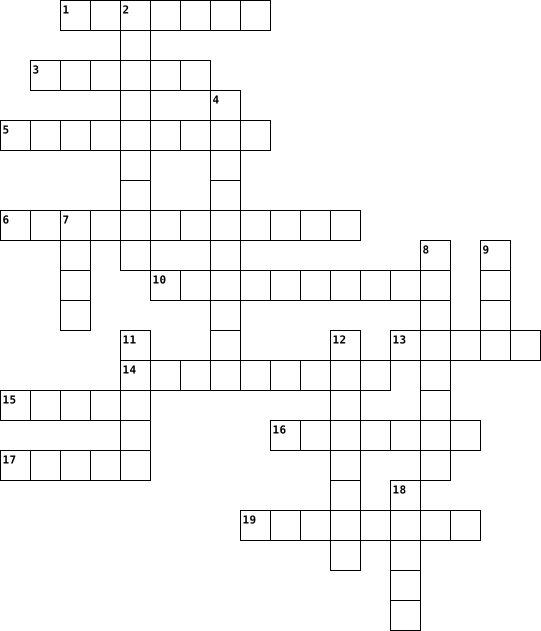
environmental economics Crossword Puzzles
Economics - Humanities Exam 2021-01-19
Across
- A person who purchases goods and services for personal use
- the physical and mental abilities people use to produce goods and services
- Weighing what you sacrifice compared to what you gain to help you make the best decision
- a transaction where no physical object is being transferred between the producer and the consumer
- the market in which households purchase the goods and services that firms produce
- market in which firms purchase the factors of production (capital, land, labor) from households
- government intervention in a market that affects the production of a good
- a graphic representation of transactions within an economy
- Goods, such as clean air and clean water, that everyone must share.
- benefits given by the government directly to individuals: cash transfers (Social Security payments and retirement payments to former government employees) or (in-kind transfers) food stamps and low-interest loans for college education.
Down
- any material provided by nature that can be used to produce goods and services
- The tools, equipment, and buildings that are used to produce goods and services
- Fees for the support of government required to be paid by people and businesses
- not having enough resources to fulfill all the unlimited wants
- the ability to keep in existence or maintain
- accepting the risk of starting and running a business
- a sum of money granted by the government or a public body to assist an industry or business so that the price of a commodity or service may remain low or competitive.
- A person, company, or country that makes, grows, or supplies goods or commodities for sale
- the study of choices people make to satisfy their wants and needs
- what you give up when you make a choice
- external motives/factors that explain people's choices
- physical objects that are produced by producers and consumed by consumers
- something people desire but is not necessary for survival
- something necessary for survival
24 Clues: something necessary for survival • what you give up when you make a choice • the ability to keep in existence or maintain • accepting the risk of starting and running a business • external motives/factors that explain people's choices • something people desire but is not necessary for survival • A person who purchases goods and services for personal use • ...
Exam Review - Economics 2021-12-14
Across
- Opportunity cost states that there is no such thing as a ________ lunch. There is always a cost for the choices you make.
- The key to trade is __________.
- Consists of 27 member states in Europe; also known as the European Community (EC).
- All resources are limited.
- Goods purchased from another country and brought into a home country (coming into a country).
- A good that is unable to be touched or grasped, not having physical presence. Another name for "service."
- A factor of production; people who invest time and money to run a business.
- An example of this kind of good is hot dogs and hot dog buns, waffles & syrup. When one price goes up, it may affect the sales of the other.
- When producers make too much of a product and have to reduce the price to sell it.
- This acronym represents an agreement that was signed by 23 countries; it did away with import quotas and reduced the price of tariffs.
- There is an opposite relationship between price and quantity. When the prices goes down, consumers buy more.
- The study of the way a nation (or business or person) uses its limited resources to satisfy unlimited wants and needs.
- When the price of one country's currency is described in terms of another country's currency.
- A listing that shows the quantity demanded (of a product) at all prices that may occur in a market at a given time.
- Goods bought and used by customers, rather than by manufacturers for producing other goods.
- In this type of economy, government controls the factors of production.
- Goods we buy often and can't live without (toothpaste, water, milk, bread).
- The study of the economics of a small unit, such as a family or business.
- This economic system is commonly found in rural settings or in 2nd/3rd world nations.
- The way a nation uses its productive resources to produce and distribute goods and services.
Down
- This concept means less government involvement; supply and demand will govern the market by themselves, there's no need for government interference.
- The quantities of a product consumers are willing and able to buy at various prices given a period of time.
- This acronym represents a tax in Europe that is distributed to members based on need.
- Limits based on the quantities that can be imported.
- Goods sold from a home country to another outside country (going out of a country).
- In this type of economy, there is market competition and private ownership of land.
- When producers do not make enough of a product.
- There is a direct relationship between price and quantity. If sellers can get a higher price, they will make more of a product.
- An order by government prohibiting movement of ships into or out of ports.
- The quantities of a product that sellers are willing and able to produce at a given price.
- The single currency in Europe that replaced individual nation currencies.
- This acronym represents a trade organization that consists of 142 countries around the world.
- A good meant to last for a short time or have a one-time use.
- Inexpensive items that require little effort to buy, usually unplanned purchases.
- A factor of production; money, buildings, equipment and tools used to run a business.
- When a country is able to produce more of a given product than another, it has a(n) __________.
- When a country earns more on exports than it spends on imports, there is a ________.
- The study of the economics of an entire country.
- The point where the supply curve and the demand curve intersect.
- A factor of production; everything contained in the earth or sea.
- When a country spends more on imports than it earns on exports, there is a ________.
- This acronym represents an agreement that made trade easier among the U.S., Canada, and Mexico.
- In this type of economy, there is more government involvement than capitalist nations, but government runs key industries such as transportation and banking.
- Any good you can physically touch.
- The amount earned when calculating the equilibrium (price x qty).
- The Father of Economics.
- A good meant to last for years.
- A factor of production; all people who work.
- Taxes placed on imports.
49 Clues: The Father of Economics. • Taxes placed on imports. • All resources are limited. • The key to trade is __________. • A good meant to last for years. • Any good you can physically touch. • A factor of production; all people who work. • When producers do not make enough of a product. • The study of the economics of an entire country. • ...
Economics review 1 2022-09-07
Across
- study of the choices that individuals and societies make in the production, distribution, and consumption of goods
- compared to those it purchases from other countries
- desire, a longing, an appetite for something
- of the Austrian School of Economists also found the Diamond-Water Paradox
- Smith was a professor of___________ _______
- value of all the thing people own
- asks why rare items command high prices while necessities usually command low
- the human activity that results in the creation of goods and services
- habit of spending more than one can afford
- the wealth of nations (father of economics)
- in a free market resources are allocated with the greatest________
- that seeks to help those making decisions to make wise choices
Down
- difference in value of the goods that a country sells
- any system for the production, distribution and consumption of goods
- establishment of colonies and extensive territories created to benefit their mother countries
- used in the production and distribution of goods and services
- of goods, or performance of tasks, based upon comparative advantage
- worth that consumers attach to it
- on imported goods
- system for the production,distribution and consumption of goods and services
- source of wealth
- French term meaning "let alone"
22 Clues: source of wealth • on imported goods • French term meaning "let alone" • worth that consumers attach to it • value of all the thing people own • habit of spending more than one can afford • Smith was a professor of___________ _______ • the wealth of nations (father of economics) • desire, a longing, an appetite for something • ...
Economics and Consumerism 2022-06-17
Across
- Health care paid for by taxes.
- Tax paid at the time of buying a product or service, and based on a percentage of the price of the product or service.
- Money made from a product or service above and beyond the cost of providing the product or service.
- Tax based on a percentage of a person's income.
- A condition where the costs of living increases as a result of raising prices and wages.
- A financial plan showing expected income and expenditures over a period of time.
- Healthcare payed for by individuals.
- A person or nation engaged in fighting during a war.
Down
- A concept in statistics that means the middle number in a set of data organized in order of least to most.
- A federal sales tax in Canada.
- Services provided by government to reduce economic inequalities and promote the well-being of citizens.
- Economic activity based on buying and selling products and services illegally.
- A decision made by consumers to stop buying a product or service as a way to bring about change.
- A state formally cooperating with another for a military or other purpose.
- A collection of weapons and military equipment stored by a country, person, or group.
- Misrepresenting what you earn to avoid paying taxes.
- A toll or tax charged by a government on goods which are imported and exported.
- A series of military operations intended to achieve a particular objective, confined to a particular area, or involving a specified type of fighting.
- A commander of an army, or an army officer of very high rank.
- The wants and needs of consumers for products and services.
20 Clues: A federal sales tax in Canada. • Health care paid for by taxes. • Healthcare payed for by individuals. • Tax based on a percentage of a person's income. • Misrepresenting what you earn to avoid paying taxes. • A person or nation engaged in fighting during a war. • The wants and needs of consumers for products and services. • ...
Economics and Consumerism 2022-06-17
Across
- A condition where the costs of living increases as a result of raising prices and wages.
- Money made from a product or service above and beyond the cost of providing the product or service.
- A federal sales tax in Canada.
- Health care paid for by taxes.
- Tax based on a percentage of a person's income.
- Healthcare payed for by individuals.
- A concept in statistics that means the middle number in a set of data organized in order of least to most.
- A toll or tax charged by a government on goods which are imported and exported.
- A collection of weapons and military equipment stored by a country, person, or group.
Down
- Tax paid at the time of buying a product or service, and based on a percentage of the price of the product or service.
- Services provided by government to reduce economic inequalities and promote the well-being of citizens.
- A financial plan showing expected income and expenditures over a period of time.
- Economic activity based on buying and selling products and services illegally.
- A series of military operations intended to achieve a particular objective, confined to a particular area, or involving a specified type of fighting.
- A person or nation engaged in fighting during a war.
- A commander of an army, or an army officer of very high rank.
- A decision made by consumers to stop buying a product or service as a way to bring about change.
- Misrepresenting what you earn to avoid paying taxes.
- A state formally cooperating with another for a military or other purpose.
- The wants and needs of consumers for products and services.
20 Clues: A federal sales tax in Canada. • Health care paid for by taxes. • Healthcare payed for by individuals. • Tax based on a percentage of a person's income. • A person or nation engaged in fighting during a war. • Misrepresenting what you earn to avoid paying taxes. • The wants and needs of consumers for products and services. • ...
The Lorax Economics 2022-06-30
Across
- The Aunt's scarf
- "I am the Lorax, I ..... for the trees"
- the degradation of the natural spaces and the living things.
- Ted's family
- Ted's Transport
- the ability to continue doing something indefinitely
Down
- "where the birds never sing, and the grass never grows"
- plastic and fake
- axes
- Loss of species
- an economic and political system in which a country's trade and industry are controlled by private owners for profit, rather than by the state.
- loves trees
- The Thneed Entrepeneur
- ...... someone like you cares a whole awful lot, nothing is going to get better, its not.
- trufalla trees
- Air pollution from factories
- "A tree falls the way it ....."
- Making Zillions from selling fresh air
- Cuddly furry animals in Paradise
- how a business owner gets an income
20 Clues: axes • loves trees • Ted's family • trufalla trees • Loss of species • Ted's Transport • The Aunt's scarf • plastic and fake • The Thneed Entrepeneur • Air pollution from factories • "A tree falls the way it ....." • Cuddly furry animals in Paradise • how a business owner gets an income • "I am the Lorax, I ..... for the trees" • Making Zillions from selling fresh air • ...
Economics Unit 1 2022-02-11
Across
- A Factor of Production, tools and people
- Irreversible condition, there will not be more later
- Economic System controlled by buyers and sellers
- A point inside the line of a PPF
- Economic System based on tradition
- Economic System that has traits of all others
- A Factor of Production, idea to bring other factors together
- A Factor of Production, work that people do
- The opportunity cost of a curved line on a PPF
- Economic System where government controls all
- Economic System where government acts like a parent
- the method used by a society to produce goods
Down
- A point on the line of a PPF
- The opportunity cost of a straight line on a PPF
- Economic System where government acts like a referee
- Goods and Services, one can go without
- Goods and Services, there is no alternative
- The study of choices
- Economic System controlled by government
- Reversible condition, there will be more later
- Most desirable alternative given up
- Doesn't cost anyone, anything
- A Factor of Production, natural resources
- A point beyond the line of a PPF
24 Clues: The study of choices • A point on the line of a PPF • Doesn't cost anyone, anything • A point inside the line of a PPF • A point beyond the line of a PPF • Economic System based on tradition • Most desirable alternative given up • Goods and Services, one can go without • A Factor of Production, tools and people • Economic System controlled by government • ...
(Somewhat) Everything Economics 2022-10-07
Across
- the value of the next best alternative
- Costs (or benefits) that fall on others
- Trade _____ happens when exports are more than imports for a country
- a minimum price set by the government above equilibrium
- Adam Smith believed that people working in their own _____ would work hard and produce what consumers want
- A sustained decrease in the general price level of goods and services over time
- ____ opens new markets where surplus goods can be sold and allows for cheaper goods to be imported
- the relationship between price and the quantity producers are willing and able to provide
- goods which are produced abroad and sold in the United States
- ____ keeps prices low
- the relationship between price and the quantity consumers are willing and able to purchase
- a maximum price set by the government below equilibrium
- a period of increasing real GDP
- goods which are produced domestically and sold to other countries
- A rapid rise in the price level that leads to extremely high inflation
- Consumers buy more as their income increases and less as their income decreases
- Goods that benefit everyone but are not provided efficiently by the market, like fire protection
- division of labor
- Reduction in the inflation rate to a lower, but still positive rate
- the activity of coming up with the idea for and starting a business
- This type of unemployment occurs when there is a downward cycle in the economy
- _______ occur when you give up something to gain something else.
- _______ Advantage is when an individual, firm, or country has an advantage in the production of a good or service if it can produce more of a good than its trading partner.
- A sustained increase in the general price level of goods and services over time
- things or ideas that are used to encourage or discourage people from making choices
- Assuring consumers (and producers) have accurate information on which to base their decisions
- occurs when quantity supplied exceeds quantity demanded
Down
- Business conduct that reduces market competition
- goods that are excludable but nonrival (i.e. Netflix)
- The government answers the economic questions by dictating output and amount of production
- taxes on imports
- goods that non-excludable and non-rival (public parks, streetlights, national defense)
- an outright ban on imports from and/or exports to a particular foreign nation, usually for political reasons
- History, past actions, and culture determine the answers to the economic questions
- occurs at the price and quantity where the supply and demand curves cross
- Providing essential goods and services and maintaining a fair distribution of income because of this market failure
- Trade _____ happens when exports are less than imports
- Consumers answer the 3 economic questions by choosing which products and services to buy
- human resources ;the effort people make at work
- the end of a contraction in real GDP and the beginning of an expansion
- Consumers buy less as their income increases and more as their income decreases
- The market value of all final goods and services produced within a country’s borders in a given period of time
- occurs when quantity demanded exceeds quantity supplied
- when real GDP stops increasing at the end of an expansion and the start of a contraction
- goods that are excludable and rival (i.e. bicycles and candy bars)
- a measure of how efficiently an economy is using its available factors of production.
- This type of unemployment occurs when a job requiring a specific skill set is no longer needed, either in a specific industry, geographic area, or both.
- limits on the quantity of goods that can be imported
- ________ occurs there are not enough resources to produce all the goods and services that people want.
- goods that are non-excludable but rival (i.e. the environment and wildlife)
- the combination of two or more companies, whether through the creation of a new entity or by one absorbing the other
- Businesses have an incentive to produce what consumers want and to keep their production costs down
- _____ Advantage is when an individual, firm, or country has an advantage in the production of a good or service if it possesses a lower opportunity cost than its trading partner.
- includes tools, machines, buildings
- one of the factors of production; aka natural resources; example: crops, water, and minerals
- This type of unemployment occurs when jobs requiring certain skills are available and people with those skills are available, but the two have not matched up yet.
- shows the maximum amount of output that can be made using the current amount of resources and technology
- a significant, prolonged decline in economic activity spread across the economy, usually indicated by a decline in real GDP
58 Clues: taxes on imports • division of labor • ____ keeps prices low • a period of increasing real GDP • includes tools, machines, buildings • the value of the next best alternative • Costs (or benefits) that fall on others • human resources ;the effort people make at work • Business conduct that reduces market competition • limits on the quantity of goods that can be imported • ...
Social 30 Economics 2021-06-09
Across
- a practice where the government spends more money than they are in possession of or receives in revenue. This action is usually provided by the government when society is facing a recession.
- (two words) a political ideology that enforces the idea of human rights and liberties, as well as full economic freedom. This means that a society with this system condemns government intervention on the economy.
- (two words) set of laws a nation follows in order to regulate flow of money, i.e. the interest rates and value of money in a country.
- amount of money borrowed or owed. Governments suffer from this when they have no money to provide for the country or when facing a recession.
- (two words) a type of government regulation where the government acquire money from the people depending on their income, i.e. more money will be obtained from the rich in order to provide for the poor; Robin Hood
- (two words) the unequal distribution of wealth between social classes and duties.
- last name of a former female prime minister of the UK. Firmly believed in trickle down economics as well. She sold off public property and reduced welfare benefits.
- (two words) mainly associated with Robert Owen, an ideology that advocates for a perfect society where poverty is eradicated. The proletariat has control over the economic and political system.
- (two words) emphasizes the equal distribution of wealth in a society through the process of progressive taxation.
- (two words) established by FDR, it is a multiple of measures to help American citizens to cope and rise back from the adversities of the great crash. Notable measures include the three R’s and alphabet agencies.
- (two words) the use of government revenue relating to the spending and tax rates of an economy. This policy is closely looked upon within Keynesian economics.
- a situation where a person is unable to find a job and cannot find a sustainable form of income/wage. This tends to increase during times of recession and decrease during times of prosperity.
- although there is the presence of inflation, unemployment rate appears to be high and economic growth declines due to lack of consumerism.
- (two words) a time preceding the roaring twenties where the US experienced an economic crash that led to high rates of unemployment and low levels of revenue or economic prosperity. This event affected the whole world too, and was only over due to the rise in economy in World War II.
Down
- (three words) also known as supply side economics, this right-wing theory admonishes government intervention instead. It believes that the invisible hand will maintain economic stability and prosperity.
- (two words) an economic system that focuses on the wellbeing of its people. A government that adopts this system still believes in the idea of private ownership and individualism, but it will prioritize protecting its people with social programs.
- (two words) also known as demand side economics, this left-wing theory advocates for government intervention in the economy increase in government spending, lower taxation and interest rates during recession, while doing the opposite in times of inflation.
- last name of the 40th president of the United states. Formerly an actor, he joined the republican party and later got elected in 1981. Was a believer of trickle down economics.
- (two words) a collection of regulations and programs FDR set up during his New Deal, notable for their acronyms, e.g. AAA, CCC, FERA, WPA, or NRA.
- acronym of the 32nd president of the united states. Succeeding Herbert Hoover, this president established the new deal in response to the great depression.
- (two words) an economic system in which some government intervention is implemented in order to combat unequal distribution of wealth. Although there is a free market economy, the government is allowed a limited amount of regulation in regards to fiscal policies and economics laws such as minimum wage. Sweden adopts this type of economy.
- (two words) the idea that the economy circles through a boom and bust phase, in which tremendous inflation would eventually lead to recession, and vice versa.
- developed by Karl Marx, it is a political and economic ideology that believes in the elimination of social classes. There is a true equal distribution of wealth
- (Two words) This motivating factor of capitalism was first developed by Adam Smith. This selfish motivation will promote a better society as others will work harder. For example, when the common person notices that the Rich spend money on luxurious yachts, cars, and homes it motivates the common person to work harder to achieve a better lifestyle.
- the economic idea that the government should have no involvement in the market. It is an idea that stems from classical liberalism. “Hands off” the economy!
25 Clues: (two words) the unequal distribution of wealth between social classes and duties. • (two words) emphasizes the equal distribution of wealth in a society through the process of progressive taxation. • (two words) set of laws a nation follows in order to regulate flow of money, i.e. the interest rates and value of money in a country. • ...
Economics Final Project 2021-06-06
Across
- What determines your creditworthiness?
- What type of unemployment is when people choose to leave their job to find a better one?
- What is the tax on the manufacture or sale of selected items such as gasoline and liquor?
- The study of economics is about what two things?
- What is a fundamental principle of economic theory which states that keeping other factors consistent and increase in price results in increase in quantity supplied?
- what is aggregate demand also known as?
- When there are more Products then normal its called what?
- Since wealthy people tried to avoid paying the estate tax by giving away their property before they died, what tax was passed to prevent this?
- The power to increase or decrease the money supply is what policy?
- What is the economic indicator for full employment?
- What is the tax a corporation pays on its profits called?
Down
- The ups and downs in the GDP over time is called what?
- What is the risk that the bank takes on when issuing a loan?
- ______ is how much the borrower puts into an investment.
- When a change in price causes a big change in quantity demand it's called what?
- What is a risk taking individual in search of getting money called?
- What can help a borrower secure loans?
- The potential benefits an individual, investor, or business misses out on when choosing one alternative over another is called what?
- What is it called when there is a change in the buyers real income when a price changes?
- A material or thing that is wanted by people is called a what?
- A shrinking economy is also known as what?
- What is the term for the tools, equipment, machinery, and factories used in the production of goods and services?
- What % is the recommended amount you should put into savings?
- What keeps track of how many dollars worth of goods and services are made in a country overtime (Typically one year)?
- The point where the supply curve and demand curve cross is called what?
25 Clues: What determines your creditworthiness? • What can help a borrower secure loans? • what is aggregate demand also known as? • A shrinking economy is also known as what? • The study of economics is about what two things? • What is the economic indicator for full employment? • The ups and downs in the GDP over time is called what? • ...
Economics Crossword Puzzle 2021-08-03
Across
- the purchase of new equipment, buildings, vehicles and plants.
- on capital goods and includes spending on new buildings and infrastructure.
- Tools and machinery that are used to produce goods and services.
- are documents certifying that a proposed building complies with the relevant building regulations.
- a small number of businesses that dominates the market
- when people overseas spend on goods and services that are produced in Australia.
- are products that work in unity.
- factors of production which include land, labour capital goods and entrepreneurship
- the physical activities that people do for others that are sold and purchased
- is when you sell assets such as real estate and shares that will result in large sums of money/income.
- An Australian resident company is subject to company tax, which means a tax is charged on the company’s income.
- is when two or more firms agree to not compete against each other but instead join together to manipulate the market.
- limited
- factors that make it hard for firms to start up or enter a certain industry
- resource rent tax is a tax on profits typically generated from the sales made from oil and gas products.
- is an annual tax based on the total taxable value of all the land you own in Victoria.
- items being sold to consumers
- consumers spend their income on goods and services from overseas producers/businesses.
- the cost to businesses of employing labour.
- Human effort into producing goods and services.
- a model that is used to demonstrate how money moves through society.
- are statistics that are generally used to measure economic growth.
- skills and talent used to successfully produce a concept.
- the process of turning resources into goods and services
- the amount of an item that a business has in stock to sell
- unlimited
- is a tax on cars when the GST is above the threshold of 33%.
- money that is typically received on a regular basis
- goods and services that are necessary in order to service
- is a national broad-based consumer tax on most goods and services sold or consumed in Australia.
- home buyers grant, are individuals who purchase a property for the first time.
- when businesses are able to set the price that they want due to high market power.
- Anything from the Earth that has economic value.
- when businesses are forced to take whatever price is determined by the marketplace due to little market power.
- the number of customers desiring to purchase a good or service being supplied
- is when a business lowers their prices to drive a competitor out of the market.
- refers to the quality of life.
- the responsiveness to price change.
- is when you borrow money to invest.
- is 2% of your taxable income, in addition to the tax you pay on your taxable income. It helps cover medical funds.
- one business that dominates the market
- the rates councils charge on properties in their area. Calculated by the value of the property times rate in the dollar.
Down
- money paid to cover the cost of your waste and recycling services.
- refers to the tax on goods and services when they are transferred across international borders.
- Price of one product in comparison to another.
- competition a market structure where competition is at its best
- allocation of resources maximising the use of resources to satisfy the needs and wants of society.
- is an alternative product.
- cost when you are forgoing something to gain something.
- Income after tax.
- people who make goods and services
- benefits tax is a tax paid by employees to help benefit themselves and their families.
- is statistical data used to determine whether Australia is progressing as a nation.
- expenditures on individual and collective consumption goods
- when responsiveness to price change is low.
- a percentage of income that is levied by the government.
- refers to having access to goods and services.
- the total value of all goods and services that producers are able to supply.
- When consumers are optimistic about their future.
- is a better measure of economic growth as it measures the value of goods and services produced in Australia, however it does not include inflation.
- occurs when there are limited resources and unlimited wants
- it occurs when competitors agree on pricing rather than competing against each other.
- goods and services that are desired but are not necessary to survive
- an oligopoly with 2 businesses
- it is an illegal act in which corporations inform their rivals about price actions and intentions.
- Australian Competition Consumer Commission
- when banks loan money to people/businesses.
- is used as an indicator of changes in well-being in Australia.
- spending the government uses money collected through taxation.
- when a business is optimistic about its future.
- when producers allocate their resources to a point where they feel it is technically efficient.
- What causes consumers to purchase more or less.
- another word for customers ( people who purchase the goods and services)
- is an amount of money that you may have to pay if you are believed to have broken certain laws.
- tax is a self-assessed, general purpose state and territory tax assessed on wages paid or payable by an employer to its employees.
- the study of how individuals, businesses and the government allocate scarce resources
- rather than spending money on goods and services consumers instead store it.
- using all the resources available to produce the maximum amount of wanted goods and services
- is a tax levied by state or territory governments on certain purchases.
- a diagram illustrating the choices or options available when deciding how to allocate scarce resources
80 Clues: limited • unlimited • Income after tax. • is an alternative product. • items being sold to consumers • an oligopoly with 2 businesses • refers to the quality of life. • are products that work in unity. • people who make goods and services • the responsiveness to price change. • is when you borrow money to invest. • one business that dominates the market • ...
Economics Crossword Puzzle 2021-04-19
Across
- the process of concentrating on and becoming expert in a particular subject or skill.
- the state of being scarce or in short supply; shortage.
- is a person or a group of people living in the same residence.
- a useful or valuable thing, person, or quality.
- an amount of something left over when requirements have been met; an excess of production or supply over demand.
- wealth in the form of money or other assets owned by a person or organization or available or contributed for a particular purpose such as starting a company or investing.
- the resource that encompasses the natural resources used in production
- the branch of knowledge concerned with the production, consumption, and transfer of wealth.
- a person who supports or believes in the principles of communism.
- the activity or condition of competing.
- a means by which the exchange of goods and services takes place as a result of buyers and sellers being in contact with one another
Down
- a situation in which nothing can be improved without something else being hurt.
- is the total monetary or market value of all the finished goods and services produced within a country's borders in a specific time period.
- a person who organizes and operates a business or businesses, taking on greater than normal financial risks in order to do so.
- to utilize less than fully or below the potential use.
- work, especially hard physical work
- the financial benefit realized when revenue generated from a business activity exceeds the expenses, costs, and taxes involved
- for-profit business, usually formed as a partnership that provides professional services, such as legal or accounting services
- something, typically money, that is owed or due.
- require the payment of (a specified sum of money) before it can be acquired or done.
- are items that satisfy human wants and provide utility
21 Clues: work, especially hard physical work • the activity or condition of competing. • a useful or valuable thing, person, or quality. • something, typically money, that is owed or due. • to utilize less than fully or below the potential use. • are items that satisfy human wants and provide utility • the state of being scarce or in short supply; shortage. • ...
Economics Crossword Puzzle 2021-04-29
Across
- The freedom of individuals and businesses to regulation.
- Process of breaking up a task or job into smaller tasks.
- Legal proceeding involving a person or business that is unable to repay their outstanding debts
- Physical, mental, and social effort used to produce goods and services in an economy.
- An individual who creates a new business.
- Something needed to survive.
- the theory that spending money and consuming goods is good for the economy.
- The amount of an individual's income that is left for spending, investing, or saving after taxes.
- Businesses earn ______ from selling goods or services above their cost of production.
- Storage of resources.
- An economic system in which private individuals or businesses own capital goods.
- the intent to achieve a gain in a project, transaction, or material endeavor.
- The price of producing one additional unit of a good.
Down
- Raw materials found in nature that can be used for economic production or consumption
- The study of a national economy as a whole.
- The marketplace where final goods or services are sold to businesses.
- Common _______ include payments to suppliers, employee wages, and factory leases.
- Something that people desire to have.
- The study of economics at an individual, group, or company level.
- The organization has a large annual ______ that they are allowed to spend every year.
- The state of being able to create at a high quality and quick speed.
- The amount of money that an individual has to spend or save after income taxes have been deducted.
- A place where production factors are purchased and sold.
- The study of how society uses its limited resources.
- An increase in the price of a good or service will decrease the quantity ______.
- The ability to compete fairly and successfully in markets for traded goods and services.
- The buying of goods without planning to do so in advance
- Human-created assets that can enhance one's power to perform economically useful work.
28 Clues: Storage of resources. • Something needed to survive. • Something that people desire to have. • An individual who creates a new business. • The study of a national economy as a whole. • The study of how society uses its limited resources. • The price of producing one additional unit of a good. • The freedom of individuals and businesses to regulation. • ...
Economics Crossword Puzzle 2021-05-11
Across
- Name of person/business who receives the money
- a written order to the bank
- amount of physical, mental, and social
- balance a ____ ___ ___ when you receive the statement
- can be used to ____ money through the mail
- checks are __ than cash
- a cancelled check is a ____ ___ of payment
- money
- item that satisfies human want
- for recording the purpose
- a bank's record of your checking account which you receive monthly
- items offered for sale
Down
- transactions with no physical good
- process of bringing your check record and bank statement into agreement
- a checkbook register when you write each check
- potential benefits
- worth
- resources
- signing the back of the check
- employment
- purchaser
- a deposit account held at a bank
- value of all assets
- Owner of their own business
- electronic fund transfer
- automated teller machine
26 Clues: worth • money • resources • purchaser • employment • potential benefits • value of all assets • items offered for sale • checks are __ than cash • electronic fund transfer • automated teller machine • for recording the purpose • a written order to the bank • Owner of their own business • signing the back of the check • item that satisfies human want • a deposit account held at a bank • ...
Economics ABC book 2023-11-15
Across
- a severe recession that continues for a long period of time.
- when the Federal Reserve buys or sells bonds.
- the rapid increase in prices, inflation that is out of control.
- popular type of auto financing that allows you to “rent” a car from a dealership for a certain length of time and amount of miles.
- The difference between what you owe on your mortgage and what your home is currently worth.
- when an economic expansion hits a high point. The economy is BOOMING
- The Market Value of all final goods and services produced in a country in a year.
- Security that represents the ownership of a fraction of the issuing corporation. Units of stock are called "shares"
- the economy is growing and improving.
- When GDP is negative for two consecutive quarters. The economy is doing poorly.
- The percentage of unemployed workers in the total labor force.
- The money paid to a worker in return for their work.
- The market in which employers search for employees, and where employees search for jobs.
- says that too much money in the economy causes inflation. The general price level of goods and services is directly proportional to the amount of money in circulation
- Current price estimates of GDP that are obtained by expressing values of all goods and services produced in the current reporting period.
- spending by people abroad on U.S. goods and services (exports) minus spending by people in the U.S. on foreign goods and services (imports).
Down
- members of a particular organization or population who are able to work, viewed collectively.
- Central banking system of the United States of America.
- A product used to produce a final good or finished product
- a way of budgeting where your income minus your expenses equals zero.
- an index used to calculate the inflation rate.
- illustrated graph of the growth and decline of an economy as economic activity increases and decreases periodically.
- A bottom or low point. Marks the end of a recession or depression
- The Federal Reserve uses its ______________ tools to increase and decrease the MONEY SUPPLY.
- When you are unemployed because your skills don’t match the job(s) available (consumer preferences) Jobs that are permanently lost; workers skill do not match the jobs that are available or in demand
- Spending by businesses on machinery, factories, Equipment, tools, and construction of new buildings.
26 Clues: the economy is growing and improving. • when the Federal Reserve buys or sells bonds. • an index used to calculate the inflation rate. • The money paid to a worker in return for their work. • Central banking system of the United States of America. • A product used to produce a final good or finished product • ...
economics vocab 1 2023-08-23
Across
- benefits or costs of an action that influence peoples decisions and behavior
- focuses on the workings of an economy as a whole
- use of government spending and taxation to influence the economy
- unlimited wants + limited resources
- balance that remains when all of a business´s operating expenses are subtracted from its revenues
- the inputs used to produce a good or service in order to produce income
- how much a certain product, item, commodity, or service suppliers is willing to make available at a particular price
- a rise in prices
- what you give up when you make a choice
- offering better products at a cheaper price creating turbulance
Down
- looks at economic decision making by individuals, households, and businesses
- targeted fiscal and monetary policy intended to elicit an economic response from the private sector
- when an individual who is not employed
- highest valued trade off is the next best alternative
- a situation where the demand does not meet the supply of goods and services
- one that acquires goods or services for direct use or ownership rather than for resale
- cost of borrowing money, expressed as a percentage of the amount borrowed
- how much of that product, item, commodity, or service consumers are willing and able to purchase at a particular price
- relating to money
- relationship between consumers and producers who benefit from a transaction
- a market in which the industry is dominated by a few companies that are each influential participants in the market
- leave alone
- a market structure where a single seller or producer assumes a dominant position in an industry
23 Clues: leave alone • a rise in prices • relating to money • unlimited wants + limited resources • when an individual who is not employed • what you give up when you make a choice • focuses on the workings of an economy as a whole • highest valued trade off is the next best alternative • offering better products at a cheaper price creating turbulance • ...
Behavioral Economics Vocabulary 2023-08-23
Across
- you go through a positive or negative experience or event
- When a person believes they are better at something than they actually
- Media Marketing The use of social media platforms and websites to promote a product
- Bias A subconscious error in thinking that leads to irrational decision
- Bias The tendency people have to be more confident in their own abilities
- When a person mistakenly believes they are better than others
- Cost Fallacy The tendency to make decisions about a current situation based on
- behavior and to explain economic decision making
- you own has been replaced with cash, then determining whether you would prefer to keep the cash or buy the item back
- (Fear of Missing Out) The tendency to feel anxiety/fear that an exciting or interesting event may currently be happening elsewhere, often aroused by posts seen on a social media website
Down
- Test A strategy used to combat loss aversion by imagining that overnight
- Economics The subfield of economics that applies psychological insights into
- of comparable magnitude
- resources you have already invested in the situation
- and to ignore or distort contradictory evidence
- Adaptation The tendency to return to a baseline level of happiness regardless of
- service
- When a person has an exaggerated certainty that an answer is correct
- Effect The tendency to put more value on things you already own
- you
- Aversion The tendency to regard losses as considerably more important than
- Bias The tendency to search for information that supports our
- Costs Costs that have already been incurred and cannot be recovered
- Mentality The tendency to conform to the behaviors and beliefs of the people
24 Clues: you • service • of comparable magnitude • and to ignore or distort contradictory evidence • behavior and to explain economic decision making • resources you have already invested in the situation • you go through a positive or negative experience or event • When a person mistakenly believes they are better than others • ...
Economics And Business 2023-11-19
Across
- An item that a business has decided not to produce.
- A monetary charge that needs to be paid for borrowing money.
- Items that bring satisfaction and usefulness to consumers.
- The supply and demand for houses
- Selling price - Cost to produce
- The quantity demanded by consumers decreases as prices rise, then increases as prices fall.
- A person who works for a salary.
- The higher the price that a good or service can be sold for, the higher the quantity that suppliers are willing to produce.
- A person who buys goods or services for their own use
- A place where anything can be bought or sold. Also where producers and consumers interact.
- Something that is required to live a safe and healthy life
- When your wants are unlimited, but the resources are limited
Down
- When goods or services affect the supply and demand of goods and services, due to how high or low the demand is to determine the price of a product.
- Make an effort to purchase goods and services that do not have a negative impact on other people, animals, or the environment.
- A person or organisation that recruits people to be employed.
- Something that isn't necessary but will bring satisfaction
- An item that requires money or fortune in return.
- An act that can be bought by a consumer.
- The availability of workers and the cost to employ them.
- A person who owns a property then rents it to others to use.
- A person, company or country that makes, grows or supplies goods or products for sale
- Someone who is using a property owned by a landlord.
22 Clues: Selling price - Cost to produce • The supply and demand for houses • A person who works for a salary. • An act that can be bought by a consumer. • An item that requires money or fortune in return. • An item that a business has decided not to produce. • Someone who is using a property owned by a landlord. • A person who buys goods or services for their own use • ...
Economics Vocab Crossword 2023-11-28
Across
- gap between exports and imports
- supply supply responds less than proportionately to a change in price; i.e. the percent change in quantity supplied is less than percent change in price
- a significant decline in national output. Typically lasting a minimum of six months.
- during the business cycle, the lower point of output in a recession, before a recovery begins.
- an increase by society in the average level of physical and/or human capital per person
- product which is intangible such as entertainment, healthcare or education
- GDP divided by the population
- a good that lasts three or more years.
- when one country can use fewer resources to produce a good compared to another country; when a country is more productive compared to another country
- Advances in knowledge
- all elements that affect people's happiness, whether these element are obtained through market transactions or not
Down
- an especially lengthy and deep decline in output
- the relatively short-term movement of the economy from recession to expansion
- good that has been produced, but not yet sold
- during the business cycle, the highest point of output before a recession begins
- supply responds more than proportionately to a change in price; i.e. the percent change in quantity supplied is greater than percent change in price
- when a country can produce a good at a lower cost in terms of other goods; or, when a country has a lower opportunity cost of production
- the price of an item multiplied by the number of units sold: TR = P x Qd
- quantity of output produced per worker, or per hour worked
- the accumulated skills and education of workers
20 Clues: Advances in knowledge • GDP divided by the population • gap between exports and imports • a good that lasts three or more years. • good that has been produced, but not yet sold • the accumulated skills and education of workers • an especially lengthy and deep decline in output • quantity of output produced per worker, or per hour worked • ...
Year 7 Economics 2023-11-14
Across
- (7): One who purchases goods or services.
- (7): Sketch or summary.
- (5): The amount of money required.
- (8): Commercial activity.
- (7): Examine for similarities and differences.
- (6): Consumer desire for a product.
- (5): A general direction in which something is developing.
- (7): Examine in detail.
- (9): The amount of money spent.
- (8): Assess or judge the value or quality.
- (7): Foretell or estimate a future event.
- (5): Desires that go beyond basic needs.
- (4): A tangible product.
Down
- (6): A location where buyers and sellers meet.
- (7): Make clear or understandable.
- (6): Someone who starts and operates a business.
- (7): The wealth and resources of a country.
- (5): Standard quantities.
- (7): A person or company that makes goods.
- (6): The amount of a product available.
- (5): Essential requirements for survival.
- (7): Intangible work provided.
- (10): Rivalry between businesses.
- (8): Limited availability of resources.
24 Clues: (7): Sketch or summary. • (7): Examine in detail. • (4): A tangible product. • (5): Standard quantities. • (8): Commercial activity. • (7): Intangible work provided. • (9): The amount of money spent. • (10): Rivalry between businesses. • (7): Make clear or understandable. • (5): The amount of money required. • (6): Consumer desire for a product. • ...
Economics Crossword Puzzle 2023-09-18
Across
- all goods and factors of production in an economy are distributed
- a legal entity separate from its owners
- all naturally occurring resources as well as geographic land
- people who fill a position for a short period of time
- share in the ownership of a company
- the activity or condition of competing
- means of distribution should be regulated by the community as a whole
- a political theory derived from Karl Marx
- individuals who engage in hard manual labor
- an arrangement whereby a place of employment requires current membership in a specific union as a condition of employment
- a single producer that excludes competition from providing the same product
- working people, through their unions, negotiate contracts with their employers to determine their terms of employment
- the state of being scarce or in short supply
- man-made goods that assist in the production process
- persons or positions where a level of basic knowledge, experience, or training
- requires the highest levels of education and training
- the loss of potential gain from other alternatives when one alternative is chosen
- tradeoff governments face in spending on national defense or on domestic programs
- a mechanism for resolving disputes between investors and brokers
- work, especially hard physical work
- individuals who work in jobs that require like college degrees and advanced degrees
- the only provider of a product in an geographic location
- when the price of a product goes up, the quantity demanded will go down
Down
- defined by office jobs and management, and not "getting their hands dirty."
- a union founded in 1869
- a loose amalgamation of skilled craft unions
- country's trade and industry for profit
- items that satisfy human wants, provide utility or usefulness and are scarce
- the intervention of a third person, or mediator, into a dispute to assist the parties
- a small number of firms that control the market
- collective refusal by employees to work under the conditions required by employer
- rely on habit,custom or,rituals
- a workforce segment associated with a limited skill set
- use of taxation to redistribute wealth
- the business practice of hiring a party outside a company to perform services
- factors that can prevent newcomers into a market
- requires (something) because it is essential or very important
- gives workers the freedom to choose whether or not to join a labor union in the workplace
- A business that employs workers without regard to union membership
- the economic value of a worker's experience and skills
- have a desire to possess or do (something)Scarcity
- the government grant of monopoly on an invention for a limited amount of time
- Government owns both land and capital
- a financial gain
44 Clues: a financial gain • a union founded in 1869 • rely on habit,custom or,rituals • share in the ownership of a company • work, especially hard physical work • Government owns both land and capital • the activity or condition of competing • use of taxation to redistribute wealth • a legal entity separate from its owners • country's trade and industry for profit • ...
Industrial Revolution-Economics 2023-10-22
Across
- Policies and goods pertaining to WITHIN the country and its colonies
- Countries or areas under the full or partial political control of another country, usually far away from the mother country.
- Prior to the Industrial Revolution Britain’s main source of income came from this.
- The total amount of income generated by the sale of goods or services by a business
- The total amount of costs incurred to operate a business
- and services provided by a producer
- Money used to build, run, or grow a business
- A policy of extending a country's power and influence through diplomacy or military force
- Policies and goods pertaining to OUTSIDE the country
- A person who owns, organizes, and operates a business
- policy demanding all industry and manufacturing were done domestically
- The development of industries in a nation.
Down
- you have a greater supply than you are able to sell
- The largest and wealthiest slave colony for the British Empire
- that purchase goods and services from producers
- An extensive group of states or countries under the rule of a single nation
- Acts designed to ensure all British colonies would ONLY trade with England
- The money earned by a business after all expenses are paid out
- you have a smaller supply than you are able to sell
- An economic and political system in which a country's trade and industry are controlled by private owners for profit
- that provide goods and services
- and services wanted for purchase by consumers
- After the American Revolution, England gained land in the Caribben from wars with this country
- Trade route used to transport goods in exchange for slaves between West Africa, Britain, and the Colonies
- Improvements in credit and _______________ allowed for businesses to get the money they needed.
25 Clues: that provide goods and services • and services provided by a producer • The development of industries in a nation. • Money used to build, run, or grow a business • and services wanted for purchase by consumers • that purchase goods and services from producers • you have a greater supply than you are able to sell • you have a smaller supply than you are able to sell • ...
Intro to Economics 2020-08-04
Across
- when a foreign suppliers sells a good blow the price it charges in its home country
- thinking,requires purposeful evaluation of the available opportunities to make the best decision possible
- voluntary exchange of goods and services
- industry argument, states that domestic industries need trade protection
- surplus, when exports exceed imports
- how people allocate their limited resources
- rate, price of foreign country currency per unit of another foreign countries currency
- advantage, when a person, business or country produces at a lower opportunity cost than other competitors
- exchange market,currencies of different countries traded
- factors that motivate a person to act or exert effort
- taxes levied on imported goods/services
- trading a good they already have for something they want
Down
- limited resources, unlimited wants
- study of individual units that make up economy
- brings buyers and sellers to exchange goods and services
- balance, difference between total exports and imports
- demand, demand for a good or service that derives from the demand for another
- when someone focuses on his or her skills to become an expert in a particular area
- advantage, producing more than another producer with the same amount of resources
- thinking, requires decision makers to evaluate whether the benefit of one more unit of something is greater than its cost
- study of overall aspects and workings of an economy
- deficit, imports exceed exports
- costs, highest-valued alternative that must be sacrificed to get something else
- deprecation,
- appreciation, when currency becomes more valuable relative to other countries
25 Clues: deprecation, • deficit, imports exceed exports • limited resources, unlimited wants • surplus, when exports exceed imports • taxes levied on imported goods/services • voluntary exchange of goods and services • how people allocate their limited resources • study of individual units that make up economy • study of overall aspects and workings of an economy • ...
Economics Glossary Words 2020-04-28
Across
- An organization that sells goods
- Where actions by one party have impacts on another, particularly economically.
- The study of how people use scarce resources to satisfy needs and wants
- Final users of goods and services to satisfy their needs and wants
- Basic units used to make goods and services
- Reward for the use of resources
- A system which allows private ownership of the factors of production
- Physical items used by consumer and services for a profit
- Situation where demand is greater than supply
- Equipment used to make goods and services
- Institution which handles money for households and firms
- Ability to combine all resources to make something (plan, recipe, system etc)
- chain Complex group of firms in many countries each producing a component of a final product.
- Organisations that make goods and services
- Payment earned by entrepreneurs
- Money paid at a particular rate for the money lent
- Compulsory government levy
- Goods and services which we desire but don’t need
- Income flows which are added to the Circular Flow of Income model (investment, govt. spending, exports)
- Goods and services sold overseas
- Income flows that are removed from the Circular Flow model. (savings, tax, imports)
- National Company A company which operates in several countries with its headquarters in the parent country. (Apple)
Down
- Goods and services bought from overseas
- Basic necessities for life
- of production Raw materials used to make goods and services (land, labour, capital & enterprise)
- All human effort, both physical and intellectual
- That part of earnings not spent
- Organization with authority to make decisions for the population
- National Company A company that operates in many countries with independent headquarters in each.(McDonalds)
- An economy where people produce only enough goods and services for their own family
- Cost The cost of the next-best alternative opportunity
- Financial assistance given to people by the Government
- Action of only doing one part of the process
- market Place where factors of production are bought and sold.
- Payment per hour for labour
- All resources provided by nature
- Place where goods and services are bought and sold.
- A system where factors of production are owned by the government
- market Place where goods and services are bought and sold (Coles, Seek.com, Fremantle markets) Same as Market
- Payment per year for labour
- Payment for use of land
- A system where all factors of production, distribution and consumption of goods and services are controlled by the government
- Purchase of new capital
- Actions done for consumers by producers
- Used to pay for goods and services
45 Clues: Payment for use of land • Purchase of new capital • Basic necessities for life • Compulsory government levy • Payment per hour for labour • Payment per year for labour • That part of earnings not spent • Reward for the use of resources • Payment earned by entrepreneurs • An organization that sells goods • All resources provided by nature • Goods and services sold overseas • ...
Year 9 Economics 2020-04-28
Across
- market Place where goods and services are bought and sold (Coles, Seek.com, Fremantle markets) Same as Market
- Action of only doing one part of the process
- of production Raw materials used to make goods and services (land, labour, capital & enterprise)
- All resources provided by nature
- Cost The cost of the next-best alternative opportunity
- Basic units used to make goods and services
- Purchase of new capital
- Basic necessities for life
- Reward for the use of resources
- Place where goods and services are bought and sold.
- A system which allows private ownership of the factors of production
- Payment per year for labour
- National Company A company that operates in many countries with independent headquarters in each.(McDonalds)
- market Place where factors of production are bought and sold.
- Payment per hour for labour
- The study of how people use scarce resources to satisfy needs and wants
- Used to pay for goods and services
- Money paid at a particular rate for the money lent
- A system where all factors of production, distribution and consumption of goods and services are controlled by the government
- Equipment used to make goods and services
Down
- Ability to combine all resources to make something (plan, recipe, system etc)
- Financial assistance given to people by the Government
- Payment earned by entrepreneurs
- All human effort, both physical and intellectual
- Final users of goods and services to satisfy their needs and wants
- A system where factors of production are owned by the government
- Goods and services sold overseas
- Physical items used by consumer and services for a profit
- Payment for use of land
- An organization that sells goods
- National Company A company which operates in several countries with its headquarters in the parent country. (Apple)
- Organization with authority to make decisions for the population
- Income flows that are removed from the Circular Flow model. (savings, tax, imports)
- Institution which handles money for households and firms
- Income flows which are added to the Circular Flow of Income model (investment, govt. spending, exports)
- Actions done for consumers by producers
- Where actions by one party have impacts on another, particularly economically.
- That part of earnings not spent
- Organisations that make goods and services
- An economy where people produce only enough goods and services for their own family
- Goods and services bought from overseas
- Situation where demand is greater than supply
- Goods and services which we desire but don’t need
- Compulsory government levy
- chain Complex group of firms in many countries each producing a component of a final product.
45 Clues: Payment for use of land • Purchase of new capital • Basic necessities for life • Compulsory government levy • Payment per year for labour • Payment per hour for labour • Payment earned by entrepreneurs • Reward for the use of resources • That part of earnings not spent • Goods and services sold overseas • An organization that sells goods • All resources provided by nature • ...
Year 9 Economics 2020-04-28
Across
- An organization that sells goods
- Where actions by one party have impacts on another, particularly economically.
- The study of how people use scarce resources to satisfy needs and wants
- Final users of goods and services to satisfy their needs and wants
- Basic units used to make goods and services
- Reward for the use of resources
- A system which allows private ownership of the factors of production
- Physical items used by consumer and services for a profit
- Situation where demand is greater than supply
- Equipment used to make goods and services
- Institution which handles money for households and firms
- Ability to combine all resources to make something (plan, recipe, system etc)
- chain Complex group of firms in many countries each producing a component of a final product.
- Organisations that make goods and services
- Payment earned by entrepreneurs
- Money paid at a particular rate for the money lent
- Compulsory government levy
- Goods and services which we desire but don’t need
- Income flows which are added to the Circular Flow of Income model (investment, govt. spending, exports)
- Goods and services sold overseas
- Income flows that are removed from the Circular Flow model. (savings, tax, imports)
- National Company A company which operates in several countries with its headquarters in the parent country. (Apple)
Down
- Goods and services bought from overseas
- Basic necessities for life
- of production Raw materials used to make goods and services (land, labour, capital & enterprise)
- All human effort, both physical and intellectual
- That part of earnings not spent
- Organization with authority to make decisions for the population
- National Company A company that operates in many countries with independent headquarters in each.(McDonalds)
- An economy where people produce only enough goods and services for their own family
- Cost The cost of the next-best alternative opportunity
- Financial assistance given to people by the Government
- Action of only doing one part of the process
- market Place where factors of production are bought and sold.
- Payment per hour for labour
- All resources provided by nature
- Place where goods and services are bought and sold.
- A system where factors of production are owned by the government
- market Place where goods and services are bought and sold (Coles, Seek.com, Fremantle markets) Same as Market
- Payment per year for labour
- Payment for use of land
- A system where all factors of production, distribution and consumption of goods and services are controlled by the government
- Purchase of new capital
- Actions done for consumers by producers
- Used to pay for goods and services
45 Clues: Payment for use of land • Purchase of new capital • Basic necessities for life • Compulsory government levy • Payment per hour for labour • Payment per year for labour • That part of earnings not spent • Reward for the use of resources • Payment earned by entrepreneurs • An organization that sells goods • All resources provided by nature • Goods and services sold overseas • ...
Economics Crossword Puzzle 2016-05-11
Across
- A situation in which income exceeds expenditures.
- The total assets minus total outside liabilities of an individual or a company.
- The highest point between the end of an economic expansion and the start of a contraction in a business cycle.
- The means by which a government adjusts its spending levels and tax rates to monitor and influence a nation's economy.
- An increase in the level of economic activity, and of the goods and services available. It is a period of economic growth as measured by a rise in real GDP.
- An economic system in which the production and distribution of goods are controlled substantially by the government rather than by private enterprise
- The macroeconomic policy laid down by the central bank.
- A policy by which a government does not discriminate against imports or interfere with exports by applying tariffs
- A broad measurement of a nation's overall economic activity
- The lowest remuneration that employers may legally pay to workers.
- A measure of the total output of a country that takes the gross domestic product (GDP) and divides it by the number of people in the country.
- A sustained increase in the general price level of goods and services in an economy over a period of time.
- A situation when the price charged is more than or less than the equilibrium price determined by market forces of demand and supply.
- An agreement among the United States, Canada and Mexico designed to remove tariff barriers between the three countries.
- He is well-known for his stance that national governments should attempt to smooth out the effects of expansion and contraction in the business cycle by using fiscal and monetary policy.
- A ratio between the output volume and the volume of inputs.
- When the demand for a product or service exceeds its supply in a market.
- The economic policy of restraining trade between countries
- The central bank of the United States and the most powerful financial institution in the world.
- An increase in public spending
- States that if countries specialise in producing goods where they have a lower opportunity cost – then there will be an increase in economic welfare.
- A market structure characterized by a single seller, selling a unique product in the market.
- Organization that aims to create economic peace and stability in the world through a multilateral system
- The "useful-ness" that a consumer obtains from any good.
- An individual retirement plan that bears many similarities to the traditional IRA, but the contributions are not tax deductible and qualified distributions are tax free.
- The economic problem of having seemingly unlimited human wants in a world of limited resources.
- A measure of a negative balance of trade in which a country's imports exceeds its exports.
- He is best known for his strong belief in free-market capitalism
- An economic system in which the means of production and distribution are privately or corporately owned
Down
- The level of employment rates where there is no cyclical or deficient-demand unemployment.
- He is particularly famous for his defense of free-market capitalism and is remembered as one of the greatest critics of the socialist consensus.
- A term used to identify federal programs like Medicare and Medicaid
- A monetary system in which a country's government allows its currency unit to be freely converted into fixed amounts of gold and vice versa.
- A situation when the price charged is more than or less than the equilibrium price determined by market forces of demand and supply.
- The ability of a party (an individual, or firm, or country) to produce a greater quantity of a good, product, or service than competitors, using the same amount of resources.
- System by Karl Marx defining that all means of production are owned in common
- When the supply for a product or service exceeds its demand in a market.
- An economic system where few restrictions are placed on business activities and ownership
- Hands off government
- An increase in the value of one currency in terms of another.
- Type of money that is intrinsically useless object or record
- One of the most frequently used statistics for identifying periods of inflation or deflation.
- Money which is set aside for an emergency situation, such as unexpected unemployment or injury, or a natural disaster which destroys one's home and belongings.
- A market structure in which a small number of firms has the large majority of market share.
- A significant decline in economic activity spread across the economy, lasting more than a few months
- Series of statistical figures, such as the consumer price index or the gross domestic product, used by economists to predict future economic activity.
- A benefit given by the government
- analysis An examination of the additional benefits of an activity compared to the additional costs of that activity.
- He is known as the founding father of modern Economics, defined Economics as the study of the nature and causes of nations' wealth or simply as the study of wealth.
- A low turning point or a local minimum of a business cycle.
50 Clues: Hands off government • An increase in public spending • A benefit given by the government • A situation in which income exceeds expenditures. • The macroeconomic policy laid down by the central bank. • The "useful-ness" that a consumer obtains from any good. • The economic policy of restraining trade between countries • ...
economics chapter 9 2019-03-25
Across
- - tax on the value of a property, usually levied on real estate.
- - a tax on sales or on the receipts from sales.
- - a system that requires an employer to automatically deduct income taxes from an employee's paycheck and send it directly to the government.
- - is a supplemental income tax imposed by the United States federal government in addition to baseline income tax for certain individuals, corporations, estates, and trusts that have exemptions or special circumstances allowing for lower payments of standard income tax
- - A provision in the laws governing taxation that allows people to reduce their taxes
- - is a concept in the theory of taxation from public finance
- - is a tax imposed in such a manner that the average tax rate decreases as the amount subject to taxation increases
- - is a tax system with a constant marginal rate, usually applied to individual or corporate income
- - is a depreciation method whereby an asset loses book value at a faster rate than the traditional straight-line method
- - is the money that is taken out of workers' paychecks to pay older Americans their Social Security retirement and Medicare (Hospital Insurance) benefits
- - is a bureau of the Department of Treasury that is tasked with the enforcement of income tax laws and oversees the collection of federal income taxes
- - is the tax on money or property that one living person gives to another
- - is a tax in which the average tax rate increases as the taxable amount increases.
- - a profit from the sale of property or an investment.
Down
- - is a tariff or tax imposed on goods when transported across international borders.
- tax - An assessment levied by a government on the profits of a company
- - is basically a tax related incentive that allows individuals or entities to deduct a certain percentage of specific investment related costs from their tax liability apart from usual allowances for depreciation.
- - are taxes imposed on employers or employees, and are usually calculated as a percentage of the salaries that employers pay their staff.
- - is notification from an employer to an employee or tax office detailing the taxes that have been withheld from an employee's pay.
- - is said to "fall" upon the group that ultimately bears the burden of, or ultimately has to pay, the tax
- - is levied on the wages, salaries, dividends, interest, and other income a person earns throughout the year
- - he tax rate is the ratio at which a business or person is taxed
- - is a progressive taxation principle that maintains that taxes should be levied according to a taxpayer's ability to pay
- - a tax on the amount by which the value of an article has been increased at each stage of its production or distribution.
- - are taxes paid when purchases are made on a specific good, such as gasoline
- - is a fee, tax, or impost payment paid to a facility owner or operator by a facility user as a necessary condition for using the facility
- - a tax on items considered undesirable or harmful, such as alcohol or tobacco.
27 Clues: - a tax on sales or on the receipts from sales. • - a profit from the sale of property or an investment. • - is a concept in the theory of taxation from public finance • - tax on the value of a property, usually levied on real estate. • - he tax rate is the ratio at which a business or person is taxed • ...
Economics Review 1 2019-03-28
Across
- occurs when market price is lower than equilibrium price
- type of economic growth where productive potential decreases
- human wants are ____
- the type of demand that occurs between milk and yogurt
- food, water, shelter, etc
- the type of specialization that occurs between countries
- the sector that includes raw material extraction
- the motivation behind a government's actions
- the demand for this good decreases as income increases
- occurs when market price is higher than equilibrium price
- location on the PPF where production is unattainable
- where quantity supplied is equaled to quantity demanded
- the type of supply that occurs between leather and beef
- a type of resource (ie coal, oil, copper, etc)
- the benefit forgone of the next best alternative
- most countries are this type of an economy
- the demand for this good increases as income increases
Down
- occurs because resources are finite
- the service sector
- the demand for this good increases as the price of another increases
- the demand for this good decreases as the price of another increases
- individuals, firms, government agencies
- output per unit of input employed
- ___ job satisfaction, a disadvantage of specialization
- a type of economy where goods are allocated by the price mechanism
- land, labour, entrepreneurship, ____
- a type of capital
- the sector where raw materials are transformed into goods
- workers who are lazy
- members of the workforce
- a type of economy where goods are allocated by the government
31 Clues: a type of capital • the service sector • human wants are ____ • workers who are lazy • members of the workforce • food, water, shelter, etc • output per unit of input employed • occurs because resources are finite • land, labour, entrepreneurship, ____ • individuals, firms, government agencies • most countries are this type of an economy • ...
Economics CH1 Terms 2019-09-12
Across
- / things people do for others to make money
- / what benefit I might get from something
- / tools, factories and distribution
- / looking the the economy of one group
- / labor, time,basic ability
- / What consumers want from goods and services
- / resources that can be used up eventually
- / looking at the economy as a whole country
- / ideas, processes to create and run/improve business
- / one product more made
- / resources used that cannot be gotten back
Down
- / the need to do the best for yourself
- / land, minerals, plants, animals
- / things given up by choosing one option over another
- / economist use these to predict consumer/country habits
- / resources that can be made again
- / a limited supply of anythings shows s------
- / households, government and the rest of the world
- / anything tangible item made for sale
- / how buyers and sellers meet
- / the cost of choosing the next best thing
- / how much of a thing is out there to buy
- / benefits offered to encourage consumer behavior
23 Clues: / one product more made • / labor, time,basic ability • / how buyers and sellers meet • / land, minerals, plants, animals • / resources that can be made again • / tools, factories and distribution • / the need to do the best for yourself • / looking the the economy of one group • / anything tangible item made for sale • / what benefit I might get from something • ...
Economics Key Vocabulary 2020-10-23
Across
- The human-made objects used to create other goods and services
- The cost added by producing one additional unit of a product or service.
- Land, labor, and capital; the three groups of resources that are used to make all goods and services
- The most desirable alternative given up as the result of a decision
- The study of scarcity and choice
- Basic requirements for human survival
- A reward or other enticement that encourages a behavior
- The development of skills in a specific kind of work; division of labor
- A person who starts up and takes on the risk of a business
- Market-based economic system with limited government involvement
- An economic system in which resources are primarily owned and controlled by the private sector
- Phrase coined by Adam Smith to refer to the self-regulating nature of a free marketplace.
- The principle that people may decide what, when, and how they want to buy and sell
Down
- The limited nature of society's resources
- The value of a particular product compared to the amount of labor needed to make it.
- The additional benefit associated with an action.
- People who work to produce goods and services
- The line on a production possibilities graph that shows the maximum possible output
- The methods societies use to produce and distribute resources.
- A penalty that discourages a behavior
- Raw materials from nature that are used to produce goods
- Desires that can be satisfied by consuming a good or service
- An economy consisting of mostly subsistence agriculture.
- The products and/or services that an organization produces
- An economic system in which the government controls a country's economy.
- The specific economic resources used in producing goods and services
26 Clues: The study of scarcity and choice • A penalty that discourages a behavior • Basic requirements for human survival • The limited nature of society's resources • People who work to produce goods and services • The additional benefit associated with an action. • A reward or other enticement that encourages a behavior • ...
Economics Vocabulary Quiz 2020-11-30
Across
- a written contract for insurance
- income, income after taxes have been deducted
- card, a card that allows users to make purchases through a limited personal loan, with the expectation that the money will be repaid at a later date, often with interest
- income, income before taxes have been deducted
- something that a person wants or works for
- a person's awareness of the special qualities he or she has, including skills, interests, and values
- the amount earned from wages or other sources
- a person's talents or abilities
- clusters, groupings of jobs and industries that are related by knowledge and skills
- the amount paid for an insurance policy
- money paid out-of-pocket before insurance covers the remaining costs
- card, a card that pays for a purchase directly from a checking account
- a charge for a loan, usually expressed as a percentage
- Flying mammal
- making, the process of choosing among alternative courses of action
- the amount spent to make purchases and pay bills
Down
- a person's preferred activities or hobbies
- Large marsupial
- Man's best friend
- a person's beliefs and ideals
- a fixed fee an insured person must pay for a doctor's visit, an outpatient service, or a prescription
- the possibility of financial loss or physical harm
- a careful plan for spending or saving within a certain period of time
- the result of a decision or action
- the ability of a consumer to buy goods or service before paying for them, based on an agreement to pay later
- cost, the next best alternative that is given up when a choice is made
- score, a standardized measurement of the potential for a borrower to repay debt
- the act of pledging yourself to a course of action
- Has a trunk
- Likes to chase mice
- a contract that protects a person against financial loss or damage
31 Clues: Has a trunk • Flying mammal • Large marsupial • Man's best friend • Likes to chase mice • a person's beliefs and ideals • a person's talents or abilities • a written contract for insurance • the result of a decision or action • the amount paid for an insurance policy • a person's preferred activities or hobbies • something that a person wants or works for • ...
Jayden Morse Economics 2020-09-10
Across
- Process of getting product/service to consumer
- Social science showing how people use resources
- Economy that relies on voluntary trade as primary means of organizing and coordinating production
- Gains
- Exchange
- Study of individual consumers and businesses
- Process combining resources for good or service
- Fines or punishment
- Positive difference between total sales and total costs
- Using a product or service
- Extra or additional costs or benefits of a decision
- Buildings, tools, and machines people use for goods
Down
- Study of whole economy
- Positive rewards for making some choice
- Physical and mental efforts people use to produce goods, service
- Inequality exists between wants and resources available
- Alternative given up for making a choice
- Arrangement that allows buyers and sellers to make exchanges
- Natural resources like soil, minerals, timber, and fresh water
- Losses
- Imagination, innovative thinking, and management skills needed for business
- Any good or service requiring land, labor and capital
22 Clues: Gains • Losses • Exchange • Fines or punishment • Study of whole economy • Using a product or service • Positive rewards for making some choice • Alternative given up for making a choice • Study of individual consumers and businesses • Process of getting product/service to consumer • Social science showing how people use resources • Process combining resources for good or service • ...
Economics Chapter 1 2024-05-13
Across
- market economy in which privately owned businesses have the freedom to operate for a profit with limited government intervention.
- the skills and knowledge gained by a worker through education and experience.
- the development of skills in a specific kind of work.
- a study that compares the costs and benefits to society of providing a public good.
- A person who organizes, manages, and takes on the risks of a business.
- a measure of the amount of output produced by a given amount of inputs in a specific period of time.
- market in which firms purchase the factors of production from households.
- the ability of the economy to increase the production of goods and services.
- Division of work into a number of separate tasks to be performed by different workers.
- all natural resources used to produce goods and services.
- a curve showing the maximum combinations of production of two goods that are possible, given the economy's resources.
- an alternative that we sacrifice when we make a decision.
- the tools, equipment, machinery, and factories used in the production of goods and services.
Down
- a reliance on others, as they rely on you, to provide goods and services to be consumed.
- a movement advocating greater protection of the interests of consumers.
- Bring buyers and sellers together to exchange goods and services.
- a simplified version of reality used to analyze real-world economic situations.
- the effort that people devote to a task for which they are paid.
- level of economic prosperity.
- Land, labor, and capital; the three groups of resources that are used to make all goods and services.
- cost the most desirable alternative given up as the result of a decision.
- the market in which households purchase the goods and services that firms produce.
22 Clues: level of economic prosperity. • the development of skills in a specific kind of work. • all natural resources used to produce goods and services. • an alternative that we sacrifice when we make a decision. • the effort that people devote to a task for which they are paid. • Bring buyers and sellers together to exchange goods and services. • ...
Economics Chapter 2 2024-05-13
Across
- market in which goods and services are sold illegally.
- fundamental restricting of the Soviet economy; policy introduced by Gorbachev.
- successor of the European Coal and Steel Community established in 1993 by the Maastricht Treaty.
- economic system in which the government owns some factors of production and has a role in determining what and how goods are produced.
- economic system in which private citizens own and use the factors of production to generate profits.
- Economic system in which supply, demand, and the price system help people allocate resources and make the what, how, and for whom to produce decisions as as free enterprise economy
- comprehensive, centralized economic plan used by the Soviet Union and China to coordinate the development of agriculture and industry.
- shift of an economy, or part of an economy, from private ownership to government ownership.
- economic system in which the allocation of scarce resources and other economic activity is the result of ritual, habit of custom.
- meeting place or arrangement through which buyers and sellers interact to determine price and quantity of an economic product may be local, regional, national, or global.
- production process requiring large amounts of capital for labor.
Down
- an economic system that has some combination of traditional, command, and market economies; also see modified free enterprise economy.
- certificates that could be used to purchase government-owned property during privatization.
- an independently owned group of Japanese firms joined and governed by an external board of directors to regulate competition.
- forced common ownership of factors of production; used in the former Soviet Union in agriculture and manufacturing.
- Economic system characterized by a central authority that makes most of the major economic decisions.
- central planning authority in the former Soviet Union that devised and directed Five-Year Plans.
- economic and political system in which factors of production are collectively owned and directed by the state; a theoretically classless society in which everyone works for the common good.
- gross domestic product on a per person basis: can be expressed in current or constant dollars.
- independent Polish labor union founded in 1980 by Lech Walesa.
- organized way a society provides for the wants and needs of its people.
- conversion of state-owned factories and other property to private ownership.
- worst period of economic decline in U.S. history, lasting from approximately 1929 to 1939.
- number of people per square mile of land area.
- China's second Five-Year Plan, begun in 1958, which forced the collectivization of agriculture and rapid industrialization.
25 Clues: number of people per square mile of land area. • market in which goods and services are sold illegally. • independent Polish labor union founded in 1980 by Lech Walesa. • production process requiring large amounts of capital for labor. • organized way a society provides for the wants and needs of its people. • ...
Economics Chapter 4 2024-05-13
Across
- competing products that can be used in place of one another; products related in such a way that an increase in the price of one will increase the demand for the other.
- the portion of a change in quantity demanded caused by a change in a consumer's real income when the price of a product changes (moves on the line).
- graph showing the quantity demanded at each and every possible price that might prevail in the market at a given time.
- a shift of the demand curve, which changes the quantity demanded at any given price.
- the portion of a change in quantity demanded that is due to a change in the relative price of the good ( moves on the line).
- listing showing the quantity demanded at all possible prices that might prevail in the market at a given time
- The demand curve that shows the quantities demanded by everyone who is interested in purchasing the product.
- additional satisfaction or usefulness obtained from acquiring or consuming one more unit of a product.
- elasticity where a change in the independent variable (usually price) generates a proportional change of the dependent variable (quantity demanded or supplied) EQUAL to 1.
- something that motivates a person to act.
- decrease in additional satisfaction or usefulness as additional units of a product are acquired.
Down
- Increase in income, Consumers demand shoots up do to fads, advertisements, etc., Substitutes have a price increase, Complements of a product have a decrease in price, Expectations- Consumers expect prices to rise in the future, Number of consumers in an area grows significantly
- a measure of the responsiveness of quantity demanded or quantity supplied to a change in one of its determinants.
- Decrease of income, Consumers are no longer into the fad, Substitutes for a good become less expensive, Complements of a good increase in price, Expectations- consumers expect prices to go down in the future, Number of consumers drops in an area.
- Found by multiplying the price of a product by the quantity demanded for any point along the demand curve/ used to determine elasticity when compared to change in price.
- new-old/old x 100.
- Goods that "go together"; a decrease in the price of one results in an increase in demand for the other and vice versa.
- The extent to which a change in price causes a change in the quantity demanded.
- rule stating that more will be demanded at lower prices and less at higher prices; inverse relationship between price and quantity demanded.
- movement along the demand curve showing that a different quantity is purchased in response to a change in price.
- type of elasticity in which a change in the independent variable (usually price) results in a larger change in the dependent variable (usually quantity demanded or supplied) Greater than 1.
- combination of quantities that someone would be willing and able to buy over a range of possible prices at a given moment.
- case of demand elasticity where the percentage change in the independent variable (usually price) causes a less than proportionate change in the dependent variable (usually quantity demanded or supplied) Less than 1.
- branch of economic theory that deals with behavior and decision making by small units such as individuals and firms.
24 Clues: new-old/old x 100. • something that motivates a person to act. • The extent to which a change in price causes a change in the quantity demanded. • a shift of the demand curve, which changes the quantity demanded at any given price. • decrease in additional satisfaction or usefulness as additional units of a product are acquired. • ...
Economics Crossword Puzzle 2024-09-03
25 Clues: sold • cont • cerere • profit • client • ipotecă • dobândă • angajat • împrumut • bancomat • servicii • economii • etichetă • reducere • franciză • angajator • consumator • publicitate • resurse umane • monedă, valută • reacție, părere • funcționar, vânzător • indemnizație, alocație • reclamă, publicitate, anunț • vânzari cu amănuntul de bunuri și servicii
economics Chapter one 2024-05-09
Across
- alternative taht must be given up when one choice is made rather than another
- simplified version of a complex concept or behavior expressed in the form of a graph, figure, equation, or diagram
- Sum of tangible economic goods that are scarce, usefull and transferable from one person to another; excludes services
- sum of people's skills, abilities, health, and motivation
- fundamental economic problem facing all Societies resulting from a combination of Scarce resources and people's Virtually Unlimited needs and Wants
- Natural resources or "gifts of nature" not, created by human effort, one of 4 factors of productivity
- markets in which goods and services are bought and sold
- division of work into a number of seperate tasks; to be performed by different workers
- market economy in which privatly owned businesses have the freedom to operate for a profit with limited government intervention
- Basic requirement for survival, including food, clothing, and shelter
- of Production: Productive resources needed to produce goods; the four factors are land, capital, labor, and entrepreneuarship.
- Monetary worth af a good or Service as determined by the marKet
- Tool, equipment, or other manufactured good used to produce other manufactured good used to produce other goods and services; a factor of production
- Monetary Value of all final goods, services, and Structures produced within a country's national borders during a one year period
- meeting place or mechanism through which buyers and sellers of an economic product come together; may be local, regional, national, or global
- Item that Wears out, is used up, or lasts far fewer than three years when used regularly
- Work or labor preformed for someone; economic product that includes haircuts home repairs, and forms of entertainment
- diagram showing all possible combinations of goods and/or services an economy can produce when all productive resources are fully employed
- Good that lasts for at least three years when used regularly
Down
- mutual dependence of the economic activities of one person, company, region, or nation
- increase in a nation's total output of goods and services over time
- Ability of capacity of a good or service (to be useful and give satisfaction to Someone)
- social science dealing with how people satisfy seemingly unlimited and competing needs and wants with the Careful use of Scarce resources
- assignment of tasks to the workers, factories, regions, or nations that can perform them most efficiently
- quality of life based on ownership of necessities and luxuries that make life easier
- people with all their abilities and efforts; one of the four factors of production (DOES NOT ENCLUDE ENTREPRENEUR)
- markets in which productive resources are bought and sold
- cost of the next best alternatice use of money, time, or resources when one choice is made rather than another
- of Value: Apparent contradiction between the high value of nonessential items and the low value of an essential item
- tools, equipment, and factories used in production of goods and services; on of the four factors of production
- comparison of the cost of an action to its benefits
- measure of the amount of output produced in a specific time period with a given amount of resources; normally refers to labor, but can apply to all factors of production
- Something we would like to have but is not necessary for survival
- good intended for final use by consumers other than businesses
- Tangible economic product that is useful, transferable to others, and used to satisfy wants and needs
- risk taking individuals who introduce new products or services in search of profits; one of the facotrs of productions
- a social movement that was aimed at promoting the interests of consumers
37 Clues: comparison of the cost of an action to its benefits • markets in which goods and services are bought and sold • sum of people's skills, abilities, health, and motivation • markets in which productive resources are bought and sold • Good that lasts for at least three years when used regularly • good intended for final use by consumers other than businesses • ...
Economics Chapter 2 2024-05-09
Across
- Worst period of economic decline in US history, lasting from about 1929-1939.
- Market in which goods and services are sold illegally.
- Economic system characterized by a central authority that makes most of the major economic decisions.
- Gross domestic product on a per person basis; can be expressed in current or constant dollars.
- China's second Five-Year Plan, began in 1958, which forced collectivization of agriculture and rapid industrialization.
- Economic system that ha some combination of traditional, command, and market economies; also see modified free enterprise economy.
- Organized way a society provides for the wants and needs of its people.
- Independent Polish labor union, founded in 1980 by Lech Walesa.
- Meeting place or arrangement through which buyers and sellers interact to determine price and quantity of an economic product; local, regional, national, or global.
- Economic system in which government owns some factors of production and has a role in determining what and how goods are produced.
- Economic system in which private citizens own and use the factors of production to generate profit.
- Independently owned group of Japanese firms joined and governed by an external board of directors in order to regulate competition.
- Number of people per square mile of land area.
- Successor of the European Coal and Steel Community established in 1993 by the Maastricht Treaty.
- Certificates that could be used to purchase government-owned property during privatization.
Down
- Economic system in which supply, demand, and the price system help people allocation resources and make the what, how, and for whom to produce decision; same as free enterprise economy.
- Shift of an economy, or part of an economy, from private ownership to government ownership.
- Comprehensive, centralized economic plan used by the Soviet Union and China to coordinate development of agriculture and industry.
- Central planning authority in the former Soviet Union that devised and directed Five-Year Plans.
- Conversion of state-owned factories and other property to private ownership.
- Forced common ownership of factors of production; used in the former Soviet Union in agriculture and manufacturing.
- Fundamental restructuring of the Soviet economy; policy introduced by Garbachev.
- Economic system in which the allocation of scarce resources and other economic activity is the result of ritual, habit, or custom.
- Economic and political system in which factors of production are collectively owned and directed by the state; a theoretically classless society in which everyone works for the common good.
24 Clues: Number of people per square mile of land area. • Market in which goods and services are sold illegally. • Independent Polish labor union, founded in 1980 by Lech Walesa. • Organized way a society provides for the wants and needs of its people. • Conversion of state-owned factories and other property to private ownership. • ...
Economics Chapter 4 2024-05-10
Across
- Combination of quantities that someone would be willing and able to buy over a range of possible prices at a given moment.
- The portion of a change in quantity demanded that is due to a change in the relative price of the good.
- A measure of responsiveness that tells us how a dependent variable, such as quantity demanded or quantity supplied, responds to a change in an independent variable such as price.
- Different amounts of a product are demanded at every price. causing the demand curve to shift left or right.
- Rule stating that more will be demanded at lower prices and less at higher prices; an inverse relationship between price and quantity demanded.
- Products that increase the use of other products; products related in such a way that an increase in the price of one reduces the demand for both.
- Branch of economic theory that deals with behavior and decision making by small units such as firms and individuals.
- Additional satisfaction or usefulness obtained from acquiring or consuming one more unit of a product.
- Competing products that can be used in place of one another; products related in such a way that an increase in the price of one increases the demand for the other.
- That portion of a change in quantity demanded caused by a change in a consumers income when the price of a product changes.
- Listing showing the quantity demanded at all possible prices that might prevail in the market at a given time.
Down
- Movement along the demand curve showing that a different quantity is purchased in response to a change in price.
- Decrease in additional satisfaction or usefulness as additional units of a product are acquired.
- Graph showing the quantity demanded at each and every possible price that might prevail in the market at a given time.
- The extent to which a change in the quantity demanded; demand elasticity has 3 cases: elastic, inelastic, unit elastic.
- Type of elasticity in which a change in the independent variable (usually price) results in a larger change in the dependent variable (usually quantity demanded or supplied).
- Elasticity where a change in the independent variable (usually price) generates a proportional change of the dependent variable (quantity demanded or supplied).
- Case of demand elasticity where the percentage change in the independent variable (usually price) causes a less than proportional change in the dependent variable (usually quantity demanded or supplied).
- Something that motivates.
- Demand curve that shows the quantities demanded by everyone who is willing and able to purchase a product at all possible prices at one moment in time.
20 Clues: Something that motivates. • Decrease in additional satisfaction or usefulness as additional units of a product are acquired. • Additional satisfaction or usefulness obtained from acquiring or consuming one more unit of a product. • The portion of a change in quantity demanded that is due to a change in the relative price of the good. • ...
Economics Crossword Puzzle 2024-09-13
Across
- the study of how people seek to satisfy their needs and wants by making choices.
- an economic theory based on private property, self-interest, competition, and market mechanisms, with little to no government involvement.
- rewards that encourage positive behaviors that make people better off.
- the value of the best alternative you must pass up for an item.
- something that people desire but that is not necessary for survival.
- a market-based economic system in which the government is involved to some extent.
- an economic theory that advocates for a classless society in which the means of production are owned by the government and private property does not exist.
- the principle that limited amounts of goods and services are available to meet unlimited wants.
- penalties that are intended to discourage behaviors that make people worse off.
- all natural resources used to produce goods and services.
- the actions or activities that one person performs for another.
- someone who creates and supplies goods or services.
Down
- an economic theory based on the collective ownership of the means of productions for each individual to benefit equally from the economy.
- a person who decides how to combine resources to create goods and services.
- the act of buyers and sellers freely and willingly engaging in economic/market transactions.
- the knowledge and skills a worker gains through education and experience.
- used to compare goods and services in terms of money.
- the human-made objects used to create other goods and services.
- the physical objects that someone produces.
- options that must be given up when one is chosen rather than another.
- used to pay for goods and services.
- something essential for survival.
- an economic system in which the government makes all decisions on the three key economic questions.
- an economic system in which decisions on the three key economic questions are based on supply and demand and the voluntary exchange between buyers and sellers in markets.
- one that consumes, especially one that acquires goods or services for direct use or ownership.
- the effort people devote to tasks for which they are paid.
26 Clues: something essential for survival. • used to pay for goods and services. • the physical objects that someone produces. • someone who creates and supplies goods or services. • used to compare goods and services in terms of money. • all natural resources used to produce goods and services. • the effort people devote to tasks for which they are paid. • ...
Economics Definition words 2024-09-18
Across
- goods People buy instant noodles when their income is low, but buy higher quality food when they can afford it. What are the instant noodles considered in this situation?
- production: Elijah works in a factory to put different materials into the economy, what is this considered?
- This is when people are willing to buy different services or products at a certain price point.
- This person has complete control over his/her business
- A person goes to McDonalds and purchases a happy meal, What is this person?
- Raise in unemployment and fall in income.
- system Where buyers and sellers meet to trade goods and services
- This is when the economy is shared between businesses and the government
- Jamal owns a small portion of Tesla, what is another word to describe what Jamal has
- Jamal wants to spend money on goods for personal enjoyment, what is this?
- This states that as the price of a good or service rises, the quantity supplied of that good or service also increases and vice versa.
- Draymond goes to the bank to get a loan for a house, the bank gives him the money and in return he needs to pay what?
- Someone is currently making a new car to sell, what are they considered?
- This is when multiple businesses rely on each other
- price index: This measures how the cost of everyday items changes over time. It helps gauge inflation.
Down
- Jamal buys a business of a company with the expectation that he gets ROI. What is this considered?
- Bartholmew wants to make his business bigger by generating more profit and revenues, what is this considered?
- This system is mostly used in rural areas and uses techniques such as subsistence farming, hunting, fishing, and gathering.
- good: Elijah buys a printer, but the printer needs a cartridge. What is the cartridge considered?
- This is when prices increase over time
- This is when there is only one type of product or service, helping the business become specialized in this area.
- This causes the stock market to fall
- This is a market where you can buy long-term investments, such as stocks or bonds.
- The number of services or goods a business can give to people at a certain cost/price
- This is when as the prices get higher, people tend to not want that particular product anymore.
- confidence This measures how consumers feel about the state of the economy
- The price of coffee increased so people started buying tea instead. What can tea be considered in this situation?
- when a company is at its highest point of succession
- When supply and demand cross, as a result the prices become stable
29 Clues: This causes the stock market to fall • This is when prices increase over time • Raise in unemployment and fall in income. • This is when multiple businesses rely on each other • when a company is at its highest point of succession • This person has complete control over his/her business • system Where buyers and sellers meet to trade goods and services • ...
Economics Crossword Assignment 2024-09-18
Across
- Anyone who makes or grows a good, or provides a service to sell.
- The desire and ability to purchase goods or services at a certain price.
- The phase when business is at its highest and there is a rise in standards of living.
- Businesses rely on other businesses.
- The relationship between the quantity sellers want to sell during some time period and price
- When the price of goods and services increases, the amount that businesses want to supply increases, and vice versa.
- The level of need that includes the basic human needs.
- The increase of the prices for goods and services over time.
- Using new technology to improve existing products.
- The relationship between price and the amount of a good or service people want to buy
- Anyone who buys goods and services.
- An economy that makes decisions based on the past.
Down
- The phase when there is a rise in output, income, employment, prices and profit.
- The work people do to produce goods and services.
- The phase when the state of the economy is at its worst.
- The phase when demand decreases.
- The level of need that includes safety and security.
- The amount of goods or services that are able to be for sale.
- The level of need that includes love and belonging.
- The point where the amount supplied and demanded are at equal.
- An economy where the government owns everything and makes all the decisions.
- The theory that states a person does not feel a higher need until the level of their current needs is fulfilled.
- An economy where consumers, businesses, and the government make the decisions
- Equipment used to help produce another good efficiently.
- When the price of goods and services increases, the quantity demanded for them decreases,
25 Clues: The phase when demand decreases. • Anyone who buys goods and services. • Businesses rely on other businesses. • The work people do to produce goods and services. • Using new technology to improve existing products. • An economy that makes decisions based on the past. • The level of need that includes love and belonging. • ...
World Economics Crossword 2024-07-26
Across
- The action of buying and selling goods and services.
- The process of designing, launching, and running a new business.
- Legal minimum on the price at which a good can be sold.
- Government policy that uses changes in the money supply to influence the economy.
- Costs or benefits that affect third parties.
- Goods used to produce other goods and services.
- Measure of how much buyers and sellers respond to changes in market conditions.
- Where buyers and sellers come together.
- General increase in prices and fall in the purchasing value of money.
- Expenditure on goods that will be used to produce other goods in the future.
- Human effort used in production.
- The additional cost of producing one more unit of a good.
- The point at which quantity supplied equals quantity demanded.
- The process of creating goods and services.
Down
- Tax imposed on imported goods and services.
- Satisfaction or benefit derived from consuming a product.
- Ability of a country to produce a good at a lower opportunity cost than another country.
- Portion of income not spent on consumption.
- Exclusive control over a commodity or service in a particular market.
- Legal maximum on the price at which a good can be sold.
- Financial assistance given by the government to support a business or market.
- The total value of goods produced and services provided in a country during one year.
- Government policy that uses spending and tax policies to influence the economy.
- The loss of potential gain from other alternatives when one alternative is chosen.
- The presence of multiple firms competing in the same market.
- Limited availability of resources relative to wants and needs.
- General decline in prices, often associated with reduced consumer spending.
- The use of goods and services by households.
- The quantity of a good or service that consumers are willing to buy.
- The amount of a product or service available to consumers.
30 Clues: Human effort used in production. • Where buyers and sellers come together. • Tax imposed on imported goods and services. • Portion of income not spent on consumption. • The process of creating goods and services. • Costs or benefits that affect third parties. • The use of goods and services by households. • Goods used to produce other goods and services. • ...
Chapter 5 Economics 2023-03-02
Across
- states when prices decrease, quantity supplied decreases, and when prices increase, quantity supplied increases
- those that business owners incur no matter how much they produce
- the amount of goods and services that a person can produce in a given time
- lists how much of a good or service an individual producer is willing and able to offer for sale at each price
- a company's income from selling its products
- shows the data from a market supply schedule in graph form
- entails applying scientific methods and innovations to production
- the level of production at which a business realizes the greatest amount of profit
- the change in total output brought about by adding one more worker
- the sum of fixed and variable costs
- a measure of how responsive producers are to price changes in the marketplace
- the money made from the sale of each additional unit of output
- lists how much of a good or service all producers in a market are willing and able to offer for sale at each price
- a tax on the making or selling of certain goods or services
Down
- occurs when a change in the marketplace prompts producers to sell different amounts at every price
- shows the data from a market supply schedule in graph form
- occurs when hiring new workers causes marginal product to increase
- the desire and ability to produce and sell
- occurs when hiring new workers causes marginal product to decrease
- a set of rules or laws designed to control business behavior
- a rise or fall in the amount producers offer for sale because of a change in price
- having a worker focus on a particular aspect of production
- the extra cost of producing one more unit
- depend on the level of production output
- the price of the resources used to make products
25 Clues: the sum of fixed and variable costs • depend on the level of production output • the extra cost of producing one more unit • the desire and ability to produce and sell • a company's income from selling its products • the price of the resources used to make products • shows the data from a market supply schedule in graph form • ...
Economics unit 2 2023-02-02
Across
- money, especially banknotes
- lowest medieval social class
- ____stock; buying shares of stock in a company
- life, liberty, and property (2 words)
- taxes placed on foreign goods
- people are born without limits placed by heredity (2 words)
- being responsible for something by law
- John, who promoted the "blank slate"
- fencing off of land for private use
- new middle class, following the end of feudalism
- state of being free
- anything that motivates you to succeed
- this system provided stable currency and loans
Down
- economic system featuring "fixed wealth," command economies, and craft guilds
- business as a legal entity of its own
- property that one personally owns
- shift of peasantry to towns
- medieval social class just below the king
- philosophical movement that emphasized the value of individual rights
- financial gain
- written rules for a government to follow
- this was lowered by joint stock & incorporation
- money or assets needed to start a business
- charges on money that is borrowed
- _____ capitalist; person who provides capital for a share of profits
- _____ of _____, formed in 1694
26 Clues: financial gain • state of being free • money, especially banknotes • shift of peasantry to towns • lowest medieval social class • taxes placed on foreign goods • _____ of _____, formed in 1694 • property that one personally owns • charges on money that is borrowed • fencing off of land for private use • John, who promoted the "blank slate" • business as a legal entity of its own • ...
Economics Vocabulary Review 2023-01-23
Across
- the unit of money that is circulated in the United States
- the price you pay to borrow money
- Someone who buys goods and services
- the former currency in Italy
- the amount of money a person receives for exchanging one country's currency for another country's currency
- a way to buy something now but pay for it in the future
- The amount of a good or service available to the consumers
- the former currency in France
- Things that are grown or made
- production and prices are determined by competition between businesses
Down
- How people, businesses, and governments make choices to earn and spend money
- the former currency in Germany
- the unit of money that is circulated in Mexico
- How much consumers want a good or service
- An economic system for dealing with money where the citizens own and run companies
- the unit of money that is circulated in Japan
- Work that someone does for someone else
- the currency used by most European countries
- Someone who makes or grows goods or offers services
- The paper money and coins that are "current" in a country
20 Clues: the former currency in Italy • the former currency in France • Things that are grown or made • the former currency in Germany • the price you pay to borrow money • Someone who buys goods and services • Work that someone does for someone else • How much consumers want a good or service • the currency used by most European countries • ...
Economics Crossword Puzzle 2023-02-06
Across
- a person who organizes and operates a business or businesses, taking on greater than normal financial risks in order to do so.
- the production of goods that will be used to produce other goods.
- Things that are inputs to production of goods and services.
- services are tasks performed for the benefit of the recipients
- the difference between all money flowing into the country in a particular period of time and the outflow of money to the rest of the world.
- belief in the benefits of profitable trading; commercialism.
- anything that helps us produce things faster, better or cheaper.
- the part of economics concerned with large-scale or general economic factors, such as interest rates and national productivity.
- Demand refers to the consumer's desire and willingness to buy a product or service at a given period or over time.
- the increase or improvement in the inflation-adjusted market value of the goods and services produced by an economy in a financial year.
- refers to the school of thought of economics that originated in the late 18th and early 19th centuries, especially in Britain.
- the amount of physical, mental, and social effort used to produce goods and services in an economy.
- the amount by which the cost of a country's imports exceeds the value of its exports
Down
- the ability of a consumer or producer to decide which good, service or resource to purchase or provide from a range of possible options.
- the amount by which the value of a country's exports exceeds the cost of its imports.
- the difference in value between a country's imports and exports.
- when someone is able to work and wants to work but is unable to find employment.
- Goods are tangible items sold to customers
- the total amount of a given product or service a supplier offers to consumers at a given period and a given price level.
- refers to the policy of protecting domestic industries against foreign competition through tariffs, import quotas and subsidies, or other restrictions placed on the imports of foreign competitors.
- it means that the demand for a good or service is greater than the availability of the good or service.
- a branch of mainstream economics that studies the behavior of individuals and firms in making decisions regarding the allocation of scarce resources and the interactions among these individuals and firms.
- an increase in the general price level of goods and services in an economy.
- the amount of money that a buyer gives to a seller in exchange for a good or a service.
24 Clues: Goods are tangible items sold to customers • Things that are inputs to production of goods and services. • belief in the benefits of profitable trading; commercialism. • services are tasks performed for the benefit of the recipients • the difference in value between a country's imports and exports. • ...
Economics Crossword Puzzle 2023-02-06
Across
- a person who organizes and operates a business or businesses, taking on greater than normal financial risks in order to do so.
- the production of goods that will be used to produce other goods.
- Things that are inputs to production of goods and services.
- services are tasks performed for the benefit of the recipients
- the difference between all money flowing into the country in a particular period of time and the outflow of money to the rest of the world.
- belief in the benefits of profitable trading; commercialism.
- anything that helps us produce things faster, better or cheaper.
- the part of economics concerned with large-scale or general economic factors, such as interest rates and national productivity.
- Demand refers to the consumer's desire and willingness to buy a product or service at a given period or over time.
- the increase or improvement in the inflation-adjusted market value of the goods and services produced by an economy in a financial year.
- refers to the school of thought of economics that originated in the late 18th and early 19th centuries, especially in Britain.
- the amount of physical, mental, and social effort used to produce goods and services in an economy.
- the amount by which the cost of a country's imports exceeds the value of its exports
Down
- the ability of a consumer or producer to decide which good, service or resource to purchase or provide from a range of possible options.
- the amount by which the value of a country's exports exceeds the cost of its imports.
- the difference in value between a country's imports and exports.
- when someone is able to work and wants to work but is unable to find employment.
- Goods are tangible items sold to customers
- the total amount of a given product or service a supplier offers to consumers at a given period and a given price level.
- refers to the policy of protecting domestic industries against foreign competition through tariffs, import quotas and subsidies, or other restrictions placed on the imports of foreign competitors.
- it means that the demand for a good or service is greater than the availability of the good or service.
- a branch of mainstream economics that studies the behavior of individuals and firms in making decisions regarding the allocation of scarce resources and the interactions among these individuals and firms.
- an increase in the general price level of goods and services in an economy.
- the amount of money that a buyer gives to a seller in exchange for a good or a service.
24 Clues: Goods are tangible items sold to customers • Things that are inputs to production of goods and services. • belief in the benefits of profitable trading; commercialism. • services are tasks performed for the benefit of the recipients • the difference in value between a country's imports and exports. • ...
economics crossword project 2023-06-09
Across
- a limit you set for yourself
- the amount you pay for something
- people who offer goods for payment
- something containing value or future benifit
- when prices rise uncontrolably
- when people dont have a job
- before taking deductions for expenses
- the usefulness of something
- when two people try to better the other
Down
- how rare something is
- things people do for work
- the rate something is wanted
- people who purchase goods
- the change in buyers behaviors
- trust you have to build
- anything that confers value
- when gdp drops
- how much something is worth
- things people need
- someone who works for themself
- work
- the specific amount of something
- the amount of money you owe
- the rate prices rise
- contribution to state revenue
25 Clues: work • when gdp drops • things people need • the rate prices rise • how rare something is • trust you have to build • things people do for work • people who purchase goods • anything that confers value • how much something is worth • when people dont have a job • the amount of money you owe • the usefulness of something • the rate something is wanted • a limit you set for yourself • ...
The BOsS Economics 2023-05-22
Across
- a table that shows the relationship between the price of a good and the quantity demanded
- A business owned by one person
- A market in which there are many buyers but only one seller.
- fixed costs plus variable costs
- A legal maximum on the price at which a good can be sold
- economy Economic decisions are made by individuals or the open market.
- money received, especially on a regular basis, for work or through investments.
- A legal minimum on the price at which a good can be sold
- Price x Quantity
- a graph of the relationship between the price of a good and the quantity supplied
- What you expect prices to do in the future can influence your buying habits today.
Down
- when consumers react to an increase in a good's price by consuming less of that good and more of other goods
- an establishment formed to carry on commercial enterprise
- A focus on a particular activity or area of study
- the cost of producing one more unit of a good
- total revenue minus total cost
- Trends and fashions that are highly desirable to the consumer
- the change in consumption resulting from a change in real income
- A market structure in which a few large firms dominate a market
- The application of scientific knowledge for practical purposes
20 Clues: Price x Quantity • A business owned by one person • total revenue minus total cost • fixed costs plus variable costs • the cost of producing one more unit of a good • A focus on a particular activity or area of study • A legal maximum on the price at which a good can be sold • A legal minimum on the price at which a good can be sold • ...
All things economics! 2023-03-28
Across
- printing of money by government
- An indicator of a country's economic competitiveness in international trade
- presented on 1st of february every year
- rubber bands have a lot of it
- Chain reaction of wage and price increases causing inflation
- The impact of this on the UK's economy is still being debated
- paradoxical product
- tax
- unseen force that guides market economy
- Consumption smoothing model suggesting that people aim for a steady standard of living across their lifespan
- Margaret Thatcher's hallmark economic policy
Down
- condition for all competitive equilibria
- The Federal Reserve's current monetary policy framework
- A syndicate that monopolizes a particular industry or commodity
- Protectionist economic policy
- Amartya Sen and Mahbub ul Haq are credited with developing this index in 1990
- A type of currency issued by a government that shares its name with a car brand
- An economic concept where increased government spending reduces private investment
- Adam Smith's doctrine
- It's said that when life gives you these, make lemonade
20 Clues: tax • paradoxical product • Adam Smith's doctrine • Protectionist economic policy • rubber bands have a lot of it • printing of money by government • presented on 1st of february every year • unseen force that guides market economy • condition for all competitive equilibria • Margaret Thatcher's hallmark economic policy • The Federal Reserve's current monetary policy framework • ...
Business and Economics 2023-08-18
Across
- the standard of something
- an insistent and peremptory request
- the state or quality of being productive
- an instance of buying or selling something.
- the period between the two latest highs or lows of a common benchmark
- the process of becoming expert in a subject or skill
- the action of buying and selling goods and services
- something that represents a share in the ownership of a company
Down
- merchandise or possessions
- the state of being in short supply
- one's personal interest or advantage
- the action or process of innovating
- the state of a country or region in terms of the production and consumption of goods and services
- an amount of a material or thing
- dishonest or fraudulent conduct by those in power
- a department or branch of a craft, art, business, or manufacture
- the importance that something is held to deserve
- a financial gain
- the action of helping or doing work for someone
- the total amount of a specific goods available to consumers
20 Clues: a financial gain • the standard of something • merchandise or possessions • an amount of a material or thing • the state of being in short supply • the action or process of innovating • an insistent and peremptory request • one's personal interest or advantage • the state or quality of being productive • an instance of buying or selling something. • ...
Economics 11/11 2024-11-11
Across
- an identifying symbol or name for a particular good and can only be used by the firm that registered that trademark
- producing the optimal quantity of some output; the quantity where the marginal benefit to society of one more unit just equals the marginal cost
- an oligopoly with only two firm
- where all firms earn zero economic profits producing the output level where P = MR = MC and P = AC
- legal prohibitions against competition, such as regulated monopolies and intellectual property protection
- a group of firms that collude to produce the monopoly output and sell at the monopoly price
- the long-run process of firms reducing production and shutting down in response to industry losses
- a situation in which one firm produces all of the output in a market
- a game in which the gains from cooperation are larger than the rewards from pursuing self-interest
- economic conditions in the industry, for example, economies of scale or control of a critical resource, that limit effective competition
- each firm faces many competitors that sell identical products
- a form of legal protection to prevent copying, for commercial purposes, original works of authorship, including books and music
- level of output where the marginal cost curve intersects the average variable cost curve at the minimum point of AVC; if the price is below this point, the firm should shut down immediately
- when an existing firm uses sharp but temporary price cuts to discourage new competition
- the body of law including patents, trademarks, copyrights, and trade secret law that protect the right of inventors to produce and sell their inventions
- firms and organizations that fall between the extremes of monopoly and perfect competition
- profit of one more unit of output, computed as marginal revenue minus marginal cost
Down
- the legal, technological, or market forces that may discourage or prevent potential competitors from entering a market
- a product that consumers perceive as distinctive in some way
- many firms competing to sell similar but differentiated products
- a perceived demand curve that arises when competing oligopoly firms commit to match price cuts, but not price increases
- methods of production kept secret by the producing firm
- the additional revenue gained from selling one more unit
- when firms act together to reduce output and keep prices high
- a firm in a perfectly competitive market that must take the prevailing market price as given
- level of output where the marginal cost curve intersects the average cost curve at the minimum point of AC; if the price is at this point, the firm is earning zero economic profits
- a branch of mathematics that economists use to analyze situations in which players must make decisions and then receive payoffs based on what decisions the other players make
- removing government controls over setting prices and quantities in certain industries
- any action that firms do to make consumers think their products are different from their competitors'
- when a few large firms have all or most of the sales in an industry
- the conditions in an industry, such as number of sellers, how easy or difficult it is for a new firm to enter, and the type of products that are sold
- the long-run process of firms entering an industry in response to industry profits
- a government rule that gives the inventor the exclusive legal right to make, use, or sell the invention for a limited time
33 Clues: an oligopoly with only two firm • methods of production kept secret by the producing firm • the additional revenue gained from selling one more unit • a product that consumers perceive as distinctive in some way • when firms act together to reduce output and keep prices high • each firm faces many competitors that sell identical products • ...
Economics Key terms 2024-11-08
Across
- Payment using money from others
- Resources: a business responsible for hiring, screening, and training job applicants.
- the action of receiving something.
- Affairs Victoria (CAV): provides information and advice on issues including renting,buying and selling property, building, shopping, small businesses and clubs
- consumption: the use of products and services in ways that minimizes impacts on the environment.
- Identification Number (PIN): A number used to make transactions
- an illegal trick
- an insistent and peremptory request, made as of right.
- To take money from a account
- money received every day, week, month, year for work or through investments.
- a sum of money paid into a bank or building society account.
- the action of spending money.
- money in coins or notes, money orders, or credit.
- To exchange goods and services for other goods or services without using money.
- Resource: biological and ecological that satisfies human needs
- a product/ service produced in one country and sold to a buyer to another country.
Down
- The action to give something to someone
- To have a desire to have something
- Having a shortage of supplies
- Electronic Funds Transfer at Point of Sale. Electronic Funds Transfer at Point of Sale
- goods or services into a country from abroad for sale.
- an estimate of income and expenditure for a set period of time.
- A person who utilises economic goods.
- Work: To do smoothing for someone
- Cards: a card, usually issued by the bank, allowing its users to purchase goods or services or withdraw cash.
- the action of making or the process of being so manufactured.
- Someone of necessity
- action of helping or doing work for someone.
- Items in your possession
29 Clues: an illegal trick • Someone of necessity • Items in your possession • To take money from a account • Having a shortage of supplies • the action of spending money. • Payment using money from others • Work: To do smoothing for someone • To have a desire to have something • the action of receiving something. • A person who utilises economic goods. • ...
Economics Unit 1 2025-03-10
Across
- the limitation faced by consumers due to income and prices of goods
- the condition where a consumer derives equal satisfaction from different combinations of two goods
- A type of efficiency where resources are distributed to produce goods most wanted by consumers.
- A cost or benefit that affects third parties not directly involved in a transaction.
- The advantage a country has in producing a good at a lower opportunity cost than another country.
- The state where it is impossible to make someone better off without making someone else worse off.
- the point at which a consumer maximizes total utility by distributing their spending across goods in a balanced manner
- The additional satisfaction or utility gained from consuming one more unit of a good.
- A type of efficiency that occurs when firms innovate and improve over time to lower production costs.
Down
- A market situation where buyers and sellers have different information, leading to inefficient outcomes.
- The expense incurred in producing one more unit of a good or service.
- A situation where the market does not efficiently allocate resources.
- the effect where a consumer switches to a cheaper good when the price of another increases
- a line that shows the combination of two goods a consumer can buy within their income
- The initial investment cost that later leads to greater efficiency.
- the level of satisfaction derived from consuming goods and services
- Goods that are under-consumed in a free market but beneficial for society, such as education or healthcare.
- a good whose demand decreases when income increases
- The lack of optimal resource use, resulting in lower output than potential.
- the additional utility or satisfaction gained from consuming one more unit of a good
20 Clues: a good whose demand decreases when income increases • The initial investment cost that later leads to greater efficiency. • the level of satisfaction derived from consuming goods and services • the limitation faced by consumers due to income and prices of goods • The expense incurred in producing one more unit of a good or service. • ...
A Economics 1 2025-03-10
Across
- Competition A market structure characterized by a large number of small firms, homogeneous products, and no barriers to entry or exit.
- Selection A situation where one party in a transaction has more or better information than the other party, often leading to market inefficiencies.
- Goods Goods that are non-excludable and non-rivalrous, meaning they are available to all and one person’s use does not reduce availability for others.
- Market The market in which workers compete for jobs and employers compete for workers.
- Policy Government policy related to taxing and spending, used to influence the economy.
- Laws and regulations designed to promote competition and prevent monopolies or other anticompetitive practices.
- A situation where one good can replace another due to changes in price or preferences.
- Failure A situation where the allocation of goods and services by a free market is not efficient, often justifying government intervention.
- Cost The cost of the next best alternative that must be given up when making a decision.
- A tax imposed on imported goods to protect domestic industries or generate government revenue.
- The measure of how much the quantity demanded or supplied of a good responds to changes in price.
- A market structure where a single seller controls the entire supply of a good or service with no close substitutes.
Down
- A significant decline in economic activity that lasts for months or even years.
- The point where supply equals demand for a product, resulting in no incentive for price change.
- A general increase in the prices of goods and services, eroding purchasing power.
- An economic system where the means of production and distribution are privately owned and operated for profit.
- Utility The additional satisfaction or benefit derived from consuming one more unit of a good or service.
- A situation where having more of one thing necessarily means having less of another.
- A side effect or consequence of an economic activity that affects other parties who did not choose to be involved in that particular activity.
- Returns The principle that as the quantity of one input increases, holding other inputs constant, the additional output produced will eventually decrease.
20 Clues: A significant decline in economic activity that lasts for months or even years. • A general increase in the prices of goods and services, eroding purchasing power. • A situation where having more of one thing necessarily means having less of another. • Market The market in which workers compete for jobs and employers compete for workers. • ...
KENZO APPLIED ECONOMICS 2025-03-17
Across
- Refers to the market situation where there is one seller and there is no close substitute to the commodities sold by the seller
- _____ wage is the minimum amount of remuneration that an employer is required to pay a worker
- _____ scarcity is when supply is limited
- _______ cost refers to the value of the best foregone alternative
- Any firm can ______ or leave the industry whenever it wishes
- It is a property in which the owner receives payments from the occupants
- A market situation in which there are FEW firms producing differential goods
- A form of market in which there are large numbers of sellers selling differentiated products which are similar in nature but not homogenous
- it is an art of turning idea into business
- Quantities of a particular good or service consumers are willing and able to buy at different possible prices
- A mandatory financial Charge imposed upon a taxpayer by a governmental organization
- Most democratic form of economic system
- The amount of a product that is offered for sale at all possible prices in the market
- Is a good that can be used in place of another
- is when a good is scarce compared to its demand
- Specific type of oligopoly where there is only two producers exist in one market
- Man-made resources used in the production of goods and services
- Refers to using one’s savings in a way that earns a return
- Is a division of economics that is concerned with the overall performance of the entire economy
Down
- ______ goods are goods identical in quantity, shape, size, colour, and packaging
- goods are things that are often sold or used together
- A state in which the supply and demand for a given good or service are in balance
- In traditional economy, methods are ______
- Desires for non-essential items
- Price is ____, A feature of perfect competition
- Soil and natural resources that are found in nature and are not manmade
- An economic system wherein decisions are based on traditions and practices upheld over the years and passed on from generation to generation
- _____ competition is a Market Structure in which large number of sellers sell a homogenous product at uniform price
- ______ Resources came from nature that are used in production
- Physical and human effort exerted in production
- The law of demand describes how price affects _______
- Is a condition where there are insufficient resources to satisfy all the needs and wants of a population
- When income goes up, Consumers buy _____
- described economics as the study of mankind in the ordinary business life
- it is an Increase in value of an asset overtime
- An asset or item acquired with the goal of generating income
- Is the study of production, distribution, Selling and use of goods and services
- The authoritative economic system
- The essentials of life such as food and shelter
- When price goes up, demand goes ____
40 Clues: Desires for non-essential items • The authoritative economic system • When price goes up, demand goes ____ • Most democratic form of economic system • _____ scarcity is when supply is limited • When income goes up, Consumers buy _____ • In traditional economy, methods are ______ • it is an art of turning idea into business • Is a good that can be used in place of another • ...
Economics Unit 1 2025-03-20
Across
- The theory that emphasizes the importance of free markets and limited government intervention.
- The economic cycle consisting of production, income, and expenditure flows.
- The cost of borrowing money or the return on savings.
- The unequal distribution of income within a population.
- A measure of a country's economic output adjusted for price changes (inflation or deflation).
- The economic theory that emphasizes the role of government intervention in stabilizing the economy.
- An economy that relies on trade with other nations to achieve growth and development.
- A deliberate downward adjustment of a country's currency value in relation to other currencies.
- When government spending exceeds government revenue.
- The percentage of the labor force that is jobless and actively seeking employment.
- The total expenditure by the government on goods and services.
- The increase in the productive capacity of an economy over time.
- The price of one country's currency in terms of another country's currency.
- The total amount of money a government owes to lenders.
- A policy tool used by governments to influence the economy through taxation and spending.
Down
- The ability of an economy to sustain economic growth without causing environmental degradation.
- A period of declining economic activity, usually marked by two consecutive quarters of negative GDP growth.
- The difference between a country's total exports and total imports.
- A policy tool used by central banks to control the money supply and interest rates.
- The sustained increase in the general price level of goods and services over time.
- The total demand for goods and services in an economy at a given overall price level.
- The efficiency with which inputs are converted into outputs.
- A record of all economic transactions between residents of a country and the rest of the world.
- The process by which businesses or other organizations develop international influence.
- A tax on imports or exports between sovereign states.
- The proportion of total income that is spent rather than saved.
- The total market value of all final goods and services produced within a country in a given period.
- The total supply of goods and services available to a particular market from producers.
- The institution responsible for managing a country's money supply and interest rates.
- A situation where the quantity of goods and services supplied equals the quantity demanded.
30 Clues: When government spending exceeds government revenue. • The cost of borrowing money or the return on savings. • A tax on imports or exports between sovereign states. • The unequal distribution of income within a population. • The total amount of money a government owes to lenders. • The efficiency with which inputs are converted into outputs. • ...
Real World Economics 2025-04-28
Across
- an economic and political philosophy encompassing diverse economic and social systems characterised by social ownership of the means of production, as opposed to private ownership.
- a sustained increase in the general price level of goods and services in an economy over a period of time.
- the ability of individuals to make their own economic decisions, engage in voluntary transactions, and participate in the market without undue restrictions from government or other entities
- an economic and political system in which a country's trade and industry are controlled by private owners for profit.
- an economic system based on supply and demand with little or no government control
- the process where interest earned on an investment is added back to the principal, and then the interest is calculated on the new, larger principal.
- the desire and ability of consumers to purchase a specific good or service at a particular price
- anything related to the government's management of public money, including revenue, spending, and debt.
- anything related to money, currency, or the system of money used in an economy
- the process of distributing or assigning limited resources among various competing uses to fulfill human wants and needs
- the cost of borrowing money or the reward for lending money.
- a financial plan that outlines expected income and expenses for a specific period, often a year or a fiscal period
- the increase in the production of goods and services in an economy over a period of time.
Down
- a monetary measure to reduce government spending or the rate of monetary expansion by a central bank
- the production of goods that will be used to produce other goods
- policies or conditions that stimulate economic growth by increasing aggregate demand or aggregate supply.
- the quantity of a good or service that producers are willing and able to offer for sale at a given price during a specific period.
- fairness in the distribution of income and wealth, acknowledging that individuals may start from different positions and may need different support to achieve equal outcomes.
- money, property, or other material goods given to another party in exchange for future repayment of the loan value amount with interest.
- the condition of having stable income or other resources to support a standard of living now and in the foreseeable future.
20 Clues: the cost of borrowing money or the reward for lending money. • the production of goods that will be used to produce other goods • anything related to money, currency, or the system of money used in an economy • an economic system based on supply and demand with little or no government control • ...
Period 3 Economics 2025-05-20
Across
- "You're an idiot"
- Is in love with Elon Musk
- Her sister got her shoe laces tied to a desk and got stuck
- Listens to everyone's conversations
- Beats Wyatt at computer games regularly
- Volunteers to answer most questions and is always in the same spot in class
- ¨What did I do wrong? I did not do anything"
- Wants to be an alien
- Waiting or will cause Mr. Honath's downfall
- Participates in Civil War reenactments
- Secret Hitler
- Refuses to do agendas and says they will do them later
- Soccer player and a twin
- "Can I go to leadership?"
Down
- ¨Can I go to Mr's Evans room?"
- Leader of the trash empire
- Mild Mannered with a couple eye rolls a day
- ¨Her favorite teacher is Saunders.¨
- His favorite streamer is from the Senate
- An amazing artist who has multiple assignments on the community wall
- ¨Can I leave early? I have a shift at 1230."
- Amazing fashion sense and is on team crush Ben with boulders
- Crashout queen
23 Clues: Secret Hitler • Crashout queen • "You're an idiot" • Wants to be an alien • Soccer player and a twin • Is in love with Elon Musk • "Can I go to leadership?" • Leader of the trash empire • ¨Can I go to Mr's Evans room?" • ¨Her favorite teacher is Saunders.¨ • Listens to everyone's conversations • Participates in Civil War reenactments • Beats Wyatt at computer games regularly • ...
Economics Chapter 1 2025-06-09
Across
- __________ economy- an economy where economic decisions are passed down from government authority and where the government owns the resources.
- shows how households and firms interact in the goods and services market and in the labor market.
- the way in which different workers divide required tasks to produce a good or service.
- Factors that motivate people to act or exert effort.
- Unintended ___________: a negative indirect incentive.
- ___________ economy- an economy where economic decisions are decentralized, private individuals own resources, and businesses supply goods and services based on demand.
- the goods and services that are produced abroad and then sold domestically.
- focuses on the actions of individual agents within the economy, like households, workers, and businesses.
- ________ incentives: Discouraging undesired behavior through penalties.
- __________ economy - typically an agricultural economy where things are done the same as they have always been done.
- measures the size of total production in an economy.
Down
- when workers or firms focus on particular tasks for which they are well-suited within the overall production process.
- is the study of how humans make decisions in the face of scarcity.
- the branch of economics that focuses on broad issues such as growth, unemployment, inflation, and trade balance.
- human wants for goods, services, and resources exceed what is available.
- the trend in which buying and selling in markets have increasingly crossed national borders.
- ______ Incentives: Encouraging desired behavior through rewards.
- lack of incentive to guard against risk where one is protected from its consequences, e.g. by insurance.
- the goods and services that a nation produces domestically and sells abroad.
- _________ Incentives: A secondary change in behavior brought on by an action.
- ________ Incentives: A direct incentive is an action taken with the objective of causing another action.
21 Clues: Factors that motivate people to act or exert effort. • measures the size of total production in an economy. • Unintended ___________: a negative indirect incentive. • ______ Incentives: Encouraging desired behavior through rewards. • is the study of how humans make decisions in the face of scarcity. • ...
Economics Marcus Yu 2025-06-23
Across
- Acronym for Demand ceteris paribus conditions.
- A graphical representation showing the relationship between price and quantity supplied.
- Label of the horizontal axis on a Supply and demand curve.
- The quantity of a good or service that producers are willing and able to offer at a given price.
- A tax imposed on goods or services.
- Acronym for Supply ceteris paribus conditions.
- A graphical representation showing the inverse relationship between price and quantity demanded.
- As the price of a good falls, the quantity demanded increases, ceteris paribus.
- The type of good consumed together.
- A place where buyers and sellers engage in exchange.
- As the price of a good rises, the quantity supplied increases, ceteris paribus
Down
- When quantity supplied exceeds quantity demanded.
- Specific amount of a good or service that consumers are willing and able to purchase.
- The type of good that can replace each other.
- The state of the market where quantity demanded equals quantity supplied.
- Latin phrase meaning all other things being the same.
- When quantity demanded exceeds quantity supplied.
- The quantity of a good or service that consumers are willing and able to purchase at variouos prices.
- Amount of money required in payment for a good or service.
- Potential benefit lost when one alternative is chosen over another.
20 Clues: A tax imposed on goods or services. • The type of good consumed together. • The type of good that can replace each other. • Acronym for Demand ceteris paribus conditions. • Acronym for Supply ceteris paribus conditions. • When quantity supplied exceeds quantity demanded. • When quantity demanded exceeds quantity supplied. • ...
3.02 Economics vocabulary 2022-12-06
Across
- an individual whose job involves carrying out management functions
- supervisors who work directly with the employees who carry out the business routine work
- plans of action for achieving goals and objectives
- short range panning for specific actions the business will take
- managers who report to top level management and who have supervisors who report to them
- long range planning for the company as a whole
- the management function of deciding what will be accompolished
- knowledge,facts,or data
- people who workto produce goods and services
- the ability to see the big picture and think about how things will work together
- objectives
- the management function that monitors the work effort
Down
- the ability to communicate,interact, and build relations with others
- ability to understand the specialized aspects of jobs
- groups of activities related to management
- the management function of finding workers to work for the business
- all managers who are responsible for the operation of the company or business
- mid level management
- all the sources of money available to a business
- the management function of providing guidance to workers and work projects
- top level management
- the management function of setting up the way the businesses work will be done
- equipment and supplies used by businesses in their operation
- the process of coordinating resources to accompolish an orginizations goals
- first line management
- items that can be used to produce goods and services
26 Clues: objectives • mid level management • top level management • first line management • knowledge,facts,or data • groups of activities related to management • people who workto produce goods and services • long range planning for the company as a whole • all the sources of money available to a business • plans of action for achieving goals and objectives • ...
Economics Chapter 4 2023-01-11
Across
- Combination of quantities that someone would be willing and able to buy over a range of possible prices at a given moment
- A measure of responsiveness that tells us how a dependent variable responds to a change in an independent variable
- Movement along the demand curve showing that a different quantity is purchased in response to a change in price
- Listing showing the quantity demanded at all possible prices that might prevail in the market at a given time
- Competing products that can be used in place of one another
- Additional satisfaction or usefulness obtained from acquiring or consuming one more unit of product
Down
- The portion of a change in quantity demanded that is due to a change in the relative price of the good
- Demand curve that shows the quantities demanded by everyone who is willing and able to purchase a product at all possible prices at one moment in time
- Branch of economic theory that deals with behavior and decision making by small units such as individuals and firms
- Different amounts of a product are demanded at every price, causing the demand curve to shift to the left or to the right
- Something that motivates
- Rule stating that more will be demanded at lower prices and less at higher prices
- Decrease in additional satisfaction or usefulness as additional units of a product are acquired
- Elasticity where a change in the independent variable generates a proportional change of the dependent variable
- The extent to which a change in price causes a change in the quantity demanded
- Case of demand elasticity where the percentage change in the independent variable causes a less than proportionate change in the dependent variable
- The portion of a change in quantity demanded caused by a change in a consumer's income when the price of a product changes
- Product that increases the use of other products
- Type of elasticity in which a change in the independent variable results in a larger change in the dependent variable
- Graph showing the quantity demanded at each and every possible price that might prevail in the market at a given time
20 Clues: Something that motivates • Product that increases the use of other products • Competing products that can be used in place of one another • The extent to which a change in price causes a change in the quantity demanded • Rule stating that more will be demanded at lower prices and less at higher prices • ...
Economics Finals Exam 2023-05-18
Across
- The condition in which we have unlimited desires but limited resources
- The market situation when there is more demand than there is supply
- Represents the amount of pay you received BEFORE taxes are taken out
- Represents the amount of pay you actually take home
- Until your _______ is met, you must pay 100% of your medical medical bills
- If you do not pay your credit card bill in full then you must pay _______.
- This curve always slopes downward
- The term for putting money into your bank account
- The market situation when there is more supply than there is demand
- After your deductible is met, you split your healthcare costs with who?
- To figure out the monthly interest rate on a credit card, you must take the ______ divided by 12.
- This curve always slopes upward
- A type of market that has less than 10 sellers/firms
Down
- When there is a shortage, the price of an item will likely
- The government uses antitrust laws to break up monopolies and ensure that there is _______ within industries
- This term describes the obstacles that exist when entering into an industry
- As the term length of a loan shortens, the monthly installment gets _____ expensive
- The term for taking money out of your bank account
- The monthly cost to have health insurance
- The amount of money you borrowed from the bank when taking out a loan
- As price increases, the quantity demanded of that item will _______.
- The point at which supply and demand are equal
- In which market are we most likely to see predatory pricing
23 Clues: This curve always slopes upward • This curve always slopes downward • The monthly cost to have health insurance • The point at which supply and demand are equal • The term for putting money into your bank account • The term for taking money out of your bank account • Represents the amount of pay you actually take home • ...
Global Economics Revision 2025-02-14
Across
- A company that operates in multiple countries.
- A graphical representation of income distribution within a population.
- An exchange rate (ER) system where the currency’s value is set by the government.
- A record of all economic transactions between a country and the rest of the world.
- When a country imports more goods and services than it exports.
- An exchange rate (ER) system where the government occasionally intervenes in the market.
- A customs union that also allows free movement of labor and capital.
- The total value of goods and services produced within a country in a given time period.
- Government policies that restrict imports to support domestic industries.
- When economic integration causes trade to shift away from a more efficient producer outside the bloc to a less efficient producer within it.
- A tax on imported goods to make them more expensive.
- A method of comparing purchasing power across countries by adjusting for cost-of-living differences.
- A group of countries that share a common currency and monetary policy.
- Investment by a company in production or business operations in another country.
- When a country exports goods at a price lower than their cost of production.
- Financial assistance from the government to support domestic producers.
- A group of countries that remove trade barriers between each other but maintain individual external tariffs.
- A set of global goals set by the UN to promote sustainable development, including poverty reduction, education, and climate action.
- A measure of development based on income, education, and life expectancy.
- When a country can produce a good using fewer resources than another country.
- A measure of income inequality within a country, ranging from 0 (perfect equality) to 1 (perfect inequality).
- A theory that predicts that after a depreciation, the trade balance will initially worsen before improving.
- An exchange rate (ER) system where the currency’s value is determined by market forces.
Down
- The account of the BOP that records financial transfers and non-produced, non-financial assets.
- Small loans and financial services provided to individuals and small businesses in developing countries.
- The price of one currency in terms of another.
- A measure of GDP that accounts for environmental damage and resource depletion.
- A limit on the quantity of a good that can be imported.
- When economic integration leads to more efficient trade by replacing high-cost domestic production with lower-cost imports.
- Business practices that consider ethical, social, and environmental impacts.
- States that a depreciation will only improve the current account if the sum of demand elasticities for exports and imports is greater than one.
- The account of the BOP that records investment flows, such as FDI and portfolio investment.
- When a country can produce a good at a lower opportunity cost than another country.
- When a country exports more goods and services than it imports.
- The account of the BOP that records trade in goods, services, income, and transfers.
- New industries that may need protection from foreign competition to develop.
- The total income earned by a country's residents, including overseas income.
- A group of countries that remove trade barriers and adopt a common external tariff.
- An international organization that promotes free trade and resolves trade disputes.
39 Clues: The price of one currency in terms of another. • A company that operates in multiple countries. • A tax on imported goods to make them more expensive. • A limit on the quantity of a good that can be imported. • When a country imports more goods and services than it exports. • When a country exports more goods and services than it imports. • ...
Economics Crossword Puzzle 2025-02-18
Across
- Rewards that encourage positive behaviors that make people better off.
- The value/benefit of the best alternative you must pass up.
- The act of buyers and sellers freely and willingly engaging in economic/market transactions.
- Used to pay for goods and services
- A person who decides how to combine resources to create goods and services.
- A market-based economic system in which the government is involved to some extent.
- The effort people devote to tasks for which they are paid.
- Options that must be given up when one is chosen rather than another.
- An economic system in which decisions on the three key economic questions are based on supply and demand and the voluntary exchange between buyers and sellers in markets.
- The principle that limited amounts of goods and services are available to meet unlimited wants.
- The knowledge and skills a worker gains through education and experience.
- The human-made objects used to create other goods and services.
- The physical objects that someone produces.
- The method used by a country/society to produce and distribute goods and services.
Down
- Penalties that are intended to discourage behaviors that make people worse off.
- The actions or activities that one person performs for another.
- An item that people can use to transfer purchasing power from the present to the future.
- All natural resources used to produce goods and services.
- Something essential for survival.
- An economic system in which the government makes all decisions on the three key economic questions.
- Something that people desire, but that is not necessary for survival.
- The study of how people seek to satisfy their needs and wants by making choices.
- Used to compare goods and services in terms of money.
23 Clues: Something essential for survival. • Used to pay for goods and services • The physical objects that someone produces. • Used to compare goods and services in terms of money. • All natural resources used to produce goods and services. • The effort people devote to tasks for which they are paid. • The value/benefit of the best alternative you must pass up. • ...
Economics Review Crossword 2025-01-27
Across
- Economic system with government control
- Resources provided by nature
- The problem of "what, how, and for whom" to produce
- Combining factors of production innovatively
- The total output of an economy
- Flow of goods and services in an economy
- Basic economic questions all societies must answer
- The ability to satisfy wants
- Economic philosophy of minimal government intervention
- Economic system with private ownership
- Reward for entrepreneurship
- Graphical model of economic interactions
- A sustained increase in the general price level
Down
- Flow of resources from households to businesses
- Limited resources compared to unlimited wants
- Traditional, command, market, and mixed are types of these
- Person who organizes factors of production
- Visual representation of production tradeoffs
- Economic system combining market and command elements
- Government spending and taxation to influence the economy
- The exchange of goods between countries
- The next best alternative given up
- Goods used to produce other goods
- Human effort in production
- Natural resources as a factor of production
- A period of economic decline
- The study of the economy as a whole
- Tools and equipment used in production
28 Clues: Human effort in production • Reward for entrepreneurship • Resources provided by nature • The ability to satisfy wants • A period of economic decline • The total output of an economy • Goods used to produce other goods • The next best alternative given up • The study of the economy as a whole • Economic system with private ownership • Tools and equipment used in production • ...
Economics Topic 5 2024-12-10
Across
- people-centred enterprises owned, controlled and run by and for their members to realise their common economic, social, and cultural needs and aspirations.
- individuals who perform manual labor or skilled trades, typically in industries such as manufacturing, construction, maintenance, and transportation.
- dictates acceptable methods of land use for real property inside zoning districts.
- the percentage of a company's earnings that is paid to its shareholders as their share of the profits.
- a loan that the bond purchaser, or bondholder, makes to the bond issuer.
- collective refusal by employees to work under the conditions required by employers.
- when a company hires a third party to perform their task
- the demand for a good or service that results from the demand for a different, or related, good or service
- the transferring activities or ownership of a complete business process to a different country from the country
- a benefit or series of benefits in future accounting periods by holding or using the entity over a period of time
- a share in the ownership of a company, including a claim on the company's earnings and assets
Down
- the intervention of a third person, or mediator, into a dispute to assist the parties in negotiating jointly acceptable resolution of issues in conflict.
- a metaphorical invisible barrier that prevents certain individuals
- An actor gets money from every play of an episode.
- a 'not-for-profit organisation' made up of a collection of companies
- something that a person or company owes, usually a sum of money
- all people age 16 and older who are classified as either employed and unemployed
- suit-and-tie workers who work at a desk and, stereotypically, eschew physical labor.
- A non-registered, unincorporated business run solely by one individual proprietor with no distinction between the business and the owner.
- An organization that doesnt charge people but accepts donations
- the relationship between two or more people to do trade or business.
21 Clues: An actor gets money from every play of an episode. • when a company hires a third party to perform their task • something that a person or company owes, usually a sum of money • An organization that doesnt charge people but accepts donations • a metaphorical invisible barrier that prevents certain individuals • ...
Economics 11/22 2024-12-11
Across
- Money must also be acceptable to make purchases today that will be paid in the future
- A measure of inflation based on prices paid for supplies and inputs by producers of goods and services
- A contractual provision that wage increases will keep up with inflation
- A loan a borrower uses to purchase a home in which the interest rate varies with market interest rates
- A general and ongoing rise in price levels in an economy
- An outburst of high inflation that often occurs (although not exclusively) when economies shift from a controlled economy to a market-oriented economy
- A hypothetical group of different items, with specified quantities of each one meant to represent a “typical” set of consumer purchases, used as a basis for calculating how the price level changes over time
- A balance sheet with a two-column format, with the T-shape formed by the vertical line down the middle and the horizontal line under the column headings for “Assets” and “Liabilities”
- A measure of inflation typically calculated by taking the CPI and excluding volatile economic variables such as food and energy prices to better measure the underlying and persistent trend in long-term prices
- An accounting tool that lists assets and liabilities
- Stores a certain value of money on a card and then one can use the card to make purchases
- Making loans or investments with a variety of firms, to reduce the risk of being adversely affected by events at one or a few firms
- Arbitrary year whose value as an index number economists define as 100; inflation from the base year to other years can easily be seen by comparing the index number in the other year to the index number in the base year—for example, 100; so, if the index number for a year is 105, then there has been exactly 5% inflation between that year and the base year
- Immediately transfers money from the credit card company’s checking account to the seller, and at the end of the month the user owes the money to the credit card company; this is a short-term loan
- Negative inflation; most prices in the economy are falling
- Customers can withdraw a bank’s liabilities in the short term while customers repay its assets in the long term
- An item that is used as money, but which also has value from its use as something other than money
- Bank account where you cannot withdraw money by writing a check, but can withdraw the money at a bank—or can transfer it easily to a checking account
- A price, wage, or interest rate is adjusted automatically for inflation
- An inflation rate calculated using a fixed basket of goods over time tends to overstate the true rise in the cost of living, because it does not take into account that the person can substitute away from goods whose prices rise considerably
- The deposits of many investors are pooled together and invested in a safe way like short-term government bonds
- Literally, trading one good or service for another, without using money
- Has no intrinsic value, but is declared by a government to be the country's legal tender
- A narrow definition of the money supply that includes currency and checking accounts in banks, and to a lesser degree, traveler’s checks.
Down
- A definition of the money supply that includes everything in M1, but also adds savings deposits, money market funds, and certificates of deposit
- A situation in which two people each want some good or service that the other person can provide
- Funds that a bank keeps on hand and that it does not loan out or invest in bonds
- Inflation calculated using a fixed basket of goods over time tends to overstate the true rise in cost of living, because it does not account for improvements in the quality of existing goods or the invention of new goods
- A bank’s net worth
- The excess of the asset value over and above the amount of the liability; total assets minus total liabilities
- The costs associated with finding a lender or a borrower for money
- A measure of inflation based on the prices of merchandise that is exported or imported
- An institution that operates between a saver with financial assets to invest and an entity who will borrow those assets and pay a rate of return
- Checkable deposit in banks that is available by making a cash withdrawal or writing a check
- Dollar bills or other currencies with values backed up by gold or another commodity
- A unit-free number derived from the price level over a number of years, which makes computing inflation rates easier, since the index number has values around 100
- A measure of inflation based on the prices of all the GDP components
- Item of value that a firm or an individual owns
- A measure of inflation that U.S. government statisticians calculate based on the price level from a fixed basket of goods and services that represents the average consumer's purchases
- The coins and bills that circulate in an economy that are not held by the U.S Treasury, at the Federal Reserve Bank, or in bank vaults
- Account that the depositor has committed to leaving in the bank for a certain period of time, in exchange for a higher rate of interest; also called certificate of deposit
- Something that serves as a way of preserving economic value that one can spend or consume in the future
- Institution that accepts money deposits and then uses these to make loans
- A measure of inflation based on wages paid in the labor market
- Total money in the economy divided by the original quantity of money, or change in the total money in the economy divided by a change in the original quantity of money
- Like a check, is an instruction to the user’s bank to transfer money directly and immediately from your bank account to the seller
- Any amount or debt that a firm or an individual owes
- Whatever is widely accepted as a method of payment
- Helps an economy exchange goods and services for money or other financial assets
- Whatever serves society in four functions: as a medium of exchange, a store of value, a unit of account, and a standard of deferred payment.
50 Clues: A bank’s net worth • Item of value that a firm or an individual owns • Whatever is widely accepted as a method of payment • An accounting tool that lists assets and liabilities • Any amount or debt that a firm or an individual owes • A general and ongoing rise in price levels in an economy • Negative inflation; most prices in the economy are falling • ...
economics revision crossword 2025-08-15
Across
- offering to work without pay
- things we desire but can survive without
- a person who works for a business
- what you get at generally age 60
- what we miss out on when making choices
- the general increase in prices of goods and services
- a form of work that involves a person working for a business or organisation to gain experience in a articular field
- when you have finished your work life
- someone who buys goods or services
- someone who takes the risk of starting their own business
- sending goods to another country
Down
- mainly manufacture goods in factories
- the act of creating or starting something new and different
- the money paid to an employee in exchange for their labour
- people who continue to buy from the same business for a long time
- what you get at generally age 67
- something you cannot survive without
- bringing goods from another country
- produce food such ad veges and fruits, as well as other products that are grown from the land, this also includes products that rely on nature like fish, and animal based products
- the amount of money a business earns after it takes after the expenses it has to pay
- an individual or organisation that creates or provide goods and/or services
- not having enough resources to satisfy our needs and want
22 Clues: offering to work without pay • what you get at generally age 67 • what you get at generally age 60 • sending goods to another country • a person who works for a business • someone who buys goods or services • bringing goods from another country • something you cannot survive without • mainly manufacture goods in factories • when you have finished your work life • ...
Statistics For Economics 2025-08-31
Across
- Statistical data is not numerical data.(right/wrong)
- Once the question is ready, it is advisable to conduct a try-out with a small group which is known as
- which method is called as ideal method in index numbers
- original source of data
- the Sum of deviations of different values from arithmetic mean is always equal to:
- __________ is based on all the items of the distribution.
- The difference between upper limit and lower limit of a class is known as:
- number of observations falling within a particular class
- a diagrammatic representation of a bivariate distribution to determine the nature of correlation between the variables
- the year which called as reference year in index numbers
- Classification of data based on time period is called
- Difference between the largest and the smallest observations is ______.
- Central point of a class-interval is known as
- When two variables change in a different proportion, it is called
Down
- __________ method is suitable for small size of population
- _______ can be located graphically, without the help of histogram.
- Degree of correlation between 0 and +0.25 is
- ________Statistics refers to those methods, where conclusions are done on the basis of sample.
- Axis divides the plain of a paper into ___ quadrants
- _____ activity implies scarcity of limited resources with regards to unlimited wants.
- it can be easily located graphically with the help of ogives
- in which distribution the value of mean, median and mode will be different
- The process of presenting data in the form of a table is called
- The mixture of random and purposive sampling
- a brief explanation of the contents of a table
- For drawing lottery __________ sampling is used
26 Clues: original source of data • Degree of correlation between 0 and +0.25 is • The mixture of random and purposive sampling • Central point of a class-interval is known as • a brief explanation of the contents of a table • For drawing lottery __________ sampling is used • Statistical data is not numerical data.(right/wrong) • ...
economics crossword puzzle 2025-10-10
Across
- the larger societal forces that affect the entire economy and influence all its participants, including demographic, economic, technological, political and cultural factors.
- increasing the sales of current products or services in existing markets to gain a higher market share
- a specific group of people that a company aims to sell its products or services to, based on shared characteristics like age, hobby or income
- the act of providing essential details about a product or service
- setting the price of a product based on how much it is perceived worth by customers, rather than just the cost to make it.
- Government efforts to influcance the economy through taxation and spending.
- the process of dividing a broad market into sub-groups of consumers (known as segments) based on shared characteristics such as demographics, interests, needs, or location
- setting the price of a product by adding the profit margin to the cost it takes to make or buy the product
- a detailed description of an ideal customer based on market research and real data that helps businesses understand and relate to the specific needs, behaviors, and concerns of their target audience
- immediate factors like customers, suppliers, and competitors that directly affect the operation and success of a business
Down
- the study of smaller economic units such as individual consumers, families and individual businessess.
- details about people's interests, lifestyles, values, and attitudes that help marketers understand why certain people prefer some products or activities over others
- The study of a country's overall economic dynamics, such as the emplyoment rate the GDP and taxation policies.
- Overage that occours when revenue is higher that expenses over a given period of time
- A Fiancial and social system of how resources flow through society, from production to distribution to consumption
- Shortfall that ocours when expenses are higher than revenue over a given period of time.
- The study of the choices that people, companies, and governmernts make in allocating society's resources.
- the process of identifying, anticipating, and satisfying customer wants or needs profitably through the creation, promotion, distribution, and pricing of products or services
- the strategy of convincing consumers of their need or desire for a product or service
- a set of tools that businesses use to sell products or services and satisfy customer needs (also known as the 4ps)
20 Clues: the act of providing essential details about a product or service • Government efforts to influcance the economy through taxation and spending. • Overage that occours when revenue is higher that expenses over a given period of time • the strategy of convincing consumers of their need or desire for a product or service • ...
MFEC 2022 2022-03-14
Across
- judgement making
- necessary
- digital currency
- our strategic partner
- collection of investments
- our strategic partner
- database
- environmental friendly
- technology related to finance
- collecting data
Down
- data security
- one of our motto
- synergy partner
- what is this event?
- measuring data
- a type of crypto
- trading mechanism
- our strategic partner
- original crypto
- our strategic partner
20 Clues: database • necessary • data security • measuring data • synergy partner • original crypto • collecting data • judgement making • one of our motto • digital currency • a type of crypto • trading mechanism • what is this event? • our strategic partner • our strategic partner • our strategic partner • our strategic partner • environmental friendly • collection of investments • technology related to finance
UNIFYING THEMES IN ENVIRONMENTAL SCIENCE Crossword QuizLabs 2022-03-14
Across
- The collective responsibility for environmental quality by all those whose actions have an impact on the environment
- about doing more and better with less consumption of natural resources.
- Equity or fairness in this context refers to intergenerational equity, or justice and fairness to future generations.
- became a key mechanism for implementing environmental changes.
- The term that is an inclusive one.
- These are the people who work for environmental organizations, as well as scientists, policymakers, advocates, and anyone else who is a stakeholder.
- represented by the intersection of economic, social, and ecological sphere.
- are the responsible for mitigating the increase impact and not meant results of human activity on the environment.
Down
- use as a sources of energy for powering hoes and running machines.
- An economy that is disinclined in using natural resources.
- - study of how natural systems work together to maintain diversity and provide all that is required for the ecosystem to function properly.
- There is sufficiency in the world for man’s need but not for man’s greed.
- The earth’s natural environment provides for its residents by way of ecosystem.
- Knowledge obtained through the scientific method which has been subjected to the peer review process by the scientific community
- The goods and services derived from the environment.
15 Clues: The term that is an inclusive one. • The goods and services derived from the environment. • An economy that is disinclined in using natural resources. • became a key mechanism for implementing environmental changes. • use as a sources of energy for powering hoes and running machines. • about doing more and better with less consumption of natural resources. • ...
70 Years Young 2023-02-26
Across
- Fearless furball
- QVC double take
- Nasty hometown
- What happened?
- Anastasia Beaverhausen term of endearment
- Janikowski motto
- Yellow Springs comic
- Bengals ____ Boyd
- ____ coffee
Down
- Legendary December author
- ____ Awakening
- Emergency kit staple
- Not huge
- David Brent/Michael Scott
- Environmental prophet
- Hello, ____!
- Greatest steak dish
- Best accent
18 Clues: Not huge • Best accent • ____ coffee • Hello, ____! • ____ Awakening • Nasty hometown • What happened? • QVC double take • Fearless furball • Janikowski motto • Bengals ____ Boyd • Greatest steak dish • Emergency kit staple • Yellow Springs comic • Environmental prophet • Legendary December author • David Brent/Michael Scott • Anastasia Beaverhausen term of endearment
Subjects 2022-02-03
Crossword 1 2025-11-11
Across
- Firm leader
- Household helper from abroad
- Works at construction sites
- Having a quick mind
- Showing concern for others
- Striving for success
- In good physical condition
Down
- Specialist in economics
- Creator of building designs
- Achieving goals despite obstacles
- Having a rich imagination
- Believing in one's abilities
- Staying peaceful
13 Clues: Firm leader • Staying peaceful • Having a quick mind • Striving for success • Specialist in economics • Having a rich imagination • Showing concern for others • In good physical condition • Creator of building designs • Works at construction sites • Household helper from abroad • Believing in one's abilities • Achieving goals despite obstacles
The Migration 2023-02-15
Across
- A permanent move to a new location.
- A change in the migration pattern in a society that results from industrialization, population growth, and other social and economic changes that also produces demographic transition.
- Maximum limits on the number of people who could immigrate to the United States during a one year period.
- Someone who has migrated to another country in the hope of being recognized as a refugee.
- Migration FROM a location
- Someone who has been forced to migrate for similar political reasons as a refugee but has not migrated across an international border.
- Something that causes people to move out of their present location
Down
- An environmental or cultural feature of the landscape that hinders migration.
- The migrant has been compelled to move by cultural or environmental factors
- The migrant has chosen to move, usually for economic reasons, though sometimes for environmental reasons.
- The difference between the number of immigrants
- Migration TO a location.
- Transfer of money by workers to people in the country from which they emigrated.
- Someone who has been forced to migrate to another country to avoid the effects of armed conflict, situations of generalized violence, violations of human rights, or other disasters
14 Clues: Migration TO a location. • Migration FROM a location • A permanent move to a new location. • The difference between the number of immigrants • Something that causes people to move out of their present location • The migrant has been compelled to move by cultural or environmental factors • An environmental or cultural feature of the landscape that hinders migration. • ...
test 2024-06-20
Across
- - Natural resource formed from decayed organic materials over millions of years, such as fossil fuels.
- - Material used in reusable grocery bags as an eco-friendly alternative to plastic.
- - Area of land covered with trees and vegetation, vital for biodiversity and climate regulation.
- - Environmental Protection Agency, a government agency responsible for environmental regulation and protection.
- panel - Device used to capture sunlight and convert it into electricity for renewable energy production.
- - Energy from the sun, a renewable energy source.
- - The process of planting trees to replace those that have been cut down or lost.
Down
- - Organism that breaks down dead organic matter, essential for nutrient recycling in ecosystems.
- - Material that can be decomposed by bacteria and other organisms, reducing environmental impact.
- - Practice of using resources in a way that ensures their availability for future generations.
- - Pollution caused by automobiles and industrial emissions.
- - Habitat destruction caused by human activities like logging and clearing for agriculture.
12 Clues: - Energy from the sun, a renewable energy source. • - Pollution caused by automobiles and industrial emissions. • - The process of planting trees to replace those that have been cut down or lost. • - Material used in reusable grocery bags as an eco-friendly alternative to plastic. • ...
test 2024-06-20
Across
- - Natural resource formed from decayed organic materials over millions of years, such as fossil fuels.
- - Material used in reusable grocery bags as an eco-friendly alternative to plastic.
- - Area of land covered with trees and vegetation, vital for biodiversity and climate regulation.
- - Environmental Protection Agency, a government agency responsible for environmental regulation and protection.
- panel - Device used to capture sunlight and convert it into electricity for renewable energy production.
- - Energy from the sun, a renewable energy source.
- - The process of planting trees to replace those that have been cut down or lost.
Down
- - Organism that breaks down dead organic matter, essential for nutrient recycling in ecosystems.
- - Material that can be decomposed by bacteria and other organisms, reducing environmental impact.
- - Practice of using resources in a way that ensures their availability for future generations.
- - Pollution caused by automobiles and industrial emissions.
- - Habitat destruction caused by human activities like logging and clearing for agriculture.
12 Clues: - Energy from the sun, a renewable energy source. • - Pollution caused by automobiles and industrial emissions. • - The process of planting trees to replace those that have been cut down or lost. • - Material used in reusable grocery bags as an eco-friendly alternative to plastic. • ...
Evolution 2025-04-25
Across
- When a few individuals establish a new population, and their genetic traits become common in that group (e.g., Amish with six fingers).
- One extreme trait is favored due to gradual environmental change (e.g., horses becoming larger over time).
- Species reproduce at different times (season/day).
- Random evolutionary changes in small breeding populations.
- Intermediate traits are favored; extremes are selected against (e.g., average baby weight has highest survival).
Down
- Individuals with favorable traits survive and reproduce more; includes overproduction, variation, competition, and differential survival.
- Extreme traits are favored, and the average is selected against; happens during rapid environmental changes.
- Traits that improve mating success spread through populations (e.g., bright feathers in birds).
- A sharp reduction in the size of a population due to environmental events, leading to loss of genetic diversity (e.g., cheetahs).
- Species live in the same area but occupy different habitats.
- The migration of individuals between different populations followed by breeding; populations are not isolated.
11 Clues: Species reproduce at different times (season/day). • Random evolutionary changes in small breeding populations. • Species live in the same area but occupy different habitats. • Traits that improve mating success spread through populations (e.g., bright feathers in birds). • ...
nostal30 2024-06-14
Across
- Early web portal
- Japanese phenomenon
- Cult classic film
- Digital music players
- Filesharing platform
- Music movement
- Popular shopping centers
- Internet connection device
- Iconic girl band
- Scifi blockbuster
- Electronic toy
Down
- 90s cyber crime
- Christmas comedy film
- Environmental concern
- Comedy TV show
- Collectible game
- Princess of Wales
- Film awards
- Scifi action movie
- Windows software
20 Clues: Film awards • Comedy TV show • Music movement • Electronic toy • 90s cyber crime • Early web portal • Collectible game • Iconic girl band • Windows software • Cult classic film • Princess of Wales • Scifi blockbuster • Scifi action movie • Japanese phenomenon • Filesharing platform • Christmas comedy film • Environmental concern • Digital music players • Popular shopping centers • ...
Ryan's Geo Crossword ( ͡°( ͡° ͜ʖ( ͡° ͜ʖ ͡°)ʖ ͡°) ͡°) 2023-03-21
Across
- the angular distance of a place east or west of the Greenwich meridian, or west of the standard meridian of a celestial object, usually expressed in degrees and minutes.
- a biological community of interacting organisms and their physical environment.
- the viewpoint that the whole planet's wellbeing is important.
- the angular distance of a place north or south of the earth's equator, or of the equator of a celestial object, usually expressed in degrees and minutes.
- the viewpoint that only the wellbeing of one individual is important.
- able to continue in a healthy state without outside assistance.
- the philosophic study that examines the ethical relationship of humans and the environment.
Down
- the variety of life on earth or in a specific habitat.
- what is the symbol of carbon dioxide.
- a city designed with consideration for social, economic, environmental impact, and resilient habitat for existing populations, without compromising the ability of future generations to experience the same.
- the viewpoint that only the wellbeing of humans is important.
- an organism imperative to the survival of an ecosystem.
- a measure of the amount of carbon dioxide released into the atmosphere.
- the way that people and/or geographical phenomena are connected to each other through environmental processes and human activity.
- Environmental conditions that have been influenced by human activities.
15 Clues: what is the symbol of carbon dioxide. • the variety of life on earth or in a specific habitat. • an organism imperative to the survival of an ecosystem. • the viewpoint that the whole planet's wellbeing is important. • the viewpoint that only the wellbeing of humans is important. • able to continue in a healthy state without outside assistance. • ...
Health Dimensions 2023-09-22
Across
- activities to improve physical health
- the health and well-being of one's body
- the well being of all dimensions of health
- being positive to improve spiritual health
- expansion of skills of one's mind
Down
- healthy relationships with others
- sorting paper and plastics from trash to improve environmental health
- being respectful to the environment
- the health of being in a stable headspace
- finding a deeper meaning in one's life
10 Clues: healthy relationships with others • expansion of skills of one's mind • being respectful to the environment • activities to improve physical health • finding a deeper meaning in one's life • the health and well-being of one's body • the health of being in a stable headspace • the well being of all dimensions of health • being positive to improve spiritual health • ...
Labour Economics Crossword 2012-12-27
Across
- Employment level, unemployment level, labour force, and unfilled vacancies could be called as.
- Is a contract for a fixed sum to be paid regularly to a person, typically following retirement from service.
- Body of laws, administrative rulings, and precedents, which address the legal rights of, and restrictions on, working people and their organizations.
- Is a system under which people are treated as property to be bought and sold, and are forced to work.
- Rotation of workers across a set of jobs.
- Population that is not included into labour force. Economically...
- Is the point where a person stops employment completely.
- Indicator of labour mobility that reflects number of mobile population.
- Is a contract between two parties, one being the employer and the other being the employee.
- Stock of competencies, knowledge, social and personality attributes embodied in the ability to perform labor to produce economic value.
- Organization of workers who have banded together to achieve common goals.
Down
- Rotation of workers according to physical space.
- Insurance against the risk of incurring medical expenses among individuals.
- Occurs when people are without work and actively seeking work.
- Total hours (adjusted for intensity of effort) that workers wish to work at a given real wage rate.
- Is a financial plan and a list of all planned expenses and revenues.
- Is a measure of the work done by human beings.
- Is remuneration paid by an employer to an employee.
- Form of unemployment that occurs when a worker is searching for, or transitioning from one job to another.
- Is the process of international integration arising from the interchange of world views, products, ideas, and other aspects of culture.
- Process of negotiations between employers and a group of employees aimed at reaching agreements that regulate working conditions.
- Concept that provides certain guarantees for pregnant women.
- Is generally considered an altruistic activity, and is intended to promote good or improve human quality of life, which in return produces a feeling of self-worth andrespect, but financial gain.
- Solicitation for money or food.
- Form of unemployment resulting from a mismatch between demand in the labour market and the skills and locations of the workers seeking employment.
- Is the consumption and savings opportunity gained by an entity within a specified timeframe, that is generally expressed in monetary terms.
- The amount of profit that a company produces during a specific period, which is usually defined as a quarter (three calendar months) or a year.
- People who are crippled or otherwise physically handicapped.
- Indicator of labour mobility that reflects intensity of mobility.
29 Clues: Solicitation for money or food. • Rotation of workers across a set of jobs. • Is a measure of the work done by human beings. • Rotation of workers according to physical space. • Is remuneration paid by an employer to an employee. • Is the point where a person stops employment completely. • Concept that provides certain guarantees for pregnant women. • ...
Economics Review Crossword! 2013-04-04
Across
- One of the factors of production; also called resources.
- This negative of capitalism results in a single corporation cornering (controlling) the market on a good.
- One knock of capitalism is that it can create income _______...for example, America's top 1% controls 35-40% of the wealth.
- The amount of money you have from income AFTER taxes/wages/expenditures.
- One positive of capitalism is that is creates _________ between corporations, resulting in better products at cheaper prices.
- An economic system that is capitalist and has NO government input is called _________ capitalism.
- One of the factors of production; this is the term for the actual people who do the work.
- One positive of capitalism is that economic freedom usually means more _________ freedom.
- AN economy that has the government determine pricing is a ______ economy.
- An economic system that is capitalist but controlled by the government is called _____ capitalism.
- The percentage of income that is profit, measured year to year
- An economy that has parts of one economic system and parts of another is a ______ economy.
- America has the _______ highest GDP in the world.
Down
- How much of something is put into the market
- What GDP stands for (GDP is the measure of the total worth of the total goods of the economy THAT YEAR).
- One of the factors of production; this is what we call factories, tools, raw materials, etc.
- An economic theory that private industry should control both land and capital. It is also the primary economic system of America.
- An economic system that is capitalist yet provided healthcare/education to the poor is called _____ capitalism.
- This negative of capitalism happens when a single firm has too much power, resulting in lower wages for employees.
- An economy that uses supply and demand to determine price is a ______ economy.
- How badly (or how much) the public wants an item.
21 Clues: How much of something is put into the market • America has the _______ highest GDP in the world. • How badly (or how much) the public wants an item. • One of the factors of production; also called resources. • The percentage of income that is profit, measured year to year • The amount of money you have from income AFTER taxes/wages/expenditures. • ...
Economics Final Review 2015-06-04
Across
- work done for someone else
- total demand of all consumers for the product or service
- measure of how the quantity supplied of a good or service changes in response to changes in price
- the manufactured goods used to make other goods and services
- buying on emotions
- individual who starts a new business, produces a new product , or improves processes
- markets where the producers offer goods and services for sale
- the alternative you face if you decide to do one thing rather than another
- the ability of a country to produce a good at a relatively lower cost than another country can
- comparing the marginal benefit to the marginal cost
- countries whose average per capita income is only a fraction of that in more industrialized countries
- the quality of life based on the possession of necessities and luxuries that make life easier
- the driving force that encourages organizations and people to improve their material well being
- government should not interfere in the market place
- the cost of the next best use of your time or money when you choose to do one thing over another
- limits on the amount of foreign goods imported
- the consumer determines what products will be produced
- lending money to a company or government
- competition is allowed to flourish with a minimum of government interference
- all the gifts of nature that make production possible
- study of how we make decisions in a world of limited resources
- total of the supply schedules of all businesses that provide the same good or service combined
- an economic system in which private citizens own and use the factors of production in order to seek a profit
- the principle that our marginal utility tends to go down as more units are consumed
- gross domestic product
- theory that tries to explain human economic behavior
- economic decisions are based on custom or habit
- how much something costs
- the additional benefit received when one more unit os produced
- amount of money after all the the costs of production have been paid
- the additional cost of producing an additional unit of output
- the money that remains after all taxes have been paid
- the degree to which resources are being used efficiently to produce goods and services
- what the price of your nations currency is in terms of another nations currency
- a countries way of producing the things its people want and need
- the extent to which a change in price causes a change in the quantity demanded
- physical object/books or automobiles
- quantity supplied and price move in the same directions
- workforce
- inability to pay debts
- borrowing money to pay for something now promising to repay it later
- study of the behavior and decision making of individuals or small businesses
- things you would like to have
- pools of money from many people
- the difference between the value of a nations exports and its imports
Down
- the act of buyers and sellers freely and willingly engaging in market transactions
- occurs whenever we do not have enough resources to produce all the things we want to have
- the money remaining after paying for necessities
- the amount by which the quantity demanded is higher than the quantity supplied
- payment people receive when they lend money
- competing products
- we rely on others and others rely on us to produce different goods or services
- decisions are made in free markets based on the interaction of supply and demand
- a positive balance of trade
- to set aside income for a time so you have it to use later
- things used in making goods and providing services
- the free and willing exchange of goods and services between buyers and sellers
- when supply and demand reach a balance
- major economic decisions are made by the government
- a numerical chart that illustrates the law of supply
- annual cost of credit expressed as a percentage of the amount borrowed
- the various quantities of a good or service that producers are willing to sell at all possible market prices
- the belief that the means of production should be owned and controlled by society either directly or through the government
- table that lists the various quantities of a product or a service that someone is willing to buy over a range of prices
- a maximum price set by the government that can be charged for goods and services
- a graph that shows the amount of a product that would be bought at all possible prices in the market
- we have the right to own and use or discard our own property
- individuals carry on their economic affairs freely but are subject to some government intervention
- resources necessary to produce goods or services
- study of the economy as a whole and the decision making of big industries
- goods purchased from abroad
- breaking down a job into smaller tasks performed by different workers
- you spend on everything
- takes place when people, regions, or countries concentrate on different goods or services they can produce better than anyone else
- tax on imported goods
- markets where productive resources are bought and sold
- desire and ability to buy a good or service
- a negative balance of trade
- money you earn
- required for survival
- products used together
- additional satisfaction from each additional unit consumed
- the struggle between buyers and sellers to sell the best products at the lowest prices
- quantity demanded and price move in opposite directions
- the methods used to make goods and services
- the lowest legal wage that can be paid to most workers
- a movement to educate buyers about the purchases they make and to demand better and safer products from manufacturers
- property or valuable items that a borrower pledges as a security for a loan
- goods sold to other countries
- buying partial ownership of a company
90 Clues: workforce • money you earn • competing products • buying on emotions • tax on imported goods • required for survival • gross domestic product • products used together • inability to pay debts • you spend on everything • how much something costs • work done for someone else • a positive balance of trade • goods purchased from abroad • a negative balance of trade • goods sold to other countries • ...
Introduction to Economics 2015-02-18
Across
- a situation in which a good or service is unavailable
- all human resources used to make goods/services
- physical objects (things)
- skills and knowledge of workers
- when we change what we produce it costs more
- using less than maximum
- all natural resources used to make goods/services
- giving something up every time you make a choice
- maximum productivity, minimum waste
- a graph that shows what goods can be made
- limited quantities of resources
Down
- all human made goods used to make other goods
- the alternative to using one resource over another (opportunity cost)
- maximum possible production of all goods
- the best thing we give up when we make a decision
- resources used to make all goods (land, labor, and capital)
- how people choose to spend money
- actions that people provide for others
- deciding whether to do/use one more unit
- someone who creates new goods or services (includes business owners)
- effort spent on tasks that one is paid for
21 Clues: using less than maximum • physical objects (things) • skills and knowledge of workers • limited quantities of resources • how people choose to spend money • maximum productivity, minimum waste • actions that people provide for others • maximum possible production of all goods • deciding whether to do/use one more unit • a graph that shows what goods can be made • ...
Economics Unit 1 2014-12-10
Across
- общество
- рынок
- важность
- анализировать
- степень
- неограниченный
- современный
- через, посредством
- ограничение
- лежать
- первый из двух названных
- центральный
- производить
- потребление
- обмен
- производство
- планирование
- регулирование
- примирять
- экономика
- слуга
- размещать, распределять
- высокий
- обширный
- уровень
- услуга
- основной
- процесс
- полностью
- решение
Down
- централизованный, нерыночный
- цена
- промышленный
- экономный
- спрос
- ресурсы
- различаться
- товары
- вмешательство
- оптимальный
- свободный
- определенный
- планировать
- правительство
- экономить
- координировать
- последний из двух названных
- оба
- низкий
- потребитель
- экономист
- в основном
- полагаться
- экономическая наука
- экономический
- обслуживать
- оставаться, сохраняться
- наука
- смешанный
59 Clues: оба • цена • рынок • спрос • обмен • слуга • наука • товары • лежать • низкий • услуга • ресурсы • степень • высокий • уровень • процесс • решение • общество • важность • обширный • основной • экономный • свободный • экономить • примирять • экономист • экономика • смешанный • полностью • в основном • полагаться • различаться • современный • оптимальный • ограничение • центральный • производить • планировать • потребление • потребитель • обслуживать • промышленный • ...
INDIAN ECONOMICS(20x20) 2015-08-11
Across
- On recommendation of this committee,economic reforms started in 1991
- Indian Prime Minister who shares his Birthday with Father of the nation
- The purchase of a security, such as a stock or bond.
- Manufactured items used to produce goods and services.
- A tax on an imported good.
- One of the major factor behind Plan Holiday(1966-69)
- The man who saved a billion lives
- The dominant form of economic organization in noncommunist countries.
- First women Prime Minister of India
- New national program designed to transform India into a global manufacturing hub.
Down
- Initiated a widespread compulsory sterilization program
- MODI first head of the niti aayog
- The net accumulation of federal budget deficits.
- Major Programme in 5th FYP
- A certificate reflecting ownership of a corporation.
- One of the biggest exporter city of woolen textile
- Youngest Indian Prime Minister
- The next best alternative that must be given up when a choice is made.
- Another name of centrally planned economy.
- longest serving president in the 125-year history of the Congress party.
20 Clues: Major Programme in 5th FYP • A tax on an imported good. • Youngest Indian Prime Minister • MODI first head of the niti aayog • The man who saved a billion lives • First women Prime Minister of India • Another name of centrally planned economy. • The net accumulation of federal budget deficits. • One of the biggest exporter city of woolen textile • ...
civics and economics 2016-03-03
Across
- a group of people chosen to make laws
- a government in which one leader or group of people holds absolute power
- notion that power lies with the people
- those who opposed ratification of the Constitution
- branch The branch of government that interprets laws
- branch the lawmaking branch of government
- person who moves permanently to a new country
- a system in which government control extends to almost all aspects of peoples lives
- a group of people named by each state legislature to select the president and vice president
- a form of democracy in which the people vote firsthand
- a form of government in which power is divided between the federal, or national, government and the states
- Supporters of the Constitution.
- branch the branch of government that carries out laws
Down
- a government with a hereditary, single leader
- legal process to obtain citizenship
- and duties of members of a state
- a written document granting land
- study of the rights and duties of citizens
- a system of law based on precedent and customs
- a legislature consisting of two parts, or houses
- a government in which citizens choose a smaller group to govern on their behalf
- agreement providing that enslaved persons would count as three-fifths of other persons in determining representation in congress
- agreement providing a dual system of congressional representation
- a government in which citizens hold the power to rule
- to vote approval of
25 Clues: to vote approval of • Supporters of the Constitution. • and duties of members of a state • a written document granting land • legal process to obtain citizenship • a group of people chosen to make laws • notion that power lies with the people • branch the lawmaking branch of government • study of the rights and duties of citizens • ...
Economics Mega Crossword 2016-06-28
Across
- A country that once had a P. economy
- People who have at least $1,000,000,000.
- A job you work at for a long time.
- Work you get paid for
- People who have at least $1,000,000.
- If you get a job, you get h______d.
- You have to follow the l___ as a shopkeeper.
- A famous burger restaurant that is very efficient.
- A business that operates in the school.
- A school run by a private group.
- A job that involves looking after the sick.
- A hospital run by a private group.
- A s_____ economy is where you just survive.
- An example of something necessary for survival.
- C__________ism is an example of a P. economy.
- A s________ is having more than you need.
- A person who studies economics is an _________ist.
- A private law-enforcement service is called s______y.
- Things you could not survive without.
- A small unit of money used in Australia.
Down
- A job where you play a game on an oval.
- A job specialising in teeth.
- People run a b________ to make money.
- A m_______ economy is where people can freely buy and sell
- A system for managing your money
- Dividing up jobs between people
- A special kind of research done on the market.
- A hospital run by the government.
- A p________ economy is where the government decides everything
- A school run by the government.
- What producers want to sell
- What people want
- These are used to encourage people to buy.
- A well-known technology company.
- How much money is coming in.
- Things that can be bought
- Paying for work to be done
- Used to buy goods and services
- A unit of money used in Australia.
- If you lose your job, you get _______.
- Things you could live without.
41 Clues: What people want • Work you get paid for • Things that can be bought • Paying for work to be done • What producers want to sell • A job specialising in teeth. • How much money is coming in. • Used to buy goods and services • Things you could live without. • Dividing up jobs between people • A school run by the government. • A system for managing your money • ...
Home Economics Lilli 2016-10-06
Across
- To cut with.
- pin What is used to roll pizza dough?
- What is the long term for kg?
- To be over your average weight.
- How long it takes to cook?
- This kind of jewelry should not be warn in the kitchen.
- To get the dirty skin off over foods?
- Helps develop growth of your bones.
Down
- used to combined pizza dough?
- What causes food poisoning?
- What do you use to mix/beat/cut/measure ect
- To help you measure.
- to combined all ingredients?
- Where do you cook?
- What is used to shred cheese?
- ingredients and methods.
- What do you use to cook your food in?
- What is used to whip food?
- To mix ingredients.
- What is used to get the lumps and air bubbles out of flour?
- What is the long term for L?
21 Clues: To cut with. • Where do you cook? • To mix ingredients. • To help you measure. • ingredients and methods. • What is used to whip food? • How long it takes to cook? • What causes food poisoning? • to combined all ingredients? • What is the long term for L? • used to combined pizza dough? • What is used to shred cheese? • What is the long term for kg? • To be over your average weight. • ...
economics exam 4 2016-04-06
Across
- of the video game market is geared for children ages 12 and under.
- use of unique physical traits to determine a persons ID
- refering to the fact the the internet isnt equally acceptable 2 everyone
- A condition where a consumer doesn't use a prouct to the full extent to which it is intended to be used.
- contract that provides repairs/maintenance of a product for a specific time period.
- dont deliver the goods as advertised, deliver of something far less valuable, dont deliver on time, fail to disclose relevant info (cracks, missing pieces)
- An attempt 2 control, the net, the process, or policy of control.
- internet always open, good deals, convenience, & lots of selection
- Tips on what to avoid when hiring a contractor to do home repairs/remodeling
- any exchange transaction that takes place on internet
- bodily hurts that occur accidentally when no harm was intended (falls, fire, car crashes)
- In 2006, an estimated ? toy-related injuries were treated in the US hospital ERs.
- create rules for internet use in the home, know what kids r doing online, use with kids, dont allow solitary surfing, if allow 2 meet online buddy in person go with them, dont rely solely on technology as a substitute for you
- state of an ind/grp that keeps info about their lives & activities from public consumption
- a term referring to the difference between an individual's life expectancy & age @ death.
Down
- the act of someone using ur name/personal id (ss#/dl#/cc#)w/o your permission, often to illegally make a profit.
- On budget, on time, capability of finishing the job to the homeowners standards, agreeableness (worked w/ homeowner)
- The number one cause of injury
- bodily hurts that are purposely inflicted either personally or by other people
- use secure connections & websites, shop known brands w/ known companies, keep passwords private, pay by CC, update virus program, keep a record, read companies online privacy policy
- Prime toy is children aged ?
- In 2001, an estimated ? children under the age of 5 were treated in US hospital ERS for injuries associated with nursery products.
- Americans spend an esitmated ? on toys & games each year.
- The number one cause of death
- National highway Traffic Safety Administration NHTSA missions is to save lives, prevent injuries, and reduce traffic-related health care & economic costs by facilitating the development, deployment, and evaluation of safety products & systems.
25 Clues: Prime toy is children aged ? • The number one cause of death • The number one cause of injury • any exchange transaction that takes place on internet • use of unique physical traits to determine a persons ID • Americans spend an esitmated ? on toys & games each year. • An attempt 2 control, the net, the process, or policy of control. • ...
Economics Unit 1 2018-02-14
Across
- Points outside the line on a PPF
- Quantity demanded exceeds quantity supplied
- Points inside the line on a PPF
- A limited resource
- The study of the economy as a whole, global
- Human made resources used to produce something else
- Analogy used to describe trade-offs
- Items required for survival
- Desired, not required
- Physical objects such as clothes or shoes
Down
- The alternative when we make a choice
- Economic study of individuals and firms
- An economy based on exchange or trade
- Skills and knowledge gained by workers
- Combines land labor and capital to produce other goods
- Producing the maximum output with available resources
- Business owned by stockholders
- The government controls this economy
- Limited resources to meet unlimited wants
- Another limited resource
20 Clues: A limited resource • Desired, not required • Another limited resource • Items required for survival • Business owned by stockholders • Points inside the line on a PPF • Points outside the line on a PPF • Analogy used to describe trade-offs • The government controls this economy • The alternative when we make a choice • An economy based on exchange or trade • ...
Mridang Economics quiz 2018-02-05
Across
- My actions either good or bad will affect you neither I pay nor get penalised
- The watch dog (Abbrev.)
- More expenditure less revenue indicates government borrowings
- Stock market Catastrophe that took place on September 24 1869 After a period of rampant speculation the price of gold plummeted and market crashed
- holding other things equal
- Deliberate adjustment to decrease the value of currency related to the another currency
- free-float market-weighted stock market index of 30 well-established and financially sound companies listed on Bombay Stock Exchange
- A situation in which the economy of a country experiences a sudden downturn and likely experience a falling GDP, a drying up of liquidity and rising/falling prices due to inflation/deflation.
- Let the old rules apply to the present and new rules to the future
- "Dig the Wells and fill it"
- Famous cartel of 14 countries found in 1960 (Abbrev.)
- Transfer Or reversion of estate assets to the state when the holder dies without declaring a will or legal heir
- A beautiful mind originates the Game Theory
- acquisition tactic to obtain a controlling interest in a target by buying shares at a premium from target shareholders
- A grant or a financial support to failing business
- "I do what I do"
- a certain percentage of the total bank deposits that has to be kept in the current account with RBI (Abbrev.)
- a low turning point or a local minimum of a business cycle.
Down
- Clause of Possession of mortgage property with no claims thereafter (exploited in US)
- In the time of crisis consumers buy less expensive luxury goods
- Rate at which Central Bank lends money to banks against government securities
- Development as per Bruntland Report
- Market of gold products
- father of economics
- a unit of measure to describe the percentage change in the value or rate of a financial instrument equivalent to 1/100 of a percent
- written by Karl Marx
- Guarantee against the loan
- Market value less the amount of loan received
28 Clues: "I do what I do" • father of economics • written by Karl Marx • Market of gold products • The watch dog (Abbrev.) • holding other things equal • Guarantee against the loan • "Dig the Wells and fill it" • Development as per Bruntland Report • A beautiful mind originates the Game Theory • Market value less the amount of loan received • ...
What is economics? 2020-02-04
Across
- The fundamental economic problem
- Income before taxes
- Monetary worth of a good or service
- The idea that nothing in life is really free
- Something we would like but do not need to survive
- Good that lasts three years or more when used regularly
- Gradual collection of goods
- A good intended for final use by individuals
- Cannot be seen or touched
- Value of all final goods and services produced in a country in a year
- Paid for regularly but in unpredictable amounts
- Capacity to be useful and provide satisfaction
- Work that is performed for someone
- Purchases that you're planning for over a long period of time
- Necessary costs that occur monthly or annually
- Sum of tangible economic goods
Down
- The source of all household spending
- Item that lasts fewer than three years when used regularly
- Tool or good used to produce other products
- The study of how people deal with scarcity
- Contradiction that non-essential items can have a higher value than non-essentials
- Payments for money borrowed
- Income after taxes
23 Clues: Income after taxes • Income before taxes • Cannot be seen or touched • Gradual collection of goods • Payments for money borrowed • Sum of tangible economic goods • The fundamental economic problem • Work that is performed for someone • Monetary worth of a good or service • The source of all household spending • The study of how people deal with scarcity • ...
Ancient Chinese Economics 2020-06-08
Across
- a location of Asia
- what did the oracle bones predict
- a game used with kites
- a type of farming
- people trained to fight
- location of the start of the Great Canal
- what topic is my workshop on
- a way to plant and grow crops
- exchanging goods with others
- a type of religion China received
Down
- longest canal on earth
- religion or groups traditions
- used for transportation and war
- a religion received from India
- made out of cow bones
- a way to spread messages
- a form of two groups fighting
- Where did China get trades from?
- the end of the Grand Canal
- Ancient Chinese trade route
20 Clues: a type of farming • a location of Asia • made out of cow bones • longest canal on earth • a game used with kites • people trained to fight • a way to spread messages • the end of the Grand Canal • Ancient Chinese trade route • what topic is my workshop on • exchanging goods with others • religion or groups traditions • a form of two groups fighting • a way to plant and grow crops • ...