
forms of energy Crossword Puzzles
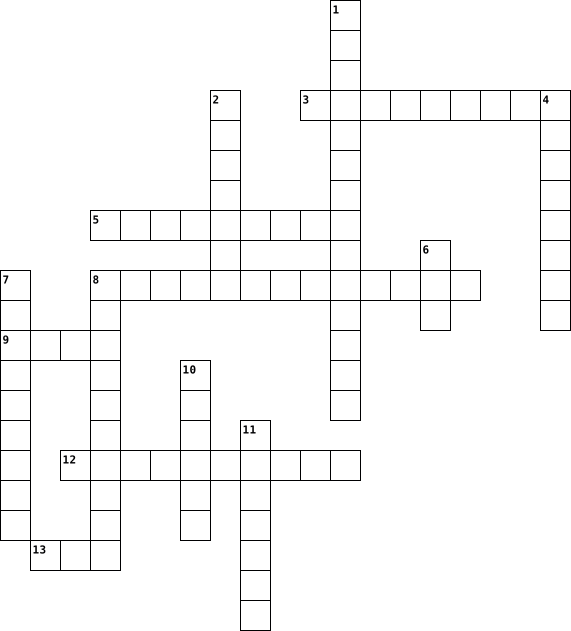
Energy Glossary Cross Word 2012-06-04

Across
- this is done whenever an object is moved or is forced to change shape
- energy stored energy possessed by an object, such as elastic potential energy of a squashed spring
- energy energy that travels as vibrating waves and can be heard by our ears as sound
- potential energy: stored energy of an object that is held above the Earth's surface
- energy energy stored inside an atom
- energy a measure of the total kinetic energy possessed by particles in a substance
- energy energy that causes charged particles to move
- the ability to make a change happen; different forms include heat energy, light energy and sound energy
Down
- energy form of energy that is visible, such as that produced by the Sun
- (J): unit of measurement for energy
- energy energy possessed by a moving object
- process in which green plants convert light energy into chemical energy
- transformation: the conversion of one type of energy into another type of energy; for example, the conversion of electrical energy used in an MP3 player into sound, light and heat energy
- energy energy stored within a substance such as fuel or food that may be released when the substance is burnt or digested
- potential energy: energy stored within a stretched or compressed object, like a spring or elastic material
15 Clues: (J): unit of measurement for energy • energy energy stored inside an atom • energy energy possessed by a moving object • energy energy that causes charged particles to move • this is done whenever an object is moved or is forced to change shape • energy form of energy that is visible, such as that produced by the Sun • ...
Unit C Section 3.0 & 4.0 2024-02-14

Across
- energy that is generated from moving water
- heating that relies mostly on insulation
- energy that comes from the sun
- production of two or more forms of energy from a single energy generation
- acts as a switch in thermostats
- heating system that is used for entire buildings
- heat energy that comes from the center of the earth
- heating that requires external mechanical system
- heat distribution that uses ducts, furnaces & vents
Down
- energy from moving air
- device that can be use to control heating systems
- heating system that is used for one room
- ability of a material to transfer heat by conduction
- a number that shows the ability of a material to act as an insulator
- non-renewable resource of coil, oil, and gas
- low freezing point gas used in refrigeration
- heat distribution that uses pipes, pumps, and radiators
17 Clues: energy from moving air • energy that comes from the sun • acts as a switch in thermostats • heating system that is used for one room • heating that relies mostly on insulation • energy that is generated from moving water • non-renewable resource of coil, oil, and gas • low freezing point gas used in refrigeration • heating system that is used for entire buildings • ...
Ecology & the Environment 2018-03-22

Across
- ____________ plowing creates ridges of soil across slopes
- the energy produced by heat from Earth’s interior
- organic matter from plants and from animal waste that contains chemical energy
- this means protecting land from being damaged or changes
- the removal of trees and other vegetation from an area
- main component of natural gas
- any natural material that is used by humans
- water _________ is the availability of water
- during ____________, the nuclei of radioactive atoms are split into two or more fragments
- a fan moves by converting electrical energy to ____________ energy
- electrical energy produced by moving water is called _____________ energy
- crop __________ is when crops with different needs are planted in alternating seasons
- a tiny particle of solid that is suspended in air or water
- a natural resource that can be replaced at the same rate at which it is consumed
Down
- the process by which a damaged land area is returned to nearly the condition it was in before people used it
- the protection and wise use of natural resources
- natural resources used to generate energy
- a natural resource that forms much more slowly than it is consumed
- the most common nuclear fuel is _________________
- natural resources that are used to make objects, food, or drink
- energy released when the nuclei of atoms are split or combined
- pollution that comes from one specific site
- the process of planting trees to reestablish forestland
- the careful and responsible management of resources
- an increase in the amount of nutrients in water
- when urbanization occurs at the edge of a city or town
- the process by which land becomes more desertlike and unable to support life
- this forms when ground-level ozone and vehicle exhaust react in the presence of sunlight
- water _________ is a measure of how clean or polluted water is
- land ________ is the process by which human activity and natural resources damage land to the point that it can no longer support the local ecosystem
- the fossil fuel most widely used for generating electrical power
31 Clues: main component of natural gas • natural resources used to generate energy • pollution that comes from one specific site • any natural material that is used by humans • water _________ is the availability of water • an increase in the amount of nutrients in water • the protection and wise use of natural resources • the energy produced by heat from Earth’s interior • ...
Chemistry Bonus Activity 2023-04-25

Across
- Where are nonmetals located on the periodic table?
- The total amount of energy.
- Atomic mass of 35.45.
- Atomic symbol for Aluminum.
- The study of how heat is converted to other forms of energy.
- Matter is composed of?
- Device used to measure the energy absorbed or released in a chemical reaction.
- Heat is measured as.
- Who discovered the neutron?
- Define octet.
- Solution that contains the maximum amount of solute.
Down
- mass The mass of an atom in amu.
- Shiny means?
- Electrons have a.
- H,N,O,F,Cl,Br,and I are what?
- C2H6 is what compound?
- Einstein proposed that light is made up of small particles called.
- transition of a substance directly from solid to gas.
- Standard unit.
- Elements 93-118 are.
20 Clues: Shiny means? • Define octet. • Standard unit. • Electrons have a. • Heat is measured as. • Elements 93-118 are. • Atomic mass of 35.45. • C2H6 is what compound? • Matter is composed of? • The total amount of energy. • Atomic symbol for Aluminum. • Who discovered the neutron? • H,N,O,F,Cl,Br,and I are what? • mass The mass of an atom in amu. • ...
Chapter 13 Vocabulary Sections 5 and 6 2021-03-05

Across
- Levels of nourishment in a food chain
- Circular pathway of oxygen through nature
- Sequence that links species by their feeding relationships
- Measure of total dry mass of organisms in an area
Down
- Circular pathway of water on earth from the atmosphere, to the surface, below ground, and back
- Circulation of phosphorous in different forms through nature
- Circulation of nitrogen in different forms through nature
- Compares biomass of different trophic levels within an ecosystem
- Model that shows the complex network of feeding relationships and the flow of energy within an ecosystem
- Diagram that compares energy used by producers, primary consumers, and other trophic levels
- Movement of a particular chemical through the biological and geological, or living and nonliving, parts of an ecosystem
- Circular pathway of carbon through nature in several forms
12 Clues: Levels of nourishment in a food chain • Circular pathway of oxygen through nature • Measure of total dry mass of organisms in an area • Circulation of nitrogen in different forms through nature • Circular pathway of carbon through nature in several forms • Sequence that links species by their feeding relationships • ...
crossword 2025-12-14

Across
- System Group of organs that work together to perform a function
- Protein that speeds up chemical reactions
- Macromolecule made of amino acids
- Movement of particles from high to low concentration
- Organelle where photosynthesis occurs
- Organelle that makes proteins
- Organelle that controls cell activities
- Process by which plants make food using sunlight
- Organelle that produces energy for the cell
Down
- Segment of DNA that determines a trait
- Movement of water across a semi-permeable membrane
- Organic compound that provides energy
- Structure that carries genetic material
- Process by which cells release energy from glucose
- Organic compound that stores energy and forms cell membranes
- The basic structural and functional unit of life
- Molecule that carries genetic information
17 Clues: Organelle that makes proteins • Macromolecule made of amino acids • Organic compound that provides energy • Organelle where photosynthesis occurs • Segment of DNA that determines a trait • Structure that carries genetic material • Organelle that controls cell activities • Protein that speeds up chemical reactions • Molecule that carries genetic information • ...
Unit 2 vocab 2022-09-26

Across
- second step of anaerobic respiration ( alcohol, lactic acid)
- describes a situation where oxygen isn't present.
- nutrient forms the back bone or all macromolecules
- second step of aerobic respiration
- Substance created during a chemical reaction
- type of organism that breaks down biotic compounds into Abiotic
- organelle - site of steps 2 and 3 of aerobic cellular respiration
- sphere of earth, Gasses
- type of organism that is able to make its own food
- First step of aerobic respiration, breaks down glucose
Down
- process of using light energy to make glucose
- third step of aerobic resperation
- second step of photosynthesis uses energy and ATP to make NADPH and glucose
- sphere of earth - all living things
- Nutrient used in proteins and nucleic acids
- type of organism that must eat other organisms to obtain energy
- organelle - site of photosynthesis
- anything that has mass an takes up space
- energy
19 Clues: energy • sphere of earth, Gasses • third step of aerobic resperation • second step of aerobic respiration • organelle - site of photosynthesis • sphere of earth - all living things • anything that has mass an takes up space • Nutrient used in proteins and nucleic acids • Substance created during a chemical reaction • process of using light energy to make glucose • ...
Heat and Energy Unit 1 Vocabulary Review 2023-09-20

Across
- breaking apart of a nucleus into smaller nuclei
- very high-speed electron
- mass and energy cannot be created or destroyed; they can only change forms
- very energetic electromagnetic radiation
- process whereby a nucleus releases radioactive particles and energy
- weapon powered by fission
- reaction inside plants that combines water, carbon dioxide, and sunlight to produce sugar and oxygen
- weapon powered by fusion
- combining of nuclear particles to form a larger nucleus
- energy that travels in waves through matter such as air, water, or wood and can be detected by the human ear
- electromagnetic waves that can be detected by the eye
- energy that is in motion
- flow of electrons
- energy of movement
- energy that is stored
- releasing of energy through burning
- energy stored in the nucleus of an atom
Down
- another name for digestion
- energy that comes from plant and animal matter
- process that breaks down sugar molecules to release the stored energy
- another name for a thermonuclear bomb
- material with unstable nucleus
- attractive and repelling forces contained in magnetic materials
- measuring the amount of radioactive elements in a substance to determine its age
- two protons and two neutrons with no electrons
- petroleum products formed from the remains of plants and animals that were buried in the past and placed under pressure
- total kinetic energy that an object's molecules possess
- ability to perform work
- energy stored in chemical bonds
29 Clues: flow of electrons • energy of movement • energy that is stored • ability to perform work • very high-speed electron • weapon powered by fusion • energy that is in motion • weapon powered by fission • another name for digestion • material with unstable nucleus • energy stored in chemical bonds • releasing of energy through burning • another name for a thermonuclear bomb • ...
Integrated: Chapter 6 Review 2024-12-13

Across
- Rate at which work is done
- Plant material, manure, organic matter that can be burned for energy
- The sum of the kinetic and potential energy acting on a system
- Mining that takes place underground
- How many types of simple machines are there
- Unit for work and energy
- Energy that comes from heat in the Earth's interior
- Three main nonrenewable resources; include coal, petroleum, and natural gas
- Simple machine that includes an inclined plane wrapped around a cylinder
- A resource that forms at a rate that is much slower than the rate at which it is consumed
- Energy of a moving object due to its motion
Down
- ___ potential energy depends on the mass and the height
- The ability to do work
- Help do work by redistributing the work we put into them
- Type of nonrenewable energy that involves splitting a nucleus to harness energy released
- Ratio between output force and input force
- Element from periodic table that is used in nuclear energy
- A ramp is an example of which type of simple machine
- Unit for power
- Mineral deposits from which metals and nonmetals can be removed profitably
- All levers have an arm and a ___
- Energy from the sun
- A quantity that measures the effects of a force acting over a distance. Calculated by force x distance
- The most abundant fossil fuel
24 Clues: Unit for power • Energy from the sun • The ability to do work • Unit for work and energy • Rate at which work is done • The most abundant fossil fuel • All levers have an arm and a ___ • Mining that takes place underground • Ratio between output force and input force • How many types of simple machines are there • Energy of a moving object due to its motion • ...
Cells and Respiration Crossword 2021-08-06

Across
- A small platform on a microscope
- Often present in plant cells allows them to grow big.
- It exists as a gas in the atmosphere.
- H2O
- Air is inhaled and exhaled.
- All living things are made up of the smallest structural components
- It is made up of genetic material, such as DNA.
- The process of converting solar energy into chemical energy.
- Every live cell in our bodies is filled with this.
- Carbohydrate molecules store this chemical energy.
- Animals and plants need them in their respiration.
Down
- The bloodstream transports the nutrients to this cell.
- They function similarly to the digestive system.
- A type of lens.
- Contains the majority of an atom's mass.
- It can be found in a variety of places and in various forms.
- A layer found in plants, fungi, and bacteria
- It permits good things to pass through while preventing bad things.
- It generates light and heat, as well as solar energy.
- Magnifying equipment is used in laboratories to magnify small objects.
20 Clues: H2O • A type of lens. • Air is inhaled and exhaled. • A small platform on a microscope • It exists as a gas in the atmosphere. • Contains the majority of an atom's mass. • A layer found in plants, fungi, and bacteria • It is made up of genetic material, such as DNA. • They function similarly to the digestive system. • Every live cell in our bodies is filled with this. • ...
Chemistry 2024-04-22

Across
- the movement of gas molecules from an area of higher concentration to lower concentration
- larger gases move_____
- _____ can never change at the same time as pressure
- smaller gases move_______
- Donates one proton per molecule
- Citrus juice is a_______
- breaking bonds requires______
- a substance that speeds up chemical reactions without undergoing any chemical changes
- A device used to measure the energy absorbed or released as heat in a chemical reaction
Down
- transition directly from a solid to a gas
- Donates more than one proton per molecule
- if a reaction absorbs energy it is_________
- Biological catalysts that speed up the rate of reactions in the body
- transition directly from a gas to a solid
- Bleach is a_______
- the total amount of energy
- the change in heat of the products from the reactants
- if a reaction releases energy it is__________
- the temperature and pressure at which the solid, liquid, and gas forms of a substance coexist
- diffusion through a tiny opening
20 Clues: Bleach is a_______ • larger gases move_____ • Citrus juice is a_______ • smaller gases move_______ • the total amount of energy • breaking bonds requires______ • Donates one proton per molecule • diffusion through a tiny opening • transition directly from a solid to a gas • Donates more than one proton per molecule • transition directly from a gas to a solid • ...
Yr 9 Science 2020-06-16

Across
- used to measure temperature
- type of microscope with two eyepieces
- type of radiation that can be utilised a number of ways, including communication and medicine
- all forms of EMR travel at the same ....
- a type of radiation on the electromagnetic spectrum that has a very high frequency
- transferred by all forms of waves
- this occurs when a wave bounces off a surface
- the bending of light as it travels from one medium to another
- type of radiation that can cause sunburn and skin cancer
- height of a wave
Down
- a form of natural phenomena that occur at plate boundaries
- type of energy that is transferred via longitudinal waves
- large flightless bird native to Australia
- the number of colours that make up the visible light spectrum
- one of the colours on the visible light frequencey
- the season in the southern hemisphere made up of June, July and August
- marsupial native to Australia
- one of only two monotremes alive today
- organ responsible for pumping blood
- a factor of waves measured in Hertz
- piece of science equipment used for heating
21 Clues: height of a wave • used to measure temperature • marsupial native to Australia • transferred by all forms of waves • organ responsible for pumping blood • a factor of waves measured in Hertz • type of microscope with two eyepieces • one of only two monotremes alive today • all forms of EMR travel at the same .... • large flightless bird native to Australia • ...
Biology Final- Crossword 2022-12-12

Across
- reactions in the stroma that don't require light for energy
- This synthesizes ATP and is the powerhouse of the plant cell
- this process breaks down glucose into ATP
- this is a chain of reactions occurring in the mitochondria which produce energy for all of the cell
- the process that plants use to make food from carbon dioxide and sunlight
- This gets captured by chlorophyll and converted into energy
- This is the fluid filling the inner space of the chloroplasts
- an organelle that converts light energy into chemical energy during photosynthesis
Down
- This is used for plant growth, and also used in respiration, where it makes sugar into energy
- an example of this is when sunlight is converted into energy
- electrons are passed from one molecule to another in this process
- This refracts light, and also helps capture sunlight energy
- This is used by plants to make energy and to make starch and cellulose
- This helps the cell's structural support, and also this keeps the plants from dying
- autotrophs are organisms that can make their own food using raw materials and energy
- This soaks up energy from sunlight and is also the reason plants are green
- essential for the process of respiration in plants
- the process in which glucose is broken down to produce energy
- This traps light energy and turns it into different chemical energy forms
19 Clues: this process breaks down glucose into ATP • essential for the process of respiration in plants • reactions in the stroma that don't require light for energy • This refracts light, and also helps capture sunlight energy • This gets captured by chlorophyll and converted into energy • an example of this is when sunlight is converted into energy • ...
Crossword Reaction - 2 2025-09-08

Across
- Energy on gaining electron
- Lattice with delocalized electrons
- Unequal charge distribution
- Has acidic and basic properties
- Mixing of orbitals
- Atom’s pull on electrons
- Loss of electrons
- Tendency to lose electrons
Down
- Same element, different forms
- Repeating 3D structure
- Unpaired electrons present
- Energy to remove electron
- Partial charge separation
- Stable 8-electron configuration
14 Clues: Loss of electrons • Mixing of orbitals • Repeating 3D structure • Atom’s pull on electrons • Energy to remove electron • Partial charge separation • Energy on gaining electron • Unpaired electrons present • Tendency to lose electrons • Unequal charge distribution • Same element, different forms • Has acidic and basic properties • Stable 8-electron configuration • ...
Cells 2022-10-26

Across
- A part of the cell when a lipid forms
- Cell overflows from too much water
- Cell shrinks when not enough water
- molecules pass through the cell
- Energy used in cells
- Protein that is a passage way
- H2O goes through the cell
- energy/ATP needed
Down
- The flow of molecules in and out of the cell
- Cell is balanced
- Molecules through a protein
- New contents of a cell enter the membrane
- Protein that pumps out danerous molecules
- Contents of the cell leave the membrane
- Transportation of cells
- No energy needed
16 Clues: Cell is balanced • No energy needed • energy/ATP needed • Energy used in cells • Transportation of cells • H2O goes through the cell • Molecules through a protein • Protein that is a passage way • molecules pass through the cell • Cell overflows from too much water • Cell shrinks when not enough water • A part of the cell when a lipid forms • Contents of the cell leave the membrane • ...
Energy Resources 6.7A 2022-10-06

Across
- A source or supply of energy that can be used to generate electrical power to meet people's needs.
- Energy from the sun; renewable energy source
- Unlimited; unable to be used up or tired out
- Fuels, such as ethanol or methanol, that are created from the fermentation of plants or plant products.
- Protecting and preserving natural resources and the environment
- Renewable energy source generated by turbines and the movement of air
Down
- A fossil fuel found beneath earth’s surface; non-renewable energy source
- Derived from the heat in the interior of the earth; renewable energy source
- not easily replaced in a useful time frame.
- Relating to the sun
- organic matter that can be used as renewable energy
- Electricity generated from the energy of moving water; renewable energy source
- A fossil fuel that forms underground from partially decomposed plant material; non-renewable energy source
- Can be replaced within reasonable time frame
- A viscous liquid derived from petroleum, especially for use as a fuel or lubricant; non-renewable energy source
- Energy from splitting atoms; non-renewable energy source
16 Clues: Relating to the sun • not easily replaced in a useful time frame. • Energy from the sun; renewable energy source • Unlimited; unable to be used up or tired out • Can be replaced within reasonable time frame • organic matter that can be used as renewable energy • Energy from splitting atoms; non-renewable energy source • ...
Unit 1 Energy Resources 6.8A*6.9C* 2022-10-06

Across
- A source or supply of energy that can be used to generate electrical power to meet people's needs.
- Energy from the sun; renewable energy source
- Unlimited; unable to be used up or tired out
- Fuels, such as ethanol or methanol, that are created from the fermentation of plants or plant products.
- Protecting and preserving natural resources and the environment
- Renewable energy source generated by turbines and the movement of air
Down
- A fossil fuel found beneath earth’s surface; non- renewable energy source
- Derived from the heat in the interior of the earth; renewable energy source
- not easily replaced in a useful time frame.
- Relating to the sun
- organic matter that can be used as renewable energy
- Electricity generated from the energy of moving water; renewable energy source
- A fossil fuel that forms underground from partially decomposed plant material; non-renewable energy source
- Can be replaced within reasonable time frame
- A viscous liquid derived from petroleum, especially for use as a fuel or lubricant; non-renewable energy source
- Energy from splitting atoms; non-renewable energy source
16 Clues: Relating to the sun • not easily replaced in a useful time frame. • Energy from the sun; renewable energy source • Unlimited; unable to be used up or tired out • Can be replaced within reasonable time frame • organic matter that can be used as renewable energy • Energy from splitting atoms; non-renewable energy source • ...
PHY115: Chapter 7 Crossword Name: _______________ 2017-02-10

Across
- Bubble-like structure that forms by interaction of a magnetic field with the solar wind
- Rapidly moving charged particles streaming out of the Sun (2 words)
- Spontaneous relaxation in the nucleus; releases energy that heats up planetary interiors (2 words)
- The potential energy inside every mass (2 words)
- Rising of hot, low density fluid and sinking of cold, high density fluid
- ________ rocks form by cooling of molten material
Down
- Rugged, light color regions of the Moon
- Forms around all moving charged particles (2 words)
- Components of the atmosphere which absorb infrared but transmit visible light (2 words)
- Relatively smooth, flat, dark surfaces of the moon
- Magnetic _______: constant motion of an electrically conductive fluid forms a global magnetic field
- Deformation (e.g., folds and faults) of surface of objects due to internal processes
12 Clues: Rugged, light color regions of the Moon • The potential energy inside every mass (2 words) • ________ rocks form by cooling of molten material • Relatively smooth, flat, dark surfaces of the moon • Forms around all moving charged particles (2 words) • Rapidly moving charged particles streaming out of the Sun (2 words) • ...
Thermochemistry Courtney Sheffield 2015-04-14

Across
- capacity to do work or produce heat
- potential to be changed into other forms of energy
- absorbs energy
- the rest of the universe eg rainforrest
Down
- energy of motion
- delta H
- chemistry involving heat evolved or absorbed
- releases heat
- form of energy, hot or warm
- multiple stages or steps of a reaction
10 Clues: delta H • releases heat • absorbs energy • energy of motion • form of energy, hot or warm • capacity to do work or produce heat • multiple stages or steps of a reaction • the rest of the universe eg rainforrest • chemistry involving heat evolved or absorbed • potential to be changed into other forms of energy
Heat 2014-04-30

Across
- energy transferred between objects that are at different temperatures
- measure of the average kinetic energy of particles in an object
- lowest temperature on Kelvin scale
- the transfer of thermal energy by the movement of a liquid or a gas
- transfer of thermal energy from one substance to another through direct contact
- substance that don't not conduct thermal energy very well
- physical forms in which a substance can exist
- machine that transforms heat into mechanical energy, or work
Down
- increase of volume of a substance because of an increase of volume
- change of a substance from one state of matter to another
- substances that conduct thermal energy very well
- total kinetic energy of the particles that make up a substance
- made of 2 different metals stacked in a thin strip
- material that reduces the transfer of thermal energy
14 Clues: lowest temperature on Kelvin scale • physical forms in which a substance can exist • substances that conduct thermal energy very well • made of 2 different metals stacked in a thin strip • material that reduces the transfer of thermal energy • change of a substance from one state of matter to another • substance that don't not conduct thermal energy very well • ...
Earth Resources 2017-03-08

Across
- Rock that forms from heat and pressure
- When burned, these give off energy and they come from the remains of living things
- Igneous rock that forms from under Earth's surface
- Minerals that contain useful metals or nonmetals
- A resource that is naturally replaced quickly
- The process of breaking down rock
- A series of processes that changes rock slowly everyday
- Molten material that create intrusive rocks beneath Earth's surface
Down
- The ____________ properties are derived from observations and measurements
- A resource that takes millions of years to replace itself naturally
- The process in which sediment is placed in a new area
- Rock that forms from sediment cementing and compacting together
- Igneous rock that forms on top of Earth's surface
- A physical property that describes how an object reflects light
- The movement of sediment from one place to another
- The _____________ properties describe an objects ability to burn.
16 Clues: The process of breaking down rock • Rock that forms from heat and pressure • A resource that is naturally replaced quickly • Minerals that contain useful metals or nonmetals • Igneous rock that forms on top of Earth's surface • Igneous rock that forms from under Earth's surface • The movement of sediment from one place to another • ...
Unit 5 Forms of Energy 2023-02-13

Across
- The ability to do work or cause change
- Electromagnetic energy that can be sensed by the eye
- to push away
- mechanical energy that travels as waves through the air or water and vibrates the ear drum upon contact
- energy produced by a machine or moving part
Down
- energy stored due to an object's position or arrangement
- to pull toward
- energy of motion
- Energy that causes a change in temperature of materials
- a force that causes something to move away
10 Clues: to push away • to pull toward • energy of motion • The ability to do work or cause change • a force that causes something to move away • energy produced by a machine or moving part • Electromagnetic energy that can be sensed by the eye • Energy that causes a change in temperature of materials • energy stored due to an object's position or arrangement • ...
Yr 9 Science 2020-06-16

Across
- used to measure temperature
- type of microscope with two eyepieces
- type of radiation that can be utilised a number of ways, including communication and medicine
- all forms of EMR travel at the same ....
- a type of radiation on the electromagnetic spectrum that has a very high frequency
- transferred by all forms of waves
- this occurs when a wave bounces off a surface
- the bending of light as it travels from one medium to another
- type of radiation that can cause sunburn and skin cancer
- height of a wave
Down
- a form of natural phenomena that occur at plate boundaries
- type of energy that is transferred via longitudinal waves
- large flightless bird native to Australia
- the number of colours that make up the visible light spectrum
- one of the colours on the visible light frequencey
- the season in the southern hemisphere made up of June, July and August
- marsupial native to Australia
- one of only two monotremes alive today
- organ responsible for pumping blood
- a factor of waves measured in Hertz
- piece of science equipment used for heating
21 Clues: height of a wave • used to measure temperature • marsupial native to Australia • transferred by all forms of waves • organ responsible for pumping blood • a factor of waves measured in Hertz • type of microscope with two eyepieces • one of only two monotremes alive today • all forms of EMR travel at the same .... • large flightless bird native to Australia • ...
Flow of Electricity and Forms of Energy 2024-10-23

Across
- One complete electrical path
- Complete electrical path with 2 or more paths
- The path through wich an electric current moves
- The ability to do work
- Energy of motion
Down
- An electrical path with no breaks or gaps
- Heat energy
- The place where energy comes from
- The movement or flow of electricity in a certain path
- A broken or incomplete electrical path
- Energy mode by elecric charges
- Energy that travels in waves and moves through empty space
- Energy from the sun
13 Clues: Heat energy • Energy of motion • Energy from the sun • The ability to do work • One complete electrical path • Energy mode by elecric charges • The place where energy comes from • A broken or incomplete electrical path • An electrical path with no breaks or gaps • Complete electrical path with 2 or more paths • The path through wich an electric current moves • ...
Energy Resources 6.7A 2022-10-06

Across
- A source or supply of energy that can be used to generate electrical power to meet people's needs.
- Energy from the sun; renewable energy source
- Unlimited; unable to be used up or tired out
- Fuels, such as ethanol or methanol, that are created from the fermentation of plants or plant products.
- Protecting and preserving natural resources and the environment
- Renewable energy source generated by turbines and the movement of air
Down
- A fossil fuel found beneath earth’s surface; non- renewable energy source
- Derived from the heat in the interior of the earth; renewable energy source
- not easily replaced in a useful time frame.
- Relating to the sun
- organic matter that can be used as renewable energy
- Electricity generated from the energy of moving water; renewable energy source
- A fossil fuel that forms underground from partially decomposed plant material; non-renewable energy source
- Can be replaced within reasonable time frame
- A viscous liquid derived from petroleum, especially for use as a fuel or lubricant; non-renewable energy source
- Energy from splitting atoms; non-renewable energy source
16 Clues: Relating to the sun • not easily replaced in a useful time frame. • Energy from the sun; renewable energy source • Unlimited; unable to be used up or tired out • Can be replaced within reasonable time frame • organic matter that can be used as renewable energy • Energy from splitting atoms; non-renewable energy source • ...
Chemical Reactions 2022-05-01

Across
- What is the common name of the brown oxide that forms on iron?
- Energy released into the atmosphere. _______ reaction.
- Atomic elements are placed in order of atomic N____.
- What gas is required for combustion?
- Which releases more energy, complete or incomplete combustion?
- Energy absorbed from the atmosphere. ________ reaction.
- Can atoms be made or destroyed in a chemical reaction?
- Subatomic particle with a neutral charge
- What black solid is a product of incomplete combustion?
Down
- Heat energy out. Bonds F______.
- What do we produce when we burn hydrogen?
- A biological catalyst.
- Subatomic particle with a negative charge
- The force that joins oppositely charged ions.
- Subatomic particle with a positive charge
- Heat energy in. Bonds B______.
- Speeds up the rate of a reaction.
17 Clues: A biological catalyst. • Heat energy in. Bonds B______. • Heat energy out. Bonds F______. • Speeds up the rate of a reaction. • What gas is required for combustion? • Subatomic particle with a neutral charge • What do we produce when we burn hydrogen? • Subatomic particle with a negative charge • Subatomic particle with a positive charge • ...
Physics Intro Vocab Crossword 2026-04-16

Across
- The downwards force which pulls all objects towards a planet's surface.
- The rate wat which an object changes its position.
- A boulder sitting on the edge of a cliff has a high gravitational ______ energy.
- Which variable is present in both the formulas for Potential and Kinetic energy?
- The International System of Units can be shortened to this phrase: ______.
- We measure all forms of energy in ______.
- The gravitational constant of _____ is 9.8 m/s2
Down
- ______ is a variable only present in the equation for Potential Energy.
- A stretched Rubberband has _____ potential energy.
- energy ______ is the total amount of energy in a system
- Does the height of an object directly affect it's kinetic energy?
- The majority of the world (outside the US) uses the _______ to measure things.
- A ______ system means that there is no energy loss experienced.
- The food we consume contains ______ potential energy.
- The energy possessed by a moving object is called _____ energy.
15 Clues: We measure all forms of energy in ______. • The gravitational constant of _____ is 9.8 m/s2 • A stretched Rubberband has _____ potential energy. • The rate wat which an object changes its position. • The food we consume contains ______ potential energy. • energy ______ is the total amount of energy in a system • ...
Chapter 10 Vocabulary 2016-03-14

Across
- a machine that uses heat to do work
- a measure of the average kinetic energy of the particles of an object.
- the conversion of a substance from one physical form to the next.
- the excessive heating of a body of water
- the transfer of thermal energy by the movement of liquid or gas.
- the transfer of thermal energy through matter or space as electromagnetic waves, such as visible light or infrared waves
- a substance that conducts thermal energy really well.
Down
- a substance that reduces the transfer of thermal energy
- the total energy of particles that make up an object
- the amount of energy needed to change the temperature of 1kg of a substance 1C
- the transfer of energy between objects at different temperatures.
- the transfer of thermal energy from one substance to another through direct contact.
- the lowest possible temperature 0K, -273C
- the increase in volume of a substance due to an increase in temperature.
- the physical forms in which a substance can exist
- a substance that does not conduct thermal energy very well.
16 Clues: a machine that uses heat to do work • the excessive heating of a body of water • the lowest possible temperature 0K, -273C • the physical forms in which a substance can exist • the total energy of particles that make up an object • a substance that conducts thermal energy really well. • a substance that reduces the transfer of thermal energy • ...
Chapter 10 Vocabulary 2016-03-14

Across
- the physical forms in which a substance can exist
- a substance that does not conduct thermal energy very well.
- the transfer of energy between objects at different temperatures.
- the excessive heating of a body of water
- the increase in volume of a substance due to an increase in temperature.
- a substance that conducts thermal energy really well.
- a machine that uses heat to do work
- the transfer of thermal energy through matter or space as electromagnetic waves, such as visible light or infrared waves
Down
- the lowest possible temperature 0K, -273C
- the conversion of a substance from one physical form to the next.
- the amount of energy needed to change the temperature of 1kg of a substance 1C
- a substance that reduces the transfer of thermal energy
- a measure of the average kinetic energy of the particles of an object.
- the total energy of particles that make up an object
- the transfer of thermal energy from one substance to another through direct contact.
- the transfer of thermal energy by the movement of liquid or gas.
16 Clues: a machine that uses heat to do work • the excessive heating of a body of water • the lowest possible temperature 0K, -273C • the physical forms in which a substance can exist • the total energy of particles that make up an object • a substance that conducts thermal energy really well. • a substance that reduces the transfer of thermal energy • ...
Conservation of Energy Crossword Puzzle 2025-12-09

Across
- ___ energy is energy in motion.
- Due to the ___, the potential energy will make.
- In the space, things get pulled to each other because of its ___.
- Due to ___, a ball can never countinousely moving forever if there is no extra force applying on it.
- In scientific vocabulary, total energy is also can be called ___ energy.
Down
- ___ energy is the sum of potential energy and kinetic energy.
- The ___ place you stand, the less potential energy will be.
- The ___ place you stand, the more potential energy will be.
- ___ energy is stored energy.
- If a ball drop and bounce back to its original height, it will violates the law of ___.
- Energy never cancel, it only ___ to a different forms.
- The ball is moving because it has ___.
- In real life, energy often transferred to sound energy and ___ energy.
- Potential energy is find by using ___ x gravity x height.
14 Clues: ___ energy is stored energy. • ___ energy is energy in motion. • The ball is moving because it has ___. • Due to the ___, the potential energy will make. • Energy never cancel, it only ___ to a different forms. • Potential energy is find by using ___ x gravity x height. • The ___ place you stand, the less potential energy will be. • ...
Unit 2 Chemistry Study Guide Crossword 2024-10-09

Across
- Letters of DNA
- Stores energy in plants
- Makes proteins according to the blueprints
- Speeds up chemical reactions while minimizing the use of energy
- Blueprint for proteins
- What times of bonds do amino acid have
- Polymer of proteins
- Double bonds cause ___ in the structure
Down
- Double bonds and from plants
- Stores energy in animals
- Single bonds only and from animals
- Letters of RNA
- Chemical structure of a carbohydrate? (in word form)
- Forms the cell wall structure
14 Clues: Letters of DNA • Letters of RNA • Polymer of proteins • Blueprint for proteins • Stores energy in plants • Stores energy in animals • Double bonds and from plants • Forms the cell wall structure • Single bonds only and from animals • What times of bonds do amino acid have • Double bonds cause ___ in the structure • Makes proteins according to the blueprints • ...
Energy, Power, and Mechanics 2018-03-23

Across
- Energy from plants and plant derived materials
- Heat energy made and stored in the earth
- Branch of physics concerned with the mechanical properties of gases
- Energy from the sun
- Transfer of energy that is completed when you transfer energy from one object to another
Down
- Energy created during nuclear fission or fusion
- Electricity produced from hydropower
- Push or pull on an object
- Form of hydropower that converts energy form tides into usable and useful forms of power
- Ratio of the force produced by a machine to the force applied
- Rotating part with teeth that meshes with other teeth to transmit torque
- Energy from the wind
- Simple machine consisting of a bar on a fulcrum
13 Clues: Energy from the sun • Energy from the wind • Push or pull on an object • Electricity produced from hydropower • Heat energy made and stored in the earth • Energy from plants and plant derived materials • Energy created during nuclear fission or fusion • Simple machine consisting of a bar on a fulcrum • Ratio of the force produced by a machine to the force applied • ...
Energy Resources 6.7A 2022-10-06

Across
- A source or supply of energy that can be used to generate electrical power to meet people's needs.
- Energy from the sun; renewable energy source
- Unlimited; unable to be used up or tired out
- Fuels, such as ethanol or methanol, that are created from the fermentation of plants or plant products.
- Protecting and preserving natural resources and the environment
- Renewable energy source generated by turbines and the movement of air
Down
- A fossil fuel found beneath earth’s surface; non- renewable energy source
- Derived from the heat in the interior of the earth; renewable energy source
- not easily replaced in a useful time frame.
- Relating to the sun
- organic matter that can be used as renewable energy
- Electricity generated from the energy of moving water; renewable energy source
- A fossil fuel that forms underground from partially decomposed plant material; non-renewable energy source
- Can be replaced within reasonable time frame
- A viscous liquid derived from petroleum, especially for use as a fuel or lubricant; non-renewable energy source
- Energy from splitting atoms; non-renewable energy source
16 Clues: Relating to the sun • not easily replaced in a useful time frame. • Energy from the sun; renewable energy source • Unlimited; unable to be used up or tired out • Can be replaced within reasonable time frame • organic matter that can be used as renewable energy • Energy from splitting atoms; non-renewable energy source • ...
Section II: Circuits 2025-12-09

Across
- Measured in coulombs
- The energy something has when moving
- I=VR
- Any 2 conductors separated by some distance
- Equal to 1 joule per second
- A closed loop that allows electricity to continually flow
- Type of circuit where current is reduced with each resistor it passes through
- Rate of energy change over time
- All forms of energy are measured in:
- The 2 main types of current
Down
- Measured in ohms
- Material put between 2 conductors, can increase amount of charge a capacitor can store
- Equal to coulombs per second
- Also known as "joules per coulomb"
- Type of circuit that lowers resistance when another resistor is added
- First referred to as "piles"
- The energy an object has a rest
17 Clues: I=VR • Measured in ohms • Measured in coulombs • Equal to 1 joule per second • The 2 main types of current • Equal to coulombs per second • First referred to as "piles" • The energy an object has a rest • Rate of energy change over time • Also known as "joules per coulomb" • The energy something has when moving • All forms of energy are measured in: • ...
Electrical Energy 2023-11-12
Across
- A material that slows or stops the flow of energy.
- A material that allows energy to flow easily.
- What is an electric circuit that produces a magnetic field called?
- A lamp changes electrical energy to light and thermal energy.
- What are common electrical devices that have resistors which we use everyday?
- During an energy transfer, _____ of the energy is transferred in different amounts to different forms.
Down
- When one form of energy turns into another form of energy. This is called energy ____________.
- A path through which electric currents can flow.
- A material that resists the flow of electricity and transforms that energy into light, sound, heat, or motion.
- Are magnetism and electricity related?
- Chemical energy can be turned into electrical energy through _______.
- This energy is reliant on charged particles.
- A device that can open or close the path in a circuit.
- The flow of electricity through a conductor called an electrical __________.
14 Clues: Are magnetism and electricity related? • This energy is reliant on charged particles. • A material that allows energy to flow easily. • A path through which electric currents can flow. • A material that slows or stops the flow of energy. • A device that can open or close the path in a circuit. • A lamp changes electrical energy to light and thermal energy. • ...
Biology Semester Exam Review 2024-12-15

Across
- marks the end of succession
- prokaryotes do not have this
- part of the atom that forms bonds
- cells need this kind of surface area to volume ratio
- both organisms are negatively affected
- process that stores energy
- growth represented by the human population
- energy in motion
- transport against the concentration gradient
- group of cells working together
- the plasma membrane is made of a phospholipid ____
Down
- lighting a match
- all the ducks living in a pond
- characteristic of life associated with energy
- limiting the size of families to protect the earth
- has frequent droughts and fires
- food source for lipids
- form of nitrogen that plants can use
- contributed to cell theory
- group that is not exposed to the independent variable
20 Clues: lighting a match • energy in motion • food source for lipids • process that stores energy • contributed to cell theory • marks the end of succession • prokaryotes do not have this • all the ducks living in a pond • has frequent droughts and fires • group of cells working together • part of the atom that forms bonds • form of nitrogen that plants can use • ...
Electromagnetic Energy The energy of light and other forms of radiation 2023-12-11

Across
- When one type of energy is converted into another; like when dammed water is released and the kinetic energy is converted into electrical energy.
- Energy The energy of light and other forms of radiation
- Energy stored in the chemical bonds of atoms and molecules.
- The unit of measurement used to describe the amount of energy that is in a system or that is being used/released in a system
- A type of mechanical force where a sudden force pushes an object in a specific direction.
- Energy resulting from the movement of charged particles (usually electrons) from one point to another.
- Energy The energy of an object has a result of its motion (can be on an atomic level).
- Energy stored from stretching, compressing, or distorting a material that spontaneously returns to its original shape; like springs or rubber bands.
- Energy resulting from the movement of atoms and molecules in a system, causing them to collide with each other. Faster moving particles results in higher temperatures and slower moving particles results in lower temperatures.
- Energy Energy that is stored within an atom’s nucleus. Nuclear reactions including fusion, fission, and radioactive decay are sources of this type of energy.
Down
- Energy stored due to an object’s position above the surface of a planet.
- Energy that is possessed by an object due to its motion and position.
- energy is electromagnetic energy that travels in transverse waves.
- Energy can not be created or destroyed
- The ability to do work or cause a change
- The energy stored in an object because of its height above the Earth or the stretching, compressing, or distorting a material that will spontaneously return to its original shape.chemical bond A measure of energy transfer that occurs when an object is moved over a distance by an external force.
- The push or pull on an object with mass causes it to change its velocity.
- The process by which energy is moved from one area to another.
18 Clues: Energy can not be created or destroyed • The ability to do work or cause a change • Energy The energy of light and other forms of radiation • Energy stored in the chemical bonds of atoms and molecules. • The process by which energy is moved from one area to another. • energy is electromagnetic energy that travels in transverse waves. • ...
Metabolism Crossword 2022-09-27

Across
- Potential energy available for release in a chemical reaction
- Reaction where energy is released from ATP when a terminal phosphate bond is broken
- A reactant that binds with an enzyme's active site
- The initial energy needed to start a chemical reaction; often supplied as heat
- The area on an enzyme where a substrate binds
- Inhibitors that bind to the active site of an enzyme; compete with the substrate
- Inhibitors that bind to other parts of an enzyme (not the active site); causes the enzyme to change shape; makes the active site of the enzyme less effective
- Energy that matter possesses because of its location/structure
- A chemical agent that speeds up a reaction without being consumed by it
Down
- Extracts energy stored in sugars and other fuels
- Organic cofactors
- Capacity to cause change; exists in various forms, some of which can perform work; can be converted from one form to another
- Kinetic energy associated with the random movement of atoms and molecules
- Reactions that absorb free energy from its surroundings and are nonspontaneous
- Energy associated with random movement
- Reactions that proceed with the net release of free energy and are spontanous
- Energy that can do work when temperature and pressure are uniform (like in living cells)
- Totality of an organism's chemical reactions; transforms matter and energy; subject to the laws of thermodynamics
- Nonprotein enzyme helpers; ex ions, metals
19 Clues: Organic cofactors • Energy associated with random movement • Nonprotein enzyme helpers; ex ions, metals • The area on an enzyme where a substrate binds • Extracts energy stored in sugars and other fuels • A reactant that binds with an enzyme's active site • Potential energy available for release in a chemical reaction • ...
Not Physics 2013-06-06

Across
- It holds you down.
- They make up everything.
- A measure of speed.
- It can kill you.
- A type of energy.
- Electcity traveling.
Down
- It made the Hulk.
- A type of science.
- Very dangerous.
- Comes in many diffrent forms.
- Push & Pull.
- A measure of force.
12 Clues: Push & Pull. • Very dangerous. • It can kill you. • It made the Hulk. • A type of energy. • It holds you down. • A type of science. • A measure of speed. • A measure of force. • Electcity traveling. • They make up everything. • Comes in many diffrent forms.
Foodweb/Foodchain crossword puzzle 2024-09-16

Across
- gets benefits from other organisms
- all food chains in a single ecosystem
- can make its own food
- network of links in a food web
- eats secondary consumers
- light energy into chemical energy
- feeds on plants
- how much energy in a ecosystem
- the branch of physical science that deals with the relations between heat and other forms of energy
- both organisms benefit off each other
- fight for their benefit
- living mass or organic matter in ecosystem
- feeds on plants and flesh
- breaks down glucose and makes ATP
- needs food for survival
Down
- released energy
- number of oragnisms
- feeds on other organisms for their benefit
- eats primary consumers
- stored energy
- the trophic level of an organism is the position it occupies in a food web
- feeds on flesh
- organization of environment and system
- only one organism benefits of the other
- one organism benefits while hurting the other
- eats producers
- shows trophic levels
- feeds on dead organic matter
- provides for consumers
29 Clues: stored energy • feeds on flesh • eats producers • released energy • feeds on plants • number of oragnisms • shows trophic levels • can make its own food • eats primary consumers • provides for consumers • fight for their benefit • needs food for survival • eats secondary consumers • feeds on plants and flesh • feeds on dead organic matter • network of links in a food web • ...
ENERGY REVISION 2013-08-25

Across
- Speed = _________ divided by time.
- If the force of gravity on Mars is 2.65 times the gravity on Earth, to calculate g for Mars, you need to ____ 9.8 by 2.65.
- Kinetic energy increases if this increases.
- A stretched object has this type of potential energy.
- The ENERGY IN for a toaster.
- Stored energy is called _____ energy.
- There are 3 types of nutrients in food that give us energy: carbohydrate, protein and ____.
- If the ENERGY IN is the SAME as the ENERGY OUT, this is called an energy _______.
- The value of this for stretchy objects, such as a spring, shows how stiff the spring is (HINT: 2 words).
- This is the most efficient type of power to generate electricity.
- Energy is measured using this unit.
- This type of assessment makes us think about safety in an experiment.
- This is the least efficient type of power to generate electricity.
- The sun gives out this type of energy.
- A radio gives out this type of energy.
- This type of variable is the one we MEASURE in an experiment.
- The K.E. for a roller coaster is greatest when it is at the _____ of a hump.
Down
- The ENERGY OUT for an oven.
- Food has this type of potential energy.
- The energy a moving object has.
- An object lifted above the ground has this type of potential energy.
- If the ENERGY IN is DIFFERENT to the ENERGY OUT, this is called an energy __________.
- When a ball is thrown straight upwards, its G.P.E. is largest at the ___ of its flight.
- G.P.E. increases if this increases.
- This type of variable is the one that goes on the horizontal axis of a graph.
- Energy cannot be created or destroyed only _____ into different forms.
- The energy content of food is usually given in kJ per 100 _____.
- Electricity is generated when a turbine ____ a coil inside a magnet.
28 Clues: The ENERGY OUT for an oven. • The ENERGY IN for a toaster. • The energy a moving object has. • Speed = _________ divided by time. • G.P.E. increases if this increases. • Energy is measured using this unit. • Stored energy is called _____ energy. • The sun gives out this type of energy. • A radio gives out this type of energy. • Food has this type of potential energy. • ...
Forms Of Governement 2020-09-21

Across
- relating to or denoting and confederation
- no religious or spiritual basis
- someone elected by the public to speak on their behalf
- a single or uniform entity
- one person with absolute power
- small group in control
- Extremely high control of public life
Down
- highest legislature
- several states with internal affairs making a unity
- a royal family for ruler
- Elected representatives by public
- list of principals to live by
- Force Rule
- President, elected representatives
- hereditary titles, high class
- priests rule in the name of God
16 Clues: Force Rule • highest legislature • small group in control • a royal family for ruler • a single or uniform entity • list of principals to live by • hereditary titles, high class • one person with absolute power • no religious or spiritual basis • priests rule in the name of God • Elected representatives by public • President, elected representatives • ...
forms of government 2020-09-20

Across
- total control over ppl
- ruled by representatives
- separation
- royal family
- all activities to a state
- relating to government
- elected officials
- power to a central gov
- leader absolute control
Down
- legislation body
- divine guidance
- power by nobility
- independent states
- power by a small group
- principals and laws
- authority is shared
16 Clues: separation • royal family • divine guidance • legislation body • power by nobility • elected officials • independent states • principals and laws • authority is shared • total control over ppl • power by a small group • relating to government • power to a central gov • leader absolute control • ruled by representatives • all activities to a state
Forms of government 2020-09-18

Across
- independent states join together in a confederation and delegate limited power to a central government.
- in this type of society the power of the church and state are separate.
- the unites states is a republic/ ___ democracy
- in a ____ system sovereignty, or ultimate authority rests in a single national government.
- a system of government with one person with absolute power.
- dictatorship led by small group of military members or the economic elite
- seeks to dominate all aspects of society
Down
- this term is similar to the idea of a senate.
- a ____ system of government divides power over people.
- government is headed by person king/queen
- this means rule by the people
- we the people are the first 3 words of this document
- one person or small group holds unlimited power
- the united states is an example of this. most democracies are this
- rule by few powerful groups, closely related to an oligarchy
- religious based government that derives its authority from religious leaders
16 Clues: this means rule by the people • seeks to dominate all aspects of society • government is headed by person king/queen • this term is similar to the idea of a senate. • the unites states is a republic/ ___ democracy • one person or small group holds unlimited power • we the people are the first 3 words of this document • ...
Forms of Government 2020-09-17

Across
- an association of independent states
- not subject to or bound by religious rule
- a person chosen or appointed to act or speak for another or others
- a state governed as a single entity in which the central government is ultimately supreme
- one person with absolute power
- a small group of people having control of a country
- centralized and dictatorial and requires complete subservience to the state
Down
- a parliament is a legislative body of government
- having or relating to a system of government in which several states form a unity but remain independent in internal affairs
- a person is head of state for life or until abdication
- government by the people
- a body of fundamental principles or established precedents according to which a state or other organization is acknowledged to be governed
- one person/small group possesses all power
- the country is considered a "public matter", not the private concern or property of the rulers
- government by the best individuals or by a small privileged class
- priests rule in the name of God or a god
16 Clues: government by the people • one person with absolute power • an association of independent states • priests rule in the name of God or a god • not subject to or bound by religious rule • one person/small group possesses all power • a parliament is a legislative body of government • a small group of people having control of a country • ...
forms of ownership 2018-08-30

Across
- to do with the law
- one to ten members
- money owed by a business
- two to twenty partners
- appointed by shareholders to manage a company
- large amount of capital required
- manage a CC
- bought by shareholders
Down
- responsibility
- to carry on uninterrupted
- if a partner ..... a new agreement is drawn up
- a sole trader may ..... a manager
- proprietor
- one to fifty shareholders
- only one owner
- money made by a business
16 Clues: proprietor • manage a CC • responsibility • only one owner • to do with the law • one to ten members • two to twenty partners • bought by shareholders • money owed by a business • money made by a business • to carry on uninterrupted • one to fifty shareholders • large amount of capital required • a sole trader may ..... a manager • appointed by shareholders to manage a company • ...
Forms of punishment 2015-05-24

Across
- The journalist’s article was ..... . Some of his views were too radical for the country’s political regime.
- In some Arab countries ..... punishment still exists.-People are whipped in public for the wrong things they had done.
- For the awful murder he’d committed he was sentenced to life ..... .
- The young offender was put on ..... for two years. He has to report to a ..... officer every week.
- My son played truant. Now he will be ..... for two weeks. Apart from school he will not go out anywhere.
- The judge gave him a ..... sentence taking his young age into consideration.
- The suspect was ..... for questioning.
- We were ..... entry to Israel because we had a stamp from Egypt in our passports.
- Finally, he was ..... off without any punishment. There was no real evidence against him.
Down
- The teacher was ..... by the school principal for neglecting her duties.
- Tom was ..... for a car theft. He will spend two years behind bars.
- If you have a police ..... , you may be banned from holding some public functions, for example you can’t be a teacher.
- She didn’t have good performance at work and was ..... for promotion.
- He was ..... from school for cheating during an exam.
- He got ..... with punishment again. He should have been penalised for what he did.
- I got a ..... and some penalty points for speeding yesterday.
16 Clues: The suspect was ..... for questioning. • He was ..... from school for cheating during an exam. • I got a ..... and some penalty points for speeding yesterday. • Tom was ..... for a car theft. He will spend two years behind bars. • For the awful murder he’d committed he was sentenced to life ..... . • ...
Forms of punishment 2015-05-24

Across
- I got a ..... and some penalty points for speeding yesterday.
- In some Arab countries ..... punishment still exists.-People are whipped in public for the wrong things they had done.
- The young offender was put on ..... for two years. He has to report to a ..... officer every week.
- Tom was ..... for a car theft. He will spend two years behind bars.
- The teacher was ..... by the school principal for neglecting her duties.
- The judge gave him a ..... sentence taking his young age into consideration.
- He was ..... from school for cheating during an exam.
Down
- My son played truant. Now he will be ..... for two weeks. Apart from school he will not go out anywhere.
- For the awful murder he’d committed he was sentenced to life ..... .
- She didn’t have good performance at work and was ..... for promotion.
- He got ..... with punishment again. He should have been penalised for what he did.
- The journalist’s article was ..... . Some of his views were too radical for the country’s political regime.
- The suspect was ..... for questioning.
- We were ..... entry to Israel because we had a stamp from Egypt in our passports.
- If you have a police ..... , you may be banned from holding some public functions, for example you can’t be a teacher.
- Finally, he was ..... off without any punishment. There was no real evidence against him.
16 Clues: The suspect was ..... for questioning. • He was ..... from school for cheating during an exam. • I got a ..... and some penalty points for speeding yesterday. • Tom was ..... for a car theft. He will spend two years behind bars. • For the awful murder he’d committed he was sentenced to life ..... . • ...
Forms of Prose 2024-06-05

Across
- the story of a real person's life, written by another person
- reason for reading
- a universal message about life
- a fictional story that is longer than twenty pages but shorter that one hundred
- putting events in sequence, or the order in which they happened
- a fictional prose narrative that is less than twenty pages
- written or spoken language in its ordinary form
- recall what you already know to help you understand something new
Down
- the imaginary people or animals in a story
- the vantage point from which a story is told
- the story of a person's life written by that person
- a story with no known author that has been passed on from generation to another orally
- the time and place in which the story is set
- a fictional story that is more than one hundred pages long
- writing that deals with real people, events, and places
- a prose account that is made up rather than true
16 Clues: reason for reading • a universal message about life • the imaginary people or animals in a story • the vantage point from which a story is told • the time and place in which the story is set • written or spoken language in its ordinary form • a prose account that is made up rather than true • the story of a person's life written by that person • ...
FORMS OF OWNERSHIP 2022-09-15

Across
- if one partner makes a bad decision, the other partners will be affected
- allowed any number of shareholders, over 7
- partnerships allow for more ________ in the business
- portion of the company's profits paid out to shareholders
- accountants check the financial records of the business
- has to be paid back with interest
- another name for capital goods
- sole trader takes 100%
Down
- the business will carry on
- owners personal belongs at risk
- this form of ownership allows for financials to be confidential
- describes what the partnership is
- who is responsible for the debts of the business?
- money contributed from the owners savings
- recognised by the letters '(Pty) Ltd'
- easily transferable
16 Clues: easily transferable • sole trader takes 100% • the business will carry on • another name for capital goods • owners personal belongs at risk • describes what the partnership is • has to be paid back with interest • recognised by the letters '(Pty) Ltd' • money contributed from the owners savings • allowed any number of shareholders, over 7 • ...
Energy 2025-10-12

Across
- The lowest allowable energy state of an atom
- a set of frequencies of electromagnetic waves
- photoelectrons are emitted from a metals surface when light shines
- the minimum amount of energy that can be gained or lost by an atom
- a distribution of energy
- The energy level contained within a princial energy level
Down
- includes all forms of electromagnetic radiation
- A 3D region around the nucleus of an atom
- the number of waves that passes a given point per second
- a particle of electromagnetic radiation with no mass that carries a quantum of energy
- the height of a wave from the origin to a crest
- When an atom moves to a higher energy level
- the shortest distance between equivalent points on a continuous wave
- the capacity to do work or produce heat
- electromagnetic radiation that can be detected by the human eye
15 Clues: a distribution of energy • the capacity to do work or produce heat • A 3D region around the nucleus of an atom • When an atom moves to a higher energy level • The lowest allowable energy state of an atom • a set of frequencies of electromagnetic waves • includes all forms of electromagnetic radiation • the height of a wave from the origin to a crest • ...
Energy Vocabulary 2023-01-04

Across
- energy that an object has due to its motion
- the energy of light and other forms of radiation, which travel through space as waves
- the rule that energy cannot be created or destroyed
- potential energy that depends on the height of an object
- the ability to do work or cause change
- a form of potential energy that is stored in chemical bonds between atoms
- the energy an object has because of its position; also the internal stored energy of an object, such as energy stored in chemical bonds
Down
- the total kinetic and potential energy of all the particles of an object
- the energy of electric charges
- a change from one form of energy to another; also called an energy conversion
- the energy of stretched or compressed objects
- kinetic or potential energy associated with the motion or position of an object
- the potential energy stored in the nucleus of an atom
13 Clues: the energy of electric charges • the ability to do work or cause change • energy that an object has due to its motion • the energy of stretched or compressed objects • the rule that energy cannot be created or destroyed • the potential energy stored in the nucleus of an atom • potential energy that depends on the height of an object • ...
Voc 6.1.3 Chemical Changes 2025-09-26

Across
- Chemical energy converted to electrical energy
- easy to set on fire
- 2 or more substances combine and NO new substance is formed
- a solid that forms when two liquids are combined
- forms when water and oxygen come into contact with metals
- food browning during toasting, sauteing, caramelizing, frying,
- fire is ALWAYS a chemical reaction; ashes
- proteins that start a chemical reaction
- 2 or more substances combine and a new substance is formed
Down
- accurate; supports the claim that was made in an experiment
- a burst of light; an explosion; eruption of fire
- substance gets hotter or colder or both
- foaming, fizzing, frothing, bubbles
- Salt
- a substance that can destroy another substance by contact
- rusting, tarnishing, food browning
- after two reactants are combined
- a substance that goes through a chemical change during a chemical reaction
18 Clues: Salt • easy to set on fire • after two reactants are combined • rusting, tarnishing, food browning • foaming, fizzing, frothing, bubbles • substance gets hotter or colder or both • proteins that start a chemical reaction • fire is ALWAYS a chemical reaction; ashes • Chemical energy converted to electrical energy • a burst of light; an explosion; eruption of fire • ...
Thermodynamics 2015-02-05

Across
- the measure of the mass of an object per unit of volume
- specific energy the fluid possess due to its pressure
- energy at position
- thermal energy in transit
- the resistance of the fluid to deforming due to shear force
- the measure of the random motion of the molecules of a system
- energy at motion
- molecular structure of a substance
- mass of material that passes a refernce point per unit time
Down
- represents the kinetic energy the fluid possess due to its velocity
- collective term for all substance that possess several microscopic forms of energy except potential energy such as rotation, vibration, translation, interactions
- when the same mass flow rate exists everywhere in the pipe
- convient grouping of internal energy and the energy caused by pressure and specific volume
- the potential energy the fluid posses due to its elevation above a refernece level
- the amount of force over an area
- property of a substance that is a measure of the inability to do work for that given heat transferred
- acomplete set of values of properties of a thermodynamic system that must be specified to reproduce the system
17 Clues: energy at motion • energy at position • thermal energy in transit • the amount of force over an area • molecular structure of a substance • specific energy the fluid possess due to its pressure • the measure of the mass of an object per unit of volume • when the same mass flow rate exists everywhere in the pipe • the resistance of the fluid to deforming due to shear force • ...
Science Topics 2025-07-29

Across
- separation method that uses hand
- forms from sediments
- give us energy
- forms from lava and magma
- keep our body healthy and only need in small amounts
- help our body to grow and repair itself
Down
- transprot nutrients to cells in all parts of the body
- is the process of breaking down food into simplier substance
- connects the mouth to the stomach
- separation method that uses filter
- forms from igneous and sedimentary rocks
- separation method that uses seive
- where digestion starts
13 Clues: give us energy • forms from sediments • where digestion starts • forms from lava and magma • separation method that uses hand • connects the mouth to the stomach • separation method that uses seive • separation method that uses filter • help our body to grow and repair itself • forms from igneous and sedimentary rocks • keep our body healthy and only need in small amounts • ...
Tony crossword 2023-01-26

Across
- Energy-comes from vibrations moving through something
- speed of something in a given direction.
- to resume its normal shape spontaneously after contraction, dilatation, or distortion.
- Energy- is the energy of an object or a system's particles in motion.
- to movement toward a center of gravity.
- Energy-the energy that is possessed by an object due to its motion or due to its position.
- Energy-the energy released during nuclear fission or fusion, especially when used to generate electricity.
Down
- Energy-mechanical energy, electrical energy, chemical energy, radiant energy, nuclear energy, and thermal energy.
- physics, quantitative measure of inertia, a fundamental property of all matter.
- of Energy-a principle stating that energy cannot be created or destroyed, but can be altered from one form to another.
- Energy- is a kind of kinetic energy with the ability to make types of light visible to human eyes.
- Energy -Energy stored in the bonds of chemical compounds.
- Energy-to the energy contained within a system that is responsible for its temperature.
- Energy- the power an atom's charged particles have to cause an action or move an object.
- in six basic forms: chemical, electrical, radiant, mechanical, thermal and nuclear.
- Energy-the result of the movement of tiny particles called atoms, molecules or ions in solids, liquids and gases.
16 Clues: to movement toward a center of gravity. • speed of something in a given direction. • Energy-comes from vibrations moving through something • Energy -Energy stored in the bonds of chemical compounds. • Energy- is the energy of an object or a system's particles in motion. • physics, quantitative measure of inertia, a fundamental property of all matter. • ...
Energy 2026-04-29

Across
- Energy due to an object's position
- Energy that changes at atoms are rearranged
- Energy due to an object's motion
- Energy due to motion of an object's particles
- A resource that forms at a rate that is much slower than the rate at which it is consumed
- Energy caused by an object's vibrations
- natural resource that can be replaced at the same rate at which it is consumed
Down
- A nonrenewable energy resource formed from the remains of organisms that lived long ago
- Energy of moving electrons
- A measure of how hot or cold something is
- Change from one form of energy to another
- Energy that comes from changes in the nucleus of an atom
- The ability to do work
13 Clues: The ability to do work • Energy of moving electrons • Energy due to an object's motion • Energy due to an object's position • Energy caused by an object's vibrations • A measure of how hot or cold something is • Change from one form of energy to another • Energy that changes at atoms are rearranged • Energy due to motion of an object's particles • ...
Extended Vocabulary Assignment 2021-11-17

Across
- A property of objects which can be transferred to other objects or converted into different forms, but cannot be created or destroyed
- The main type of sugar in the blood and is the main source of energy for the body's cells
- An organism that consumes other's energy (does not make its own energy)
- The position of an organism in a food chain
- A place where an organism makes its home
- Interaction between two different organisms in close physical association, typically to the advantage of both
- A herbivore
- Organic matter that could be used as fuel
- A diagram that shows the population of each organism
- An association between two organisms in which one benefits and the other receives neither benefit nor harm
Down
- The process by which plants use sunlight, water, and carbon dioxide to create oxygen and energy in the form of sugar
- An organic compound such as sugar or starch, and is used to store energy
- An organism that makes its own energy
- An omnivore
- Living
- How your cells make ATP
- The role an organism plays in a community
- A carnivore
- Non-living
- The practice of living as a parasite in or on another organism
20 Clues: Living • Non-living • An omnivore • A carnivore • A herbivore • How your cells make ATP • An organism that makes its own energy • A place where an organism makes its home • The role an organism plays in a community • Organic matter that could be used as fuel • The position of an organism in a food chain • A diagram that shows the population of each organism • ...
Concept 2 2023-01-11

Across
- water hating
- uniform mixture of 2 or more substances
- the smallest part of an element
- 2 or more atoms of different elements bonded together
- 2 or more atoms covalently bonded together
- tension measure of how difficult it is to stretch or break the surface of a liquid
- does the dissolving
- electrons electrons in the outermost energy level
- forms when an atom loses an electron
Down
- 2 or more forms of the same element with different numbers of neutrons
- what is being dissolved in a solvent
- water loving
- most basic unit of life
- anything that occupies space and has mass
- forms when an atom gains an electron
15 Clues: water hating • water loving • does the dissolving • most basic unit of life • the smallest part of an element • what is being dissolved in a solvent • forms when an atom gains an electron • forms when an atom loses an electron • uniform mixture of 2 or more substances • anything that occupies space and has mass • 2 or more atoms covalently bonded together • ...
Energy types 2025-09-07

Across
- energy stored in the nucleus of an atom
- potential energy of an object at height
- potential energy stored when an object is stretched or squashed
- energy cannot be created or destroyed, but transferred from one store to another = law of ____________ of energy
- energy of a moving object
- a material that allows energy to transfer through
- a material that does not allow energy to transfer through
Down
- a measure of how a material allows energy to transfer when heated, thermal ____________
- spreading out and transferring of energy into less useful forms / 'wasted' energy
- unit of energy
- potential energy stored in chemical bonds
11 Clues: unit of energy • energy of a moving object • energy stored in the nucleus of an atom • potential energy of an object at height • potential energy stored in chemical bonds • a material that allows energy to transfer through • a material that does not allow energy to transfer through • potential energy stored when an object is stretched or squashed • ...
7th grade science vocab 2023-09-22

Across
- the stored energy that an object has due to its position, condition or chemical composition
- energy of an object due to motion
- the kinetic energy of its particles. particles move faster at higher temperatures than at lower temperatures
- electromagnetic waves being transmitted through space, caused by electronically charged particles
- energy sources that are constantly being replenished, such as sunlight, wind, and water
- The kinetic energy caused by the transfer of the vibration of particles in materials
- unit of measurement for energy
- the amount of useful energy you get from any type of system
Down
- ex. charged electrons on the move
- states that energy can neither be created or destroyed— it can only change forms
- related to the potential energy stored in bonds between particles in the nucleus of an atom
- the sum of an objects kinetic and potential energy
- A form of potential energy related to the energy stored in the bonds between atoms in a compound
- the movement of energy from one form to another
- the ability to do work or cause change
15 Clues: unit of measurement for energy • ex. charged electrons on the move • energy of an object due to motion • the ability to do work or cause change • the movement of energy from one form to another • the sum of an objects kinetic and potential energy • the amount of useful energy you get from any type of system • ...
Forms of punishment 2015-05-24

Across
- The young offender was put on ..... for two years. He has to report to a ..... officer every week.
- Tom was ..... for a car theft. He will spend two years behind bars.
- If you have a police ..... , you may be banned from holding some public functions, for example you can’t be a teacher.
- For the awful murder he’d committed he was sentenced to life ..... .
- The suspect was ..... for questioning.
- She didn’t have good performance at work and was ..... for promotion.
- The judge gave him a ..... sentence taking his young age into consideration.
- My son played truant. Now he will be ..... for two weeks. Apart from school he will not go out anywhere.
- He got ..... with punishment again. He should have been penalised for what he did.
Down
- Finally, he was ..... off without any punishment. There was no real evidence against him.
- We were ..... entry to Israel because we had a stamp from Egypt in our passports.
- The teacher was ..... by the school principal for neglecting her duties.
- The journalist’s article was ..... . Some of his views were too radical for the country’s political regime.
- I got a ..... and some penalty points for speeding yesterday.
- He was ..... from school for cheating during an exam.
- In some Arab countries ..... punishment still exists.-People are whipped in public for the wrong things they had done.
16 Clues: The suspect was ..... for questioning. • He was ..... from school for cheating during an exam. • I got a ..... and some penalty points for speeding yesterday. • Tom was ..... for a car theft. He will spend two years behind bars. • For the awful murder he’d committed he was sentenced to life ..... . • ...
Forms of punishment 2015-05-24

Across
- In some Arab countries ..... punishment still exists.-People are whipped in public for the wrong things they had done.
- I got a ..... and some penalty points for speeding yesterday.
- He got ..... with punishment again. He should have been penalised for what he did.
- For the awful murder he’d committed he was sentenced to life ..... .
- Finally, he was ..... off without any punishment. There was no real evidence against him.
- The suspect was ..... for questioning.
- The judge gave him a ..... sentence taking his young age into consideration.
- She didn’t have good performance at work and was ..... for promotion.
- The journalist’s article was ..... . Some of his views were too radical for the country’s political regime.
Down
- The teacher was ..... by the school principal for neglecting her duties.
- The young offender was put on ..... for two years. He has to report to a ..... officer every week.
- He was ..... from school for cheating during an exam.
- Tom was ..... for a car theft. He will spend two years behind bars.
- My son played truant. Now he will be ..... for two weeks. Apart from school he will not go out anywhere.
- If you have a police ..... , you may be banned from holding some public functions, for example you can’t be a teacher.
- We were ..... entry to Israel because we had a stamp from Egypt in our passports.
16 Clues: The suspect was ..... for questioning. • He was ..... from school for cheating during an exam. • I got a ..... and some penalty points for speeding yesterday. • Tom was ..... for a car theft. He will spend two years behind bars. • For the awful murder he’d committed he was sentenced to life ..... . • ...
forms of government 2021-09-08

Across
- a religious based government that derives its authority from religious leaders
- the governing body of a nation state or community
- system of rule in which one person, a dictator, or small group of people can hold unlimited power over government
- government is headed by one person such as a king or queen
- democracy residents of a community meet and vote on issues and leaders
- rule by the people
- the highest legislature
- sovereignty or ultimate authority rests in a single national government
- the claim to be officially neutral regarding religion
- divides power over people and territory between a national government and smaller, regional governments
- indirect form of democracy
Down
- government by the people
- system of government by one person with absolute power
- one person or small groups hold unlimited power over government
- a union of sovereign states
- rule by a few wealthy, powerful groups or families
- rule by a few wealthy, powerful groups or families
17 Clues: rule by the people • the highest legislature • government by the people • indirect form of democracy • a union of sovereign states • the governing body of a nation state or community • rule by a few wealthy, powerful groups or families • rule by a few wealthy, powerful groups or families • the claim to be officially neutral regarding religion • ...
Forms of Matter 2025-11-12

Across
- – Matter that has a fixed volume but takes the shape of its container.
- – A mixture of gases all around us.
- – The process by which a liquid changes into a gas.
- – Solid form of water.
- – The process by which gas changes into liquid.
- – Matter that has no fixed shape or volume.
Down
- – The process when a solid turns into a liquid.
- – A man-made solid used for bottles and containers.
- – A liquid we drink, also used to make curd and butter.
- – A liquid that we drink and use every day.
- – The process when a liquid turns into a solid.
- – Fast change of a liquid into gas with bubbles.
- – Anything that has mass and occupies space.
- – Matter that has a fixed shape and volume.
- – A solid used to make furniture and doors.
- – Gas form of water.
16 Clues: – Gas form of water. • – Solid form of water. • – A mixture of gases all around us. • – A liquid that we drink and use every day. • – Matter that has a fixed shape and volume. • – A solid used to make furniture and doors. • – Matter that has no fixed shape or volume. • – Anything that has mass and occupies space. • – The process when a solid turns into a liquid. • ...
Forms of Abuse 2024-11-07

Across
- Mistreatment of older adults.
- Injury caused by violently shaking an infant.
- Pertaining to financial resources and responsibilities.
- Taking advantage of someone for personal gain.
- Related to feelings and psychological health.
- Violence between partners in a household.
- Mistreatment of minors.
- Abuse occurring in young relationships.
Down
- Relating to intimate physical relations.
- Leaving someone without support.
- Pertaining to the mind.
- Legal obligation to report suspected abuse.
- Legally separated from a spouse.
- Harmful physical actions toward someone.
- Living together in an intimate relationship.
- Failing to provide essential care.
16 Clues: Pertaining to the mind. • Mistreatment of minors. • Mistreatment of older adults. • Leaving someone without support. • Legally separated from a spouse. • Failing to provide essential care. • Abuse occurring in young relationships. • Relating to intimate physical relations. • Harmful physical actions toward someone. • Violence between partners in a household. • ...
Physics Vocabulary Heat and Thermal Expansion 2025-04-16

Across
- Energy: The total kinetic energy of the particles in a substance, encompassing both its temperature and the amount of matter.
- Law of Thermodynamics: entropy (disorder) in an isolated system always increases
- A unit of measurement for heat energy.
- Expansion: The tendency of matter to change in size in response to temperature changes
- The transfer of heat through the movement of fluids (liquids or gases) due to temperature differences
- The energy transferred between objects or systems due to a temperature difference.
- Energy: The energy of motion, including the movement of atoms and molecules.
- The transfer of heat through electromagnetic waves, like the heat from the sun.
- The study of energy transformations and how energy relates to heat
- Law of Thermodynamics: entropy of a perfect crystal at absolute zero is zero
Down
- A material that poorly conducts heat
- A measure of the average kinetic energy of the particles in a substance, indicating how hot or cold something is.
- A material that readily conducts heat
- Heat Capacity: The amount of energy needed to raise the temperature of 1 gram of a substance by 1 degree celsius
- The transfer of heat through direct contact (primarily in solids)
- A unit of Heat
- A measure of disorder or randomness in a system.
- process: A process where the temperature remains constant
- Heat: The amount of energy absorbed or released during a phase change without changing the temperature
- Change: The process where a substance transitions between solid, liquid, and gas states, often involving transfer of heat
- Law of Thermodynamics: energy is conserved (neither created nor destroyed), it can only change forms
21 Clues: A unit of Heat • A material that poorly conducts heat • A material that readily conducts heat • A unit of measurement for heat energy. • A measure of disorder or randomness in a system. • process: A process where the temperature remains constant • The transfer of heat through direct contact (primarily in solids) • ...
thermal 2025-04-16

Across
- Energy: The total kinetic energy of the particles in a substance, encompassing both its temperature and the amount of matter.
- Law of Thermodynamics: entropy (disorder) in an isolated system always increases
- A unit of measurement for heat energy.
- Expansion: The tendency of matter to change in size in response to temperature changes
- The transfer of heat through the movement of fluids (liquids or gases) due to temperature differences
- The energy transferred between objects or systems due to a temperature difference.
- Energy: The energy of motion, including the movement of atoms and molecules.
- The transfer of heat through electromagnetic waves, like the heat from the sun.
- The study of energy transformations and how energy relates to heat
- Law of Thermodynamics: entropy of a perfect crystal at absolute zero is zero
Down
- A material that poorly conducts heat
- A measure of the average kinetic energy of the particles in a substance, indicating how hot or cold something is.
- A material that readily conducts heat
- Heat Capacity: The amount of energy needed to raise the temperature of 1 gram of a substance by 1 degree celsius
- The transfer of heat through direct contact (primarily in solids)
- A unit of Heat
- A measure of disorder or randomness in a system.
- process: A process where the temperature remains constant
- Heat: The amount of energy absorbed or released during a phase change without changing the temperature
- Change: The process where a substance transitions between solid, liquid, and gas states, often involving transfer of heat
- Law of Thermodynamics: energy is conserved (neither created nor destroyed), it can only change forms
21 Clues: A unit of Heat • A material that poorly conducts heat • A material that readily conducts heat • A unit of measurement for heat energy. • A measure of disorder or randomness in a system. • process: A process where the temperature remains constant • The transfer of heat through direct contact (primarily in solids) • ...
Science crossword 2023-05-18

Across
- a type of wave that requires a medium and comes in two forms
- the shortest and strongest of the EM spectrum
- no charge in atoms
- the distance between far points and middle points
- released energy
- when light bounces off
- the height of a wave
- what allows us to see
- stored energy
- the farthest a longitudinal wave will get
Down
- the longest and weakest of the EM spectrum
- a spectrum of waves that are lightspeed and require no medium
- possitively charged atoms
- the force that wants to be stationary
- the closest a longitudinal wave will get
- negatively charged atoms
- when light bends at different speeds
- the measurment of the energy of sound
- when light curves to its surroundings
- when light is taken into a body
20 Clues: stored energy • released energy • no charge in atoms • the height of a wave • what allows us to see • when light bounces off • negatively charged atoms • possitively charged atoms • when light is taken into a body • when light bends at different speeds • the force that wants to be stationary • the measurment of the energy of sound • when light curves to its surroundings • ...
Chapter 10:celluar respiration 2023-02-14

Across
- forms basic structurual unit of nucleic acids such as dna
- transfer of electrons from intermembrane to inner membrane through matrix
- chemical reactions that breakdown gluclose to produce
- a series of redox reactions
- fermentation with filamentous fungus
Down
- is an organic compound
- is found in all living cells it consists two nuceotides
- is the peculiar status of energy
- main source of energy for cells
- chemical process in which oxygen is used to make carbohydrates
- a unit of energy
- cells which break down sugars to make energy
- a series of reactions that extract energy from gluclose by splitting into three
- a plastid that contains chlorphyll where photoysthesis takes place
- is the metabolic pathway that converts gluclose into pyruvate
- the material or protoplasm within a living cell
- formed from glycolysis or the TCA cycle can react at complex
17 Clues: a unit of energy • is an organic compound • a series of redox reactions • main source of energy for cells • is the peculiar status of energy • fermentation with filamentous fungus • cells which break down sugars to make energy • the material or protoplasm within a living cell • chemical reactions that breakdown gluclose to produce • ...
What is environmental sustainability? 2016-04-09

Across
- a point in questions or matter in dispute
- use less
- capable of being supported or upheld
- laws or regulations made by national leaders
- energy derived from the sun
- international treaty intended to reduce greenhouse gas emissions
- energy derived from the movement of water
- energy derived from wind turbines
Down
- the natural world
- to treat or process as to make suitable for reuse
- to take a comprehensive look at a particular issue
- new forms of energy which replace fossil fuels
- a synonym of recycling
13 Clues: use less • the natural world • a synonym of recycling • energy derived from the sun • energy derived from wind turbines • capable of being supported or upheld • a point in questions or matter in dispute • energy derived from the movement of water • laws or regulations made by national leaders • new forms of energy which replace fossil fuels • ...
energy crossword puzzle 2022-03-25

Across
- what involves breaking up an atoms nucleus?
- ___ is a liquid fossil fuel with a thick vicious texture
- what is the cleanest fossil fuel? what is relatively abundant in the US?
- fossil fuels are an example of this
- the energy in the form of waves of the electromagnetic spectrum... it is a form of kinetic energy
- the energy stored in forces hiding atomic nuclei together
- the energy associated with the movement and flow of electrons
- what is the most commonly used fossil fuel for electricity generation
- what is the common process used for converting stored chemical energy into forms we can use for other things?
Down
- what is a mixture of many different hydrocarbons called?
- wind,solar,geothermal are examples of this
- what is the formation of the compression of dead plant material?
- a new form of extraction called ________________ has become quite controversial
- energy of an object due to its position or shape
- some atoms are________
- the energy that is required to move or change an object's position
- what involves joining 2 atomic nucleai?
- the energy of motion
- the energy stored in chemical bonds between atoms and molecules
- fossil fuels are formed from the remains of organisms living ________ of years ago
- what is the type of coal mining used when coal deposits are near the surface?
21 Clues: the energy of motion • some atoms are________ • fossil fuels are an example of this • what involves joining 2 atomic nucleai? • wind,solar,geothermal are examples of this • what involves breaking up an atoms nucleus? • energy of an object due to its position or shape • what is a mixture of many different hydrocarbons called? • ...
Unit 2 Crossword 2024-10-09

Across
- Stores energy in animals
- Letters that make the structure of DNA
- A bonds with...
- Speeds up chemical reactions while minimizing the use of energy
- Stores energy in plants
- Double bonds and from plants
Down
- Polymer of proteins
- Letters that make the structure of RNA
- Double bonds causes a___ in the structure
- Chemical structure of a carbohydrate (ratio)?
- Single bonds only and from animals
- Forms the cell wall structure
- Blueprint for proteins
- Makes proteins according to the blueprints
14 Clues: A bonds with... • Polymer of proteins • Blueprint for proteins • Stores energy in plants • Stores energy in animals • Double bonds and from plants • Forms the cell wall structure • Single bonds only and from animals • Letters that make the structure of RNA • Letters that make the structure of DNA • Double bonds causes a___ in the structure • ...
ALEXANDER VOCAB 2025-04-16

Across
- Energy: The total kinetic energy of the particles in a substance, encompassing both its temperature and the amount of matter.
- Law of Thermodynamics: entropy (disorder) in an isolated system always increases
- A unit of measurement for heat energy.
- Expansion: The tendency of matter to change in size in response to temperature changes
- The transfer of heat through the movement of fluids (liquids or gases) due to temperature differences
- The energy transferred between objects or systems due to a temperature difference.
- Energy: The energy of motion, including the movement of atoms and molecules.
- The transfer of heat through electromagnetic waves, like the heat from the sun.
- The study of energy transformations and how energy relates to heat
- Law of Thermodynamics: entropy of a perfect crystal at absolute zero is zero
Down
- A material that poorly conducts heat
- A measure of the average kinetic energy of the particles in a substance, indicating how hot or cold something is.
- A material that readily conducts heat
- Heat Capacity: The amount of energy needed to raise the temperature of 1 gram of a substance by 1 degree celsius
- The transfer of heat through direct contact (primarily in solids)
- A unit of Heat
- A measure of disorder or randomness in a system.
- process: A process where the temperature remains constant
- Heat: The amount of energy absorbed or released during a phase change without changing the temperature
- Change: The process where a substance transitions between solid, liquid, and gas states, often involving transfer of heat
- Law of Thermodynamics: energy is conserved (neither created nor destroyed), it can only change forms
21 Clues: A unit of Heat • A material that poorly conducts heat • A material that readily conducts heat • A unit of measurement for heat energy. • A measure of disorder or randomness in a system. • process: A process where the temperature remains constant • The transfer of heat through direct contact (primarily in solids) • ...
thermal 2026-04-16

Across
- Energy: The total kinetic energy of the particles in a substance, encompassing both its temperature and the amount of matter.
- Law of Thermodynamics: entropy (disorder) in an isolated system always increases
- A unit of measurement for heat energy.
- Expansion: The tendency of matter to change in size in response to temperature changes
- The transfer of heat through the movement of fluids (liquids or gases) due to temperature differences
- The energy transferred between objects or systems due to a temperature difference.
- Energy: The energy of motion, including the movement of atoms and molecules.
- The transfer of heat through electromagnetic waves, like the heat from the sun.
- The study of energy transformations and how energy relates to heat
- Law of Thermodynamics: entropy of a perfect crystal at absolute zero is zero
Down
- A material that poorly conducts heat
- A measure of the average kinetic energy of the particles in a substance, indicating how hot or cold something is.
- A material that readily conducts heat
- Heat Capacity: The amount of energy needed to raise the temperature of 1 gram of a substance by 1 degree celsius
- The transfer of heat through direct contact (primarily in solids)
- A unit of Heat
- A measure of disorder or randomness in a system.
- process: A process where the temperature remains constant
- Heat: The amount of energy absorbed or released during a phase change without changing the temperature
- Change: The process where a substance transitions between solid, liquid, and gas states, often involving transfer of heat
- Law of Thermodynamics: energy is conserved (neither created nor destroyed), it can only change forms
21 Clues: A unit of Heat • A material that poorly conducts heat • A material that readily conducts heat • A unit of measurement for heat energy. • A measure of disorder or randomness in a system. • process: A process where the temperature remains constant • The transfer of heat through direct contact (primarily in solids) • ...
Natural resources 2024-02-28

Across
- gas drilled to extract
- to make it like new
- DO NOT naturally renew or replenish themselves
- energy from any material that comes from plants
- energy made from flowing water
- thick black liquid
- gases a gas that contributes to greenhouse by effect by absorbing carbon dioxide
- production of gas discharge or radiation
- generated during nuclear fission
- to use something again
- produced by the natural rise and fall of tides
- to convert waste into reusable material
- naturally renew or replenish themselves
Down
- careful maintenance and upkeep of a natural resource
- nonrenewable and forms within the earth over millions of year
- fossil fuels coal oil natural gas fracking and nuclear
- captured with wind turbines
- mineral formed from plants that have been fossilized
- heat energy from deep within the earth
- energy from the sun
- wind solar geothermal hydroelectric tidal biomass
- layer in earths stratosphere which absorbs most of ultraviolet radiation
22 Clues: thick black liquid • to make it like new • energy from the sun • gas drilled to extract • to use something again • captured with wind turbines • energy made from flowing water • generated during nuclear fission • heat energy from deep within the earth • to convert waste into reusable material • naturally renew or replenish themselves • production of gas discharge or radiation • ...
Plants Vocab 2023-09-14

Across
- Unlike us, cattle can eat this entire stalk
- The energy supply chain begins with the _____________. Energy is transferred along this chain in different forms, which is important because all the ___________________ things require energy in specific forms. Energy helps organisms live and grow.
- Plants use ___________________________ to capture light energy from the sun and convert it into food energy plants need to grow. This process requires ________________________________________________________ which combine and convert to glucose and ______________.
- This is grown, cut and dried into hay
- Corn stalks that are chopped and kept moist to be used for feed
- There is a constant flow of this in our world.
Down
- This is used for clothing, but the byproduct can be feed to cattle
- A secondary product made in the making of something else
- The opposite of photosynthesis
- Sunlight, carbon dioxide and water combine and convert to glucose and____________________.
- Once processed, the byproduct of this grain is called "distillers"
11 Clues: The opposite of photosynthesis • This is grown, cut and dried into hay • Unlike us, cattle can eat this entire stalk • There is a constant flow of this in our world. • A secondary product made in the making of something else • Corn stalks that are chopped and kept moist to be used for feed • This is used for clothing, but the byproduct can be feed to cattle • ...
LightBox - Matter and Energy 2023-01-24

Across
- this type of magnet can be turned on and off
- these can be an insulator or a conductor
- occurring naturally or in several forms
- is relatively weak compared to other fundamental forces
- systems pick up sound echoes coming from objects under water
- is caused by static electricity building up in clouds
- heat transferred by the motion of hot gas or liquid
- the force between molecules at the surface of a liquid
- is the rate of doing work
Down
- the energy from movement
- the key factor in any form of movement
- non-crystalline solids
- has a turning point and a pivot
- forms when sunlight is split into different wavelengths by water droplets in the air
- a solid that is less dense than air
- a poor heat conductor
- the average measure of energy within a substance
- the densest solid that occurs naturally
- is a viscous fluid that flows without breaking into droplets
19 Clues: a poor heat conductor • non-crystalline solids • the energy from movement • is the rate of doing work • has a turning point and a pivot • a solid that is less dense than air • the key factor in any form of movement • occurring naturally or in several forms • the densest solid that occurs naturally • these can be an insulator or a conductor • ...
Science 2024-12-05

Across
- Any device used to extend human capability including computer-based tools.
- energy stored in chemical bonds
- energy we can hear
- A nonliving factor or element
- deposition Precipitation with a pH less than 5.6 that forms in the atmosphere when certain pollutants mix
- energy we can see
- Information that has been objectively verified.
Down
- energy measured by temputure
- energy that can move through wires
- Relating to or living in actively moving
- energy of movement
- NAME! of crossword
12 Clues: energy we can see • energy we can hear • energy of movement • NAME! of crossword • energy measured by temputure • A nonliving factor or element • energy stored in chemical bonds • energy that can move through wires • Relating to or living in actively moving • Information that has been objectively verified. • ...
Week 14 2015-01-14

Across
- energy an object has due to motion
- energy an object has because of position
- energy of stretched or compressed objects
- total kinetic and potential energy of all the particles of an object
- energy of light and other forms of radiation
- energy of electric charges
- potential energy stored in the nucleus of an atom
Down
- depends on height of an object
- ability to do work or cause change
- kinetic or potential assoc. with motion or position
- form of potential energy that is stored in chemical bonds between atoms
11 Clues: energy of electric charges • depends on height of an object • ability to do work or cause change • energy an object has due to motion • energy an object has because of position • energy of stretched or compressed objects • energy of light and other forms of radiation • potential energy stored in the nucleus of an atom • kinetic or potential assoc. with motion or position • ...
vocab 2025-11-06

Across
- is the measure of the average kinetic energy of particles
- line in which light and heat may seem to stream from the sun
- energy of motion
- The kinetic energy of the atoms
- the emission of energy in forms of waves
Down
- energy that travels through air and space
- uneven heating`
- pieces of matter
- The measurement of the suns angle
- transfer of thermal energy another object to a cooler one due to the energy difference
- to soak up things
11 Clues: uneven heating` • pieces of matter • energy of motion • to soak up things • The kinetic energy of the atoms • The measurement of the suns angle • the emission of energy in forms of waves • energy that travels through air and space • is the measure of the average kinetic energy of particles • line in which light and heat may seem to stream from the sun • ...
Forms of Energy and More! 2023-01-26

Across
- to breathe in
- take up or reduce the intensity of something
- The ability to do work or cause change
- gland behind the stomach that produces insulin
- organ that collects and holds urine
Down
- energy of motion
- the organ that pumps blood enriched with nutrients to all body parts
- to breathe out
- mechanical energy that travels as waves through the air or water and vibrates the ear drum upon contact
- to move or travel smoothly in a certain direction
10 Clues: to breathe in • to breathe out • energy of motion • organ that collects and holds urine • The ability to do work or cause change • take up or reduce the intensity of something • gland behind the stomach that produces insulin • to move or travel smoothly in a certain direction • the organ that pumps blood enriched with nutrients to all body parts • ...
Types and Forms of Energy 2025-11-23

Across
- This form of energy is energy stored in the nucleus of an atom—the energy that holds the nucleus together.
- This form of energy is energy stored in the bonds of atoms and molecules.
- This form of energy is the energy that is stored in objects allowing the object to do work or move, change shape or position.
- This type of energy is the motion of waves, electrons, atoms, molecules, substances, and objects—“moving energy.”
- This type of energy is stored energy—"energy at rest."
- This form of energy is created by moving electrons.
- This form of energy is the energy of electromagnetic waves.
Down
- This form of energy is produced when a force causes an object or substance to vibrate.
- This form of energy is energy stored in an object's height.
- This form of energy, also called heat energy, is the energy that comes from the movement of atoms and molecules in a substance.
10 Clues: This form of energy is created by moving electrons. • This type of energy is stored energy—"energy at rest." • This form of energy is energy stored in an object's height. • This form of energy is the energy of electromagnetic waves. • This form of energy is energy stored in the bonds of atoms and molecules. • ...
SPANISH Forms of Energy Review 2026-05-12

Across
- Energía que genera movimiento o produce cambios.
- Energía que se produce mediante vibraciones y que percibimos a través del oído.
- Energía que viaja en forma de ondas y que percibimos a través de la vista.
- El patrón principal mediante el cual se desplaza la energía; pueden ser cortas o largas.
Down
- Energía que se utiliza como recurso renovable.
- Energía que se posee cuando se está en estado de reposo.
- El origen de donde proviene una forma de energía.
- Energía que viaja en forma de corrientes y se utiliza para alimentar dispositivos.
- Energía que se posee cuando se está en movimiento.
- Energía que nos proporciona calor y que viaja en forma de ondas.
10 Clues: Energía que se utiliza como recurso renovable. • Energía que genera movimiento o produce cambios. • El origen de donde proviene una forma de energía. • Energía que se posee cuando se está en movimiento. • Energía que se posee cuando se está en estado de reposo. • Energía que nos proporciona calor y que viaja en forma de ondas. • ...
Electricity 2026-03-24

Across
- an imbalance of electric charge on an object's surface
- a device that converts electrical energy into other forms
- a material that does not let electrons move easily
- a device used to measure current
- a rechargeable electric cell
- opposition to the flow of electrons
- the controlled flow of electrons through a conductor
- when an object has fewer electrons than protons
- connecting an object to Earth to remove electric charge
- the electric potential difference between two points
- a ranking of substances by attraction for electrons
- when an object has more electrons than protons
- fuel made of biological material that can be burned
- falling water spins a turbine to generate electricity
Down
- a material that lets electrons move easily
- a device that opens and closes a circuit
- an energy source that converts chemical energy into electrical energy
- a comparison of energy output to energy supplied
- a device that reduces the flow of electric current
- a circuit with two or more paths for electrons
- a device that measures potential difference
- when an object has equal numbers of protons and electrons
- energy transferred by circulating liquid through the ground
23 Clues: a rechargeable electric cell • a device used to measure current • opposition to the flow of electrons • a device that opens and closes a circuit • a material that lets electrons move easily • a device that measures potential difference • a circuit with two or more paths for electrons • when an object has more electrons than protons • ...
Energy 2023-05-23

Across
- the total energy of the particles in a substance or material
- energy that an object has due to its motion
- forms of radiation
- energy that is stored
- energy associated with the motion
- the transfer of energy, force times distance
Down
- stored in the nucleus of an atom
- moving electrons
- energy stored in chemical bonds
- the ability to do work or cause change
10 Clues: moving electrons • forms of radiation • energy that is stored • energy stored in chemical bonds • stored in the nucleus of an atom • energy associated with the motion • the ability to do work or cause change • energy that an object has due to its motion • the transfer of energy, force times distance • the total energy of the particles in a substance or material
Do you feel energized? 2023-10-13

Across
- The law of conservation of energy states that energy cannot be created or __________
- This potential energy is stored when we squash a spring or pull a rubberband
- The ability to do work
- The energy possessed by a moving object
- Any object above ground level will experience ________ energy
- The other name for heat energy
- This force opposes movement and produces heat energy
- An object that has both kinetic and potential energy has _________ energy
Down
- The unit for energy is _________
- The term for an energy that is stored and not currently being used
- When energy changes forms we call this an energy ___________
- Energy caused by moving atoms, we experience it by a change in temperature
- The energy produced that enters our eyes for us to see
- The potential energy stored in a fuel or food
14 Clues: The ability to do work • The other name for heat energy • The unit for energy is _________ • The energy possessed by a moving object • The potential energy stored in a fuel or food • This force opposes movement and produces heat energy • The energy produced that enters our eyes for us to see • When energy changes forms we call this an energy ___________ • ...
7th grade science vocab 2023-09-22

Across
- the stored energy that an object has due to its position, condition or chemical composition
- energy of an object due to motion
- the kinetic energy of its particles. particles move faster at higher temperatures than at lower temperatures
- electromagnetic waves being transmitted through space, caused by electronically charged particles
- energy sources that are constantly being replenished, such as sunlight, wind, and water
- The kinetic energy caused by the transfer of the vibration of particles in materials
- unit of measurement for energy
- the amount of useful energy you get from any type of system
Down
- ex. charged electrons on the move
- states that energy can neither be created or destroyed— it can only change forms
- related to the potential energy stored in bonds between particles in the nucleus of an atom
- the sum of an objects kinetic and potential energy
- A form of potential energy related to the energy stored in the bonds between atoms in a compound
- the movement of energy from one form to another
- the ability to do work or cause change
15 Clues: unit of measurement for energy • ex. charged electrons on the move • energy of an object due to motion • the ability to do work or cause change • the movement of energy from one form to another • the sum of an objects kinetic and potential energy • the amount of useful energy you get from any type of system • ...
unit 7 terminology 2019-03-08

Across
- of Energy, a principle stating that energy cannot be created or destroyed, but can be altered from one form to another.
- Heat, the heat required to raise the temperature of the unit mass of a given substance by a given amount (usually one degree).
- the process by which heat or electricity is directly transmitted through a substance when there is a difference of temperature or of electrical potential between adjoining regions, without movement of the material.
- Energy, Mechanical energy is the sum of kinetic and potential energy in an object that is used to do work. In other words, it is energy in an object due to its motion or position, or both.
- the degree or intensity of heat present in a substance or object, especially as expressed according to a comparative scale and shown by a thermometer or perceived by touch.
- Change, Substances on Earth can exist in one of four phases, but mostly, they exist in one of three: solid, liquid or gas. Learn the six changes of phase: freezing, melting, condensation, vaporization, sublimation and deposition.
- Energy, energy which a body possesses by virtue of being in motion.
Down
- the emission of energy as electromagnetic waves or as moving subatomic particles, especially high-energy particles which cause ionization.
- the branch of physical science that deals with the relations between heat and other forms of energy (such as mechanical, electrical, or chemical energy), and, by extension, of the relationships between all forms of energy.
- the movement caused within a fluid by the tendency of hotter and therefore less dense material to rise, and colder, denser material to sink under the influence of gravity, which consequently results in the transfer of heat.
- a substance which does not readily allow the passage of heat or sound.
- a person who directs the performance of an orchestra or choir.
- Energy, the energy possessed by a body by virtue of its position relative to others, stresses within itself, electric charge, and other factors.
- System, An energy system is a system primarily designed to supply energy-services to end-users.
- Energy, Thermal energy is the energy that comes from heat. This heat is generated by the movement of tiny particles within an object. The faster these particles move, the more heat is generated.
15 Clues: a person who directs the performance of an orchestra or choir. • Energy, energy which a body possesses by virtue of being in motion. • a substance which does not readily allow the passage of heat or sound. • System, An energy system is a system primarily designed to supply energy-services to end-users. • ...
Energy and It's Uses 2023-02-06

Across
- Energy that travels in waves/vibrations
- energy of electricity
- energy of heat
- Breaks a light into the colors of the rainbow
- The light coming from the sun. Solar power is the conversion of energy from sunlight into electricity
Down
- When an object takes in the light; light does not pass through or bounce back
- energy of movement
- Energy that solar panels transform and plants use in photosynthesis
- The bouncing of light
- The bending or breaking of light
- The forms of energy
11 Clues: energy of heat • energy of movement • The forms of energy • The bouncing of light • energy of electricity • The bending or breaking of light • Energy that travels in waves/vibrations • Breaks a light into the colors of the rainbow • Energy that solar panels transform and plants use in photosynthesis • ...
How much do you know about Energy? 2016-05-15

Across
- Proton particles produce what type of charge of electrical energy?
- Heat energy can be transferred through convection, conduction and what?
- Renewable energy is generated from what type of sources?
- True or False? Nuclear, chemical and heat are all forms of energy.
- Finish this sentence; energy can only be transferred and never destroyed or _______
Down
- True or False? Sound energy can travel through space.
- What is the form of energy called that is stored in a stationary object?
- Windmills transfer wind energy to what?
- Type of energy that is associated with movement.
- What is earth's main source of energy?
- Kinetic energy is measured in what?
- Sound energy travels along what?
12 Clues: Sound energy travels along what? • Kinetic energy is measured in what? • What is earth's main source of energy? • Windmills transfer wind energy to what? • Type of energy that is associated with movement. • True or False? Sound energy can travel through space. • Renewable energy is generated from what type of sources? • ...
Energy Power & Mechanics 2018-05-08

Across
- strength or energy as an attribute of physical action or movement
- A bar used to help move a heavy load
- energy radiant energy emitted by the sun.
- advantage the force produced by a machine to the force applied to it
- activity involving mental or physical effort done to achieve a purpose or result
- energy the energy released during nuclear fission or fusion
Down
- energy Thermal Energy generated and stored in the Earth
- Is used on a car to change the speed
- the branch of physics or technology concerned with the mechanical properties of gases
- Energy generated by hydropower
- energy Organic Material that comes from plants and animals, and is a renewable source of energy.
- energy is a form of hydropower that converts the energy of tides into useful forms of power
- energy a form of solar energy
13 Clues: energy a form of solar energy • Energy generated by hydropower • Is used on a car to change the speed • A bar used to help move a heavy load • energy radiant energy emitted by the sun. • energy Thermal Energy generated and stored in the Earth • energy the energy released during nuclear fission or fusion • ...
Energy loss and Efficiency 2017-08-13

Across
- although it can be 'lost' energy cannot be
- the law of _______________ of energy
- energy cannot be
- when energy goes from one object to another this is called energy
- a _______ can be called closed but is always open
Down
- the productiveness of a system
- to change one energy to another is to
- a common form of excess energy is
- hen energy is changed from one form to another it is
- heat, light, sound,and kinetic, are all forms of
- energy that we don't have a use for is _______ energy
11 Clues: energy cannot be • the productiveness of a system • a common form of excess energy is • the law of _______________ of energy • to change one energy to another is to • although it can be 'lost' energy cannot be • heat, light, sound,and kinetic, are all forms of • a _______ can be called closed but is always open • hen energy is changed from one form to another it is • ...
Criss-Cross Applesauce! 2026-04-10

Across
- Product of photosynthesis
- Basic functional thing in all living things
- Involves the loss of electrons
- Used by plants to produce oxygen and glucose
- Plants convert sunlight to energy
- What plants do with solar energy after photosynthesis
- Performs cellular respiration
Down
- A type of energy input in photosynthesis
- Sugar that has several forms
- Primary pigment used in photosynthesis
- Where cellular respiration takes place
- A major energy molecule in cells
12 Clues: Product of photosynthesis • Sugar that has several forms • Performs cellular respiration • Involves the loss of electrons • A major energy molecule in cells • Plants convert sunlight to energy • Primary pigment used in photosynthesis • Where cellular respiration takes place • A type of energy input in photosynthesis • Basic functional thing in all living things • ...
unit 7 terminology 2019-03-08

Across
- Heat, the heat required to raise the temperature of the unit mass of a given substance by a given amount (usually one degree).
- the process by which heat or electricity is directly transmitted through a substance when there is a difference of temperature or of electrical potential between adjoining regions, without movement of the material.
- Energy, the energy possessed by a body by virtue of its position relative to others, stresses within itself, electric charge, and other factors.
- the branch of physical science that deals with the relations between heat and other forms of energy (such as mechanical, electrical, or chemical energy), and, by extension, of the relationships between all forms of energy.
- the emission of energy as electromagnetic waves or as moving subatomic particles, especially high-energy particles which cause ionization.
- a person who directs the performance of an orchestra or choir.
- System, An energy system is a system primarily designed to supply energy-services to end-users.
- Energy, Thermal energy is the energy that comes from heat. This heat is generated by the movement of tiny particles within an object. The faster these particles move, the more heat is generated.
Down
- Energy, energy which a body possesses by virtue of being in motion.
- movement caused within a fluid by the tendency of hotter and therefore less dense material to rise, and colder, denser material to sink under the influence of gravity, which consequently results in the transfer of heat.
- Change, Substances on Earth can exist in one of four phases, but mostly, they exist in one of three: solid, liquid or gas. Learn the six changes of phase: freezing, melting, condensation, vaporization, sublimation and deposition.
- Energy, Mechanical energy is the sum of kinetic and potential energy in an object that is used to do work. In other words, it is energy in an object due to its motion or position, or both.
- of Energy, a principle stating that energy cannot be created or destroyed, but can be altered from one form to another.
- the degree or intensity of heat present in a substance or object, especially as expressed according to a comparative scale and shown by a thermometer or perceived by touch.
- a substance which does not readily allow the passage of heat or sound.
15 Clues: a person who directs the performance of an orchestra or choir. • Energy, energy which a body possesses by virtue of being in motion. • a substance which does not readily allow the passage of heat or sound. • System, An energy system is a system primarily designed to supply energy-services to end-users. • ...
Chapter 14 Vocabulary 2024-05-13

Across
- An energy resource that is easily replaced by natural methods
- Mechanical energy in rising and falling tides
- Thermal energy that originates deep within the earth's interior
- A fuel that has formed from the remains of plants and animals that live in the past, including calm petroleum (oil), and and natural gas
- Energy that an object possesses due to its motion
- Energy produced by nuclear reactions
- An energy resource that is not replaced naturally
Down
- Electrical energy generated by the movement of water
- Stored energy that can be used later
- The ability to do work
- The sum of the kinetic energy and all to all forms of potential energy in a system
- Energy from the wind; can be used to turn blades that are attached to generators
- Chemical potential energy obtained from renewable organic materials
- Energy produced by the sun
14 Clues: The ability to do work • Energy produced by the sun • Stored energy that can be used later • Energy produced by nuclear reactions • Mechanical energy in rising and falling tides • Energy that an object possesses due to its motion • An energy resource that is not replaced naturally • Electrical energy generated by the movement of water • ...
Science Chapter 14 2024-05-10

Across
- Mechanical energy in rising and falling tides
- an energy resource that is easily replaced by natural methods
- energy produced by nuclear reactions
- The ability to do work
- Energy from the wind can be used to turn turbine blades that are attached to generators
- electrical energy generated by the movement of water
- Energy that an object possesses due to its velocity
- An energy resource that is not replaced naturally
Down
- Chemical potential energy obtained from renewable organic materials
- Thermal energy that originates from deep within the earth's interior
- Stored Energy that can be used later
- The sum of the kinetic energy and all the forms of potential energy in a system
- Energy Produced by the sun
- A fuel that has formed from the remains of plants and animals that lived in the past, including coal, petroleum (oil), and natural gas
14 Clues: The ability to do work • Energy Produced by the sun • Stored Energy that can be used later • energy produced by nuclear reactions • Mechanical energy in rising and falling tides • An energy resource that is not replaced naturally • Energy that an object possesses due to its velocity • electrical energy generated by the movement of water • ...
Energy Crossword 2022-03-11

Across
- the total amount of kinetic and potential energy in a system
- energy stored in objects being compressed or stretched
- energy stored in objects that are above earths surface
- comes from a variety of sources; used most often for communication
- form of energy that is reflected or emitted in the form of electrical and magnetic waves that can travel through
- law that states energy can never be created or destroyed, it can only change forms
Down
- comes from releasing energy from the nucleus of an atom; used in nuclear power plants
- energy stored in chemical bonds of compounds
- light that comes from the sun and light bulbs; used to heat objects
- the abiltiy to cause change
- comes from outlets and power plants; used to power electrical devices
- stored energy
- heat that comes from fire, sun etc; used to heat objects
- a measure of the average kinetic energy of particles in an object
- energy in motion
15 Clues: stored energy • energy in motion • the abiltiy to cause change • energy stored in chemical bonds of compounds • energy stored in objects being compressed or stretched • energy stored in objects that are above earths surface • heat that comes from fire, sun etc; used to heat objects • the total amount of kinetic and potential energy in a system • ...
Physics Vocabulary Energy 2025-11-20

Across
- - SI Unit of work and all other forms of energy
- energy - energy of motion, related to the relative position of two things
- - a simple machine, made of a bar that turns about a fixed point
- - ratio of useful energy output to total energy input , or percentage of work input
- advantage - ratio of output force to input force for a machine
- - property of an object or system which enables it to do work
Down
- - product of the force on an object and the distance through which object moved
- energy - energy due to the position or movement of something
- - a type of lever that is a wheel with a grove in its rim
- - pivot point of a lever
- - rate at which work is done or energy is transformed
- - a device for increasing or decreasing a force or changing the direction of a force
- of conservation of energy - energy cannot be created or destroyed may be transformed
- - SI Unit of power, one watt expended
- energy - energy of motion, equal to half mass
15 Clues: - pivot point of a lever • - SI Unit of power, one watt expended • energy - energy of motion, equal to half mass • - SI Unit of work and all other forms of energy • - rate at which work is done or energy is transformed • - a type of lever that is a wheel with a grove in its rim • energy - energy due to the position or movement of something • ...
Carbohydrates 2024-09-21

Across
- source of energy and provides structure
- breaks polymer bonds
- a type of carb for plant support
- a few sugar molecules
- two sugar molecules
- fat that is liquid at room temperature
- a reaction that forms polymers
Down
- fat that had double bonds removed and hydrogen added
- having hydrophilic and hydrophobic regions
- a molecule that can bond together to form more complex structure
- large molecules formed by smaller joined molecules
- part of cell membrane and assists in making hormones
- energy storage in animals
- long chain of monomer
- many sugars
- a type of carb for insect support
- fat that is solid at room temperature
- energy storage in plants
18 Clues: many sugars • two sugar molecules • breaks polymer bonds • long chain of monomer • a few sugar molecules • energy storage in plants • energy storage in animals • a reaction that forms polymers • a type of carb for plant support • a type of carb for insect support • fat that is solid at room temperature • fat that is liquid at room temperature • source of energy and provides structure • ...