
forms of energy Crossword Puzzles
Psychological Disorders 2023-03-28

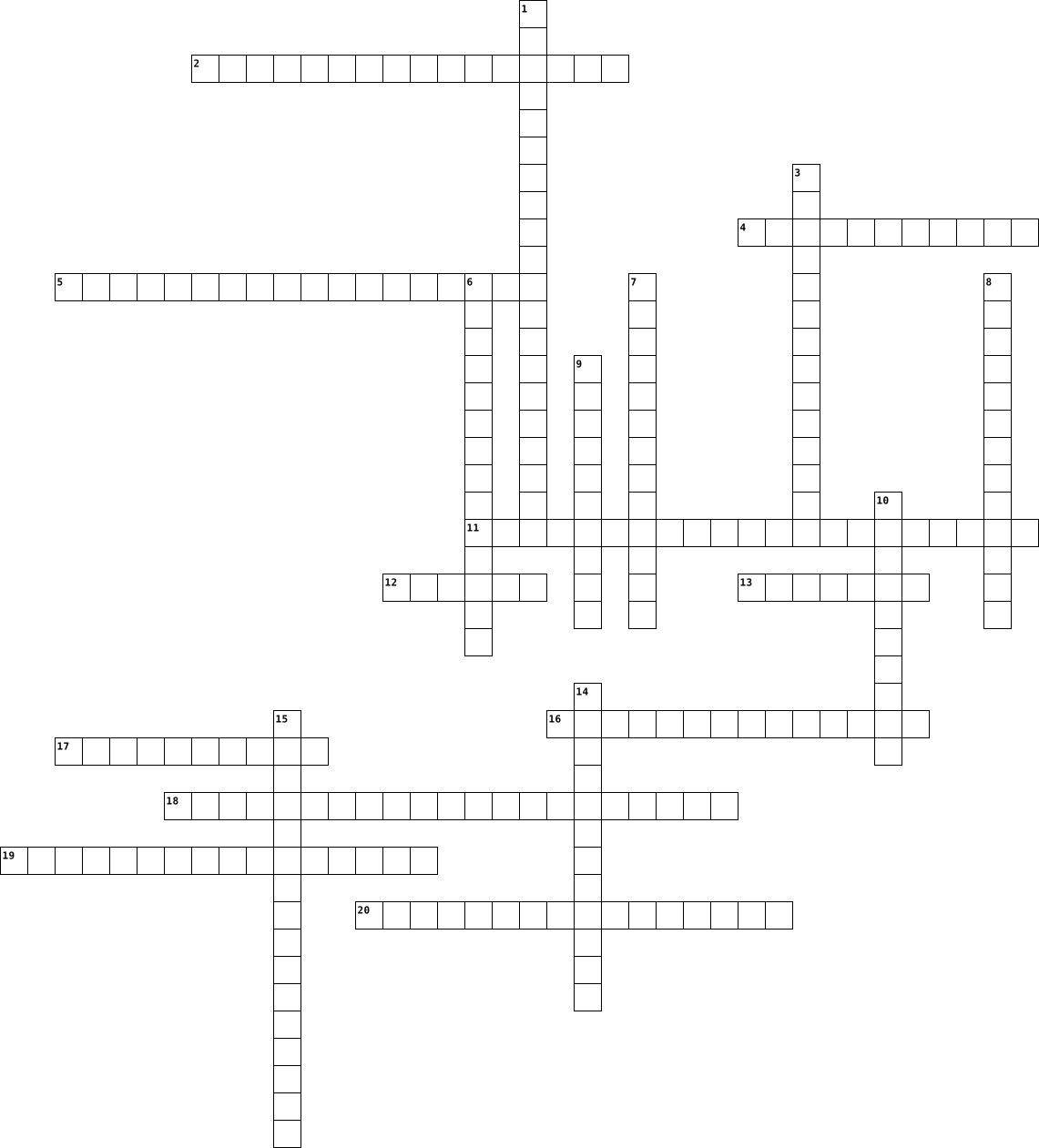
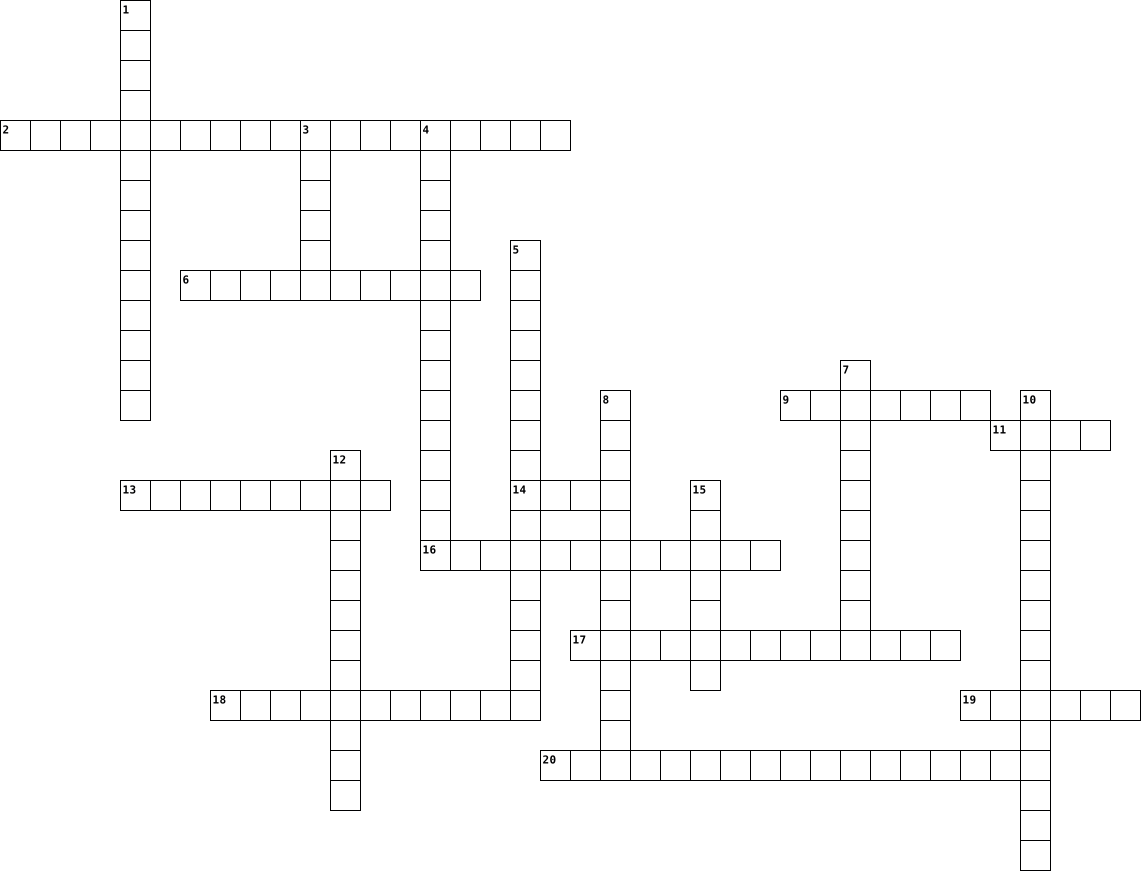
Across
- Intense Fear
- Fear of open public spaces
- Believing you're physically sick from something psychologically wrong
- Low serotonin in brain
- Hypersensitivity to sensory stimuli
- Having little care for the people around yous feelings
- Many personalities
- Characterized by high energy and risky behavior
- Break in reality
- Believing you're the center of the world
Down
- Delusions that you have high forms of power and authority
- Loss of memory with no physiological basis
- Depression that comes with certain seasons
- Intense fear of fat and food
- Episodes of mania and depression
- Delusions that people are out to get you
- Dissociative state with loss of personality and self
- Binge-Purge cycle
- Nightmares and flashbacks after a traumatic event
- Difficulty paying attention and sitting still
20 Clues: Intense Fear • Break in reality • Binge-Purge cycle • Many personalities • Low serotonin in brain • Fear of open public spaces • Intense fear of fat and food • Episodes of mania and depression • Hypersensitivity to sensory stimuli • Delusions that people are out to get you • Believing you're the center of the world • Loss of memory with no physiological basis • ...
Waves 2016-05-21

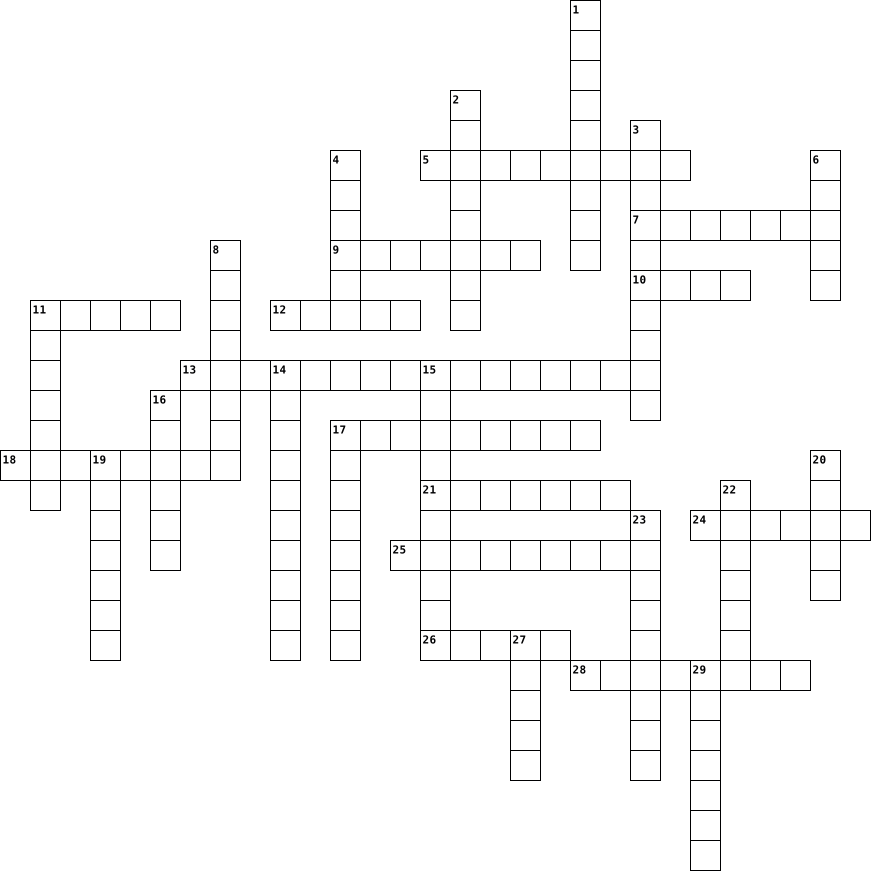
Across
- A narrow stream of radiant energy, especially visible light, travelling in a straight line.
- When waves spread out when they pass through a boundary
- A quality, attribute, or distinctive feature of anything
- Light being taken in by materials
- Light passing through
- A repeated pattern of movement
- When waves bend when they pass through a boundary
- A space with entirely no matter
- Its the distance between the beginning on one wave and the same point on the next wave.
- The highest part of a wave
Down
- A ray of light from a light source that strikes a surface.
- Its the maximum disturbance of a wave from its undisturbed position.
- When the medium gets further apart in a longitudinal wave
- When the medium gets close together in a longitudinal wave
- When waves bounce off a surface
- The lowest part of a wave
- A device for viewing oscillations by a display on the screen
- Matter in which waves travel
- How fast someone or something moves.
- The complete range of electromagnetic wavelengths.
- At the point of incidence where the ray strikes the mirror, a line can be drawn perpendicular to the surface of the mirror.
- How low or high a sound is
- The number of waves that passes a given point per second.
- The ability to do work, there are 8 forms
- An oscillation that travels from one place to another transferring energy
- A reflection of sound from a hard surface
26 Clues: Light passing through • The lowest part of a wave • How low or high a sound is • The highest part of a wave • Matter in which waves travel • A repeated pattern of movement • When waves bounce off a surface • A space with entirely no matter • Light being taken in by materials • How fast someone or something moves. • The ability to do work, there are 8 forms • ...
nutrients 2023-10-17

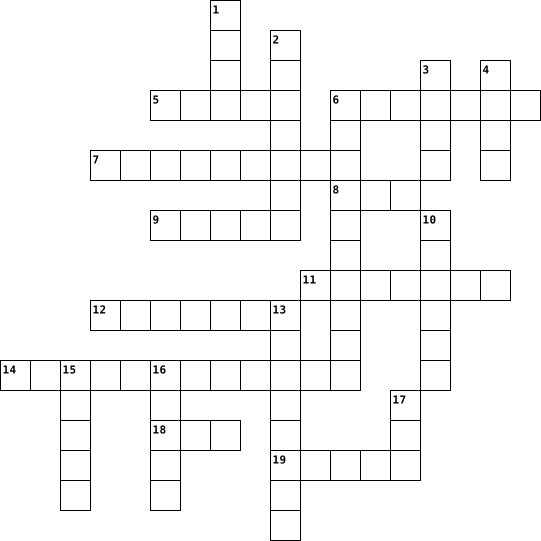
Across
- a substances that gives nourishment
- a group of substances that are needed for normal cell function
- if a food does not contain nutrients or if the calories from sugar and fats outweigh the nutrients in the food
- liquid at room temperature
- colorless, transparent, odorless liquid that forms the seas, lakes, rivers, and rain
- unsaturated fatty acids that come from either natural or industrial sources
- a thread or filament from which a vegetable tissue, mineral substance, or textile is formed.
- a compound of the sterol type found in most body tissues
- any of a number of categories into which types of food are classified in various nutritional schemes.
- rovided with defensive works as protection against attack.
- the chemical processes that occur within a living organism in order to maintain life.
Down
- made up of sugar molecules that are strung together in long, complex chains
- sugars that are added during the processing of foods
- to make rich or richer
- a solid inorganic substance of natural occurrence.
- broken down quickly by the body to be used as energy
- ones that cannot be synthesized by the body
- large, complex molecules that play many important roles in the body
- a unit of energy equivalent to the heat energy needed to raise the temperature of 1 gram of water
- whats on your plate?
- a soft, silver-white, metallic chemical element, one of the alkali metals
21 Clues: whats on your plate? • to make rich or richer • liquid at room temperature • a substances that gives nourishment • ones that cannot be synthesized by the body • a solid inorganic substance of natural occurrence. • sugars that are added during the processing of foods • broken down quickly by the body to be used as energy • ...
science 2021-06-04

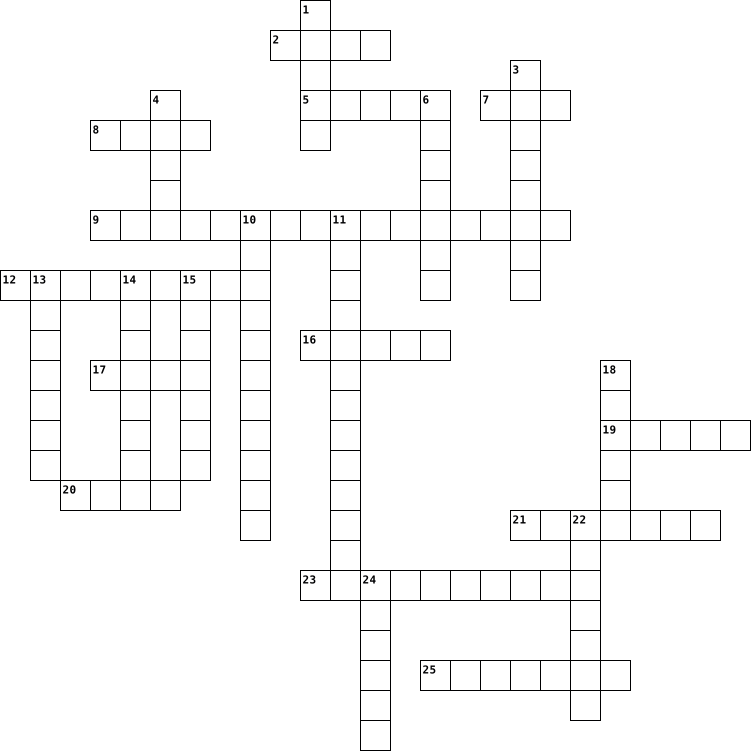
Across
- deriving destructive energy from the release of atomic energy
- is a chemical change which forms new substances
- samples of an element with different numbers of neutrons in their atoms.
- is periodic table of the elements, since having the full energy level presents the properties of a noble gas.
- is the smallest constituent unit of matter that has the properties of a chemical element
Down
- is a particular kind of homogeneous matter
- the most common isotope of the element hydrogen, with one proton, one electron
- is the largest object within our solar system, comprising 99.8% of the system’s mass.
- whose symbol is ²H, is a stable isotope of hydrogen found in nature
- is a natural isotope of hydrogen; it is radioactive. Its symbol is ³H.
10 Clues: is a particular kind of homogeneous matter • is a chemical change which forms new substances • deriving destructive energy from the release of atomic energy • whose symbol is ²H, is a stable isotope of hydrogen found in nature • is a natural isotope of hydrogen; it is radioactive. Its symbol is ³H. • ...
natural disasters 2024-02-22

Across
- a quick volume expansion associated with an exceptionally violent outward release of energy, typically accompanied by the development of high temperatures and the emission of high-pressure gases.
- a type of solid precipitation
- numerous types of mass wasting that can encompass a wide range of ground motions.
- shaking of the Earth’s surface caused by a sudden release of energy in the Earth’s lithosphere
- a powerful ground-level wind system that originates from an above-ground point source and blows radially
- a cenote, swallet, swallow hole, or doline, is a depression or hole in the ground created by surface layer collapse.
- a type of storm distinguished by the presence of lightning and its acoustic effect on the Earth’s atmosphere, known as thunder.
Down
- a powerful columnar vortex that forms over a body of water.
- an outpouring of water that submerges ordinarily dry ground.
- a unusual sort of natural disaster in which dissolved carbon dioxide erupts unexpectedly from deep lake waters, generating a gas cloud capable of drowning wildlife, cattle, and humans.
- a fast-moving flow of snow down a slope, such as a hill or a mountain.
- a widespread, long-lasting straight-line windstorm associated with a fast-moving cluster of severe thunderstorms
- line of thunderstorms that forms along or ahead of a cold front. It includes heavy rain, hail, frequent lightning, strong straight-line winds.
- a blaze that becomes so large that it generates and supports its wind system.
- a severe snowstorm with sustained winds of at least 56 km/h that lasts for an extended time—typically three hours or more.
- a period of chronic deficits in water supply, whether from the atmosphere, surface water, or subsurface water.
- a violently rotating column of air that collides with the Earth’s surface
17 Clues: a type of solid precipitation • a powerful columnar vortex that forms over a body of water. • an outpouring of water that submerges ordinarily dry ground. • a fast-moving flow of snow down a slope, such as a hill or a mountain. • a violently rotating column of air that collides with the Earth’s surface • ...
Flow of energy 2021-03-01

Across
- Plants use this to create energy
- we need this to create
- this type of energy is made in photosynthesis
- makes things organic
- This type of consumer eats producers
- energy from the sun
Down
- Simple sugar C6H12O6
- this energy is made in cellular respiration
- this type of consumer is the 2nd to eat
- We as humans could be considered this if we ate a cow burger that had eaten grass.
- allows gas exchange
- Respiration humans and animals use this to create heat
- A lion attacks us after we eat a cow burger that ate grass. 4th eater.
- the most simple element
14 Clues: allows gas exchange • energy from the sun • Simple sugar C6H12O6 • makes things organic • we need this to create • the most simple element • Plants use this to create energy • This type of consumer eats producers • this type of consumer is the 2nd to eat • this energy is made in cellular respiration • this type of energy is made in photosynthesis • ...
Transformation of energy 2020-08-26

Across
- electric to light energy
- heat to mechanical
- light to chemical
- chemical to heat enery
- electric to chemical
- sound to electic energy
- electric to mechanic
- electric to sound
Down
- heat to electric
- light to electric energy
- electric energy to mechanical energy
- chemical to mechanical
- mechanical to electric
- chemical to electric energy
14 Clues: heat to electric • light to chemical • electric to sound • heat to mechanical • electric to chemical • electric to mechanic • chemical to mechanical • mechanical to electric • chemical to heat enery • sound to electic energy • light to electric energy • electric to light energy • chemical to electric energy • electric energy to mechanical energy
Energy of Waves 2022-02-16

Across
- Stored Energy
- What happens to the wavelengths when the pitch gets higher
- The lowest part of the sound wave
- What happens to the wavelength when the pitch gets lower
- The part of the wave that changes with pitch
- Energy of motion
- What happens to the waves when the volume is increased
- The tallest part of the sound wave
Down
- Particles move parallel to the direction the wave is moving
- The part of the wave that changes with volume
- What happens to the waves when the volume is decreased
- The ability to do work
- Line of _________________
- Particles move at right angles to the direction of the wave travel
14 Clues: Stored Energy • Energy of motion • The ability to do work • Line of _________________ • The lowest part of the sound wave • The tallest part of the sound wave • The part of the wave that changes with pitch • The part of the wave that changes with volume • What happens to the waves when the volume is decreased • What happens to the waves when the volume is increased • ...
Types of Energy 2022-05-04

Across
- The energy pushed into motion by using heat
- creates an electric charge by rubbing 2 things
- Motion caused by gravity
- Flowing water that is used to create energy
- smallest particle
- Wind is used to generate electricity
- A tiny potion of energy
Down
- Nuclear reactions used to generate heat
- Energy that builds up in one place or flows
- energy caused by chemical reactions
- when electricity creates motion, light, heat
- The energy of motion that does work
- Changing in form into another source
- Light from the Sun harnessed using technologies
14 Clues: smallest particle • A tiny potion of energy • Motion caused by gravity • energy caused by chemical reactions • The energy of motion that does work • Changing in form into another source • Wind is used to generate electricity • Nuclear reactions used to generate heat • The energy pushed into motion by using heat • Energy that builds up in one place or flows • ...
Conservation of Energy 2025-12-12

Across
- something which doesn't change
- Energy changes form
- Energy loss
- heat
- motion
- how much matter an object is made of
- Vibrational energy
- the fundamental force of attraction
- ability to do work or cause change
Down
- The context
- the rule itself
- electromagnetic radiation
- stored energy
- slows things down when two surfaces rub against each other
- speed of motion
15 Clues: heat • motion • The context • Energy loss • stored energy • the rule itself • speed of motion • Vibrational energy • Energy changes form • electromagnetic radiation • something which doesn't change • ability to do work or cause change • the fundamental force of attraction • how much matter an object is made of • slows things down when two surfaces rub against each other
Nutrition and Health 2024-03-06

Across
- A person's weight in kg divided by the square of height in m
- Official symbol of the five food groups
- Micronutrients required by the body to carry out a range of functions
- Substance that provides nourishment
- Process of taking nutrients from the digestive system
- Act of practicing healthy habits
- Also known as roughage or bulk
- The chemical reactions in the body's cells that change food into energy
- Replacement of body fluids lost through sweating, etc.
- Broccoli, spinach, carrots, and potatoes are high in this
- Breaks down the amount of calories, carbs, vitamins per serving, etc.
- Forms: sugar, fibers, and starches
- The process of breaking down food into substances
- Nutrients in food that body uses to build/use as fuel
Down
- Nutrients we need in larger quantities
- Average daily level of intake
- Meat, fish, eggs, dairy products, etc.
- To reduce negative impacts
- Calories derived from food containing no nutrients
- Nutritional diagram
- Vitamins/minerals needed in very small amounts
- An immune reaction that happens after eating certain food
- A unit of energy expresses the nutritional value of food
- Found in foods like cereals, bread, nuts, fruit, etc.
24 Clues: Nutritional diagram • To reduce negative impacts • Average daily level of intake • Also known as roughage or bulk • Act of practicing healthy habits • Forms: sugar, fibers, and starches • Substance that provides nourishment • Nutrients we need in larger quantities • Meat, fish, eggs, dairy products, etc. • Official symbol of the five food groups • ...
Crew Southwick Science Puzzle 2024-10-02

Across
- mass and takes up space
- heat and pressure in the crust
- the process by which solids form
- heat and pressure make rock change shape
- star at the center of the solar system
- a ball that has crust, mantle, outer core and inner core
- sediment dropped in a new location and pile up
- crystal like
- pieces of rock cemented together
Down
- source of power
- the exertion of force on something
- sediment forms layers under water
- rocks break apart by physical or chemical processes
- moves rock from one location to another
14 Clues: crystal like • source of power • mass and takes up space • heat and pressure in the crust • the process by which solids form • pieces of rock cemented together • sediment forms layers under water • the exertion of force on something • star at the center of the solar system • moves rock from one location to another • heat and pressure make rock change shape • ...
School subjects 2020-03-18

Across
- to prepare the preliminary plans for technology
- science that studies the composition, properties, and activity of substances and various elementary forms of matter
- science that deals with matter, energy, motion, and force
- presentation in dialogue and action of a story involving conflict of characters, to be performed on the stage;
- the branch of knowledge dealing with past events
- sounds arranged to have melody, rhythm, or harmony
Down
- any field using the skills or techniques of art.
- of or relating to the language spoken in England, the United States, Canada, Australia, and other countries
- scientific study of life or living matter in all its forms and processes.
- /saɪəns/
- instruction in sports, exercise, and hygiene, esp. as part of a school program.
- the systematic study of numbers and the relations between quantities expressed by symbols
- of or relating to the language spoken in Spain, Mexico, and most of Central and South America
- Stresses the role of unified communications and the integration of telecommunications
14 Clues: /saɪəns/ • to prepare the preliminary plans for technology • any field using the skills or techniques of art. • the branch of knowledge dealing with past events • sounds arranged to have melody, rhythm, or harmony • science that deals with matter, energy, motion, and force • scientific study of life or living matter in all its forms and processes. • ...
SCIENCE WORDS 2018-05-04

Across
- a measure of matter
- study of organisms in their environment
- a large cloud of gas and dust in interstellar space
- a treeless plain found in the artic
- a instrument that measures temperature
- a giant ocean wave that forms after volcanic eruption
- a relatively small, rocky body that travels through space
- a meteoroid that reaches earths atmosphere without burning up
- a substance that reduces the transfer of heat,sound,etc
- only eats meat
- a bright streak of light that results when a meteoroid burns in earths atmosphere
- an electric discharge
- a diagram that shows feeding relationships
- the transfer of energy as electromagnet waves
- a collection of small water droplets or ice formed when air cools
- the movement of air caused by air differences
Down
- a collection of stars, dust, and gas
- a natural or artificial body that revolves around a planet
- the potential difference between two points; measured in volts
- a organism that breaks down things
- a small body of ice, rock, and cosmic dust
- the energy of an object that is in motion
- the movement of deep, cold, nutrient-rich water
- a area that is dry and has little or no plant life
- nonliving thing
- only eats plants
- a pathway of energy transfer through various organisms
- a force that opposes motion between two surfaces that are in contact
- eats both plants and animals
- living thing
30 Clues: living thing • only eats meat • nonliving thing • only eats plants • a measure of matter • an electric discharge • eats both plants and animals • a organism that breaks down things • a treeless plain found in the artic • a collection of stars, dust, and gas • a instrument that measures temperature • study of organisms in their environment • the energy of an object that is in motion • ...
Muscles 2013-12-04

Across
- collagen fibers of the epimysium continue as a strong fiber that attaches the muscle to a bone
- extension of the sarcolemma that extends into the muscle fiber
- cytoplasm of a muscle fiber that contains organelles, including myofibrils
- located in the walls of hollow internal organs and blood vessels
- a layer of fibrous tissue that separates muscles from each other
- when a muscle decreases in size
- muscle on a stationary bone
- usually provides most of a muscle's ATP
- bundles of muscle fibers
- apparent when the muscle relaxes even though stimulation continues
- a high energy compound built up when a muscle is resting
- incurred when a muscle uses fermentation to supply its energy needs
- thick and thin filaments whose structure and function account for muscle striations and conractions
- uninucleated, striated, cylindrical, and branched. forms the heart wall
- consists of the motor nerve axon and the muscle fibers it contacts
- connective tissue layer that covers the muscle itself
- occurs as dying muscle cells deplete their last ATP reserves
- the deep fascia that surrounds a group of several muscles
- voluntary muscle; fibers are cylindrical, multinucleated, and striated
- a muscle fiber contracts completely or not at all
- a red pigment that stores oxygen for muscle contraction
- one of the deadliest toxins known to mankind; injected daily by doctor's offices, hospitals, and clinics around the country
- anaerobic process that produce the ATP necessary for short bursts of exercise, but accumulates lactic acid as a product
Down
- maximal sustained contraction
- plasma membrane of a muscle fiber that forms T tubules
- increased muscle contraction until maximal sustained contraction
- the smooth ER of a muscle fiber that stores Ca2+
- a single contraction that lasts only a fraction of a second
- a polysaccharide that stores energy for muscle contraction
- sheath of connective tissue
- a nerve fiber together with all of the muscle fibers it innervates
- phenomenon that results in stronger and stronger muscle contractions
- swelling inside a compartment increases, choking off the blood supply to a muscle
- thin layer of connective tissue that surrounds each muscle fiber
- a bundle of myofilaments that contracts
35 Clues: bundles of muscle fibers • muscle on a stationary bone • sheath of connective tissue • maximal sustained contraction • when a muscle decreases in size • usually provides most of a muscle's ATP • a bundle of myofilaments that contracts • the smooth ER of a muscle fiber that stores Ca2+ • a muscle fiber contracts completely or not at all • ...
Water in the World Revision 1 2023-09-01

Across
- long-term weather patterns in an area
- how hot it is
- something in the world
- when water enters into the soil
- the height and shape of the land
- water in the ground
- things humans use such as energy and water
- resources that can be recycled
- another word for rain
- The line of latitude at 0 degrees in the centre of the Earth
Down
- The Tropic of ______ at 23.5 degrees North
- lines of longitude
- boundary mountains between catchments
- The Tropic of ______ at 23.5 degrees South
- when water vapour forms clouds
- the cold continent at 55.5 degrees South
- a curve in a river
- when water goes below zero degrees celsius
- water flowing on the surface
- a large body of water between continents
20 Clues: how hot it is • lines of longitude • a curve in a river • water in the ground • another word for rain • something in the world • water flowing on the surface • when water vapour forms clouds • resources that can be recycled • when water enters into the soil • the height and shape of the land • boundary mountains between catchments • long-term weather patterns in an area • ...
Nutrition presentation 2025-08-01

Across
- Eating style low in sugar and salt is considered
- Nutritional info on food labels can help manage this intake.
- Nutrient group that includes nuts, seeds, and olive oil.
- Main source of energy for the body.
- A nutrient that supports muscle repair and growth.
Down
- Essential for replenishing glycogen stores post-exercise.
- Amino acid that enhances muscle recovery
- Type of fat created through hydrogenation; often found in fried foods.
- Stored in the liver and muscles as an energy reserve.
- The process of rebuilding muscle tissue after exercise.
- Type of fat that should be limited; found in butter and red meat.
- Found in milk and cheese, but should be consumed in low-fat forms.
- Nutrient needed in higher amounts for strength athletes.
13 Clues: Main source of energy for the body. • Amino acid that enhances muscle recovery • Eating style low in sugar and salt is considered • A nutrient that supports muscle repair and growth. • Stored in the liver and muscles as an energy reserve. • The process of rebuilding muscle tissue after exercise. • Nutrient group that includes nuts, seeds, and olive oil. • ...
Simple science 2019-10-15

Across
- vitamin C deficiency disease
- the longest bone in the human body
- blood vessels with smallest diameter
- which waves are used for communication in artificial satellites
- other names for alkane
- a unit of thermal energy
- an alloy of Copper and Zinc
- what is used to split light into different colours
Down
- Father of nuclear chemistry
- different forms of an element
- nuclear reactors are based on which phenomenon?
- a disease caused due deficiency of vitamin
- important sugar present in honey
- what is commonly used plastic to make gear wheels
- organ which produces Nile
15 Clues: other names for alkane • a unit of thermal energy • organ which produces Nile • Father of nuclear chemistry • an alloy of Copper and Zinc • vitamin C deficiency disease • different forms of an element • important sugar present in honey • the longest bone in the human body • blood vessels with smallest diameter • a disease caused due deficiency of vitamin • ...
Energy 2023-03-16

Across
- Relating to nucleus
- Something that is in motion
- It is an form of energy
- Something that is relating toward gravity
Down
- Something that can be devolved
- A object that uses heat
- A compound that is purified
- A electromagnetic wave that can be visible to the human eye
- Something that produces excitement
- One of the three forms of heat
- A vibration that travels through air
11 Clues: Relating to nucleus • A object that uses heat • It is an form of energy • A compound that is purified • Something that is in motion • Something that can be devolved • One of the three forms of heat • Something that produces excitement • A vibration that travels through air • Something that is relating toward gravity • A electromagnetic wave that can be visible to the human eye
Energy 2022-09-28
Across
- energy of moving objects (car moving)
- energy from the sun
- can be replaced as it is or cannot be used up
- used up much faster than it can be replaced
- the ability to make things move or change
- any material from living things that can be used as an energy source
- store electrical energy produced by solar cells
- energy of moving water
- energy that travels as waves through matter or through empty space
- energy of moving charges (lamps, toasters)
- solar cell can change light energy into electricity
Down
- a change form one form to another
- reflects and forces sunlight onto a fluid pipe, thermal energy is used to create steam, which turns the turbine wind energy
- energy stored in the bonds that hold atoms together
- energy stored in the nucleus of an atom
- the energy of moving particles (hot cocoa has many)
- energy of moving air( wind turbines)
- an energy resource that formed over millions of years from decayed remains of plants and animals
- careful use of resources
- heat energy from inside the earth that can be used to heat buildings and produce electricity
20 Clues: energy from the sun • energy of moving water • careful use of resources • a change form one form to another • energy of moving air( wind turbines) • energy of moving objects (car moving) • energy stored in the nucleus of an atom • the ability to make things move or change • energy of moving charges (lamps, toasters) • used up much faster than it can be replaced • ...
Energy 2022-10-15
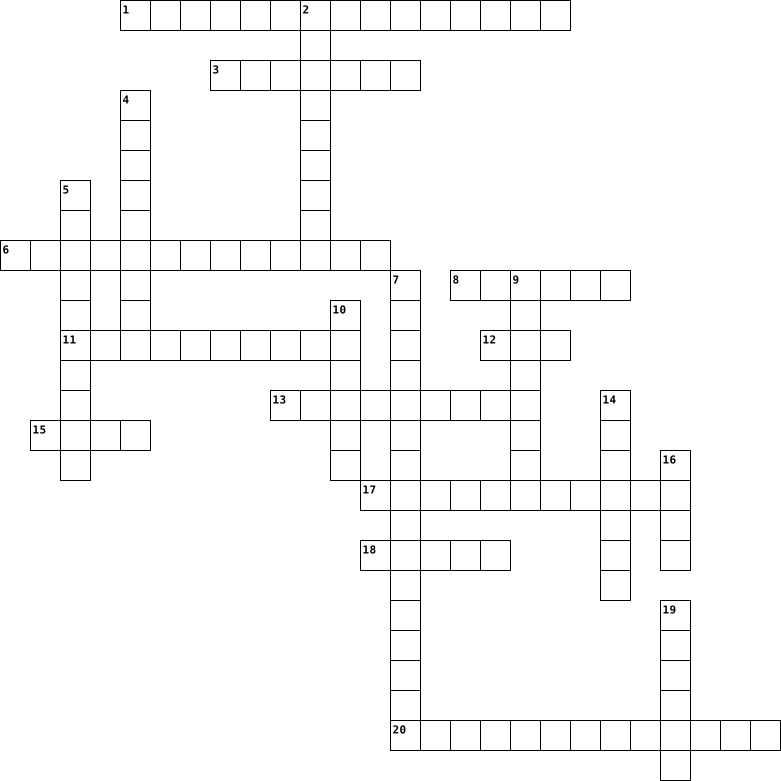
Across
- Stored energy
- how much mass is in one place
- The energy of motion
- Anything that takes up space
- transfer of energy through direct contact.
- An energy form that takes place in its container
- smallest unit of matter
- Doing anything that involves using effort
- The energy that comes from heat
- state of matter with mass that takes up space Outside of Earth
- Energy that comes from heat
Down
- It keeps heat in
- transfer of energy through waves of energy
- The energy through the movements of liquids and gases
- Hot and cold molecules
- When energy goes from one energy to the next
- The ability to do work
- take the shape of its container
- heat flows from hot objects to cool objects
- Objects combined to work together
20 Clues: Stored energy • It keeps heat in • The energy of motion • Hot and cold molecules • The ability to do work • smallest unit of matter • Energy that comes from heat • Anything that takes up space • how much mass is in one place • take the shape of its container • The energy that comes from heat • Objects combined to work together • Doing anything that involves using effort • ...
ENERGY 2023-01-12
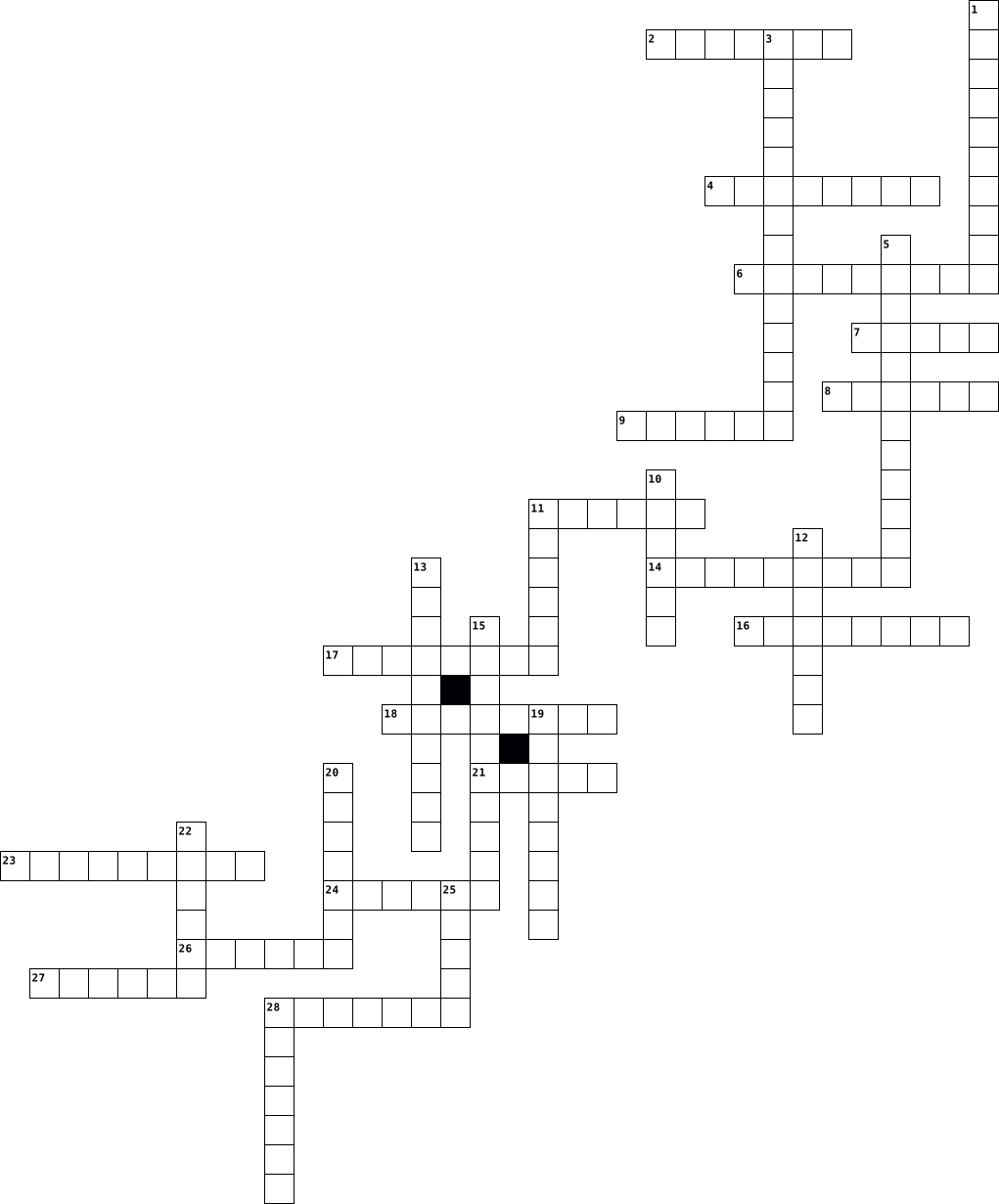
Across
- levitating trains that go very fast
- the kind of electricity that flows
- when things each have a separate circuit
- the EM that is mainly used by doctors
- what electromagnetic energy travels in
- the man who made a code for a telegraph
- the EM that has the longest wavelength
- the negative part of an atom
- what opposite charges of atoms do
- the energy of movement
- what opposite poles of magnets do
- MOVING AN OBJECT USING A FORCE
- the EM that we feel as heat
- the most dangerous EM wave
- the only EM we can see
- a push or a pull
- when things are connected in a row
Down
- device using an electromagnet
- a magnet made by electricity
- the EM that burns our skin
- the ends of a magnet are called this
- what similar charge of atoms do.
- the positive part of an atom
- the energy of position
- the EM that quickly heat food
- a path for electricity
- THE ABILITY TO DO WORK
- what similar poles of a magnet do
- the smallest bit of matter
- the kind of electricity made by rubbing
30 Clues: a push or a pull • the energy of position • the energy of movement • a path for electricity • THE ABILITY TO DO WORK • the only EM we can see • the EM that burns our skin • the most dangerous EM wave • the smallest bit of matter • the EM that we feel as heat • a magnet made by electricity • the positive part of an atom • the negative part of an atom • device using an electromagnet • ...
Energy 2019-09-15
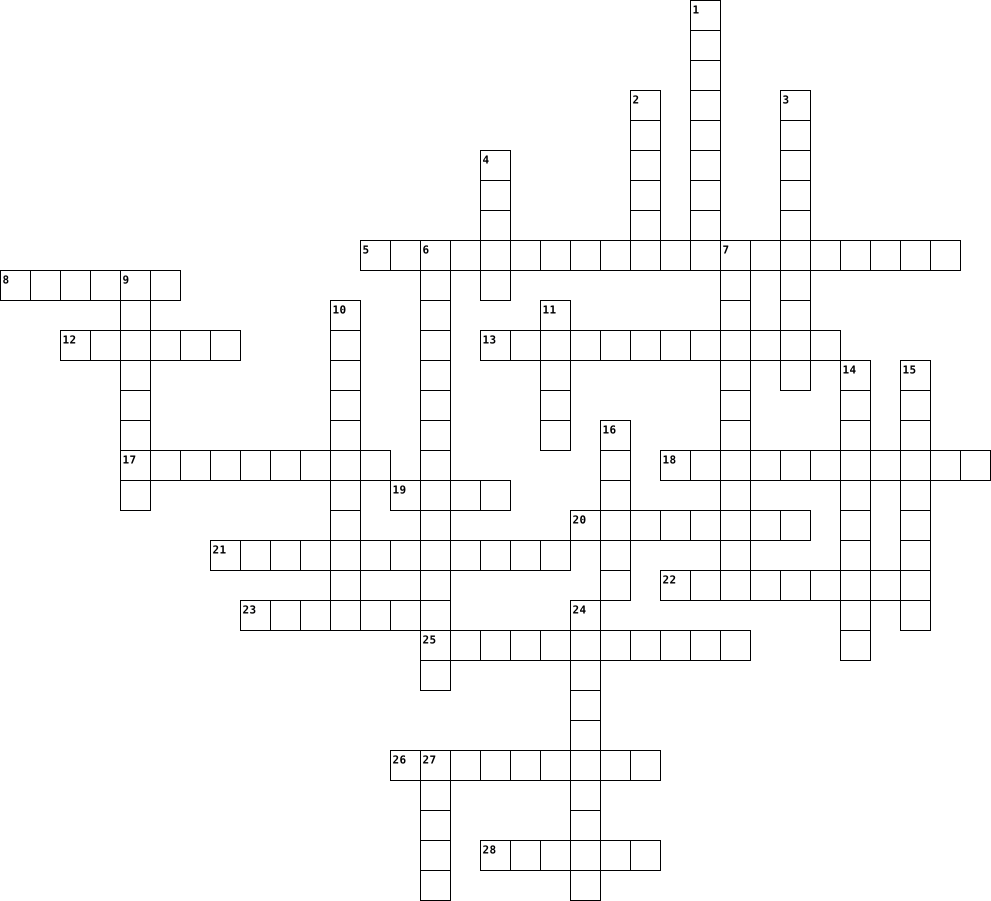
Across
- The ... of the substance is the amount of energy required to raise the temperature of 1KG of the substance by 1 degrees
- Energy ... created or destroyed
- ...energy is energy transferred to where it is wanted in the form that is wanted
- A ... is an object or group of objects in which no energy transfers take place out of or into the energy stores of the system
- Thermal insulators are ... that do not allow thermal energy to move through them easily
- Energy can be ... from one store to another
- The unit of power is the ... , W.
- ... is the force that opposes the motion of two surfaces in contact with each other
- ... is energy that is not usefully transferred
- Winds, waves and the tides are sources of ... energy
- If an object ... move when a force is applied to it, no work is done on the object
- ? = useful output energy + energy wasted
- The less energy wasted by a machine, the more ... the machine is
- Renewable energy currently cannot reach the world's ... for energy
Down
- As changes occur in a closed system, energy can be transferred to ... stores with in the closed system
- Appliances should be designed to waste as ... energy as possible to make them as efficient as possible
- As energy ... it gets less and less useful
- Efficiency is a ... so does not have a unit
- ... radiation from the sun transfers energy to the earth. A solar cell transfers this energy into electrical energy directly
- The principle of ... of energy applies to all energy changes
- Work Done to ... friction is mainly transferred to thermal energy stores
- ... are non-renewable sources of energy
- The ... of an appliance is the rate at which is transfers energy
- Most renewable resources are not available all the time and can be ...
- When an object falls and gains speed, its gravitational potential energy decreases and its kinetic energy increases
- ... can be transferred by heating, waves, electrical current or when a force moves an object
- ... energy comes from energy released by radioactive substances deep under the earth's crust
- When a ... moves an object, energy is transferred to the object and work is done on it
28 Clues: Energy ... created or destroyed • The unit of power is the ... , W. • ... are non-renewable sources of energy • ? = useful output energy + energy wasted • As energy ... it gets less and less useful • Efficiency is a ... so does not have a unit • Energy can be ... from one store to another • ... is energy that is not usefully transferred • ...
energy 2021-01-28
Across
- the energy possessed by a body
- is a mechanical device that changes the direction or magnitude of a force
- to the quantity of motion that an object has.
- Formally stated, Newton's third law is: For every action, there is an equal and opposite reaction.
- When two forces acting on an object are not equal in size, we say that they are
- movement
- the same
- two forces acting in opposite directions on an object, and equal in size.
- energy stored in the bonds of chemical compounds, like atoms and molecules.
- a heavy or bulky thing that is being carried or is about to be carried.
- the resistance that one surface or object encounters when moving over another.
Down
- is a form of energy resulting from the flow of electric charge. Energy is the ability to do work or apply force to move an object.
- fancy word for pushing or pulling.
- is the vector sum of forces acting on a particle or body
- pushing somthing away
- strength or energy as an attribute of physical action or movement.
- a plane inclined at an angle to the horizontal.
- pulling somethig close
- apply or bring to bear (a force, influence, or quality).
- strenuous physical or mental exertion.
- pannels that the sun give energy to
- an invisible force that pulls objects toward each other.
22 Clues: movement • the same • pushing somthing away • pulling somethig close • the energy possessed by a body • fancy word for pushing or pulling. • pannels that the sun give energy to • strenuous physical or mental exertion. • to the quantity of motion that an object has. • a plane inclined at an angle to the horizontal. • is the vector sum of forces acting on a particle or body • ...
Energy 2021-03-16
Across
- state of matter which radiation occurs fastest in.
- the rate at which work is done.
- energy that is reflected or emitted in the form of electrical and magnetic waves
- type of energy created from releasing energy from the nucleus of atoms
- a measure of the average kinetic energy of particles in an object.
- stored energy
- unit of measurement for energy
- state of matter best for conduction
- describes the energy stored in objects that are above Earth’s surface.
- the transfer of energy from one object to another, designated with a Q.
- transfer of energy through electromagnetic waves.
- transfer of energy through matter by direct contact of particles
- batteries convert this type of energy to electrical energy.
Down
- the amount of heat needed to raise the temperature of 1 kg of a material by 1 °C or K.
- materials through which heat does not flow easily
- energy that is primarily used for communication
- the transfer of energy that occurs when a force makes an object move.
- a unit for power, abbreviated as w.
- this type of energy remains constant in a system, due to the Law of Conservation of Energy
- materials through which heat flows easily
- transfer of energy by the movement of heated particles in liquids and gases
- energy from the movement of electrons
- the ability to cause change
- refers to the sum of kinetic and potential energy of the particles in an object.
- a type of stored energy an object has when it is compressed or stretched.
- energy that is due to motion
- energy that is released as light; ex. light from a bulb. also called solar or light energy.
- energy from the sun, fire, etc. used to heat objects
28 Clues: stored energy • the ability to cause change • energy that is due to motion • unit of measurement for energy • the rate at which work is done. • a unit for power, abbreviated as w. • state of matter best for conduction • energy from the movement of electrons • materials through which heat flows easily • energy that is primarily used for communication • ...
Energy 2021-04-26
Across
- Plant or animal material used as fuel to
- primarily of methane
- Energy that it possesses due to its motion
- electricity or heat
- power Power generated by geothermal energy
- energy Renewable energy powered by the natural
- energy They transport and capture of energy by
- or radioactive decay process
- gas Clean alternative to methane
- or substance
- The movement of energy through a substance
- The energy of electromagnetic waves
- Form of energy resulting from the
- Energy that is released through a nuclear
- and fall of ocean tides and currents
- of electric charge
Down
- The energy that is possessed by an object
- Any fuel that is derived from biomass
- of energy by using Less Energy
- Energy that is stored,or conserved,in an
- The effort made to reduce the
- energy A form of solar energy
- surface waves
- gas Naturally occurring hydrocarbon gas mixture
- Energy stored in the bonds of chemical
- to its motion or due to its position
26 Clues: or substance • surface waves • of electric charge • electricity or heat • primarily of methane • or radioactive decay process • The effort made to reduce the • of energy by using Less Energy • energy A form of solar energy • gas Clean alternative to methane • Form of energy resulting from the • The energy of electromagnetic waves • to its motion or due to its position • ...
Energy 2021-11-11
Across
- GASOLINE
- PETROLEUM
- NATURALGAS
- PLANE
- URANIUM
- RENEWABLE
- DIESEL
- HOT
- HEATER
- CRUDEOIL
- FUELOIL
Down
- STEAM
- ELECTRICITY
- NUCLEAR
- EARTH
- CAR
- KEROSENE
- LAMP
- BARREL
- MINE
- GEYSER
- METHANE
- TRAIN
- COAL
24 Clues: CAR • HOT • LAMP • MINE • COAL • STEAM • EARTH • PLANE • TRAIN • BARREL • GEYSER • DIESEL • HEATER • NUCLEAR • URANIUM • METHANE • FUELOIL • GASOLINE • KEROSENE • CRUDEOIL • PETROLEUM • RENEWABLE • NATURALGAS • ELECTRICITY
ENERGY 2023-03-23
Across
- the impact of a person or community on the environment, expressed as the amount of land required to sustain their use of natural resources.
- incoming solar radiation, or radiation from the sun
- a naturally occurring element used by humans to produce energy in nuclear power plants
- partially decayed plant matter found in bogs, used as fuel
- A machine that converts mechanical energy into electrical energy
- a combustible black or dark brown rock consisting mainly of decayed plant matter, found mainly in underground deposits and widely used as fuel.
- Compounds composed of only carbon and hydrogen, often used as fuels
- A nuclear reaction in which a massive nucleus splits into smaller nuclei with the simultaneous release of energy
- the amount of biologically productive land and sea available to us
- the ability to do work
- A natural resource that is produced more rapidly than it can be consumed
Down
- A flammable, yellow-to-black liquid composed of hydrocarbons occurring naturally beneath Earth's surface; it is a nonrenewable fossil fuel processed to make gasoline used in vehicles.
- fuels
- solar energy from curved reflectors used to heat a transfer fluid to produce steam to power a turbine to generate electricity
- electricity generated by the kinetic energy of moving water
- flammable gas, consisting largely of methane and other hydrocarbons, occurring naturally underground and used as fuel.
- A reaction that occurs when lighter nuclei are forced together to produce heavier nuclei, resulting in a release of vast amounts of energy
- Energy derived from the heat in the interior of the earth
- resource A natural resource that is consumed more rapidly than it can be produced.
- Liquid fuel created from processed or refined biomass (living matter)
20 Clues: fuels • the ability to do work • incoming solar radiation, or radiation from the sun • Energy derived from the heat in the interior of the earth • partially decayed plant matter found in bogs, used as fuel • electricity generated by the kinetic energy of moving water • A machine that converts mechanical energy into electrical energy • ...
Energy! 2013-03-13
Across
- The back and forth motion of an object that can create sound is called _________.
- Particles of matter that split apart or join back together is called ________ energy.
- The force that pulls two objects together is ________.
- The use of force to move an object a certain distance is called _________.
- Hair cells pass the vibration to a ________ that carries sound messages to the brain.
- The highness or lowness of sound as determined by its frequency is called _______.
- When describing an object, we compare it to other objects that are not moving. This is called __________.
- Energy an object had due to its position is _________ energy.
- Vibrations from the little bones vibrate a tube filled with fluid and tiny hairs found in the _________.
- ________ energy comes from motion of tiny particles.
- High-frequency sound waves have a _______ pitch than low-frequency sound waves.
- The vibrating eardrum makes three tiny bones in the ___________ vibrate.
- The sun is a major form of ________ energy.
- Energy found in food is ________ energy.
Down
- The amount of energy a sound wave carries is called ________.
- The force that slows down motion is called __________.
- An area of bunched-up and spread out air particles that moves onward in all directions from a vibrating object is called ________.
- The measure of force is called ____________.
- A push or a pull is called __________.
- The part of the ear that collects sound waves is the ________.
- The unit you use to measure force is called __________.
- Matter that is in motion is called _________ energy.
- The movement of charged particles is _________ energy.
- The ability to do work, either to make an object move or to change matter is called _______.
- the location of an object is the ________/
- Sound waves make the ______ vibrate like the head of a drum.
- The distance an object moves in a certain amount of time is called __________.
- Energy at work or in motion is called ________ energy.
- The number of times a sound source vibrates in one second is the ________ of its sound waves.
- Frequency is measured in __________.
- The tendency of an object to stay in motion or at rest until a force acts upon it is called _________.
31 Clues: Frequency is measured in __________. • A push or a pull is called __________. • Energy found in food is ________ energy. • the location of an object is the ________/ • The sun is a major form of ________ energy. • The measure of force is called ____________. • Matter that is in motion is called _________ energy. • ________ energy comes from motion of tiny particles. • ...
Energy 2013-05-15
Across
- energy which needs the sun
- energy of movement
- stored up energy
- a non-renewable fossil-feul
- unit for measuring energy
- explosive energy
- energy in elastic-bands
- name for coal,oil and gas
- a fossil-feul
- wind-->Kinetic-->electrical
Down
- fossil fuel causes pollution
- an object that transfers wind energy to electrical energy
- wasted energy
- used for sailing ships
- 1000 Joules
- what makes things work
- energy in batteries
- energy that causes vibrations
- energy for plants
- source of energy
20 Clues: 1000 Joules • wasted energy • a fossil-feul • stored up energy • explosive energy • source of energy • energy for plants • energy of movement • energy in batteries • used for sailing ships • what makes things work • energy in elastic-bands • unit for measuring energy • name for coal,oil and gas • energy which needs the sun • a non-renewable fossil-feul • wind-->Kinetic-->electrical • ...
ENERGY 2013-10-24
Across
- Unit measuring the force to produce an electric current.
- A form of energy that travels as waves from the sun to Earth.
- Animals store their excess energy in this form.
- Humans get their energy from this.
- Energy of dam water.
- Fuels that can generate power without getting depleted.
- Chemical energy is stored in the ____ of molecules.
- The burning of wood releases this form of energy.
- Energy from the Sun.
- Overload protection device.
- Energy produced by splitting atoms.
- A form of energy that results from the movement of machine parts.
- Another name for electrical networks.
Down
- The basic unit of energy that scientists use.
- Field that attracts iron or steel.
- A form of energy that travels as waves through the air.
- Rotary engine that extracts energy from water.
- Energy created by moving electrons.
- One of the gases released into the air when fossil fuels burn.
- The energy stored in compressed springs is known as ____ potential energy.
- Relating to the use of radio waves to send and receive electronic signals.
- A storage of energy invented by humans and which is filled with chemicals.
- A type of fuel formed from the remains of plants or sea creatures millions of years ago.
- A measure of energy that is used for measuring the amount of energy in food.
- Produced by a surplus or shortage of electrons.
25 Clues: Energy of dam water. • Energy from the Sun. • Overload protection device. • Field that attracts iron or steel. • Humans get their energy from this. • Energy created by moving electrons. • Energy produced by splitting atoms. • Another name for electrical networks. • The basic unit of energy that scientists use. • Rotary engine that extracts energy from water. • ...
Energy 2013-08-04
Across
- The capacity for doing work
- This type of energy causes different kinds of metals to attract or repel each other.
- The light that humans can see, it starts with V
- A type of energy stores in the position of an object or human.
- This type of energy is associated with the vibration or disturbance of matter which makes...
- The way heat is transferred from one place to another.
- The sum of energy in a mechanical system.
- The place you find the higher temperature
- A type of energy which involves motion.
Down
- The place where the higher temperature goes to starts with S like the number 10.
- This type of energy is potential energy stored as a result of deformation of an elastic object.
- When the transfer of energy happens and there is no conductive medium, its called…
- Its a type of energy associated with gravity
- Its a type of energy that comes from heat
- Its a force that acts upon an object to get it moving.
- This type of energy makes your lamp and television turn on.
- This type of energy is stores in the nucleus of an atom.
- This is energy that has move from a hot temperature to a cold temperature
- What appears when you turn on a focus
- This type of energy can be found in solar panels.
- This type of energy is stores in chemical compounds
21 Clues: The capacity for doing work • What appears when you turn on a focus • A type of energy which involves motion. • Its a type of energy that comes from heat • The sum of energy in a mechanical system. • The place you find the higher temperature • Its a type of energy associated with gravity • The light that humans can see, it starts with V • ...
ENERGY 2013-08-06
Across
- is the energy that is absorbed by an electric circuit.
- it’s the energy in the center of an atom.
- examples like car or anything that is moving.
- examples like hot water, a hot radiator.
- is what we call energy that comes from heat.
- energy which is stored when a body is deformed .
- examples like a bungee jumper.
- examples like talking, tv, radio.
- examples like food, batteries.
- can be defines as the ability to do work.
Down
- is the energy of motion.
- is the sun's rays arriving at the Earth.
- is energy that is a result of chemicals reacting.
- is the energy related to the gravitational force.
- is the potential of work found in light.
- examples like nuclear bombs.
- examples like anything that uses electricity.
- refers to the energy generated by sound vibrations as they travel through a specific medium.
- examples like a wind-up toy, a rubber band.
- examples like light bulbs.
20 Clues: is the energy of motion. • examples like light bulbs. • examples like nuclear bombs. • examples like a bungee jumper. • examples like food, batteries. • examples like talking, tv, radio. • is the sun's rays arriving at the Earth. • examples like hot water, a hot radiator. • is the potential of work found in light. • it’s the energy in the center of an atom. • ...
ENERGY 2013-08-22
Across
- you need to do this to create kinetic energy
- a plane always have this energy-only when is flying
- IN FACTORIES TO USE NUCLEAR ENERGY YOU SEE......
- is what all the things have
- is the energy related with heat
- is the related to thermal
- when you use this you create sound energy
- something that always have chemical energy
Down
- always in the night you need....energy
- we use the sun to have energy
- this energy is VERY HAZARDOUS
- something that always have gravitational energy
- leagues always have....energy
- we move our hands to form.....energy
- in the .... you need light energy
- some......explote and generate nuclear energy
- food always have ......energy
- something that woman's always use and have elastic energy
- when you turn a light on you create light and the light is...
- when you talk by a microphone you create....energy
20 Clues: is the related to thermal • is what all the things have • we use the sun to have energy • this energy is VERY HAZARDOUS • leagues always have....energy • food always have ......energy • is the energy related with heat • in the .... you need light energy • we move our hands to form.....energy • always in the night you need....energy • when you use this you create sound energy • ...
Energy 2015-01-26
Across
- fluorescent modern energy efficient light bulb
- Powered by the wind
- Energy use
- cell Unit that converts sunlight to electrical energy
- Carbon dioxide is a ___________ gas
- Modern car
- Heat from within Earth
- What bio-fuel is made from
- Potential energy of a spring
- Layers of gases around a planet
- Energy in the nucleus of an atom
Down
- Ocean wave energy
- Soft type of coal
- Caused by uneven heating and cooling of planet
- What solar cells are made of
- River power
- The ability to cause change
- The average kinetic energy of particles
- Our star
- Several solar panels working together
- small powerful light source
21 Clues: Our star • Energy use • Modern car • River power • Ocean wave energy • Soft type of coal • Powered by the wind • Heat from within Earth • What bio-fuel is made from • The ability to cause change • small powerful light source • What solar cells are made of • Potential energy of a spring • Layers of gases around a planet • Energy in the nucleus of an atom • Carbon dioxide is a ___________ gas • ...
Energy 2014-02-04
Across
- Energy generated by moving water
- things That are alive, or were alive a short time ago, such as plant material (like wood), or animal waste. Can be used to make biogas for powering machines.
- energy Heat energy from inside the earth
- A resource that cannot be depleted, such as solar and wind energy
- Output compared to input. If a device does as much work for us as energy we put into it, then it is perfectly efficient because it is not wasting any energy
- energy Energy that does not pollute the environment
- Practices that can be continued indefinitely, with minimal harm to the natural environment, such as the use of renewable resources
- energy Stored energy, such as the still water sitting behind a dam, ready to fall.
- energy Energy from heat
- Contamination of the natural environment with harmful substances as a consequence of human activities; a byproduct of many energy sources
- A gas that is the main ingredient of both natural gas and biogas
- The ability to do work
Down
- energy The vibrations of molecules as sound waves travel
- energy Stored energy that can be released through chemical reaction, found in things like food and batteries
- resource that can be depleted, such as fossil fuels
- energy Energy of motion. Water flowing over a dam is kinetic energy. Mechanical energy - energy of moving parts pushing or pulling
- energy The category of energy that includes solar and light energy
- energy Energy produced by movement of charged particles, such as electrical currents and static electricity
- energy Energy produced by splitting or joining the centers of small particles called atoms
- energy Energy from the sun’s rays. Solar panels can turn solar energy into electricity
- fuels Materials that are extracted from the earth, such as coal, oil, or natural gas, that are deposited and created over millions of years. We use chemical energy from these fuels for a variety of purposes.
- To use carefully, to avoid waste
22 Clues: The ability to do work • energy Energy from heat • Energy generated by moving water • To use carefully, to avoid waste • energy Heat energy from inside the earth • resource that can be depleted, such as fossil fuels • energy Energy that does not pollute the environment • energy The vibrations of molecules as sound waves travel • ...
Energy 2015-12-17
Across
- fuel that were formed mostly by decayed plants or animals
- turbine driven by expanding hot gasses
- energy from the sun
- fuels made from crops
- device that turns mechanical energy into electrical energy
- electricity created by water
- building with sails or vanes that turn in the wind
- substance that does not typically conduct electricity
Down
- renewable energy that comes from material made
- absorbs heat or light energy from the sun
- energy that cannot be replaced once it is used
- heat from within the earth
- the flow of electrically charged particles
- form of energy
- energy energy from a source that is not depleted when used
- material that electricity can easily flow through
- extracted from air flow using wind power
- subatomic particle with a negative electronic charge
- can be powered by wind or water
- to provide light and heat or to work machines
20 Clues: form of energy • energy from the sun • fuels made from crops • heat from within the earth • electricity created by water • can be powered by wind or water • turbine driven by expanding hot gasses • extracted from air flow using wind power • absorbs heat or light energy from the sun • the flow of electrically charged particles • to provide light and heat or to work machines • ...
energy 2015-06-04
Across
- something that can not happen to energy
- a living object that needs to sleep and eat to have energy
- produced by hot rocks under the ground heating up water, steam in produced and when holes are dug the steam shoots up powering turbines
- used for all modern day creations
- gets it's energy from the sun
- this happens between sports teams
- energy is very ' '
- this can be used to open and close a circuit
Down
- typhoons are caused by this substance as well as energy
- describes an influence only machines can have
- can be split but are very dangerous
- something that can be recharged so it has energy
- the sense of hearing
- the sun produces this and it is gone when the sun goes down
- something to do the the tide in water
- two words combined in two one, these things can be burnt for energy
- something that is very dangerous
- something energy has to flow through
- used to heat homes and also used for cooking
- can come from an oven
20 Clues: the sense of hearing • can come from an oven • energy is very ' ' • gets it's energy from the sun • something that is very dangerous • used for all modern day creations • this happens between sports teams • can be split but are very dangerous • something energy has to flow through • something to do the the tide in water • something that can not happen to energy • ...
Energy 2017-01-02
Across
- no oxygen, causes muscles to burn from waste acid produced
- 2 different species living together, both benefit
- responsible planning and management of resources.
- 1st source of energy, bread, potatoes, fruit
- molecule that stores and expends our energy
- fermentation making of ATP energy with oxygen
- organelle where photosynthesis takes place
- respiration process of making ATP
- organelle where cellular respiration takes place, making of ATP
- acid rain, erosion, urban development, hog farms, kudzu
- 2 different organisms living together, host doesn't benefit, parasite does
- 2 different species living together
- cushions organs, insulation, bacon, lard, saturated fats
Down
- population, global warming, fossil fuels, habitat, nonnative species
- chemicals needed for a reaction to take place
- biology that implements method to protect diversity
- No oxygen with yeast, produces alcohol
- sugar molecule to make ATP
- fermentation making of ATP without oxygen
- process of making energy in the form of sugar in plants
- resource depletion, deforestation, pesticide, bioaccumulation
- 2 different species living together, 1 benefits, other not harmed
- energy transport, egg whites, beans, meat
23 Clues: sugar molecule to make ATP • respiration process of making ATP • 2 different species living together • No oxygen with yeast, produces alcohol • fermentation making of ATP without oxygen • energy transport, egg whites, beans, meat • organelle where photosynthesis takes place • molecule that stores and expends our energy • 1st source of energy, bread, potatoes, fruit • ...
Energy 2022-03-25
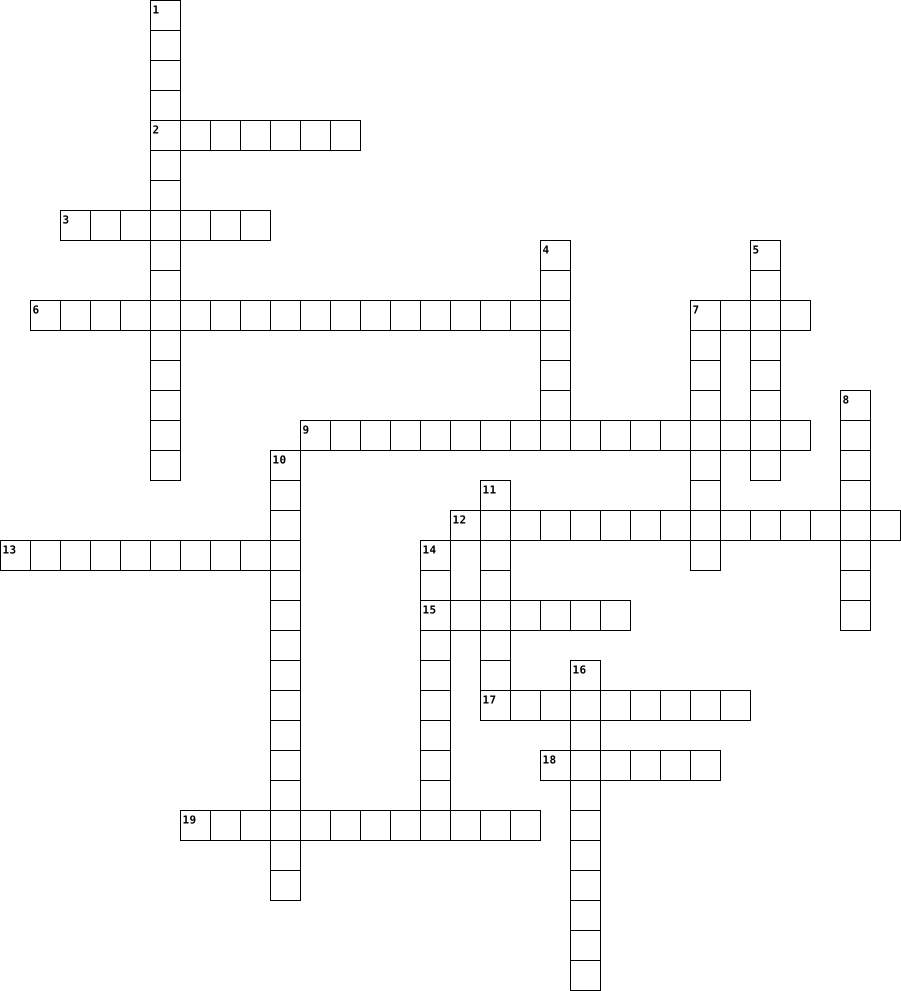
Across
- energy stored in forces holding atomic nuclei together
- energy of the movement of molecules
- natural underground pressure pushes oil to the surface
- formed from the compression of dead plant material
- used when coal deposits are deep underground
- energy emitted in the form of waves
- energy required to move/change an objects position
- the cleanest burning fossil fuel
- is considered the worst man-made ecological disaster
- the ability to do work
- used when coal deposits are near the surface
Down
- initial pressure diminishes so water of gas is pumped through to push out the oil
- the energy of motion
- another name for hydraulic fracturing
- energy of an object due to its position or shape
- energy stored in chemical bonds between atoms and molecules
- where a large nucleus is broken, two small isotopes of hydrogen fuse to form helium
- energy associated with the movement/flow of electrons
- commonly used process for converting stored chemical energy
- an unstable atom (fuel for a nuclear reactor)
20 Clues: the energy of motion • the ability to do work • the cleanest burning fossil fuel • energy of the movement of molecules • energy emitted in the form of waves • another name for hydraulic fracturing • used when coal deposits are deep underground • used when coal deposits are near the surface • an unstable atom (fuel for a nuclear reactor) • ...
Energy 2022-02-25
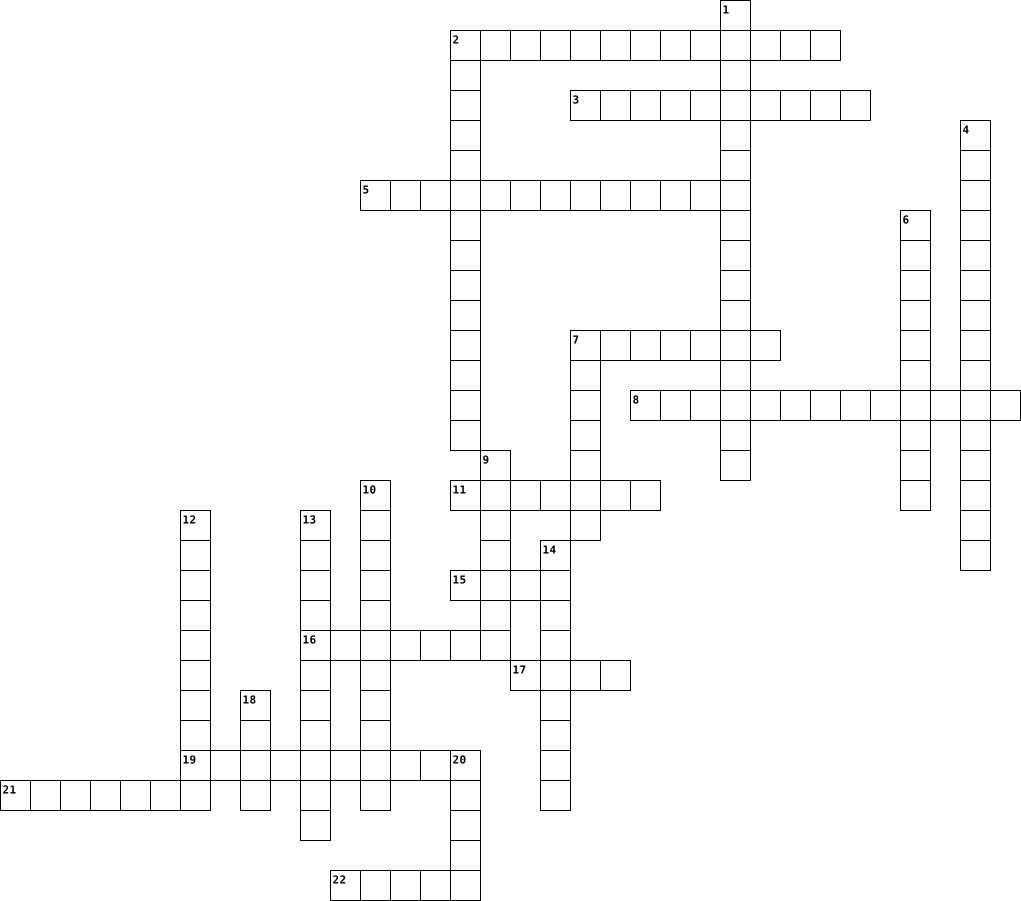
Across
- Complete circuit
- energy from water in the earths crust
- Parts are in one line
- fossil energy
- water energy
- comes from wood and solid waste
- Metal strip breaks
- How much electricity is flowing through a circuit
- power created by burning this substance
- Lets electrons move
- forces current through circuit
- rate of converted energy
Down
- used to show diagram parts
- creates open switch to stop flow
- each bulb can light it's own path
- Doesn't let electrons move
- steam into electricity
- Set of components that help move electrons
- Caused by electron movements
- slowing the circuit down
- Opening in circuit
- comes from dead plants and animals
- power from the wind
- power from the sun
24 Clues: water energy • fossil energy • Complete circuit • Opening in circuit • Metal strip breaks • power from the sun • power from the wind • Lets electrons move • Parts are in one line • steam into electricity • slowing the circuit down • rate of converted energy • used to show diagram parts • Doesn't let electrons move • Caused by electron movements • forces current through circuit • ...
Energy 2022-05-17
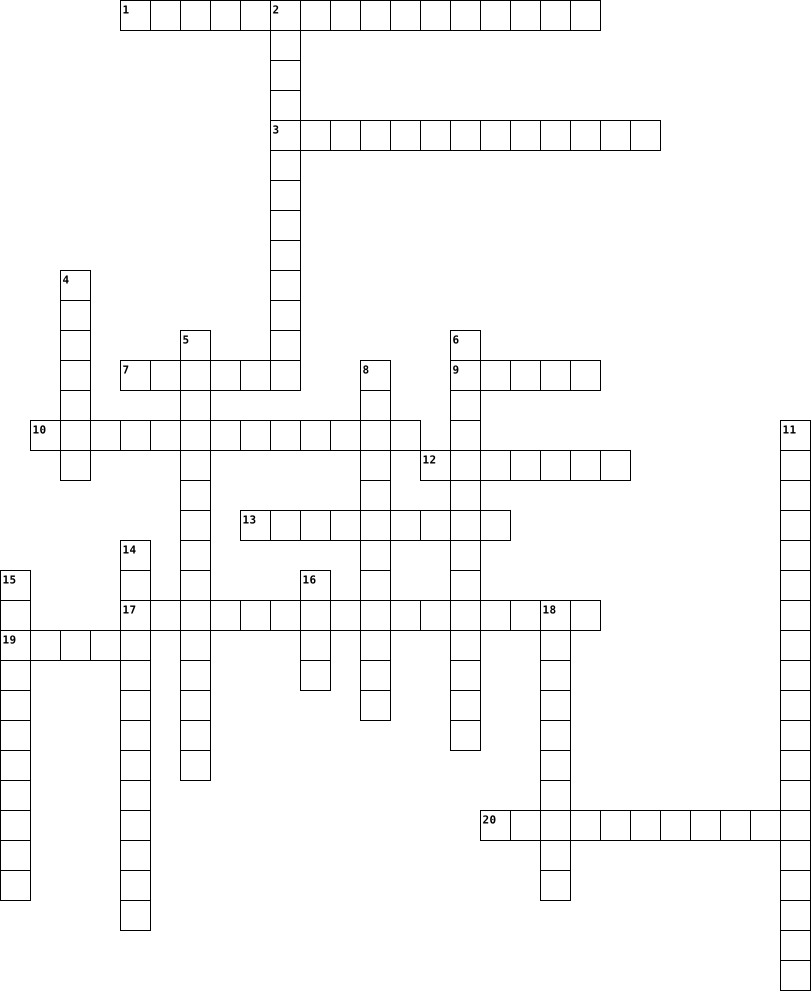
Across
- The sun of potential energy and kinetic energy.
- Stretched energy.
- Power derived from the utilization of physical or chemical resources especially to provide light or heat to work machines.
- Energy involving water.
- Machine used to make more force with less energy.
- Energy generated by living or once living organisms.
- Stored energy.
- Energy derived as a result of movement of electrically charged particles.
- Energy involving the sun.
- The degree or intensity of heat present in a substance or object. Measured by tools one example being a thermometer.
Down
- The energy in the nucleus or core of an atom.
- Energy in motion.
- Type of energy that can be reused.
- Energy stored in chemical compounds.
- energy Type of energy that can be used up completely.
- The energy stored in an object due to its height above the Earth.
- The movement of molecules within an object or substance due to heat.
- Type of nonrenewable energy.
- Energy involving movement of air.
- Heat within the Earth.
20 Clues: Stored energy. • Stretched energy. • Energy in motion. • Heat within the Earth. • Energy involving water. • Energy involving the sun. • Type of nonrenewable energy. • Energy involving movement of air. • Type of energy that can be reused. • Energy stored in chemical compounds. • The energy in the nucleus or core of an atom. • The sun of potential energy and kinetic energy. • ...
Energy 2023-07-12
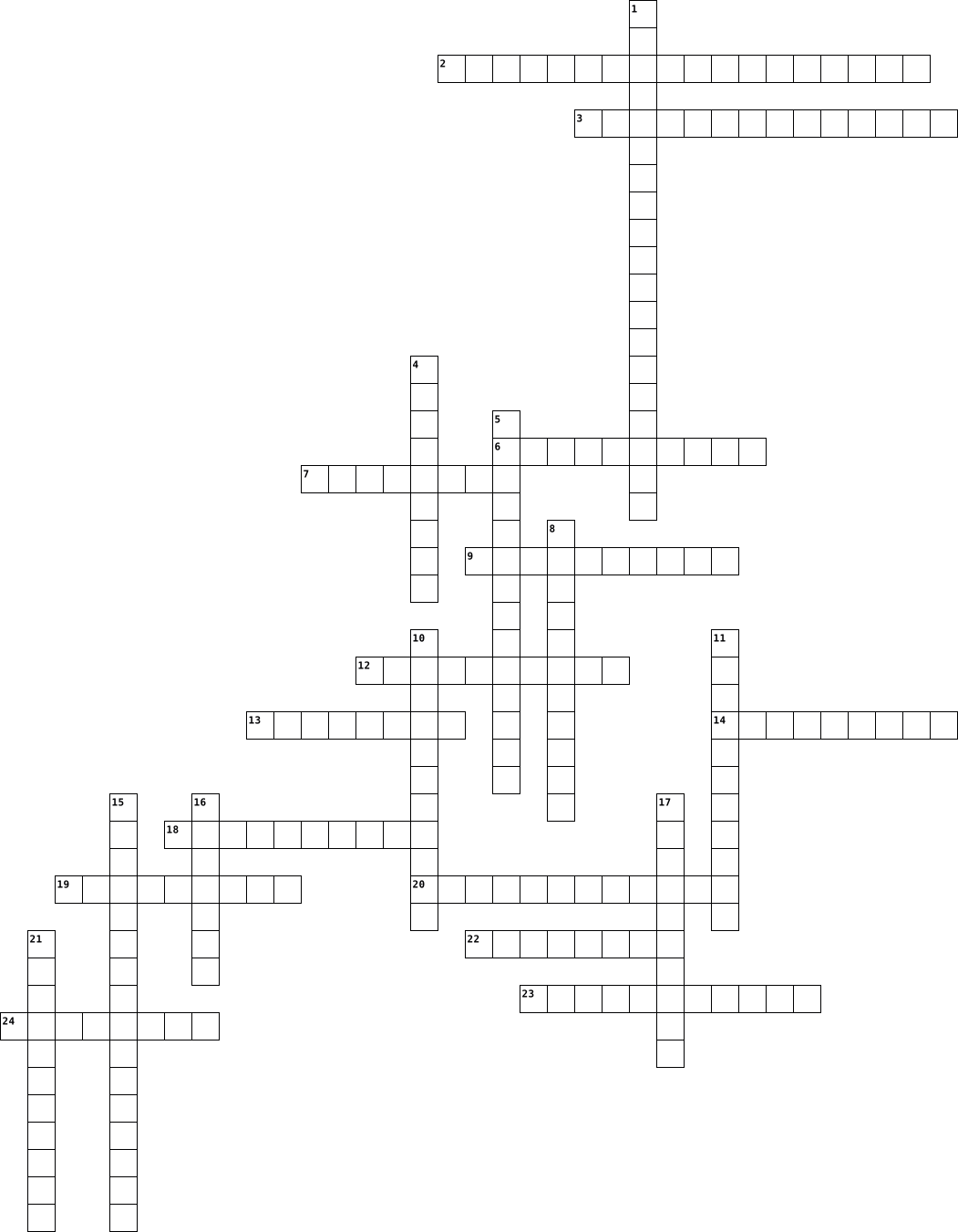
Across
- A graph showing the energy change in a reaction
- Heat energy change measured at constant pressure
- A reaction which gives out heat energy to the surroundings
- A cell which produces electrical energy when hydrogen and oxygen react
- A reaction which can go both forwards and backwards
- The mean energy needed to break a particular type of covalent bond
- A negative particle found in the shells of atoms
- The substances reacted in a chemical reaction
- An example of an exothermic reaction
- A reaction where oxygen is added
- A reaction which only goes one way (forwards)
- The substances made in a chemical reaction
- Ensuring there are sufficient resources/energy for now as well as for future generations
- A process which is cost effective
Down
- Two connected electrodes placed in an electrolyte to produce a voltage
- A reaction where oxygen is removed
- A use of an exothermic reaction
- A measure of how much heat energy something has
- A reaction which takes in heat energy from the surroundings
- A piece of apparatus used to record the temperature
- Minimum energy needed for a reaction to happen when 2 particles collide
- Several cells connected together in series
- A reaction between fuel and oxygen which gives out heat energy
- A solution which conducts electricity
24 Clues: A use of an exothermic reaction • A reaction where oxygen is added • A process which is cost effective • A reaction where oxygen is removed • An example of an exothermic reaction • A solution which conducts electricity • Several cells connected together in series • The substances made in a chemical reaction • The substances reacted in a chemical reaction • ...
Energy 2024-01-08
Across
- type of heat transfer which happens in solids
- sound and light are examples of this type of energy transfer
- this is the name for energy that can be used
- type of heat transfer that happens in fluids
- this is a measure of the average kinetic energy of the particles in a substance
- this is the name for energy that cannot be used
- type of energy store found in batteries
- this is where humans get their chemical energy from
- this measuring device measures temperature
- the unit of temperature is degrees what?
- conduction and convection are both examples of a what transfer?
- type of energy store found in a hot piece of metal
- type of energy store found in an object on a high shelf
Down
- type of energy store found in speeding car
- this is the name for substances that do not conduct heat well
- this is how particles move in a solid
- this law means that energy cannot be created or destroyed
- this is the name for substances that do conduct heat well
- when two objects are at the same temperature they are in thermal what?
- the unit of energy
- type of energy store found in stretched spring
- this type of energy transfer happens in circuits
22 Clues: the unit of energy • this is how particles move in a solid • type of energy store found in batteries • the unit of temperature is degrees what? • type of energy store found in speeding car • this measuring device measures temperature • this is the name for energy that can be used • type of heat transfer that happens in fluids • ...
Energy 2020-09-06
Across
- the abbreviation for Light Emitting Diode, an electronic part similar to a lamp
- a 3D glass object that is used to split white light into seven colours
- a device that makes use of expansion to take the temperature
- the property of light that allows light to be blocked
- a renewable energy source that uses the sun
- the process that is used by plants to make their own food
- another word for heat
- the opposite of positive
- energy to do with movement
- a type of electrical wire that has clips at both ends
- an energy source that is used to make petrol to power cars
- an energy source that is used in fire places
Down
- the type of energy in a banana
- these things are found in most bathrooms and bounce (reflect) light back
- the scientific word for bending light
- the type of energy that we use by plugging in to a power point
- the main type of energy coming out of a trumpet
- a part used in an electrical circuit. It converts chemical energy to electrical energy.
- an energy source that is used to create a flame on some stove tops
- a property of thermal energy that makes crayons turn into a liquid when heated
- an energy source that is used to make sail boats move
- energy that is stored
- a property of thermal energy that makes train tracks buckle on hot days, unless they have a gap in the rail
- most of Australia‘s energy comes from this source
- Energy is the ability to do______.
25 Clues: energy that is stored • another word for heat • the opposite of positive • energy to do with movement • the type of energy in a banana • Energy is the ability to do______. • the scientific word for bending light • a renewable energy source that uses the sun • an energy source that is used in fire places • the main type of energy coming out of a trumpet • ...
Energy 2024-03-11
Across
- A form of kinetic energy created when objects vibrate.
- A form of energy given to an object causing particles increase in temperature
- The principle of conservation of energy says that energy cannot be created or destroyed, but only ____________ from one form to another.
- The first name of the scientist that had a particular interest in energy conversions
- The main source of our energy.
- Chemical energy in plants is converted to either chemical energy in a natural gas, alcohol or heat energy by burning.
- Energy __________ is to avoid wasting energy to ensure it is available for future generations
- A non-renewable energy source that are made of the remains of plants and animals.
- The potential energy of the water is converted to kinetic energy in a turbine and then into electrical energy in a generator.
- An energy source that will never be used up.
Down
- When energy is converted to a less useful form.
- The unit for energy.
- The ability to do work
- The use of a resource so that it does not run out.
- A form of energy that an object has due to its position or shape.
- The nucleus of an atom has a huge amount of stored energy.
- An energy source that will not be regenerated in our lifetime.
- This is the energy of an object that is in motion.
- A form of energy that is found in food.
- The diagram that shows the flow of energy entering and leaving a device.
- Work = __________ x distance.
- The energy used to do a task.
- This is energy from the sun that provides energy for plants to grow.
23 Clues: The unit for energy. • The ability to do work • Work = __________ x distance. • The energy used to do a task. • The main source of our energy. • A form of energy that is found in food. • An energy source that will never be used up. • When energy is converted to a less useful form. • The use of a resource so that it does not run out. • ...
Energy 2024-04-15
Across
- The energy of an object due to its position above a reference level.
- The x in PE=1/2kx^2
- When a basketball hits the floor, energy is _________ to the floor.
- PE = m g ___
- The energy of an object or substance due to motion.
- At the top of a ramp you will have maximum Potential and _________.
- The energy of a stretched or compressed spring.
- When you burn wood, energy is ______ from chemical to other types of energy.
- The k in PE=1/2kx^2
- An Audible type of energy given off.
- The total energy of a system, KE + PE.
Down
- A type of energy that is given of by objects colliding or by burning.
- The energy stored in chemical bonds.
- The m in PE=mgh and KE=1/2mv^2 is..
- The unit for all types of energy
- The energy of a system due to its position or arrangement.
- For an object to have Kinetic energy, it must be ______.
- The Law of __________ states that energy can not be created or destroyed, only transformed or transferred.
- Given off as a visible type of energy.
- At the top of a hill you will have _________ and minimum Kinetic.
- ______ is always 9.8 m/s^2 on Earth.
- The ability of an object to change its state or the environment
22 Clues: PE = m g ___ • The x in PE=1/2kx^2 • The k in PE=1/2kx^2 • The unit for all types of energy • The m in PE=mgh and KE=1/2mv^2 is.. • The energy stored in chemical bonds. • ______ is always 9.8 m/s^2 on Earth. • An Audible type of energy given off. • Given off as a visible type of energy. • The total energy of a system, KE + PE. • The energy of a stretched or compressed spring. • ...
energy 2025-05-22

Across
- energy Comes from limited sources like coal and oil
- fuels Coal, oil, and gas formed over millions of years
- footprint Total CO₂ produced by activities
- Harmful substances released into air, water, or soil
- car Uses both fuel and electric power
- Spinning device that helps generate electricity
- transport Buses and trains shared by many people
- impact Effect of activity on the amount of CO₂ produced
- Keeps heat inside buildings, reducing energy use
- Reuse materials to reduce waste
- Uses less electricity for the same job
- panels Convert sunlight into electricity
Down
- power Uses wind to spin turbines and generate electricity
- Converts movement into electrical energy
- saving Reducing the amount of power used
- waste Uneaten or expired food
- produce Food grown in its natural season
- Using resources in a way that preserves them for the future
- waste Dangerous by-product of nuclear energy
- bottle Used multiple times to avoid plastic waste
- food Grown nearby, reduces transport emissions
- Break down food waste naturally into fertilizer
- energy Comes from natural, endless sources like wind
- energy Uses uranium atoms splitting to produce power
- pollution Unattractive or disruptive sights (e.g. wind farms)
- showers Save water compared to long baths
26 Clues: waste Uneaten or expired food • Reuse materials to reduce waste • car Uses both fuel and electric power • Uses less electricity for the same job • Converts movement into electrical energy • saving Reducing the amount of power used • produce Food grown in its natural season • panels Convert sunlight into electricity • showers Save water compared to long baths • ...
Energy 2026-01-05

Across
- How much energy do people use?
- What energy comes from sources that do not run out (sun, wind, water)?
- Where is crude oil changed into gas, diesel, and other products?
- What is oil called before it is cleaned and processed?
- What machine turns motion into electricity?
- What gases are released into the air when fuels are burned?
- What is the flow of electricity through wires?
- What harmful waste is released when fossil fuels are burned?
- What liquid fuel is taken from the ground and used to make gas and plastics?
Down
- How can energy be used without wasting too much?
- How do people get oil and gas from deep underground?
- What gas fuel is used for heating, cooking, and electricity?
- What energy comes from sources that can run out (oil, coal, gas)?
- What kind of energy powers lights, phones, and appliances?
- What allows machines, homes, and people to work or move?
- Where is electricity made?
- What fuels come from plants and animals that lived long ago (oil, coal, gas)?
- What solid fossil fuel is burned to make electricity?
- How does electricity travel from power plants to homes and schools?
- What spinning machine helps make electricity in power plants?
20 Clues: Where is electricity made? • How much energy do people use? • What machine turns motion into electricity? • What is the flow of electricity through wires? • How can energy be used without wasting too much? • How do people get oil and gas from deep underground? • What solid fossil fuel is burned to make electricity? • ...
Energy 2026-01-27

Across
- the energy that a machine or device provides or wastes
- existing in limited quantities that cannot be replaced after they have all been used
- a device that will break the circuit if the current gets too high, without being destroyed
- a device that will break the circuit if any current leaks from a circuit
- a non-renewable energy source such as oil, coal or natural gas
- a material that allows electric current to flow easily
- can be produced as quickly as it is used
- a circuit in which there is only one path for the current to flow along
- the output energy that a machine creates that is not useful
- the energy that a machine or device uses as its source of energy
- causing little or no damage to the environment and therefore able to continue for a long time
- the law that states there is a direct proportionality between the voltage applied across some conductors and the resultant electric current
- a circuit in which each component is connected in a separate conducting path
- a measurement of how much energy each charge carrier is given
Down
- serious injury or death caused by an electric current passing through the body
- thermal energy that originates from inside Earth
- a device that will self-destruct if the current gets too high
- a material through which current cannot flow easily
- the degree to which a substance resists the flow of an electric current through it
- a renewable source of energy harnessing the gravitational potential energy of water to generate electrical energy
- a device that transforms electrical energy to another form of energy in a circuit
- a measure of stiffness in a spring or elastic
- measures the voltage provided by the power supply or the voltage drop across components of the circuit
- a measure of the ability to produce useful energy
- the unit of electric charge
- a device for measuring electric current
- the flow of 6.242 ×10¹⁸ electrons per second
- energy that can be used for a specific purpose
- a single electrical energy source that produces a current
- having an earth pin in a plug through which the electric current will flow to the ground in the case of a fault
- a portable source of power
- the unit of resistance
32 Clues: the unit of resistance • a portable source of power • the unit of electric charge • a device for measuring electric current • can be produced as quickly as it is used • the flow of 6.242 ×10¹⁸ electrons per second • a measure of stiffness in a spring or elastic • energy that can be used for a specific purpose • thermal energy that originates from inside Earth • ...
Energy 2026-02-11

Across
- Extremely hot, ionized gas where electrons are stripped from nuclei.
- Wind is technically a form of this energy type.
- Ions of this element move through the electrolyte in a fuel cell.
- An isotope of hydrogen that has one proton and one neutron.
- VAPOR The only byproduct when hydrogen is used in a fuel cell.
- Location of the largest PV systems in the country.
- The facility containing the generator and turbine in a hydro plant.
- Wind systems serving local demand for homes or schools.
- The positive electrode in a fuel cell.
- An "always on" energy source that provides a constant power supply.
- Turbines that do not need to be adjusted to point into the wind to operate.
- Component used to manage water discharge at a dam.
- Process where light atoms combine to release massive energy.
- What CSP plants store in substances like molten salt.
Down
- Less than 3% of these 90,000+ structures in the U.S. produce power.
- Literally means "heat from the earth".
- The electrode where hydrogen enters the fuel cell.
- An eggbeater-style model of a vertical-axis wind turbine.
- Known as the "Swiss Army Knife of Energy".
- A solar-thermal method using mirrors to reflect sunlight onto a receiver.
- STORAGE A system that acts as a giant battery by moving water between reservoirs.
- Describes hydropower’s ability to ramp up or down quickly.
- Technology using semiconductor materials to convert sunlight directly into electricity.
- One of two states generating more than 50% of its electricity from wind.
24 Clues: Literally means "heat from the earth". • The positive electrode in a fuel cell. • Known as the "Swiss Army Knife of Energy". • Wind is technically a form of this energy type. • The electrode where hydrogen enters the fuel cell. • Location of the largest PV systems in the country. • Component used to manage water discharge at a dam. • ...
Energy 2026-02-24

Across
- Steps taken in a chemical reaction
- Everything outside the system
- law Enthalpy change depends only on initial and final states
- Amount of heat needed to change temperature of an object
- Starting substances in a reaction
- Energy required to raise 1 g of water by 1°C
- that absorbs heat (positive ΔH)
- Energy proportional to mass and velocity squared
- Energy stored due to position or chemical composition
- SI unit of energy
- Measure of average molecular kinetic energy
- Heat content of a system at constant pressure
Down
- that releases heat (negative ΔH)
- Rapid oxidation producing heat and light
- Total microscopic kinetic and potential energy
- Energy required to raise temperature of 1 g by 1°C
- Measurement of heat flow
- Instrument used to measure heat change
- Energy transfer caused by temperature difference
- of the universe under study
- Capacity to do work or transfer heat
- Energy associated with random particle motion
- transferred by force acting over distance
- Study of heat and energy transfer
- Substances formed in a reaction
25 Clues: SI unit of energy • Measurement of heat flow • of the universe under study • Everything outside the system • that absorbs heat (positive ΔH) • Substances formed in a reaction • that releases heat (negative ΔH) • Starting substances in a reaction • Study of heat and energy transfer • Steps taken in a chemical reaction • Capacity to do work or transfer heat • ...
ENERGY 2024-05-28

Across
- The ability to do work
- Energy-binding particles in the nucleus of an atom is what energy?
- Energy from moving charged electrons
- S.I unit of Energy
- Energy a body has due to its motion
- The energy held by an apple hanging in a tree
- Heat can be kept in a house with
- Energy produced by the sun
- The energy produced by a speaker
- A microwave can make food hot due to its
- A leaf in a tree has gravitational potential energy due to its
- Energy from charged particles in an electric field
- The energy when air molecules are moved
Down
- Turning the lights off in a room you are not in is
- Energy stored in a stretched elastic band
- Energy due to the motion of particles
- Solar energy can be harnessed with
- Energy stored in the bonds of chemicals
- The energy from a bike being ridden
- Energy of Gamma waves, etc.
20 Clues: S.I unit of Energy • The ability to do work • Energy produced by the sun • Energy of Gamma waves, etc. • Heat can be kept in a house with • The energy produced by a speaker • Solar energy can be harnessed with • The energy from a bike being ridden • Energy a body has due to its motion • Energy from moving charged electrons • Energy due to the motion of particles • ...
Energy 2024-05-30

Across
- The law of conservation of energy states that energy can neither be ___ or destroyed.
- Radio waves, infrared waves and light waves are all examples of ____ energy.
- Elastic energy is formed when an object is ___ or twisted.
- Energy formed from fruits hanging from tree.
- Electrical energy is needed to power electronics like ___ machines.
- Energy transferred by the ____ particles of a sound wave.
- The law of ____ of energy.
- The energy in the form of moving electrons.
- Energy from burning fuel.
Down
- The SI unit of energy.
- The type of energy in motion.
- Energy made from an object's particular position.
- A __ the kettle is an example of thermal energy.
- The energy formed from the bonds of chemicals.
- Magnetic energy is from moving charged electrons.
- Energy from a compressed spring.
- The energy formed from the binding particles in a nucleus.
- Thermal energy is formed from the ___ of articles in a body.
- Gravitational potential energy is the energy from the ___ position of an object.
- ___ is the ability to do work.
20 Clues: The SI unit of energy. • Energy from burning fuel. • The law of ____ of energy. • The type of energy in motion. • ___ is the ability to do work. • Energy from a compressed spring. • The energy in the form of moving electrons. • Energy formed from fruits hanging from tree. • The energy formed from the bonds of chemicals. • A __ the kettle is an example of thermal energy. • ...
Energy 2024-05-30

Across
- Type of energy generated by the sun
- Energy binding particles in the nucleus of an atom
- Substance eaten for energy
- Star at the center of the solar system.
- Related to heat or temperature
- Object is stretched or bent
- Stored energy
- Stores and gives out electrical power
- Uses electromagnetic waves to heat food
Down
- Energy from vibrating sound waves
- Energy from moving electrons
- Product of force and distance moved
- Energy an object has due to motion
- Boosts sight and makes things visible
- The flow of electrical power
- A condition of being hot
- State of matter with no fixed shape or volume
- The rate at which work is done
- Ability to do work
- Used for transportation
20 Clues: Stored energy • Ability to do work • Used for transportation • A condition of being hot • Substance eaten for energy • Object is stretched or bent • Energy from moving electrons • The flow of electrical power • Related to heat or temperature • The rate at which work is done • Energy from vibrating sound waves • Energy an object has due to motion • Type of energy generated by the sun • ...
Energy 2024-05-30

Across
- Magnetic Energy is energy from moving charged _________.
- Using glass or _______ pans are better than using regular ones.
- Energy in the form of waves moving at the speed of light.
- Energy binding particles in the nuclear of an atom.
- Energy transfered by vibrating particles which produce sound waves.
- Energy stored in the bonds in a chemical.
- Switch to energy-saving light _____.
- _____ panels are a great way of saving energy.
- Electrical Energy to is energy due to the result of moving _______ particles in an electric field.
- Gravitational Energy is energy stored in an object due to its ______ or vertical position.
- One way to save energy is to ____ instead of driving.
Down
- Energy stored in an object when it is contorted, bent or twisted.
- Energy due to the motion of particles in a body.
- __________ roofs can energy conservation method.
- _______ Energy is energy an object has due to its motion.
- Turn off __________ appliances when not in use.
- Closing _______ can help in preserving energy.
- The ability or capacity to do work.
- The law of ____________ of energy says that energy can neither be created or destroyed from one form to another.
- _________ Energy is energy stored in an object due to its position, condition or state.
20 Clues: The ability or capacity to do work. • Switch to energy-saving light _____. • Energy stored in the bonds in a chemical. • Closing _______ can help in preserving energy. • _____ panels are a great way of saving energy. • Turn off __________ appliances when not in use. • Energy due to the motion of particles in a body. • __________ roofs can energy conservation method. • ...
ENERGY 2025-04-15

Across
- – The effect an activity or resource has on the natural world, including plants, animals, air, and water.
- – How much money, time, or effort is needed to use or produce energy.
- - Energy from sources that can naturally replenish over time, like solar, wind, hydro, biomass, and geothermal.
- – A black rock burned for energy; a nonrenewable fossil fuel that pollutes the air.
- – The shift from using fossil fuels to using cleaner, renewable energy sources.
- – A structure built across a river to hold back water and often used to generate hydroelectric power.
- – To use less of something, especially resources or energy, to lower waste and environmental impact.
- – Gases like carbon dioxide (CO₂), methane (CH₄), and water vapor that trap heat in Earth’s atmosphere, contributing to global warming.
- – Severe and unusual weather like hurricanes, floods, heatwaves, and droughts that are becoming more frequent and intense due to climate change.
- – How consistently and dependably an energy source can produce power.
- – Organic material (like plants and waste) burned or processed to make energy; renewable but can produce pollution.
- – The process by which societies move from farming-based to machine-based manufacturing, leading to increased use of energy and resources.
- – Harmful substances released into the environment that can damage air, water, land, or living things.
- – Removing minerals or other resources from the ground, often causing land damage and pollution.
- – Heat energy from within the Earth, used to generate electricity or heat buildings.
- – Actions taken to reduce or prevent the emission of greenhouse gases and slow climate change (e.g., using renewable energy, planting trees).
- – A liquid fossil fuel used for gasoline and other products; nonrenewable and polluting.
- – Energy from sunlight, captured using solar panels to make electricity or heat.
Down
- – A device that captures sunlight and turns it into electricity.
- – Adjusting behaviors, systems, or structures to reduce harm or take advantage of opportunities caused by climate change (e.g., building sea walls, changing crops).
- – A group of wind turbines in one area used to produce electricity.
- – Energy produced by splitting atoms, often using uranium; it produces electricity but also creates radioactive waste.
- – The increase in ocean levels caused by melting ice and the expansion of warmer seawater due to global warming.
- – To process used materials into new products, reducing the need for new raw materials.
- – The process of digging into the Earth to extract oil or gas.
- – The protection and wise use of natural resources to prevent overuse, waste, or harm.
- – A device that stores energy for later use, especially in solar and wind systems.
- – Anything from nature that people use to meet their needs, such as water, energy, and minerals.
- – Electricity made by moving water, usually from a dam; a renewable source of power.
- – Nonrenewable energy sources formed from the remains of ancient plants and animals, including coal, petroleum (oil), and natural gas.
- – The ability to meet current needs without compromising the ability of future generations to meet theirs.
- – To use materials or items again instead of discarding them after a single use.
- – Responsible care and management of the environment and natural resources for the benefit of future generations.
- – The ability to do work or cause change; it powers homes, vehicles, and technology.
- – A renewable energy source where moving air turns turbines to produce electricity.
- – Energy from sources that take millions of years to form and cannot be quickly replaced, such as coal, oil, natural gas, and nuclear.
- – A fossil fuel found underground, used for heating and electricity, but can cause air pollution.
37 Clues: – The process of digging into the Earth to extract oil or gas. • – A device that captures sunlight and turns it into electricity. • – A group of wind turbines in one area used to produce electricity. • – How much money, time, or effort is needed to use or produce energy. • – How consistently and dependably an energy source can produce power. • ...
Energy 2021-02-12
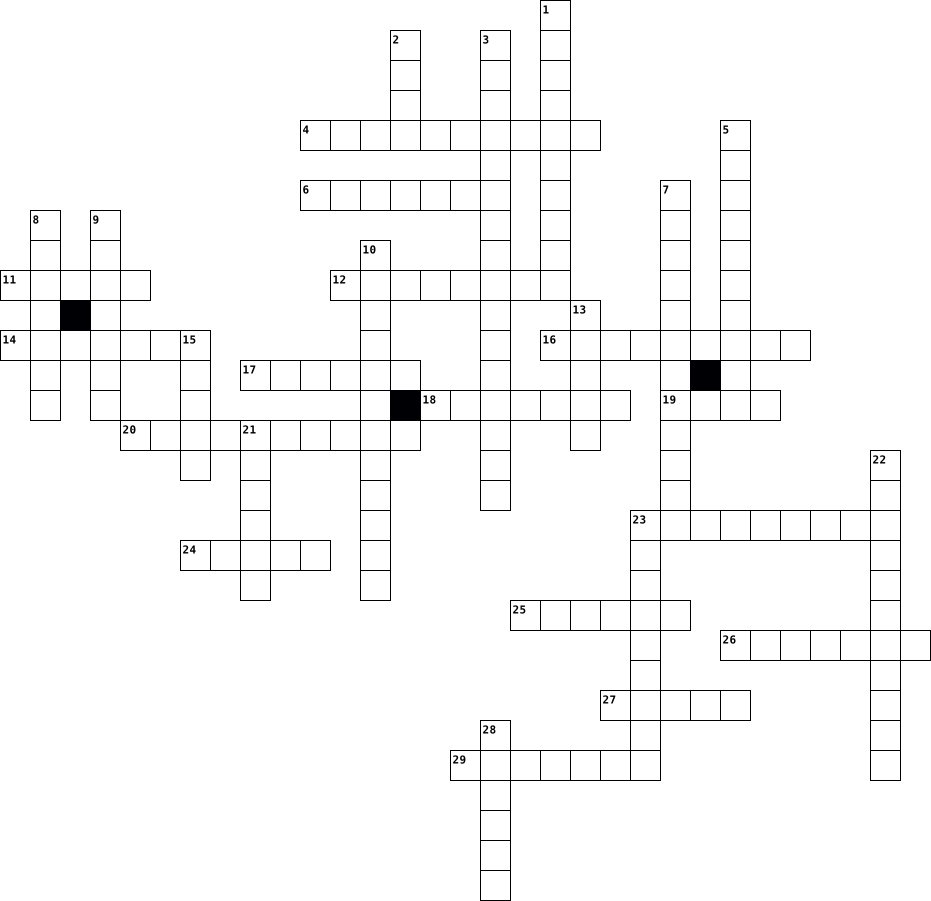
Across
- Motion or activity
- Visible radiation
- Moving water making electricity
- Heat transfer through direct contact
- Organic materials used as fuel
- Transfer of energy through mechanical forces
- Moons gravitational pull creates....
- Energy sources that get used up
- This word means Sun
- Atoms splitting
- Heat from the earth
- Converts linear motion to rotational motion
- Fission or Fusion
Down
- Stored energy
- Atoms coming together
- Movement of electrons
- Converts light to electricity
- Ability to do work
- How heat from the sun gets to earth
- Earth's pull on materials
- Moving air
- Kinetic pressure waves
- Hot gases or liquids moving upward
- Energy sources that are always available
- Decomposing matter's methane gas as fuel
- Wind pushing water creates....
- Movement of molecules
- Chemical reaction gives off energy
- Energy from deformation
- This word means Heat
30 Clues: Moving air • Stored energy • Atoms splitting • Visible radiation • Fission or Fusion • Motion or activity • Ability to do work • This word means Sun • Heat from the earth • This word means Heat • Atoms coming together • Movement of electrons • Movement of molecules • Kinetic pressure waves • Energy from deformation • Earth's pull on materials • Converts light to electricity • ...
Energy 2022-09-28
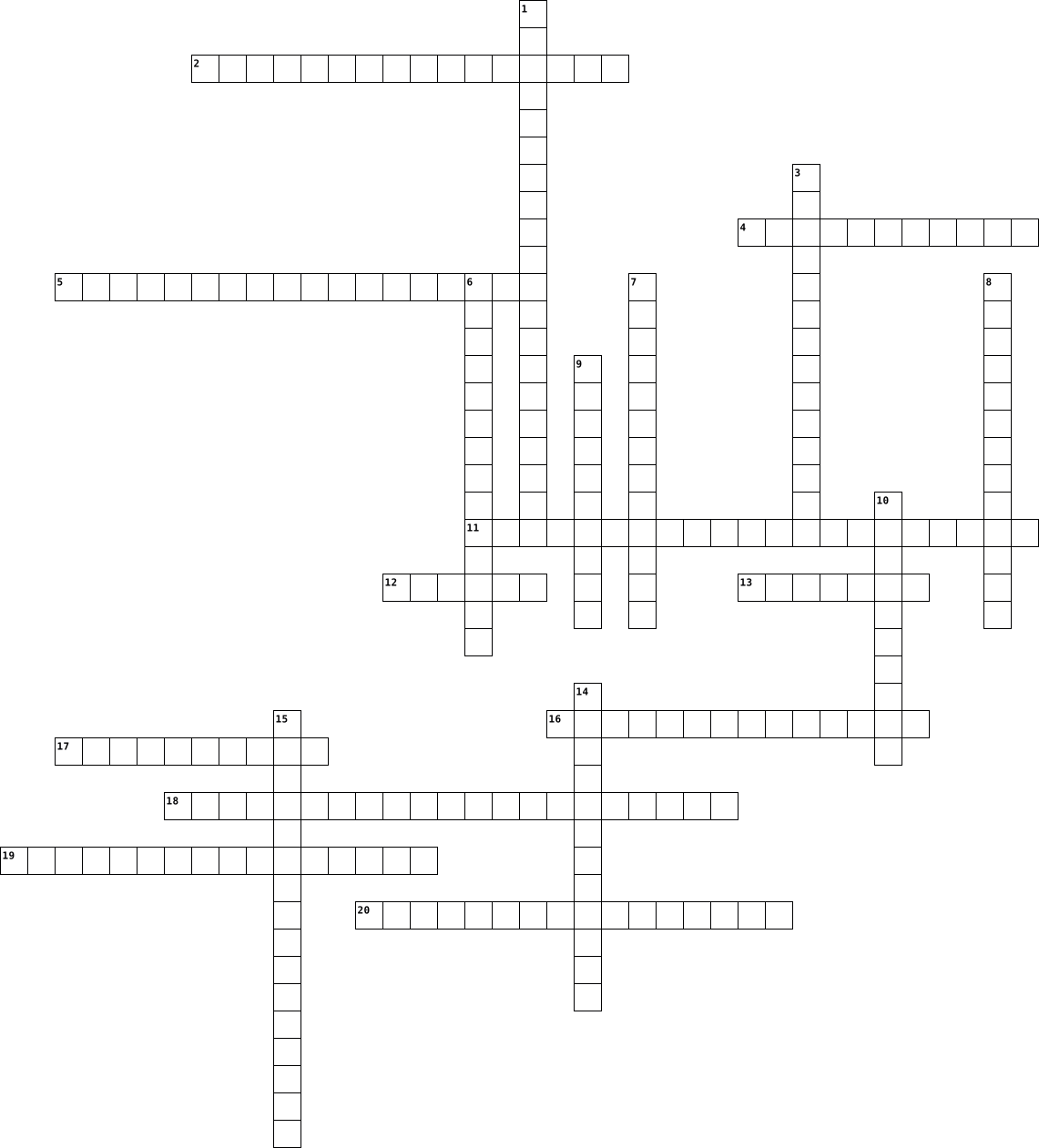
Across
- reflects and forces sunlight onto a fluid pipe, thermal energy is used to create steam, which turns the turbine wind energy
- energy that travels as waves through matter or through empty space
- solar cell can change light energy into electricity
- heat energy from inside the earth that can be used to heat buildings and produce electricity
- energy of moving charges (lamps, toasters)
- a change form one form to another
- can be replaced as it is or cannot be used up
- the ability to make things move or change
- energy of moving air( wind turbines)
- energy from the sun
- energy stored in the bonds that hold atoms together
- energy stored in the nucleus of an atom
- careful use of resources
Down
- an energy resource that formed over millions of years from decayed remains of plants and animals
- energy of moving objects (car moving)
- the energy of moving particles (hot cocoa has many)
- used up much faster than it can be replaced
- any material from living things that can be used as an energy source
- store electrical energy produced by solar cells
- energy of moving water
20 Clues: energy from the sun • energy of moving water • careful use of resources • a change form one form to another • energy of moving air( wind turbines) • energy of moving objects (car moving) • energy stored in the nucleus of an atom • the ability to make things move or change • energy of moving charges (lamps, toasters) • used up much faster than it can be replaced • ...
Energy 2022-09-01
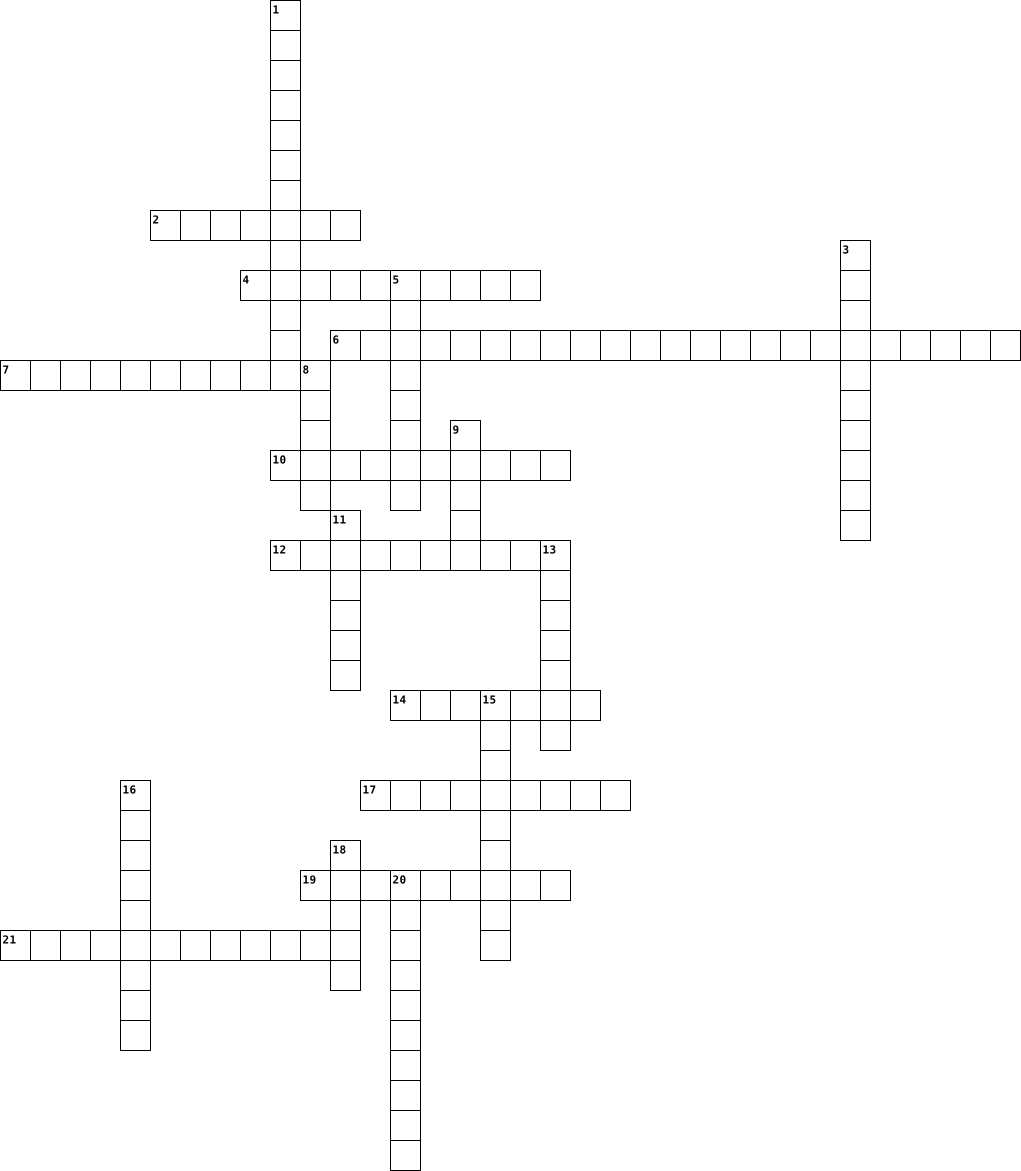
Across
- moving energy
- heat transfer through fluids
- the song is about
- energy from bones
- energy that does work
- heat transfer from solid to solid
- energy that involves heat
- distance from the origin to the crest of the wave
- still energy
- energy can not be created or destroyed
Down
- pull towards earth
- distance from crest to crest
- energy that involves chemical reactions
- wavelength x frequency
- part of the spectrum we can see
- the ability to do work
- energy released during fission
- heat transfer through waves
- how often something happens
- energy traveling through vibrations
- energy like a battery
21 Clues: still energy • moving energy • the song is about • energy from bones • pull towards earth • energy that does work • energy like a battery • wavelength x frequency • the ability to do work • energy that involves heat • heat transfer through waves • how often something happens • distance from crest to crest • heat transfer through fluids • energy released during fission • ...
energy 2025-12-01

Across
- Subtle energy field around a person
- The frequency your energy gives off
- Inner brightness or uplifting energy
- Awareness in the current moment
- Feeling aligned and stable within
- Energy that restores or soothes
- To let go of heavy or stuck energy
- To bring energy into reality
- Feeling stable and connected
Down
- Energy center within the body
- A glowing, warm energy
- The rate at which energy moves
- A state of steady, calm energy
- The purpose behind your energy
- Energies working well together
- Clear and focused energy
- A peaceful emotional energy
- To grow or open energetically
- When your mind and energy match
- Smooth movement of energy
20 Clues: A glowing, warm energy • Clear and focused energy • Smooth movement of energy • A peaceful emotional energy • To bring energy into reality • Feeling stable and connected • Energy center within the body • To grow or open energetically • The rate at which energy moves • A state of steady, calm energy • The purpose behind your energy • Energies working well together • ...
Energy 2025-11-24

Across
- energy can not be created or..
- when energy moves from one object or place to another
- energy stored in food or fuel
- energy of movement
- a complete path that electricity can flow through
- heat transfer by moving fluids like air or water
- energy that travels in waves and can be seen
- the ability to do work
- material that slows down heat transfer
- energy from the Sun
- a device that stores chemical energy for a circuit
Down
- heat energy
- energy stored when something is stretched
- heat transfer through waves without touching
- stored energy
- energy stored due to height
- energy of moving parts or machines
- a device that opens or closes a circuit
- energy carried by electric currents
- heat transfer through direct contact
- energy that travels as vibrations
- when energy changes from one form to another
- energy stored inside atoms
- how much useful energy comes out compared to what goes in
- thin metal strands that carry electric current
- energy that is not useful in a transfer
26 Clues: heat energy • stored energy • energy of movement • energy from the Sun • the ability to do work • energy stored inside atoms • energy stored due to height • energy stored in food or fuel • energy can not be created or.. • energy that travels as vibrations • energy of moving parts or machines • energy carried by electric currents • heat transfer through direct contact • ...
Energy 2025-12-10

Across
- : Energy-saving practice of using daylight instead of artificial light
- : Excess power used by appliances even when switched off
- : The energy form possessed by moving air
- : Energy from the sun
- : A device that converts mechanical energy into electrical energy
- : The process of using energy more wisely to reduce waste
- : A circuit component that stores electrical energy
- : A device that saves electricity compared to an incandescent bulb
- : A natural source of moving air used to make electricity
- : A common renewable energy source generated by flowing water
- : The ability to do work; measured in joules
- : The unit used to measure electrical energy
Down
- : The natural gas mainly used as a cleaner fuel for cooking and transport
- : The star symbol on appliances represents this performance measure
- : A clean fuel produced from organic waste
- : Solar panels convert sunlight into this form of energy
- : Turning off appliances when not in use helps to ______ energy
- : The greenhouse gas mainly released by burning fossil fuels
- : The invisible force carried through wires to power appliances
- : The clean, renewable fuel that powers fuel cells
- : Energy that comes from resources that naturally replenish
- : The largest source of renewable energy in India, based on flowing water
- : Device used to convert AC to DC for charging gadgets
- : Unit that represents one thousand watt-hours
- : The rate at which electrical energy is used; measured in watts
- : A device used to measure electricity consumption at home
26 Clues: : Energy from the sun • : The energy form possessed by moving air • : A clean fuel produced from organic waste • : The ability to do work; measured in joules • : The unit used to measure electrical energy • : Unit that represents one thousand watt-hours • : The clean, renewable fuel that powers fuel cells • : A circuit component that stores electrical energy • ...
Energy 2026-04-01

Across
- An object or group of objects
- Rate of energy transfer
- Energy stored in chemical bonds
- Energy resource that is replenished as it is being used
- Energy stored in objects above ground
- Energy stored in stretched objects
- Energy stored in oppositely charged objects
- Energy stored in moving objects
- Energy stored in hot objects
- How much energy is usefully transferred
Down
- Energy transfer involving forces
- Energy transfer through wires
- Greenhouse gas
- Energy transfer including conduction and convection
- Energy resource that is finite
- Energy stored in radioactive objects
- Energy transfer that does not require particles
- Unit of power
- Unit of energy
- Ability of an object to do work
- Energy stored in magnets
21 Clues: Unit of power • Greenhouse gas • Unit of energy • Rate of energy transfer • Energy stored in magnets • Energy stored in hot objects • An object or group of objects • Energy transfer through wires • Energy resource that is finite • Energy stored in chemical bonds • Ability of an object to do work • Energy stored in moving objects • Energy transfer involving forces • ...
8S Lesson 3.1 - 3.2 Crossword 2023-10-23

Across
- The layer of hot rock beneath Earth's crust
- Term used to group together and describe Earth's crust and the uppermost layer of the mantle
- The layer of rock that forms Earth's outer skin
- Contains all of Earth's water
- A dense ball of solid metal at the center of Earth
- A layer of molten metal surrounding the inner core
- Forces that destroy and wear away landmasses through processes like erosion and weathering
- A group of parts that work together as a whole
Down
- Contains all parts of Earth that are living
- Soft layer of material beneath the lithosphere
- The relatively thin envelope of gases that form Earth's outermost layer
- Contains Earth's rocks, metals, and other materials; Form a solid inner core, a solid middle layer, and a rocky outer layer of Earth
- Vibrations that travel through Earth carrying the energy released in an earthquake
- Forces that shape Earth's surface by building up mountains and other landmasses
- The ability to do work
- Results from a force pressing on an area
16 Clues: The ability to do work • Contains all of Earth's water • Results from a force pressing on an area • Contains all parts of Earth that are living • The layer of hot rock beneath Earth's crust • Soft layer of material beneath the lithosphere • A group of parts that work together as a whole • The layer of rock that forms Earth's outer skin • ...
Forces and Interactions 2025-04-07

Across
- A push or a pull on an object that can cause it to move, change direction, or change shape.
- From one point to another
- An object at rest remains at rest, and an object in motion remains in motion at constant speed and in a straight line unless acted on by an unbalanced force
- The energy an object possesses due to its motion
- The speed of something in a given direction
- For every action, there is an equal and opposite reaction
Down
- The rate at which an objects velocity changes over time
- Stored energy that an object possesses due to its position or state, and it has the potential to be converted into other forms of energy, like kinetic energy, when released
- Measured in seconds, minutes, hours, and days
- The amount of "stuff" or matter that makes up an object
- The force that pulls objects towards each other, especially the force that makes things fall to the ground or keeps objects in orbit around celestial bodies
- A sudden force
- A measure of how much "mass in motion" an object has, determined by mass and velocity
- A force that resists the movement of one object sliding or rolling against another, acting in the opposite direction of the motion
- Force = mass x acceleration
15 Clues: A sudden force • From one point to another • Force = mass x acceleration • The speed of something in a given direction • Measured in seconds, minutes, hours, and days • The energy an object possesses due to its motion • The rate at which an objects velocity changes over time • The amount of "stuff" or matter that makes up an object • ...
Ella Sartori 2026-02-13

Across
- packages protein made by the E.R.
- breaks down food into smaller pieces
- controls which substances come in and out of the cell
- A membrane enclosed structure in a cell that performs certain functions for the cell
- captures energy from sunlight using photosynthesis and forms to food
Down
- gel-like fluid that fills the regions between the cell
- Small organelle that makes protein
- Acts like the cells control center where ribosomes are made
- helps ribosomes make protein
- A rigid layer that surrounds the cell of plants
- known as the powerhouse converts energy into food for the cell
- stores water, food, or other materials
12 Clues: helps ribosomes make protein • packages protein made by the E.R. • Small organelle that makes protein • breaks down food into smaller pieces • stores water, food, or other materials • A rigid layer that surrounds the cell of plants • controls which substances come in and out of the cell • gel-like fluid that fills the regions between the cell • ...
Intro to Earth's Systemts 2019-08-27

Across
- A landform with high elevation and high relief.
- A line that forms the boundary between the land and the ocean or a lake.
- The parts of Earth that contain living organisms.
- A natural stream of water that flows into another body of water, such as an ocean, lake, or another river.
- The portion of the hydrosphere that is frozen, including all the ice and snow on land, plus sea and lake ice.
- The portion of Earth that consists of water in any of its forms, including oceans, glaciers, rivers, lakes, groundwater and water vapor.
- The continual movement of water among Earth's atmosphere, oceans, and land surface through evaporation, condensation, and precipitation.
- The change in state from a gas to a liquid.
- The process by which water is lost through a plant's leaves.
- A landform made of sediment that is deposited where a river flows into an ocean or lake.
- The ability to do work or cause change.
Down
- An underground layer of rock or sediment that holds water.
- A hole sunk into the ground to reach a supply of water.
- The densest parts of Earth that include the crust, mantle, and core.
- The shape of the land determined by elevation, relief, and landforms.
- The relatively thin layer of gases that form Earth's outermost layer.
- A process in which mapmakers determine distances and elevations using instruments and the principles of geometry.
- Any form of water that falls from the clouds and reaches Earth's surface as rain, snow, sleet, or hail.
- A hill of sand piled up by the wind.
- The land area that supplies water to a river system.
- The process by which molecules at the surface of a liquid absorb enough energy to change to a gas.
- A feature on the surface of Earth, such as a coastline, dune, or mountain.
22 Clues: A hill of sand piled up by the wind. • The ability to do work or cause change. • The change in state from a gas to a liquid. • A landform with high elevation and high relief. • The parts of Earth that contain living organisms. • The land area that supplies water to a river system. • A hole sunk into the ground to reach a supply of water. • ...
Bio vocab 2025-11-20

Across
- an assemblage of different populations that live together in a defined area
- includes all the gases that surround earth
- the biosphere includes all life on earth, from underground bacteria, rain forest trees, ocean- going whales, airborne mold spores, and humans
- movement of individuals into an area occupied by an existing population
- independent factor limiting factor that affects all populations in similar ways. Regardless of the population density
- all the organisms that live in a place, together with their physical environment, are known as an ecosystem
- must acquire energy from other organisms, usually by eating them
- Producer the first producers of energy-rich compounds that can be used later by other organisms
- chemical energy powers production of carbohydrates
- Factor an abiotic factor is any non living part of the environment, such as sunlight, heat, precipitation, humidity, wind or water currents, and soil type
Down
- movement of individuals out of an area
- consists of all earths fresh water and salt water, including water vapor and rain in the atmosphere, water underground, and ice
- consists of short term changes in temperature, precipitation, clouds, and wind from day to day, or minute to minute
- distribution describes the way individuals are spaced out across their range
- dependent factor limiting factors that operate more strongly when population density is high
- defined by patterns and averages over many years of temperature, precipitation, clouds, wind, and extreme weather events such as heat waves, droughts, and floods
- captures energy from non living sources and convert it into forms living cells can use
- Capacity the number of individuals of a species that an environment can support
- Factor a biotic factories any living part of the environment with which an organism might interact
- is the scientific study of interactions among organisms, populations, and communities, of organisms effect on their environment, and of their responses to change in their environment
20 Clues: movement of individuals out of an area • includes all the gases that surround earth • chemical energy powers production of carbohydrates • must acquire energy from other organisms, usually by eating them • movement of individuals into an area occupied by an existing population • an assemblage of different populations that live together in a defined area • ...
electricity 2025-08-03

Across
- light is a form of
- one of the first forms of electricity
- who was the first to discover electricity
- a natural source of electricity
- what is a source of electricity
Down
- The part of a motor that moves
- pressure between two points of a circuit
- a source of heat from the sun
- latin for power
- what is the first form of electricity
10 Clues: latin for power • light is a form of • a source of heat from the sun • The part of a motor that moves • a natural source of electricity • what is a source of electricity • one of the first forms of electricity • what is the first form of electricity • pressure between two points of a circuit • who was the first to discover electricity
Energy 2025-11-19

Across
- a resource that forms at a rate much slower than the rate at which it is consumed
- energy of the same form can be transferred from one object to another through a collision or direct or indirect contact
- an interaction that causes an affected object object to be pushed or pulled in a certain direction
- the conversion of one form of energy into another
Down
- (kinetic) energy that an object possesses by virtue of being in motion
- a crash in which two or more objects hit each other
- the energy possessed by an object by virtue of its position relative to others, stresses within itself, electric change, and other factors. Includes gravitational, chemical and elastic potential energies
- a principle stating that energy cannot be created or destroyed, but can be altered (converted or destroyed, but can be altered (converted or transformed) from one form to another.
- the ability to do work.Objects possess more motion energy when moving faster
9 Clues: the conversion of one form of energy into another • a crash in which two or more objects hit each other • (kinetic) energy that an object possesses by virtue of being in motion • the ability to do work.Objects possess more motion energy when moving faster • a resource that forms at a rate much slower than the rate at which it is consumed • ...
Catholic Philosophy - Plato (Vocab #2) 2014-08-29

Across
- humans living in the world without knowledge
- part of humans that connect with the World of Forms
- our senses experience this
- exists apart from this world
- in the Cave symbolizes knowledge
- worldview
- the cave here wisdom exists
- the most important form
- study of knowledge
- to lead out of
Down
- student of Socrates
- truly exists apart from this world
- best leader for humans
- represents the World of Appearances
- Plato's story about humanity
- the world
- study of existence
- represents the World of Forms
- broad shouldered
19 Clues: the world • worldview • to lead out of • broad shouldered • study of existence • study of knowledge • student of Socrates • best leader for humans • the most important form • our senses experience this • the cave here wisdom exists • Plato's story about humanity • exists apart from this world • represents the World of Forms • in the Cave symbolizes knowledge • ...
Kinetic and Potential Energy 2021-05-04

Across
- The energy of motion like sound waves, someone bicycling or a ball falling to the ground. It is represented by the equation 1/2mv^2. It is a scalar quantity.
- Energy stored over time in an object. Examples can be a rubber band being pulled back, a ball on top of a hill, aiming with a bow and arrow, or a balloon filled with air.
- This law states that energy is never created or destroyed, it just gets transformed from one form to another.
- The energy available for use when a deformed elastic object returns to its original configuration.
- The sum of kinetic energy and all forms of potential energy.
Down
- The net work done by all the forces acting on an object is equal to the change in the object’s kinetic energy.
- The potential energy stored in the gravitational fields of interacting bodies.
- The ability to do work.
8 Clues: The ability to do work. • The sum of kinetic energy and all forms of potential energy. • The potential energy stored in the gravitational fields of interacting bodies. • The energy available for use when a deformed elastic object returns to its original configuration. • ...
Kinetic and Potential Energy 2021-05-04

Across
- The energy of motion like sound waves, someone bicycling or a ball falling to the ground. It is represented by the equation 1/2mv^2. It is a scalar quantity.
- Energy stored over time in an object. Examples can be a rubber band being pulled back, a ball on top of a hill, aiming with a bow and arrow, or a balloon filled with air.
- This law states that energy is never created or destroyed, it just gets transformed from one form to another.
- The energy available for use when a deformed elastic object returns to its original configuration.
- The sum of kinetic energy and all forms of potential energy.
Down
- The net work done by all the forces acting on an object is equal to the change in the object’s kinetic energy.
- The potential energy stored in the gravitational fields of interacting bodies.
- The ability to do work.
8 Clues: The ability to do work. • The sum of kinetic energy and all forms of potential energy. • The potential energy stored in the gravitational fields of interacting bodies. • The energy available for use when a deformed elastic object returns to its original configuration. • ...
Energy Transfer 2024-09-11

Across
- Is a liquid fuel produced by biomass
- Is energy produced by heat from Earth's interior
- Renewable because the water cycle is driven by the sun
- From Earth comes from two sources, nuclear fusion and radioactive elemental decay
Down
- Warms earth
- Is renewable because the wind will blow as long as the sun warms earth
- Natural resource used to generate electricity and other forms of energy
- Is organic matter from plants and from animal waste that contains chemical energy
8 Clues: Warms earth • Is a liquid fuel produced by biomass • Is energy produced by heat from Earth's interior • Renewable because the water cycle is driven by the sun • Is renewable because the wind will blow as long as the sun warms earth • Natural resource used to generate electricity and other forms of energy • ...
Science Vocab 2023-05-03

Across
- A general principle or set of principles that explains facts or events of the natural world
- A new substance is made
- To change from one substance, form, use, or unit to another
- A unit of power equal to the work done at the rate of one joule per second
- Being at or below the temperature at which water freezes (32 degrees Fahrenheit)
- Plant life or cover (as of an area)
- An animal that eats only other animals
- A basic and important change
- What you expect
- an individual animal, plant, or single-celled life form.
- Any of the alternative forms of a gene that may occur
- To light or set on fire
- What you get
Down
- Might take a different form but no new substance is made.
- Able to be seen only through a microscope : very small
- Feed on both animal and vegetable substances
- Energy in the form of heat
- A body part or behavior that helps an organism survive in their surroundings.
- An estimate or prediction of a future happening or condition
- Spin or Turn
- Go Around
- The smallest unit of an element that has all the properties of that element.
22 Clues: Go Around • Spin or Turn • What you get • What you expect • A new substance is made • To light or set on fire • Energy in the form of heat • A basic and important change • Plant life or cover (as of an area) • An animal that eats only other animals • Feed on both animal and vegetable substances • Any of the alternative forms of a gene that may occur • ...
Nutrition Term Crossword Puzzle 2024-03-27

Across
- any substance consumed by an organism for nutritional support.
- elements on the earth and in foods that our bodies need to develop and function normally
- body uses this as fuel
- waxy, fat-like substance made in the liver, and found in the blood and in all cells of the body.
- nutrients that the body needs in small amounts to function and stay healthy
- nutrients we need in larger quantities
- clear liquid that has no color, taste, or smell, that falls from clouds as rain, that forms streams, lakes, and seas, and that is used for drinking, washing, etc.
- molecules made of amino acids
Down
- when your body doesn't have enough water or fluids to carry out its normal functions
- type of sugar; the chief source of energy for living organisms.
- measurement of the energy content of food
- sugar molecules/body's main energy source
- made up of the indigestible parts or compounds of plants, which pass relatively unchanged through our stomach and intestines.Mainly a carbohydrate.
13 Clues: body uses this as fuel • molecules made of amino acids • nutrients we need in larger quantities • measurement of the energy content of food • sugar molecules/body's main energy source • any substance consumed by an organism for nutritional support. • type of sugar; the chief source of energy for living organisms. • ...
Ch. 12 Vocab Crossword 2022-03-18

Across
- a quantity, usually expressed as a percentage, that measures the ratio of useful work output to work input
- one of six basic types of machines, which are the basis for all other forms of machines
- a machine made of more than one simple machine
- the energy of a moving object due to the object's motion
- a quantity that measures the rate at which work is done or energy is transformed
Down
- the energy that an object has because of the position, shape, or condition of the object
- the amount of work an object can do because of the object's kinetic and potential energies
- the transfer of energy to a body by the application of a force that causes the body to move in the direction of the force
8 Clues: a machine made of more than one simple machine • the energy of a moving object due to the object's motion • a quantity that measures the rate at which work is done or energy is transformed • one of six basic types of machines, which are the basis for all other forms of machines • ...
Waves 2024-02-27

Across
- when combine it forms a temporary larger wave.
- is when the wave has a longer wavelength.
- a disturbance that transfers energy from one place to another.
- is a measure of the number of wave crests.
- is when the wave has a short wavelength.
- is the distance from the string's horizontal position to the highest point of the crest.
- there are ___ types of interference.
Down
- is the part of the energy that rise above its midline.
- when waves come together so that they completely cancel each other out.
- is When two waves combine to form a new one.
- is the distance between 2 consecutive crest or trough.
- is when a wave changes from one medium to another.
- is the part of the wave that descend.
- is when a wave changes its direction. This is known as____.
14 Clues: there are ___ types of interference. • is the part of the wave that descend. • is when the wave has a short wavelength. • is when the wave has a longer wavelength. • is a measure of the number of wave crests. • is When two waves combine to form a new one. • when combine it forms a temporary larger wave. • is when a wave changes from one medium to another. • ...
biology 2021-09-17

Across
- Living creatures that are too small to see with the naked eye.
- Description of a natural relationship or principle often expressed in math terms.
- A testable answer to a scientific question.
- Logical interpretation based on prior knowledge and experience.
- Chemical reactions in the body's cells that convert food into energy.
- Group in an experiment that is manipulated.
- Observations involving numbers.
- Variable responding to the manipulated variable.
Down
- The idea that very simple life forms appeared through chemical reactions.
- The body of data from experiments and observations.
- Observations that are not easily counted or measured.
- An explanation of something that has been throughly tested and thought out.
- A factor that changes in an experiment.
- Group in an experiment with no manipulation.
- Variable manipulated by the experimenter.
- Organisms that use energy and simple chemical building blocks to produce large chemicals.
16 Clues: Observations involving numbers. • A factor that changes in an experiment. • Variable manipulated by the experimenter. • A testable answer to a scientific question. • Group in an experiment that is manipulated. • Group in an experiment with no manipulation. • Variable responding to the manipulated variable. • The body of data from experiments and observations. • ...
HUMAN IMPACT ON THE ATMOSPHERE 2022-11-09

Across
- One of the three types of fossil fuels
- Forms 78% of the atmosphere
- One of the main components of fossil fuel
- One of the layers of the atmosphere
- Layer that protects us from harmful ultraviolet lights
- Alternative type for green energy
- One of the reasons that fossil fuels are used
Down
- Consequence of toxic chemicals and particles entering the atmosphere
- One of the human causes of air pollution
- Thin layer of gasses that surrounds the Earth
- Can reduce pollution
- One of the natural causes of air pollution
- Type of greenhouse gas
13 Clues: Can reduce pollution • Type of greenhouse gas • Forms 78% of the atmosphere • Alternative type for green energy • One of the layers of the atmosphere • One of the three types of fossil fuels • One of the human causes of air pollution • One of the main components of fossil fuel • One of the natural causes of air pollution • Thin layer of gasses that surrounds the Earth • ...
science 2022-11-01

Across
- specialized so that all jobs in the body get done
- releases the stored energy from food eaten
- middles of the cell
- chromosomes separate (pull apart)
- breaking down food into smaller pieces
- movement of water
- different tissues working together to do a specific job
- removal of waste matter
- food making process in plants
- movement of substances
- makes reproductive cells
Down
- waste products
- can only be eukaryotic
- highest level of organization
- raw materials
- centrioles appear at poles (sides)
- groups of organs
- nuclear membrane forms around each new nucleus
- makes body cells for growth
- can be prokaryotic or eukaryotic
- cytoplasm splits into 2 equal halves
- cells makes a copy of DNA
- similar to cells organized to do a specific job
23 Clues: raw materials • waste products • groups of organs • movement of water • middles of the cell • can only be eukaryotic • movement of substances • removal of waste matter • makes reproductive cells • cells makes a copy of DNA • makes body cells for growth • highest level of organization • food making process in plants • can be prokaryotic or eukaryotic • chromosomes separate (pull apart) • ...
Final Exam Review 6th Grade 2022-06-01

Across
- Forms over water; Wind speeds at least 74mph
- Where the wind gets its energy from
- the tension of the surface film of a liquid
- The most abundant gas in the atmosphere
- Negatively charged; not in the nucleus
- The red planet
- The part of the atmosphere that protects us from meteoroids
- The chemical symbol for water
- Known as the universal solvent
- Chemical symbol for copper
Down
- Has rings made of rock and ice
- Will NOT dissolve in water
- Non-living
- The process by which natural forces move weathered rock and soil from one place to another
- A hot ball of glowing gas
- Funnel shaped storm of destruction
- Measures temperature
- Where the ozone layer is
- Living
- Force of gravity depends on distance and _____
20 Clues: Living • Non-living • The red planet • Measures temperature • Where the ozone layer is • A hot ball of glowing gas • Will NOT dissolve in water • Chemical symbol for copper • The chemical symbol for water • Has rings made of rock and ice • Known as the universal solvent • Funnel shaped storm of destruction • Where the wind gets its energy from • Negatively charged; not in the nucleus • ...
Bio Final Crossword 2022-12-09

Across
- Turns sunlight into energy for plants
- Forms ribosomes and direct synthesis of RNA
- Break down fuel molecules and turn them into energy
- organelle that controls the cell and stores DNA.
Down
- Viscous fluid containing organelles
- Contain digestive enzymes and aid in cell renewal
- stores water within the cell.
- Whip-like extensions found on sperm
8 Clues: stores water within the cell. • Viscous fluid containing organelles • Whip-like extensions found on sperm • Turns sunlight into energy for plants • Forms ribosomes and direct synthesis of RNA • organelle that controls the cell and stores DNA. • Contain digestive enzymes and aid in cell renewal • Break down fuel molecules and turn them into energy
Energy Crossword 2019-08-21

Across
- Obtained from living matter
- Developed and lead to future success or uesfulness
- A machine used to make continuous power
- The sun sources it
- A non metal that has two forms
- Power derived from the utilization of physical or chemical resources
- Prevention of wasteful use of a resource
- Produced by the internal heat of the earth
- A measure of one thousand watts of electrical power
- To make something needed or wanted avaliable
Down
- Depends on movement
- Stretchy plastic
- A marked change in a form
- Available as another possibility or choice
- Makes technology run
- A wet substance that you drink
16 Clues: Stretchy plastic • The sun sources it • Depends on movement • Makes technology run • A marked change in a form • Obtained from living matter • A non metal that has two forms • A wet substance that you drink • A machine used to make continuous power • Prevention of wasteful use of a resource • Available as another possibility or choice • Produced by the internal heat of the earth • ...
Sustainable cities 2023-06-15

Across
- fuel natural sources of energy such as petroleum, coal or natural gas that form within the earth from ancient animal and plant remains
- having too many people for the amount of food, materials, and space available in a given area, city or country
- power produced by running or falling water, which may be used to produce electricity
- the change in state from a solid to a liquid
- an overflowing of water in a normally dry area
- energy from a source that cannot be used up or run out, such as energy from wind or water
- buses, trains and other forms of transport that are available to the public, charge set fares and run on fixed routes
- energy from a source that can run out or that takes a long time for the earth to produce, such as oil and coal
Down
- changes in weather patterns and the overall temperature of the earth
- the total amount of grenhouse gases released into the atmosphere by a person, organization, event or product
- the ability for something to be maintained or to keep going
- a covering of ice over a large area, especially on the polar region of a planet
- gases, such a carbon dioxide, methane and nitrous oxide, that trap heat in the atmosphere and make the earth warmer
- to make something new from something that has been used before
- energy derived from the sun in the form of solar radiation
15 Clues: the change in state from a solid to a liquid • an overflowing of water in a normally dry area • energy derived from the sun in the form of solar radiation • the ability for something to be maintained or to keep going • to make something new from something that has been used before • changes in weather patterns and the overall temperature of the earth • ...
Energy 2013-05-09
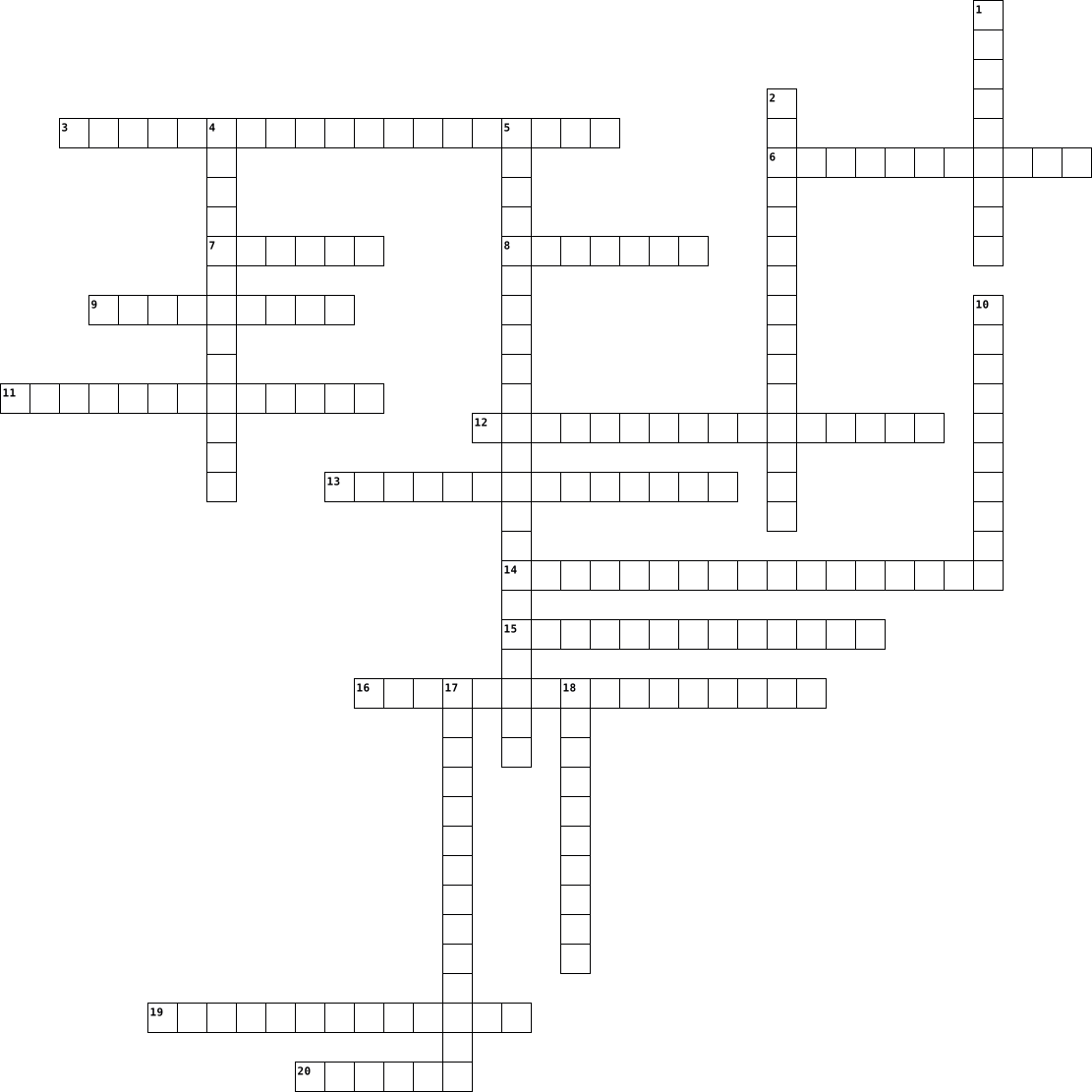
Across
- energy of height
- average kinetic energy
- part of matter that carries energy
- turns mechanical energy too electrical energy
- electrons cant move easily
- energy of motion
- energy of position or motion
- and transfers energy easily
- of energy energy changes but isn't created or destroyed
- energy contained in atomic nuclei
- energy carried through electrical currents
- energy carried by an electromagnetic
- ability to cause change
Down
- transfering energy through waves
- energy of position
- sum of kinetic and potential energy
- energy of stretched/compressed things
- transferring energy through touch
- energy stored in chemical bonds
- movement of particles to another gas or liquids
20 Clues: energy of height • energy of motion • energy of position • average kinetic energy • ability to cause change • electrons cant move easily • and transfers energy easily • energy of position or motion • energy stored in chemical bonds • transfering energy through waves • transferring energy through touch • energy contained in atomic nuclei • part of matter that carries energy • ...
Space travel 2023-05-25

Across
- take air into their lungs and let it out again
- very far away
- the layer of air or other gases around a planet
- an extremely large group of stars and planets that extends over many billions of light years
- the curved path in space that is followed by an object going round and round a planet, moon, or star
- the whole of space and all the stars, planets, and other forms of matter and energy in it
Down
- substances that help plants and animals to grow
- the use of natural resources when this use is kept at a steady level that is not likely to damage the environment
- a scientific test which is done in order to discover what happens to something in particular conditions
- increase in size and change physically over a period of time
- gradually change and develop into different forms
- what people and animals eat
- a being from another planet
13 Clues: very far away • what people and animals eat • a being from another planet • take air into their lungs and let it out again • substances that help plants and animals to grow • the layer of air or other gases around a planet • gradually change and develop into different forms • increase in size and change physically over a period of time • ...
ENVIRONMENT 2021-06-04

Across
- A layer of air high above the Earth which prevents harmful light from the sun from reaching the Earth.
- Dangerous substances that need careful disposal.
- A community with environmentally-friendly buildings, clean technology and renewable energy like solar and wind.
- A measurement of the amount of carbon-dioxide a person adds to the atmosphere.
Down
- Forms of energy that can be replaced naturally, such as solar energy and wind power.
- The process by which land changes into dessert.
- Releasing no greenhouse gases like carbon-dioxide or methane.
- To use something until there's none left.
- Intended to be thrown away after use it.
9 Clues: Intended to be thrown away after use it. • To use something until there's none left. • The process by which land changes into dessert. • Dangerous substances that need careful disposal. • Releasing no greenhouse gases like carbon-dioxide or methane. • A measurement of the amount of carbon-dioxide a person adds to the atmosphere. • ...
Kendalls Crossword puzzle 2016-08-14

Across
- A layer of hot, solid material that is between earth's crust and core.
- The region between the Tigris and Euphrates rivers.
- When you have more than you need.
- A climate with very little rainfall,and warm temperature.
- The amount of force that presses on an area.
Down
- A softer layer of earth's interior that forms further below the crust.
- A rigid layer that forms near the crust of earths interior.
- waves Vibrations that carry energy that is released in an earthquake as they travel through earth.
- Fertile soil that is great for growing crops.
- A period of time with not enough rain or snow to help grow crops.
10 Clues: When you have more than you need. • The amount of force that presses on an area. • Fertile soil that is great for growing crops. • The region between the Tigris and Euphrates rivers. • A climate with very little rainfall,and warm temperature. • A rigid layer that forms near the crust of earths interior. • ...
Energy Forms 2024-10-01

Across
- All the energy has because of its motion and position
- Is responsible for the temperature of an object and is also known as heat energy
Down
- Includes visible light, such as sunlight
- Energy from the flow of tiny particles in a materials (this energy form is present when charging our laptops)
4 Clues: Includes visible light, such as sunlight • All the energy has because of its motion and position • Is responsible for the temperature of an object and is also known as heat energy • Energy from the flow of tiny particles in a materials (this energy form is present when charging our laptops)
Forms of business organization 2022-07-04

Across
- an owner of shares in a company
- permitted by law
- a compulsory contribution to state revenue
- the state or right of owning a business or holding property
- a written constitution or description of an organization's functions
- the act, state, or right of possessing something
- an official document giving someone authorization to do something
- a goal
Down
- a large company or group of companies authorized to act as a single entity and recognized as such in law
- the premises serving as the managerial and administrative centre of an organization
- a negotiated and typically legally binding arrangement between parties as to a course of action
- an association of two or more people as partners
- the state of being legally responsible for something
13 Clues: a goal • permitted by law • an owner of shares in a company • a compulsory contribution to state revenue • an association of two or more people as partners • the act, state, or right of possessing something • the state of being legally responsible for something • the state or right of owning a business or holding property • ...
BioMols Crossword 2022-03-10

Across
- a type of protein that speeds up a chemical reaction by lowering the activation energy needed.
- a monosaccharide and monomer. Used during cellular respiration to generate ATP.
- This group of molecules comes in two forms, one is single stranded and one is double stranded. Both are involved with genes and protein synthesis.
- the monomer of proteins, are carried to the ribosome by tRNA.
- A diverse groups of molecules that perform many fucntions within a cell such as being a part of the cell membrane and helping to form structures.
Down
- main component of cell membranes, have a hydrophobic and hydrophilic region.
- the monomer of DNA and RNA, made of three parts: phosphate group, sugar, and nitrogenous base.
- these 'hold' elements together, they can be broken and reformed to make new molecules. When we break them energy is released, when we make them it uses energy.
- stores genetic information in the nucleus of eukaryotic cells
- carries the genetic code into the cytoplasm where it can be used to create polypeptides
- Molecule that can be used as an energy source (glucose) as well as for forming structures (cellulose).
- the six most common elements needed for life
- These can help to insulate organisms, as long term energy storage, and form structures like membranes.
13 Clues: the six most common elements needed for life • stores genetic information in the nucleus of eukaryotic cells • the monomer of proteins, are carried to the ribosome by tRNA. • main component of cell membranes, have a hydrophobic and hydrophilic region. • a monosaccharide and monomer. Used during cellular respiration to generate ATP. • ...
Word Work #2 Part 2 2022-09-19

Across
- the action or process of fertilizing an egg, involving the fusion of male and female gametes (sperm & egg) to form a zygote.
- a protective and waxy or hard layer covering the epidermis of a plant.
- a simple sugar which is an important energy source produced during photosynthesis
- a green pigment, present in all green plants, responsible for the absorption of light to provide energy for photosynthesis.
- pores in the epidermis of the leaf or stem of a plant
- the transfer of pollen to a stigma, ovule, flower, or plant to allow fertilization.
Down
- Respiration a series of chemical reactions that convert the energy in food molecules into a usable form of energy called ATP
- the production of offspring by a sexual or asexual process.
- organelle in a cell that is the site of photosynthesis
- the process by which green plants use sunlight to synthesize foods from carbon dioxide and water.
- spore that forms from tissue in a male reproductive structure of a seed plant.
- evaporation of water vapor through the stomata of a plant
12 Clues: pores in the epidermis of the leaf or stem of a plant • organelle in a cell that is the site of photosynthesis • evaporation of water vapor through the stomata of a plant • the production of offspring by a sexual or asexual process. • a protective and waxy or hard layer covering the epidermis of a plant. • ...
energy sources 2023-01-09

Across
- energy the energy an object has because of its position also the internal stored energy of an object such as energy stored in chemical bonds
- the ability to do work or cause changes
- energy is the energy of light and other forms of radiation which travels through space in waves
Down
- energy energy that an object has due to its motion
- the energy of electric objects
- kinetic or potential associated with the motion or position of an object
6 Clues: the energy of electric objects • the ability to do work or cause changes • energy energy that an object has due to its motion • kinetic or potential associated with the motion or position of an object • energy is the energy of light and other forms of radiation which travels through space in waves • ...
kari 2.1 vocab 2021-10-26

Across
- chemical reaction
- the substances presents
- absorbs heat and energy
- a chemical reaction
Down
- a chemical change
- the substances that are forms
- a change in matter
- takes up same amount of space
8 Clues: a chemical change • chemical reaction • a change in matter • a chemical reaction • the substances presents • absorbs heat and energy • the substances that are forms • takes up same amount of space
( Markus B) Rock Cycle Crossword 2013-12-09

Across
- The destructive process in which water or wind loosens and carry away fragments of rock.
- Rock Igneous rock that forms from lava on Earth's surface.
- Rock Sedimentary rock that forms where remains of organisms are deposited in thick layers.
- The process by which sediment settles out of the water or wind that is carrying it.
- texture An igneous rock texture in which large crystals are scattered on a background of much smaller crystals.
- A ___ Rock is a type of rock that forms when particles from other rocks or the remains of plants and animals.
- The ___ is a particle of mineral or other rock that gives a rock a texture.
- Small, solid pieces of material that comes from rock or organisms.
- The process by which sediments are pressed together under their own weight.
- Cycle A series of processes on the surface and inside the earth slowly slowly change rocks from one kind to another.
Down
- Rock Sedimentary Rock that forms when minerals crystallize from a solution.
- A ___ Rock is a type of rock that forms from an existing rock that is changed by heat.
- Term used to describe metamorphic rock whose grains are arranged in parallel layers or bands.
- An ___ Rock is a type of rock that forms from the cooling of molten rock at or below the surface.
- The process by which dissolved minerals crystallize and glue particles of sediment together into one mass.
- Rock Igneous Rock that forms when magma hardens beneath Earths surface.
- The ___ is the look and of a rock's surface.
- Rock Sedimentary Rock that forms when rock fragments are squeezed together under high pressure.
18 Clues: The ___ is the look and of a rock's surface. • Rock Igneous rock that forms from lava on Earth's surface. • Small, solid pieces of material that comes from rock or organisms. • Rock Igneous Rock that forms when magma hardens beneath Earths surface. • Rock Sedimentary Rock that forms when minerals crystallize from a solution. • ...
Chapter 3/4 Vocab Crossword 2025-11-03

Across
- elements that organisms need to sustain life.
- the total amount of living tissue in a given trophic level.
- the scientific study of interactions among organisms populations, and communities and interactions with their environment.
- _______________________ pyramids are models that show the relative amount of energy or matter contained within each trophic level in a food chain or web.
- a pyramid of ____________________ is a model that shows the relative number of individual organisms at each trophic level for a single ecosystem. (a single ecosystem may be as small as a single tree).
- Things that are non-living.
- acquire energy from other organisms, usually by eating them.
- _____________________ processes consist of any activities performed by living organisms.
- when organisms die, ________________________ usually break down their bodies.
- ____________________ processes include volcanic eruptions, formation and breakdown of rock, and major movements of matter below Earth's surface.
- a _____________________ level is each step or level in a food chain or web.
- All the organisms that live in a place together with their physical environment.
- _________________ activities affect cycles on a global scale through mining, burning fossil fuels, etc.
- a food ___________________ is a series of organisms in which energy is transferred from one organism to another.
- primary ____________________ are the first producers of energy rich compounds in an ecosystem that can be used by other organisms.
- some bacteria obtain energy by converting nitrates into nitrogen gas, which is released into the atmosphere in a process called __________________________.
- The ____________________ nutrient is any nutrient whose supply limits productivity or continuing reaction.
Down
- nitrogen ____________________ is when certain types of organisms (or lightning) convert nitrogen gas into a solid that can be stored in the soil.
- Our entire planet with all of its organisms and physical environments.
- physical and ___________________ processes include cloud formation and precipitation, the flowing of running water, and the action of lightning.
- organisms that rely on eating other organisms for energy and nutrients.
- _____________________________ cycles are cycles in which matter flows from one trophic level to another and elements are recycled within and among ecosystems.
- a food _________________ is a network of feeding interactions through which both energy and matter move.
- chemical energy stored in chemical bonds is used to produce carbohydrates for energy.
- a group of individuals that belong to the same species and live in the same area.
- a group of similar organisms that can breed and produce fertile offspring.
- a group of ecosystems that share similar climates and typical organisms.
- the process by which plants and other organisms capture light and use it to take in carbon and produce their own food.
- capture energy from non-living sources (the sun, chemicals, etc.) and convert it into forms living cells can use.
- An assemblage of different populations that live together in a defined area.
- water that is absorbed into the soil and stored underground.
- things that are living.
32 Clues: things that are living. • Things that are non-living. • elements that organisms need to sustain life. • the total amount of living tissue in a given trophic level. • acquire energy from other organisms, usually by eating them. • water that is absorbed into the soil and stored underground. • Our entire planet with all of its organisms and physical environments. • ...
Mikey Crossword Puzzel 2023-03-30

Across
- occurs when an atom has more protons than electrons
- STATE an atomic nucleus, atom, or molecule is its lowest energy state.
- a negatively charged ion
- A small particle with a negative charge that is found in all
- any atom or group of atoms with one or more charge
- a chemical substance that cannot be broken down into other substances
- ELECTRON a negatively charged particle. Think 8
- forms of a chemical element with specific properties.
Down
- RULE An atom is most stable when it has 8 valence electrons
- NUMBER the total number of protons and neutrons in an atom
- LEVEL fixed distances from the nucleus of an atom where electrons may be found.
- Number above an element on the periodic table
- positively charged center of the atom consisting of protons and neutrons
- NUMBER the number of a chemical element in the periodic system
- neutral subatomic particle that is also with a proton
- a particle consisting of a nucleus of protons and neutrons
- If an atom has a greater number of electrons than protons
- CLOUD the area around an atom's nucleus where electrons are most likely to be found.
- measures of amount of matter in an object.
- Not positive nor negative
20 Clues: a negatively charged ion • Not positive nor negative • measures of amount of matter in an object. • Number above an element on the periodic table • ELECTRON a negatively charged particle. Think 8 • any atom or group of atoms with one or more charge • occurs when an atom has more protons than electrons • neutral subatomic particle that is also with a proton • ...
Electricity Unit 2022-02-28

Across
- these allow electrons to move freely
- label for resistence
- amount of electricity
- these don't allow electrons to move freely
- # of electrons that pass in a second
- slows down the flow of electrons
- can flow
- shows how to make a circuit
Down
- set of componets that allow electricity to flow
- label to voltage
- can't flow
- used to find current, resistence, voltage, and power
- each part has it's own power source
- movement of electrons
- how fast electrons are being pushed out
- how electricity is converted to other energy forms
- all parts are in 1 line
- the metal inside breaks if the current is too strong
- opens the circuit if the current is too strong
19 Clues: can flow • can't flow • label to voltage • label for resistence • amount of electricity • movement of electrons • all parts are in 1 line • shows how to make a circuit • slows down the flow of electrons • each part has it's own power source • these allow electrons to move freely • # of electrons that pass in a second • how fast electrons are being pushed out • ...